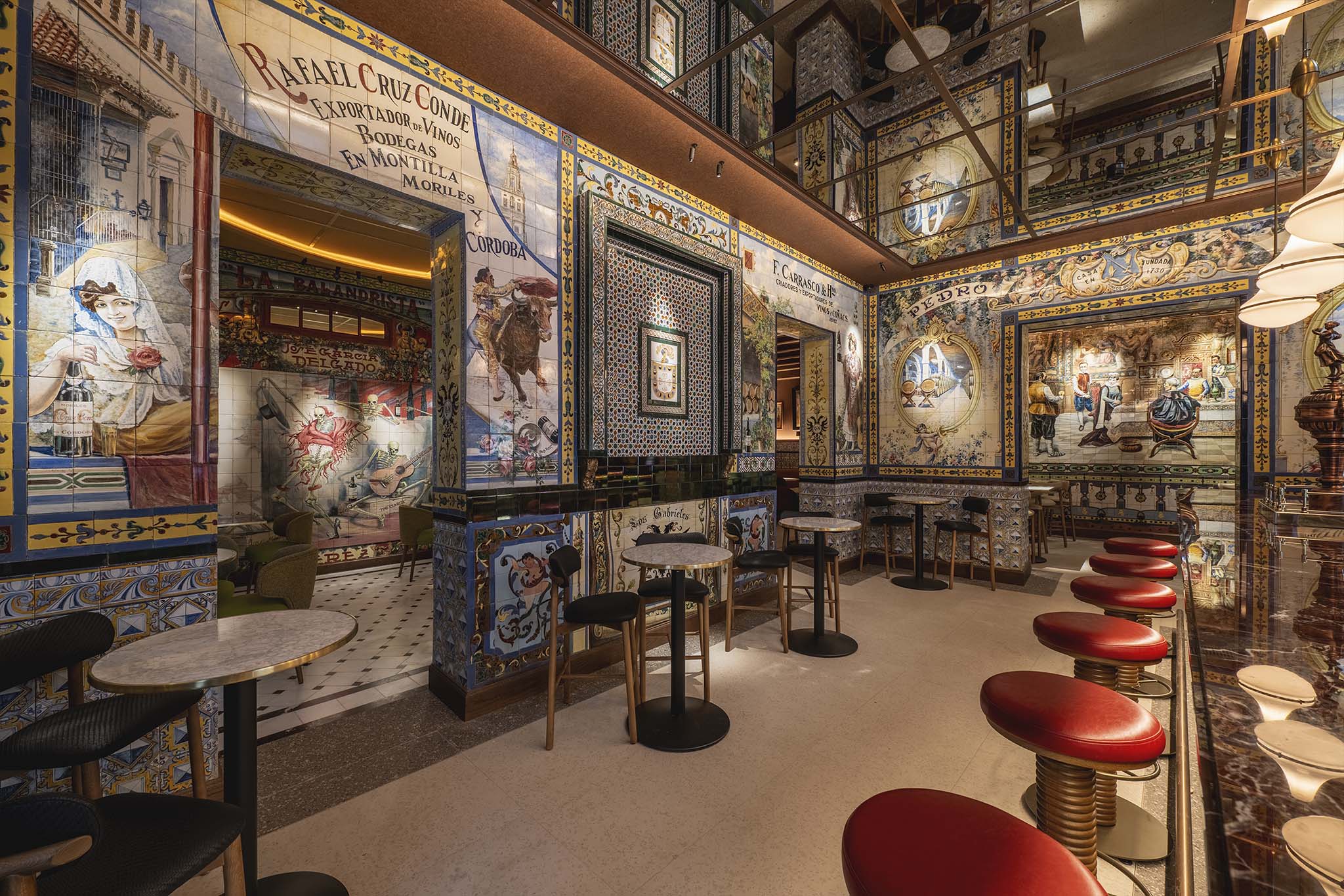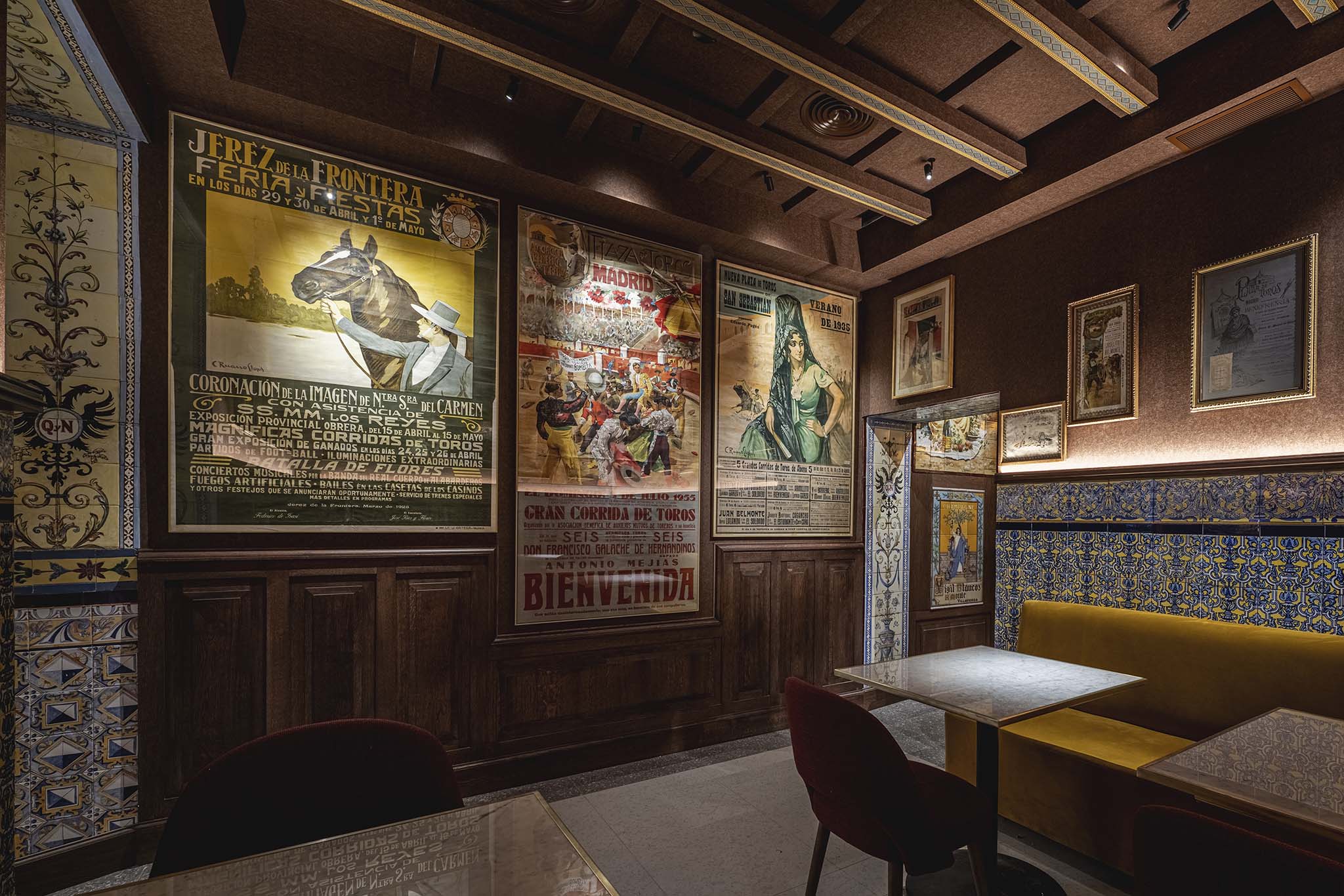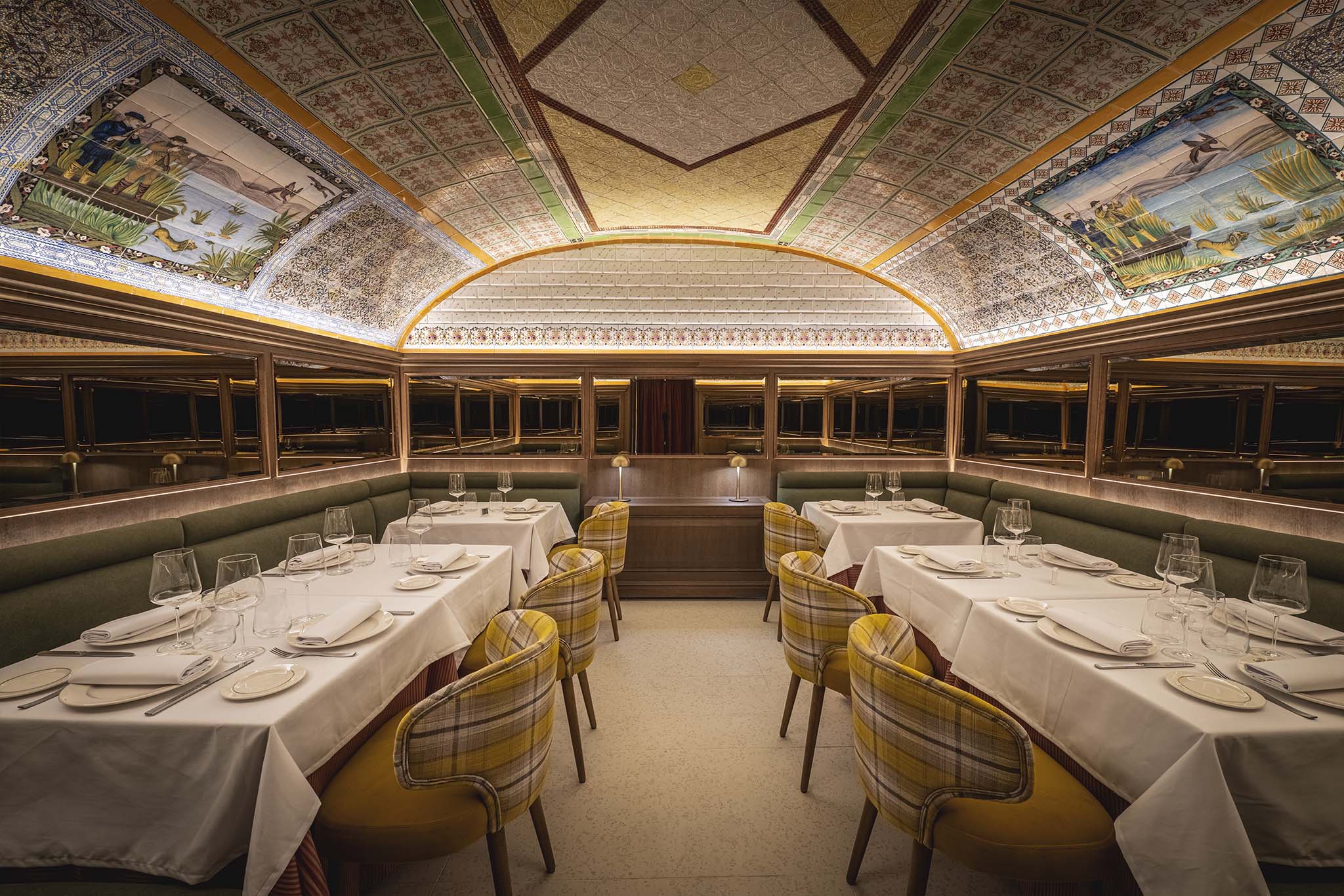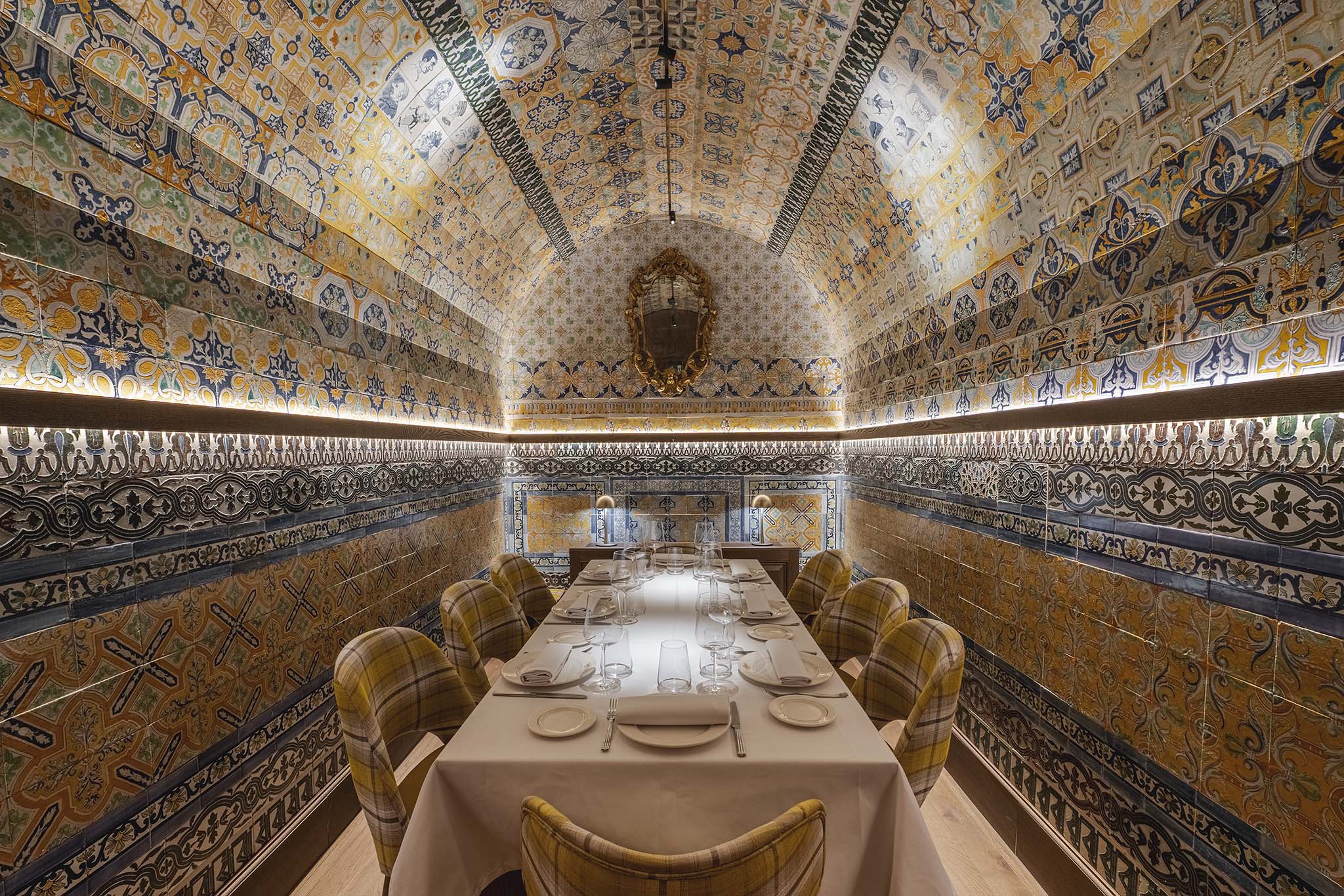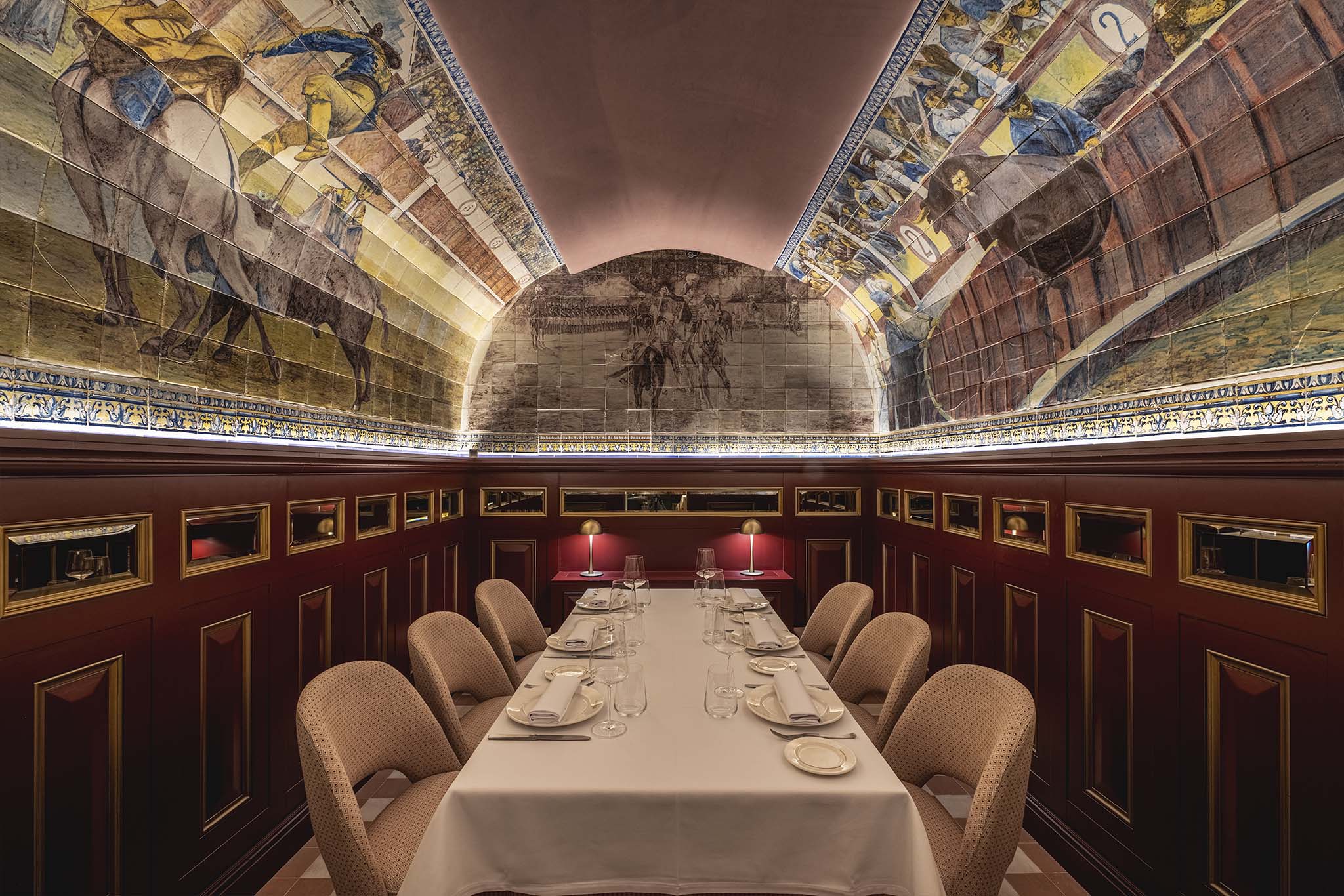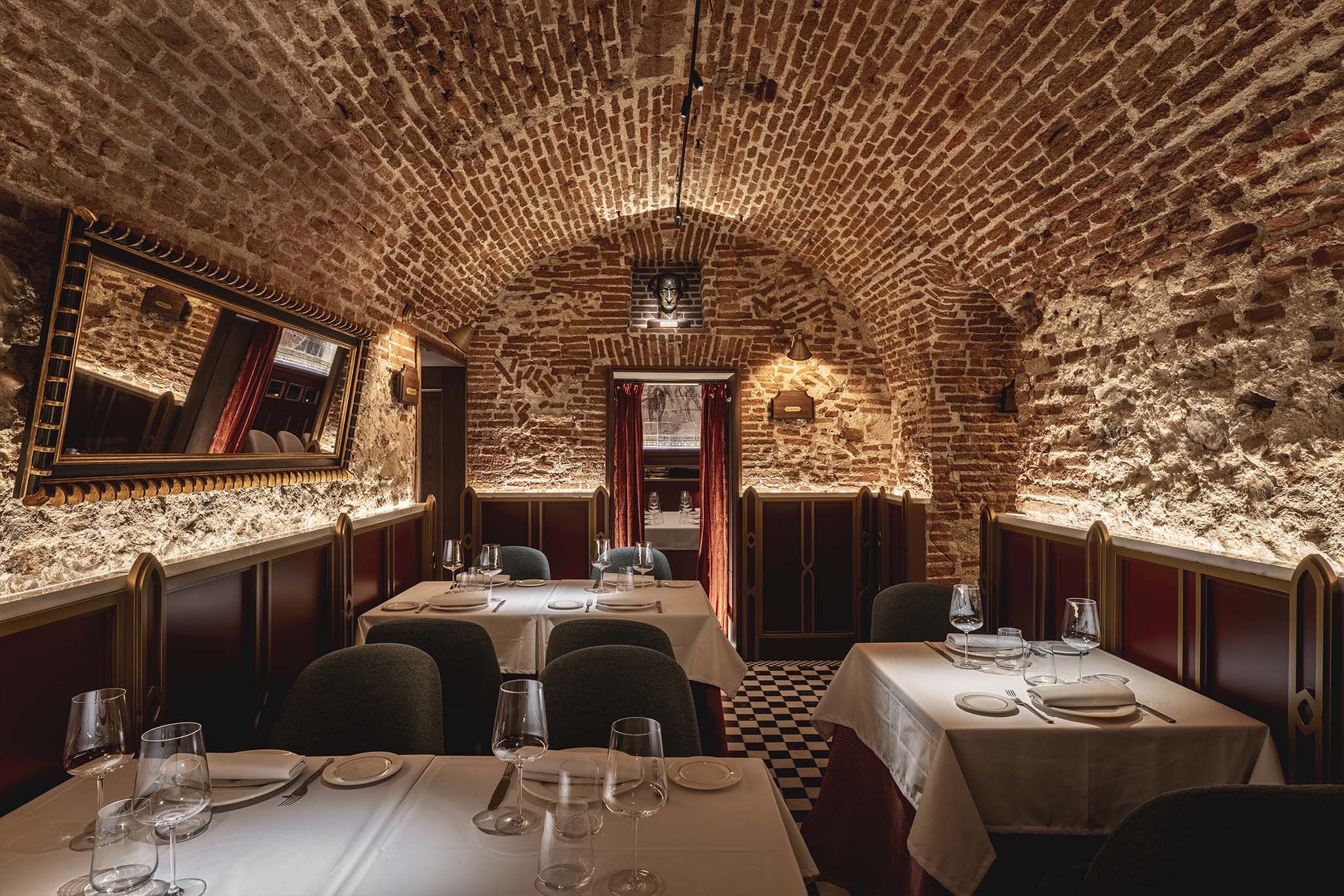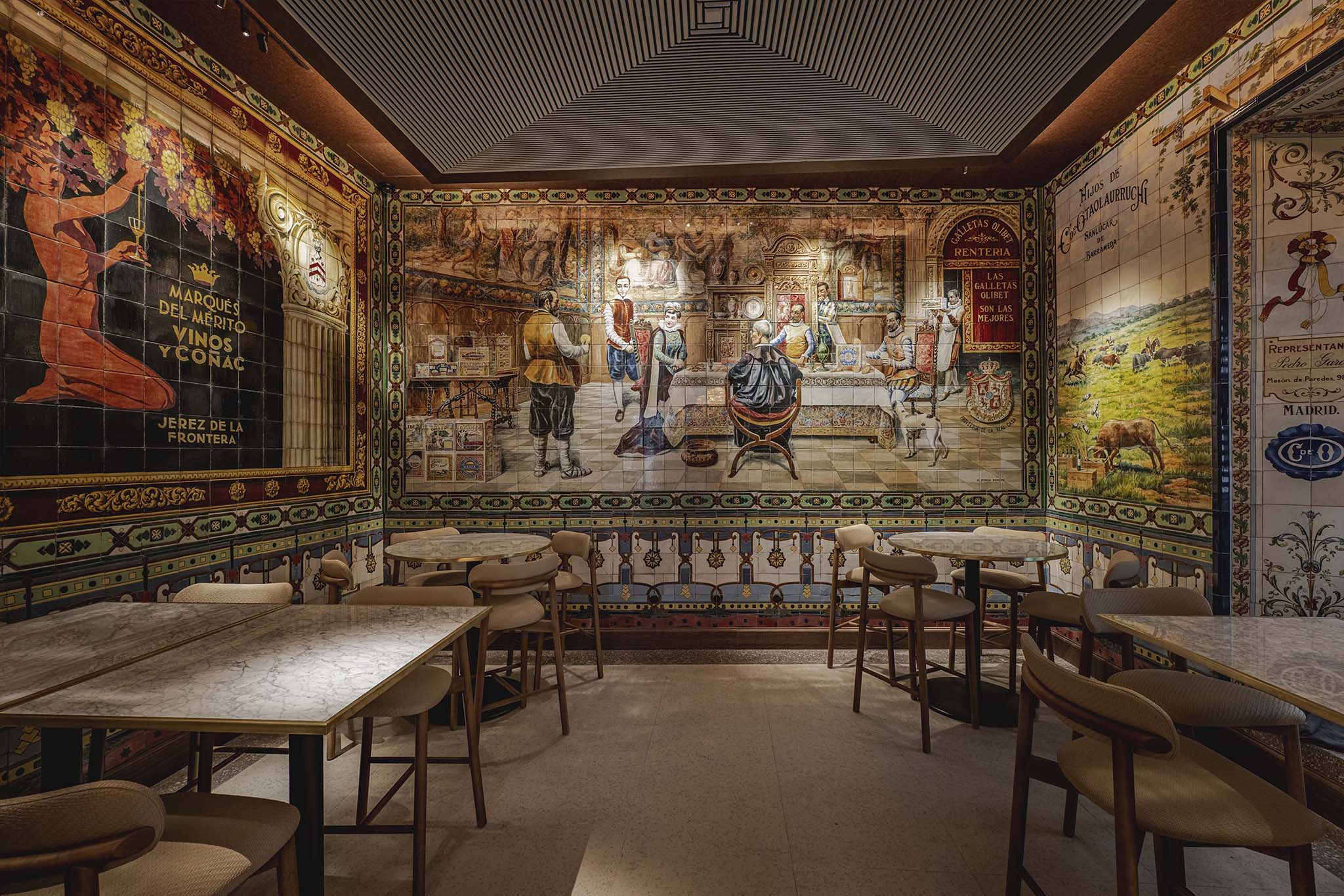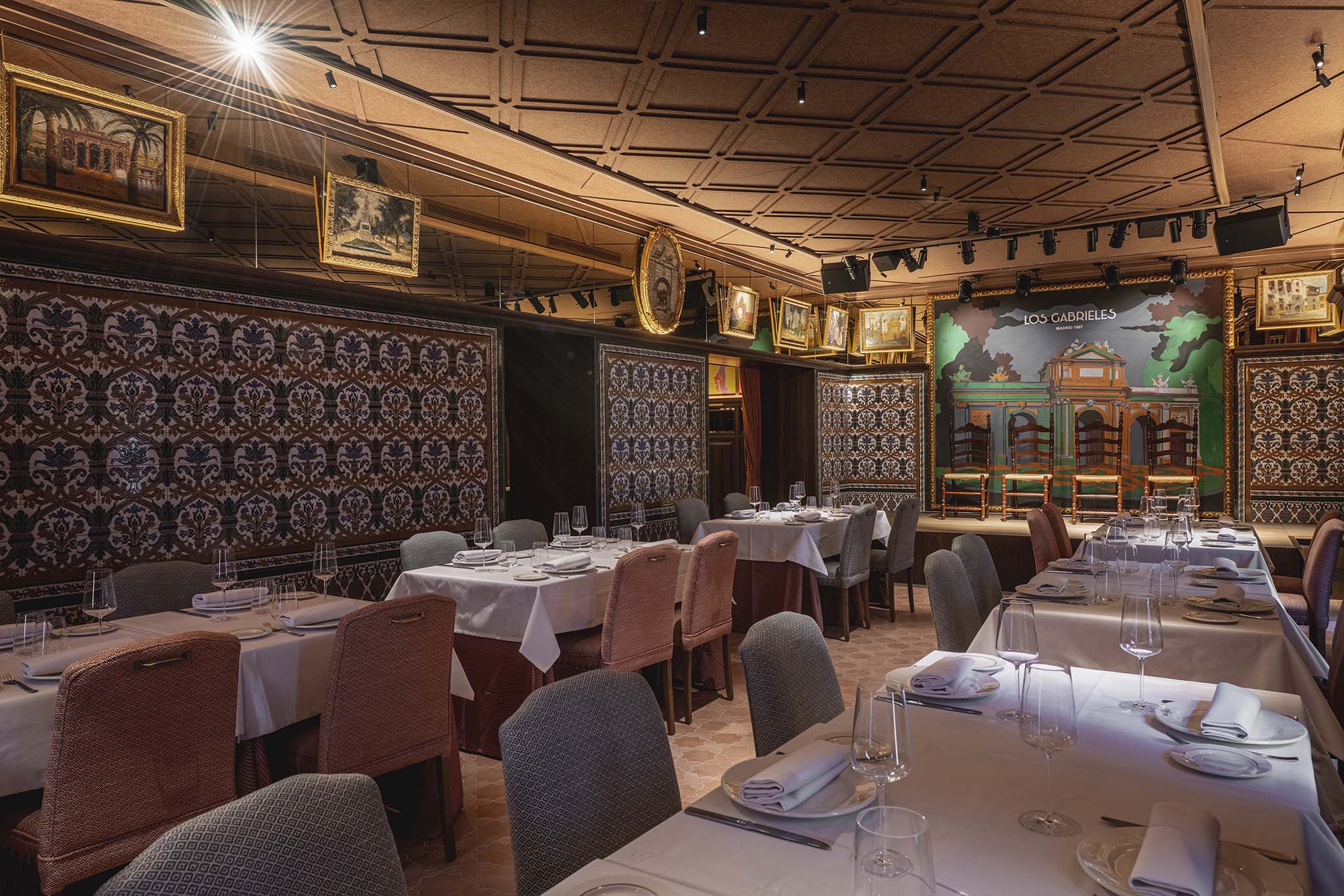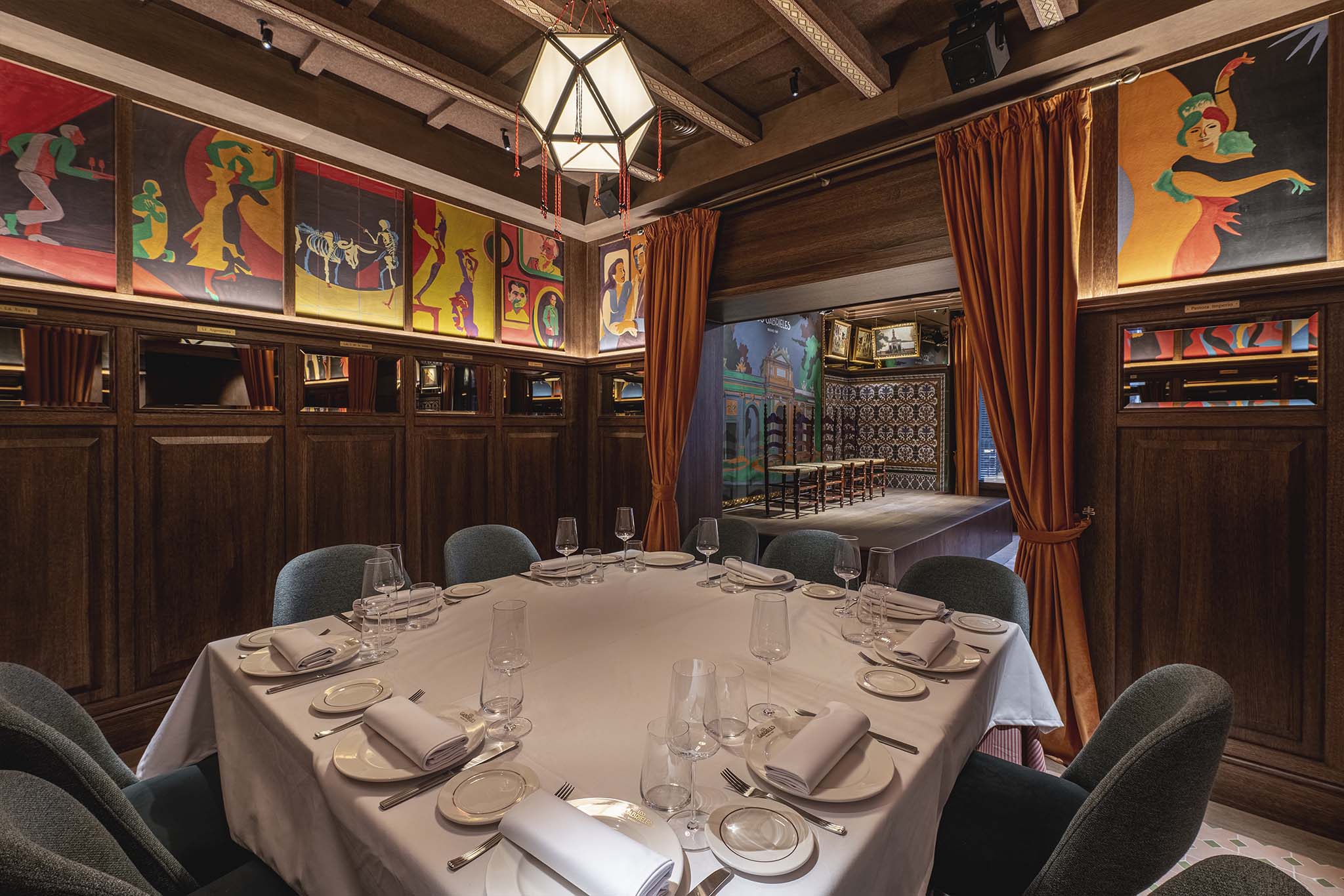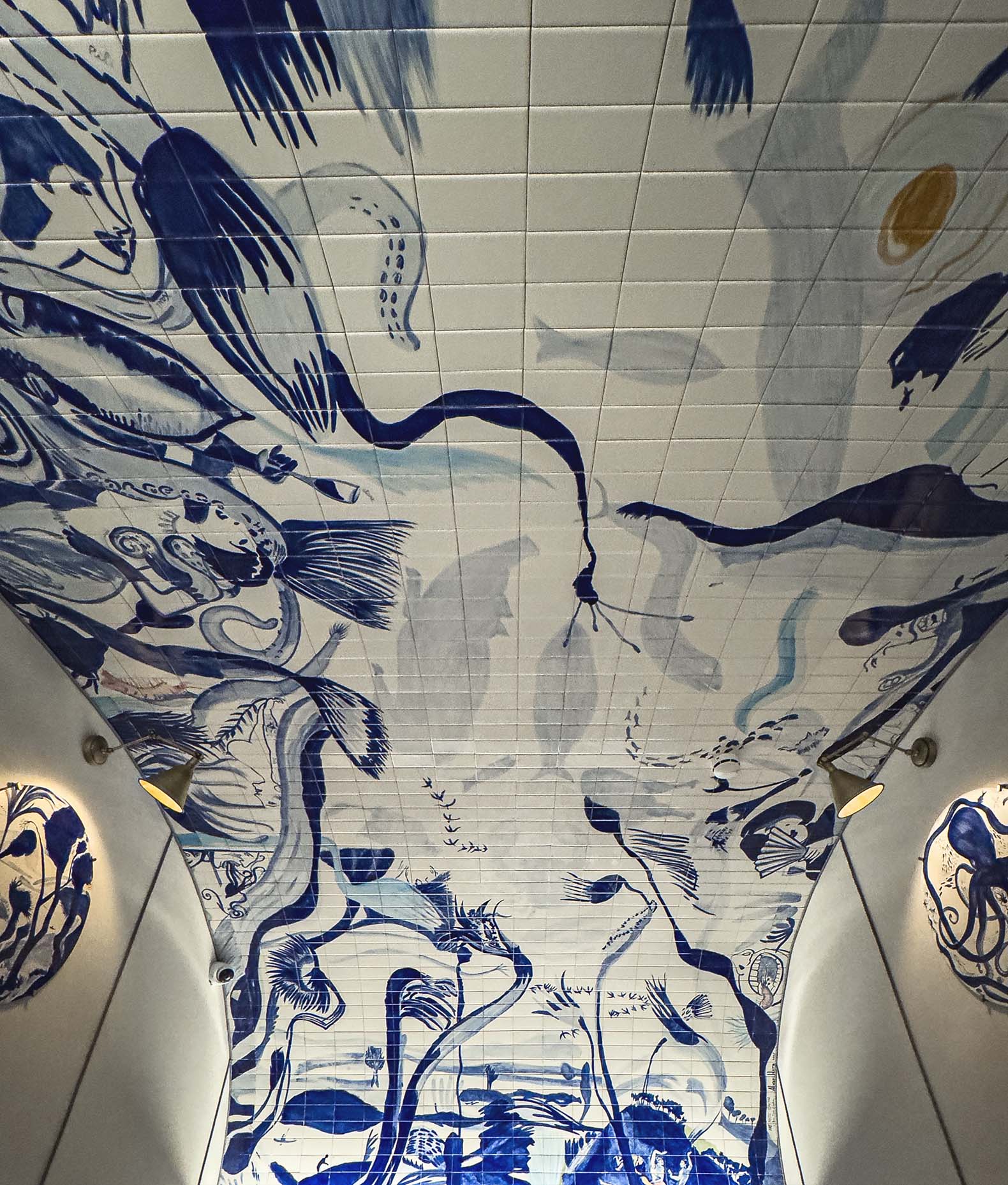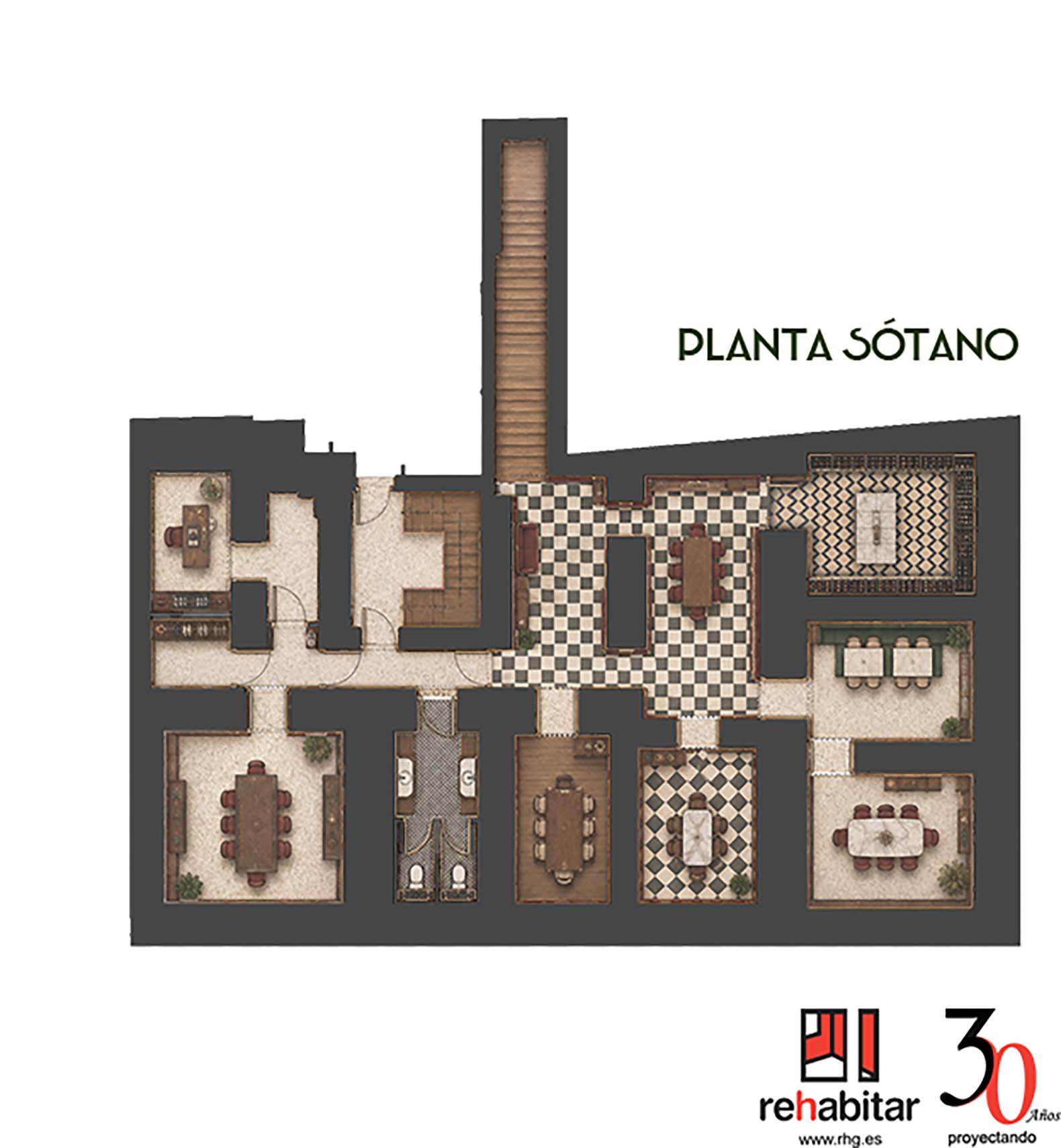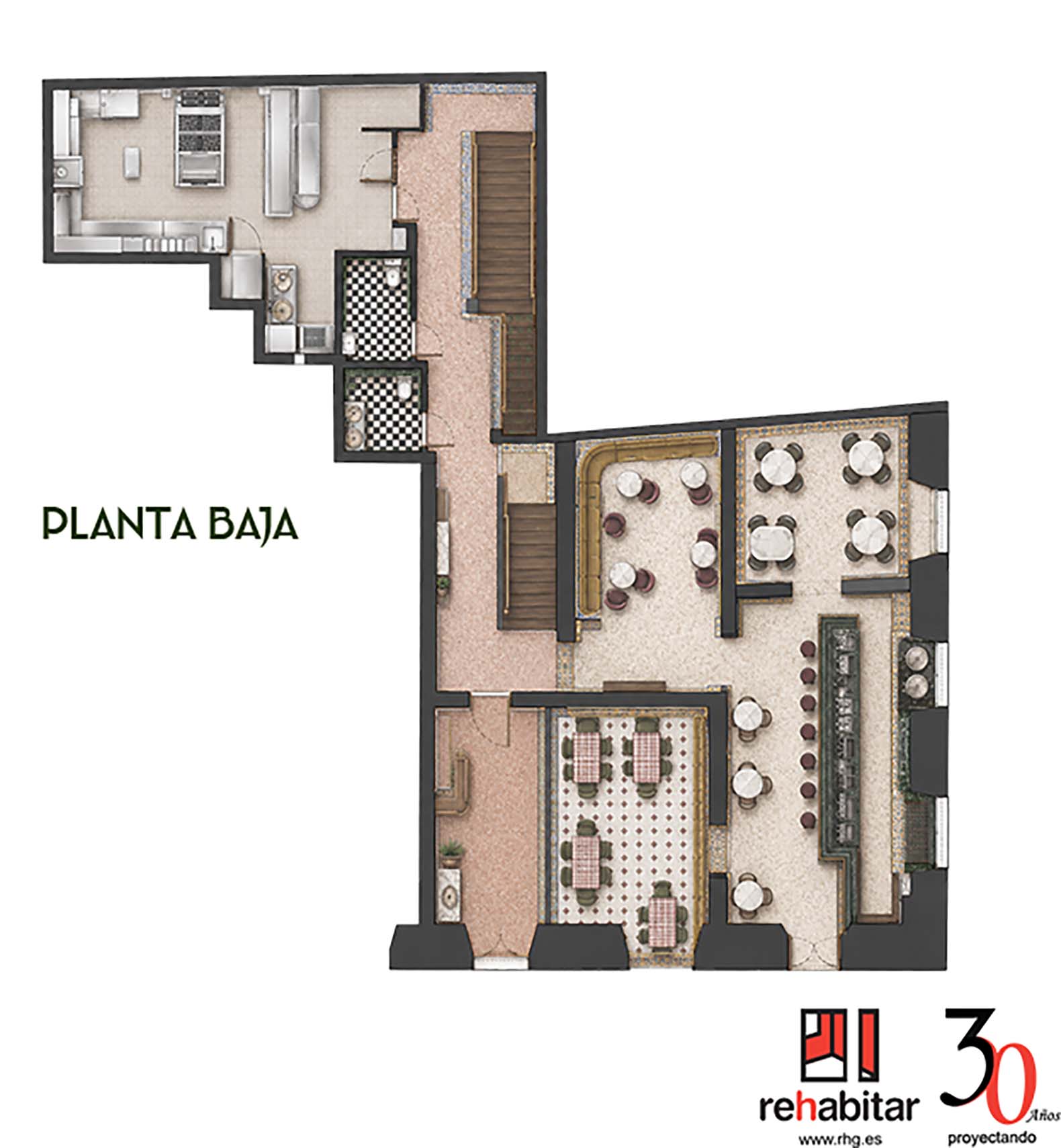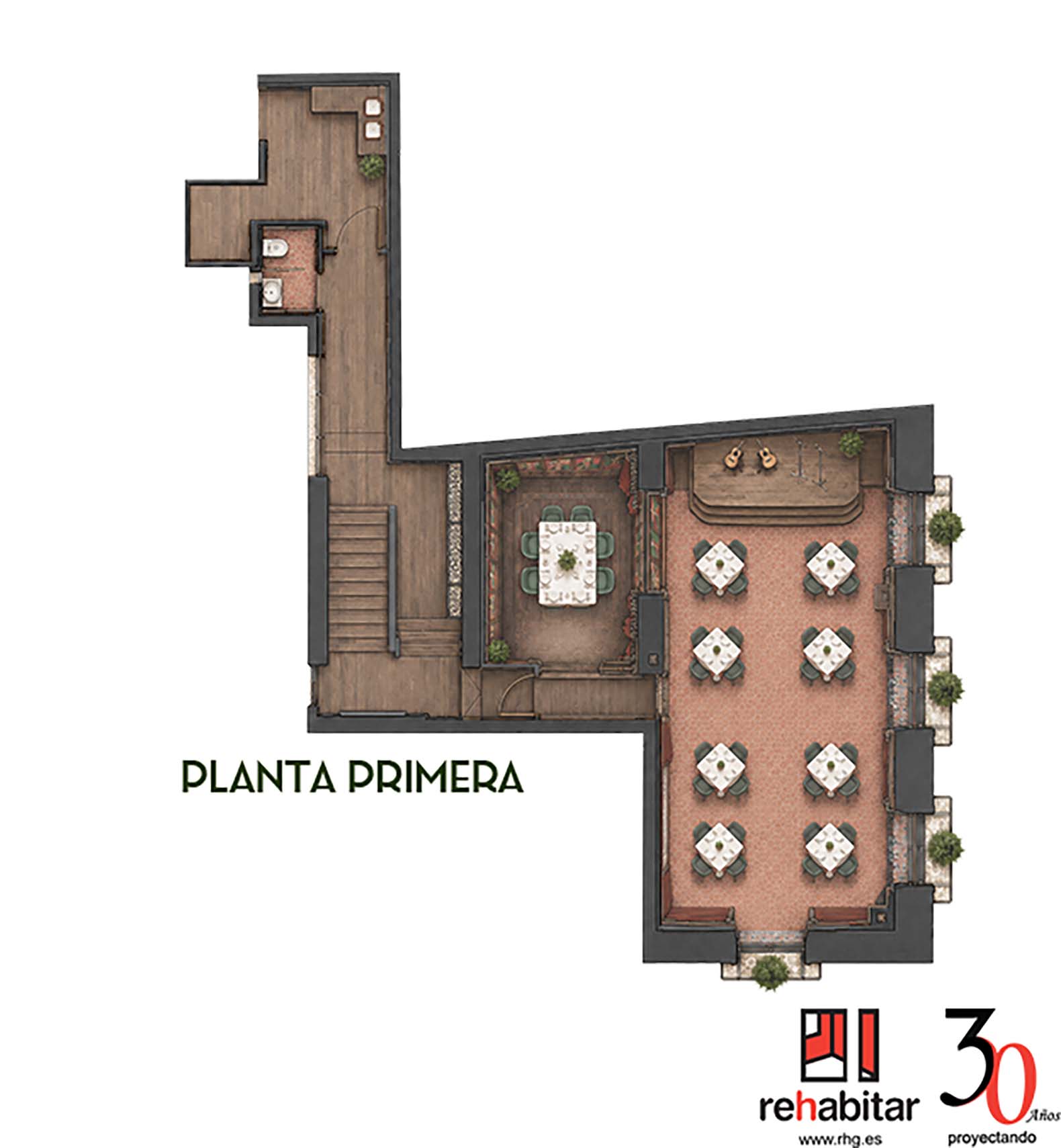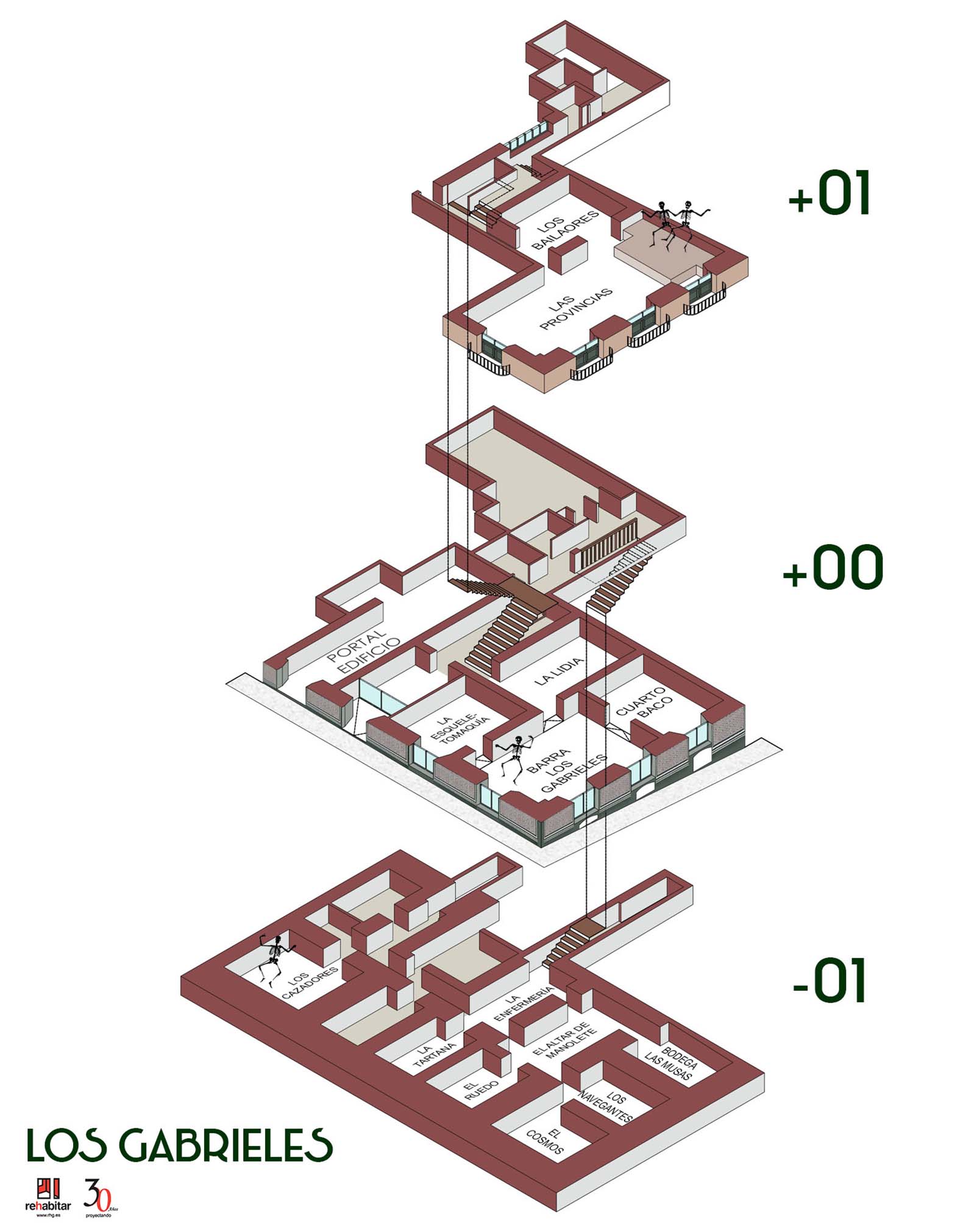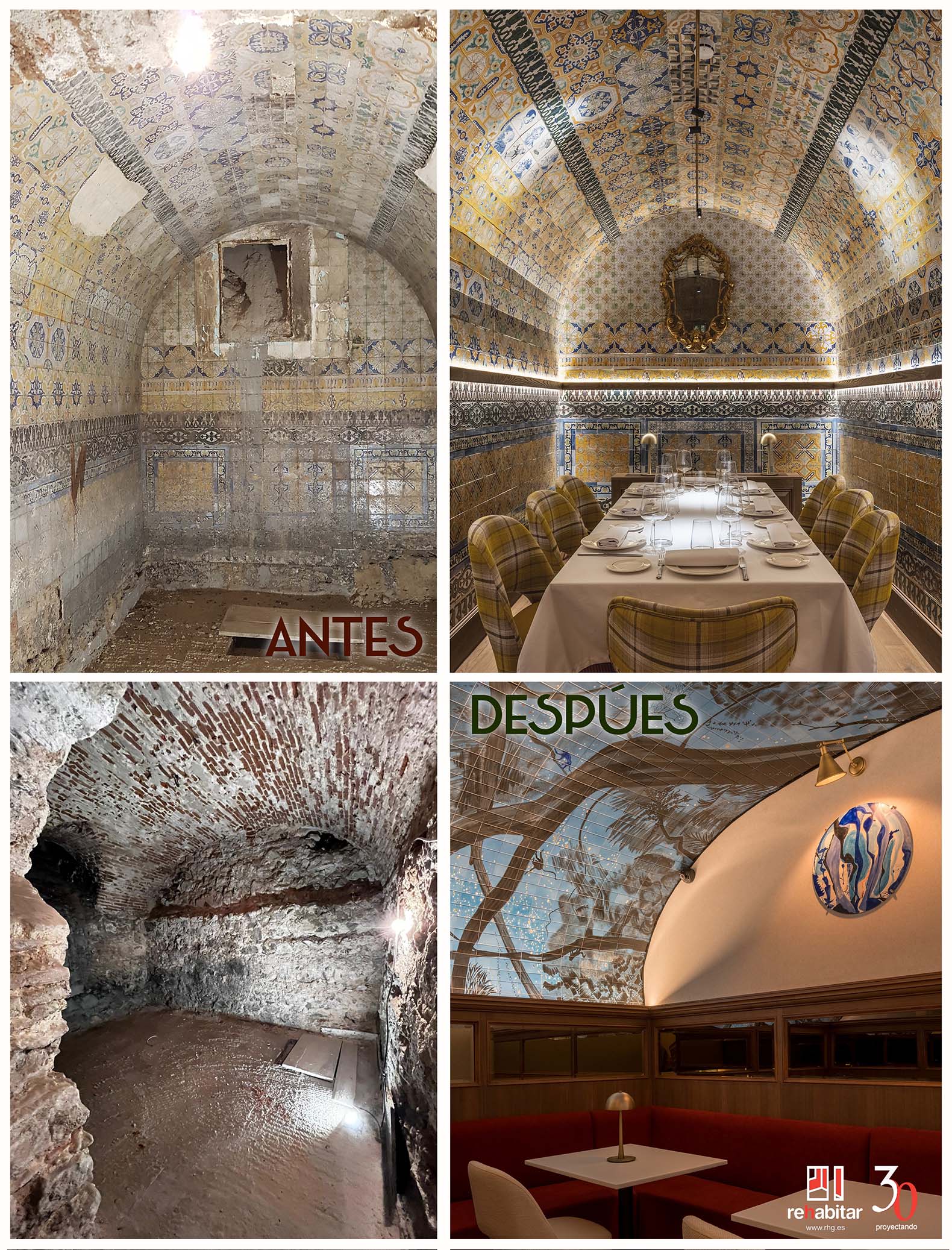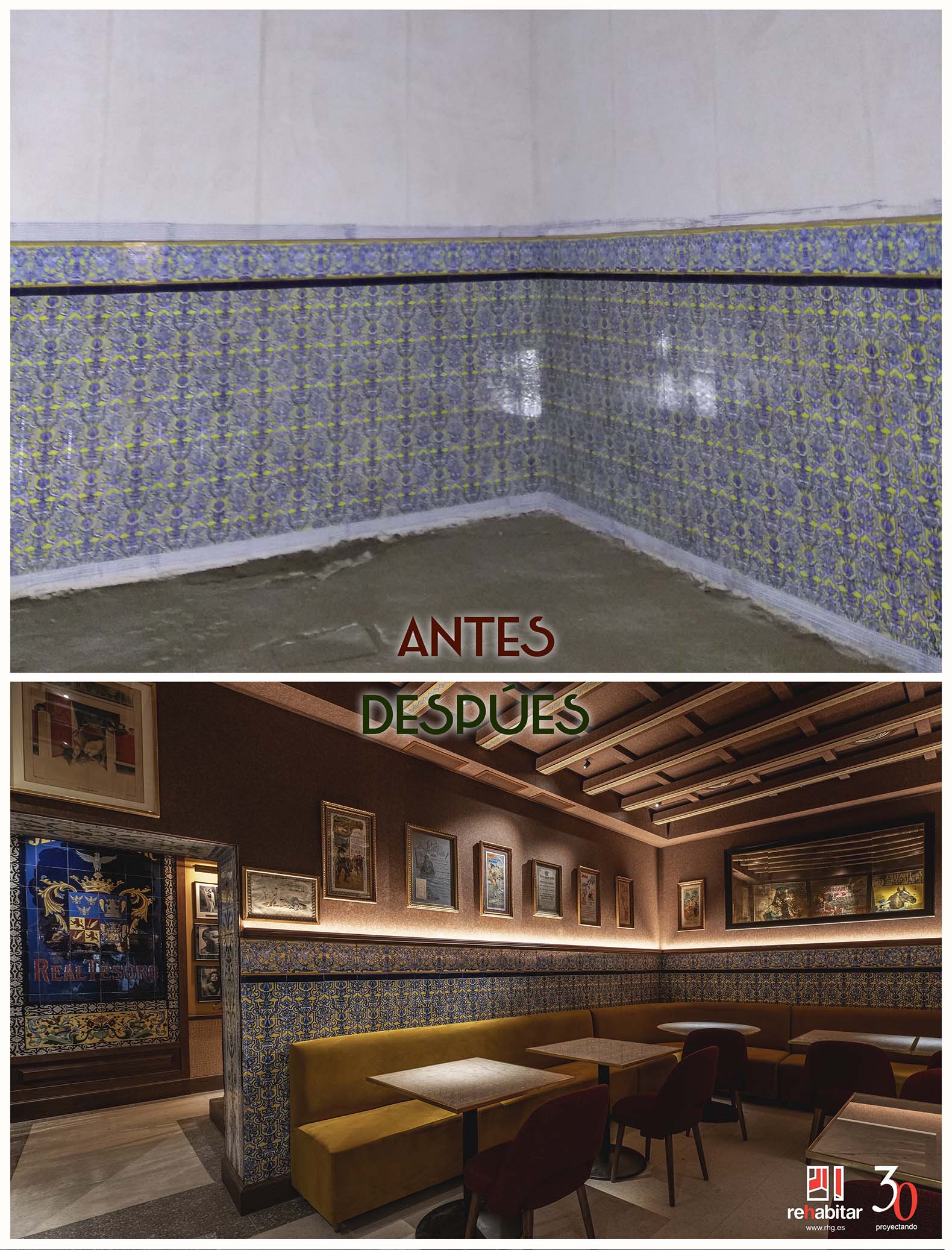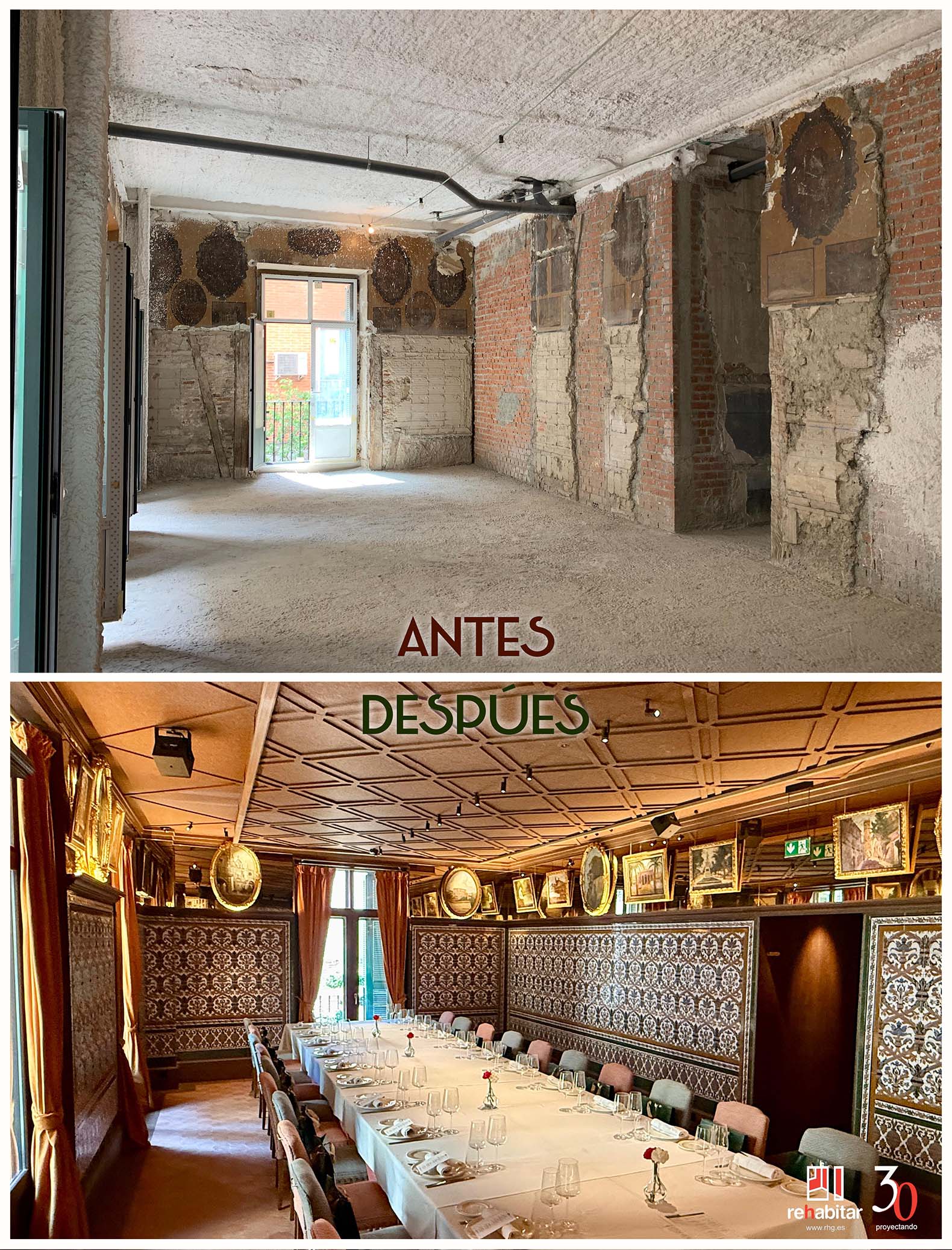
The renovation carried out by Rehabitar respects the building's historical layout and restores its various rooms, including the iconic Manolete Room, preserving the memory of a place closely linked to flamenco, bullfighting, and Madrid's cultural life. Furthermore, the project incorporates new artistic interventions that connect the historical architecture with contemporary art.
The restoration and installation of the ceramic murals was carried out in conjunction with new soundproofing solutions, enhanced comfort features, and concealed utilities. Inside, integrated acoustic systems and theatrical lighting highlight the richness of the ceramics and allow the space to function as a bar-restaurant with live music.
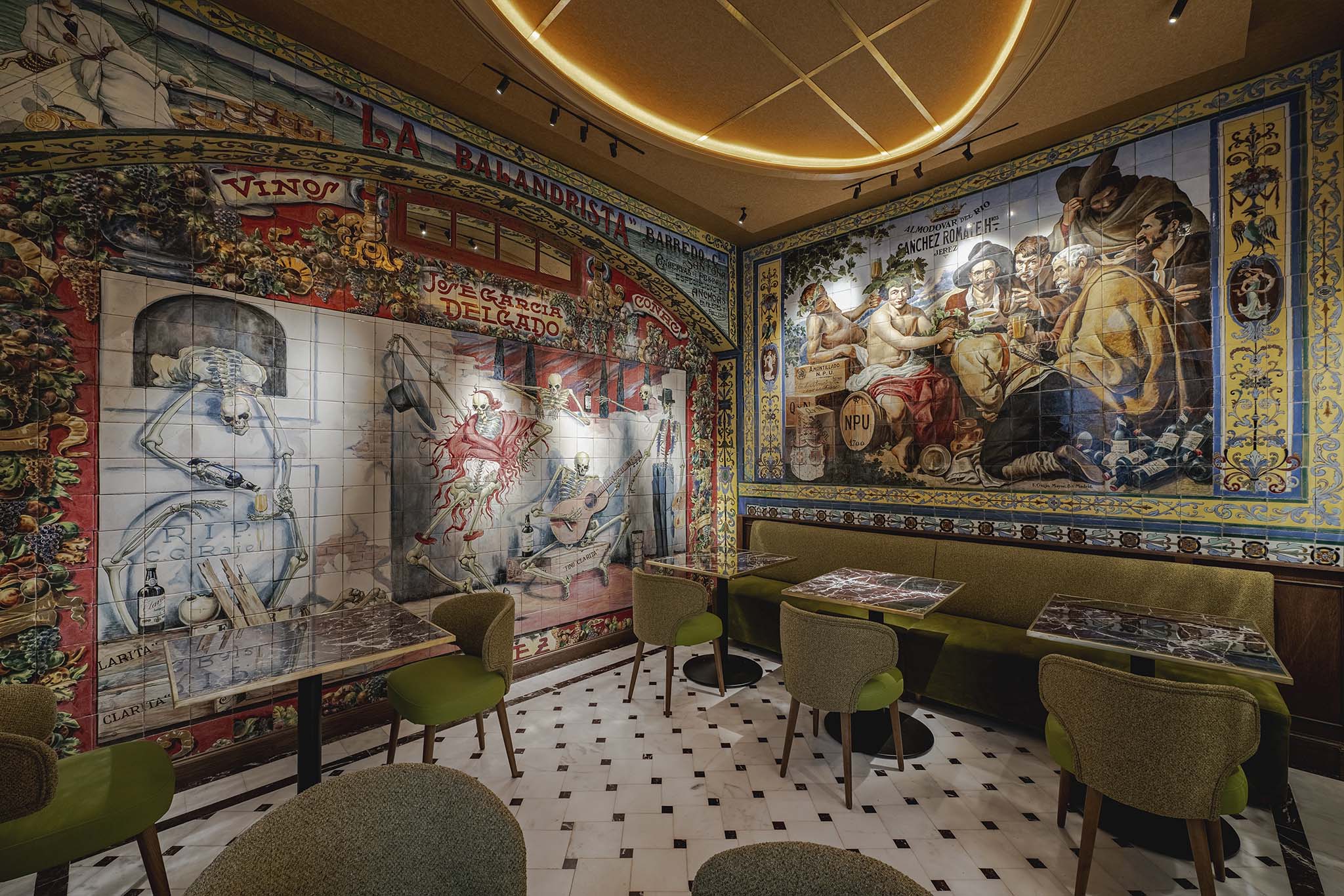
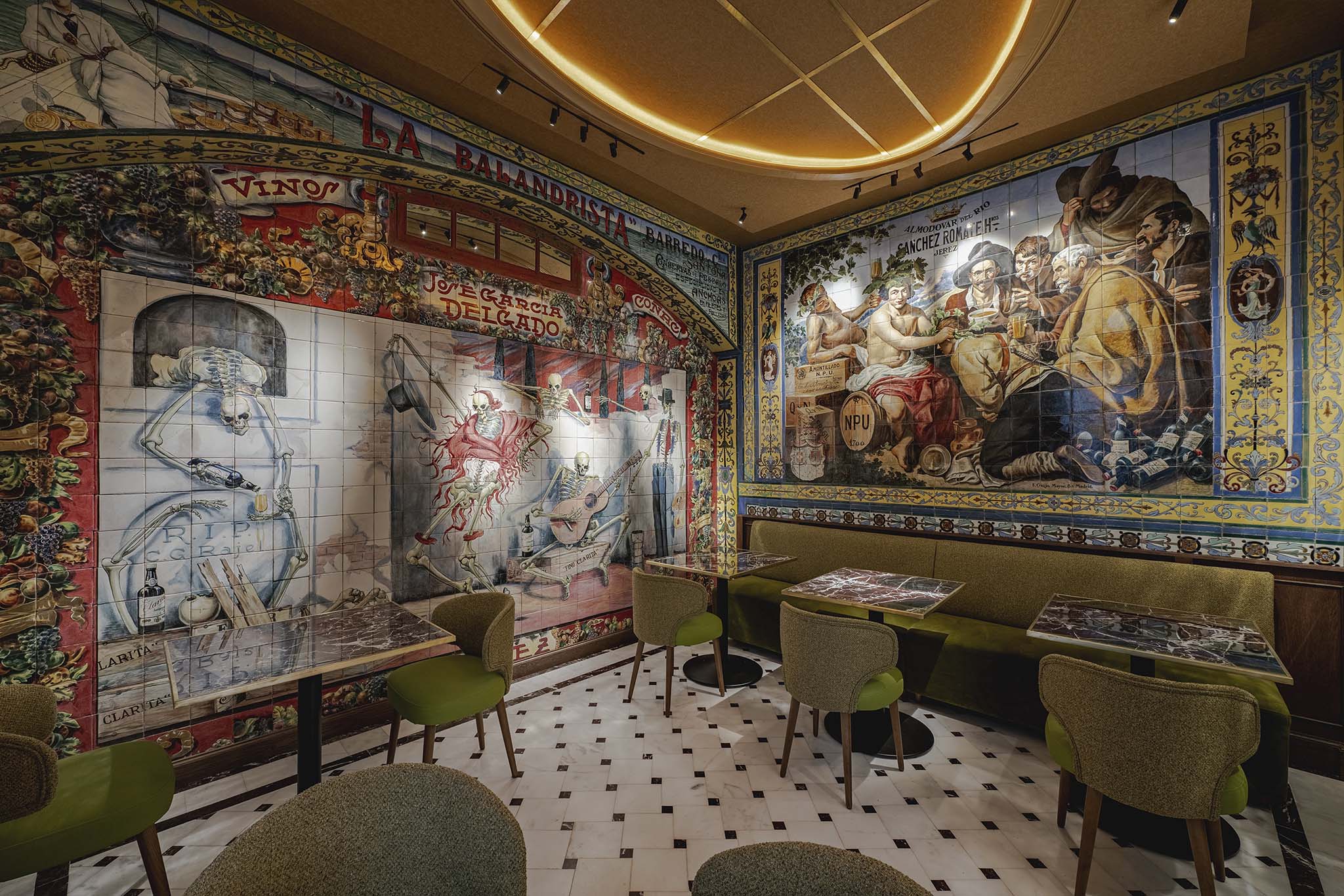
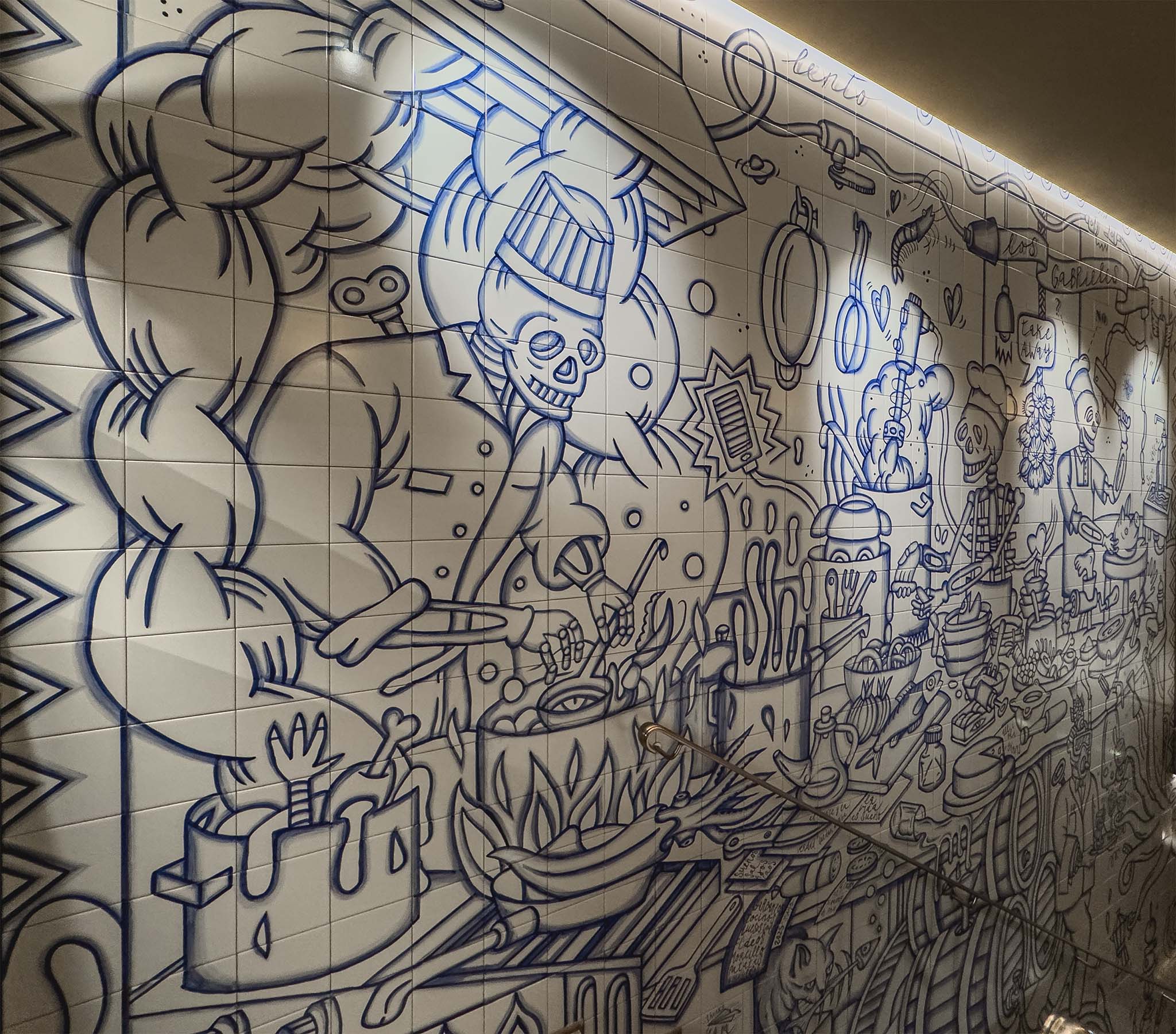
The Skeletomachy. "Los Gabrieles" by Rehabitar. Photograph by Coke Riera.
Project description by Rehabitar
As an architect, one learns early on that buildings are not merely brick and mortar structures, but repositories of collective memory. After decades of professional practice and hundreds of completed projects, I am now facing the culmination of a work that transcends mere technical rehabilitation: the rebirth of Los Gabrieles. A venue that remained closed for twenty years and, thanks to various efforts, returns to the city today as a space that reaffirms the role of architecture and art in the recovery of memory, identity, and urban life.
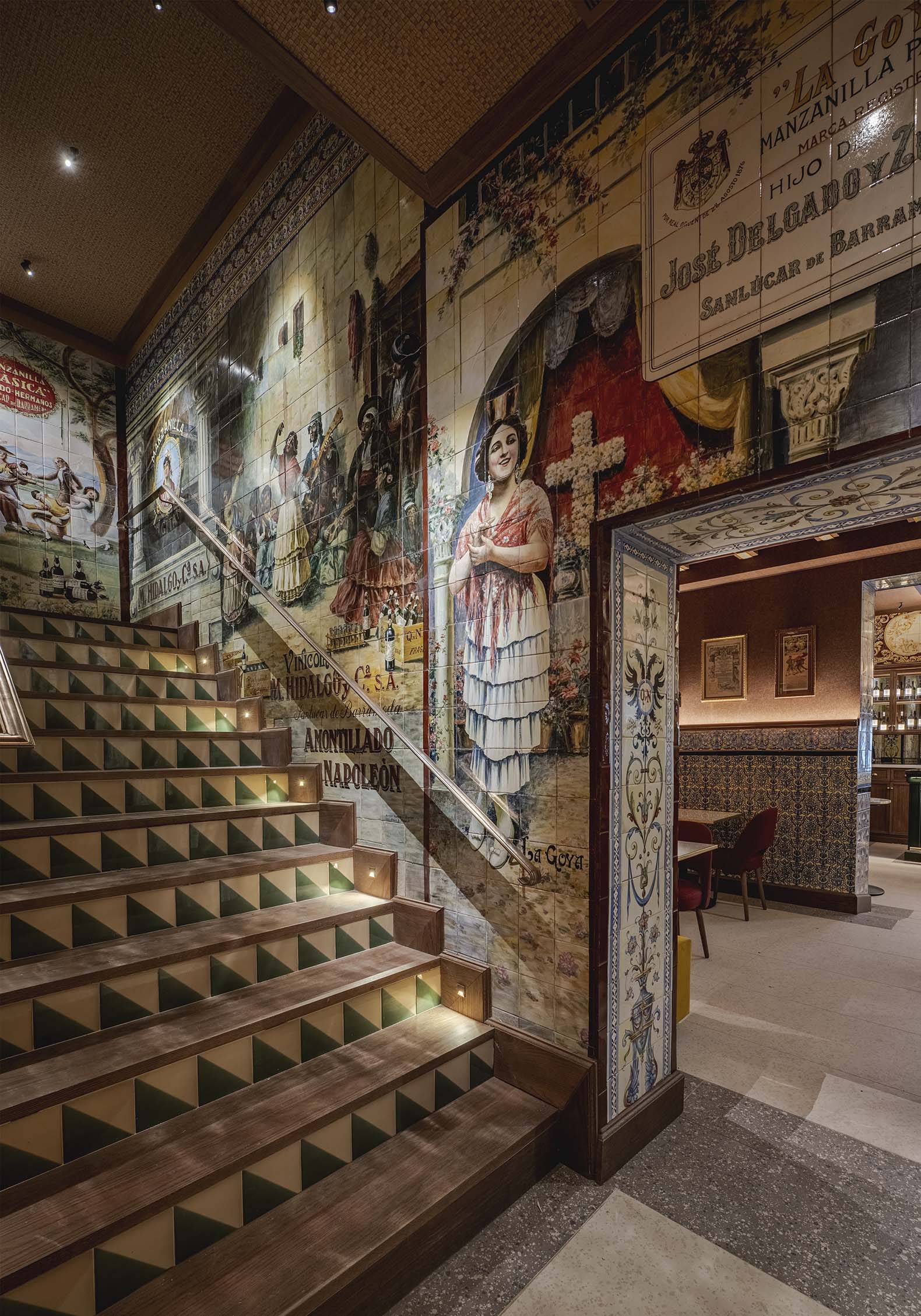
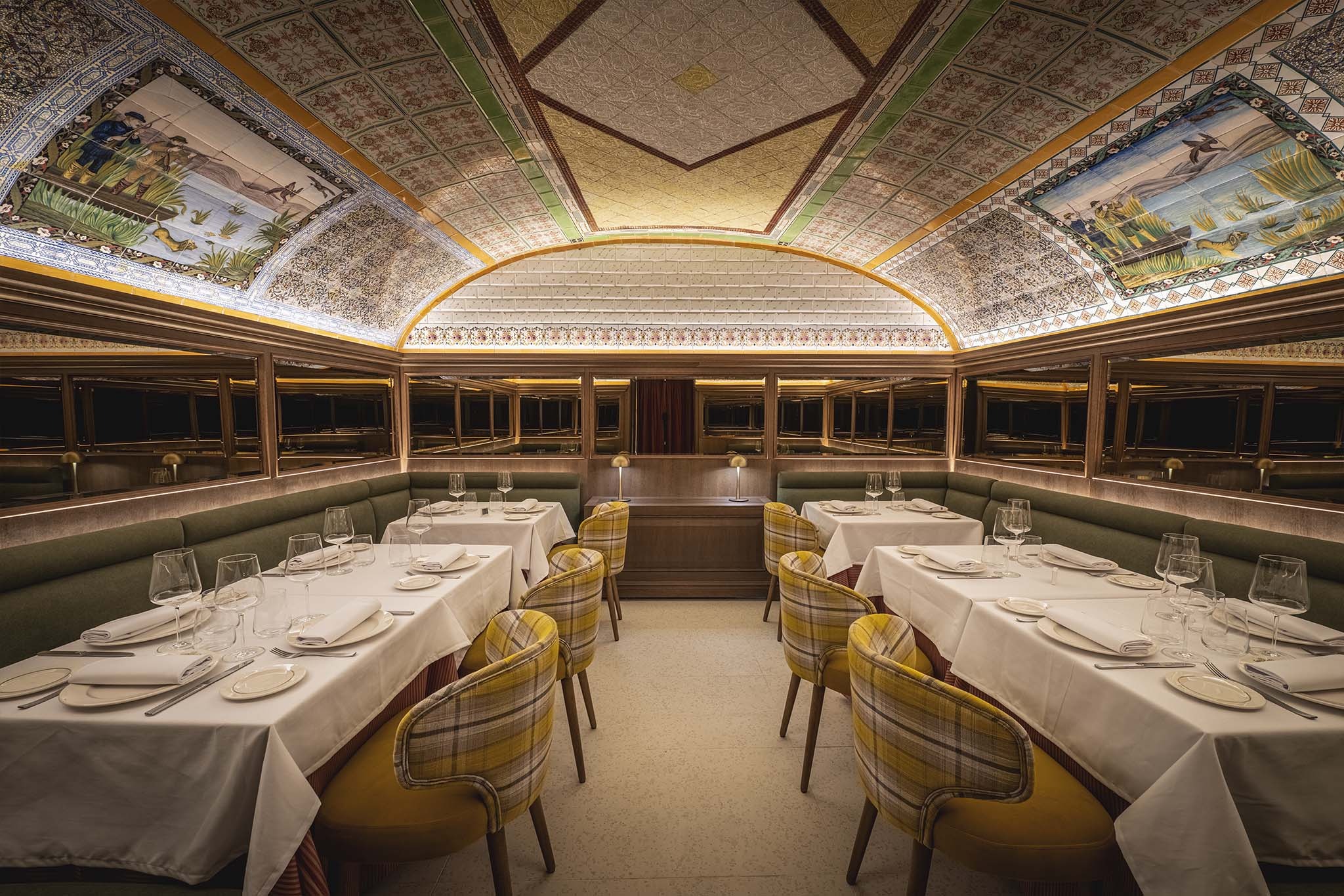
The intervention at 17 Echegaray Street has focused on showcasing an unparalleled ceramic heritage. Los Gabrieles houses what historian Natacha Seseña aptly called the "Sistine Chapel of Madrid's tilework." We are not looking at simple ornamental decoration, but rather a collection of murals created in the first third of the 20th century by the most distinguished masters of the genre: Enrique Guijo, Alfonso Romero, and Juan Ruiz de Luna.
These murals represent the moment when Spanish ceramics experienced a renaissance, fusing naturalistic language with scenes of everyday life and bullfighting. What makes this space unique from a design perspective is its commercial origin; the walls became advertising spaces financed by Jerez wineries to promote their wines and cognacs. The architectural challenge consisted of restoring and reinstalling these centuries-old pieces, adapting them to current soundproofing and comfort standards without compromising their aesthetic integrity. The meticulous work of ECRA Arte has allowed scenes inspired by Goya and Velázquez to once again engage visitors.
Understanding Los Gabrieles requires an archaeological examination of its history. The establishment opened in 1907 on Calle de la Visitación as a radically innovative project: a "Lhardy for the working class" serving affordable, quality food exclusively for takeaway, perhaps the first modern takeaway chain in Madrid. Upon moving to its current location in 1909-1910, under the management of Adrián Quijano, the business shifted its focus to the Andalusian grocery store model, becoming the epicenter of flamenco in the capital.
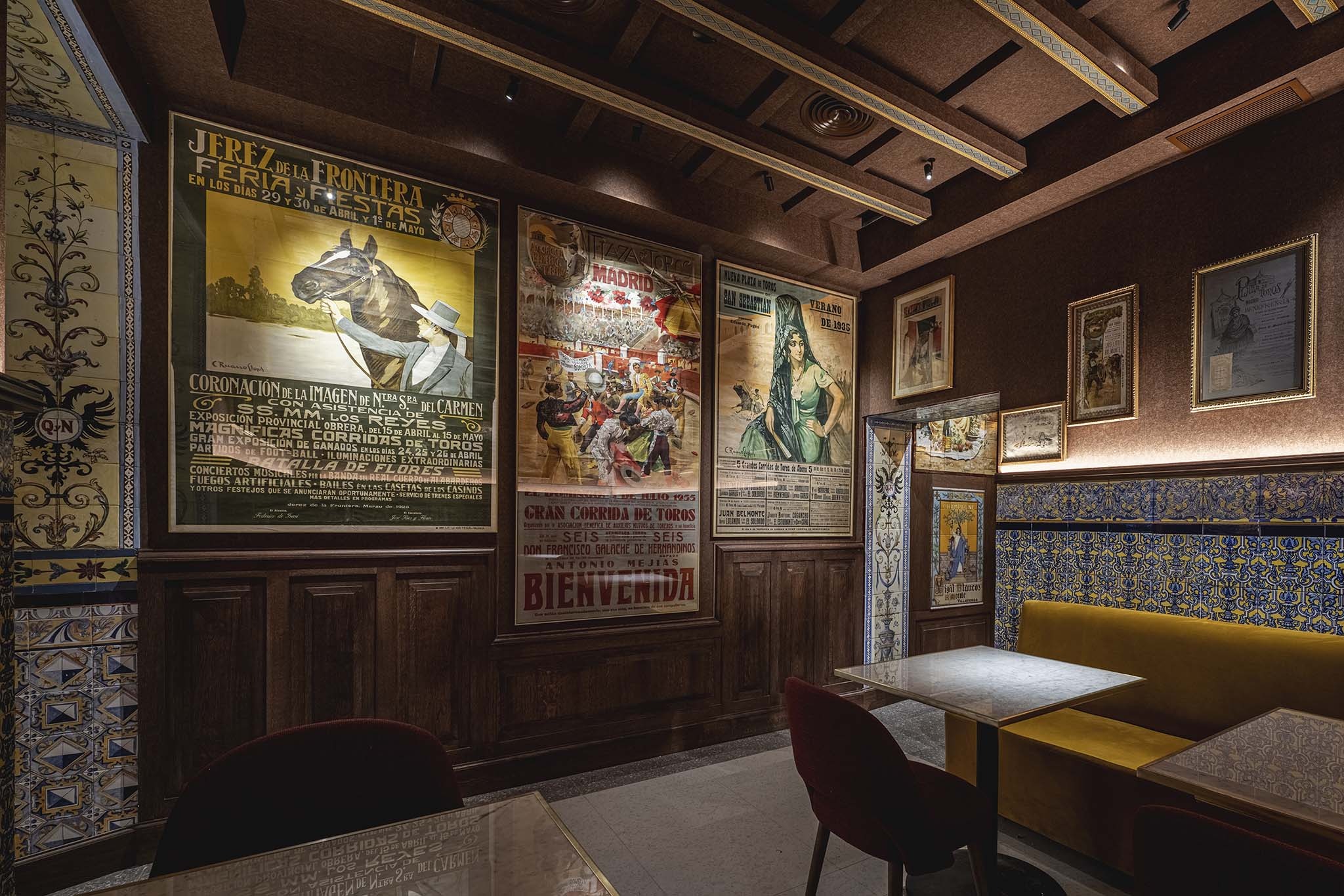
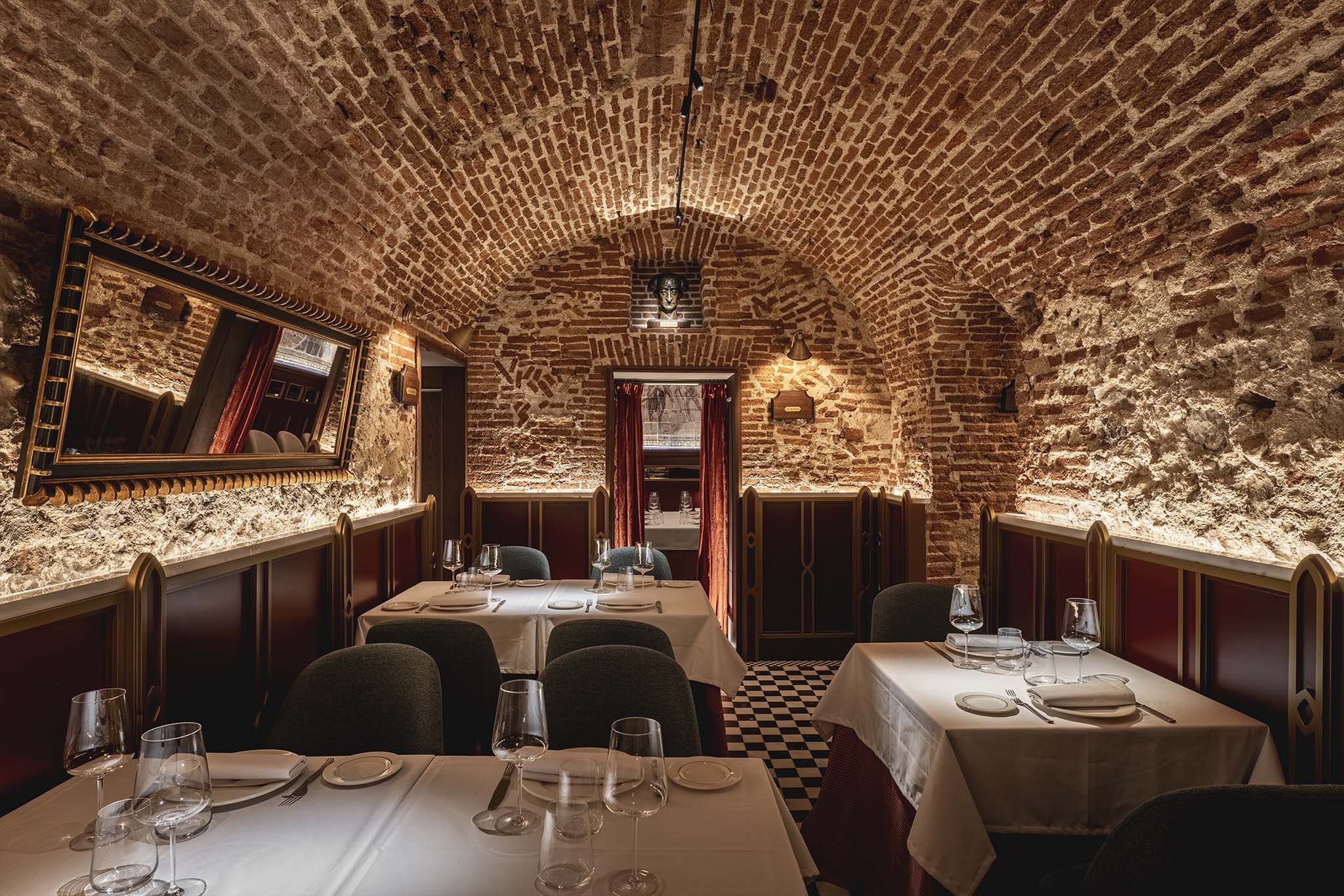
Restoring this space is to return to the city its deepest identity. Within these walls reigned Antonio Chacón, the "Father of Flamenco," and figures like the bullfighter Juan Belmonte sought refuge here, his Belmonte fan club having its stronghold here. The project has meticulously respected the "rooms" or private rooms, such as the famous Manolete Room, a small windowless private room that the matador used during his stays in Madrid and which is now preserved as a landmark of the establishment's intangible memory. In rehabilitating Los Gabrieles, we are not only restoring tiles; We rehabilitated the echoes of Ava Gardner, Federico García Lorca, and the Madrid scene of Almodóvar and Bardem, recognizing that human history is as much a part of a building's heritage as its façade.
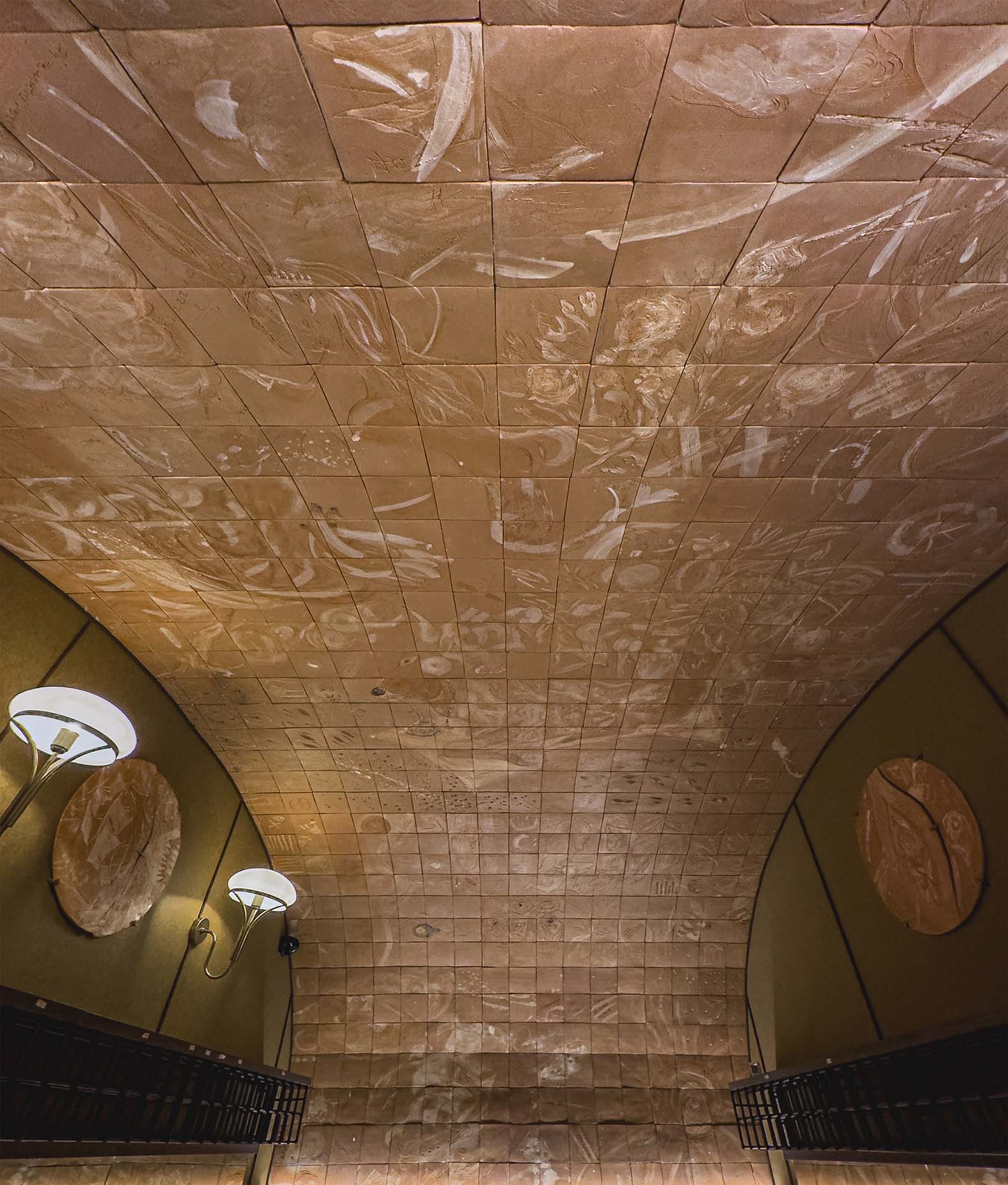
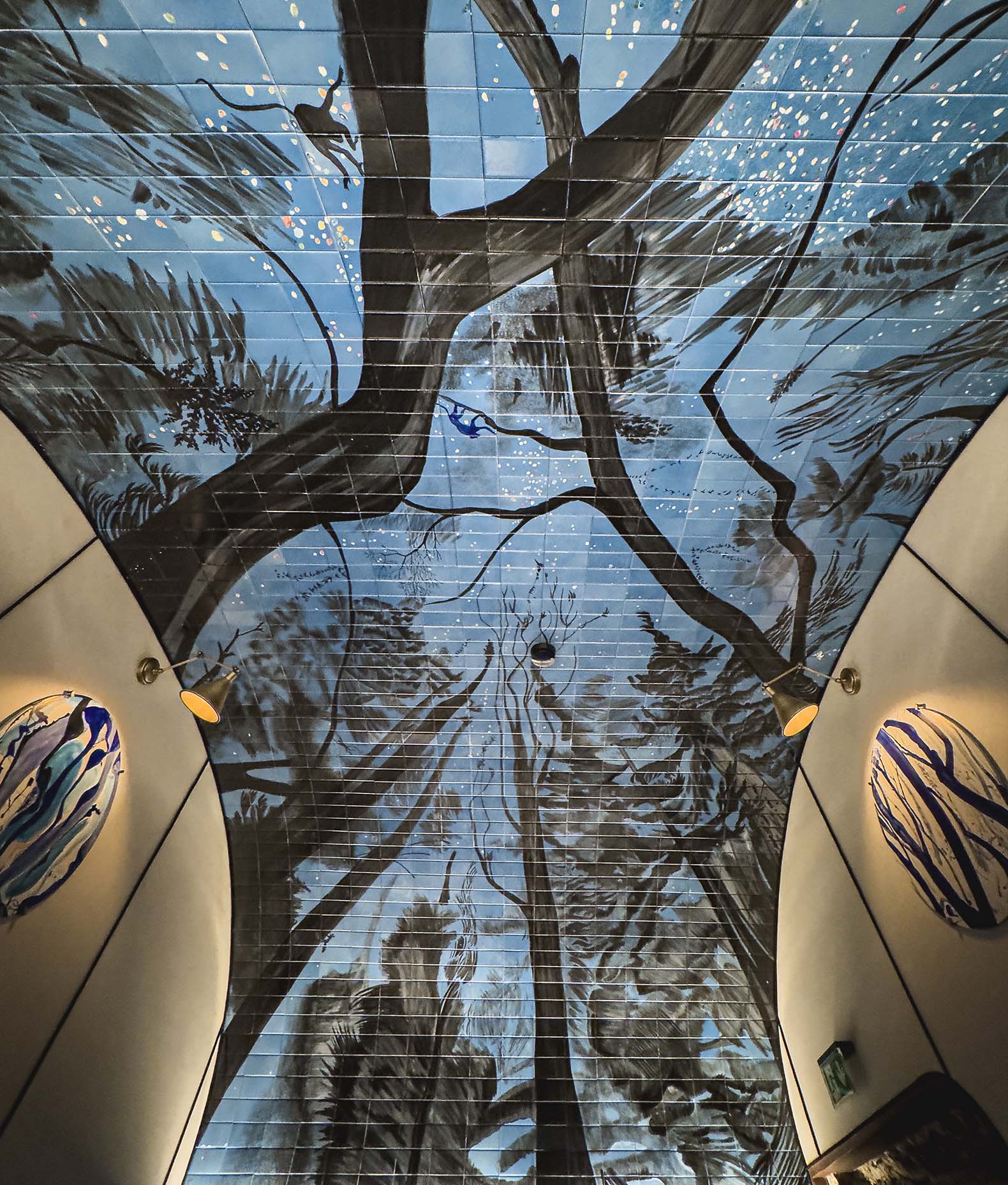
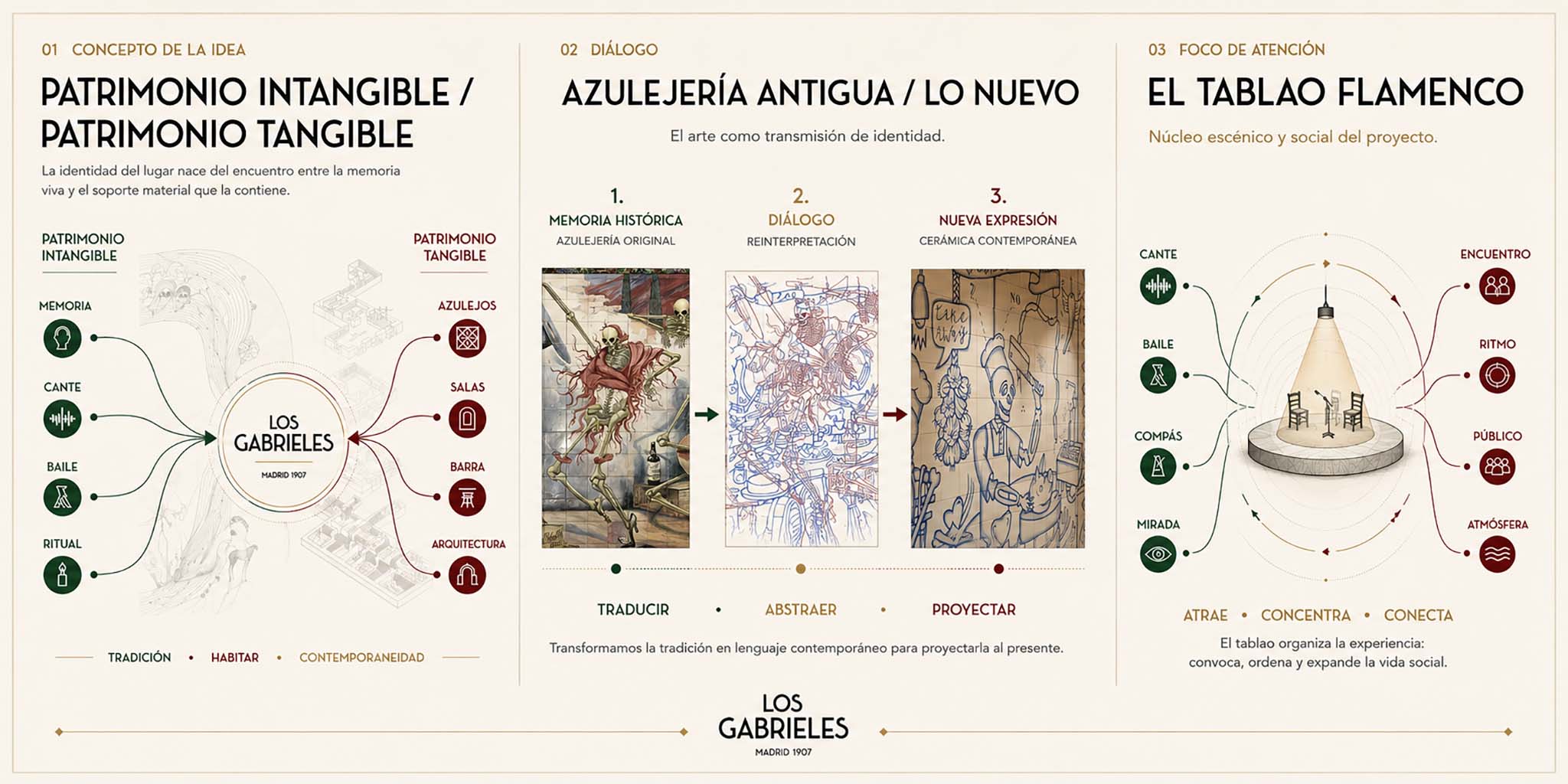
The noblest quality of this intervention is that it wasn't conceived as a museum of nostalgia, but as a living space capable of generating new culture. We followed the premise that those who build must project into the future. Therefore, in those spaces that lacked original decoration, we invited internationally renowned contemporary artists to extend this character of a "unique space" through a new 21st-century Sistine Chapel.
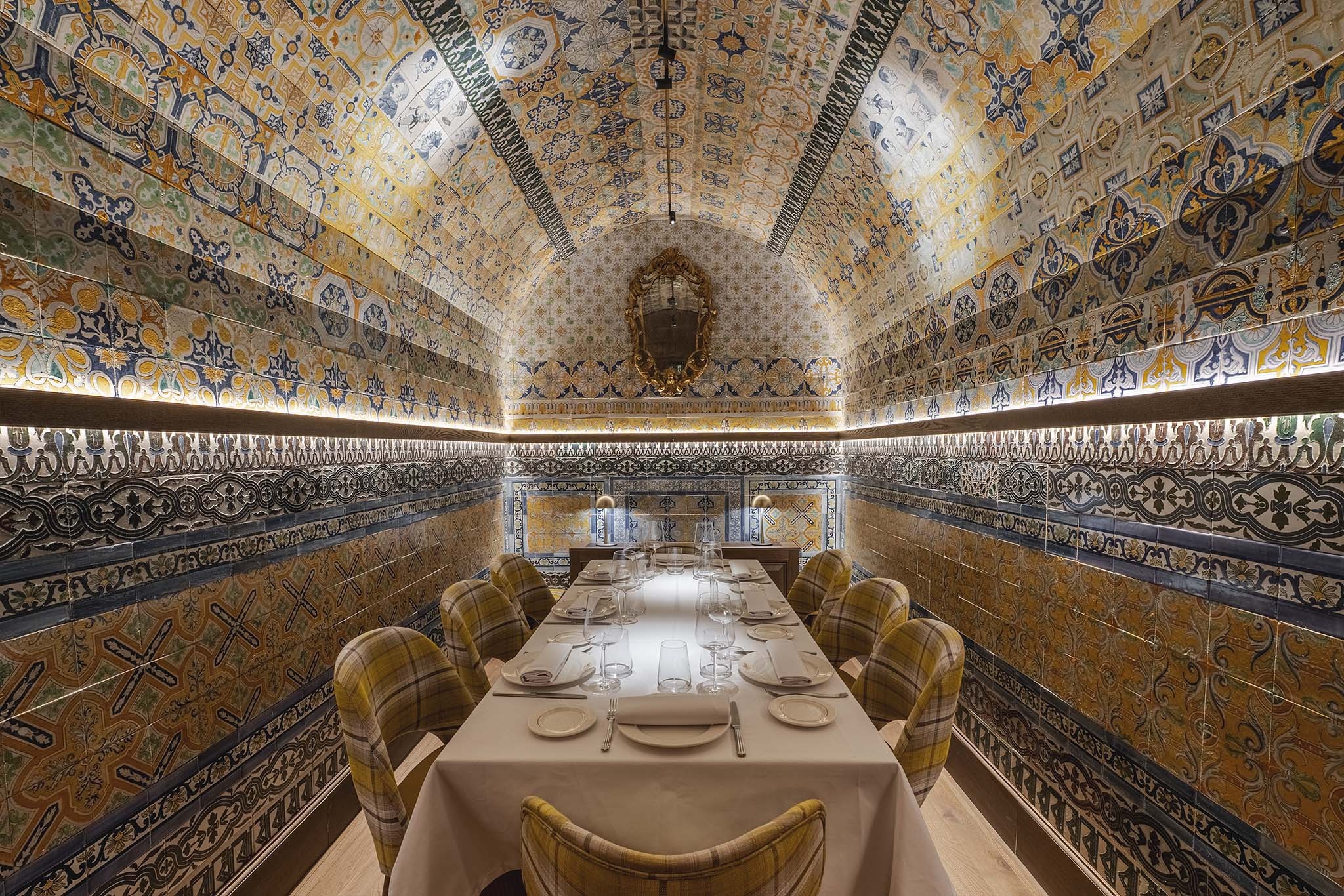
The result is a fascinating dialogue. The spirit of Carlos González Ragel and his unsettling "skeletomachy" of 1923 find continuity in the new pieces by Xavier Montsalvatje, who reinterprets memento mori with a post-industrial aesthetic in the panel "Slow Burn." Alvar Haro has visually pierced the basement vaults with starry skies and underwater scenes that lighten the weight of the structure and connect the subsoil with the cosmos. Ana Nance—the first woman to leave her ceramic signature in the venue's history—contributes an ecofeminist and dreamlike perspective in her room, "Muses," while Miki Leal integrates avant-garde design with an ironic homage to flamenco tradition. Finally, Cristóbal Quintero's frieze, "Flamenco Fable," visually narrates the venue's 118-year history.
From an interior design and engineering standpoint, the project, led by the Rehabitar studio, has been a work of technical artistry. In collaboration with Estudio Súnico, each room has been imbued with a specific warmth and quality, using theatrical lighting that highlights the ceramics and invisible acoustic systems that allow one to enjoy flamenco without the visual intrusion of bulky speakers.
This rebirth, culminating at the end of 2025, is the fruit of shared tenacity in the face of decades of bureaucratic incomprehension and administrative difficulties. A court ruling was necessary for the City Council to recognize the integrity of the three floors of the building and allow its restoration to its original use as a bar-restaurant with live music.
None of this would have been possible without the unwavering faith of the owners, Verde Ciprés, S.L., and the work of a multidisciplinary team that includes researchers like Justin Byrne and historians like Abraham Rubio. As an architect, my role has been that of an orchestra conductor, striving to ensure that the music of history never ceases to play. Los Gabrieles rises again, proud of its scars, demonstrating that by merging heart with popular spirit, what is lost in name is gained in eternity. Today, Madrid reclaims its most flamenco heart and its most vibrant heritage.