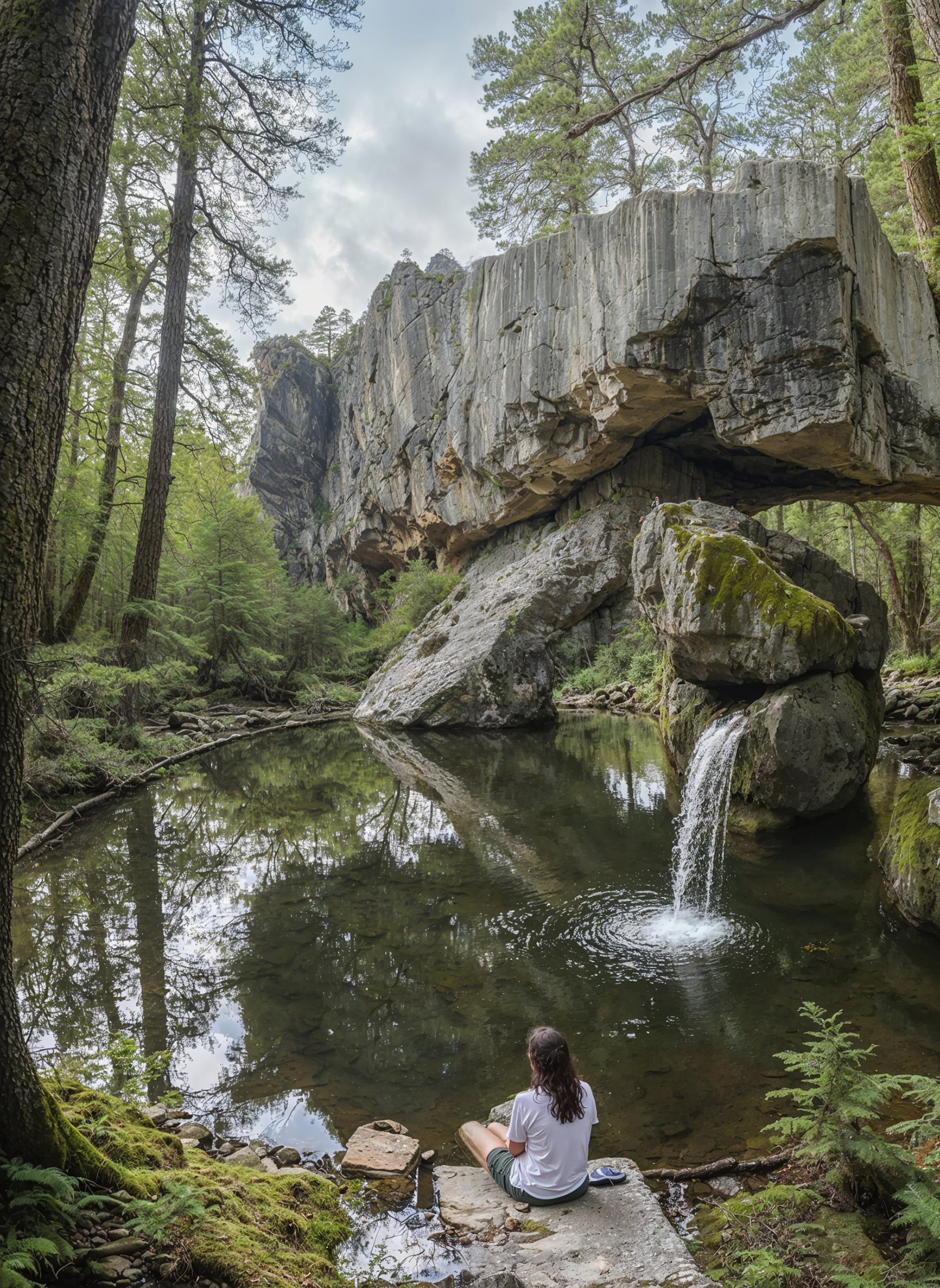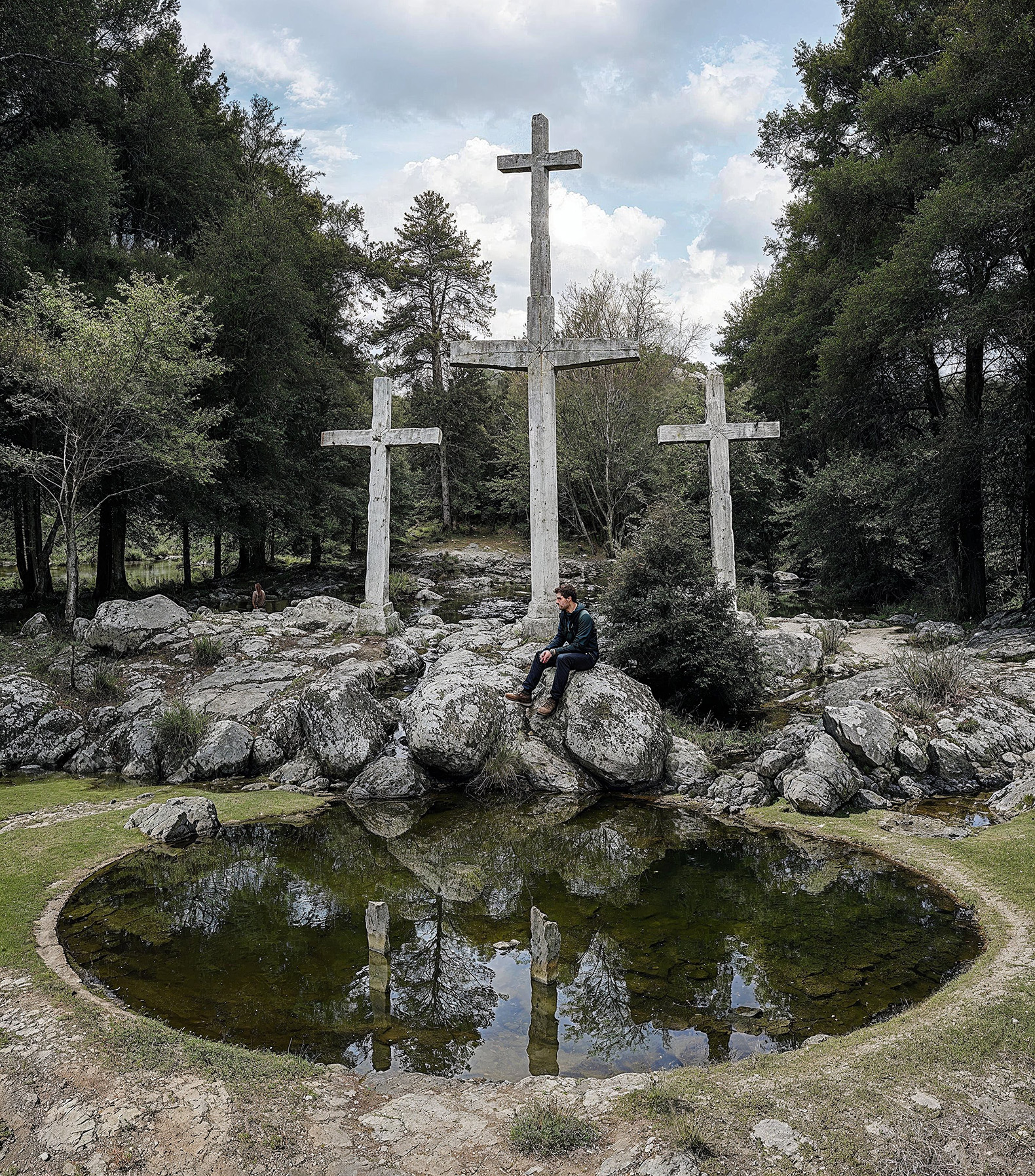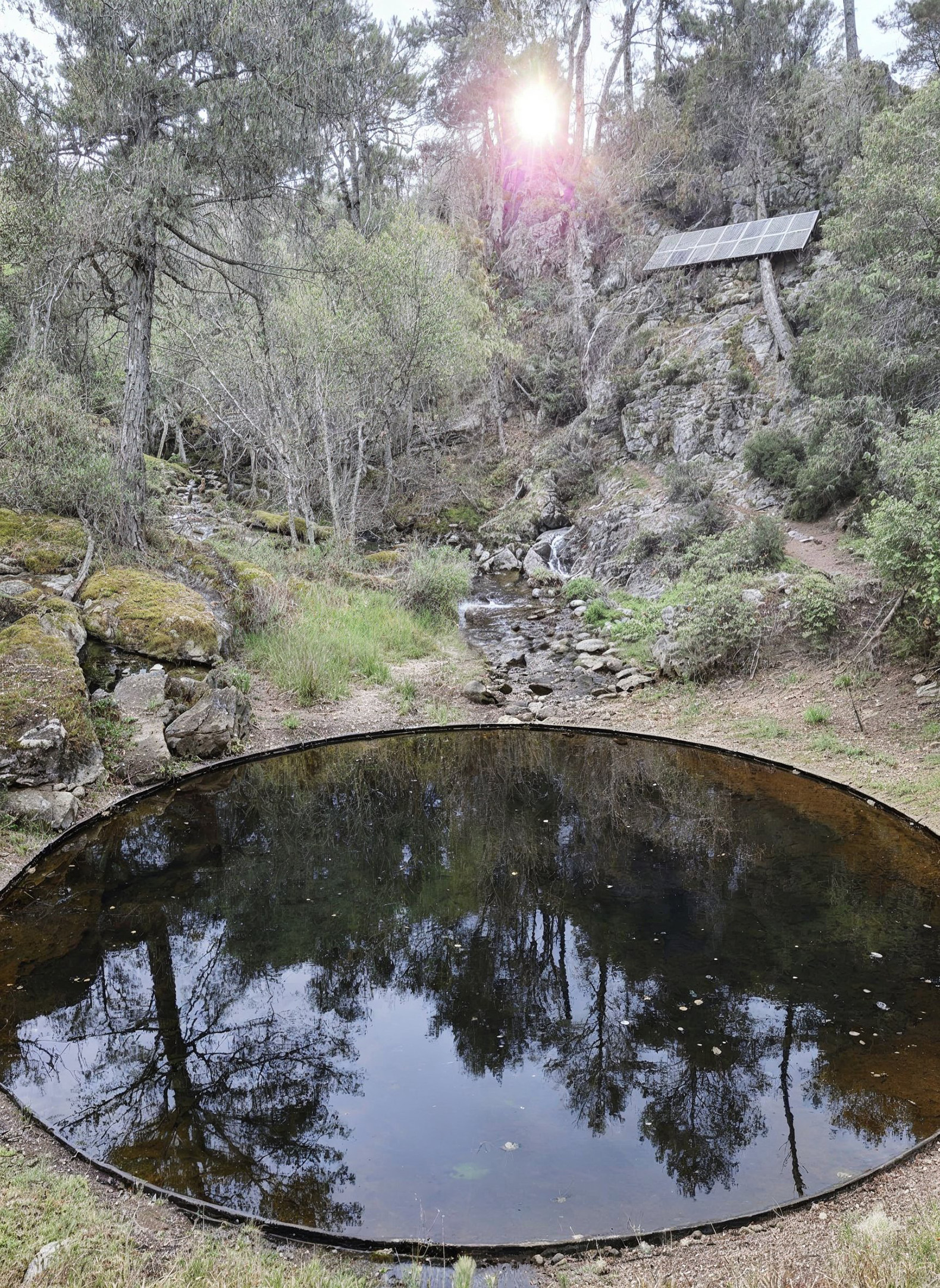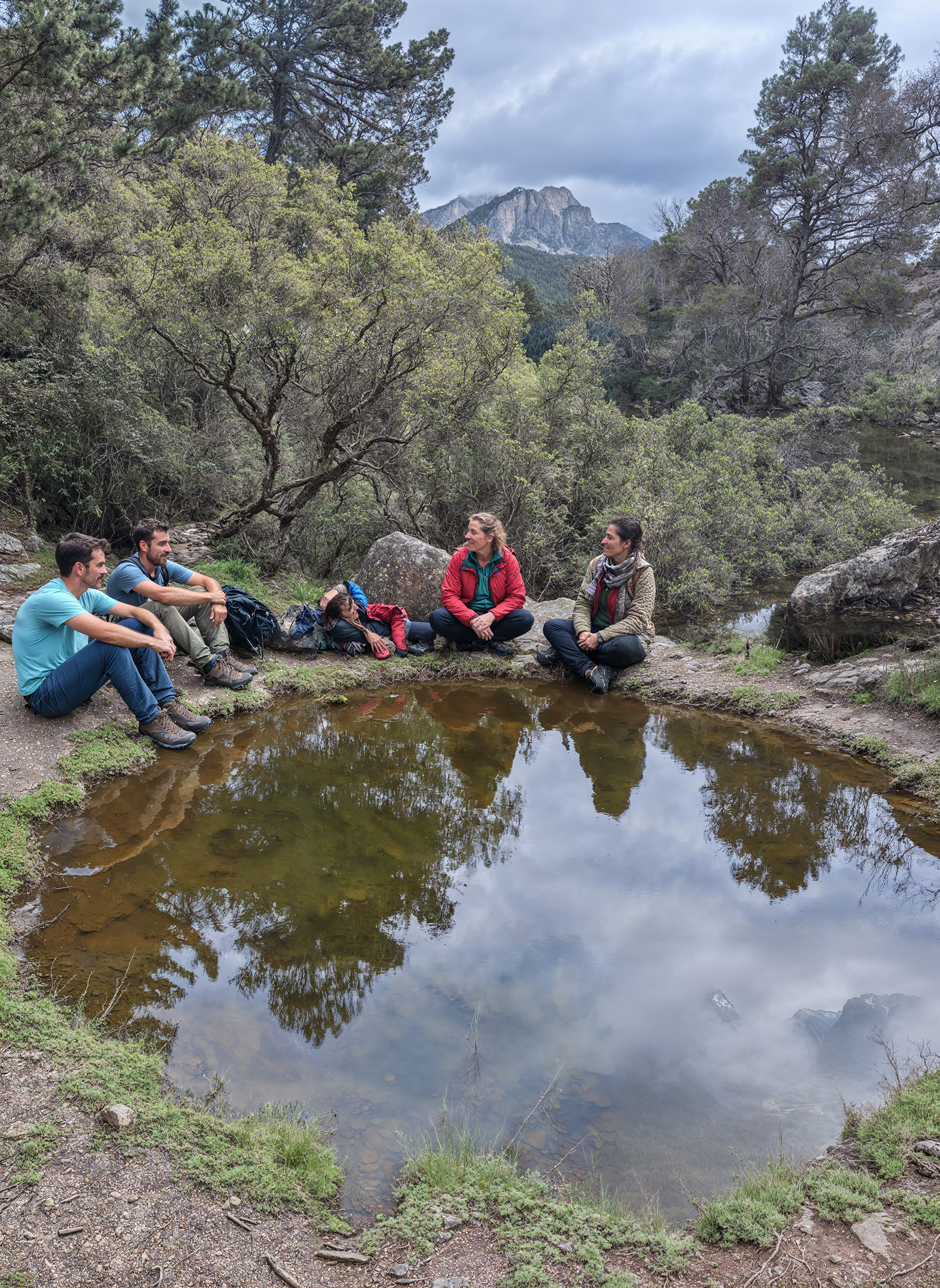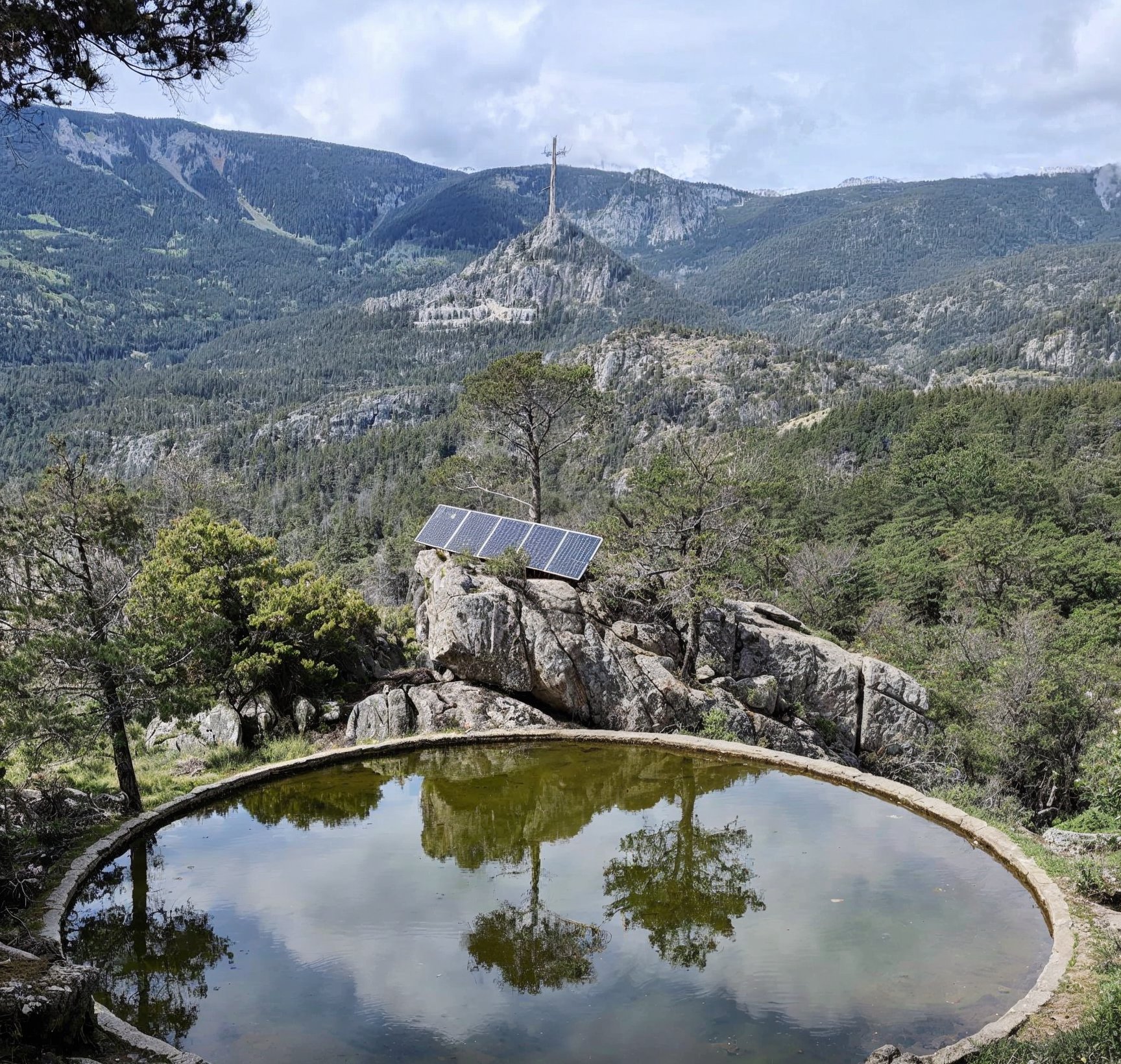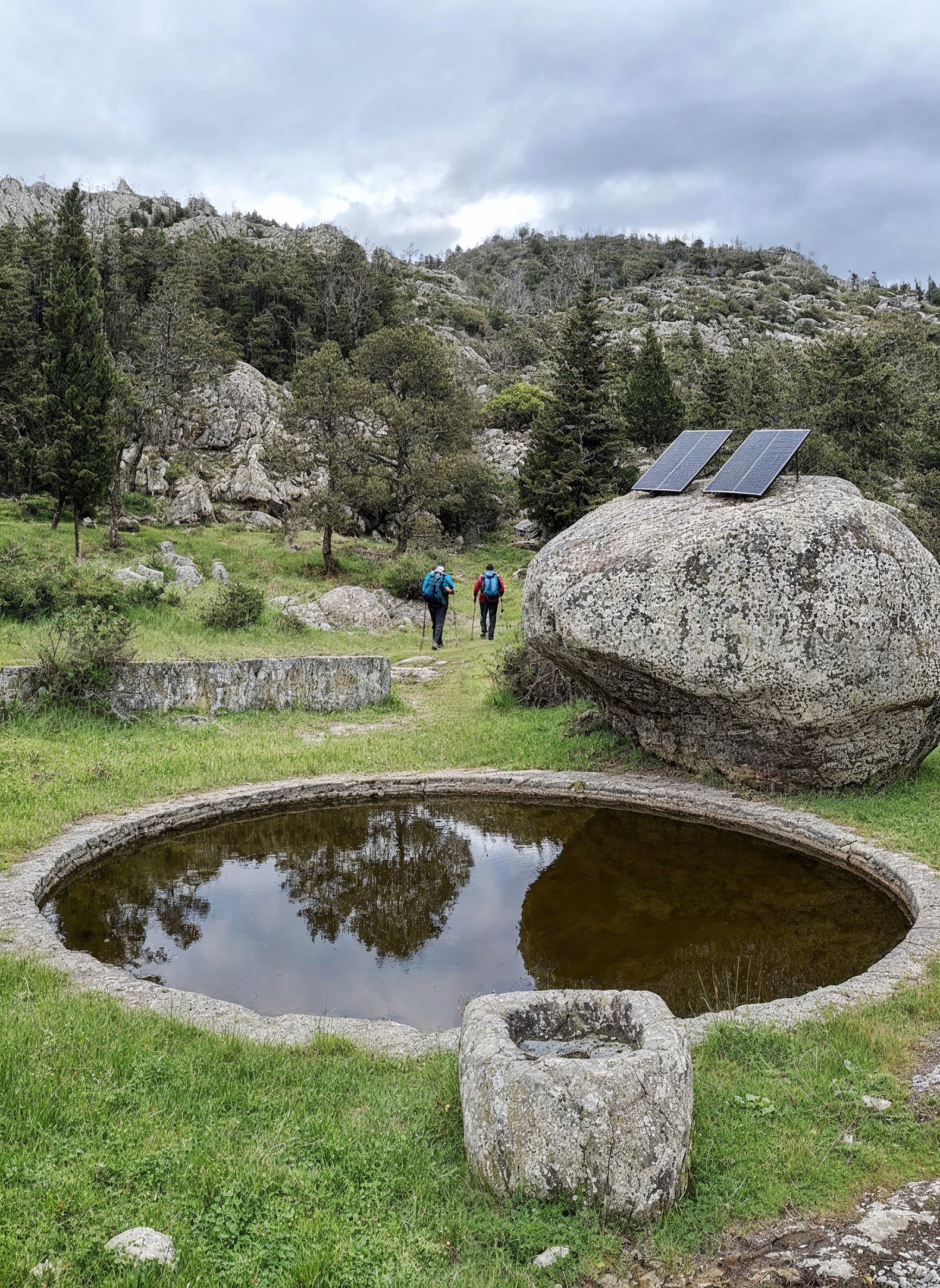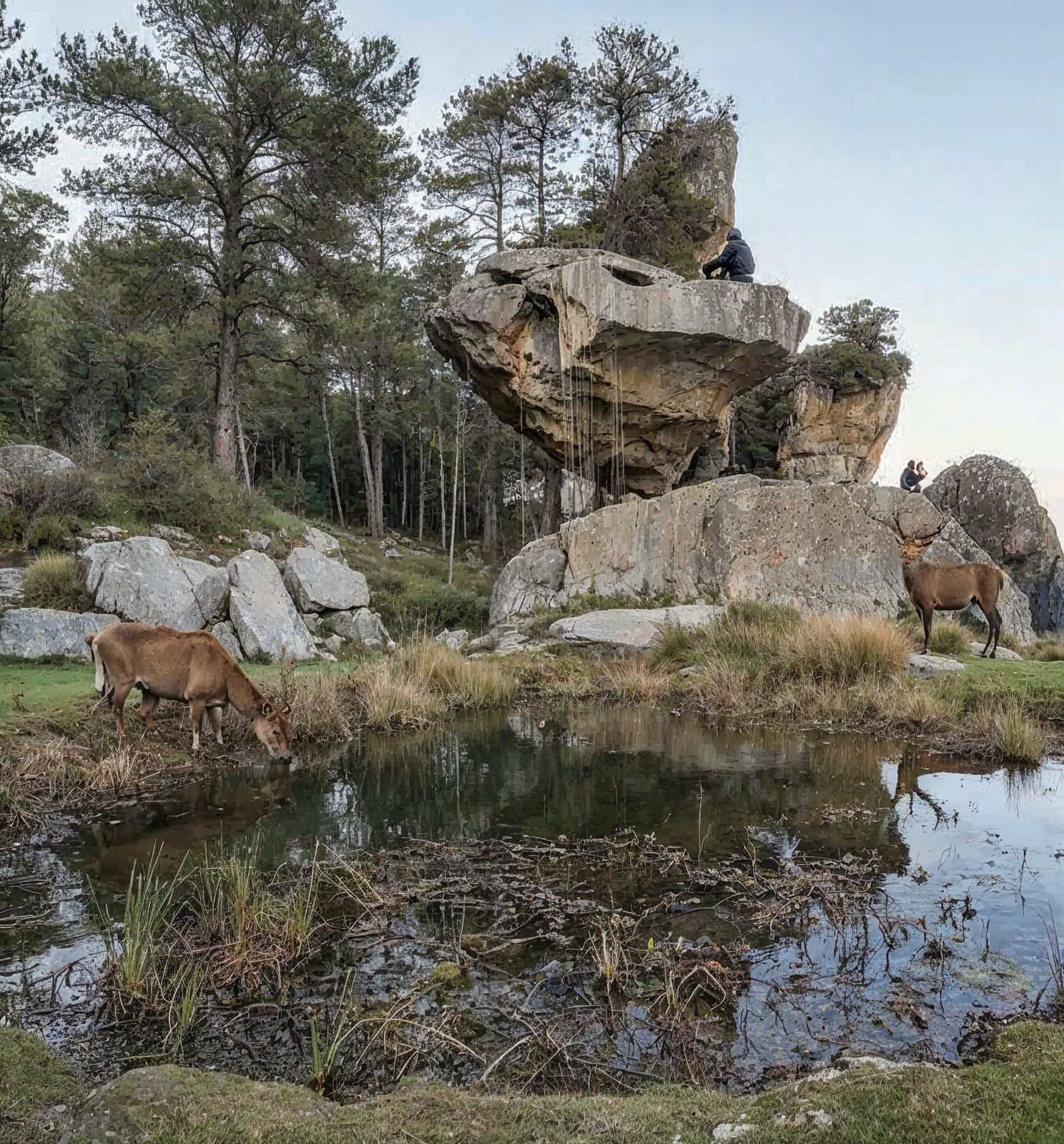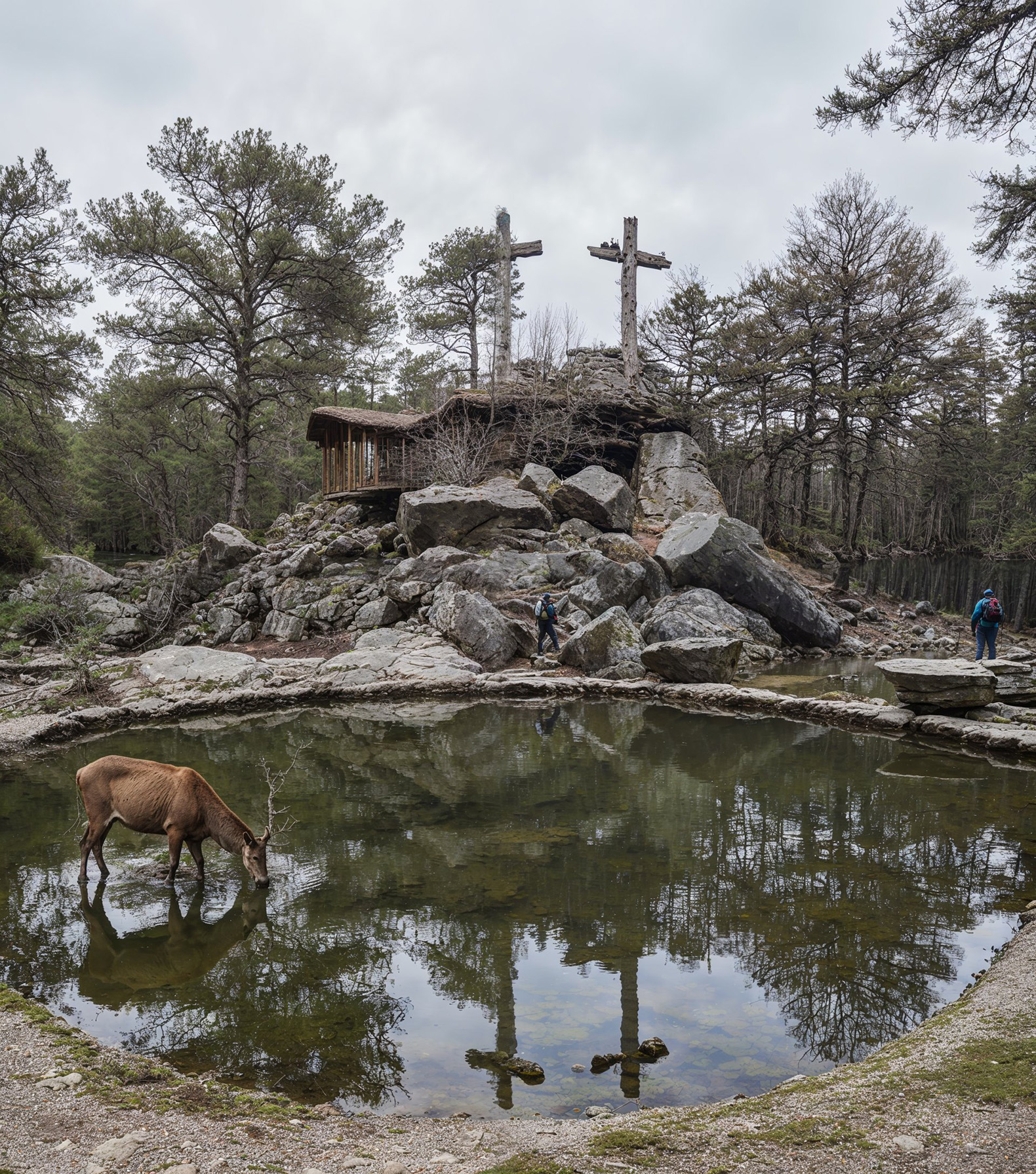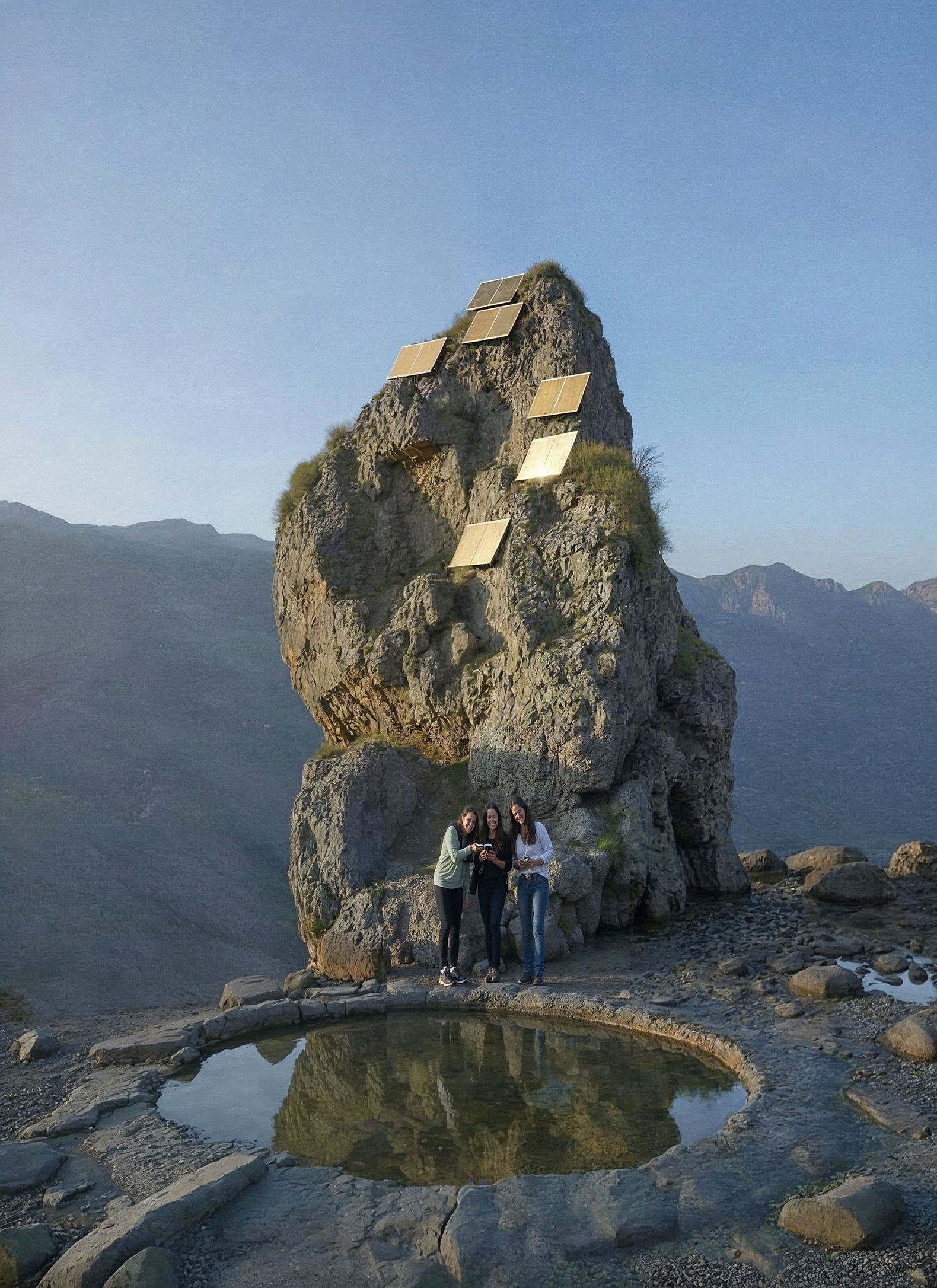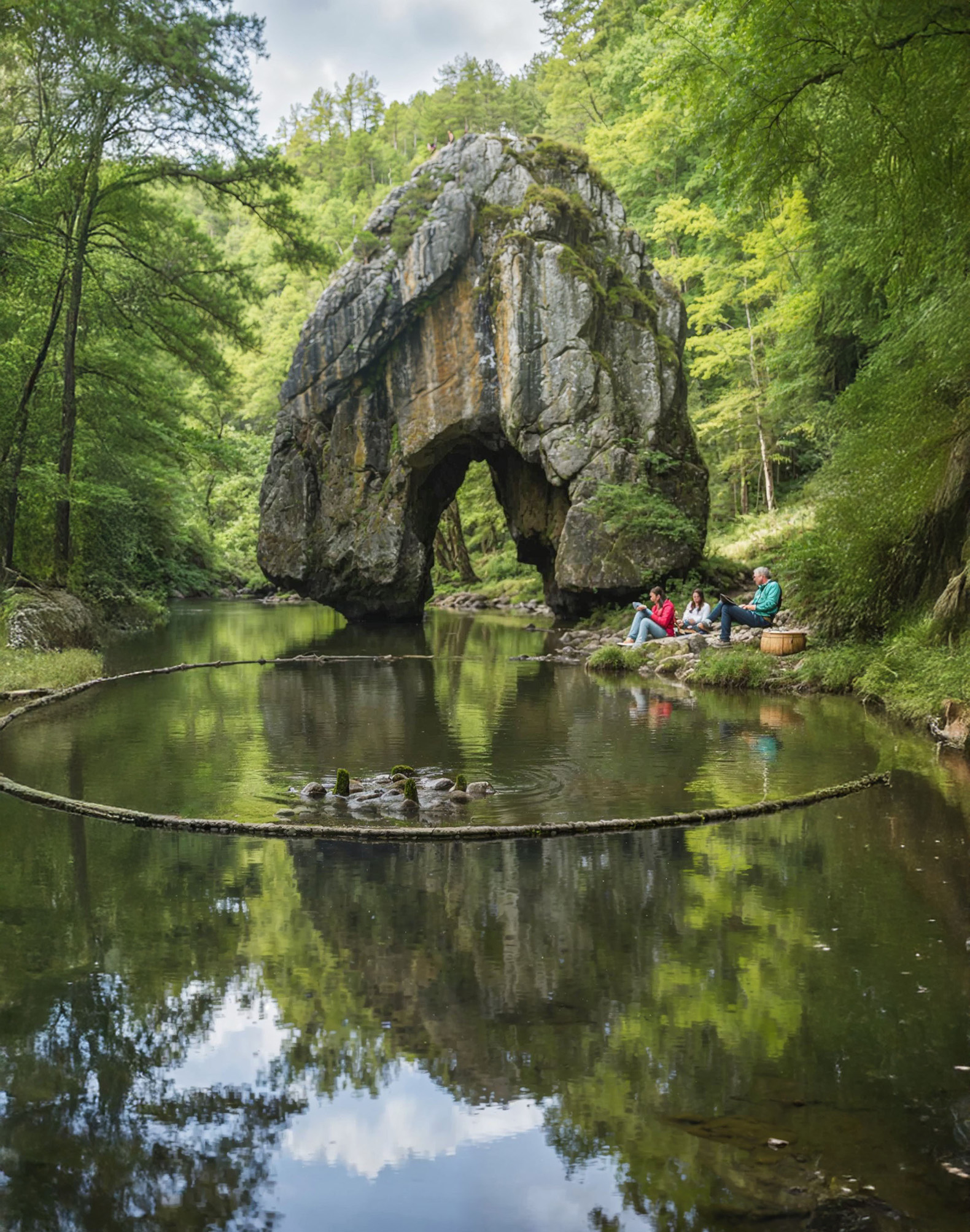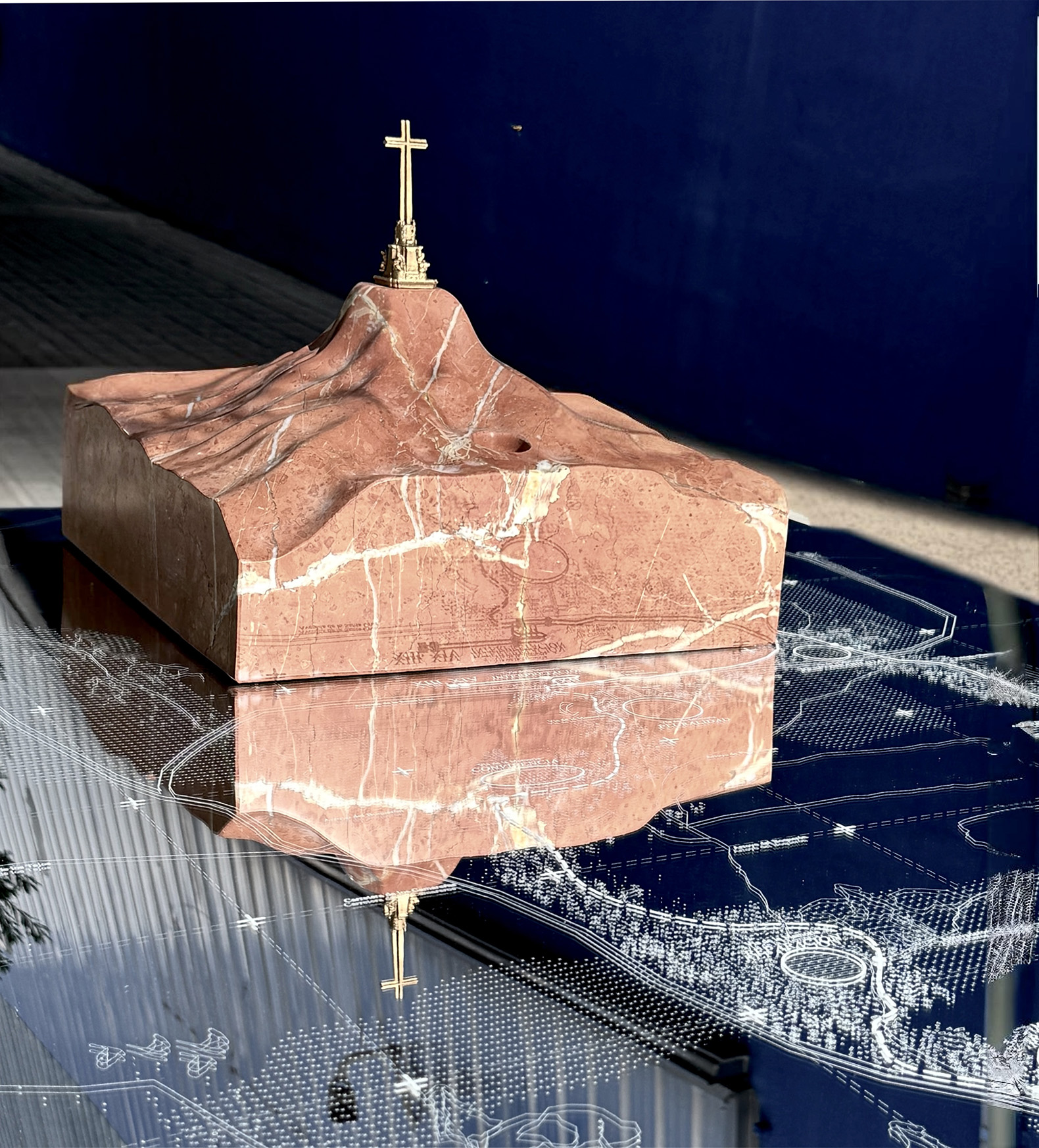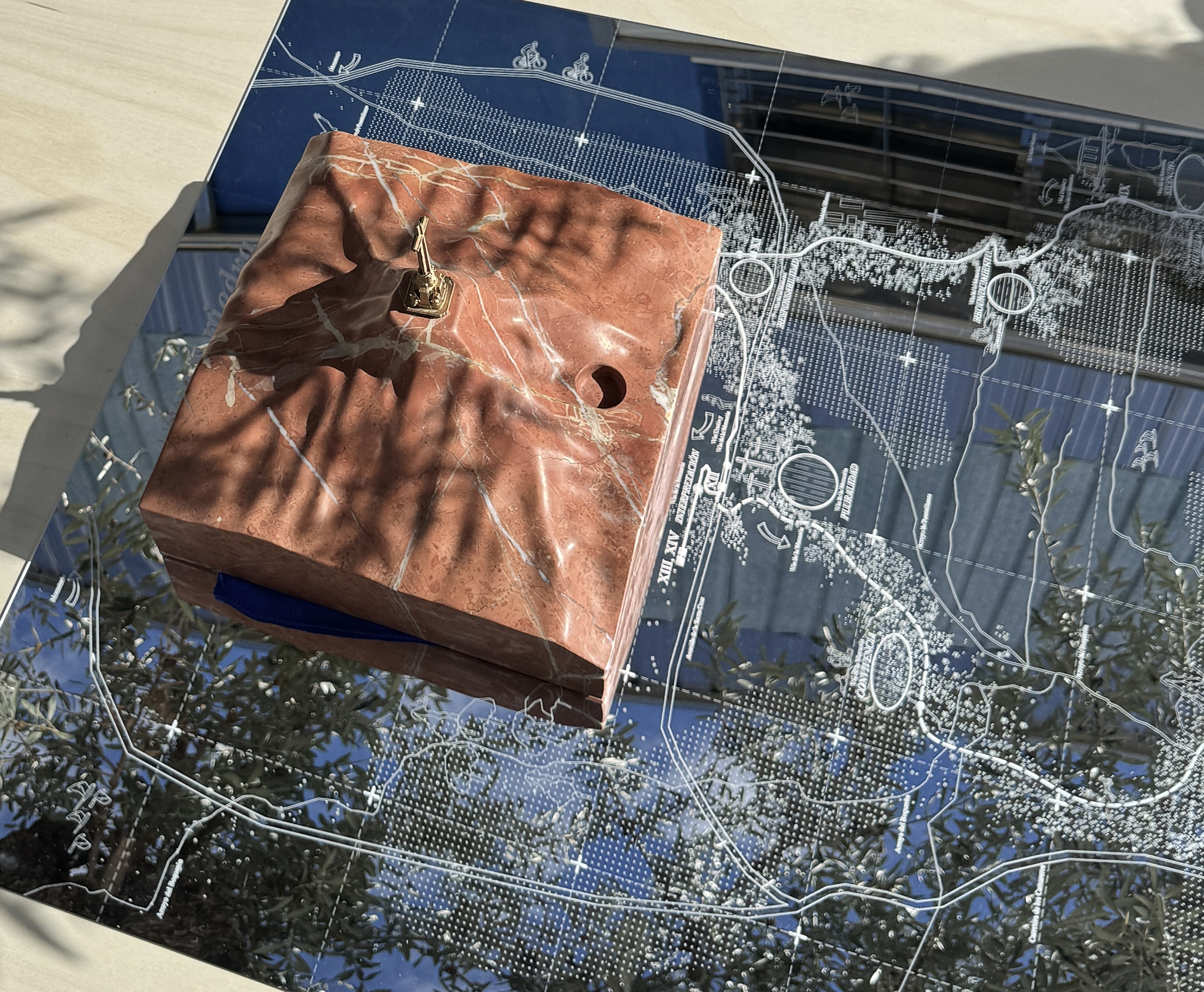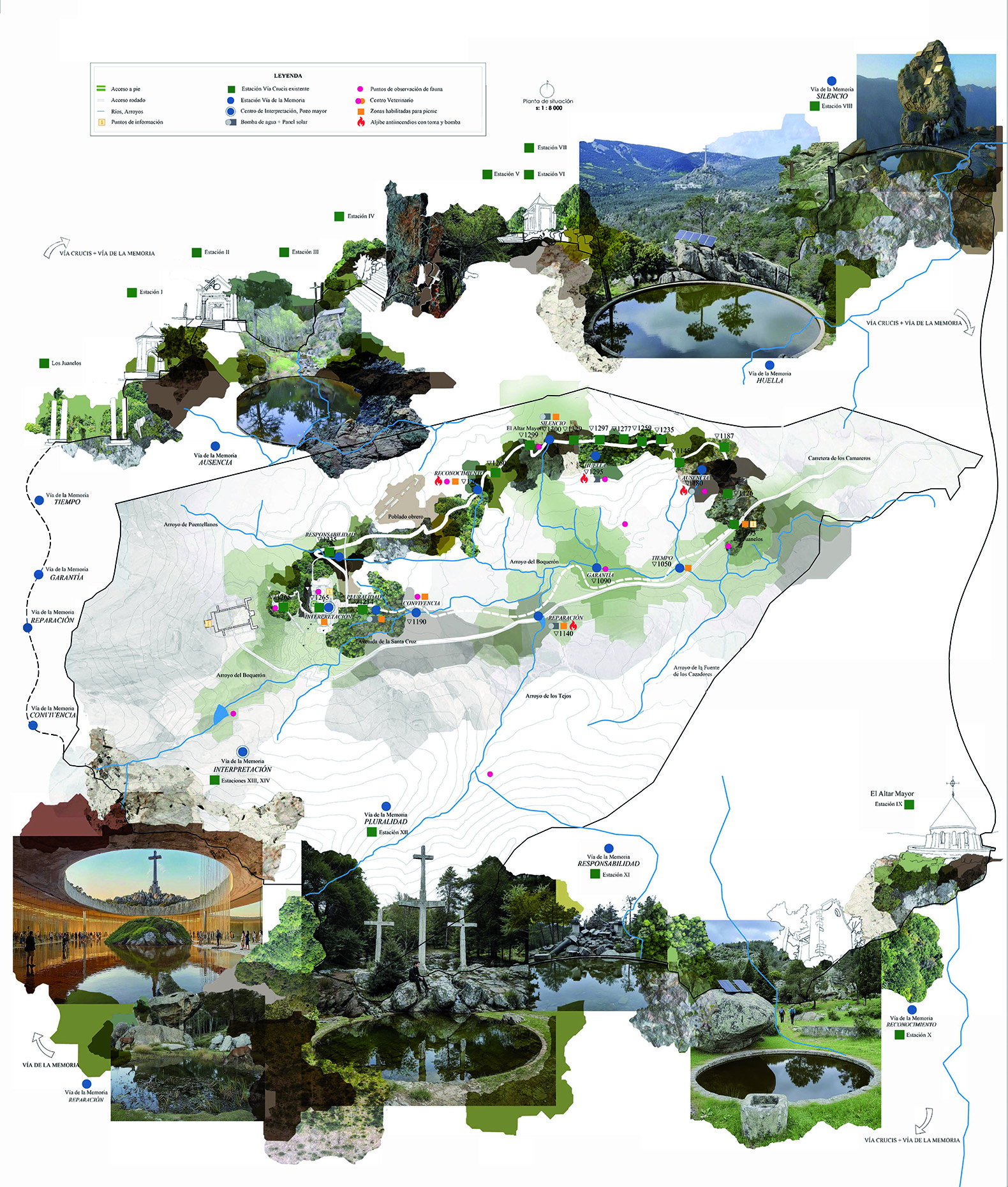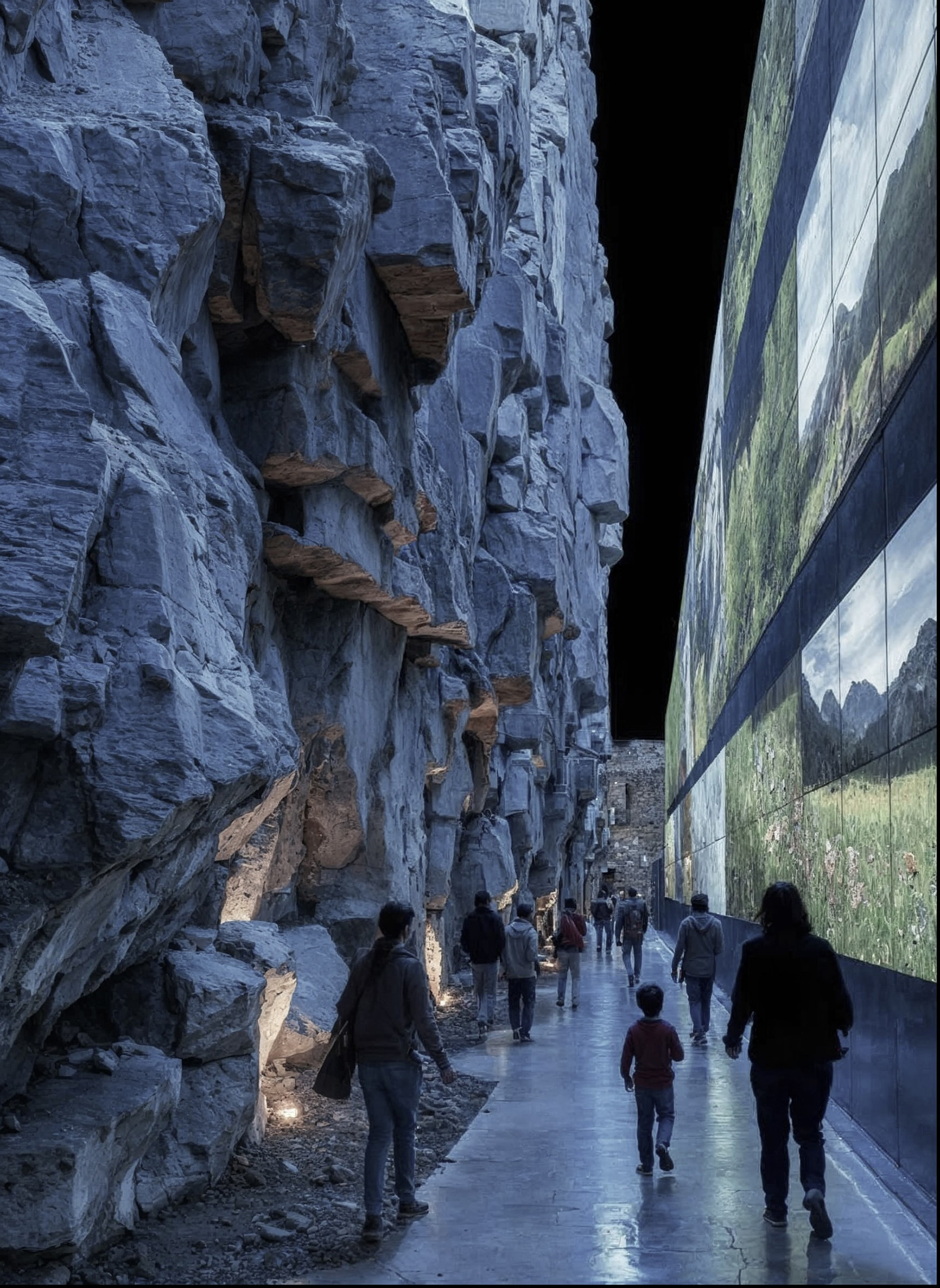
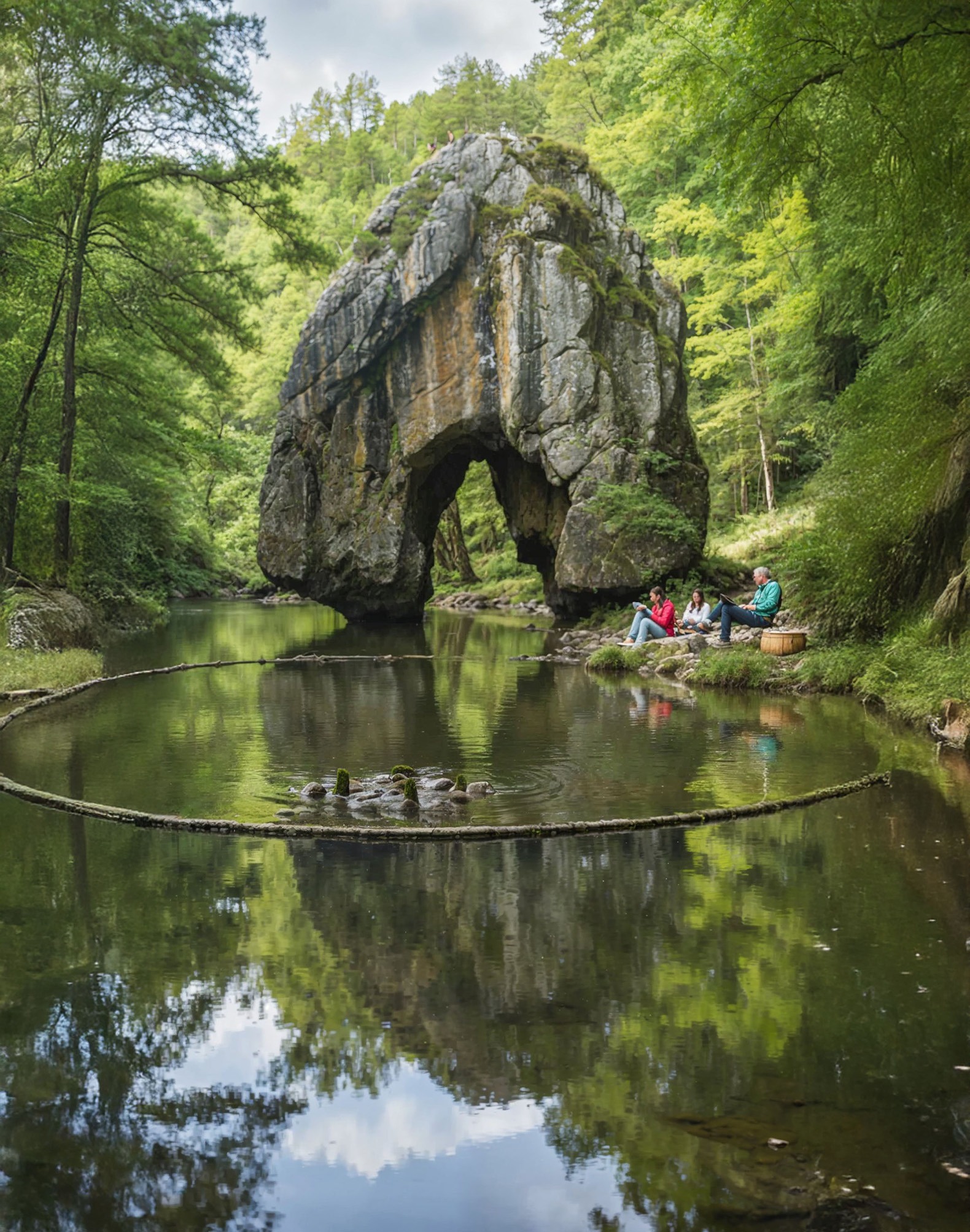
The proposal presented by Manuel Ocaña and Carlos Bañón is structured around the "Path of Memory," a continuous itinerary composed of eleven stations linked to concepts from Law 20/2022: Absence, Trace, Silence, Recognition, Responsibility, Interpretation, Plurality, Coexistence, Reparation, Guarantee, and Time. Each station is configured as a circular pond with ecological, symbolic, and contemplative functions.
This route connects landscape and memory, discreetly integrating technology and fostering an active relationship between the visitor, the environment, and the past. Water, a central element, acts as a medium of transformation, converting former symbols of power into dynamic and ever-changing experiences.
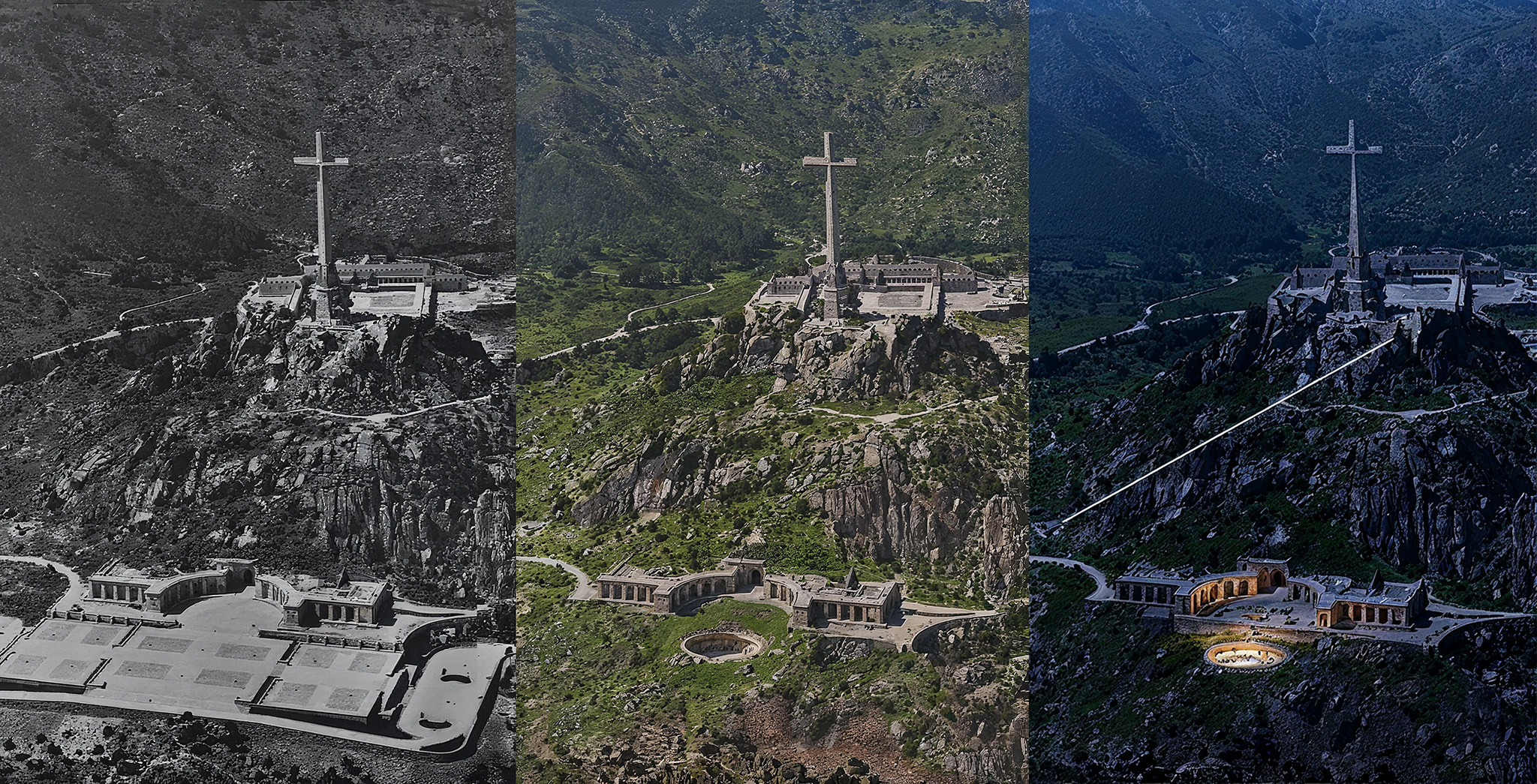
The intervention advocates for a comprehensive renaturalization that reconfigures both the esplanade and the valley through landforms, native vegetation, and water systems. The Interpretation Center is integrated into the terrain as a subterranean structure, organized around a floodable courtyard and connected by pathways that link history and landscape. Overall, the proposal redefines the place as a living ecosystem where architecture, nature and memory intertwine in a collective and open experience.
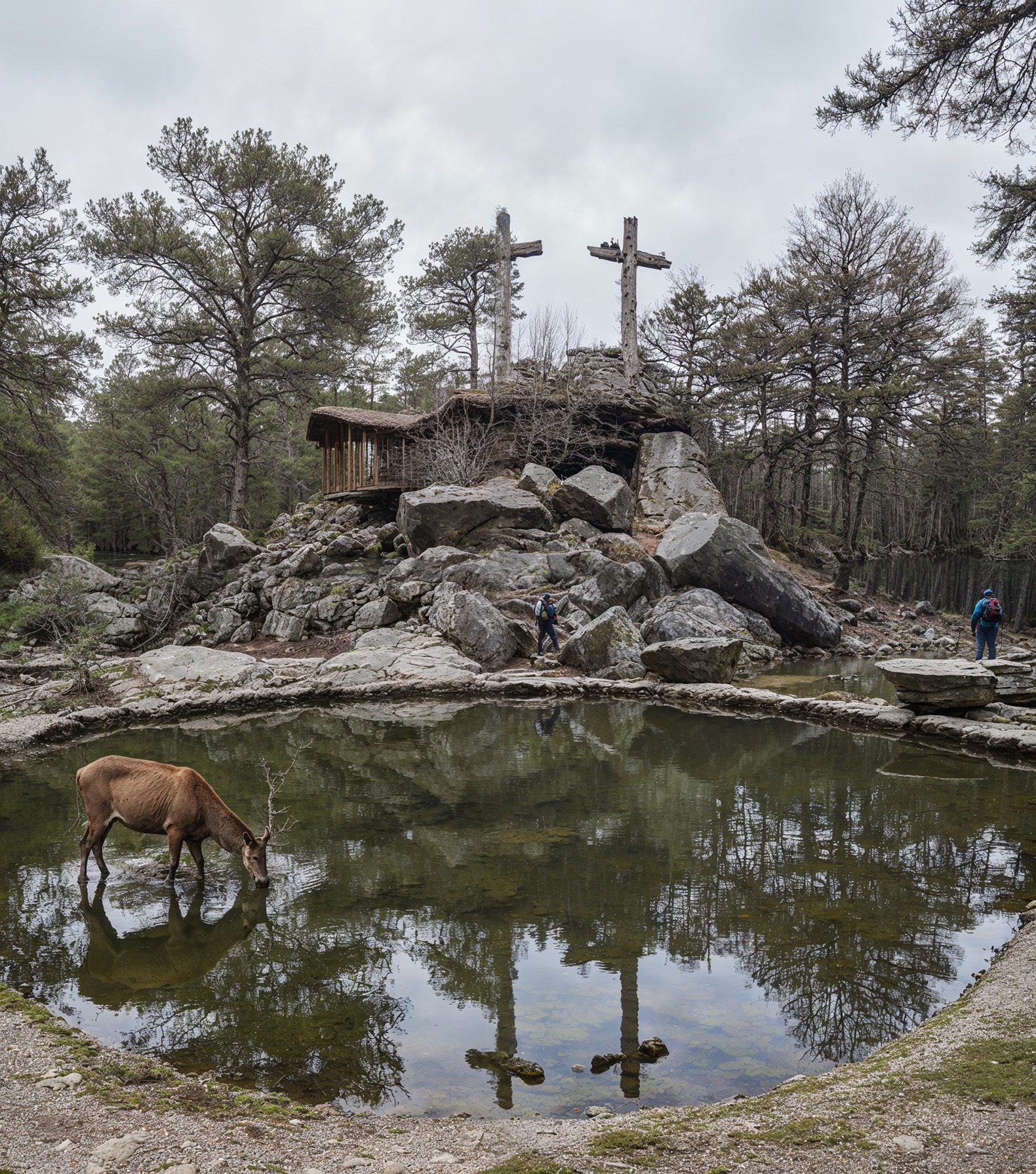
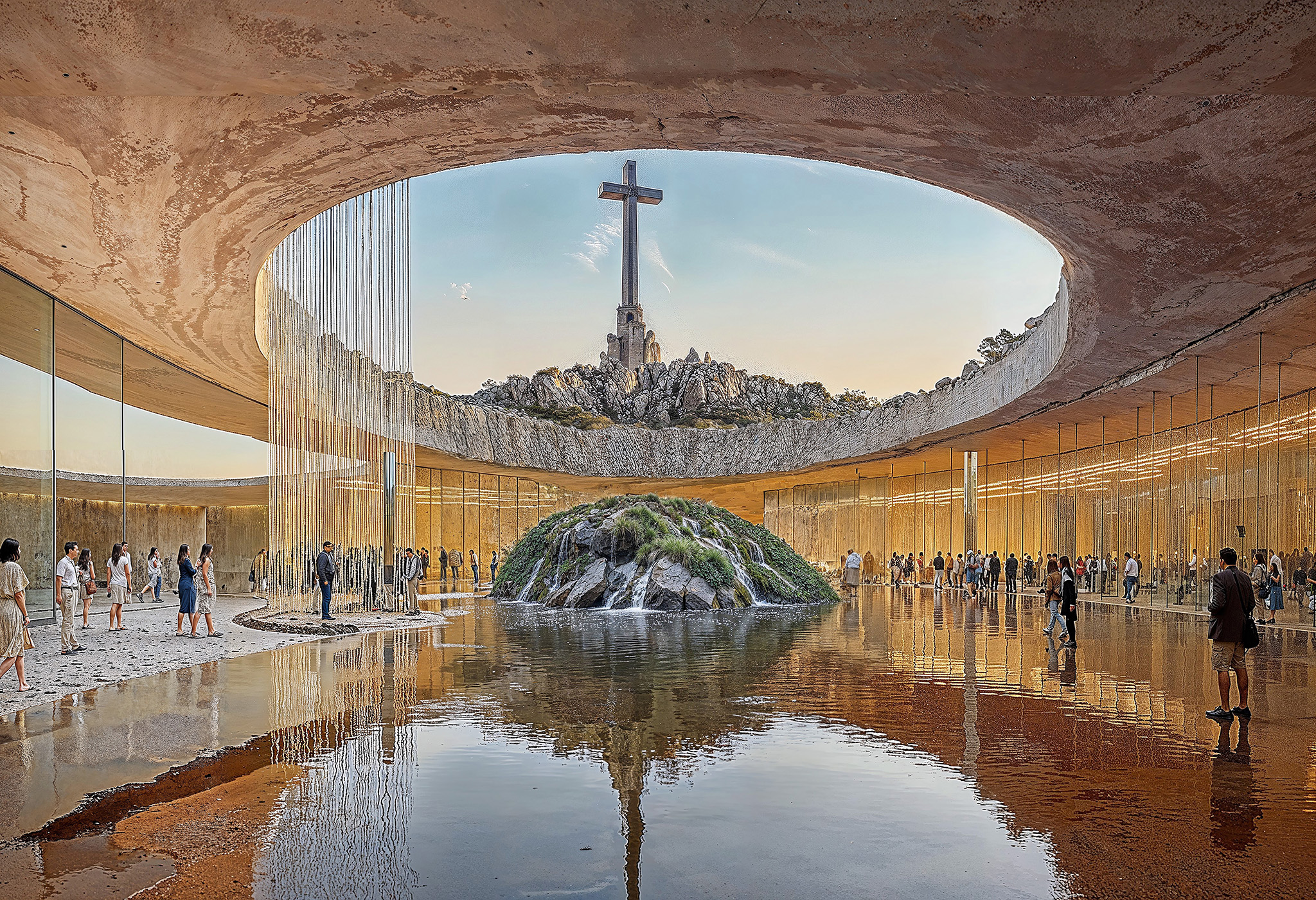
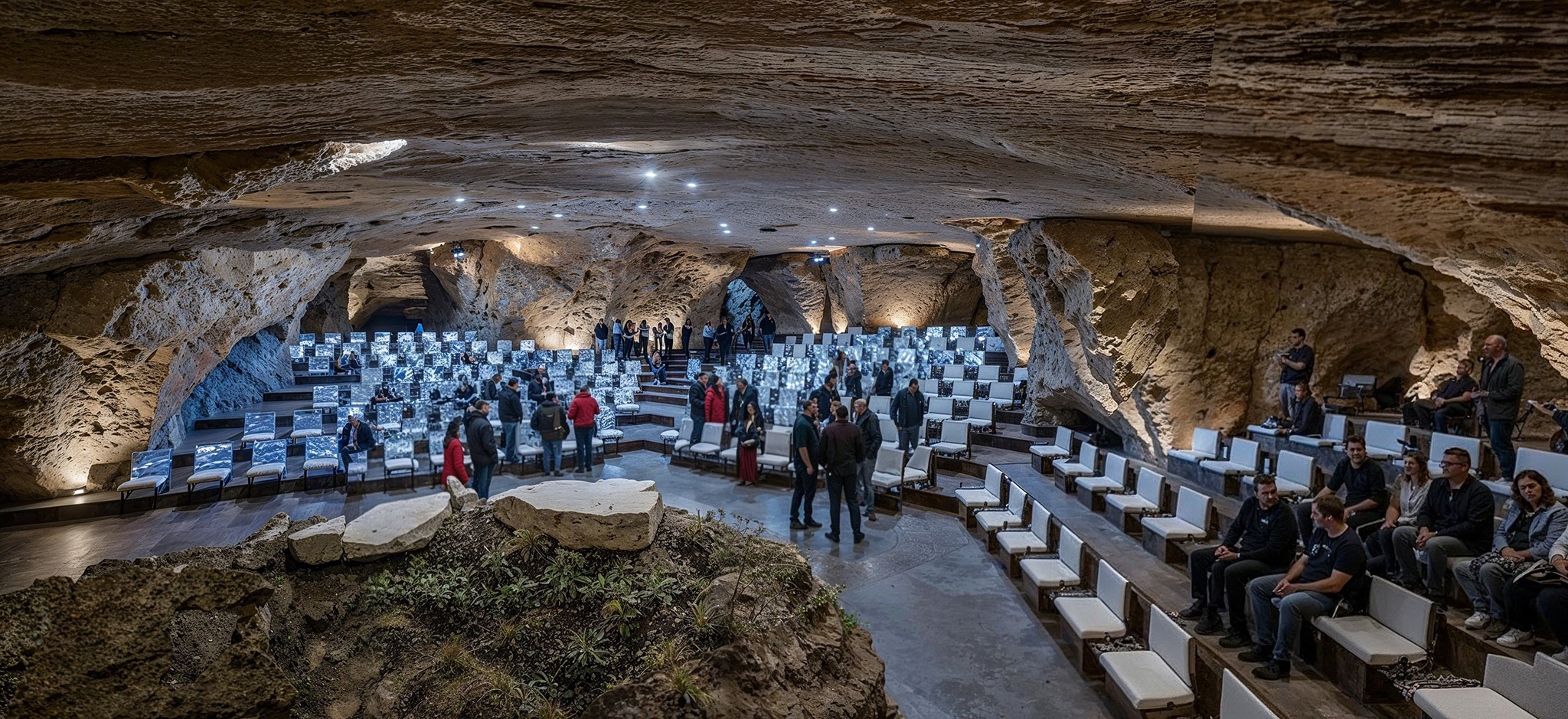
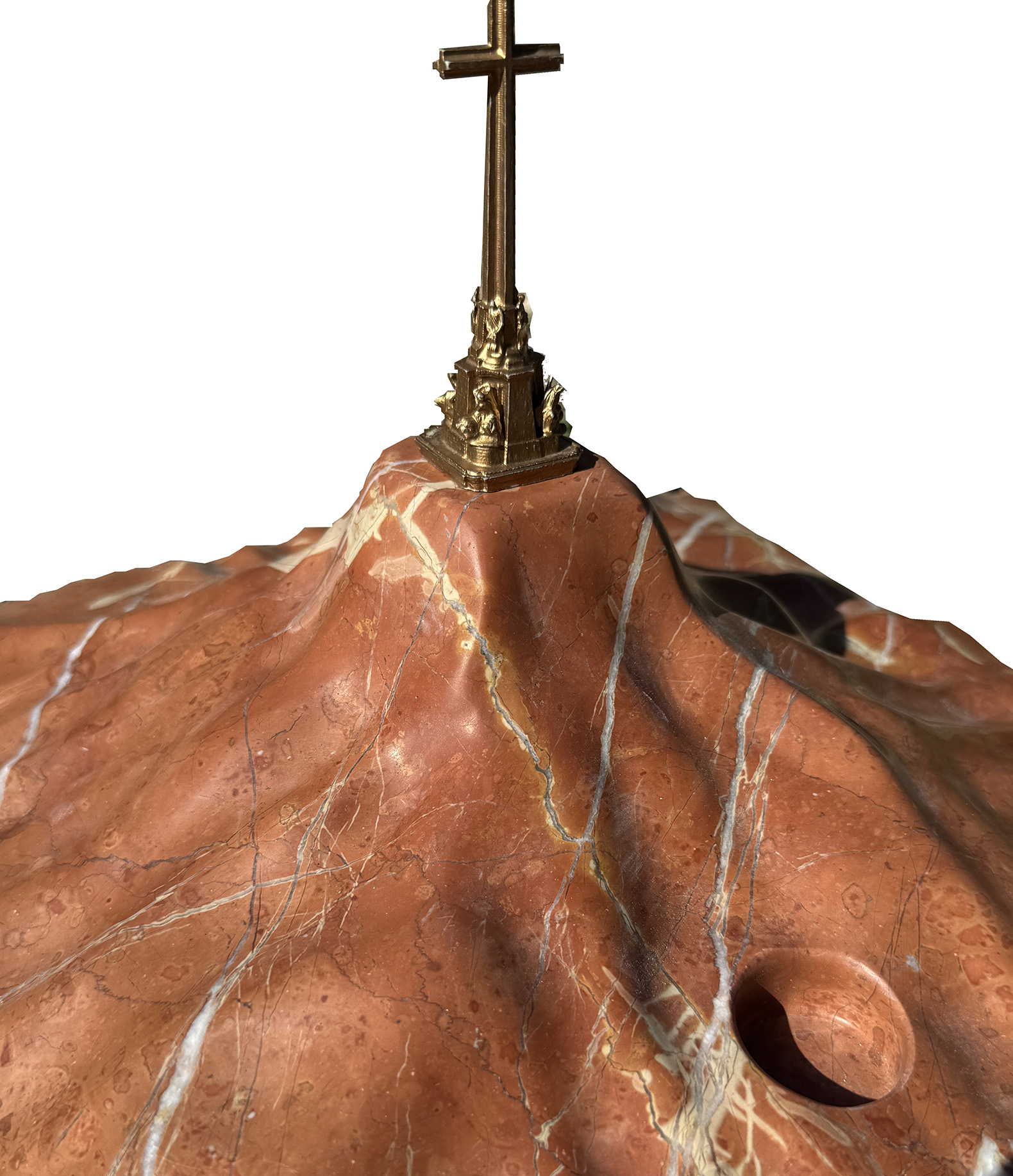
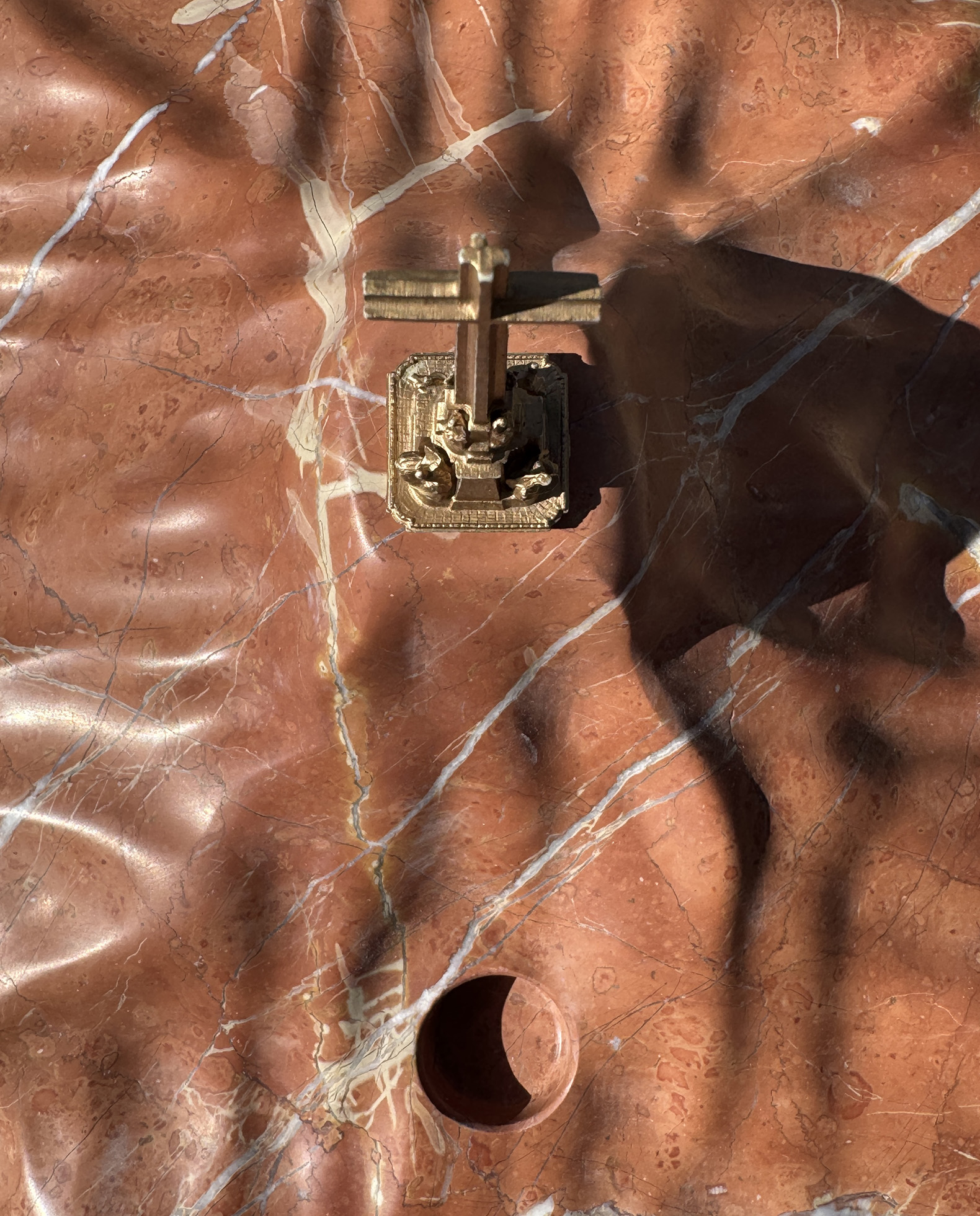
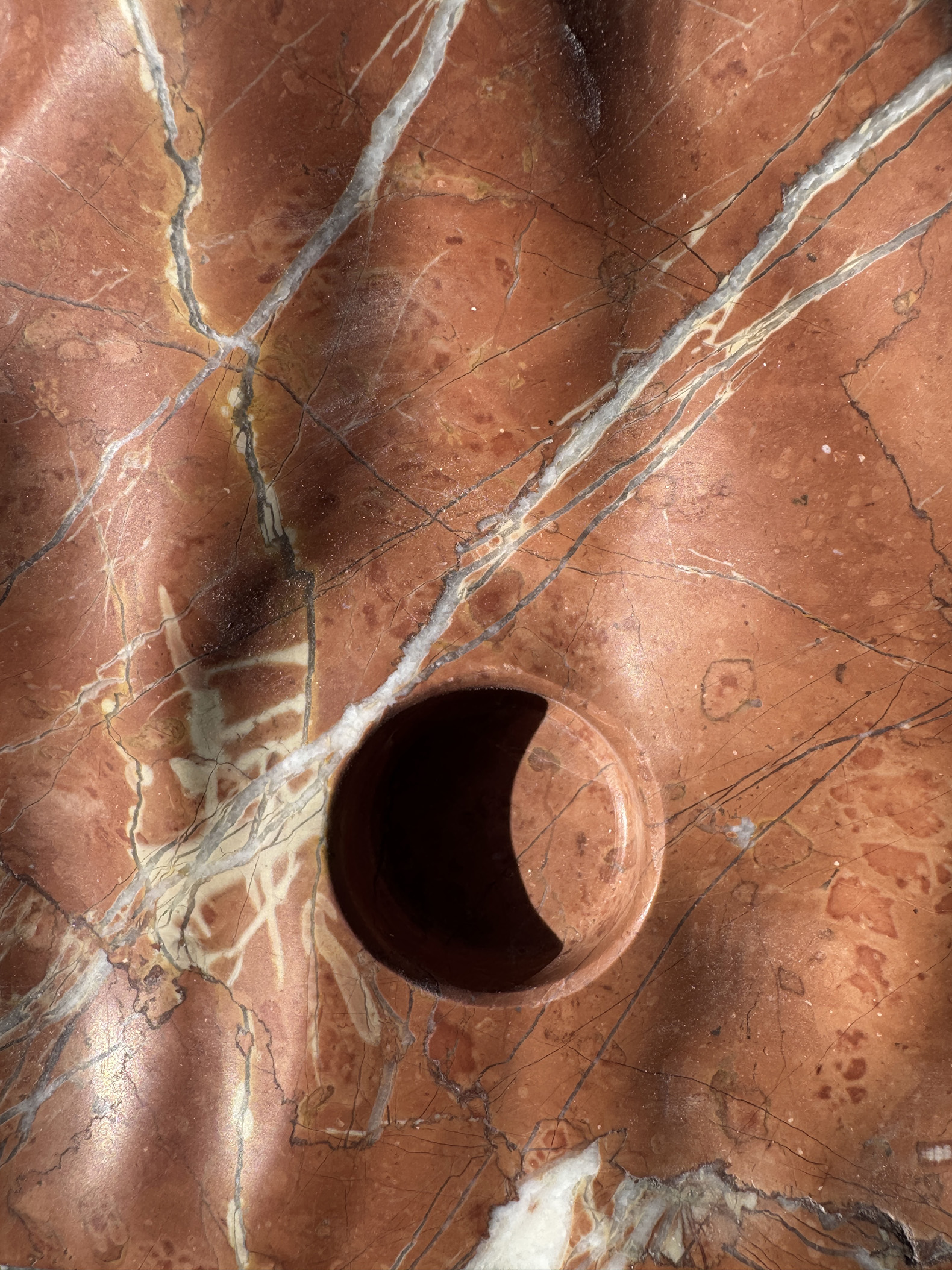
Landscaping, responsibility. "Flesh and Stone", proposal for the Memorial in Cuelgamuros by Manuel Ocaña and Carlos Bañón. Image courtesy by Manuel Ocaña and Carlos Bañón.
Project description by Manuel Ocaña and Carlos Bañón
“I will give you a new heart and put a new spirit within you; I will remove from you your heart of stone and give you a heart of flesh.”
Ezekiel 36:26.
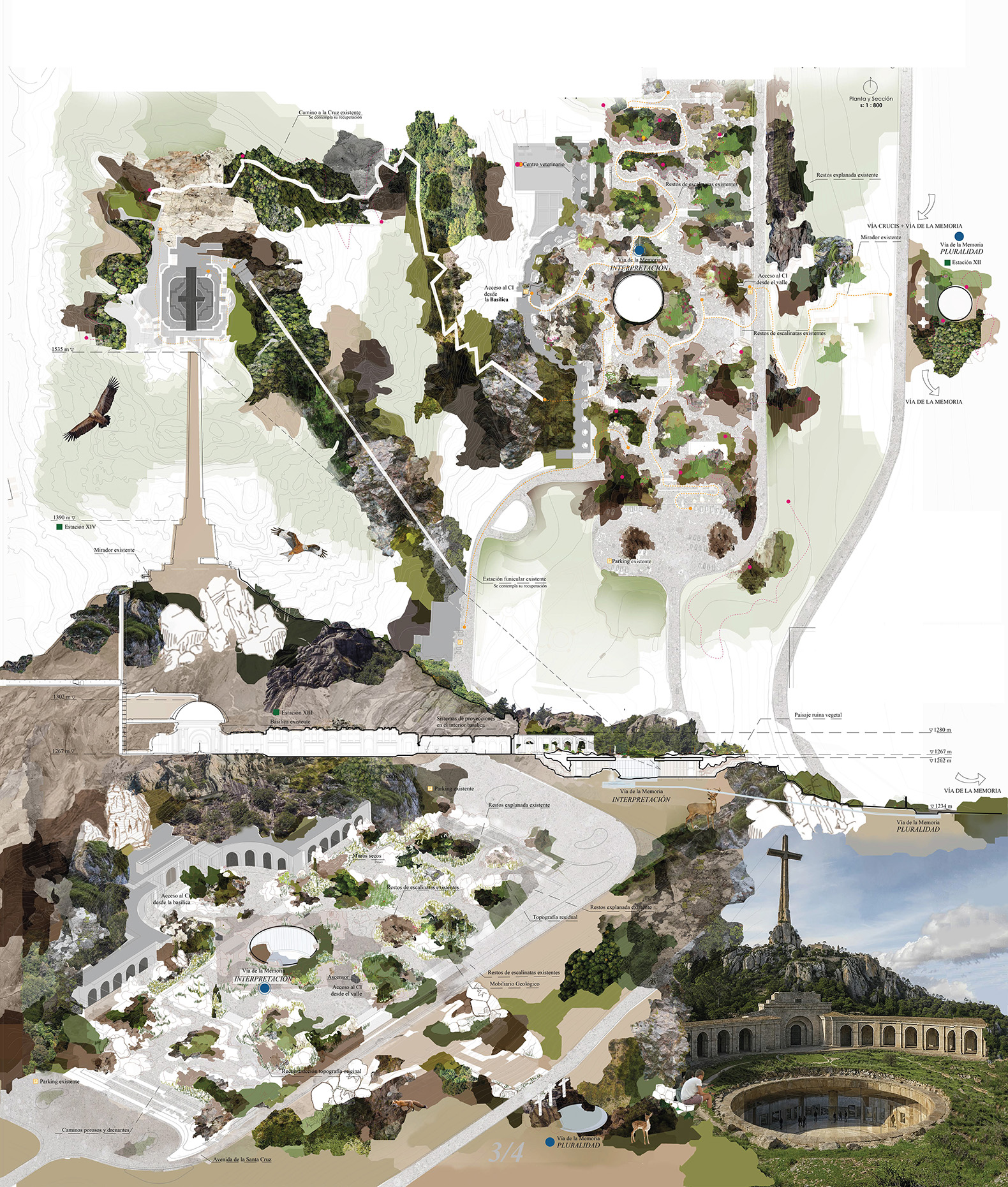
The Valley of Cuelgamuros endures as a dissonant monument: stripped of its original function, it still speaks the grammar of domination. Flesh and Stone does not erase; it interrupts that symbolic power by bringing in living matter—rock, water, plants and animals—and a collective experience that trades stagecraft for meaning-making. The 50,000 m³ excavated for the Interpretation Center return to the esplanade and rewrite it in relief: the parade ground becomes porous soil that absorbs, filters and sustains life. Nature is no backdrop; it speaks for itself and shifts the logic from imposition to material coexistence. As in The Virgin Spring (Ingmar Bergman, 1960), where from a rape a spring is born, the wound in the land turns into a source: stone “bleeds,” and water converts harm into memory.
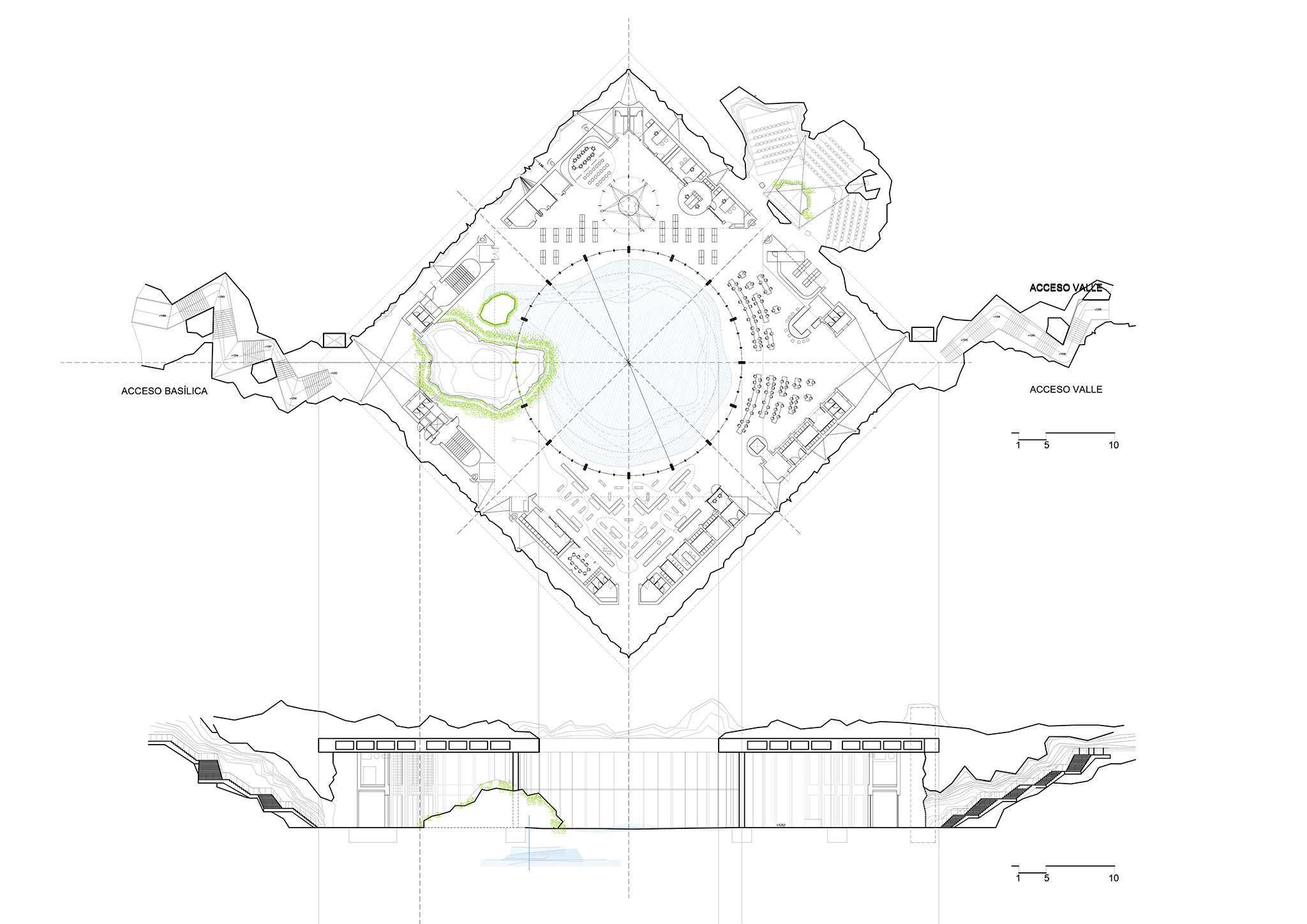
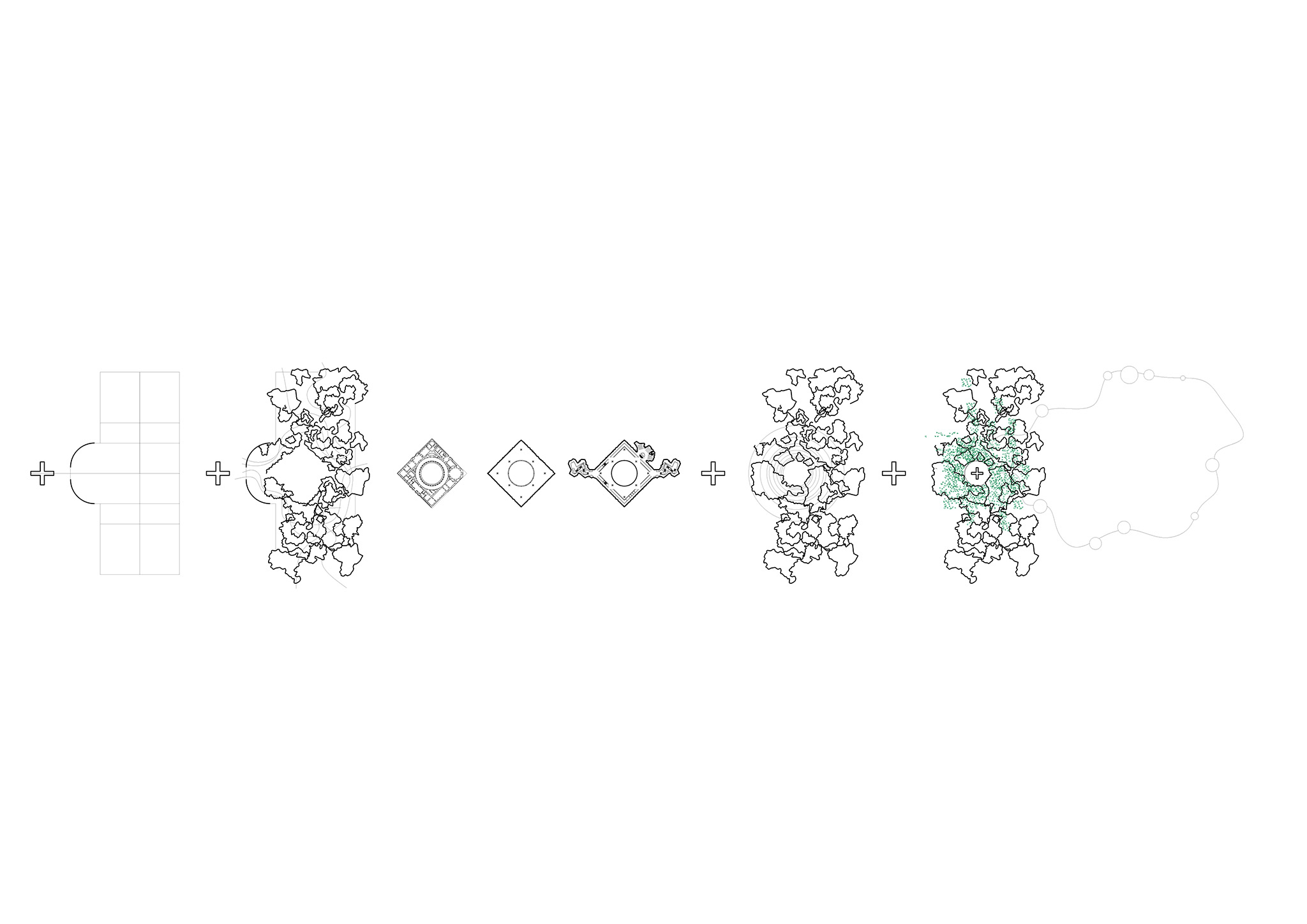
Geometry—never innocent—is the critical instrument. The axial esplanade, a device of triumph and control, is neutralized, and an inundable circular court—33 meters across and over nine meters deep—is carved and linked to eleven stations across woods and slopes. The linear Via Crucis gives way to a circular circuit of reflection: an open center with no axis of power, where bodies do not march but take part. The project converses with known genealogies—state esplanades (Lincoln, Hiroshima, Yad Vashem), immersive memorials (Eisenman, Maya Lin), voids and wells (Chand Baori, 9/11)—and reframes them through rewilding and a critical reading of the site, including regulated coexistence between fauna and culture and the water traditions that guide the walk.
This constellation becomes the Way of Memory, an orbital path with no beginning or end that unfolds in eleven stations named after the 2022 Democratic Memory Law—Absence, Trace, Silence, Recognition, Responsibility, Interpretation, Plurality, Coexistence, Reparation, Safeguard, Time. Each station is a circular pond fed by streams or aquifers through integrated solar pumps. The device works on several fronts: mirror for sky and land, watering place for wildlife, fire-fighting cistern, and instrument for contemplation. A discreet layer of projections, sound and light activates the experience without turning it into showmanship: technology only where it sharpens understanding.
The route cuts through the central well. Its water—rising and receding with aquifers and ditches—reflects the cross and turns the emblem into a fragile, shared image; not negation but an inversion of meaning. The image echoes The Virgin Spring: water born of violence does not conceal the crime; it lays it bare and turns it into a rite of repair. What once signaled verticality becomes a reversible phenomenon, dependent on climate, season and the presence of bodies. Memory ties itself to natural rhythms and to practices of visiting, not to a single monumental gesture.
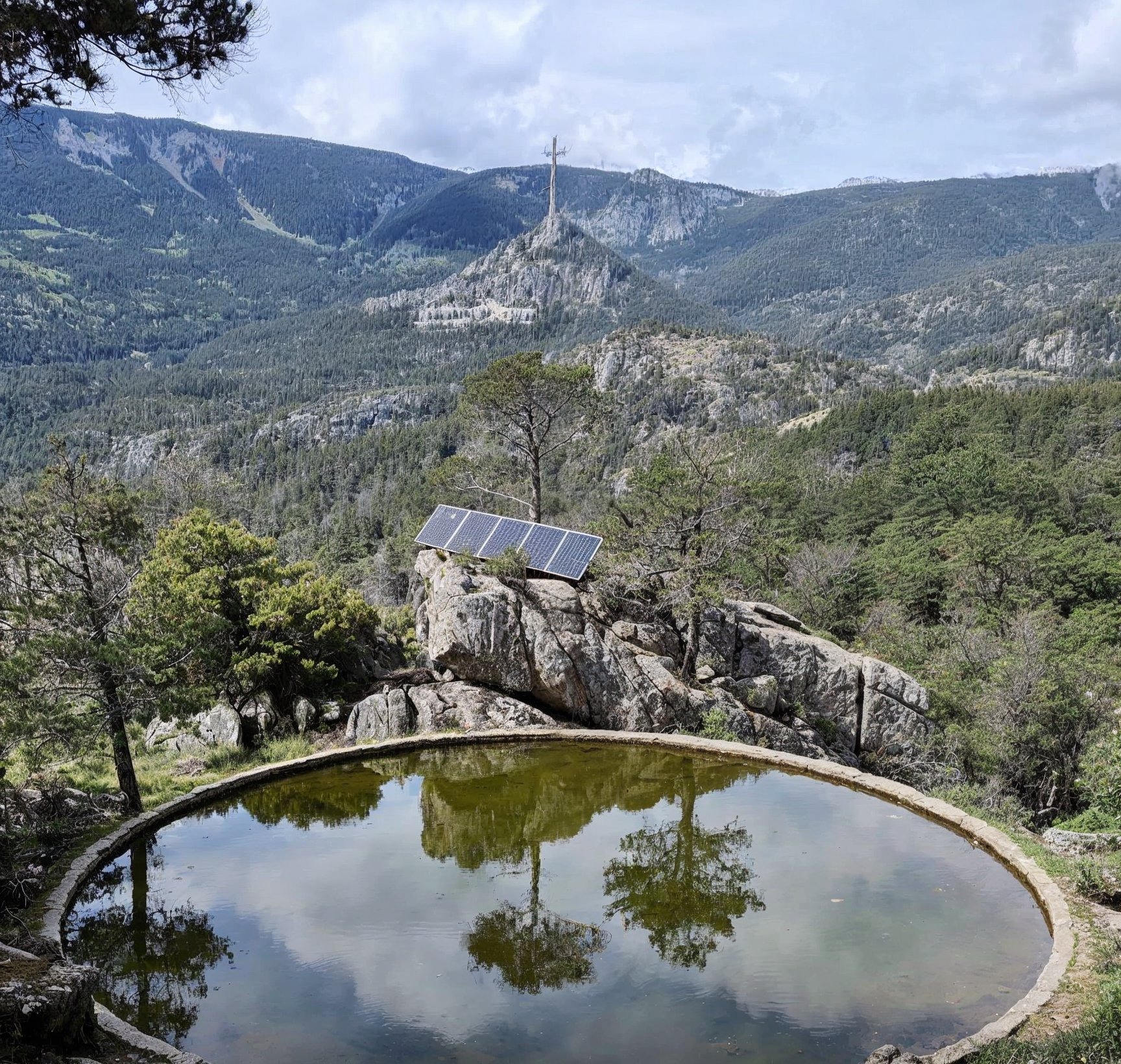
Relational rewilding works at two scales. On the esplanade, the excavated matter returns as mounds, hollows and fissures that break flatness and heal the wound, restoring the ground’s capacity to absorb, filter and host. Across the valley, a sequence of ponds weaves an ecological corridor linking ridge and floor, strengthening biodiversity and coupling remembrance with care. Ecology here means ties between living rock (home to lichens and microfauna), native vegetation (cistus, thyme, broom, holm oak) that rebuilds soils and corridors, returning fauna—with regenerative grazing and regulated coexistence akin to Nara—and water as a current of memory and thermal regulation.
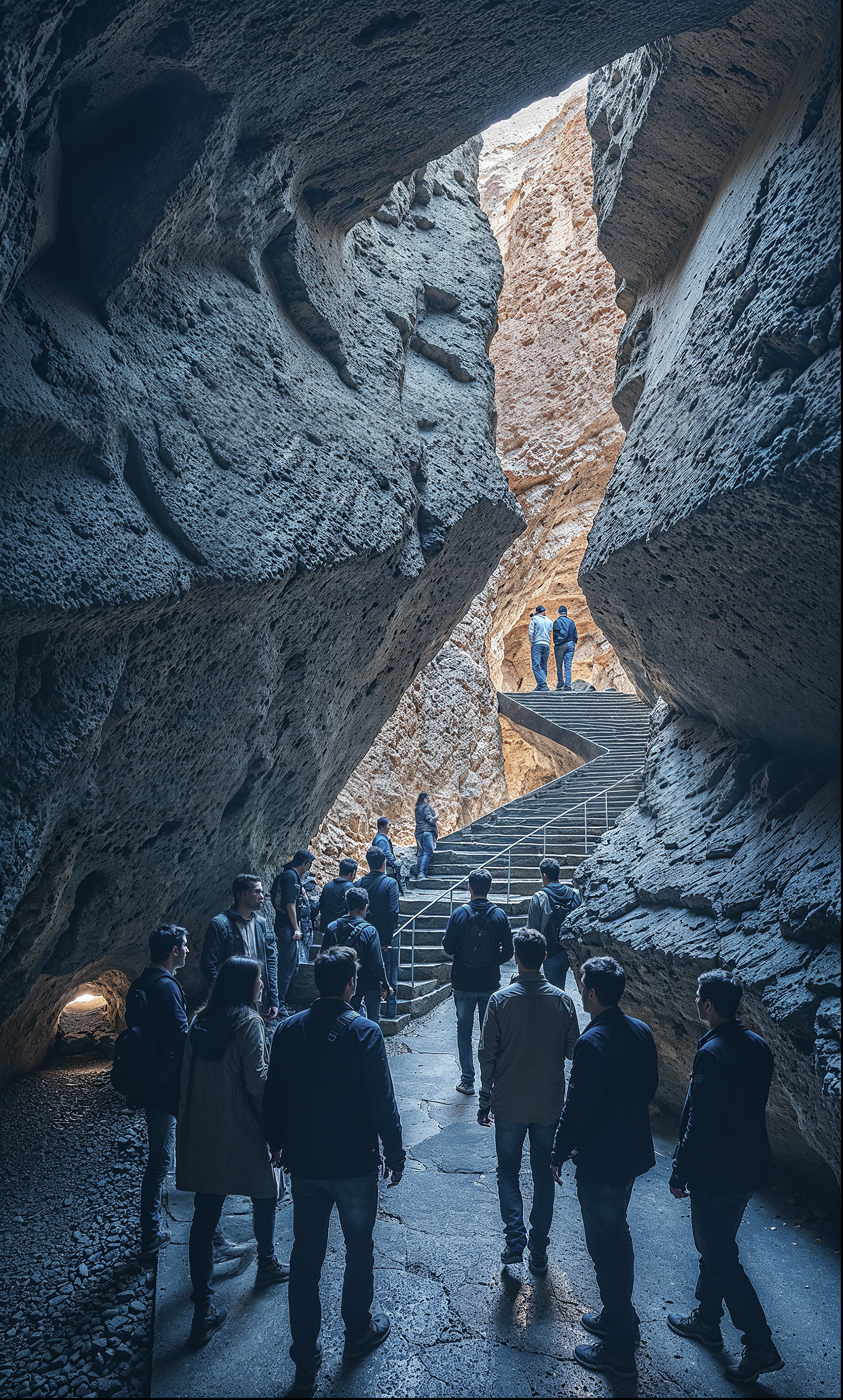
The Interpretation Center is buried beneath two meters of rock and replays the geometry of the Palace of Charles V—within the Alhambra of Granada, construction begun in 1527—reactivating its classical anomaly as common ground. Access is through grottoes to the Basilica and the valley, plus a service entry. A supporting and reconfigurable service ring houses systems, offices, restrooms and egress, freeing a tall, humid, dark gallery of four straight segments where living rock converses with the smooth inner skin. The central court is inundable and reflective; its water comes and goes, returning the cross as oscillation rather than command. The building behaves like a subterranean organism breathing with the landscape and restoring the site’s capacity to change.
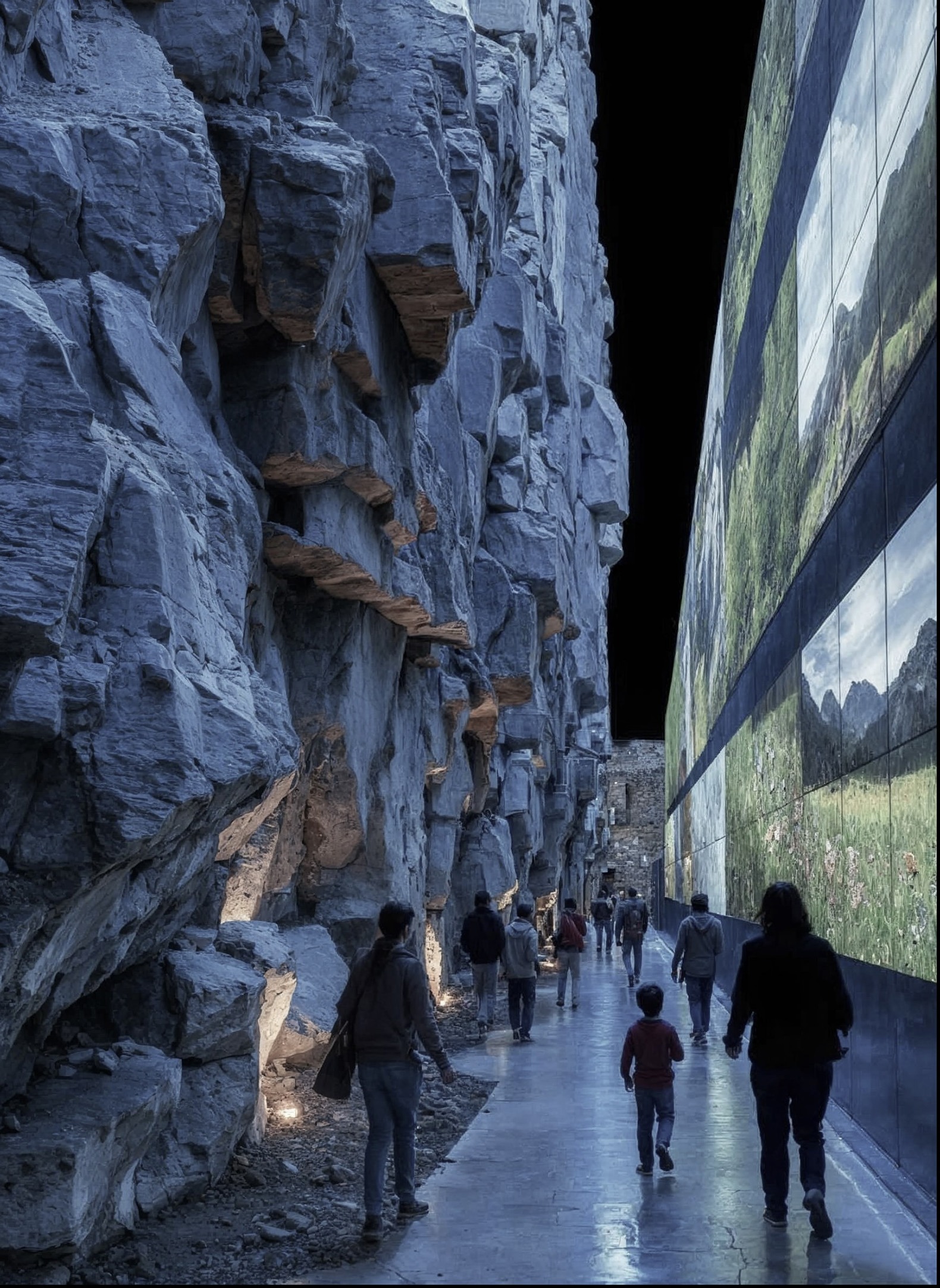
The integrated museology, aligned with the 2022 law, unfolds in three strands: Political history—confinement (perimeter passage), Landscape—sprout (natural light, vegetation, spring-rock) and Forced labor—evidence (objects and documents). The Basilica remains a space of active silence with light, sound and audio guides, without physical intervention. The Way of Memory—nearly five kilometers—acts as a secular liturgy where body, time and landscape activate memory.
Flesh and Stone does not answer the brief by staging a narrative; it builds Democratic Memory as a relational practice in which history is understood and interpreted in contact with the environment and its inhabitants—stone, water, plants, animals, and humans—recognized as a single living organism.