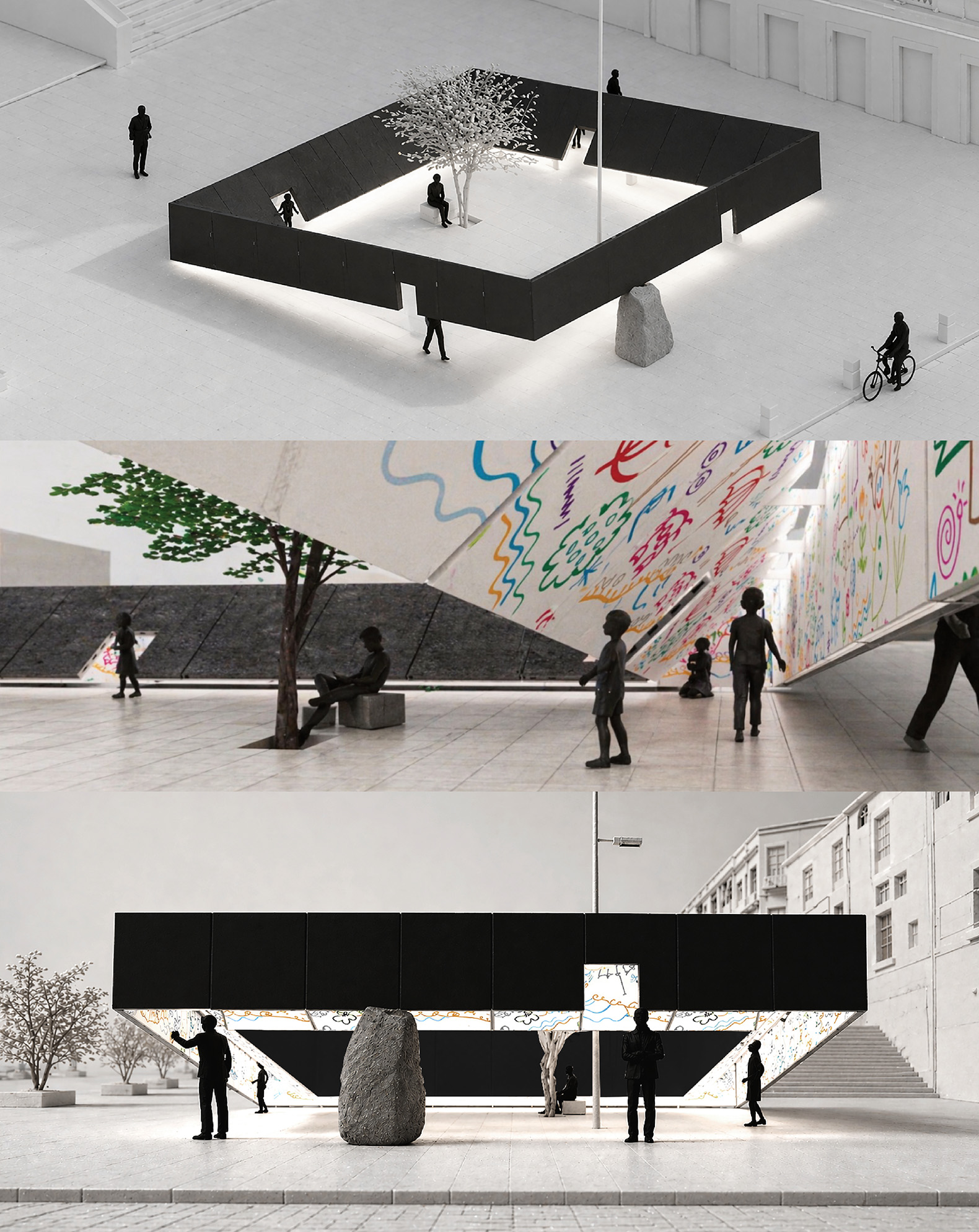
Since its inception in 1978, the Pan-American Architecture Biennial of Quito (BAQ) has established itself as one of the most influential meeting points for urban and design-related debate on the continent. Organized by the College of Architects of Ecuador, this biennial event was founded with the aim of breaking down professional isolation in Latin America and creating an open space for sharing experiences, examining contemporary work, and questioning the direction of our cities.

Over the course of nearly five decades, the BAQ has brought together architects, urban planners, students, and citizens to confront the real-world challenges facing our territory—from the climate crisis to spatial inequality—reaffirming that architecture only truly finds its purpose when it engages in a dialogue with its environment and transforms the lives of those who use it.

As part of the 25th Pan-American Architecture Biennial of Quito, the International Design Competition for Pavilions in Quito’s Public Spaces was held—an initiative aimed at extending architectural thinking beyond the project itself and bringing it into direct contact with the city and its inhabitants.
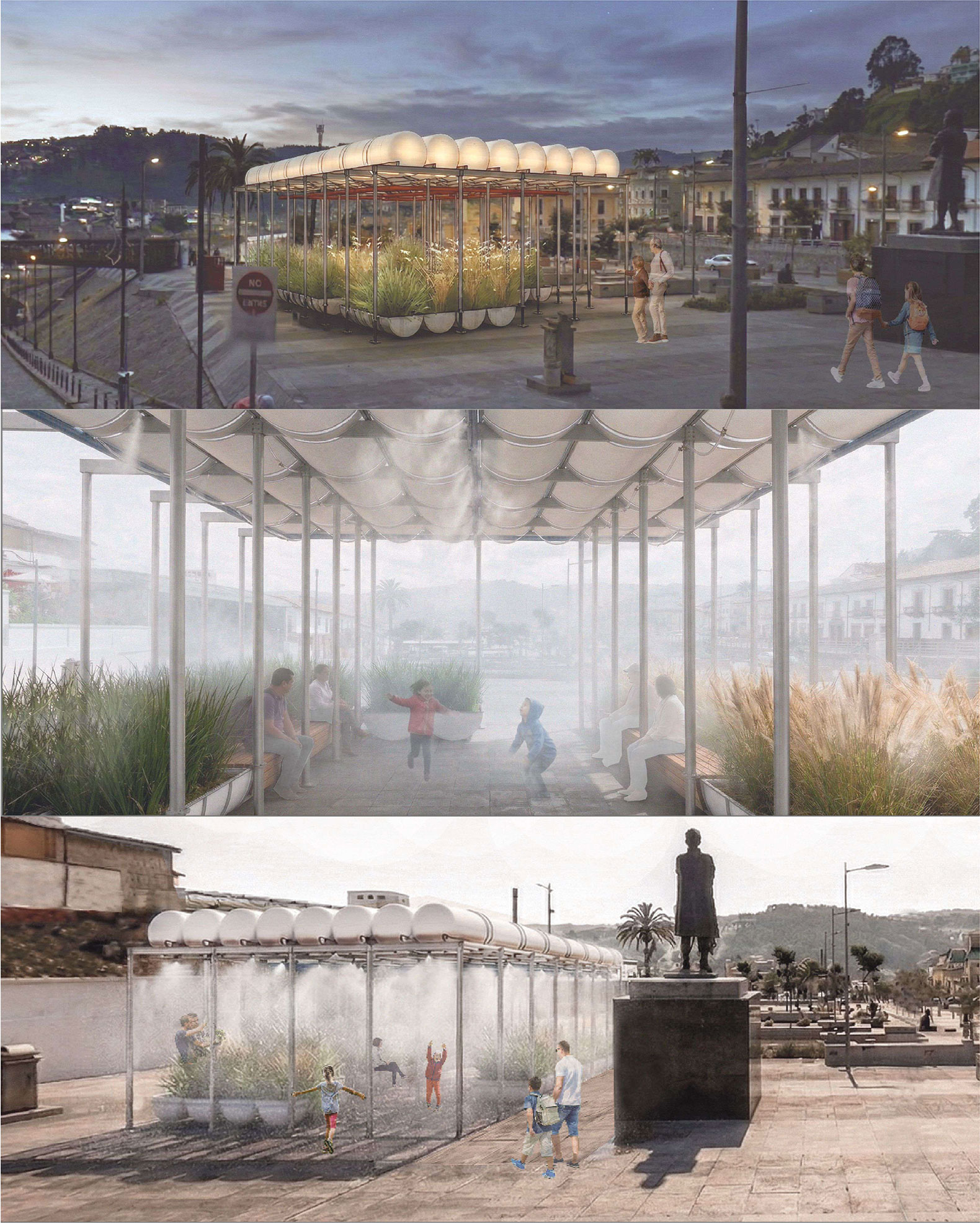
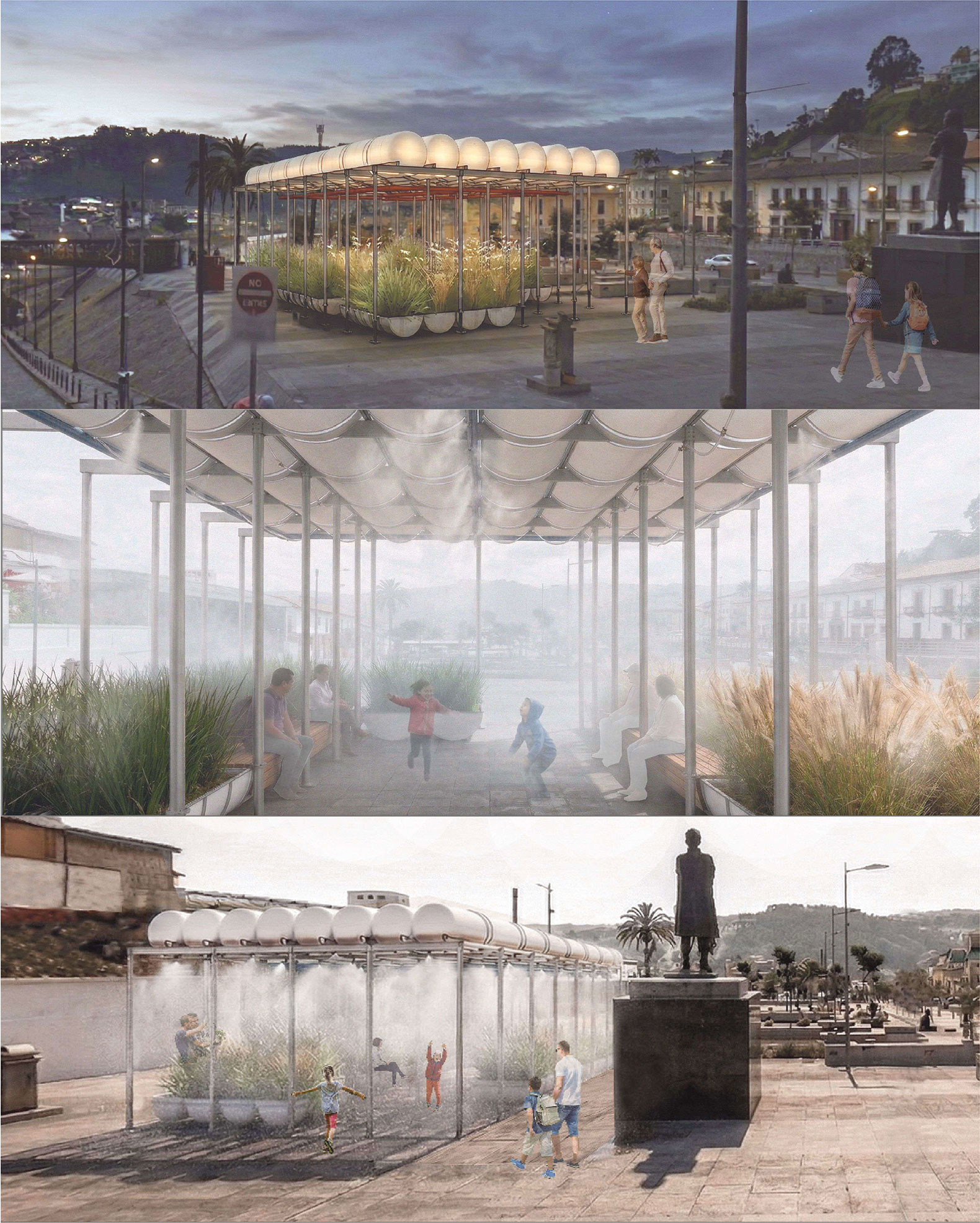
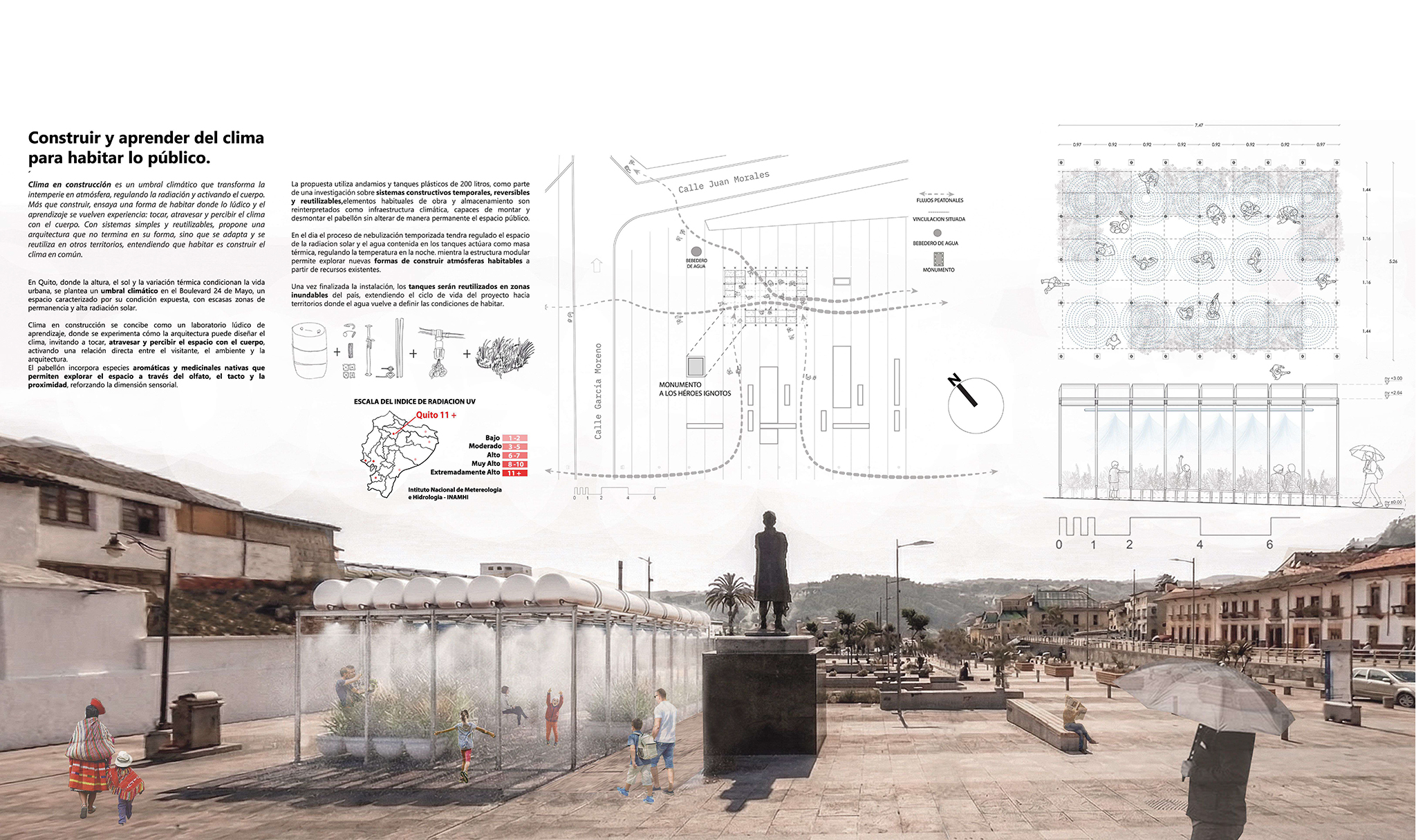
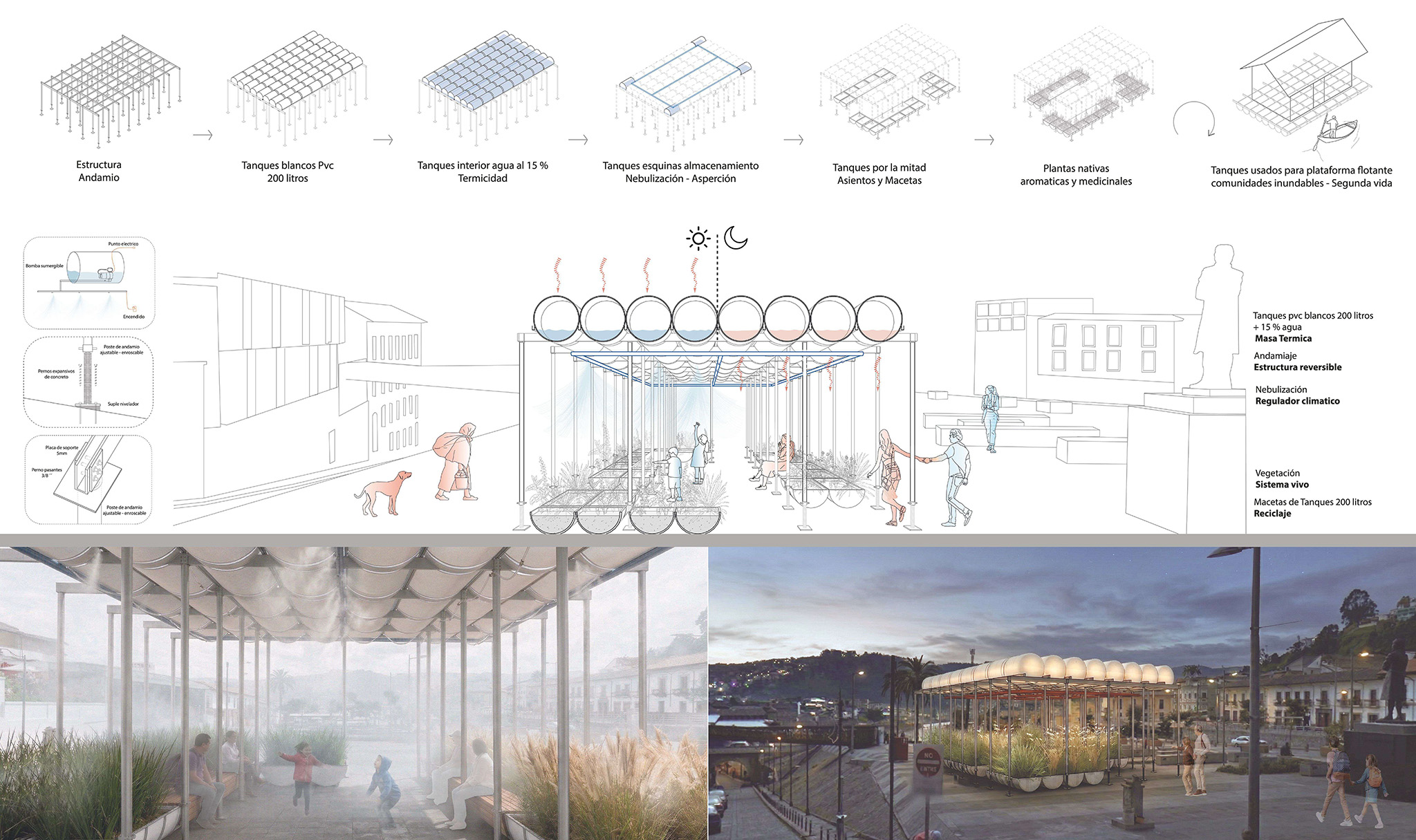
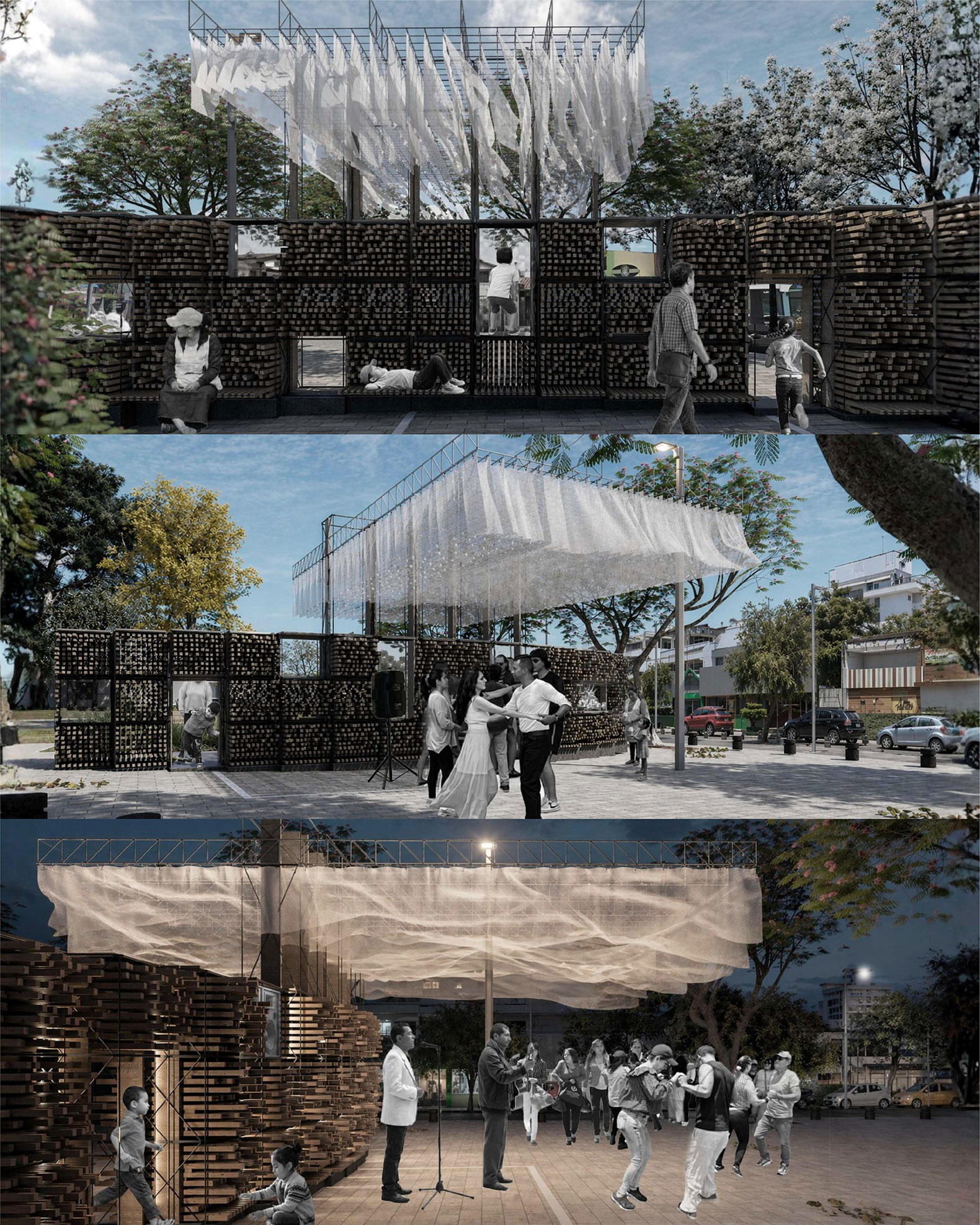
"CLIMA EN CONSTRUCCIÓN", Boulevard 24 de Mayo - García Moreno Pavilion by Natura Futura. Courtesy of the XXV Pan-American Architecture Biennial of Quito.

"CLIMA EN CONSTRUCCIÓN", Boulevard 24 de Mayo - García Moreno Pavilion by Natura Futura. Courtesy of the XXV Pan-American Architecture Biennial of Quito.

The competition is based on a premise: architecture does not begin solely when a structure is built. It also shapes the city by sparking conversations, synthesizing knowledge, fostering consensus, and proposing new ways to imagine and claim public space. From this perspective, the pavilions are conceived not as isolated objects, but as temporary interventions capable of establishing connections between architecture, the citizenry, and the territory.
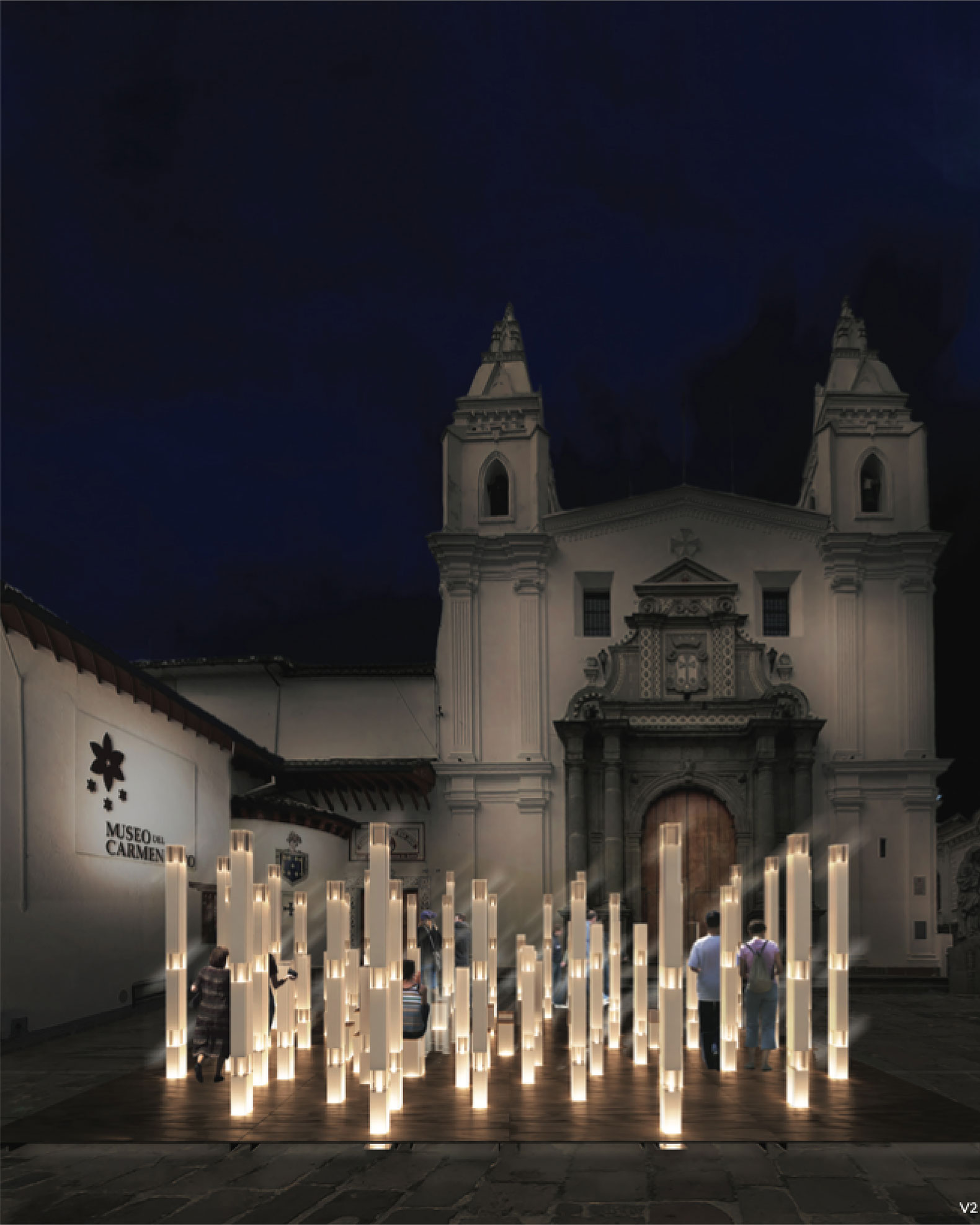
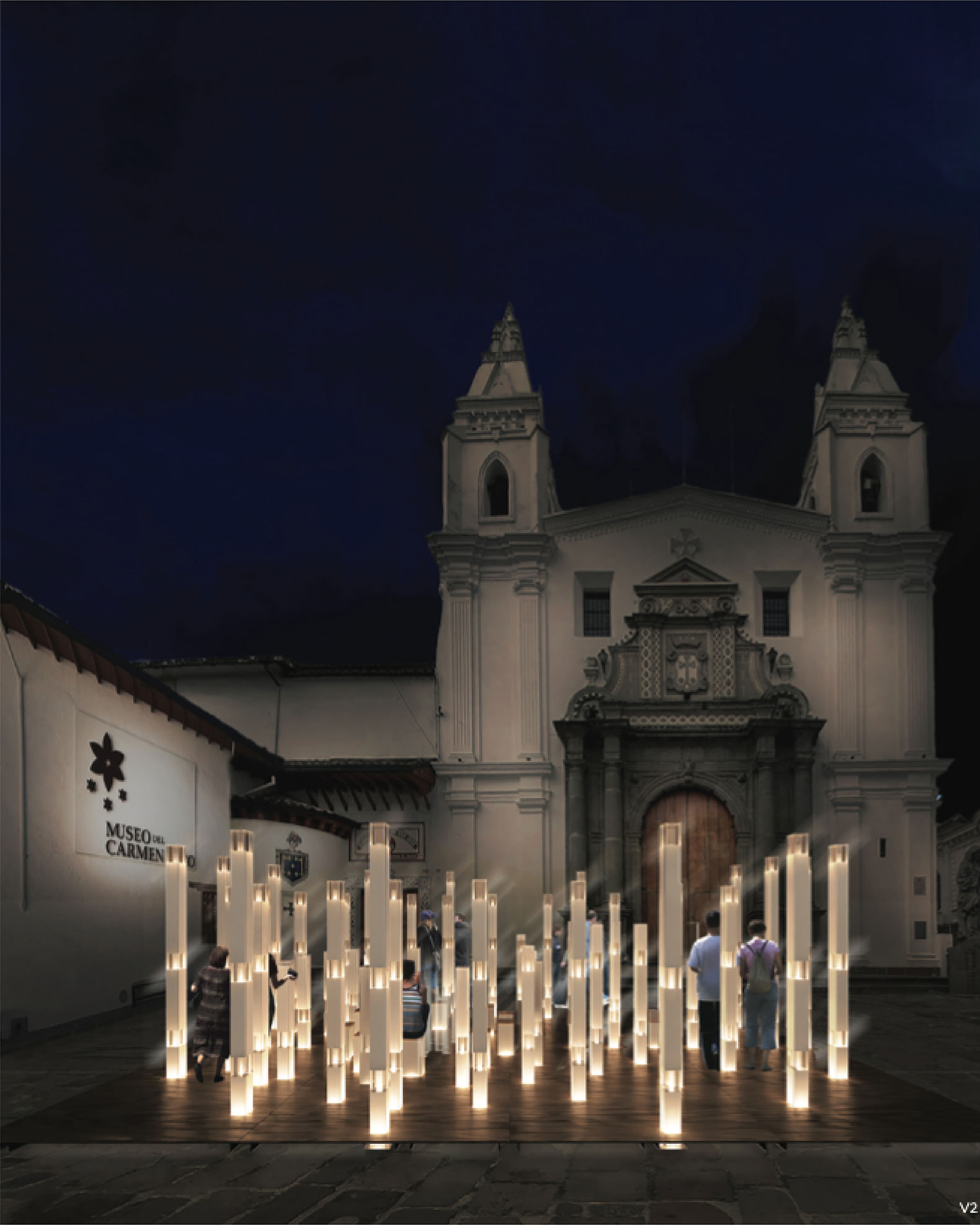
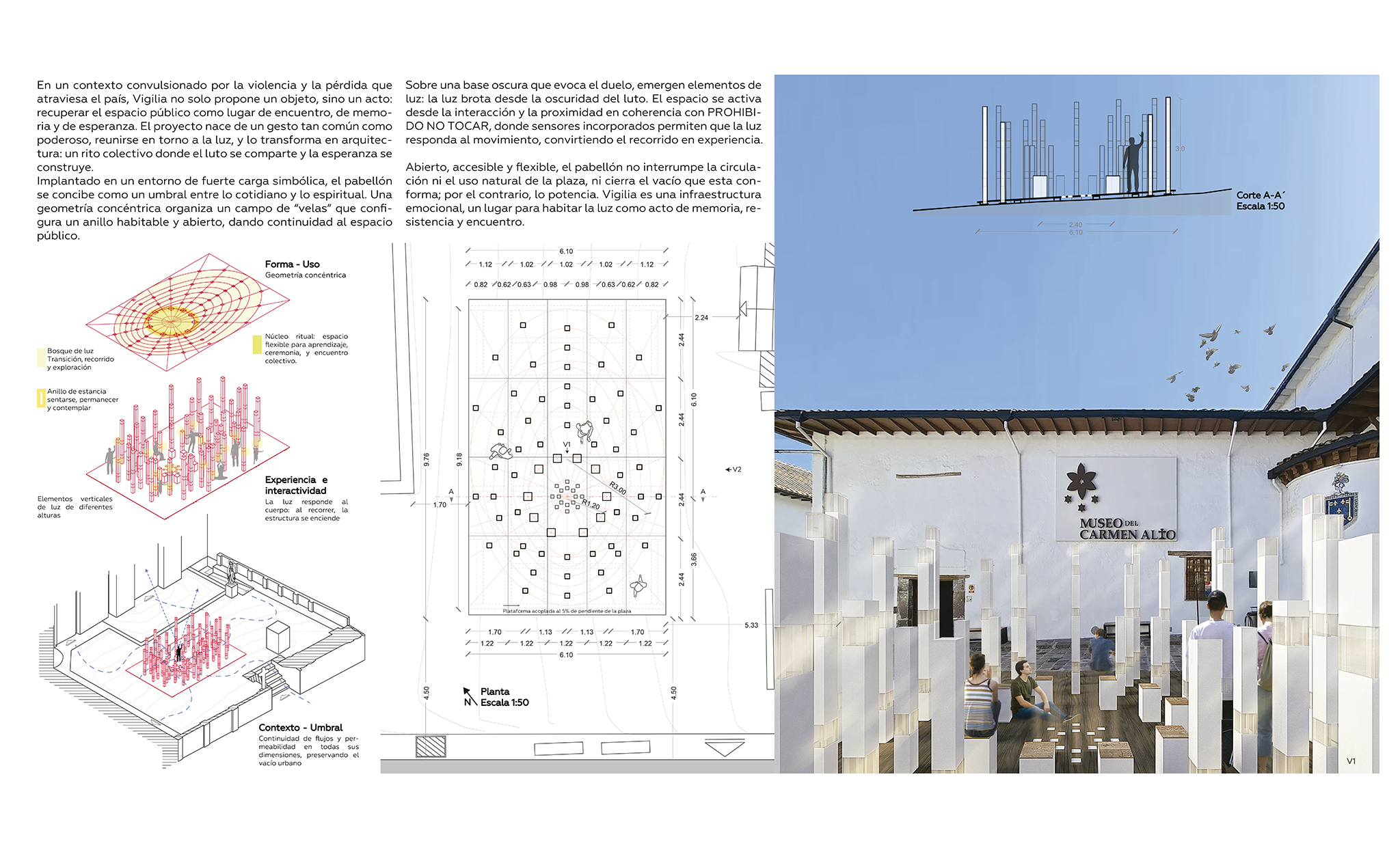
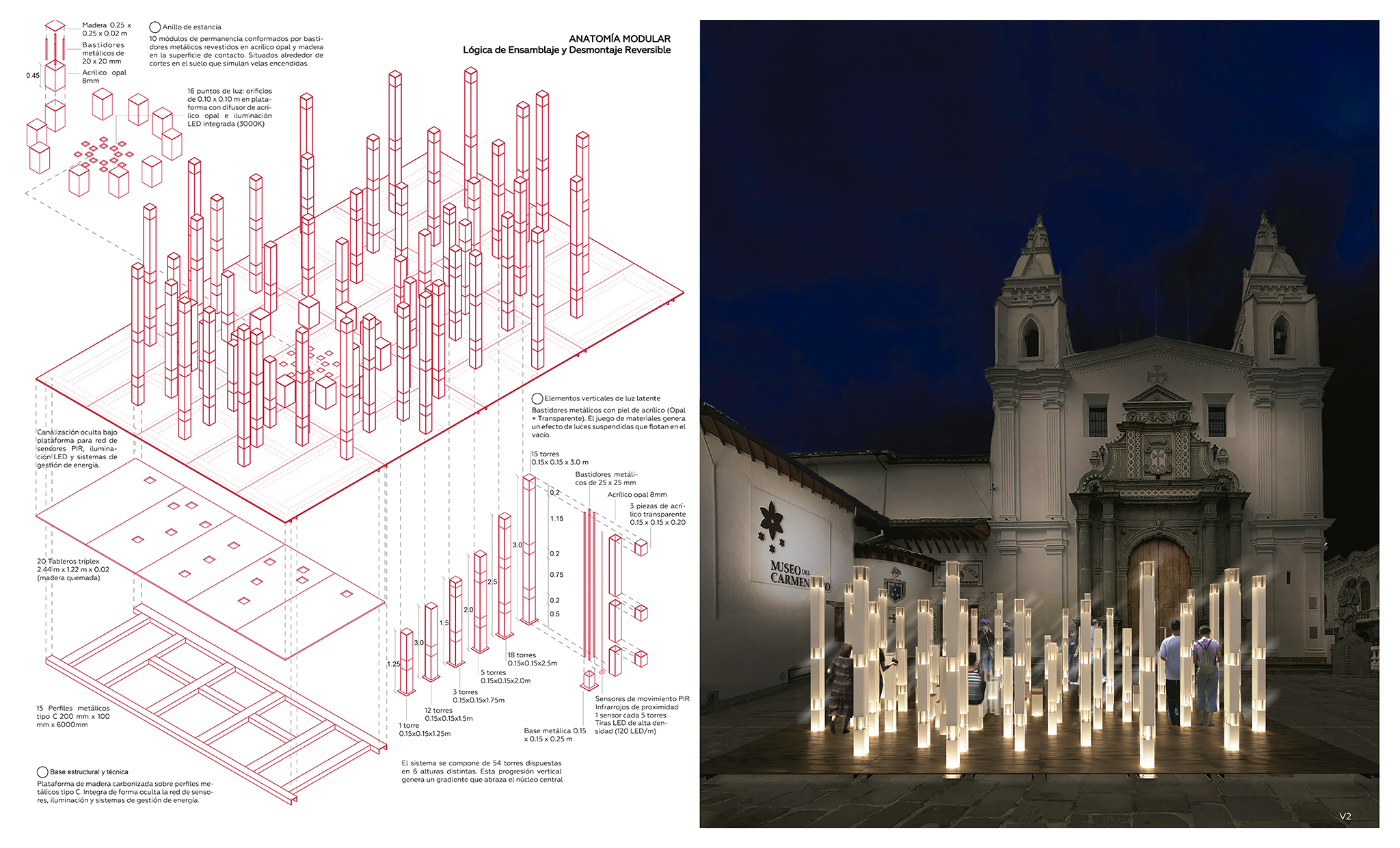
"VIGILIA. UMBRAL DE LUZ Y RITO COLECTIVO", Plaza del Monasterio del Carmen Alto Pavilion by LAMS Arquitectos. Courtesy of the XXV Pan-American Architecture Biennial of Quito.

"VIGILIA. UMBRAL DE LUZ Y RITO COLECTIVO", Plaza del Monasterio del Carmen Alto Pavilion by LAMS Arquitectos. Courtesy of the XXV Pan-American Architecture Biennial of Quito.

The call for entries invited the design of nine pavilions for various public spaces across Quito, spanning the Historic Center and the North-Central district. The sites include heritage plazas, urban parks, cultural venues, and corridors undergoing urban transformation. Each location presents unique historical, social, environmental, and territorial conditions that demand specific architectural responses, ensuring that no single formal solution is simply repeated.
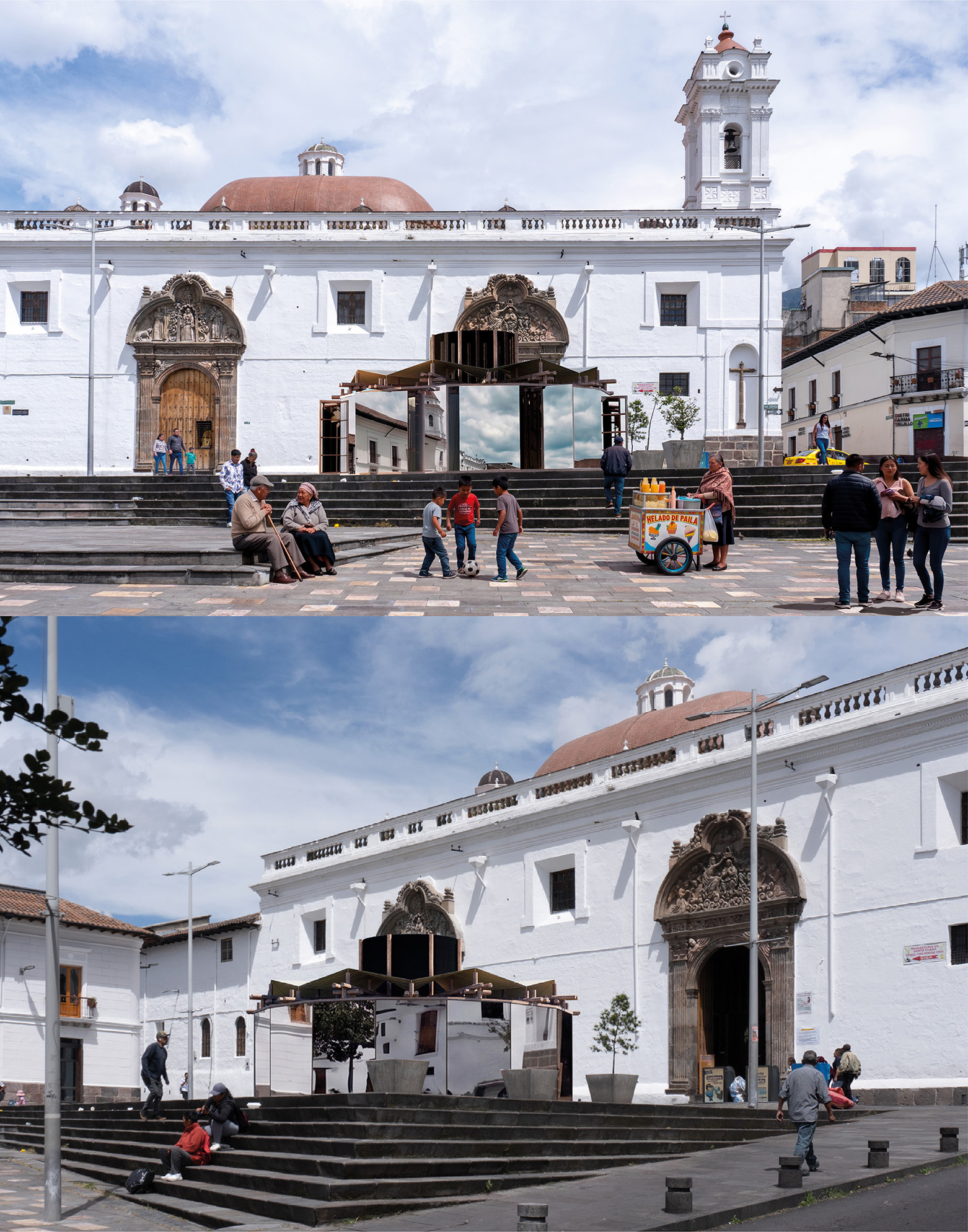
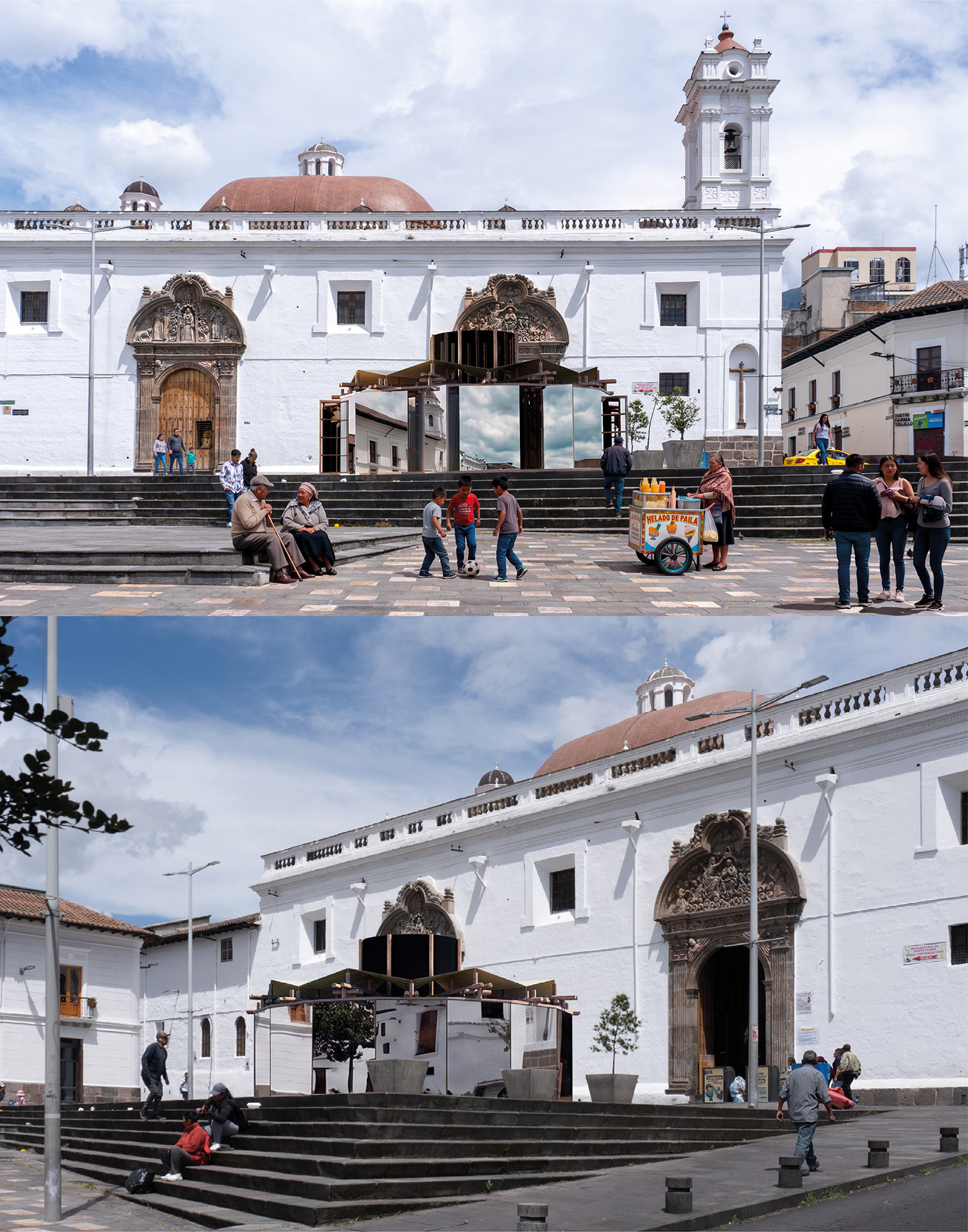
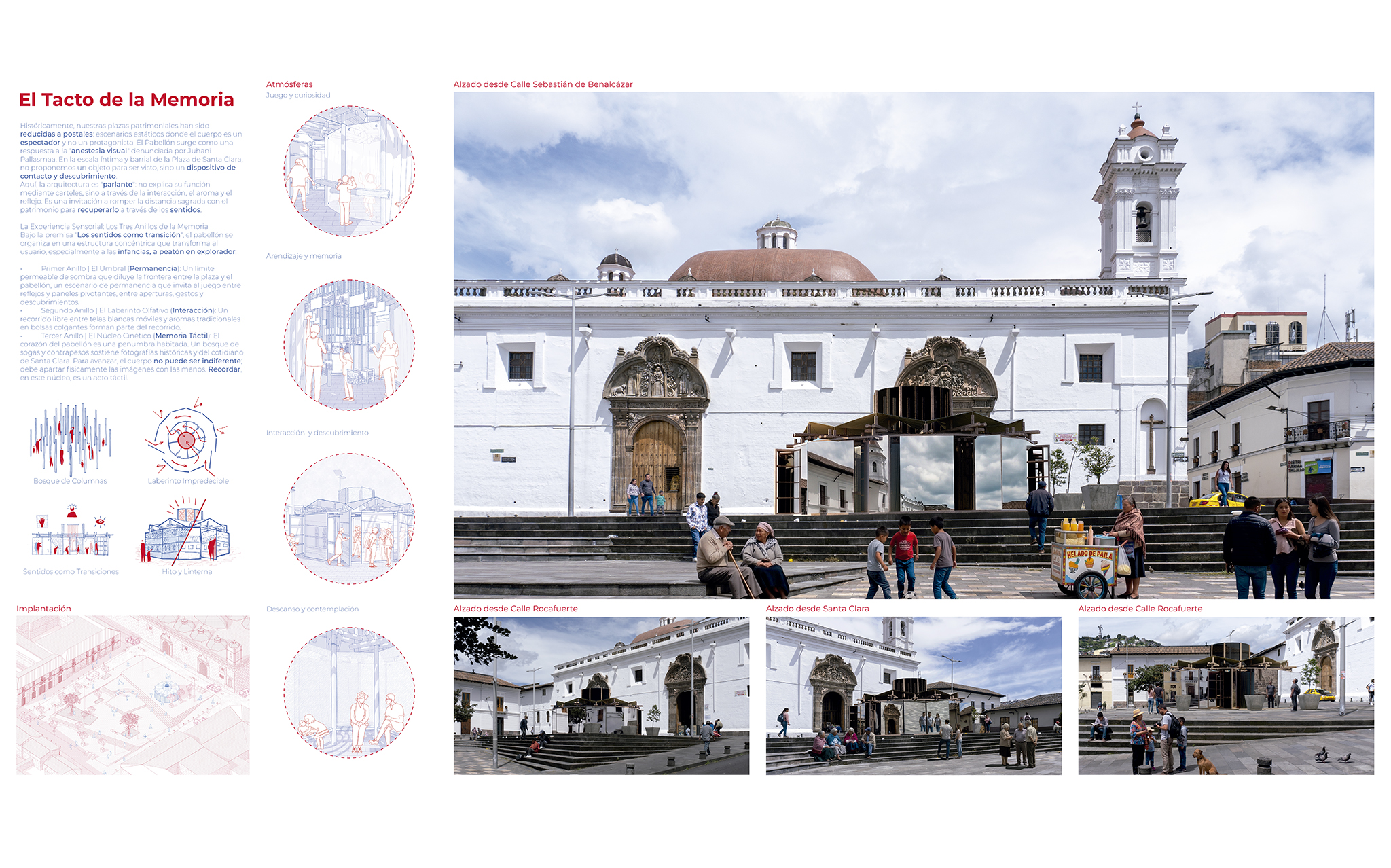
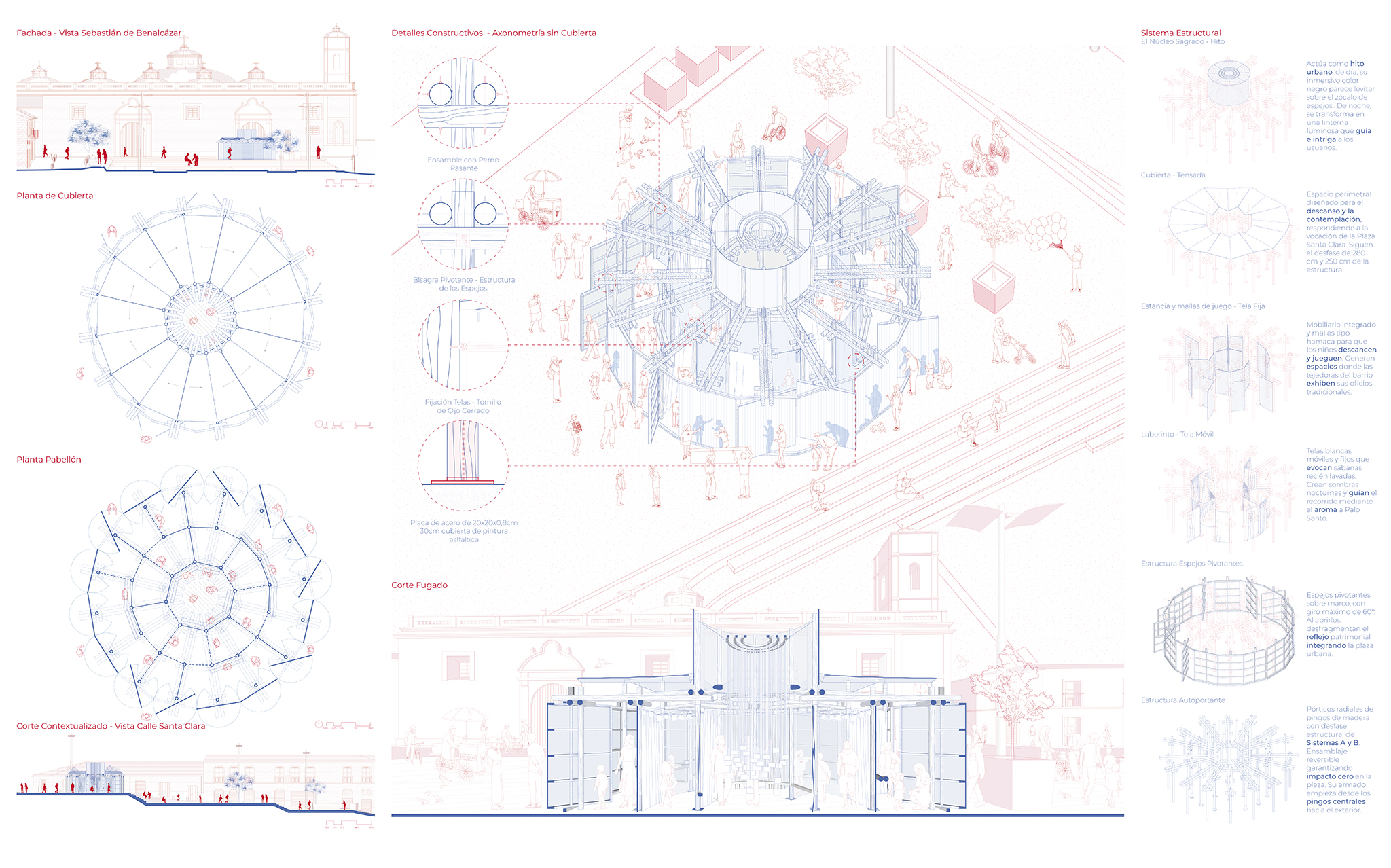
"EL TACTO DE LA MEMORIA", Plaza de Santa Clara Pavilion by Baquio Arquitectura. Courtesy of the XXV Pan-American Architecture Biennial of Quito.

"EL TACTO DE LA MEMORIA", Plaza de Santa Clara Pavilion by Baquio Arquitectura. Courtesy of the XXV Pan-American Architecture Biennial of Quito.

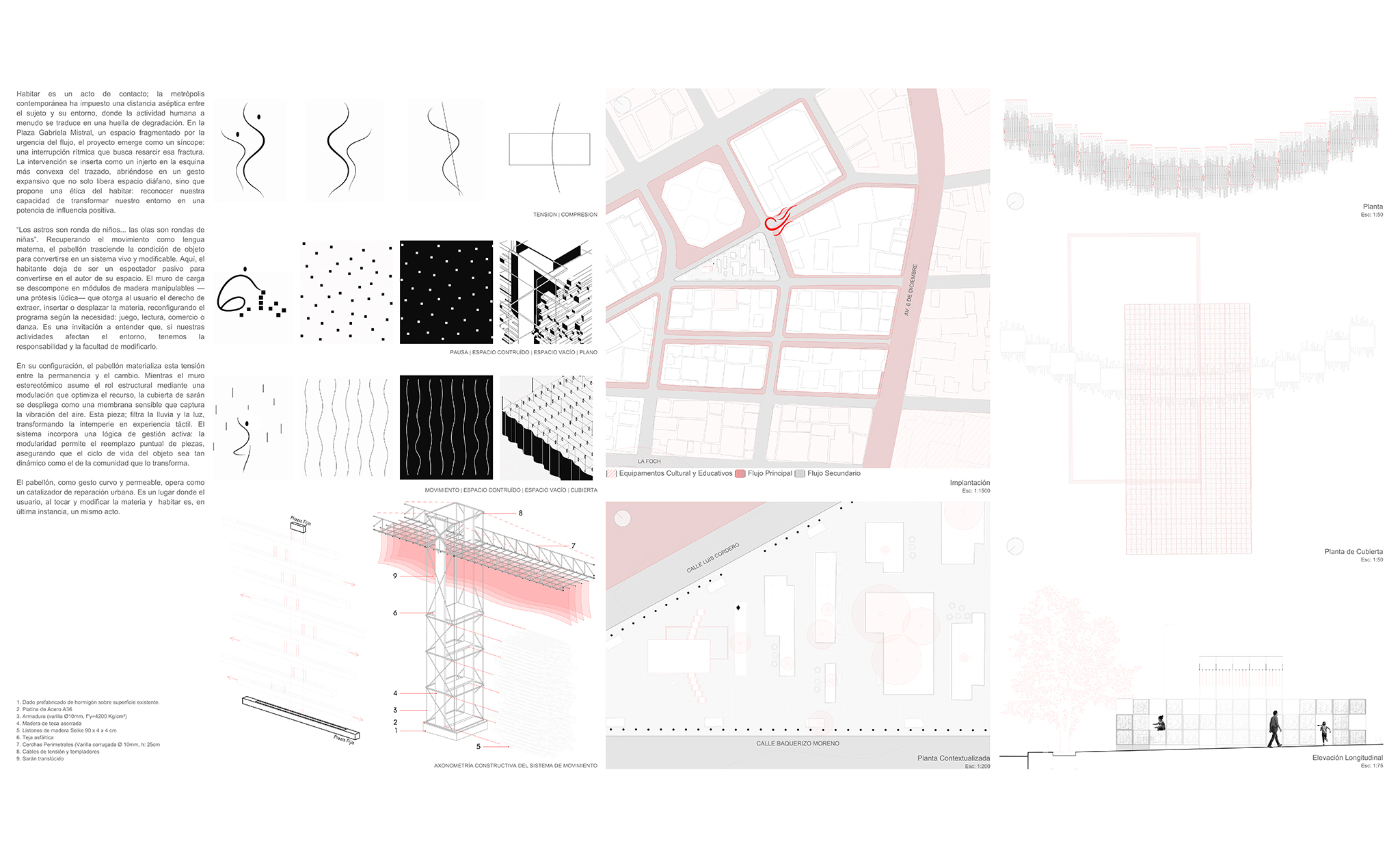
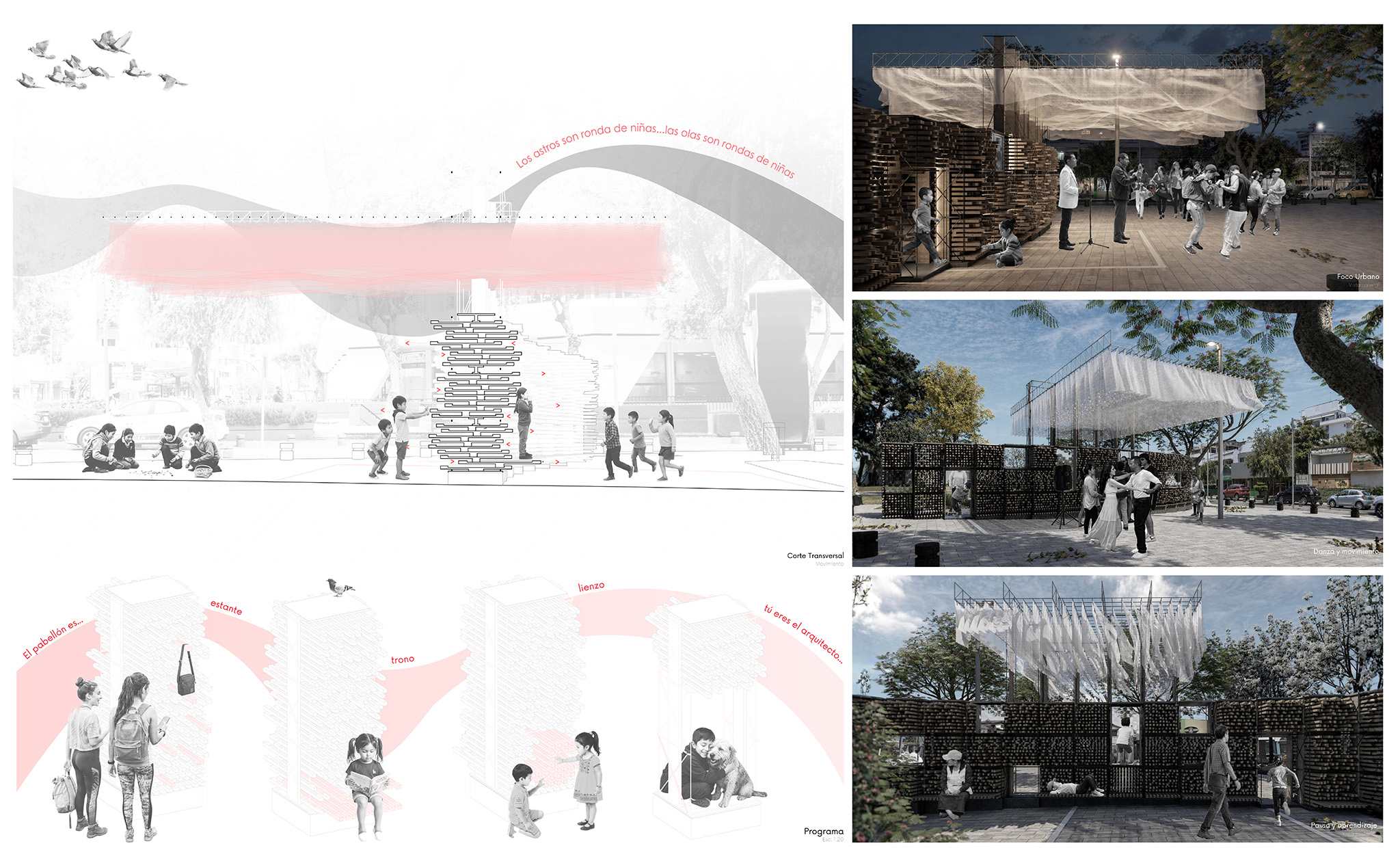
The nine selected proposals offer diverse ways to experience and activate these spaces. Through small-scale, open structures, the pavilions aim to facilitate encounters, movement, moments of pause, exploration, and interaction. Their temporary nature and programmatic flexibility allow for uses that are not entirely predetermined, inviting people to discover, traverse, and engage with the city in new ways.
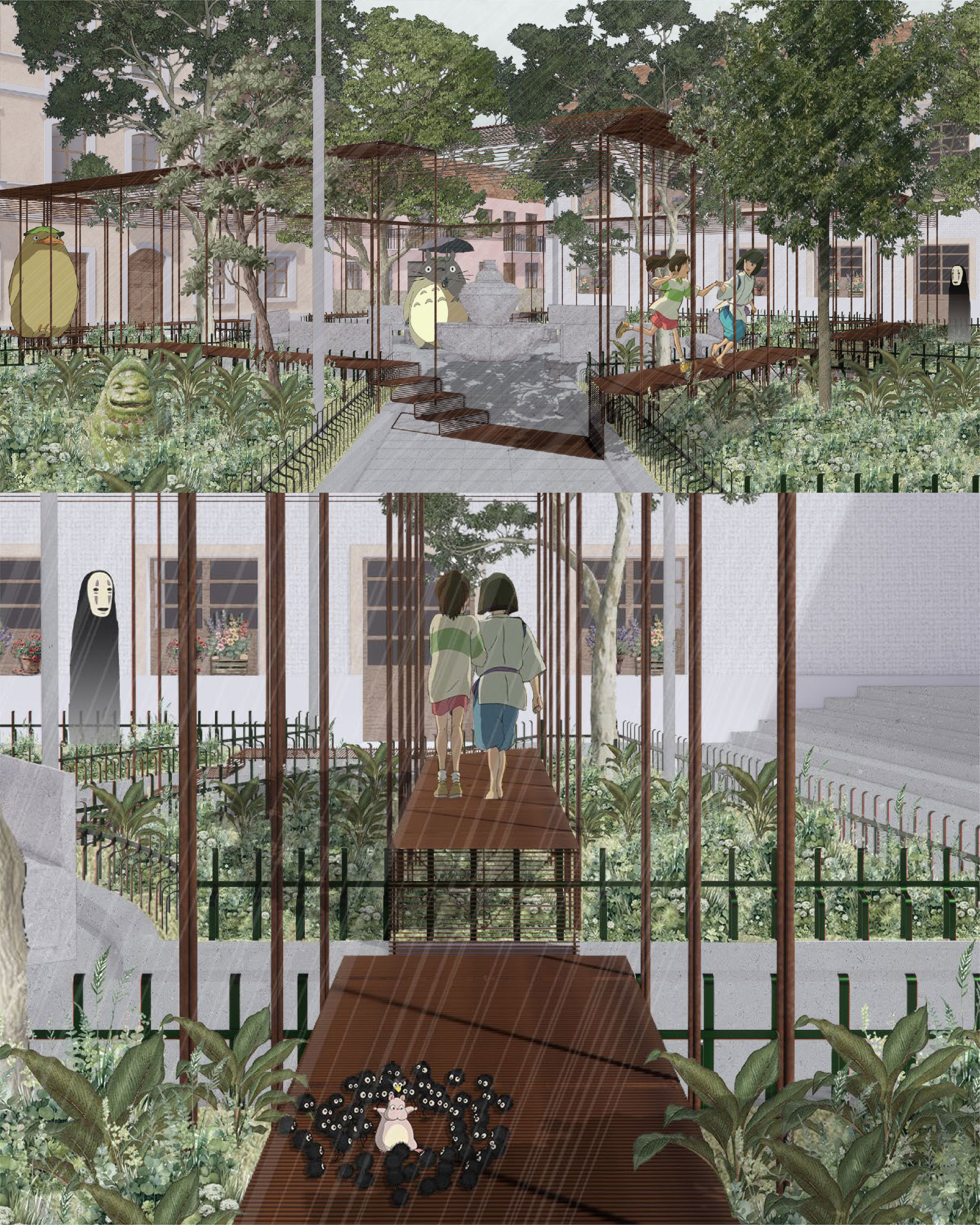
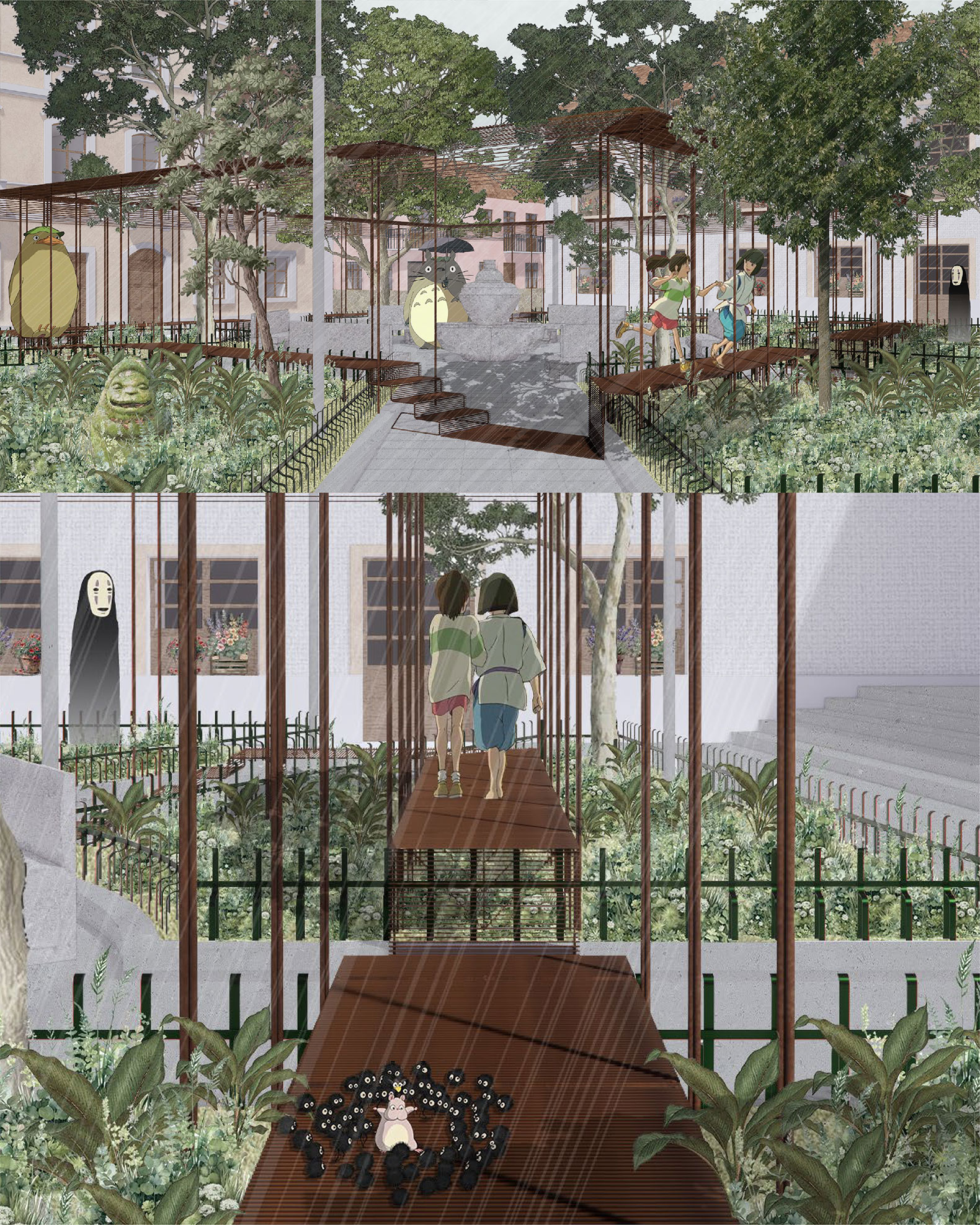
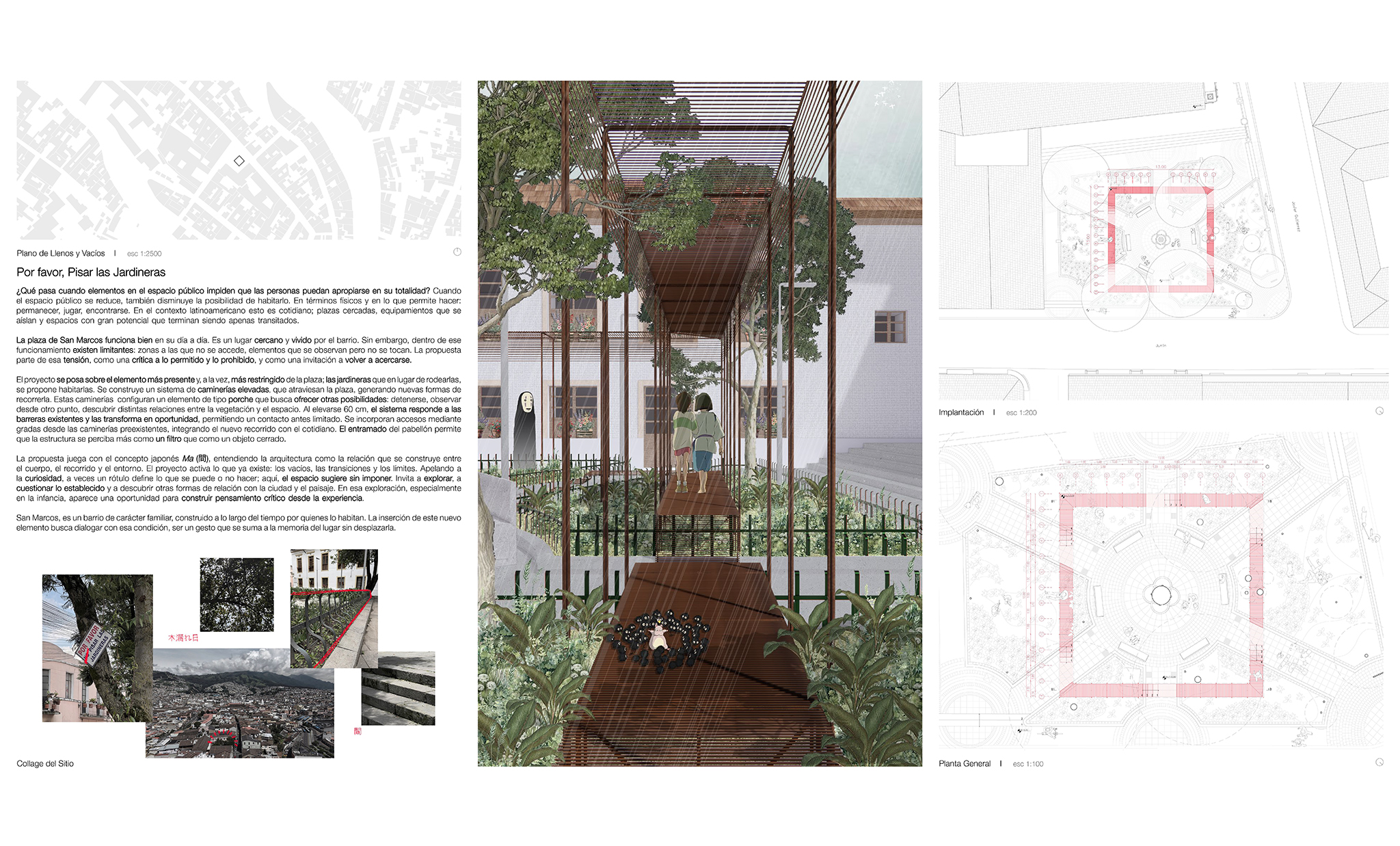
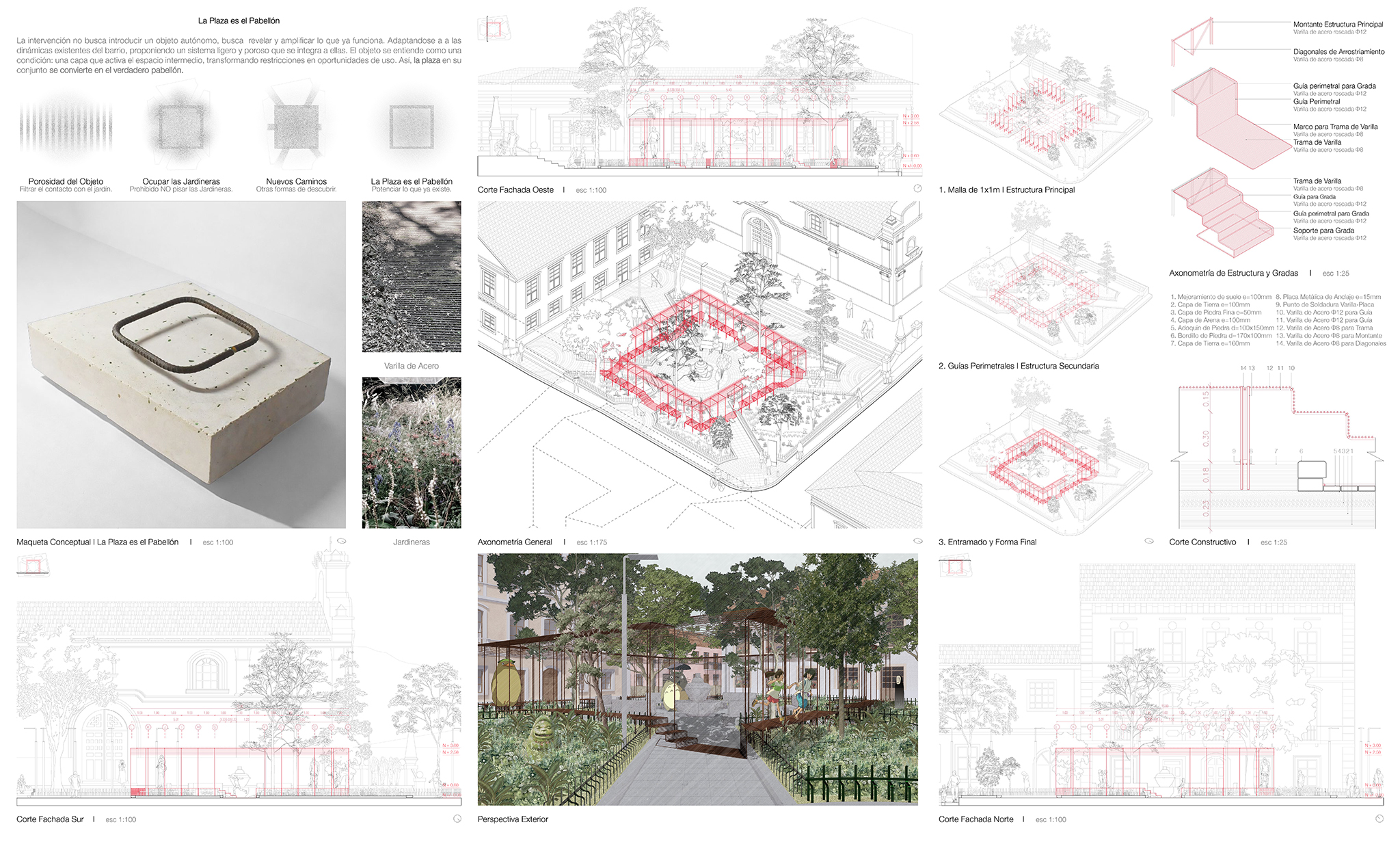
"POR FAVOR PISAR LAS JARDINERAS", San Marcos Plaza Pavilion by Isaac Flores Trávez. Courtesy of the XXV Pan-American Architecture Biennial of Quito.

"POR FAVOR PISAR LAS JARDINERAS", San Marcos Plaza Pavilion by Isaac Flores Trávez. Courtesy of the XXV Pan-American Architecture Biennial of Quito.

However, the scope of the competition extends beyond the selected designs. Each proposal initiates a collaborative process involving design teams, public and cultural institutions, space managers, neighborhood organizations, and other stakeholders linked to each site. Technical site visits, workshops, meetings, and coordination efforts allow ideas to be tested against the actual conditions of each location, incorporating a wide range of knowledge, needs, and perspectives. IMG6
In this sense, the architectural project also becomes an instrument for collective construction. Even before their physical realization, the pavilions generate relationships, open up spaces for discussion, and activate new possibilities for envisioning the future of the locations where they are situated. Architecture ceases to be merely the result of an individual decision, becoming instead a process built through dialogue and collaboration.
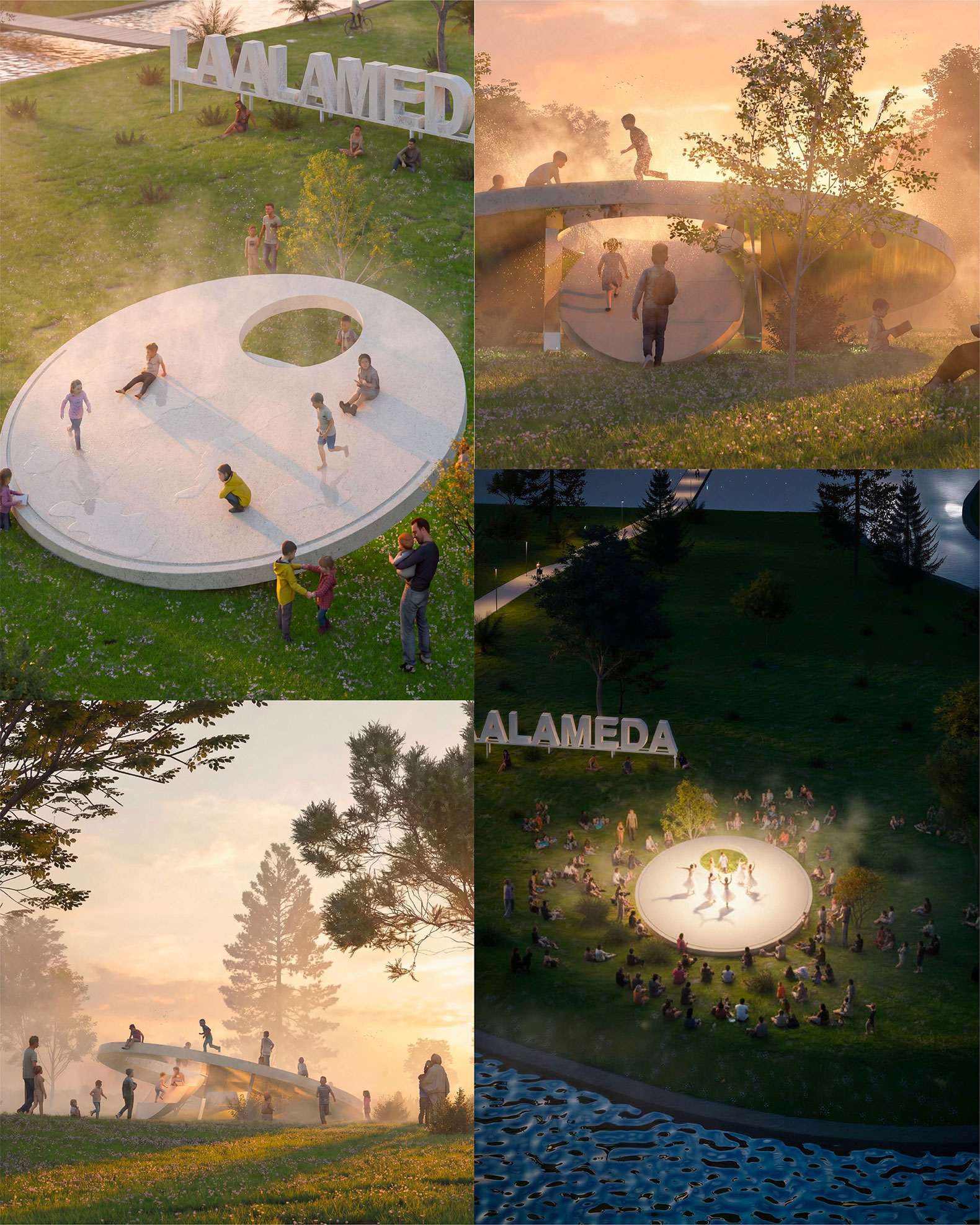
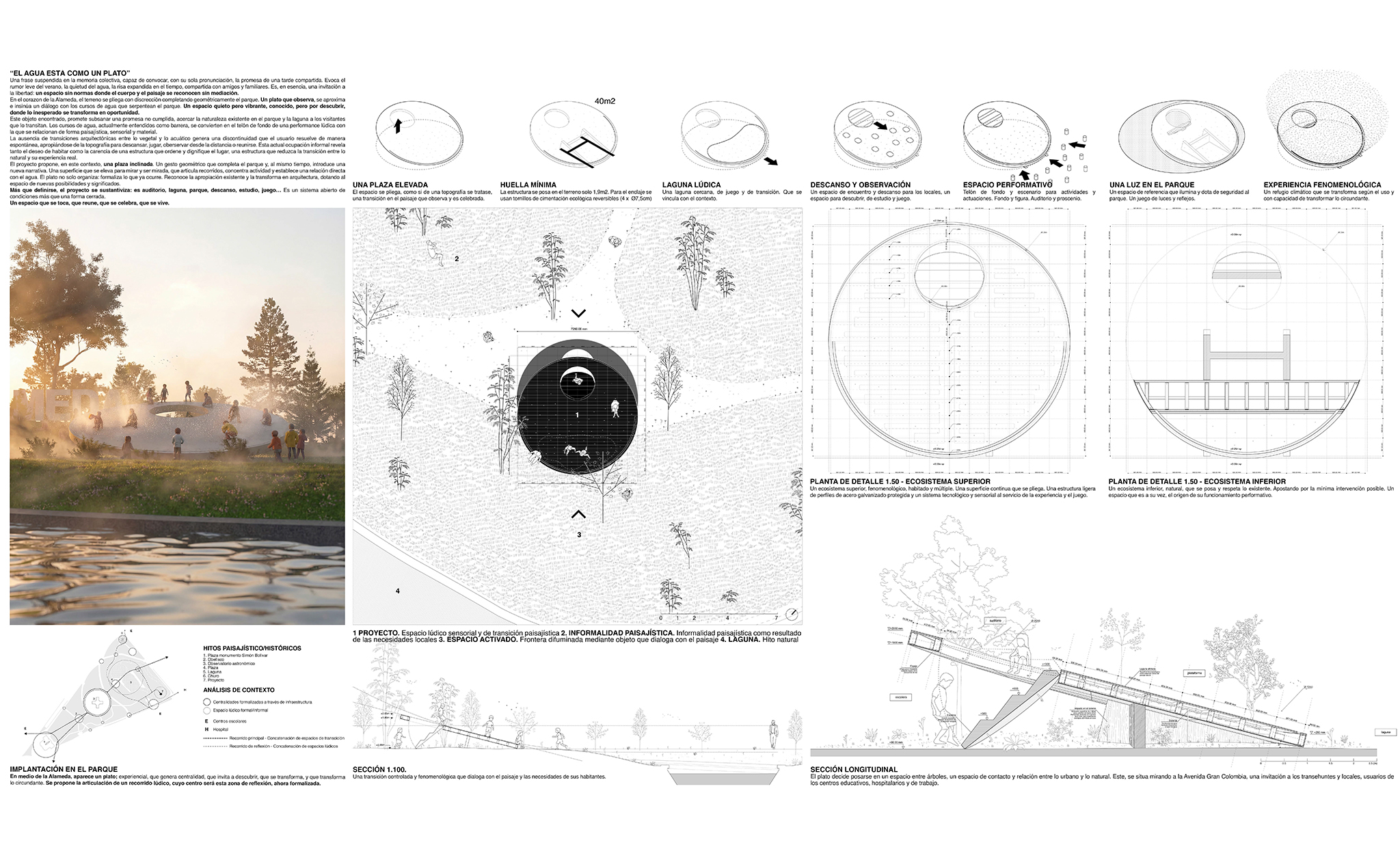
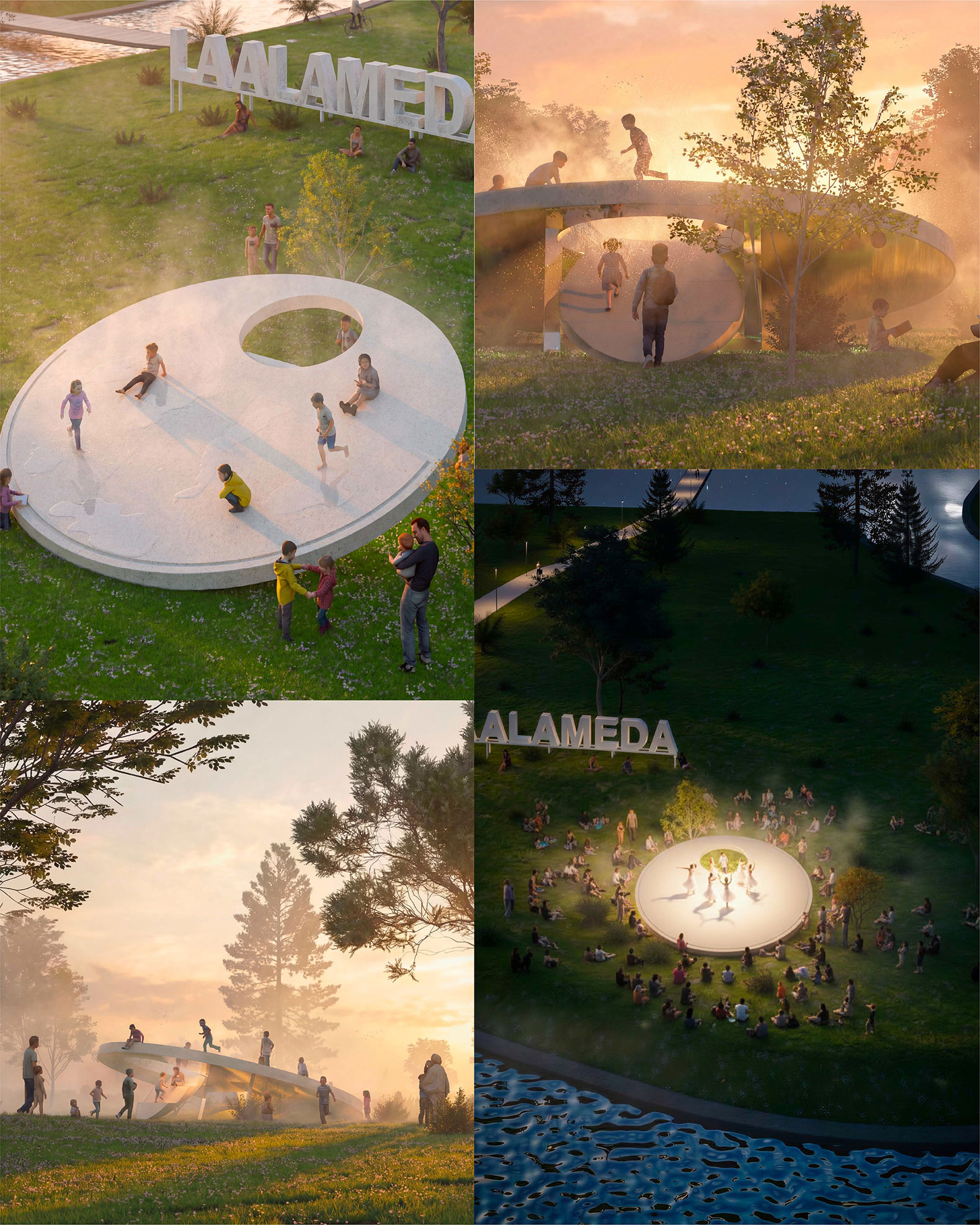
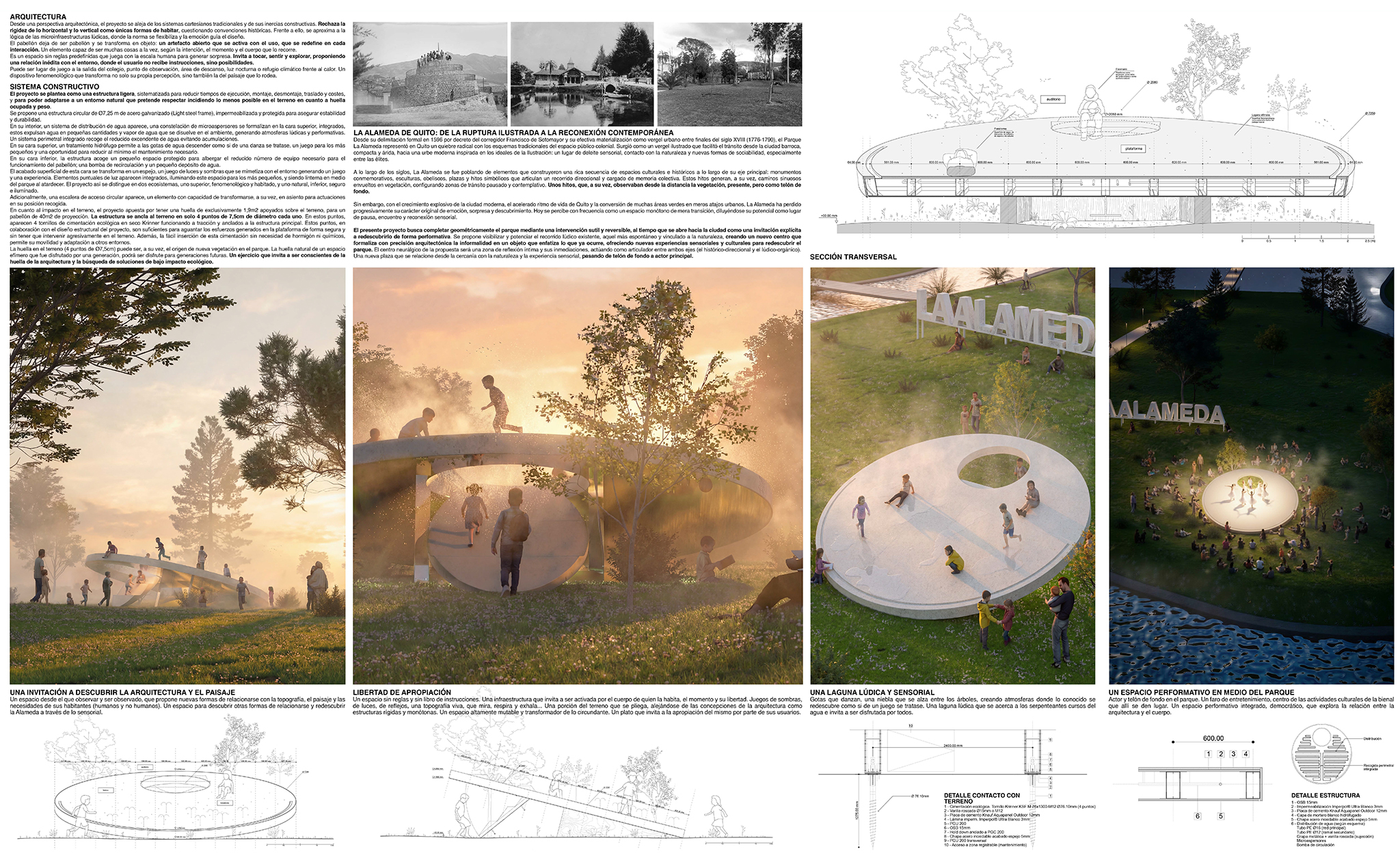
"EL AGUA ESTÁ COMO UN PLATO", La Alameda Park Pavilion by González Serrano Studio+. Courtesy of the XXV Pan-American Architecture Biennial of Quito.

"EL AGUA ESTÁ COMO UN PLATO", La Alameda Park Pavilion by González Serrano Studio+. Courtesy of the XXV Pan-American Architecture Biennial of Quito.

The concept of a network is fundamental to understanding the proposal. The nine pavilions do not represent a centralized intervention; rather, they form a system of activation points distributed across various sectors of Quito. Each one establishes a unique relationship with its surroundings, while, taken together, they propose new connections between public spaces, the citizenry, and urban life.
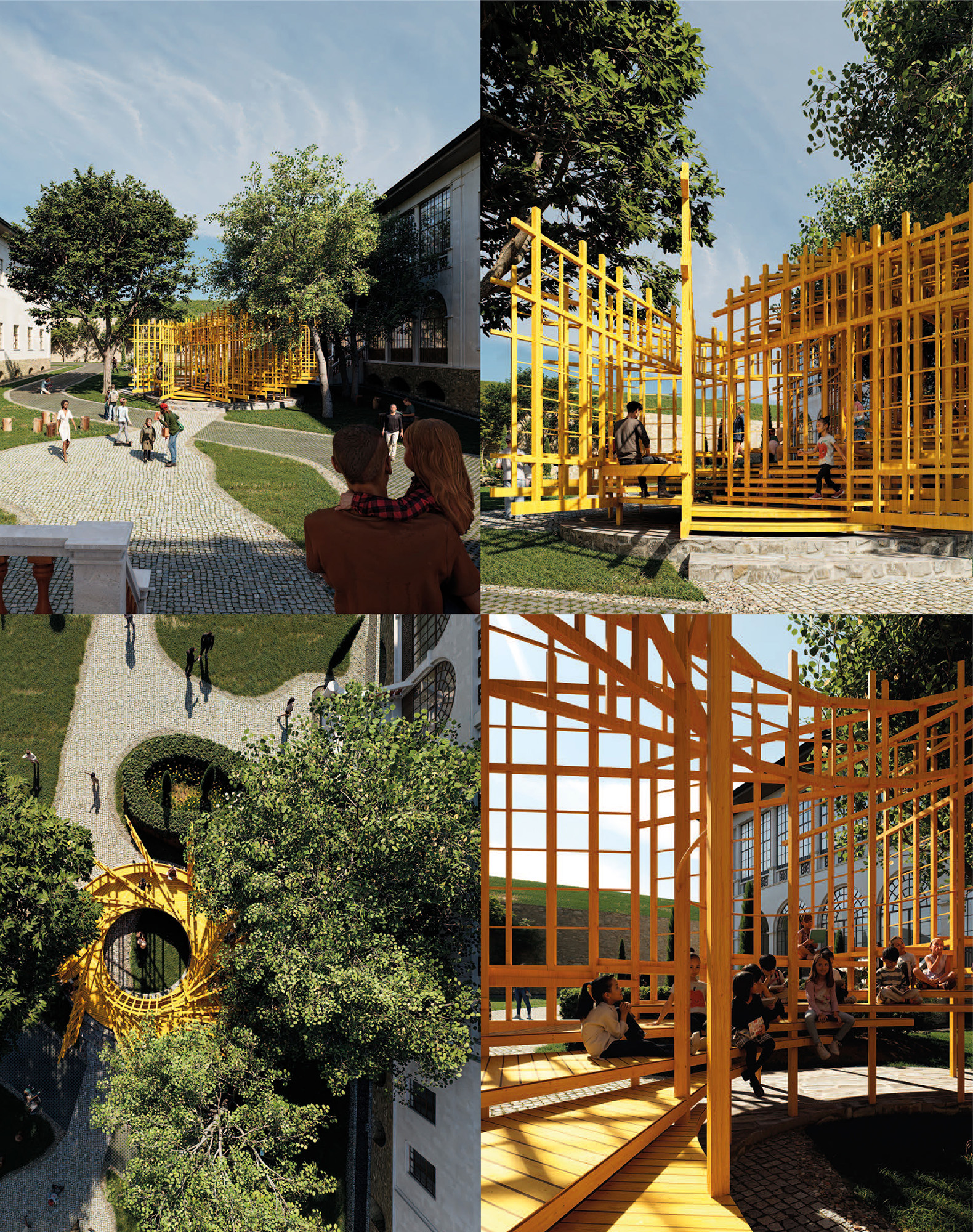
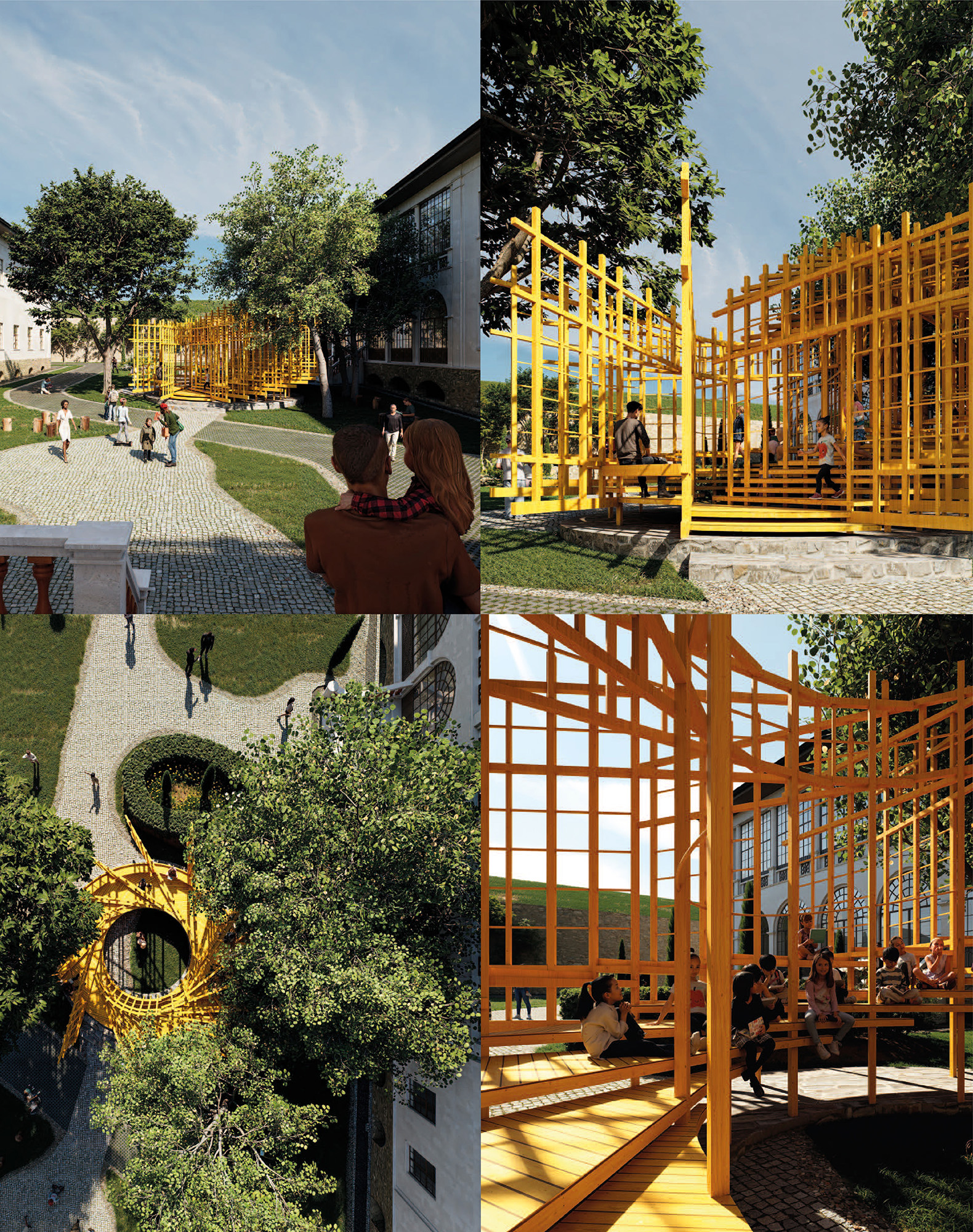
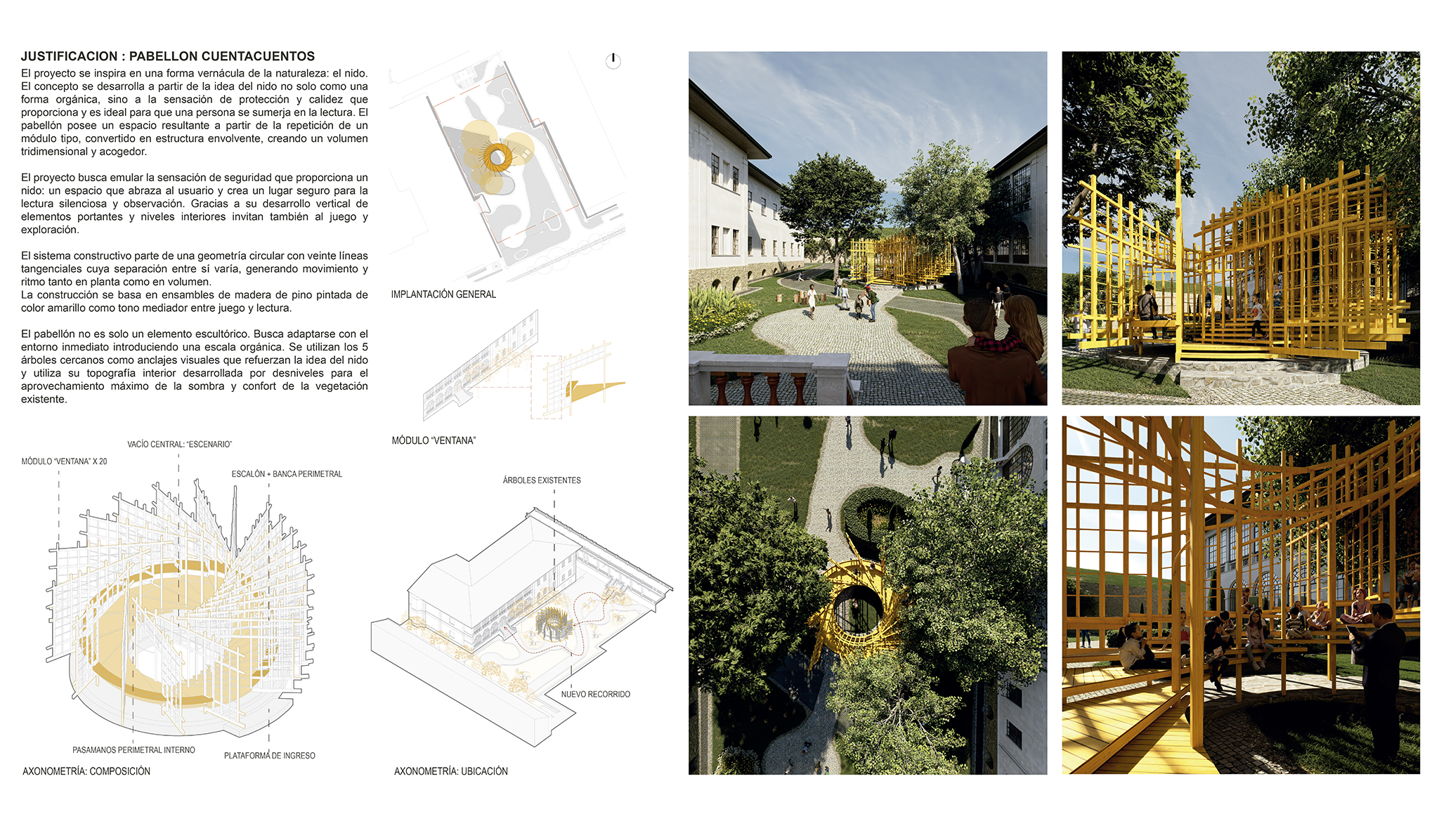
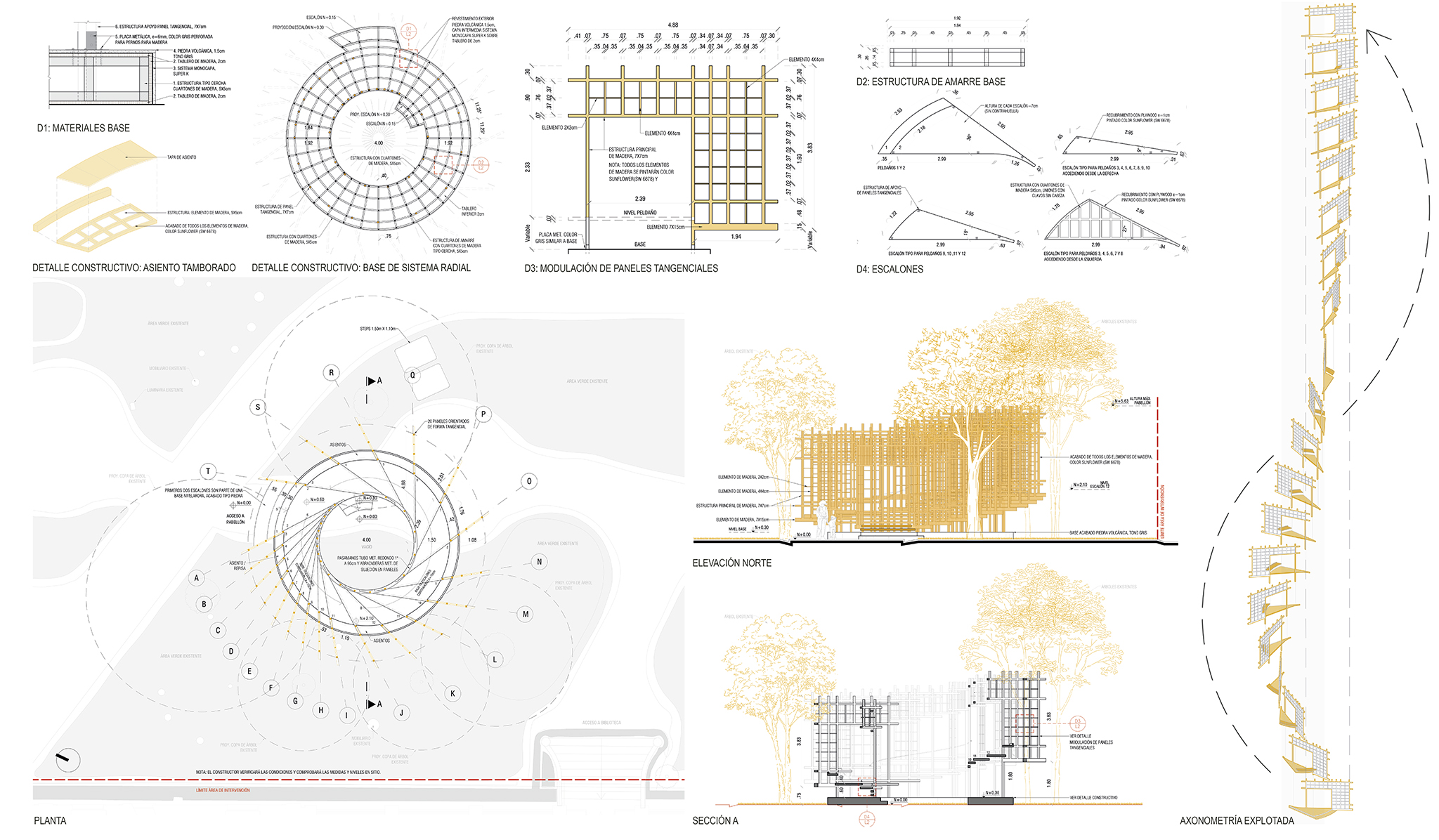
"EL NIDO", Eugenio Espejo National Library Pavilion by Estudio + Taller CC. Courtesy of the XXV Pan-American Architecture Biennial of Quito.

"EL NIDO", Eugenio Espejo National Library Pavilion by Estudio + Taller CC. Courtesy of the XXV Pan-American Architecture Biennial of Quito.

This initiative thus prompts a reflection on the role of contemporary architecture and its capacity to intervene in the city through small-scale operations. It is not just about adding new structures to the public realm, but about creating experiences, reclaiming forms of social encounter, and exploring alternative ways of inhabiting the collective sphere.
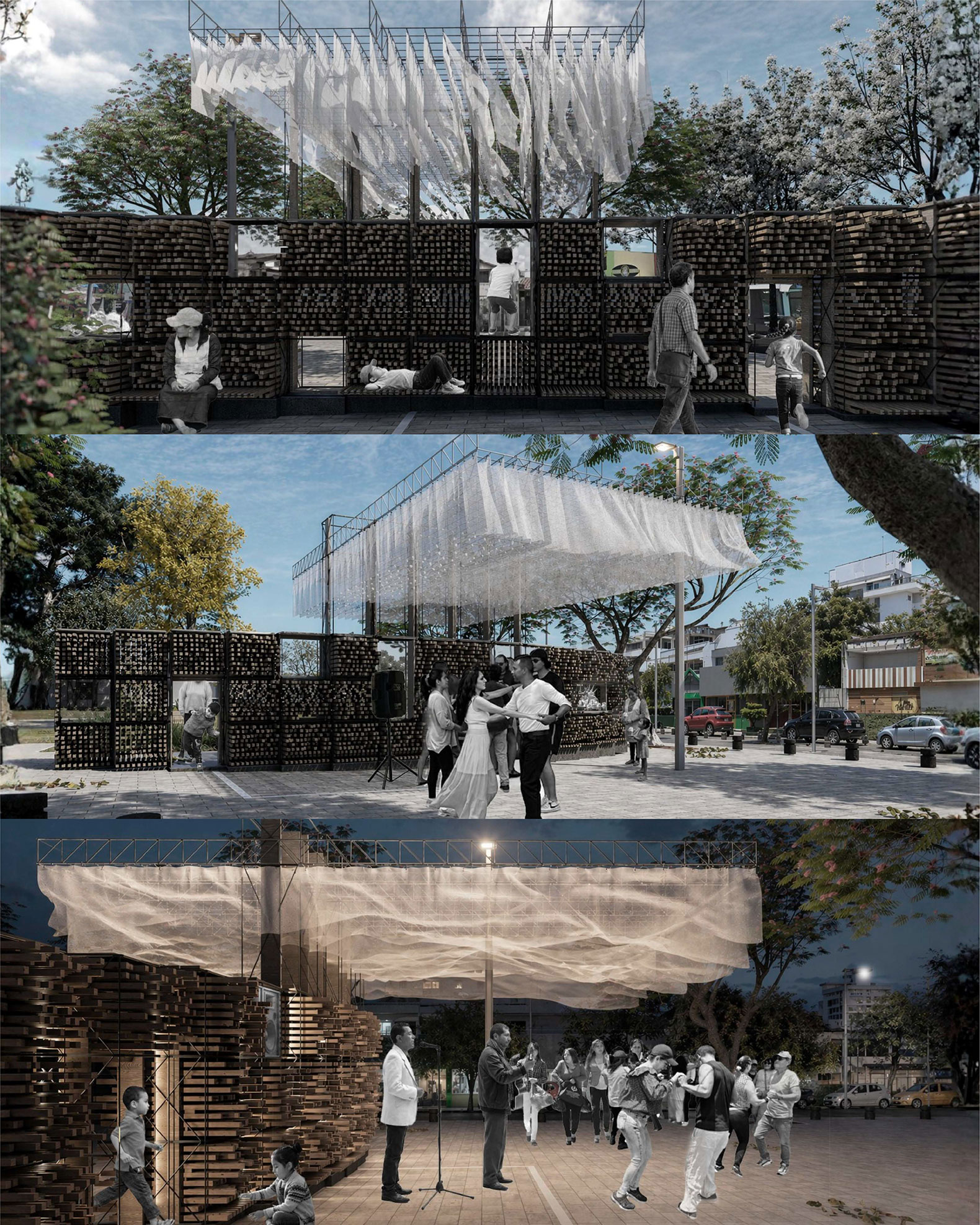
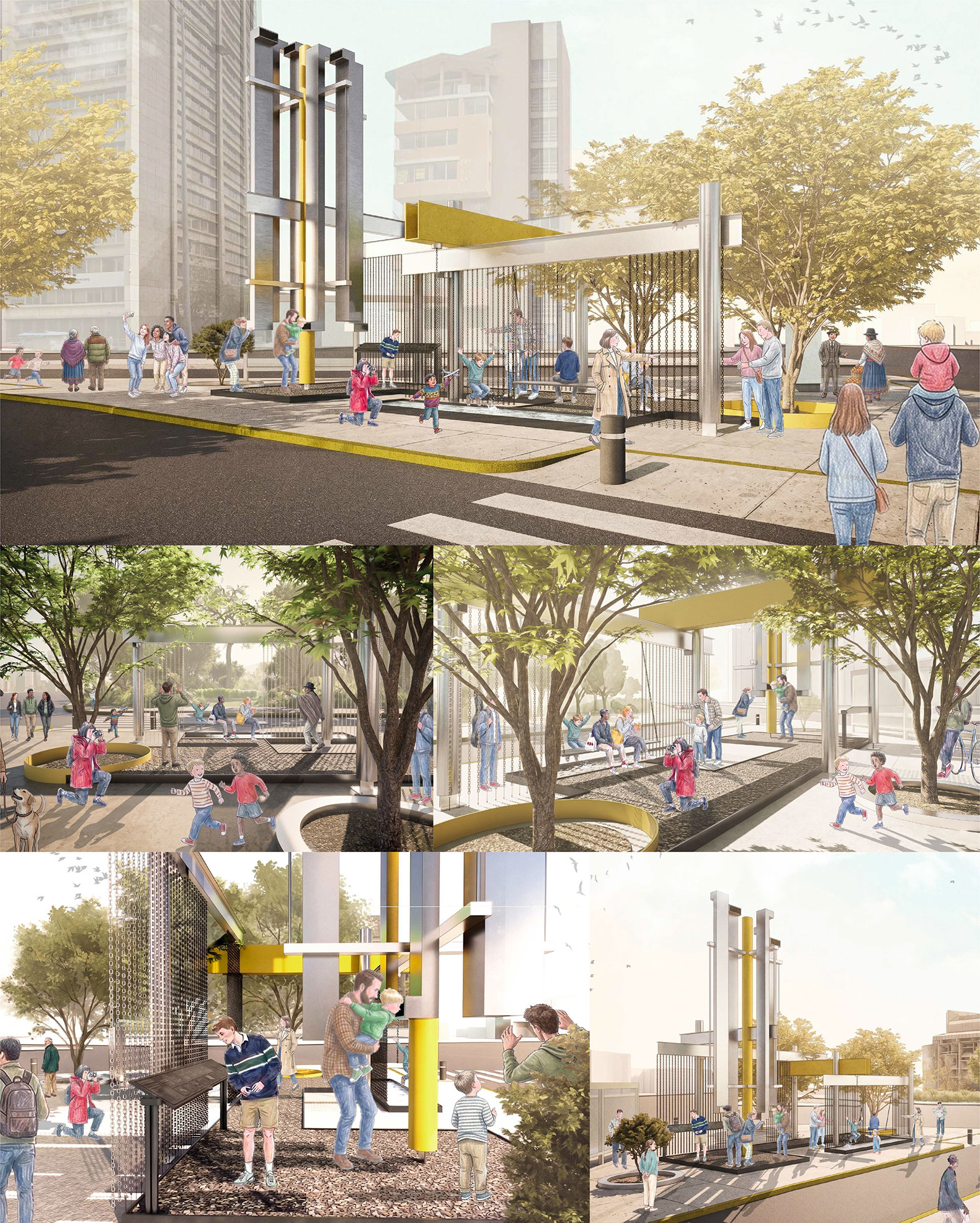
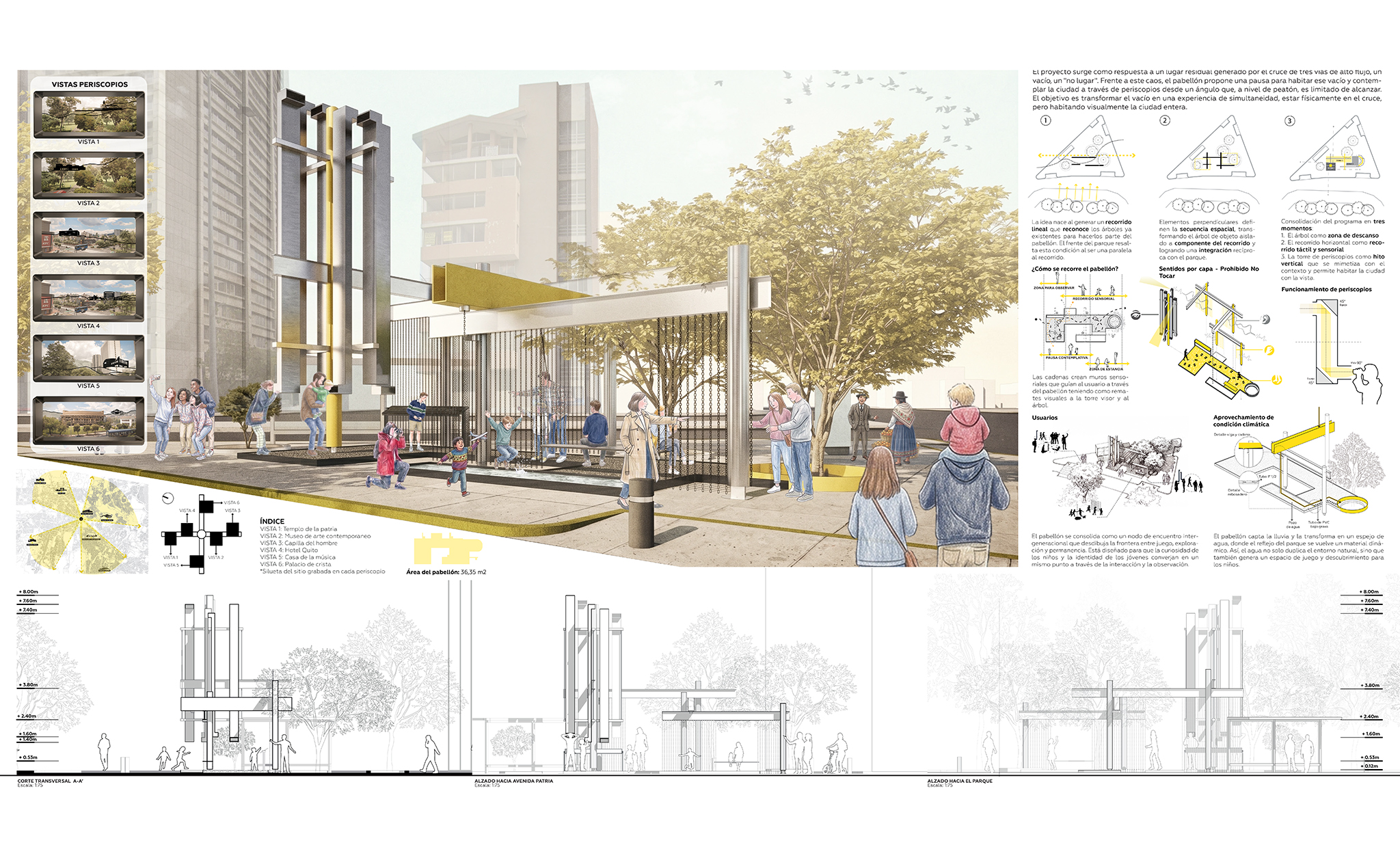
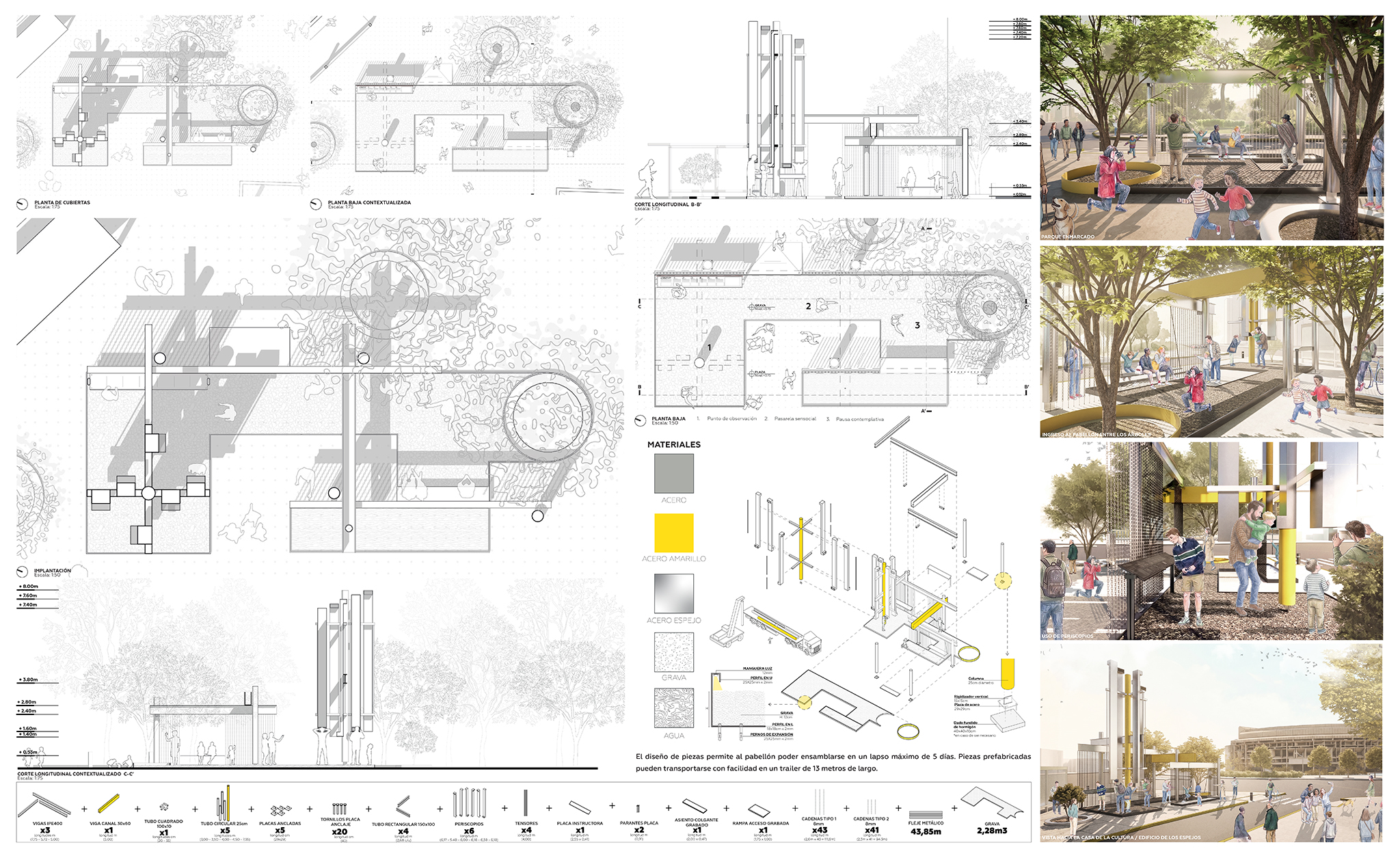
"PERISCOPIO DEL EJIDO", El Ejido Park Pavilion by the Universidad San Francisco de Quito (USFQ). Courtesy of the XXV Pan-American Architecture Biennial of Quito.

"PERISCOPIO DEL EJIDO", El Ejido Park Pavilion by the Universidad San Francisco de Quito (USFQ). Courtesy of the XXV Pan-American Architecture Biennial of Quito.

The competition embodies one of the core objectives of the XXV Biennial: shifting from merely imagining architecture to actually creating it. It demonstrates that a proposal can transcend the drawing board, engage with the real-world conditions of a territory, and serve as an opportunity to connect diverse stakeholders, forms of knowledge, and shared intentions.
Nine pavilions, nine sites, and a single conviction: architecture not only transforms the places it builds, but also the relationships it is capable of fostering around them.
More information

Label
President of the Pan-American Architecture Biennial of Quito
+ + copy Created with Sketch.
- + copy Created with Sketch.
Label
President of the College of Architects of Ecuador – Pichincha Province
Text

Diego Ordóñez Holguín.

+ + copy Created with Sketch.
- + copy Created with Sketch.
Label
Project team
Text

College of Architects of Ecuador – Pichincha Province (CAE-P).

+ + copy Created with Sketch.
- + copy Created with Sketch.
Label
Collaborators
Text

Juan Rodríguez, Lorena Lindao, Yadira Ávalos, Samanta Martínez, Mary Caicedo, Gabriela Loaiza, Ruth Sánchez, Alejandra Silva, Carolina Corral, Tania Jiménez, Camila Peñaherrera, Leonardo Yagerman, Paola Cóndor, Victoria Villaroel, Tadeo AmpudiA, Leonardo Santos.

+ + copy Created with Sketch.
- + copy Created with Sketch.
Label
Dates
Text

November 23 to 27, 2026.

+ + copy Created with Sketch.
- + copy Created with Sketch.
Label
Location
Text

Quito, Ecuador.

+ + copy Created with Sketch.
- + copy Created with Sketch.
Label
Manufacturers
Text

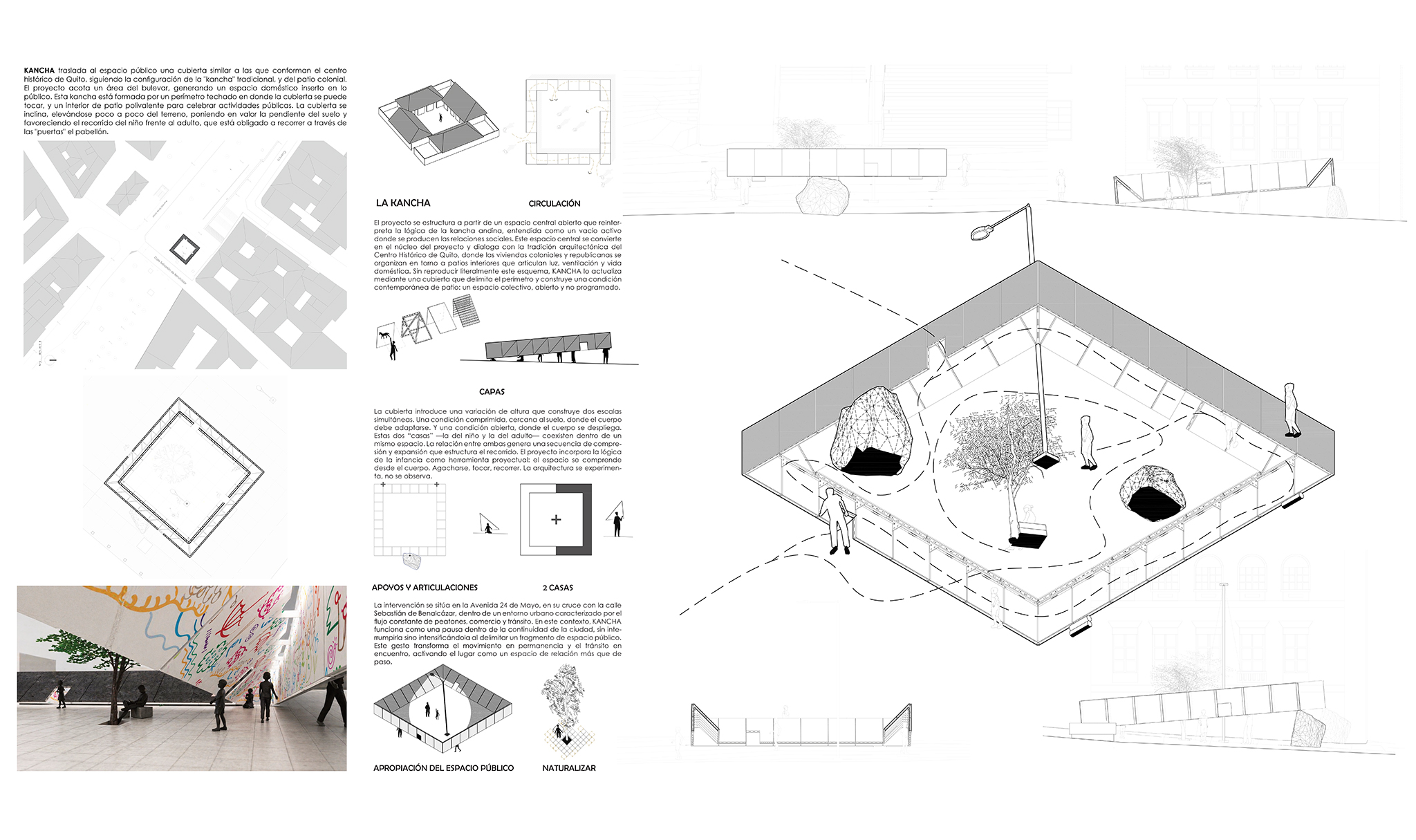
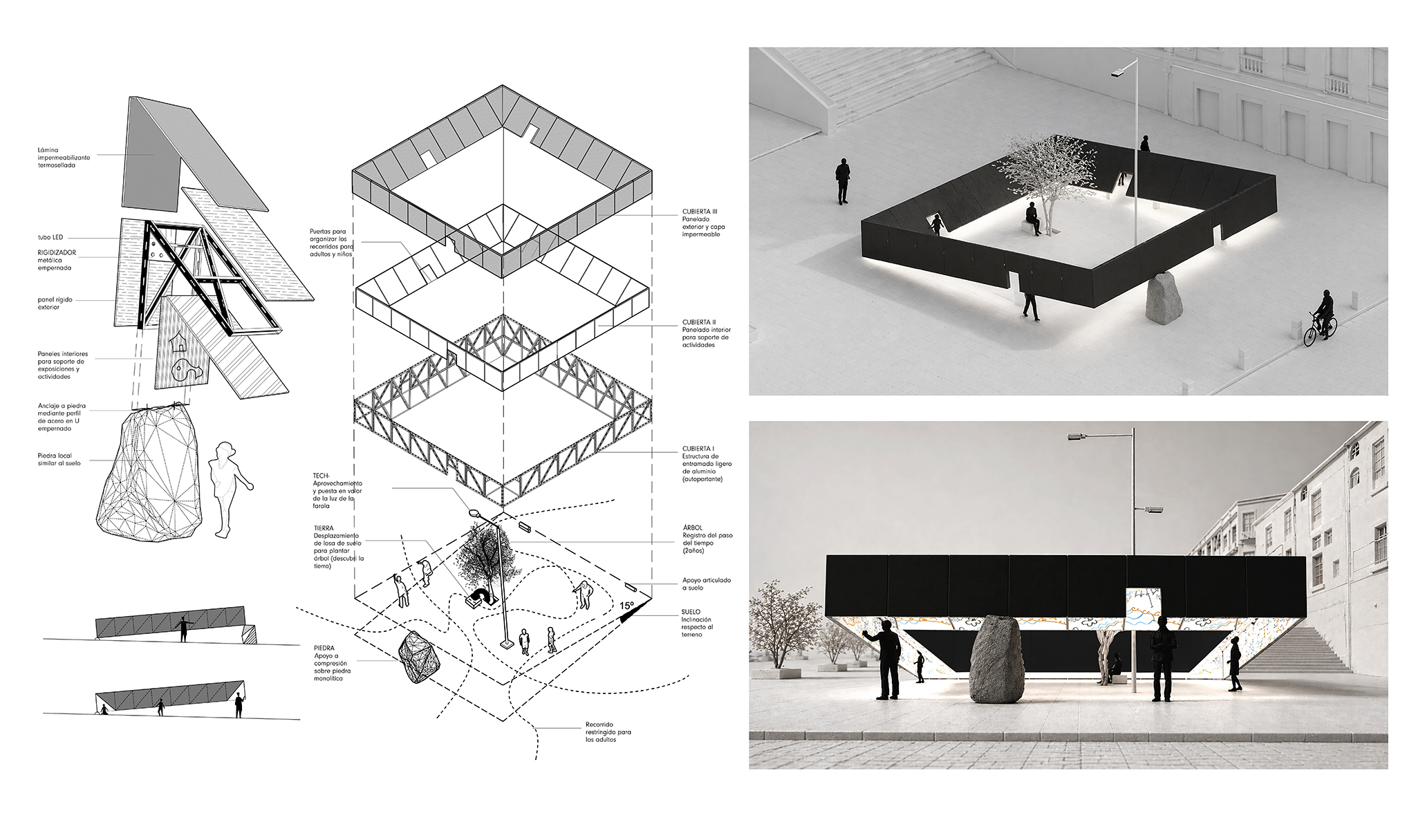
KANCHA, Material.- Imptek.
CLIMA EN CONSTRUCCIÓN, Material.- Semaica.
VIGILIA. UMBRAL DE LUZ Y RITO COLECTIVO. Material.- Imptek | Edimca.
POR FAVOR PISAR LAS JARDINERAS. Material.- Adelca.
EL AGUA ESTÁ COMO UN PLATO. Material.- Imptek | Eternit.
EL NIDO. Material.- Edimca.
PERISCOPIO DEL EJIDO. Material.- Kubiec.
SÍNCOPE. PAUSA Y MOVIMIENTO. Material.- Edimca.

+ + copy Created with Sketch.
- + copy Created with Sketch.
Label
Photography
+ + copy Created with Sketch.
- + copy Created with Sketch.

Daniela Sofía Loaiza is an Ecuadorian architect and urbanist. She currently serves as Vice President of the College of Architects of Ecuador – Pichincha Province (CAE-P) and as President of the Pan-American Architecture Biennial of Quito (BAQ)—one of the most significant platforms for reflection on architecture and the city in Latin America.

She holds a PhD in Architecture and Urbanism (from programs in Chile and Spain) and a Master’s degree in Urbanism and City Architecture (from Brazil). Her primary research focuses on the morphological study of public and collective spaces in contemporary Latin American cities.

She previously directed the Master’s program in Urbanism (specializing in City Management) at the Universidad de las Américas (UDLA), where she also taught for over a decade, fostering a critical and sensitive perspective on the territory and its transformation. Recognized as a "Leading Woman in Science" in Ecuador, she has published articles, book chapters, and essays on architecture and the city in both national and international outlets. She has also taught architecture at the Federal University of Santa Catarina (Brazil), the Pontifical Catholic University of Ecuador, and the Universidad San Francisco de Quito.

She has participated as a speaker in conferences, research initiatives, and urban debates, and has worked as a consultant on projects involving public and collective spaces in both Ecuador and Brazil.
A mother to Alicia and a "rebellious citizen," her approach to urban issues is deeply rooted in sensitivity, memory, and the ethics of inhabiting space.

Read more
Published on: November 20, 2026
Cite:
metalocus, AGUSTINA BERTA
"Nine pavilions, nine locations, and a single conviction" METALOCUS. Accessed
<https://www.metalocus.es/en/news/nine-pavilions-nine-locations-and-single-conviction> ISSN 1139-6415
Loading content ...
Loading content ...
Loading content ...
Loading content ...
Loading content ...
Loading content ...
Loading content ...
Loading content ...
Loading content ...
Loading content ...
Loading content ...
Loading content ...
Loading content ...
Loading content ...
Loading content ...
Loading content ...
Loading content ...
Loading content ...
Loading content ...
Loading content ...
Loading content ...
Loading content ...
Loading content ...
Loading content ...
Loading content ...
Loading content ...
Loading content ...
Loading content ...
Loading content ...
Loading content ...
Loading content ...
Loading content ...
Loading content ...
Loading content ...
Loading content ...
Loading content ...
Loading content ...
Loading content ...
Loading content ...
Loading content ...
Loading content ...
Loading content ...
Loading content ...
Loading content ...
Loading content ...
Loading content ...
Loading content ...
Loading content ...
Loading content ...
Loading content ...
Loading content ...
Loading content ...
Loading content ...
Loading content ...