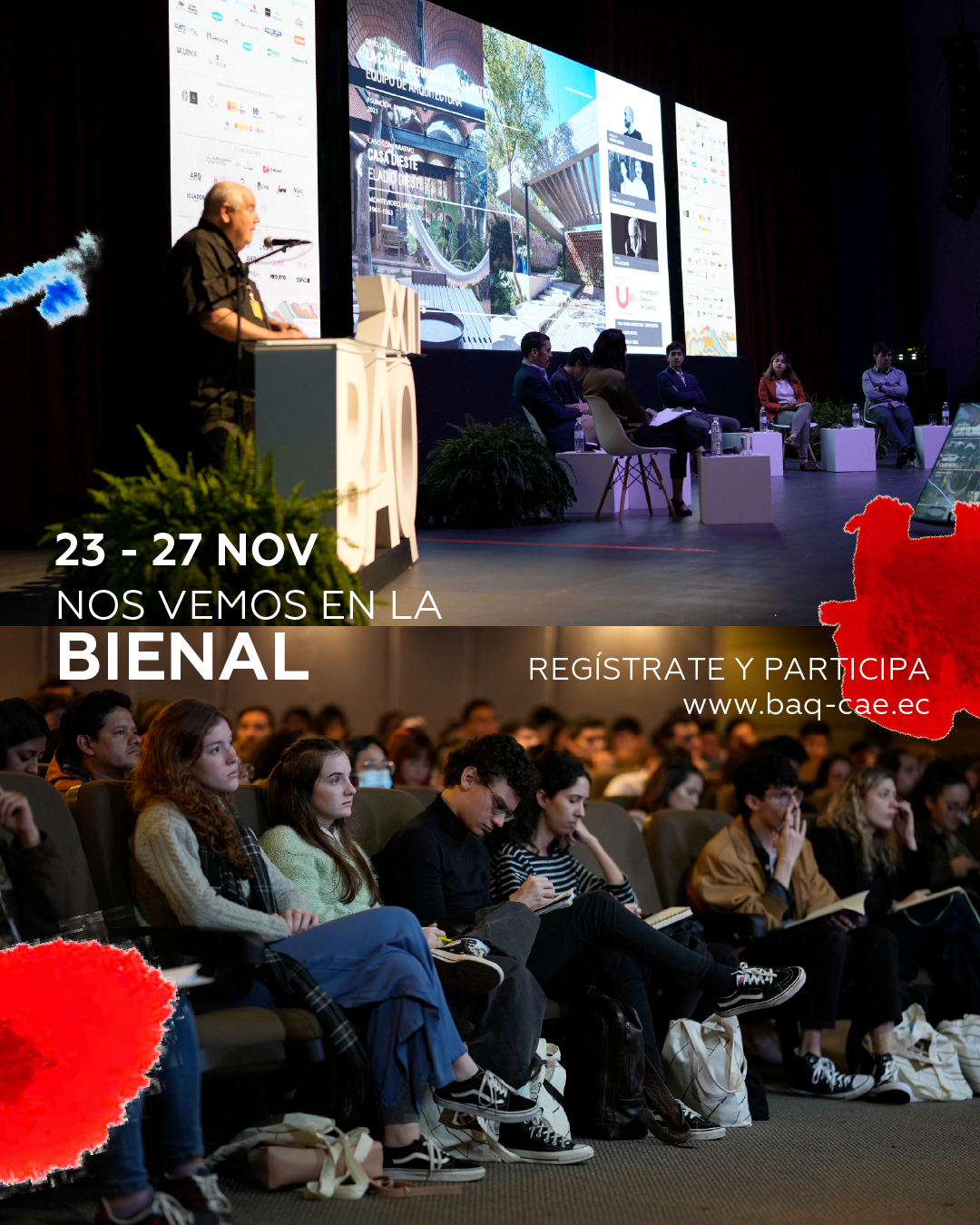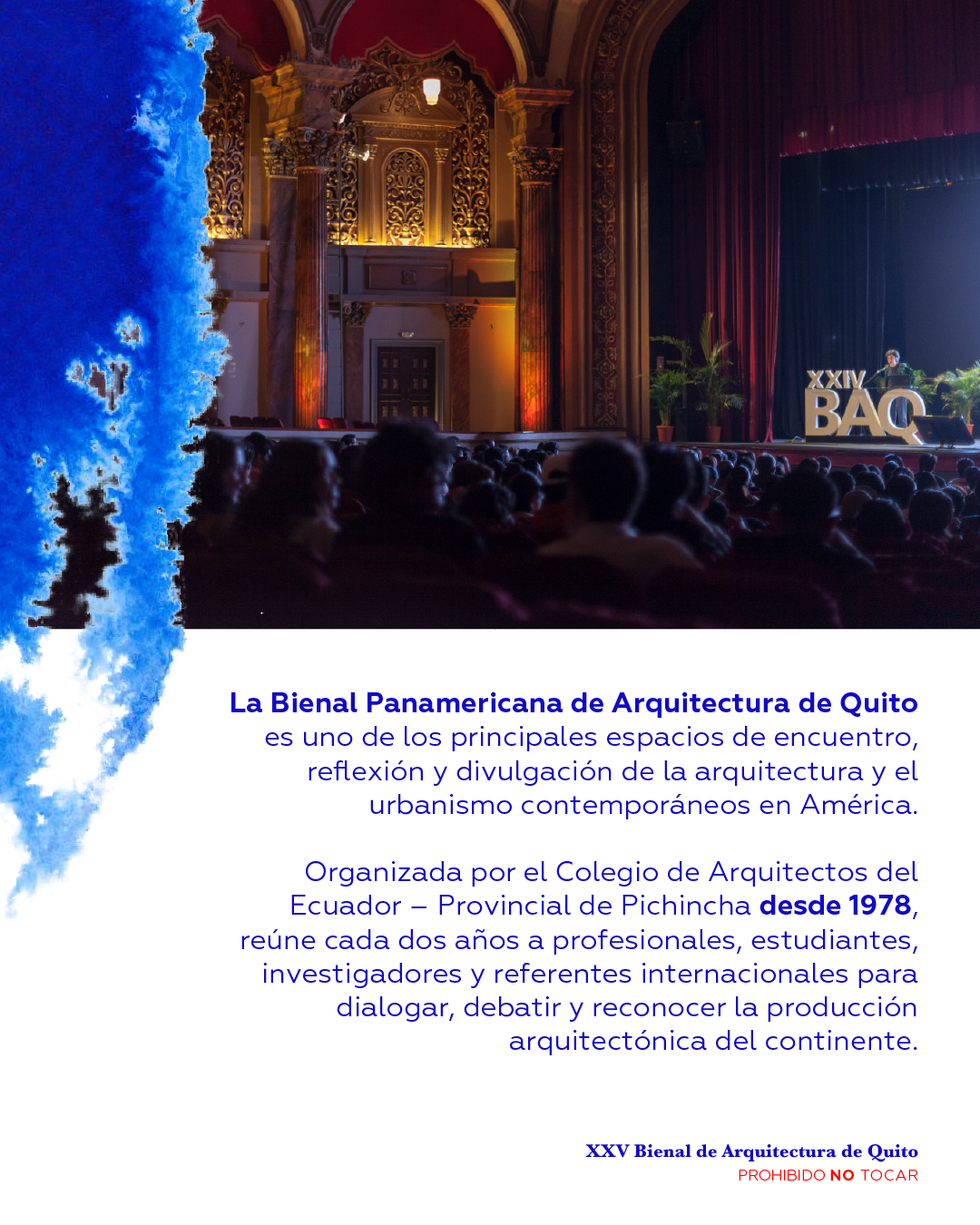
The twenty-fifth edition of the Pan-American Architecture Biennial of Quito will take place from November 23 to 27 in Quito, Ecuador. The city's streets, squares, parks, and cultural venues will provide the setting for an international gathering featuring academic discussions, exhibitions, and professional exchanges.

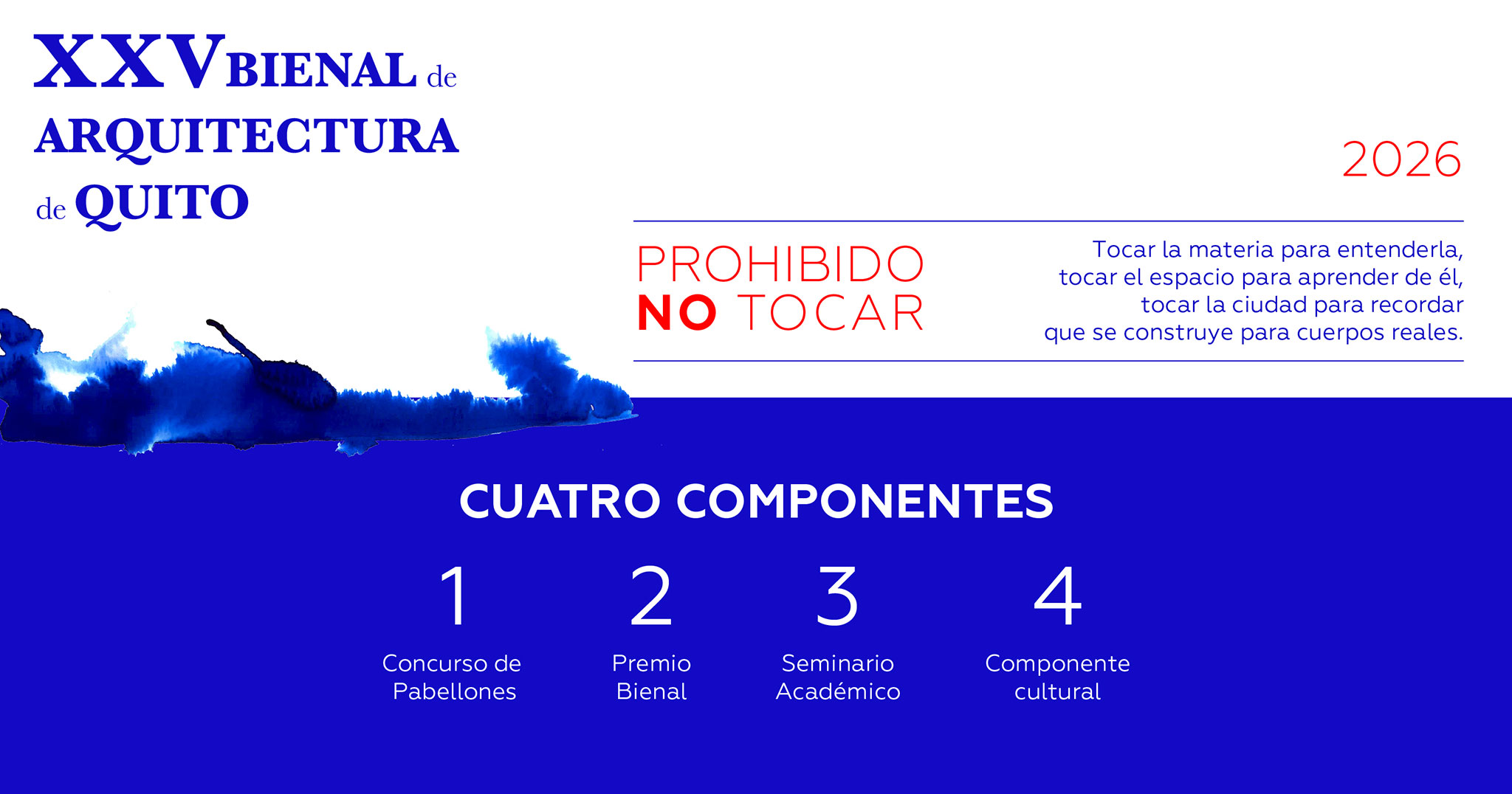
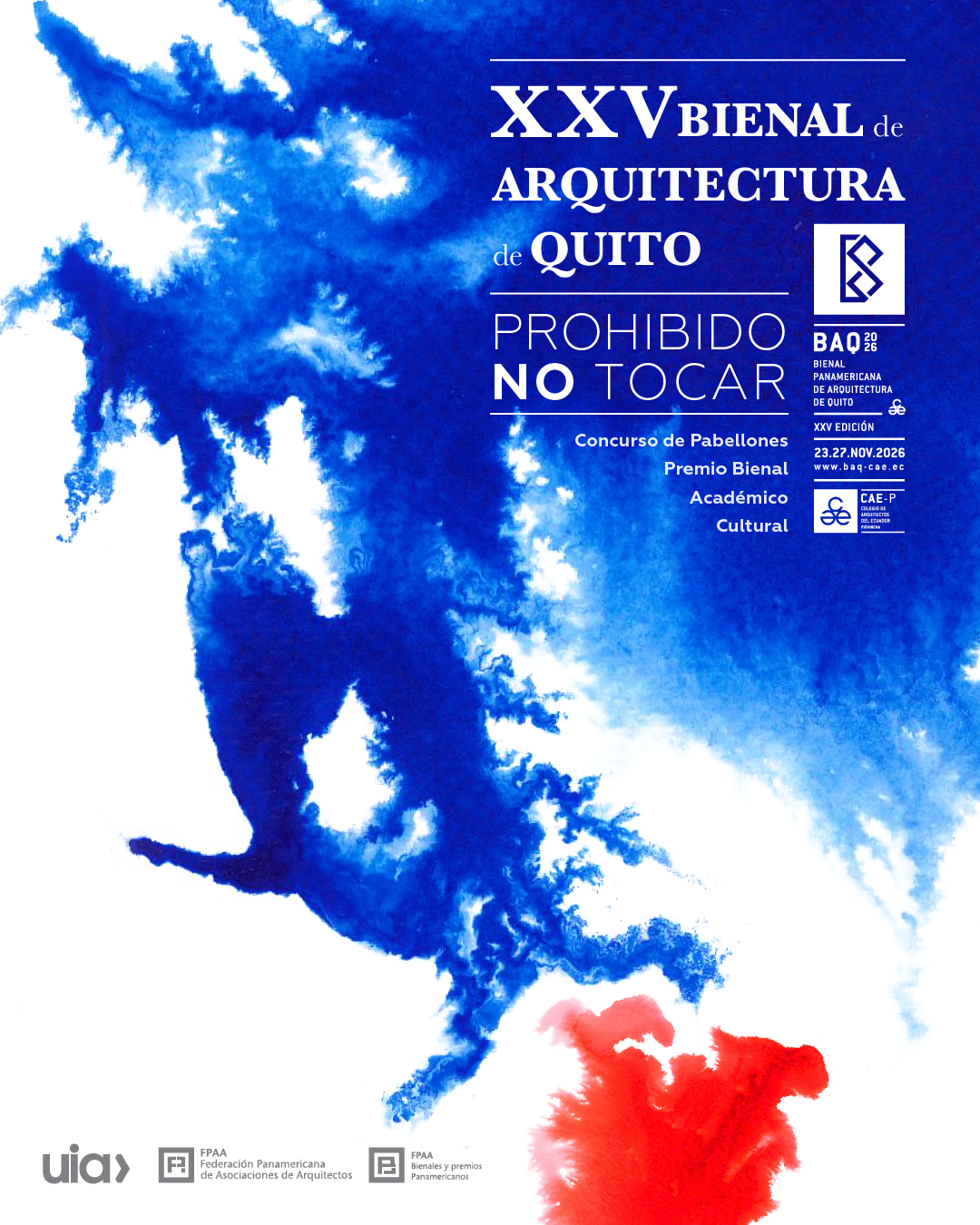
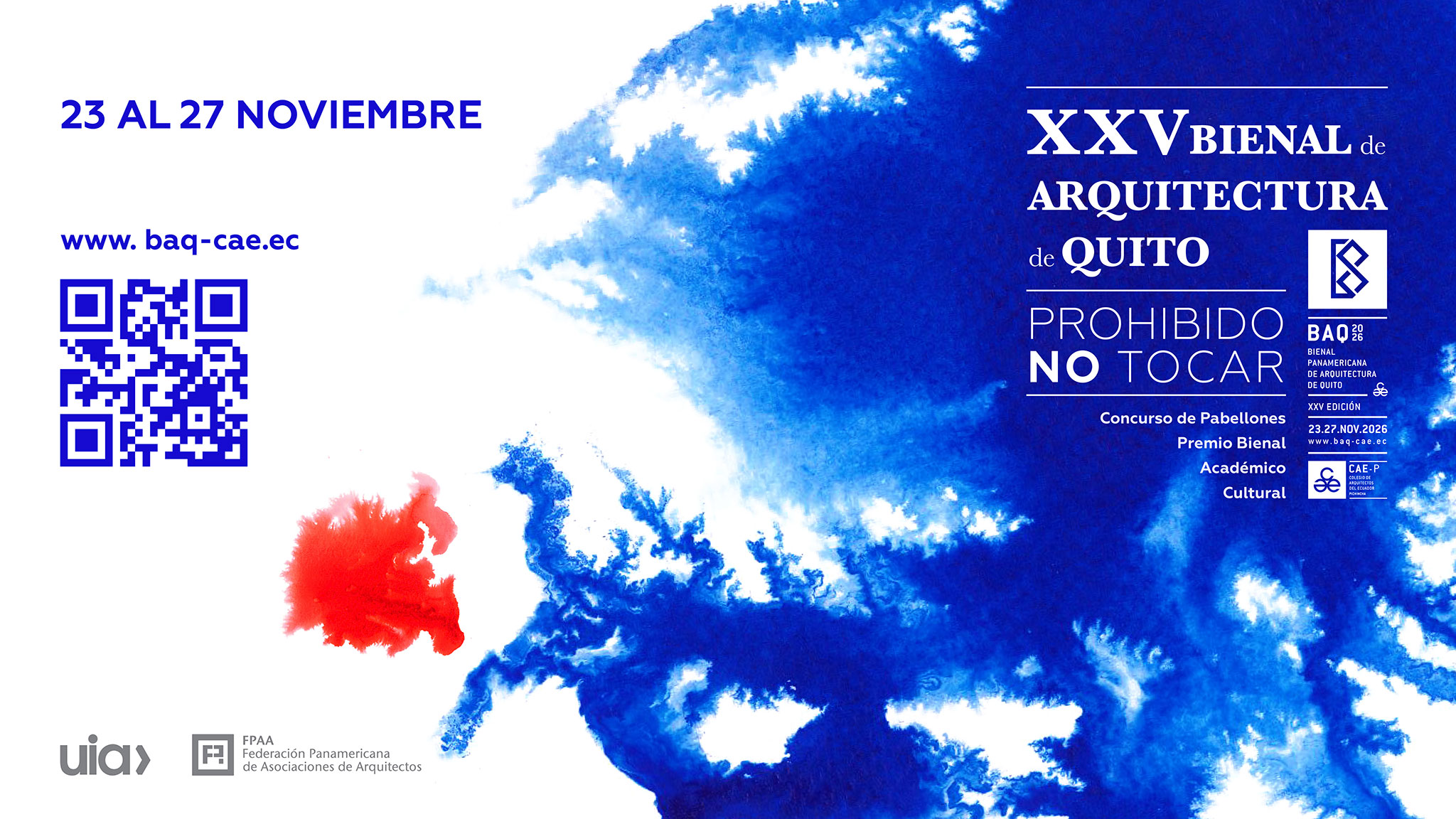
Architecture begins with an idea, develops through drawing and technical design, and acquires meaning when it comes into contact with life. Between what we imagine and what actually happens, between the precision of a design and the unpredictability of those who inhabit it, lies a relationship that constantly transforms our discipline. It is from this reflection that PROHIBIDO NO TOCAR (DO NOT TOUCH) emerges, the concept that shapes the XXV Pan-American Architecture Biennial of Quito.

You can sign up here: here.

This edition proposes understanding architecture as a discipline that cannot remain detached from reality. To touch means to explore, experiment, question, and participate; it means understanding spaces through the body, recognizing the conditions of each territory, and embracing the responsibility to transform them. It also means making room for the unexpected: allowing people to appropriate places, make them their own, and discover possibilities that their designers had never imagined.

On this premise, the XXV Architecture Biennial of Quito poses a fundamental question: what happens when architecture steps beyond its own spaces and comes into direct contact with the city and its inhabitants?

This edition's answer is to bring the Biennial into Quito. The city ceases to be merely the setting for an international gathering and becomes an active part of its content. Academic discussions, exhibitions, and professional encounters extend into streets, squares, parks, and cultural spaces, fostering a direct relationship between architectural thought and the everyday experience of the city.
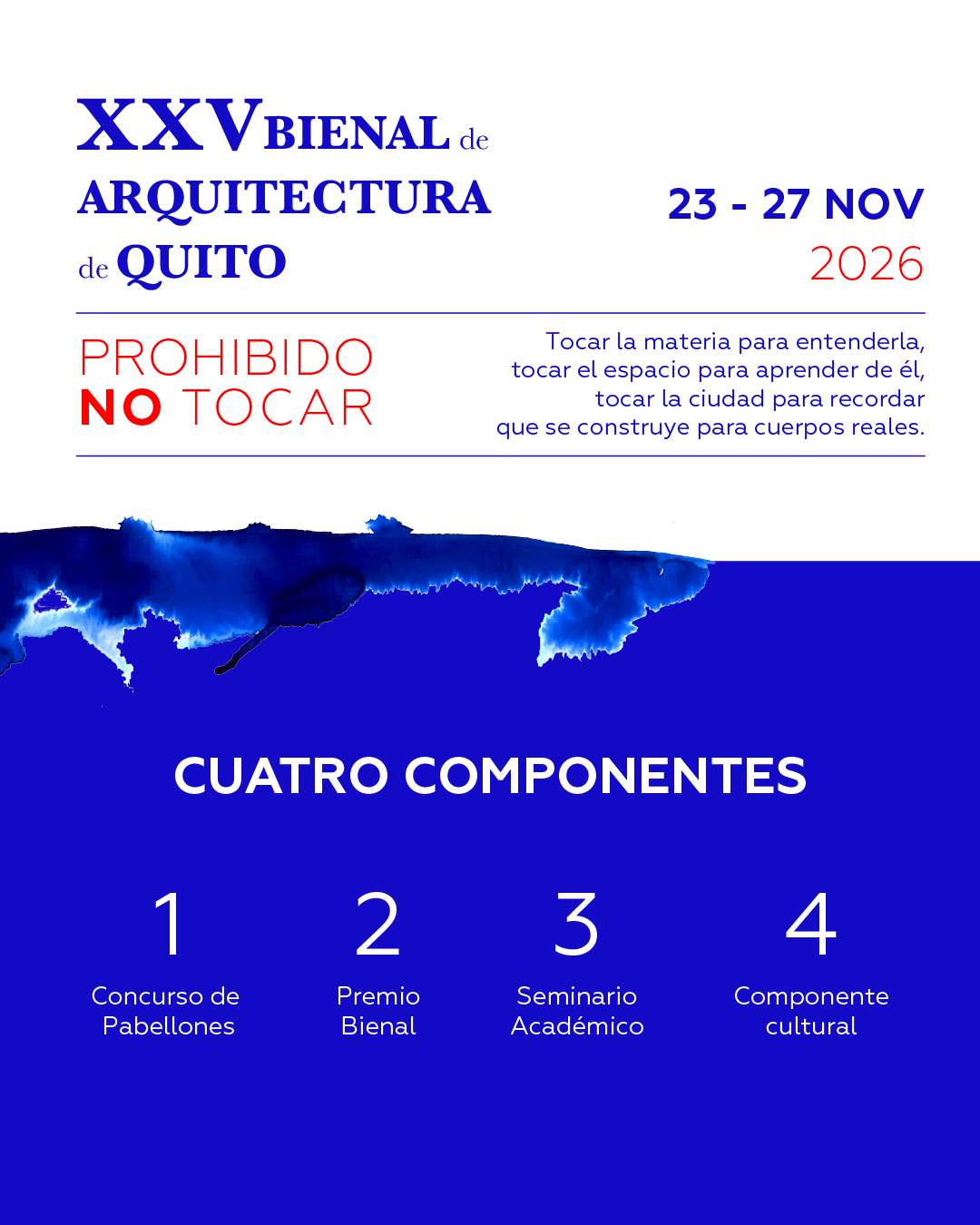
PROHIBIDO NO TOCAR. XXV Bienal Panamericana de Arquitectura de Quito. Imagen por Samanta Martinez.

DO NOT TOUCH. XXV Bienal Panamericana de Arquitectura de Quito. Image by Samanta Martinez.

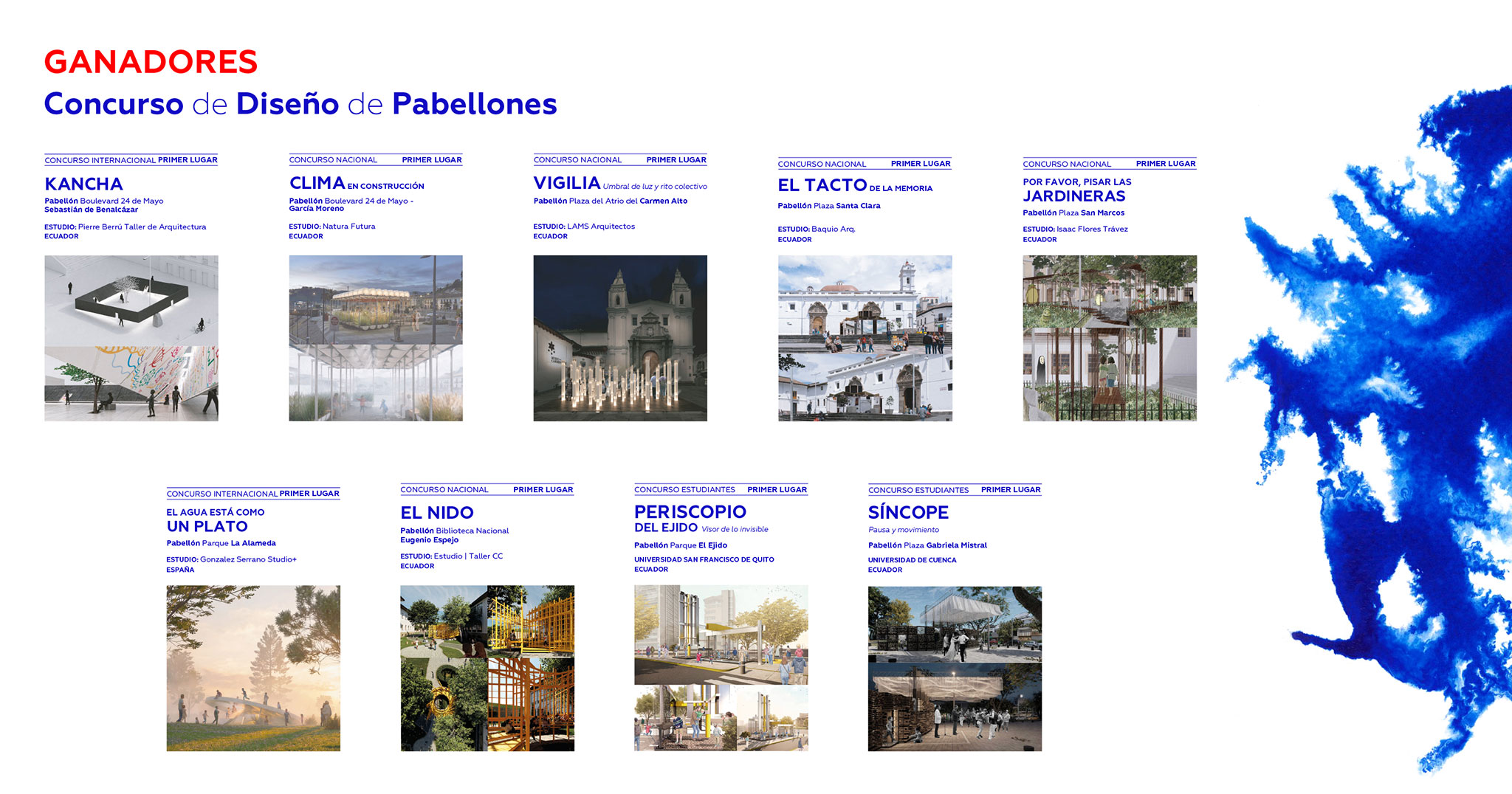
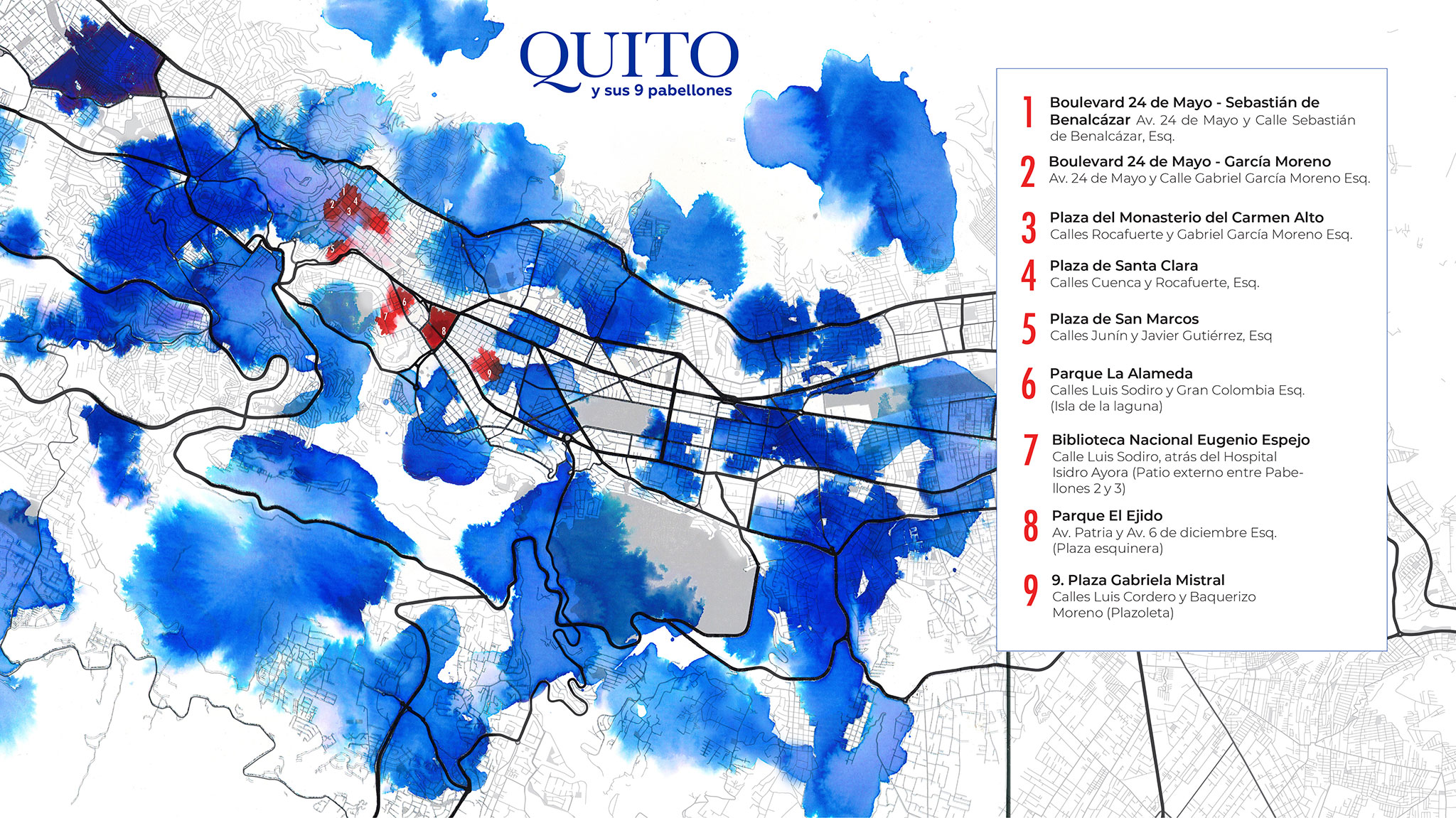
One of the central pillars of this proposal is the transition from imagining architecture to making architecture. For this reason, competitions play a central role, not merely as mechanisms for generating new ideas, but as instruments capable of bringing them to life. The international competition for playful and educational pavilions is a concrete expression of this commitment: nine selected proposals for different public spaces across Quito, each advancing through processes of technical development, management, institutional coordination, and construction. Every pavilion represents an opportunity to activate new forms of engagement with public space and demonstrate how an architectural intervention can foster relationships between people, institutions, and territory.
DO NOT TOUCH. XXV Bienal Panamericana de Arquitectura de Quito. Image by Samanta Martinez.

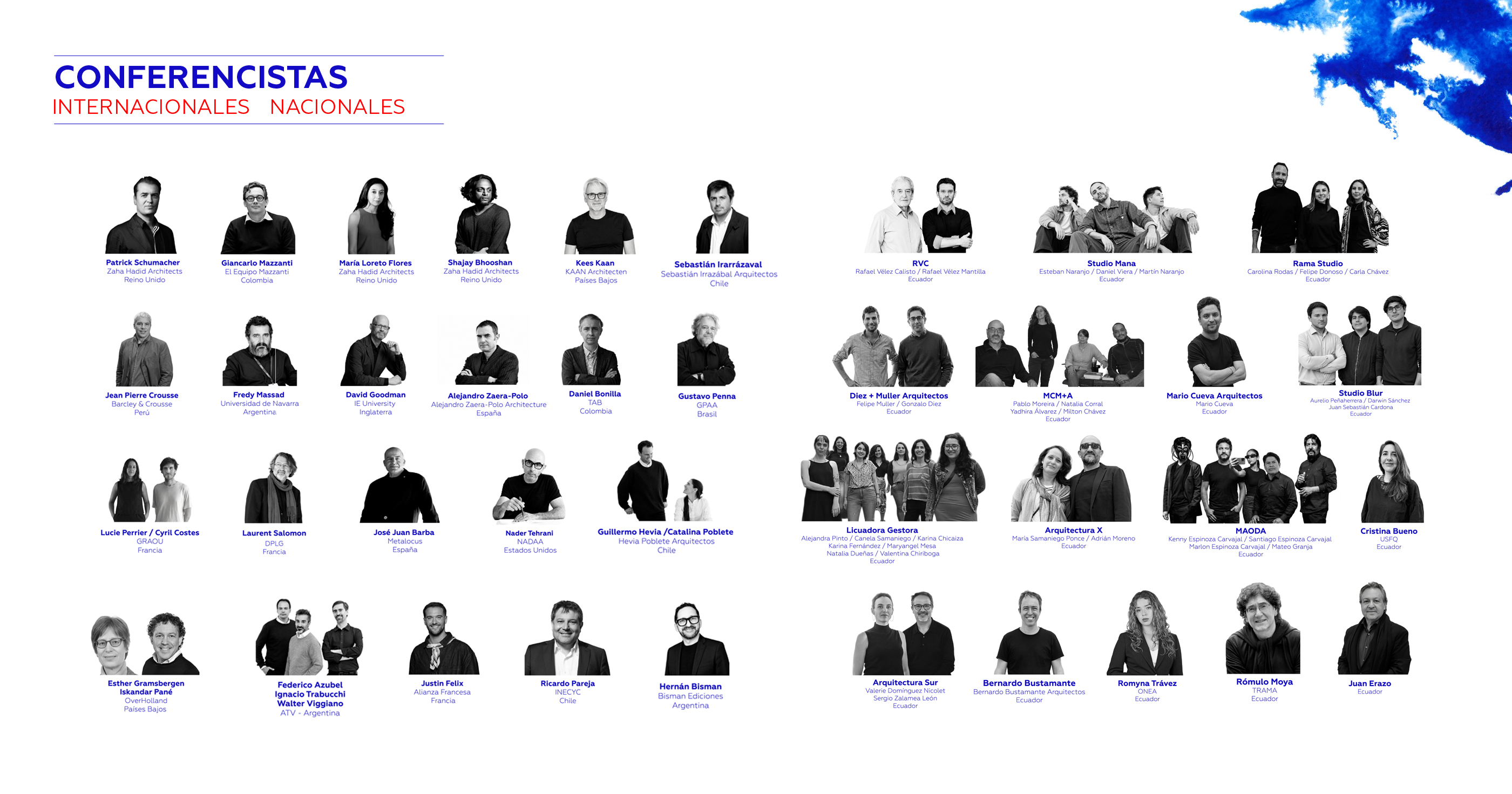
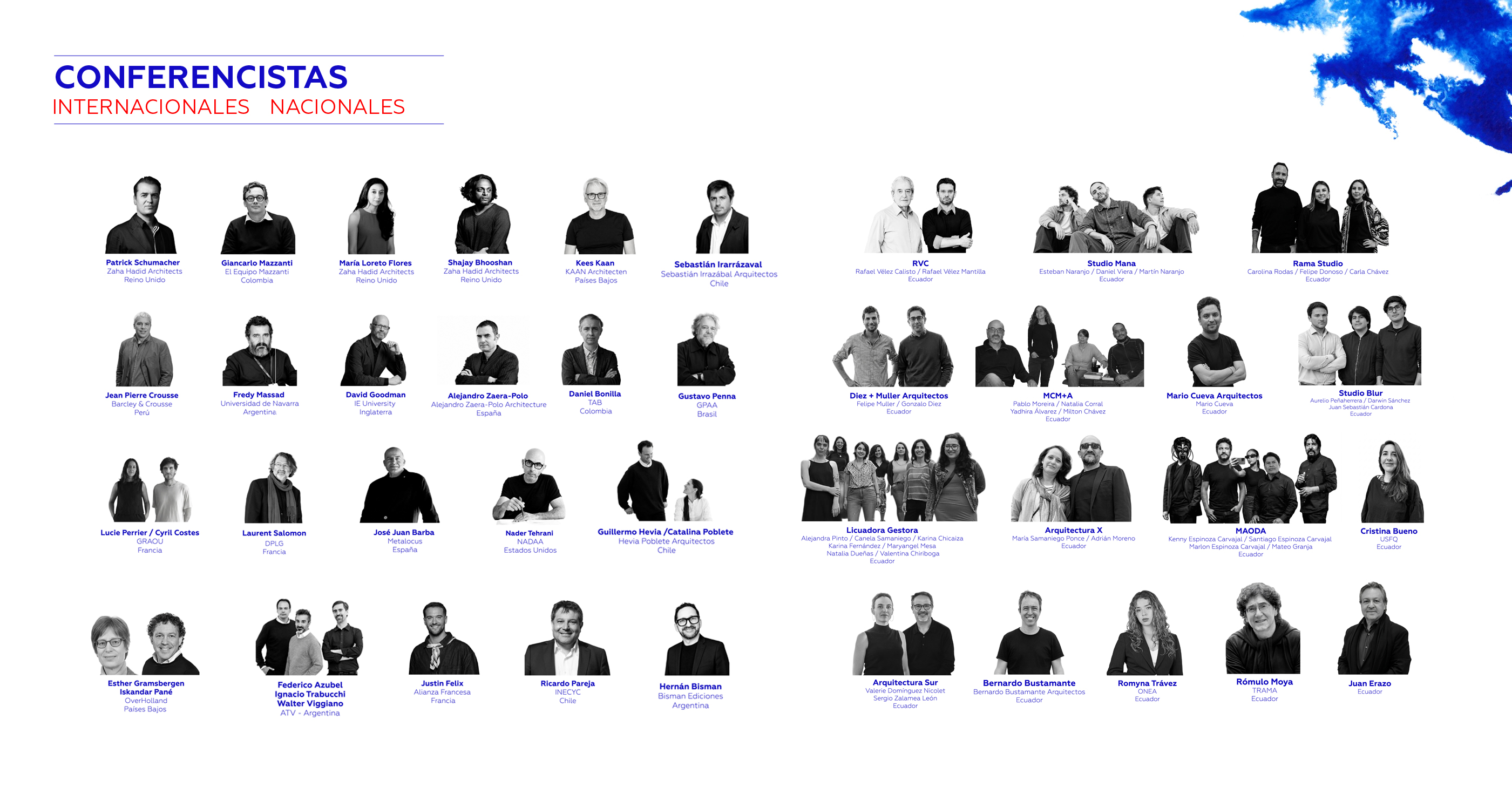
International and national speakers. DO NOT TOUCH. XXV Bienal Panamericana de Arquitectura de Quito. 

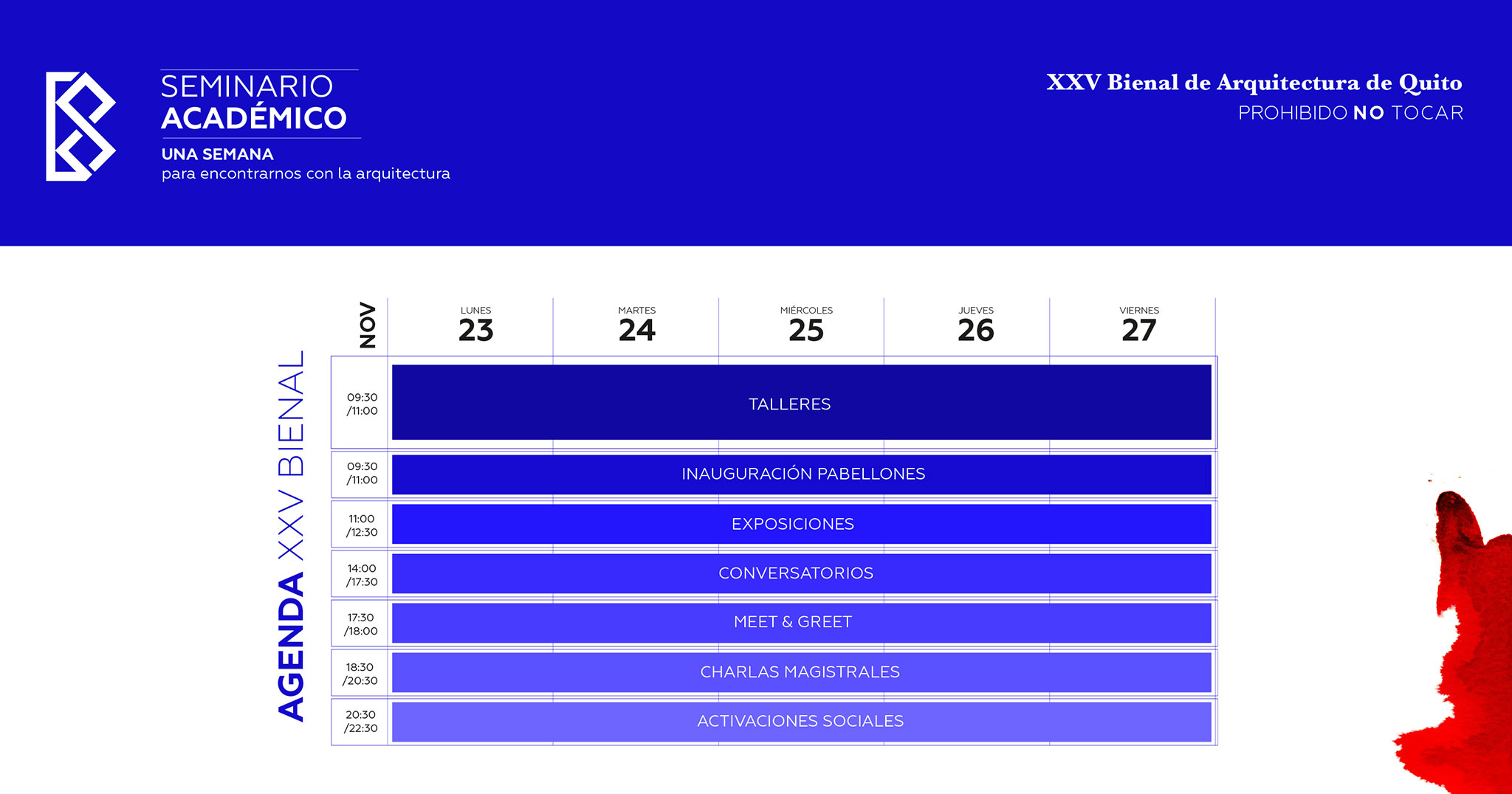
The Biennial is also built through dialogue and exchange. Its academic programme brings together different generations, perspectives, and experiences to address the contemporary challenges of architecture and urbanism. Through lectures, panel discussions, workshops, and gatherings, it seeks to explore issues such as public space, housing, heritage, climate, technology, care, childhood, and territorial transformation. The aim is not to establish a single answer to the future of the discipline, but to raise questions and bring ideas into dialogue from the perspectives of Quito, Ecuador, and Latin America, engaging with international architectural thought.

This edition also recognizes that building a city is a shared responsibility. Architects, students, universities, public institutions, private companies, cultural organizations, and citizens all take part in a process that extends beyond the boundaries of professional practice. Partnerships and collaborations make it possible to connect knowledge, resources, and collective commitment, demonstrating that architectural and urban projects acquire greater meaning when they are shaped by many.
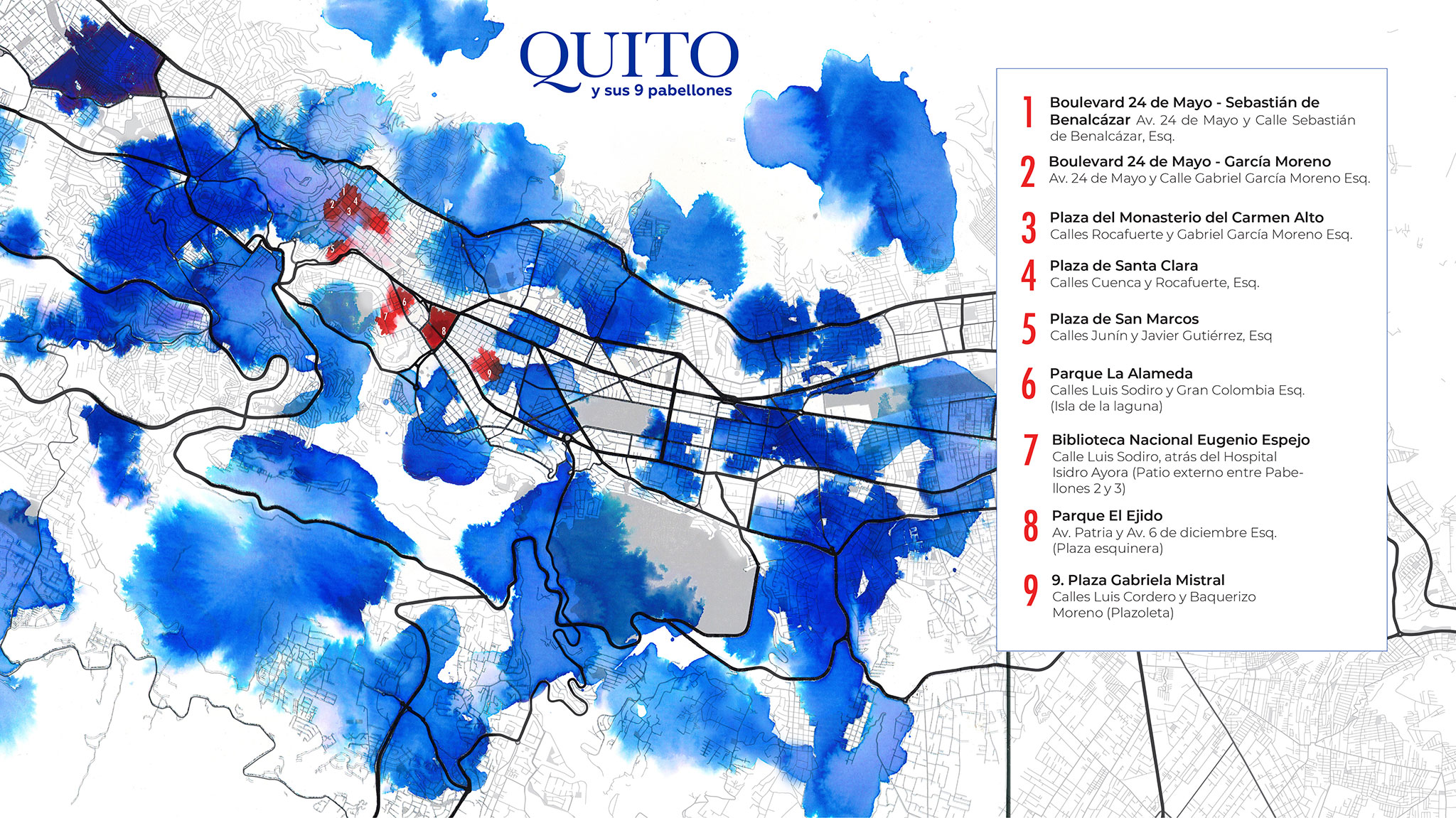
Pavilions. DO NOT TOUCH. XXV Bienal Panamericana de Arquitectura de Quito. Image by Samanta Martínez.

Pavilions. DO NOT TOUCH. XXV Bienal Panamericana de Arquitectura de Quito. Image by Samanta Martínez.

After twenty-five editions, the Pan-American Architecture Biennial of Quito celebrates a legacy that has been fundamental to architectural thought across the region, while also embracing the responsibility to ask what it can contribute today to the discipline and to the city that hosts it. PROHIBIDO NO TOCAR is ultimately an invitation to engage with architecture in all its dimensions: to think it, draw it, build it, experience it, and transform it. An invitation to step beyond specialized spaces, rediscover curiosity, challenge established ideas, and recognize that architectural decisions have direct consequences for people's lives.
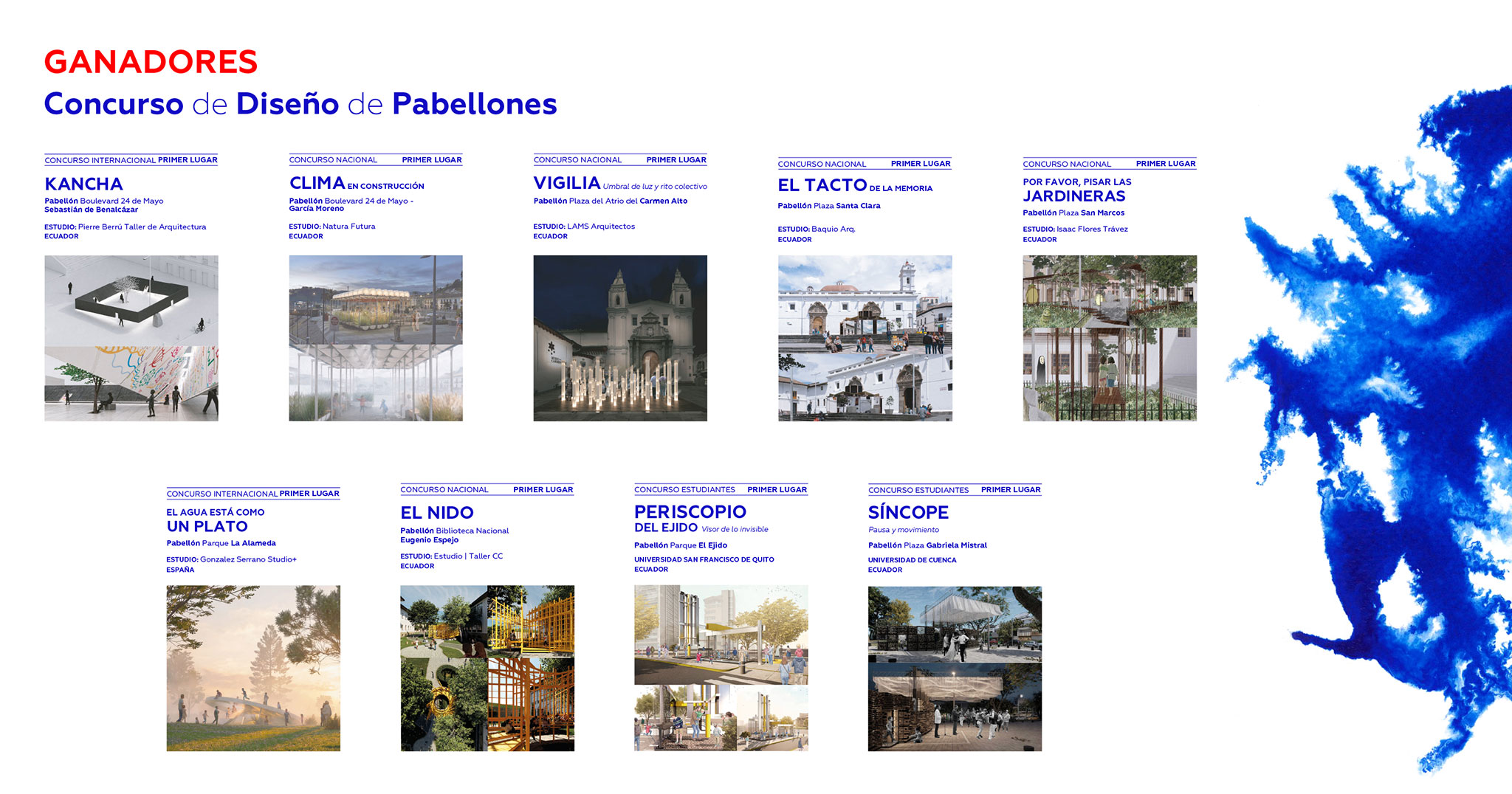
Pavilions. DO NOT TOUCH. XXV Bienal Panamericana de Arquitectura de Quito. Image by Samanta Martínez.

Pavilions. DO NOT TOUCH. XXV Bienal Panamericana de Arquitectura de Quito. Image by Samanta Martínez.

The Biennial seeks to ensure that, during these days, Quito is not simply the host city of an event, but a space for experimentation, learning, and encounter; that architecture ceases to be an exclusive conversation among architects and becomes a conversation for everyone.

Because a Biennial may last a week, but the ideas, encounters, and transformations it sets in motion should endure. Architecture is made for people's lives. And the city is where architecture finds its meaning.

The Biennial will take place from November 23 to 27, 2026.

You can sign up here: https://academico.baq-cae.ec/product/inscripcion-a-baq-presencial-virtual-semana-completa
More information

Label
Authors
Text

Presidenta Bienal Panamericana de Arquitectura de Quito: Daniela Sofía Loaiza.
Presidente Colegio de Arquitectos de Ecuador – Provincia de Pichincha: Diego Ordóñez Holguín.

+ + copy Created with Sketch.
- + copy Created with Sketch.
Label
Project team
Text

Colegio de Arquitectos del Ecuador – Provincia de Pichincha CAE-P.

+ + copy Created with Sketch.
- + copy Created with Sketch.
Label
Collaborators
Text

Juan Rodríguez, Lorena Lindao, Yadira Ávalos, Samanta Martínez, Mary Caicedo, Gabriela Loaiza, Ruth Sánchez, Alejandra Silva, Carolina Corral, Tania Jiménez, Camila Peñaherrera, Leonardo Yagerman, Paola Cóndor, Victoria Villaroel, Tadeo Ampudia, Leonardo Santos.

+ + copy Created with Sketch.
- + copy Created with Sketch.
Label
Dates
Text

From November 23 to 27.

+ + copy Created with Sketch.
- + copy Created with Sketch.
Label
Location
Text

Quito, Ecuador.

+ + copy Created with Sketch.
- + copy Created with Sketch.
Label
Graphic area, design, and visual identity
+ + copy Created with Sketch.
- + copy Created with Sketch.

Daniela Sofía Loaiza is an Ecuadorian architect and urbanist. She currently serves as Vice President of the College of Architects of Ecuador – Pichincha Province (CAE-P) and as President of the Pan-American Architecture Biennial of Quito (BAQ)—one of the most significant platforms for reflection on architecture and the city in Latin America. She holds a PhD in Architecture and Urbanism (pursued through programs in Chile and Spain) and a Master’s degree in Urbanism and City Architecture (obtained in Brazil). Her primary research focuses on the morphological study of public and collective spaces in contemporary Latin American cities.

She previously directed the Master’s program in Urbanism—specializing in City Management—at the Universidad de las Américas (UDLA), where she also taught for over a decade, fostering a critical and sensitive perspective on the territory and its transformation. Recognized as an "Outstanding Woman in Science" in Ecuador, she has published articles, book chapters, and essays on architecture and the city in both national and international outlets. She has taught architecture at the Federal University of Santa Catarina (Brazil), as well as at the Pontifical Catholic University of Ecuador and the Universidad San Francisco de Quito.

She has participated as a speaker in conferences, research initiatives, and urban debates, and has worked as a consultant on projects involving public and collective spaces in both Ecuador and Brazil.

Read more
Published on: November 14, 2026
Cite:
metalocus, JOSU BASAÑEZ
"DO NOT TOUCH. XXV Bienal Panamericana de Arquitectura de Quito" METALOCUS. Accessed
<https://www.metalocus.es/en/news/do-not-touch-xxv-bienal-panamericana-de-arquitectura-de-quito> ISSN 1139-6415
Loading content ...
Loading content ...
Loading content ...
Loading content ...
Loading content ...
Loading content ...
Loading content ...
Loading content ...
Loading content ...
Loading content ...
Loading content ...
Loading content ...
Loading content ...
Loading content ...
Loading content ...
Loading content ...
Loading content ...
Loading content ...
Loading content ...
Loading content ...
Loading content ...
Loading content ...
Loading content ...
Loading content ...
Loading content ...
Loading content ...
Loading content ...
Loading content ...
Loading content ...
Loading content ...
Loading content ...
Loading content ...
Loading content ...
Loading content ...
Loading content ...
Loading content ...
Loading content ...
Loading content ...
Loading content ...
Loading content ...
Loading content ...
Loading content ...
Loading content ...
Loading content ...
Loading content ...
Loading content ...
Loading content ...
Loading content ...
Loading content ...
Loading content ...
Loading content ...
Loading content ...
Loading content ...
Loading content ...