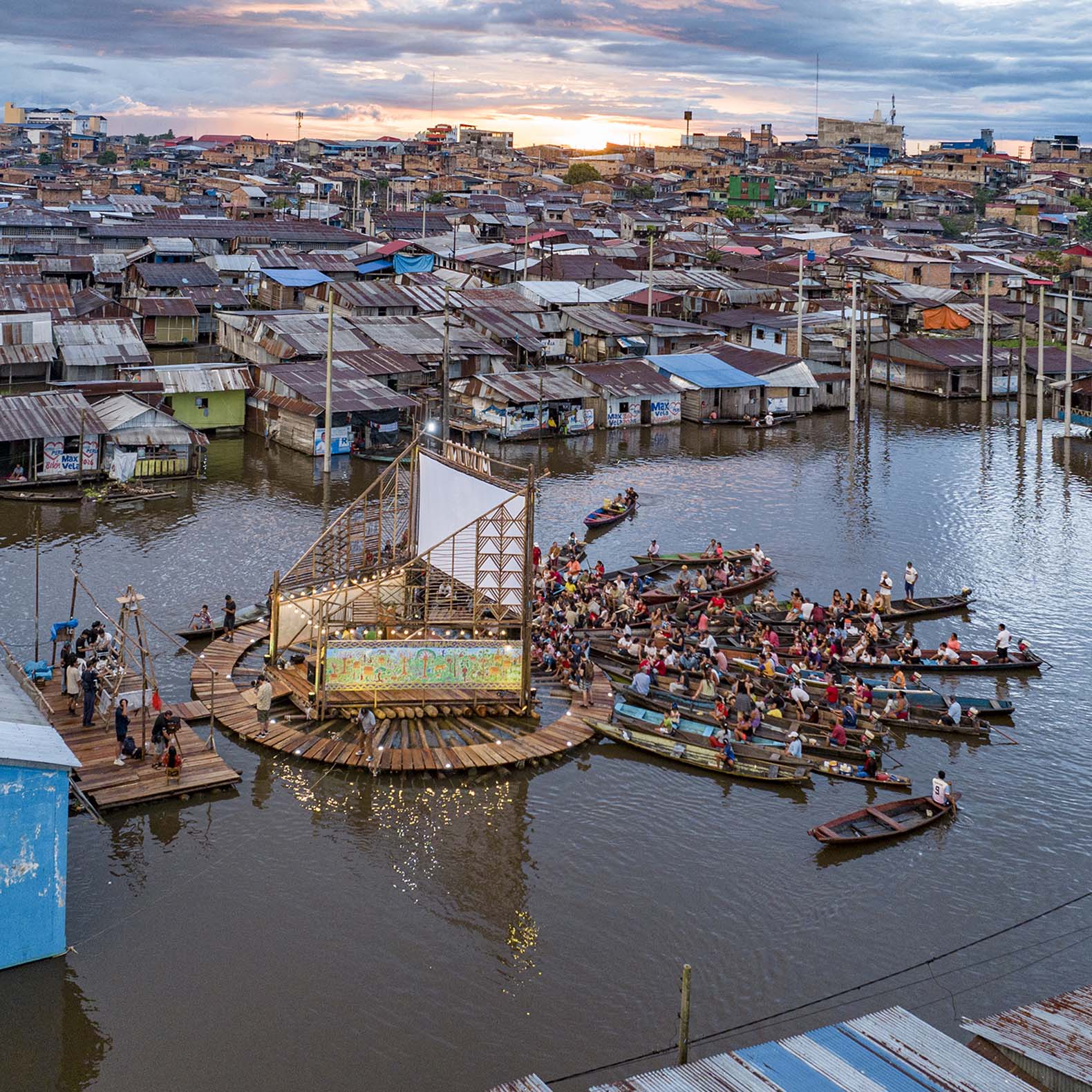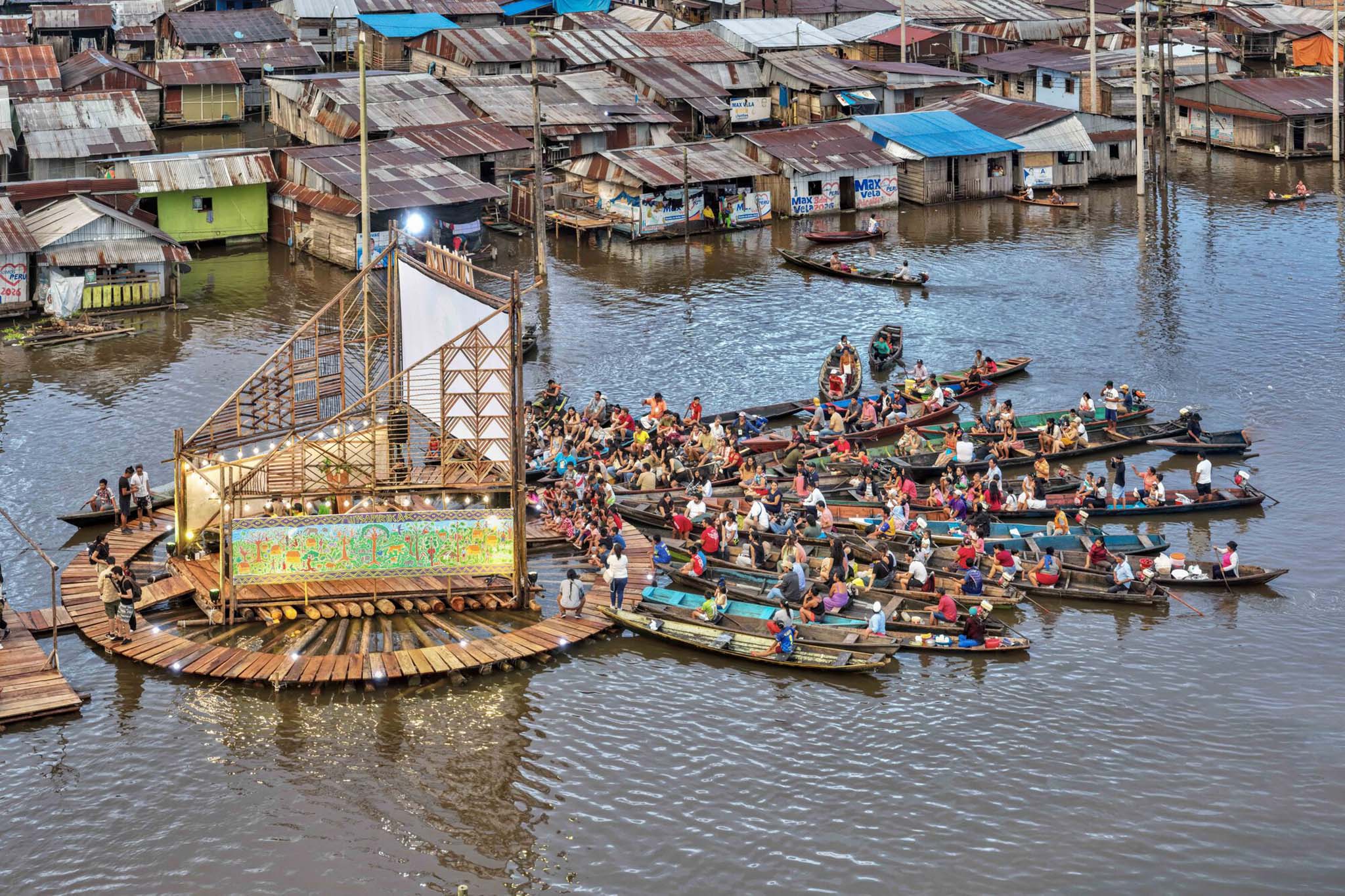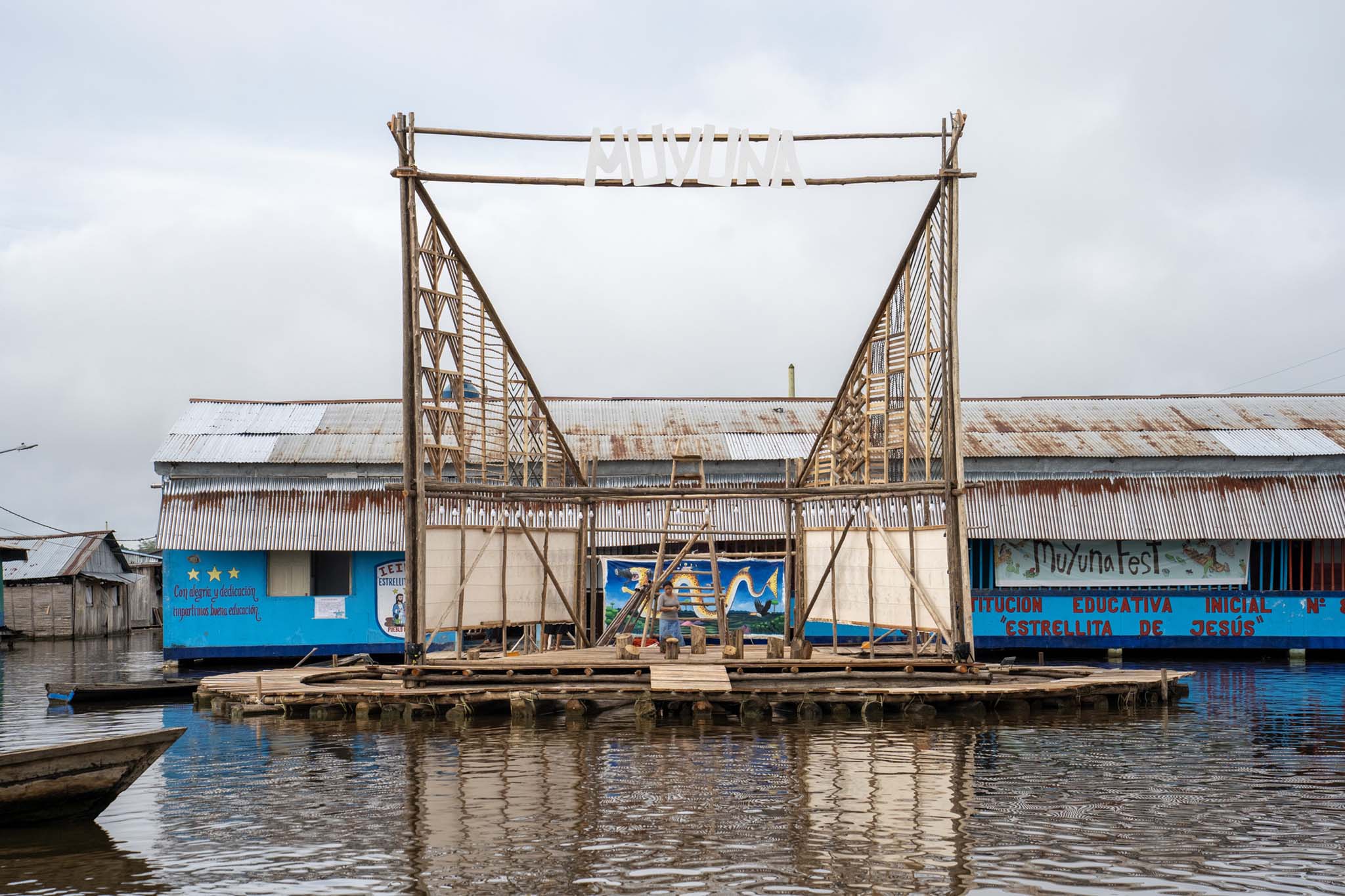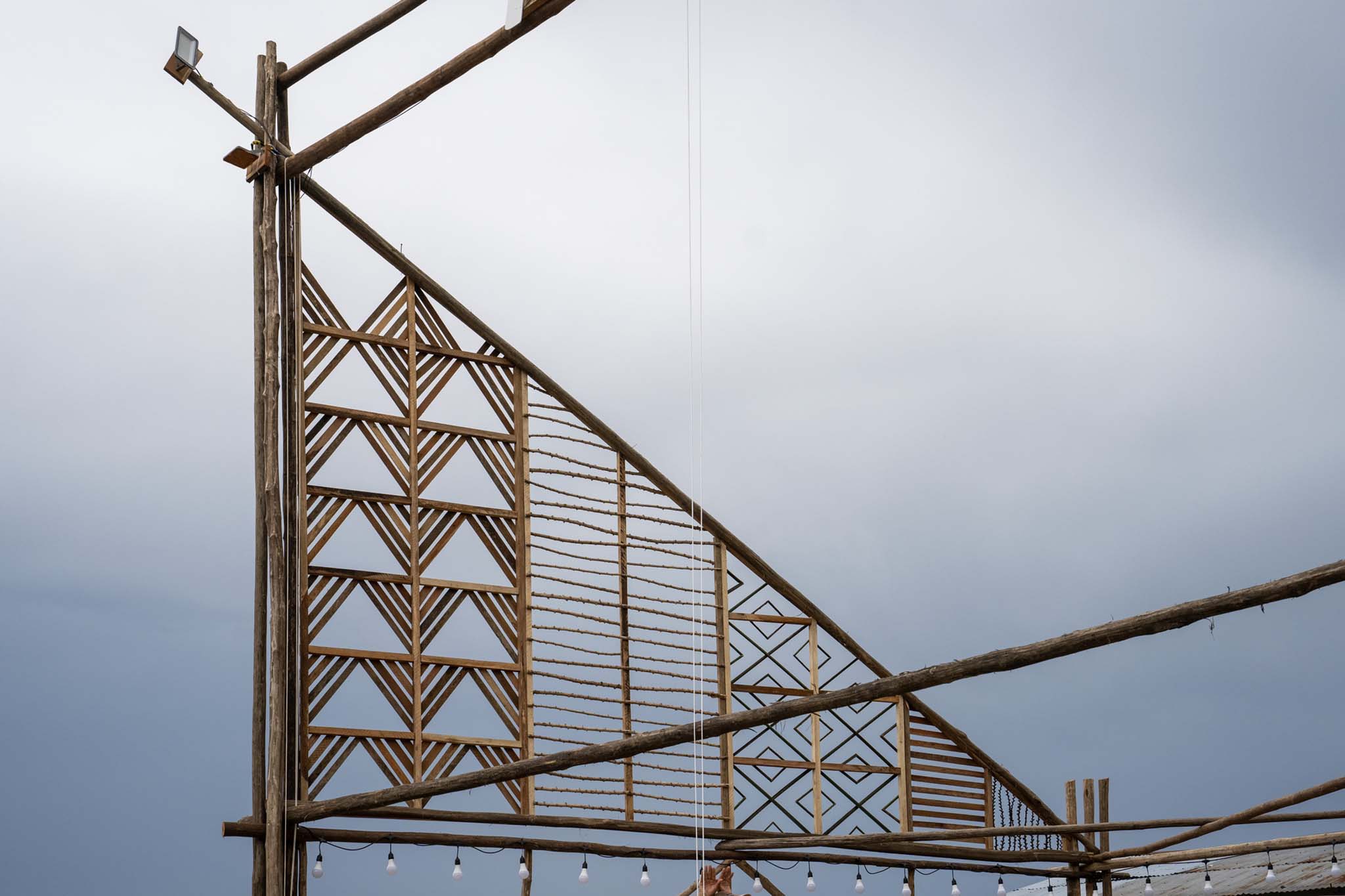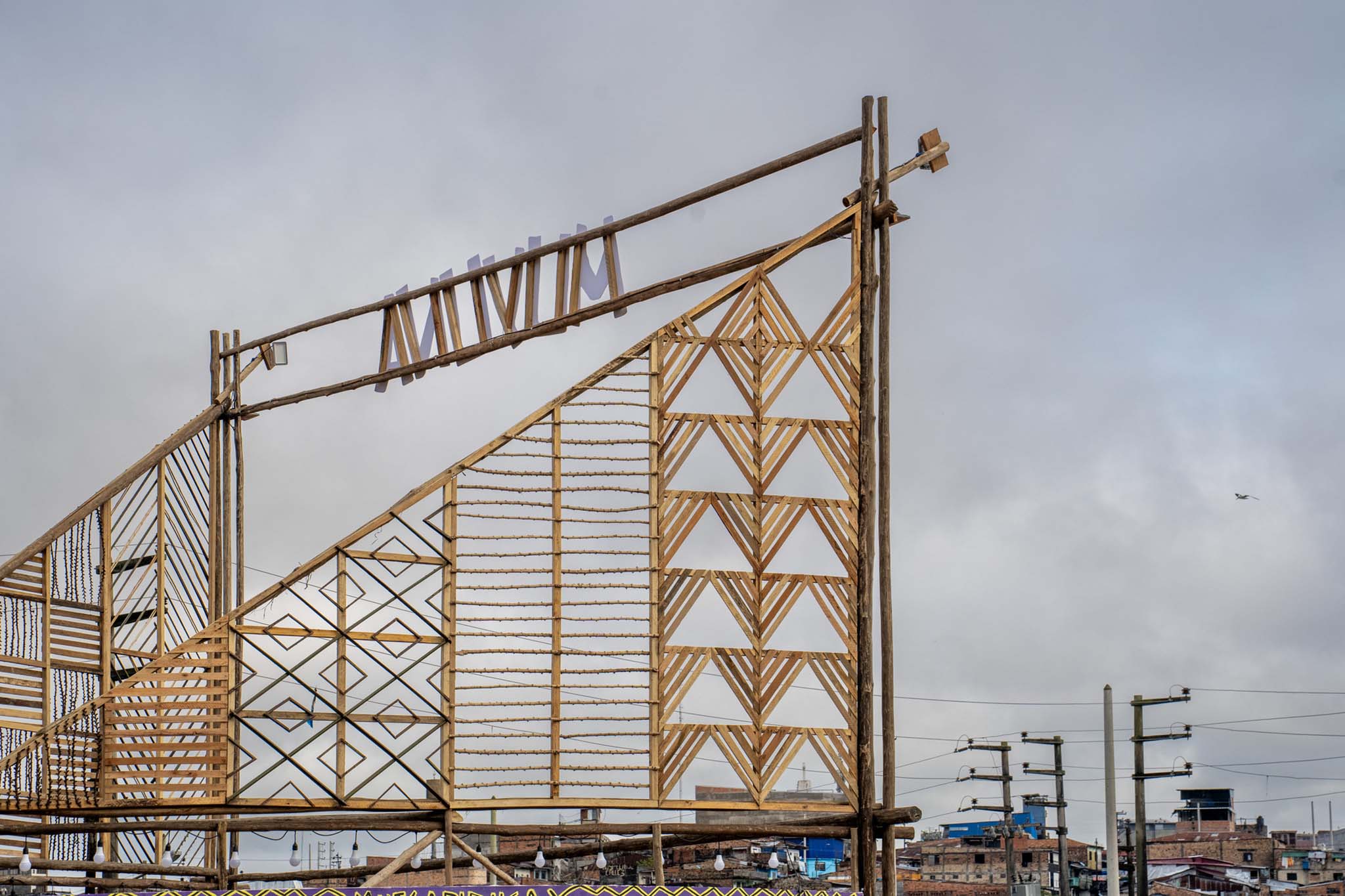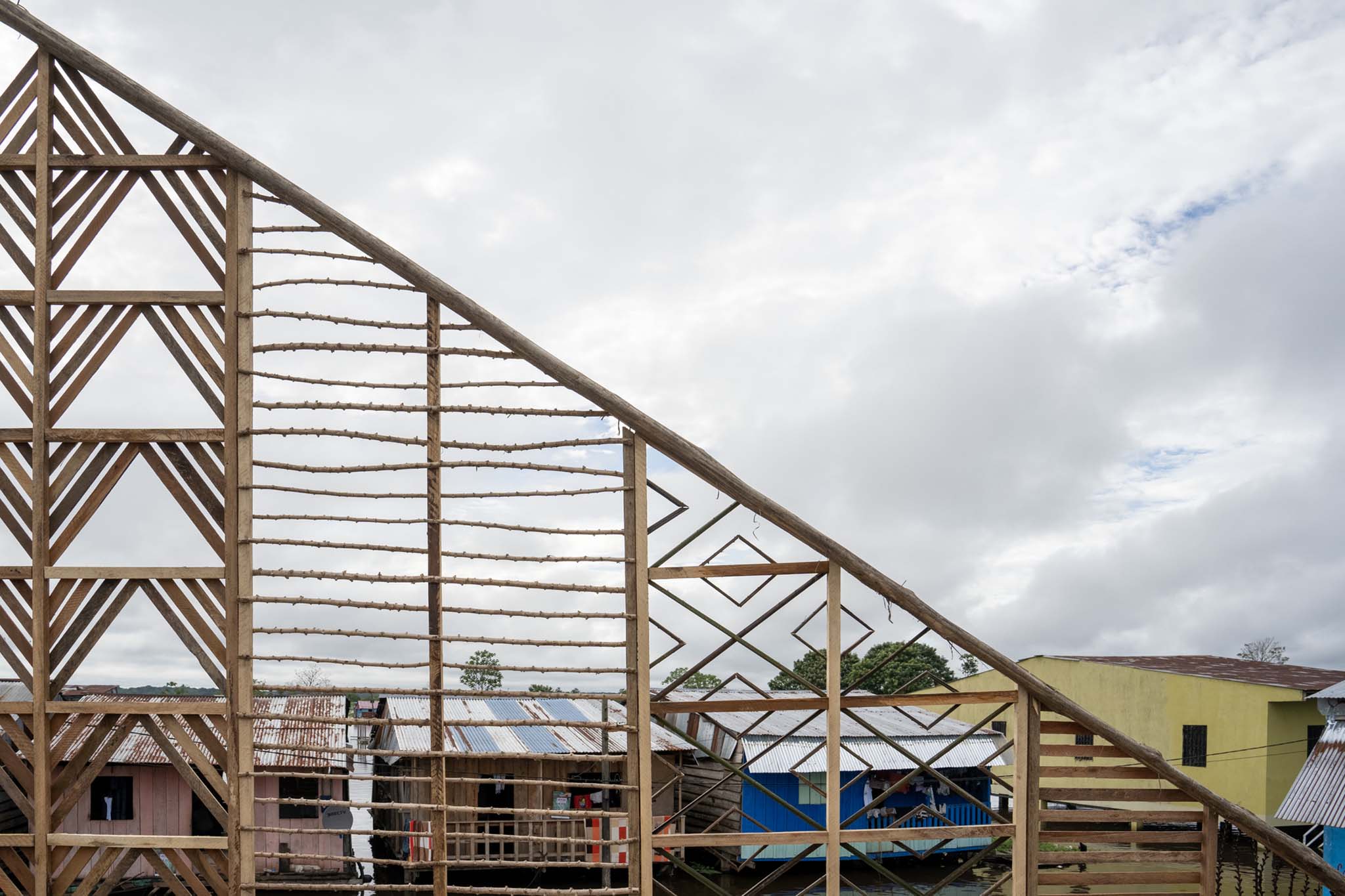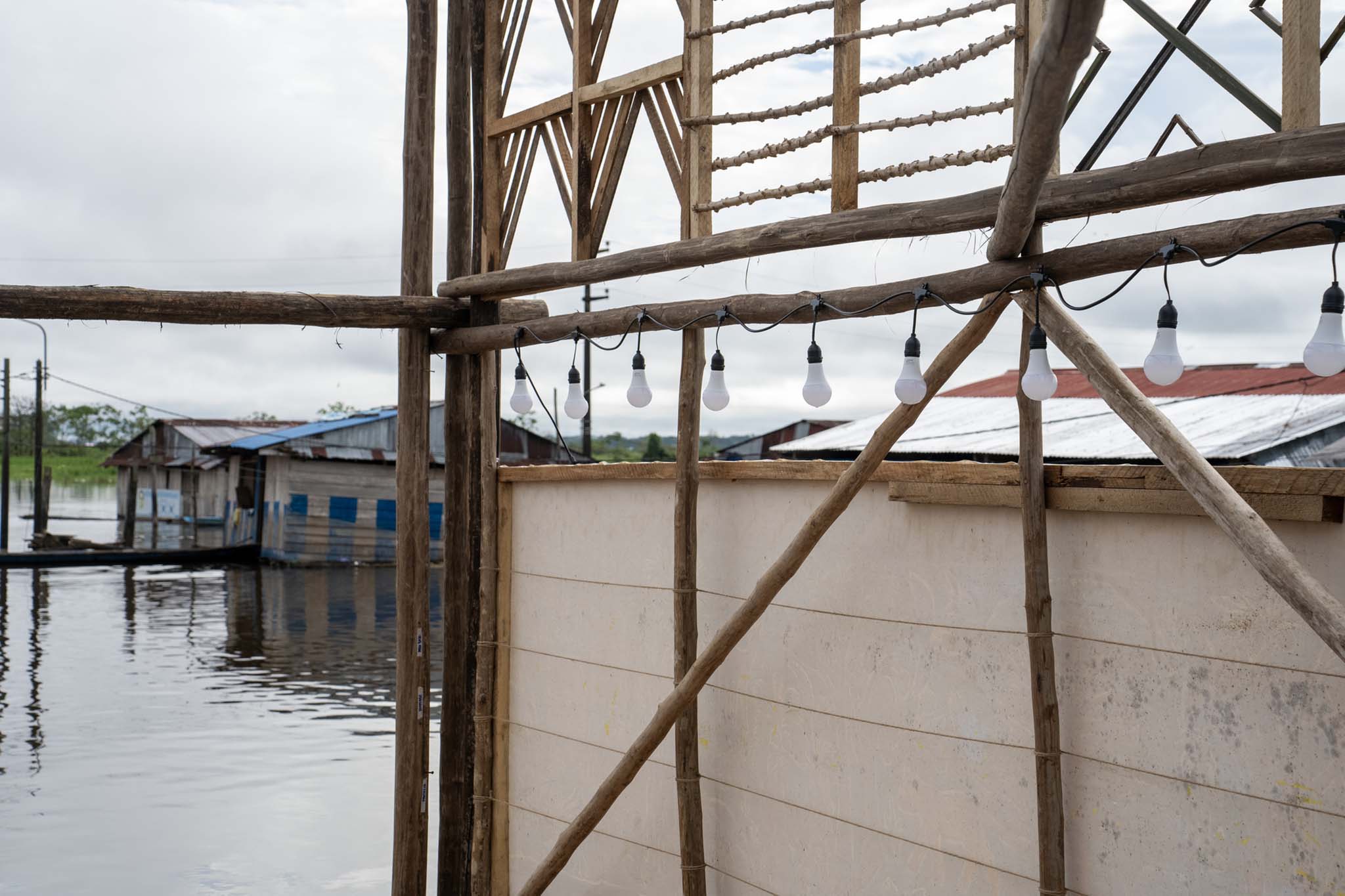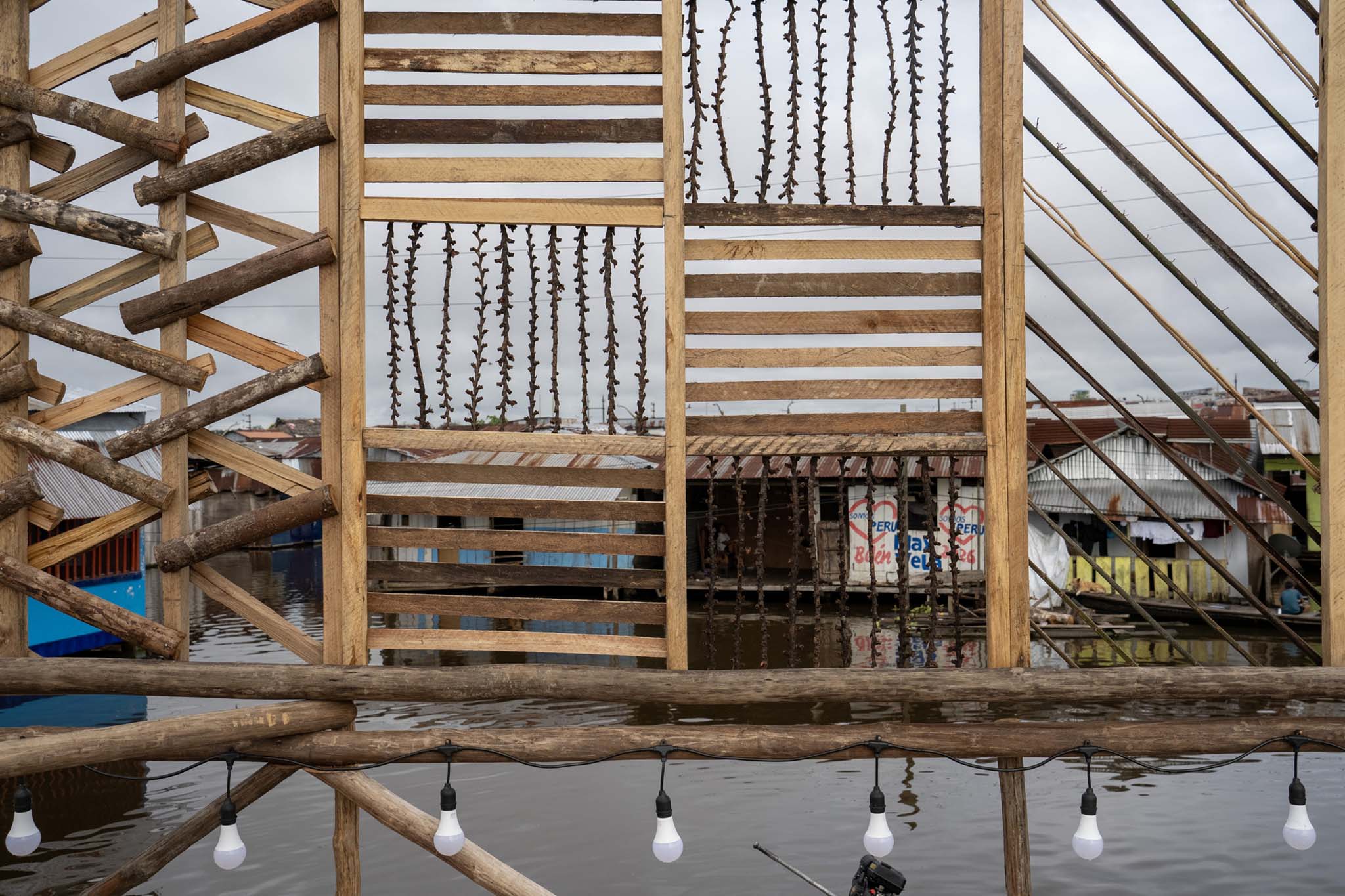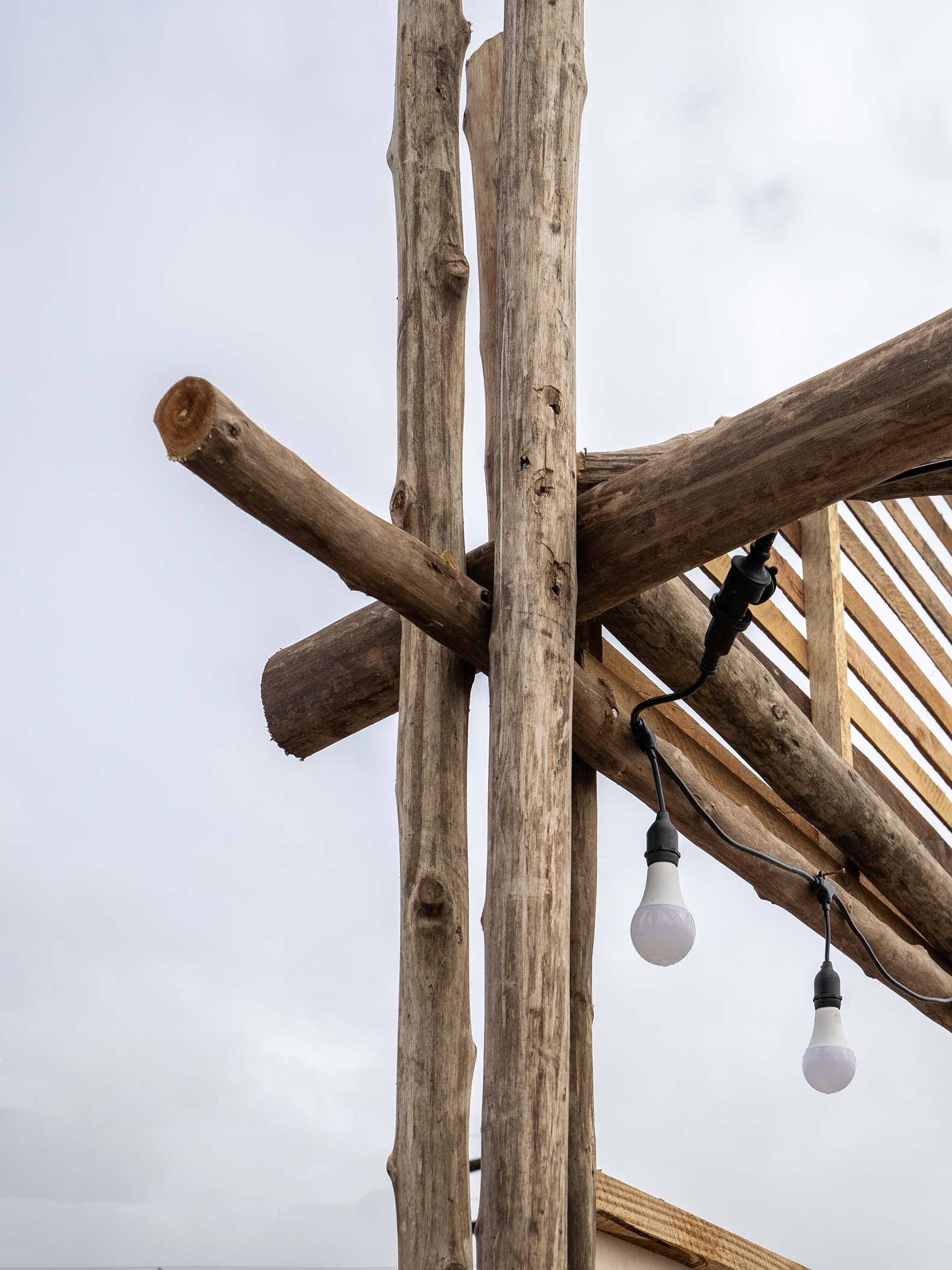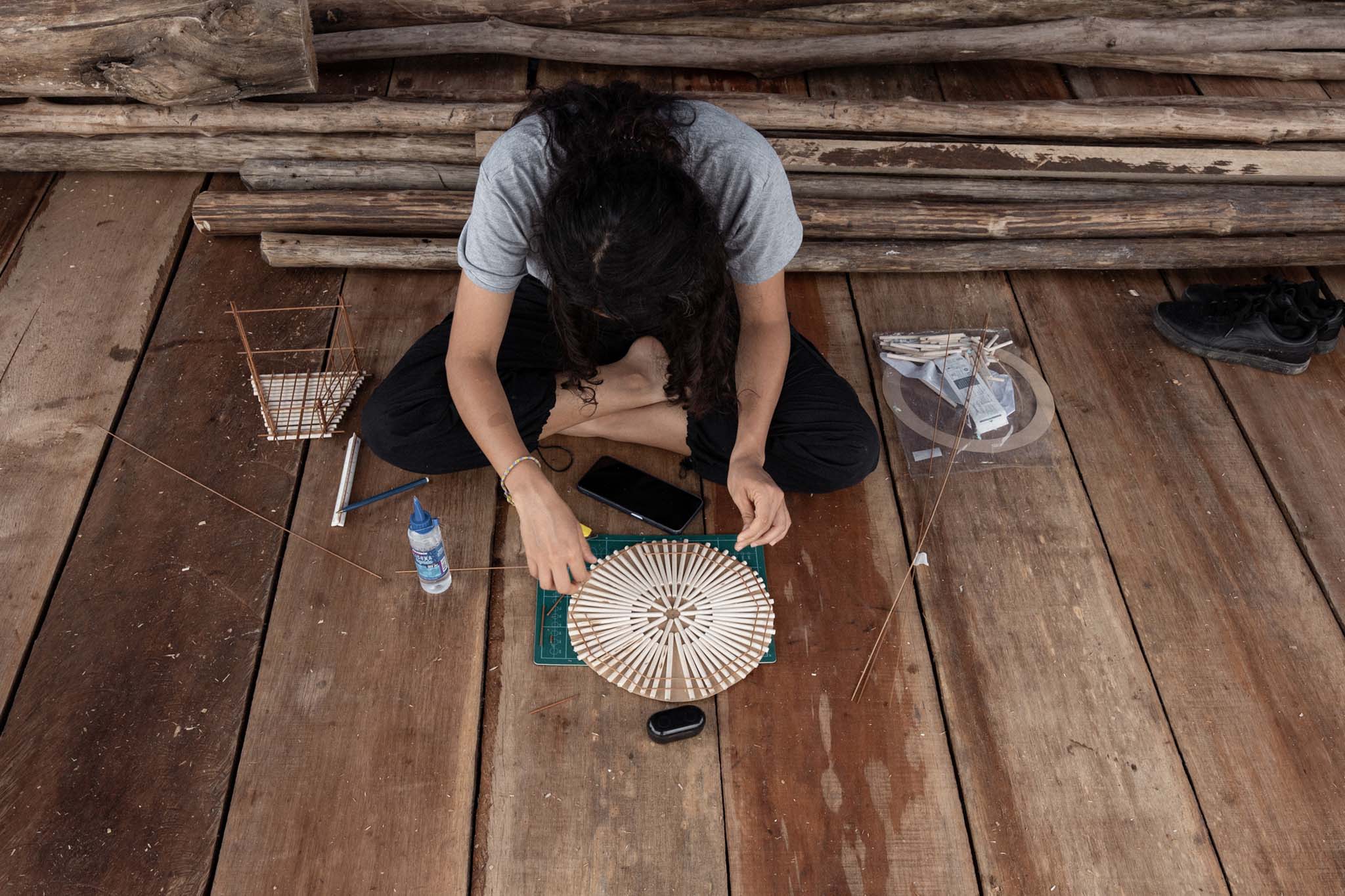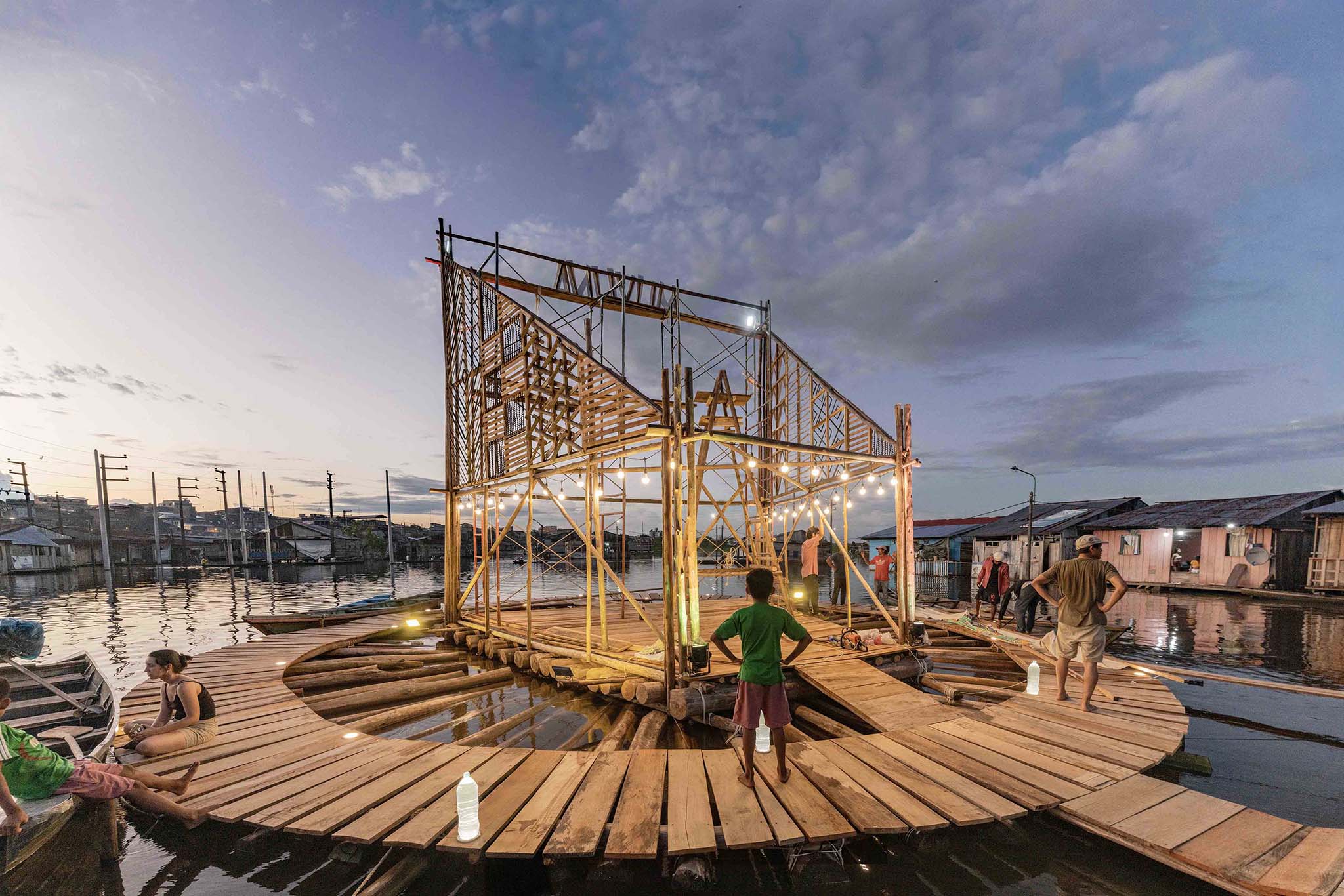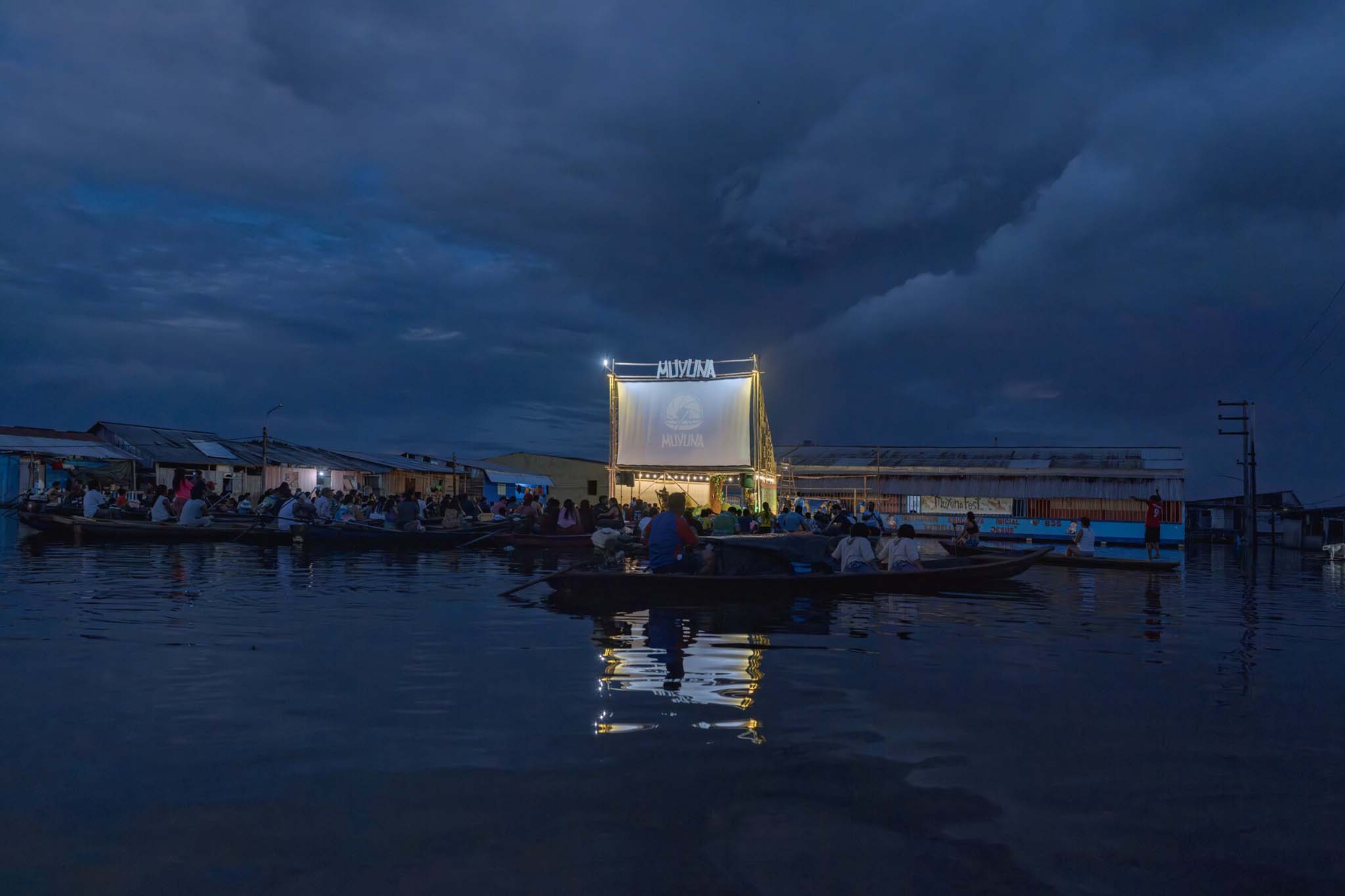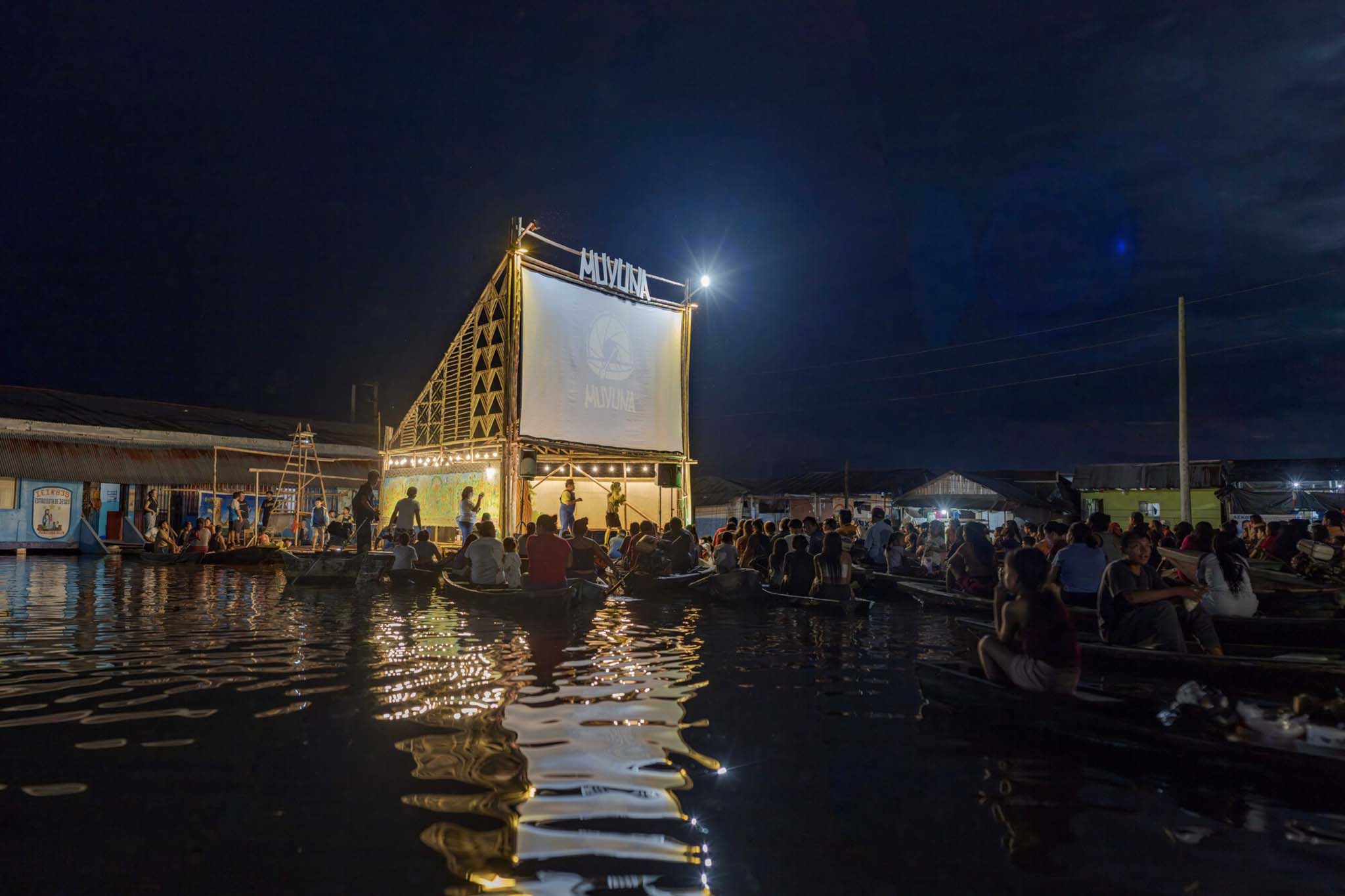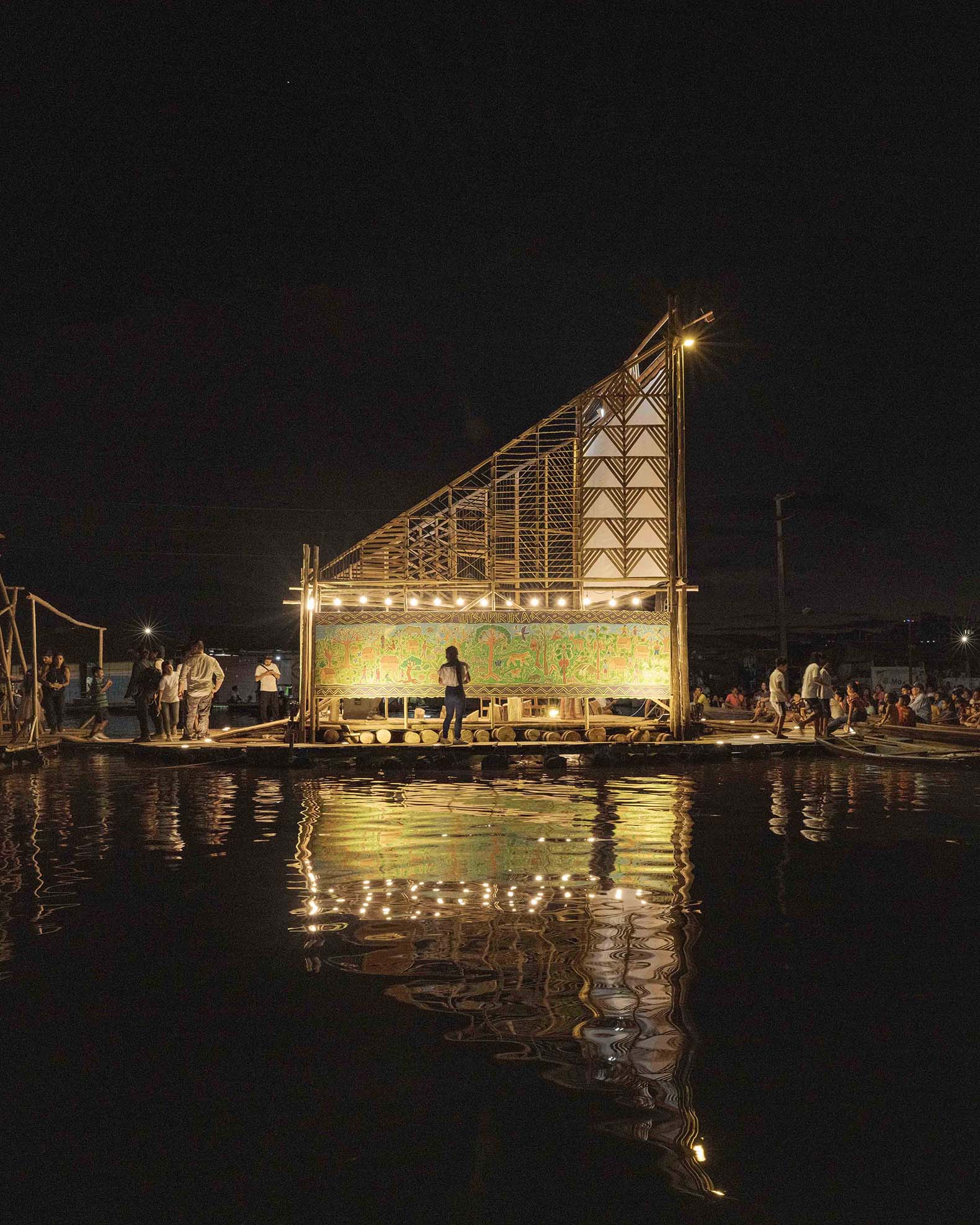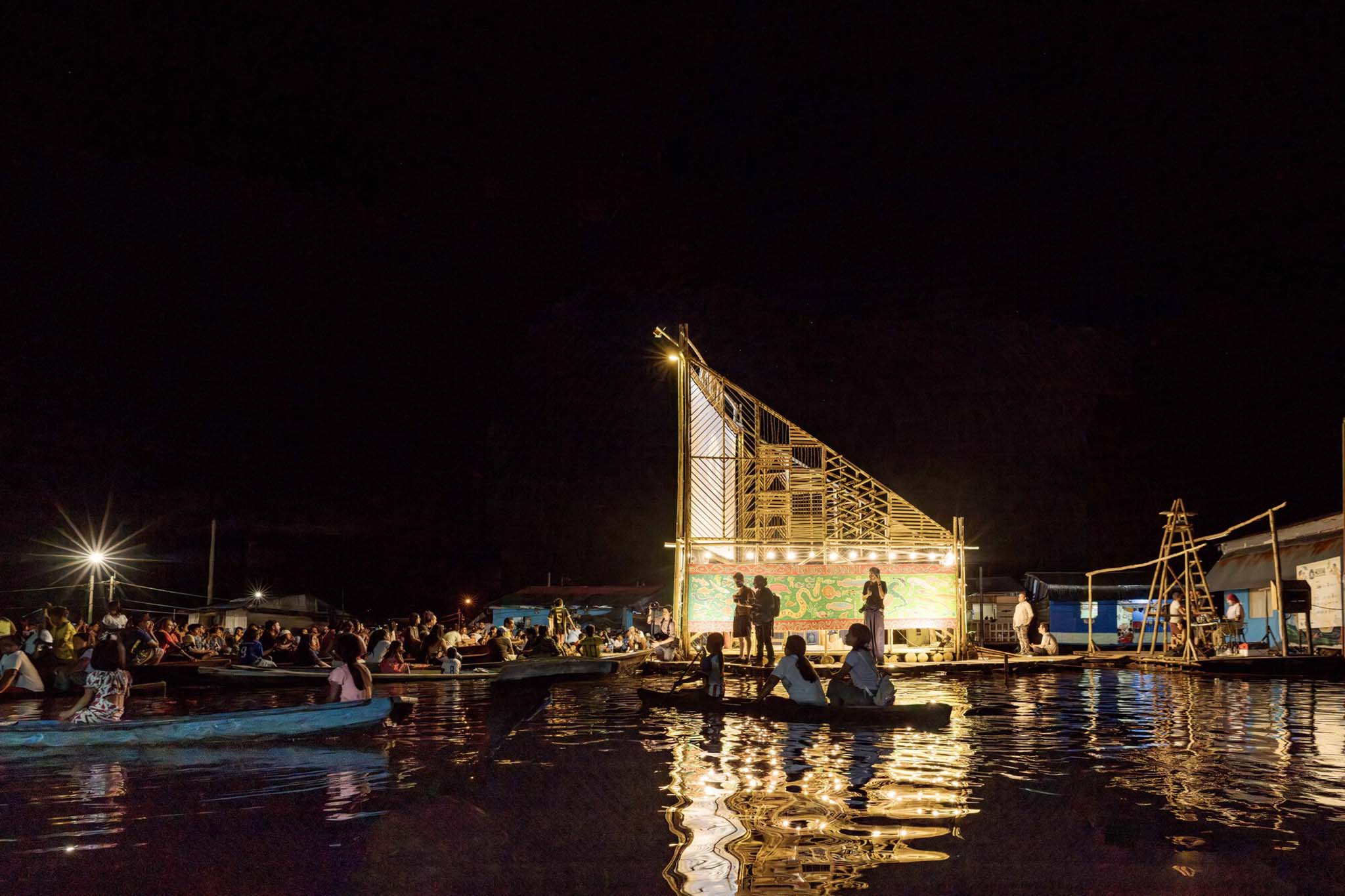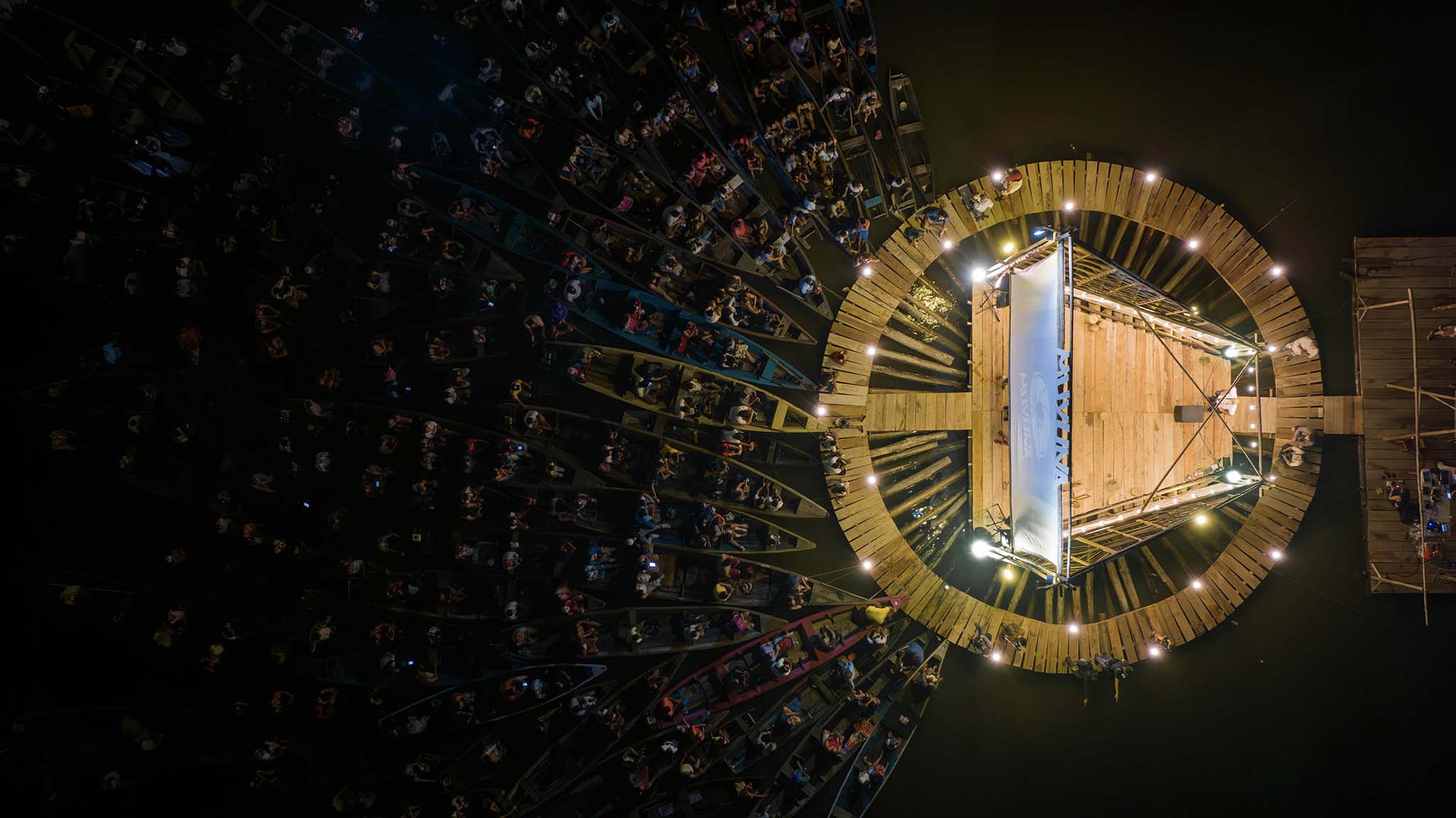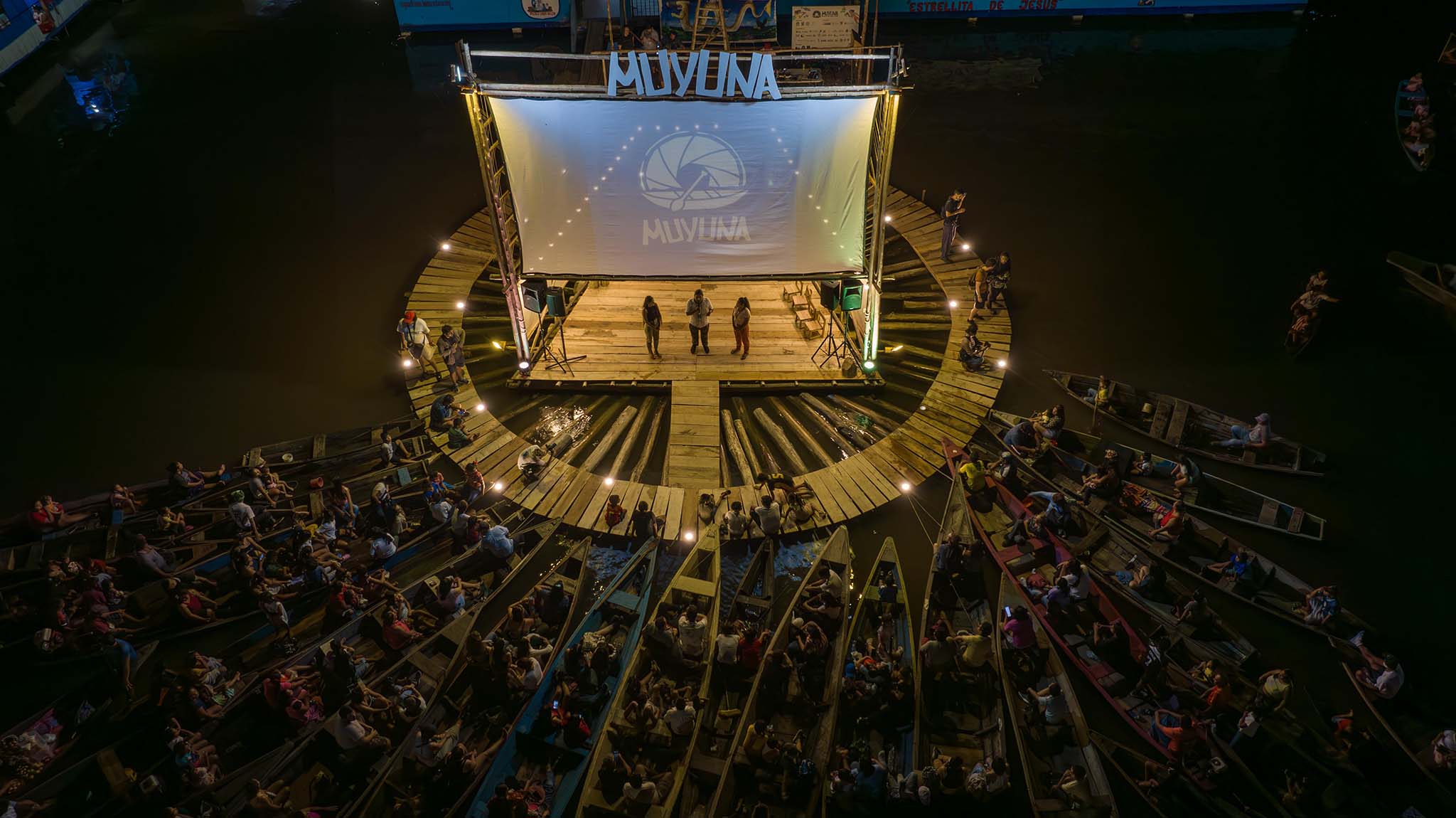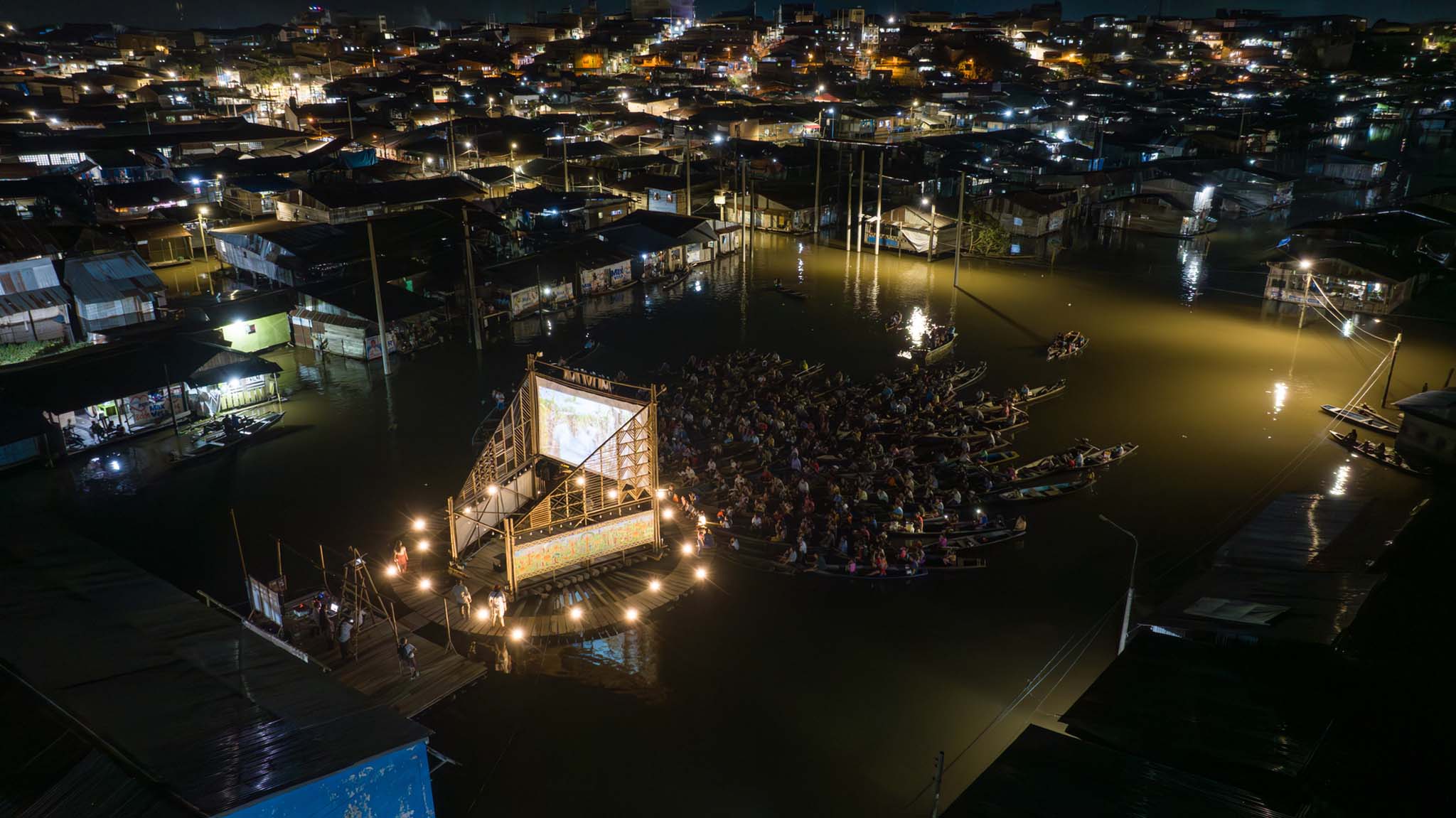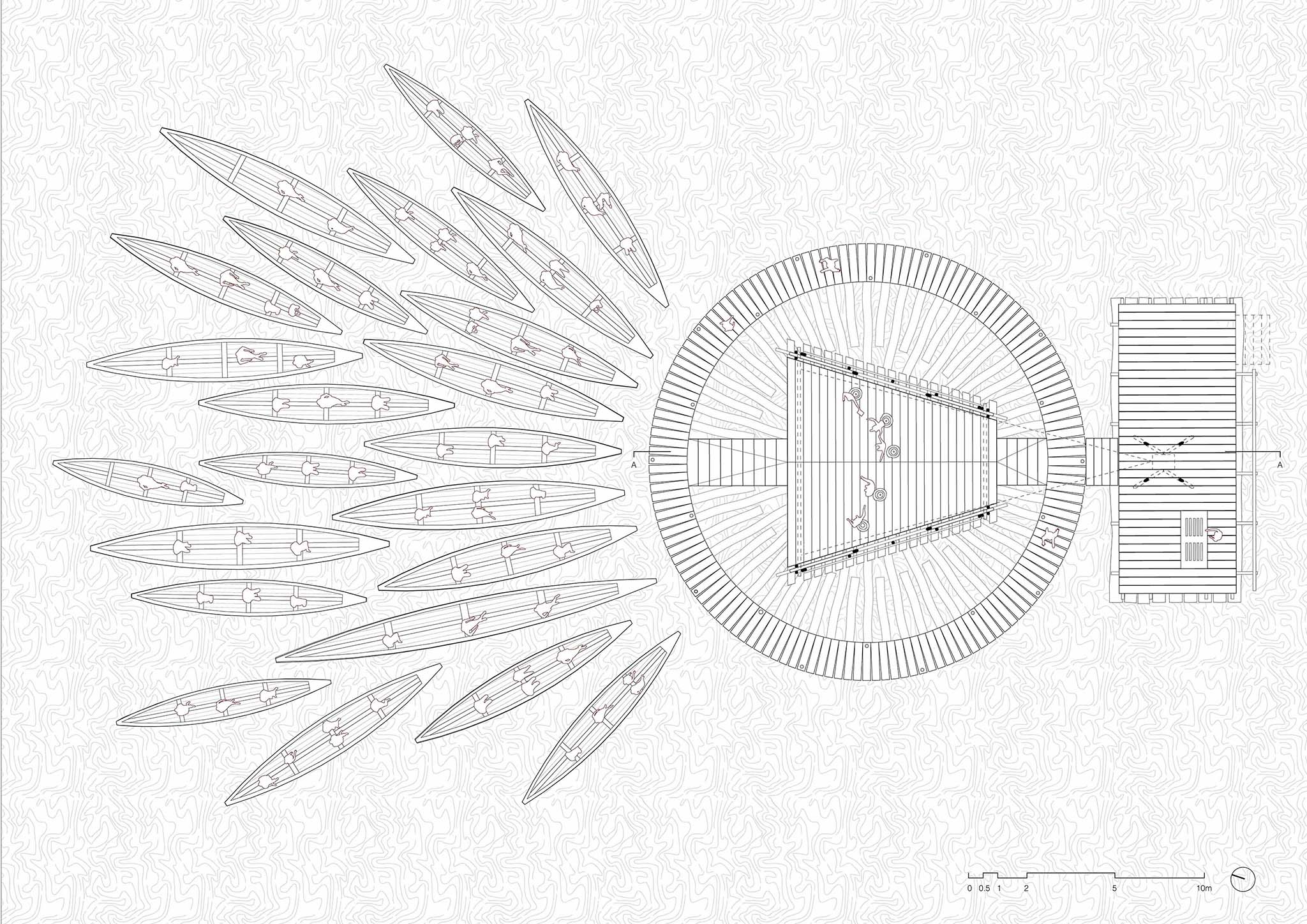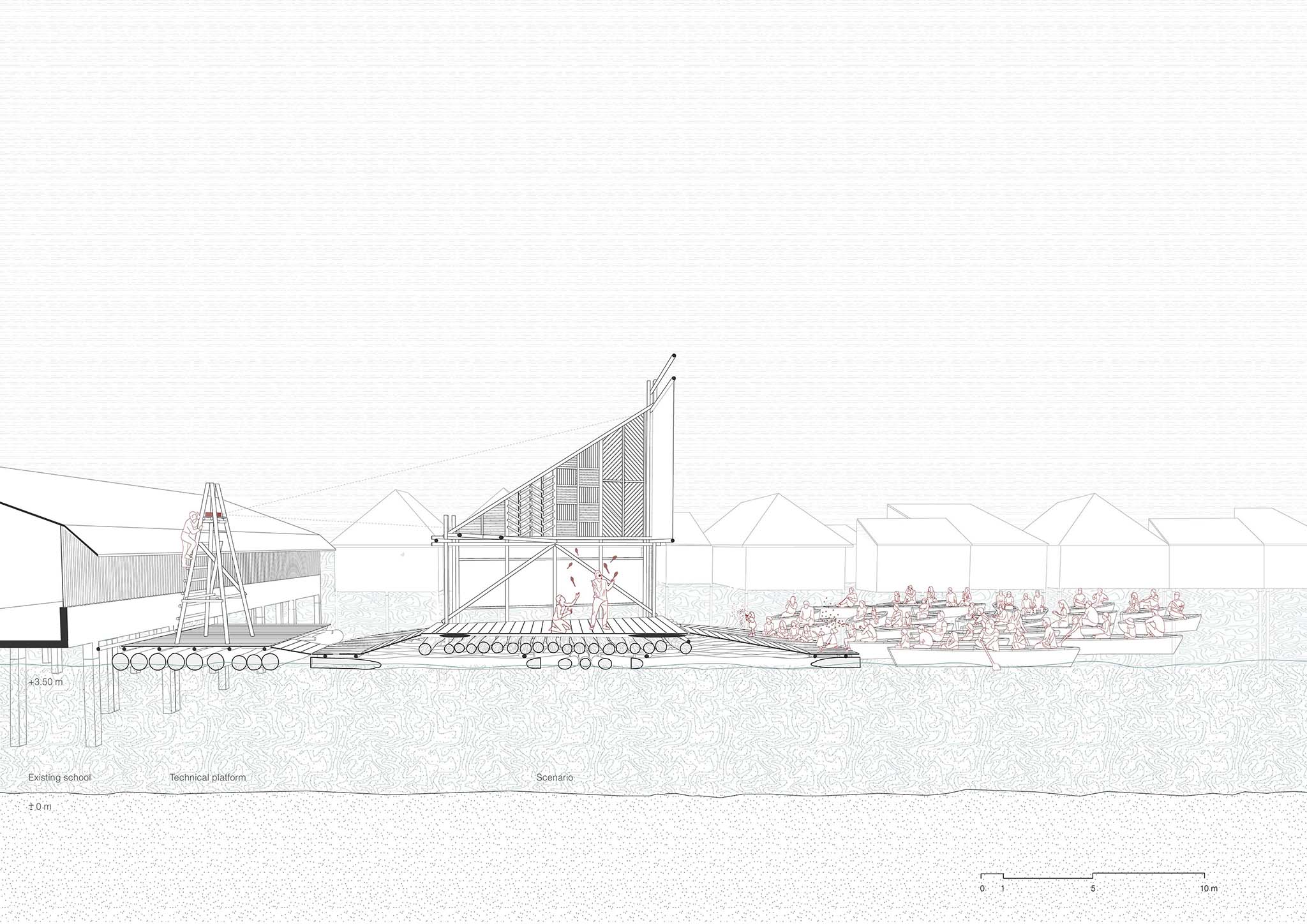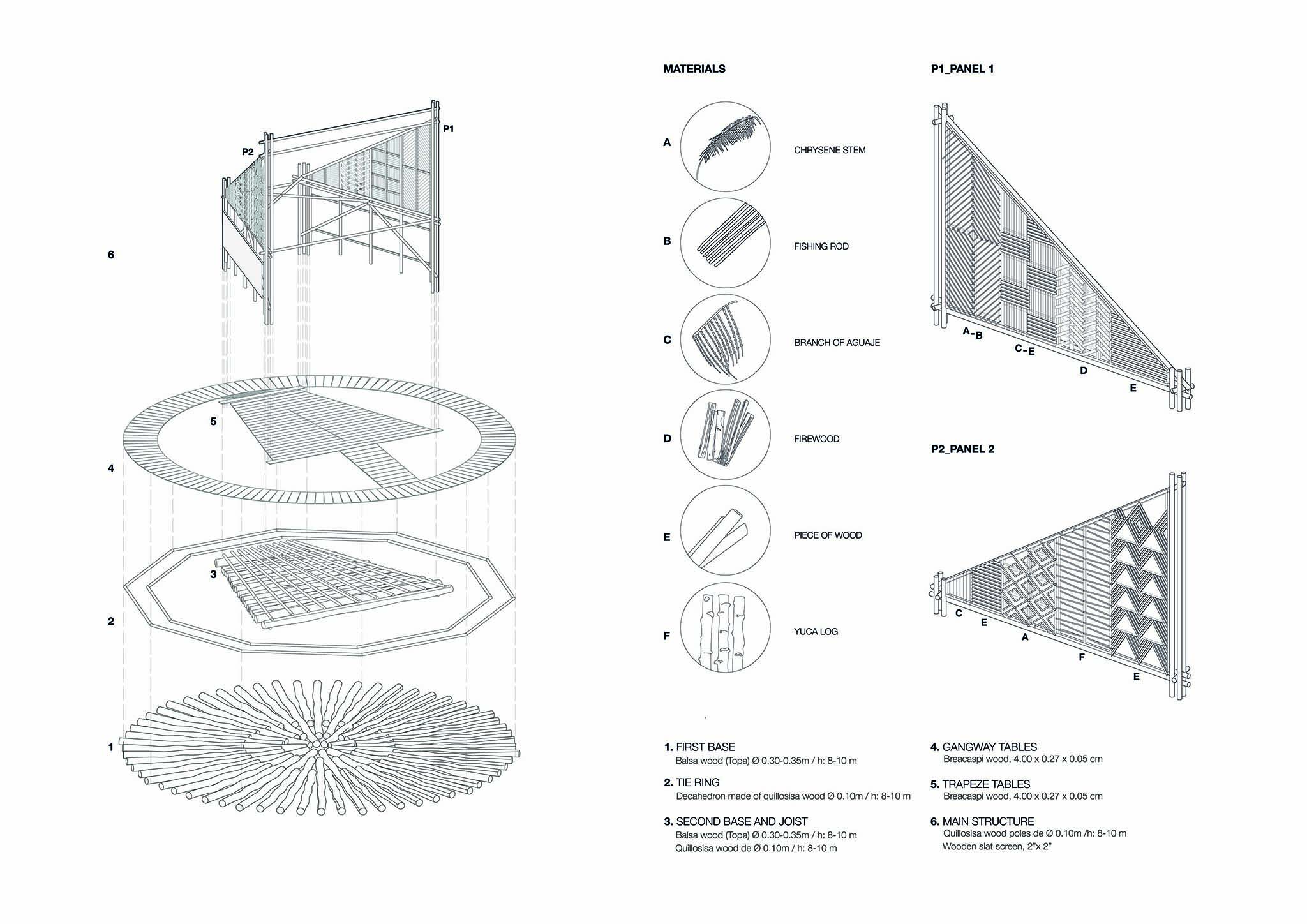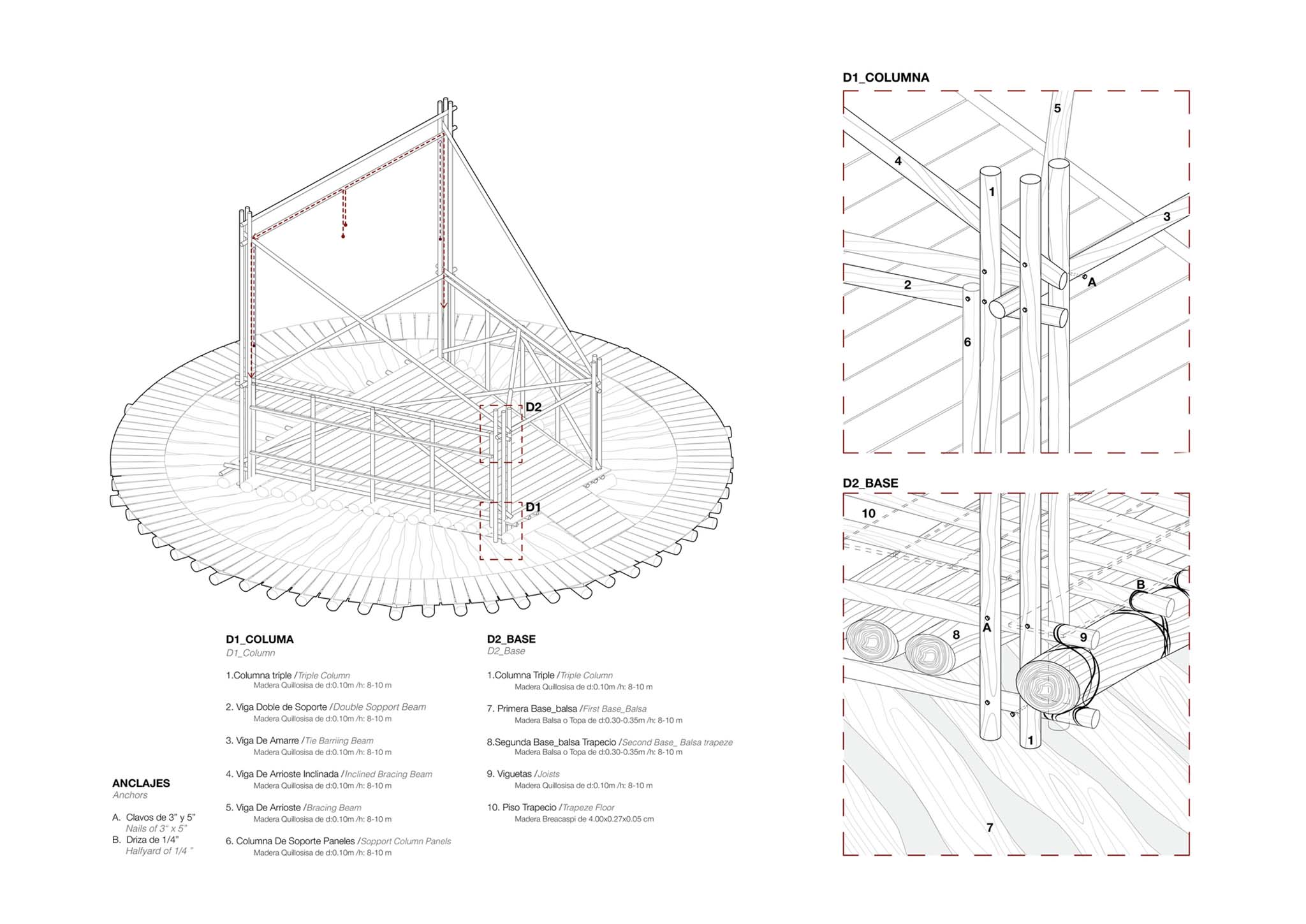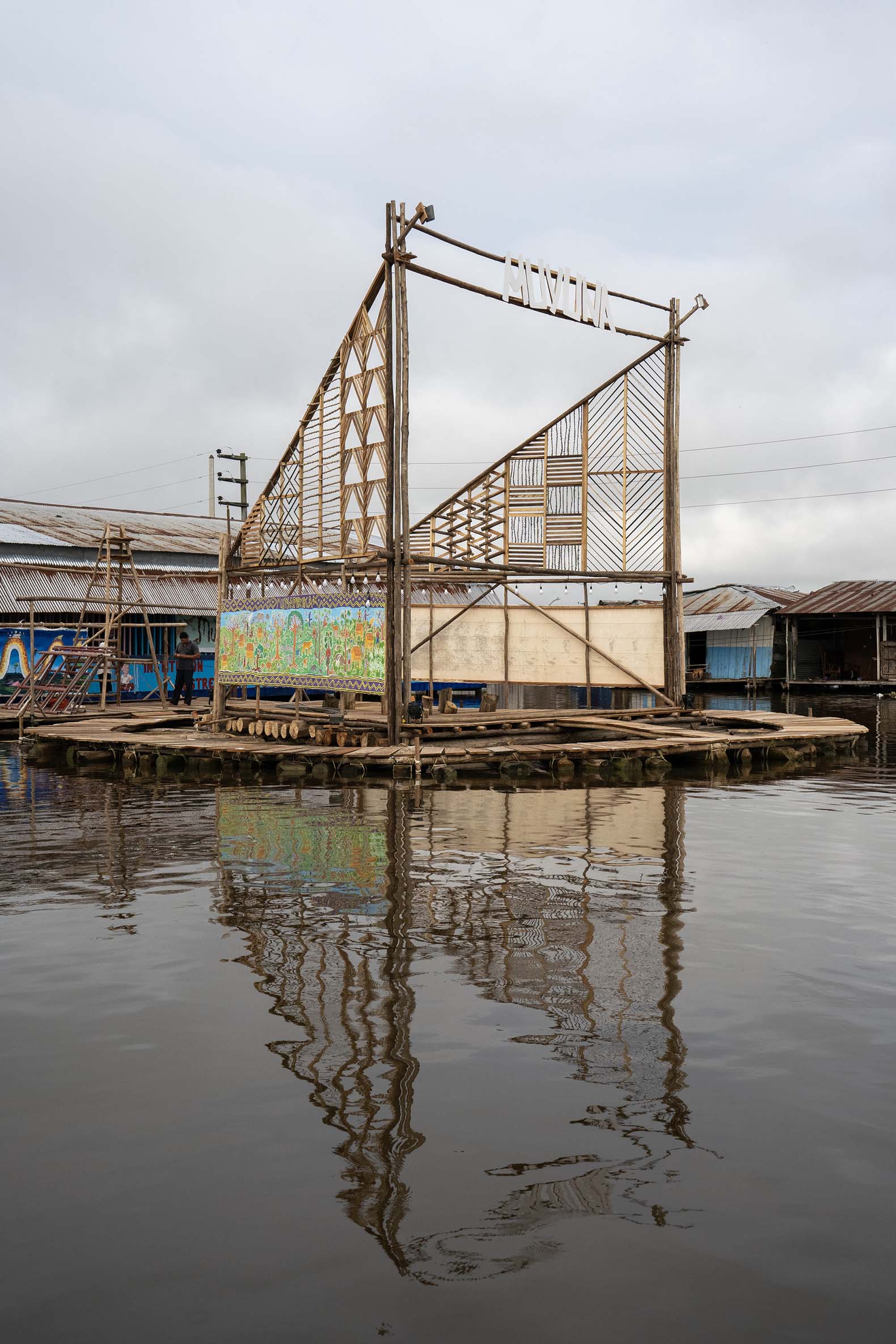
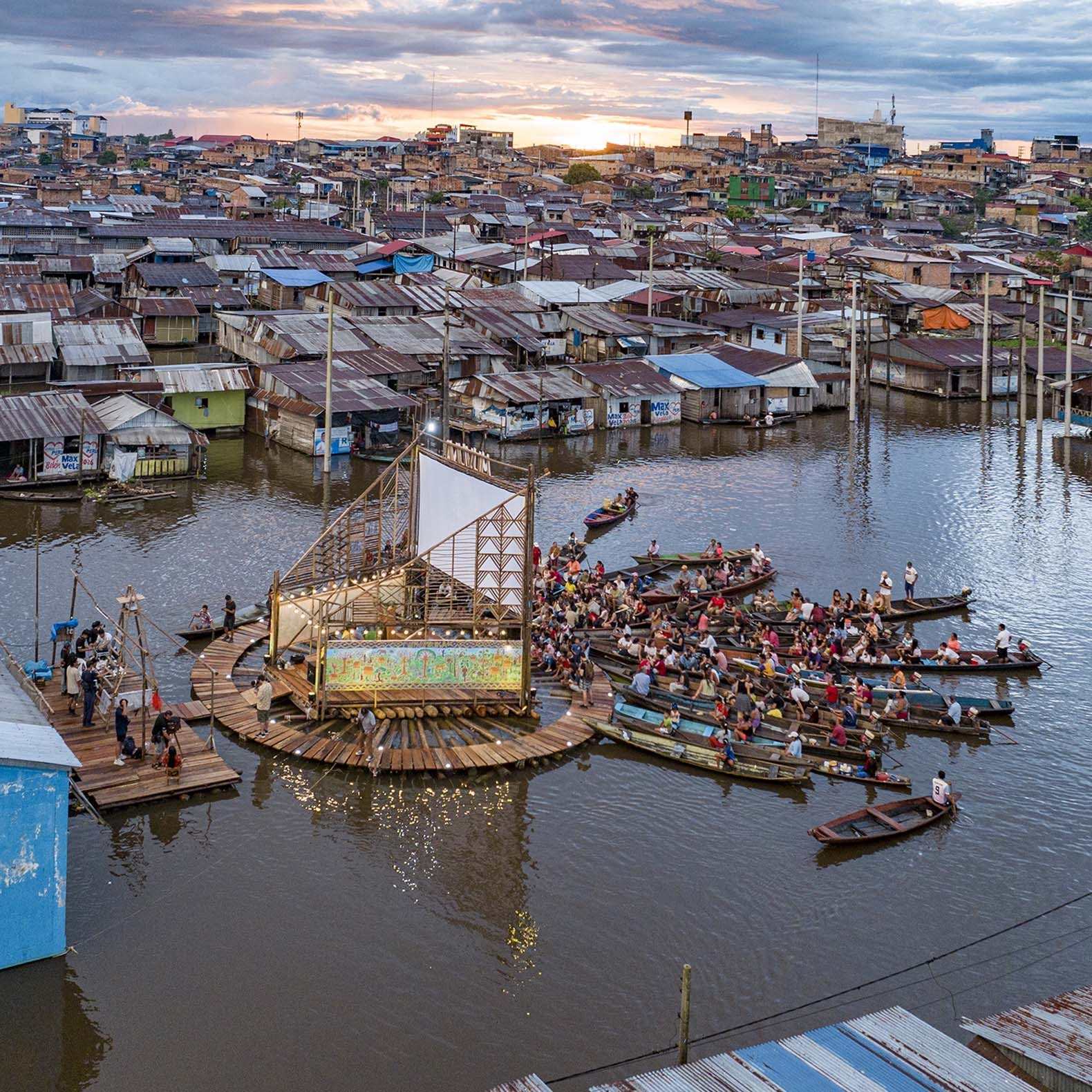
The project developed by Espacio Común is organized around a circular, floating platform 14 meters in diameter, conceived as a gathering space facing a seven-meter-tall screen. The sides of the screen form a permeable enclosure woven from plant materials, while the open layout allows the public to access and participate from canoes, nearby dwellings, and the platform itself.
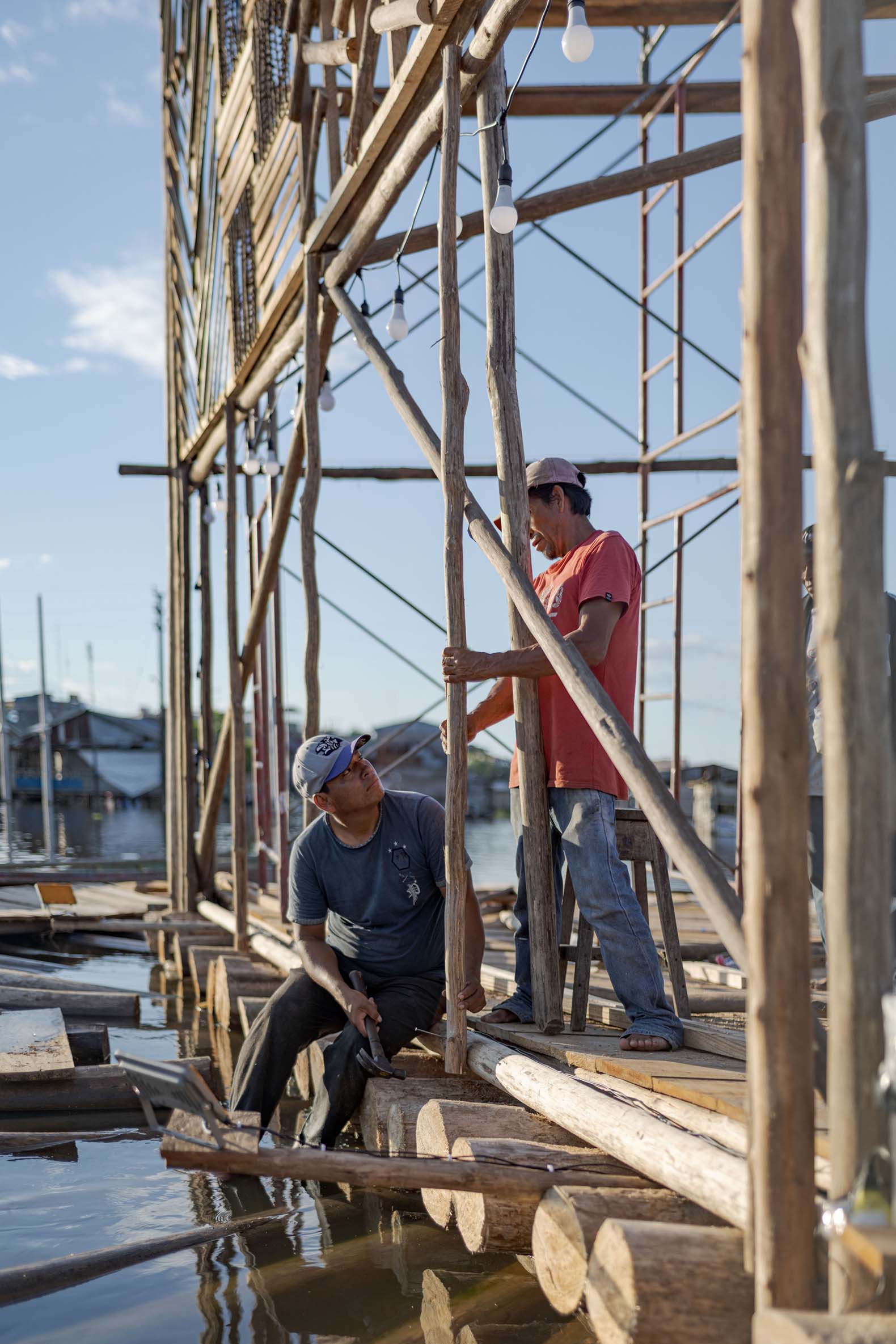
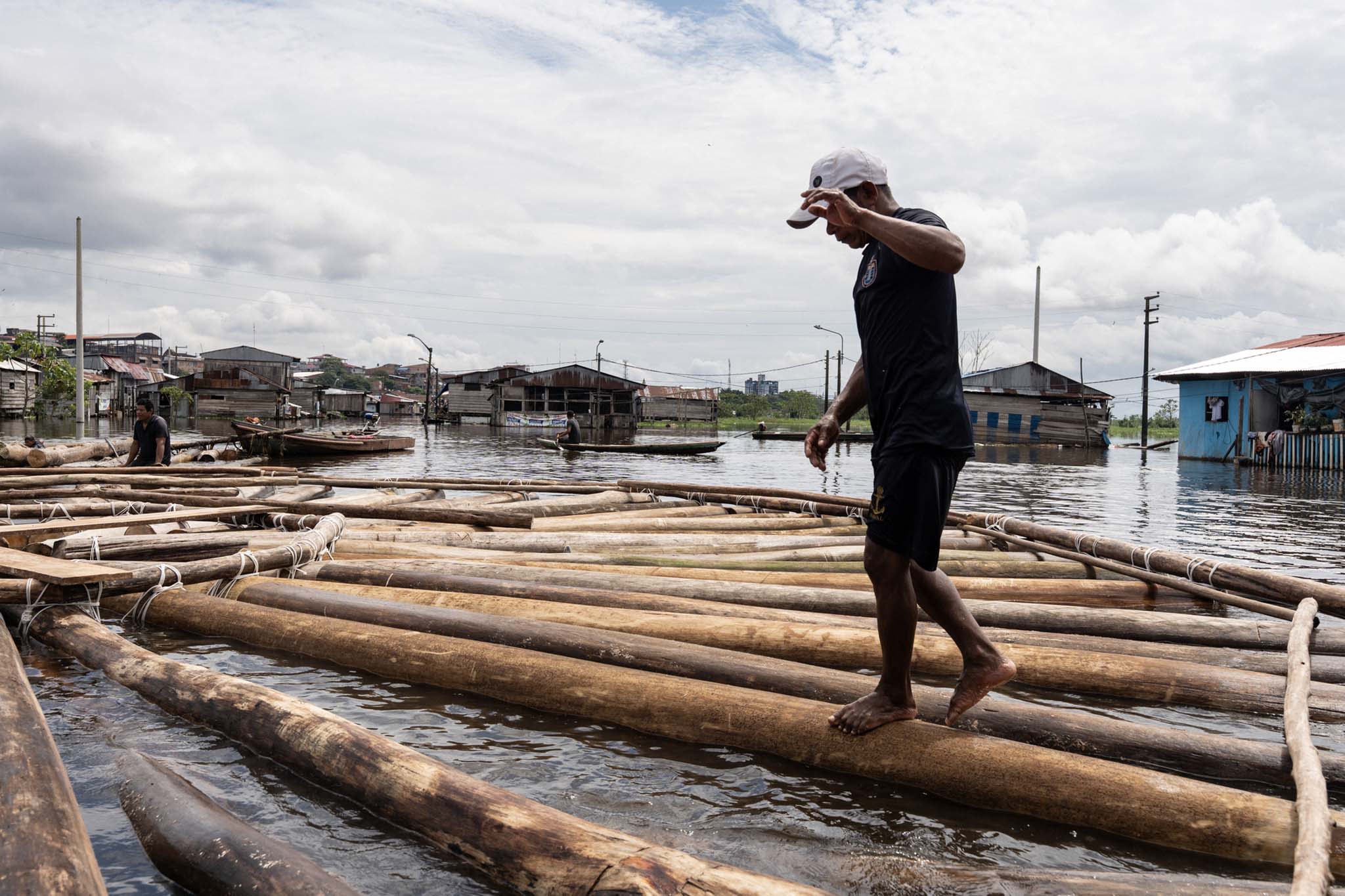
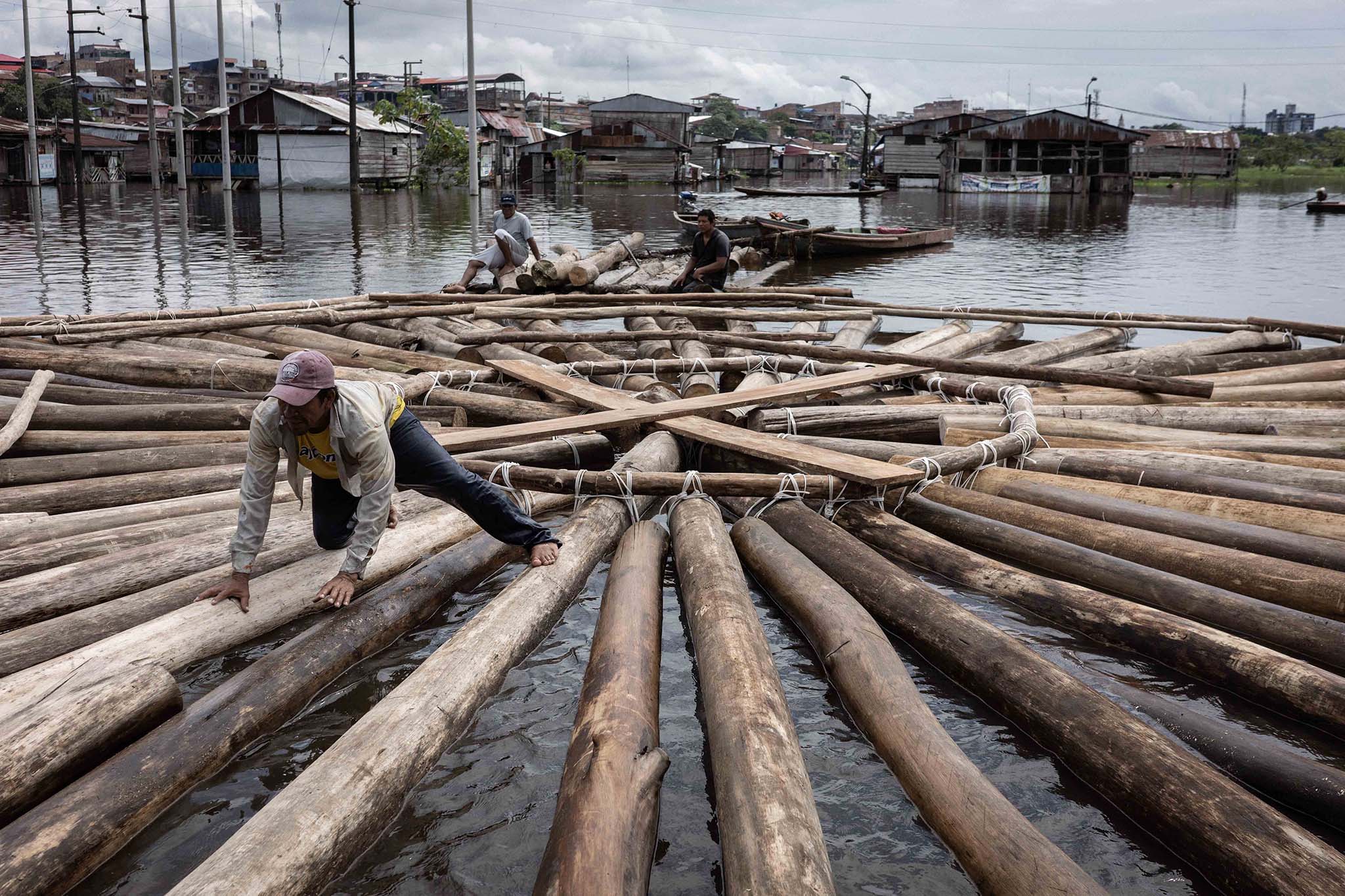
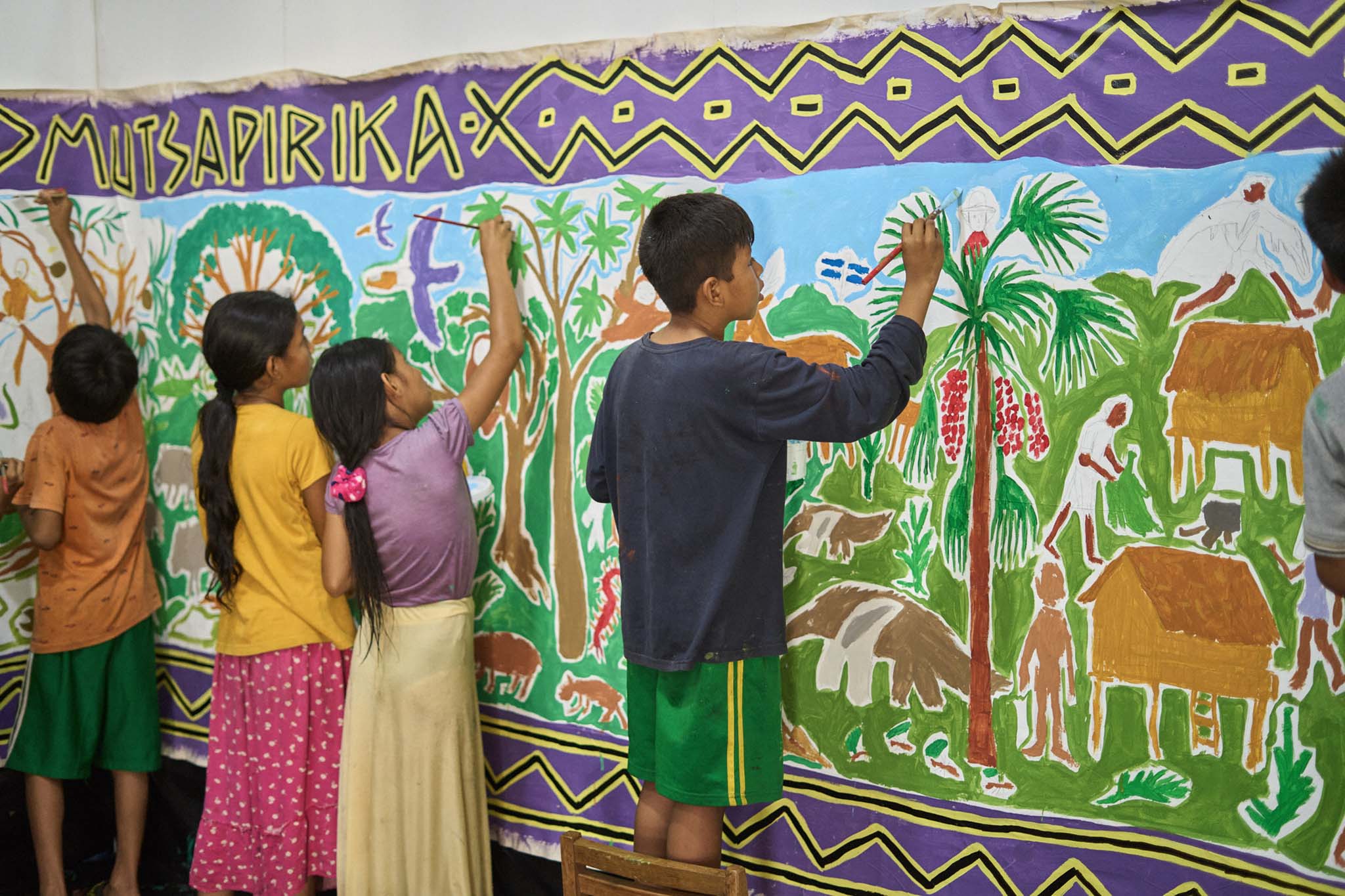
The structure was built using more than 70 "topa" wood logs, while the enclosures consist of gathered reeds, branches, and leaves, complemented by patterns inspired by the Kukama culture and murals created with local children. Following the festival, the platform remained in use as a community space for a month; it was subsequently dismantled so that its timber could be repurposed for the construction of temporary bridges and walkways.
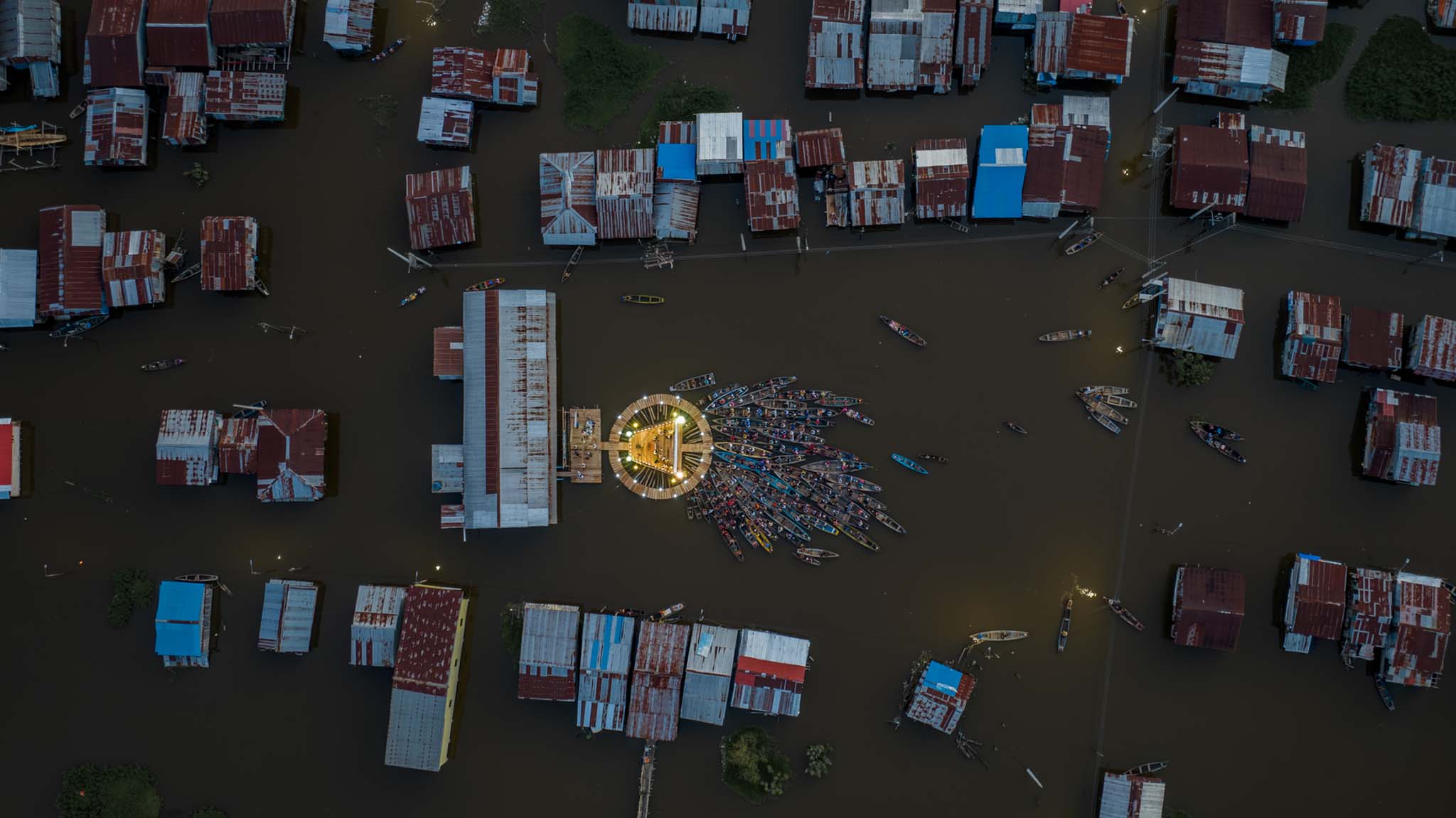
MuyunaFest Floating Cinema by Espacio Común. Photograph by Daniel Martínez-Quintanilla.
Project description by Espacio Común
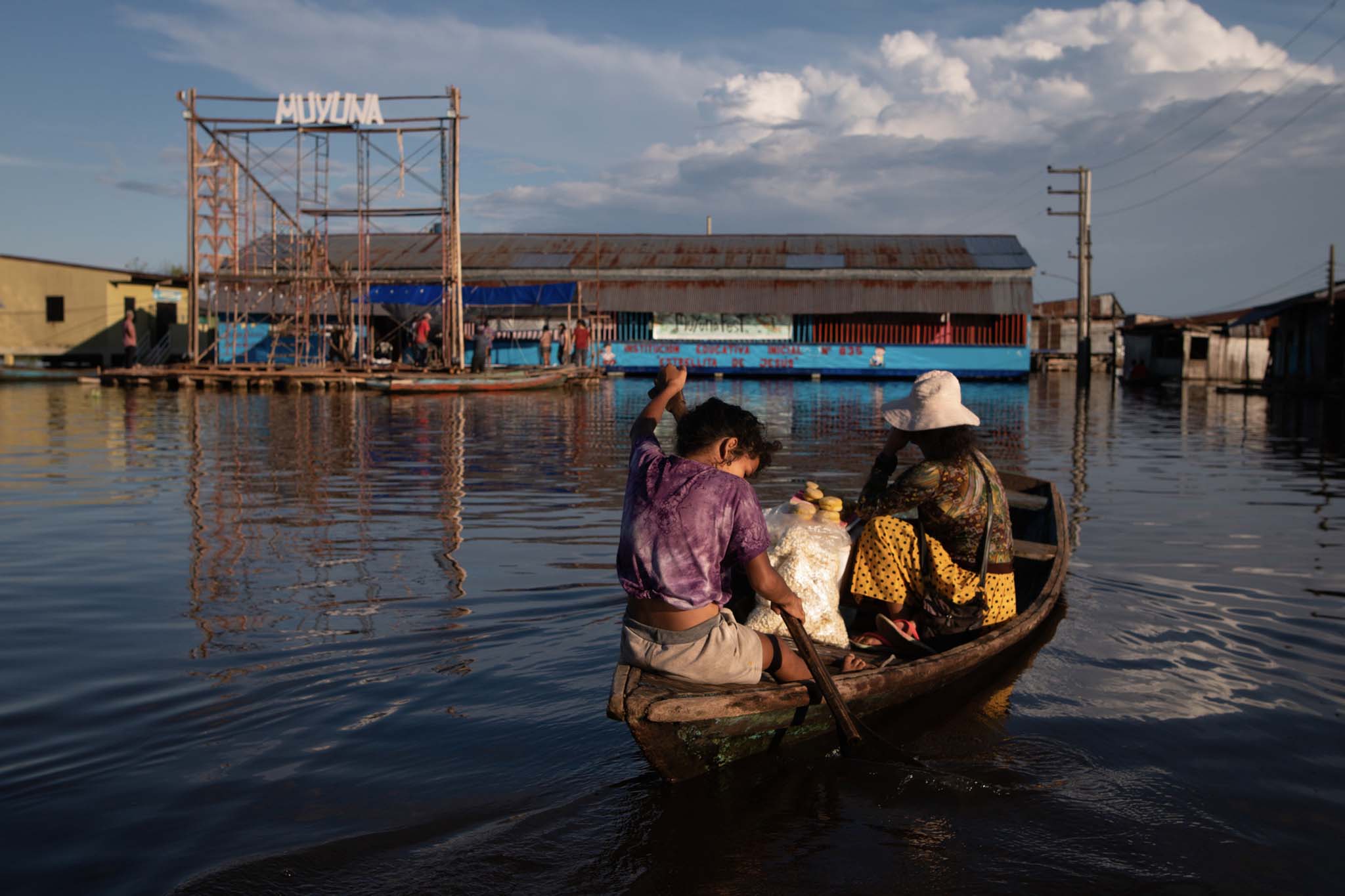
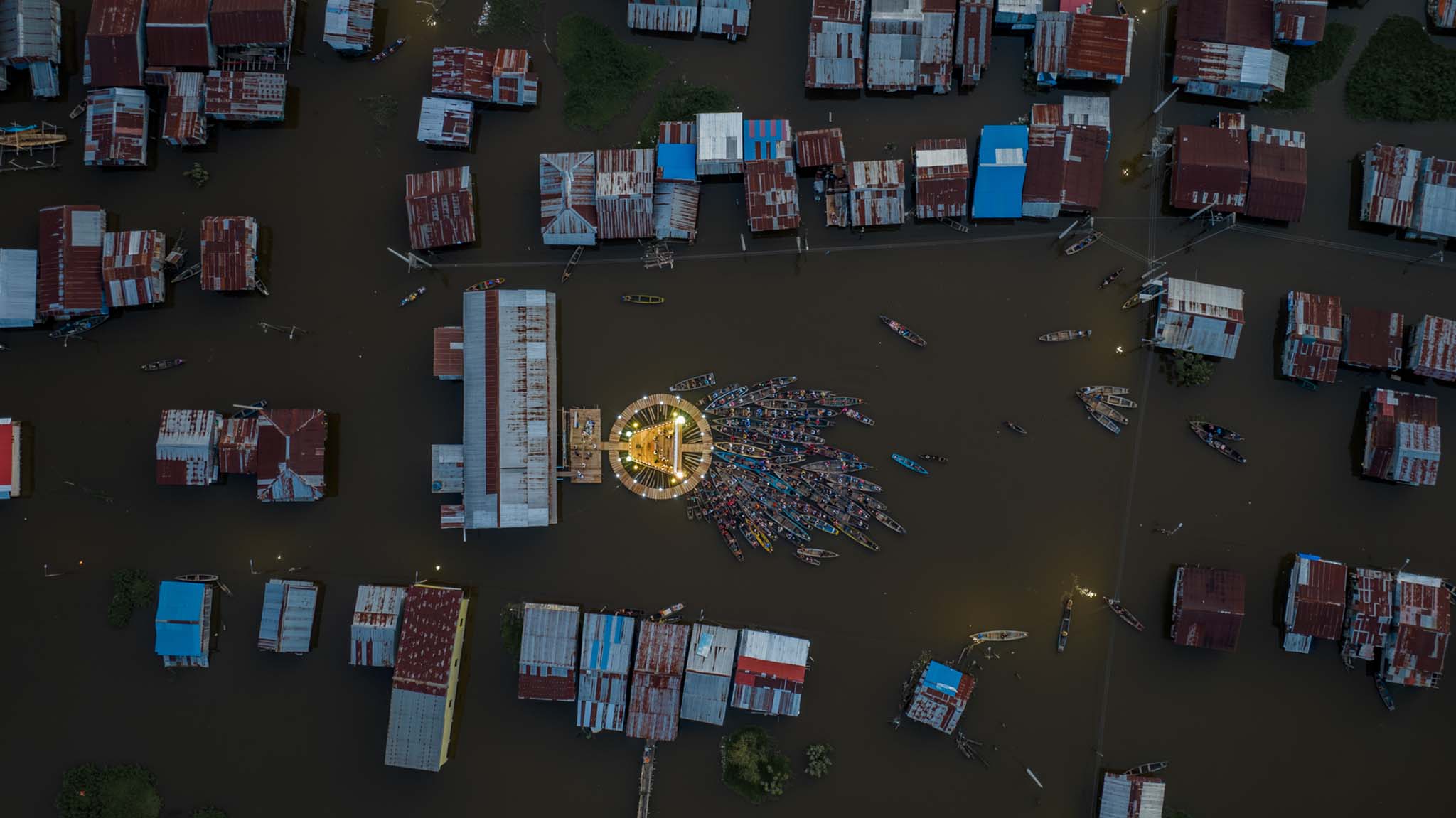
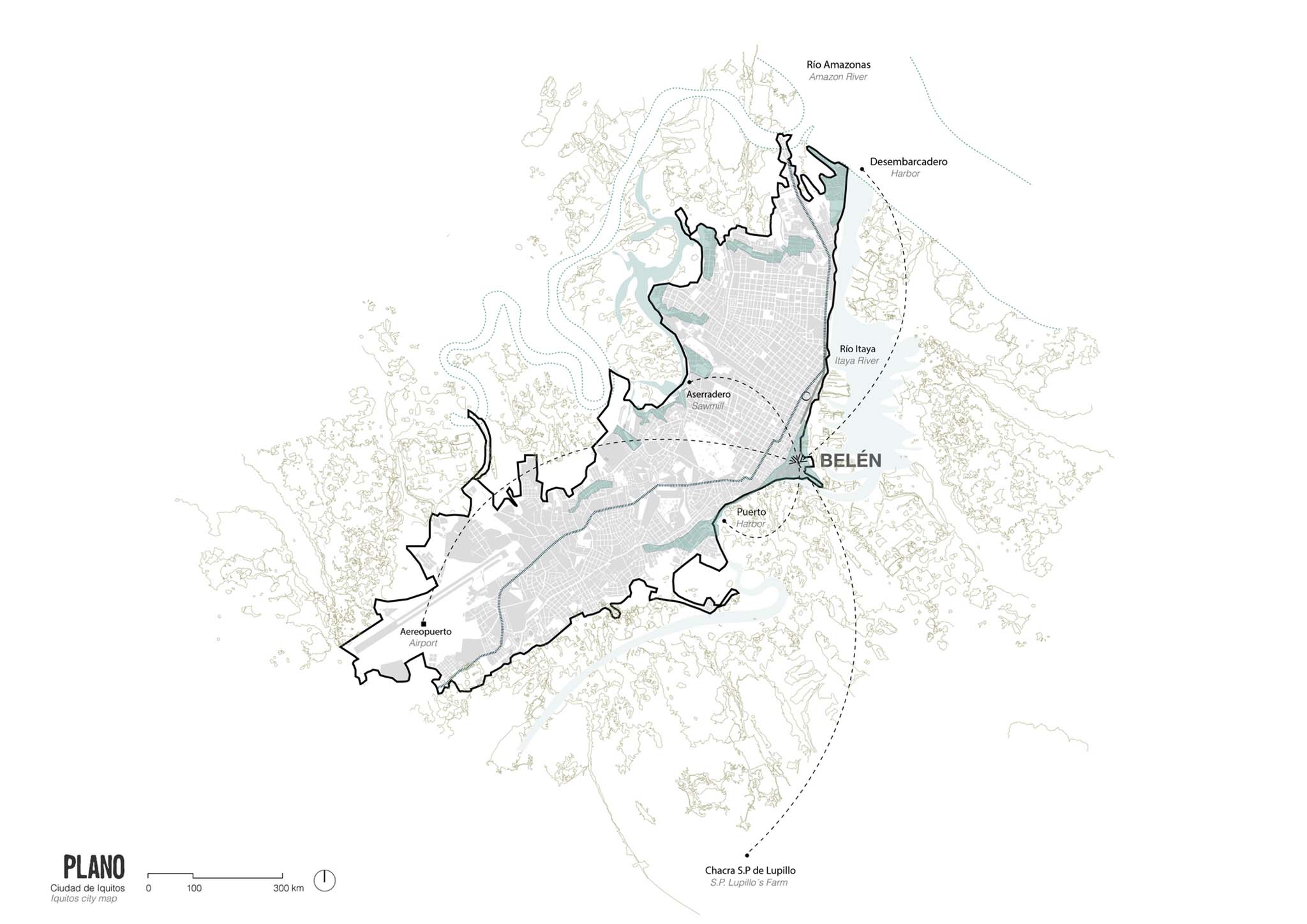
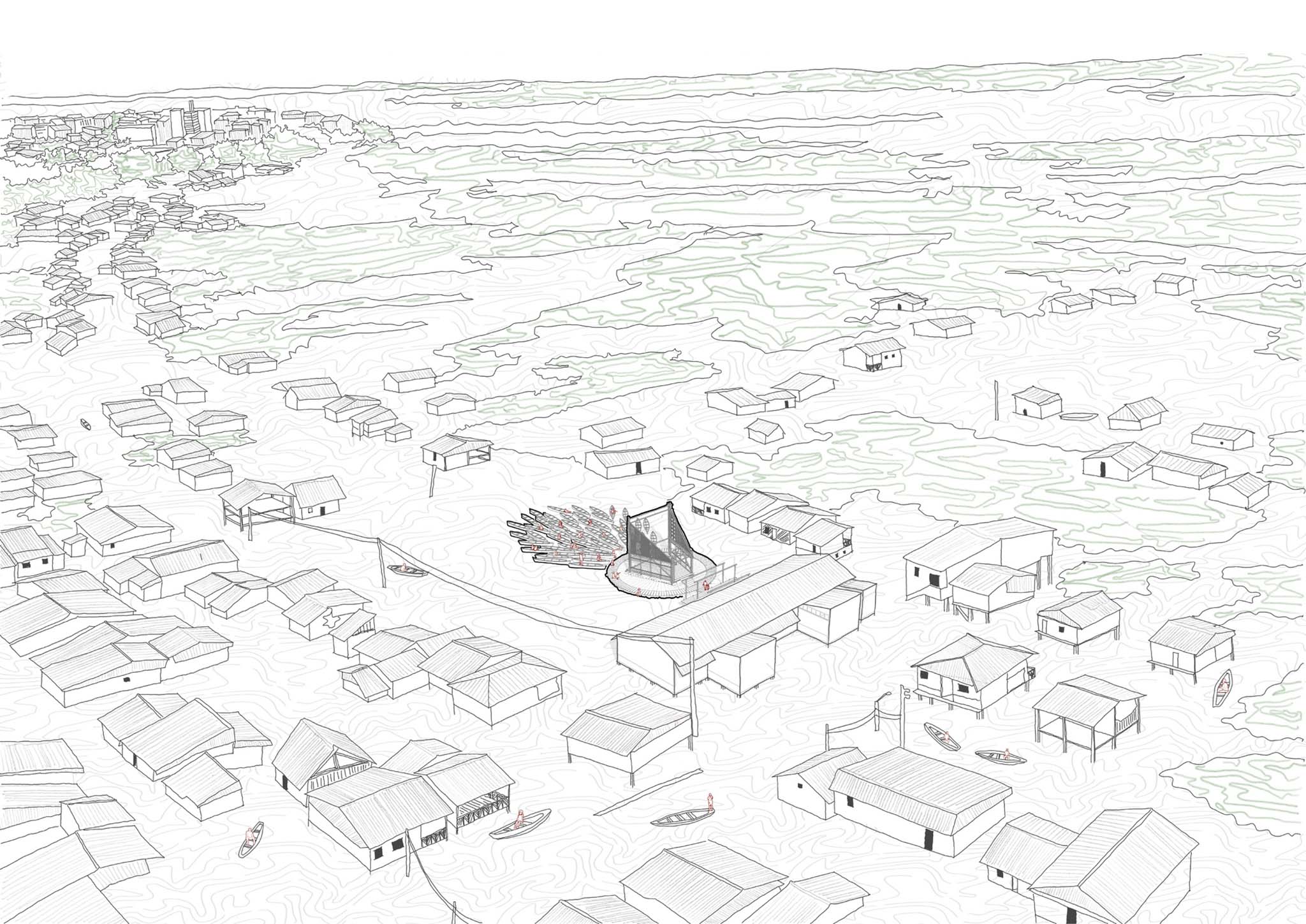
Belén, in the Peruvian Amazon, does not simply alternate between being dry and flooded. Its normal condition is the transition between low and high water: when the Itaya River recedes, streets, mud and pedestrian routes emerge; when it rises, those same streets become canals, canoes replace walking, and everyday life reorganises its rhythms, access routes and ways of gathering. Its inhabitants have not defended themselves against the river as though it were something alien; they have learned to inhabit its changing cycles. In a context of increasing hydrological uncertainty, this amphibious culture offers an urgently needed form of territorial intelligence for imagining other ways of practising architecture.
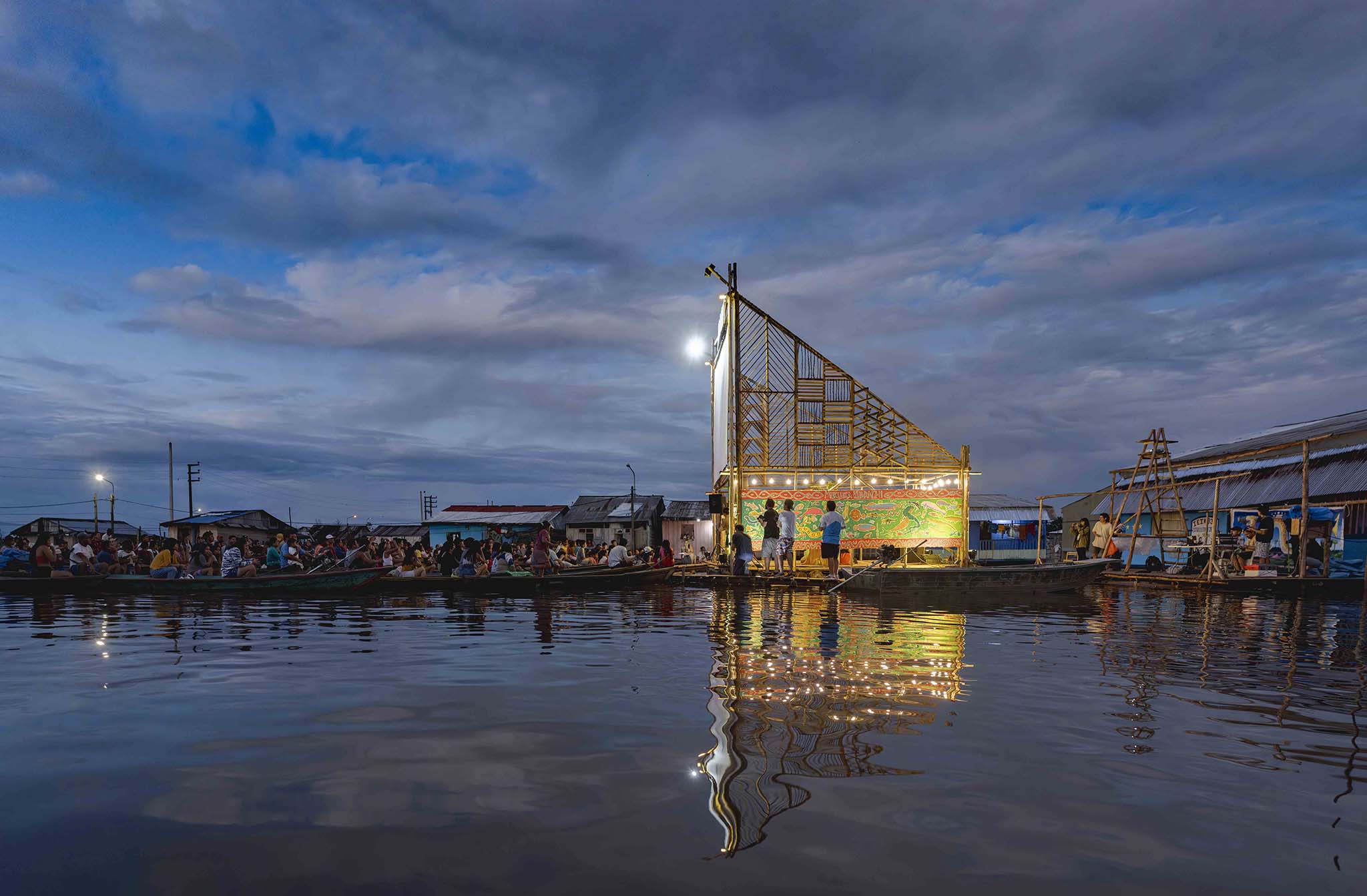
The floating stage for MuyunaFest, a floating Amazonian film festival, emerged from this culture of water. Built in 2025 in front of the Estrellita de Jesús Educational Institution in Pueblo Libre, the project transformed the rising waters into public and cultural infrastructure. During the screening nights, it brought together between 400 and 500 people, mainly in canoes and nearby houses, in front of a screen mounted on a circular platform 14 metres in diameter.
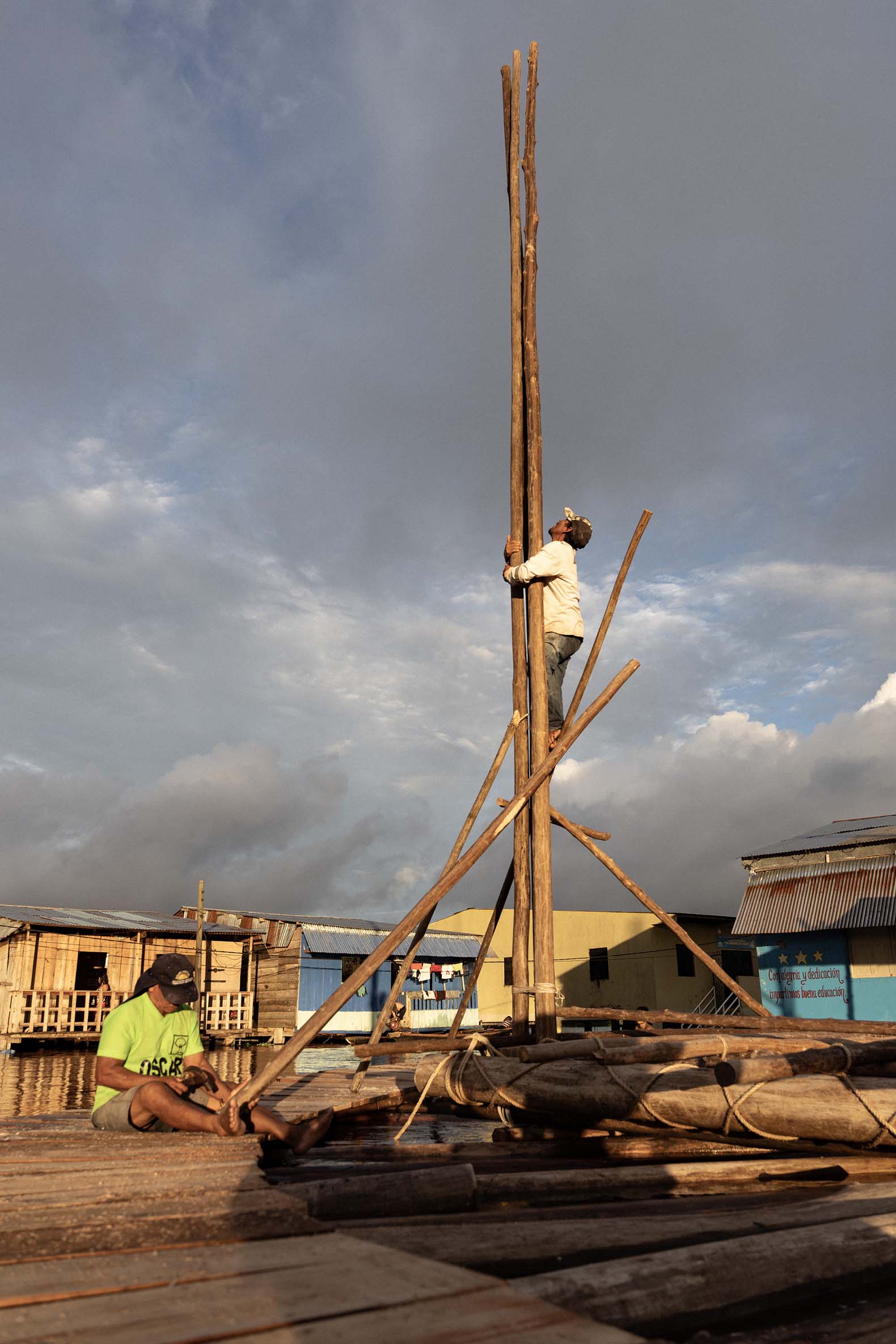
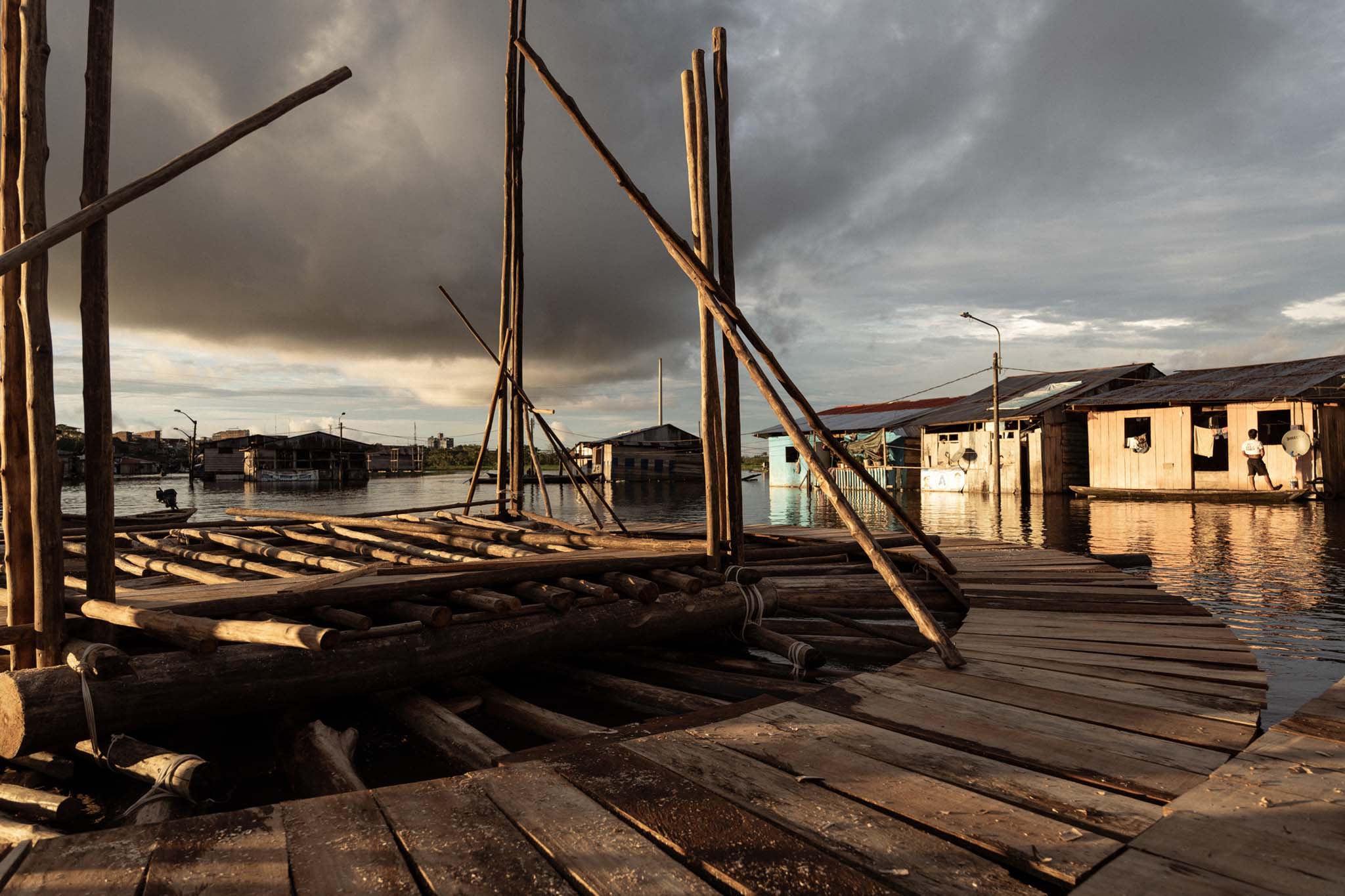
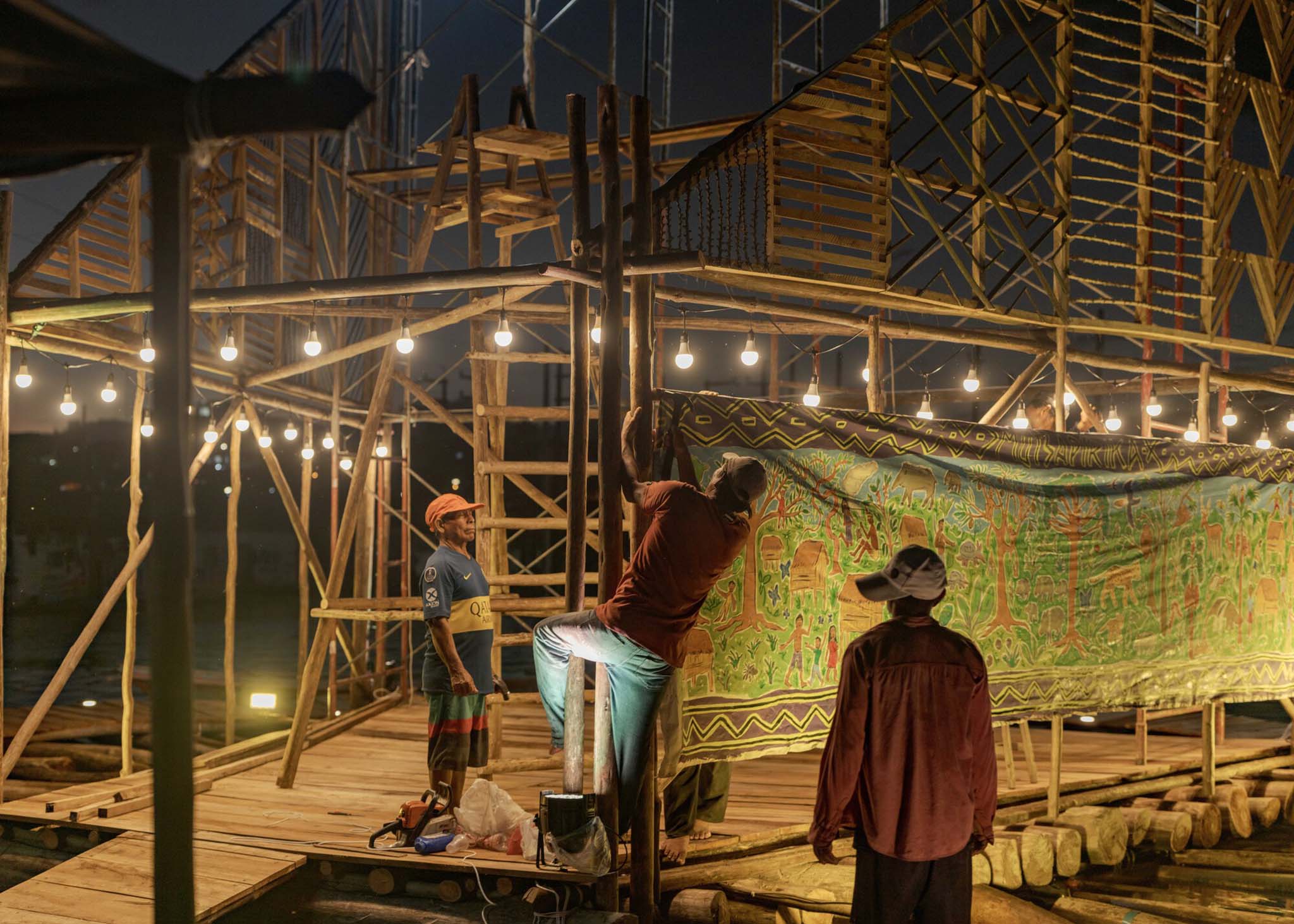
The structure rested on more than 70 balsa logs, without touching the riverbed, floating entirely on the water and stabilised by flexible moorings that allowed it to move with the current. Its geometry evoked the muyuna, an Amazonian whirlpool formed where currents meet and which, in the Kukama worldview, opens connections to underwater worlds. The screen reached a height of seven metres, while its sides were woven from reeds, branches and leaves gathered from the surrounding environment, incorporating patterns inspired by Kukama iconography and murals created with children from the neighbourhood. In this way, the structure accommodated a cultural programme while making visible both a technical and symbolic relationship with water.
The project was built in two weeks using local knowledge, basic tools and techniques developed by those who live on the water: fishermen, riverside carpenters, boatbuilders and craftspeople accustomed to constructing houses, landing stages and walkways on constantly changing surfaces. Architecture contributed proportions, sightlines, safety and spatial organisation; the area's amphibious knowledge resolved flotation, stability and everyday operation. The result worked with the river's force, its fluctuations and its seasonal rhythms.
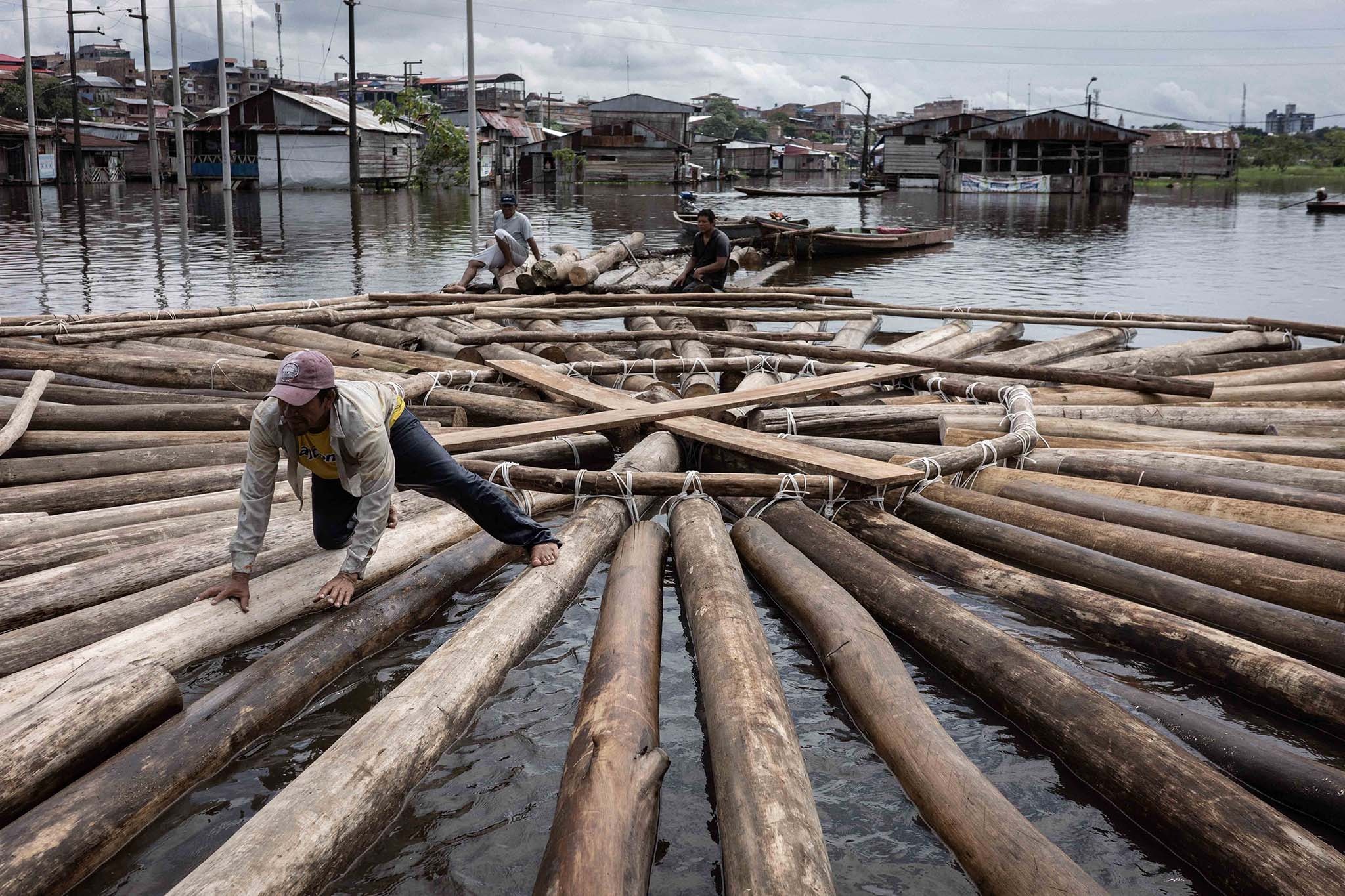
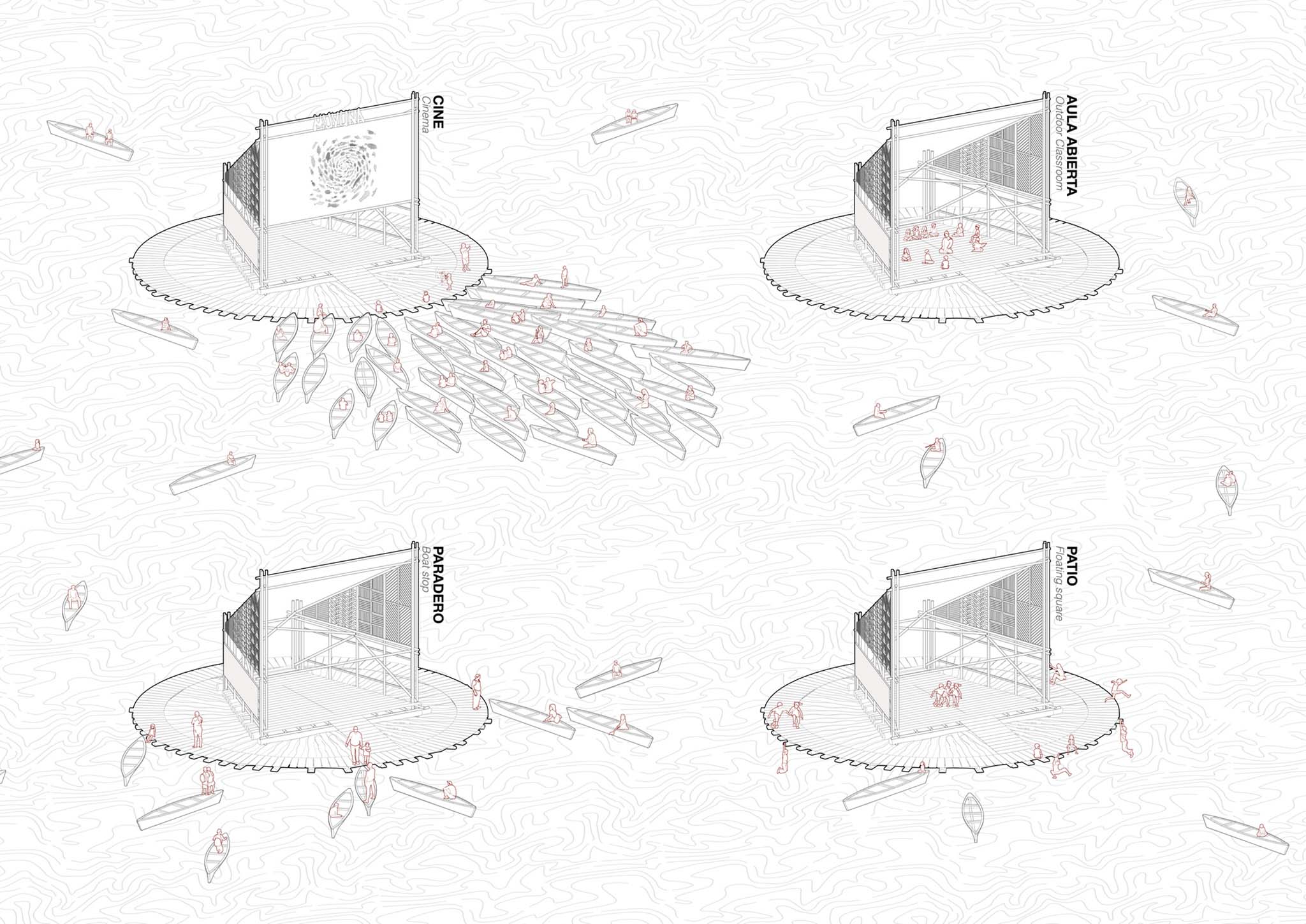
Although conceived for the days of the festival, the platform remained in use for another month as a floating public square, an access point to the school, a boat stop for children, an open-air classroom and a neighbourhood gathering place. When the waters receded, the stage was dismantled, and its timber was reused locally to build temporary bridges and walkways for the muddy season. Its complete cycle — assembly, use, continued occupation, dismantling and reuse — explores a form of reversible infrastructure capable of activating public space without leaving a permanent footprint on a constantly changing territory.
In Belén, water is a condition of life that shapes the territory and ways of inhabiting it. Caring for life here means recognising that relationship and developing architecture from within it. In a sinking world, this neighbourhood has spent generations learning how to float.