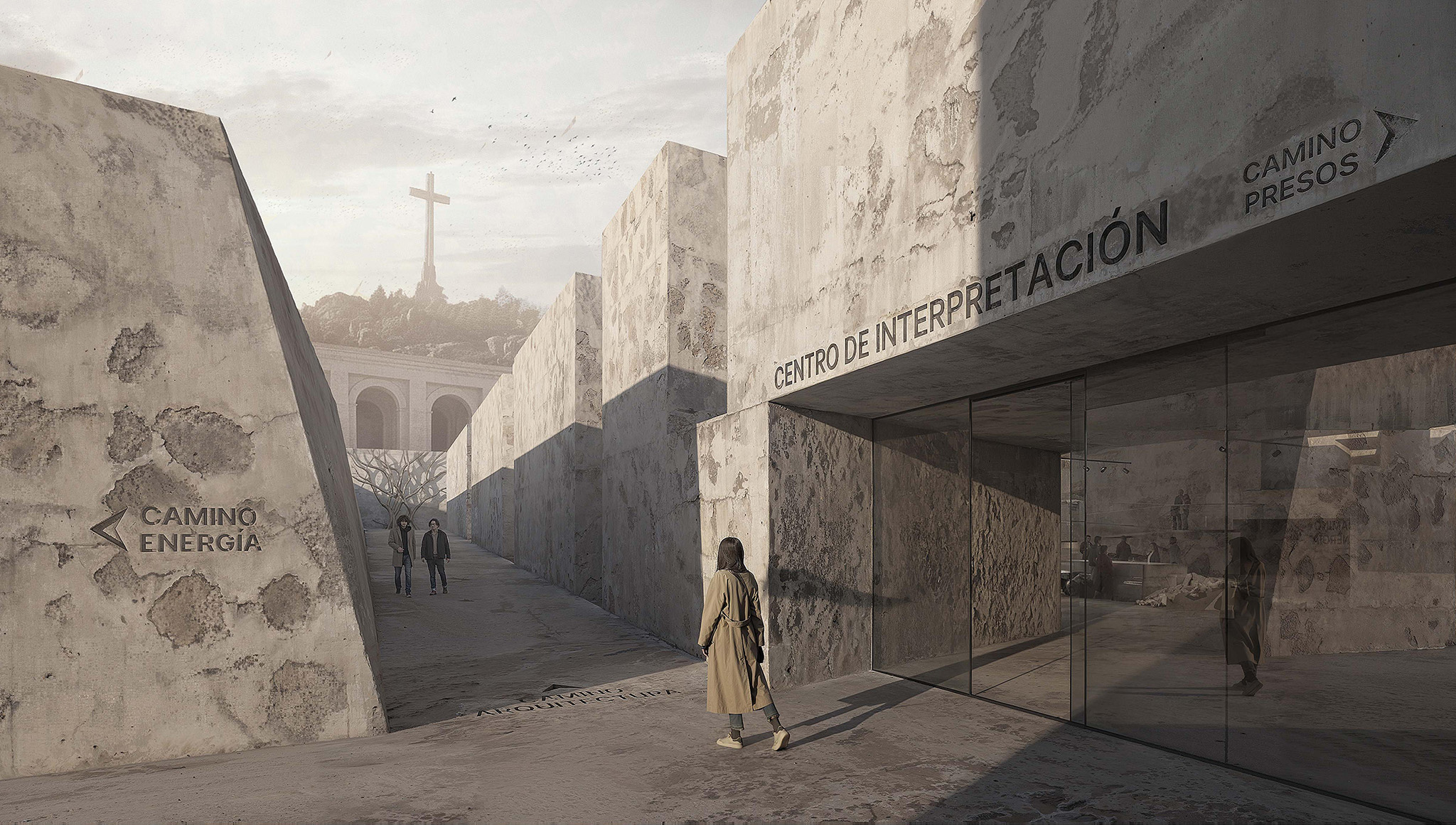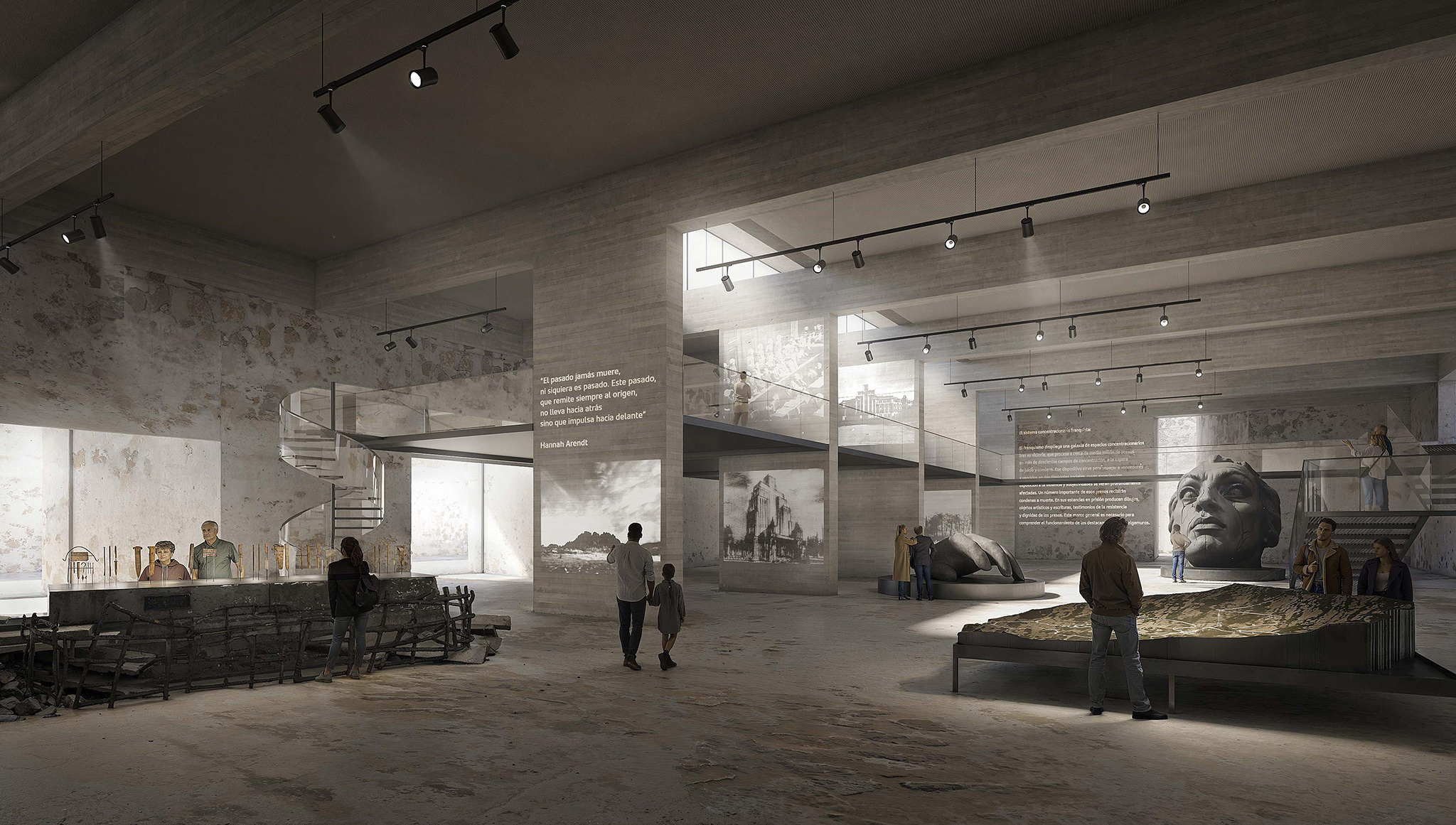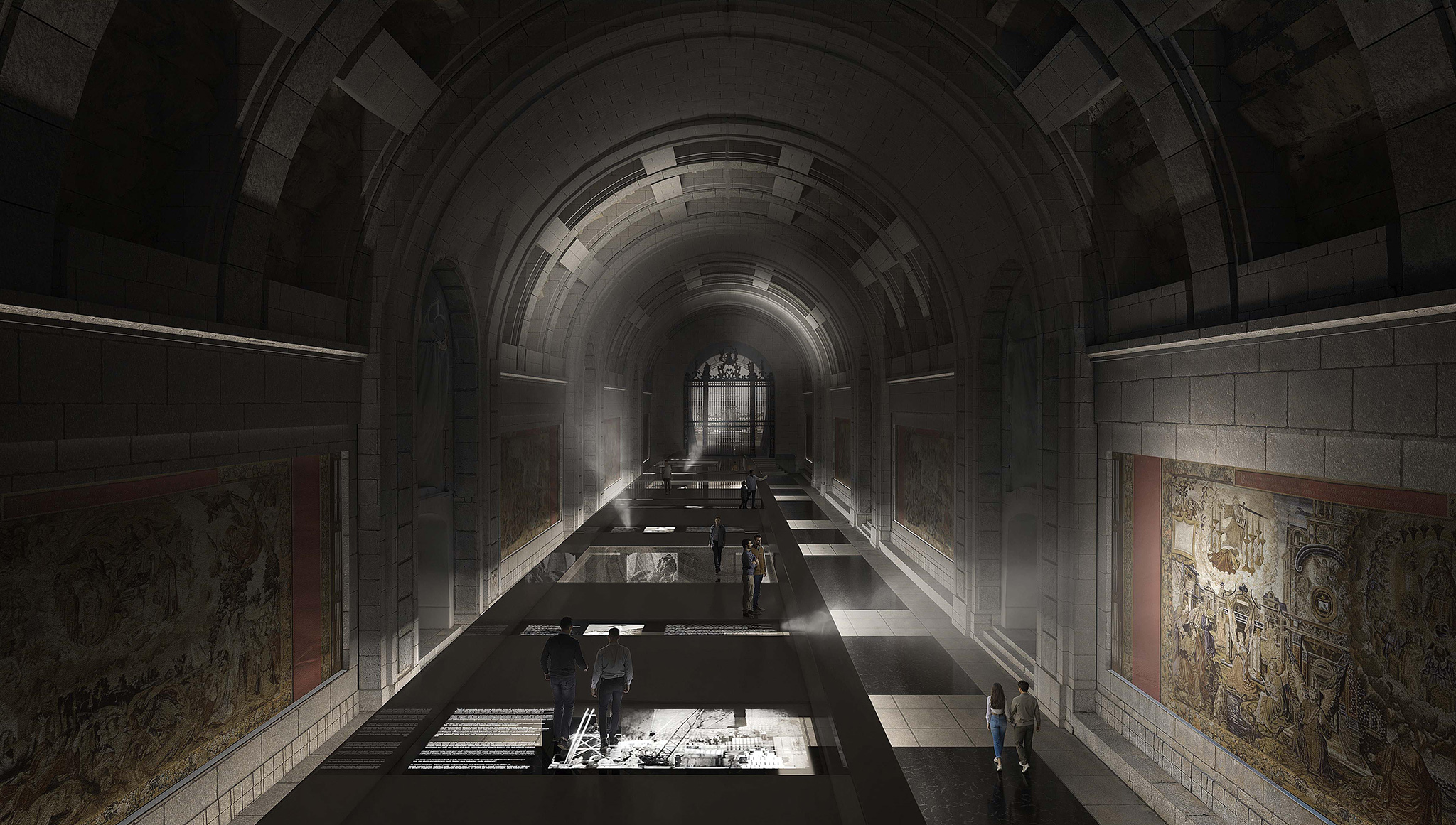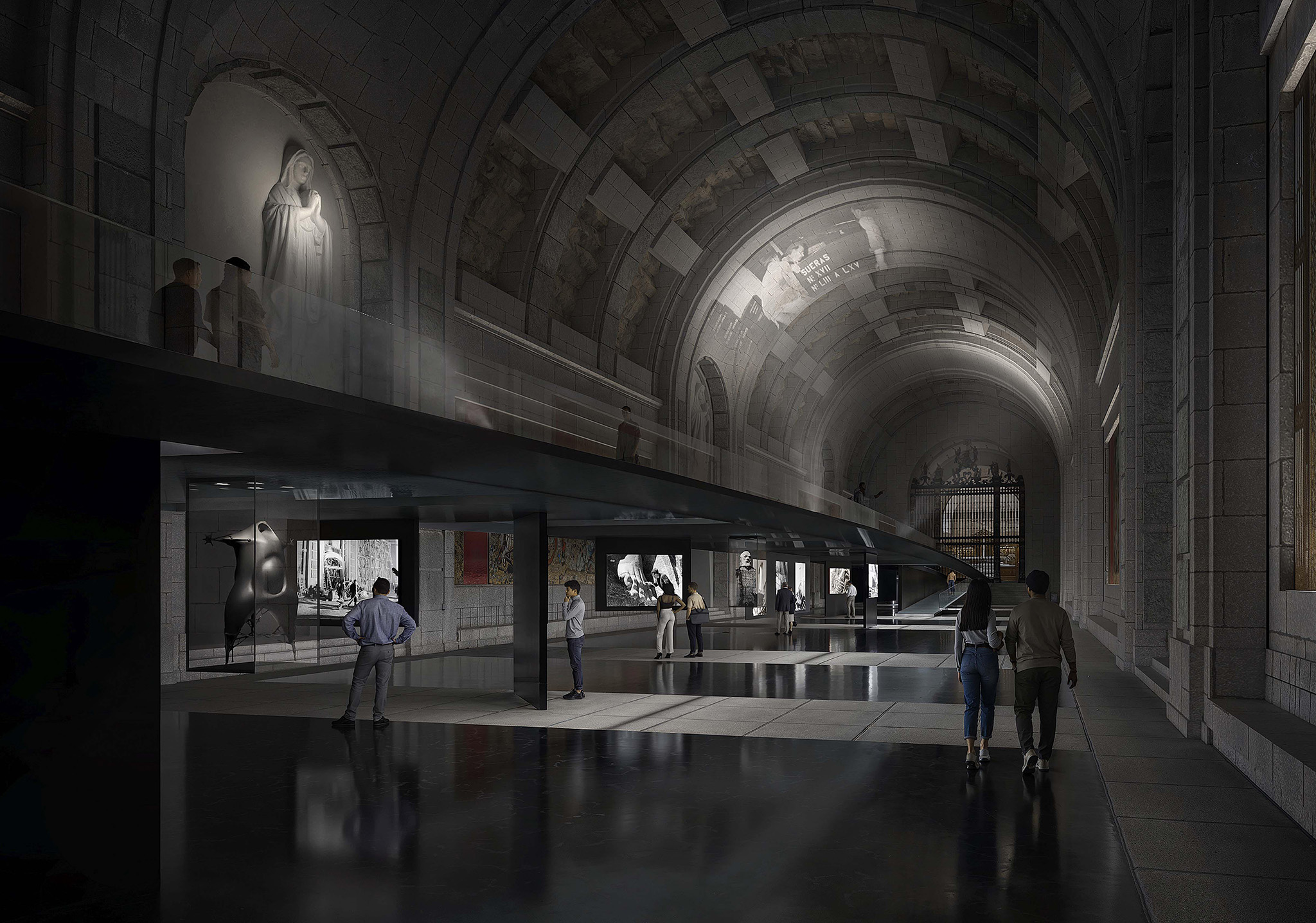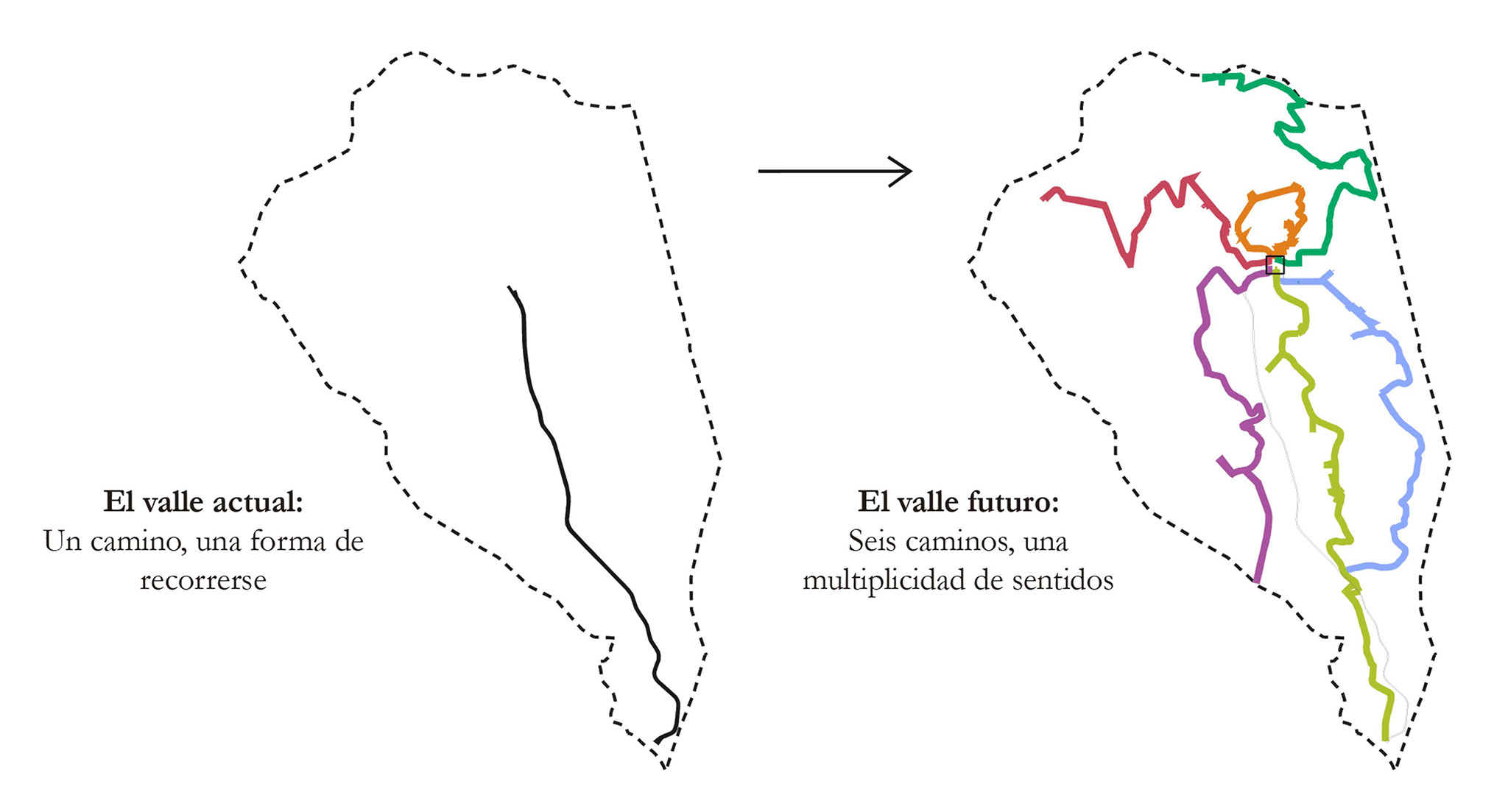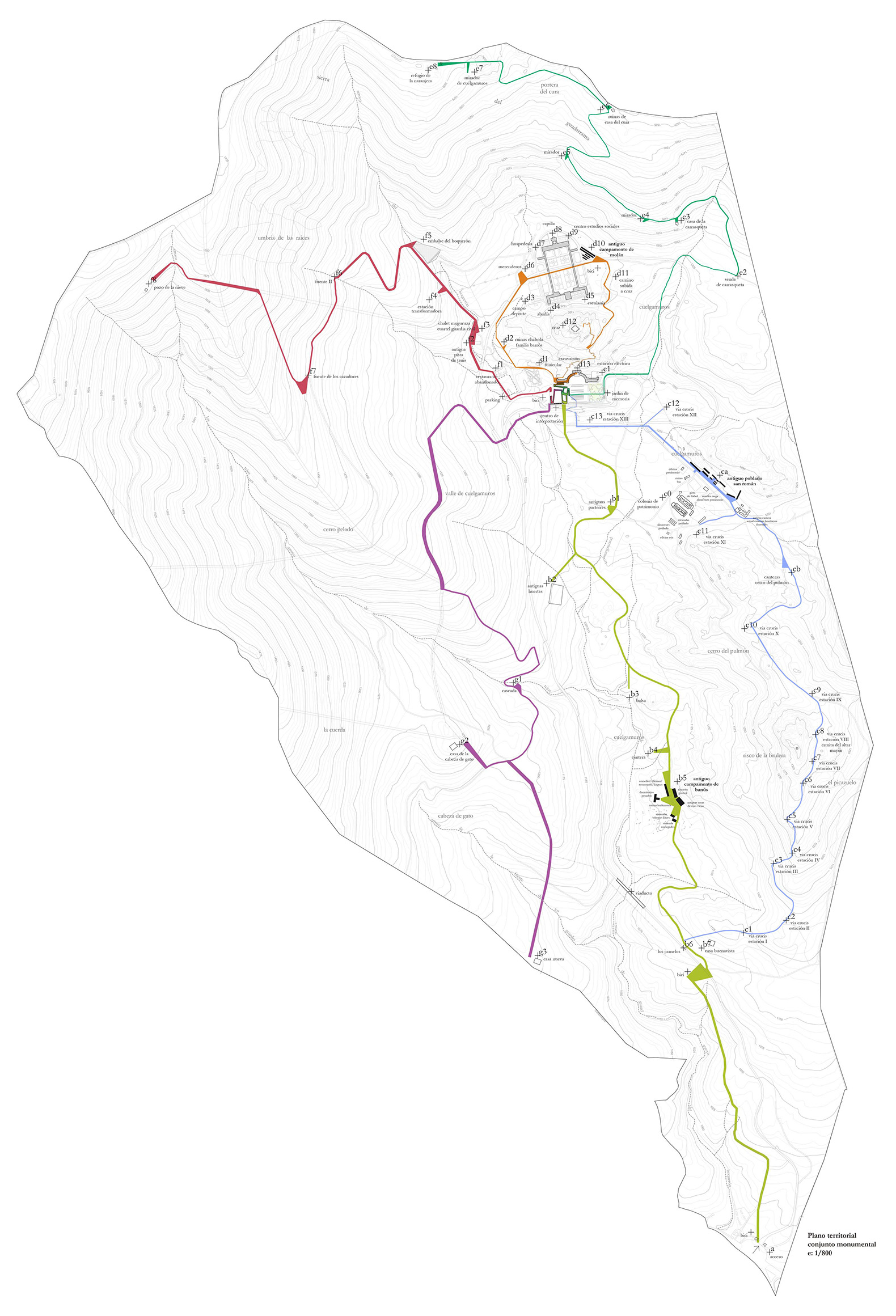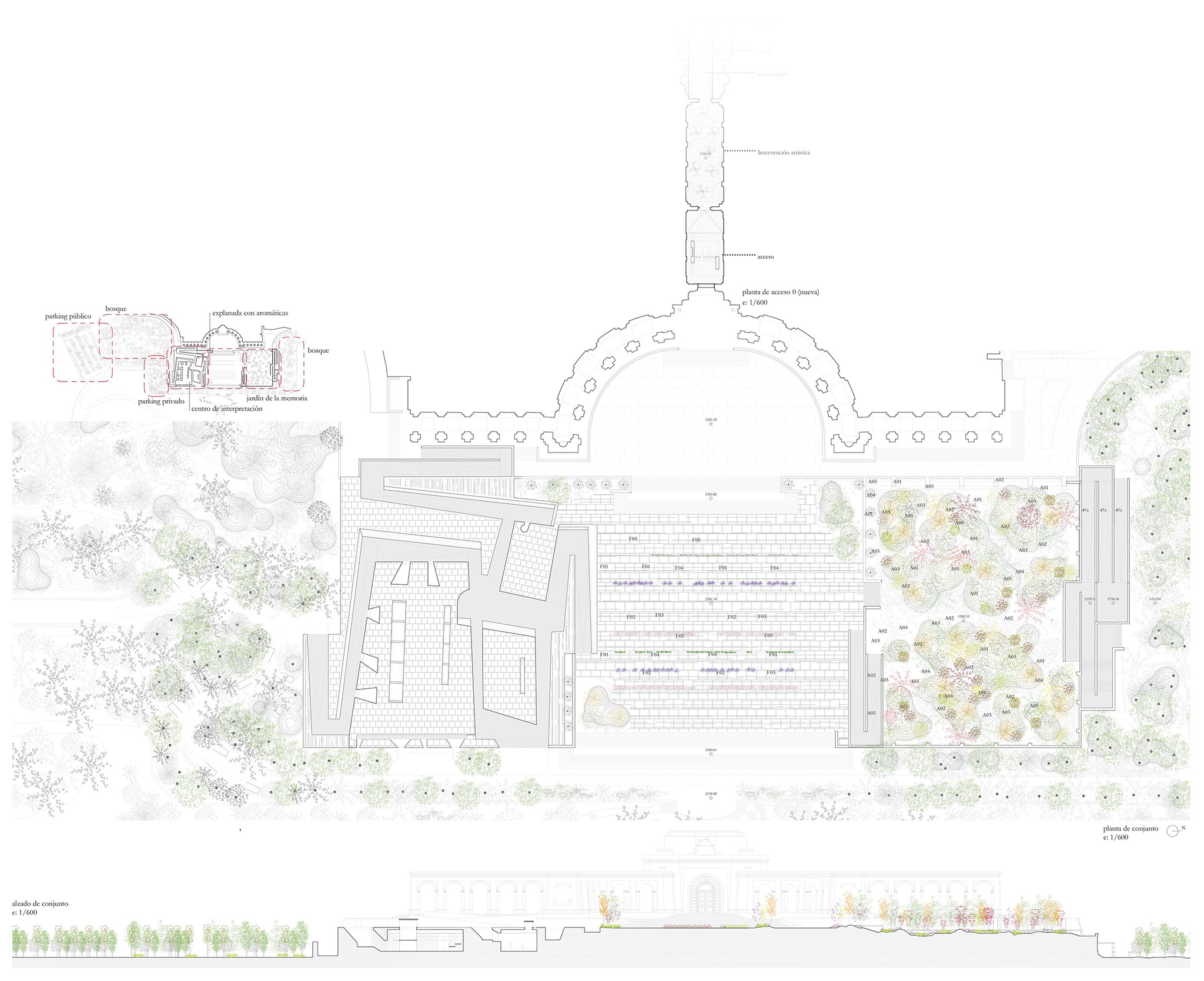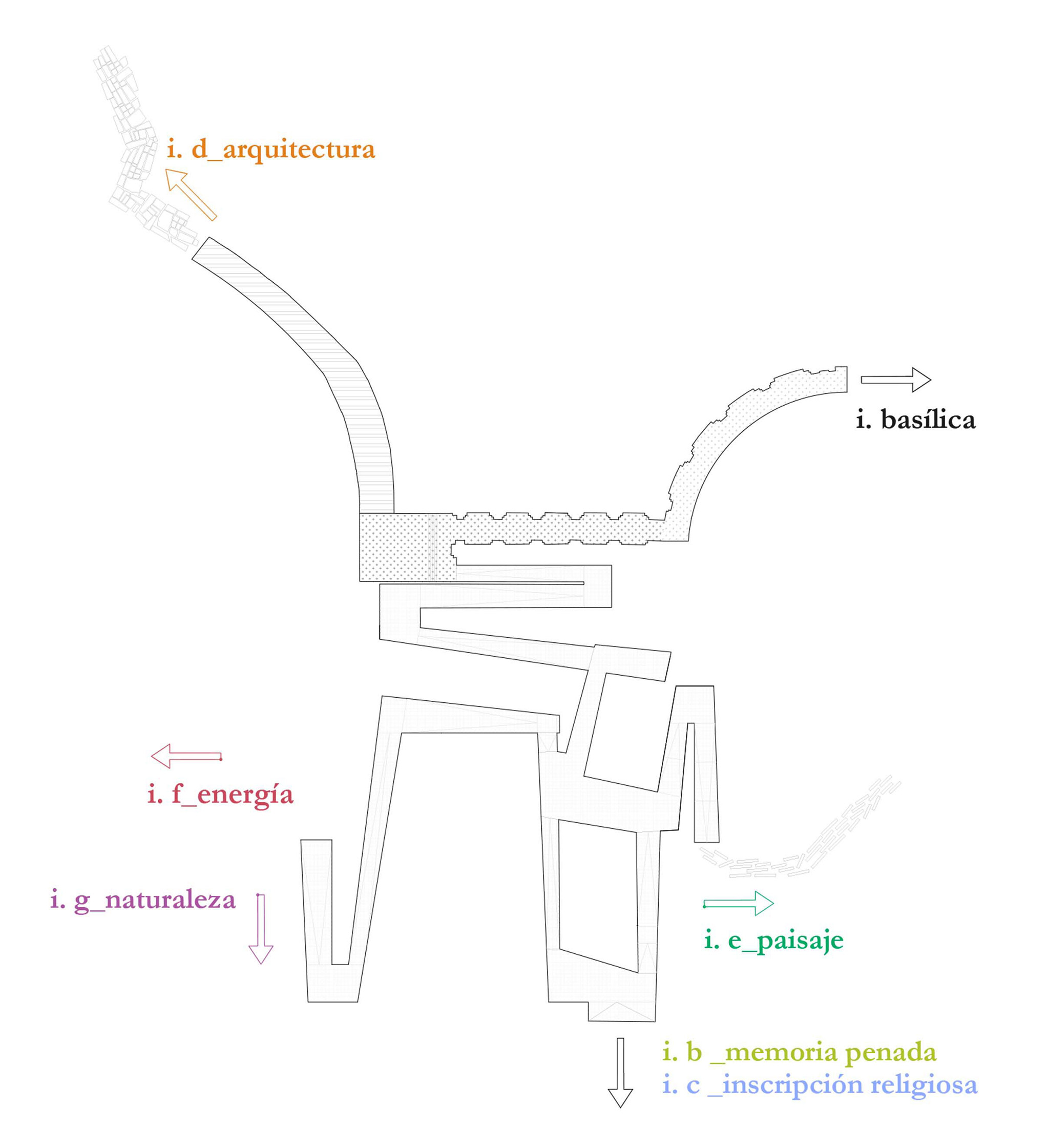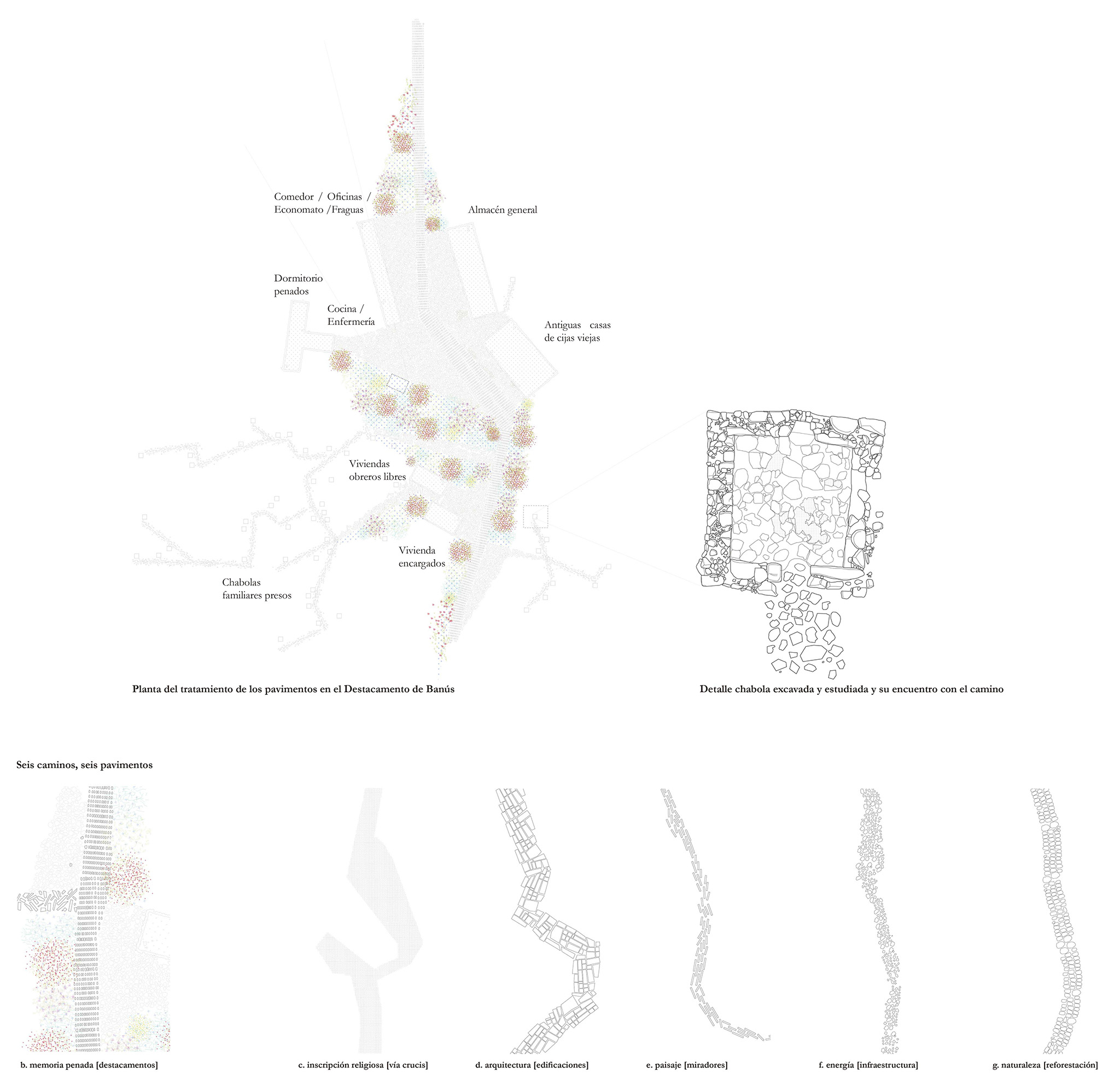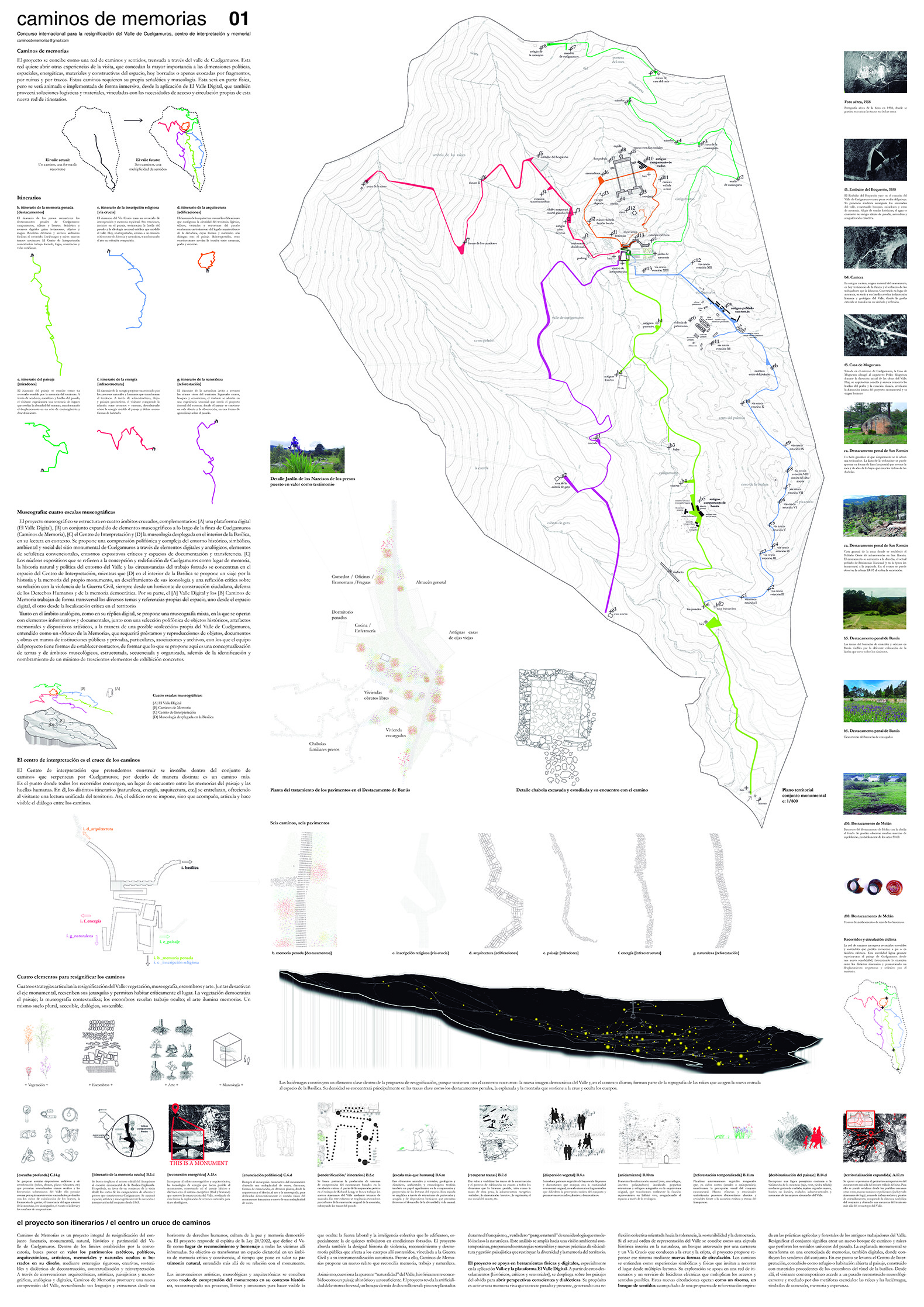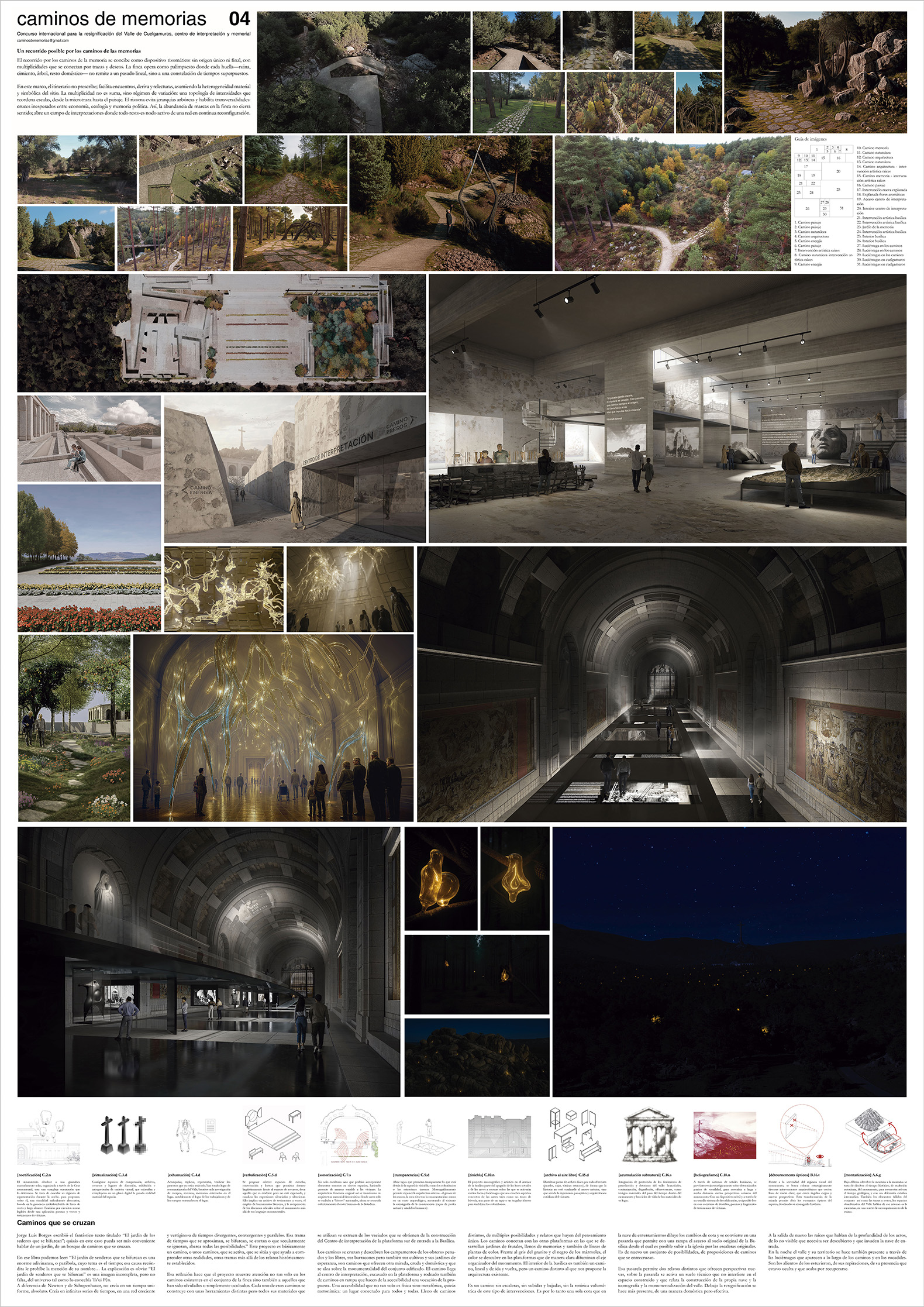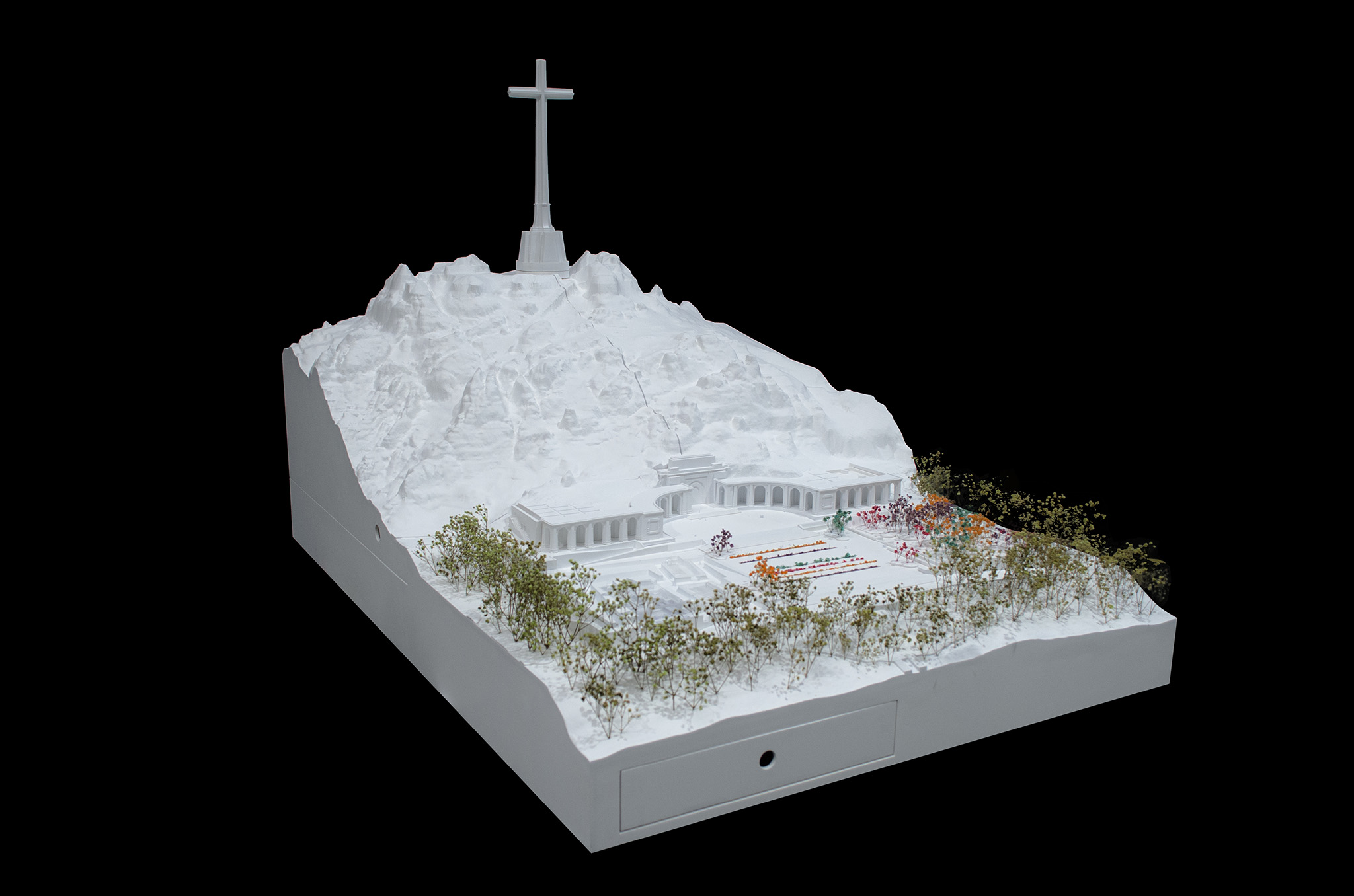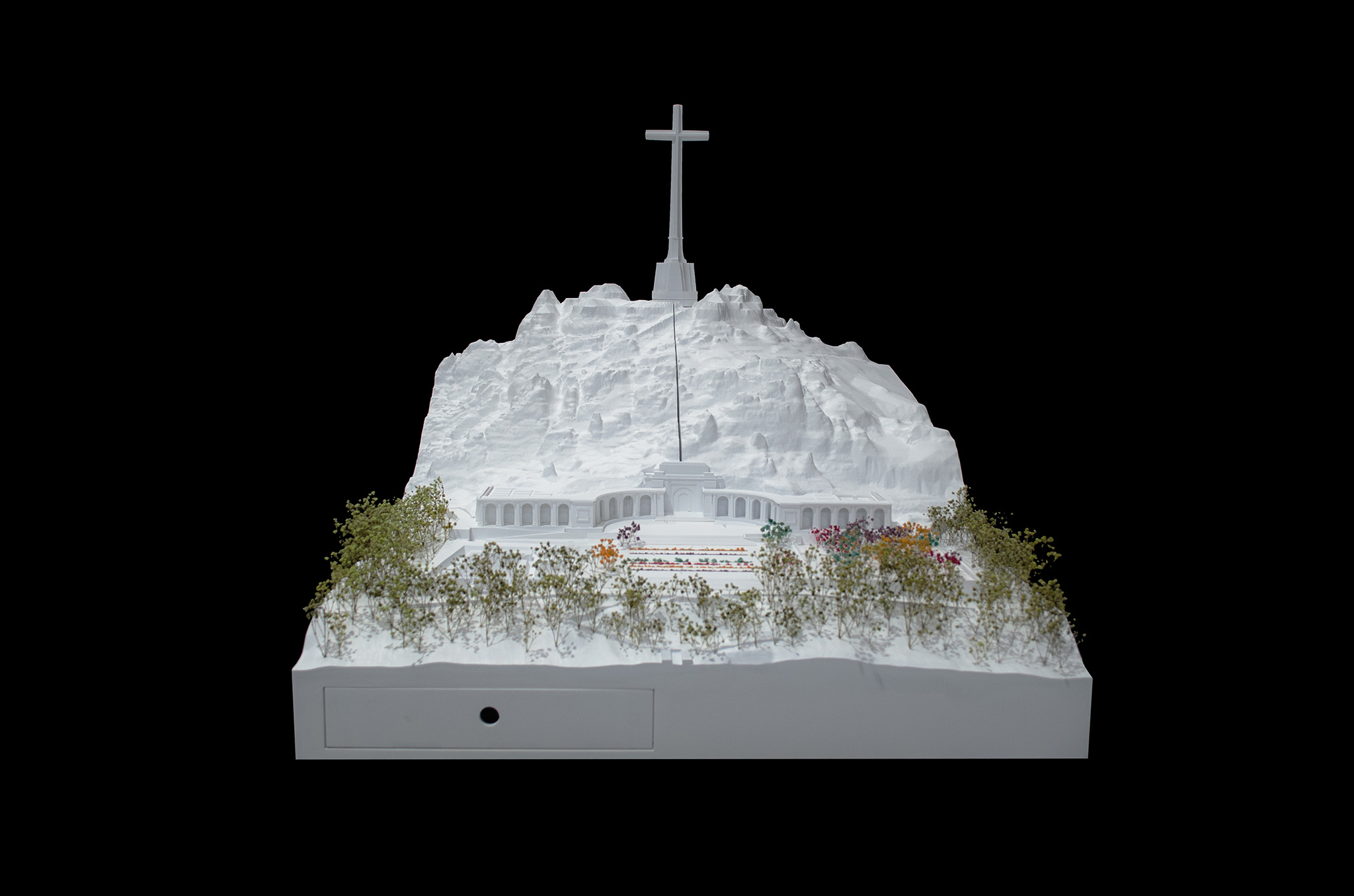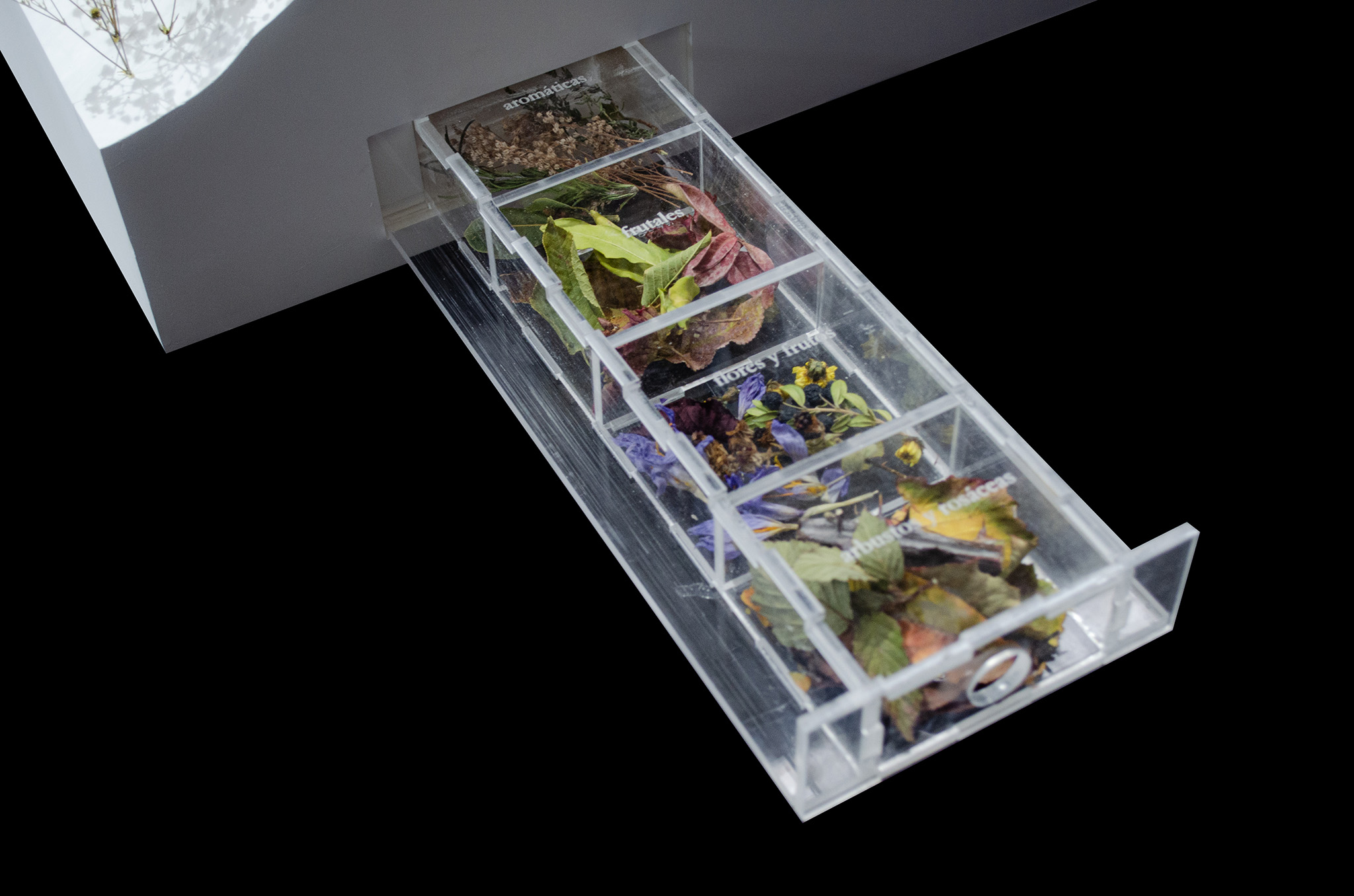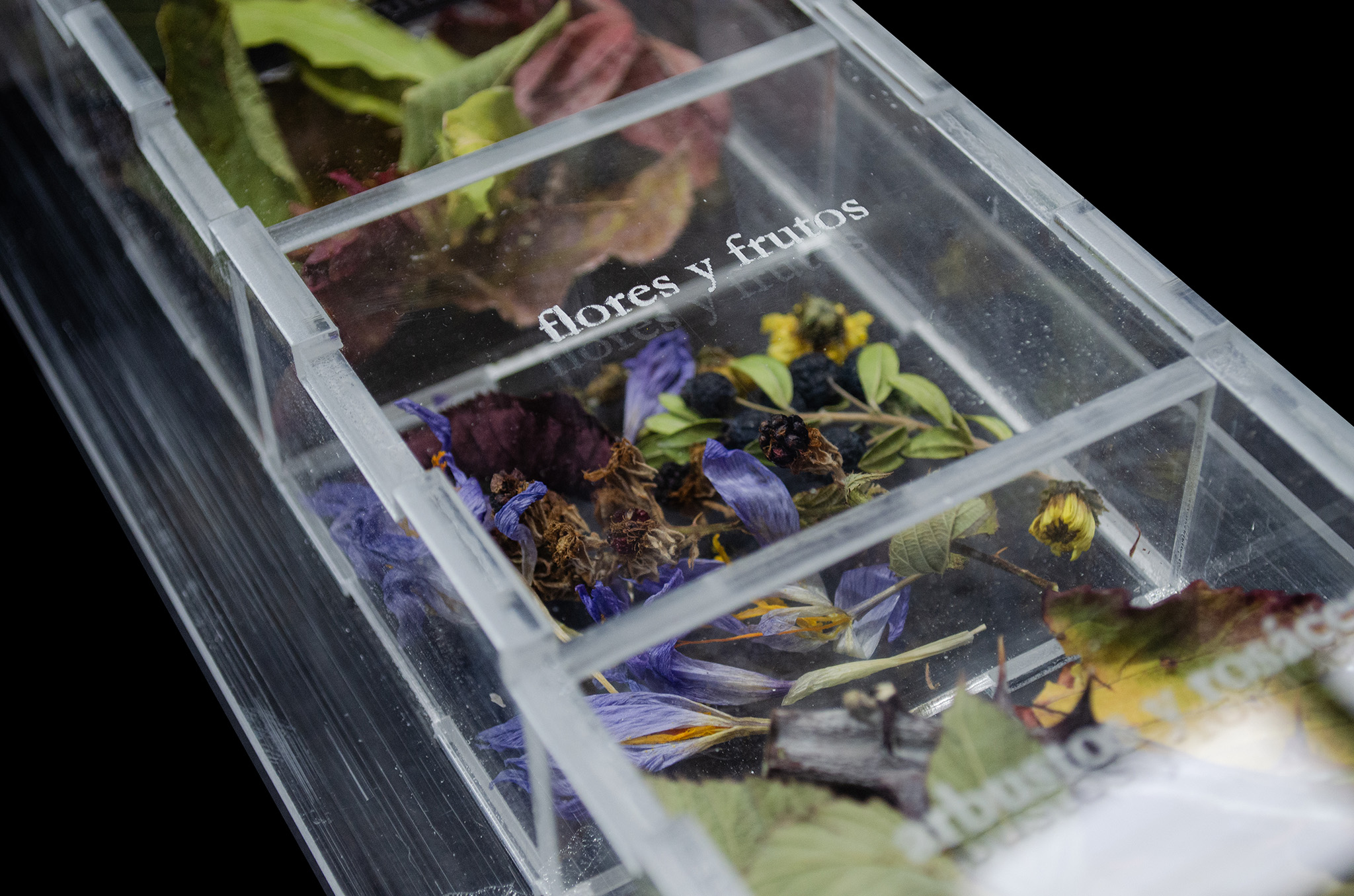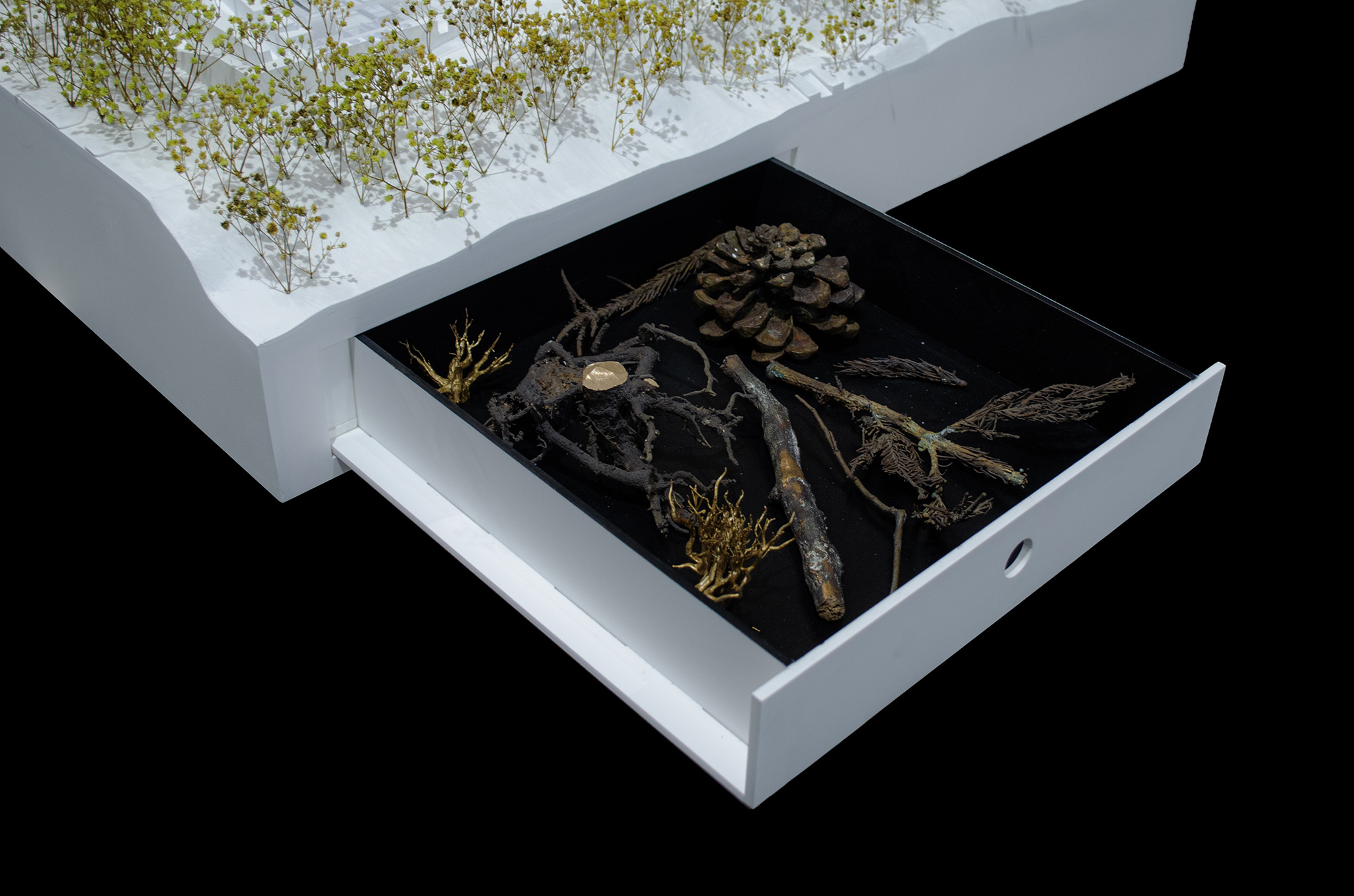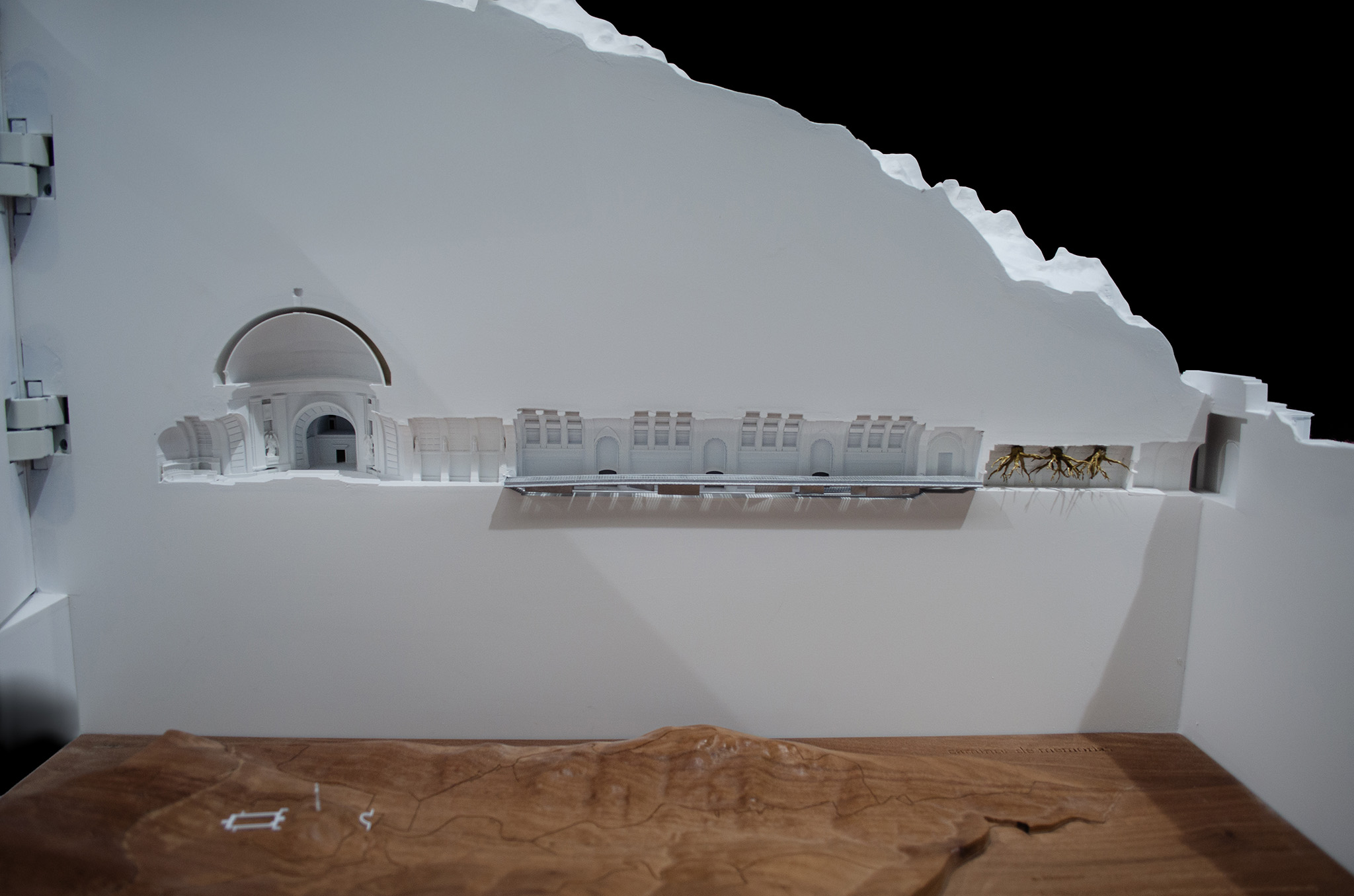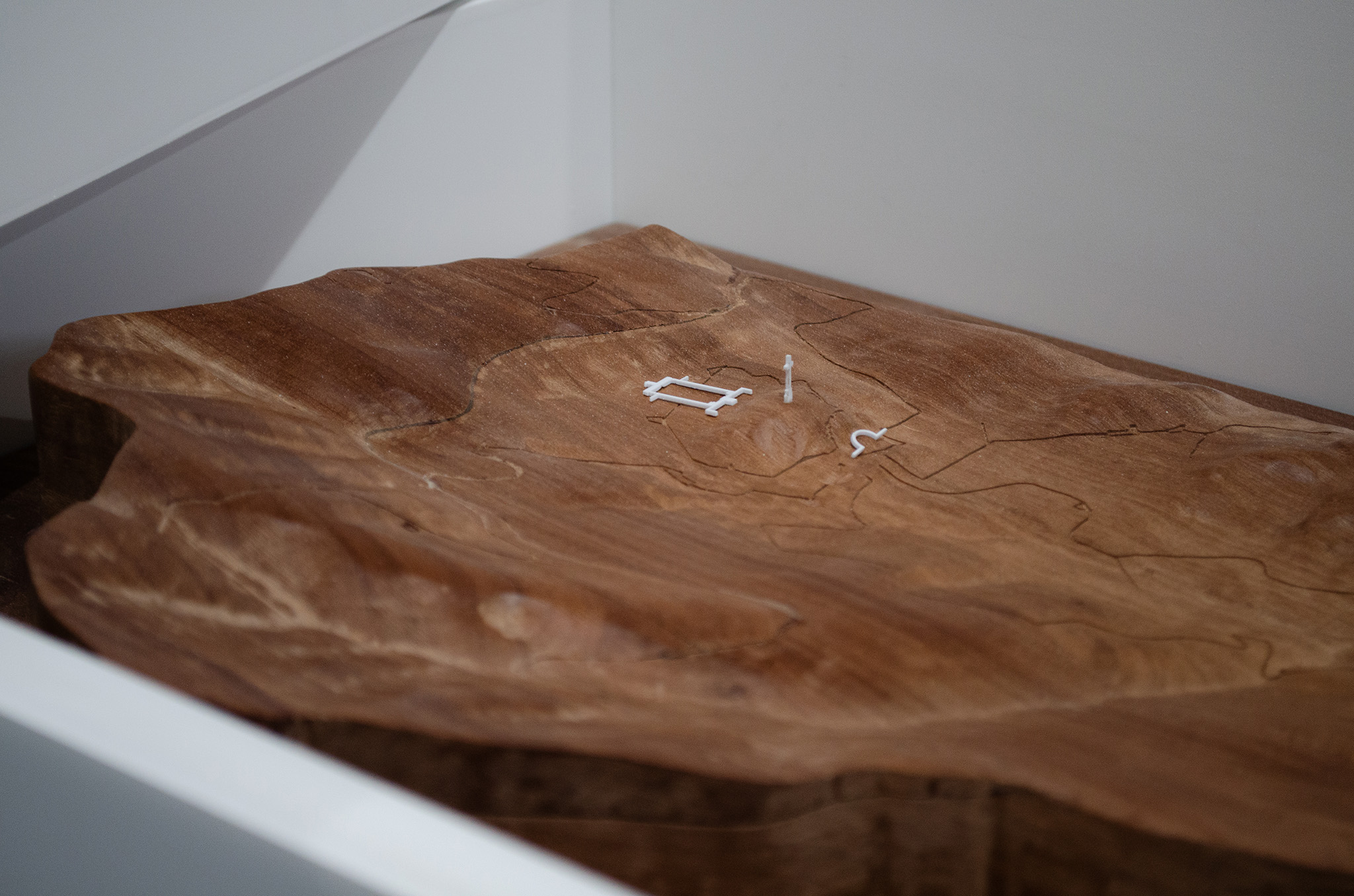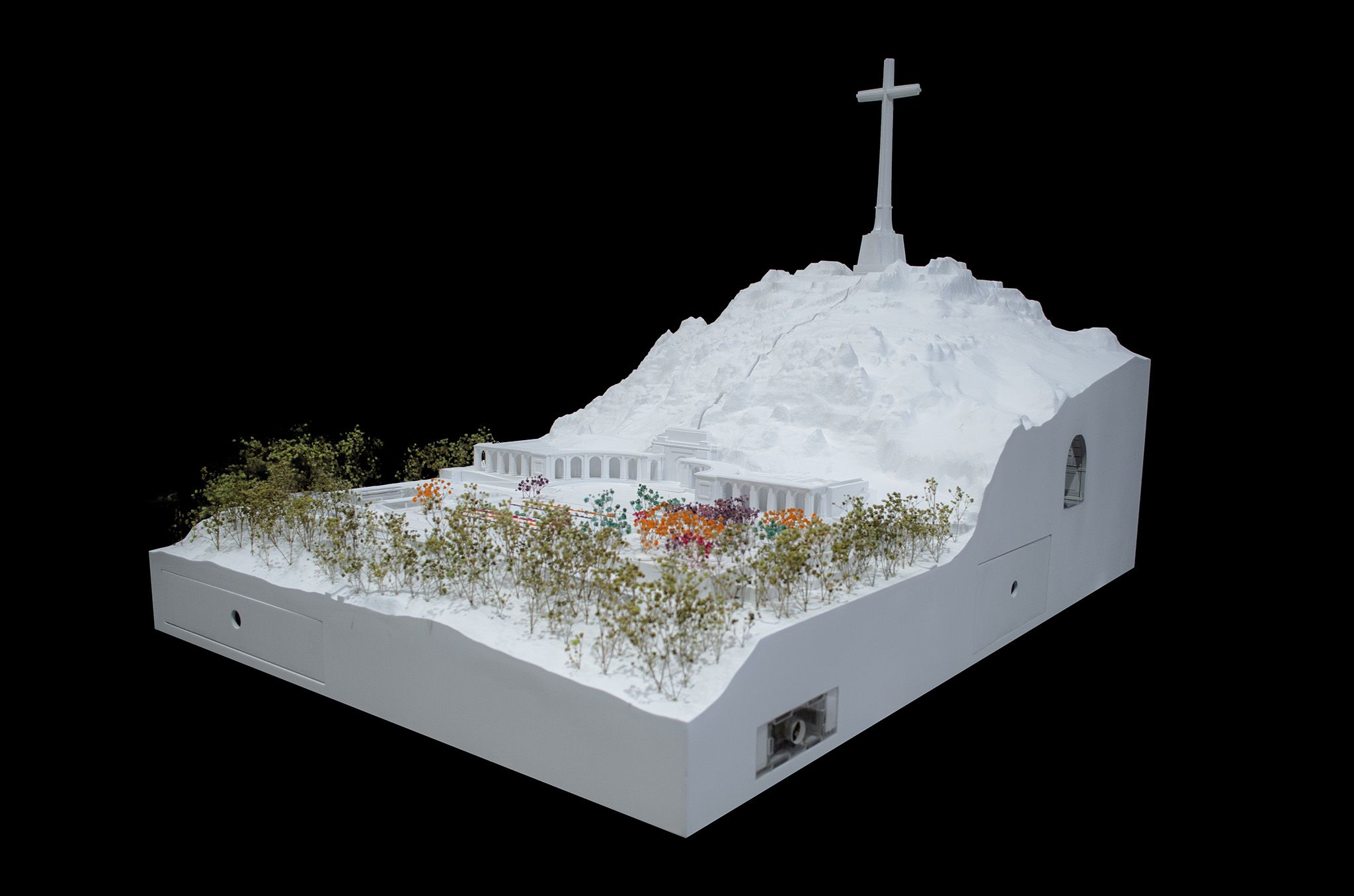
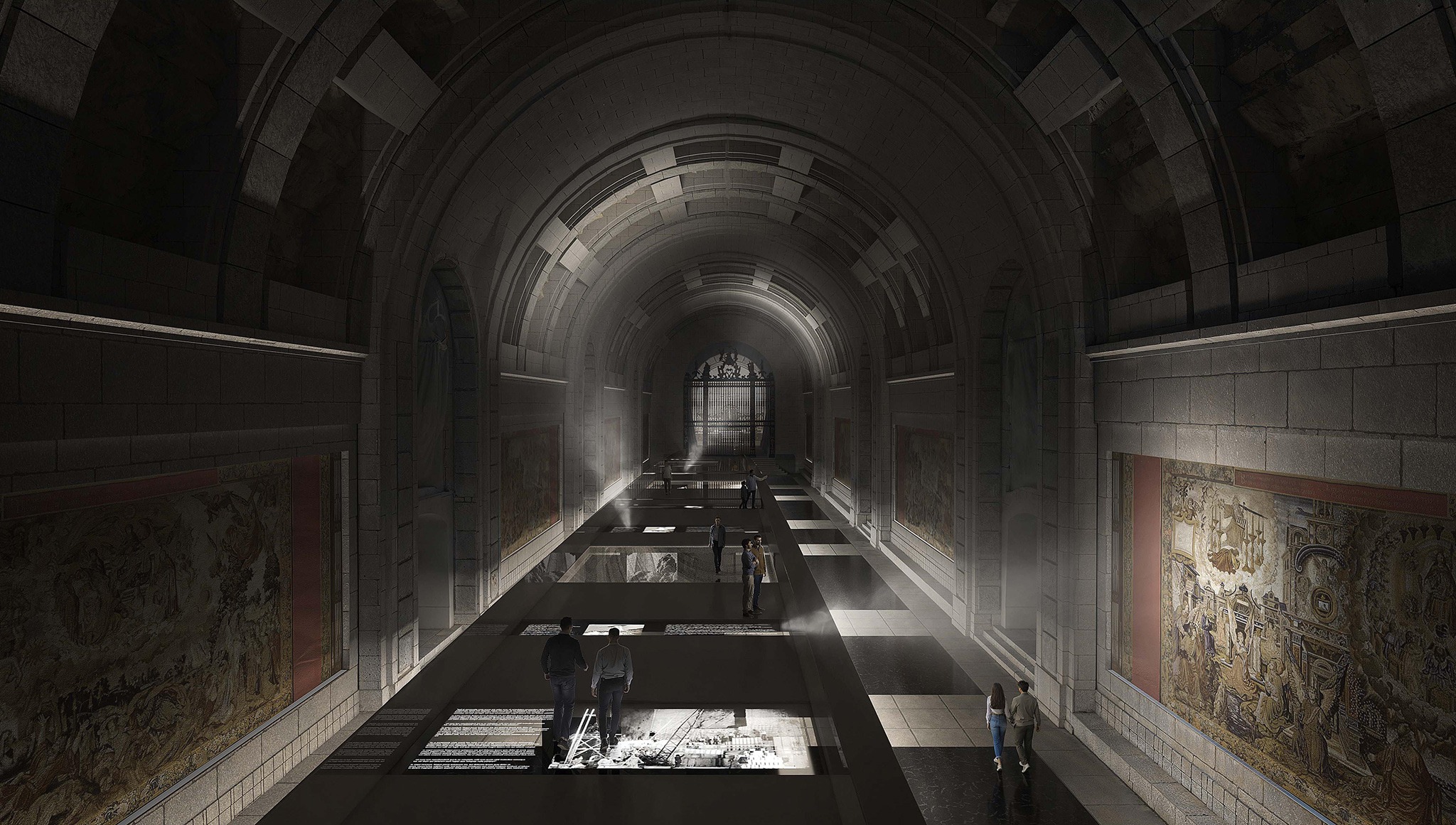
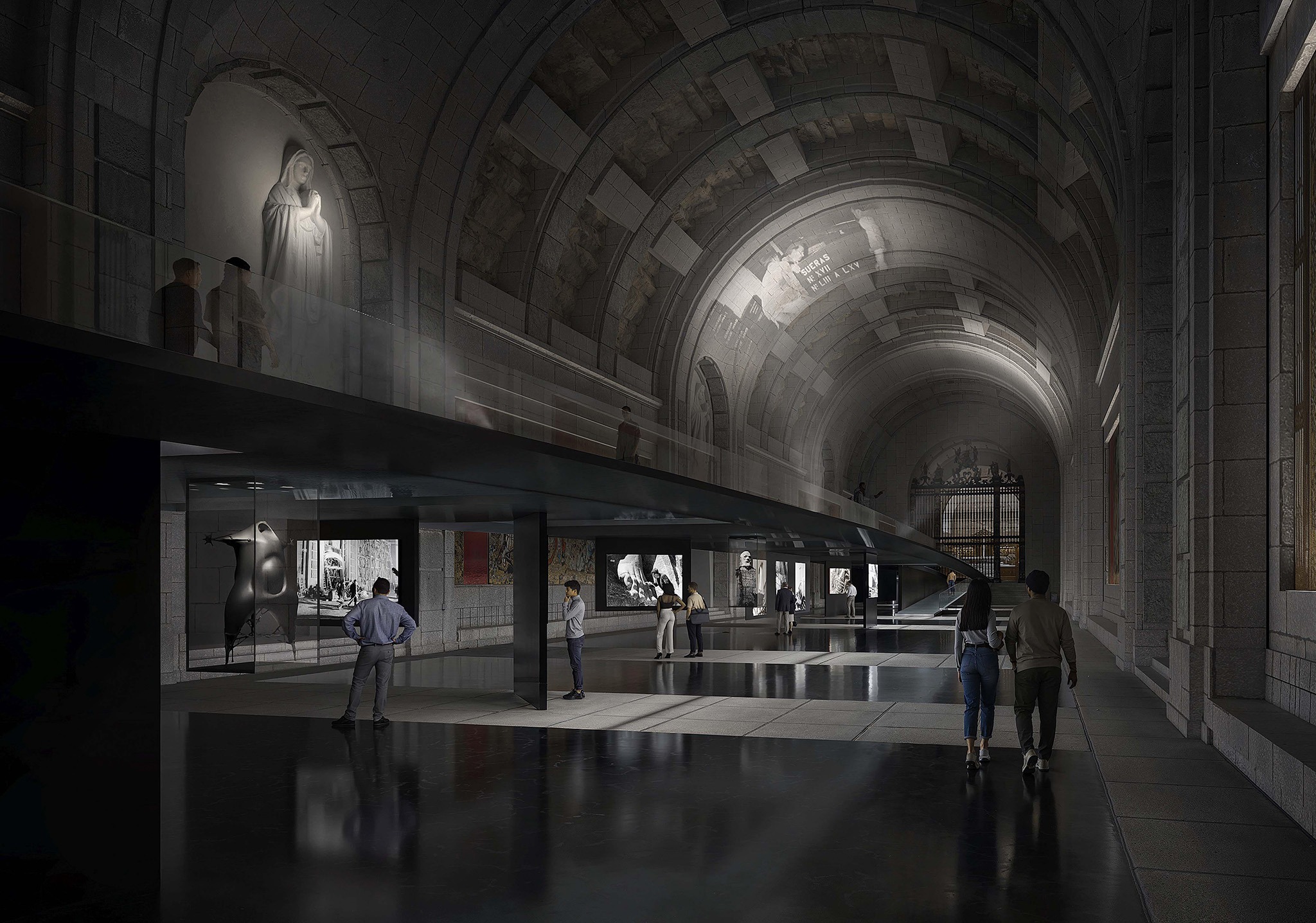
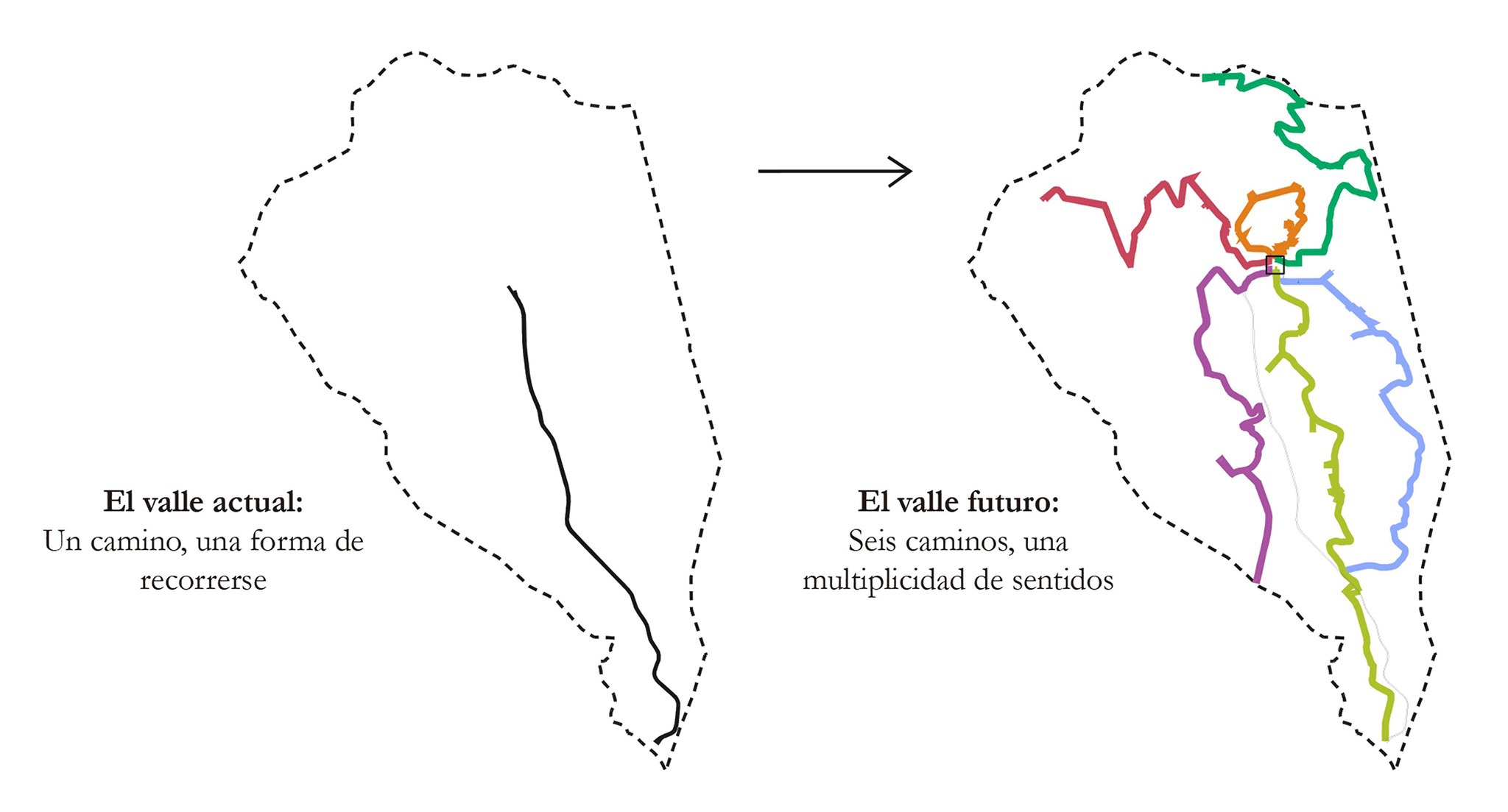
The central element of the project developed by Temperaturas Extremas is the creation of a network of "Paths of Memory," conceived as a system of physical and symbolic routes that traverse the landscape of Cuelgamuros. Through a continuous floor, raised or excavated according to the terrain, the proposal transforms the historical space into an open structure where multiple paths, narratives, and memories can coexist and intertwine.
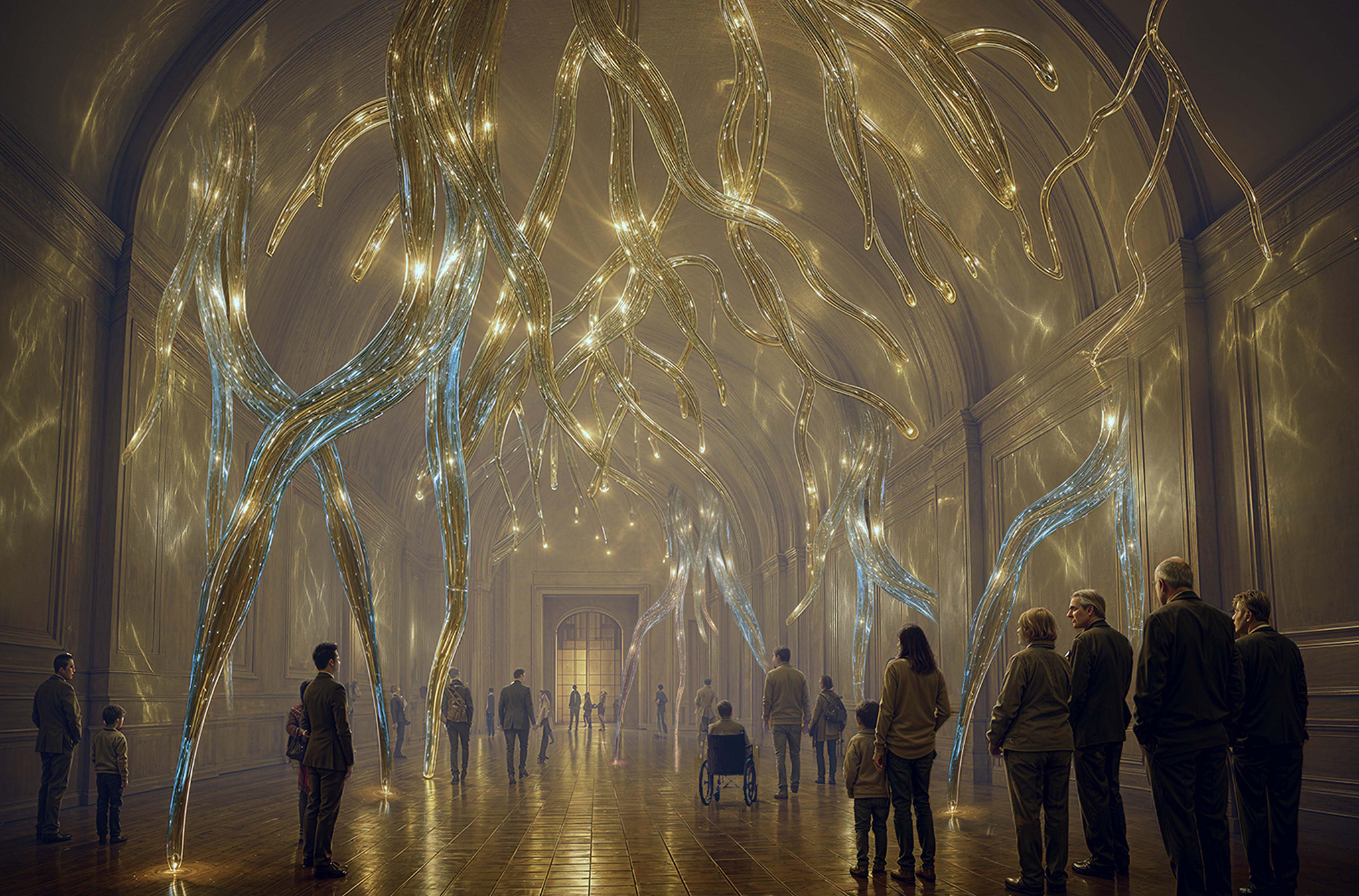
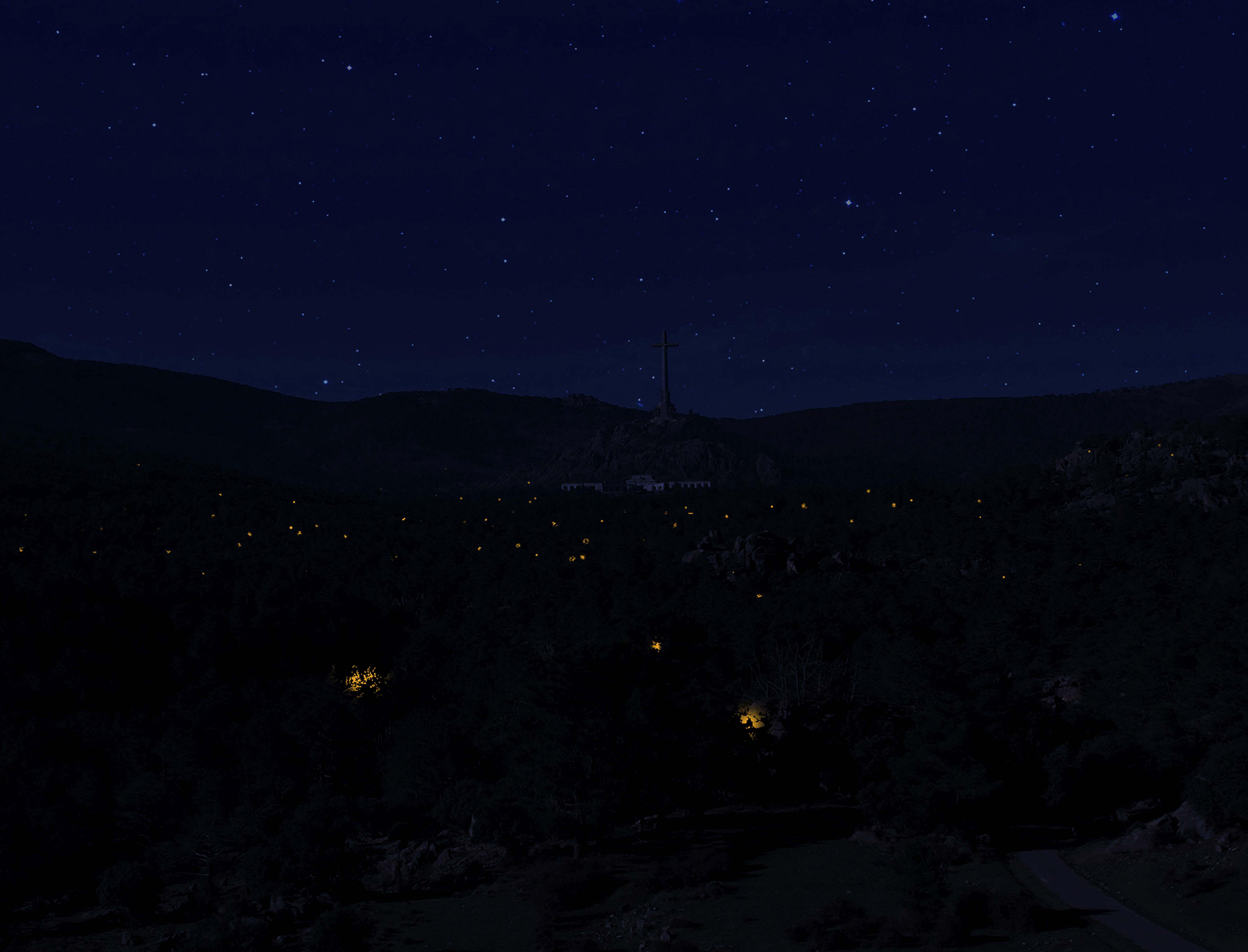
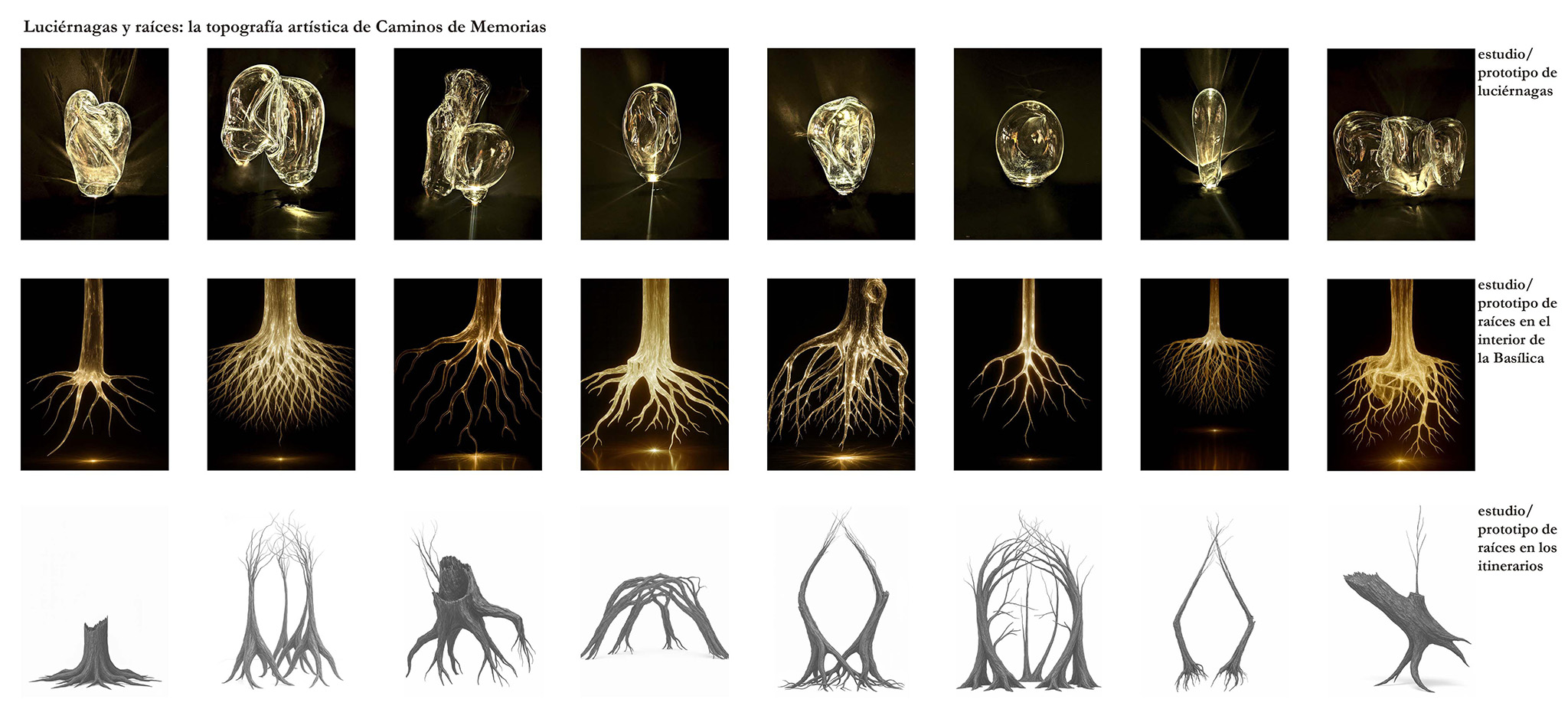
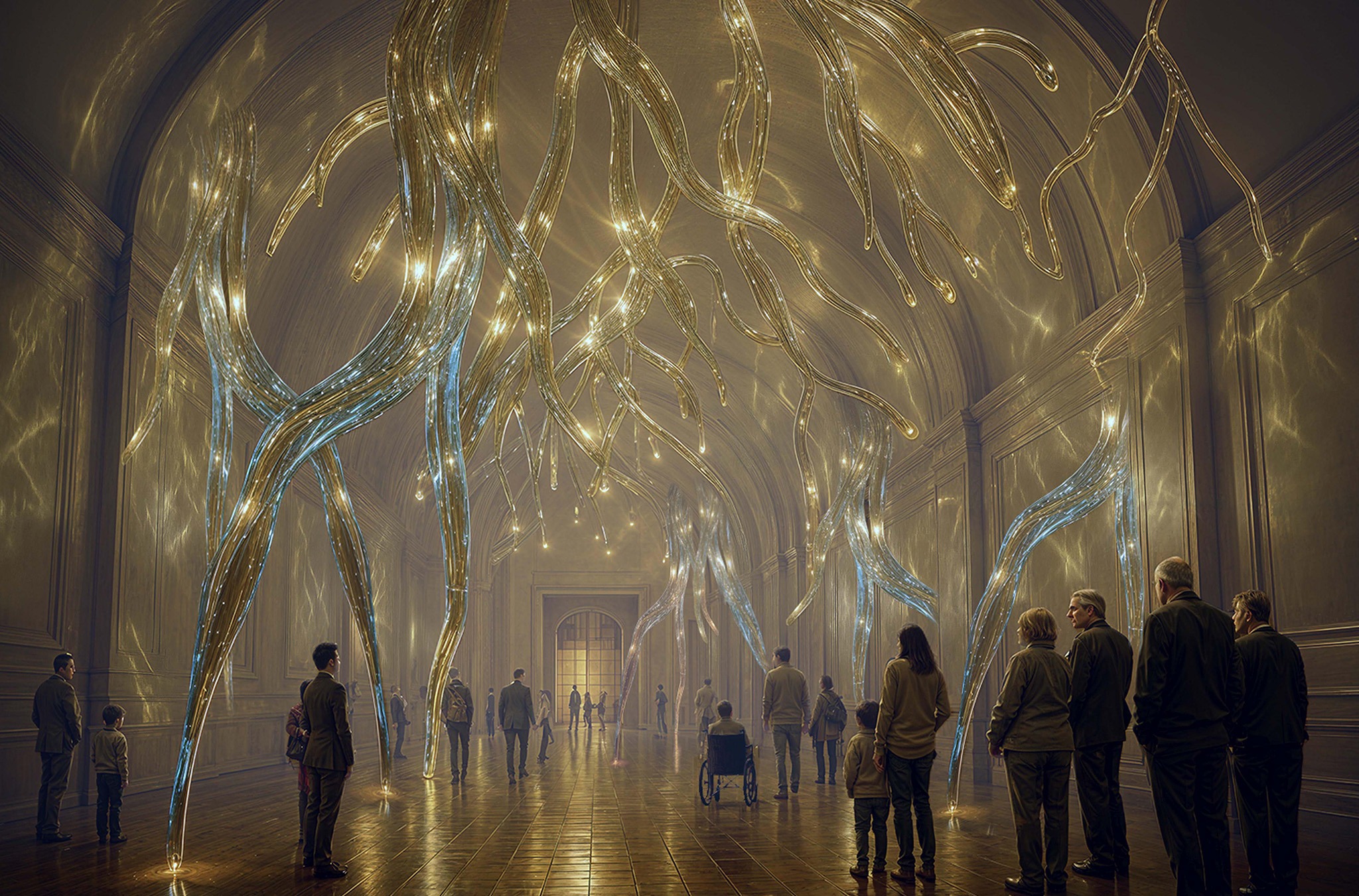
Integrated into this network of routes is the Interpretation Center, conceived as an active void inserted into the topography of the site. Far from introducing a new, autonomous architectural object, the project proposes a space for mediation that emerges geologically from the mountain. Furthermore, the reinterpretation of the entrance to the Basilica includes the installation of an artistic intervention composed of illuminated glass roots that engage in dialogue with another symbolic element of the proposal: the constellations of fireflies scattered throughout the complex.
Taken together, "Paths of Memory" is conceived as a major crossroads of journeys, experiences, and narratives. Architecture ceases to be a mere support, becoming instead a pedagogical tool capable of revealing the different layers of time, memory, and meaning present in the Valley. Through a restrained and respectful intervention, the project reinterprets the original language of Cuelgamuros, transforming it into a contemporary space for reflection, encounter, and collective learning.
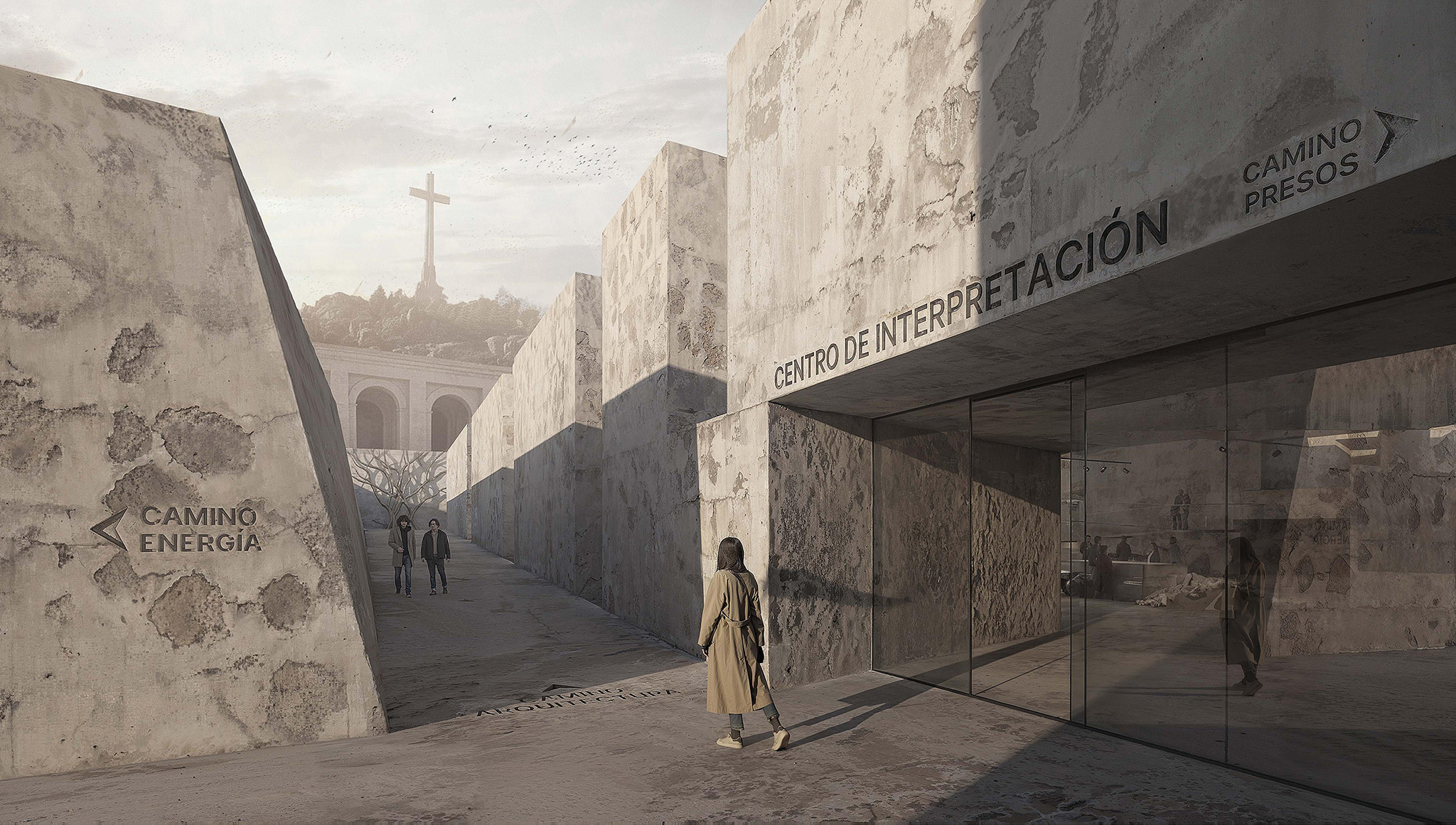
"Caminos de memoria", proposal for the Memorial in Cuelgamuros by Temperaturas Extremas. Rendering by Drama Art.
Project description by Temperaturas Extremas
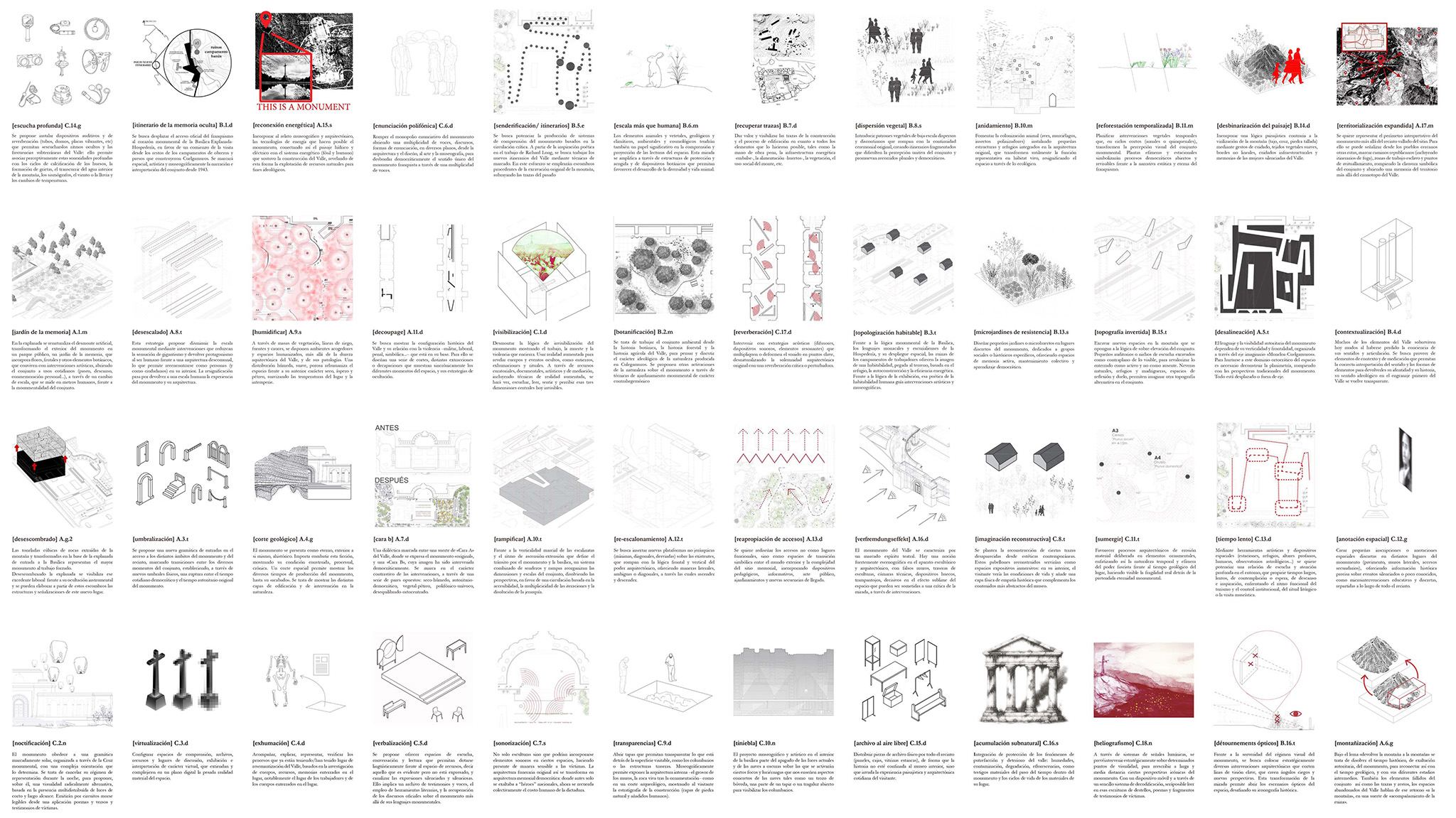
Pathways of Memory is a comprehensive project for the reinterpretation of the funerary, monumental, natural, historical, and heritage complex of the Cuelgamuros Valley. Within the limits established by this competition, it seeks to highlight the aesthetic, political, architectural, artistic, memorial, and natural heritage hidden or erased in the design of Cuelgamuros, through rigorous, creative, sustainable, and dialectical strategies of deconstruction, contextualization, museification, reinterpretation, and displacement.
Thus, through a series of architectural, artistic, landscape, and museographic interventions, the Paths of Memory project promotes a new understanding of the Cuelgamuros Valley that organically, demotically, contextually, polyphonically, and sustainably redefines the existing languages, structures, and spaces within the area. This redefinition stems from a perspective of human rights, a culture of peace, and democratic rights, seeking to fulfill the purpose outlined in the new Law 20/2022. This law recognizes the entire Valley as a place of recognition, commemoration, remembrance, and tribute to all the victims buried there, thereby dismantling its former status as a space of dictatorship. At the same time, the project highlights and emphasizes the importance of the natural heritage of the site, both around and beyond its organic connection to the constructed monument.
In this way, we conceive of artistic, museological, architectural, landscape, and signage interventions primarily as a means of understanding the monument on its own terms, in a dialectical manner that returns it to its context and allows for the historical reconstruction of its construction, with its limits, errors, erasures, traces, and occlusions.
Thus, the aim is, first and foremost, to reveal what the monument conceals—even what it conceals from itself—which implies the labor and ingenuity that built it (the production and reproduction work of the people who made it possible, and particularly those under forced conditions). But it also seeks to clarify the unequal history of violence, recognition, and public (dis)memory involving the bodies that the monument contains (and has contained), linked as it is to an authoritarian history of the Civil War and a context of exaltation and legitimization of a portion of the violence that permeates it, necessarily an enemy of any framework for democratic coexistence.
Finally, the aim is to problematize the "natural" and "ahistorical" condition of the Valley, seen as a self-contained entity, identical to itself through time, and to extend this questioning to the surrounding environmental framework: an artificial forest of 2 million replanted pine trees, a veritable "natural park" of Francoist ideology, the driving force and seed of a forestry policy that is now perceived as unsustainable.
The democratic roots of our proposal must transform the foundations of this univocal platform into a meeting point, a crossroads of paths and memories, including digital ones, where all the new paths of the whole converge, literally and conceptually opening new ground to create a space for interpretation.
The project simply creates a continuous, raised, or excavated surface that allows for multifaceted travel through a forest designed to be visited in only one way. As contemporary citizens, we are visitors among the traces of history, inhabitants of its remains, obliged to navigate the spaces we must open up between them, using our digital and analog tools. From there, new access points to this past are proposed, reconstructed museologically and artistically mediated by two eloquent metaphors: roots and fireflies.
The project's structure and areas of intervention
First, the project aims to create a series of "Paths of Memory," conceived as a network of paths and meanings, woven throughout the Cuelgamuros park.
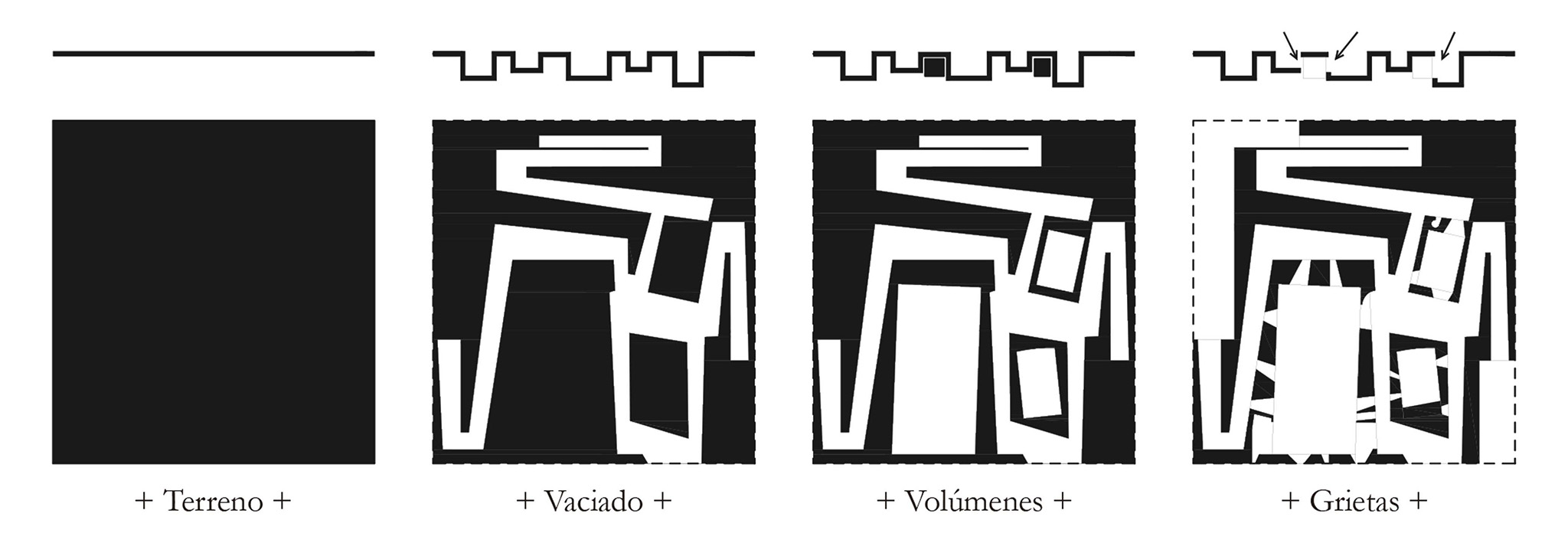
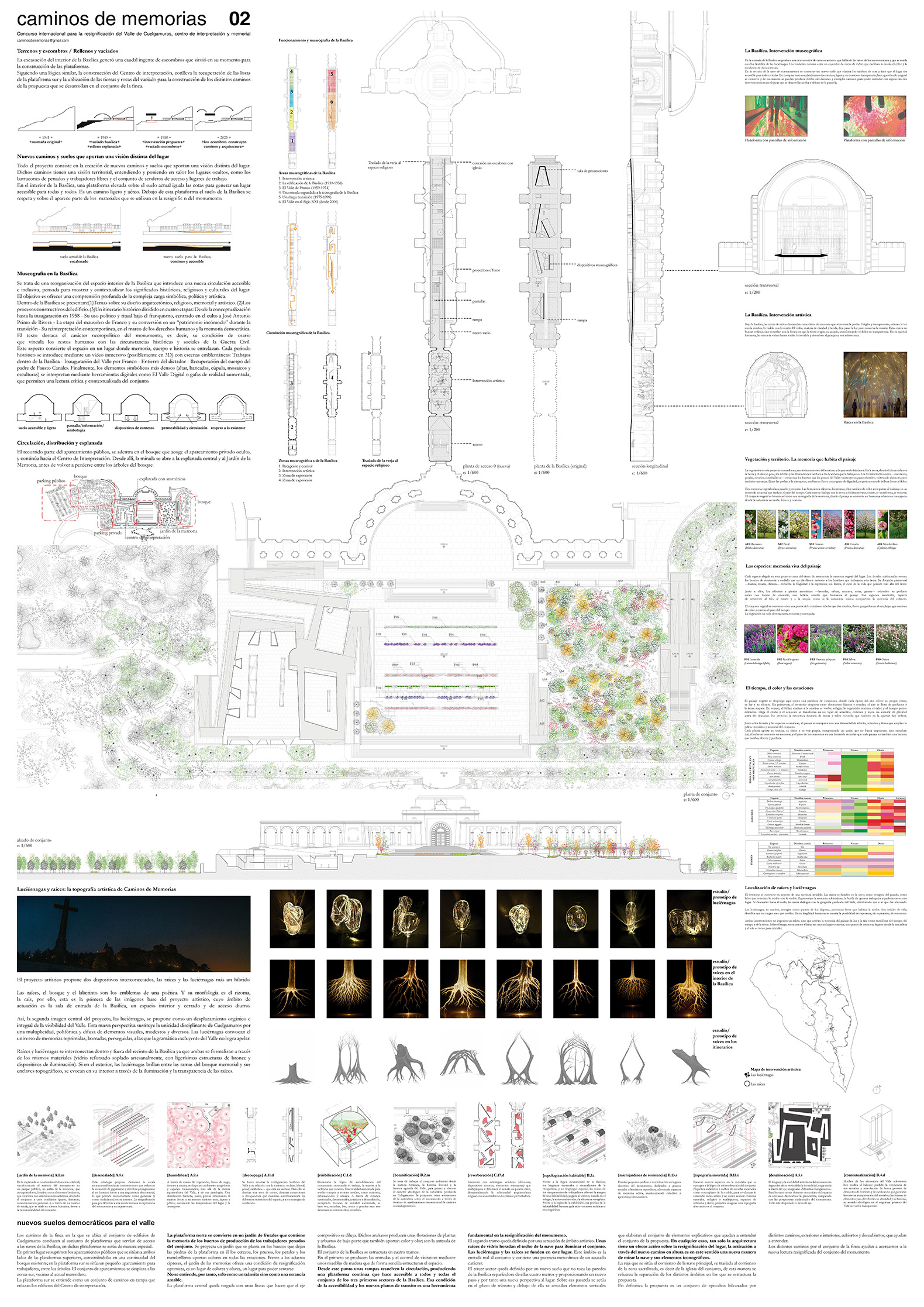
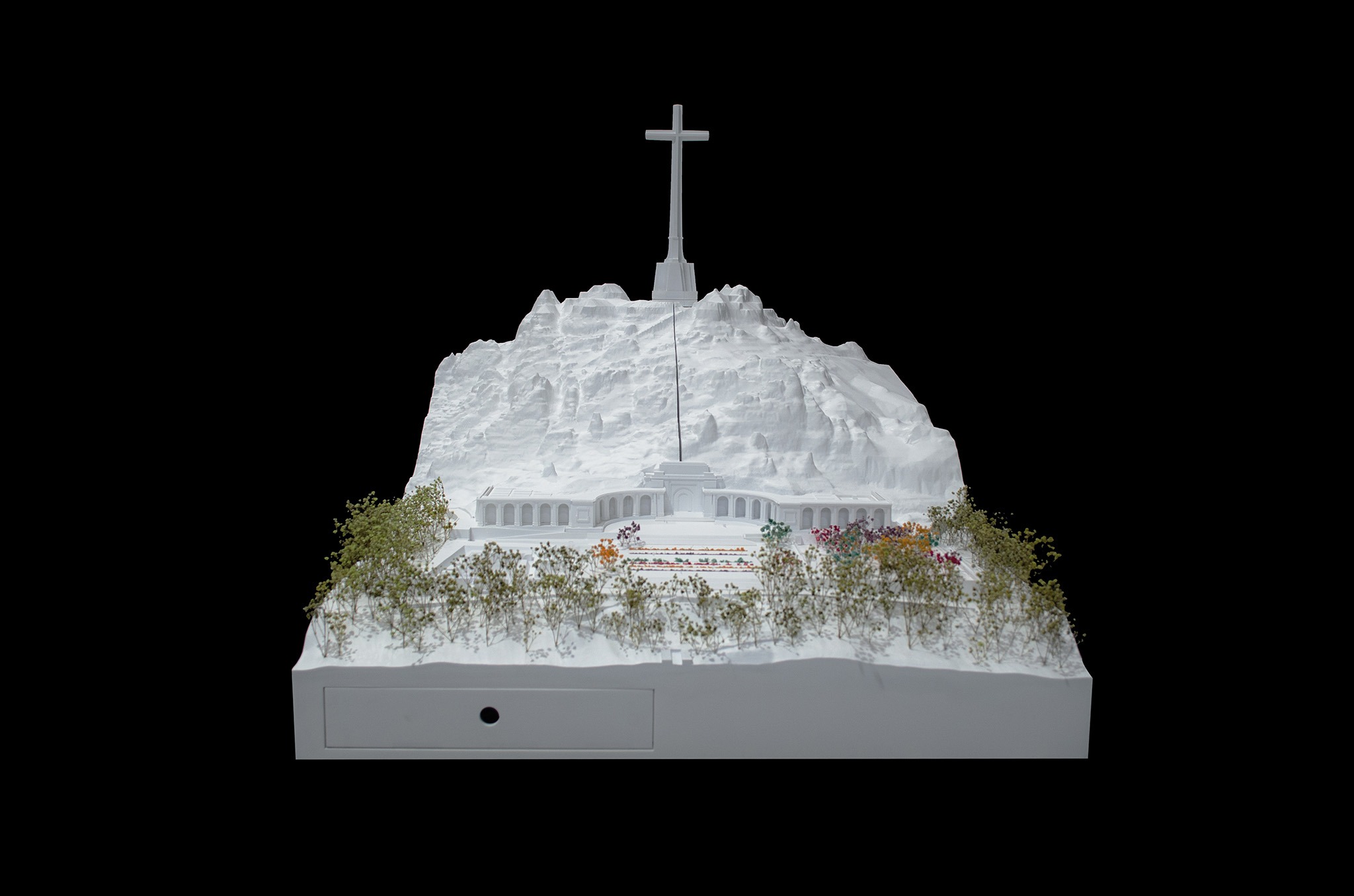
Another key element is the construction of an Interpretation Center, which acts as a crossroads where these paths converge, starting from the excavation of the former esplanade in front of the Basilica. The aim is to democratize the Cuelgamuros "national forest" through various landscaping, horticulture, silviculture, and sustainable agriculture strategies, designed to transform the landscape project in terms of diversity and richness. The central space from which this new "forest of memory" should emerge is located at the base of the basilica, transforming the old access points, renaturalizing the parking areas, and occupying, with varying degrees of density, spaces traditionally used for contemplation, patriotic fervor, or open-air recreation.
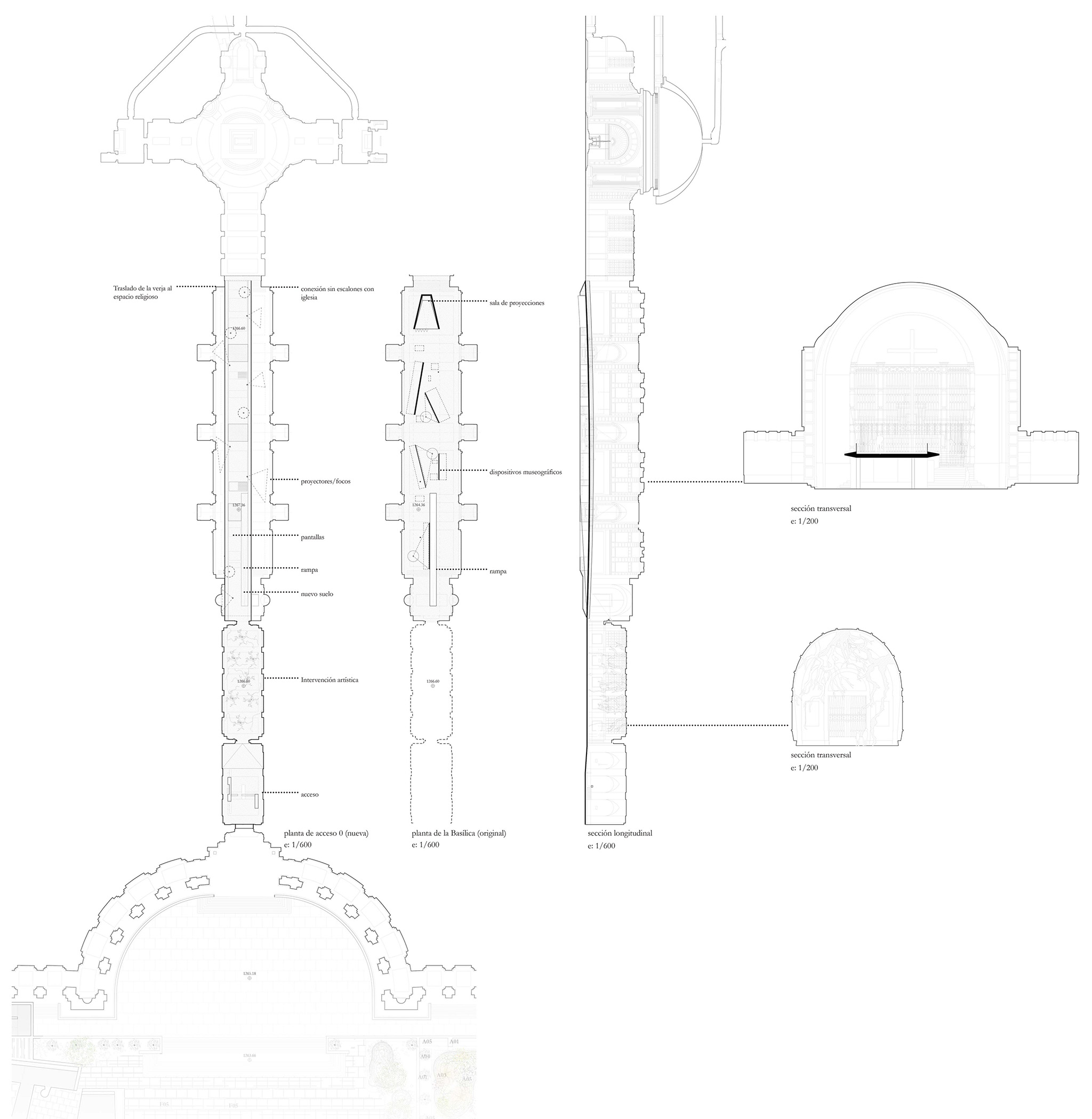
Another key element is the reinterpretation of the experience of moving through the Basilica, respecting and accommodating its ceremonial uses, through the construction of a new surface that guarantees universal access.
The entrance to the Basilica is through an artistic device: a rhizome of illuminated glass roots that replicate and translate within the ancient temple the other key artistic element of the proposal—the constellations of fireflies. These emerge from the new memorial forest as night falls, revealing the many memories that the Valley was unable to incorporate, proposing in the night of the century a universe of memorial paths made of lights that shine and move in the darkness. Outside, in the Valley, the forest is inhabited by constellations of fireflies as soon as night falls.
Description of the architectural intervention
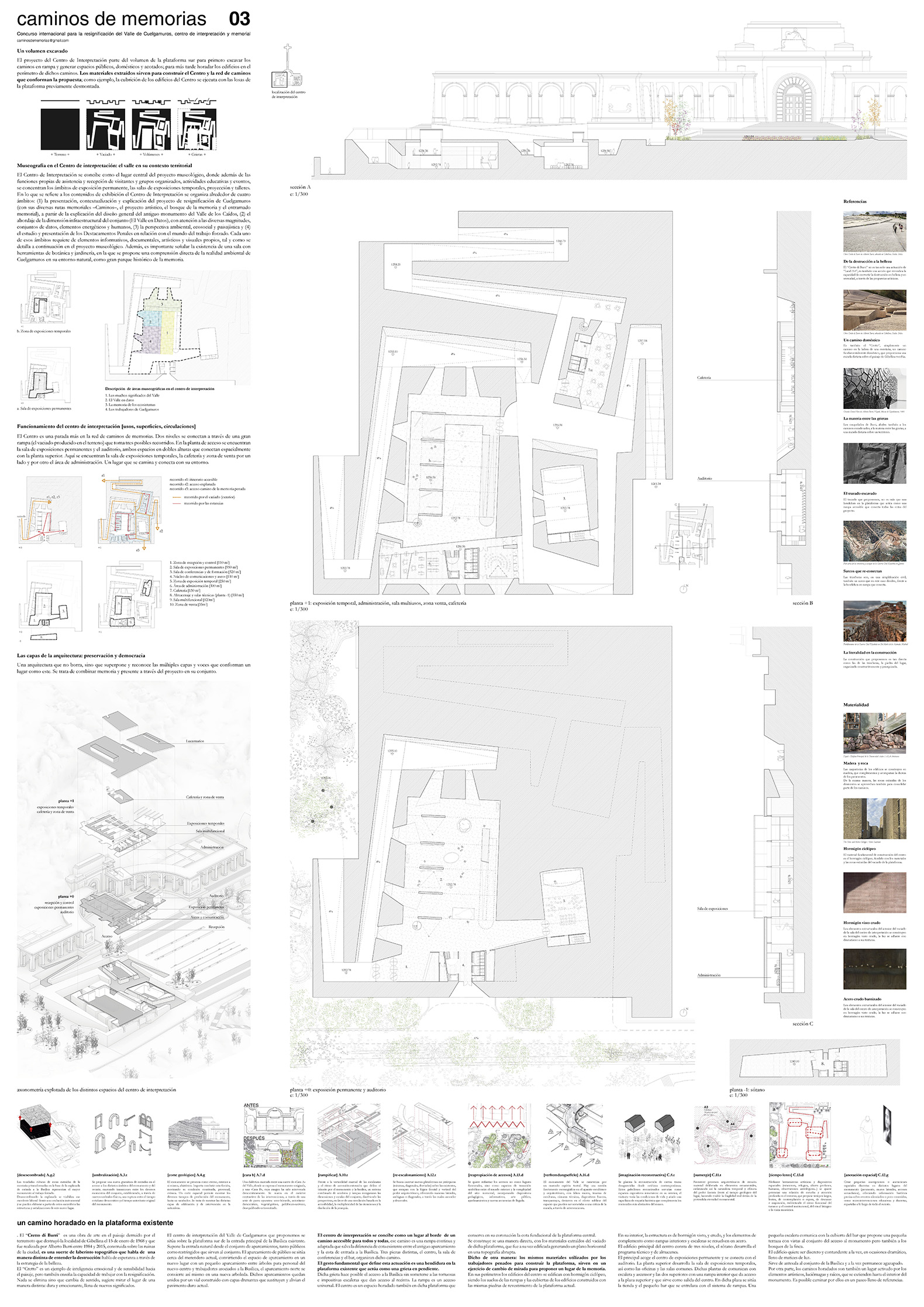
The Interpretation Center that we intend to build is part of the network of paths that wind through Cuelgamuros; to put it another way, it is another path. It is built on the left-hand side platform of the Basilica entrance, above which a series of ramps gently bridge the differences in elevation between the parking areas and the Basilica.
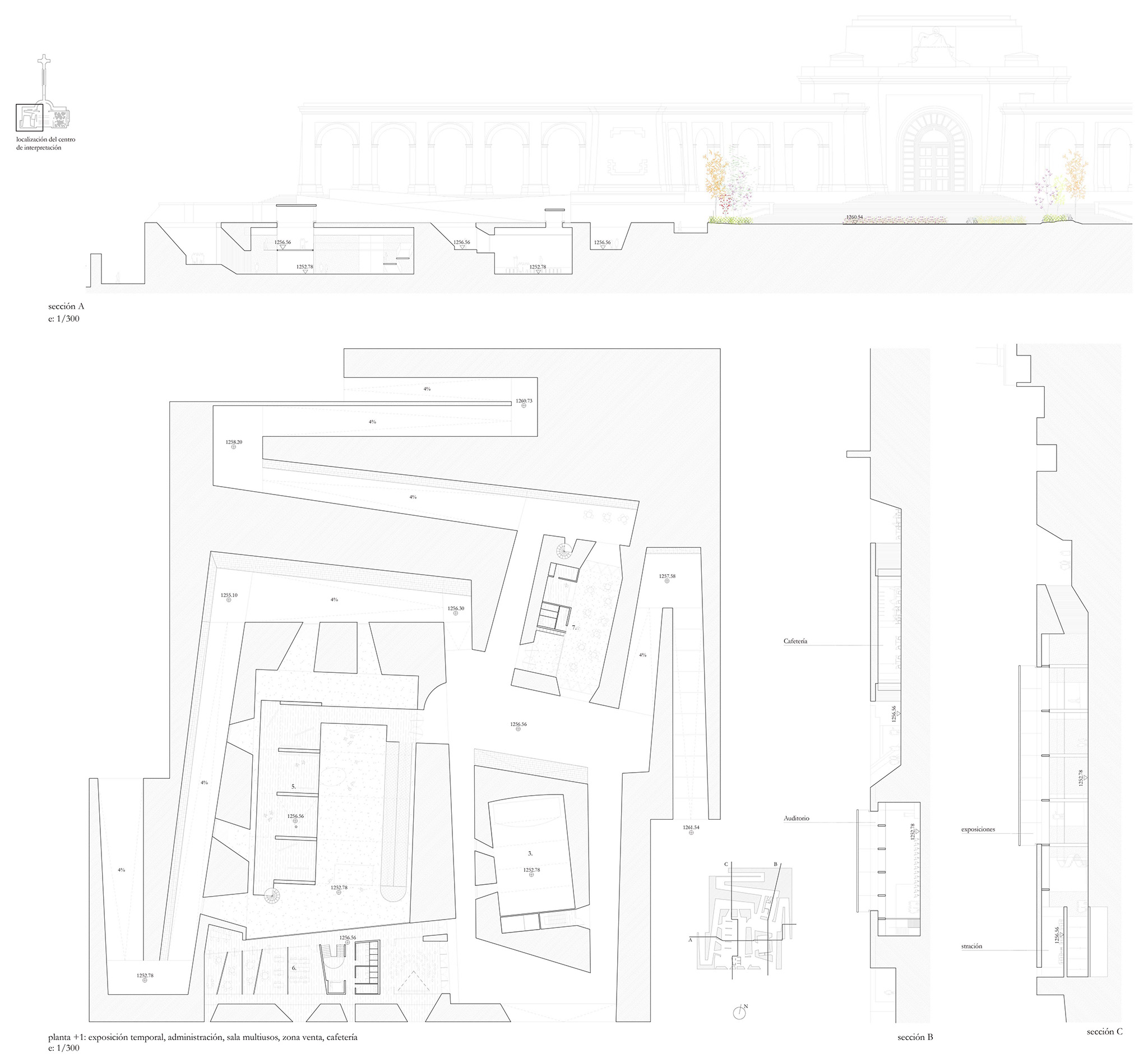
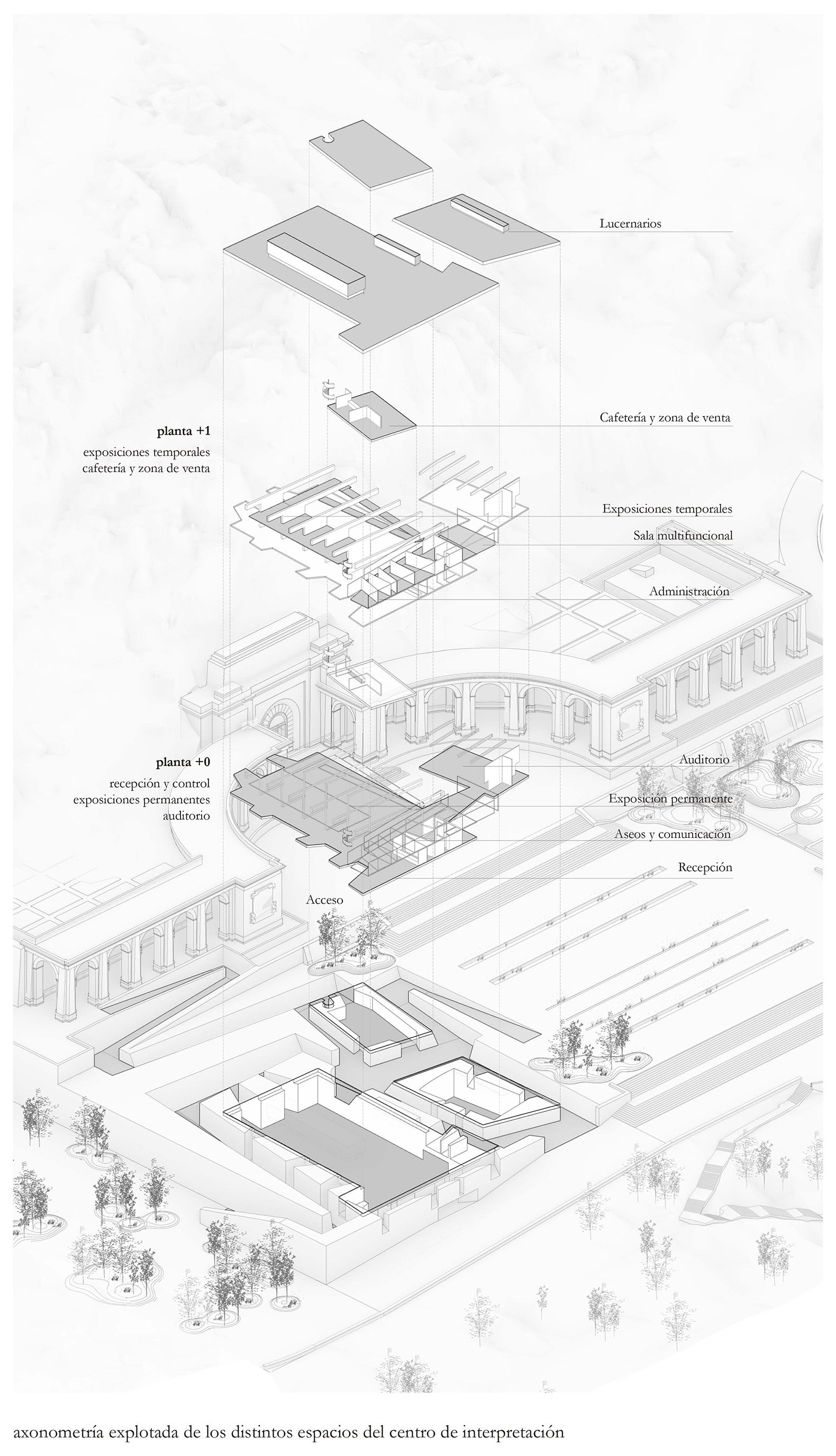
It is essentially a fractured fissure in the platform, flanked by the various volumes that comprise the Interpretation Center. The roof of the Interpretation Center remains at the same level as the platform; it is, in effect, still the platform within which the programs described in the list of requirements are developed.
The exhibition hall is conceived as an open space defined by structural walls. The entire complex is built with cyclopean walls made from selected rocks from the platform fill. The roofs are finished with the same platform slabs, creating an image of continuity. Ultimately, this crossroads project seeks to interpret the initial proposal for the valley and transform it into a new project using the original materials.
By conceiving the Interpretation Center as an active void within the topography of the site, the aim is not to impose a new architectural object, but rather to generate a space for mediation that integrates almost geologically into the mountain, challenging the extractive gesture of the original work and its monumental intent, but now inverted and reinterpreted. The project does not impose itself on the landscape, but rather listens to it, accompanies it, and intertwines with it. Thus, the Center becomes a form of hospitality for the visitor, a threshold that does not monumentalize, but offers shade, welcome, orientation, context, and narrative.
Here, architecture is not a backdrop or a set, but a pedagogical tool: in its materiality, its proportions, its tectonics, the building speaks to us of human endeavor, the fragility of narrative, and the superimposed layers of time.