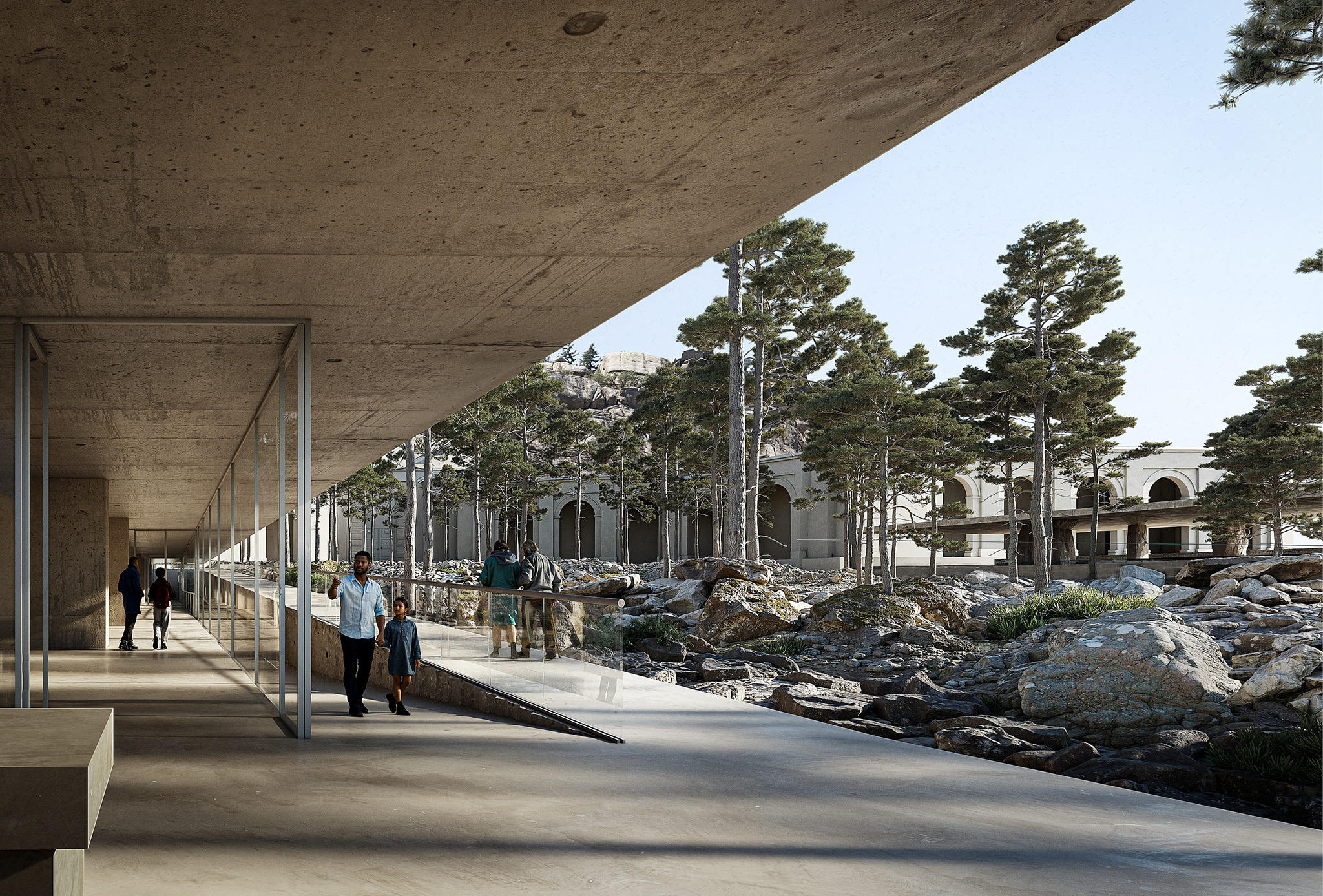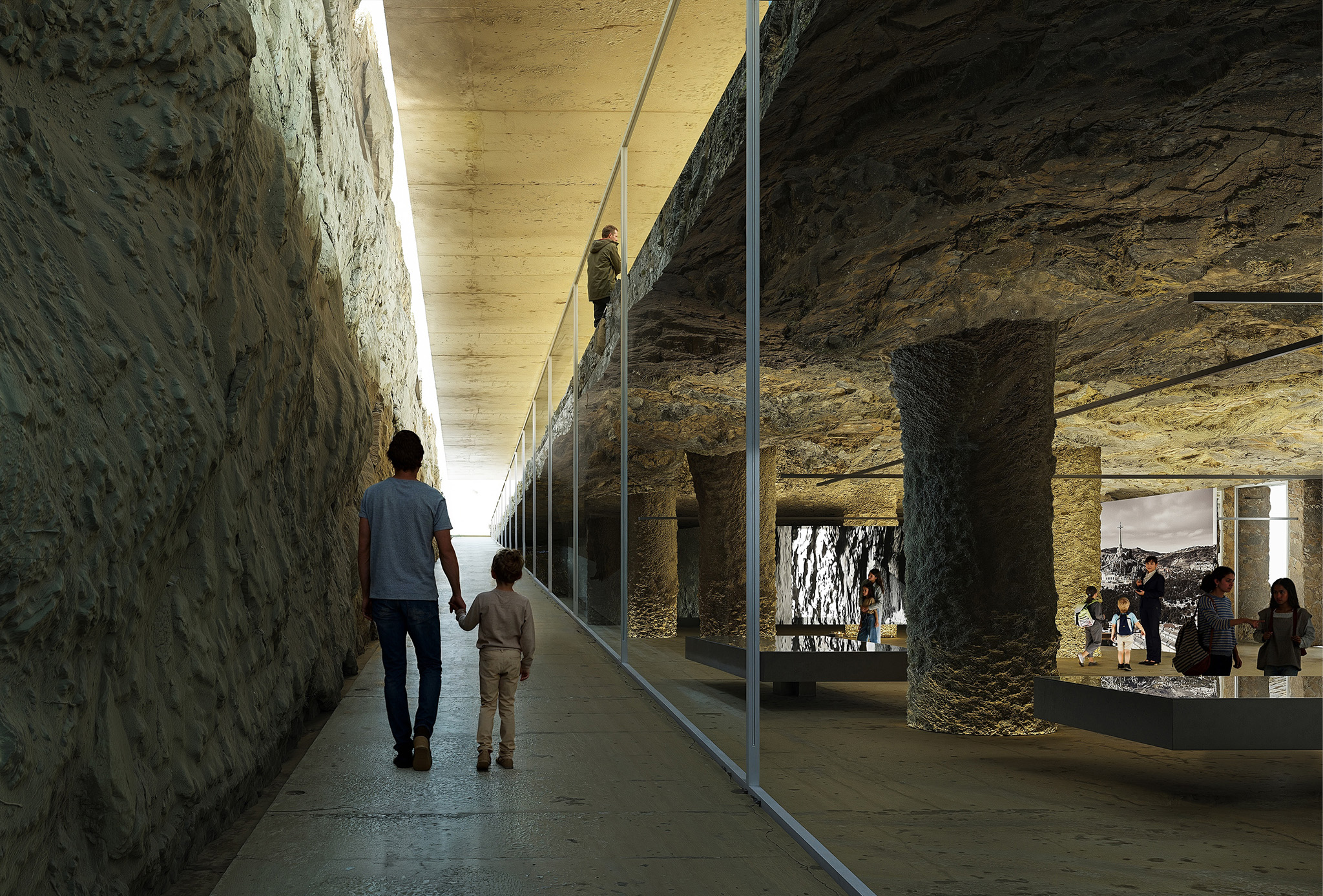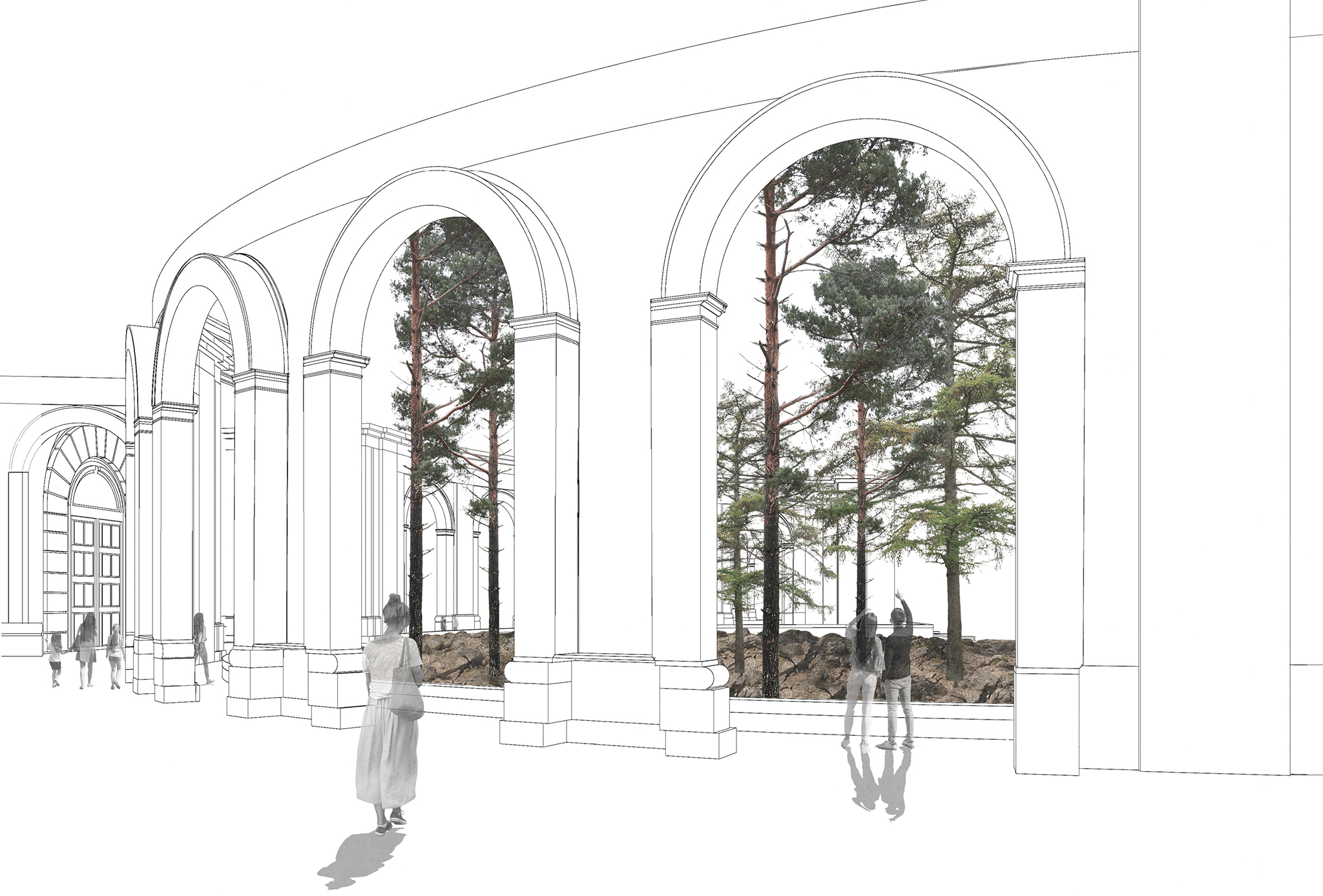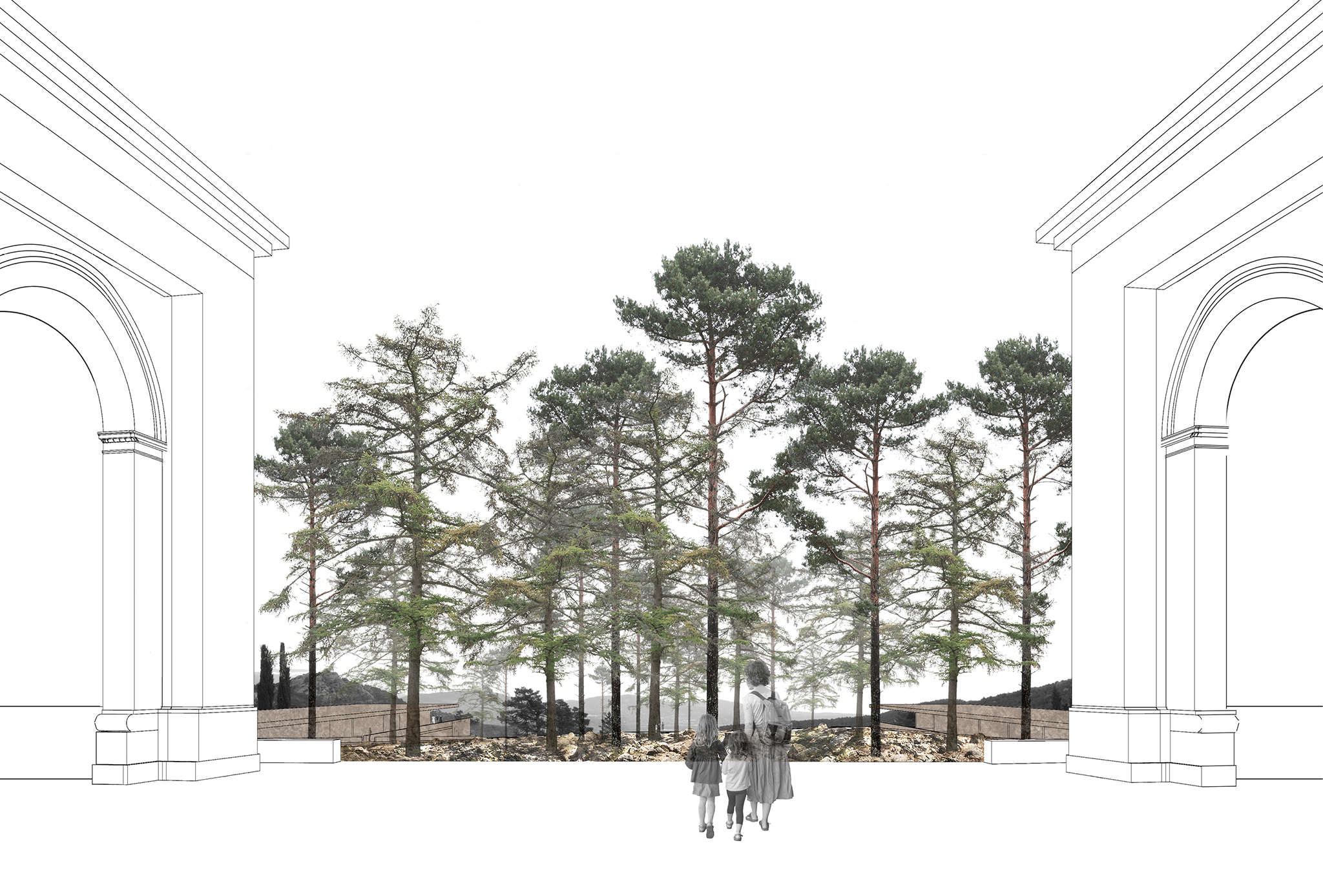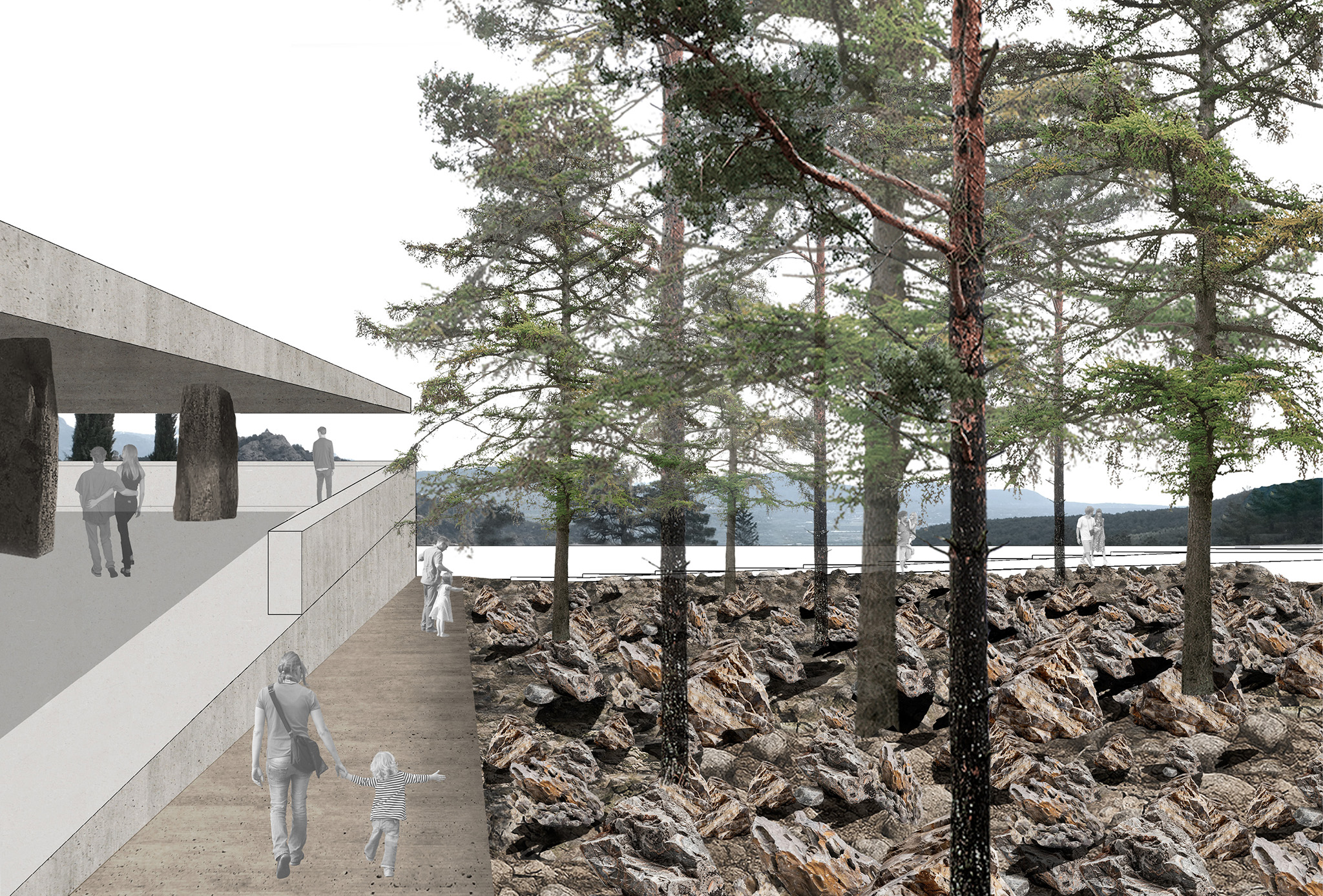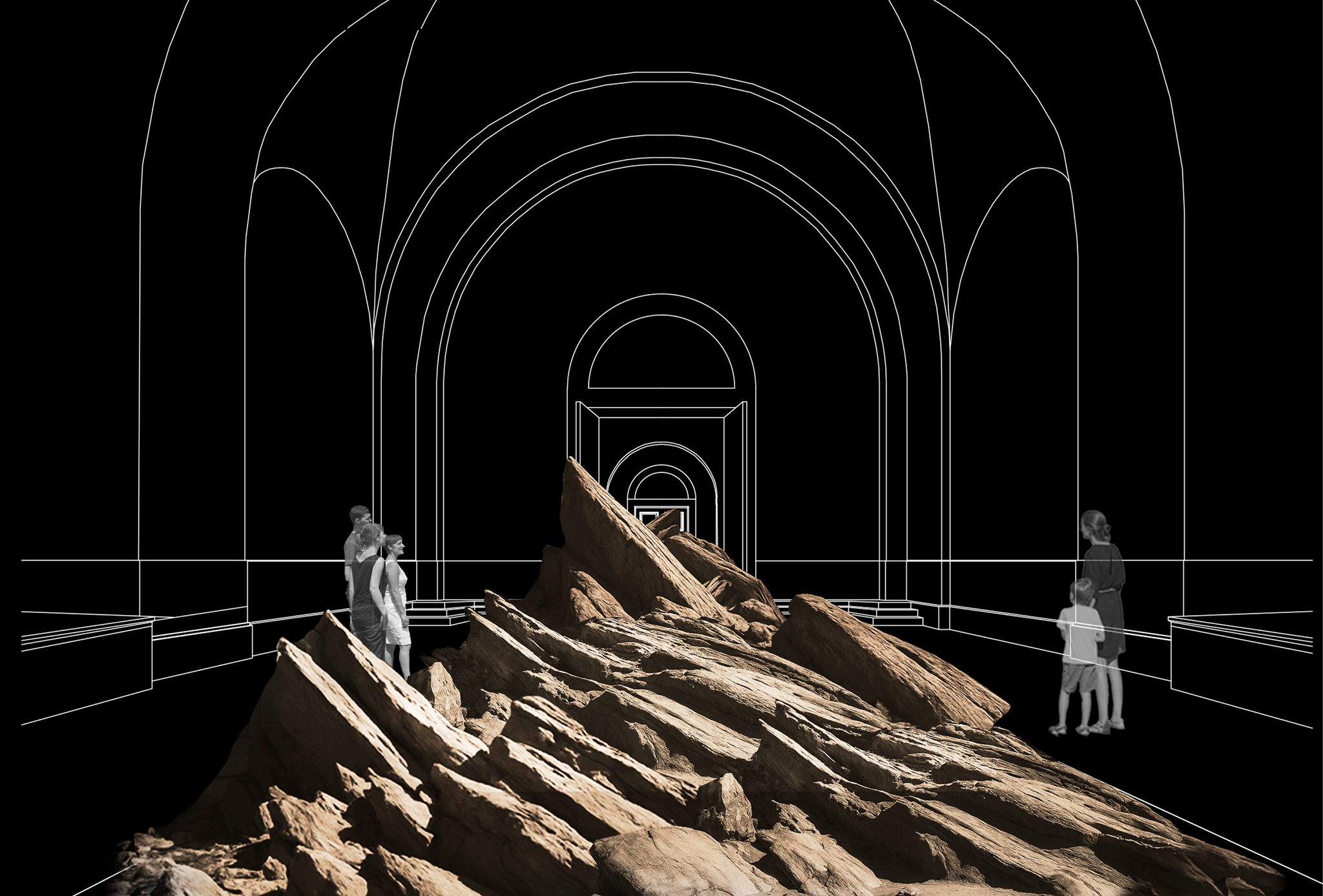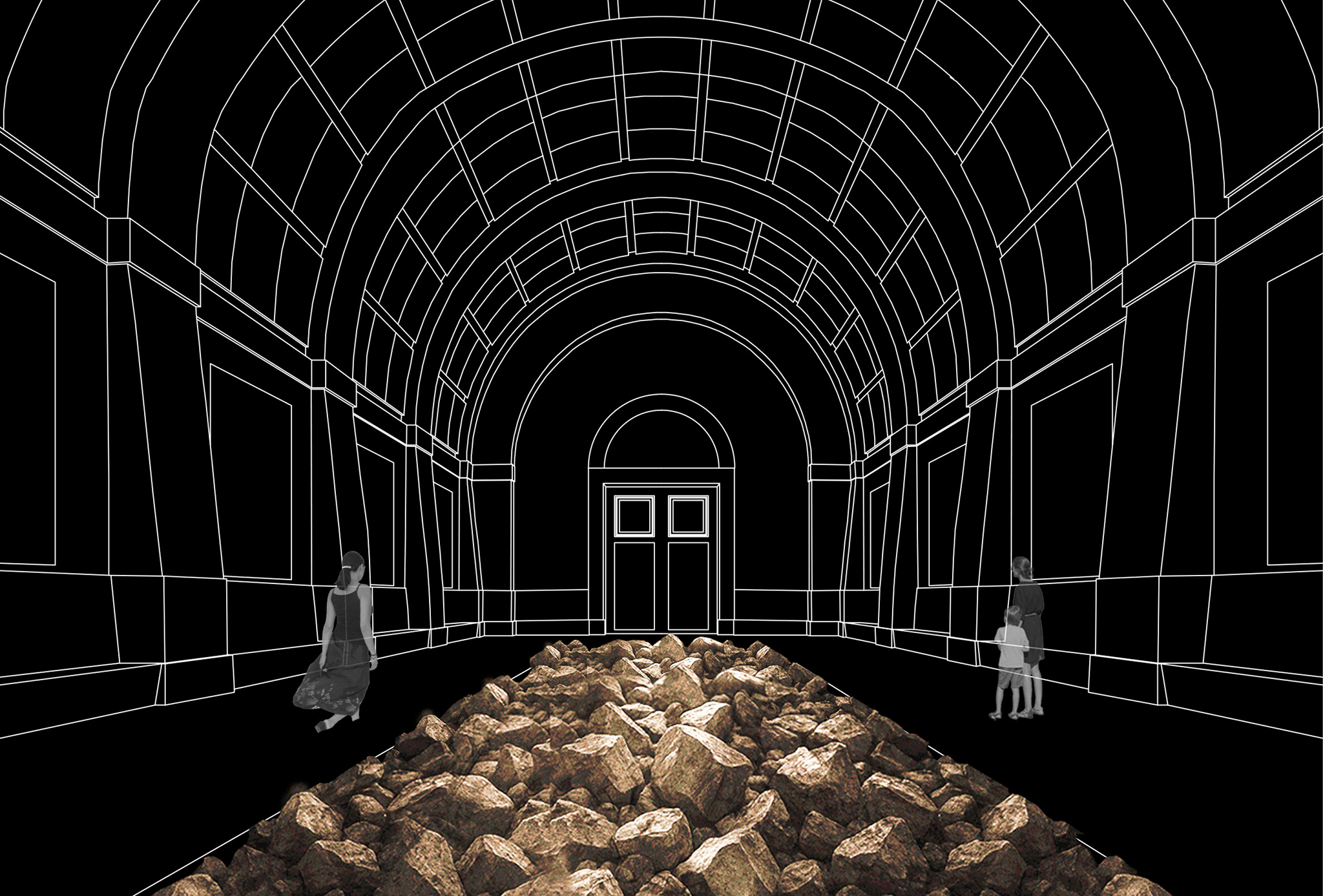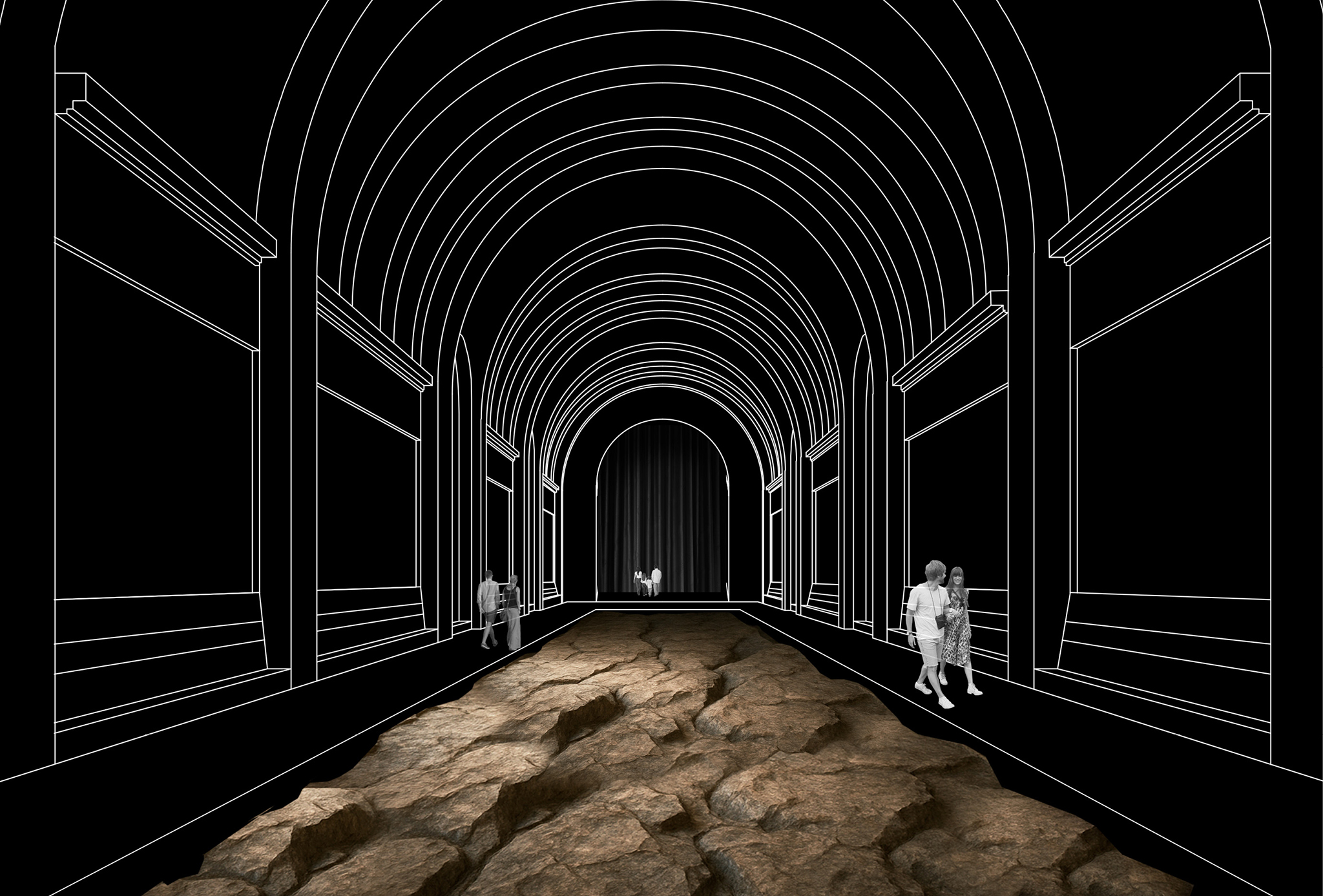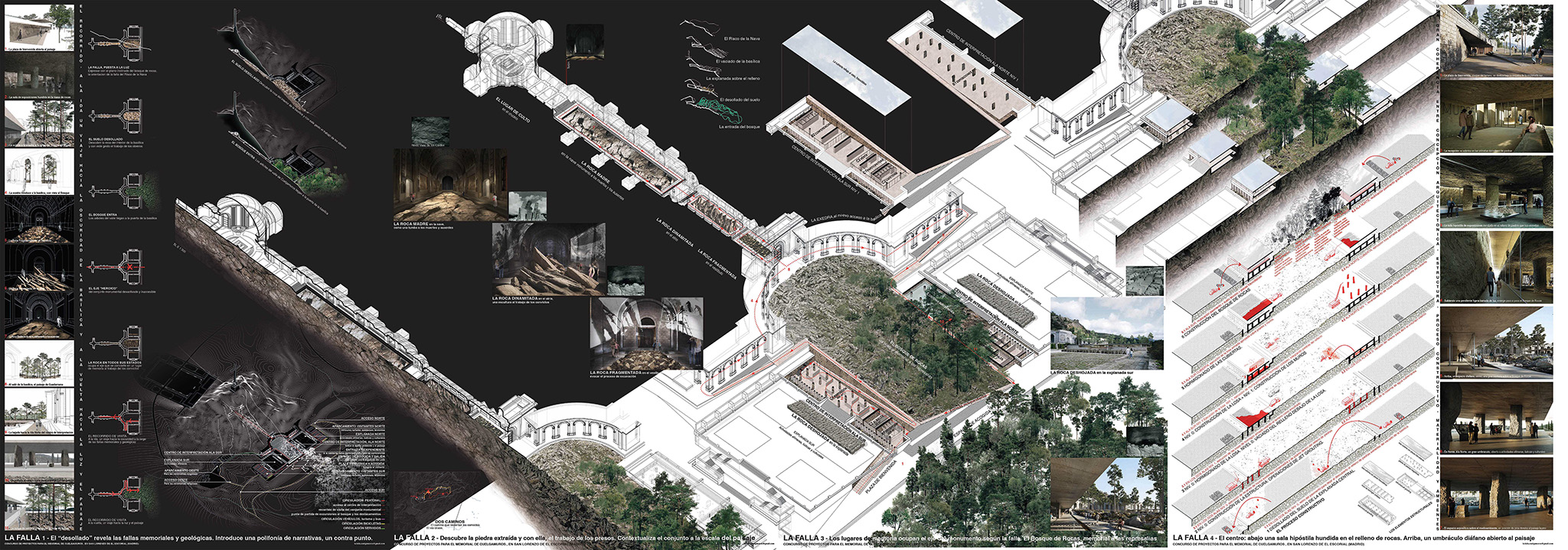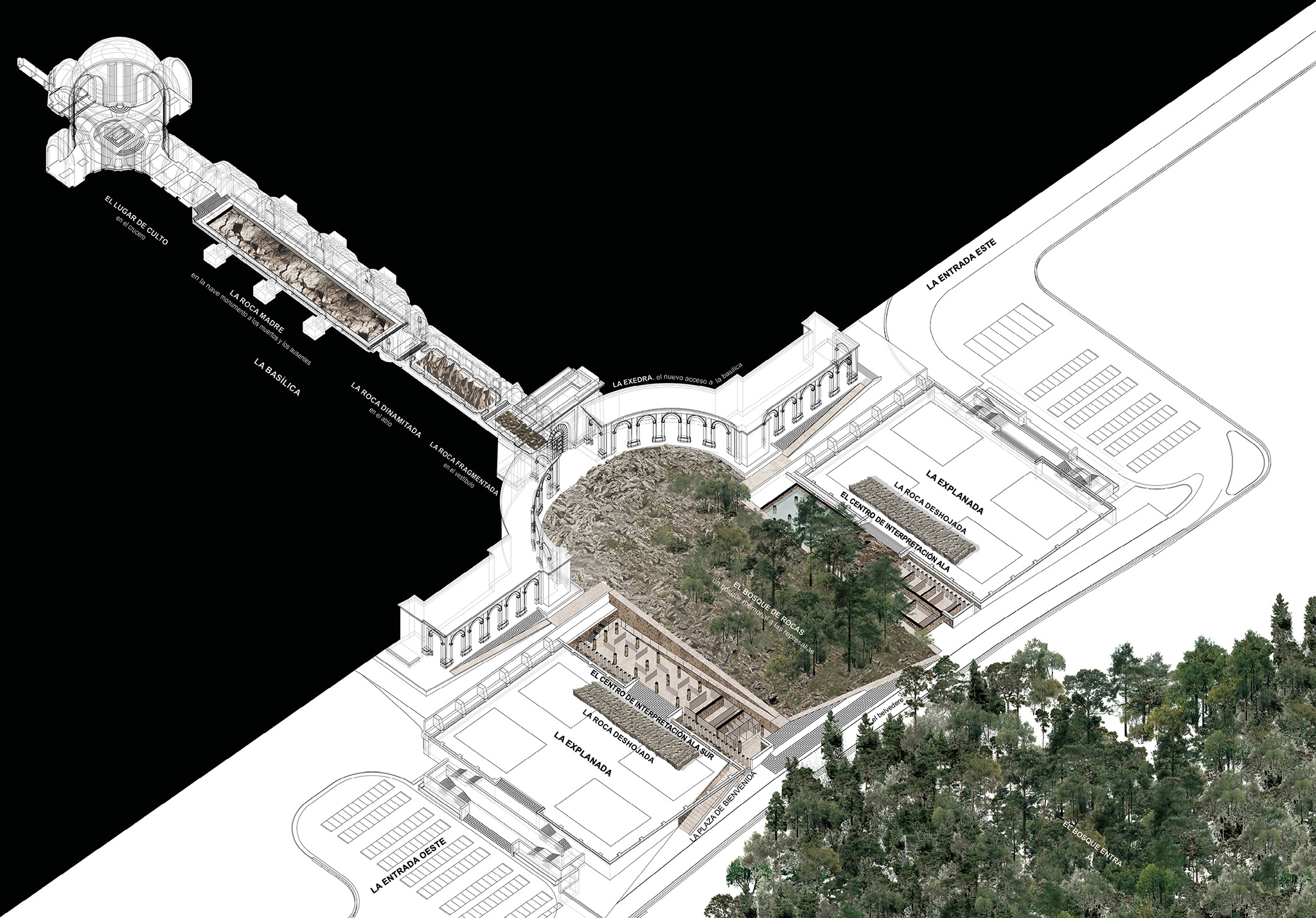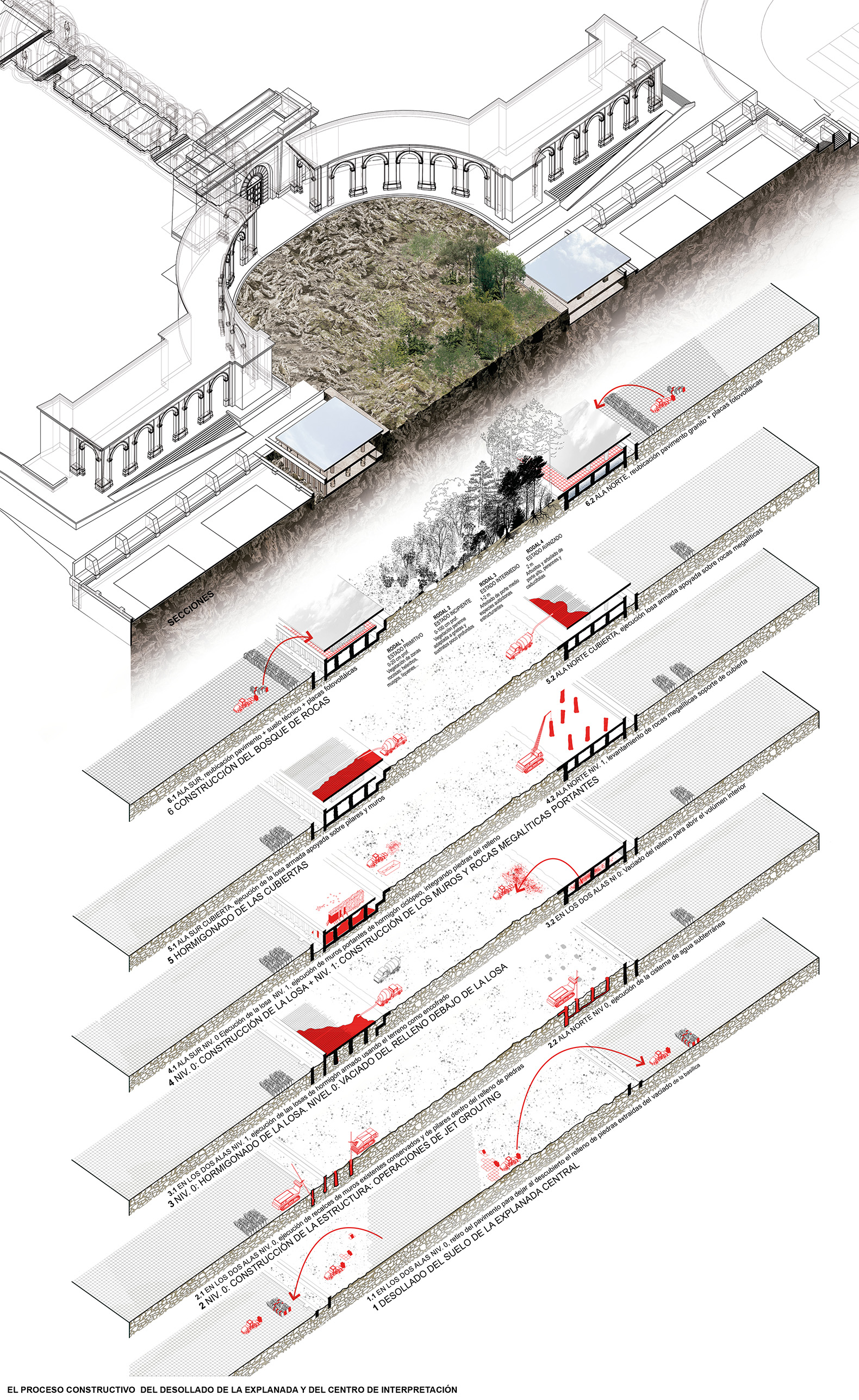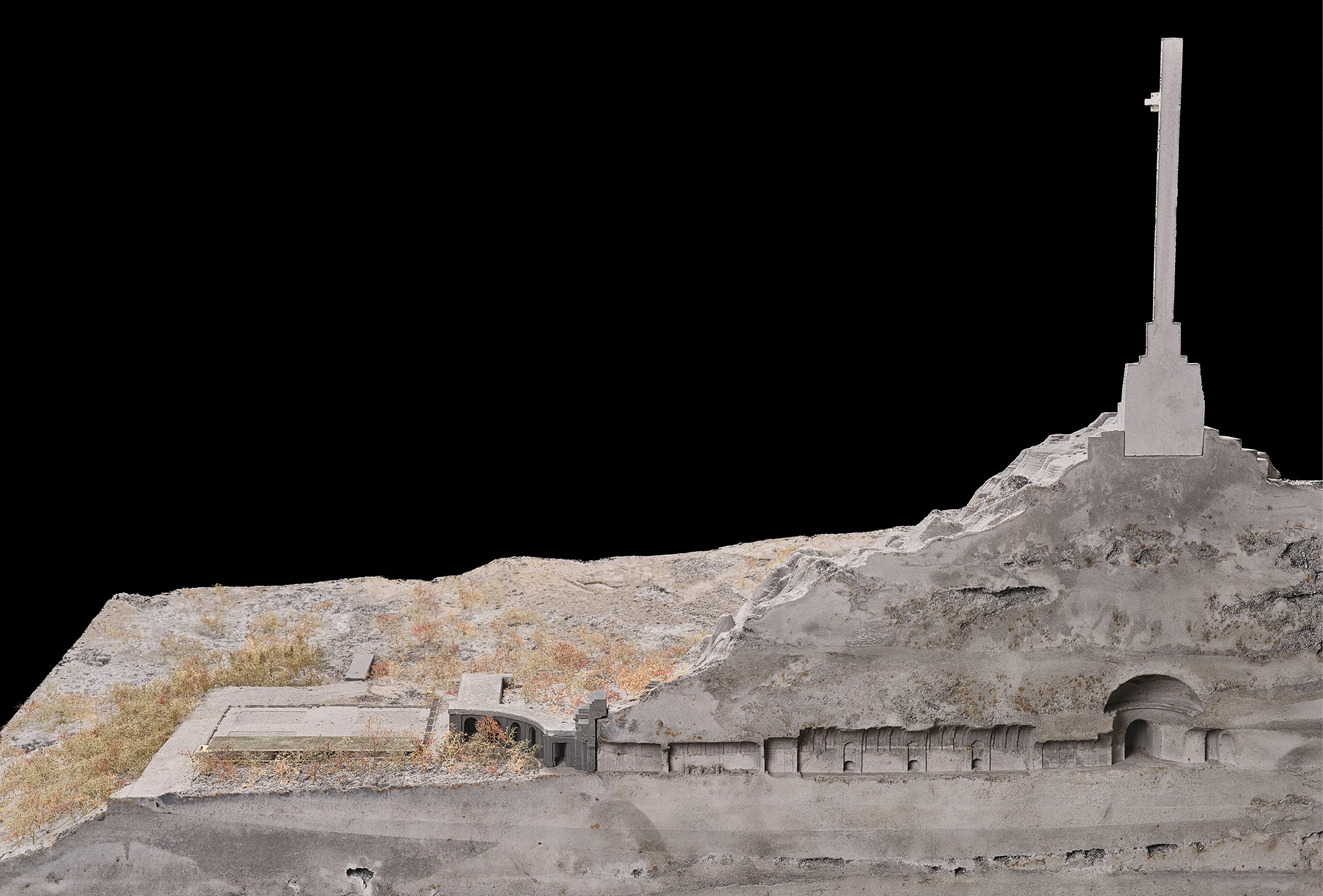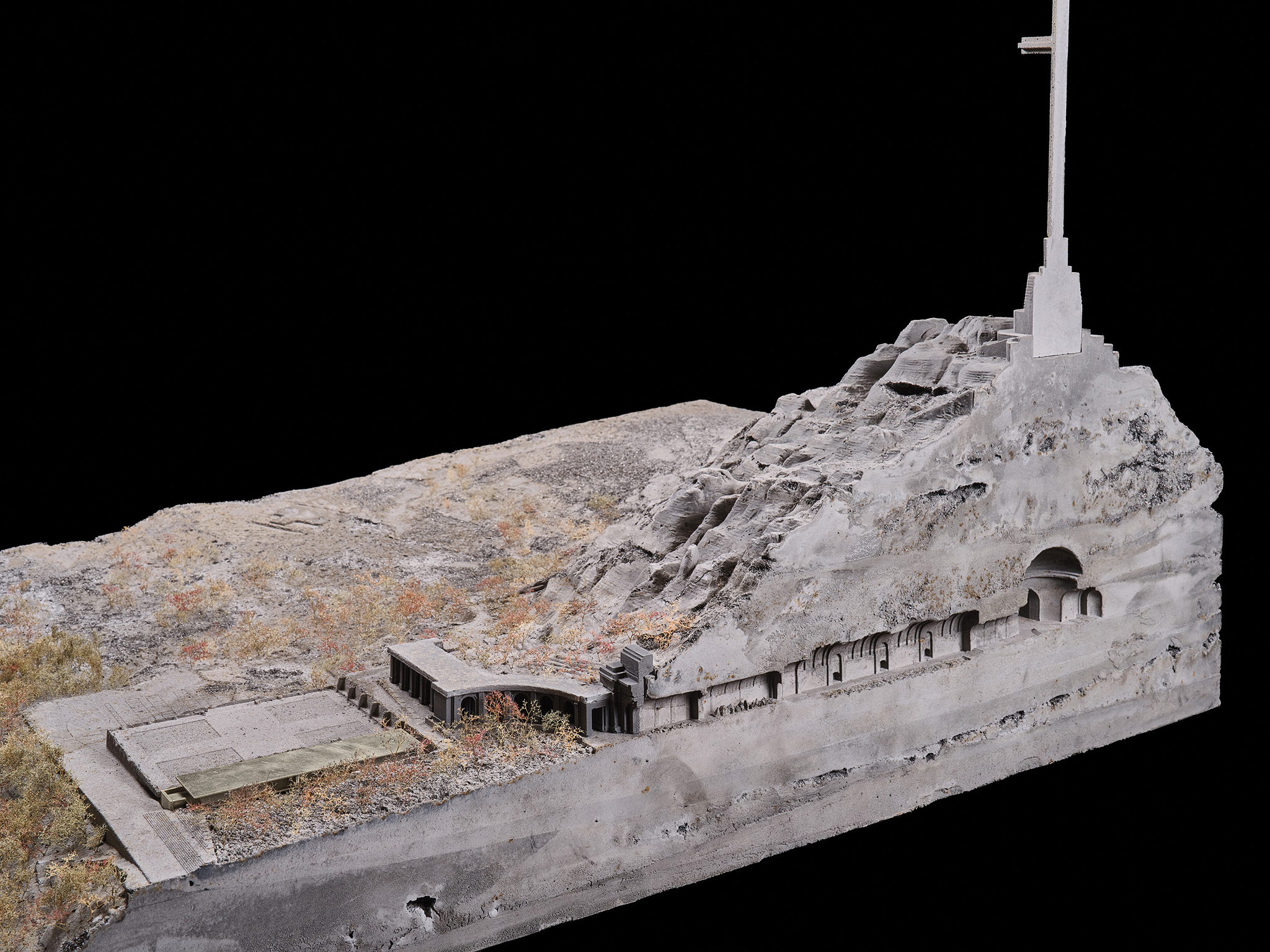
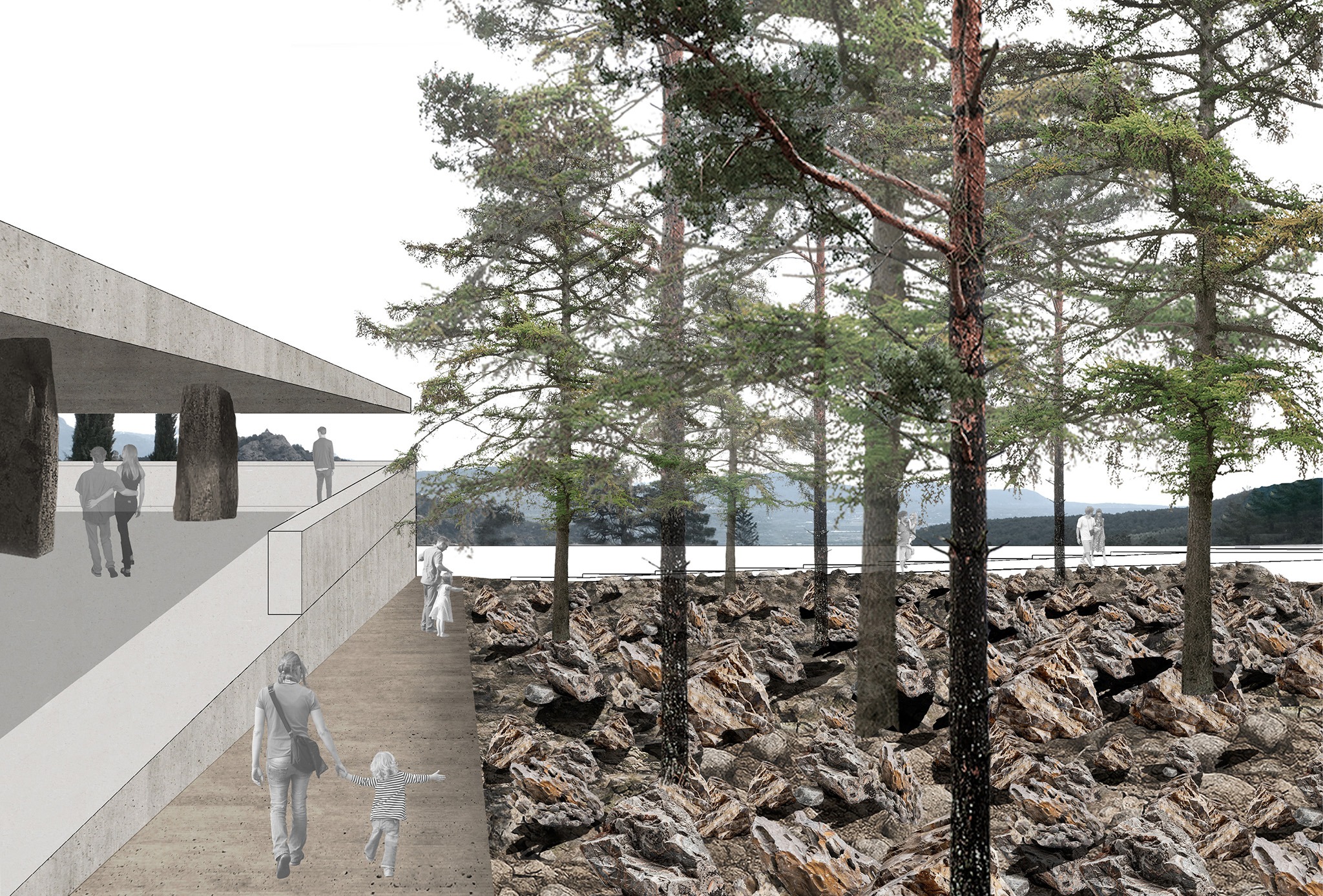
Through the careful removal of the pavement proposed by Michèle & Miquel, the bedrock excavated by forced laborers is revealed on one side, and the fill materials used in the construction of the esplanade are exposed on the other.
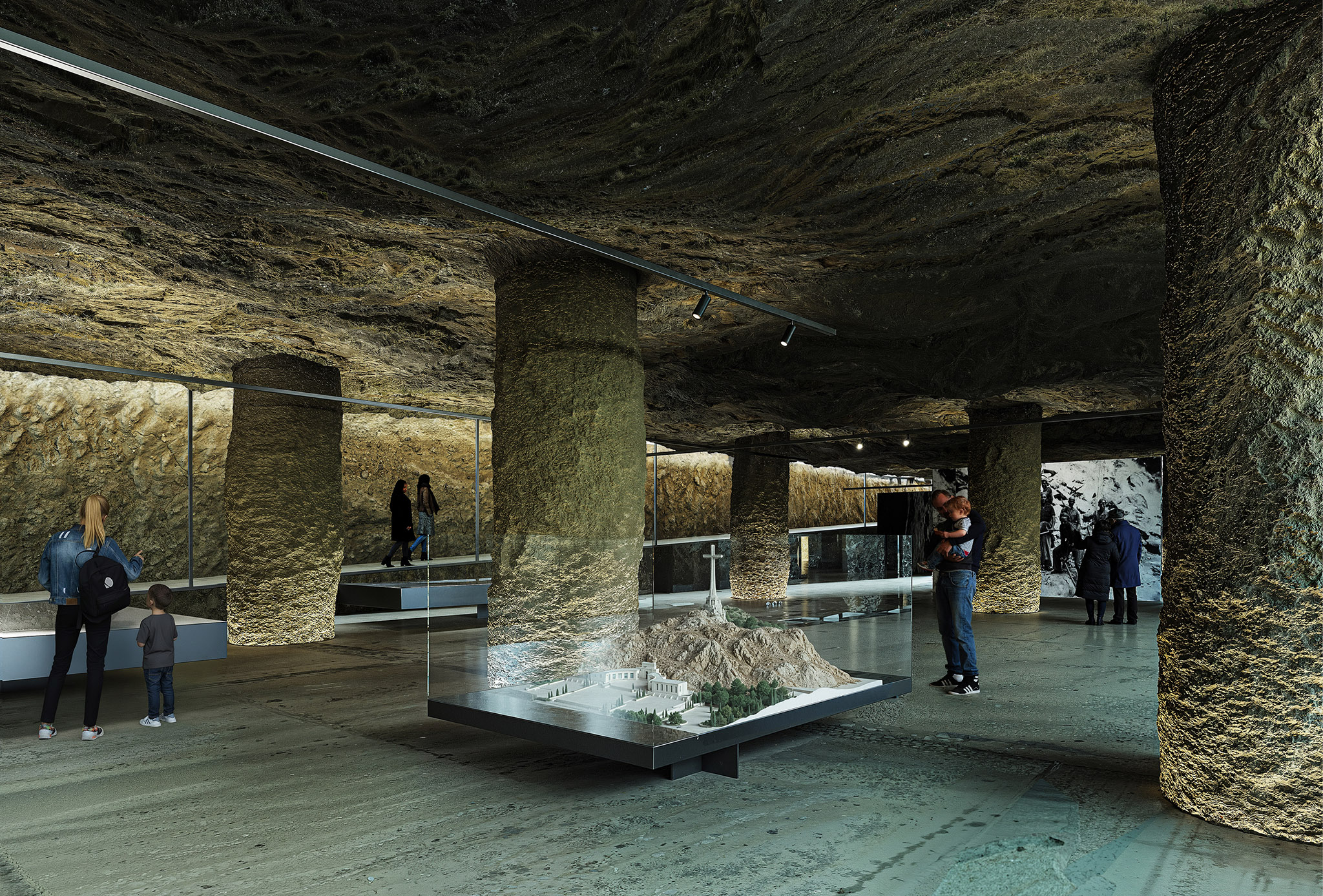
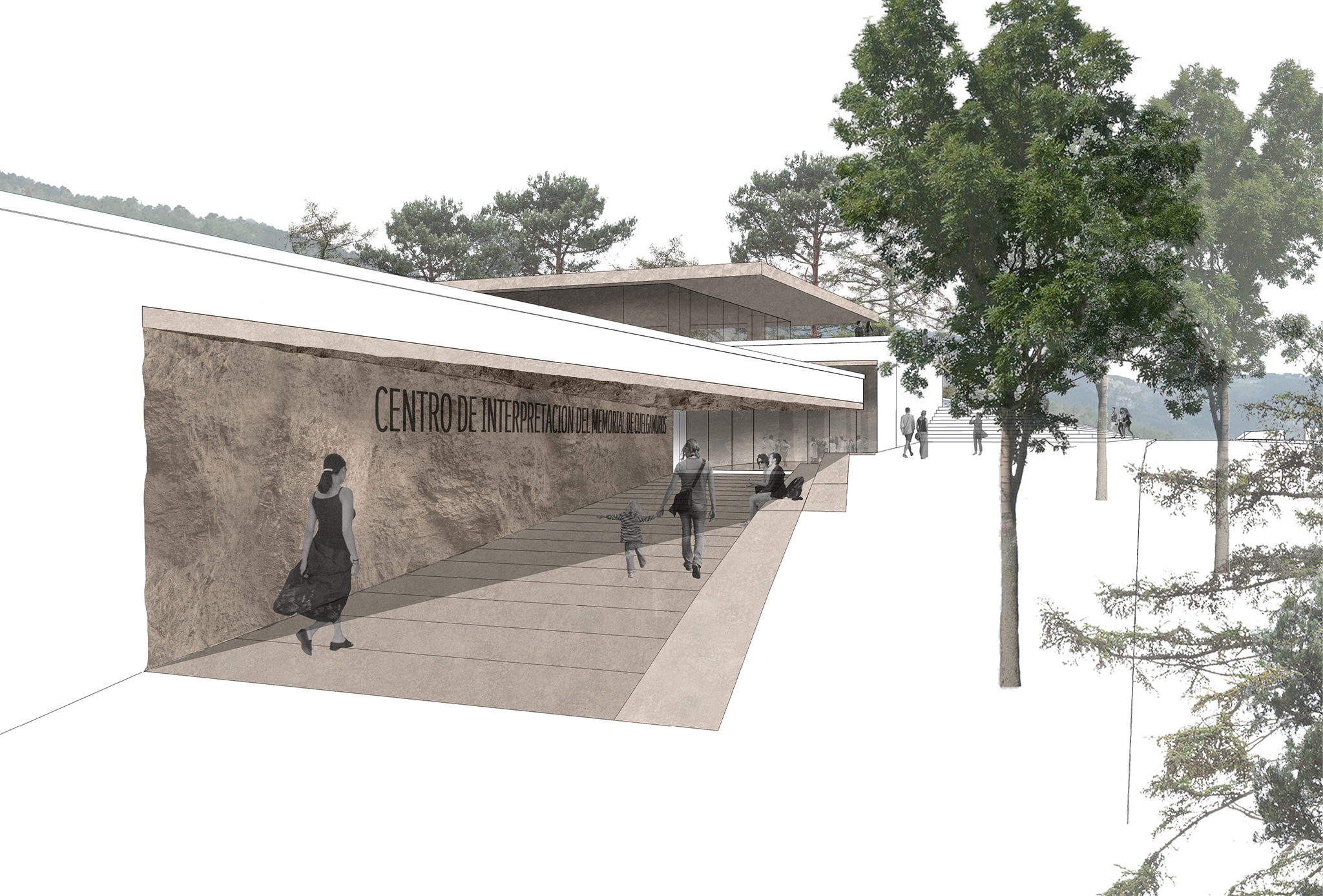
In this way, these elements become interpretive tools that highlight the physical effort and violence inherent in the construction. The project also incorporates an interpretation center carved into the rocks, a series of pathways that juxtapose the monumental surfaces with the raw material of the mountain, and new spaces designed to contextualize the history of the site from geological, ecological, and social perspectives.
The intervention transforms Cuelgamuros into an open memorial landscape, where nature and memory regain prominence over the traditional monumental narrative. The central esplanade becomes fertile ground capable of regenerating over time, allowing the forest to reclaim the space in due course. Rather than erasing the past, the project proposes to make it visible and understandable, encouraging a critical reading of the monument and promoting a more inclusive and complex collective memory.
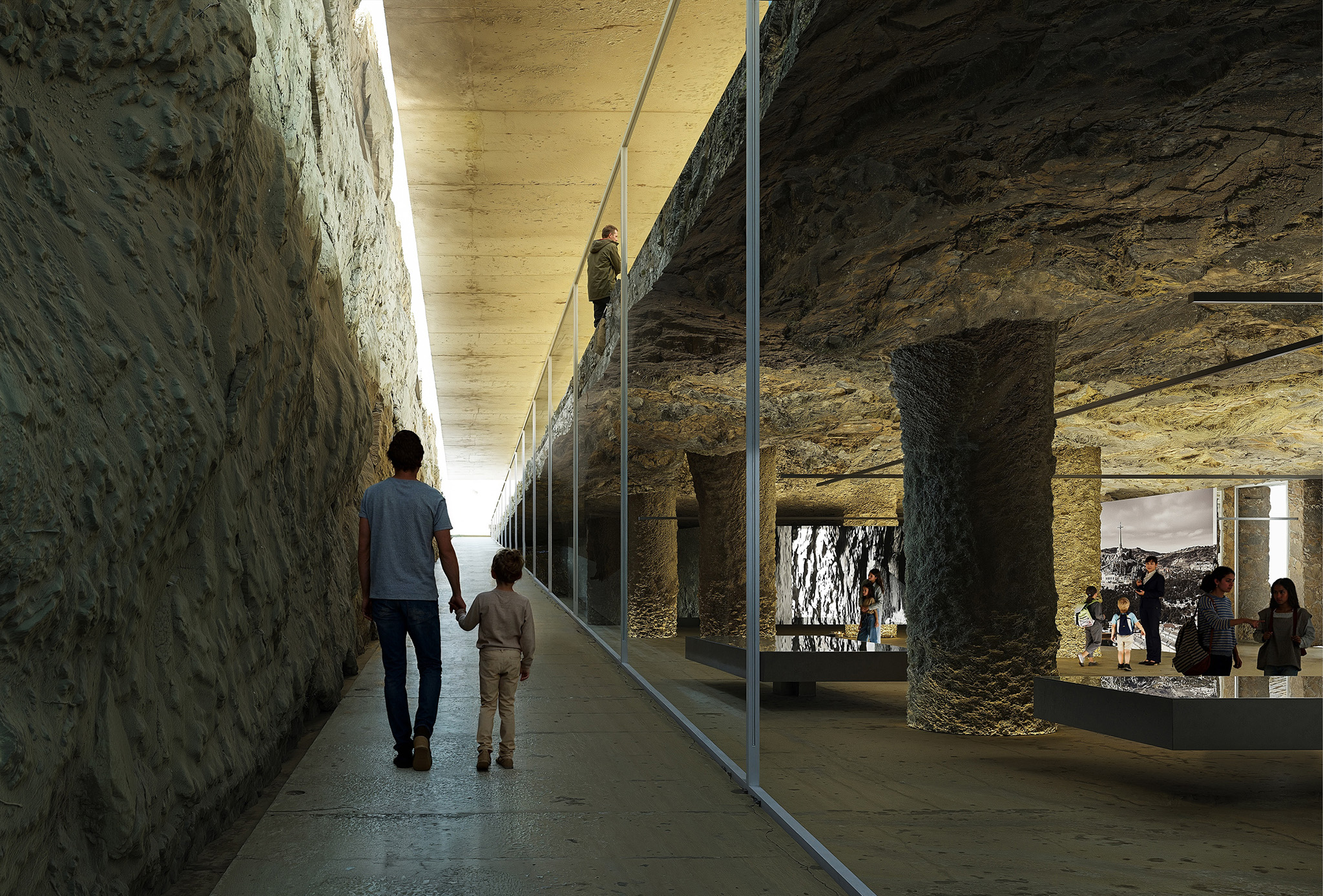
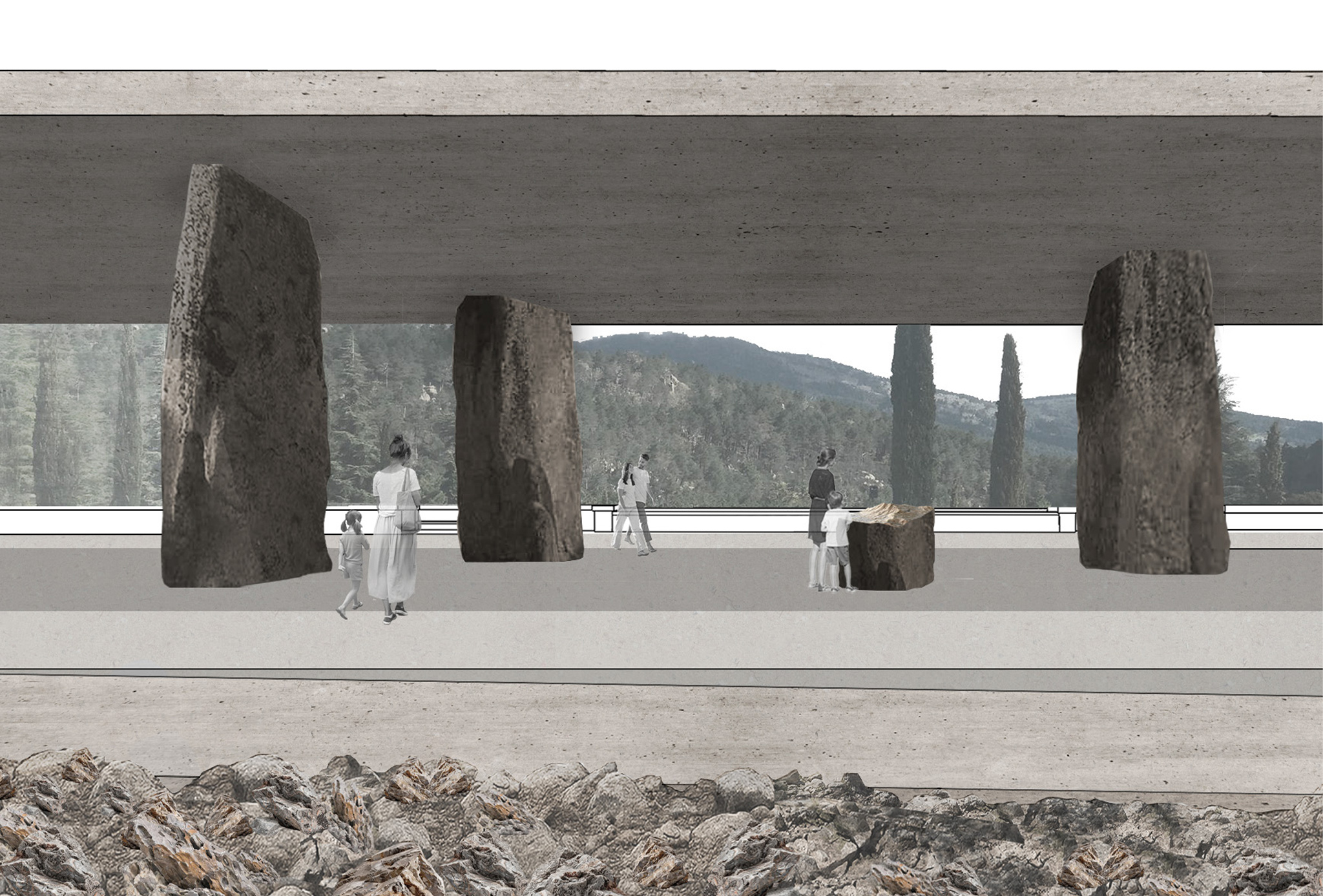
Visitor Route 3 - The Ascent to the Rock Forest. "La Falla", proposal for the Memorial in Cuelgamuros by Michèle & Miquel. Image courtesy by Michèle & Miquel.
Project description by Michèle & Miquel
To re-signify a fascist monument while respecting its architectural integrity! This is the contradictory injunction posed by the program for this competition. It is all the more contradictory given that the very essence of the Franco regime, which casts a mantle of Catholic sanctity over the stones of all its monuments, exposes any subsequent intervention to accusations of blasphemous iconoclasm.
Destroying the monument, vandalizing it, is an understandable temptation
However, the outright destruction of any symbol of an authoritarian regime in a democratic country facing political and identity tensions cannot be the only appropriate response everywhere. It is not without value to preserve places like Cuelgamuros, where the dissonant memory of a bygone era can be made tangible for future generations.
Therefore, not to destroy the monument, but deactivate it, and treat its memory hemiplegia
Everything in the monument glorifies one side and its designated martyrs. Whatever the apologists for Francoism may say, it is difficult to see it, in its current state, as a possible place for reconciliation. Reconciliation is not an exercise to be done with oneself. It requires allowing the other person space to exist and express themselves in their own words. Opening the site to a polyphony of voices is essential.
How to emerge a polyphony of narrative, let's listen to Luis Vélez de Guevara
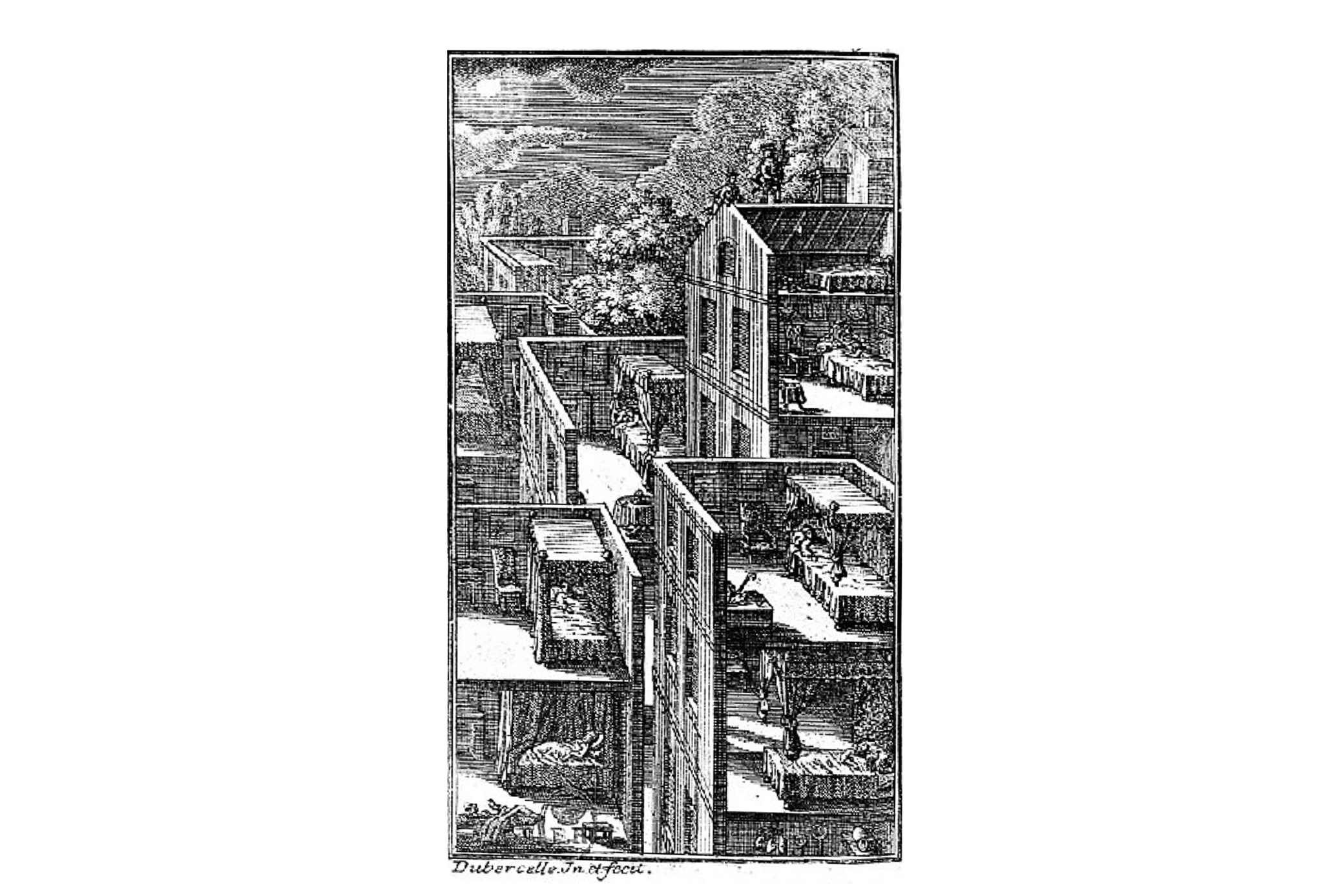
By a magnificent coincidence, the answer has been offered to us since the beginning of the 17th century, a few kilometers from Cuelgamuros, by the Madrid writer Luis Vélez de Guevara in his work, el Diablo Cojuelo, “The devil in a jar”.
In this story, a runaway student accidentally frees a devil from a jar. As a thank you, the devil offers to take him on a flight over Madrid, where he can magically make the buildings' exteriors disappear to reveal the life hidden within.
"And lifting the puff pastry to the roofs of the buildings, by diabolical art, the flesh of the Madrid pie was revealed as it was then, patently, which because of the great summer heat was with fewer lattices, and so much variety of rational vermin in this ark of the world, that the one of the flood, compared to it, was made of capes and hats."
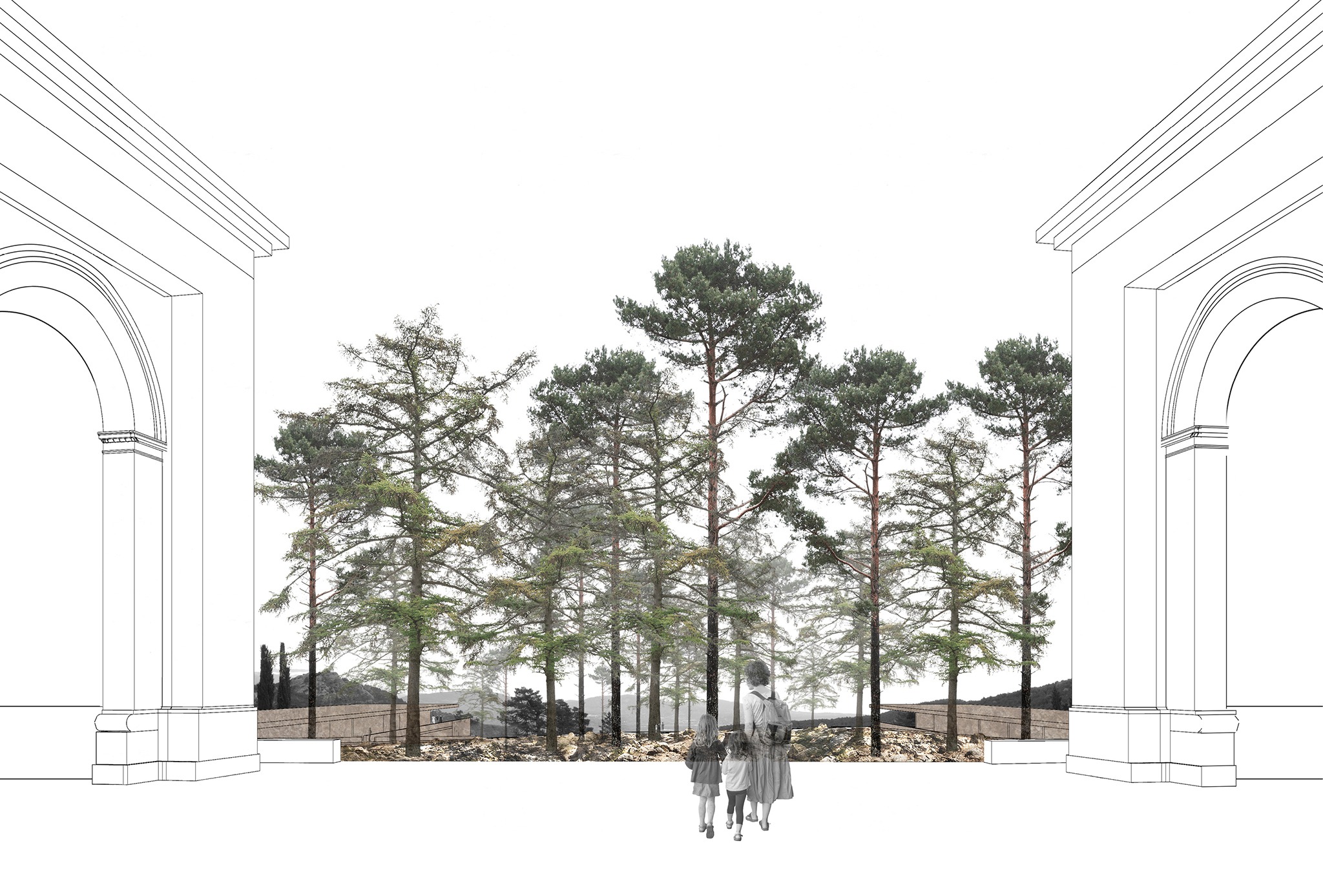
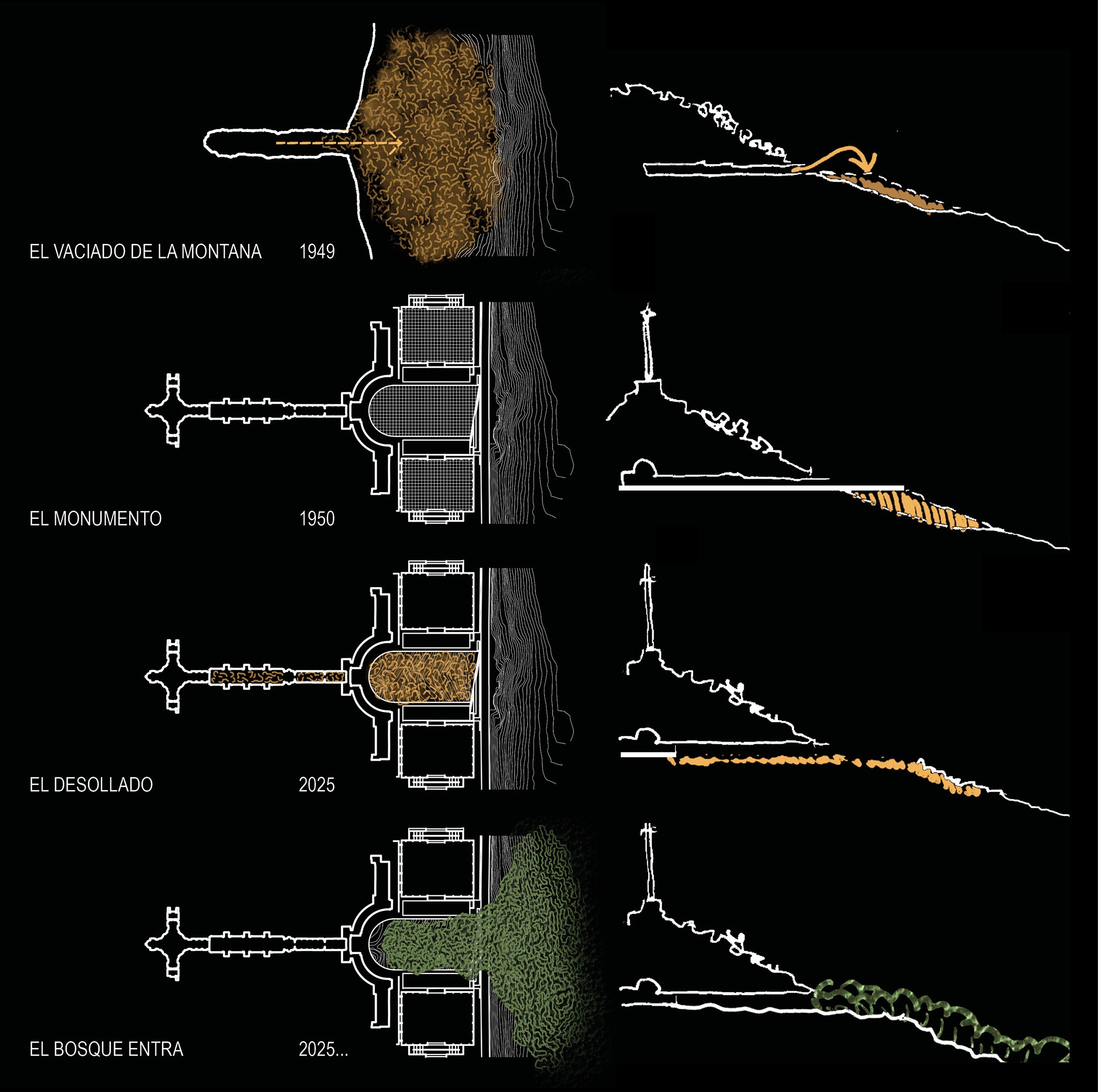
Our proposal: one singular gesture, to skin the site along its axis
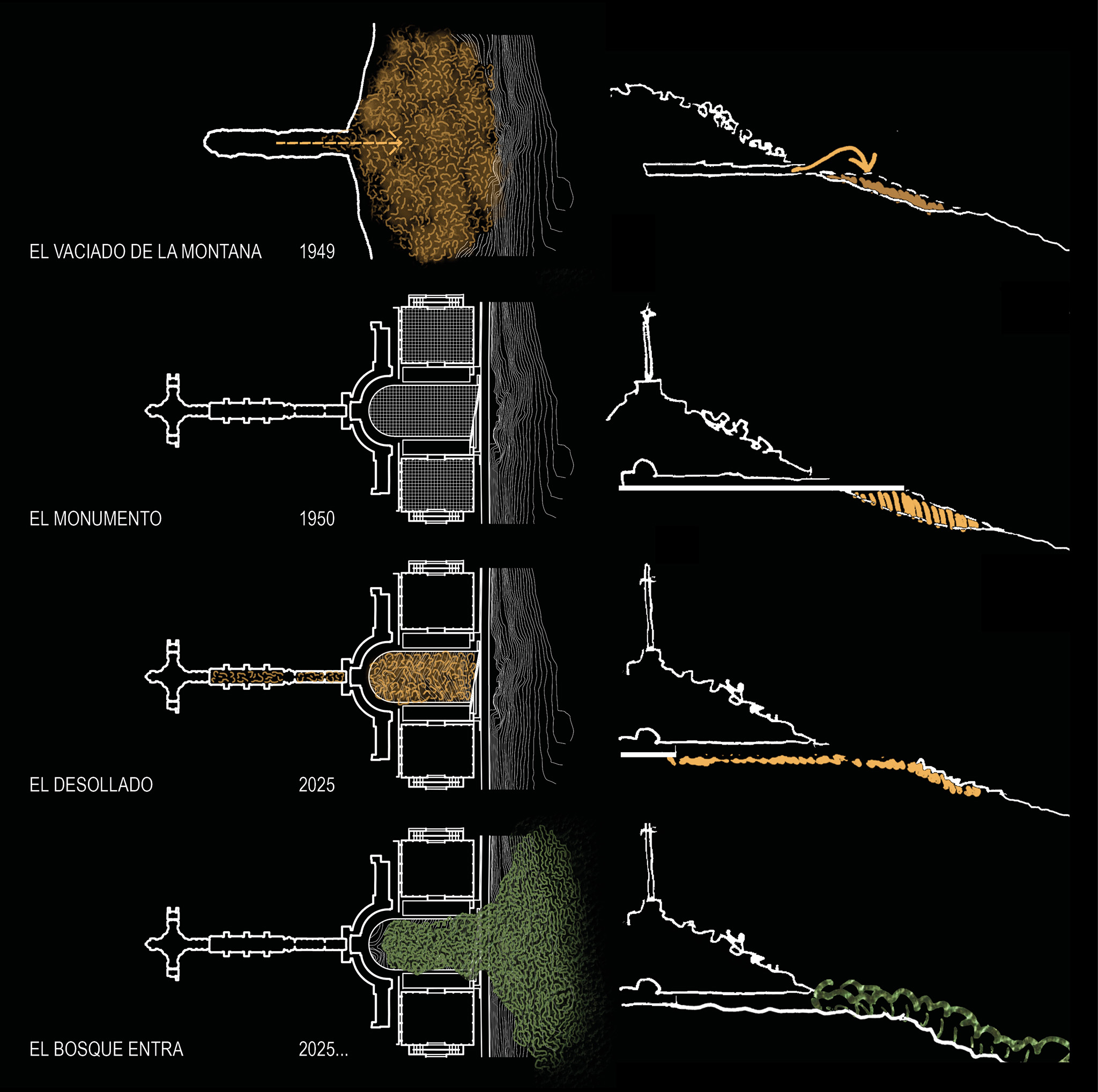
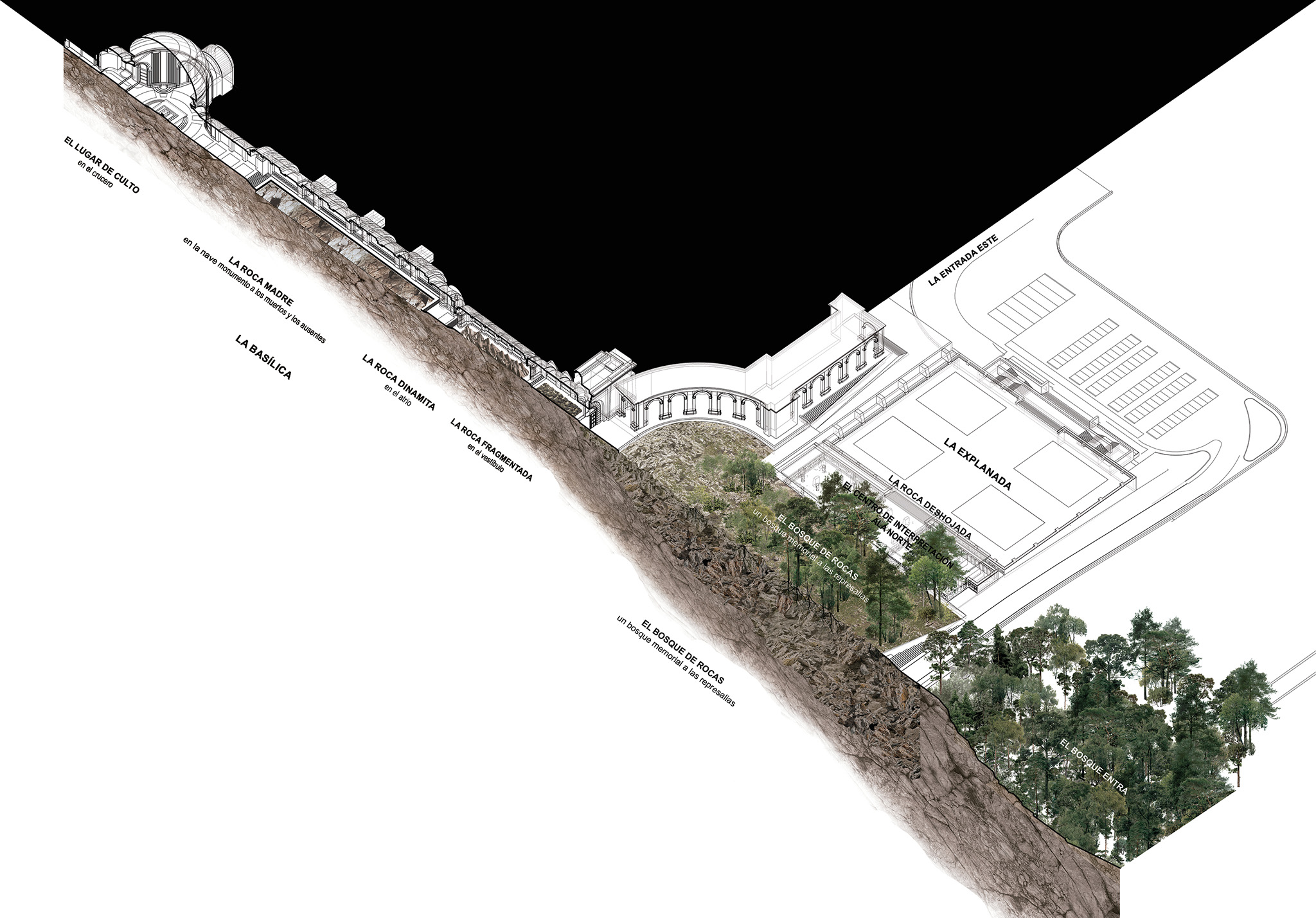
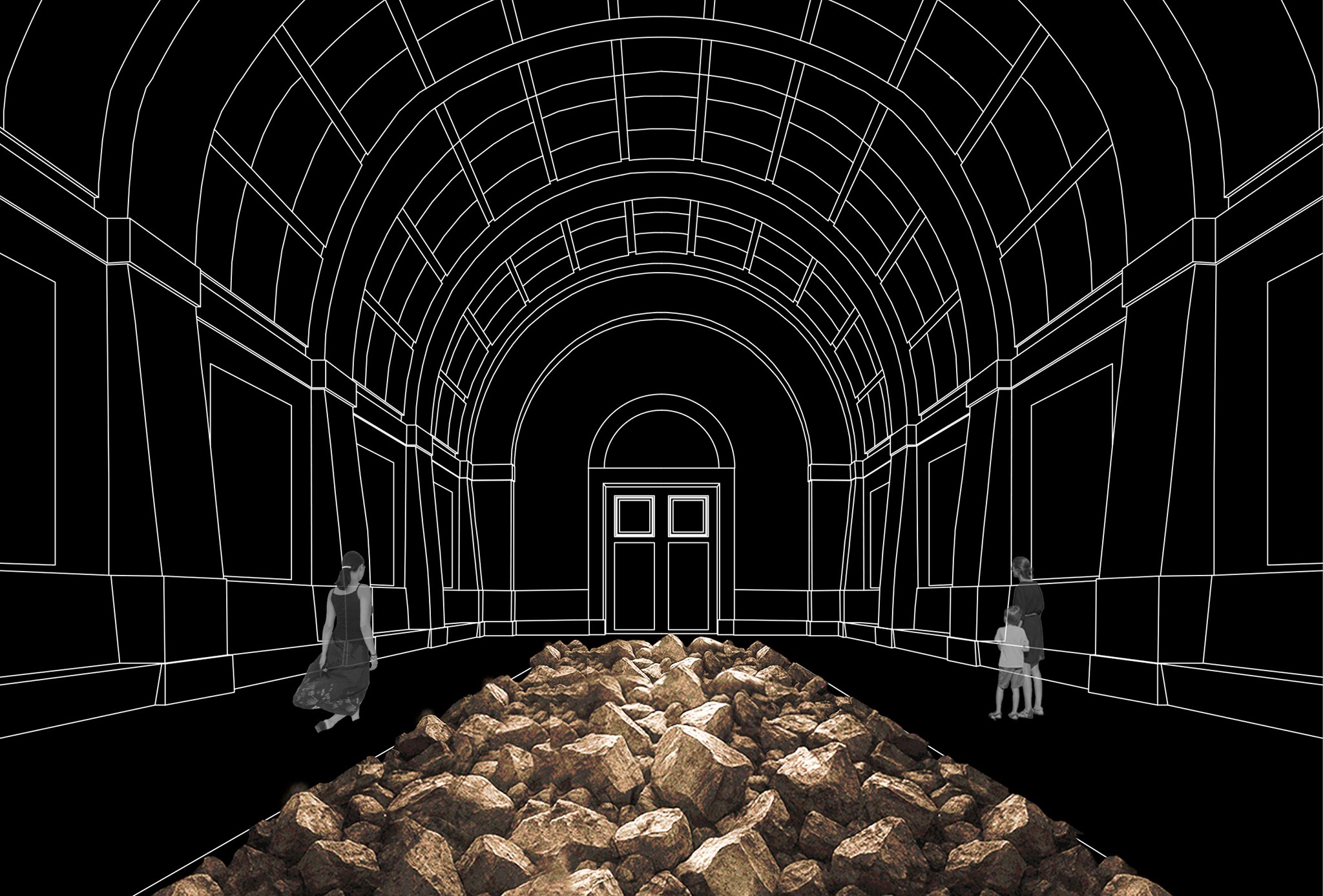
Our proposal merely involves skinning the site, removing two huge fragments of soil, all along the victorious axis, both outside on the esplanade and inside the buried basilica. By applying the writer's method, by thus peeling back the crust of the pate, what do we discover in Cuelgamuros?
The fault,
-Not only the ancient geological fault which runs all along the entire length of the basilica’s nave and which had posed considerable structural problems.
-But also, more metaphorically, the fault which, since the civil war and perhaps even before, unites the Spanish people around it, and is expressed here by this fracture between the aesthetic ambition displayed in the smallest corners of the building and the appalling conditions under which the mountain was excavated.
Let's look at it together and learn from it!
The skinned parts discovers the gestures of the convicts
They reveal and allow us to touch:
-Beneath the nave, the bedrock that a multitude of political prisoners excavated and hewn for nearly 10 years.
-Beneath the esplanade, the construction waste that served as fill for this immense platform. These stony remnants and the bedrock bear the marks of the tools and gestures that shaped them. Their exposure reveals the colossal physical effort required to extract this volume from the mountain.
This gesture invites a materialist reading of the work.
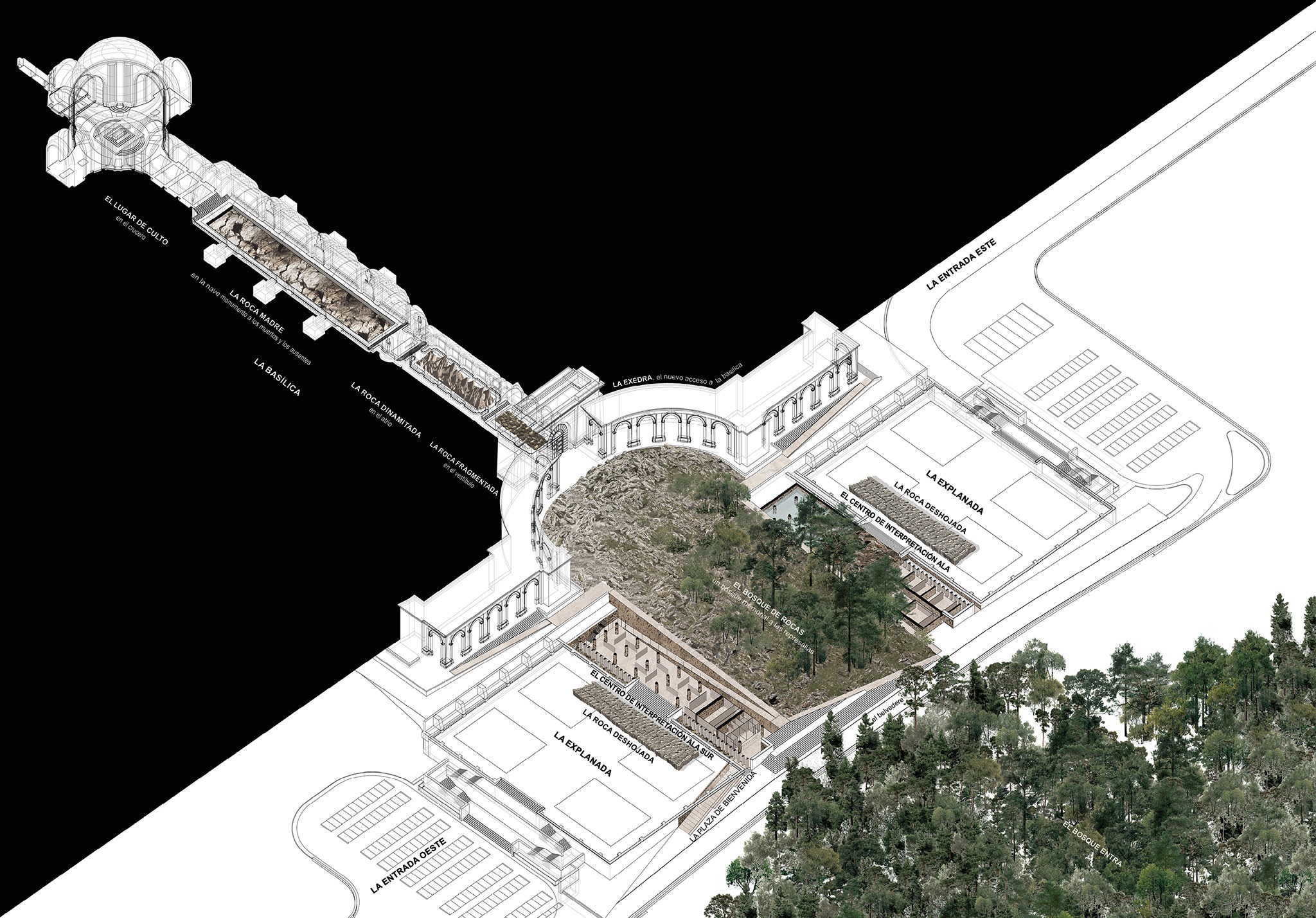
The Bedrock: In the nave, a monument to the dead and the absent
The vast rectangle cut into the pavement down to bedrock is a “monument to the absent, the prisoners, forgotten by official history. This gaping hole restores the nave’s emptiness to its original state as a “hole,” “el abujero,” the place where political prisoners carried out “the thankless, silent, and unglamorous task of hollowing out the mountain.”
The Dynamited Rock and the Fragmented Rock, a tribute to the labor of convicts
In the vestibule and atrium, the raw rocks first dynamited and then fragmented, bear witness to the material shaped by bare hands.
The Rocks Forest, a memorial forest
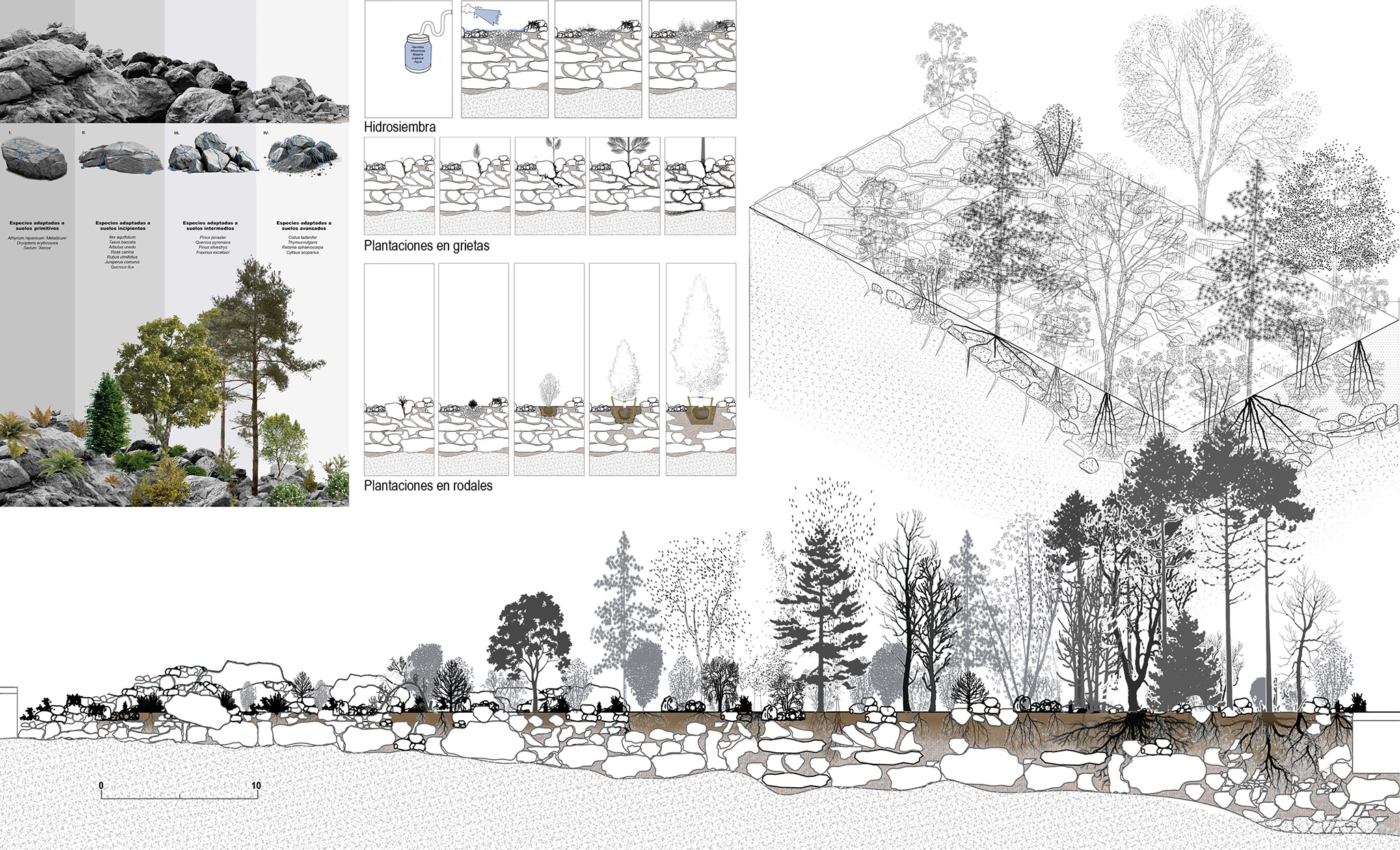
Beneath the central esplanade, the construction debris used as embankments are exposed, creating new soil suitable for the growth of a memorial forest.
A troglodyte cave
Buried in these solidified embankments, serves as the visitor center. Walls, pillars, ceiling, and ramps are all embedded in the into the rock mass, whose texture and color envelop us. Above it, a large floating slab, a viewpoint open to the distant landscape.
The rocks in slabs
On the side esplanades, two long sculptures stacking the demolished paving slabs of the esplanade are a tribute to the work of cutting and polishing stone.
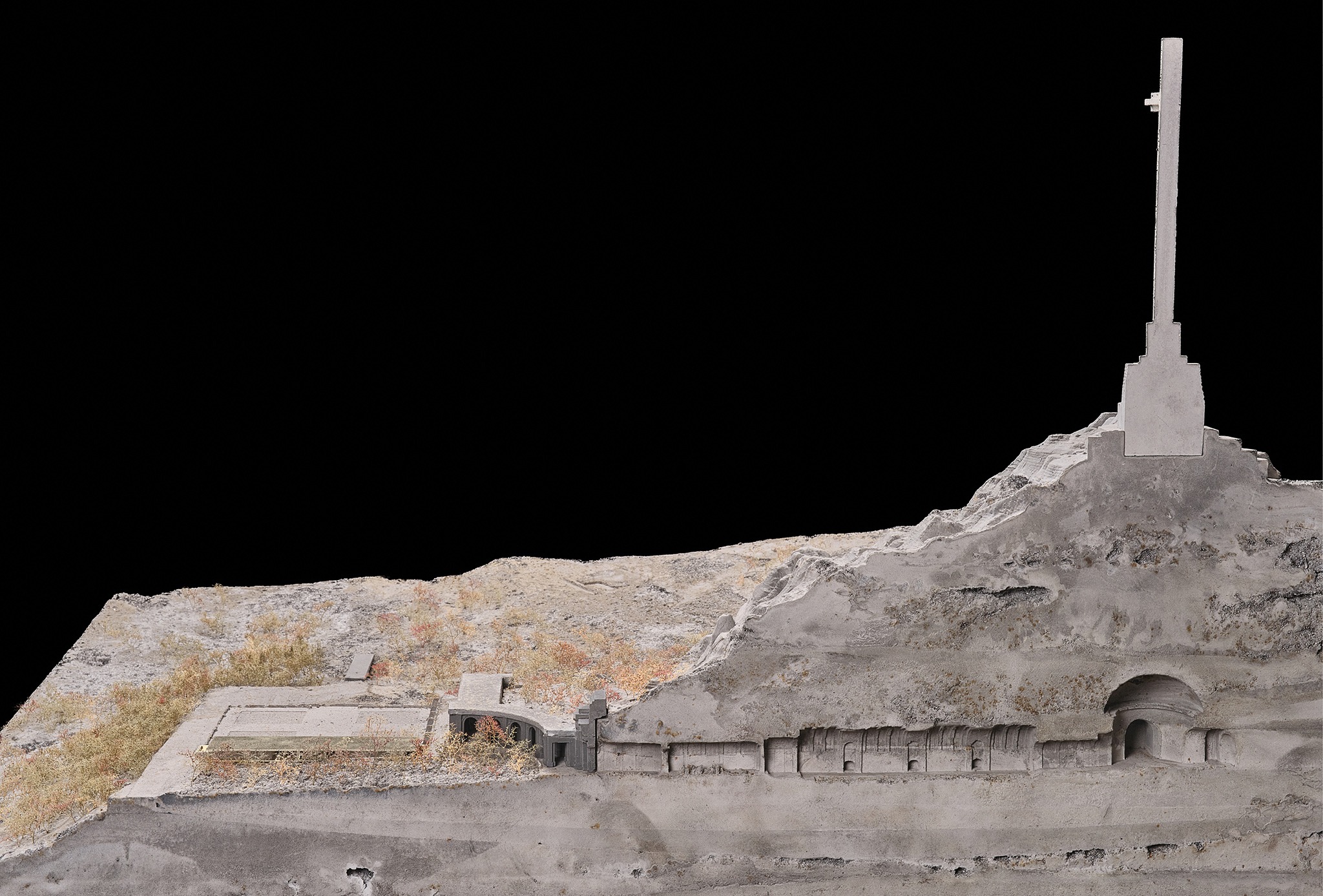
The skinned parts allow us to contextualize the monument, to place it on a longer time and scale and a broader geographical scale.
The question in Cuelgamuros is not only one of memory, because a site cannot be reduced to the vision that a political power projected onto it at a given moment in its history. The work of contextualization and scalar emancipation inherent in the scientific approach must be made possible in the new spaces. For Cuelgamuros does not tell the whole story of the landscape or the history of the Sierra de Guadarrama, far from it. First there is geology, topography, a climate, an ecology, a flora, a fauna, but also all the human activities that preceded the Francoist project.
The stripped surface replaces the sterile surface of the mineral coating with a new rugged terrain, crossed by runoff and the geological fault.
The forest that can now grow on the esplanade liberates the two million trees covering the surrounding 1,100 hectares from their original meaning. Indeed, these trees have been arbitrarily transplanted from the four corners of Spain according to purely ideological criteria. Our eyes, now opened, no longer see the symbolic representation of the country envisioned by Franco, but simply a forest of the Sierra Guadarrama.
Through this gesture, the forest and the dead are emancipated
Let us recognize the autonomy of the trees as living and social organisms, just as we recognize the autonomy of the dead in ossuaries.
May they both detach themselves from the megalomaniacal ideology that brought them here without their consent. May the trees return to the forest and the dead to their families.