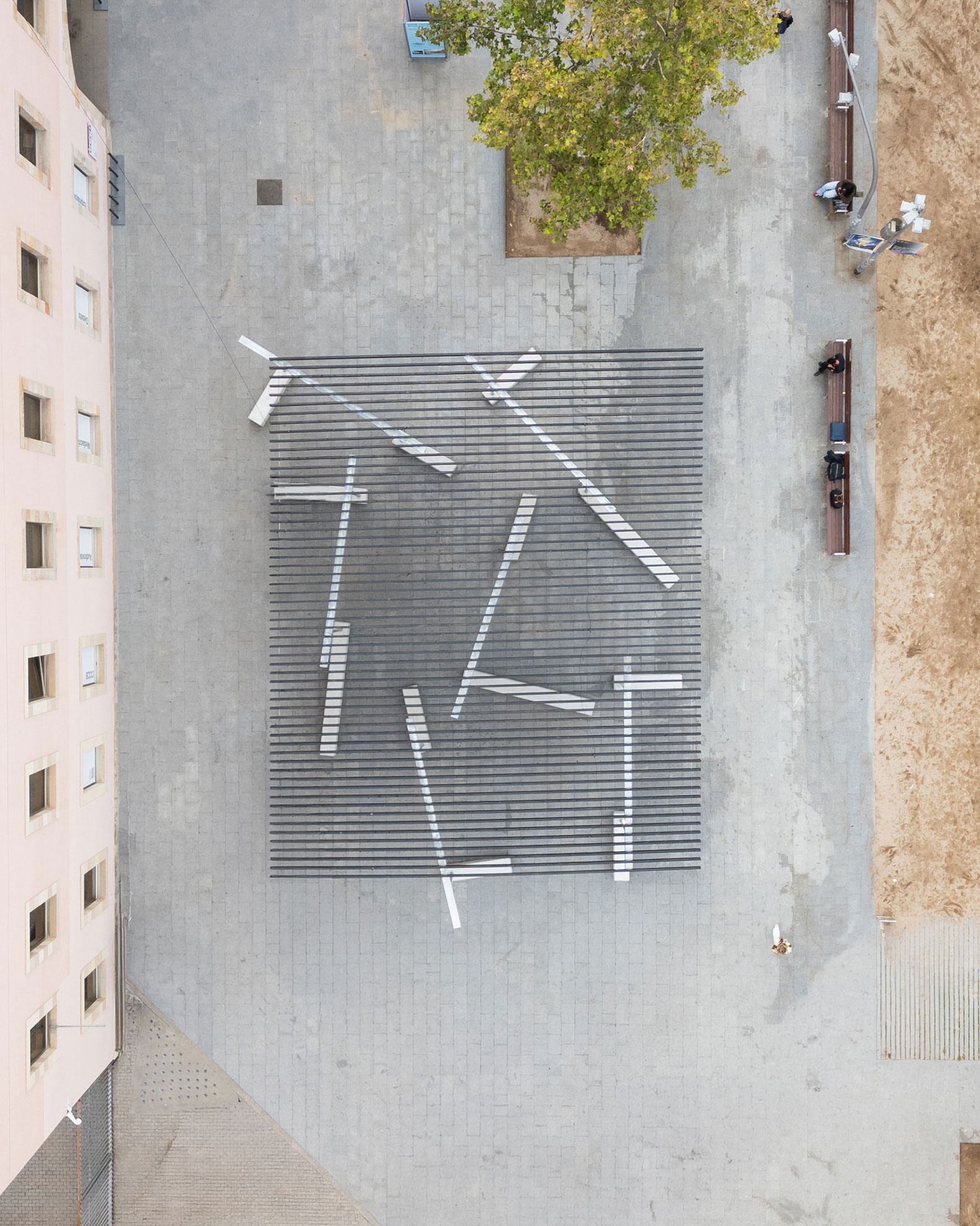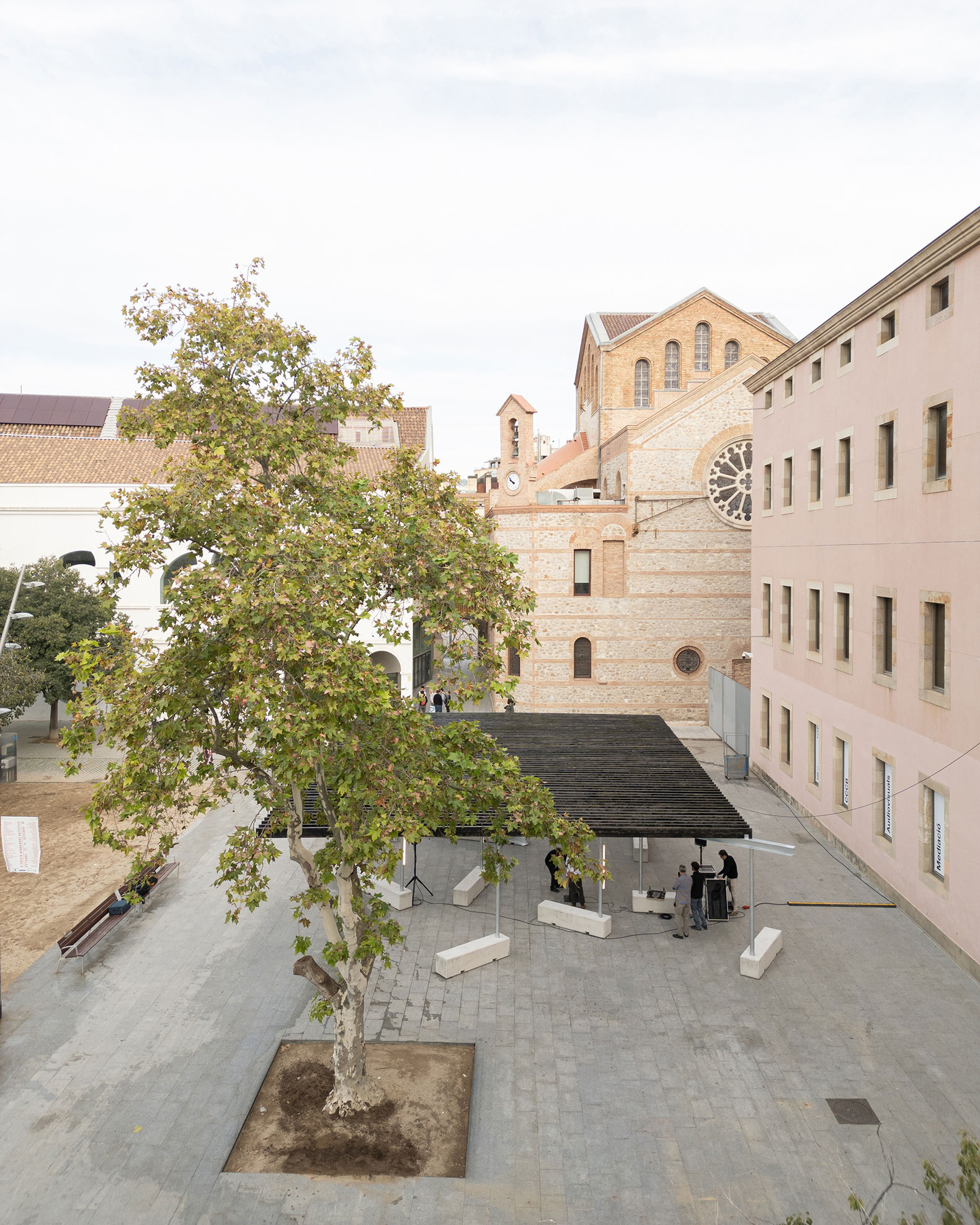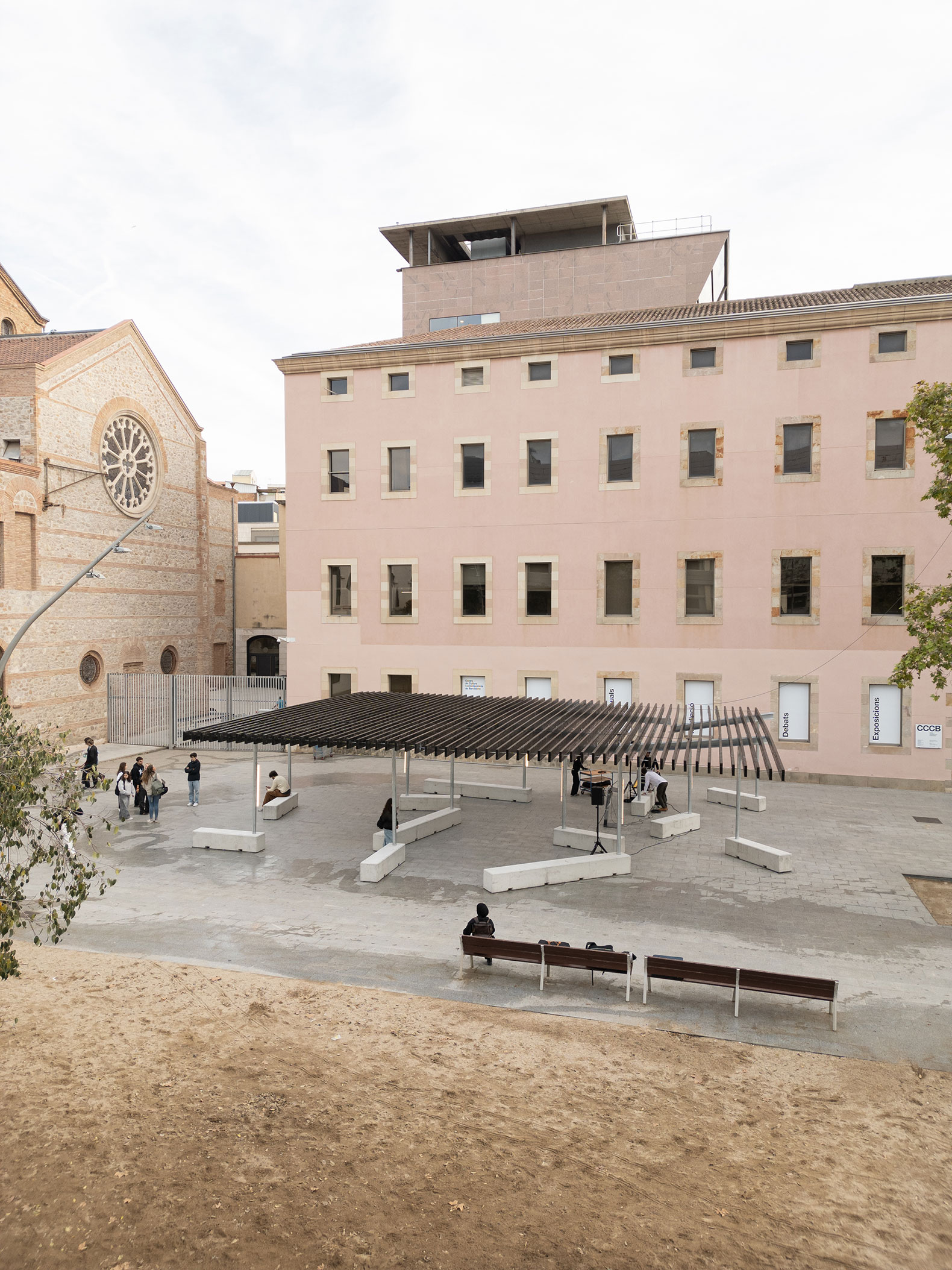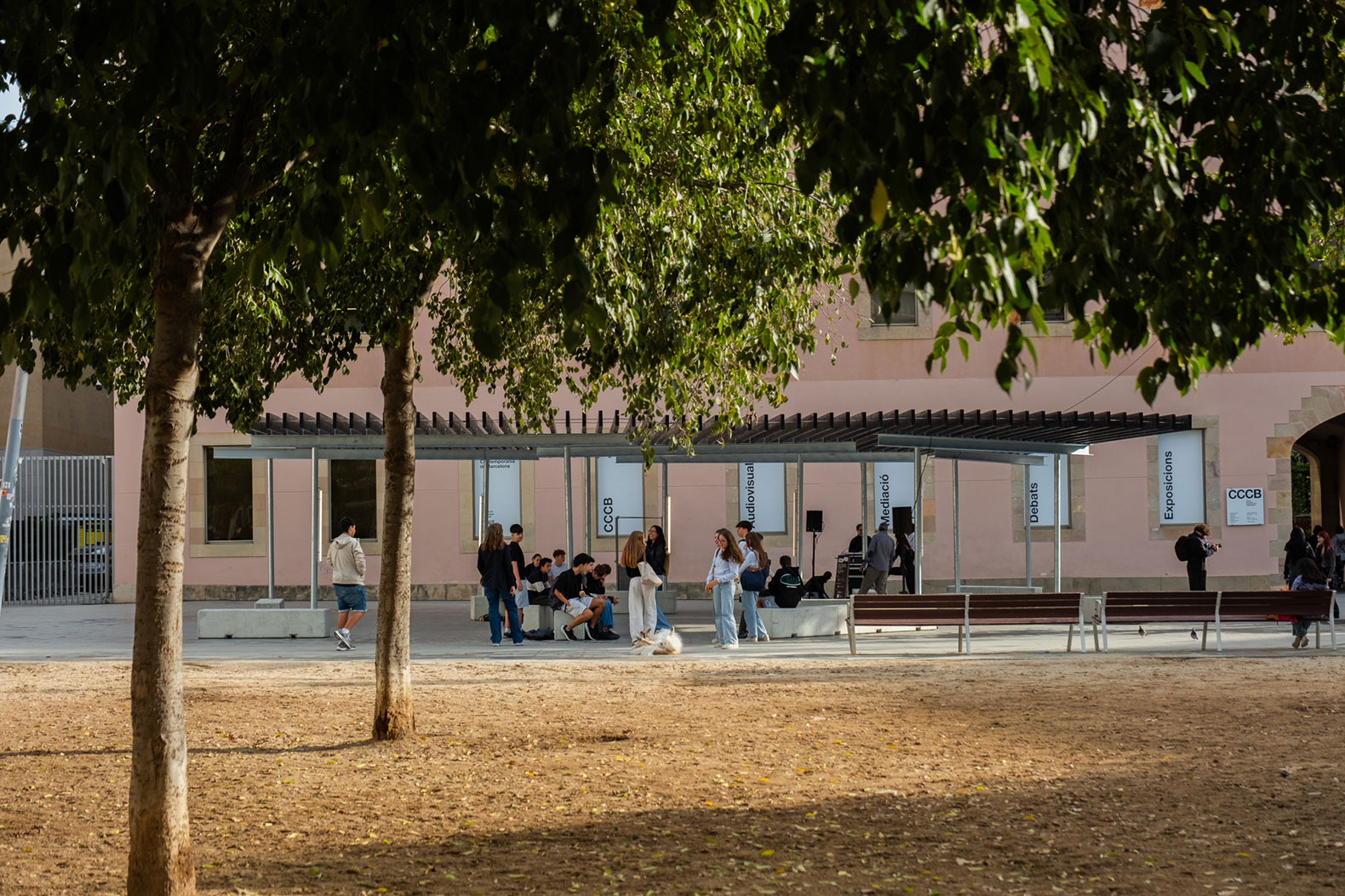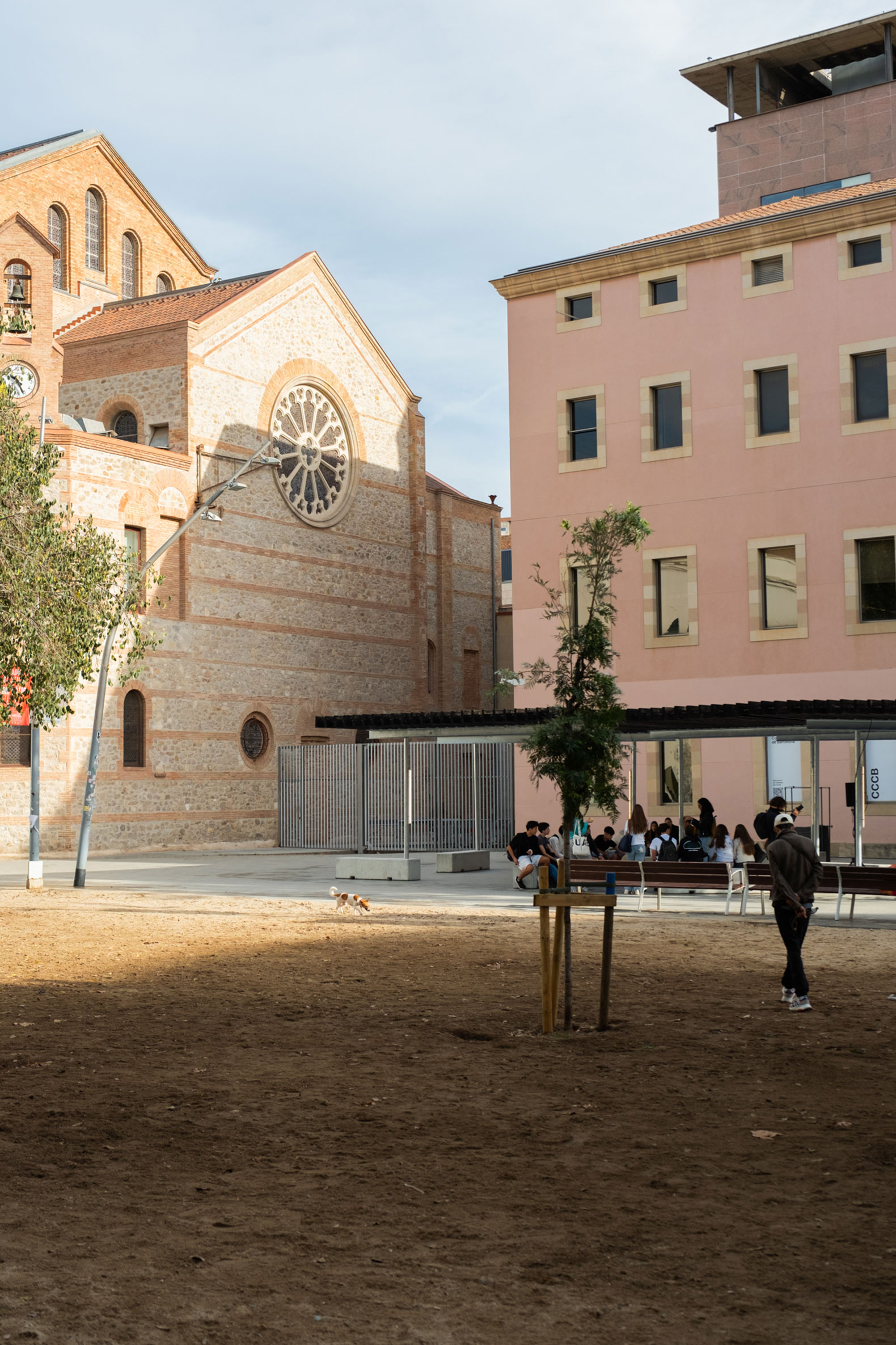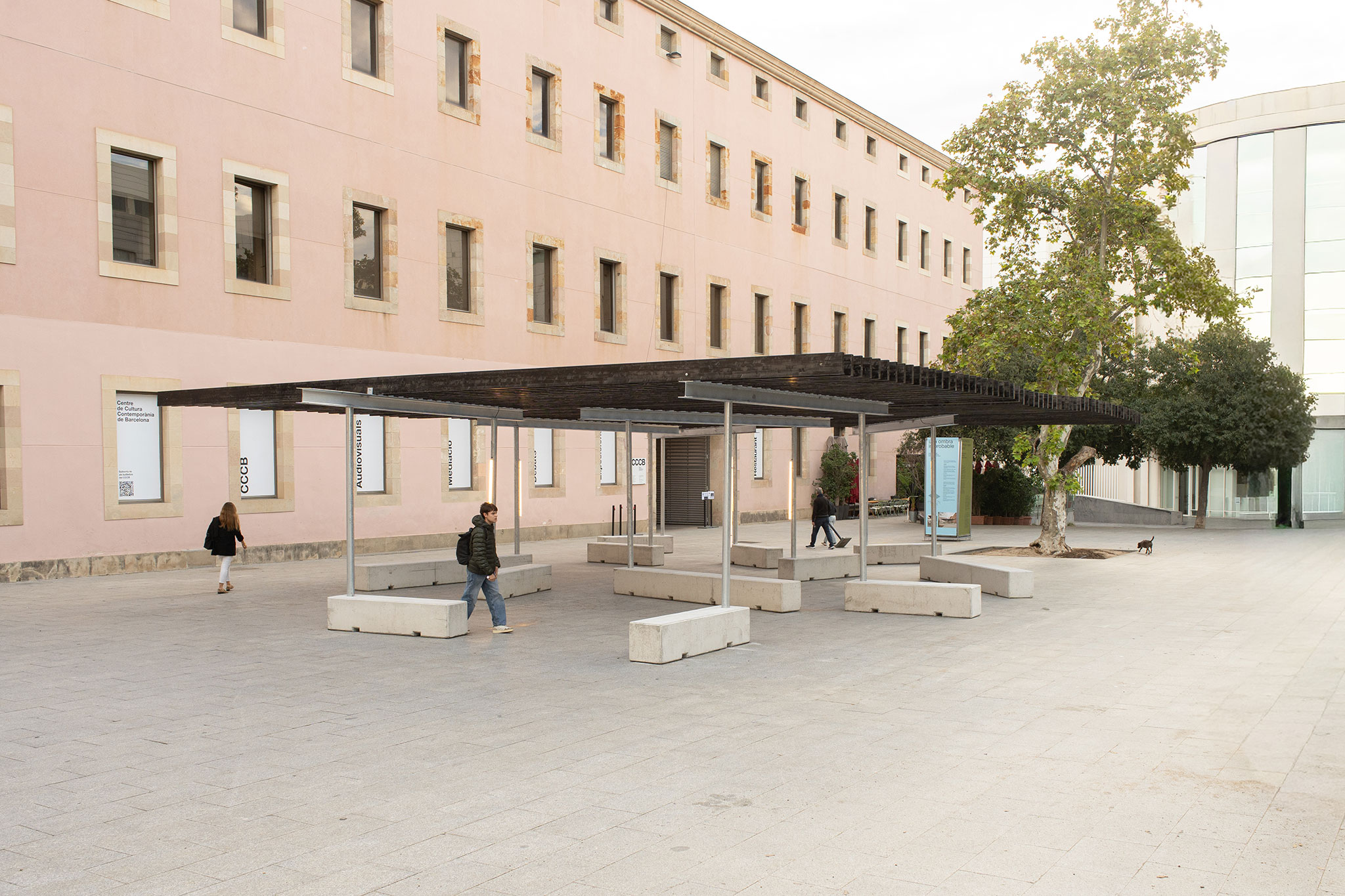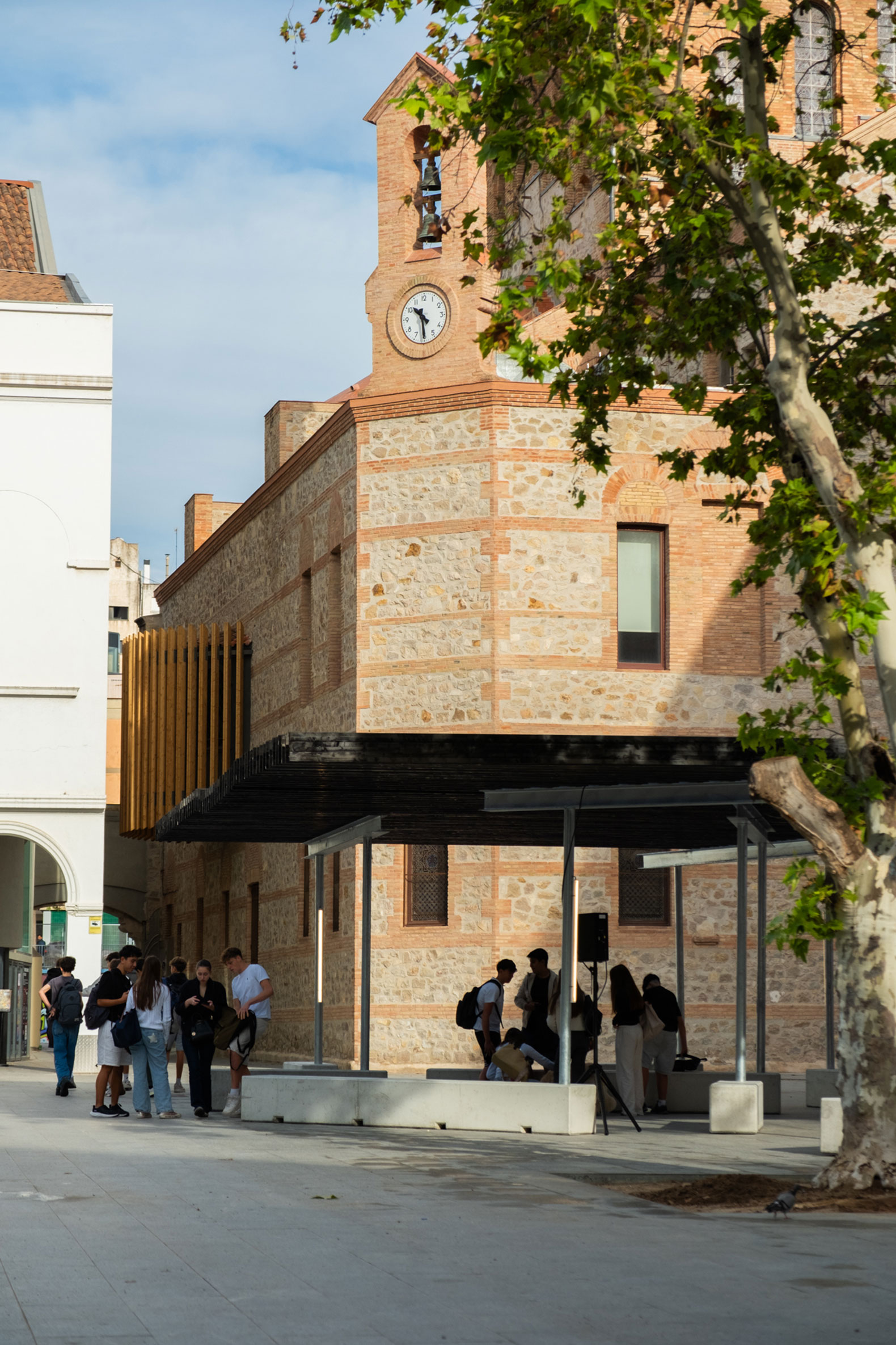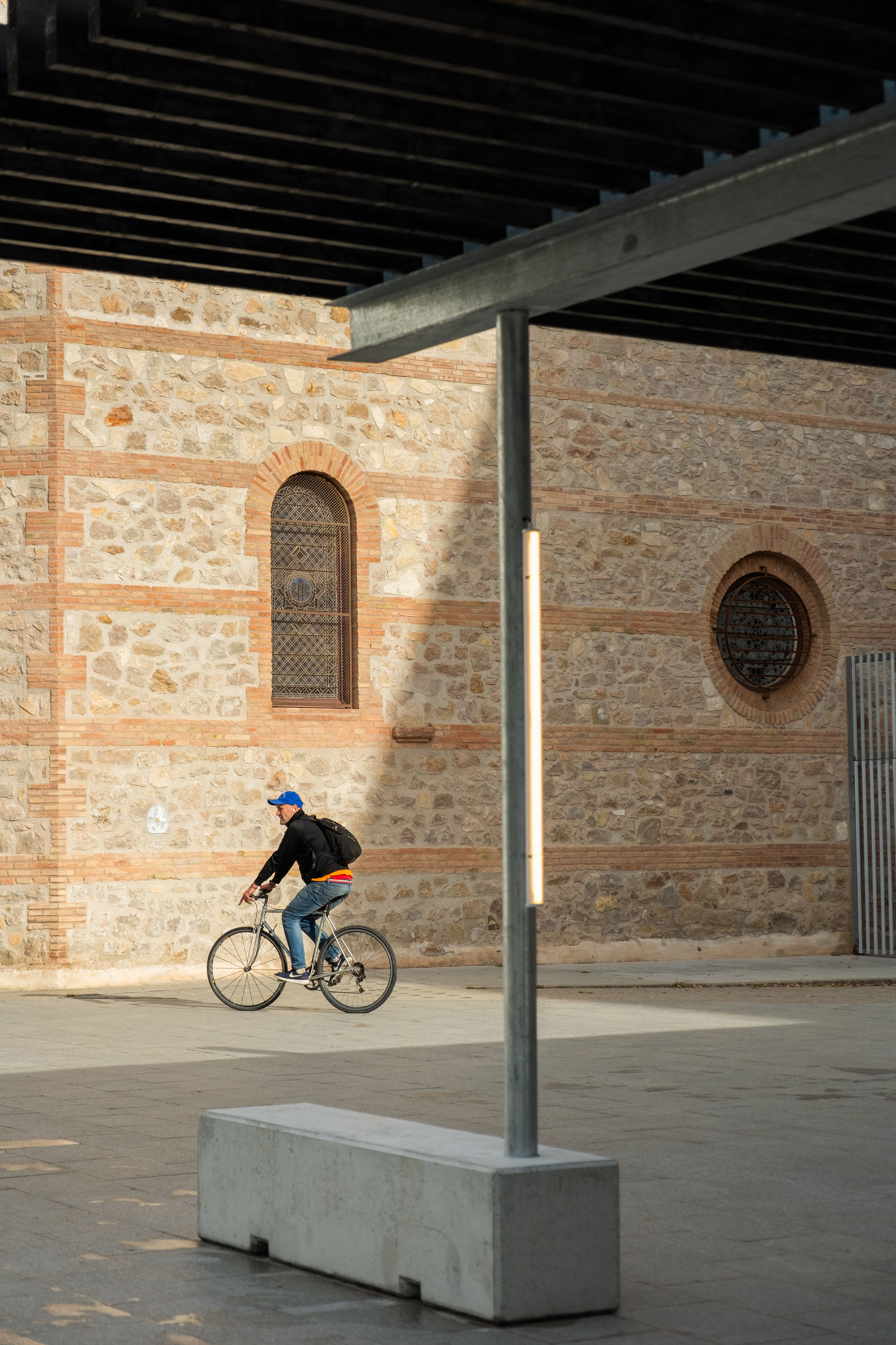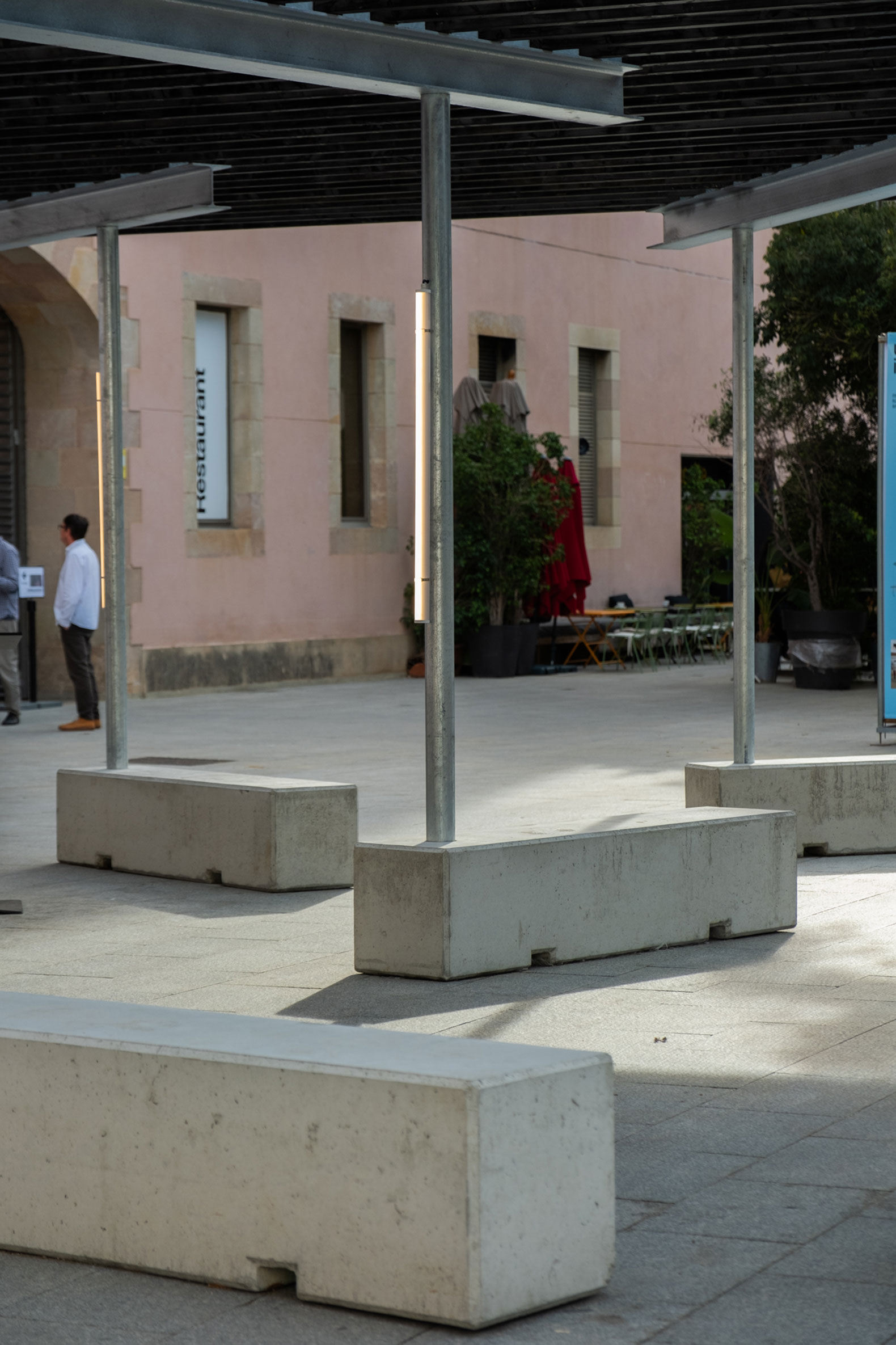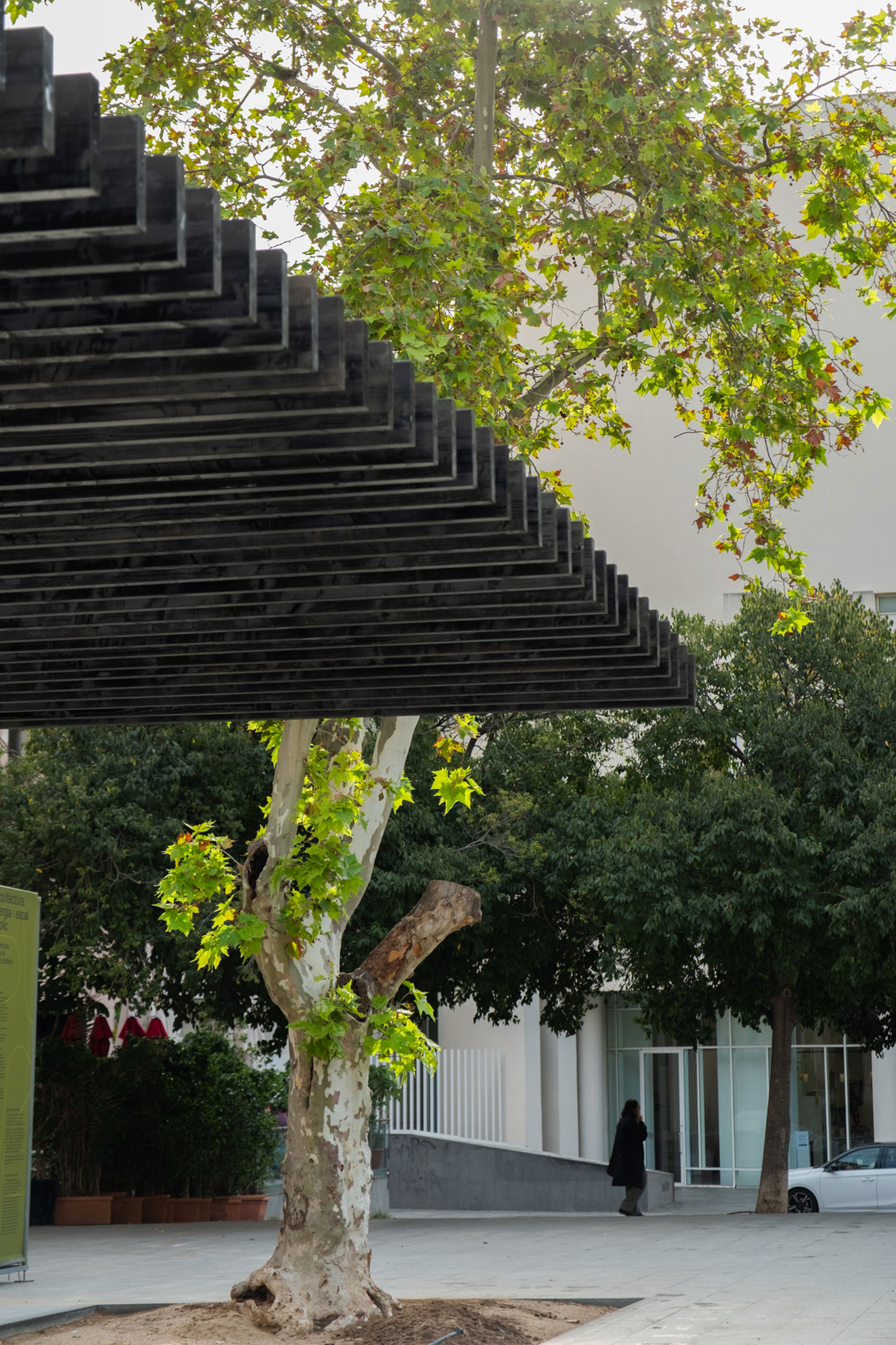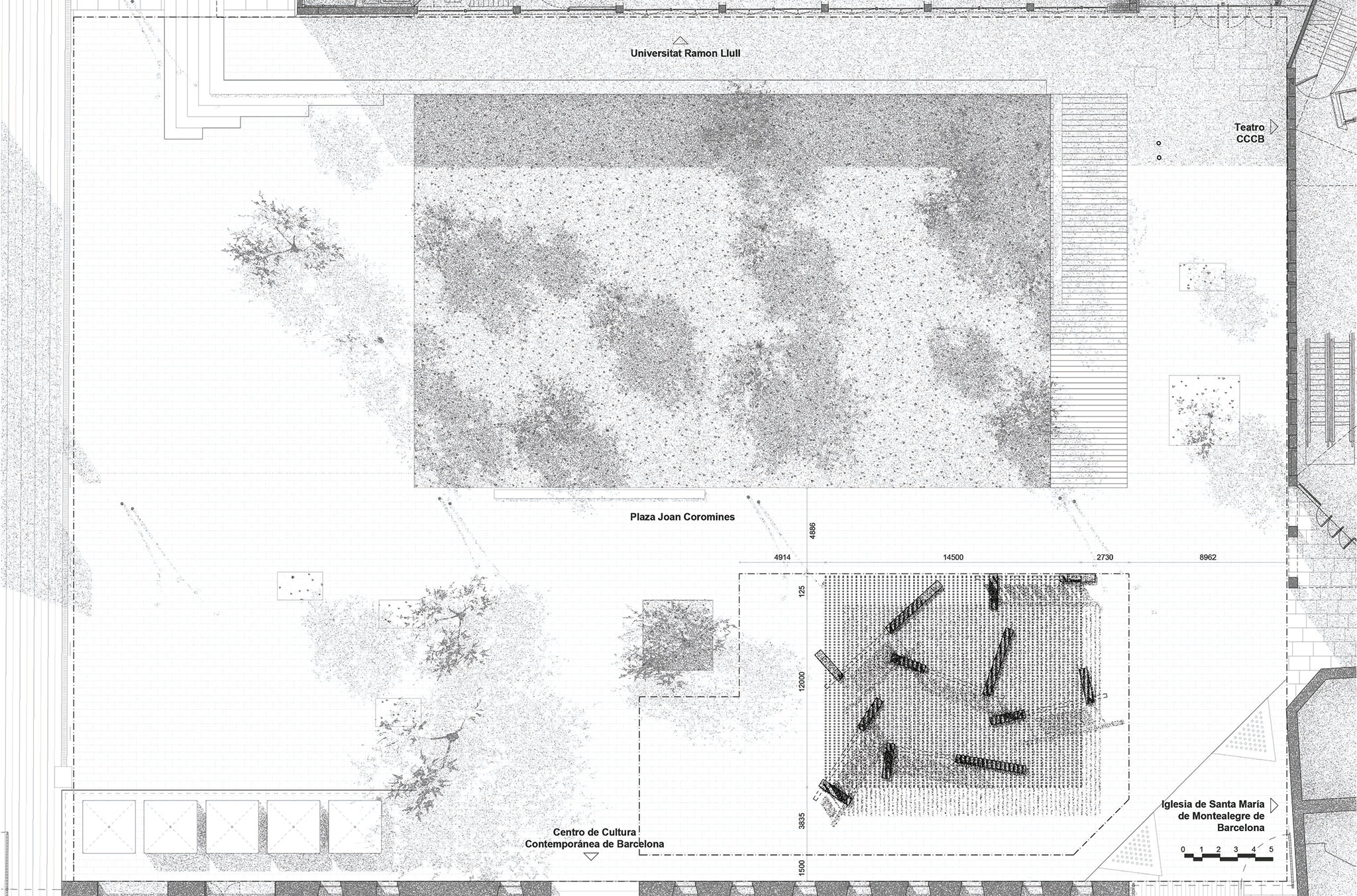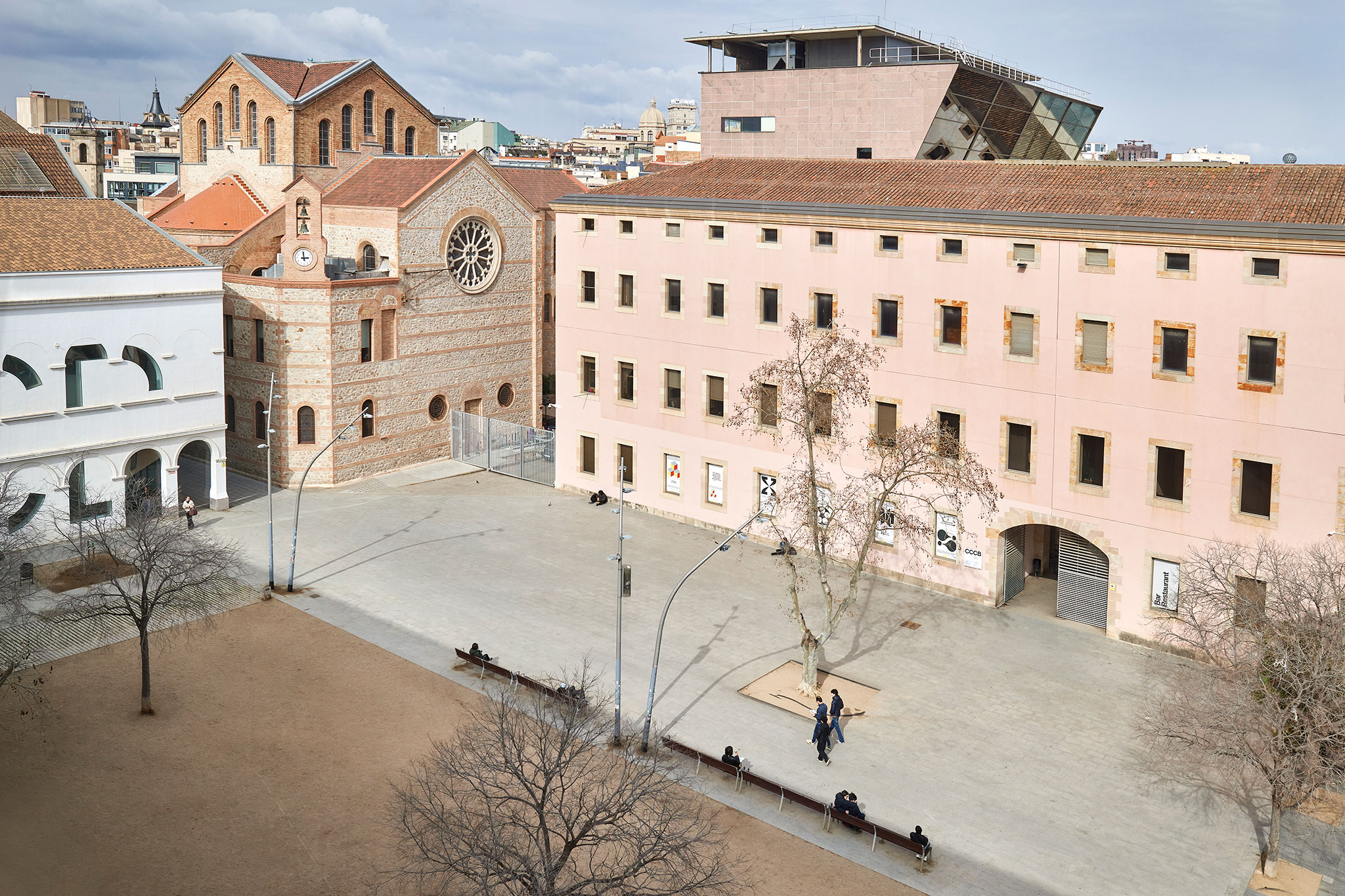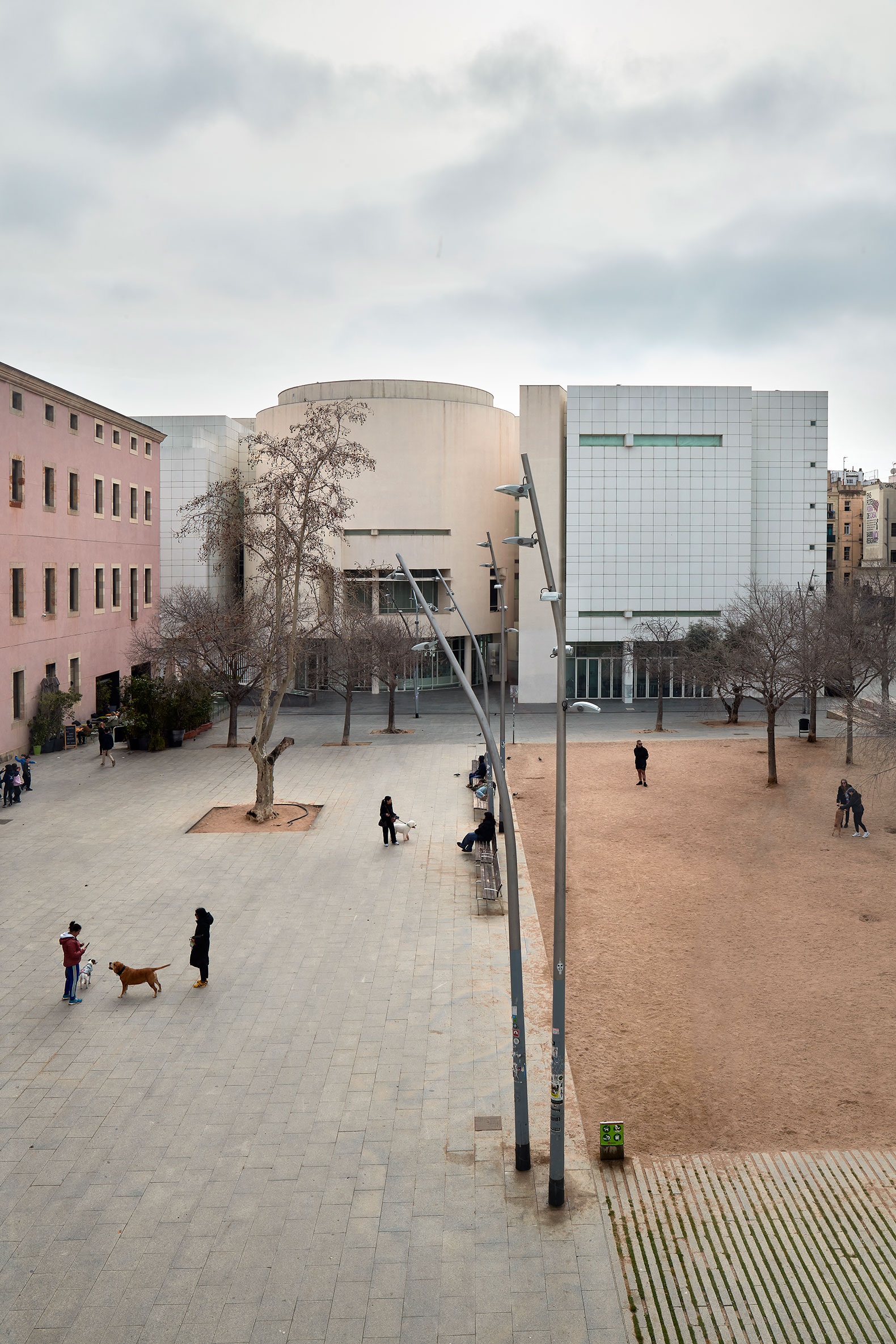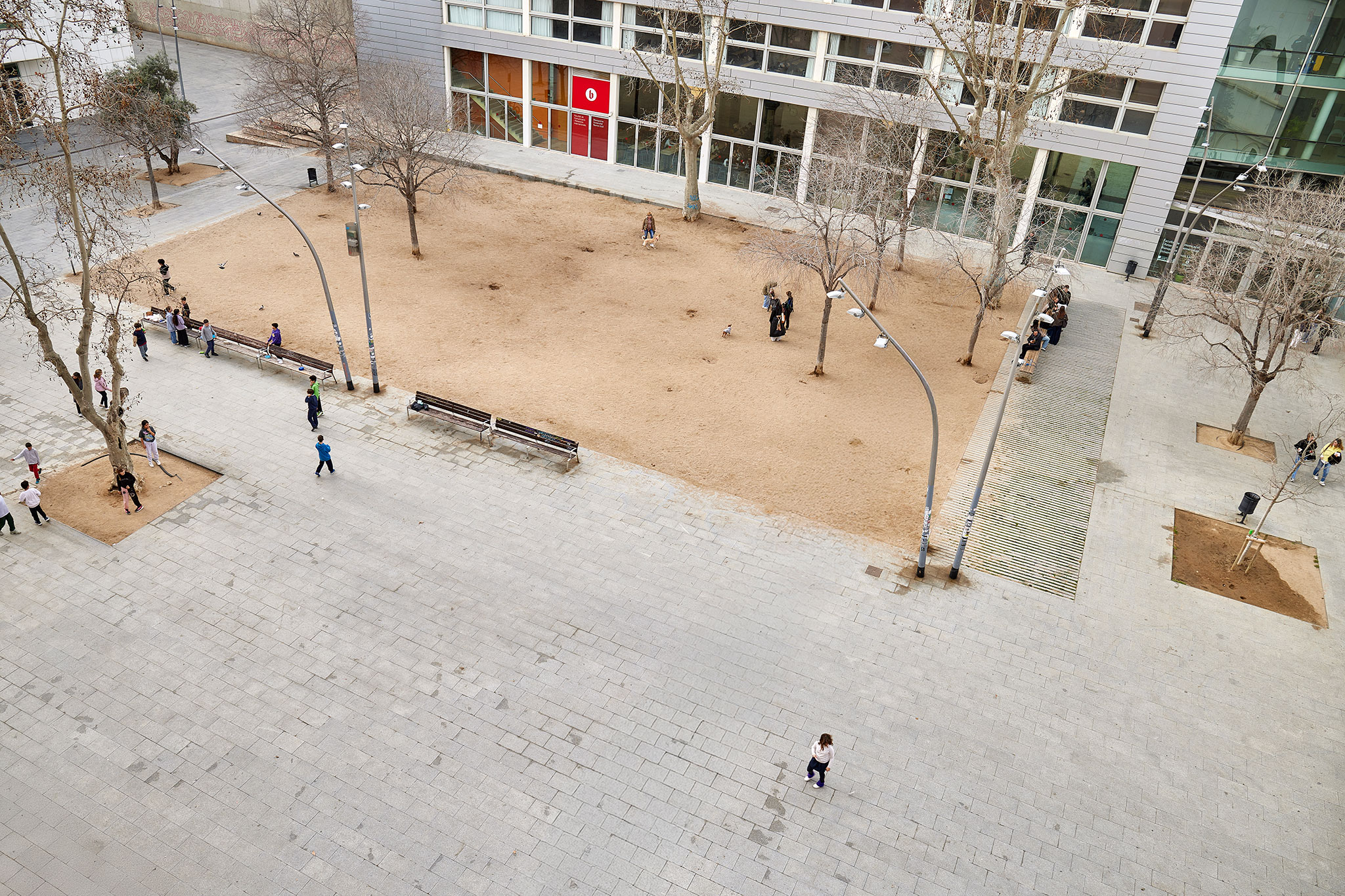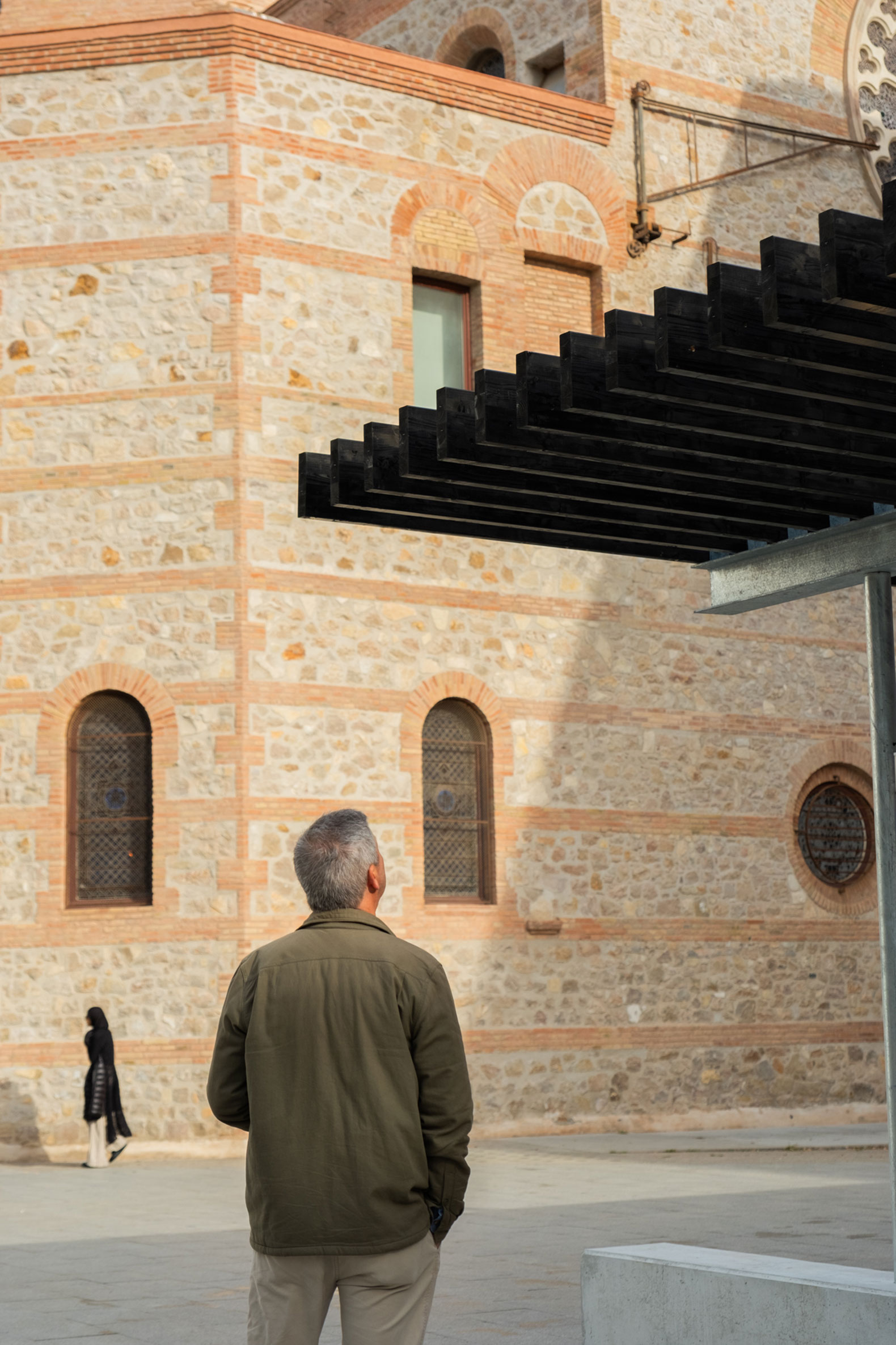
"Una sombra improbable", a project by architects Pablo Schmidt Kamp, Rodrigo Pérez Vásquez, and Santiago Rodríguez Prada, explores the projection of shifting patterns onto the ground throughout the day. By using its structure to manipulate sunlight, the project transforms light into an architectural resource that bridges public space, movement, and urban change.
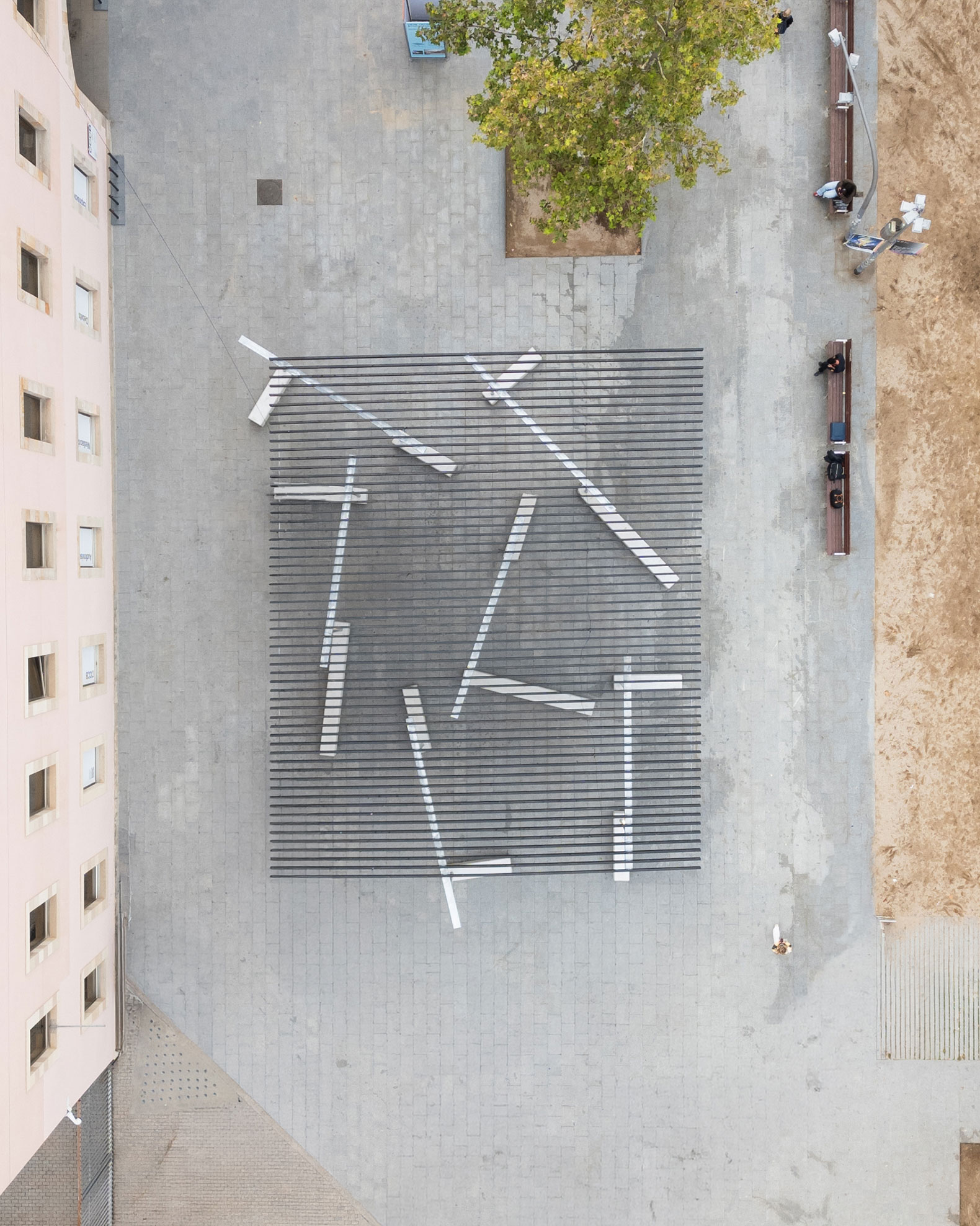
"Una sombra improbable" by Pablo Schmidt Kamp, Rodrigo Pérez Vásquez and Santiago Rodríguez Prada. Photograph by Artworks.
Light, shadow, and social energy in the public realm
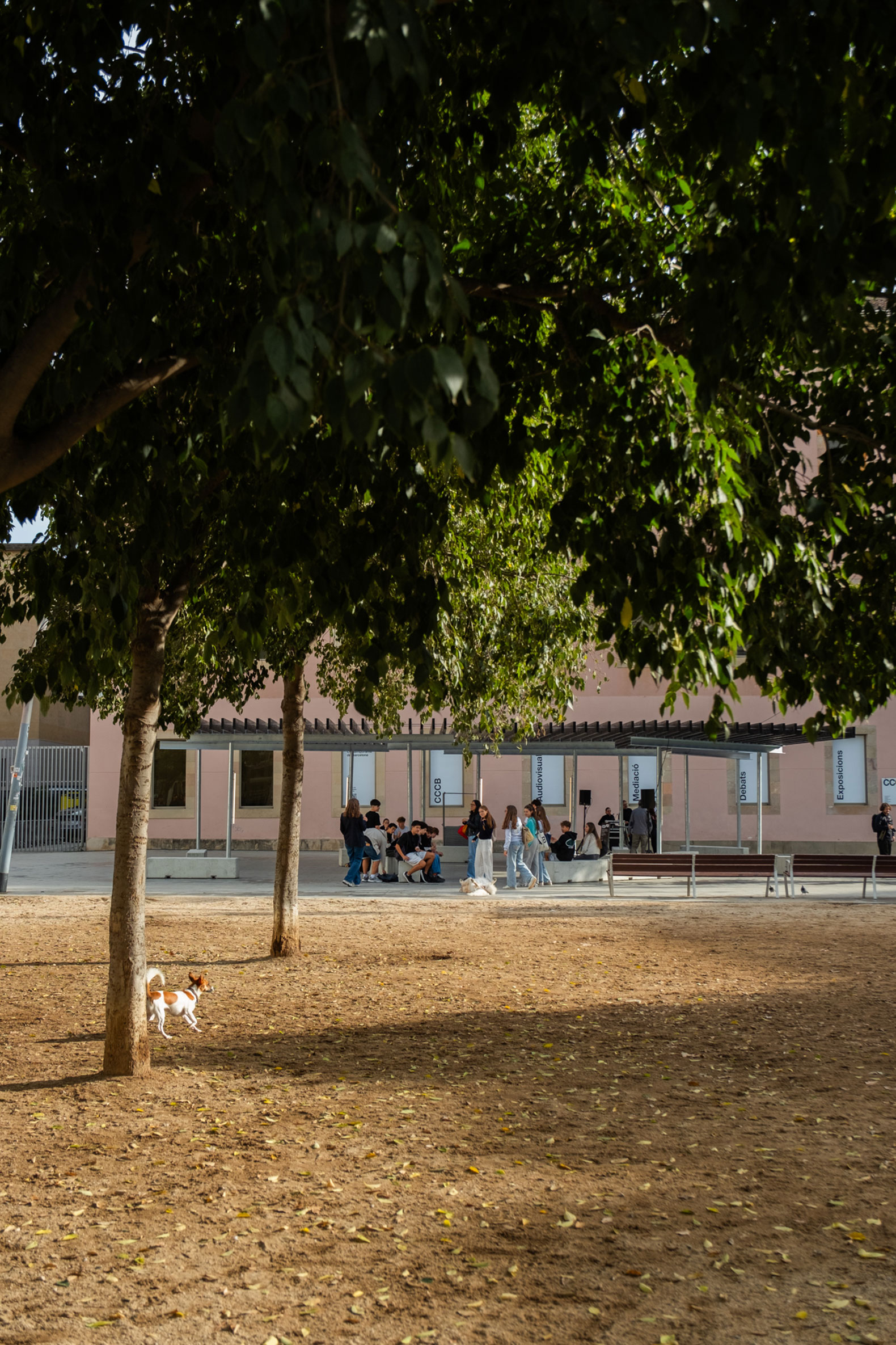
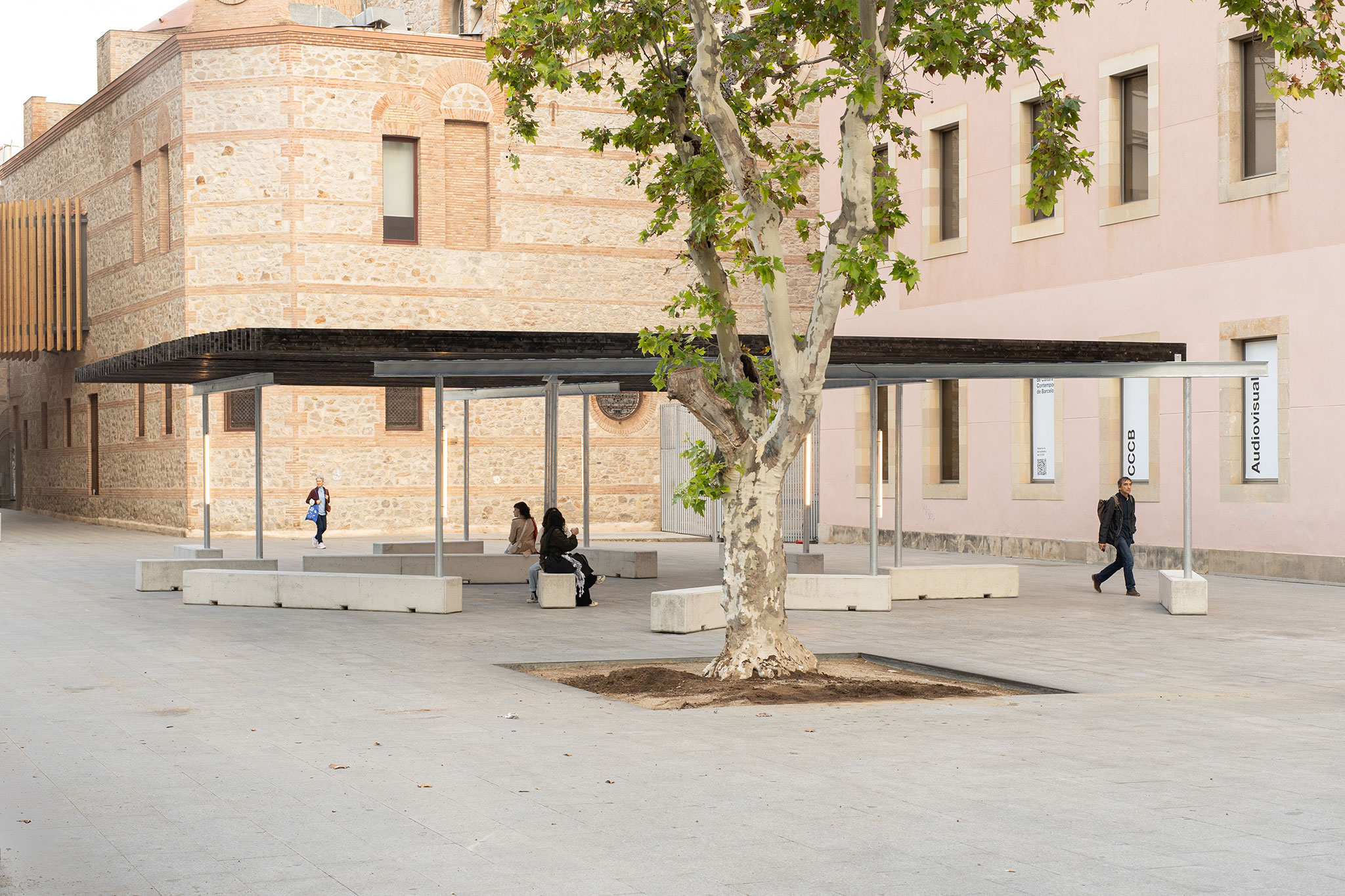
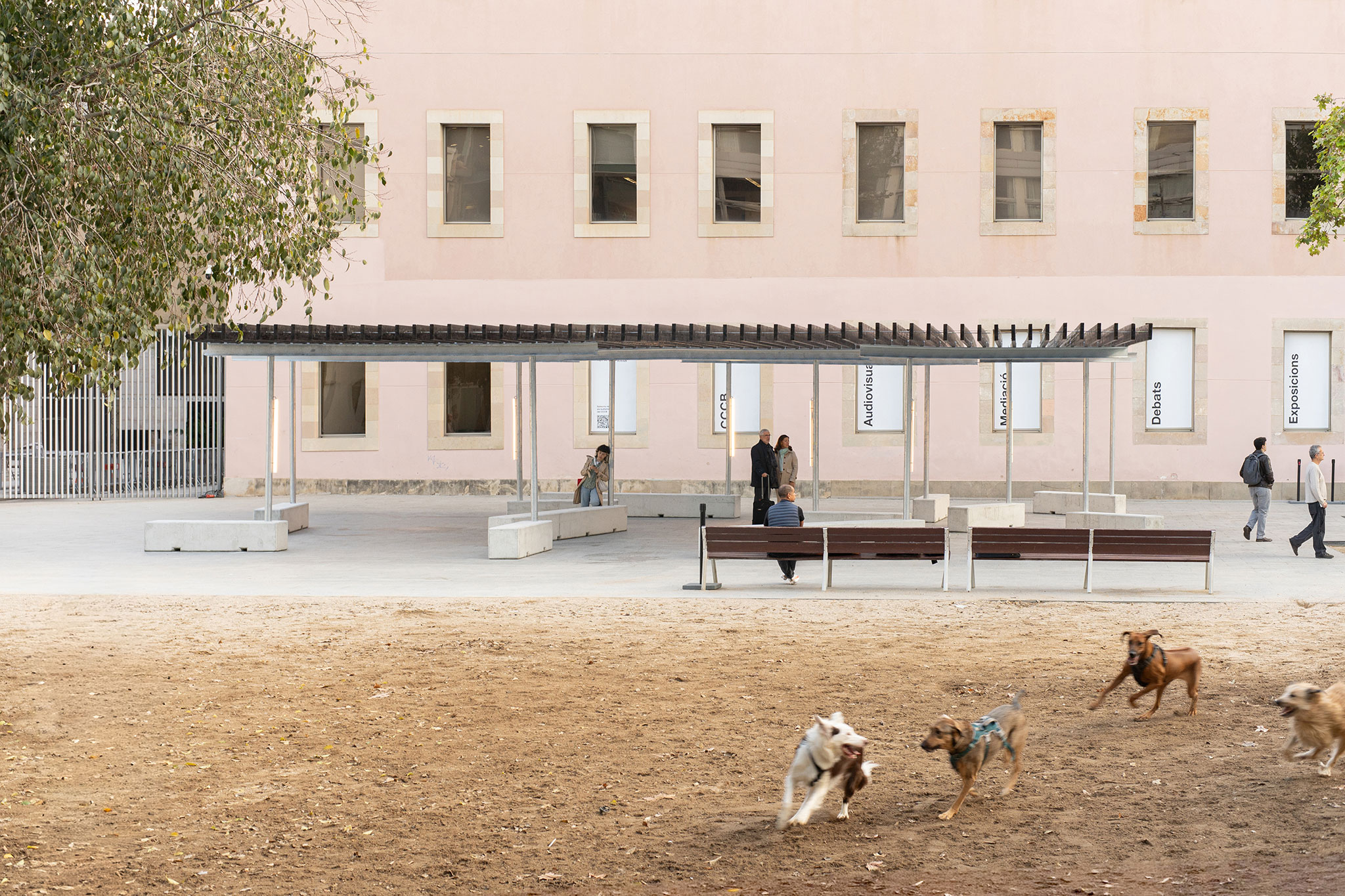
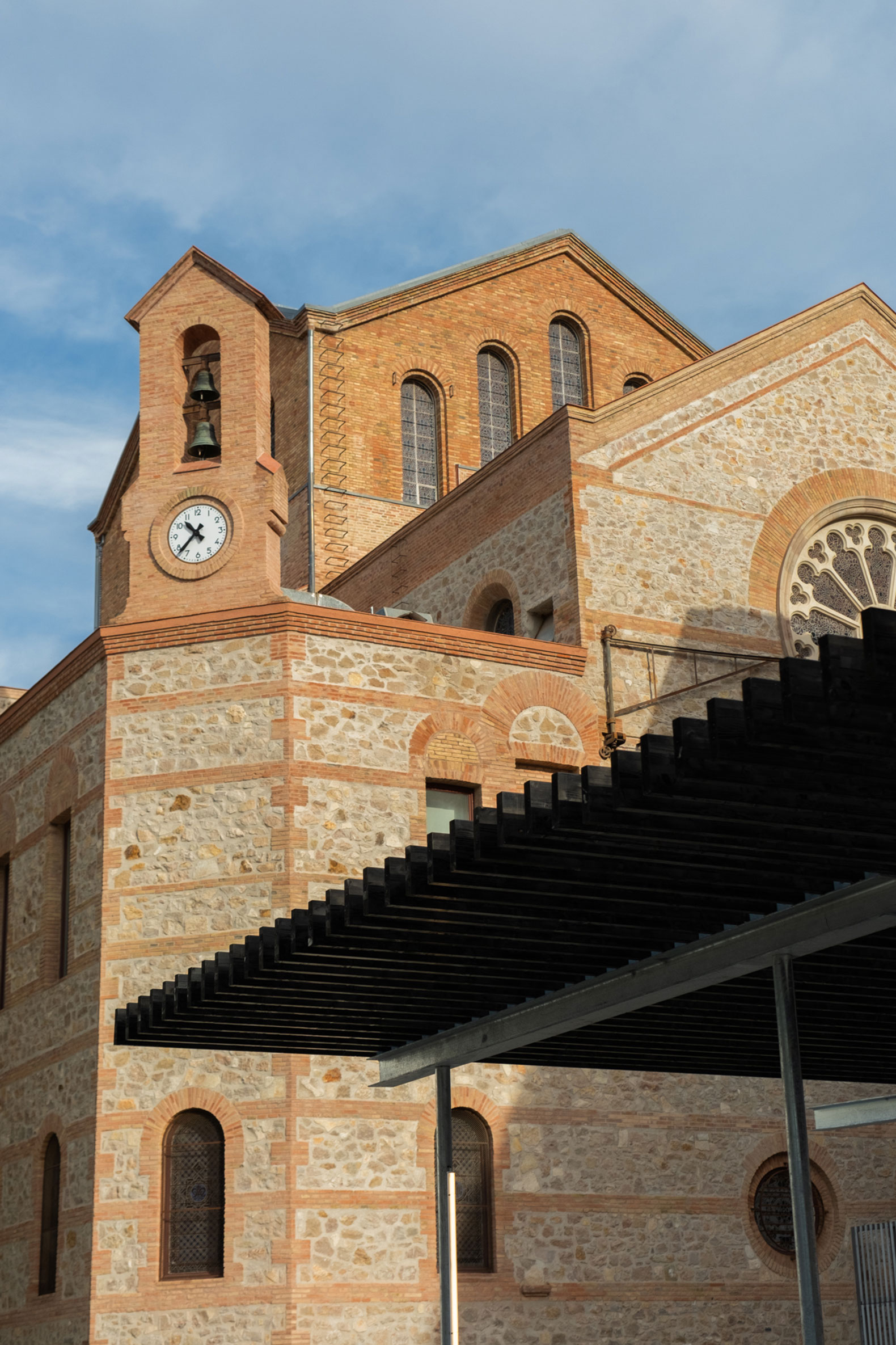
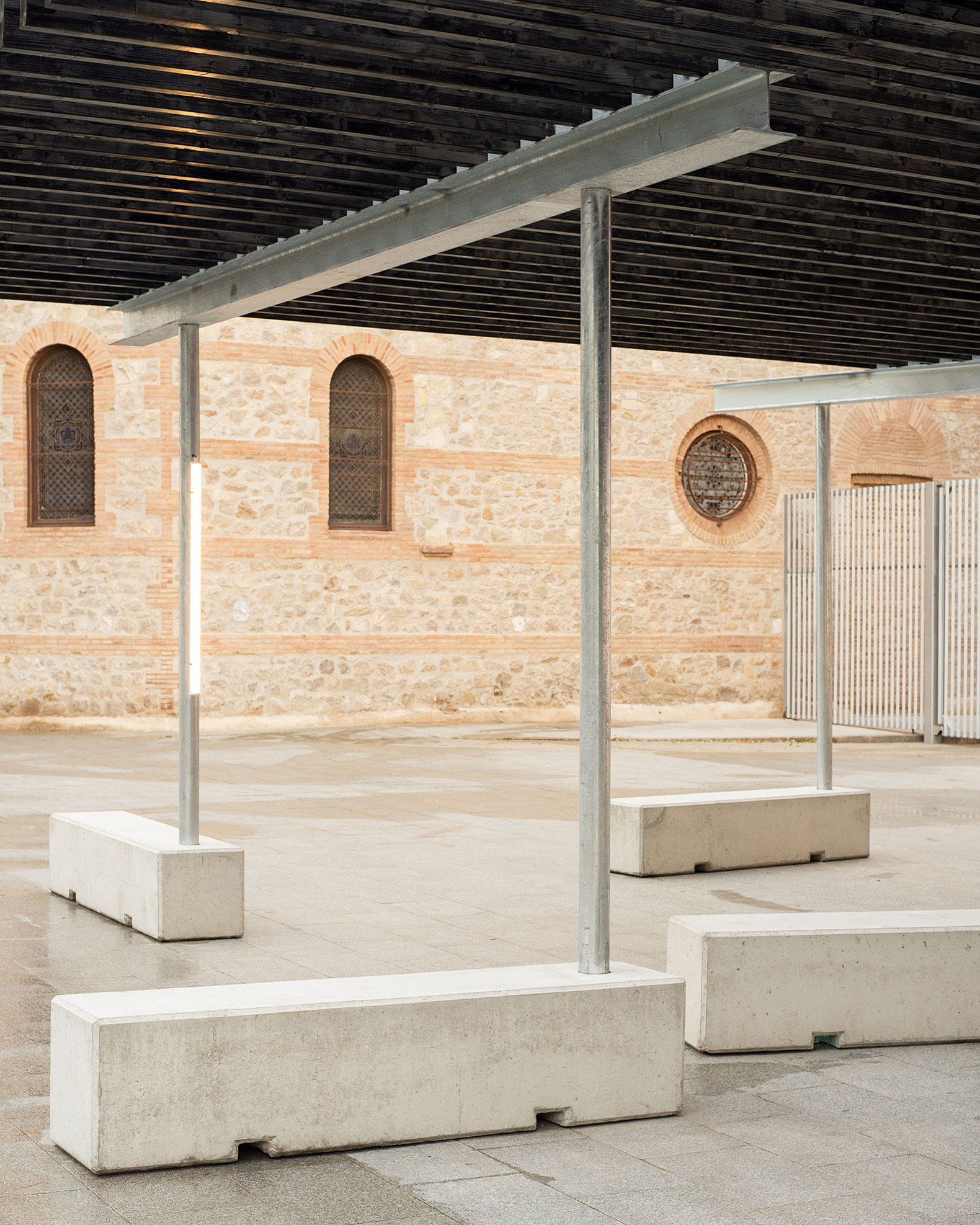
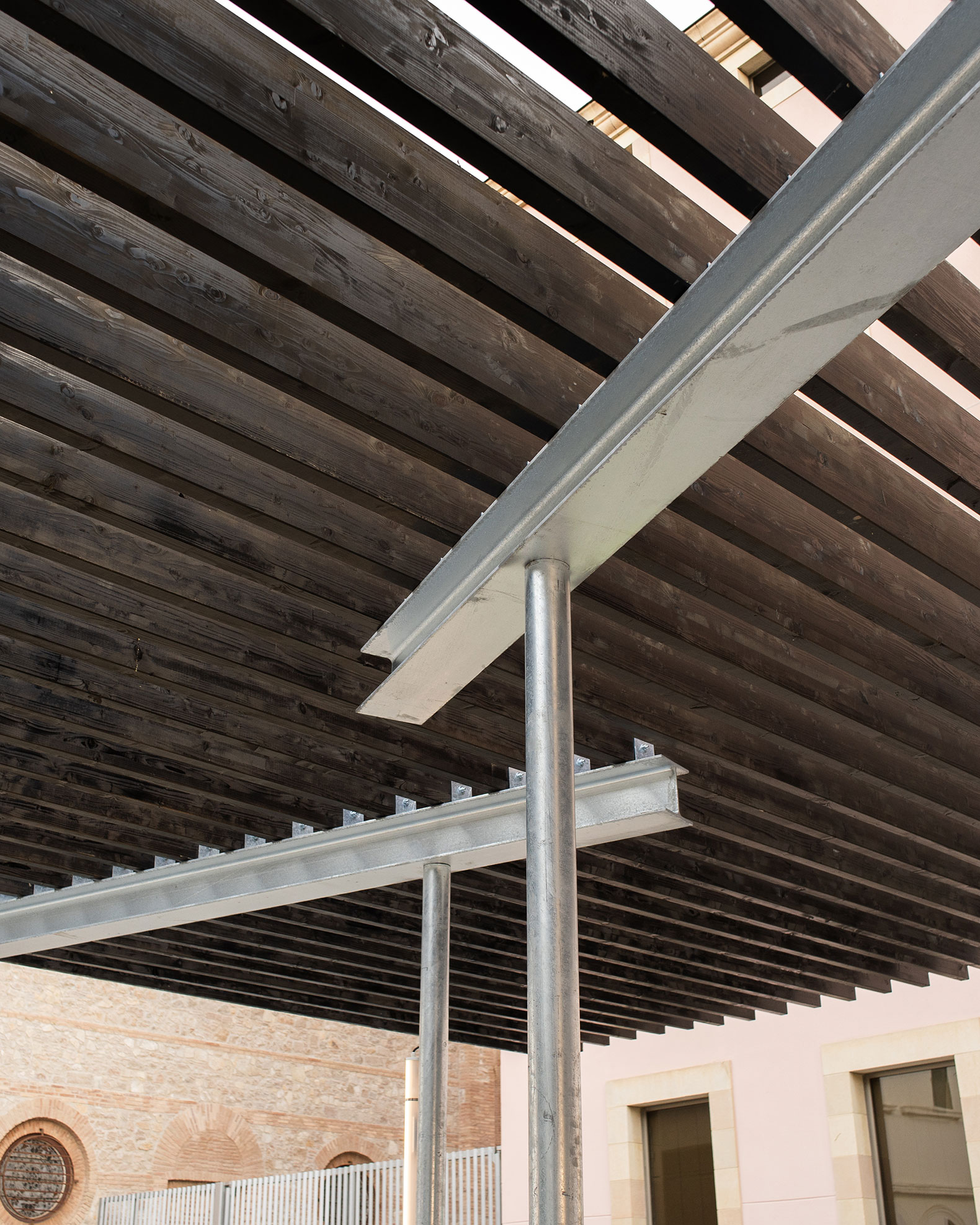
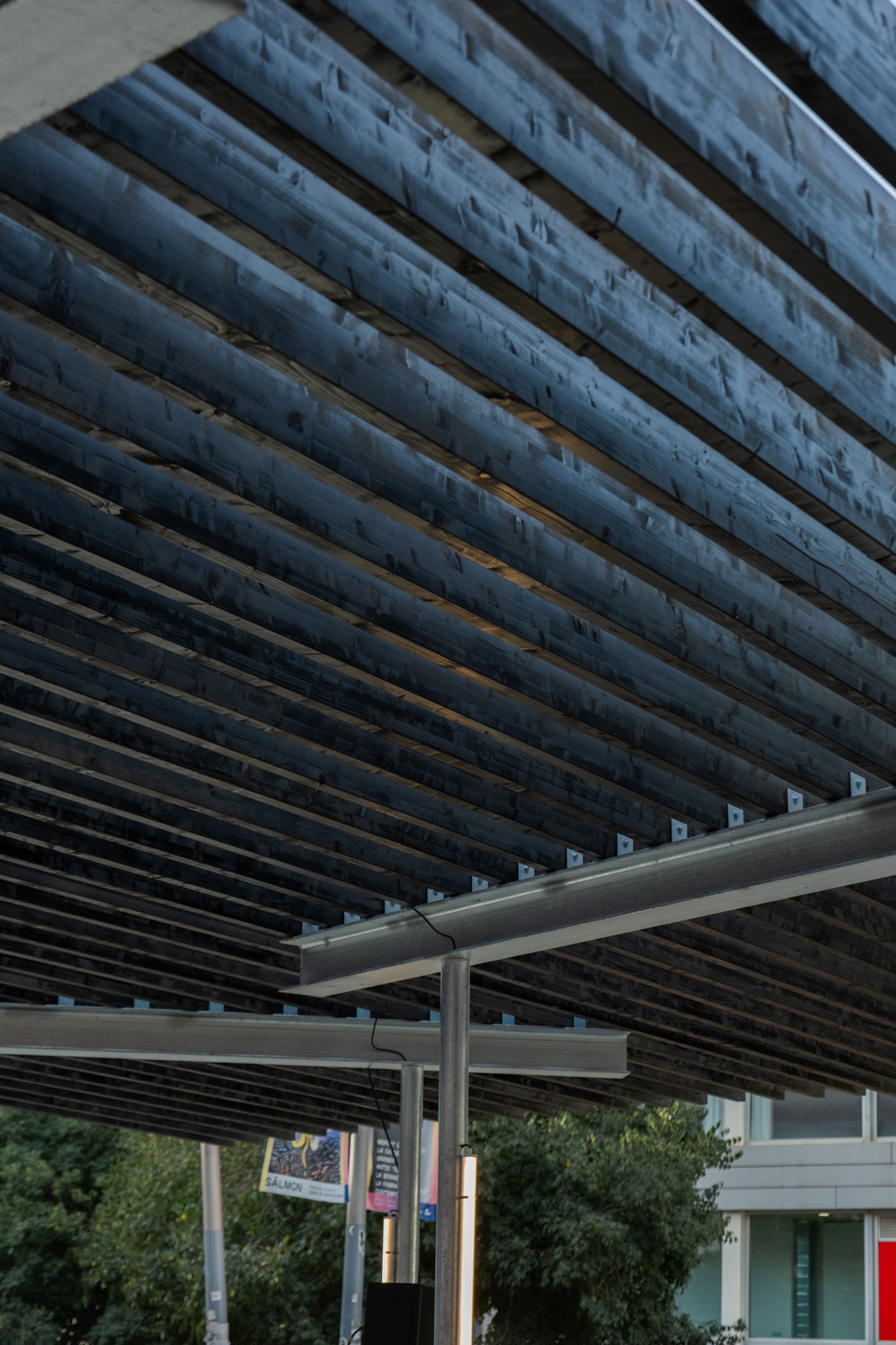
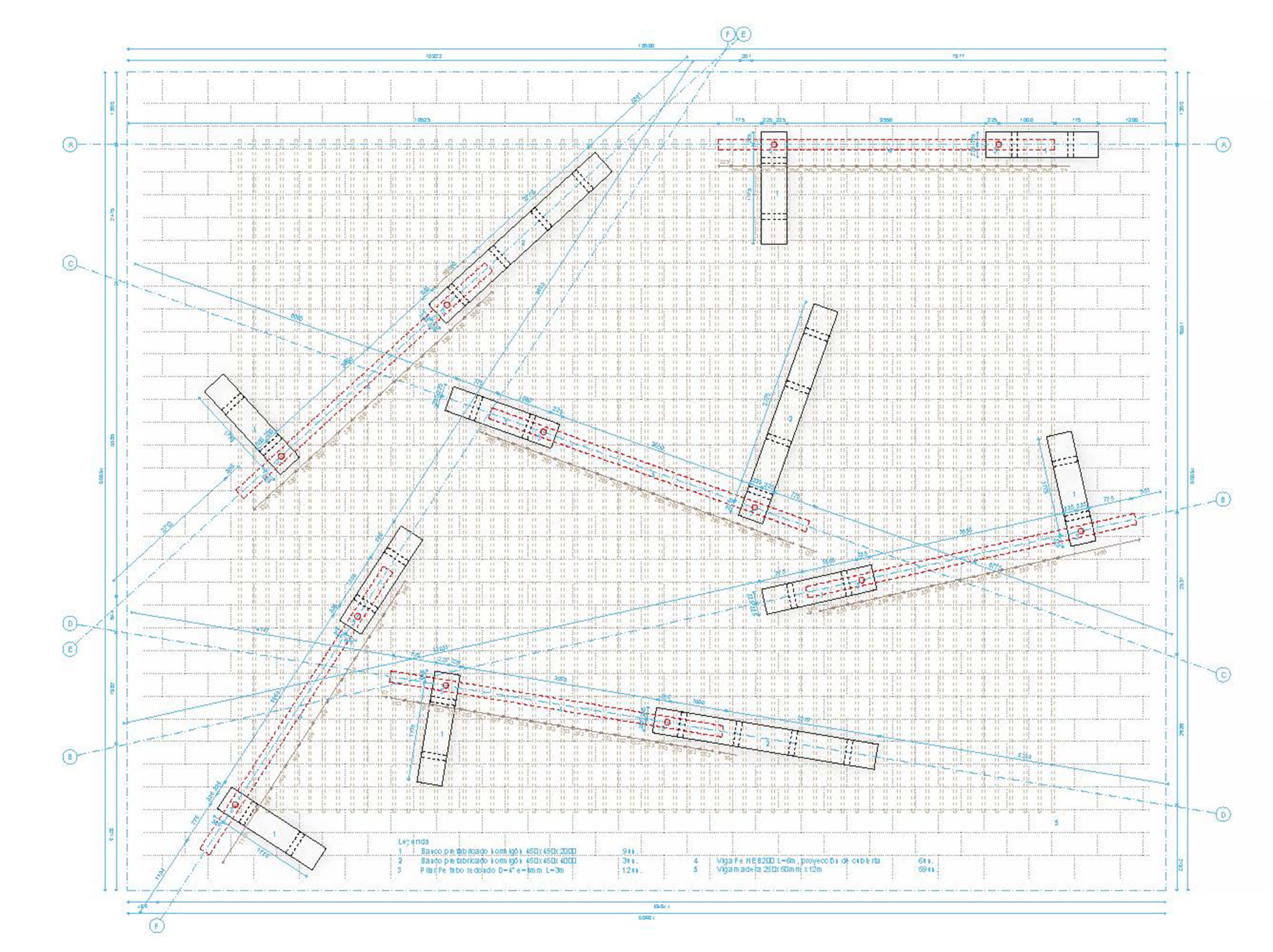
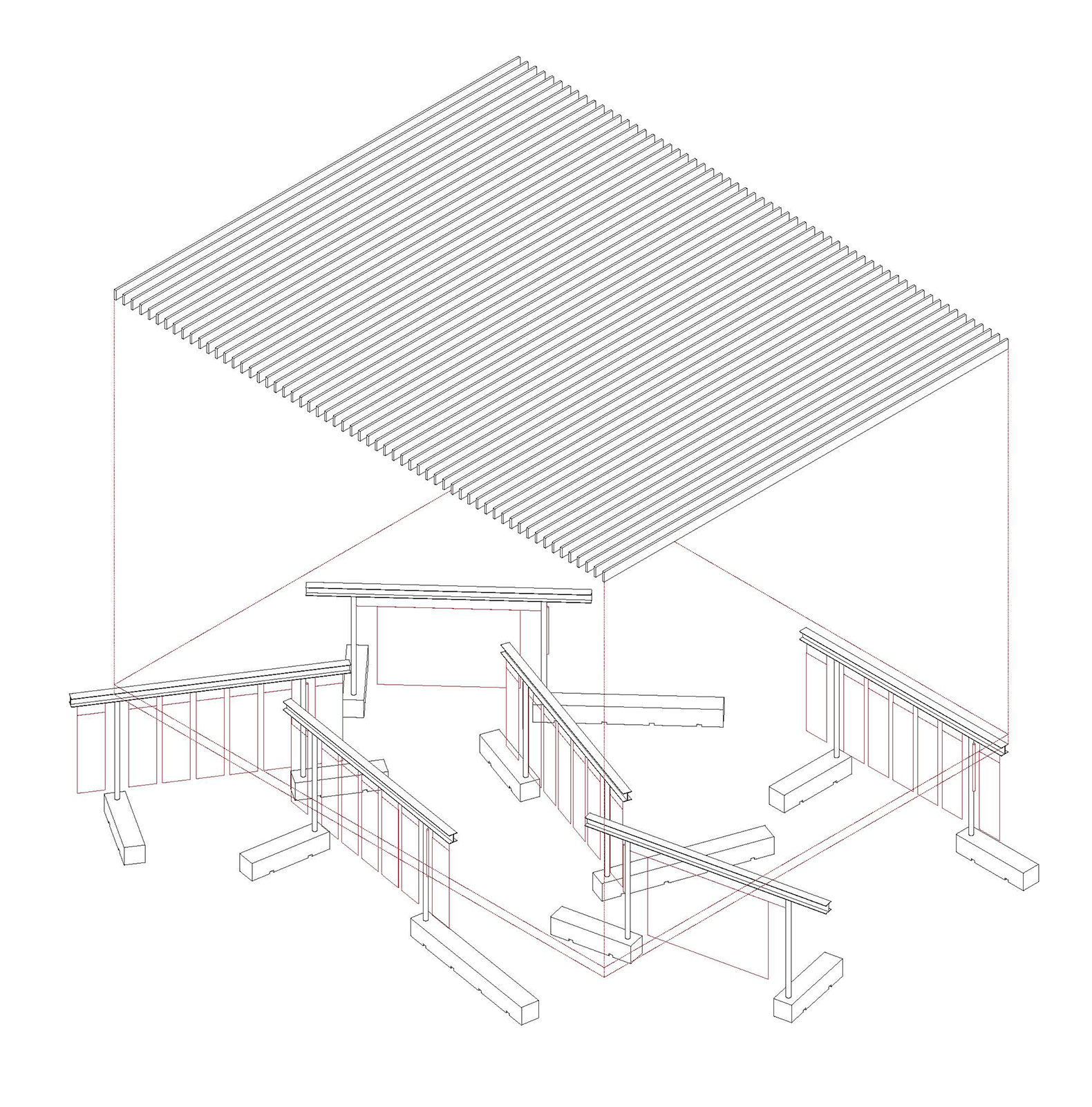
The project consists of an open, versatile structure composed of steel modules and a framework of timber beams, supported by concrete bases that also serve as benches. As sunlight passes through the installation, it casts ever-changing shadows that alter the perception of the surroundings as the day progresses. In this way, the structure turns the plaza into a space for gathering, play, and social interaction, inviting the public to move through it, rest, and engage in a variety of activities.
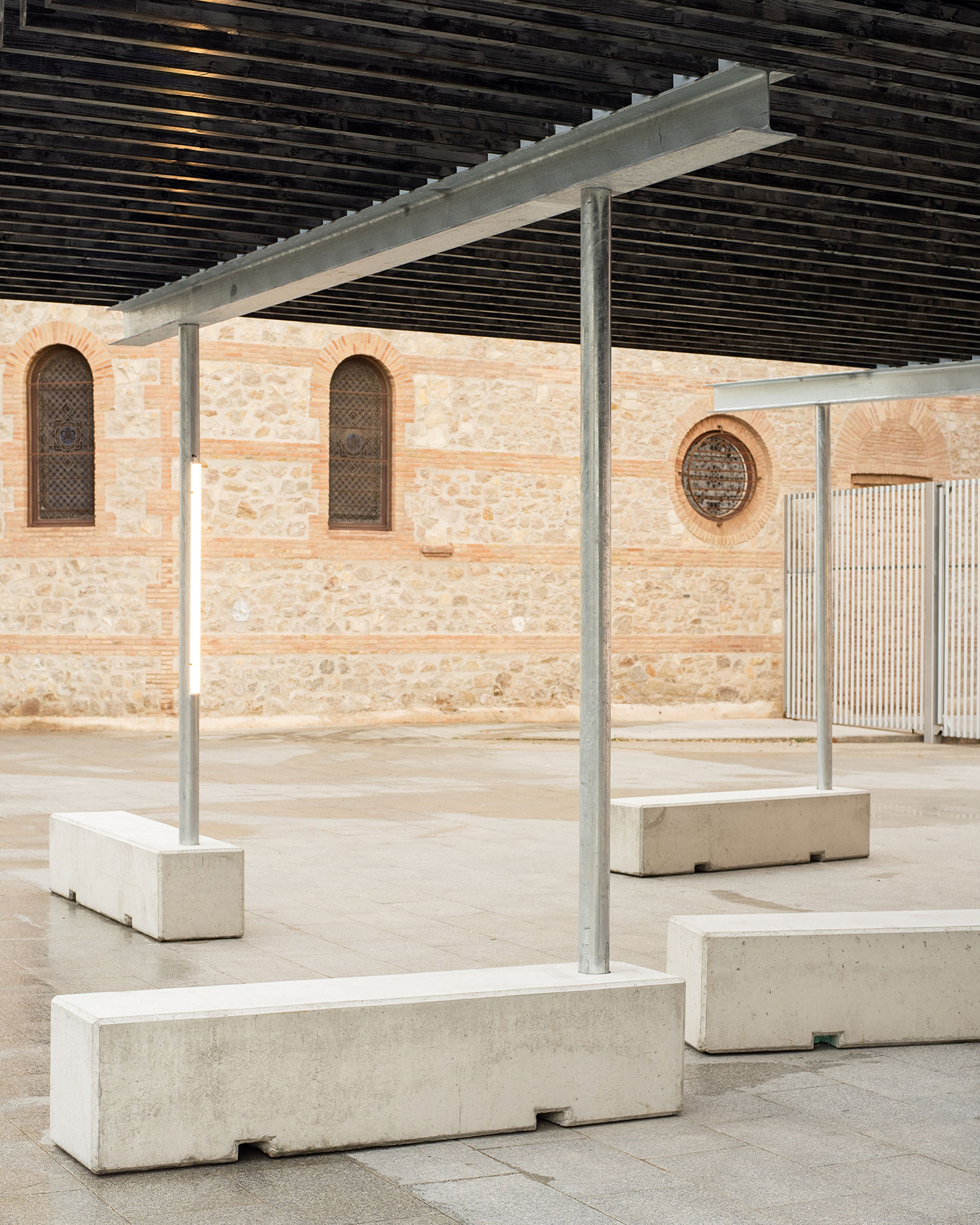
"Una sombra improbable" by Pablo Schmidt Kamp, Rodrigo Pérez Vásquez and Santiago Rodríguez Prada. Photograph by Artworks.
Aligned with the thematic focus of TAC! 2026 —which centers on energy as a transformative force for cities— the pavilion highlights the social energy that emerges from shared activities and human connections. Thus, "Una sombra improbable" invites reflection on urban dynamism and the capacity of architecture to forge new bonds between the public, the spaces they inhabit, and the evolution of the city.