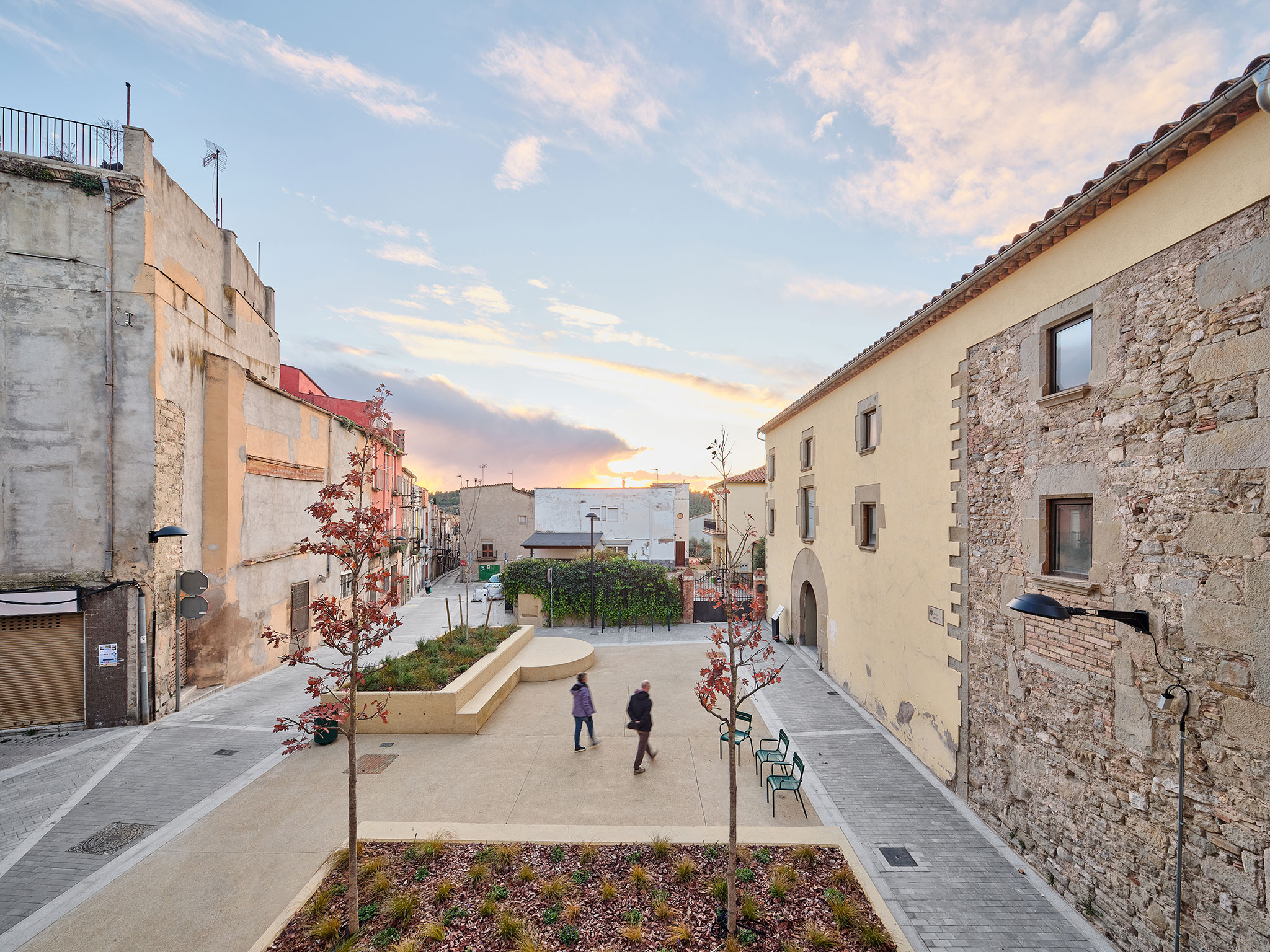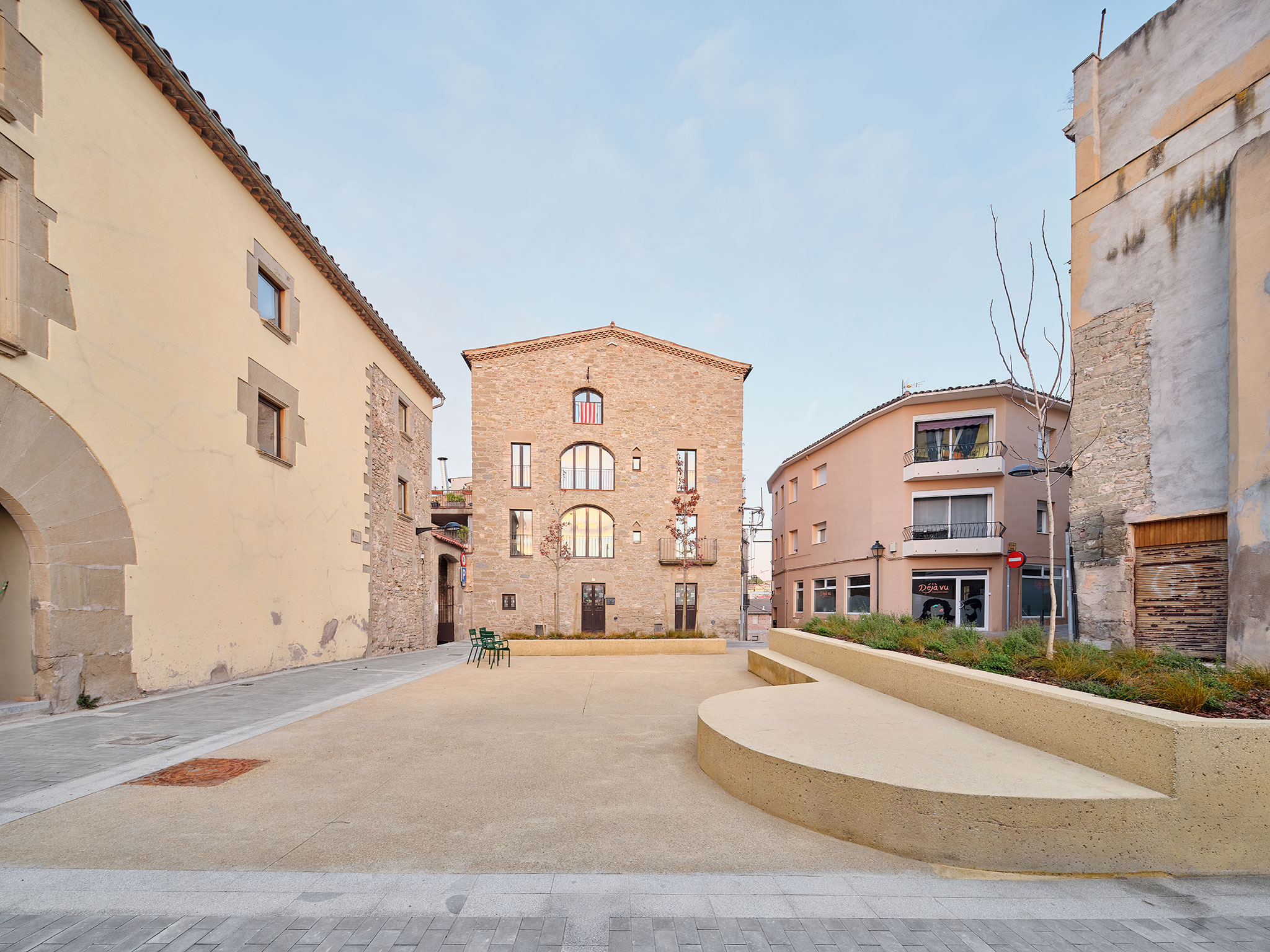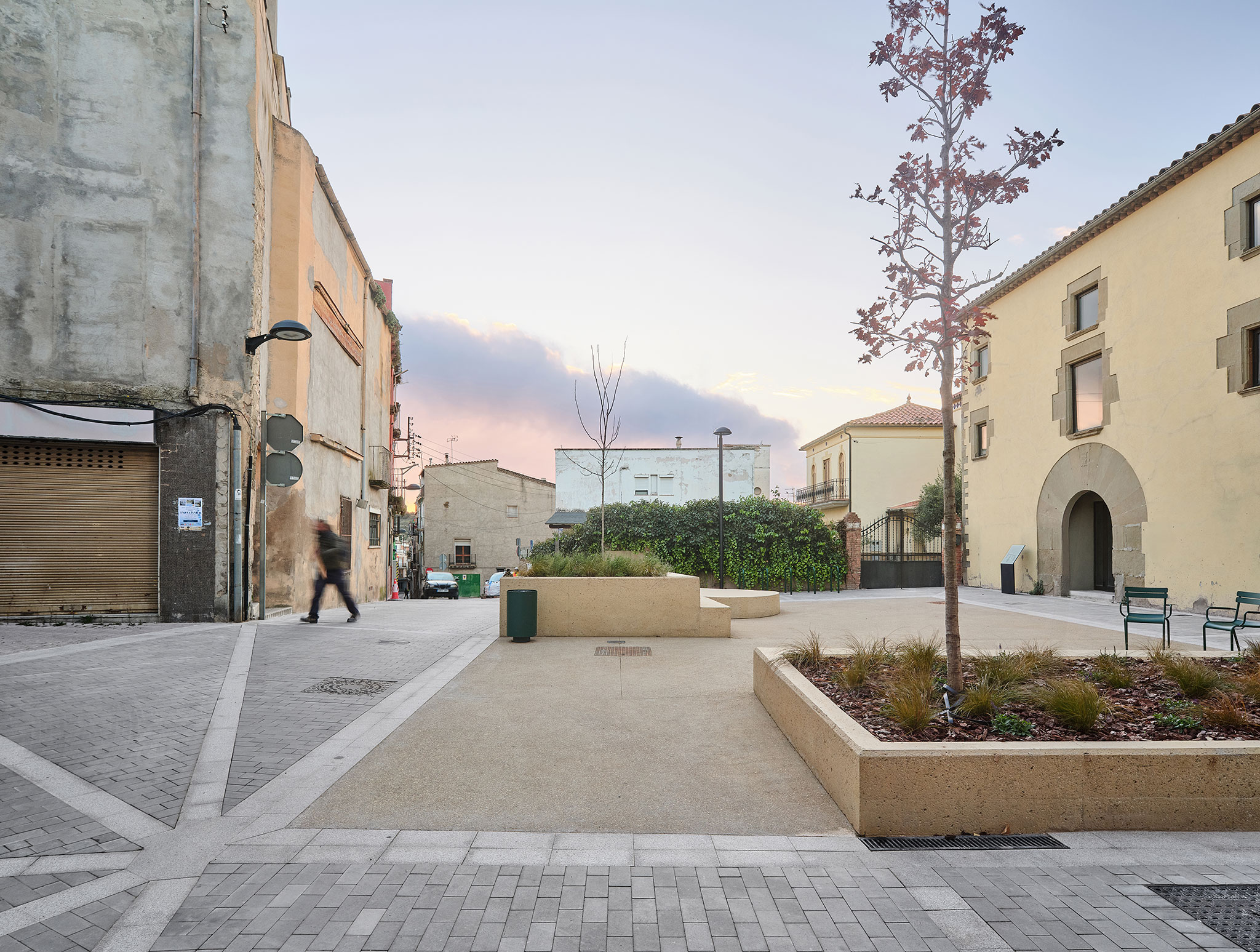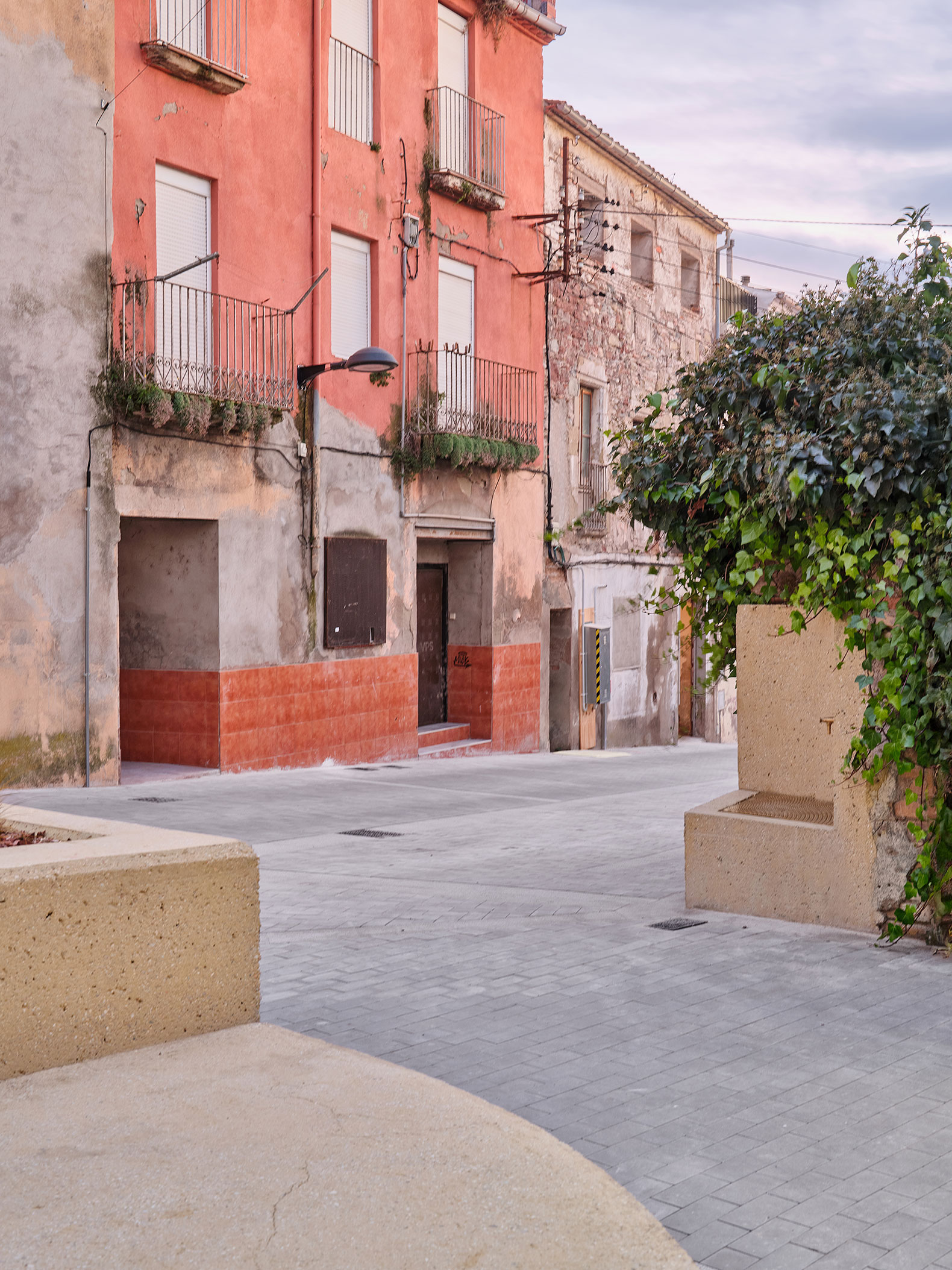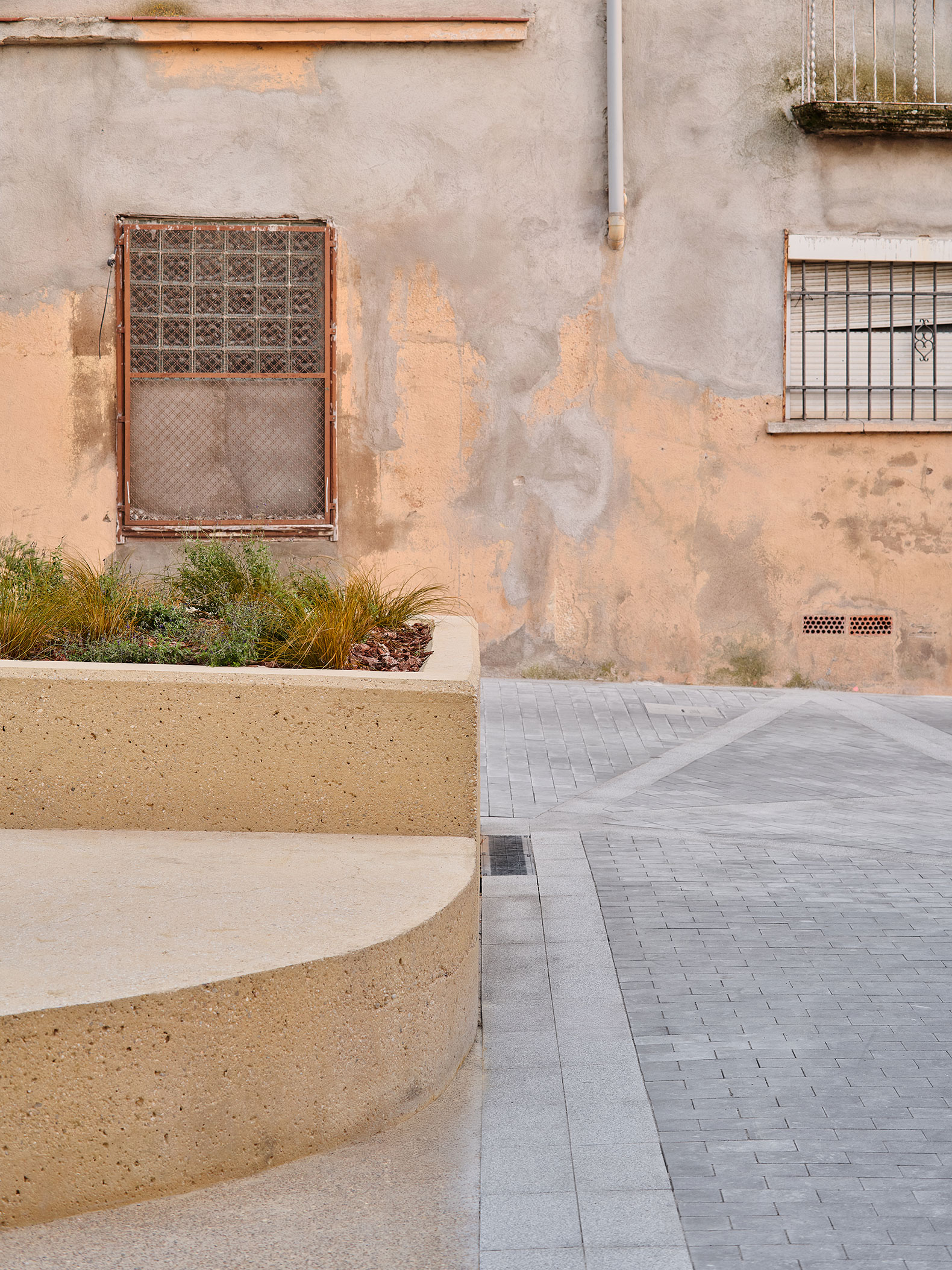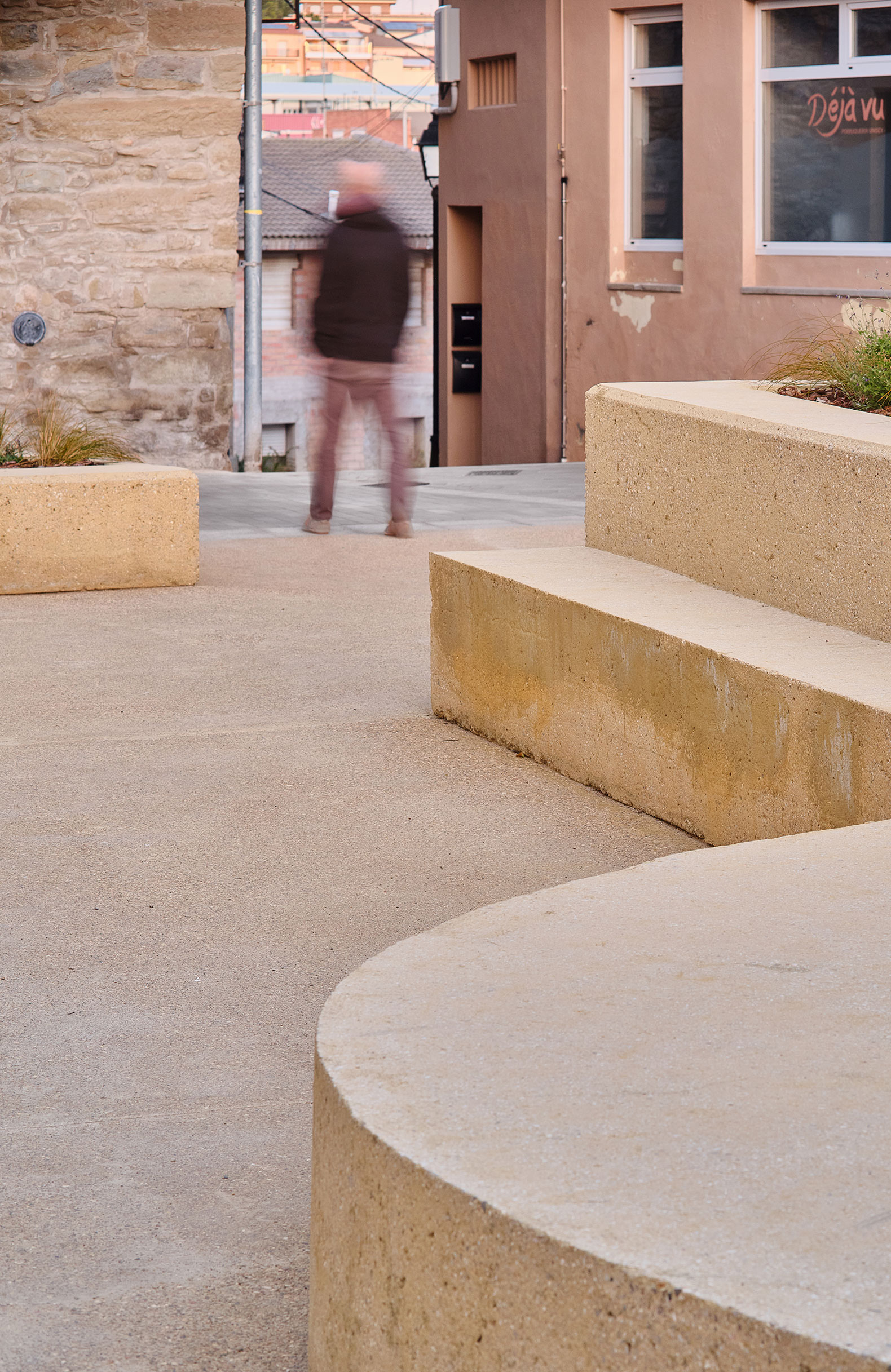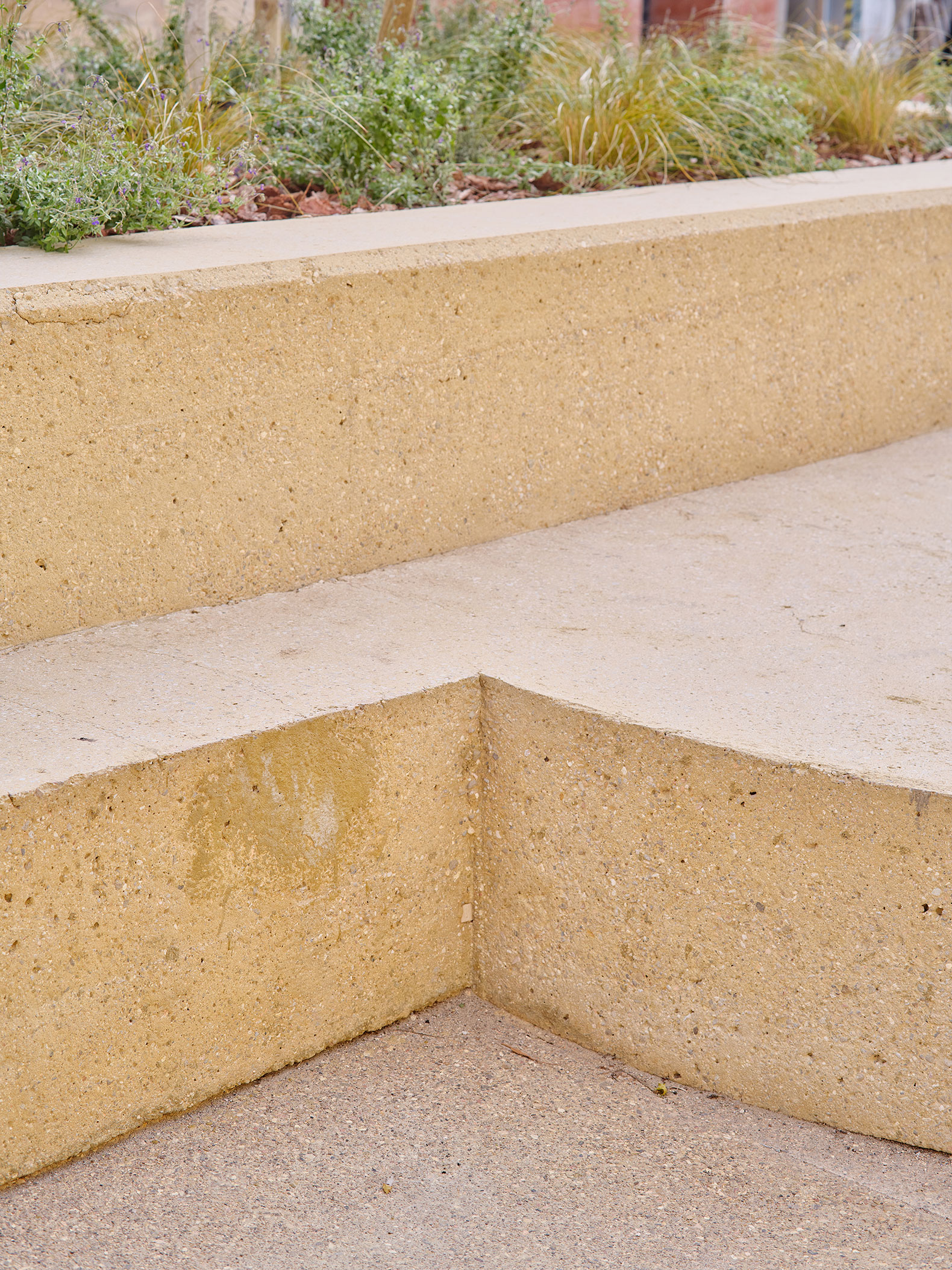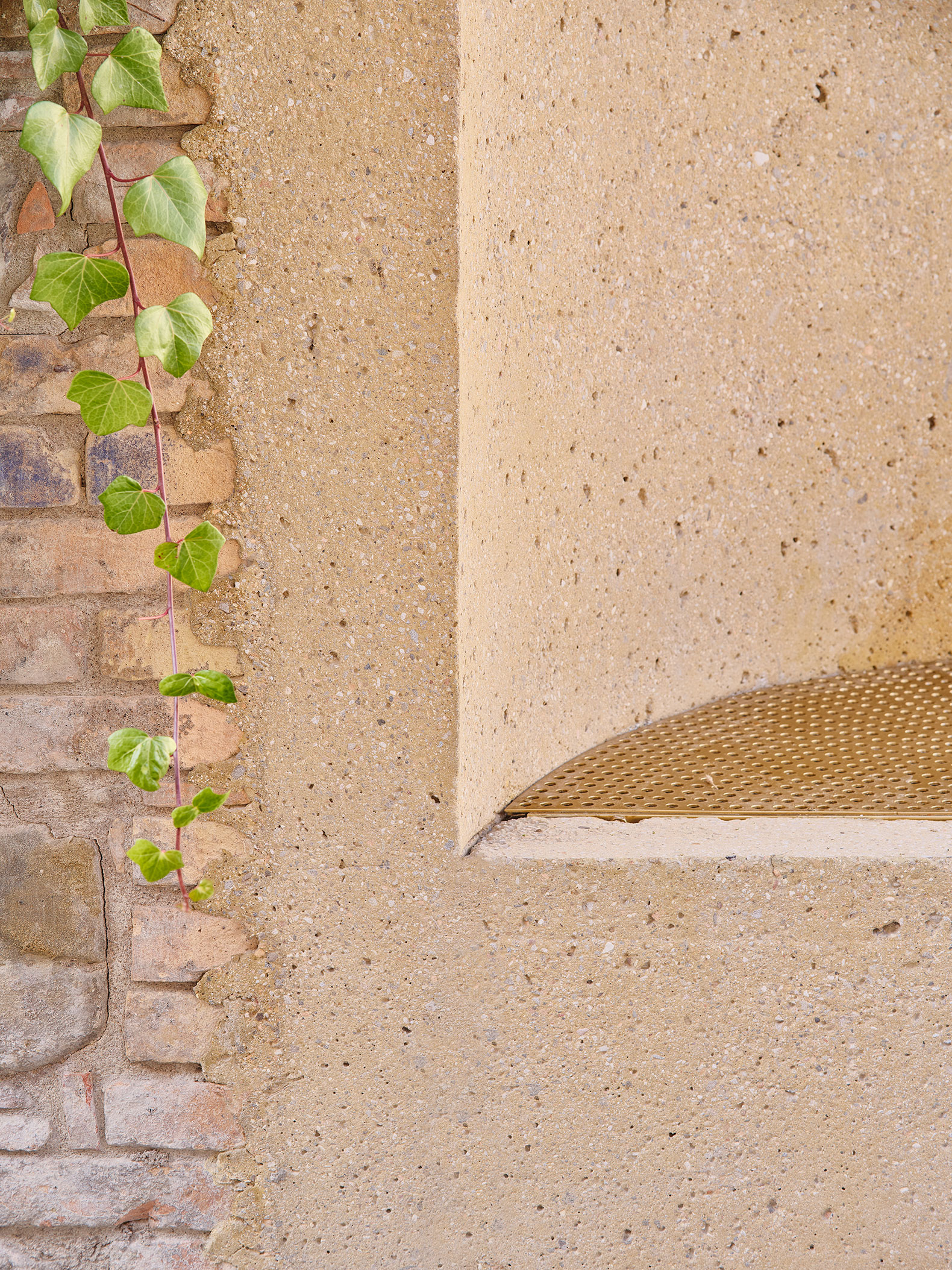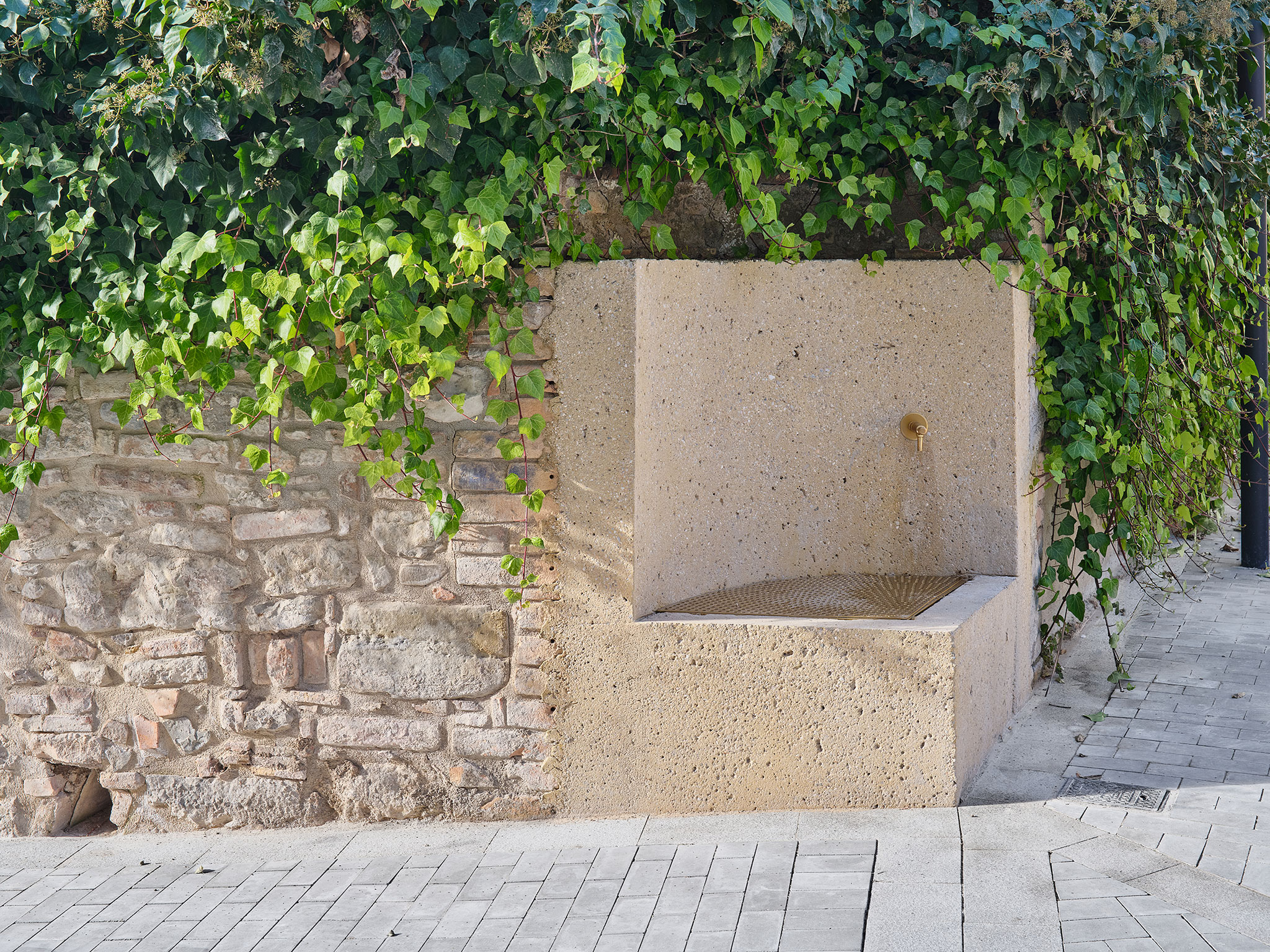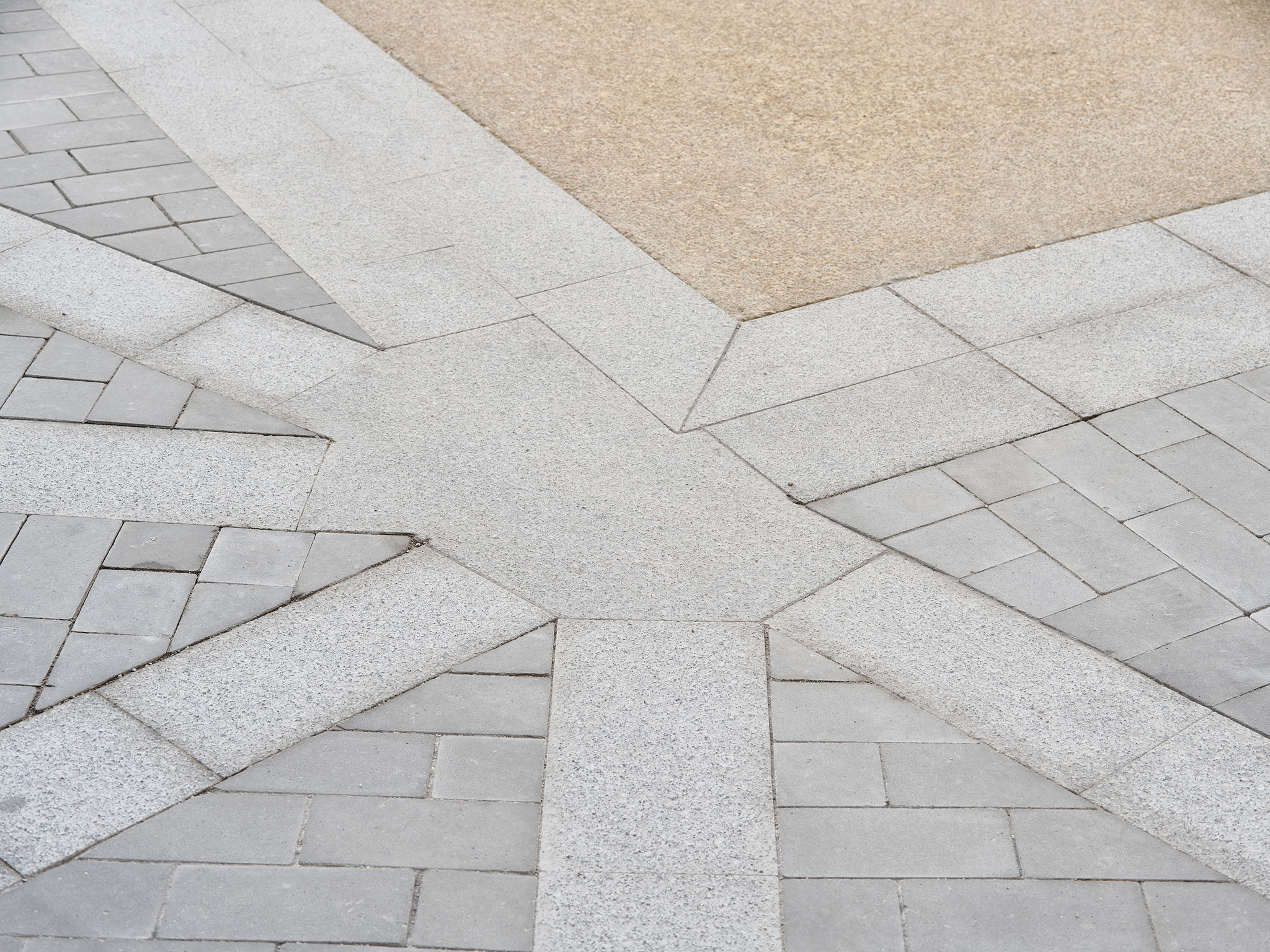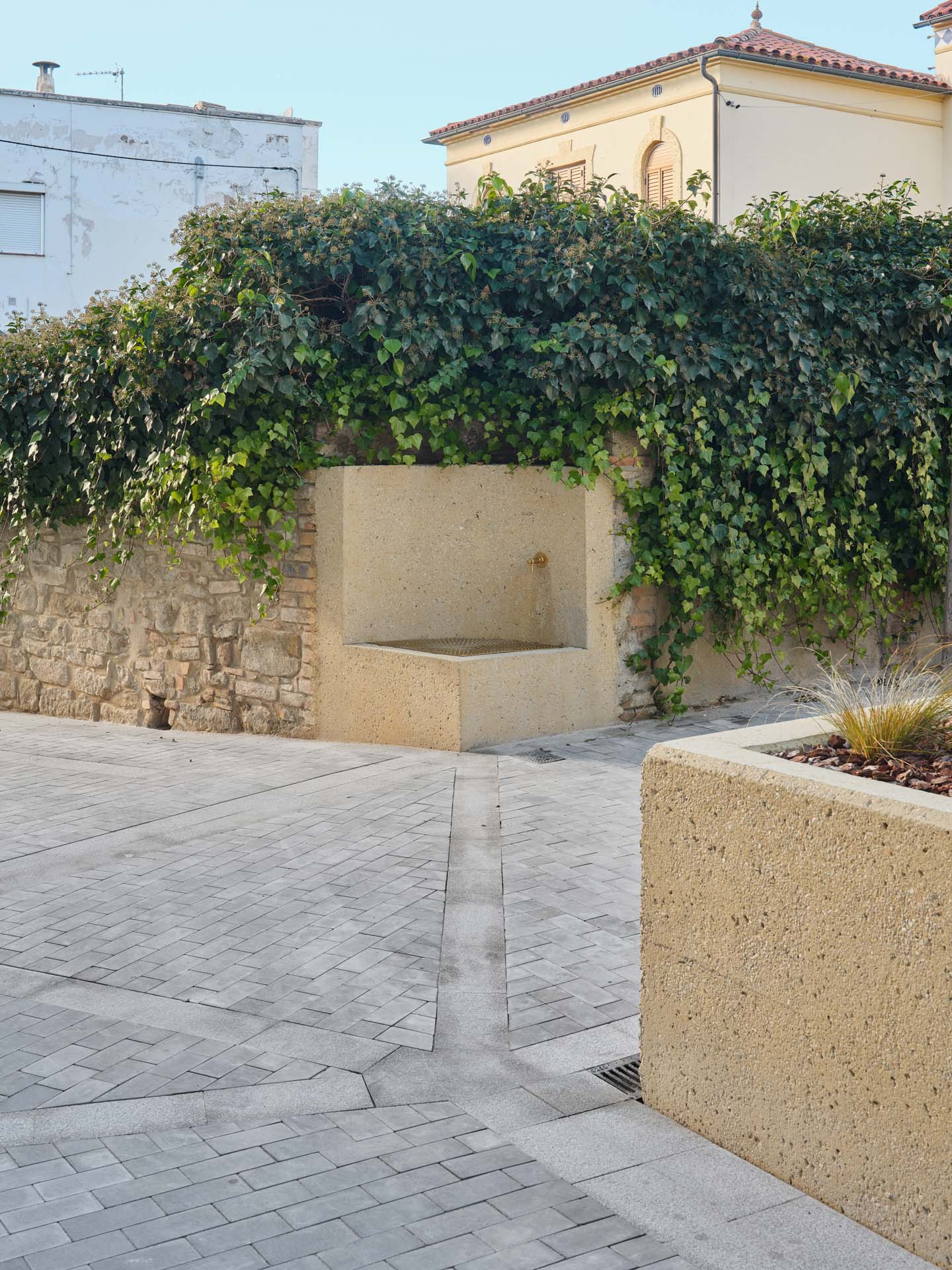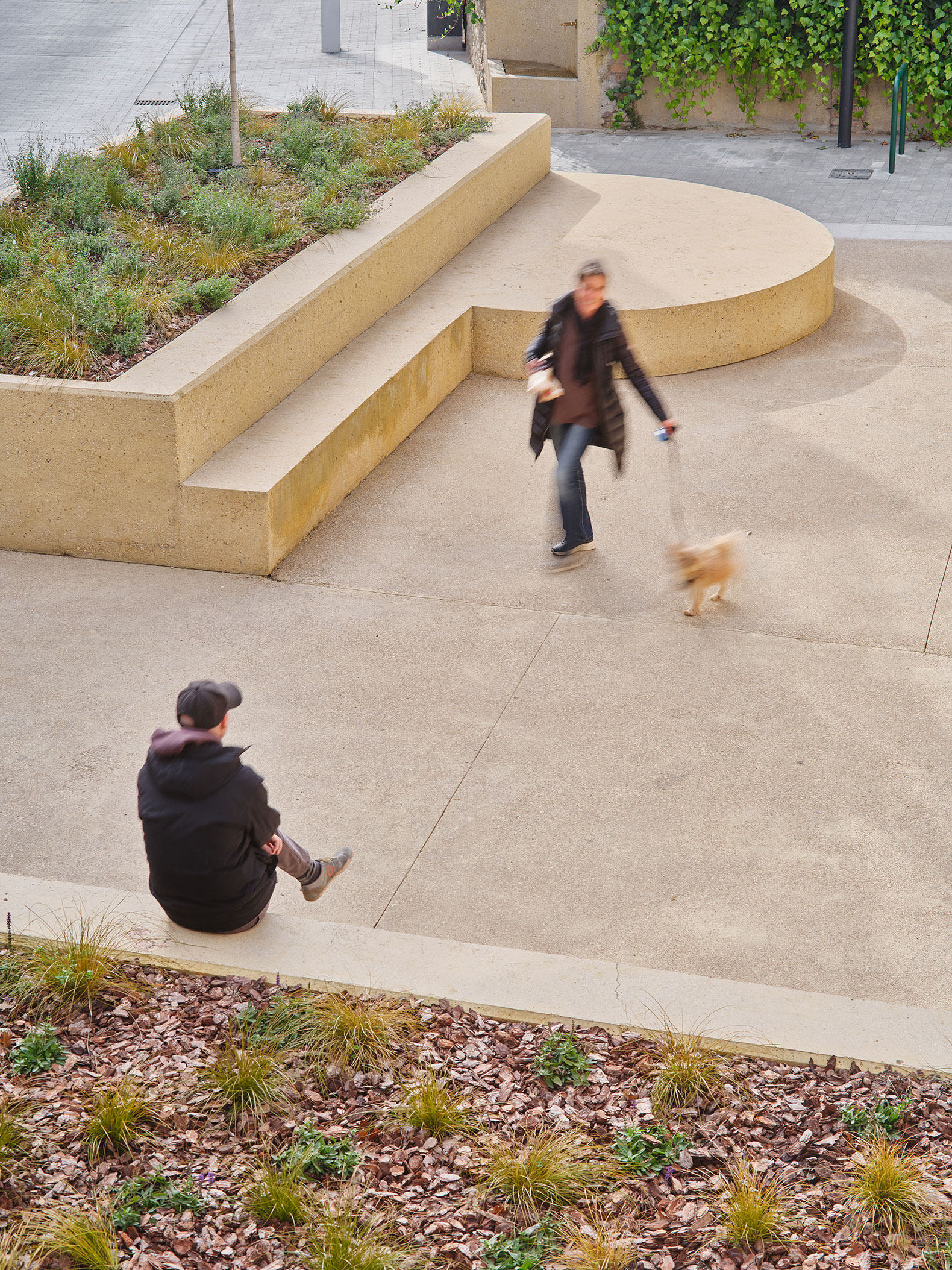
In material terms, the edges of the square created by vora + Toni Riba extend the language of the adjacent streets through the use of concrete and granite pavers. These elements are combined with large surfaces of colored concrete and a rough finish, creating a unitary image that emphasizes the texture and materiality of the public space. The sobriety of the materials contributes to reinforcing the serene character of the intervention.
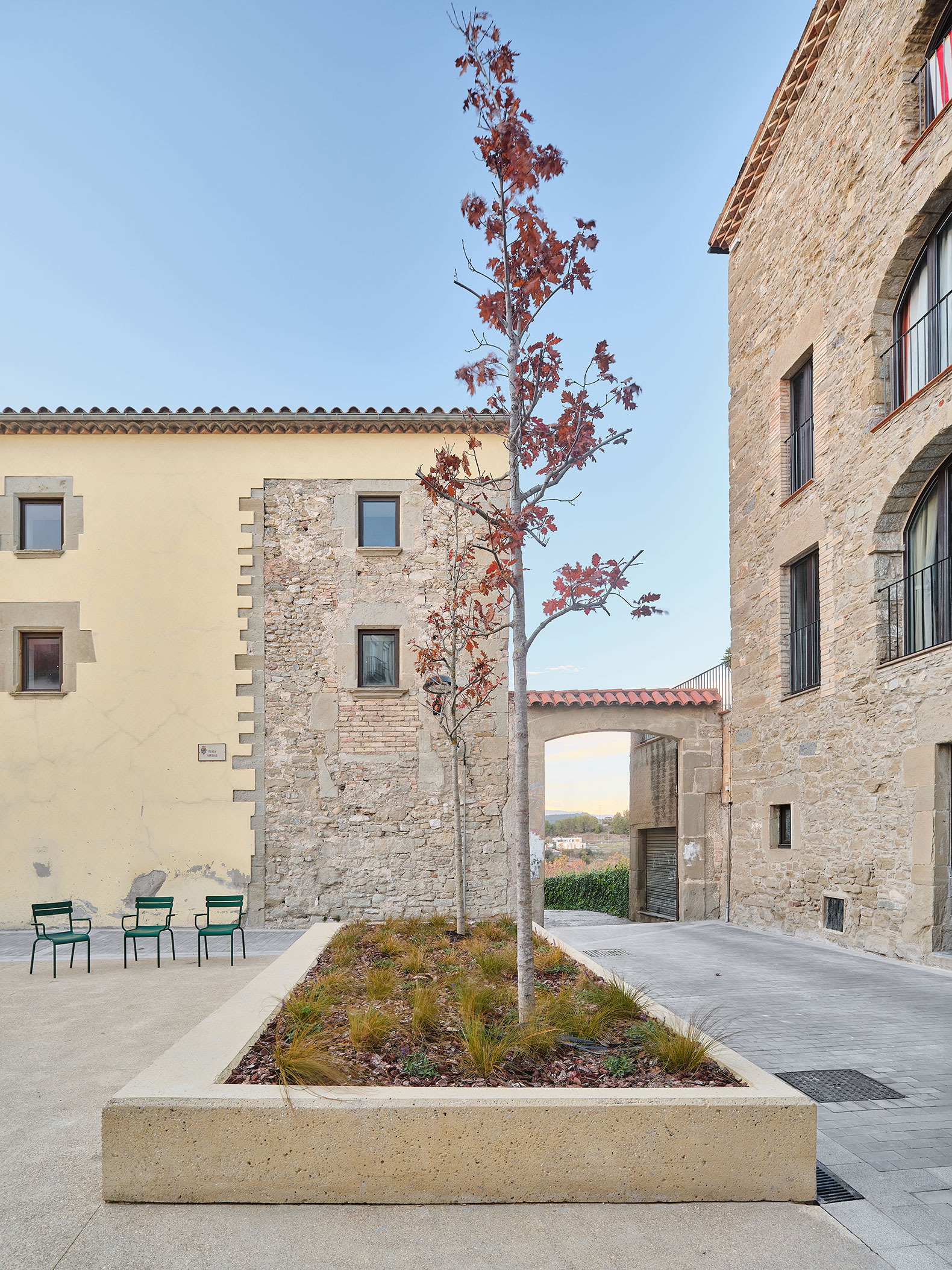
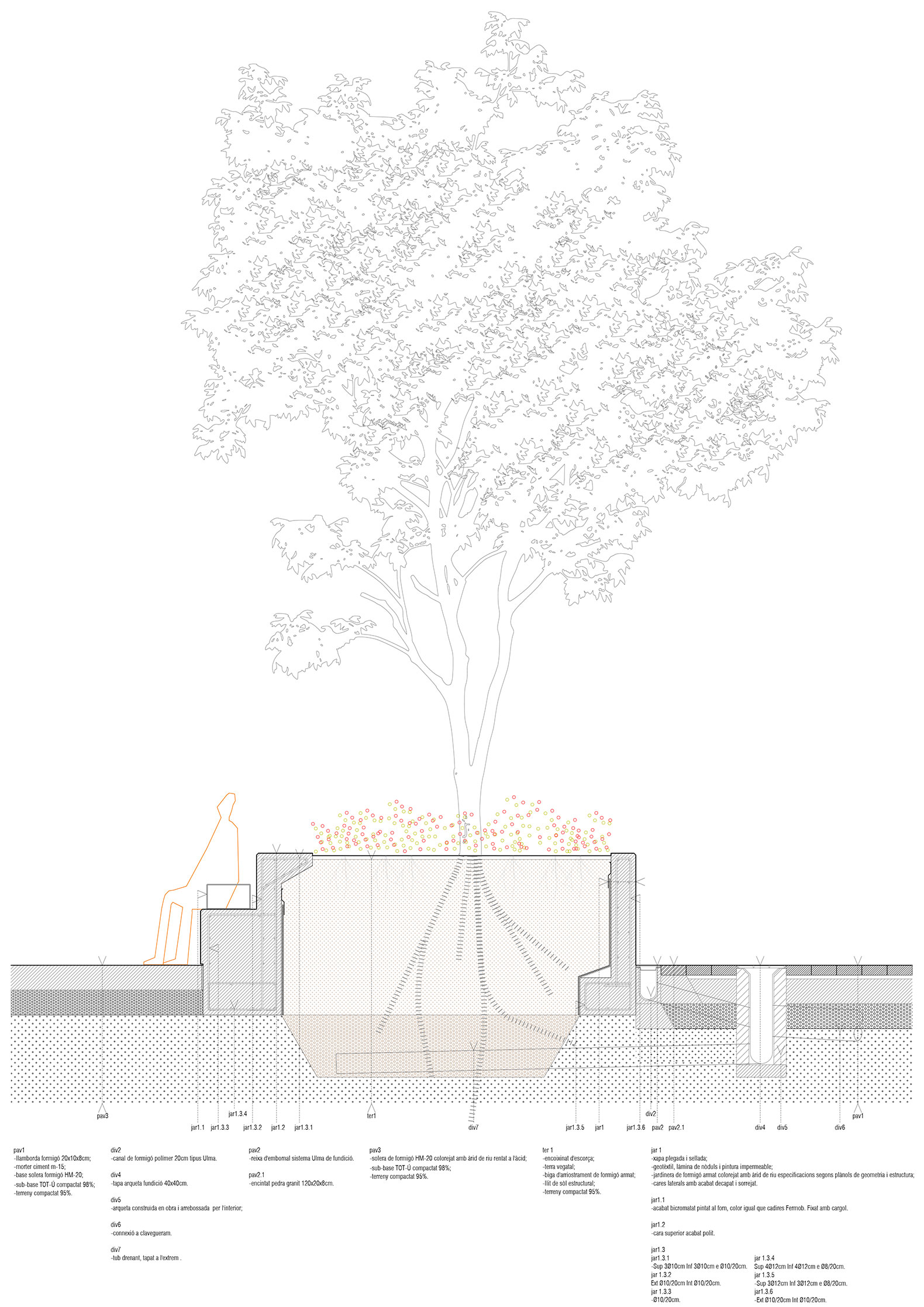
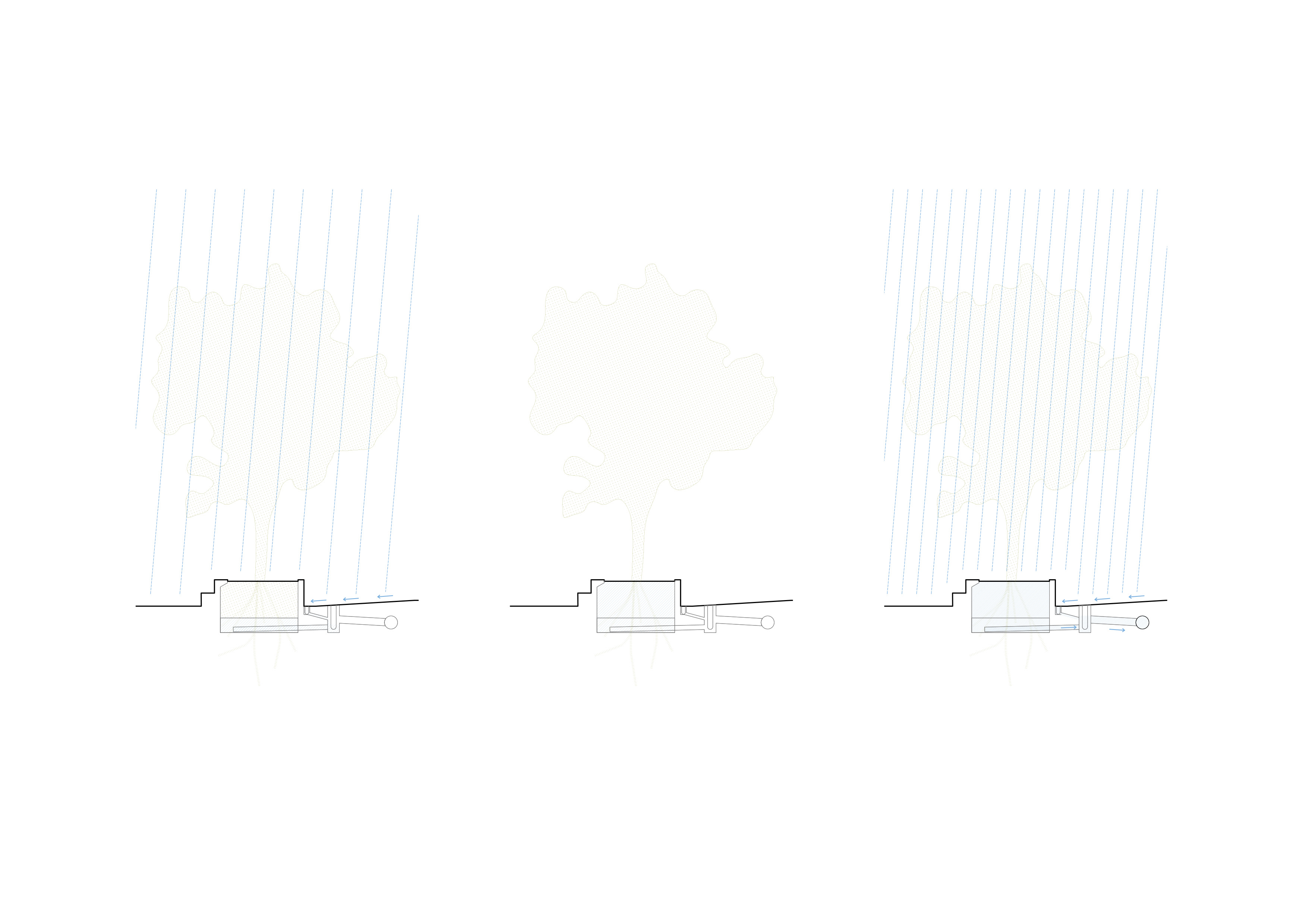
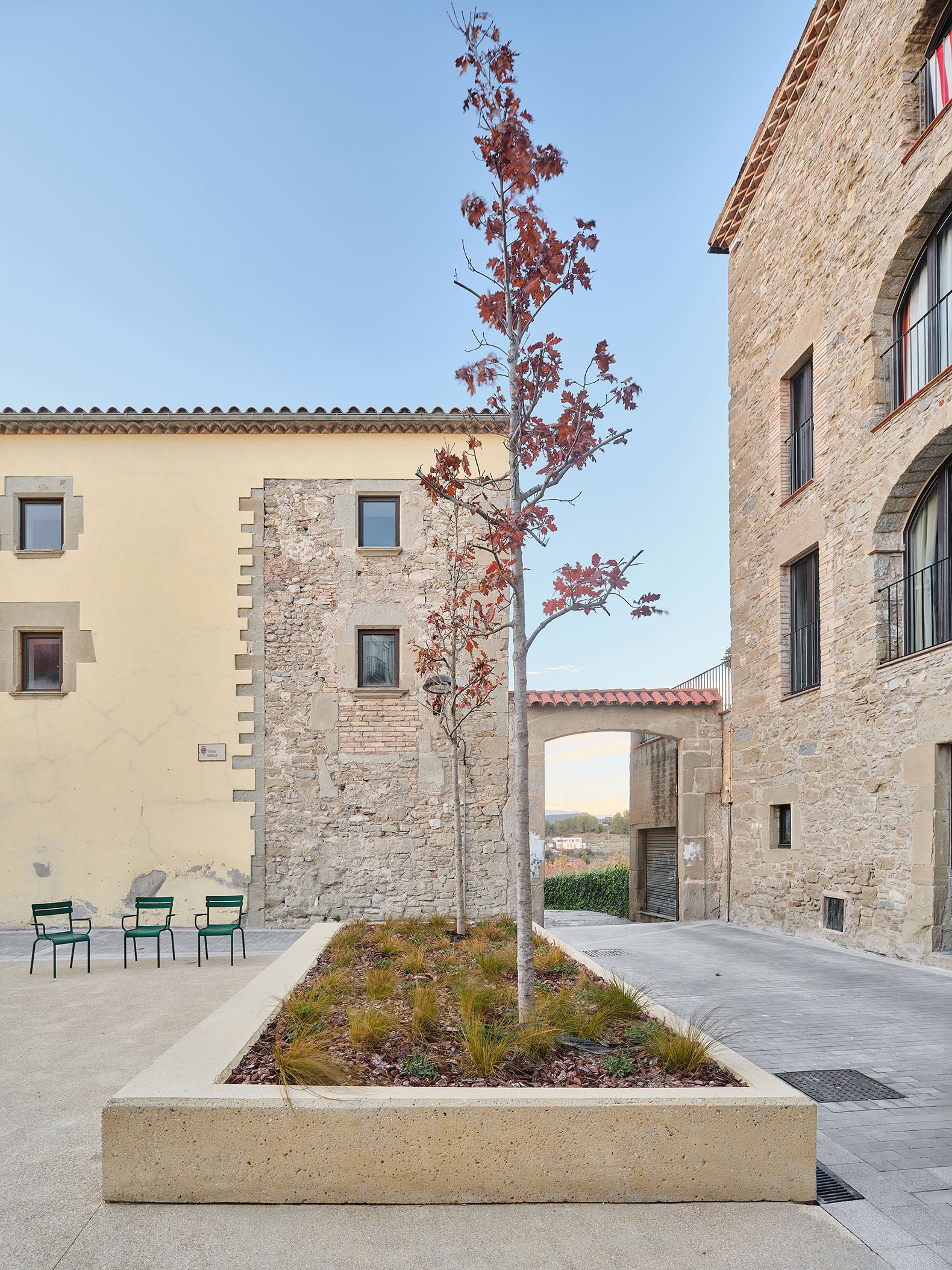
Vegetation plays a fundamental role in the environmental configuration of the square. The incorporation of deciduous trees, herbaceous and floral species provides landscape diversity and promotes climate comfort throughout the year. In turn, the planters integrate a sustainable drainage system that takes advantage of rainwater through layers of fertile soil and structural soil, storing and redistributing it to maintain the moisture necessary for vegetation.
Together, the project demonstrates how discrete but strategic interventions can transform an underutilized space into an active, comfortable and fully integrated place in the community life of Navarcles.
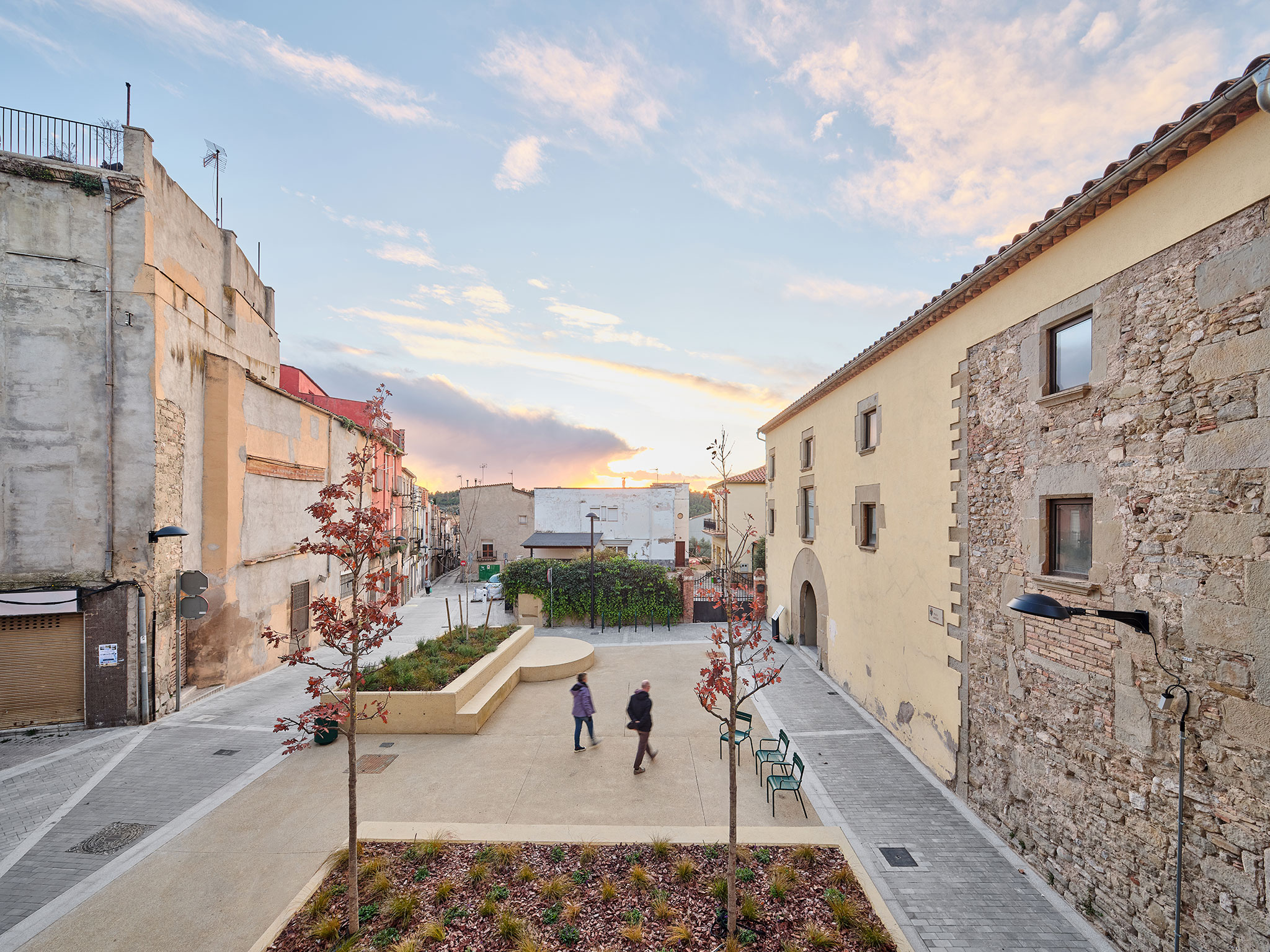
Aguilar Square by vora + Toni Riba. Photograph by Adrià Goula.
Project description by vora + Toni Riba
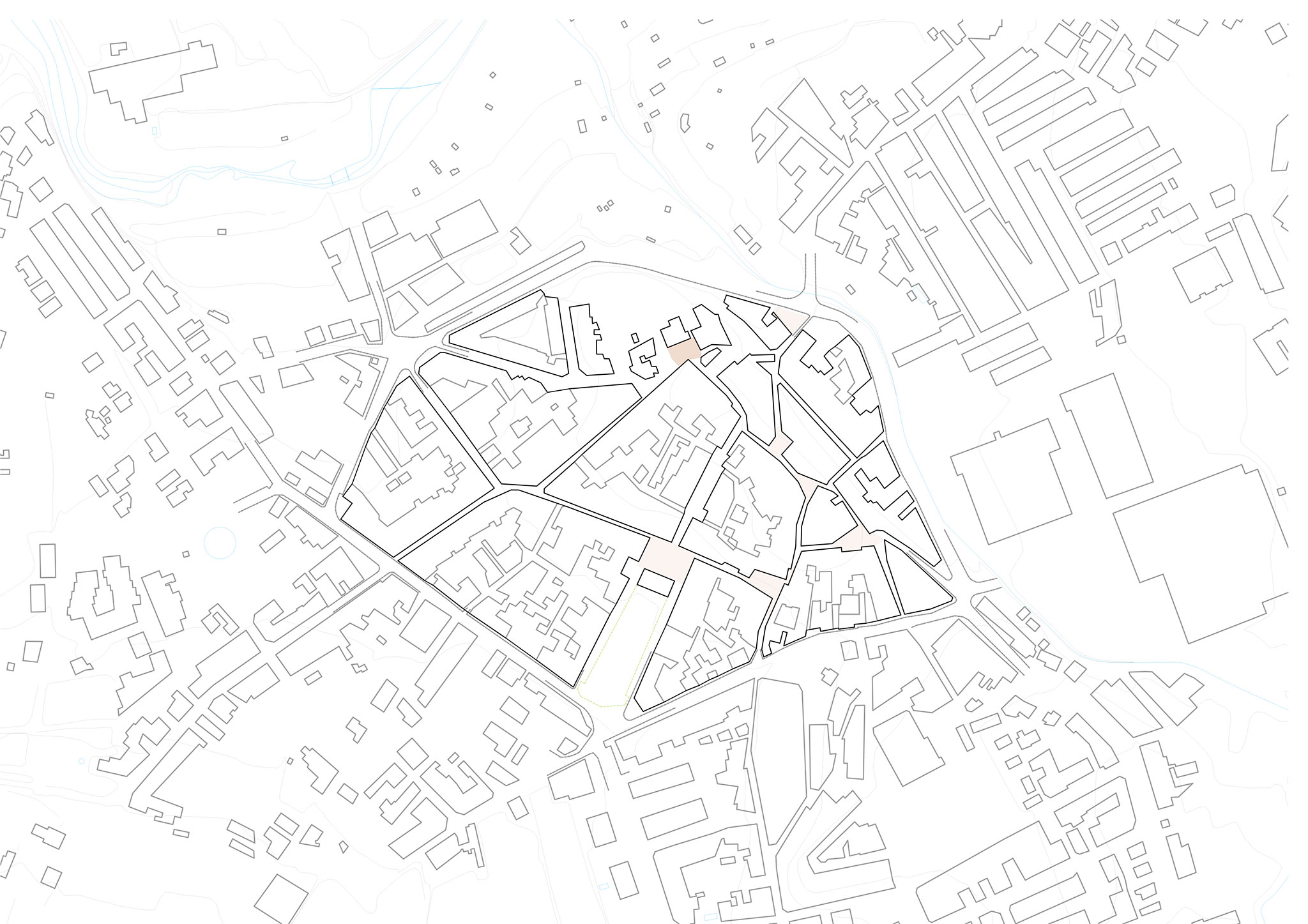
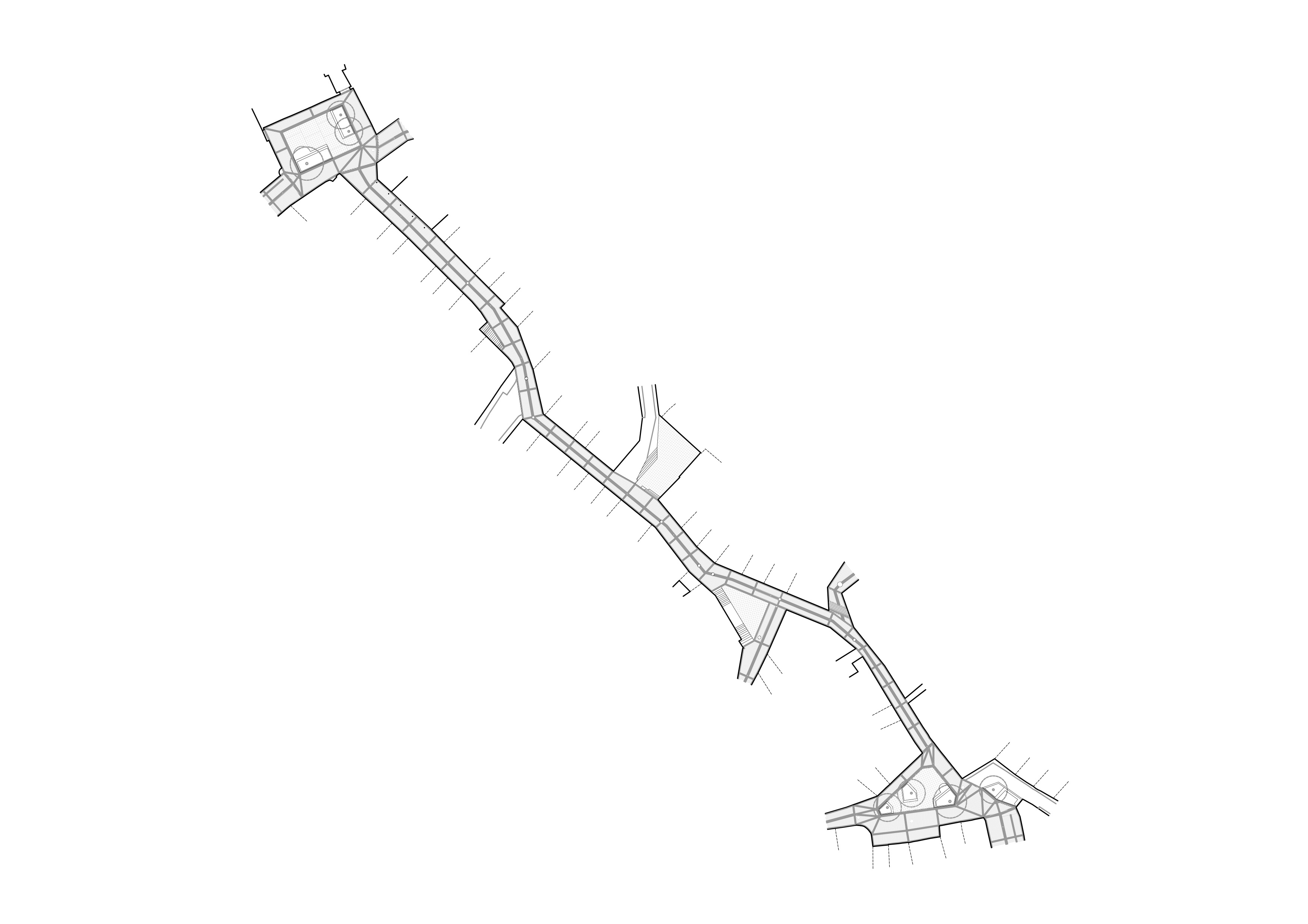
The renovation of Aguilar Square is part of a municipal strategy to regenerate the historic center of the town, which has suffered from abandonment—as seen in many other towns and cities in inland Catalonia—where the population has gradually shifted toward garden-city outskirts. The public spaces in the old town have been undergoing a step-by-step redevelopment for several years, through the pedestrian repaving of all streets, aiming to bring them back to life. The renovation of Aguilar square continues this strategy while seeking to create a protected, unique, and active space with its own distinct identity.
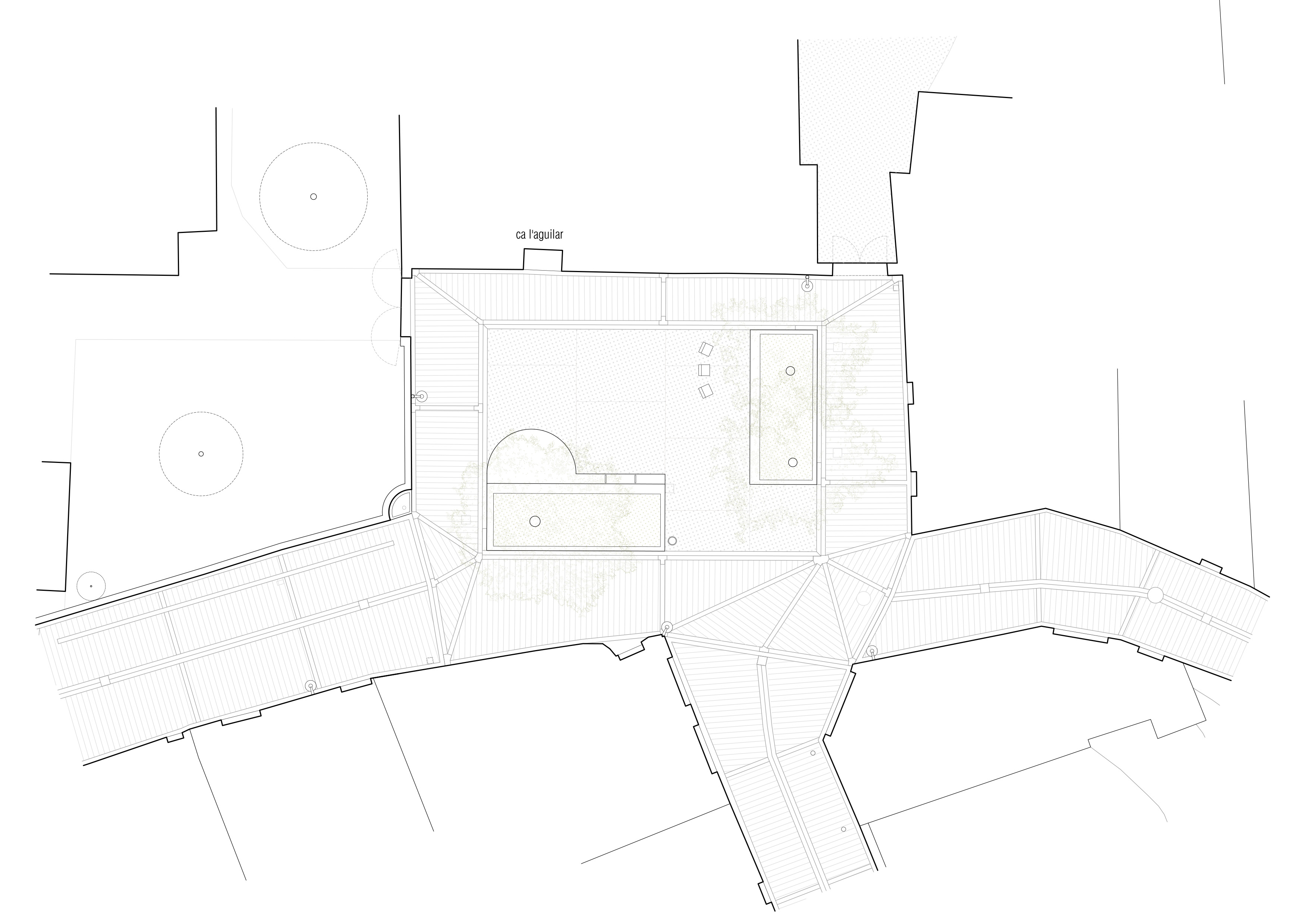
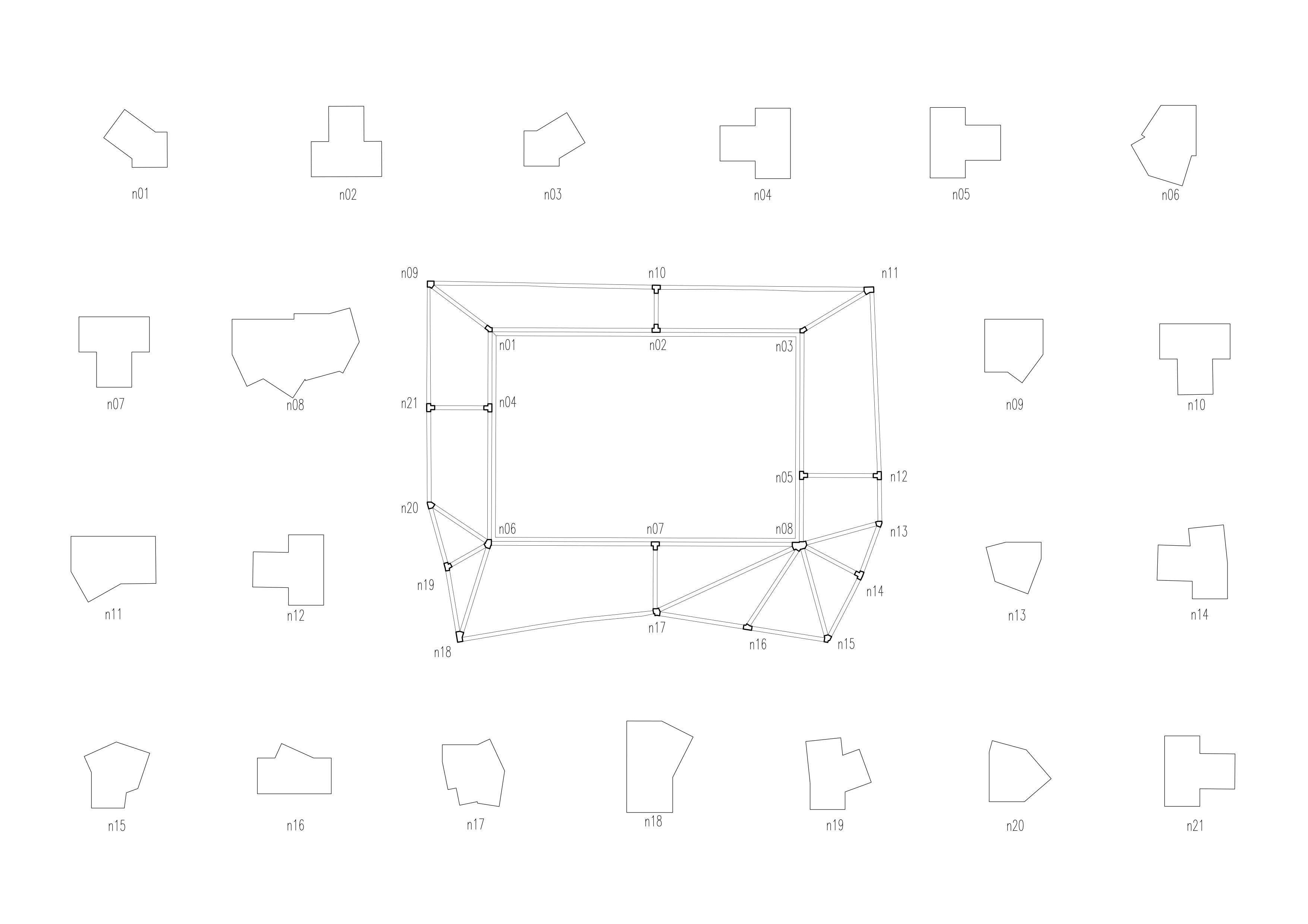
The edges of the square maintain the materiality of the adjacent streets, using concrete pavers and granite stone border bands. This formalization is refined at the junctions, where precisely designed cut granite stones resolve the skewed intersections of the stone border bands.
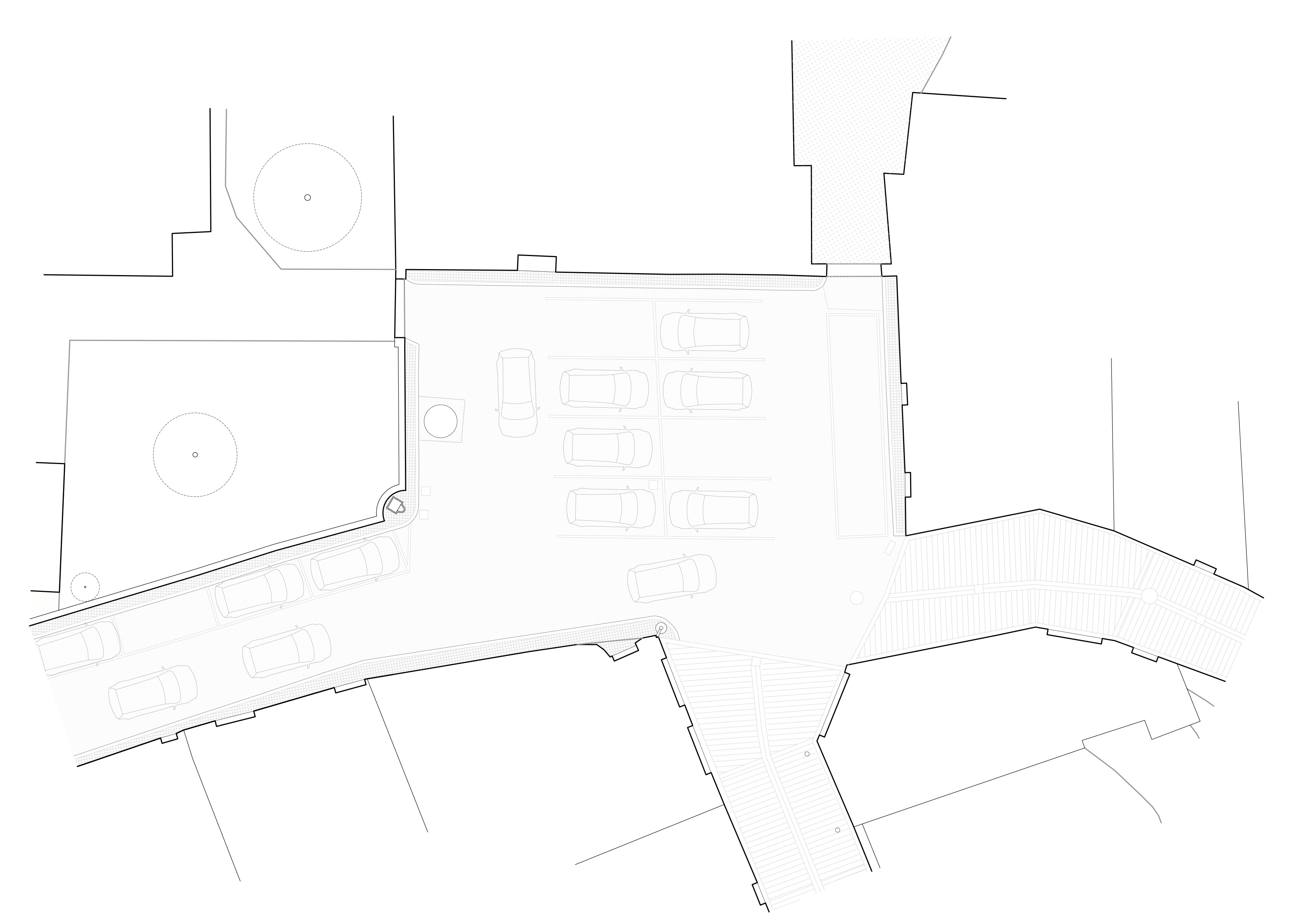
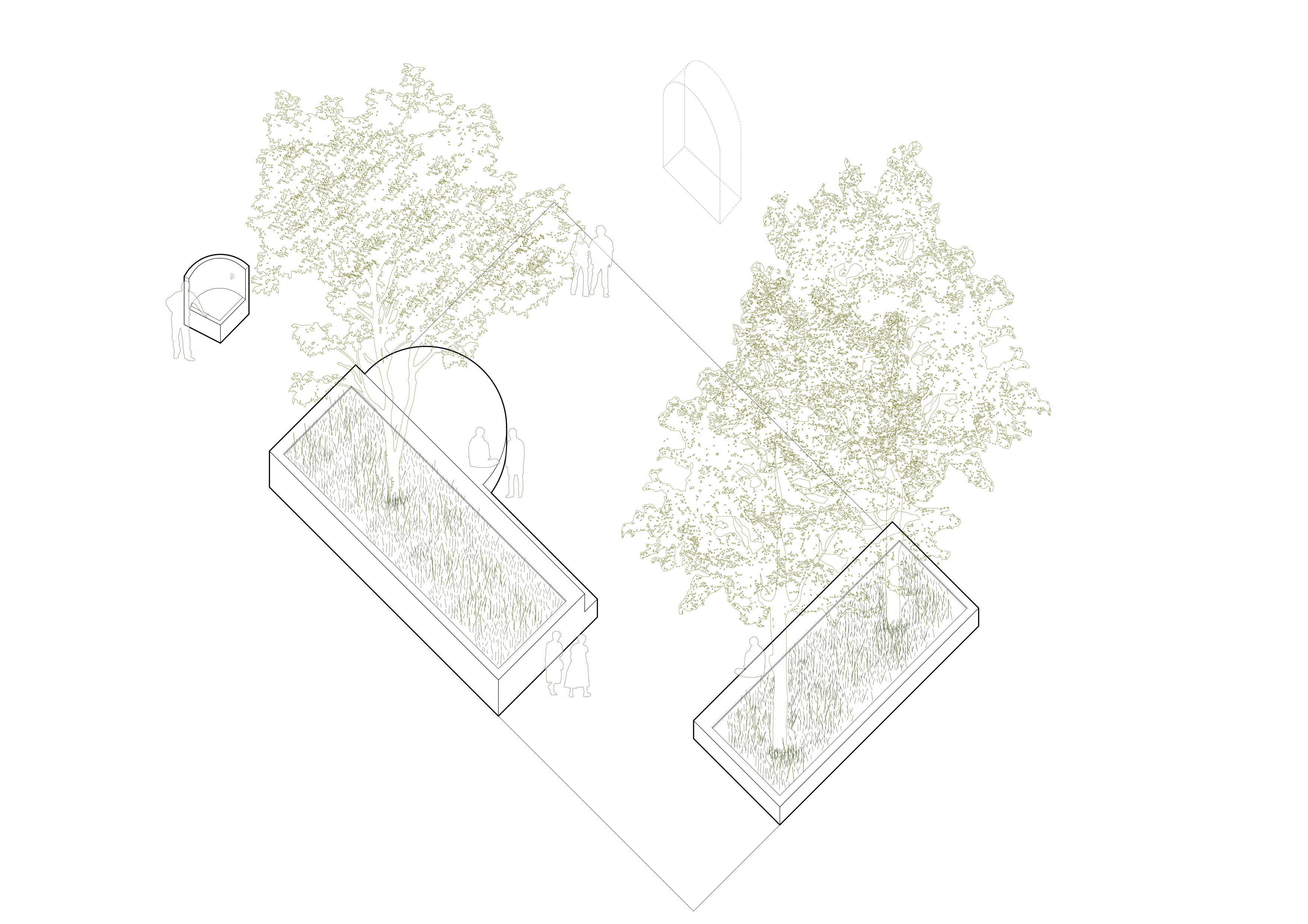
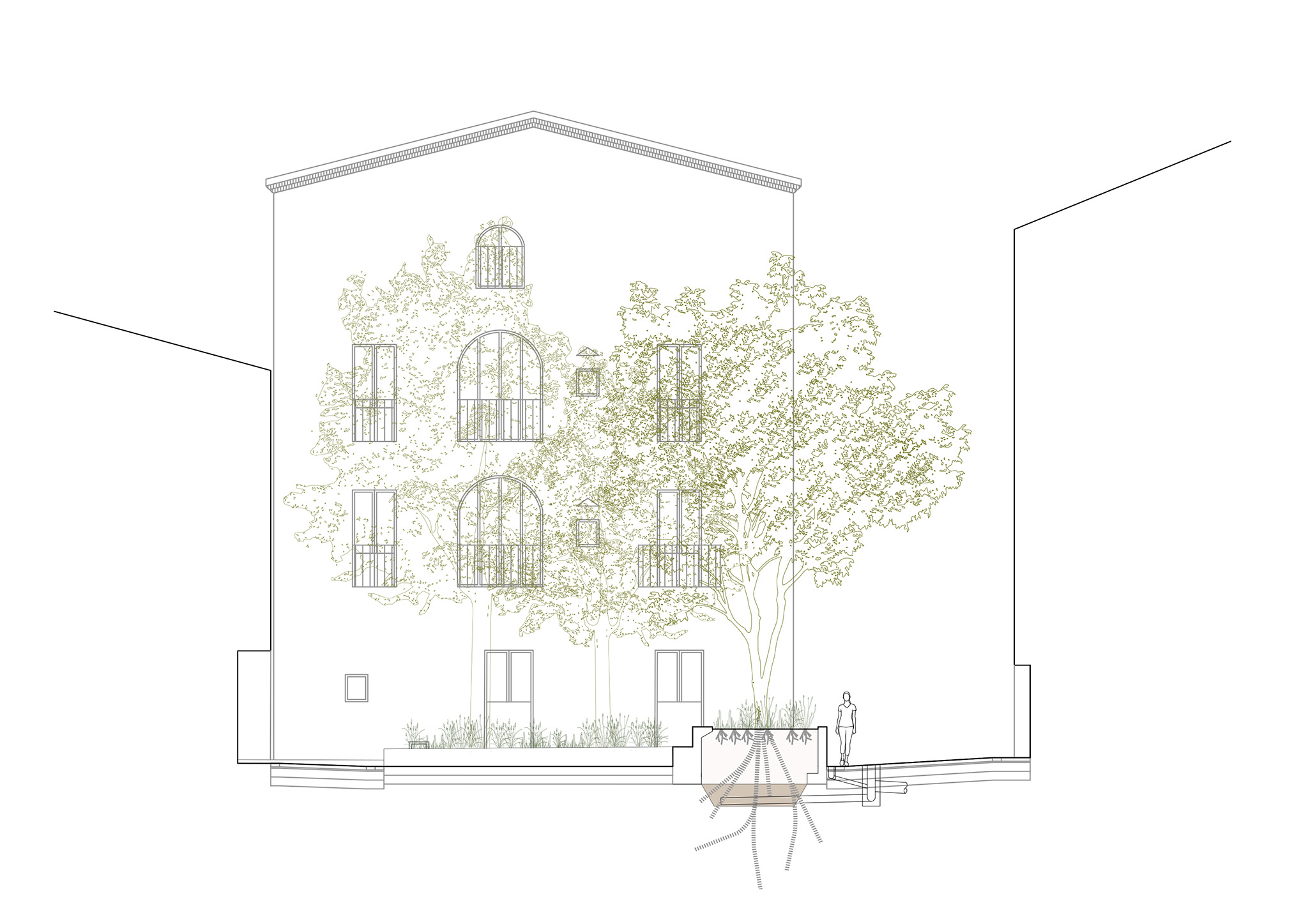
The square opens up in front of the façade of Ca l’Aguilar, a heritage building rehabilitated as a municipal facility. The new configuration of the central space—a sort of "carpet" made of concrete—responds to this relationship, enhancing the sense of a cozy yet active "place." Two large planters articulate the space: first, by protecting it from vehicle traffic, and second, by supporting active uses. This is achieved through an "agora" configuration, with the planter edges as benches and an extended platform as a playful and performative structure. The entire center of the square and the planters are realized in colored, rough concrete with a deactivated surface where the aggregate becomes visible.
A fountain complements the square, taking advantage of a recess in a garden fence along its perimeter.
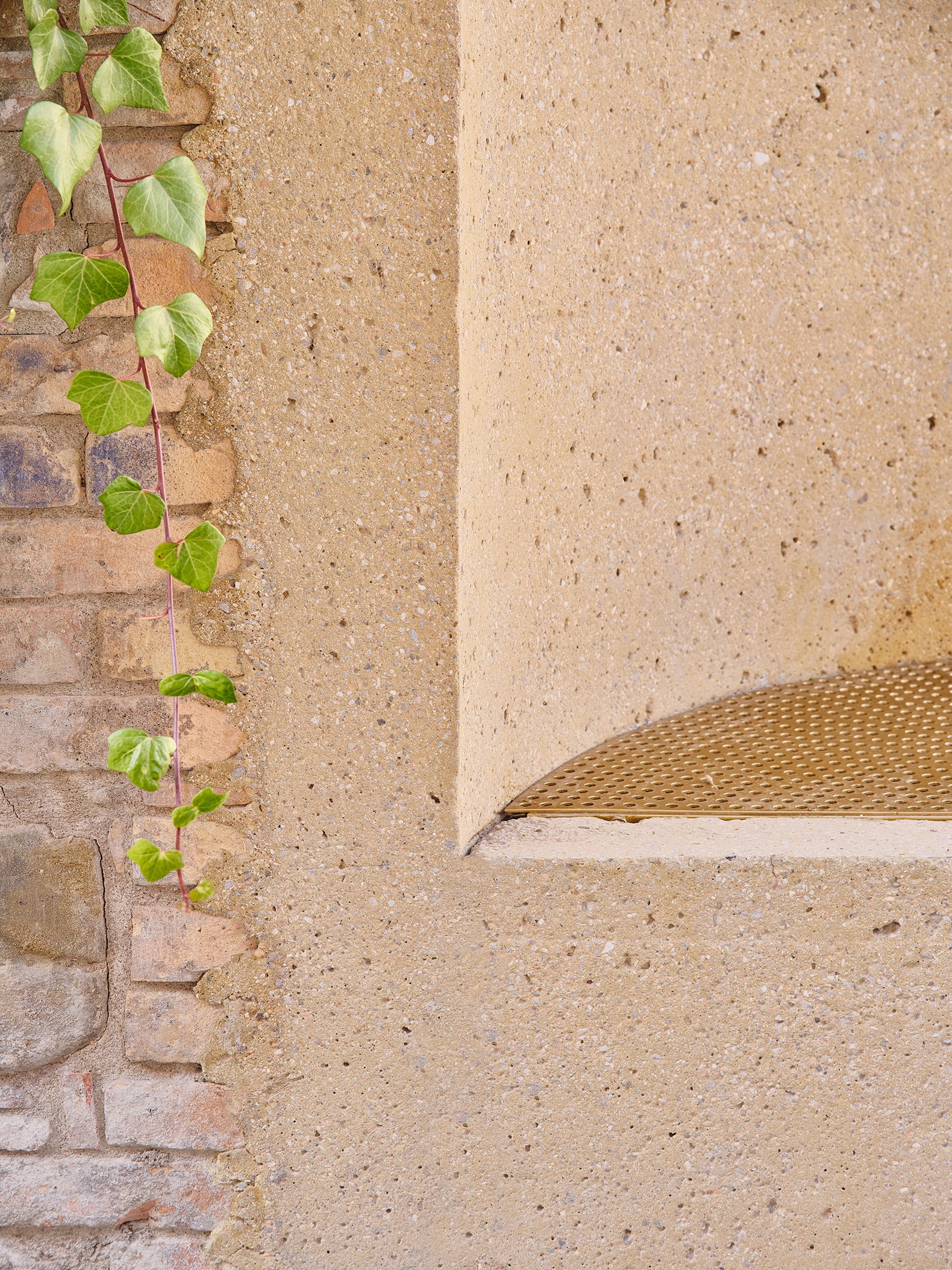
The square is "naturalized" through the planting of different height layers of greenery, including trees, herbaceous plants, and flowers, that provide diversity. The trees are deciduous, allowing for sunlight in winter and providing ample shade in summer, with chromatic variation in the leaves ranging from green to yellow throughout the year. A large Walnut tree (Juglans regia) will grow lushly, accompanied by two medium-sized Field Maples (Acer campestre). Beneath the trees, a combination of flowers and herbaceous species has been planted—unique to each parterre—blending different shades of green with seasonal chromatic and olfactory variations, including blue-lilac blooms.
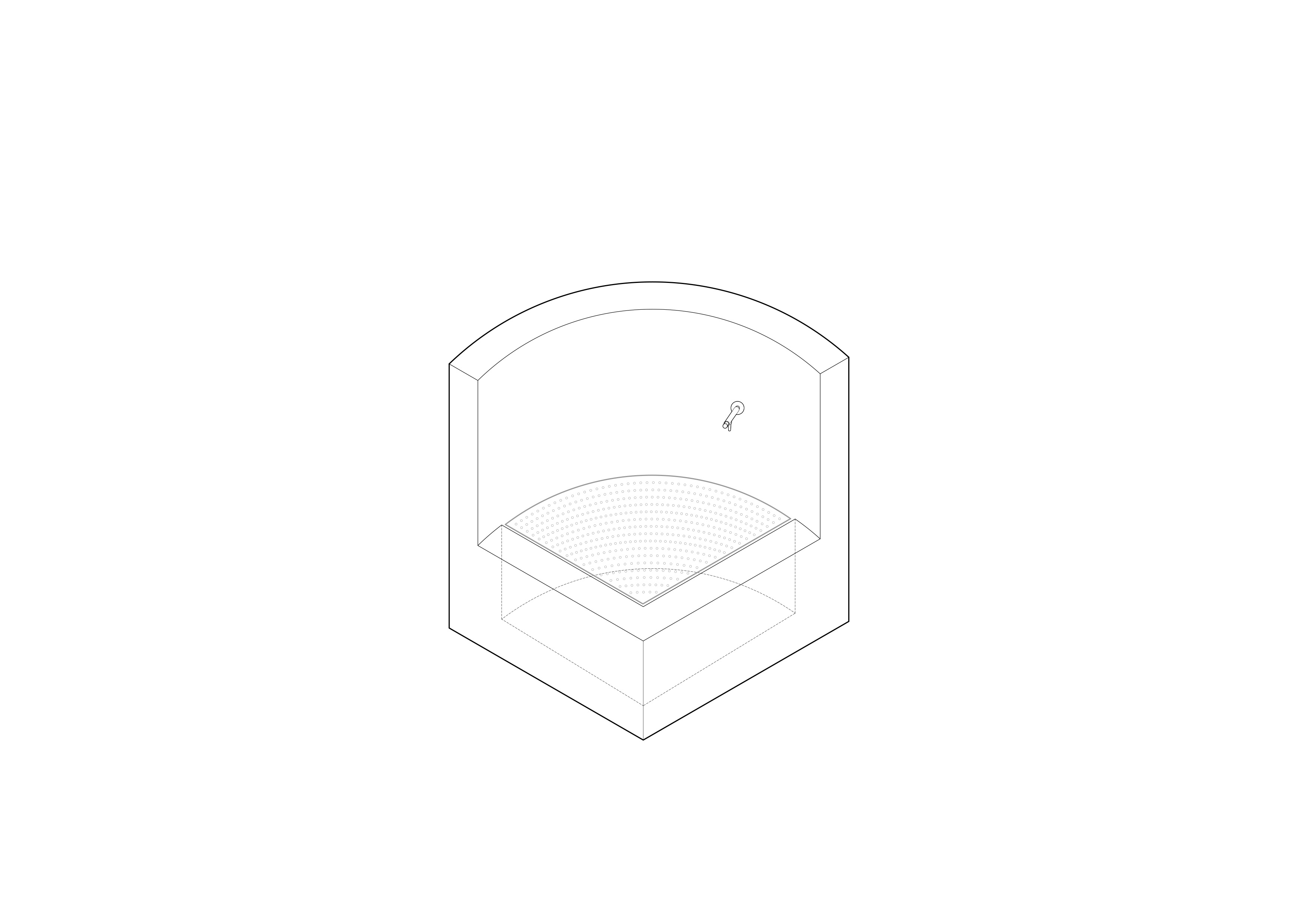
The planters harvest rainwater and store it beneath them through a deep section of fertile soil and structural soil substrate. The topographical configuration of the surrounding square directs all stormwater runoff toward scuppers at the base of the planter walls. These inlets channel the rainwater into the structural soil via inverted drainage pipes to keep the earth moist, while an overflow pipe at a higher elevation handles periods of water saturation.