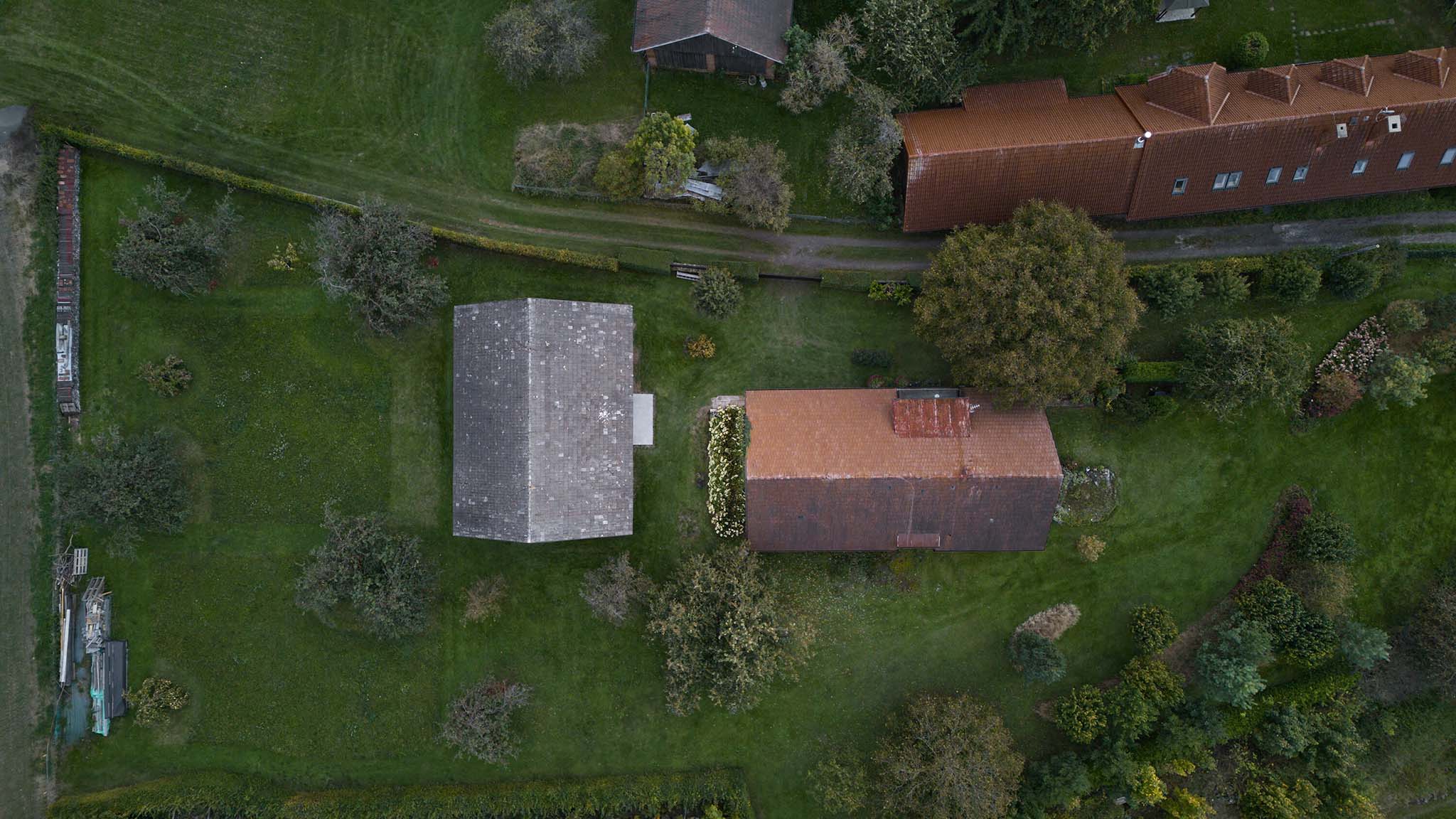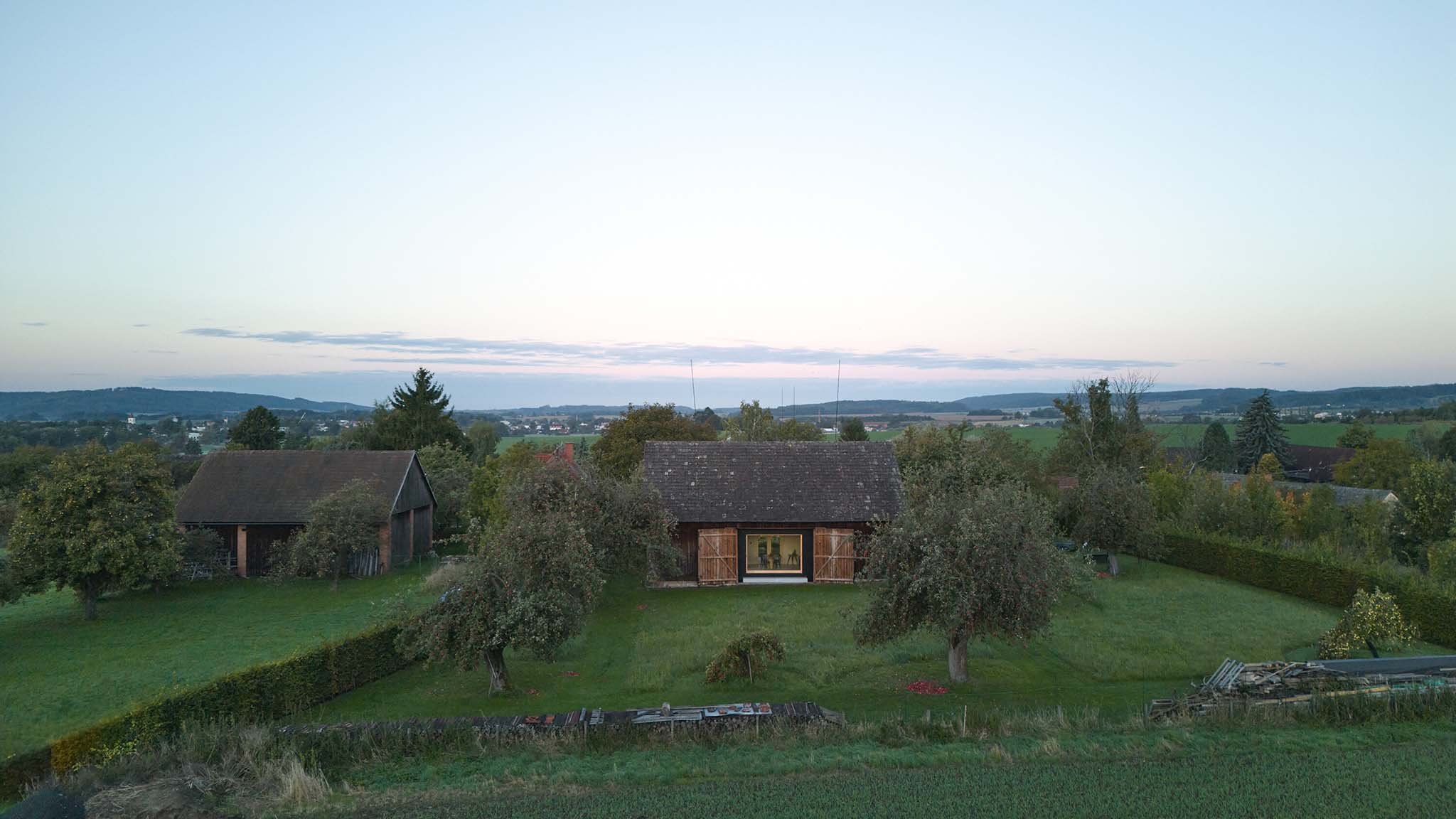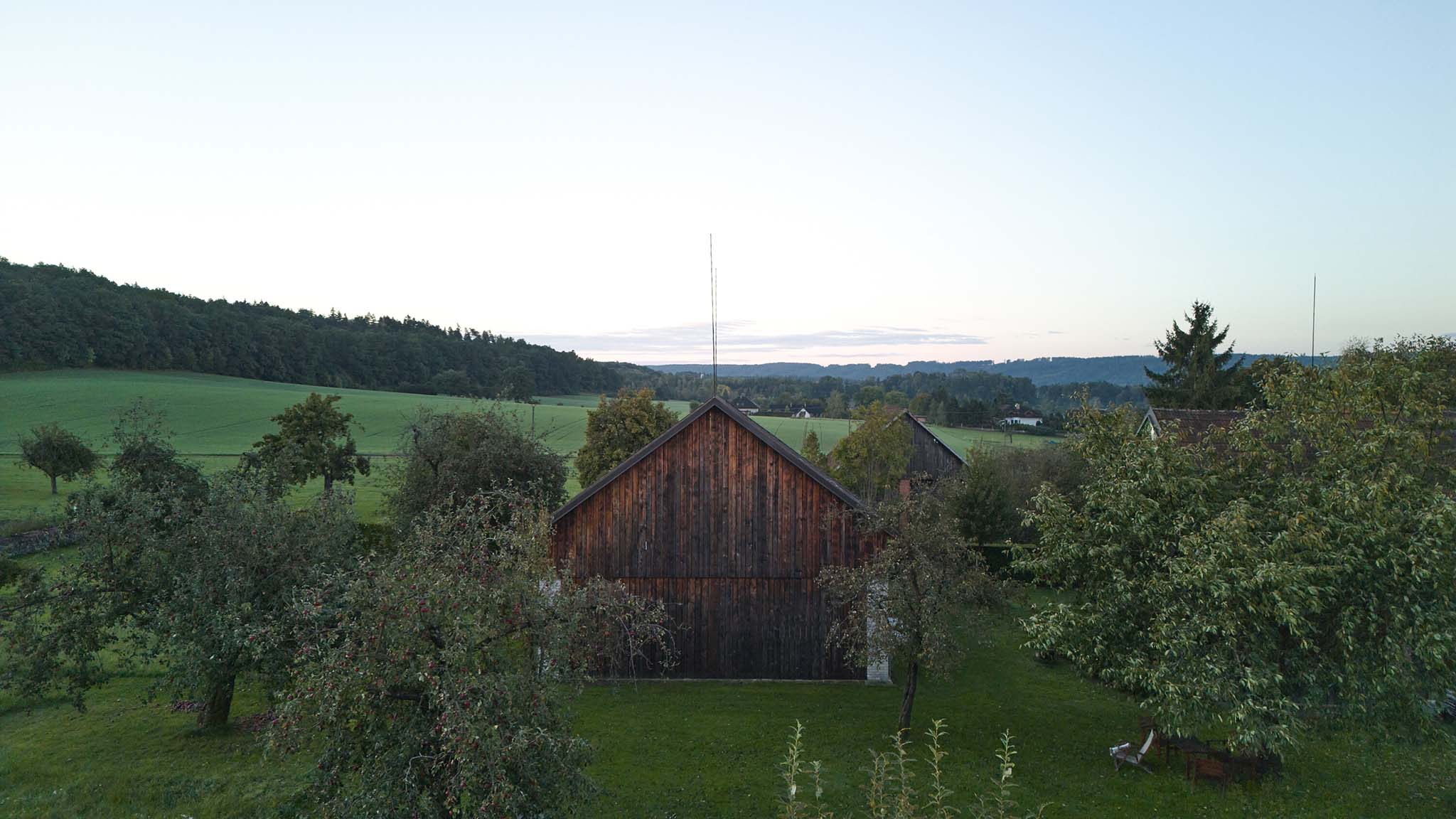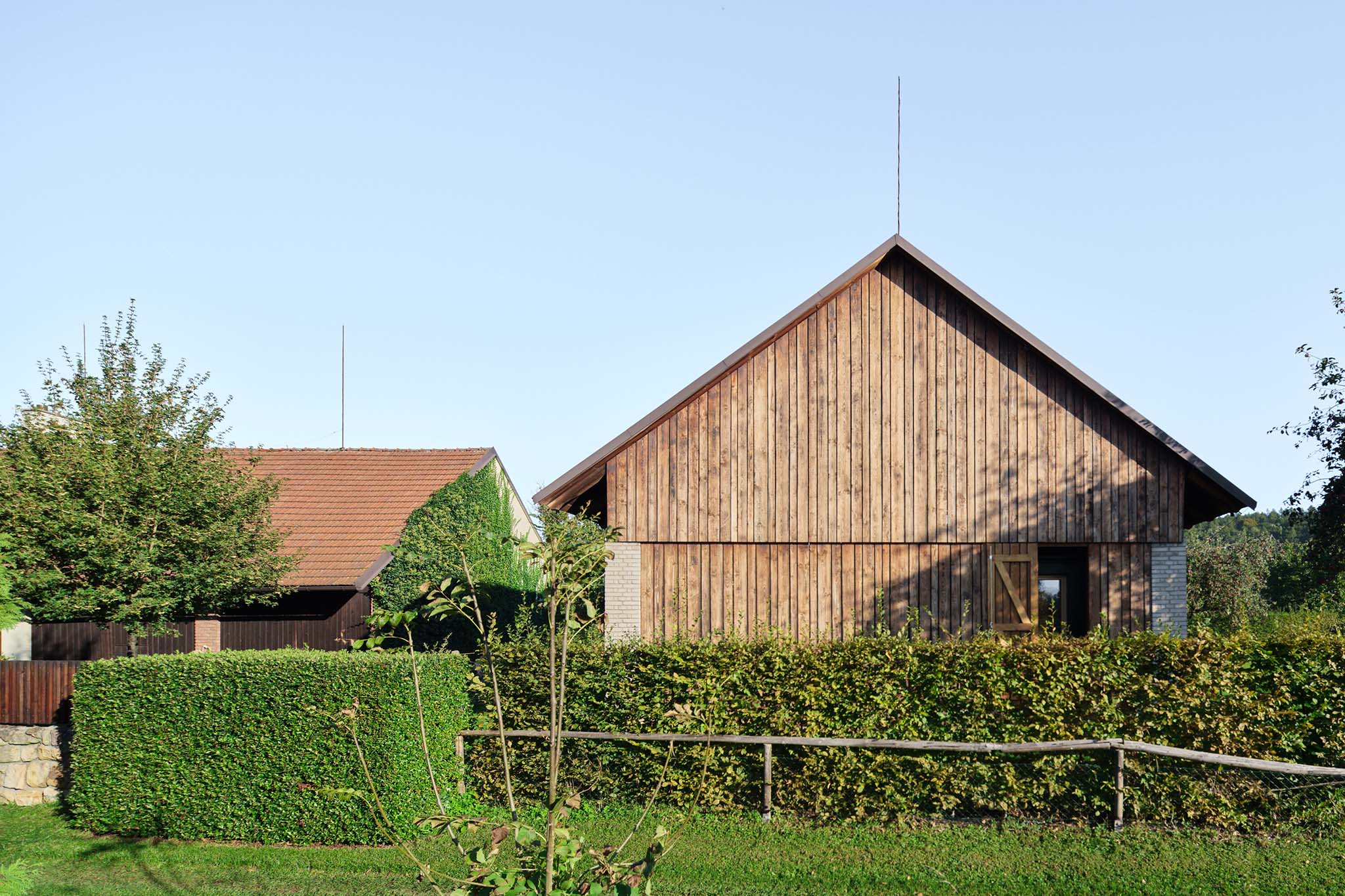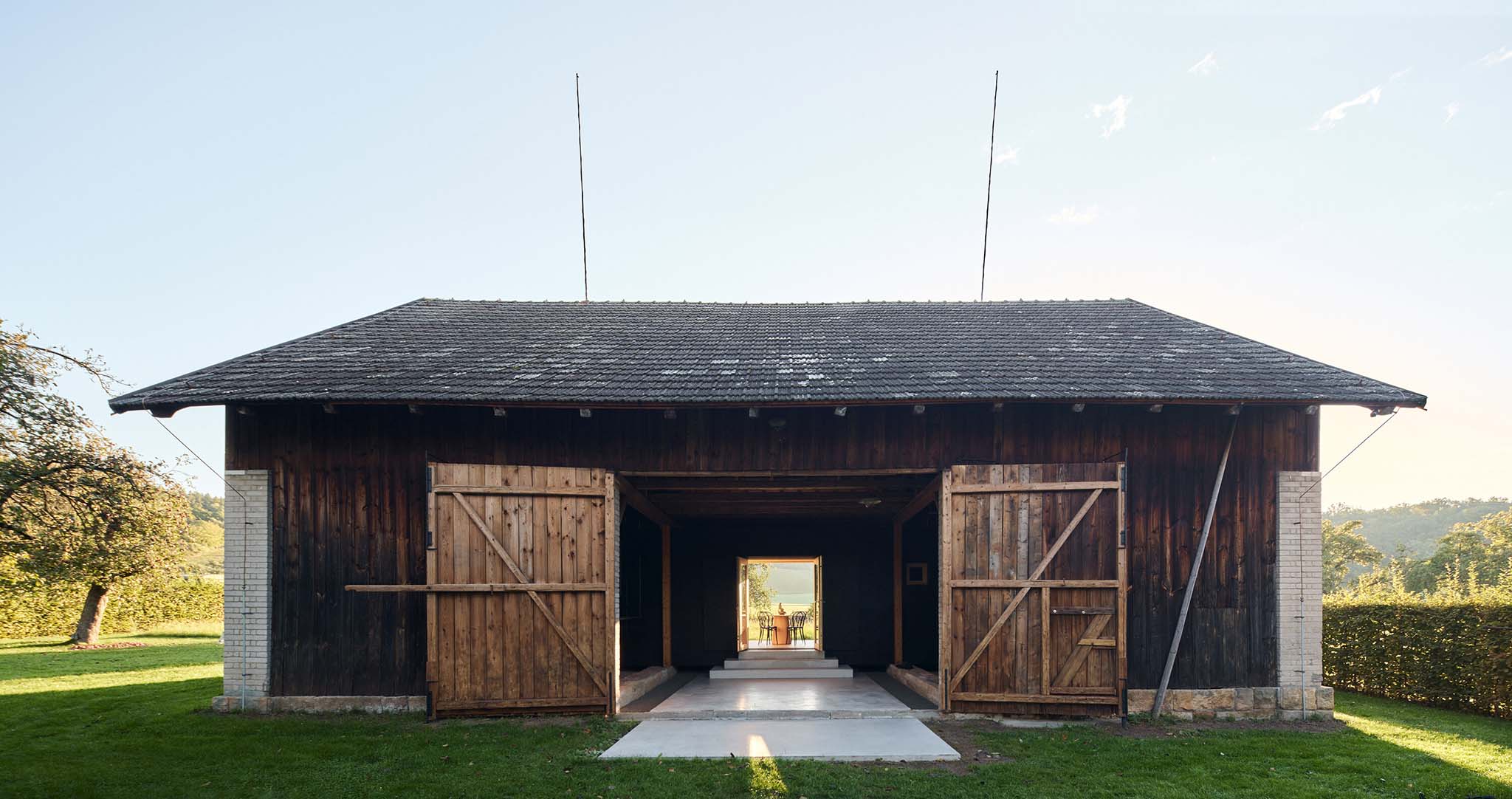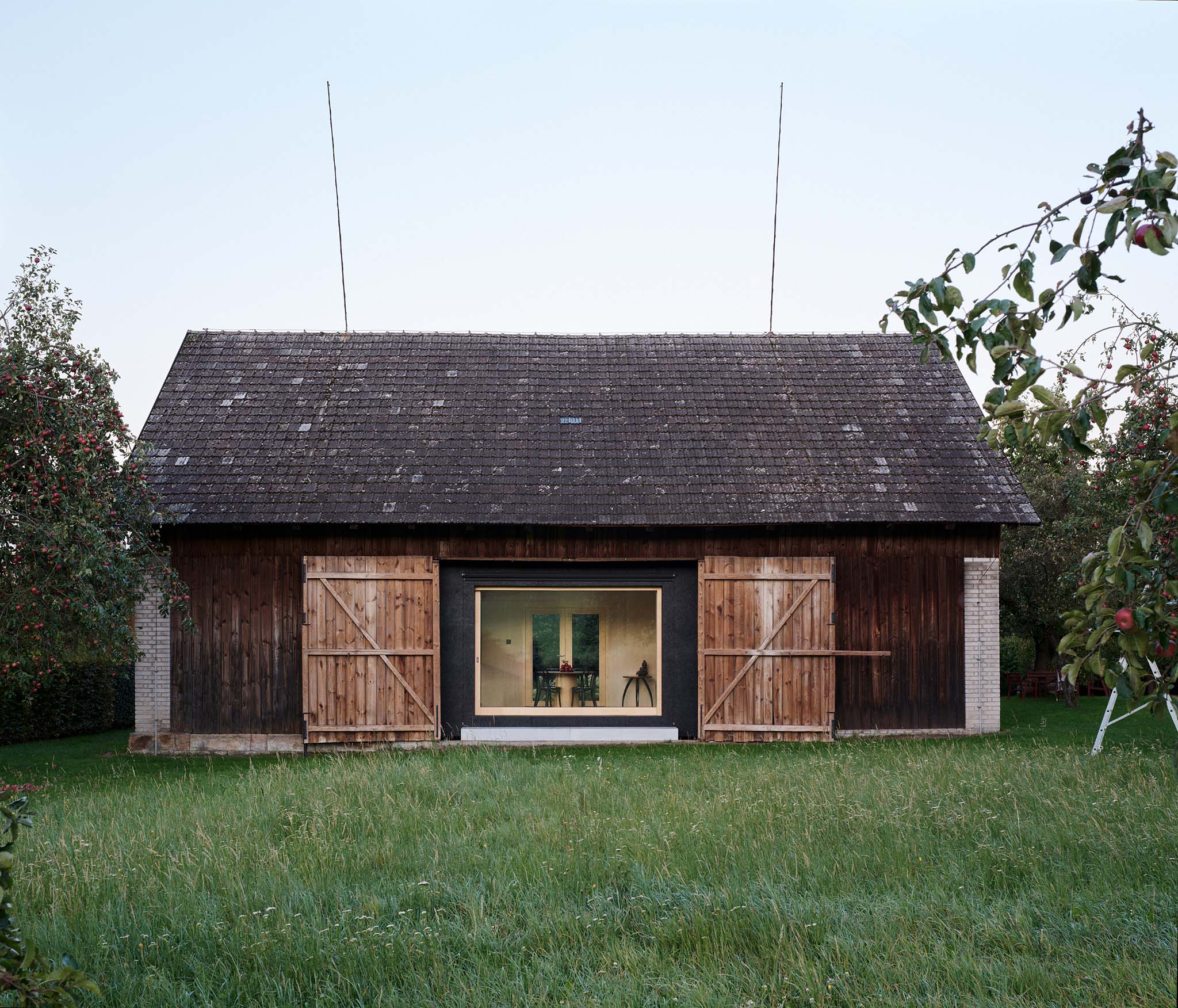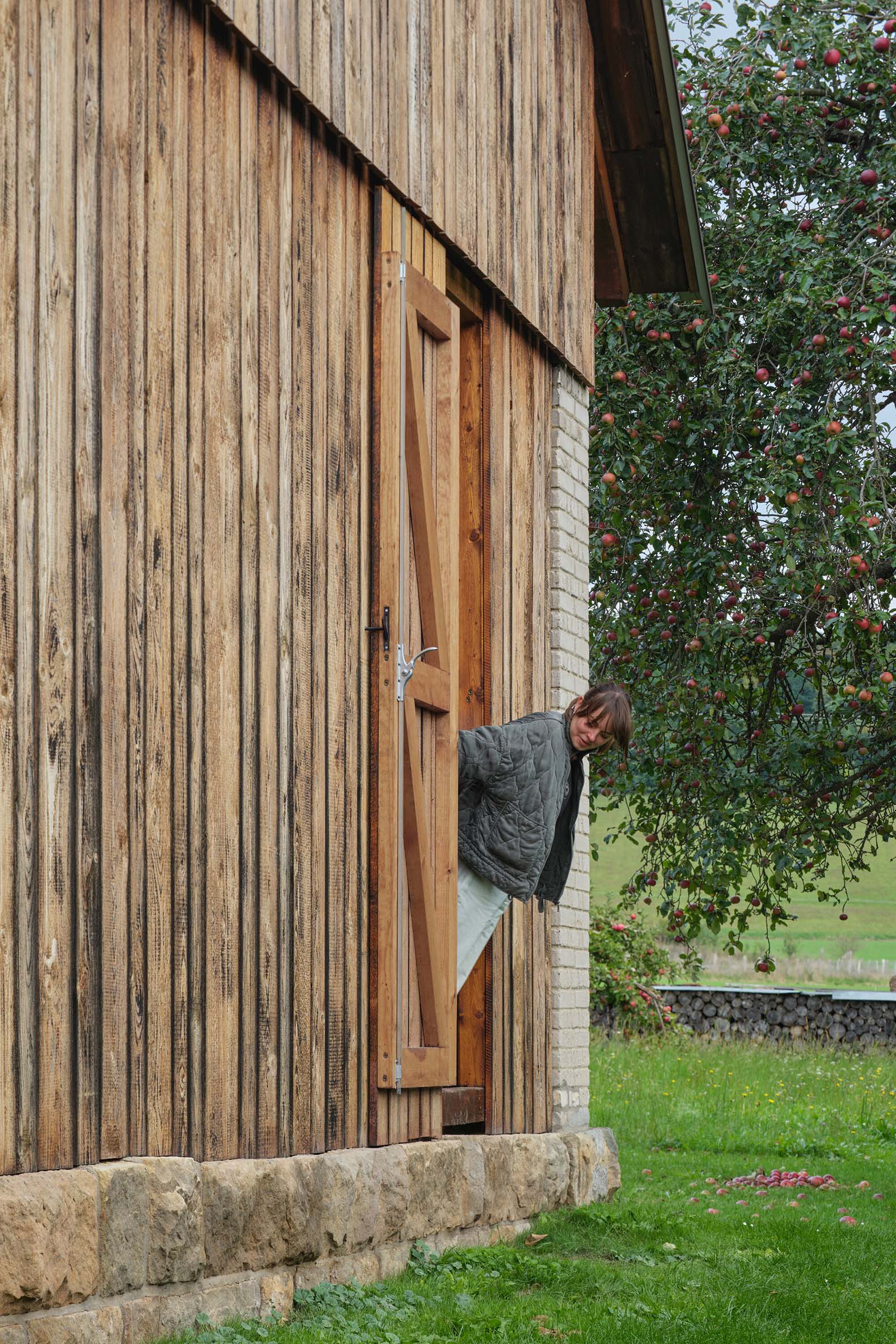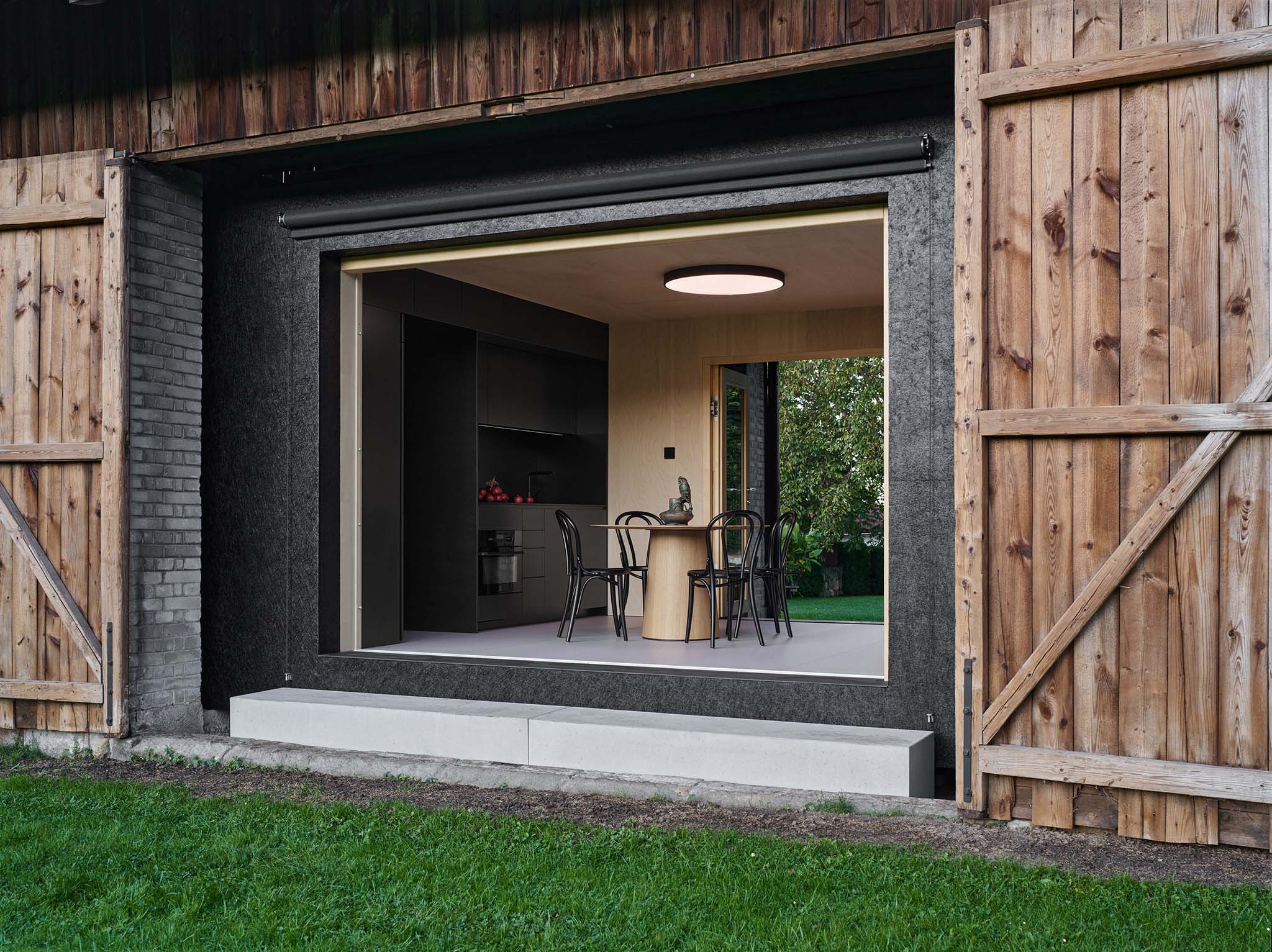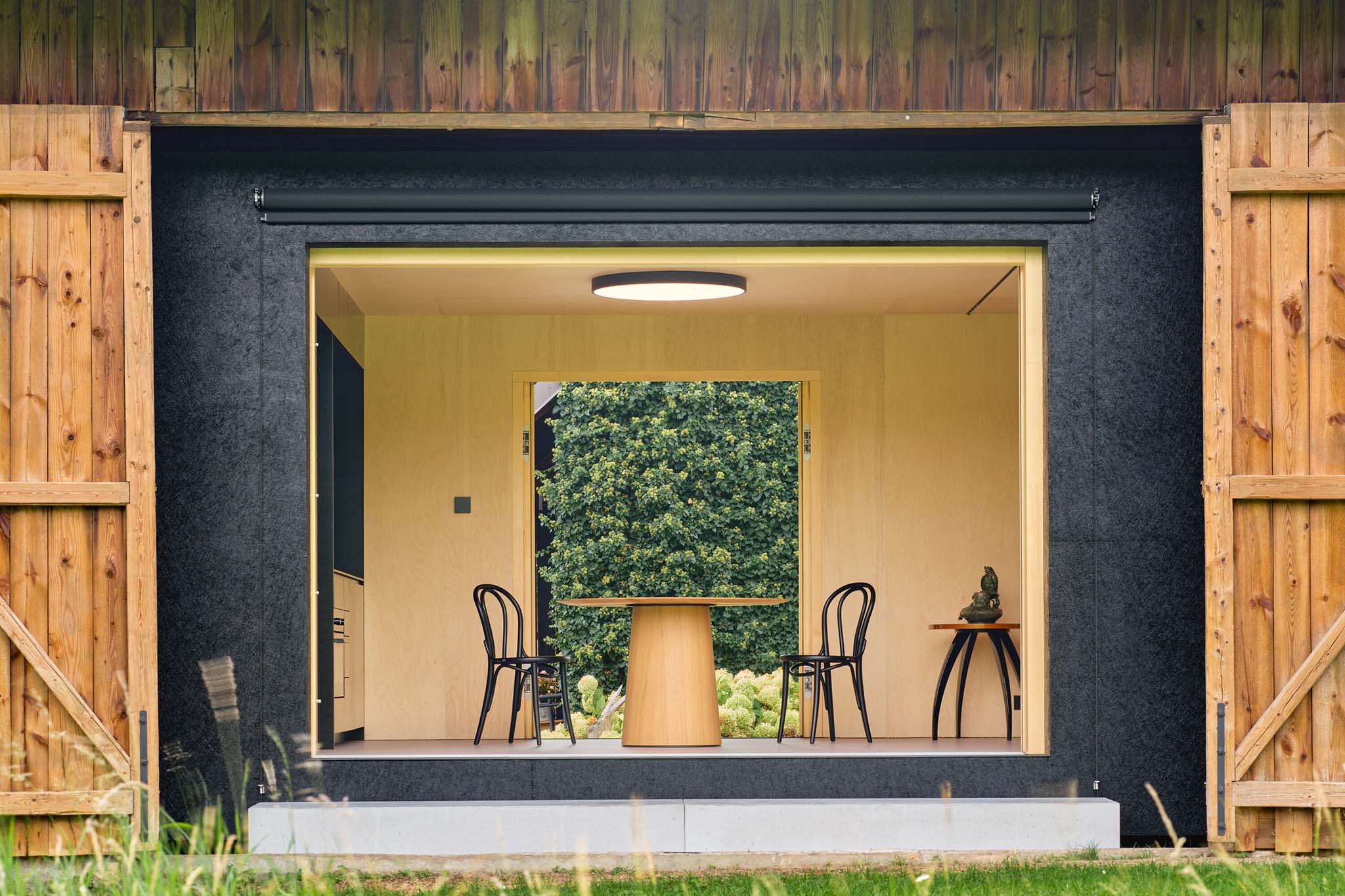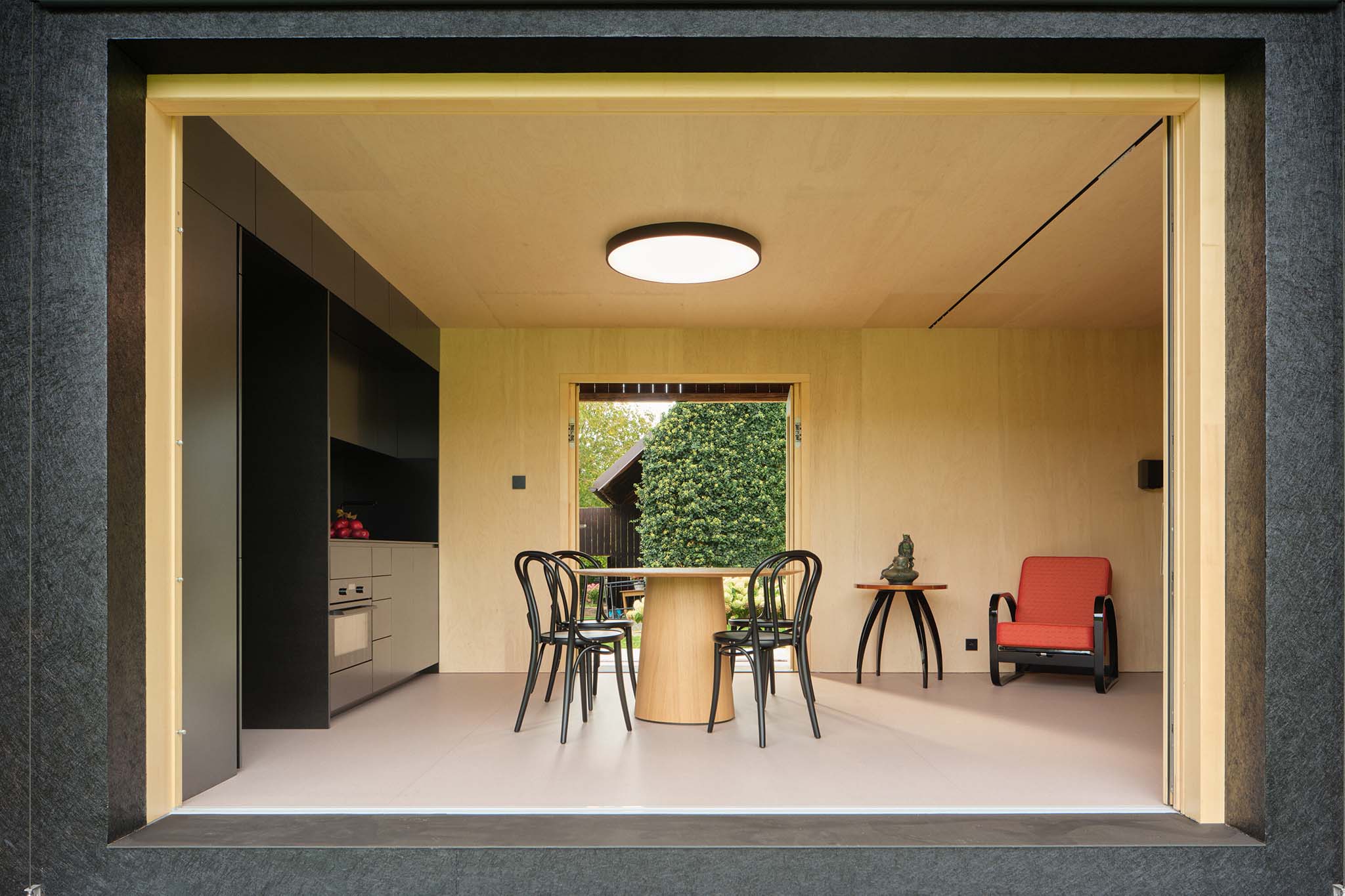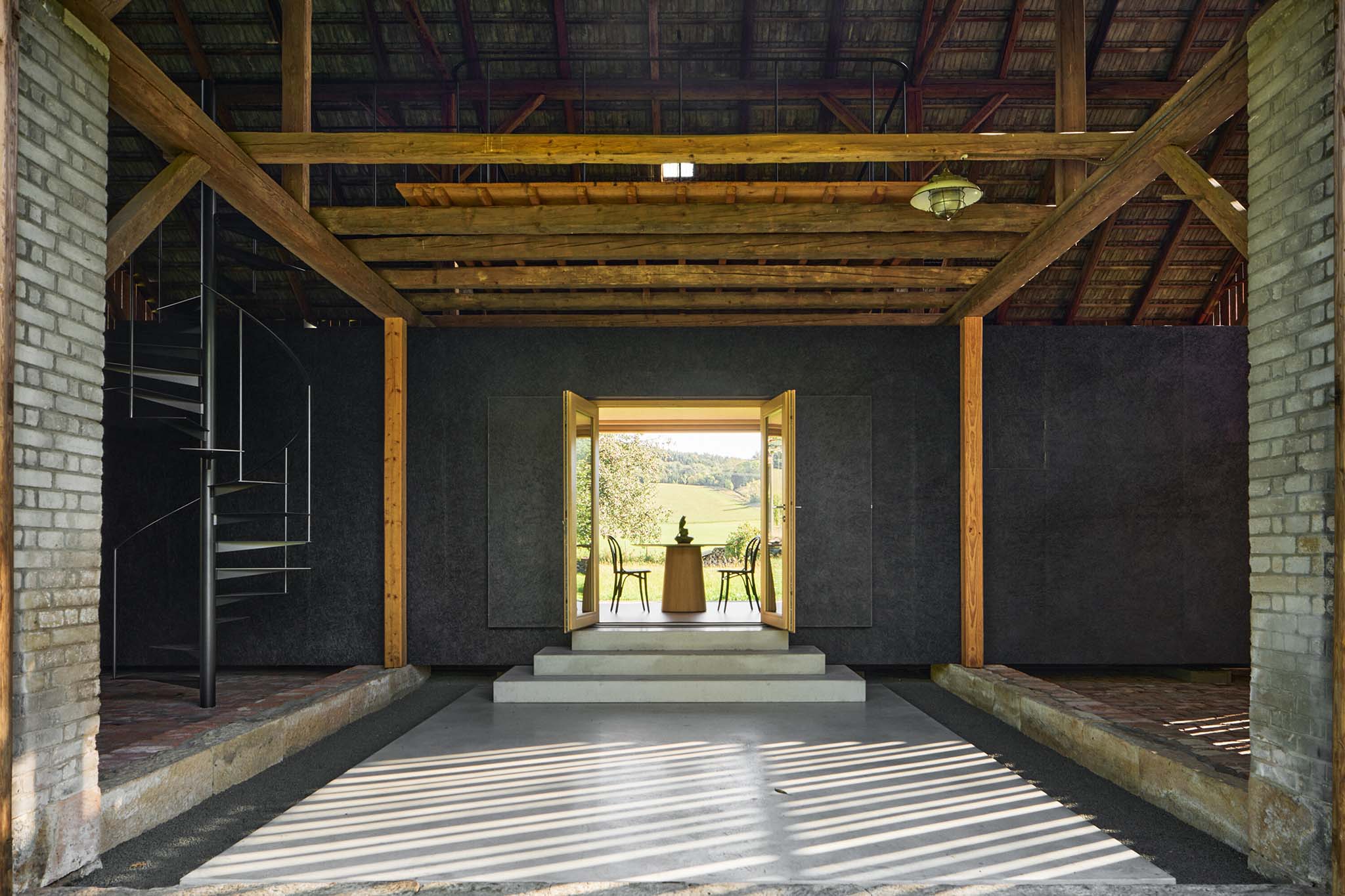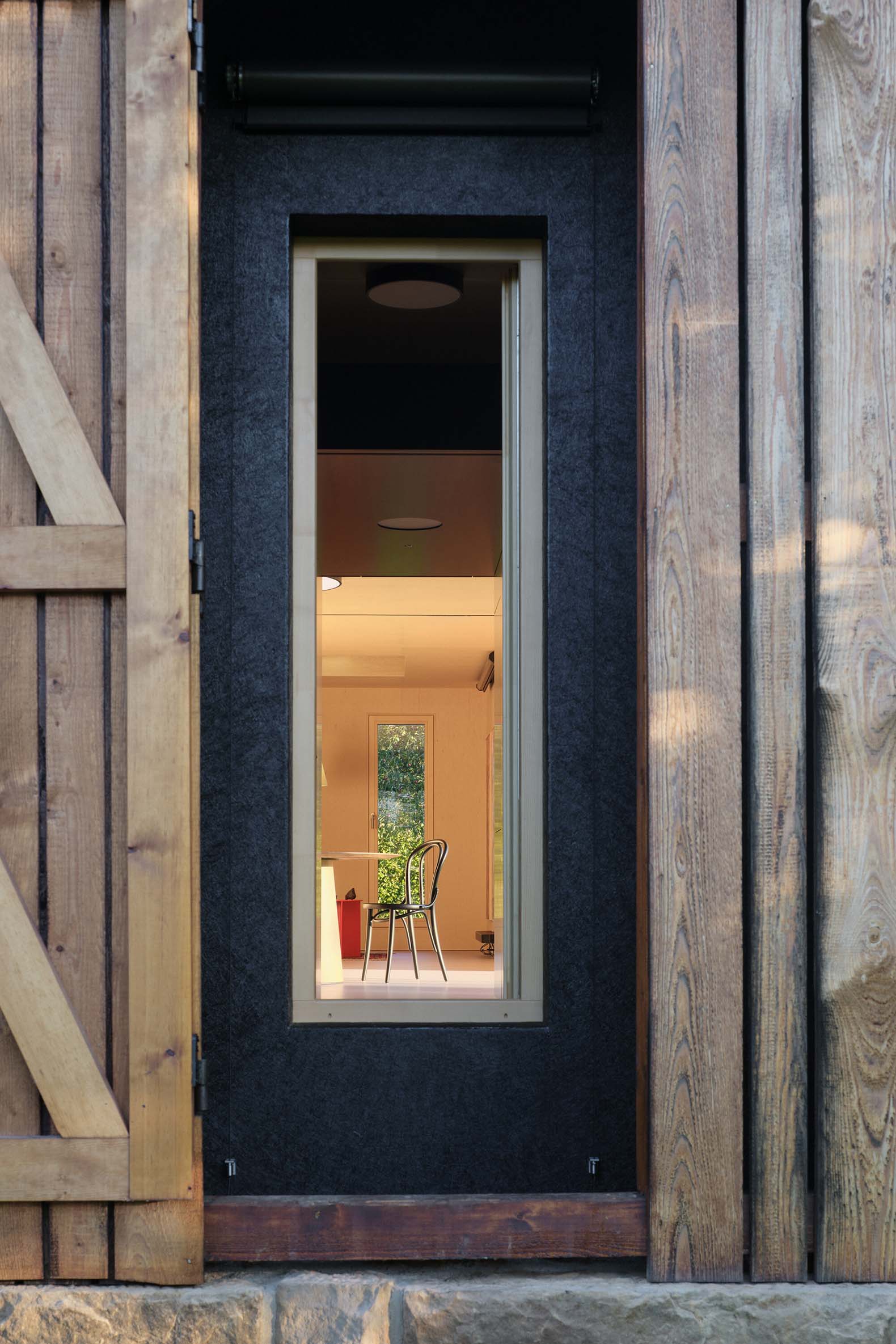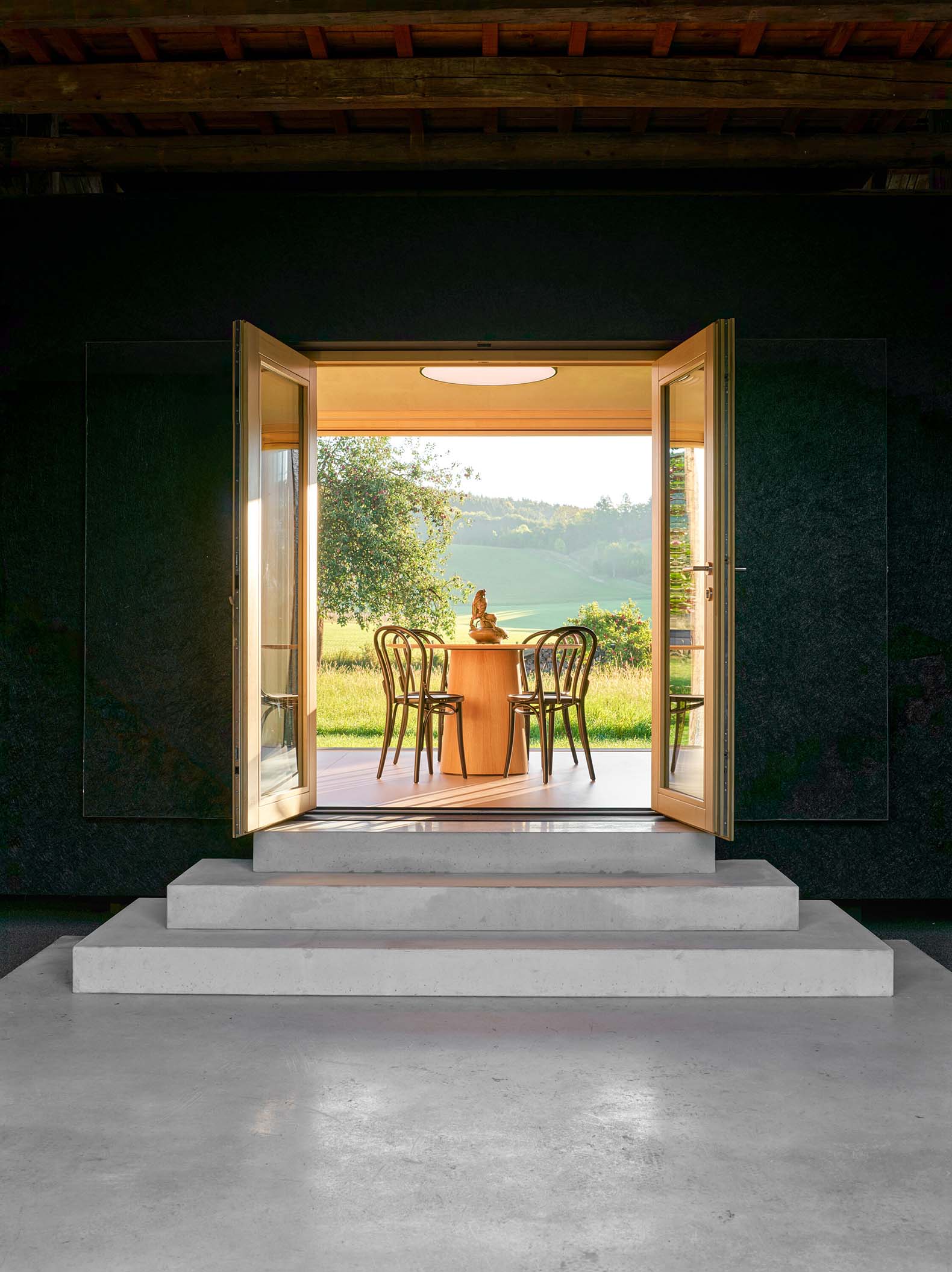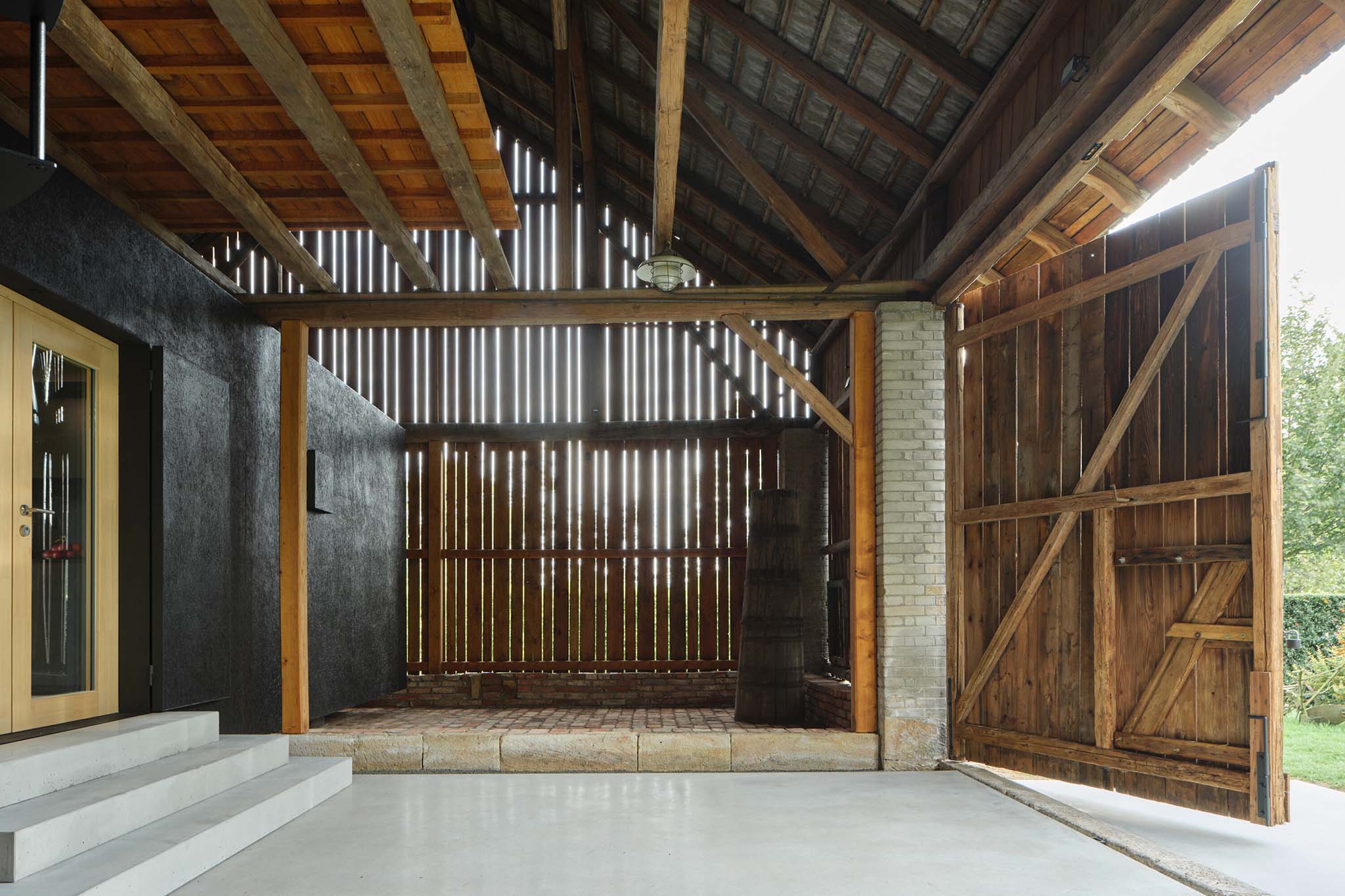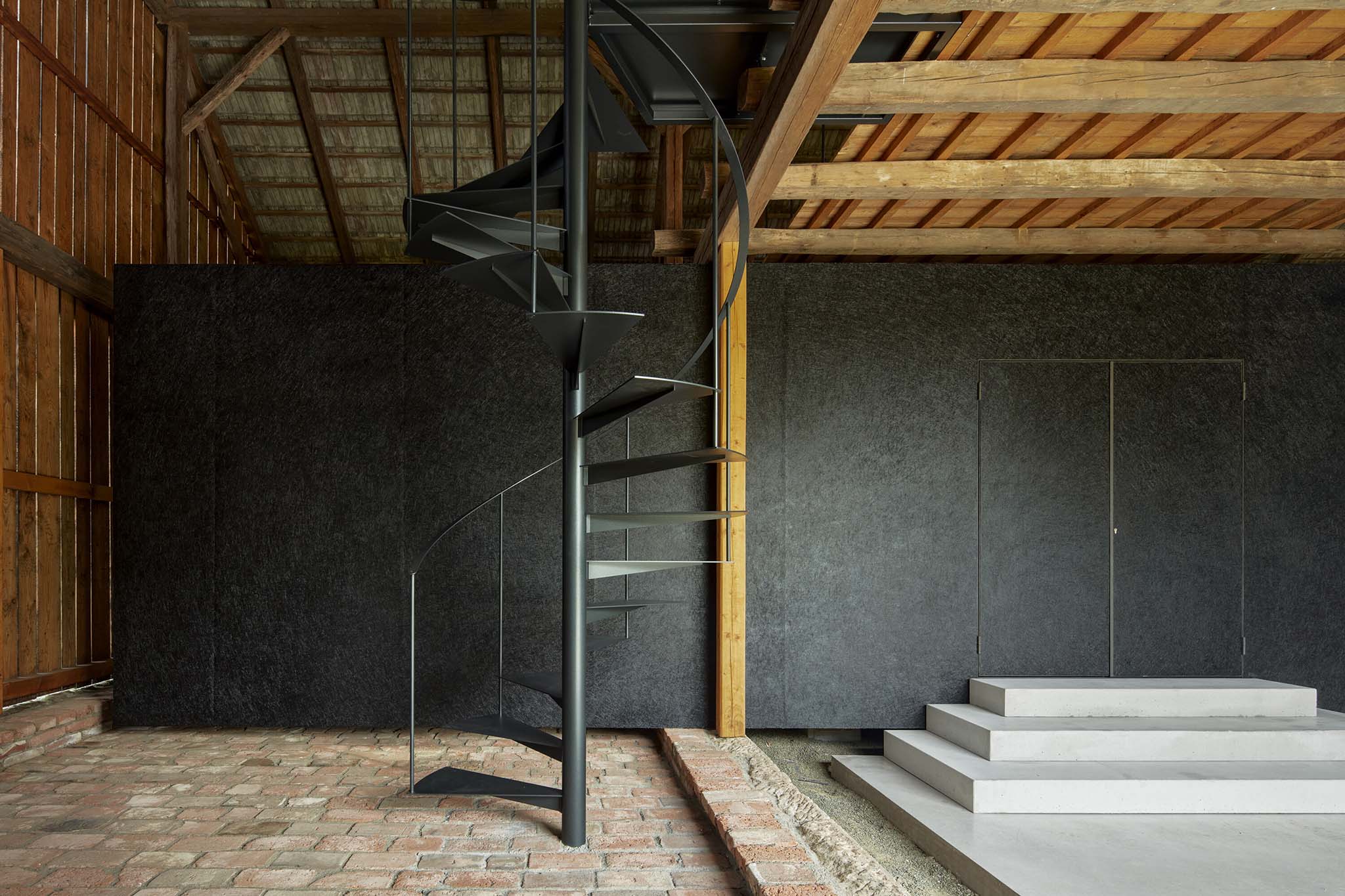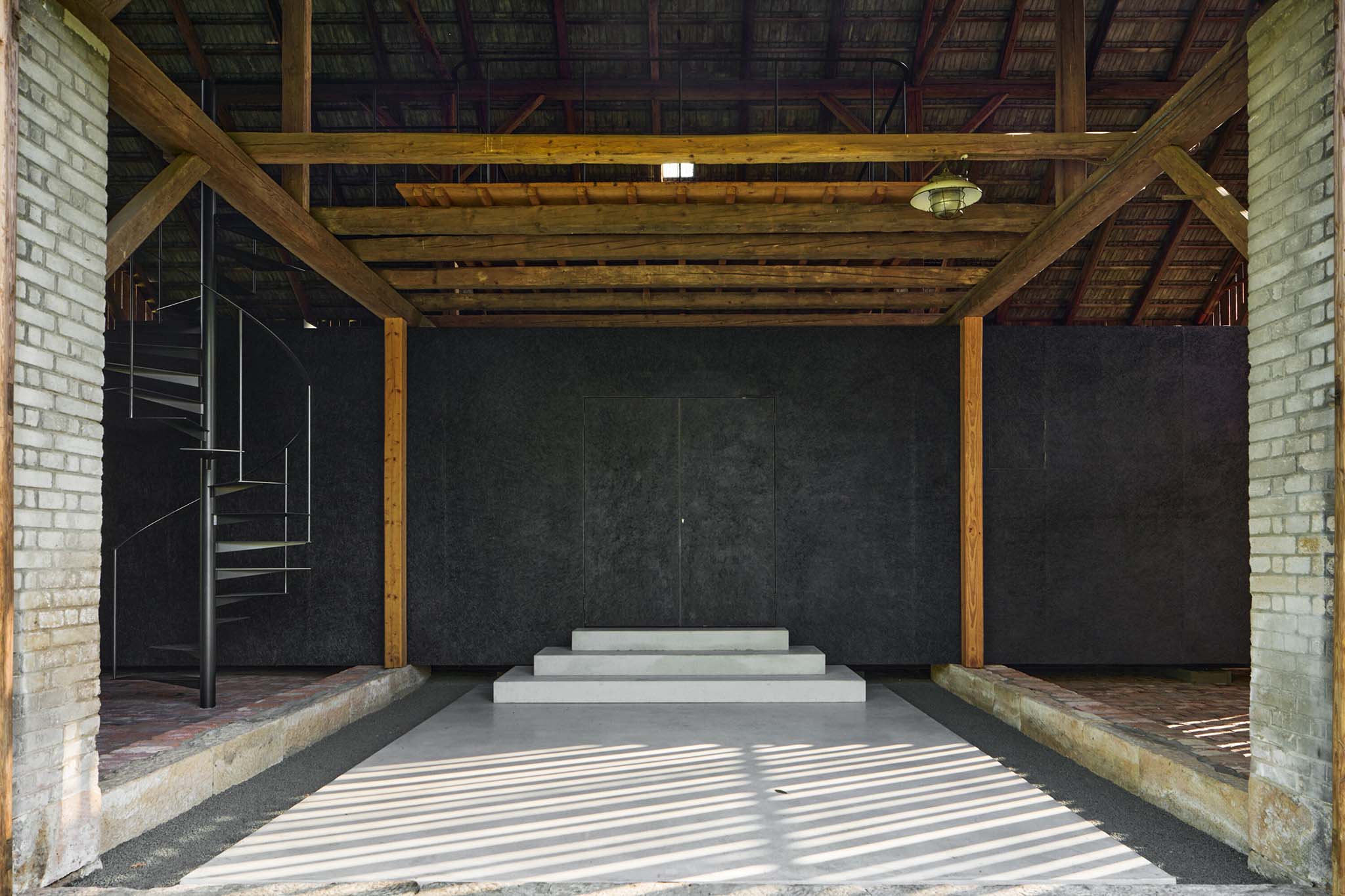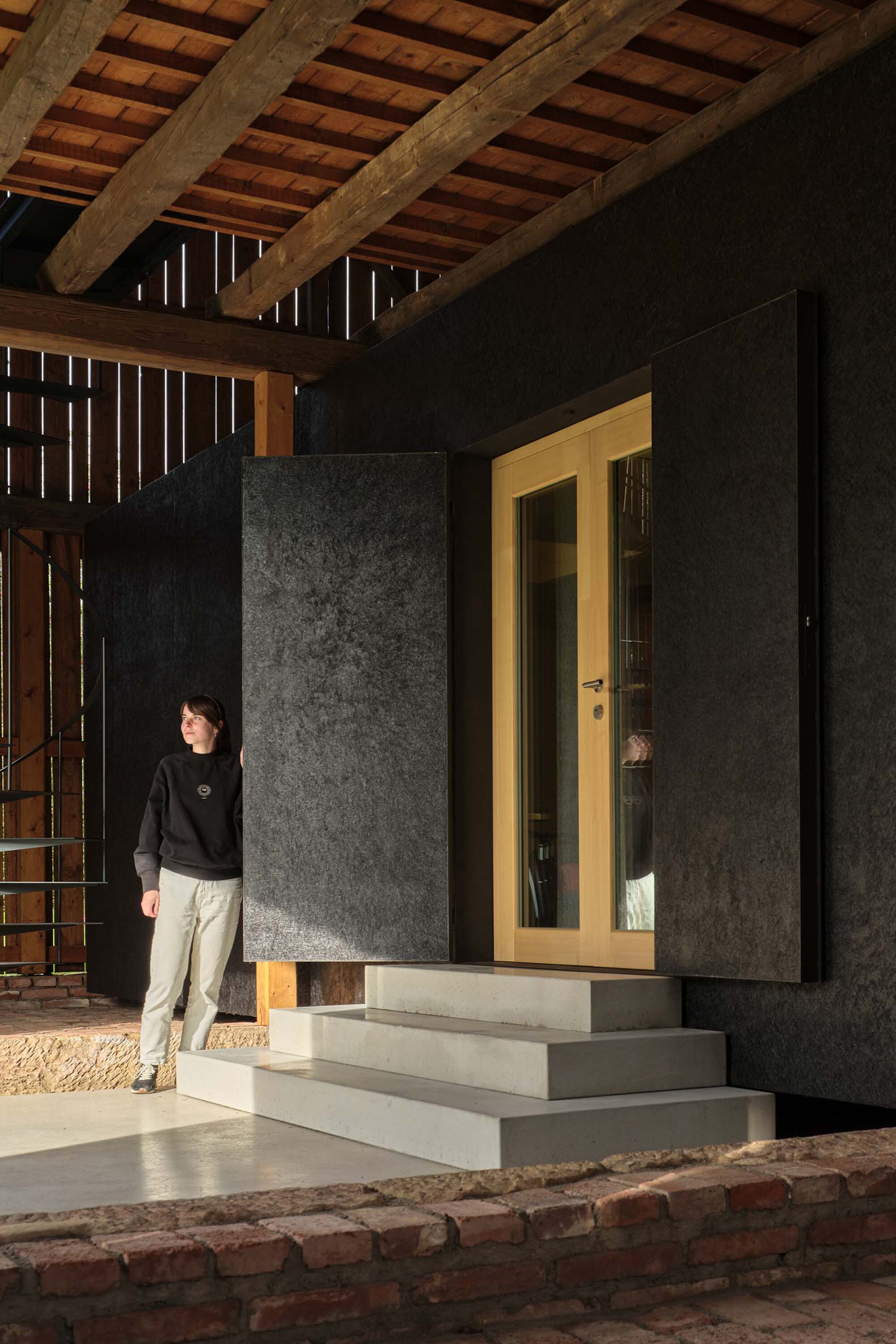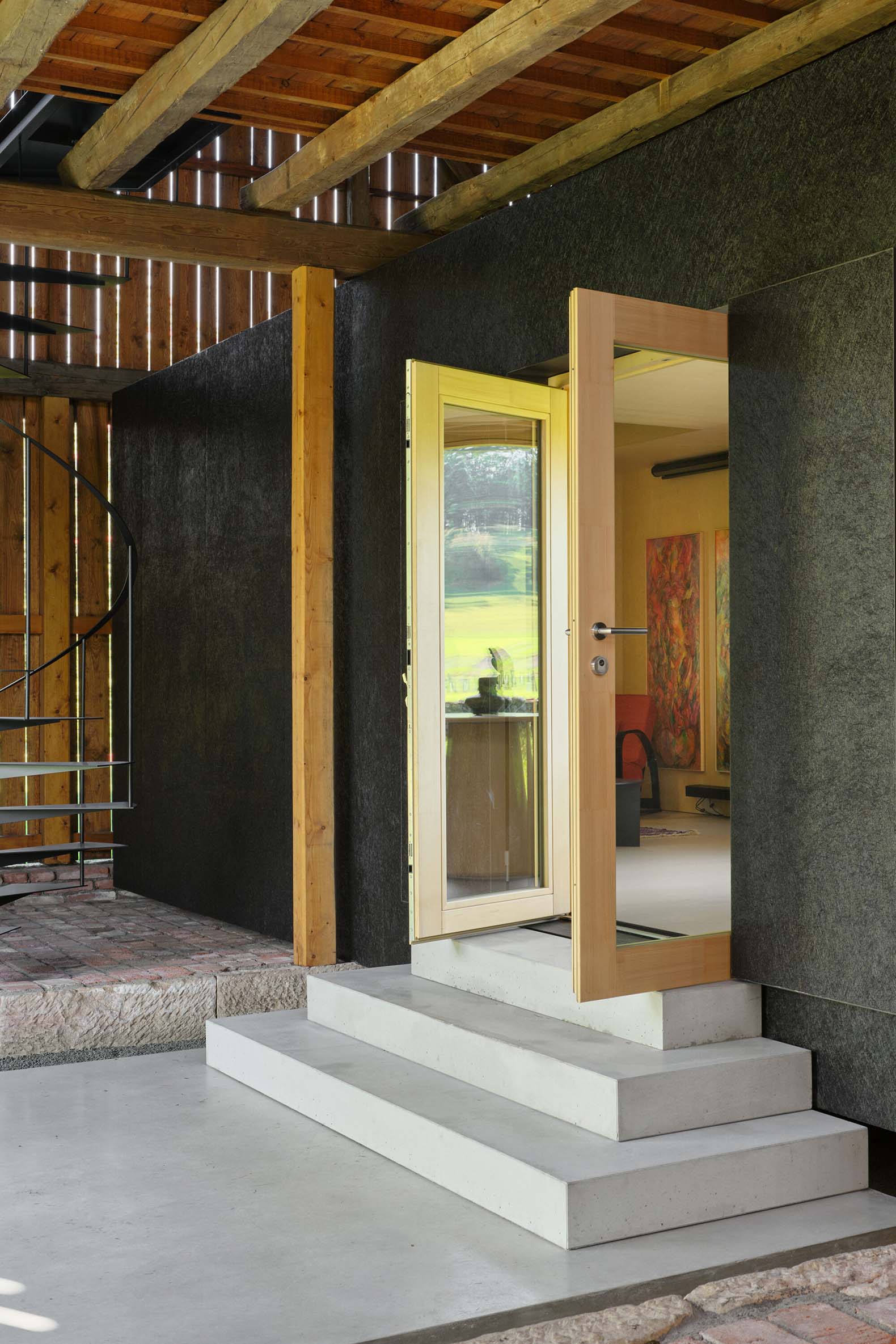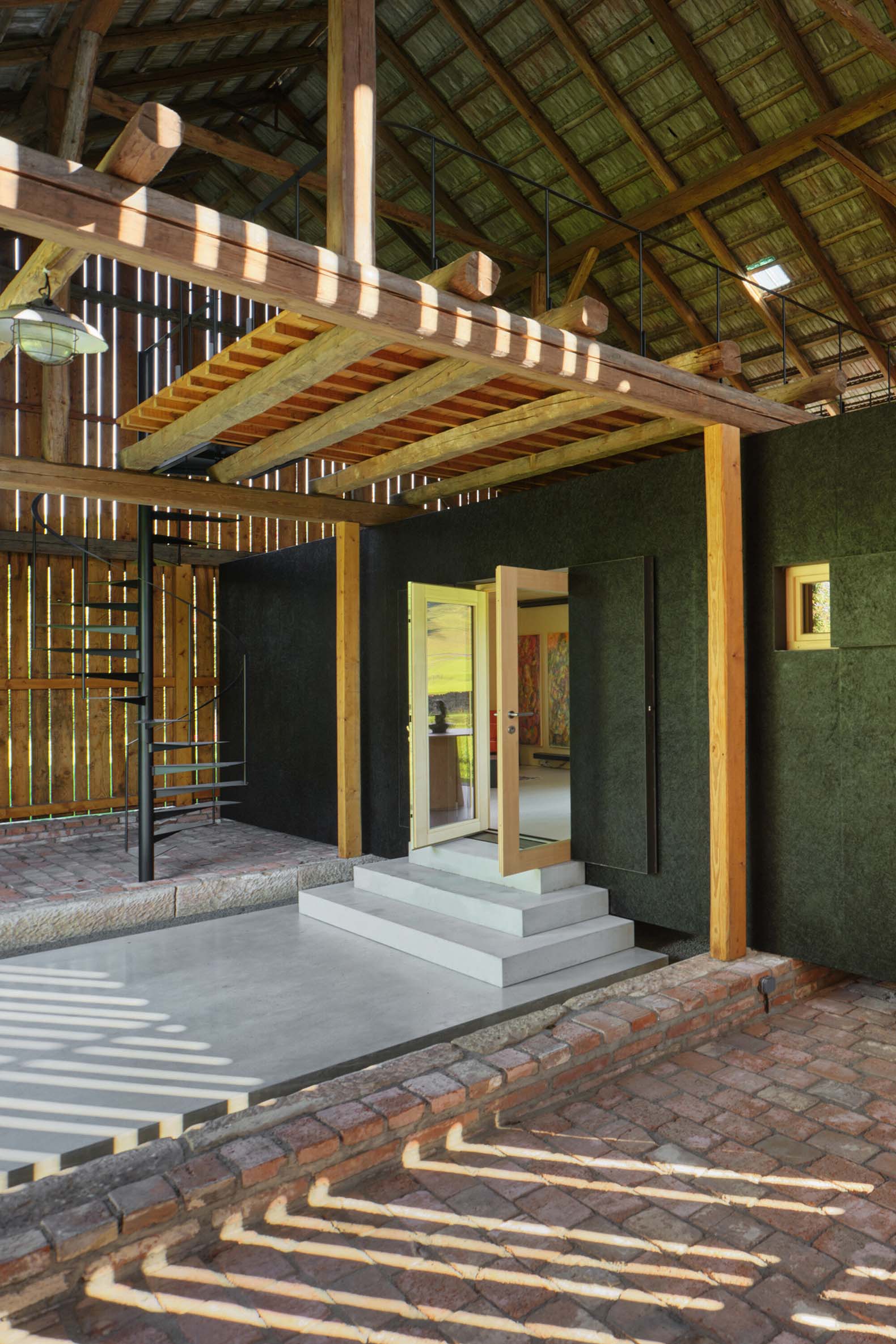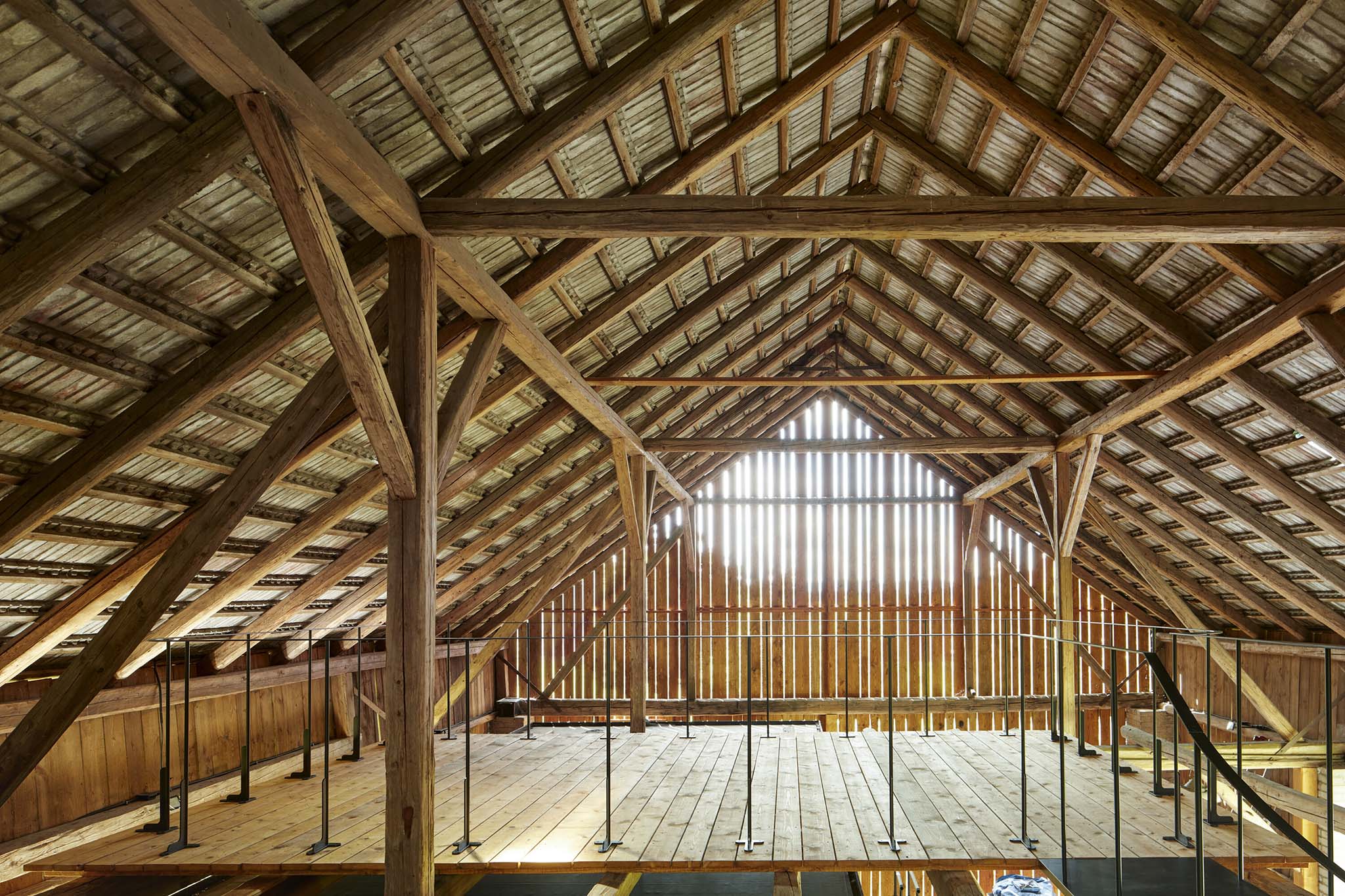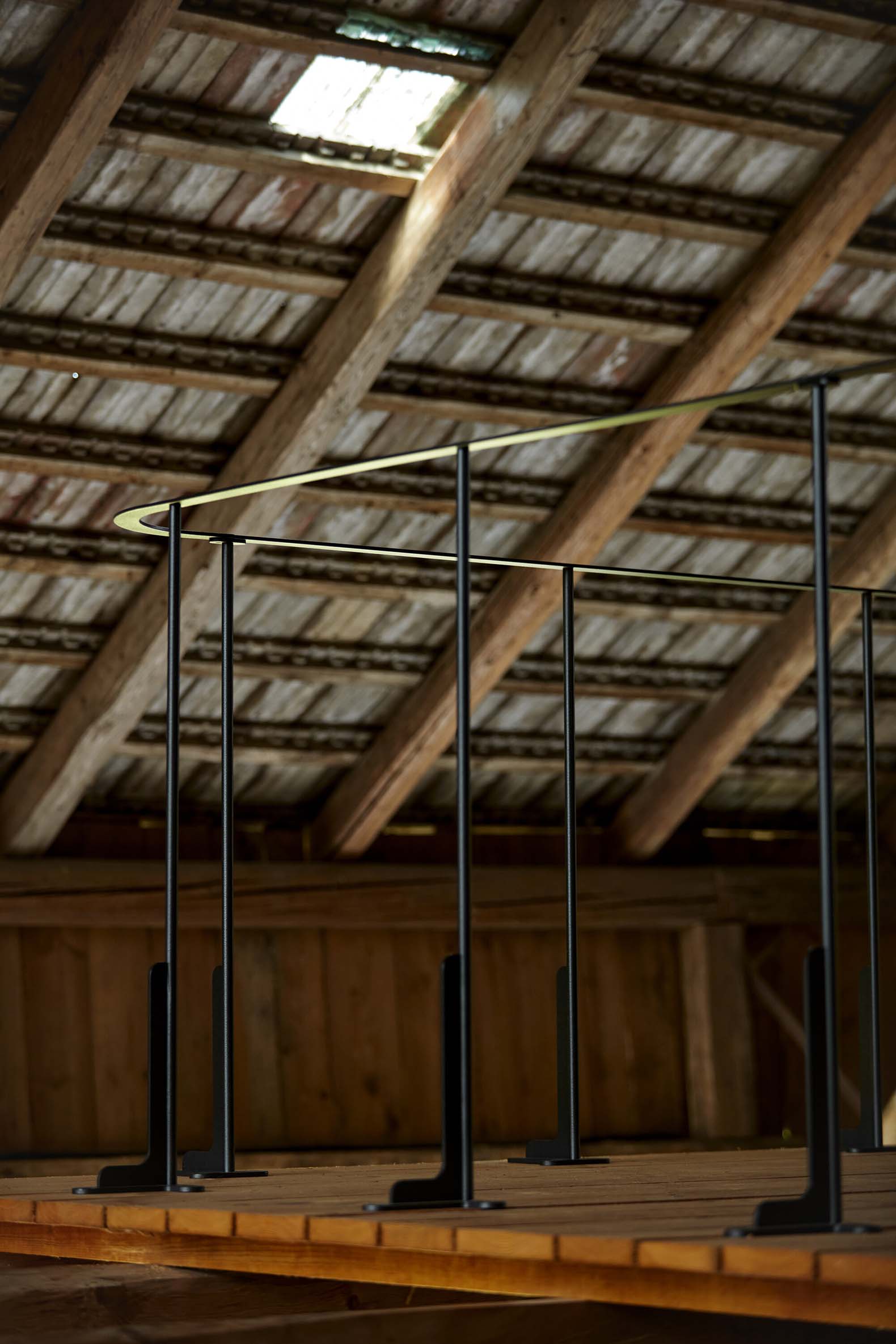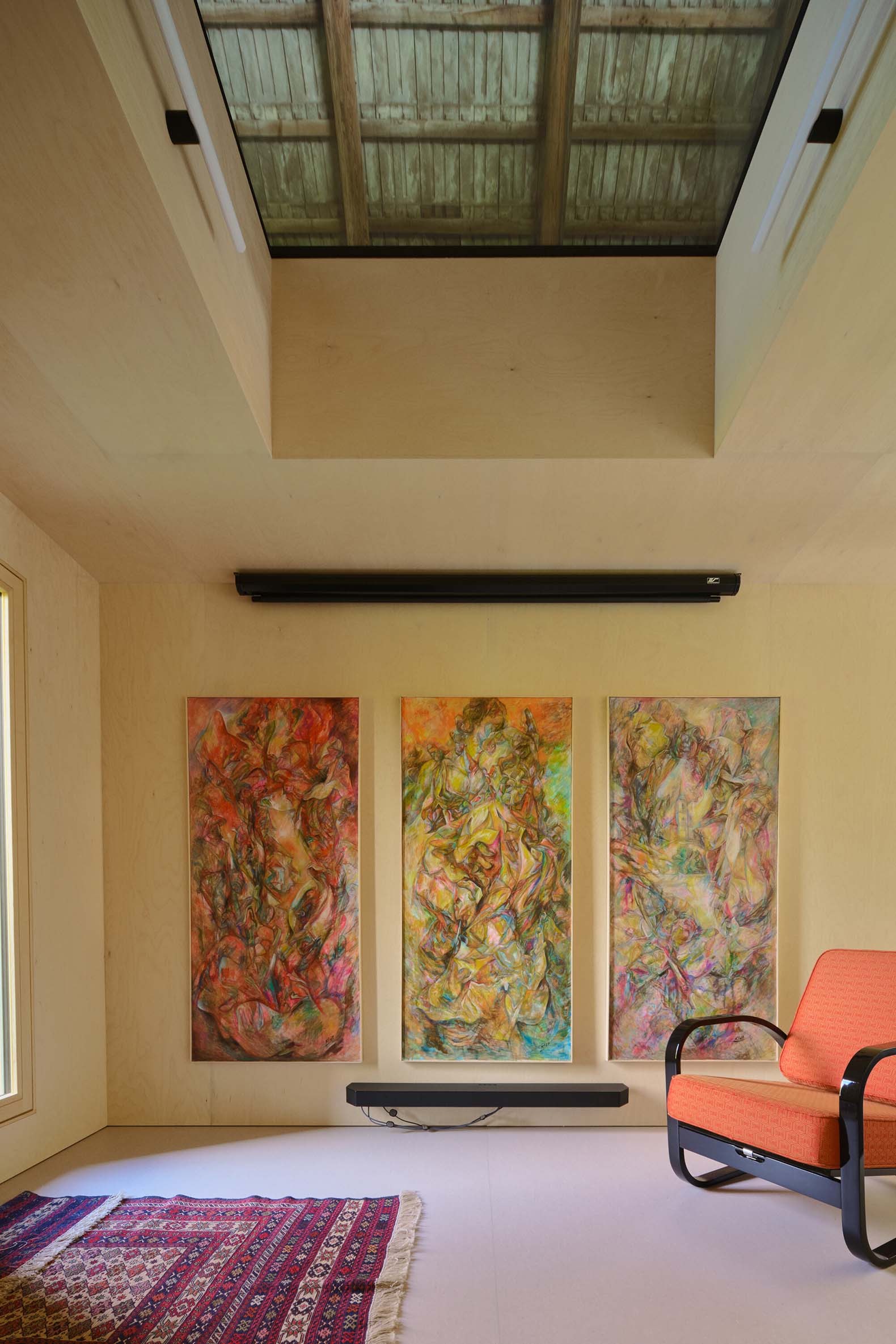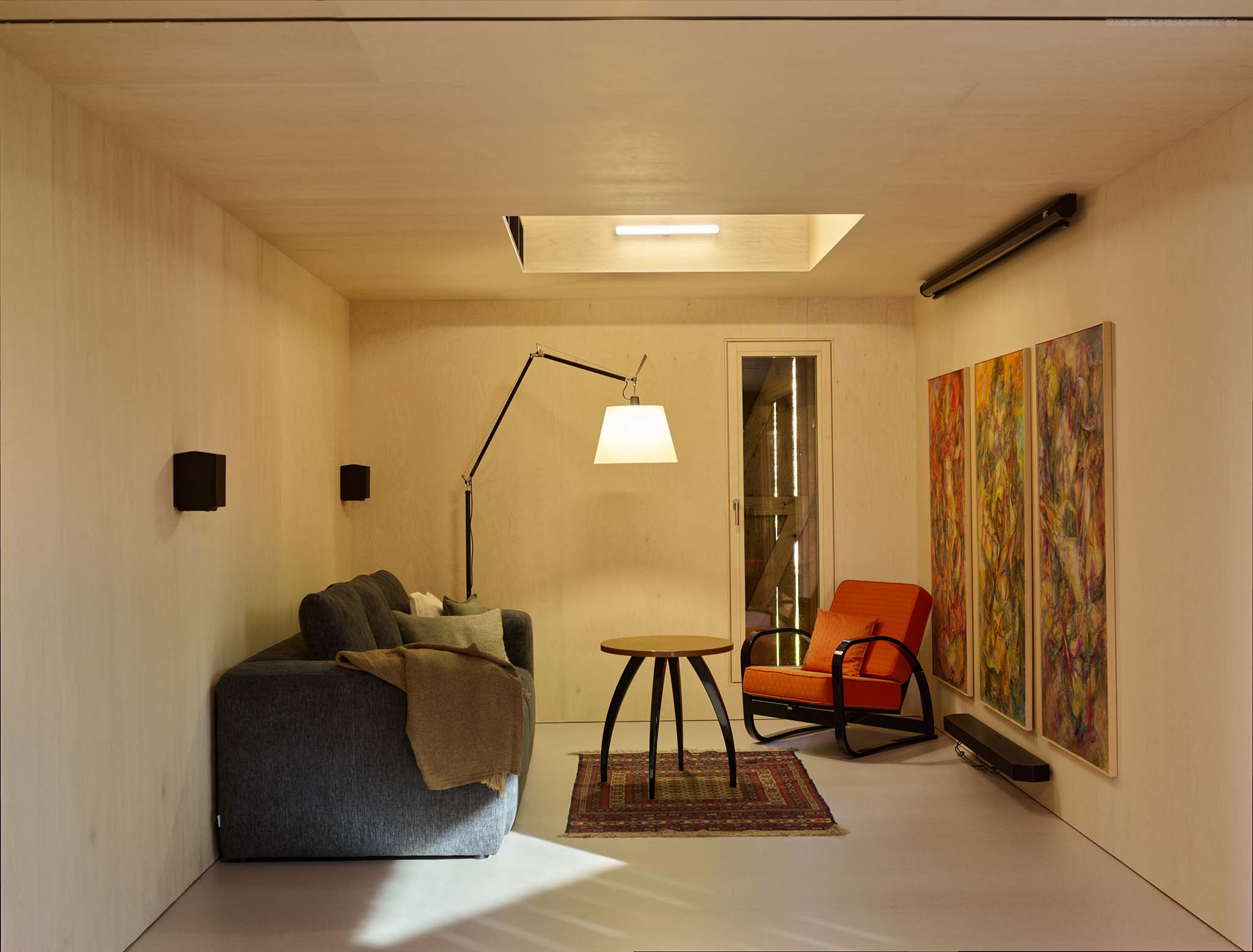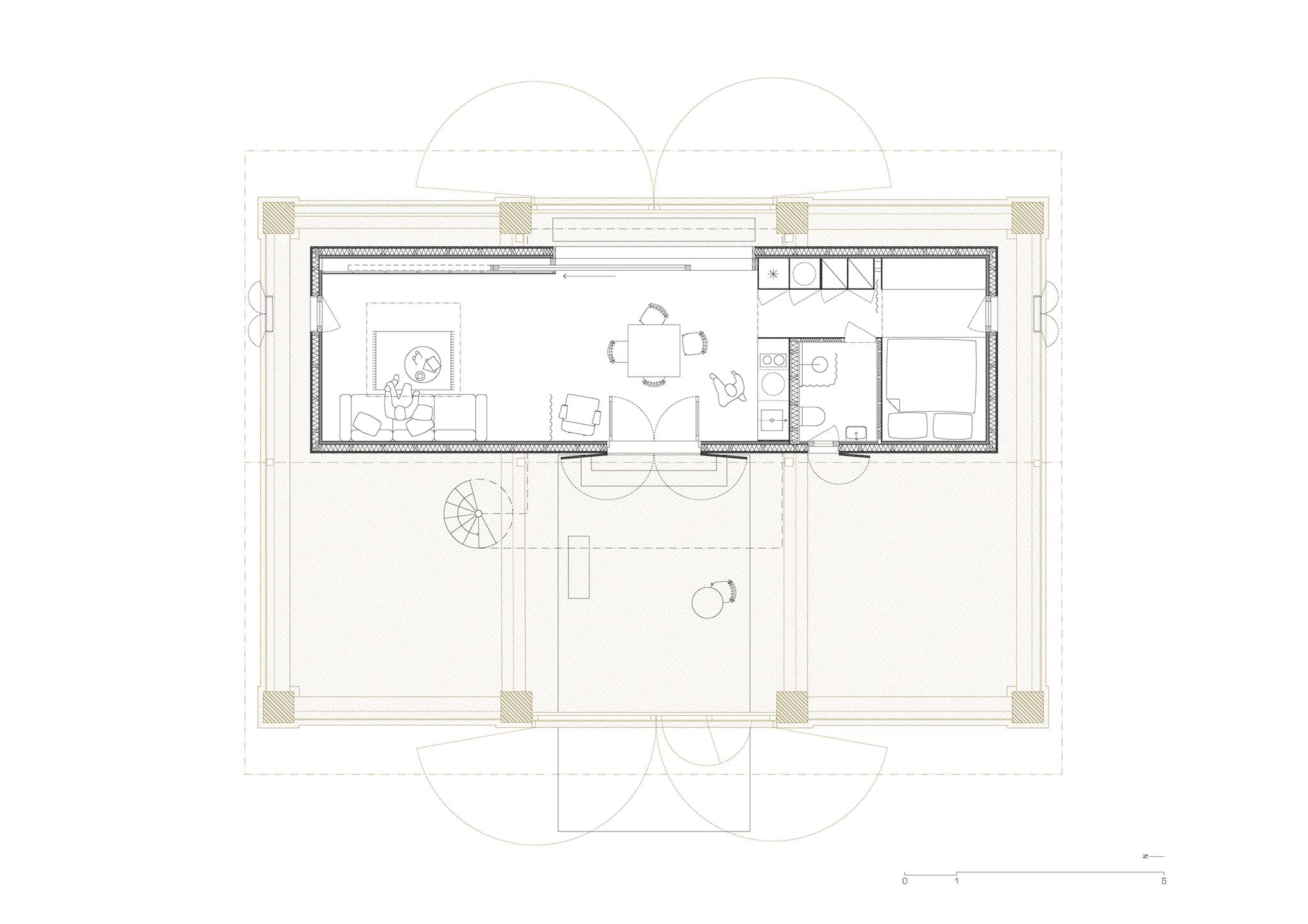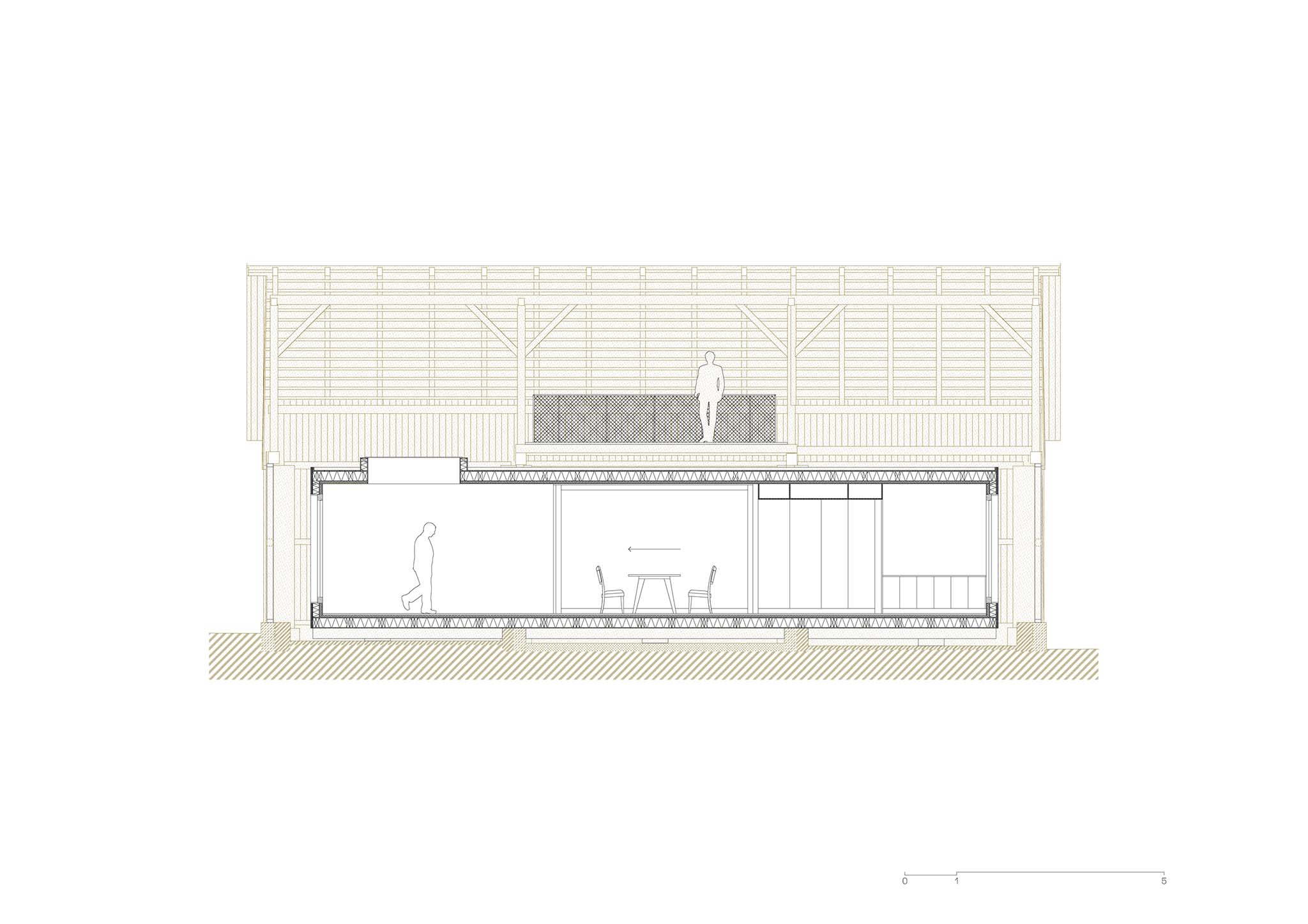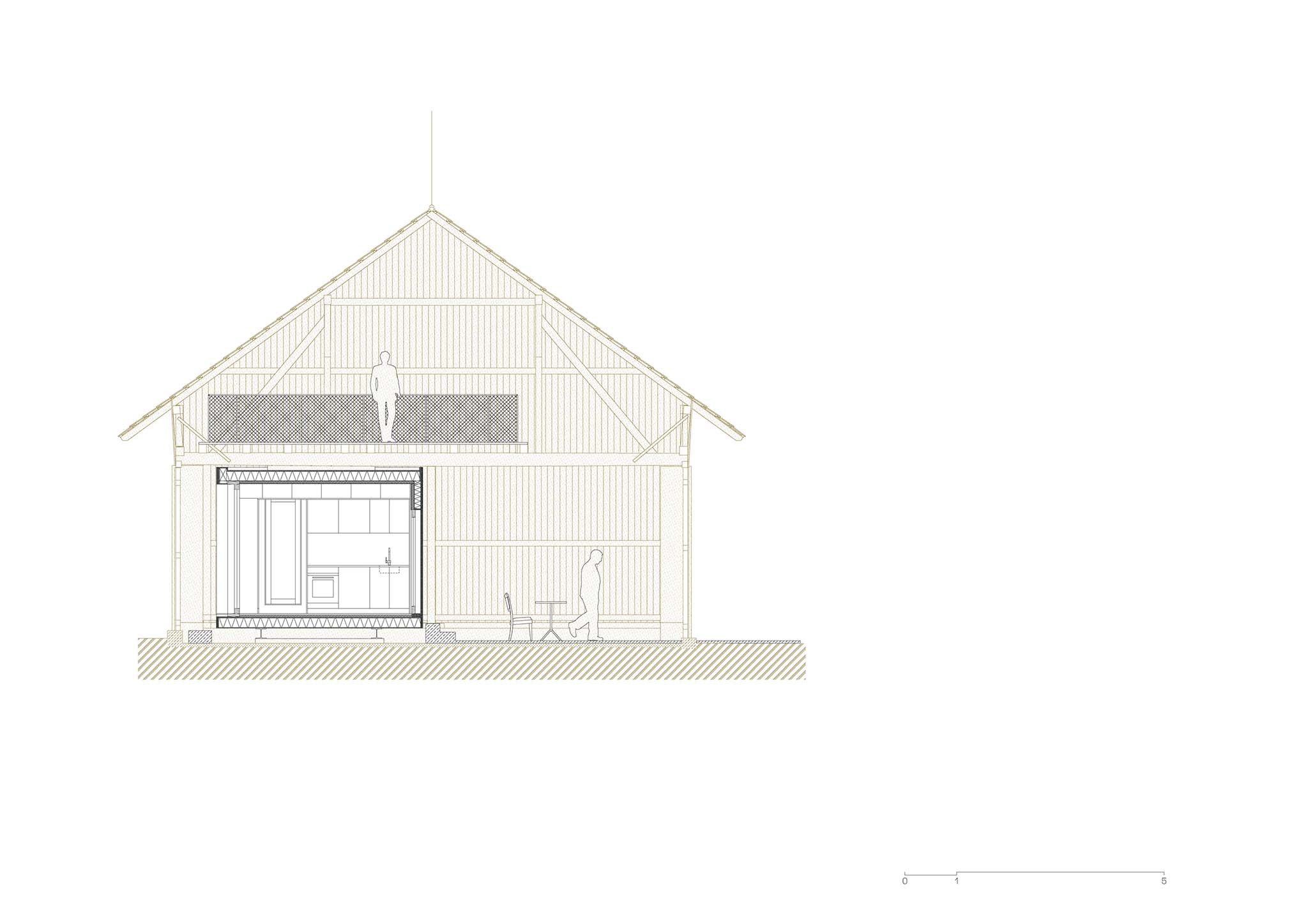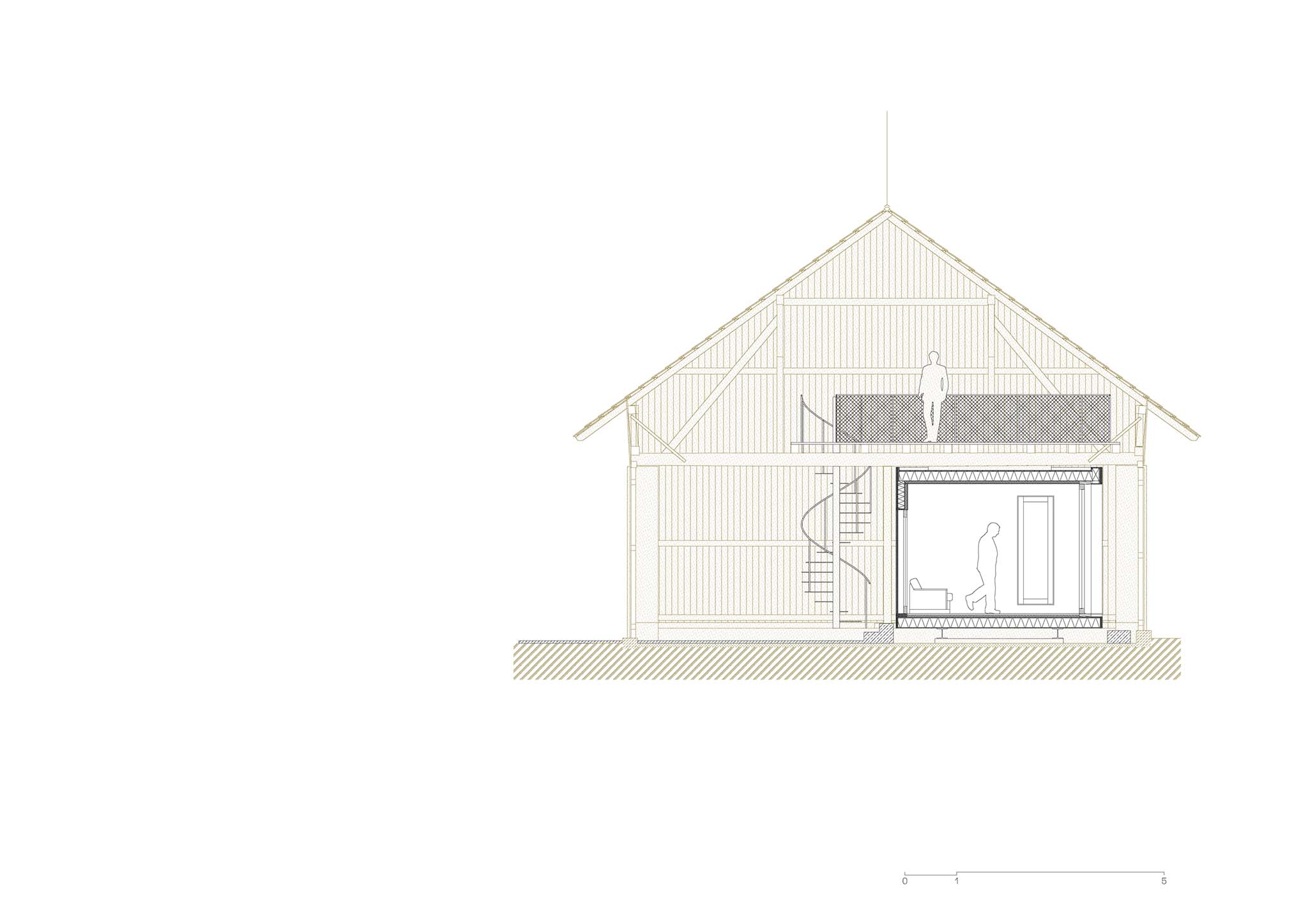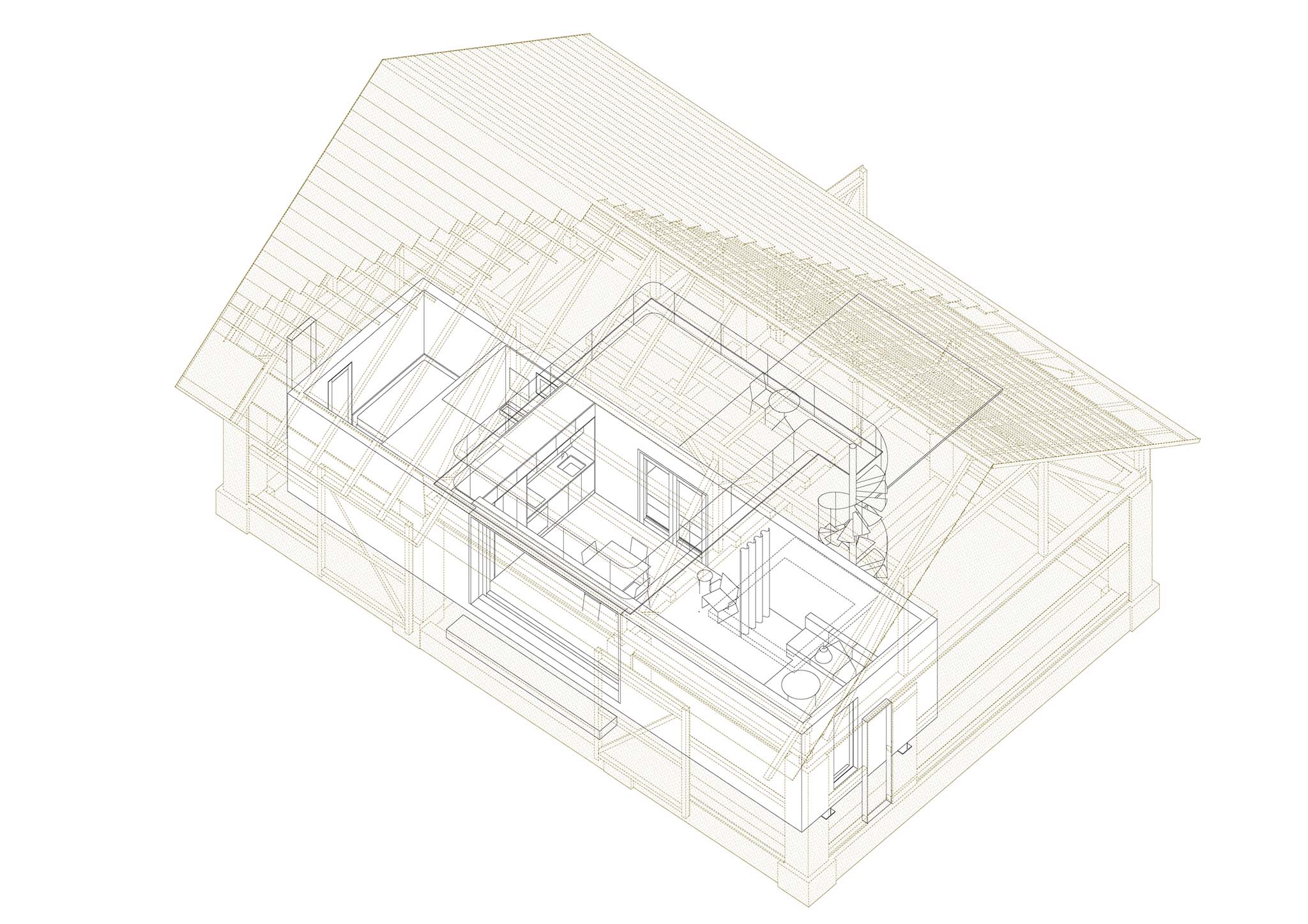
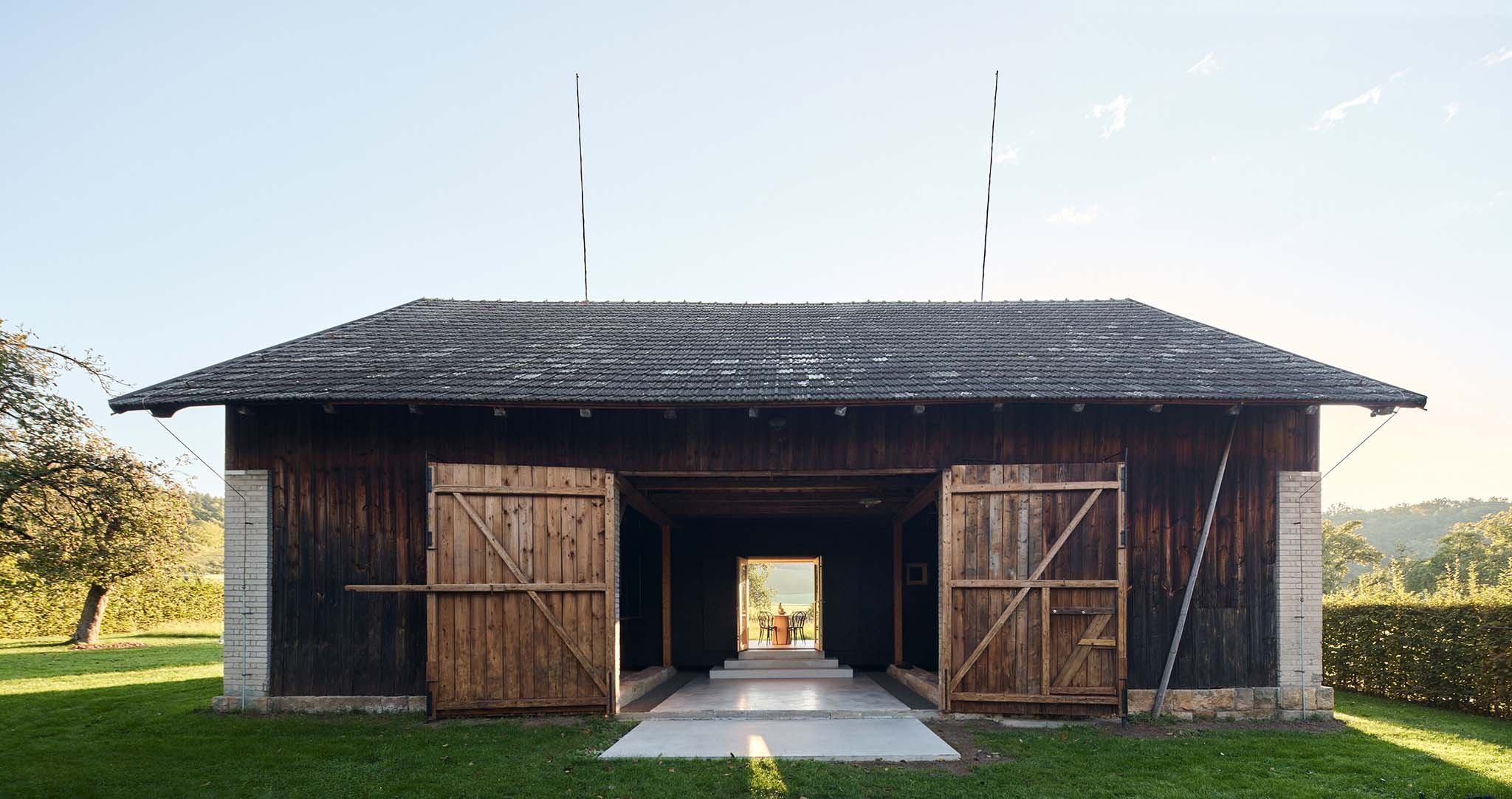
The house designed by Facha architekti adopts the elemental geometry of a barn through a volume slightly raised off the ground. The interior layout is organized around a visual axis that runs through the open space of the barn and extends towards the garden and the surrounding landscape. This visual path is materialized in the arrangement of the main spaces, the large window, and the placement of the dining table.
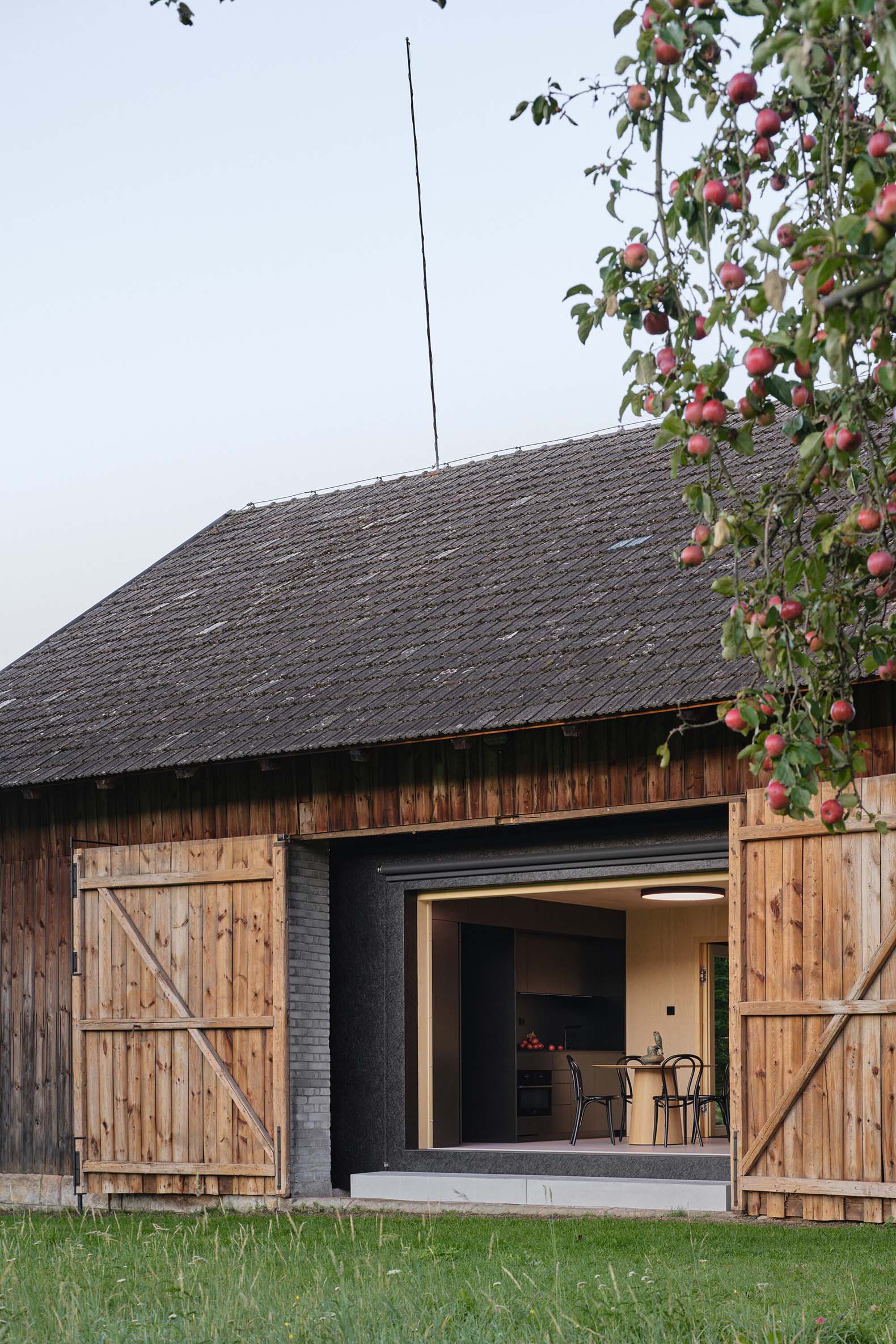
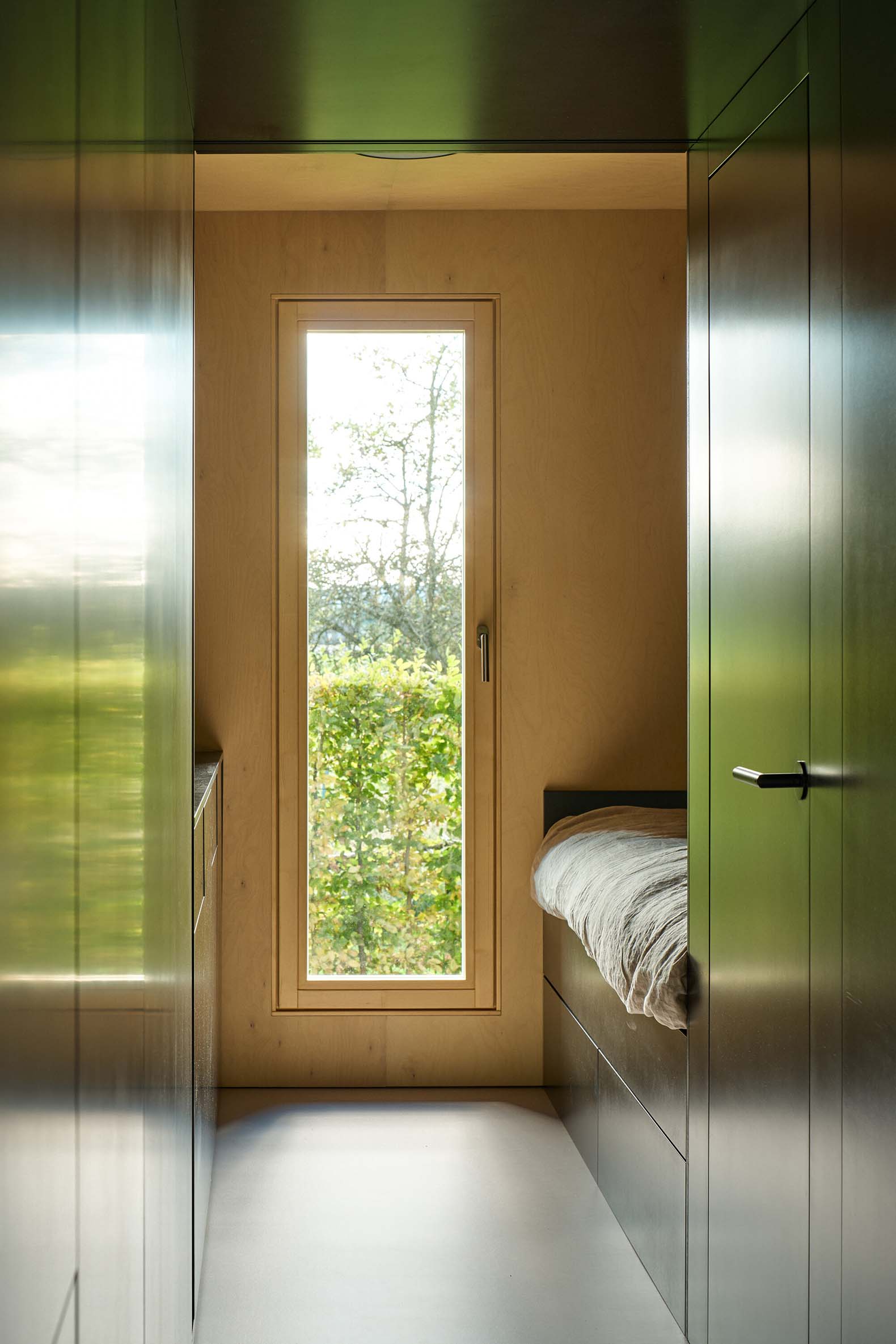
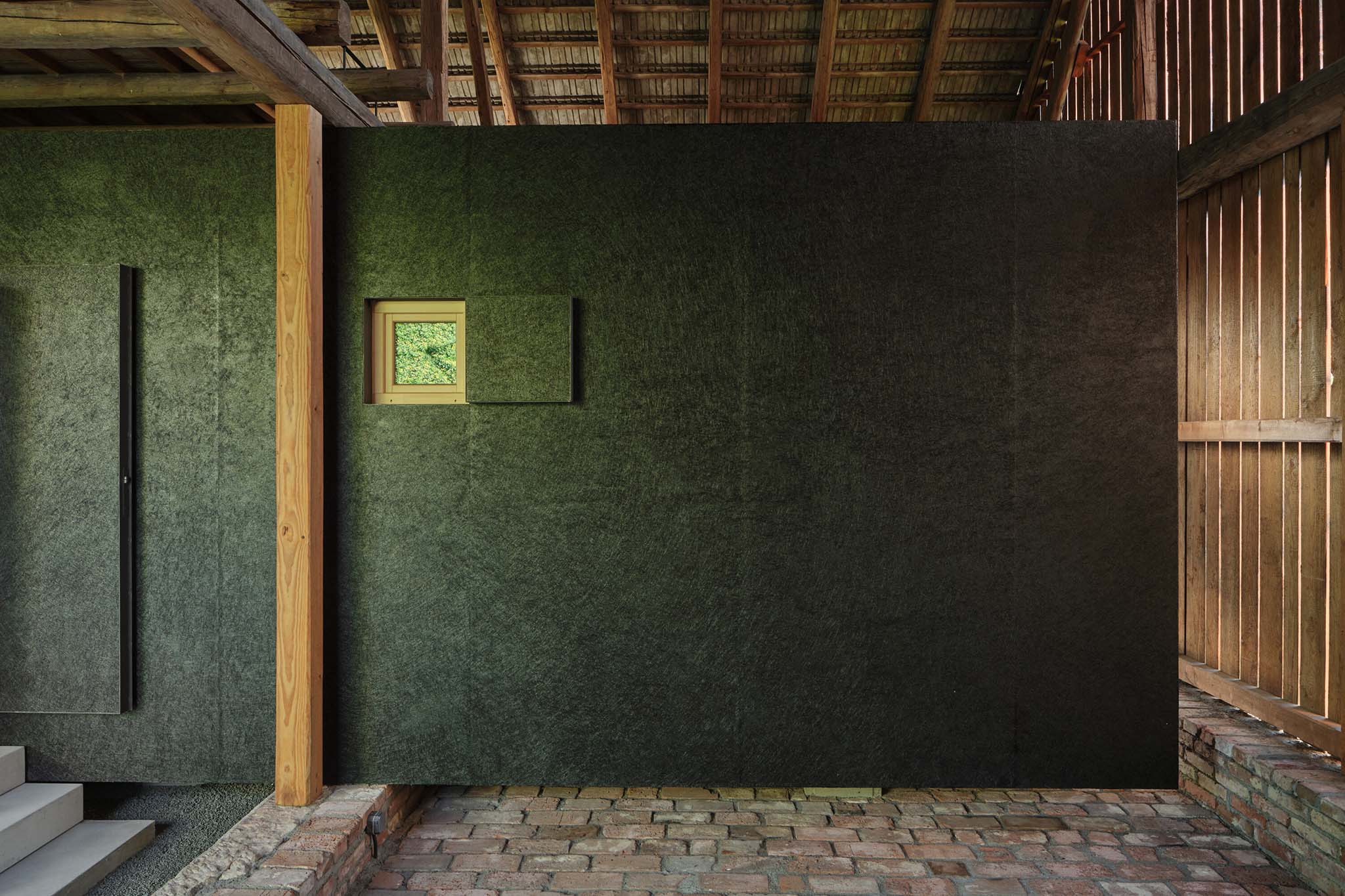
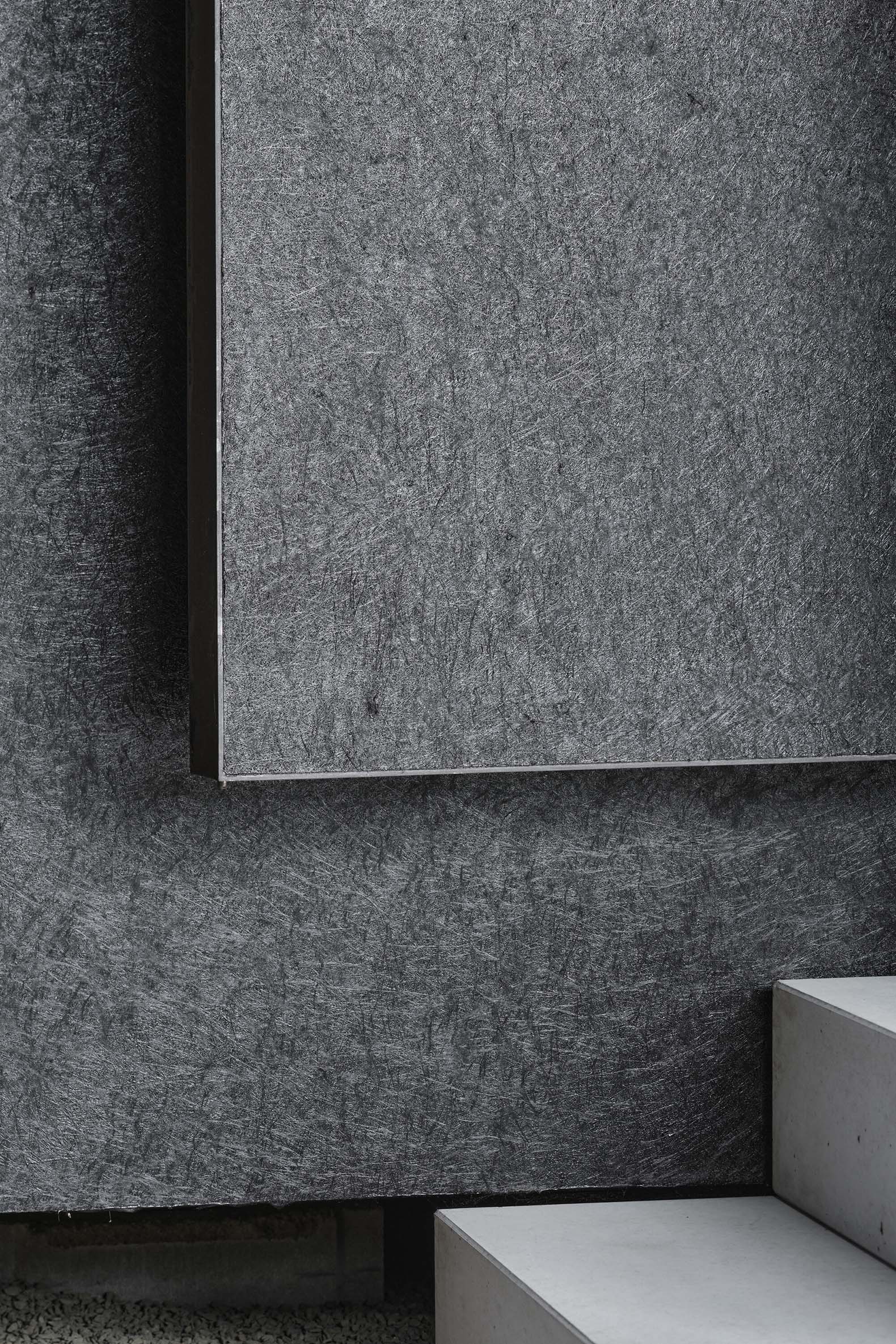
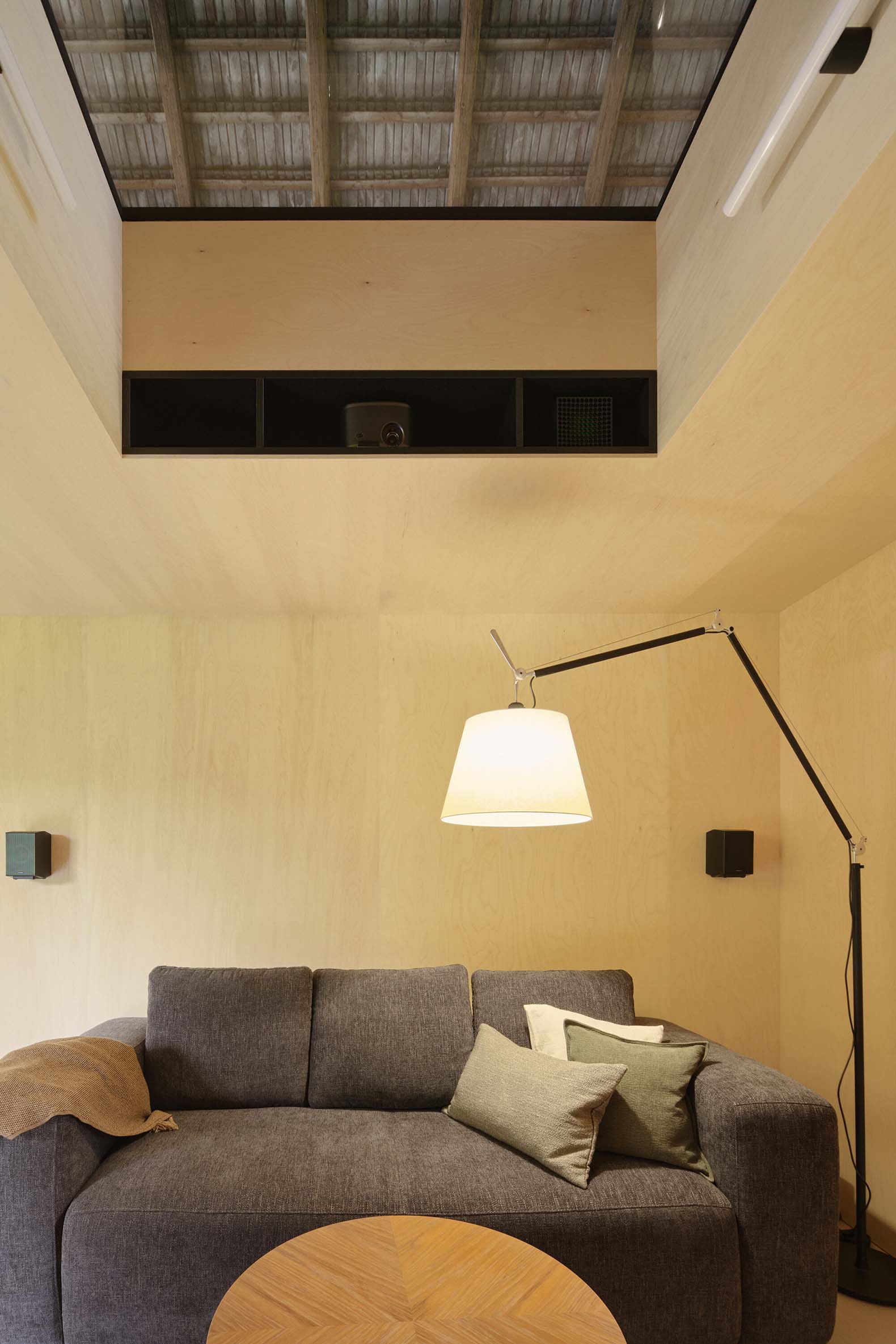
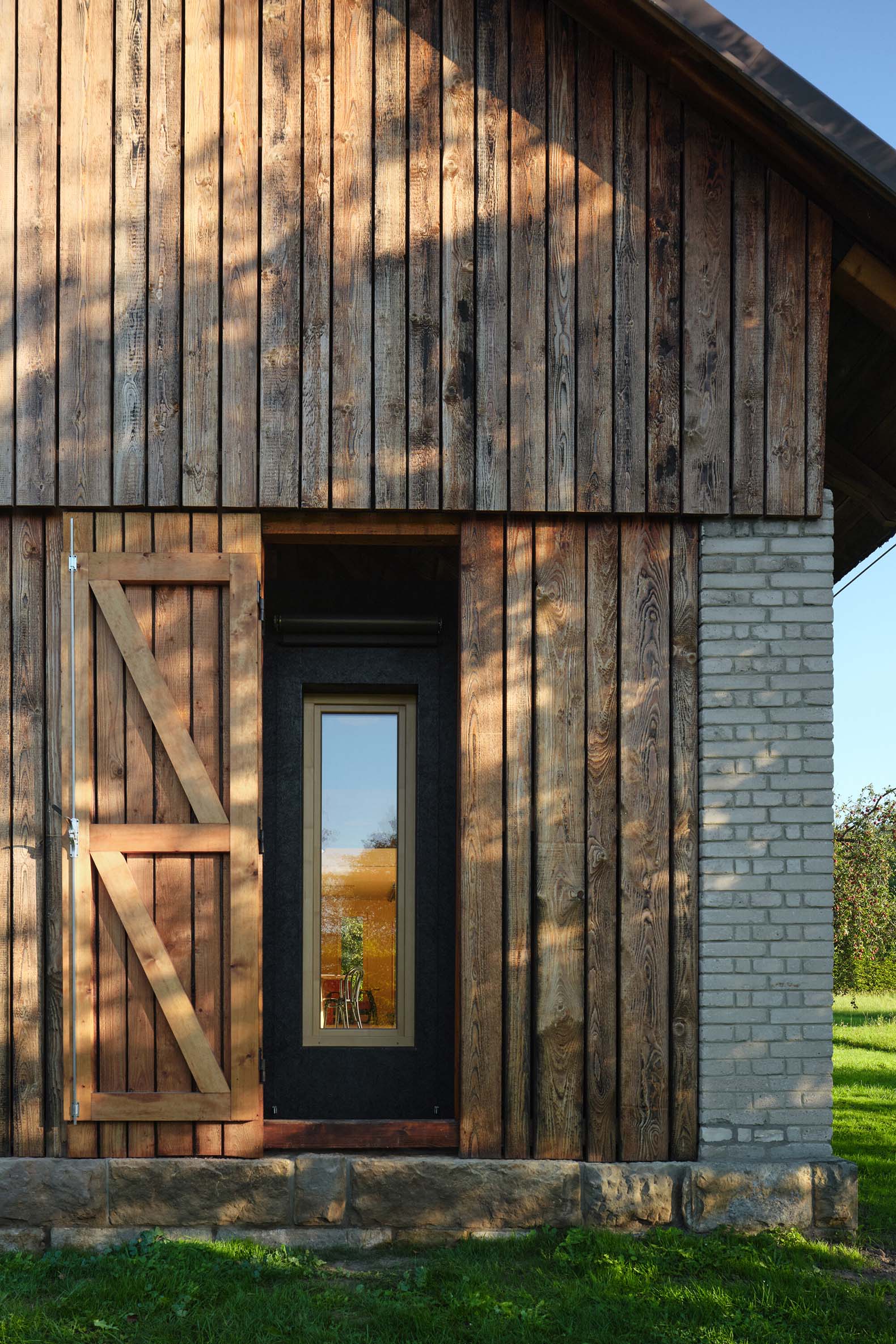
The intervention is resolved using a lightweight timber frame structure with KVH beams, complemented by a mechanical ventilation system, thermal insulation, and underfloor heating. Externally, the volume is clad in black asphalt, while the interior features birch plywood panels. The service areas are concentrated in a core clad with black-stained MDF boards.
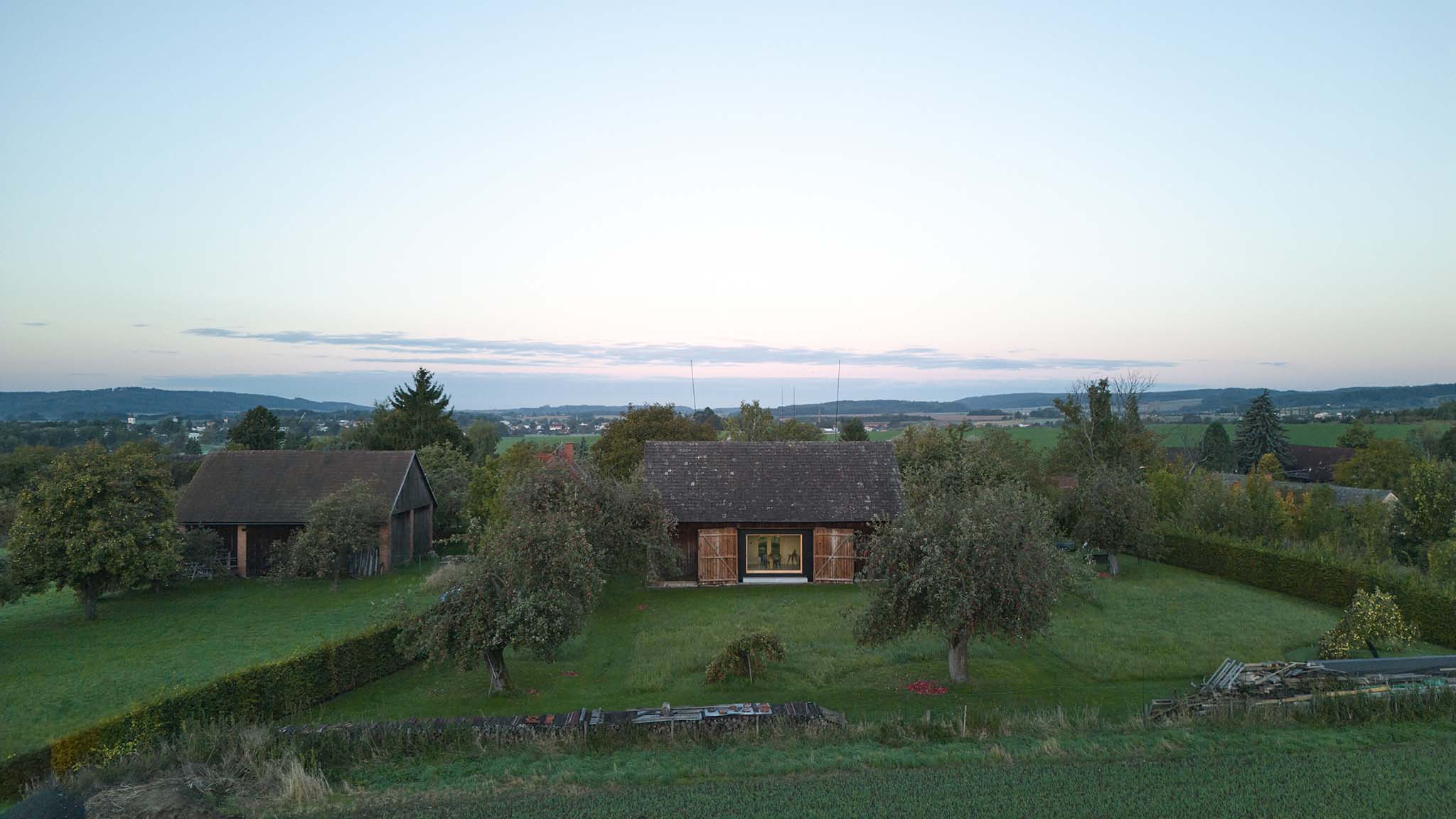
The Box in the Barn by Facha architekti. Photograph by Peter Fabo.
Project description by Facha architekti
“The Box in the Barn” is a small contemporary living unit freely inserted into an old barn. The project was conceived as a seasonal retreat for the client within a rural homestead used by his family. The brief was initially open-ended — the first ideas considered the renovation of the residential part of the farmstead, but over time the design evolved into a new independent dwelling placed inside the barn.
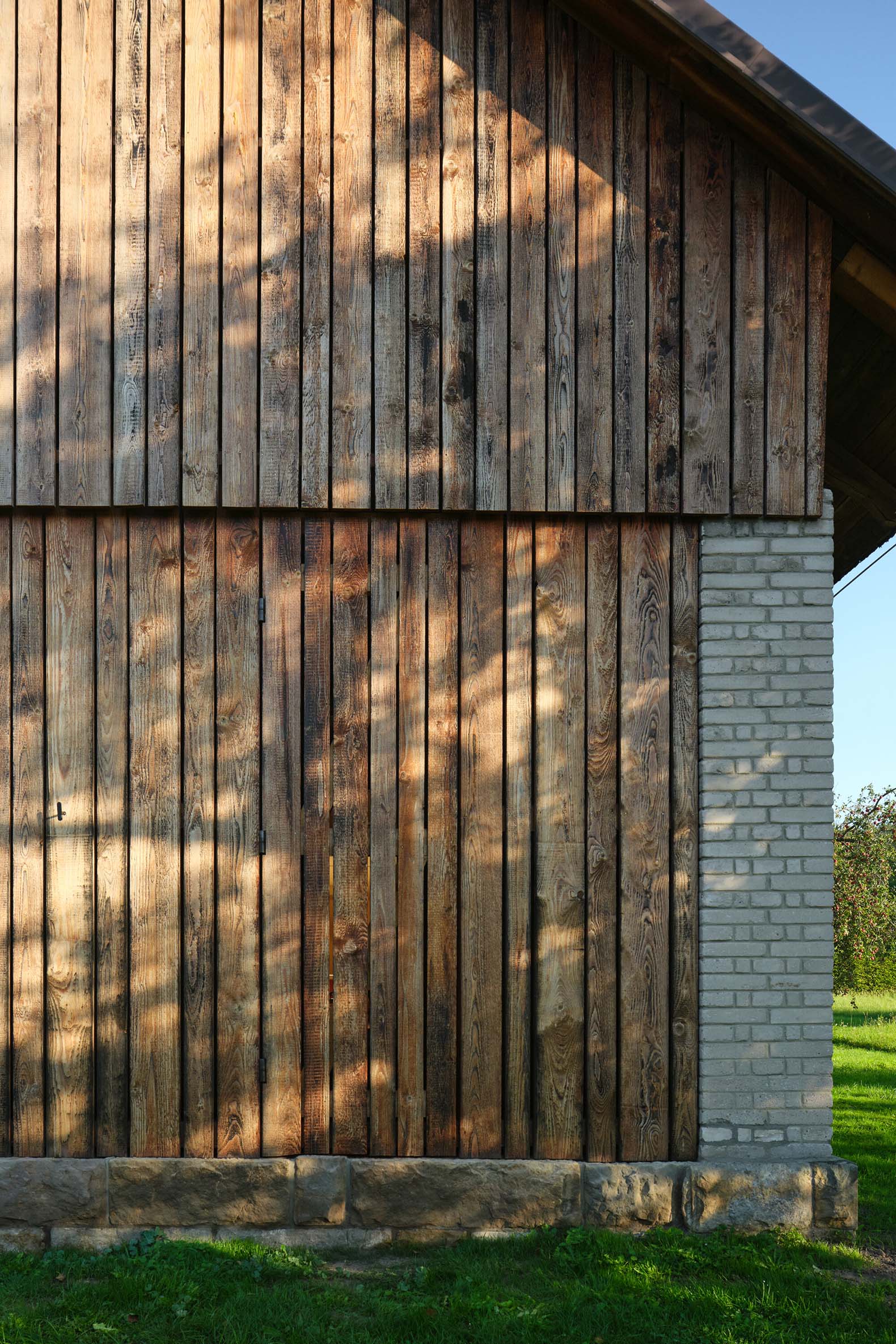
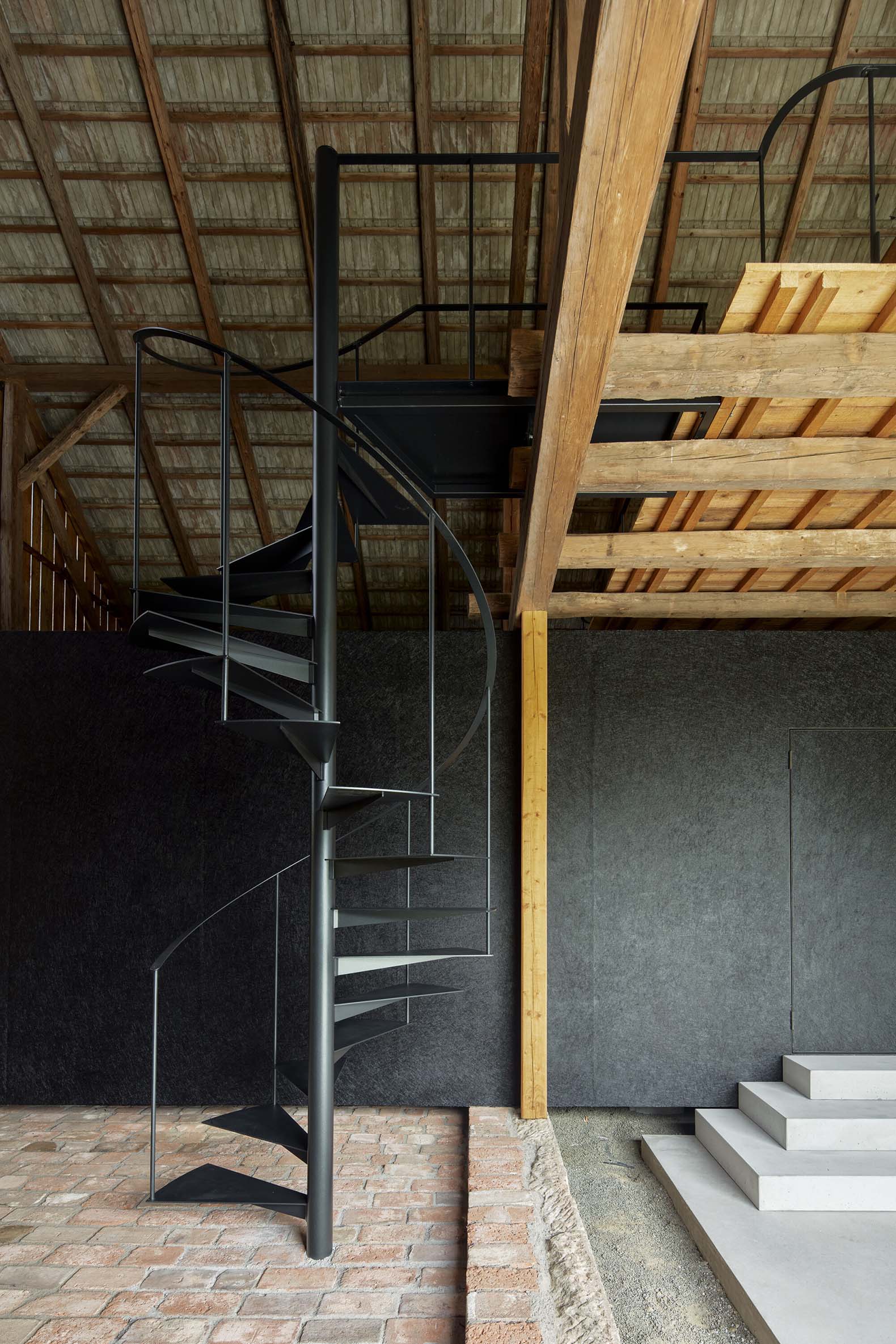
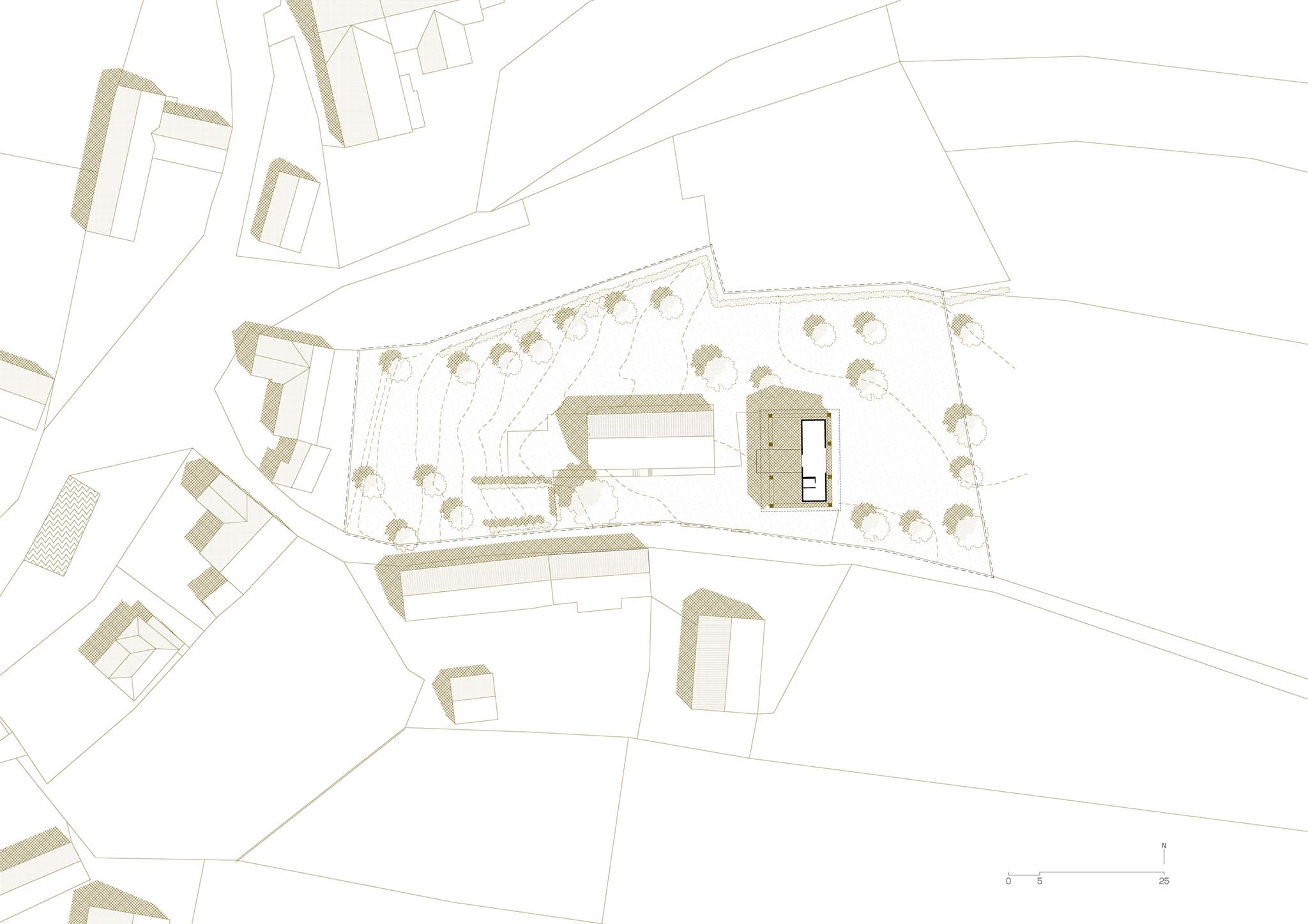
A fundamental principle of the design was respect for the existing structure and preservation of its authentic character. The new object therefore works as a clearly legible contemporary insertion that remains structurally independent from the original barn. We designed a simple timber volume wrapped in a black asphalt façade, whose form derives from the geometry of the barn while simultaneously creating a tension between the old and the new.
An important motif became the visual axis running through the threshing floor of the open barn towards the garden with old apple trees and further into the landscape. This axis is reflected in both the layout and the position of the large panoramic window and dining table.
The inserted structure is slightly elevated above the original barn floor, which continues freely underneath it. In front of the object, a concrete surface extending seamlessly from the courtyard creates a transition between the exterior, the open barn space, and the interior itself.
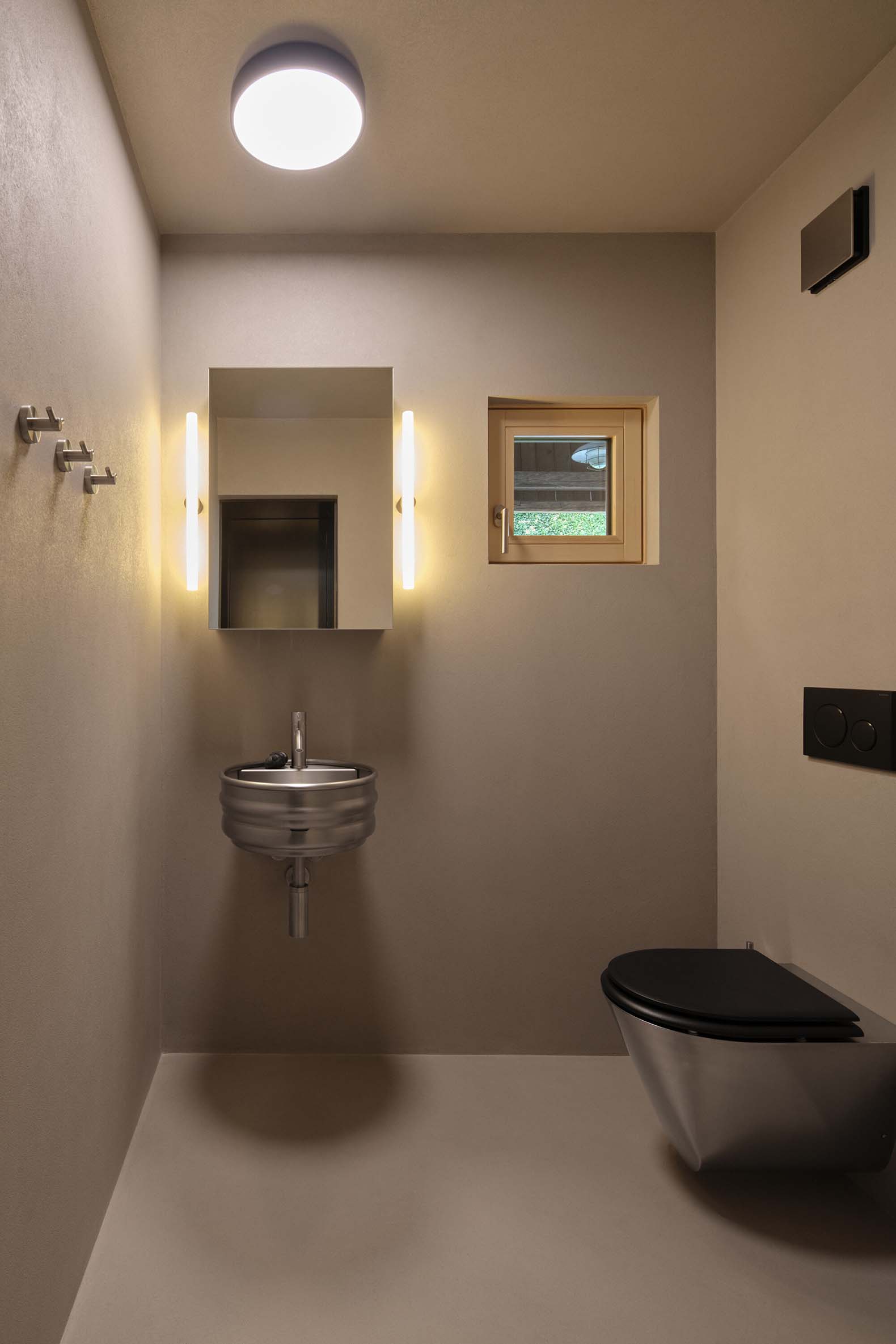
The interior is designed in a restrained manner, with minimal formal gestures and an emphasis on natural materiality. Birch plywood predominates, complemented by black-dyed MDF boards used for the built-in block containing the kitchen, bathroom, and storage spaces.
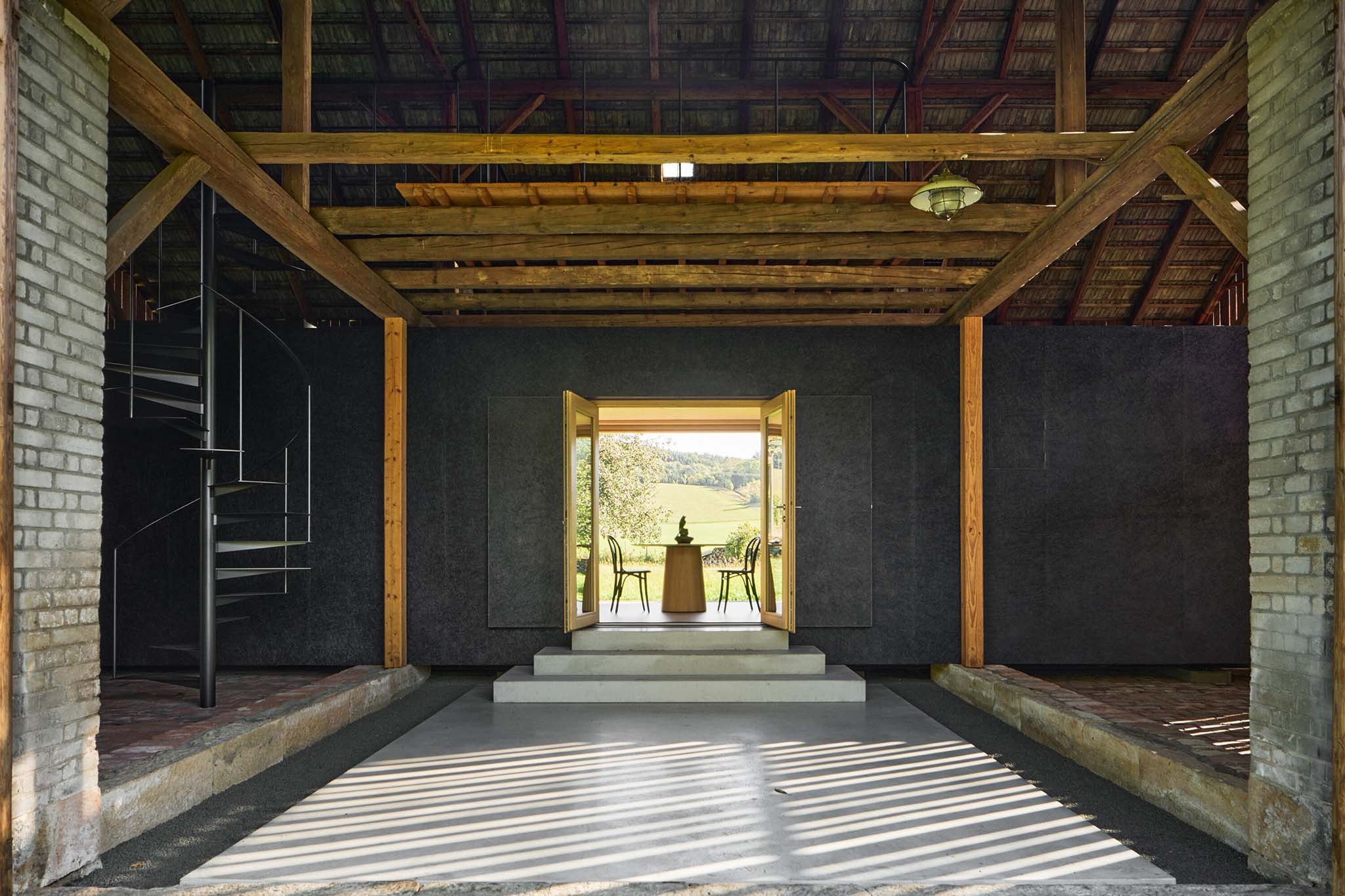
Structurally, the project is a lightweight timber frame construction made of KVH beams with a vapour-open assembly. Although primarily intended for seasonal use, the insulation and underfloor heating also allow for year-round habitation. The barn itself additionally functions as a natural climatic buffer, protecting the inserted volume from overheating and adverse weather conditions.
The project represents an adaptation of an existing structure rather than a new building, which we consider an essential aspect of its sustainability.