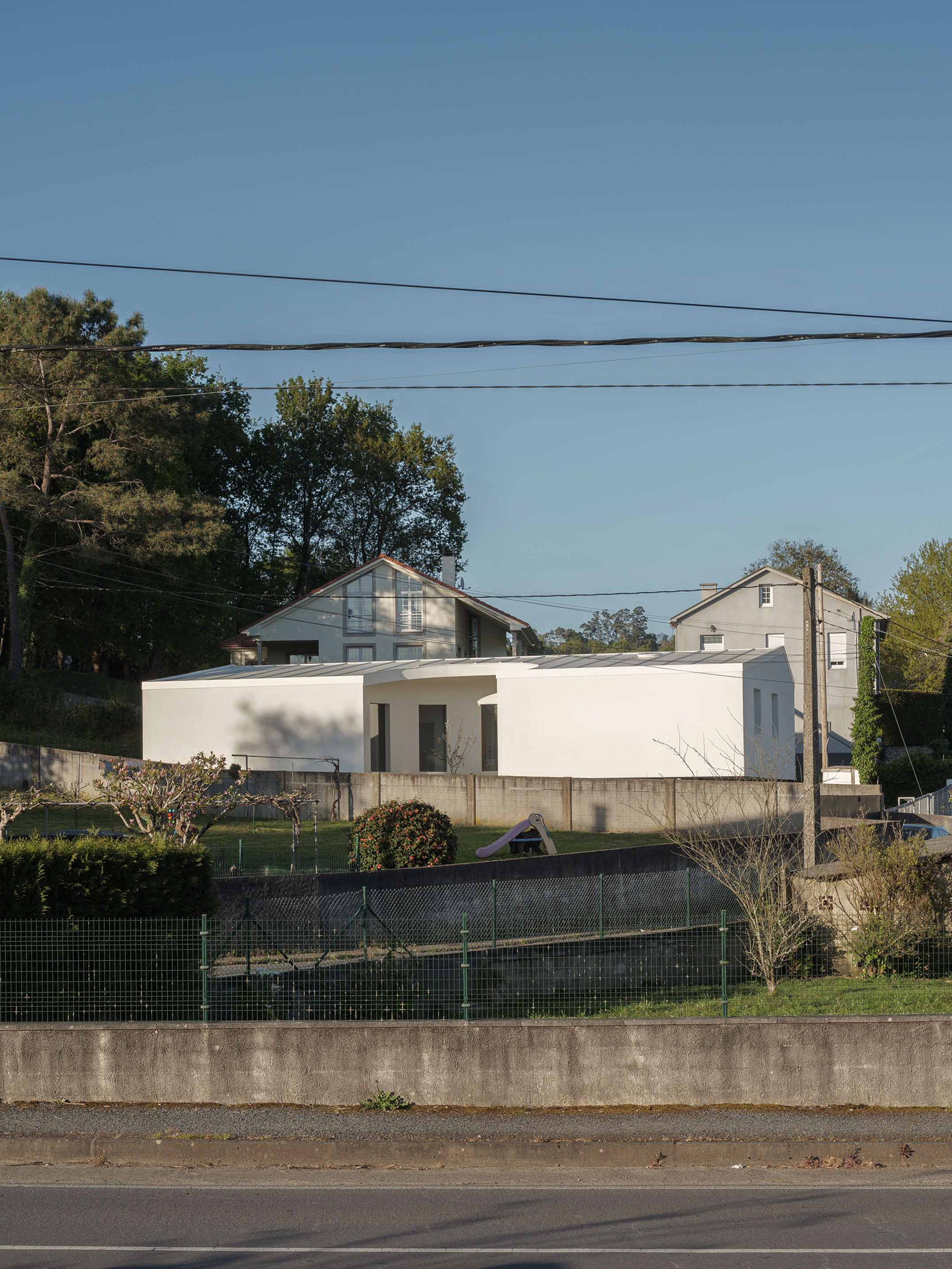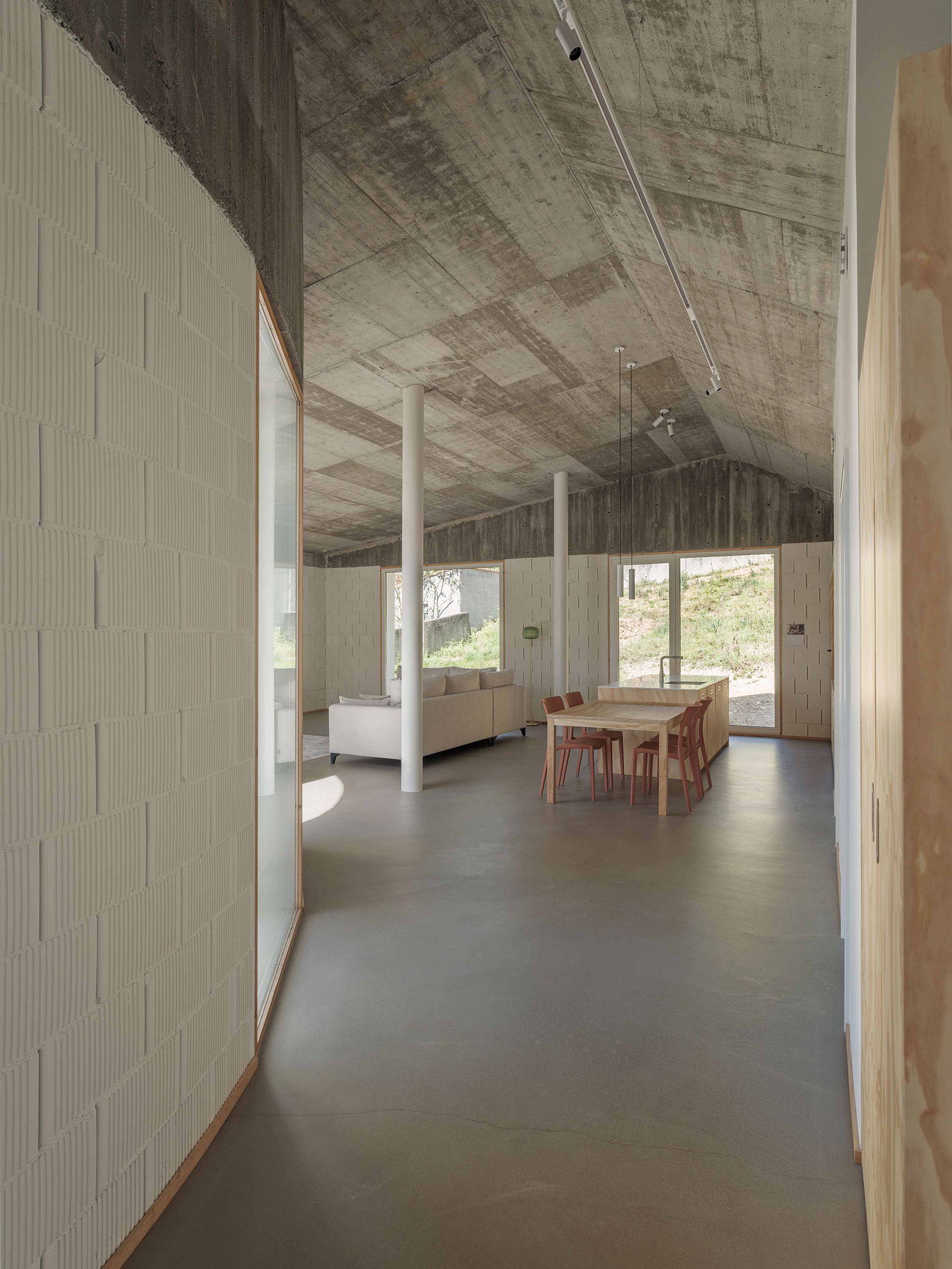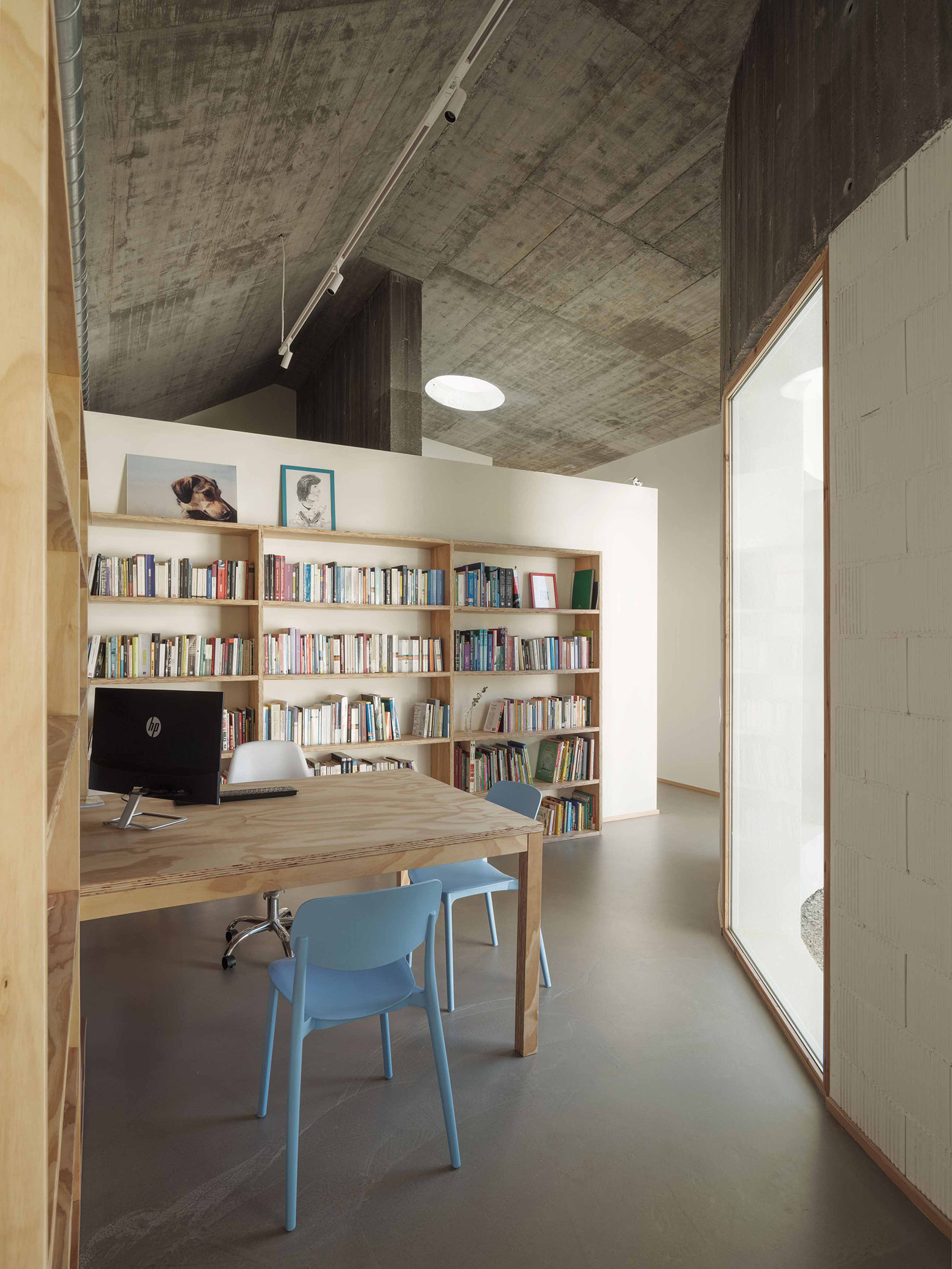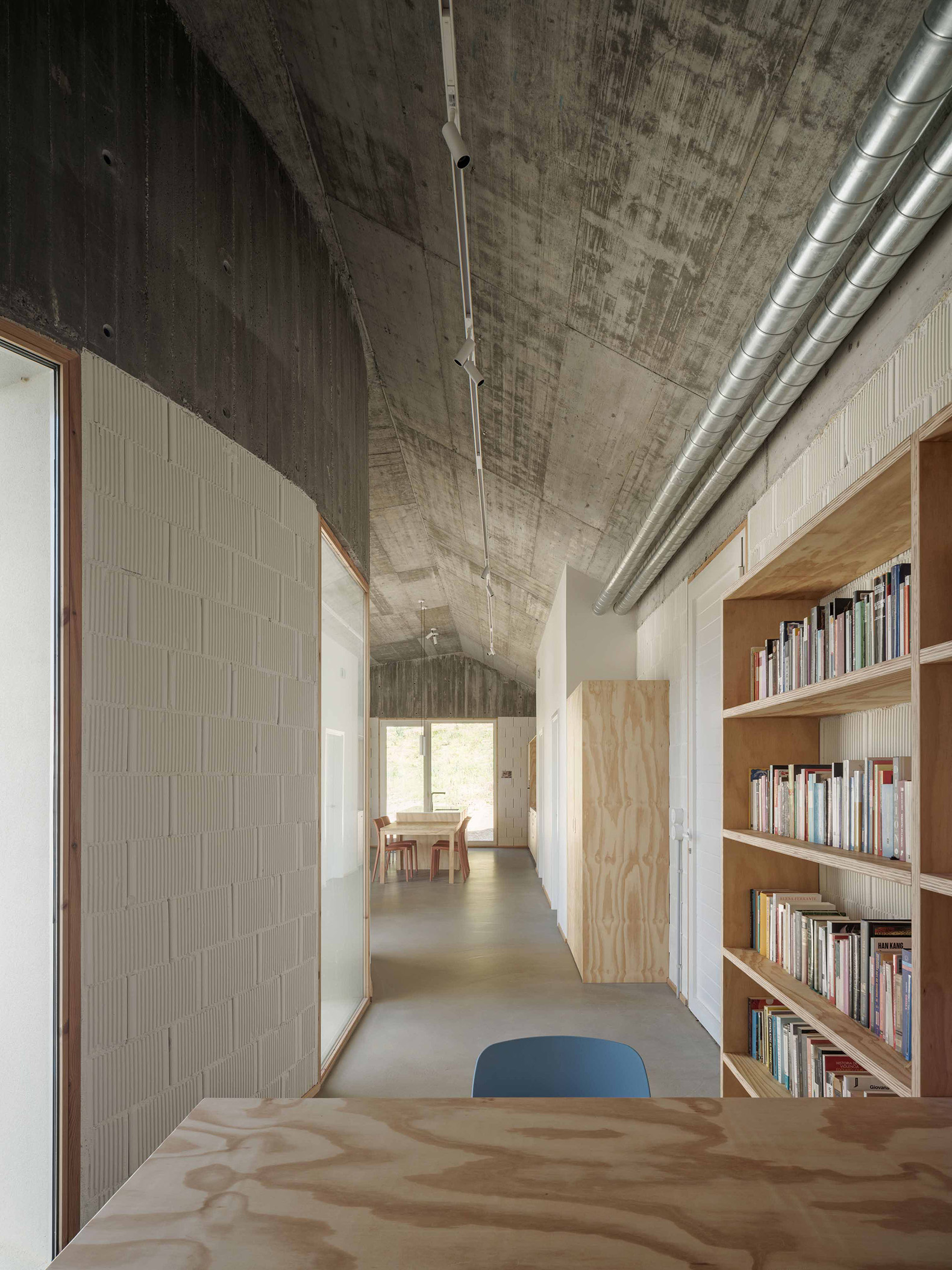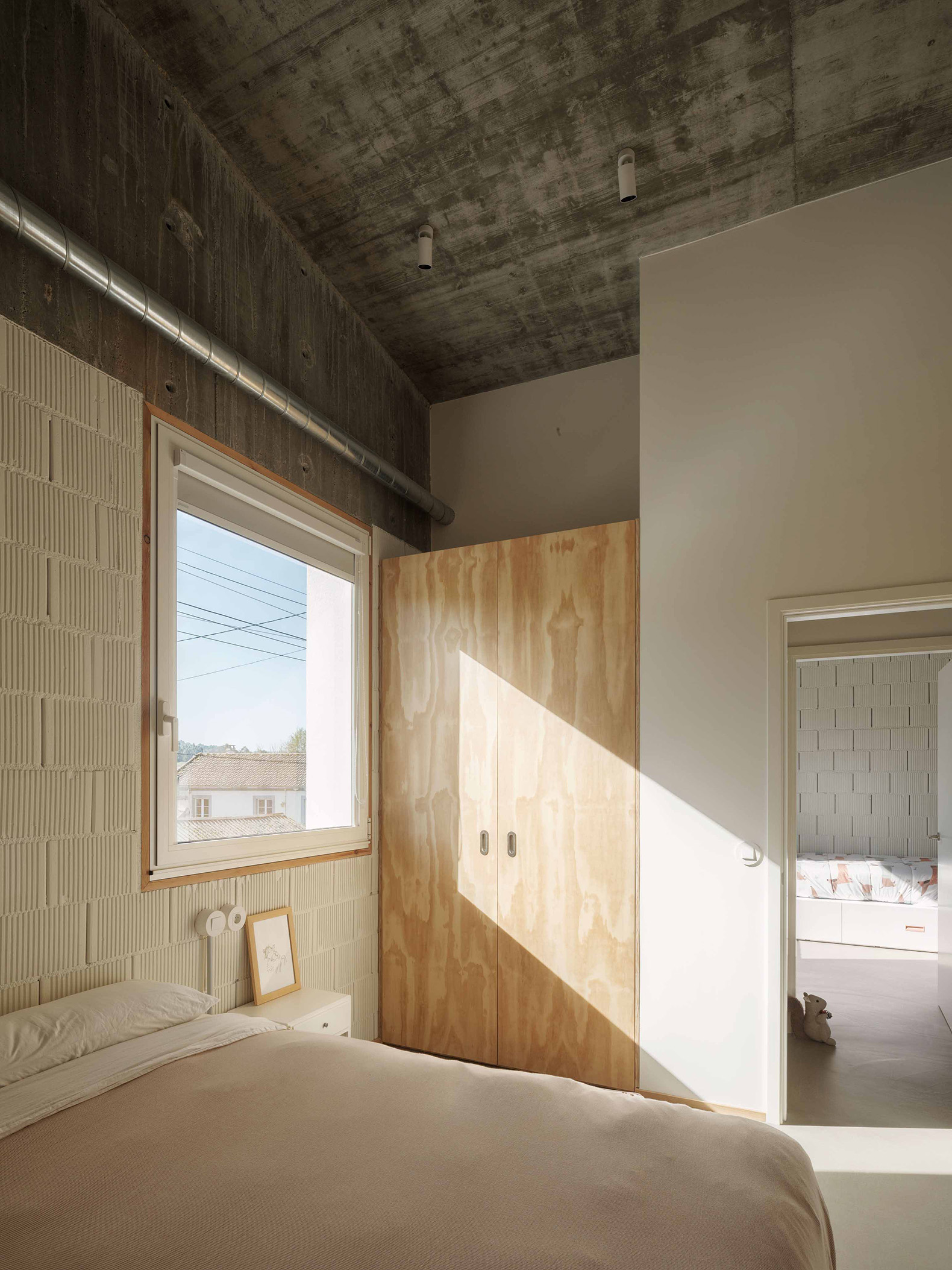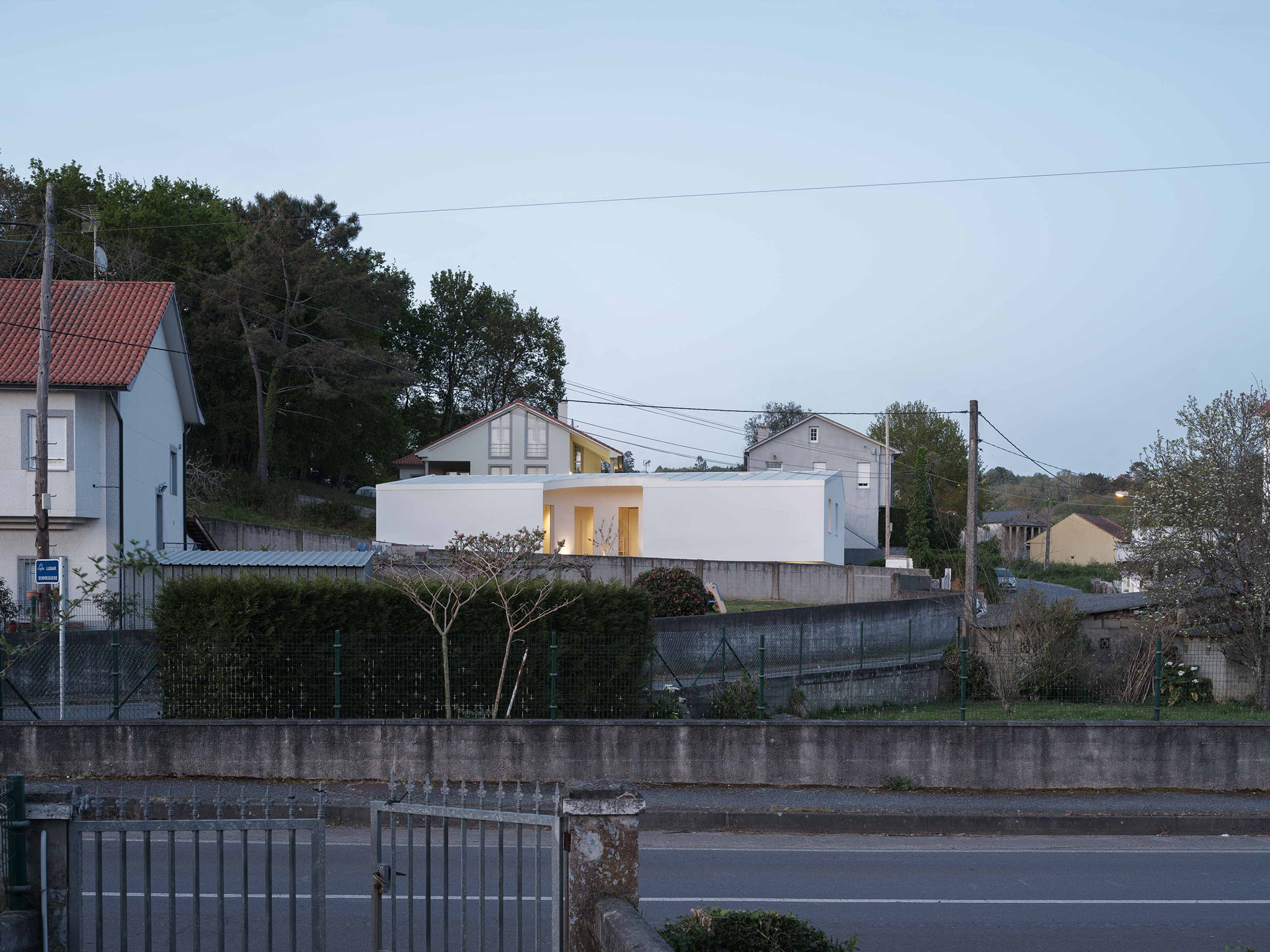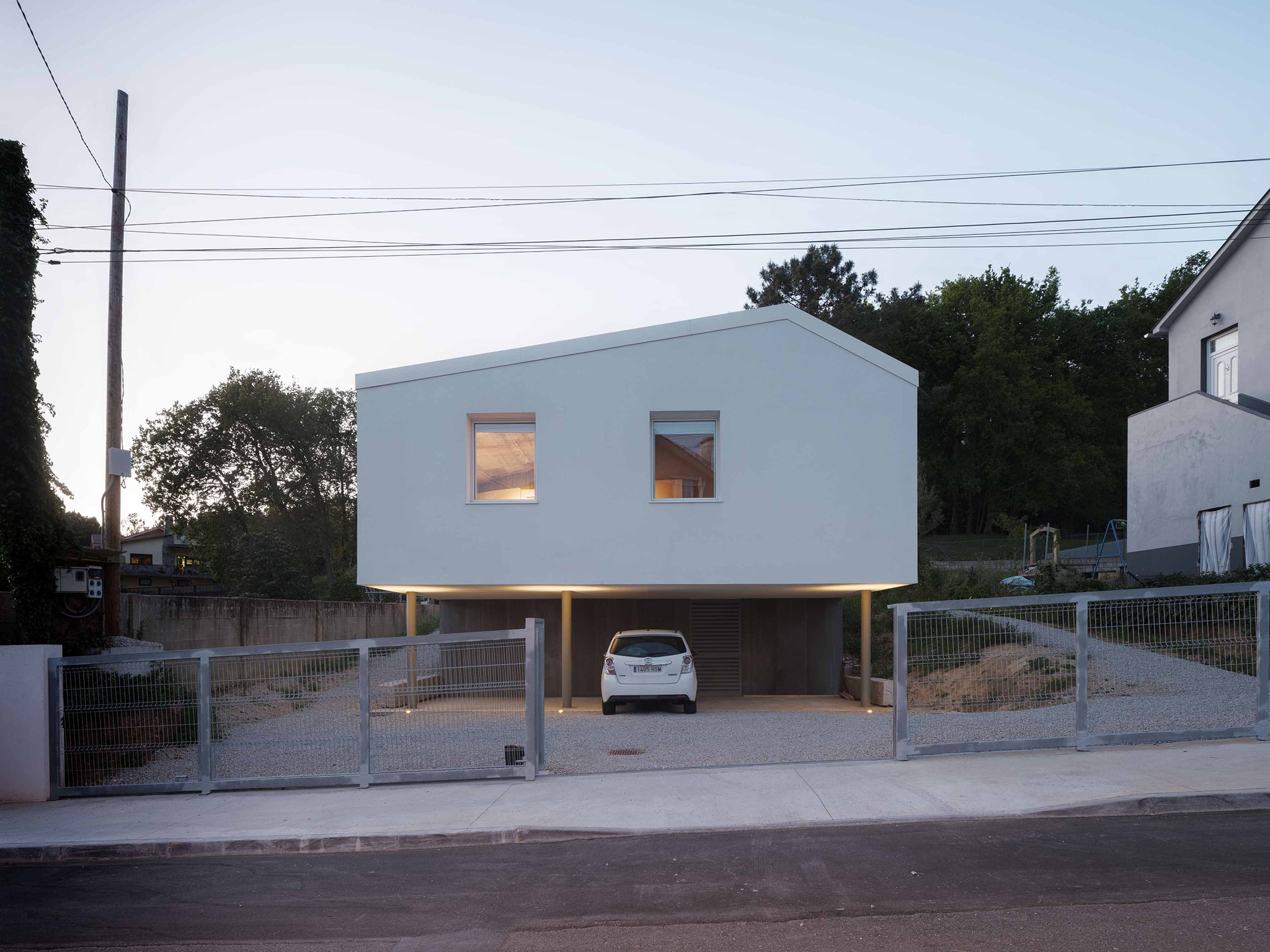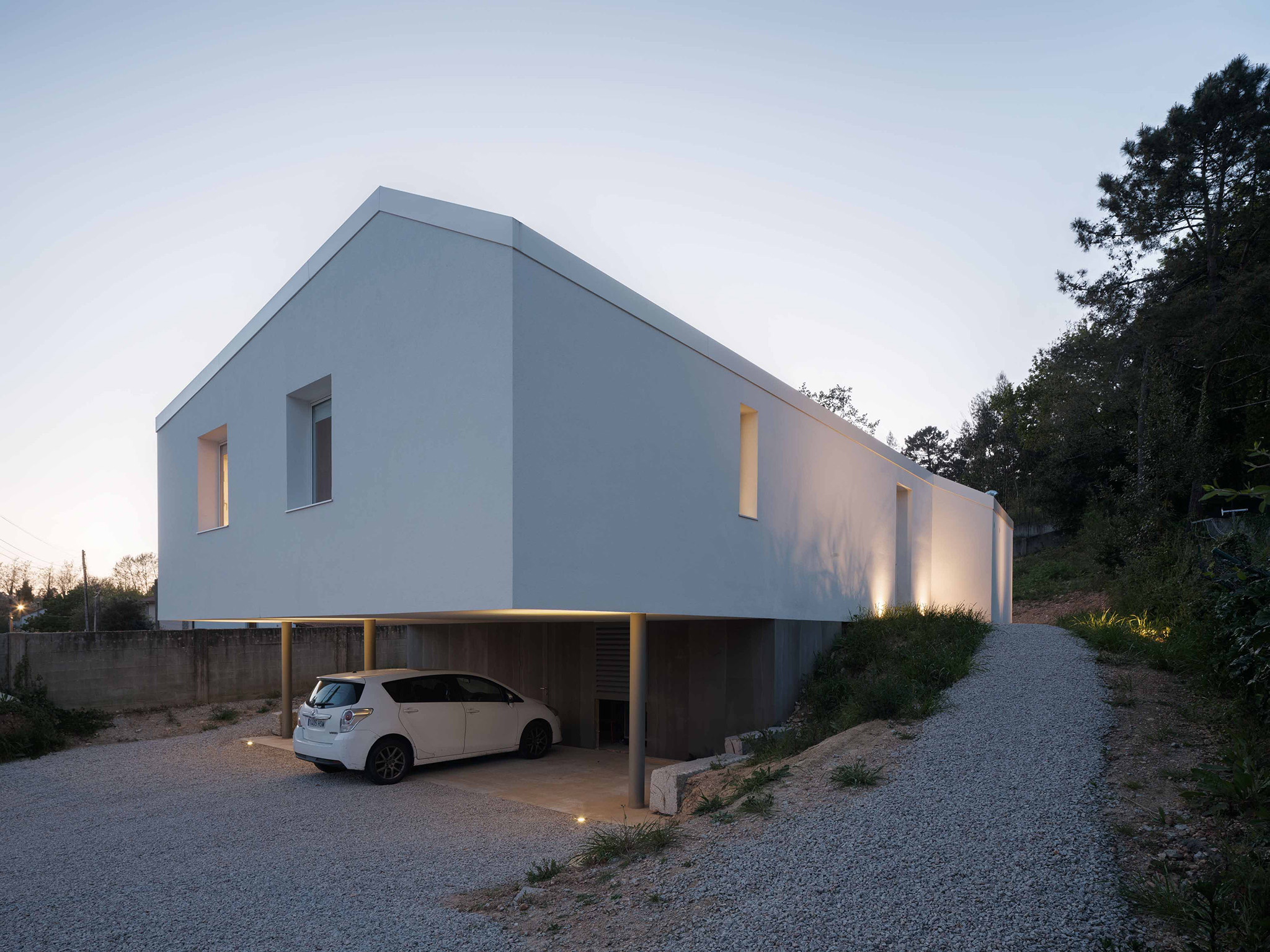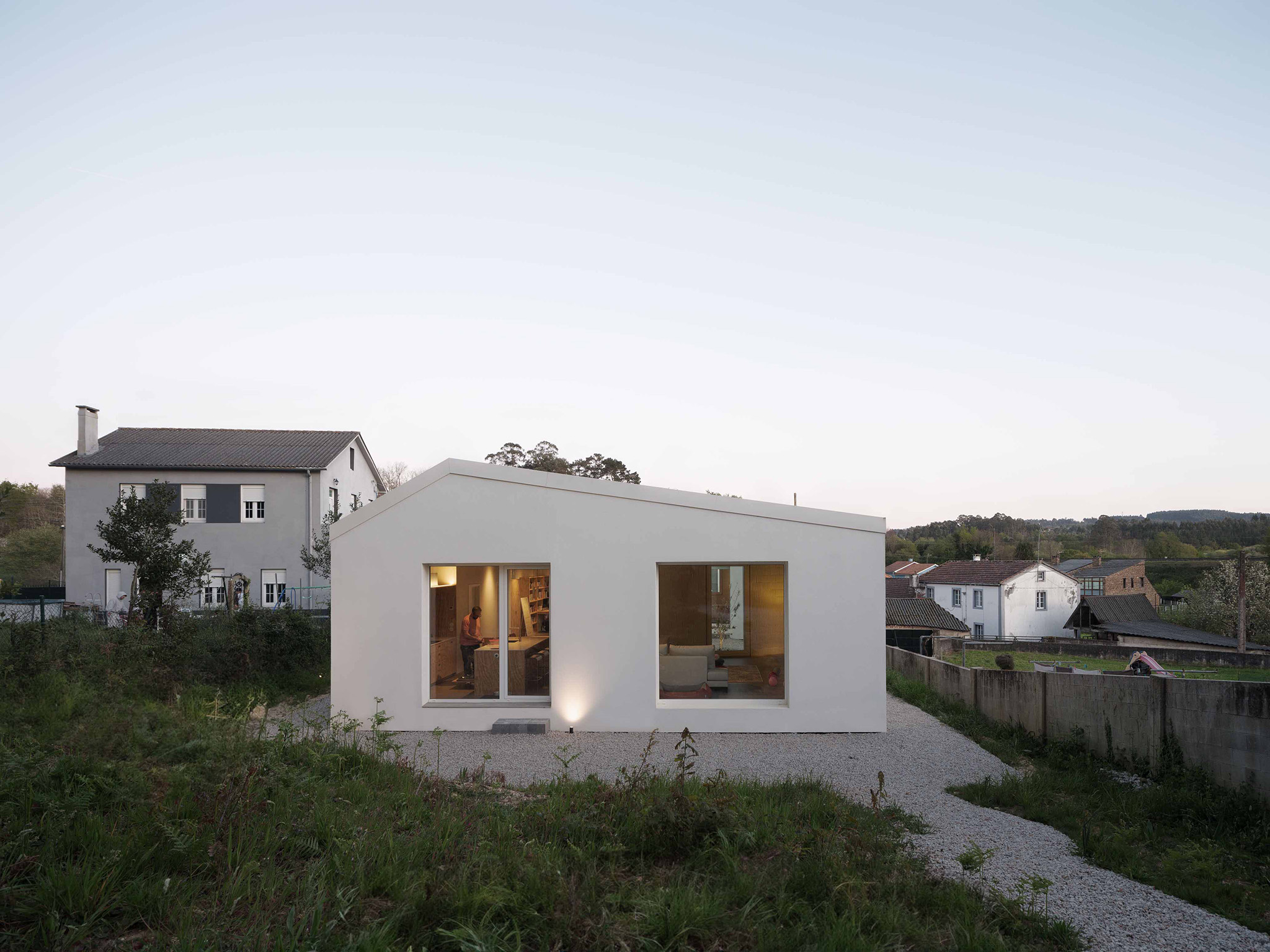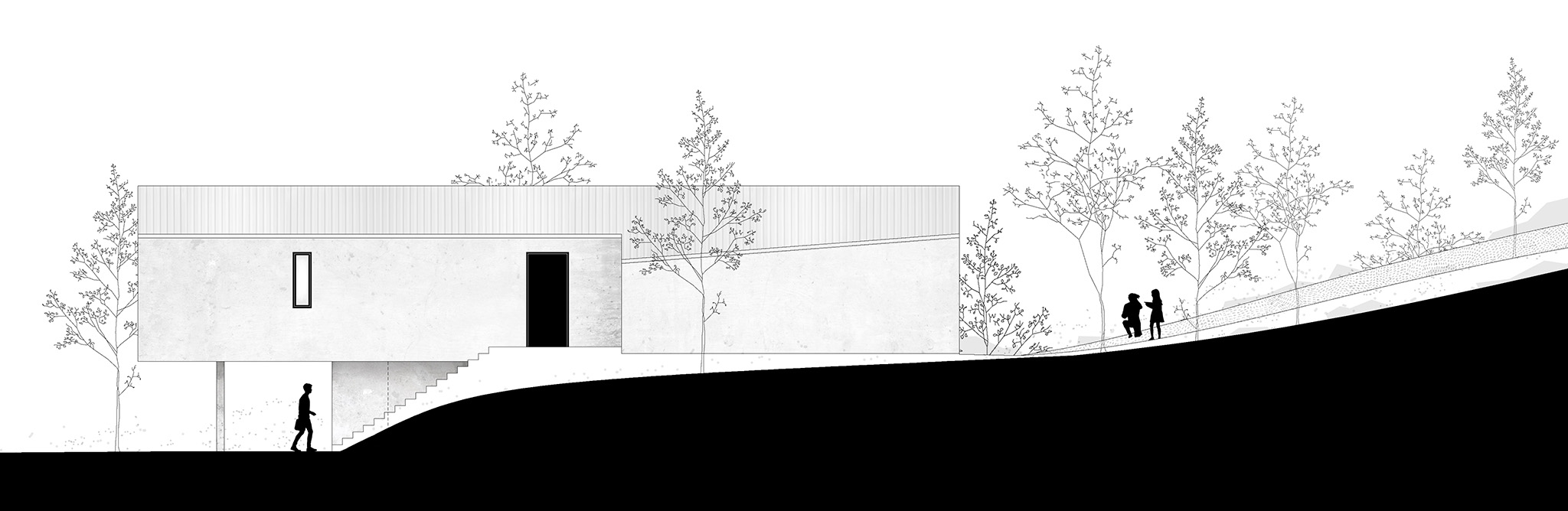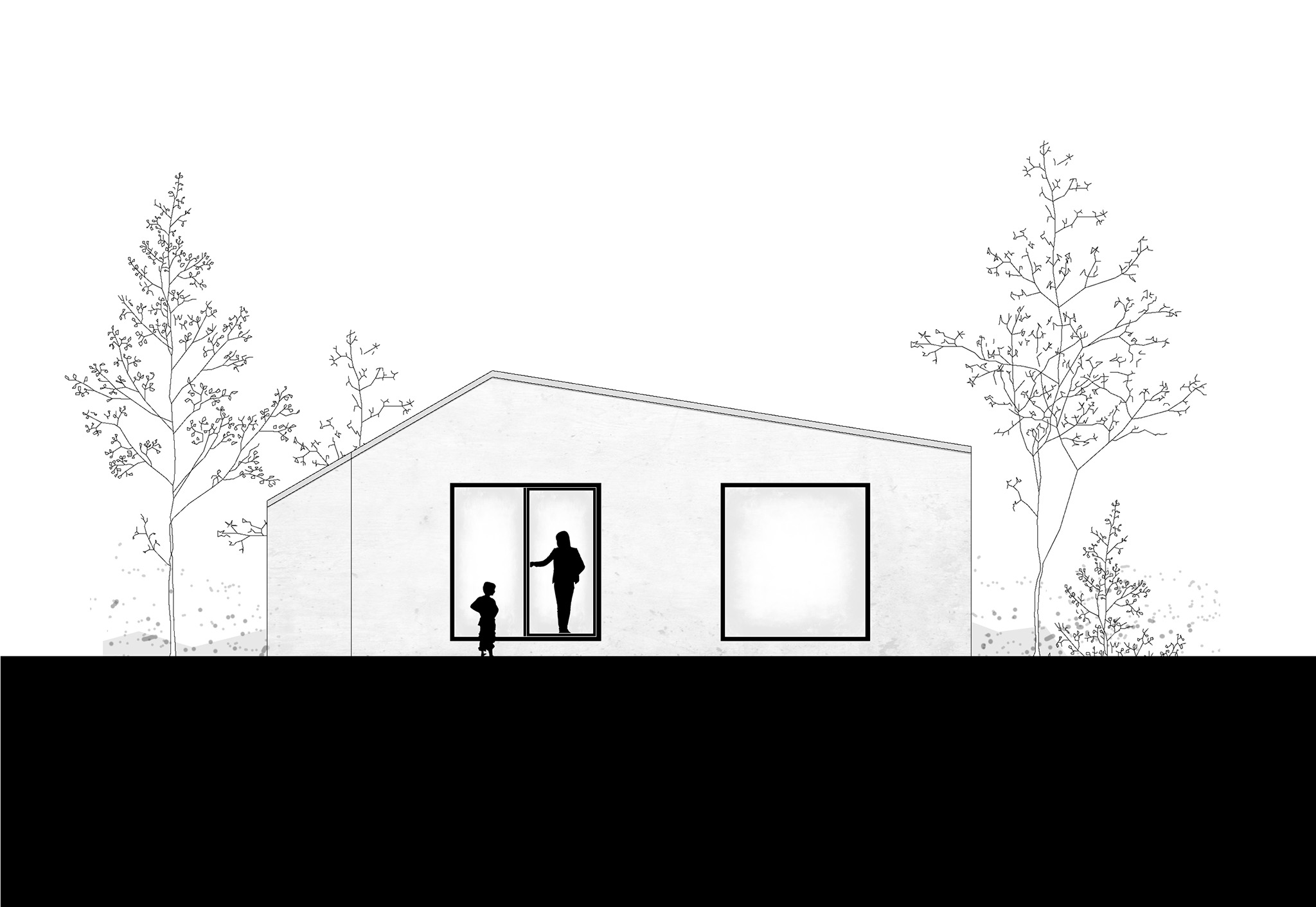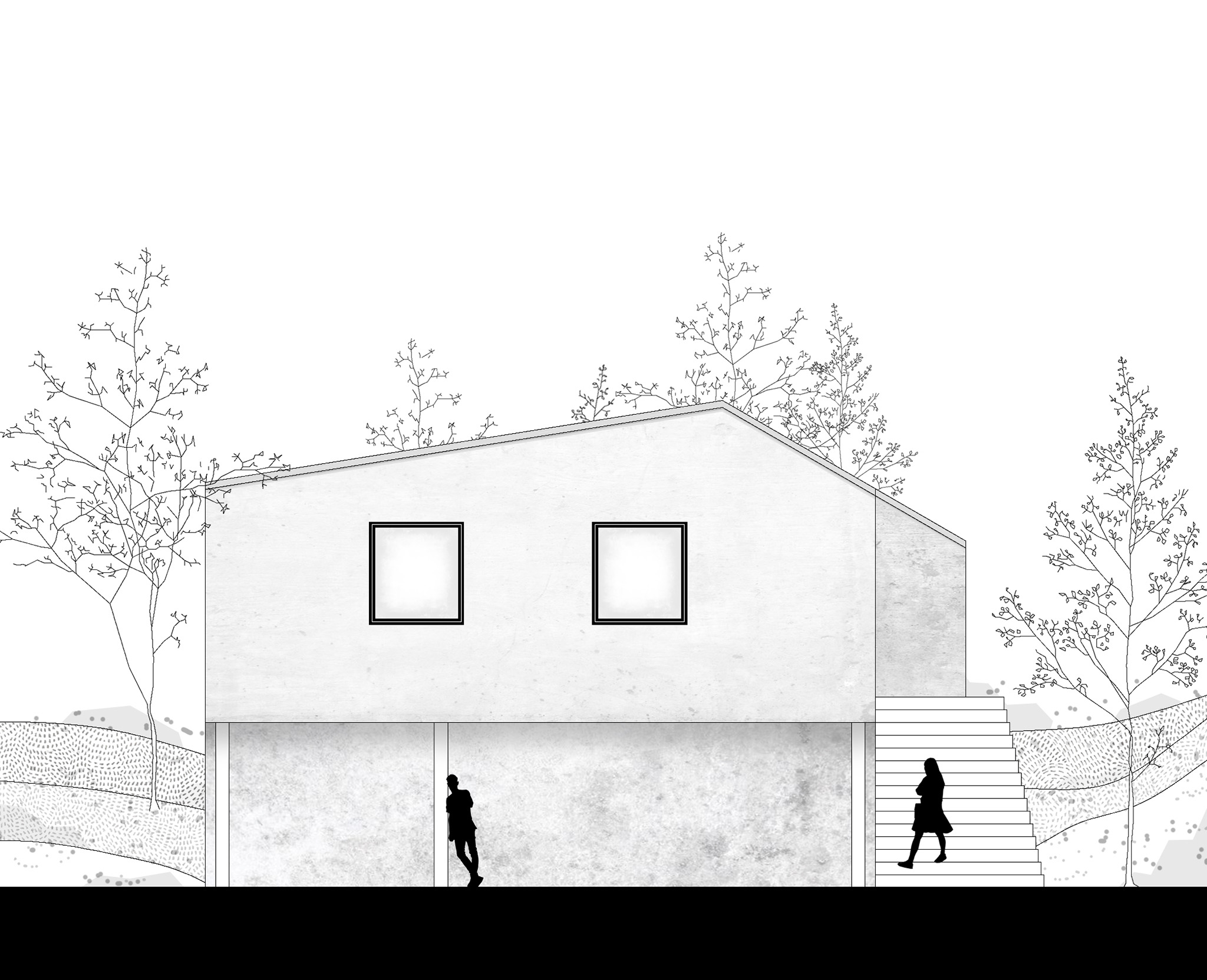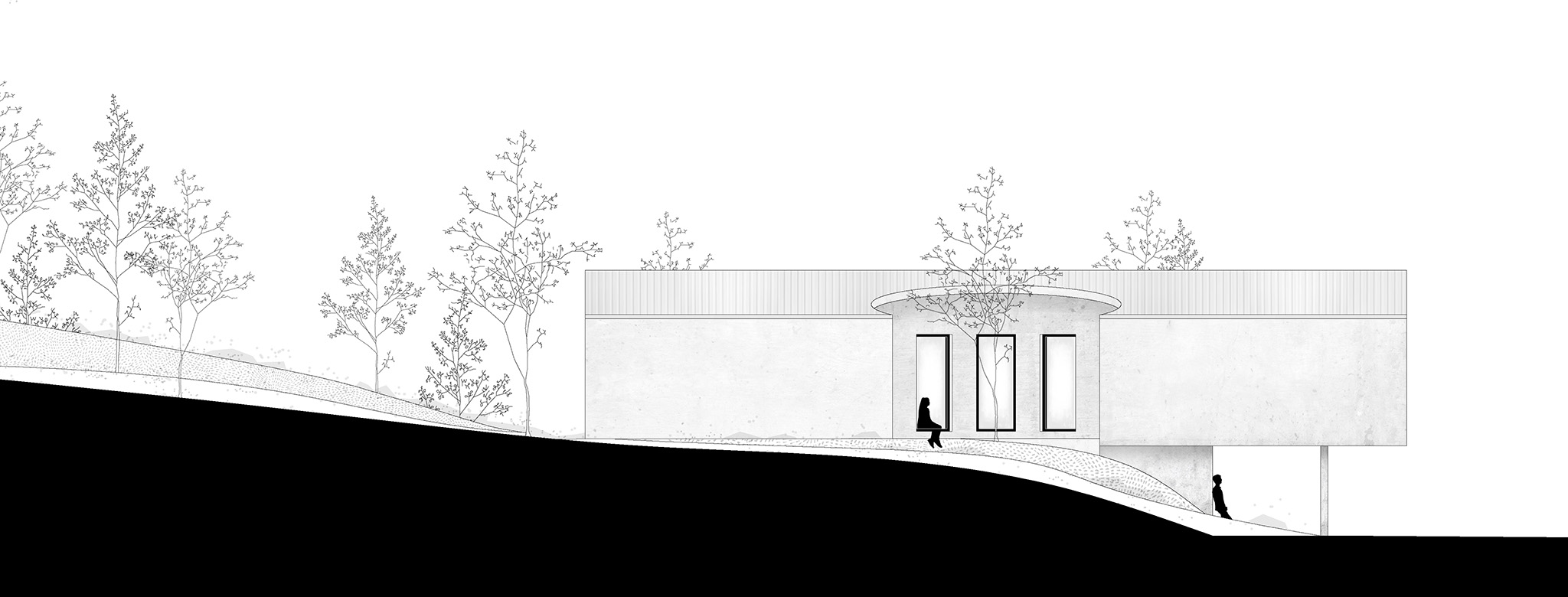
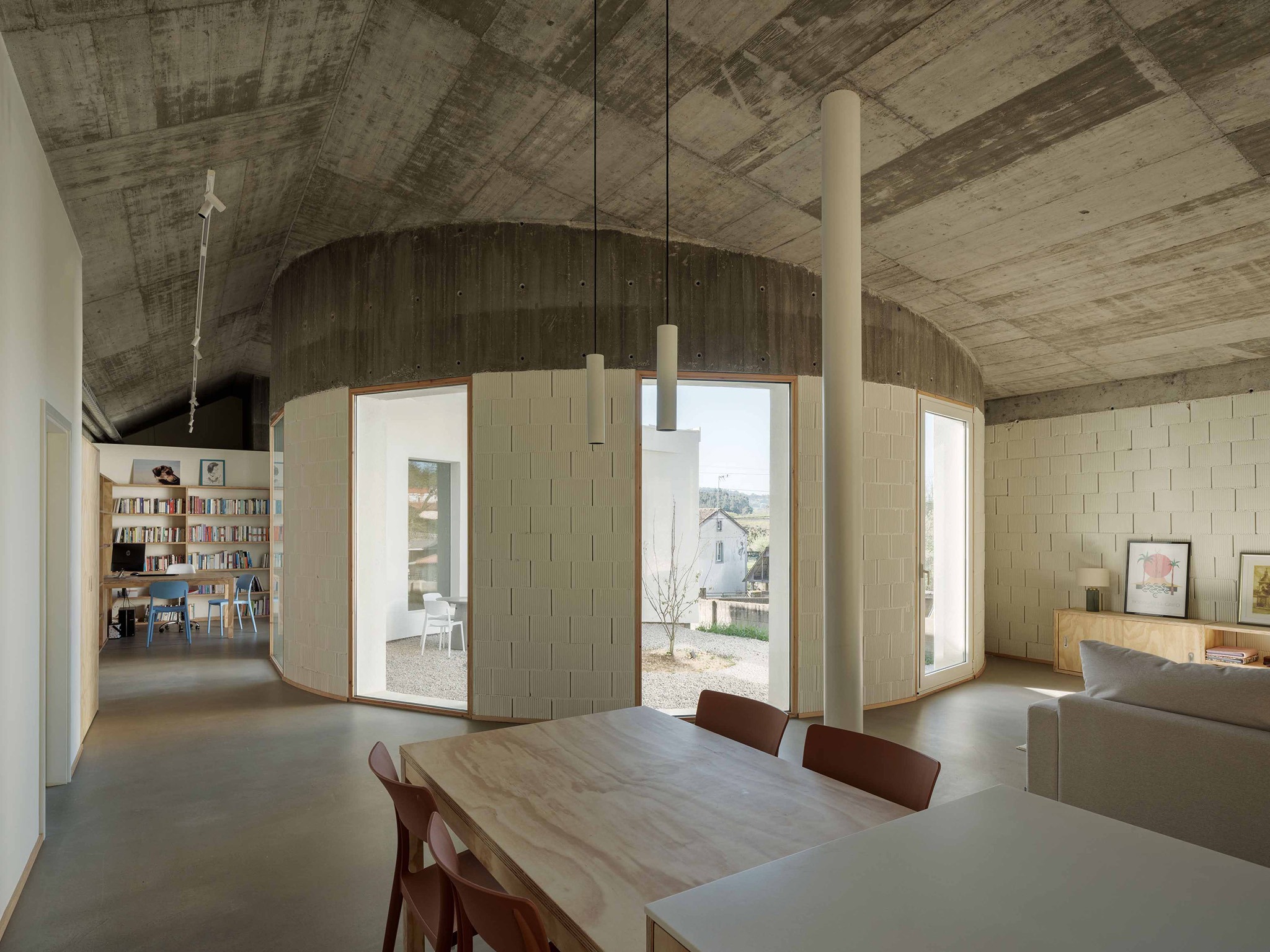
From the outside, Sinaldaba's architecture is characterized by its sobriety and compactness. Constructed from understated materials and light tones, the gabled roof reinterprets the traditional forms of the rural context. The house does not seek to stand out or become an autonomous object, but rather to integrate itself into the landscape.
The functional organization of the dwelling also reflects a building heritage deeply rooted in the region. While the main floor concentrates the spaces intended for domestic life, a lower level houses the support and service areas. The result is an architecture that incorporates inherited knowledge and adapts it to contemporary needs, proposing a way of living where the everyday, the practical, and the relationship with the environment coexist naturally.
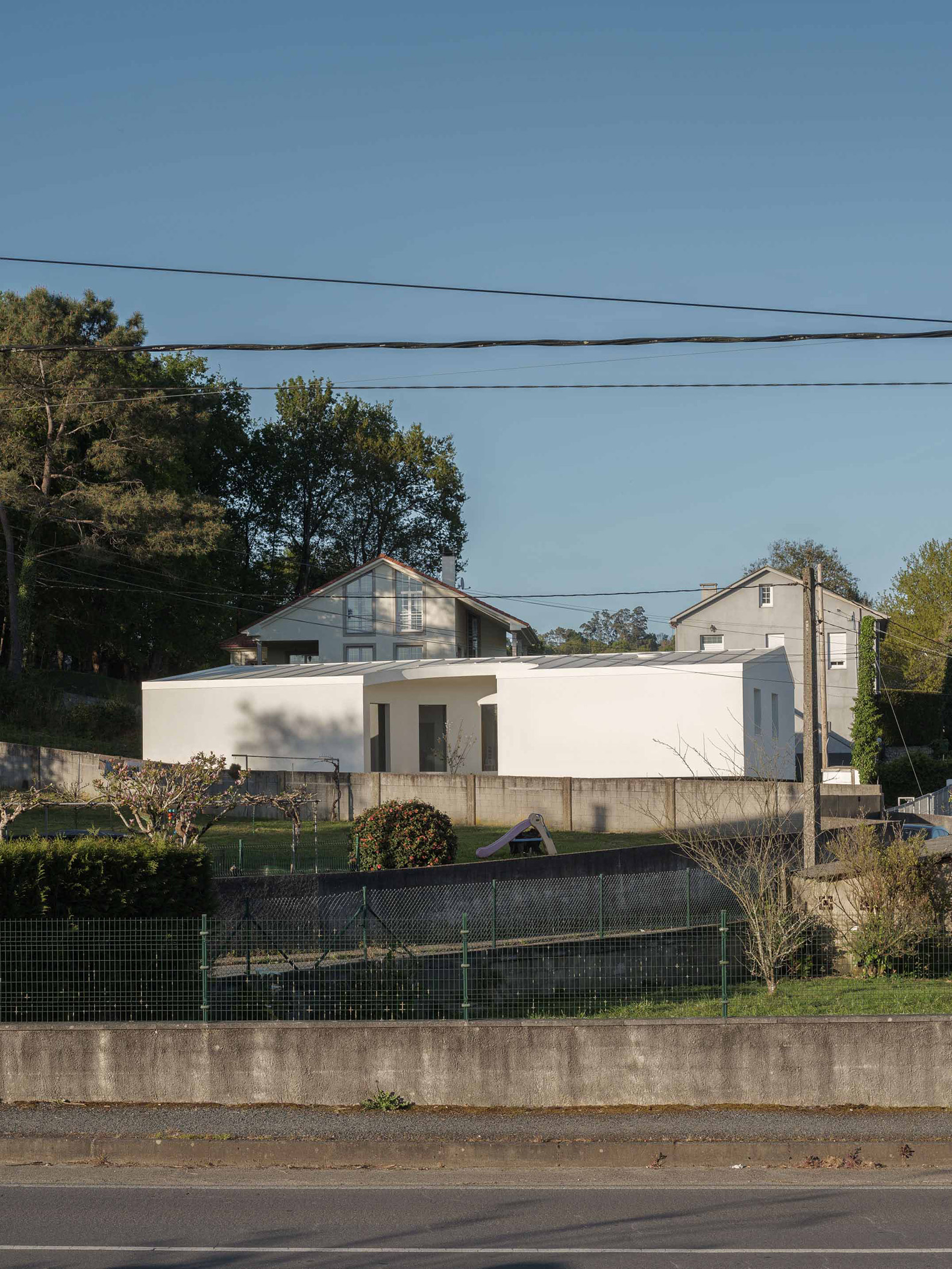
Cecebre House by Sinaldaba. Photograph by Luís Díaz Díaz.
Project description by Sinaldaba's architecture
In rural Galicia, building a house has always meant establishing a precise relationship with the place: with the climate, the topography, the orientation, and the ways of living. The houses learned from the land, the wind, and the rain; they sought the sun when it appeared and retreated when winter set in. They weren't born to be shown off, but to endure.
This project stems from that understanding of architecture. The house doesn't seek to reproduce a traditional image or rely on nostalgia, but rather to recover the principles that for centuries shaped Galician rural architecture: compactness, shelter from the elements, careful integration with the land, and a restrained scale.
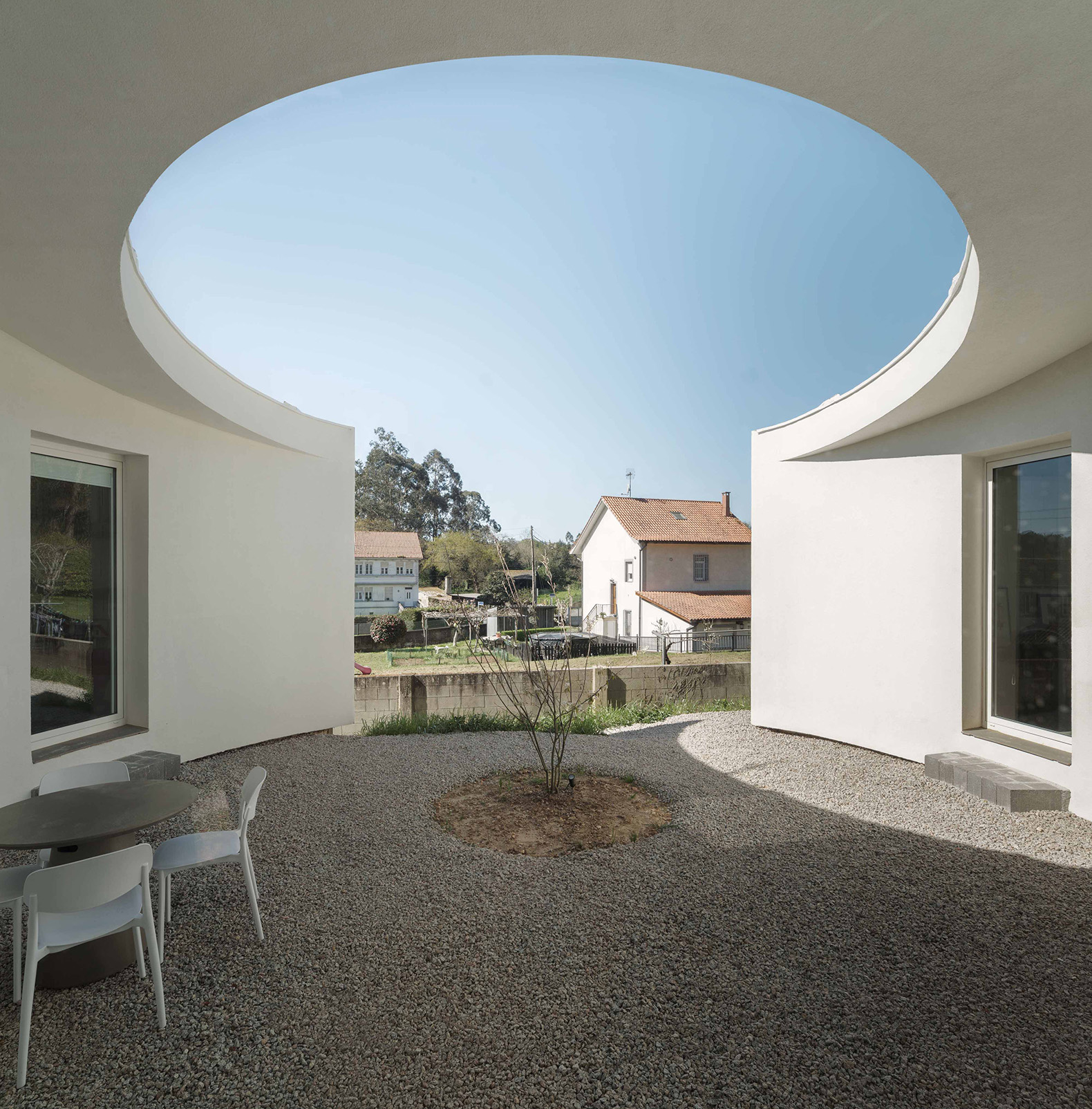
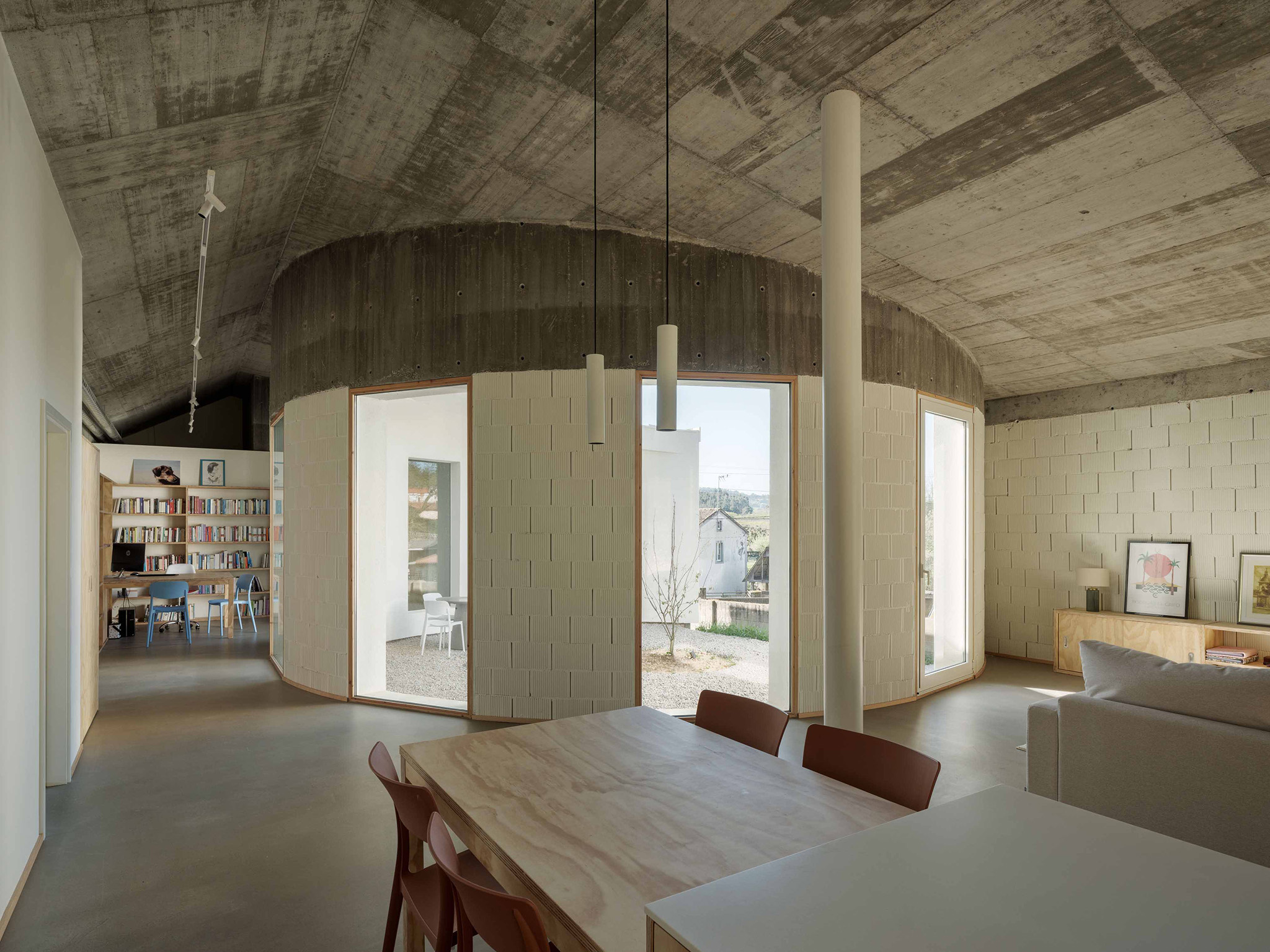
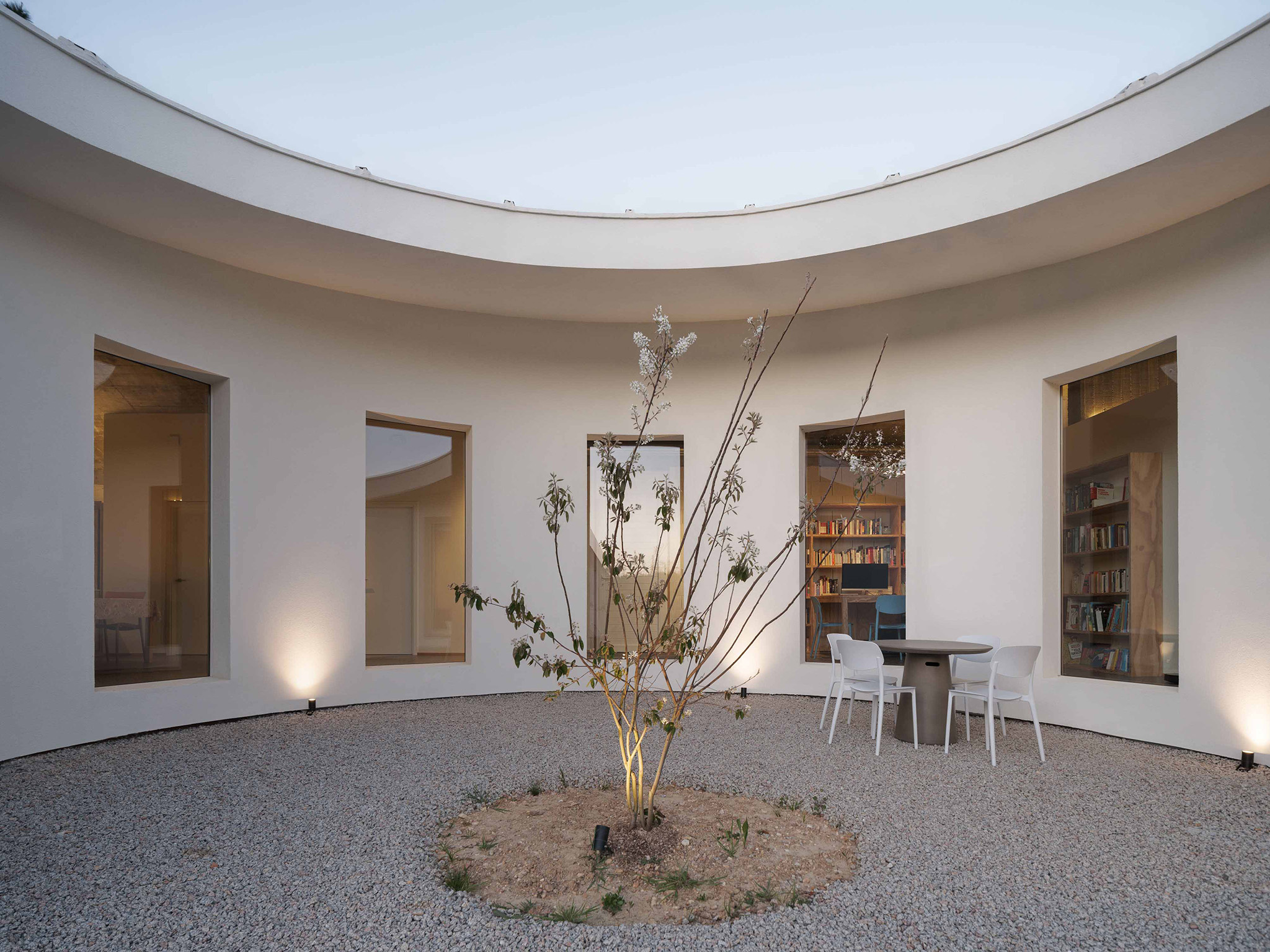
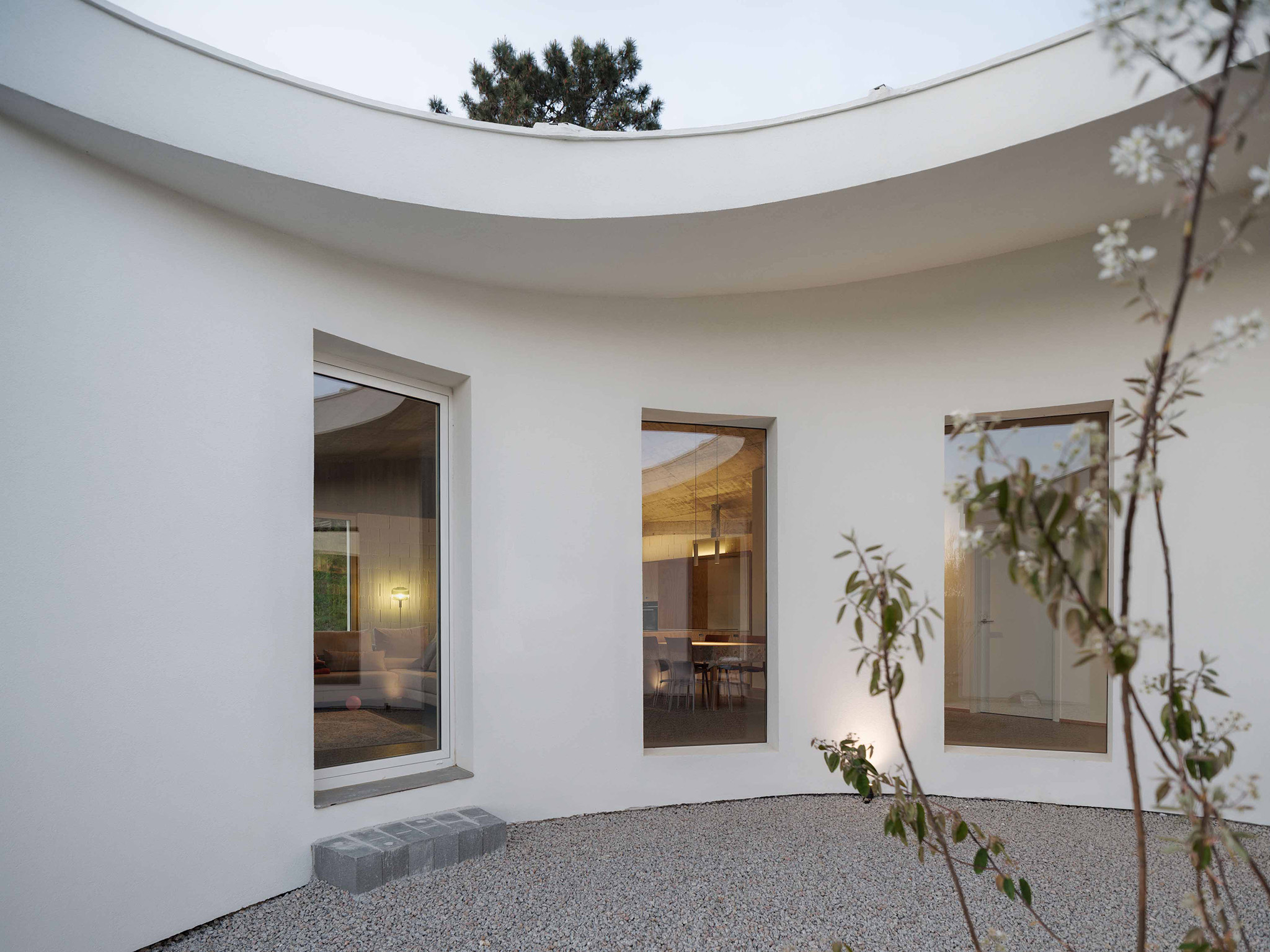
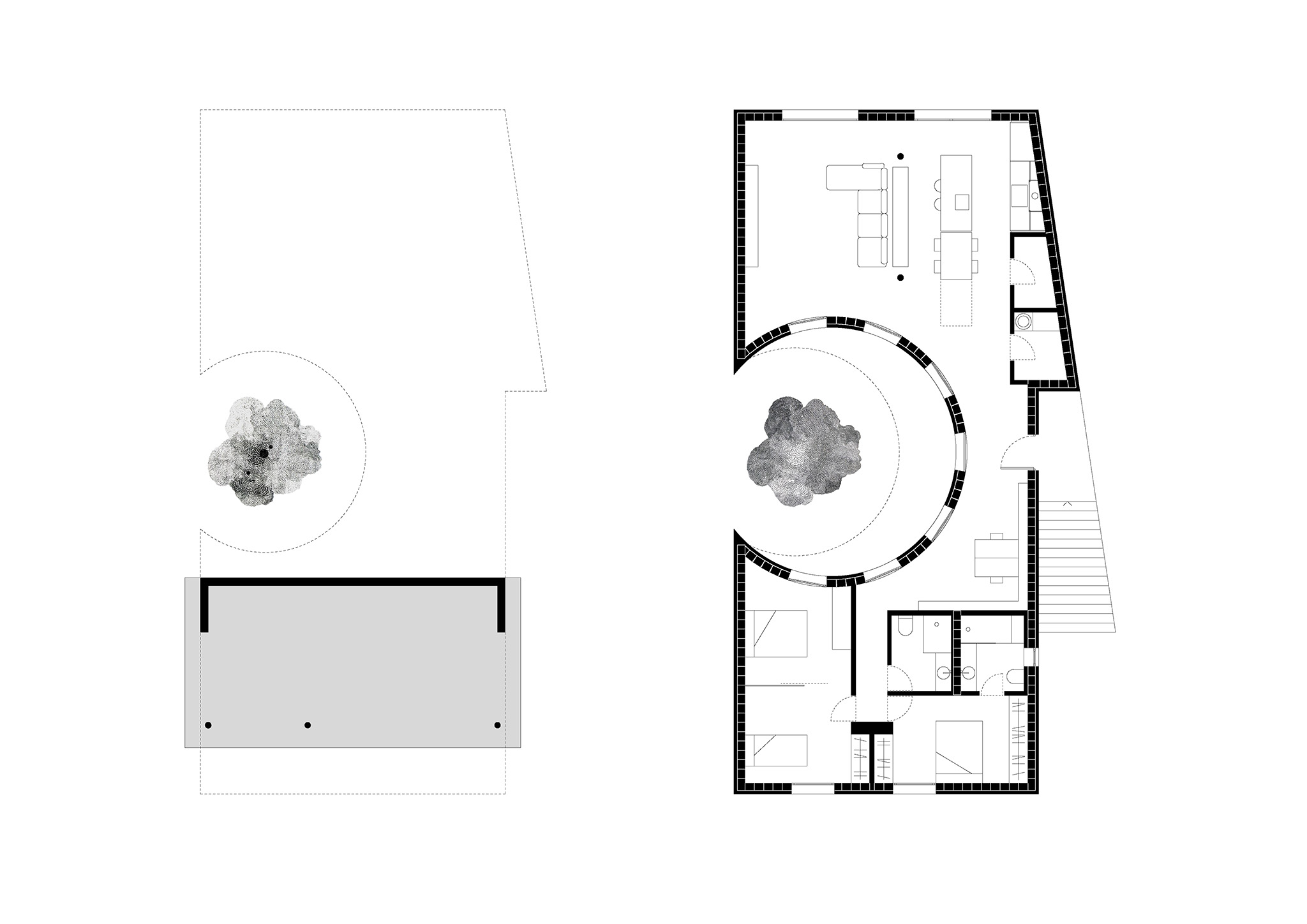
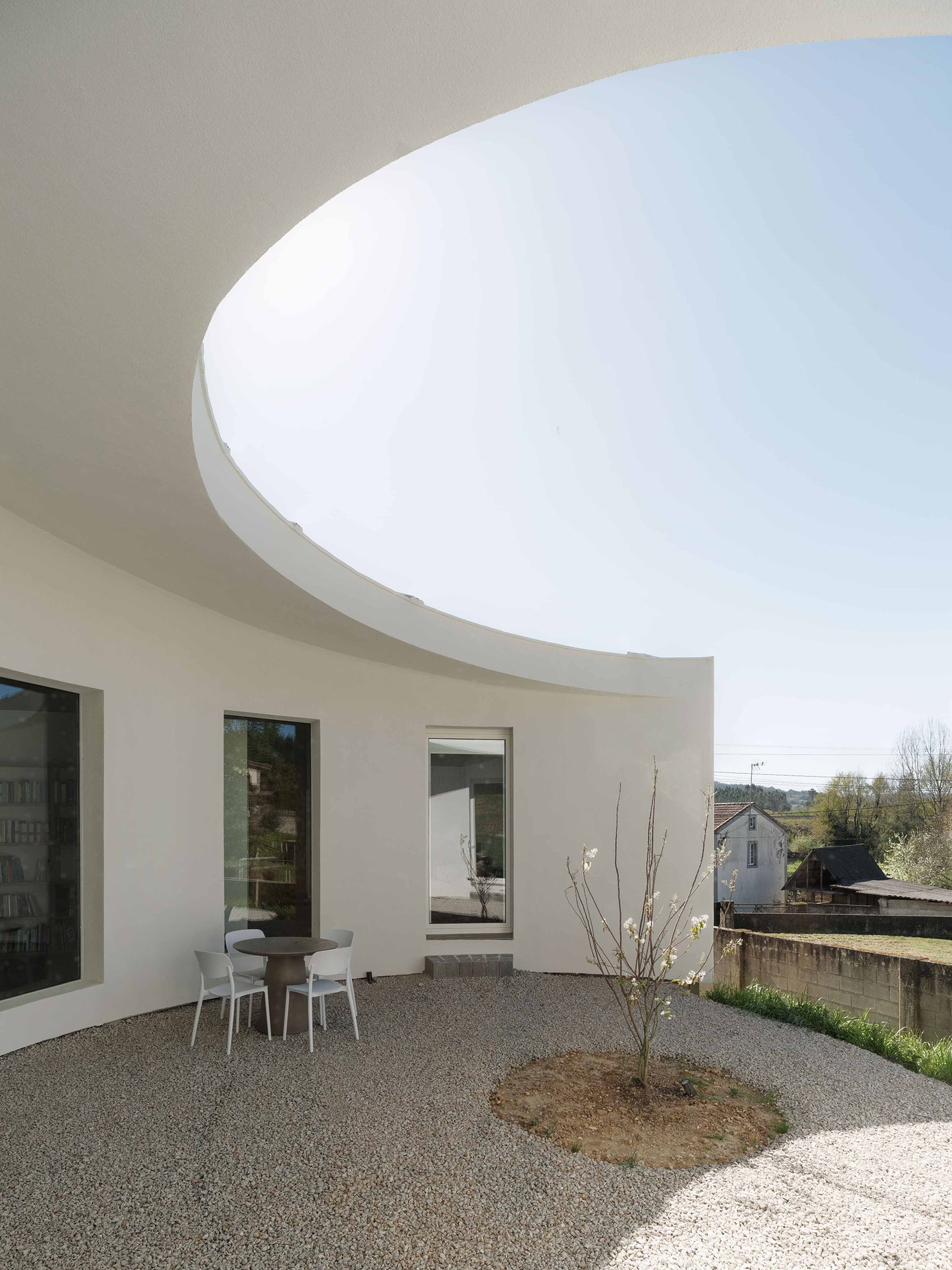
The house is organized around a main volume with a gabled roof, articulated around a central courtyard: a protected void around which daily life unfolds. More than showing itself off, the house retreats. It creates shelter, filters views, and generates intermediate spaces where interior and landscape find a peaceful connection. It closes off to the north and opens to the south and west, seeking the light when it appears and the warmth in winter.
There is something profoundly rural in this way of being situated. The house doesn't seek to expose itself, but rather to protect itself. The central courtyard acts as a domestic refuge, a sheltered space that allows one to inhabit the outdoors and attune life to the rhythms of the climate and the seasons. The house doesn't try to impose itself on the landscape, but to become part of it.
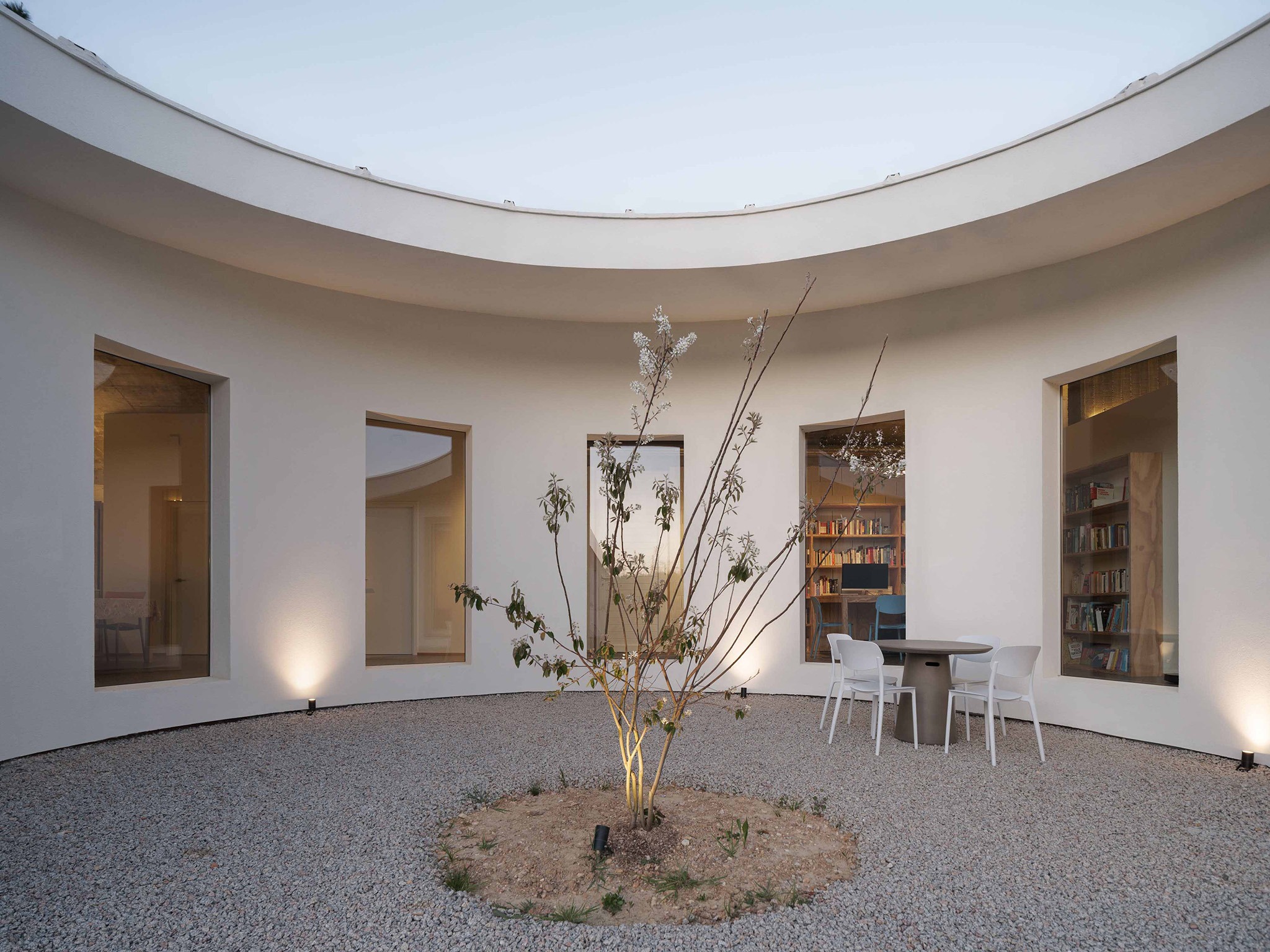
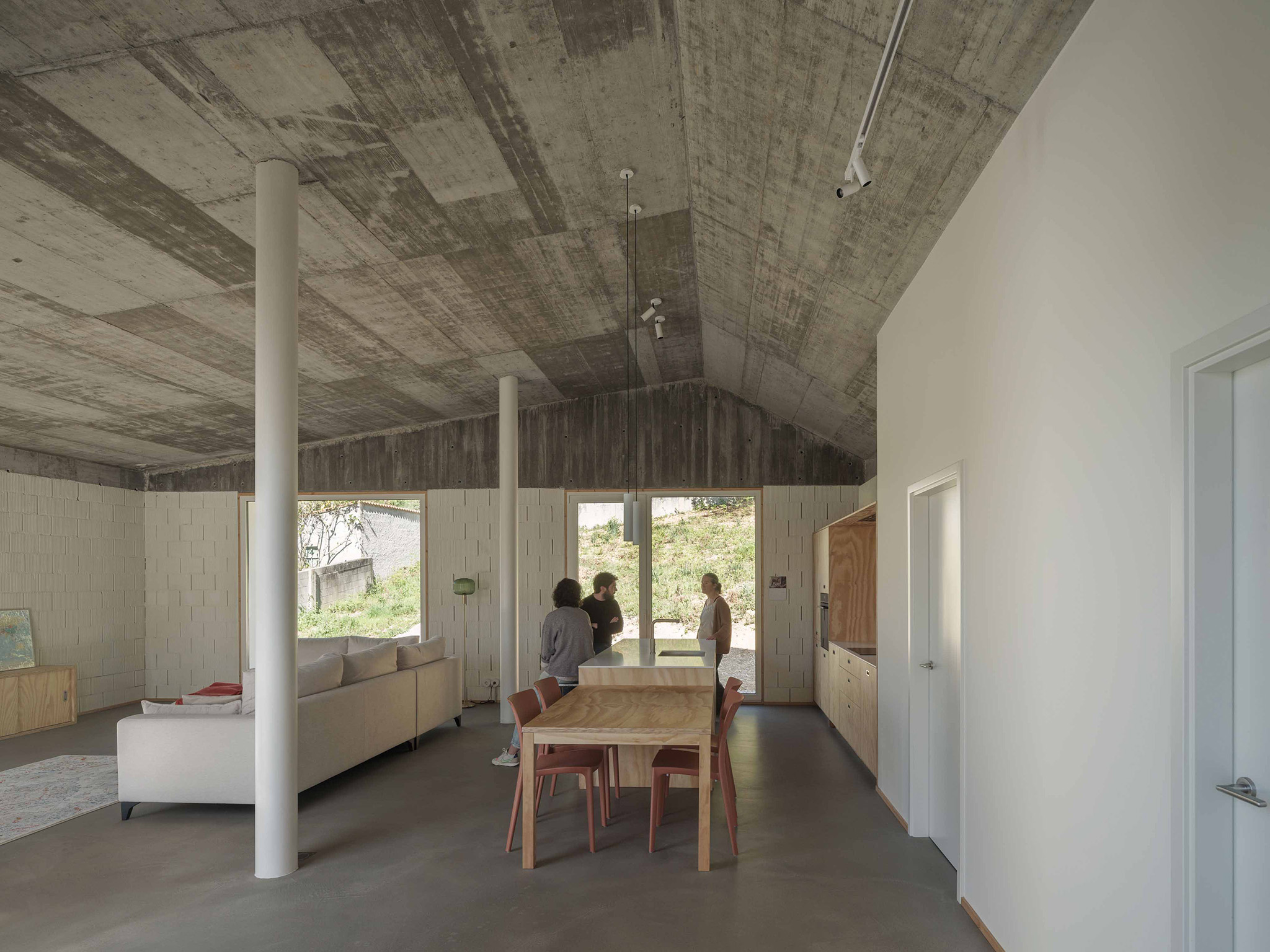
The interior organization also reflects a logic inherited from rural life: a main floor linked to domestic life and a lower floor dedicated to the functional support of the house, reinterpreting a way of living where the everyday and the practical have always coexisted naturally.
The materiality, sober and restrained, avoids any nostalgic gesture. The connection with the place is not built through imitation, but through proportion, scale, and a certain way of resting on the land, as if the house had gradually found its way of belonging.
A contemporary house, rooted not in an image of the past, but in the reasons that for centuries made it possible to live here.