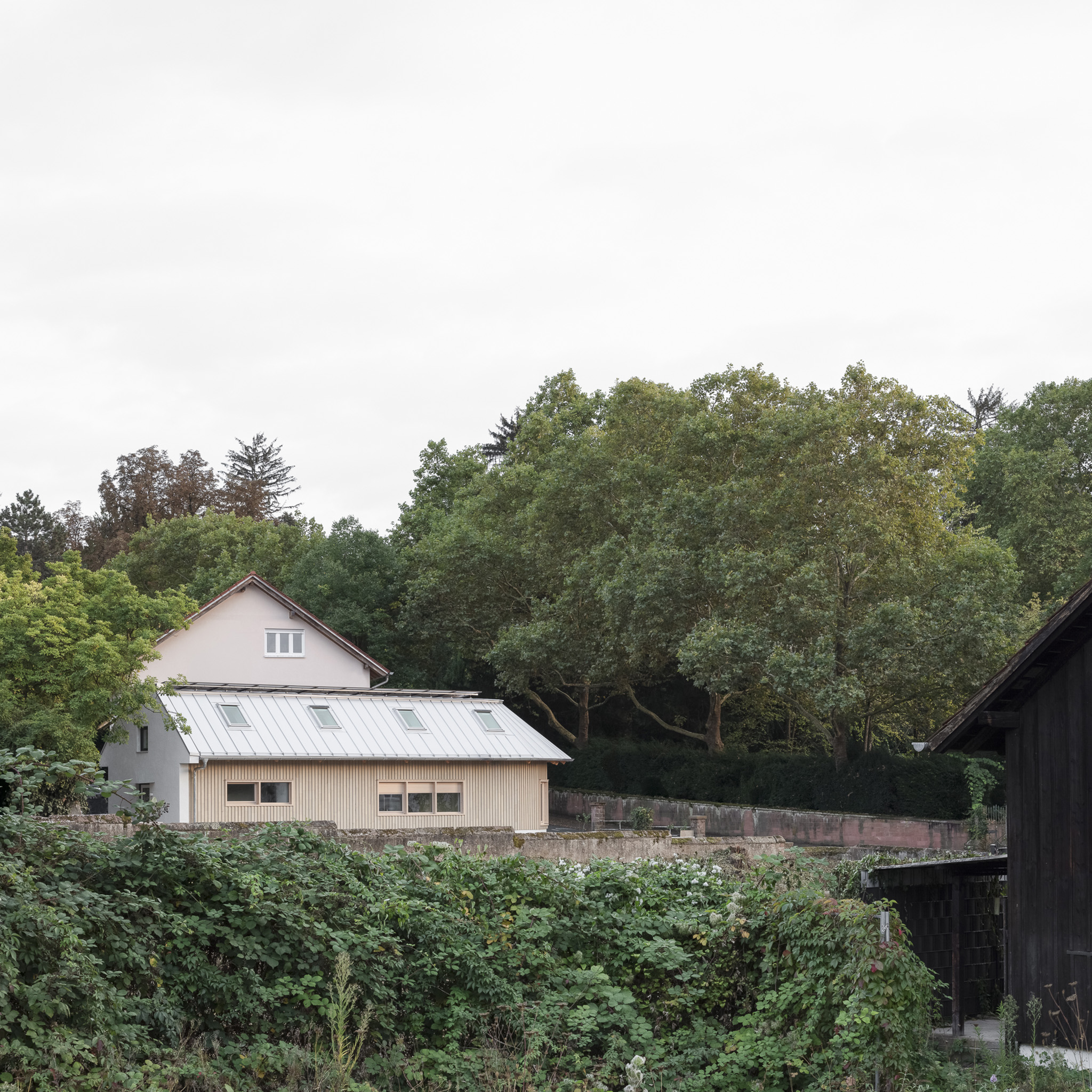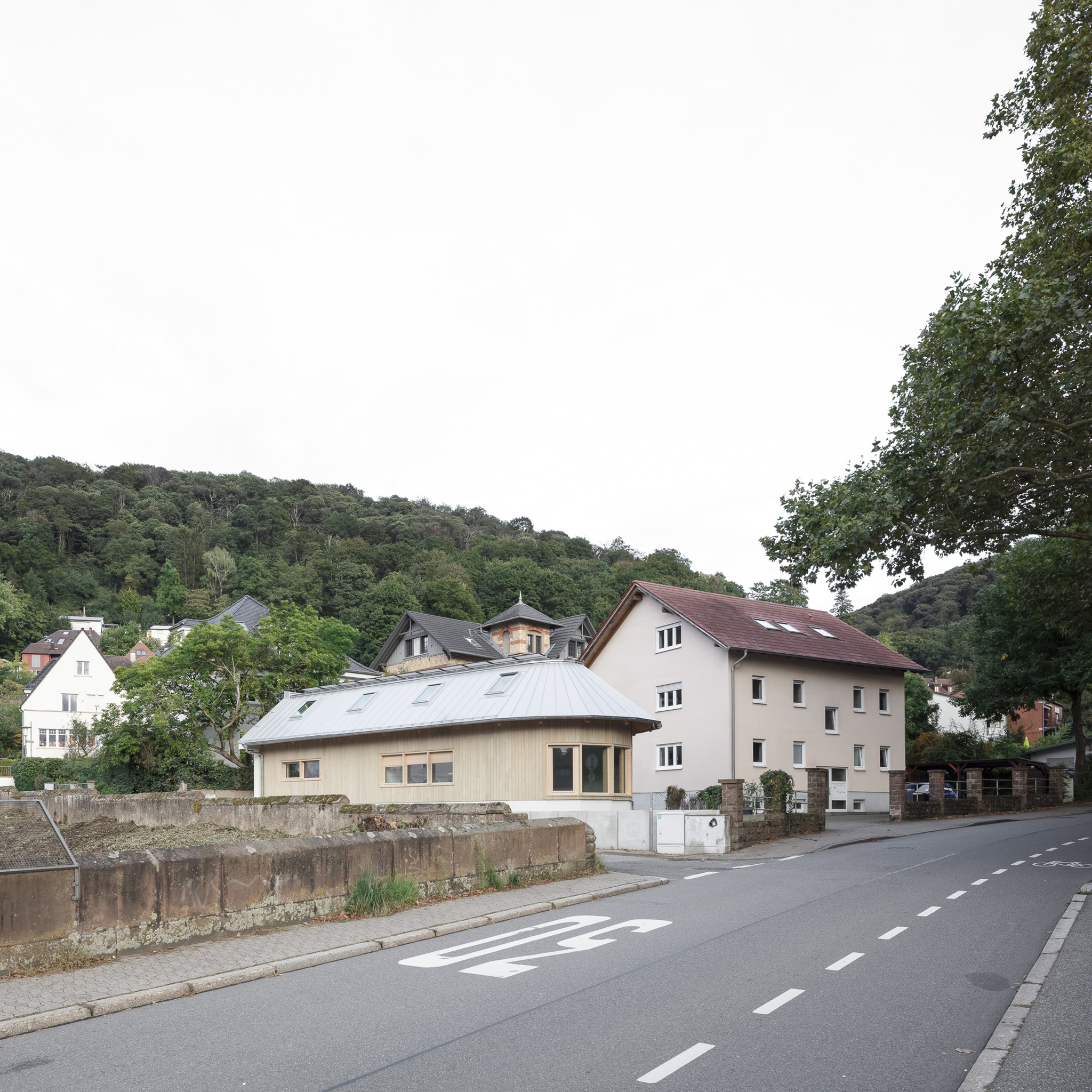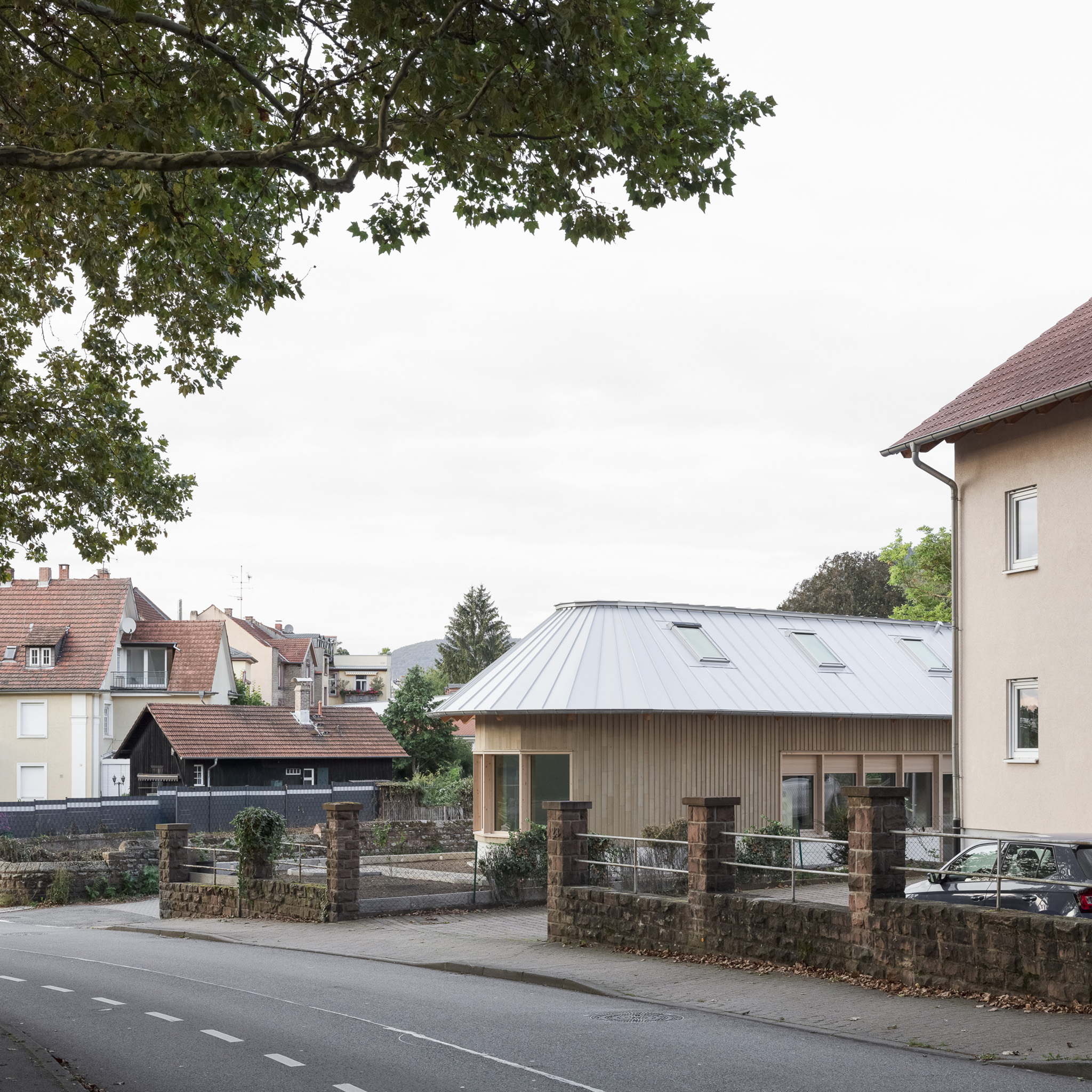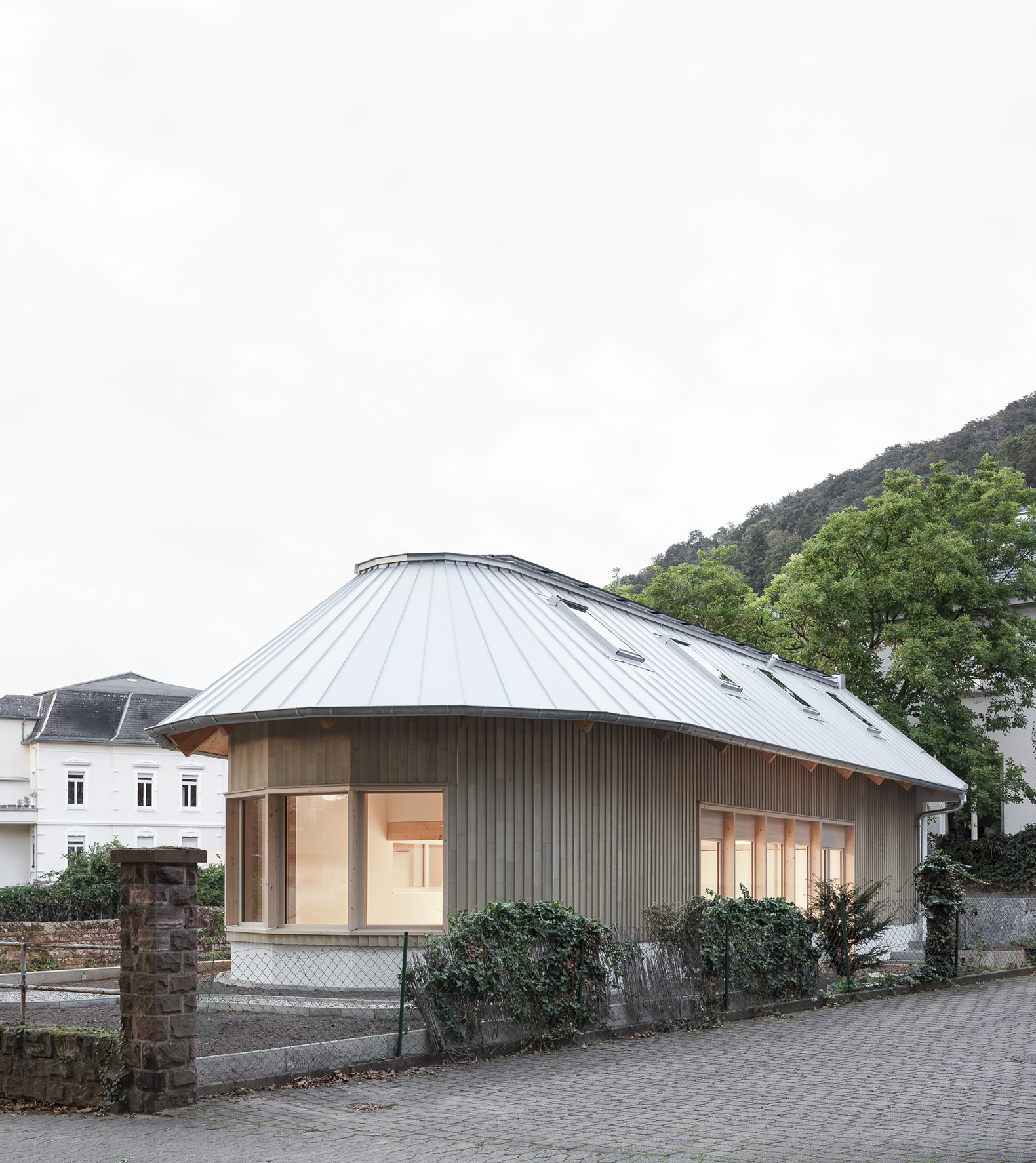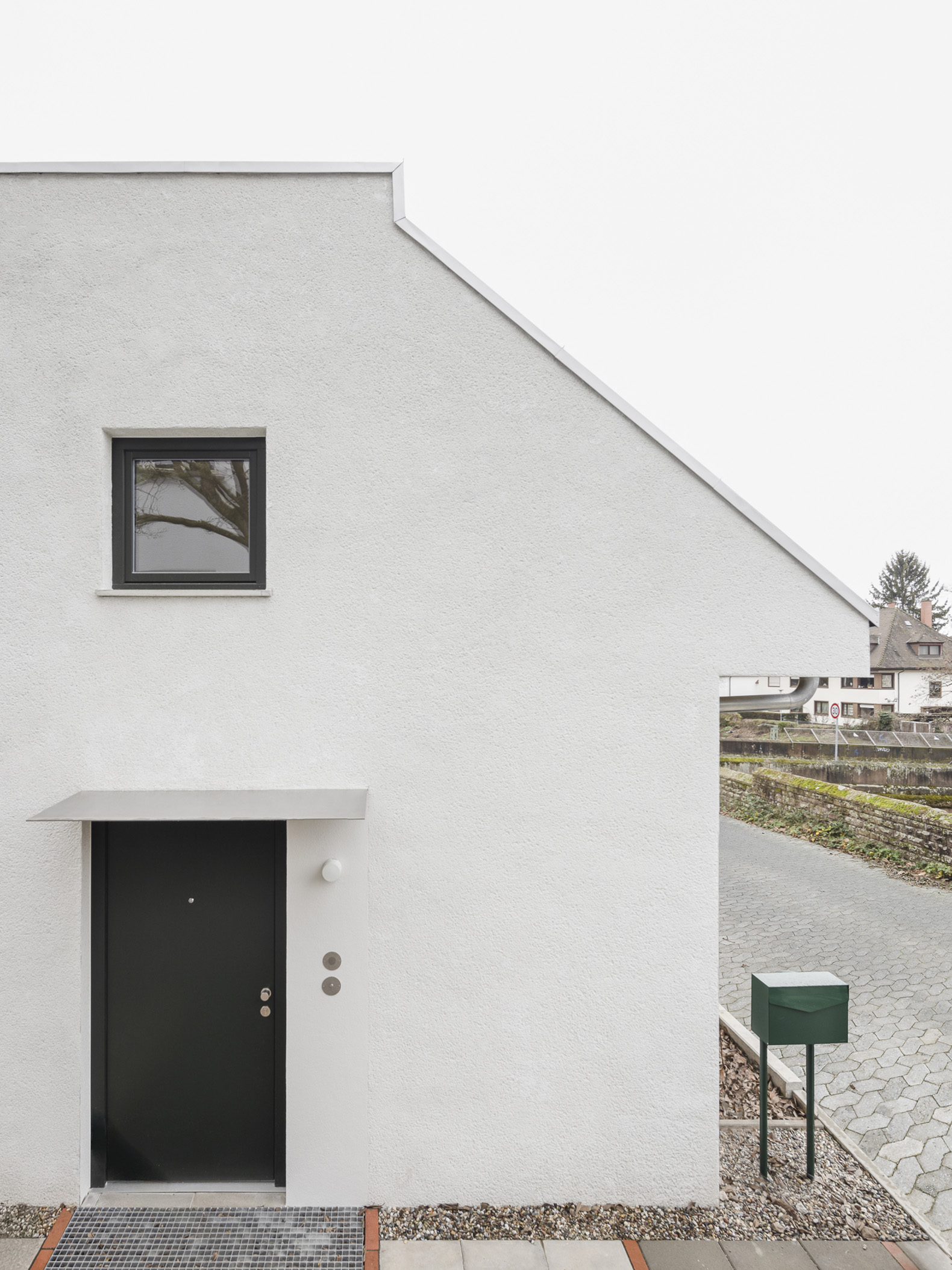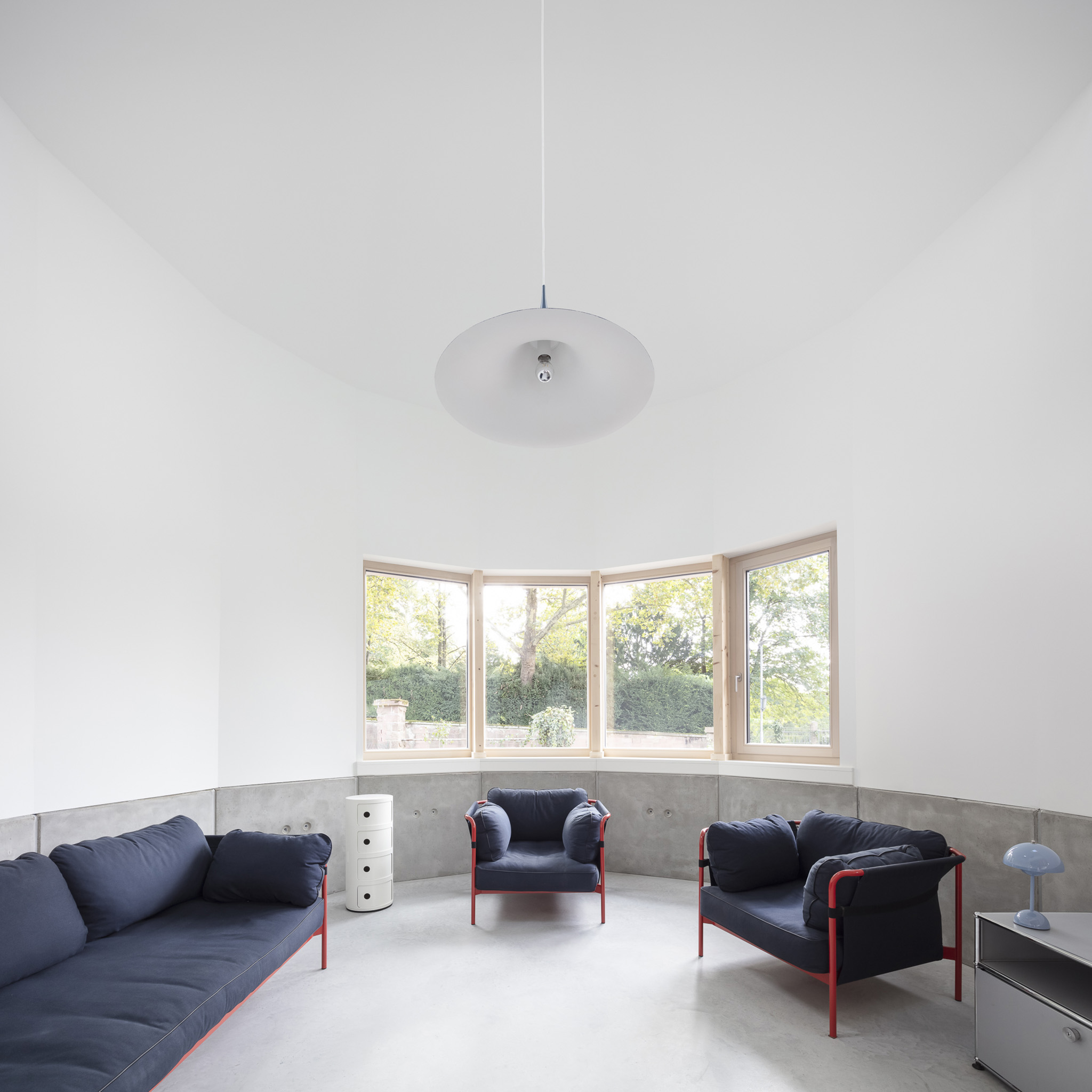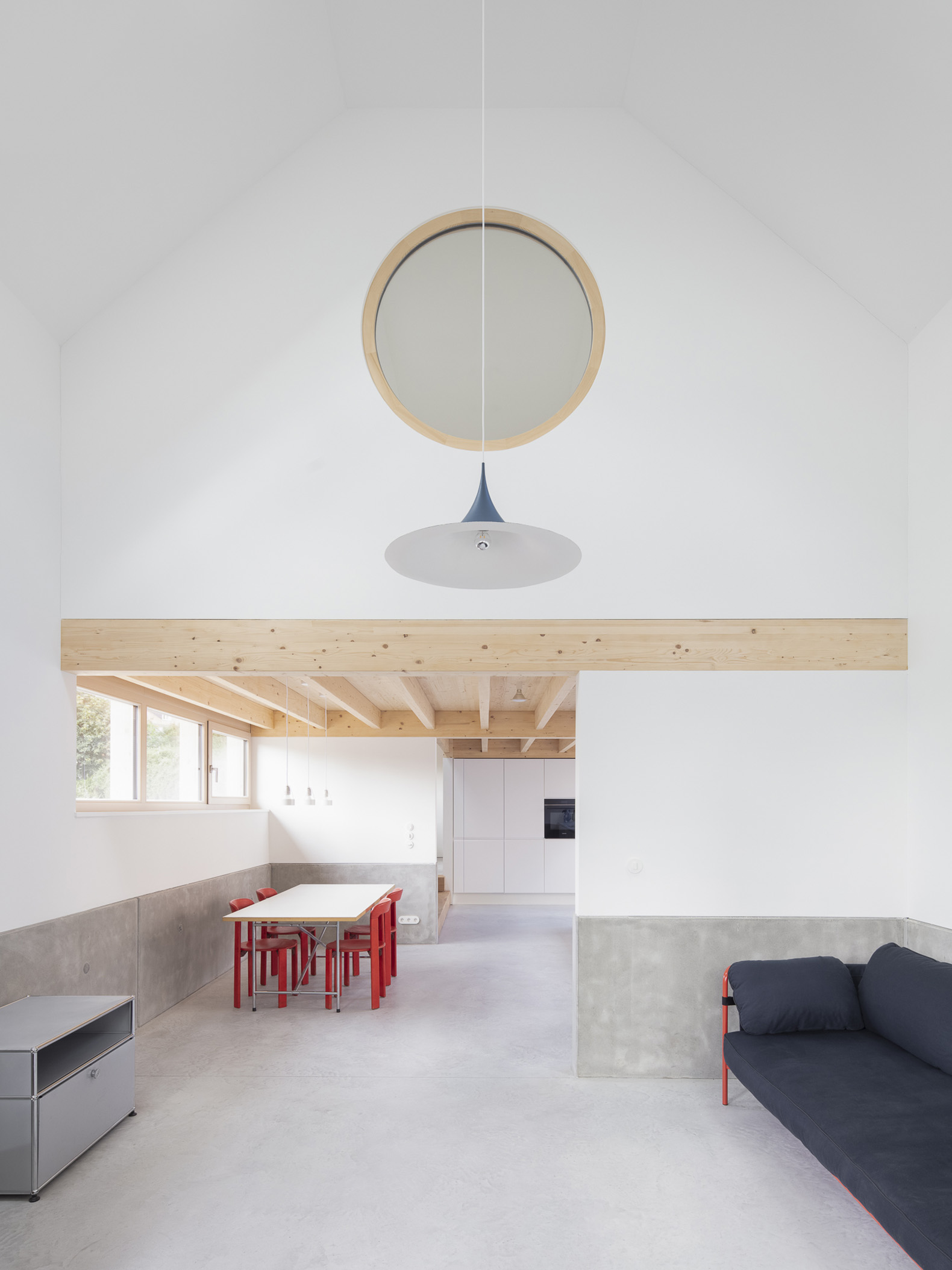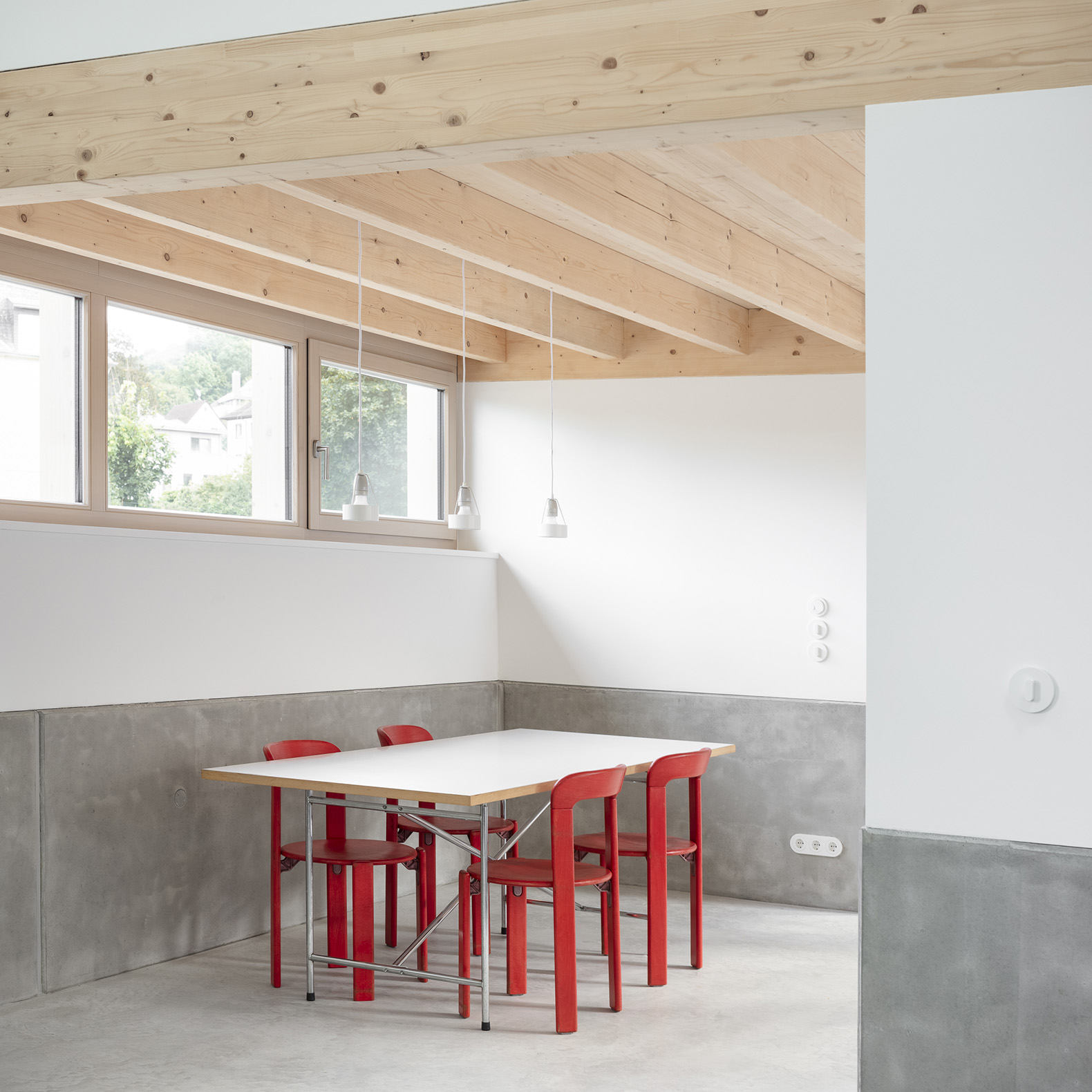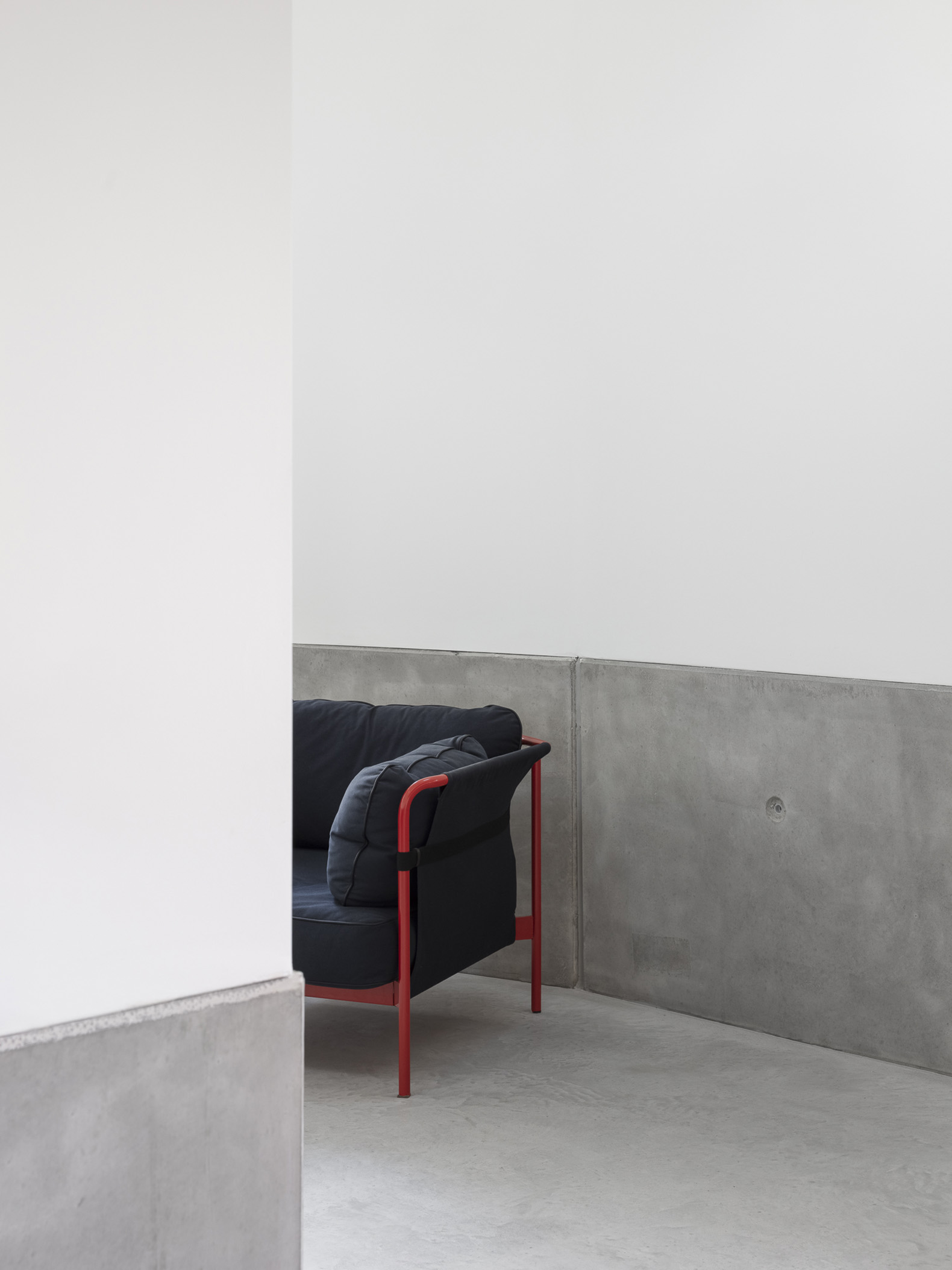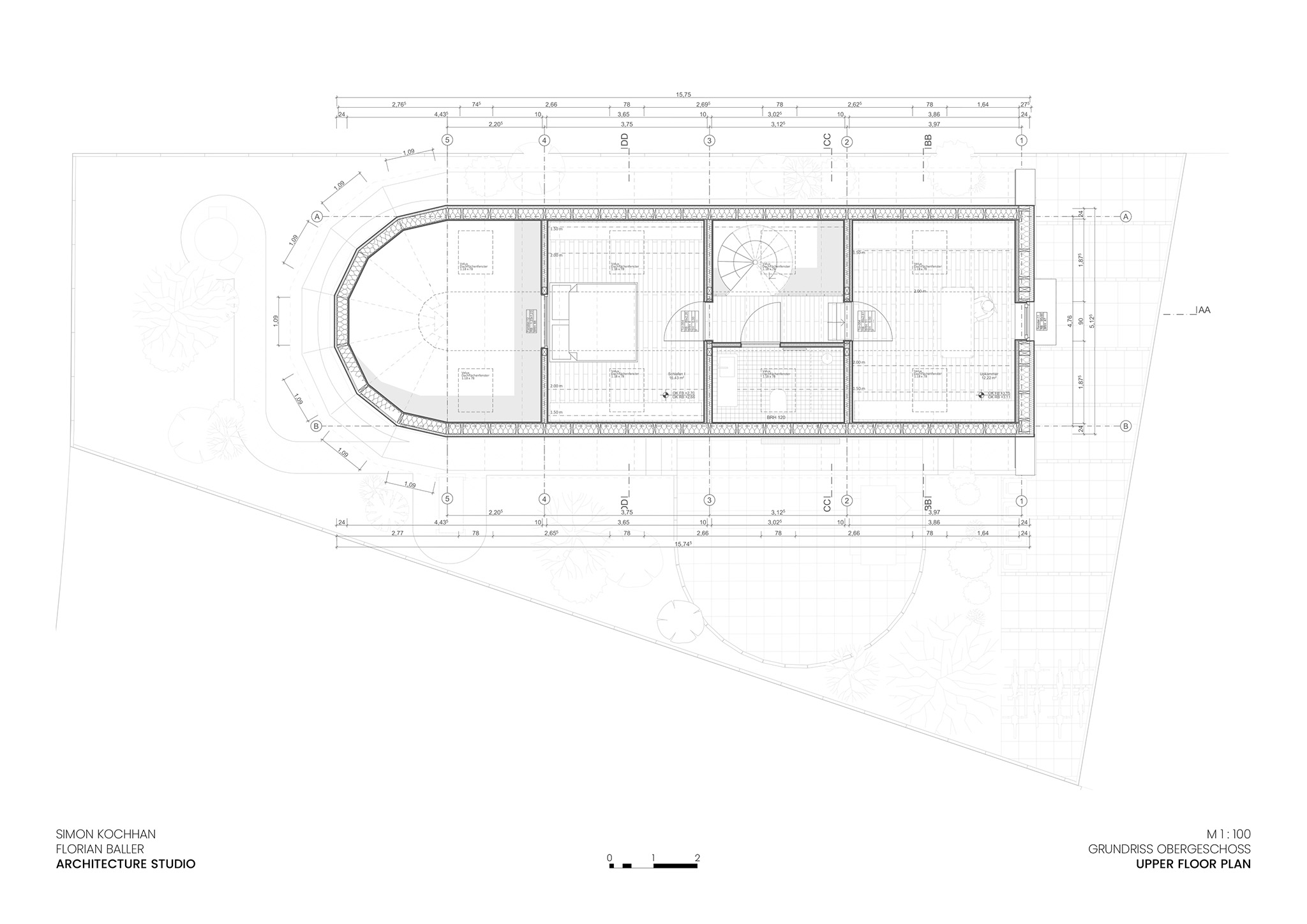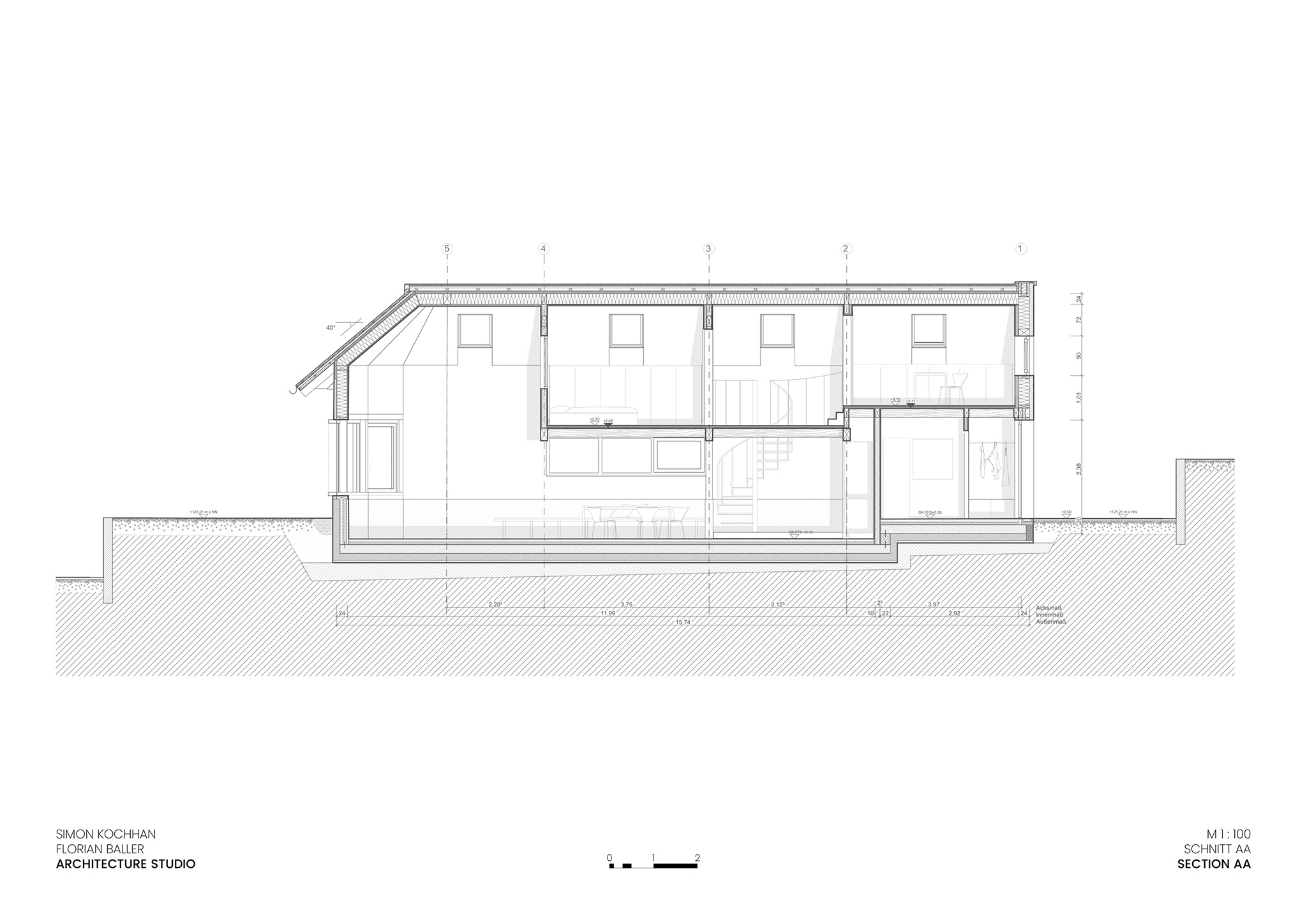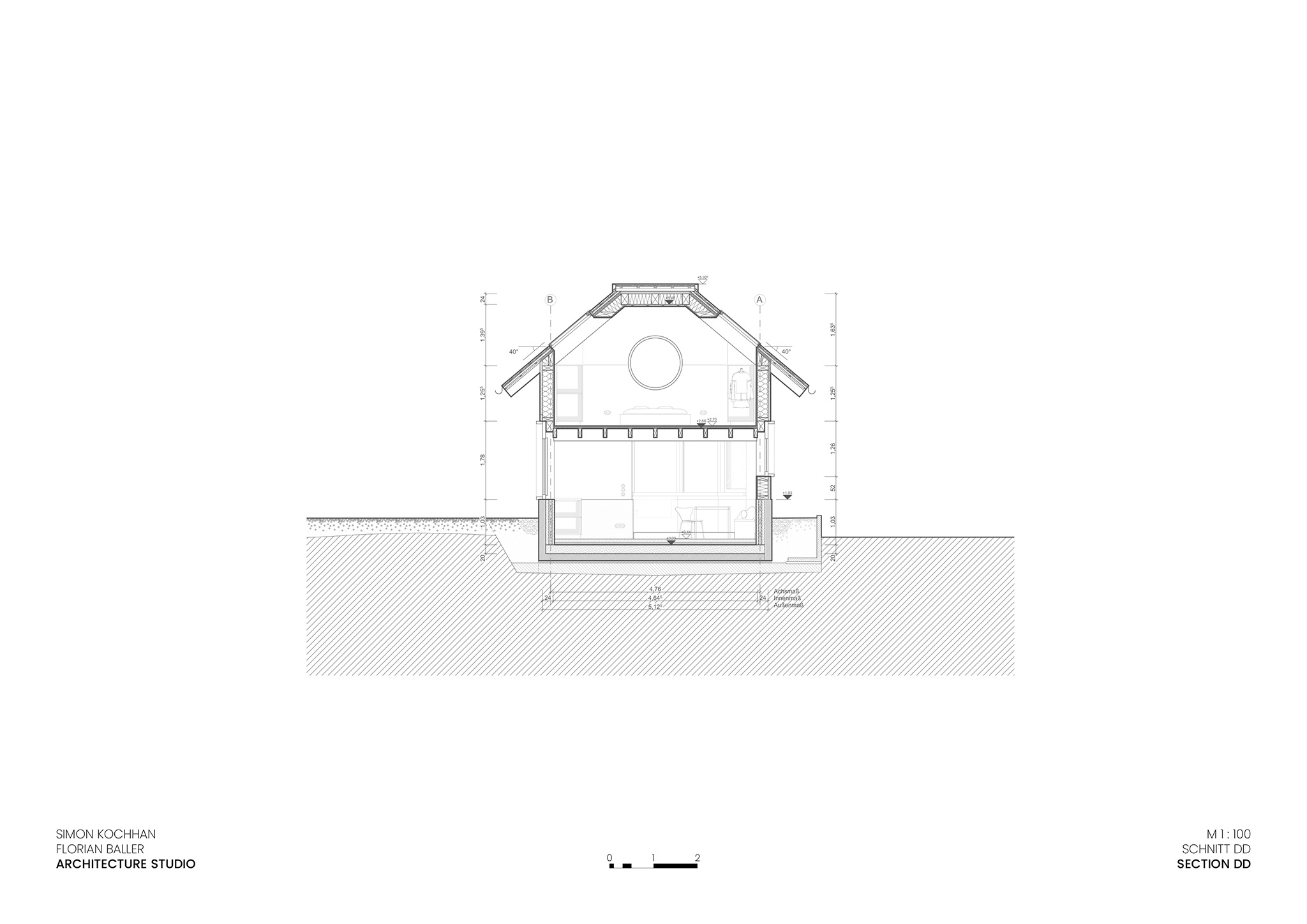
From the outside, the project by Simon Kochhan and Florian Baller appears to suggest symmetry. However, upon entering the house, the visitor encounters a sequence of intentionally asymmetrical spaces. The exterior conveys a sense of seclusion and privacy; inside, a homogeneous natural light floods the rooms, creating a warm and welcoming domestic atmosphere.
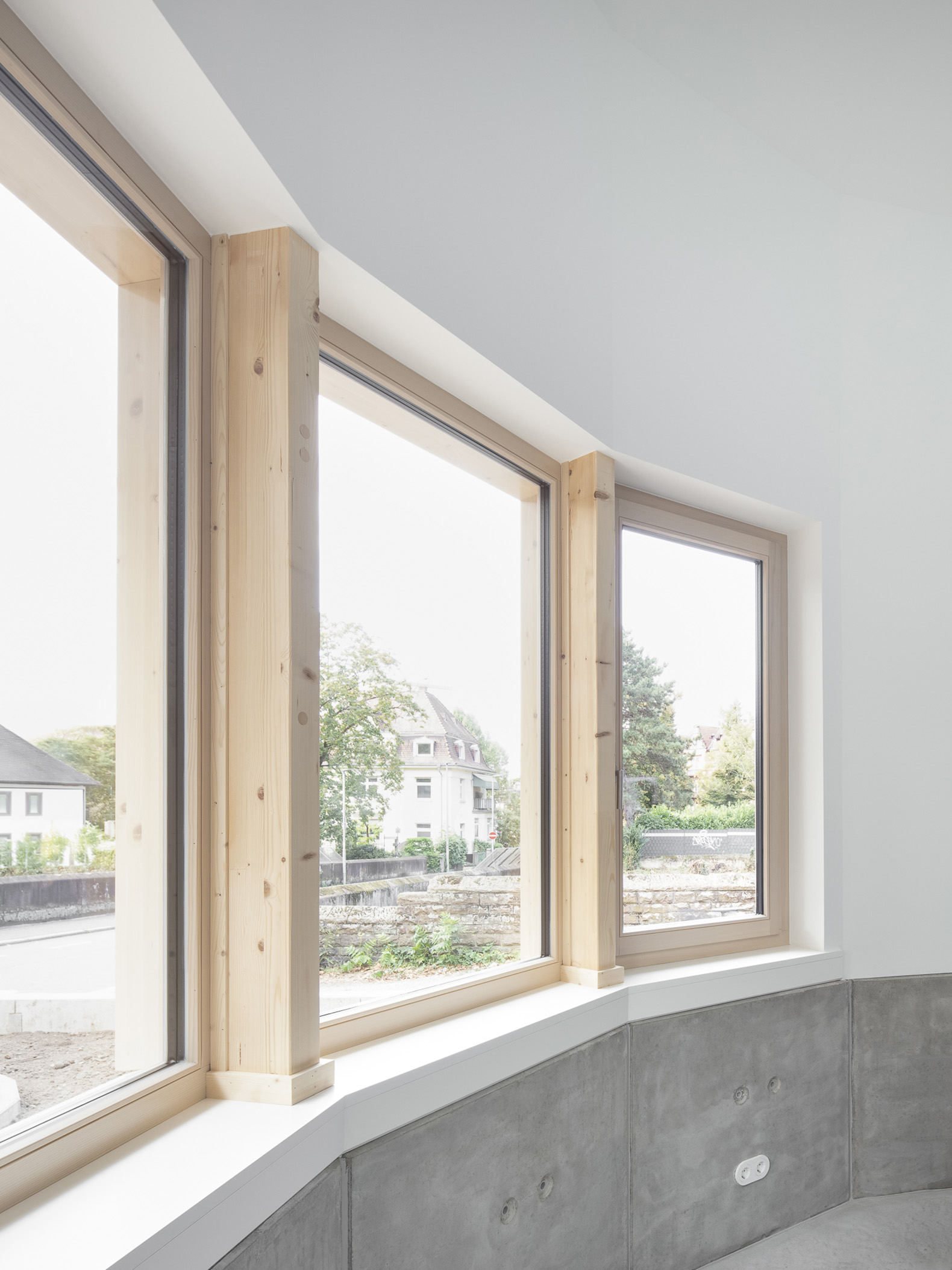
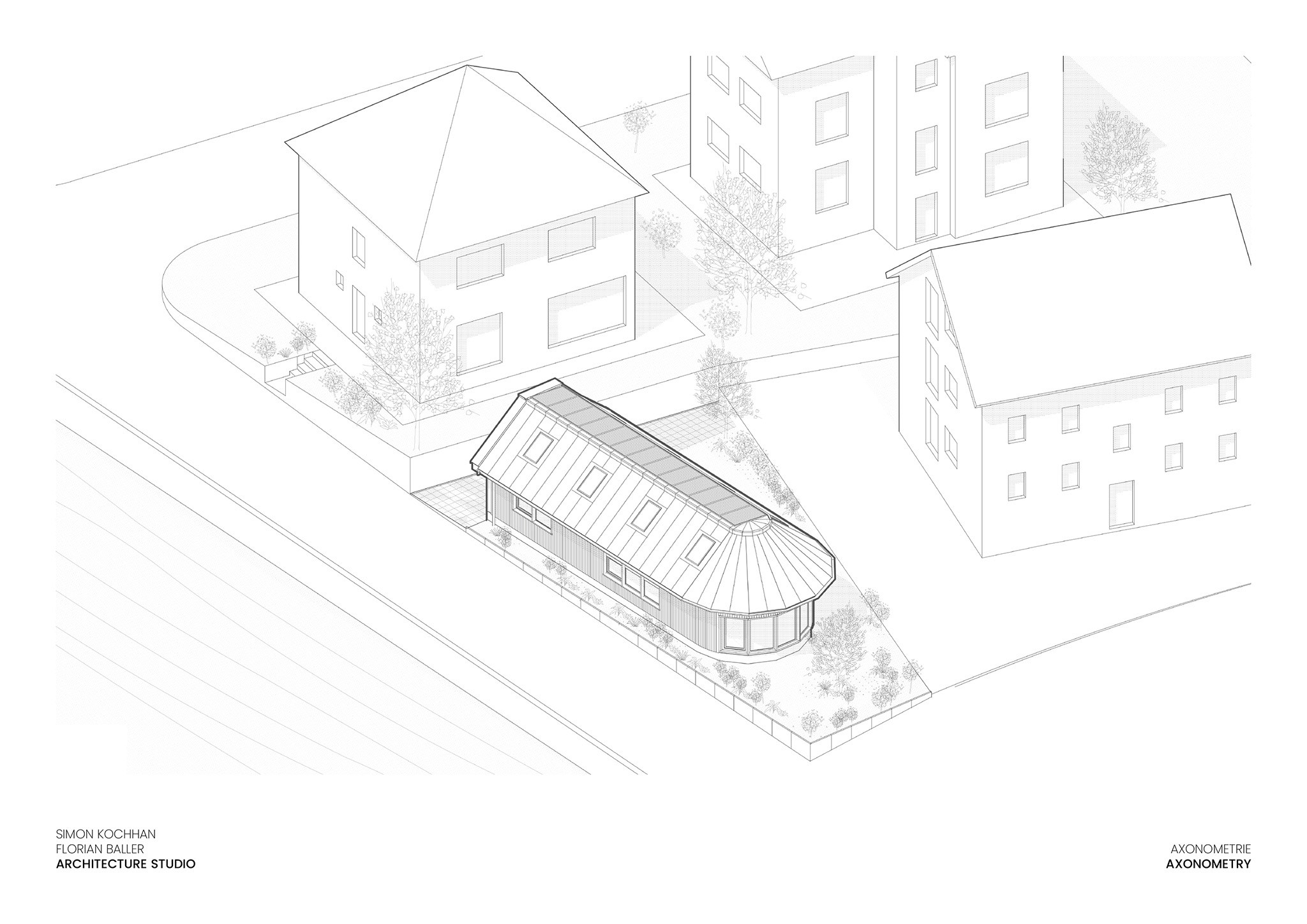
In its execution, the project combines technical precision with material refinement. The west facade adopts a curved form that engages with the adjacent intersection, while a more understated plaster facade articulates with the houses to the rear. In this way, the HSBW House achieves a respectful integration with its context and an interior spatial clarity in keeping with the contemporary needs of urban life.
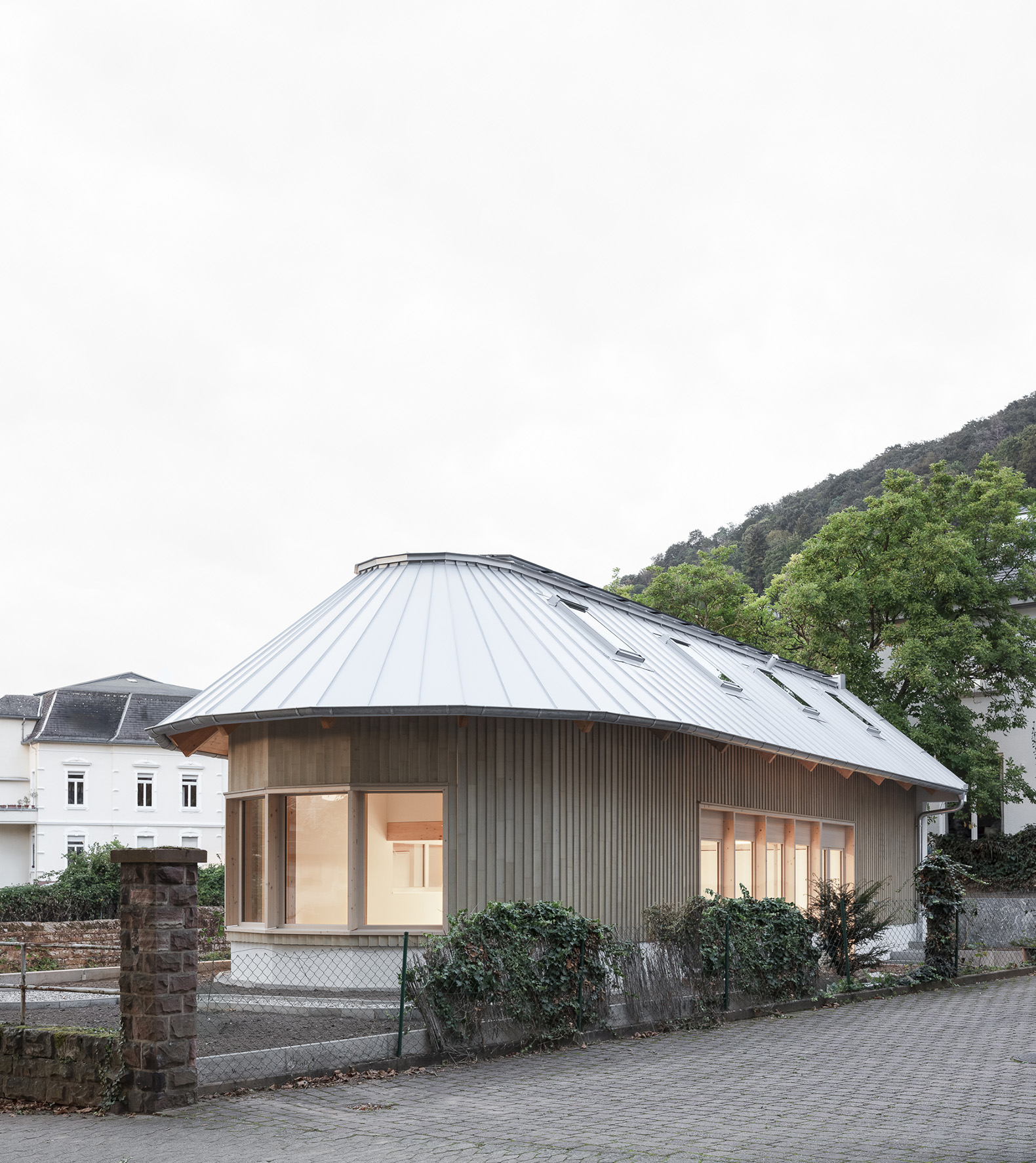
House HSBW by Simon Kochhan + Florian Baller. Photograph by Kim Fohmann.
Project description by Simon Kochhan and Florian Baller
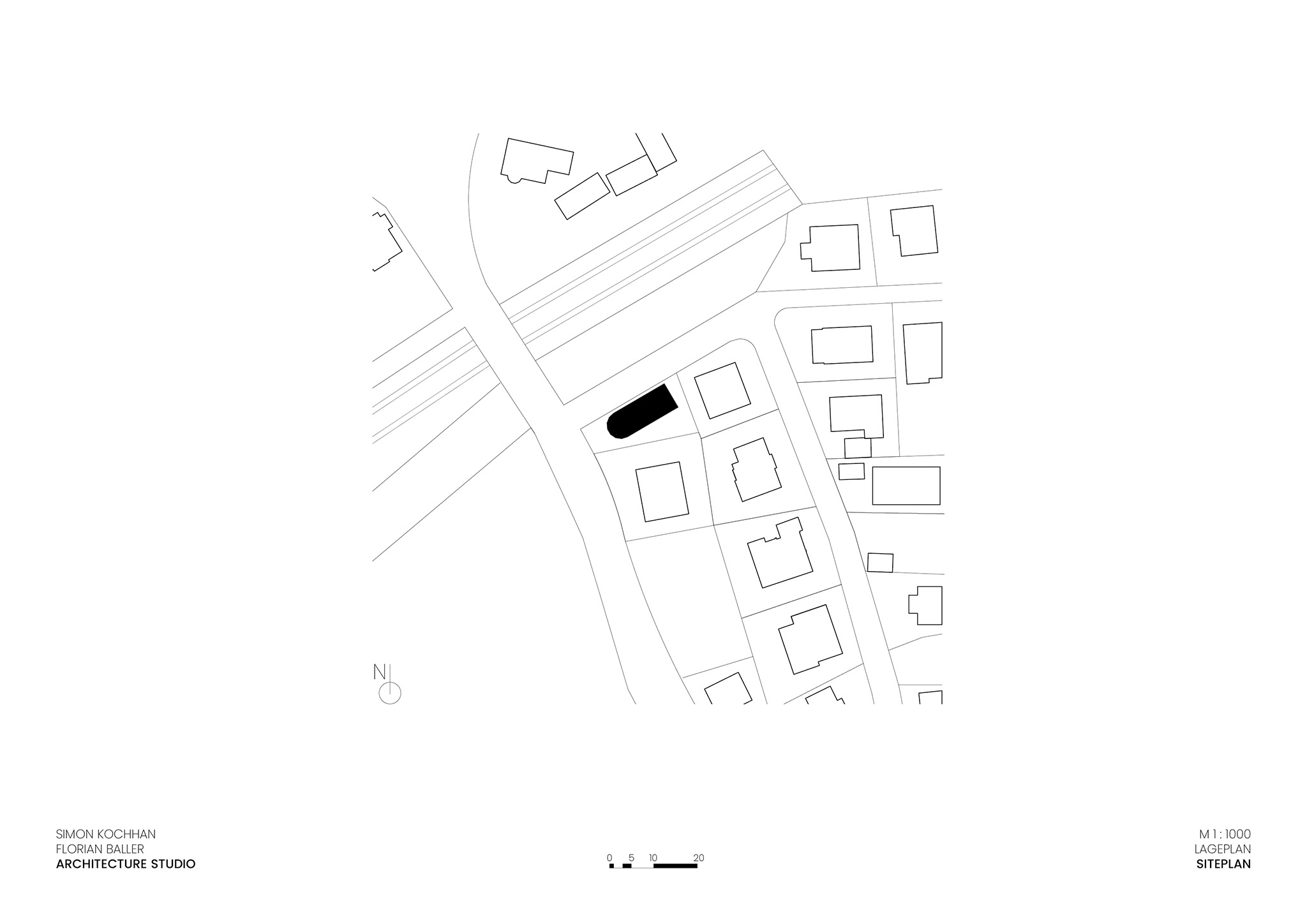
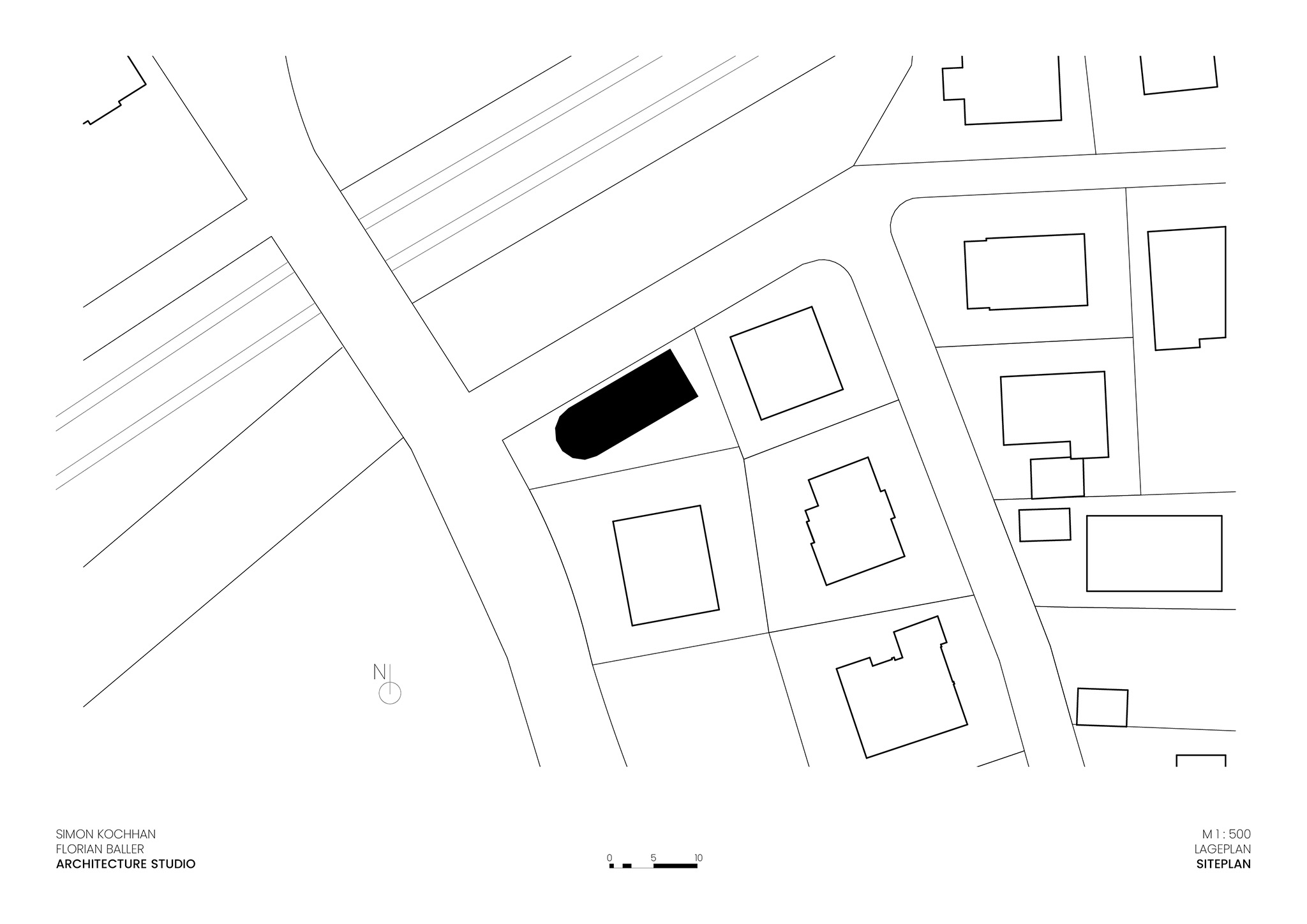
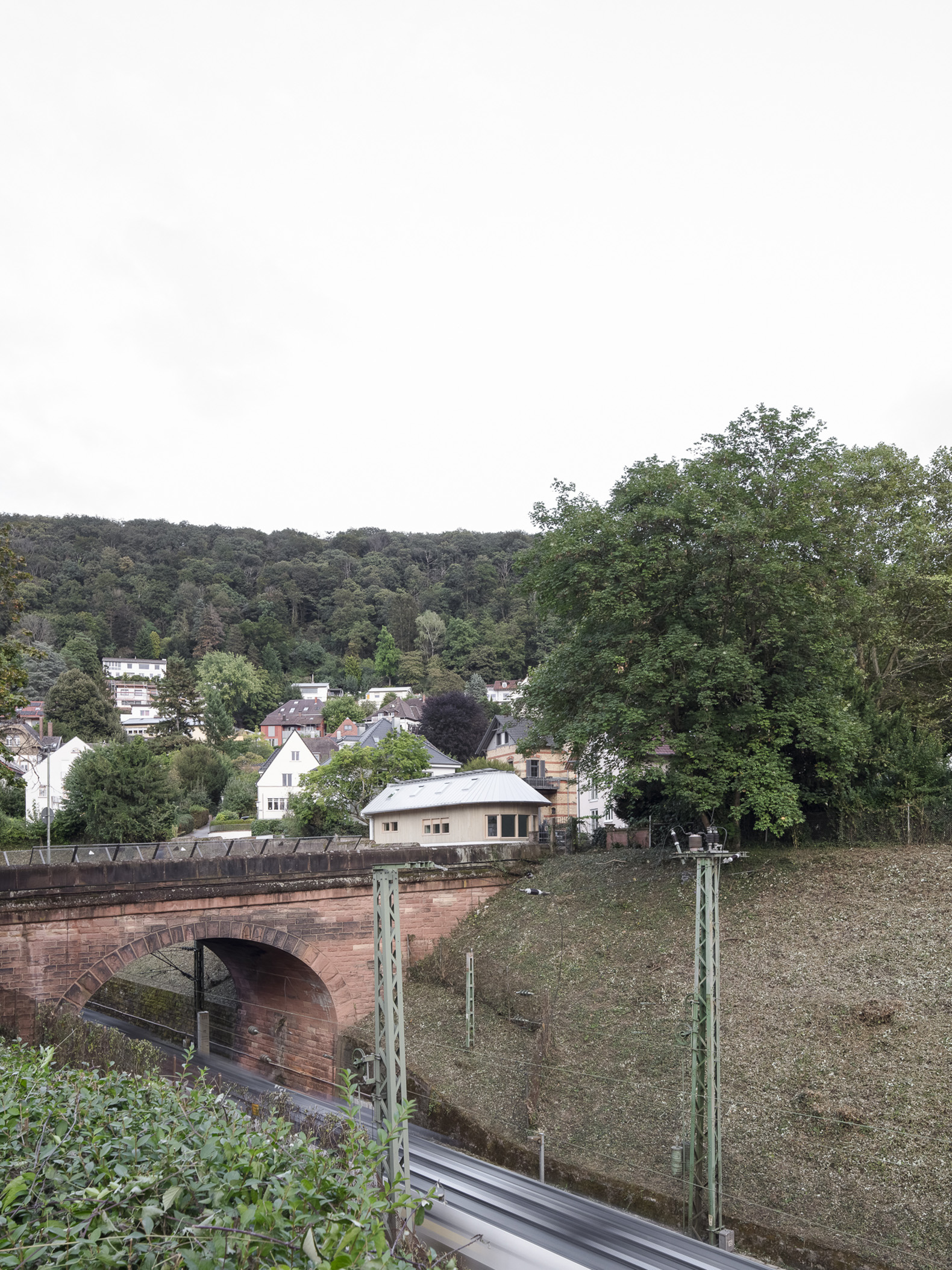
House HSBW is located in Heidelberg’s Weststadt district, at the threshold between the historic Bergfriedhof cemetery and the adjacent railway line. On a wedge-shaped site, the building develops a distinct, site-specific form that balances urban presence with a sense of privacy.
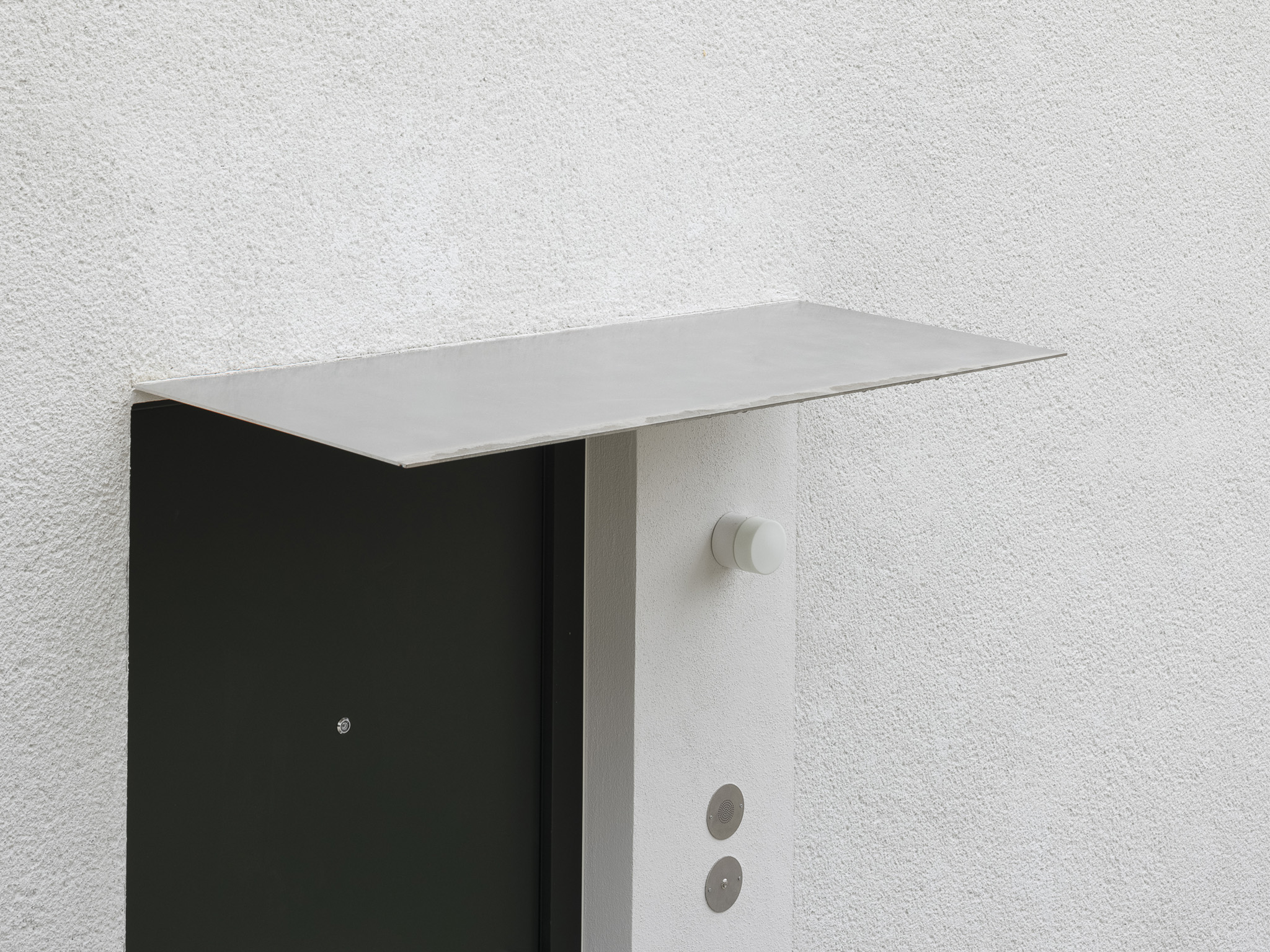
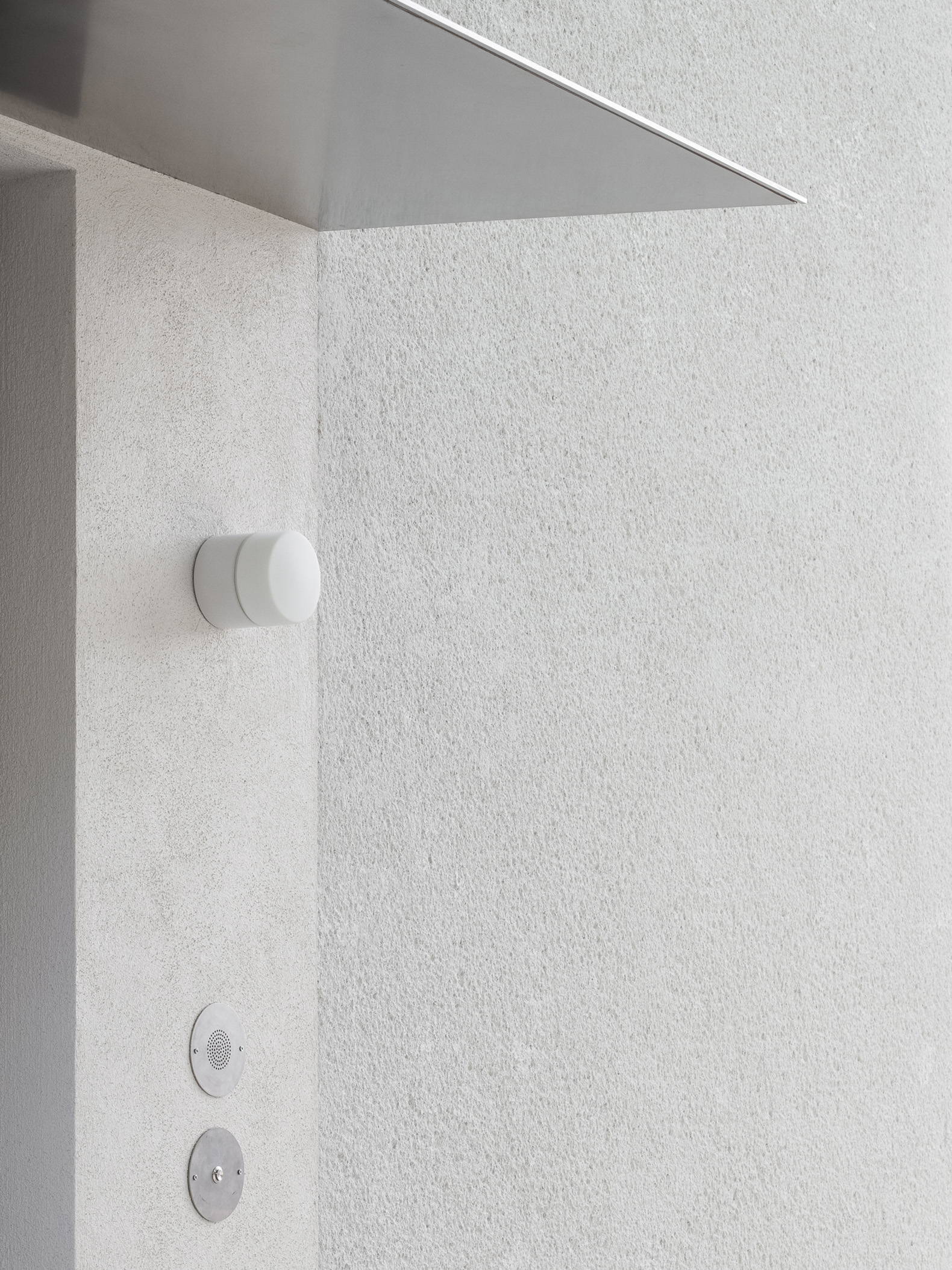
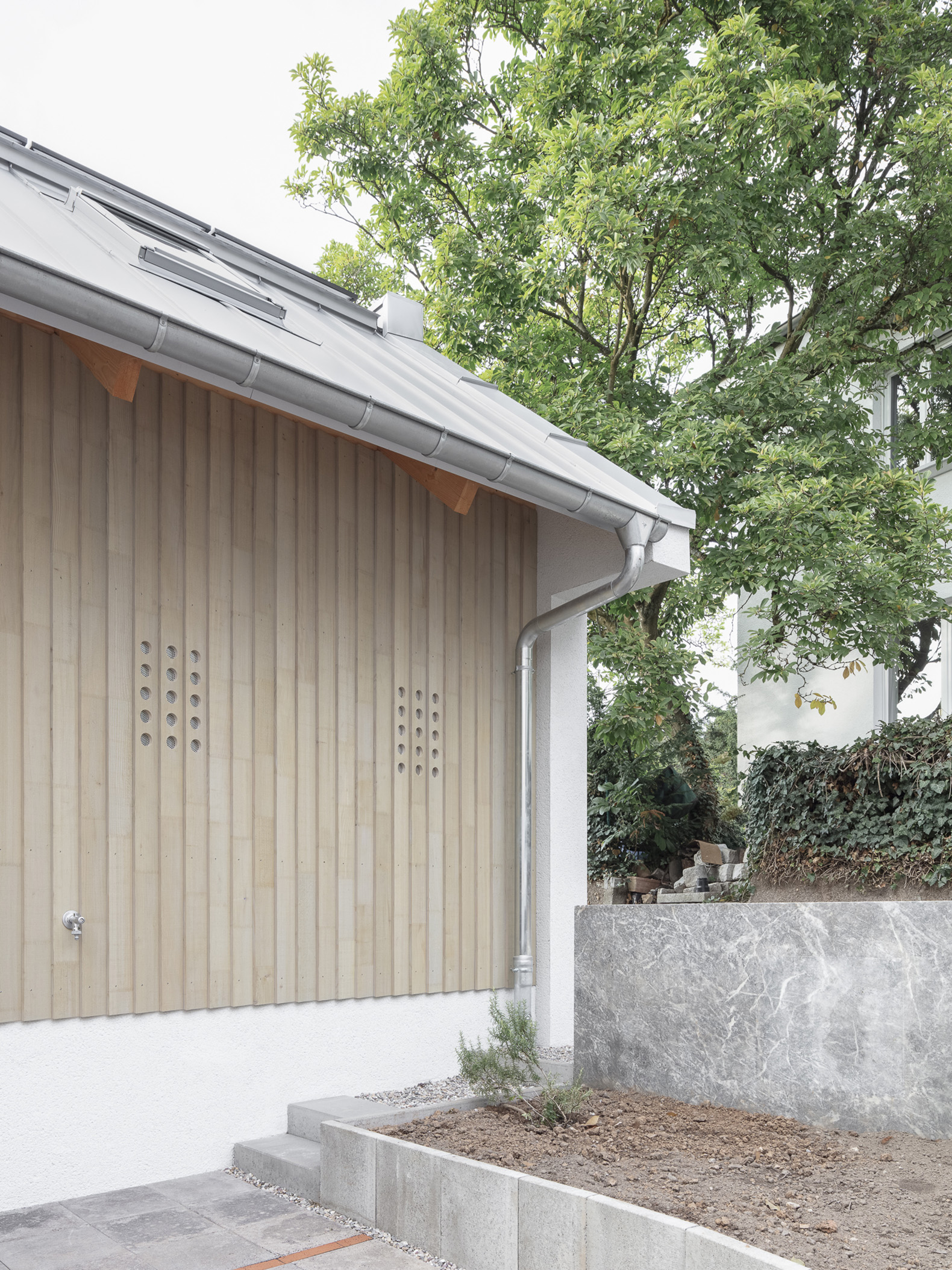
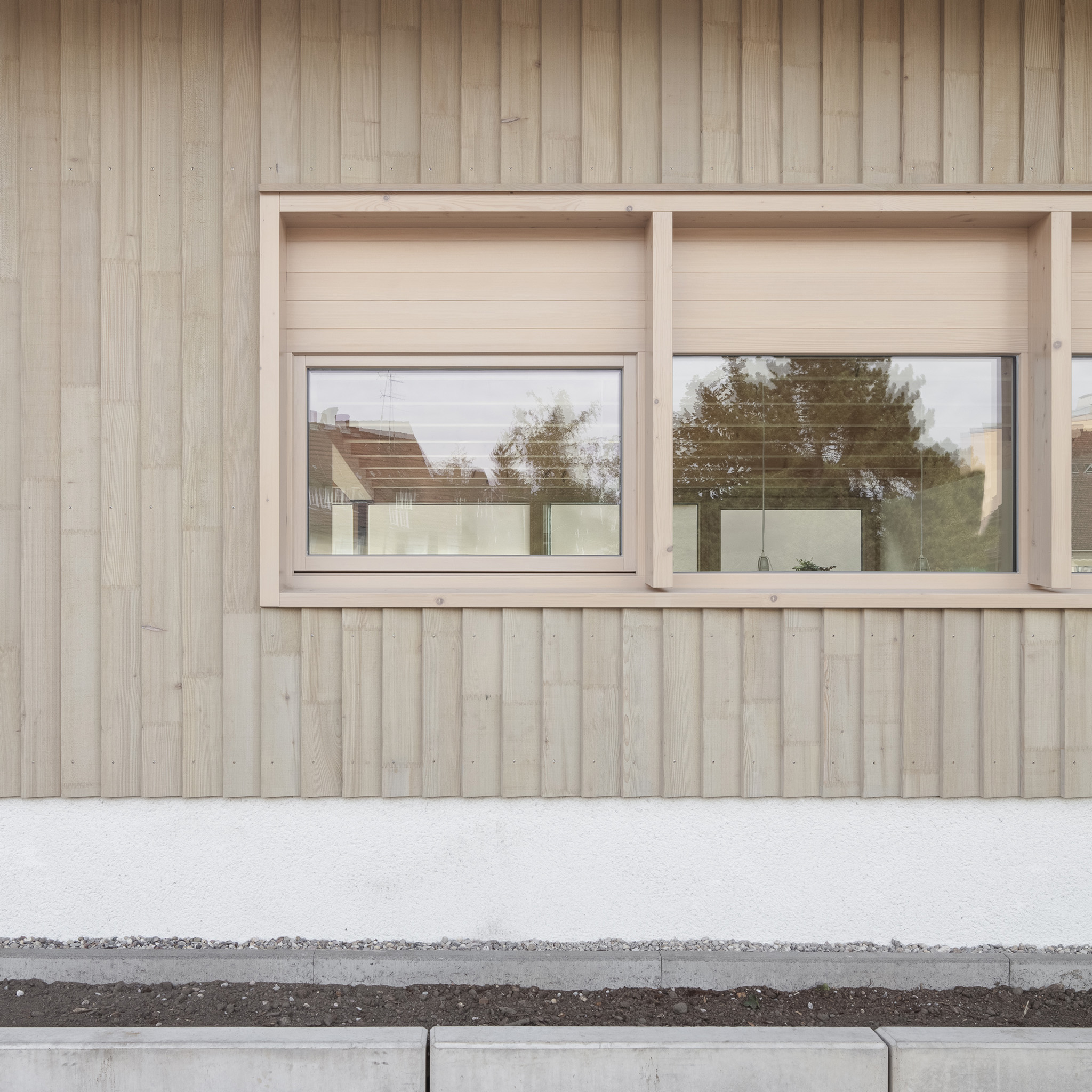
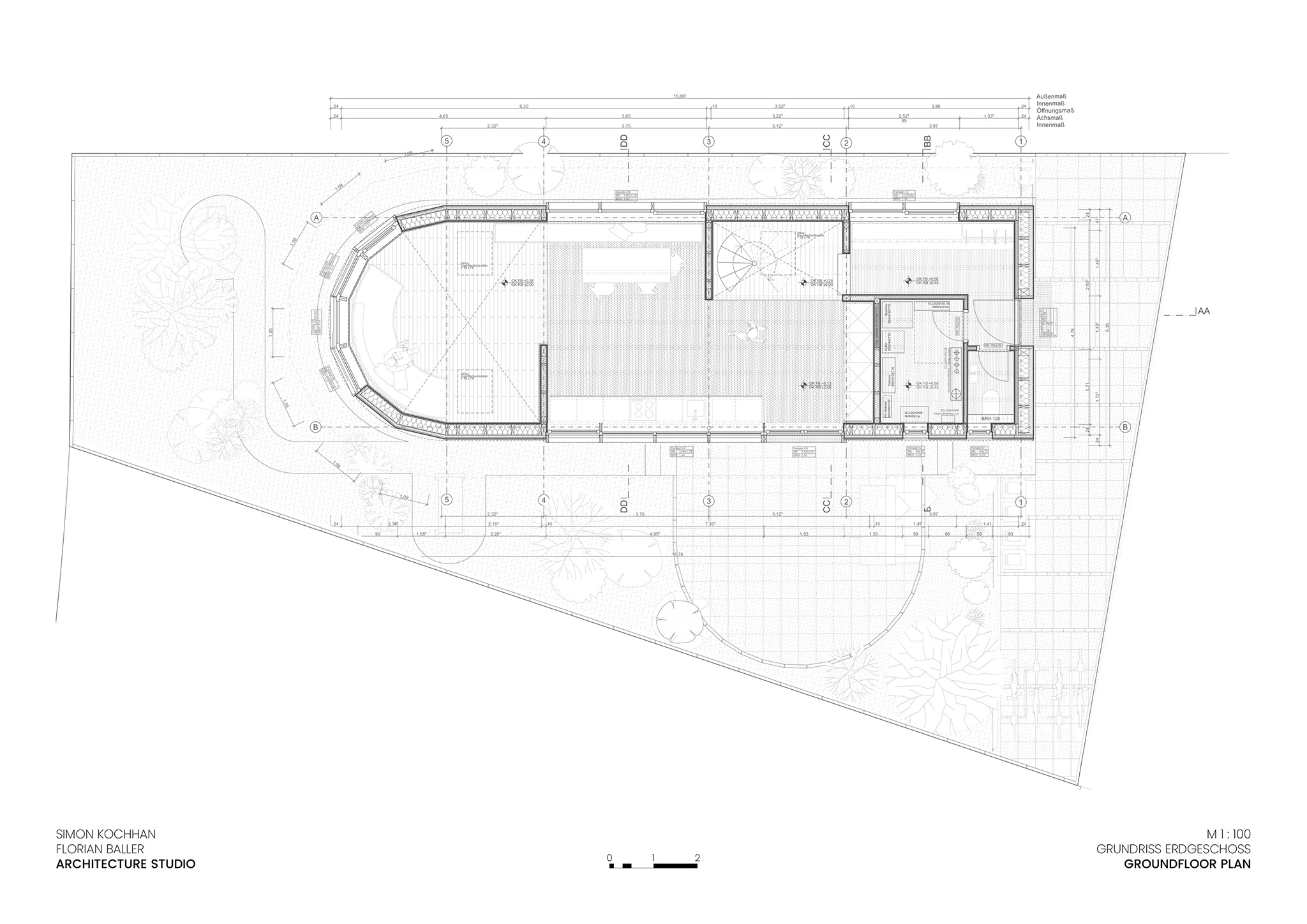
The building is composed of two clearly differentiated volumes: a single-storey base clad in vertical timber boarding forms the plinth, while an overhanging roof volume with silver standing-seam metal cladding rests above. The rounded western edge responds to the street intersection and creates a smooth transition into the urban context through a continuous eave. Towards the east, a rendered façade with an accentuated entrance mediates to the neighboring residential buildings.
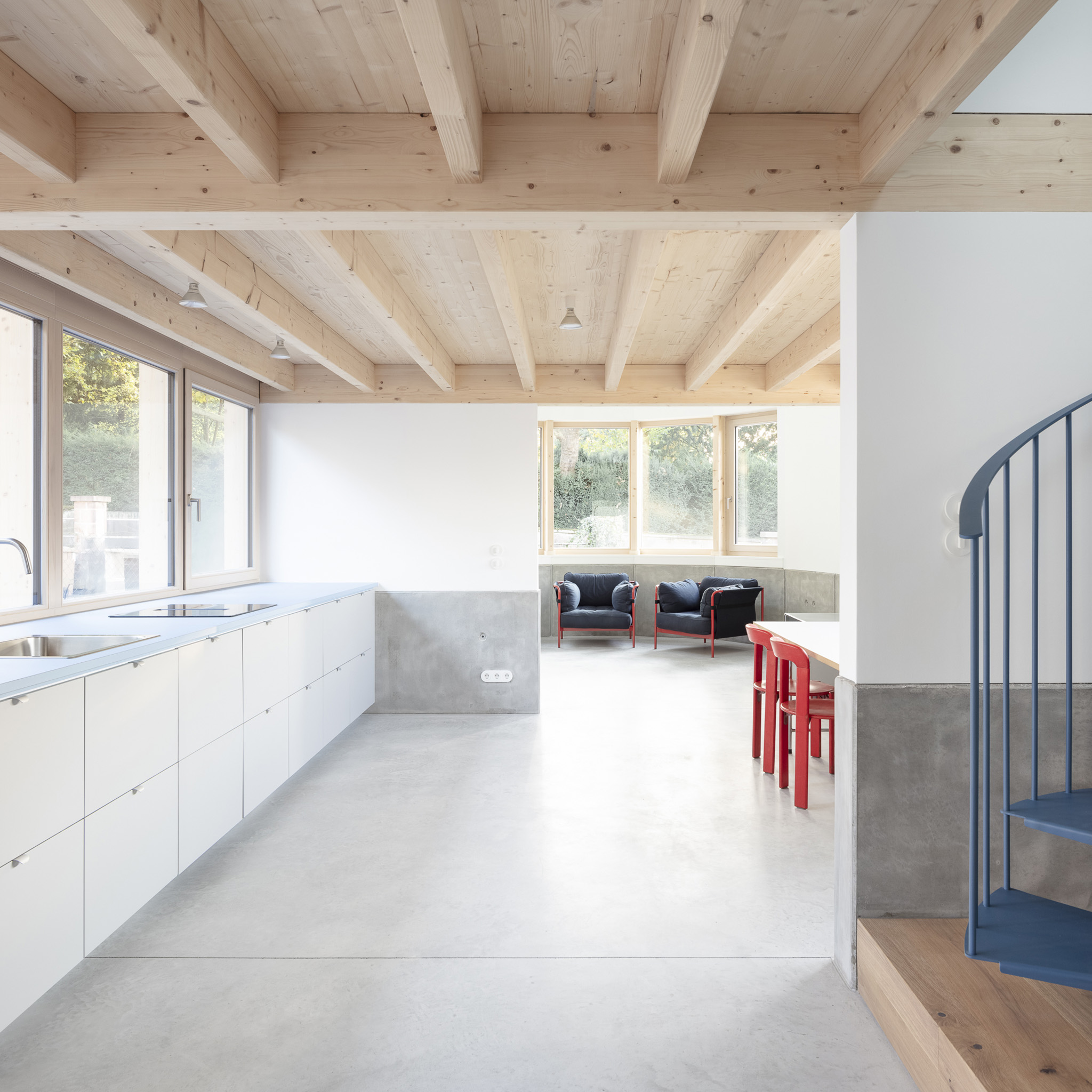
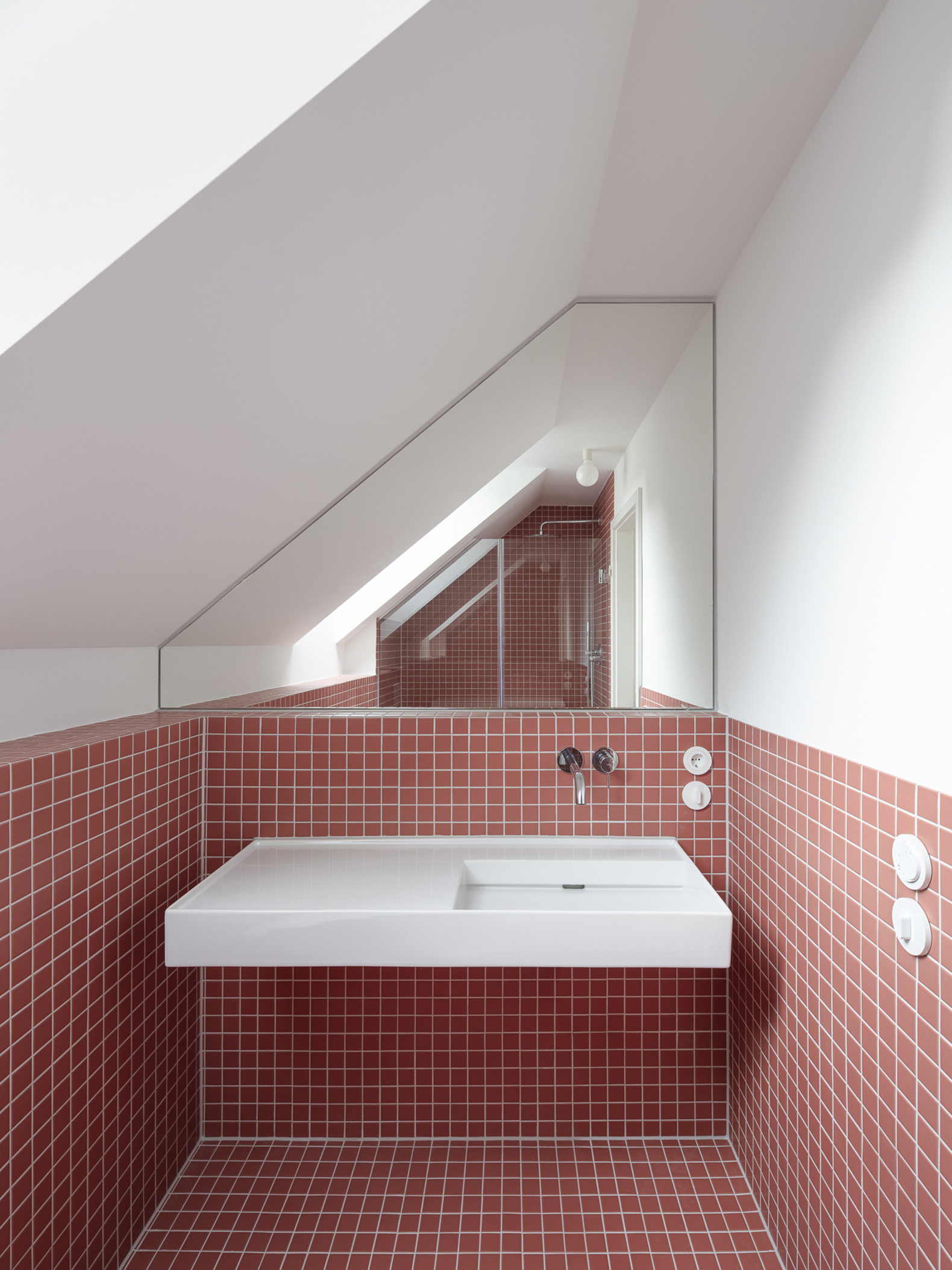
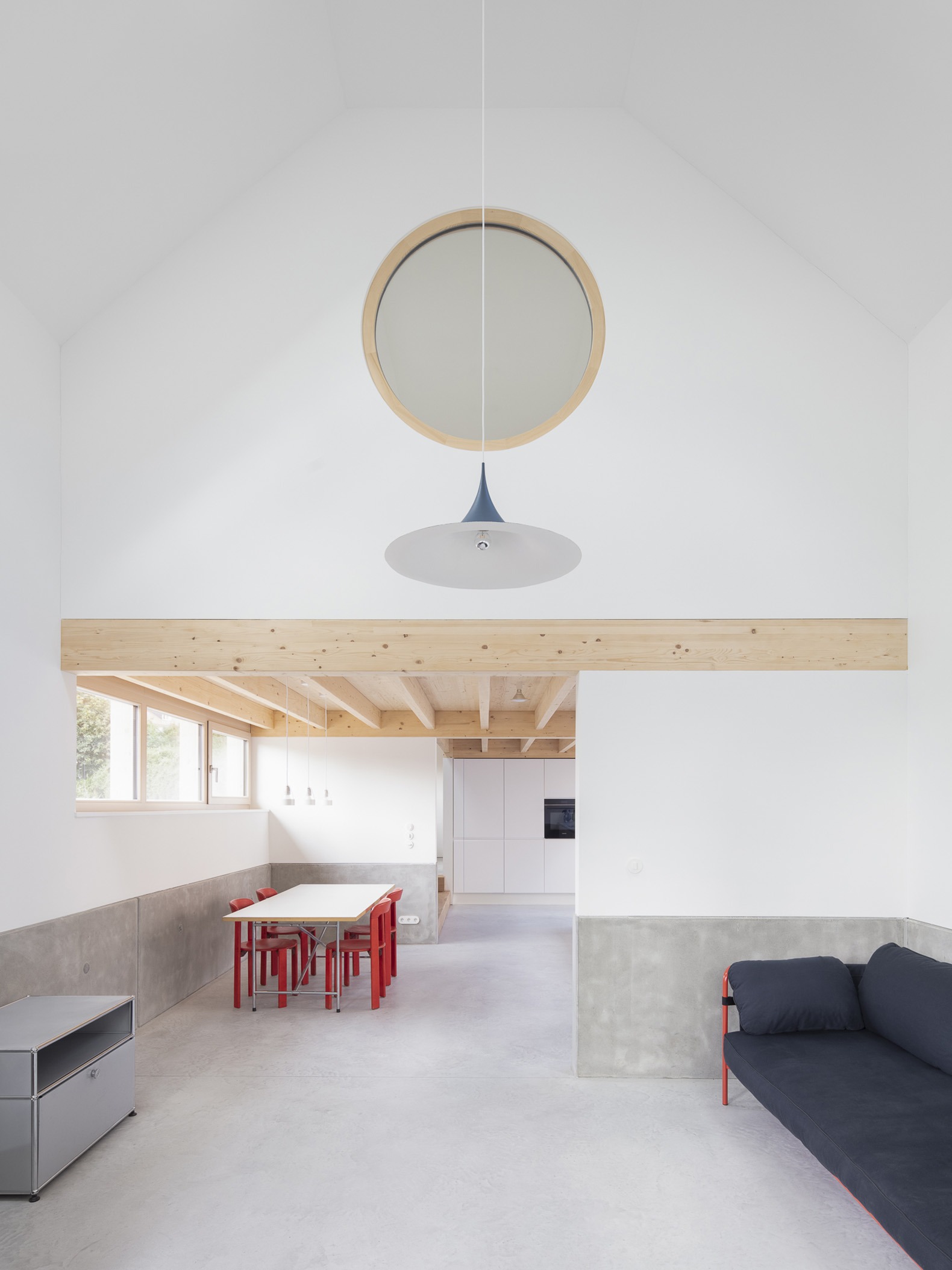
Inside, the seemingly symmetrical entrance arrangement gives way to a deliberately asymmetric spatial sequence. Circulation is guided by carefully positioned openings that bring natural light deep into the interior. Communal spaces are located on the slightly sunken ground floor, while the private rooms are compactly organized on the upper floor. Two double-height spaces create visual and spatial connections between the levels.
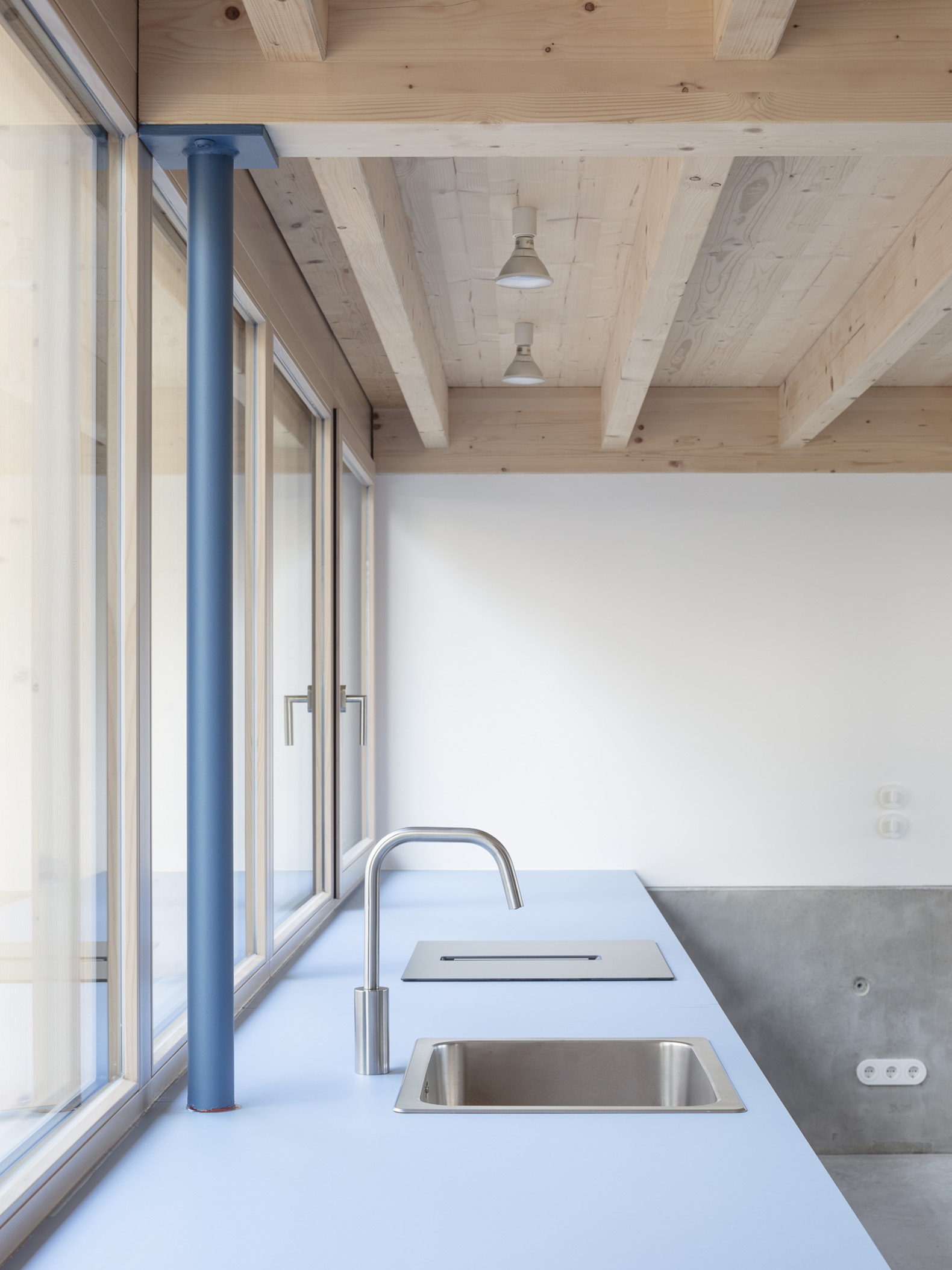
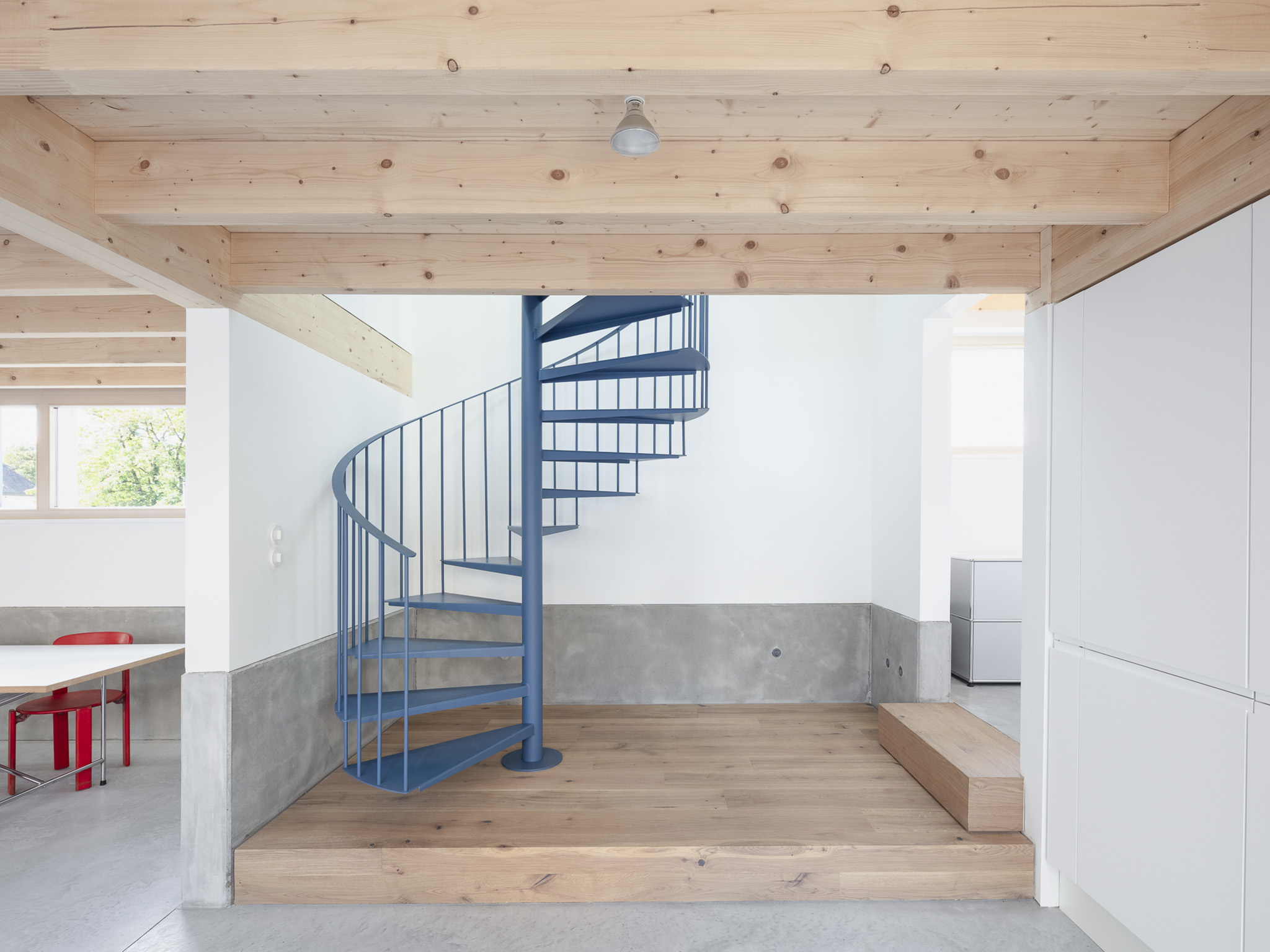
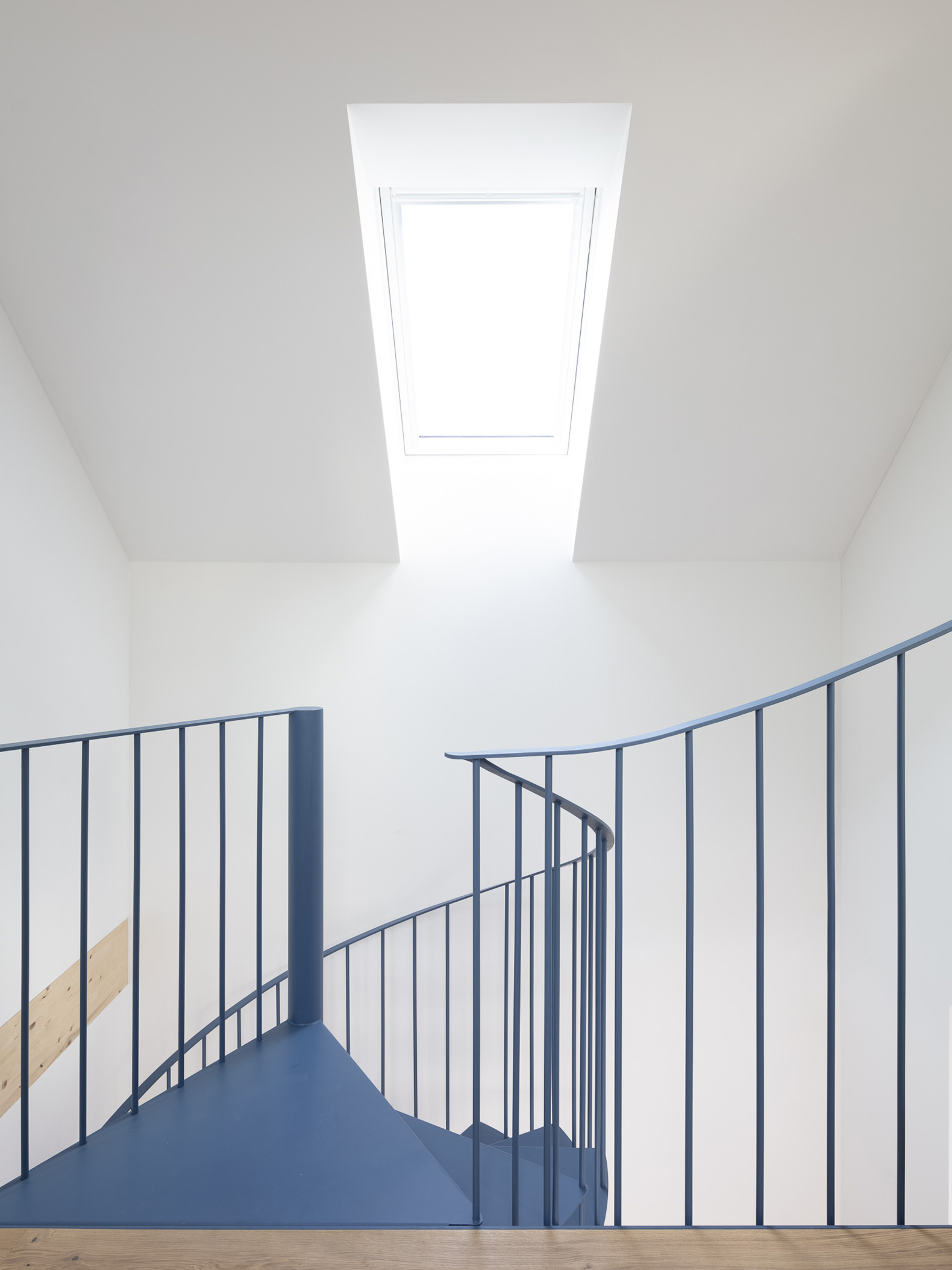
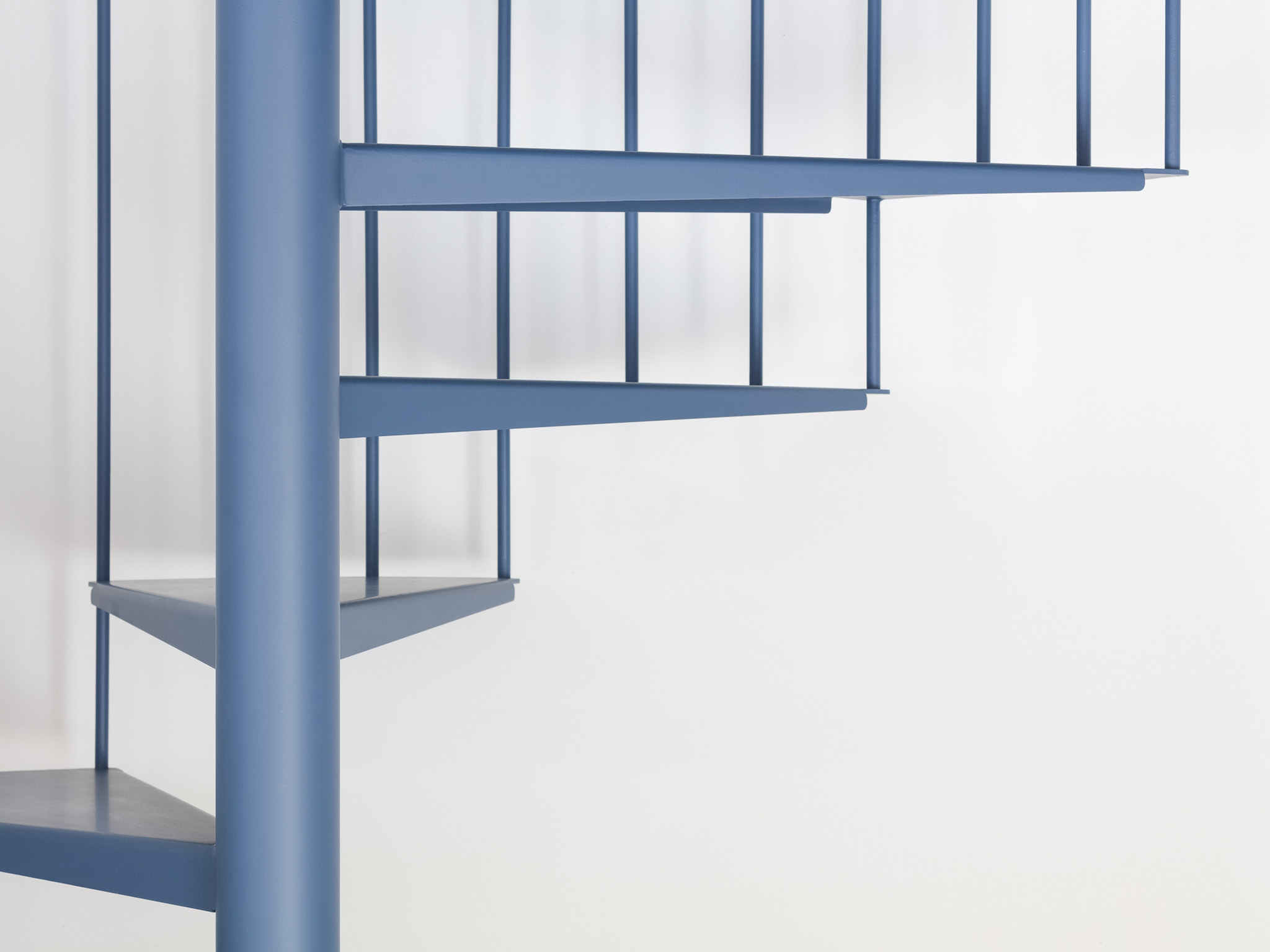
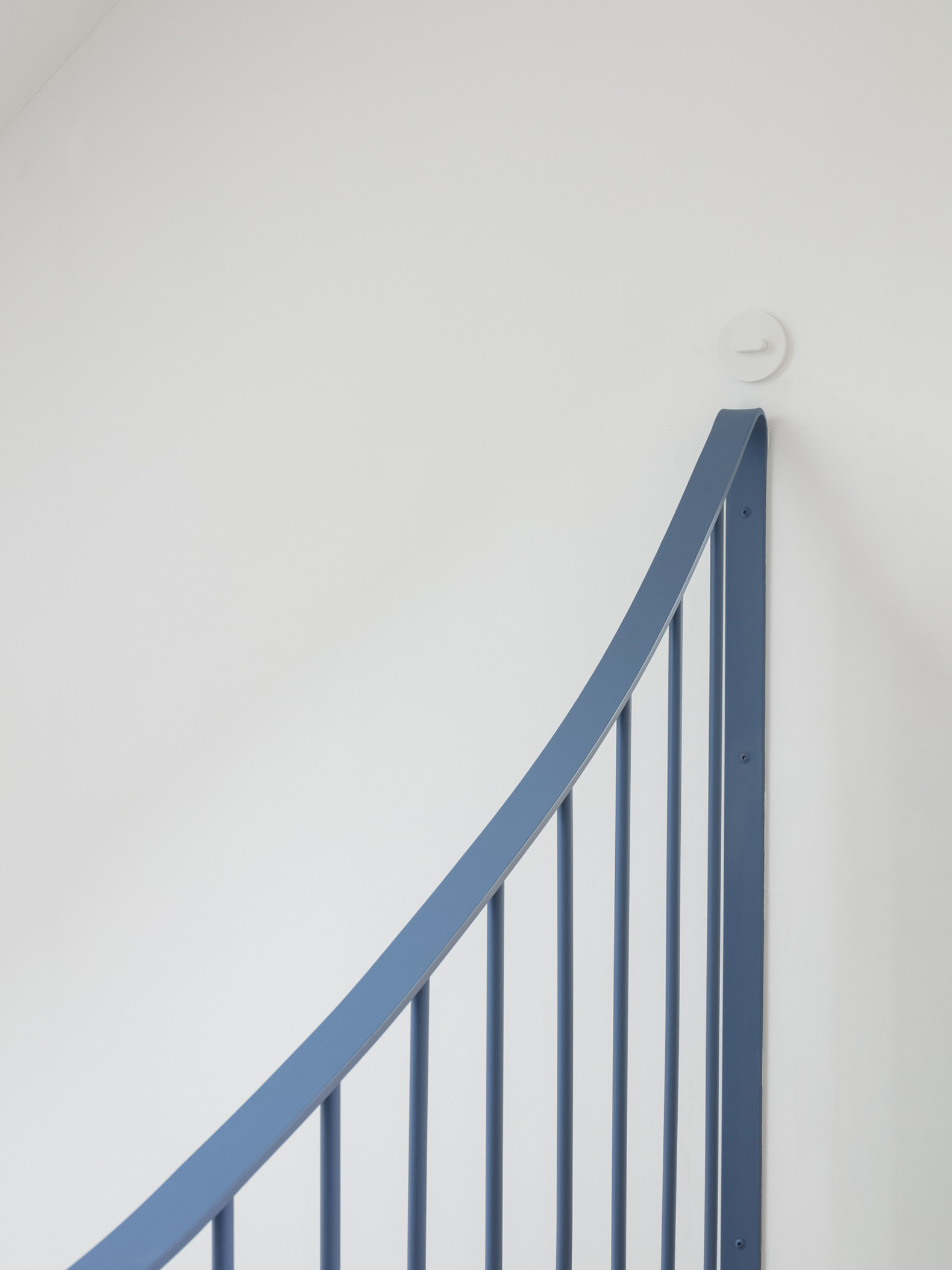
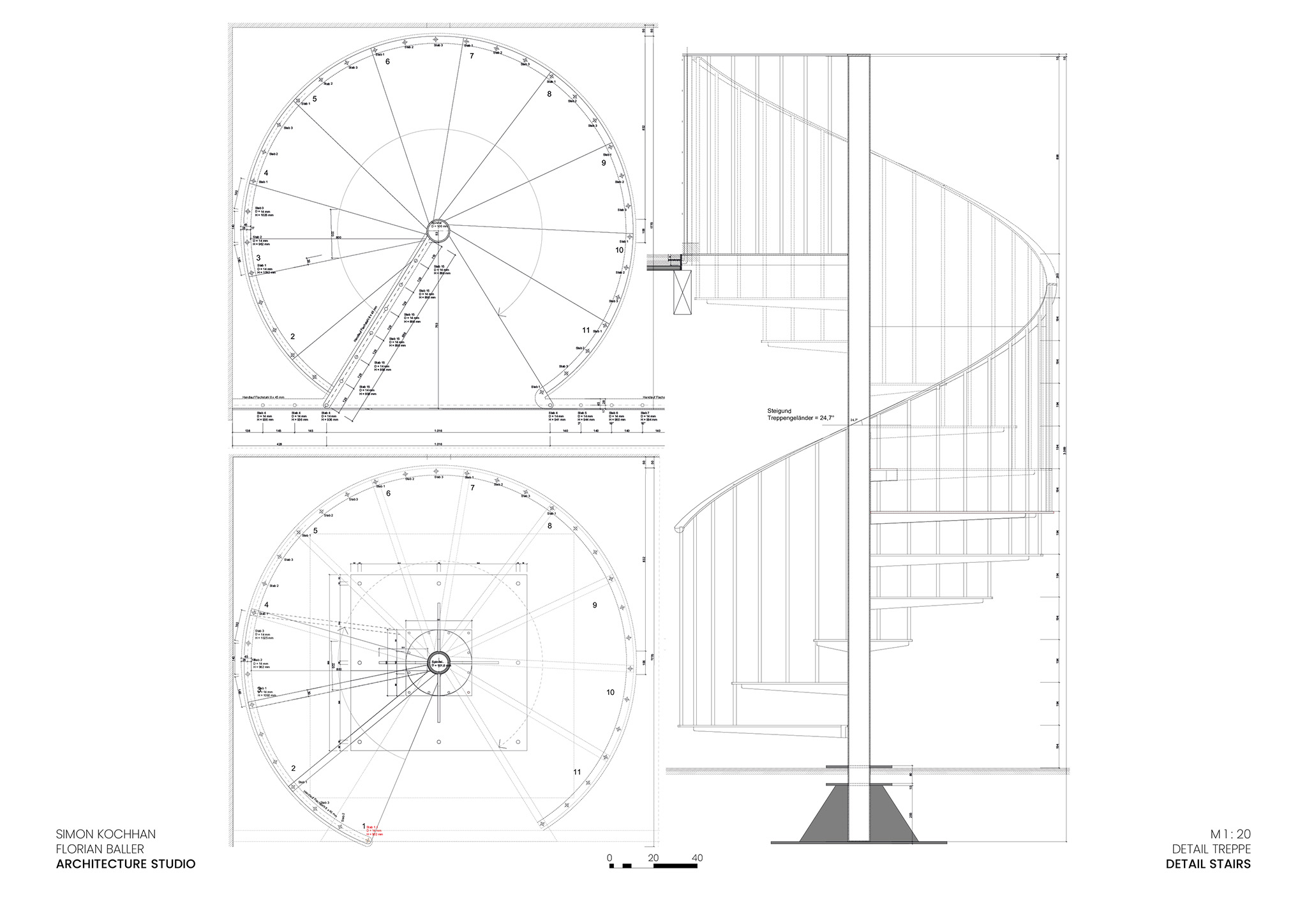
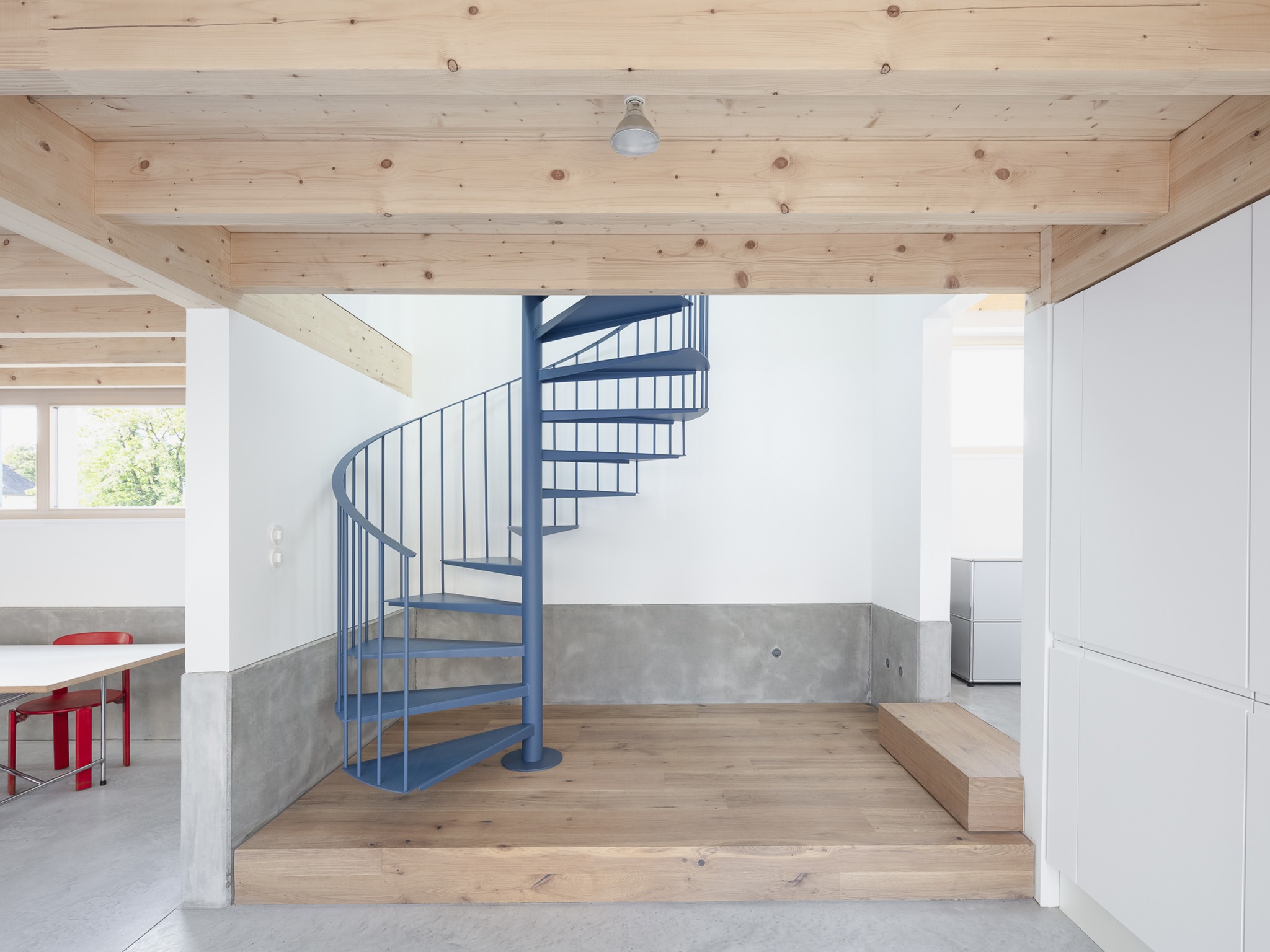
Structurally, the building is constructed in timber frame construction with recycled insulation and wood fibre boards. An exposed concrete base and polished screed floor define the material character of the interior. Timber windows with external protective frames and uniformly blue-painted steel elements – including a handcrafted spiral staircase – highlight the project’s attention to detail and craftsmanship.
In addition, a photovoltaic system, an air-source heat pump and a rainwater storage tank support the building’s resource-efficient operation. In the garden, materials from the former workshop were reused, including a historic gravestone slab incorporated as a sculptural element.
House HSBW combines structural clarity, a sensitive use of materials and a strong contextual response to propose a contemporary approach to urban living.