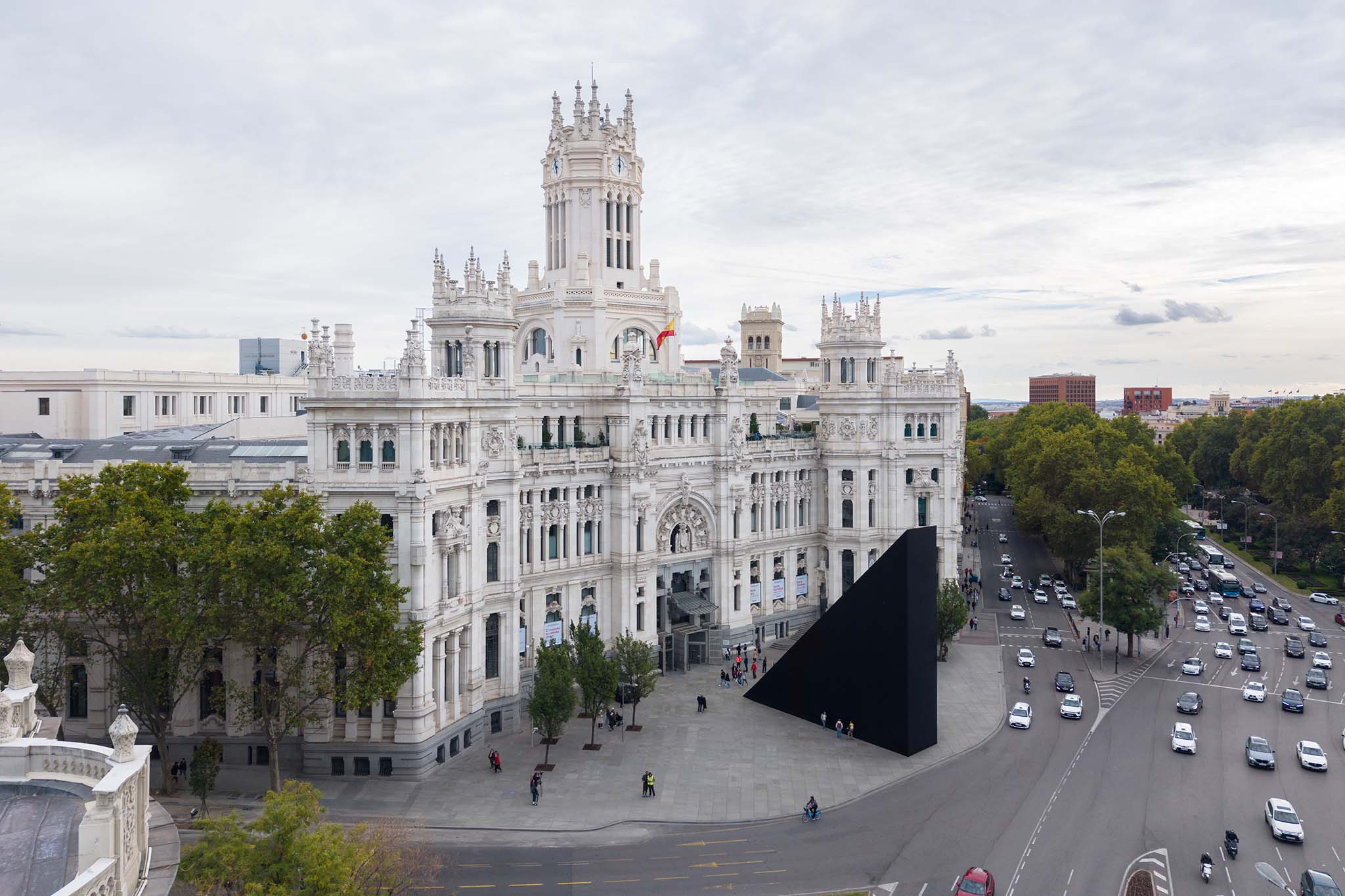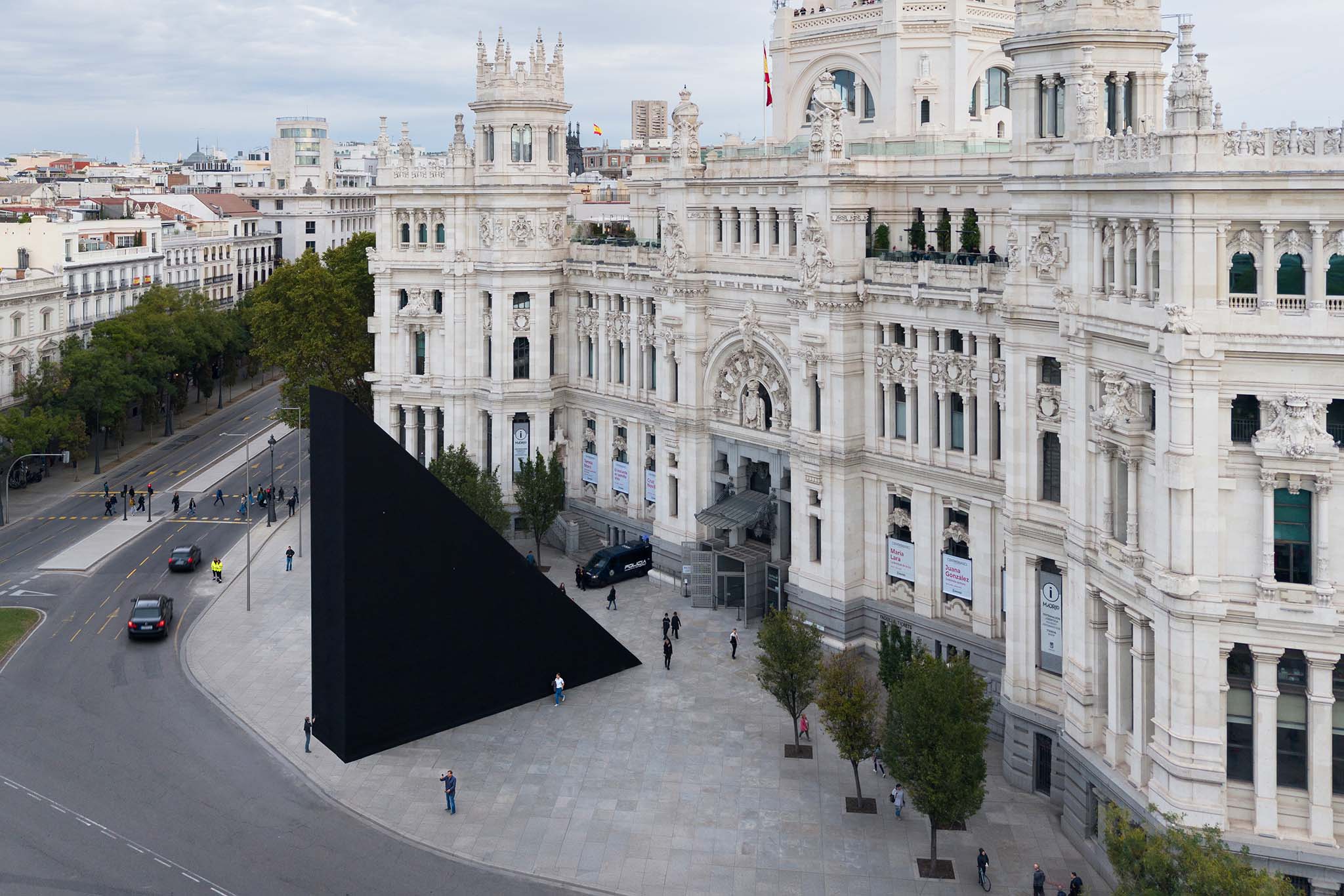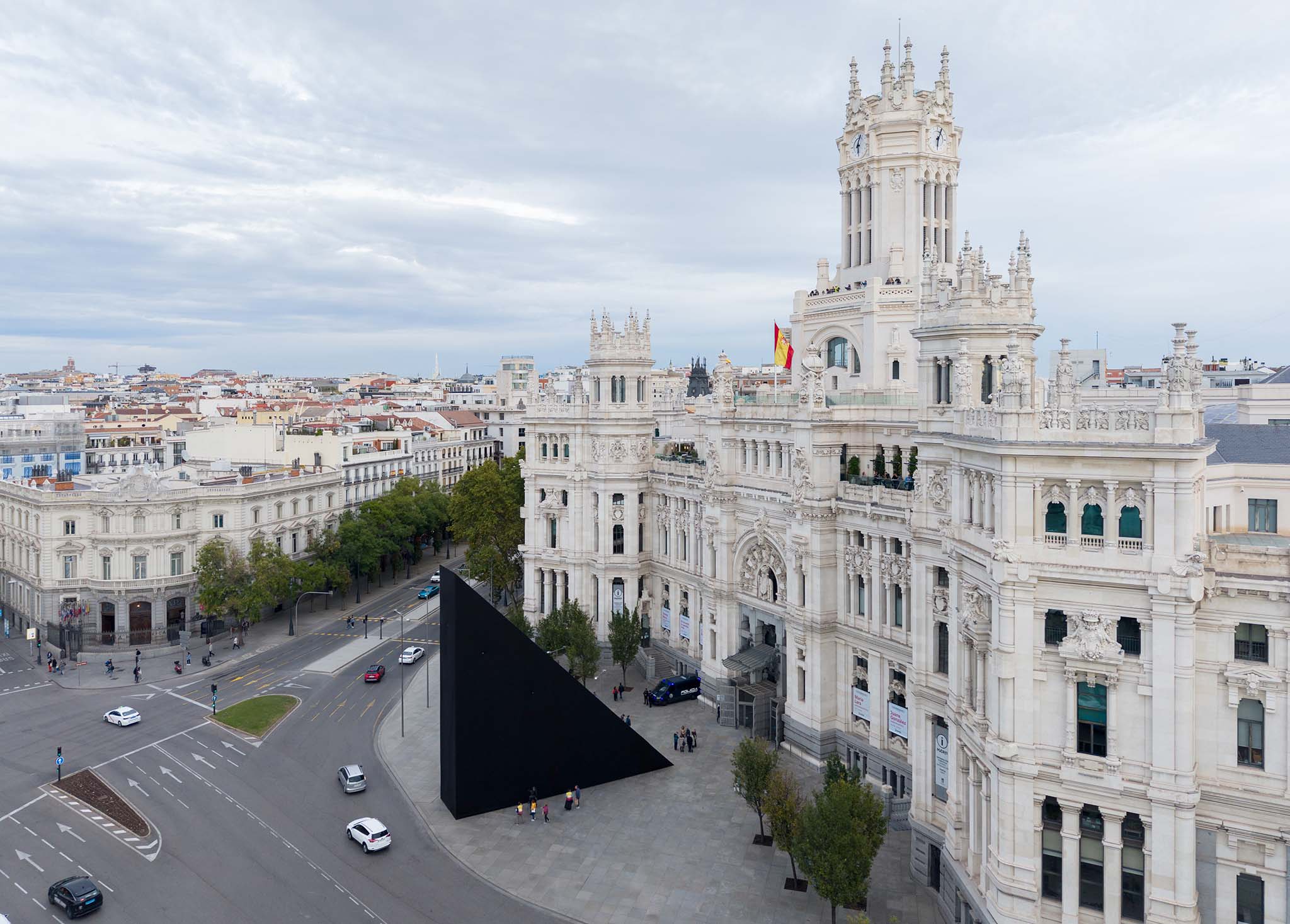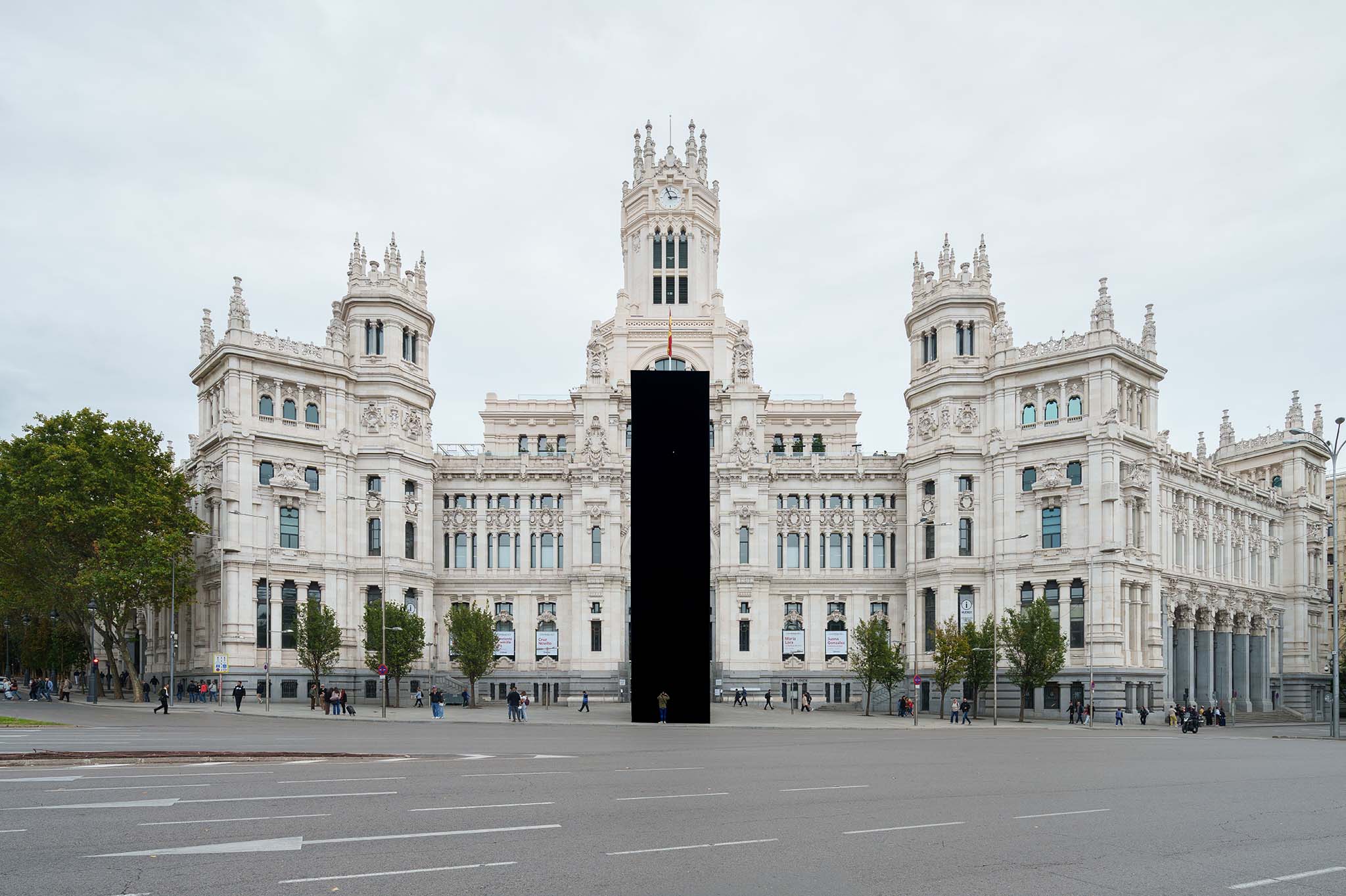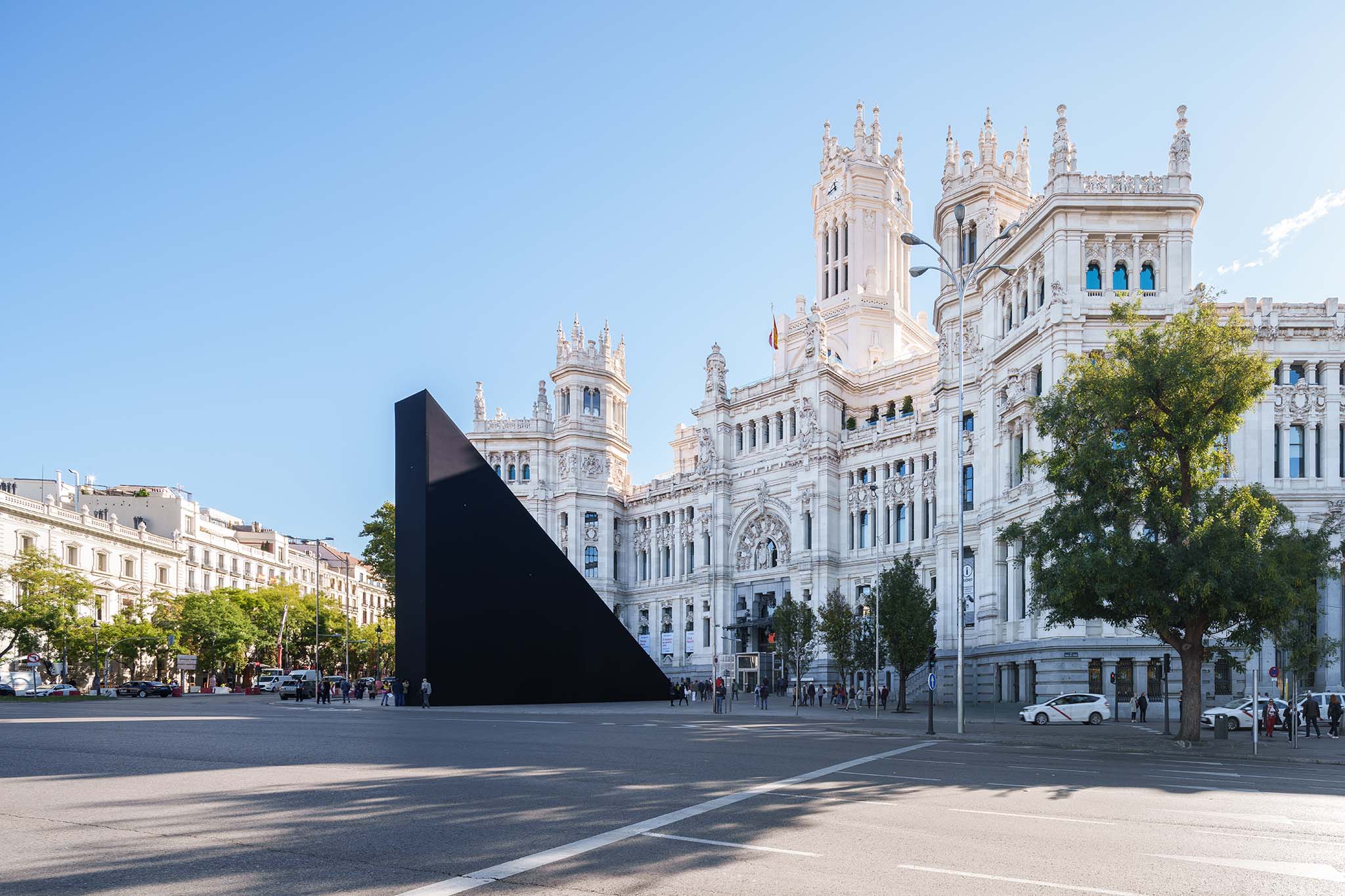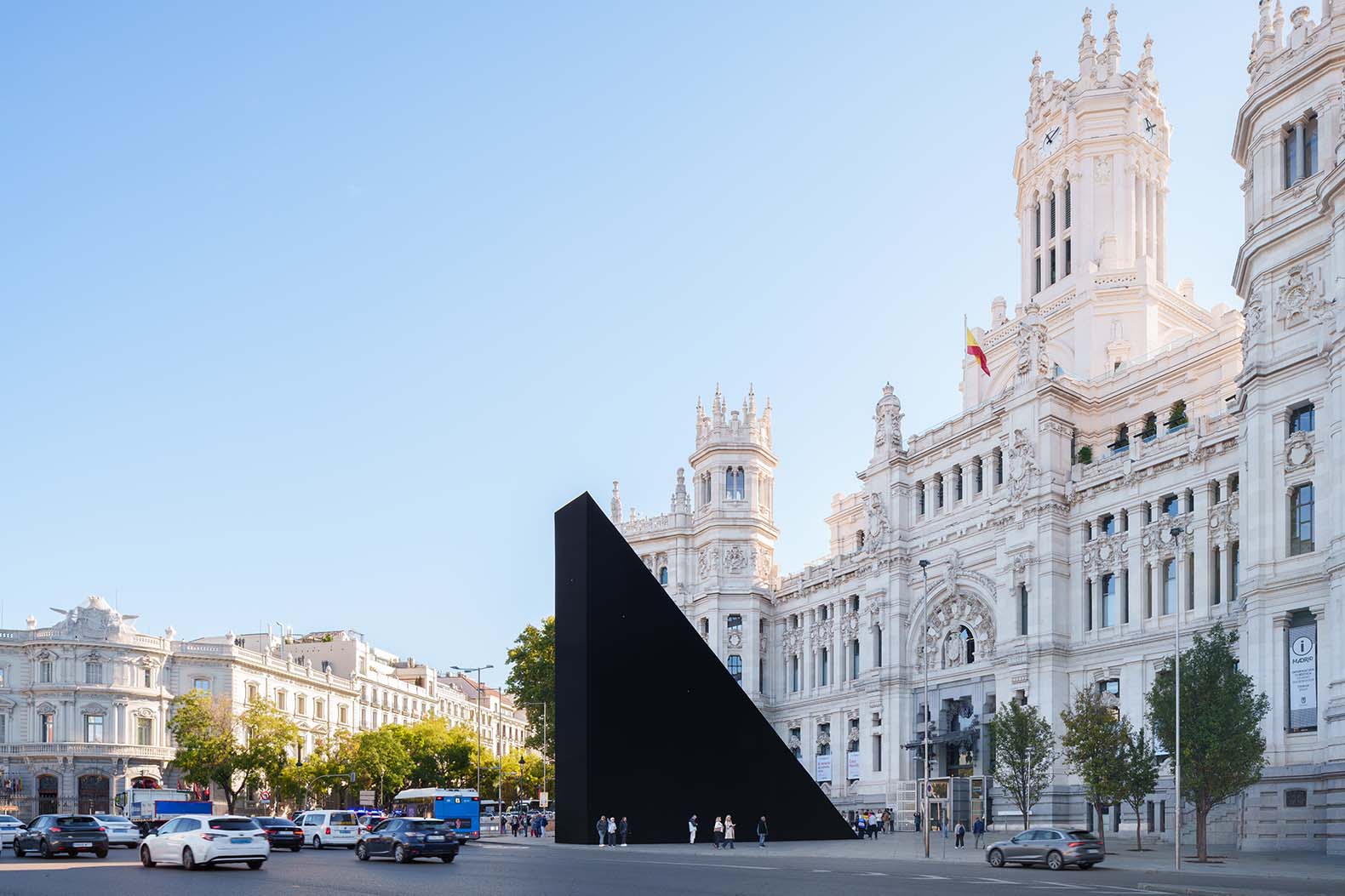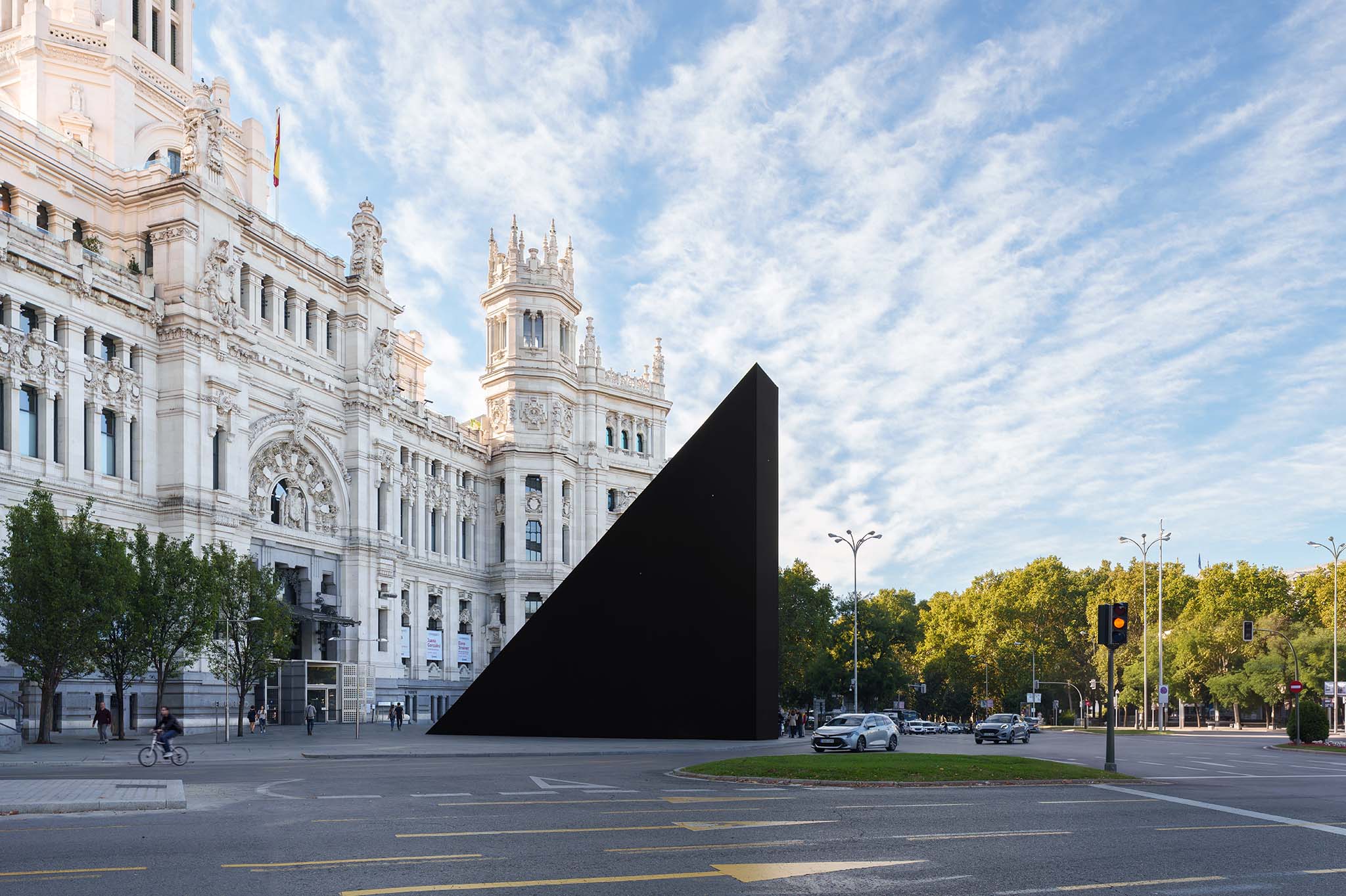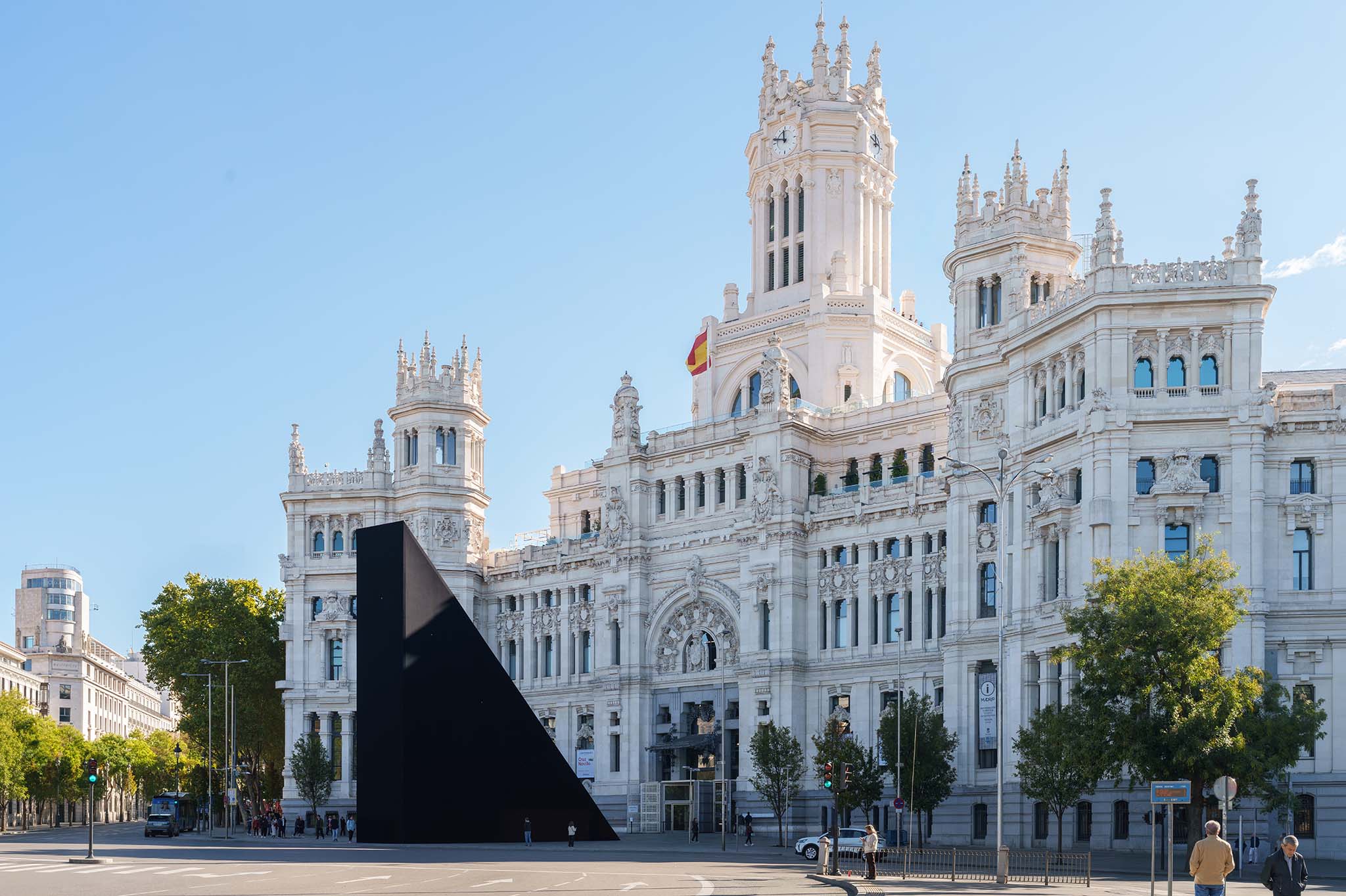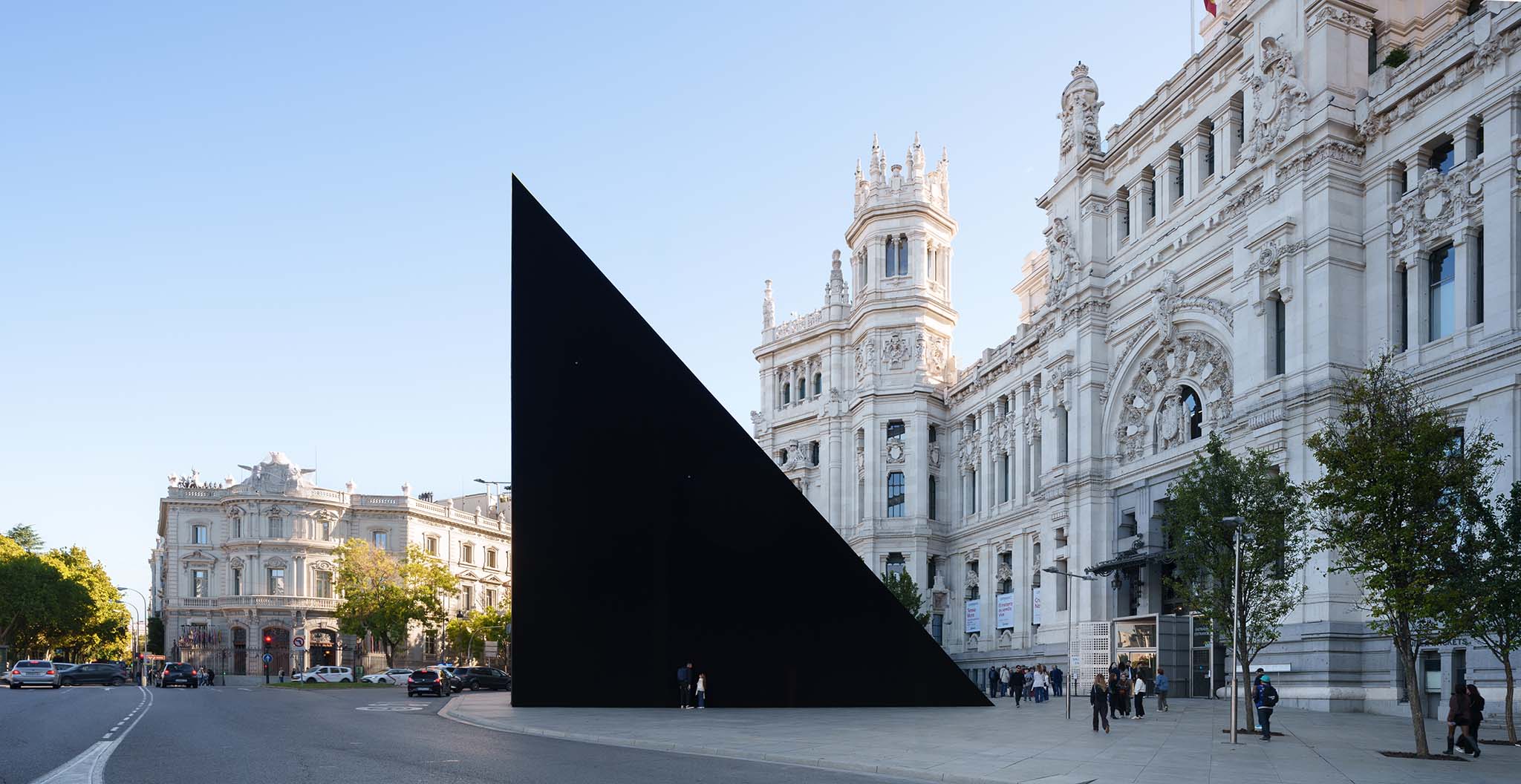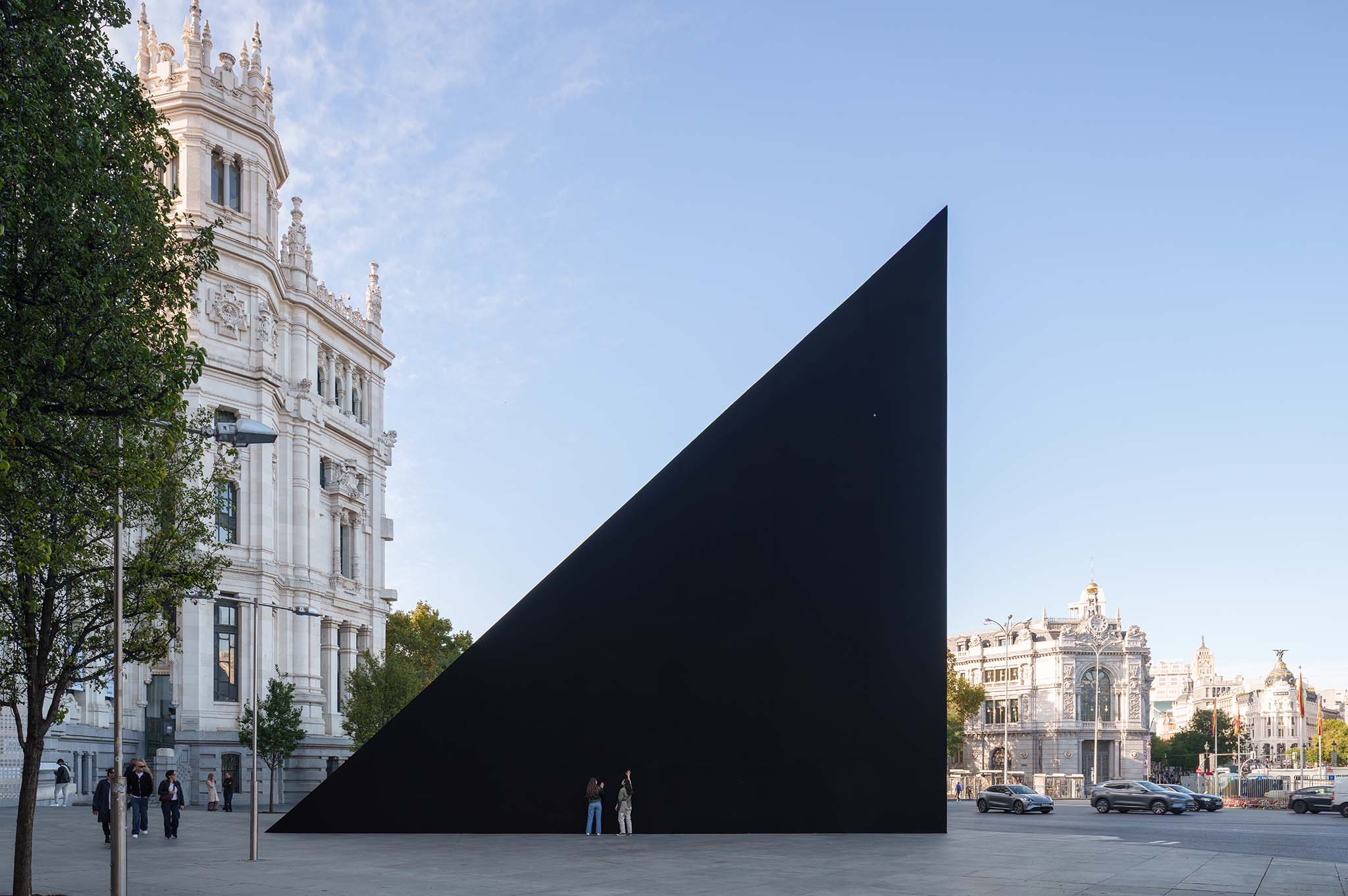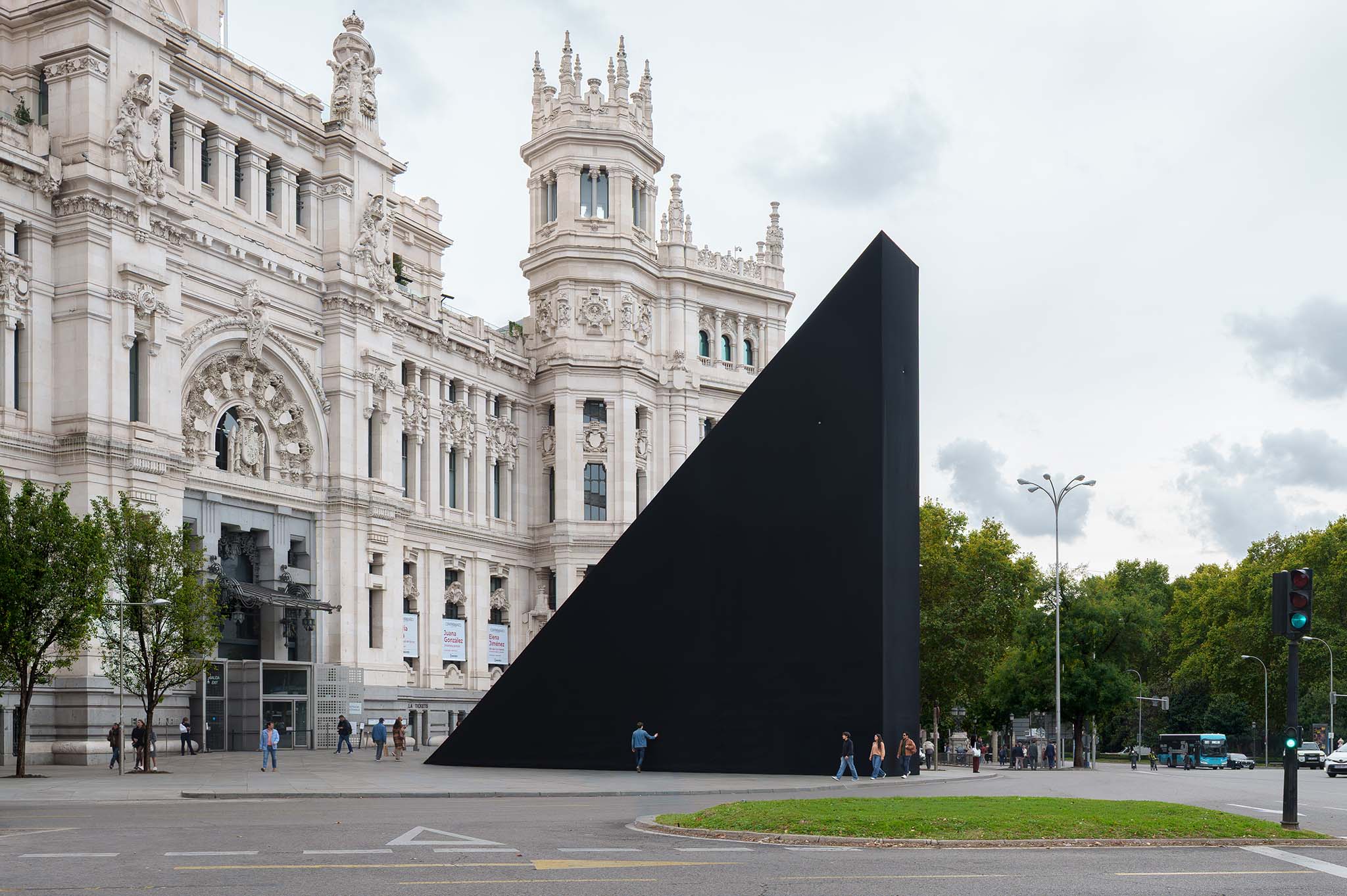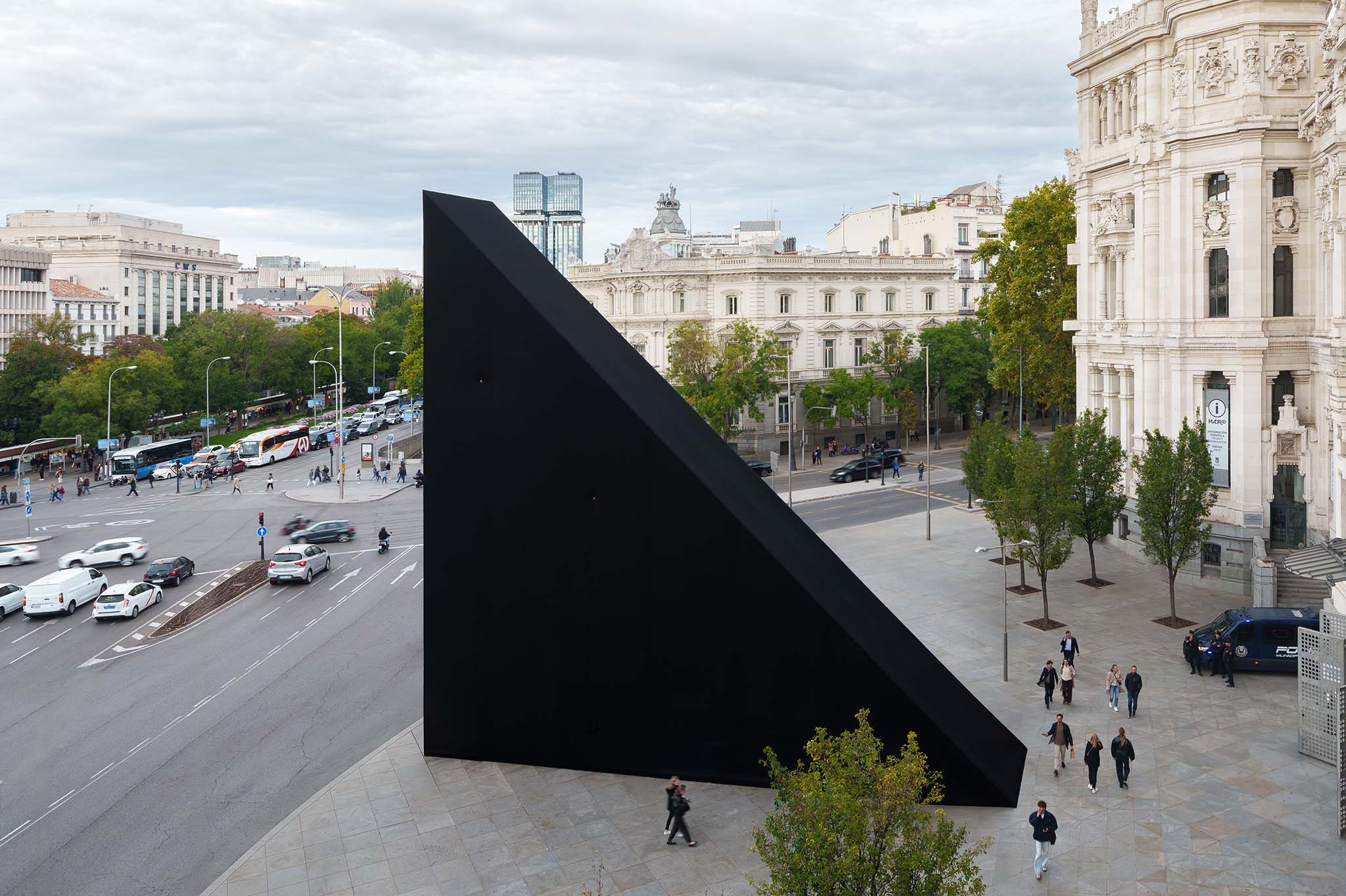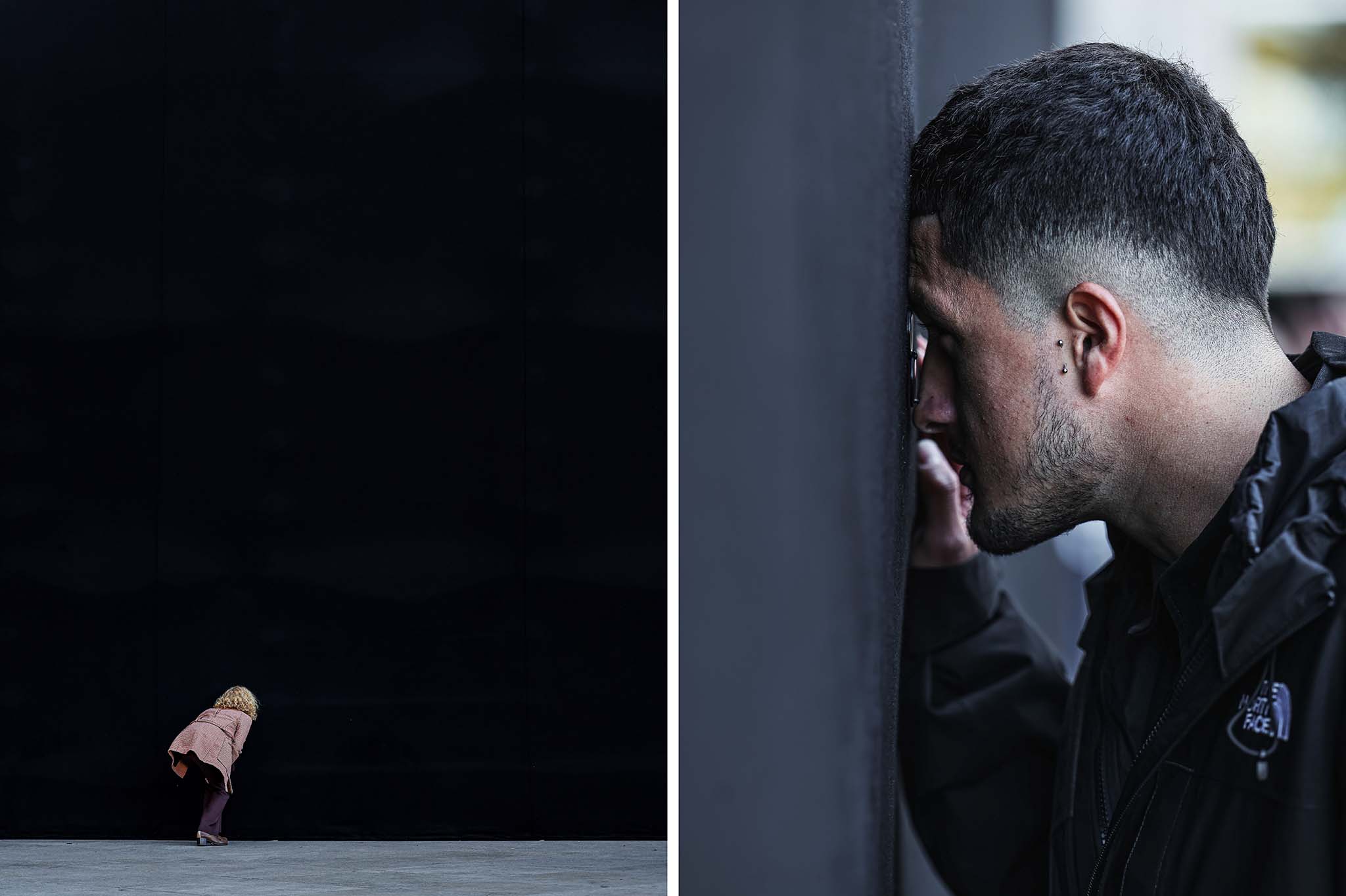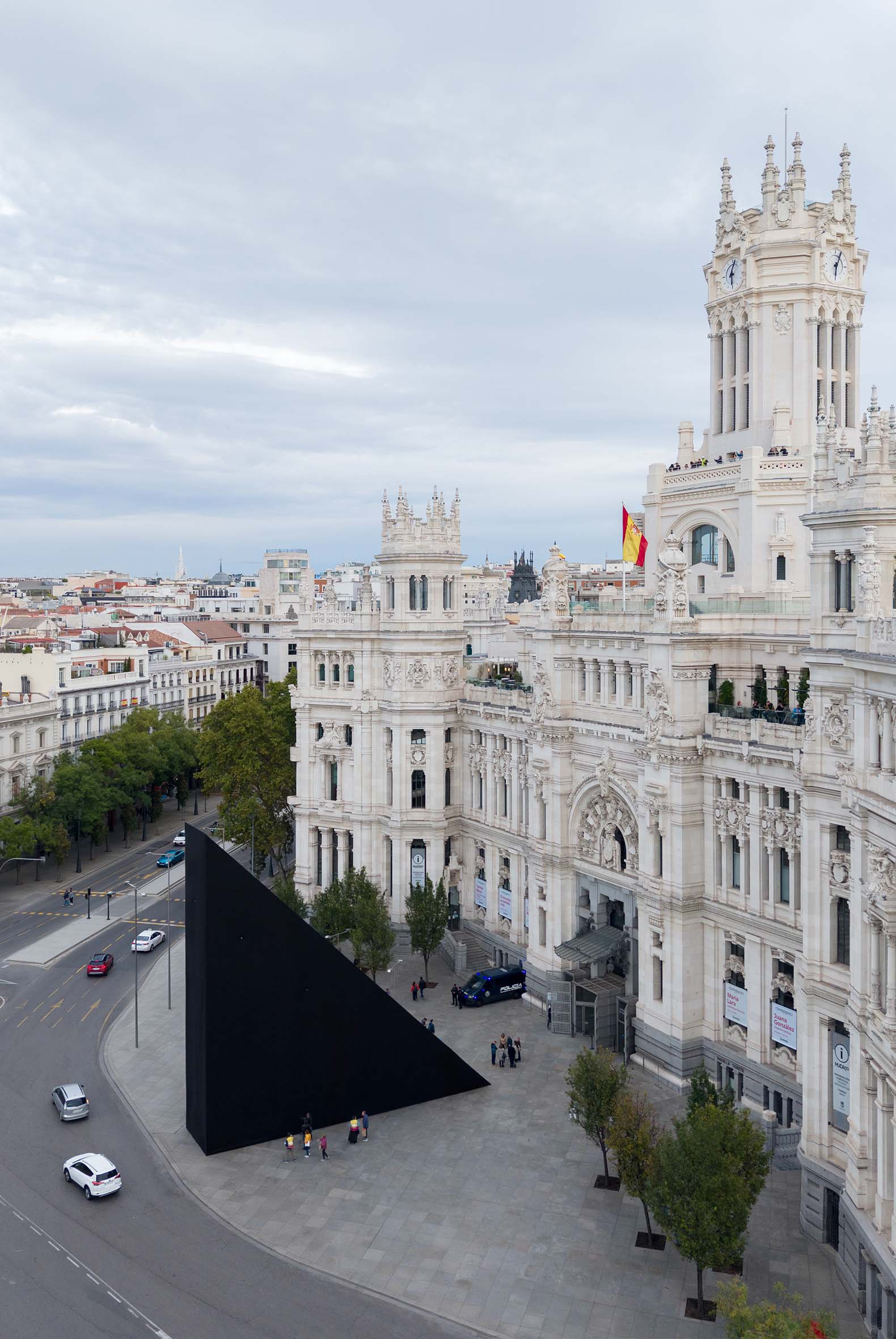
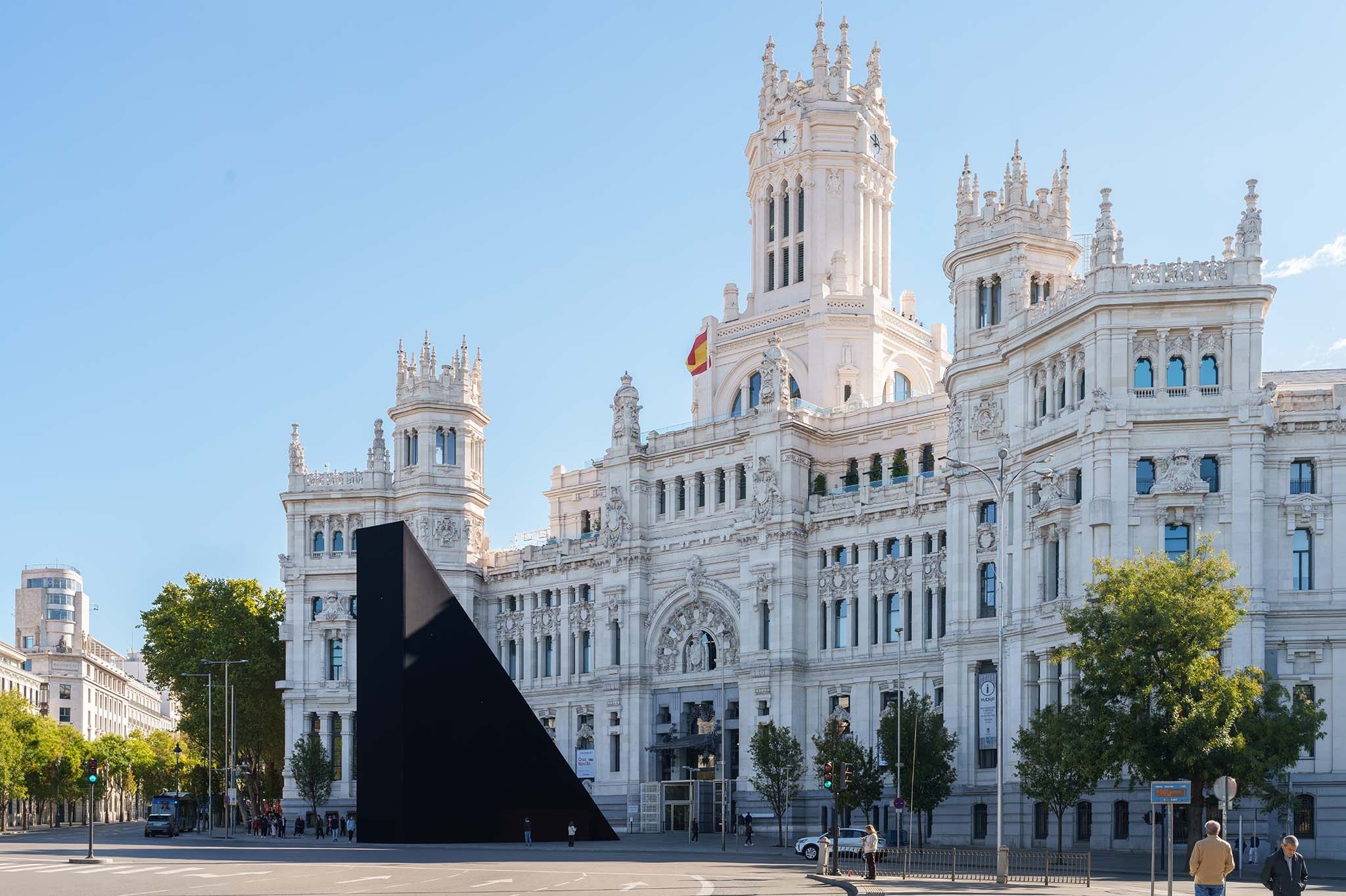
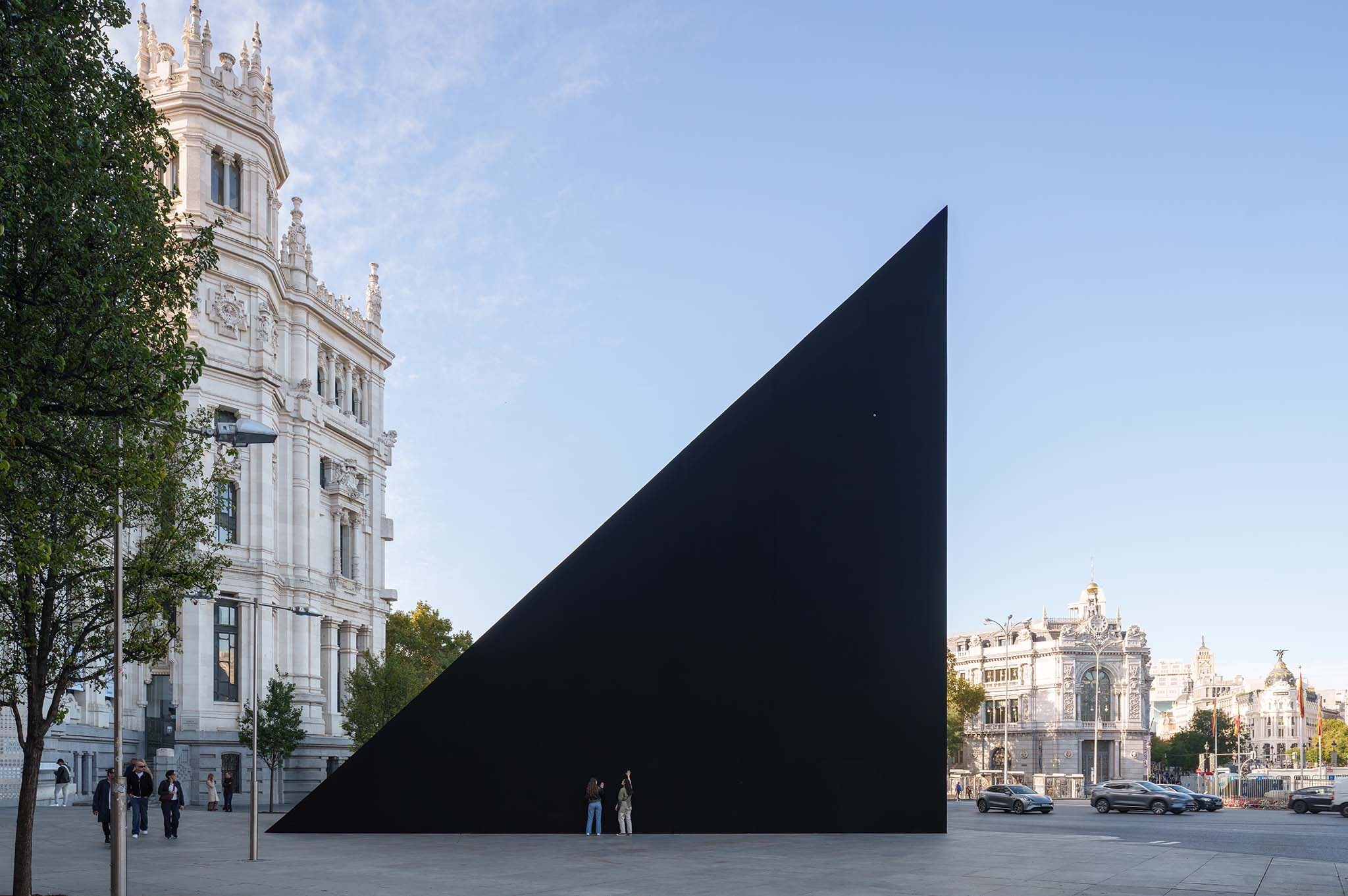
The intervention by SpY takes the form of a large black triangle—with sides measuring twenty meters—that emerges in front of the Palacio de Cibeles, altering the familiar perspectives of the square. Its perimeter features small openings that act as viewing ports; these are linked to screens connected to CCTV surveillance cameras positioned atop the structure, offering new perspectives of the architecture, passersby, and traffic.
The installation consists of a twenty-meter-sided structure, CCTV surveillance cameras, and screens integrated into the observation points. The black finish of its surface reinforces its sculptural quality and its role as a disruptive element within the public space.
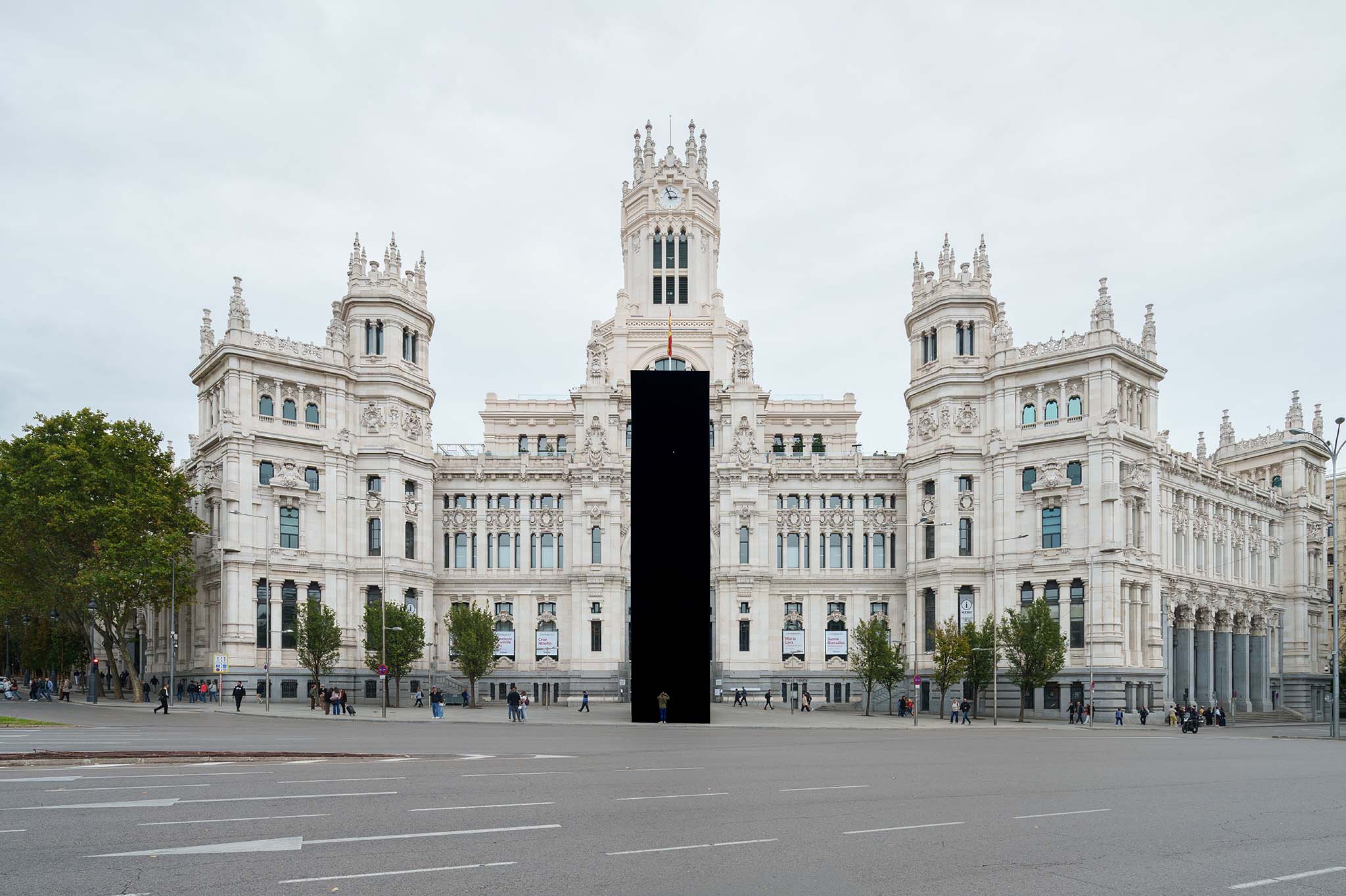
Panopticon by SpY. Photograph by Rubén P. Bescós.
Project description by SpY
PANOPTICON reflects on the way we observe contemporary space. Through a large-scale intervention, SpY introduces a radical geometry into one of Madrid’s most recognizable settings, proposing a new relationship between the human body, architecture, and the urban landscape.
In front of the Palacio de Cibeles, a black triangle measuring twenty meters on each side emerges as an unexpected interruption. Its elementary geometry and imposing presence contrast with the distinctive architecture of its surroundings, disrupting the square’s familiar sightlines and temporarily transforming a landscape deeply embedded in the city’s collective imagination.
The scale of the installation establishes a direct relationship with the human body. Its geometry transcends its purely formal condition to become a physical presence that alters familiar references of proportion and influences movement, orientation, and the way we look.
As visitors approach and move around its perimeter, the artwork reveals discreet openings that arouse curiosity and invite them to look through. These function as viewing apertures equipped with screens connected to CCTV surveillance cameras positioned at the top of the structure.
Where the triangle had previously obstructed the view of the square, the artwork now returns fragmented images of the urban landscape: architecture, pedestrians, and traffic reappear from unexpected perspectives.
This device introduces a reflection on the mechanisms of contemporary surveillance. The concept of the panopticon explores how the possibility of being watched can lead individuals to internalize surveillance and regulate their own behavior, even in the absence of a visible observer.
In a society where our relationship with the world is increasingly mediated by cameras, screens, and digital devices, this reflection takes on a new dimension. We constantly observe, record, and share our surroundings, voluntarily participating in systems that also expose us to the gaze of others. Technology has expanded our capacity to observe, but it has also transformed our relationship with privacy and control.
PANOPTICON places the viewer at the center of this paradox: by using the viewing apertures to discover the landscape, they actively participate in a surveillance system to which they may also be subjected. The artwork thus invites us to question the extent to which we have normalized these mechanisms and incorporated them into our everyday lives.