
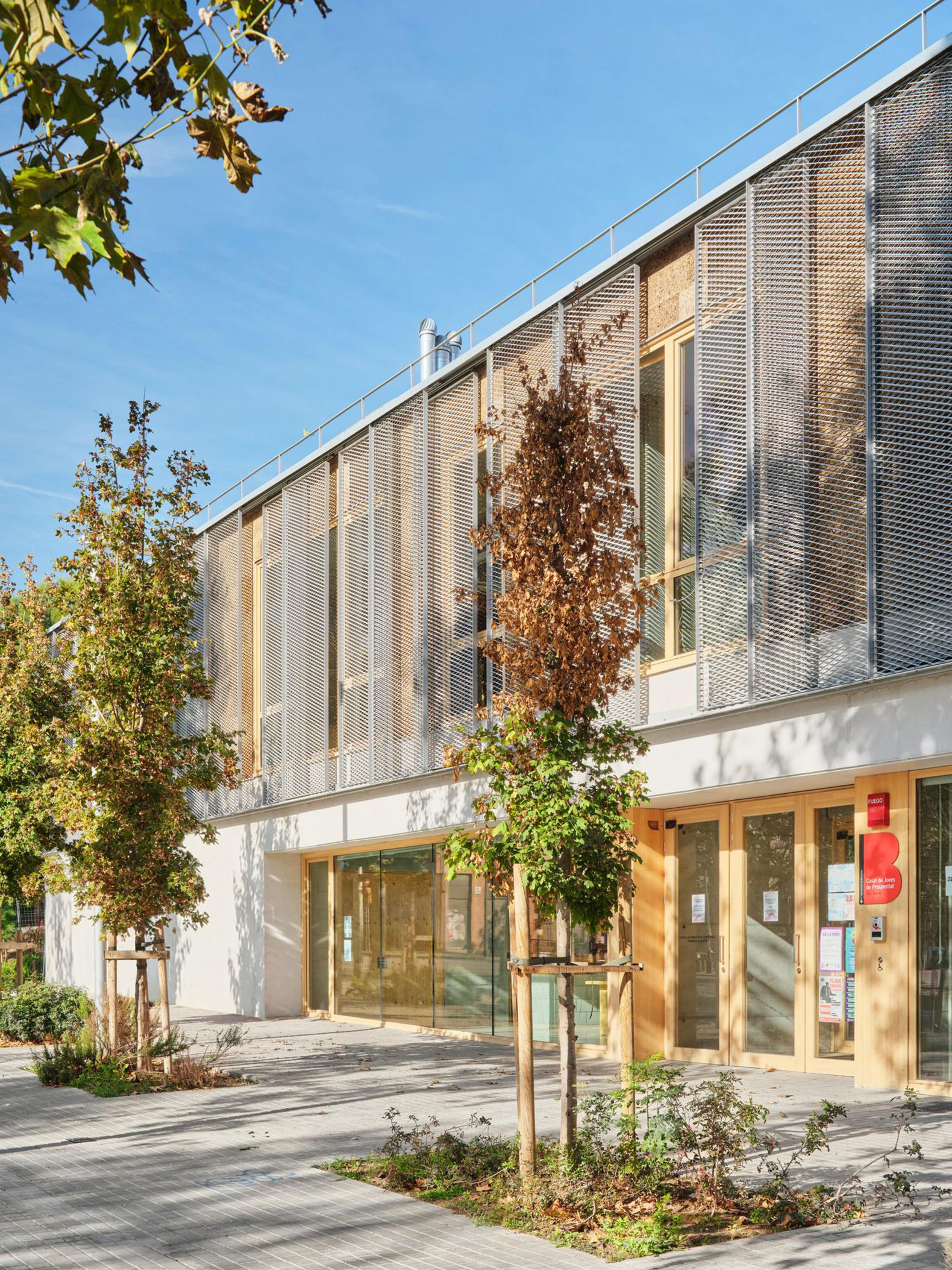
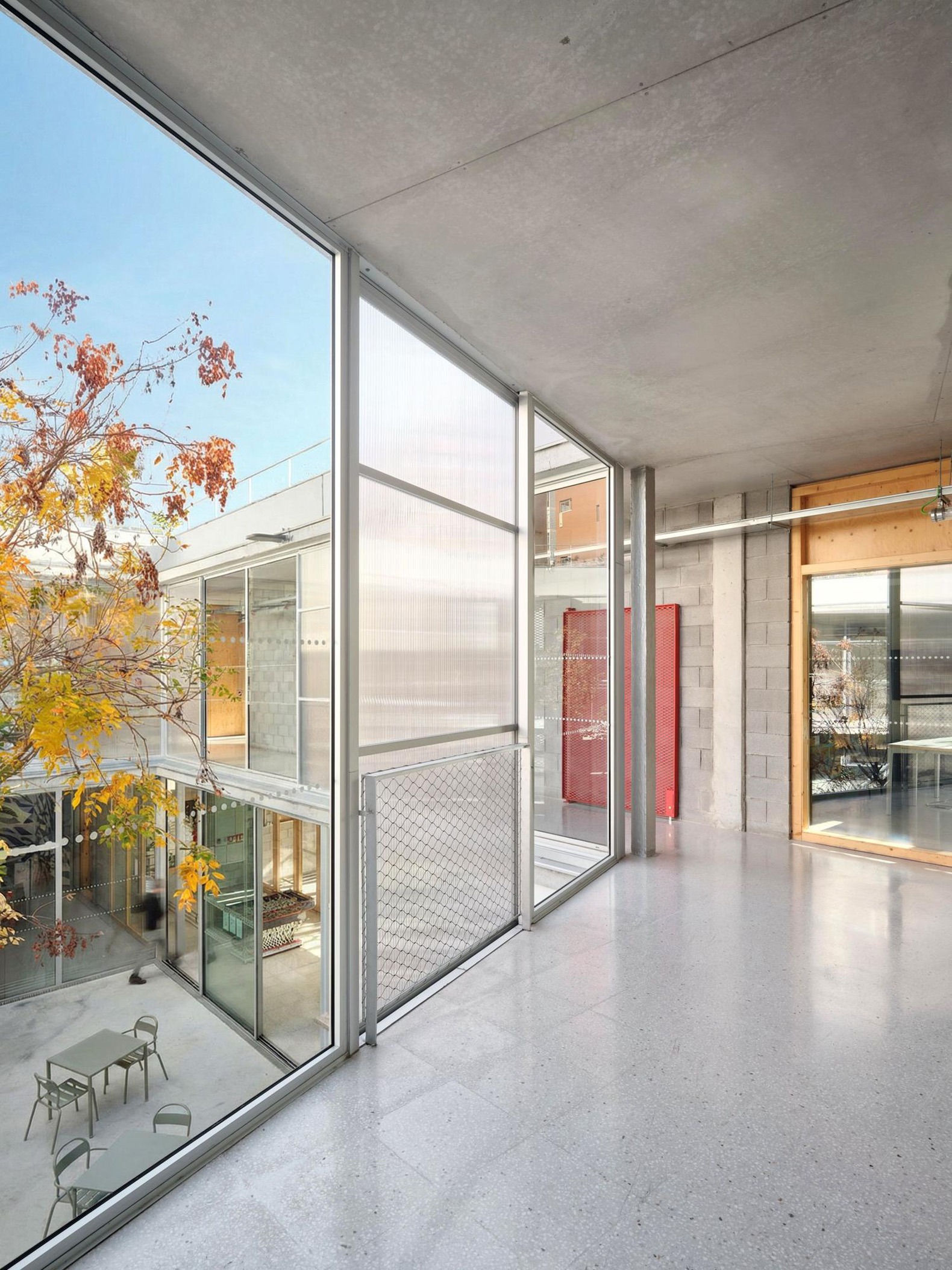
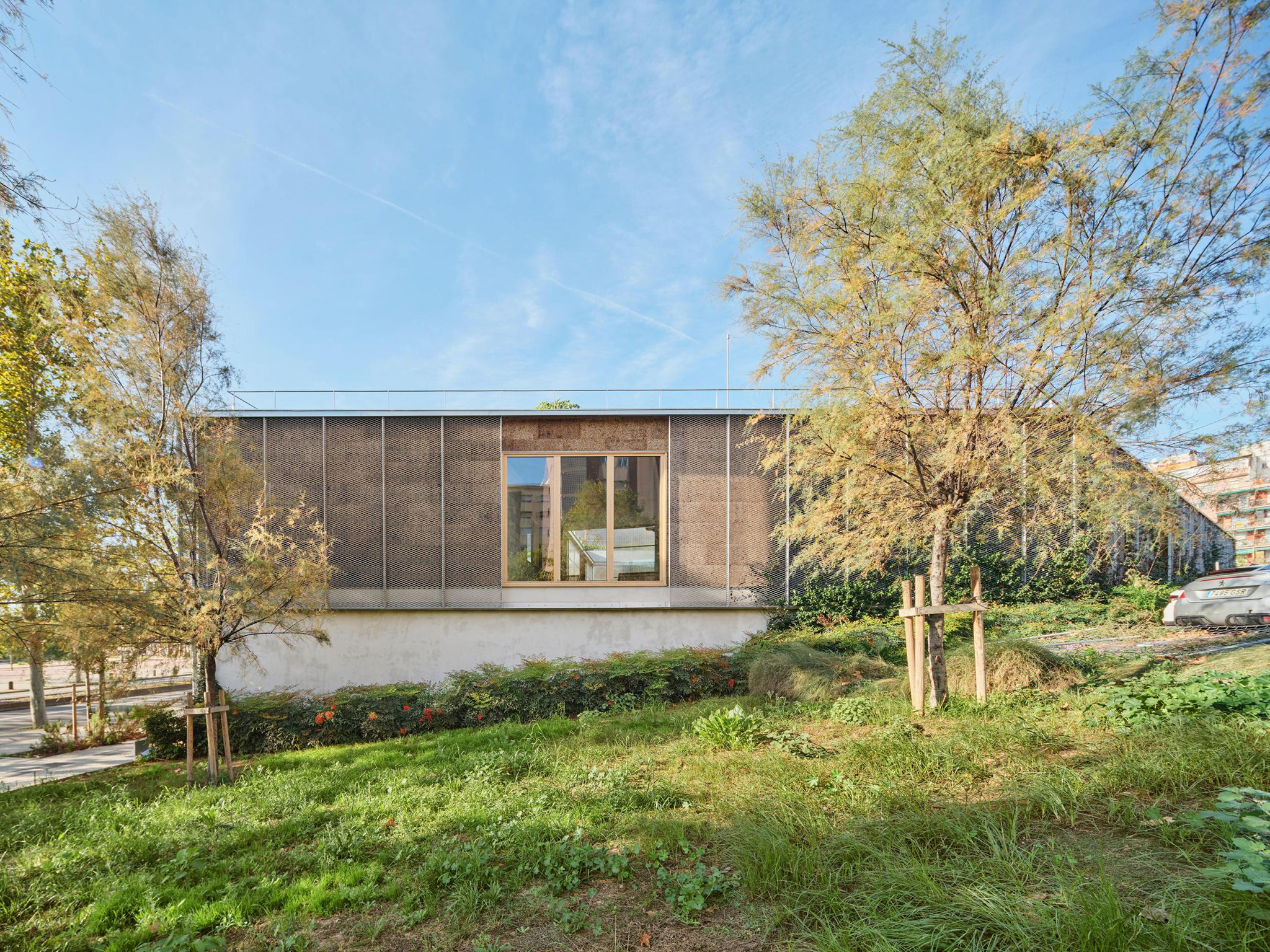
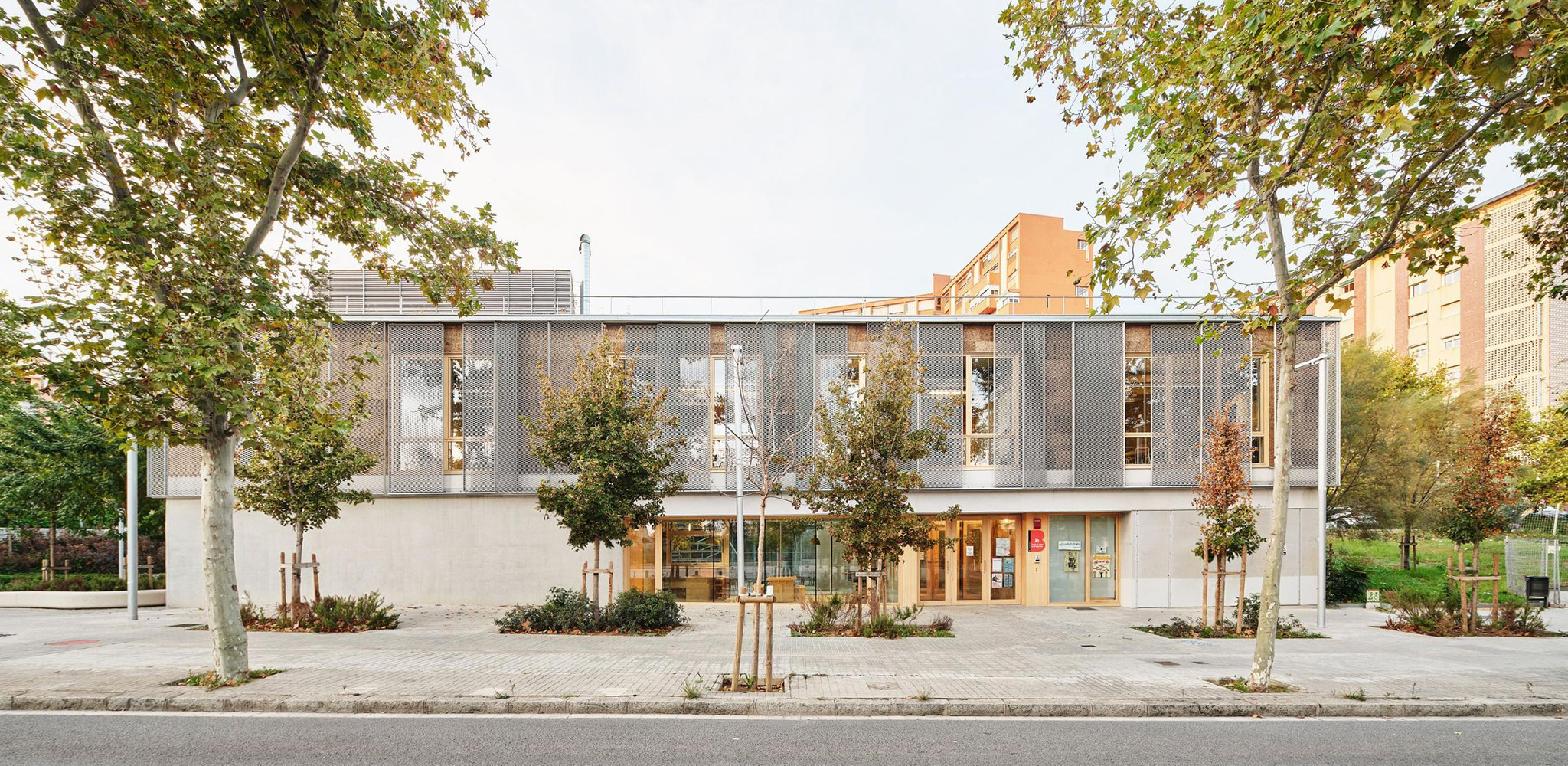
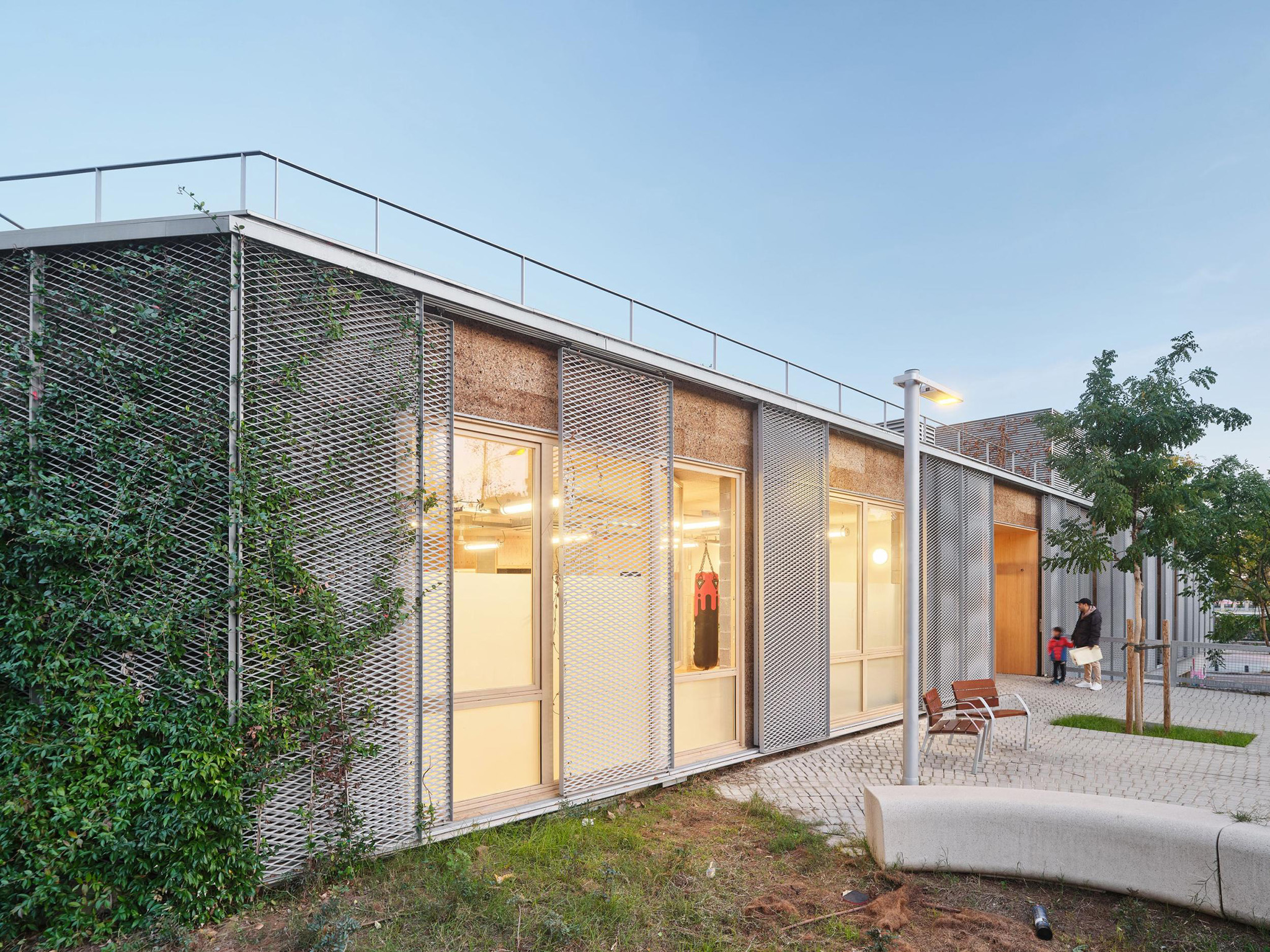
Establishing a respectful relationship with its surroundings, the building designed by MIBA Architects incorporates a gradual increase in height towards the north, where the neighborhood's larger apartment blocks are located. This design maximizes sunlight and creates a subtle volumetric transition between the public space and the existing residential buildings.
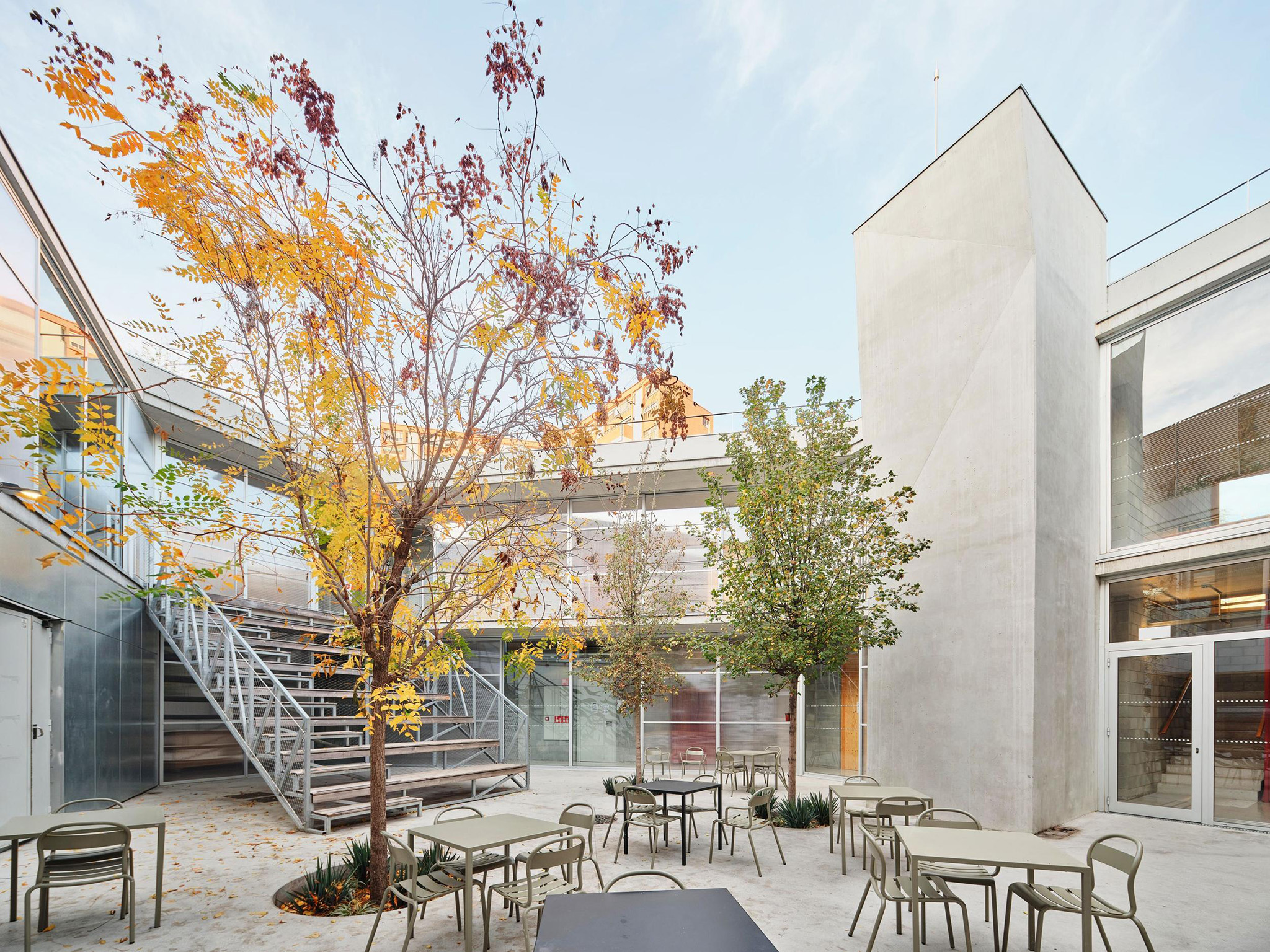
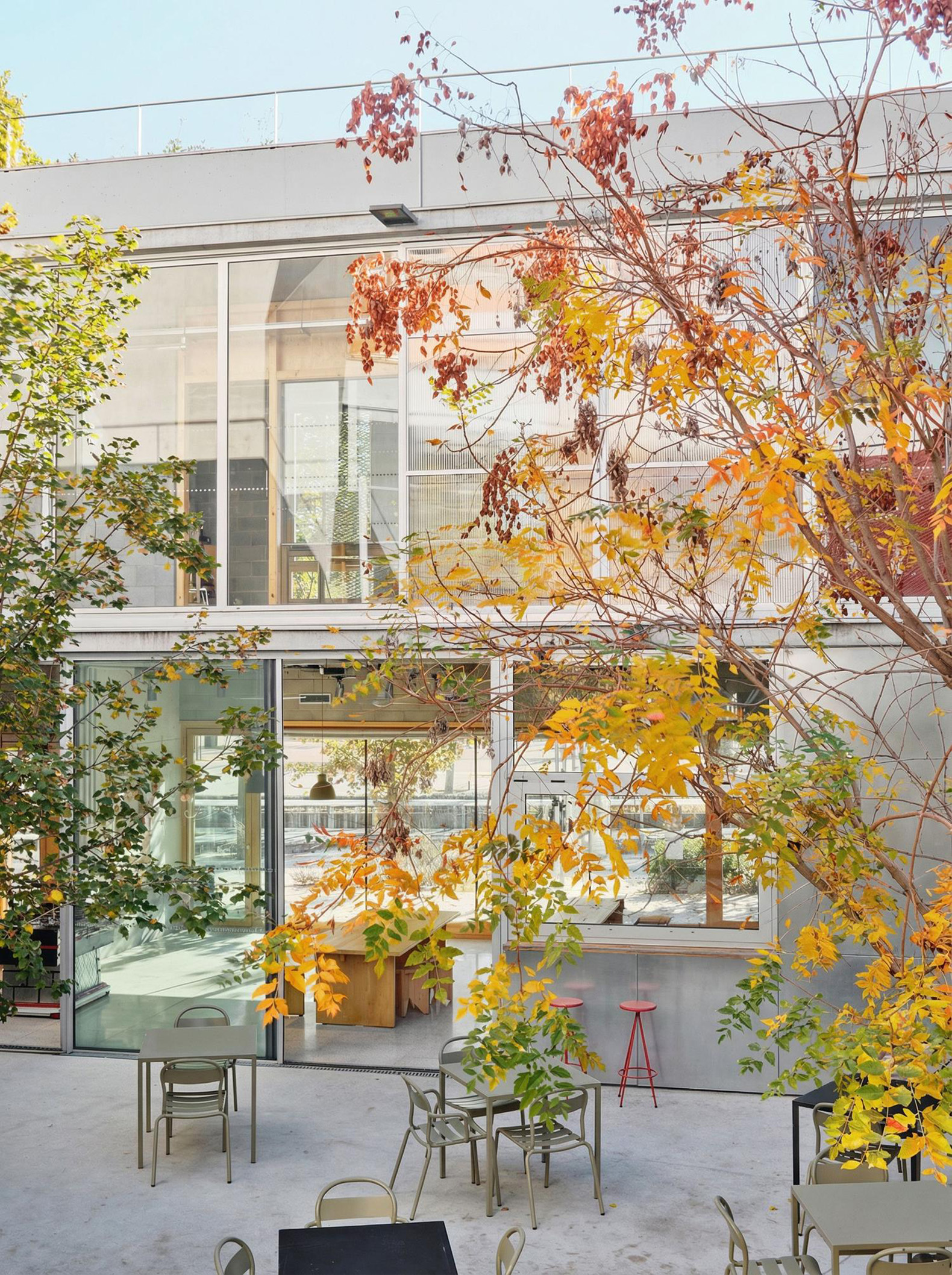
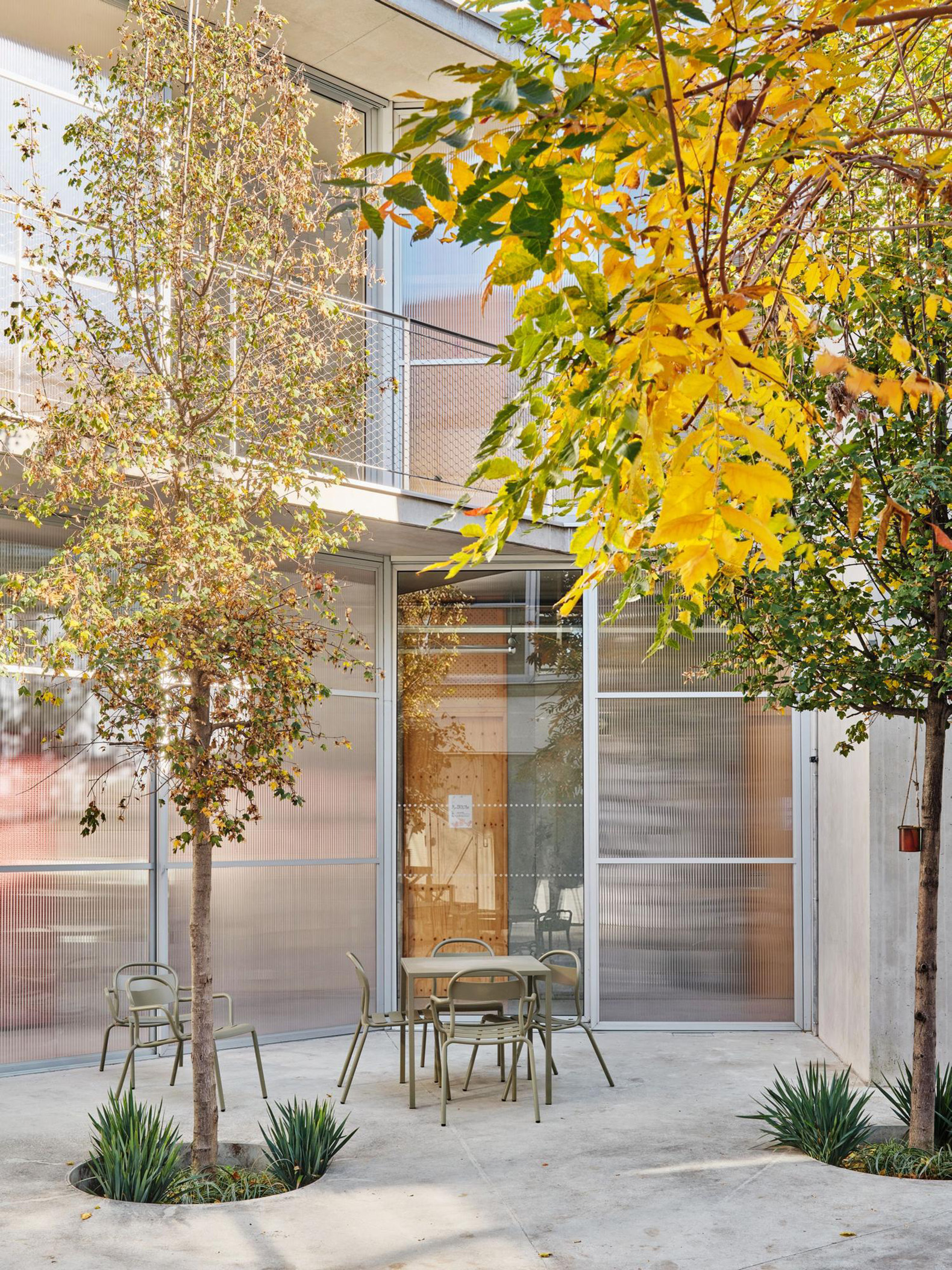
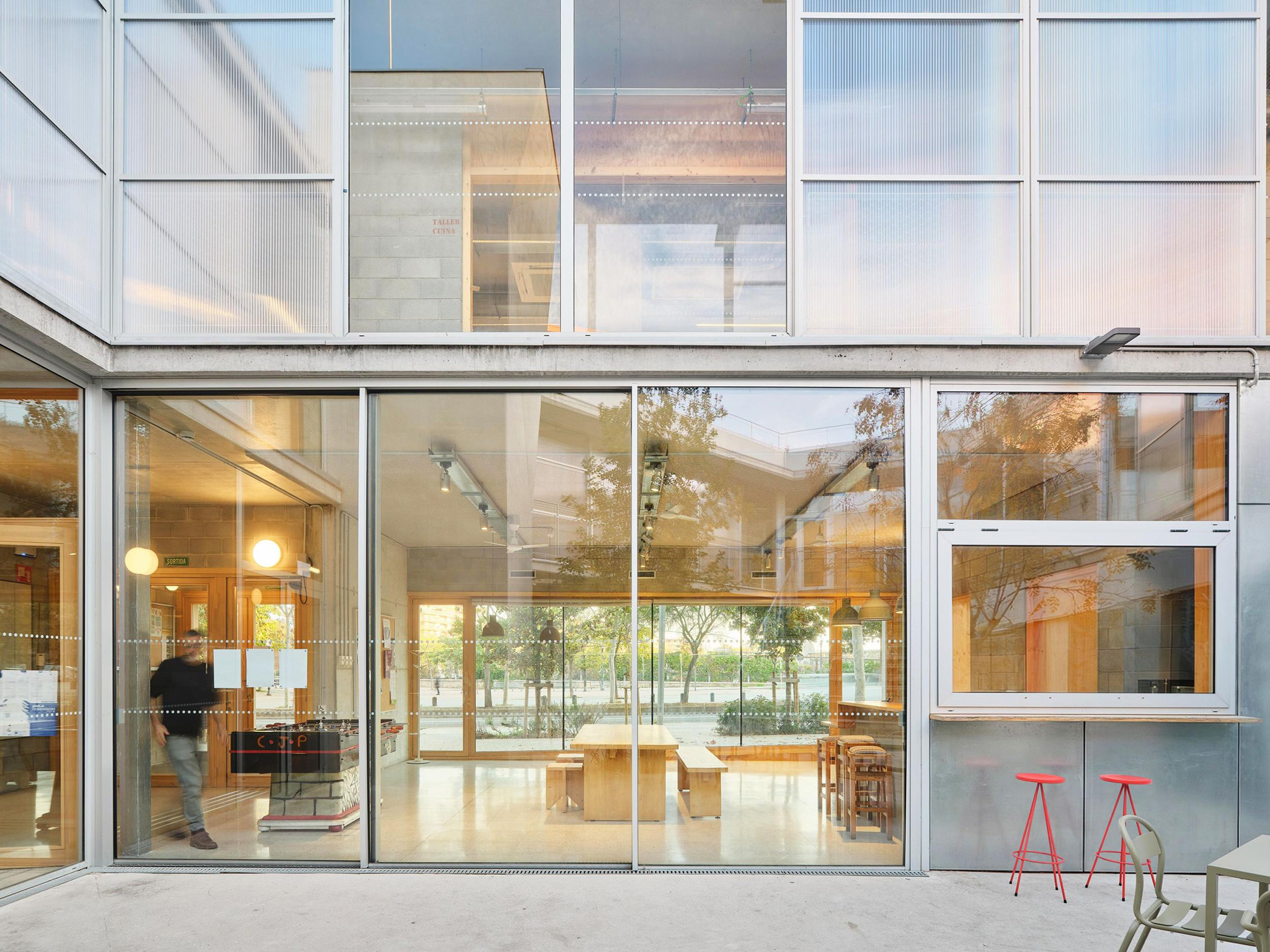
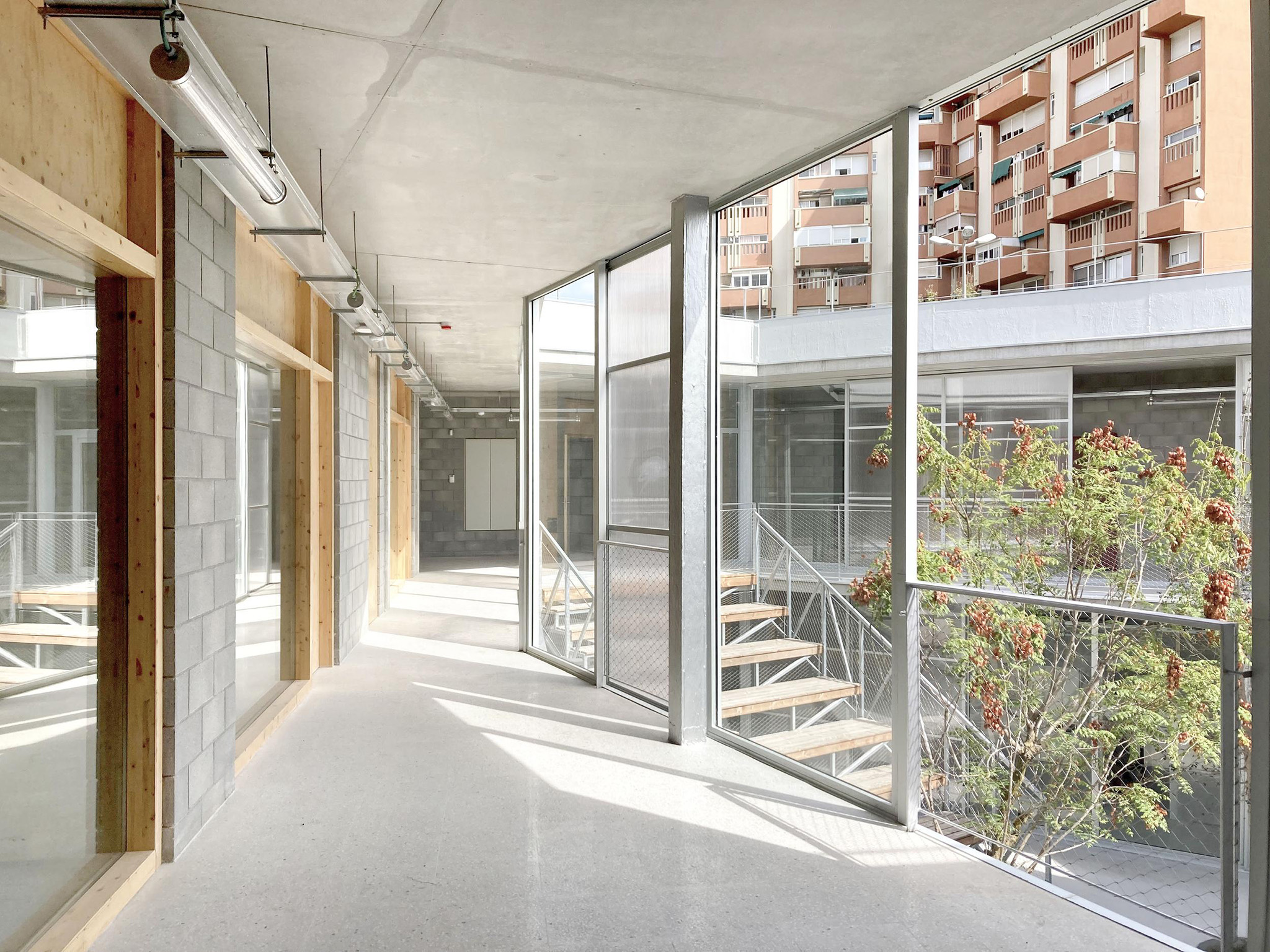
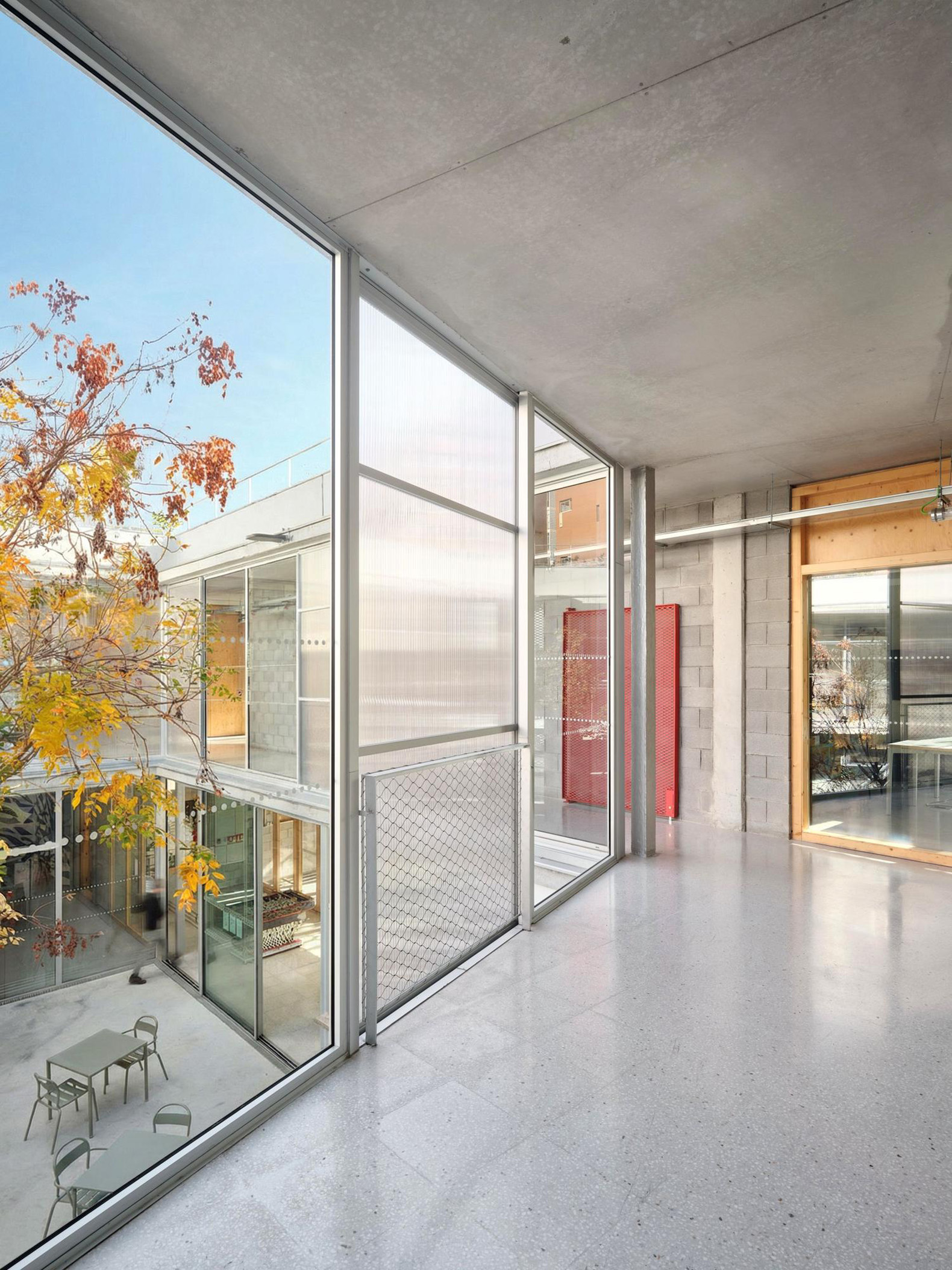
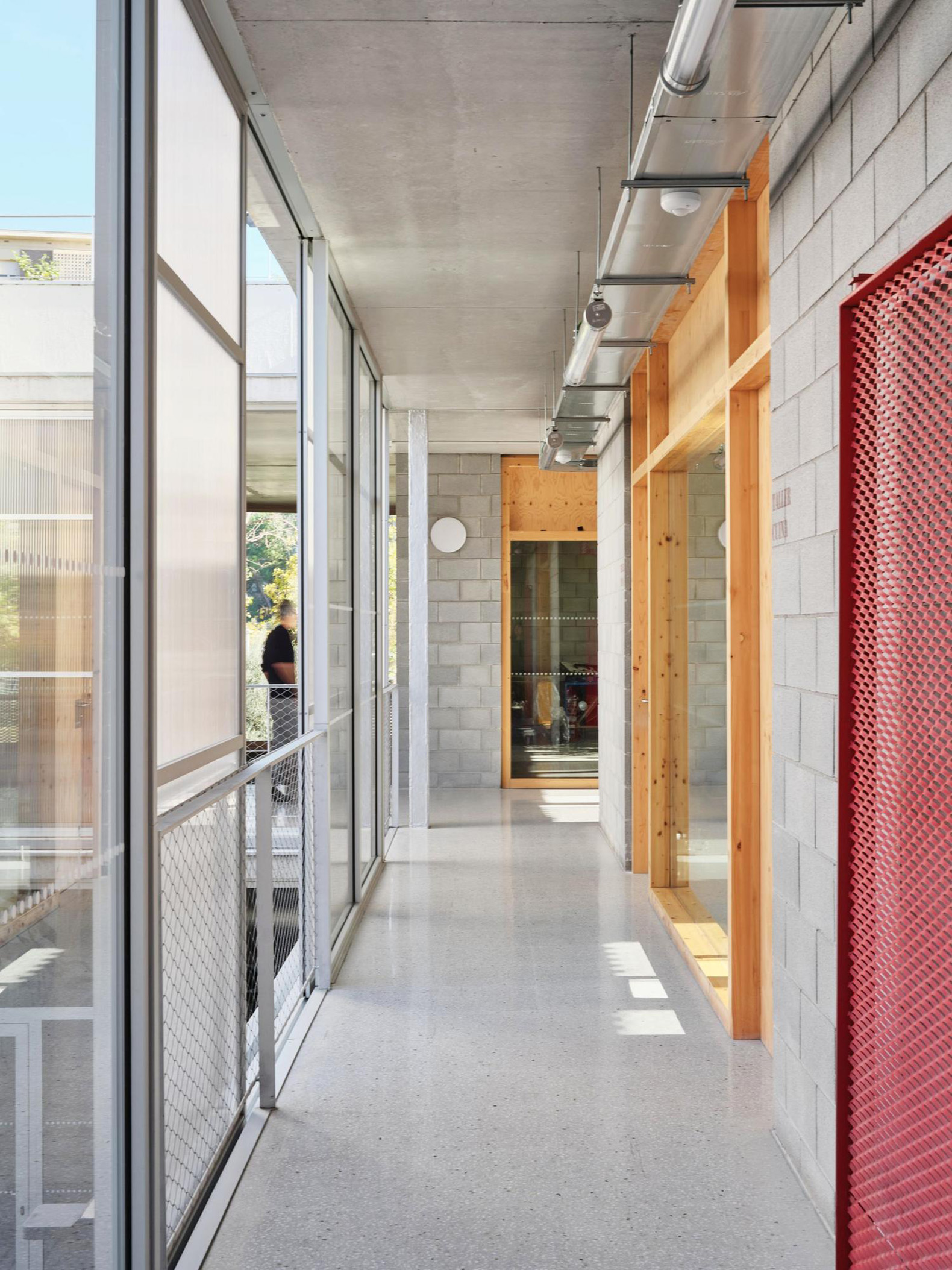
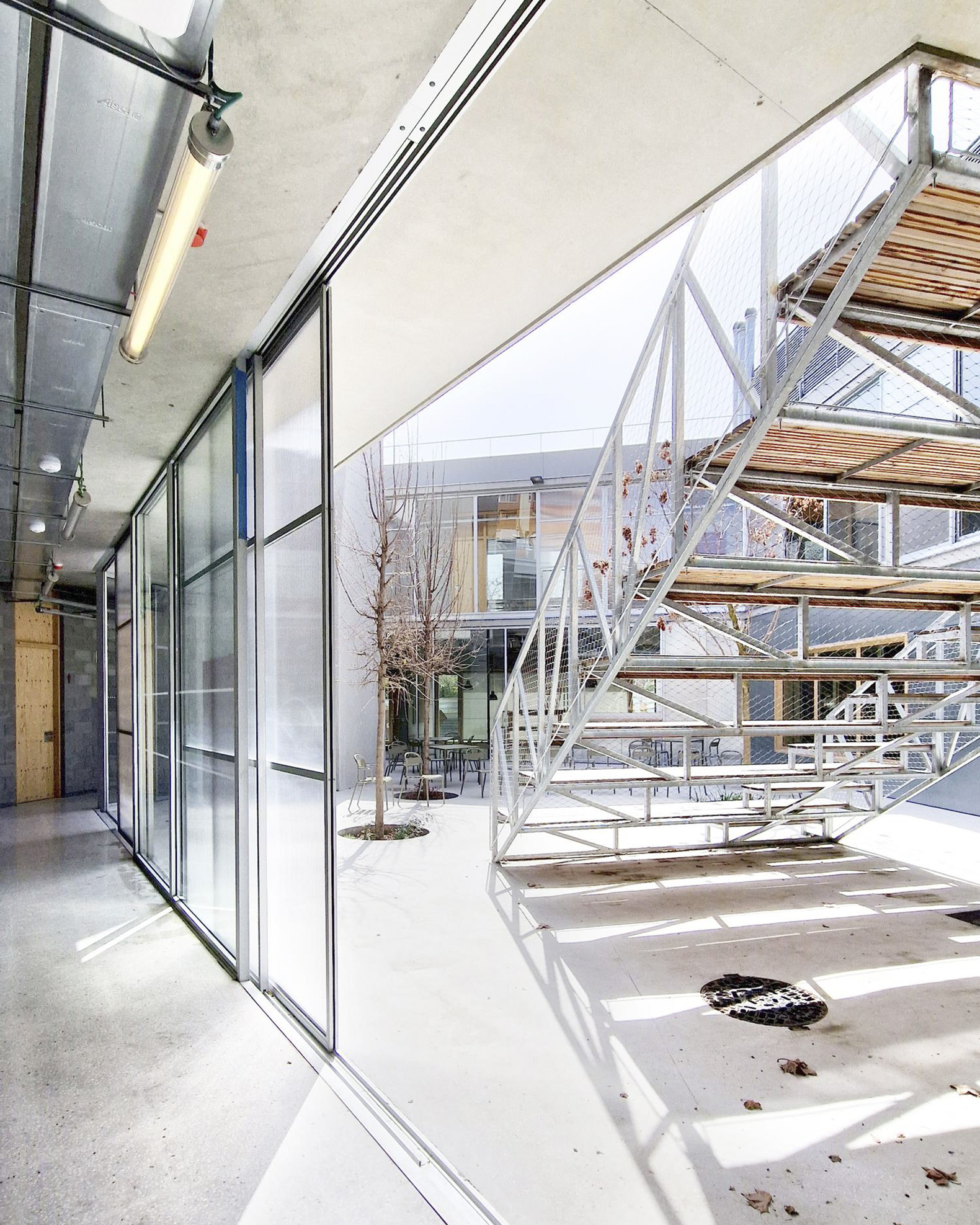
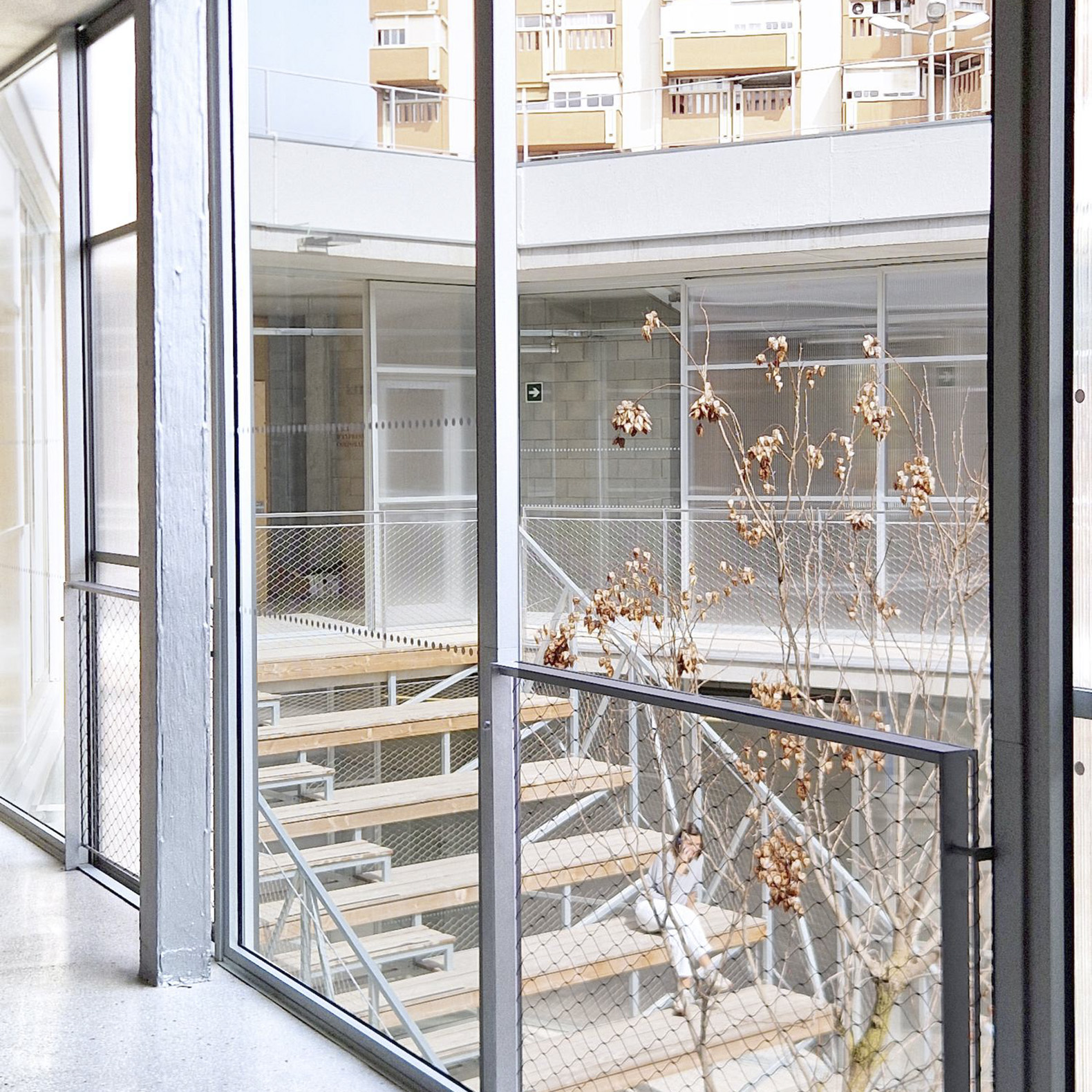
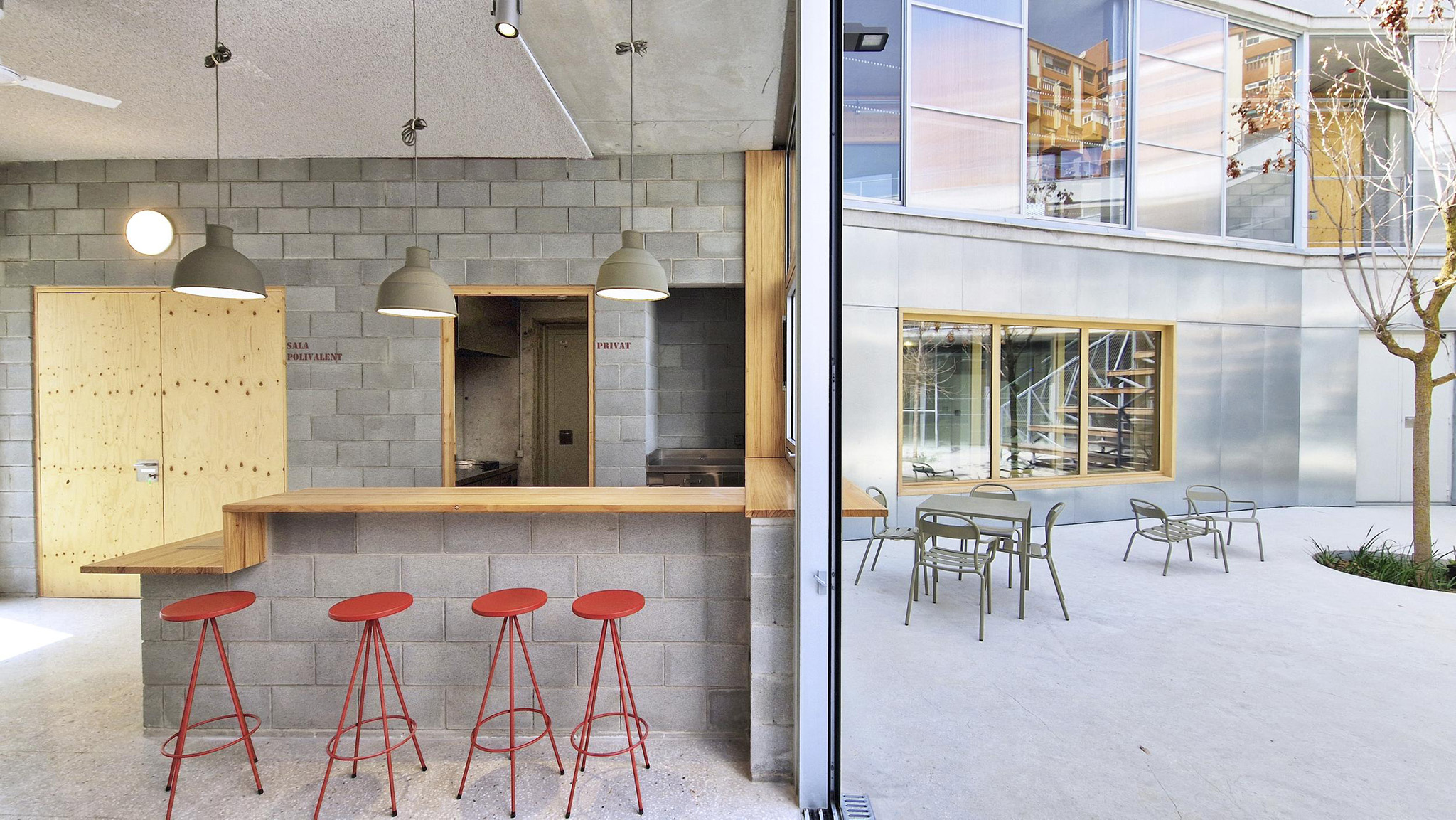
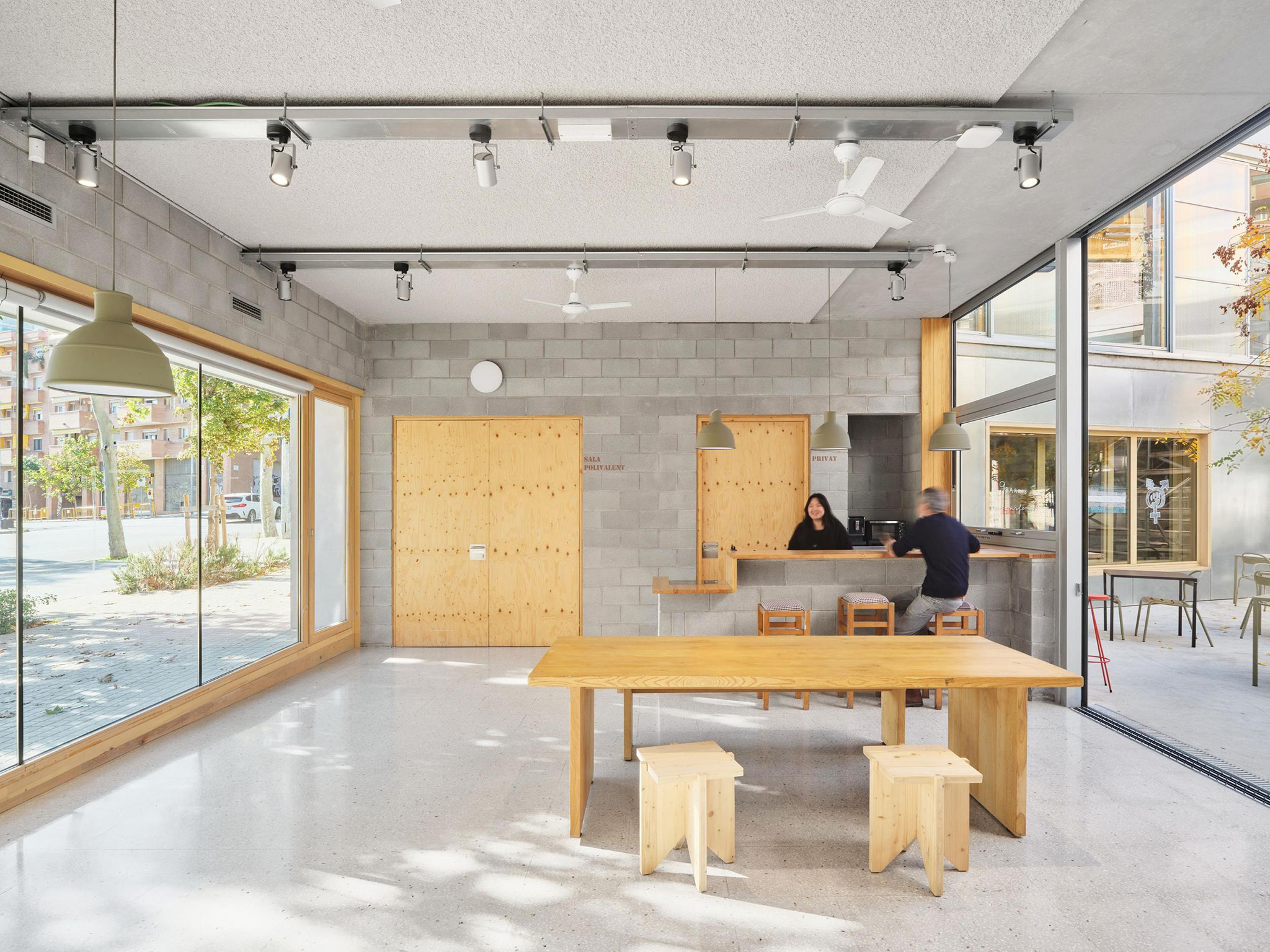
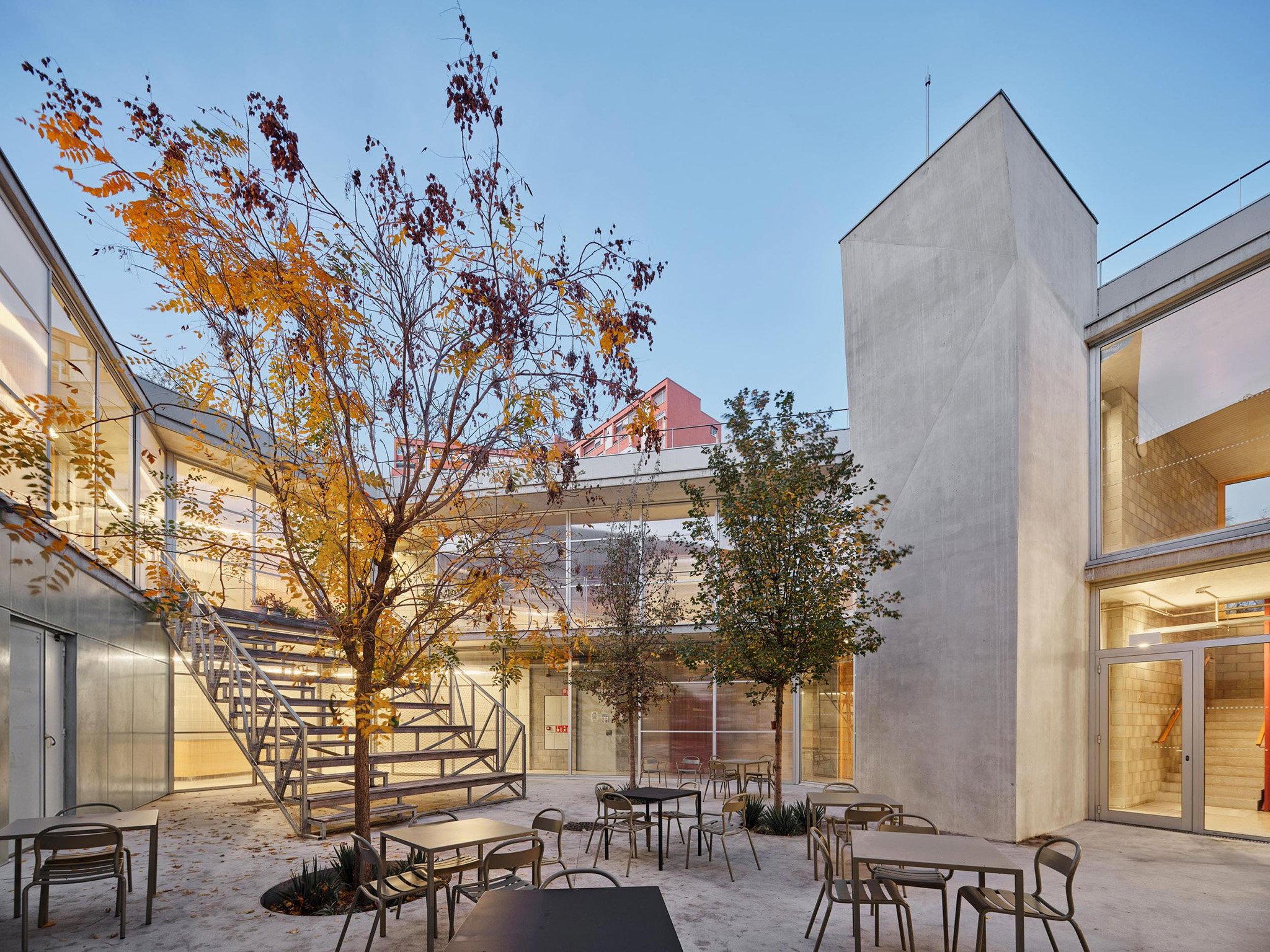
By transforming common areas and circulation spaces into intermediate meeting areas, the new Prosperitat Youth Center is conceived as a place for exchange, community, and discussion. Its large central courtyard not only facilitates collective life but also optimizes the building's passive climate control.
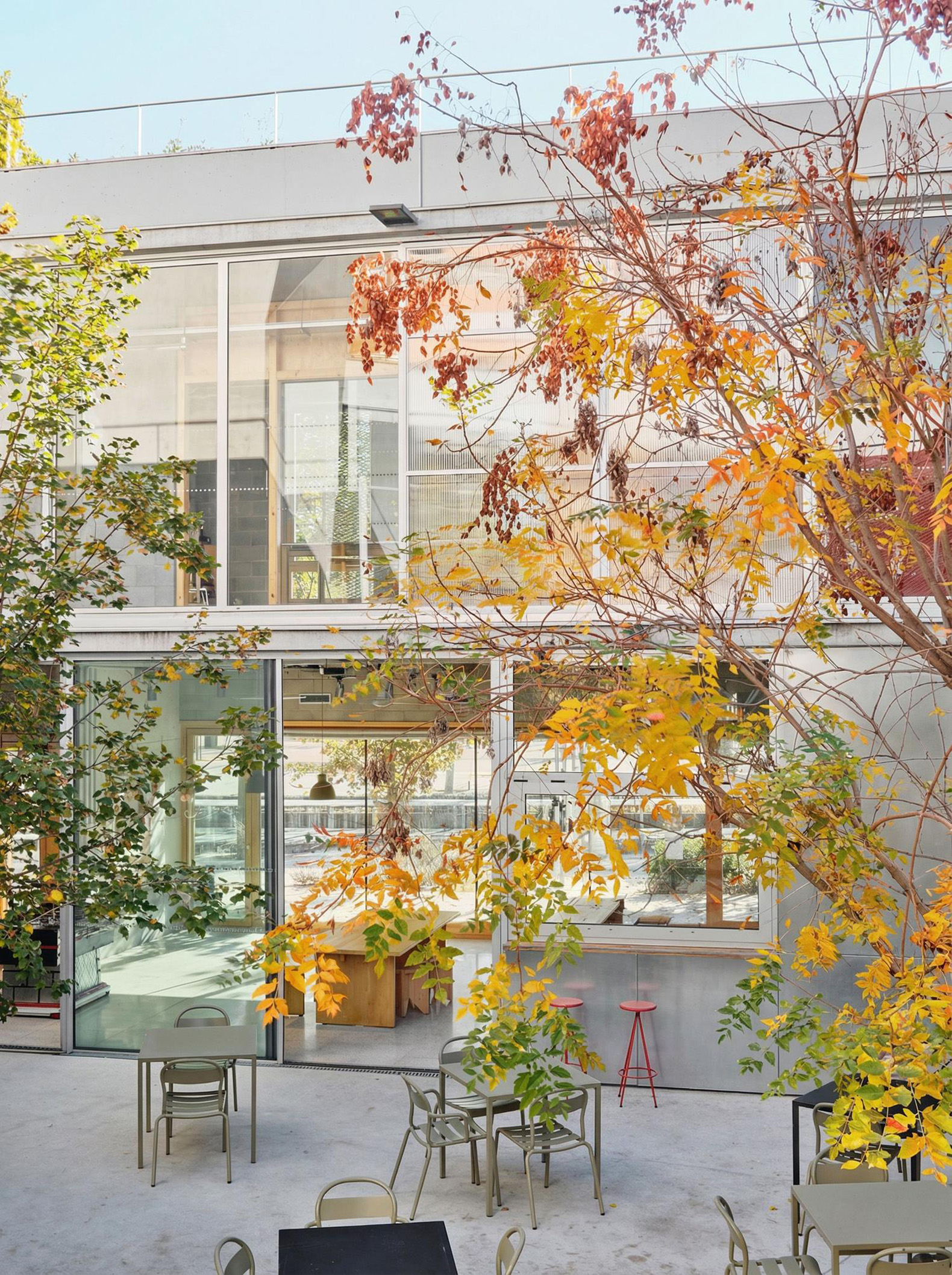
Prosperitat Youth Center by Miba Architects. Photograph by Adrià Goula.
Project description by MIBA Architects
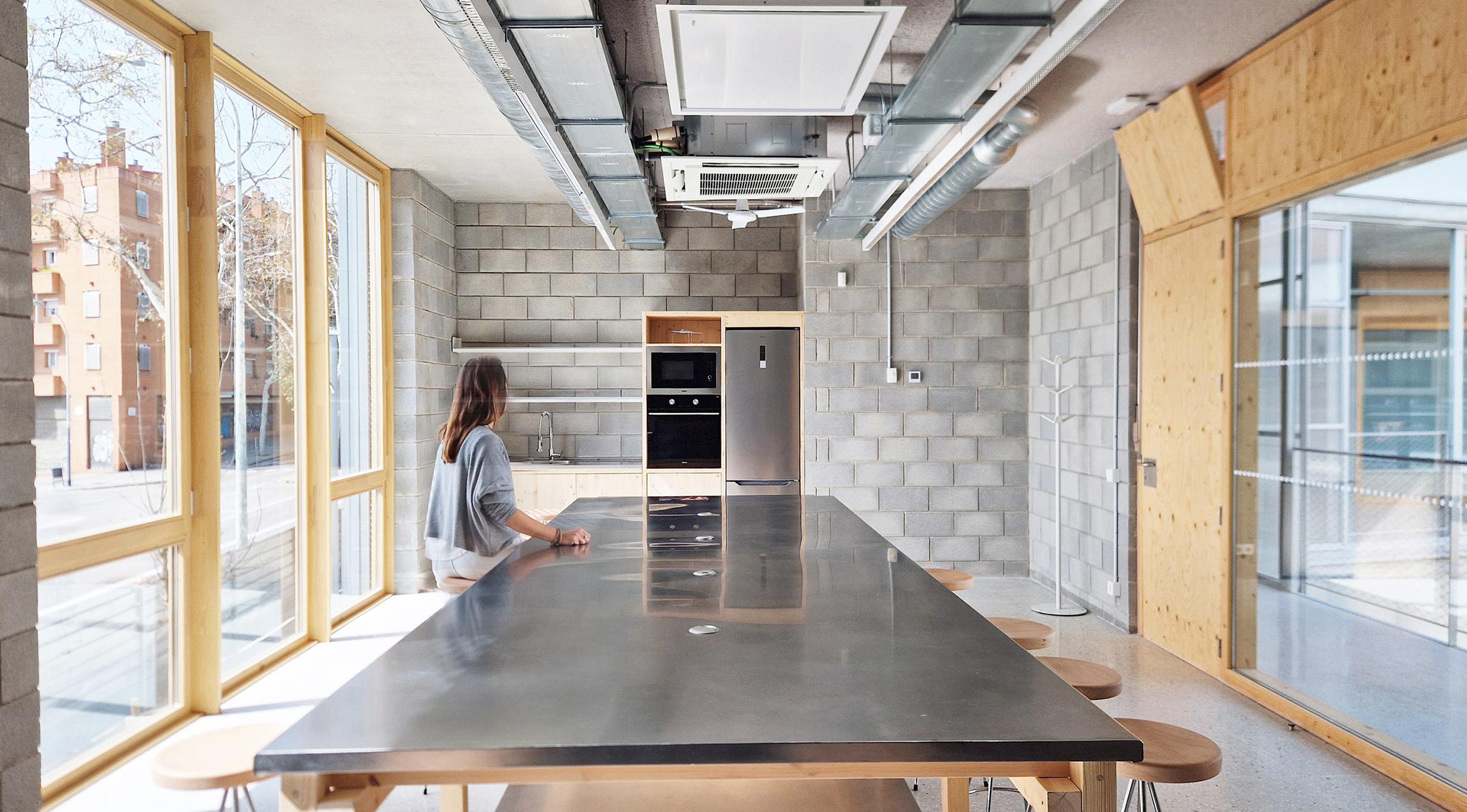
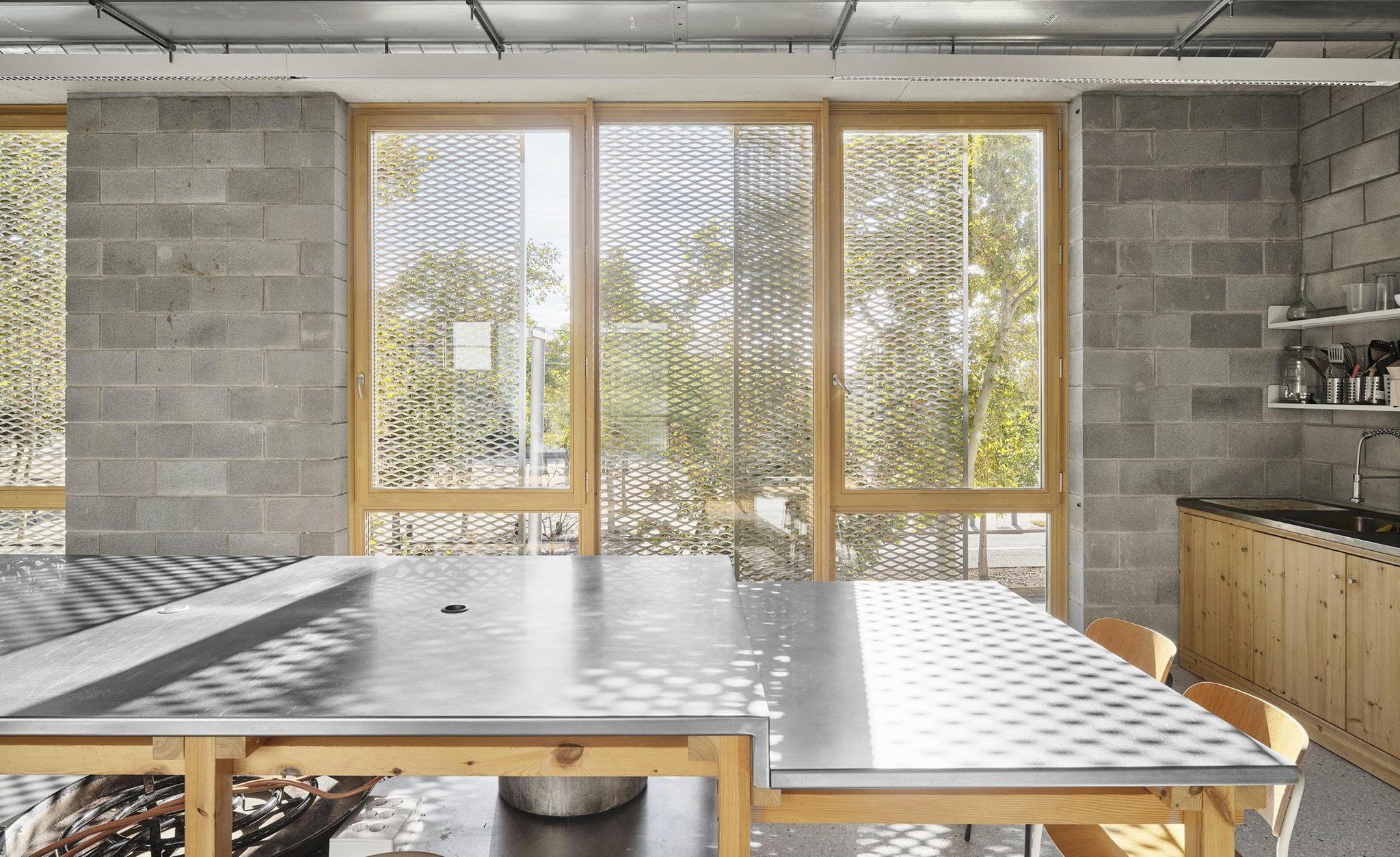
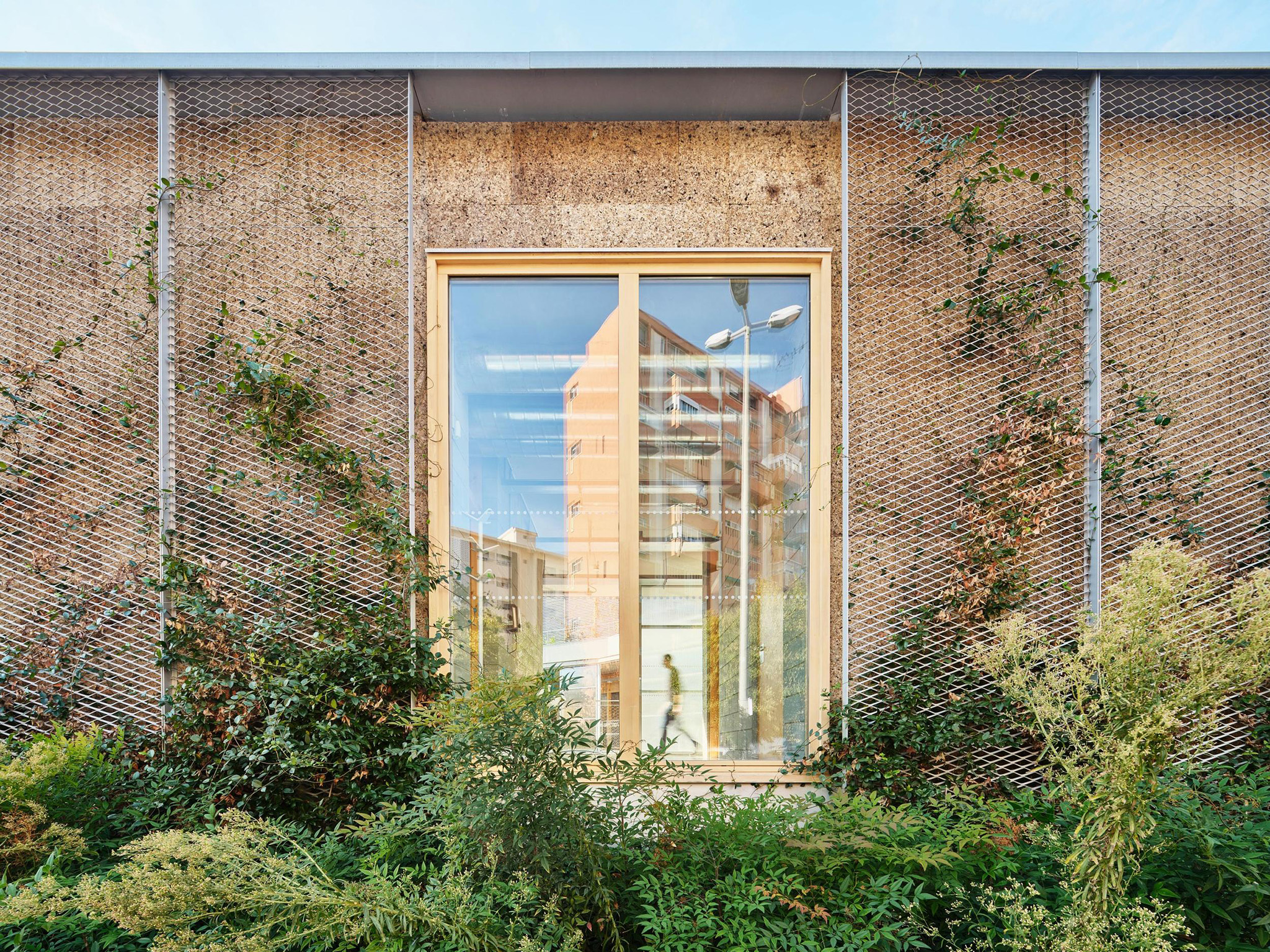
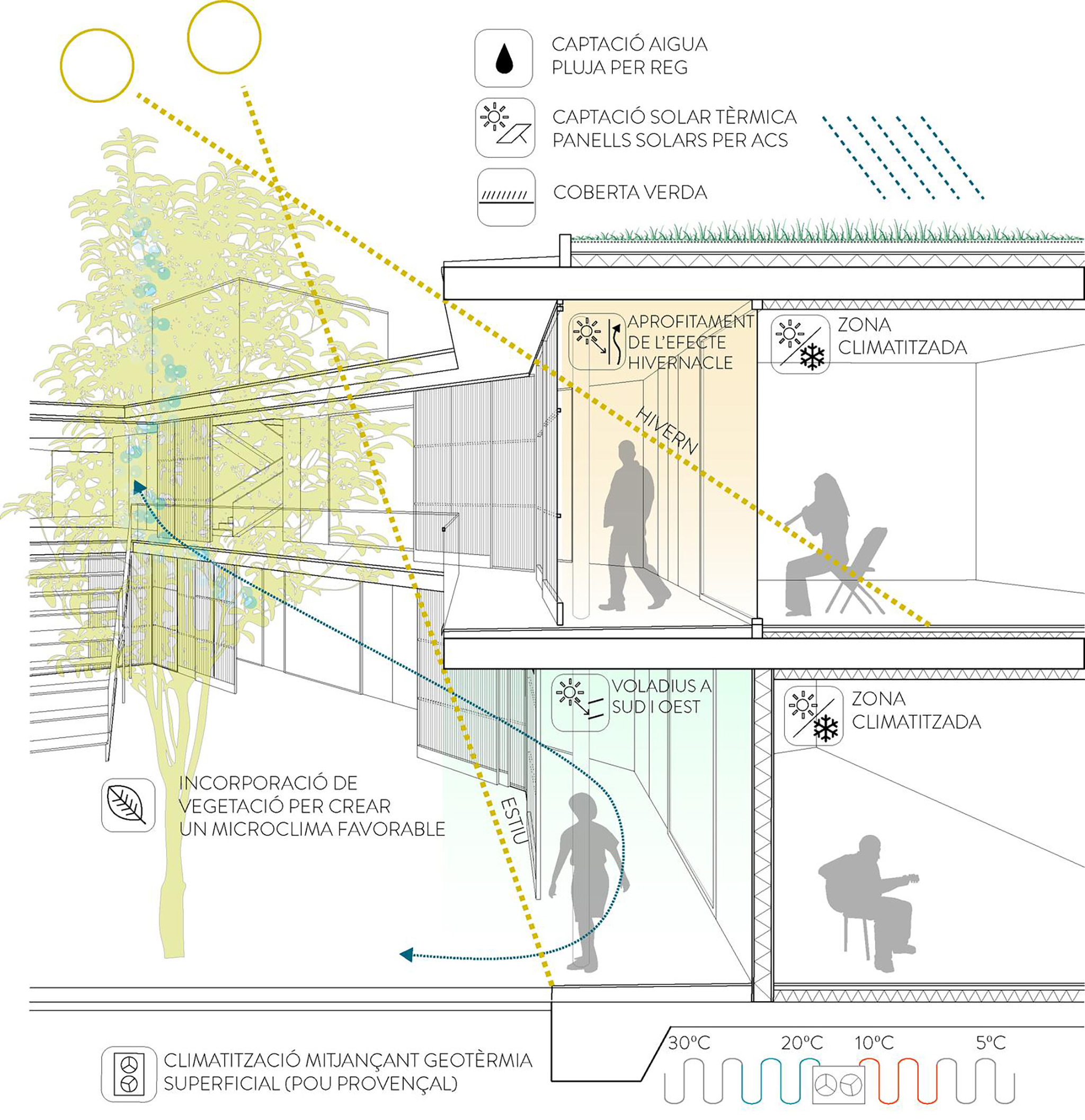
The new youth centre at Prosperitat, the first public building in Barcelona with a cork façade, enhances bioclimatic behaviour by converting all common and circulation spaces in intermediate spaces.
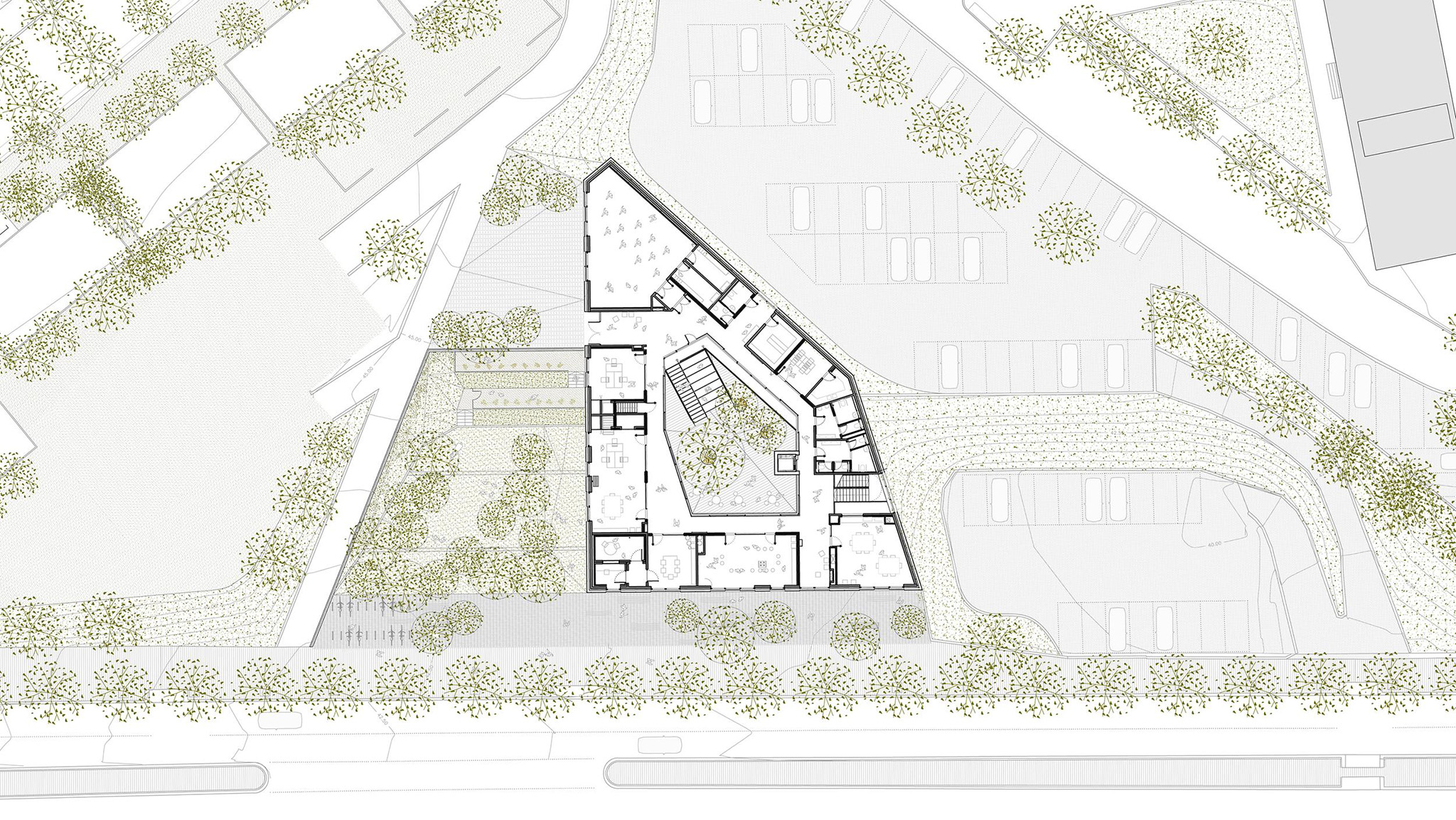
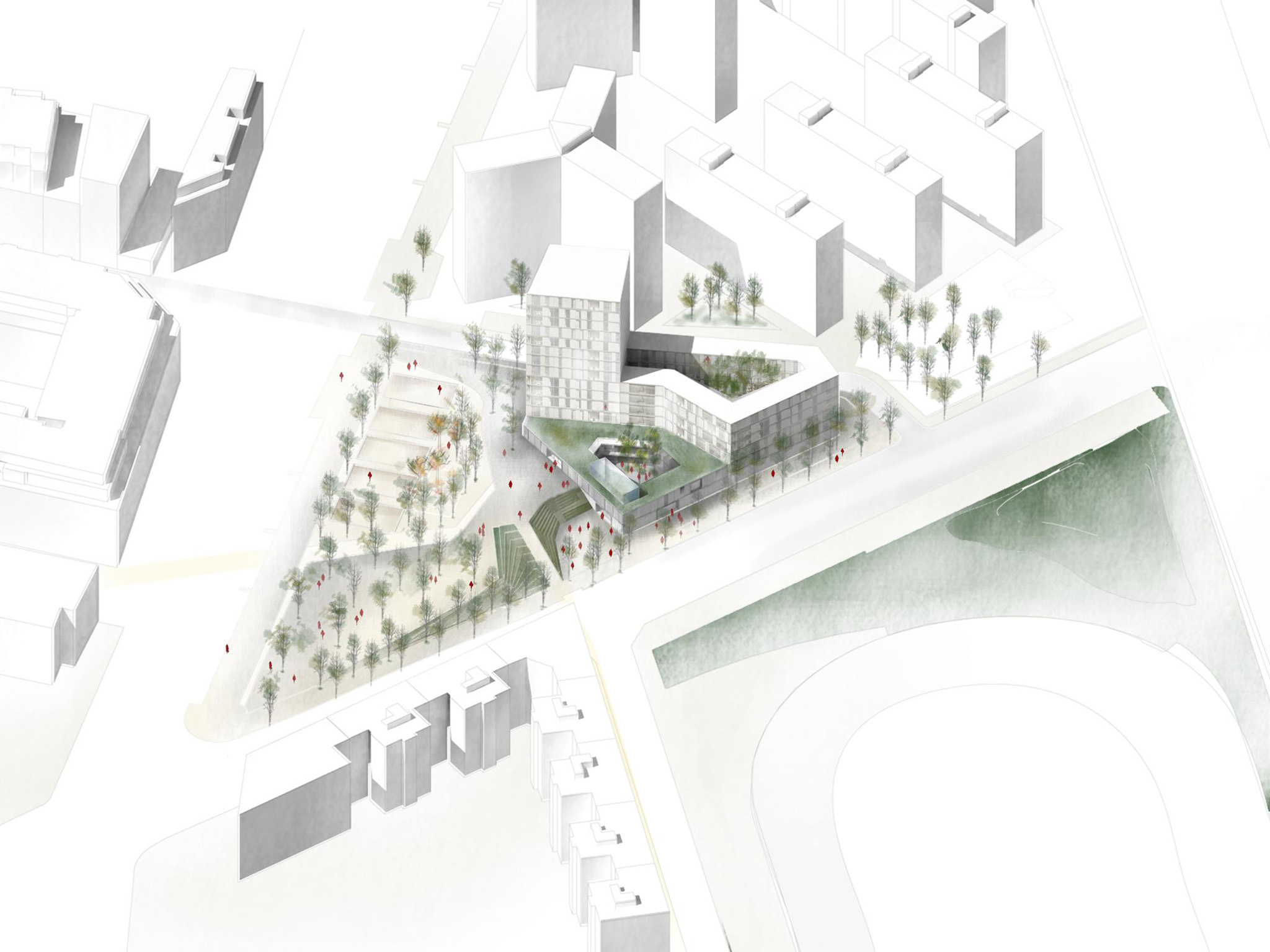
The project raises the urban enclosure of the youth center and the future social dwellings with two autonomous and simultaneously integrated operations. At a volumetric level, the proposal raises a gradual increase in the height to the north, where we find the highest blocks of the context, in order to maximize sunshine and generate a smooth volumetric transition between the public space and the large blocks of existing housing.
The Prosperitat youth center is the neuralgic center for citizen relation and participation in the neighborhood. The building must reflect and be the infrastructure for this reality: a place of encounter, exchange and debate.
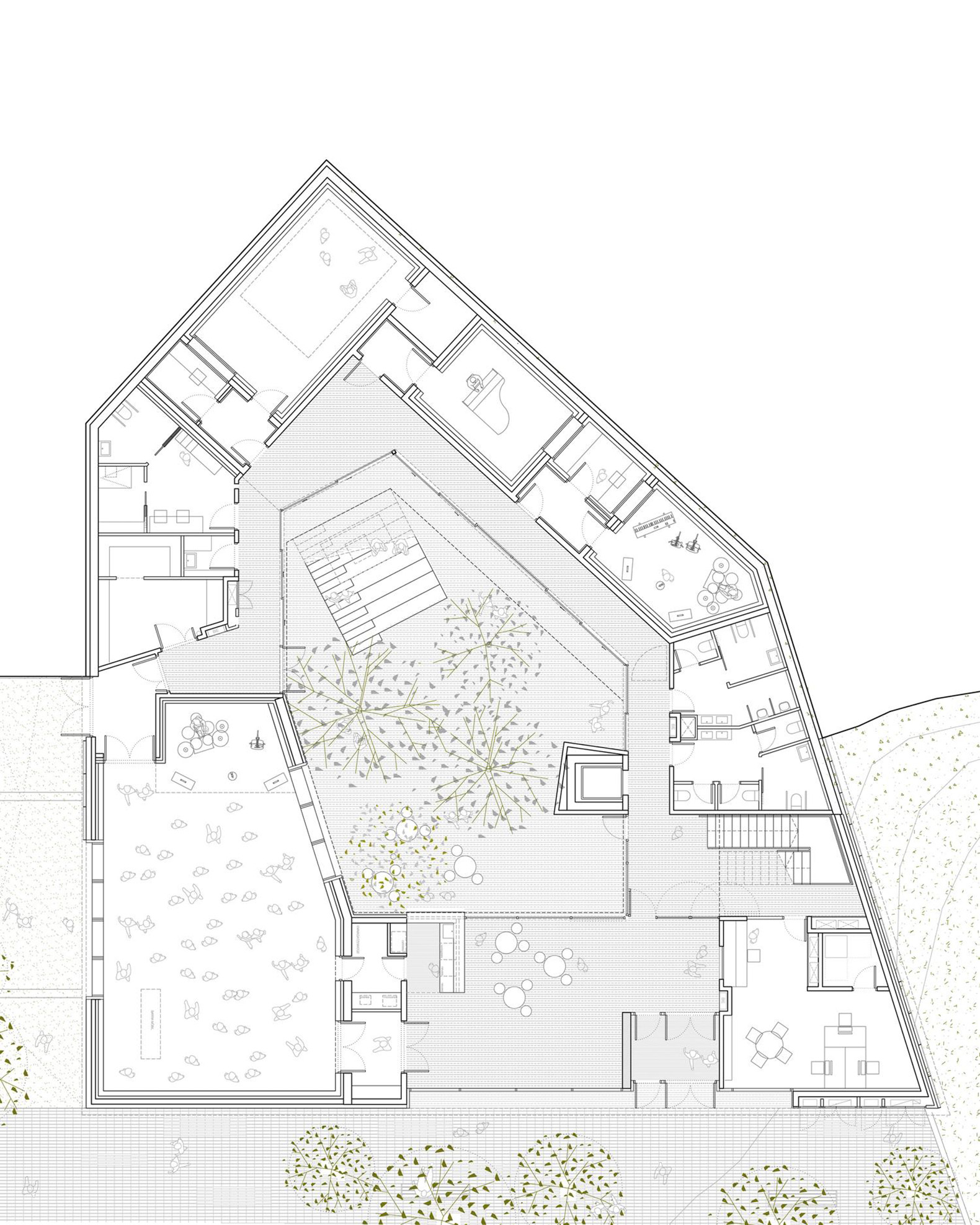
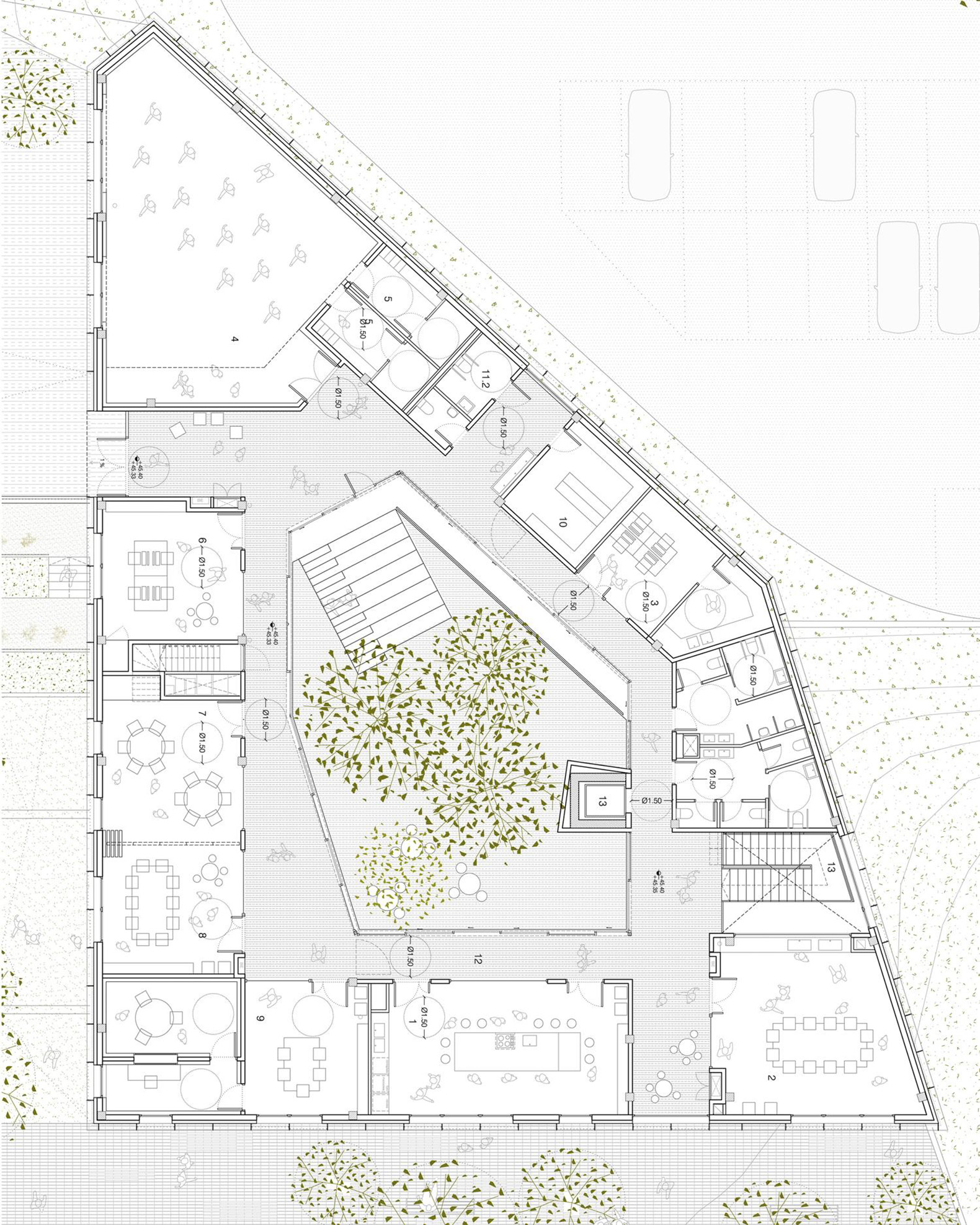
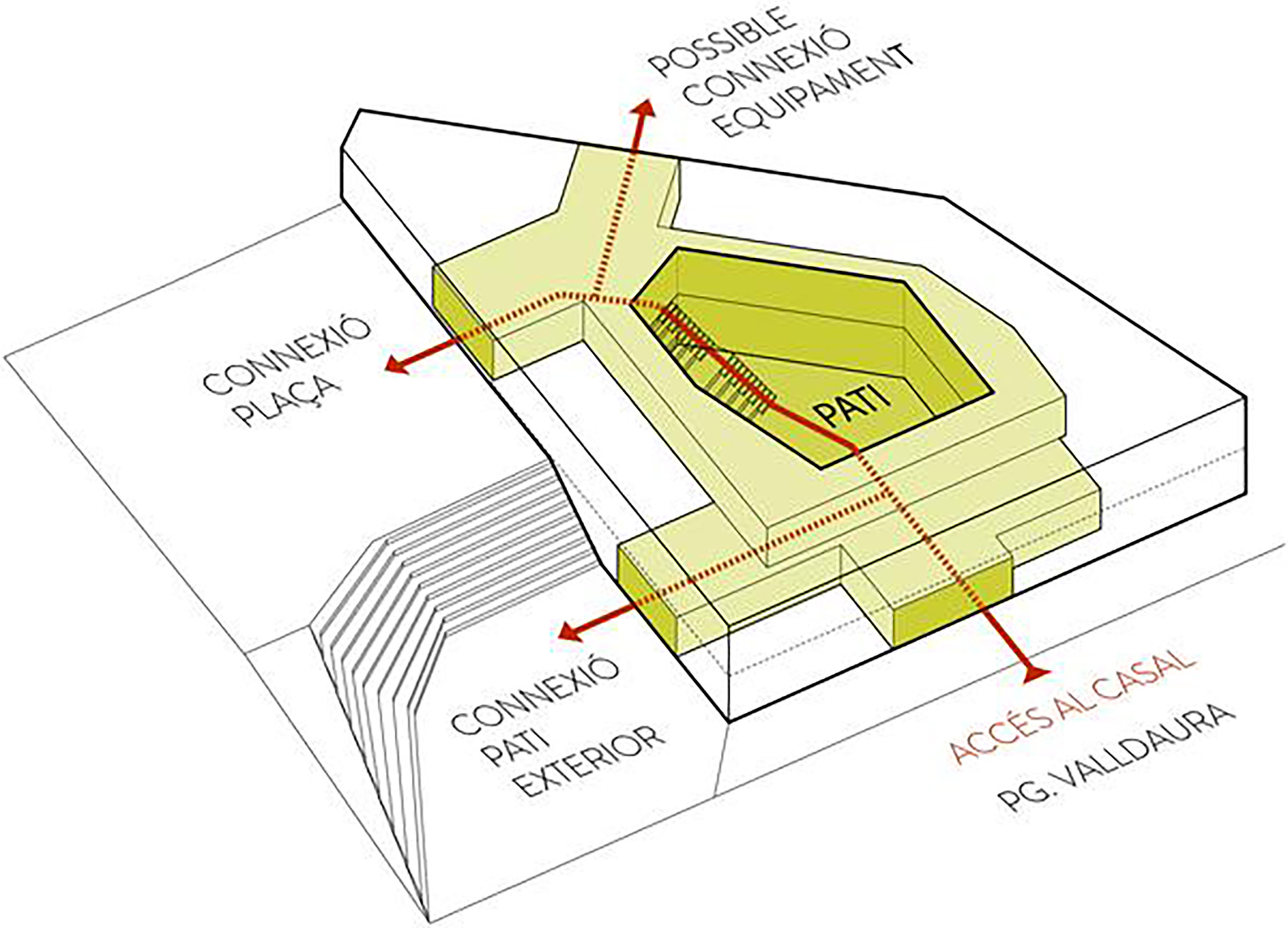
We propose a cloister type configuration, with the indoor programs organized around a single patio that can accommodate multiple programs and activities. This type, in addition to facilitating and promoting collective activity, is very appropriate in our climate to consider a fundamentally passive thermal management and regulation.
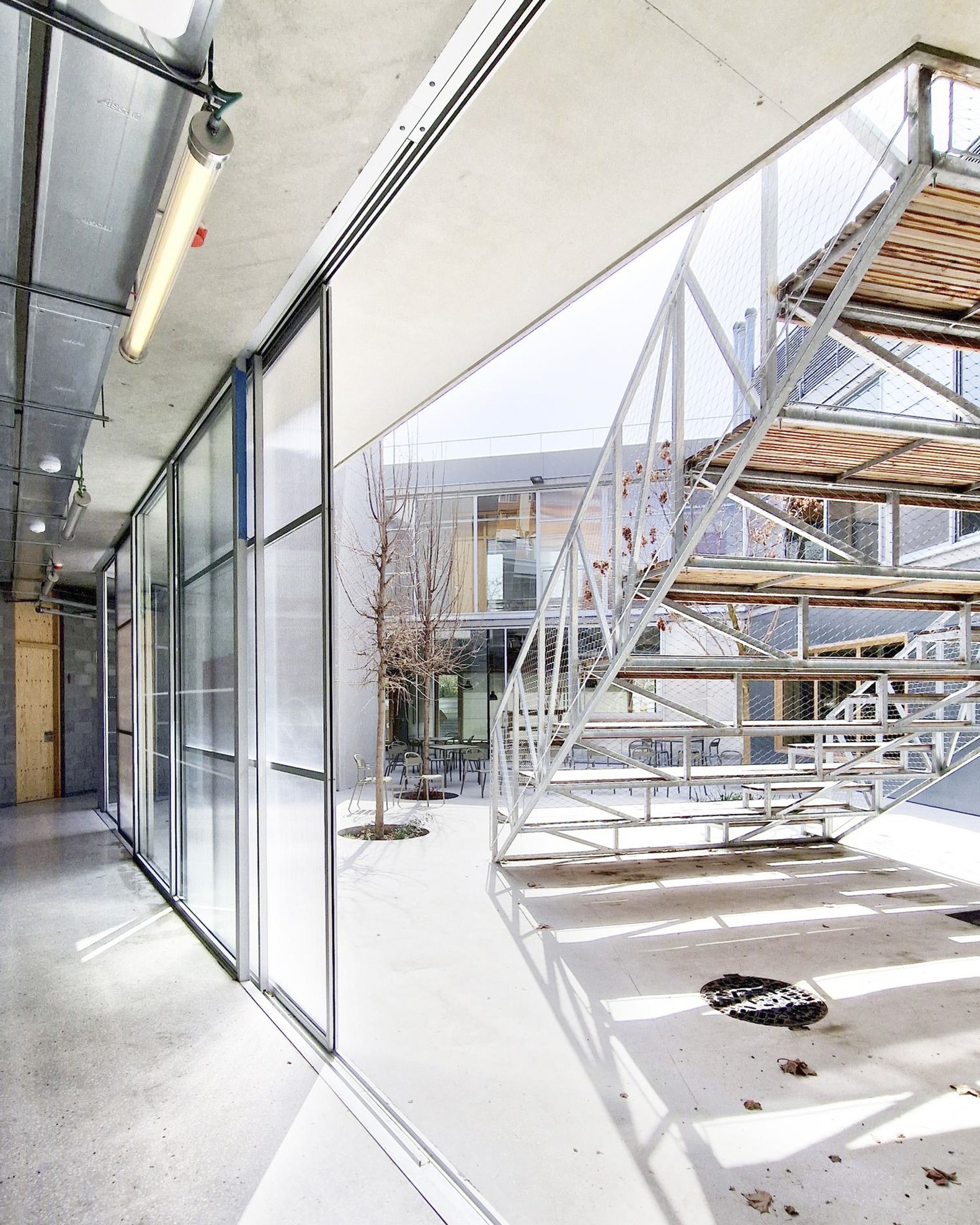
The cloister typology has great potential in our climate to maximize the passive climatic behavior of the building. In order to make the most of it and reduce energy demand to a minimum, we have organized the area of circulation-relationship around the yard, so that it can act as a thermal regulator.


![Bois de Cergy Leisure Centre by PLURIEL[LES] ARCHITECTES. Photograph by Charly Broyez](/sites/default/files/styles/mopis_home_news_category_slider_desktop/public/2026-10/metalocus_PLURIEL-LES_Bois-de-Cergy-Leisure-Centre_14_2p.webp?h=3b4e7bc7&itok=DISDLRbJ "Bois de Cergy Leisure Centre by PLURIEL[LES] ARCHITECTES. Photograph by Charly Broyez")


