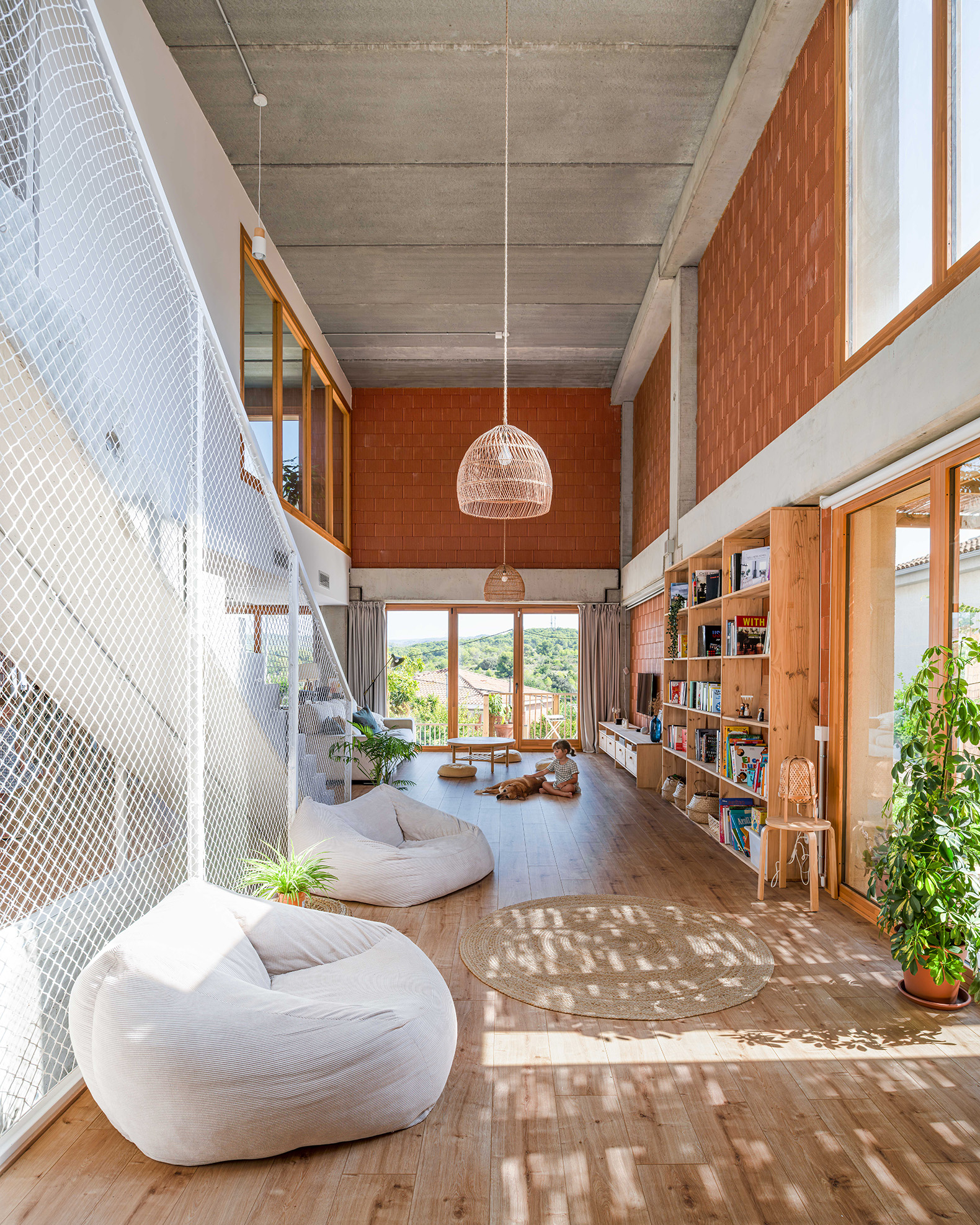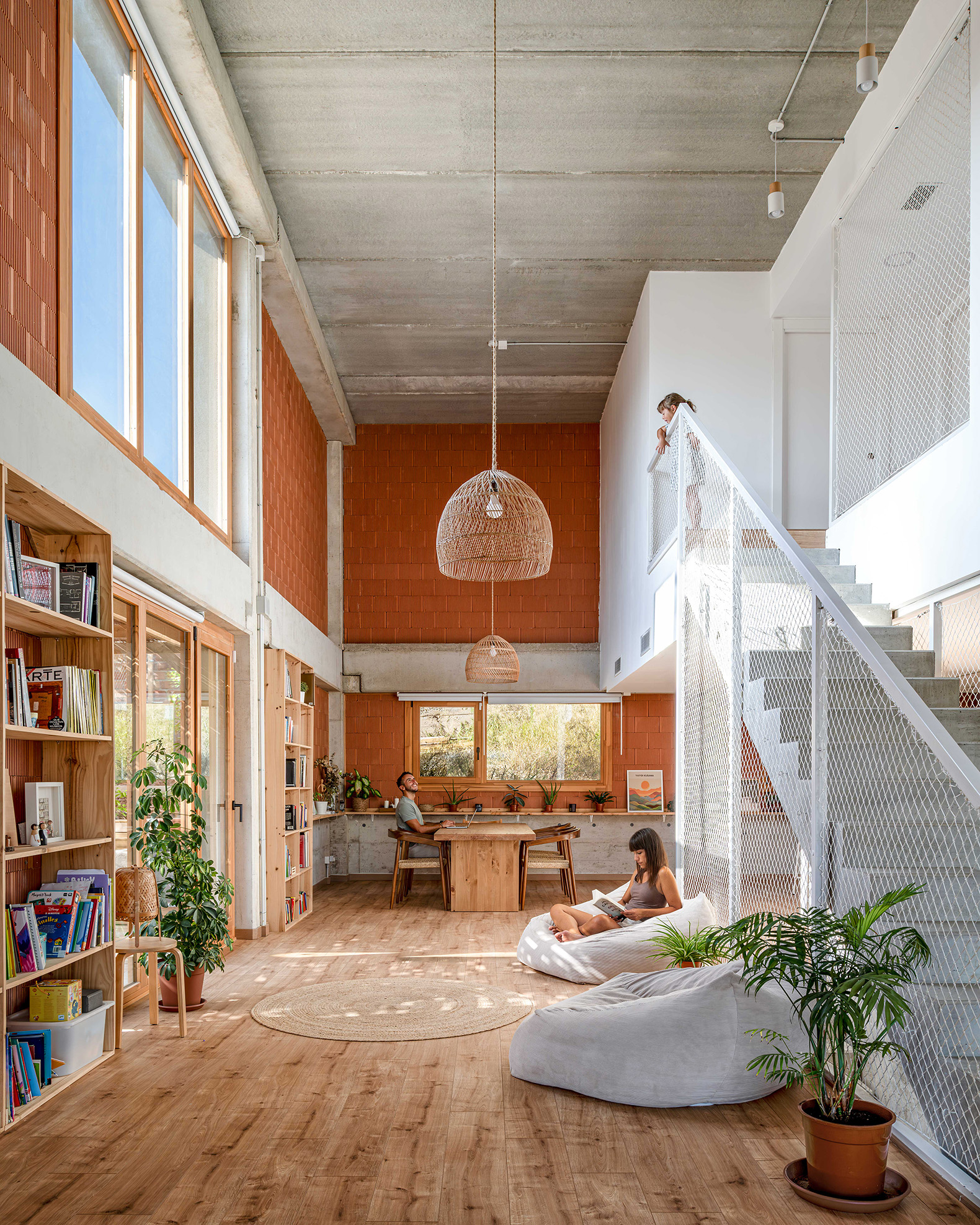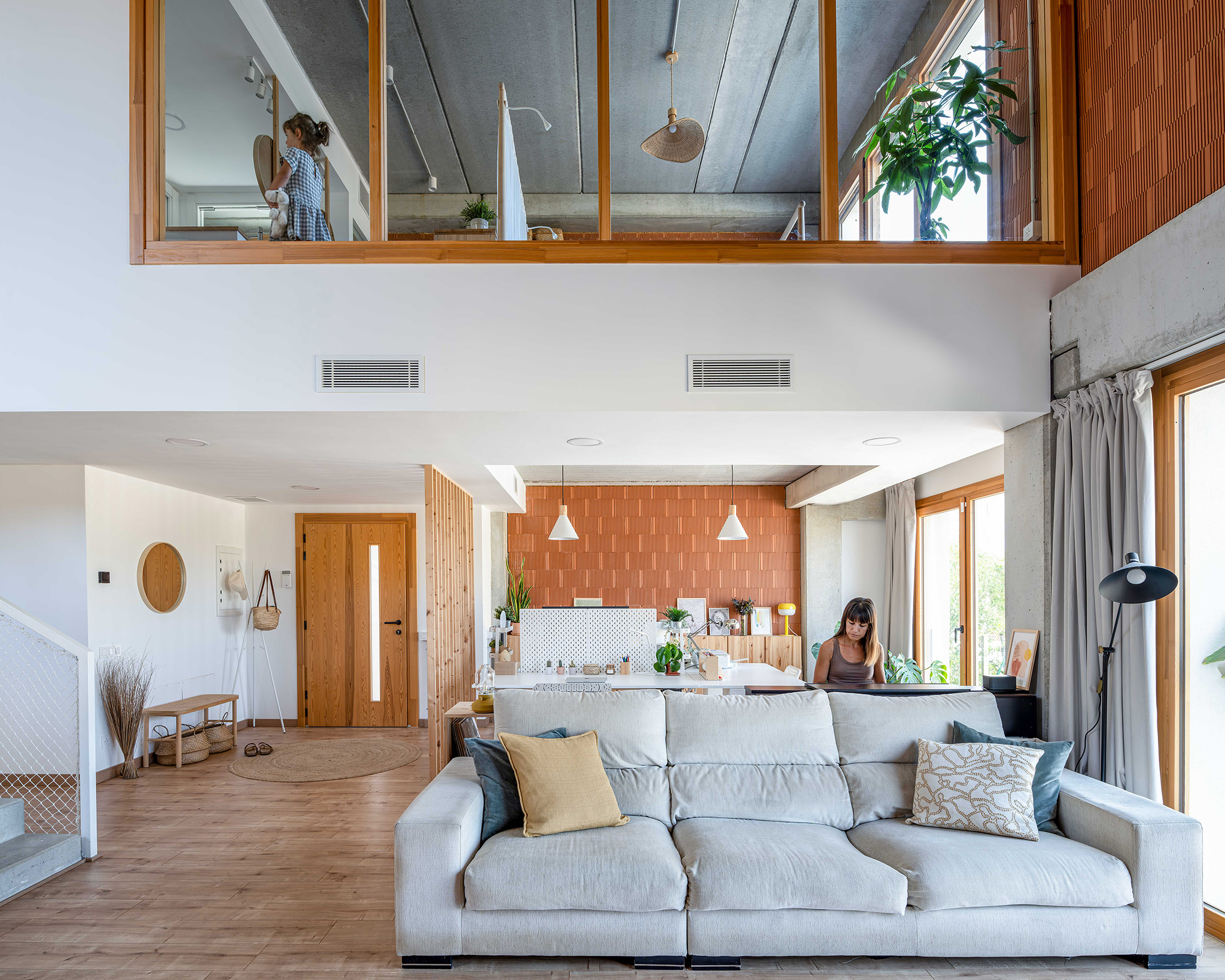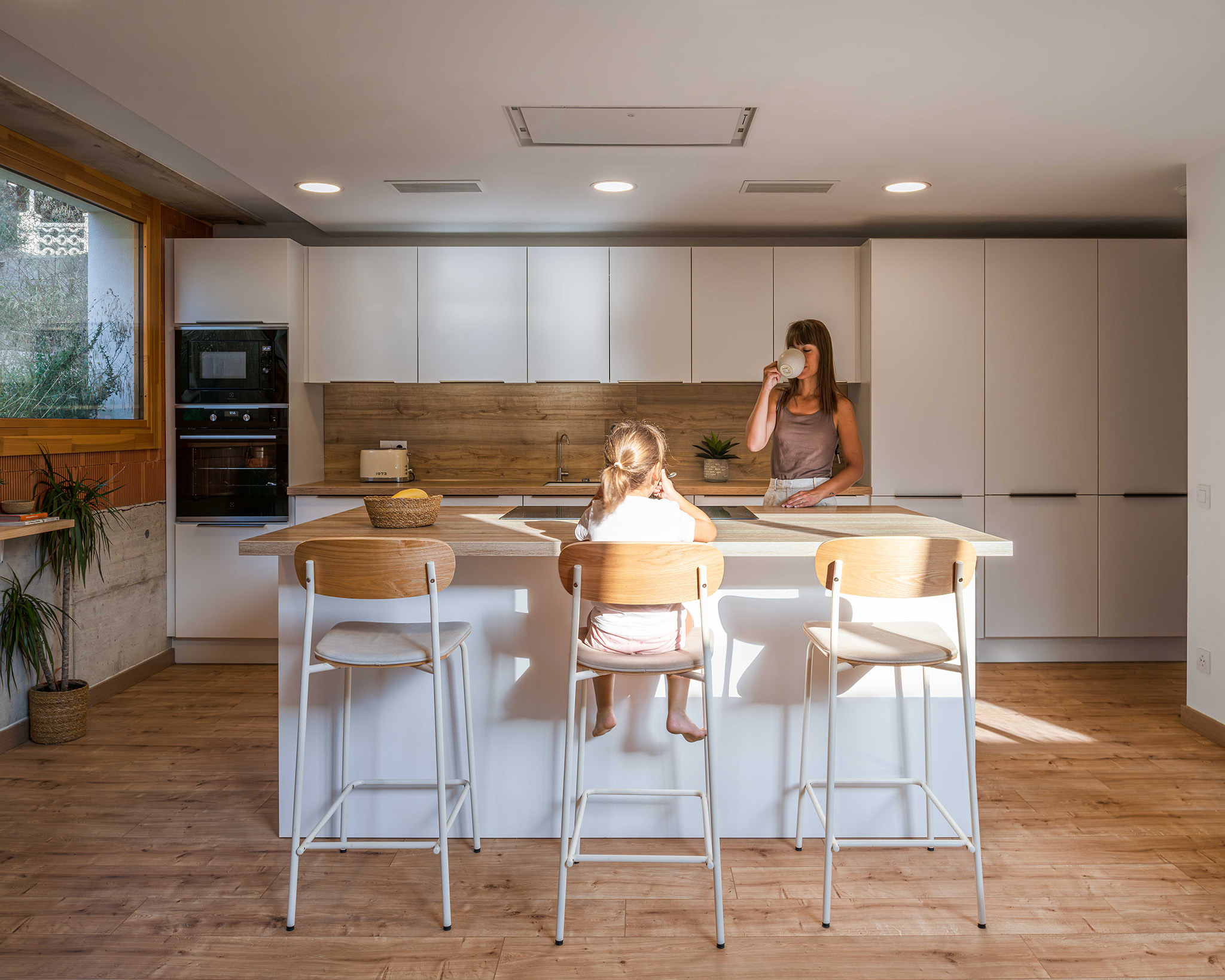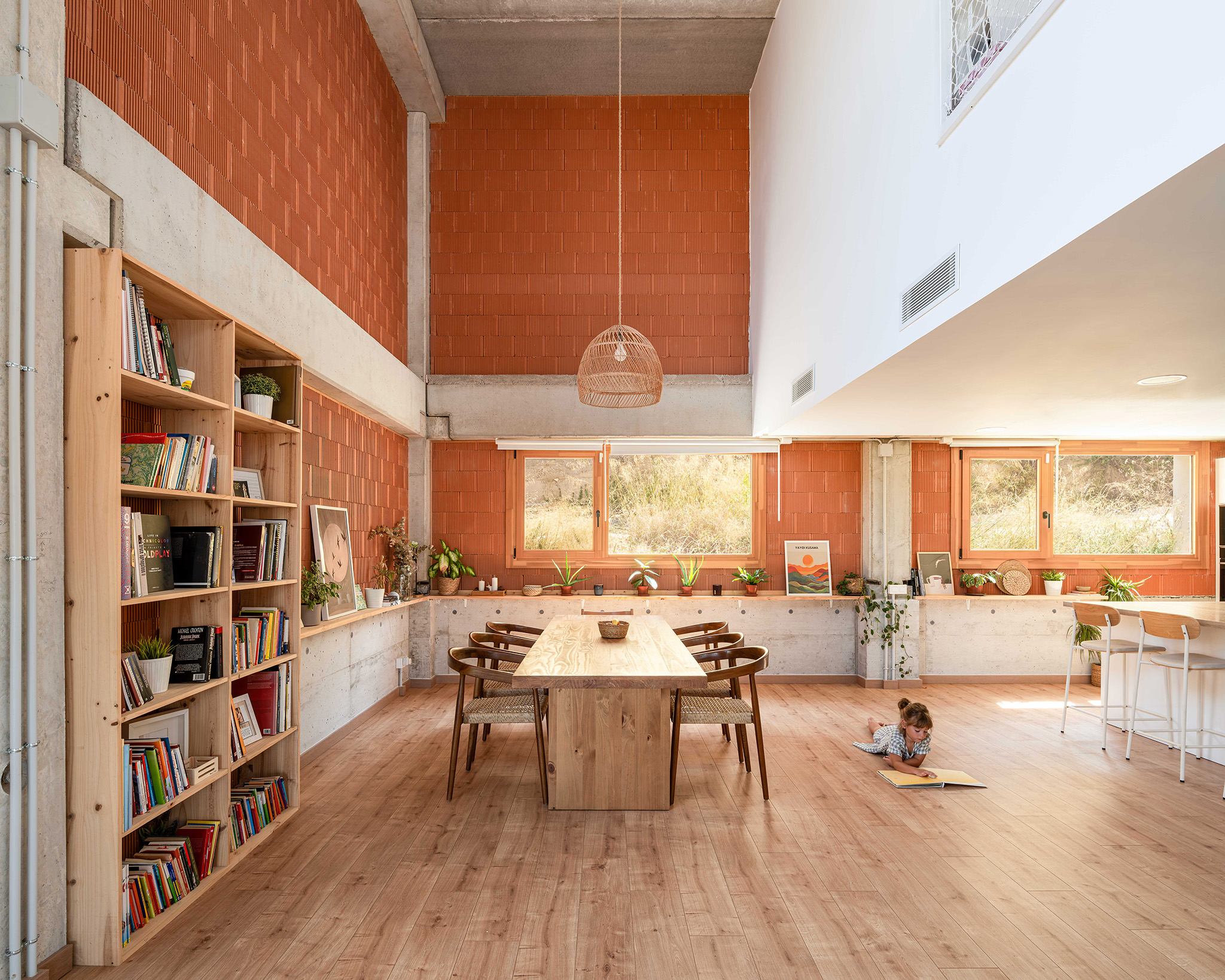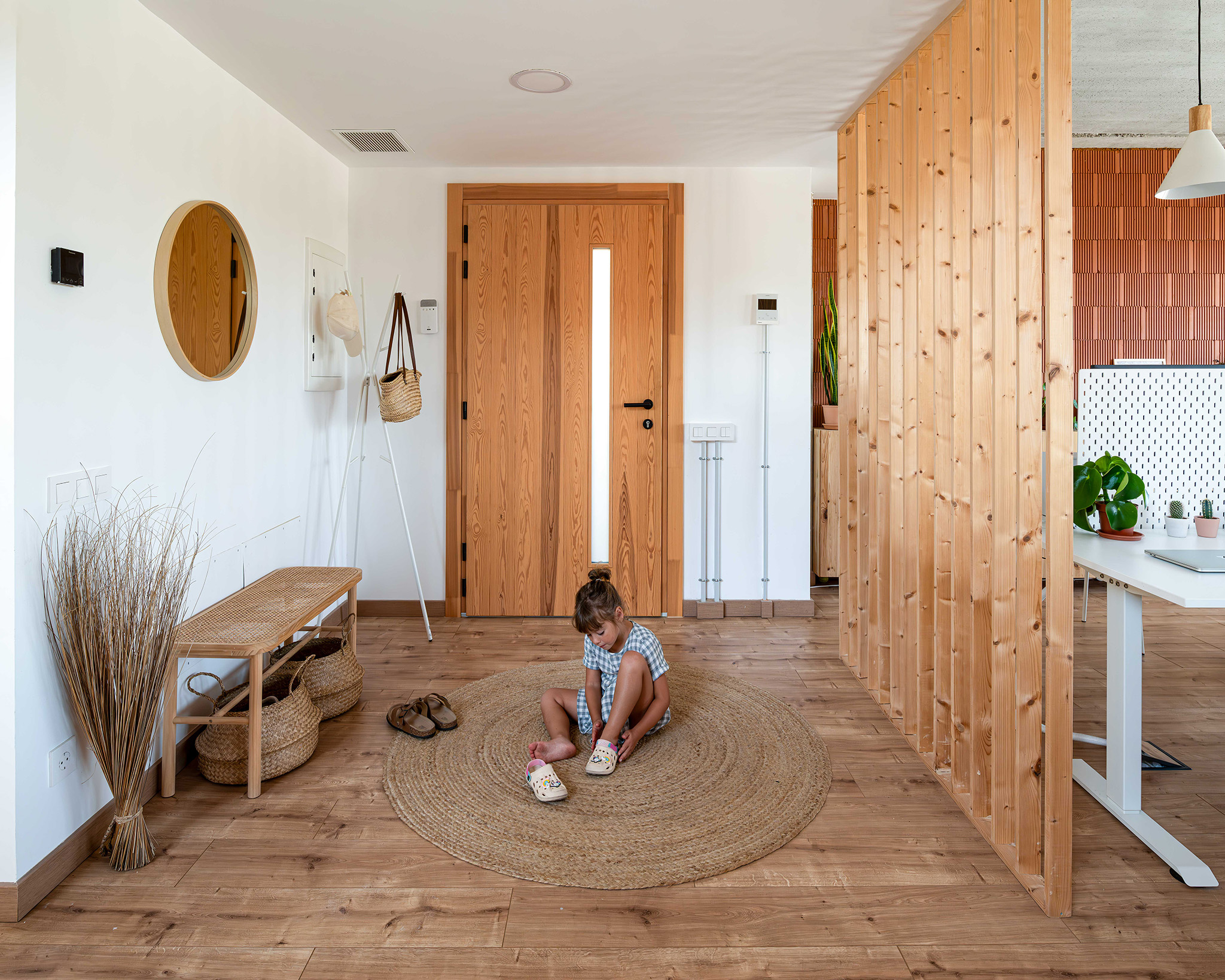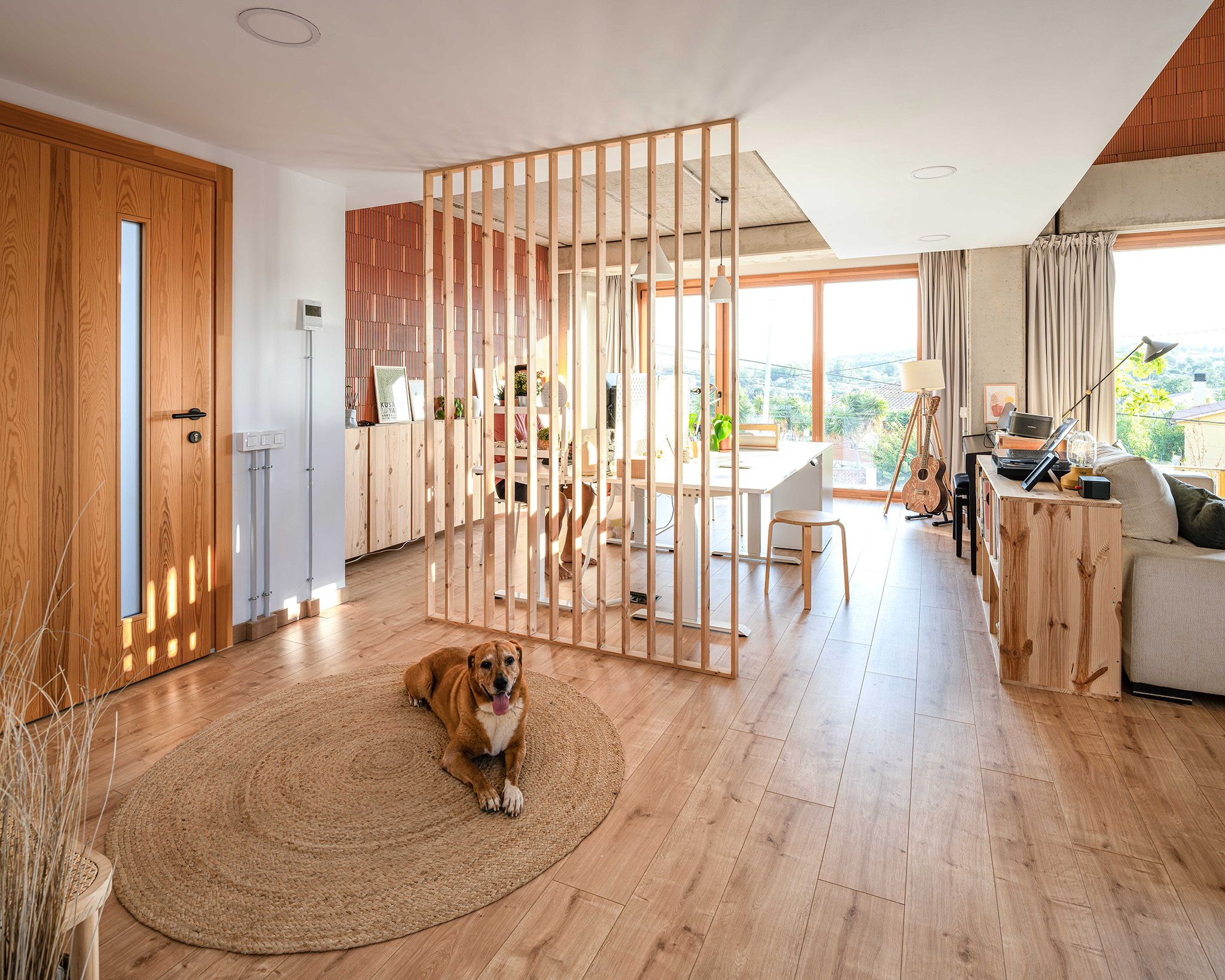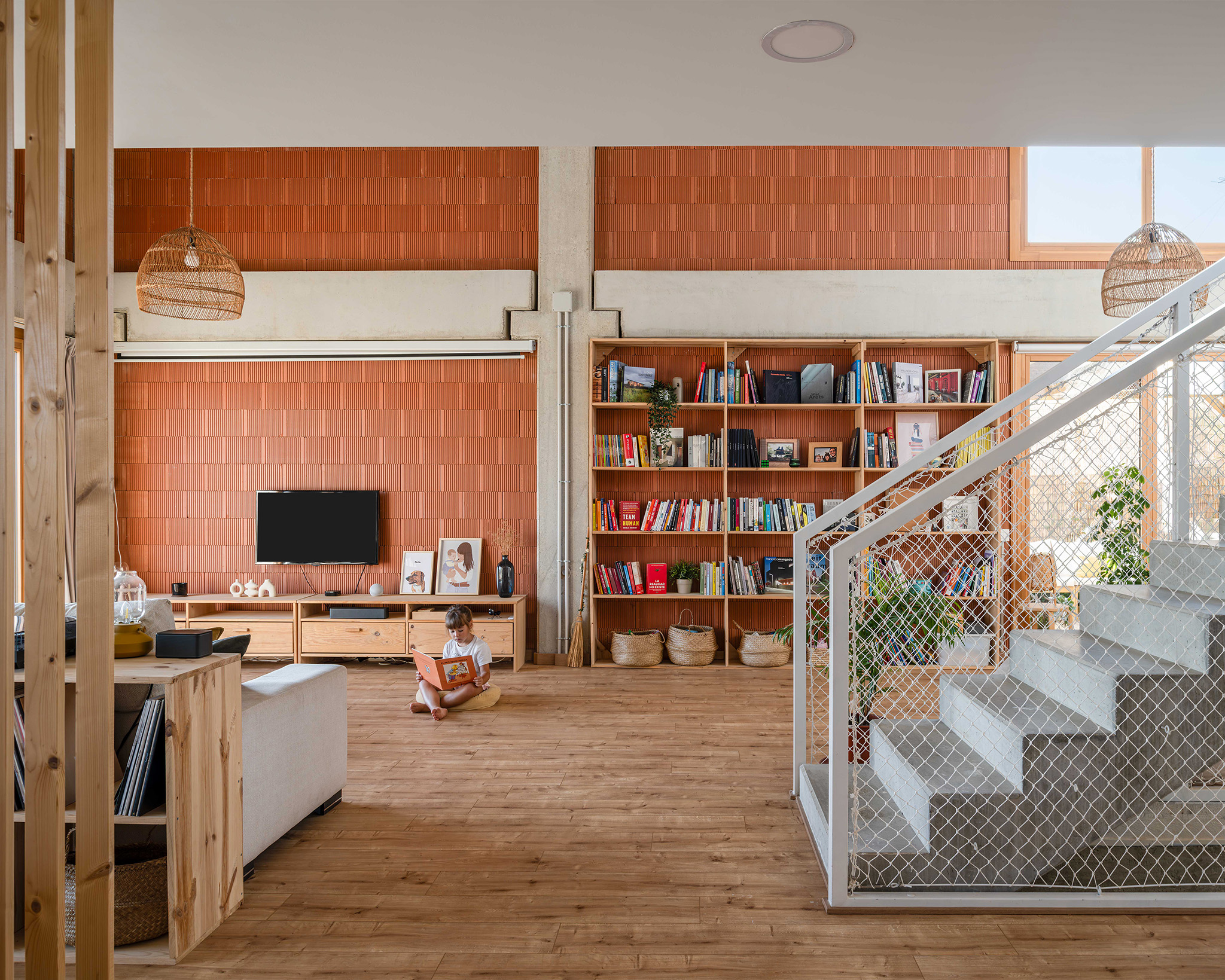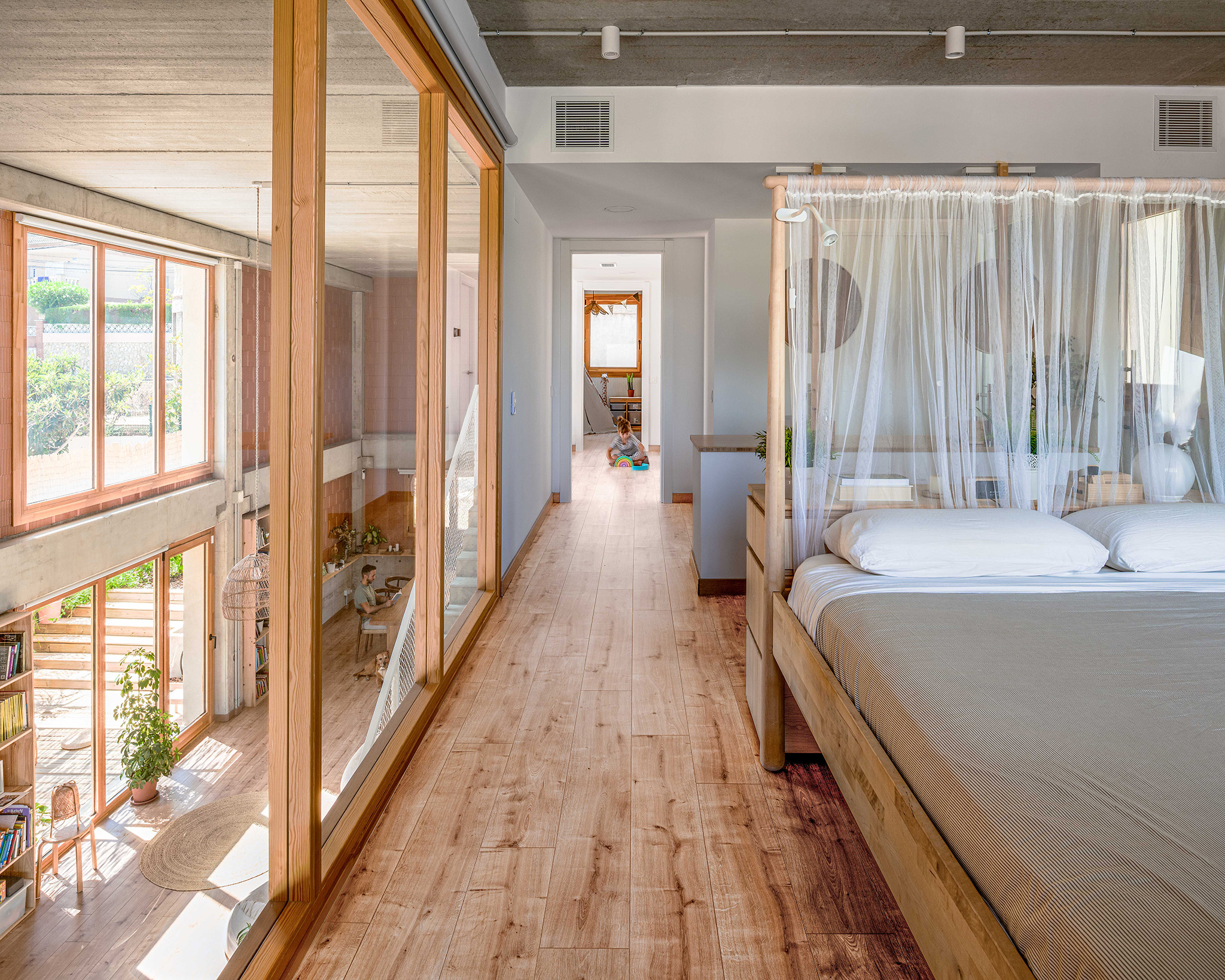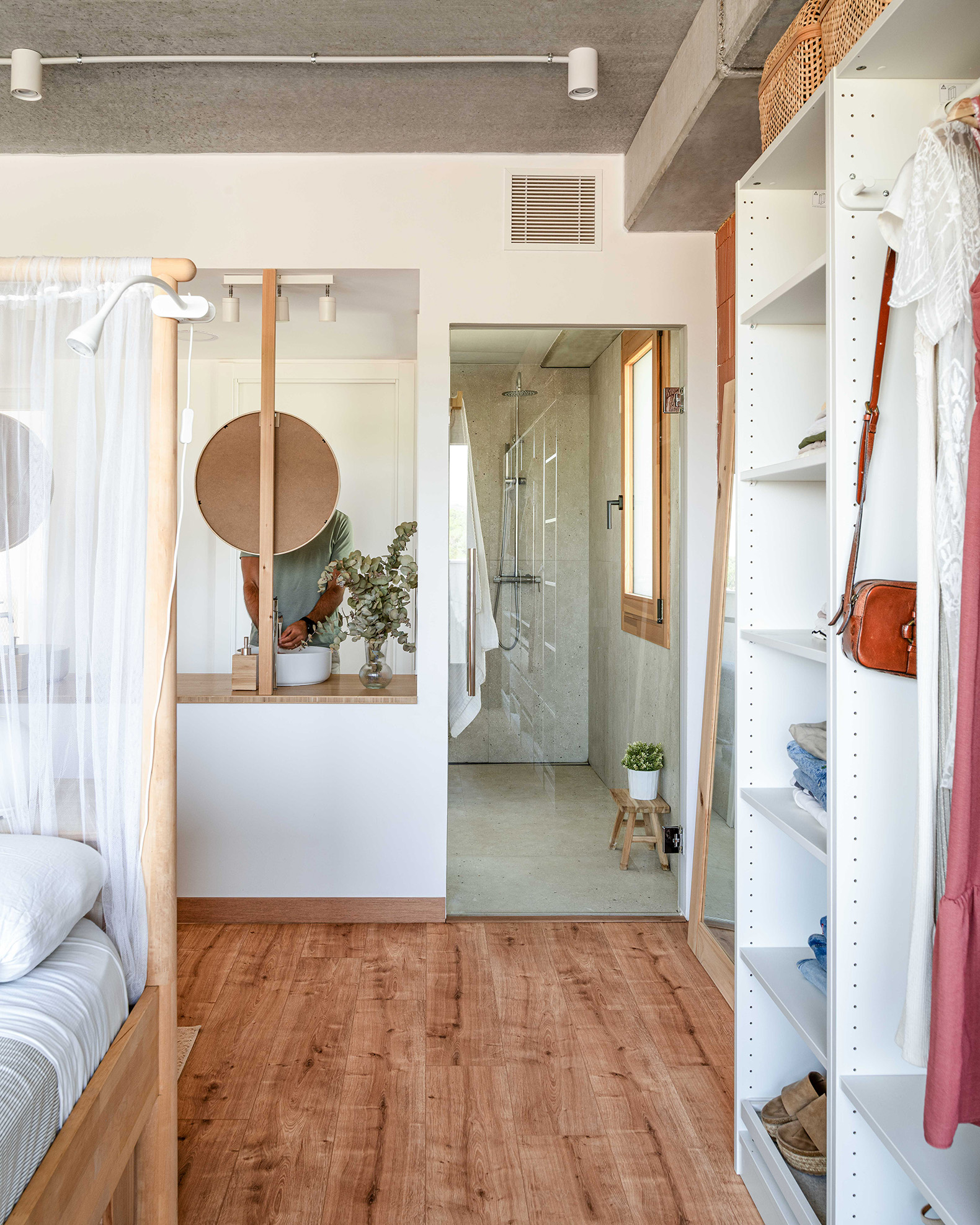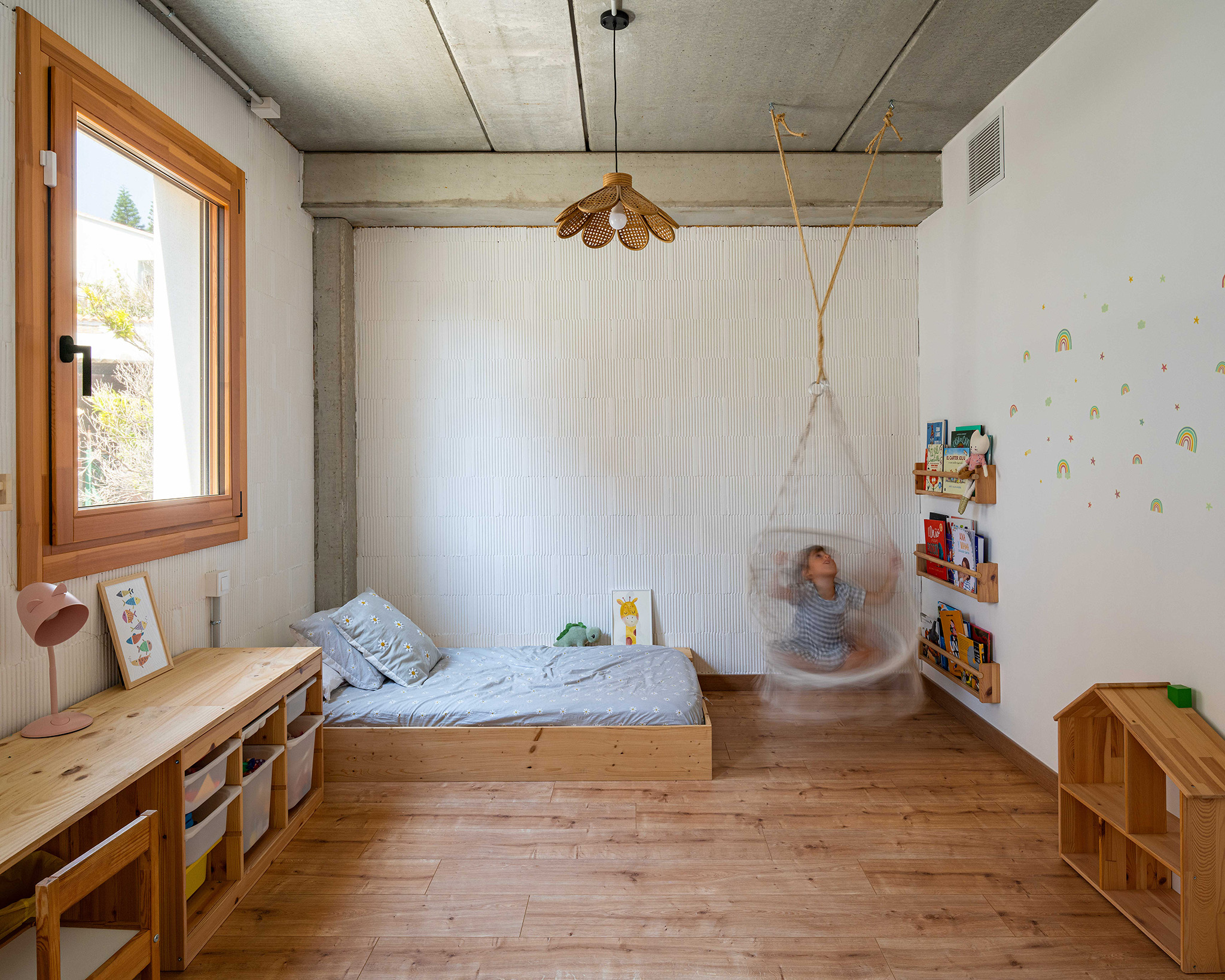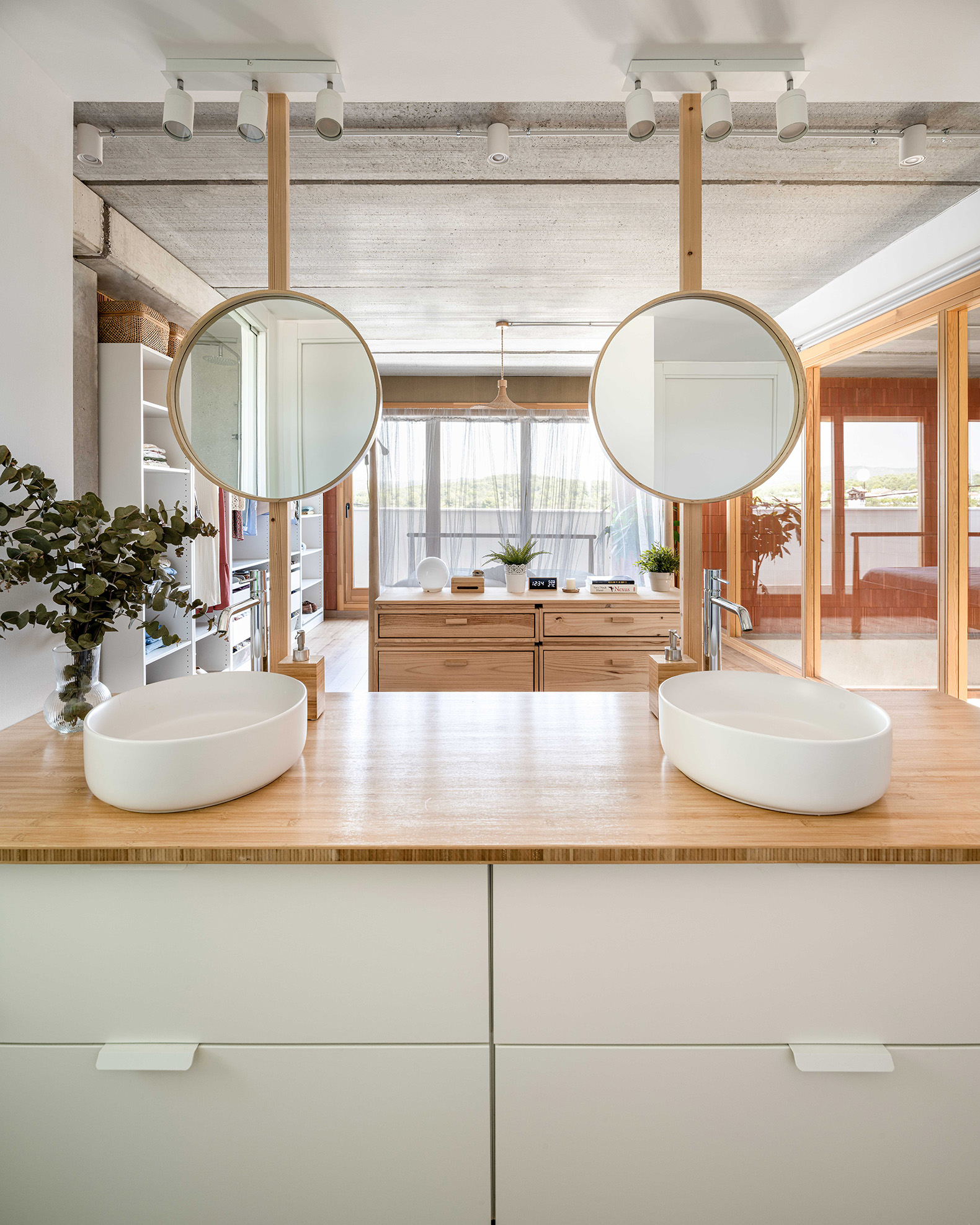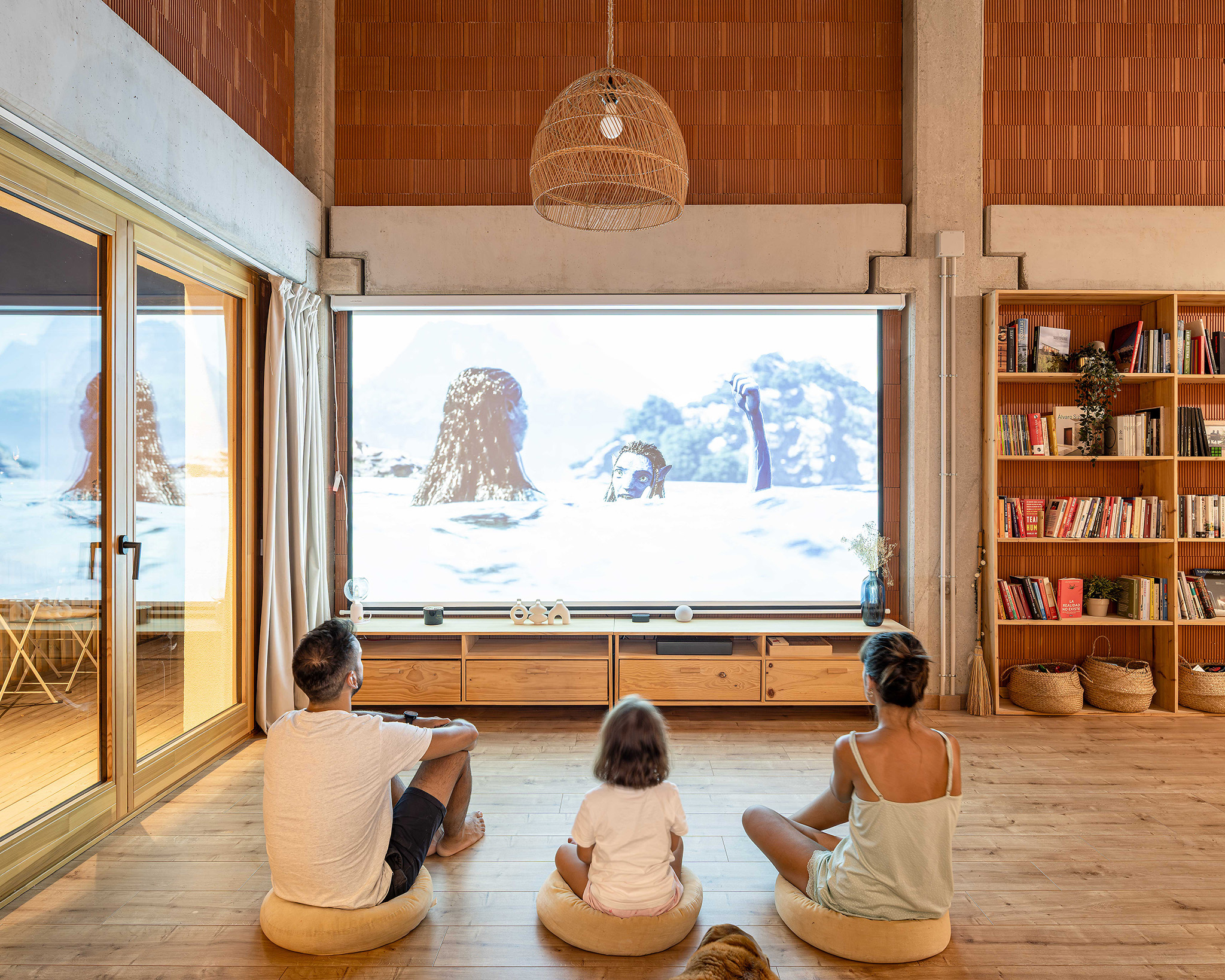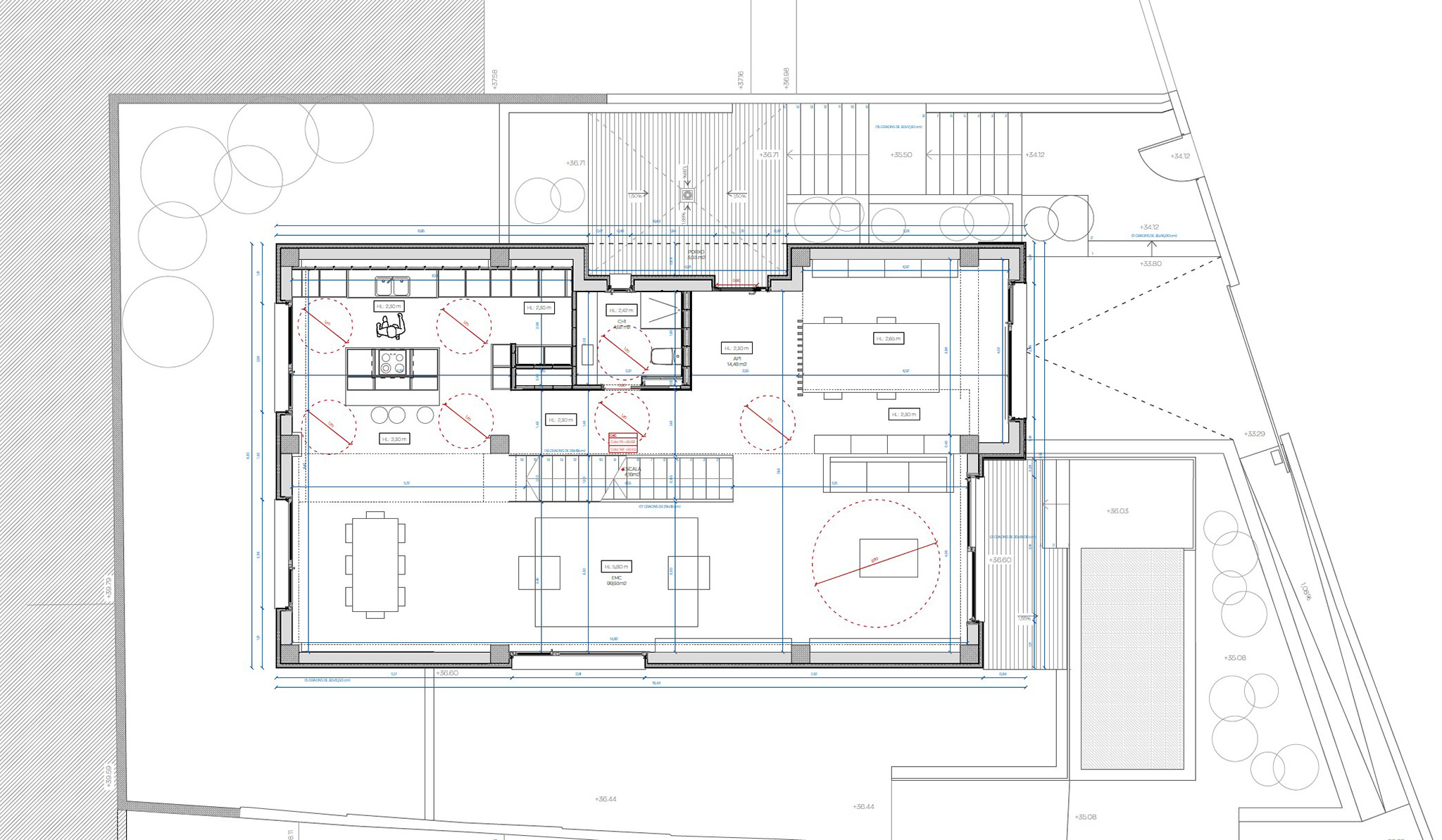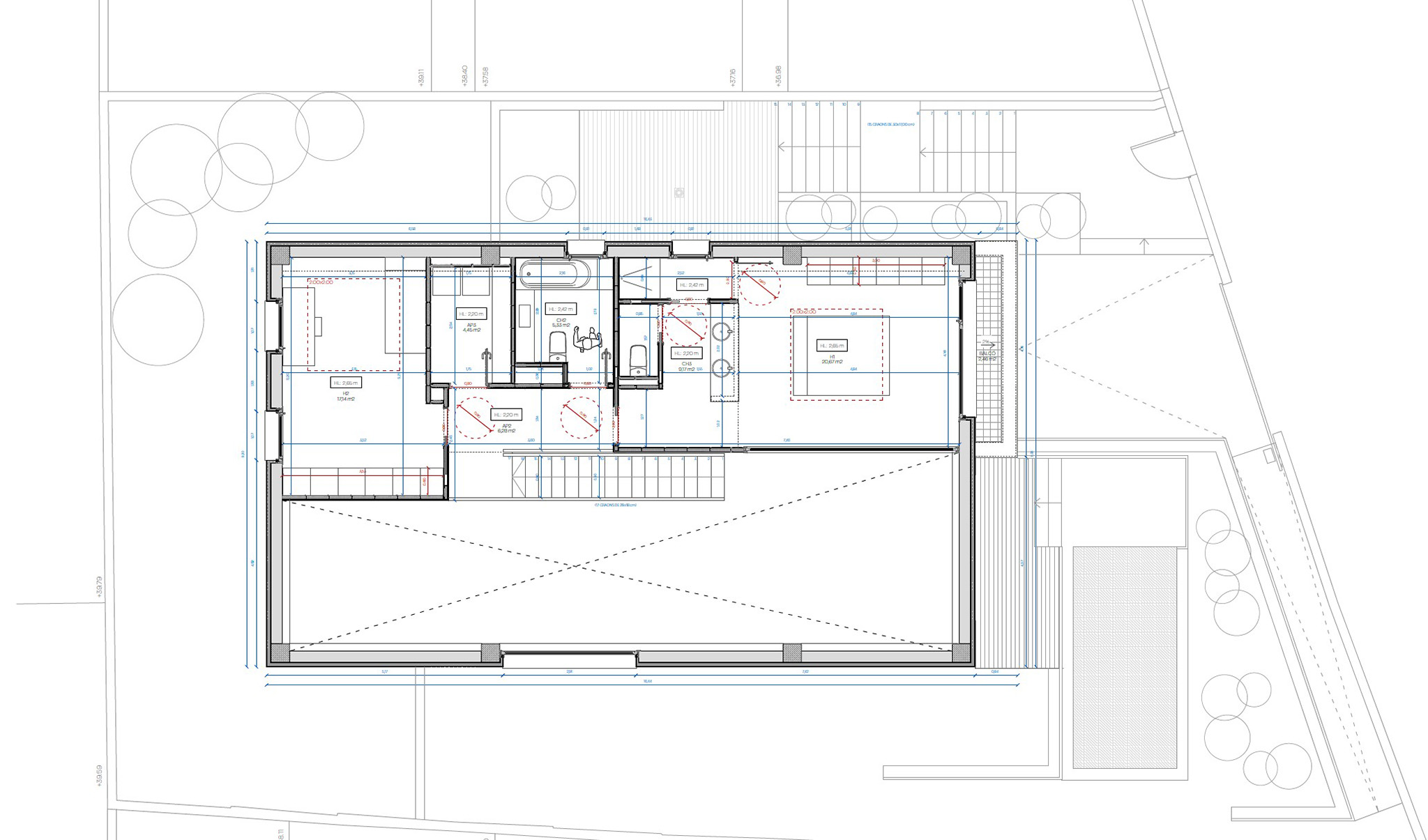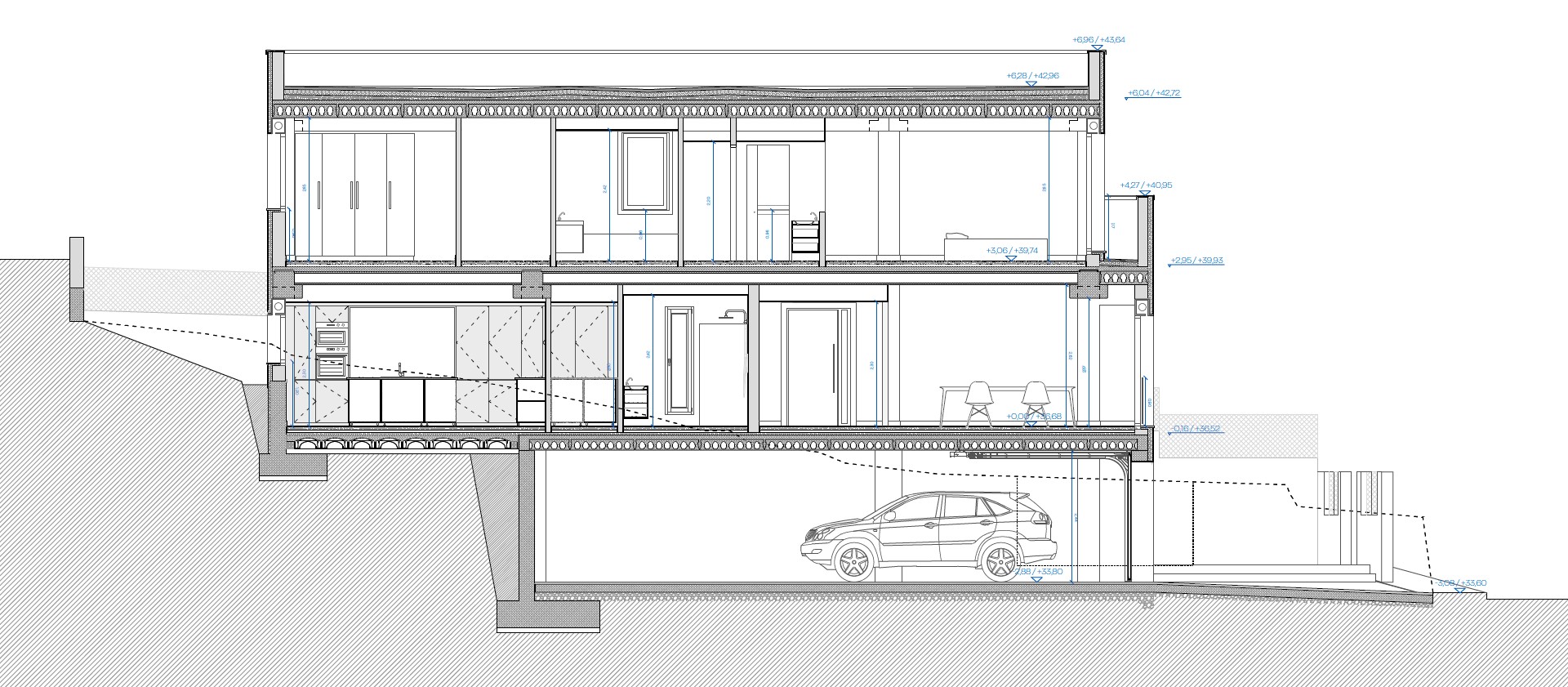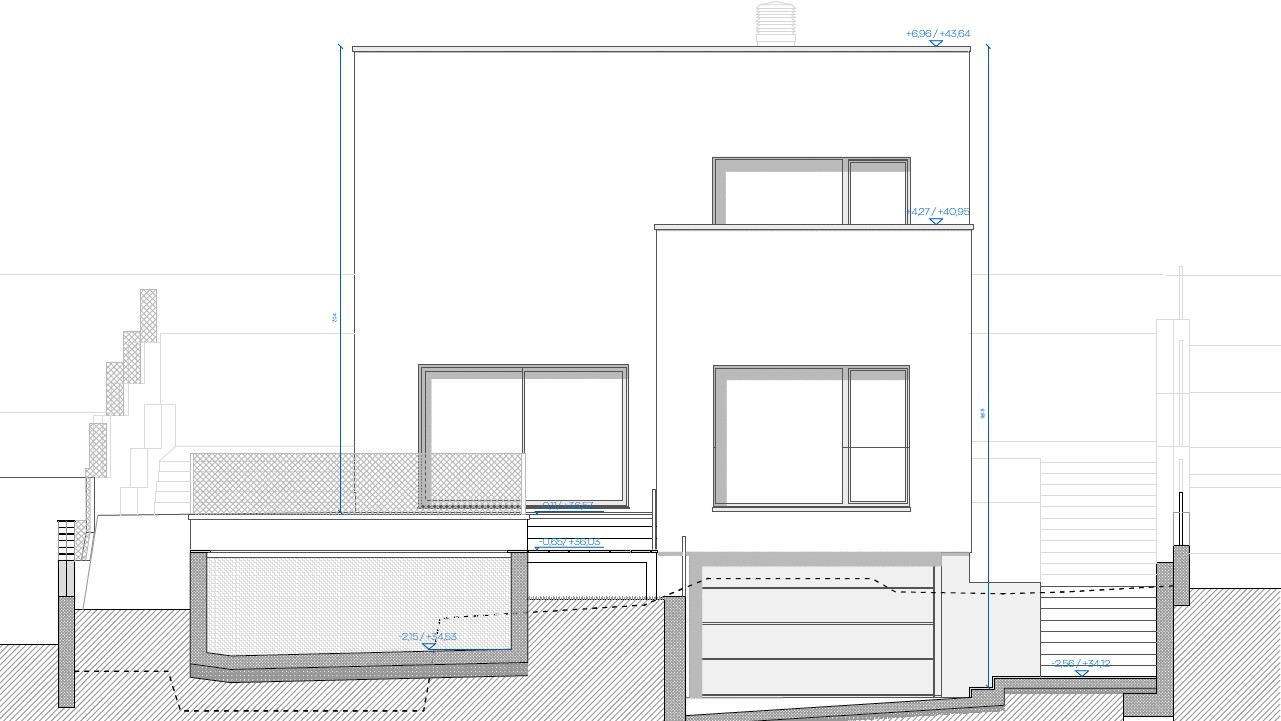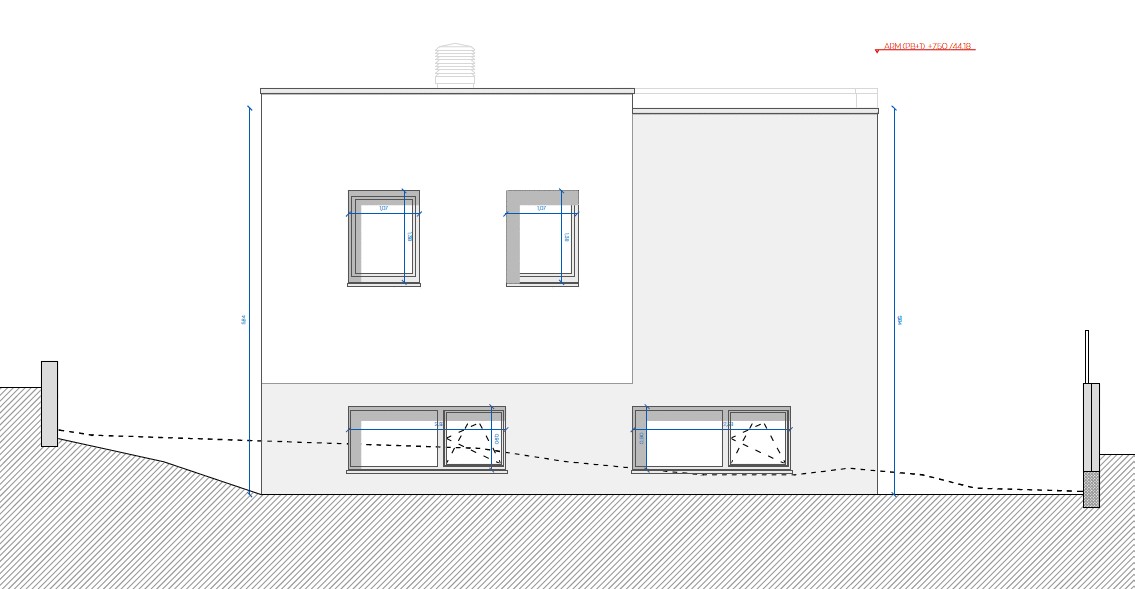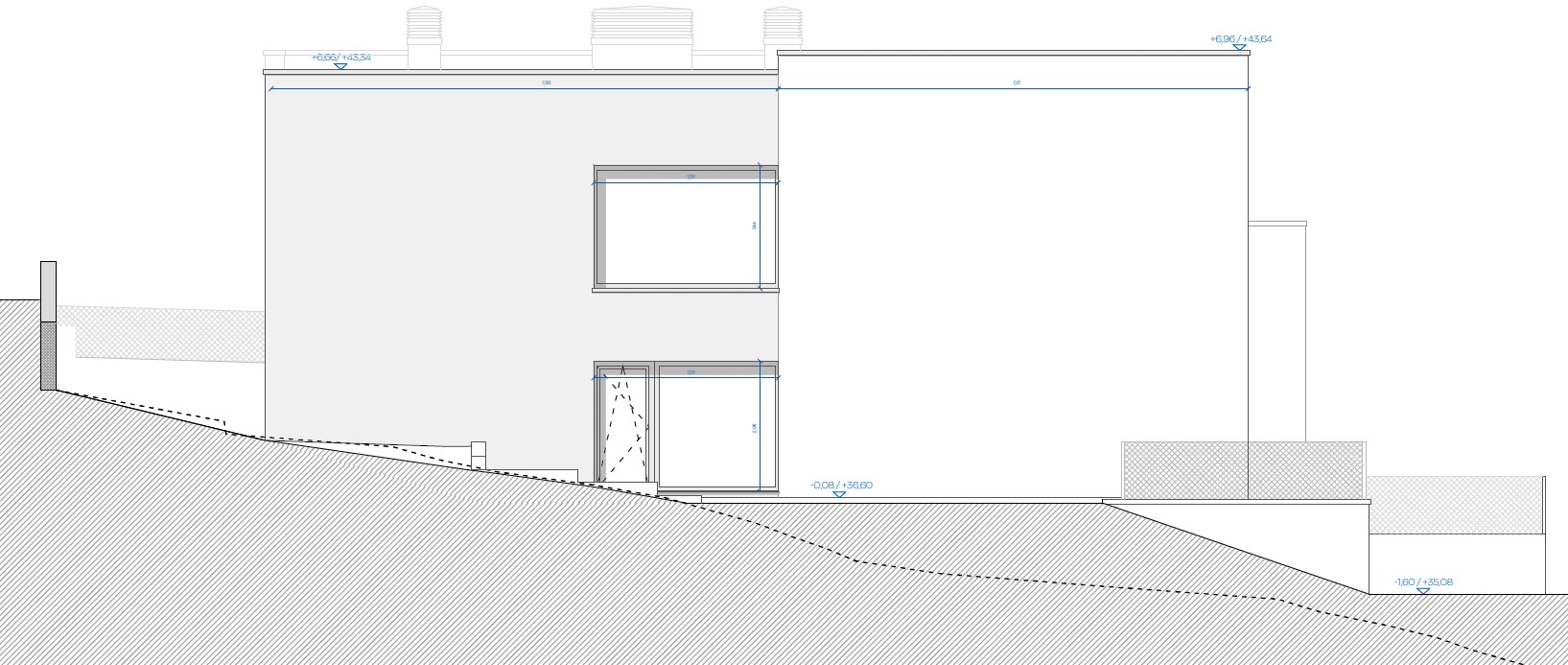
For the interior of Casa Arlo, Luis Royon Barea and Andreu Arévalo Llàcer propose a reversible and adaptable framework, with the entrance threshold on the west façade, where the terrain is less steep. The ground floor, a large, open, and continuous platform, houses the minimalist kitchen, which opens to the rest of the house through a central island. Surrounding the central vertical circulation core, the spatial engine of the house, is a double-height space that houses the living room and library. The permeable upper floor is conceived as a "gallery."
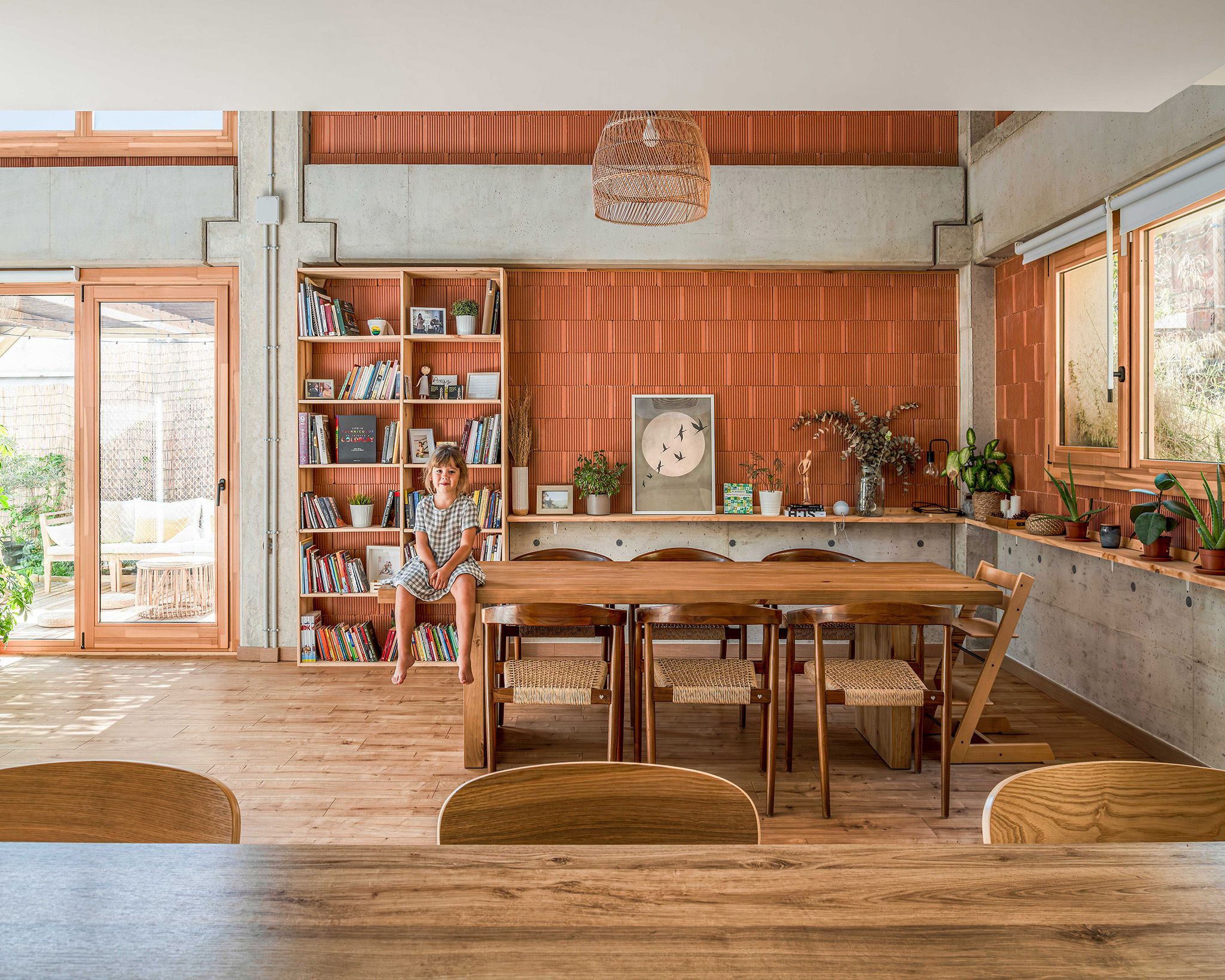
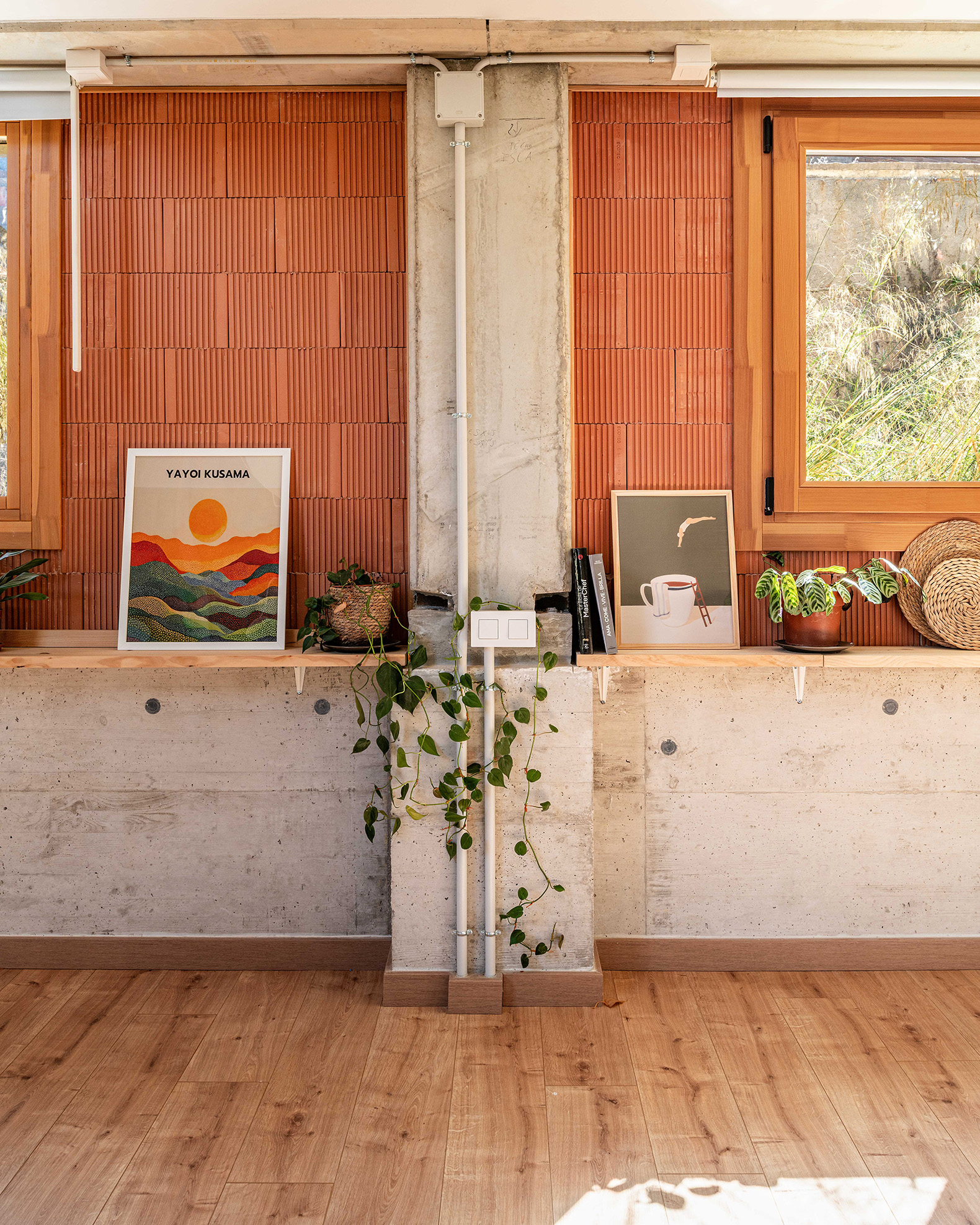
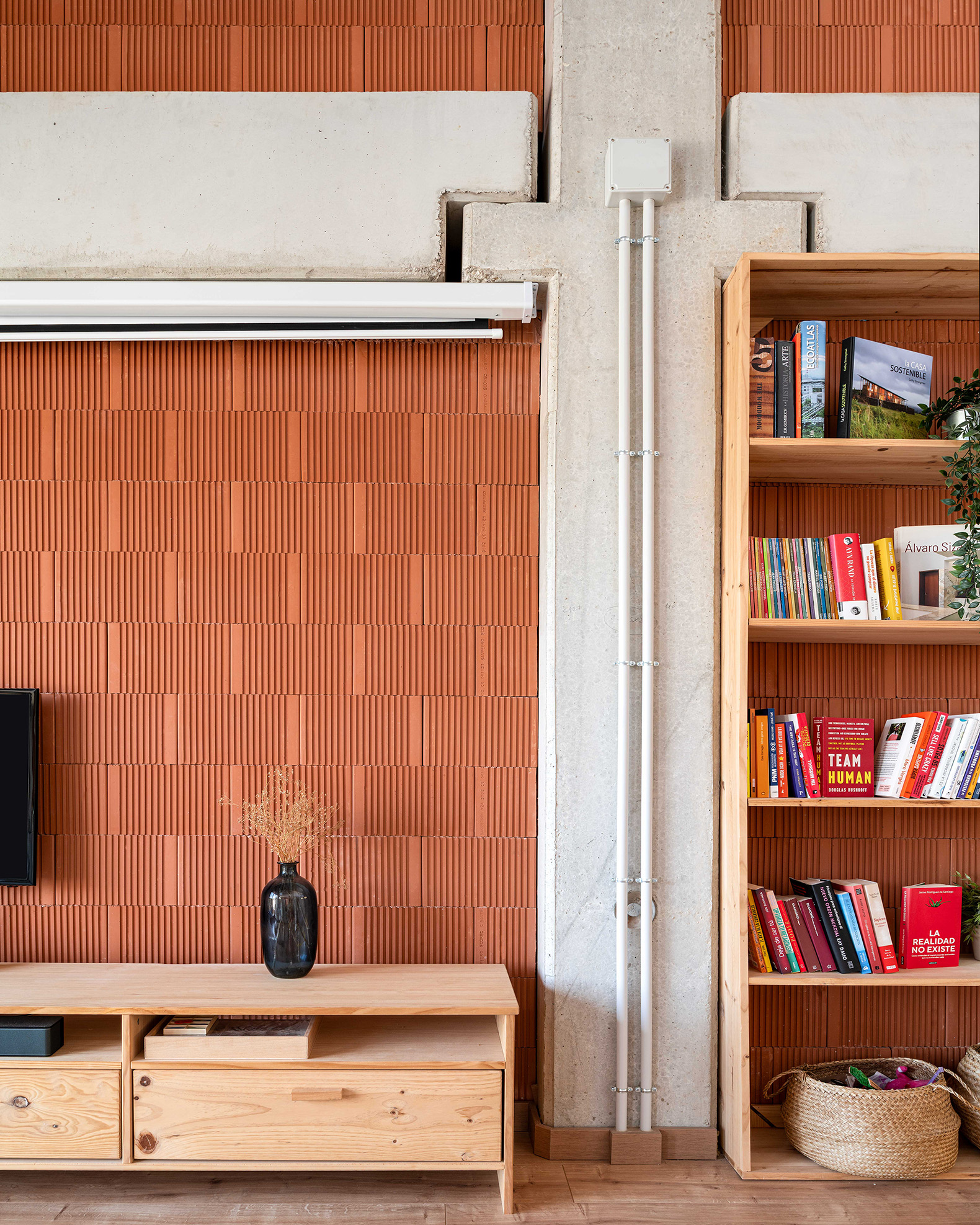
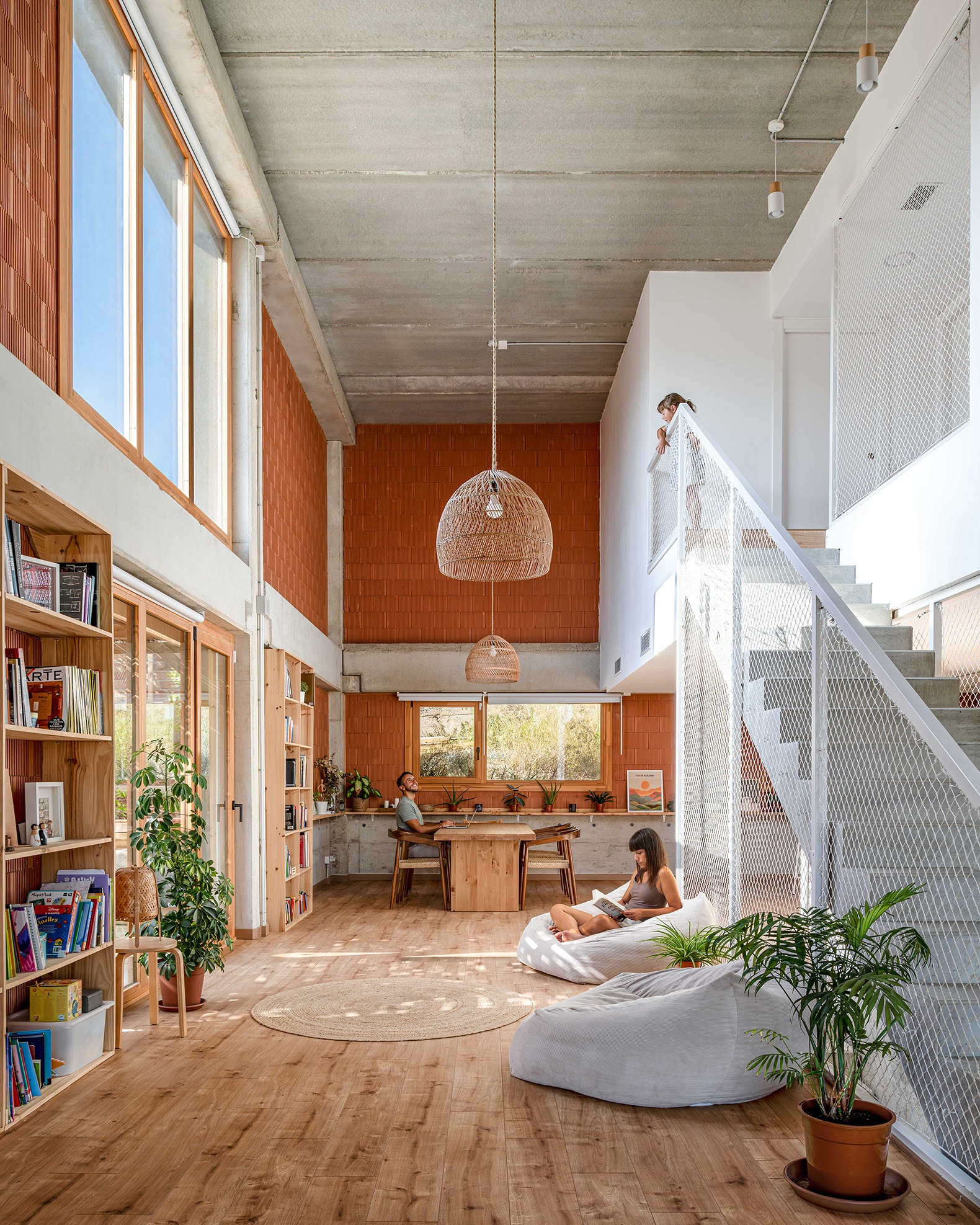
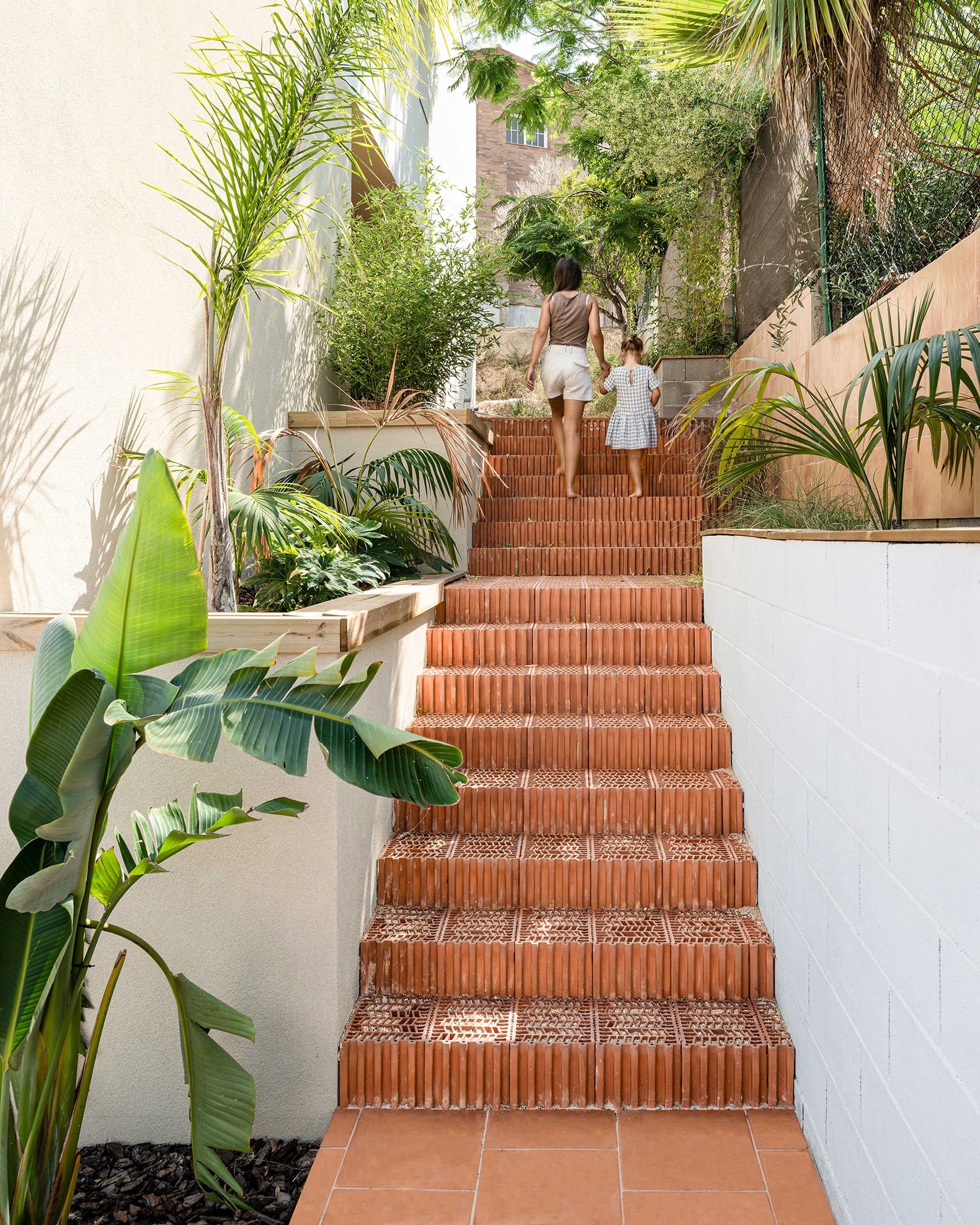
The character of the design lies in its constructive honesty, where each element reveals its inherent nature. The above-ground structure is built using prefabricated modular concrete elements, allowing for dry assembly and complementing the tectonic form of the basement, whose in-situ reinforced concrete walls act as a podium. The interior, with its "warm brutalist" atmosphere, features vertical walls of exposed clay blocks, which lend a ceramic texture to the whole, establishing a dialogue with the solidity of the concrete and the warmth of the wooden floor.
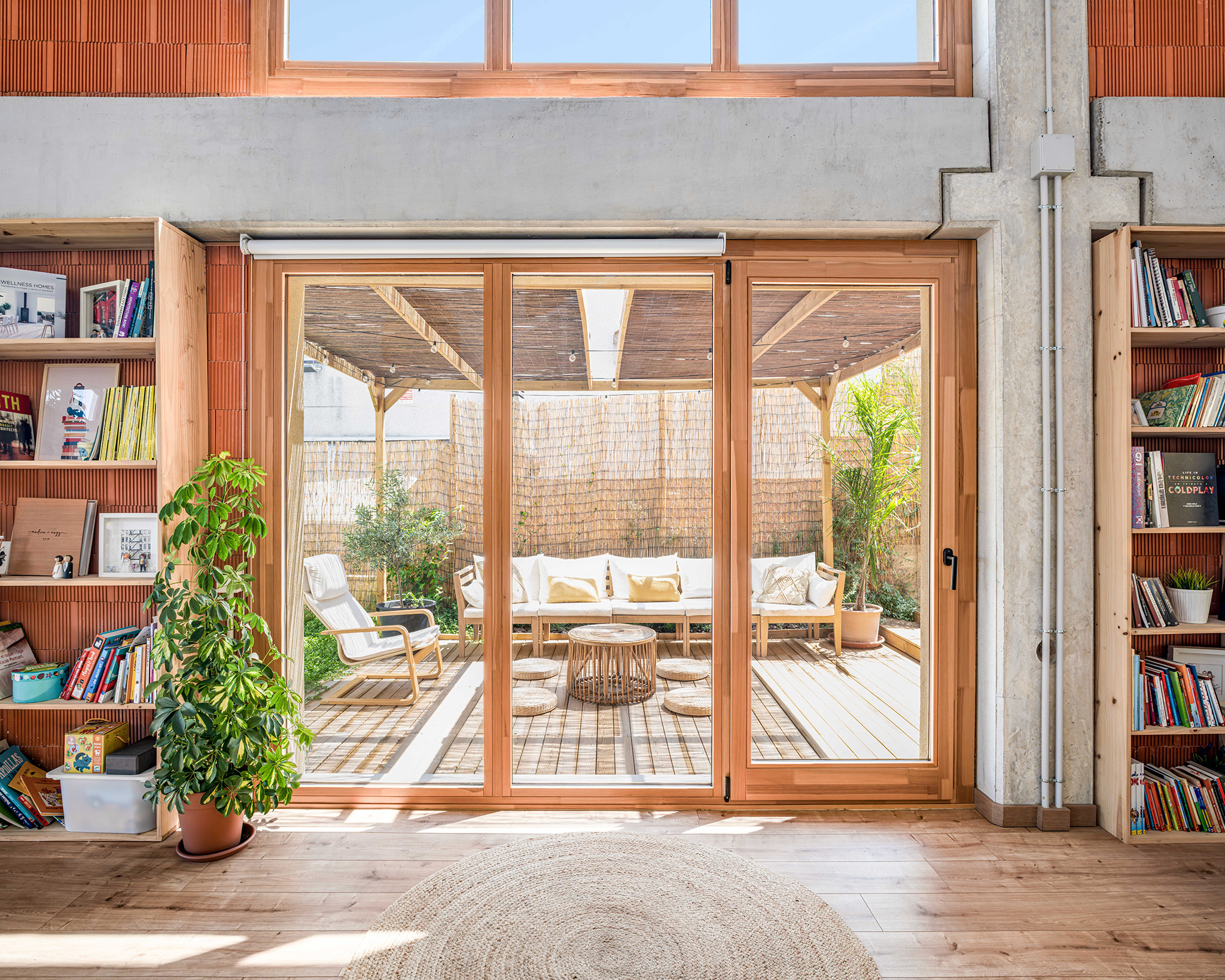
Casa Arlo by Luis Royon Barea + Andreu Arévalo Llàcer. Photograph by Lluís Bort.
Project description by Luis Royon Barea and Andreu Arévalo Llàcer
The Settlement and the Volumetry: The Prism and the Landscape
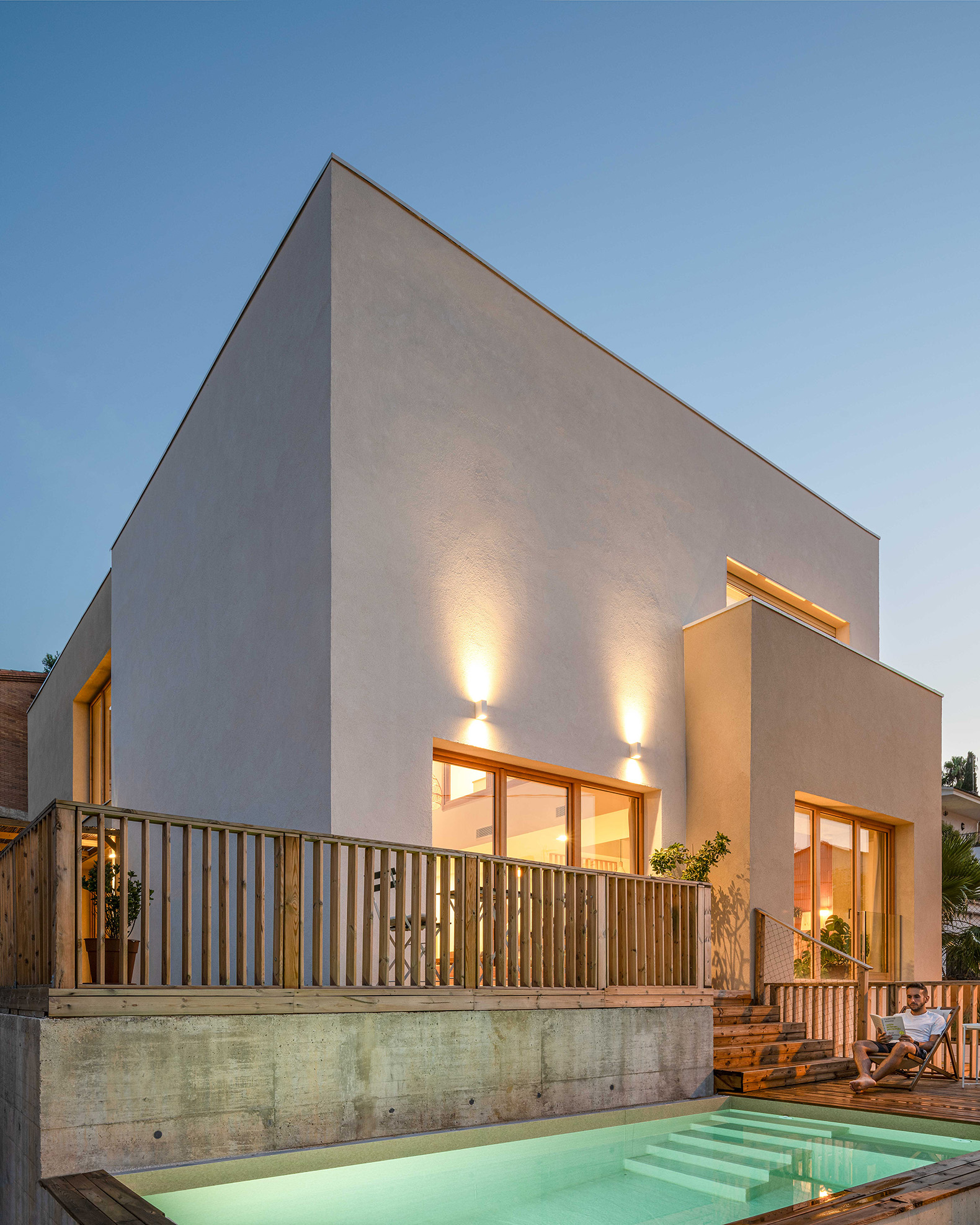
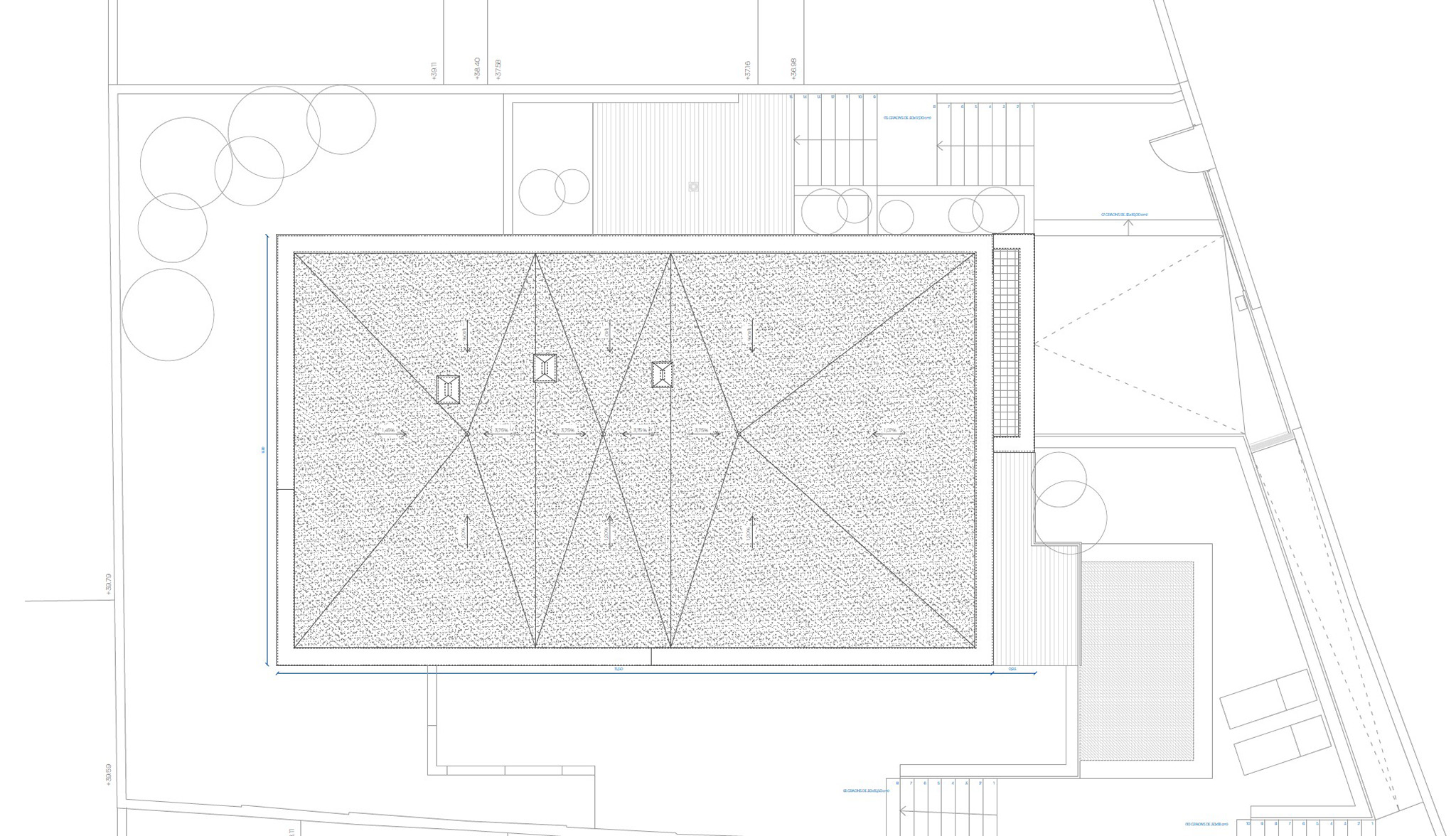
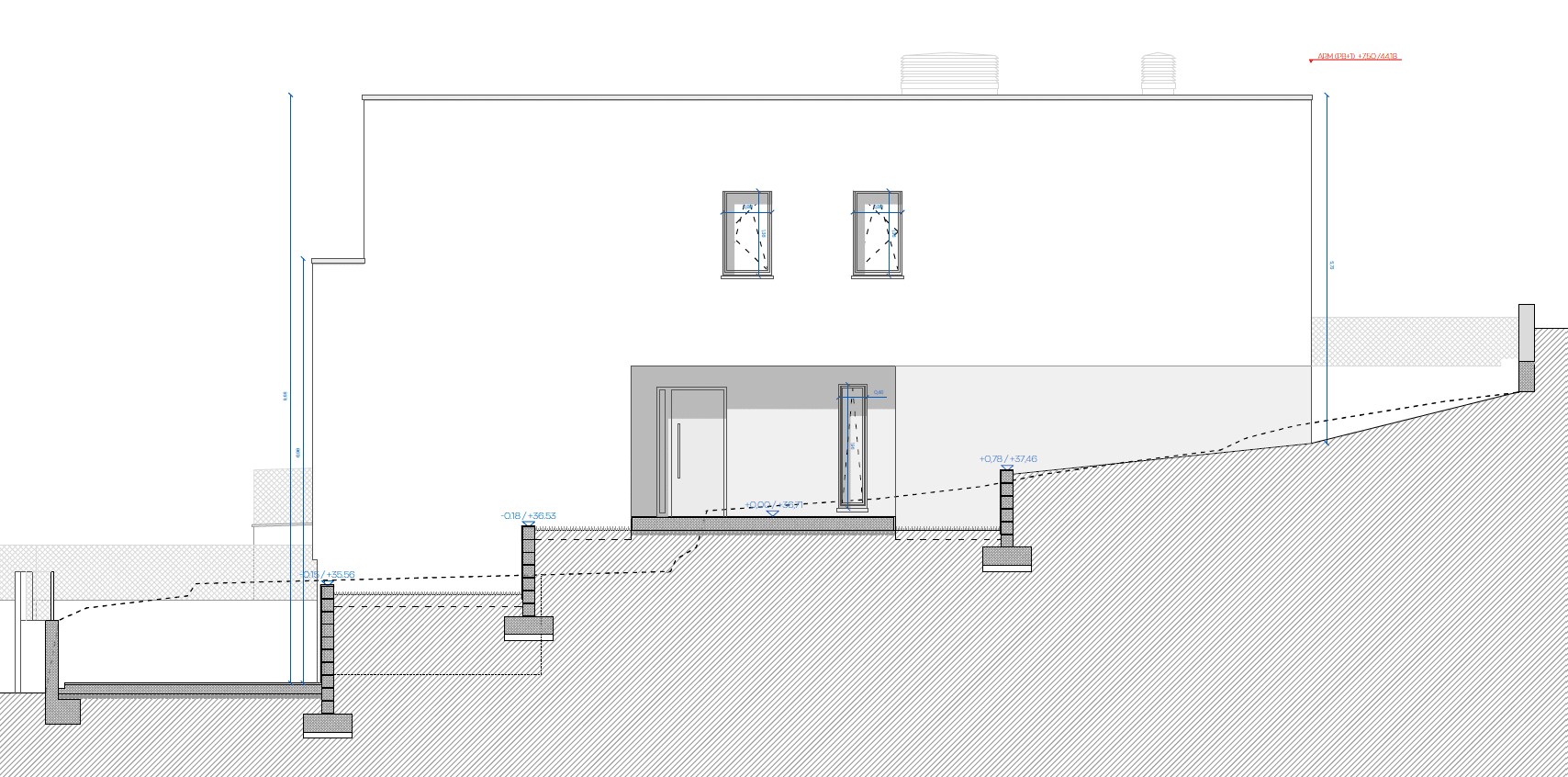
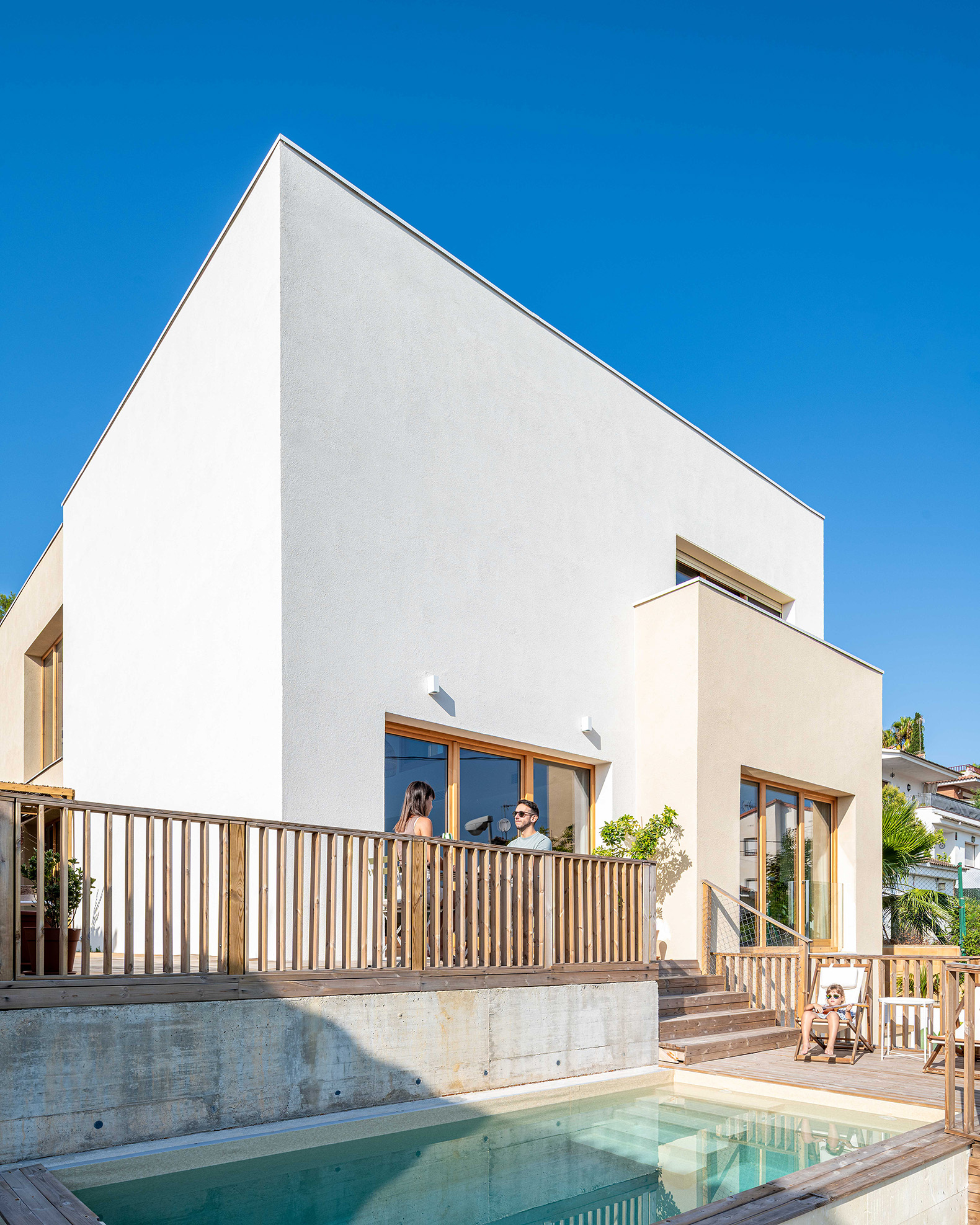
Located in the municipality of Creixell, this single-family dwelling of 310 m² built area presents itself as a decisive exercise in geometric synthesis and topographical integration. The project adopts a pure prismatic volumetry that settles subtly into the natural terrain; the ground floor level is positioned at the parcel’s centre of gravity, minimising the impact on the original profile of the surroundings. Regulatory set-backs define the footprint of a monolith that engages with Mediterranean light through a forceful formal clarity.
From the exterior, the immaculate white of the façade acts as a canvas that captures the solar nuances throughout the day. This monolithic purity is strategically interrupted by large openings, whose generous natural timber frames introduce a warm counterpoint and establish a direct visual dialogue between the interior refuge and the natural surroundings.
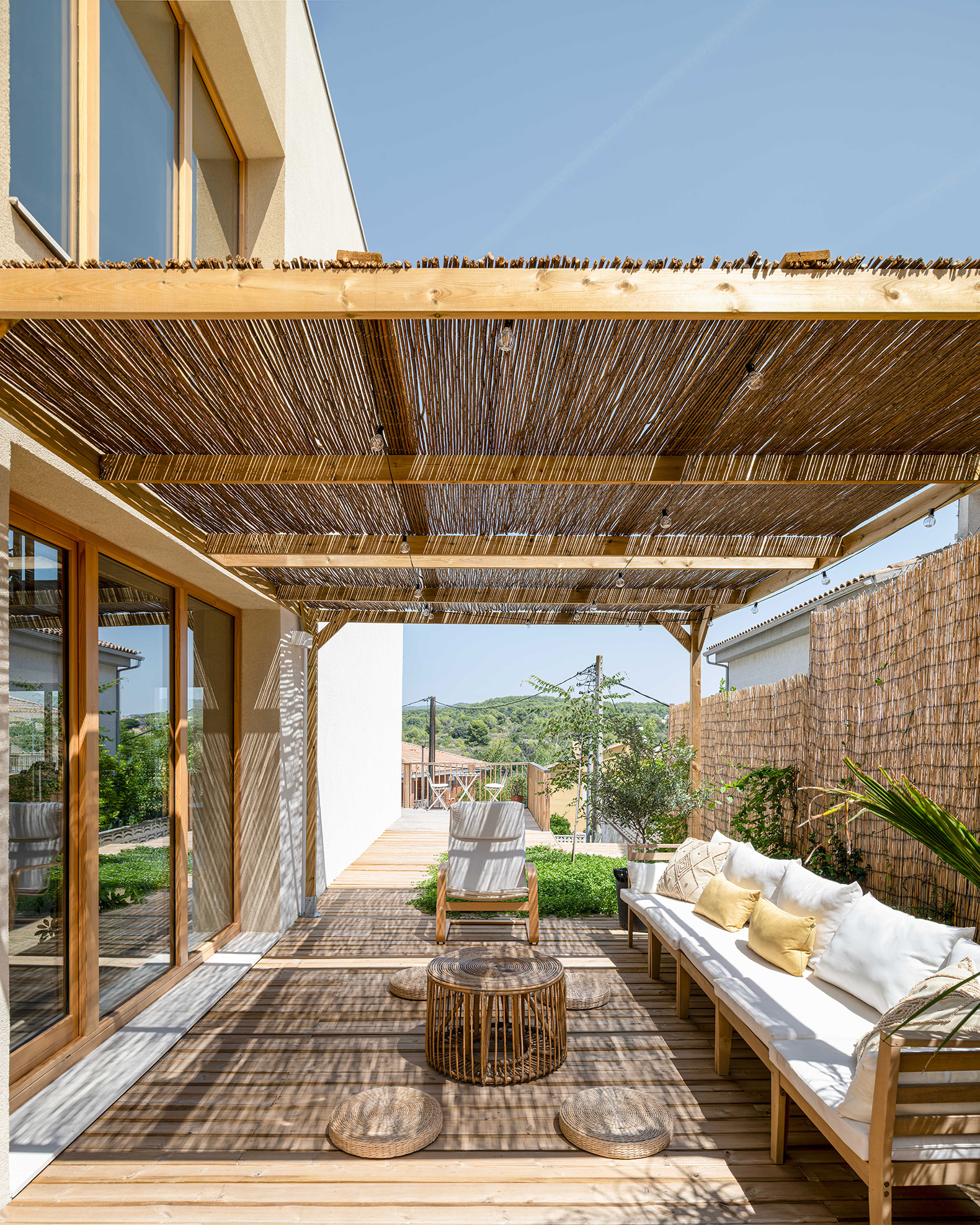
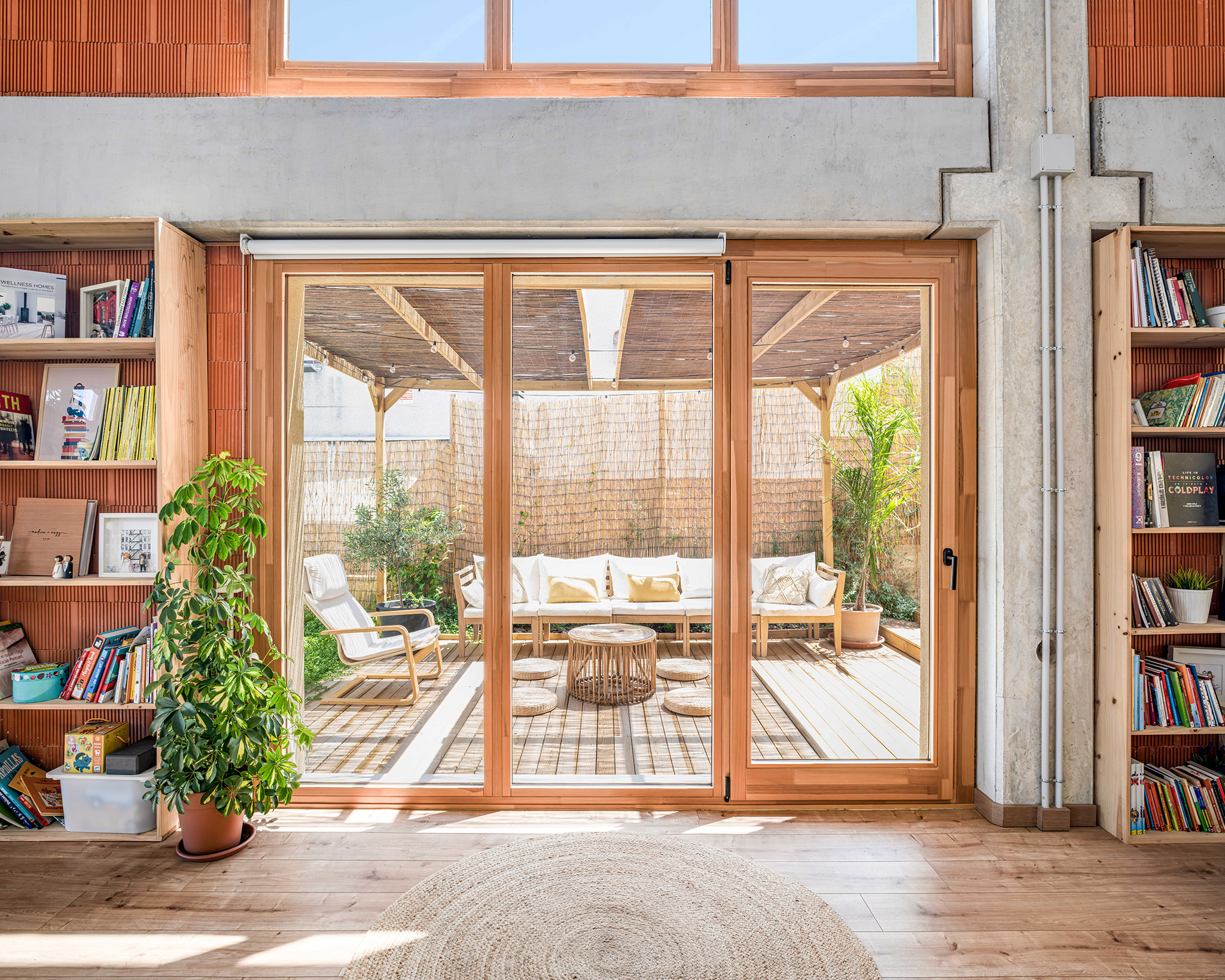
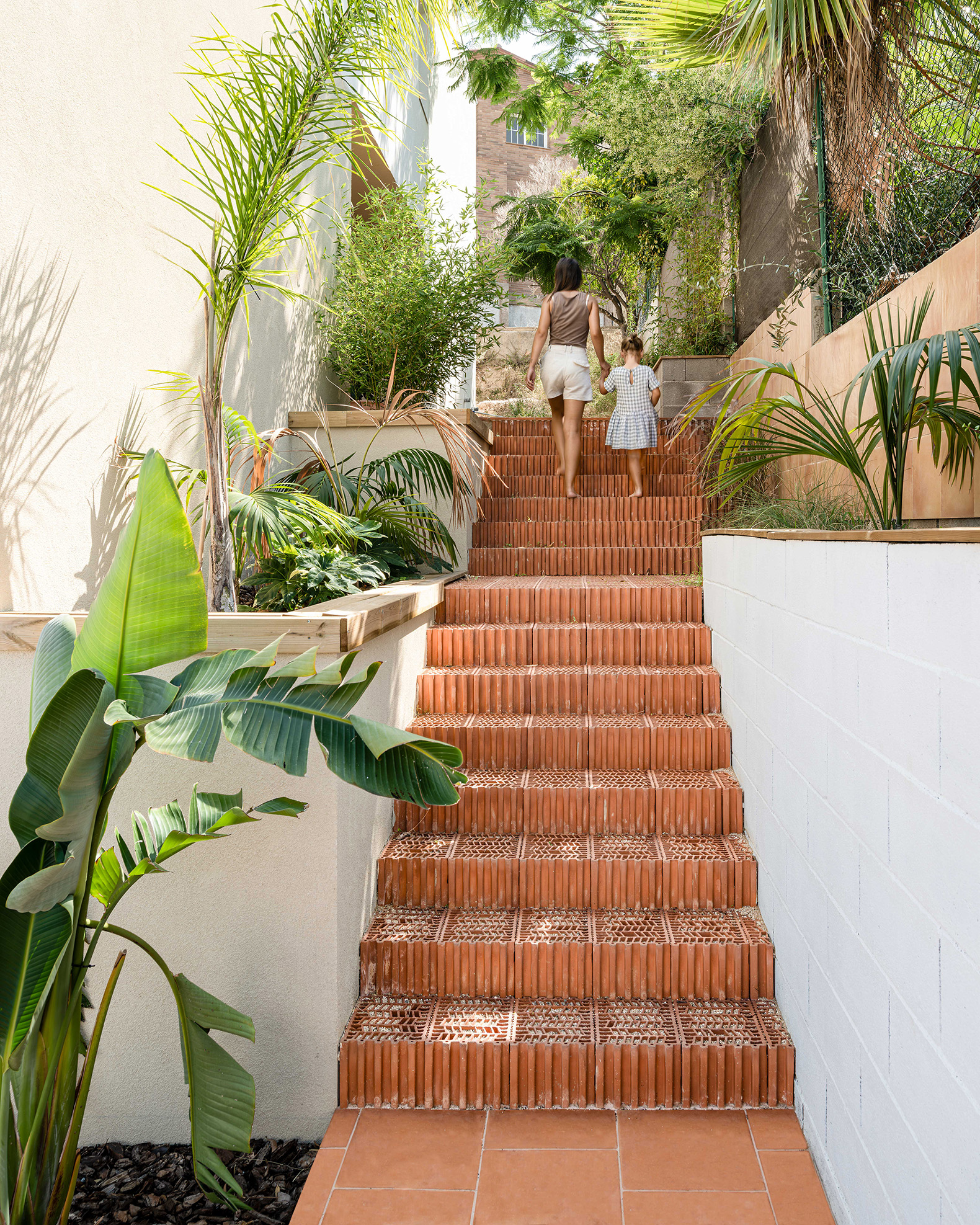
The building’s grounding is resolved through an exposed concrete plinth that absorbs the site’s slope. Over this tectonic base, and occupying the peripheral free strip, an exterior zone designed for slow enjoyment unfolds. At the corner opposite the main access—taking advantage of the plot geometry to secure a generous position and optimal solar exposure—a timber deck platform is located, integrating a swimming pool of refined architectural lines. Adjacent to it, a lightweight pergola structure topped with reed screening acts as a bioclimatic filter, tempering the light and projecting a dynamic play of shadows onto the glazed enclosures.
Structural Logic and Material Honesty: Clay, Concrete and Timber
The true character of the work lies in its constructive honesty and in a rigorous structural hybridisation in which each element expresses its inherent nature. The project rejects superfluous cladding and the stereotype of conventional residential architecture in order to reinterpret the language of prefabricated construction, exposing the building’s structural "skin."
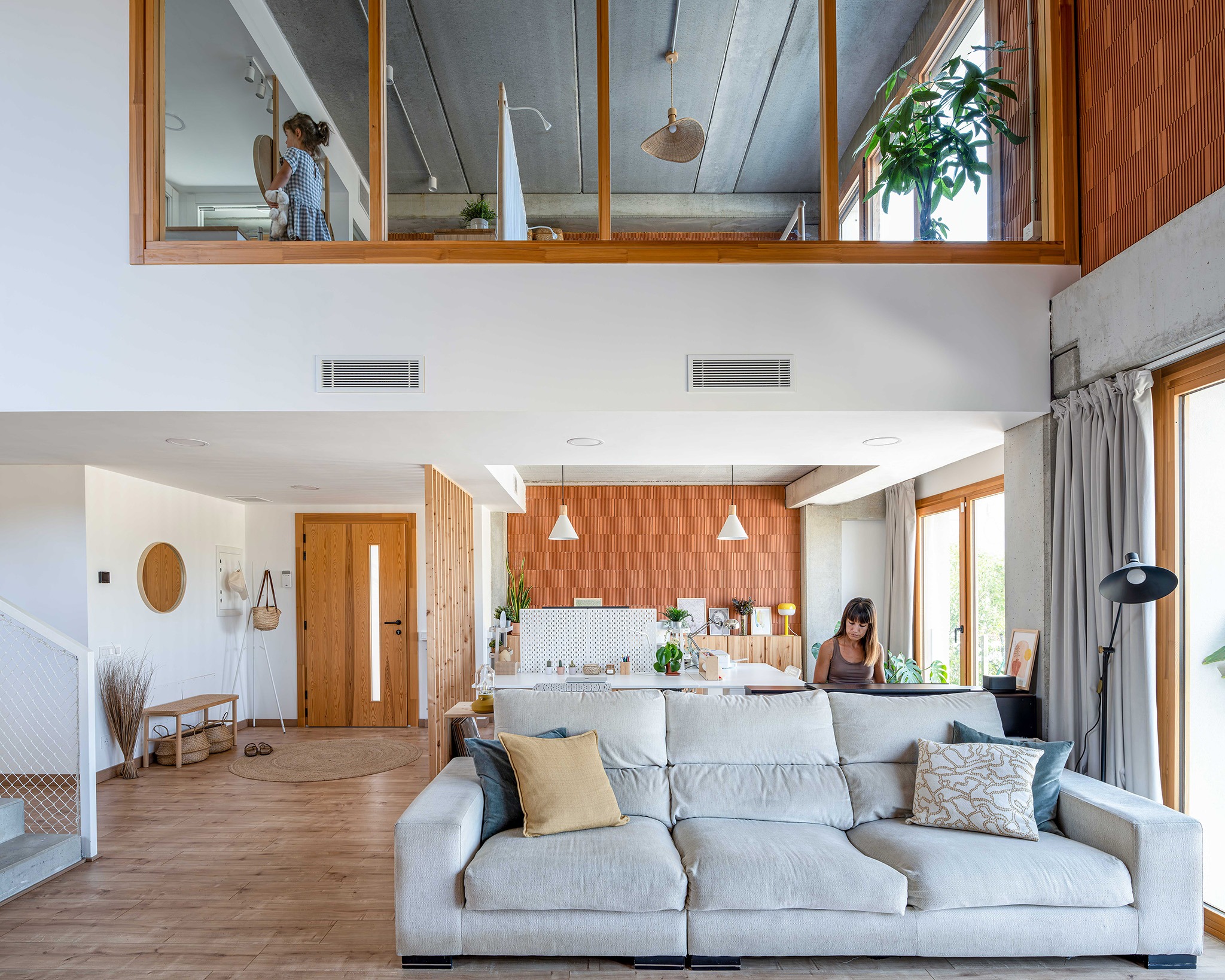
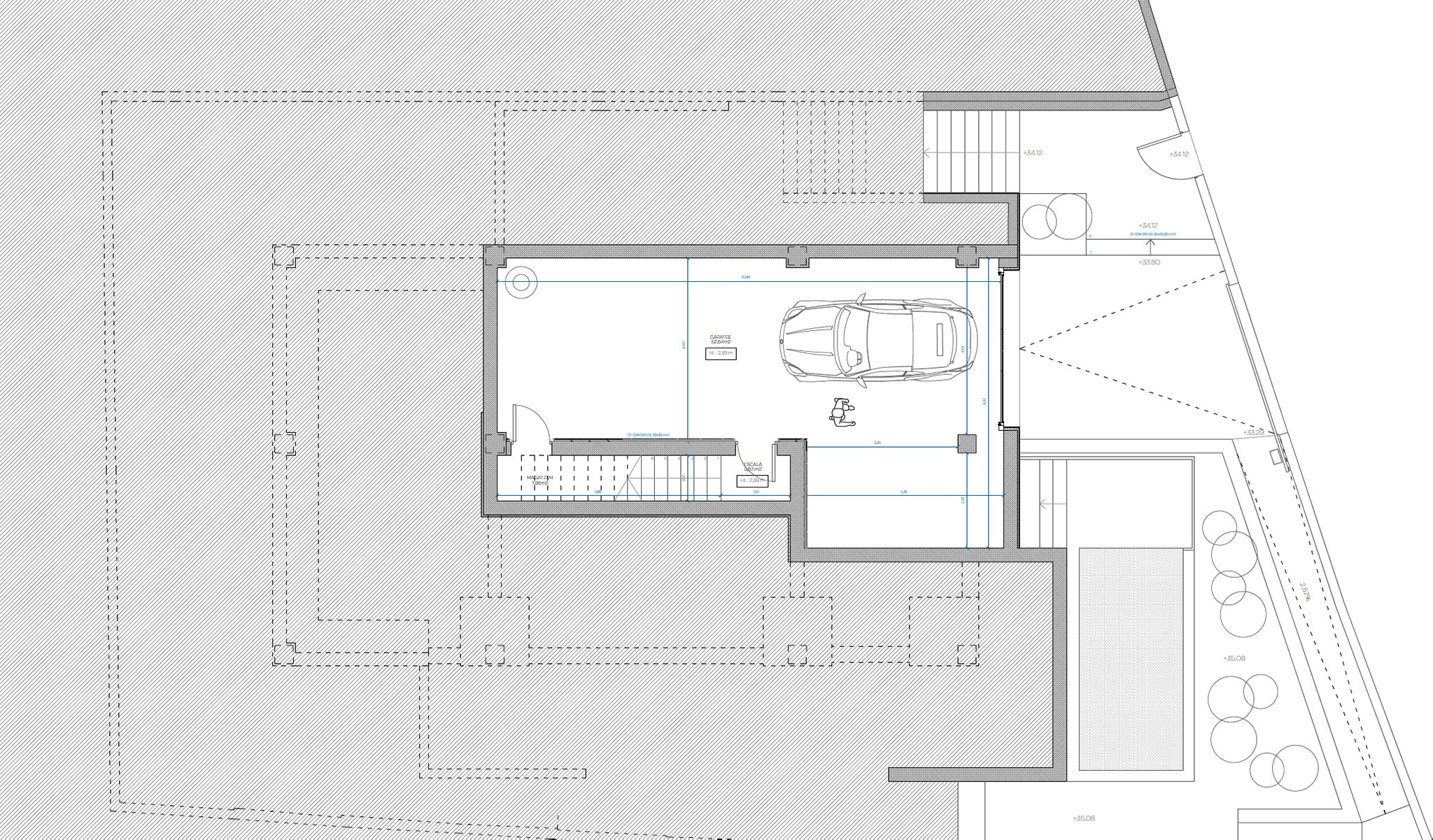
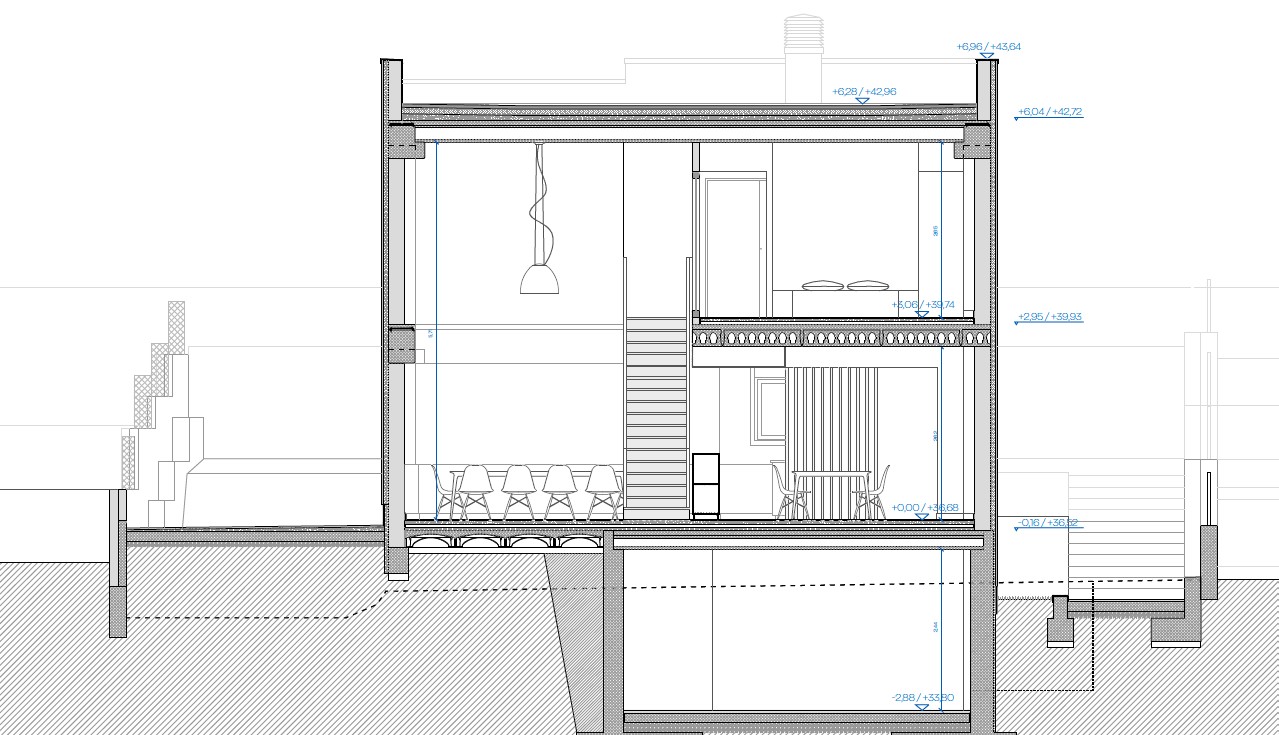
The vast majority of the aerial structure is resolved through precast concrete elements, a modular system that provides precise metrical order, optimisation of means and a refined industrial aesthetic. This dry assembly logic contrasts with and is tectonically complemented by the basement level, where the retaining walls confining the terrain are executed in situ in reinforced concrete. This subterranean level not only absorbs the mechanical earth pressures of the site but also acts as a technical plinth housing parking and the centralisation of the dwelling’s systems.
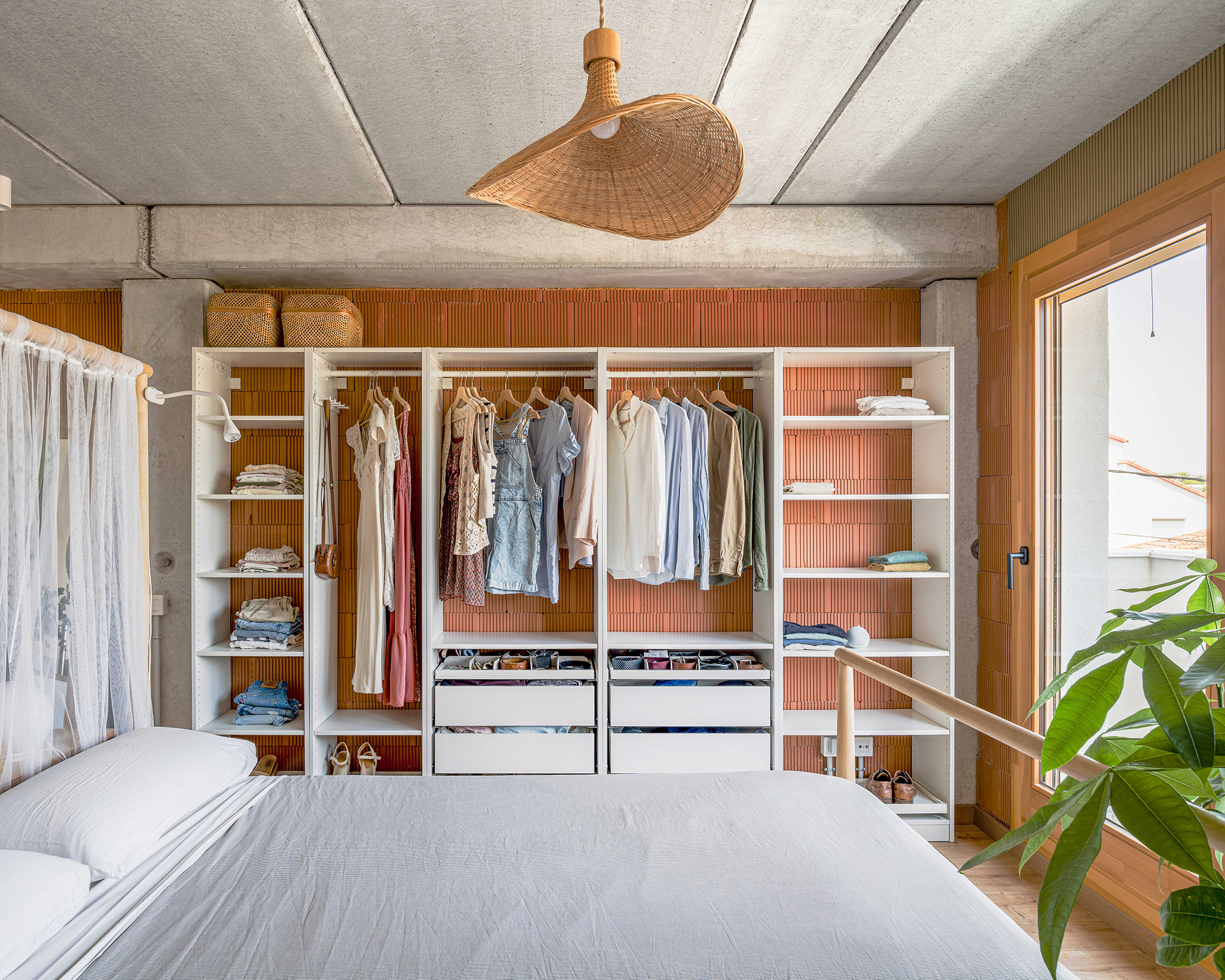
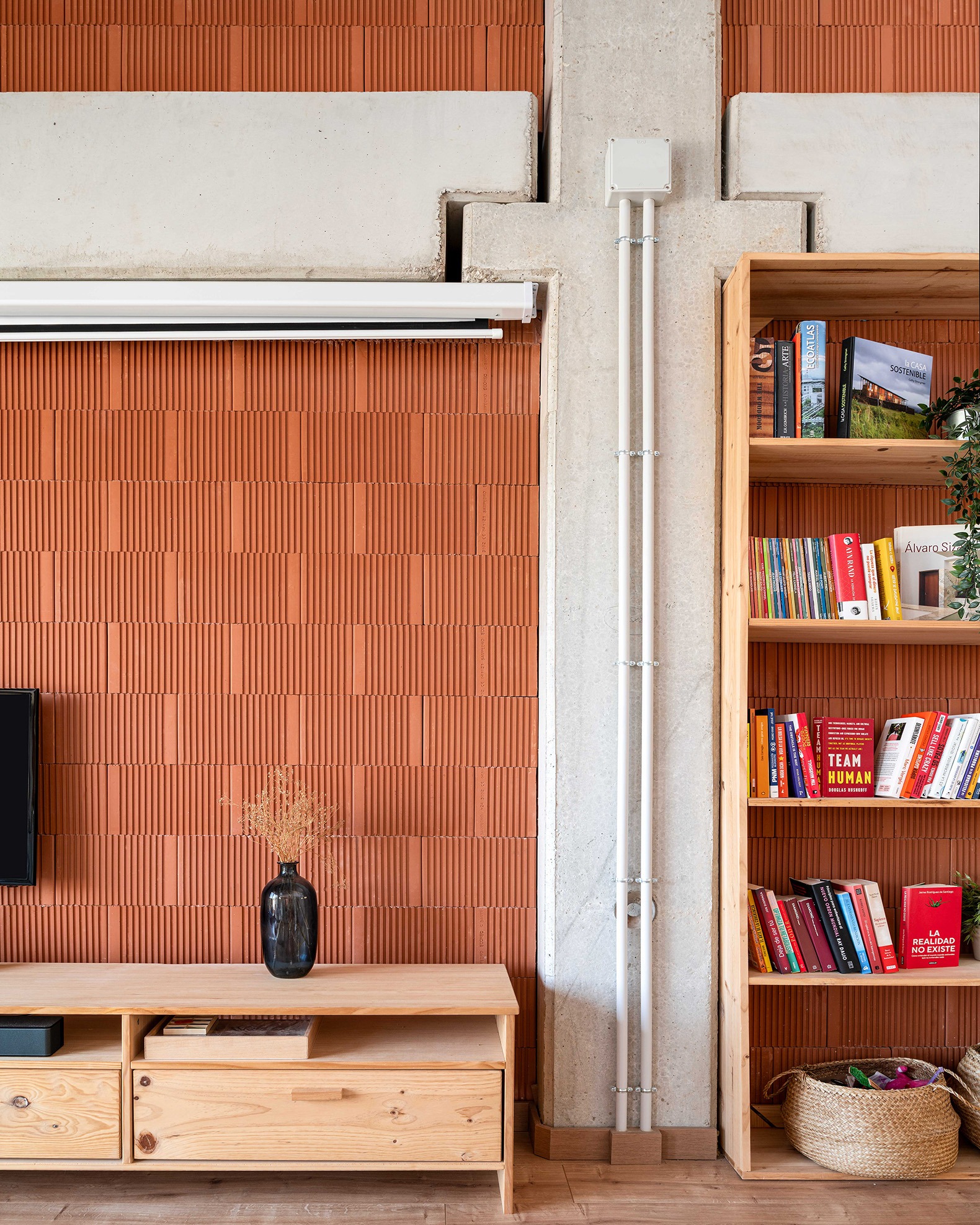
Internally, the material palette is marked by extreme expressive austerity, generating an atmosphere of a warmly toned "warm brutalism". Vertical enclosures reveal the raw finish of exposed hollow clay block, a choice that introduces vibrant geometric richness, terracotta chromatic warmth and significant thermal inertia. This ceramic roughness establishes a perfectly tensioned dialogue with the visual weight of concrete, left raw and unapologetic in the columns and the upper floor slab, and the comfort of the continuous timber flooring.
Spatial Fluidity and Sectional Articulation
The interior of the dwelling is conceived as a reversible and adaptable framework, avoiding static layouts. The main entrance is strategically shifted towards the western façade, taking advantage of the gentler slope of the plot and generating a smooth and contained transition from the street.
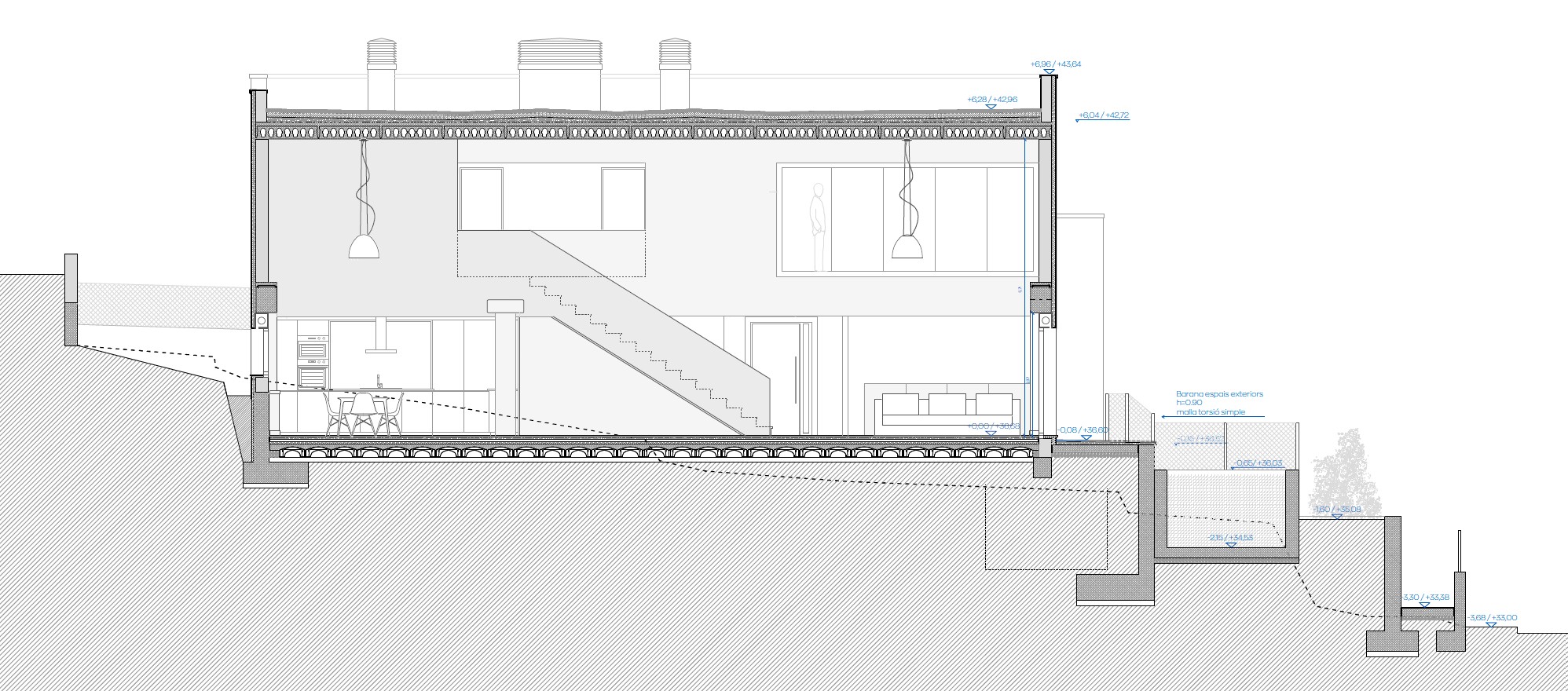
Upon crossing the threshold, the compression of transitional spaces gives way to full expansion in the day area. The ground floor is conceived as a large continuous platform where communal uses flow without physical interruptions. The kitchen, resolved with strict minimalism through smooth white fronts and timber-finished worktops, opens onto the rest of the dwelling via a central island that fosters sociability along the longitudinal axis of the project.
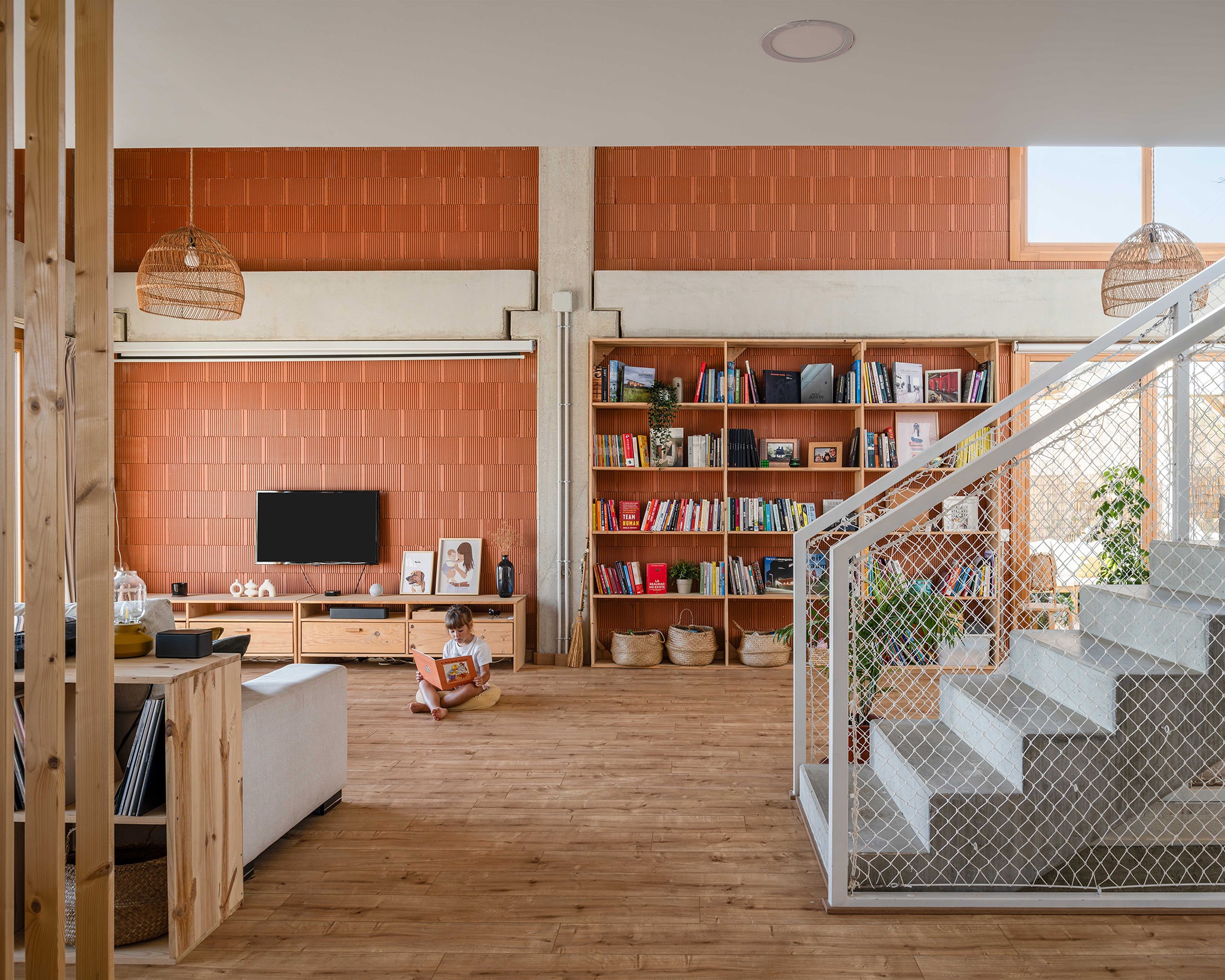
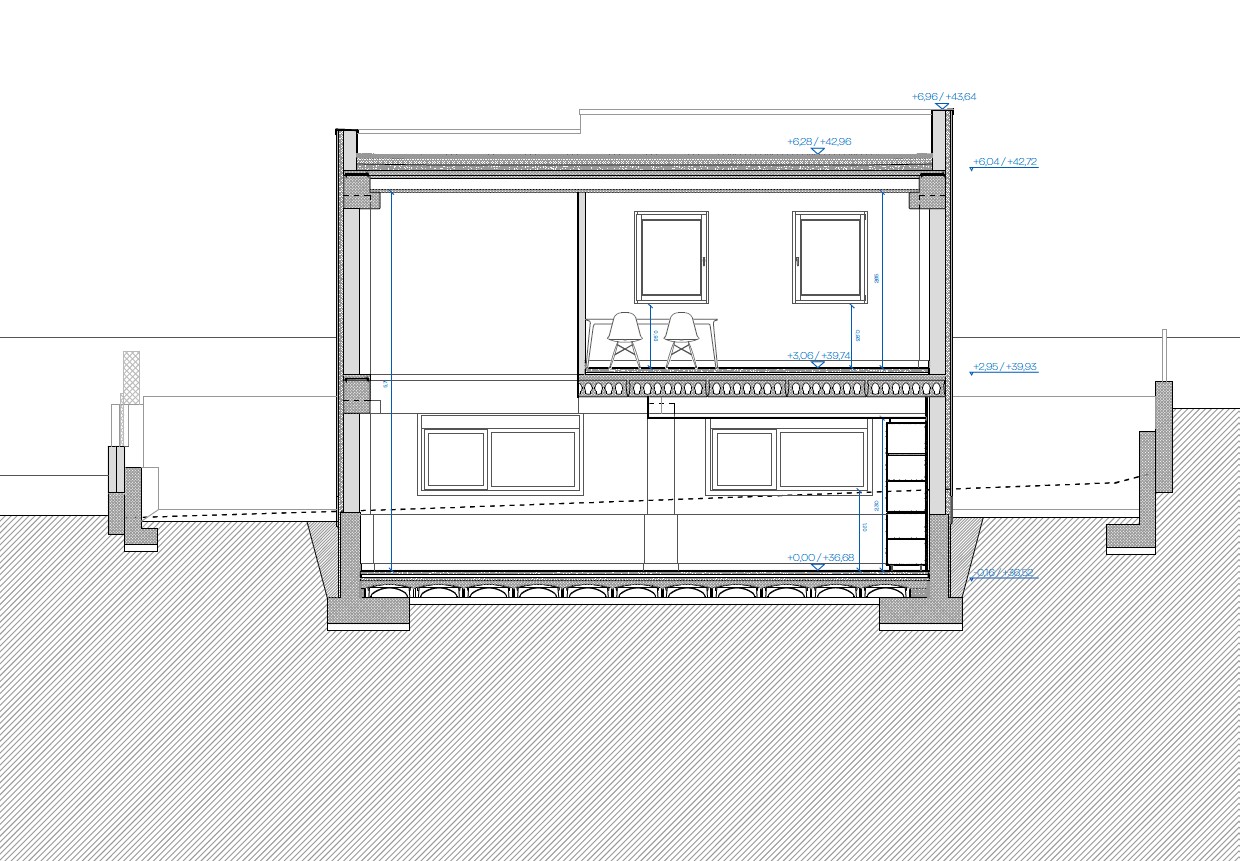
Pivoting around a central vertical circulation core, the true spatial engine of the house is found: an imposing double-height space accommodating the living room and library. This sectional void connects the two main floors and not only enhances spatial perception but also acts as the structuring axis of light and cross-views. It functions as a thermal and luminous regulator, flooding the ground floor with natural light through upper openings. Beyond its aesthetic value, the architecture is governed by strict passive criteria: it benefits from cross-ventilation thanks to the opposite arrangement of its openings, and its orientation ensures optimal direct sunlight in the main living space during the winter solstice (between 10:00 and 12:00 solar time), optimising thermal gains.
Circulation and Visual Permeability
Vertical circulation is resolved through a concrete staircase which, far from being a heavy element, is visually lightened by its enclosure: a white metal mesh (net-type) that simultaneously acts as a structural safety element and as a visual filter that does not interrupt the passage of light.
On the upper floor, spatiality is conceived under the concept of a "gallery." The distribution corridor overlooks the living room void through large timber-framed glazed openings, functioning as an interior viewpoint. This visual permeability allows the private programme (comprising two bedrooms with a relaxed aesthetic, natural textiles and a small exterior balcony) to participate in the magnitude of the double-height space, ensuring that light and views traverse the house from end to end.
Conclusion
This dwelling is a manifesto of restraint and expressiveness. Through a reduced and raw material palette, and a masterful command of proportions, the project succeeds in transforming basic construction elements into finishes of high aesthetic value. The spatial experience is sustained by the tension between structural order and the freedom of inhabitation, between the prefabricated component and the singular lived experience, creating a home that breathes calm, light and architectural truth.