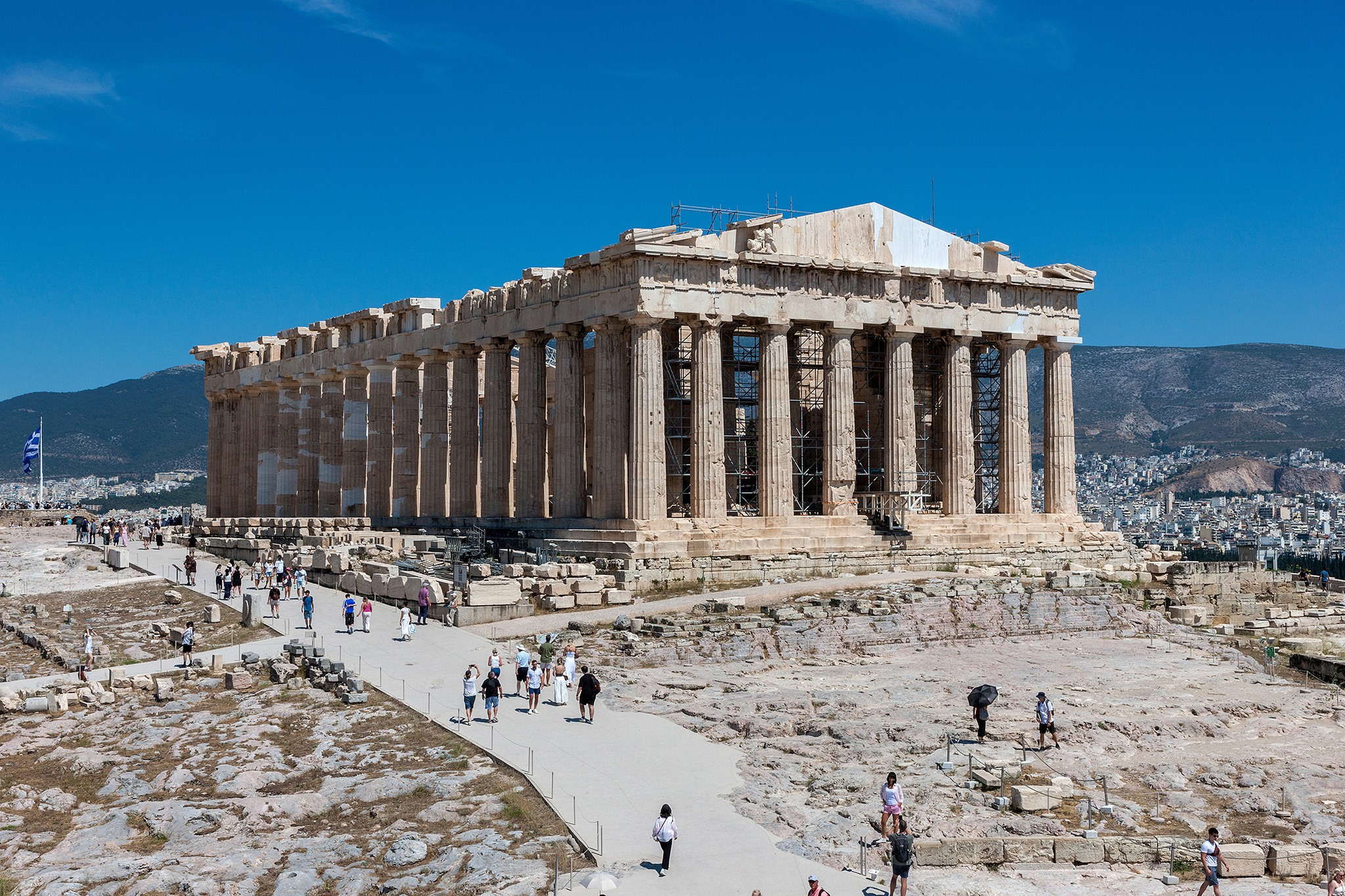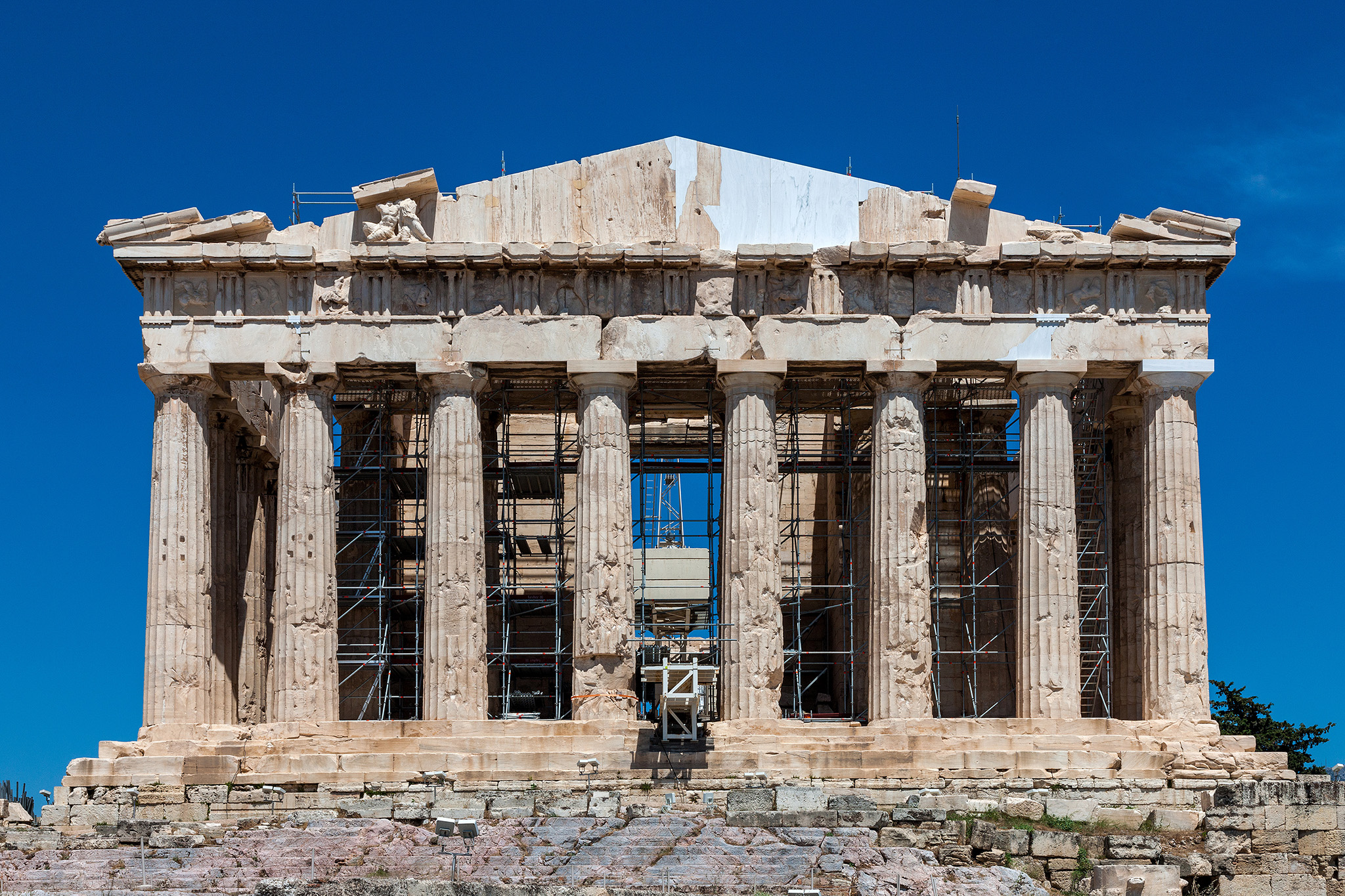
Some 220 years ago, the western front of the Parthenon still retained a more complete architectural reading than later generations of visitors would come to know. Around 1800, before Lord Elgin’s plunder of the Acropolis, the tympanum of the western pediment still preserved the continuity of its orthostates: the large vertical marble slabs that form the triangular background of the pediment. Between 1801 and 1805, Elgin’s agents took to London a substantial part of the surviving sculptures from the Parthenon and other monuments of the Acropolis, in one of the most significant episodes in the modern dismemberment of the ensemble. From that moment on, the western front became associated with a history of voids, material losses and patrimonial fragmentation that the current restoration now allows to be read again from the monument itself.
The current intervention has focused especially on the western pediment, whose recovery represents one of the most technically delicate works undertaken in recent years by the Acropolis Restoration Service (YSMA). The operation required procedures of great precision, both in the preparation of the new marble and in the transport, lifting, adjustment and installation of the pieces on the historic structure.
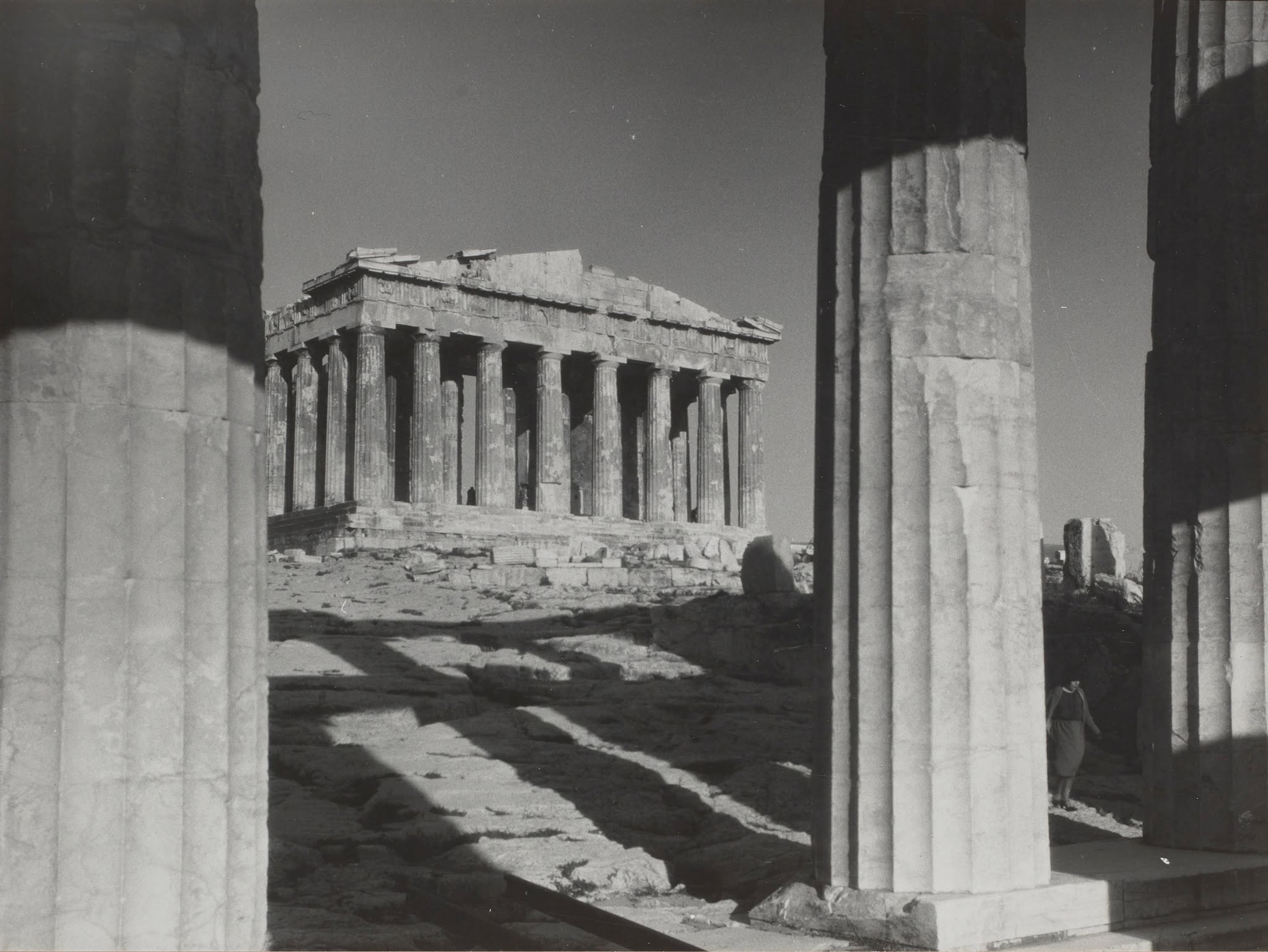
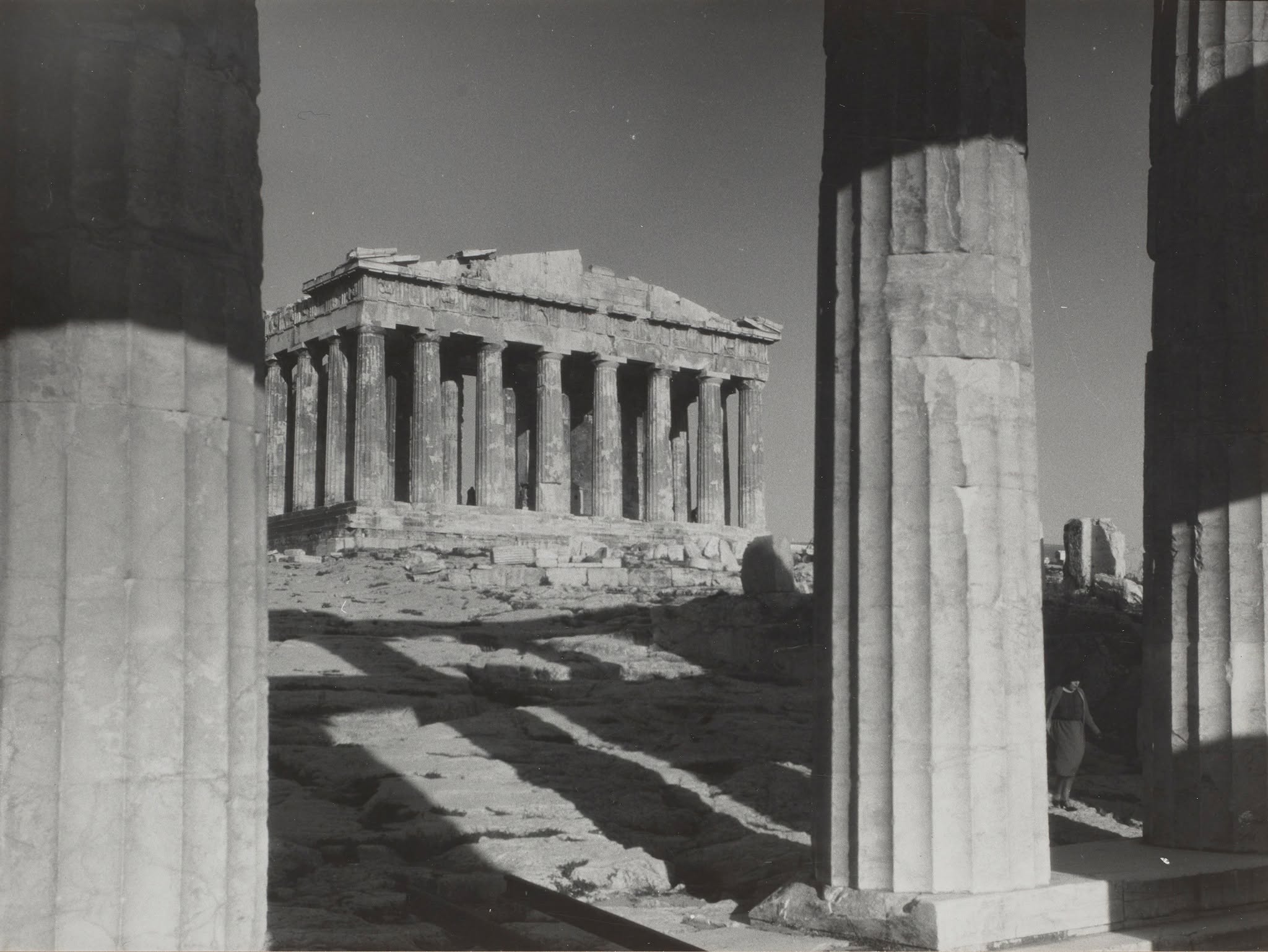
Propylaea of the Acropolis with a view of the Parthenon. Provided by The Courtauld Institute of Art. Photographer: Unknown.
The main operation consisted of placing two orthostates in positions that had remained empty within the western tympanum, as well as restoring the rear supporting wall. This restores the architectural unity of the pediment and recovers the geometric reading of the façade, which is particularly relevant as it is the first front visitors perceive when entering the Acropolis.
One of the main orthostates of the tympanum was reassembled by joining the preserved ancient fragments and incorporating new marble additions to restore its original geometry. The second orthostate, meanwhile, was made entirely of new marble. To position both blocks, a specific functional scaffolding system was projected, visually adapted to the monument and compliant with current safety requirements.
The completion of these works, financed through the Recovery and Resilience Facility, marks a significant stage in the conservation of the Parthenon and in the recovery of its architectural presence. The western façade is not reconstructed as an idealized image; rather, it is presented in the most complete form compatible with current restoration criteria: distinguishing ancient marble from new, preserving the original fragments and returning to the ensemble a formal continuity that had not been visible since the beginning of the nineteenth century.
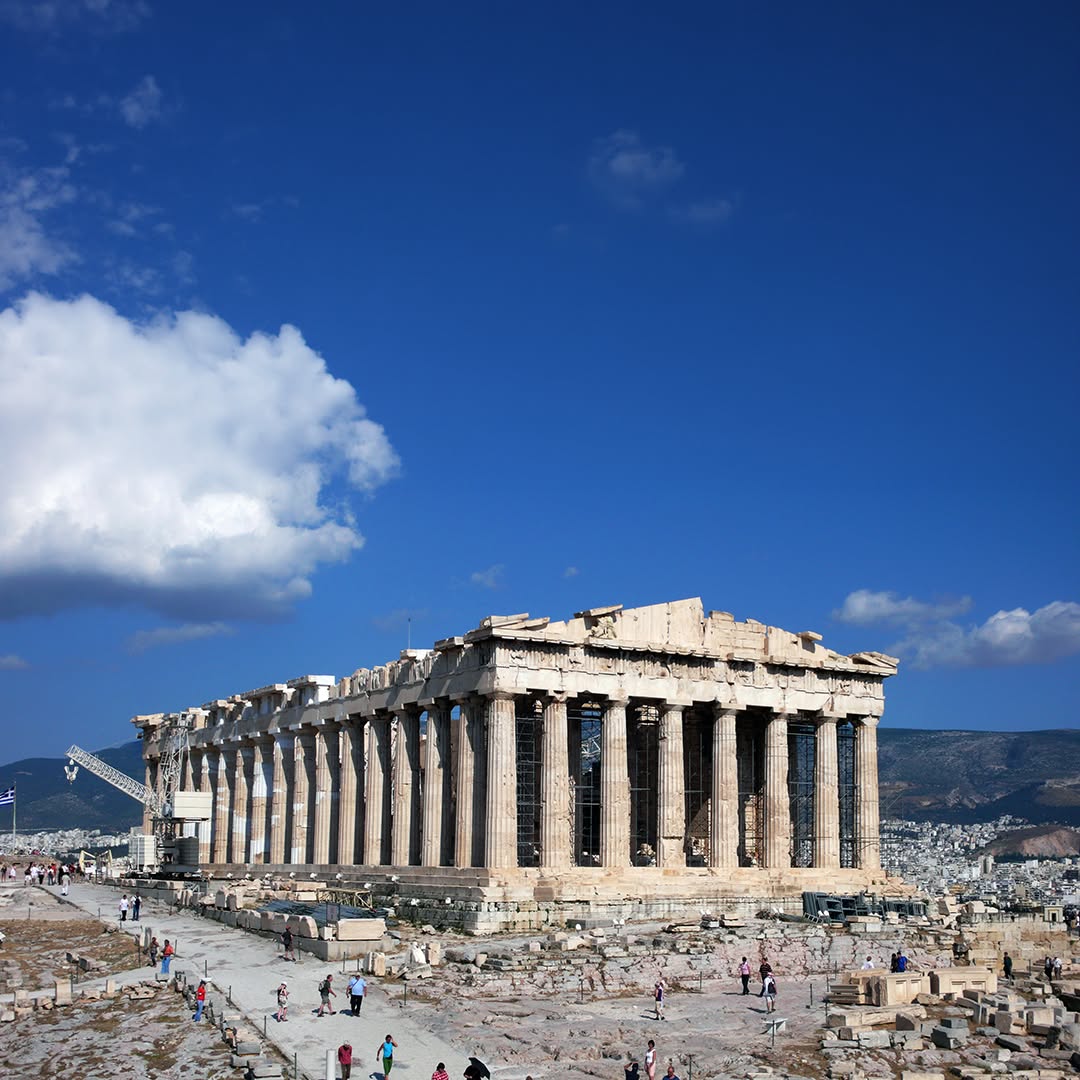
The Parthenon on the Acropolis of Athens before restoration. Image courtesy of the Acropolis Museum.
“Today we are talking about the completion of an extremely demanding restoration intervention, thanks to which the west pediment of the Parthenon is being presented in its fullest form in some 220 years. The sight is truly breathtaking. The pediment, which generations of Greek citizens and visitors from all over the world had grown used to seeing incomplete, is regaining its architectural unity. The two new orthostates, which have been placed in its vacant positions, do not simply make good a morphological gap. They allow the unique proportions and geometric perfection of the Parthenon’s western façade to be highlighted once again.
Today we are looking at the west pediment of the Parthenon as it has not been seen for two centuries. It is a moment of historic significance for the monument, for the Acropolis and for world culture. A moment that fills us with pride, but also with a sense of responsibility to continue, with the same consistency, the great work of protecting and showcasing the foremost symbol of Western civilisation.”
Minister of Culture, Lina Mendoni.