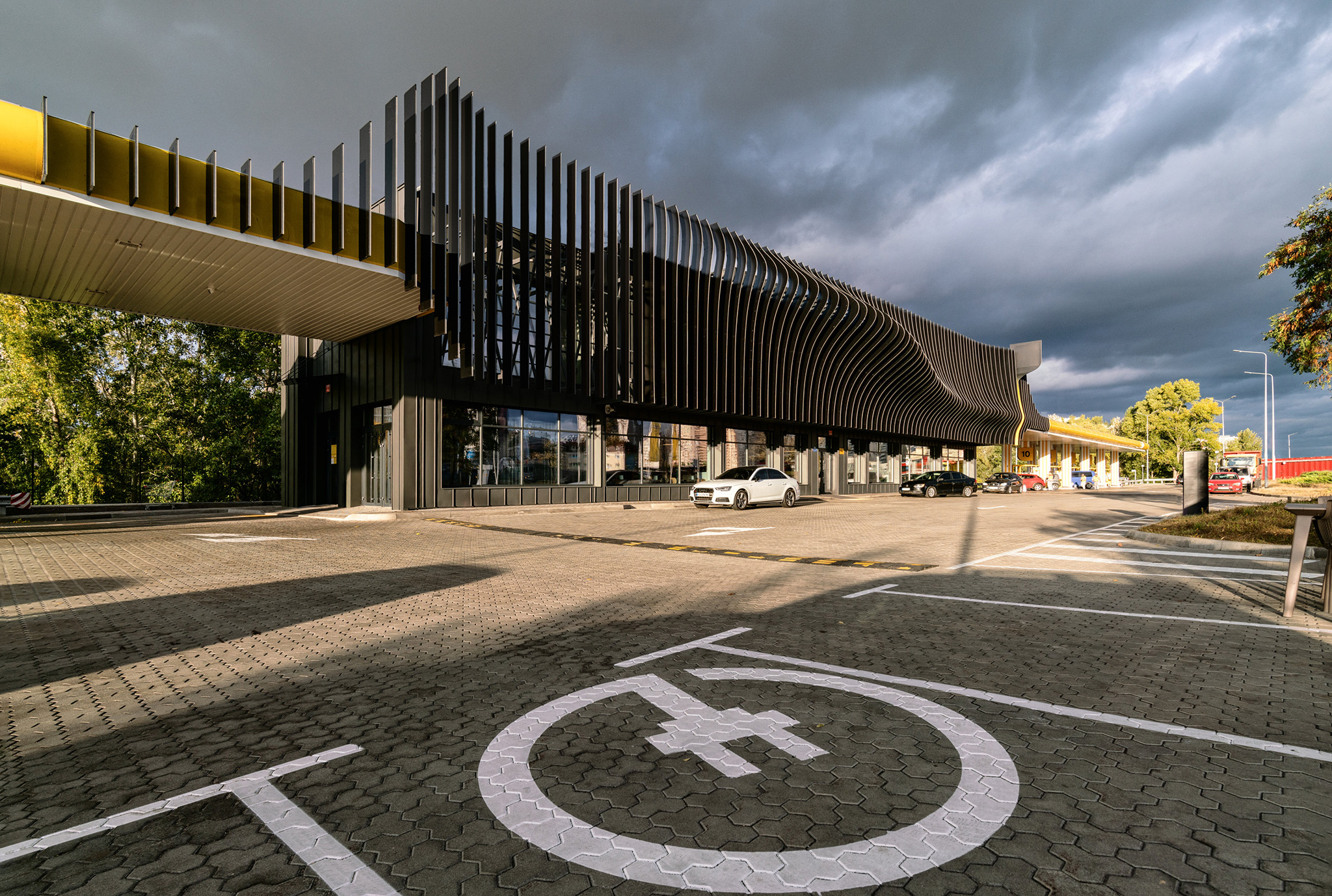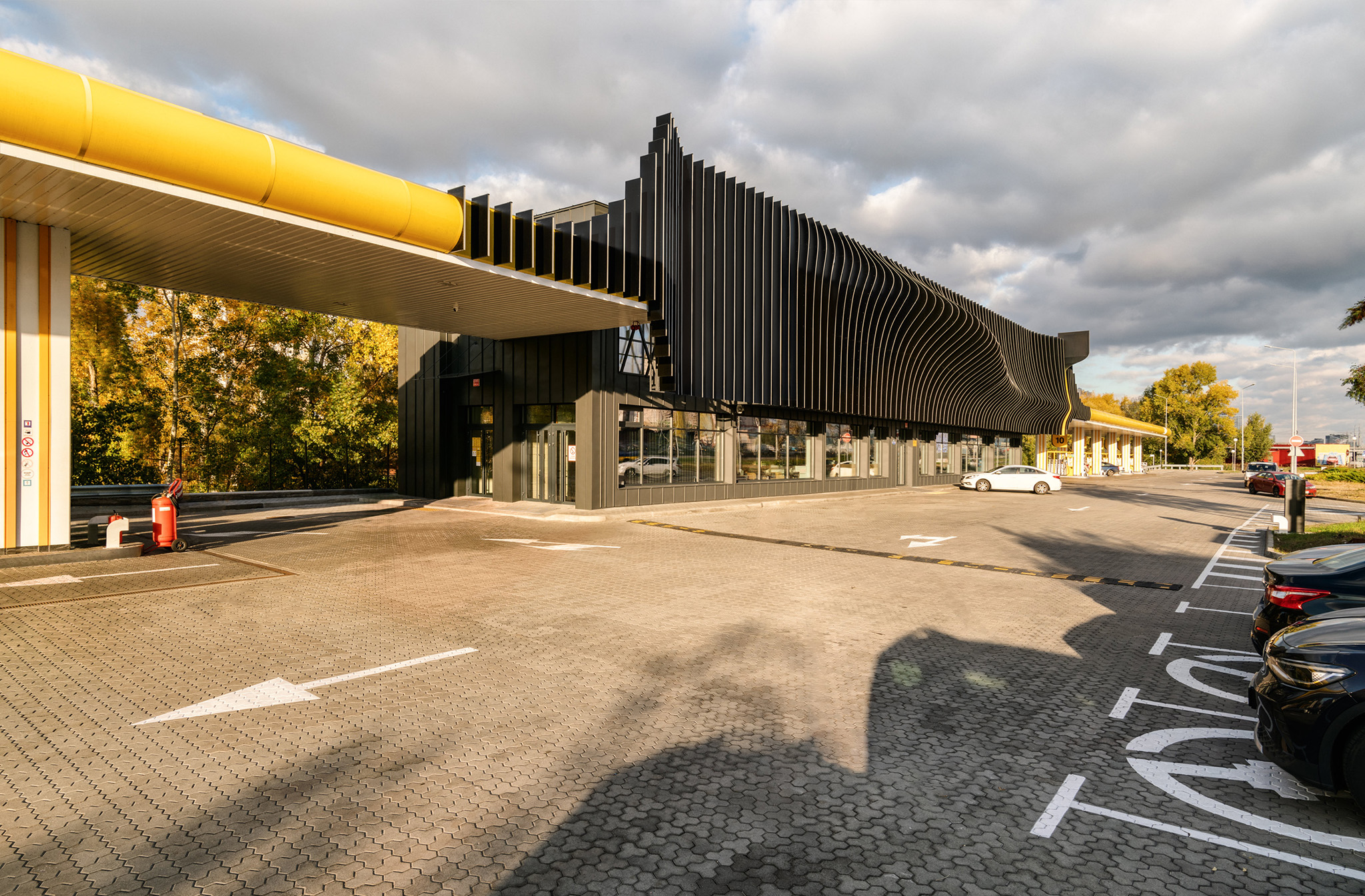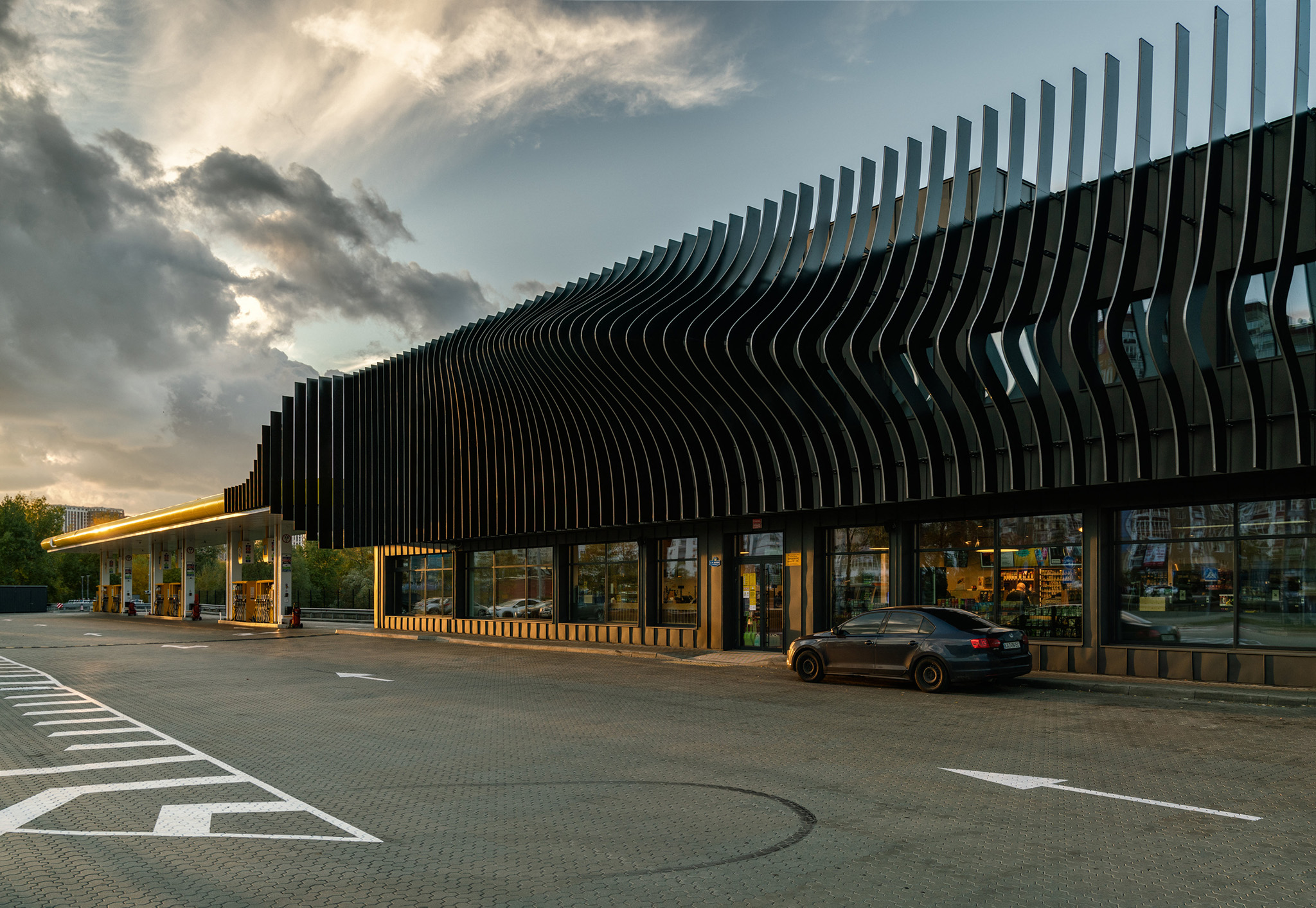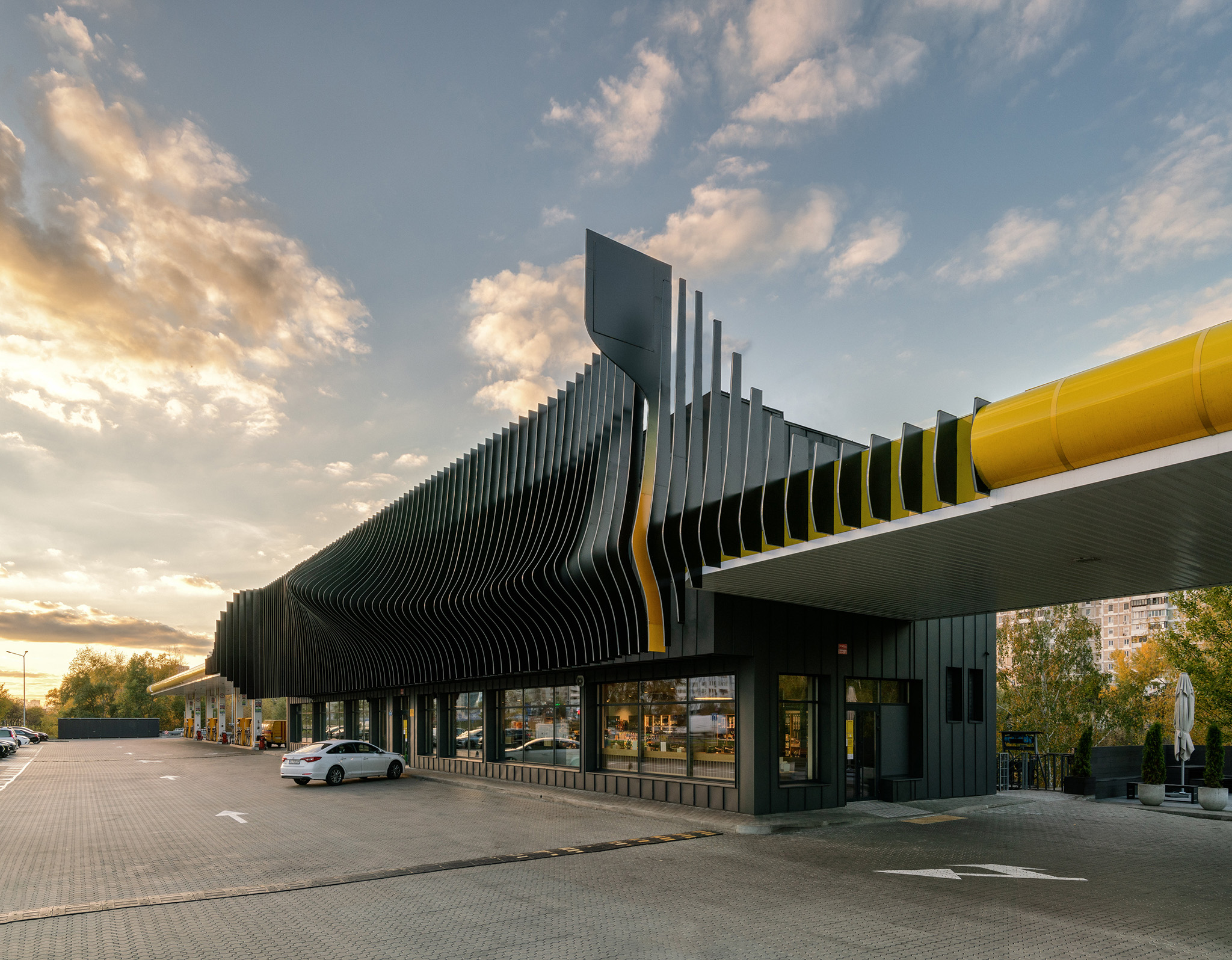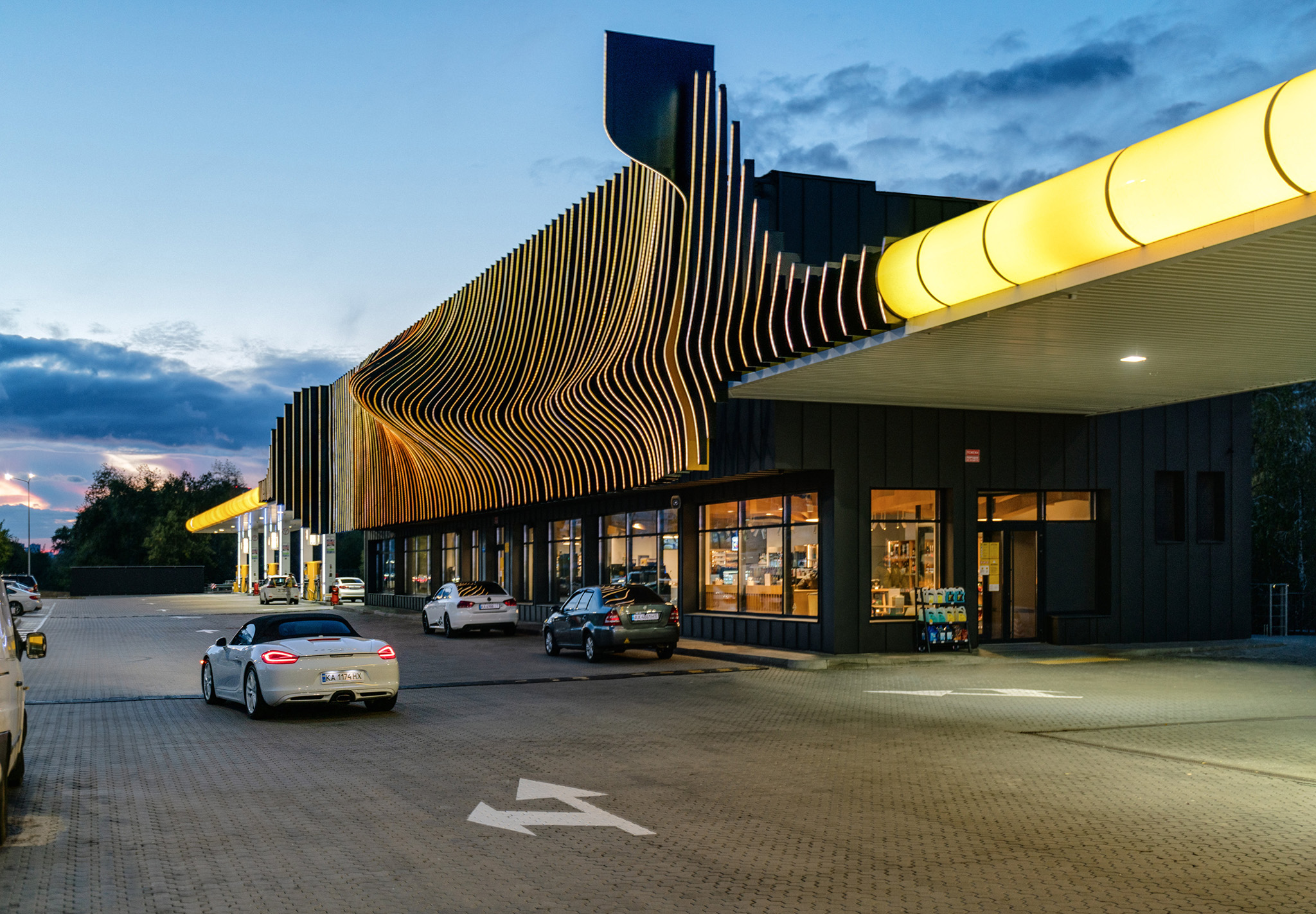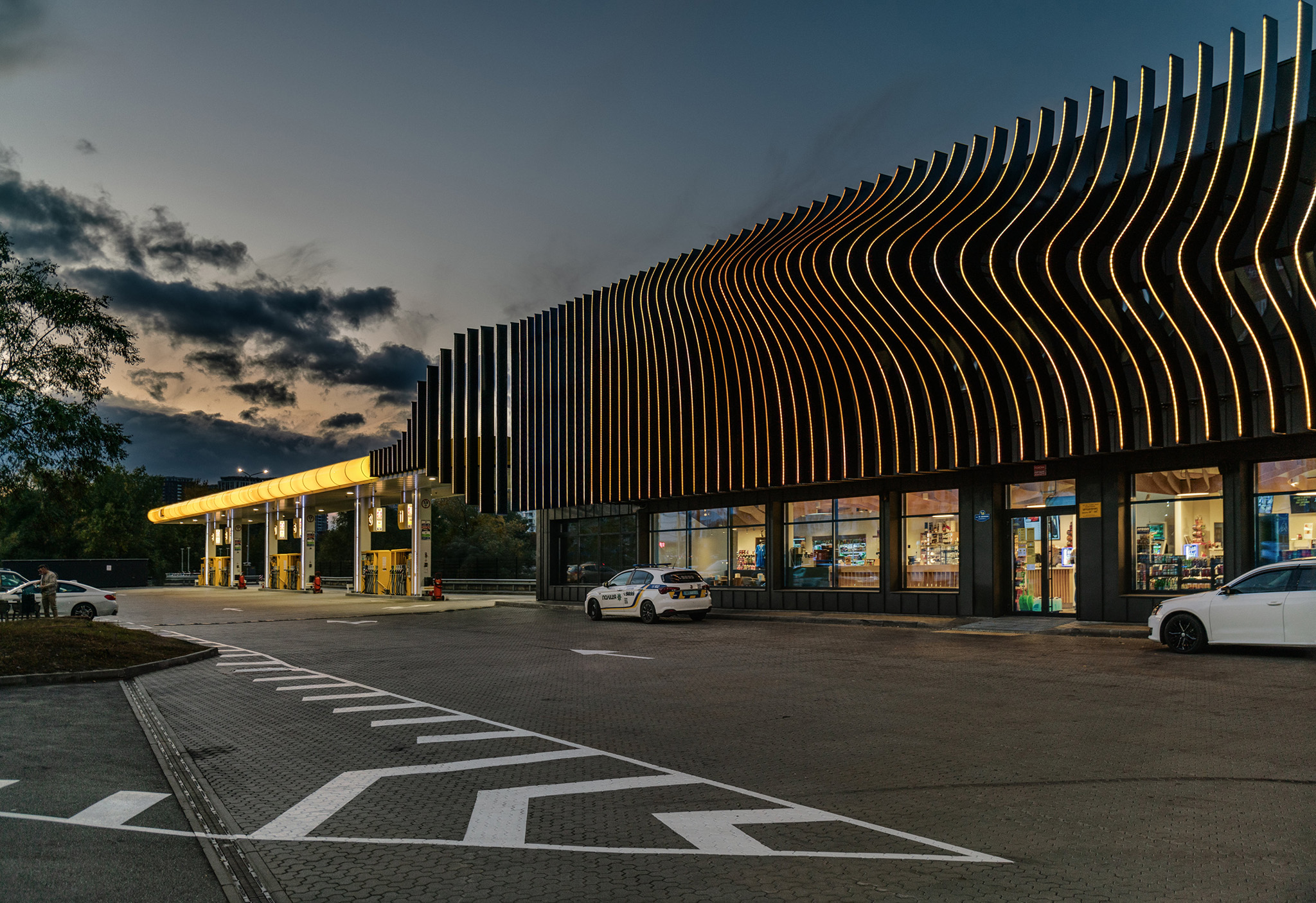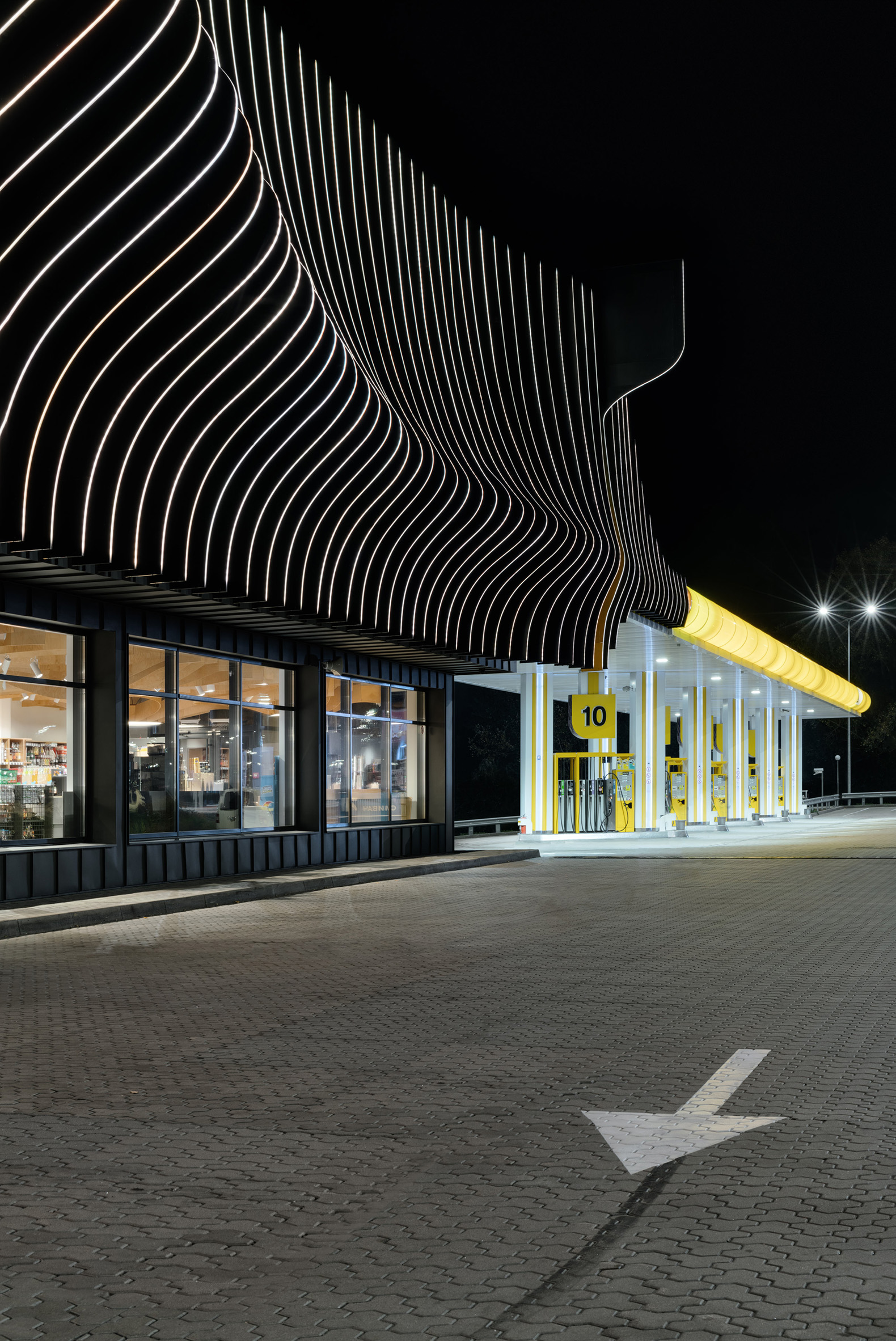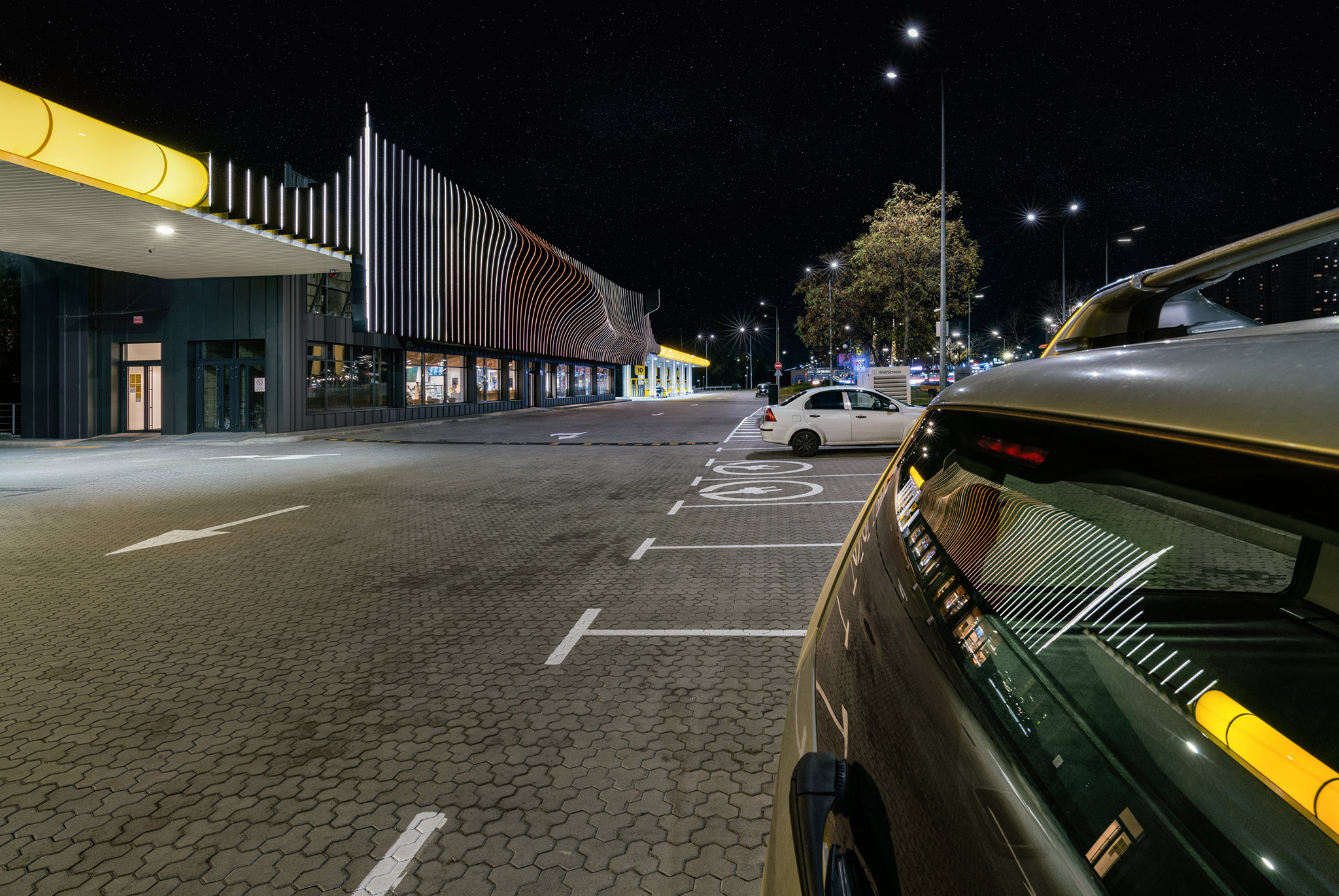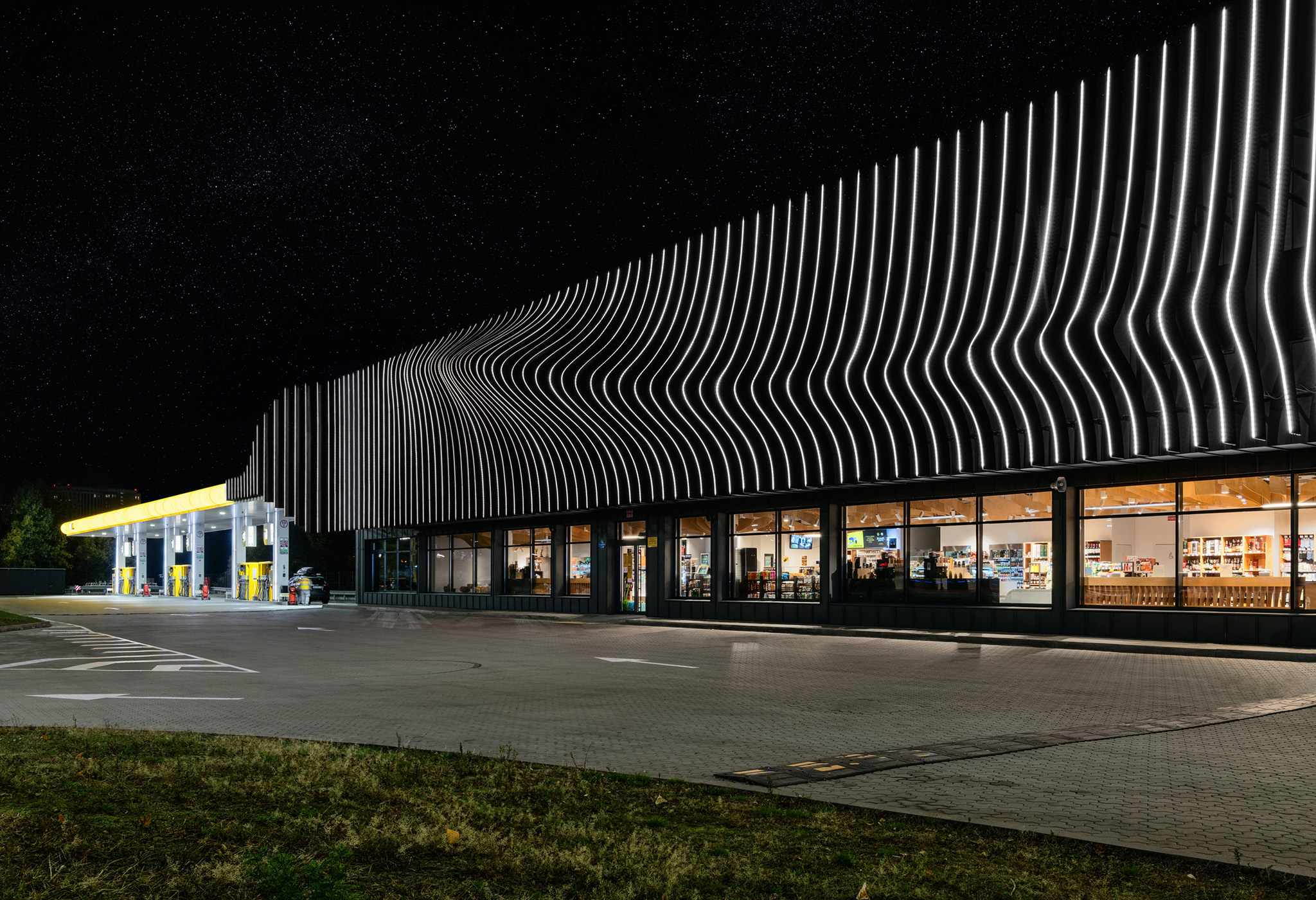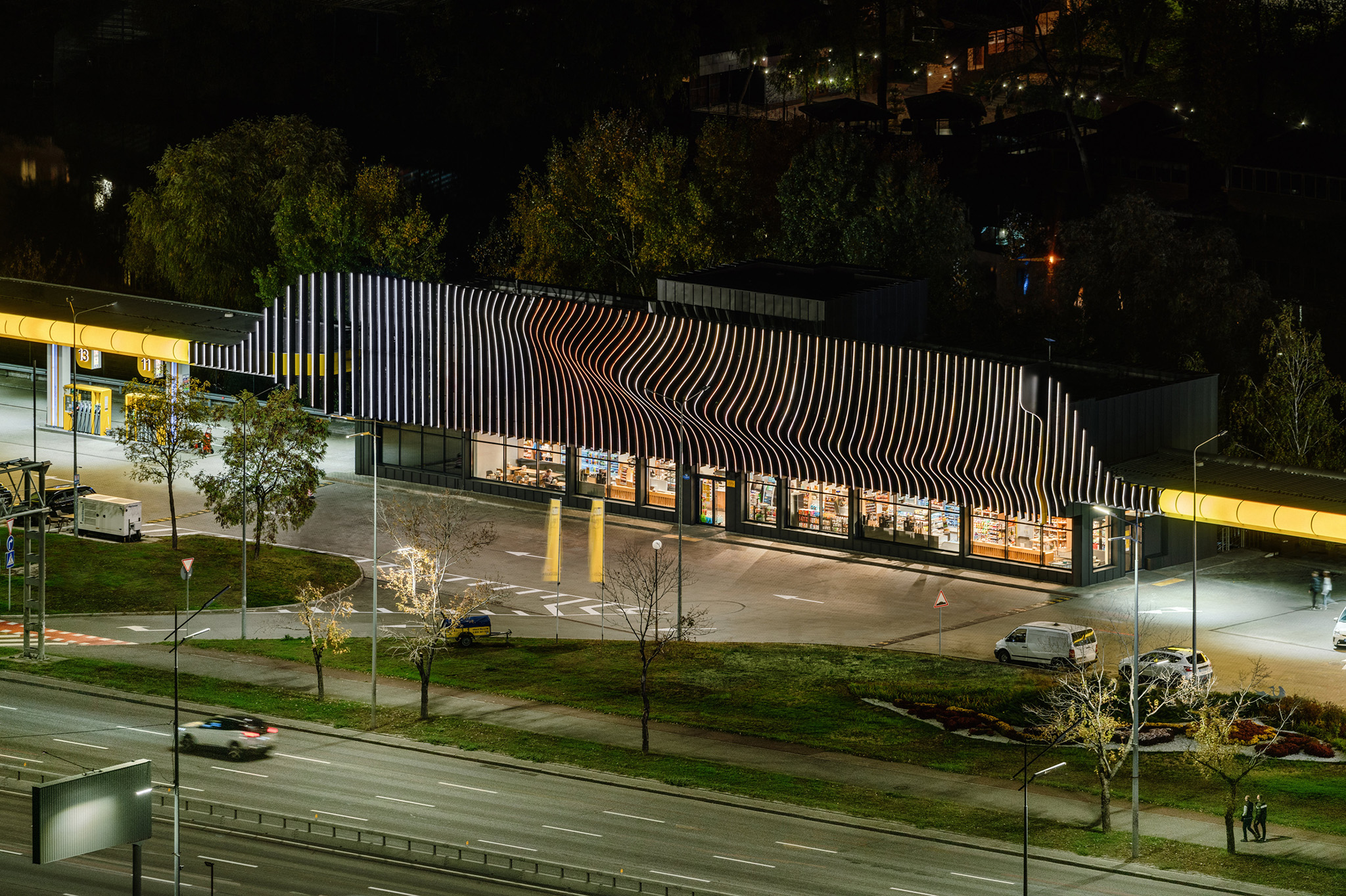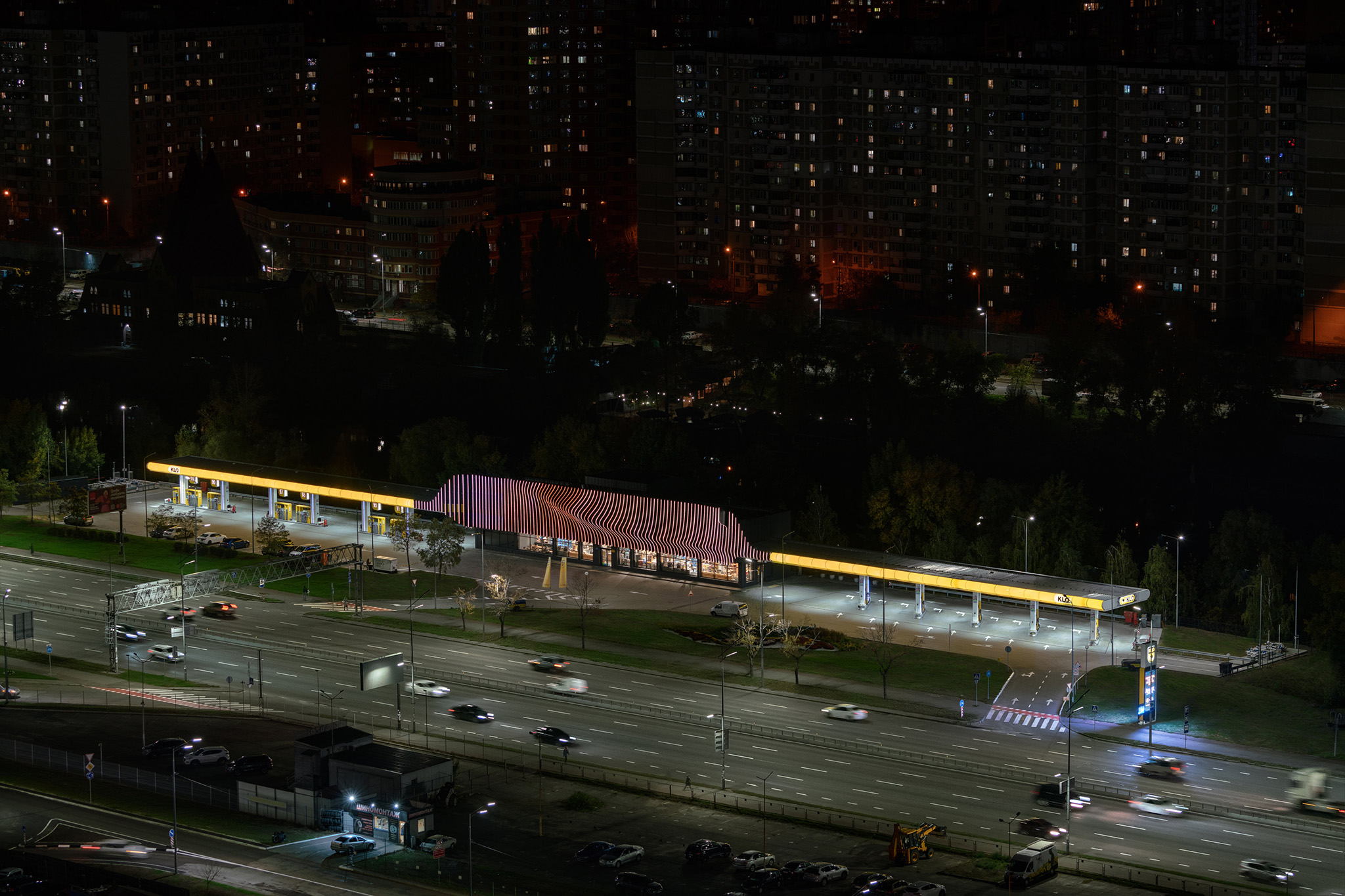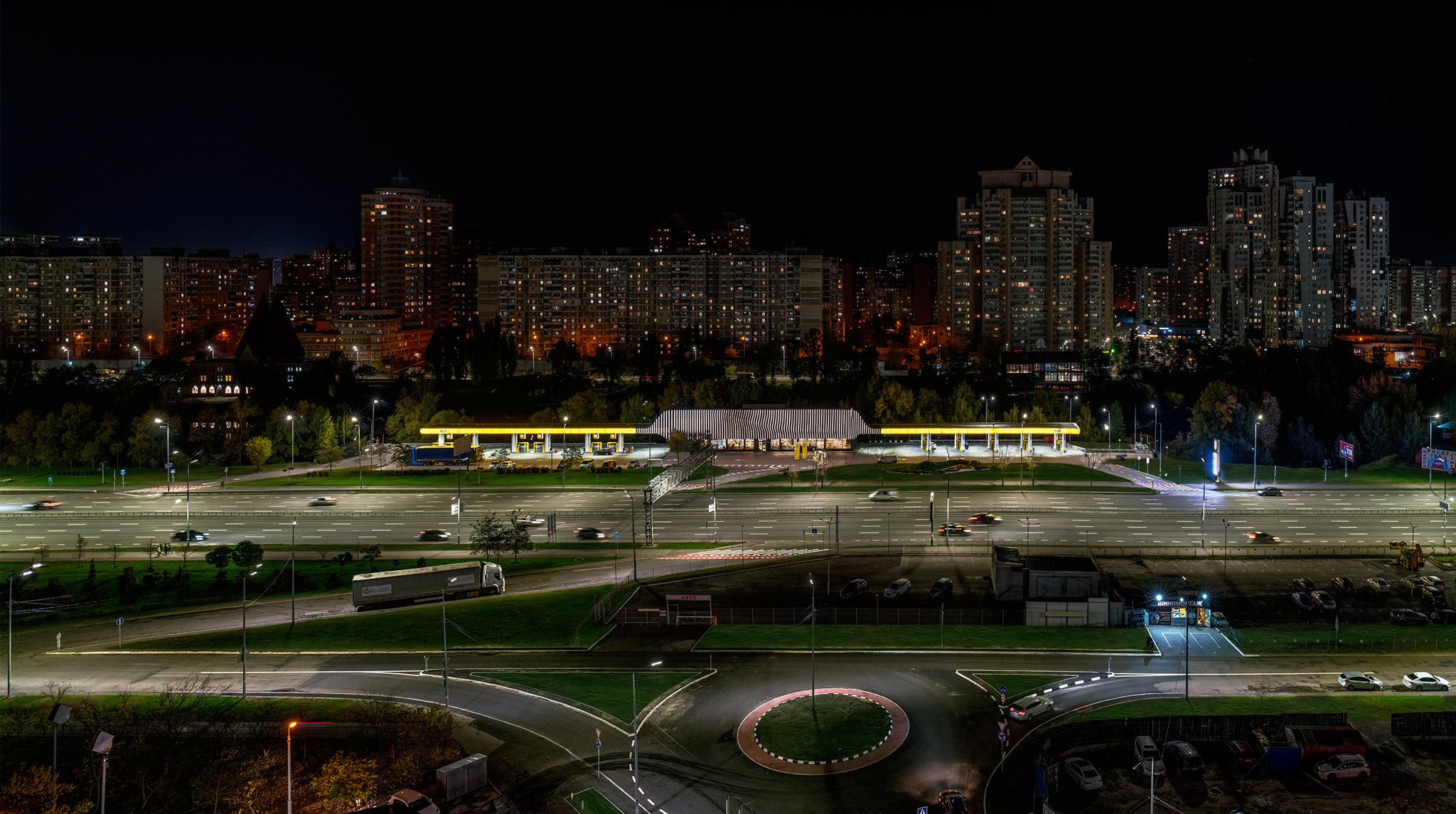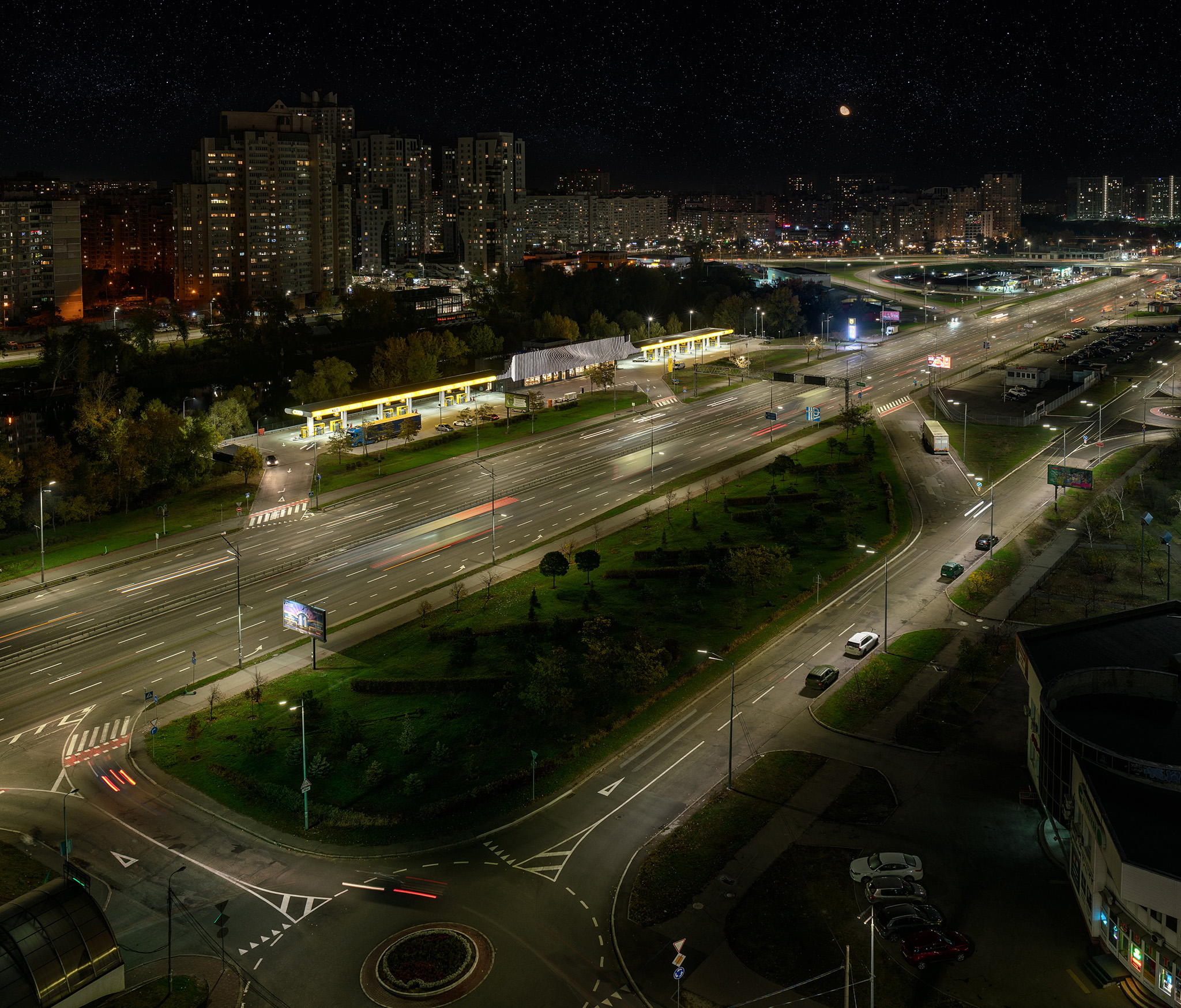
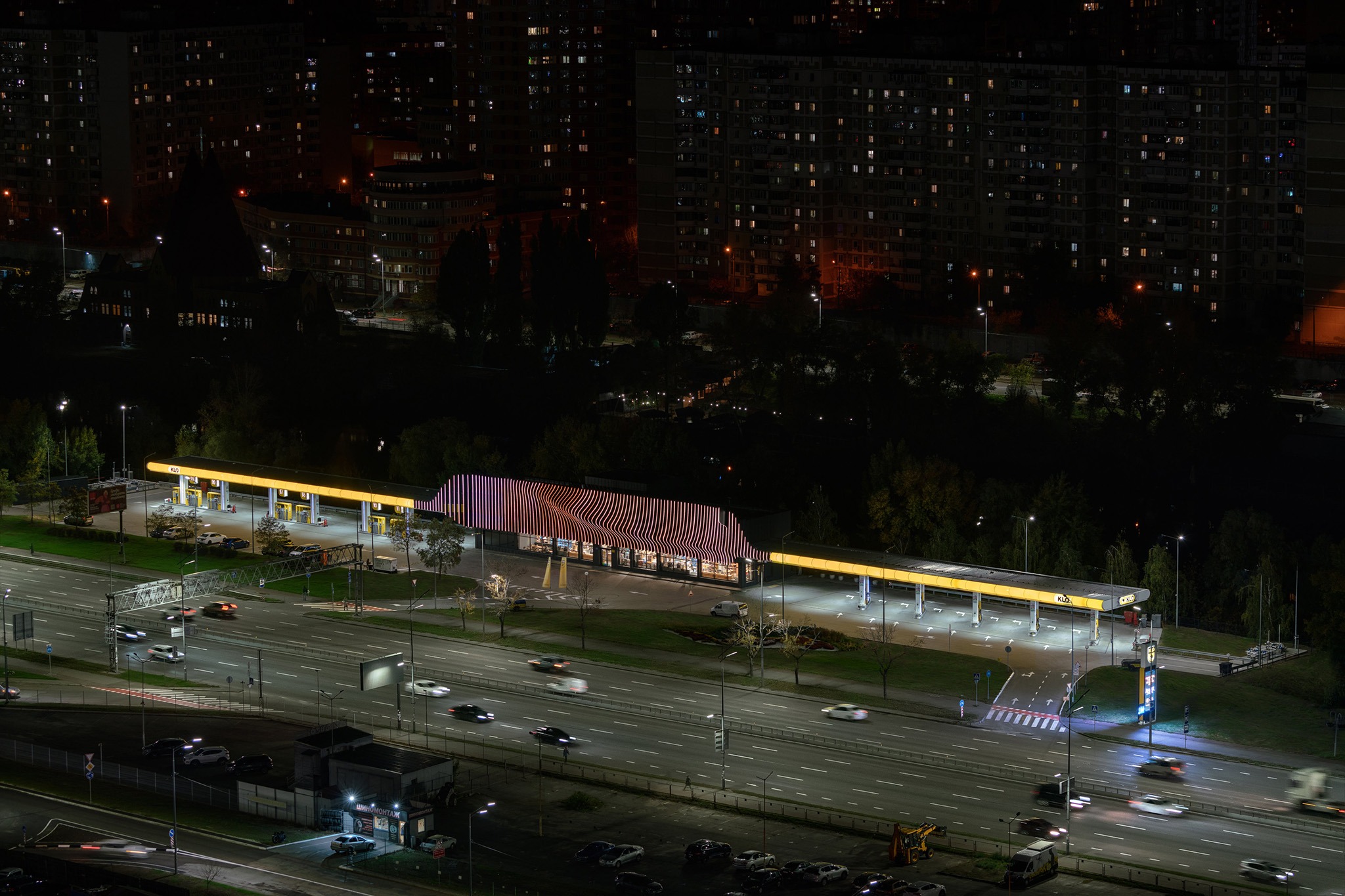
The architecture practice Aranchii Architects has designed the KLO Flagship Petrol Station, a holistic structure that unifies the station's wings with the main building on a key transportation artery in Kyiv, Ukraine.

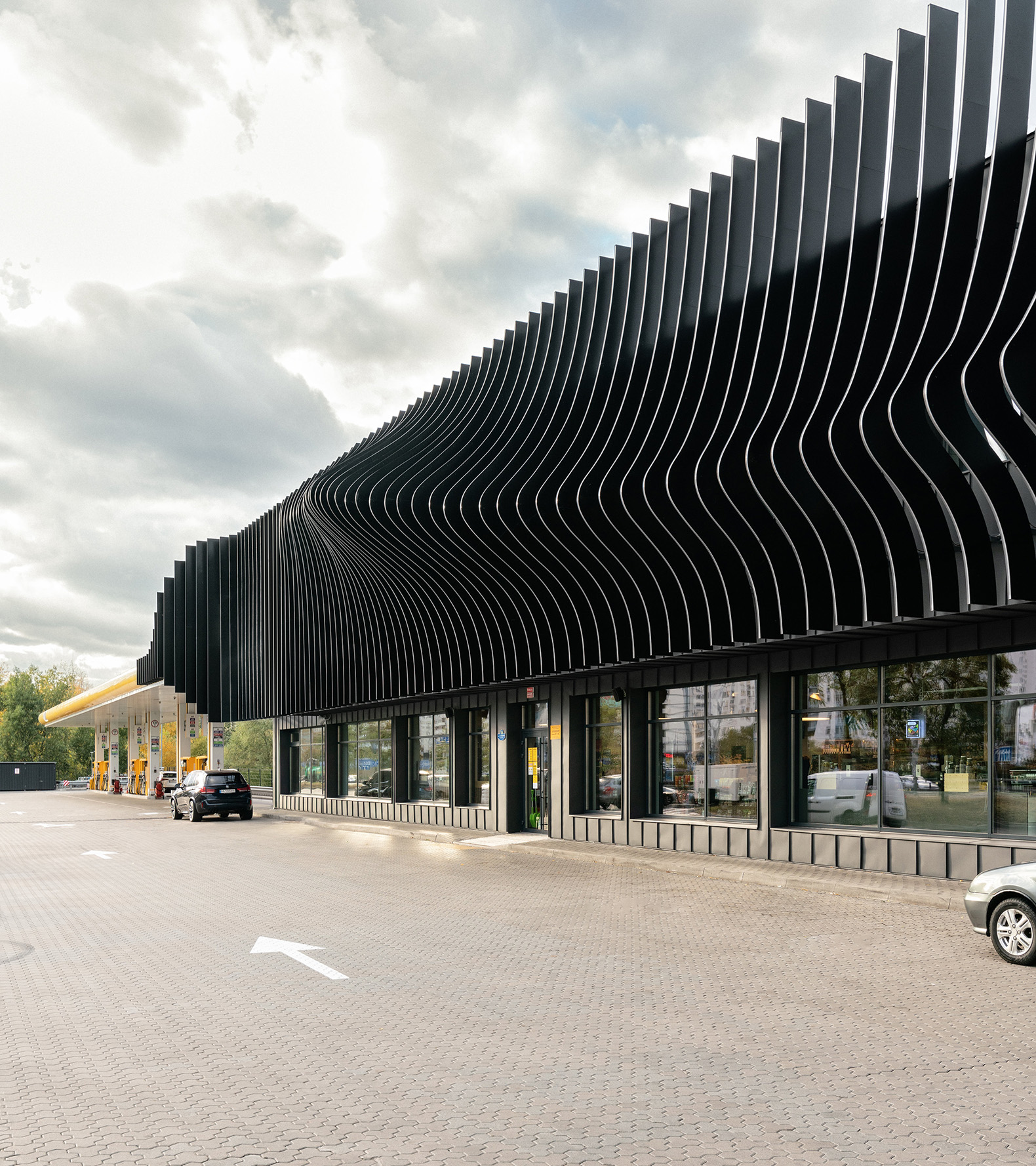
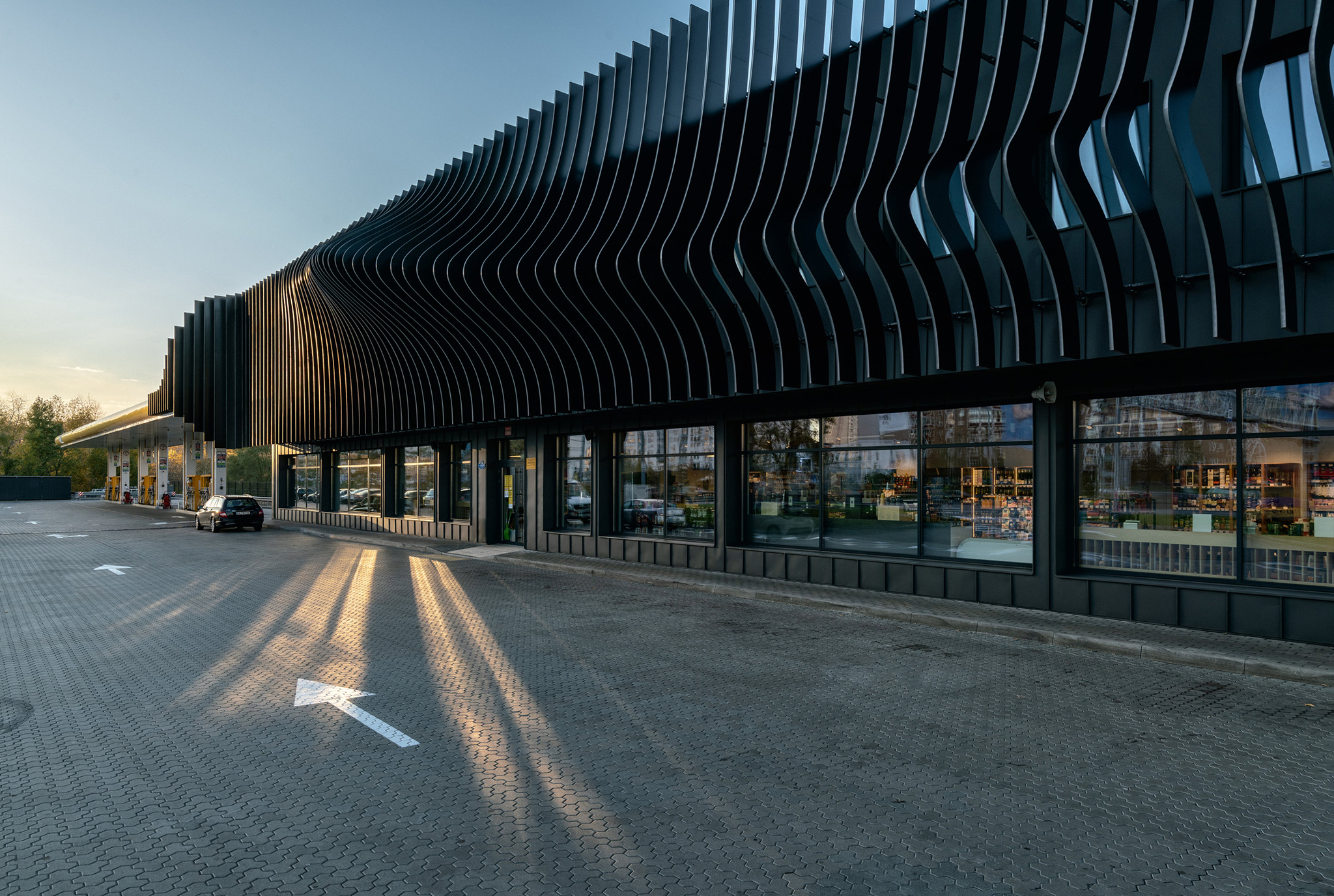
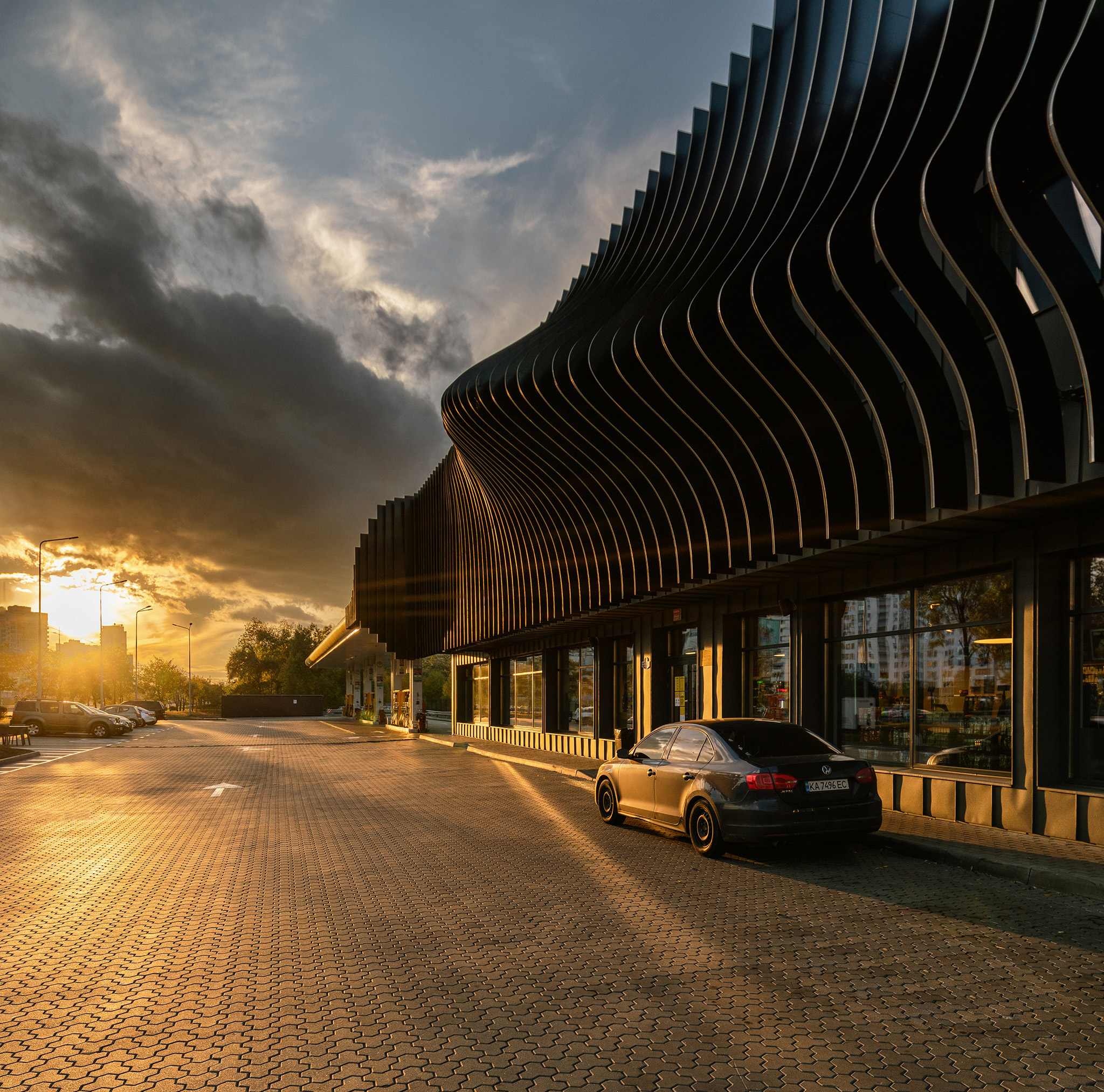
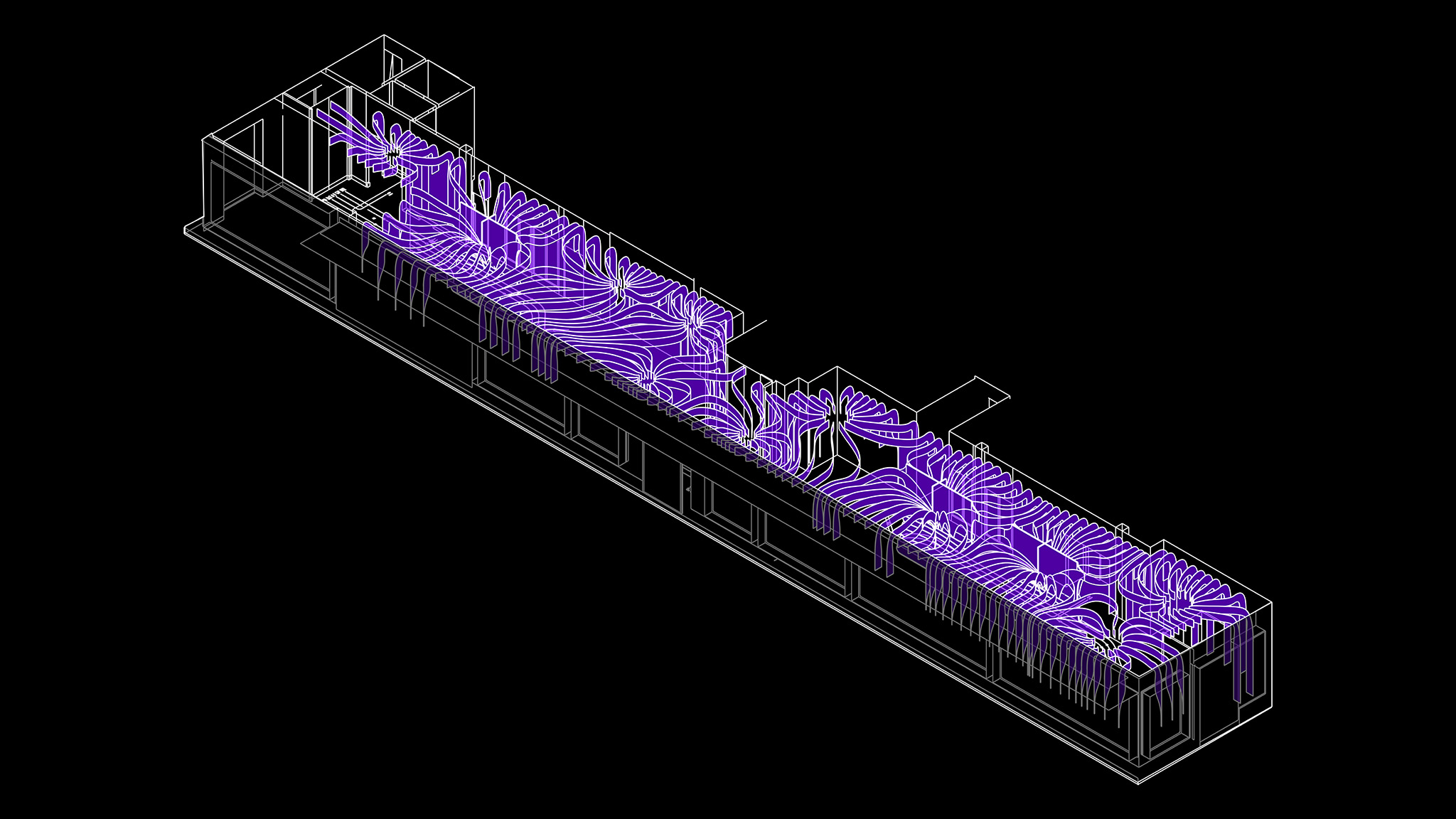
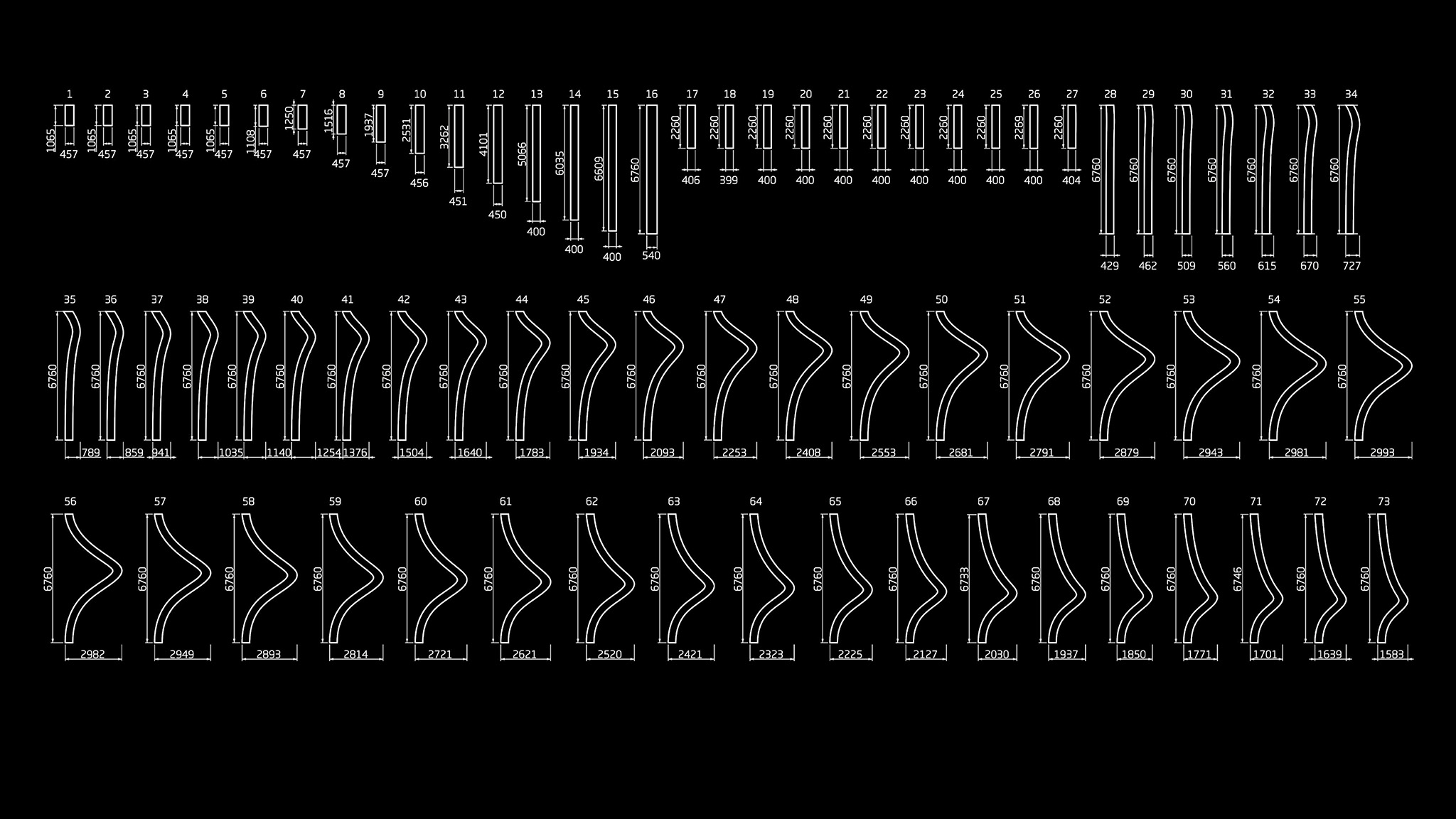
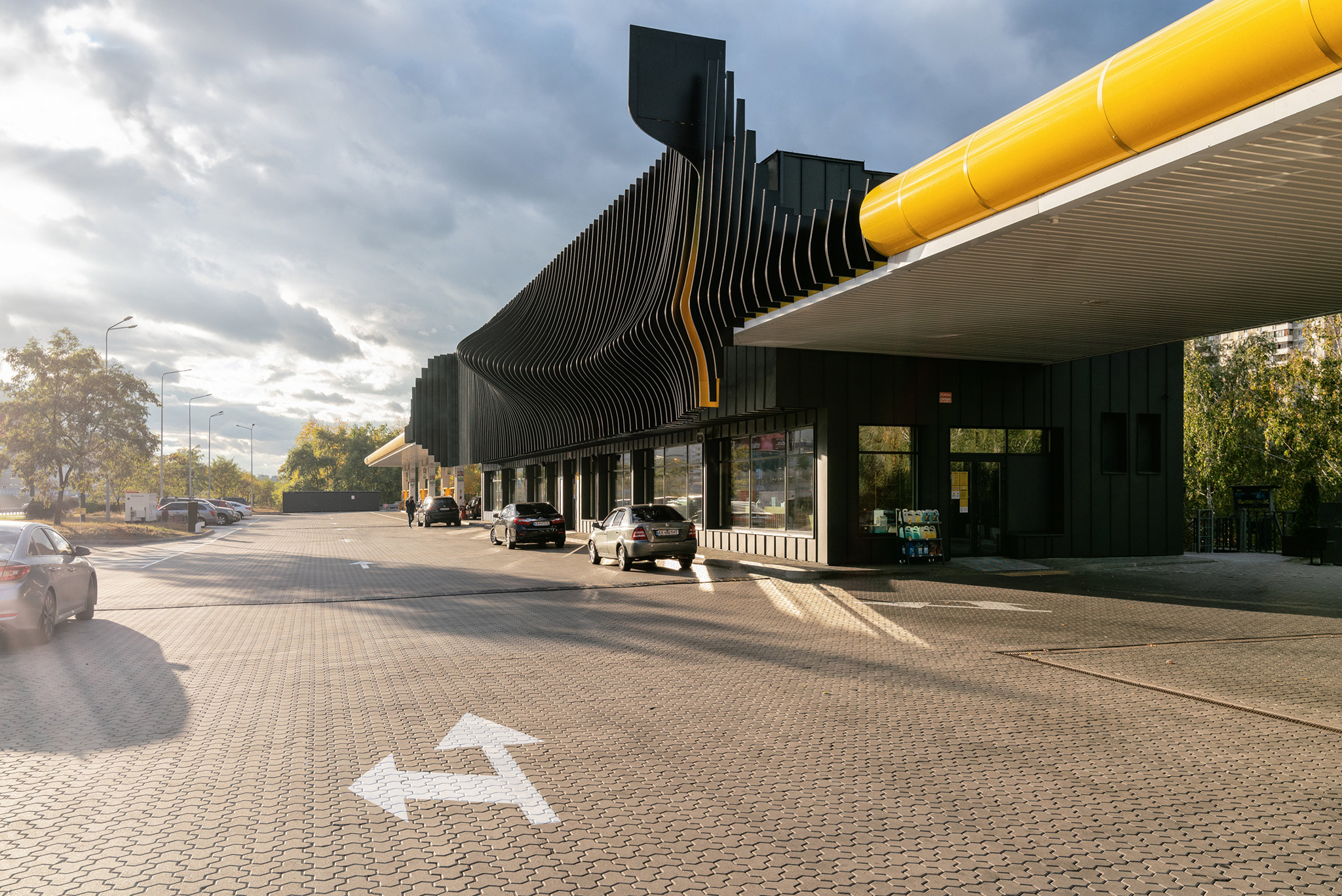
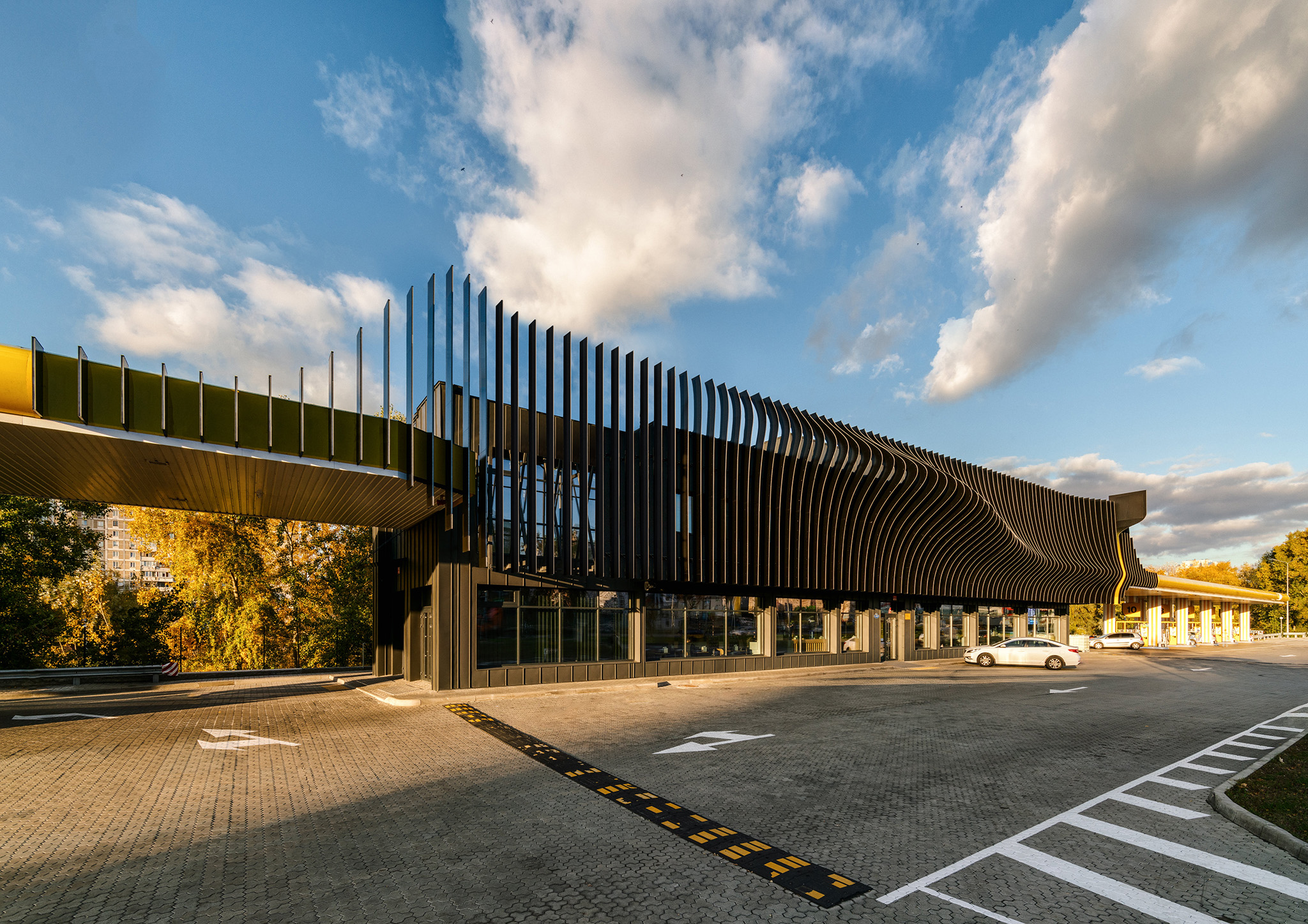
The fluid, undulating exterior envelope was materialized using a 3D parametric model, allowing for real-time adaptation of the façade and interior structure to meet structural requirements.

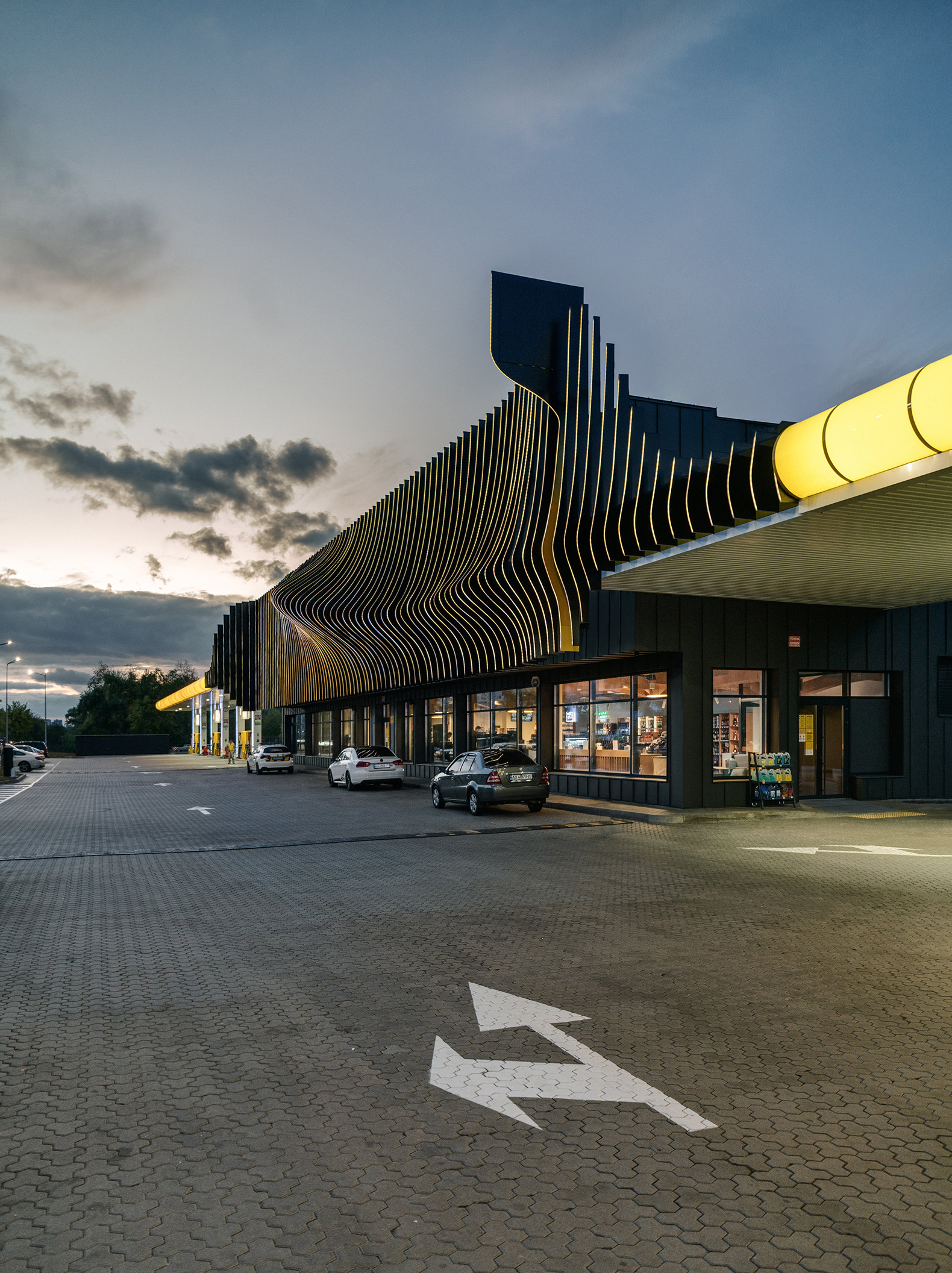
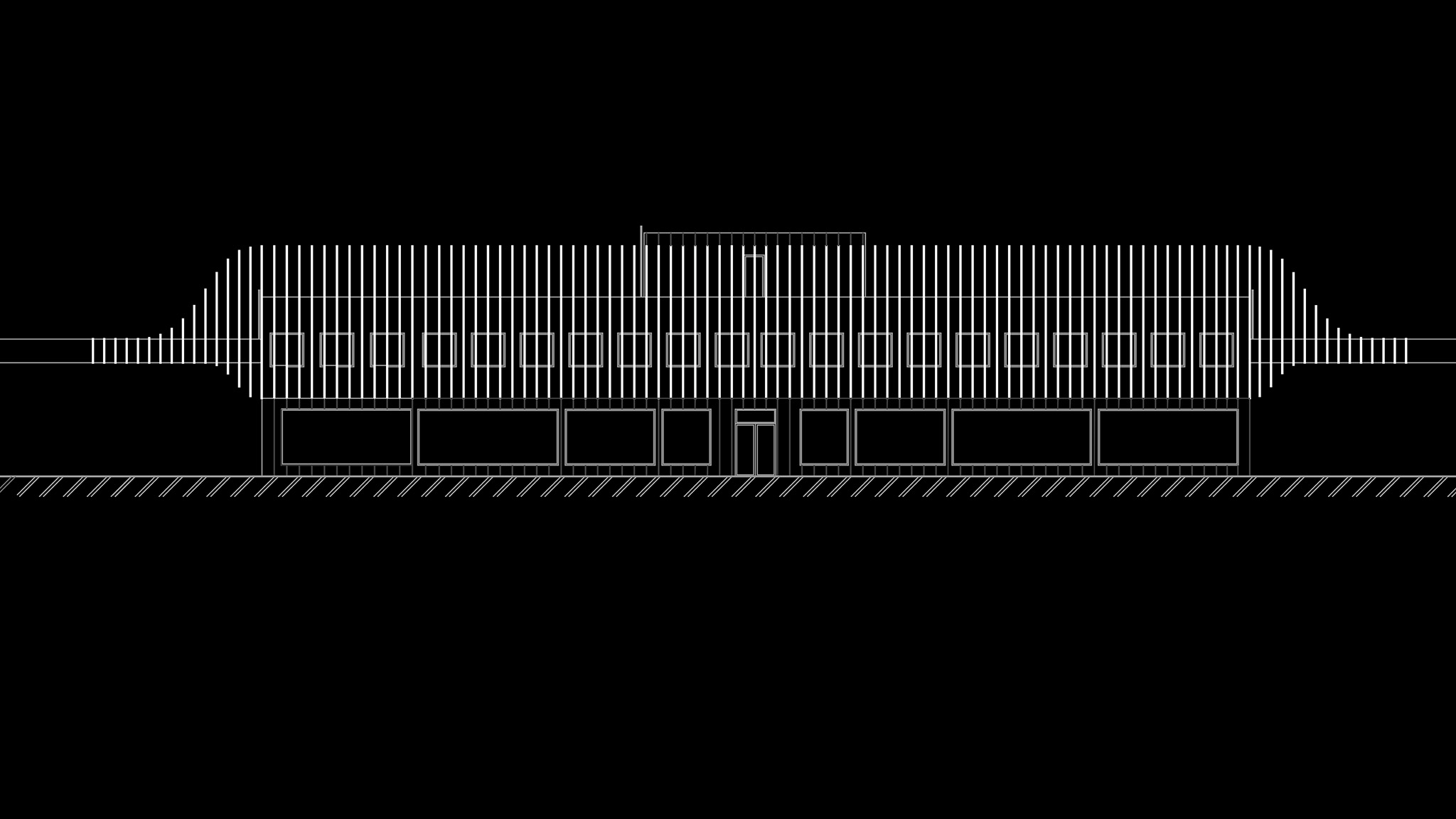
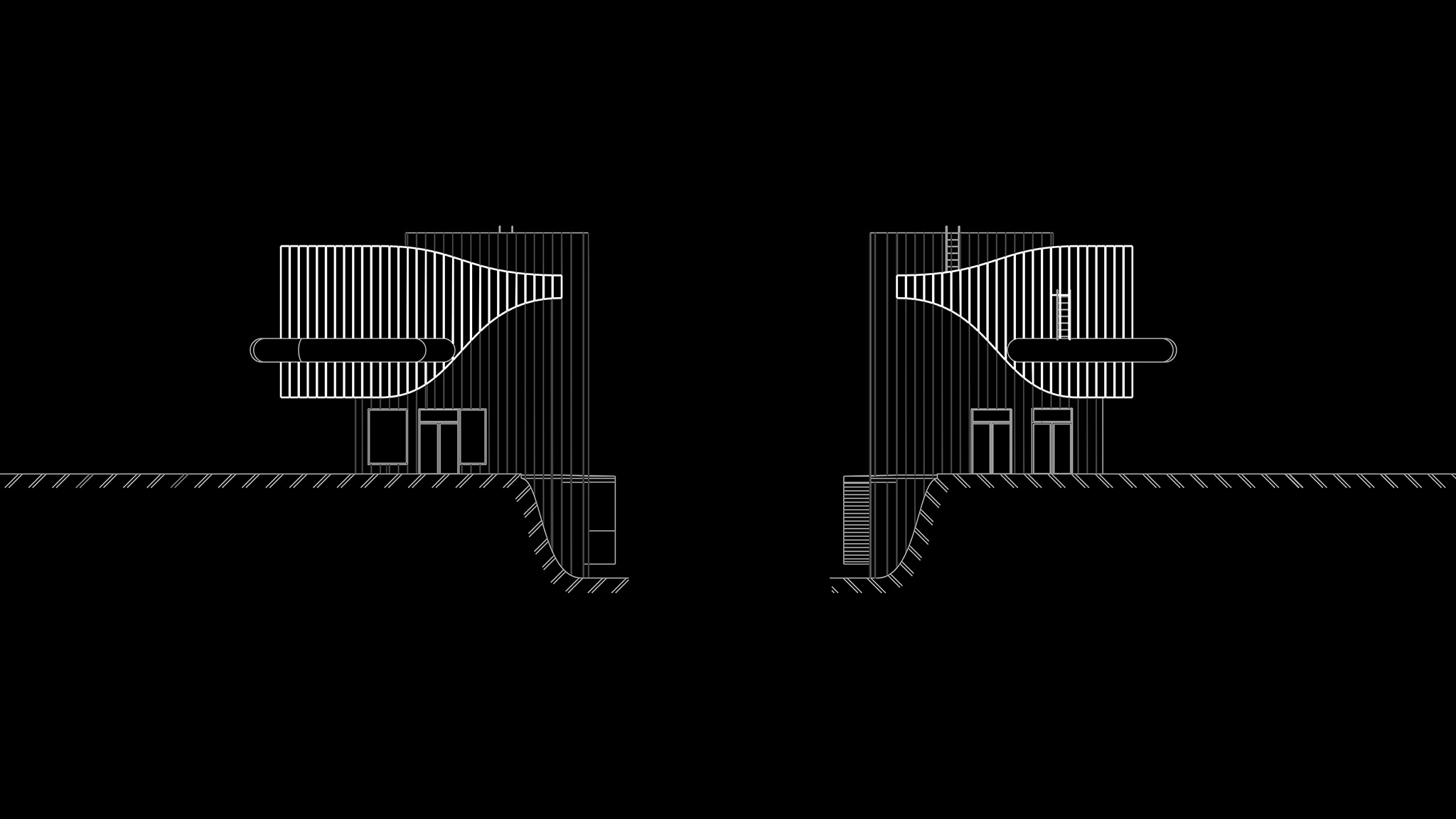
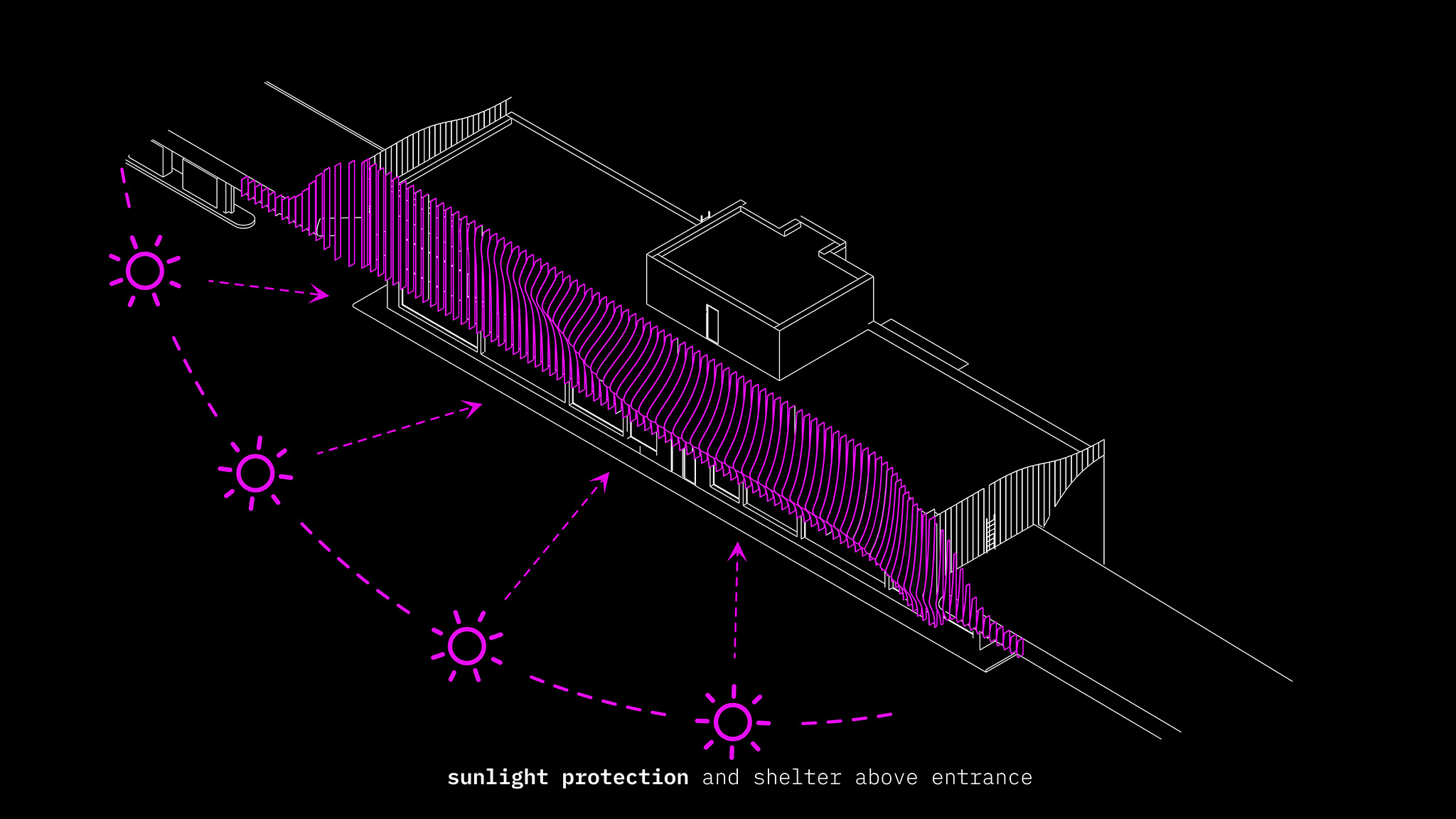
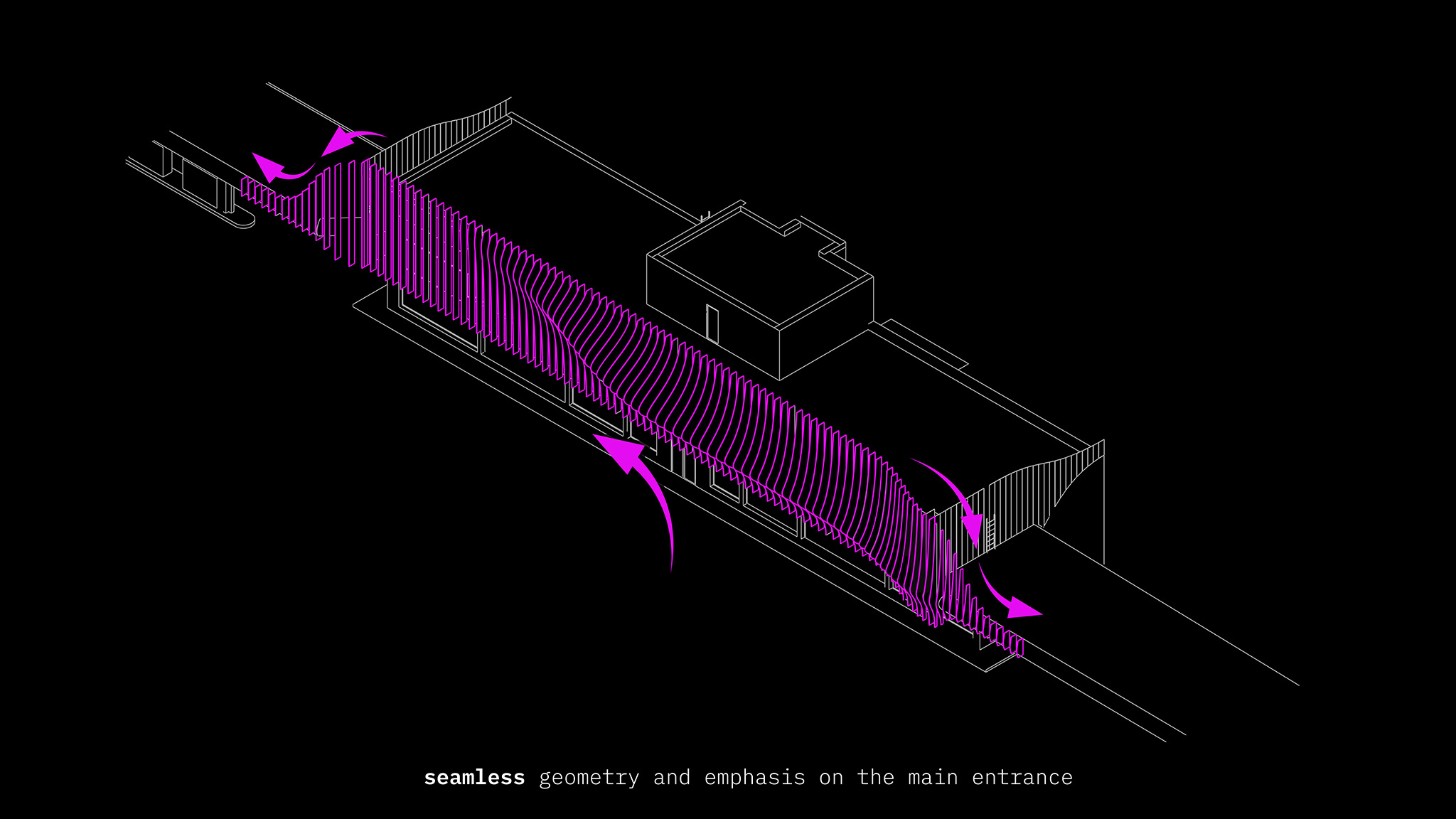
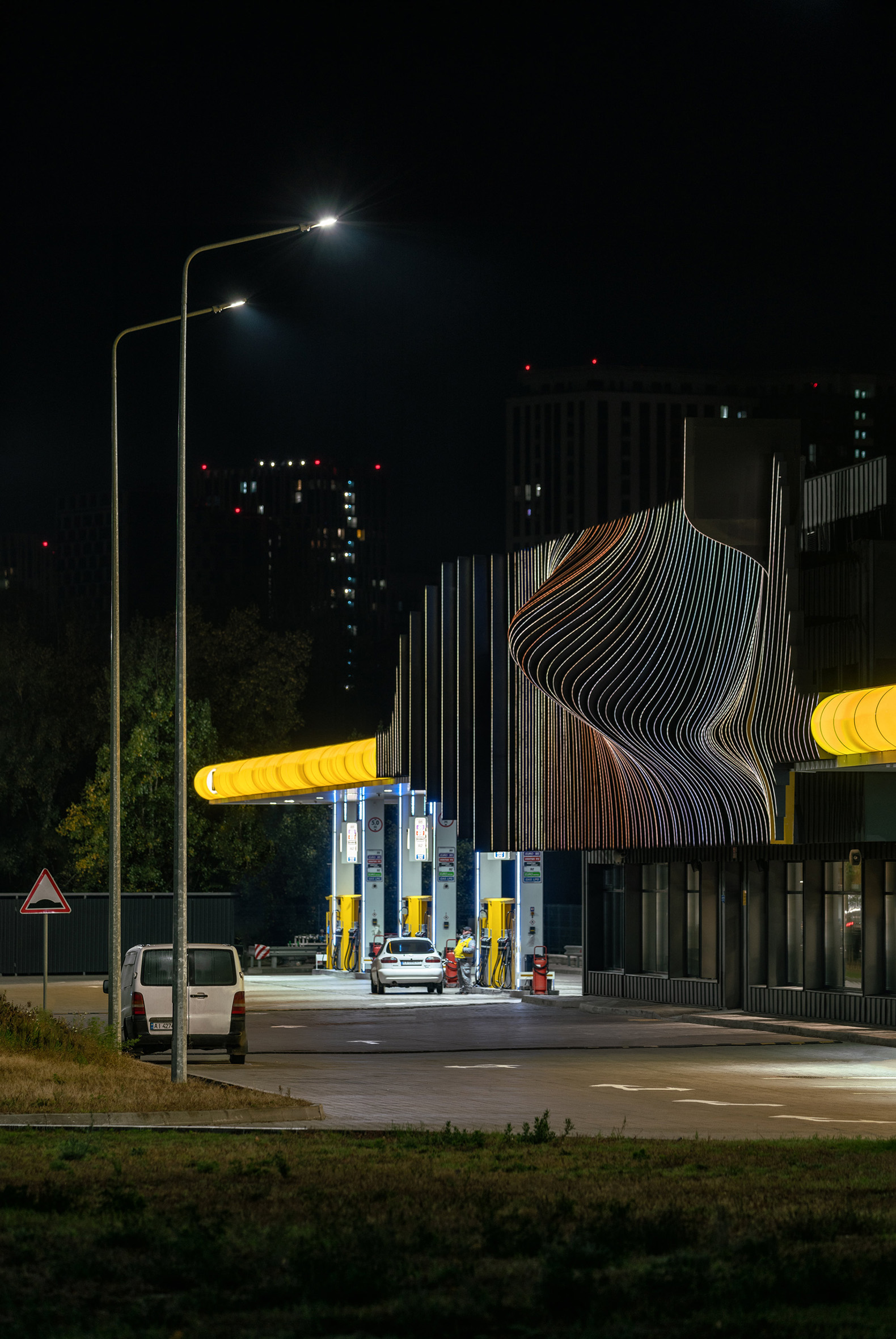
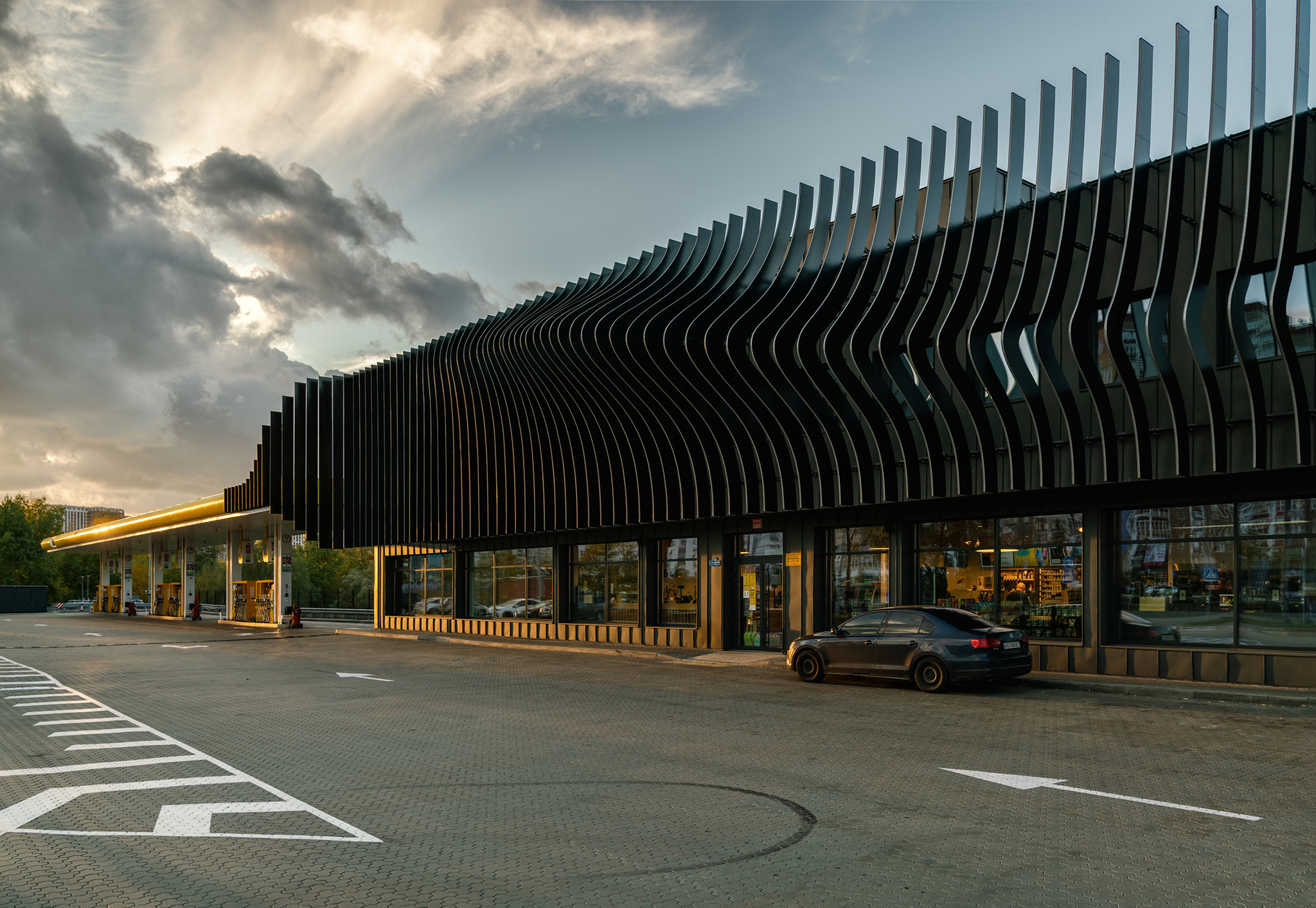
For the KLO Flagship Petrol Station, Aranchii Architects started with the premise of creating a unique station, generating this parametric envelope through computational morphogenesis to provide sun protection, accentuate the main entrance with its curve, and unify the station's wide wings with the central building.

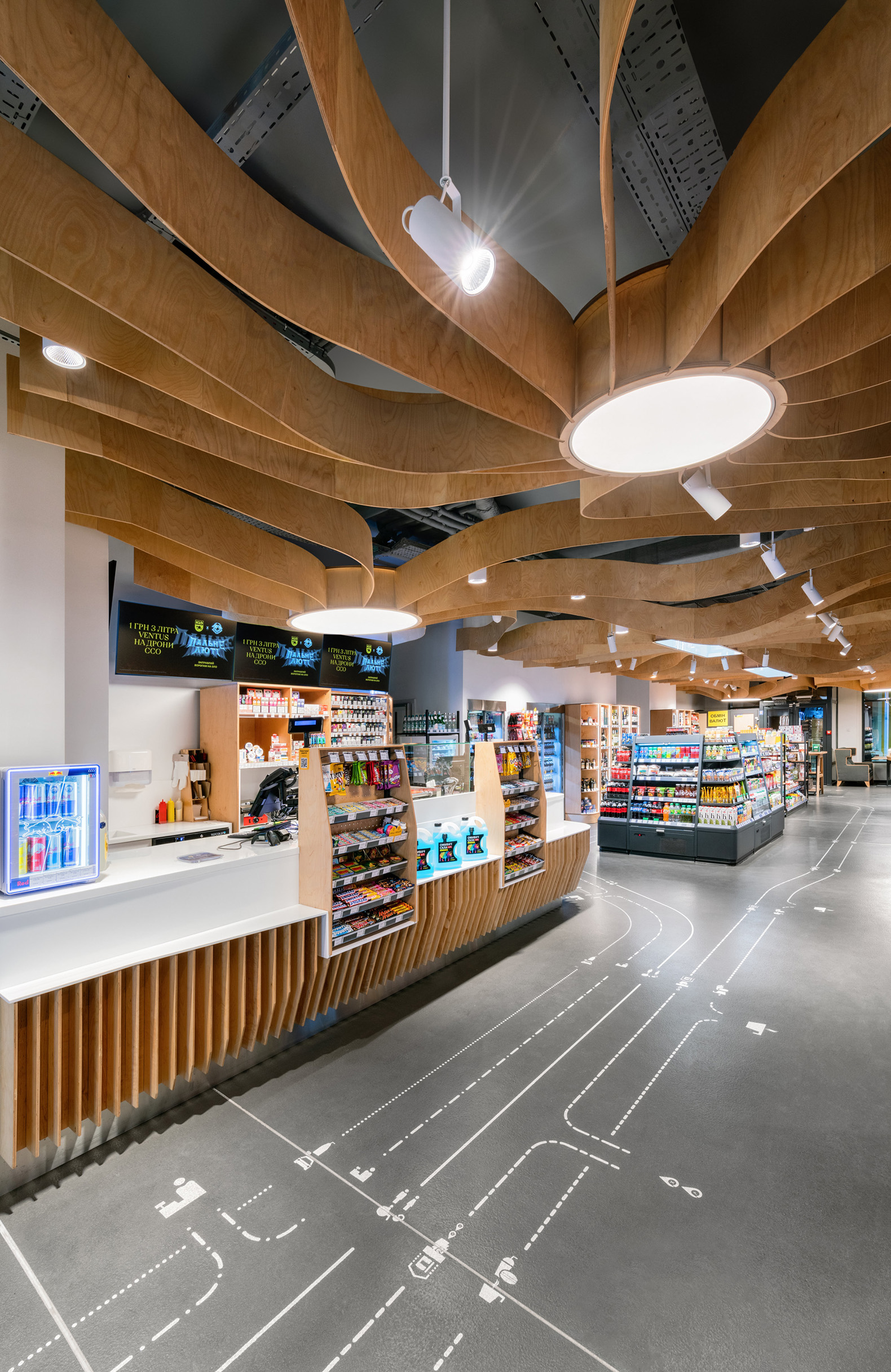
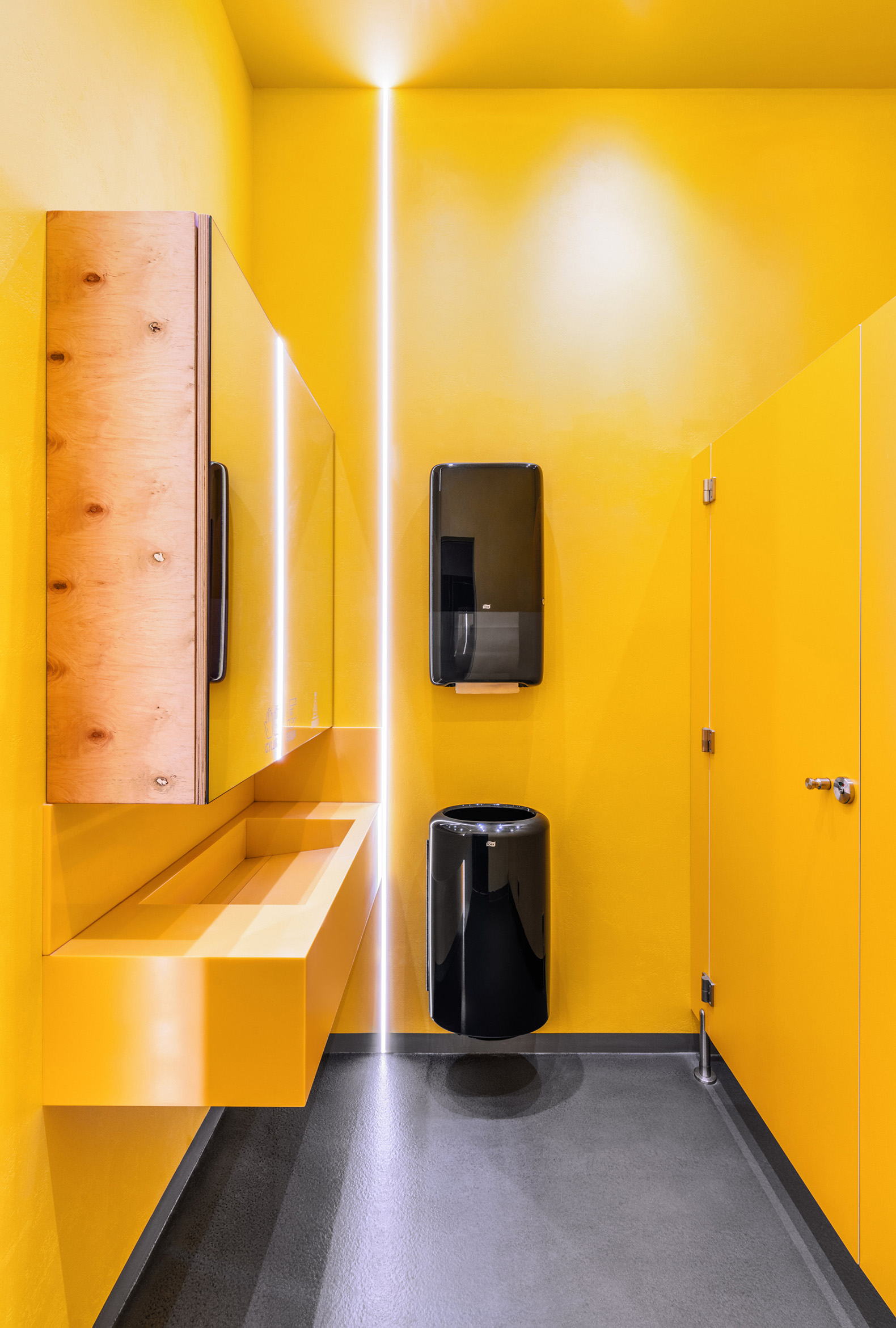
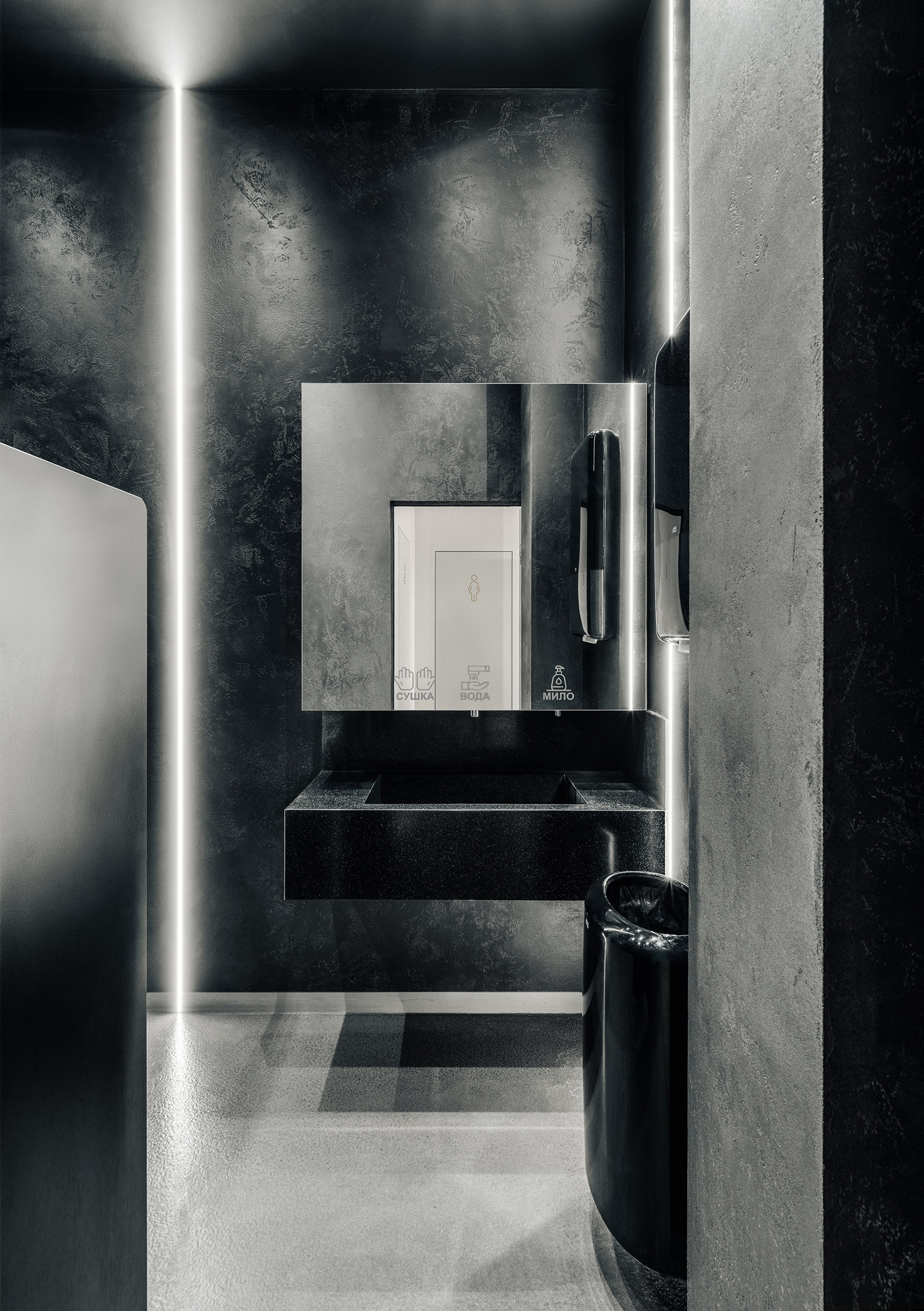
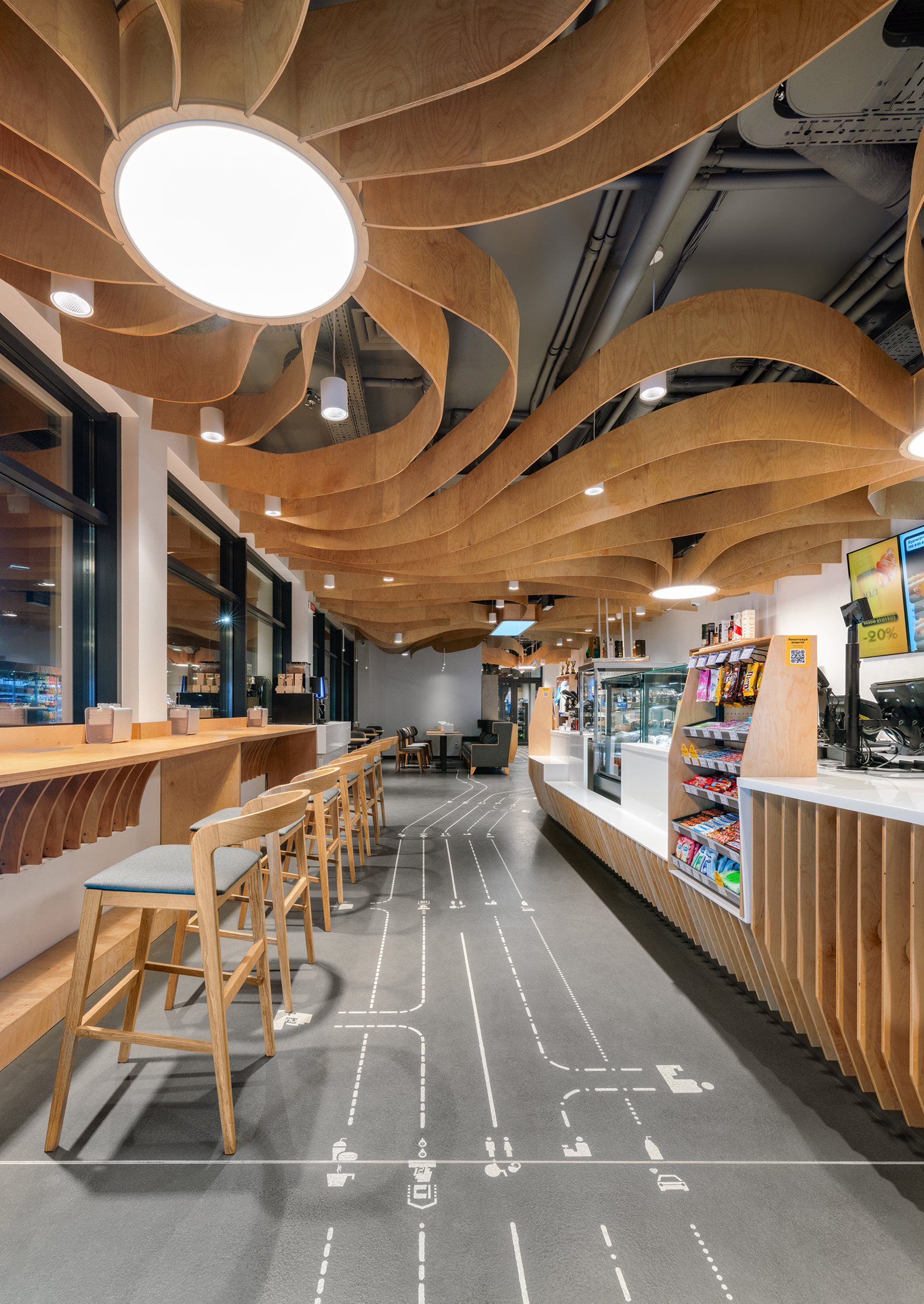
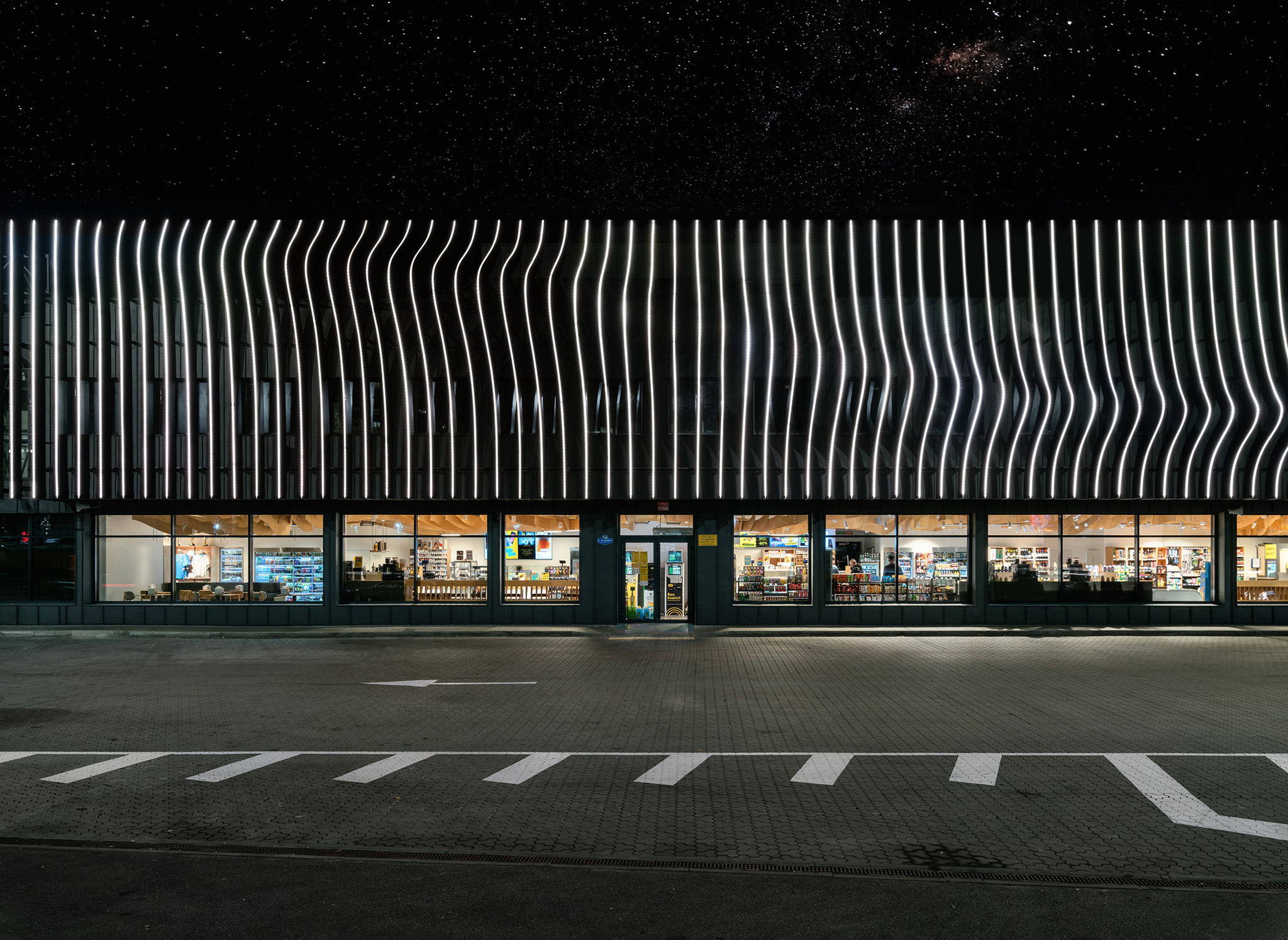
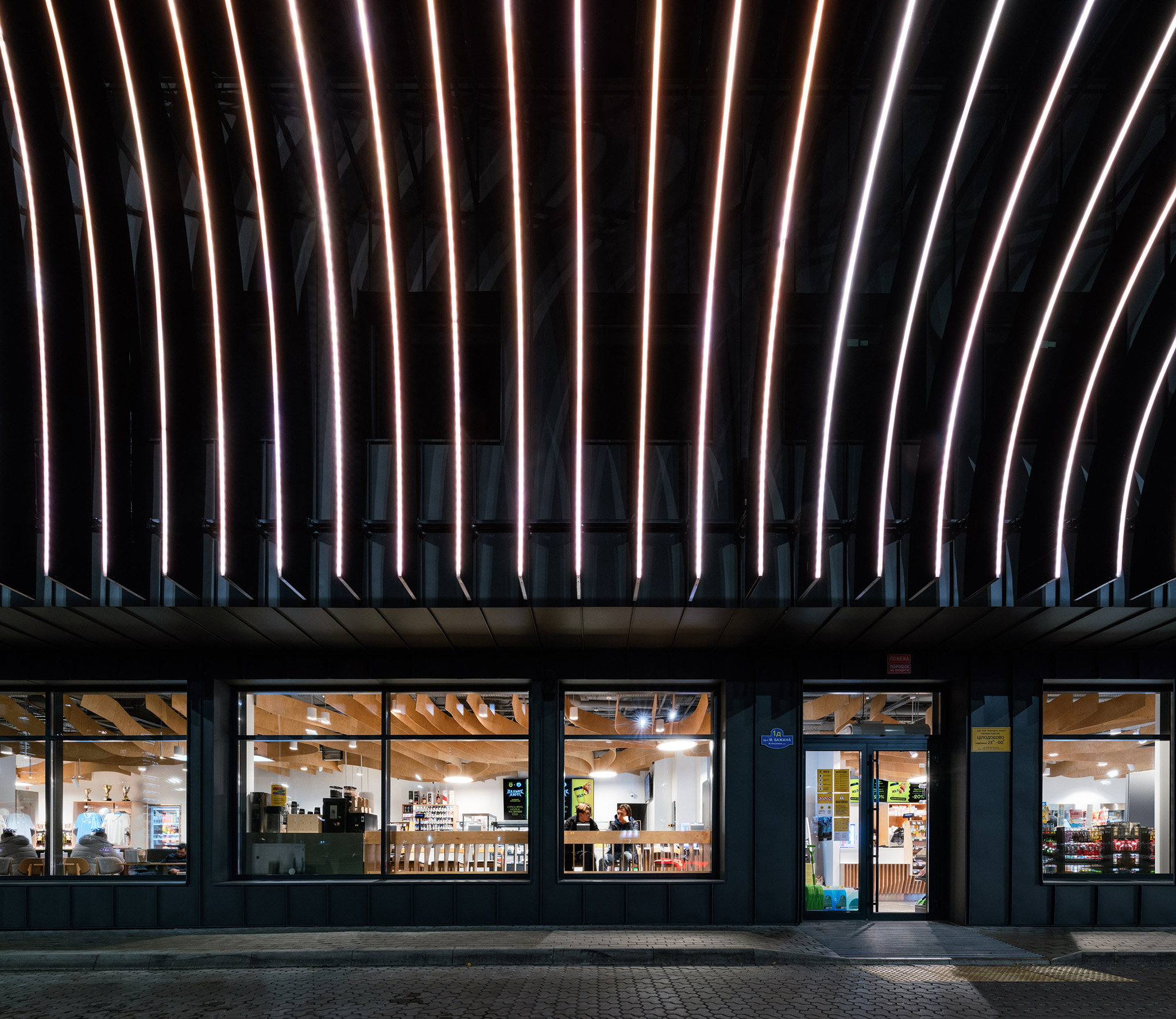
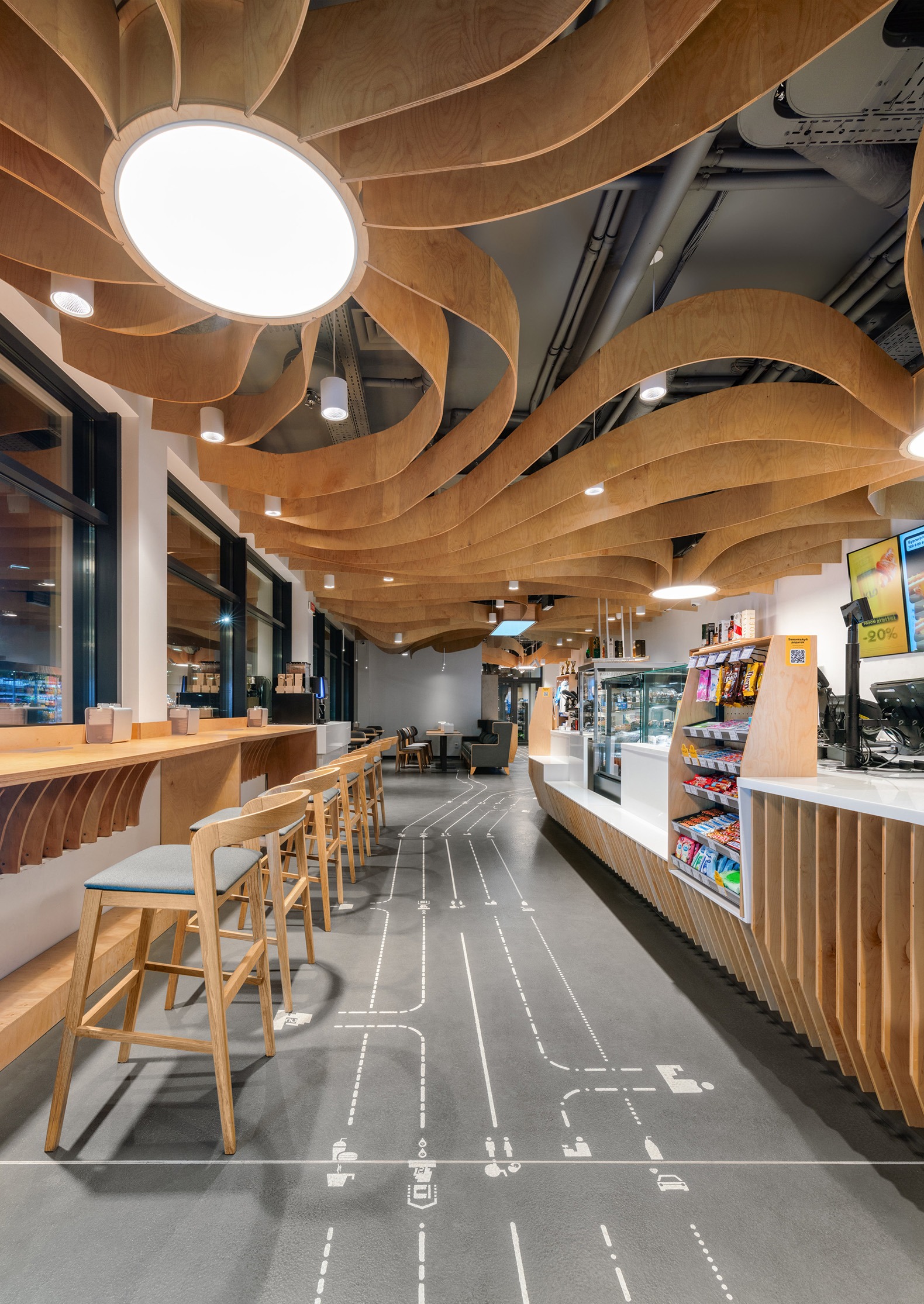
The outer layer of the façade consists of flat panels on metal frames, while the underlying layer is a metal cladding of the same color and shared vertical divisions, reinforcing the sense of unity. The interior space is constructed using a wooden structure that flows through magnetic lines with a welcoming plywood finish that contrasts with the dark monochromatic volume.
Flagship KLO Petrol Station by Aranchii Architects. Photograph by Alik Usik.

Flagship KLO Petrol Station by Aranchii Architects. Photograph by Alik Usik.

Project description by Aranchii Architects

Main Concept
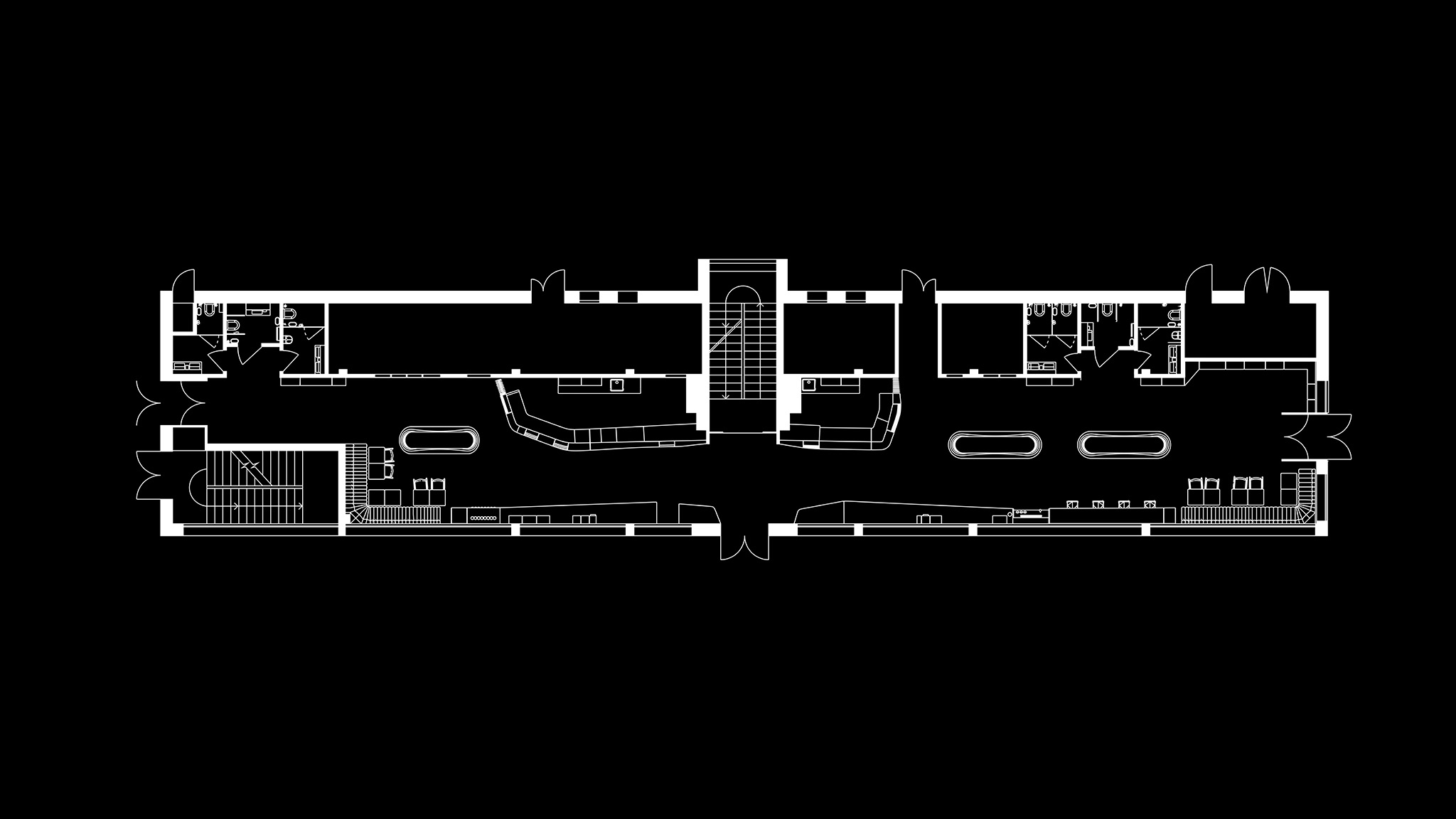
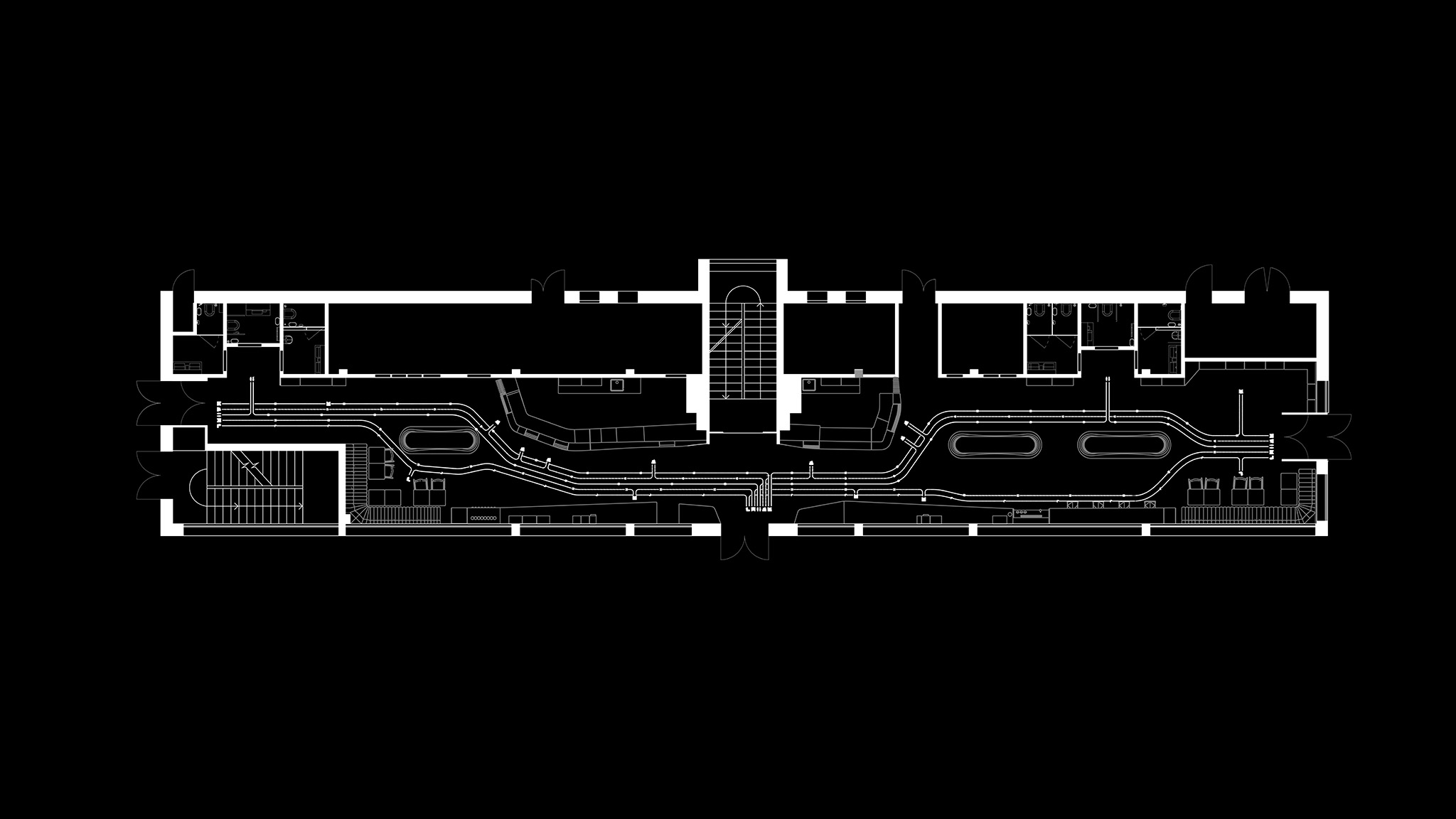
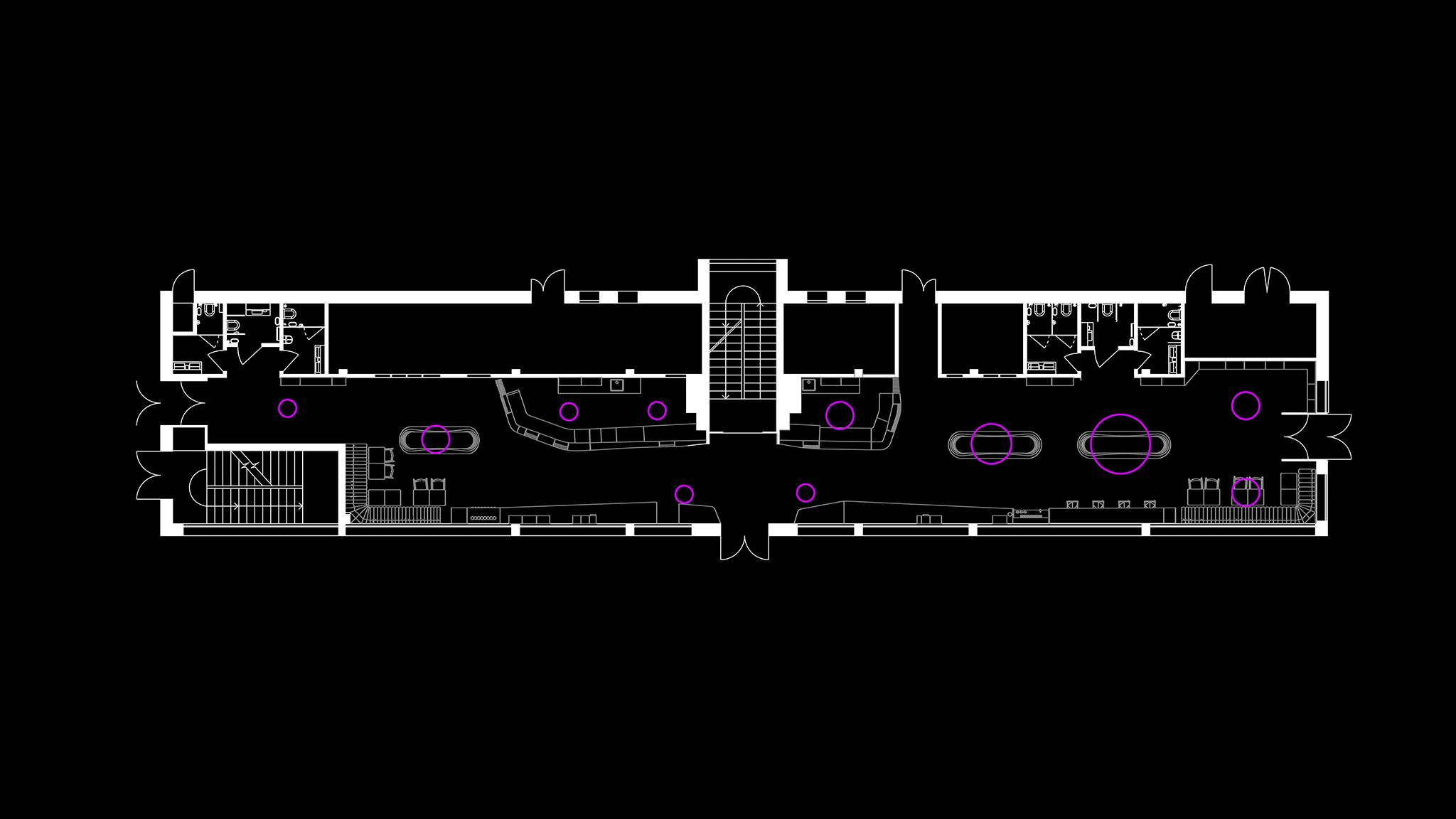
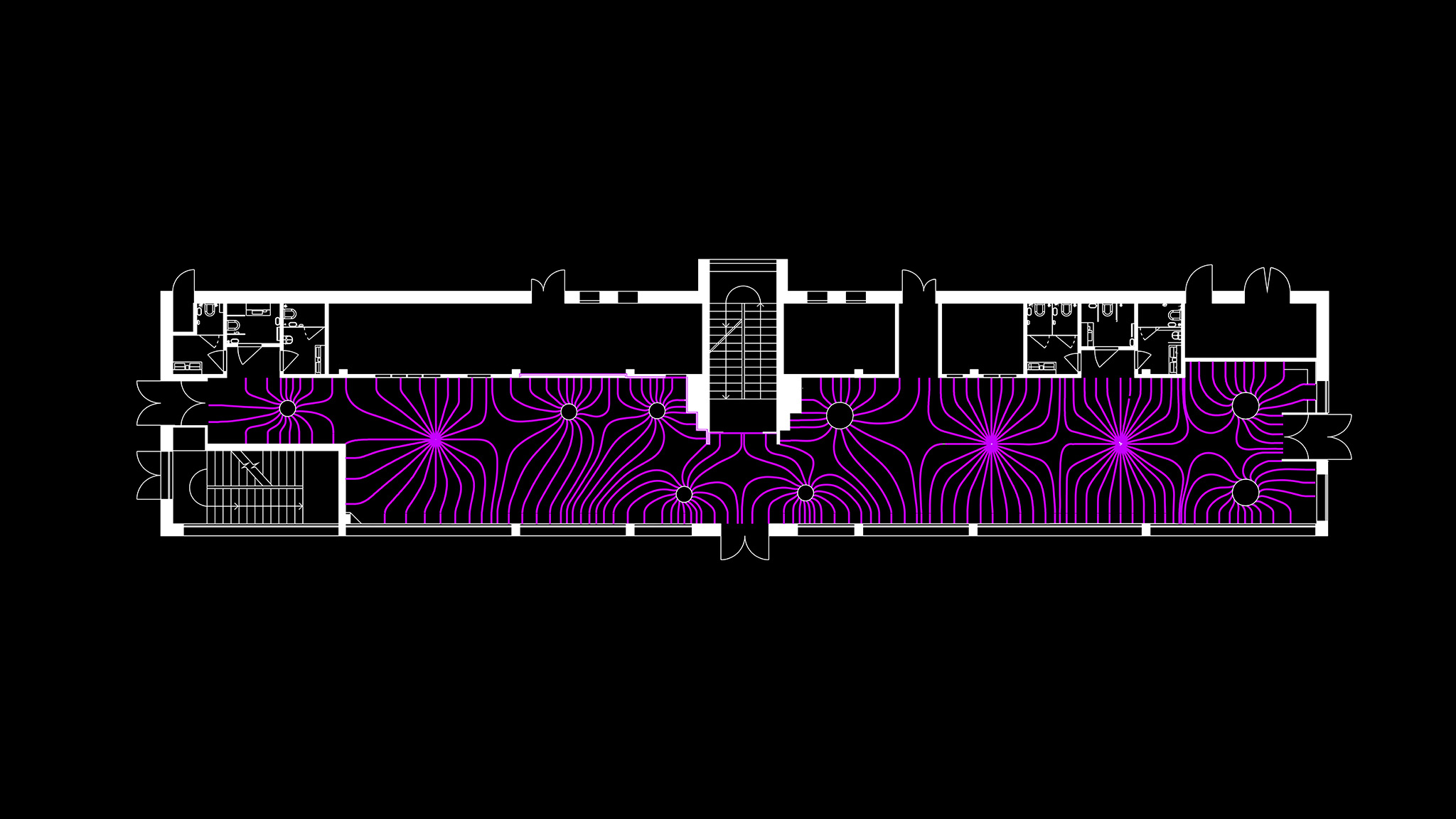
KLO's flagship service station in Kyiv is strategically located on a key transportation artery, Mykola Bazhan Avenue, which connects Boryspil International Airport to the city center. The client's request to create a unique station is reflected in the fluid, undulating exterior envelope, which provides sun protection, accentuates the main entrance with its curve, and unifies the station's expansive wings with the central building into a holistic structure. The outer layer of the façade is composed of flat panels mounted on a metal frame, with integrated edge lighting, allowing for media functionality with discreet gaps between elements, while maintaining the architectural form as the primary focus. The underlying layer of the façade is made of metal cladding in the same color, with shared vertical divisions that reinforce the sense of unity of the overall volume. The interior space of the station's shop and café is formed by a flowing timber structure along magnetic lines, connecting different functional zones—magnets—and integrating lighting accents in key areas. Navigation is highlighted with infographic paths applied to the floor. The inviting plywood finish (a somewhat unusual choice for service stations) contrasts with the dark, monochromatic volume and beckons people inside, aided by large glass panels that blur the boundaries between street and interior.

Estación de Servicio Insignia KLO por Aranchii Architects. Fotografía por Alik Usik.
Flagship KLO Petrol Station by Aranchii Architects. Photograph by Alik Usik.

Computational Morphogenesis
To create the facade geometry, a parametric 3D model was built, where changes in parameters influenced the surface formation, such as the overhang width, wave height and depth, and the number of discrete vertical elements into which the surface is divided. Within the space, optimization involved dividing the magnetic lines into a limited number of unified radii for automated fabrication. This parametric approach allowed for real-time adaptation of the facade and interior structure to meet structural and visual criteria without significantly reworking the 3D model. Effectively, it enabled the selection of hundreds of variations online. Design automation also facilitated the rapid exploration of numerous options to select the best solution based on the specified criteria.
Estación de Servicio Insignia KLO por Aranchii Architects. Fotografía por Alik Usik.
Flagship KLO Petrol Station by Aranchii Architects. Photograph by Alik Usik.

Sustainability
The south-facing façade of the central building, which houses the smart hotel and overlooks Bazhan Avenue, is mitigated by an additional façade layer that blocks direct sunlight, providing diffused light throughout the day. This, combined with other energy-efficiency measures, reduces the equivalent CO2 emissions footprint. The primary material for the interior space, eco-friendly plywood, sets the standard for material selection, adhering to the cradle-to-cradle concept.
More information

Label
Architects
Text

Aranchii Architects. Lead architects.- Dmytro Aranchii.

+ + copy Created with Sketch.
- + copy Created with Sketch.
Label
Project team
Text

Bohdan Hadzhylov, Vladlena Volhushyna, Viktoriia Kuzmyna, Anna Sotnyk, Alina Kudriavtseva, Anhelina Hladushevska, Yevhenii Kravchenko.

+ + copy Created with Sketch.
- + copy Created with Sketch.
Label
Collaborators
Text

Design.- Dmytro Aranchii.

+ + copy Created with Sketch.
- + copy Created with Sketch.
Label
Client
Text

KLO.

+ + copy Created with Sketch.
- + copy Created with Sketch.
Label
Area
Text

Facade.- 1,000 sqm.
Interior space.- 240 sqm.

+ + copy Created with Sketch.
- + copy Created with Sketch.
Label
Dates
Text

2020-2023.

+ + copy Created with Sketch.
- + copy Created with Sketch.
Label
Location
Text

Mykola Bazhan Avenue, Kyiv, Ukraine

+ + copy Created with Sketch.
- + copy Created with Sketch.
Label
Photography
+ + copy Created with Sketch.
- + copy Created with Sketch.

Aranchii Architects is an architecture practice founded in Kyiv in 2008 by the Ukrainian architect Dmytro Aranchii (Kyiv, 1986). The studio works across architecture, urbanism, interior design, and industrial projects, exploring the potential of computer-based technologies applied to the built environment.

The practice promotes the concept of compustainism (computational sustainability), a design approach that integrates innovative digital tools, computational thinking, and sustainable strategies to generate solutions centred on both people and natural systems. The studio’s projects have received numerous international awards and recognitions.

Dmytro Aranchii has both technical and architectural training. He studied at the Kyiv Polytechnic Institute and the Kyiv National University of Construction and Architecture, where he earned his degree in architecture. He later continued his education at the Architectural Association School of Architecture in London, attending the Design Research Laboratory (DRL), a programme focused on advanced research in computational design.

He is the author of Algorithmic Methods of Architectural Morphogenesis, a book dedicated to the systematisation of algorithmic and computational methods for the generation of architectural form. Alongside his professional and academic activities, he has delivered numerous international lectures and has participated as a TEDx speaker.

Dmytro Aranchii currently serves as Director of Strategic Development at the Faculty of Architecture, Civil Engineering and Design of KAI (Kyiv Aviation Institute), where he promotes initiatives related to technological innovation, architectural education, and interdisciplinary research.

Read more
Published on: June 23, 2026
Cite:
metalocus, ELVIRA PARÍS FERNÁNDEZ
"Computational morphogenesis. Flagship KLO Petrol Station by Aranchii Architects" METALOCUS. Accessed
<https://www.metalocus.es/en/news/computational-morphogenesis-flagship-klo-petrol-station-aranchii-architects> ISSN 1139-6415
Loading content ...
Loading content ...
Loading content ...
Loading content ...
Loading content ...
Loading content ...
Loading content ...
Loading content ...
Loading content ...
Loading content ...
Loading content ...
Loading content ...
Loading content ...
Loading content ...
Loading content ...
Loading content ...
Loading content ...
Loading content ...
Loading content ...
Loading content ...
Loading content ...
Loading content ...
Loading content ...
Loading content ...
Loading content ...
Loading content ...
Loading content ...
Loading content ...
Loading content ...
Loading content ...
Loading content ...
Loading content ...
Loading content ...
Loading content ...
Loading content ...
Loading content ...
Loading content ...
Loading content ...
Loading content ...
Loading content ...
Loading content ...
Loading content ...
Loading content ...
Loading content ...
Loading content ...
Loading content ...
Loading content ...
Loading content ...
Loading content ...
Loading content ...
Loading content ...
Loading content ...
Loading content ...
Loading content ...