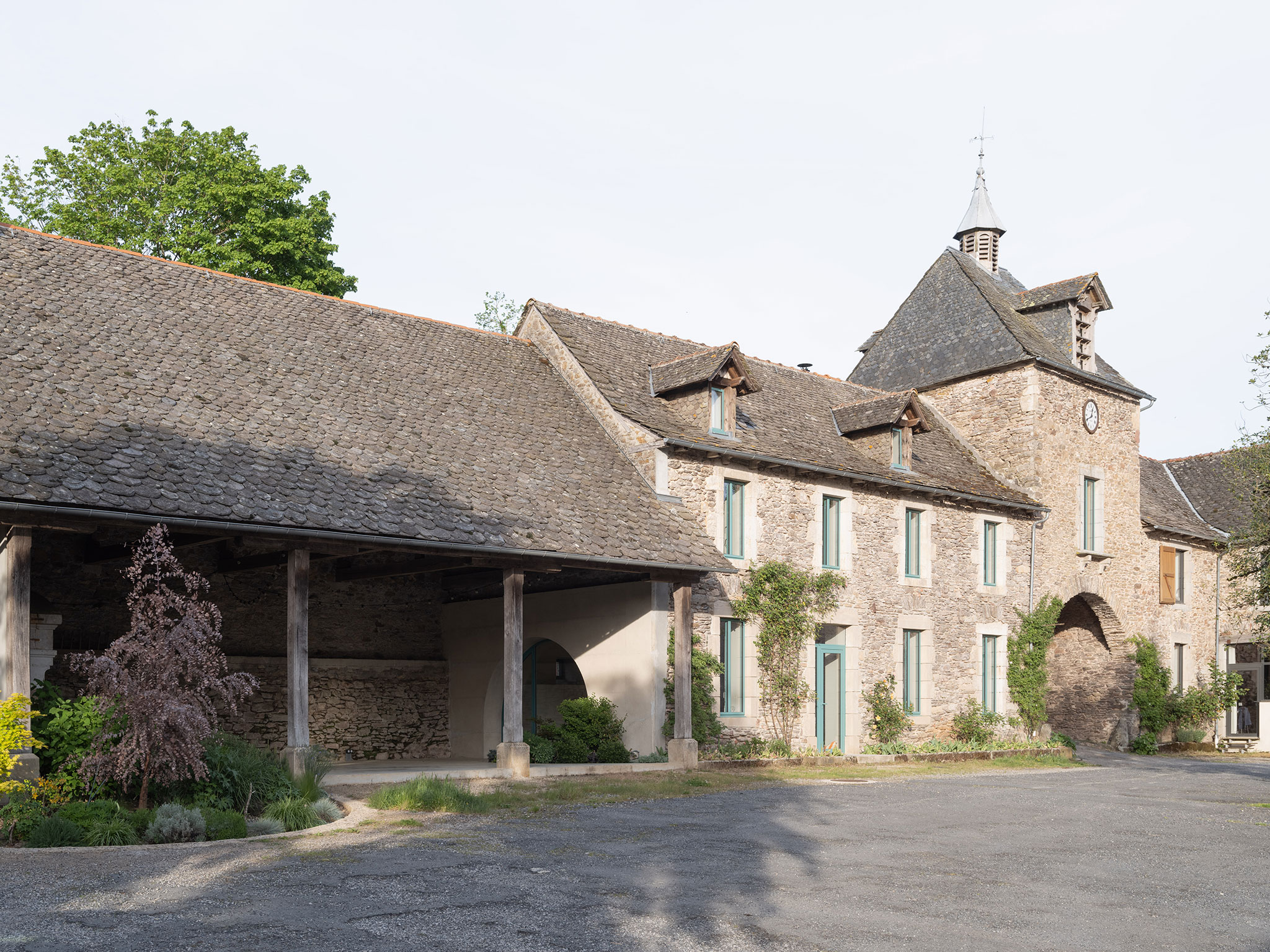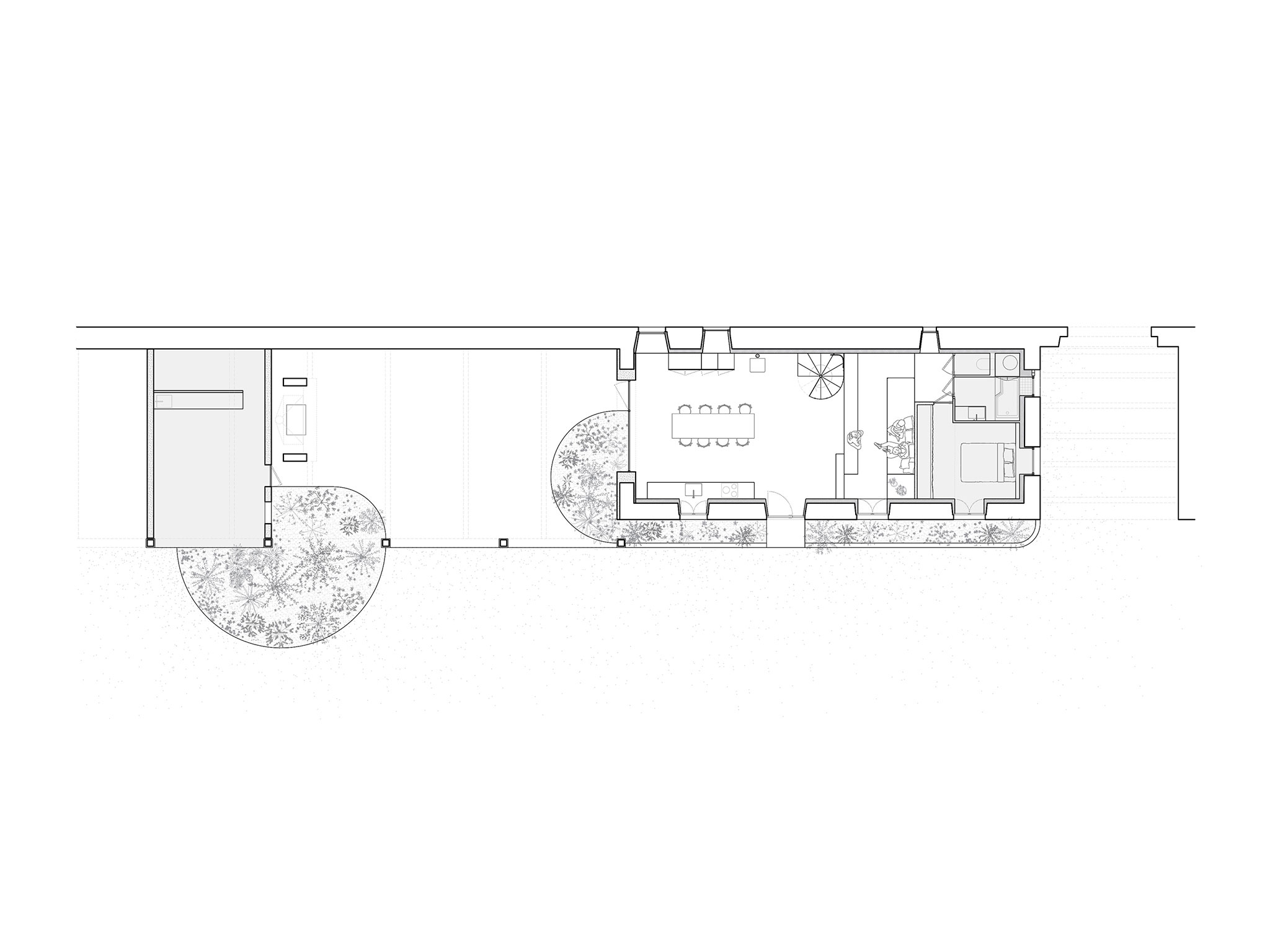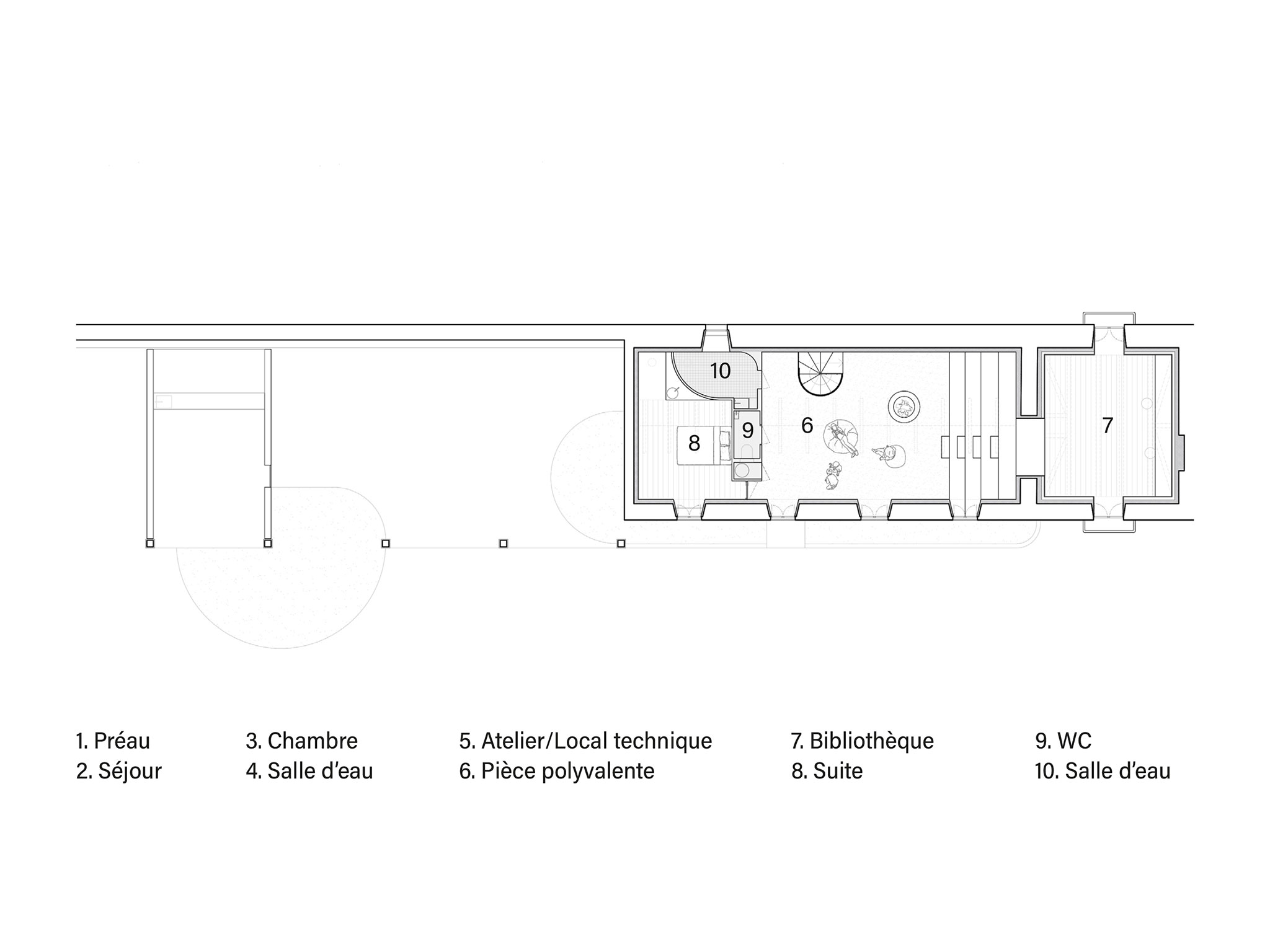
The proposal designed by Atelier AJO revitalizes Maison Veillac, a former family farmhouse that had been abandoned. The project focuses on connecting its main rooms, optimizing each space and giving it a new purpose.
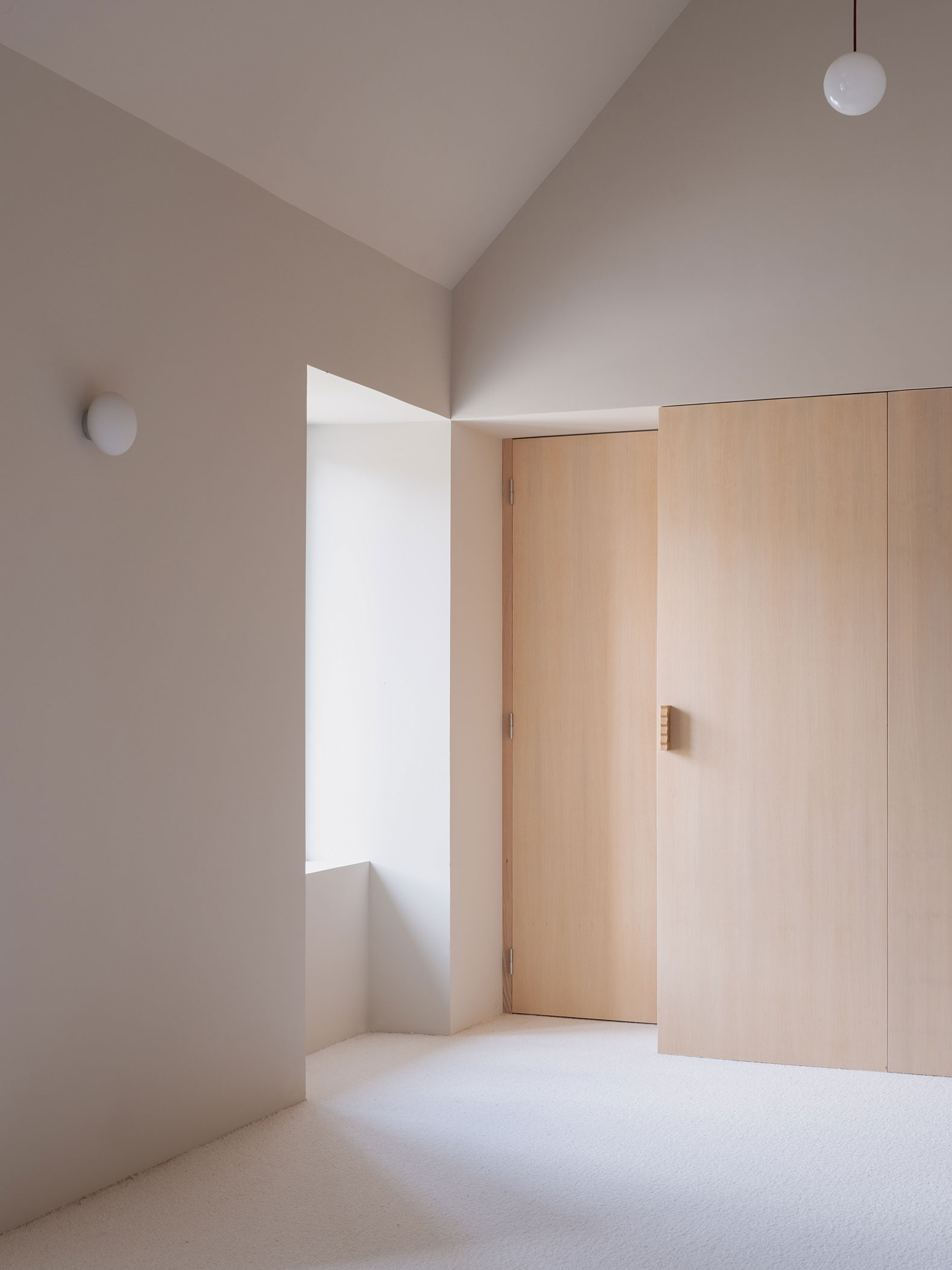
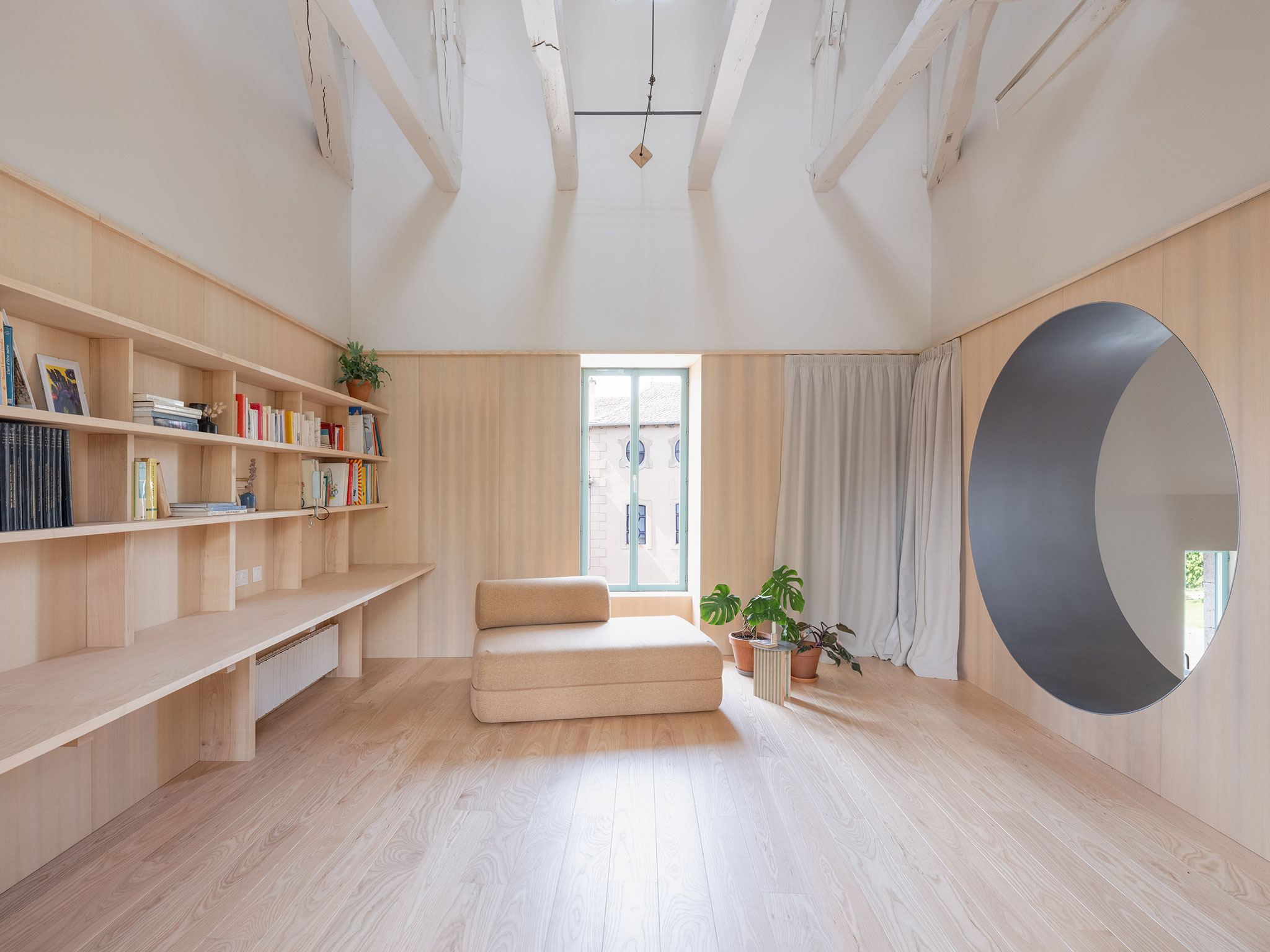
In addition to the large openings, the upper floor is transformed by removing the intermediate floors, allowing natural light to flood in through the dormer windows. The renovation of this floor also creates a multi-purpose space—thanks to its open layout—allowing for different occupancy patterns. Furthermore, the tower is restored to its original function, and the stone façade, previously hidden thanks to insulation methods, is now revealed.
Maison Veillac by Atelier AJO. Photograph by Atelier AJO.
Project description by Atelier AJO
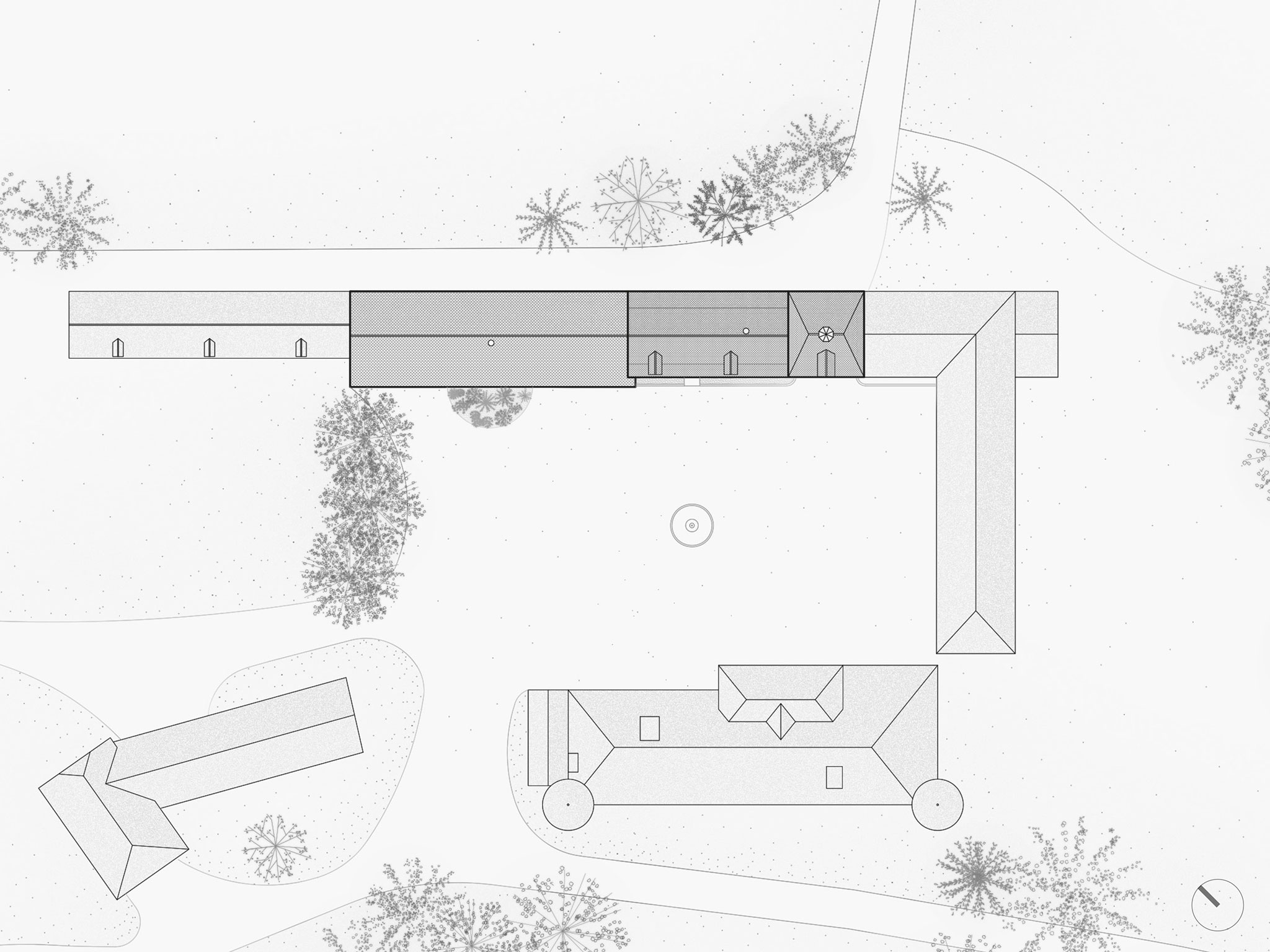
The project involves the renovation of an old, uninhabited farm annex—formerly used to house farm workers and part of a complex organized around a central courtyard. The owners’ main goal was to transform this space into a cozy home where they could welcome family and friends on weekends.
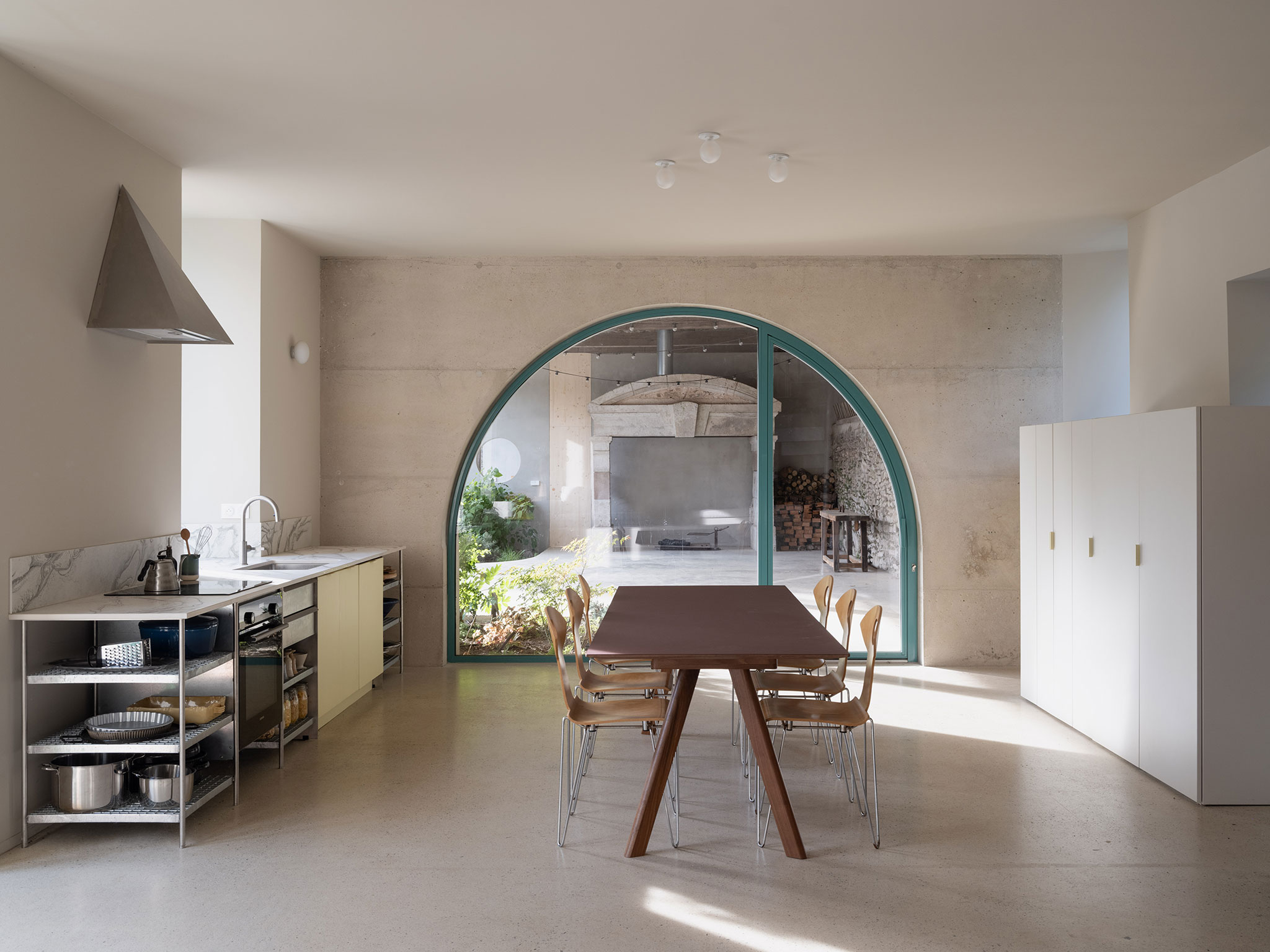
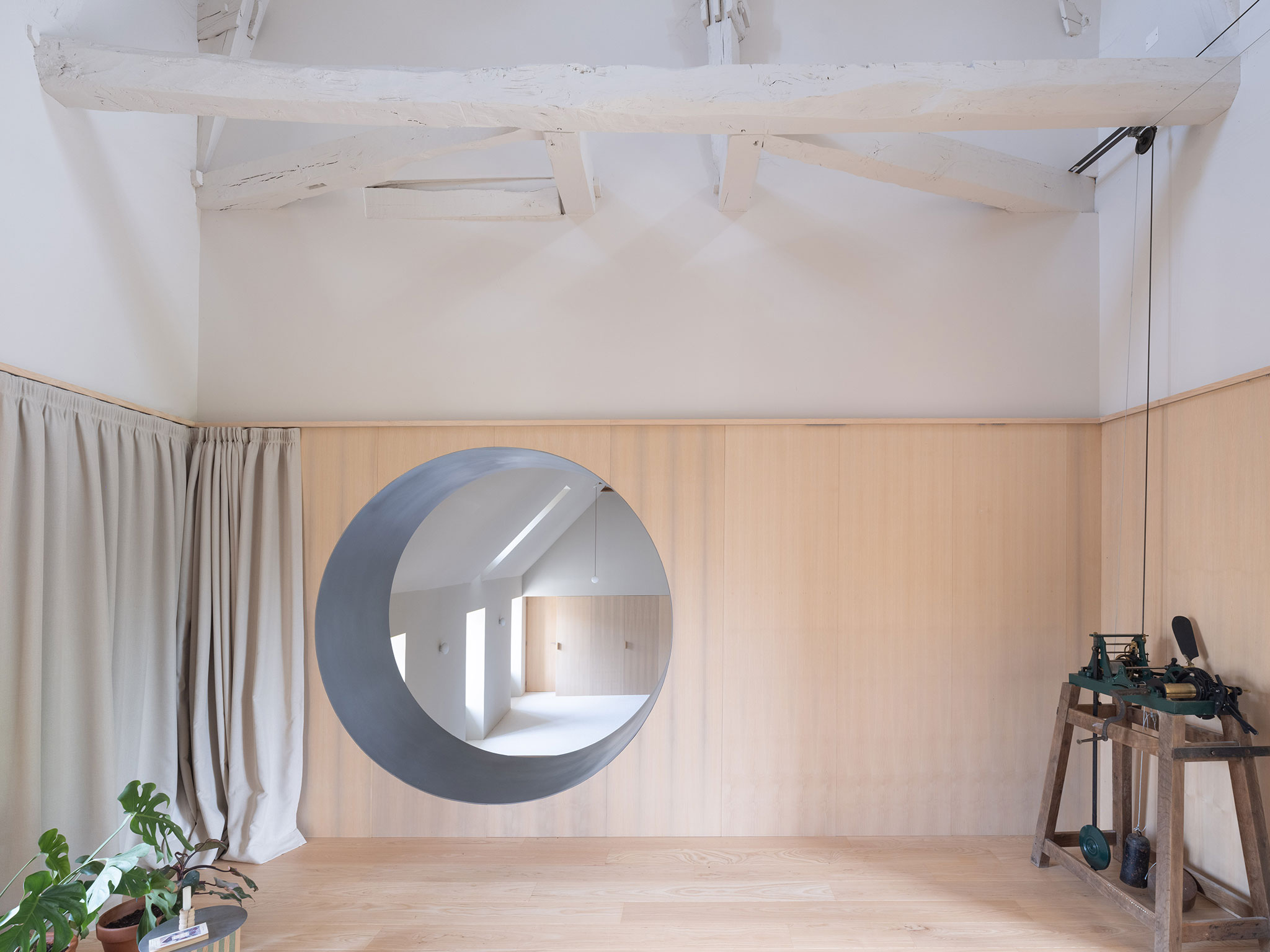
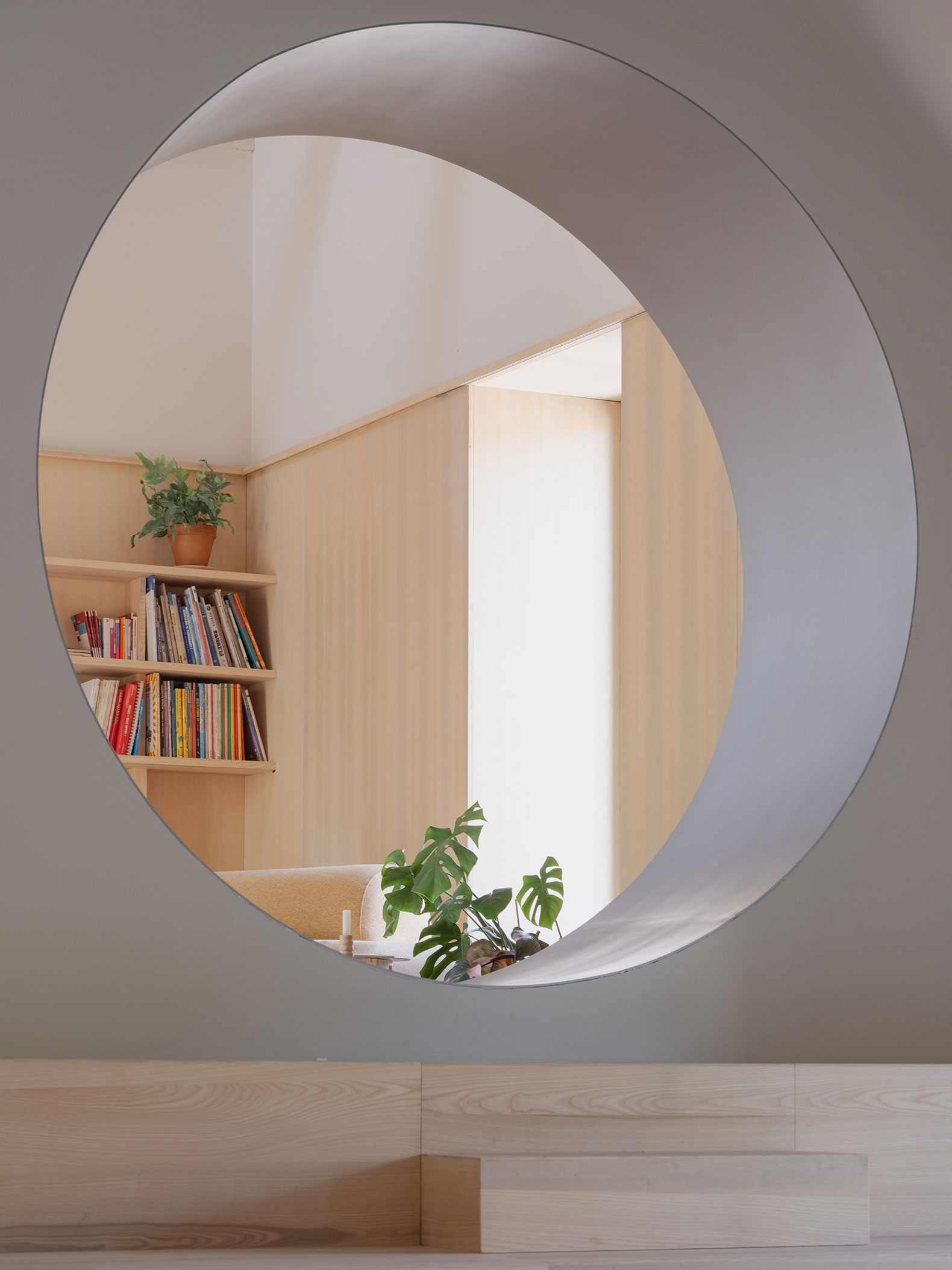
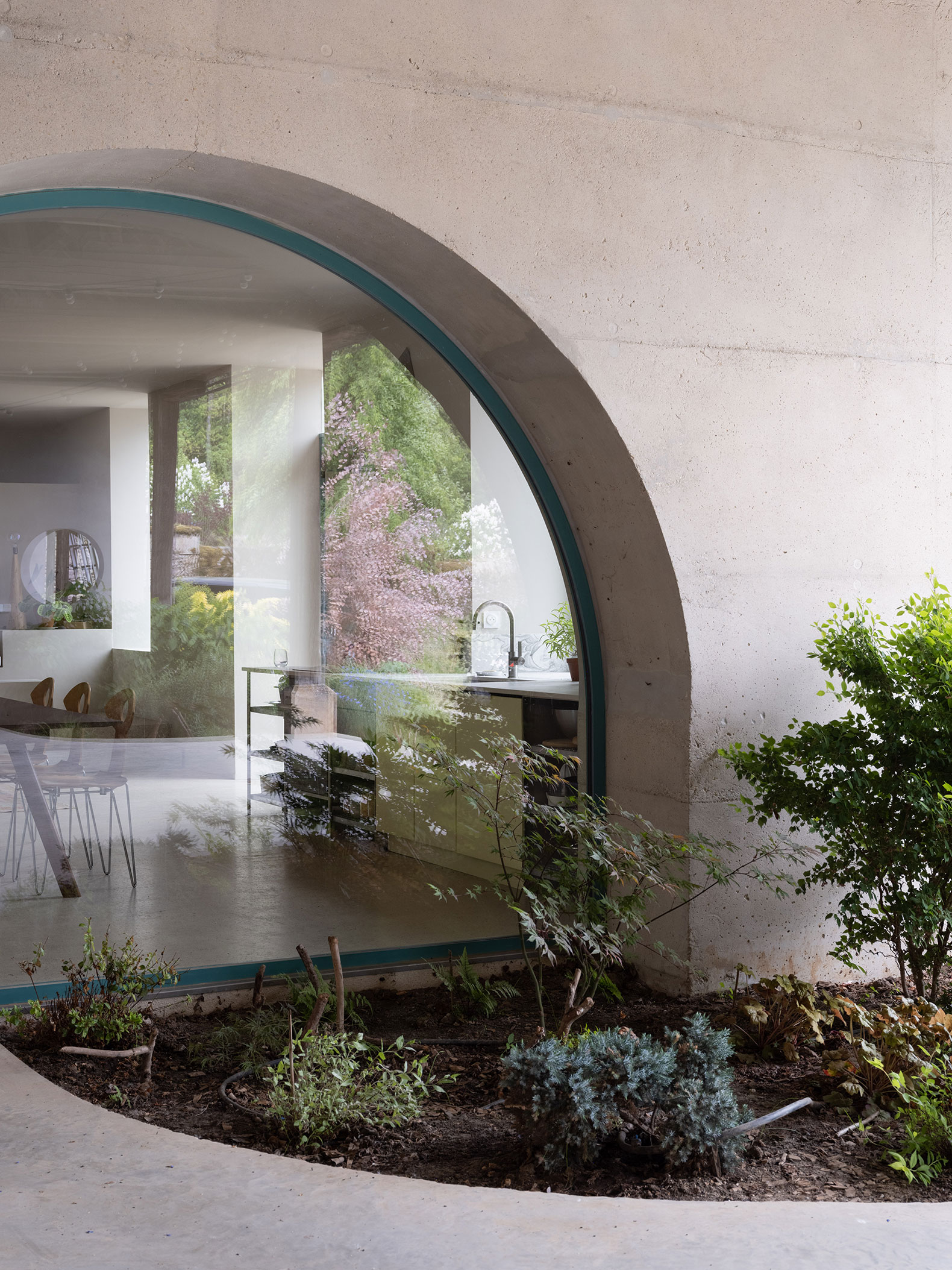
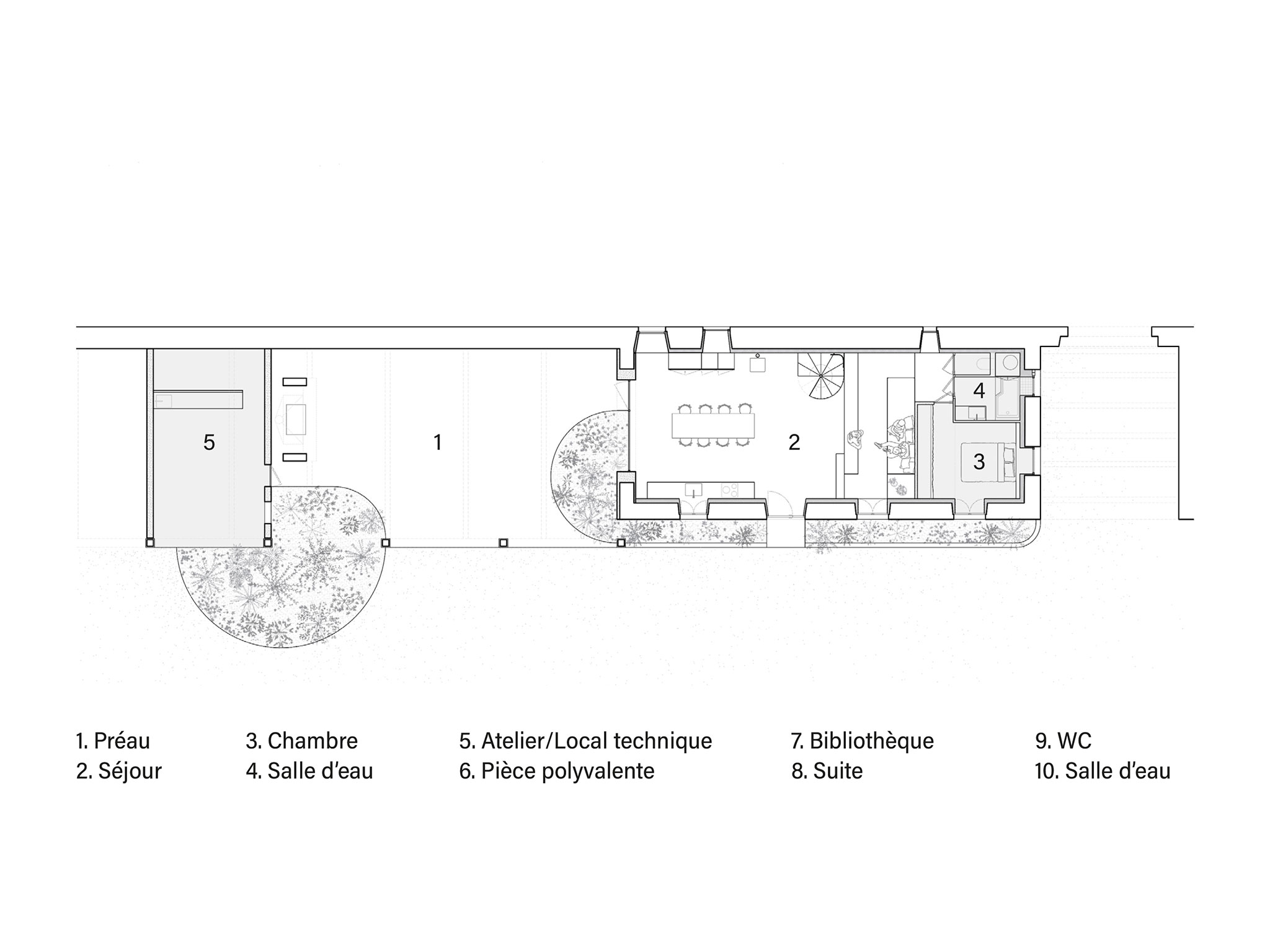
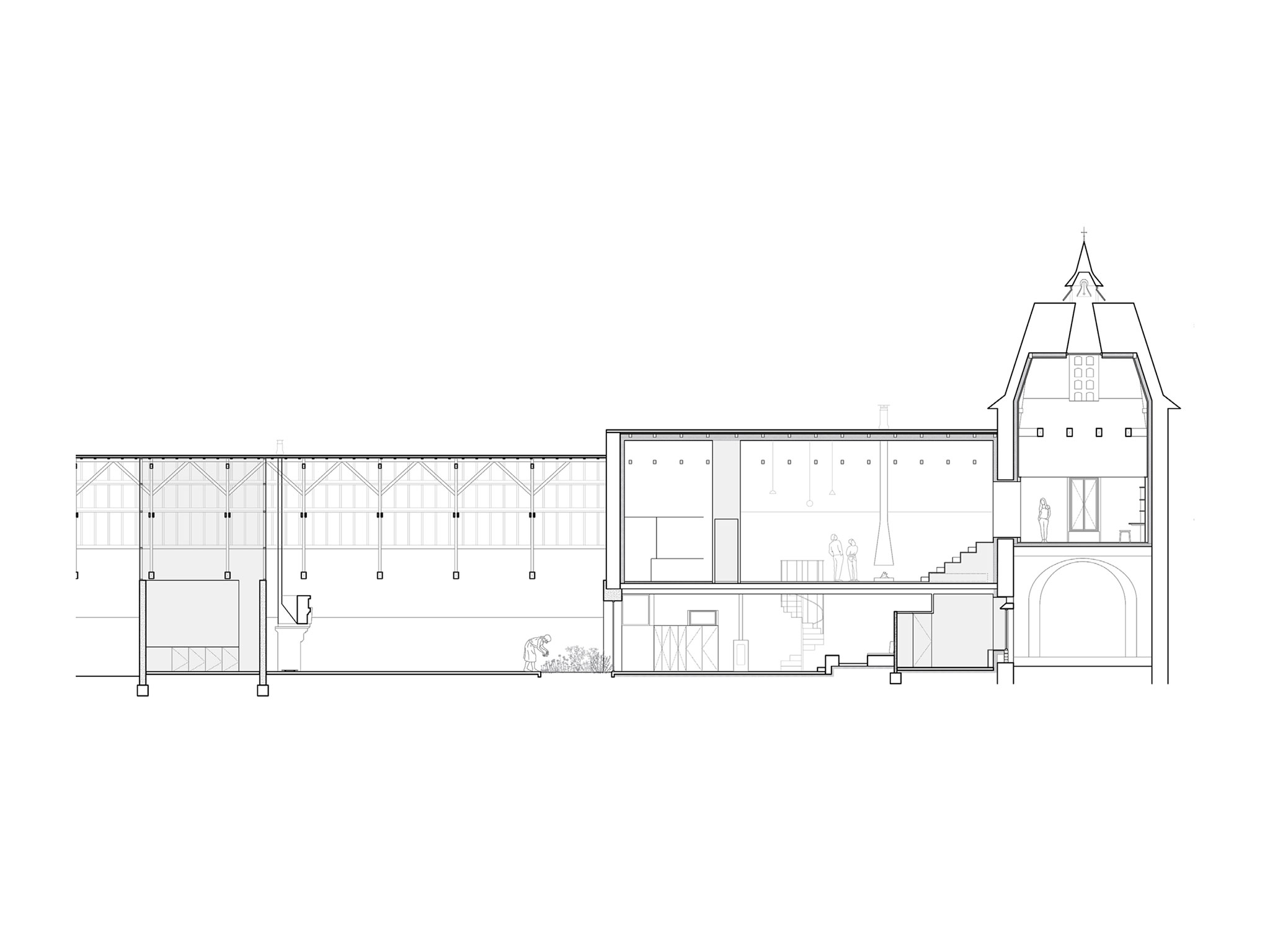
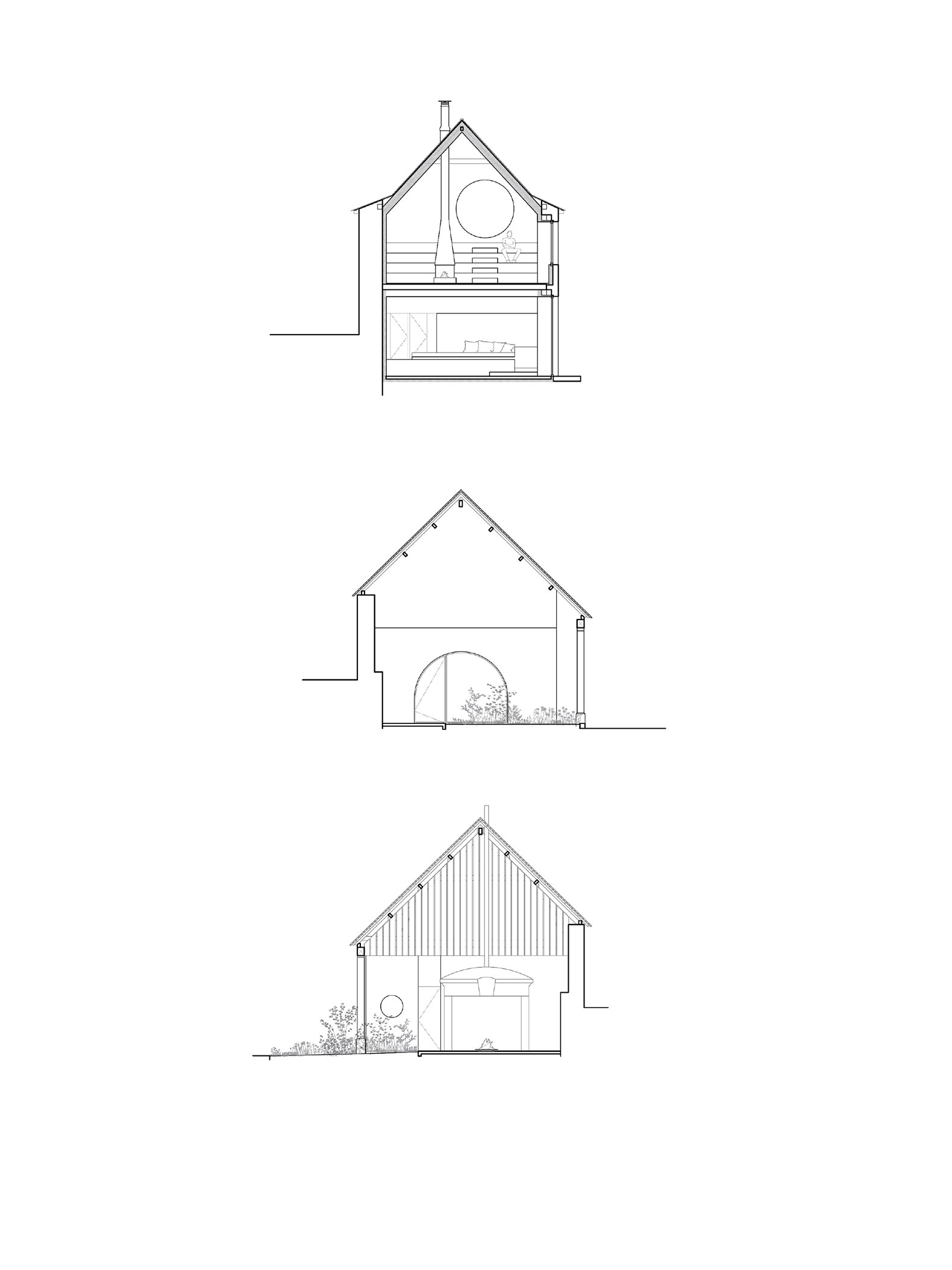
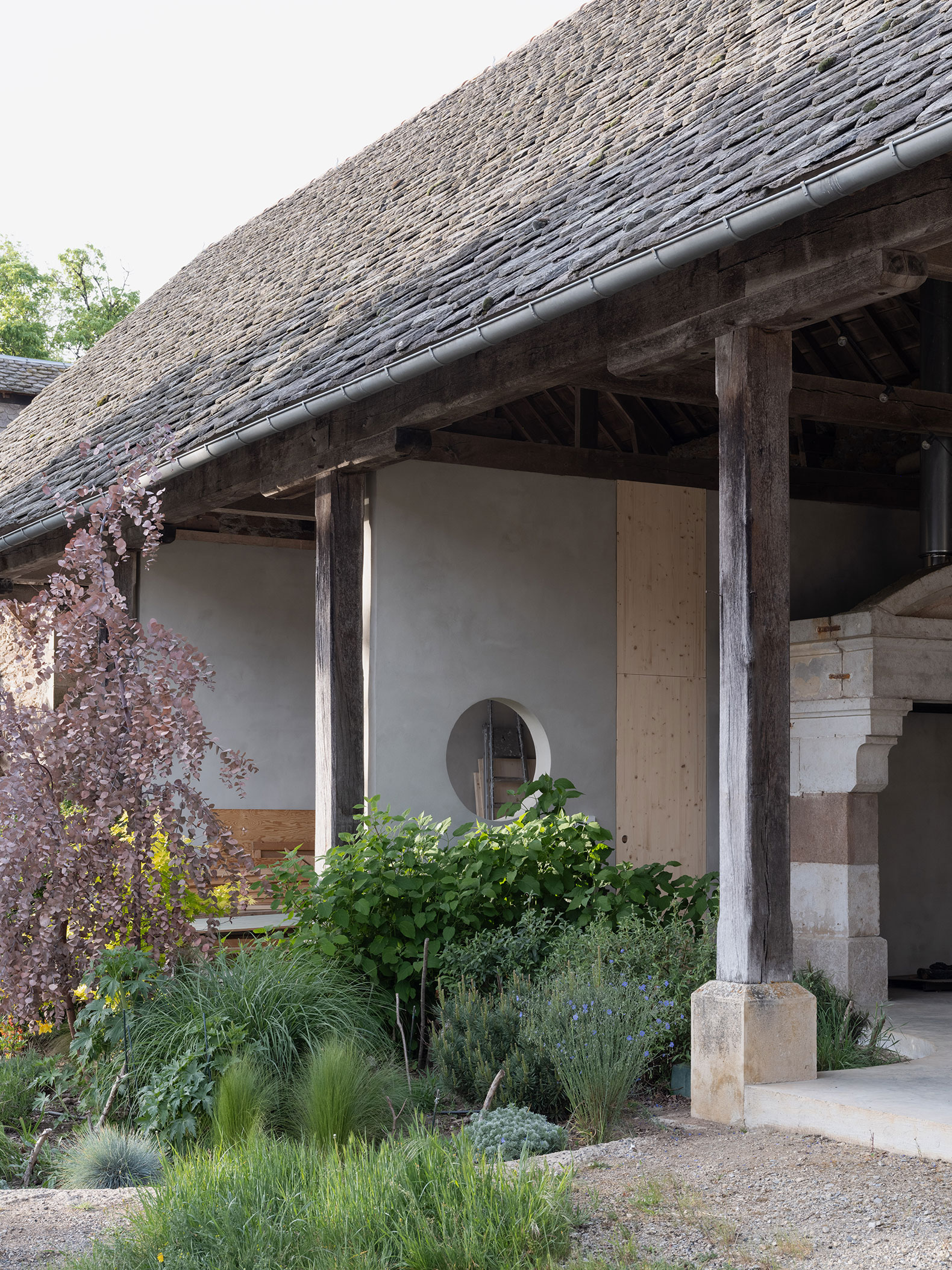
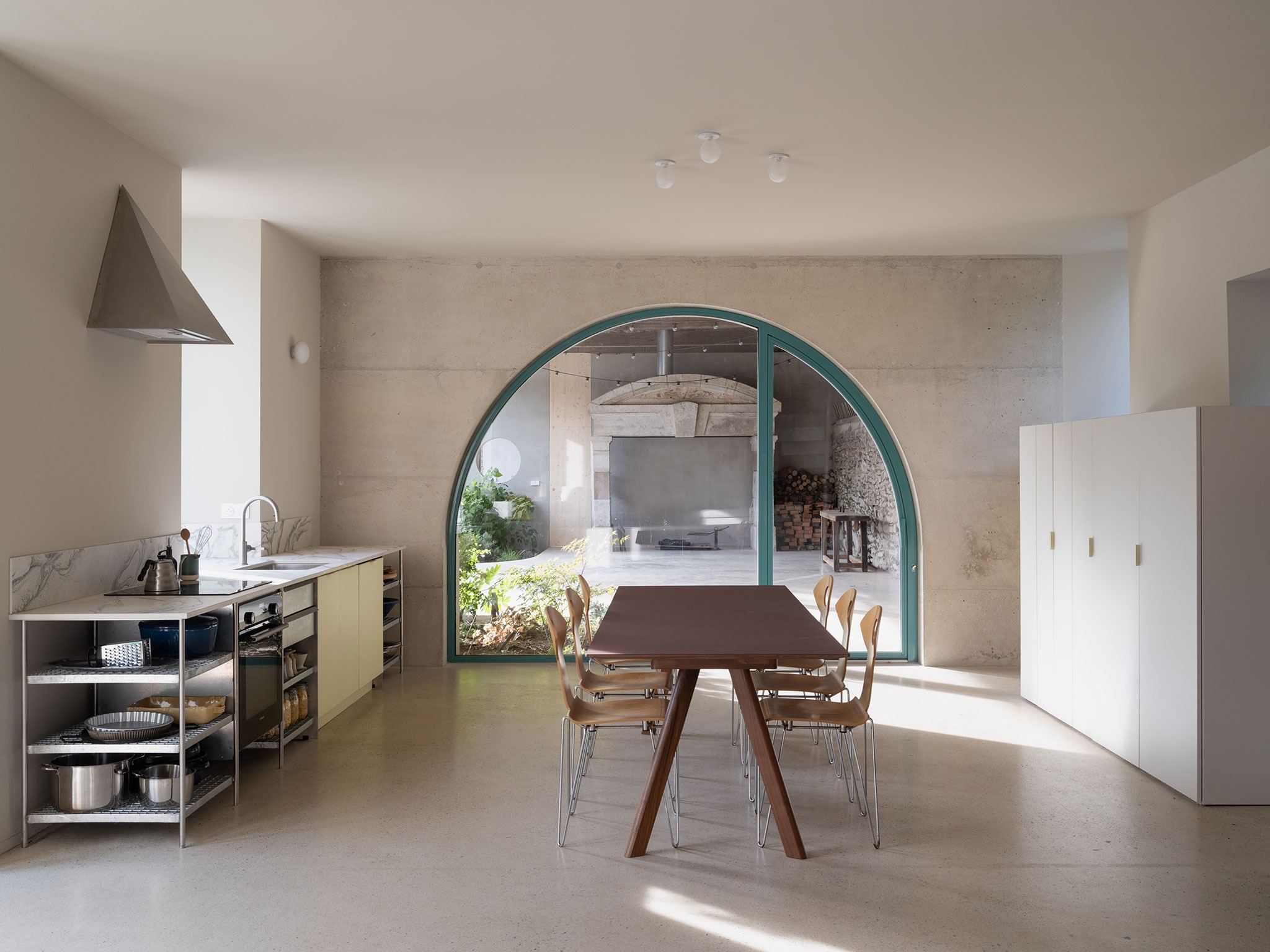
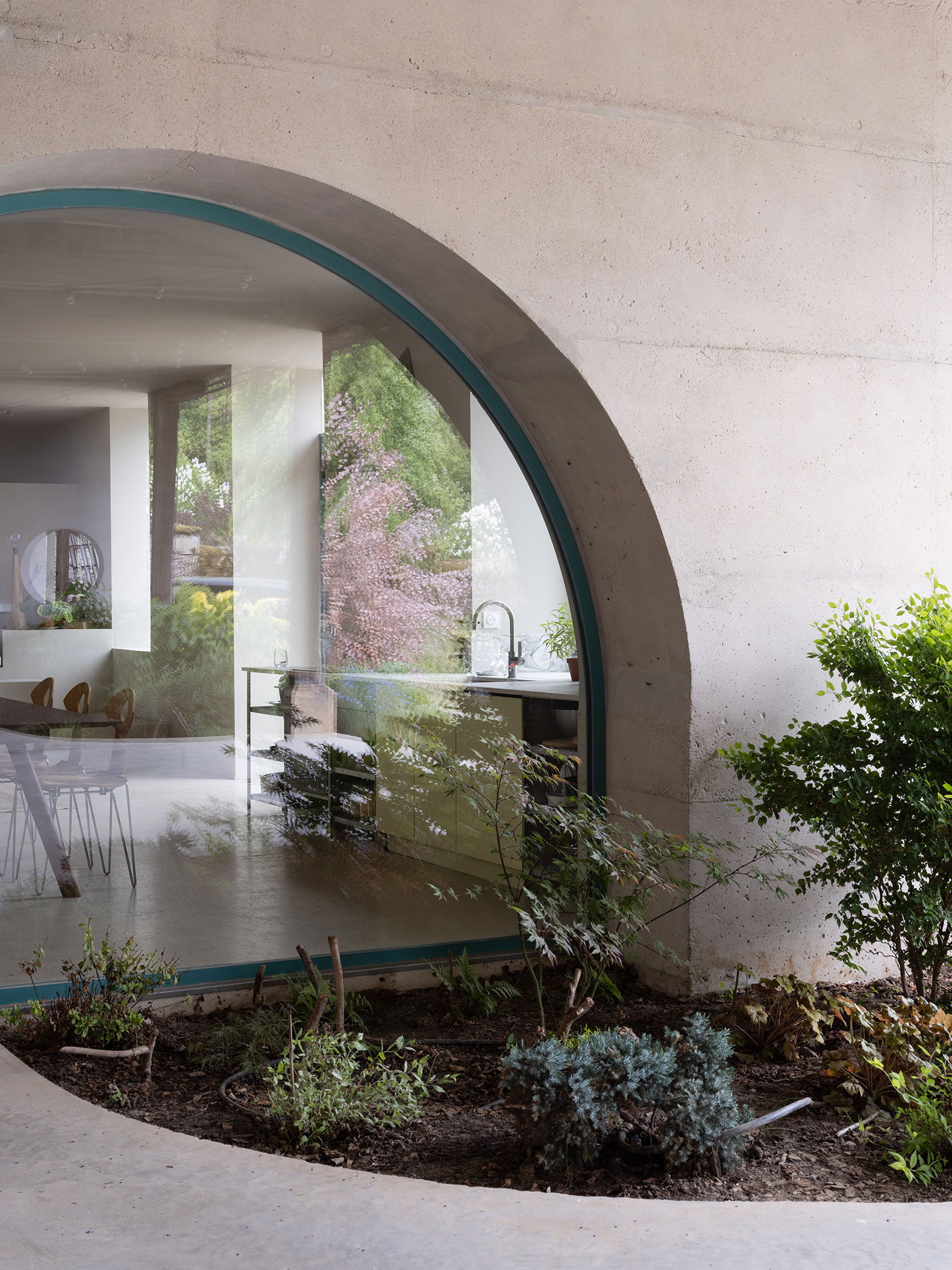
The goal of the project is to create a new sense of continuity among the three main spaces—the hangar, the central building, and the dovecote tower—which until then had remained separate and subdivided into small, compartmentalized rooms. This continuity is achieved by creating two distinctive openings in the stone walls, connecting the various spaces from the tower to the landscaped shed. Until now, the building lacked a true outdoor space; the existing hangar thus becomes the main view from the living area: a semi-interior landscape whose curved forms interact with the new openings, establish a connection with the farm’s central courtyard, and highlight the large stone fireplace, which has been preserved and restored to its original function.
The layout of the rooms follows the logic of the existing openings in the facades. None of them have been removed or modified; on the contrary, the project seeks to take full advantage of the specific qualities of each opening.
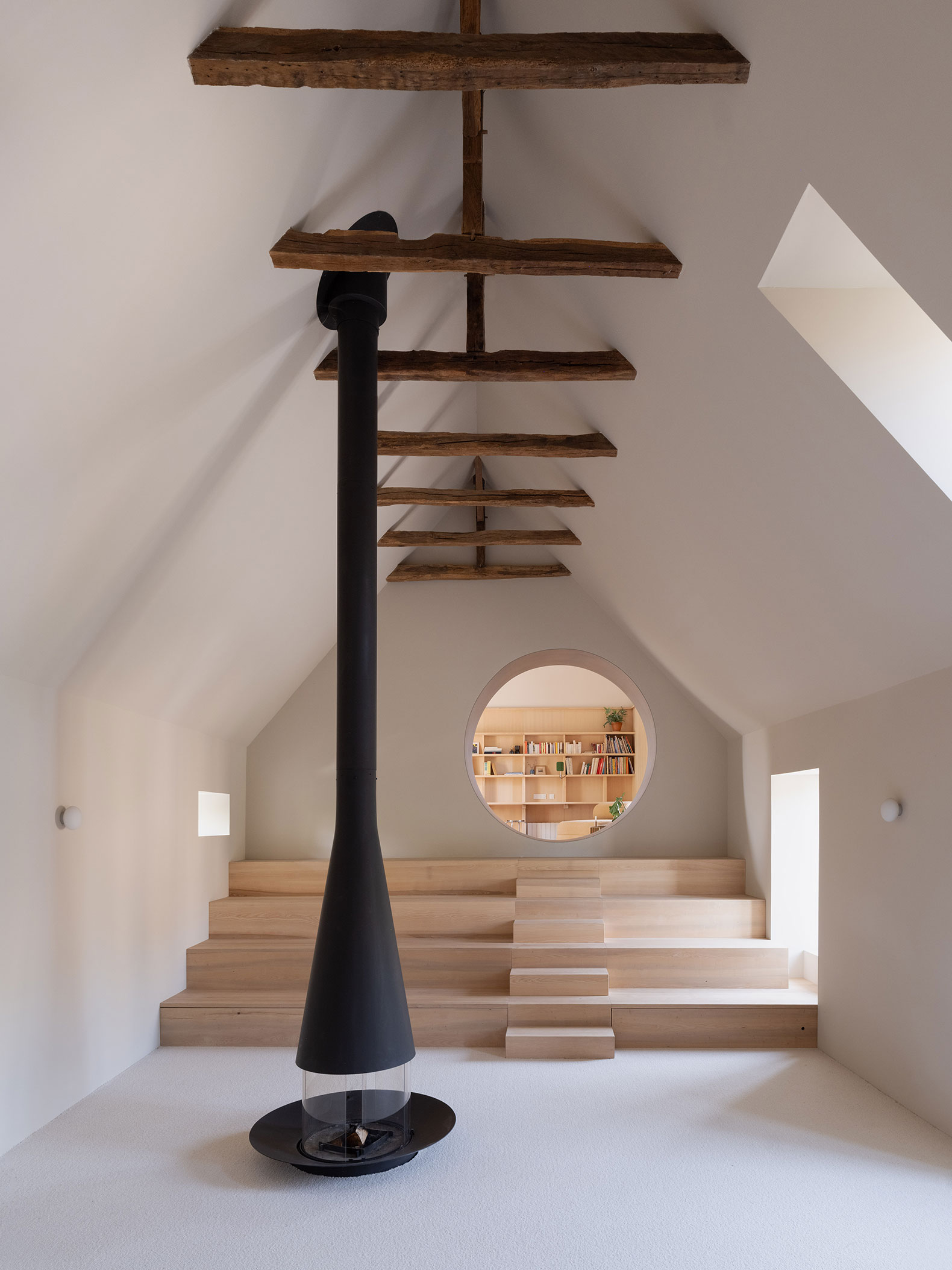
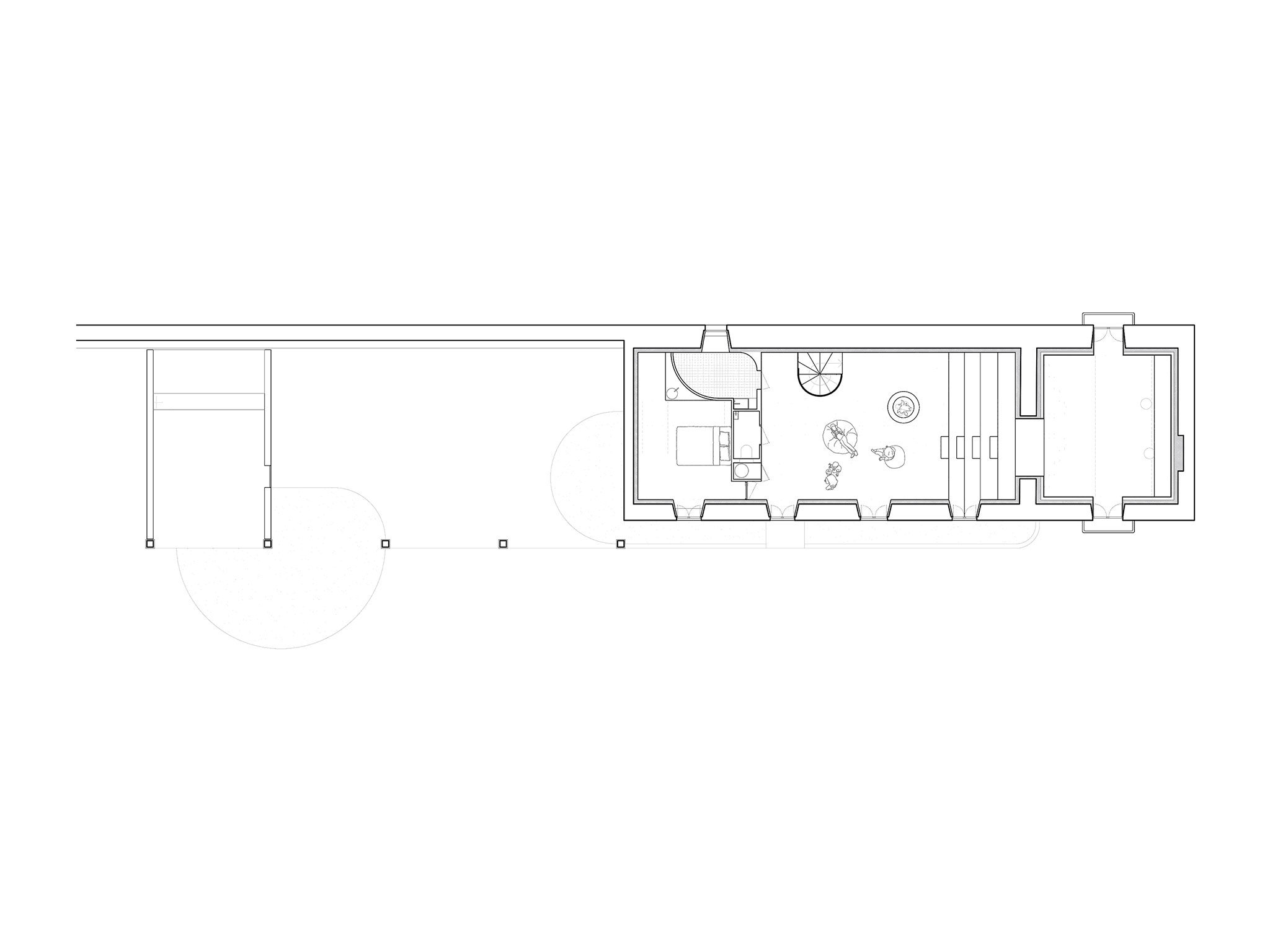
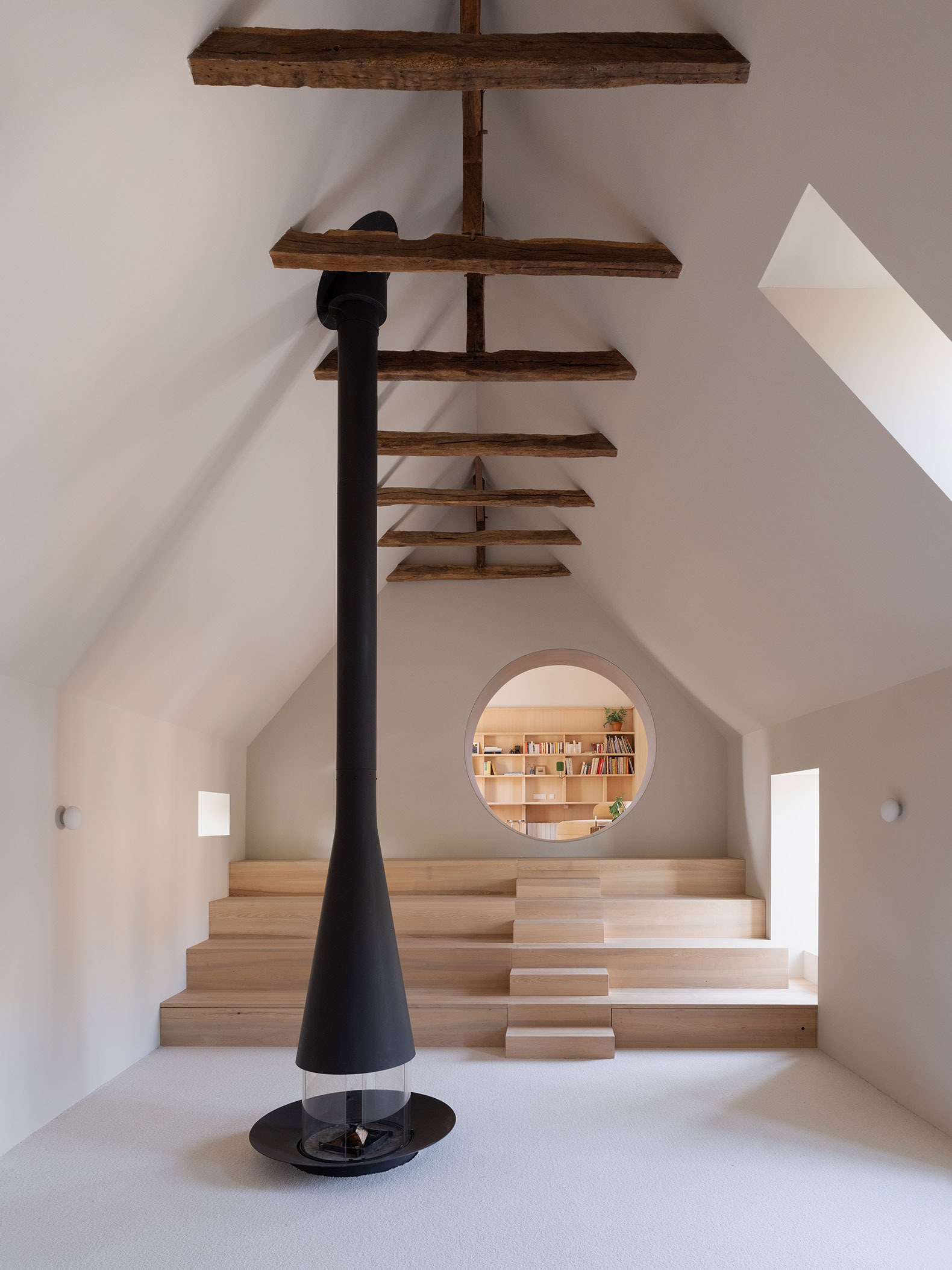
On the upper floor, the intermediate floor slabs have been removed to reveal the generous scale of the original spaces and take advantage of the natural light provided by the existing dormer windows on the main façade. The tower regains its vertical character and once again displays the mechanisms of the bell tower that crowns it—restored for the occasion—which once marked the rhythm of agricultural life.
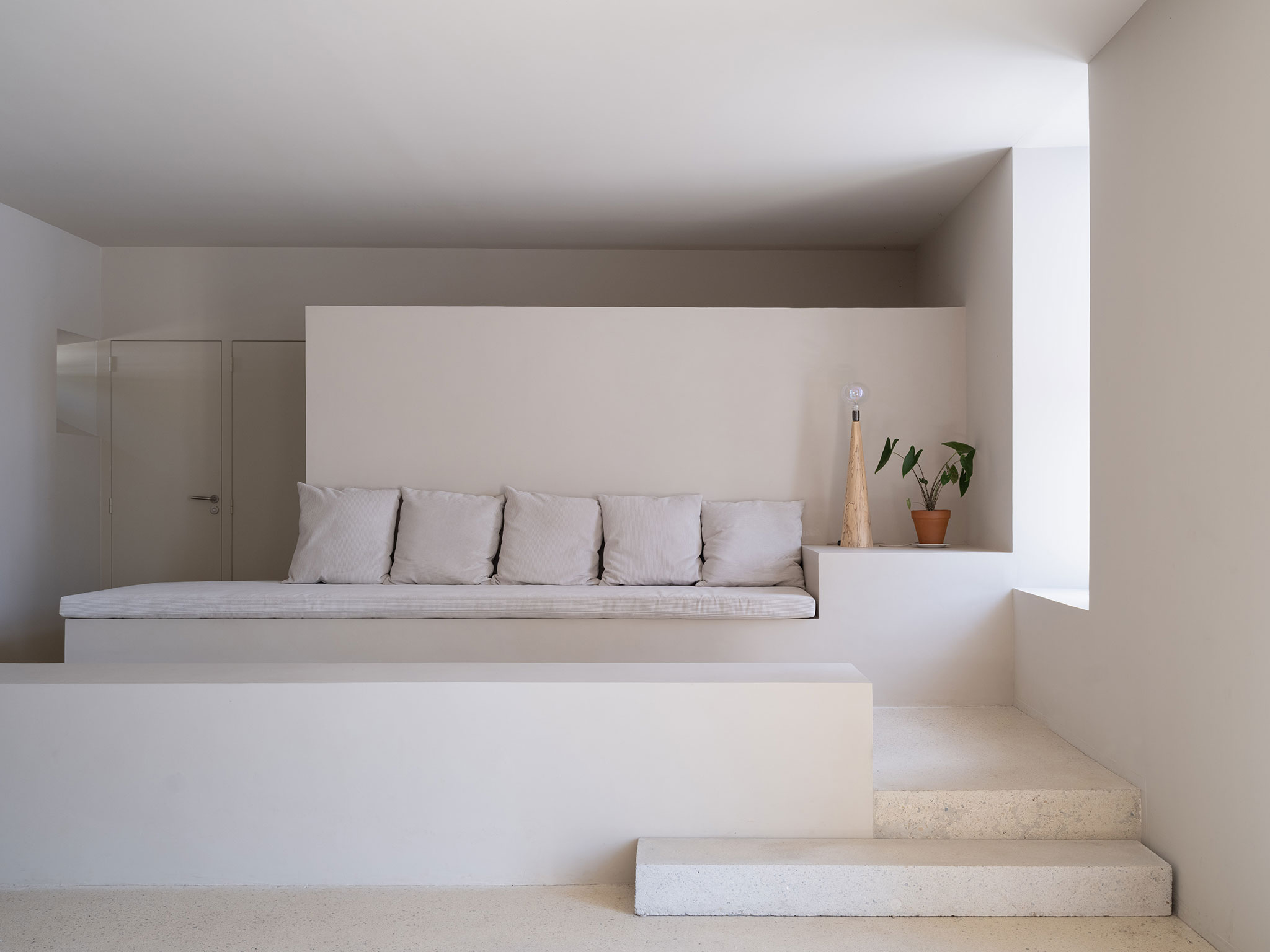
The new spaces have been designed to accommodate flexible and changing uses, capable of evolving over time. The main room on the upper floor can be successively transformed into a communal sleeping area for gatherings among friends, when the mattresses stored in the bleachers are arranged around the central hearth; into a small concert hall by utilizing the bleachers and closing the curtain at the back; into a screening room; or into any other use that might be improvised.
The functional reorganization of the complex is accompanied by a comprehensive energy renovation. The thickness of the walls, combined with interior insulation that reveals the stone facade—previously hidden beneath a cement cladding—contributes both to the building’s thermal inertia and to its interior comfort.
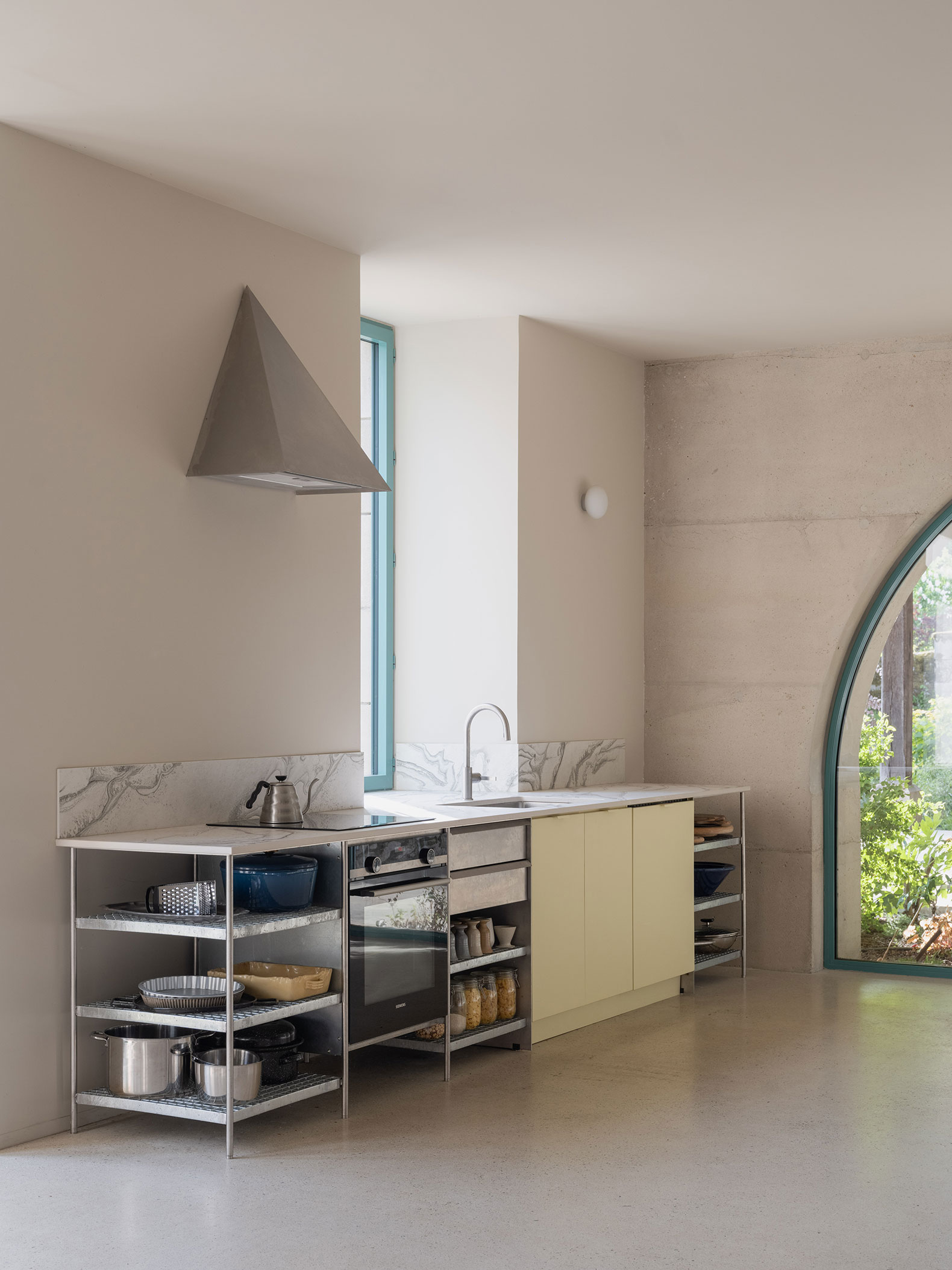
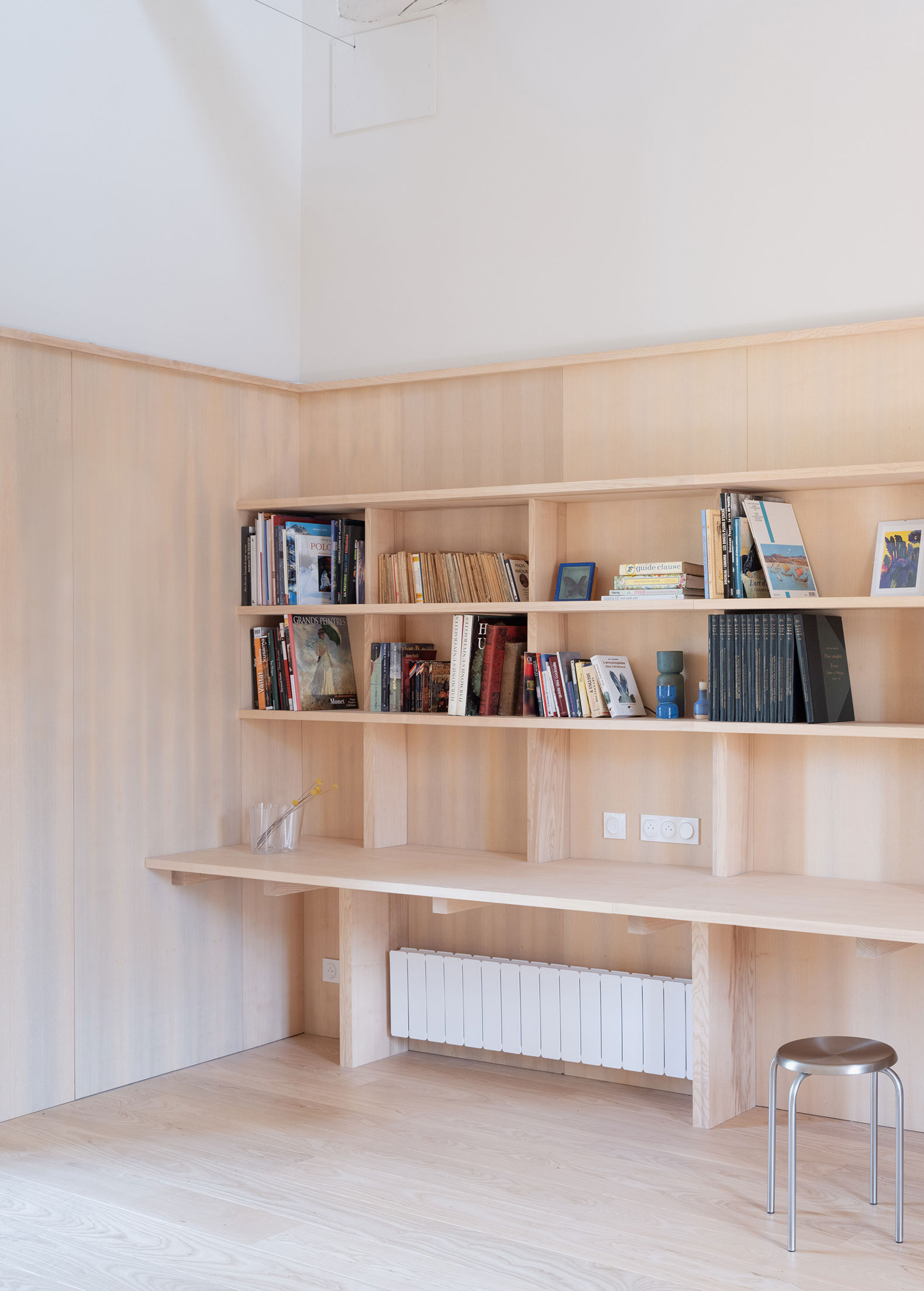
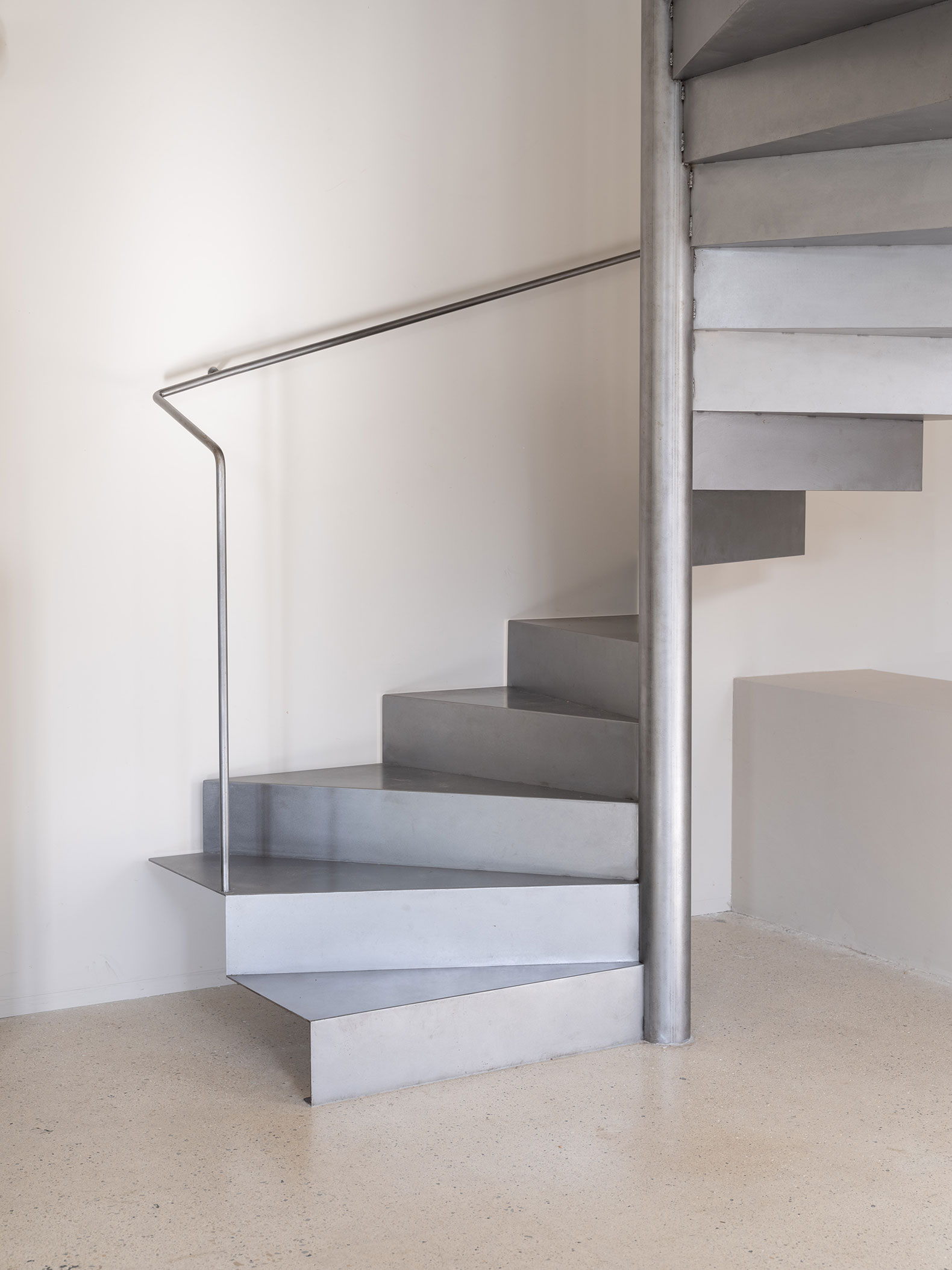
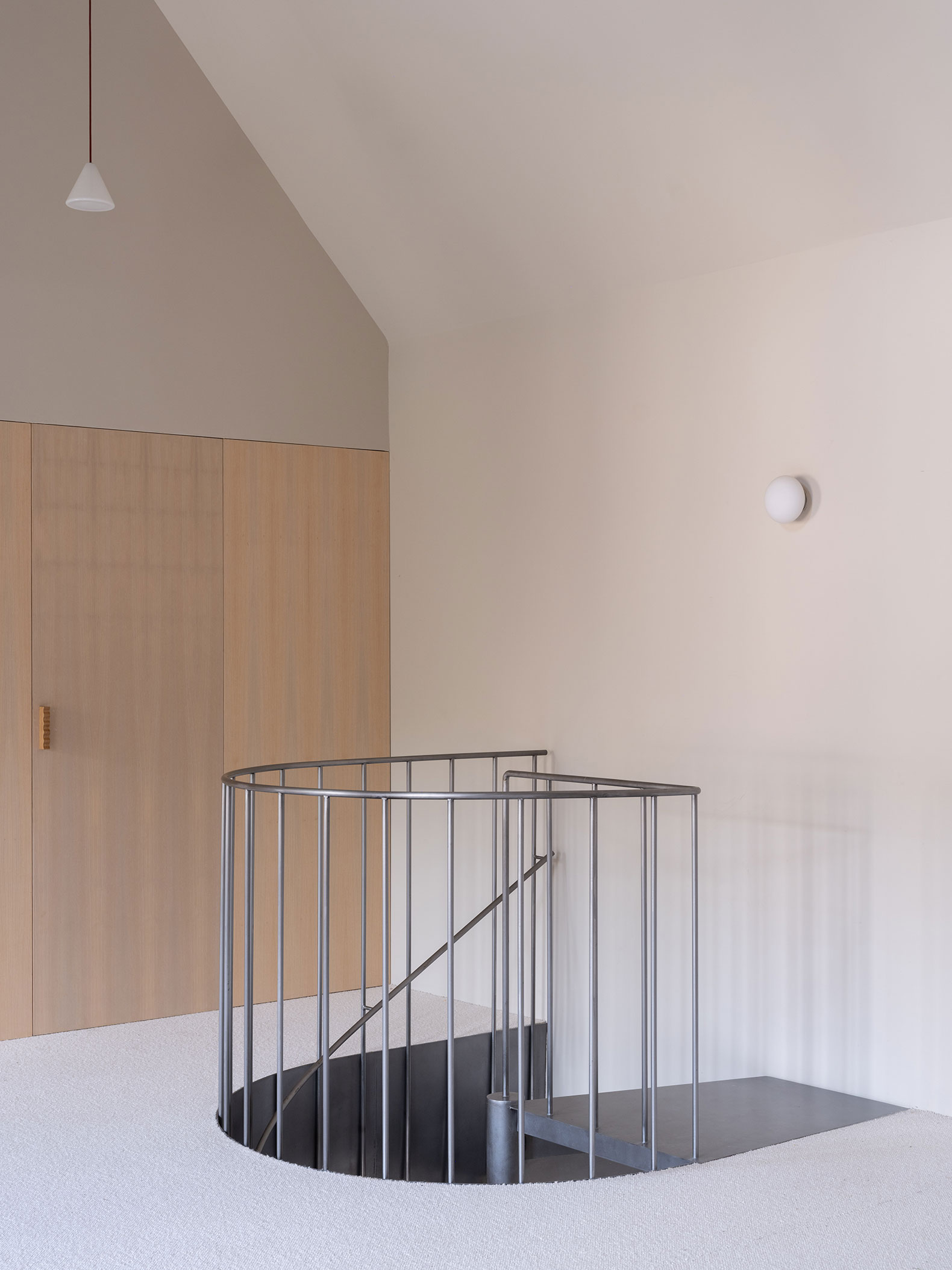
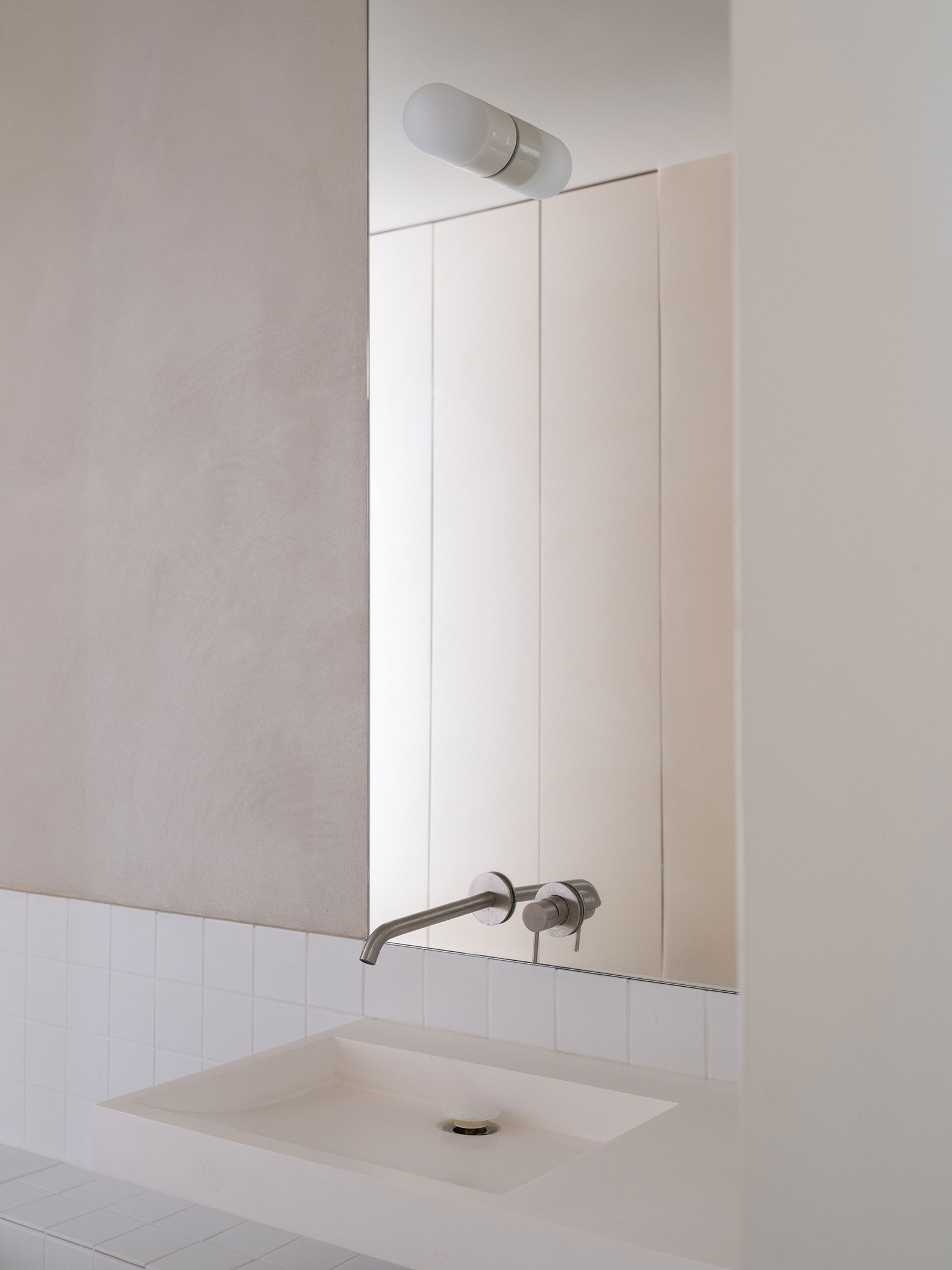
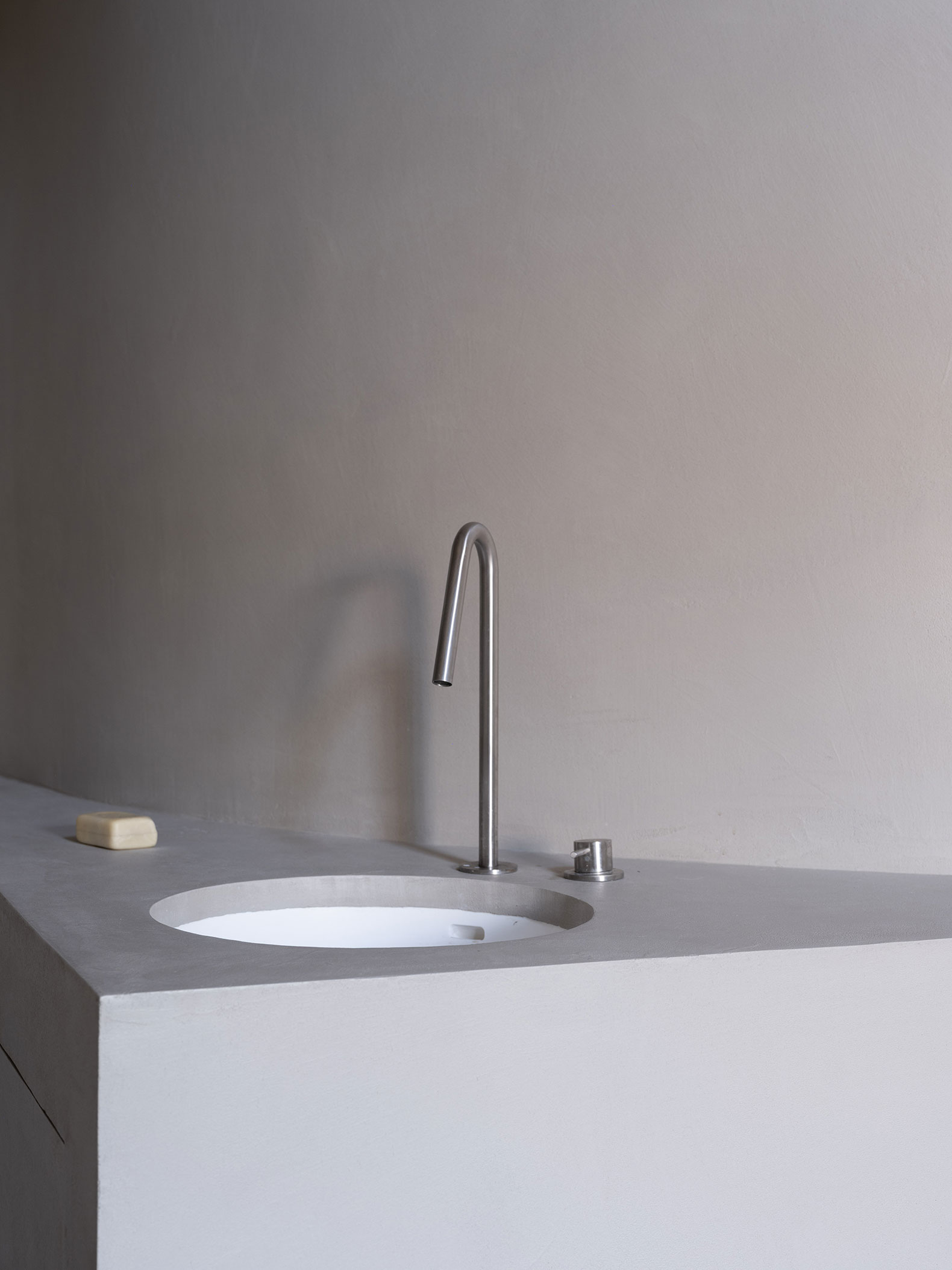
The design also incorporates meticulous attention to detail in the built-in furniture: custom-built benches that highlight the existing changes in level; a series of cabinets that conceal the entrances to the most private rooms; steps that provide access to the mezzanine level of the dovecote tower, incorporating seating and storage spaces; a library that showcases the solid wall located behind the circular opening; among other elements. The raw materials—concrete, ash wood, stainless steel, and sheep’s wool—and the occasional chromatic accents interact with the softness of the curved lines and natural tones.