The winners of the 2026 FAD Architecture and Interior Design Awards have been announced by the jury of the 68th edition during the awards ceremony held today, Wednesday, June 17, at the Disseny Hub Barcelona (DHub).

The projects Recircular L'Eixample, by Flexo Arquitectura and Addenda Architects, and Infinito Delicias, by Husos Arquitecturas and elii [architecture office], have won the 2026 FAD Architecture Award jointly.

Architecture Category. 
The jury recognized Recircular L'Eixample's ability to "programmatically and structurally reorganize a significant portion of the built heritage of a city block in Barcelona's Eixample district," facilitating "the emergence of synergies between diverse facilities." The project builds upon existing structures, offering new pedestrian walkways and public spaces that strengthen civic and community activity. The jury valued the public initiative that made it possible and the project's capacity to respond to a specific demand by going beyond the bare minimum. Furthermore, it highlighted that all of this is carried out "with a design language that helps to recognize the purpose of each space and prepares it for future demands in response to evolving civic needs."
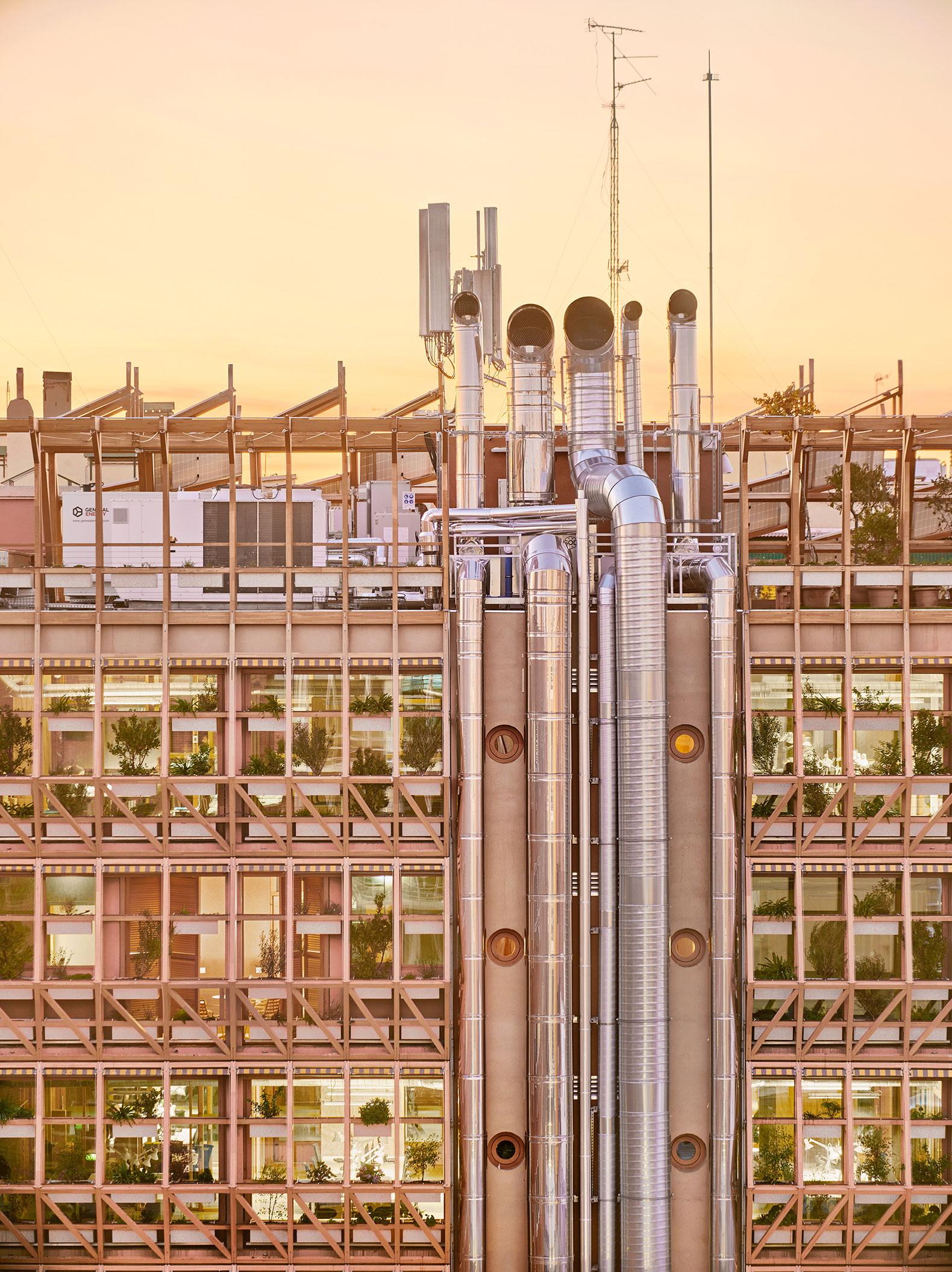
Edificio para Infinito Delicias por Husos + elii. Fotografía por José Hevia.

Building for Infinito Delicias by Husos + elii. Photograph by José Hevia.

Regarding Infinito Delicias, a renovation project of an industrial building between party walls in Madrid that invites visitors to explore a new public facility belonging to a private foundation, the jury highlighted that "the building's organization is based on a continuous route that incorporates interior and exterior spaces, as well as a large atrium conceived as a public square." They also emphasized a "constant environmental awareness," evident in the materials used, the incorporation of vegetation and gardens, and the energy-saving strategies and promotion of biodiversity. "The entire building exhibits its bioclimatic vocation, prioritized above any other formal decision," the jury noted, highlighting how the original construction is broken down to allow the entry of outside air and provide support for the new vegetation, which will eventually blend seamlessly with the building's structure.
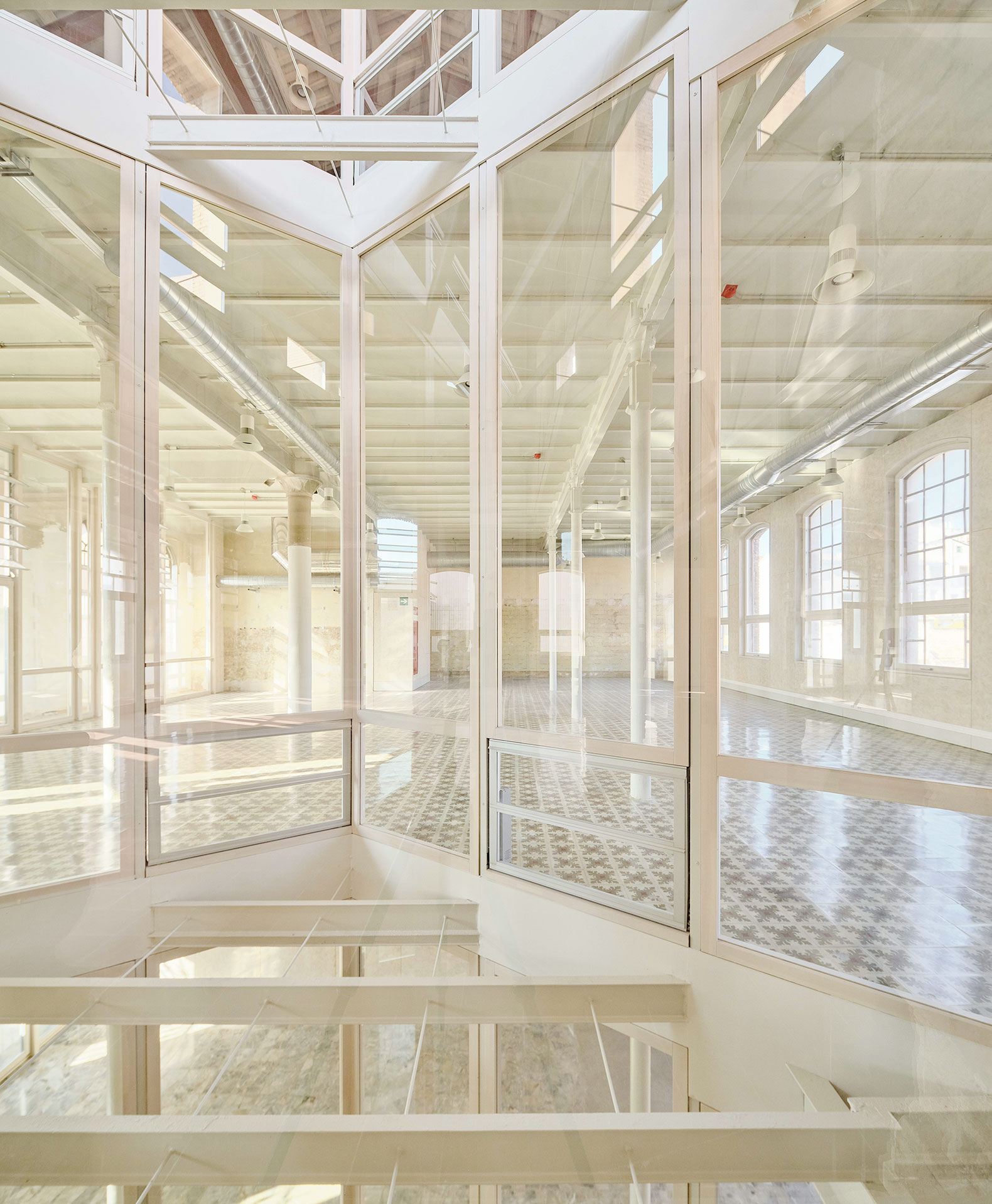
L’Anònima Manresana by Meritxell Inaraja. Photograph by Adrià Goula.

L’Anònima Manresana by Meritxell Inaraja. Photograph by Adrià Goula.

Re-FAD Category. 
The jury has awarded the Re-FAD Prize to Meritxell Inaraja for her rehabilitation of the 19th-century industrial complex L'Anònima Manresana, based on energy efficiency strategies. The jury highlighted that the project "brings new spatial qualities without losing respect for the site's history." Climate galleries, interior courtyards, and perforations in the exterior floor improve ventilation, natural light, and comfort, maintaining the character of the original facades and creating new visual relationships between interior and exterior. The jury also emphasized that the intervention adds a new layer to the existing building through the use of existing materials, establishing continuity between past, present, and future interventions. The jury particularly valued "the ability to transform the demands of climate control and energy savings into values ​​of architectural quality."

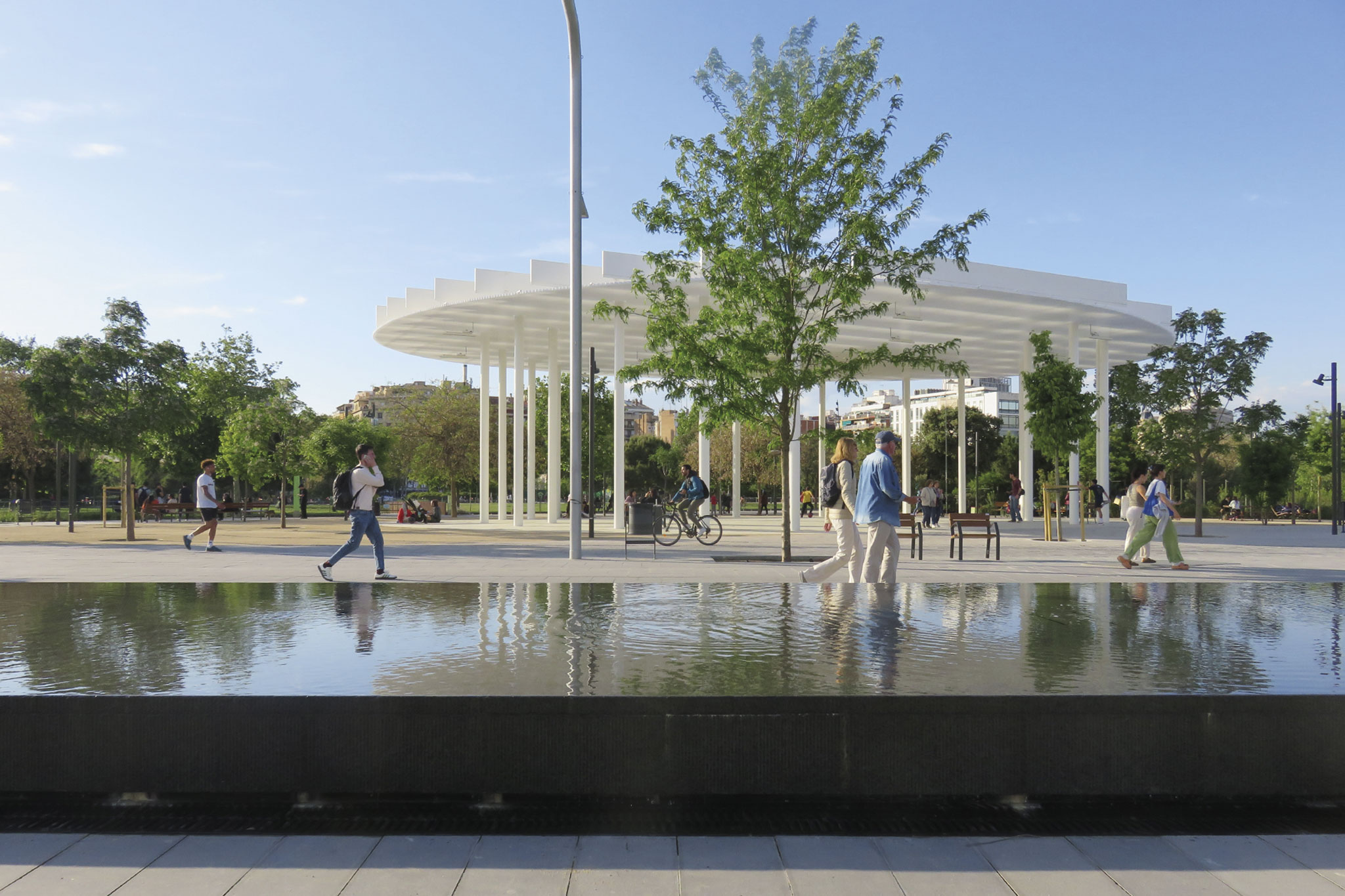
Canòpia Urbana —ámbito de túneles— del Parque de las Glòries, obra de los estudios Agence Ter, ACPA y Meta Engineering. Fotografía por ernando Lua+Droneit / BIMSA.

Urban Canopy—the tunnel area—in Parc de les Glòries, a project by the studios Agence Ter, ACPA, and Meta Engineering. Photograph by Fernando Lua+Droneit / BIMSA.

City and Landscape Category. 
In the City and Landscape category, the winning project was the second phase of the Urban Canopy—the tunnel area—in Parc de les Glòries, a project by the studios Agence Ter, ACPA, and Meta Engineering. The jury highlighted the strategy of nodes and flows: the former function as spaces for biodiversity and urban use (meadows, play areas, and cactus gardens), while the latter guarantee ecological and pedestrian continuity throughout the urban canopy and Barcelona's major thoroughfares. In this regard, the jury valued that this system "allows the park to adapt to a dense and complex city, in a context of climate change and a shortage of green spaces, marking a shift from the 20th-century plaza to the permeable park of the 21st century." The jury justified the award based on "its urban ambition, its infrastructural complexity, and the enhancement of the Diagonal Verde (Green Diagonal)."
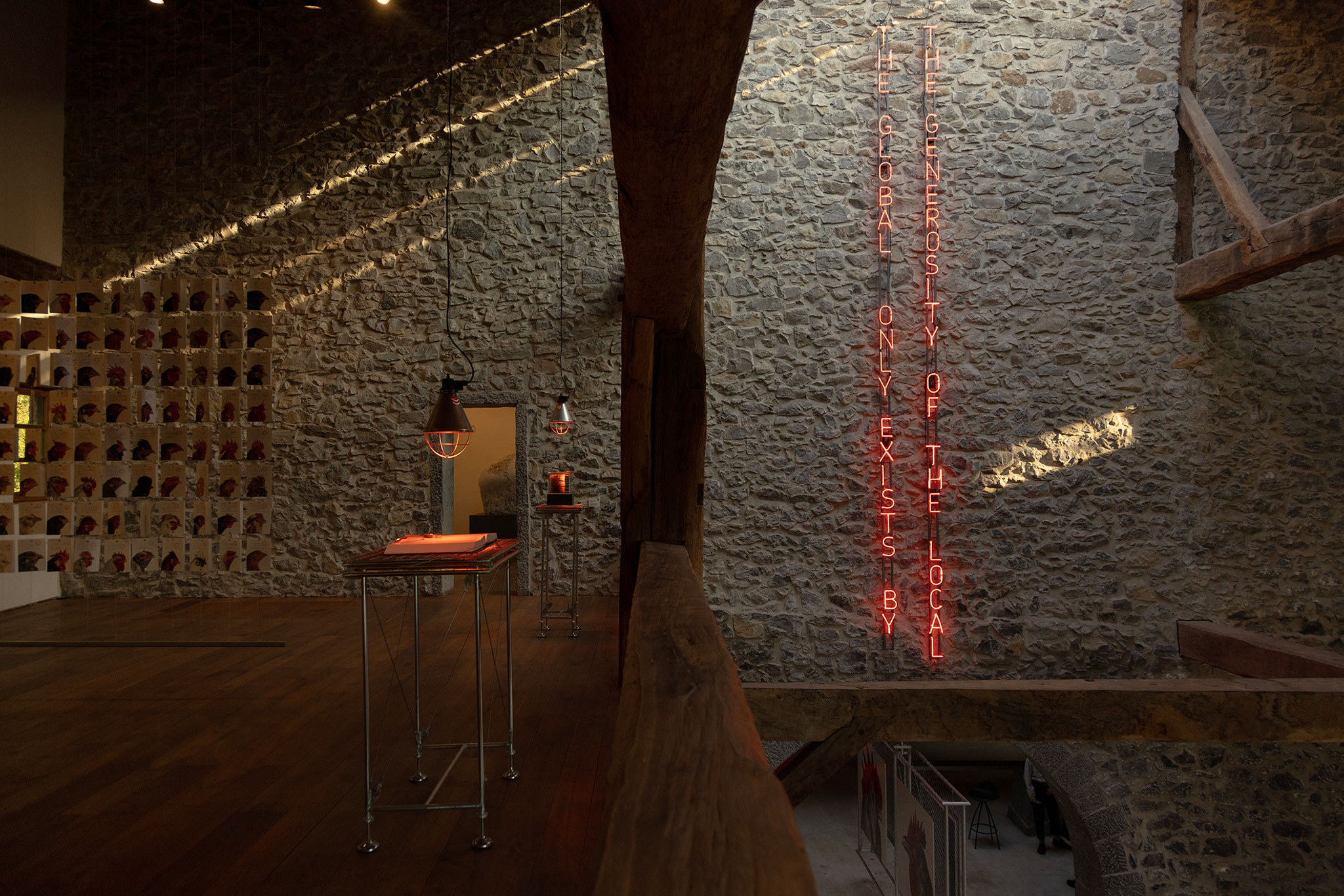
Limina installation at Chillida Leku by Garbizu Collar and KRI studios. Photography by Alex Abril.

Limina installation at Chillida Leku by Garbizu Collar and KRI studios. Photography by Alex Abril.

Ephemeral Interventions Category.
The installation Limina, at Chillida Leku, has received the highest award in the Ephemeral Interventions category. Created by the studios Garbizu Collar and KRI, the intervention architecturally translates the proposal of artist Koen Vanmechelen, who uses the chicken as a metaphor to explore the relationships between art, science, politics, and nature. The jury highlighted that the project "questions the anthropocentric vision and emphasizes the coexistence of multiple agents within the ecosystem" and that it is materialized "through lightweight devices that barely touch the farmhouse, with suspended metal structures that engage with vernacular architecture and also recall rural constructions such as chicken coops or huts." In this sense, the mesh and galvanized tubing create artifacts that "not only support the works, but also activate a transspecies reading of the exhibition, de-hierarchizing the human and the non-human." The jury recognizes that the result is "an exhibition design where the display ceases to be neutral to become an active and pedagogical layer that enriches the artist's discourse and the visitor's experience."
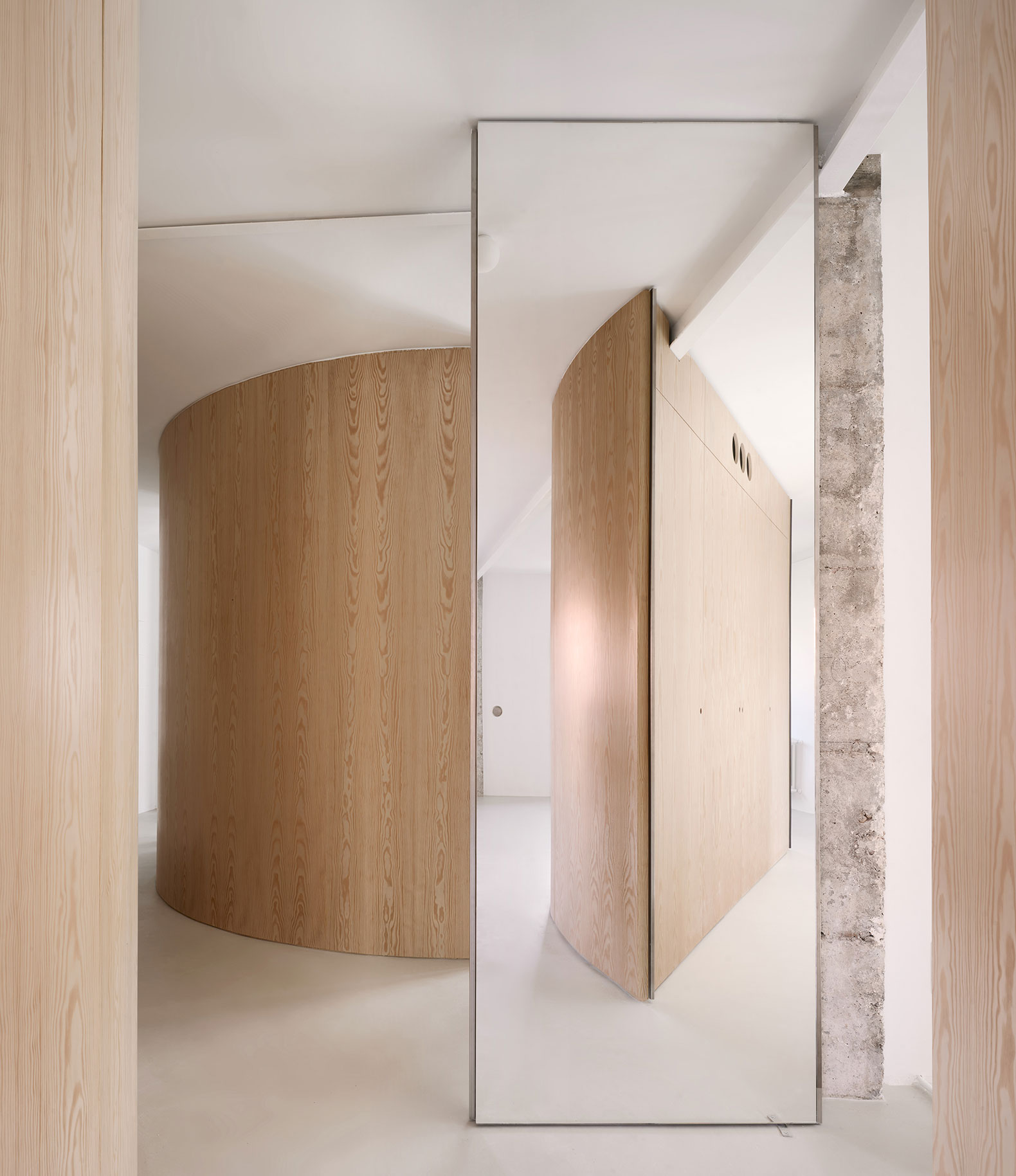
House on Calle Argumosa in Madrid by MAIO. Photograph by José Hevia, Simone Marcolin.

House on Calle Argumosa in Madrid by MAIO. Photograph by José Hevia, Simone Marcolin.

Interior Design Category
The renovation of a home located on Argumosa Street in the center of Madrid, carried out by the MAIO studio, has been awarded in the Interior Design category. According to the jury, this intervention "completely transforms an initially bland interior into a domestic landscape of great spatial intensity." Beyond a conventional brick entrance, the space is reorganized through a diagonal circulation path and the incorporation of mirrored doors that multiply the perception of the interior. The jury highlights how the partition walls are replaced by curved wooden volumes that function simultaneously as structure, furniture, and spatial boundary, integrating storage, circulation, and enclosure, "generating a continuity between architecture and interior design." The mirrors, integrated as movable doors, "produce a changing and theatrical image, reinforcing the feeling of a fluid and mutable space." The result, for the jury, "is a home where the domestic becomes fluid, continuous, and perceptually unstable."
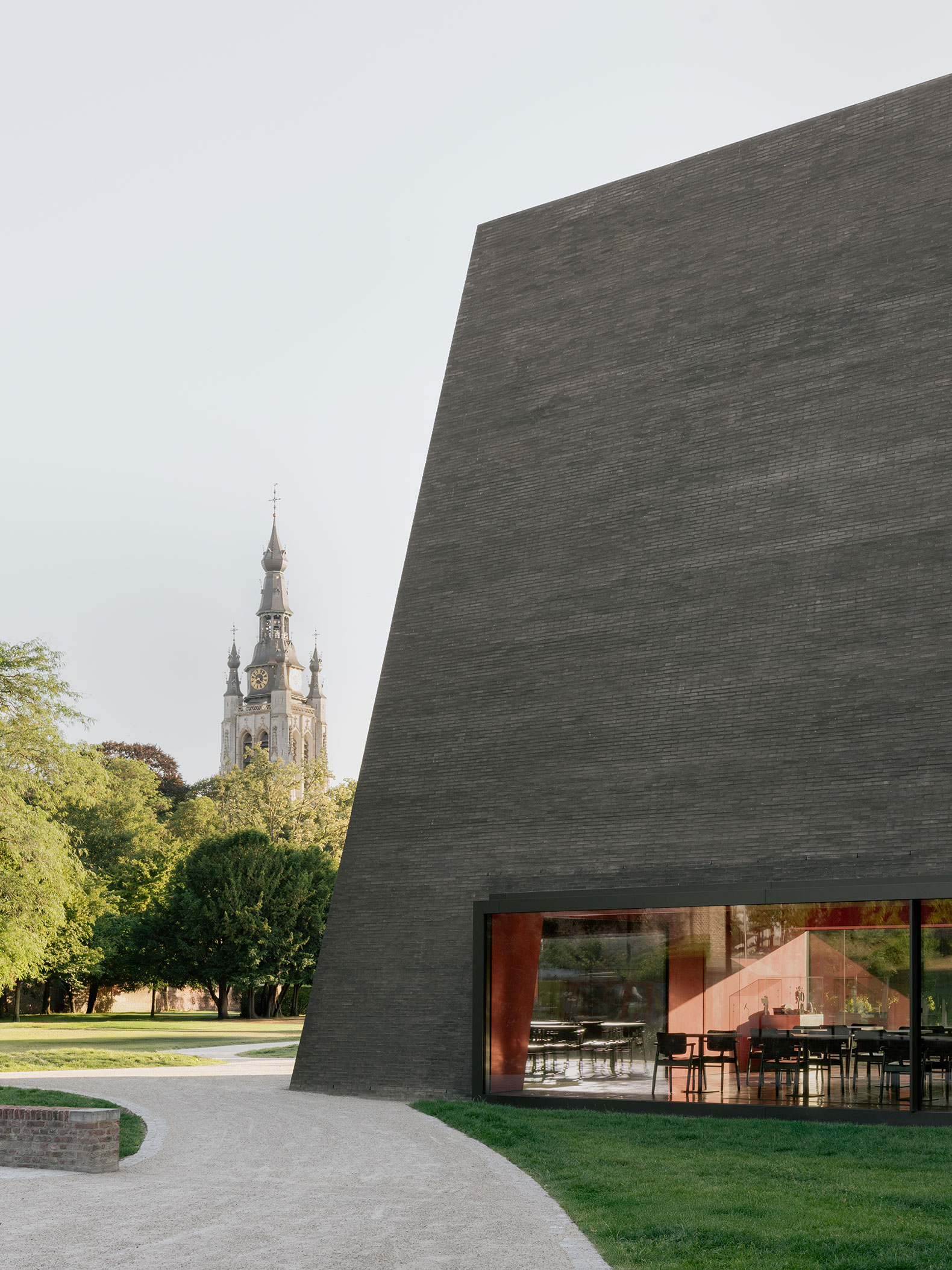
New museum of visual arts Abby Kortrijk by Barozzi Veiga + Tab Architects. Photograph by Simone Marcolin.

New museum of visual arts Abby Kortrijk by Barozzi Veiga + Tab Architects. Photograph by Simone Marcolin.

FAD International Award
This award recognizes the work of architects and studios from the Iberian Peninsula worldwide. In its 13th edition, the prize was awarded to Abby Kortrijk in Belgium by Barozzi Veiga and Tab Architects. The jury highlighted a "precise and measured approach to intervening in an existing structure, addressing it not as a limitation, but as an opportunity to construct a renewed architectural narrative." According to the jury members, "instead of imposing itself, the proposal works by enhancing, intensifying the presence and identity of the pre-existing structure and allowing it to reappear with clarity and renewed meaning." In this sense, they value the project for establishing a "sensitive dialogue between past and present, where each element reinforces the other." They also emphasized its commitment to an architecture "capable of transforming what already exists through subtle yet decisive operations, revealing its latent potential and projecting it into the present."

The FAD Thought and Criticism Award is shared by two projects: Floating in Lithium by Marina Otero and Towards Ecomorphology: Between Utopia and Reality by Anna Bofill.

The Habitàcola Award has been given to the (DES)BORDE project by ESDI student Sara Gómez Montolio, while the Educational Center Award has gone to the Madrid School of Architecture (ETSAM).

More information

elii is an architecture practice founded in Madrid in 2006 by Uriel Fogué, Eva Gil, and Carlos Palacios. Their professional practice extends to teaching (Madrid School of Architecture, ETSAM; Columbia University in the City of New York, GSAPP; École Polytechnique Fédérale de Lausanne, EPFL) and research. elii participated in the Spanish Pavilion at the 18th (2023) and 15th Venice Architecture Biennales (2016, the latter awarded the Golden Lion). They were invited to participate in the 24th Milan Triennale International Exhibition (2025). Two of their projects have been shortlisted for the European Union Prize for Contemporary Architecture: the Mies van der Rohe Award (2015, 2019). They were recognized, among others, with the Casa de la Arquitectura Award in the ES_INNOVACIÖN category and the ALDES Award for the best project in sustainability, decarbonization, or greater self-generation of energy in a building, Rebuild (with Husos, 2026); the Holcim Awards Gold Award 2023 (with Husos and Ultrazul, sponsored by the Daniel and Nina Carasso Foundation). First Prize COAM (2017) and COAM Award (2018, 2016, 2013, 2011, 2006). FAD Ephemeral Interventions Award (2020). FAD Opinion Award (2005) and Finalist and Selected for the FAD Award (2023 and 2017; and 2020 and 2018, respectively). Their work Yojigen Poketto was selected as one of the 20 visionary domestic spaces of the last 100 years in the exhibition 'Home Stories 100 Years, 20 Visionary Interiors', at the Vitra Design Museum, Weil am Rhein (2020). They are authors of the books: 'Super Petites Maisons' (EPFL, 2022), 'Traspasar los límites' (CentroCentro, 2020), 'What is Home Without a Mother' (HIAP – Matadero Madrid, 2015), awarded at the XIII Spanish Biennial of Architecture and Urbanism 2015, and co-editors of the publication UHF, included in the Archive of Creators of Madrid.
Read more

Husos arquitectura is an architecture practice based in Madrid, founded in 2003 by Diego Barajas and Camilo García. While based in Madrid, they operate between Spain and Colombia. Husos is a platform for developing architectural and urban planning projects, encompassing both research and direct intervention in space. Through an ecological approach to everyday life, they explore the role of these practices in the flourishing of new imaginaries, affects, and subjectivities. Husos is headquartered in Madrid and operates regularly between Spain and Colombia.

They have been pioneers in the Hispanic-European architectural context, developing interscalar and multimedia approaches (Dispersión, 2002), interspecies cohabitation activism (Edificio jardín, 2005), LGBTQ+ urban perspectives (Urbanismos bear, 2006), and decolonial activism (Dispersión, 2002; Urbanismos de remesas, 2017; and Espacio Afro, 2021, among others).

Their work has been nominated among the ten European studios shortlisted for the 2024 Dorfman Prize – Royal Academy of Arts, in the UK. It is part of the permanent collections at the FRAC center in Orléans and the Rotterdam History Museum. They have also received first prize at the Holcim Awards for Sustainable Construction (Gold, Europe – 2023) and recognition from the Zumtobel Award for Sustainability and Humanity and the XV Spanish Architecture Biennial. Their work has been presented at the Venice Biennale, the Rotterdam Biennale, the Oslo Architecture Triennale, the Tàpies Foundation, the Quito Biennale, Ecovisionarios, Archilab, the MAC/CCB in Lisbon, and the Luca/Luxemburg Center for Architecture, among others. They are the authors of the book *Urbanismos de remesas, viviendas (Re)productivas de la dispersa* (Caniche Editorial, Madrid, 2017). This book was awarded the ArtsLibris Fundació Sabadell prize in 2019 and is currently part of the permanent art collection of the Fundació Banc Sabadell in Barcelona.

They have developed projects for CA2M - Museo Centro de Arte Dos de Mayo, Centro de Creación Contemporánea Matadero Madrid, Centro Cultural Espacio Afro, Fundación Daniel y Nina Carasso, the Spanish Ministry of Culture and Sport, Casa de América, Instituto Cervantes, Rotterdam History Museum, Universidad del Valle, Rotterdam Biennale, Museo Nacional Centro de Arte Reina Sofía, Oslo Architecture Triennale, São Paulo Architecture Biennial, Taller Croquis, and Instituto Cervantes, among others.

Read more

Addenda Architects is a young collaborative architecture studio based in Barcelona, formed by Roberto González, Anne Hinz, Cecilia Rodríguez, Arnau Sastre and José Zabala.

During the period 2015–2025, architecture firms GHZ (Roberto González, Anne Hinz, José Zabala) and SASTREVIELBA (Arnau Sastre, Cecilia Rodríguez Vielba) teamed up under the name ADDENDA ARCHITECTS to successfully complete the design and construction of the Bauhaus Museum in Dessau (2015–2019), and more recently, the Renovation of the Public Facilities Urban Block in the Barcelona Sagrada Família Neighborhood (2020–2026) along with the Restoration and Renovation of an emblematic protoracionalist building in Barcelona designed by the architect Francesc Folguera: the Casal de Sant Jordi or Casa Tecla Sala (2021-2026).

Read more

Flexoarquitectura was founded in 2002 in Barcelona by Tomeu Ramis, Aixa del Rey, and Bàrbara Vich, and has been directed by Tomeu Ramis and Aixa del Rey since 2017.

Flexoarquitectura is a Barcelona-based studio interested in the capacity of any project to be meaningful within a specific cultural context, using resources—both conceptual and narrative—and constraints—technical, economic, and material—as opportunities from which to develop project strategies.

Tomeu Ramis graduated as an architect from ETSAB-UPC in 2002. He has been an Associate Professor of Architectural Design at the University of Washington since 2014 and at the Polytechnic University of Catalonia since 2003. His research study was a finalist for best pedagogy at the 13th Ibero-American Architecture Biennial (BIAU). Tomeu has taught classes and led workshops at institutions such as ETSALS, URL, ETH-Zurich, University of Girona, IE University, IASAP-Illinois and ESARQ-UIC.

Read more

Meritxell Inaraja graduated as an architect from ETSAB (Universitat Politècnica de Catalunya) in 1994. After obtaining a postgraduate diploma in  Museography, Design & Fitting from the same university, she enrolled in a Doctoral Program in Construction, Engineering, and Architectural Research.

She has worked both for public and private clients, and has realized many restoration works. Among them we can highlight the restoration of the old Mint House "La Seca", in Barcelona (2011), for which she was awarded the "Premio sul Restauro e Architetture Mediterranee" at the second edition of PRAM. The project also participated in the XIII Venice Biennale of Architecture in 2012.

Inaraja is a member of the Technical Commission on Cultural Heritage in Central Catalonia, Generalitat de Catalunya.

Read more

Agence Ter Architectures. Henri Bava, Michel Hössler and Olivier Philippe, are the three founders of Agence Ter. Their team in Paris consists of some forty employees, fifteen nationalities, and over one hundred current projects in more than ten different countries.

Henri Bava. Born in Tunisia and raised between Tunisia and Paris, Henri Bava started his studies with a degree in plant biology from Paris-Orsay University. Showing a keen interest in the living world but from different perspectives, he enrolled afterwards in the École Nationale Supérieure du Paysage (ENSP) in Versailles in 1980, following at the same time a stage design course at the Jacques Lecoq École Internationale de Théâtre in Paris. He graduated as a DPLG landscape designer in 1984 with Michel Corajoud as supervisor, and worked for one year in his agency in Paris. In 1986, with his current associates, he founded Agence Ter. Just three years after obtaining his degree, he returned to the ENSP Versailles as a teacher, in parallel to his professional activities, for a period of ten years. As of 1989, after the departure of Michel Hössler for French Guyana, he headed the Agence Ter office in Paris together with Olivier Philippe. From 1993 to 1997, he combined this with work as a State Consultant Landscape Designer for the DDE of the Eure County. Henri Bava was elected president of the French Landscape Federation, a position held between 1996 and 1998.

It was at this time that he initiated his work in Germany. He led the execution of the Aqua Magica Park project near Hanover and was appointed at the same time, under a European recruitment process, as full professor and director of the Landscape department of the school of architecture at the Karlsruhe Institute of Technology (KIT), where he is still teaching today. In 2000, he created an Agence Ter office in Karlsruhe, from where he directed large cross-border territory development projects, rehabilitation projects for derelict industrial sites or the realisation of major public venues, such as in Duisburg. Six years later, he was elected a member of the Berlin Academy of Arts. After returning to Agence Ter Paris in 2007, he was elected president of the governing board of the École Nationale de la Nature et du Paysage, Blois (ENSNP) in 2010. That same year, Henri Bava was invited to the Harvard University Graduate School of Design by Charles Waldheim, director of the landscape department, where he often teaches in the frame of design studios until today.

Michel Hössler. Born and raised in the Paris metropolitan area, Michel Hössler obtained both the degrees of landscape architect (DPLG) and urban planner (DIUP). He studied botany at the University Pierre et Marie Curie in Paris, followed by landscape architecture at the École Nationale Supérieure du Paysage (ENSP) in Versailles and urban planning at the Institut d’Urbanisme in Paris XII. In 1986 he founded the office of Agence Ter in Paris with his fellow student Henri Bava and Olivier Philippe, a colleague in the landscape architecture office of Alexandre Chemetoff.

From 1989 onwards, Michel Hössler was director of the branch office in Kourou, French Guyana, conceiving and realizing large-scale projects in Guyana as well as the West Indies. Since 2005, Michel Hössler has been again based in the Paris office, responsible for major urban projects throughout France and around the world, retaining his interest in projects in the tropics and developing a series of projects in China, including the French Pavilion at the 2010 Shanghai International Exposition, with Jacques Ferrier Architects, and in 2016, the landscape design for the right banks of Shanghai’s Huangpu river.

From 2005, he has taught at the ENSP in Versailles, and for several years he has held the position of master assistant at the ENSA Paris – La Villette. With his two associates, he has led workshops in Urban and Landscape Design at the Harvard University Graduate School of Design as well as landscape design studios at the ETSAB in Barcelona.

Olivier Philippe.  After being raised both in Paris and India, Olivier Philippe studied at the Special School of Architecture and Landscape of Paris, after which he joined the École Nationale Supérieure des Beaux-Arts in Paris. He later graduated as a landscape architect from the National School of Landscape of Versailles. His professional career started with the crucial encounter with Alexandre Chemetoff, with whom he collaborated for five years. Afterwards, he became a consultant at the Parc de la Villette Public Establishment, involved in developing the park of Bernard Tschumi. During this period, he met Henri Bava and Michel Hössler, with whom he decided to create Agence Ter in 1986. One year later, and this for a period of seventeen years, he started teaching at the École Nationale Supérieure du Paysage, Versailles, in the framework of a project workshop, addressing all scales of the urban and territorial project, always with the landscape as driver for development.

From 1995 to 1998, he was State Consultant Landscape Designer for the Aisne County. From 1999 to 2006, as the only associate based in Paris, he was leading vast urban projects such as Euralille 2 (the Inhabited Wood), Portes d’Arcueil (La Vache Noire) or the North Bahrain New Town, whilst managing at the same time major public space and park projects (Cormailles Park in Ivry and, more recently, the Royal Canal Linear Park in Dublin and the Parc de Billancourt in Boulogne-Billancourt).

In 2008, Olivier Philippe chaired the NAJAP jury (new albums of young architects and landscape designers) and became a member of the French Europan governing board.  The projects he currently leads include the Metropolitan Park of Saint-Ouen, the Square of “Les Glories Catalanes” in Barcelona, the renovation of the Royal Air Force Museum in Hendon, London and the urban and landscape design for the Condorcet Campus in Aubervilliers, Paris. In 2011, he taught at the Harvard University Graduate School of Design along with his two associates in the frame of a landscape and urban design studio. Olivier Philippe has also been a guest professor at other institutions, as, as a landscape design studio teacher at the ETSAB in Barcelona in 2016.

Distinctions.-

Prix Les Défis Urbains – 2016
Distinction pour le prix de l’urbanisme d’Allemagne 2014
Finaliste prix Innovative process, filtering gardens – 2014
Prix IBA – Exzellenz  – 2013
Finaliste Prix European Garden Award 2013, catégorie Conception contemporaine innovante d’un parc ou d’un jardin
Prix de l’aménagement exemplaire de l’année – 2005/2012
7th European Urban and Regional Planning Awards 2008, catégorie projets transfrontaliers/ aménagement du territoire/ cohésion territoriale
Médaille 2008 de la Fondation de l’Académie française d’Architecture
Finaliste Prix Européen du Paysage Rosa Barba 2008
Grand Prix National du Paysage – 2007
Grand Prix Régional de l’Architecture et du Paysage – 2003
Finaliste Prix Européen du Paysage Rosa Barba 2001
Prix de la Première Œuvre
Prix du paysage 1994
Prix AMO 1994
Prix de l’Aménagement Urbain 1993 – Mention catégorie Espace Public
Trophée du Paysage 1991

Read more
Garbizu Collar Architects is an architecture practice established by Victoria Collar Ocampo y Jon Garbizu Etxaide, based in Switzerland and Spain, developing diverse scale projects in the design and architecture, fields.

Jon Garbizu Etxaide is working as a teaching assistant at ETH Zurich, at studio Boltshauser. From 2014 until 2020 he worked for BUCHNER BRÜNDLER ARCHITEKTEN in Basel, being involved in projects such as the refurbishment of a XIX-century villa in Missionsstrasse Basel and the extension of the Mendrisio School of Architecture, project and construction leader. He leads several competitions such as Residence for the Swiss Ambassador in Alger, a residential tower in Basel, the WDR headquarters in Köln and the Kunsthaus Baselland Museum.​

In 2010 he collaborated with Francisco Mangado Architects in Pamplona. After finishing his Master's Thesis he joined the office of Vukoja Goldinger Architekten in Zürich. Master's Degree in Architecture from the Architecture School of Barcelona, ETSAB, in 2013. Academic experience in TU Delft, during 2011-2012.​

Victoria Collar Ocampo. From 2014 until 2020 she worked for HERZOG & DE MEURON in Basel, being involved in projects such as the urban development and refurbishment of "Paketposthalle" in Munich, the Stamford Bridge Stadium in Chelsea, London, the Kinderspital in Zurich and the Office Tower for Roche, Bau 2, in Basel.​

In 2010 she collaborated with Josep Ferrando Architecture in Barcelona and 2012 with EM2N in Zürich. After finishing her Master's Thesis she joined the office Wolfgang Rossbauer Architekt in Zürich.​

Master's Degree in Architecture from the Architecture School of Barcelona, ETSAB, in 2013. Academic experience in ETH Zürich, during 2011-2012.
Read more
KRI was founded by Gonzalo Peña Sancho (Madrid,1989). It is an interdisciplinary platform where history and human behaviours are our basis to stimulate new design paths. Gonzalo Peña Sancho is an architect from Universidad Politécnica de Madrid - ETSAM, in 2015. Before starting KRI in 2020, he collaborated with renowned practices such as Enric Miralles & Benedetta Tagliabue (2012) in Barcelona and Herzog & De Meuron in Basel (2016-2020). Currently, he combines his practice with punctual lectures and jury criticism.

Aránzazu Mier (Madrid, 1989) Collaborator. She graduated as an art historian from The Courtauld Institute of Art.

Read more

MAIO brings together creators to generate ideas and architectural solutions in order to re-imagine objects and sites. MAIO was founded in 2005. It is currently led by Maria Charneco, Alfredo Lérida, Guillermo López and Anna Puigjaner, architects based in Barcelona, that combine professional activities with academic and research ones.

The works done by MAIO have been published in magazines such as ONdiseño and DETAIL among others. MAIO has been awarded several times, among which stands out: LampLighting Solutions Award 2009, FAD Award finalist in 2007 and 2008, Girona College of Architects Award in 2007, New Working Fields Award finalist in 2009 of the National College of Architects of Spain CSCAE, and finalist of the Arquia/Proxima Award in 2010 of the Architect’s Bank Foundation ARQUIA.

People and others that have collaborated in MAIO projects: Olga Felip, Josep Camps, Maria Charneco, Alfredo Lérida, Guillermo López, Anna Puigjaner, GMK, Saint-Gobain, Schott, Mecrimar, Construmat-Fira de Barcelona, Ajuntament de Barcelona, Toldos Maillol, Brigadas Municipales del Ayuntamiento de Girona, Aceroid, Lamp Lighting, Rètols Gispert, Metàl·lics Cabratosa, Vallès School of Architecture ETSAV.

Read more

Fabrizio Barozzi born in Rovereto (Italy) in 1976. He currently lives and works in Barcelona.He graduated as an architect in 2003 by the University Institute of Architecture in Venezia. He completed his training in 1999 at the School of Architecture of Seville in 2001 while living in Paris.

He began his training partner in 2003 working as the office of William Vázquez Consuegra and later in 2004 is associated with Alberto Veiga and establish their own professional studio.

He has been Professor of Projects at International University of Catalonia in Barcelona from 2007 to 2009 and since 2009 is Associate Professor of Projects at the University of Girona.

Alberto Veiga (Santiago de Compostela, Spain), was born in 1973 and studied architecture at the School of Architecture of Navarre. After graduating, he worked as an assistant and planner in Patxi Mangado practices in 1997-2001. From 2001-03, he worked as a designer of Guillermo Vázquez Consuegra, where he worked on a number of projects awarded. In 2004 he settled in EBV Architects with Fabrizio Barozzi. Projects currently teaches 3rd year at UIC.

EBV Architects is an architectural firm located in Barcelona and founded by Fabrizio Barozzi (Trento, Italy, 1976) and Alberto Veiga (Santiago, Spain, 1973) devoted to architecture, urbanism and interior design. The experience accumulated over the years in collaboration with renowned architects has allowed prestige EBV start a professional career where independent research plays a major role. The study EBV and has been awarded with many awards nationally and internationally.
 

Read more

Tab Architects is an architecture studio founded by Tom Debaere and Bert Bultereys in 2017 and based in Ghent, Belgium.

Bert Bultereys was selected for the Meesterproef (‘Masterpiece’) of the Vlaams Bouwmeester (‘Flemish Government Architect’). Shortly after its founding, Tab Architects was recognised as a promising young design firm by the City Architect of Ghent (Stadsbouwmeester Gent) and collaborated with the City Architect’s team on several theoretical studies. Tom Debaere has also given guest lectures at the Catholic University of Leuven.

Tab Architects has won several architecture competitions and has built a diverse portfolio. Recently, they completed The View, an exemplary residential project that is part of the Tweewaters masterplan in Leuven and features 160 housing units, commercial spaces, and communal facilities. The office is currently working on the execution of a cultural event site in the historical heart of Diksmuide, a multifunctional tower building for the Health Campus in Diepenbeek—representing a new interpretation of contemporary forms of collaboration and research—and the revitalisation of the Nieuw Gent district, a project encompassing a total of 380 residential units.

The work of Tab Architects has been published multiple times in specialised architectural media, including METALOCUS, A+, Bauwelt, Openbaar Kunstbezit Vlaanderen (OKV), and others.

Tab Architects is collaborating with Barozzi Veiga on the Abby Museum and two other prestigious projects: the Jewish Museum of Belgium and the Casino-Kursaal in Knokke-Heist.

Read more
Marina Otero Verzier (Born in 1981 in La Coruña, Spain) is head of the social design masters at Design Academy Eindhoven. The program focuses on roles for designers attuned to contemporary ecological and social challenges. From 2015 to 2022, she was the director of research at Het Nieuwe Instituut (HNI), the Dutch Institute for Architecture, Design, and Digital Culture. At HNI, she led initiatives focused on labor, extraction, and mental health from an architectural and post-anthropocentric perspective, including “Automated Landscapes,” “BURN OUT: Exhaustion on a Planetary Scale,” and “Lithium.”

Otero received an MS in critical, curatorial, and conceptual practices in architecture from Columbia University’s Graduate School of Architecture, Planning, and Preservation in 2013 and completed her Ph.D. at Escuela Técnica Superior de Arquitectura de Madrid in 2016. She is a co-editor of Unmanned: Architecture and Security Series (2016), After Belonging: The Objects, Spaces, and Territories of the Ways We Stay In Transit (2016), Architecture of Appropriation (2019), and More-than-Human (2020); and editor of Work, Body, Leisure (2018).

Future Storage: Architectures to Host the Metaverse explores innovations in data-storing architectures attuned to social and ecological challenges, land availability, the growing cost of energy, and changing data. Otero will commence her research and data collection this summer, followed by site visits to Iceland and Sweden, both global leaders in renewable energy. Chile, a country that is currently a testbed for distributed edge cloud models and the world's second-largest producer of lithium, a critical element for efficient data center batteries, will also be on the early travel itinerary. With the construction of the Humboldt Cable, the first submarine cable between Latin America and Oceania, Chile will soon become a preferred data location. Additional proposed travel locations include Singapore, Australia, Nigeria, and California. Otero has already conducted fieldwork in France, the Netherlands, and the UK.
Read more
Published on: June 17, 2026
Cite:
metalocus, ANTONIO GRAS, SARA GENT
"The Winners of the 2025 FAD Awards Have Been Announced" METALOCUS. Accessed
<https://www.metalocus.es/en/news/winners-2025-fad-awards-have-been-announced> ISSN 1139-6415
Loading content ...
Loading content ...
Loading content ...
Loading content ...
Loading content ...
Loading content ...
Loading content ...
Loading content ...
Loading content ...
Loading content ...
Loading content ...
Loading content ...
Loading content ...
Loading content ...
Loading content ...
Loading content ...
Loading content ...
Loading content ...
Loading content ...
Loading content ...
Loading content ...
Loading content ...
Loading content ...
Loading content ...
Loading content ...
Loading content ...
Loading content ...
Loading content ...
Loading content ...
Loading content ...
Loading content ...
Loading content ...
Loading content ...
Loading content ...
Loading content ...
Loading content ...
Loading content ...
Loading content ...
Loading content ...
Loading content ...
Loading content ...
Loading content ...
Loading content ...
Loading content ...
Loading content ...
Loading content ...
Loading content ...
Loading content ...
Loading content ...
Loading content ...
Loading content ...
Loading content ...
Loading content ...
Loading content ...