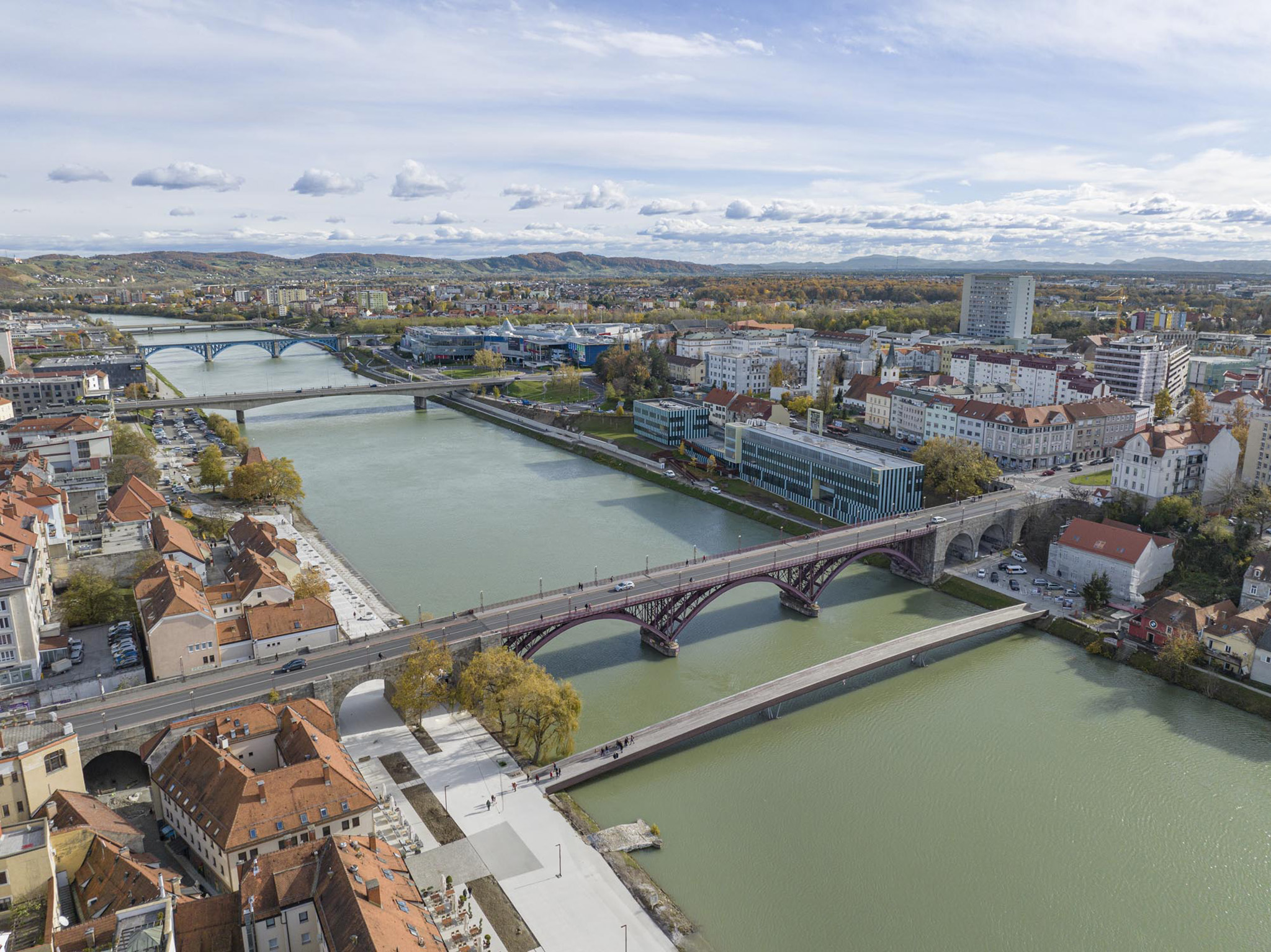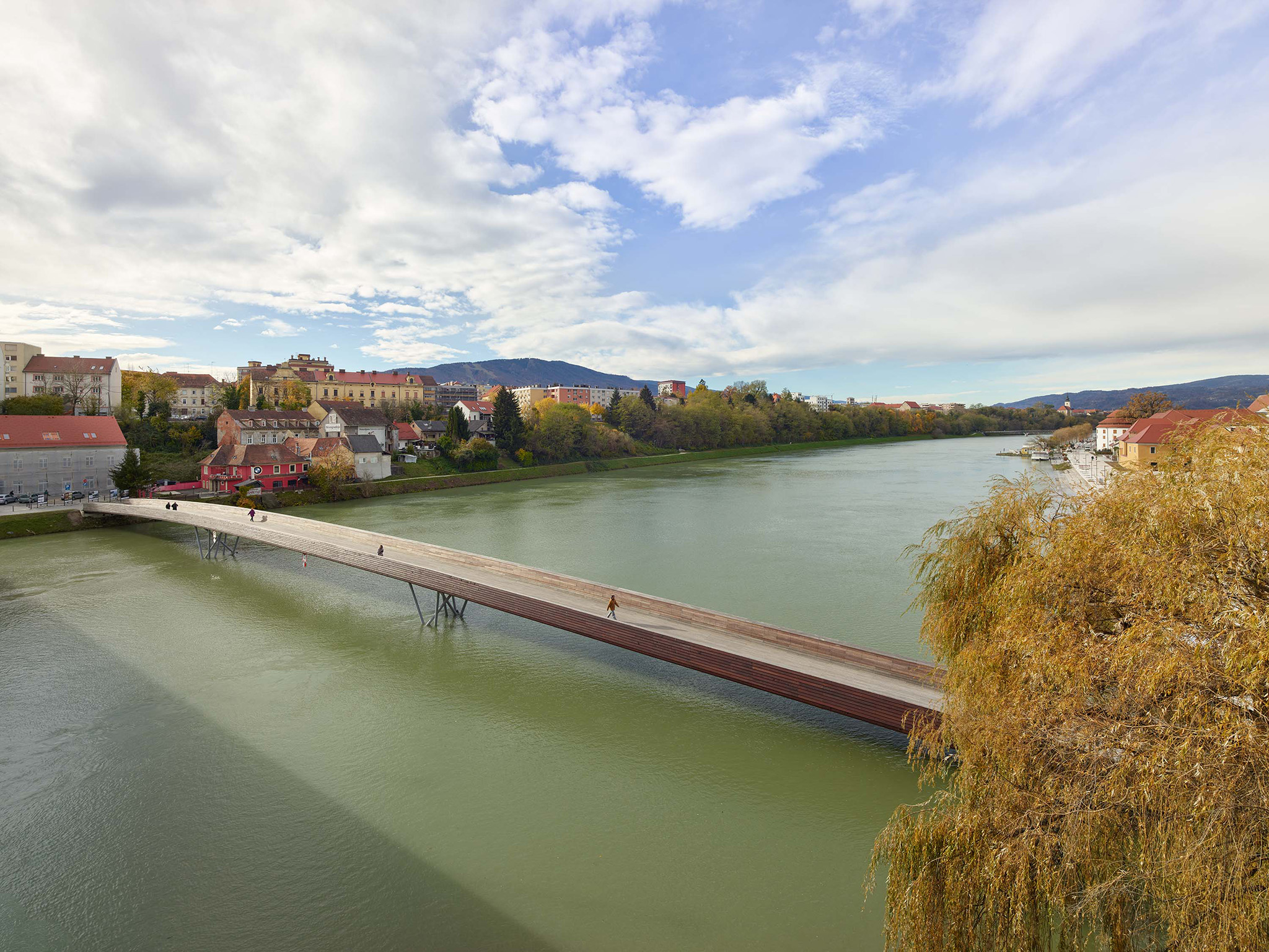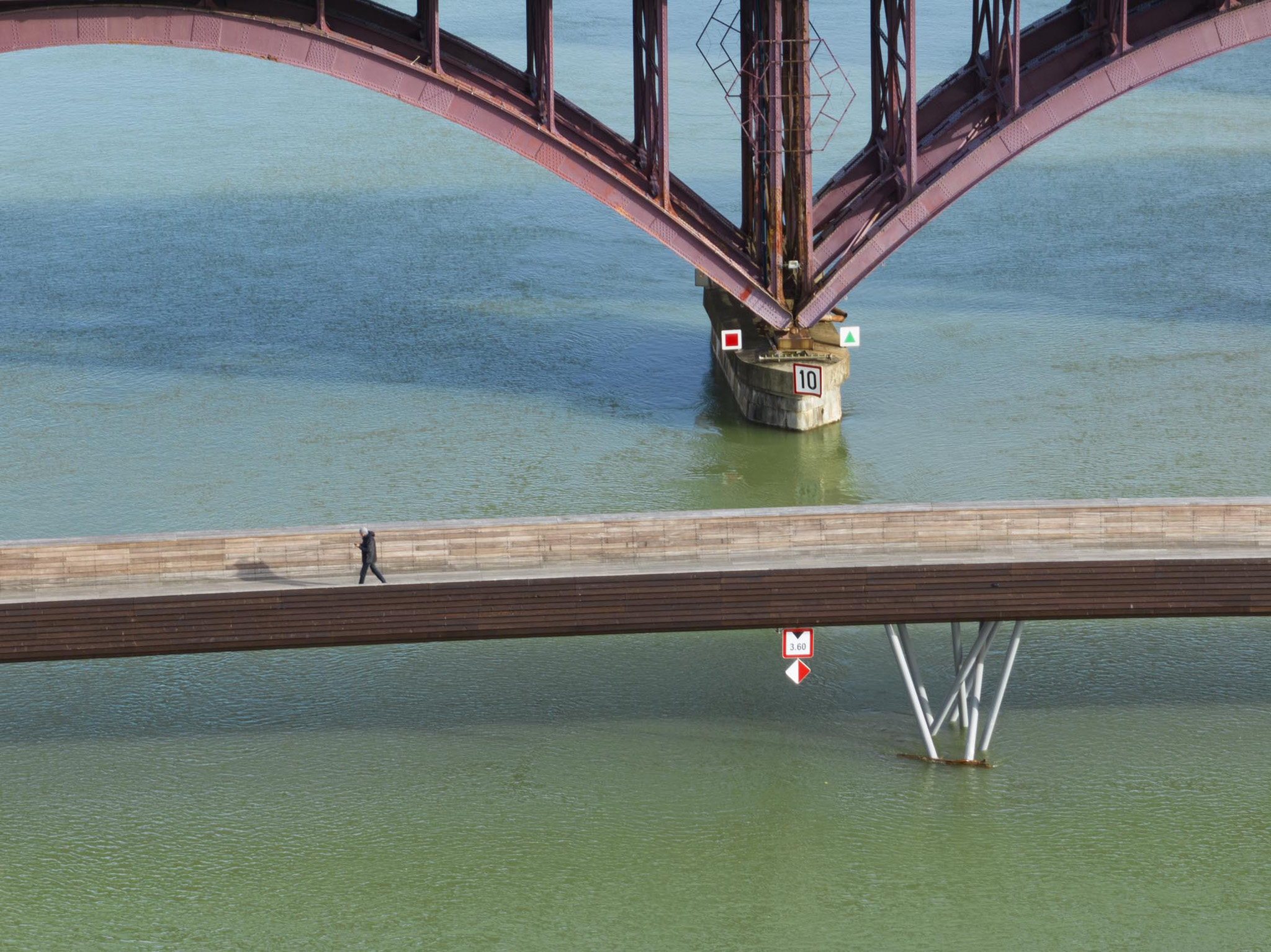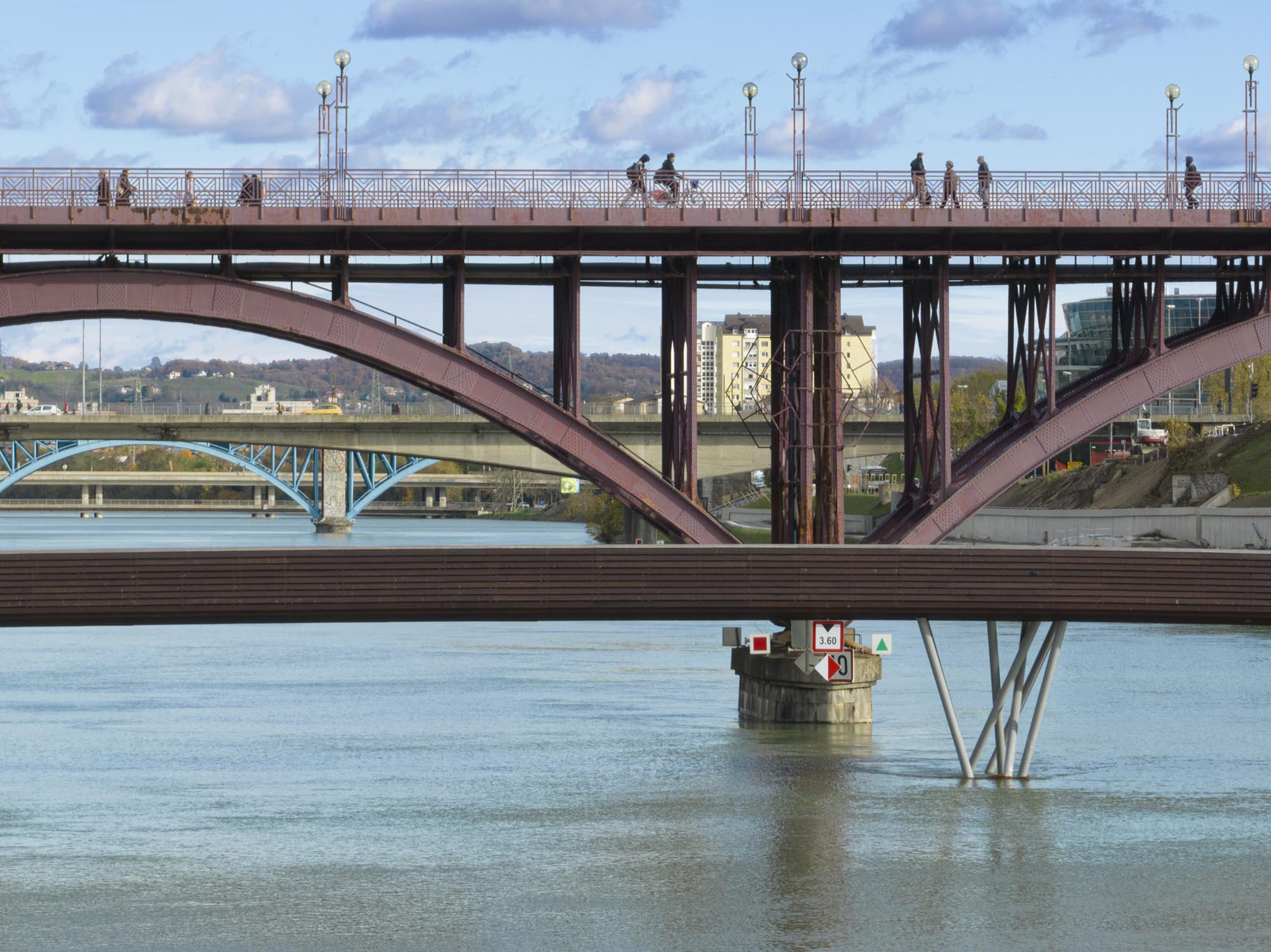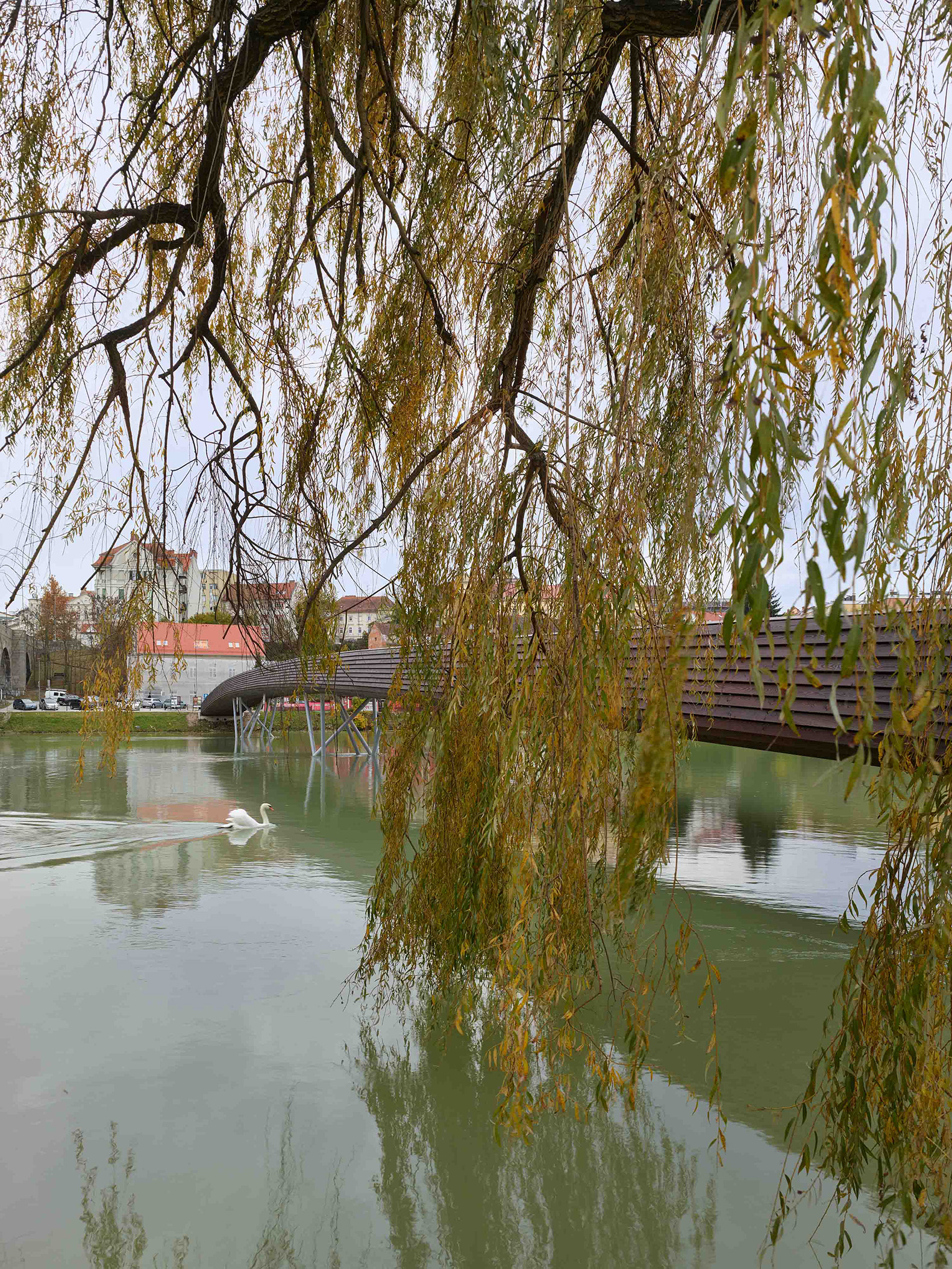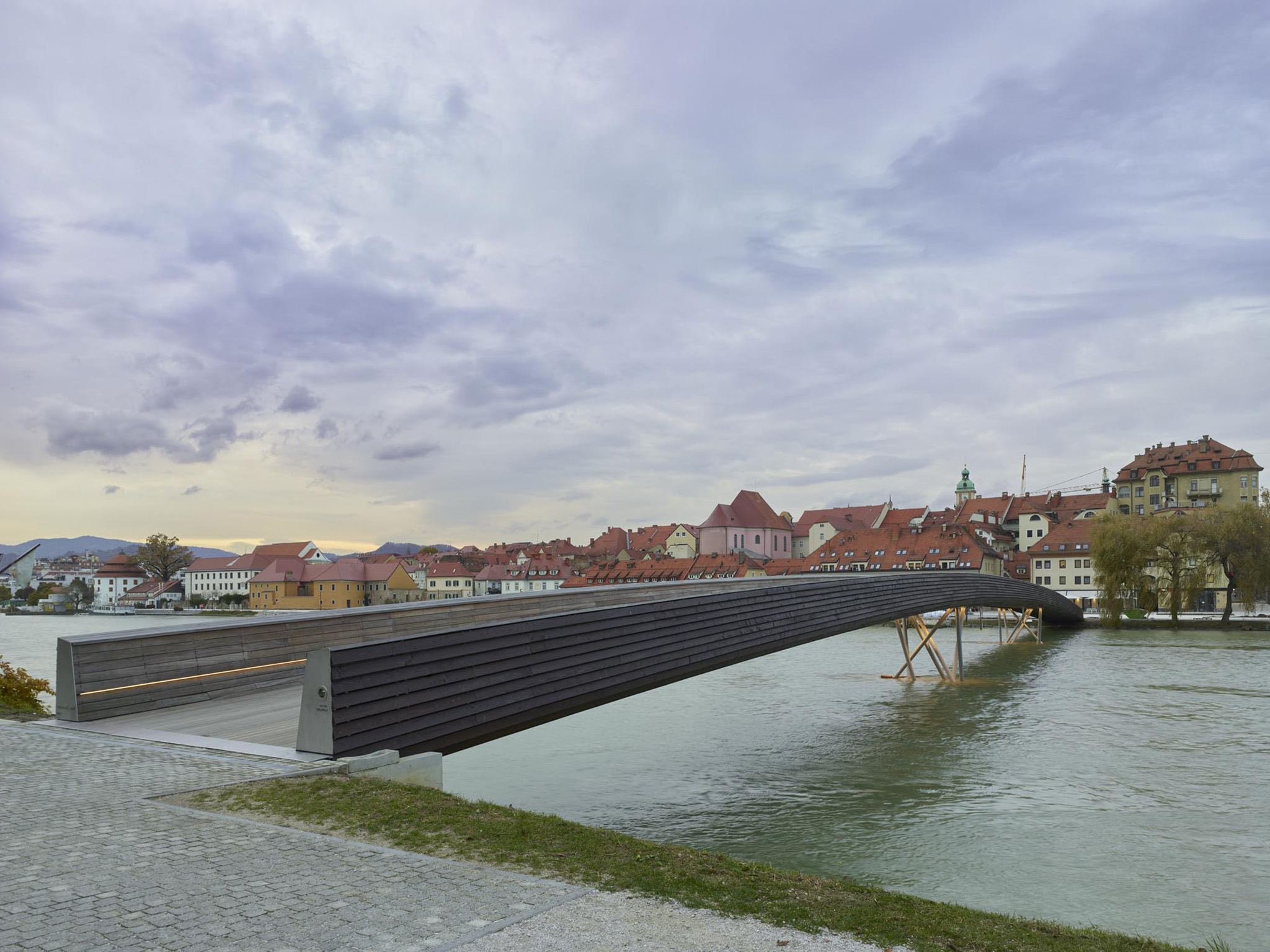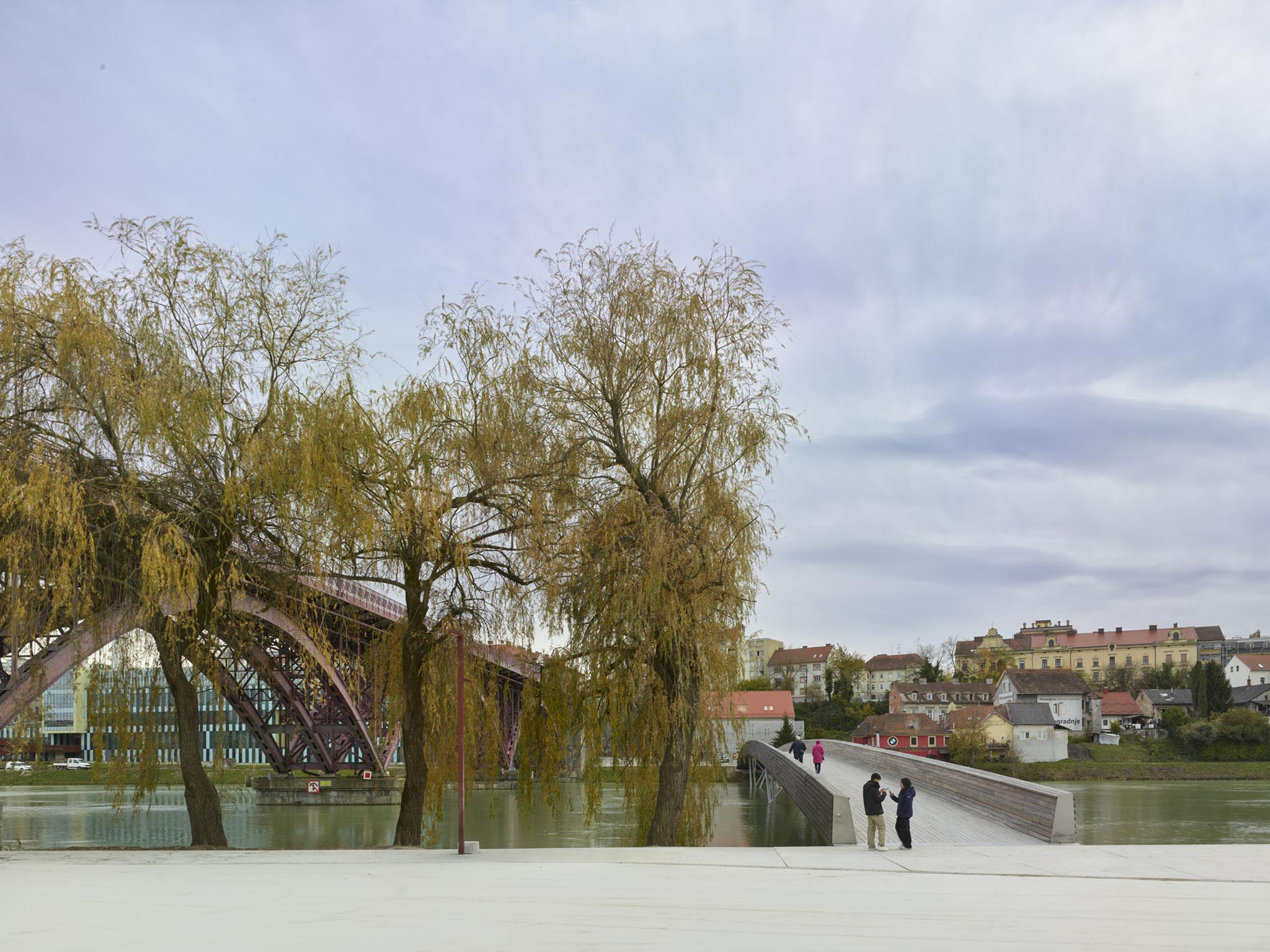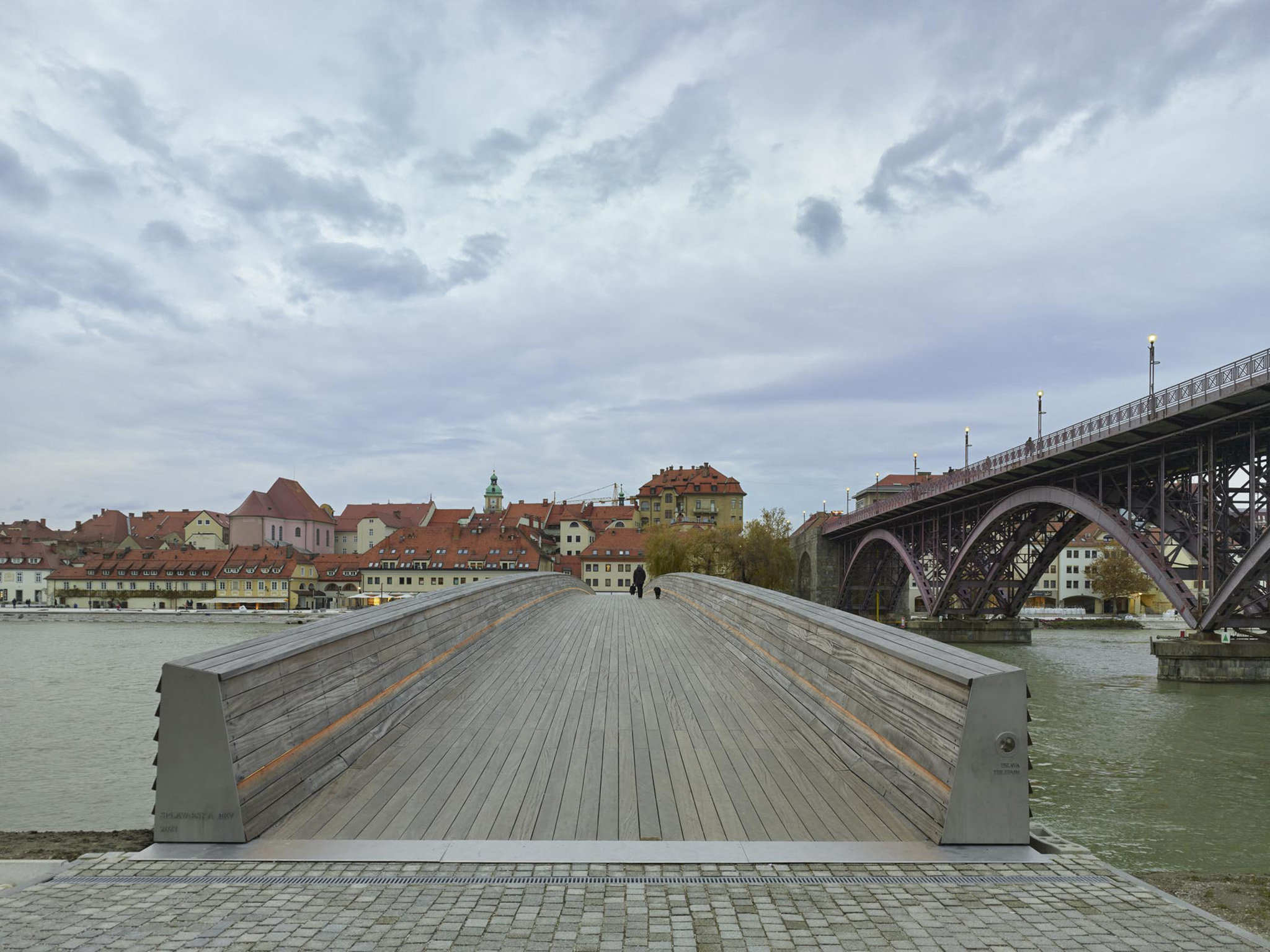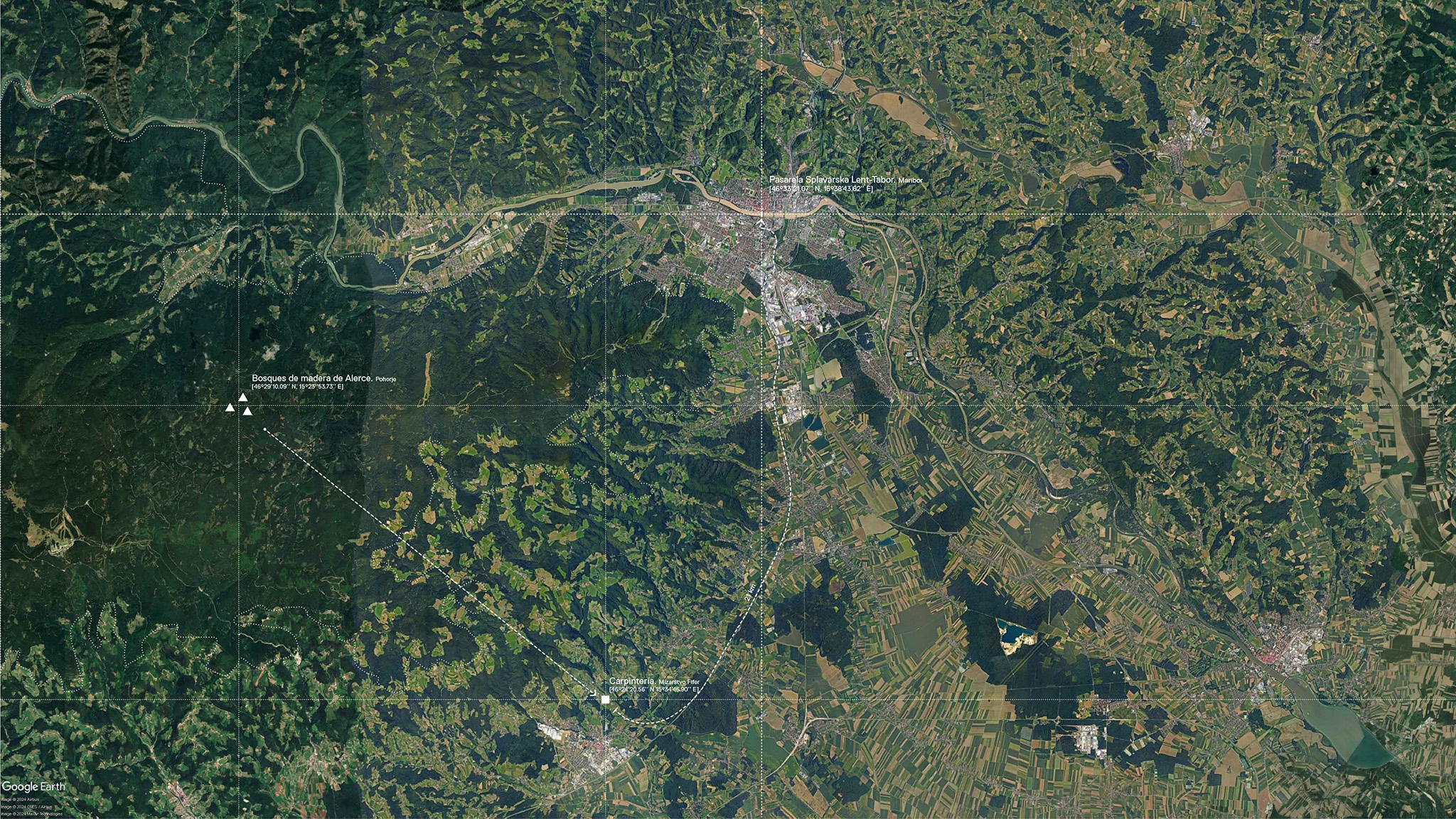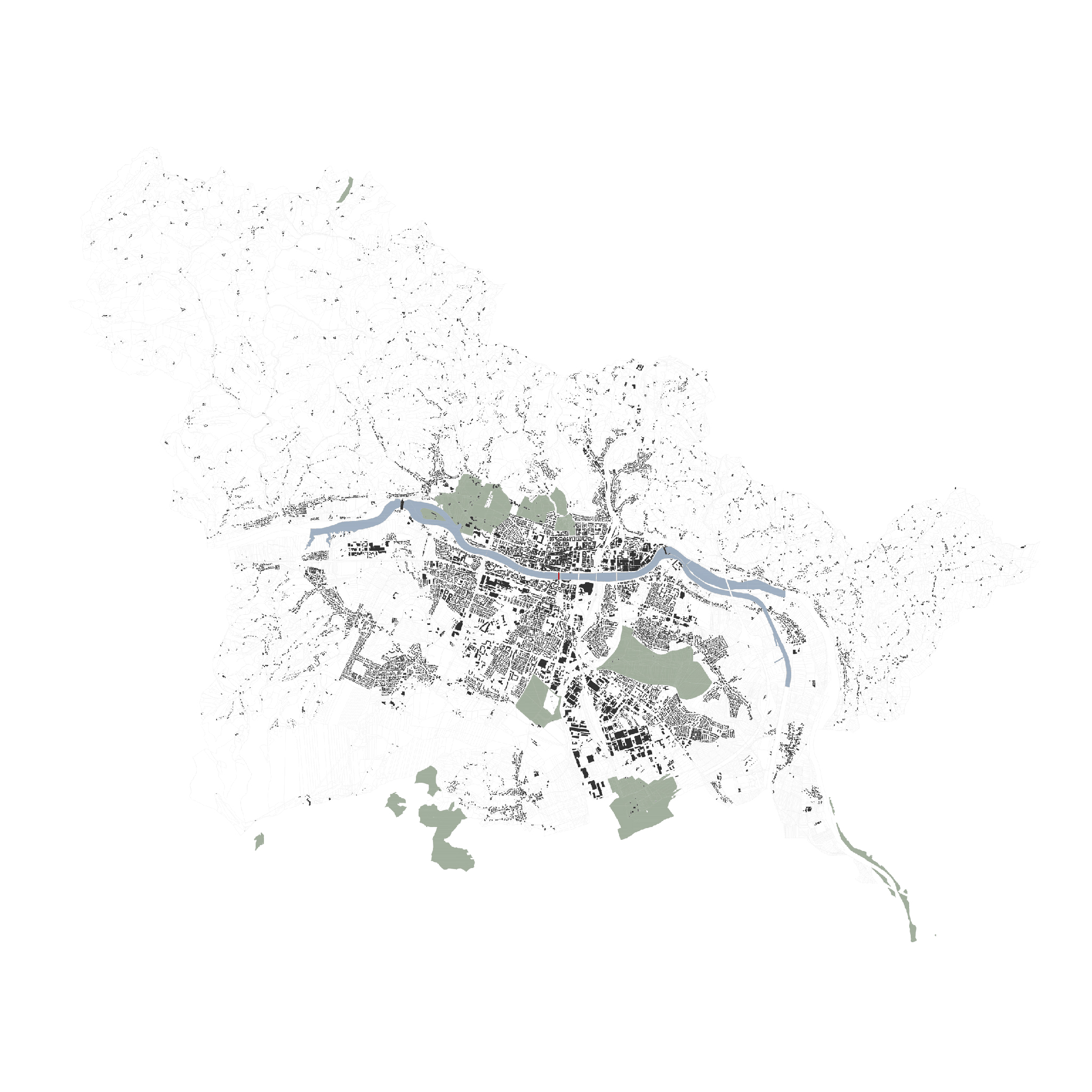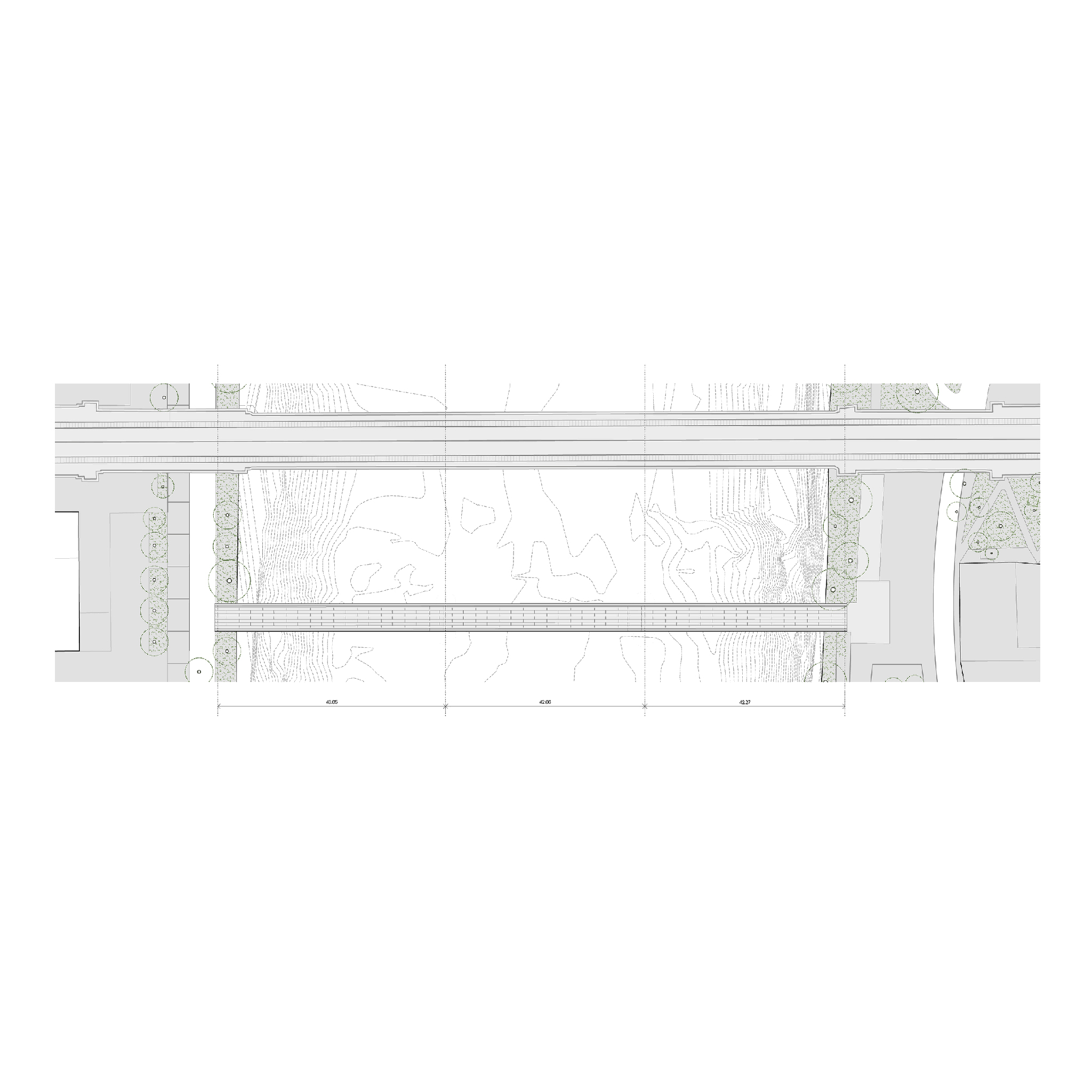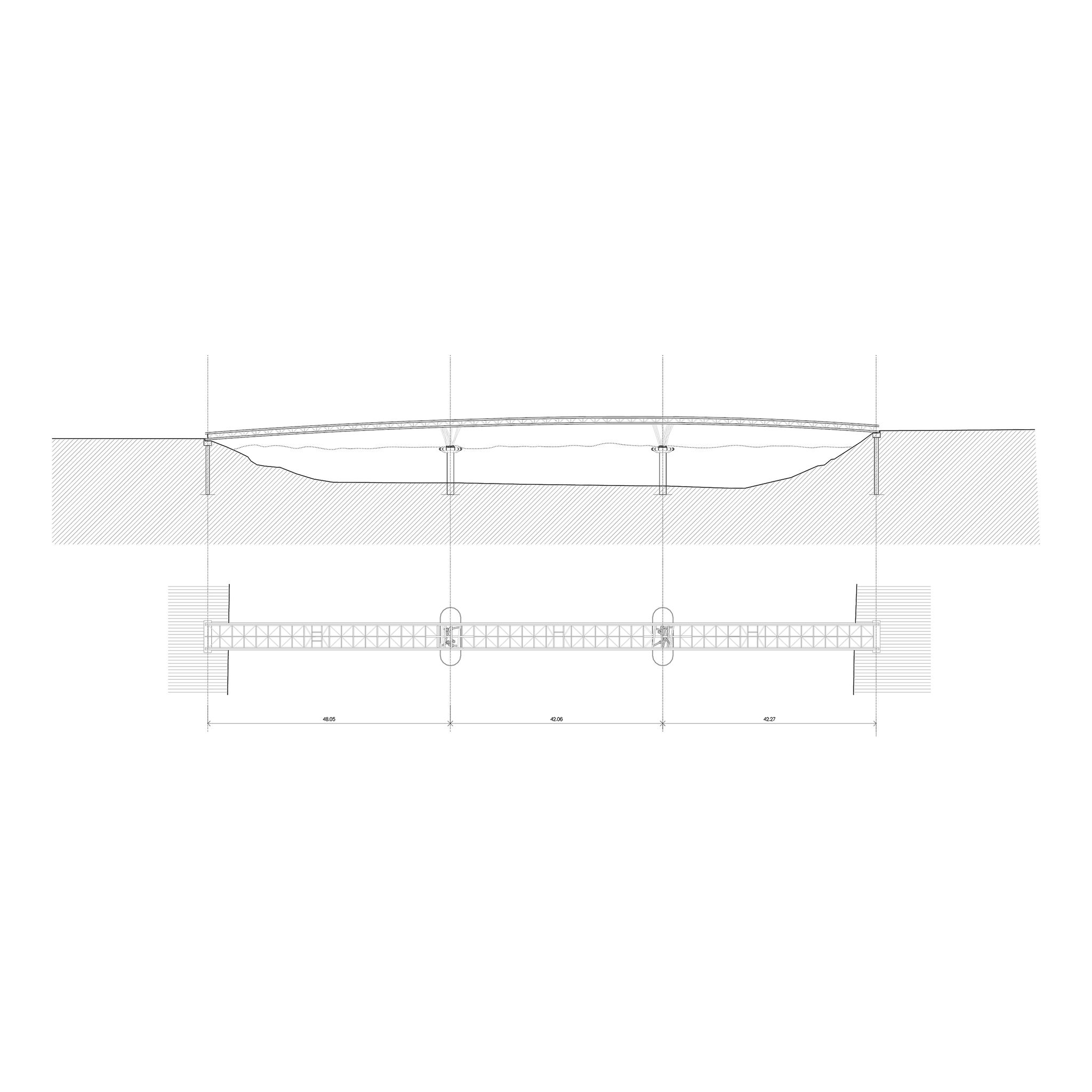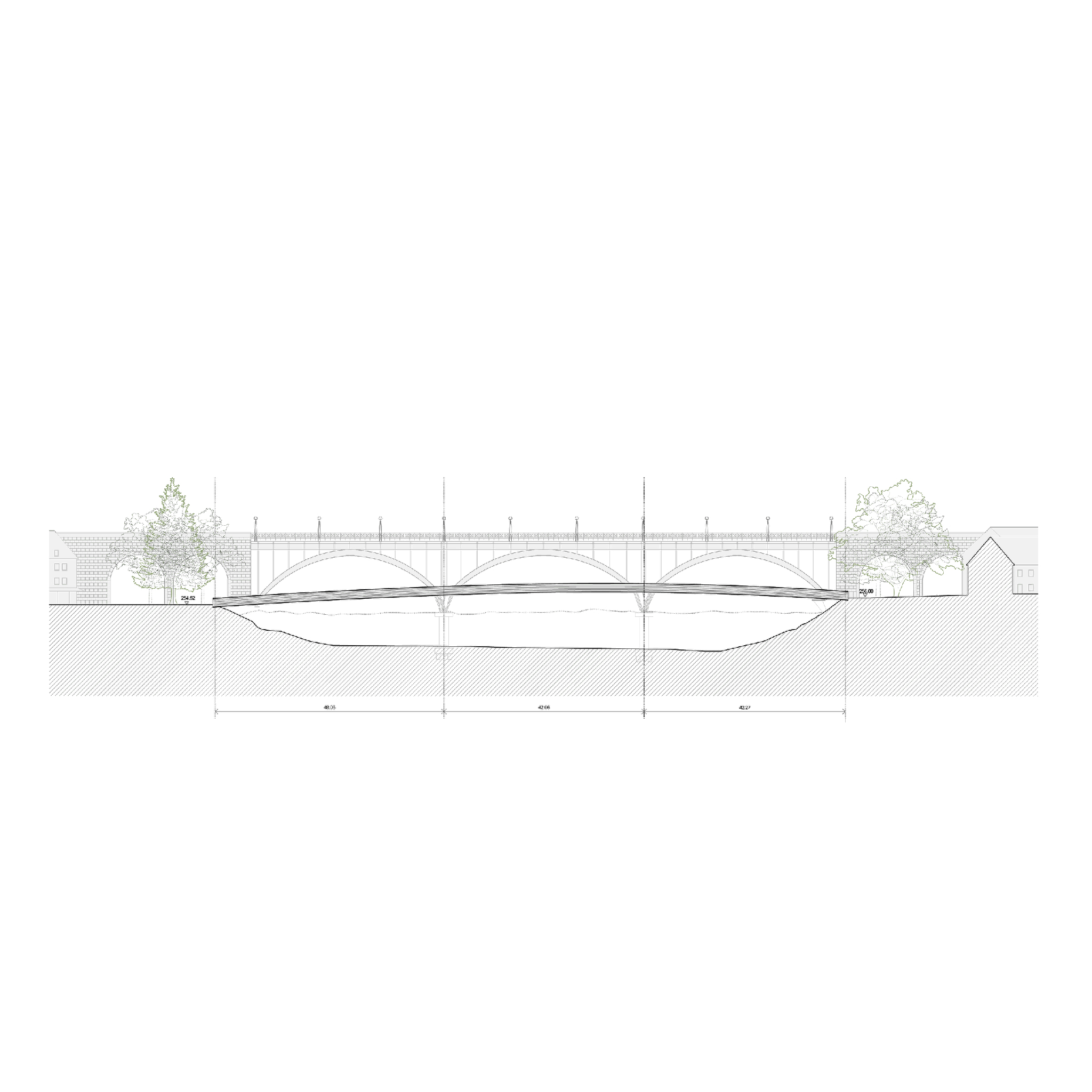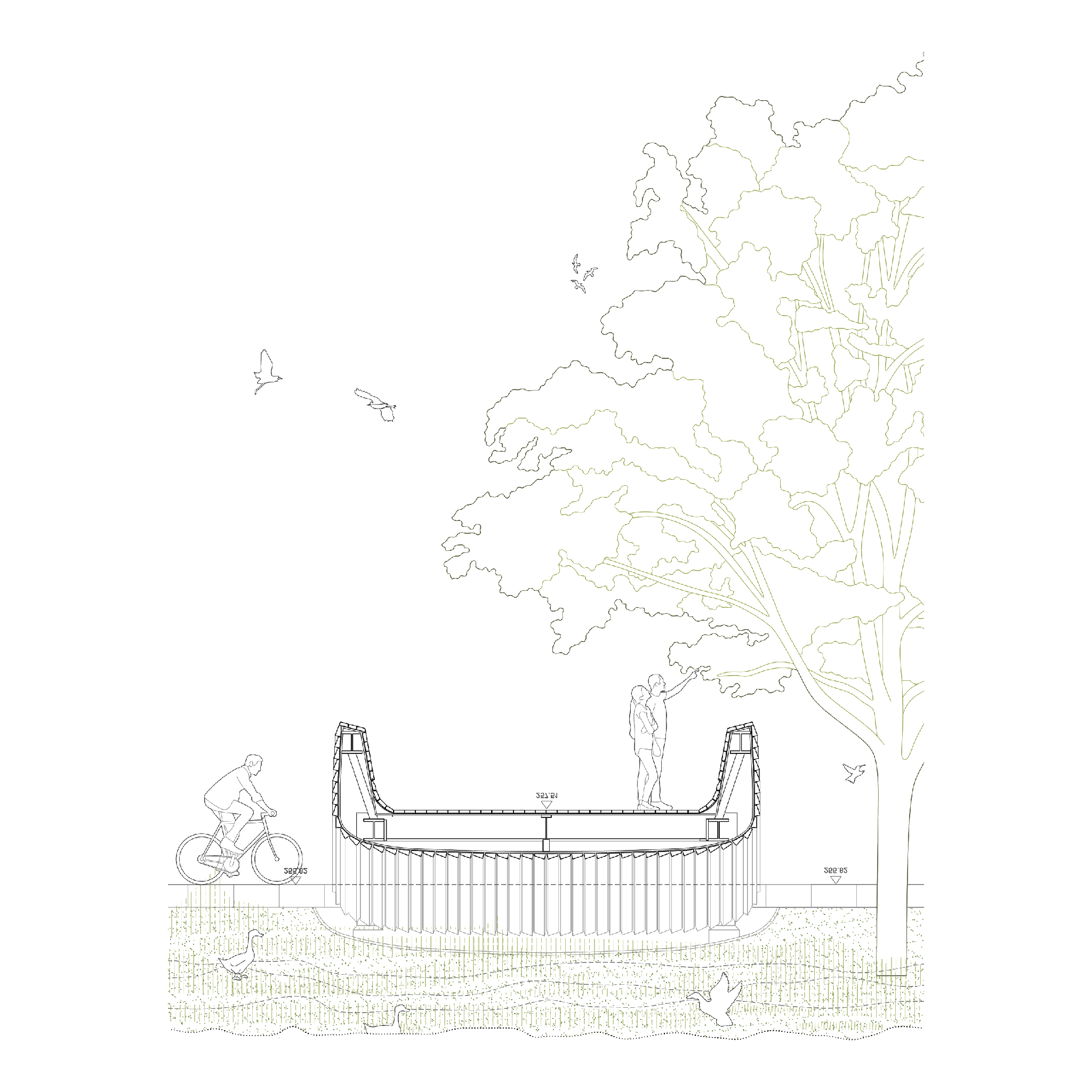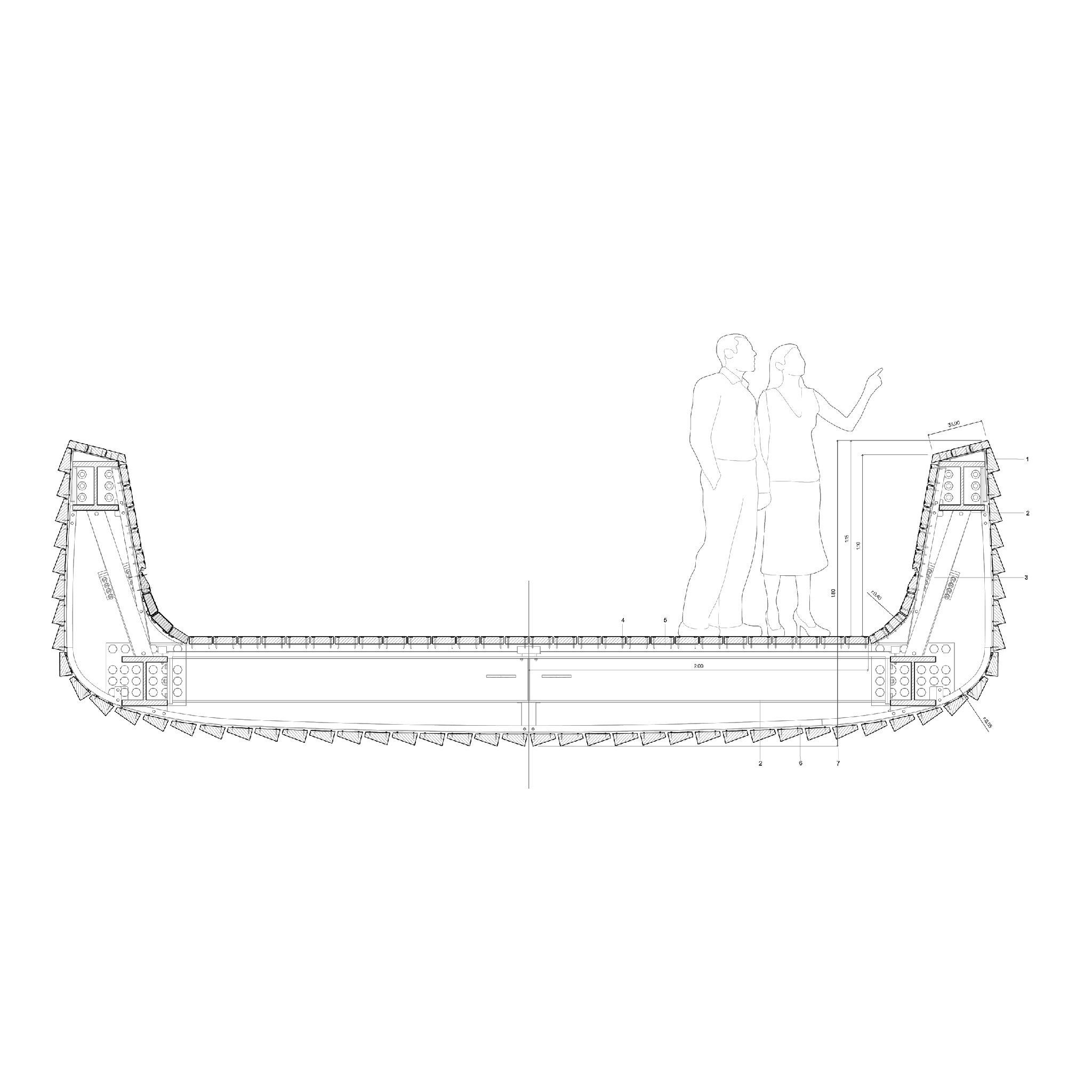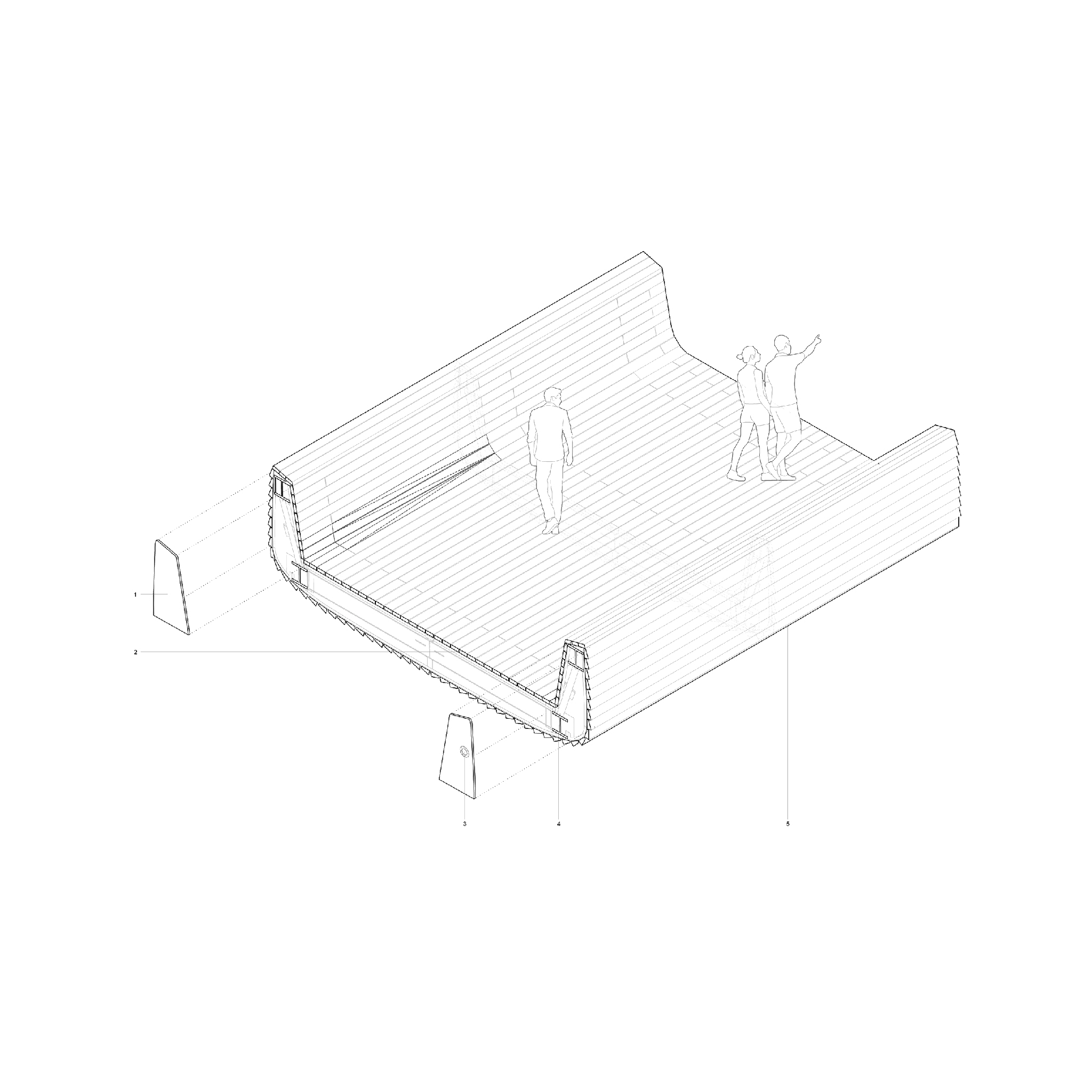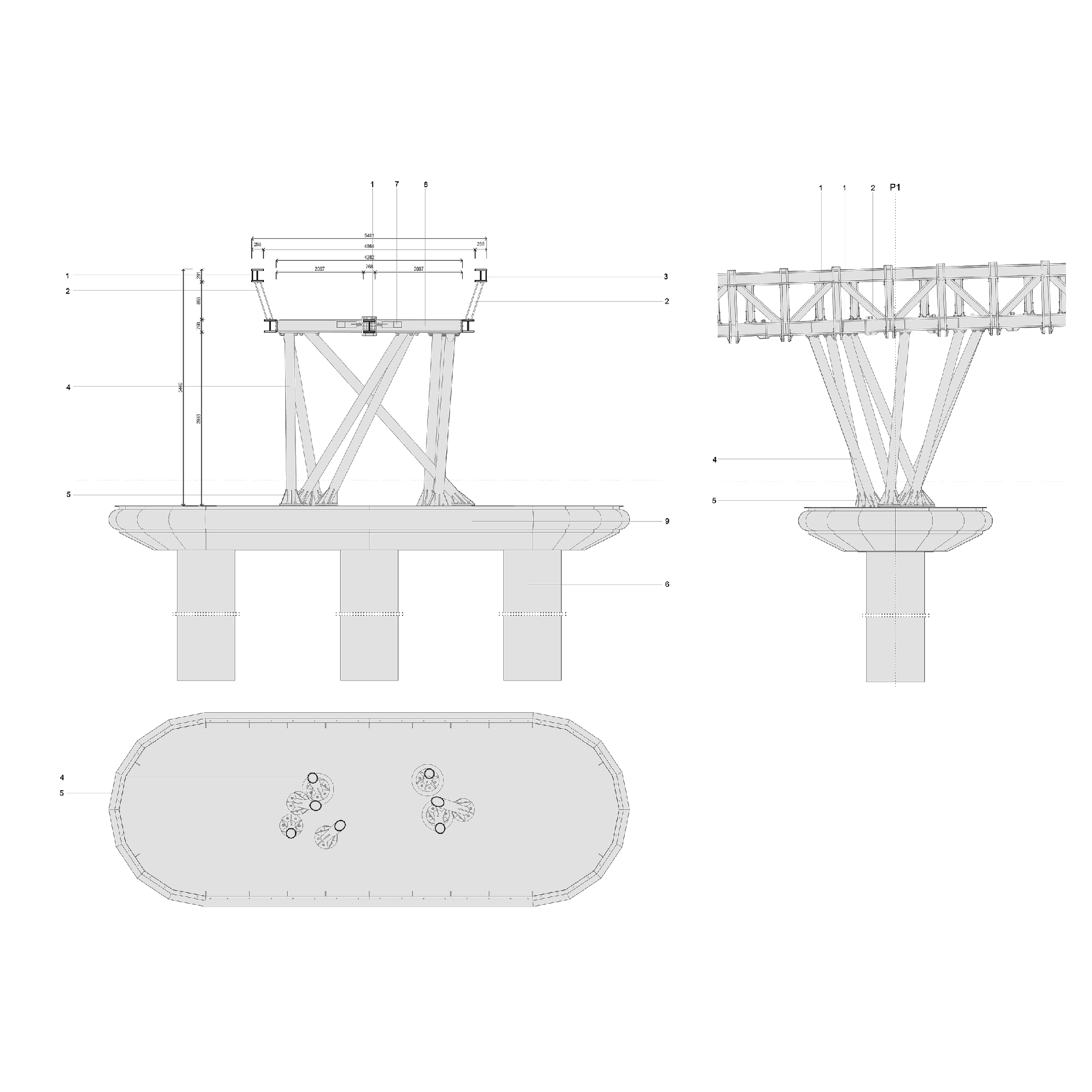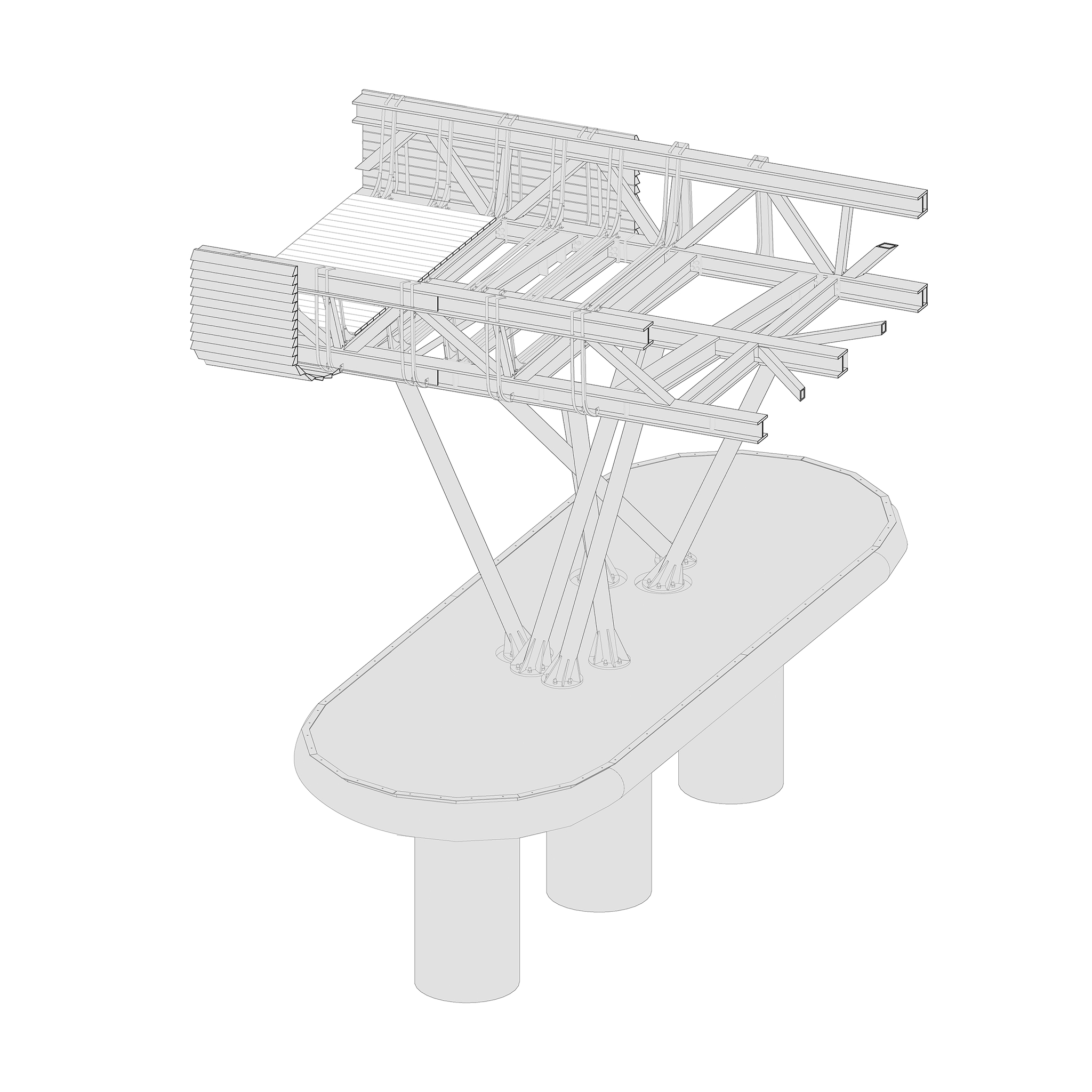
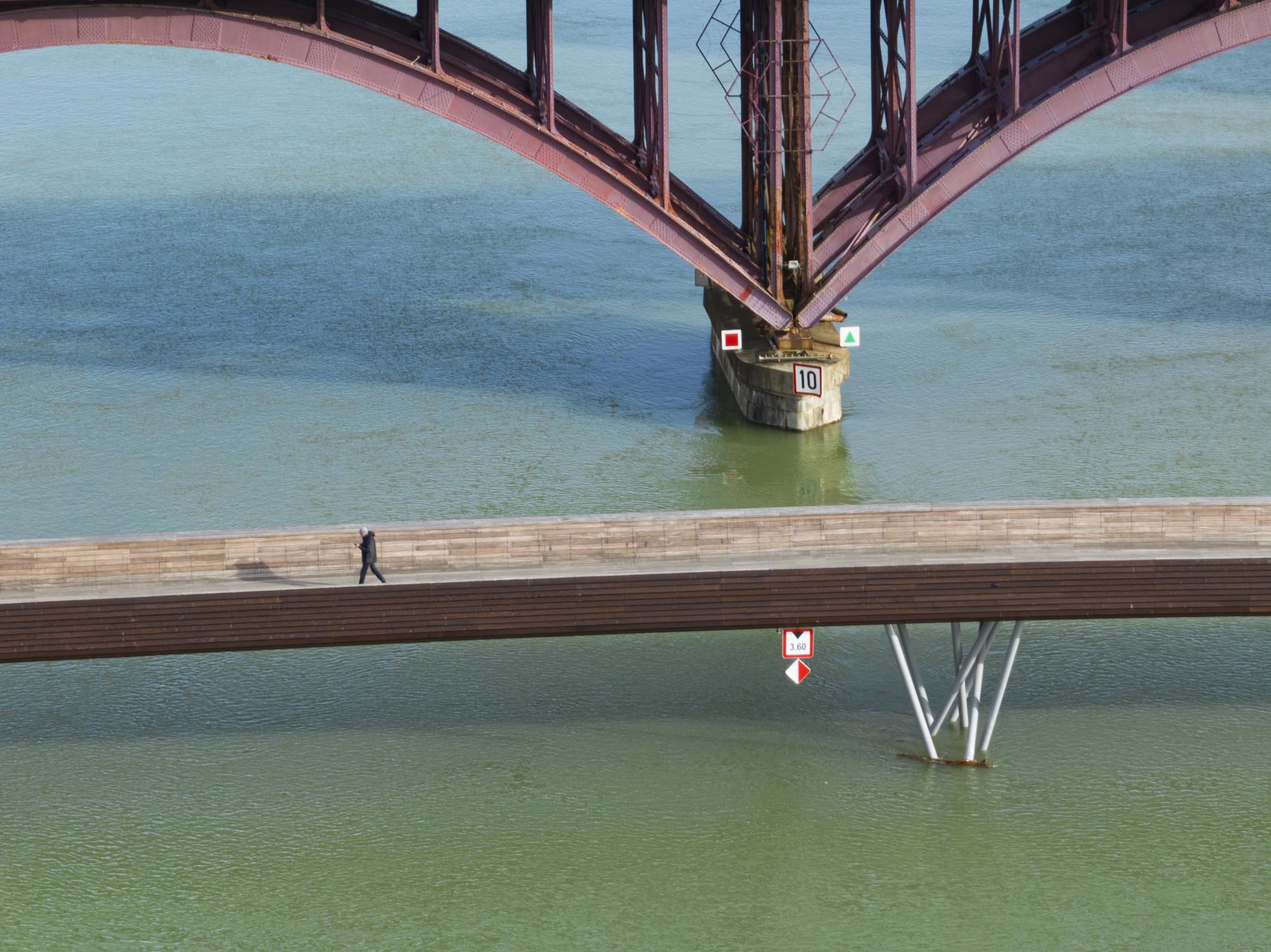
Formally, the bridge designed by Burgos & Garrido and Bernabeu Ingenieros is configured with an arch profile, supported by two lateral steel beams that hold a continuous 132-meter deck divided into three spans. Its structure, supported by slender, inclined metal piers, conveys a sense of lightness, as if it were floating on the water.
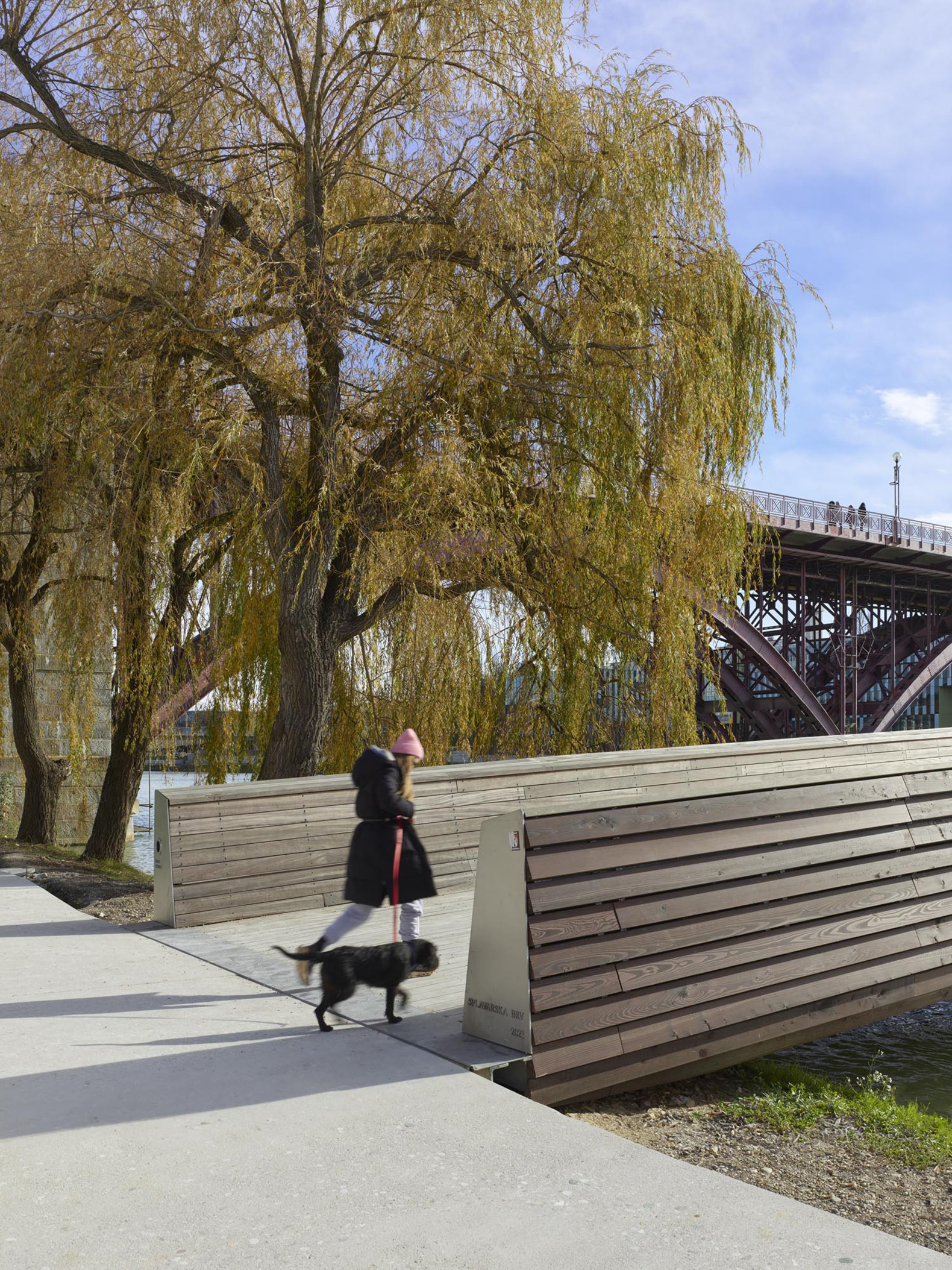
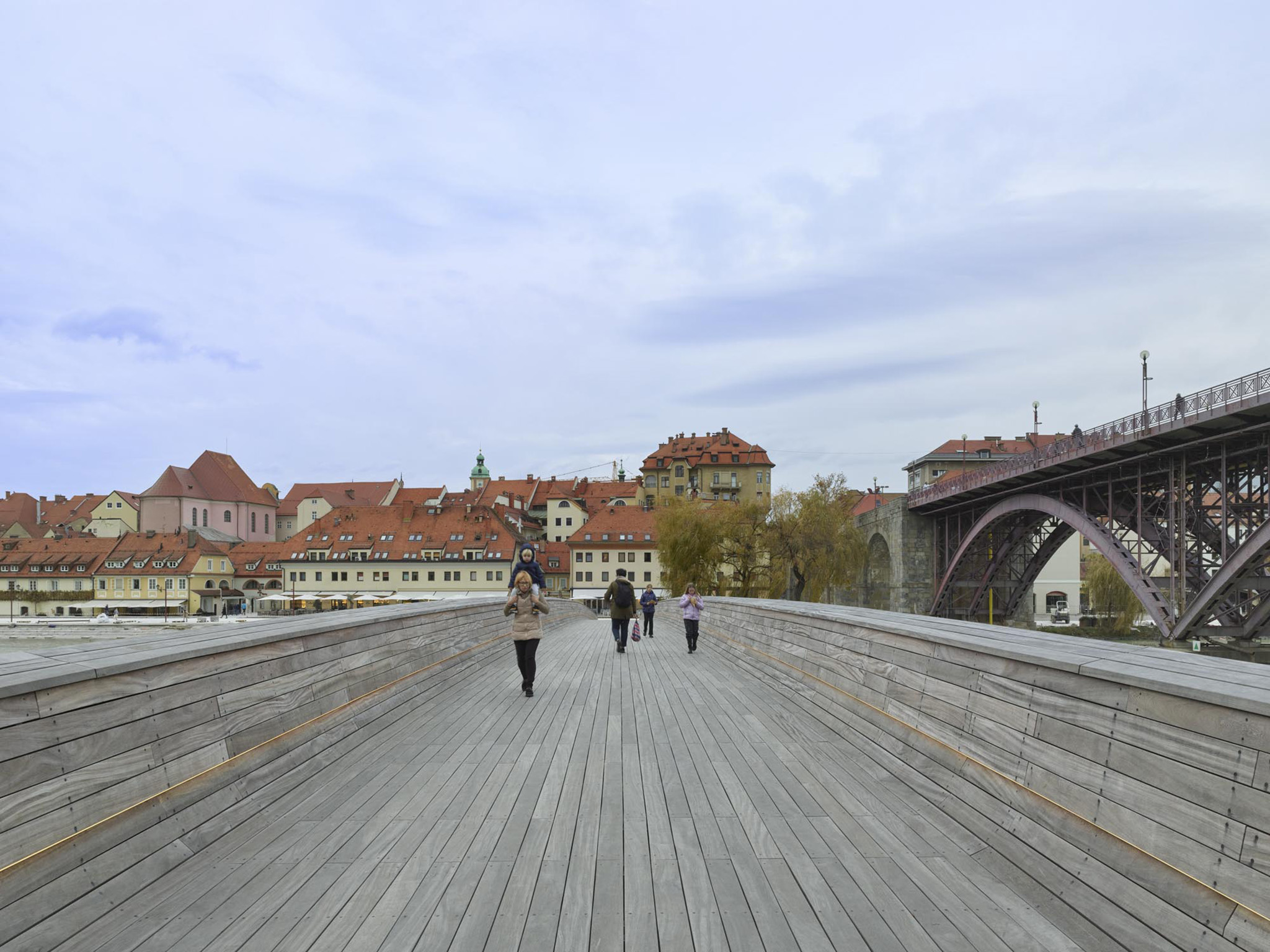
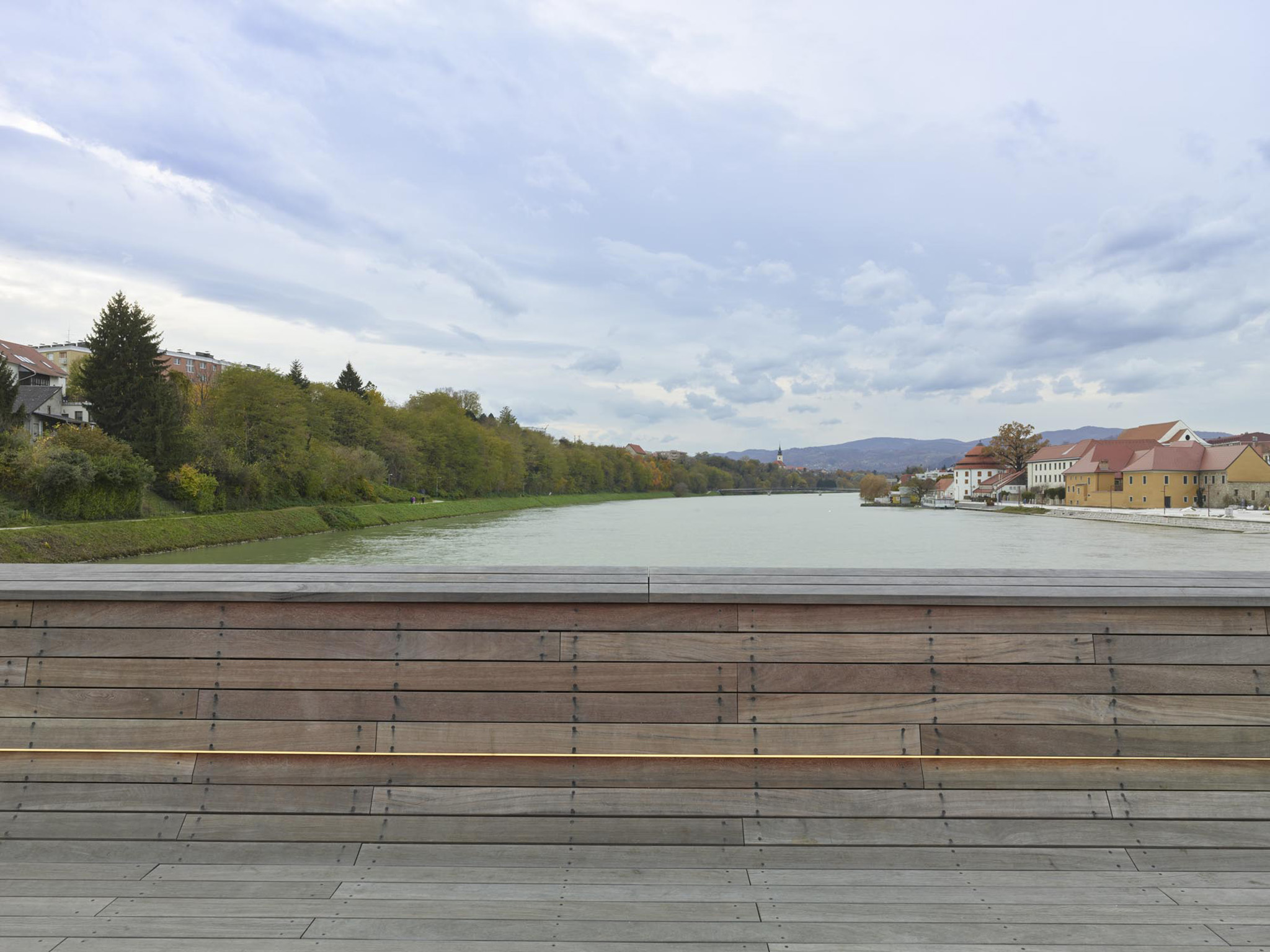
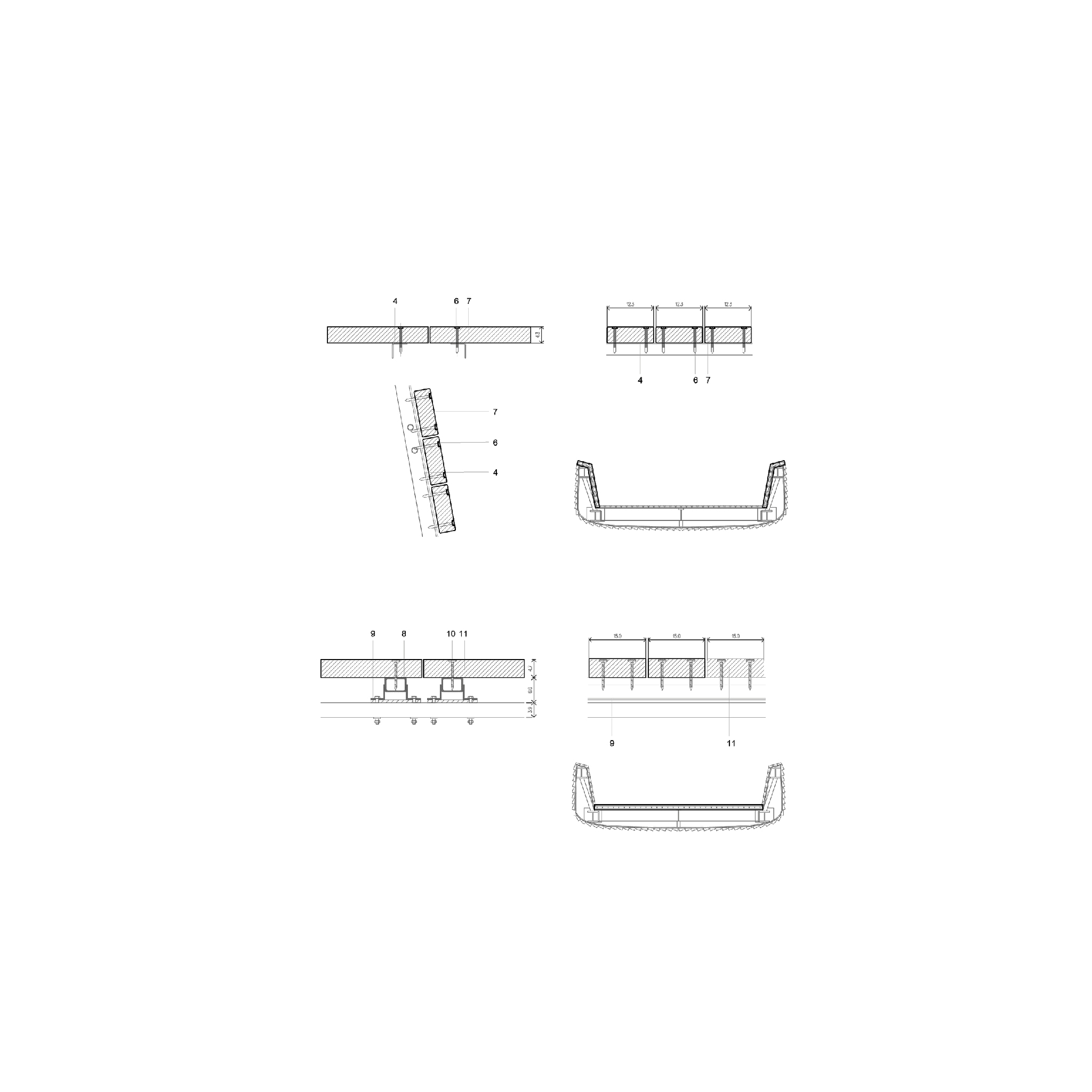
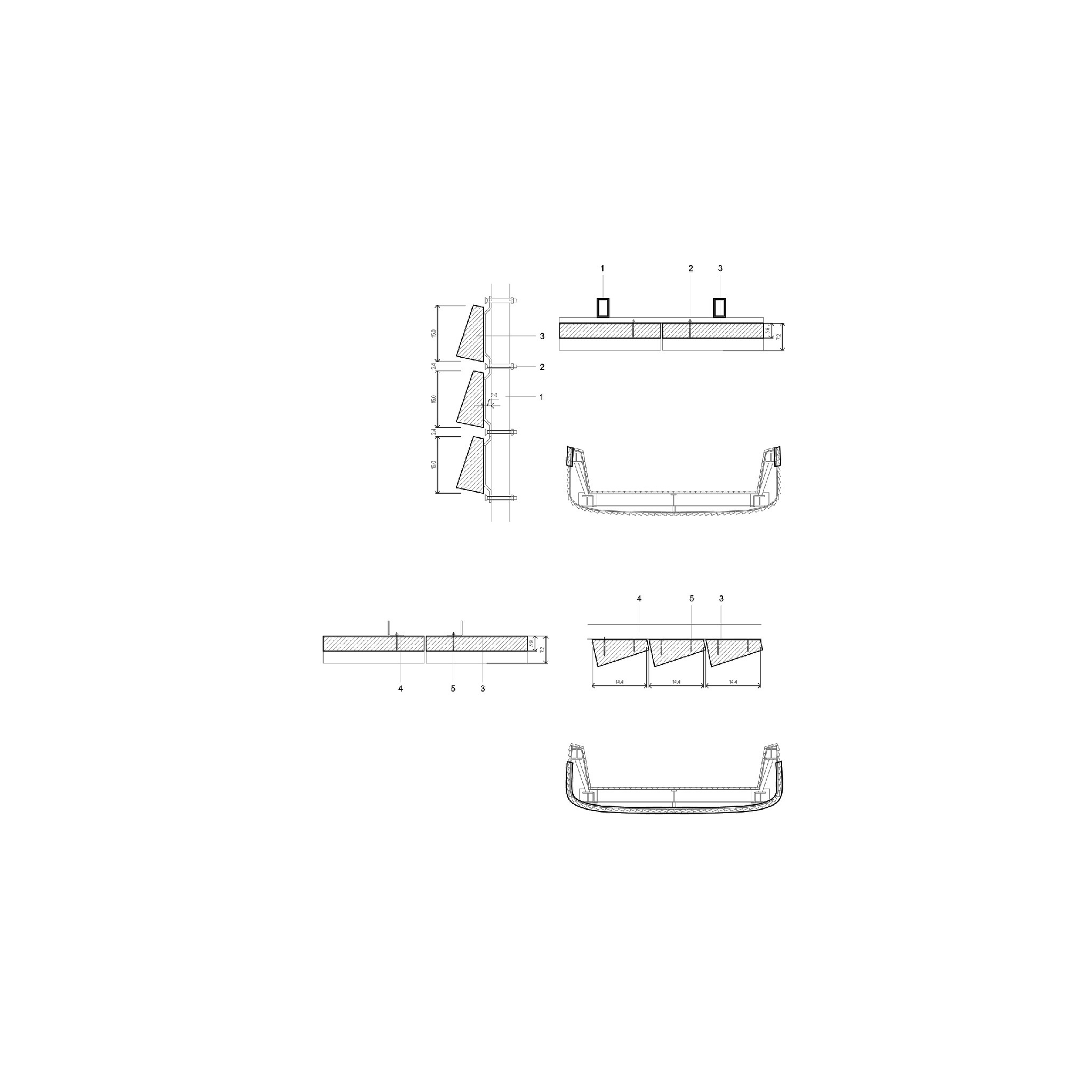
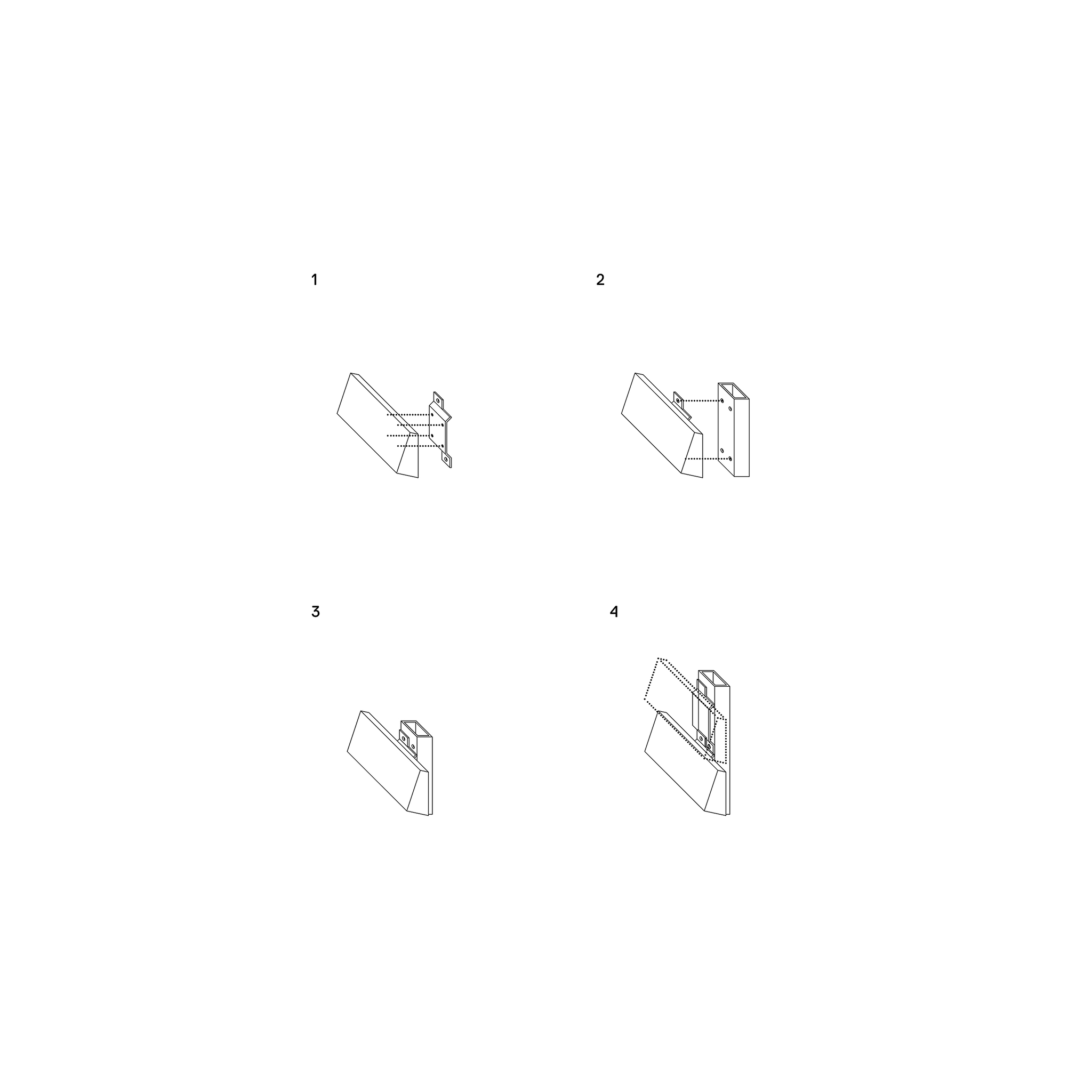
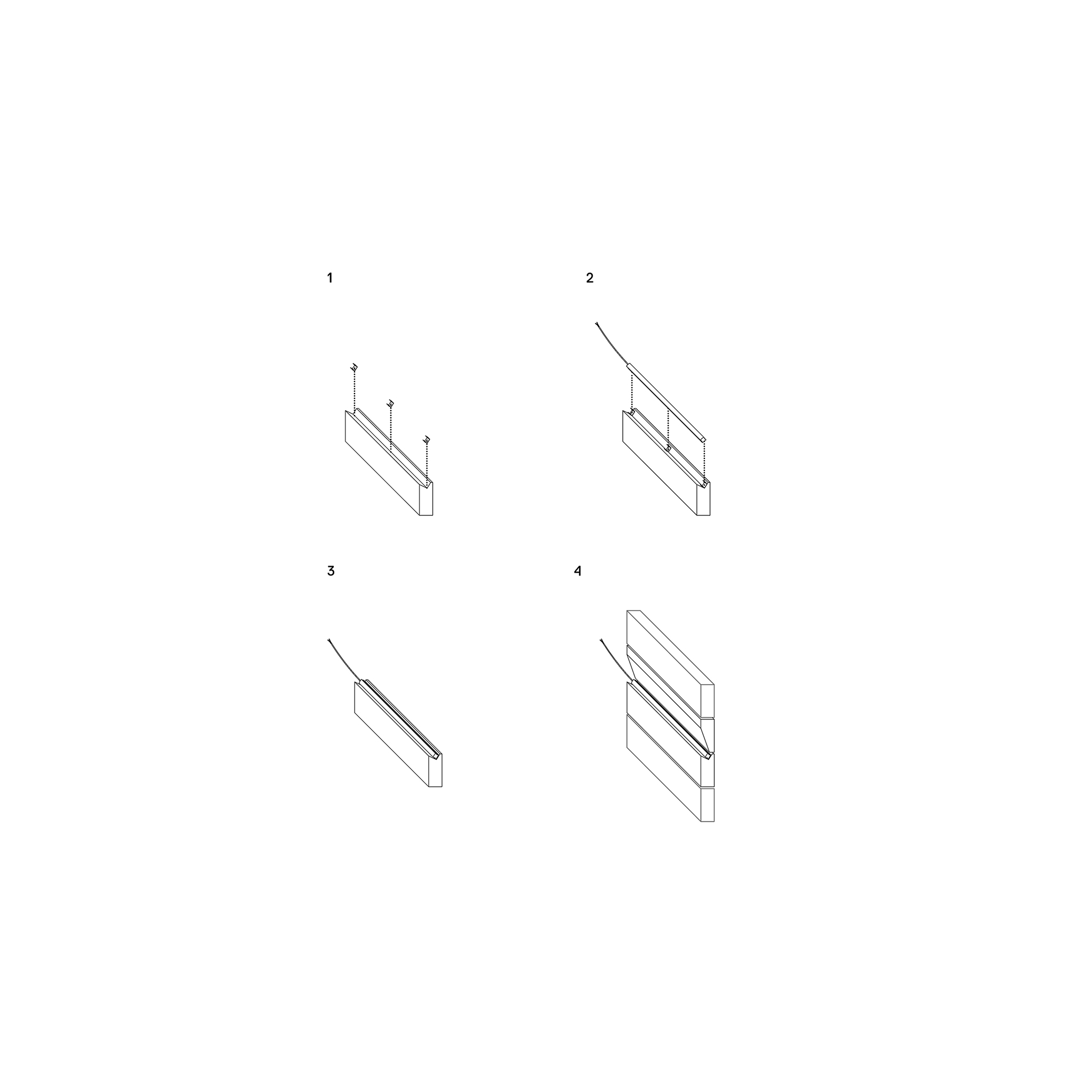
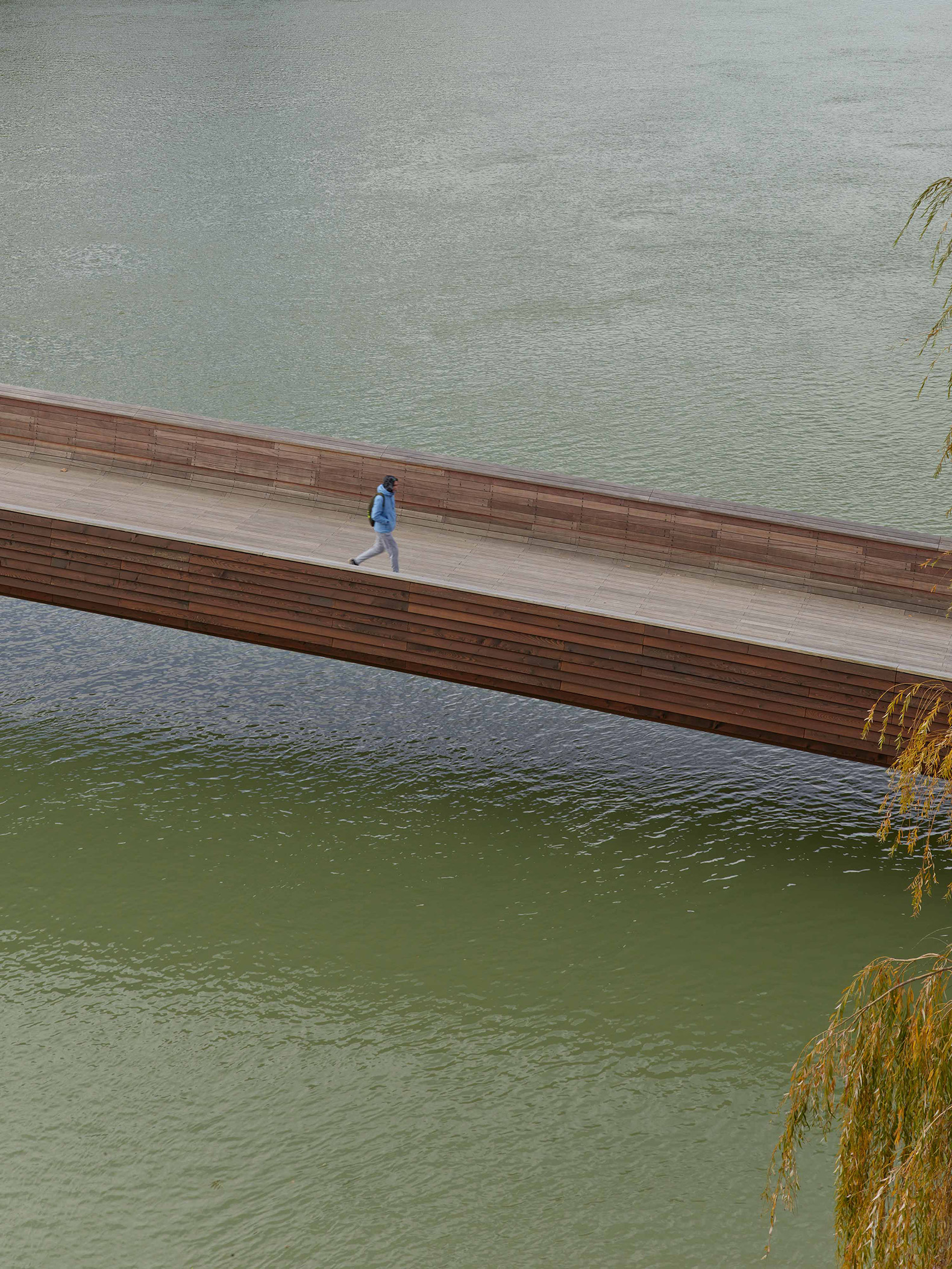
Regarding the materials used, the bridge is completely clad in wood—azobé on the inside and stained larch on the outside—resulting in a warm and timeless character. Over time, this cladding will acquire a grayish tone that will enhance its integration into the landscape, evoking both the ancient logs that once floated down the river and the memory of the original wooden bridge.
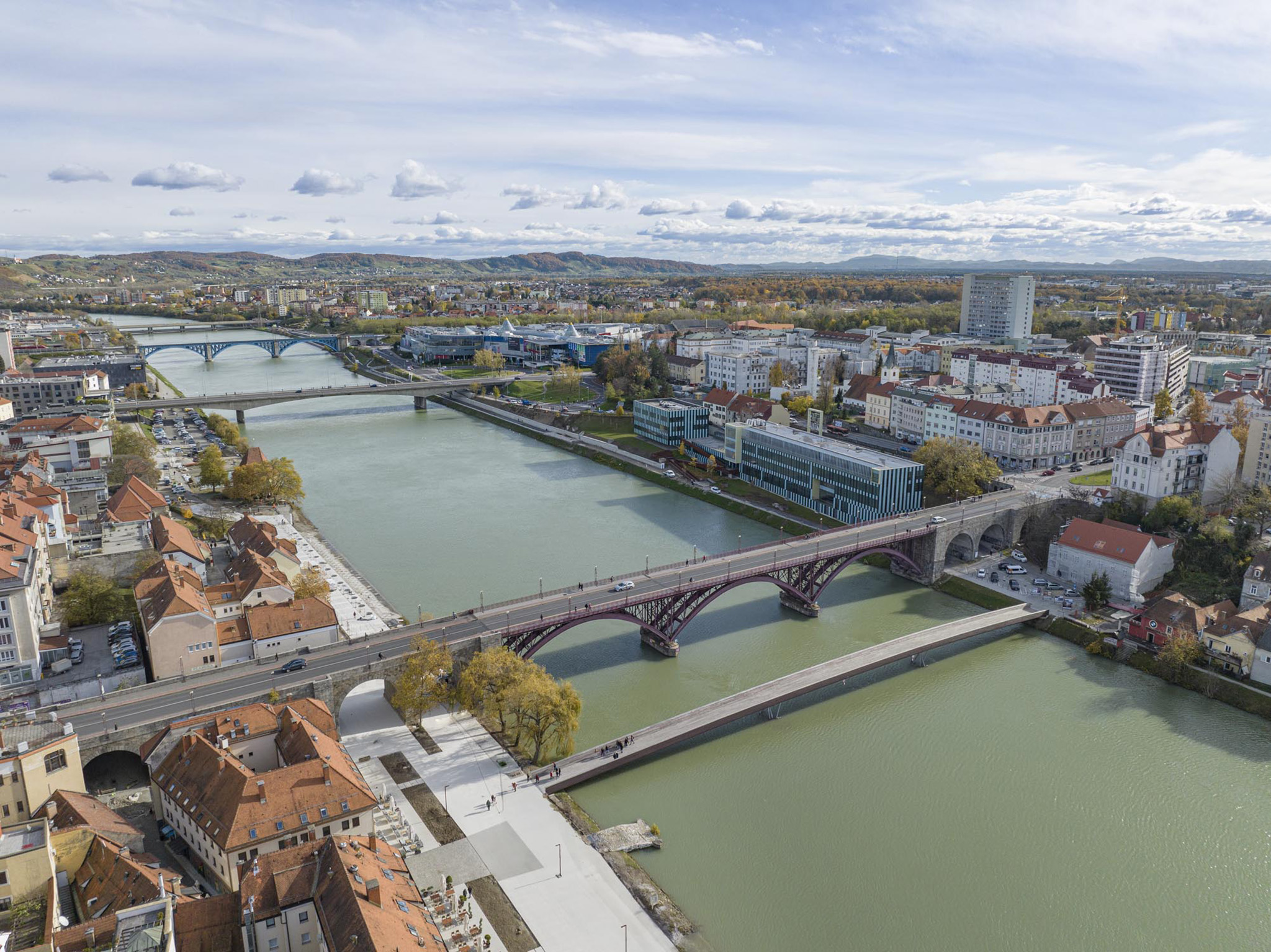
Splavarska Lent Tabor Bridge by Burgos & Garrido. Photograph by Roland Halbe.
Project description by Burgos & Garrido
Maribor's coachmen were the most delighted when in 1912 the Austrians opened the now Stari Most - the "Old Bridge" - over the Drava River, replacing the wooden bridge that had caused an annoying bottleneck on the busy road from Vienna to Trieste.
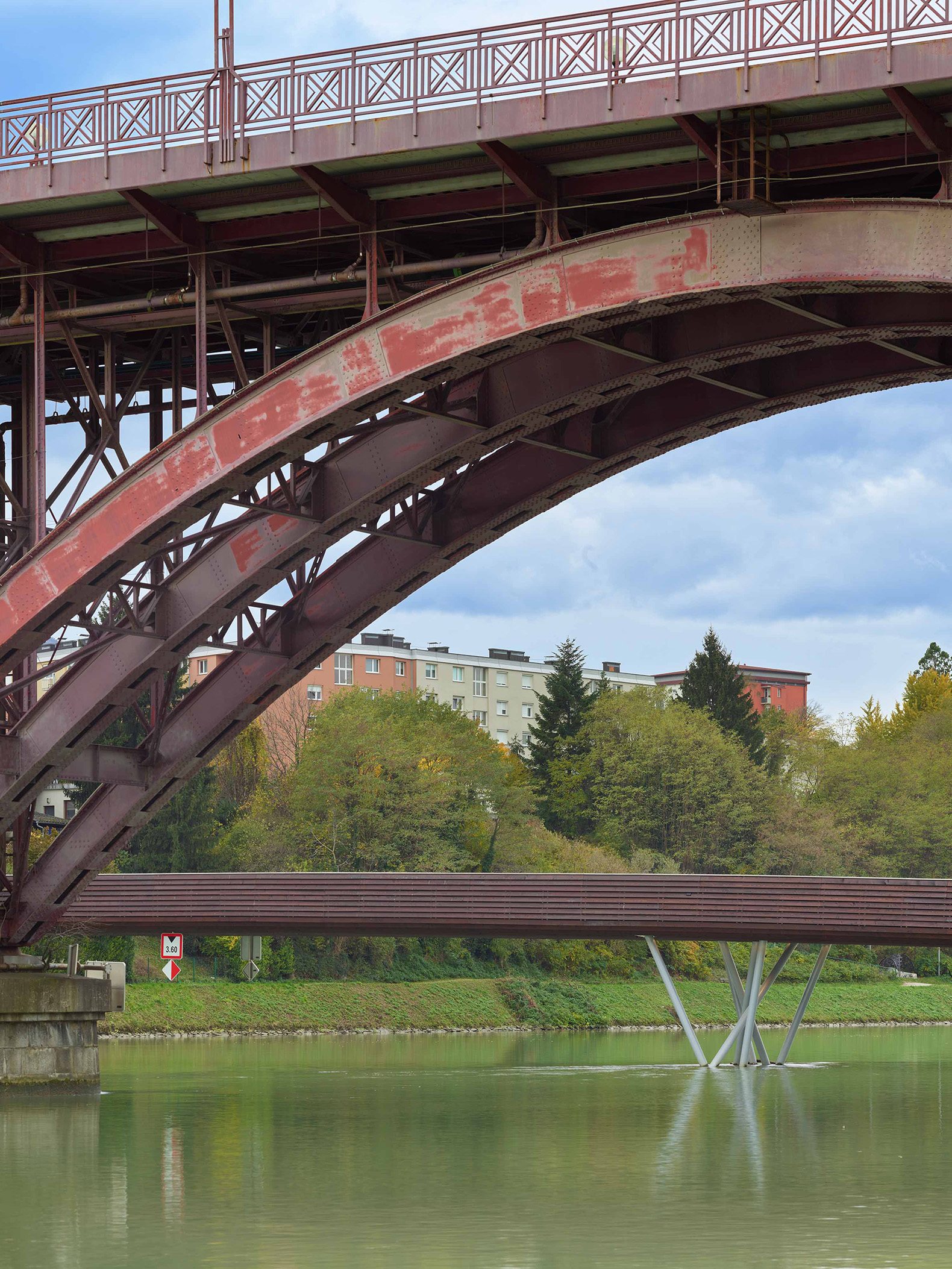
The Stari Most, which links the districts of Lent and Tabor north and south of the river at its highest point, eventually became a symbol of the city, even though it left the banks of the Drava disconnected at the lowest point. The new Splavarska pedestrian bridge now links the two banks again in close proximity to the "Old Bridge". Next to it, the new bridge is silent, underlines the presence of the metal structure of the old bridge in the city and distinguishes itself from it with a different material. Entirely wrapped in wood - on the inside in azobe and on the outside in stained larch - it pays a muted homage to the activity of the raftsmen who traditionally linked the two shores and acquires an archaic and timeless character.
Its wooden planks will soon acquire a greyish and imprecise colour that will make it better and better every day, dissolving in time its material and structural expression. Thus, too, it will be reminiscent of the large logs that once flowed down the Drava from the mountain logging operations, or of the wooden bridge that stood where the new one now stands, providing a recognisable image that is already part of Maribor's memory.
The bridge has an arched profile formed by two steel girders on either side of the deck. It has a total length of 132 metres and three spans of just over 42 metres, and rests in the riverbed on two sets of piers, each consisting of seven slender galvanised steel tubes of varying inclinations, the lightness of which allows the bridge to float weightlessly over the river. The Splavarska is abstract, does not show its load-bearing structure - unlike the Stari Most -, has a unique character and a clear identity, and can be seen as "halfway" between the natural and the artificial.
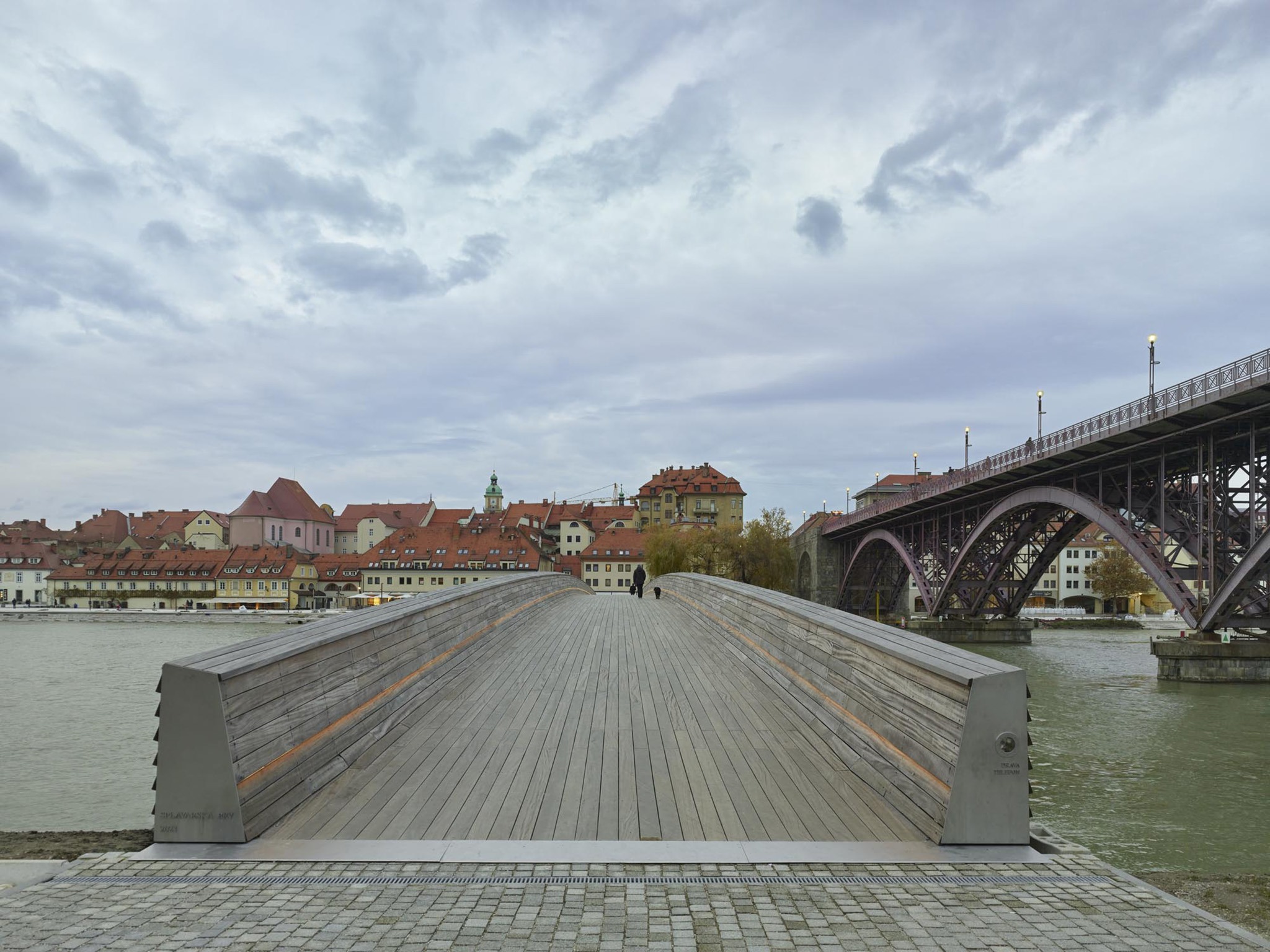
In addition, it reiterates its connective function by incorporating a sophisticated version of the ‘tin telephone’ of children's experiments with a taut steel cable and two glasses integrated into the ends of the parapet that make the passage over the river also a playful experience.