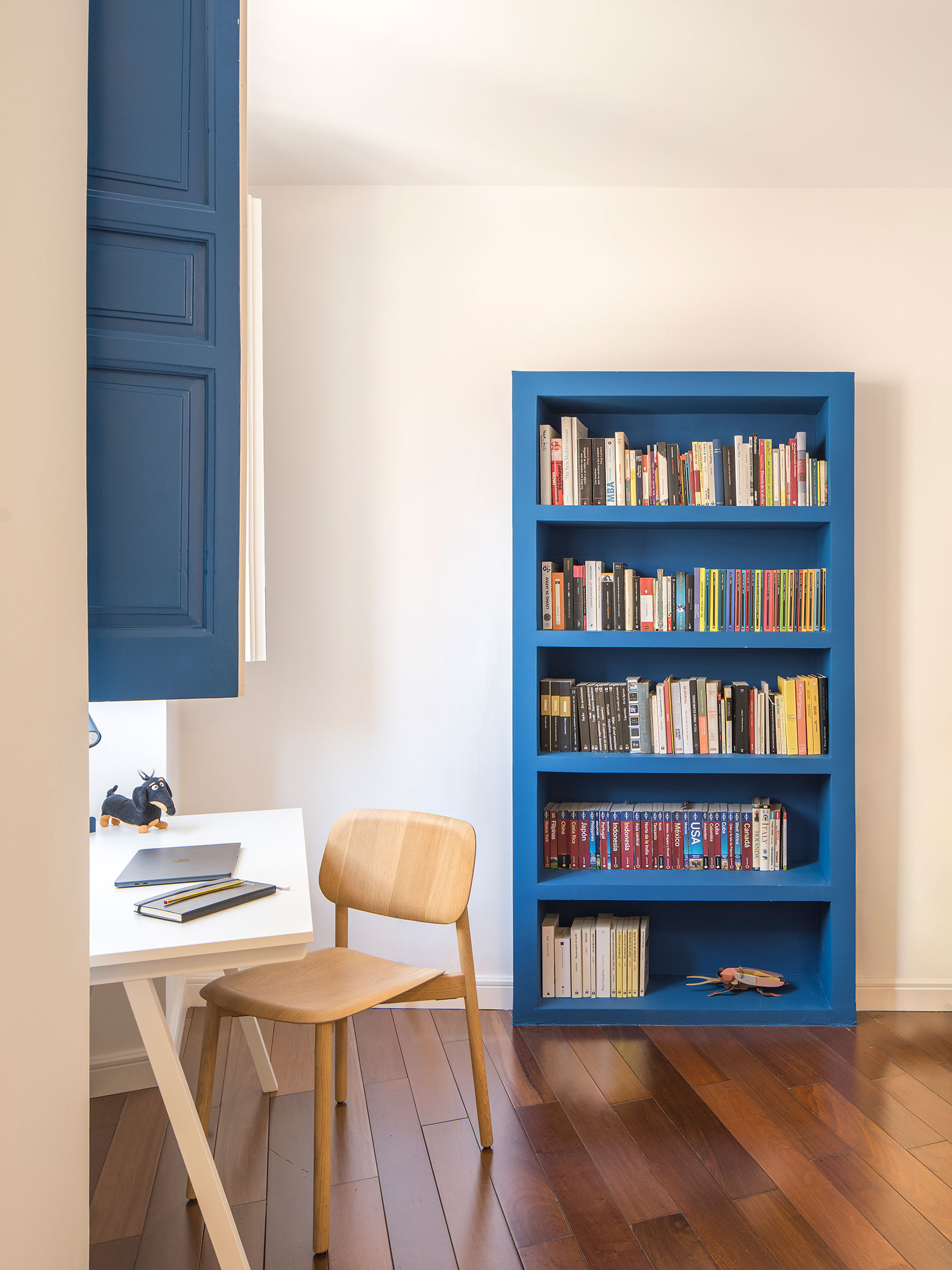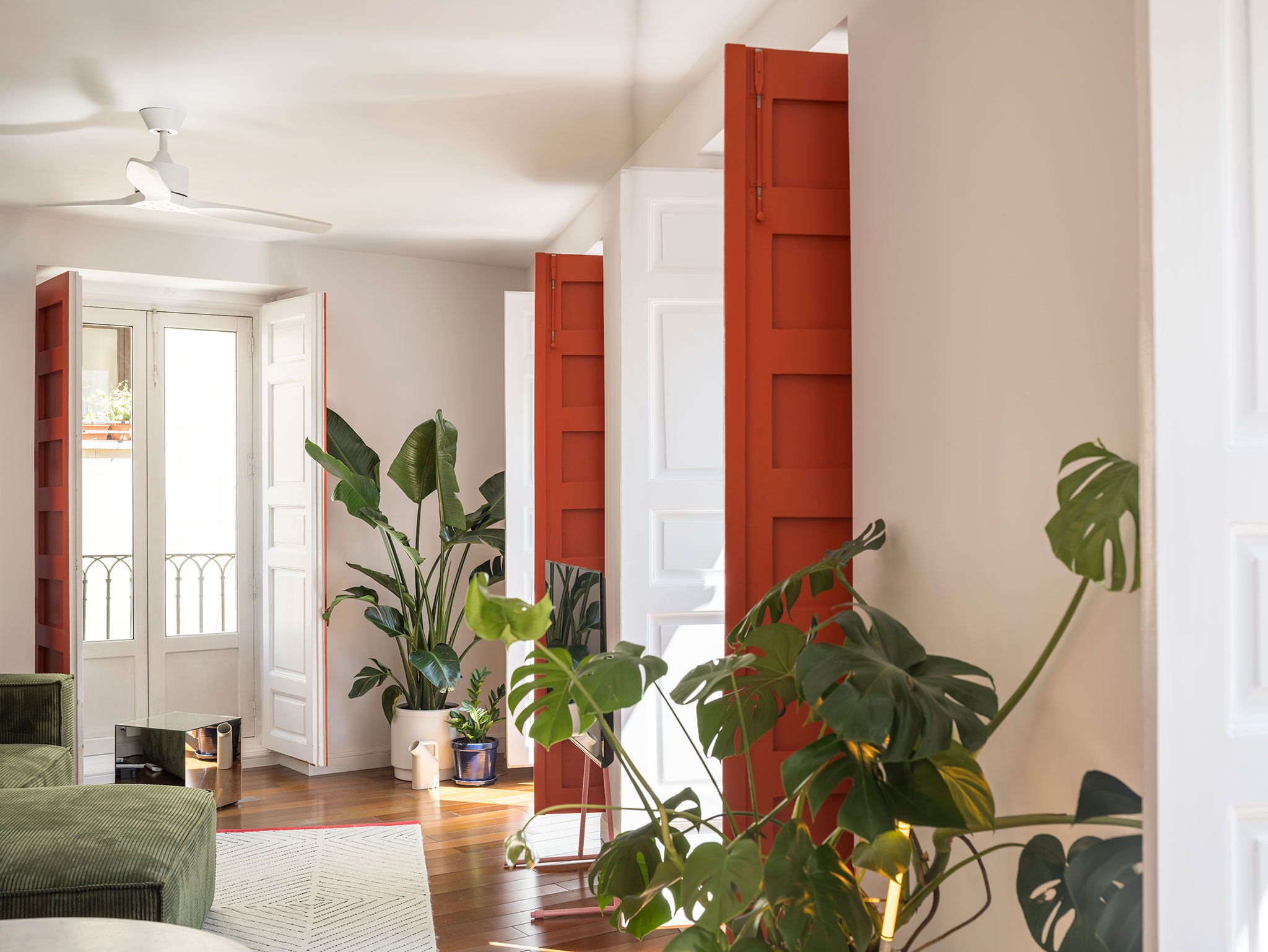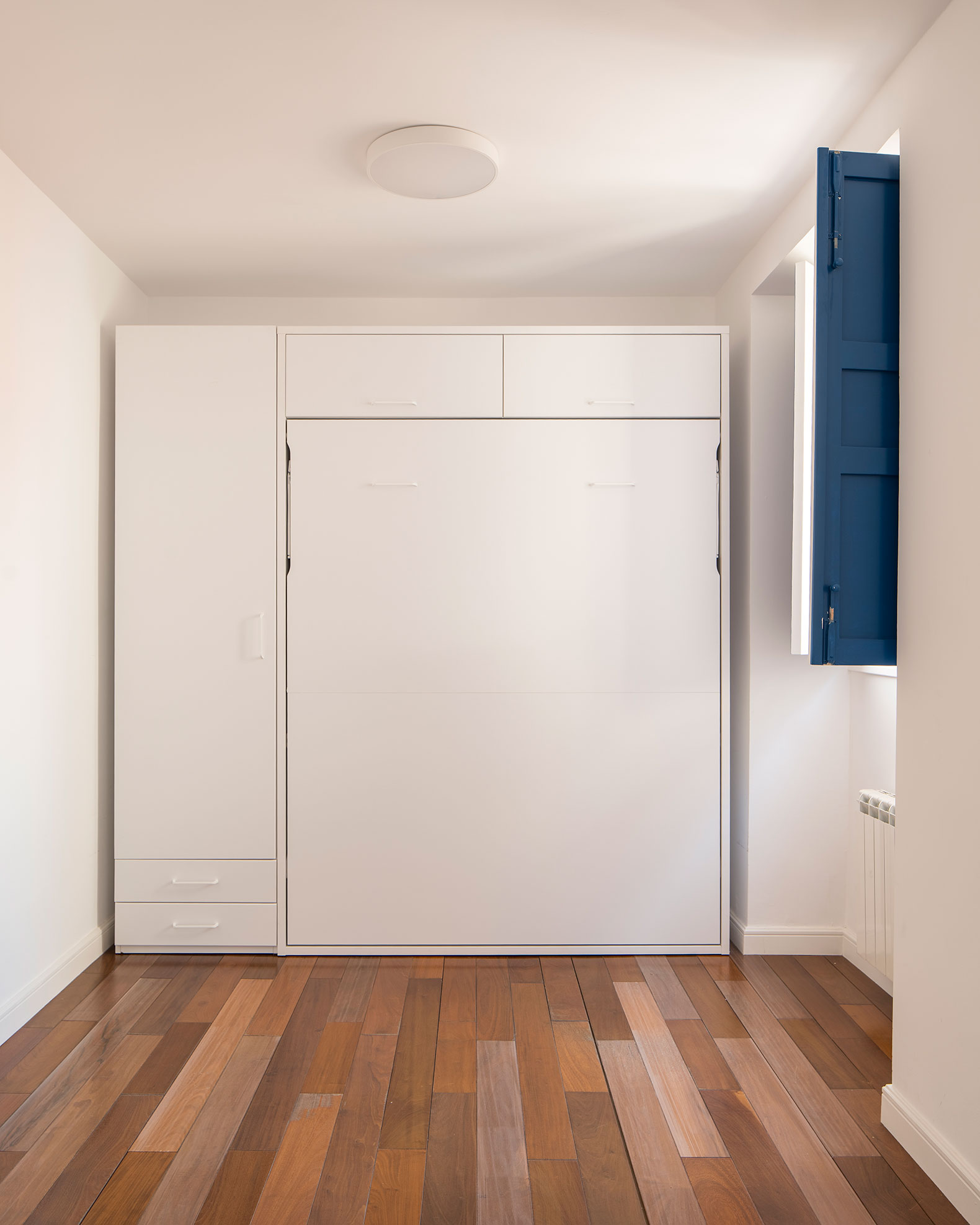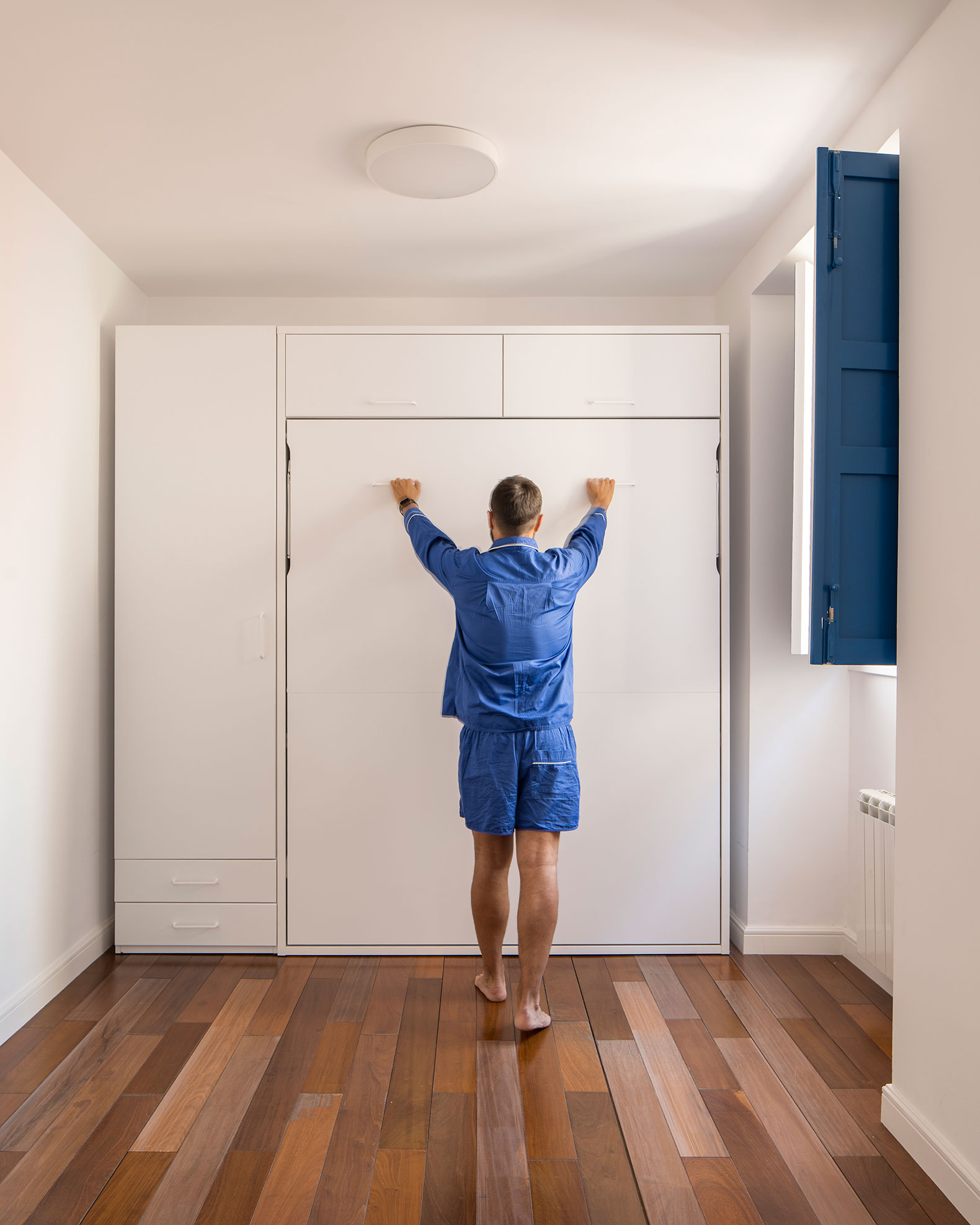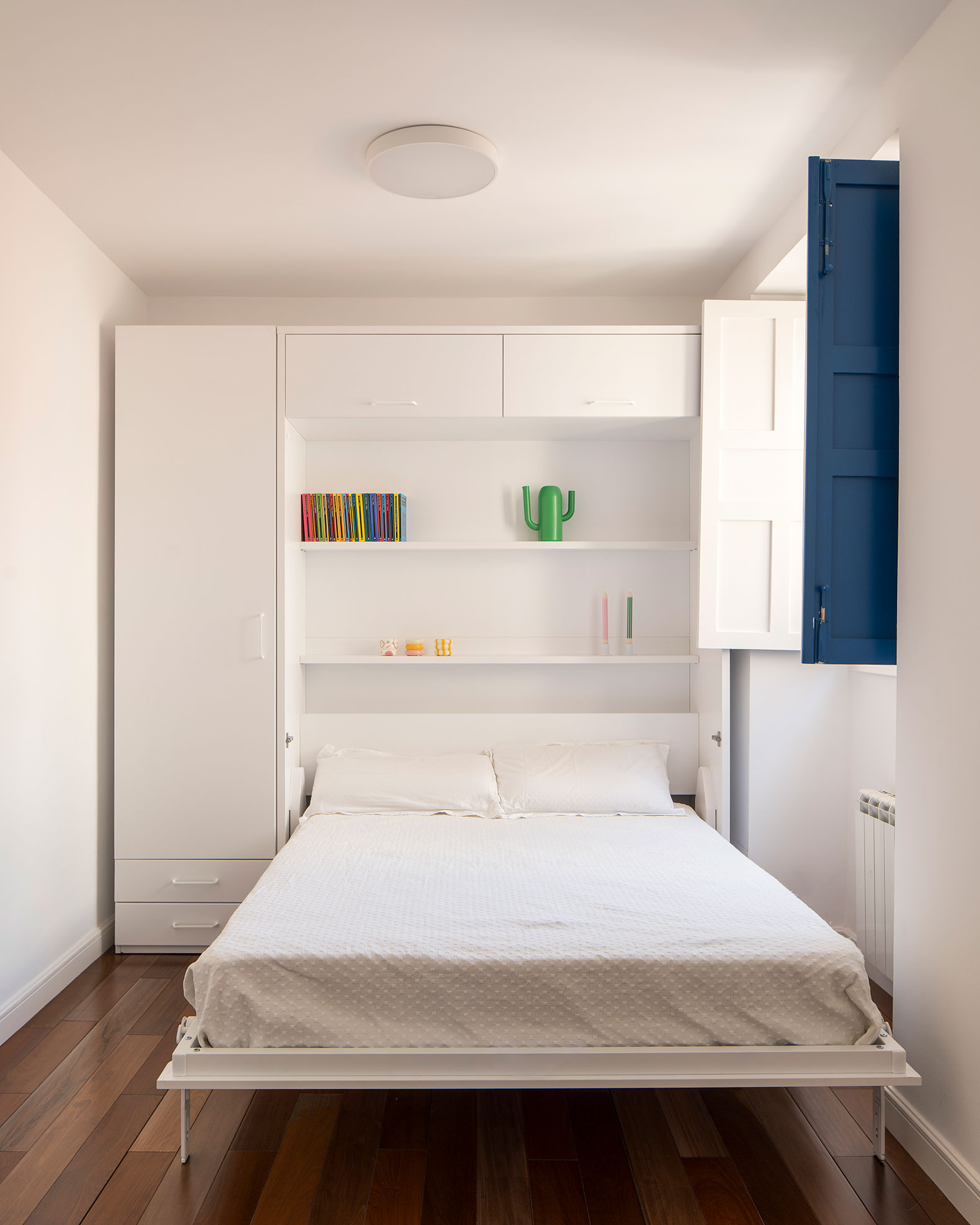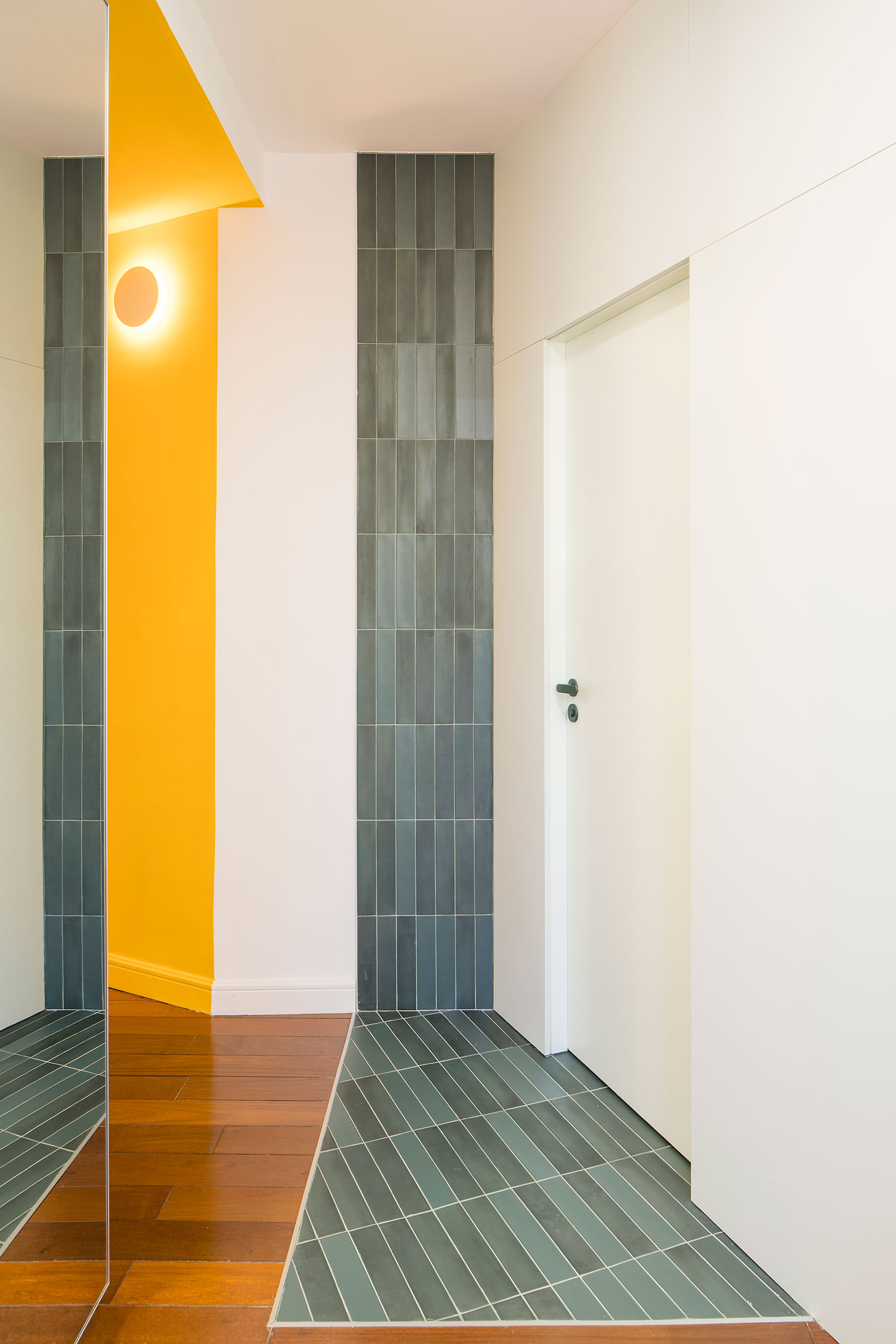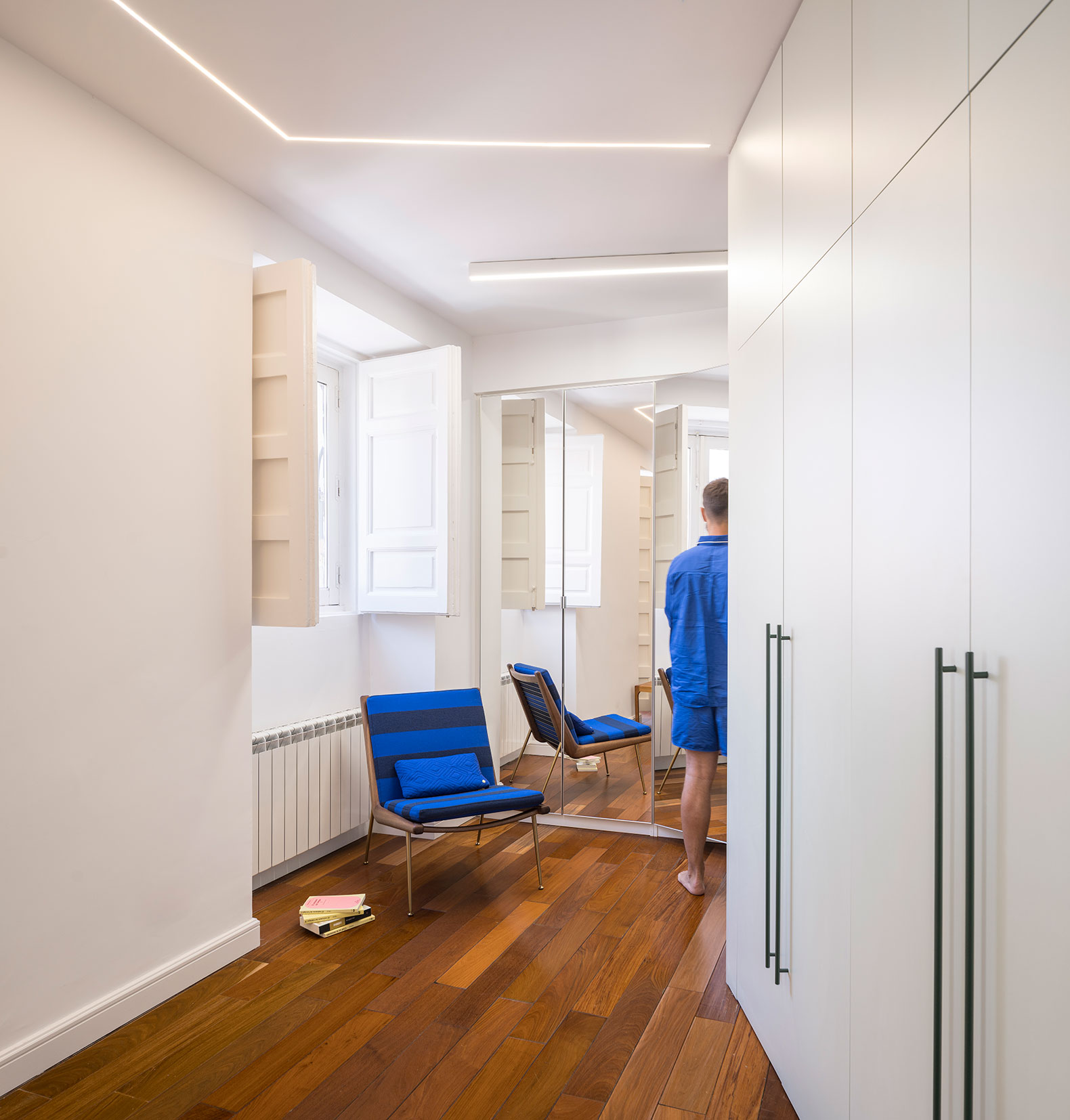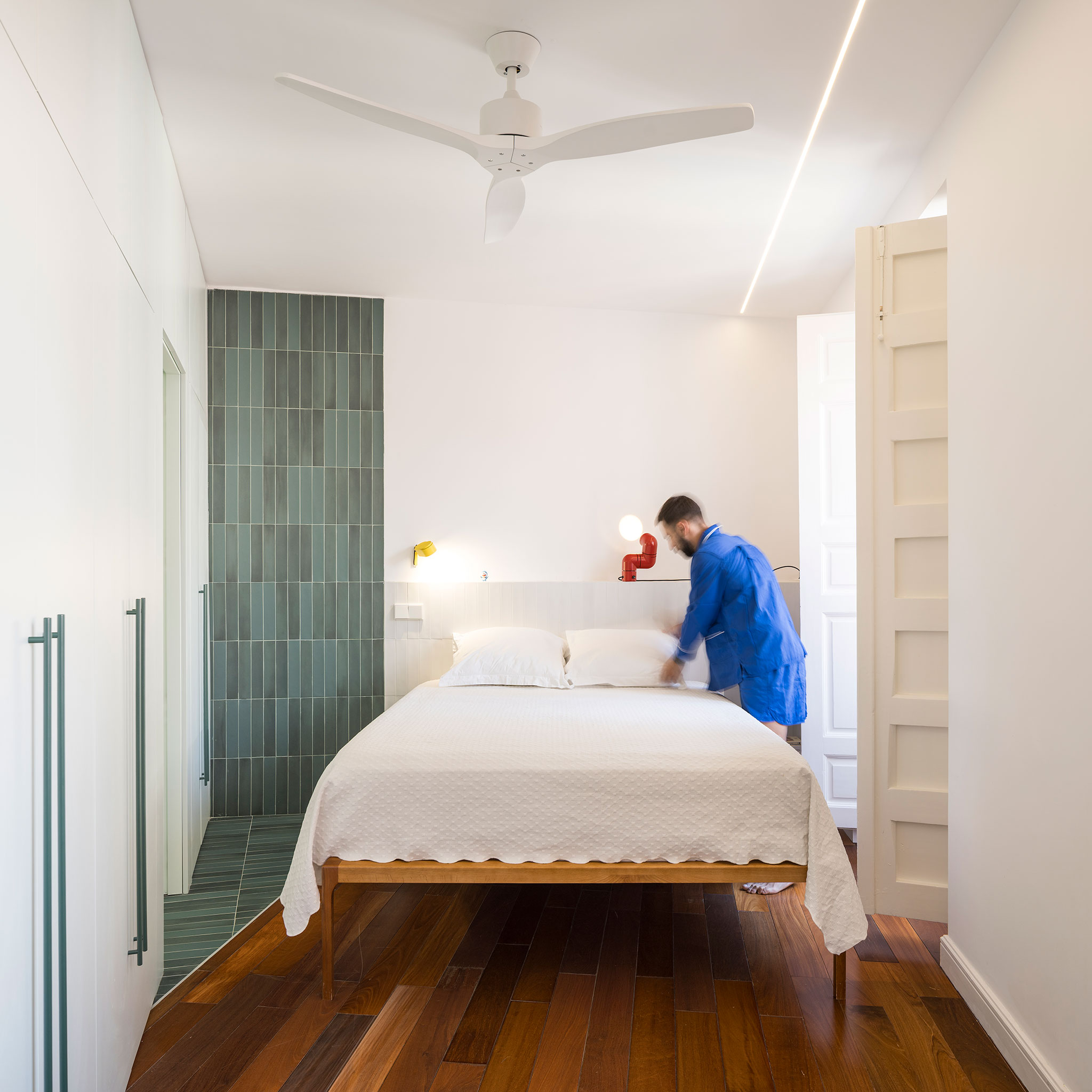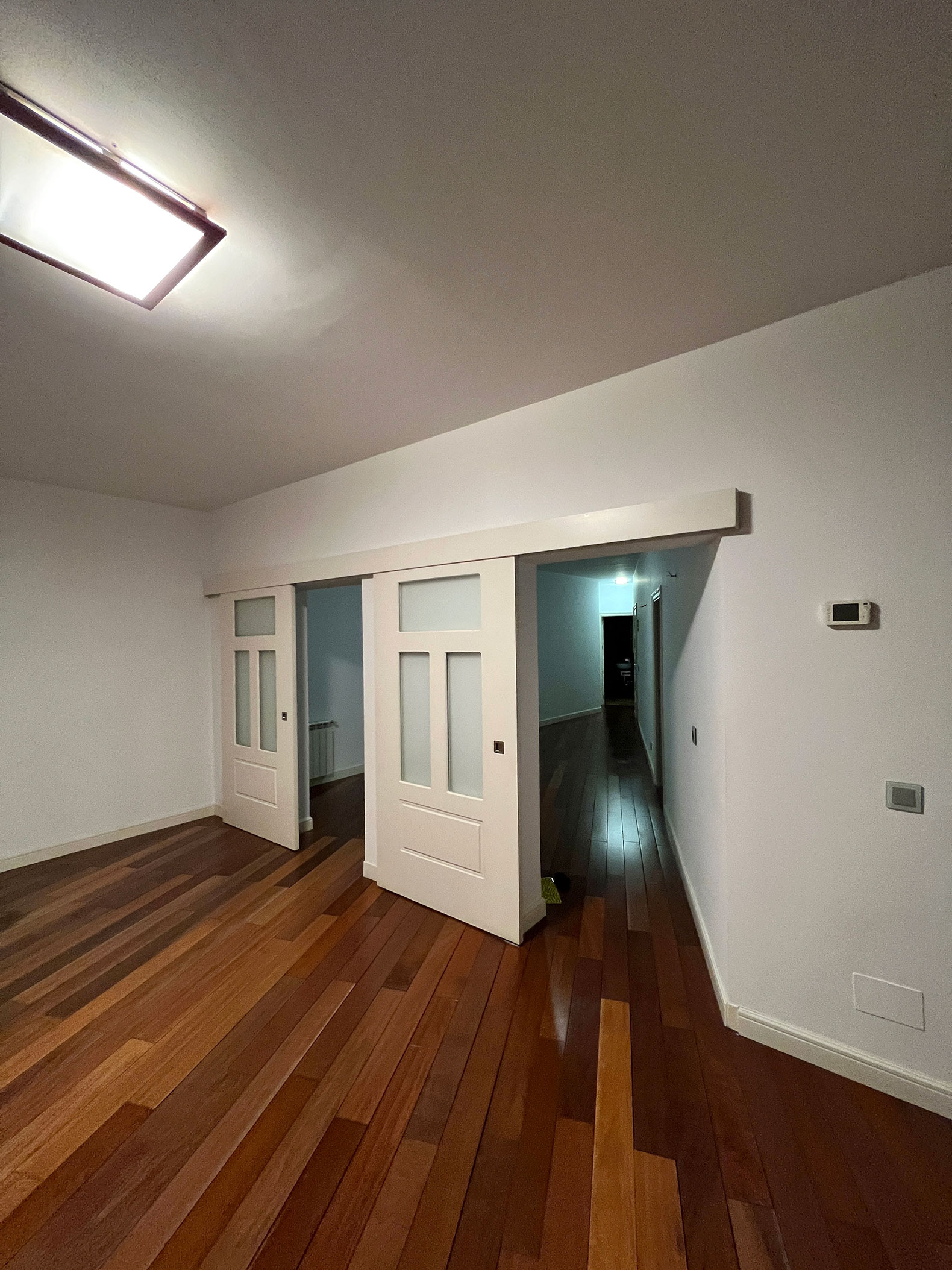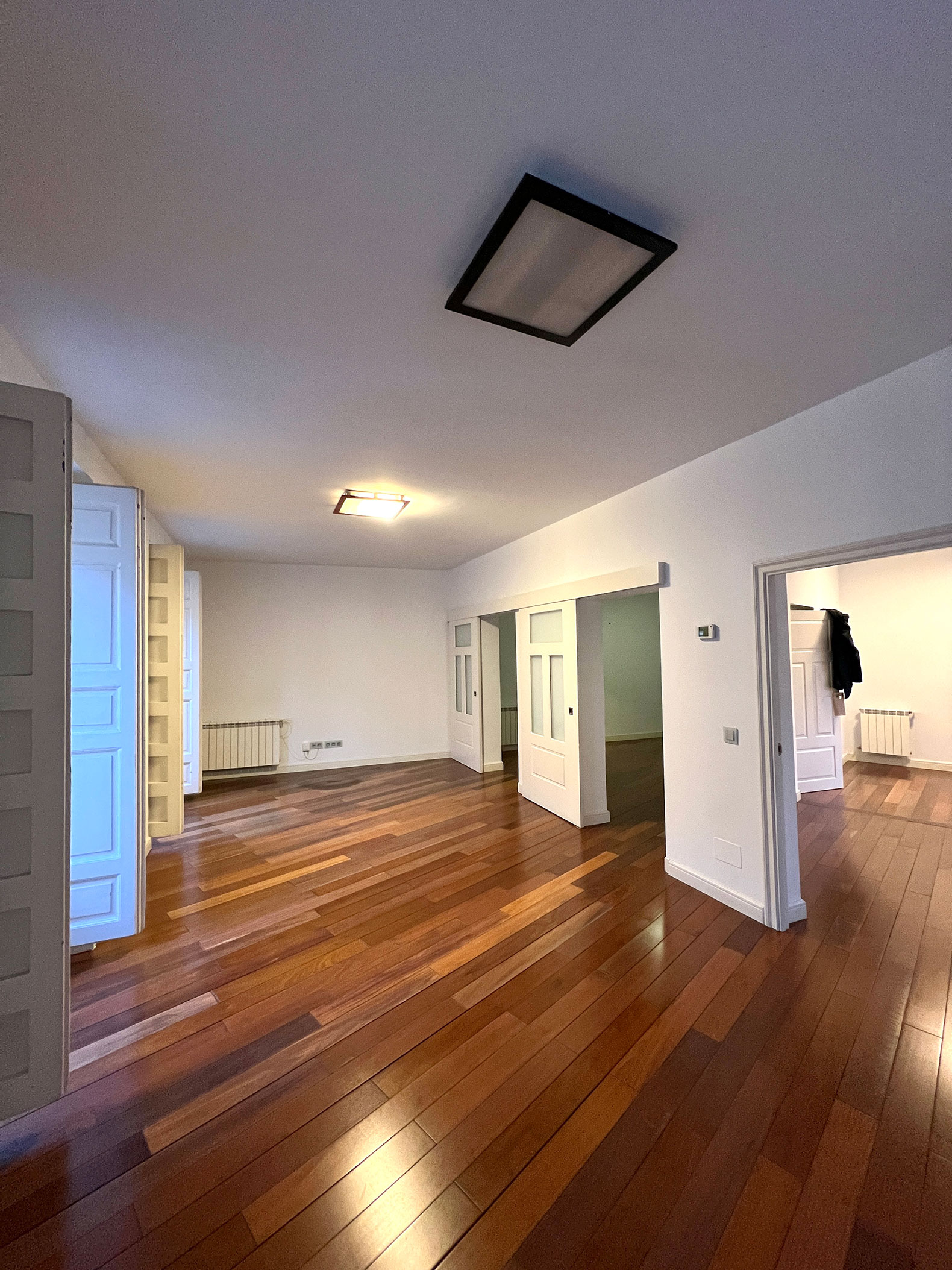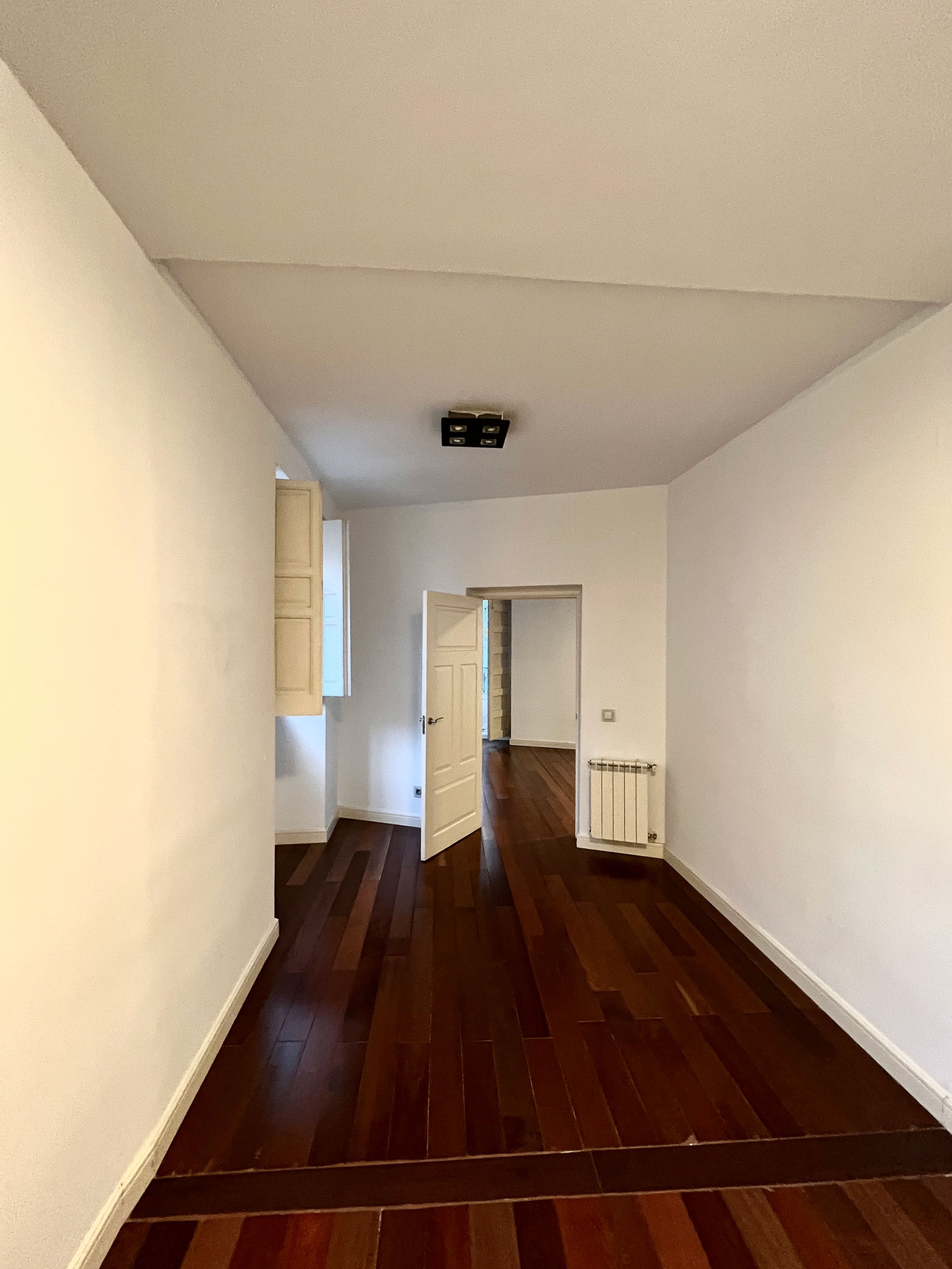
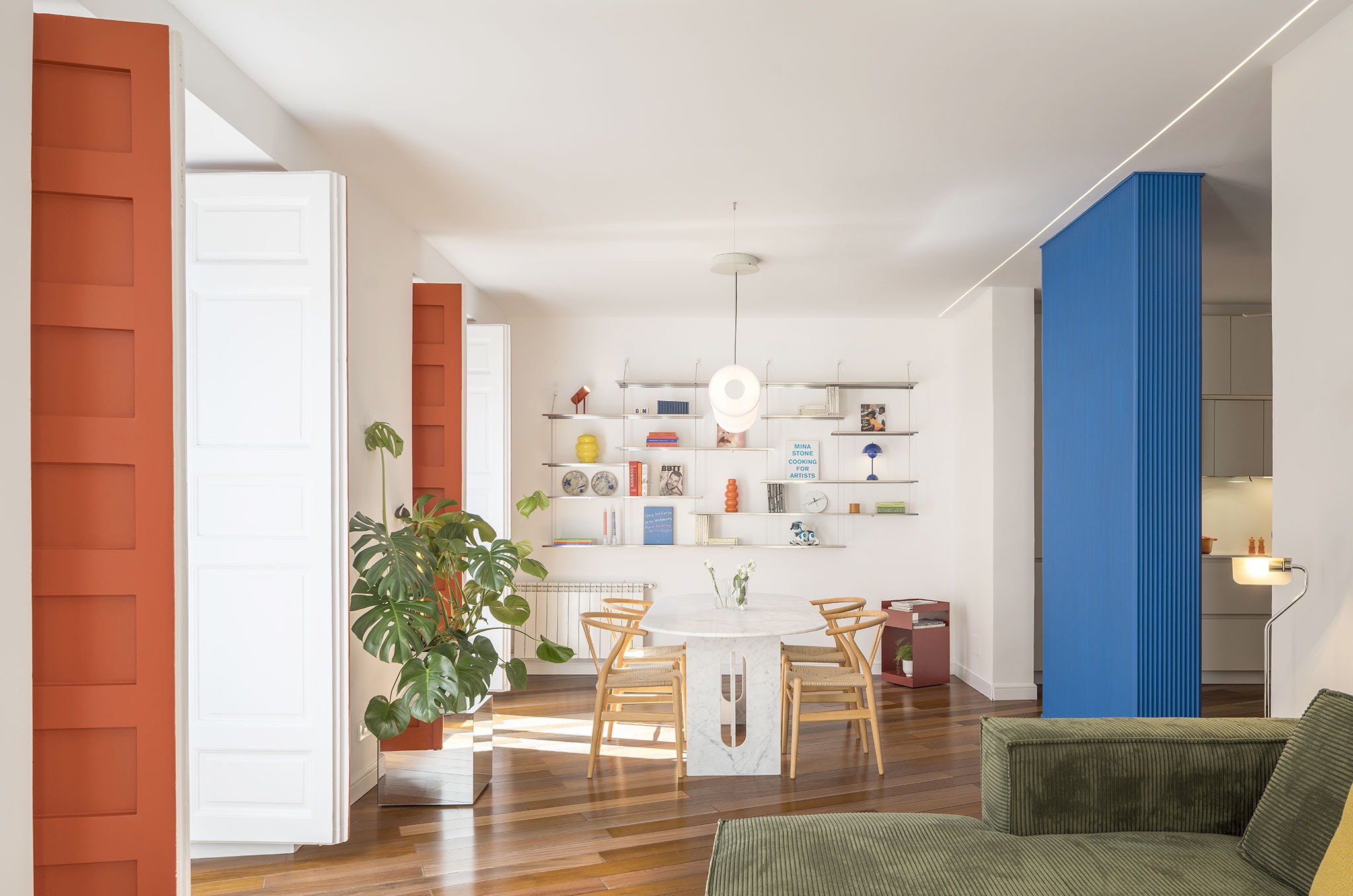
The proposal for the "EME" house by gon architects stems from a strict and deliberate premise: to preserve the solid wood flooring in its entirety. This decision anchors the project to the place and time through the traces of use, transforming the floor into the material memory of the house.
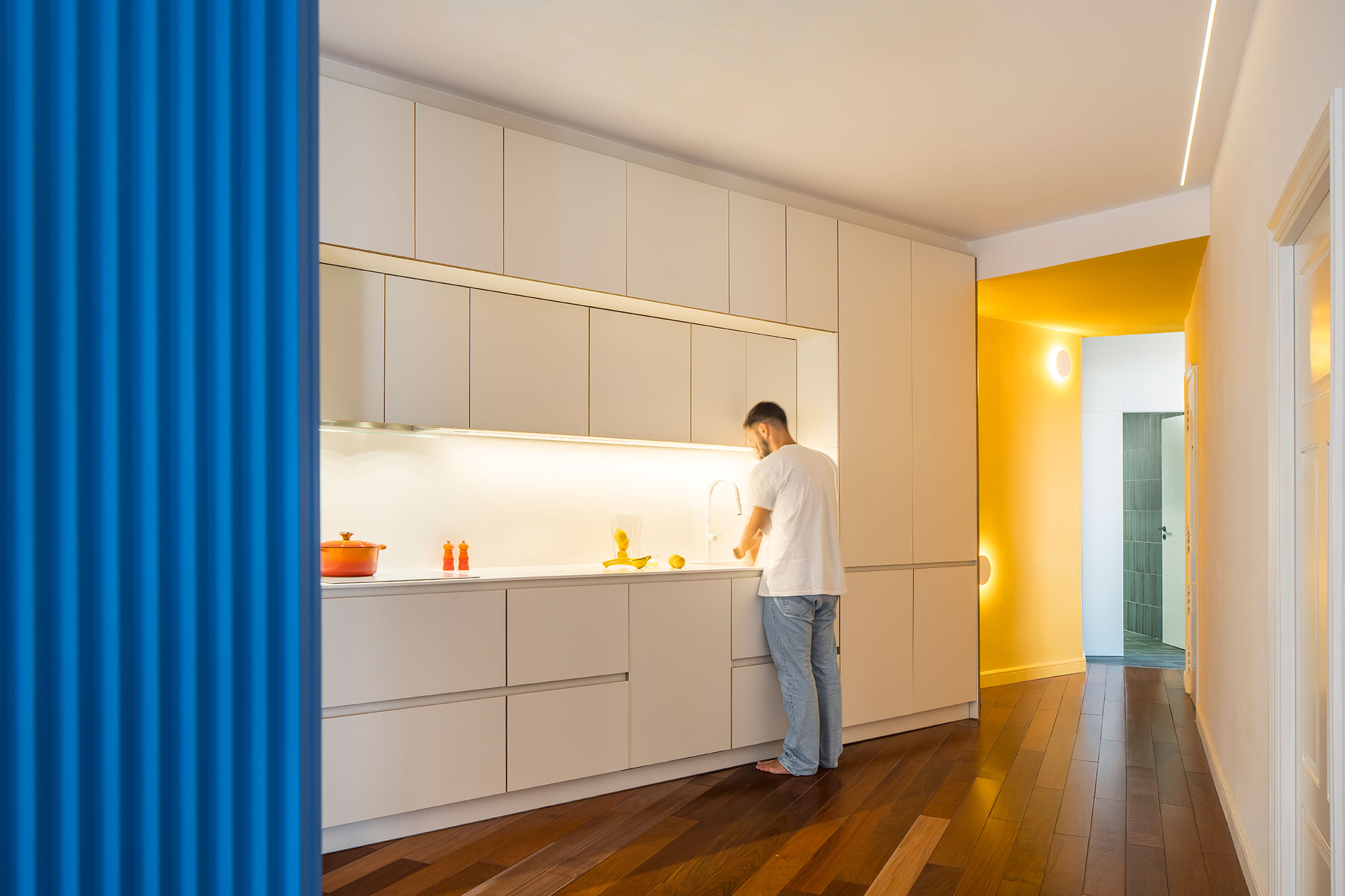
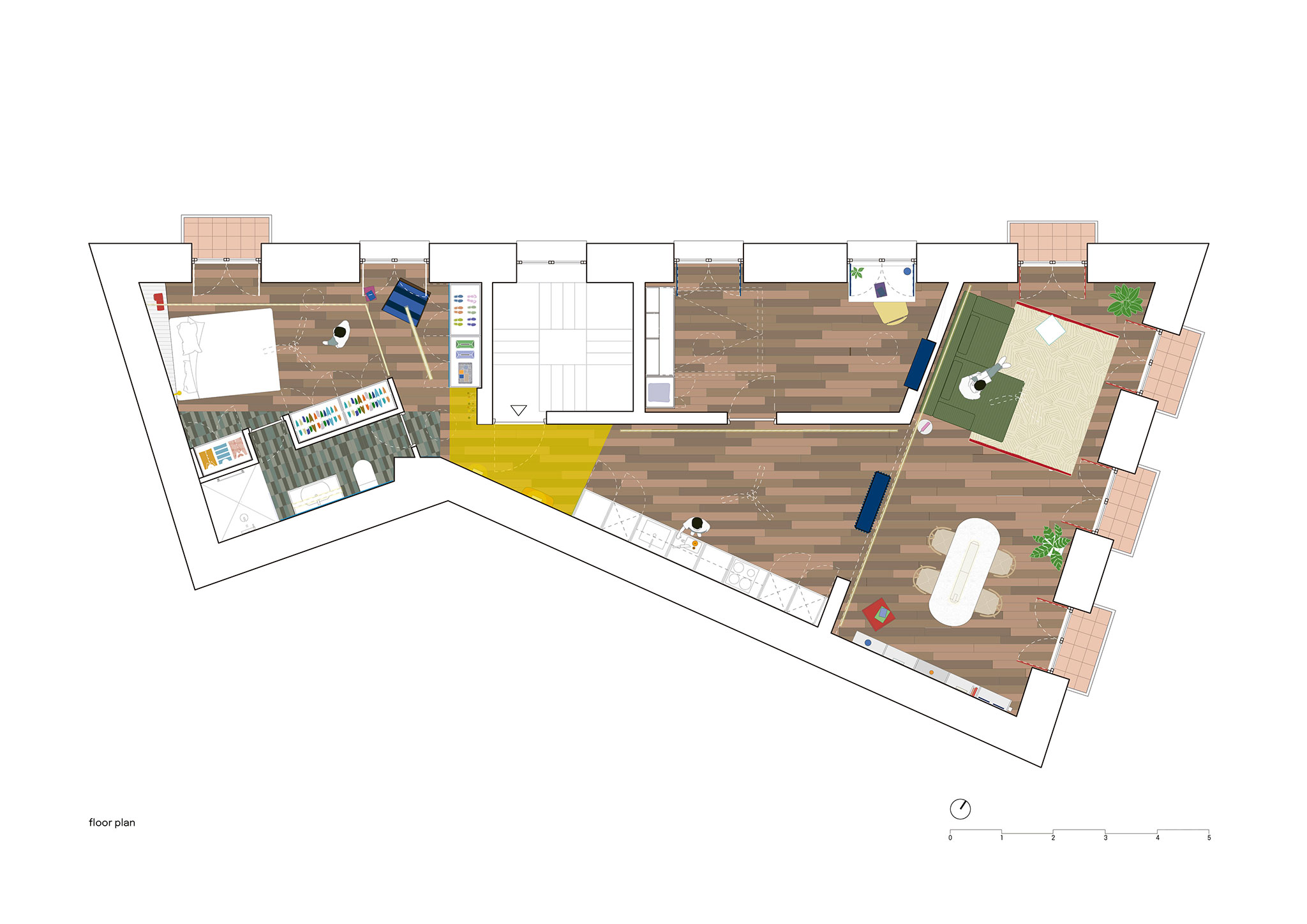
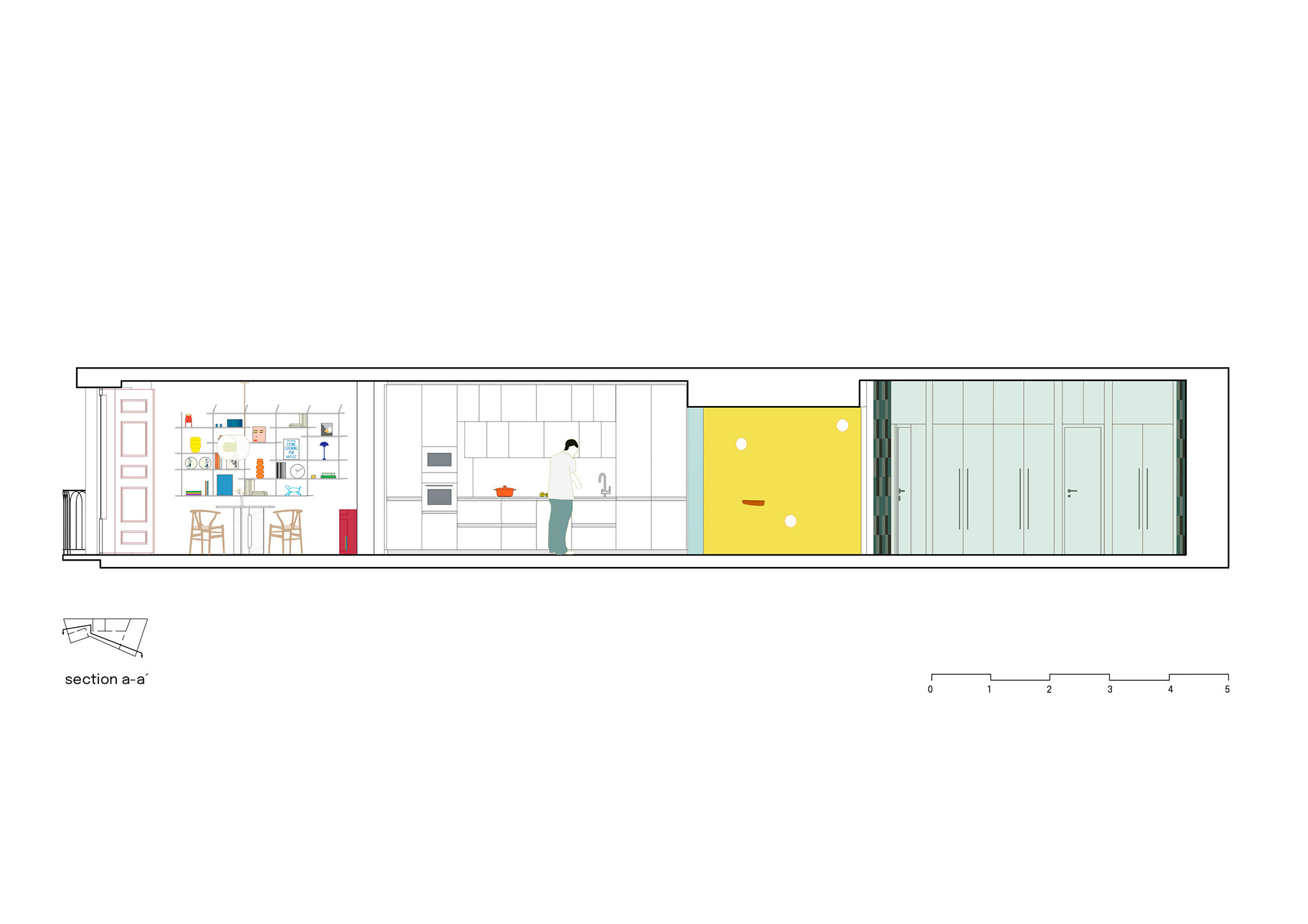
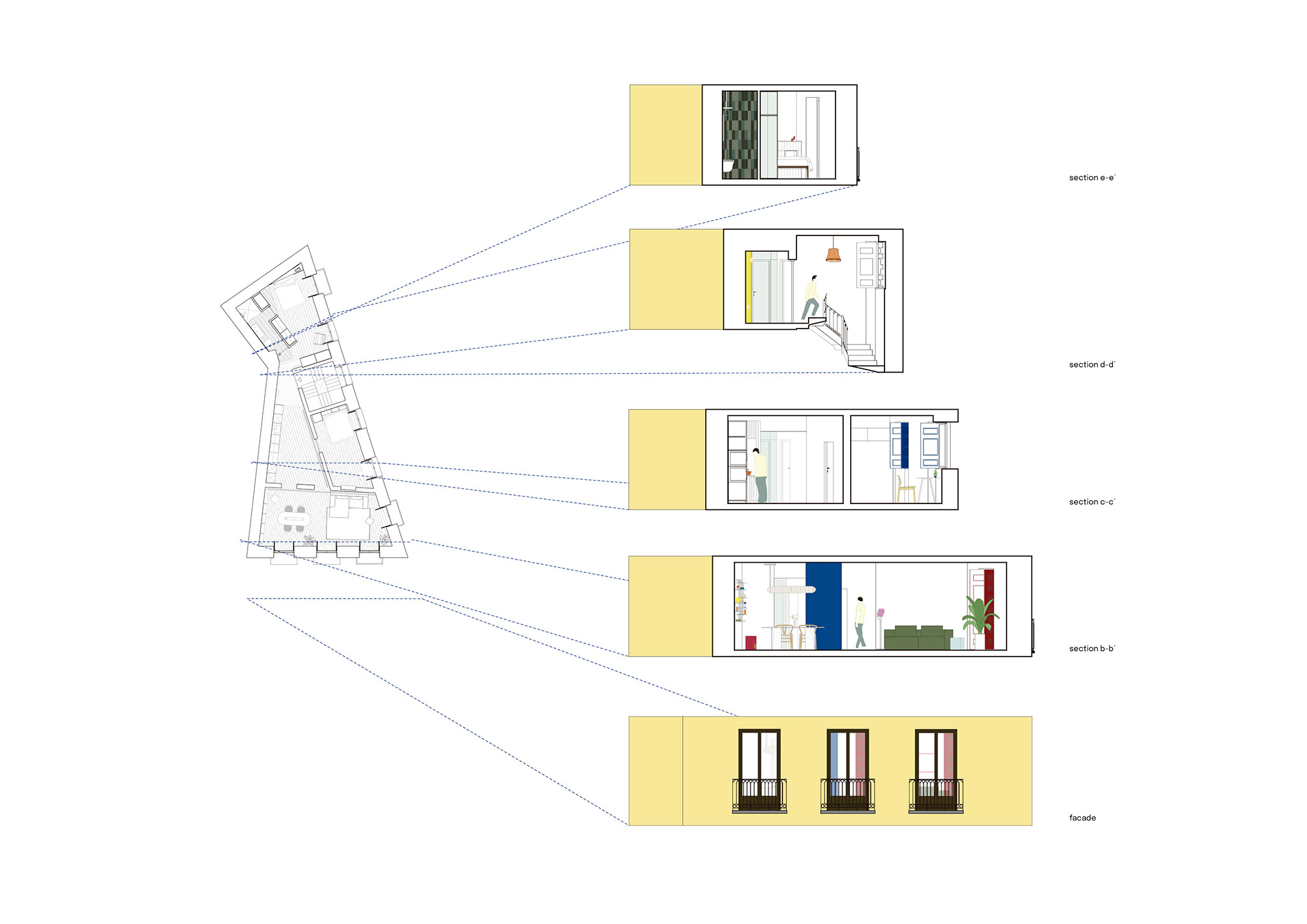
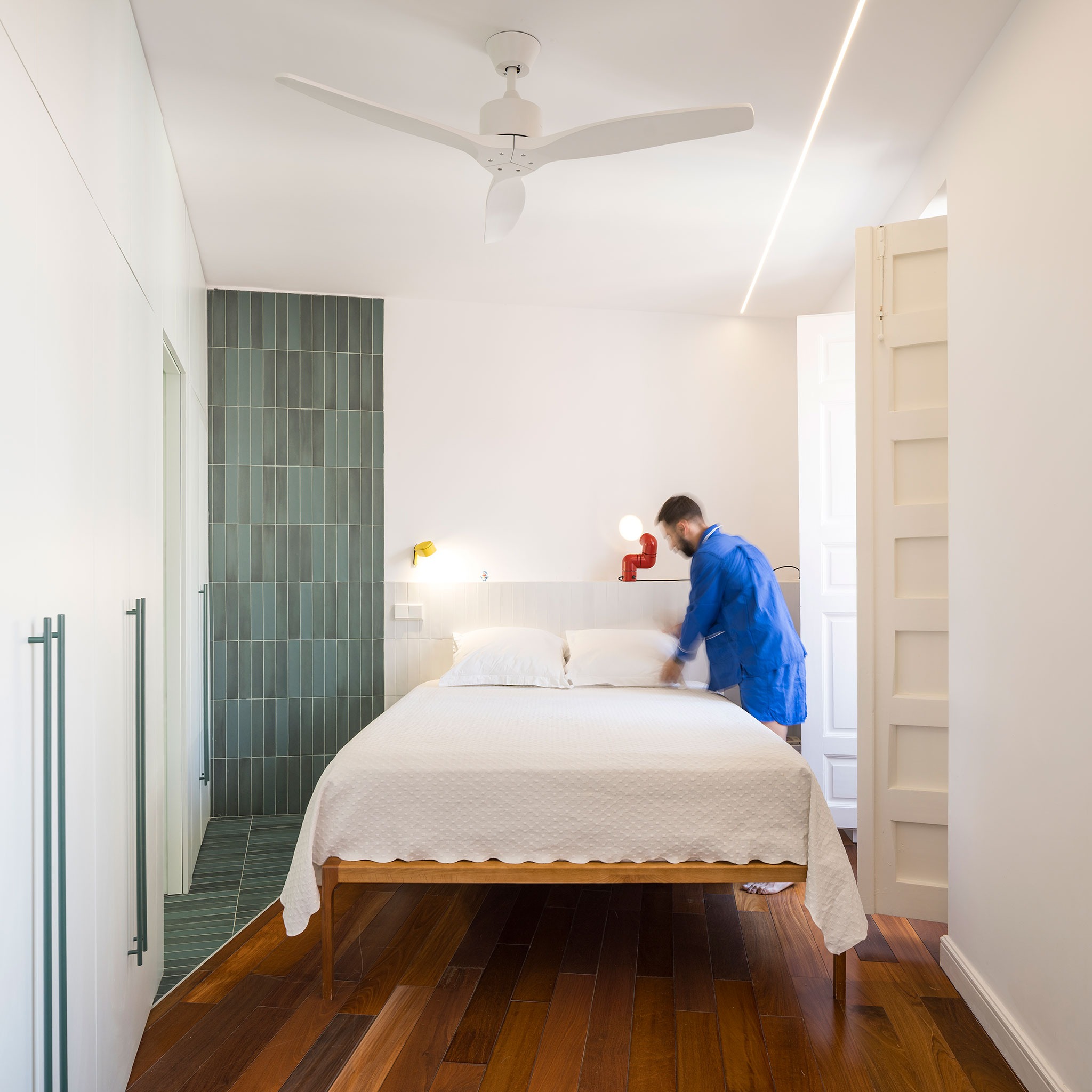
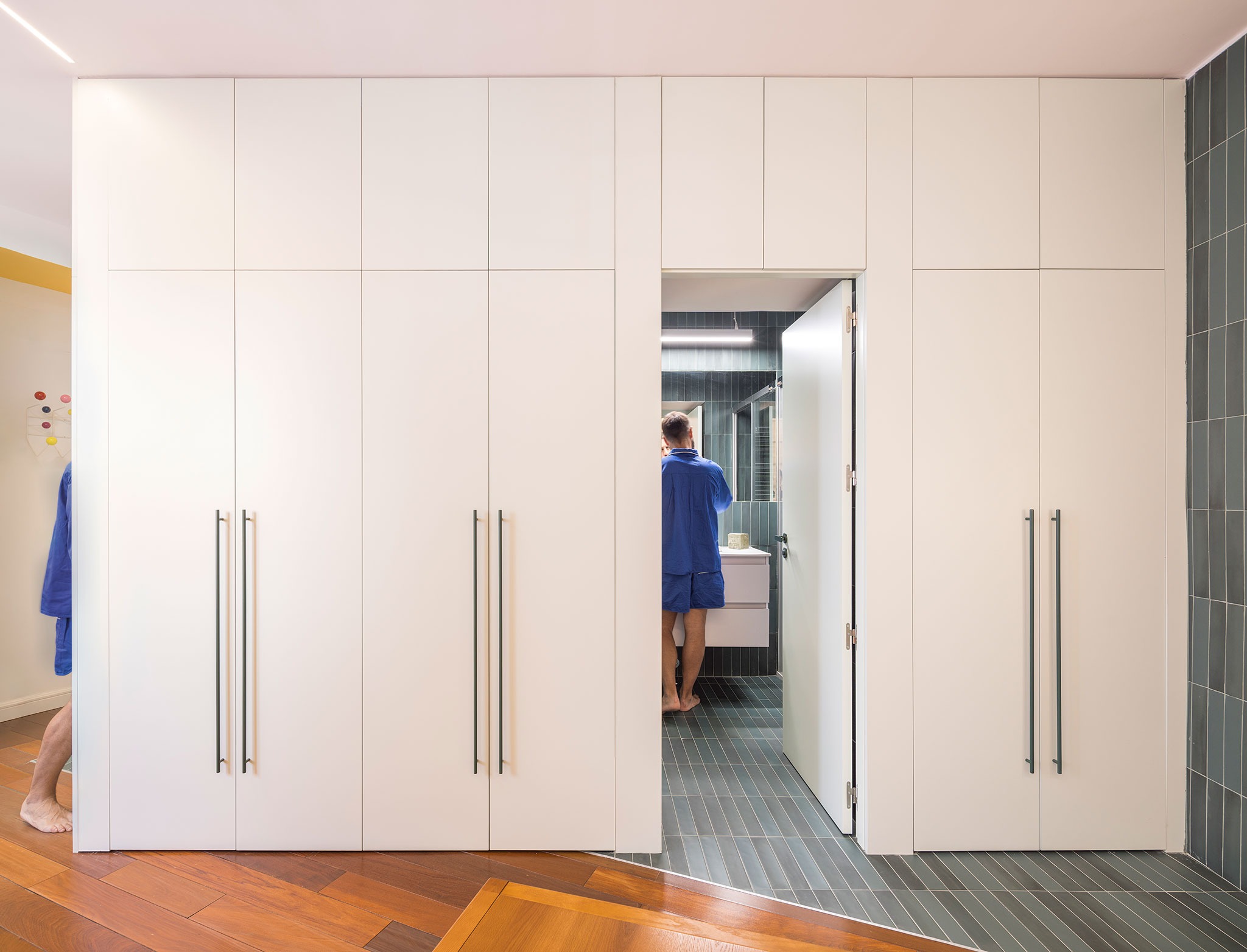
Maintaining the room layout of the original configuration, the program shifts across the floor plan, without hallways, to create a clearer, more efficient, and inviting domestic space. The bedroom is now linked to the bathroom by a ceramic marker that highlights the history of the house, while the kitchen takes its place at the heart of the home.
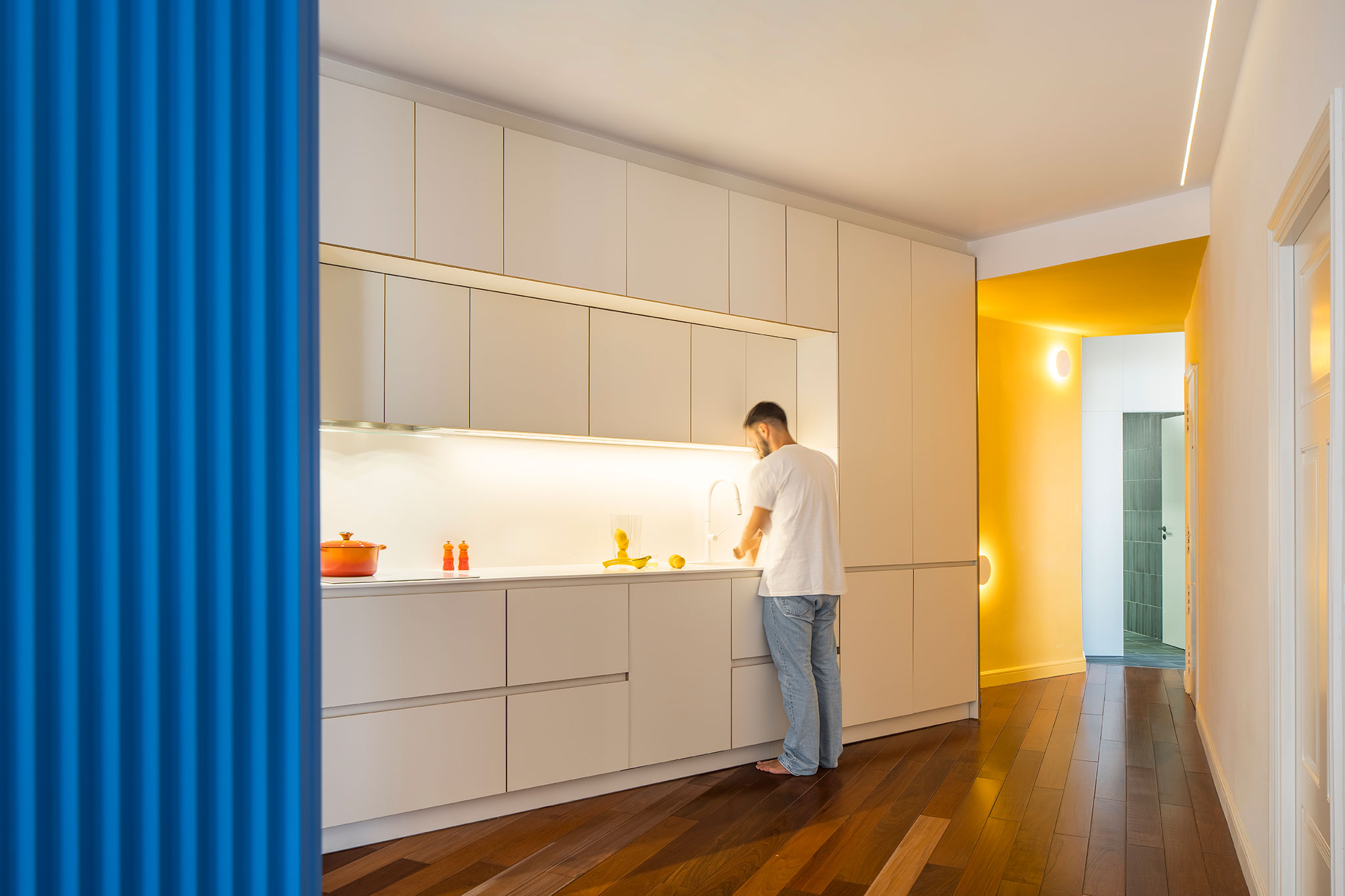
"EME" house by gon. Photograph by Imagen Subliminal.
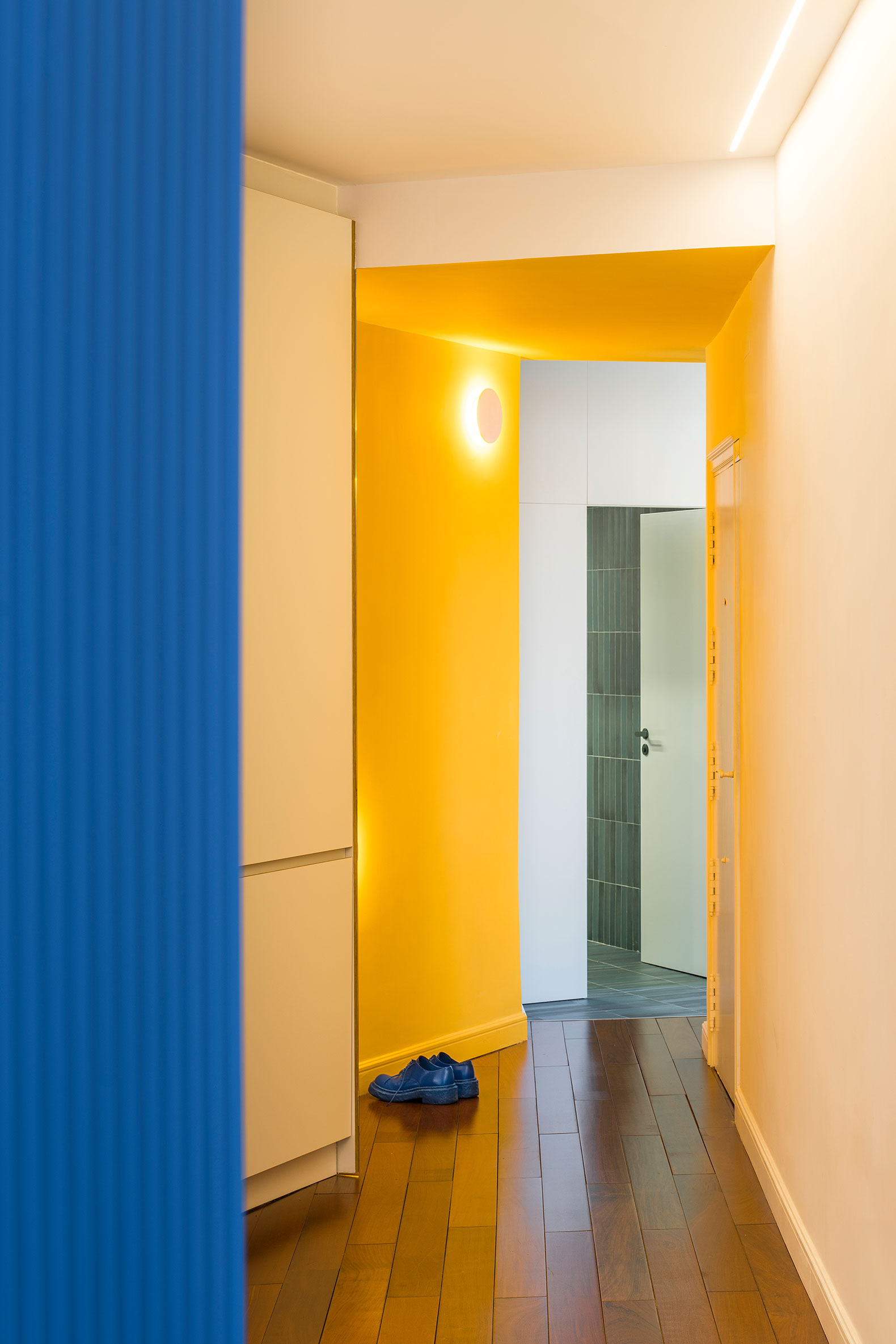
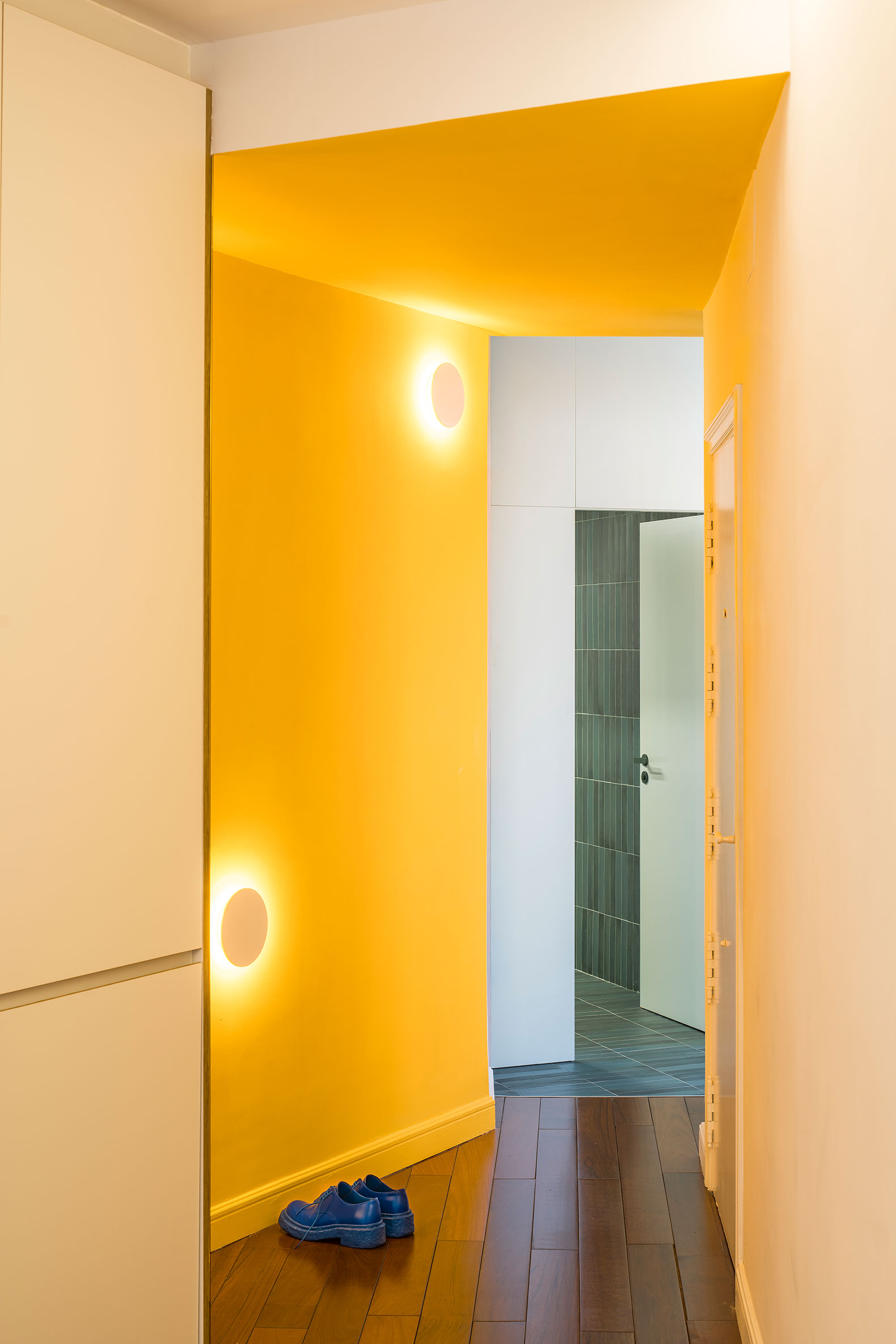
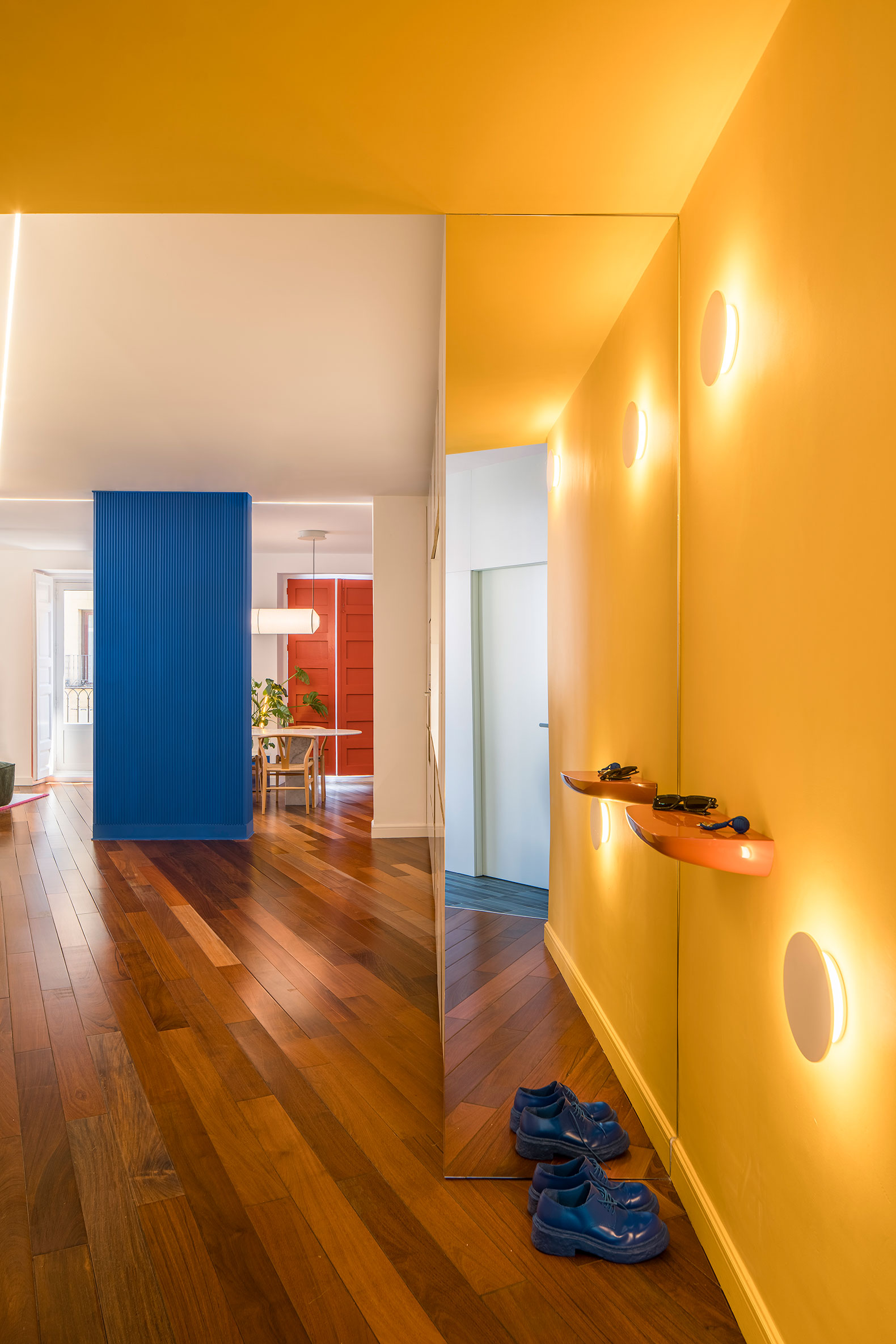
The entrance, a hinge between public and private, is defined by the lowered ceiling and the use of yellow. By removing the doors that connected to the living room, a flexible, multi-purpose space is created. Finally, the elimination of hallways gives rise to a new domestic topography: a sequence of irregularly shaped rooms that connect organically.
Project description by gon architects
"When he awoke, the dinosaur was still there."
The Dinosaur. Augusto Monterroso, 1959.
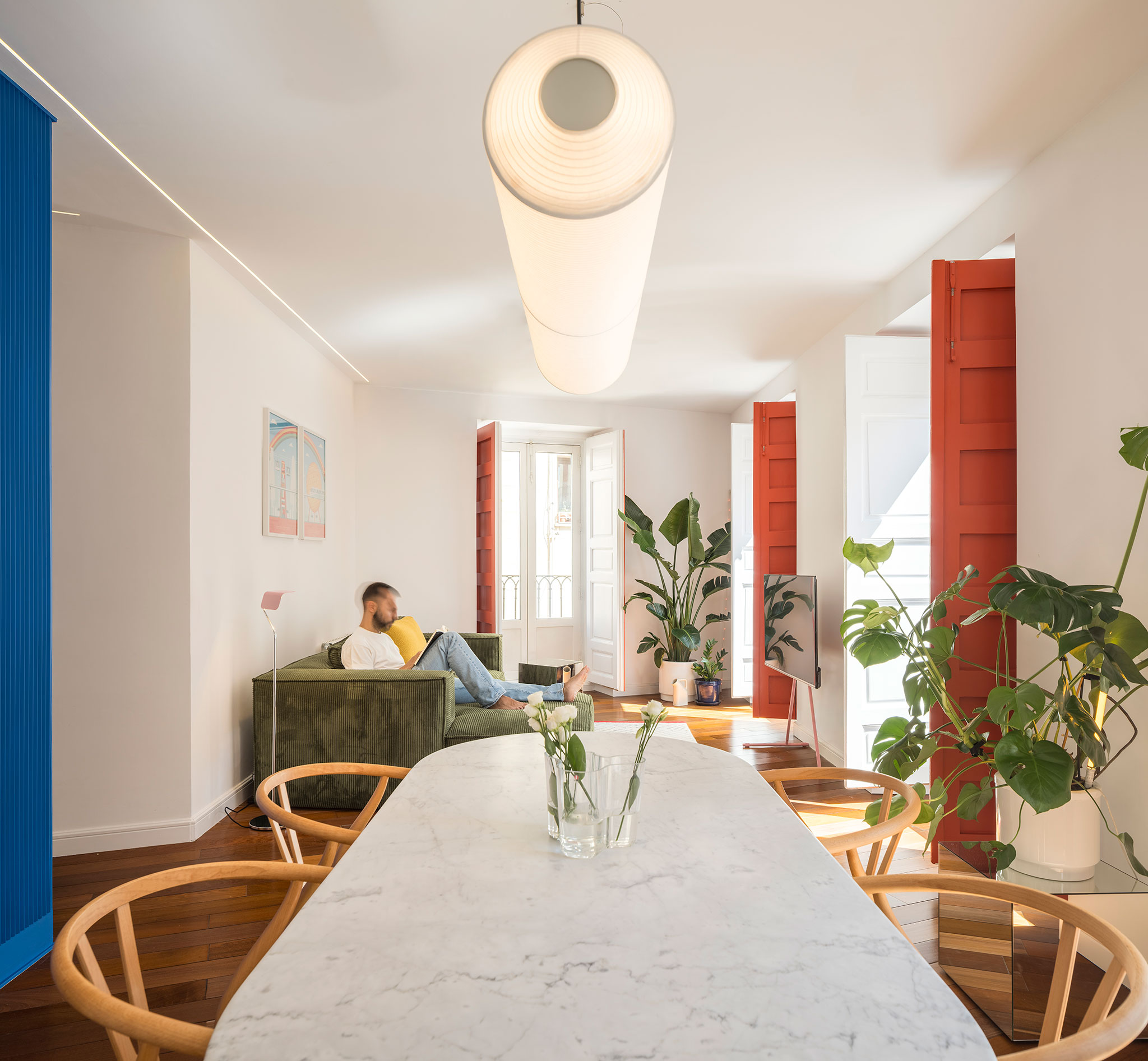
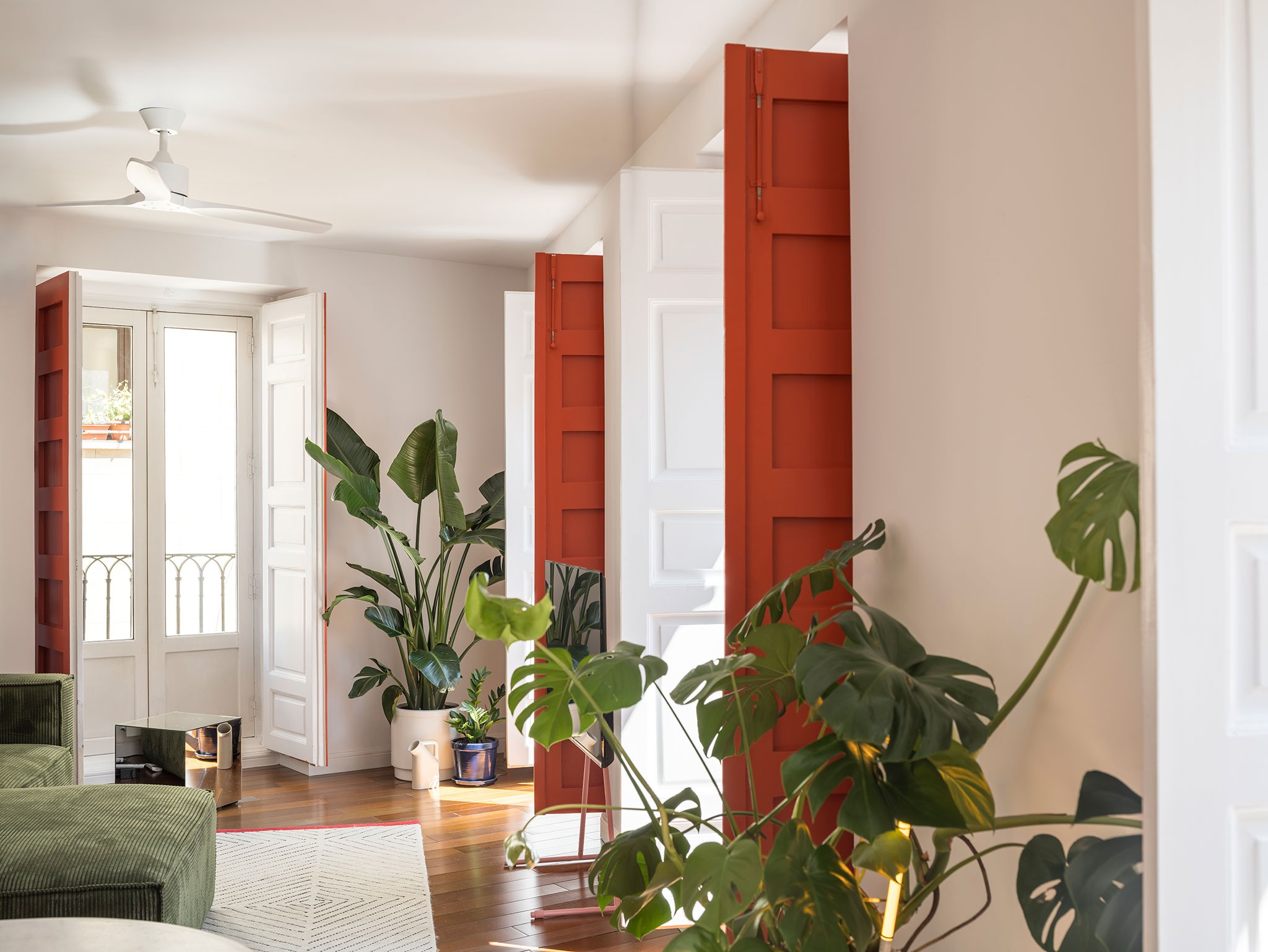
The story of Casa EME begins with a memory and a wish. The memory of Manuel, its owner—a lover of design and cooking—when he first entered the apartment, before buying it, during one of his many visits to different flats in the center of Madrid, and had the feeling of having already lived in a similar place—at least with the same spirit—but in another time. And the wish: to imagine himself reading in that house, on any given Sunday afternoon on the sofa, with the light streaming in through the five windows of the living room, framing the city and with views of the Plaza Mayor, Toledo Street, Puerta Cerrada Square, and the Collegiate Church of San Isidro el Real. All of them deeply significant places in traditional Madrid.
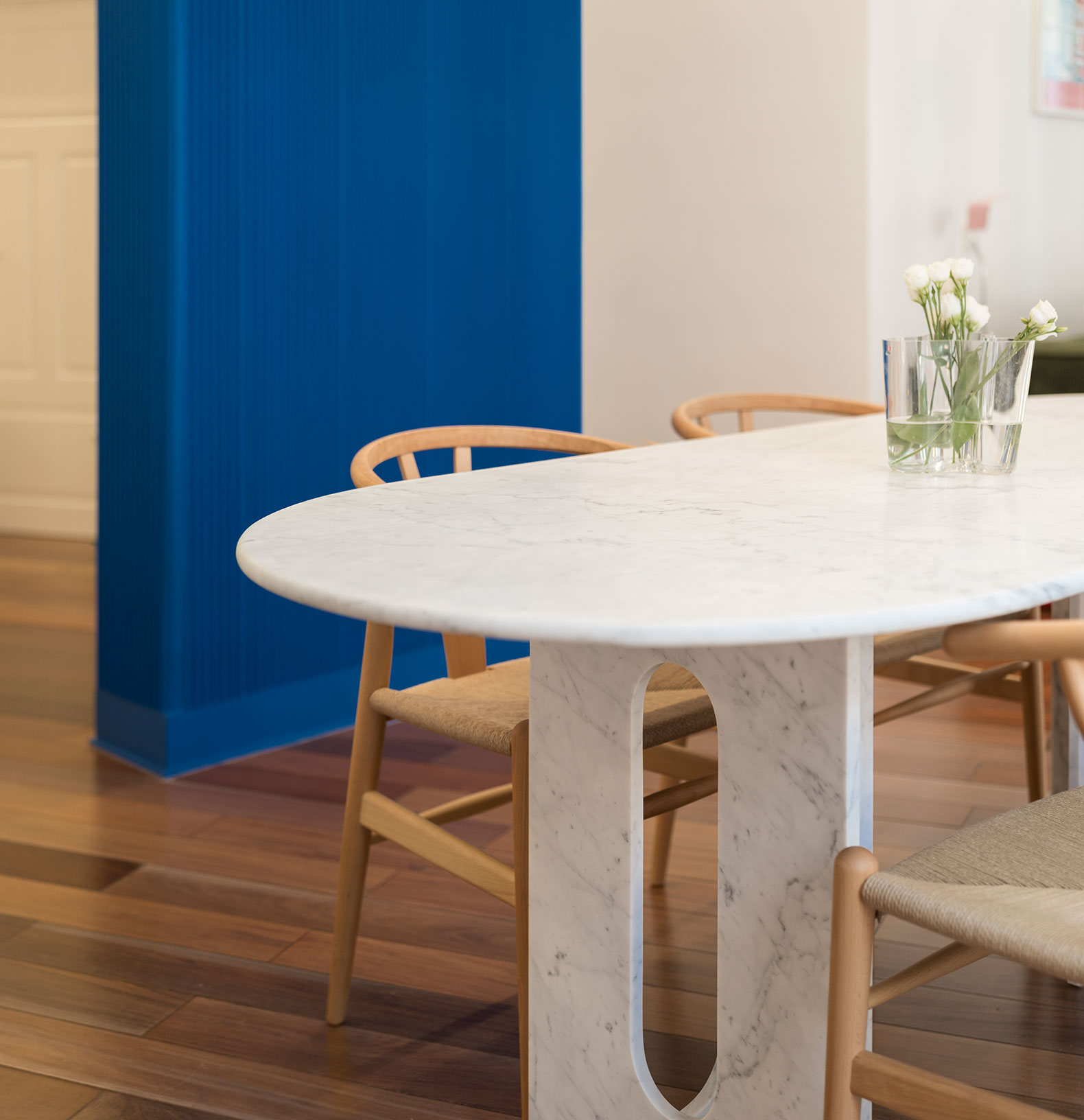
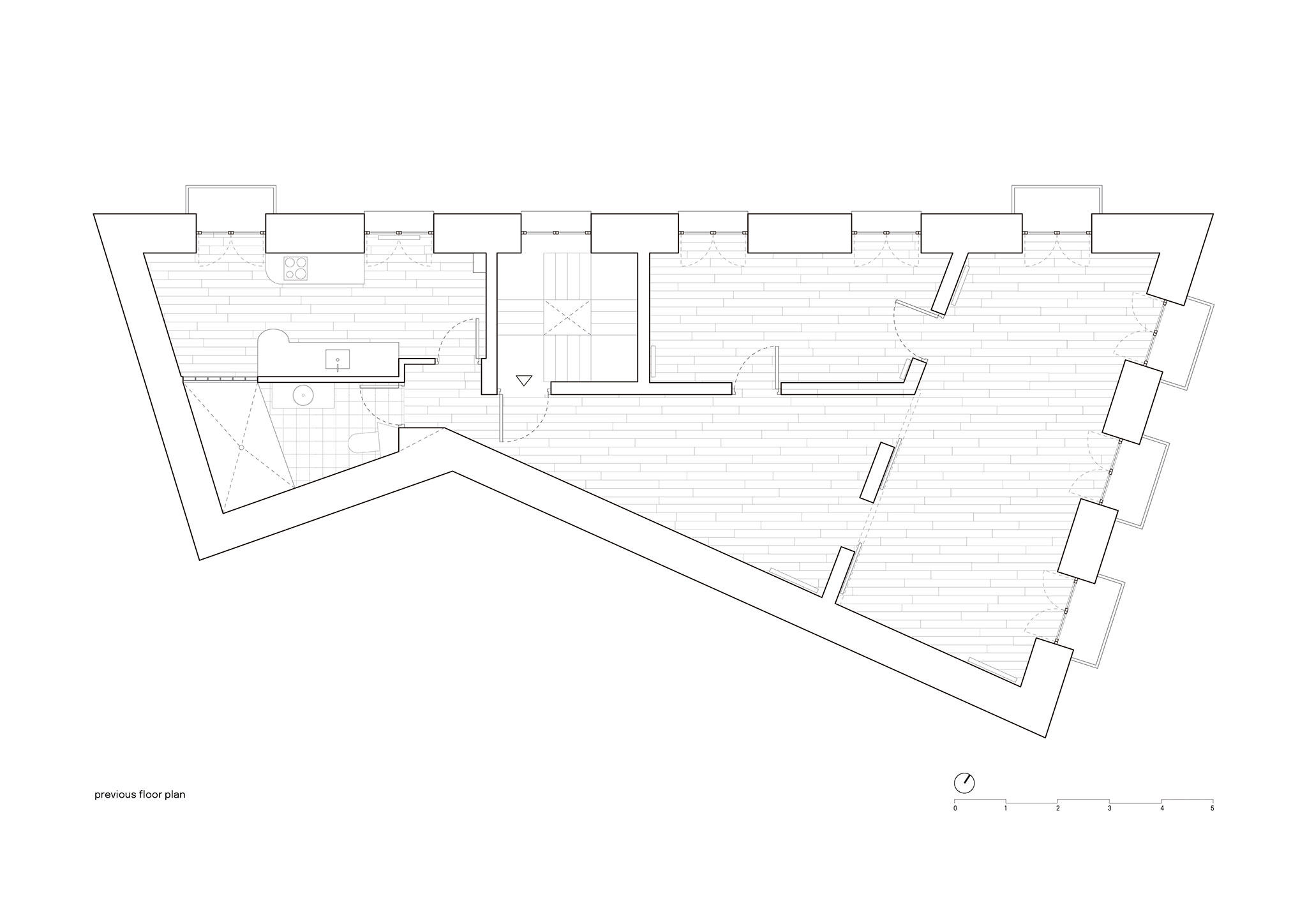
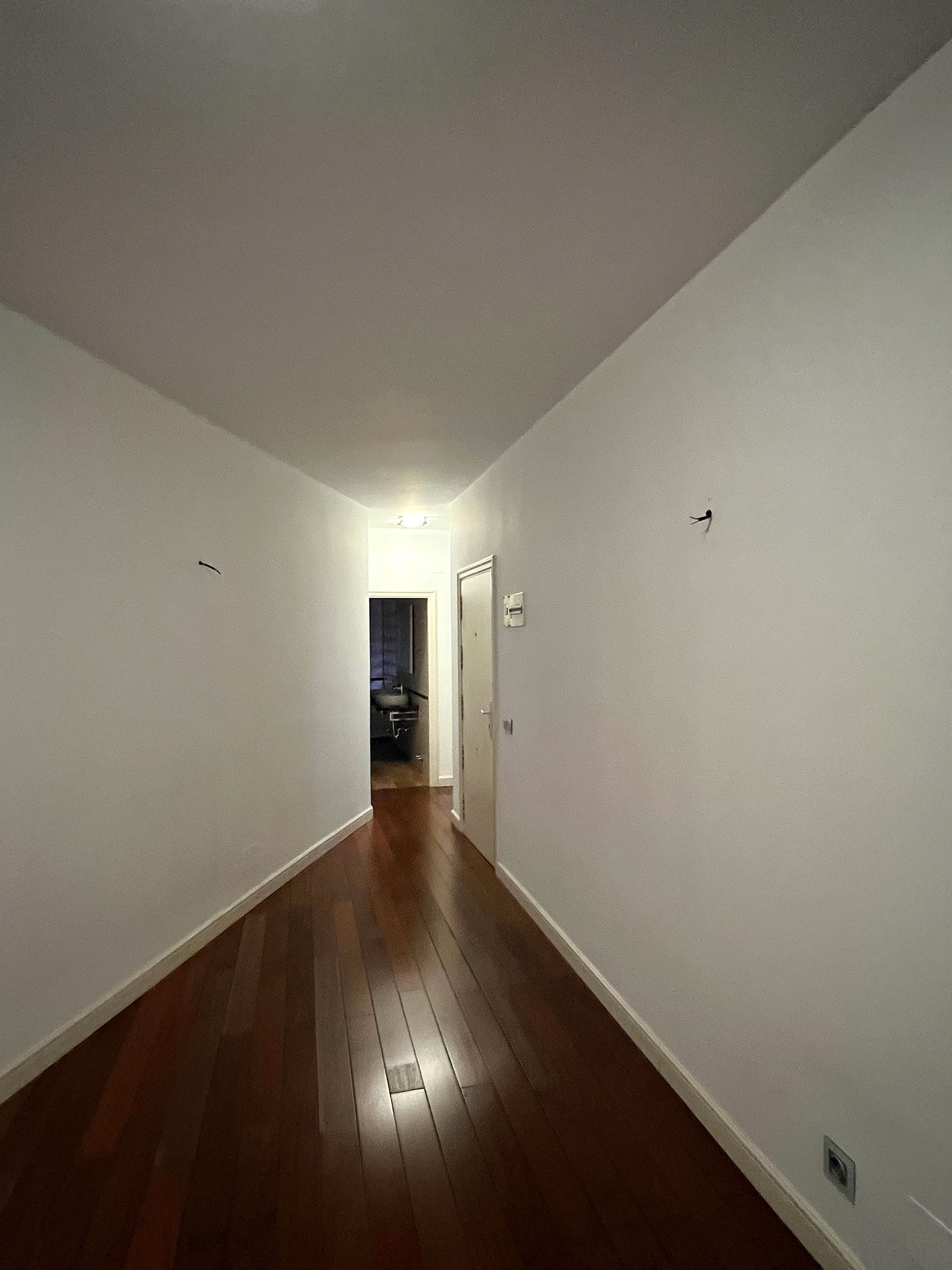
Located in a corner building in Habsburg Madrid, Casa EME is a vantage point within a dense and compact urban fabric of Baroque origin—already depicted in Pedro Texeira's famous 1646 map—surrounded by the hustle and bustle and tourism characteristic of contemporary historic centers. With a floor plan whose geometry resembles a bow tie, the original configuration of this 108 m² house, completely open to the exterior, lacked a clear spatial logic. It comprised five rooms of varying sizes, six balconies, and two windows facing the street, in addition to an impressive continuous floor of solid tropical IPE wood in different shades, which, like a carpet, covered the entire surface of the house, with the sole exception of the bathroom, which was tiled.
The circulation and spatial relationships between the different uses of the original domestic program were poorly resolved: the kitchen, associated with an oversized bathroom, was hidden at the back of the house; The bedroom, small and far from the bathroom, had two entrances—one directly from the living room—which made it difficult to properly organize both spaces. In the center of the house, the darkest and, at the same time, most unique space, due to its trapezoidal shape, appeared as a large, empty circulation area with no defined purpose, accentuating the overall lack of coherence. A missed opportunity.
The new proposal stems from a strict and deliberate premise: to preserve the existing wooden floor in its entirety, not only as cladding but also as a material memory that anchors the project to the place and time. This decision shapes an intervention whose greatest strength lies in working with what was already there and, at the same time, restoring the topological and programmatic relationships of the house to adapt them to Manuel's lifestyle.
The floor was already there, and that's how it was left: with the marks of repeated use, with that imperfect stability that the passage of time bestows upon things. The new house unfolds on the same wooden foundation as before, maintaining the room layout of the previous configuration. Like a set of sliding pieces, the program shifts across the floor plan until a new order is achieved, resulting in a clearer, more efficient, and more inviting interpretation of the domestic space.
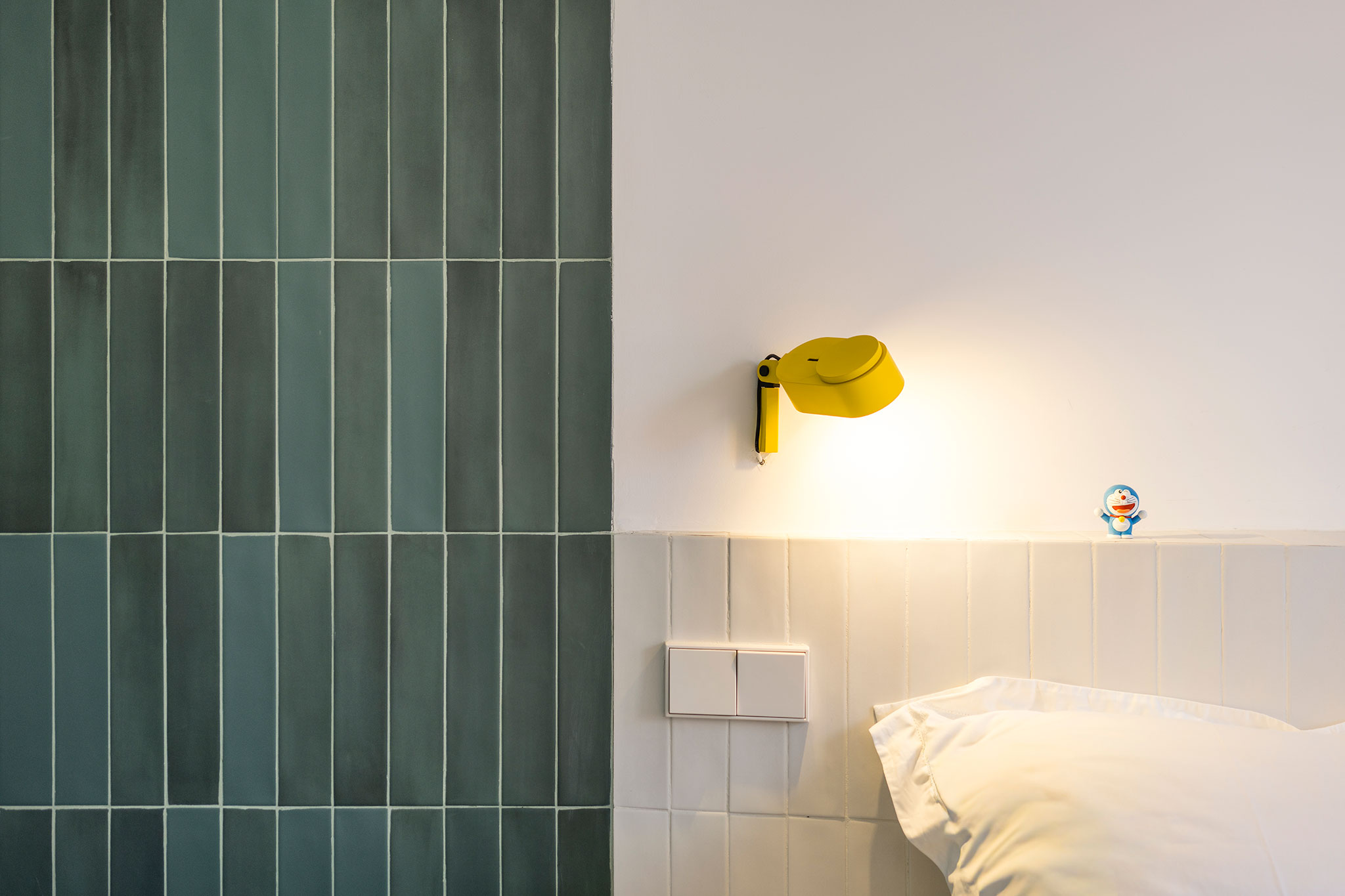
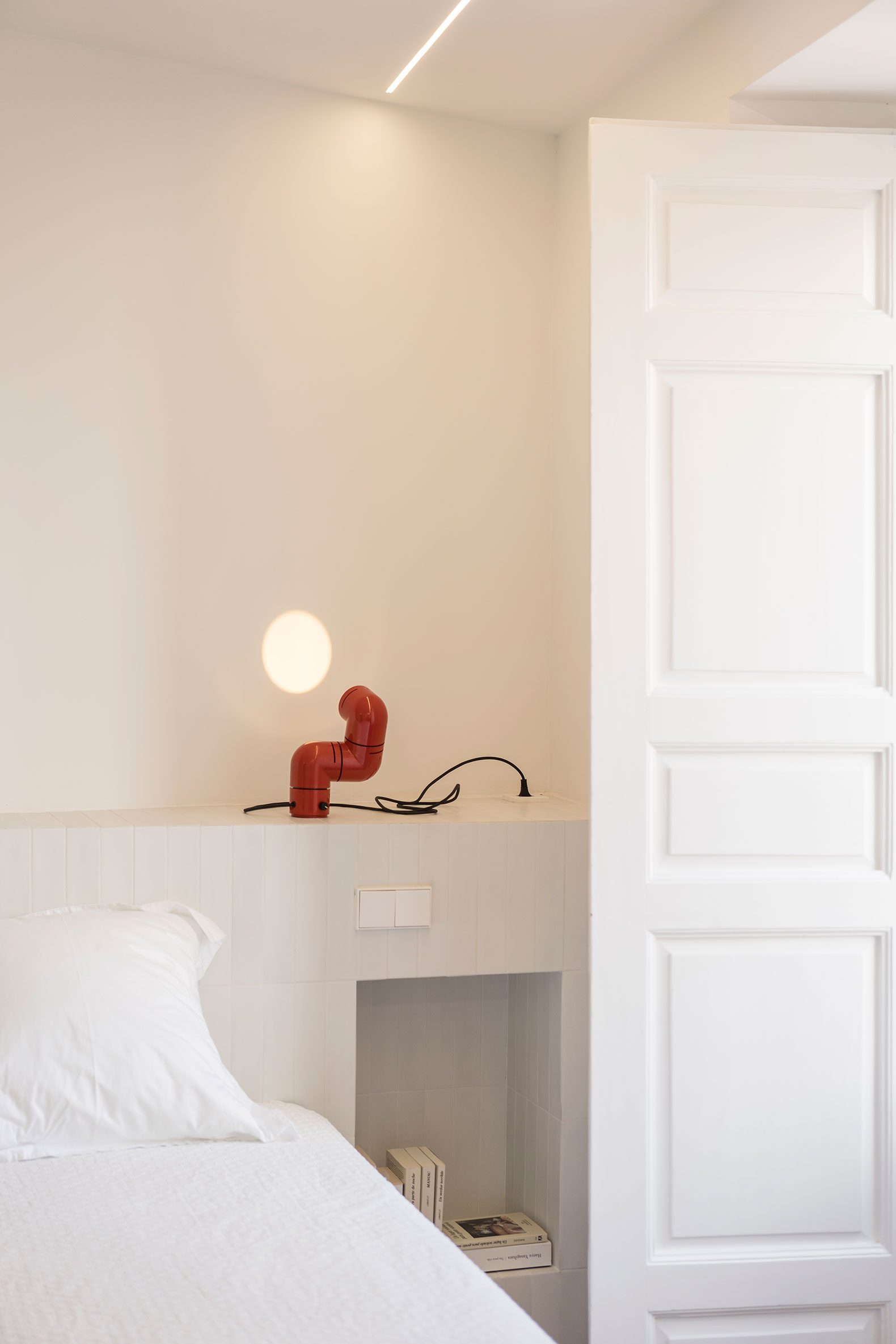
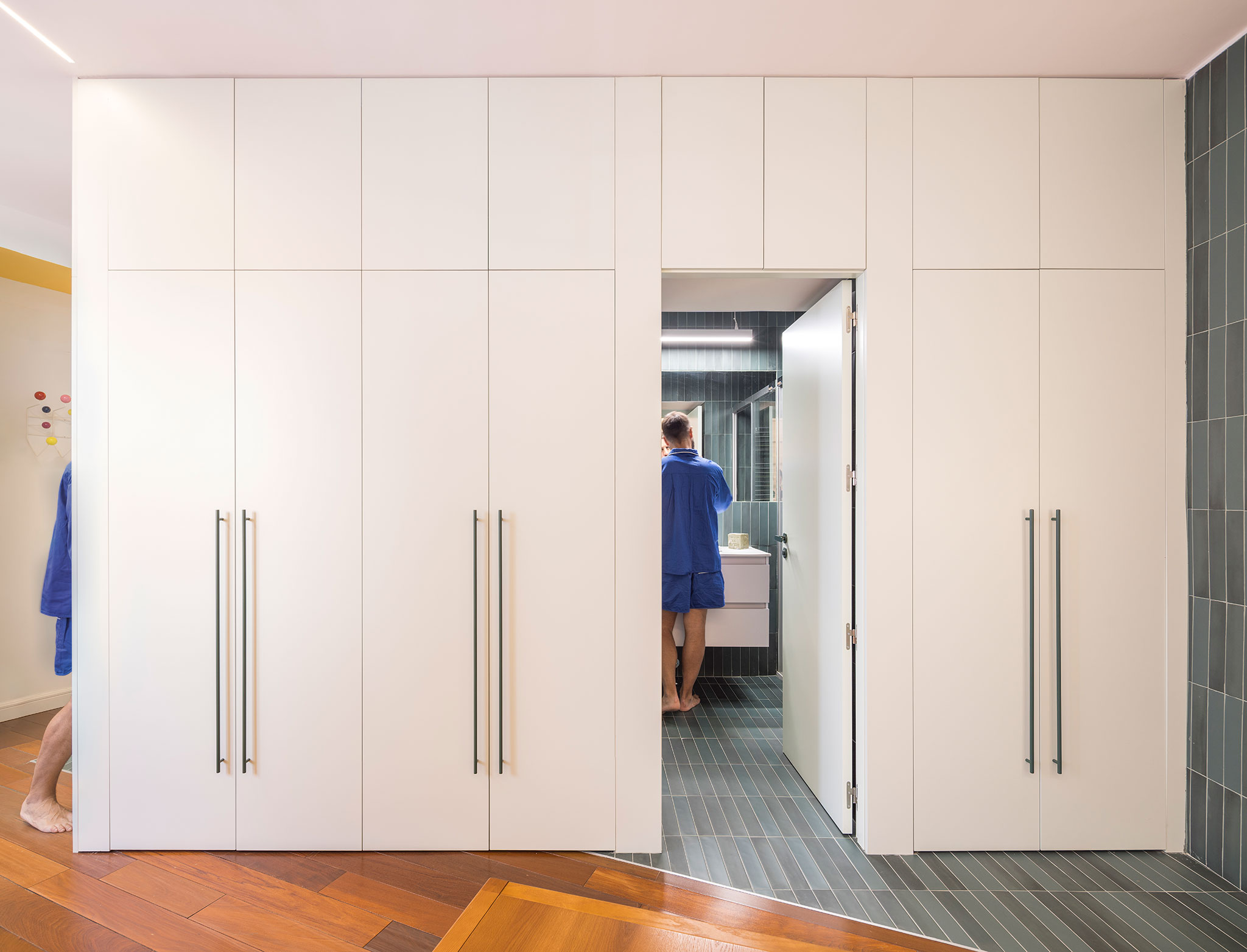
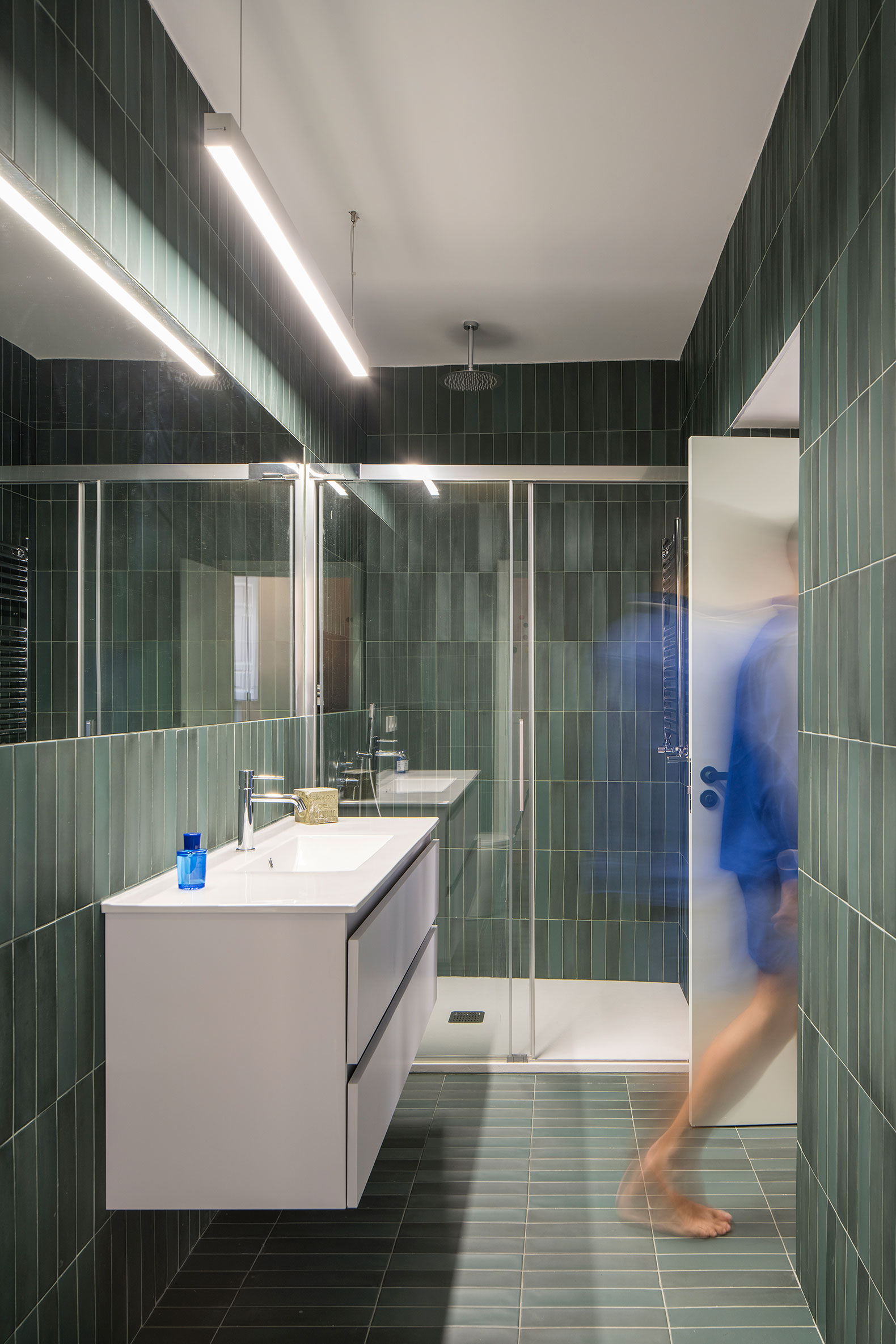
Among the most significant redesigns, the bedroom is now linked to the bathroom, whose interior recreates an exterior landscape through the use of varying shades of green. This is achieved via a closed, cloud-green volume that promotes flexibility and provides storage for clothing. Both rooms are now connected by the footprint of the old bathroom, marked by a ceramic tile that, far from being hidden, is made visible, highlighting the house's history and history.
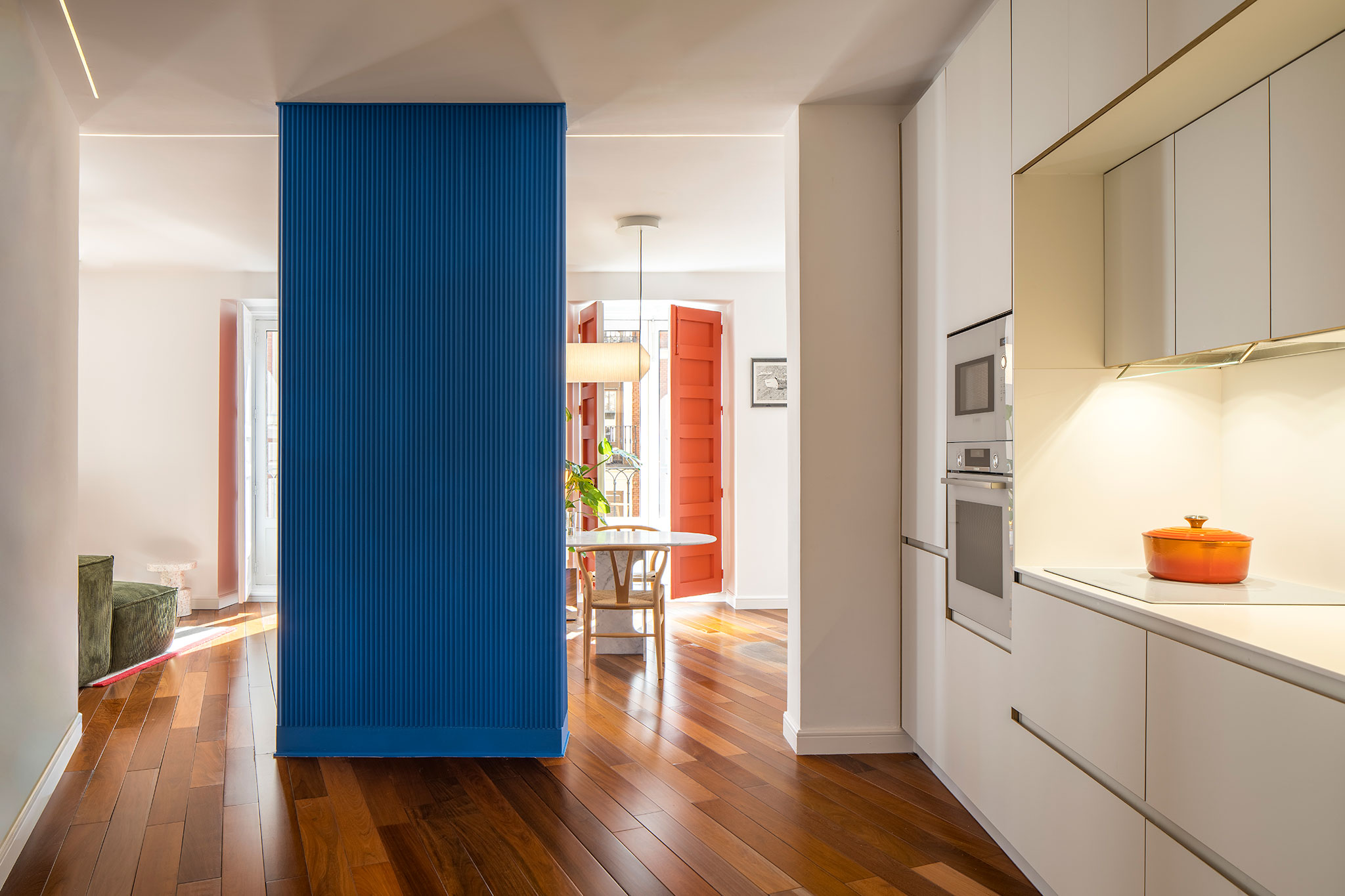
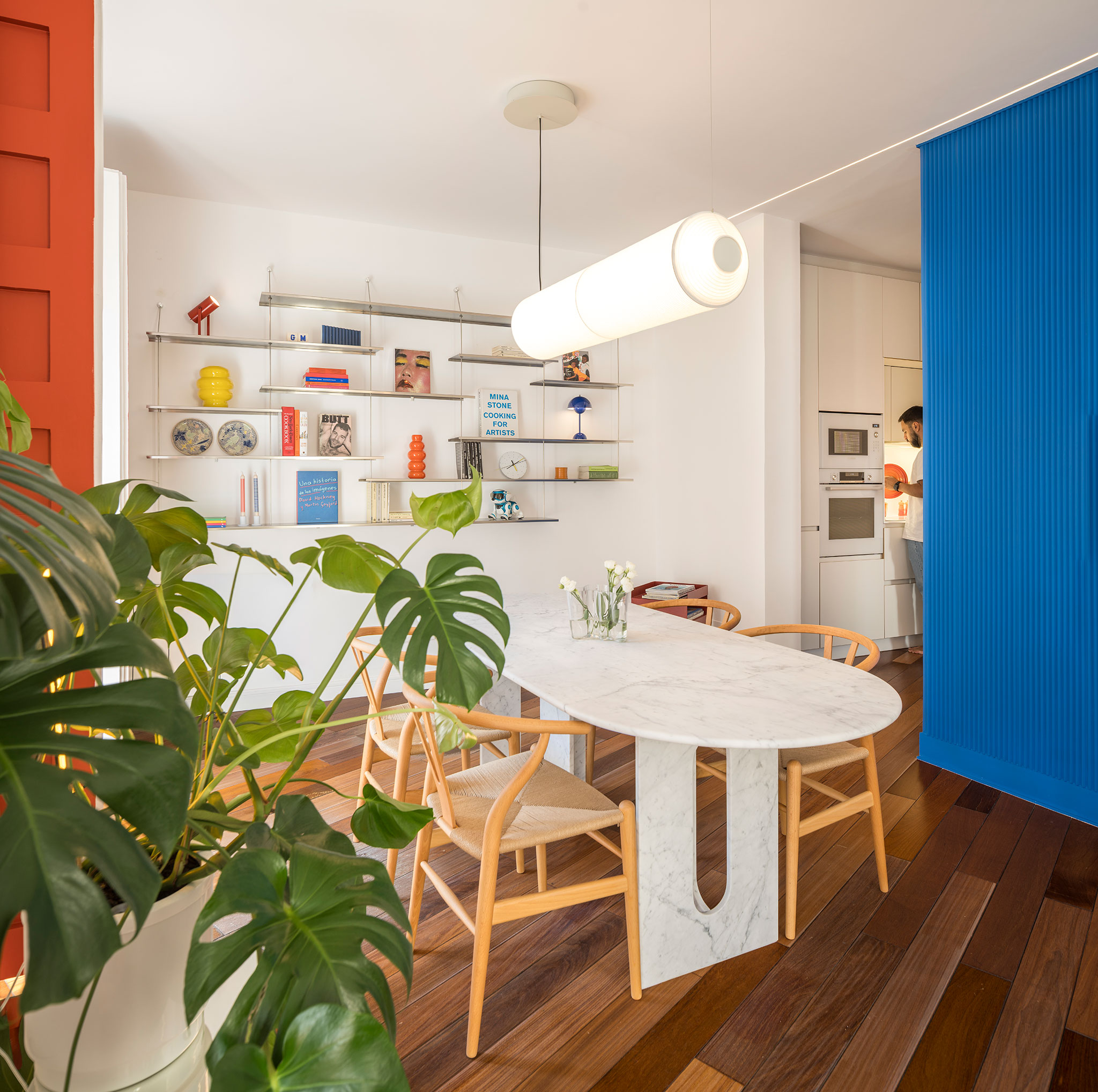
The kitchen now occupies the heart of the home: a social space that becomes the center and meeting place when friends come to try Manuel's specialty: beef ragu lasagna. The entrance—the narrowest and most fragile point of the house, barely a meter wide and the hinge between public and private—is emphasized by lowering the ceiling and highlighting it in yellow. Finally, one of the doors that previously connected to the living room is removed, transforming that space into a nameless, flexible, multi-purpose room, equally suitable for studying or entertaining guests without disrupting Manuel's lifestyle.
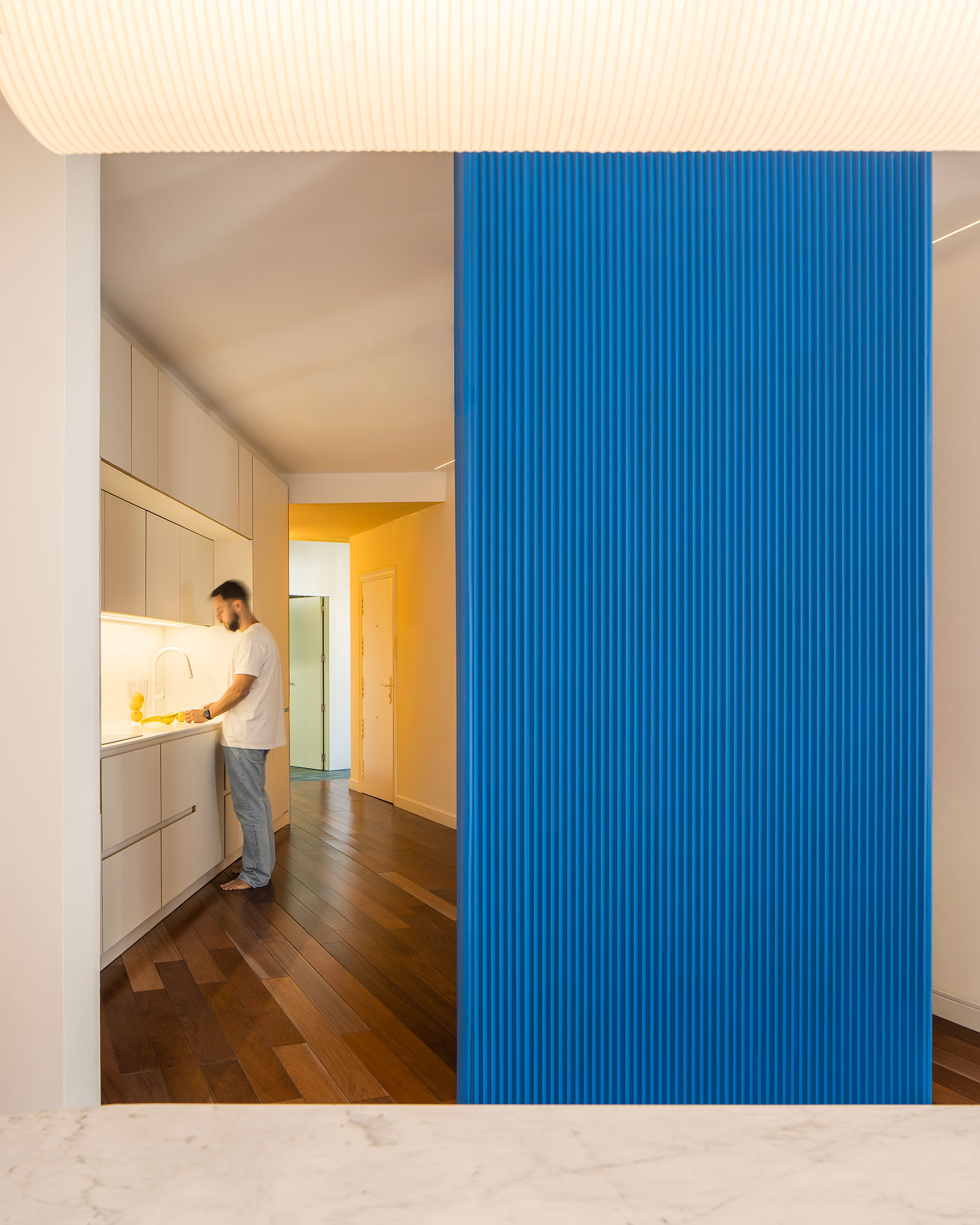
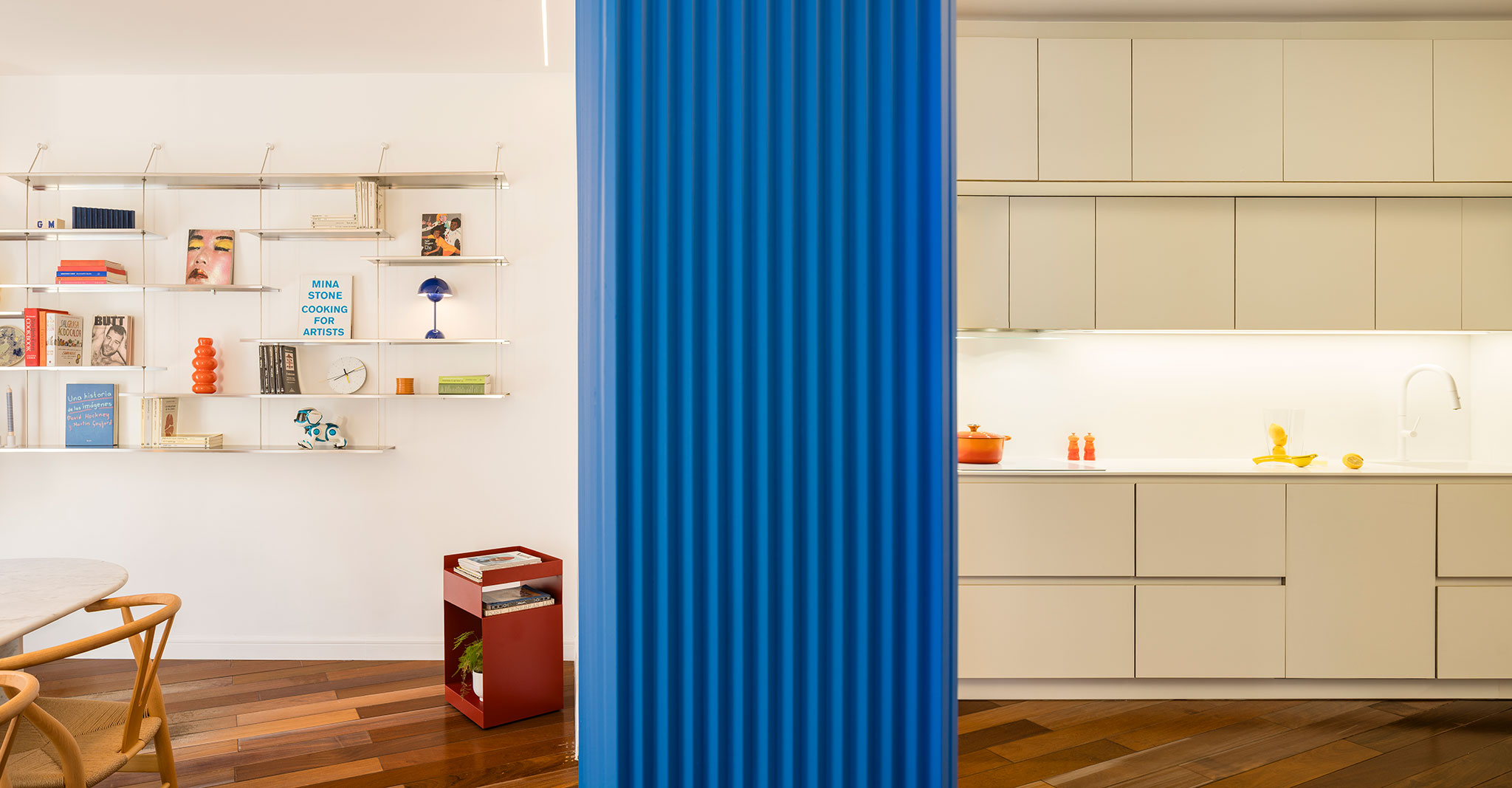
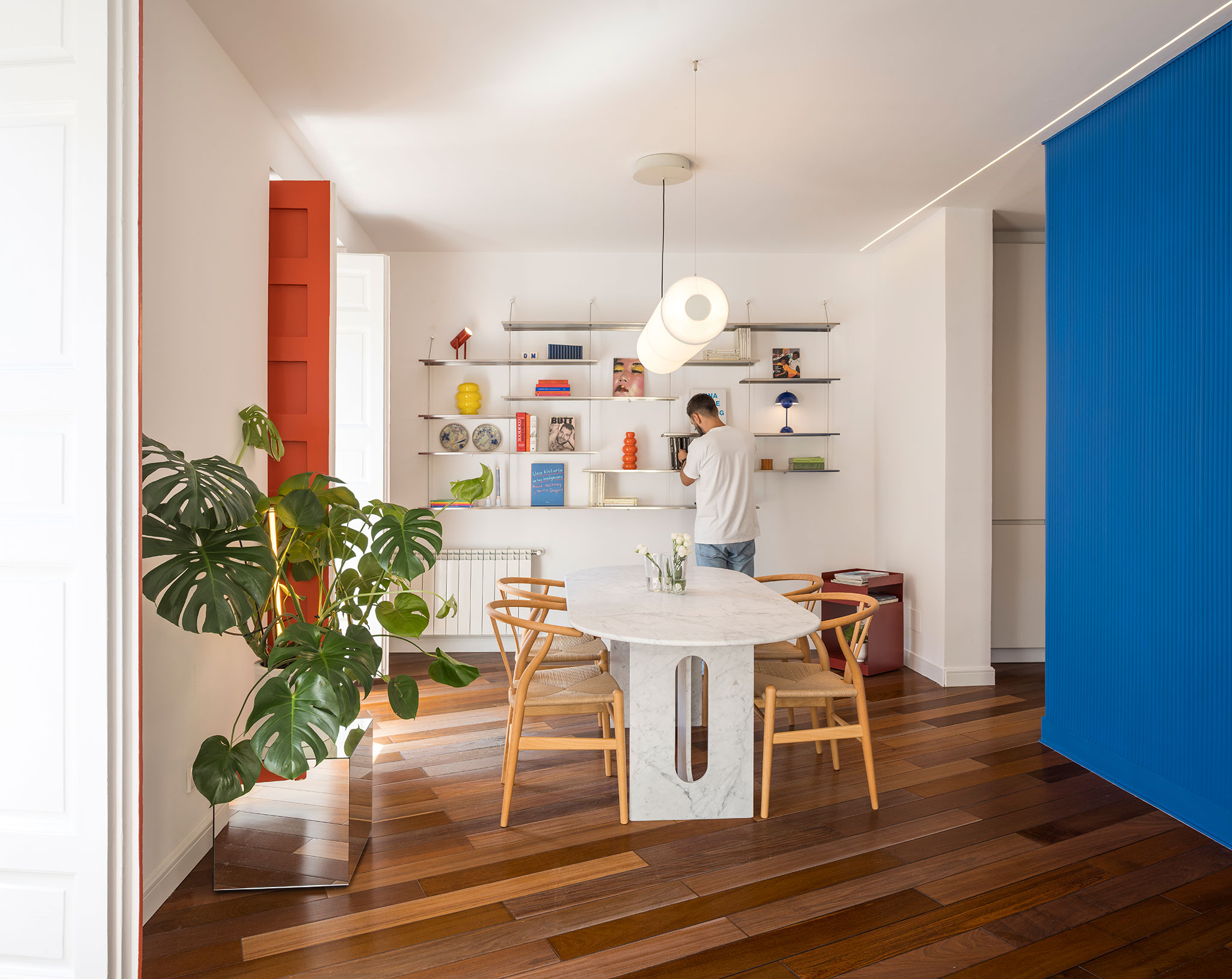
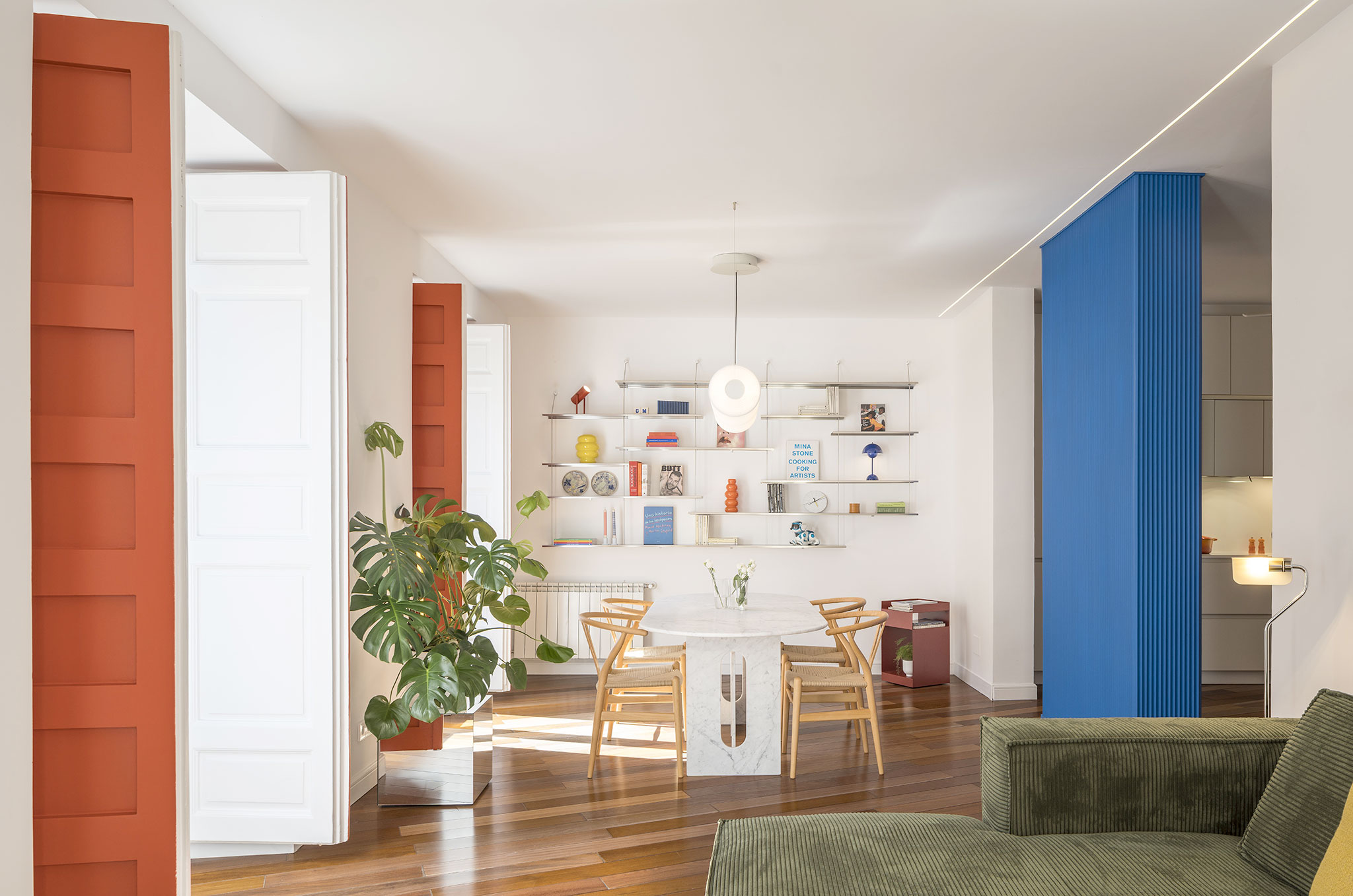
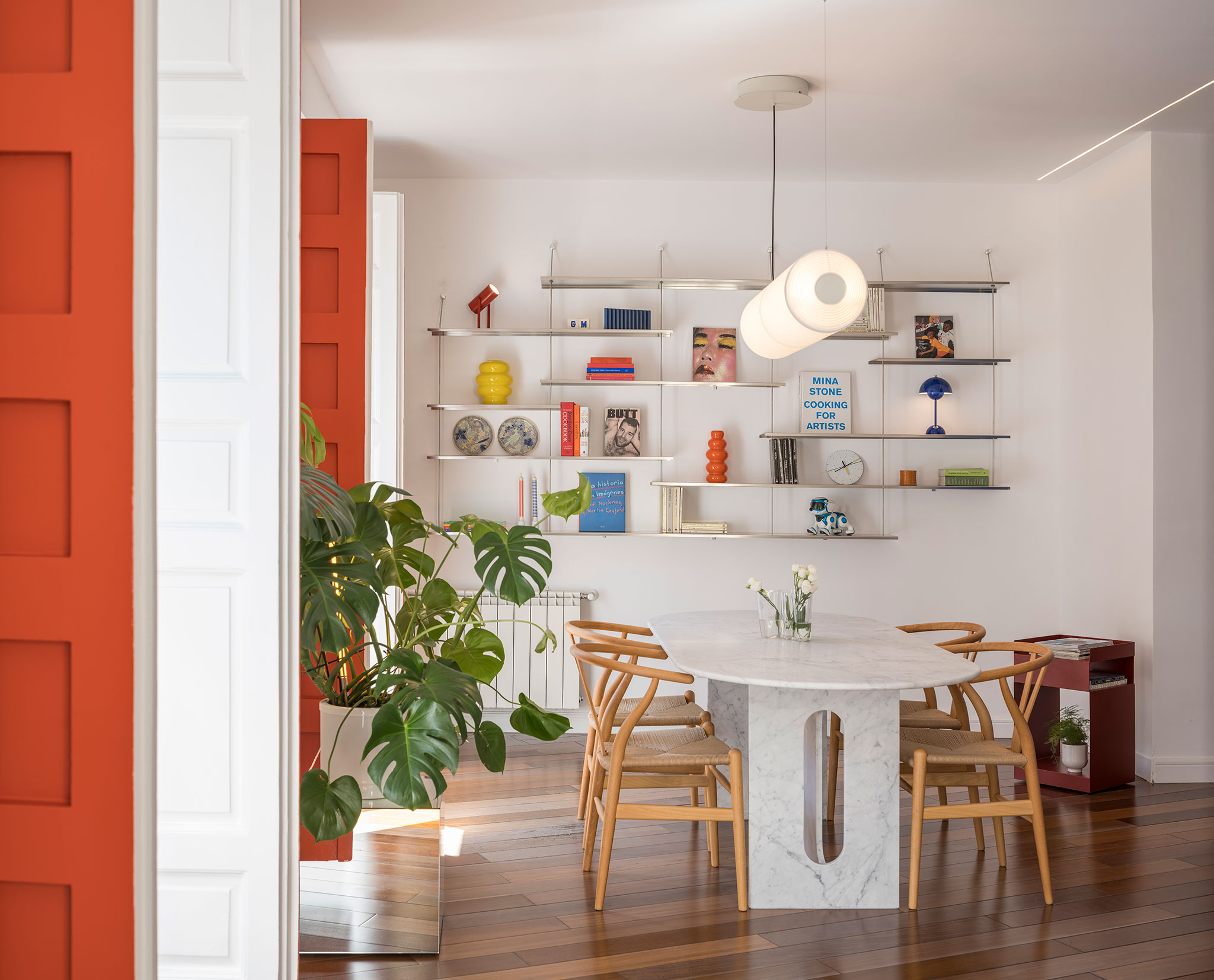
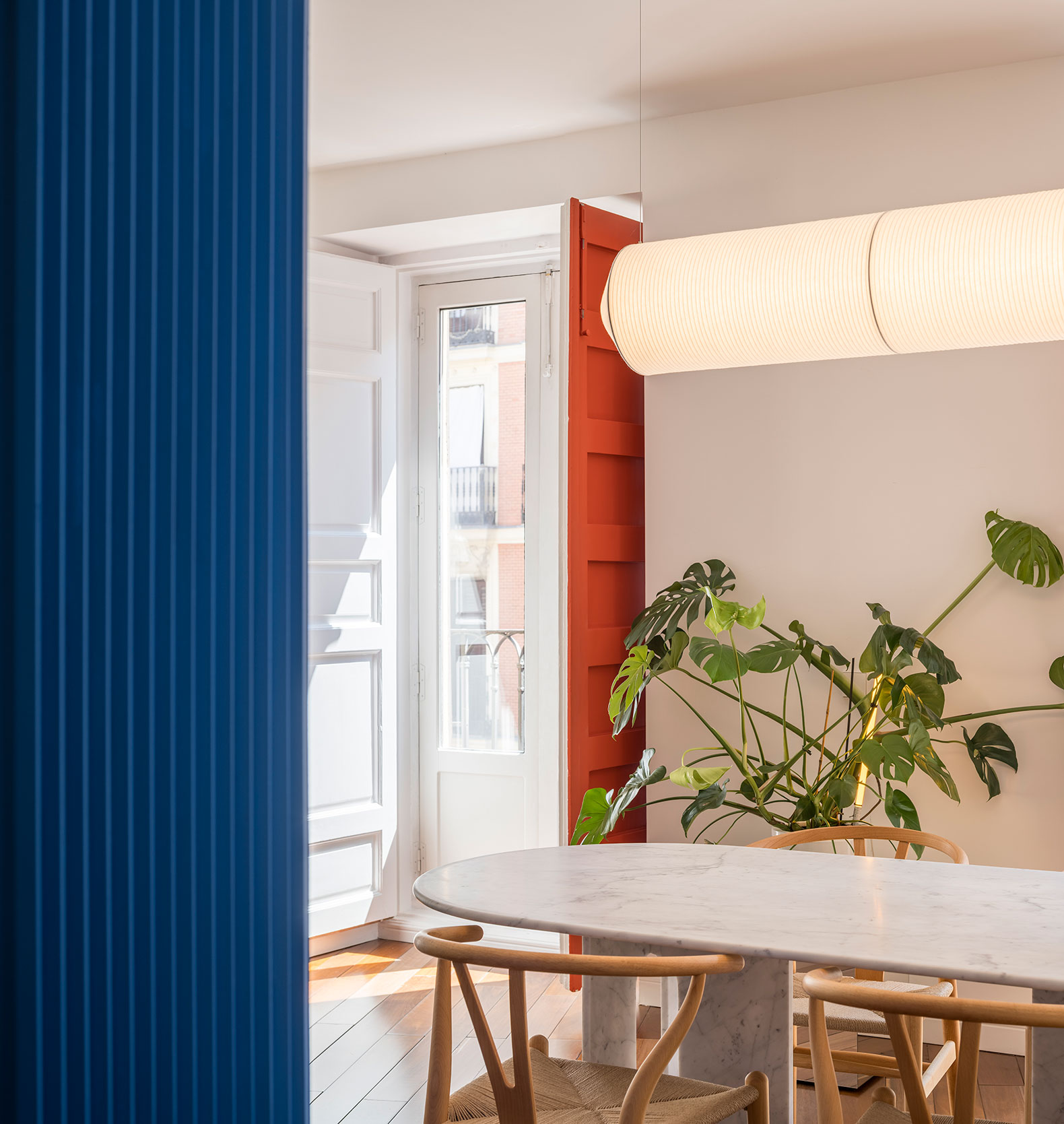
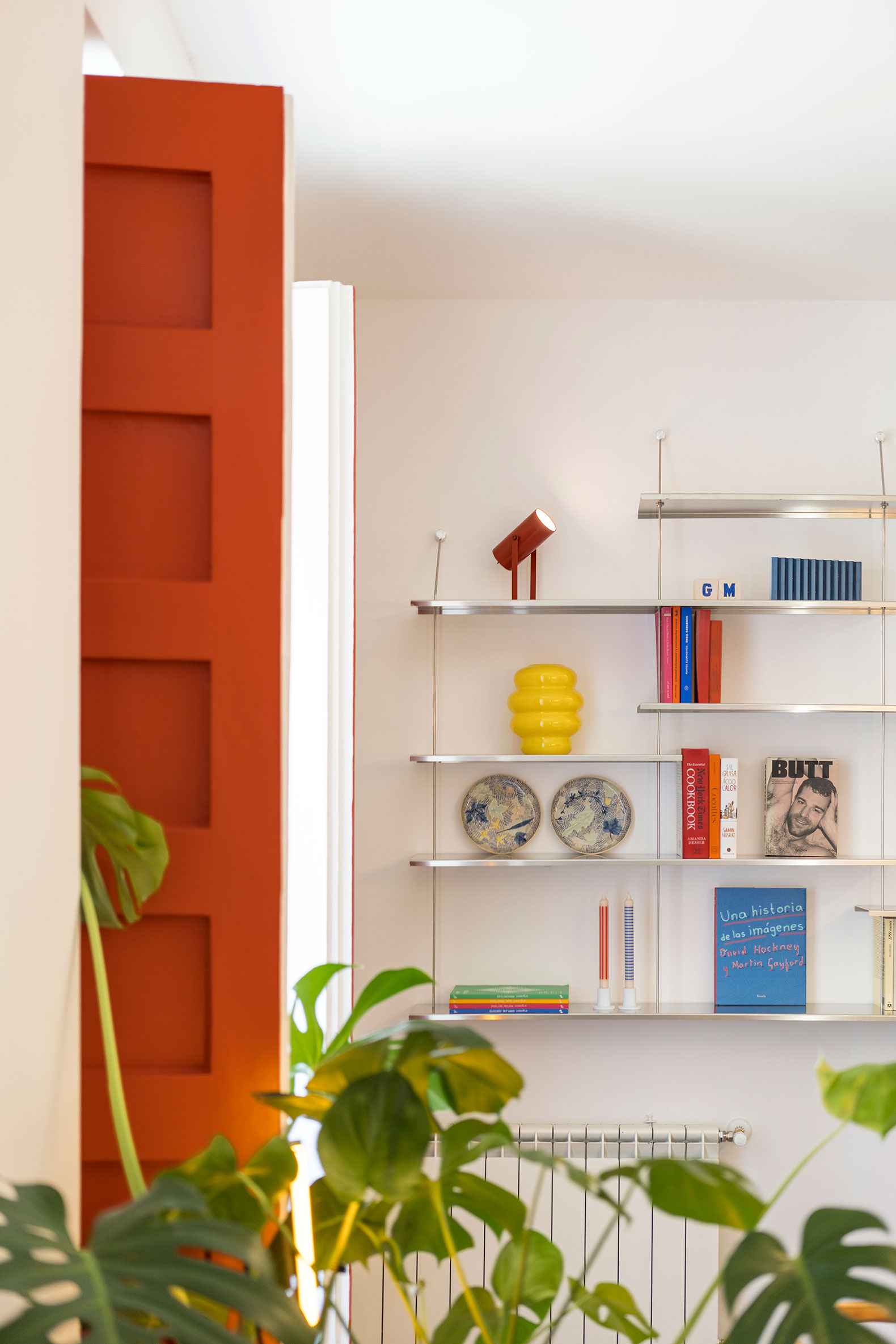
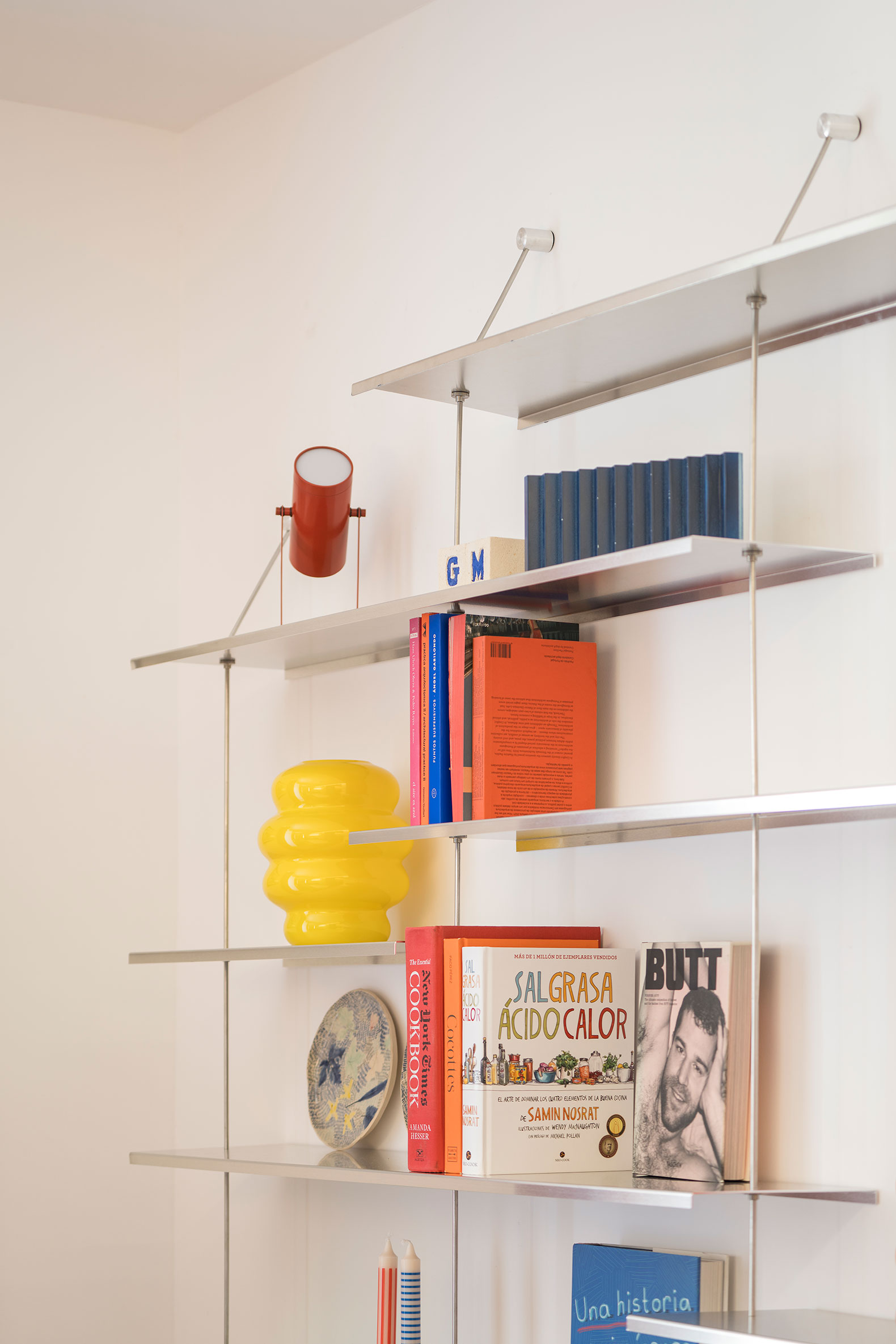
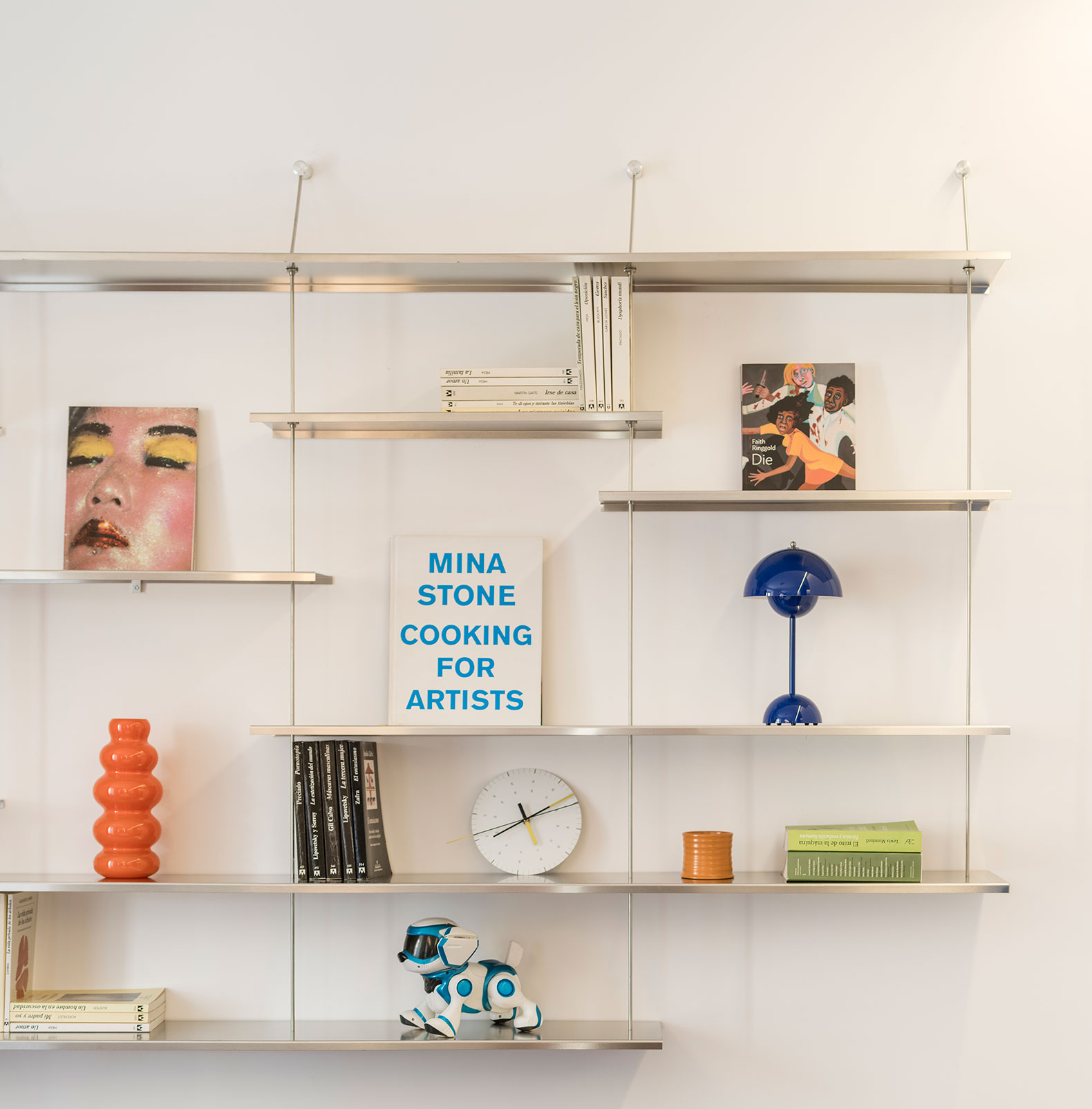
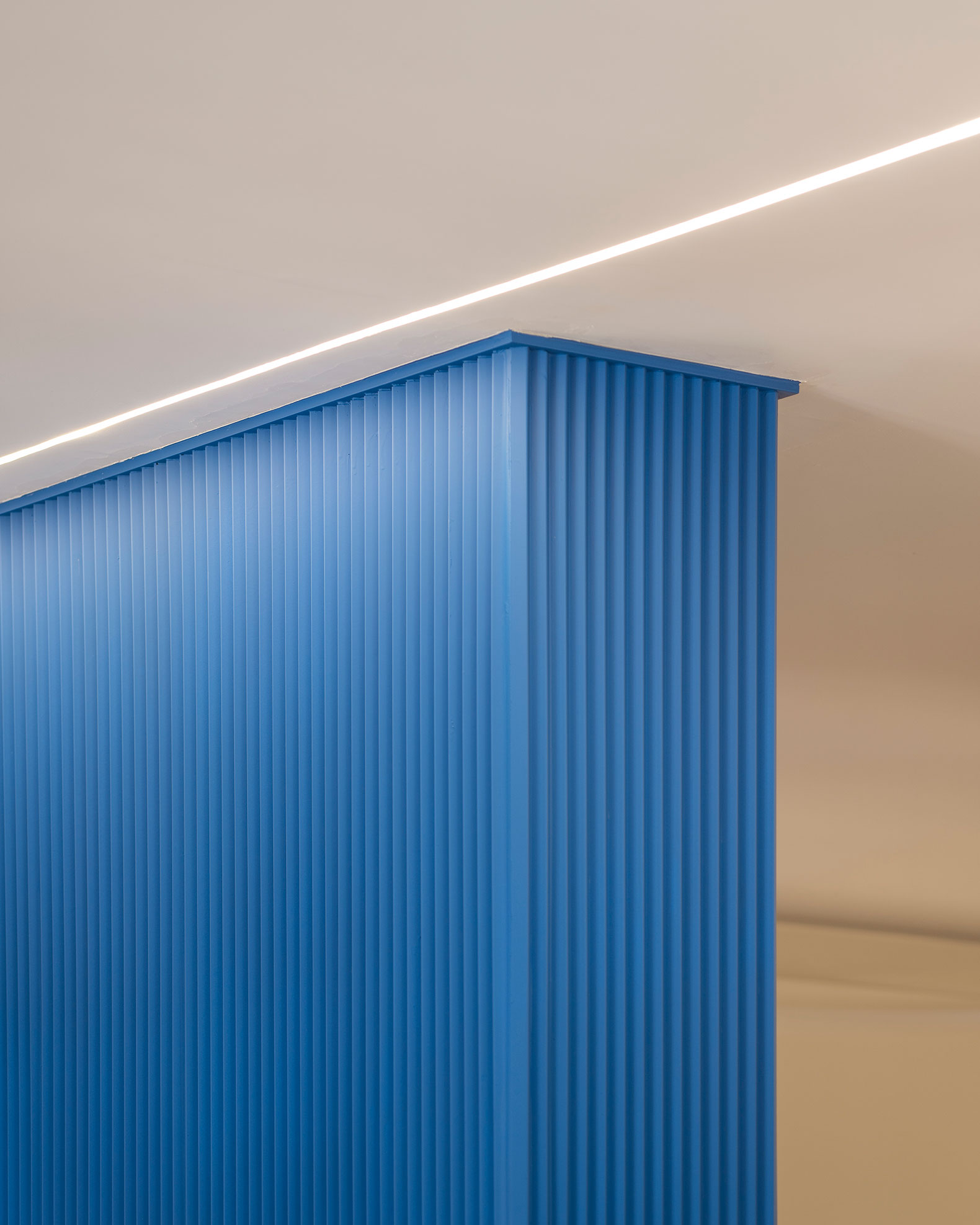
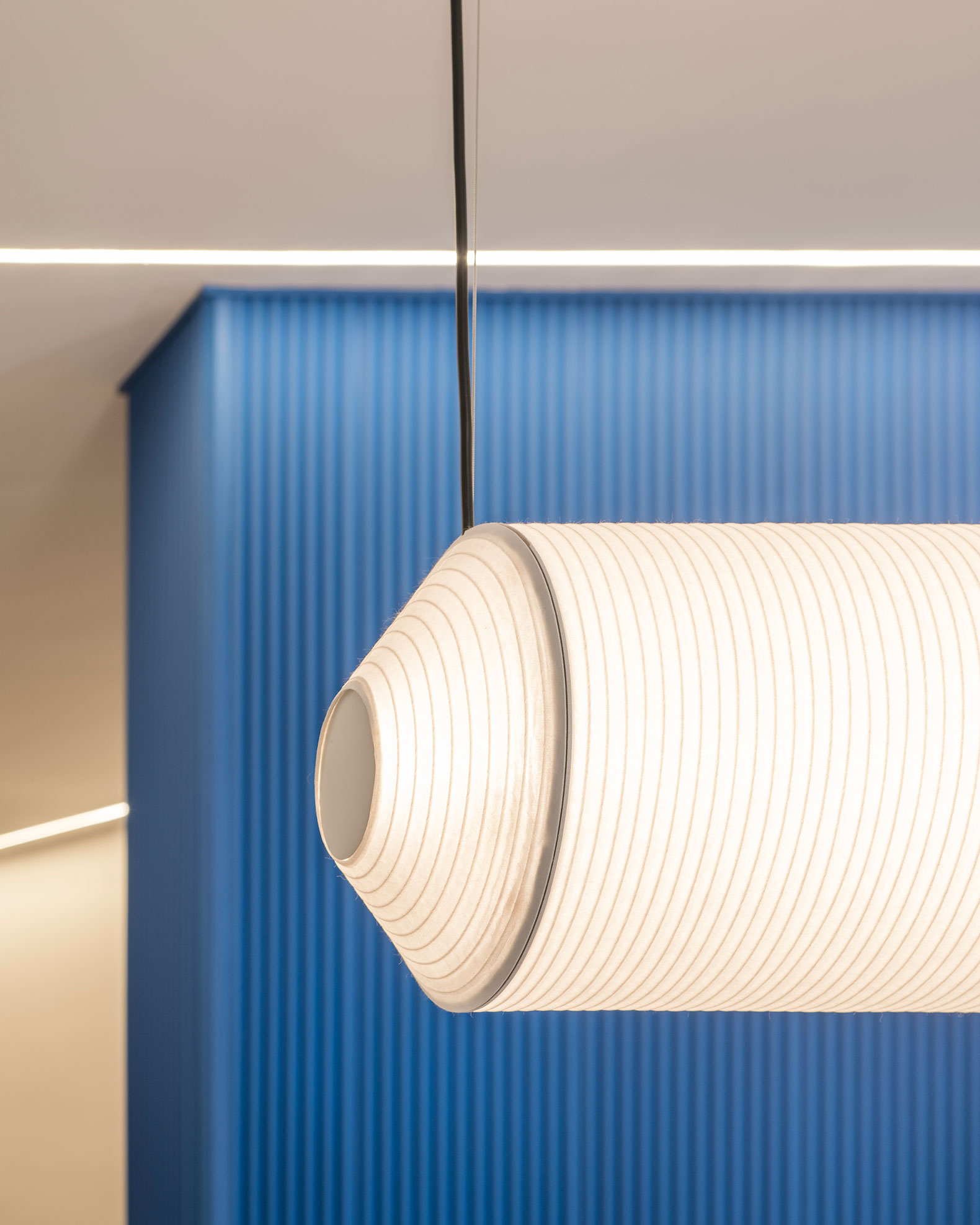
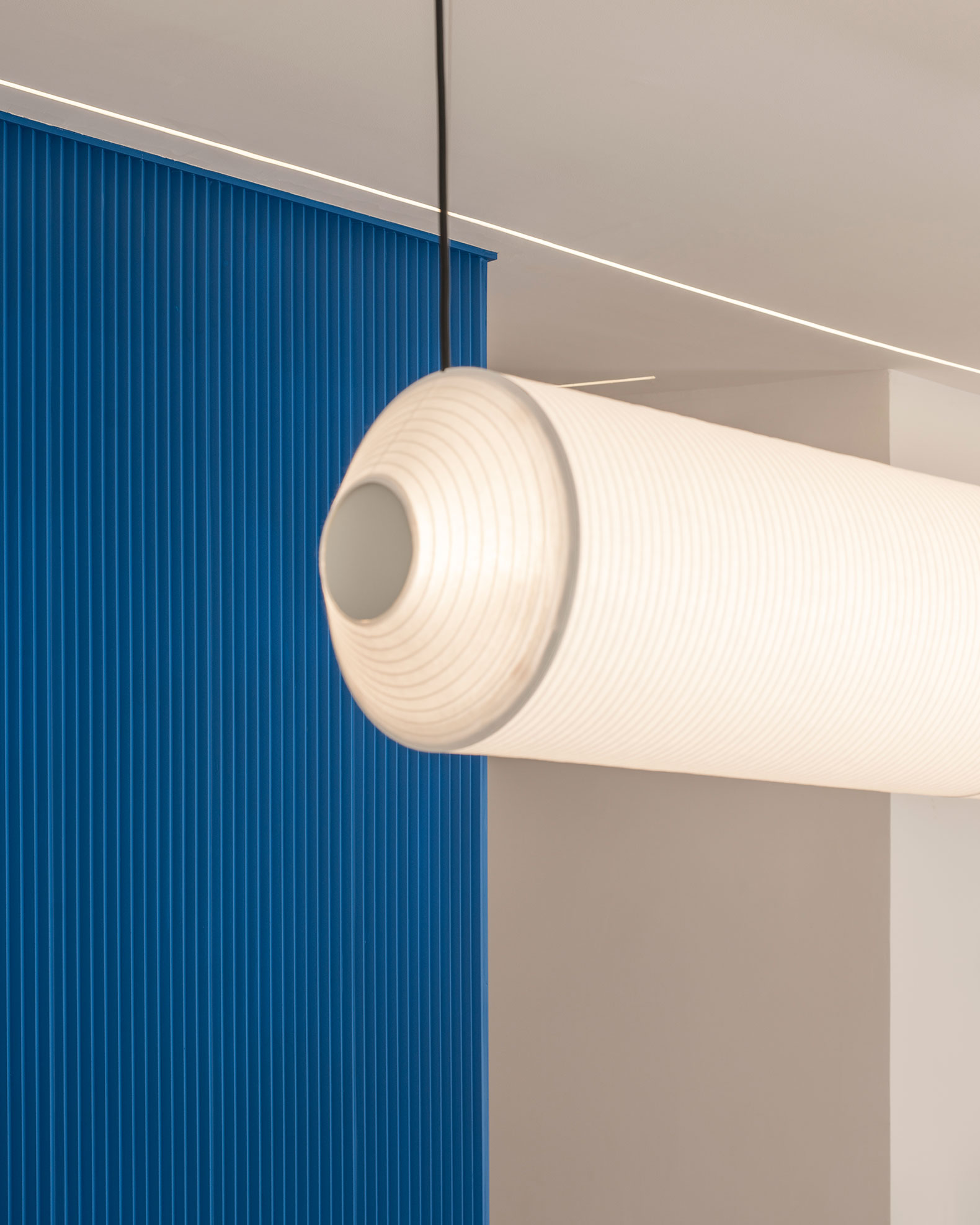
Each new room is defined by specific furniture that either integrates seamlessly into the space as continuous floor-to-ceiling storage or forms part of a system of objects that qualifies and characterizes each room. Thus, the living-dining room, on the other side of the column clad in electric blue with a zigzag-textured material that relates to the house's geometry and improves the room's acoustics, emerges as a landscape of scattered objects—sofa, table, lamp, bookshelf, television—that float in the space, without hierarchy.
Rigid spaces are replaced by a free and contemporary approach to domesticity. The elimination of hallways gives rise to a new domestic topography: a sequence of trapezoidal and irregular rooms that connect organically.
The passage between rooms, free of doors, occurs through thresholds defined by color and texture. Wood, metal, fabric, aluminum, ceramic, and resin coexist in Casa EME alongside a vibrant color palette—red, blue, yellow, white, and green—that creates a layer of almost hidden domestic information. This architecture is linked not only to the visual and the plastic, but also to touch and smell, seeking to recover the sensory experience of inhabiting a space.
Casa EME reflects on the idea of doing nothing more than creating; of preserving rather than demolishing, and of reusing rather than building. The result is a design in which the movement of the body through the house constantly traverses a series of spatial pairings: from public to private, from compressed to expanded, and from open to closed. A place that doesn't seek to impose, but rather to revive a house that, as in Monterroso's microfiction, was always there.
It just needed to be awakened.