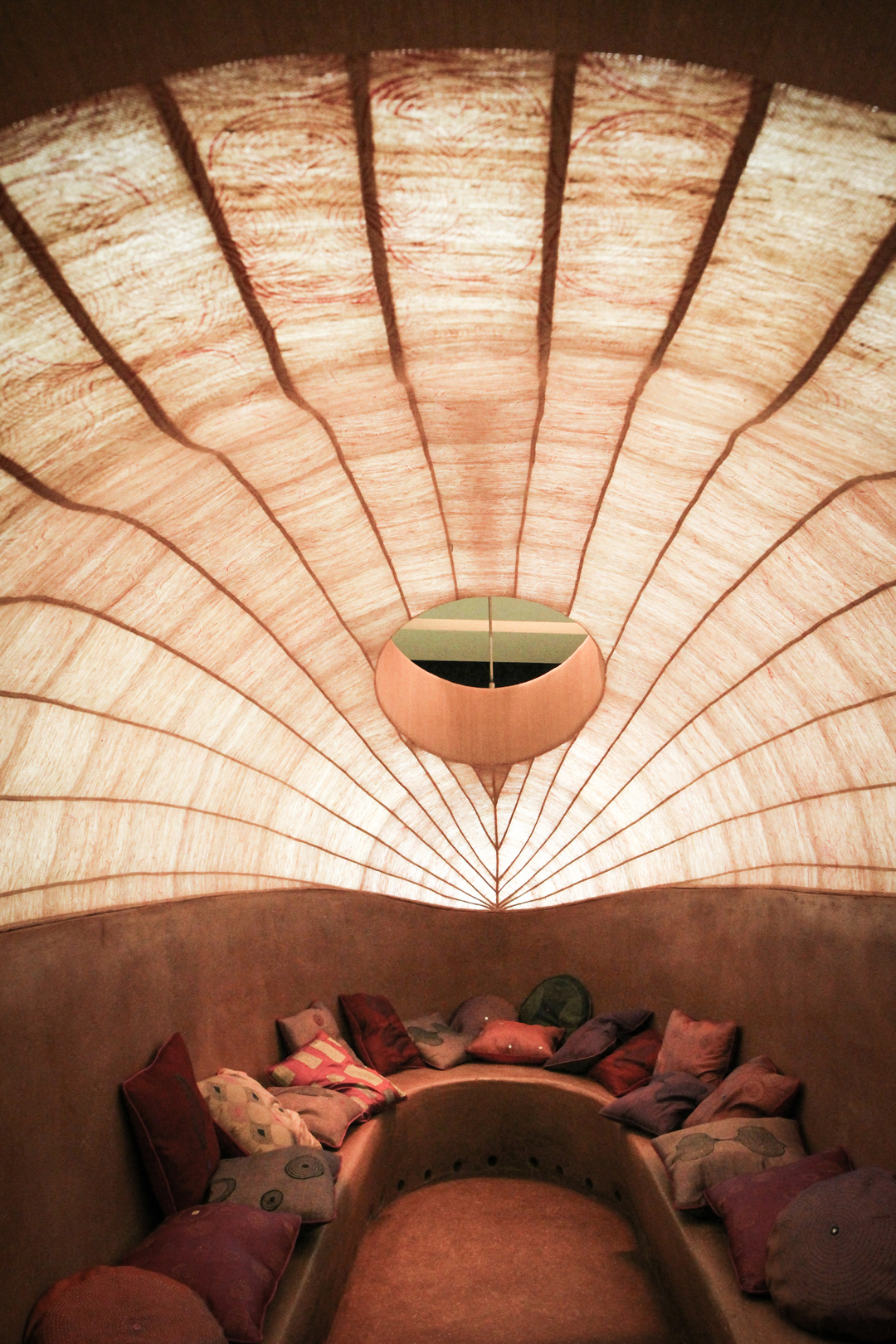
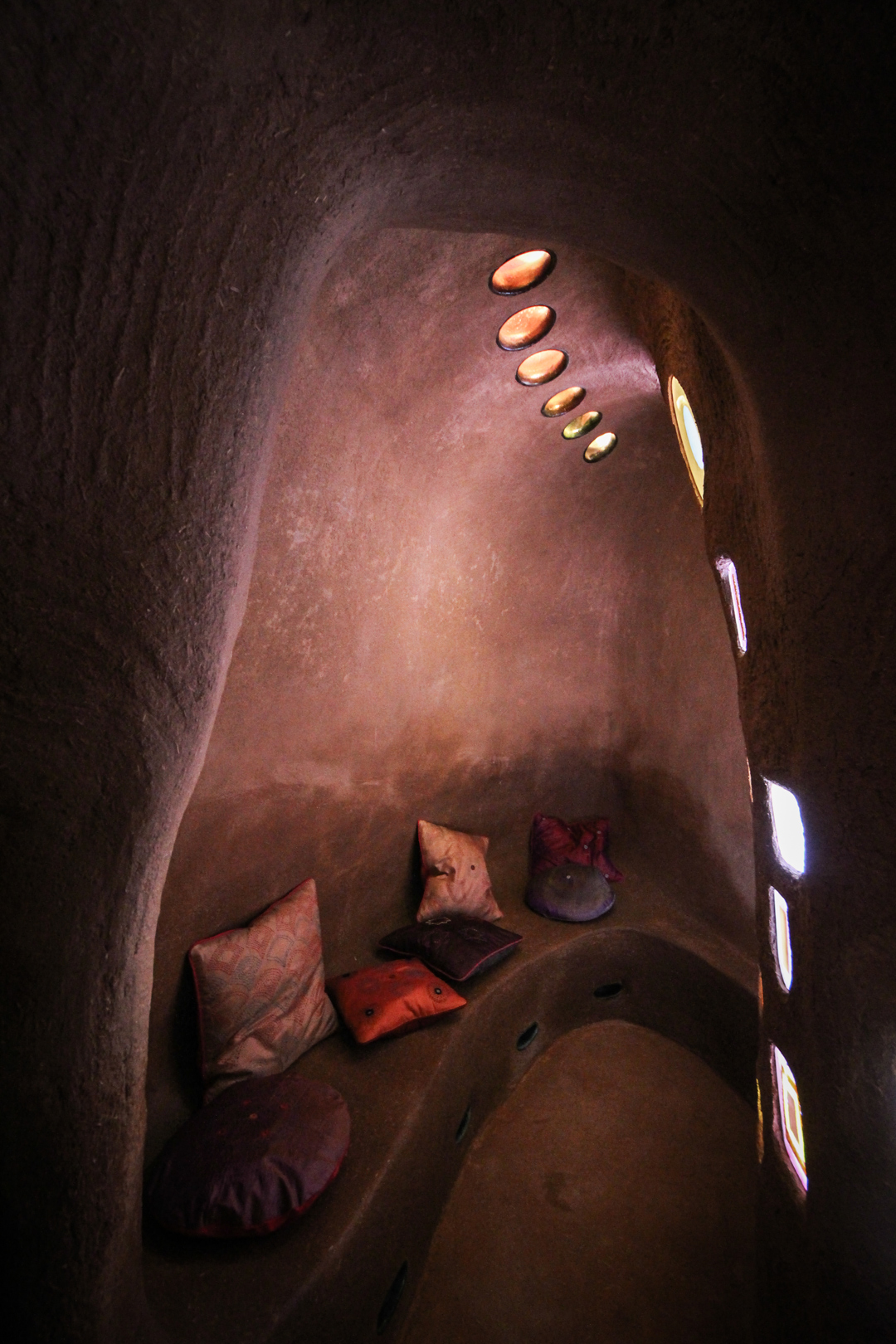
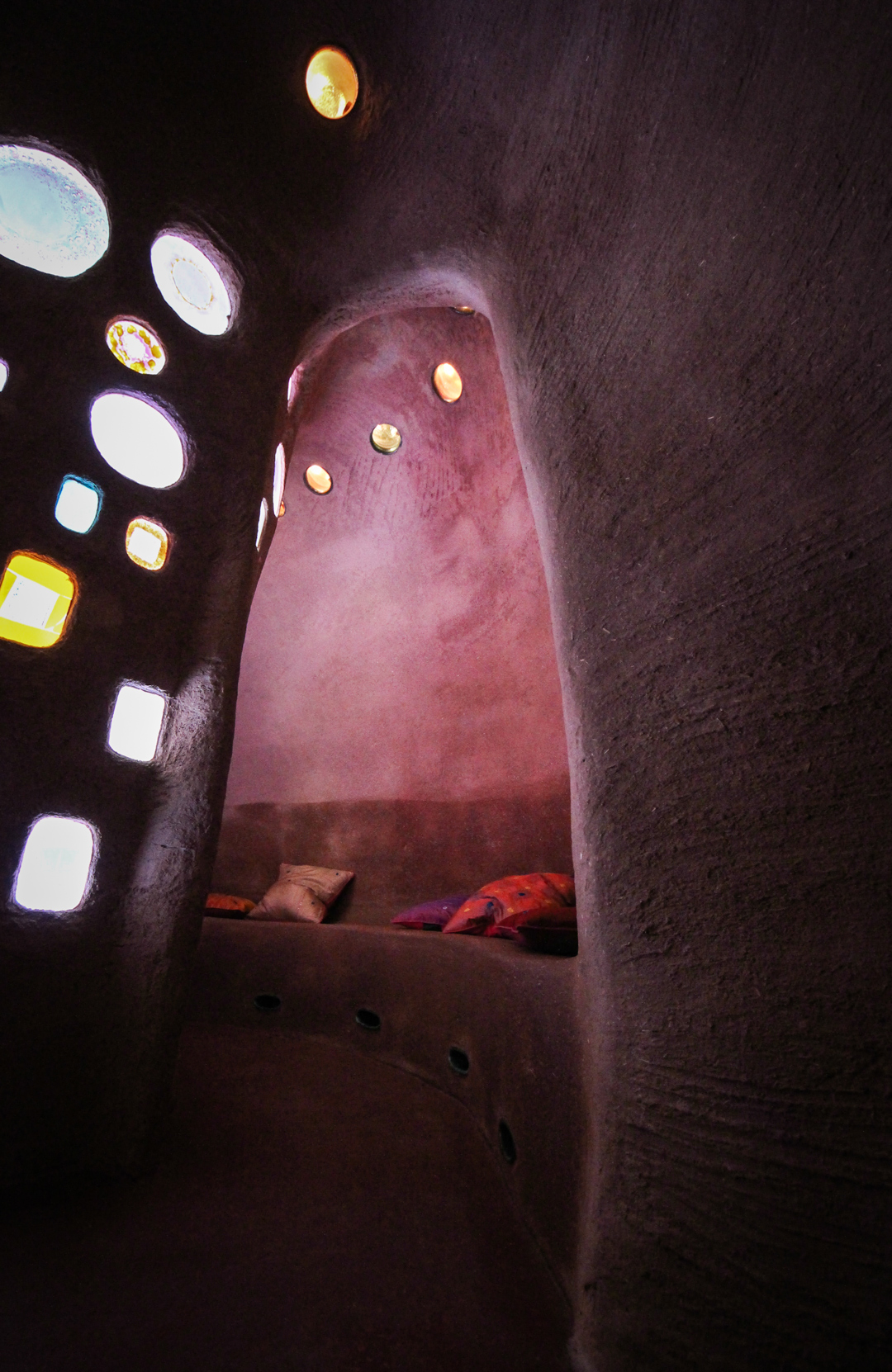
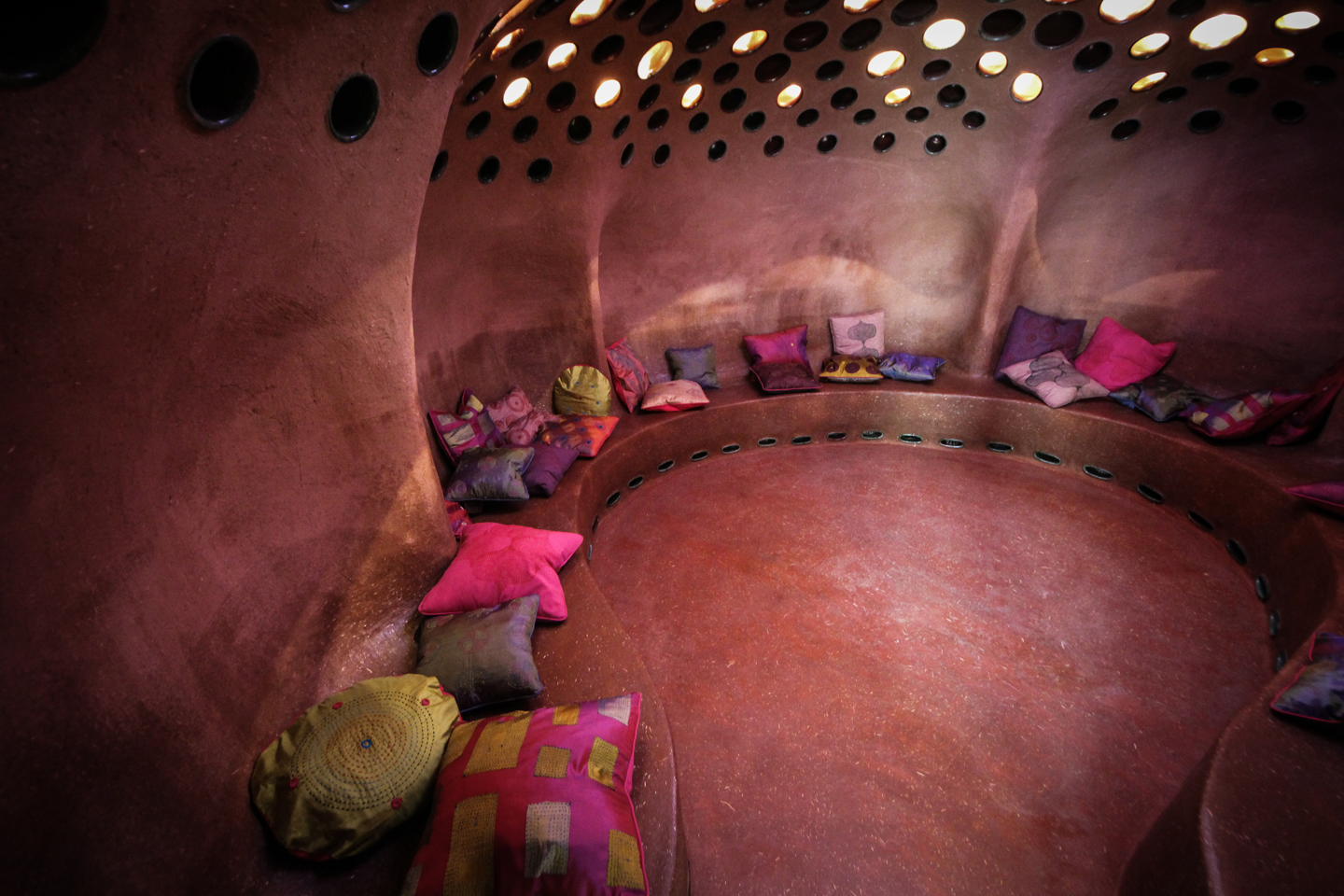
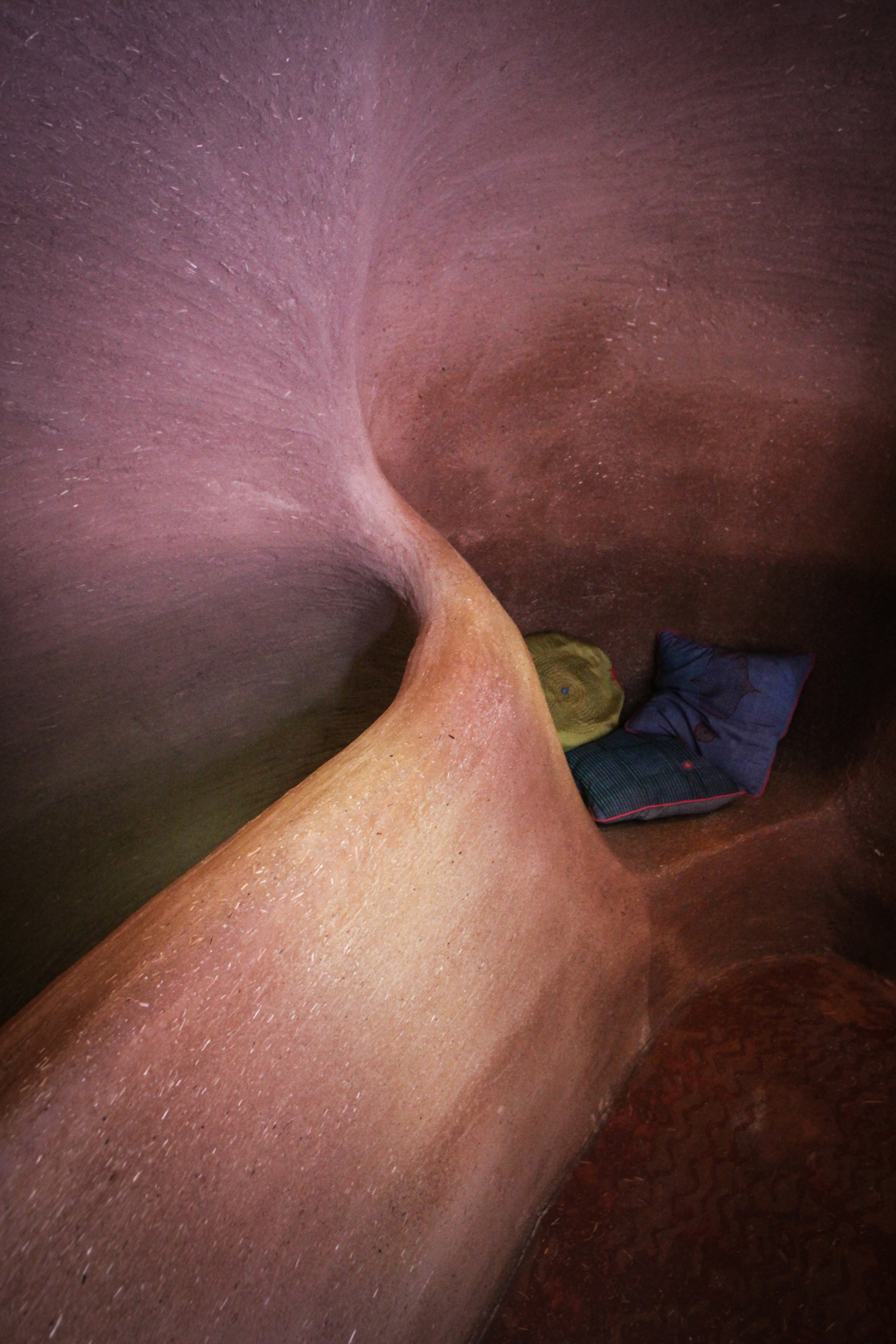
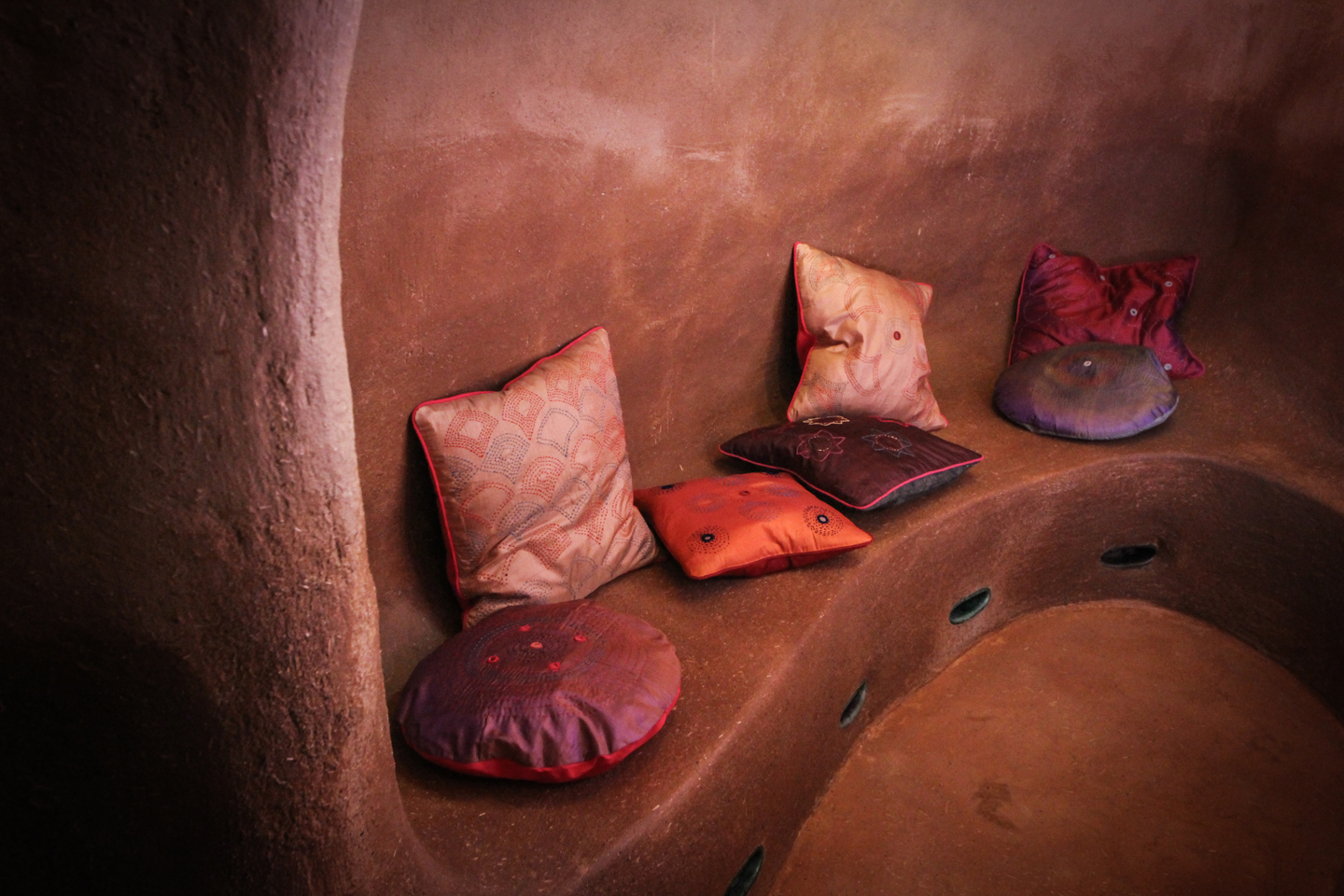
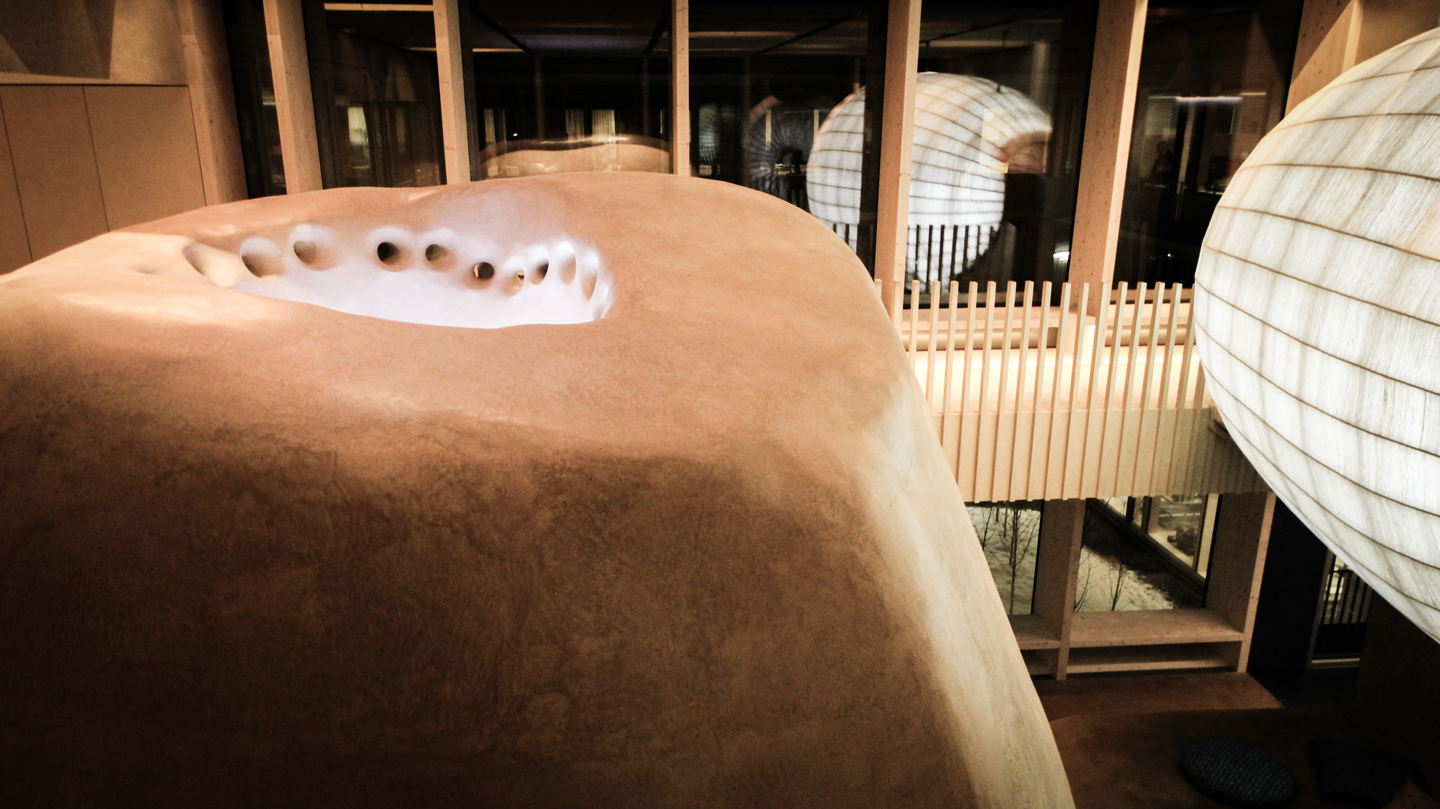
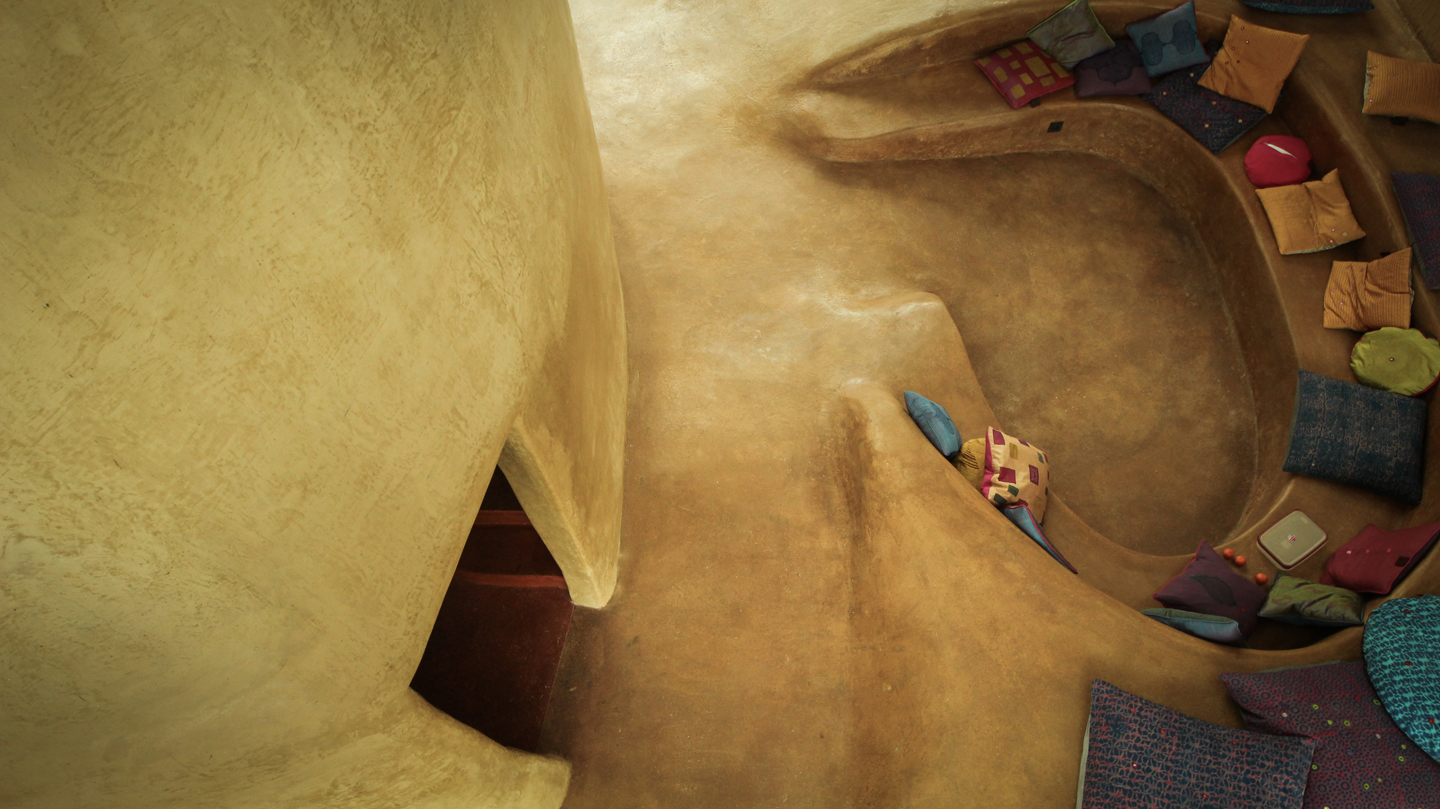
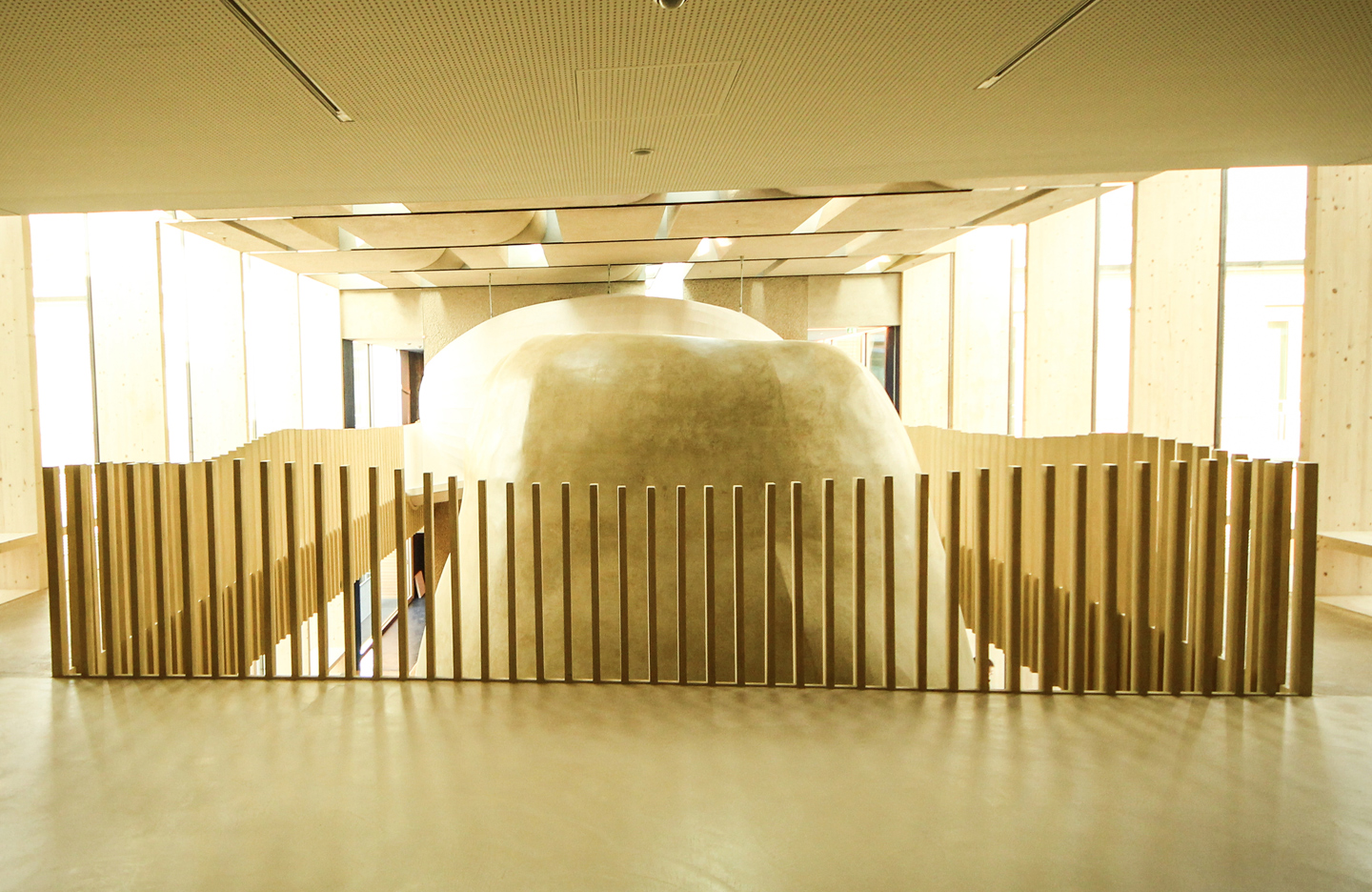
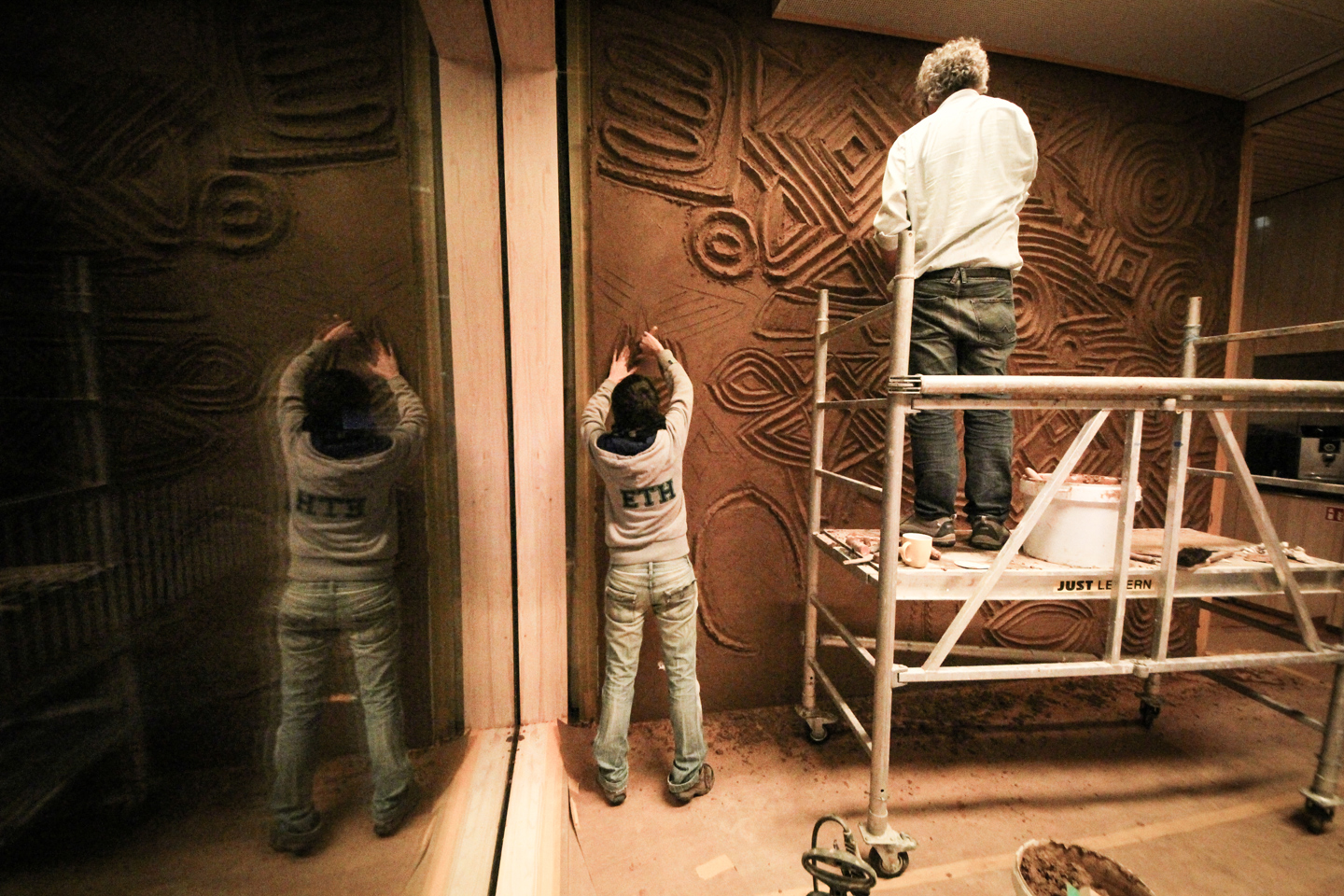
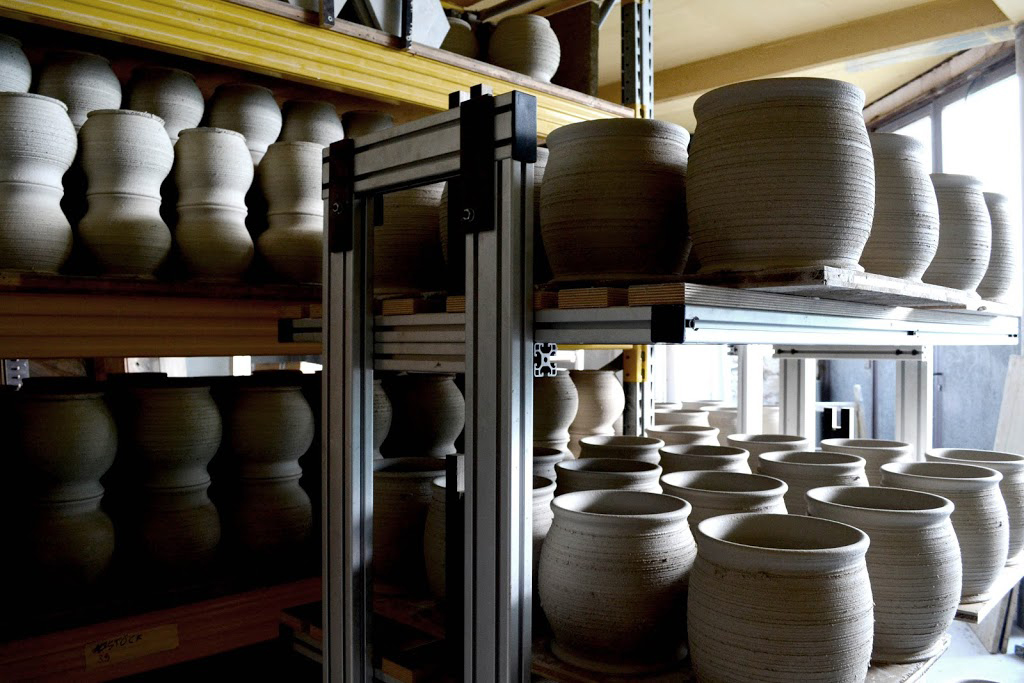
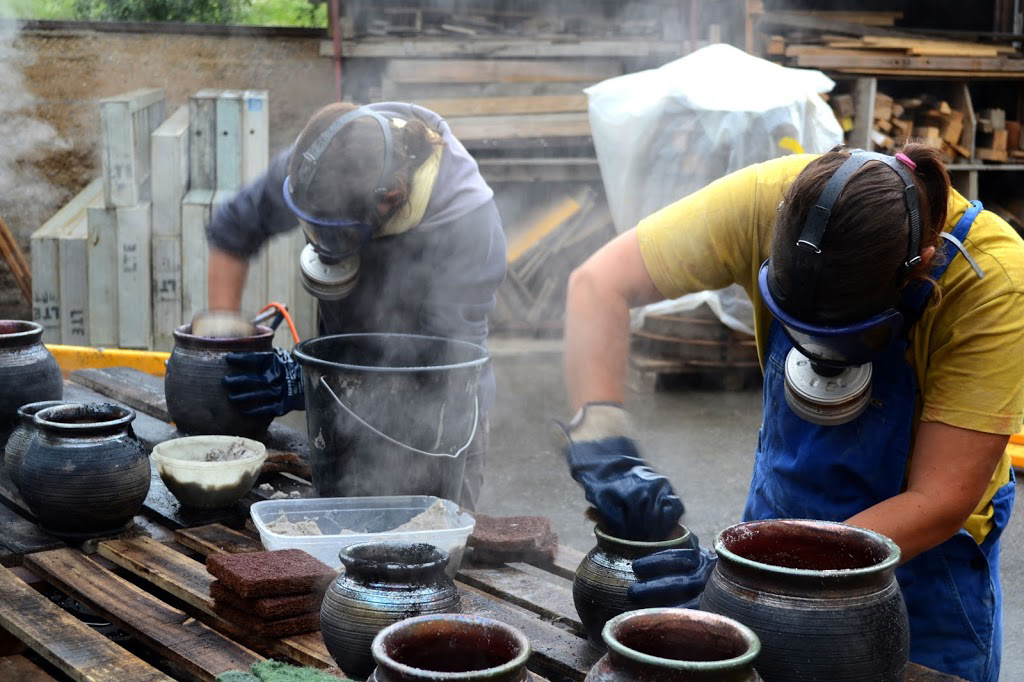
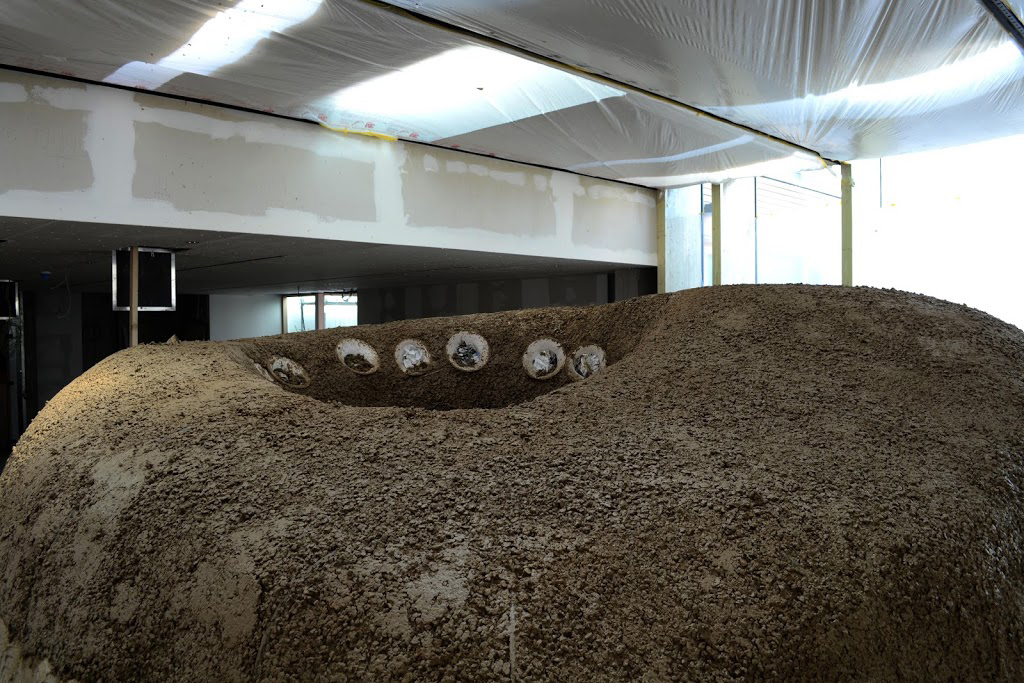
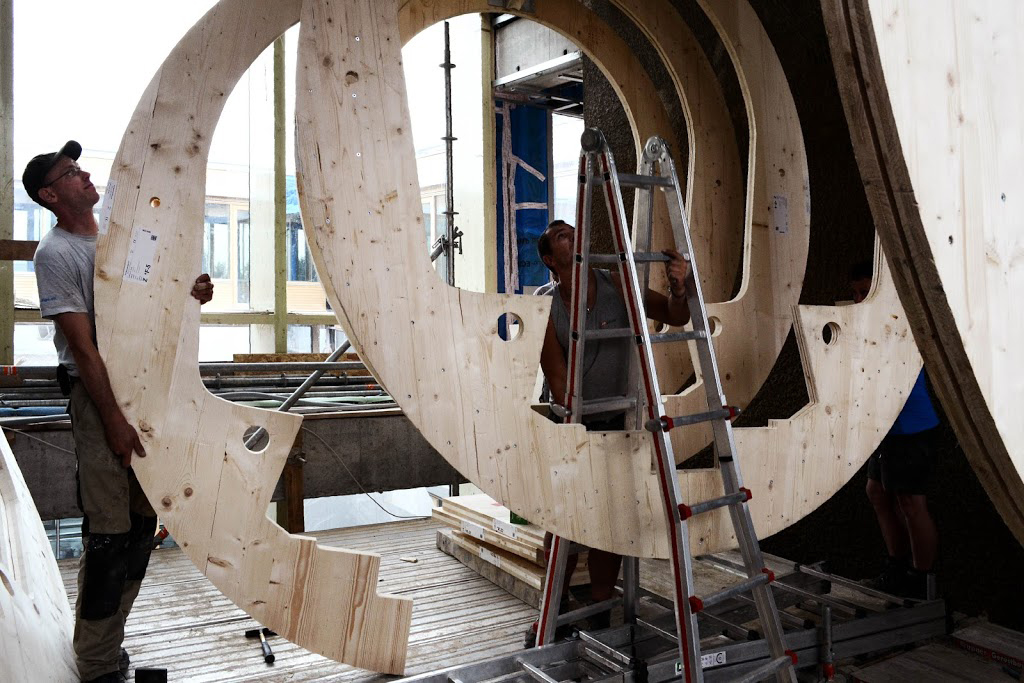
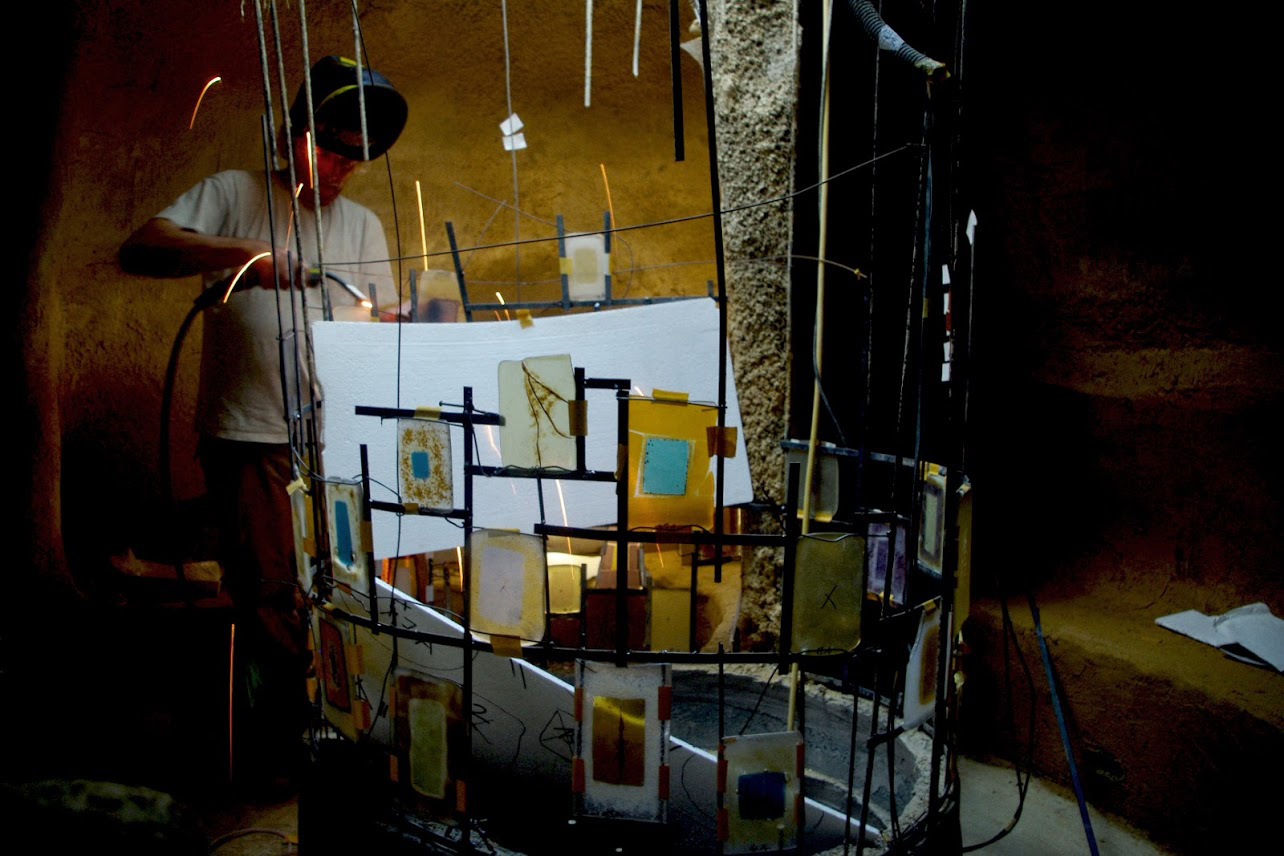
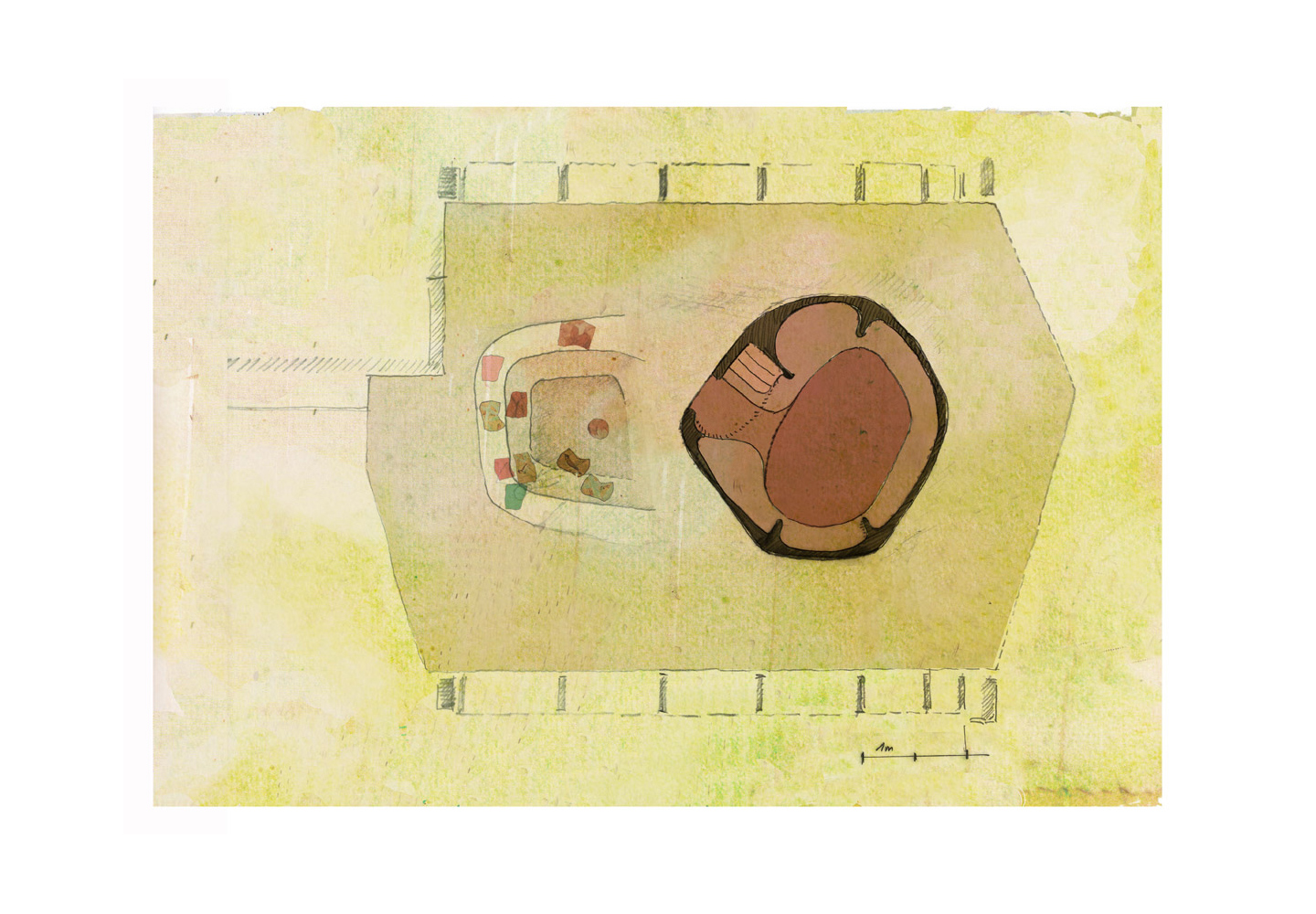
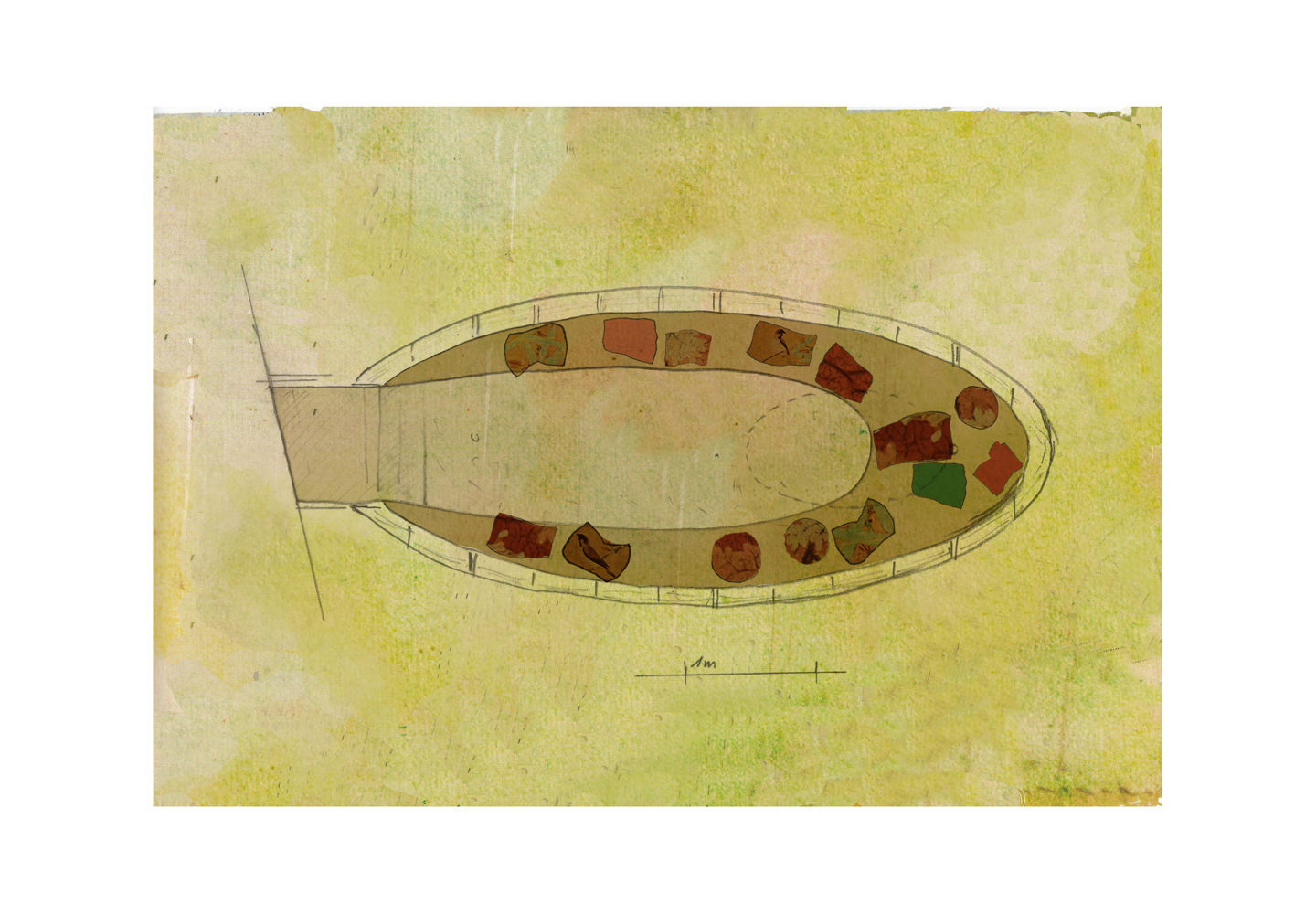
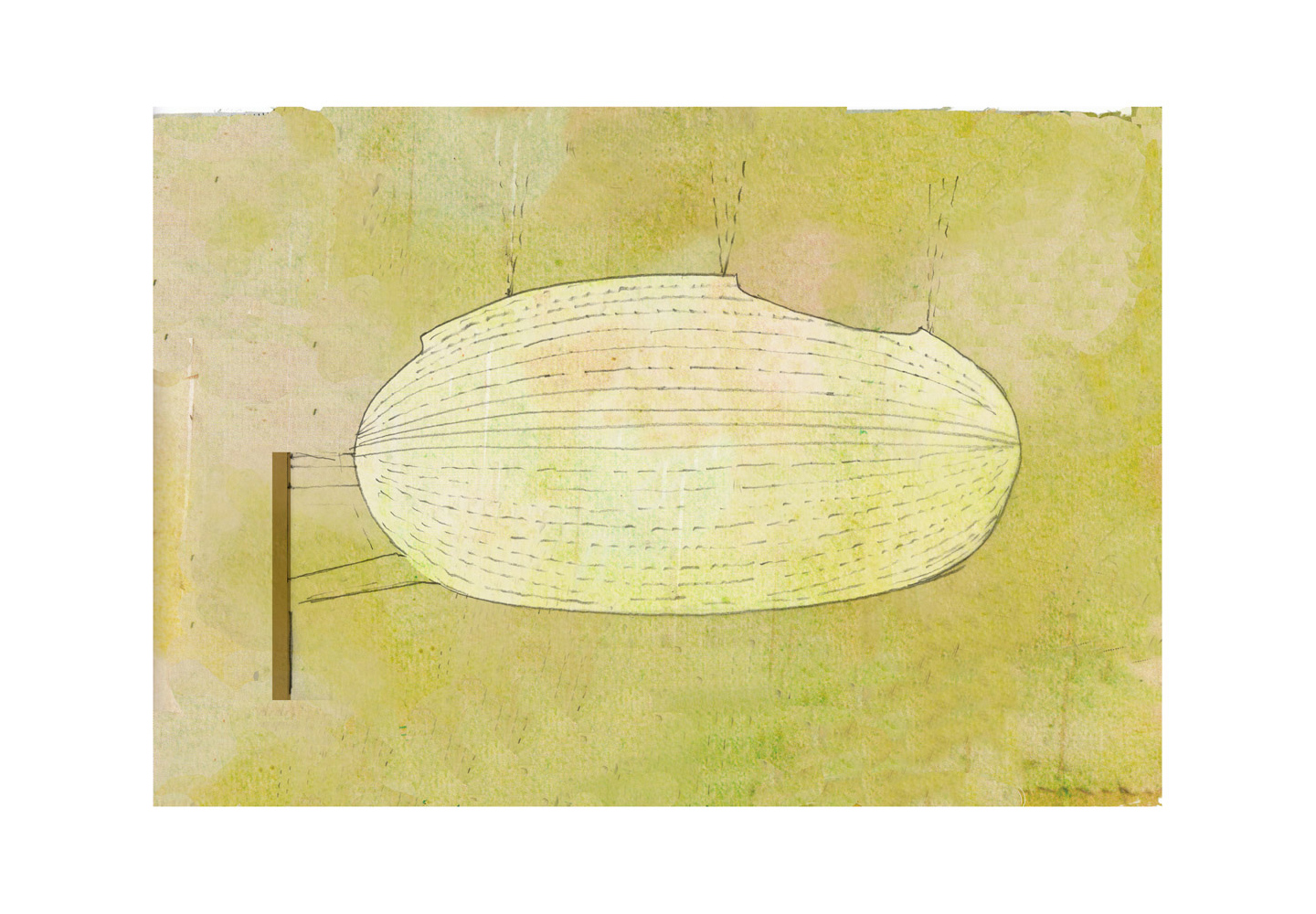
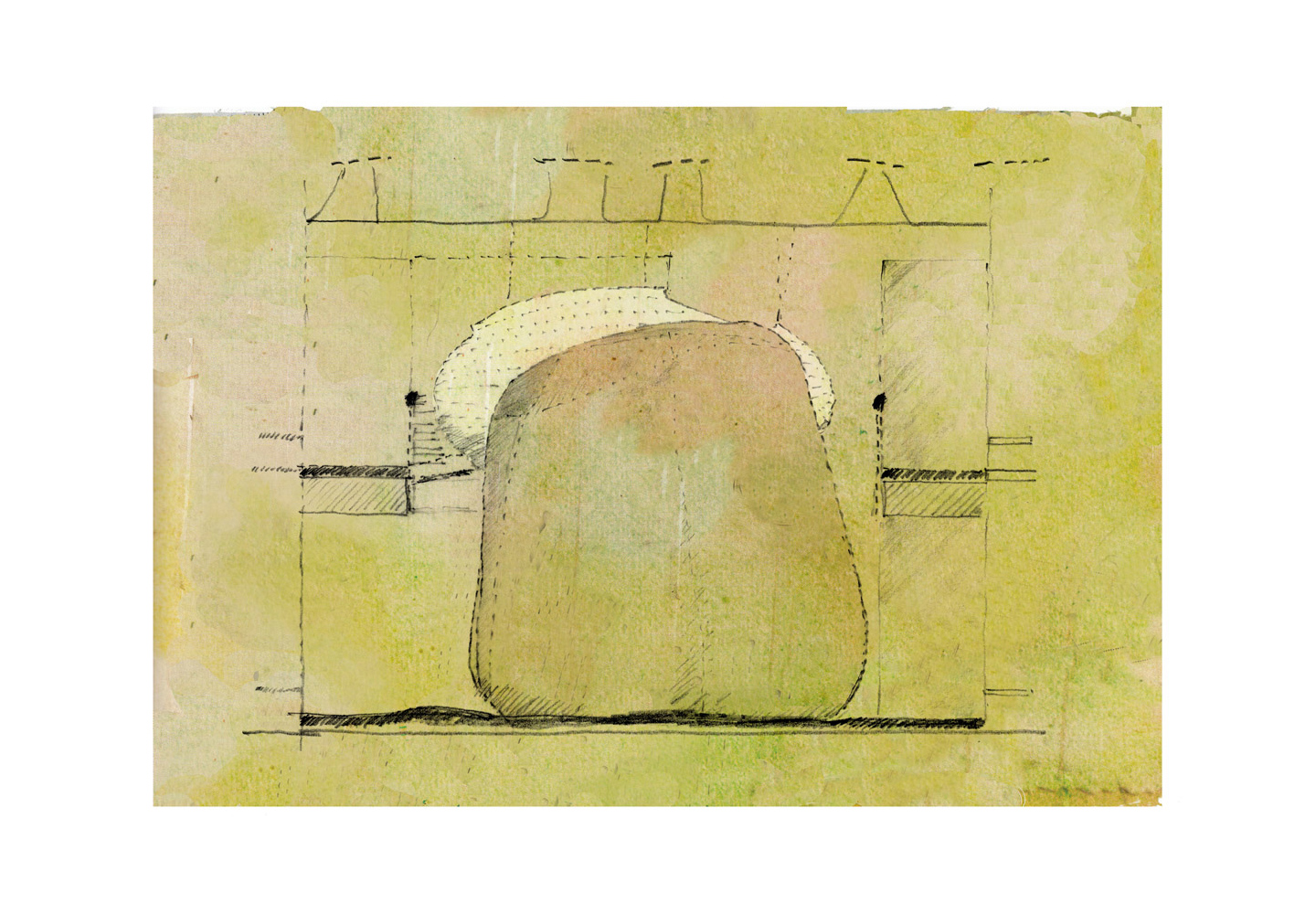
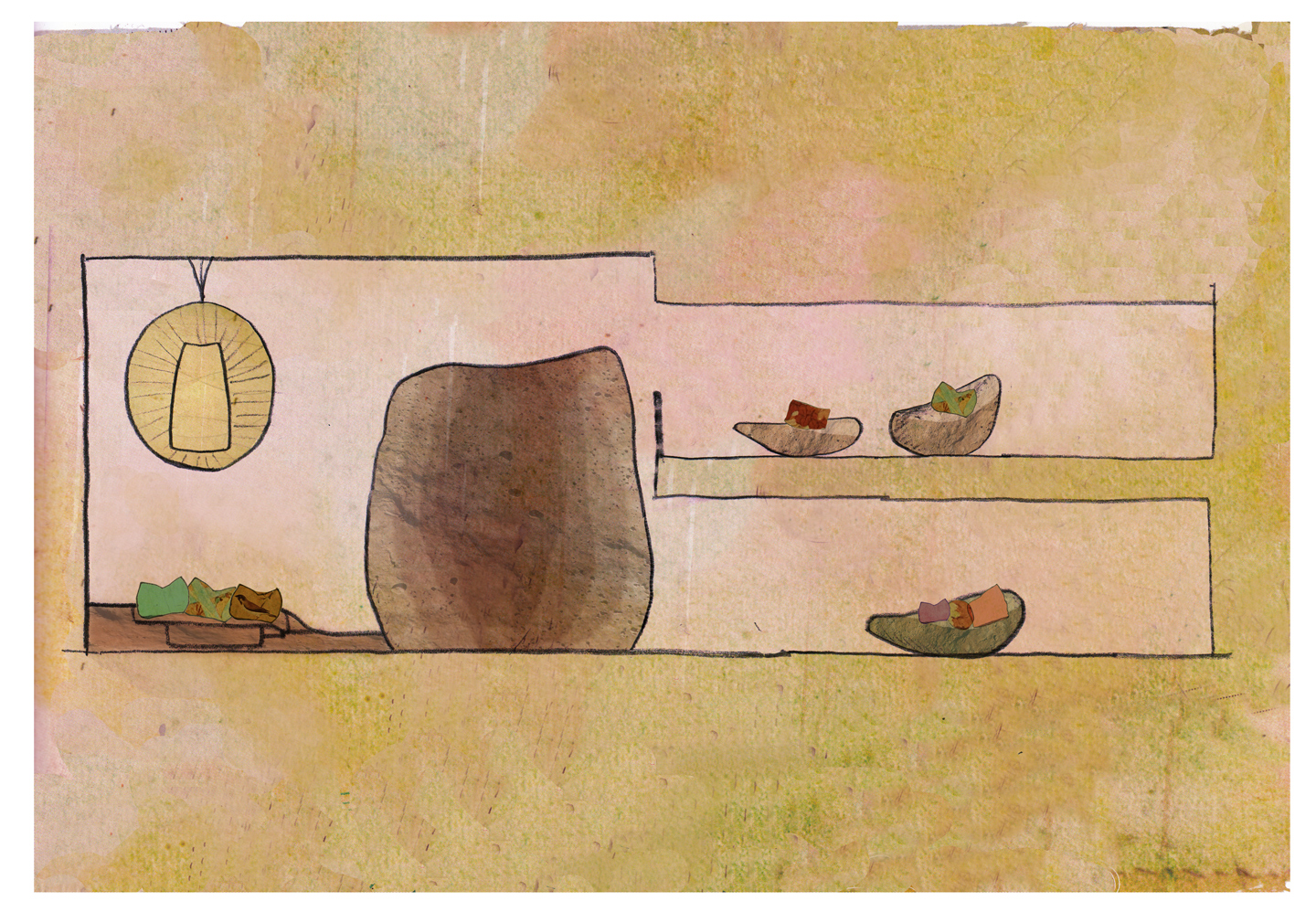
Shaped as a set of sculptures, Omicron Living Spaces are no other thing than a space where Omicron Electronics workers can relax or have a work meeting. As usual, Anna Heringer makes an effort to promote developing economies and use craft materials collaborating in this project with NGO Dipshikha by using their colourful fabrics for the cushions. The indian Little flower also plays an important role in the construction of 'the zeppelin', an structure that seems to float in the air and where the amazing interior lighting experience is generated by the hand-crafted silk cover made by this group. Technically speaking, the complex, which consists on the two-storey monolith, an open-air bleachers and the zeppelin suspended-like structure covering it, represents an advance in the research for new possibilities in the field of earth construction in which the practice is fully immersed. The compromise with details, clearly seen in the wall reliefs, the soft shapes or the integration of pottery vases, earth of various colors and playful fabrics, make a perfect compliment, turnins the building into a incomparable spacial and lighting experience.
Description of the project by Studio Anna Heringer
Fair trade meets regionalism. The project, 3 sculptures that serve as meeting rooms for the workers, is a commitment to support craftsmanship locally as well as in Bangladesh and in India. The aim is to create an atmospheric space of high quality for the employees of Omicron, and at the same time to make a social economic impact by involving a high amount of local craftsmanship and development organization from the global South.
The 3 sculptures can be seen as living rooms for the company’s employees, to have meetings in a comfortable poetic atmosphere to retreat, contemplate, meditate, brainstorm, to have a coffee break, to chat.
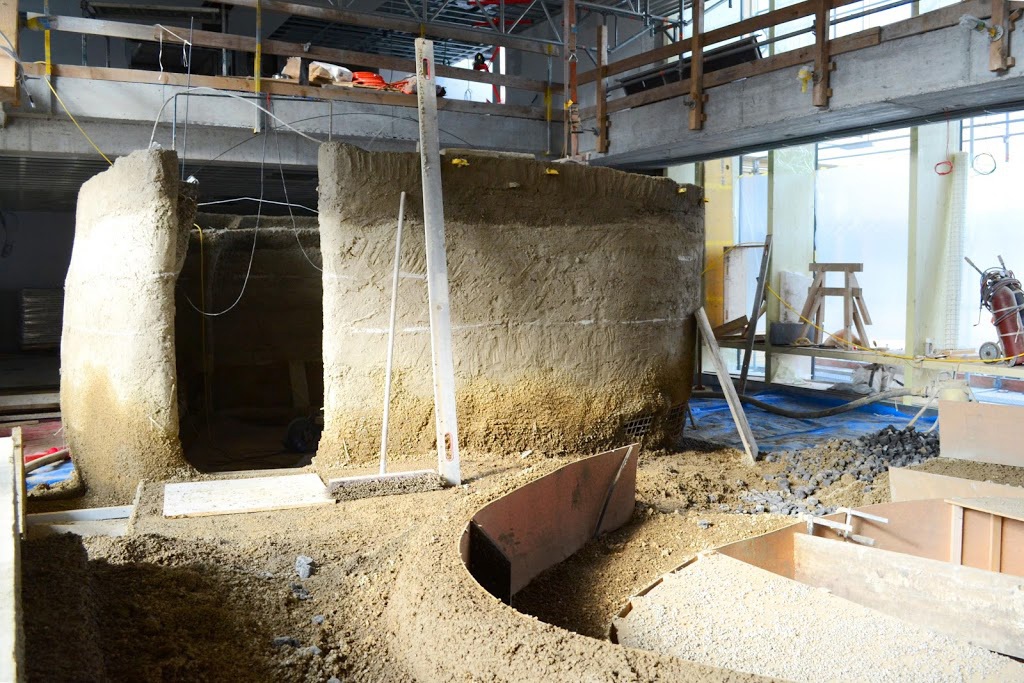
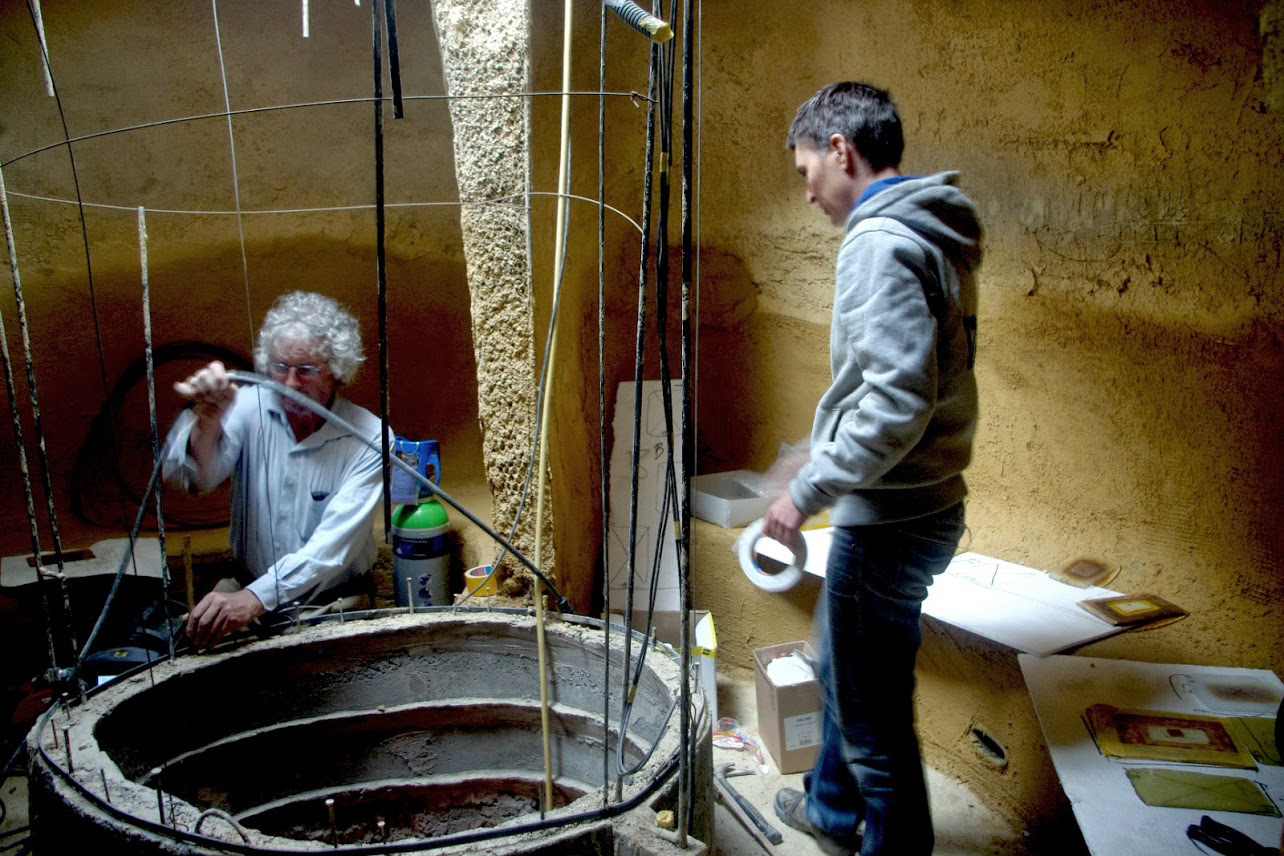
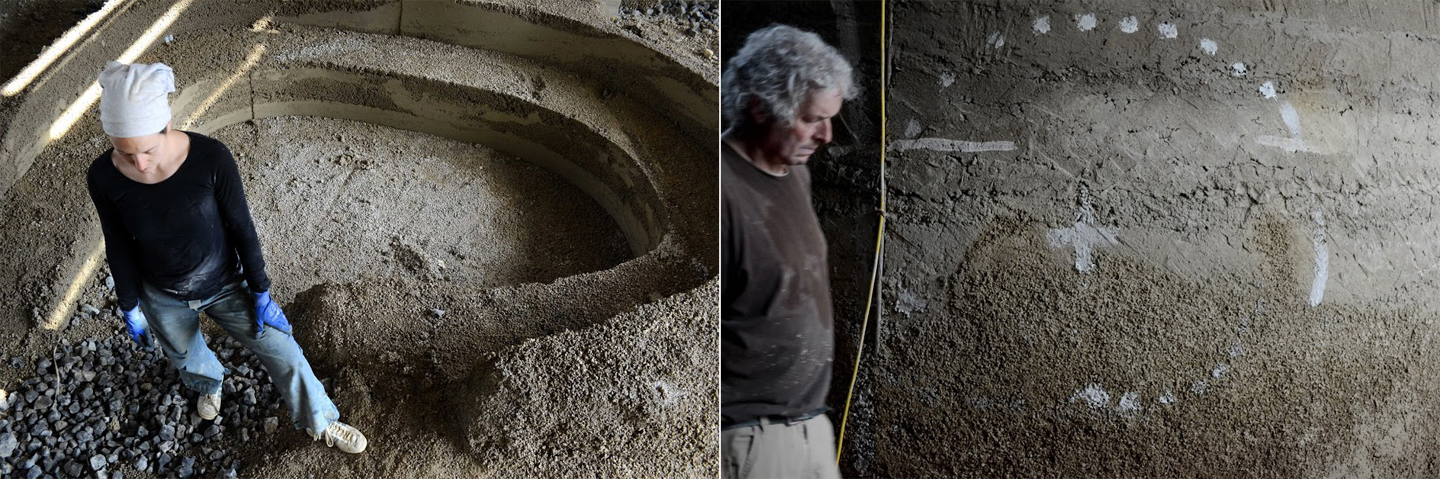
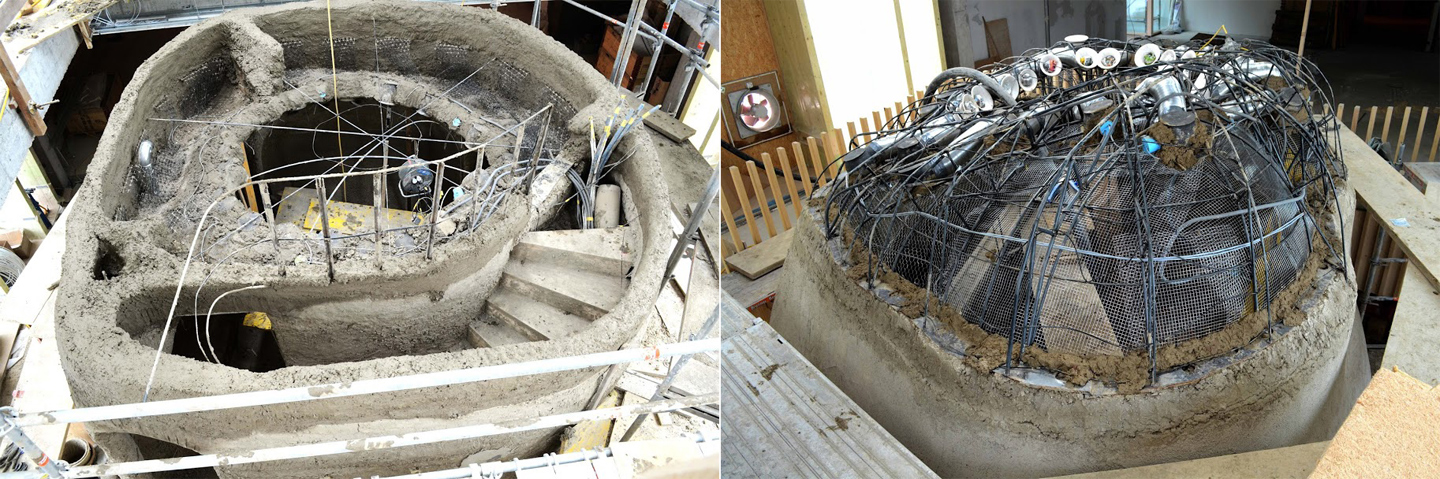
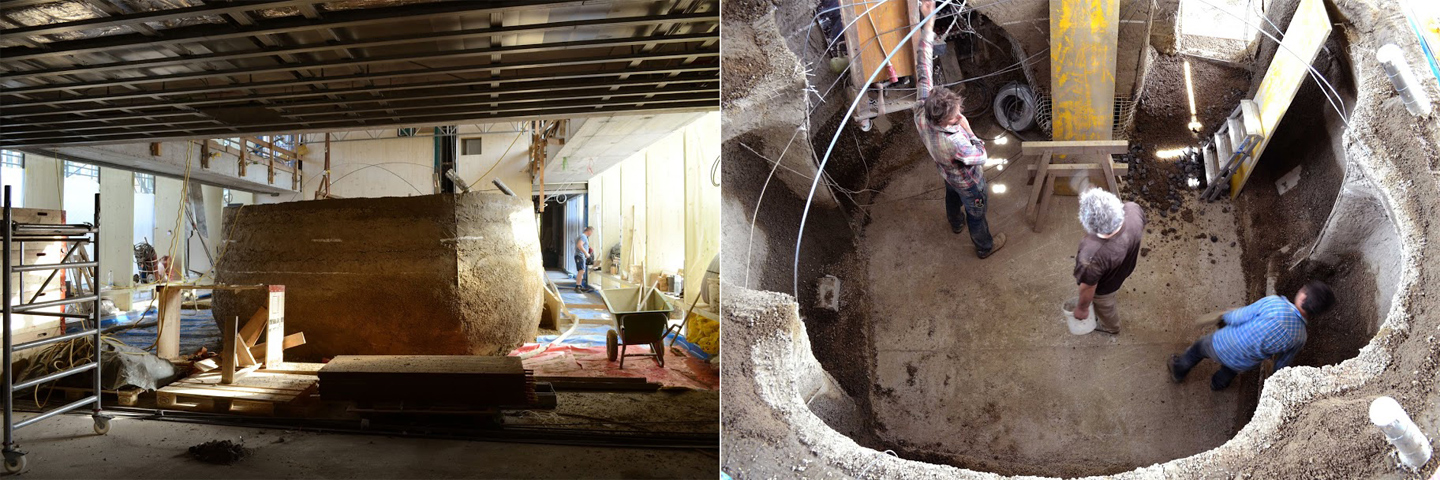
The monolith is the most experimental structure of these 3. It is an attempt to bring the most basic building earth technique, zabur, as it is used in Ghana for example into Austrian laws and regulation systems. It is a two-storey structure with only 15 centimeters thick unstabilized clay walls including a load bearing clay dome. The Austrian regulations unfortunately lead, besides a steel foundation, to an addition of two horizontal steel rings as well as a ring for the central light opening. The rest of the monolith is layer by layer shaped by hand.
The zeppelin is a meeting room up in the air that glooms in the night and illuminates the space. Through the silky skin the atmosphere inside is very soft and poetic, in dialogue with the rich patterned textiles from Bangladesh the space will touch the senses in a very subtile way. The structure is made by timber, covered by an outside layer of handwoven non-violent silk from a leprosy project in India called Little Flower. The pool formed out of a landscape of earth is filled with a dozen of pillows from Bangladesh that we've made in cooperation with the NGO Dipshikha. It is a playful and communicative area where pillow fights will possibly be happening, same as a snooze in a pile of silky cushions.
Materials: clay as load bearing earth walls and as plaster, which also has a positive influence on the indoor climate. Local timber. Locally made ceramics. Hand-stitched and printed cushions from women in Rudrapur, Bangladesh. Hand-woven silk from Little Flower.