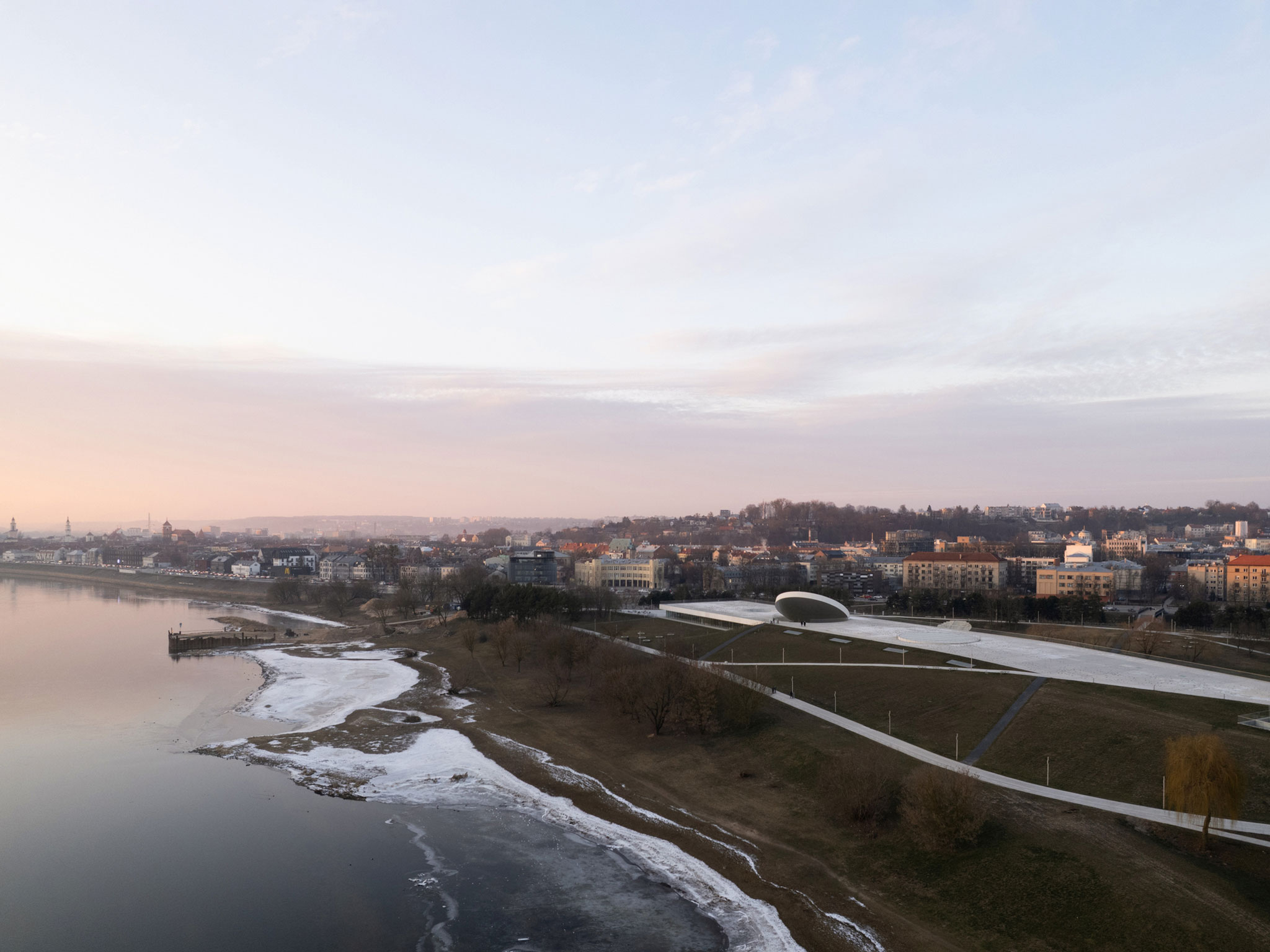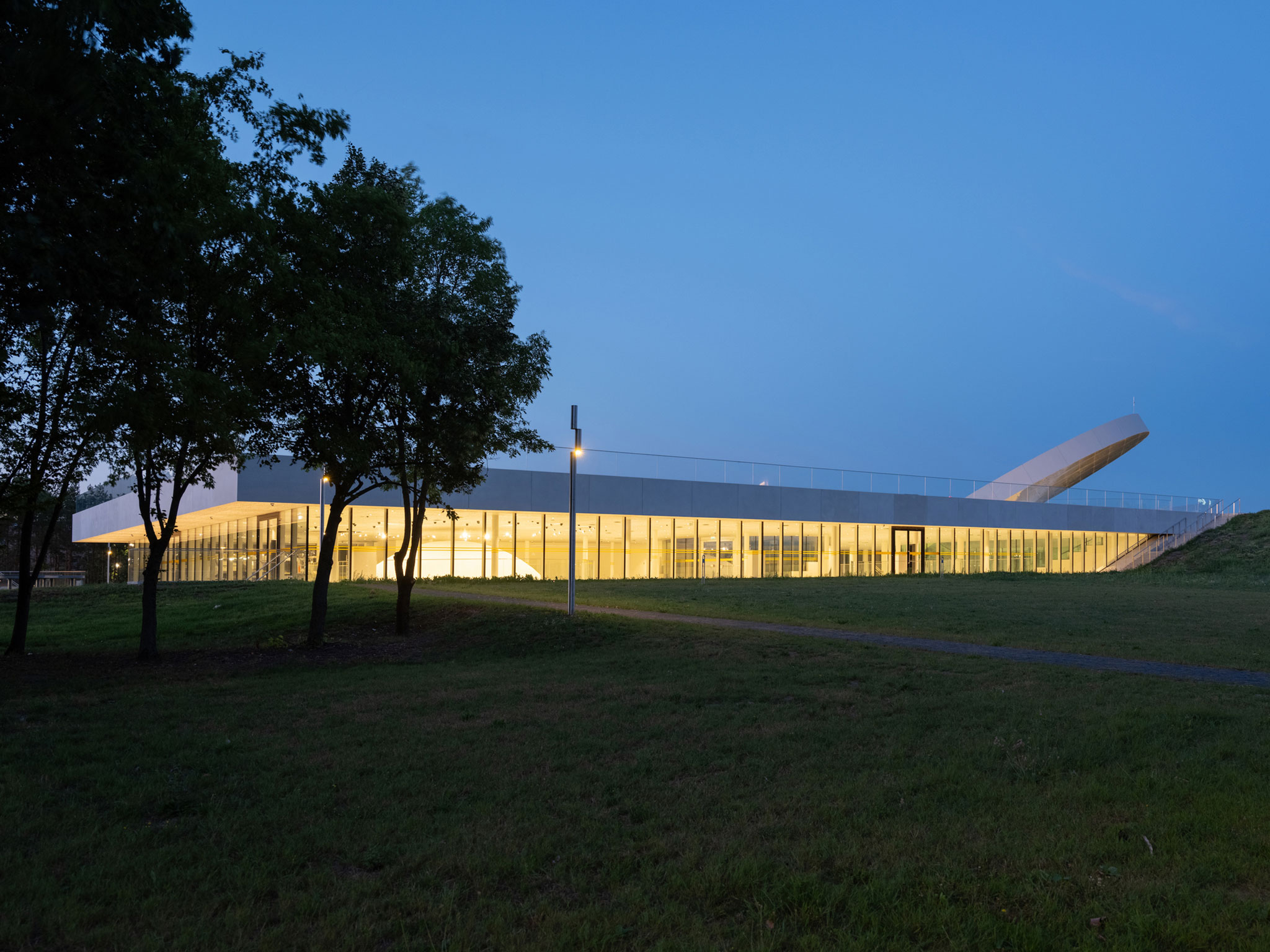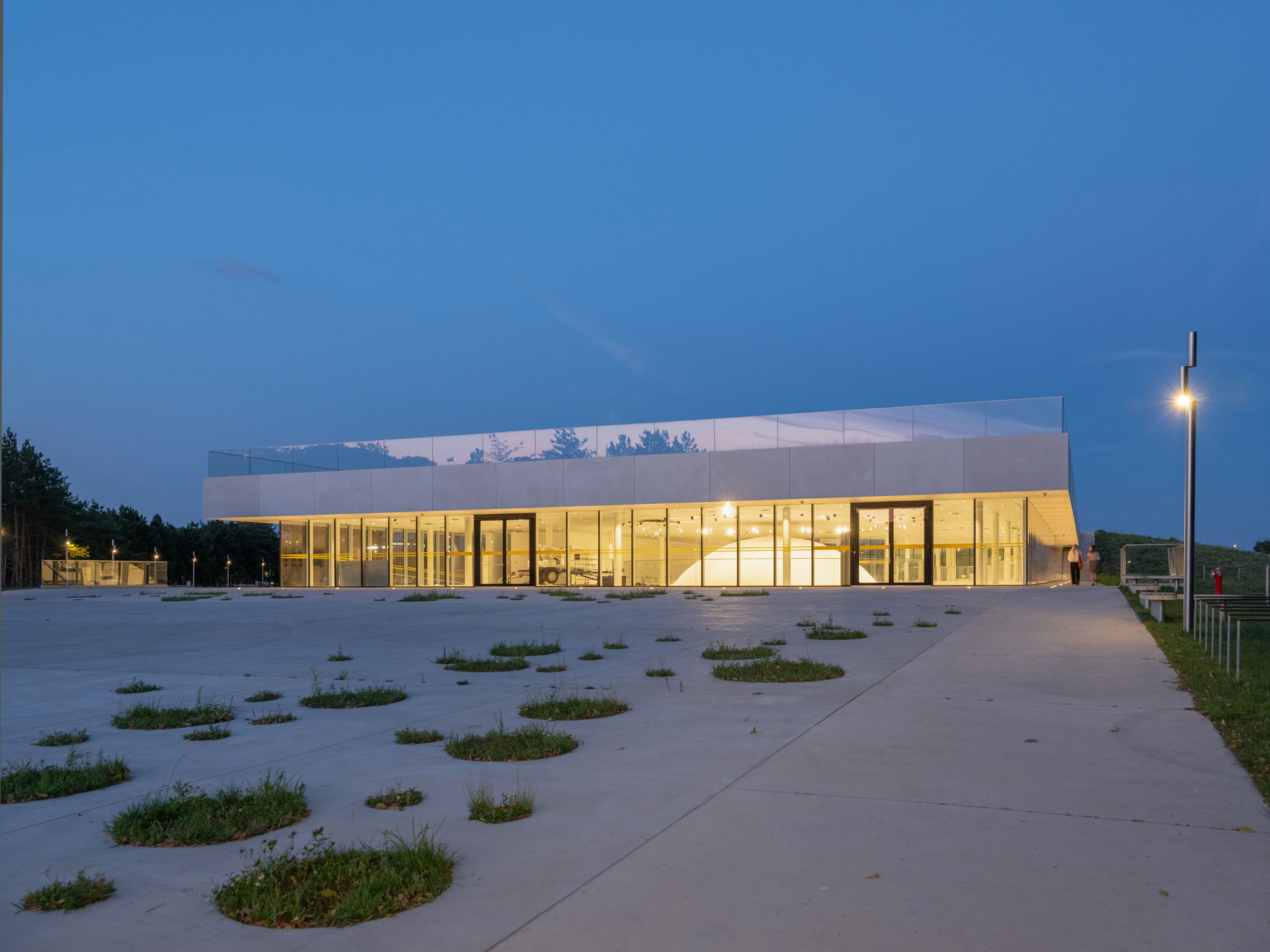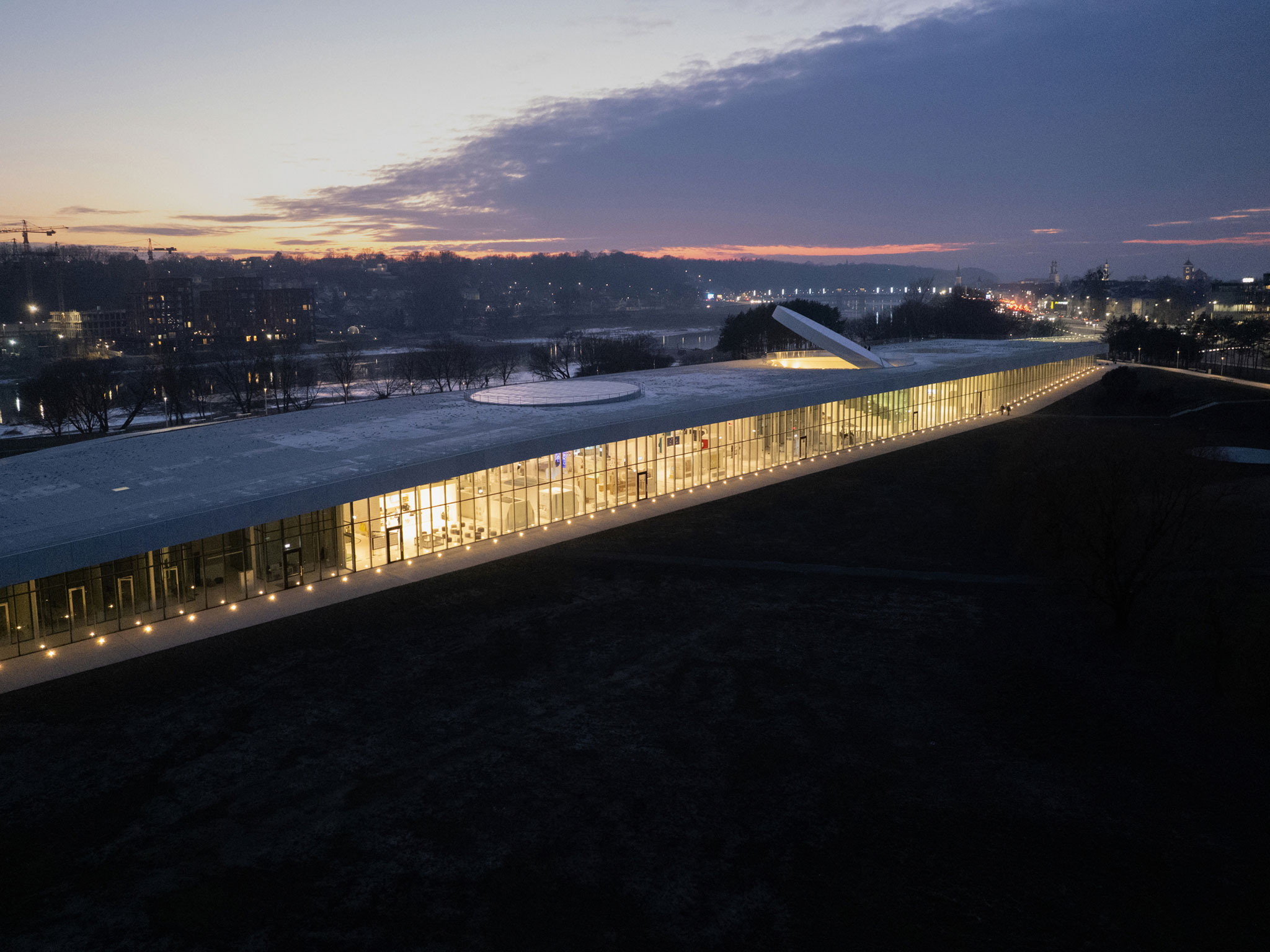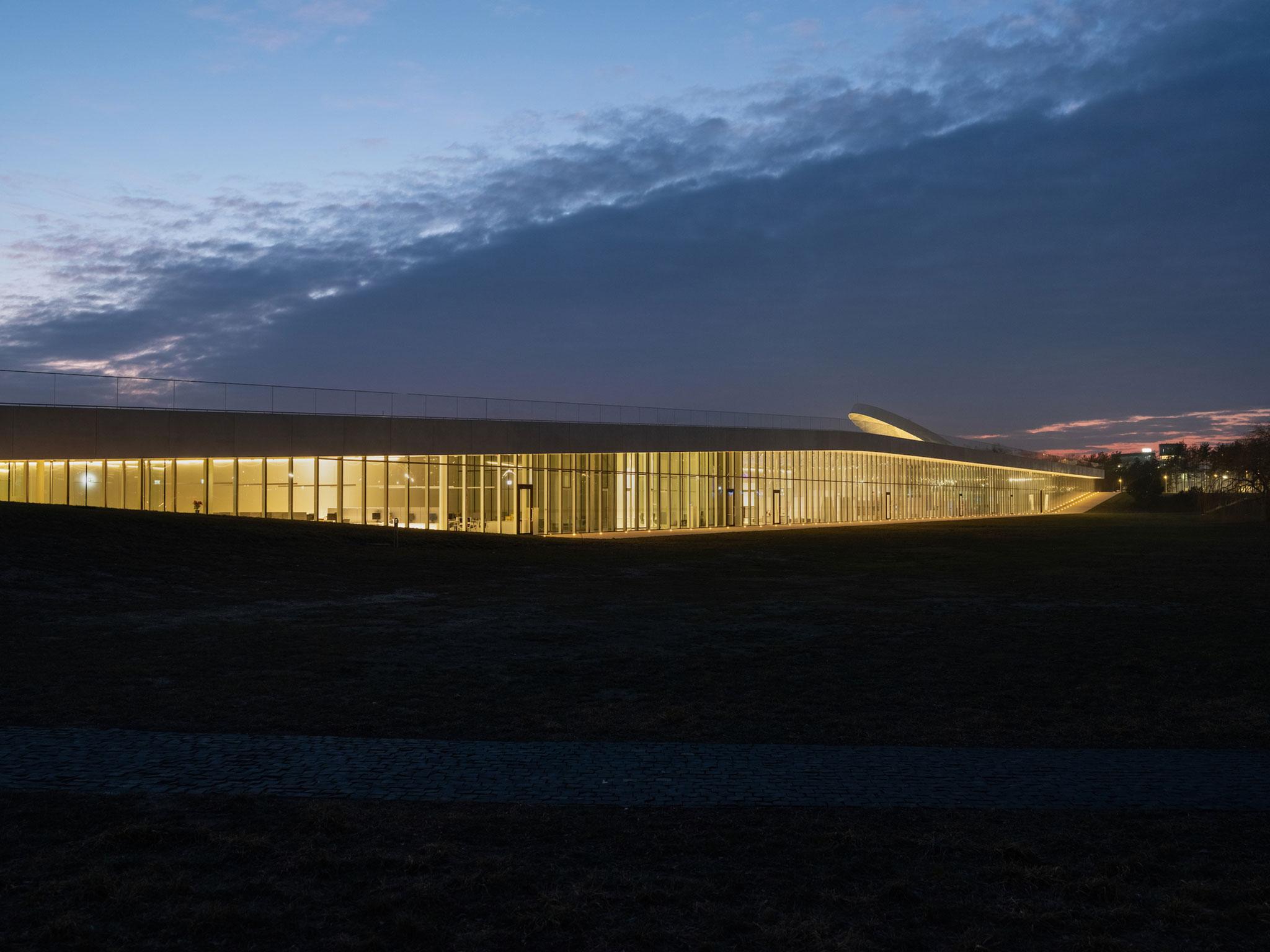
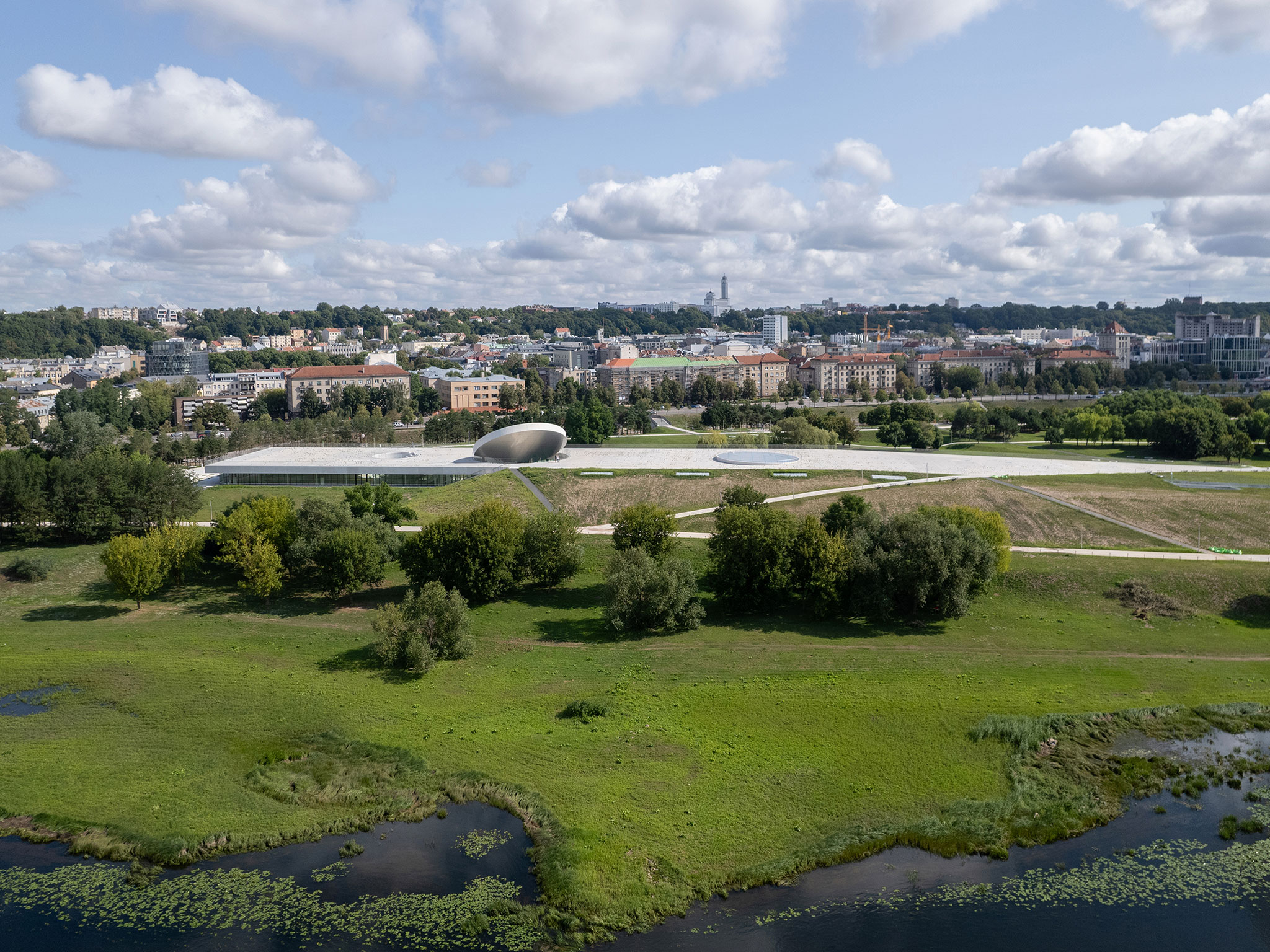
SMAR Architecture Studio was commissioned to design the "Science Island" museum, located on Nemunas Island (named after Lithuania's largest river), an important river island at the confluence of the Nemunas and Neris rivers, a green lung and social hub for the Lithuanian city of Kaunas.

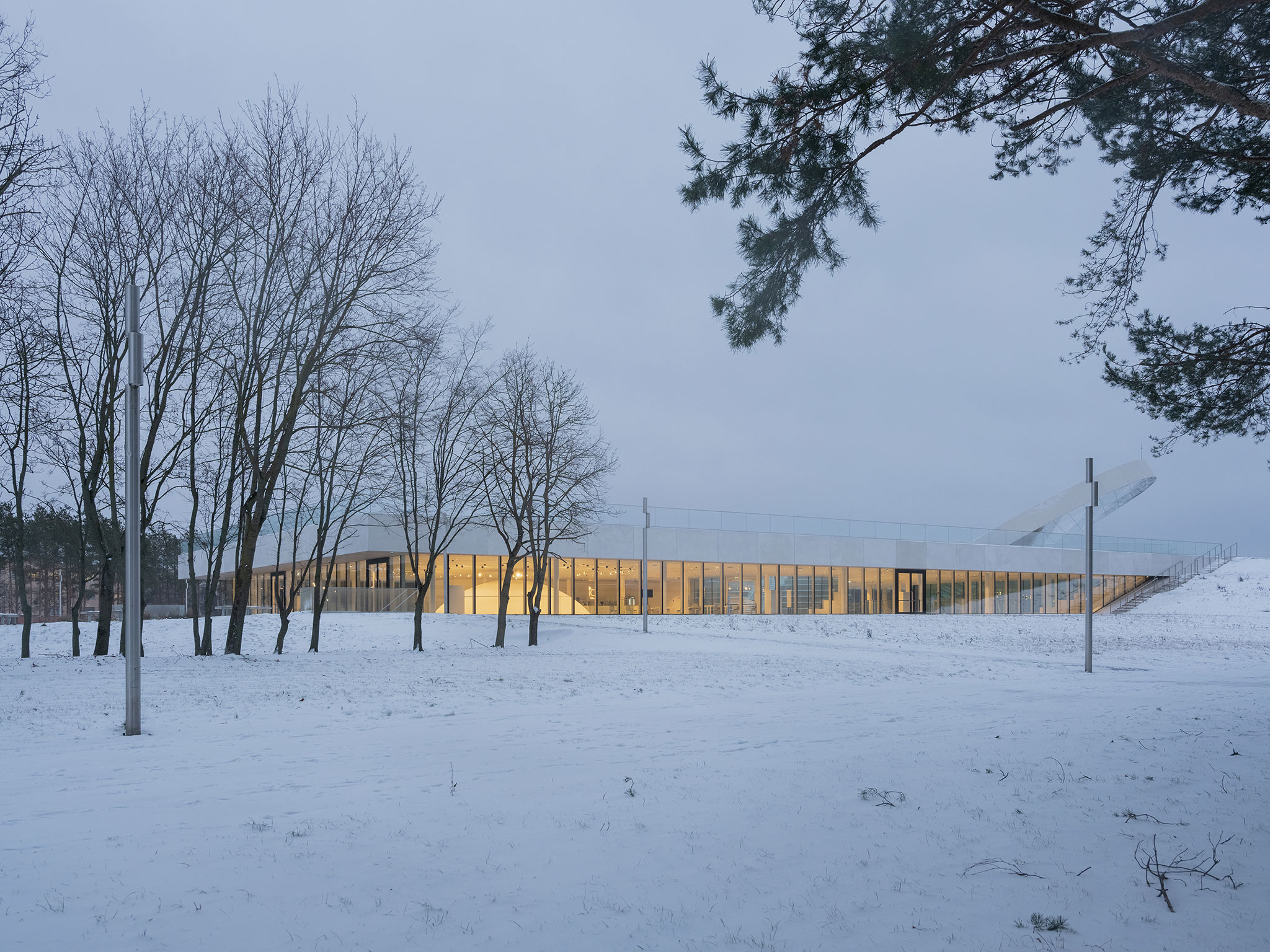
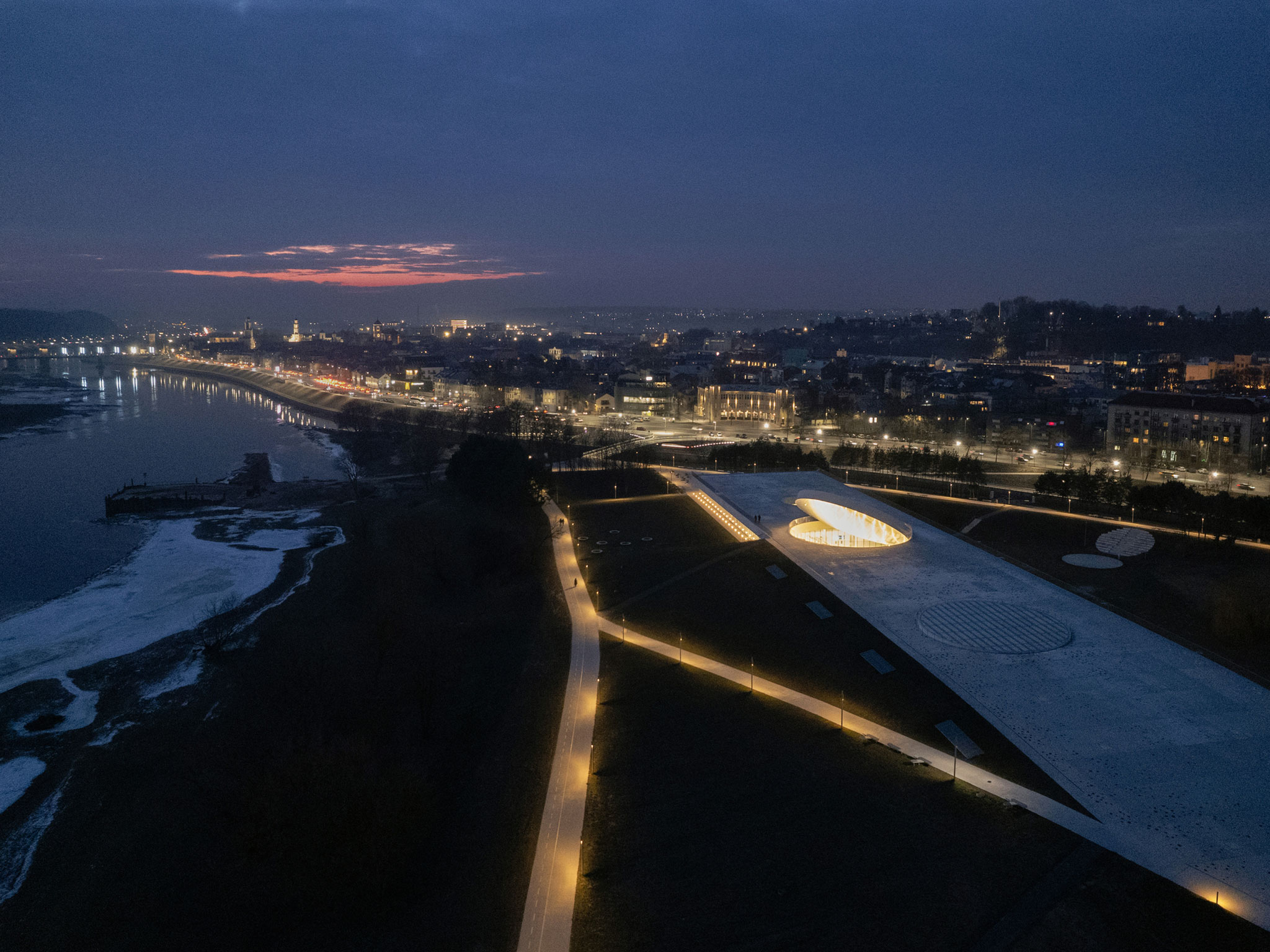
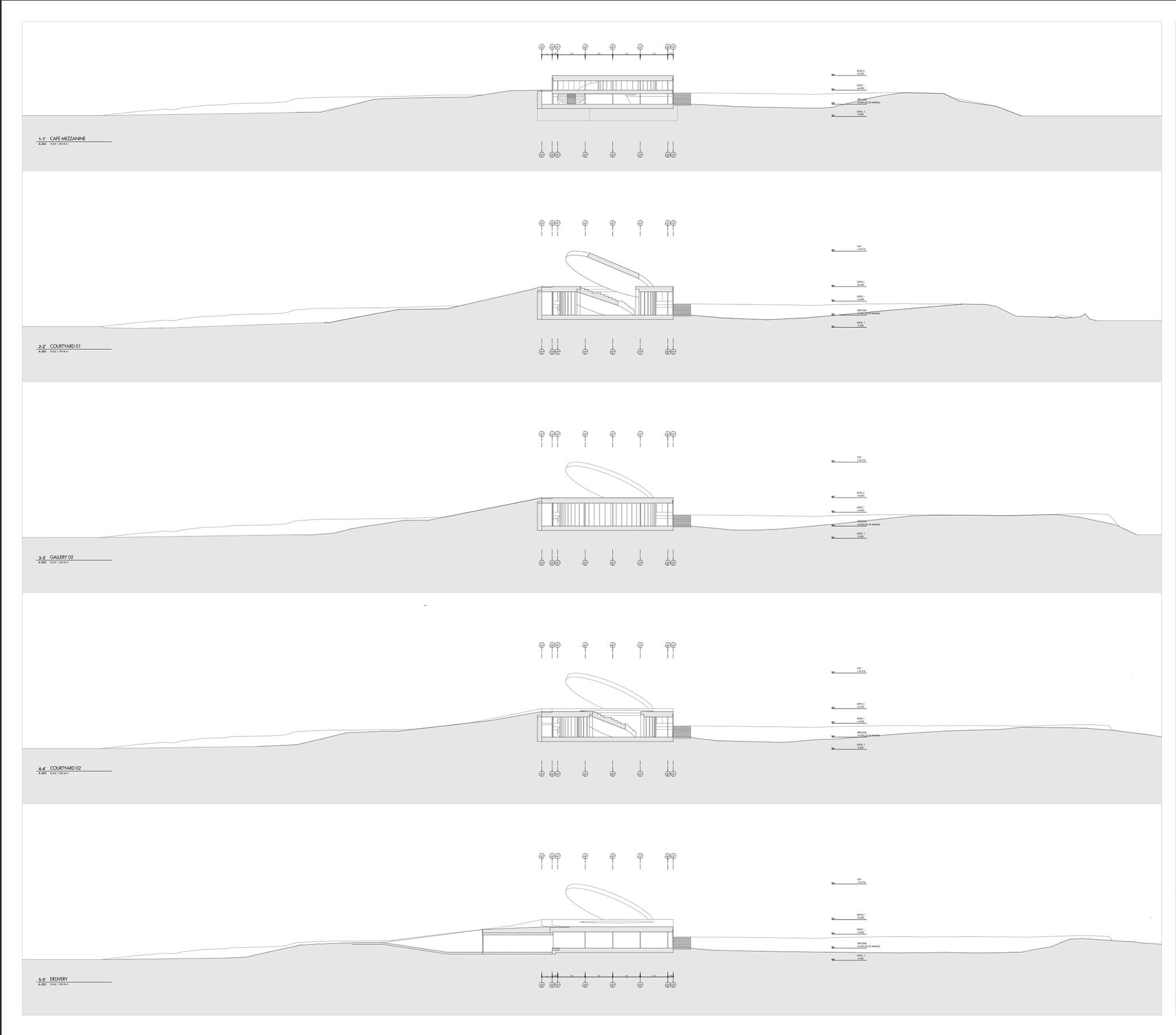
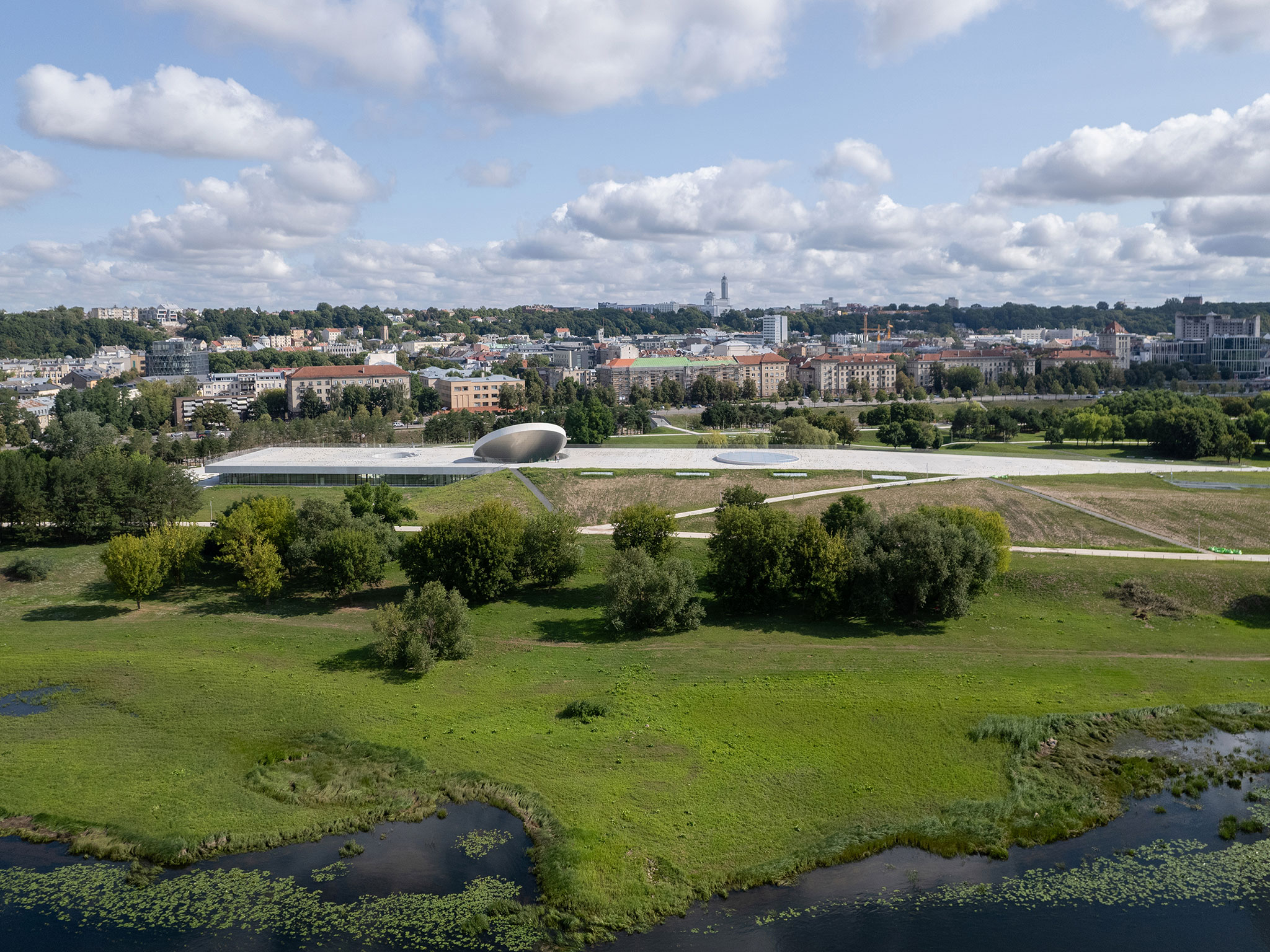
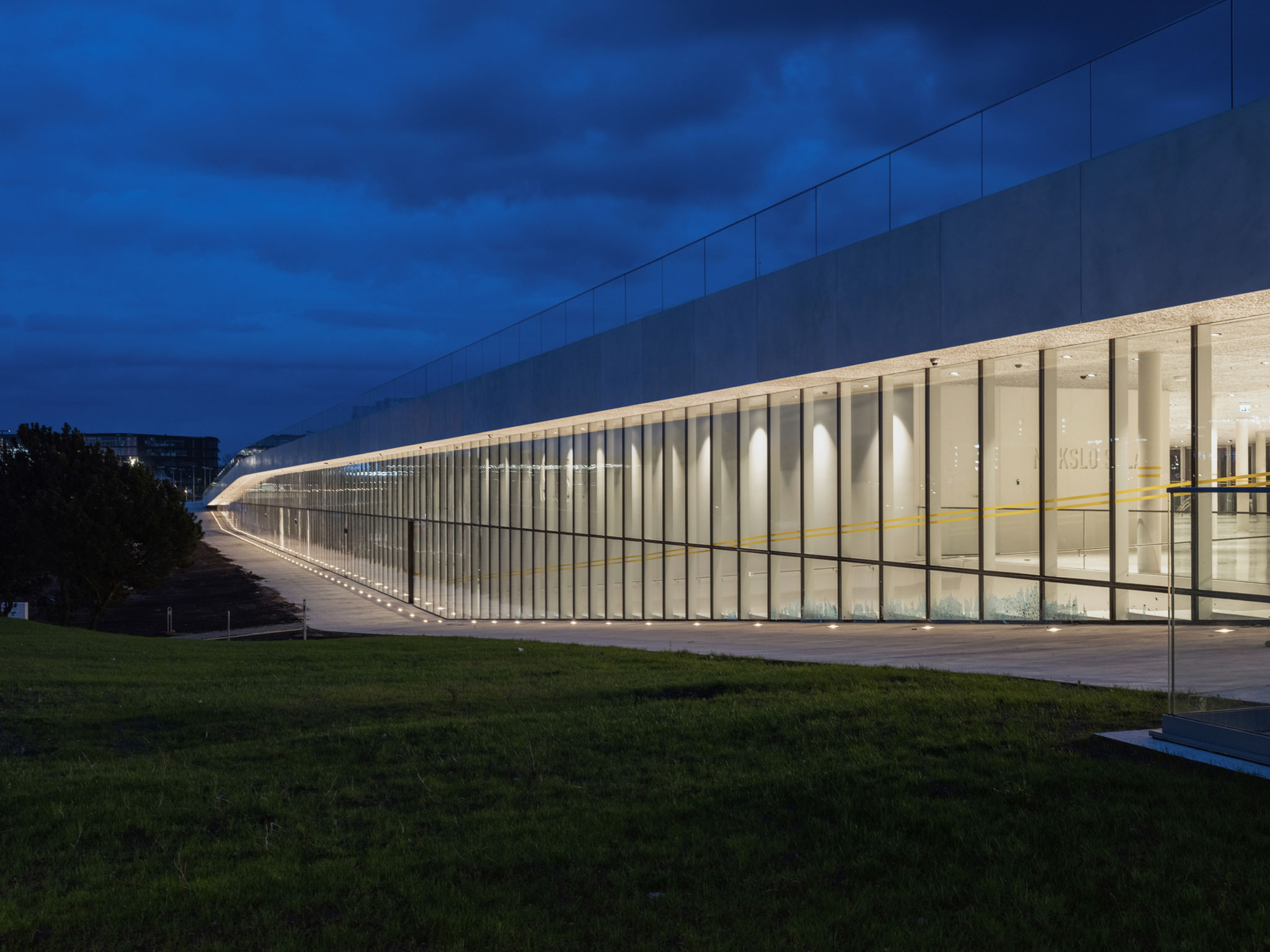
The new building, dedicated to environmental sciences and the first of its kind in Europe, is conceived as a sustainable design due to its integration with the park and its semi-buried position within the topography, which minimizes its visual impact and improves the complex's thermal performance.

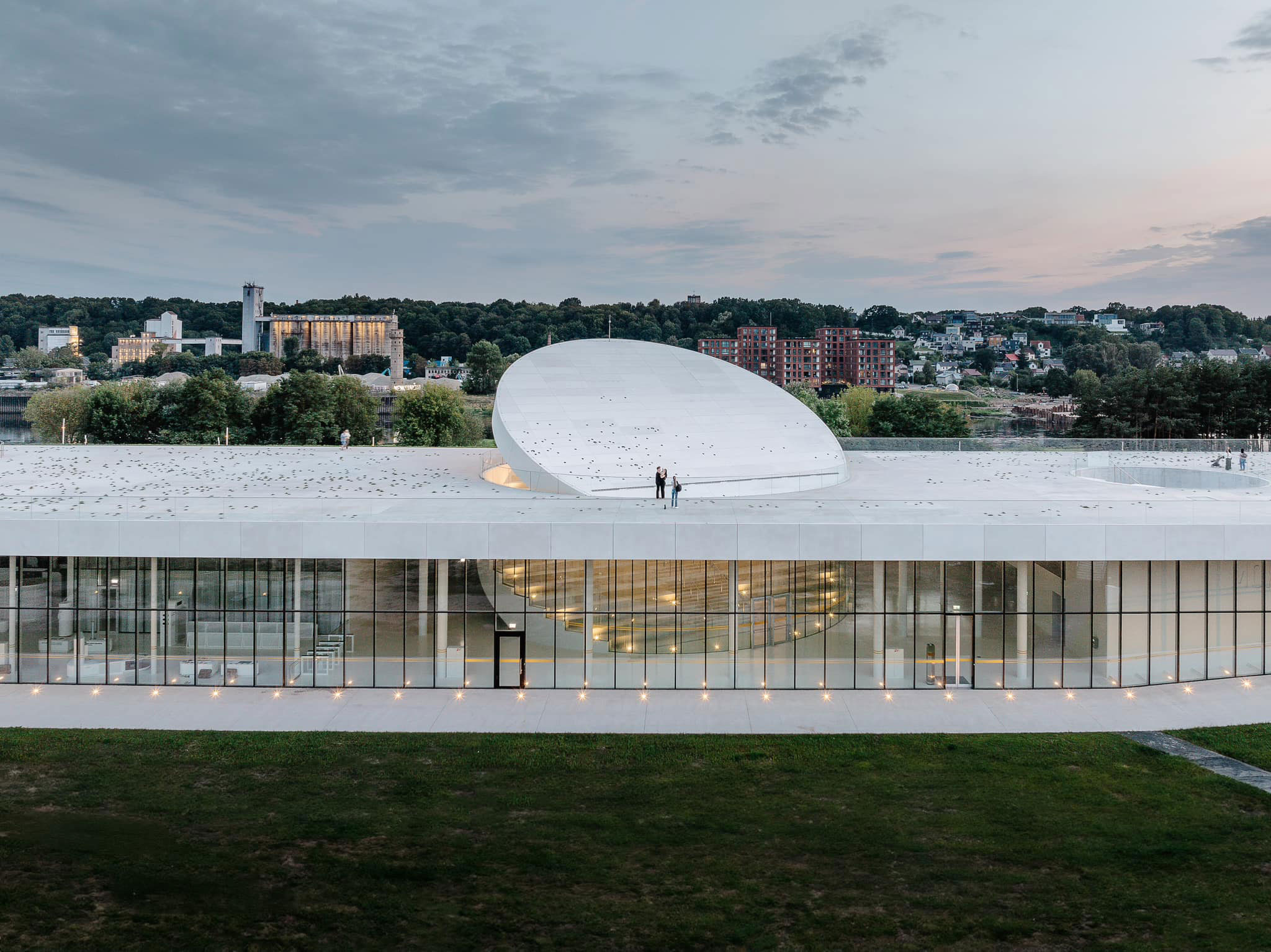
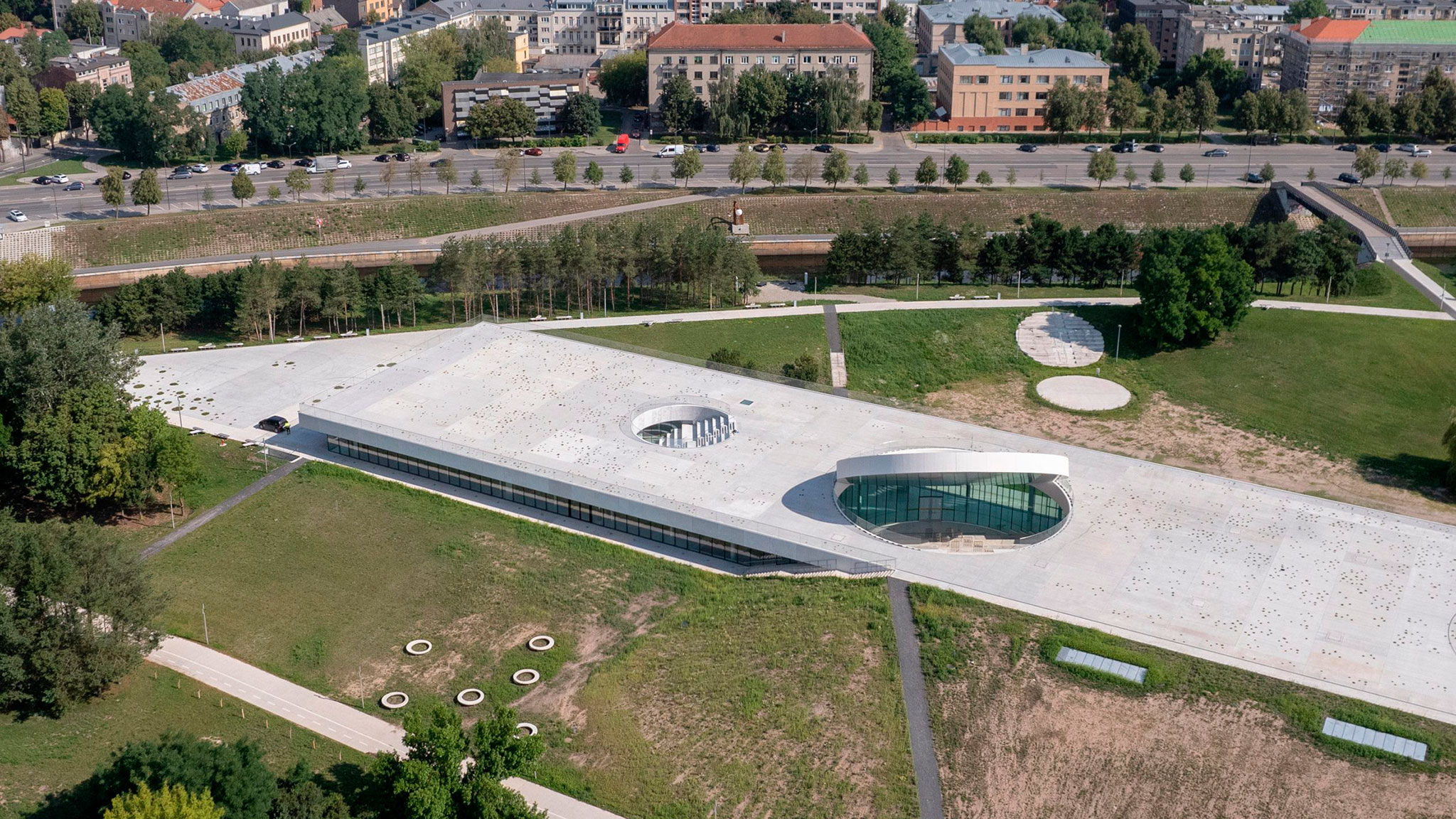
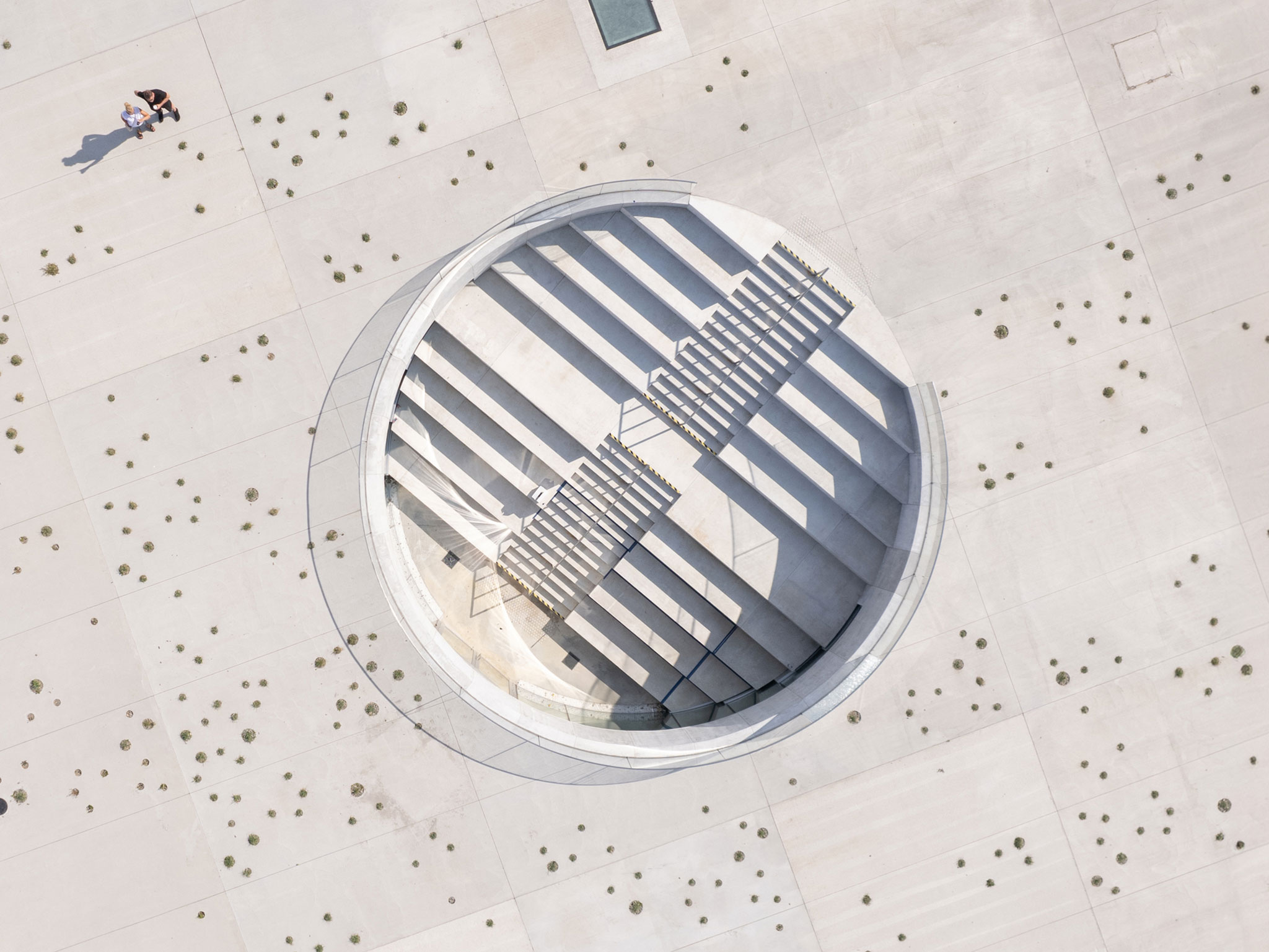
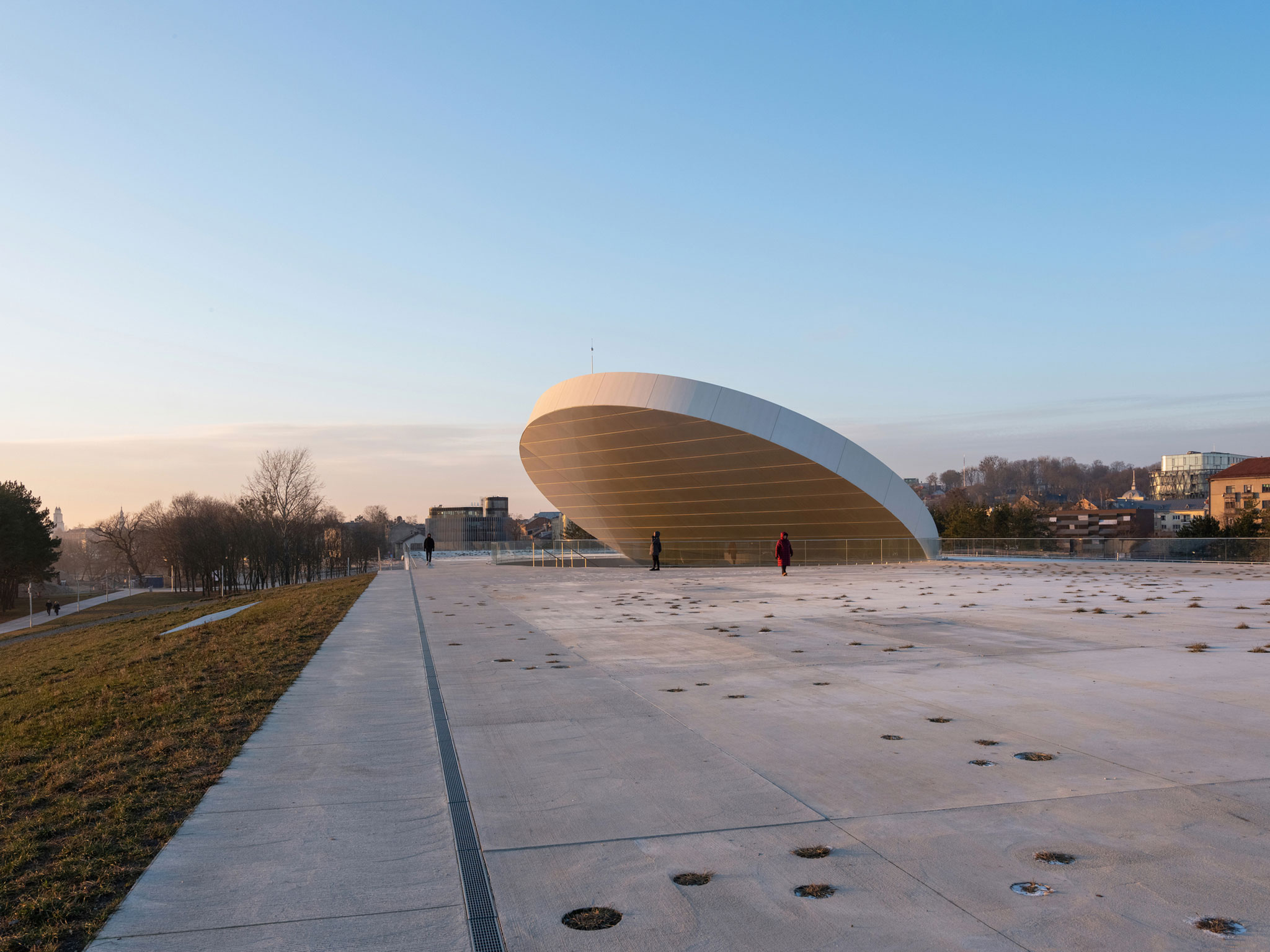
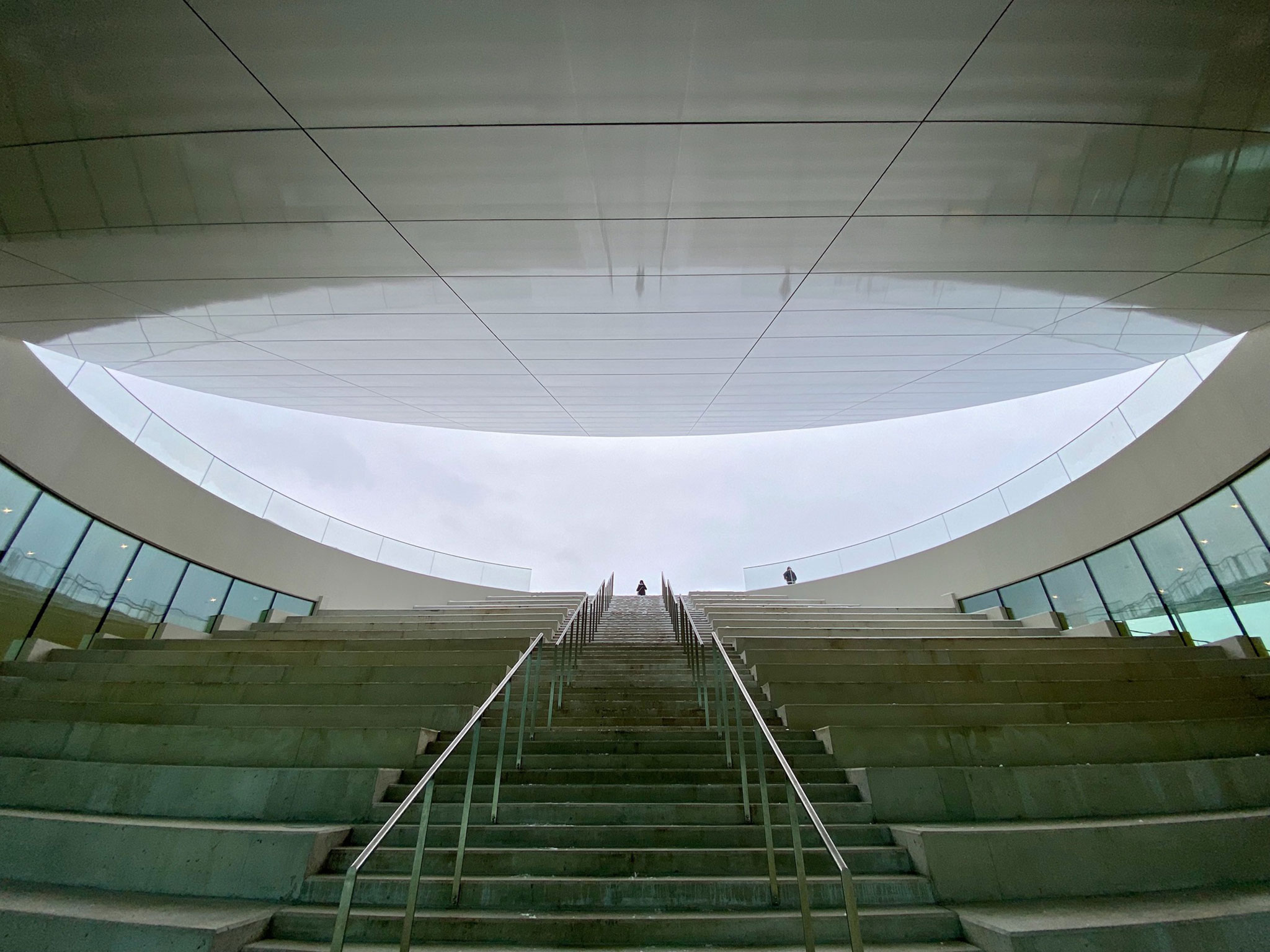
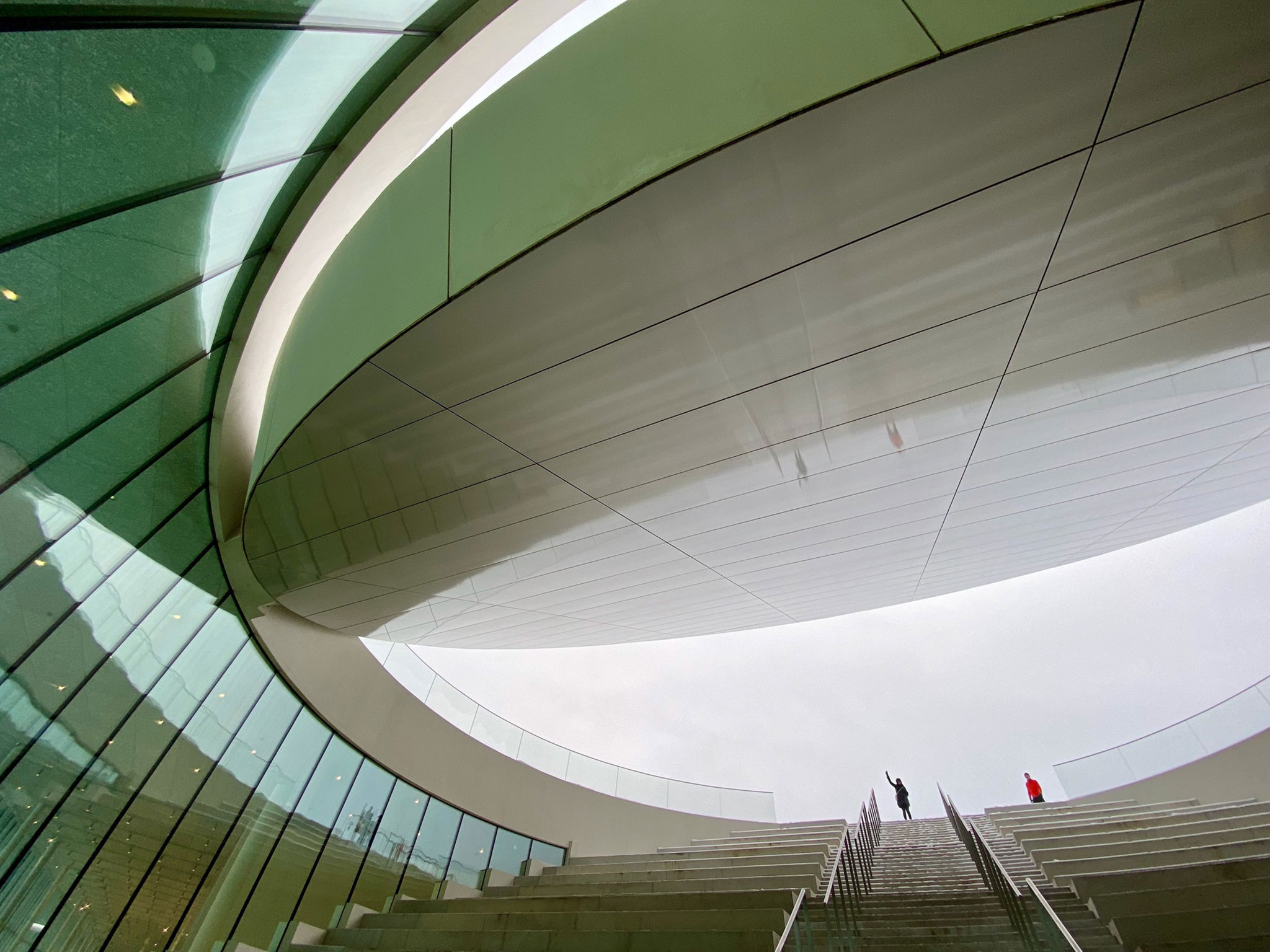
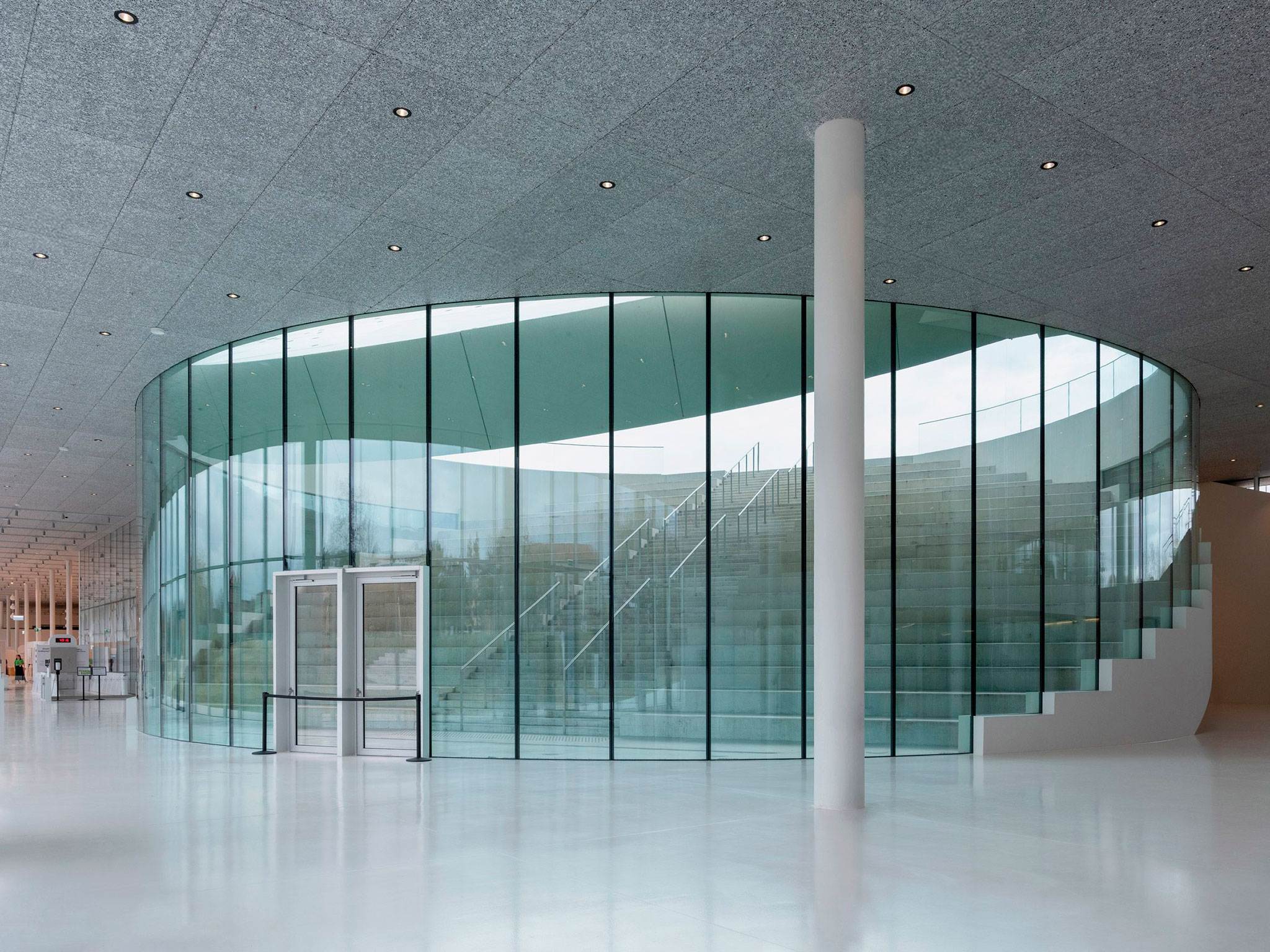
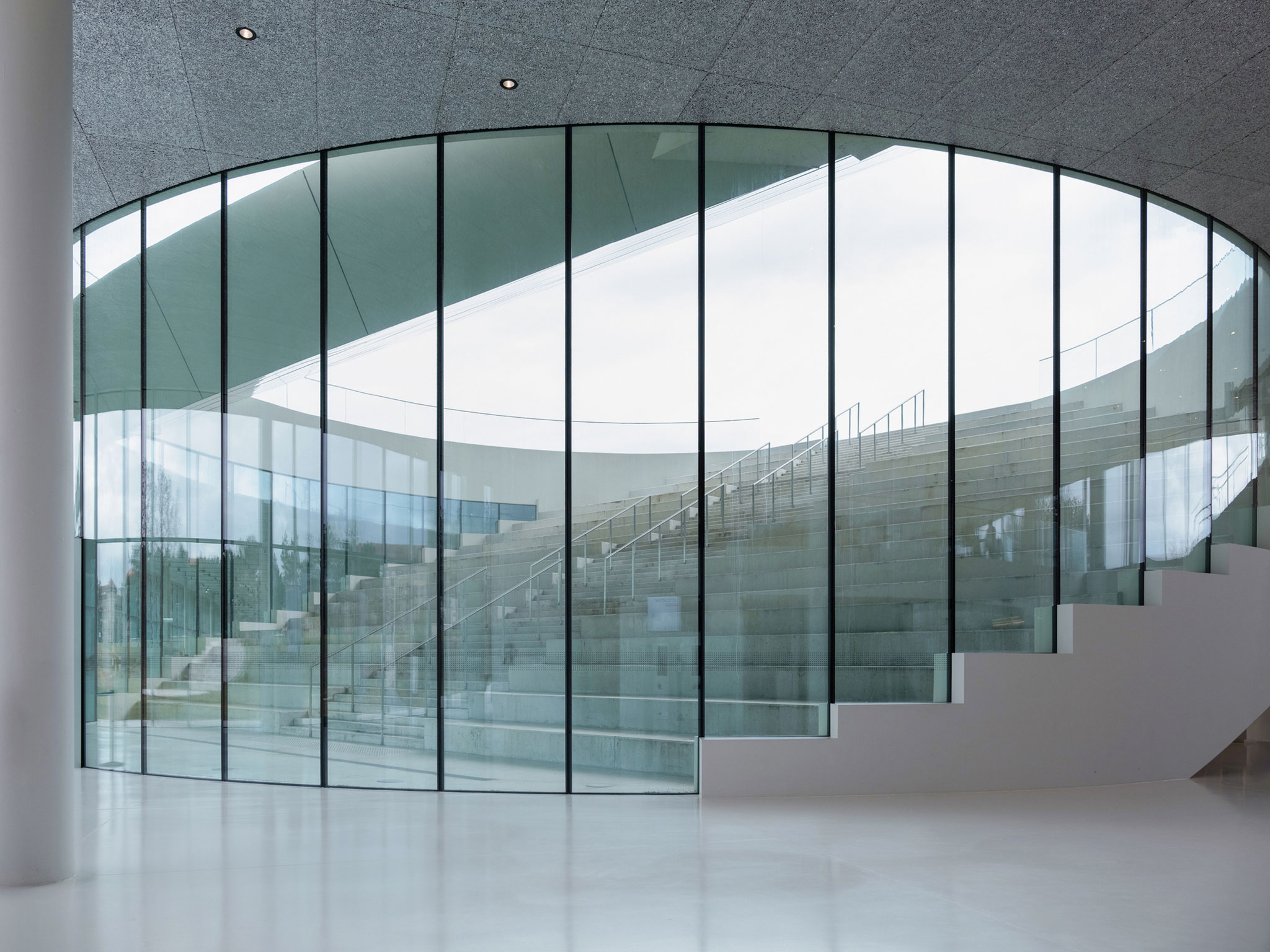
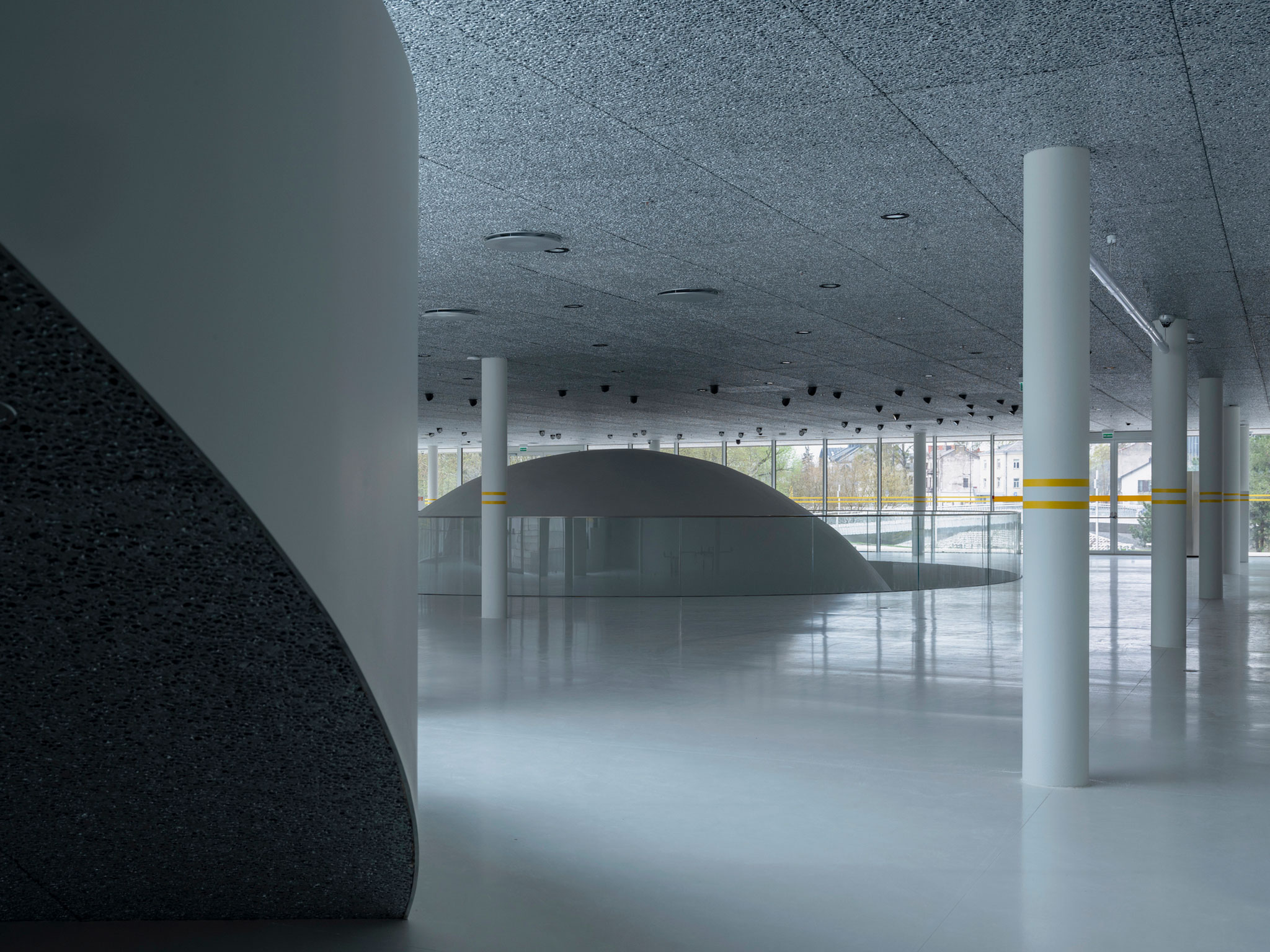
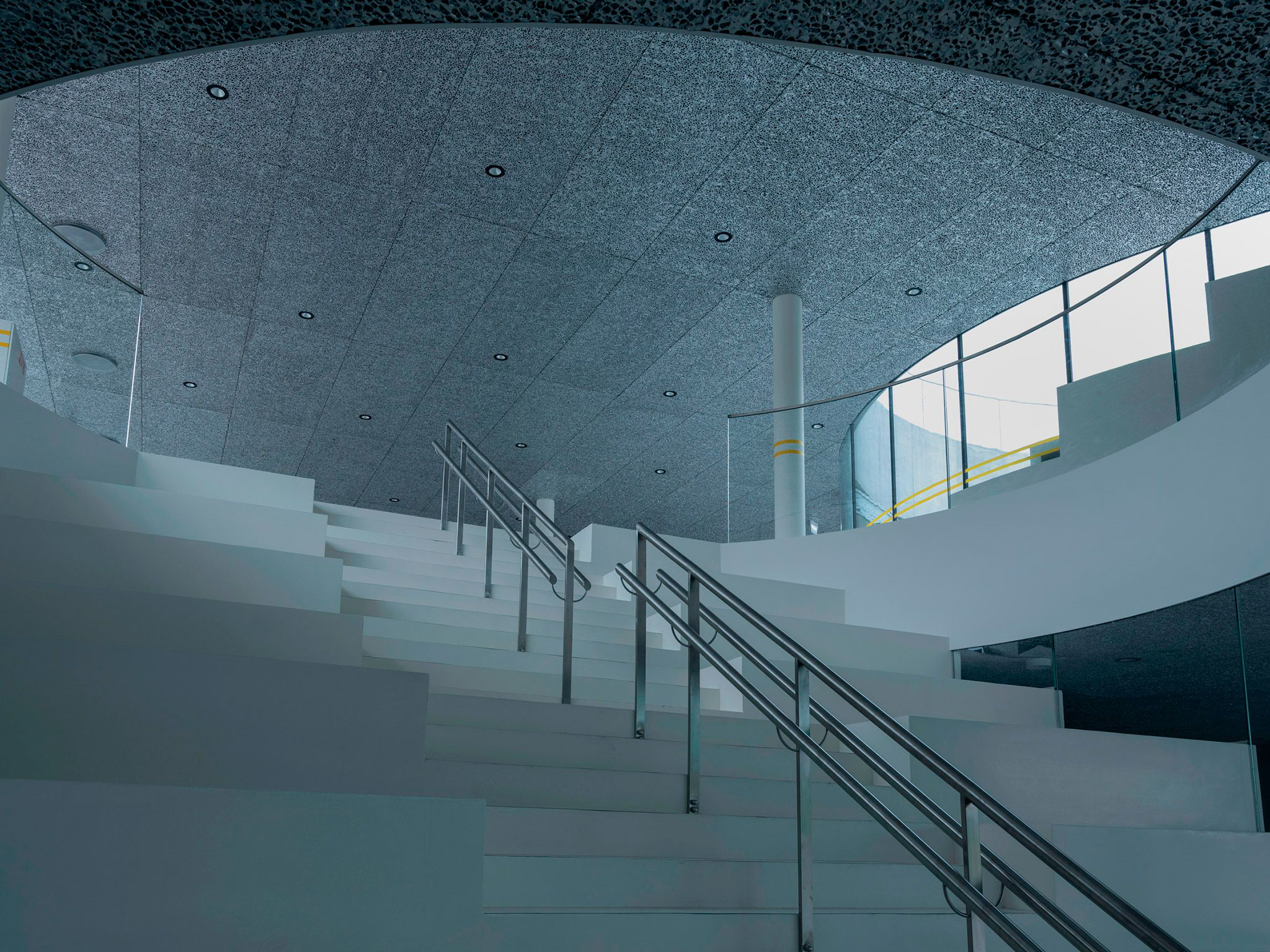
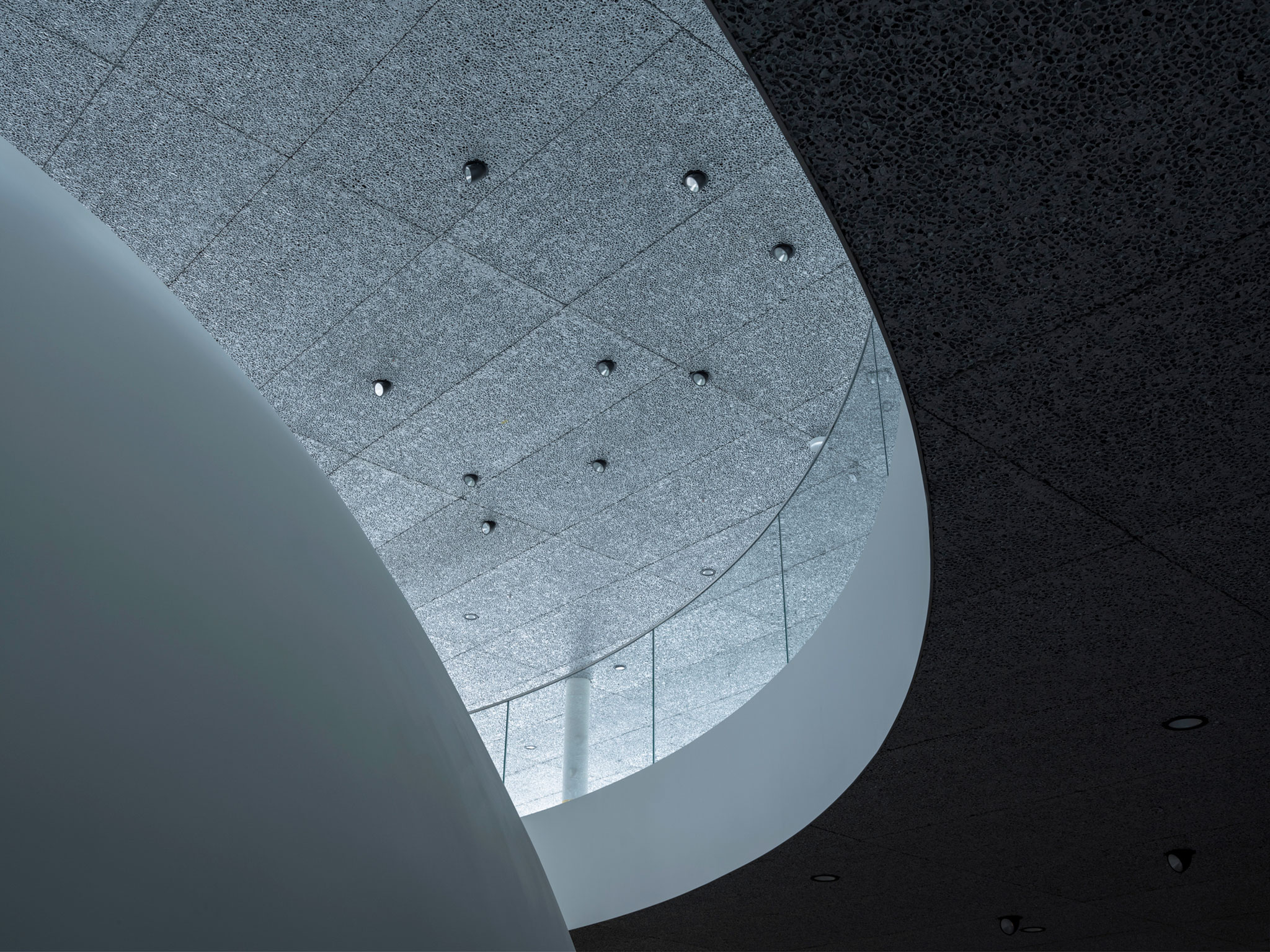
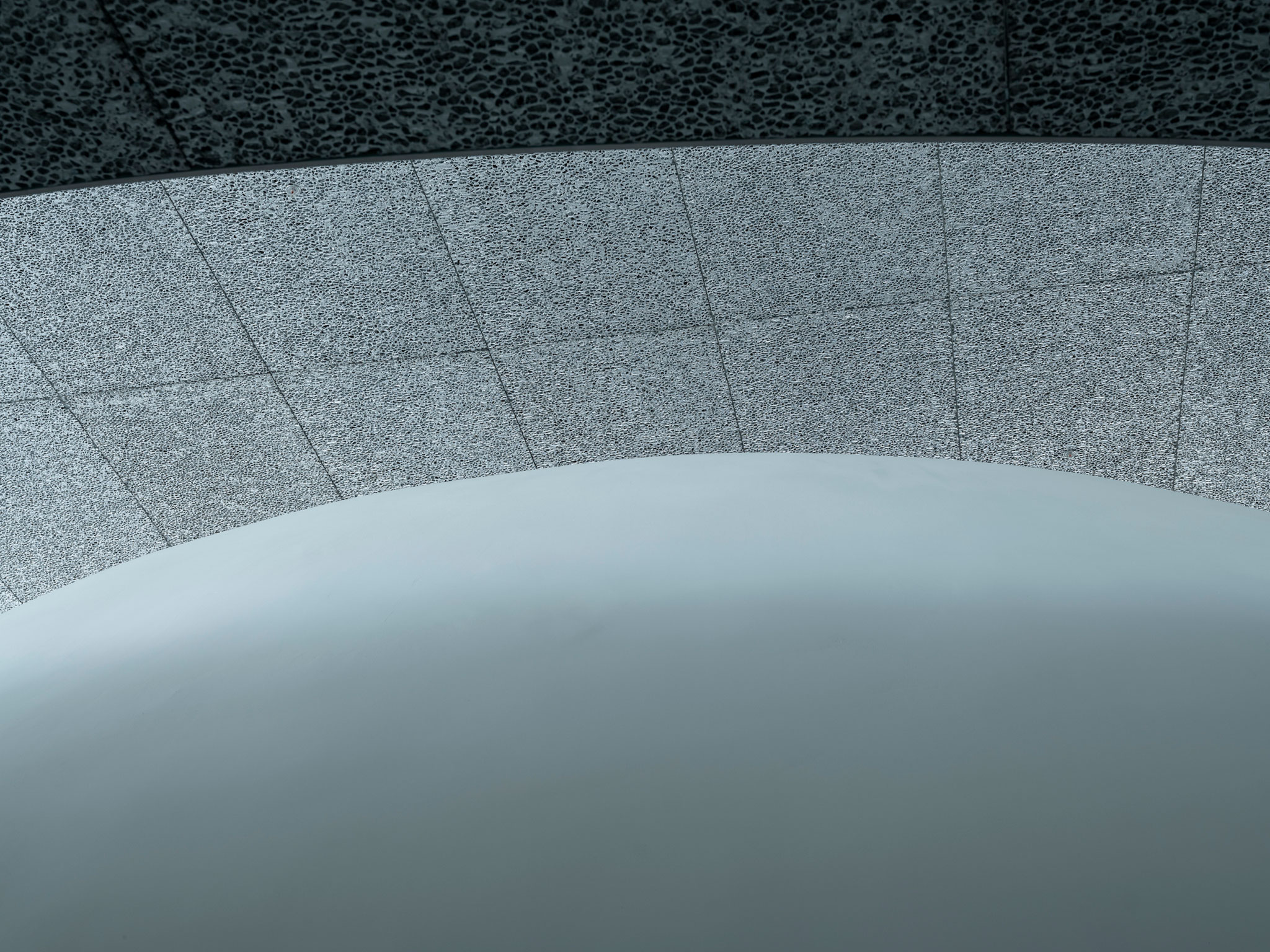
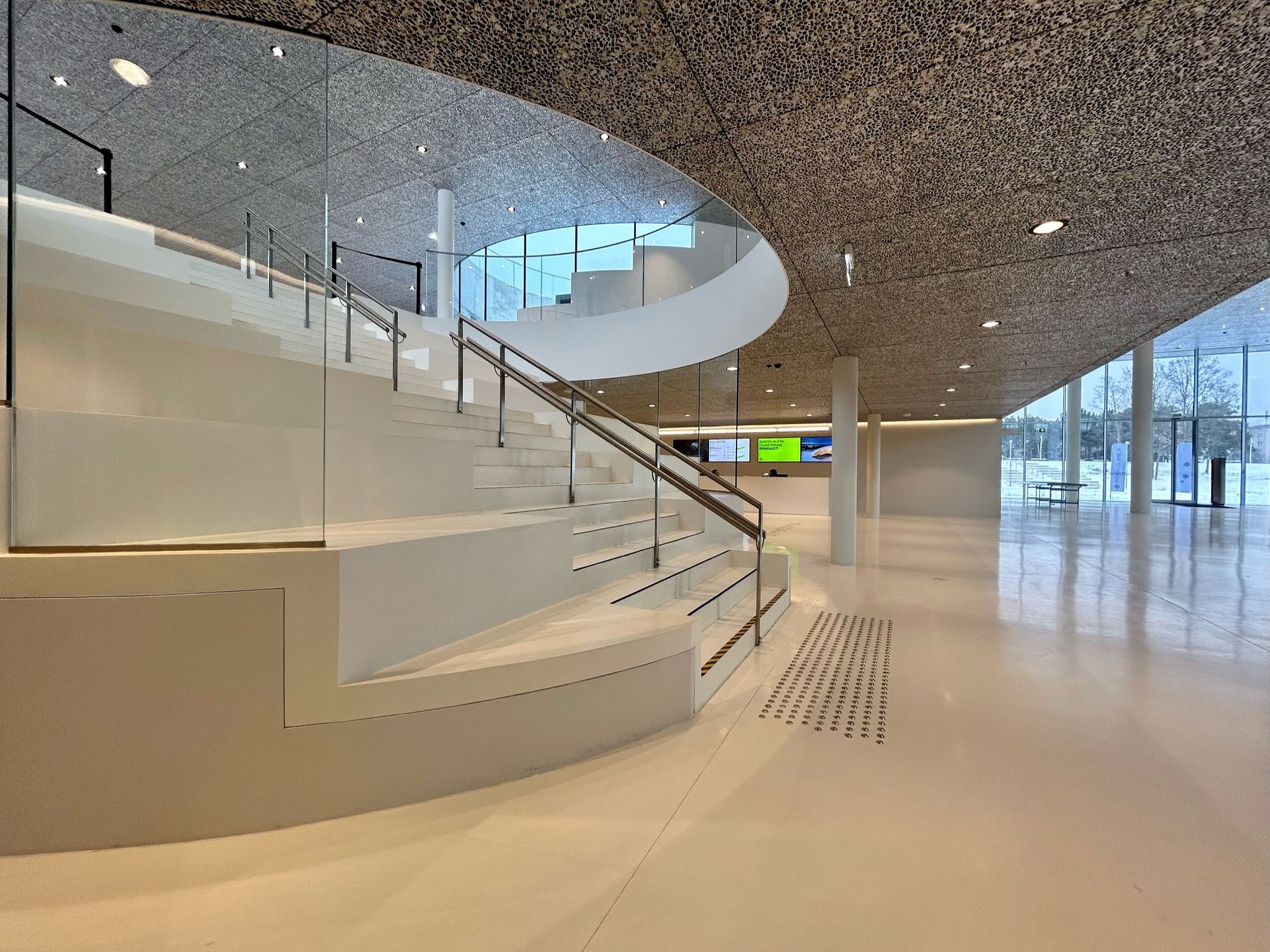
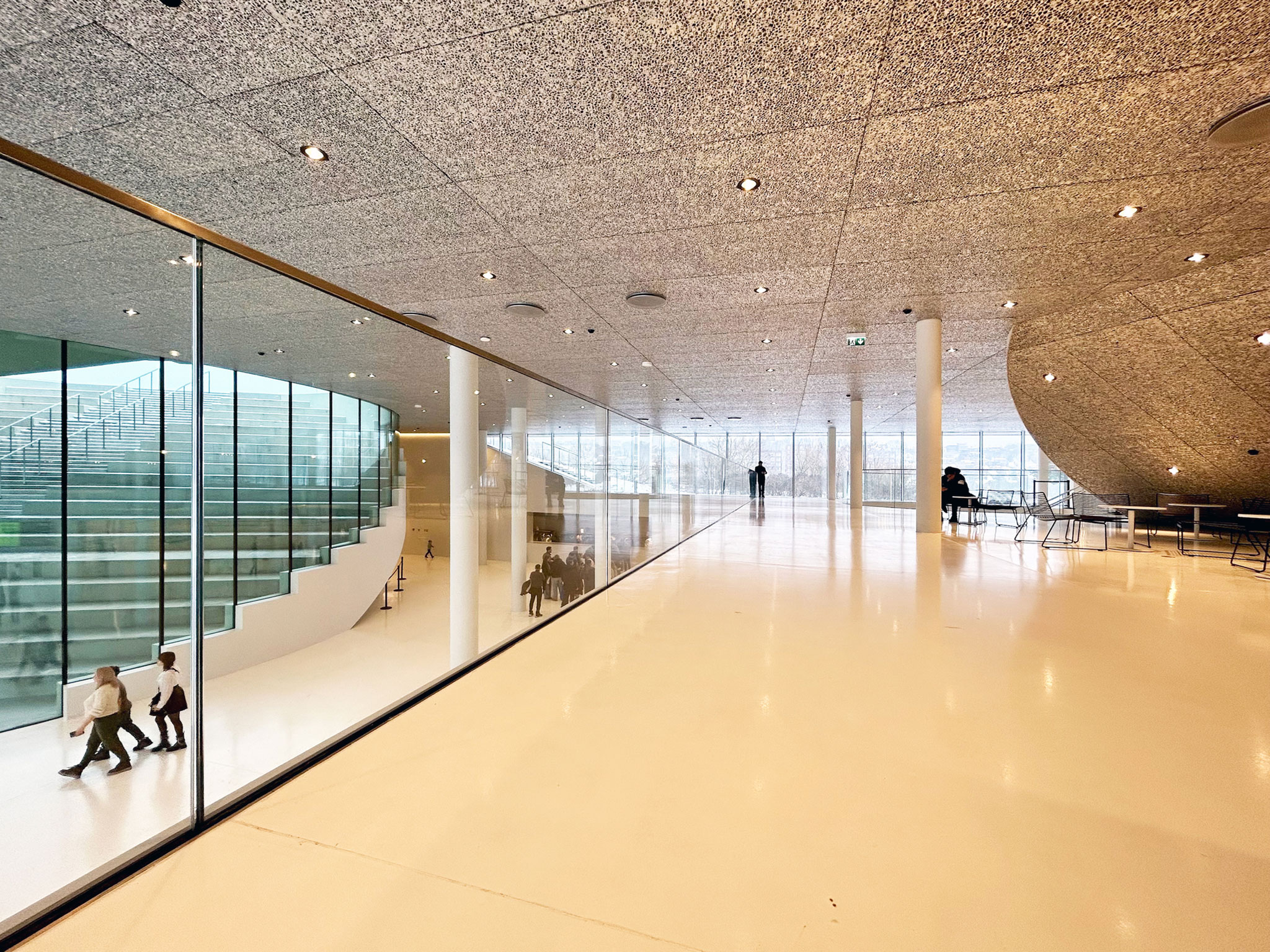
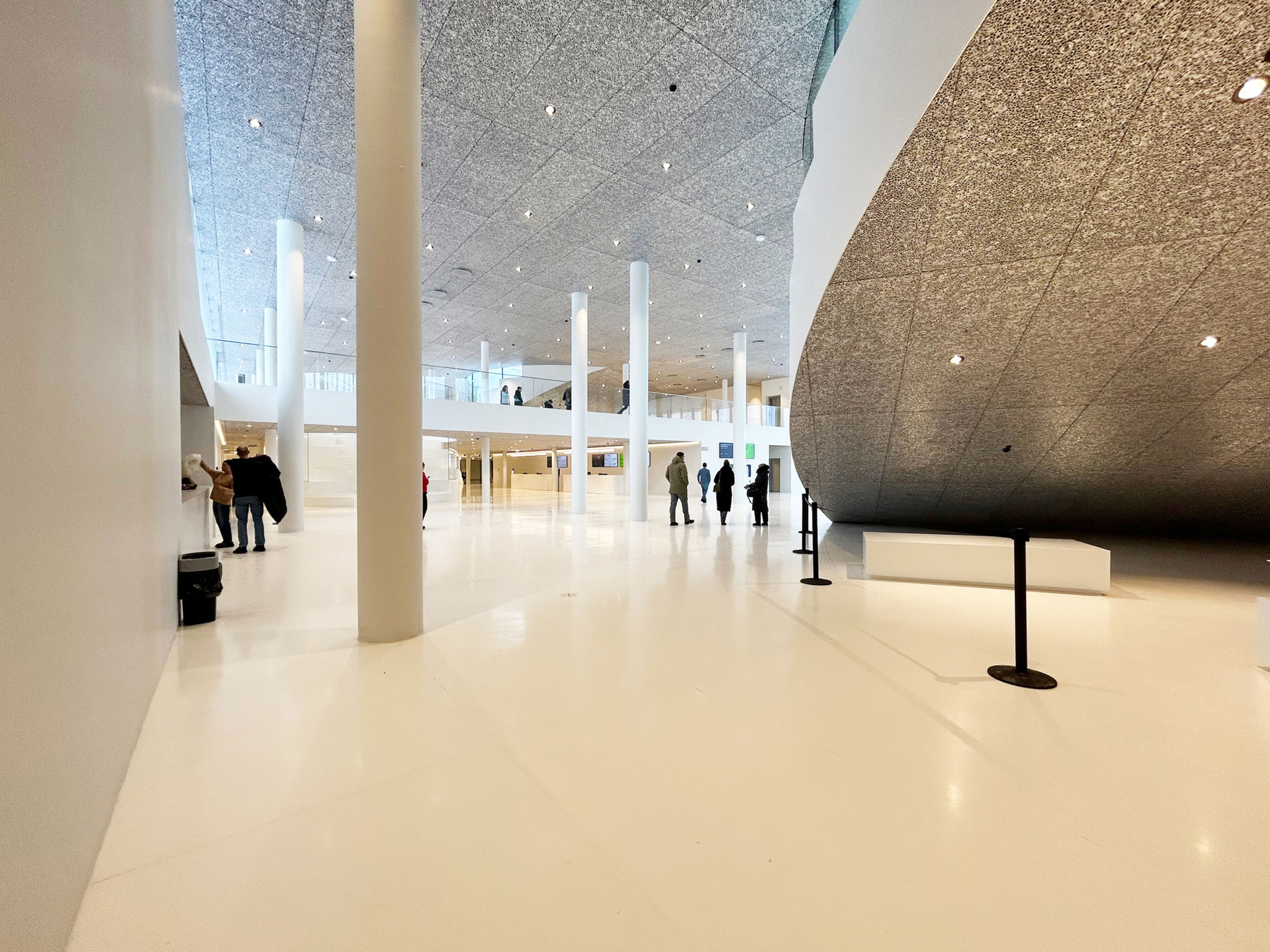
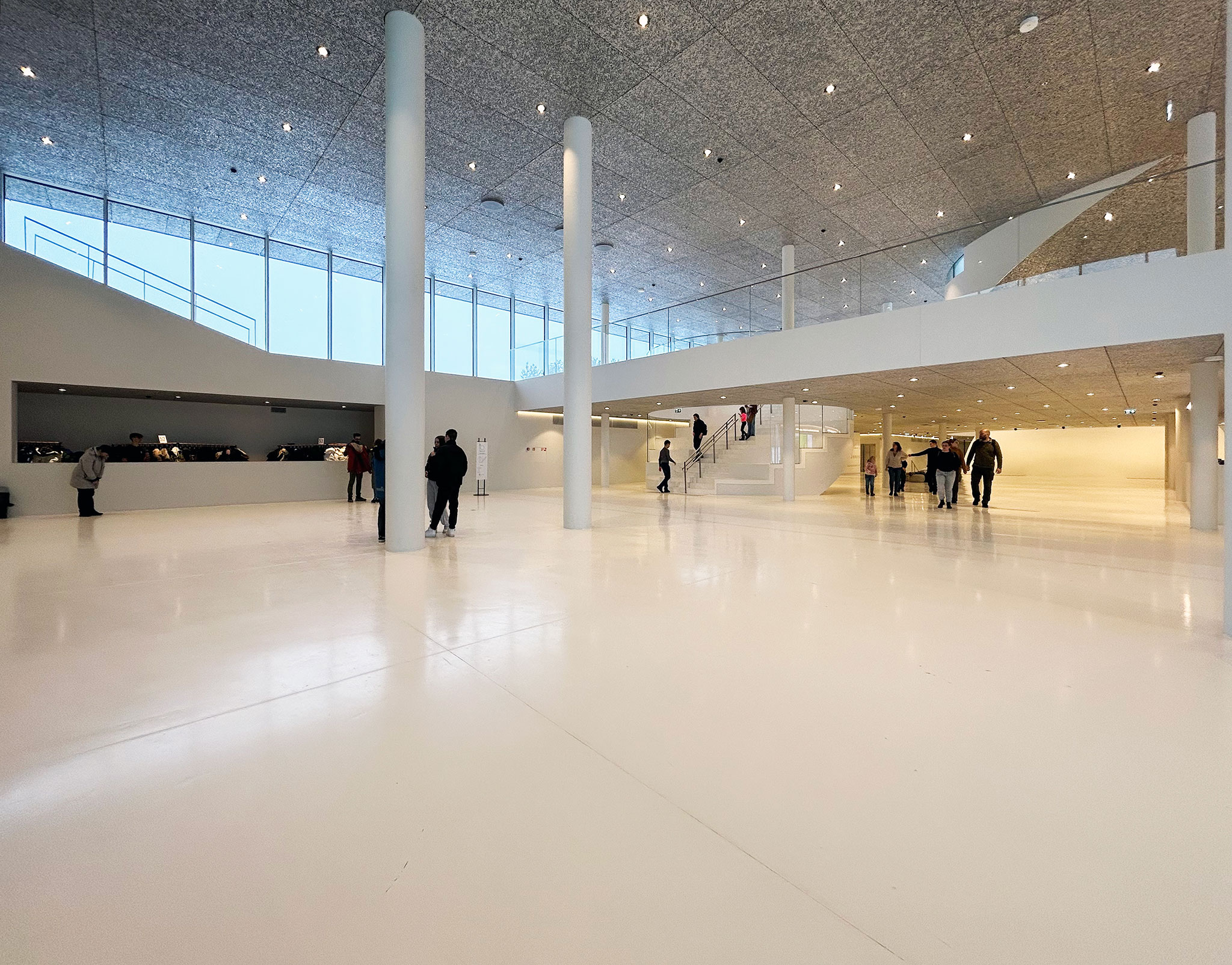
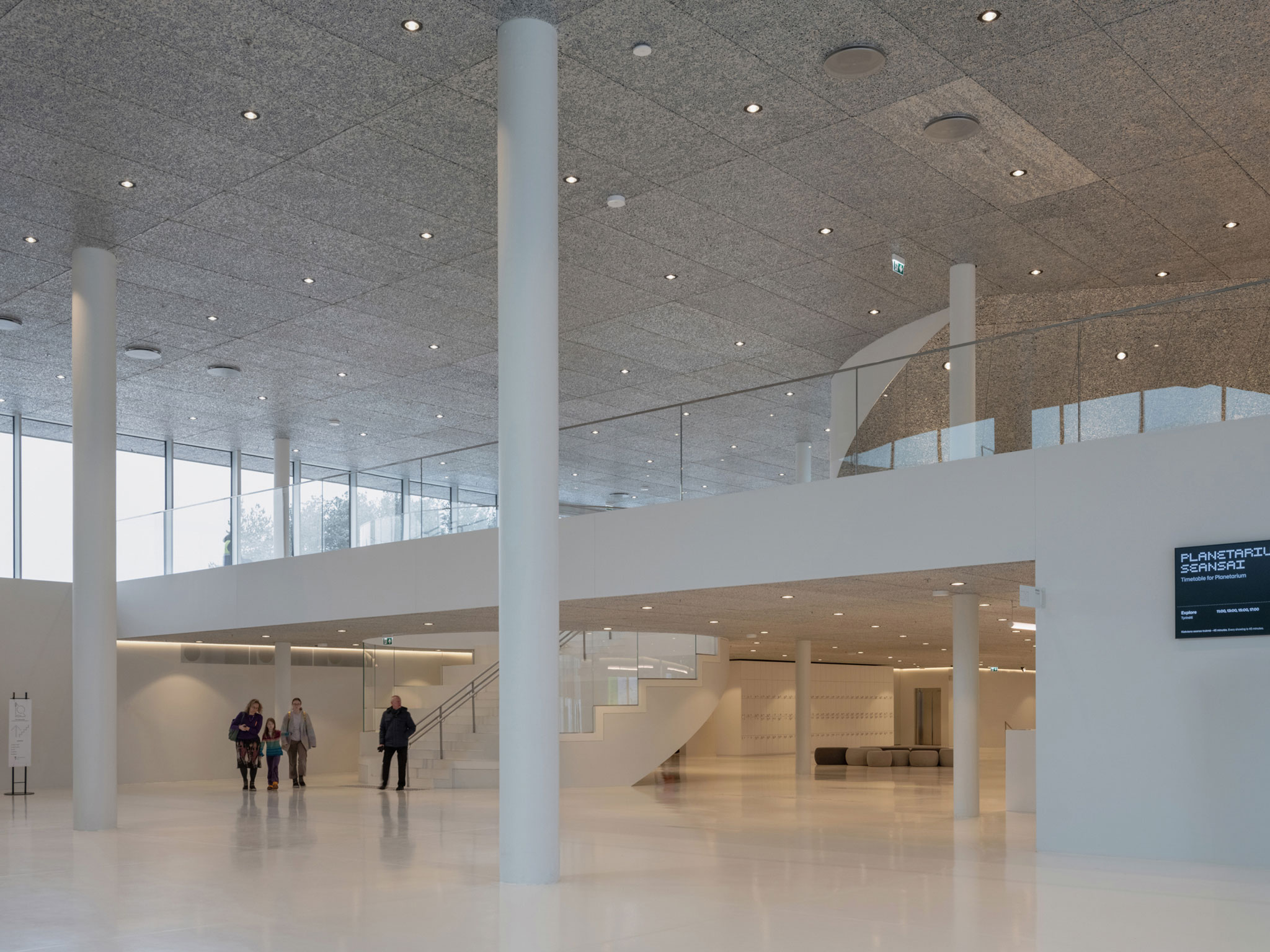
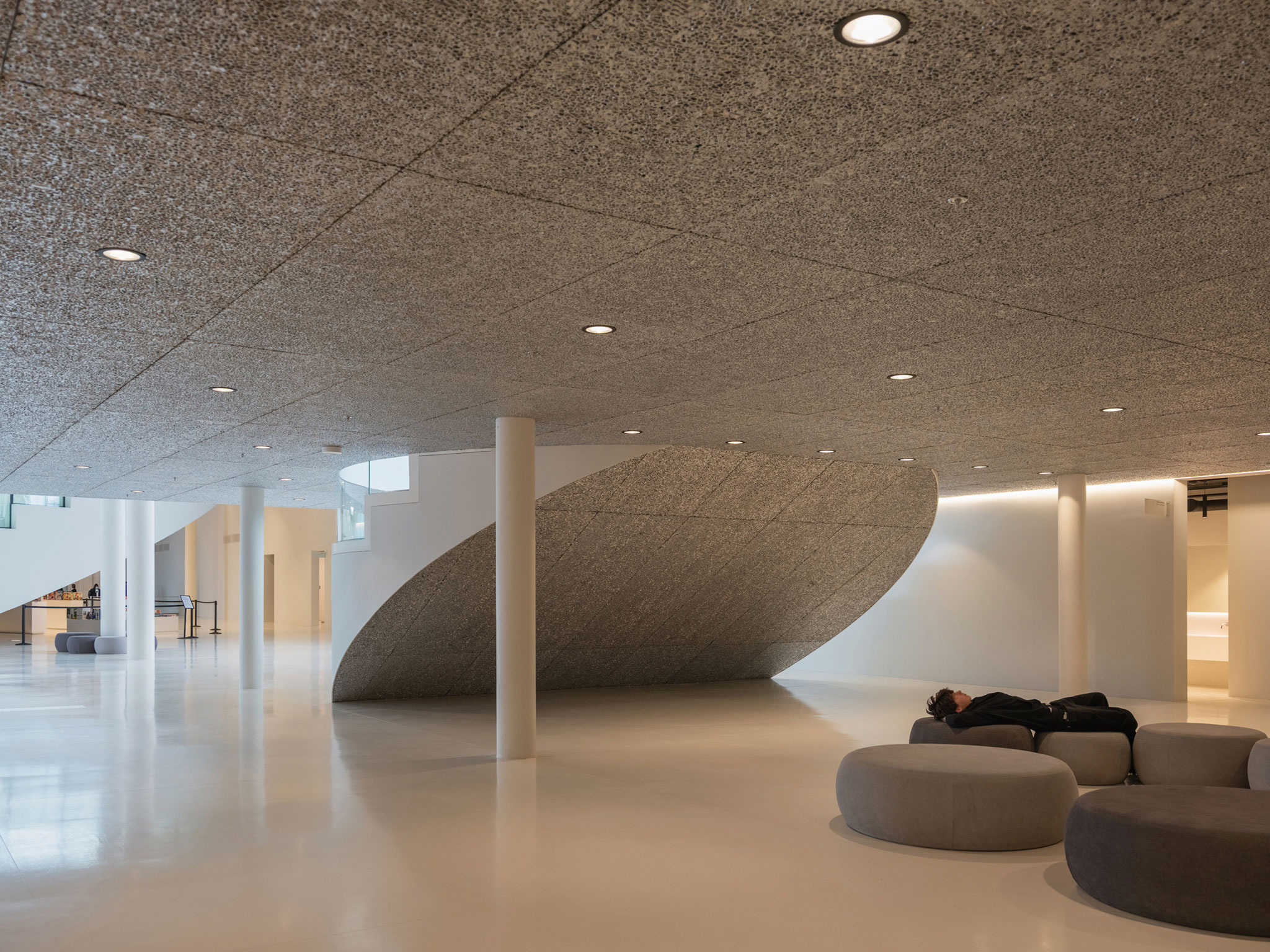
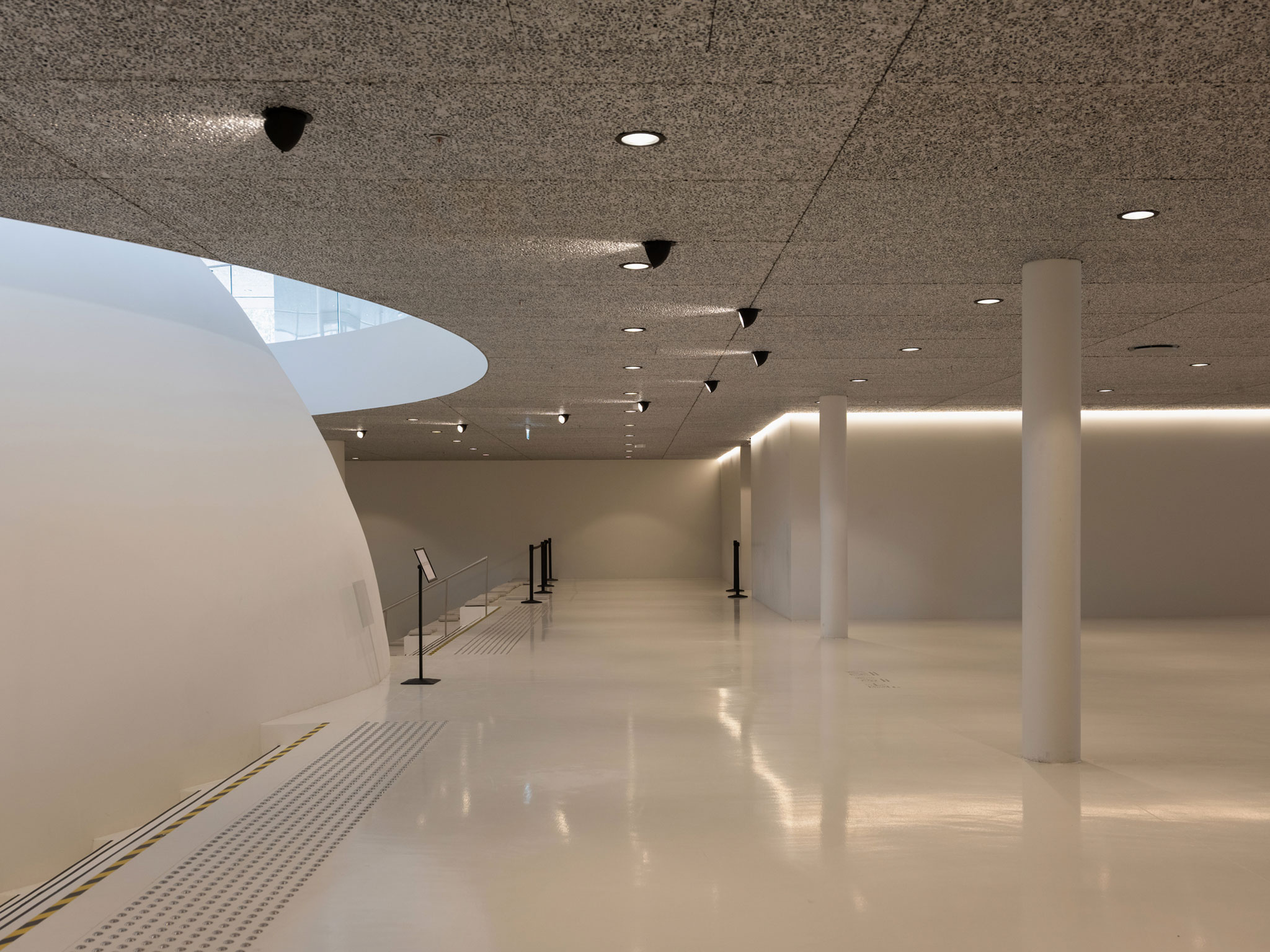
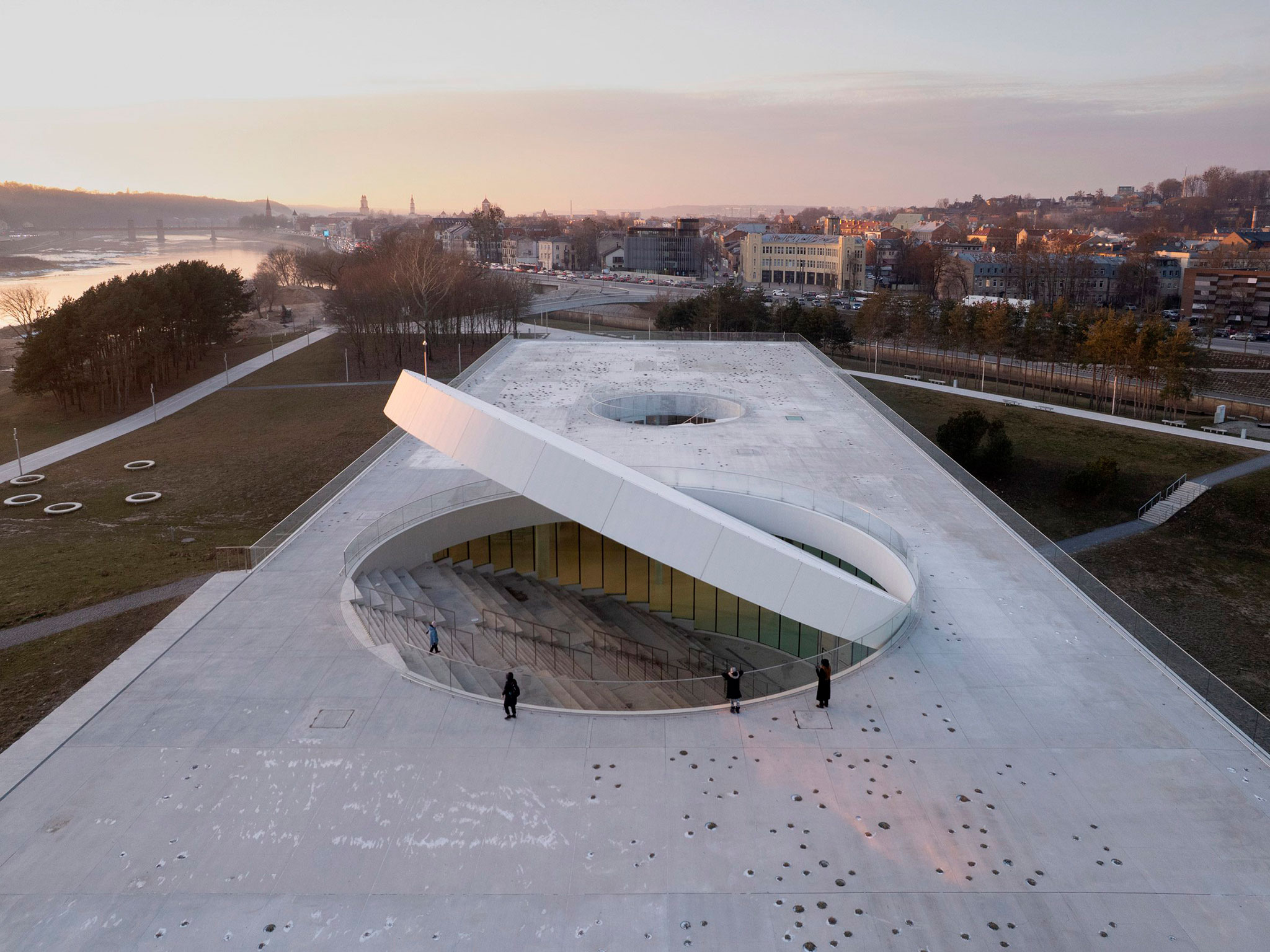
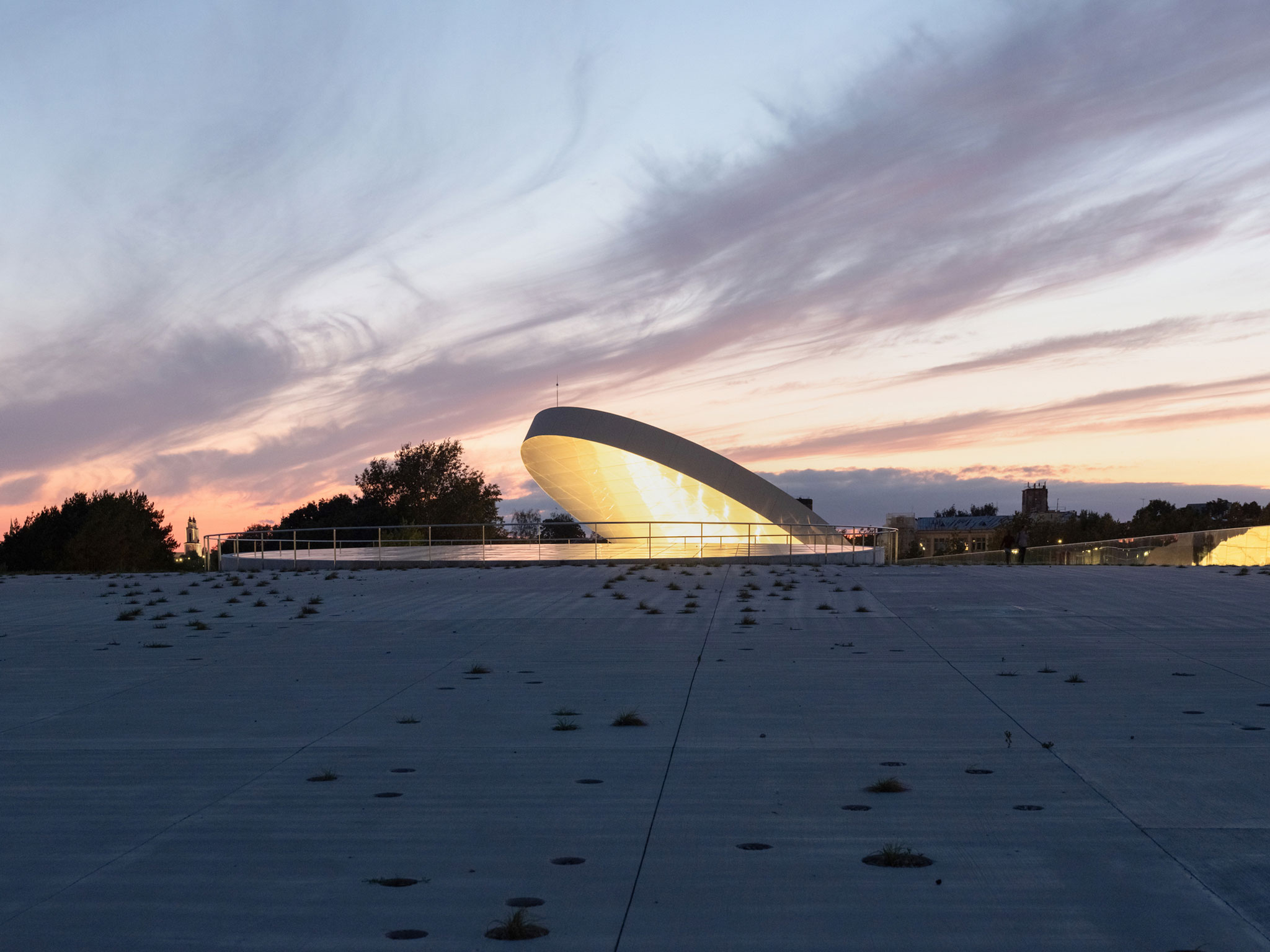
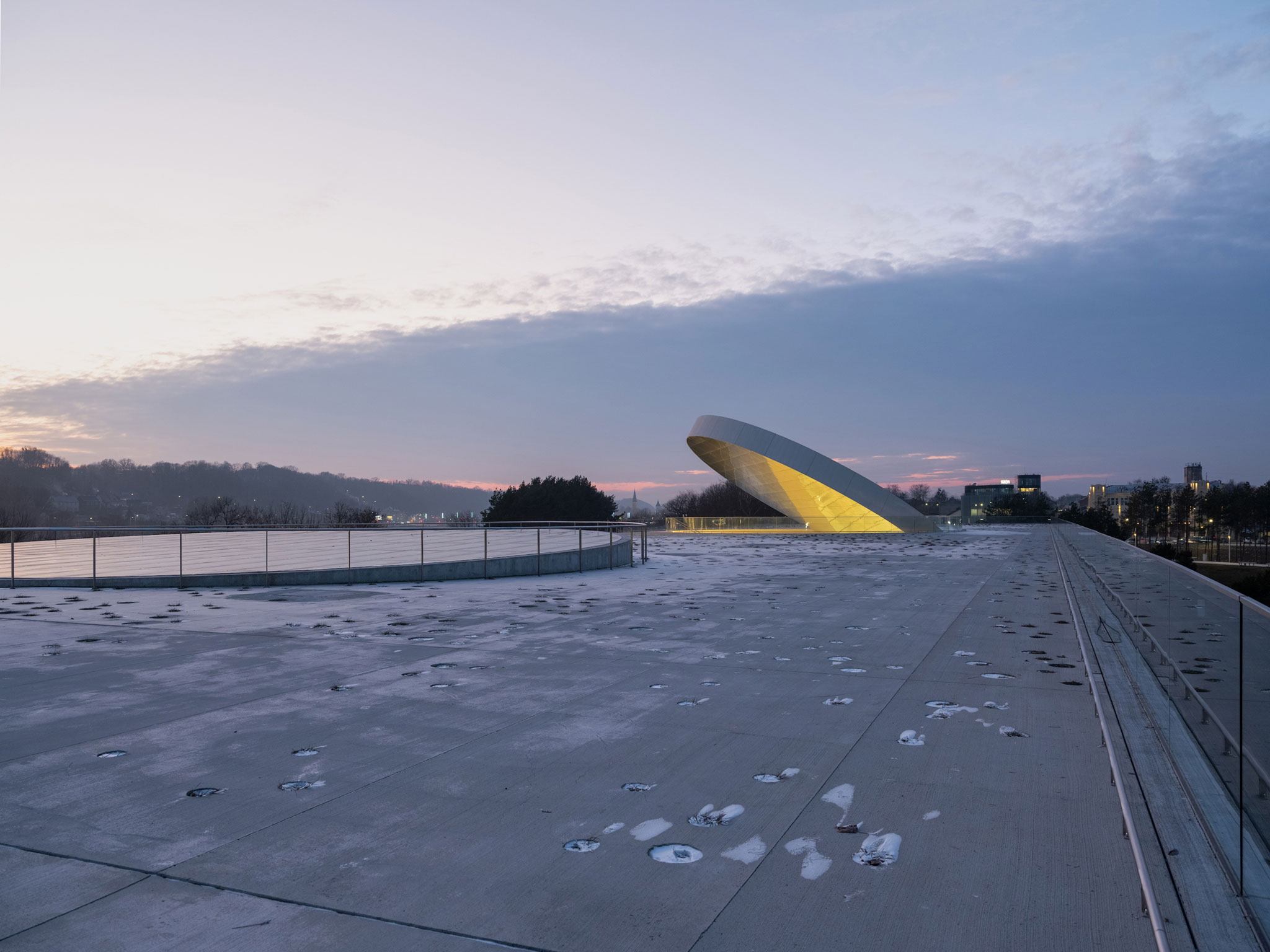
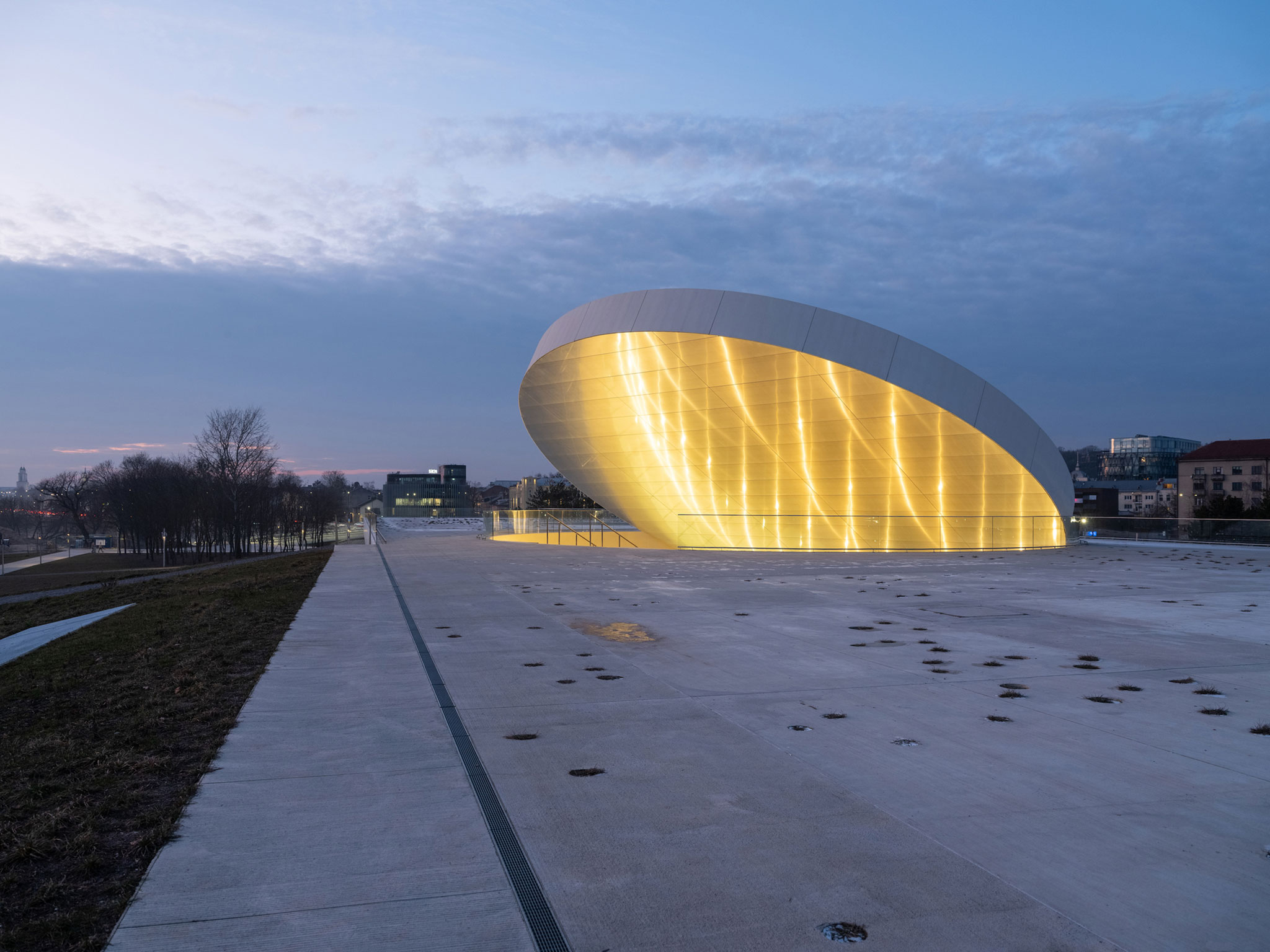
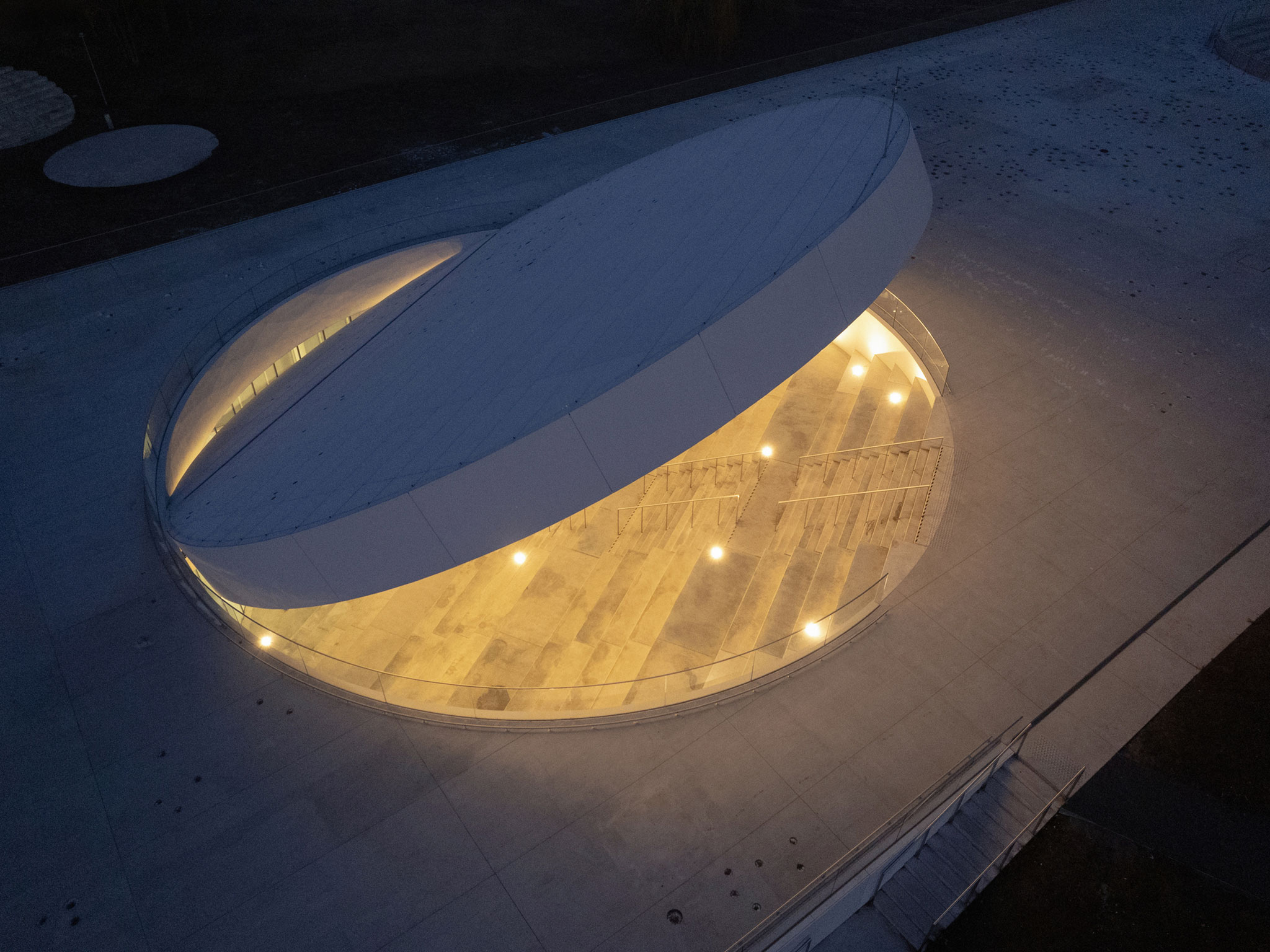
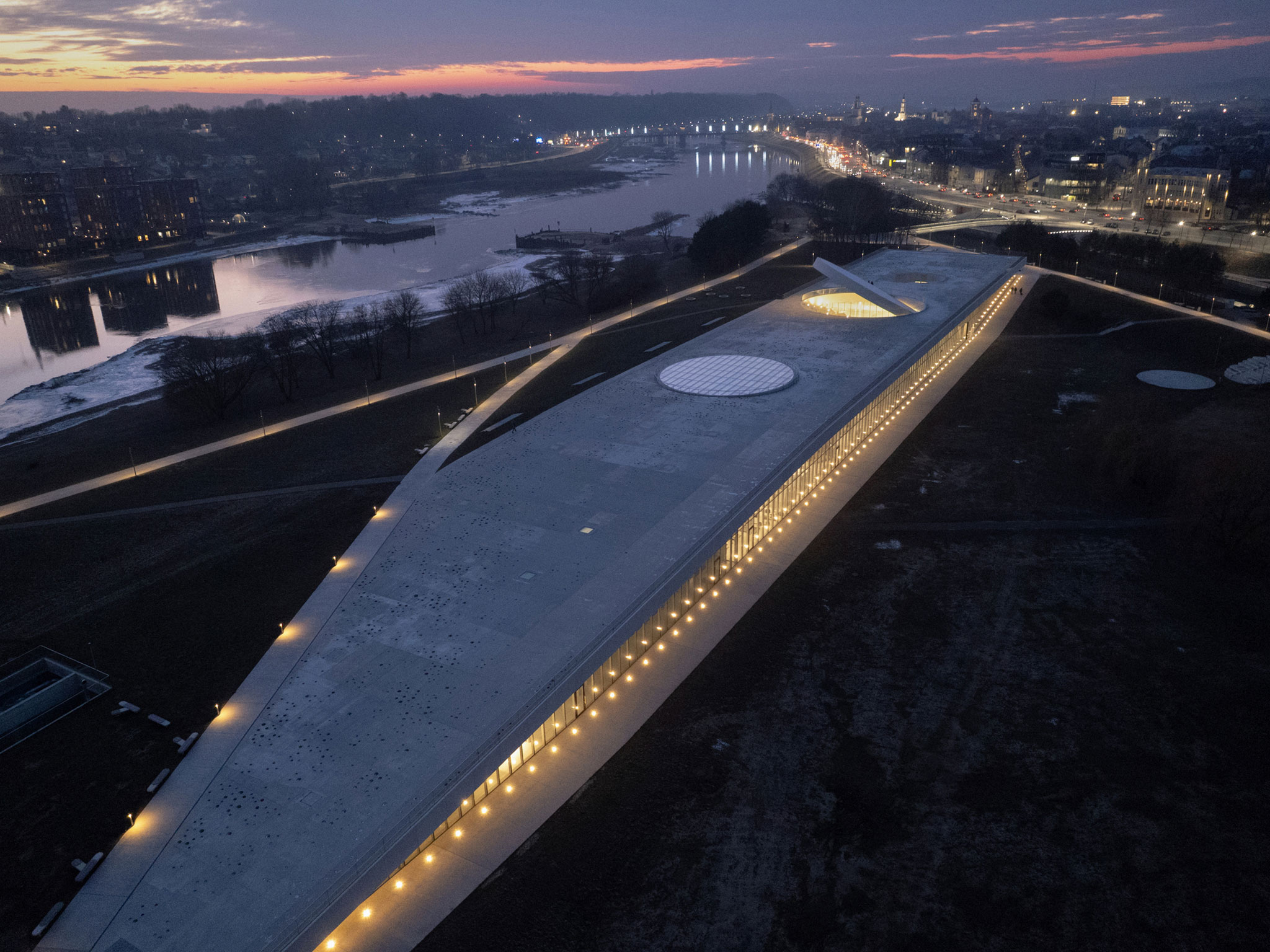
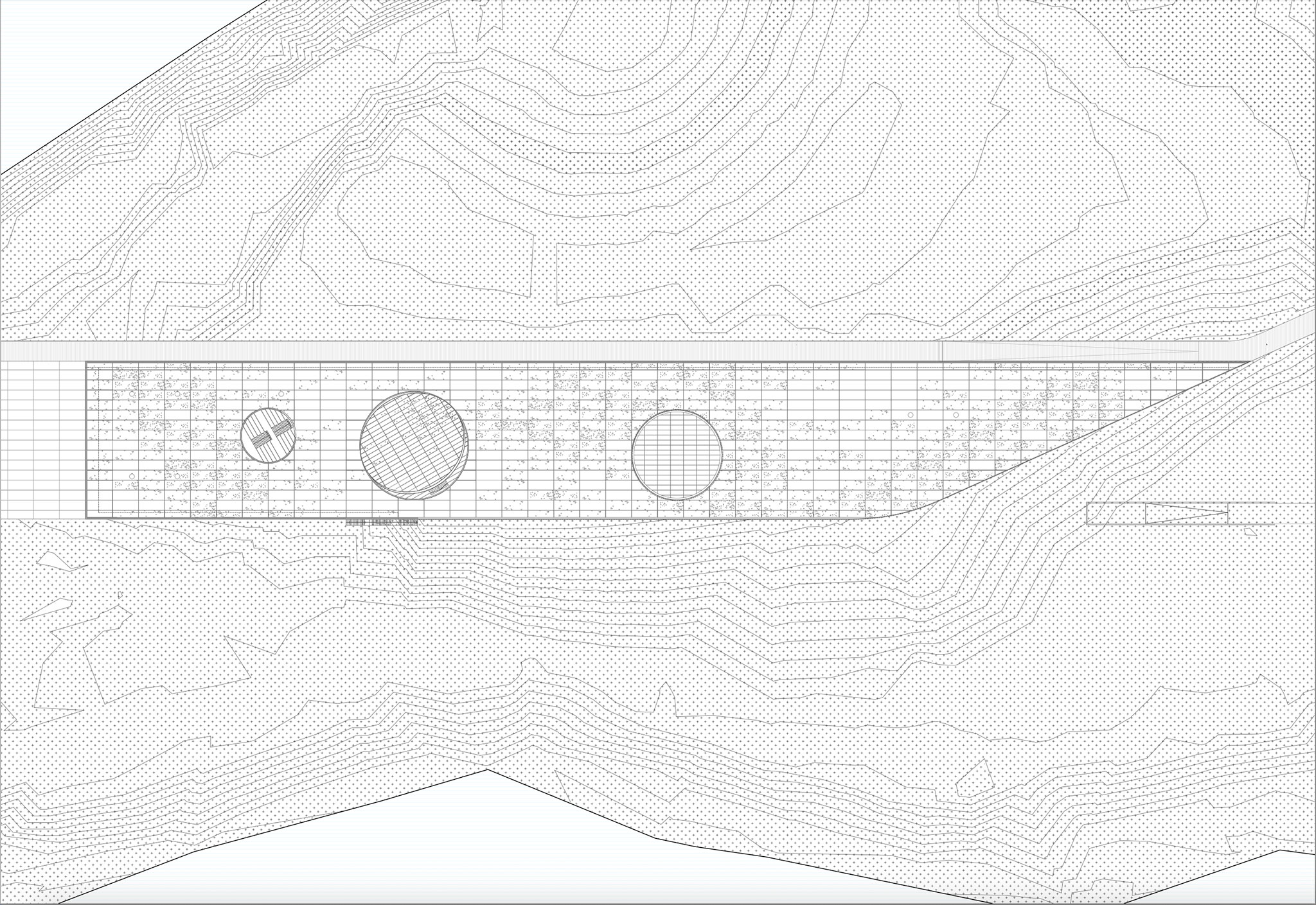
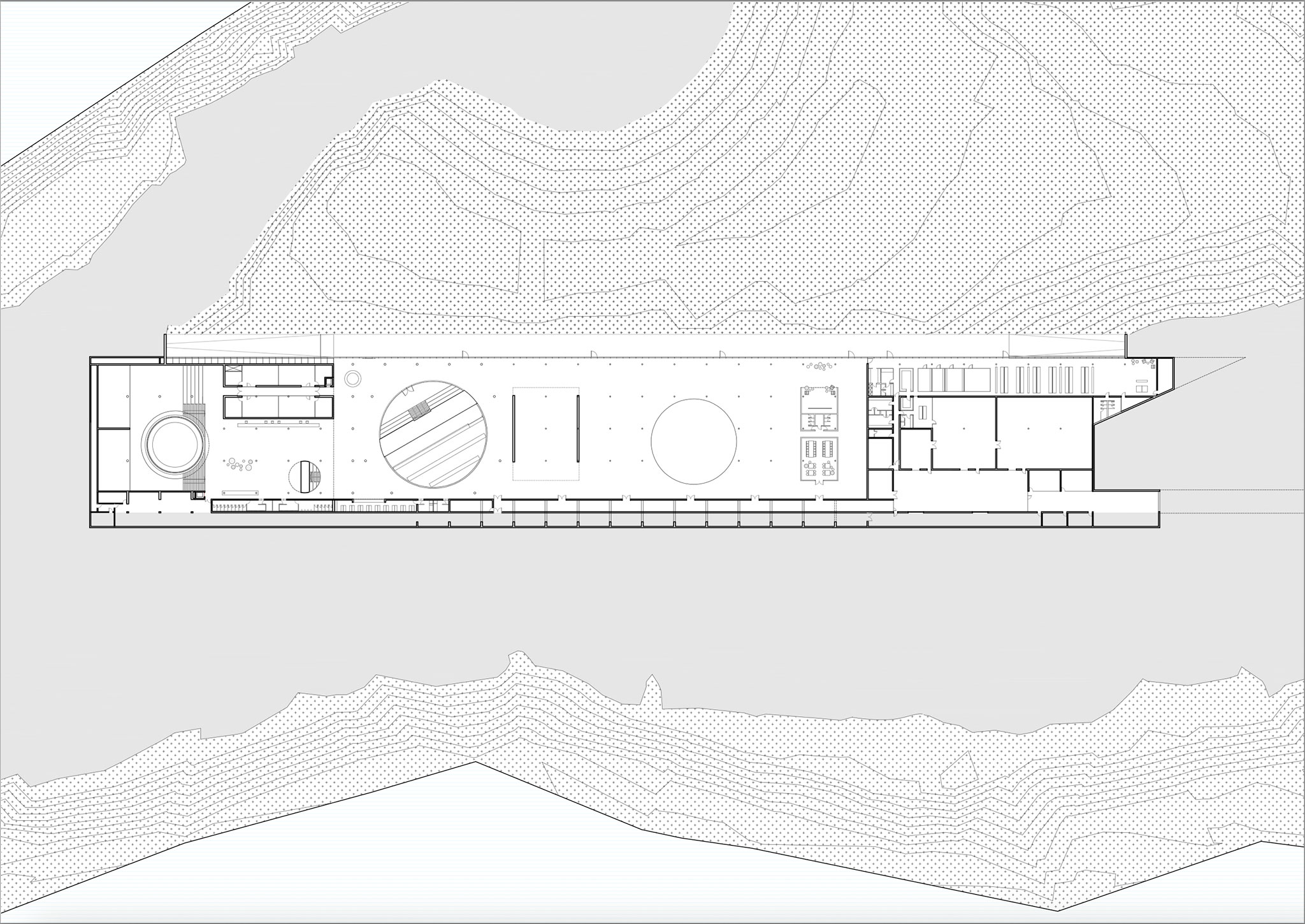
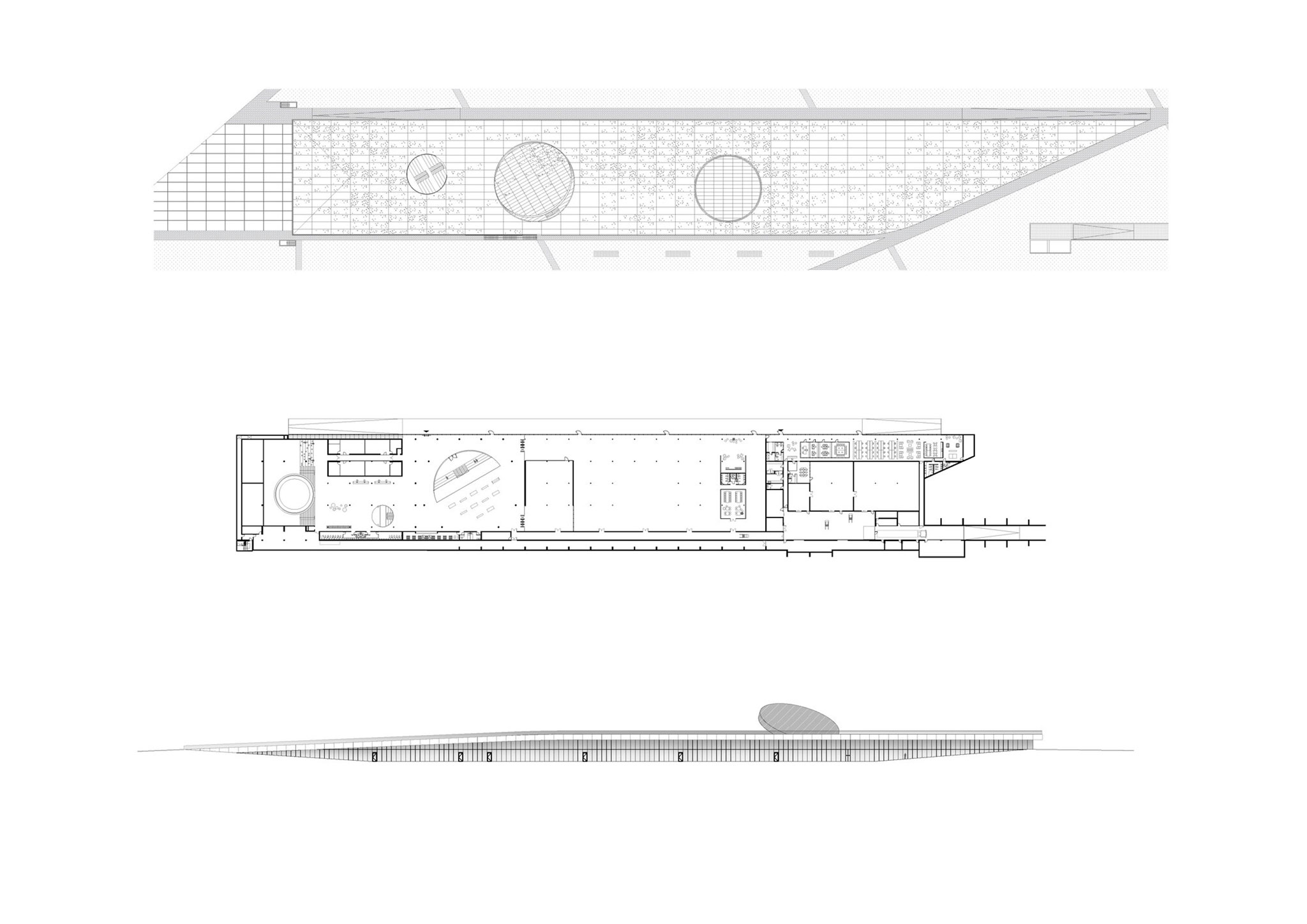
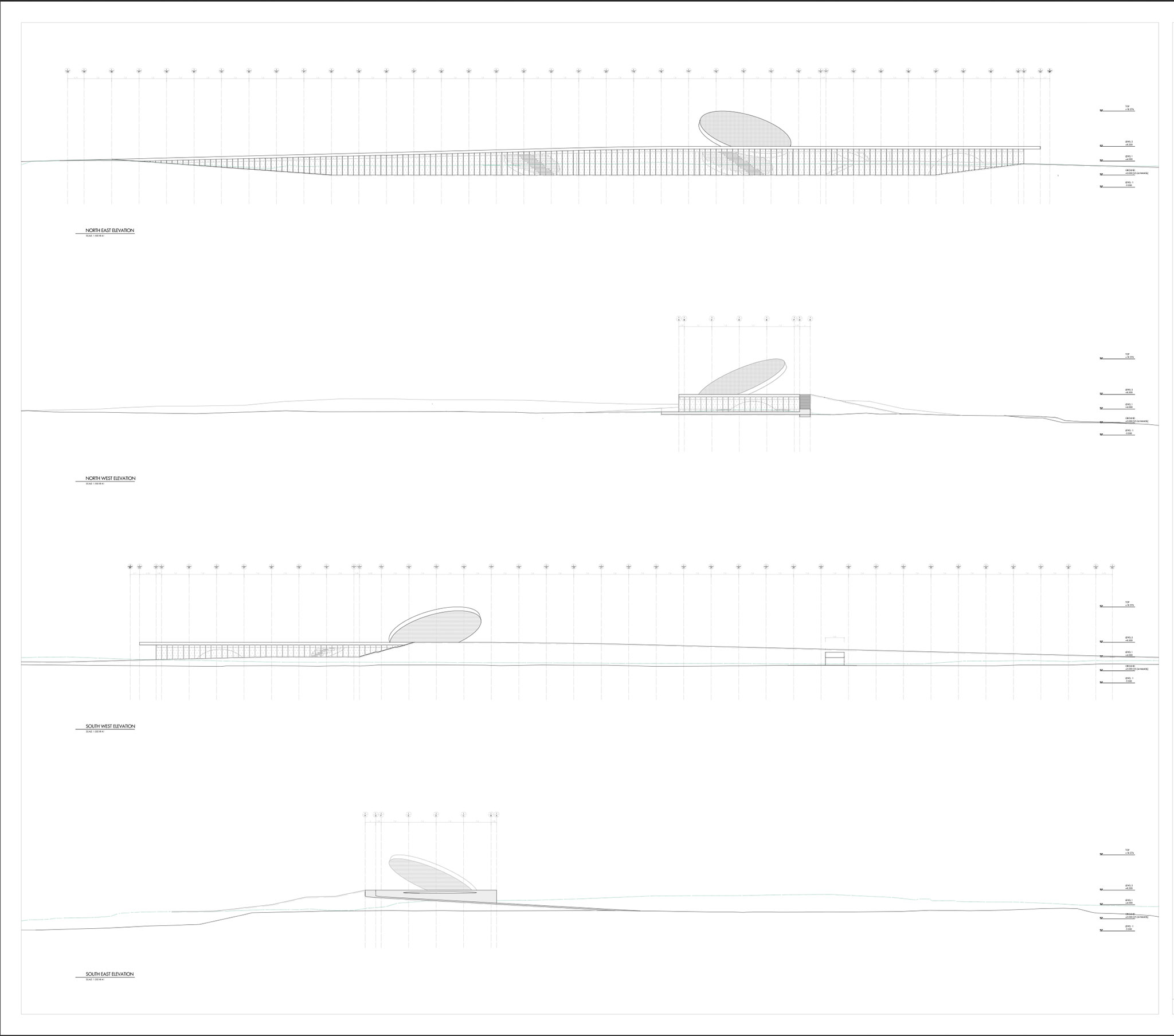
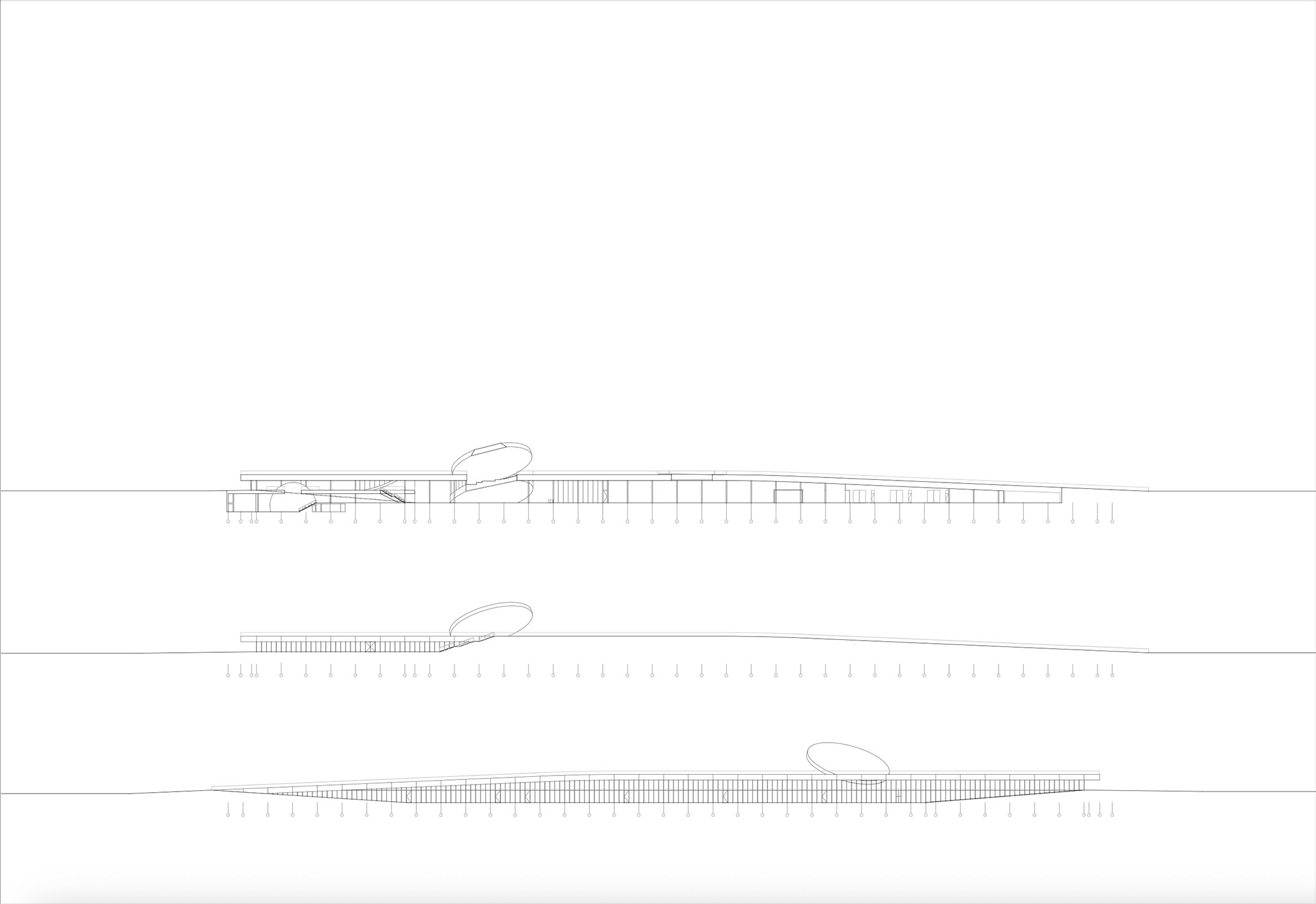
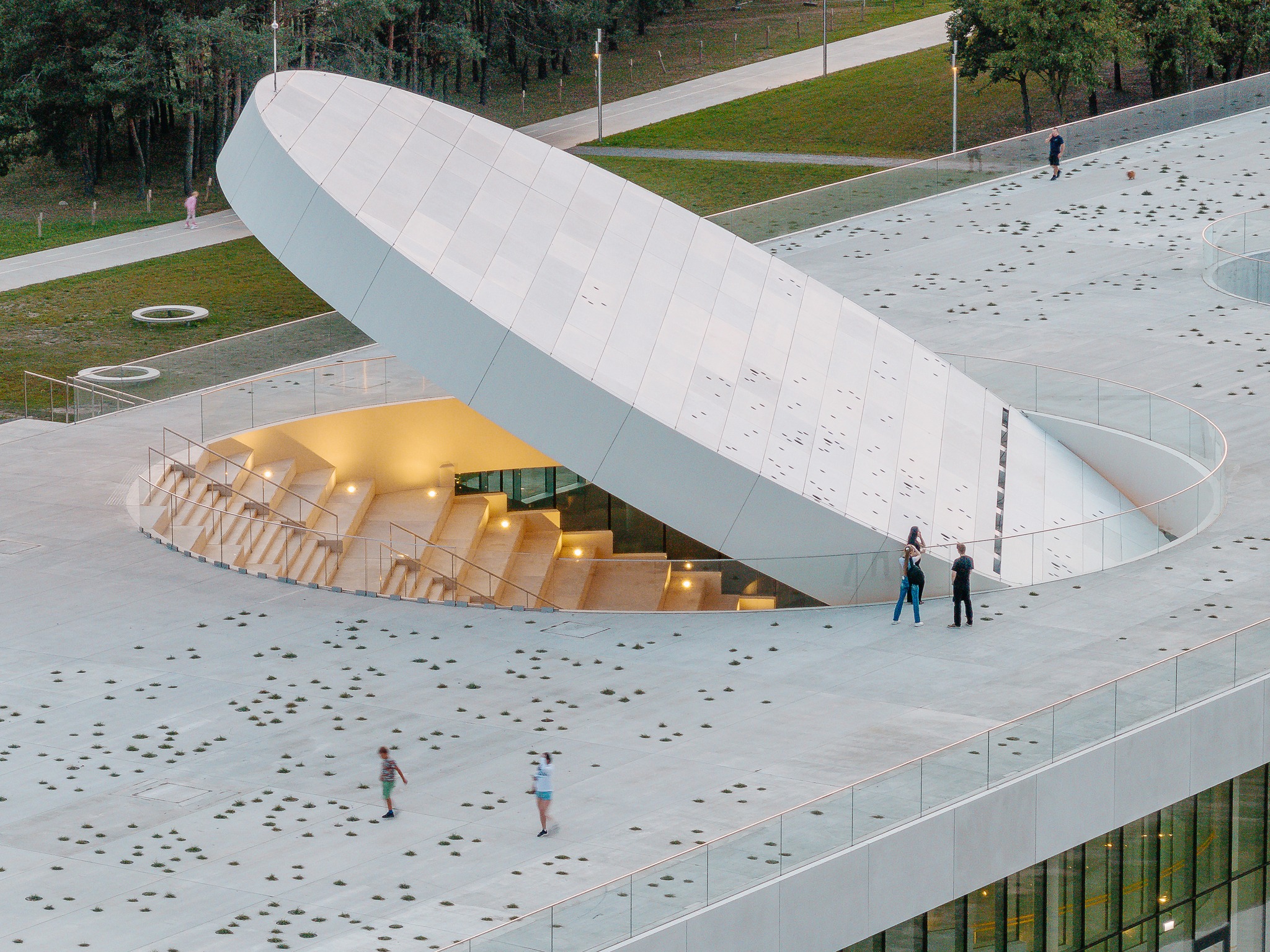
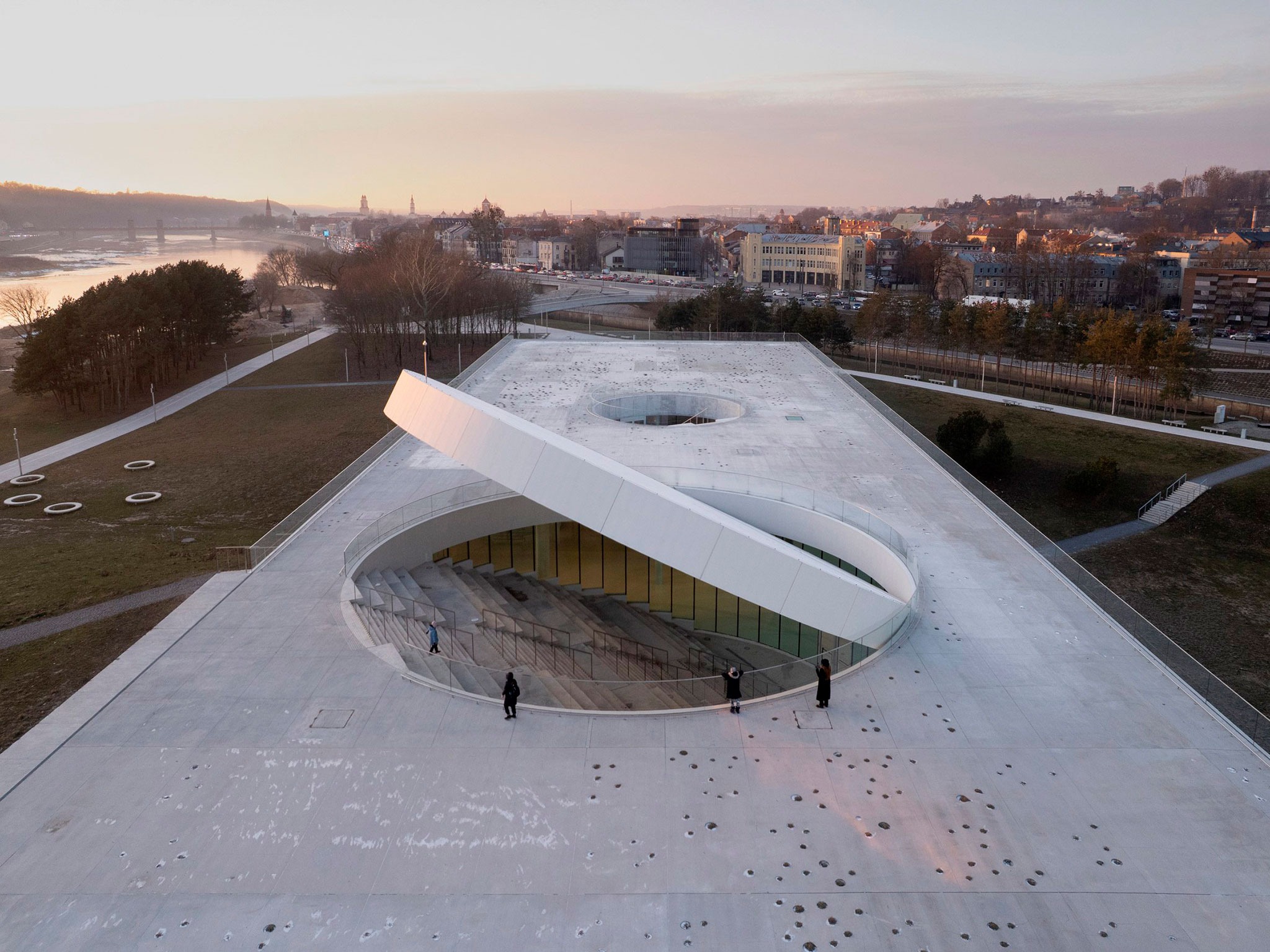
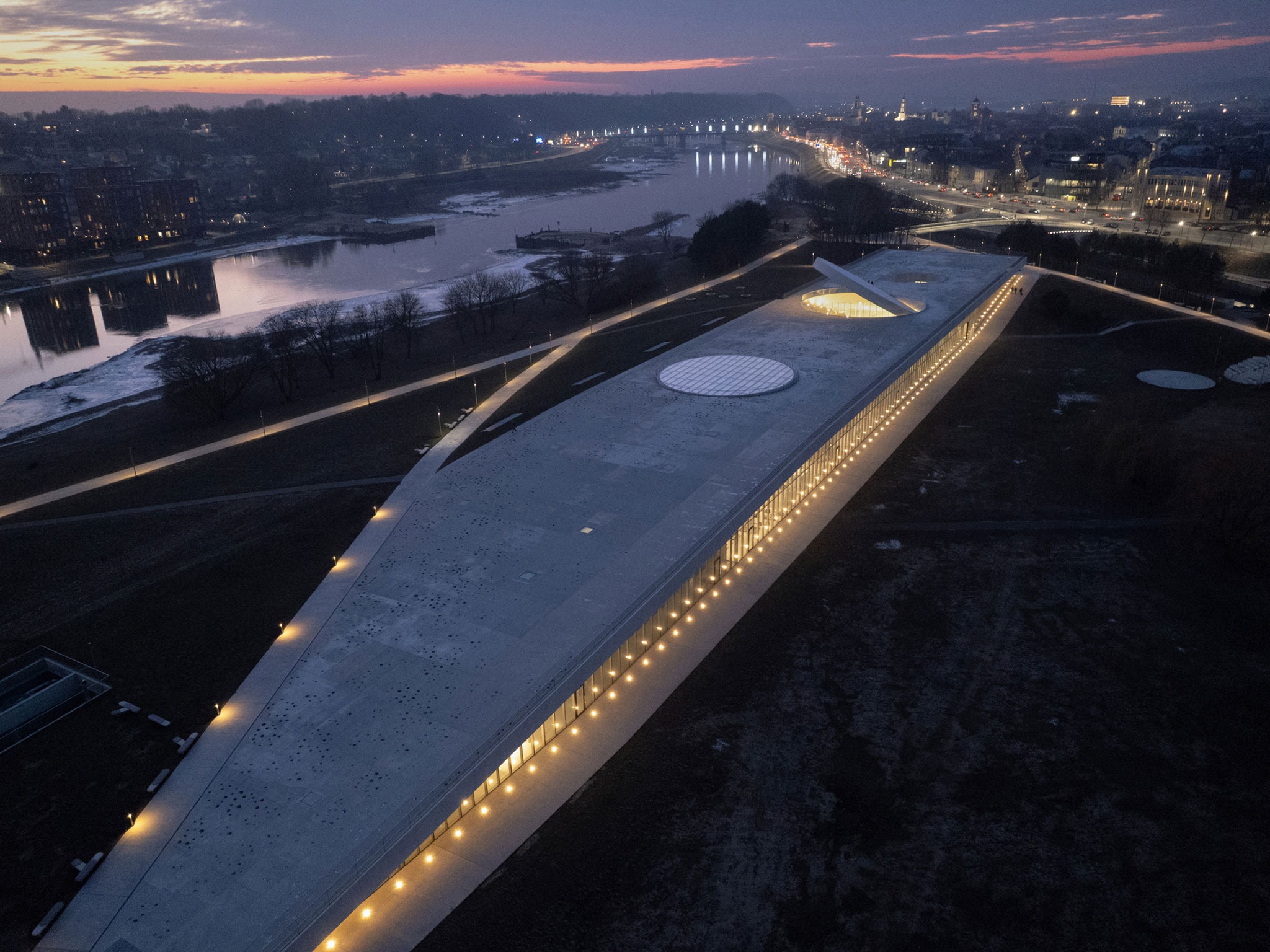
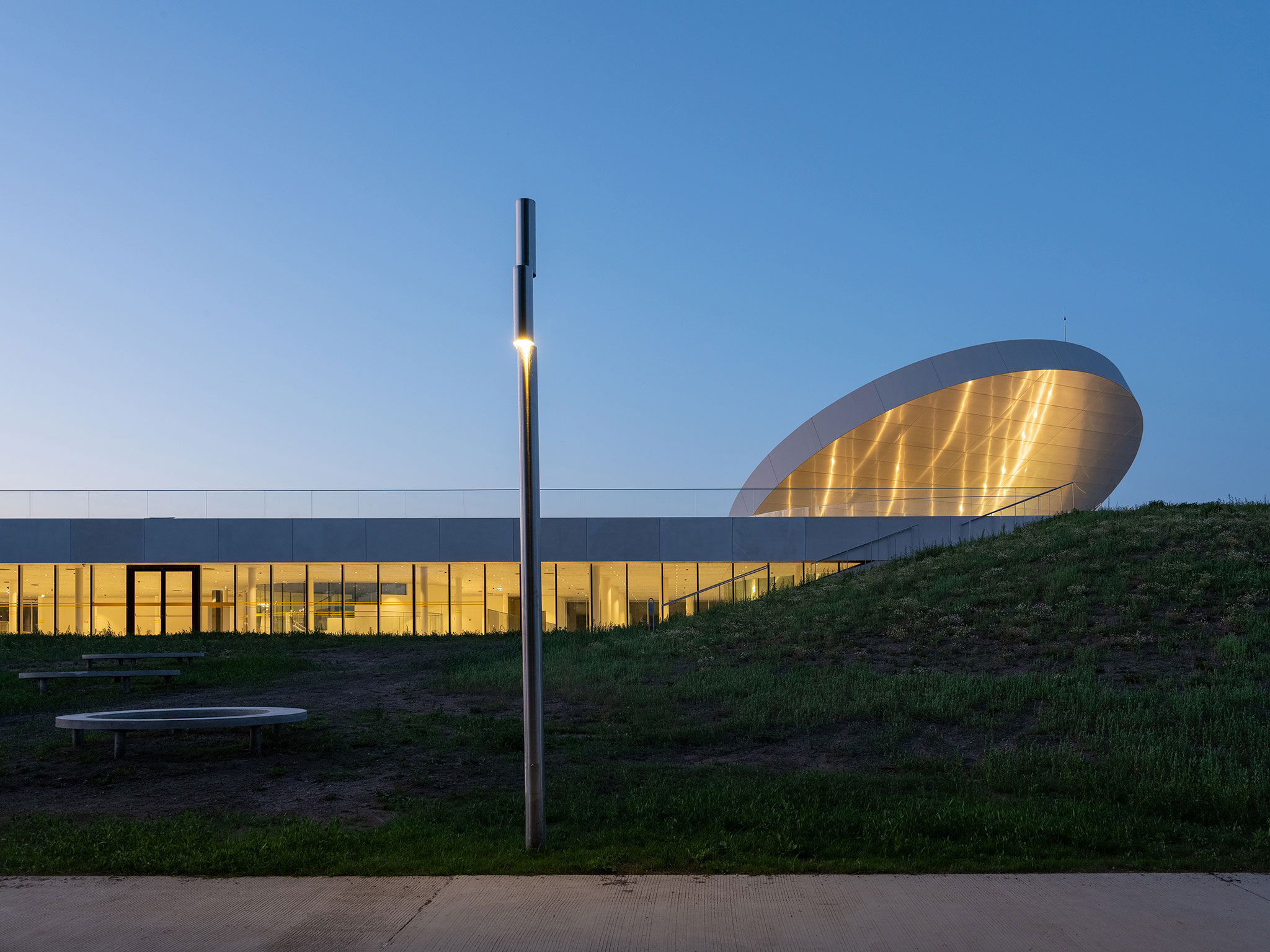
The "Science Island", designed by SMAR Architecture Studio, takes the form of a large horizontal platform that follows the island's gentle topography, creating a roof characterized by several circular openings: one sloping and accessible, and two others that provide natural light and ventilation to the interior. Beneath this public space lies a 10,700 m² area housing exhibition spaces, laboratories, and learning areas.

The building's structure is made of reinforced concrete and steel, and the surrounding earth was used as natural insulation to stabilize the temperature and reduce energy demand. Solar panels surrounding the central skylight generate renewable energy and filter natural light into the interior. The project won the 2025 COAM (Official College of Architects of Madrid) Awards for its innovative integration of nature and architecture.
«Science Island» por SMAR Architecture Studio. Fotografía por L. Mykolaitis.

"Science Island" by SMAR Architecture Studio. Photograph by L. Mykolaitis. 

Project description by SMAR Architecture Studio

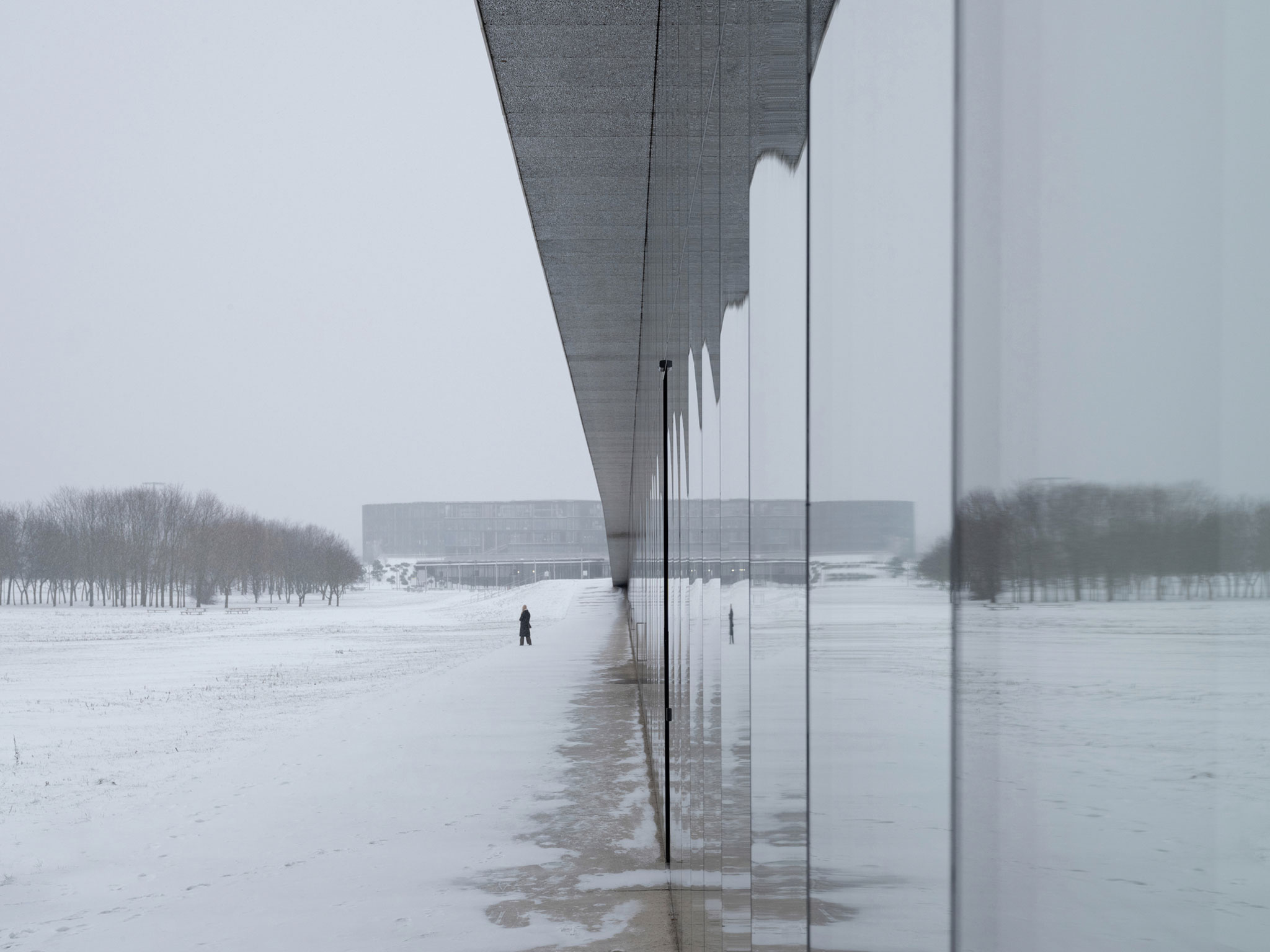
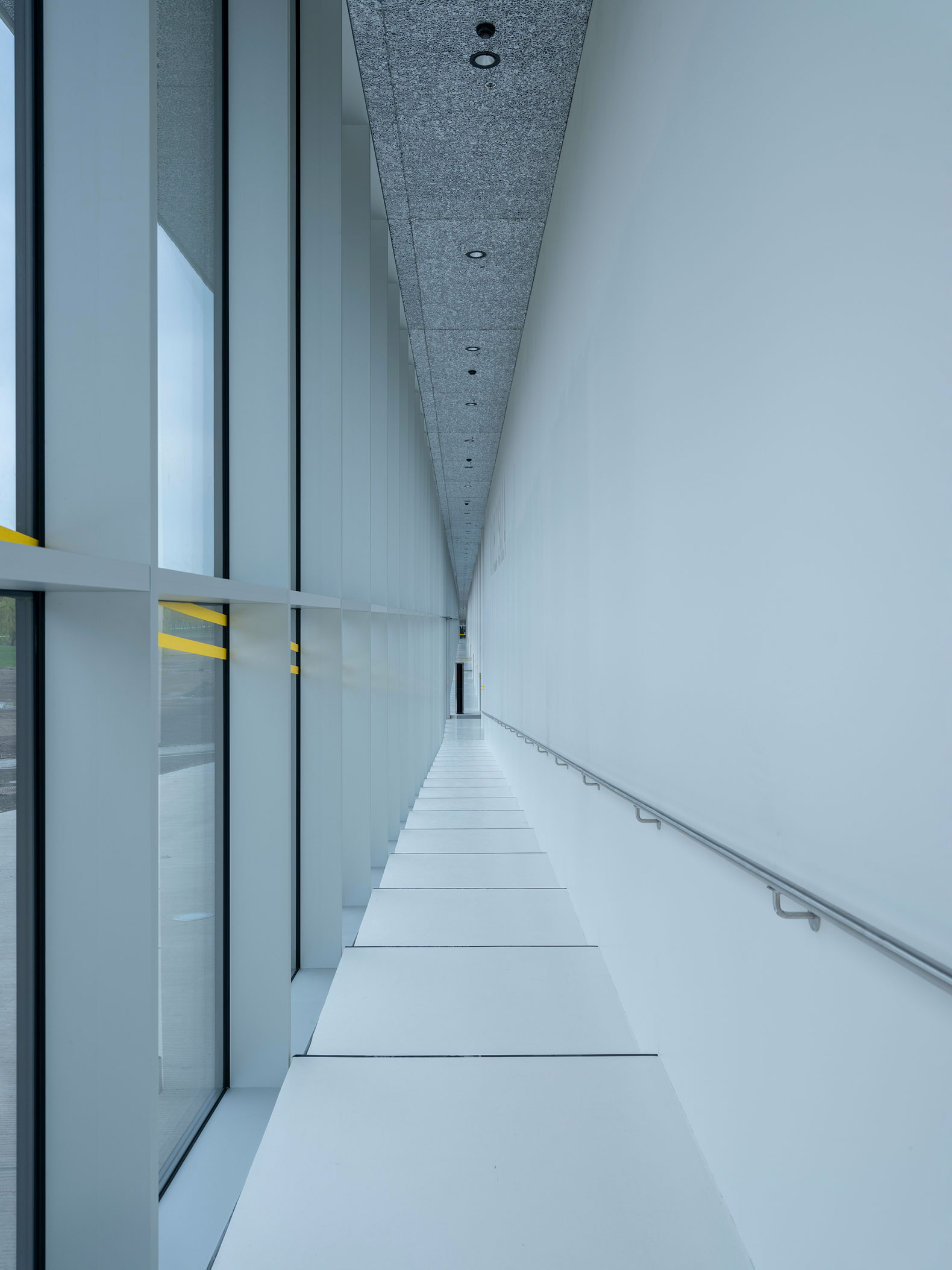
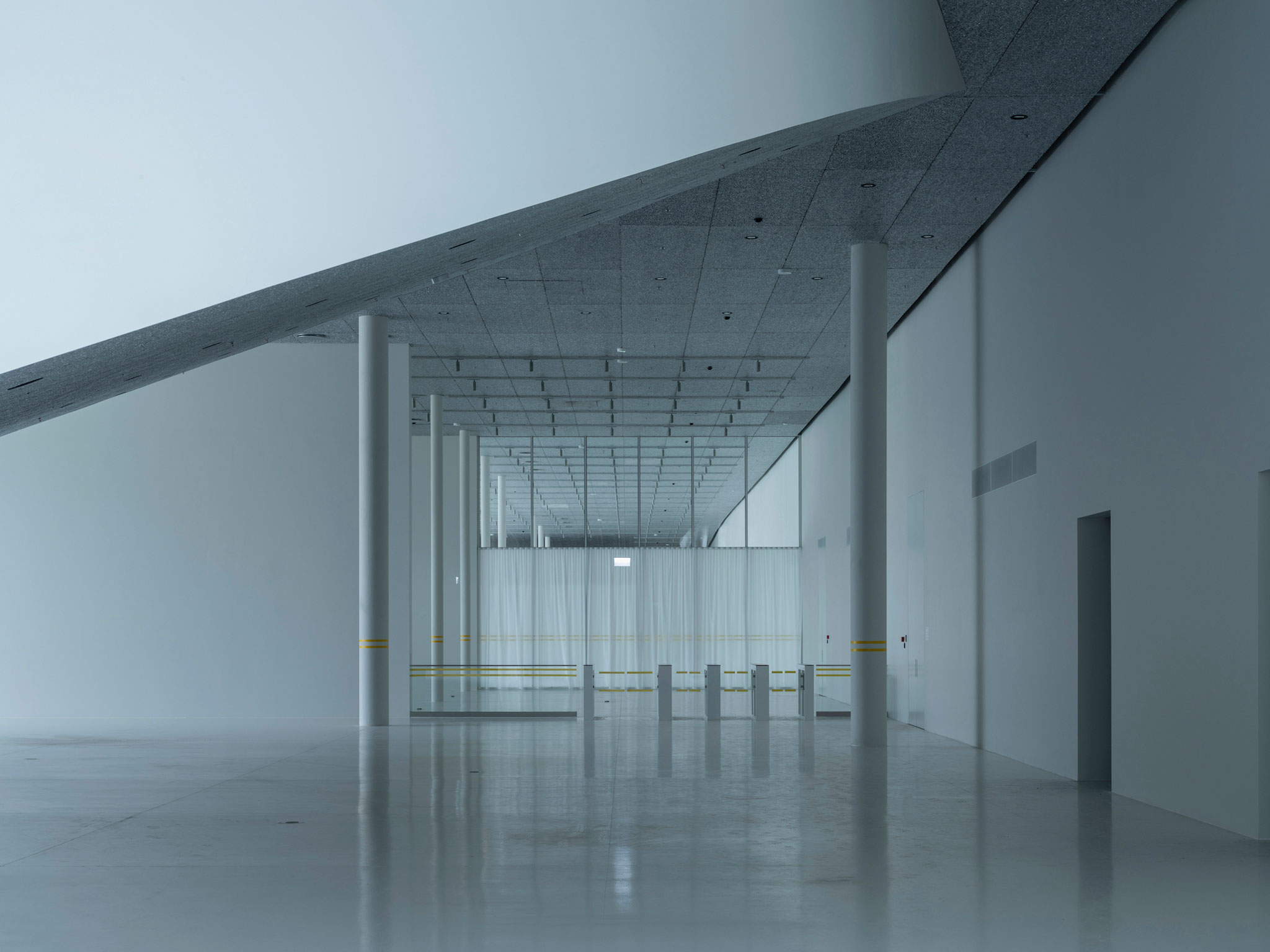
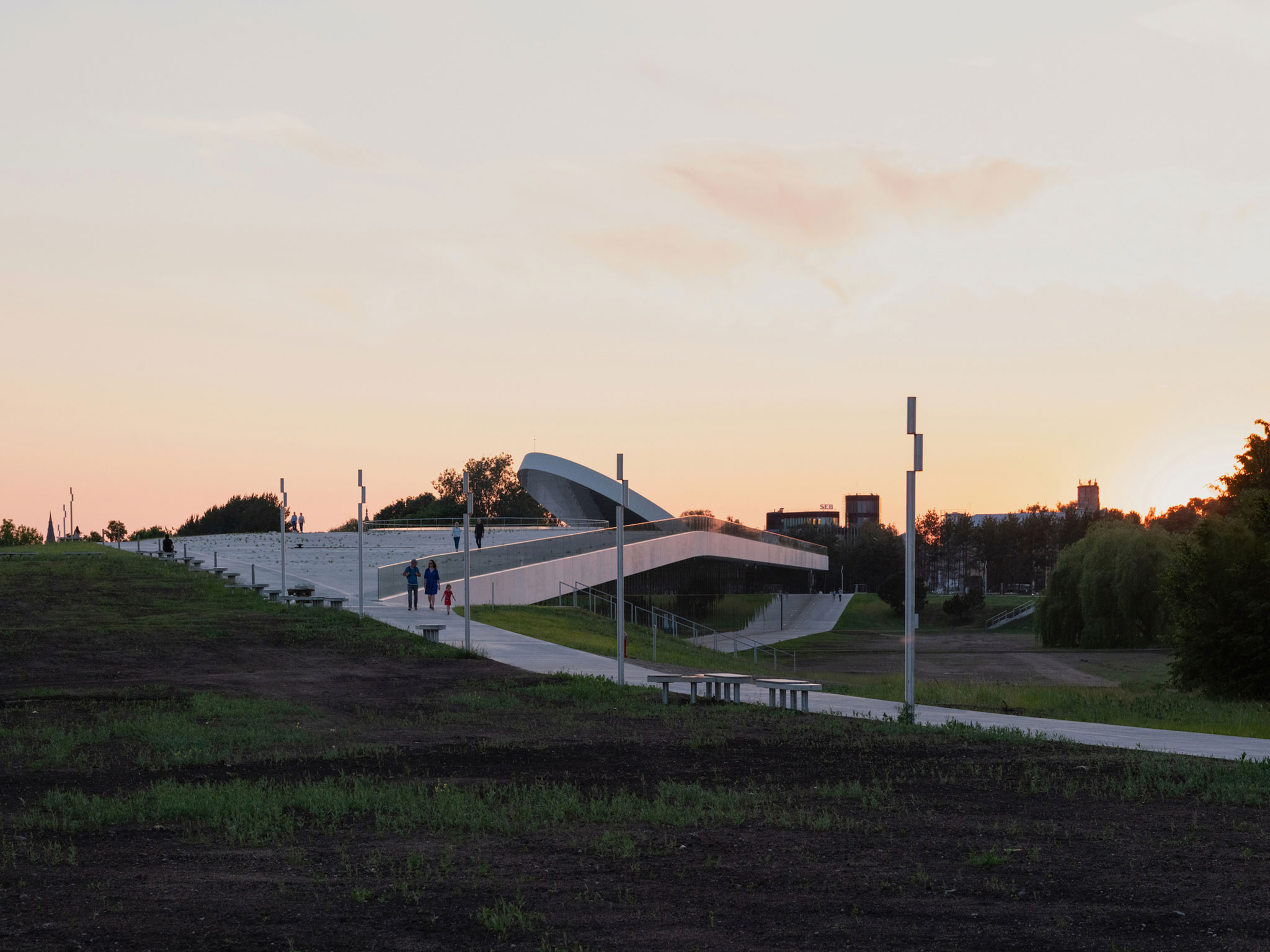
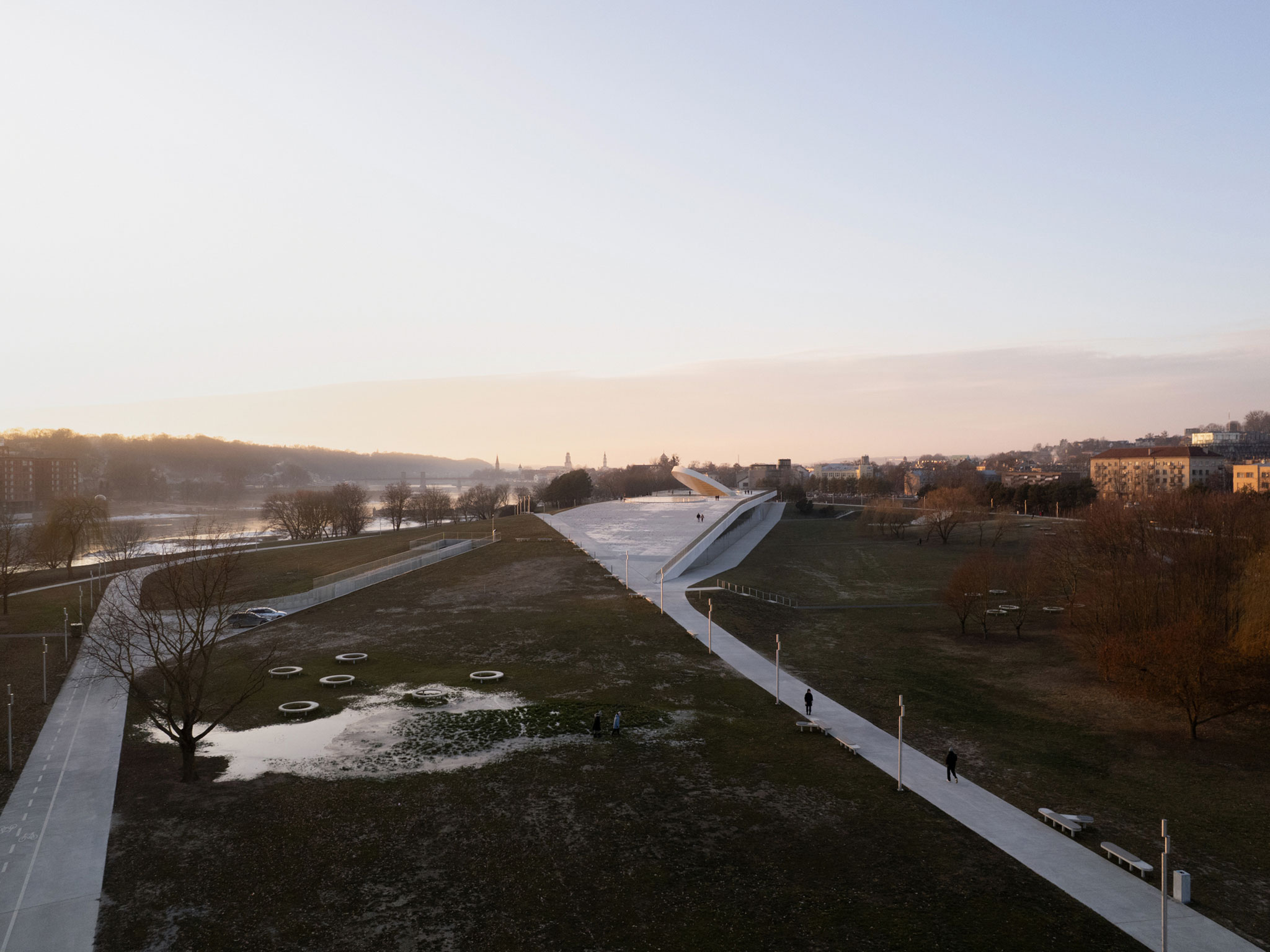
Located on Nemunas Island in Kaunas, the Science Island Museum emerges from the landscape as a continuation of the park. Instead of adding a new object, the building follows the island’s topography, with a reflective sloping roof that becomes a public park. Beneath it, 10,700 m² host exhibitions, labs, and learning spaces dedicated to environmental sciences; the building's openings and diagonal spaces connect the city, river, and nature through light, air, and terrain.

"Science Island" by SMAR Architecture Studio. Photograph by L. Mykolaitis.

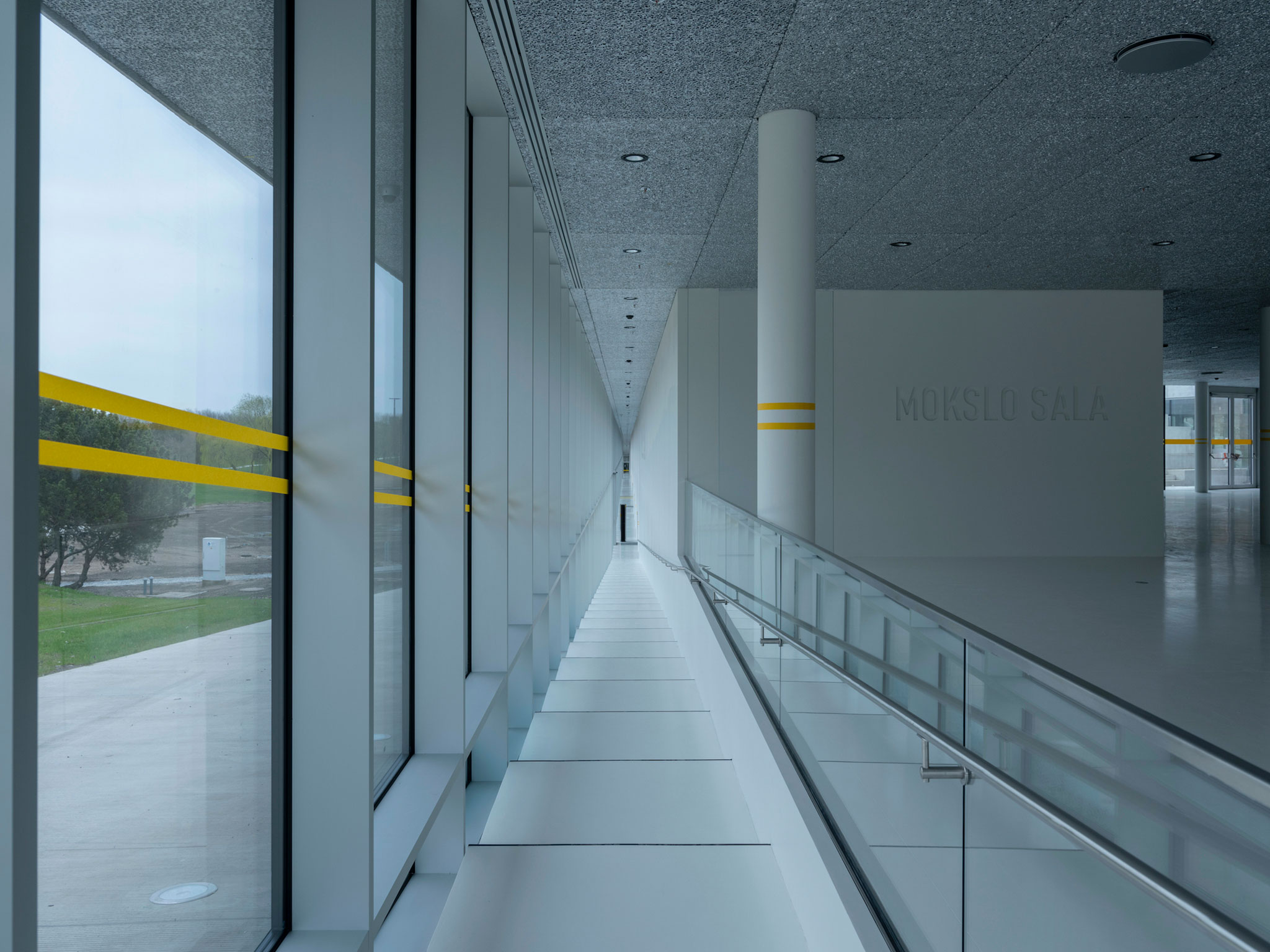
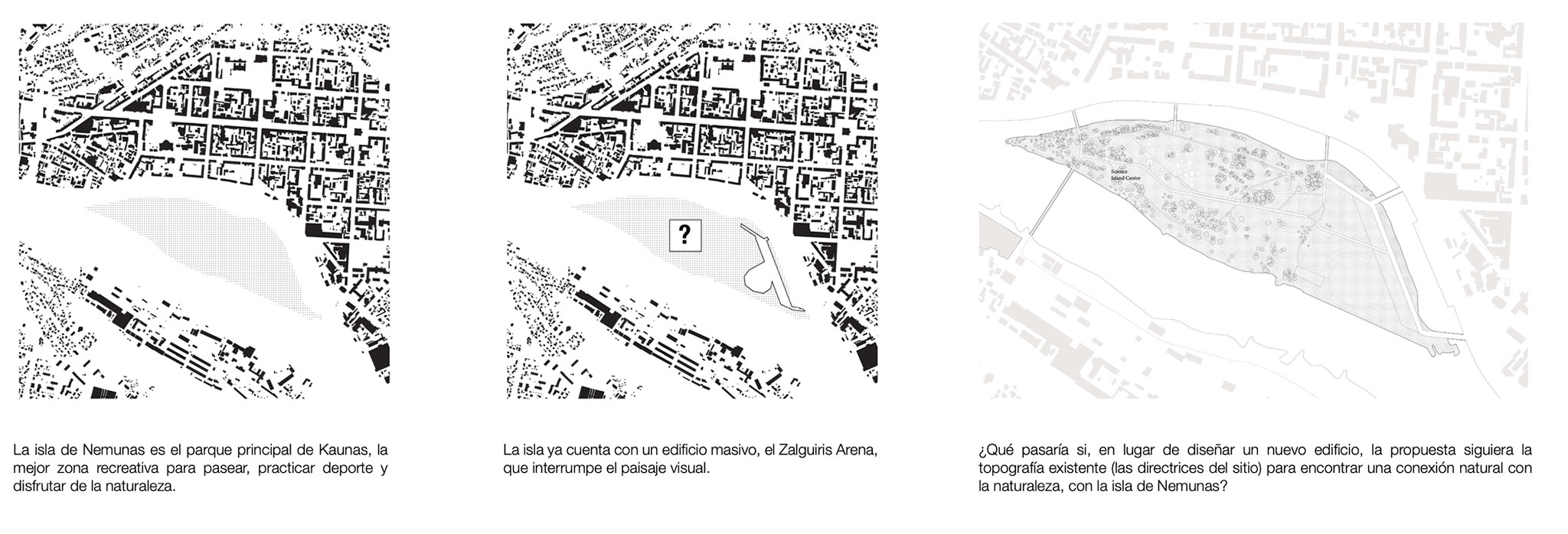
The project began with a question: what if the new museum could extend the island rather than occupy it? On Nemunas Island, already dominated by the massive Žalgiris Arena, the design adopts a strategy of minimum impact, embedding the building within the terrain to preserve views and open space. The museum becomes part of the landscape, not an object on it. Its roof is a continuation of the park, accessible to all and punctuated by circular openings that bring daylight and natural ventilation inside. The program was redefined: instead of a traditional science museum, Science Island is dedicated to Environmental Sciences, becoming the first of its kind in Europe. Organised into “Front of the House” and “Back of the House” zones, all spaces receive light and views, dissolving boundaries between nature and architecture. Visitors experience natural phenomena—light, wind, temperature, and seasons—through the building itself, transforming the museum into a living, educational organism.
"Science Island" by SMAR Architecture Studio. Photograph by L. Mykolaitis.

The museum is semi-underground, using the surrounding earth as natural insulation to stabilize temperature and lower energy demand. This approach minimizes visual impact and carbon footprint, making the landscape an active part of the architecture. Its structure combines reinforced concrete and steel frames, where part of the cement is replaced with local soil, reducing embodied carbon and anchoring the building to its site. Above, a roof covered with native vegetation blends into the park, bringing back Biodiversity, while glass solar panels around the central skylight generate renewable energy and filter daylight deep into the interior. Prefabricated elements and durable materials ensure precision, low maintenance, and long lifespan. The earth-sheltered envelope enhances thermal performance, acoustic comfort, and resilience, transforming the building into a sustainable system where structure, landscape, and energy form a single organism.
More information

Label
Architects
Text

SMAR Architecture Studio. Lead architects.- Fernando Jerez, Belen Perez de Juan. 
+ + copy Created with Sketch.
- + copy Created with Sketch.
Label
Project team
Text

Fernando Jerez, Bradley Millis.
Local office. Architects' office G.Natkevičius and partner.- Dominykas Kalmatavicius, Gintautas Natkevicius.

+ + copy Created with Sketch.
- + copy Created with Sketch.
Label
Collaborators
Text

Structure.- Mindaugas Vaidelys (UAB 1 Planas).
Façade Engineers.- Ignacio Fernandez, Fernando Garcia, Jordi Alcaine (Arup Madrid).
Building physics.- Inzinerijos namai.
Installations.- Darius Liutkevicius - Electrical works.
Installations.- GB technologijos.

+ + copy Created with Sketch.
- + copy Created with Sketch.
Label
Client
Text

Kaunas Municipality.

+ + copy Created with Sketch.
- + copy Created with Sketch.
Label
Builder
Text

M. Videlys, M. Sokolovas.

+ + copy Created with Sketch.
- + copy Created with Sketch.
Label
Area
Text

Site area.- 27,000 m².
Total gross floor.- 10,700 m².

+ + copy Created with Sketch.
- + copy Created with Sketch.
Label
Dates
Text

2025.

+ + copy Created with Sketch.
- + copy Created with Sketch.
Label
Location
Text

Kaunas, Lithuania.

+ + copy Created with Sketch.
- + copy Created with Sketch.
Label
Budget
Text

2.500 €/m².

+ + copy Created with Sketch.
- + copy Created with Sketch.
Label
Photography
+ + copy Created with Sketch.
- + copy Created with Sketch.

SMAR Studio is an architecture firm founded by Fernando Jerez and Belén Pérez de Juan in 2011, specializing in art museums. With offices and collaborations in Australia and Europe, it has won over 20 international awards in the last 10 years, including the Urban Confluence Silicon Valley Tower in 2021 and the Science Island Museum, slated for construction in 2023.

The firm's work, which focuses on the fusion of science and art, has been widely published and exhibited in Asia, Australia, Europe, and the Americas by institutions such as the AIA in New York, the Solomon R. Guggenheim Foundation, and the Kunsthalle Helsinki, among others.

Read more
Published on: December 17, 2025
Cite:
metalocus, CAMILA DOYLET
"Enlarge without taking up space. "Science Island" by SMAR Architecture Studio " METALOCUS. Accessed
<https://www.metalocus.es/en/news/enlarge-without-taking-space-science-island-smar-architecture-studio> ISSN 1139-6415
Loading content ...
Loading content ...
Loading content ...
Loading content ...
Loading content ...
Loading content ...
Loading content ...
Loading content ...
Loading content ...
Loading content ...
Loading content ...
Loading content ...
Loading content ...
Loading content ...
Loading content ...
Loading content ...
Loading content ...
Loading content ...
Loading content ...
Loading content ...
Loading content ...
Loading content ...
Loading content ...
Loading content ...
Loading content ...
Loading content ...
Loading content ...
Loading content ...
Loading content ...
Loading content ...
Loading content ...
Loading content ...
Loading content ...
Loading content ...
Loading content ...
Loading content ...
Loading content ...
Loading content ...
Loading content ...
Loading content ...
Loading content ...
Loading content ...
Loading content ...
Loading content ...
Loading content ...
Loading content ...
Loading content ...
Loading content ...
Loading content ...
Loading content ...
Loading content ...
Loading content ...
Loading content ...
Loading content ...