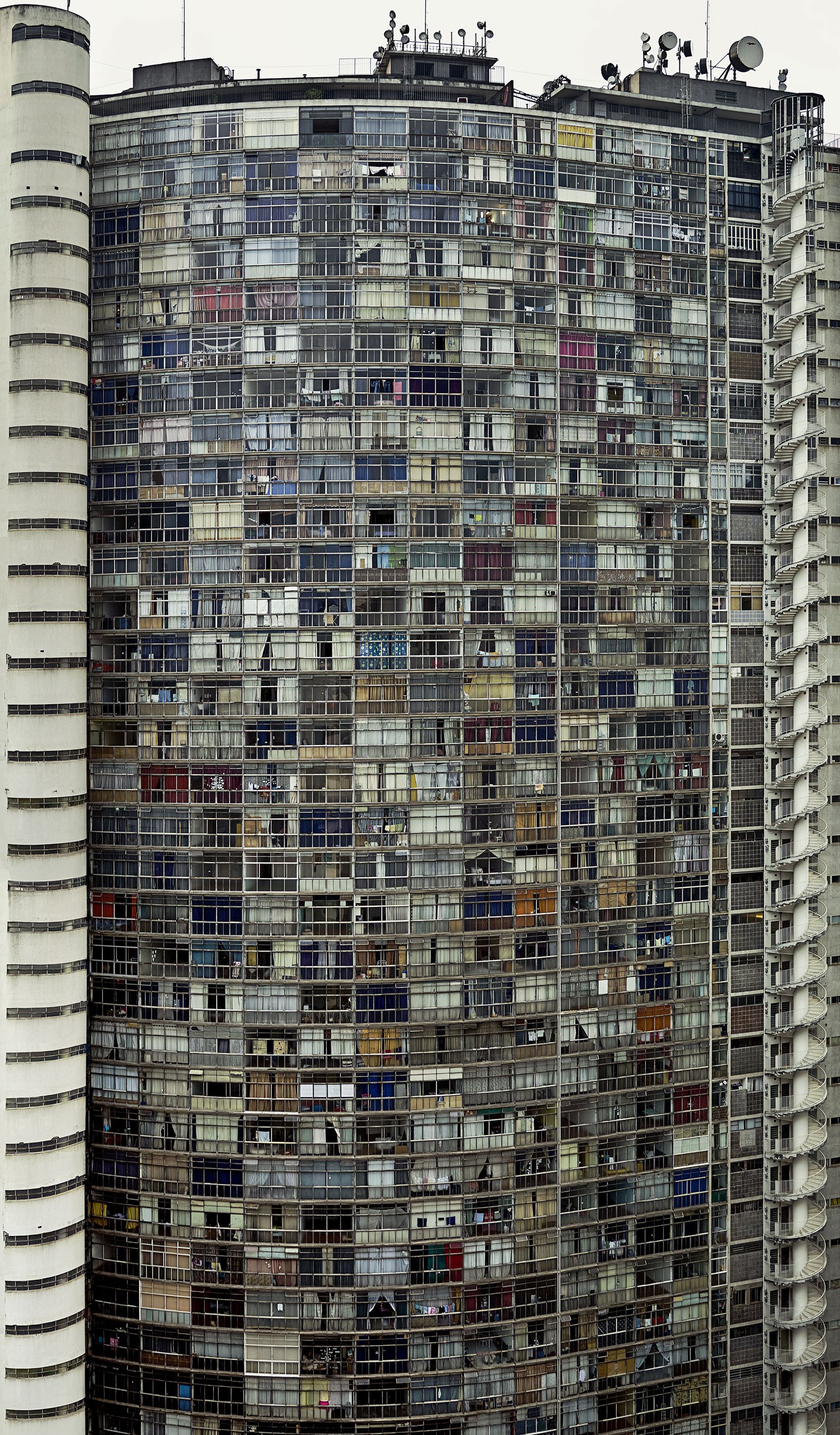
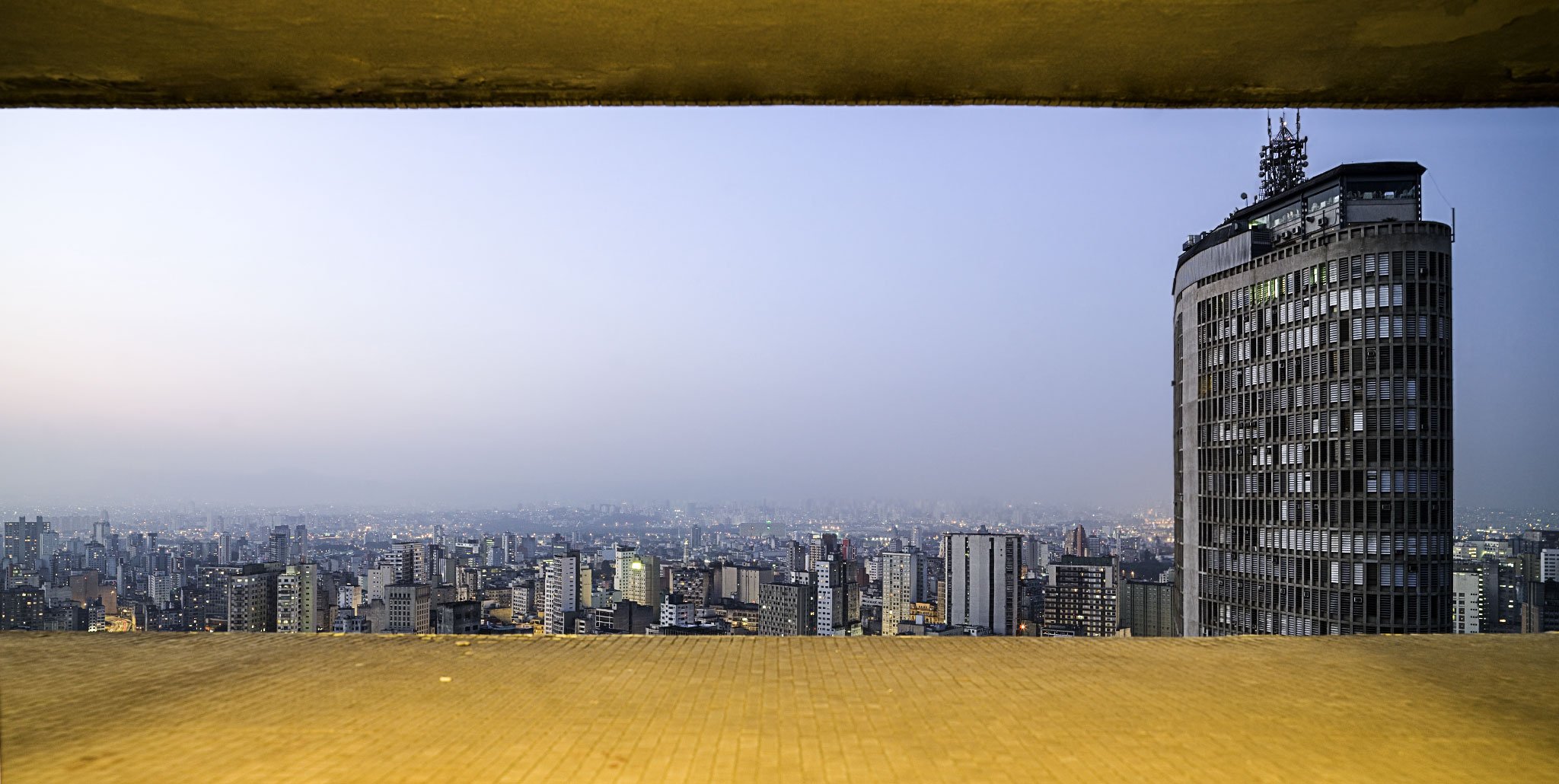
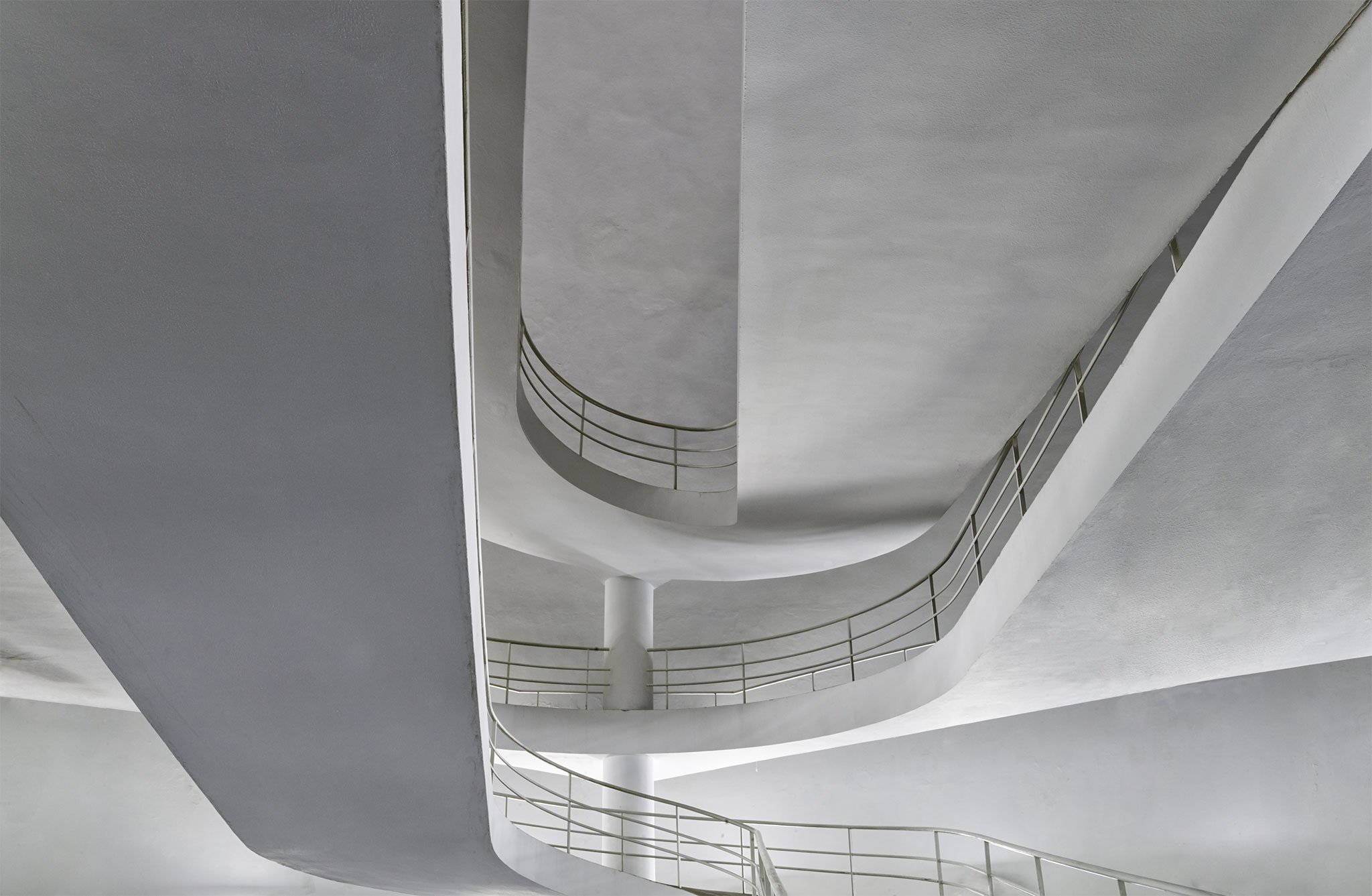
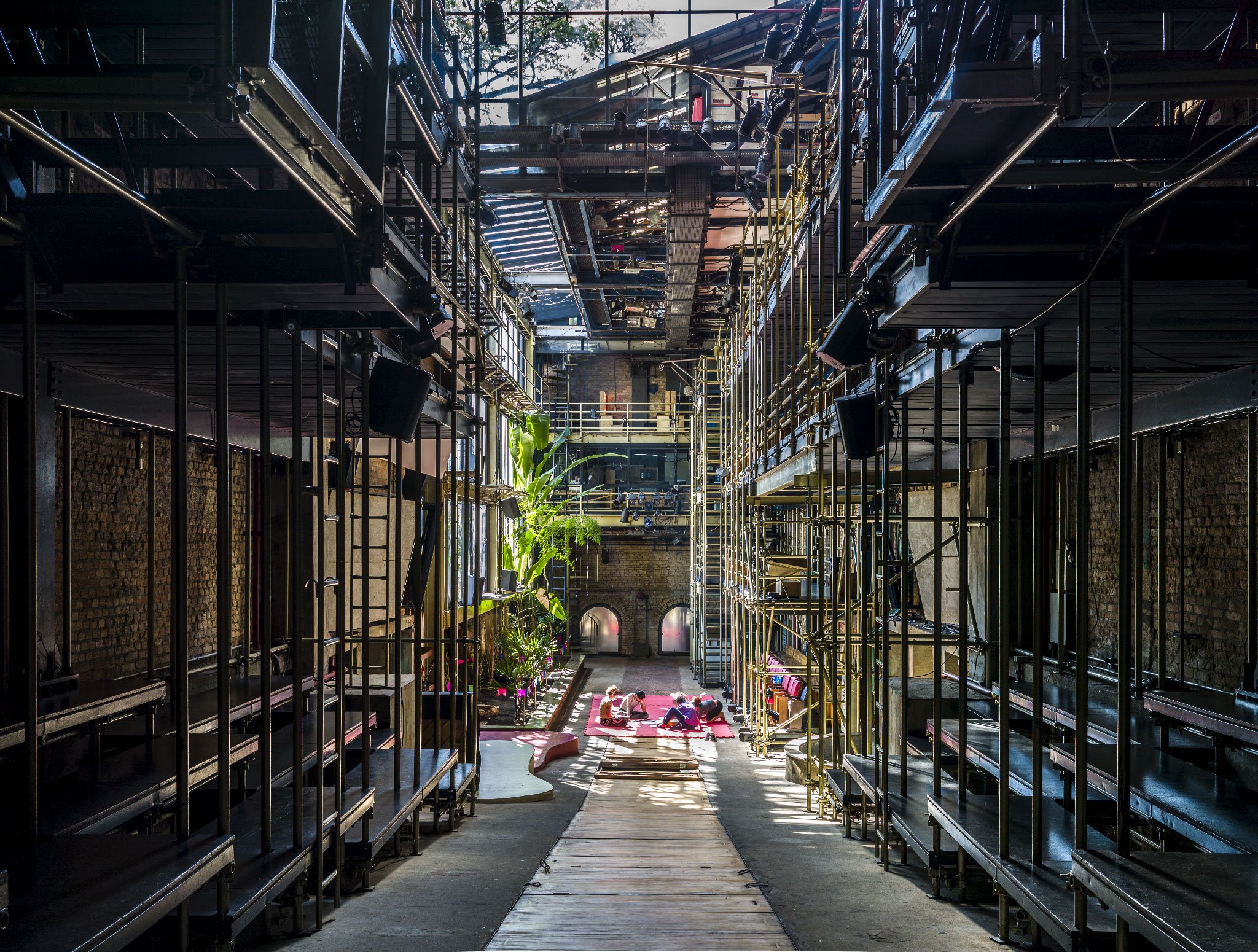
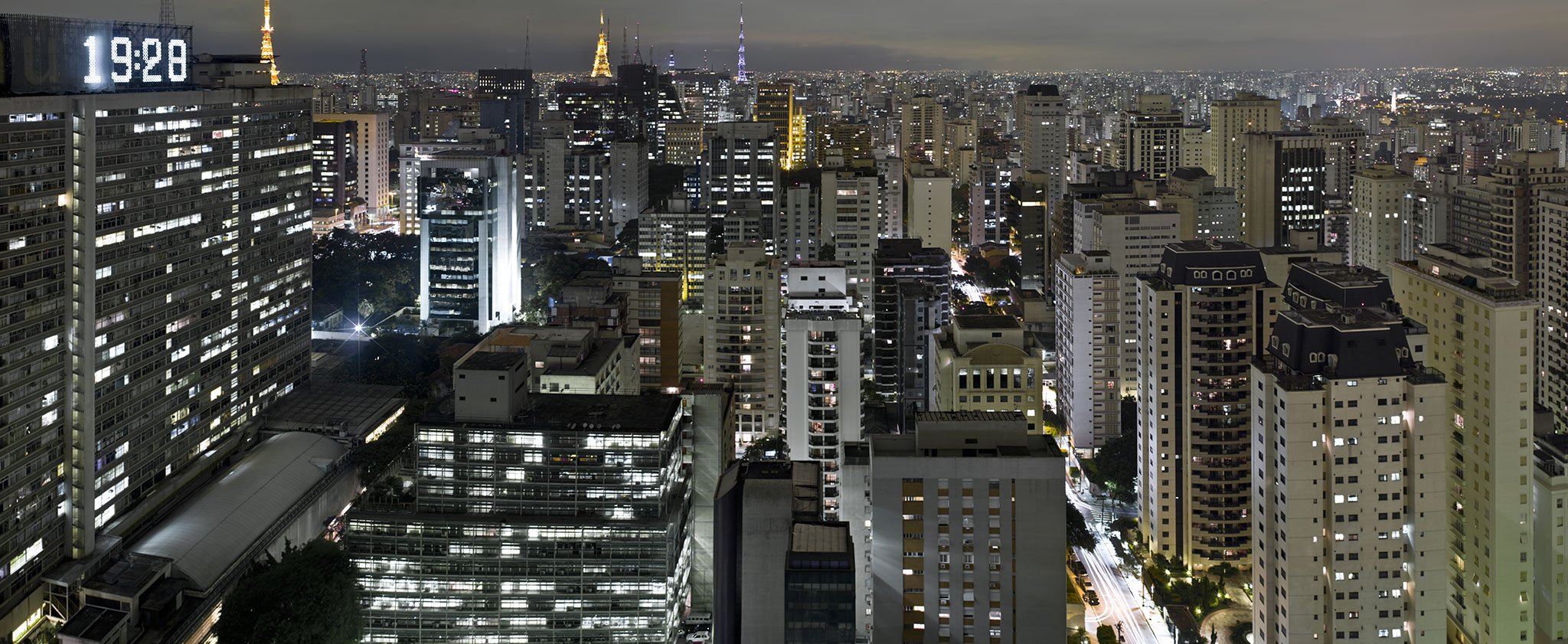
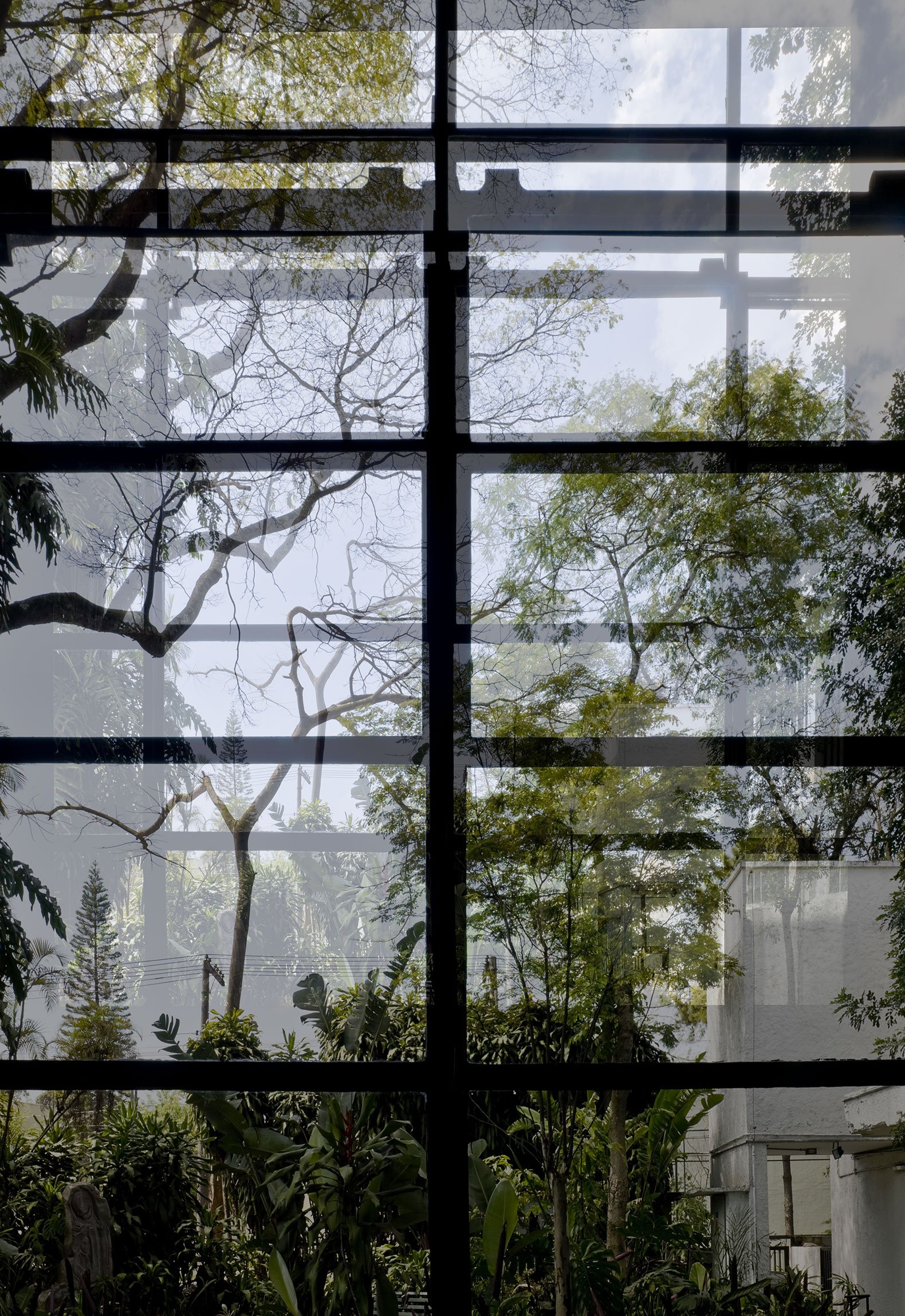
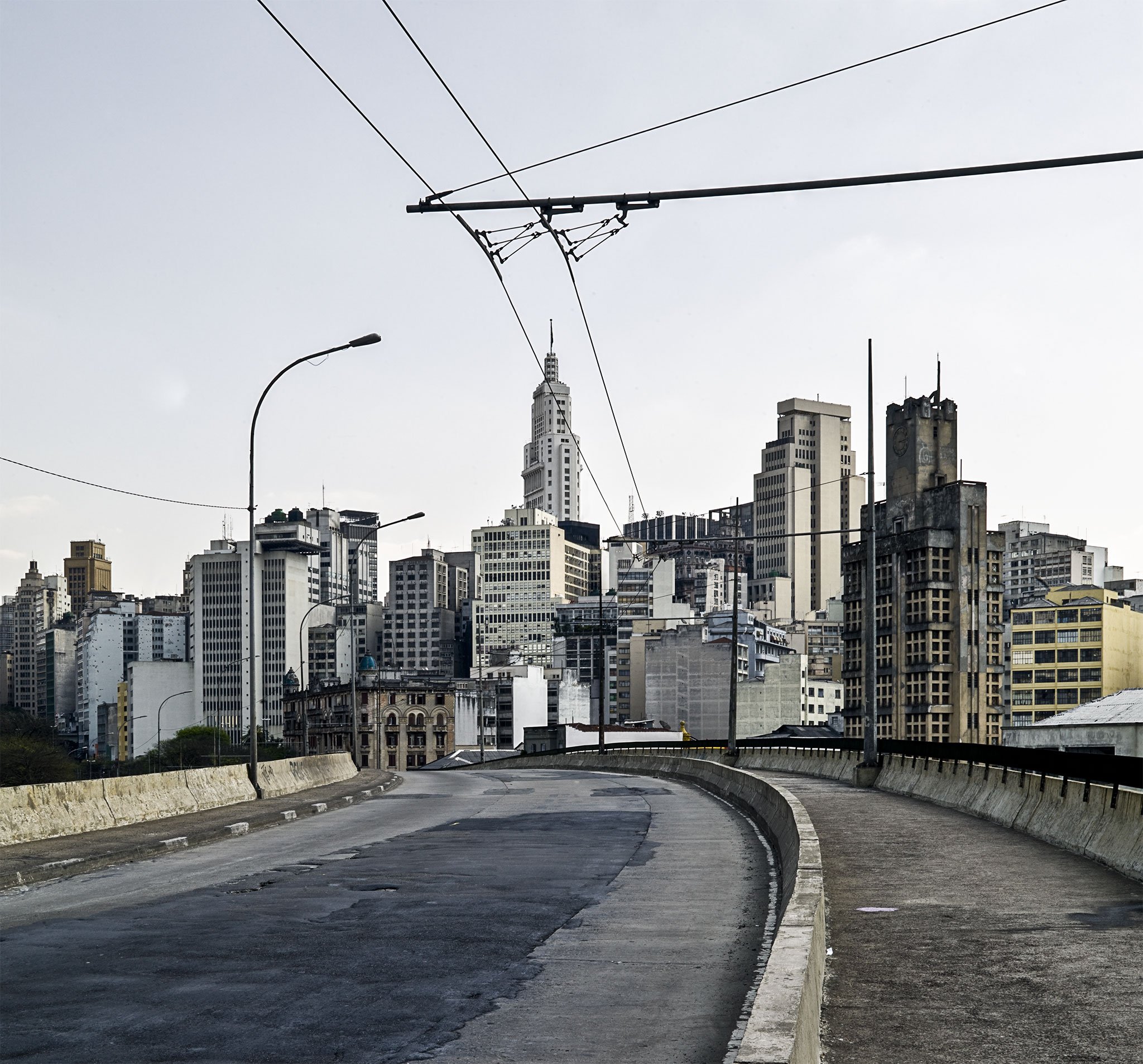
Fervor da Metropolis, a trip to the contemporary metropolis by José Manuel Ballester and Juan Manuel Bonet. We are facing a book with a double appeal which allows us to rediscover Sao Paulo with the images of José Manuel Ballesteros and the text of Juan Manuel Bonet, being much more than a mere exposition of both narrations.

Ballester and Bonet made a joint trip to this great metropolis of the south, in 2007, a trip in which they established a speech of complicity, intellectual exchange, and generous debate of points of view and looks when choosing shots. The book reflects the journey of two flâneur adrift through the streets of Sao Paulo, in search of their particular Nadja.

The text of Bonet is preceded by a brief text by Simonetta Persichetti, who is quickly accompanied by essential guests in her vision of the city as Walter Benjamin. I would add as well his contemporary Erich Mendelsohn, of whom I always remember his impressive dialectical images on his trips to the American city, although it is true that in this second the present is moved to the future in a city with few past references, especially because of the youth of the city. In the case of Sao Paulo, a century of Modernity allows us to look back. In any case, and as Bonet advances at the beginning of his text, Ballester's work is what in the 1920s called a city photo or urban symphony.

As it happened to Mendelshon, this book is the result of several trips, Bonet and Ballester, in which there is a rapprochement and finally a crush on the city of the south, a silent love, in which the city is represented as quiet.

"The fervor is in its buildings, in its passages, in its geometric forms: a visual narrative not of Sao Paulo, but of the city, Ballester understands to be Sao Paulo,"

Simonetta Persichetti.

The text of Bonet narrates the construction of the trip he had to see the exhibition of José Manuel Ballester, which ended up being considered not as a retrospective of the previous work but as a fresher and recent vision to include the vision of the Madrilenian over the city of Sao Paulo. It was reflected in an exhibition in 2010 in the Pinacoteca do Estado, curated by Bonet and titled "Fervor da metrópole" (Fervor of the metropolis).

A trip which lasted a few days exhaustively prepared, and that made a special review of the city's architecture in the twentieth century. This preparation generated knowledge which served as a basis for the process of image capture, the result of which allowed Ballester to make a novel, different graphic contribution of a city so profusely photographed. Inspiration always has a flat ass.

Bonet's text is a delicious description of concomitant causes, encounters, memories, reunions walks, and talks with friends ... As he says, a "rotten pot" which also includes poems and allows us to understand the visual construction the Ballester images show in the book.

The text is also the narrative about an architectural, imaginary vision of the history of the Brazilian city, which is also partly shown by Ballester. From the impressive view of the Copan building at dusk to the park Ibirapuera, Niemeyer is a repeated protagonist. Also works by Burle Marx, Mina Klabin, Gregorio Warchavchik, Flávio de Carvalho, David Libeskind, constantly Le Corbusier, Paulo Mendes da Rocha and of course much mentioned Lina Bobardi ... with houses like Vila Mariana, apartments of workers, Avenida Paulista, The legendary Livraria Cultura, obviously also the Masp, the portico of the Prada do Patriarca or its store Forma, Estaçao da Luz and more Lina Bo Bardi in the cultural and social centre Sesc Pompeya, park, houses, buildings and avenues in a litany almost Infinite and impressive, if one thinks that it is the narrative of the drifts of a week in the case of Bonet or of two in the case of the "photographer and painter" José Manuel Ballester.

After reading Bonet Ballester's images, I can say without knowing the city directly that despite the drunkenness which during all these years has come to my eyes of images of that city, coming up to dream  I  have visited, seeing the images of Ballester the city seems different, masterfully beautiful and new. An absolutely recommendable book.
More information

Label
Title
Text

Fervor da Metrópole. José Manuel Ballester. Juan Manuel Bonet.

+ + copy Created with Sketch.
- + copy Created with Sketch.
Label
Editorial
Text

Dan Galeria

+ + copy Created with Sketch.
- + copy Created with Sketch.
Label
ISBN
Text

978-8562079-10-8

+ + copy Created with Sketch.
- + copy Created with Sketch.
Label
Photography
Text

Por José Manuel Ballester

+ + copy Created with Sketch.
- + copy Created with Sketch.
Label
Texts
Text

Por Juan Manuel Bonet

+ + copy Created with Sketch.
- + copy Created with Sketch.
Label
Number of pages
Text

228

+ + copy Created with Sketch.
- + copy Created with Sketch.
Label
Language
Text

Portuguese, Spanish, English

+ + copy Created with Sketch.
- + copy Created with Sketch.

José Manuel Ballester (Madrid, 1960) is a painter and a photographer. Degree in Fine Arts, 1984. Since then he has won various awards and scholarships. He has participated in a lot of exhibitions all over the world, including the international ARCO fair for the last ten years. His work forms part of the collection of the Museo Nacional Centro de Arte Reina Sofía and it has been exhibited in Beijing, Canada, New York, London, Sao Paulo, France, Germany, Tokyo and Colombia. First Prize in Painting in the XVIII Biennial of Alexandria and the National Print Award, 1998.Premio Nacional de Fotografía 2010.

His artistic career began with particular attention to the technique of the Italian and Flemish paintings of the XV and XVIII centuries. Since 1990, he started to blend painting and photography. We can highlight, between his numerous exhibitions, Lugares de paso, Valencia, 2003; Setting Out, New York, 2003; or Habitación 523, Museo Nacional Centro de Arte Reina Sofía, 2005; and recently Fervor de metrópolis, Pinacoteca do Estado de São Paulo, 2011; La abstracción de la realidad, Sala Alcalá 31, Community of Madrid and DA2, Salamanca, 2011; and Espacios ocultos in the Spanish Academy, Rome, 2012. He has taken part in numerous group exhibitions in art fairs such as ARCO, Art Chicago, Artforum Germany, Paris Photo and Art Miami and in cities such as Dallas, Paris, Miami, São Paulo, Dubai, Beijing, Shanghai, Toronto and many others. And some more current ones like: Gli Spazi Nascosti di José Manuel Ballester Nei Palazzi di Genova, Museo di Palazzo Reale e Musei di Strada Nuova, Genoa, Italy (2017), Paisajes encontrados: El Bosco, El Greco, Goya, Museo Lázaro Galdiano, Madrid, Spain (2016), Museos en blanco, Ivorypress, Madrid, Spain (2015).

ACT > 10/05/2018

Read more

José Juan Barba (1964) is an architect, graduated from ETSA Madrid (1991), and holds a Doctorate in Architecture from ETSA Madrid, awarded Cum laude for his thesis Inventions: New York vs. Rem Koolhaas, Bernard Tschumi, Piranesi (2004). He received a special mention in the National Awards for Completion of Studies (1991) and served as an advisor to various NGOs until 1997. He founded his studio in Madrid in 1992 (www.josejuanbarba.com). 

Barba is an architecture critic and has been the director of METALOCUS magazine since 1999. Since 1998, he has directed the International Architecture Magazine METALOCUS (bilingual, Spanish/English), which has been recognized with multiple national and international awards.

He is a Full Professor at the University of Alcalá, leading the project line of the Habilitation Master's Architecture and City, responsible for several courses in Theory and Criticism, heading the Urban Planning area of the Department of Architecture, and participating in the research group Architecture, History, City, and Landscape at UAH. He has been invited to numerous architecture and urbanism forums, including the II Forum of Mexican Cities World Heritage: Urban Development, History, and Modernity, organized by the Pan-American Committee for Urban Development and Historical Heritage, and the World Urban Development Forum (FMDU) in Culiacán, Sinaloa, Mexico. He has also participated in the International Architecture and Urbanism Conferences from the perspective of women architects, and has lectured at prestigious national and international universities, including the National Building Museum (Washington, DC), Roma TRE, Politecnico di Milano, UPMF Grenoble, ETSA Madrid, ETSA Barcelona, University of Thessaly (Volos), UNAM Mexico, the Faculty of Architecture Montevideo, schools of architecture in Medellín, Quito-Ecuador, Alicante, Málaga, Granada, Seville, A Coruña, Zaragoza, Valladolid, Universidad Iberoamericana Mexico, IE School, Universidad Europea Madrid, UCJC Madrid, ESARQ-UIC Barcelona, or Università Degli Studi di Genova.

Barba has extensive professional experience in architecture, urban planning, landscape design, and territorial recovery. He has received numerous awards, including the First Prize for Gran Vía Posible for Delirious Gran Vía (Madrid), the River Interpretation Center (Zamora), exhibited at the World Architecture Festival (Barcelona 2008), Santa Bárbara Park (Toledo), the Erich Degner Architecture Prize 1995 promoted by the BBVA Foundation, and his Day Care Center for the Elderly project, featured in Volume 3 of the COAM Madrid Architecture Guide (2007). His work has been published in numerous national and international books and magazines.

He was also Maître de Conférences at IUG-UPMF Grenoble (2013–14), in a position obtained through a European competition. His work has been published internationally. He regularly serves on academic juries, including the editorial competition of Quaderns magazine (2011), as a selector for the Mies van der Rohe Awards (2007–2026), as juror for EUROPAN13 Spain (2015–16), TRANSFER in Zurich (2019), and was invited to participate in the Venice Biennale 2016 as part of the exhibition Spaces of Exception / Spazi d’Eccezione.

He has published several books, including The Dark Line. michele&miquel, dA Vision Design (2024), CONGRESO ANYWAY. The City of Cities (2020), #Positions (2016), and Inventions: New York vs. Rem Koolhaas, Bernard Tschumi, Piranesi (2015). He has contributed to other publications such as Public Space Gran Vía. The Tourism City (2020), Spaces of Exception / Spazi d’Eccezione (2016), La mansana de la discordia (2015), and Contemporary Architecture of Japan: New Territories (2015), as well as chapters in numerous books including Architects: A Professional Challenge (2009), 21st Century Architectures (2007), Ruta de la Plata, New Conquerors of Space (2019), and The Tourism City (2020).

Selected awards include:

- “PIERRE VAGO” ICAC. International Committee of Art Critics Award, London, 2005
- “PANAYIOTI MIXELI AWARD,” SADAS-PEA, award for the promotion of architecture, Athens, 2005
- “SANTIAGO AMÓN” AWARD, award for the promotion of architecture, COAM Madrid, 2000
- FAD Award 07, Ephemeral Interventions, First Prize, M.C. Escher Exhibition, Arquin-FAD, Barcelona, 2007
- World Architecture Festival, Center for Research and Interpretation of the Rivers, Tera, Esla, and Órbigo, Finalist, Barcelona, 2008
- Gran Vía Posible, First Prize, Delirious Gran Vía, Madrid, 2010
- Reform of the Río Segura Surroundings, Award, Murcia, 2010

Read more

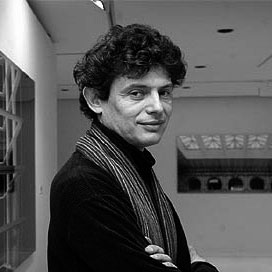
Juan Manuel Bonet. (Paris, 1953) is a writer and a critic of art and literature and has been curator of exhibitions. Director of the Instituto Cervantes since January 27, 2017, he has directed the Instituto Cervantes in Paris between 2012 and 2017 and has previously been director of the IVAM (Valencian Institute of Modern Art) and the National Museum of Art Reina Sofía (Madrid). President of the Rafael Cansinos Assens Archive Foundation and the Vicente Huidobro Foundation International Committee.

Author of several books of poems recently grouped in Via Labirinto; Of the diary The round of the days; Of the reference work Dictionary of the avant-gardes in Spain (1907-1936), completed by Avant-garde Printed in Spain (1912-1936); Of a book about Ramón Gómez de la Serna, Ramón in his Tower; Of critical editions of, among others, Max Aub, Salvador Dalí, José María Eguren and Rafael Lasso de la Vega; And of monographs on, among others, Juan Gris, Ramón Gaya, Gerardo Rueda, Martín Chirino, Pelayo Ortega and Miguel Galano.

Curator of exhibitions, between them ‘1980’, ‘Madrid D.F.’, ‘Imprenta y poesía’, ‘Pintura contemporánea española’, ‘Espagne Arte abstracto 1950-1965’, ‘El surrealismo entre Viejo y Nuevo Mundo’, ‘El objeto surrealista en España’, ‘Ciudad de ceniza: El surrealismo en la posguerra española’, ‘Los años pintados’, ‘Muelle de Levante’, ‘El poeta como artista’, ‘El ultraísmo y las artes plásticas’, ‘De Picasso a Dalí: Las raíces de la vanguardia española’, ‘Literatura argentina de vanguardia’, ‘España años 50’, ‘El colegio Estudio: Una aventura pedagógica en la España de la posguerra’, ‘El efecto iceberg: Colección Museo ABC’, ‘Un mundo construido: Polonia 1918-1939’ and ‘Una mirada española: Manolo Escobar coleccionista’.

Curator of retrospectives de, between them, Mariano Fortuny y Madrazo, Pablo Picasso, Juan Gris, Giorgio Morandi, Tarsila do Amaral, Henri Michaux, Henryk Stazewski, Francisco Bores, Juan Manuel Díaz-Caneja, Ramón Gaya, Eugenio Fernández Granell, Esteban Vicente, José Guerrero, Manolo Millares, Lucio Muñoz, Manuel H. Mompó, Julio López Hernández, Alex Katz or Dis Berlin.

To add he has been curator of other expositions about photographers (José Manuel Ballester, Javier Campano, Francesc Catalá Roca, Jesse Fernández, Bernard Plossu, Leopoldo Pomés, Josef Sudek), writters (Rafael Alberti, Max Aub, Julio Cortázar, Alfredo Gangotena, Ramón Gómez de la Serna, Tadeusz Peiper, Francisco Vighi), politicians (Juan Negrín) and composers (Morton Feldman, Ricardo Viñes).

Read more
Published on: October 8, 2017
Cite:
metalocus, JOSÉ JUAN BARBA
"Fervor da Metrópole by José Manuel Ballester" METALOCUS. Accessed
<https://www.metalocus.es/en/news/fervor-da-metropole-jose-manuel-ballester> ISSN 1139-6415
Loading content ...
Loading content ...
Loading content ...
Loading content ...
Loading content ...
Loading content ...
Loading content ...
Loading content ...
Loading content ...
Loading content ...
Loading content ...
Loading content ...
Loading content ...
Loading content ...
Loading content ...
Loading content ...
Loading content ...
Loading content ...
Loading content ...
Loading content ...
Loading content ...
Loading content ...
Loading content ...
Loading content ...
Loading content ...
Loading content ...
Loading content ...
Loading content ...
Loading content ...
Loading content ...
Loading content ...
Loading content ...
Loading content ...
Loading content ...
Loading content ...
Loading content ...
Loading content ...
Loading content ...
Loading content ...
Loading content ...
Loading content ...
Loading content ...
Loading content ...
Loading content ...
Loading content ...
Loading content ...
Loading content ...
Loading content ...
Loading content ...
Loading content ...
Loading content ...
Loading content ...
Loading content ...
Loading content ...