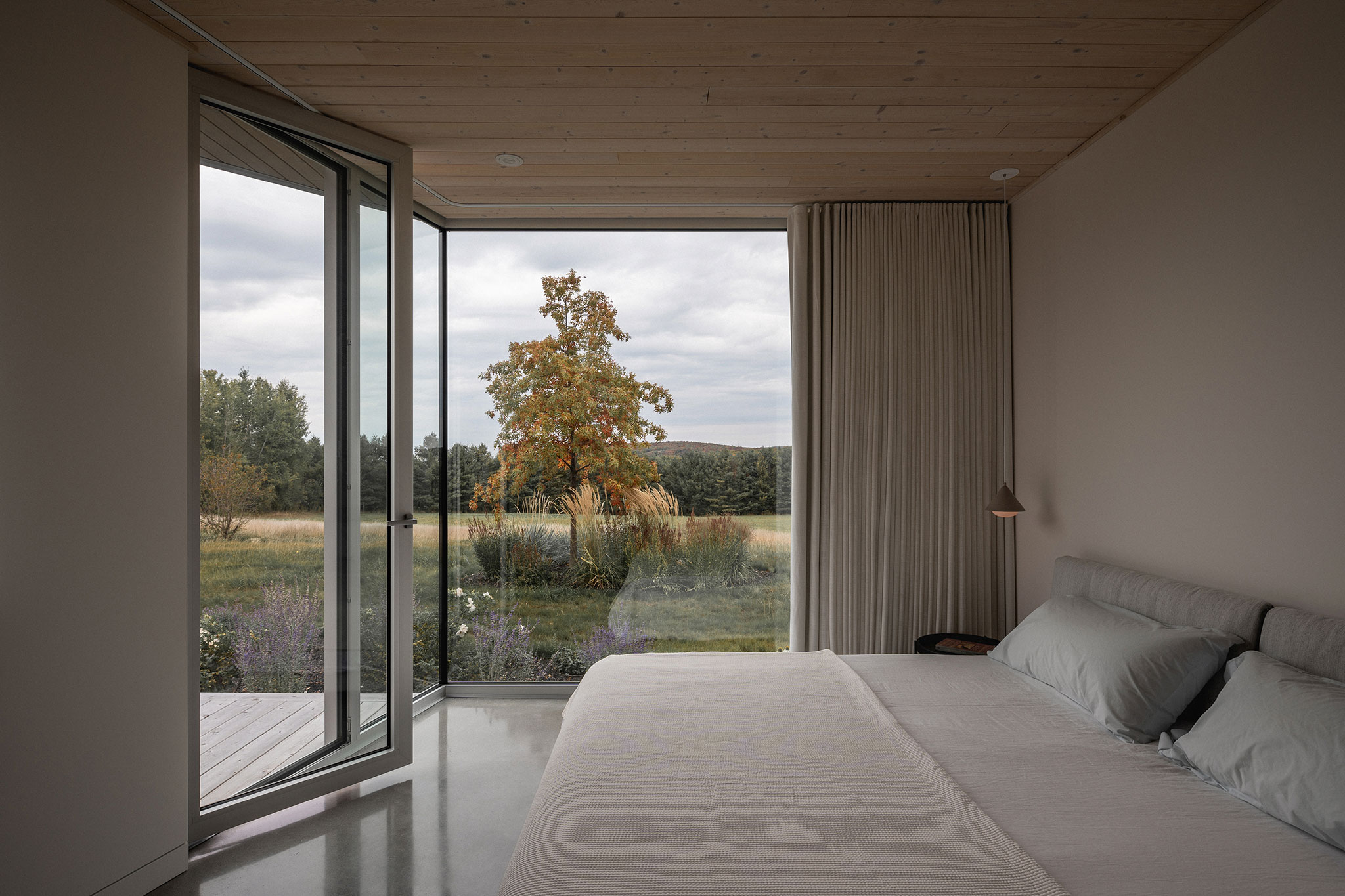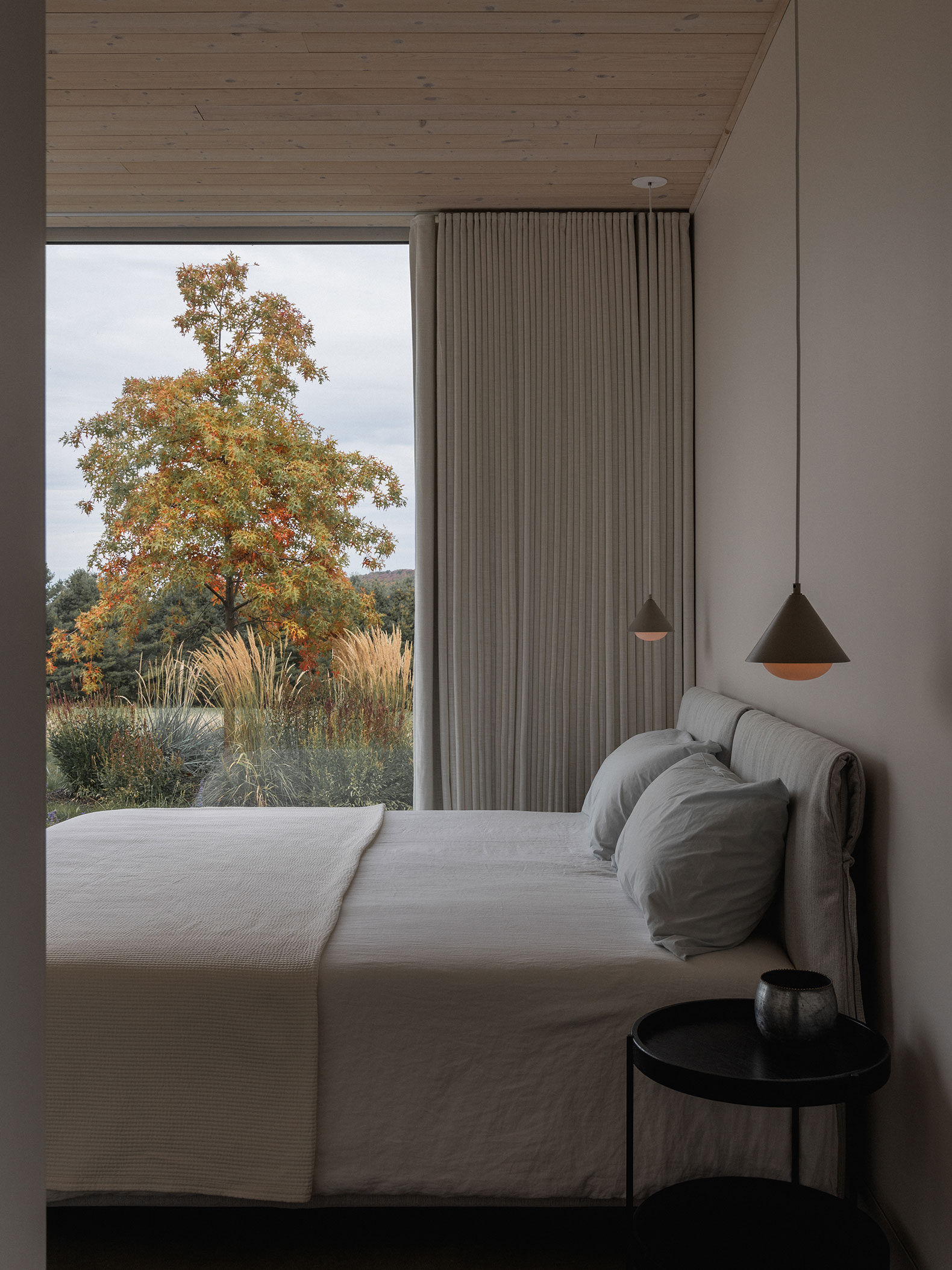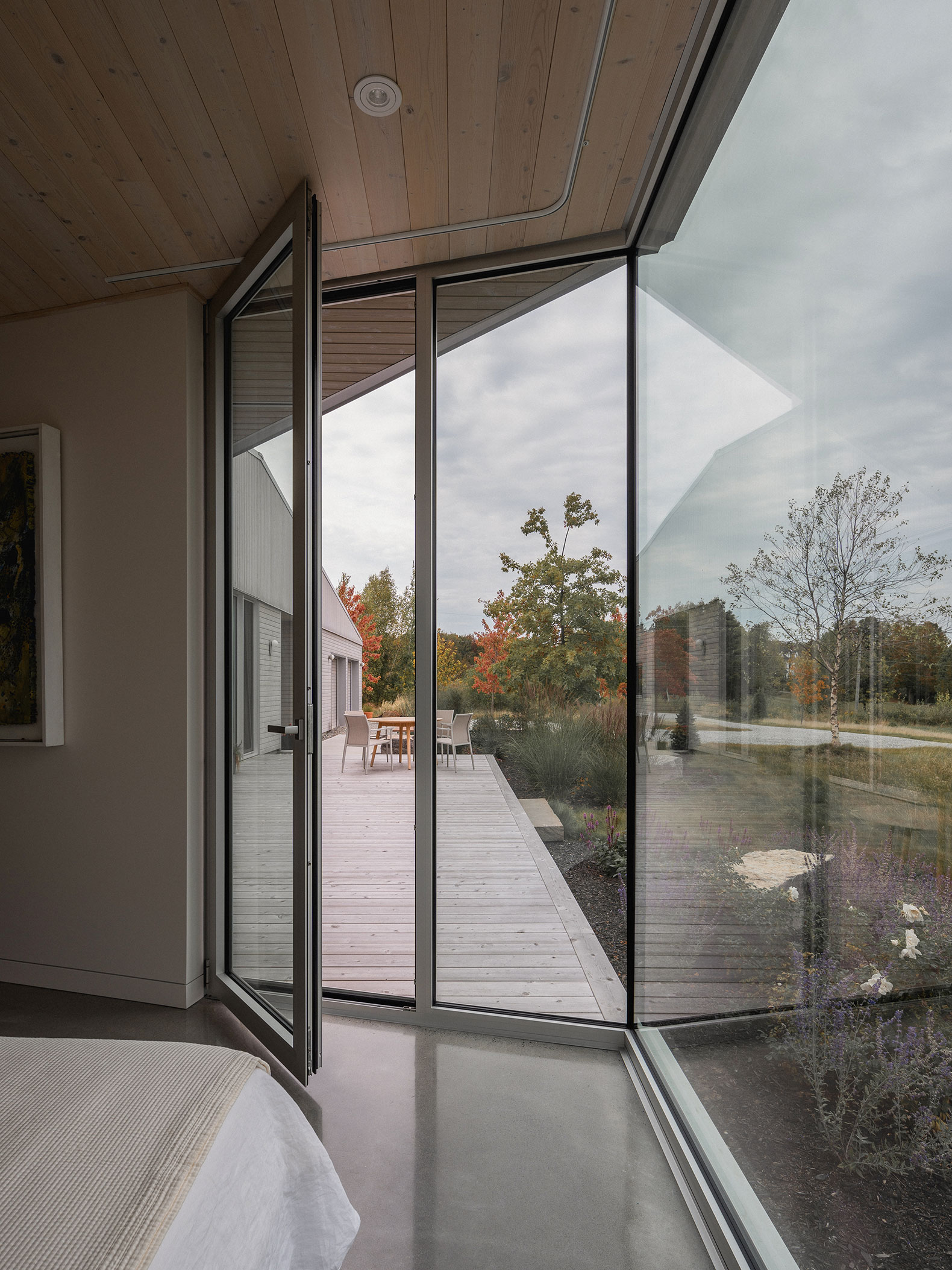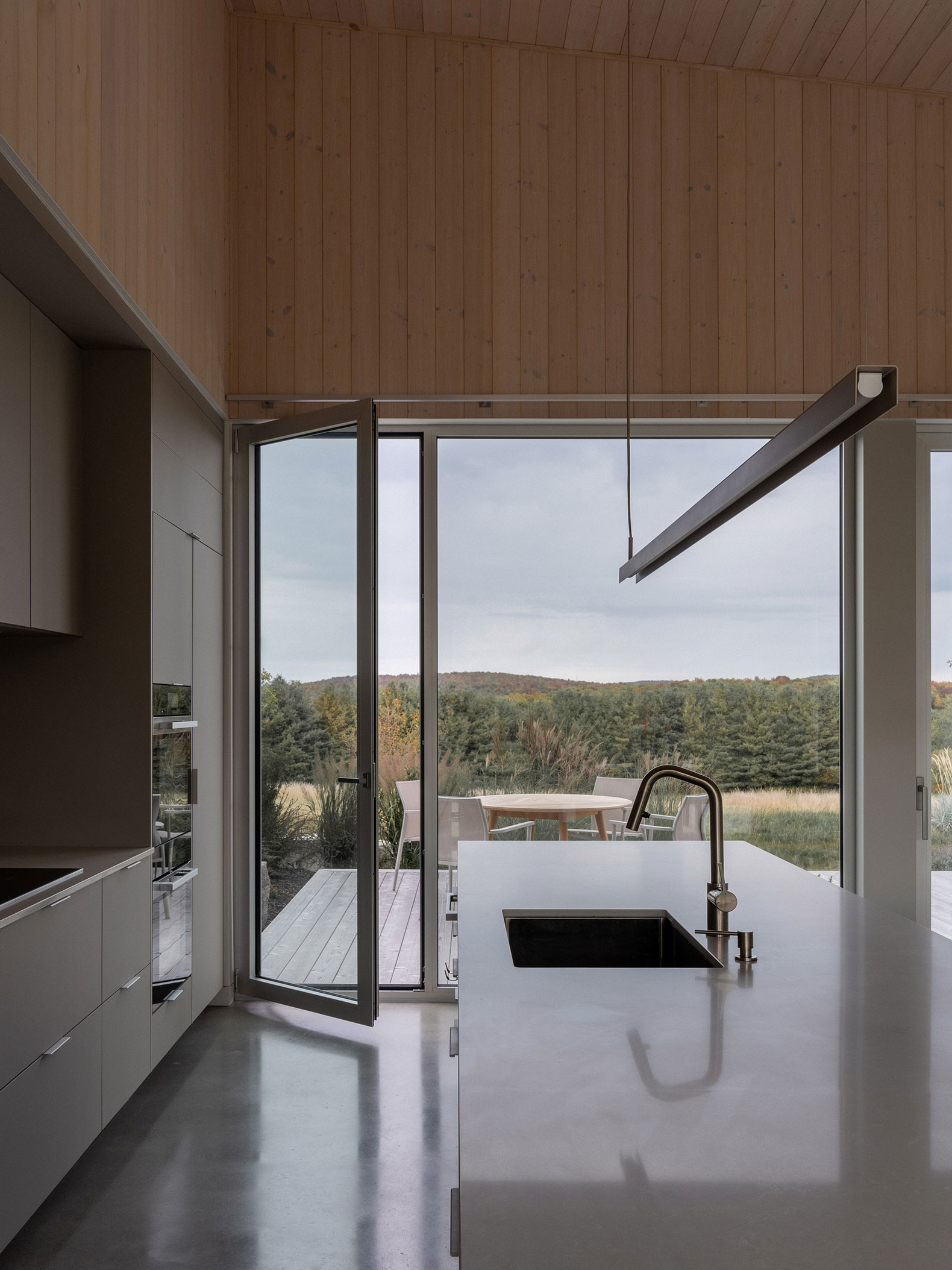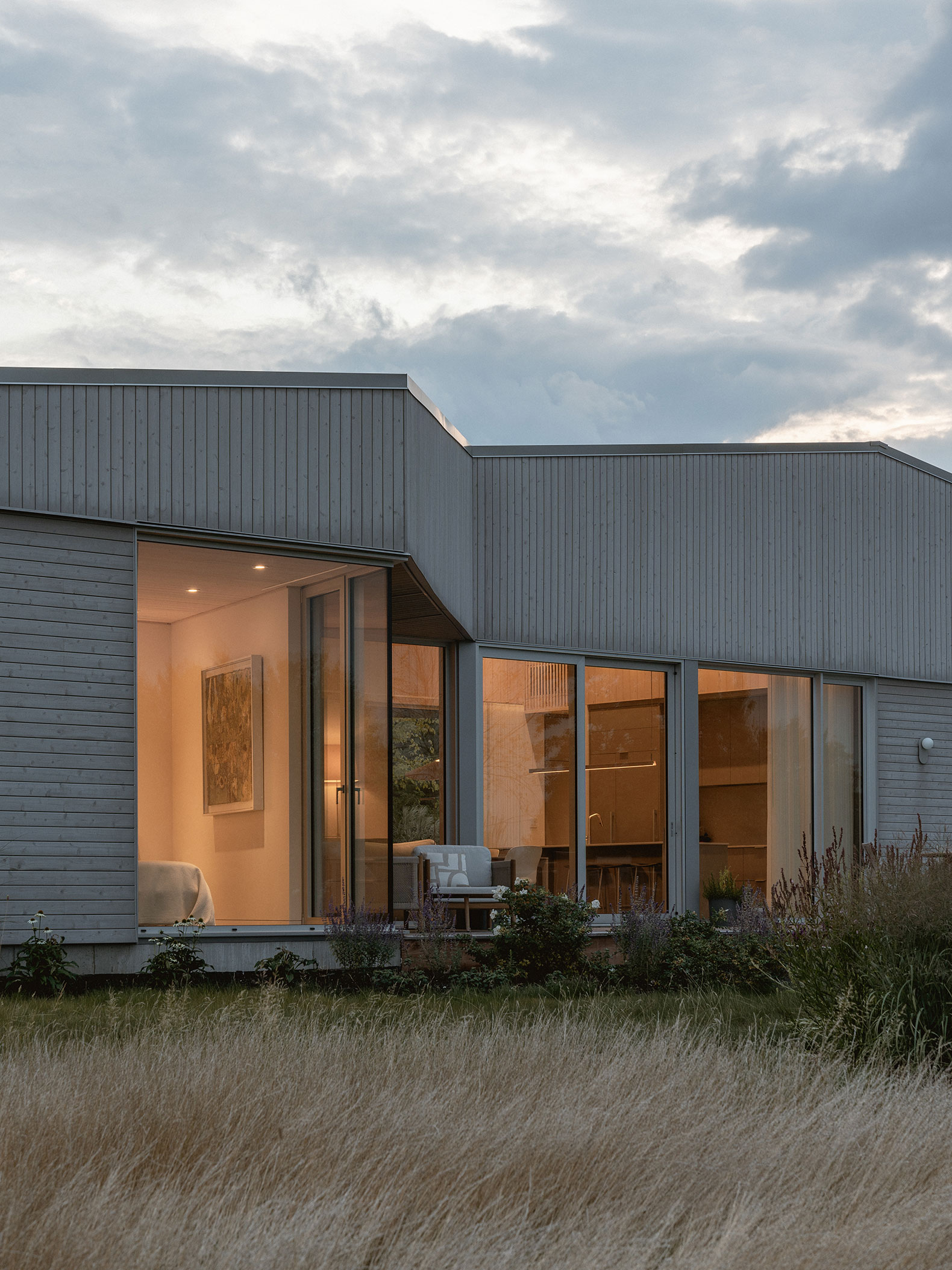
Architecture practice _naturehumaine has designed "Le Fenil," a country house built on a plot of land formerly used for grain production, located in the municipality of Hatley, in the Eastern Cantons of Quebec, Canada.

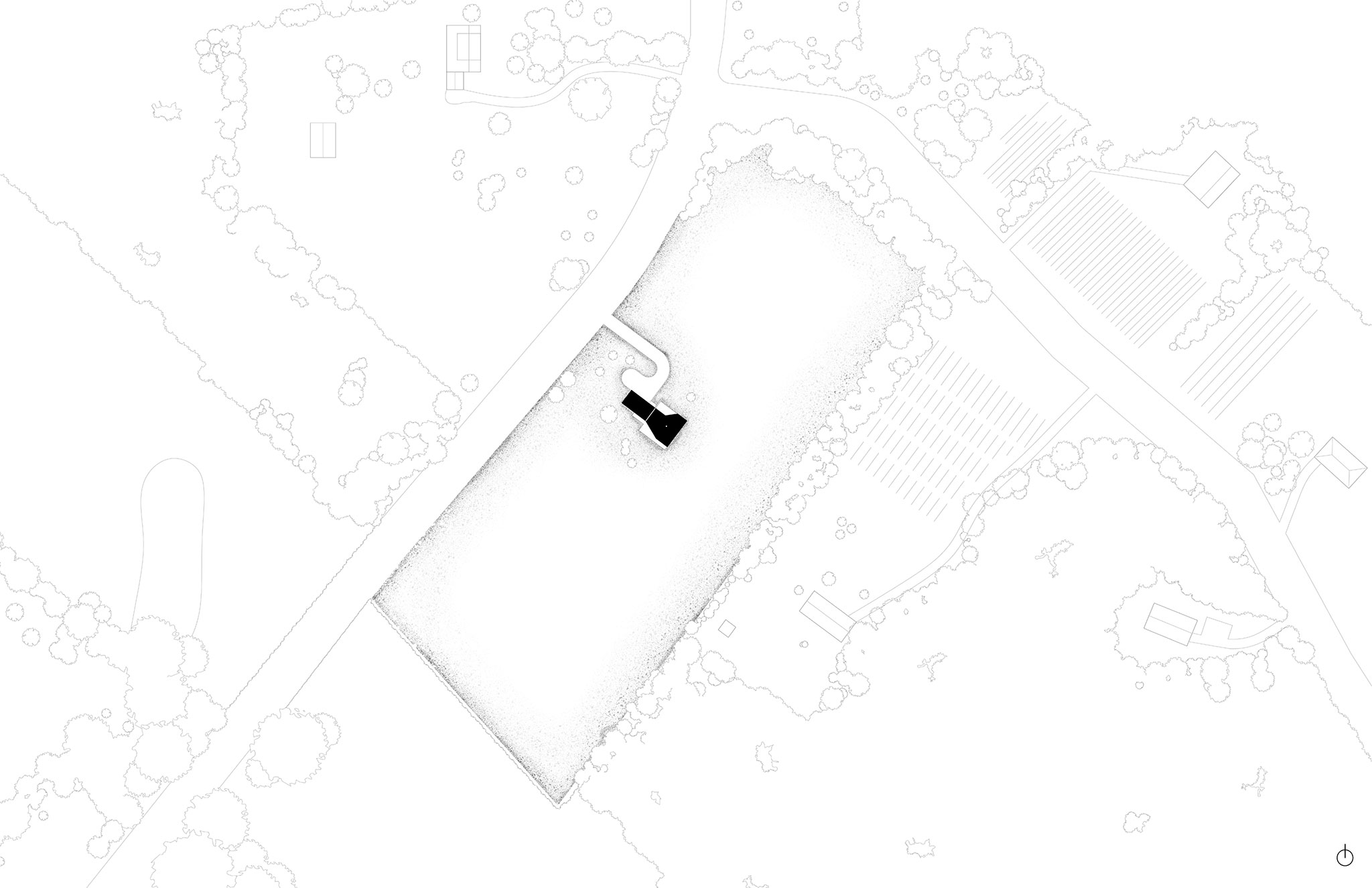
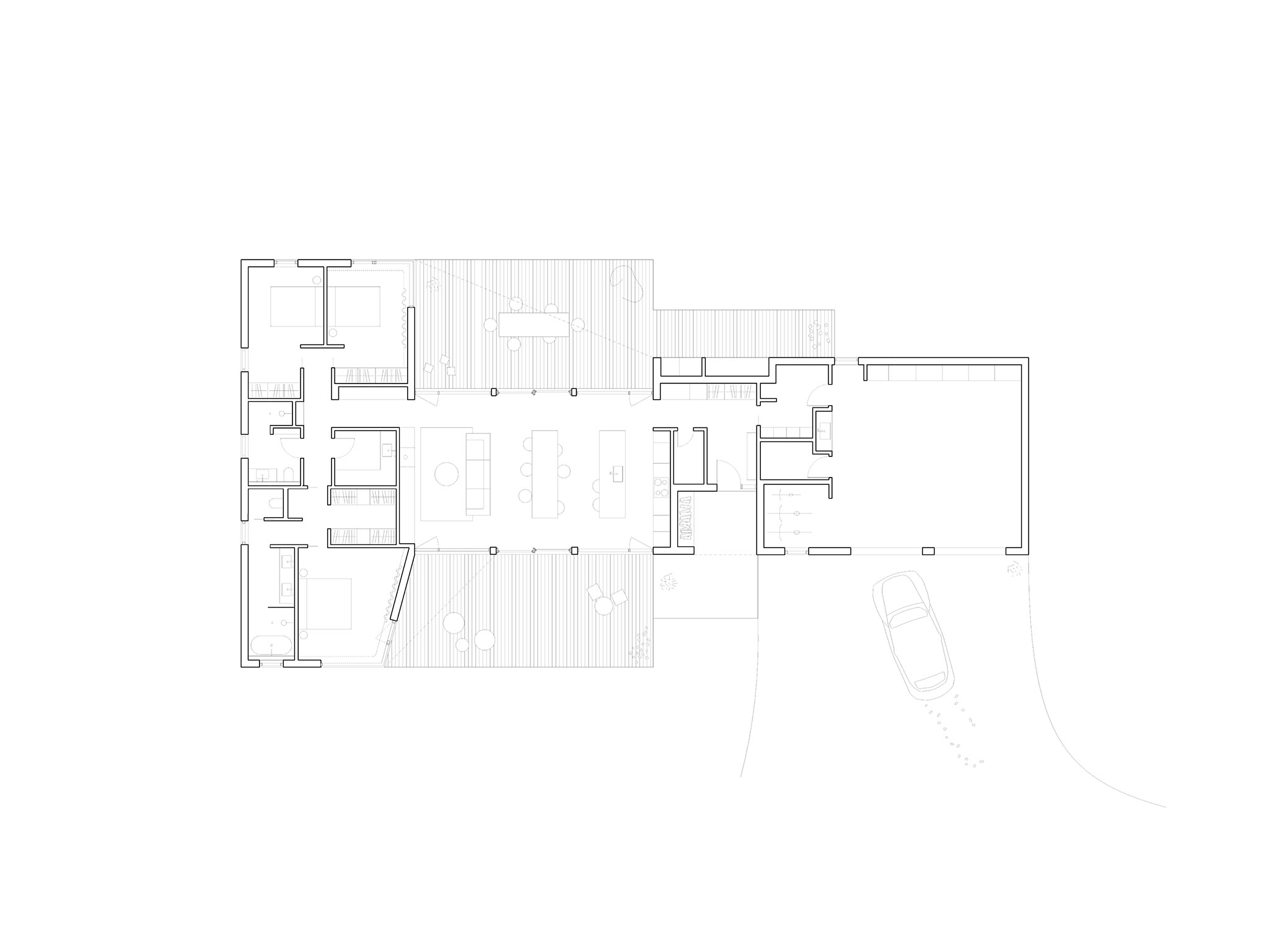
With a minimal ecological footprint, the house preserves the land's agricultural heritage by creating a refuge elevated above its base. The design features a T-shaped layout that integrates inviting spaces oriented towards harmonious views of the countryside through large glass doors, connecting its inhabitants with the tranquility of the landscape.

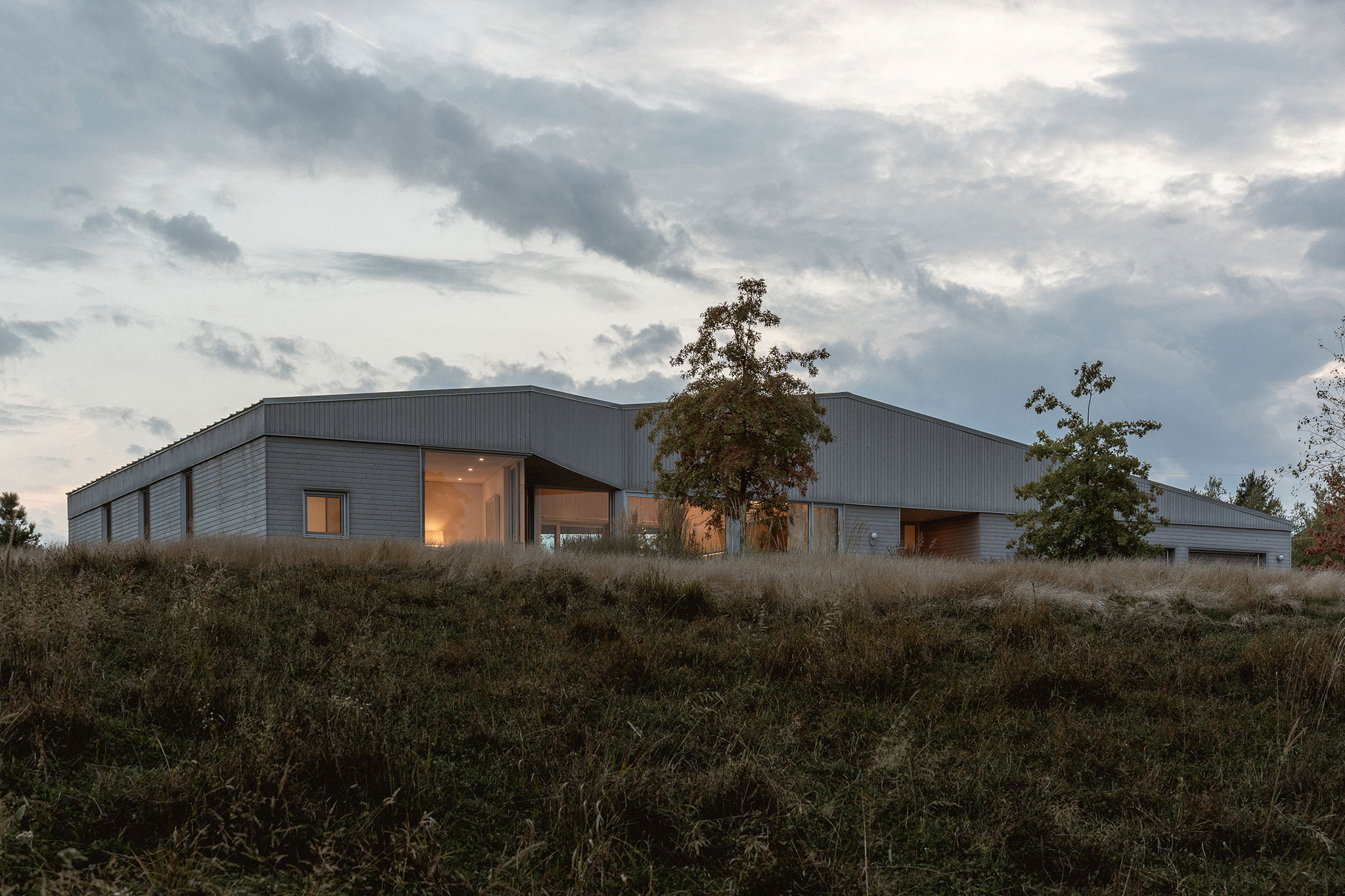
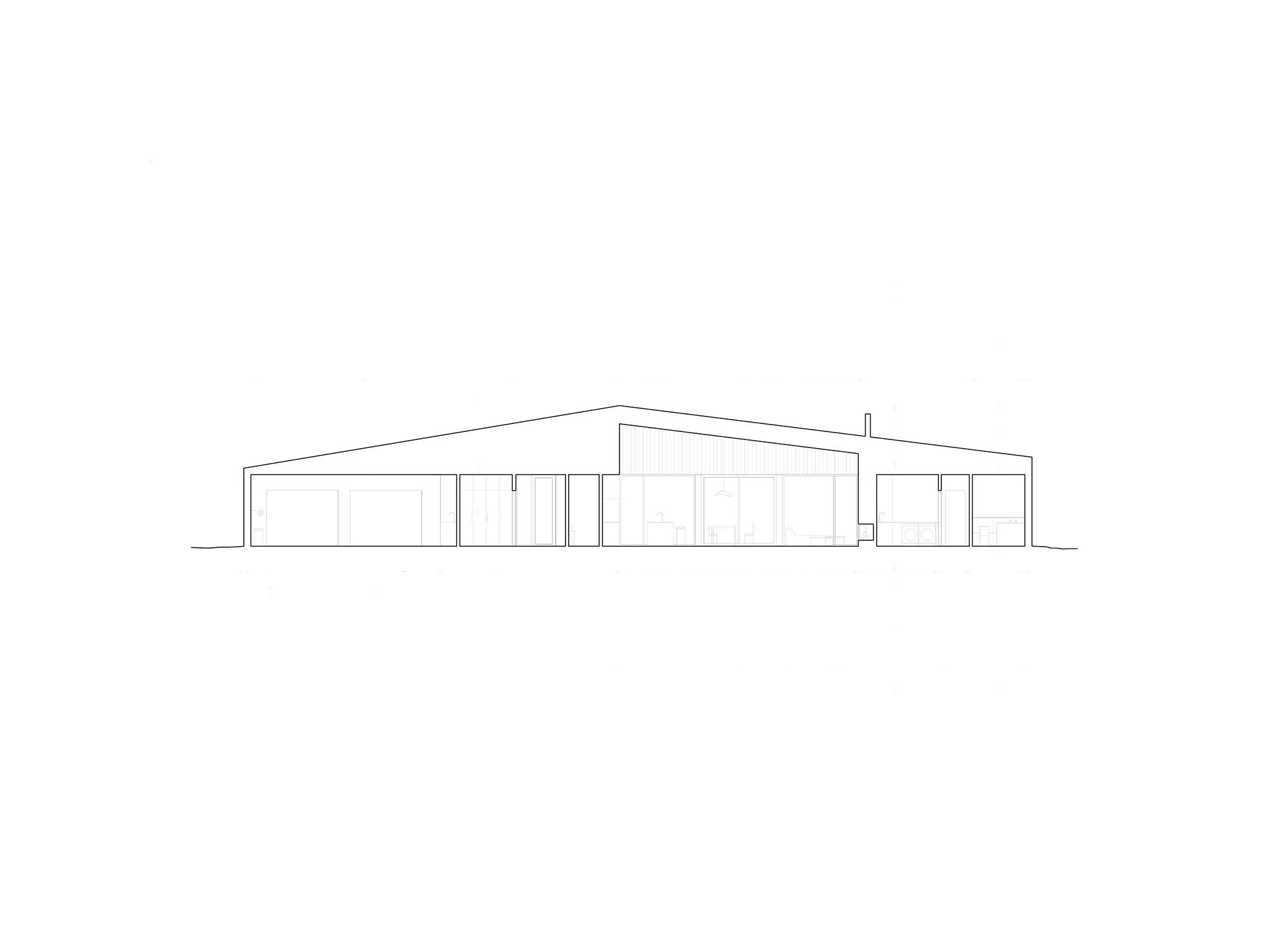
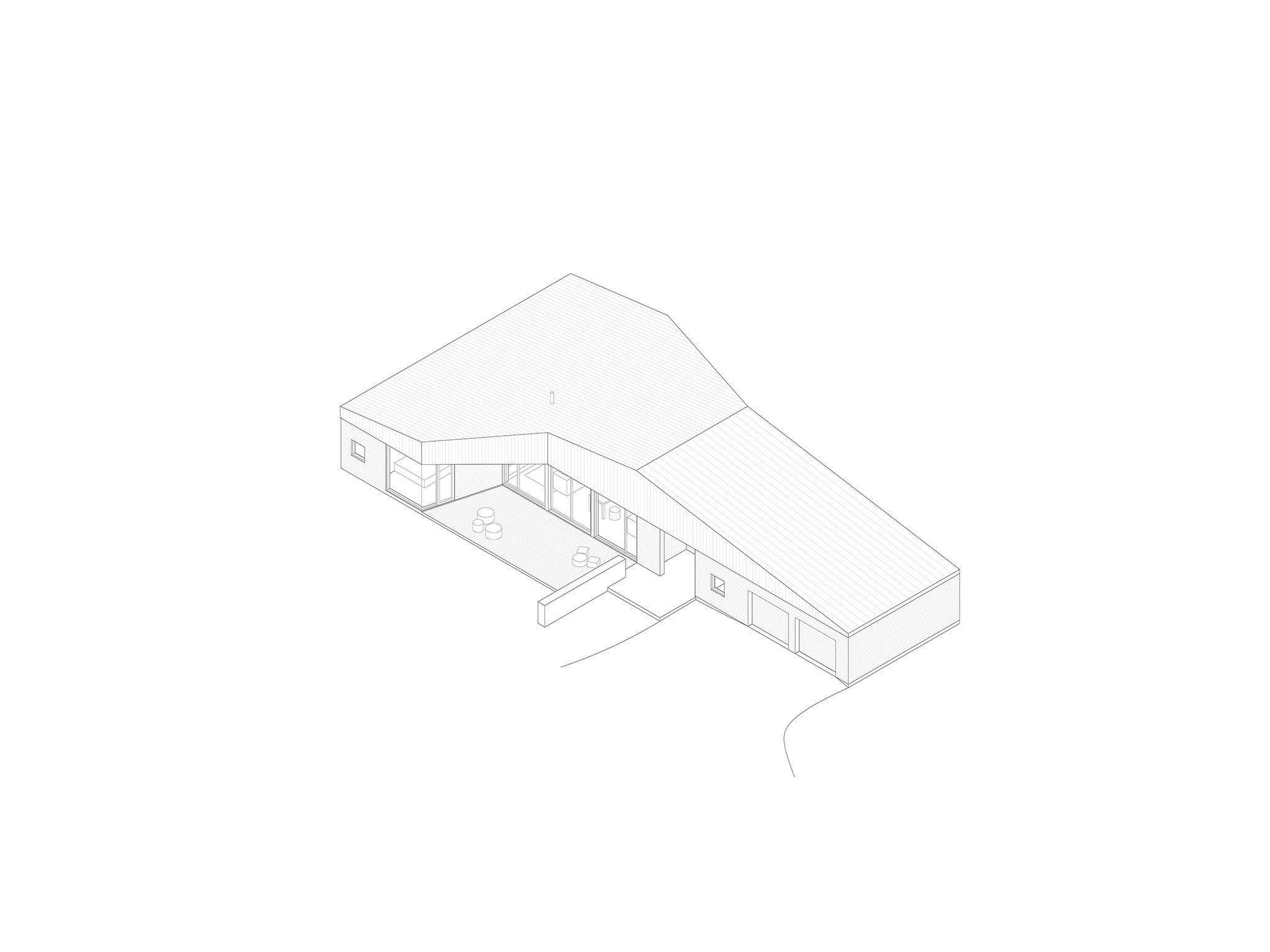
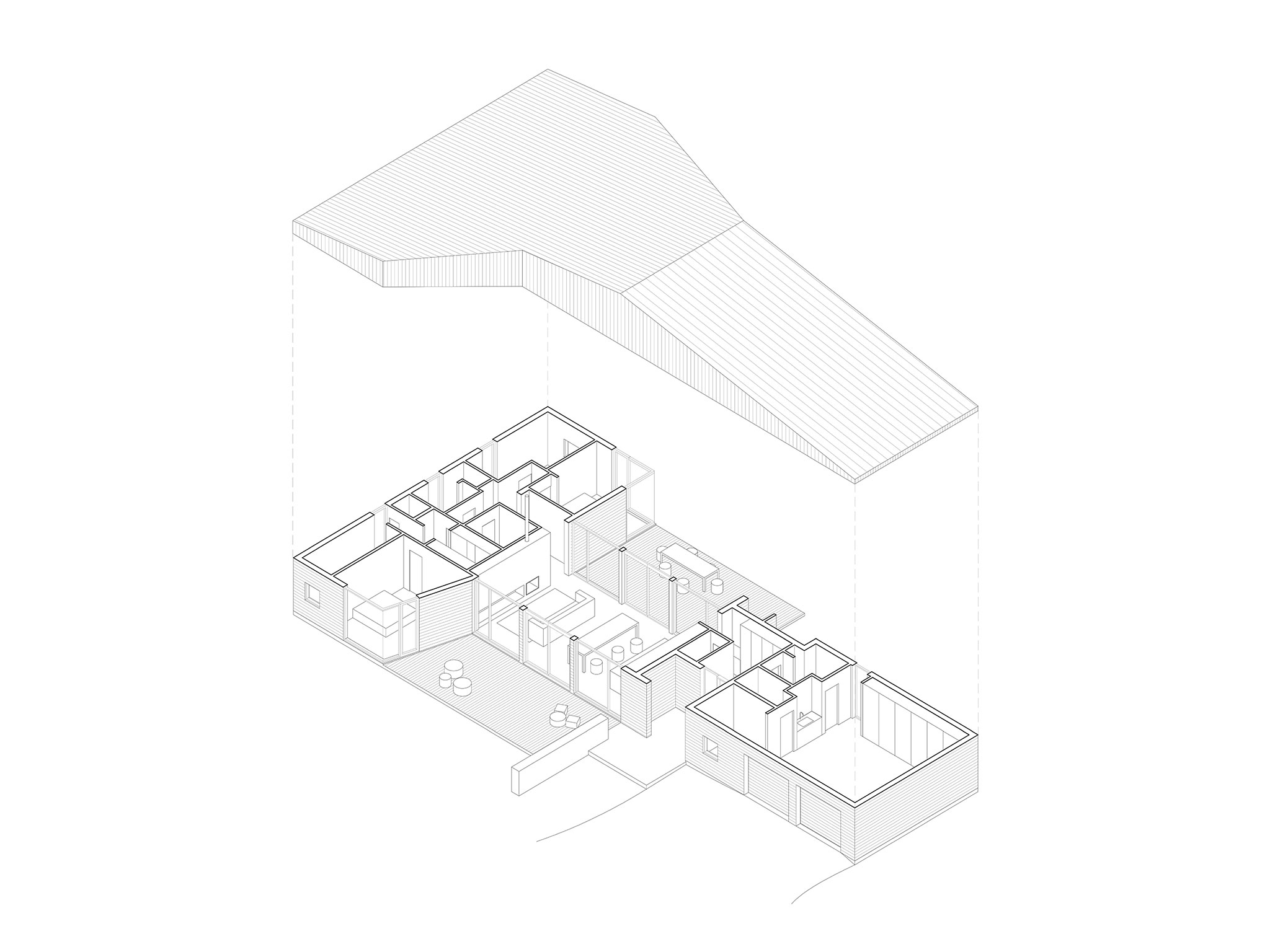
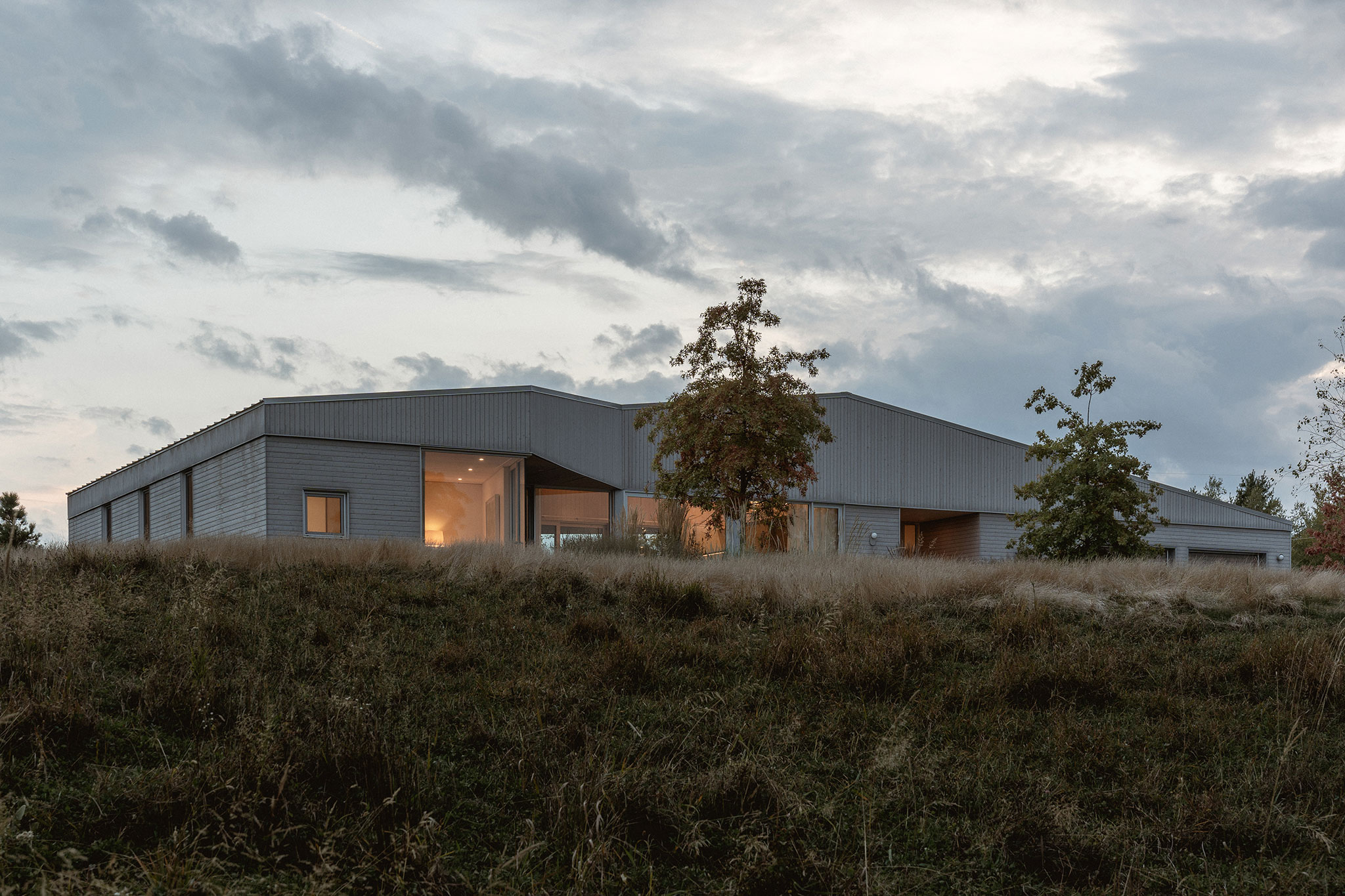
"Le Fenil," designed by _naturehumaine on a north-south axis in the heart of the countryside, comprises a horizontal volume and a sculptural, angular roof that crowns the entire ground floor. A central opening at the core of the living spaces allows natural light to permeate the house.

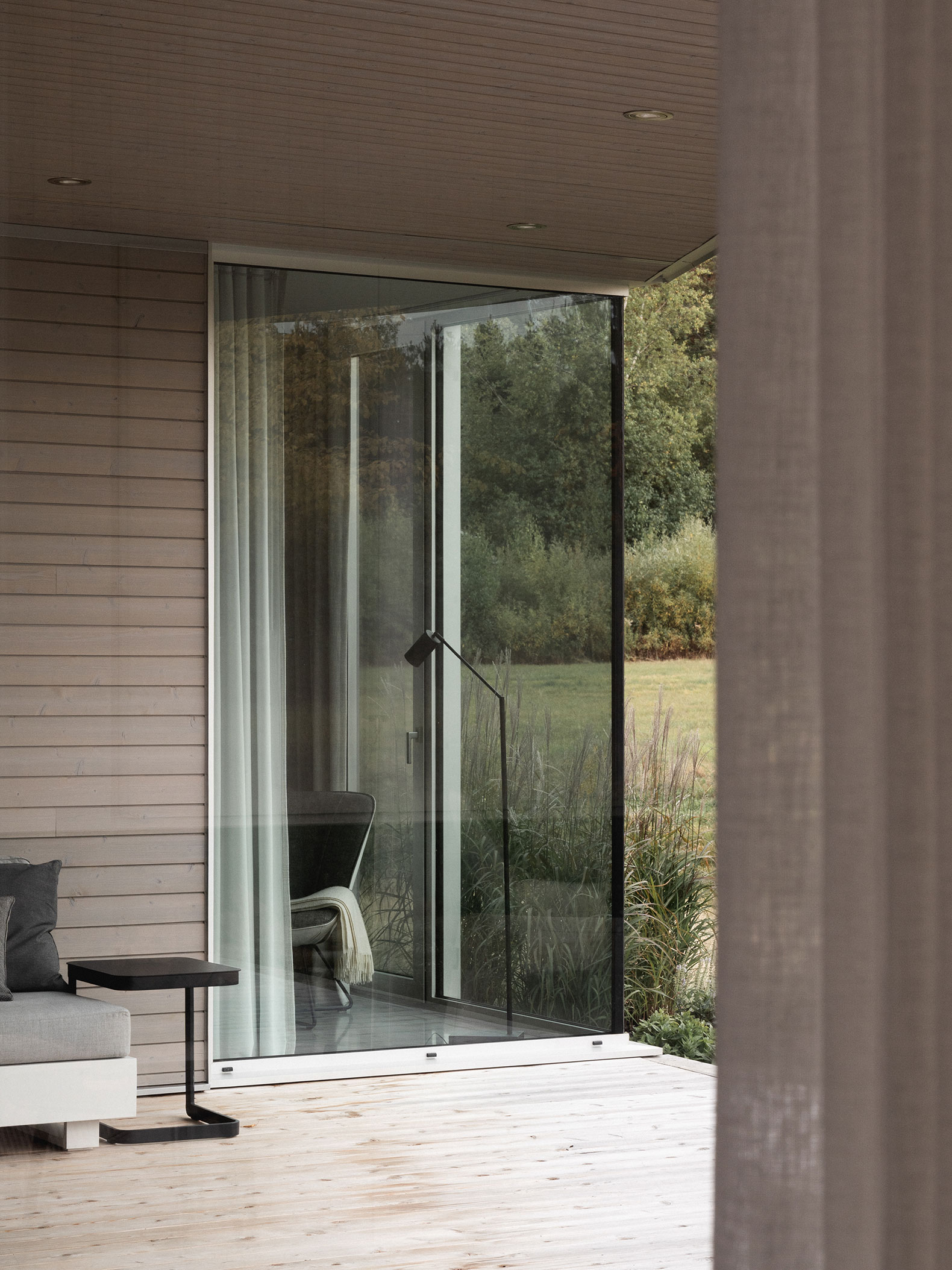
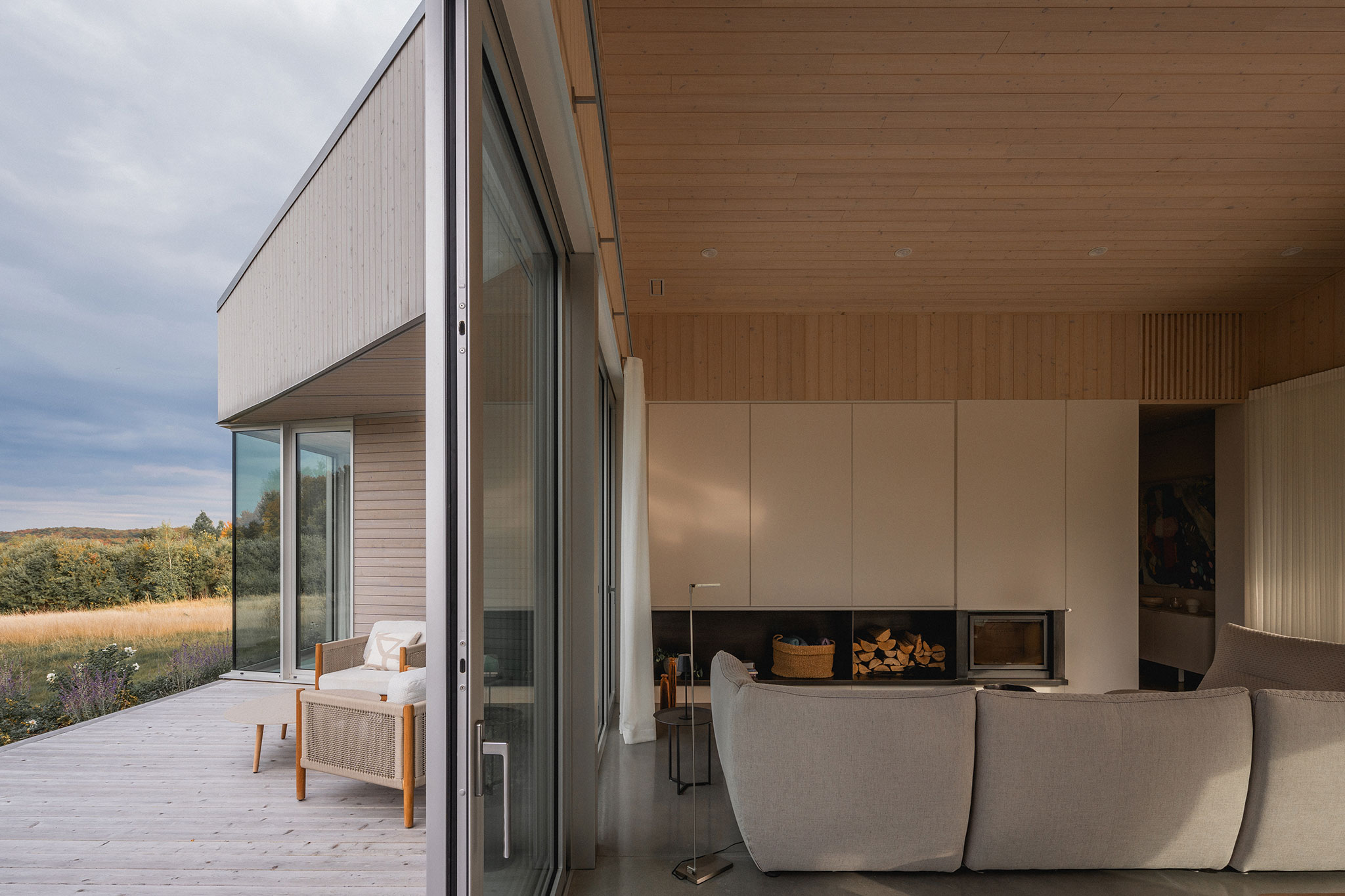
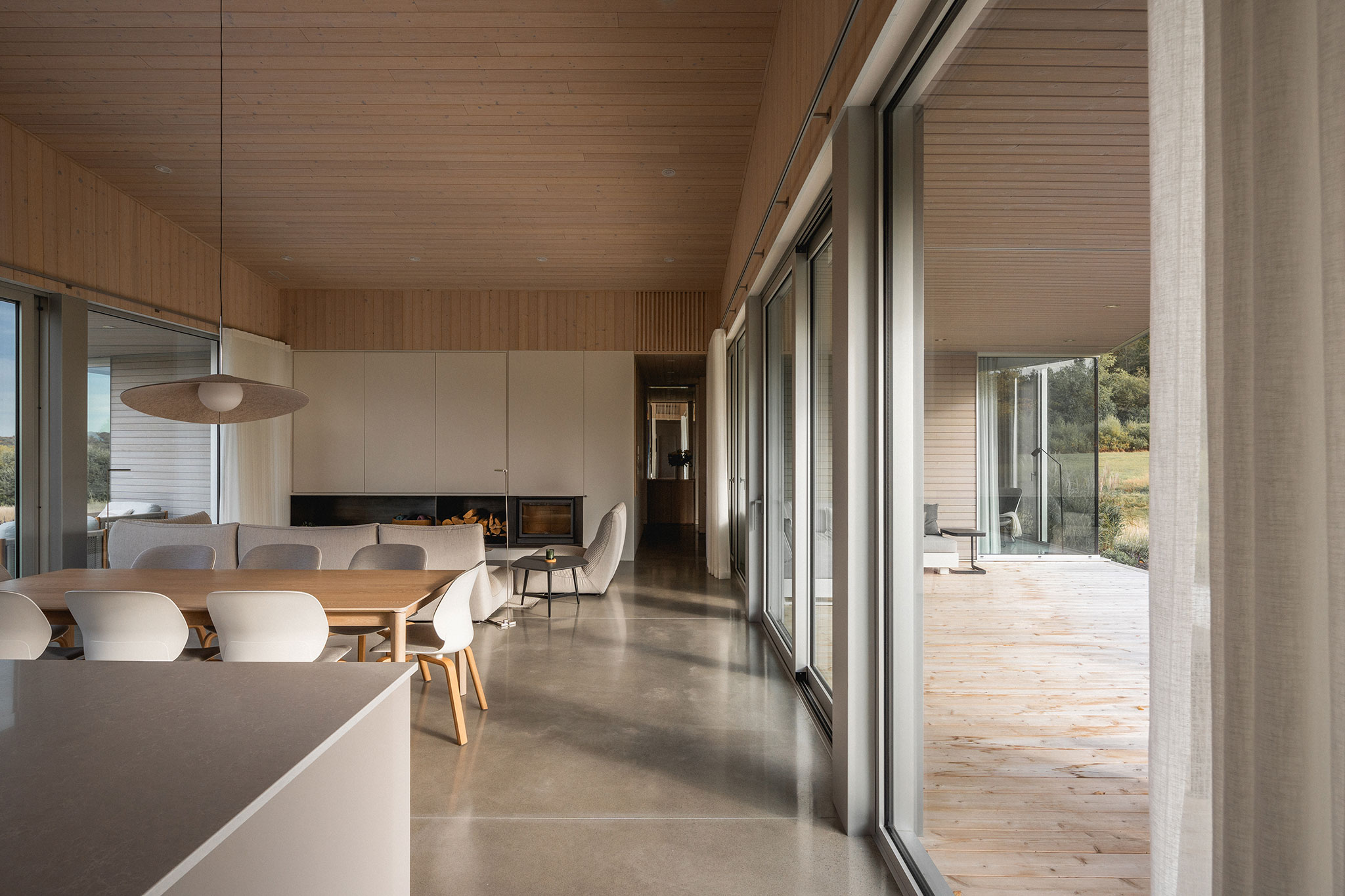
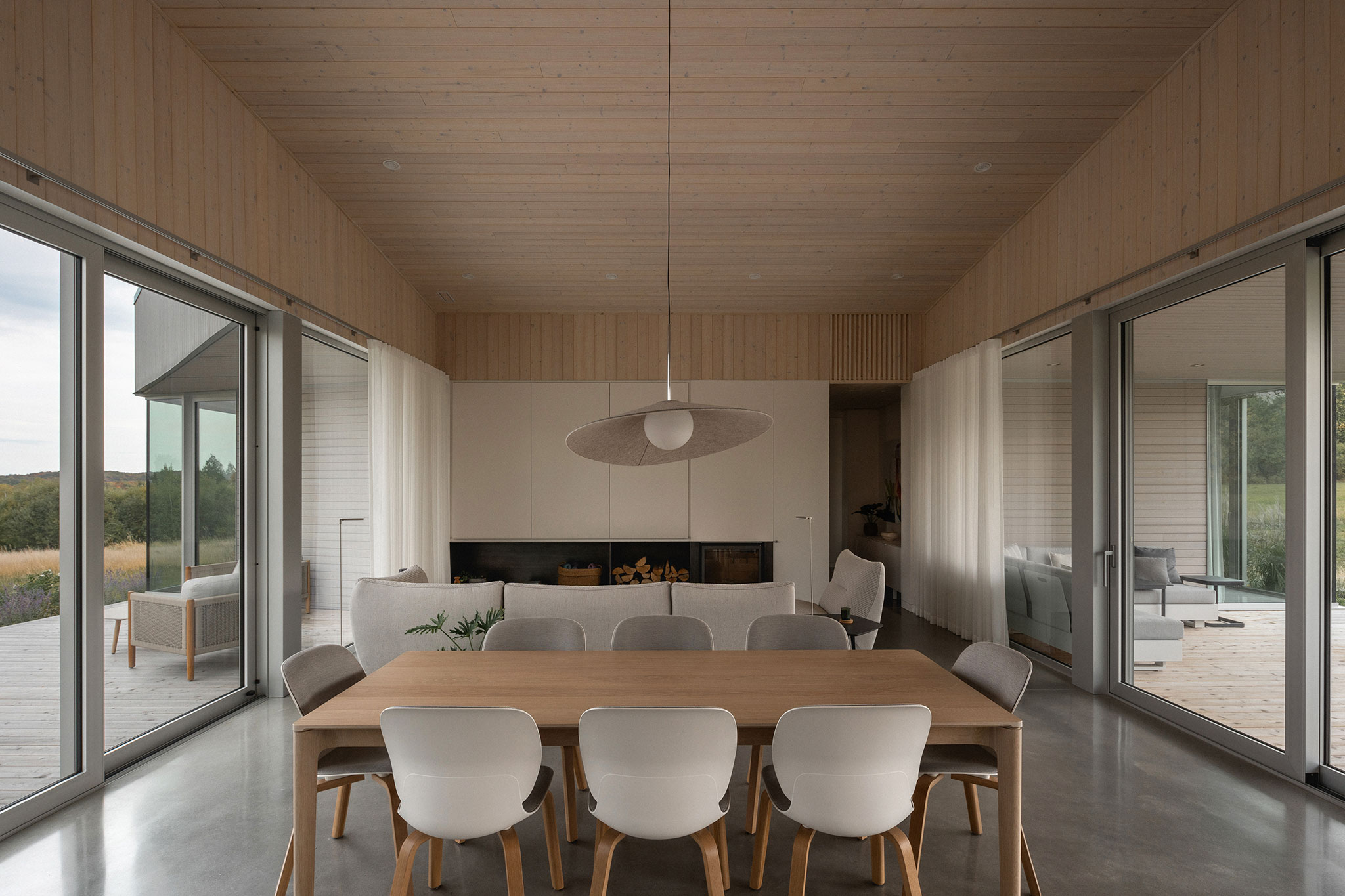
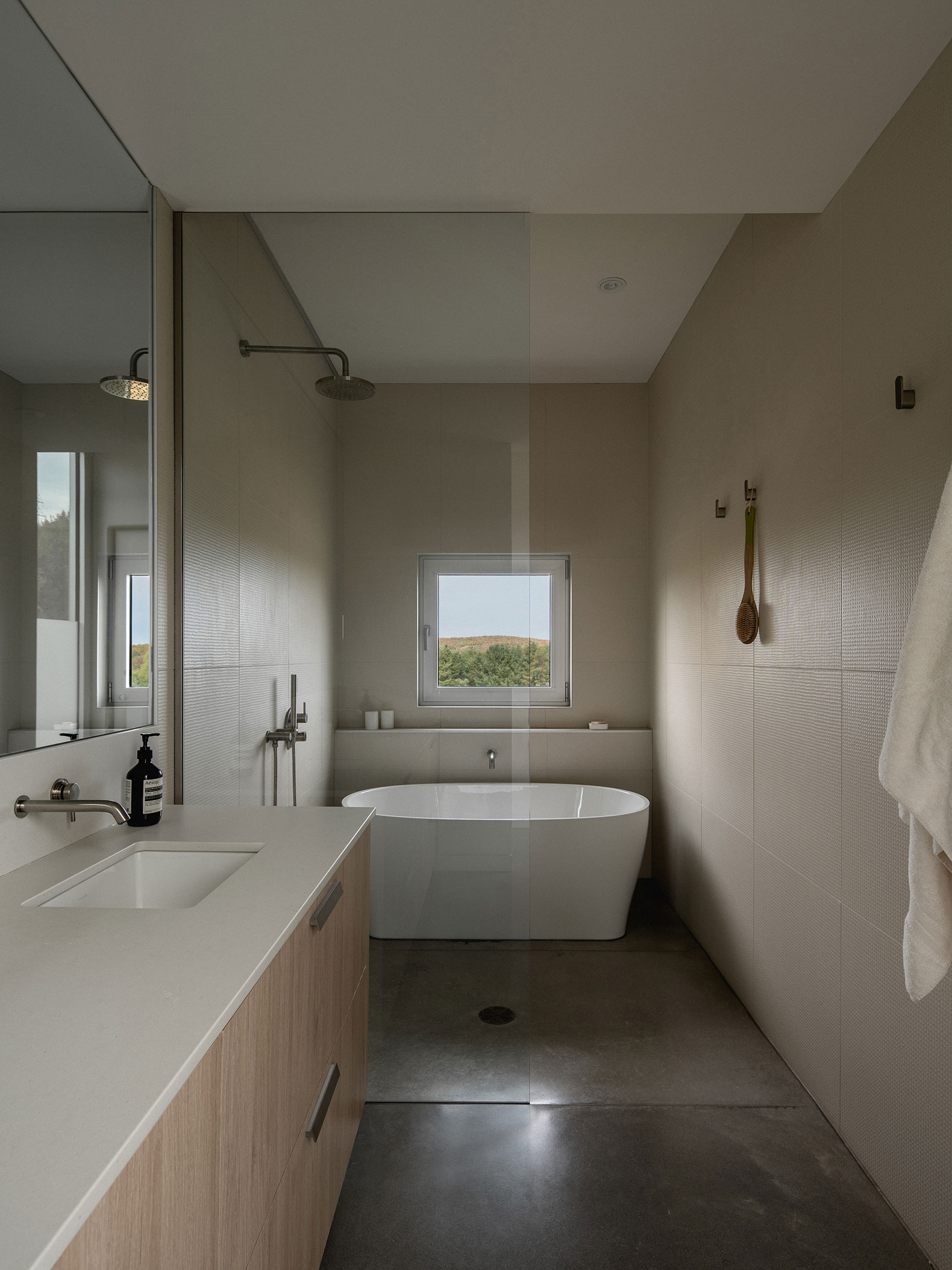
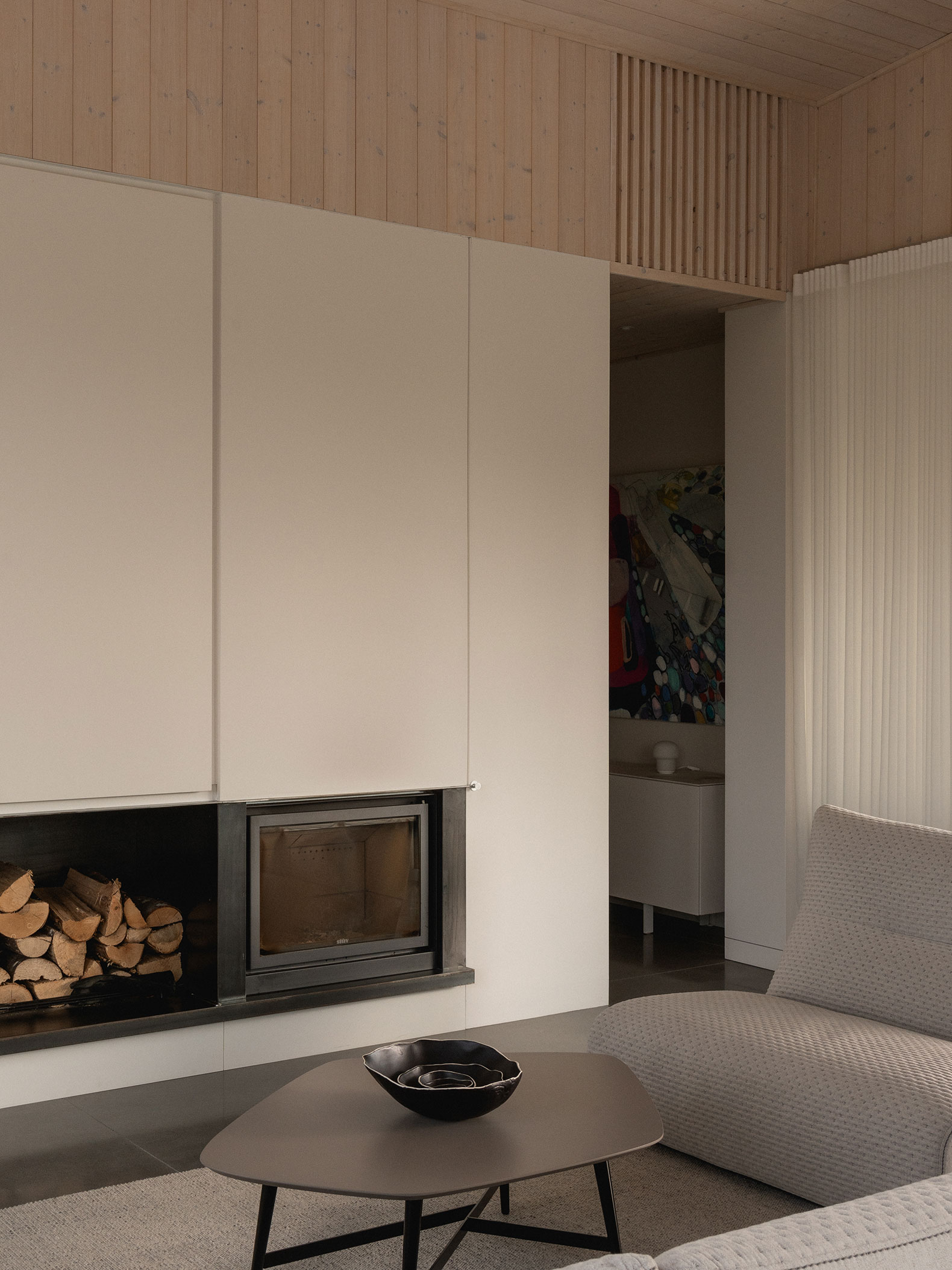
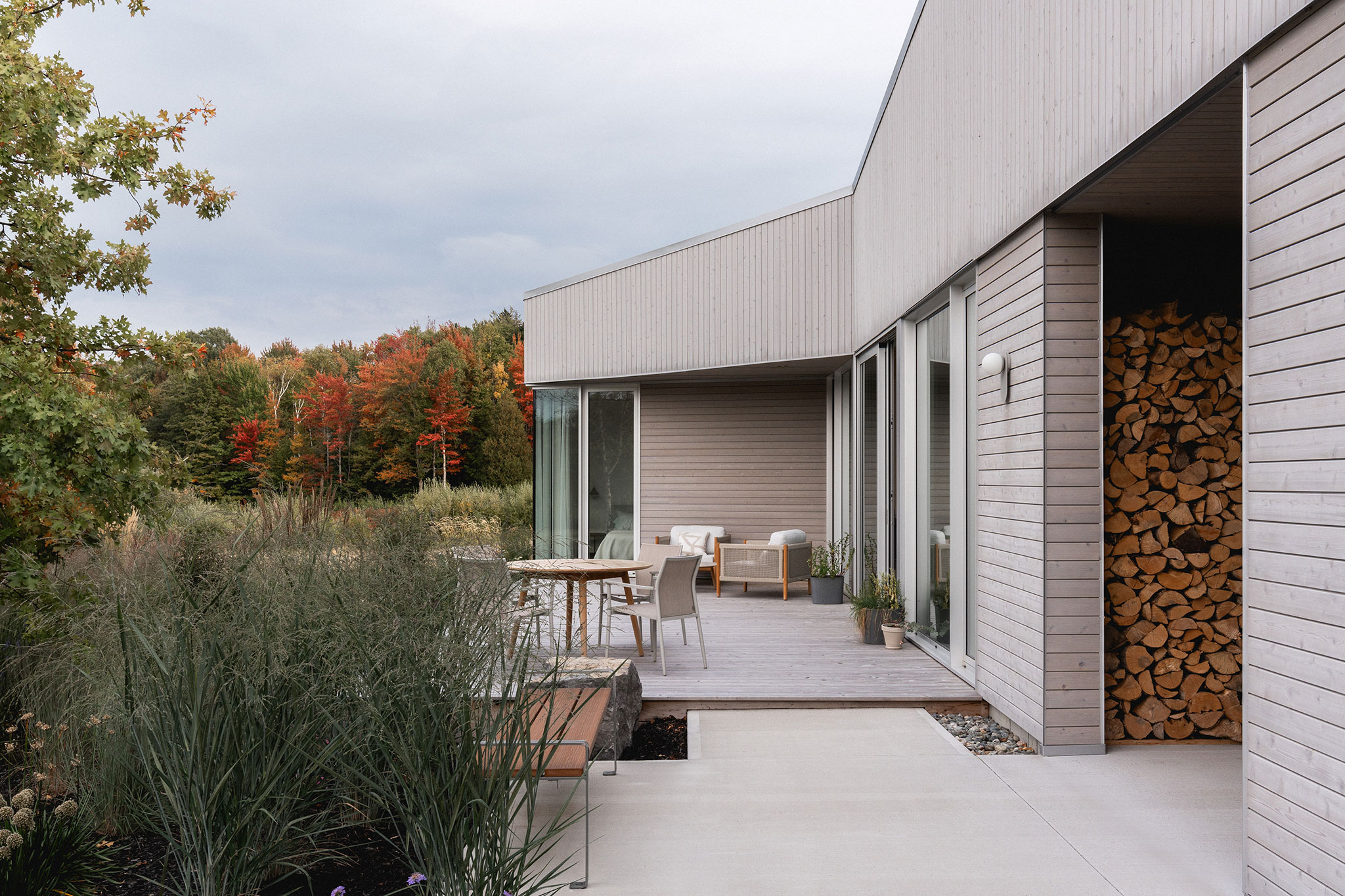
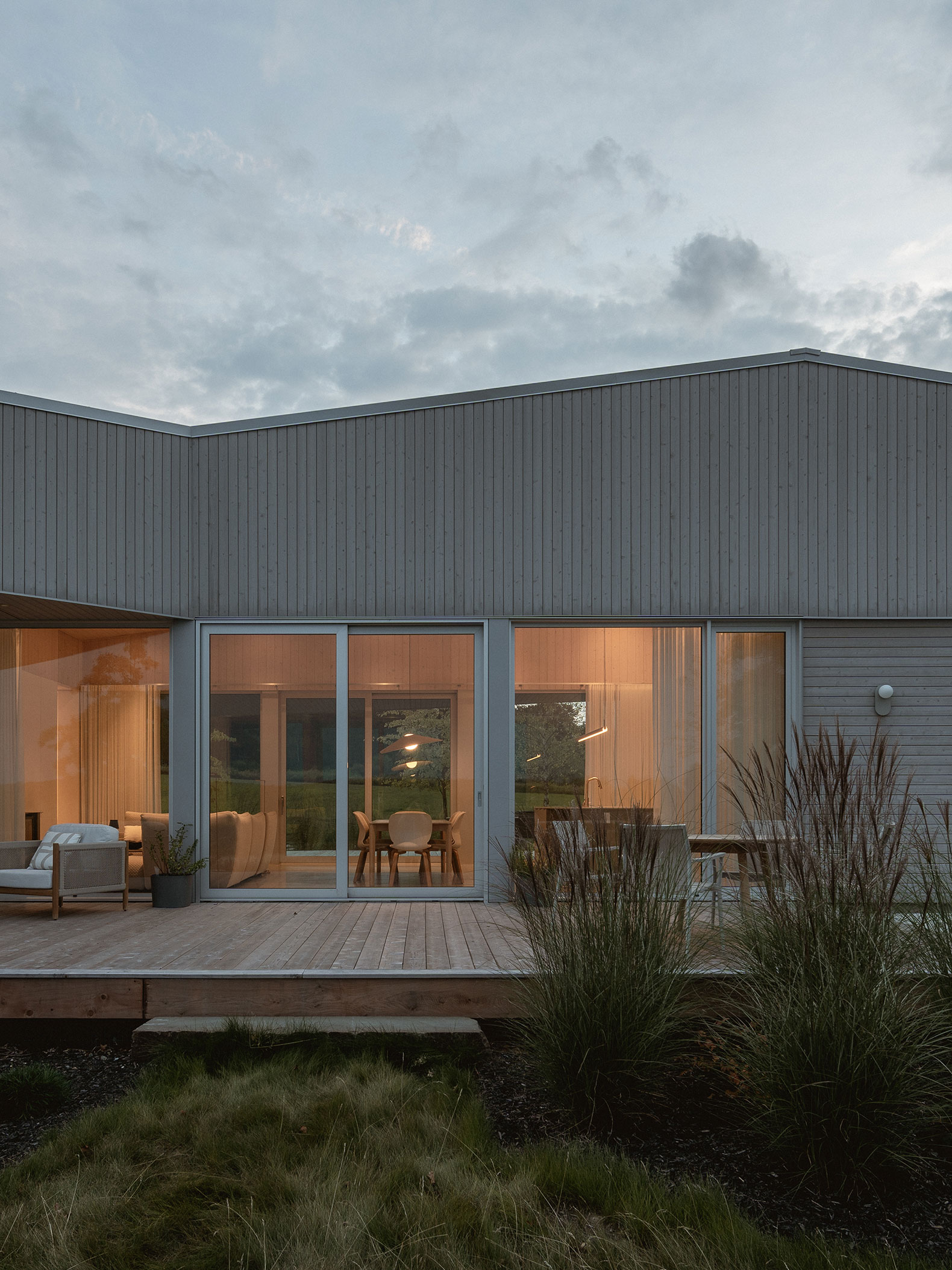
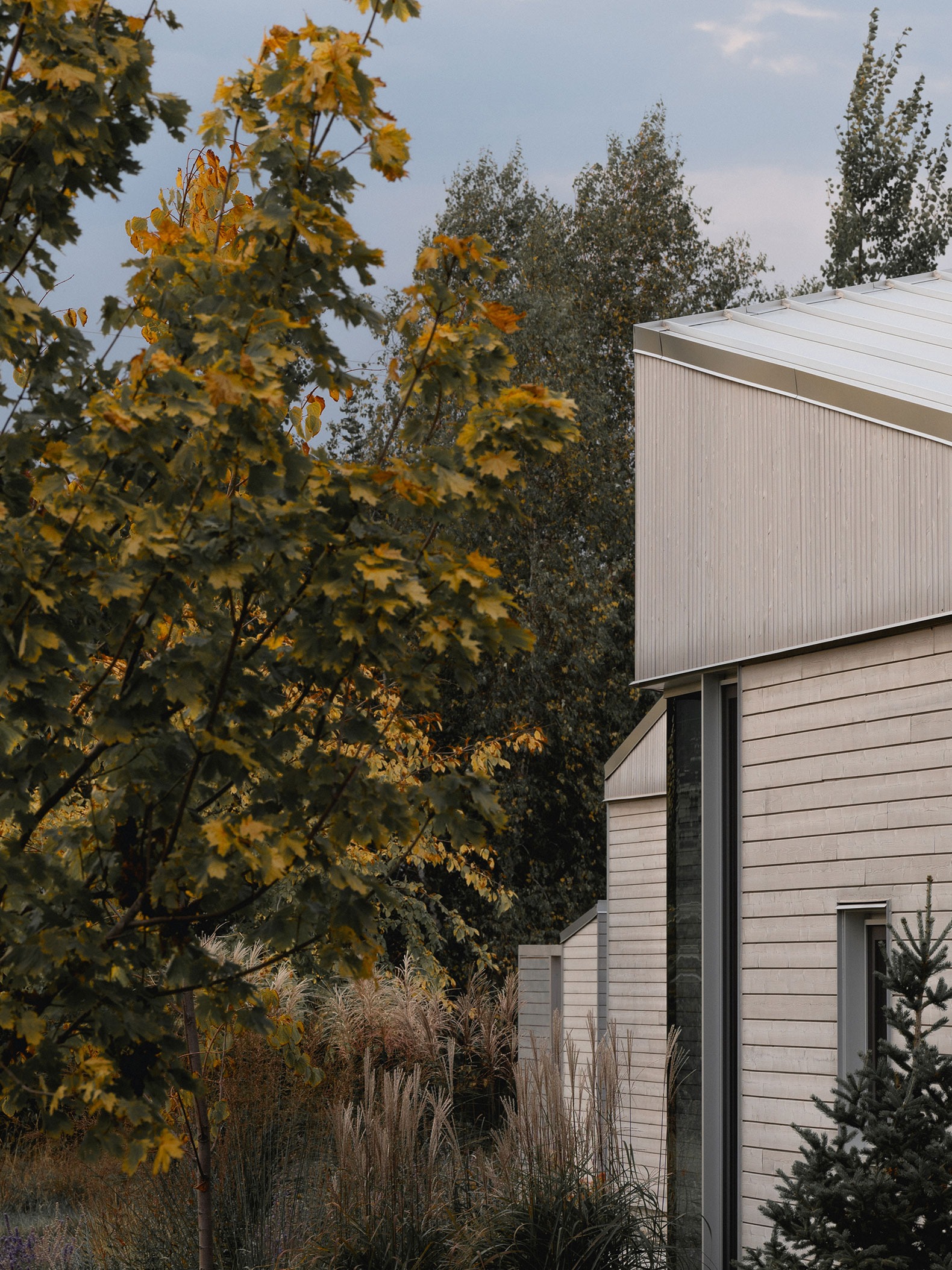
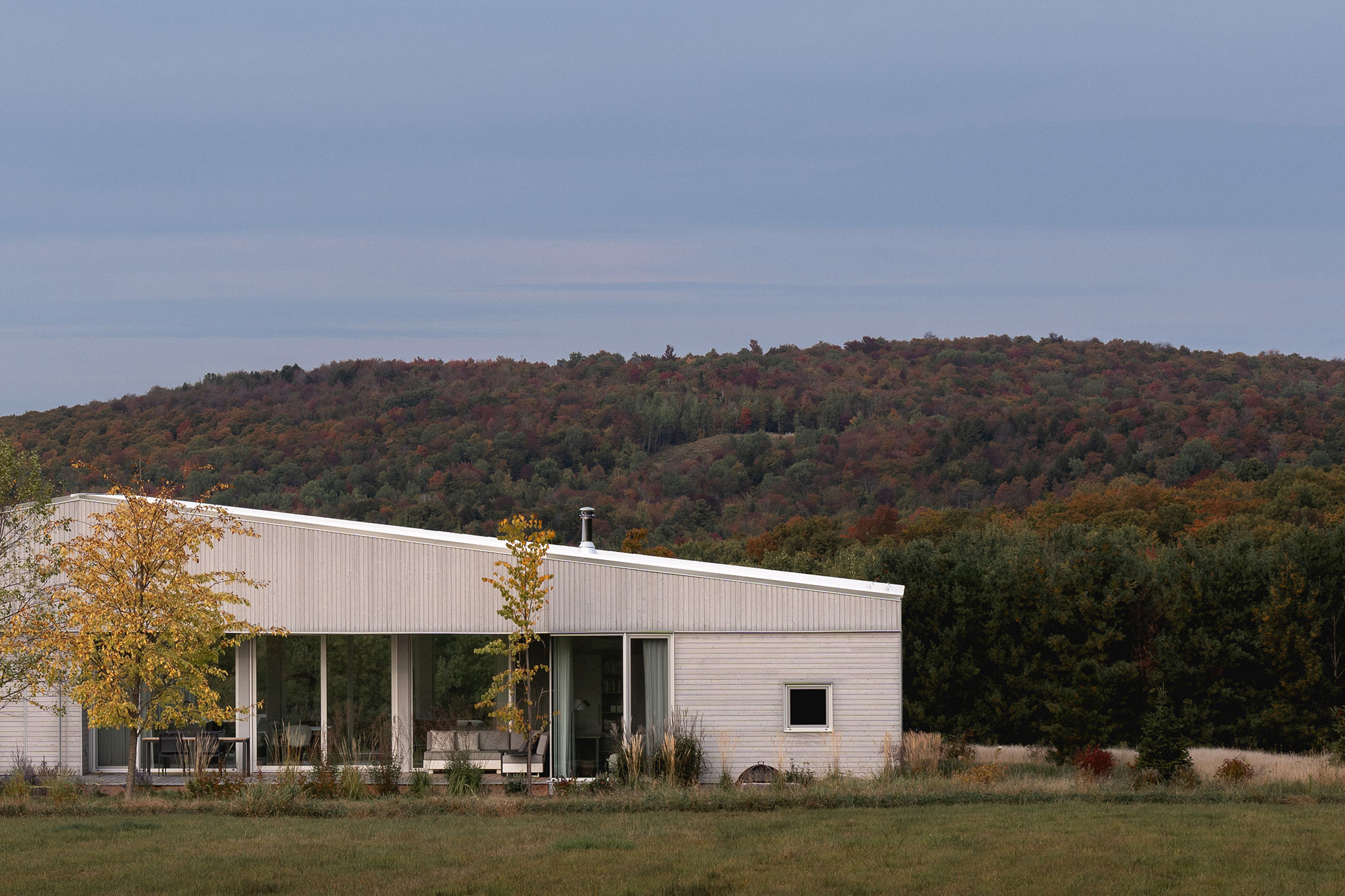
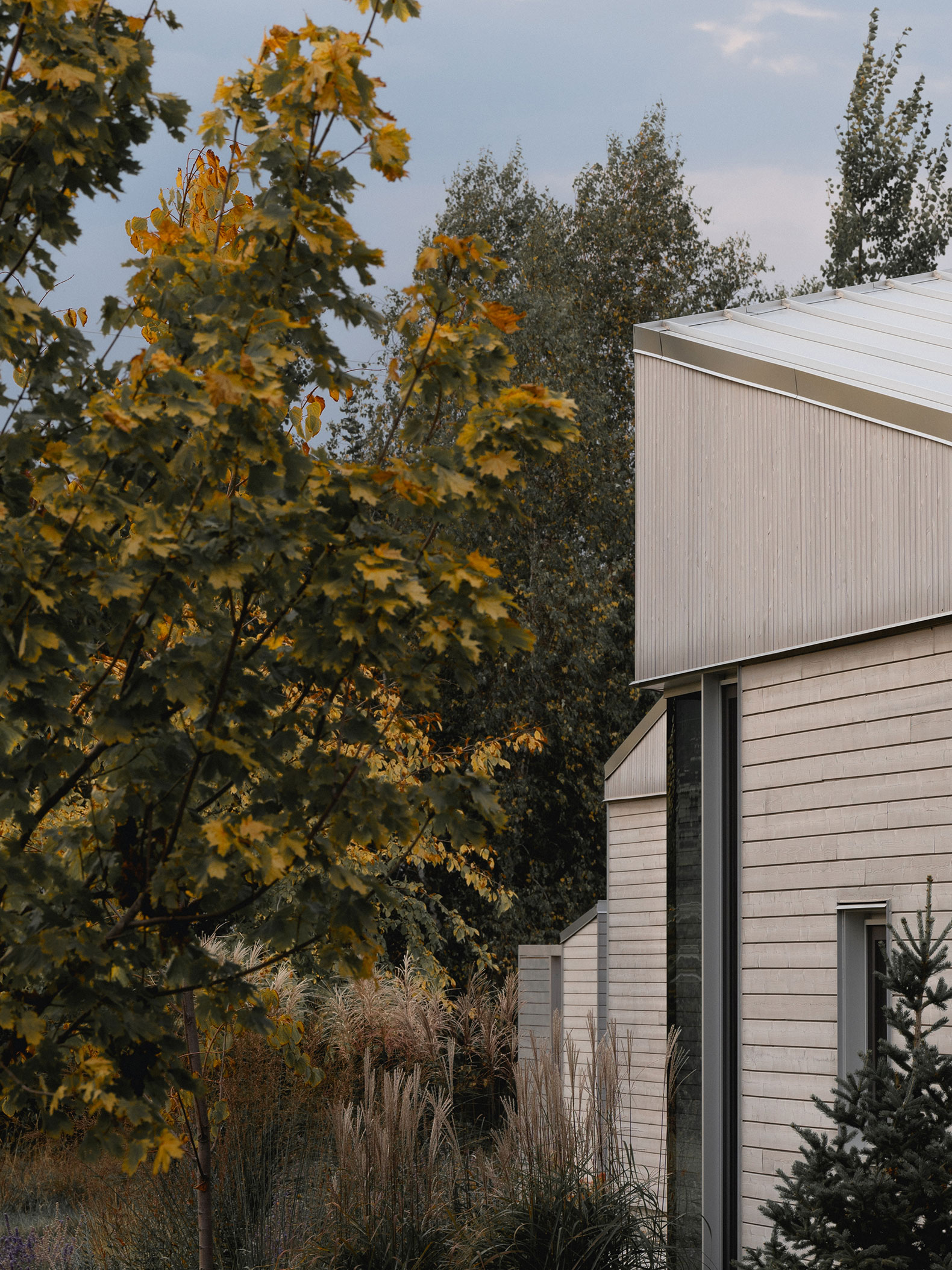
Prefabricated wood was chosen for the structure to ensure optimal assembly. Regarding materials, the upper level of the house is clad in horizontal gray cedar, while the loft-style upper volume features vertical cladding topped with a metal roof. Inside, the open-plan kitchen, dining, and living area is crowned by a light pine slatted ceiling, and features understated colors, polished concrete floors, and built-in white oak furniture. 
«Le Fenil» por _naturehumaine. Fotografía por Raphaël Thibodeau.

"Le Fenil" by _naturehumaine. Photograph by Raphaël Thibodeau. 

Project description by _naturehumaine

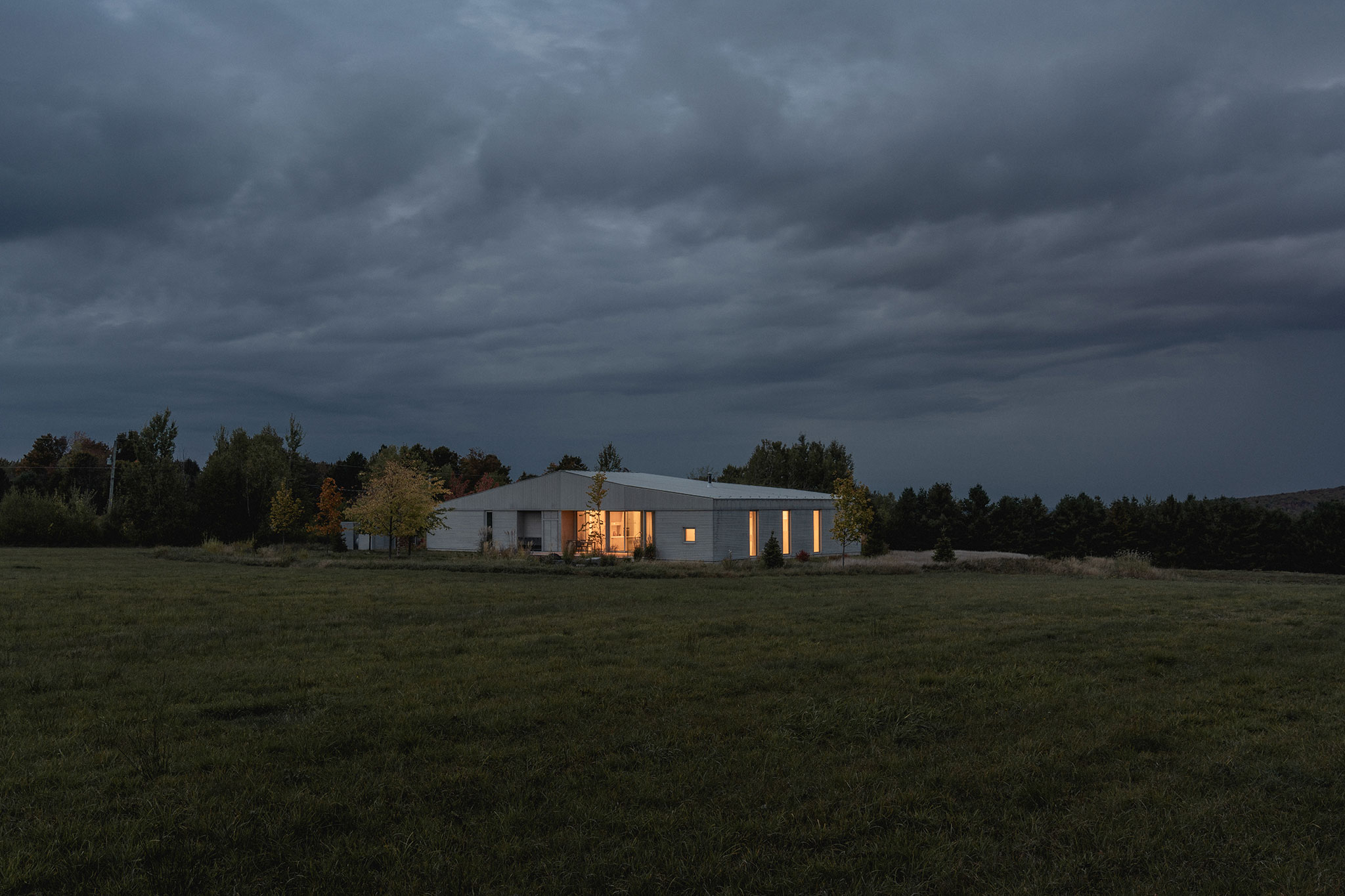
In search of a tranquil retreat from the pace of city life, a couple chose to build their home in the countryside, while still embracing the joys of outdoor living. They discovered a ten-acre plot in Hatley Township, Eastern Townships of Quebec, once cultivated to produce cereals for livestock. Here, they envisioned a single-story residence that would become their primary sanctuary. Determined to preserve the land’s agricultural heritage, they opted for a minimal footprint, honoring its original purpose while ensuring the property’s long-term vitality.

«Le Fenil» por _naturehumaine. Fotografía por Raphaël Thibodeau.
"Le Fenil" by _naturehumaine. Photograph by Raphaël Thibodeau. 

Le Fenil draws its name from the hayloft typically found in the upper reaches of a barn, suspended above the livestock. Elevated above its base and integrated into the roof structure, the space allows hay to dry naturally. This architectural notion of layering—juxtaposing function and form—became the guiding principle of the house. Le Fenil unites two contrasting elements: a horizontal, grounded volume for everyday living, and a more sculptural, angular roof that crowns the entire ground floor. The wooden structure of the house was prefabricated, allowing for optimized assembly precision and a reduced on-site construction time.
«Le Fenil» por _naturehumaine. Fotografía por Raphaël Thibodeau.
"Le Fenil" by _naturehumaine. Photograph by Raphaël Thibodeau. 

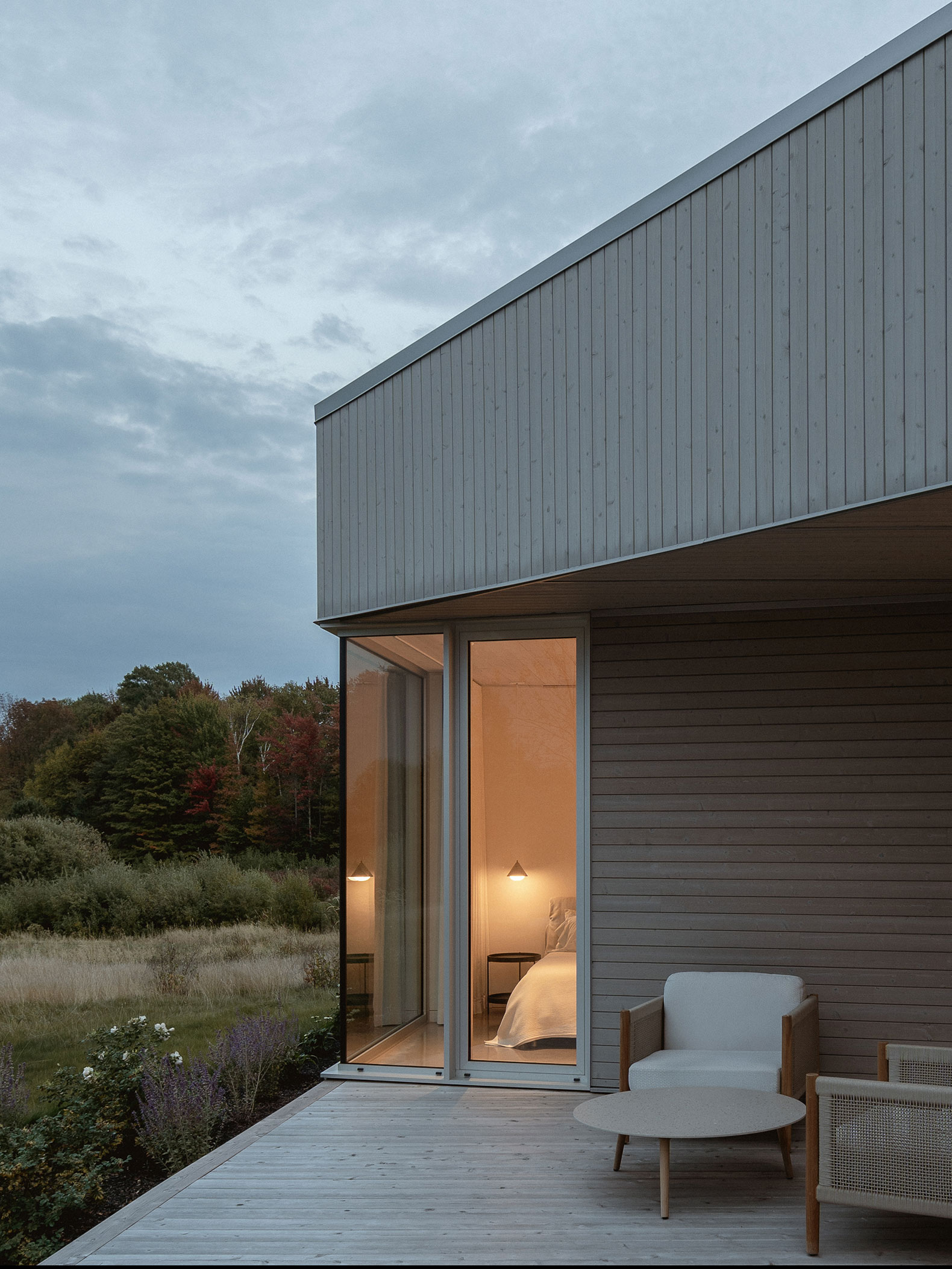
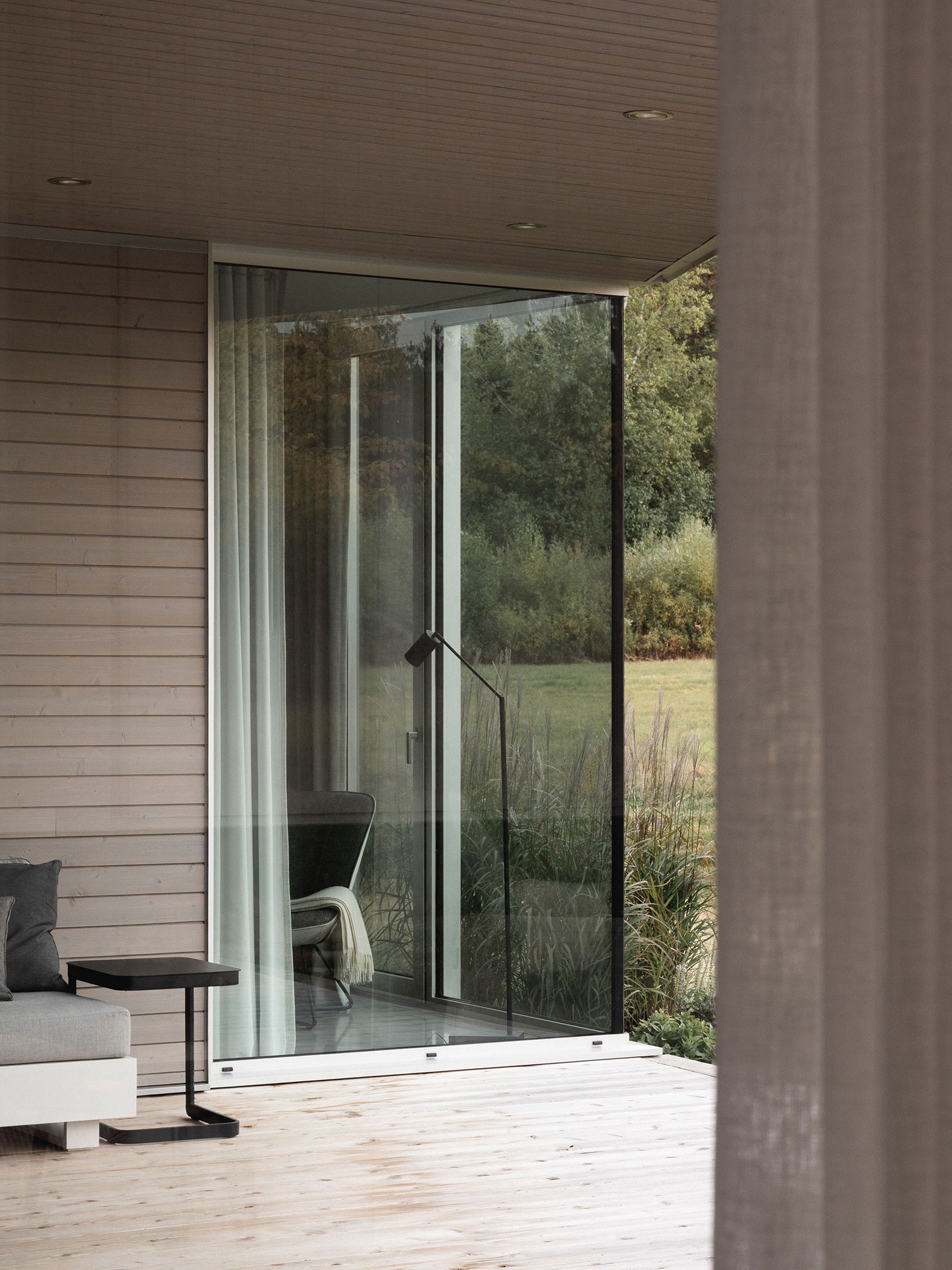
The interplay between these two volumes is accentuated through materiality: the upper living level is clad in horizontal gray cedar, while the lofted volume above features vertical cladding topped with a sleek metal roof. Triangular roof projections create protected outdoor terraces flanking the central living space, reinforcing the sense of layers while echoing the subtle tones of golden wheat and the vernacular barns of the surrounding townships.

Set along a north-south axis at the heart of the field, Le Fenil opens to panoramic views of rolling hills on one side and floods of natural light on the other. A central opening at the core of the living spaces allows light and sightlines to traverse the house, fostering a seamless dialogue between interior and exterior. North and south façades, more opaque, provide privacy from the road and neighboring properties, while maintaining a sense of openness and serenity.
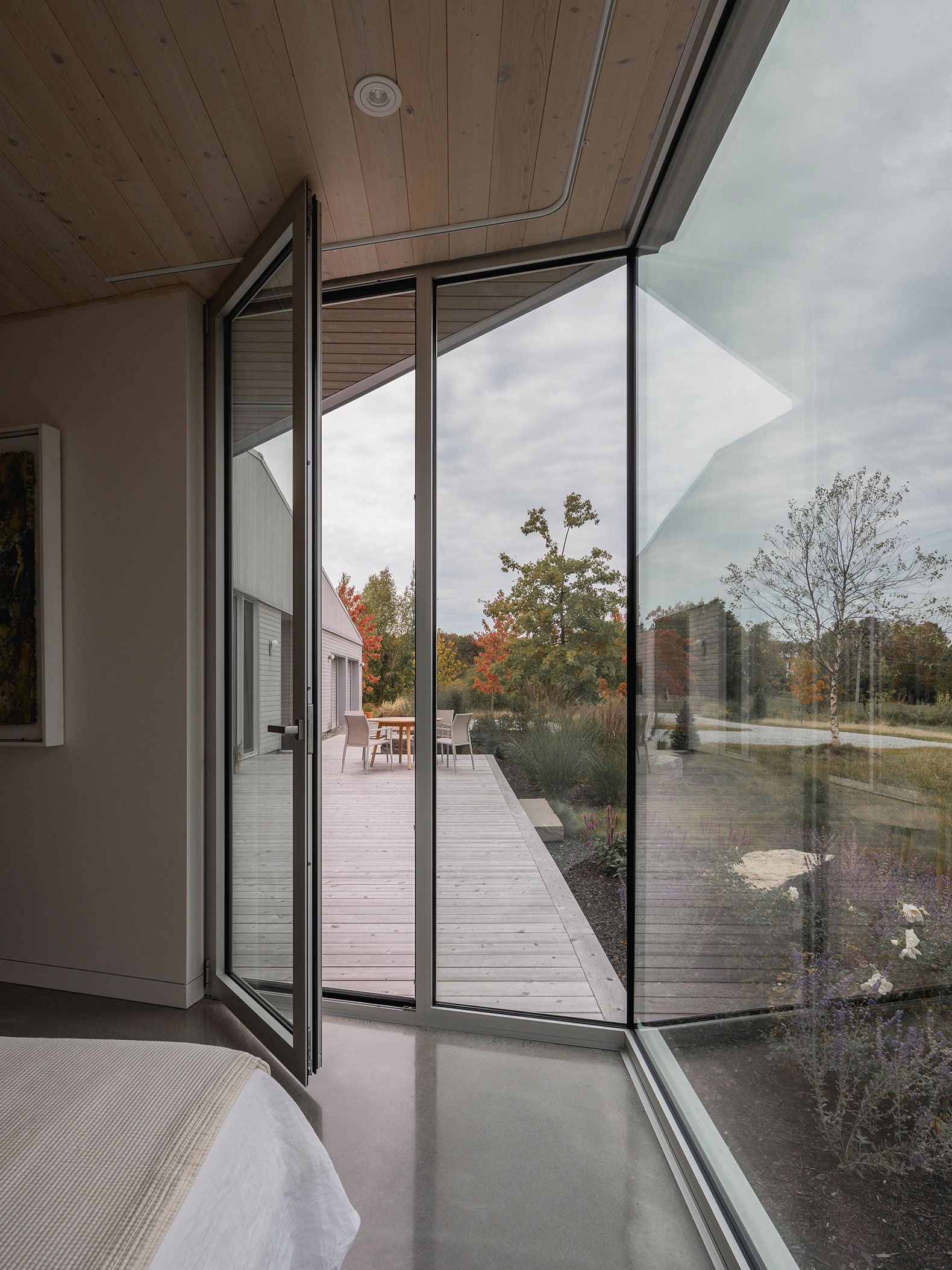
"Le Fenil" by _naturehumaine. Photograph by Raphaël Thibodeau.
"Le Fenil" by _naturehumaine. Photograph by Raphaël Thibodeau. 

The heart of the home—a spacious, open-plan living area comprising kitchen, dining, and lounge—is crowned with a high ceiling of light pine laths and opens generously to the landscape through expansive glass doors. Inside, a restrained palette of polished concrete floors and integrated white oak furnishings ensures the focus remains on the view beyond. The T-shaped plan carves intimate alcoves oriented toward the countryside, where private spaces retreat from direct sunlight yet maintain carefully framed, harmonious vistas. The result is a home that balances privacy and openness, tranquility and circulation, connecting inhabitants to both the rhythm of the landscape and the gentle flow of daily life.
More information

Label
Architects
Text

_naturehumaine. Lead architects.- Charles Brassard.

+ + copy Created with Sketch.
- + copy Created with Sketch.
Label
Collaborators
Text

Structural Engineer.- Geniex.

+ + copy Created with Sketch.
- + copy Created with Sketch.
Label
Manufacturers
Text

Cabinetmakers.- Atelier Versatyl.
Exterior cladding.- Juste du Pin.
Roof.- MAC Metal.
Aluminum patio door and windows.- Shalwin Contemporain.
Interior and exterior concrete slab.- Atelier B.
Bathroom ceramic tiles.- Ramacieri Soligo.
Interior wood ceiling paneling.- Maxi Forêt.
Fireplace (STUV).- Norea Foyers.
Steel fireplace mantel.- François Béroud.
Lighting.- Luminaires Authentik.
Appliances.- Miele.
Kitchen and bathroom faucets.- Rubi.
Stone countertop and island, bathroom countertops.- CaesarStone.

+ + copy Created with Sketch.
- + copy Created with Sketch.
Label
Area
Text

260,12 sqm. 

+ + copy Created with Sketch.
- + copy Created with Sketch.
Label
Dates
Text

2024.

+ + copy Created with Sketch.
- + copy Created with Sketch.
Label
Location
Text

Hatley township, Eastern townships, Quebec, Canada.

+ + copy Created with Sketch.
- + copy Created with Sketch.
Label
Photography
+ + copy Created with Sketch.
- + copy Created with Sketch.

_naturehumane is an architecture firm founded by Stéphane Rasselet in 2004, based in Quebec, Canada. The firm is distinguished by the quality and originality of its residential, commercial, and cultural projects, and has won numerous awards, including prizes from the Quebec Order of Architects and the Grands Prix du Design. Stéphane became the principal partner in 2013.

Stéphane Rasselet graduated from McGill University's School of Architecture in 1990. After working on significant projects at a Parisian firm, Stéphane returned to Montreal to gain local experience at Dan Hanganu Architects, The Arcop Group, and Lapointe Magne et associés. His experience largely involved the design and execution of large-scale renovations of existing buildings such as the Institut d'hôtellerie du Québec (ITHQ) and the Théâtre Espace Libre.

Read more
Published on: April 11, 2026
Cite:
metalocus, CAMILA DOYLET
"Inhabited agricultural plot. "Le Fenil" by _naturehumaine" METALOCUS. Accessed
<https://www.metalocus.es/en/news/inhabited-agricultural-plot-le-fenil-naturehumaine> ISSN 1139-6415
Loading content ...
Loading content ...
Loading content ...
Loading content ...
Loading content ...
Loading content ...
Loading content ...
Loading content ...
Loading content ...
Loading content ...
Loading content ...
Loading content ...
Loading content ...
Loading content ...
Loading content ...
Loading content ...
Loading content ...
Loading content ...
Loading content ...
Loading content ...
Loading content ...
Loading content ...
Loading content ...
Loading content ...
Loading content ...
Loading content ...
Loading content ...
Loading content ...
Loading content ...
Loading content ...
Loading content ...
Loading content ...
Loading content ...
Loading content ...
Loading content ...
Loading content ...
Loading content ...
Loading content ...
Loading content ...
Loading content ...
Loading content ...
Loading content ...
Loading content ...
Loading content ...
Loading content ...
Loading content ...
Loading content ...
Loading content ...
Loading content ...
Loading content ...
Loading content ...
Loading content ...
Loading content ...
Loading content ...