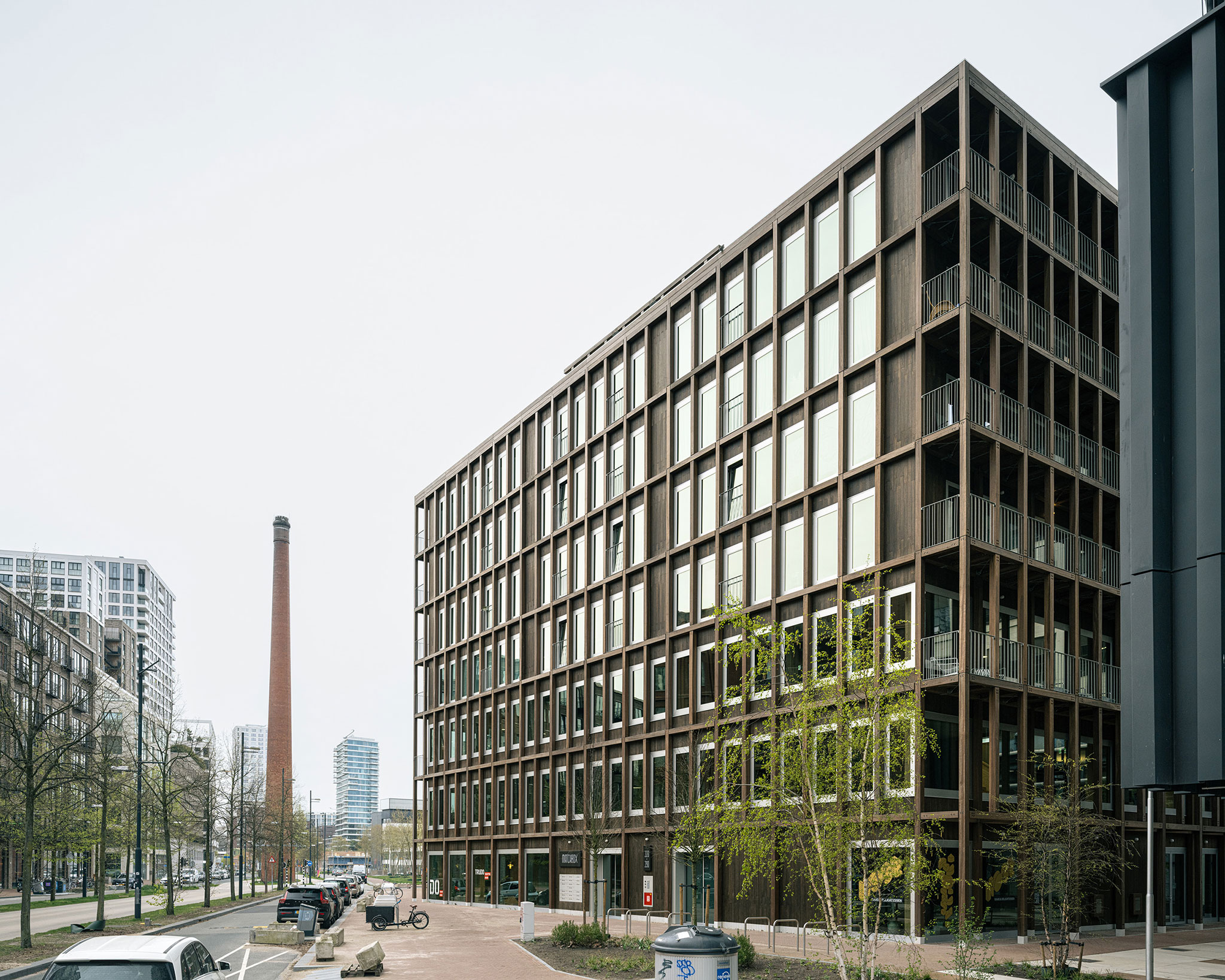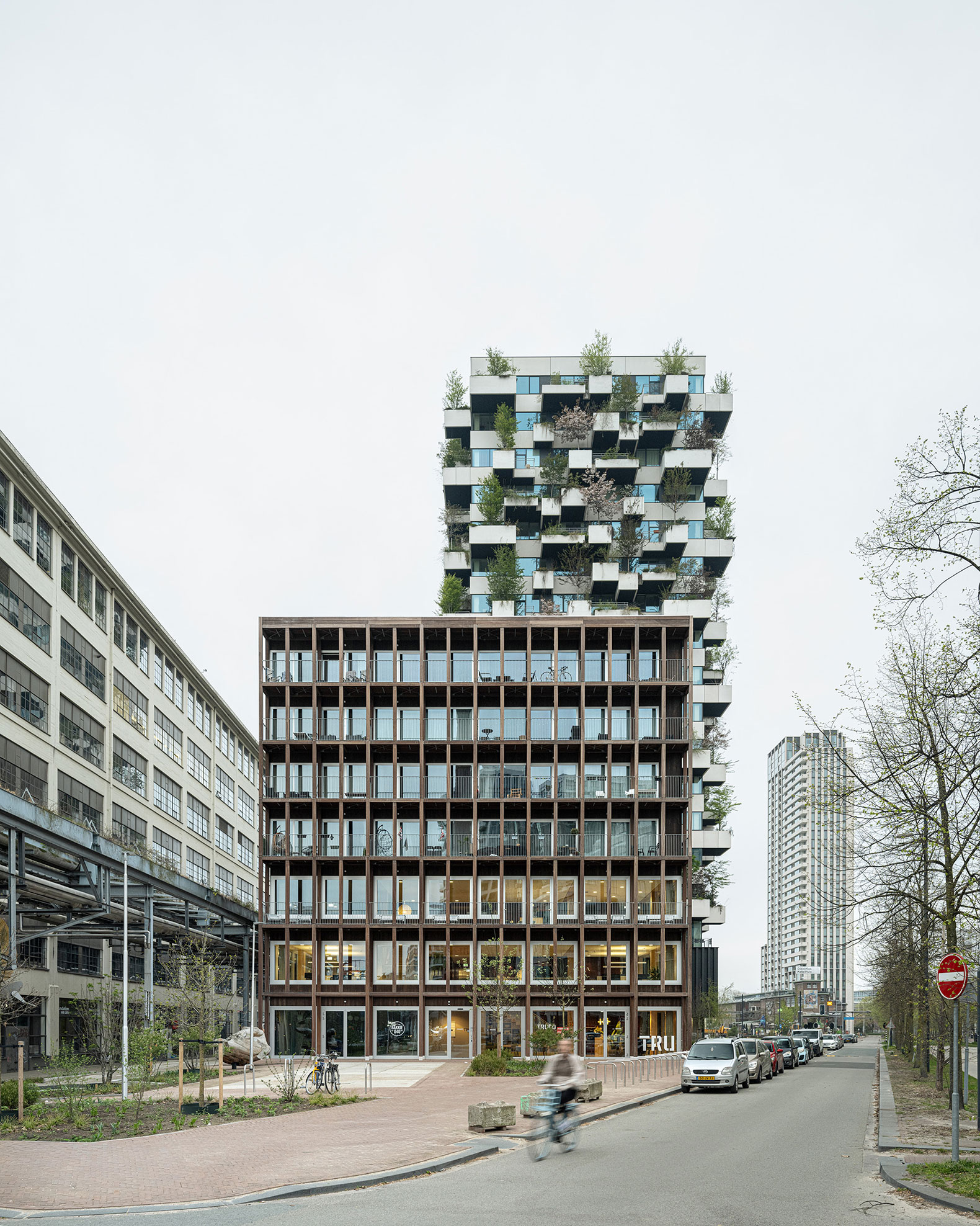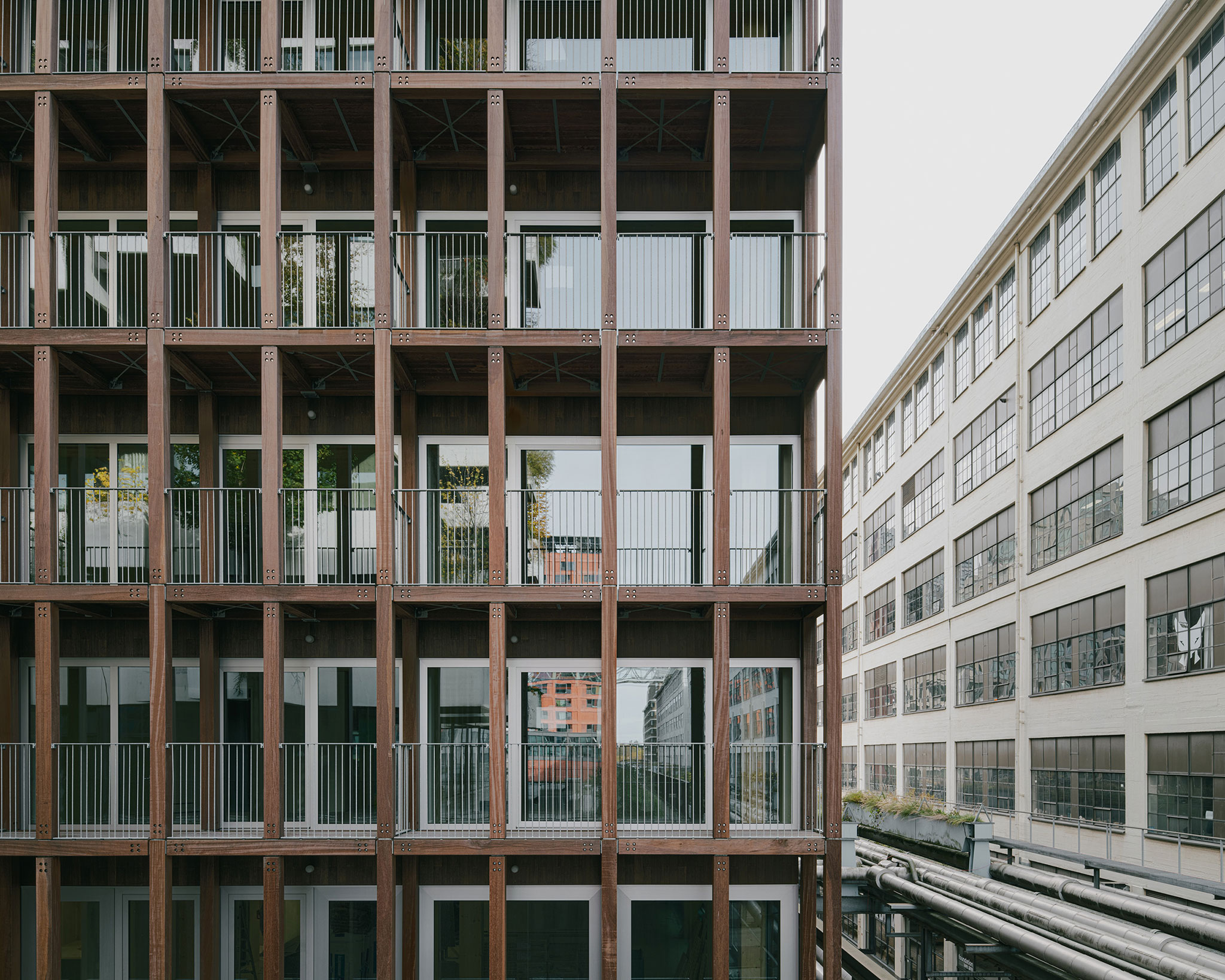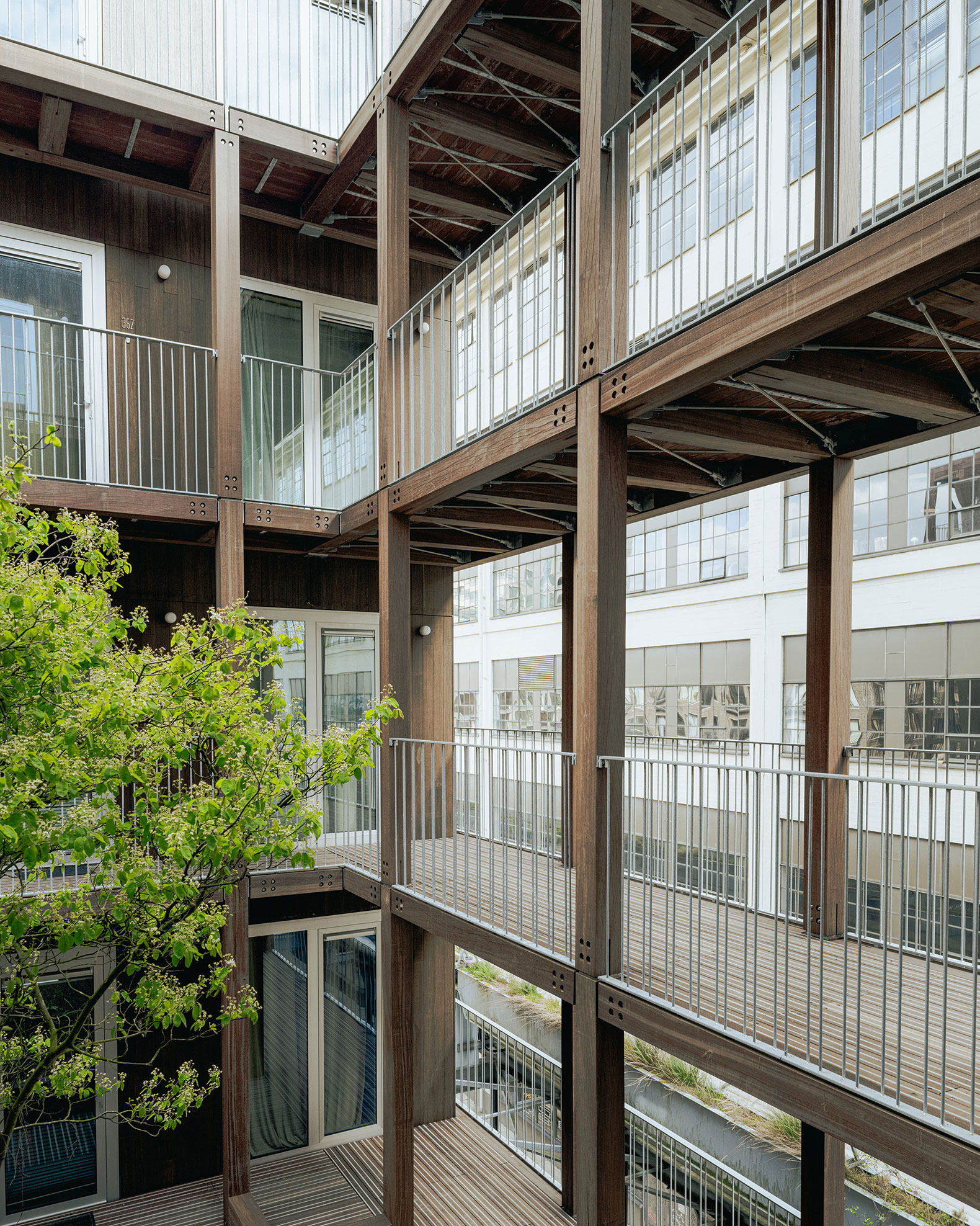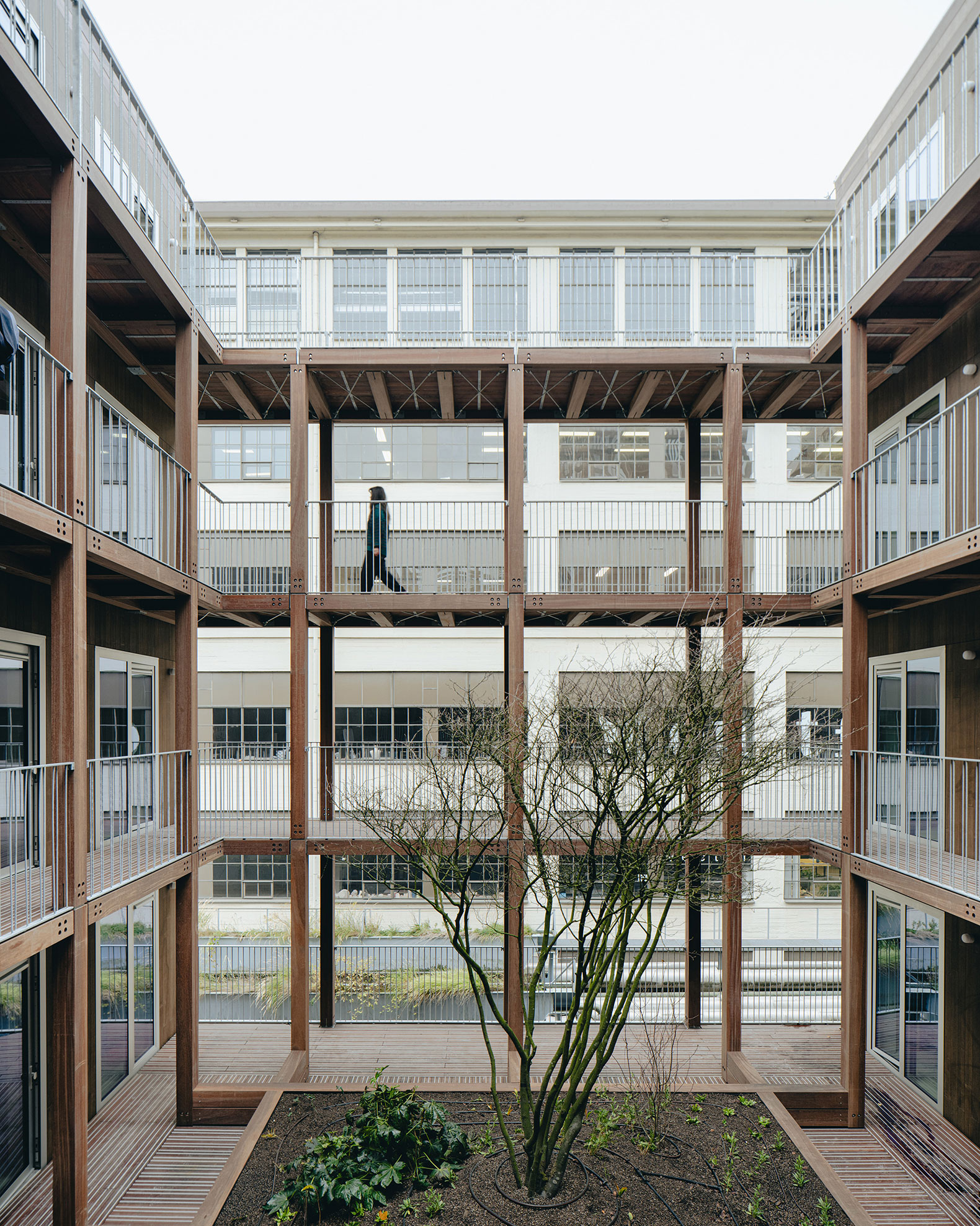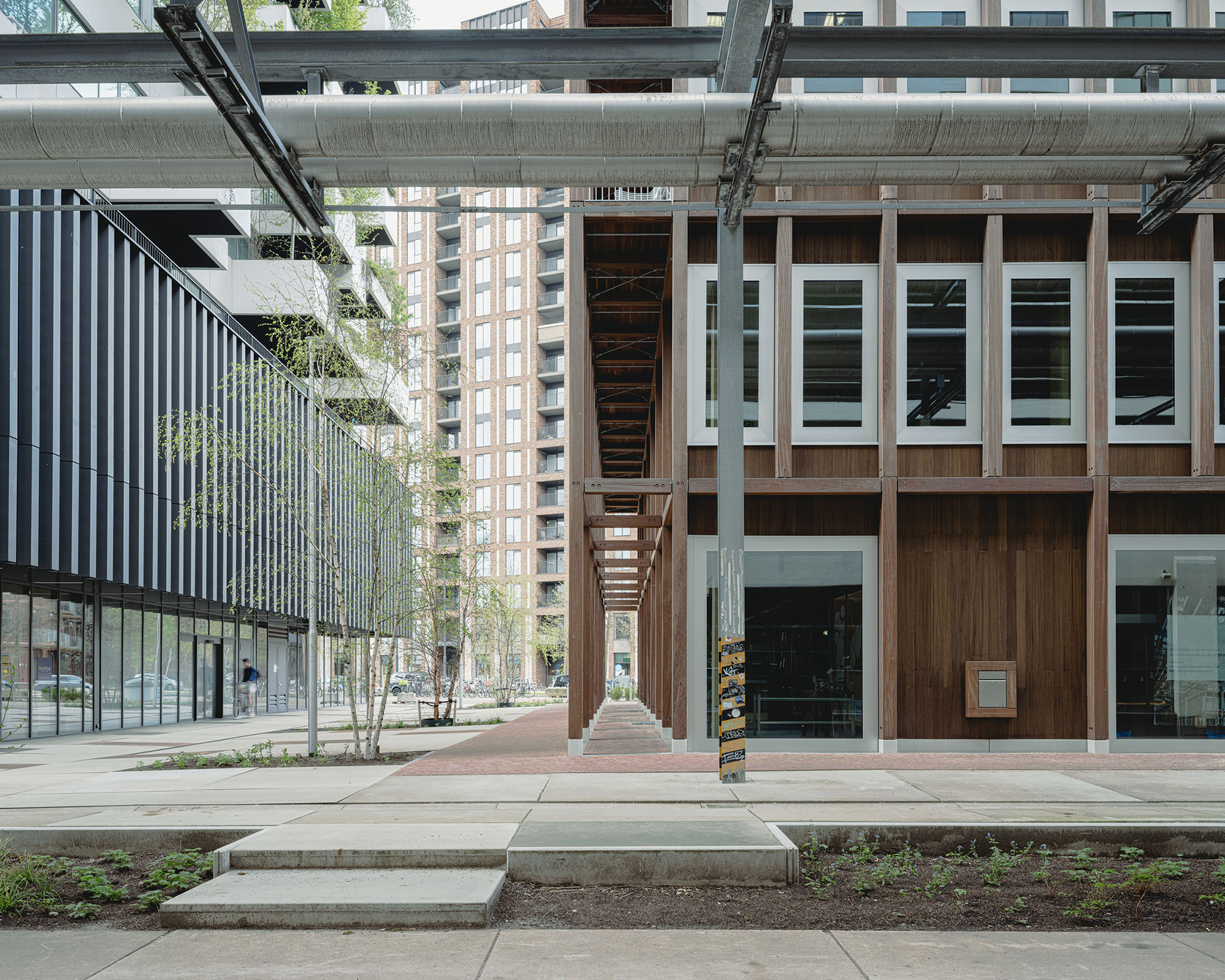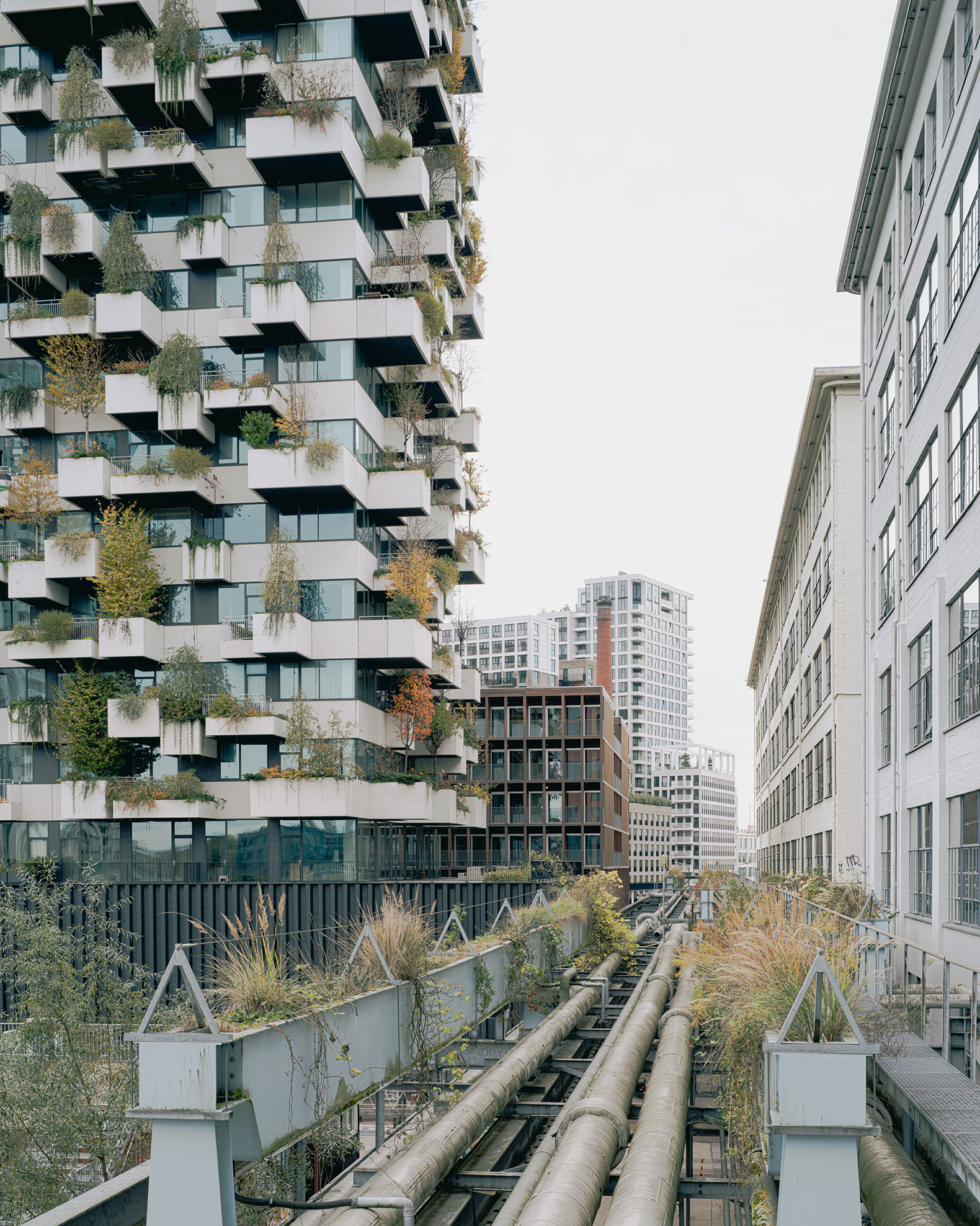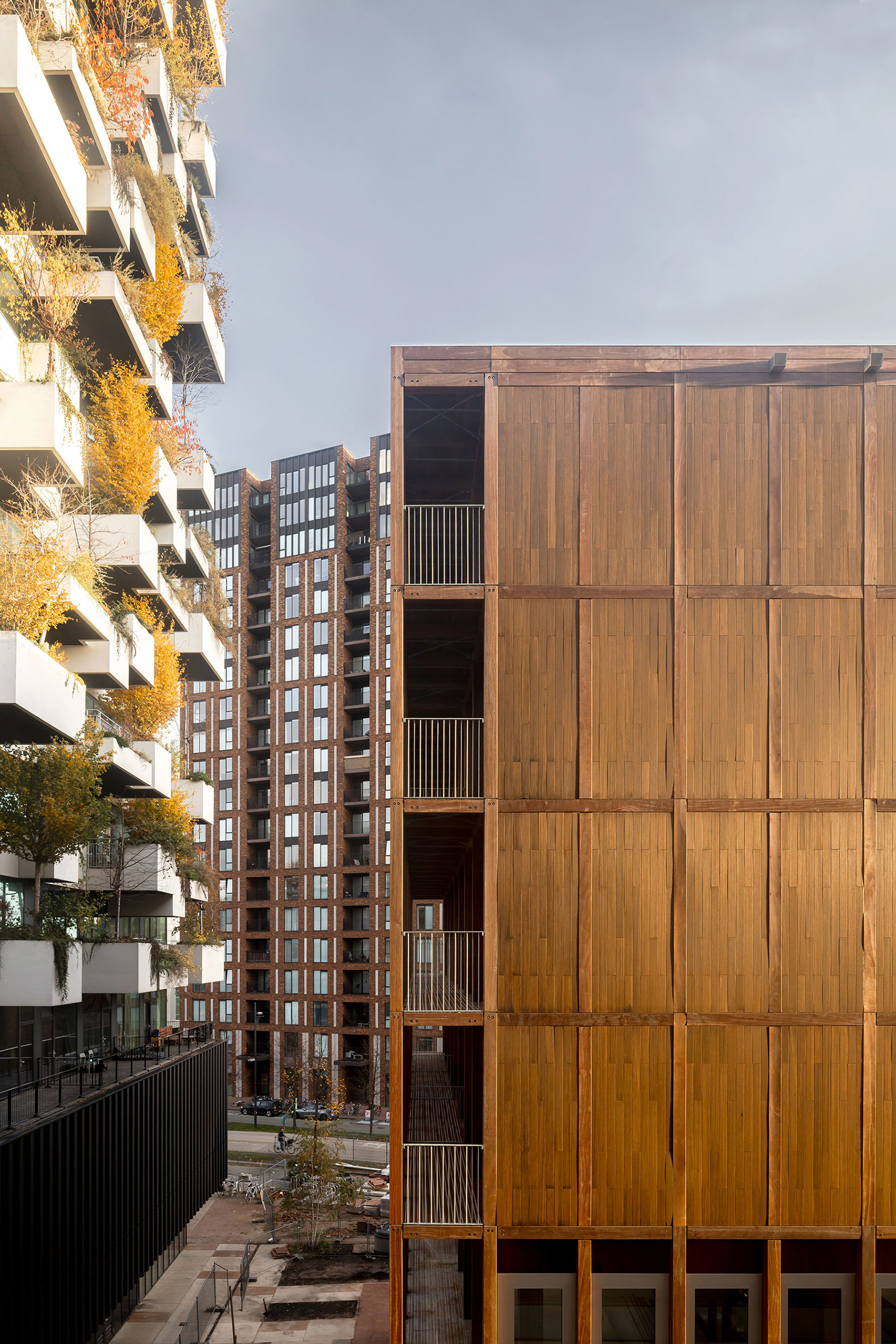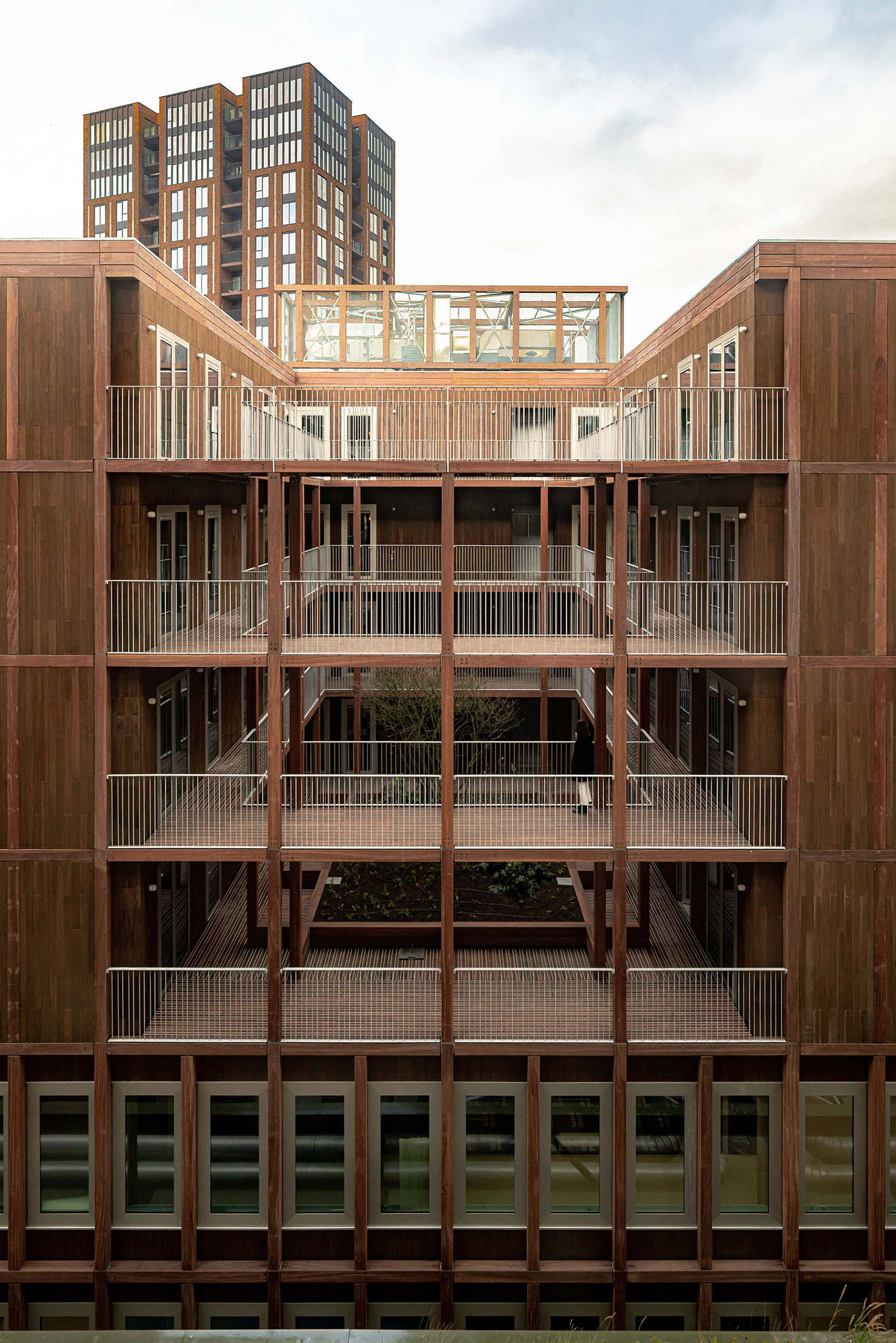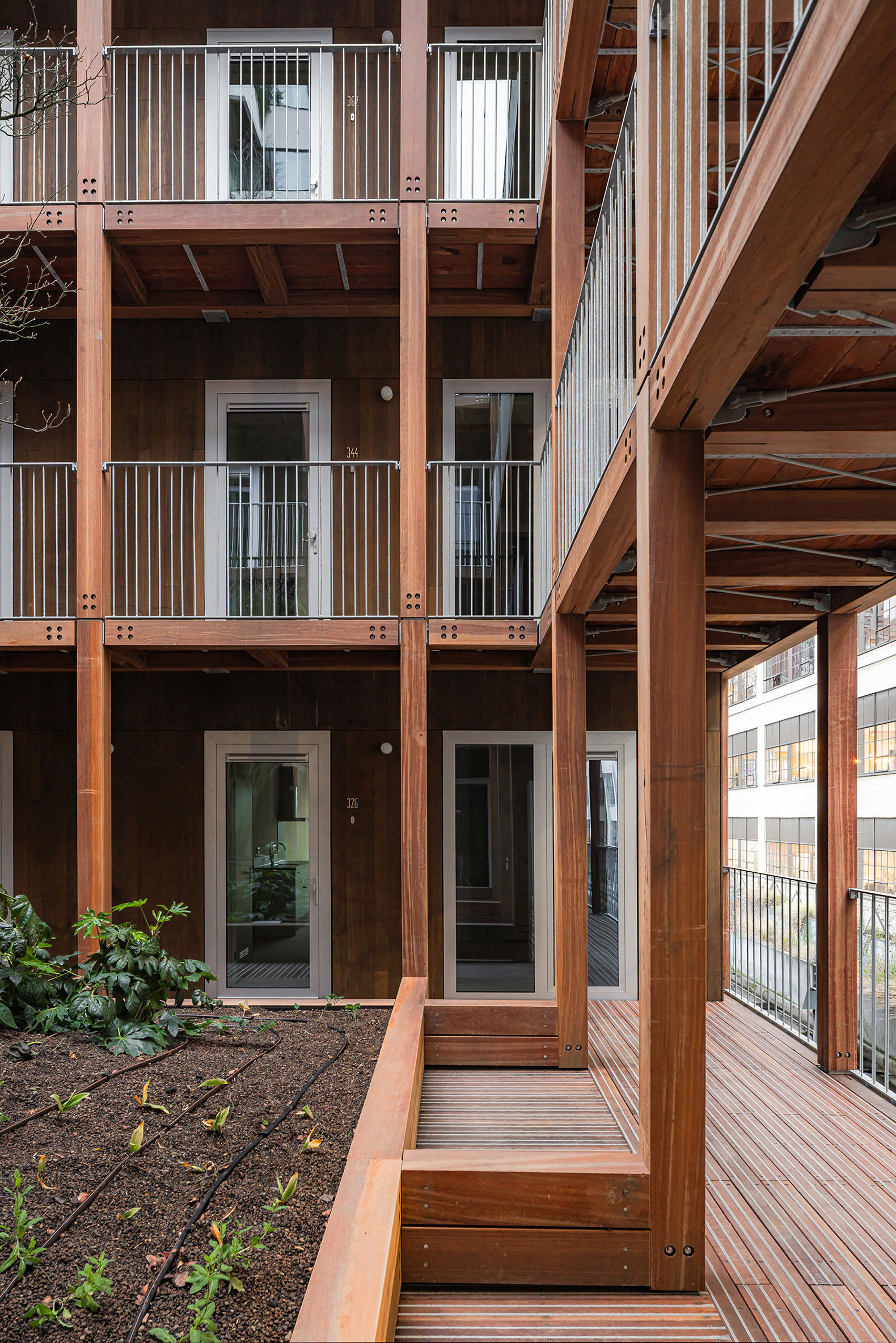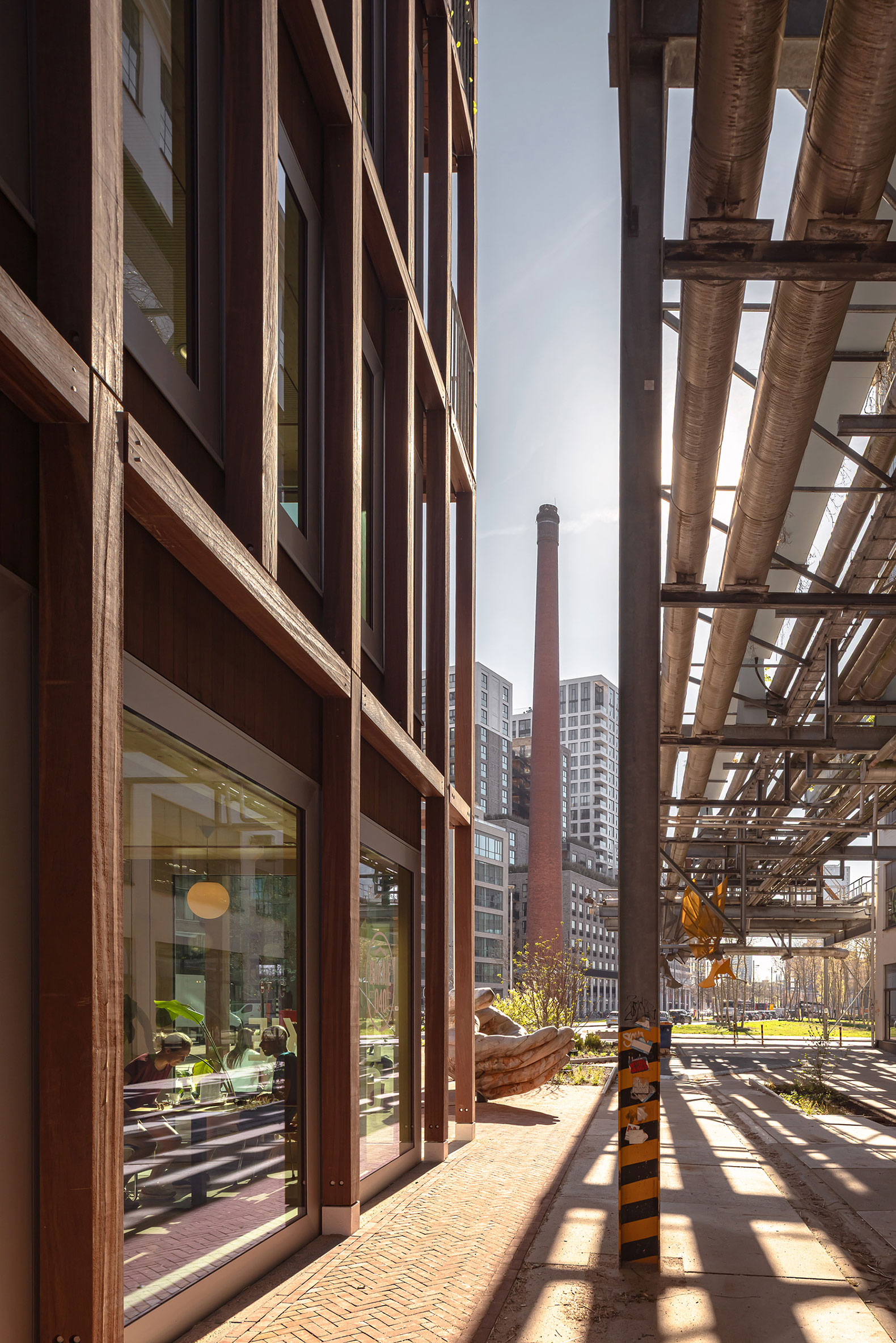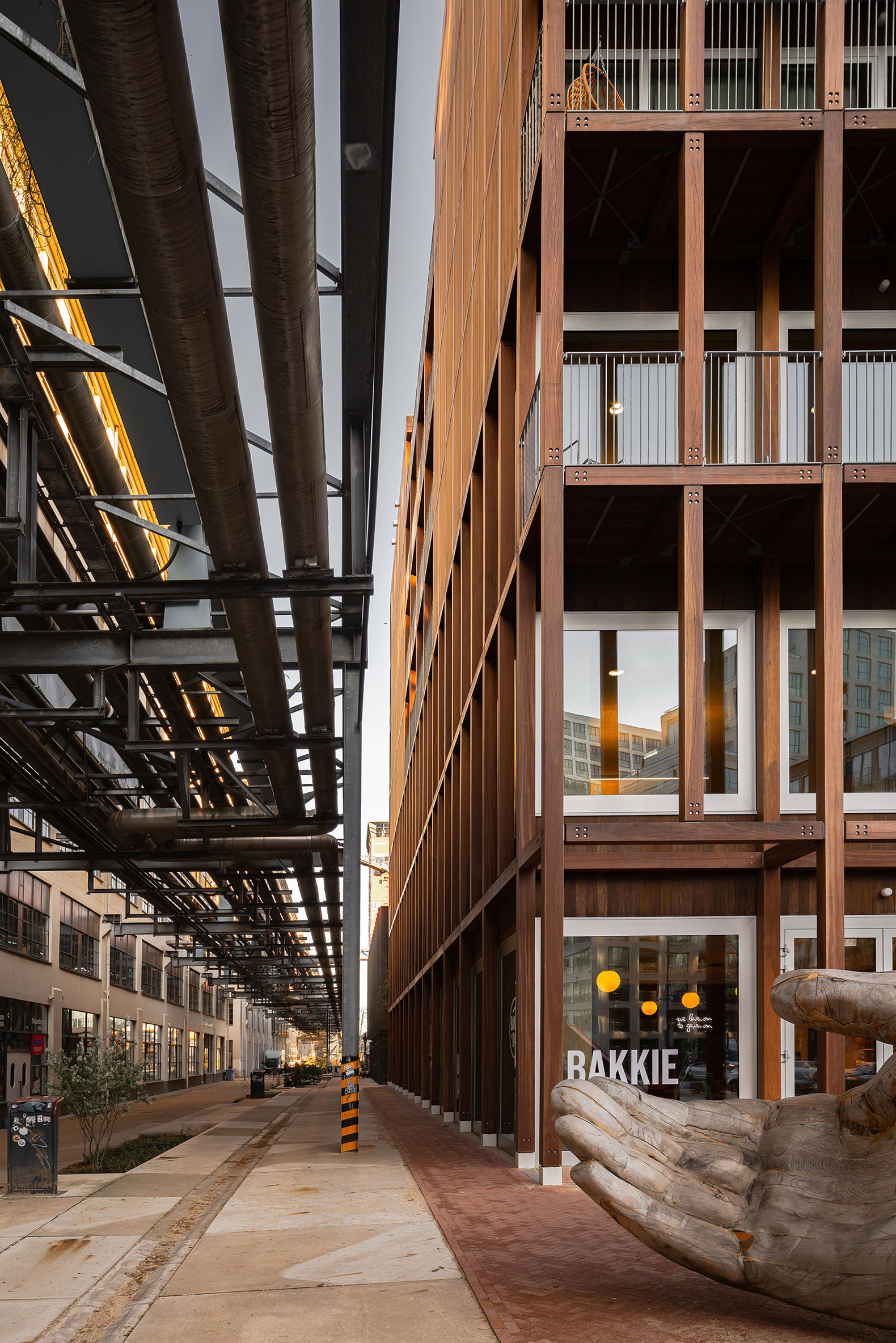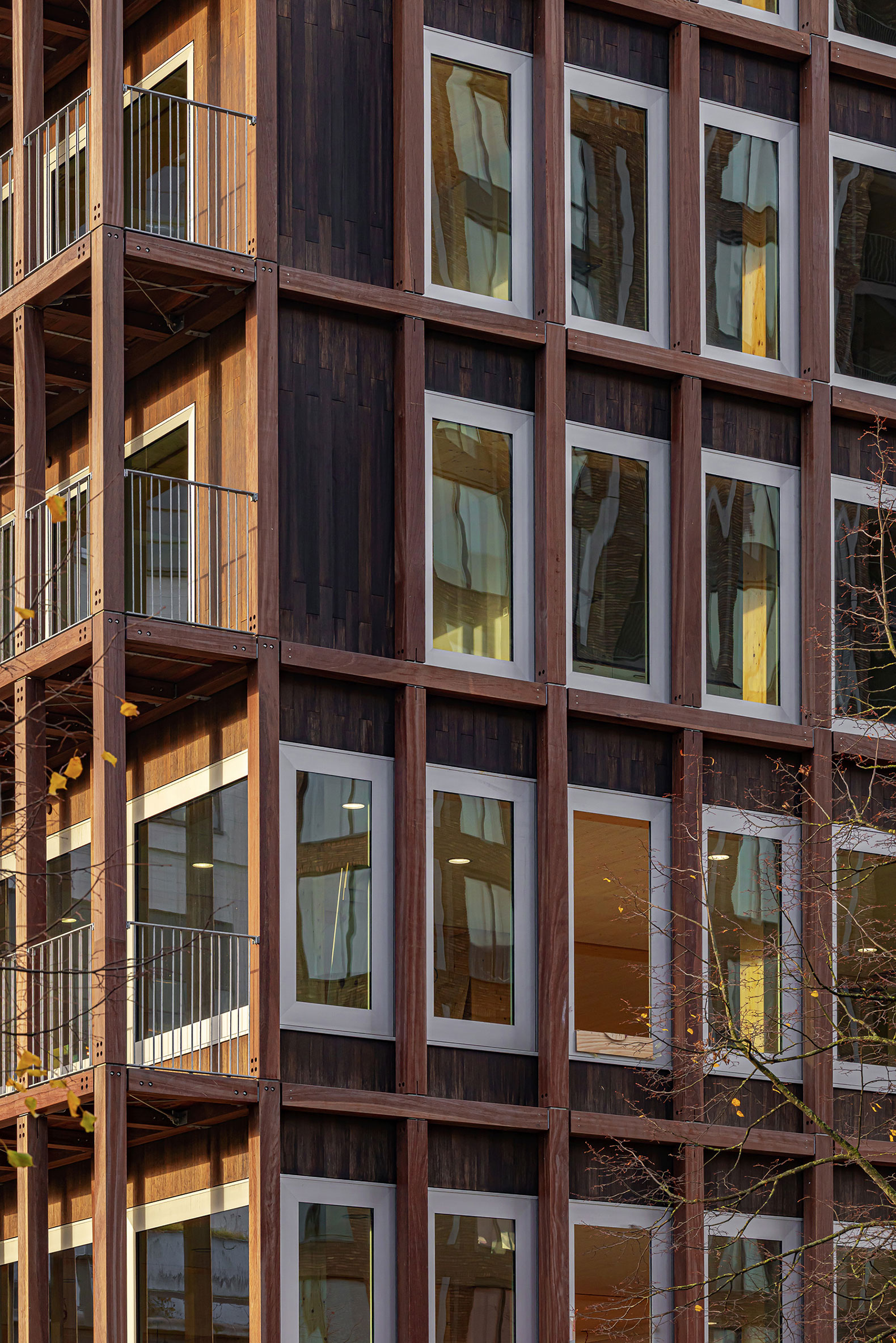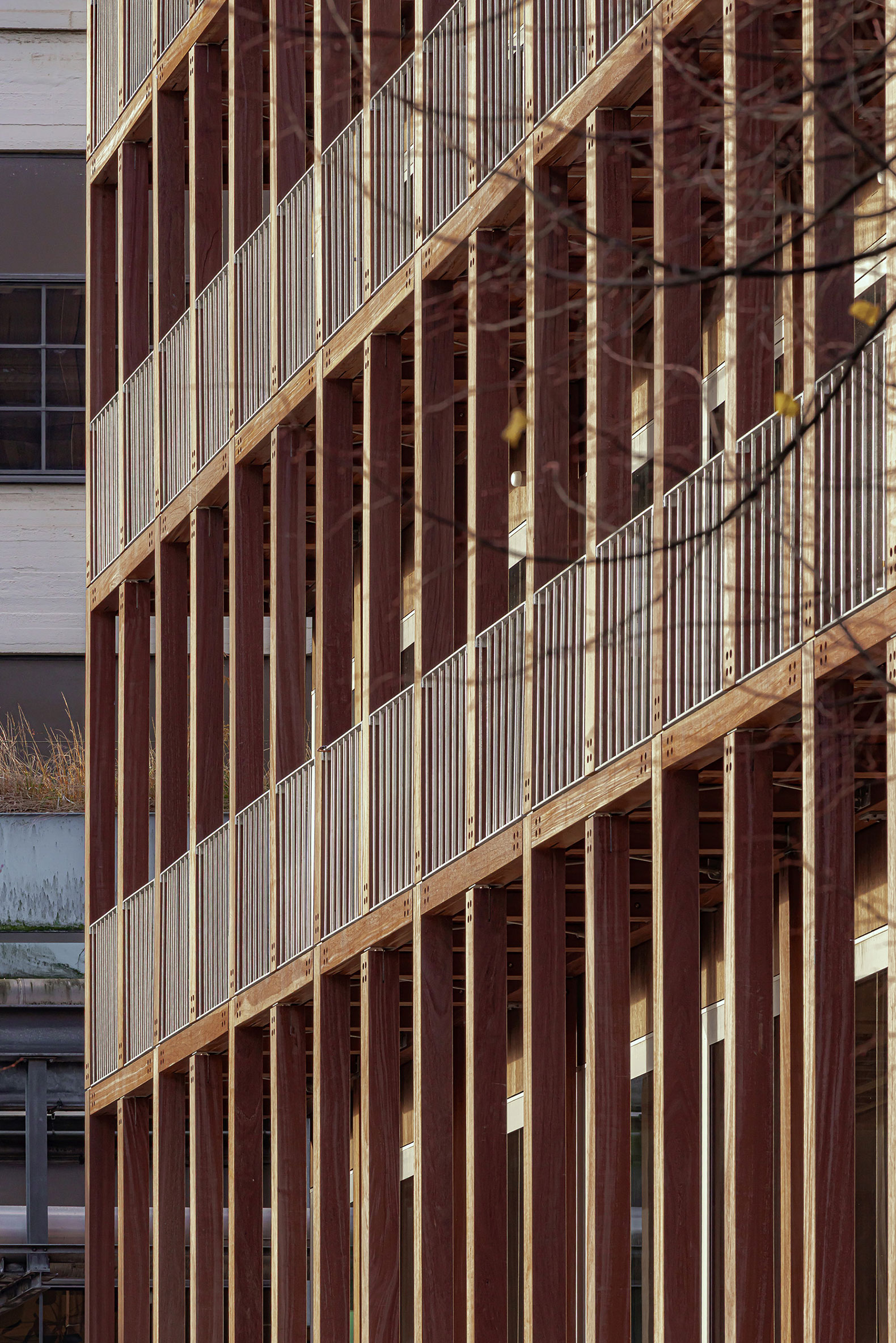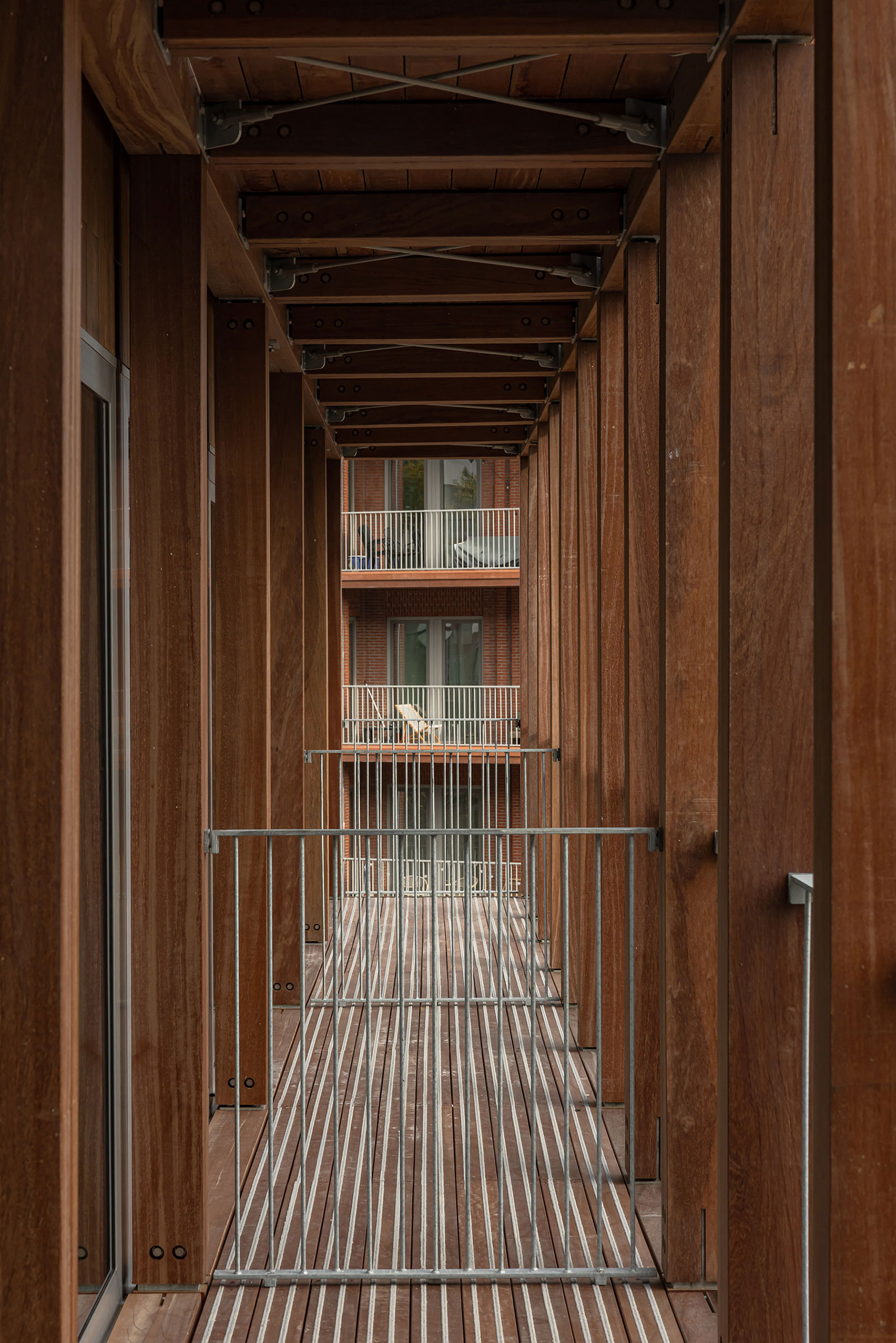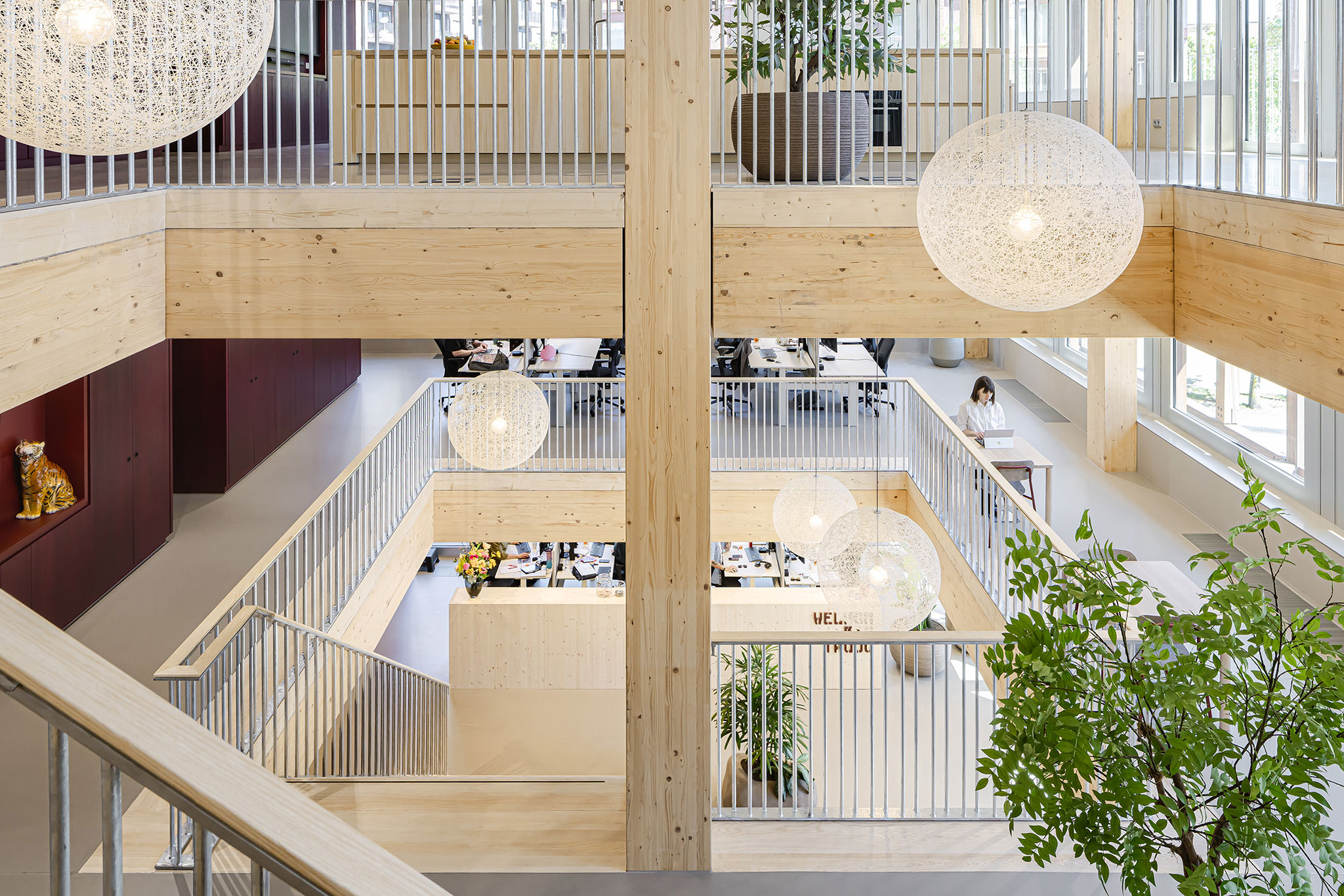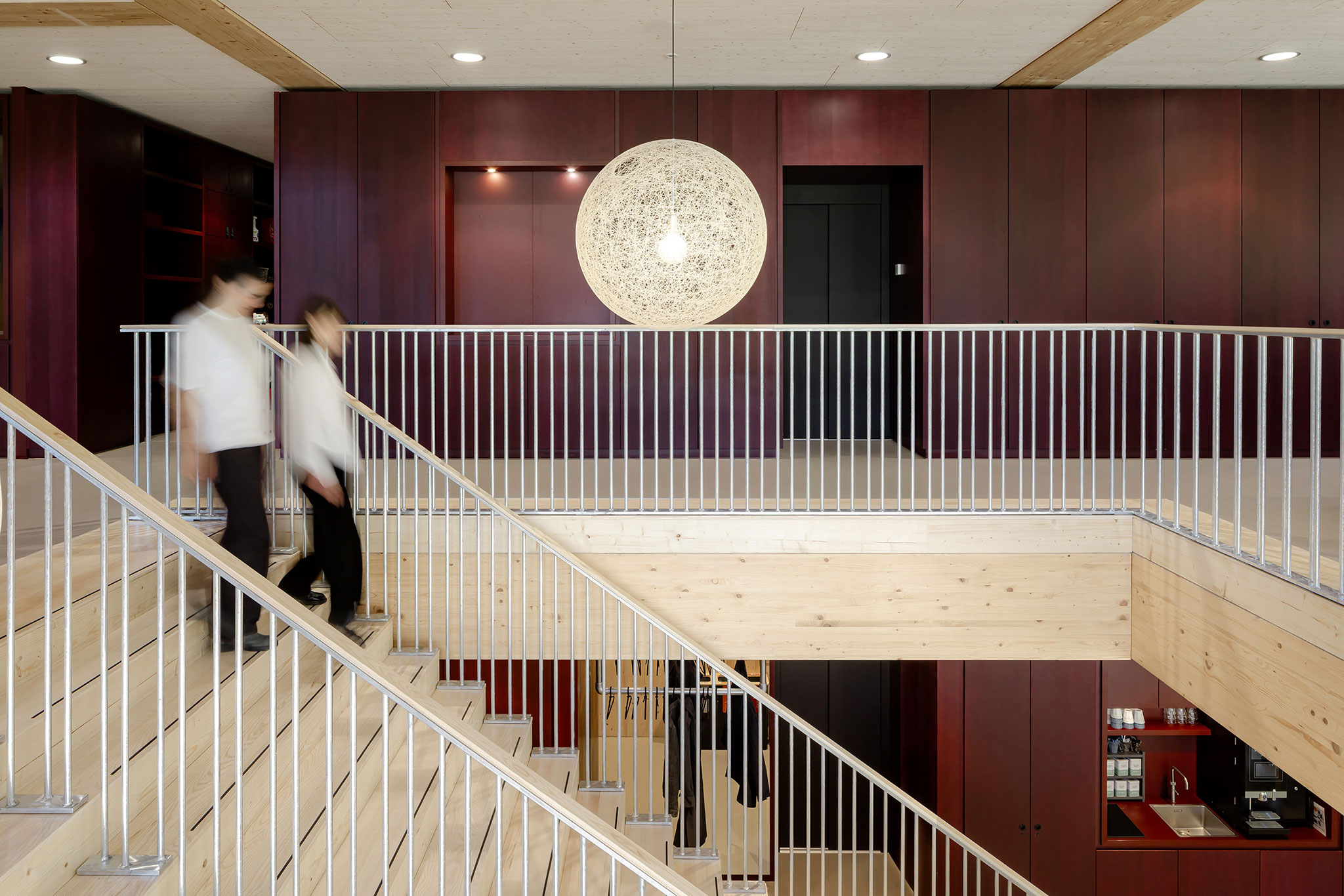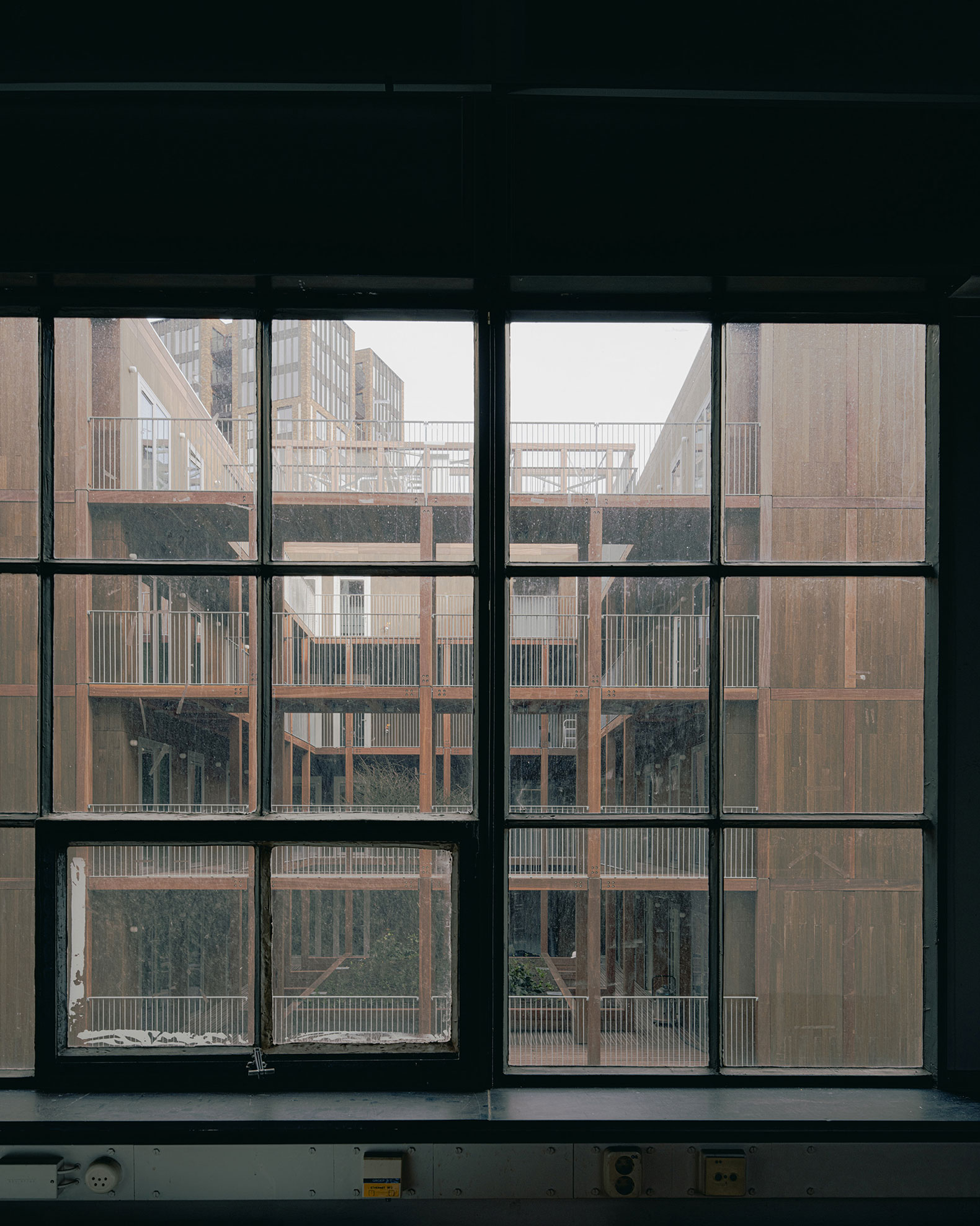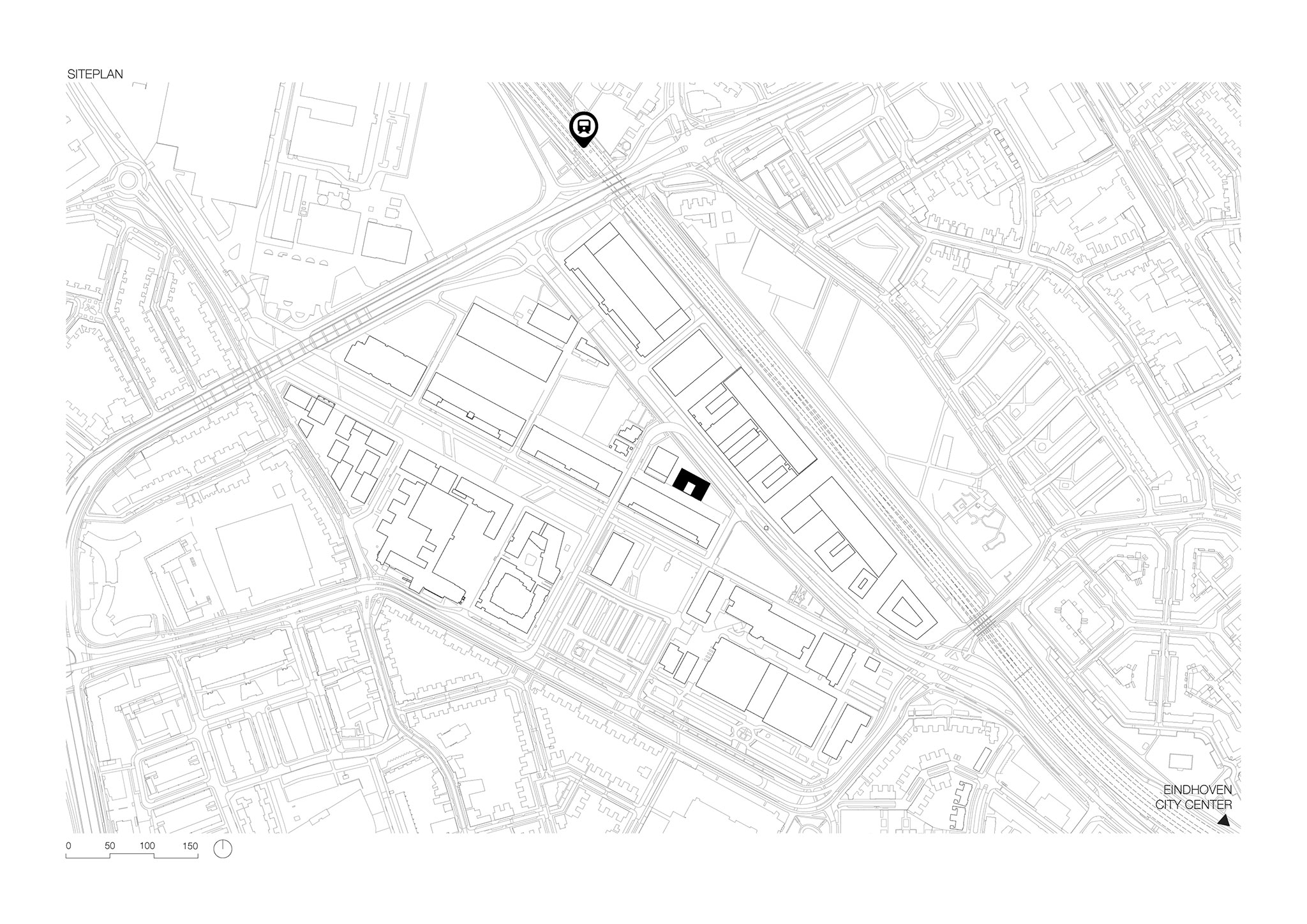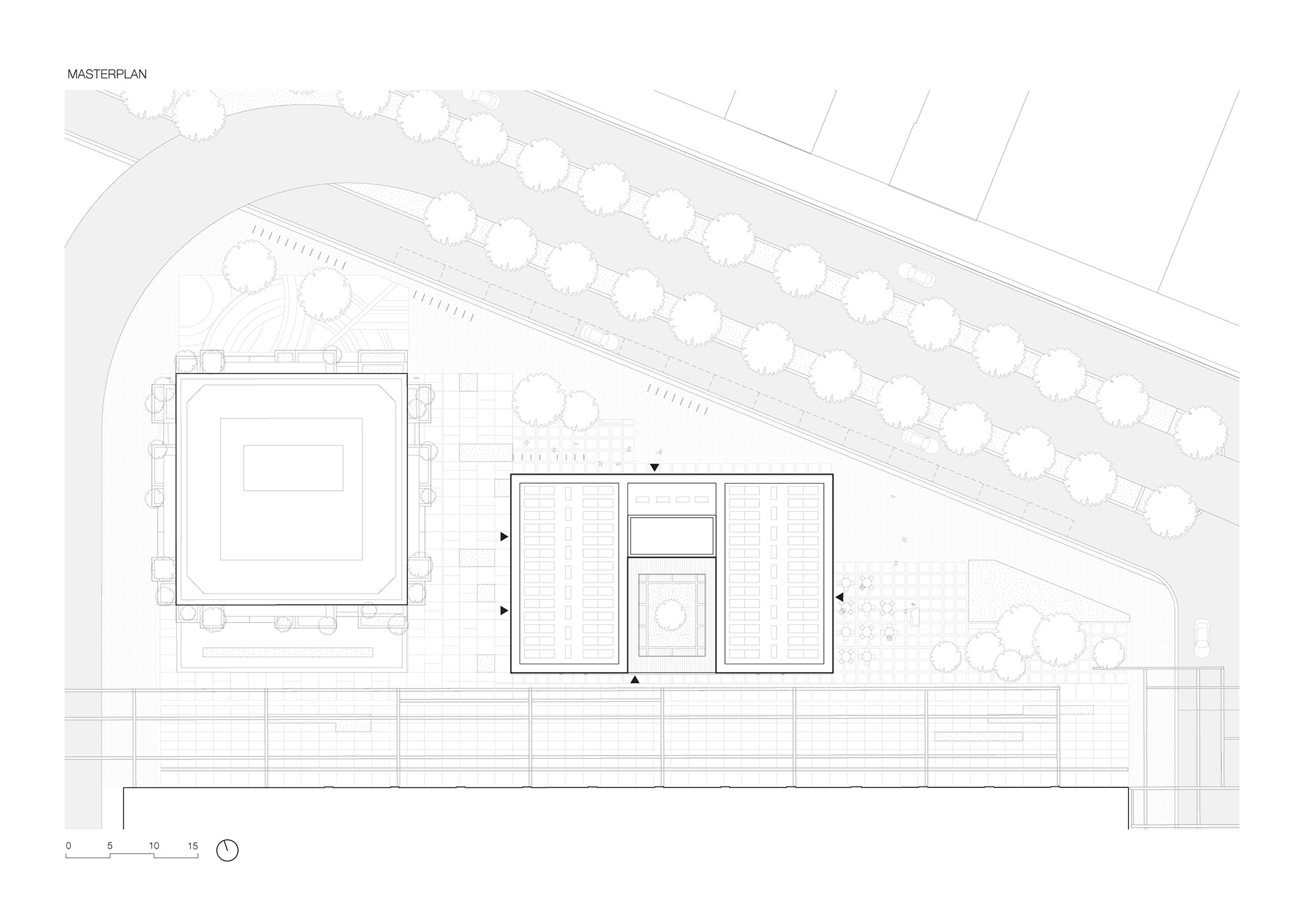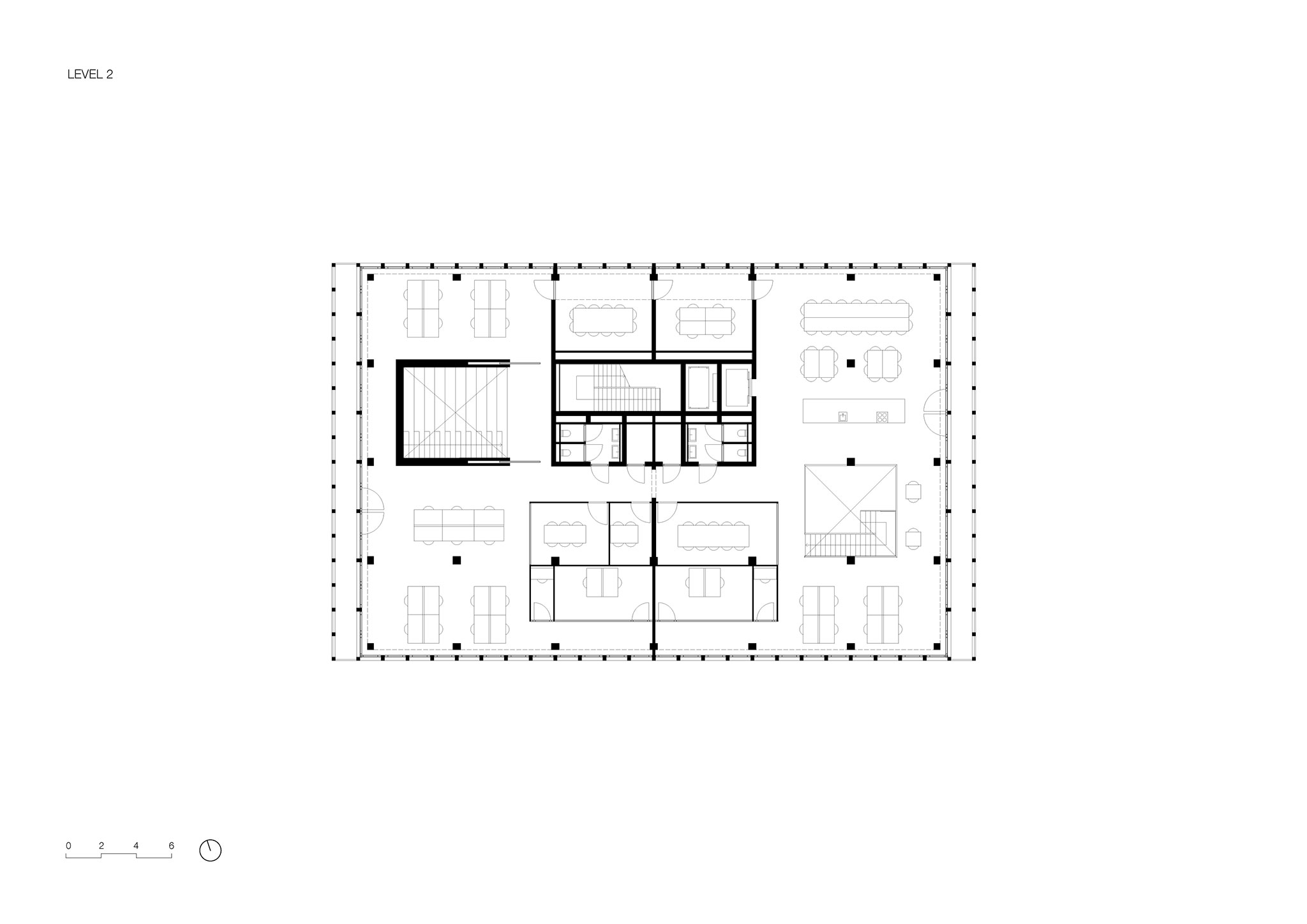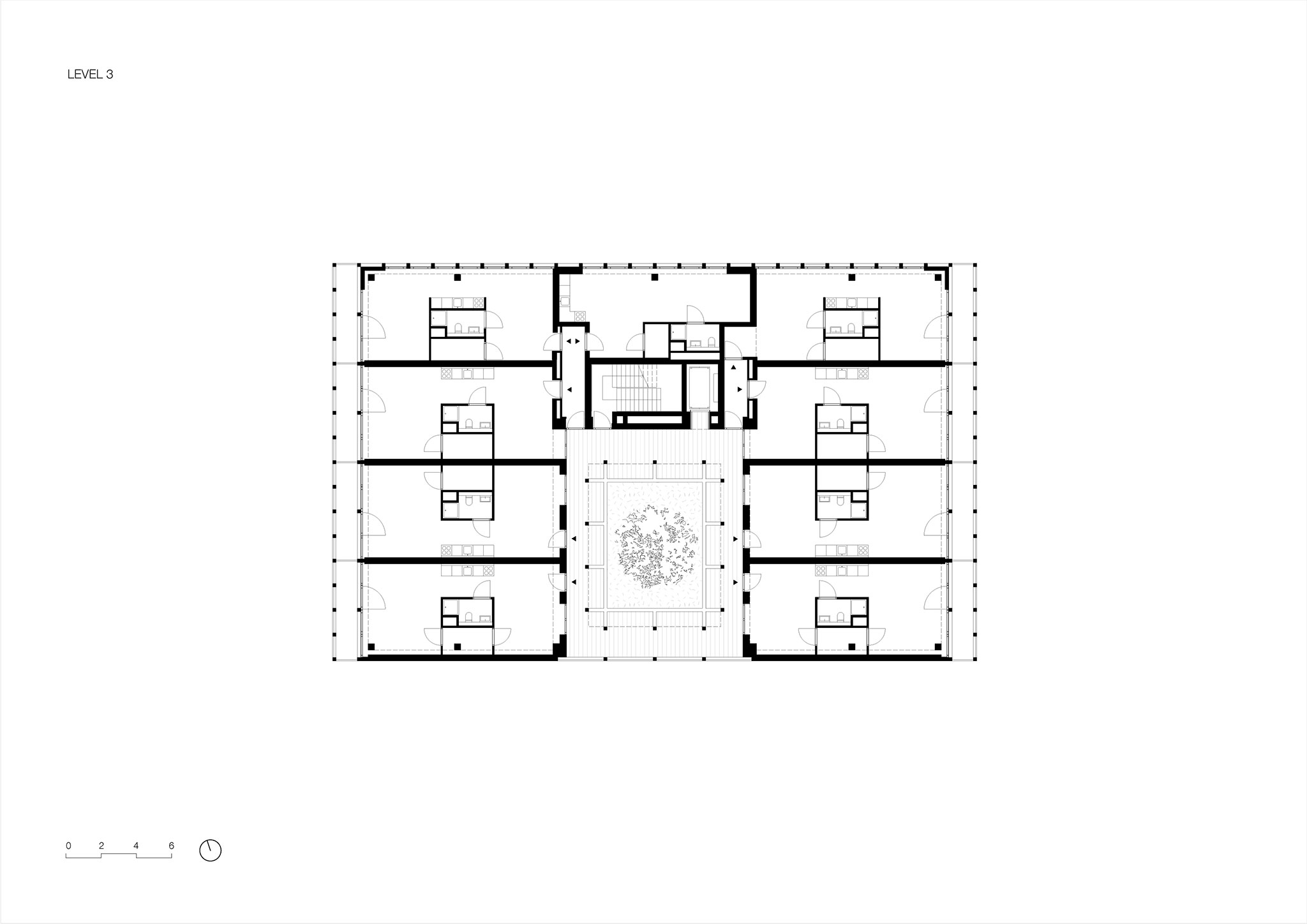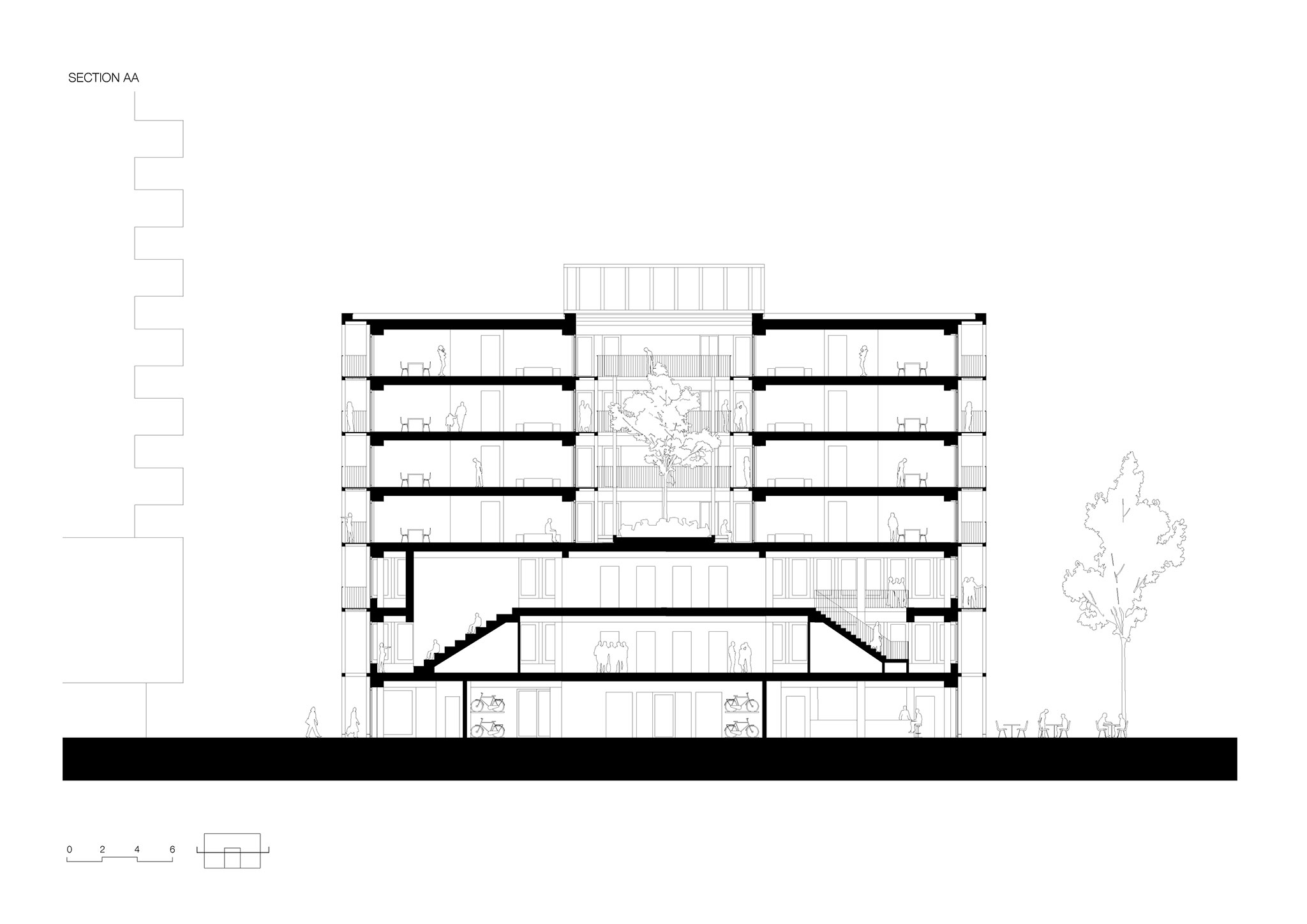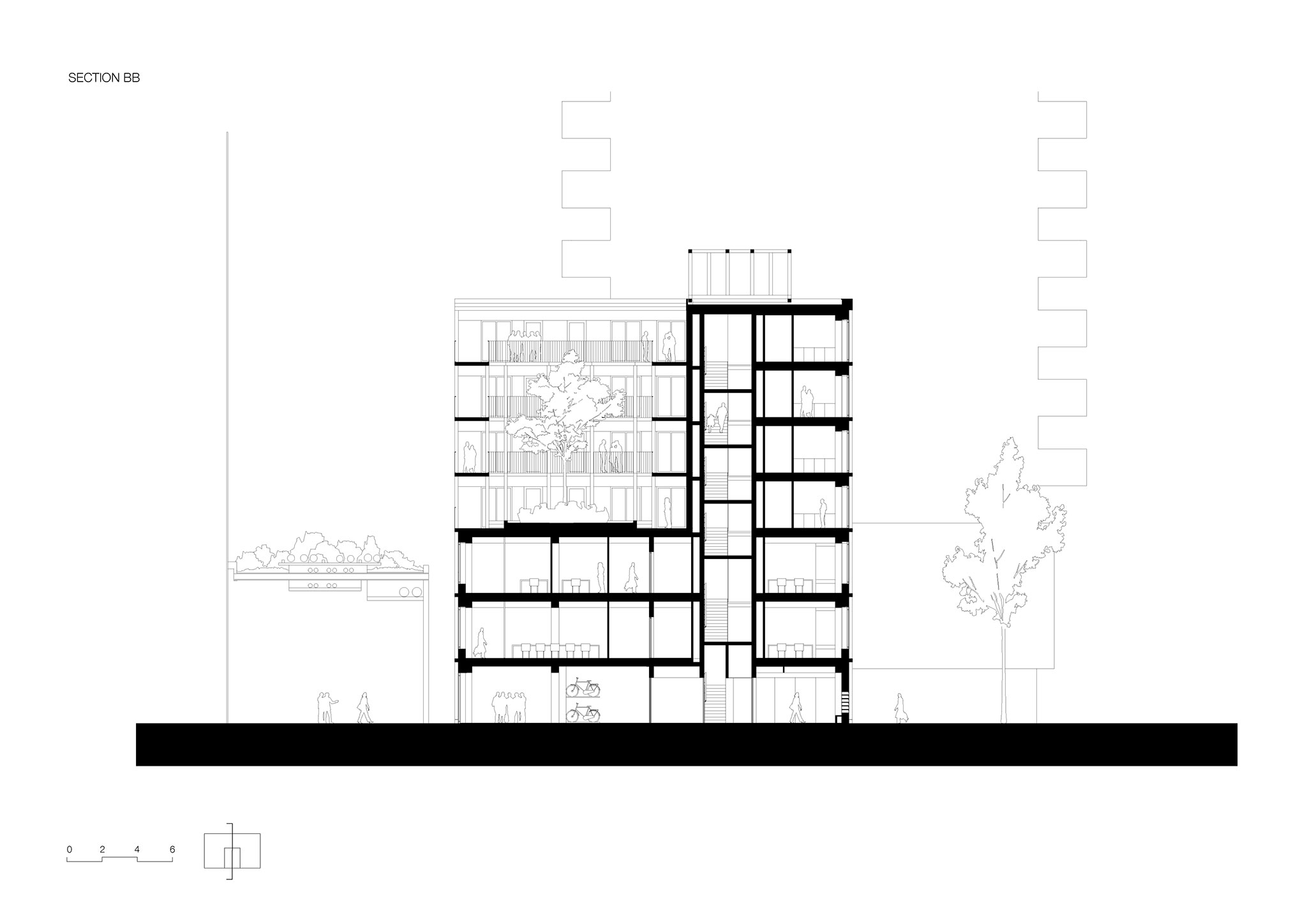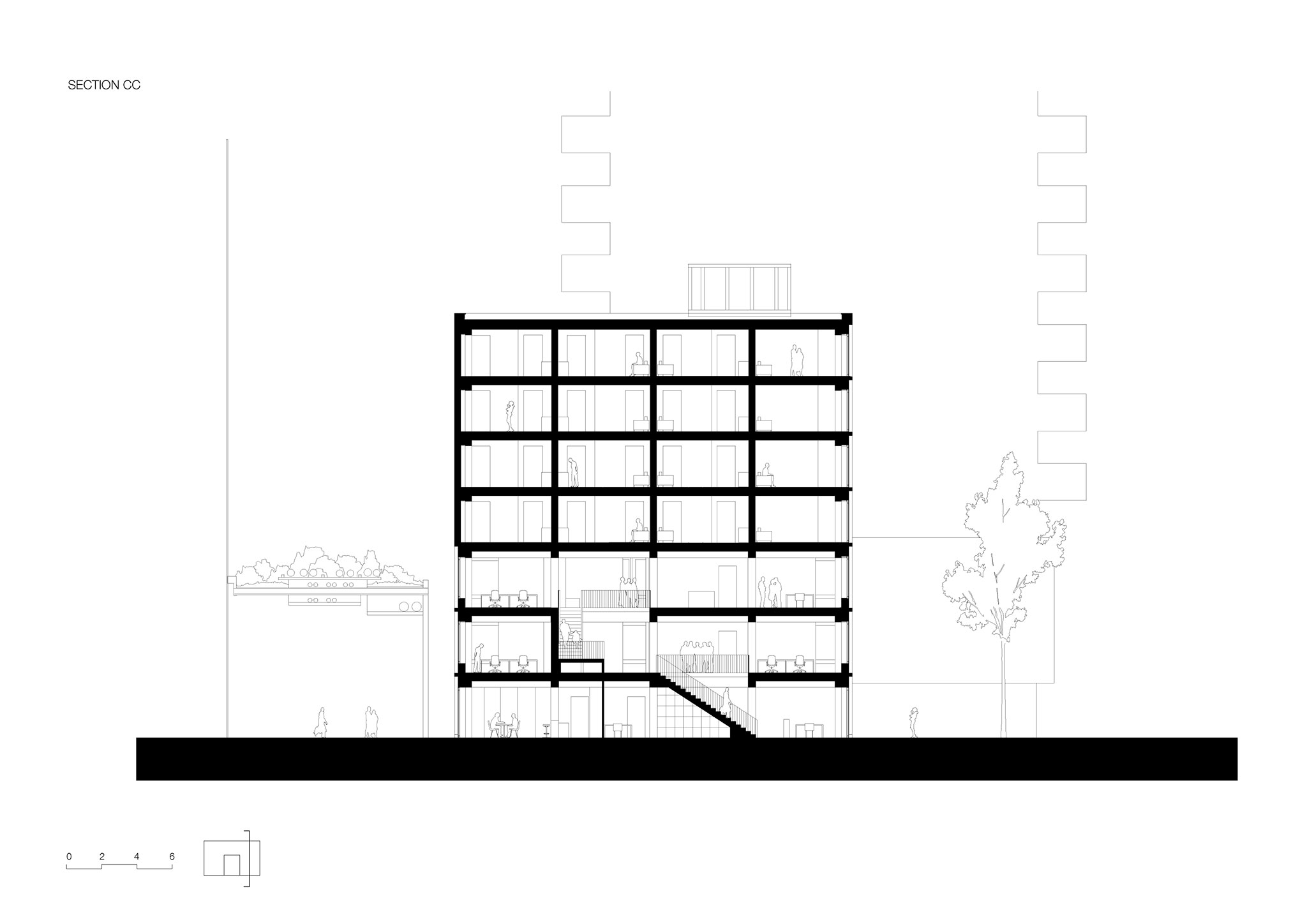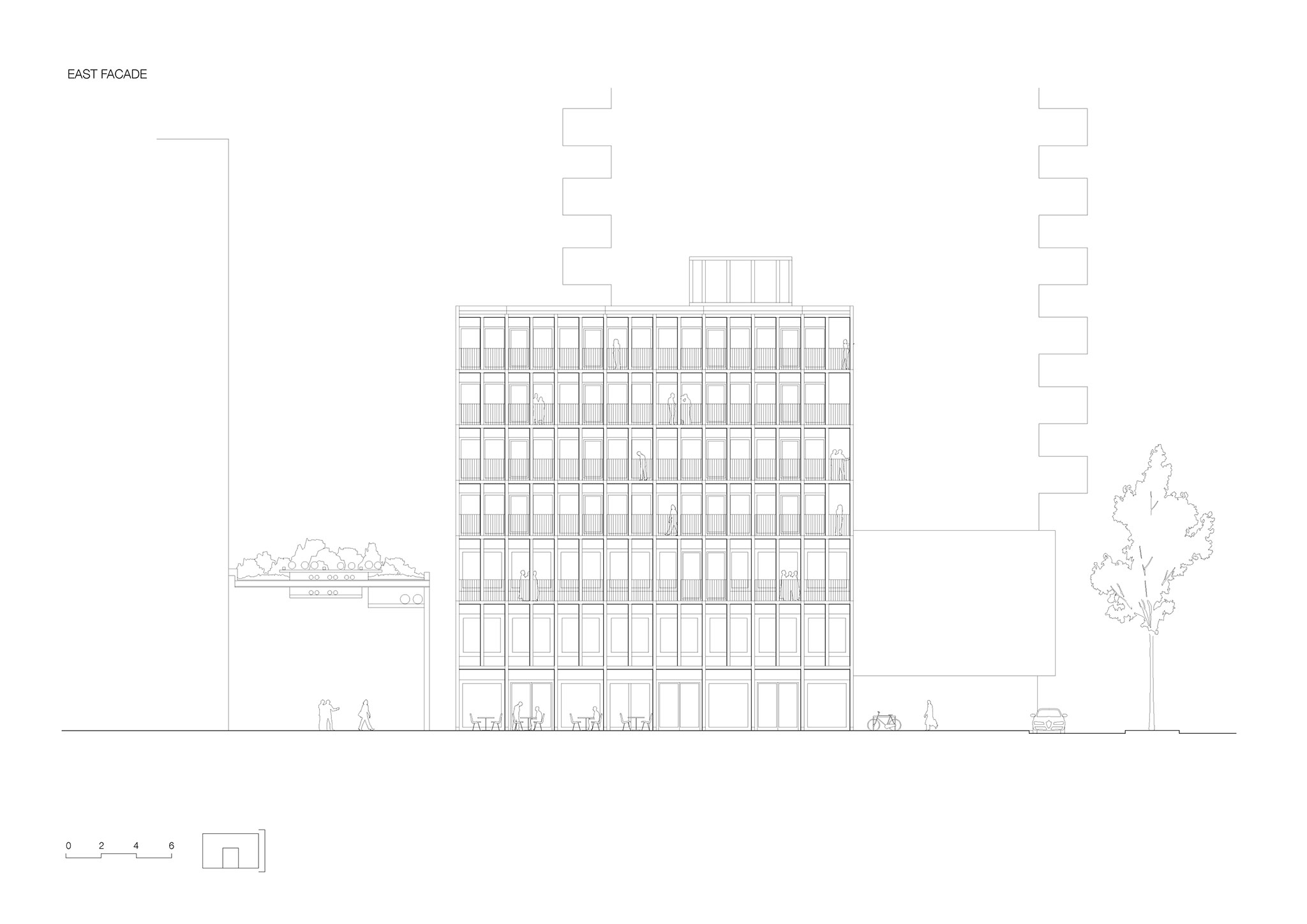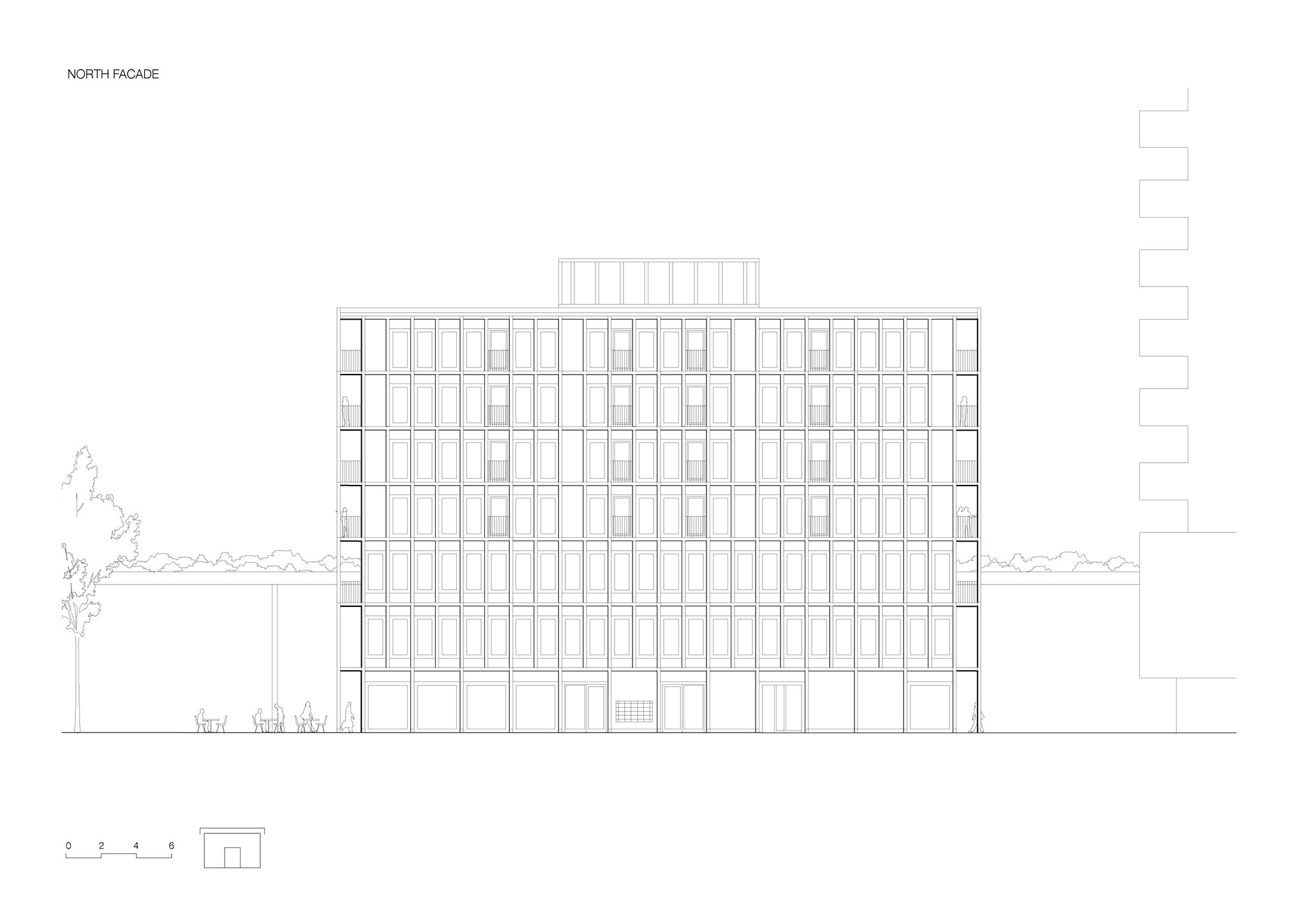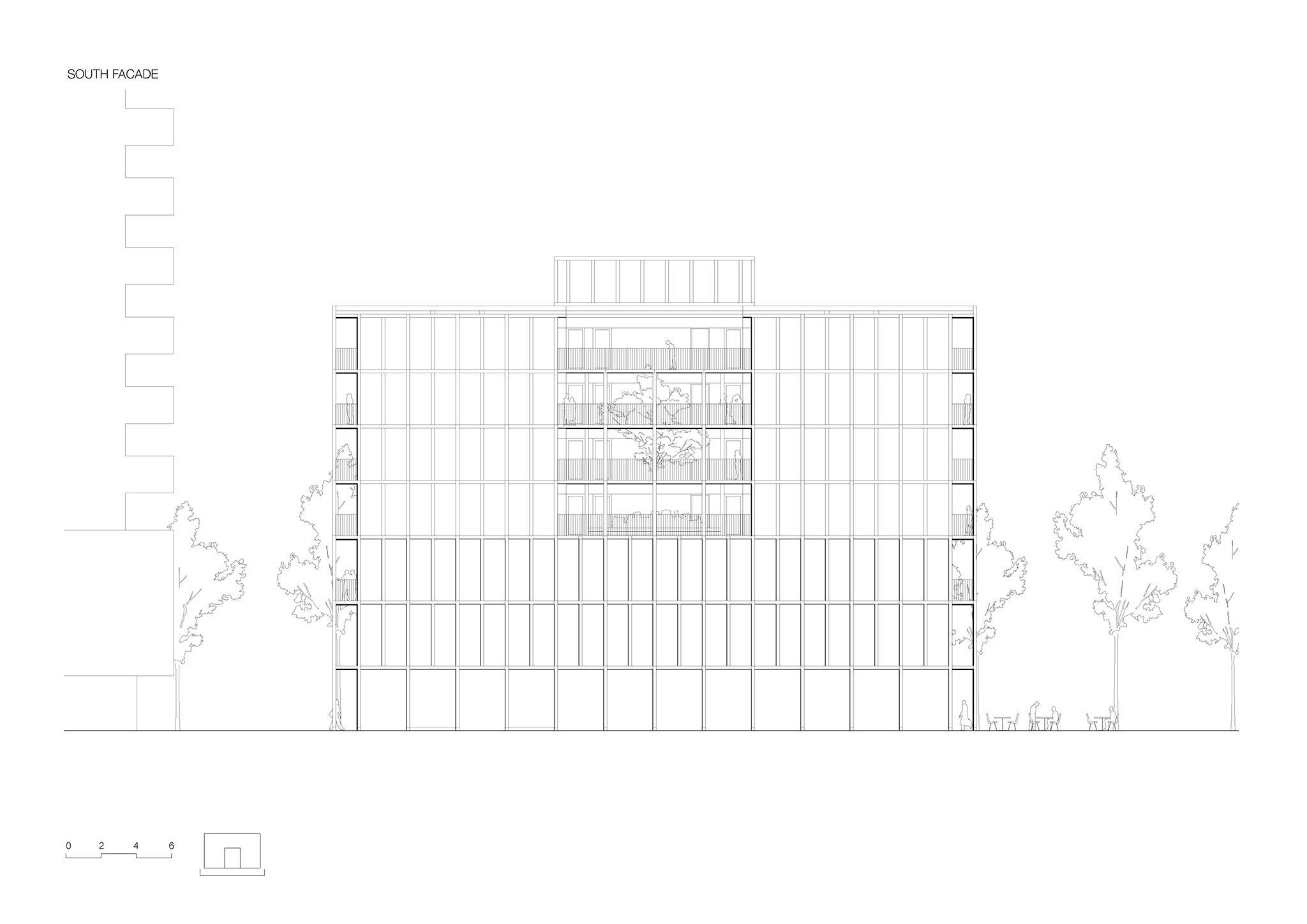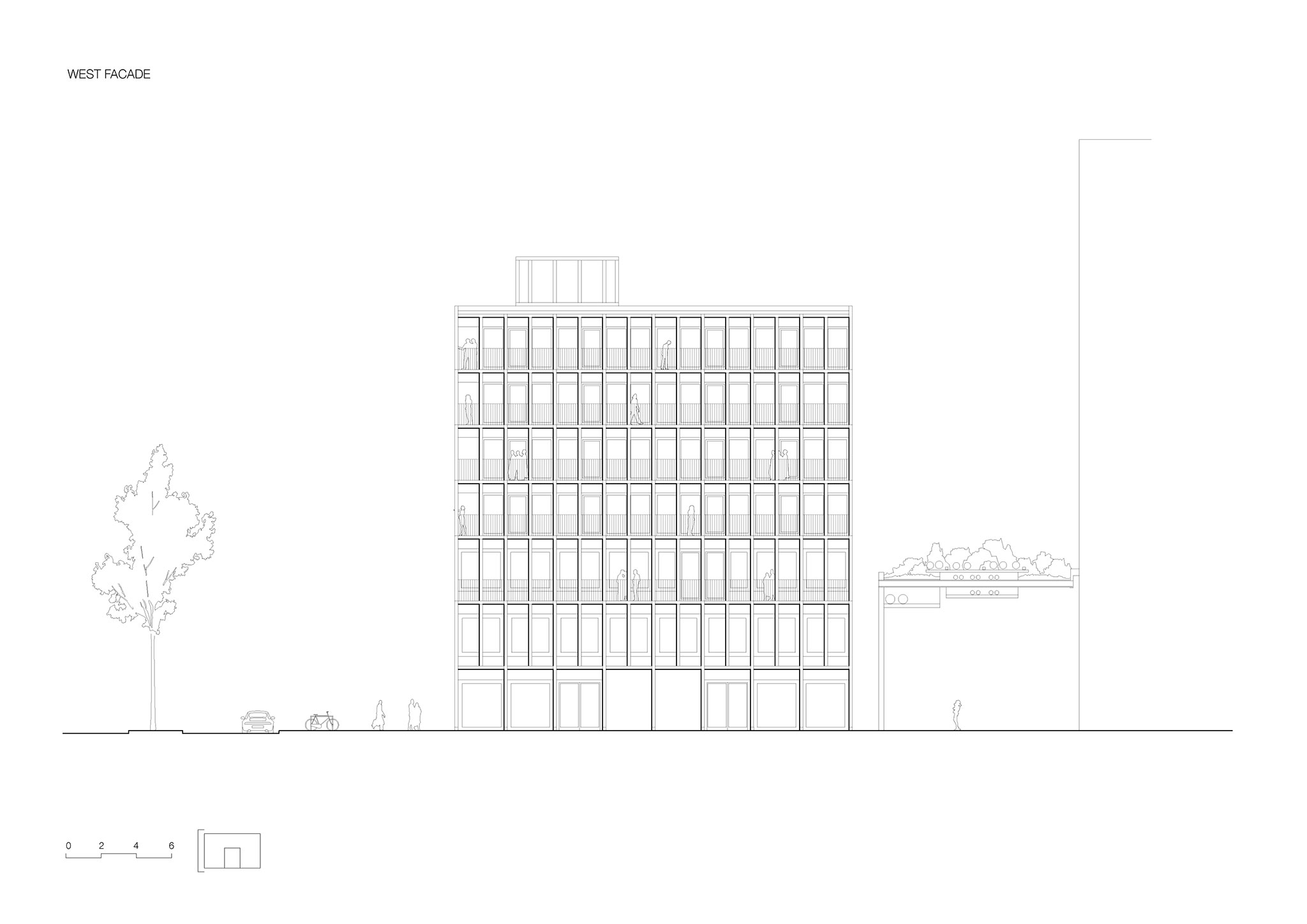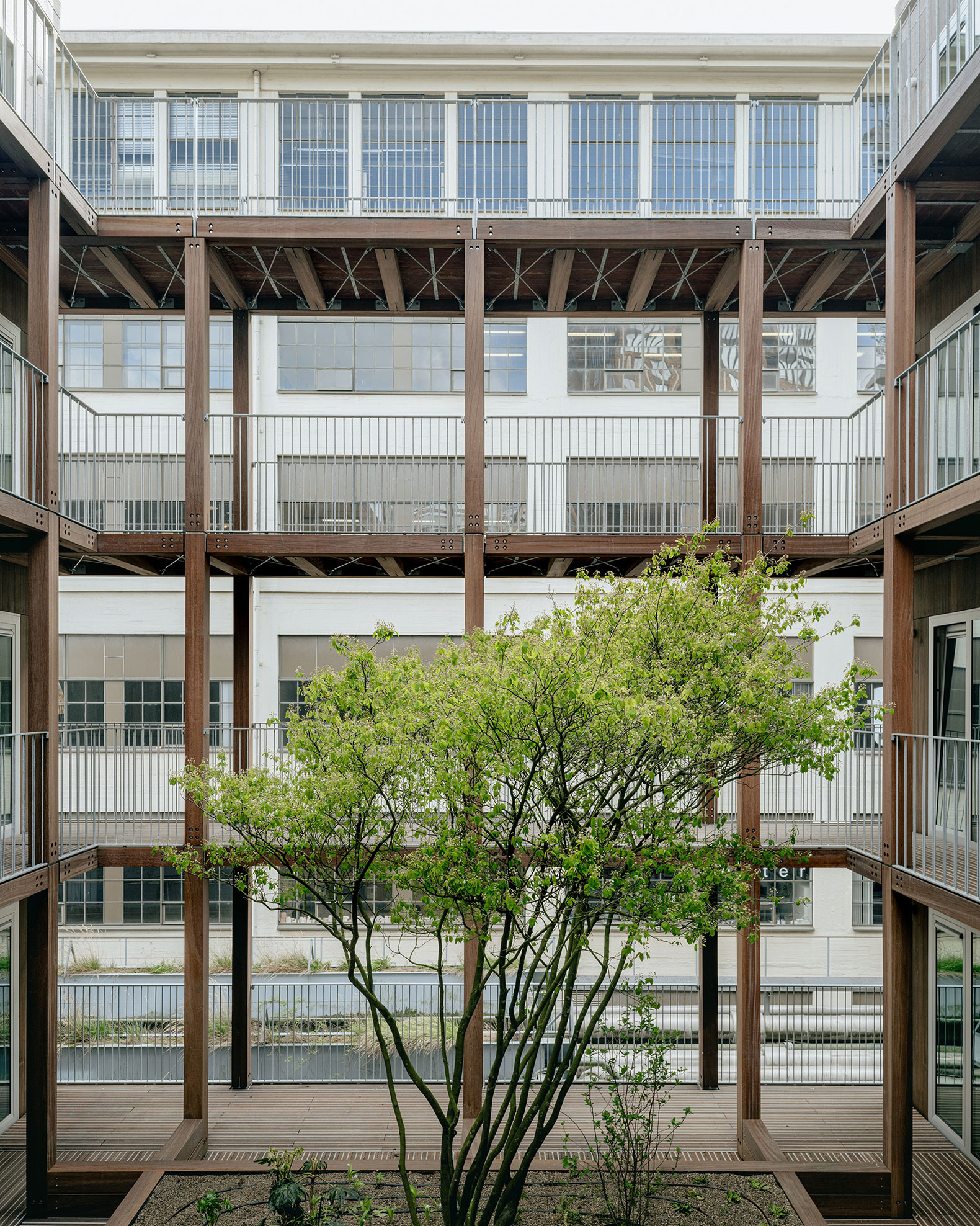
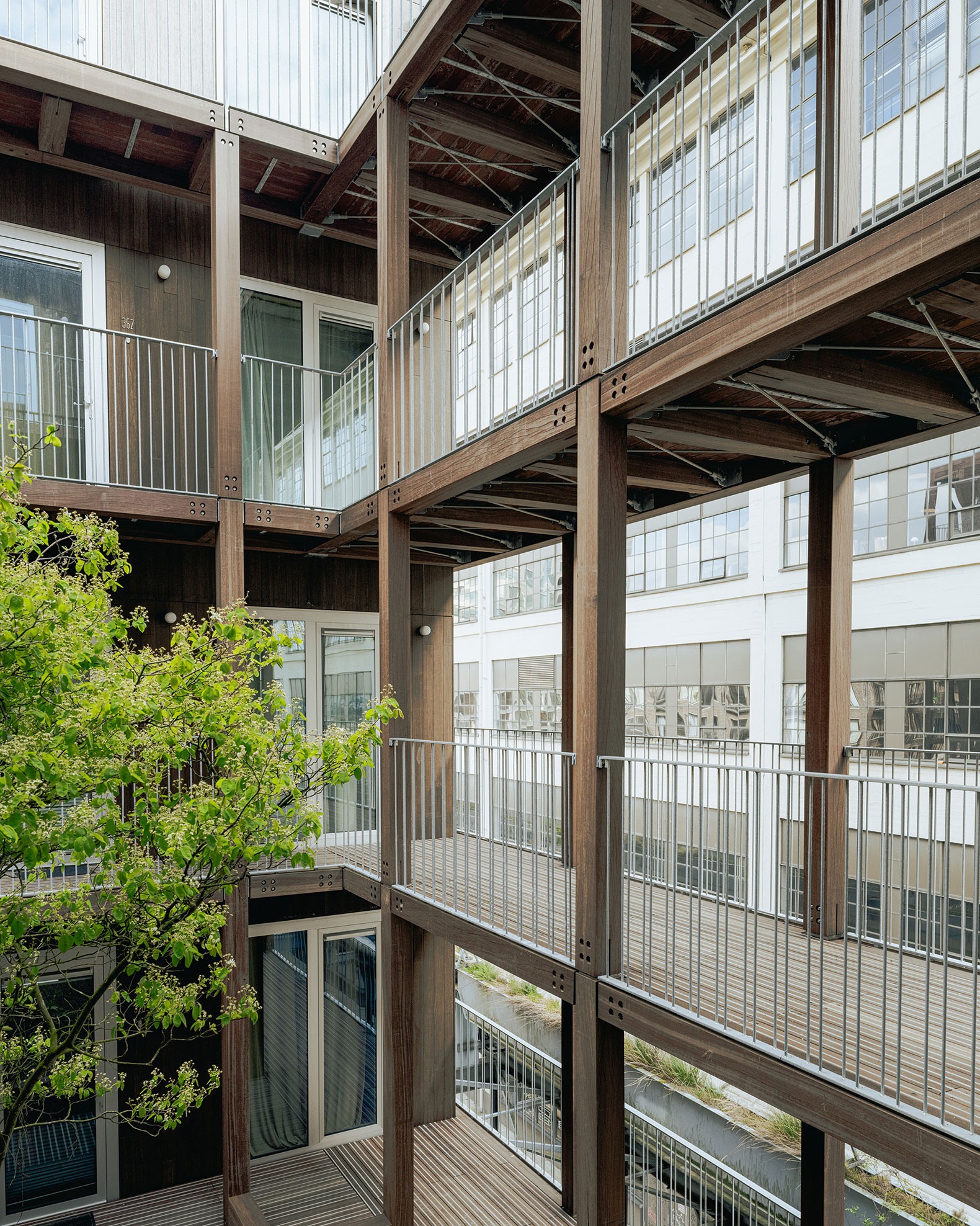
KAAN Architecten's design for Matchbox combines 36 social rental apartments with offices, retail, and hospitality spaces distributed on an active base. Its design adopts a freestanding volume with a triangular geometry, organized by a modular grid and continuous balconies. The apartments and offices are arranged around a communal garden and shared outdoor spaces.
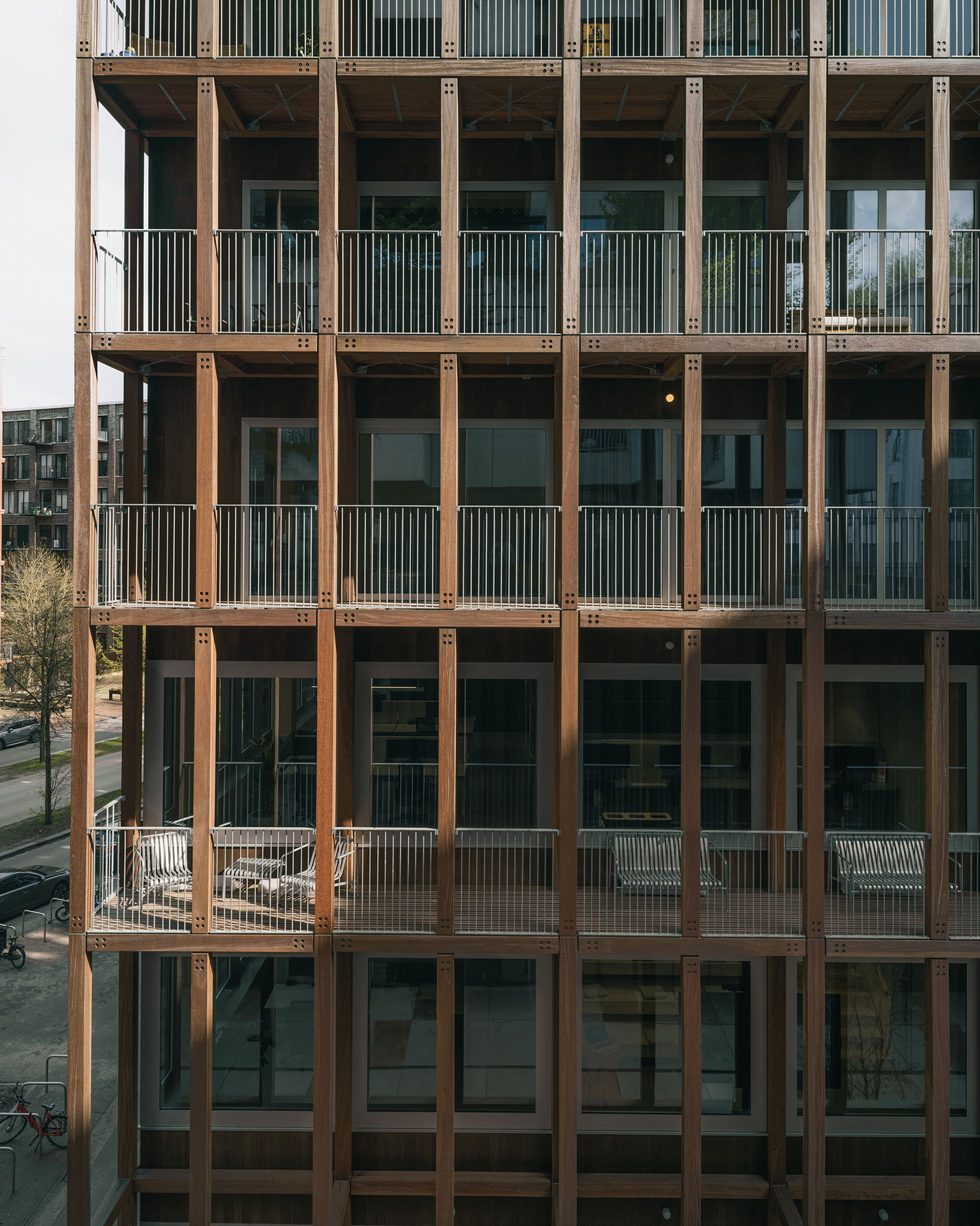
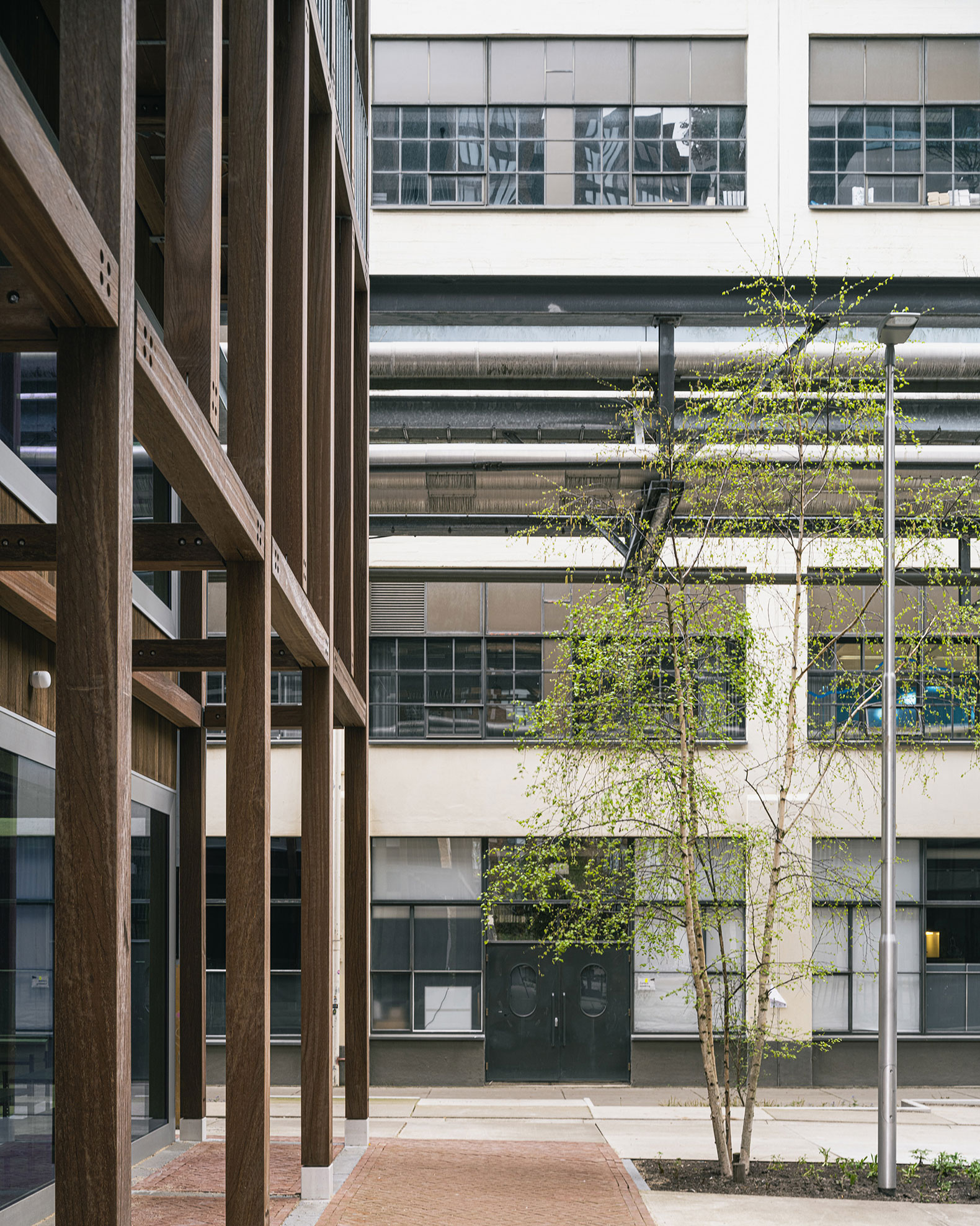
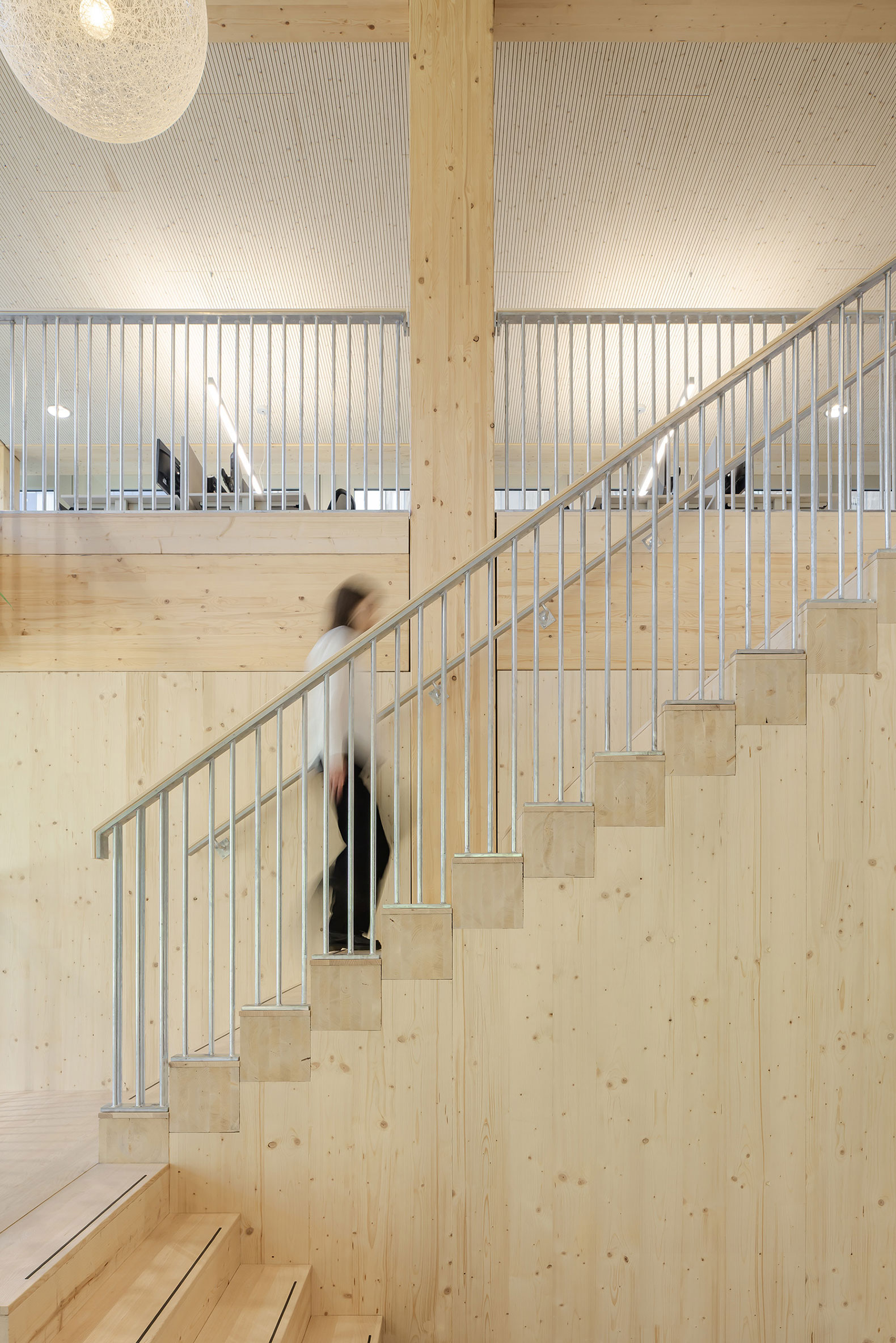
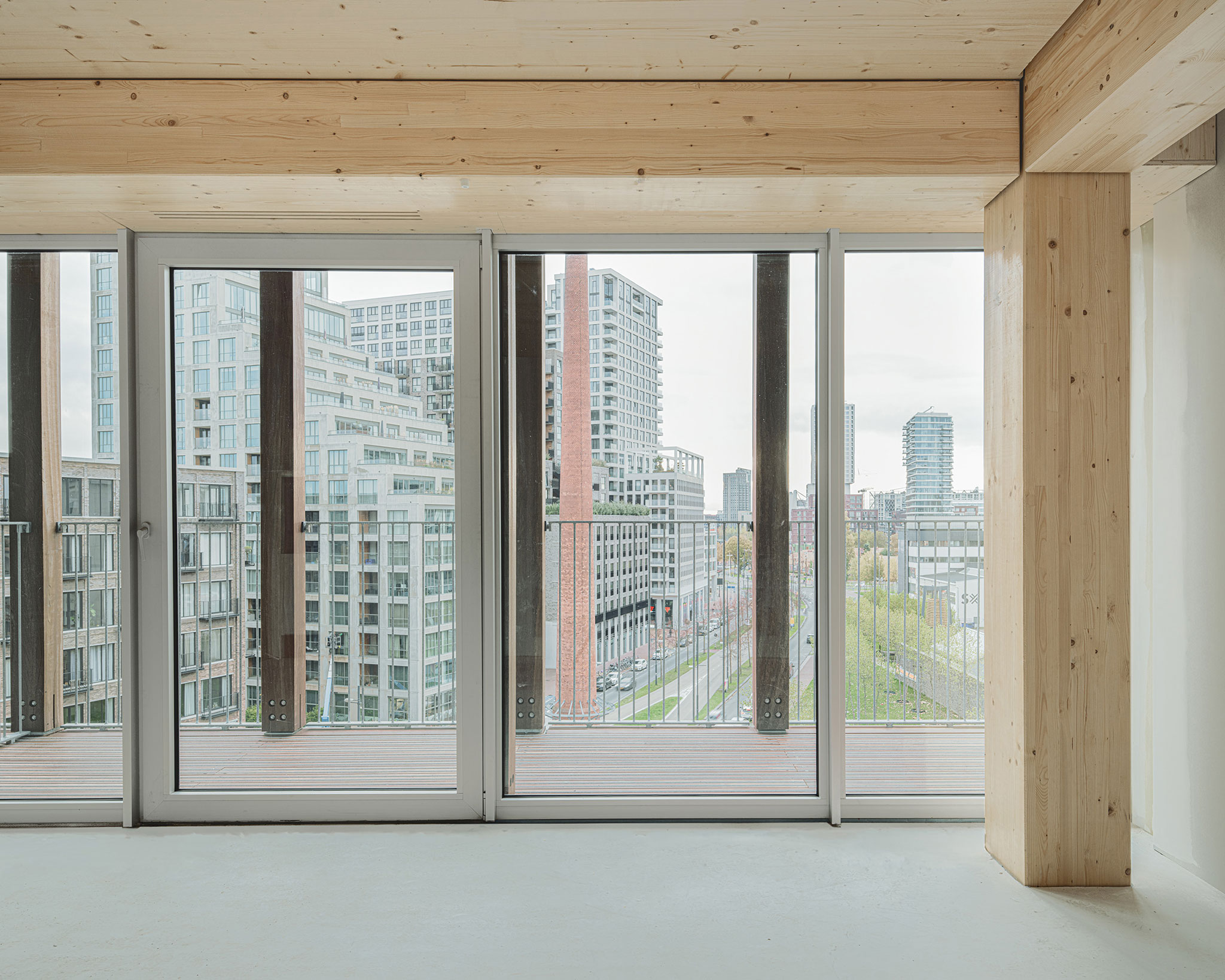
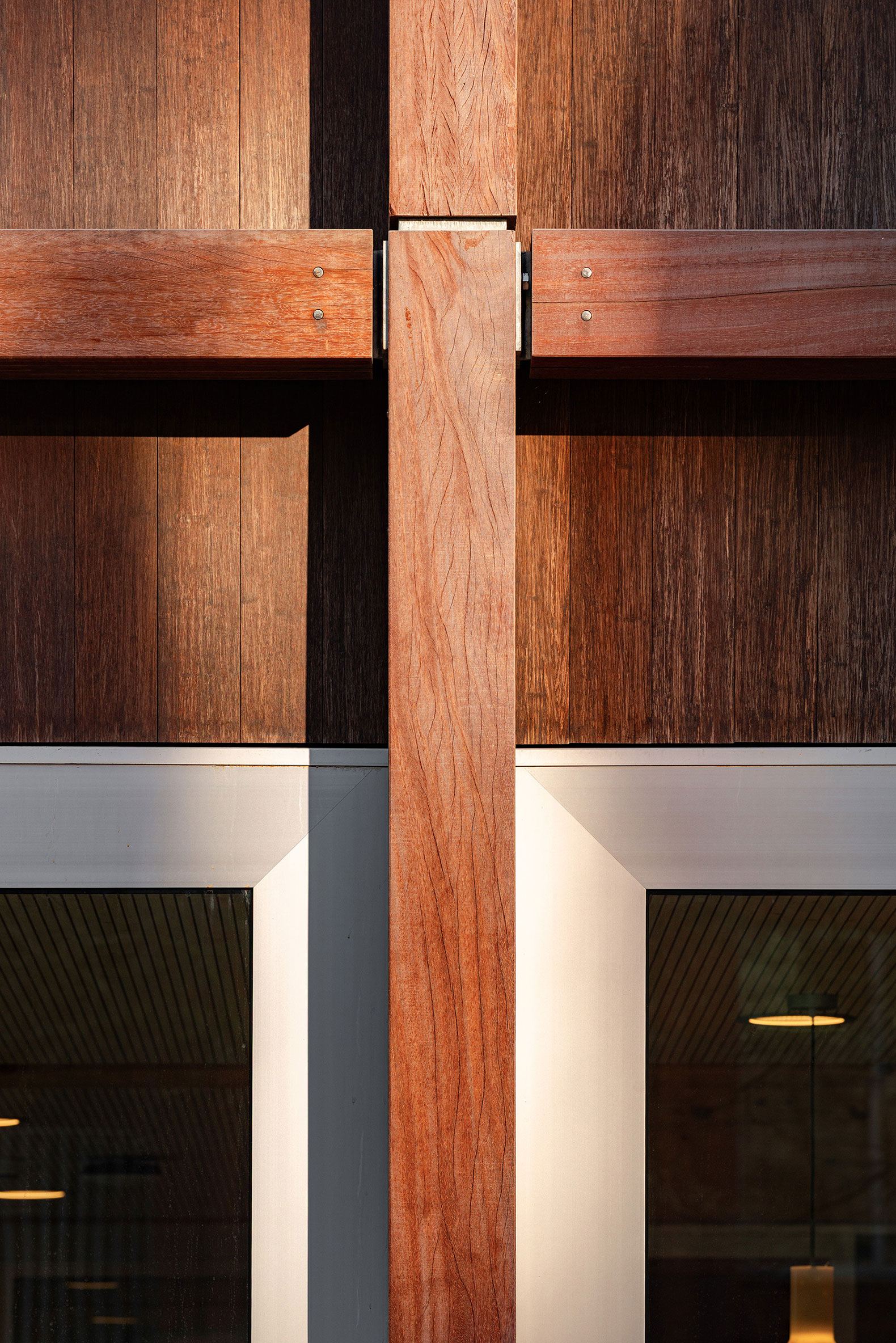
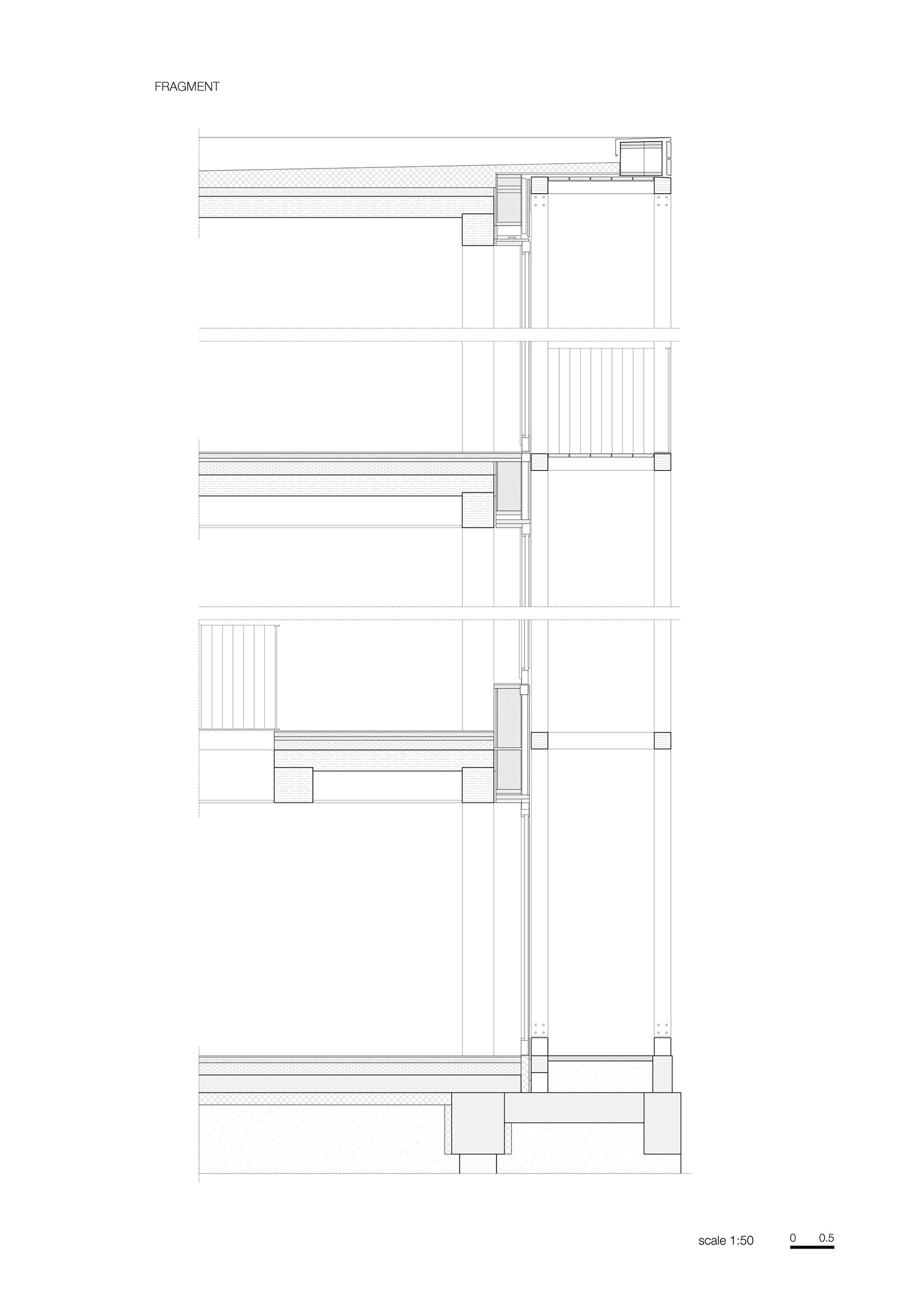
Matchbox is built almost entirely of wood, with a structure based on timber beams and columns and CLT floor slabs. The façade combines azobé wood in the load-bearing elements and galleries with bamboo infill panels. Only the prefabricated concrete stabilizing core and the glazing are outside its bio-based construction system.
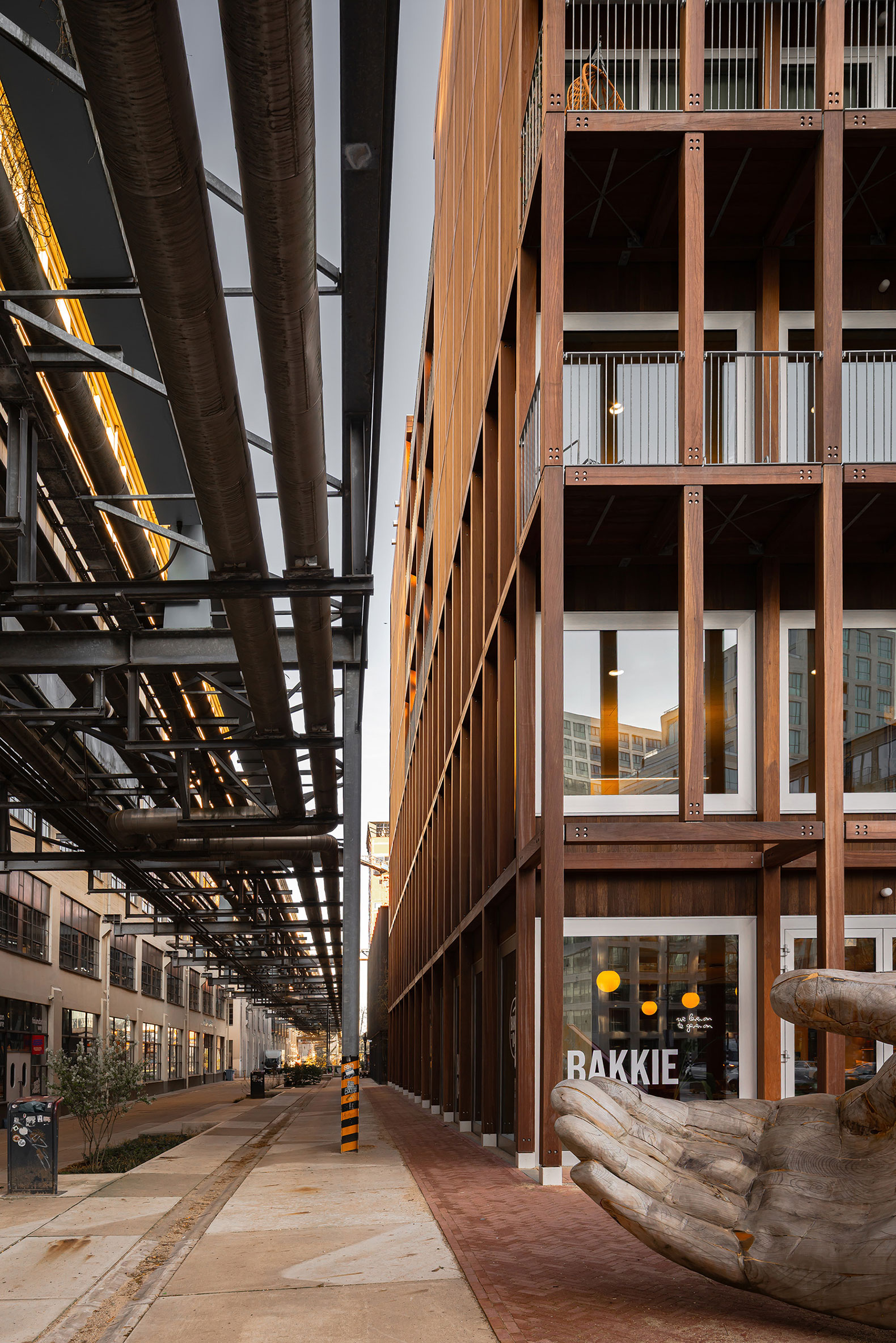
Matchbox by KAAN Architecten. Photograph by Sebastian van Damme.
Project description by KAAN Architecten
Designed by KAAN Architecten as a calm landmark within the former Philips industrial area, the building is constructed almost entirely of timber, offering a deliberate alternative to conventional, concrete-dominated urban construction. Defined by a clear modular grid and continuous balconies, Matchbox brings together offices and social rental apartments around a communal courtyard garden. The building strengthens the connection between the industrial zone to the south and the new residential developments to the north.
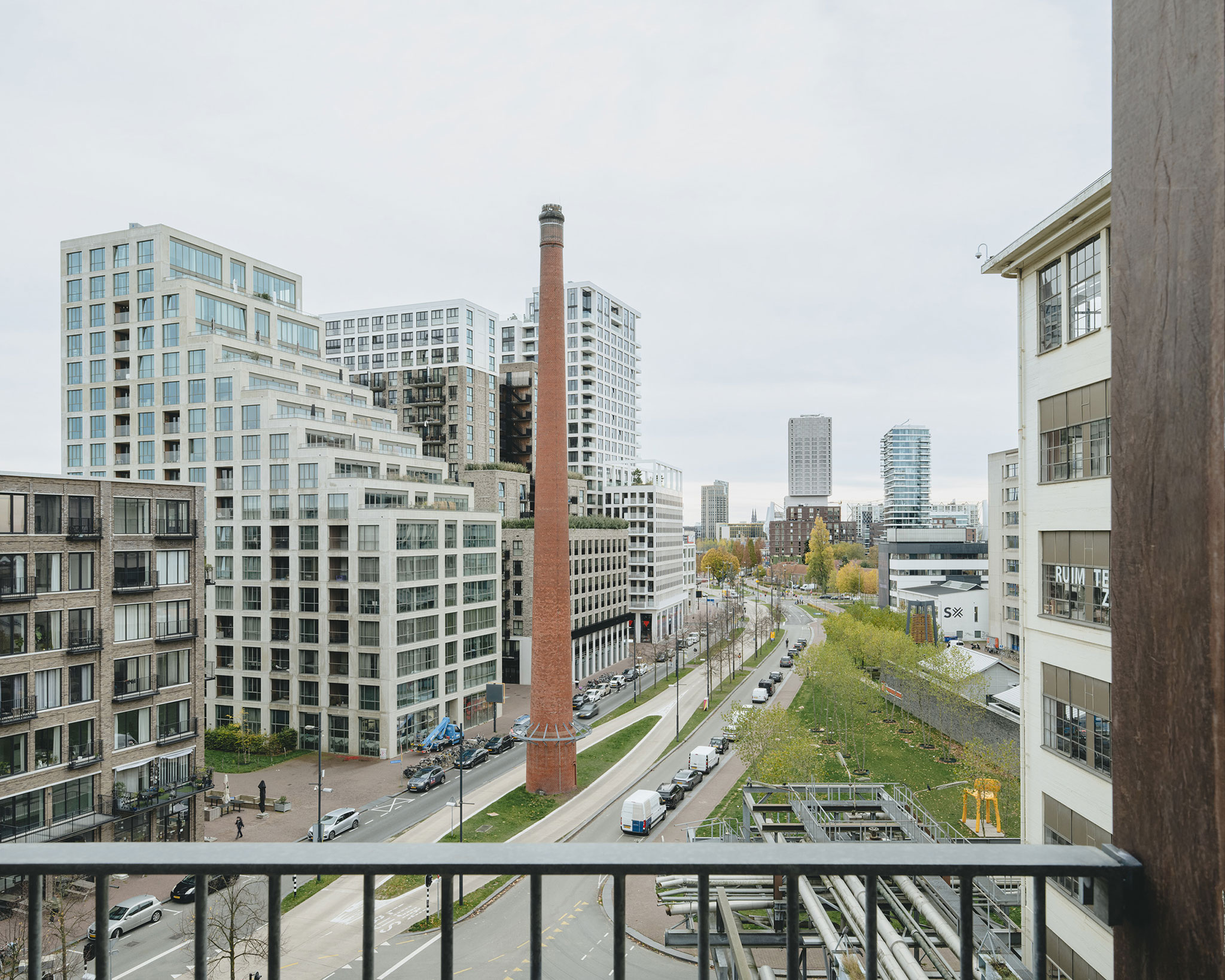
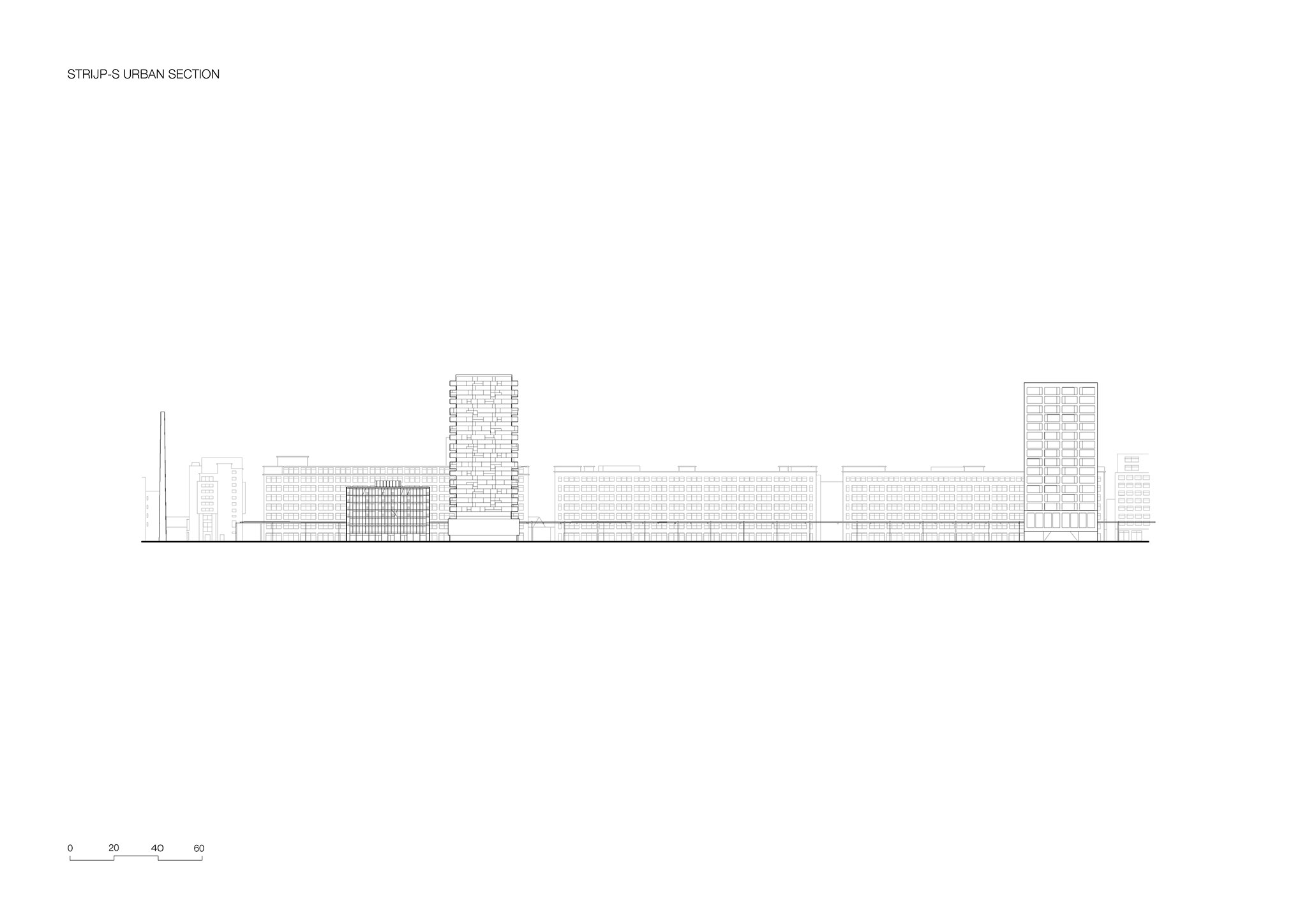
Strijp S exemplifies large-scale urban transformation. The former Philips factory site is evolving into a vibrant city district that preserves industrial heritage while introducing new housing and cultural programs. In this context, KAAN Architecten presents Matchbox, which occupies a triangular plot at the entrance to the area, completing the wedge-shaped master plan and contributing to a greener, more sustainable urban environment.
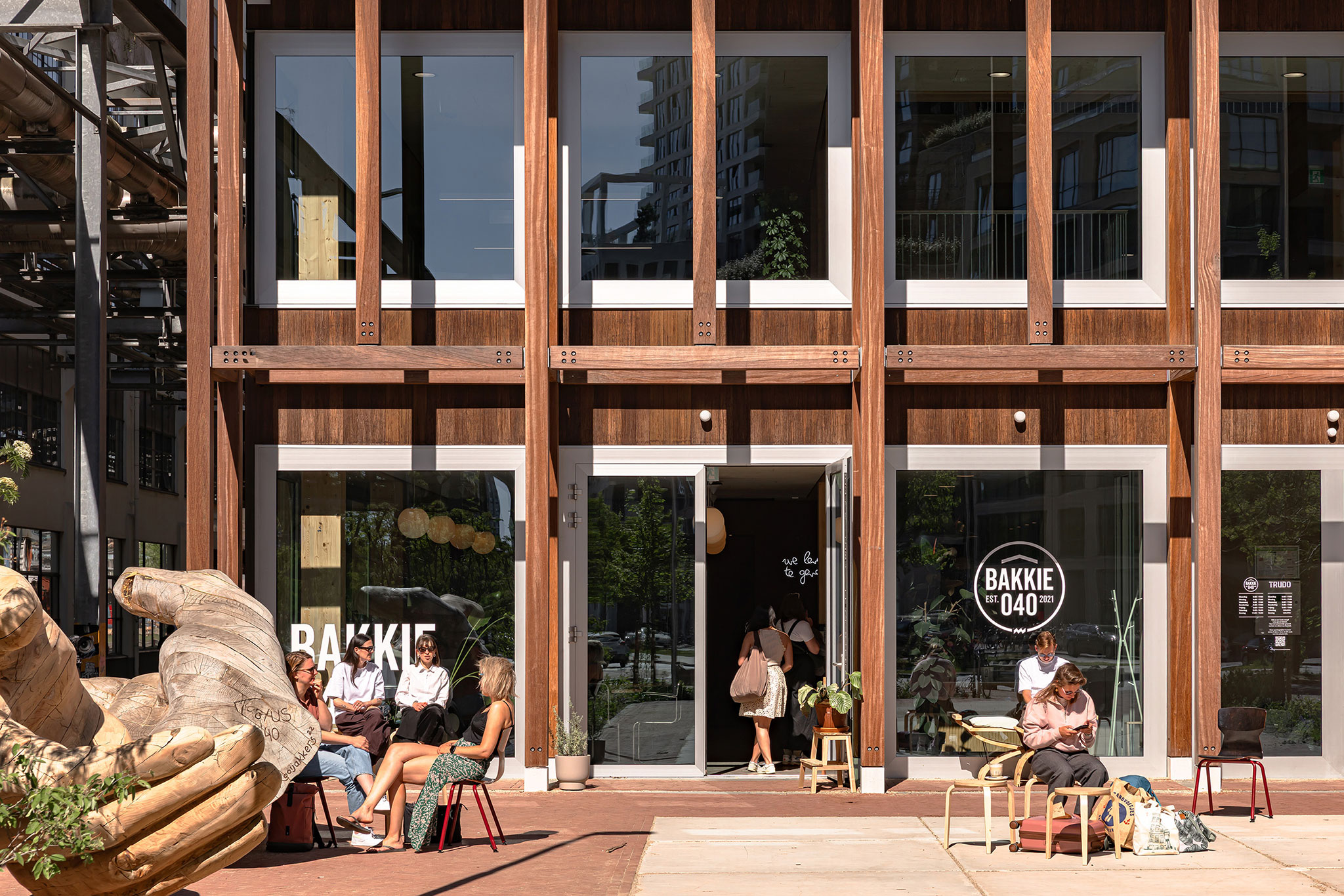
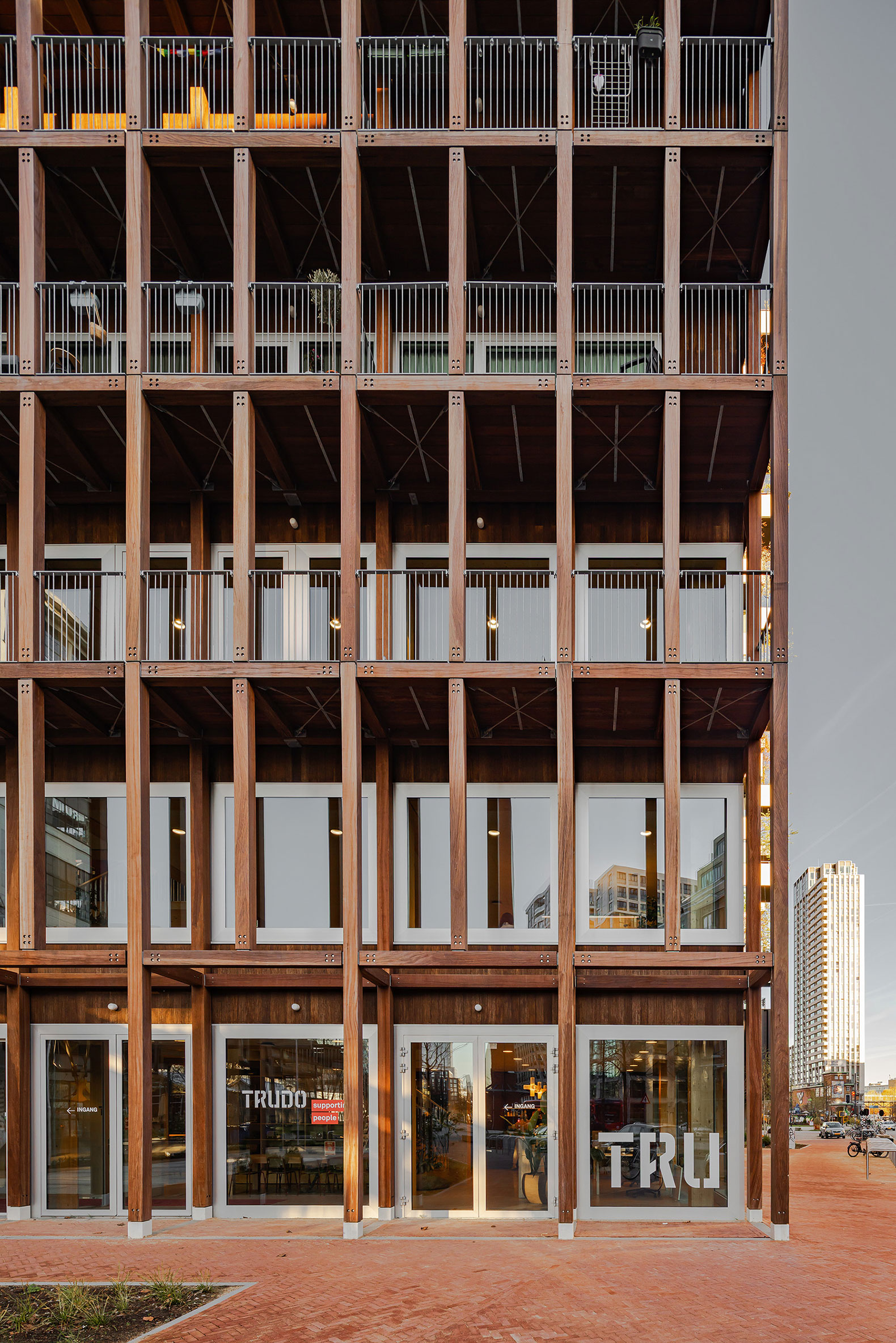
Situated next to the 70-meter-high Trudo Tower, Matchbox avoids architectural spectacle in favor of a sober, rational approach that evokes early-modernist factory buildings. The result is a clearly defined, freestanding volume with four equally expressed façades. The name Matchbox refers to the rhythm of the façade grid, articulated through a consistent 22 cm timber module, reminiscent of matches. The façade combines Azobé timber for load-bearing and gallery elements with bamboo infill panels, both of which will naturally weather to a silvery gray tone. Balconies and full-height opening doors enhance openness and support everyday use.
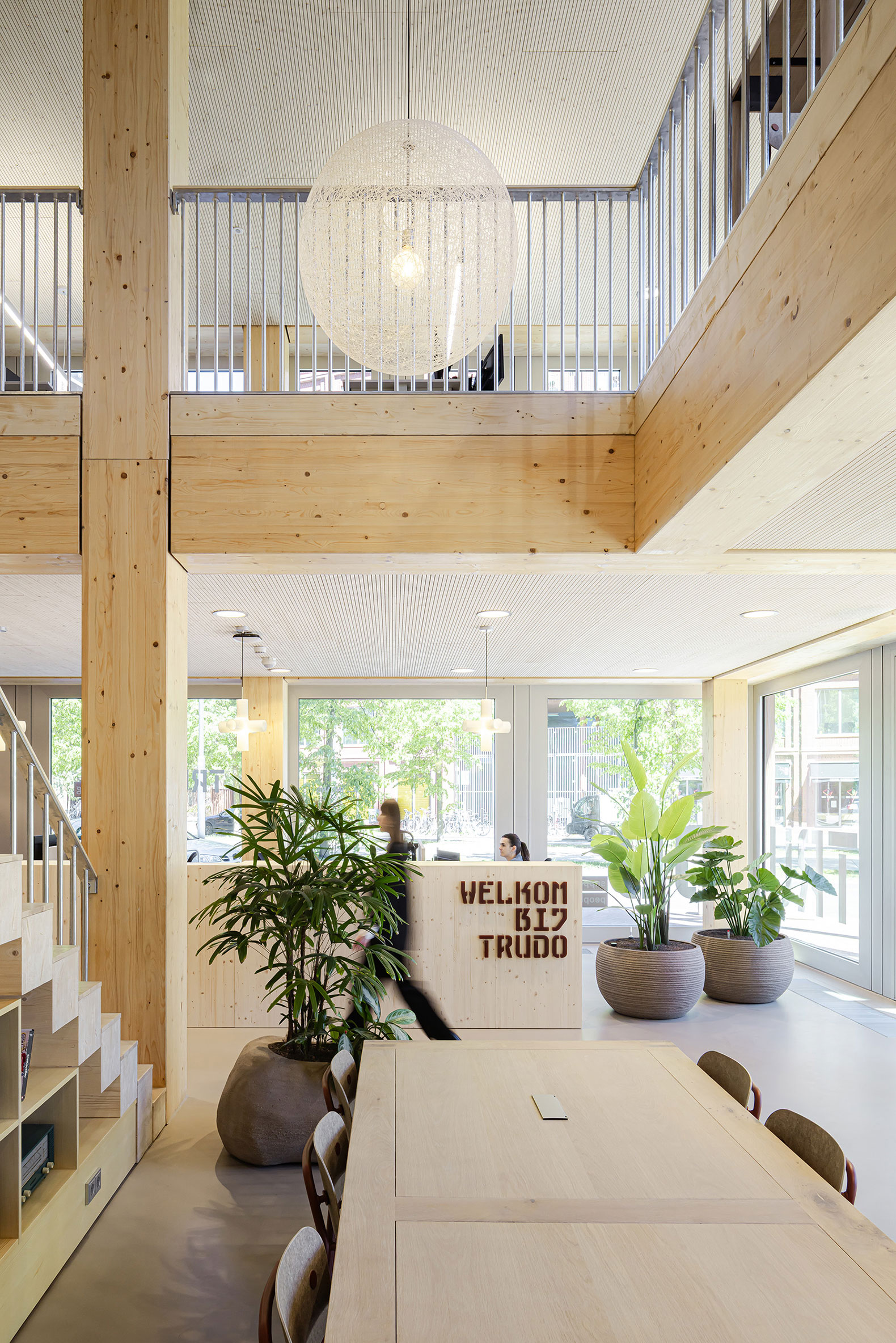
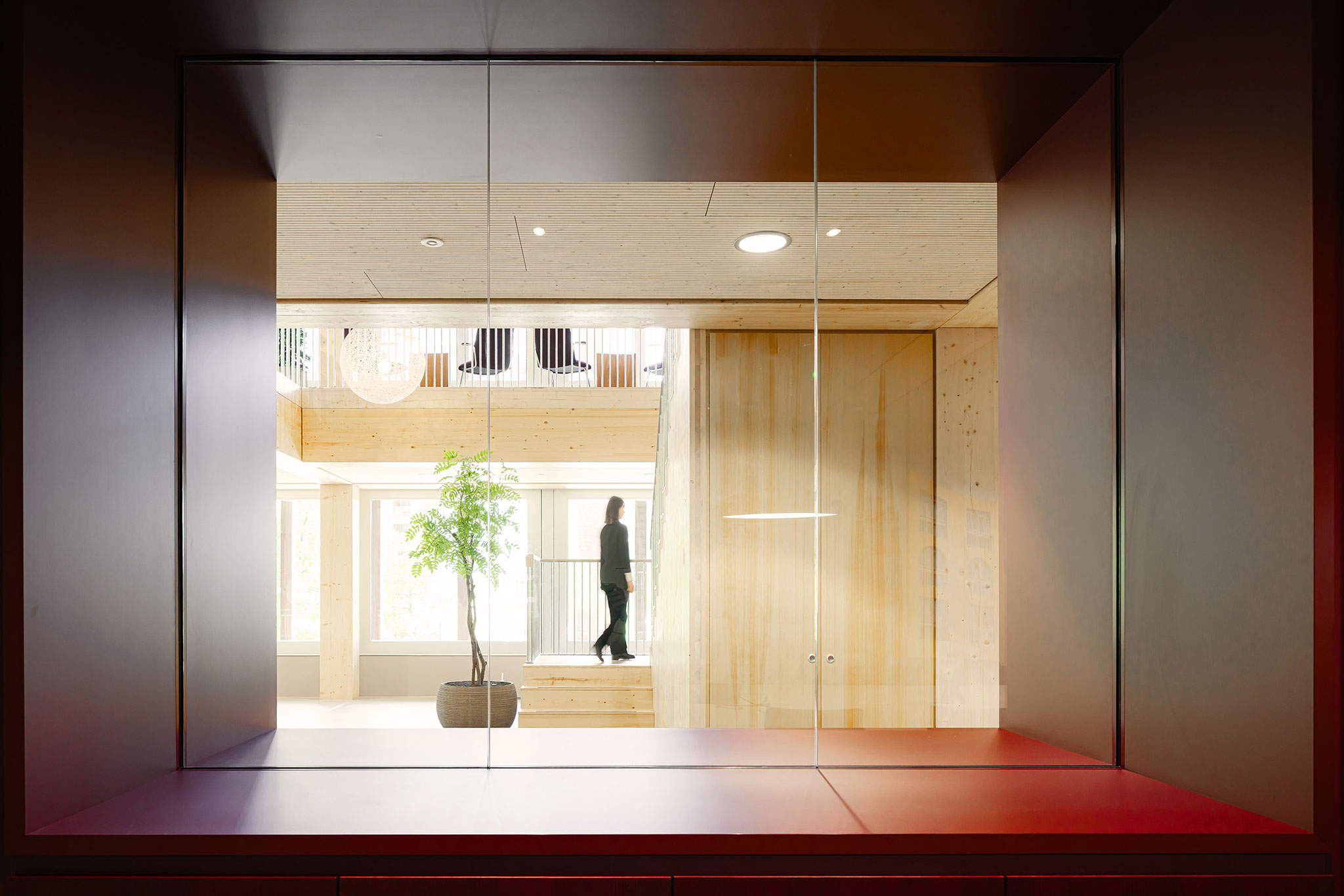
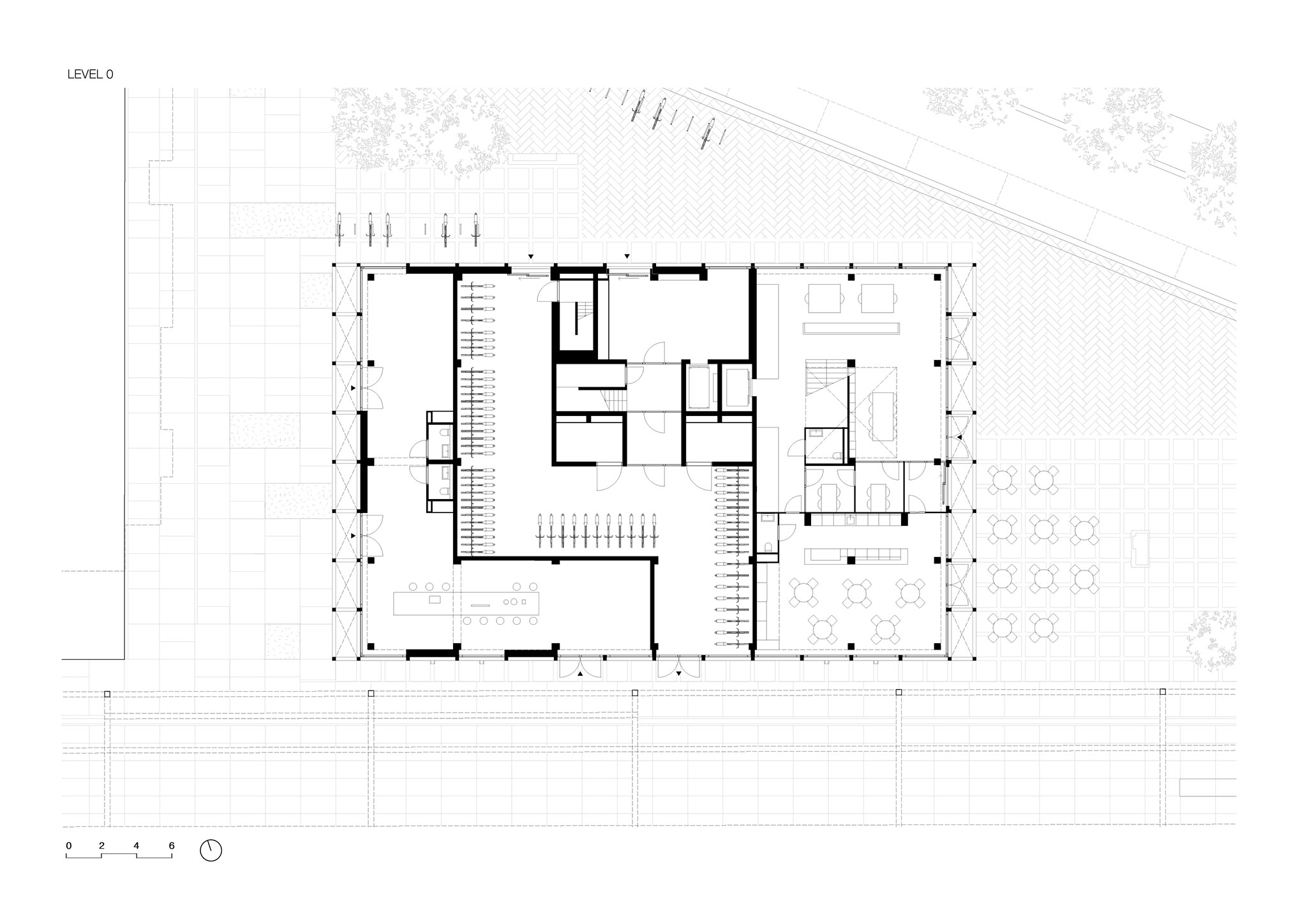
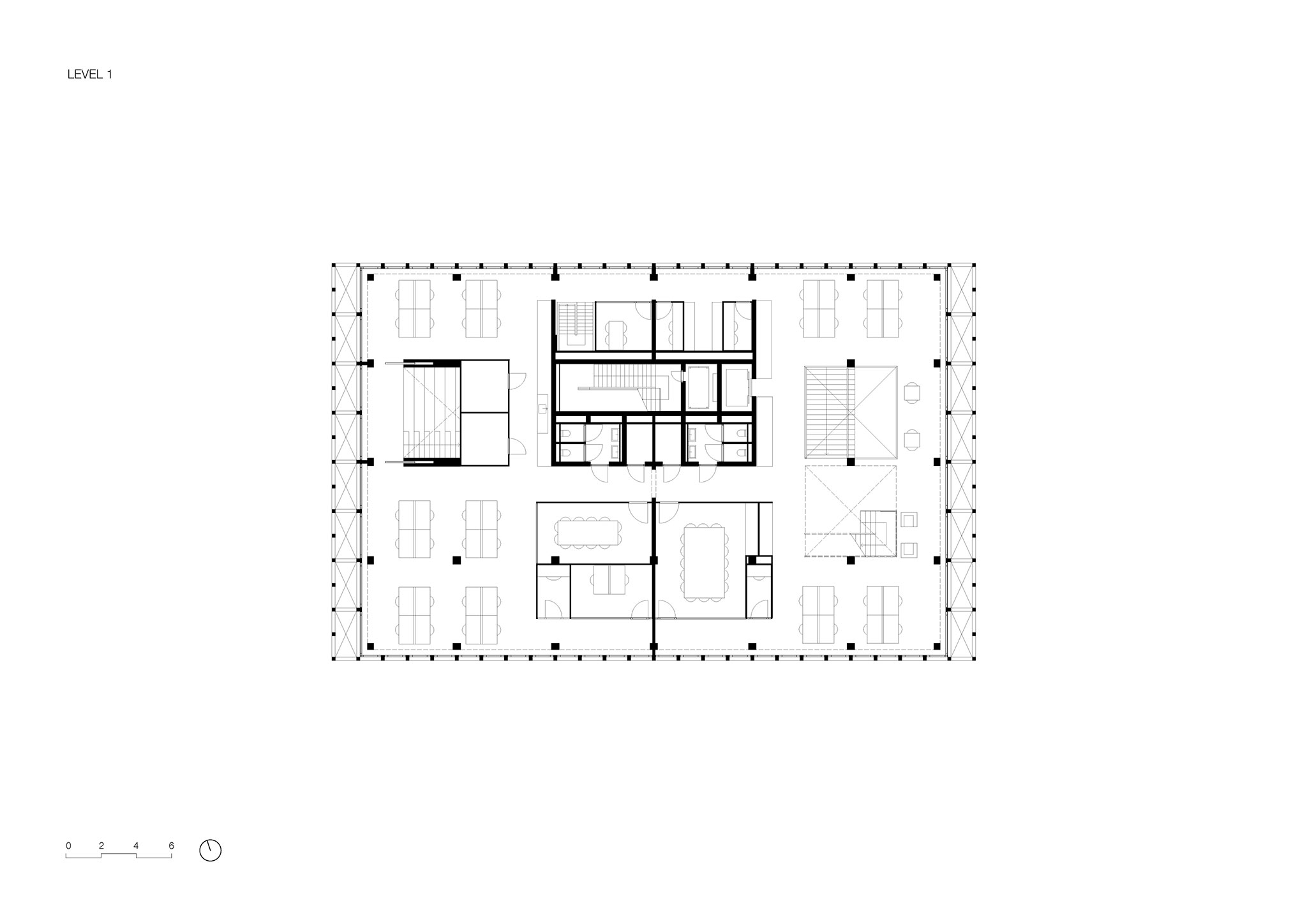
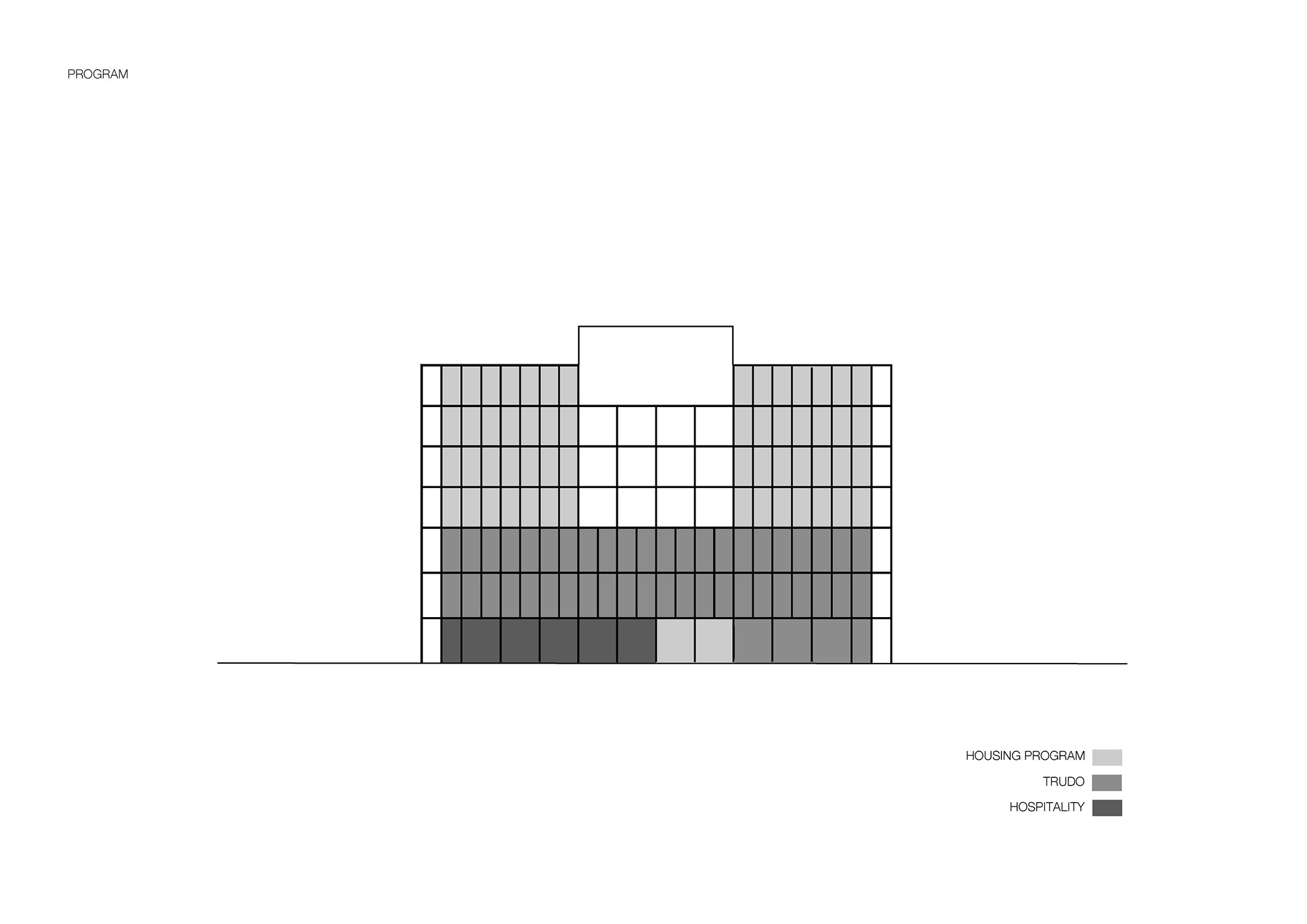
With a total floor area of approximately 5,000 m², the building accommodates 36 social rental dwellings above a functional plinth. The ground floor hosts workspaces, retail, and hospitality, including Bakkie 040, a socially engaged coffee bar that animates the street level. Trudo’s headquarters occupy the first and second floors and are designed as healthy work environments with open staircases and interconnected spaces. The residential levels overlook both the inner courtyard and the surrounding city. A rooftop courtyard atop the plinth provides a protected communal outdoor space for residents, bringing daylight, air, and a sense of openness to the Apparatenfabriek.
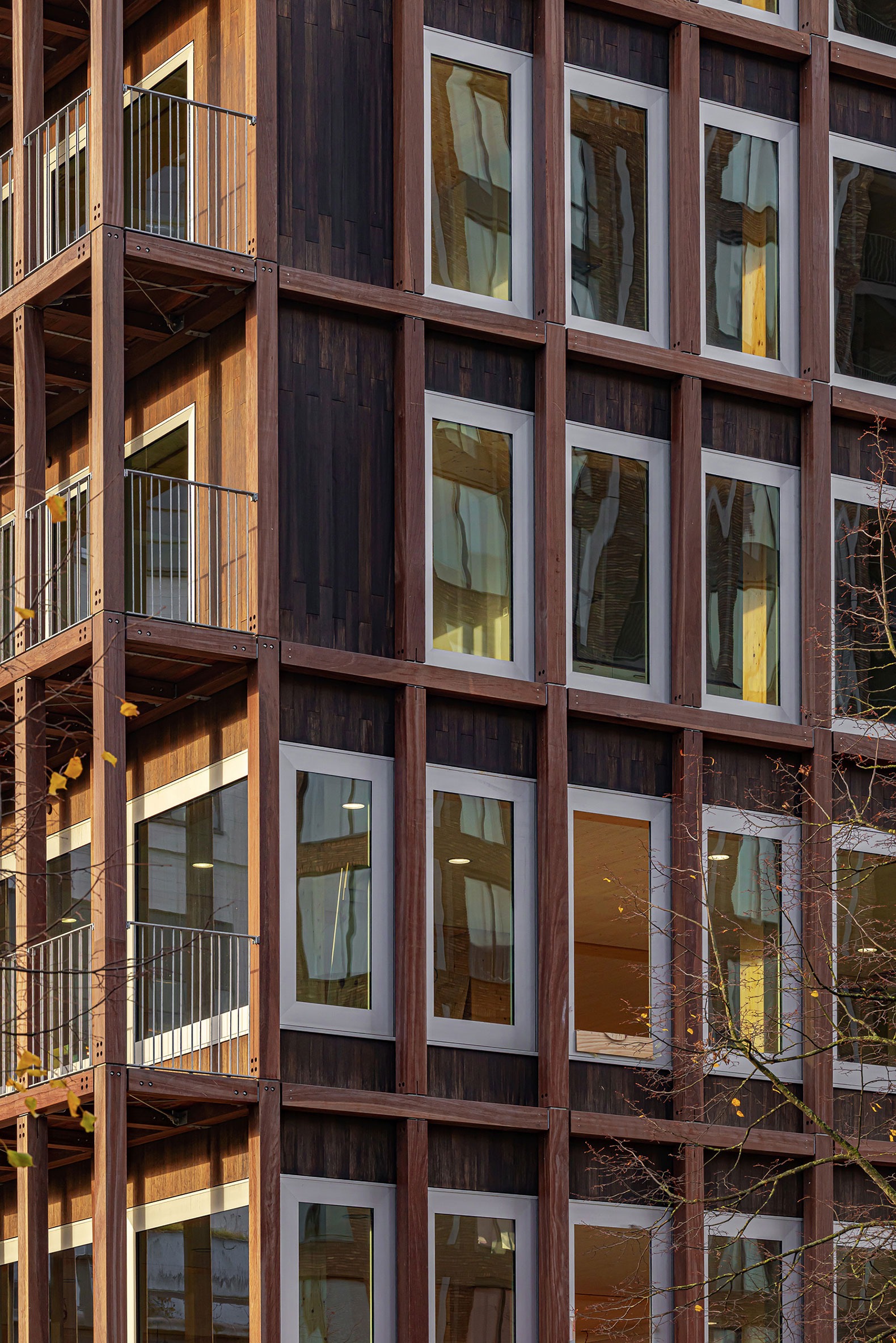
Developed by the housing association Trudo, the project demonstrates how social rental housing can integrate architectural quality, sustainability, and liveability. Matchbox is conceived as a CO₂-neutral building. Apart from glazing and a prefabricated concrete stability core, the structure is almost entirely bio-based, using timber beams and columns and CLT floor slabs. The project meets strict requirements for timber construction, including structural integrity, acoustics, and fire safety. It also complies with the Dutch MIA and Vamil scheme and achieves performance targets, including an MPG below 0.5, a disassembly potential exceeding 25 percent, and calculations for financial residual value.
As KAAN Architecten's first timber building, Matchbox exemplifies an ongoing exploration of more sustainable construction methods.
“Matchbox is a restrained building in the spirit of Strijp-S: radical in its simplicity, refined in its detailing, and generous towards the city.”
Vincent Panhuysen, founding partner.