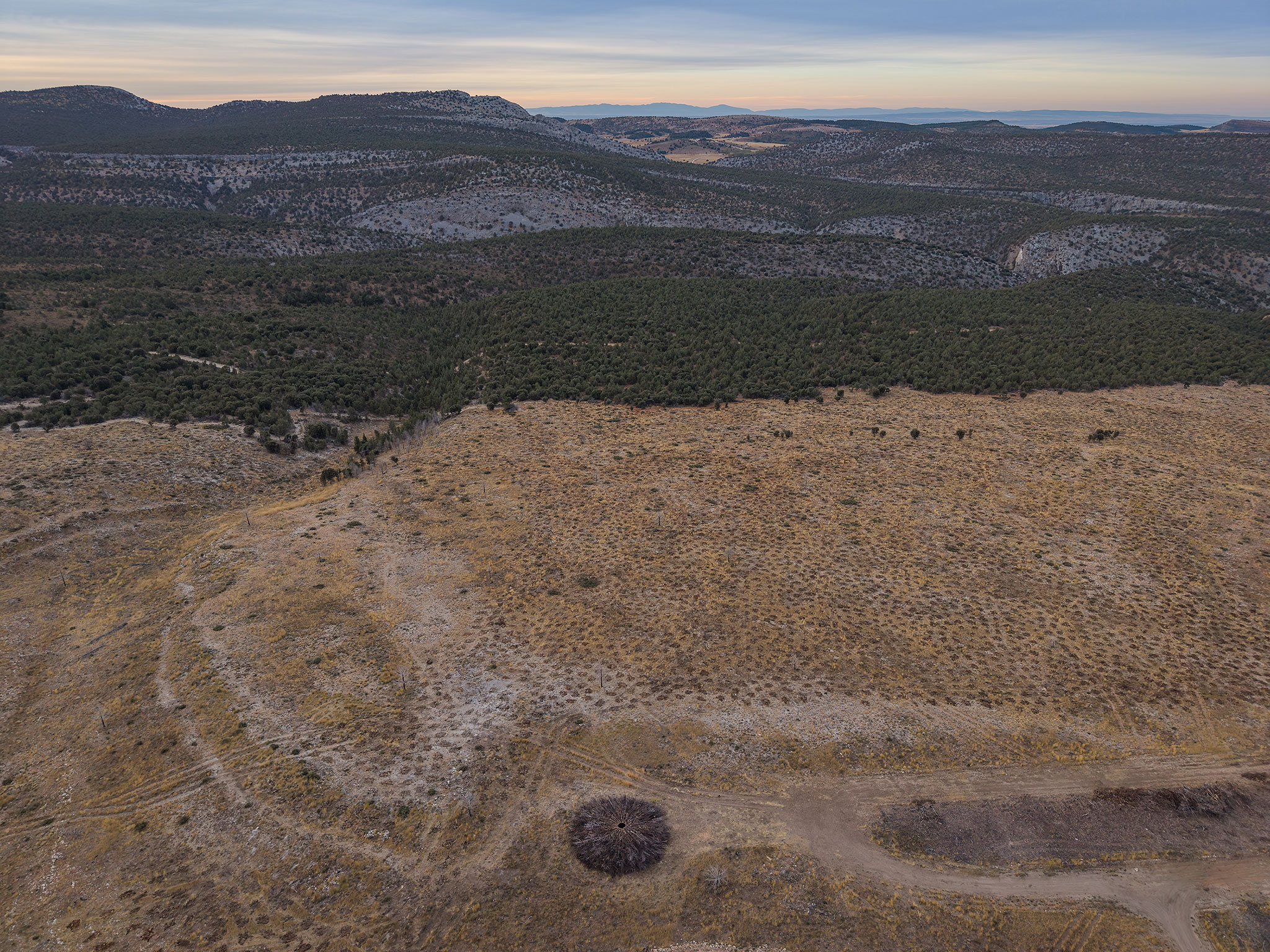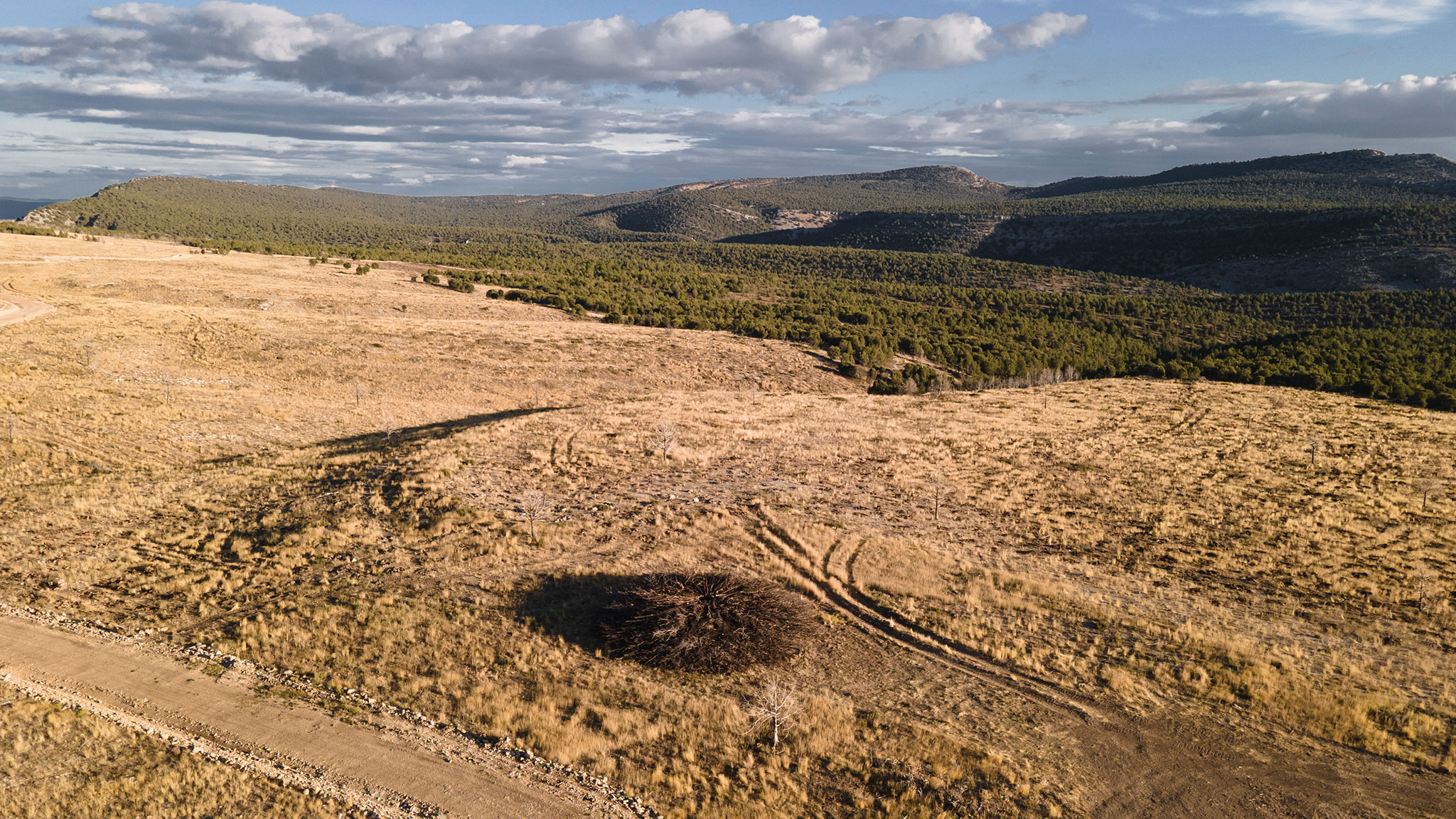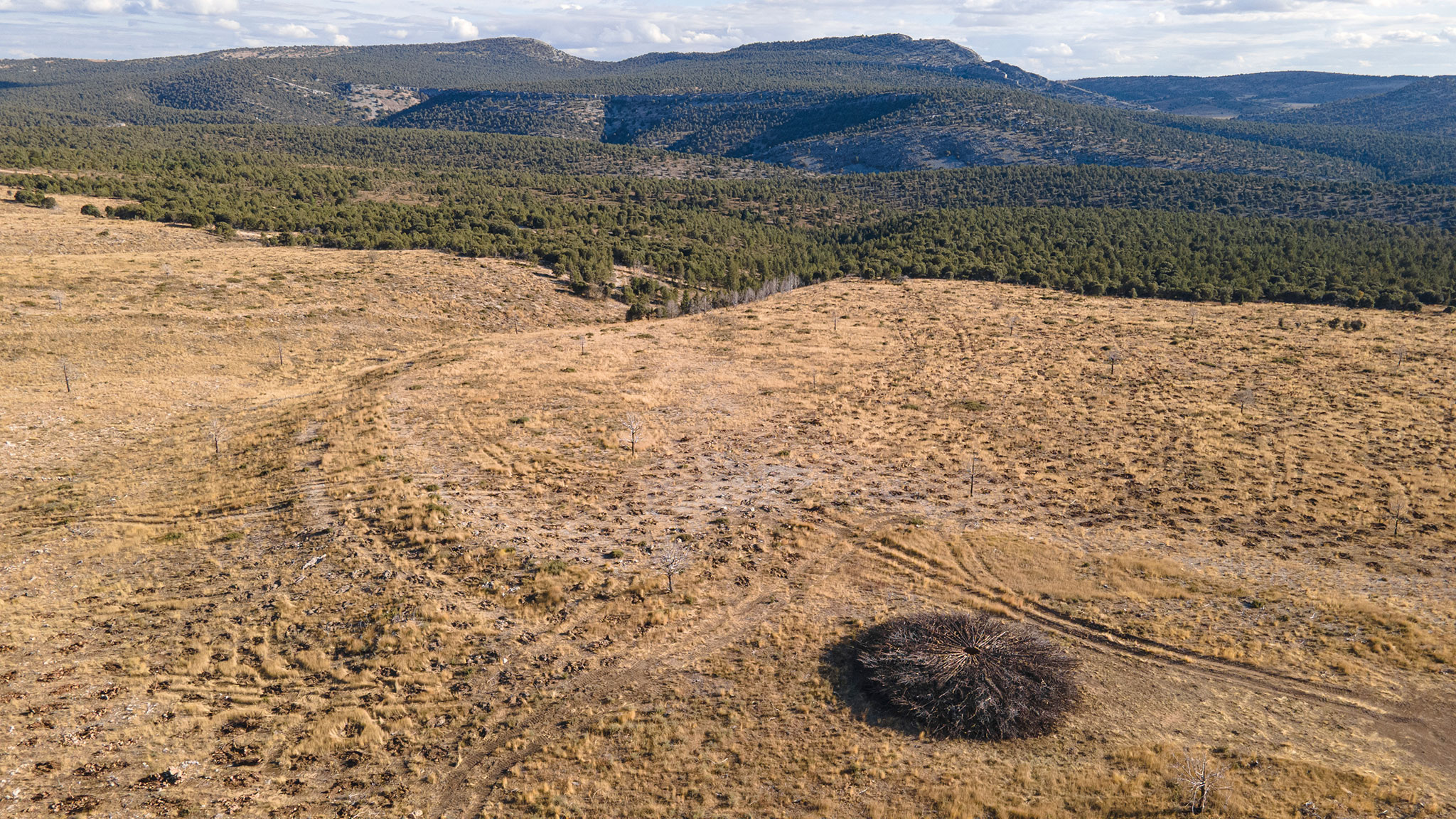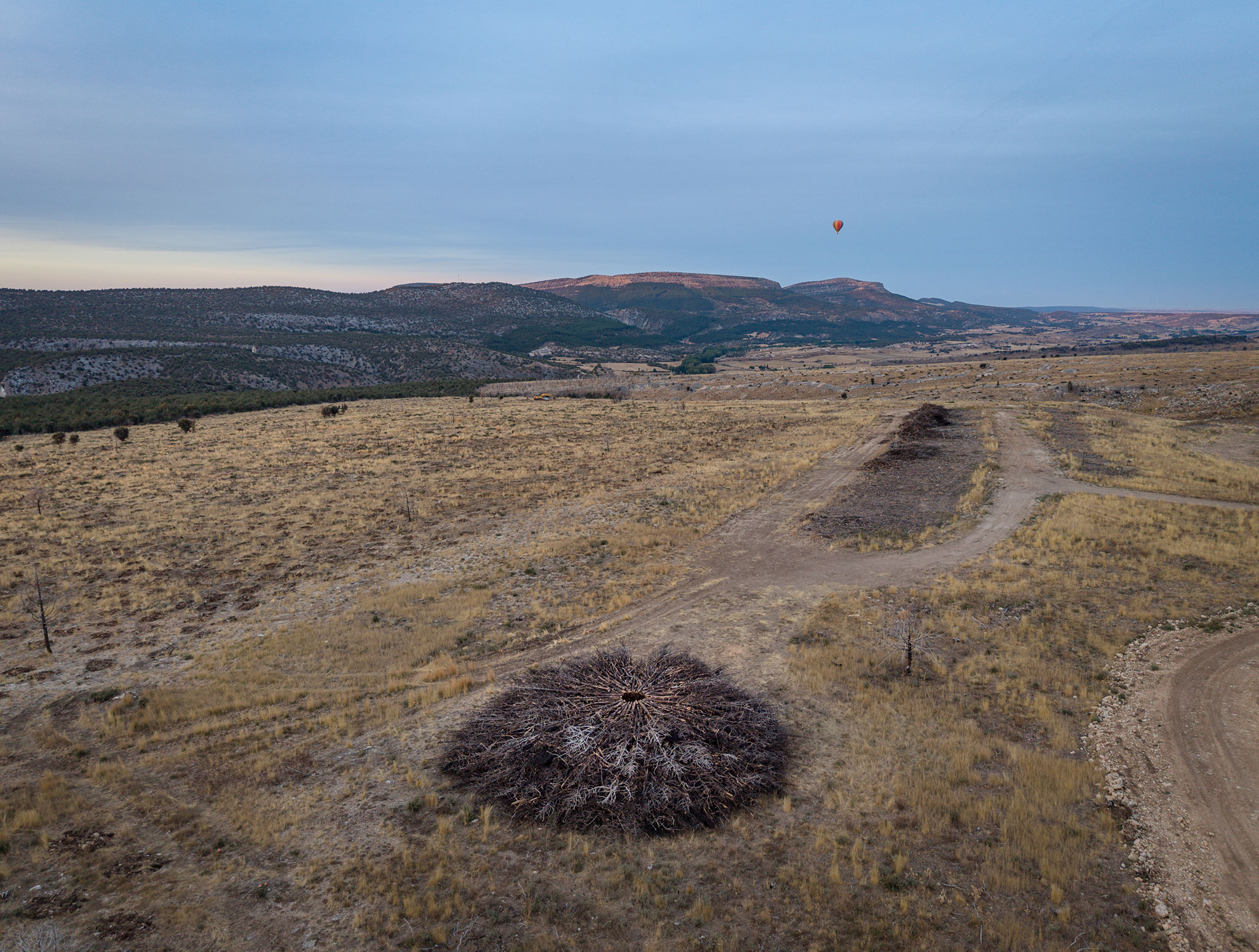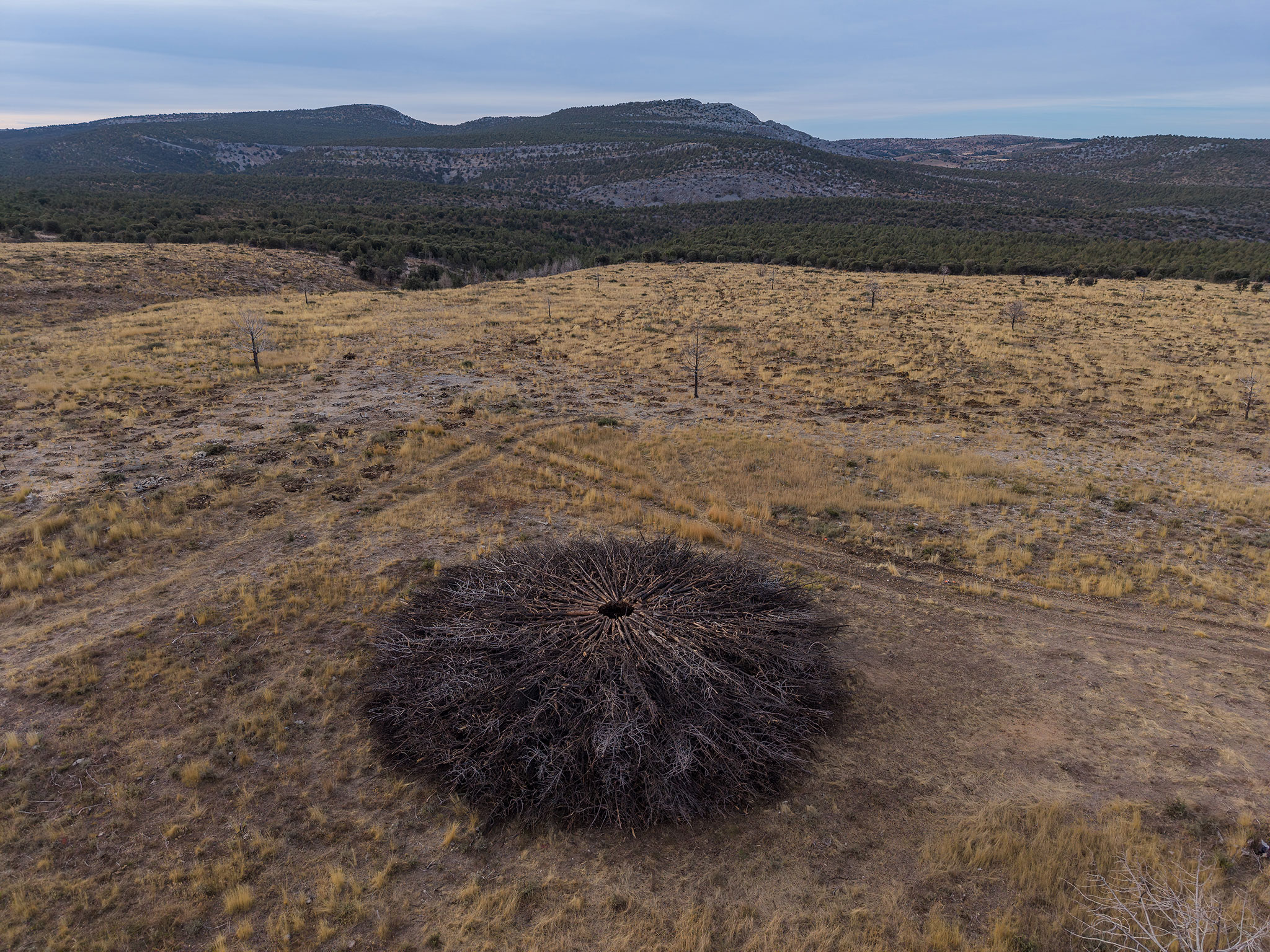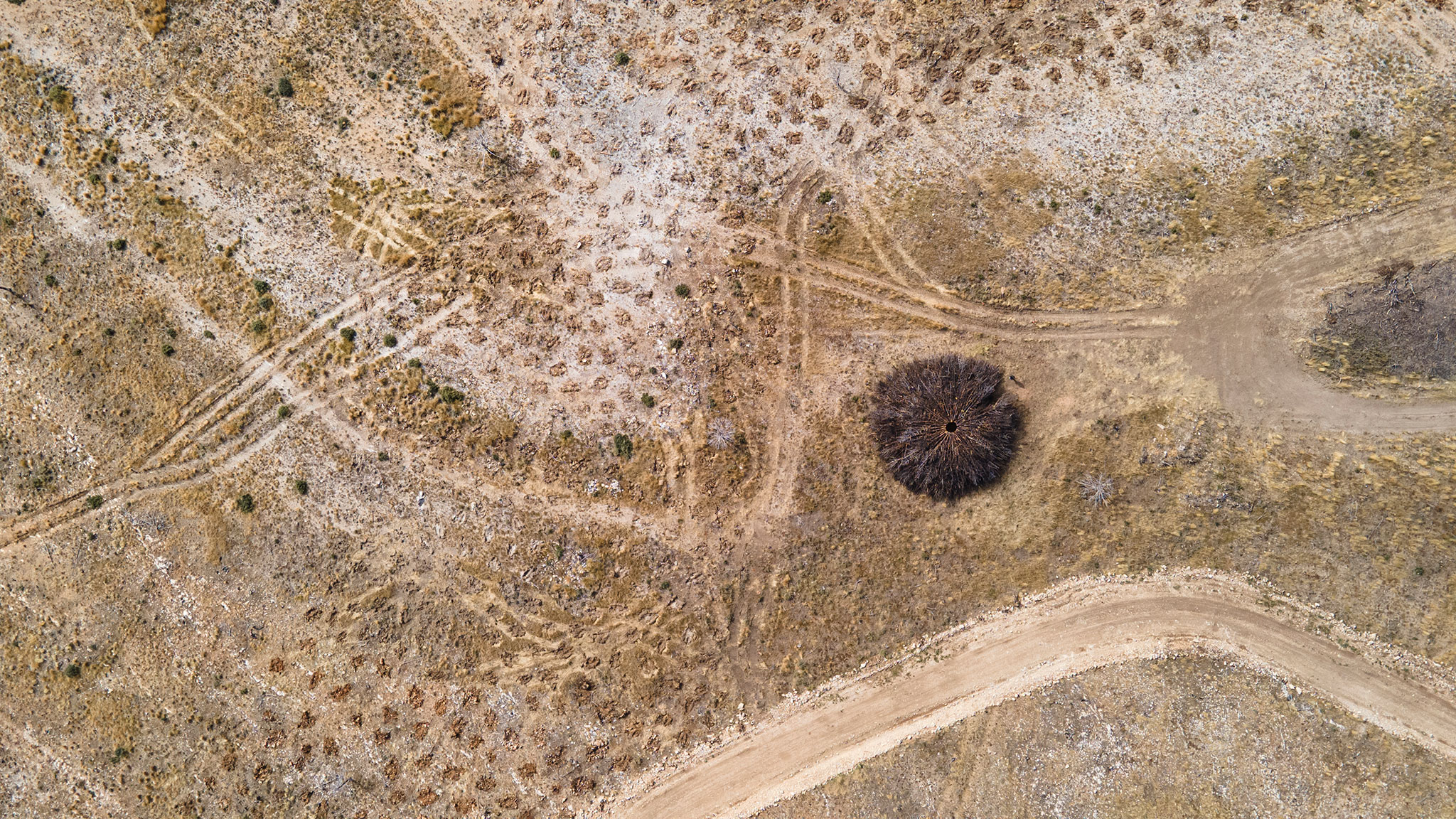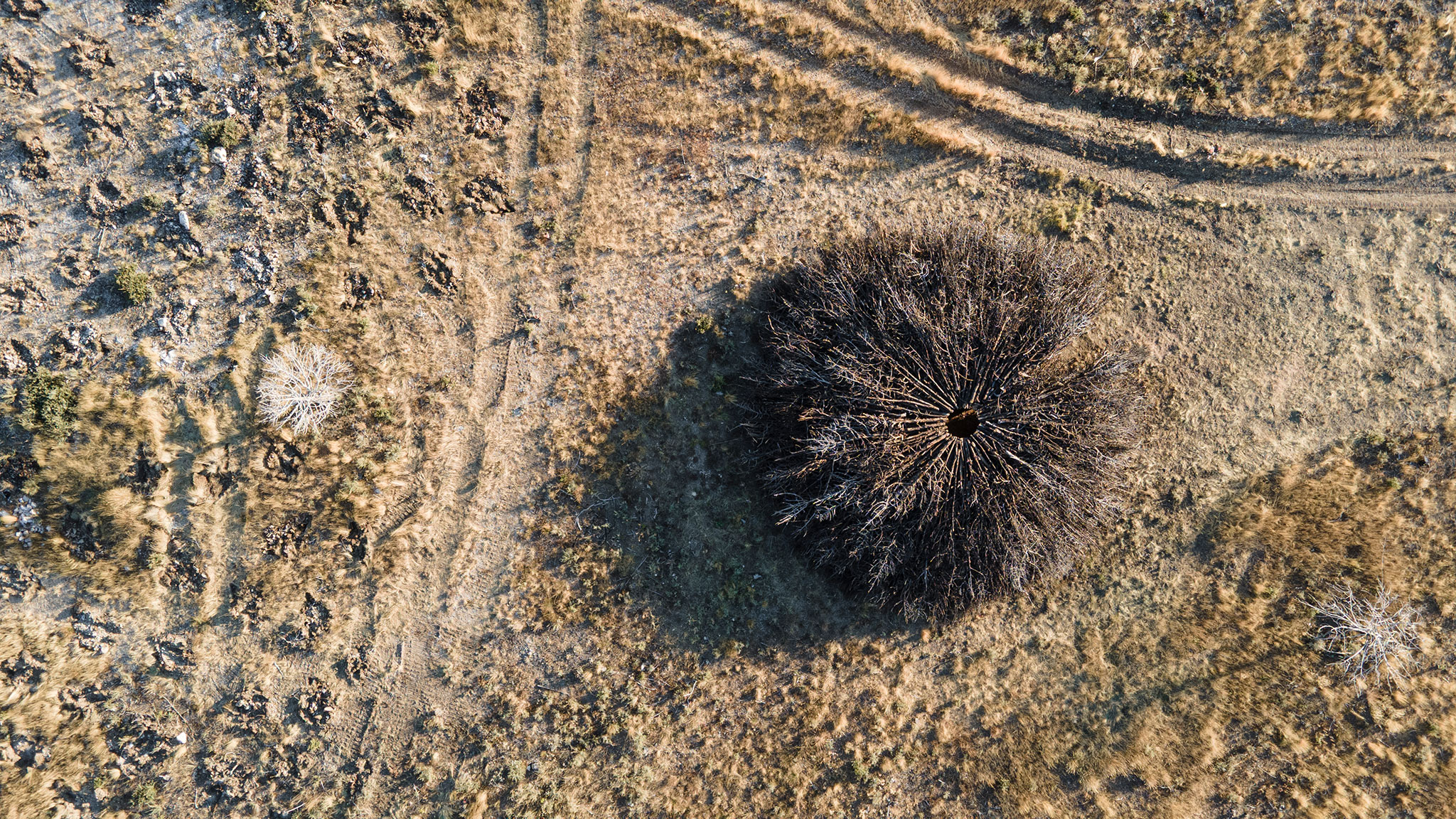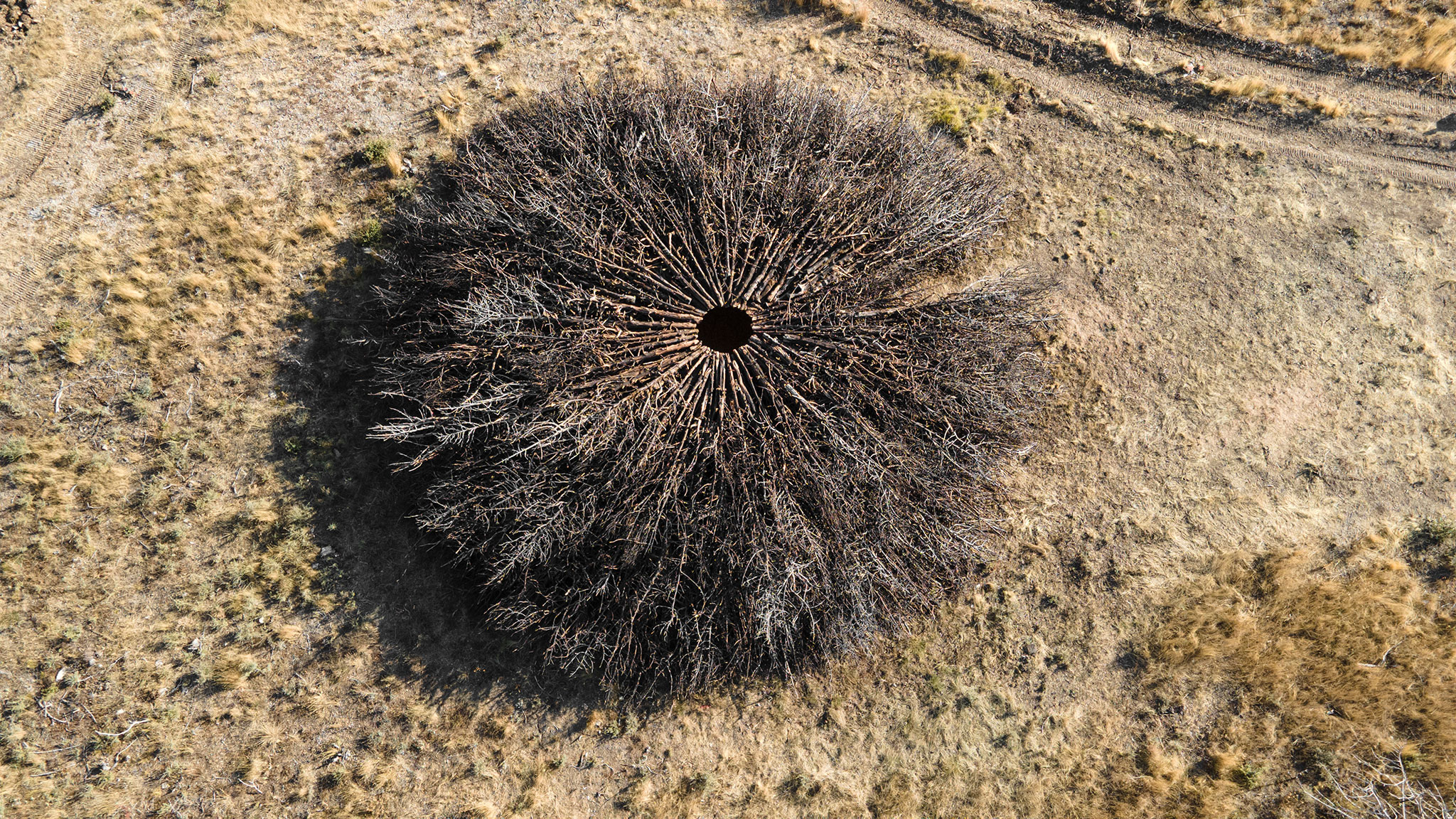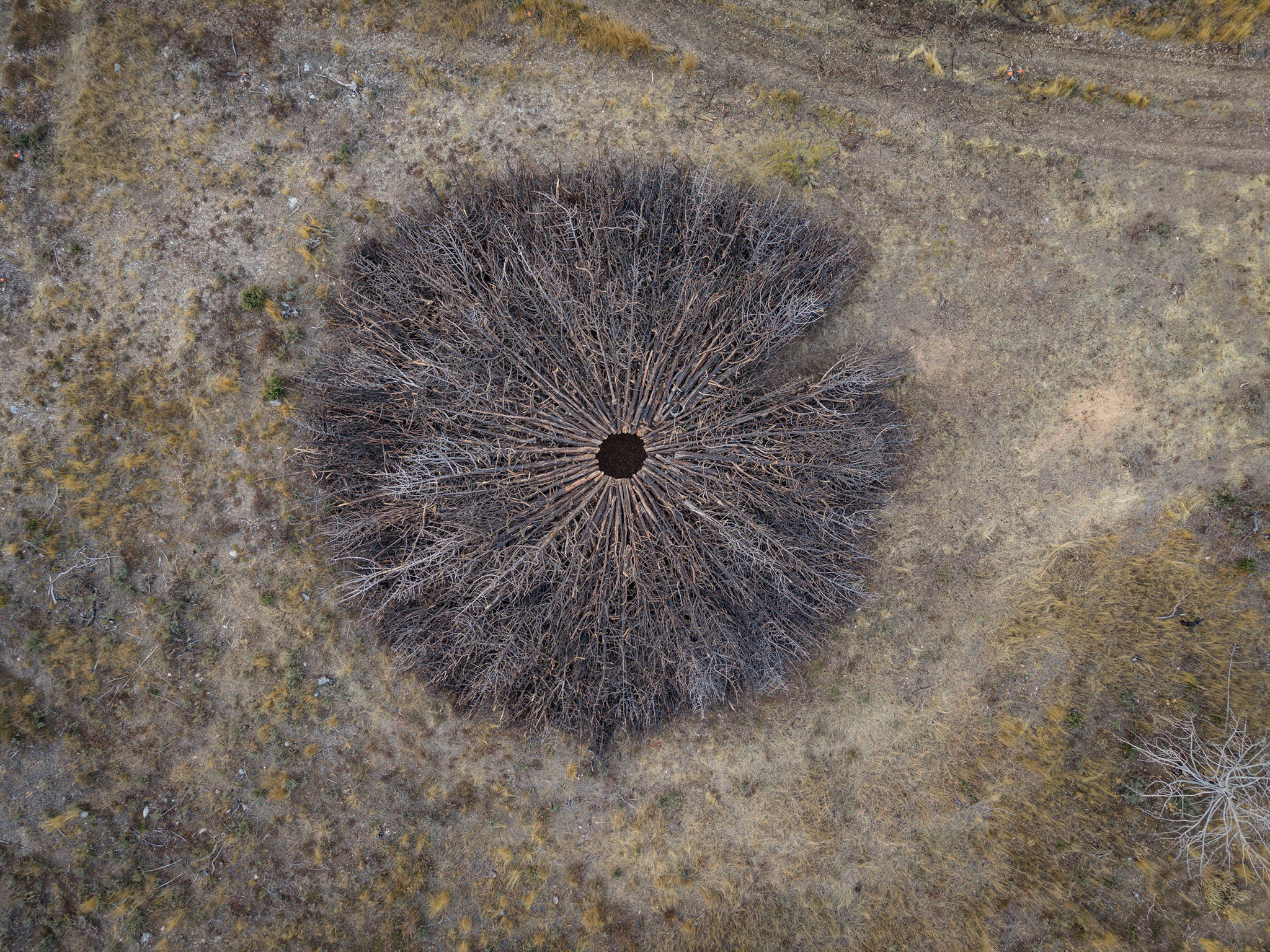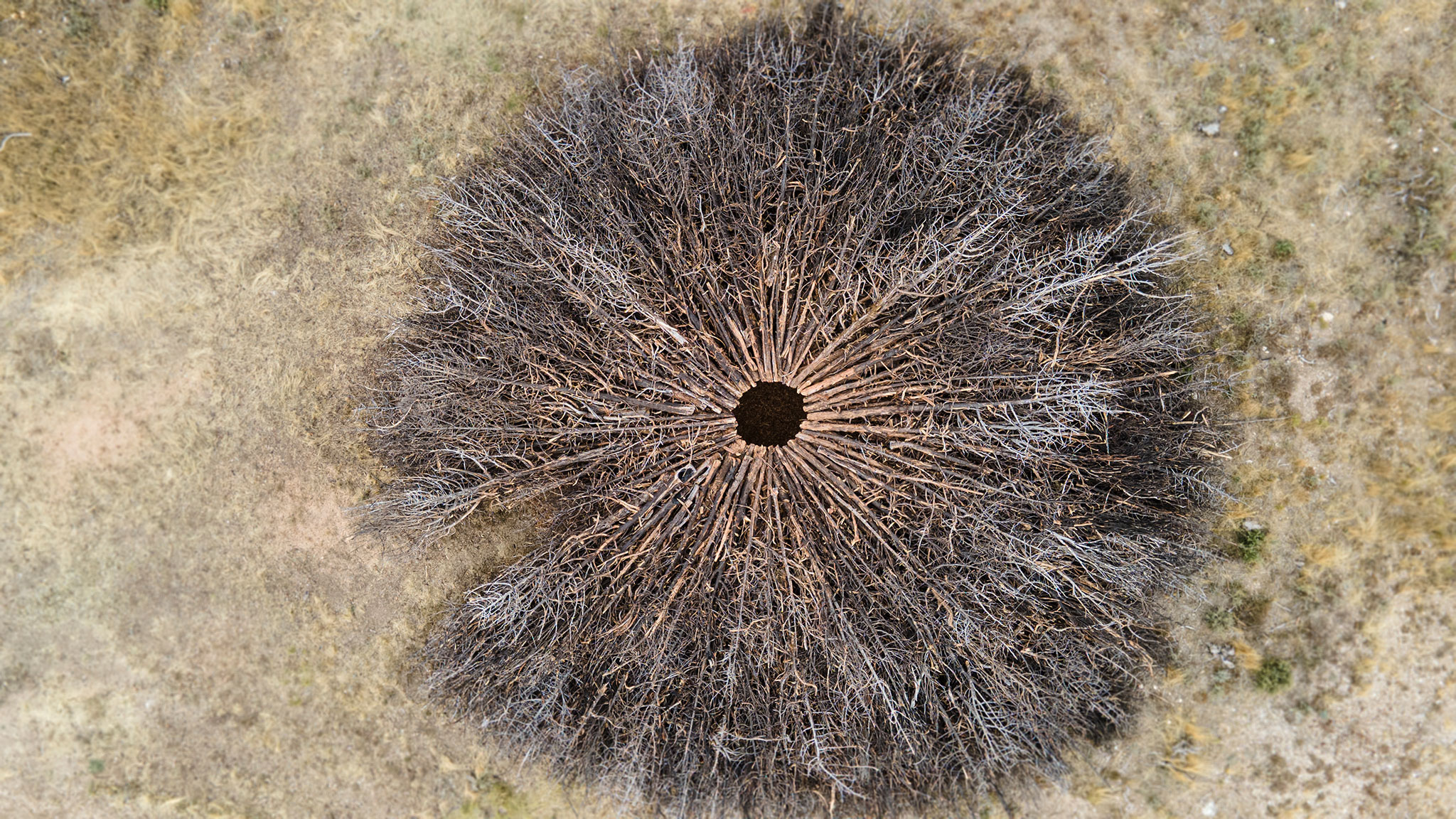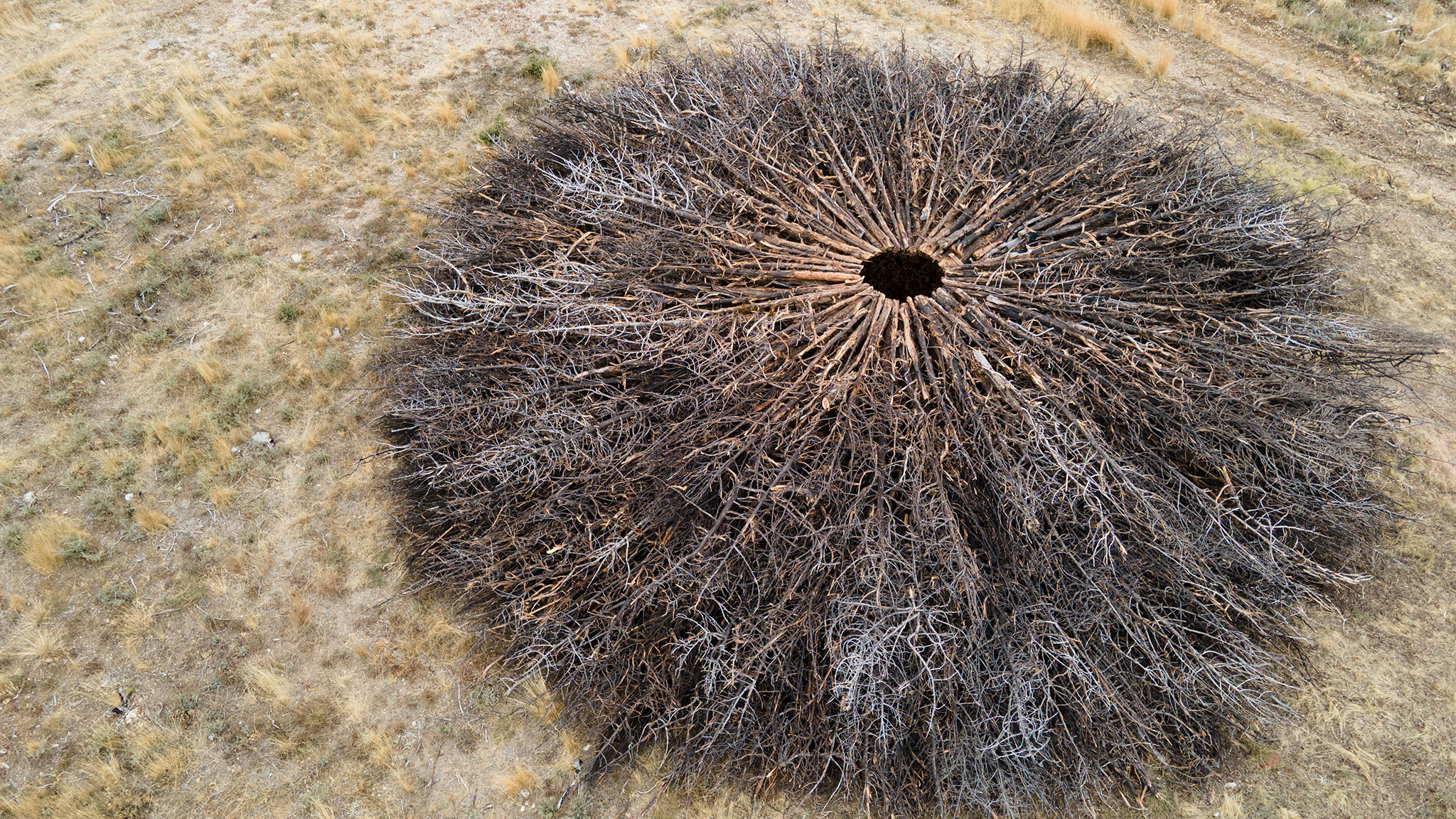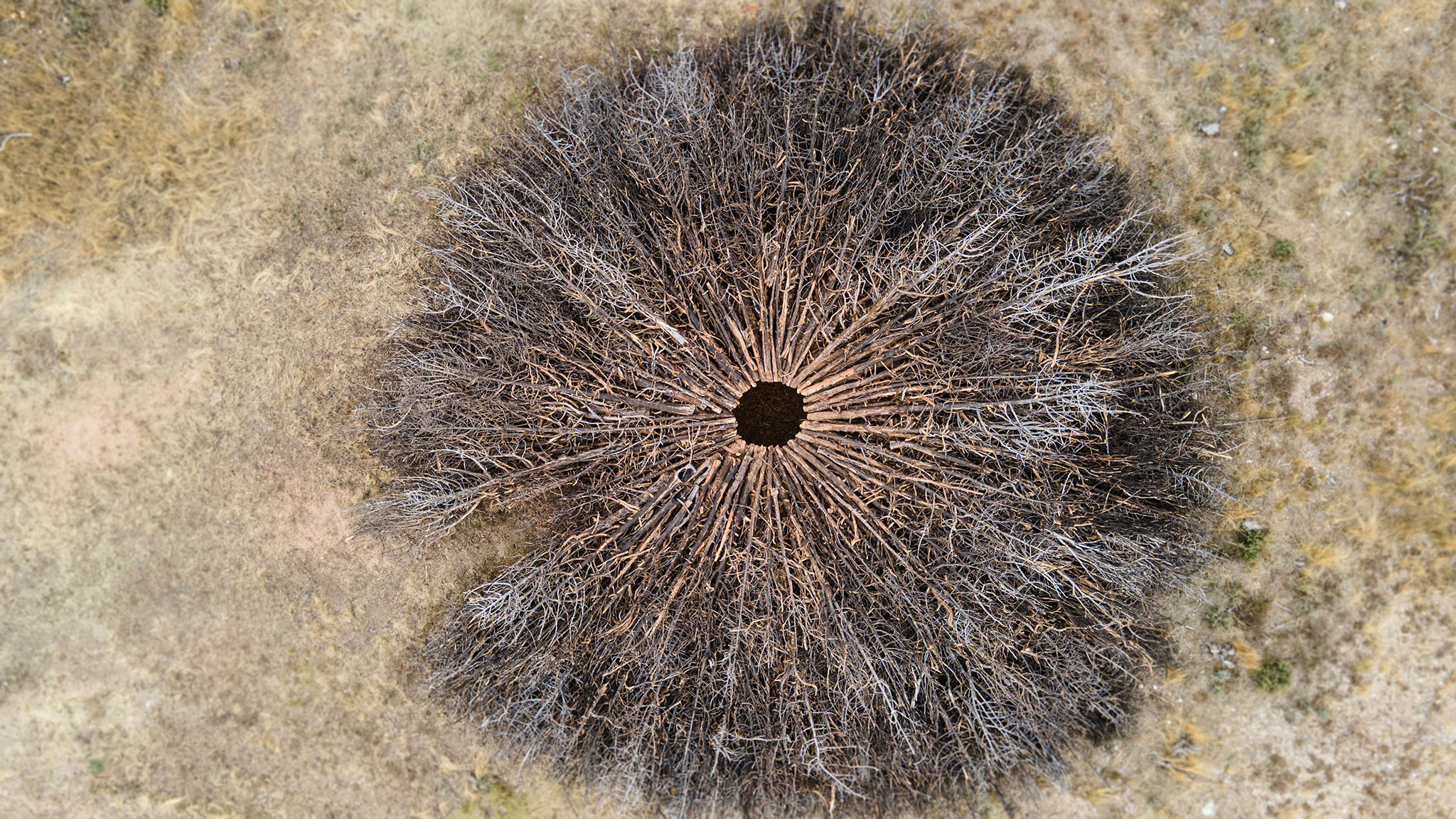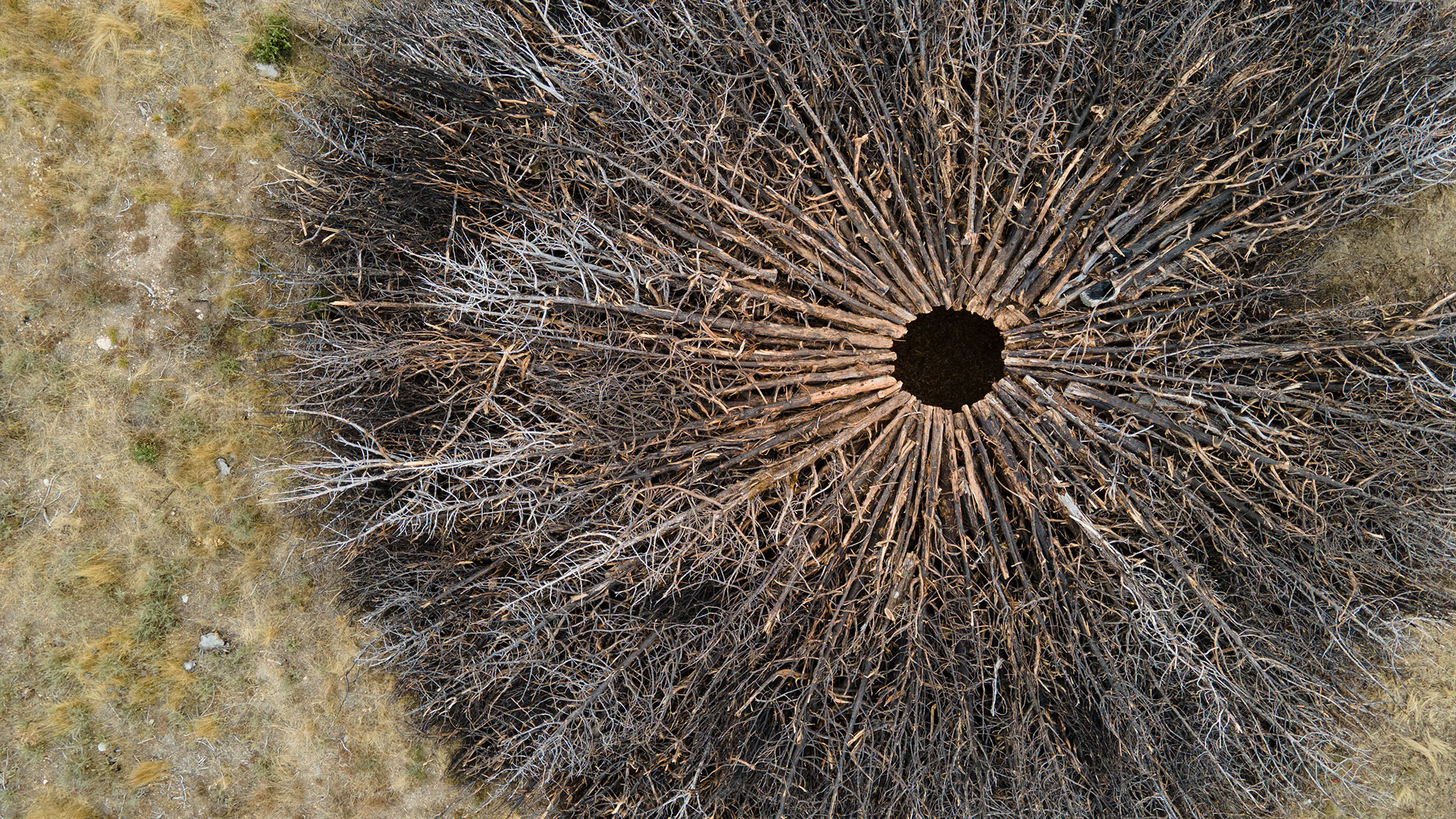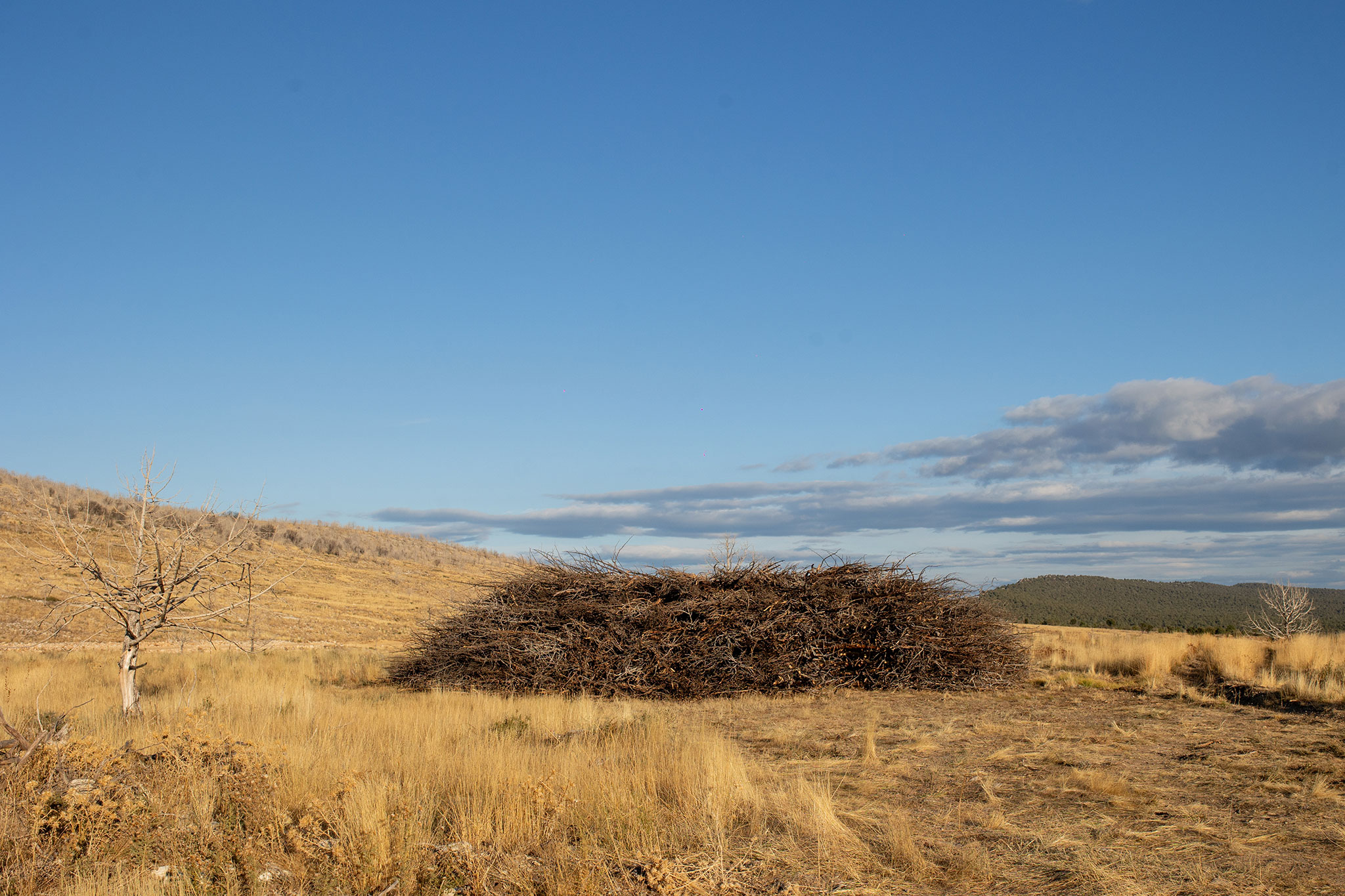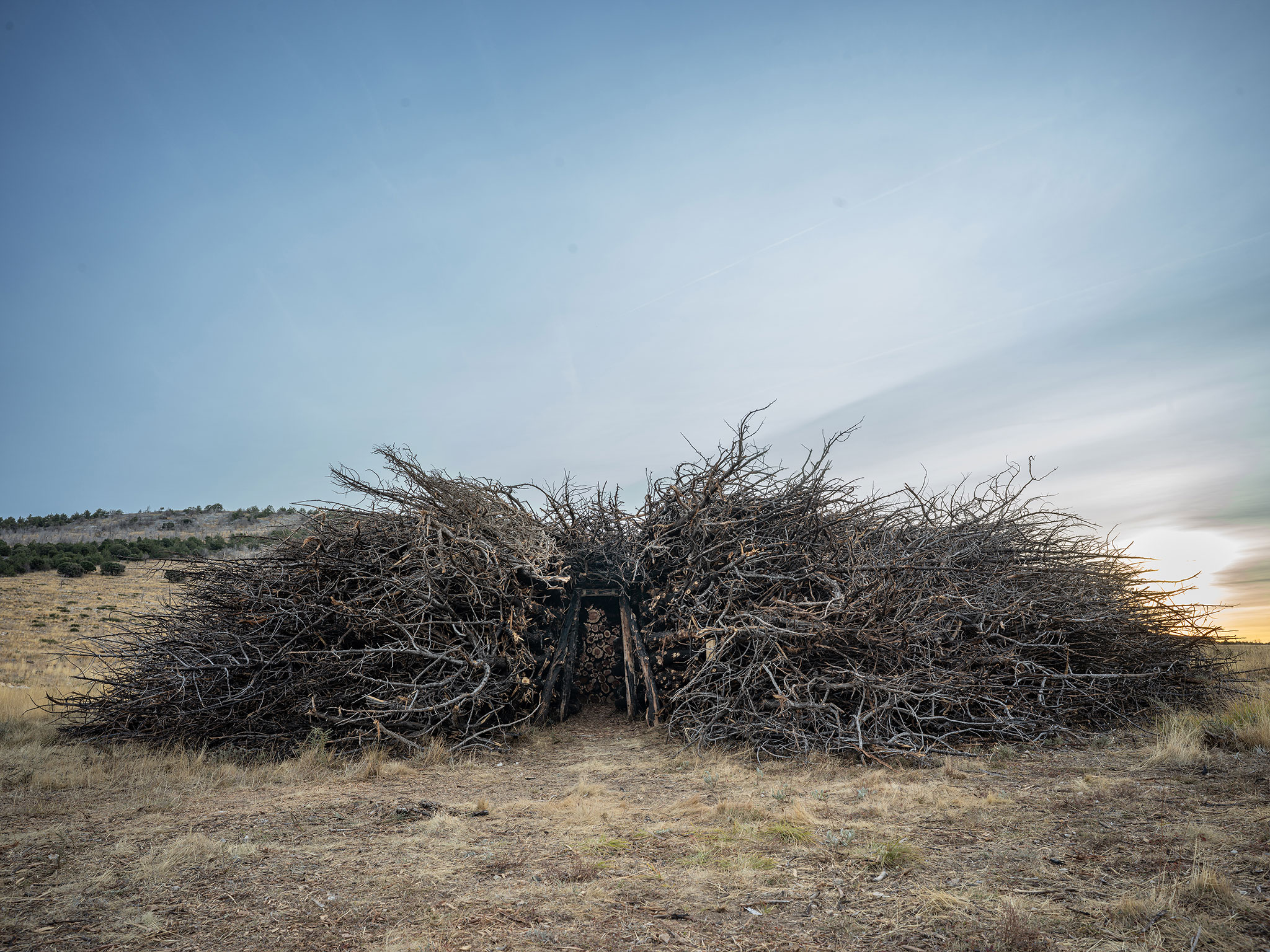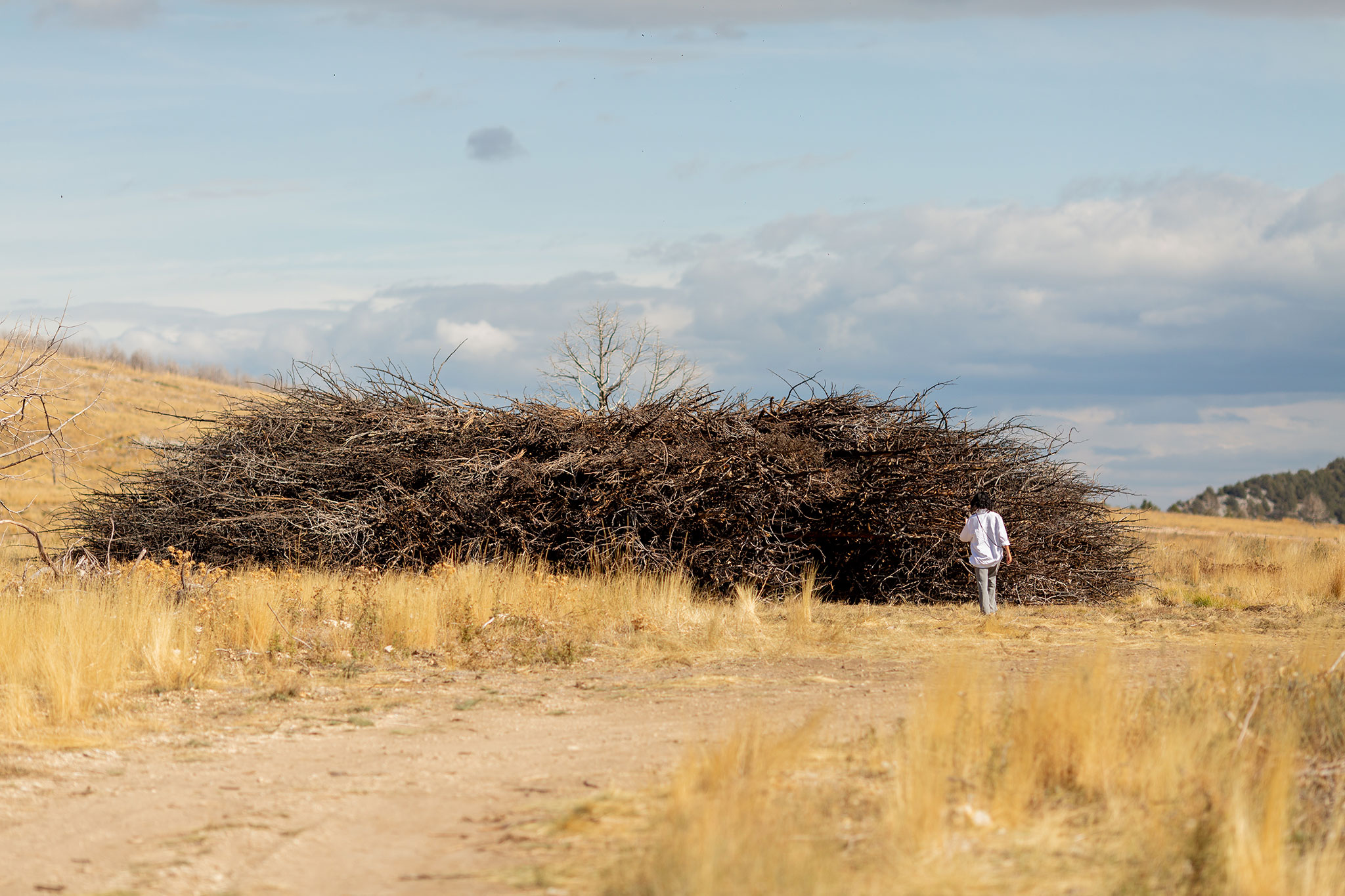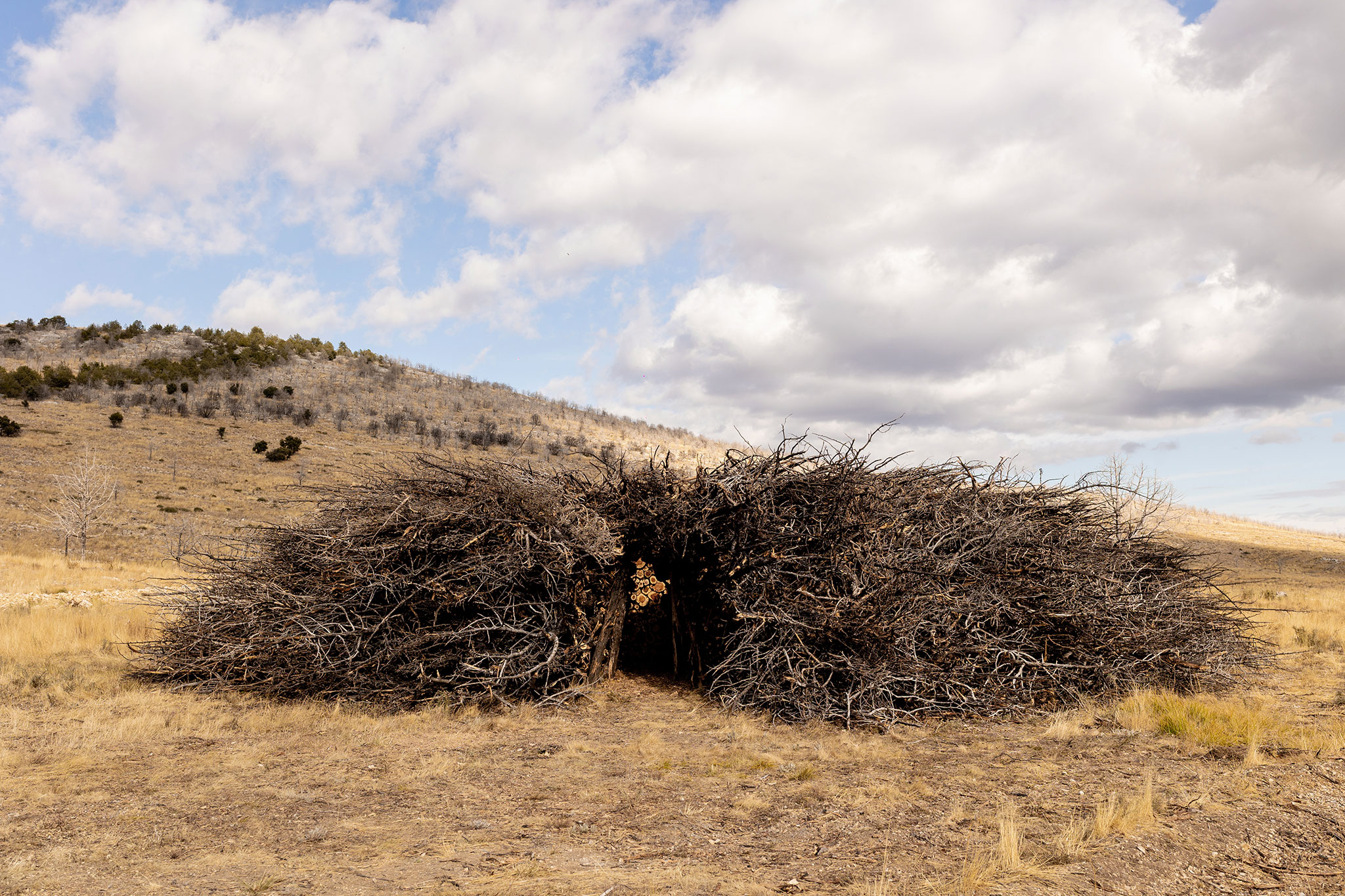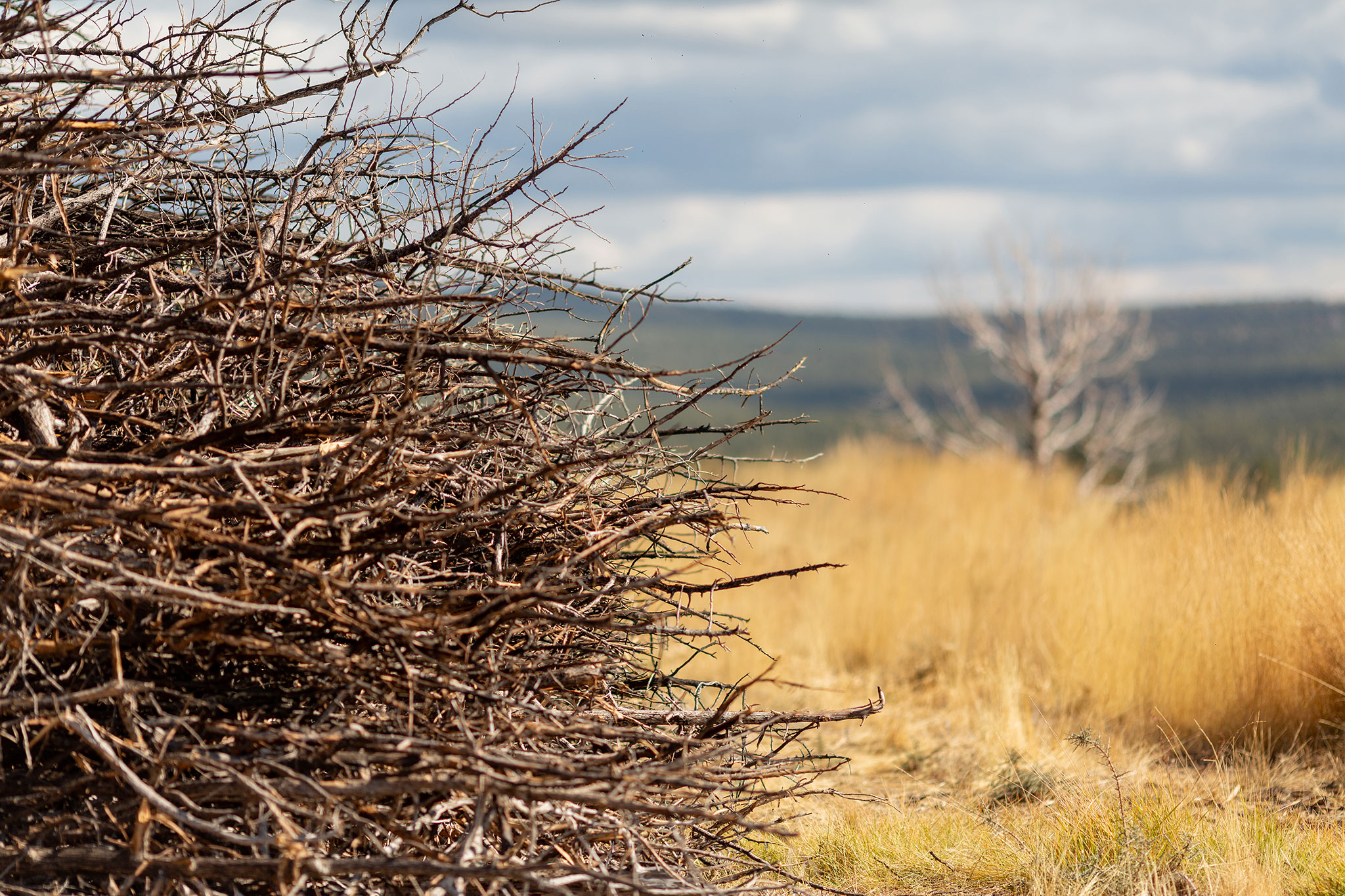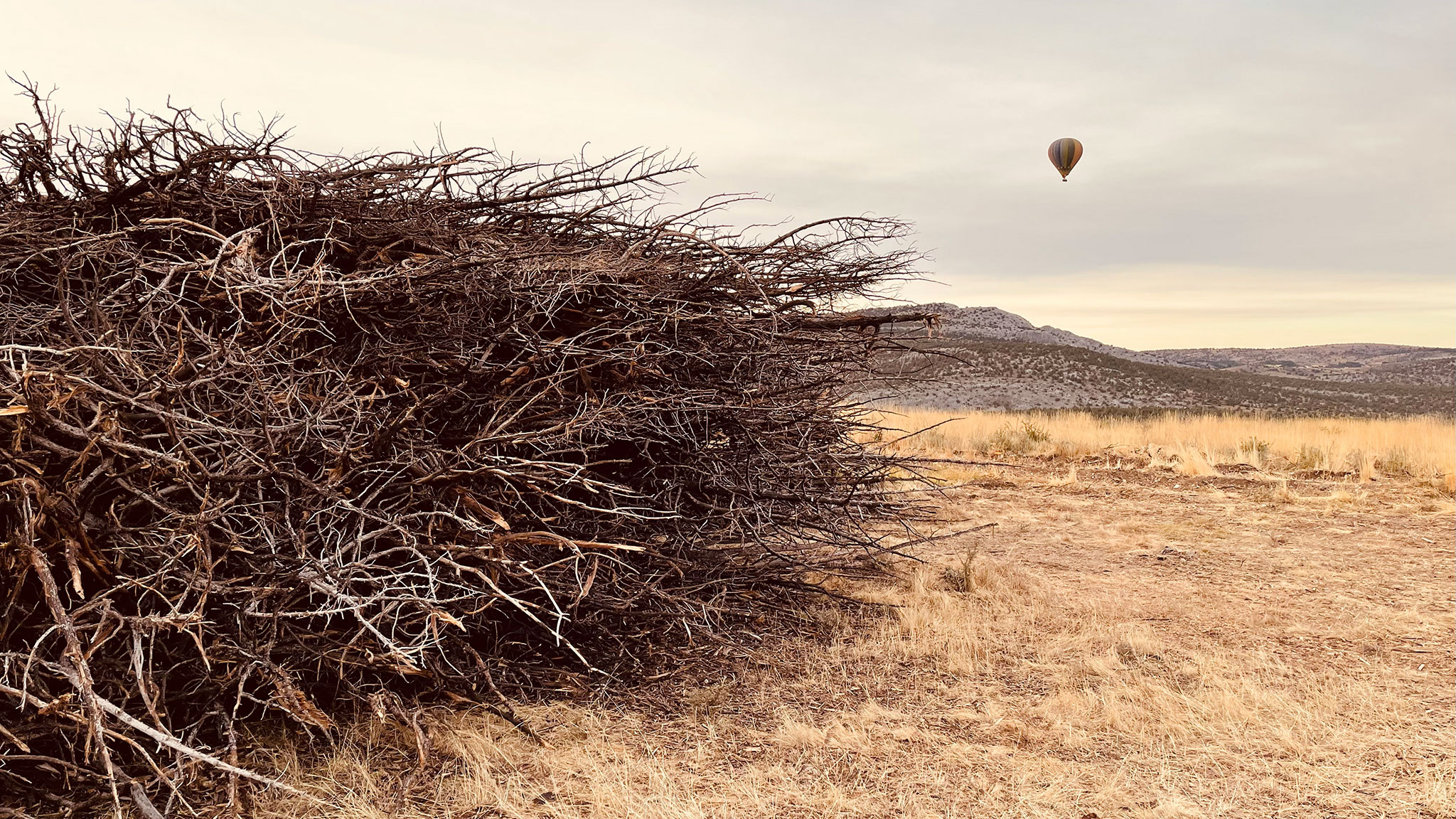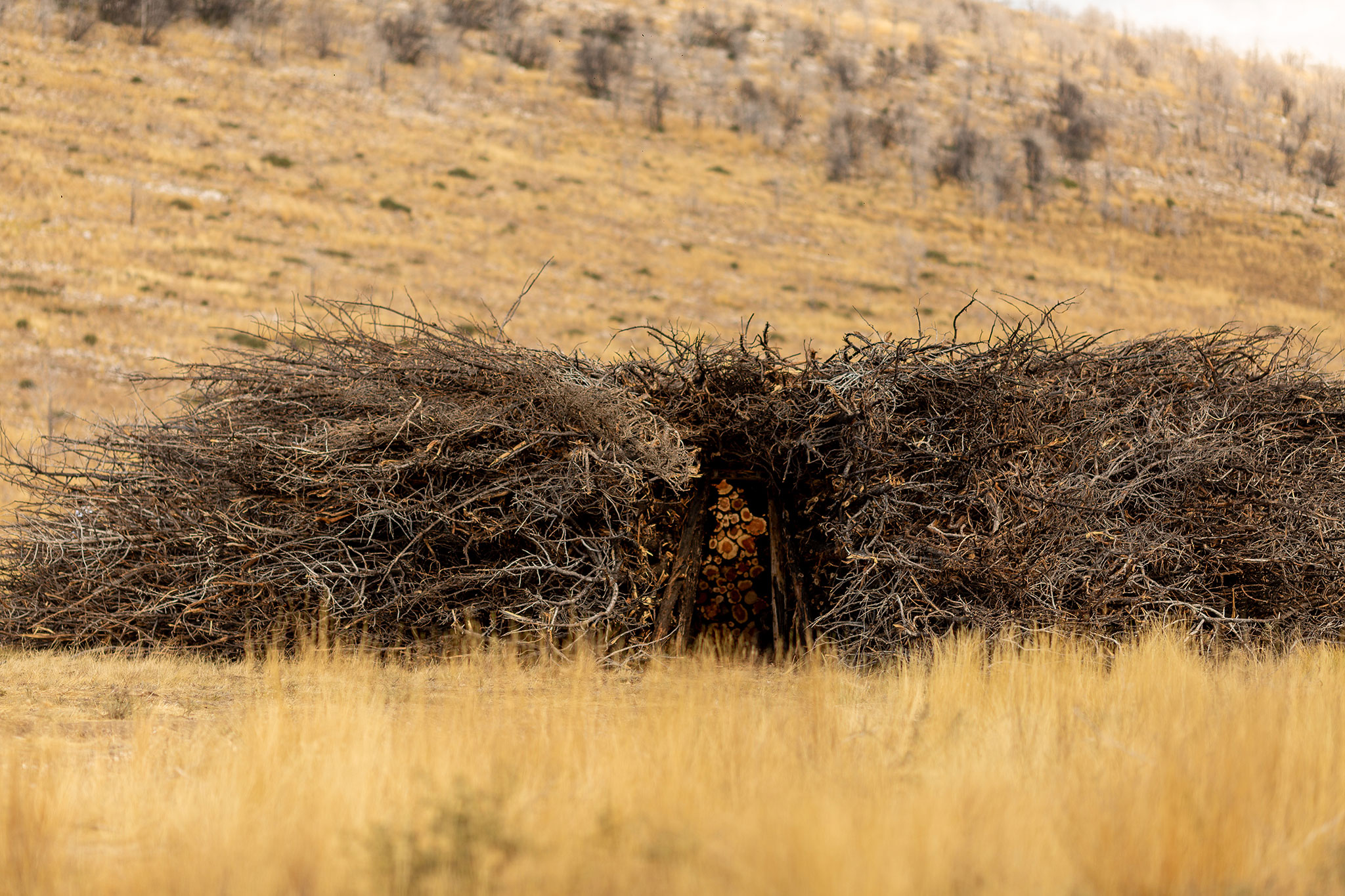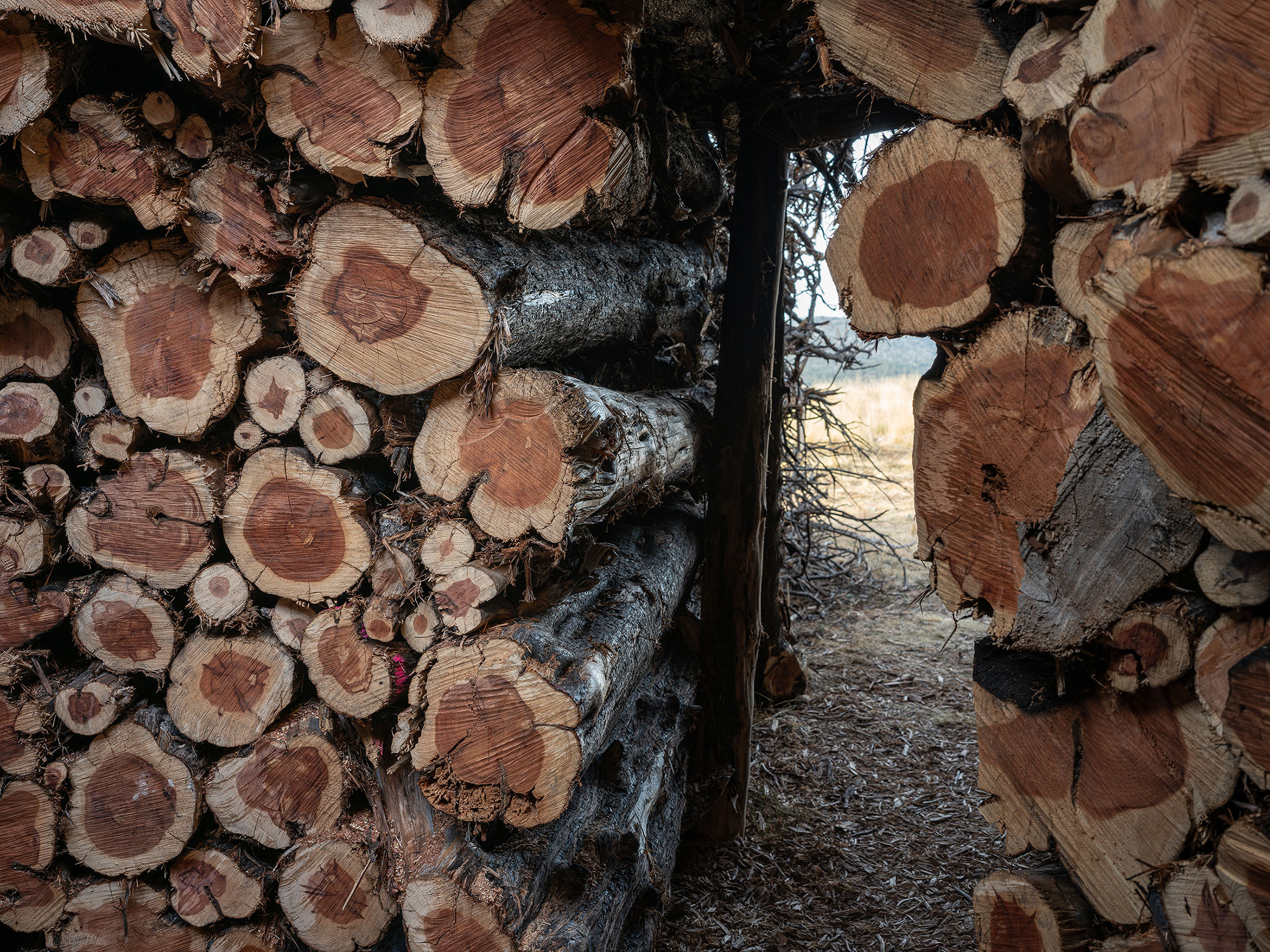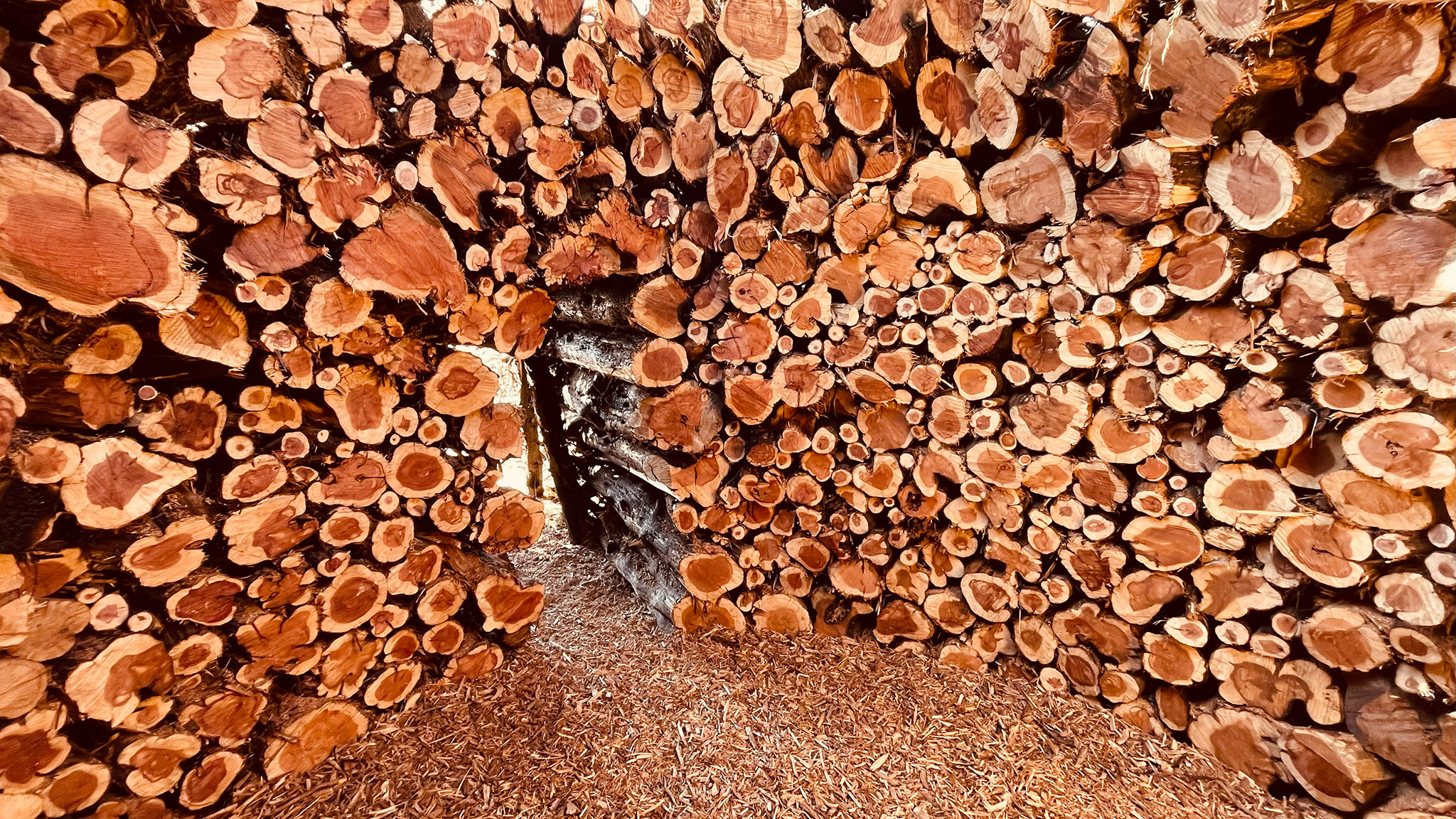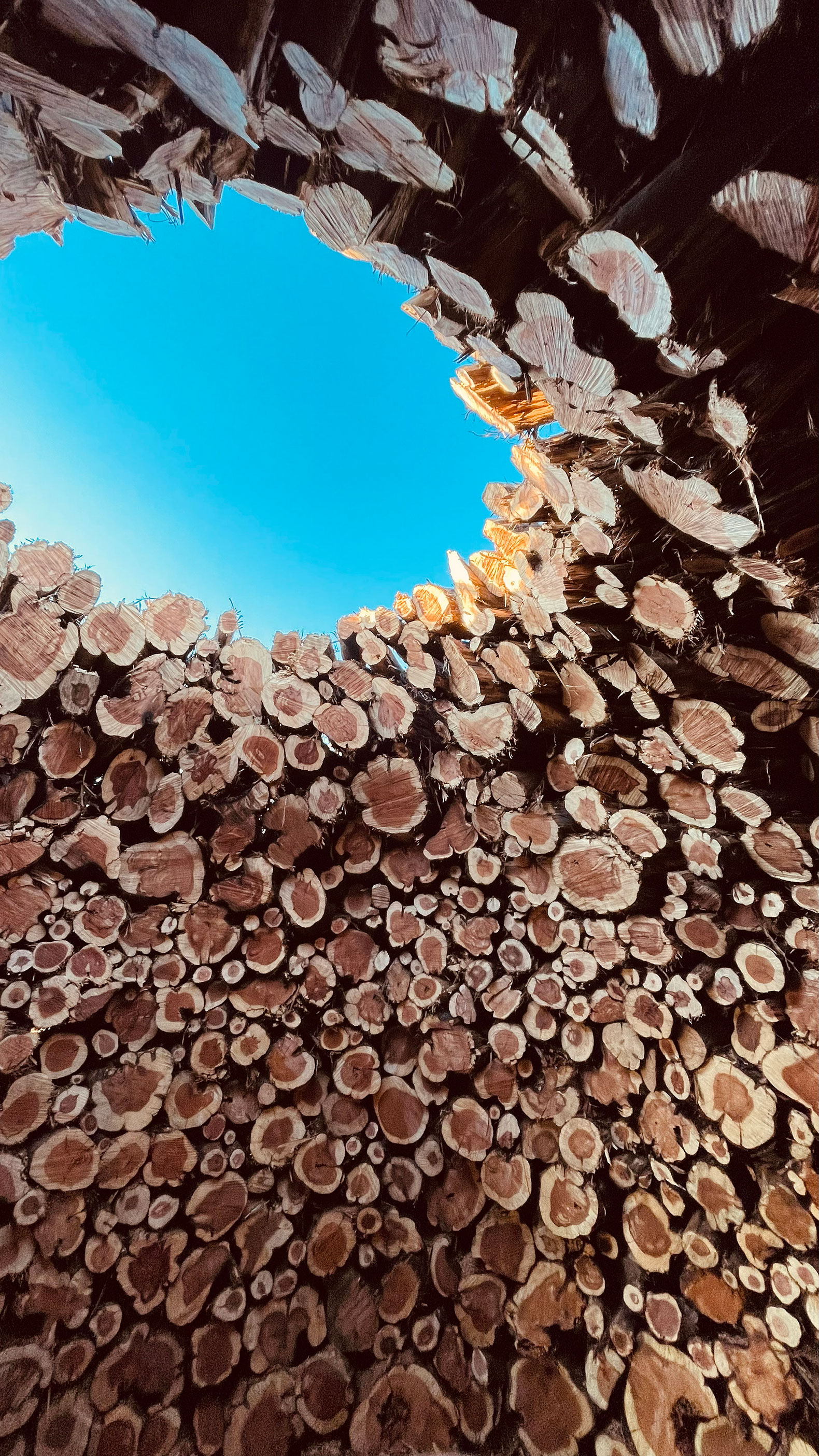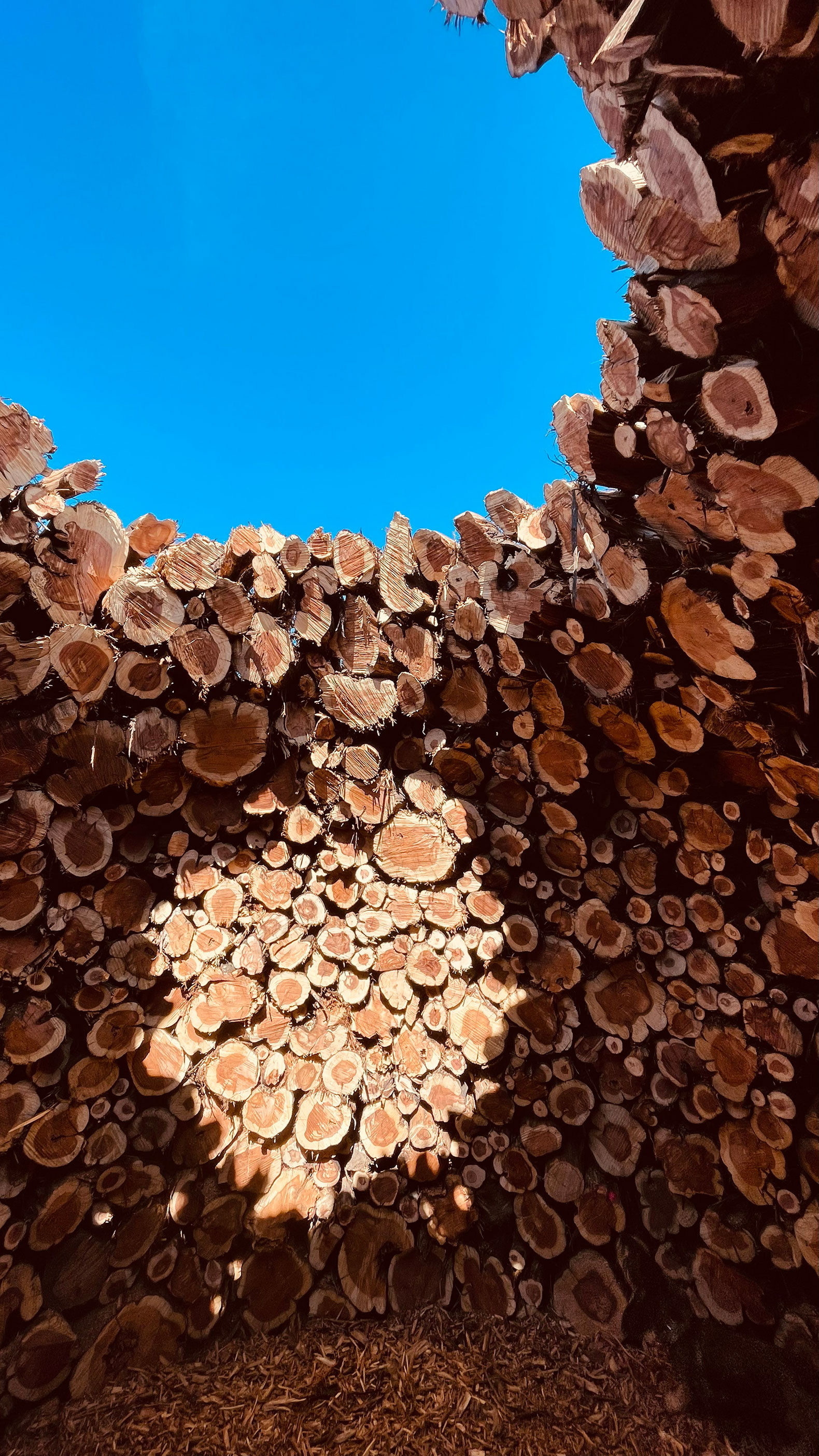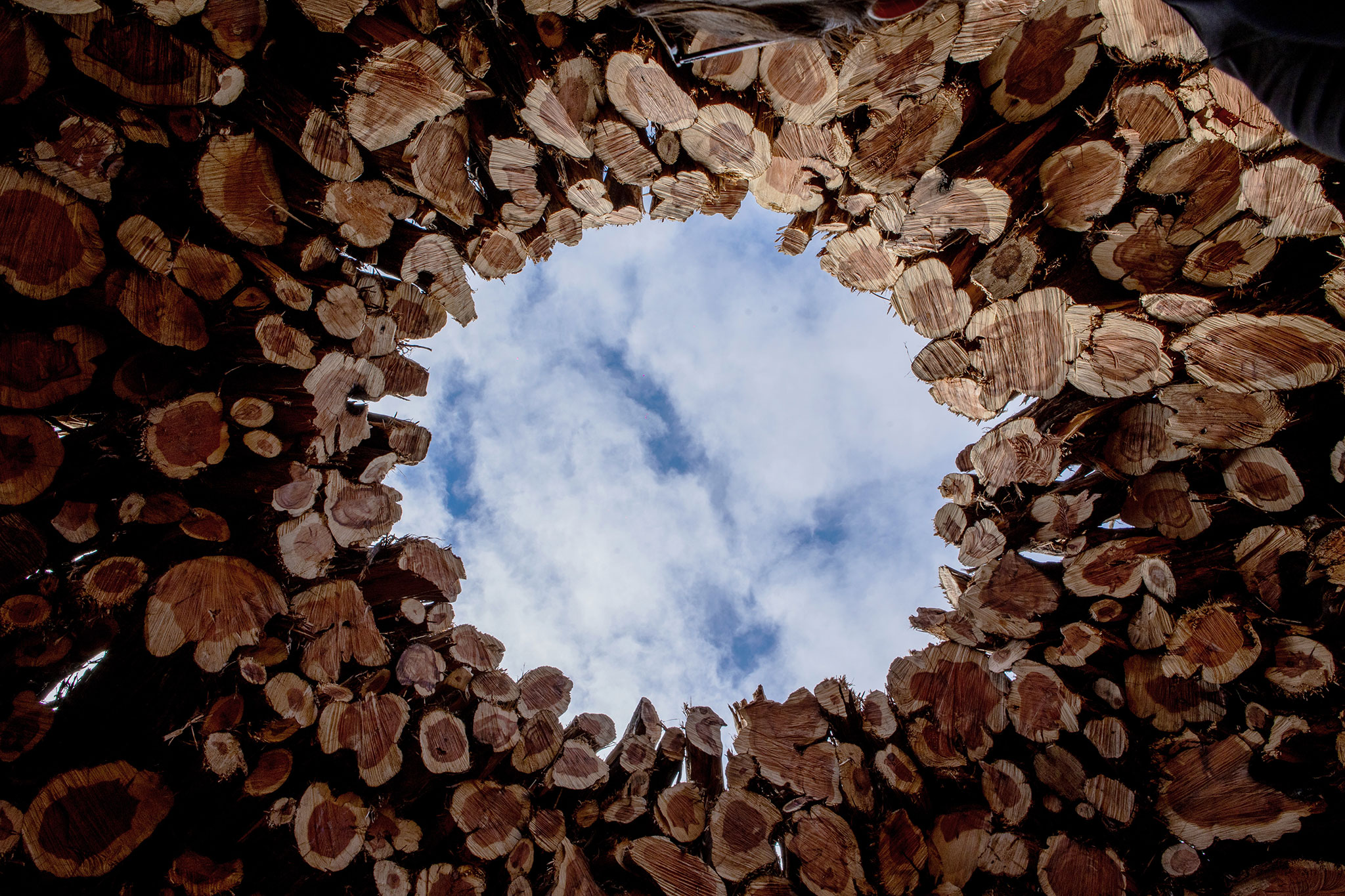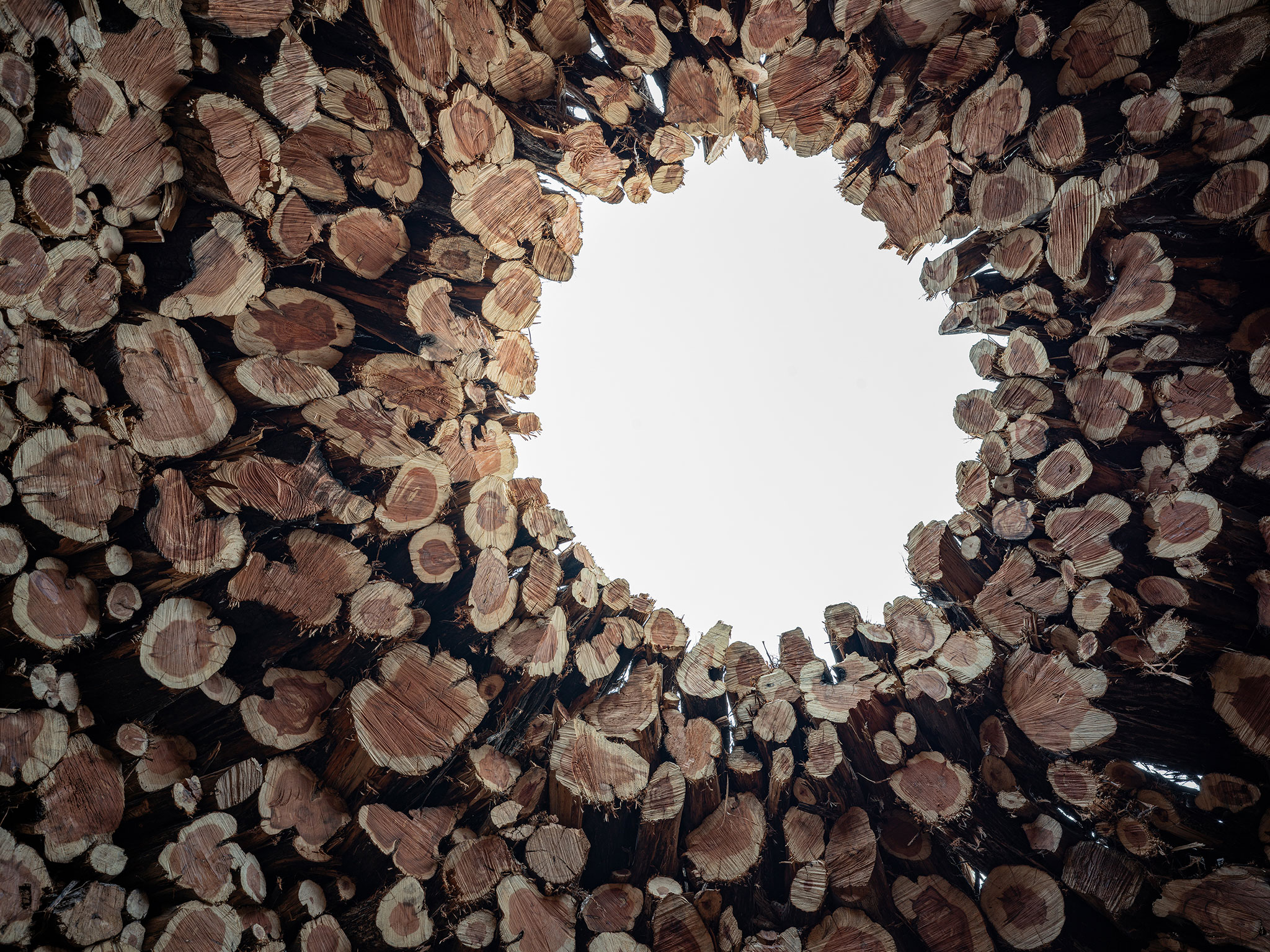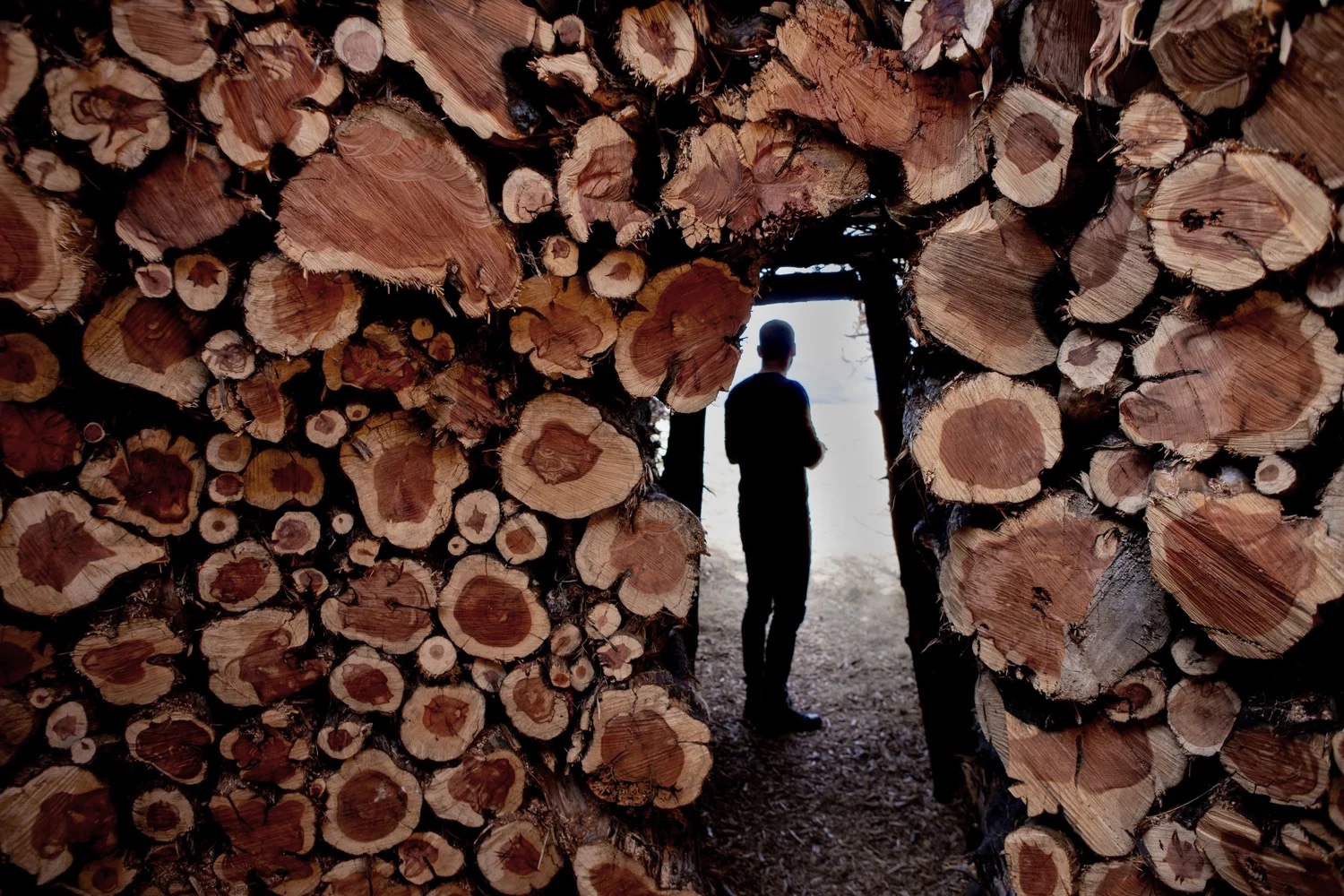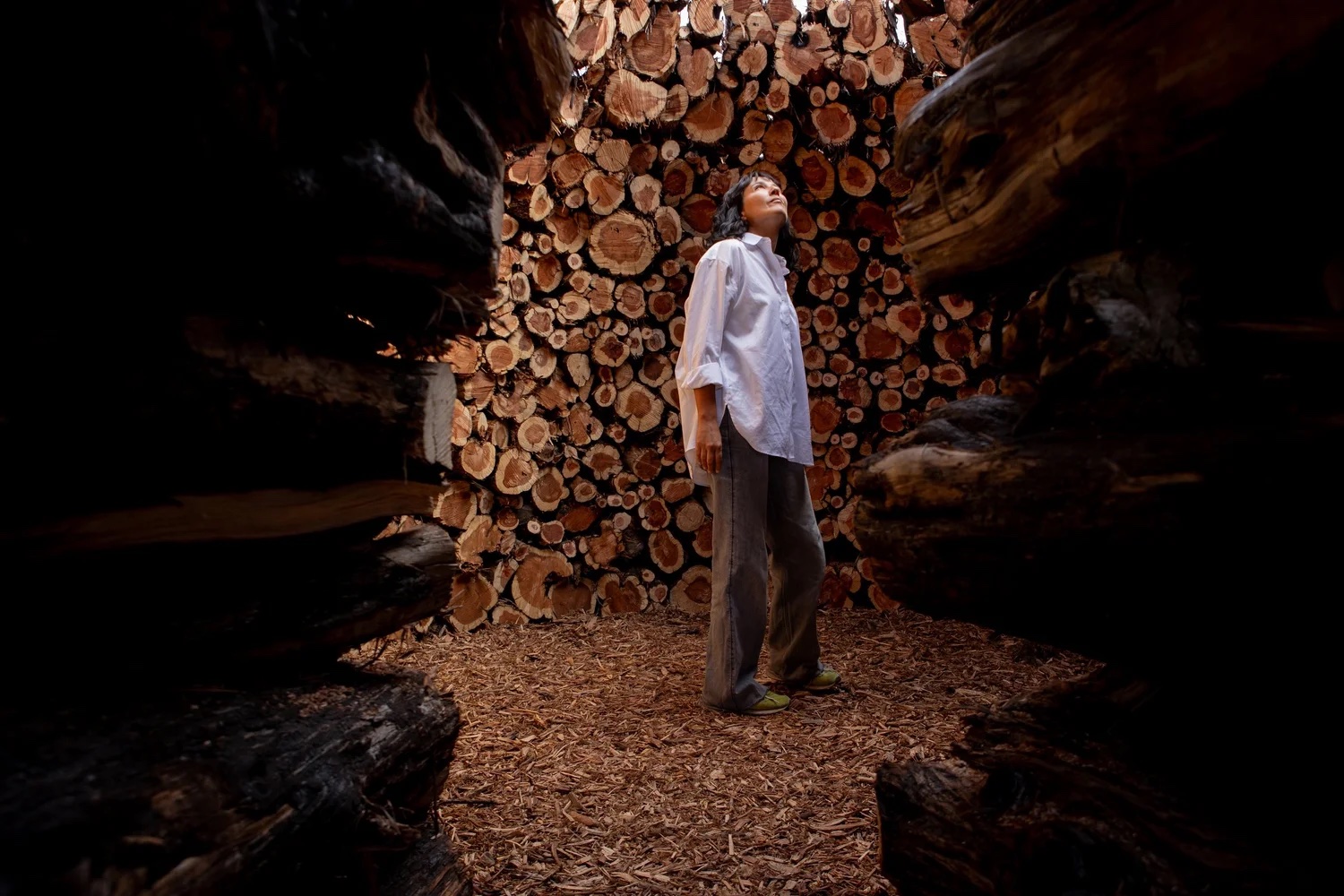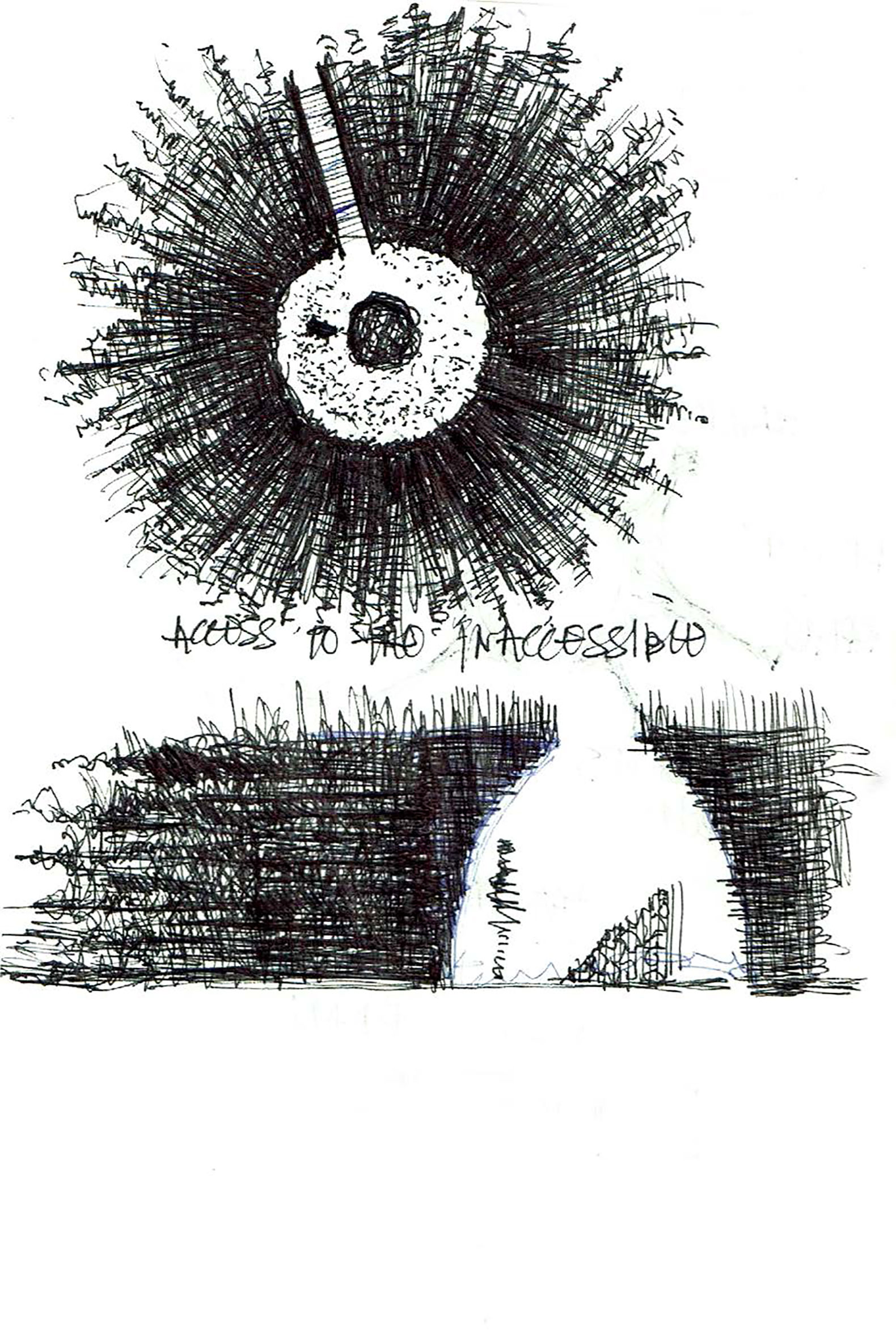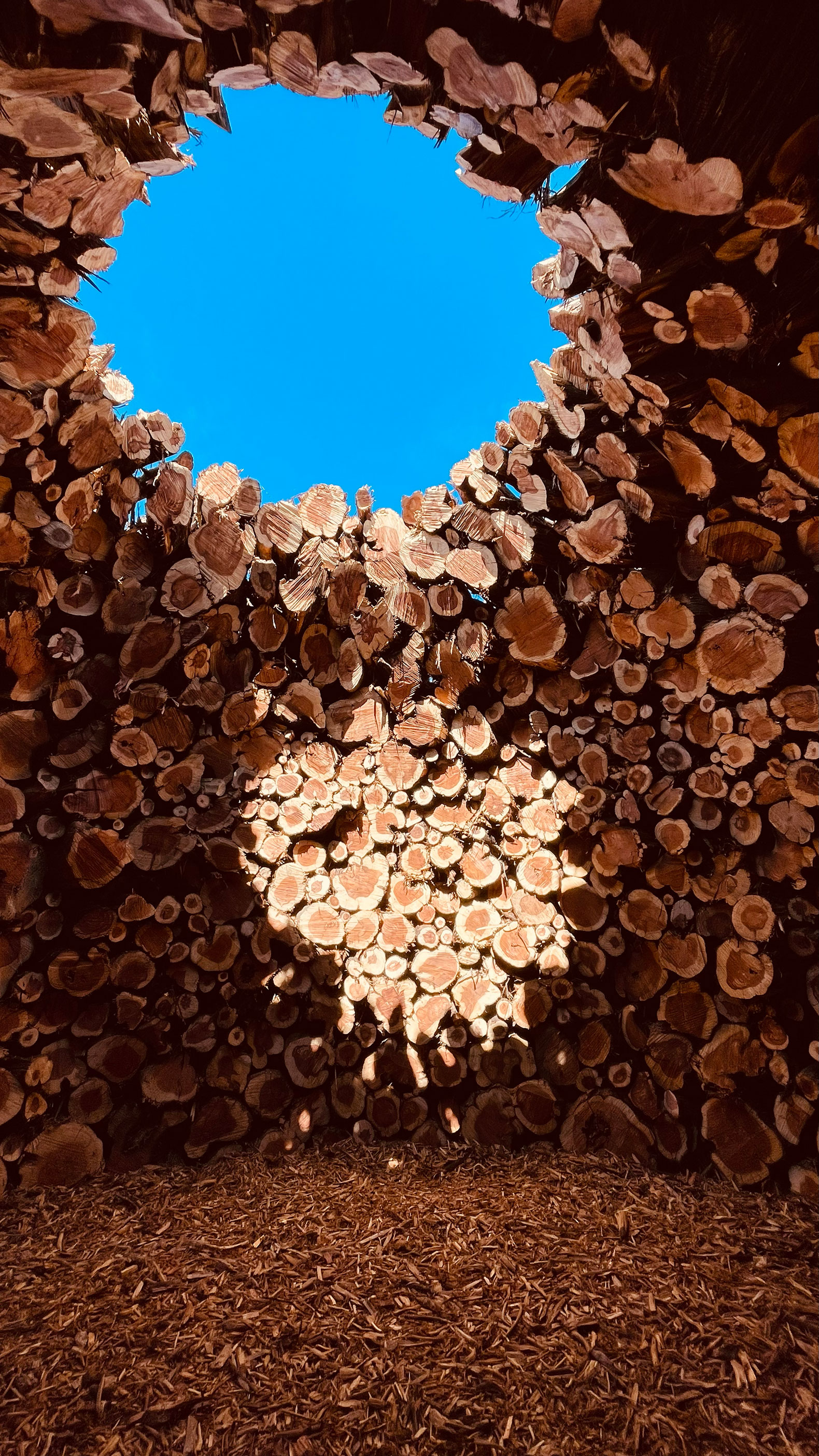
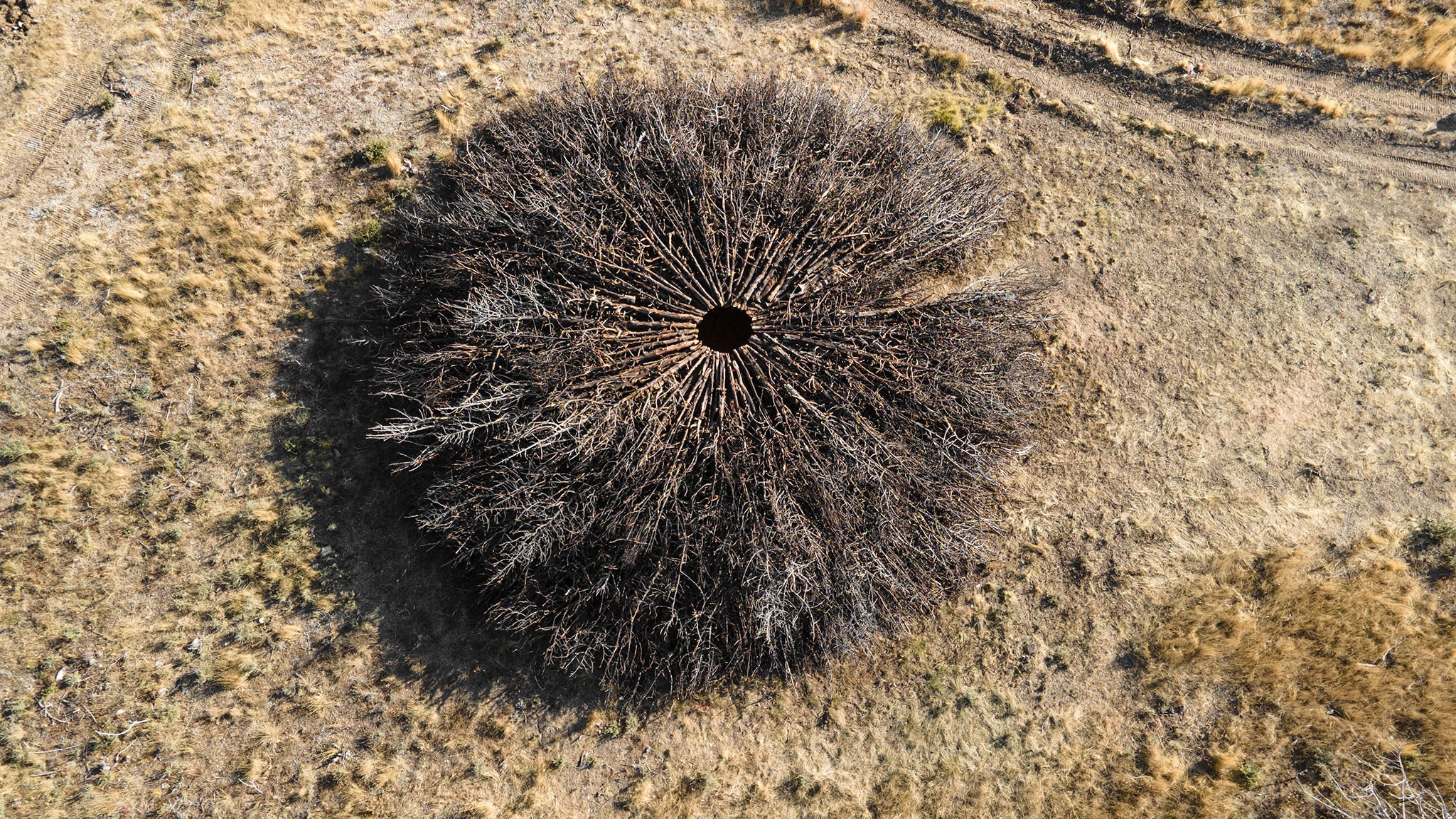
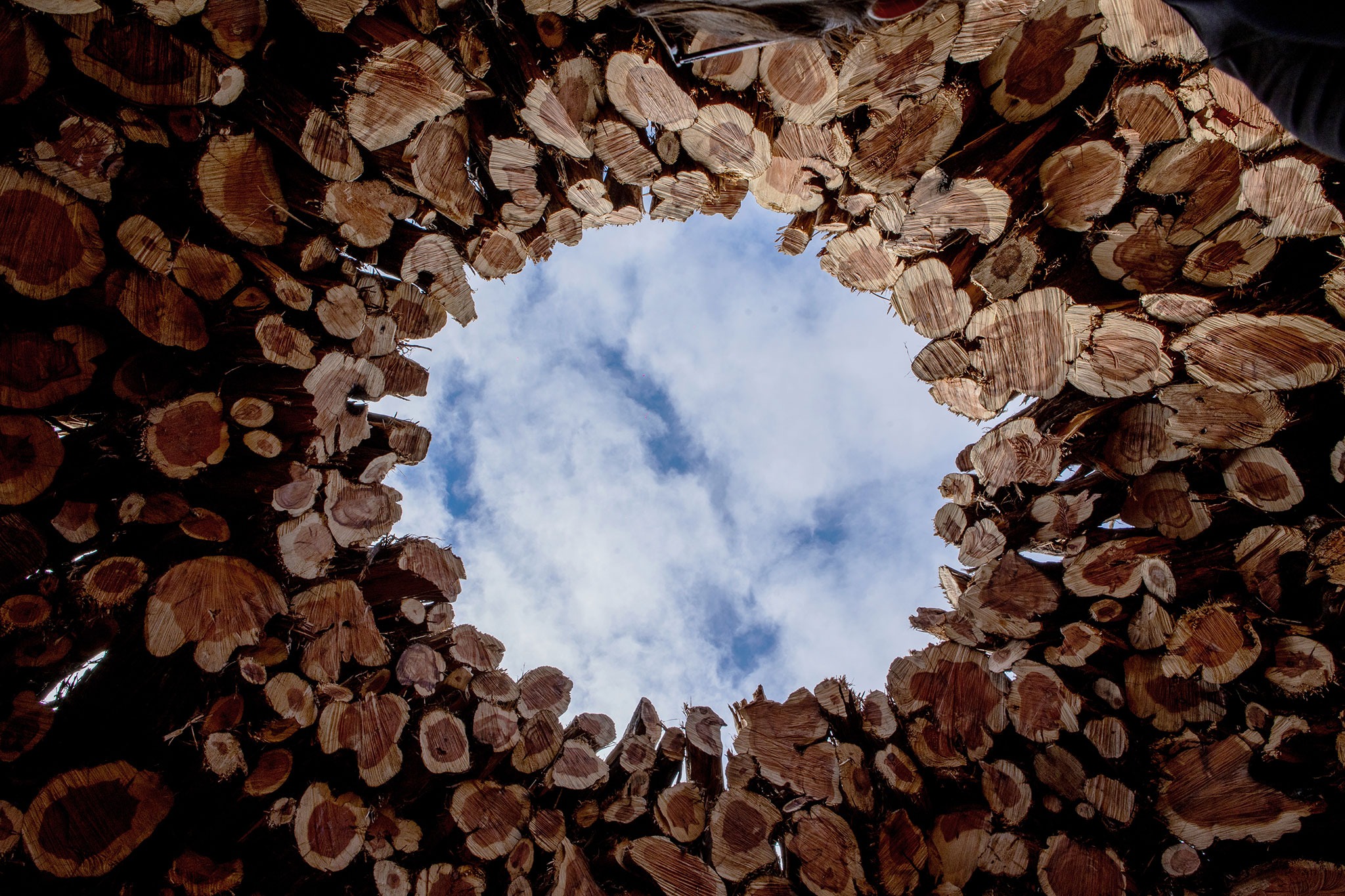
"Socarrado," conceived by Nomad Studio, takes the form of a large ring, 15 meters in diameter, creating a shelter-like space. Inside, a three-meter-diameter void is defined by raised logs that form a small vault.
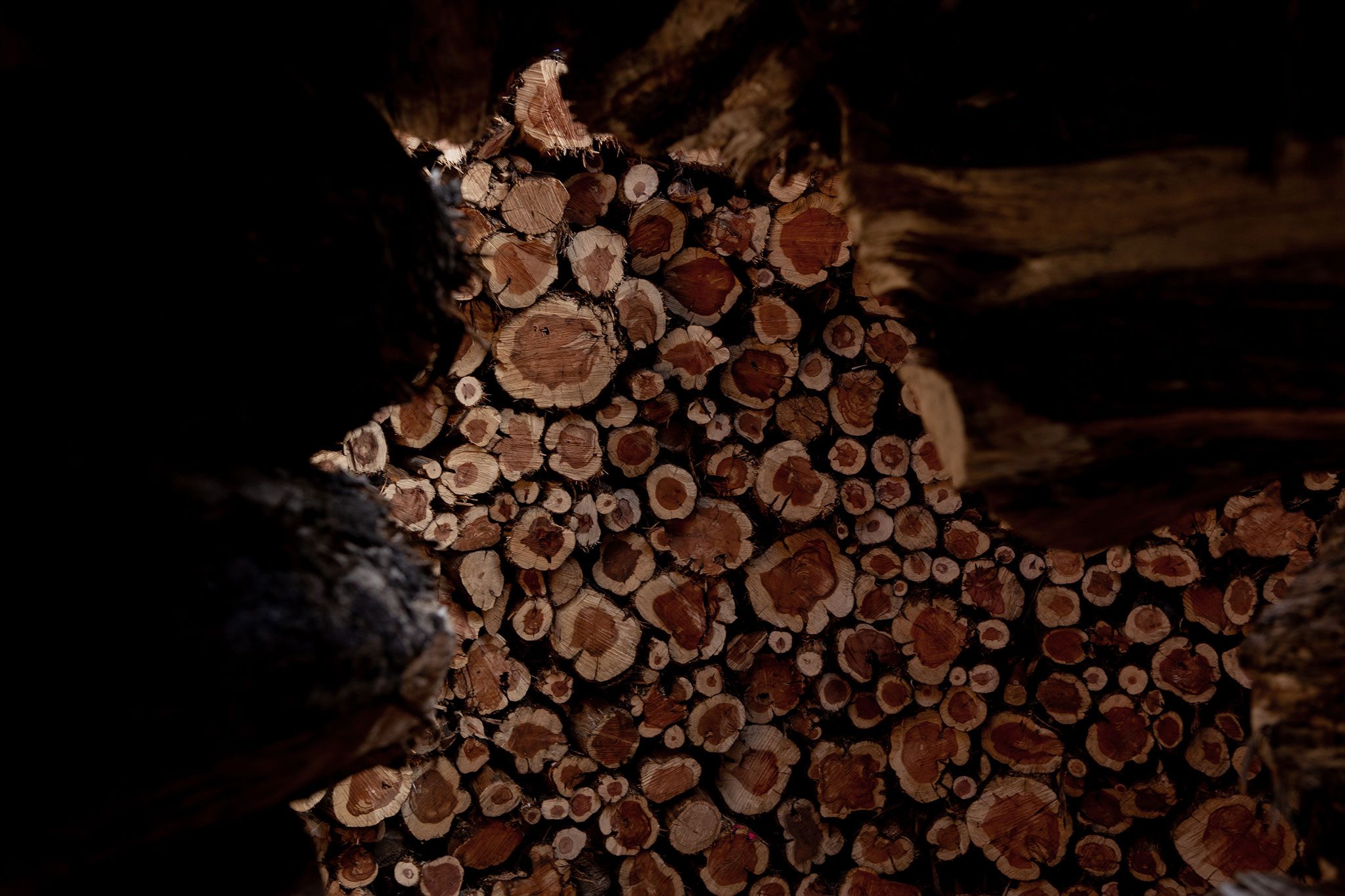
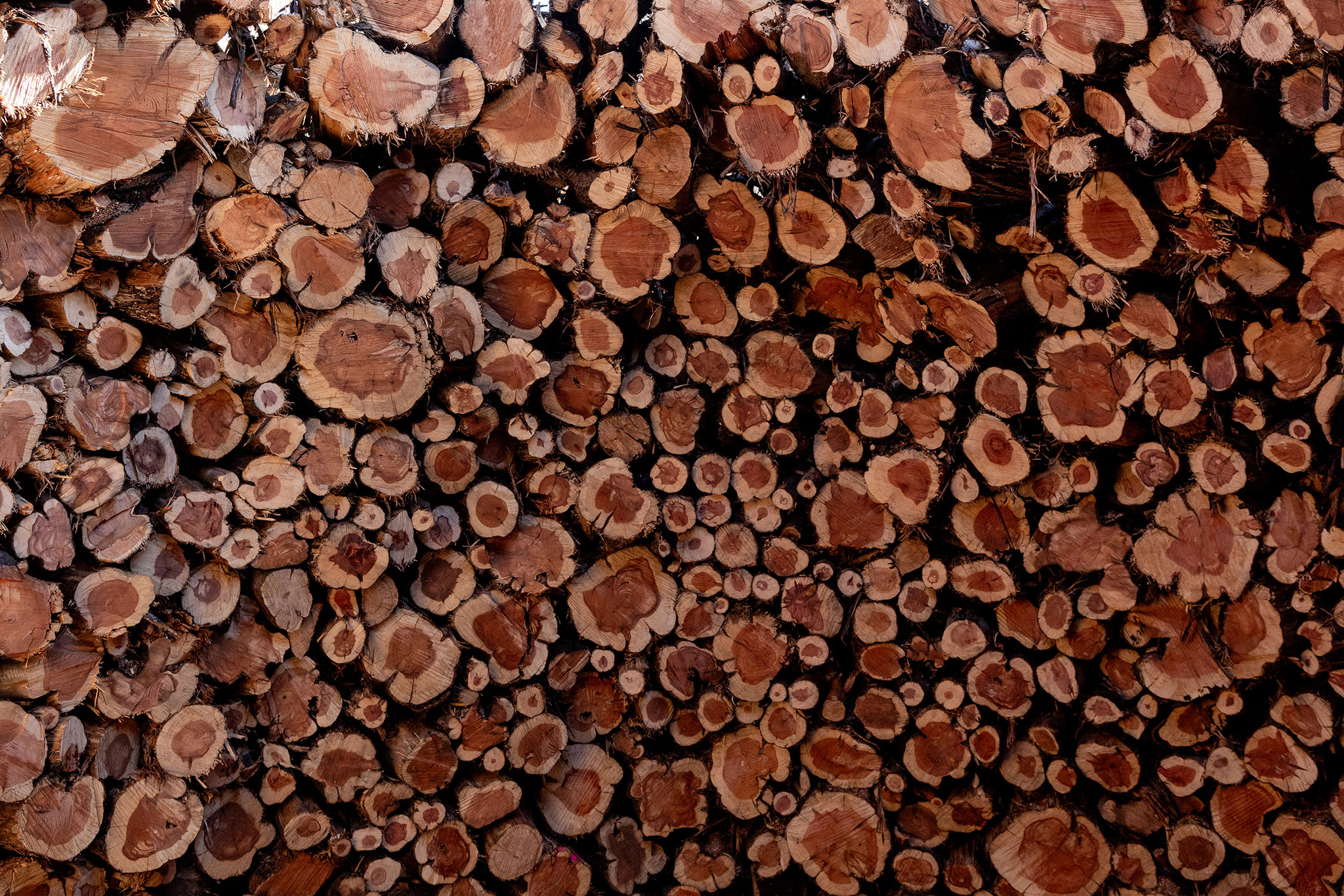
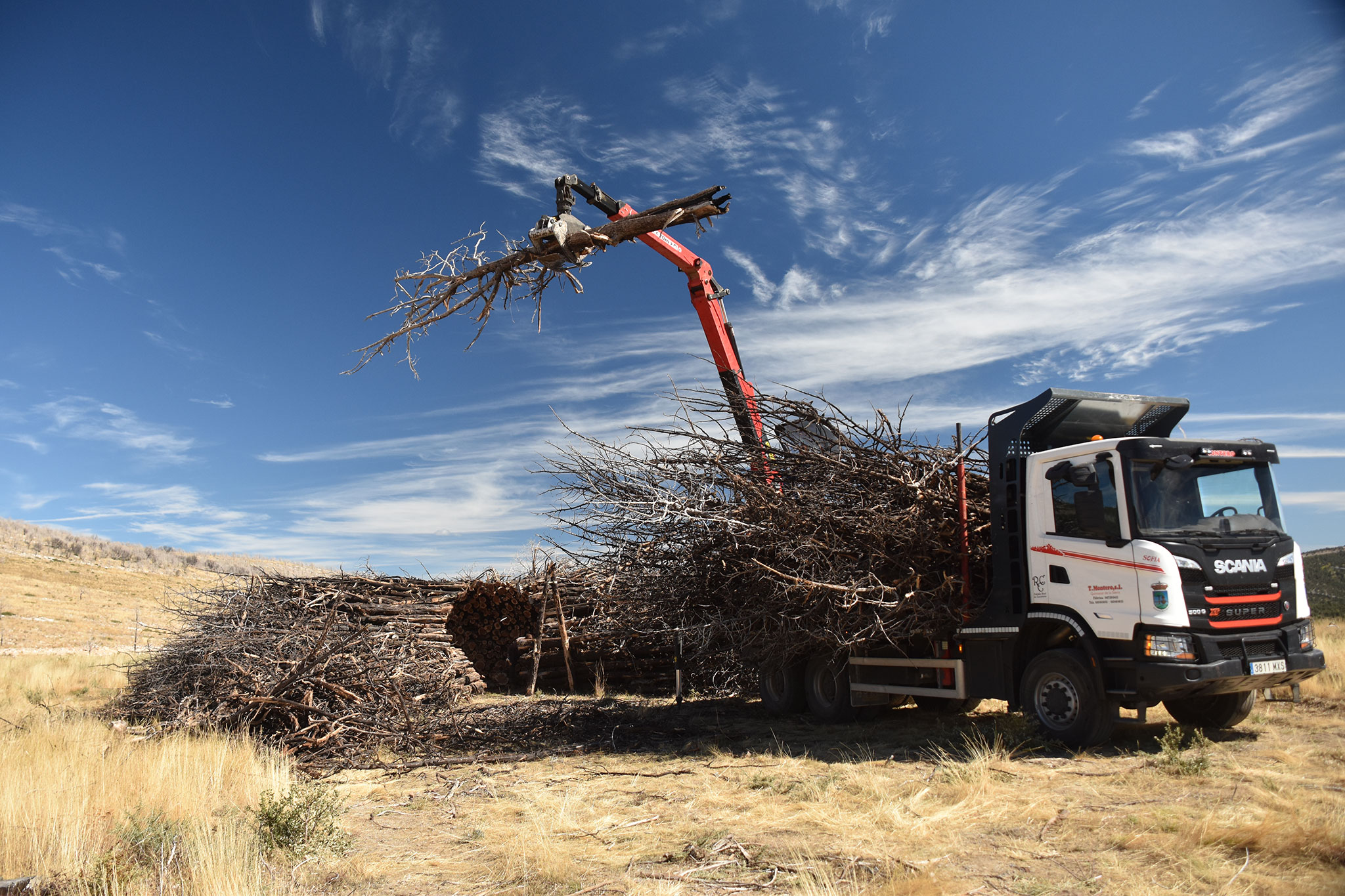
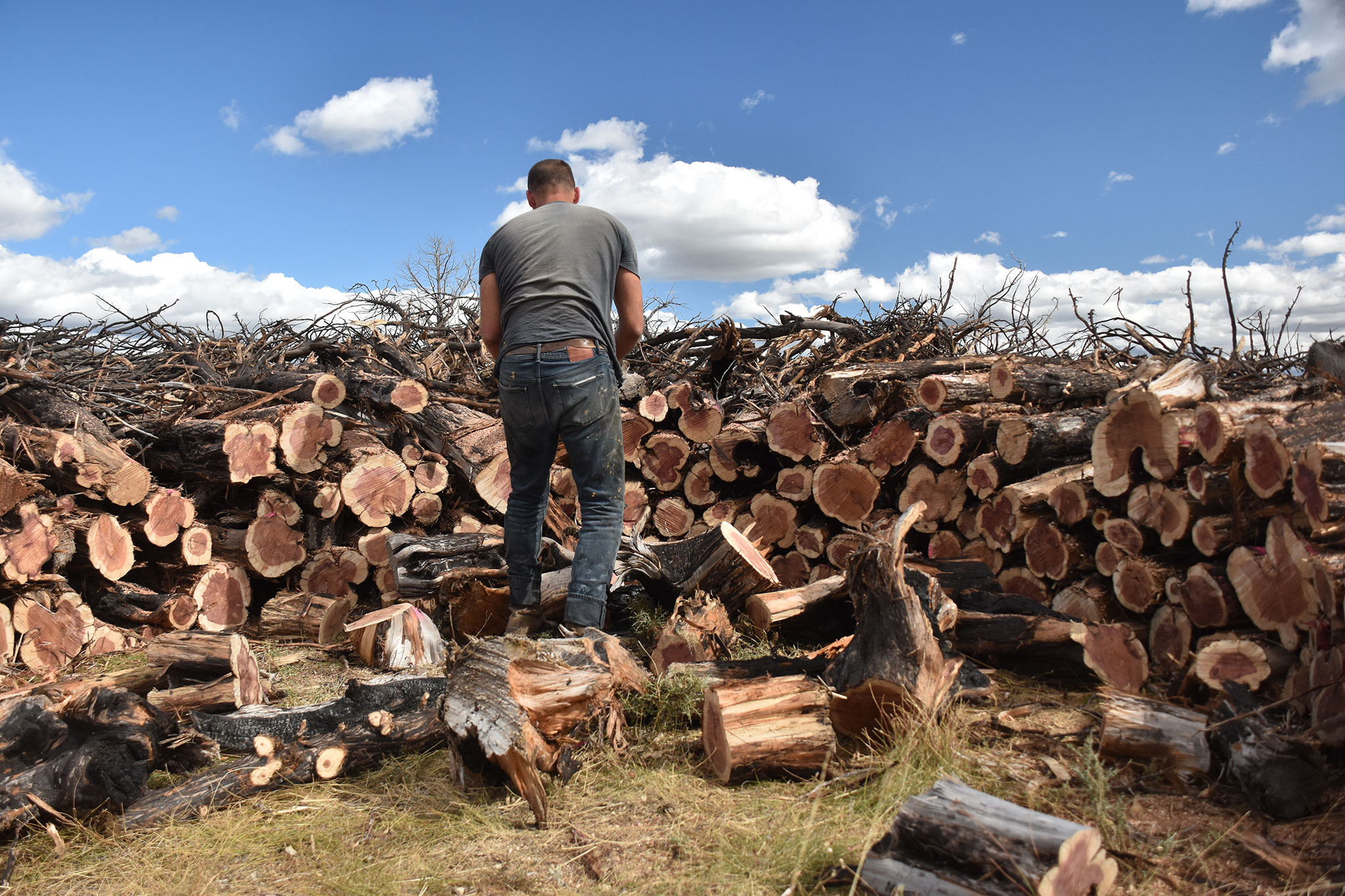
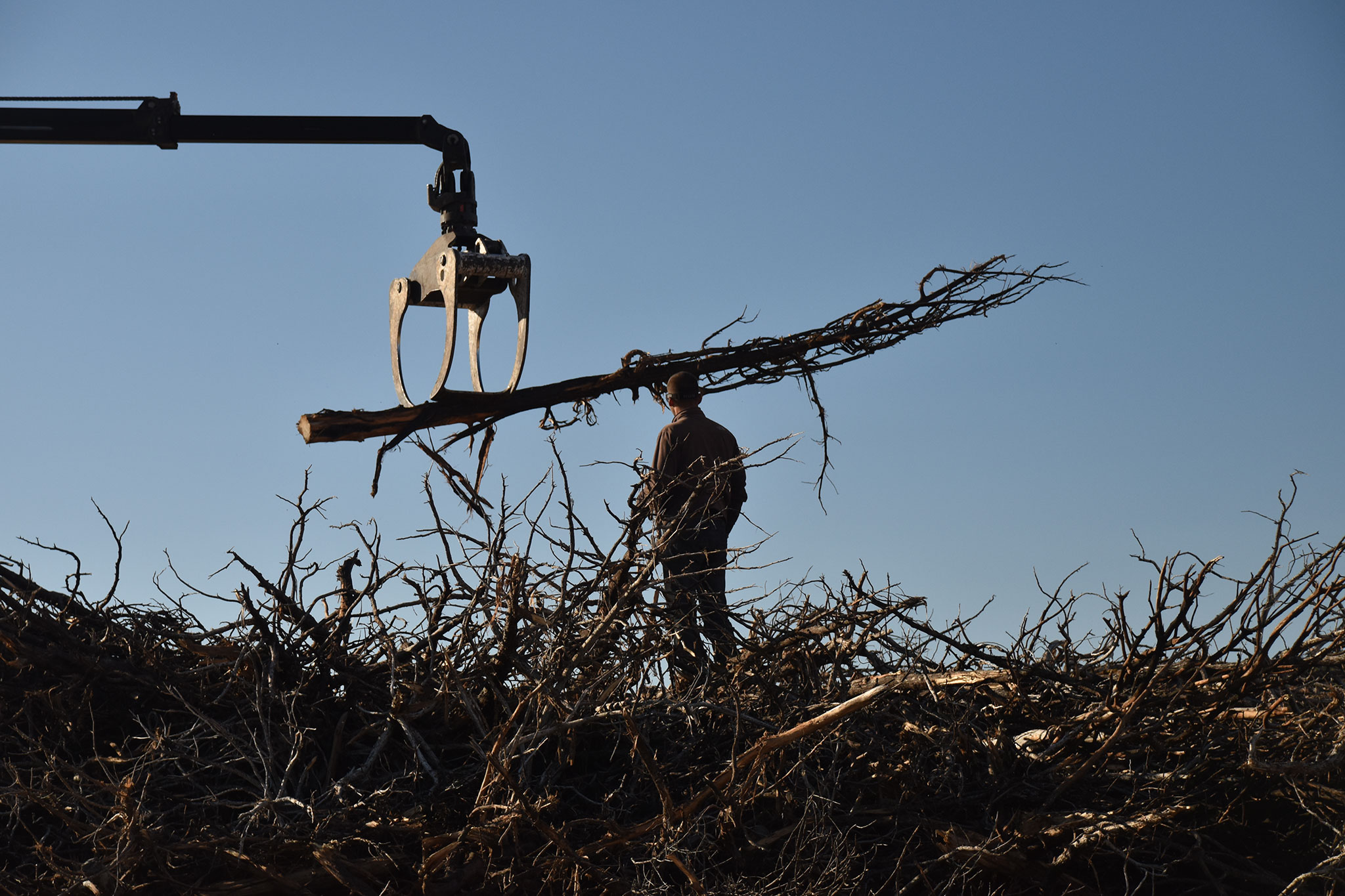
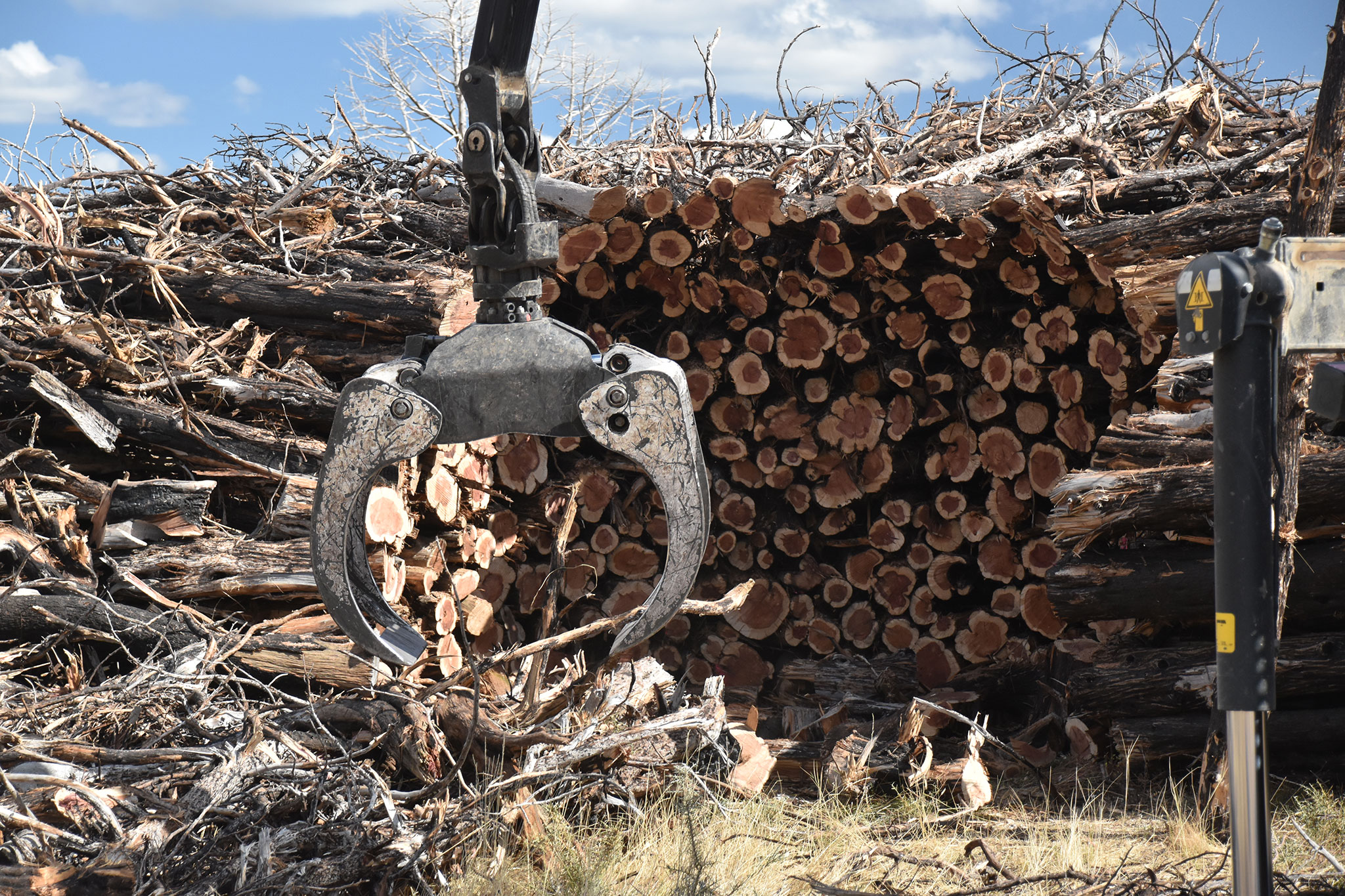
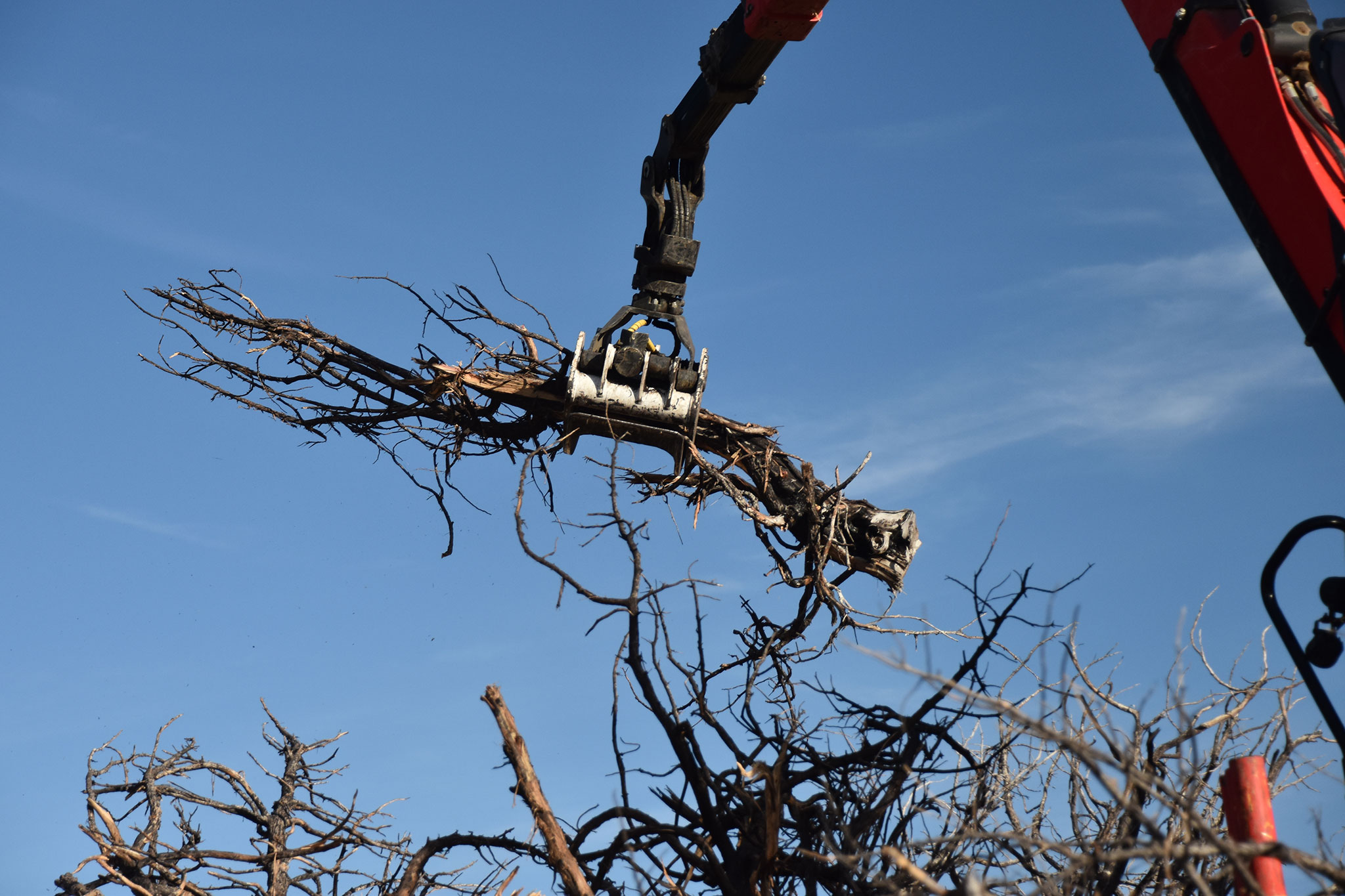
The installation —built in collaboration with the community, institutions, local businesses, and volunteers— is made from burnt juniper trees recovered from the site, and its perimeter is created with stacked logs to preserve the imprint of the fire. It evokes introspection, silence, and a physical and emotional experience, generated by the dimness and the piercing of a hole of light reaching towards the sky at its highest point.
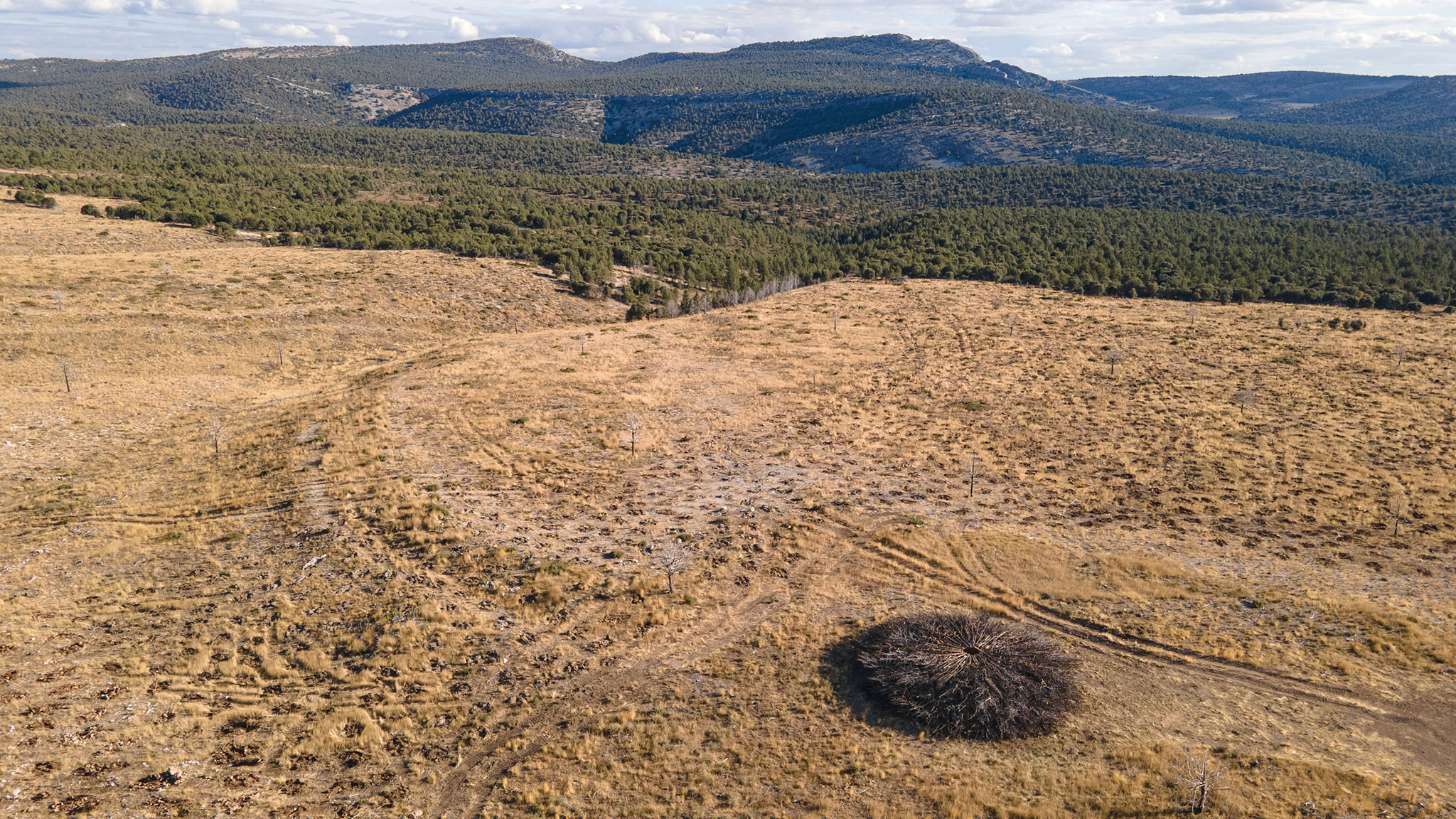
Socarrado by Nomad Studio. Photograph by Nomad Studio.
Project description by Nomad Studio
Nomad Studio transforms a fire-ravaged landscape into a place of contemplation, memory, and rebirth through its artwork.
Following its unveiling in the fall of 2025, the installation "Socarrado," created by Nomad Studio, has become a permanent part of the Sabinares del Arlanza – La Yecla Natural Park (Burgos).
What was originally conceived as a temporary intervention has generated such a strong response from visitors that both the municipality of Santo Domingo de Silos and the Natural Park have decided to integrate it permanently into the landscape.
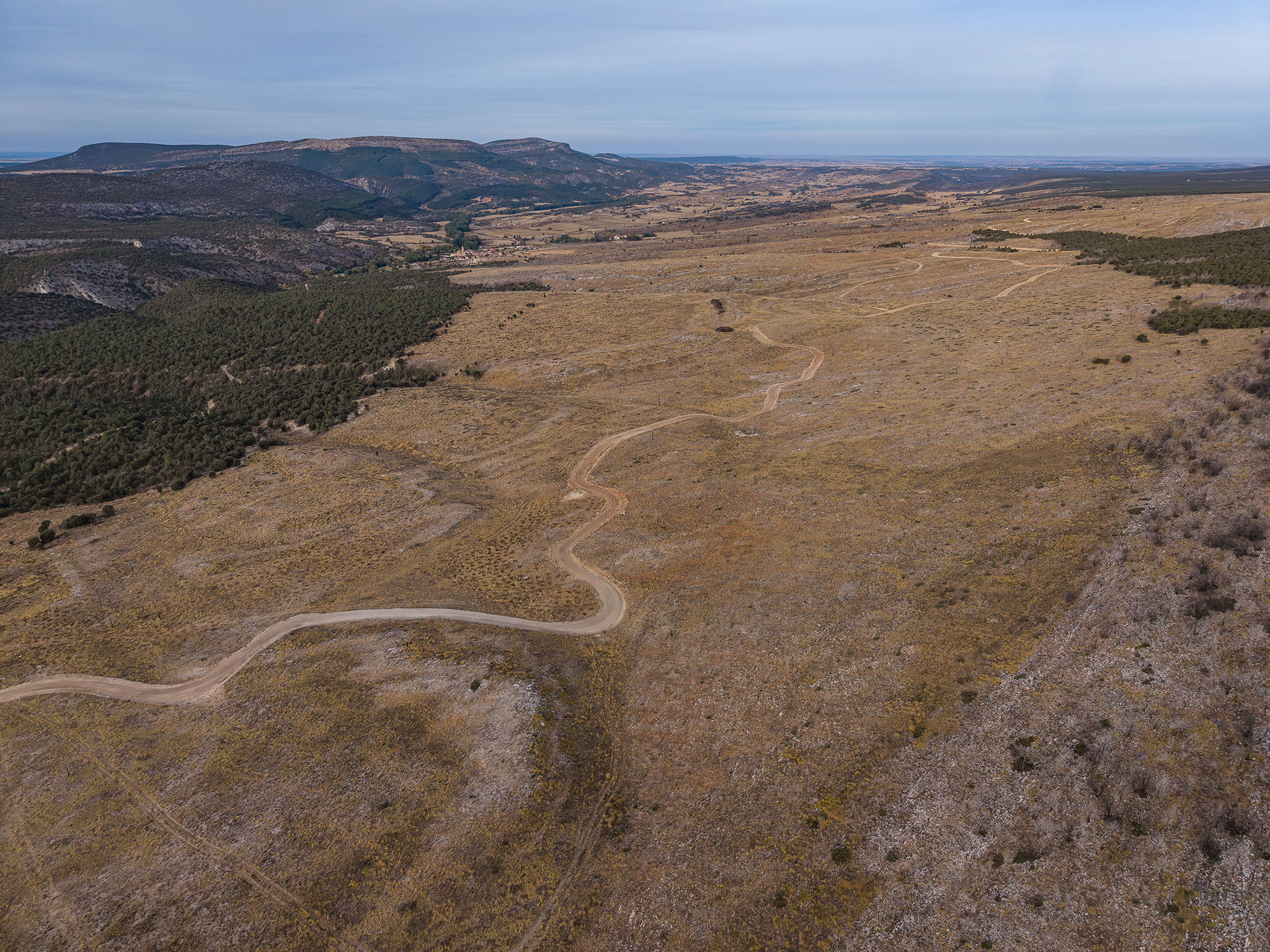
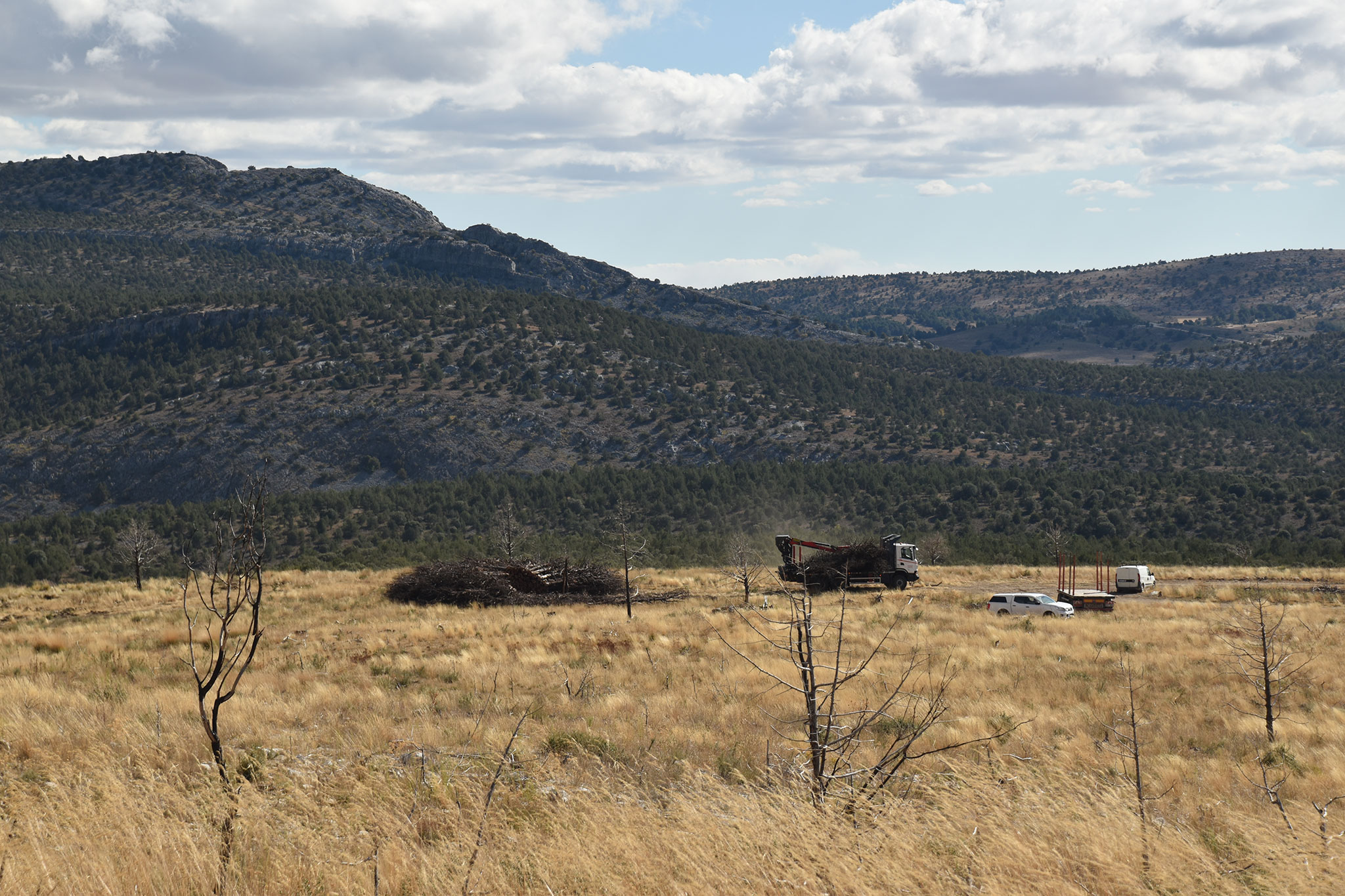
The installation is located in one of the areas most affected by the 2022 fire that ravaged more than 2,800 hectares of the park. In this context of devastation, Nomad Studio has created a work that stands as a collective gesture of reparation and as a reminder of the ancestral bond between rural communities and their environment.
A Circle of Charred Juniper Trees for Remembrance and Rebirth
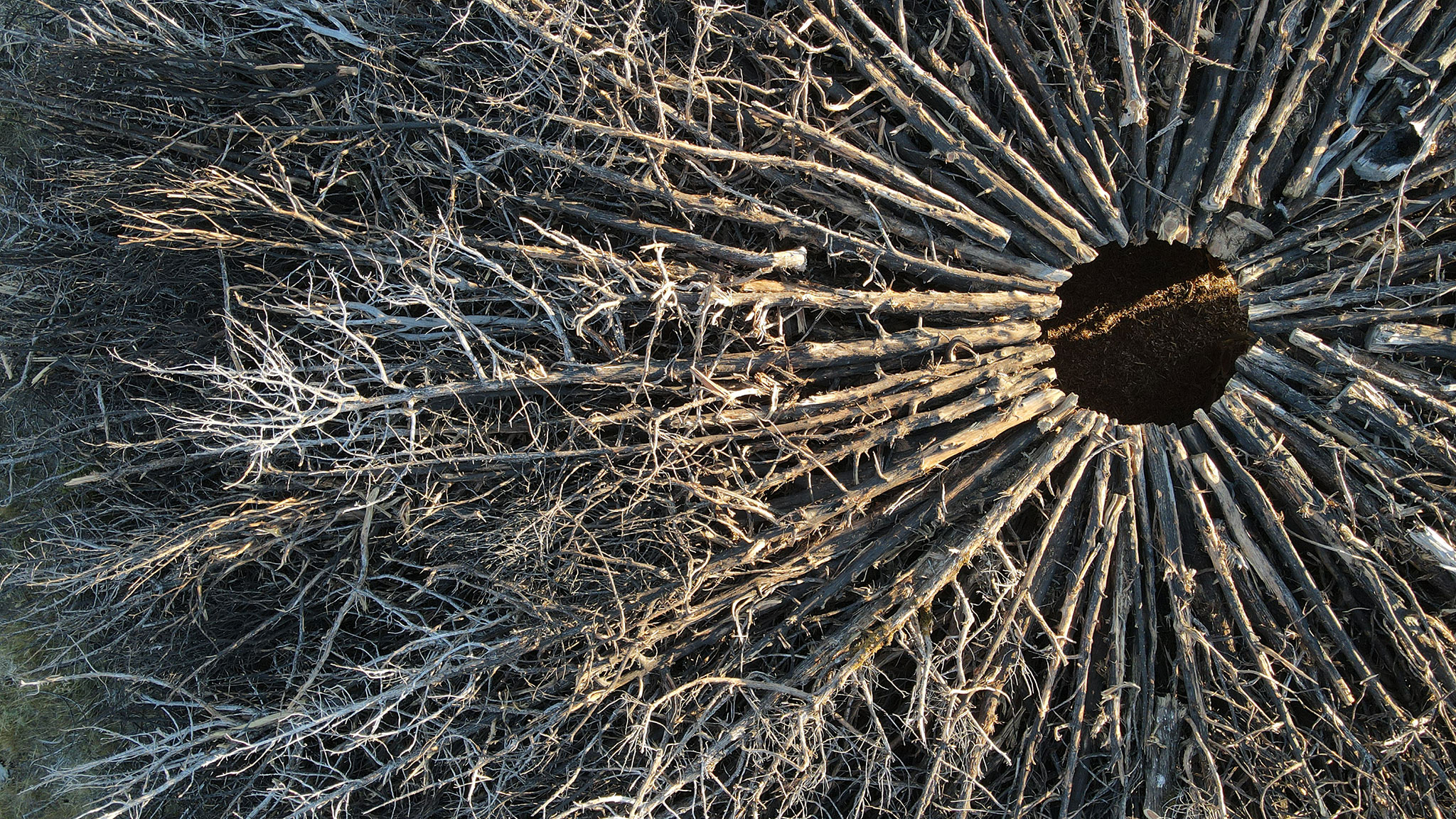
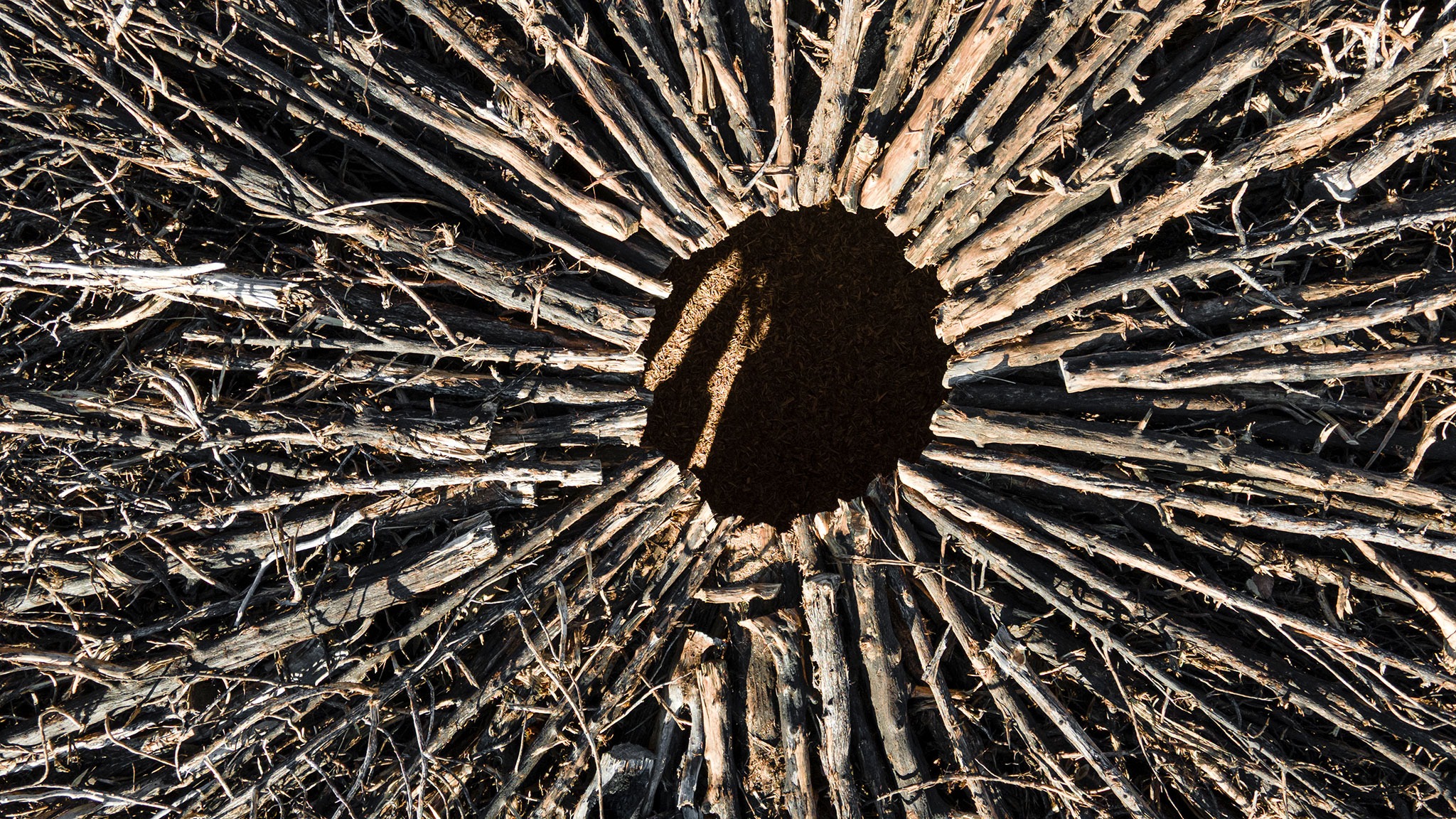
Shaped as a large ring 15 meters in diameter, the installation is constructed entirely from burnt juniper trees recovered from the site. The trunks, stacked concentrically, form a dark perimeter that preserves the imprint of the fire. The canopies, facing outwards, extend over the landscape like an echo of what was once a forest.
In this way, a refuge is built, inspired by traditional Castilian structures used to protect flocks from predators.
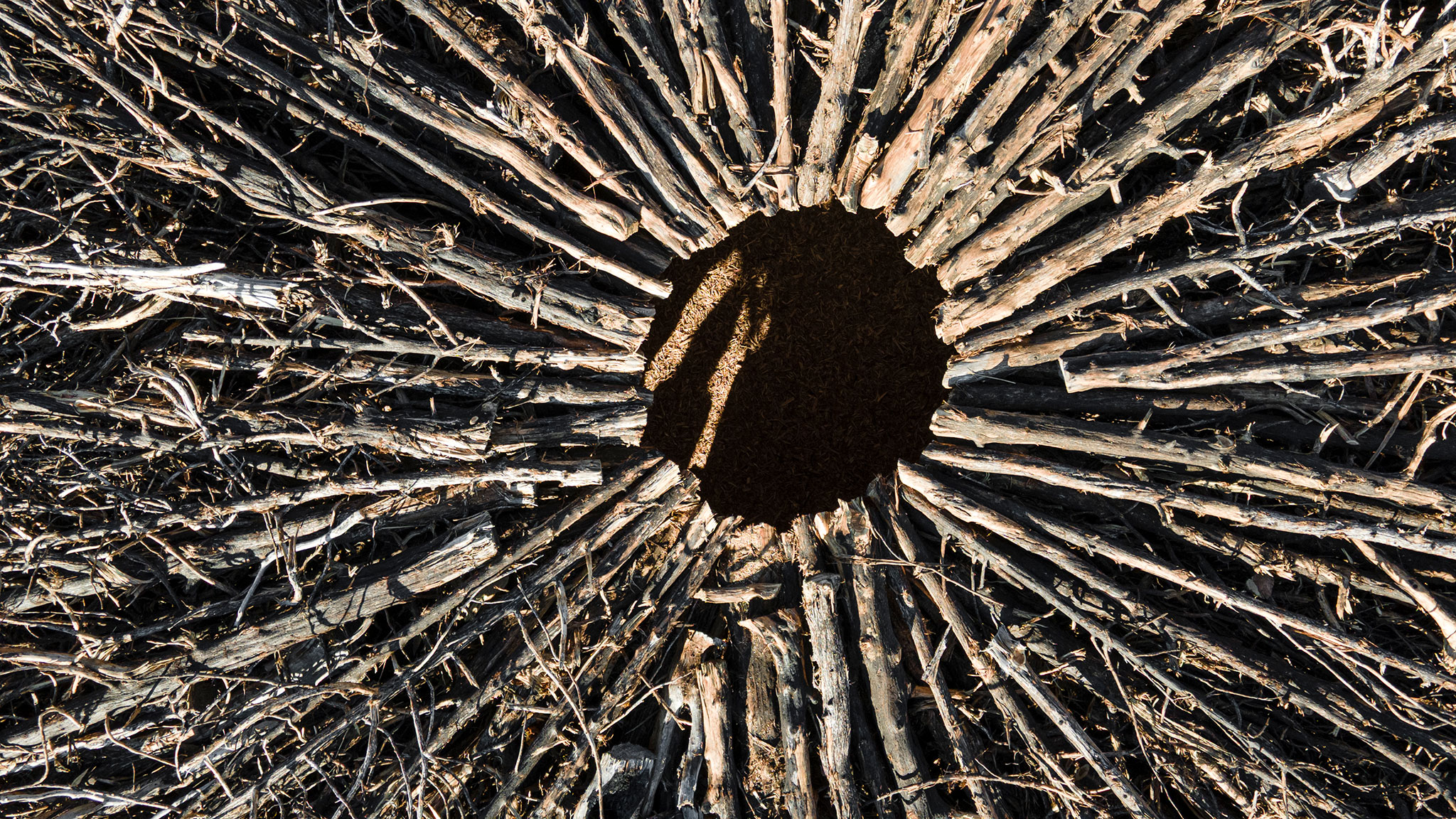
The interior of the circle reveals a void three meters in diameter, delimited by sectioned trunks that rise to form a small vault. At its top, a point of light pierces the mass of charred wood and frames a fragment of sky.
The scent of resin, like a ritual balm emanating from the cut trunks themselves, the contained dimness, and the verticality of the hollow create a space for introspection and silence, open to an intense physical and emotional experience.
“Socarrado invites visitors to be present, cultivate authenticity, and restore their essential connection to the land.” Laura Santín
Beyond its material dimension, Socarrado raises a critical reflection on the fragility of the landscape and the loss of reference points in an era where digital technology invades and distorts our relationship with reality.
In its formal simplicity, the work points to an urgency: to stop, regain our attention, and re-establish the connection with that which cannot be replicated through screens or avatars.
The circle of junipers serves as a reminder of what remains even after disaster: the land, its memory, and the shared responsibility to care for it.
And so, as a shared project, this installation would not exist without the direct involvement of residents, institutions, local businesses, and volunteers, who made its construction possible through a process entirely funded by collective contributions.
It has also been made possible thanks to the collaboration of SOMACYL, the Santo Domingo de Silos City Council, the Natural Park, Bombyte, and various local stakeholders.
Furthermore, it is part of Uncommissioned Exhibition, an international program developed by Novo Collective, an artists' collective that promotes artistic interventions capable of activating public space through new perspectives and collaborative creation methodologies.
This community dimension becomes an essential part of the intervention's meaning.
Art within art
Like a work within a work, in March 2026, at the beginning of spring, the artist William Kingswood will present the performance piece ergo IGNIS, created in collaboration with local performers and conceived as a site-specific ritual of awareness.
“A desolation, a return to nature, a refuge in an inhospitable landscape.”
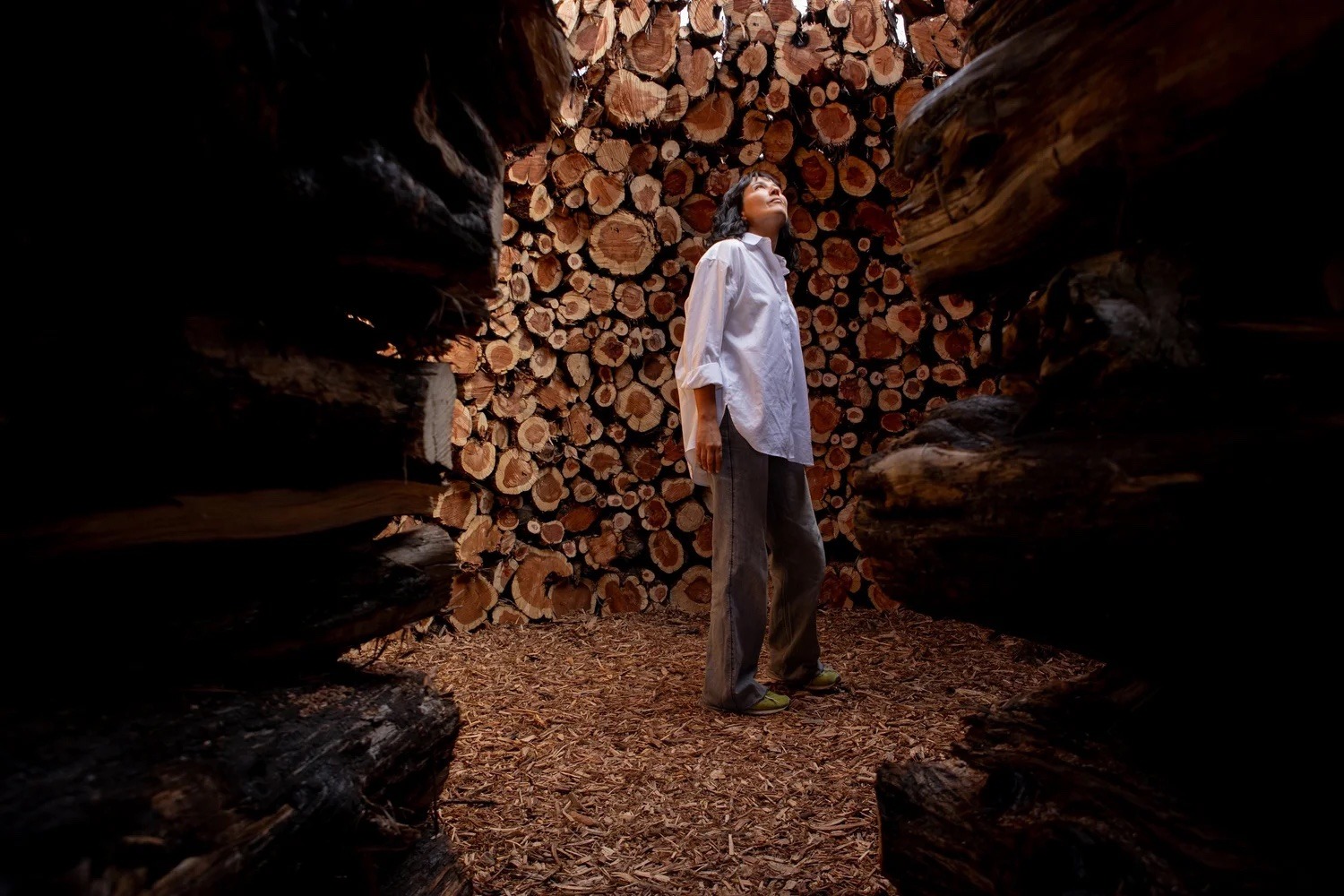
Kingswood, after visiting the work, highlights the profound dialogue between landscape, memory, and shared creation, underscoring the restorative potential of art when it takes root in a wounded territory.
Socarrado rises as part of the landscape, like a silent echo of what happened there, transforming the mark of the fire into a work that reminds us that even from devastation it is possible to listen to the earth again and learn to reconnect, with greater awareness and humility, with nature.