25-unit social housing building for rent, designed by Harqutiectes, is the winning entry in a competition organized by IBAVI, in which nine teams of architects participated.

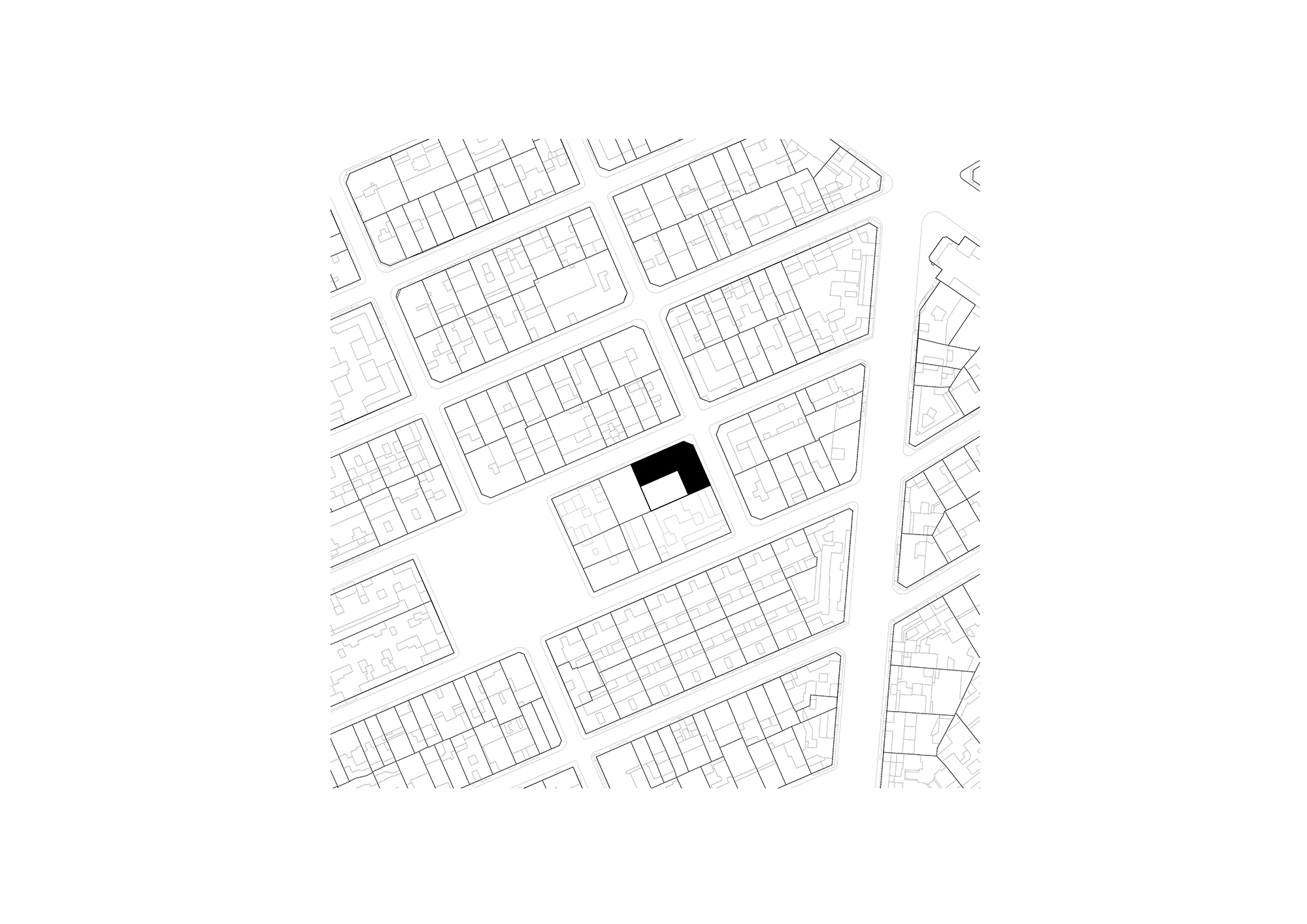
The homes are in a prime location, close to the center of Palma and the seafront promenade, in what was originally a residential area linked to nearby factories: the Campo de Serralta / Camp d'en Serralta neighbourhood.

The project is part of an exceptional group of residential developments undertaken by IBAVI. These social housing buildings, erected in a short period, have distinguished themselves both for their formal experimentation and their construction systems, becoming a set of residential prototypes that have become a local and international benchmark.

Harqutiectes' proposal addresses the demanding technical requirements set by IBAVI, involving the deconstruction of the existing building, a small, disused school, with maximum reuse of its systems and materials (structural marés stone walls and concrete and ceramic roofs) in the construction of the new building. This approach transforms the existing building into a model of "urban mining," converting demolition waste into new resources.

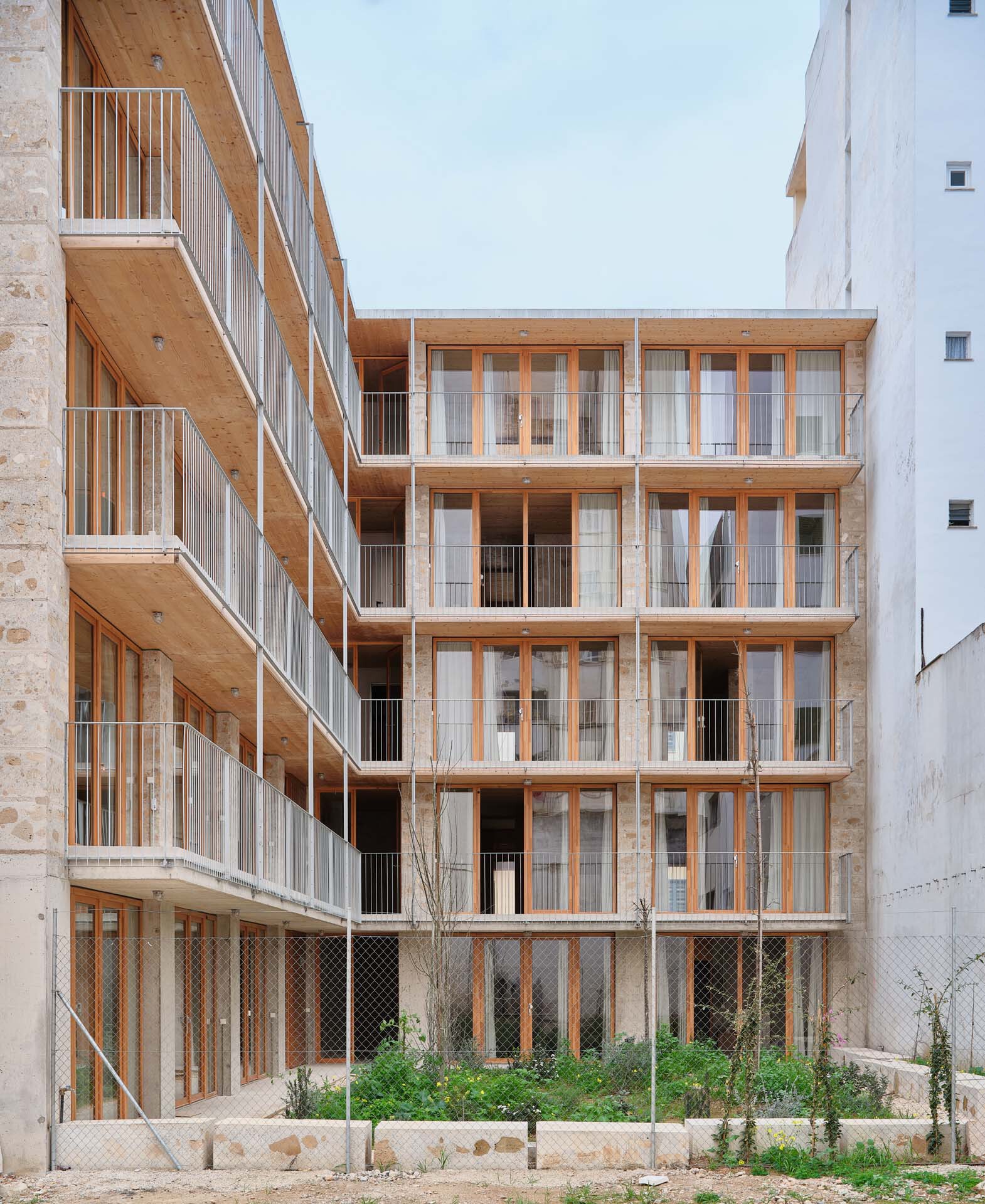
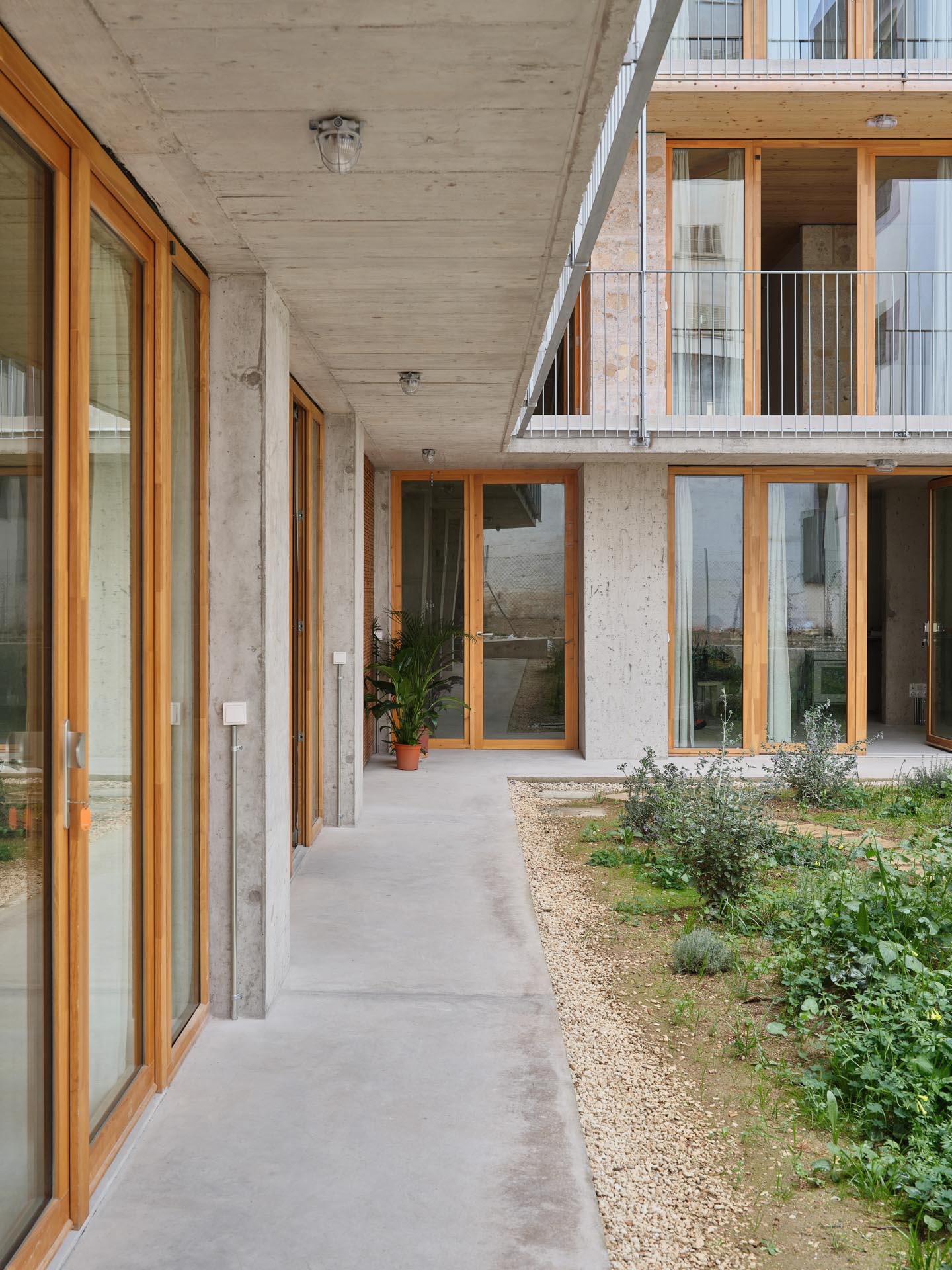
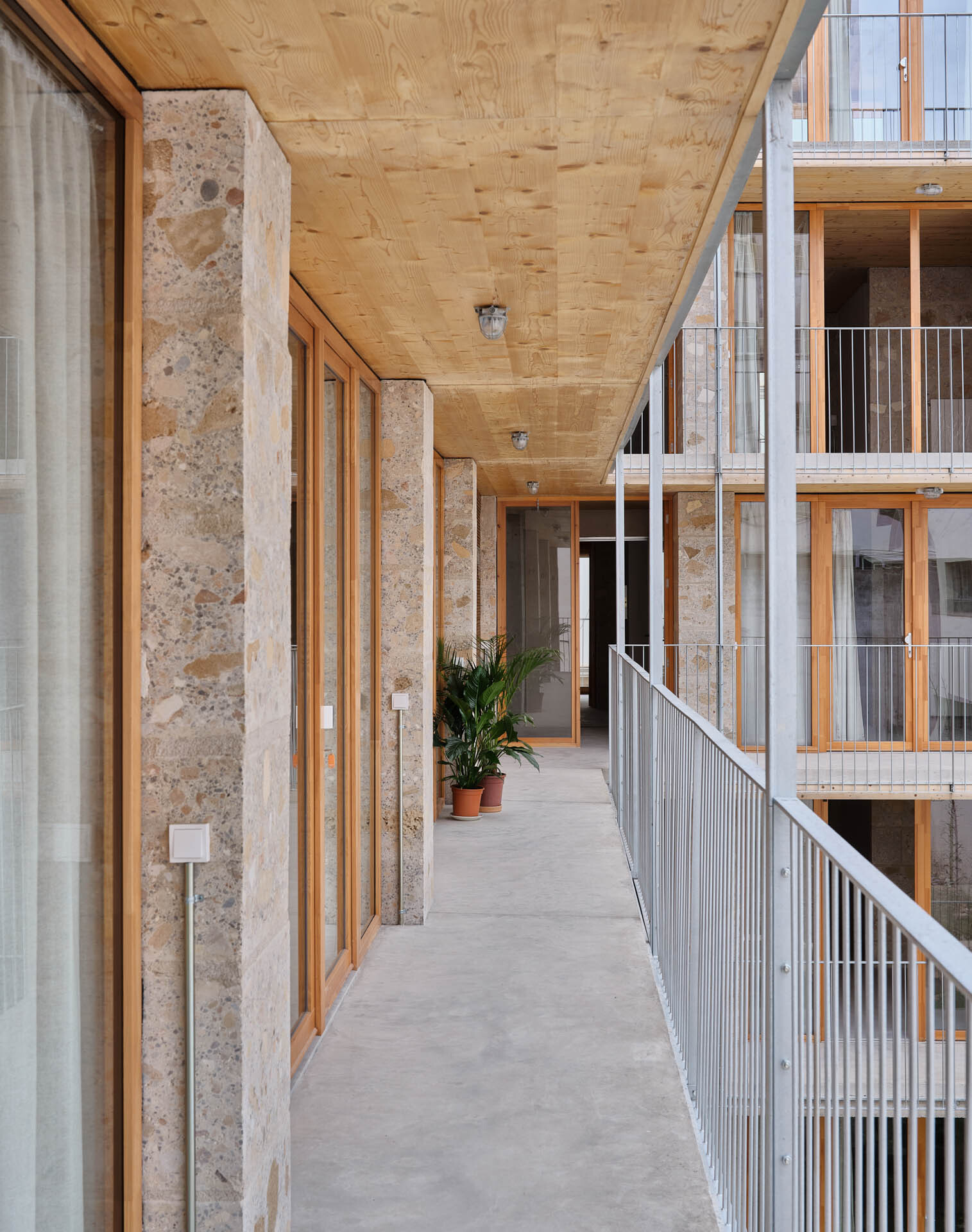
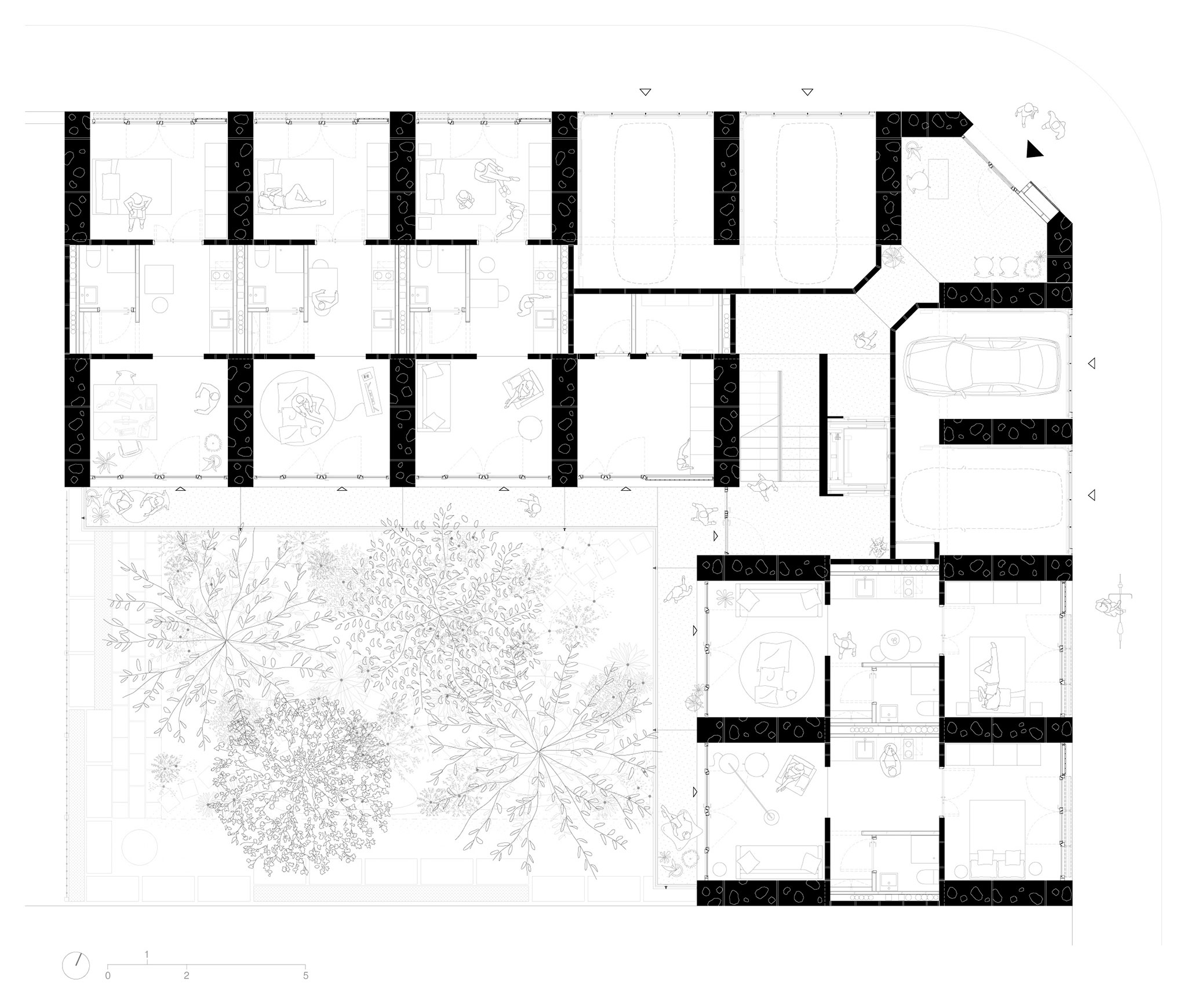
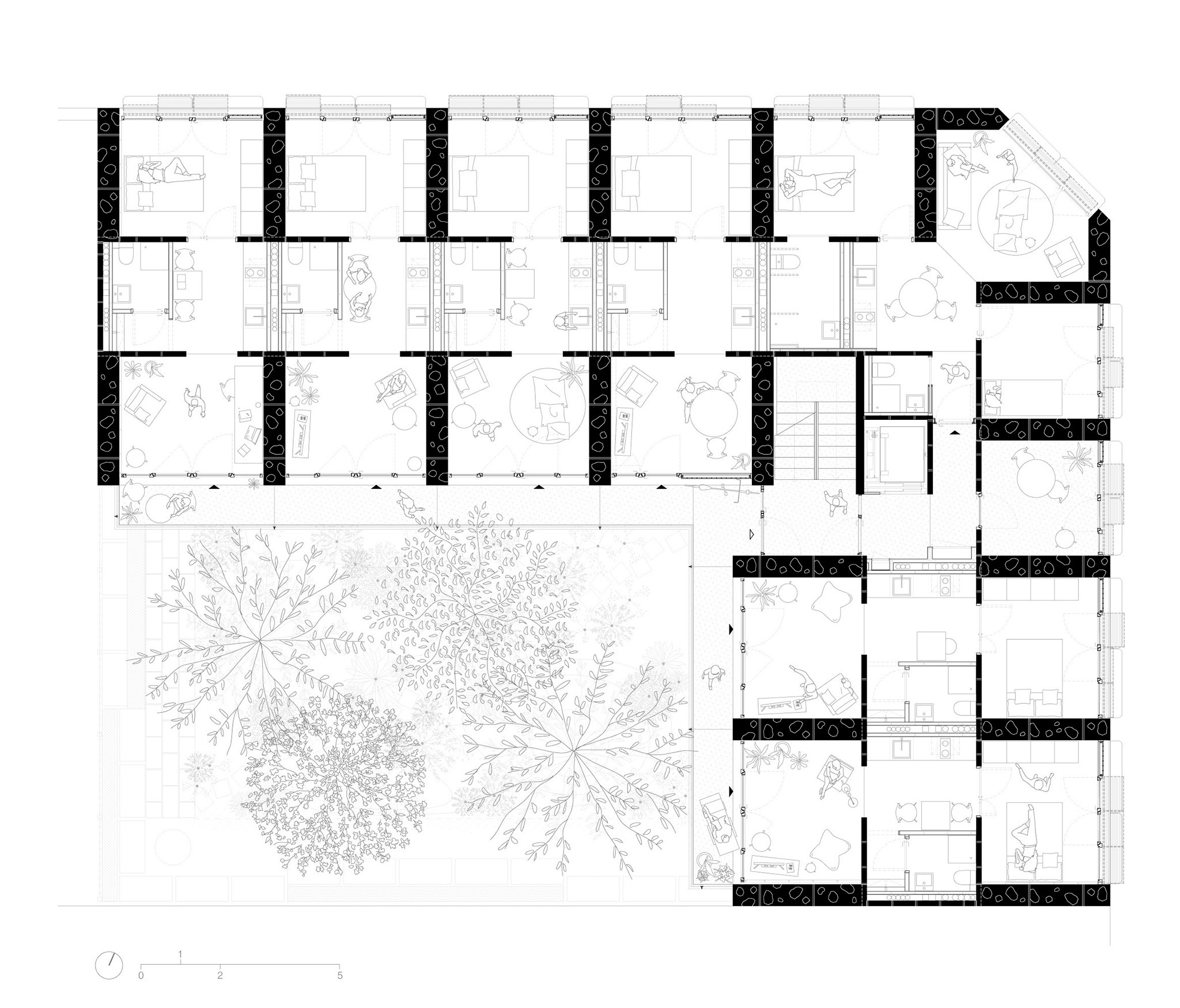
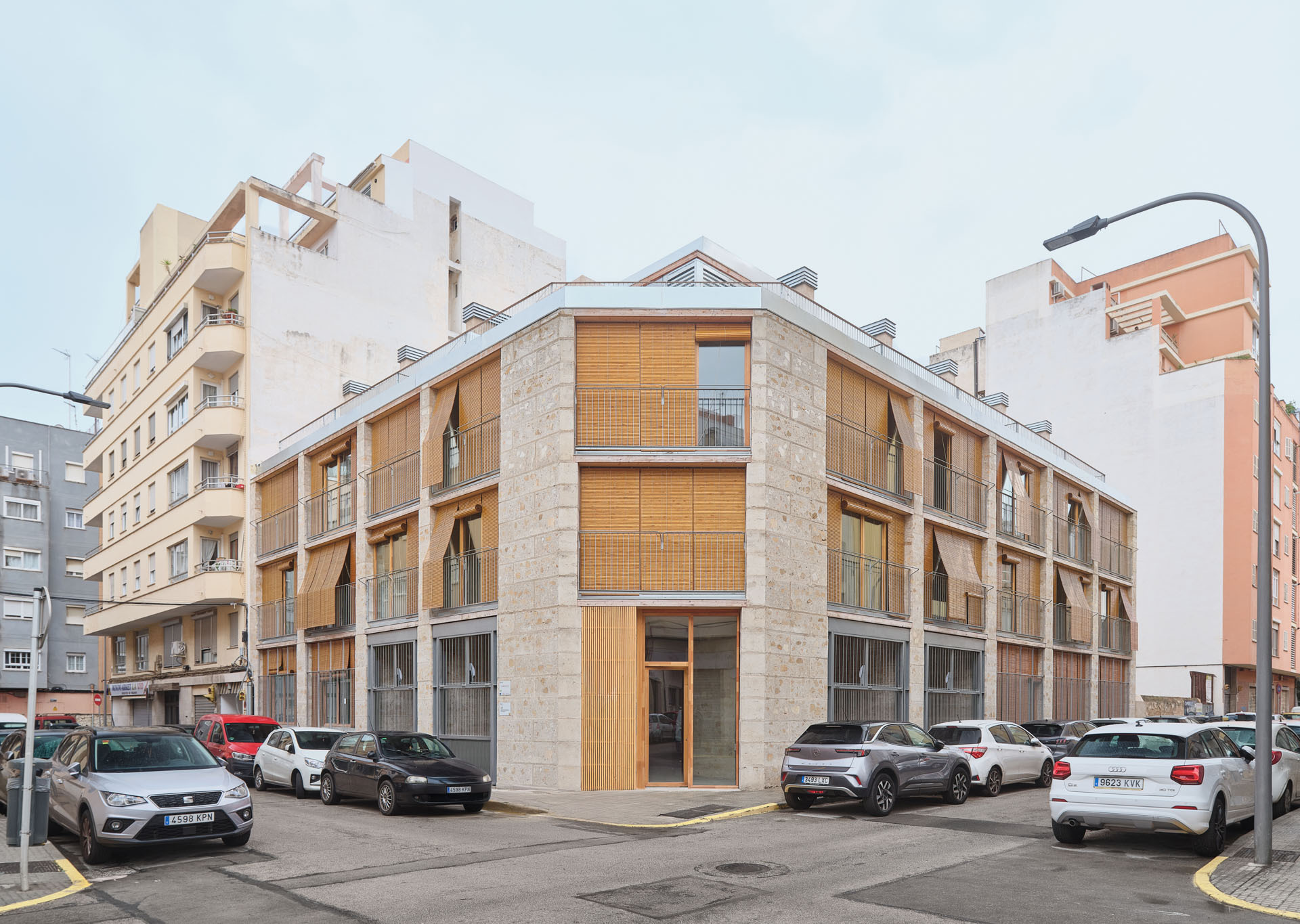
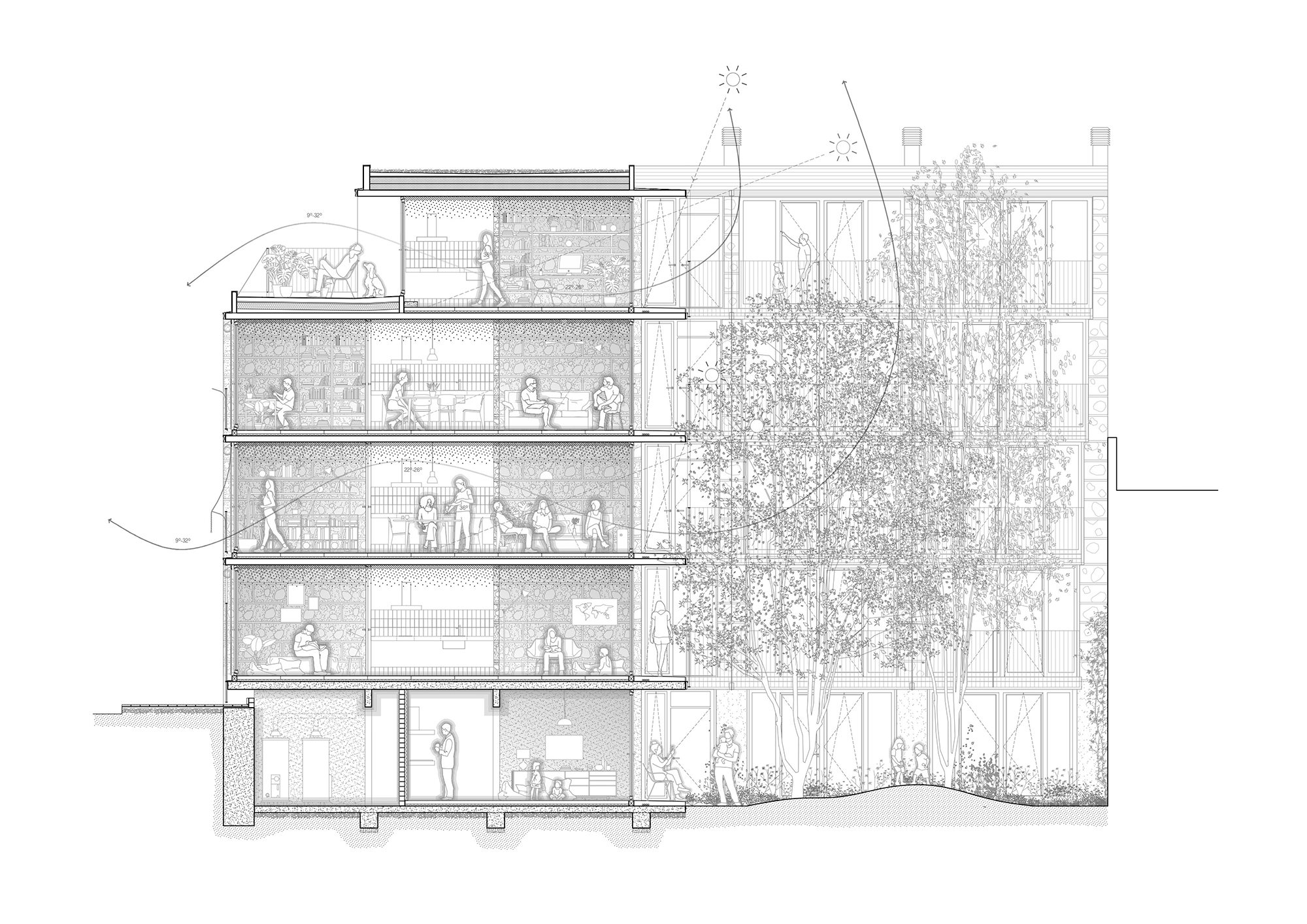
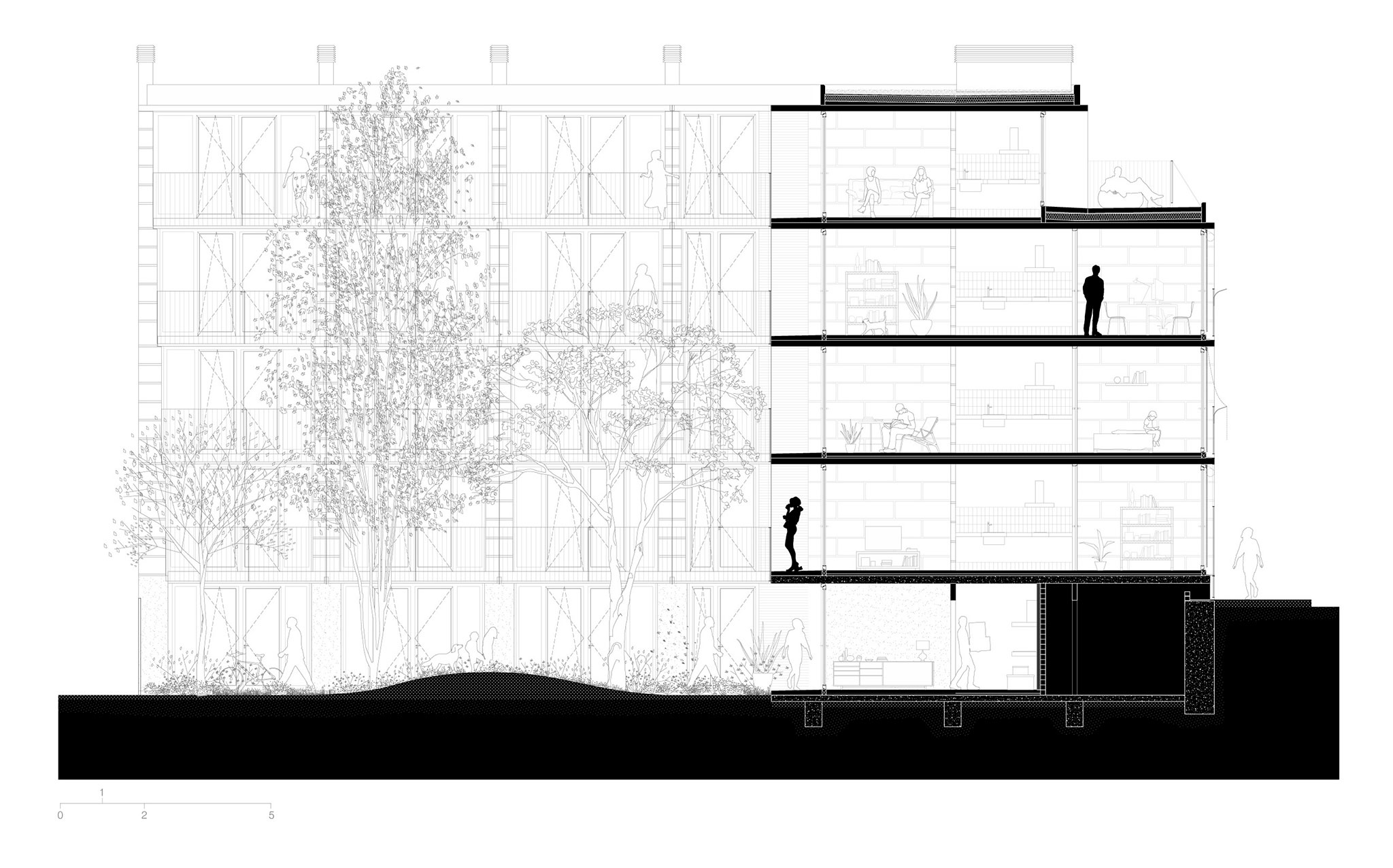
The project, comprising 25 social housing units for seniors, organizes the program with an L-shaped floor plan. A central stairwell at the corner connects to a walkway in the interior garden, providing access to the apartments. Each floor includes a common area (laundry room, lounges, etc.).

Harqutiectes also proposed the use of other prefabricated and rapidly deployable construction systems, combined with bioclimatic architectural strategies, which allowed for optimized timelines, reduced costs, and increased energy efficiency for the building, making it a benchmark for the development of a circular economy.

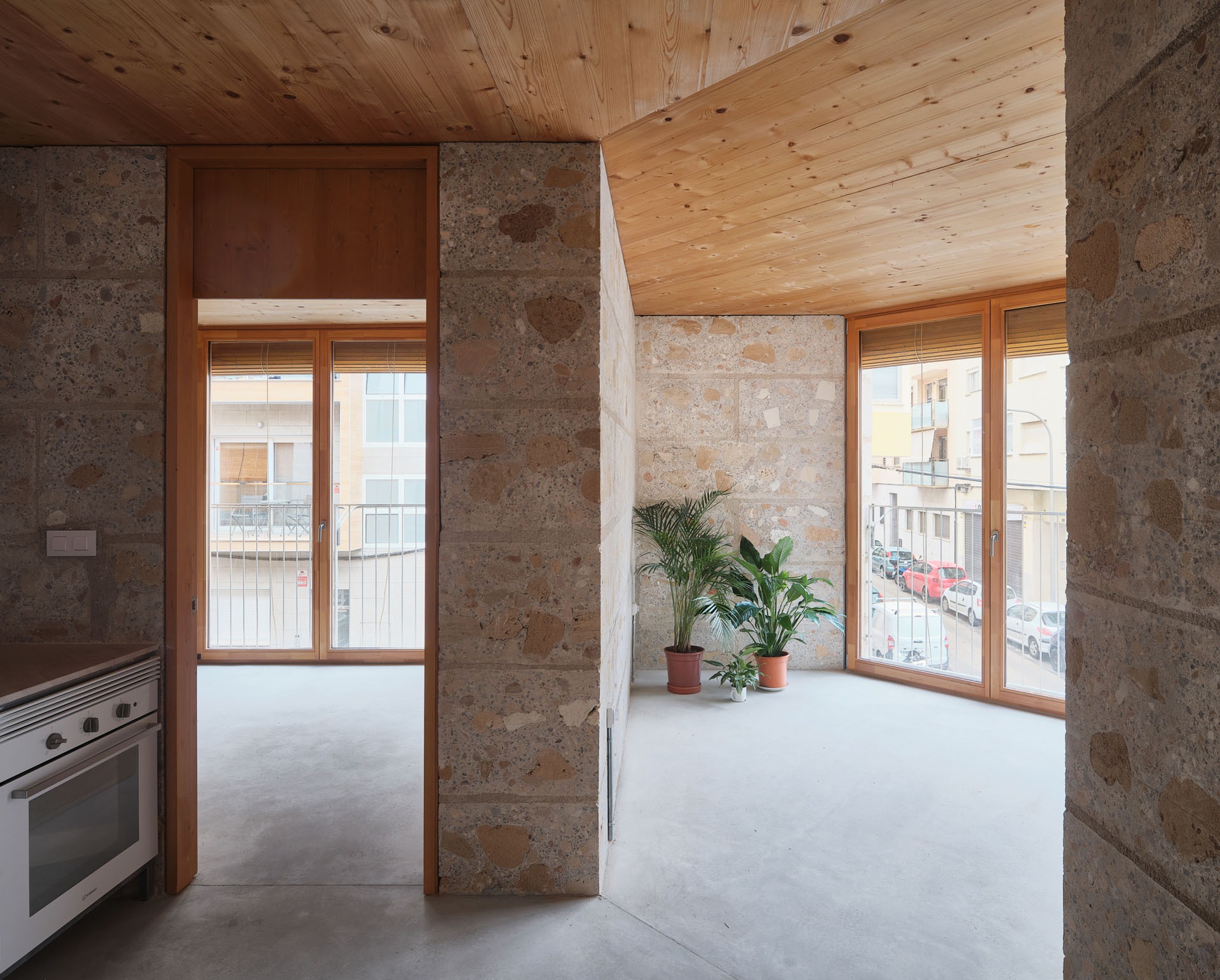
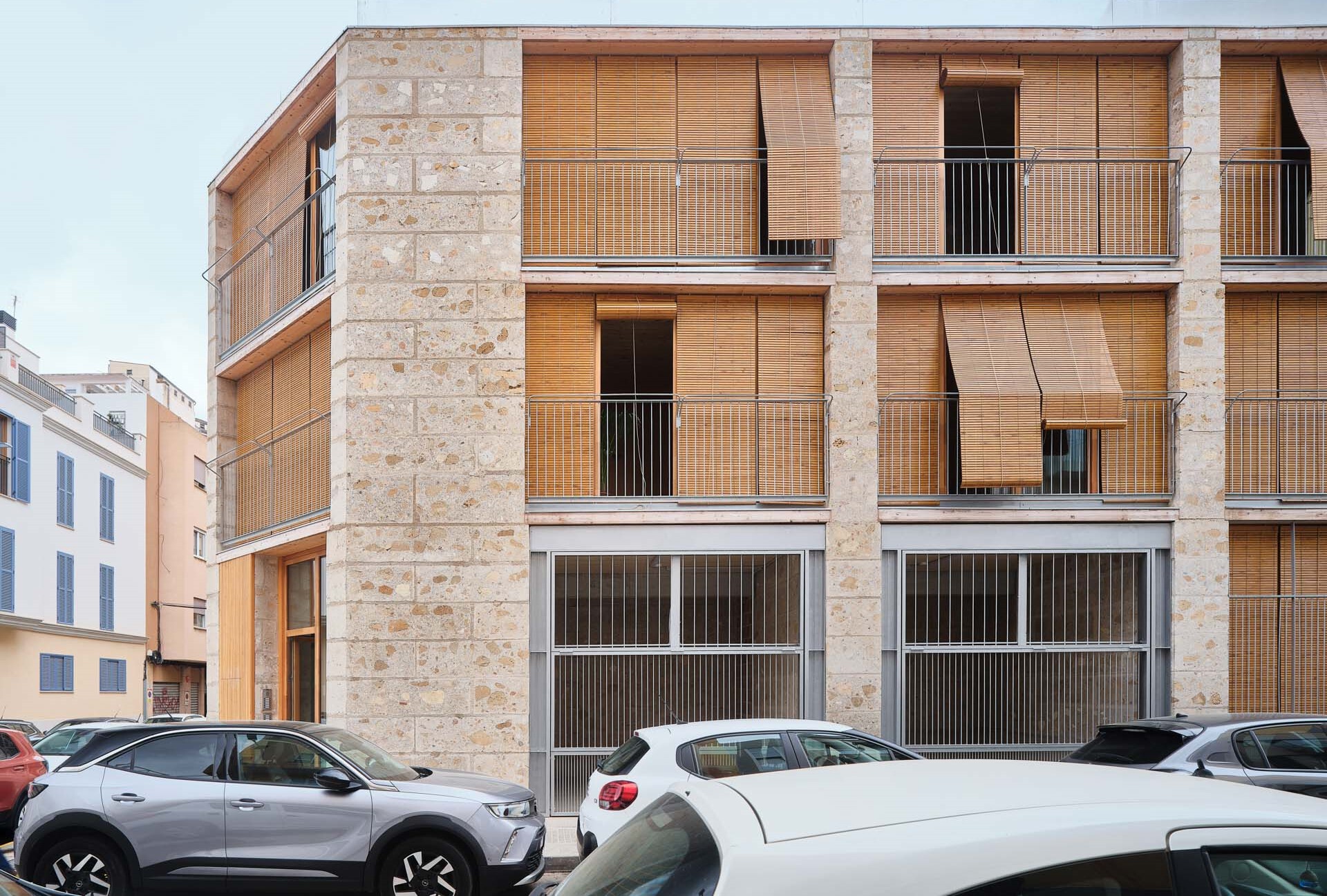
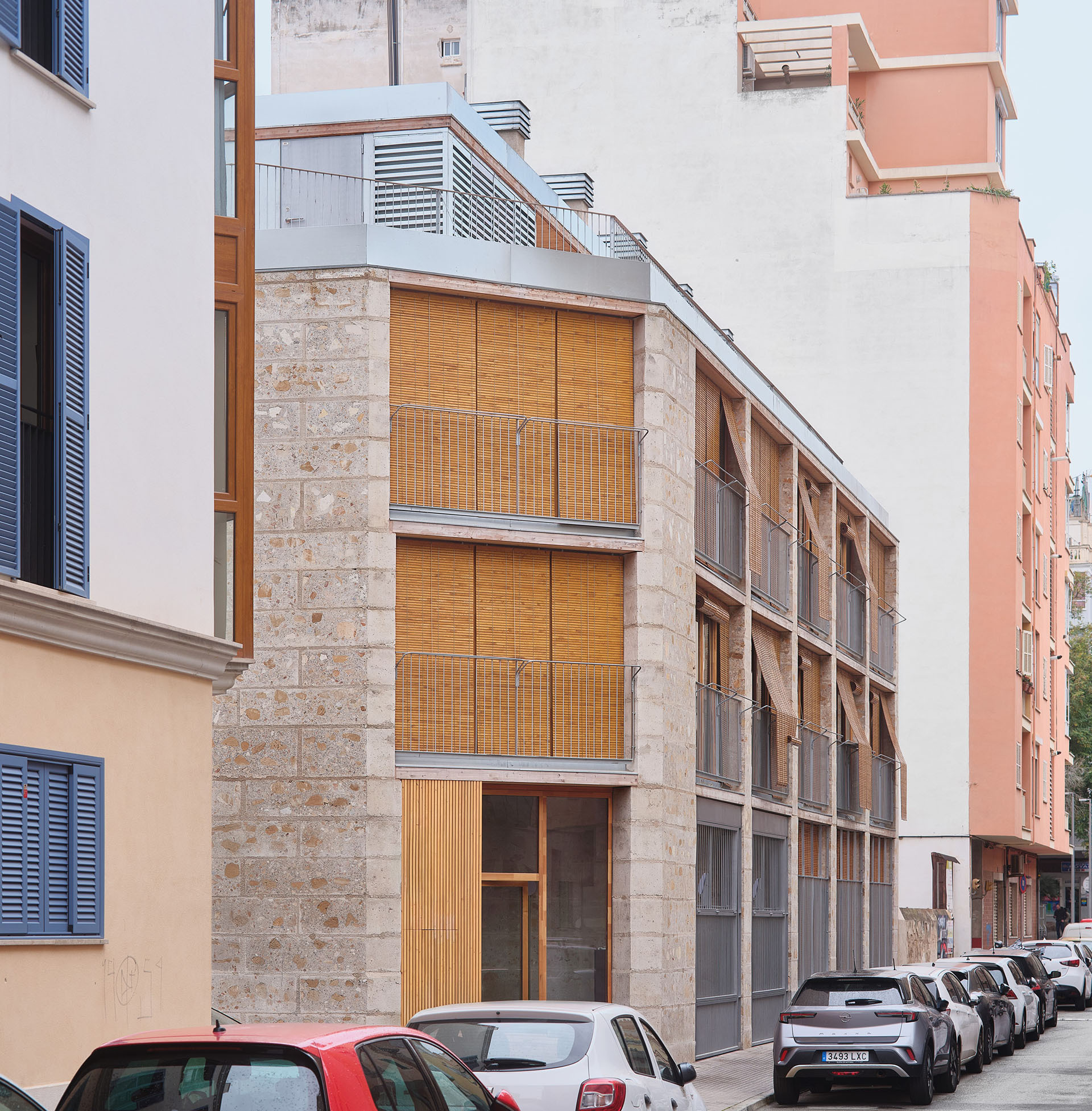
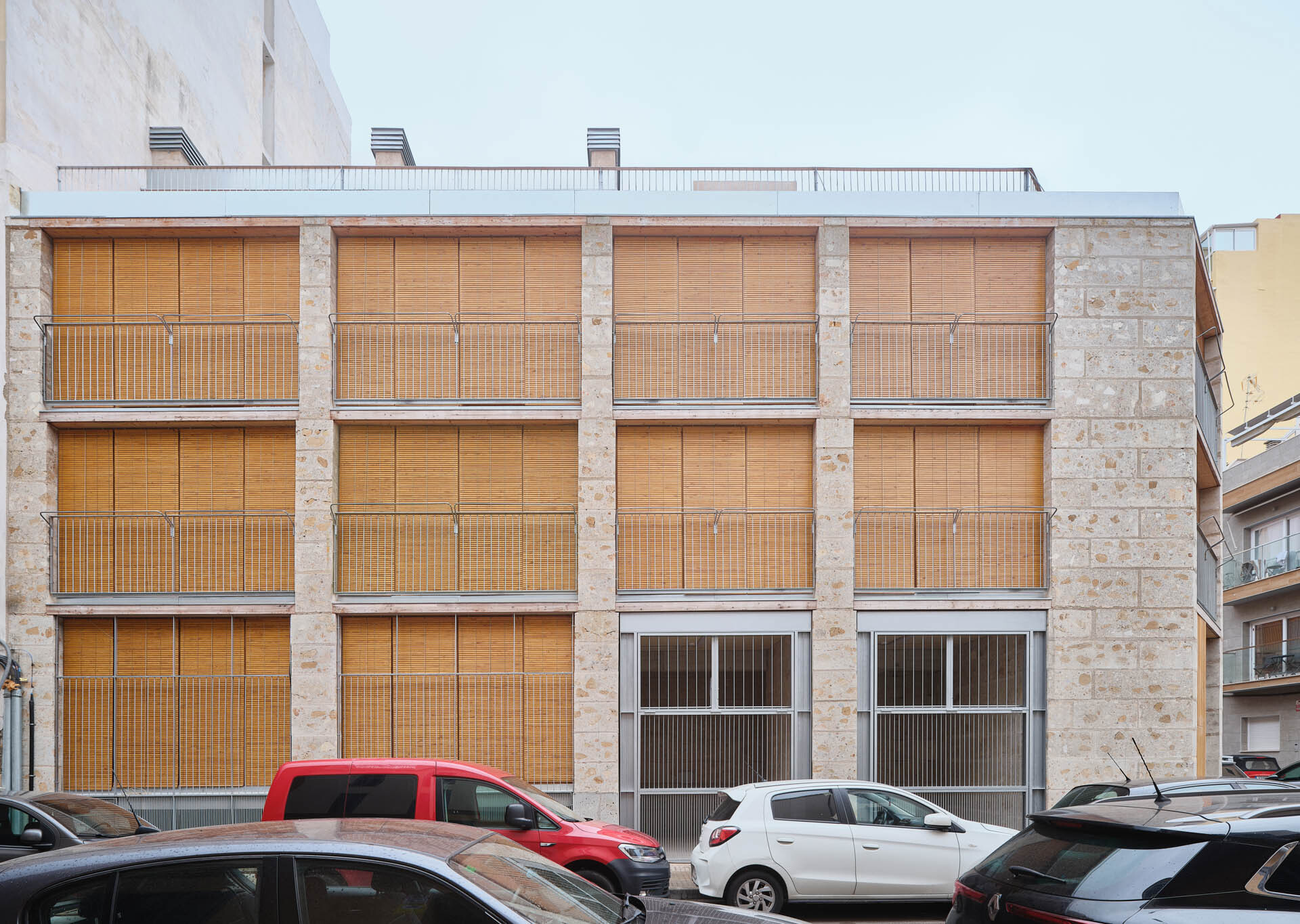
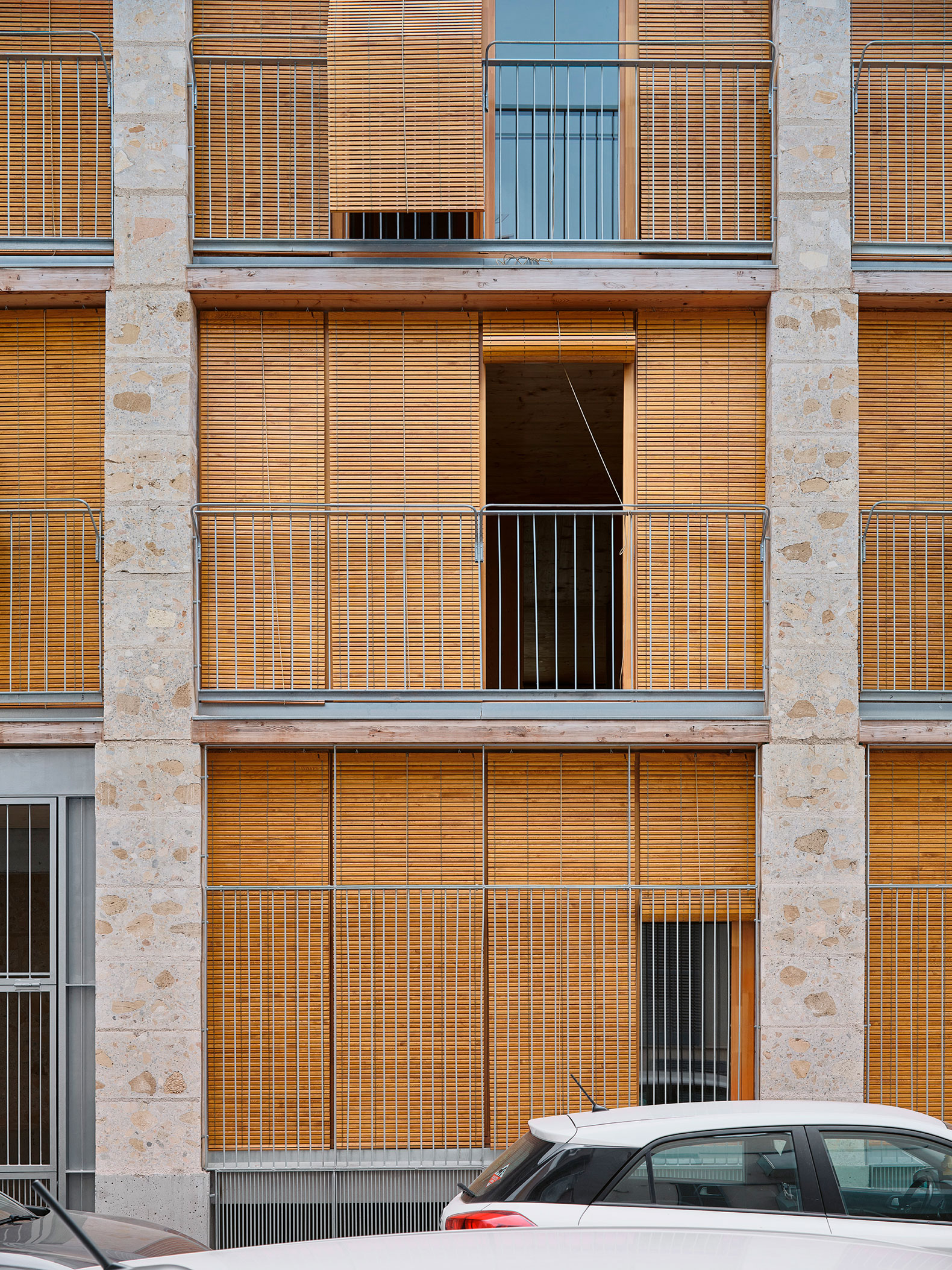
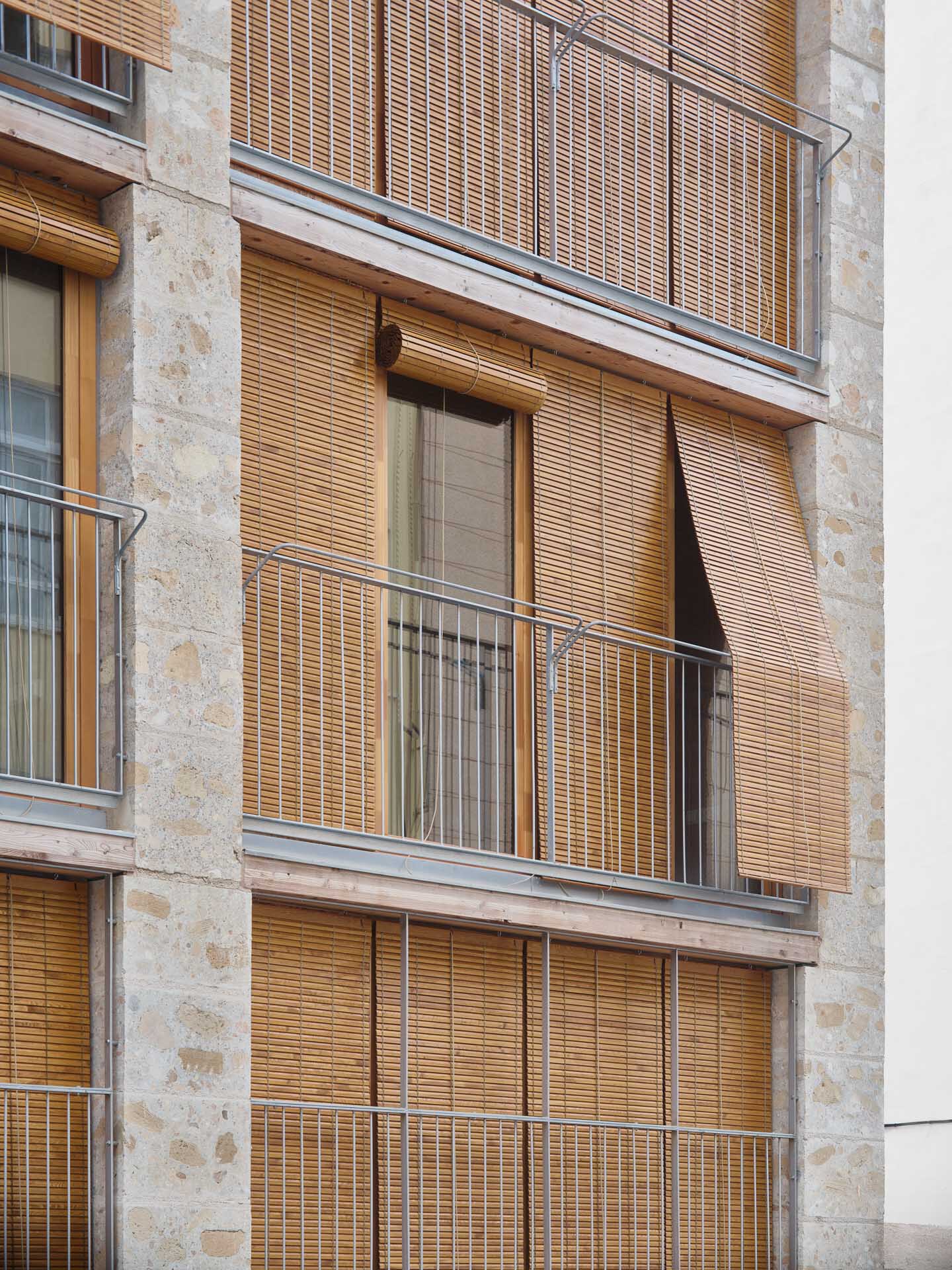
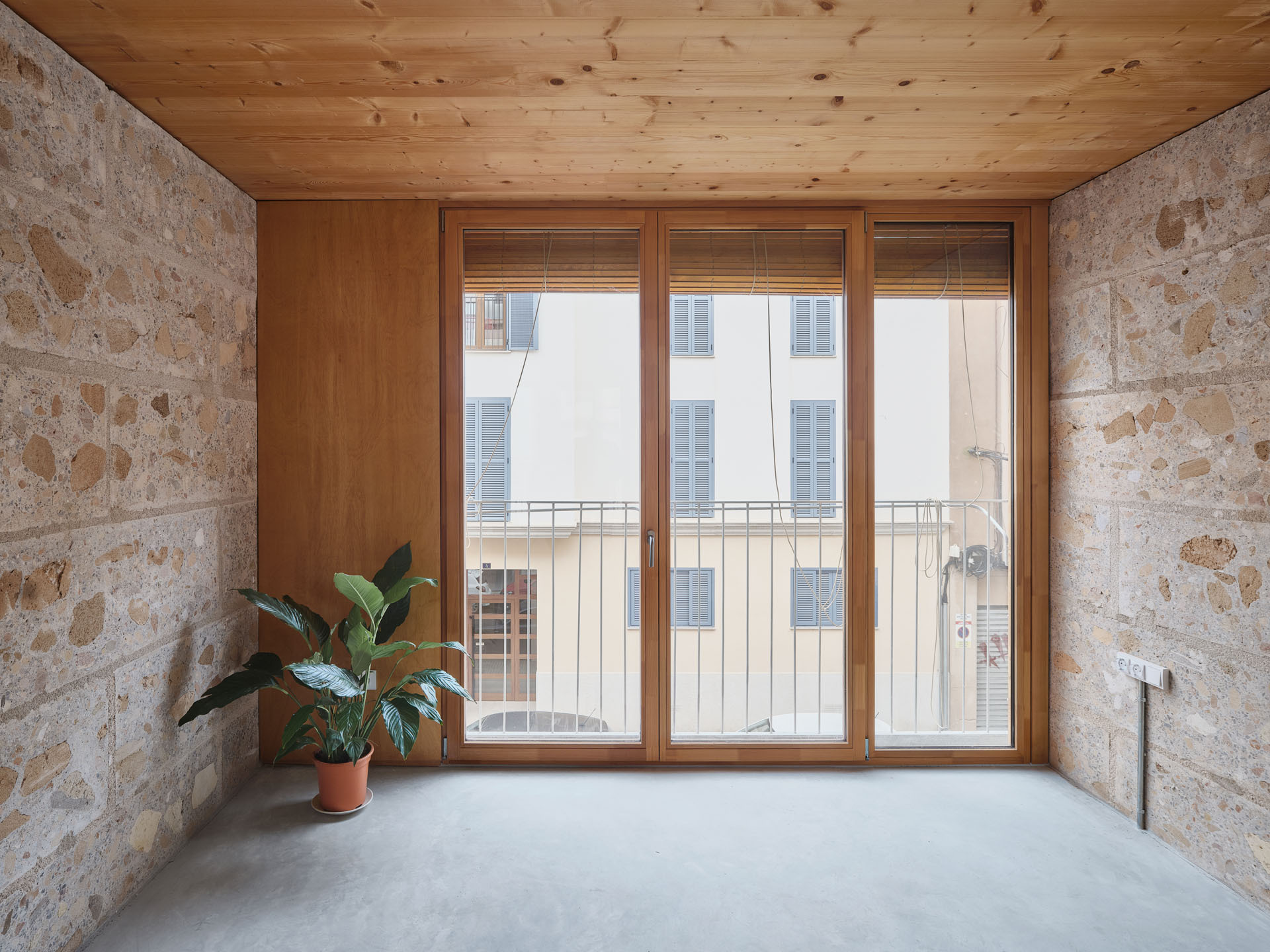
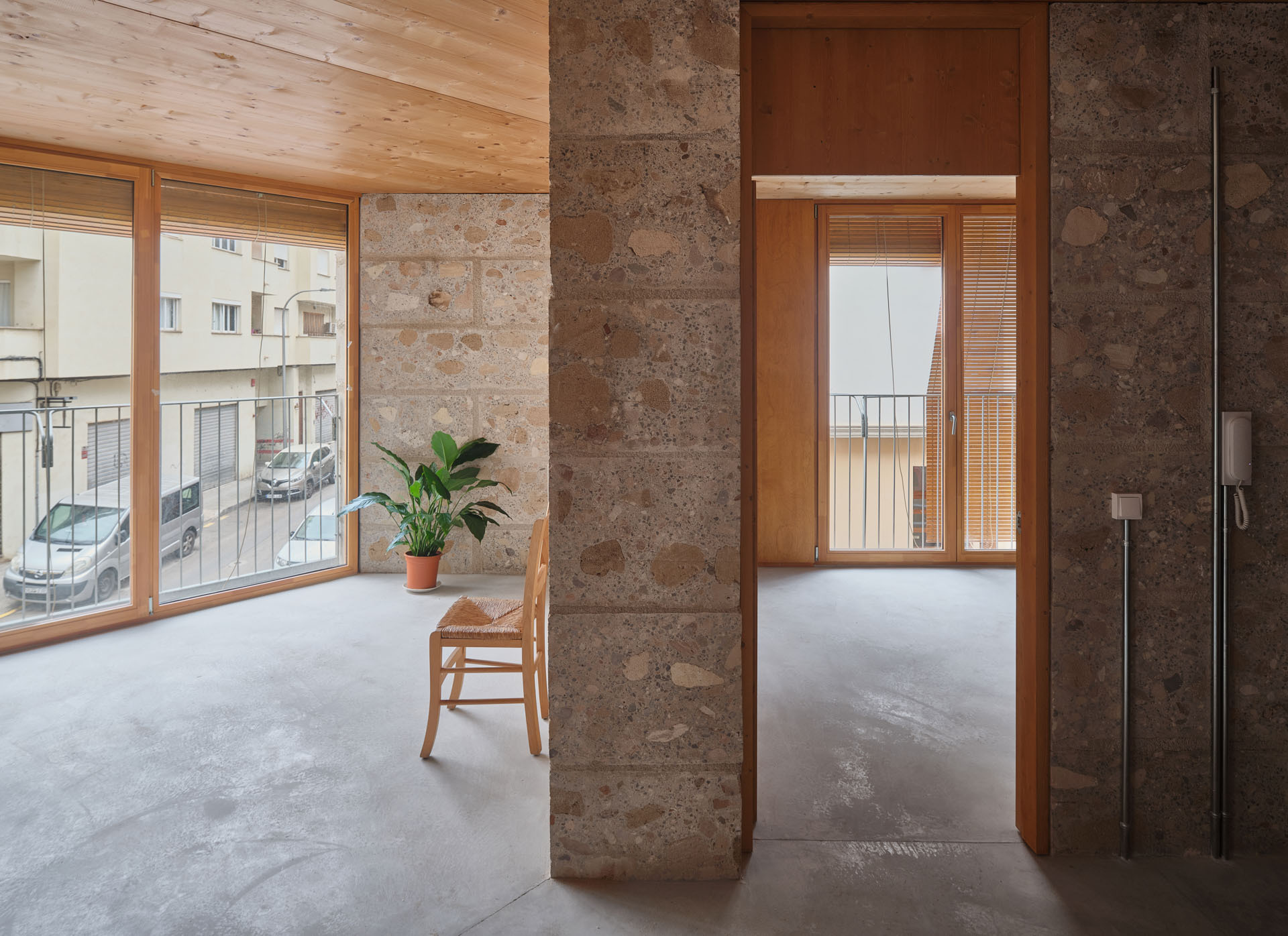
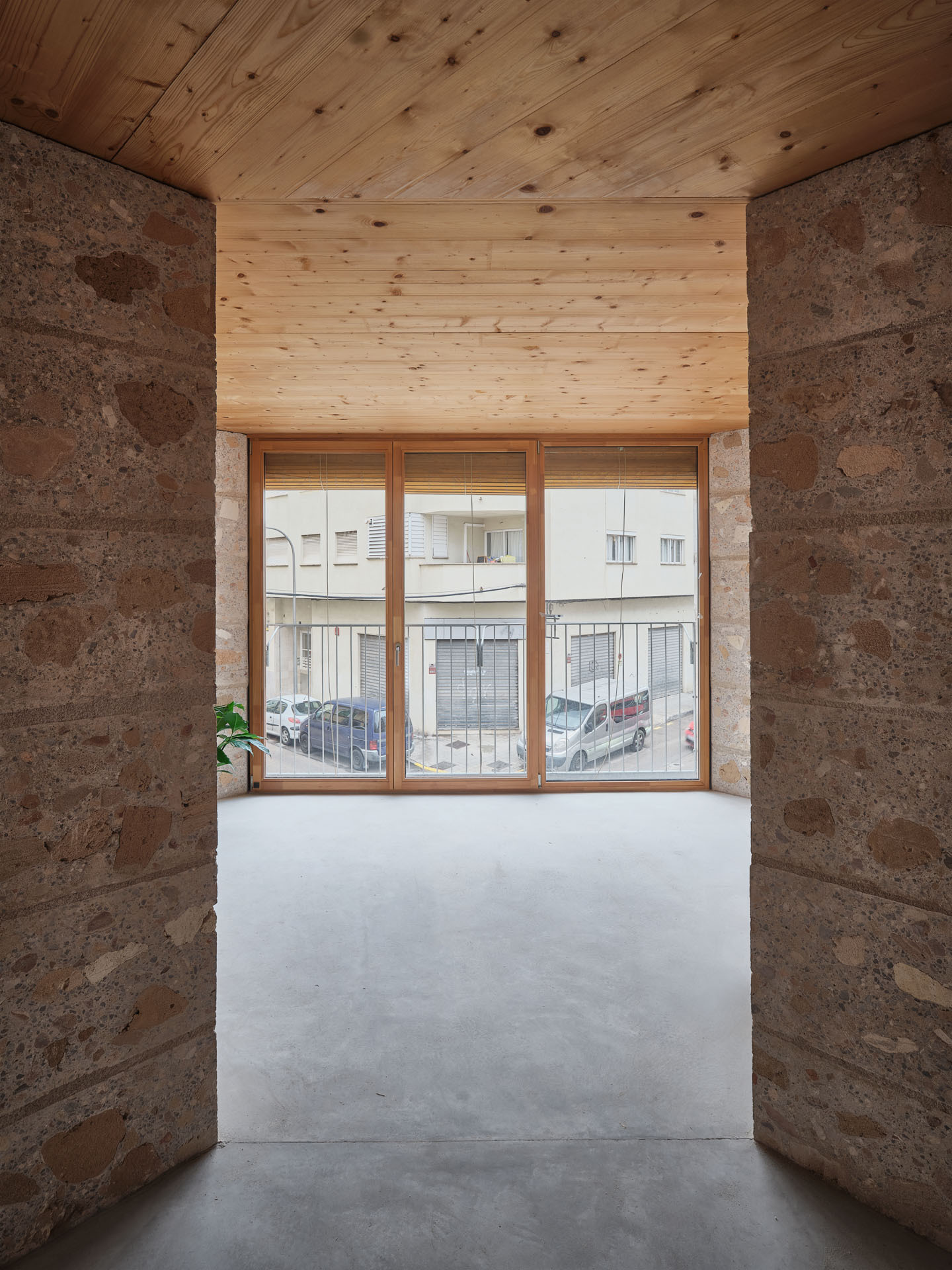
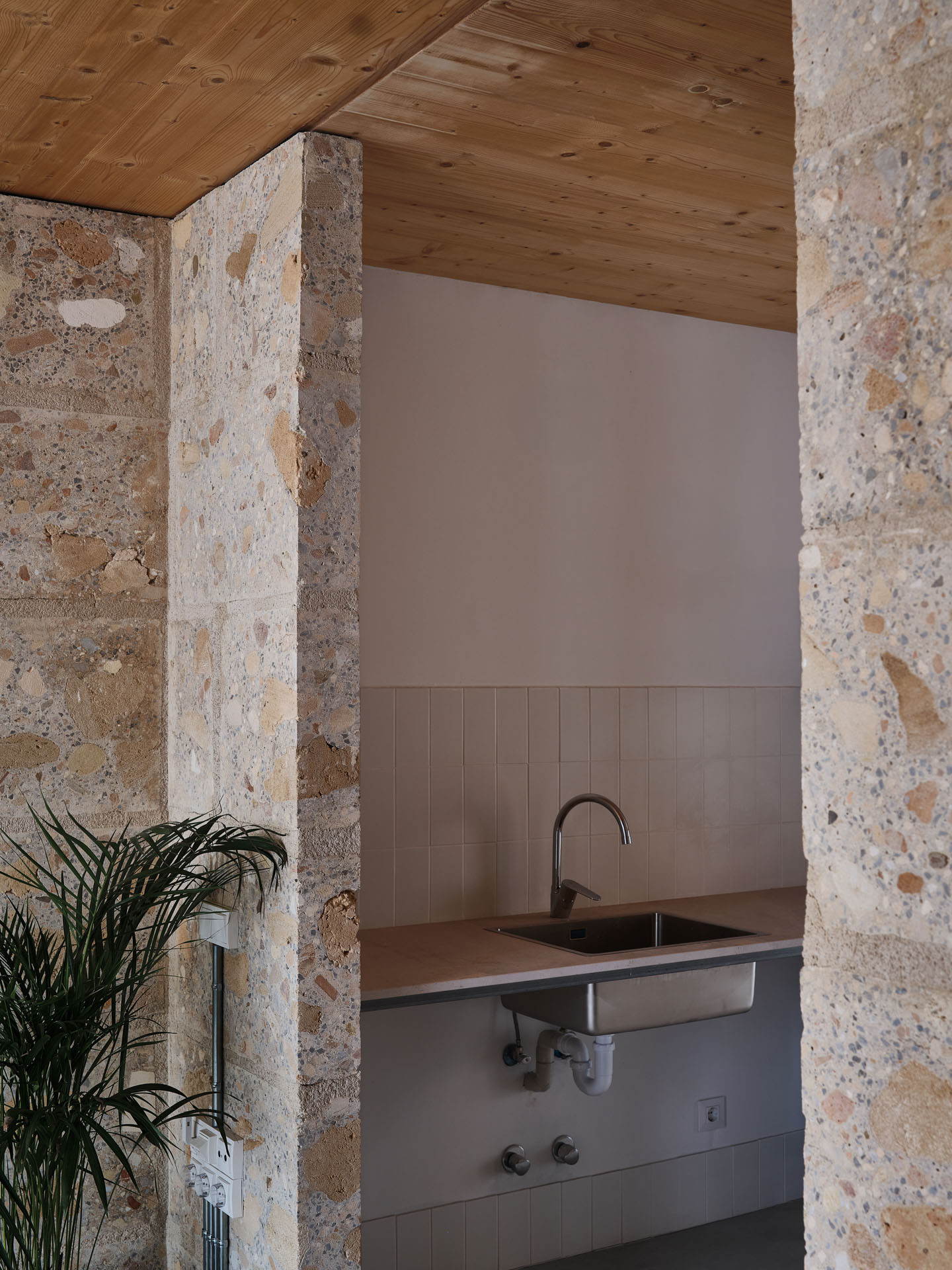
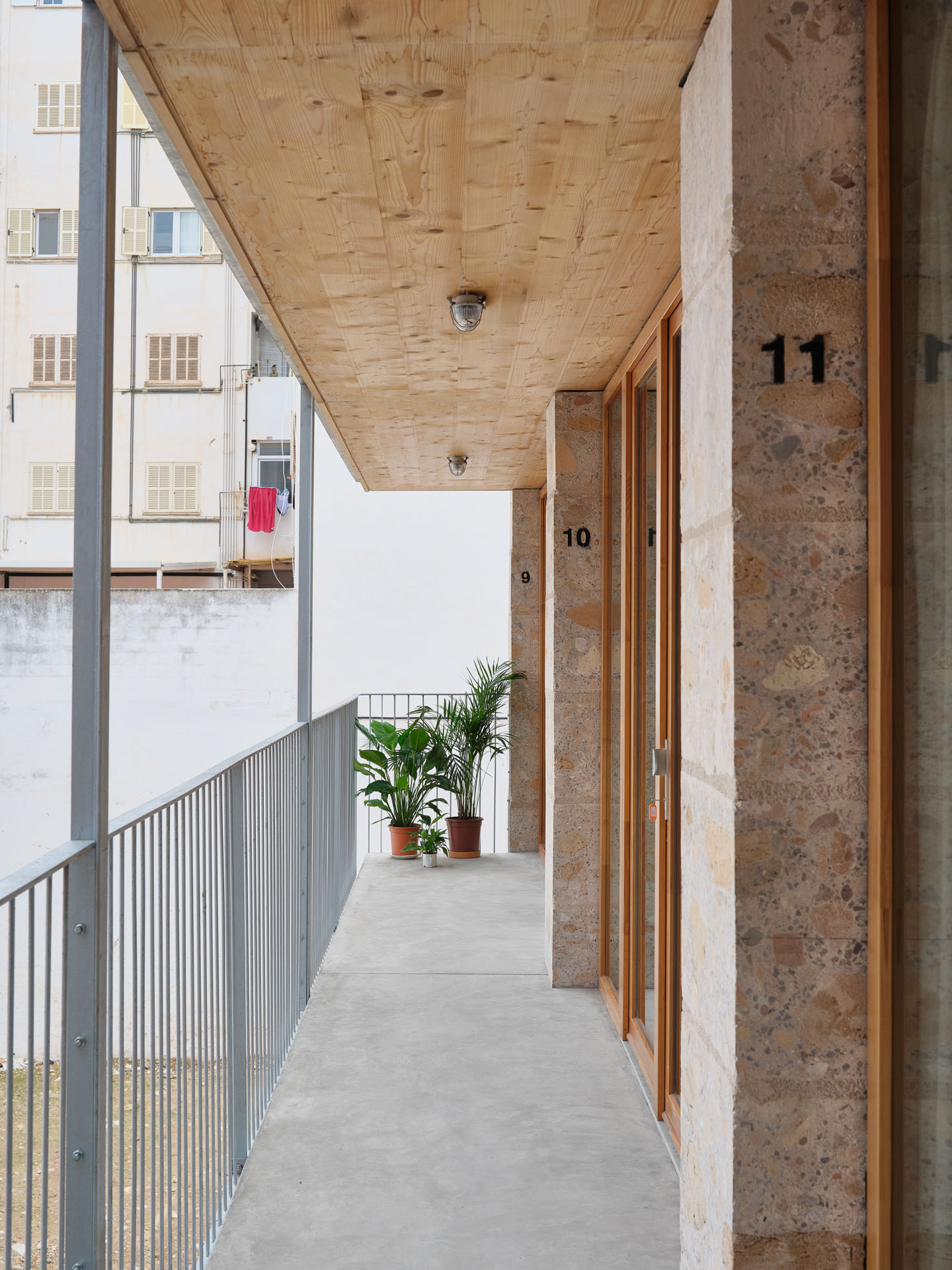
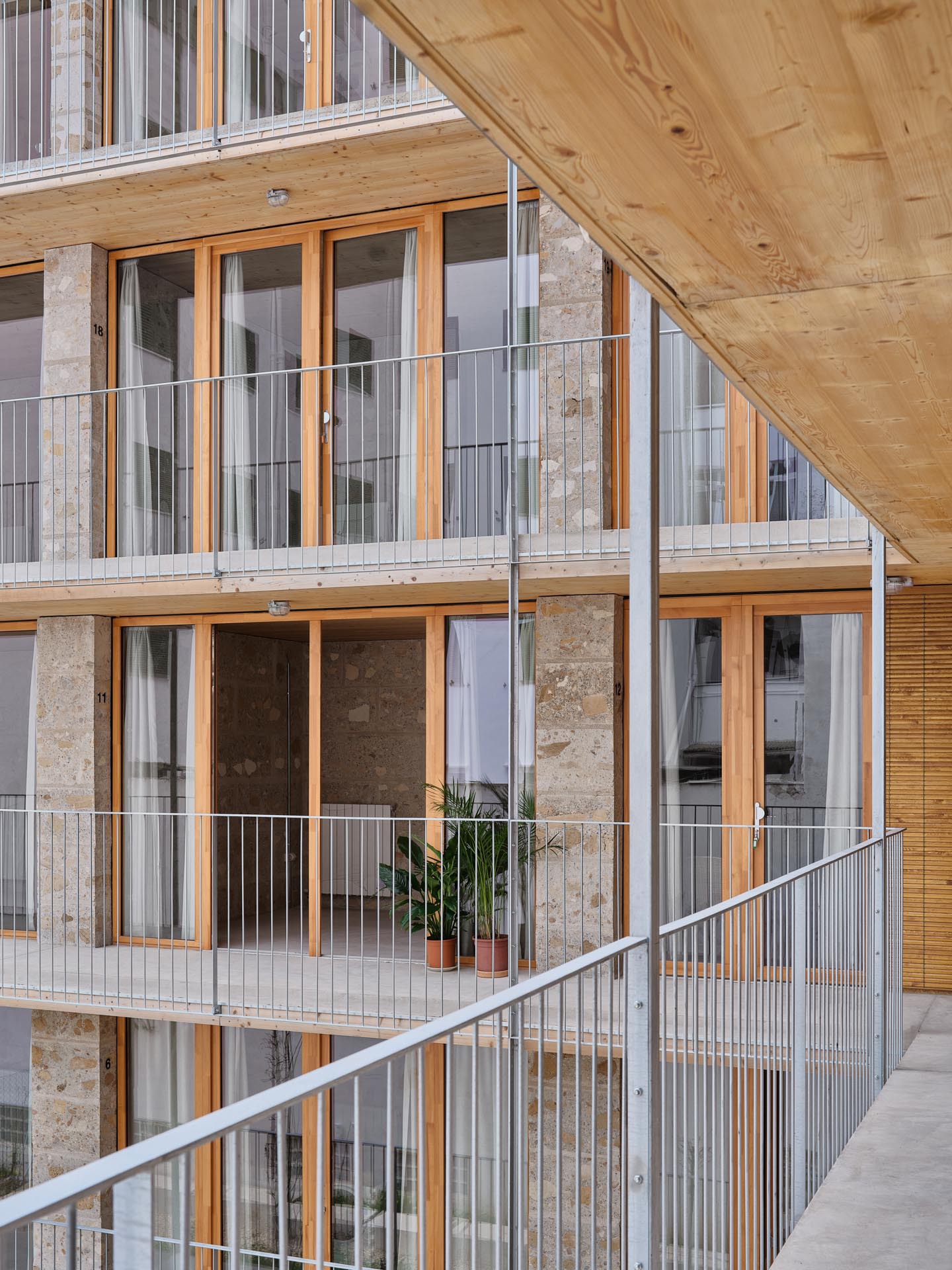
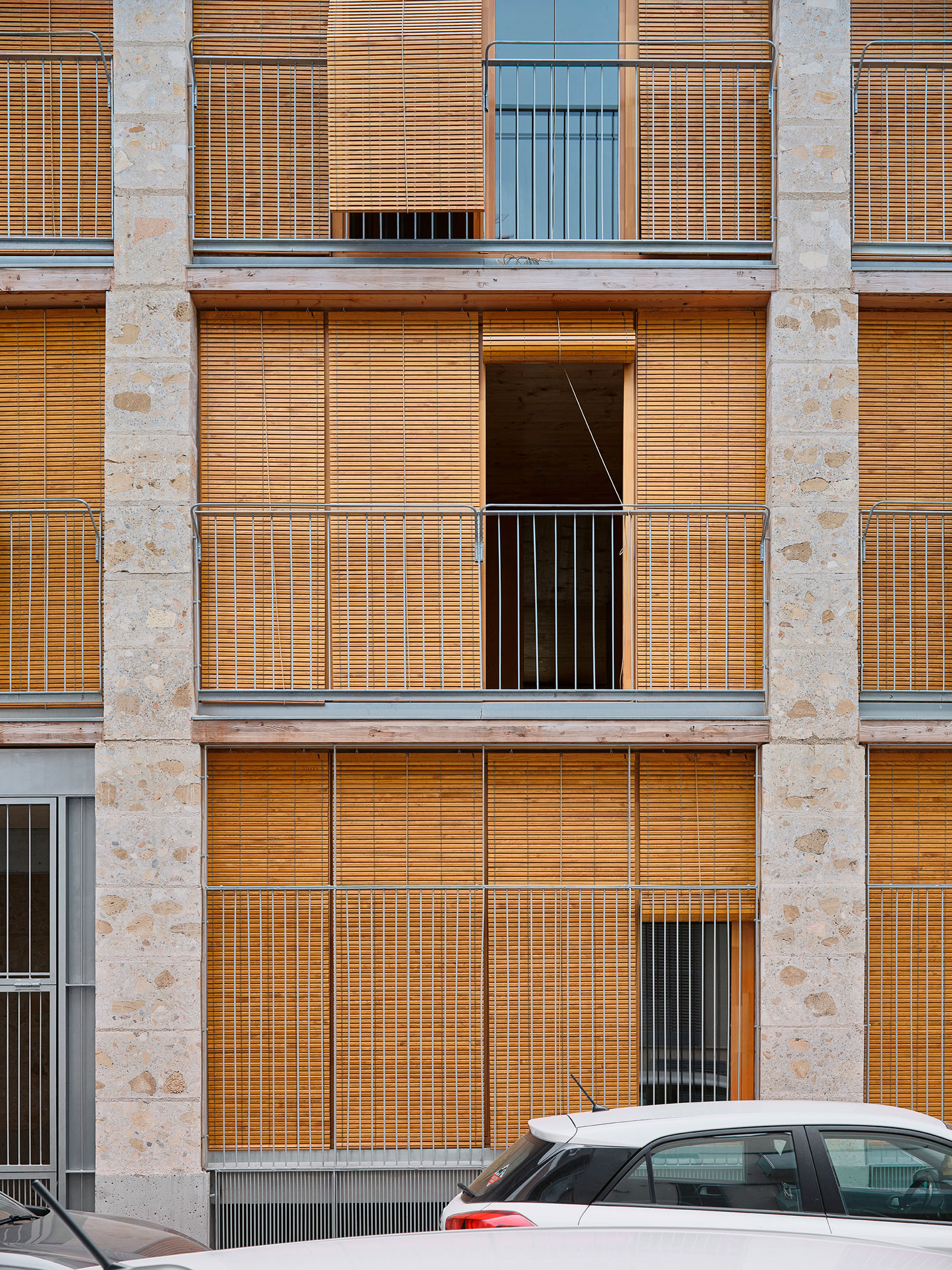
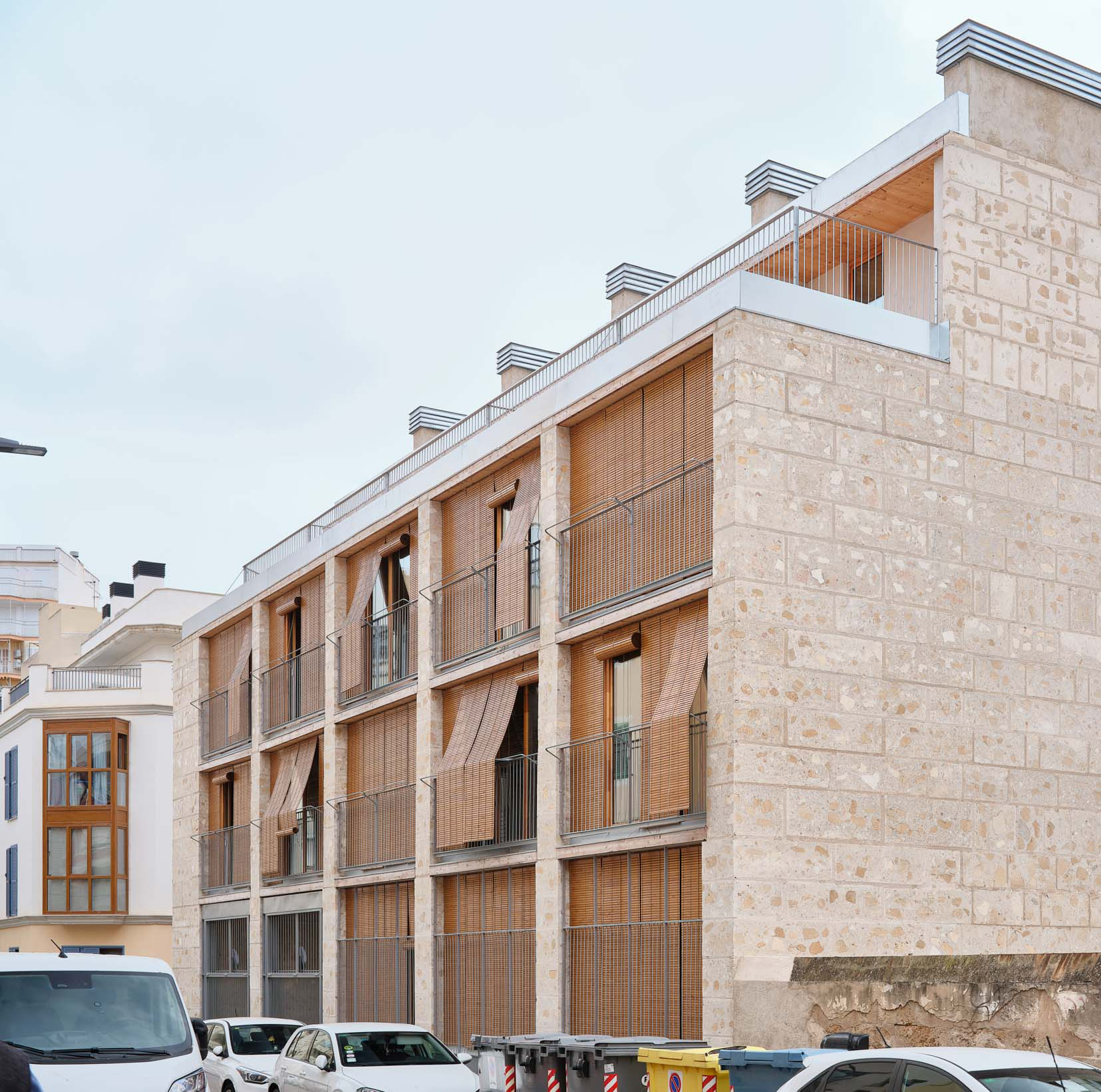
The façade reflects the structural system: end walls of prefabricated blocks with remnants, wooden ceilings and roofing, and a façade where each apartment features large openings with floor-to-ceiling wooden balconies, an opaque side band, and Venetian blinds that protect from the east and west sun.
25 Social housing by Harquitectes. Photograph by Adrià Goula

25 Social housing by Harquitectes. Photograph by Adrià Goula.

Project description by Harquitectes

On the plot where the Social Housing were built, primarily intended for the elderly, there was a building that we were obliged to demolish due to its non-compliance with urban planning regulations and its poor condition—there was no possibility of preserving it. It was a small, disused three-story school constructed with structural sandstone (marès) walls and concrete and ceramic ceilings. 

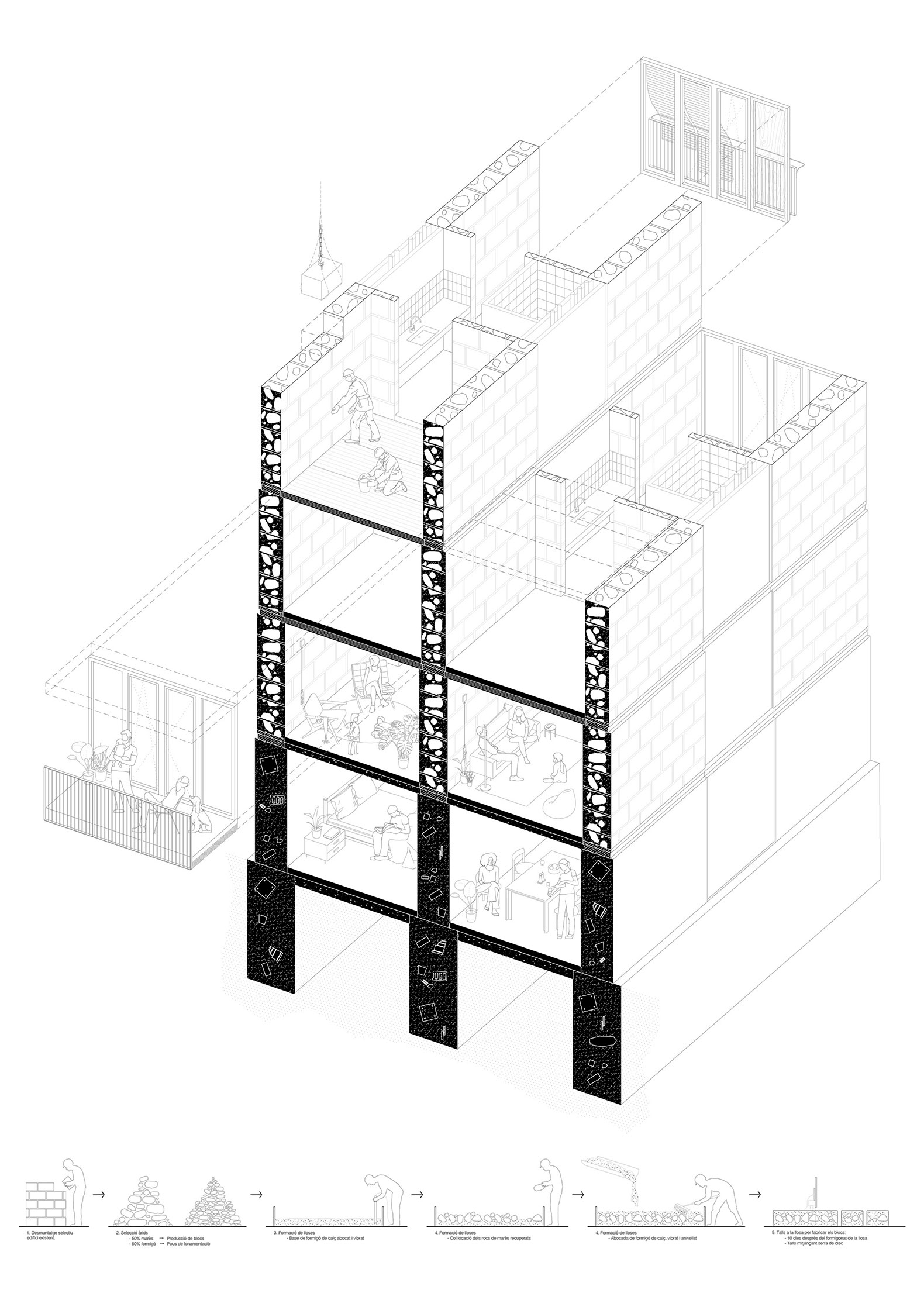
The project's distinctive strategy was the utilization of demolition materials from the old school as resources to construct the new building, practicing what we might call urban mining: where material resources come from the urban plot itself, resulting from the demolition of the pre-existing building. 

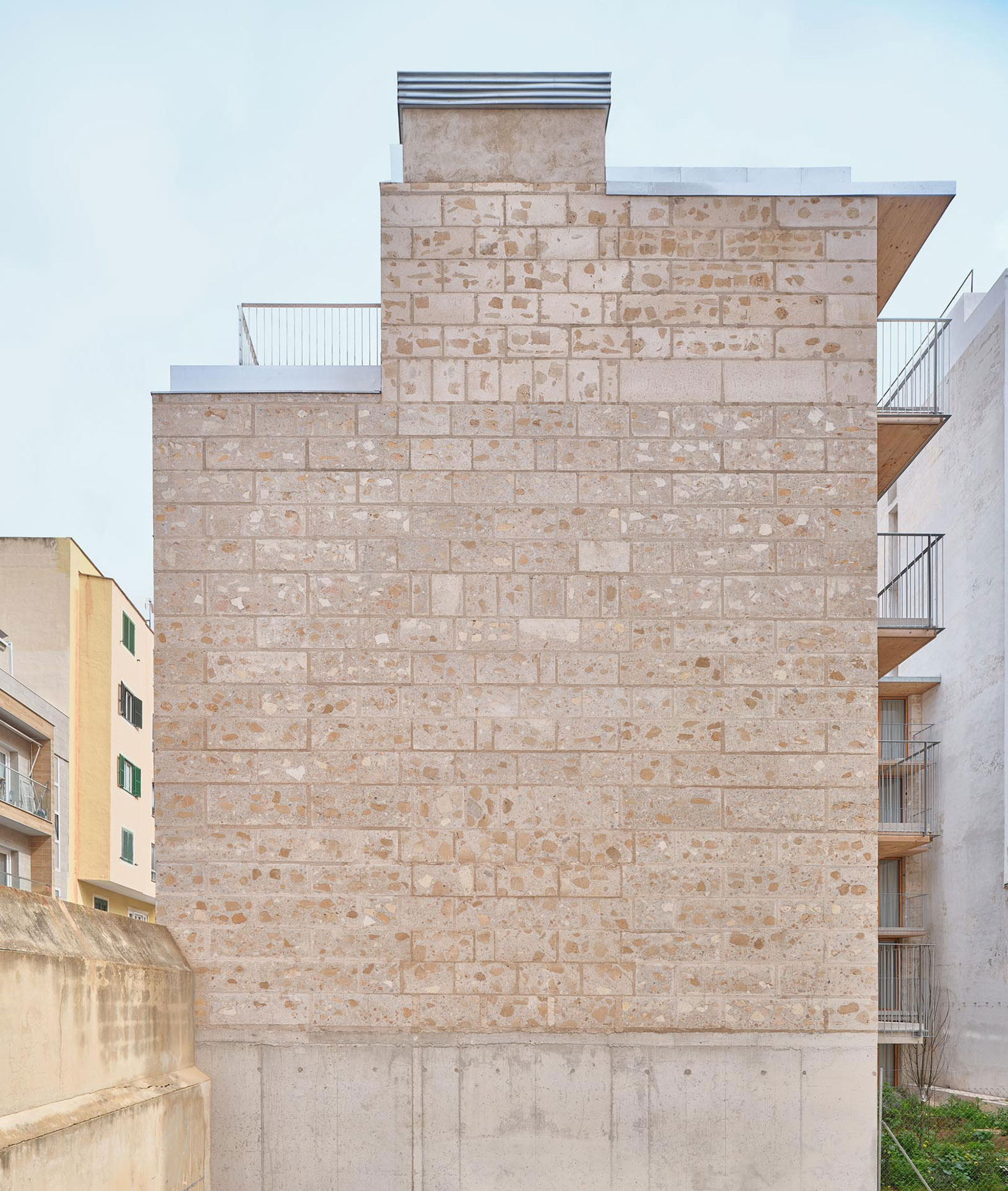
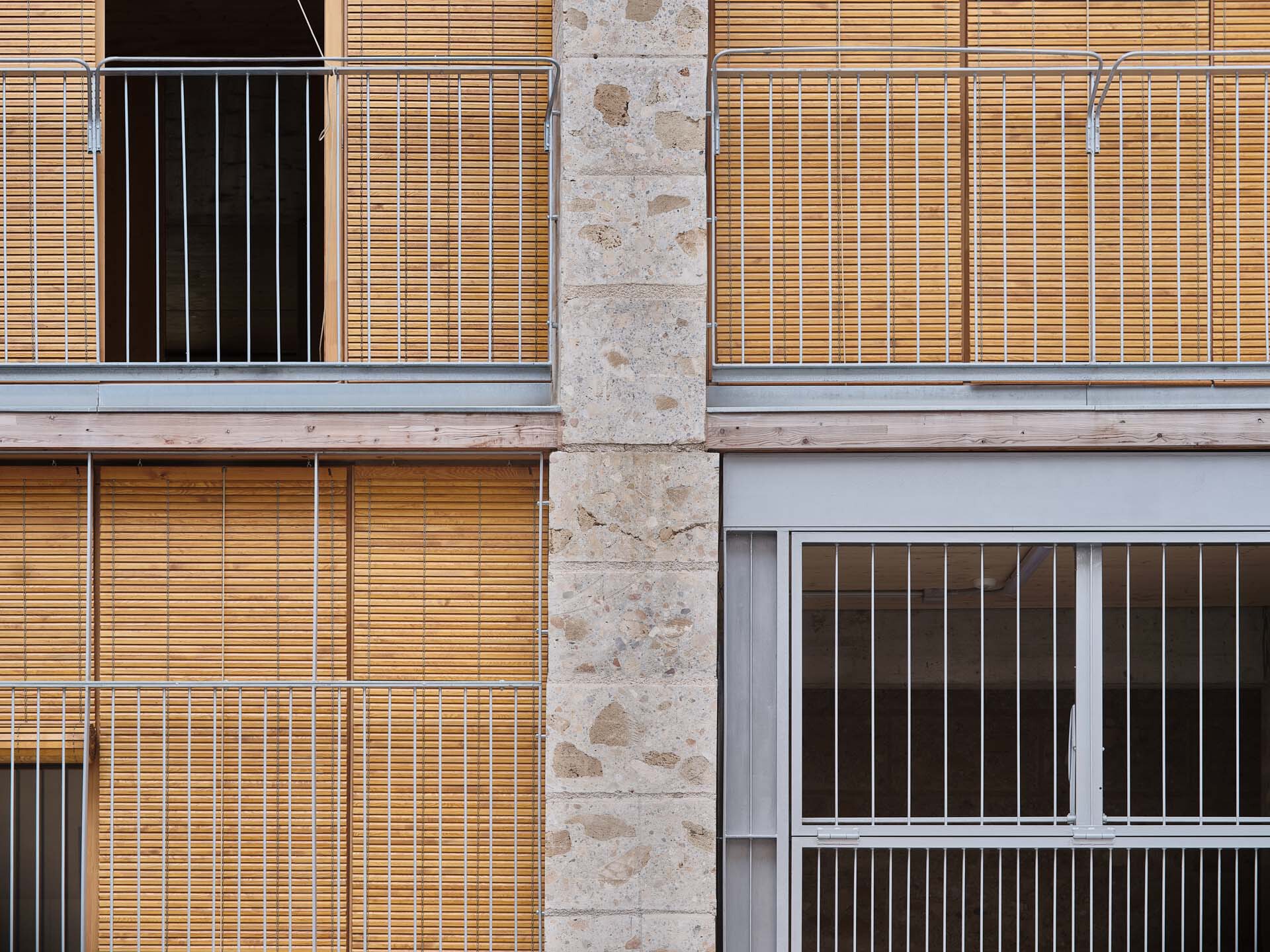
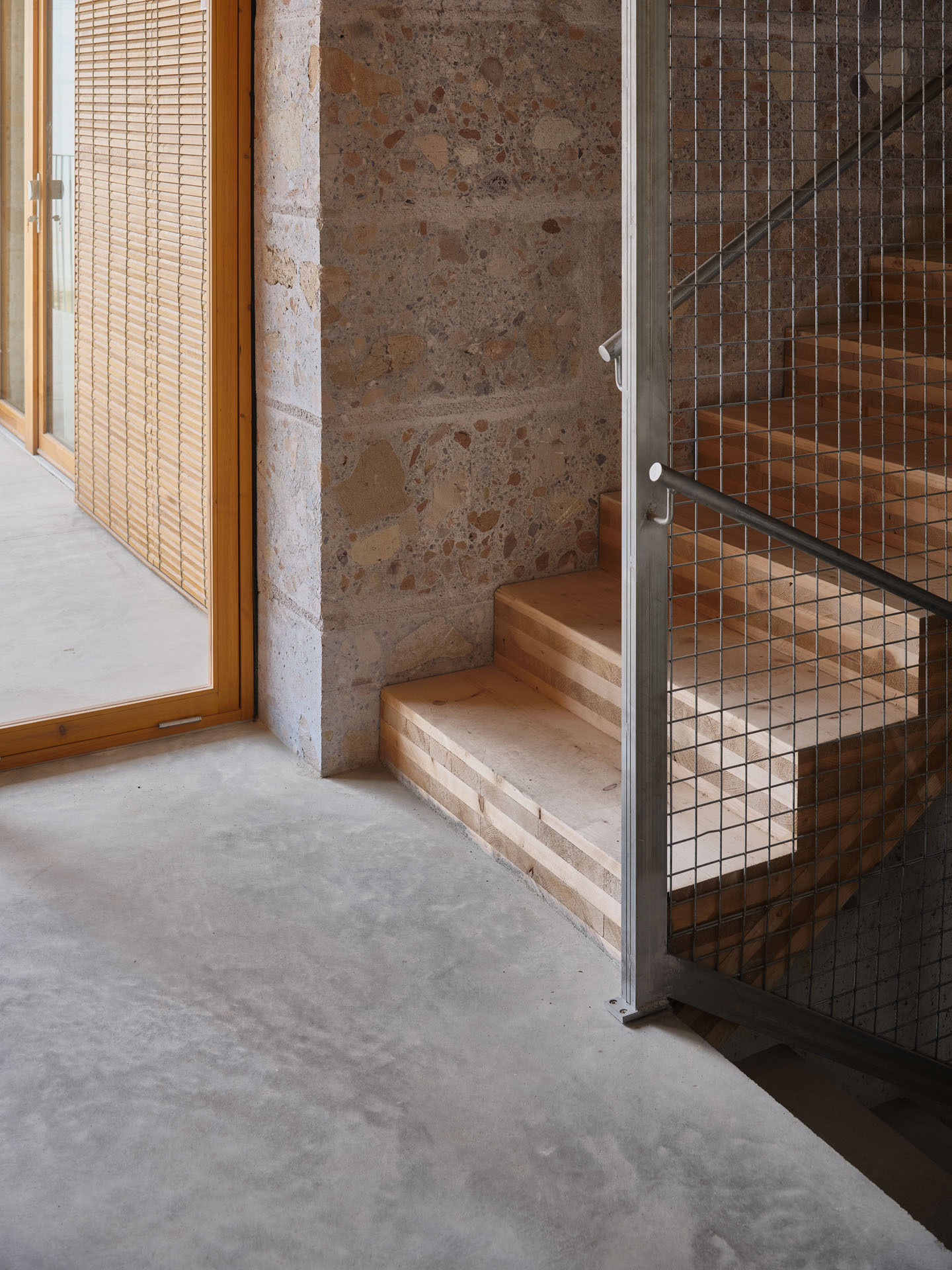
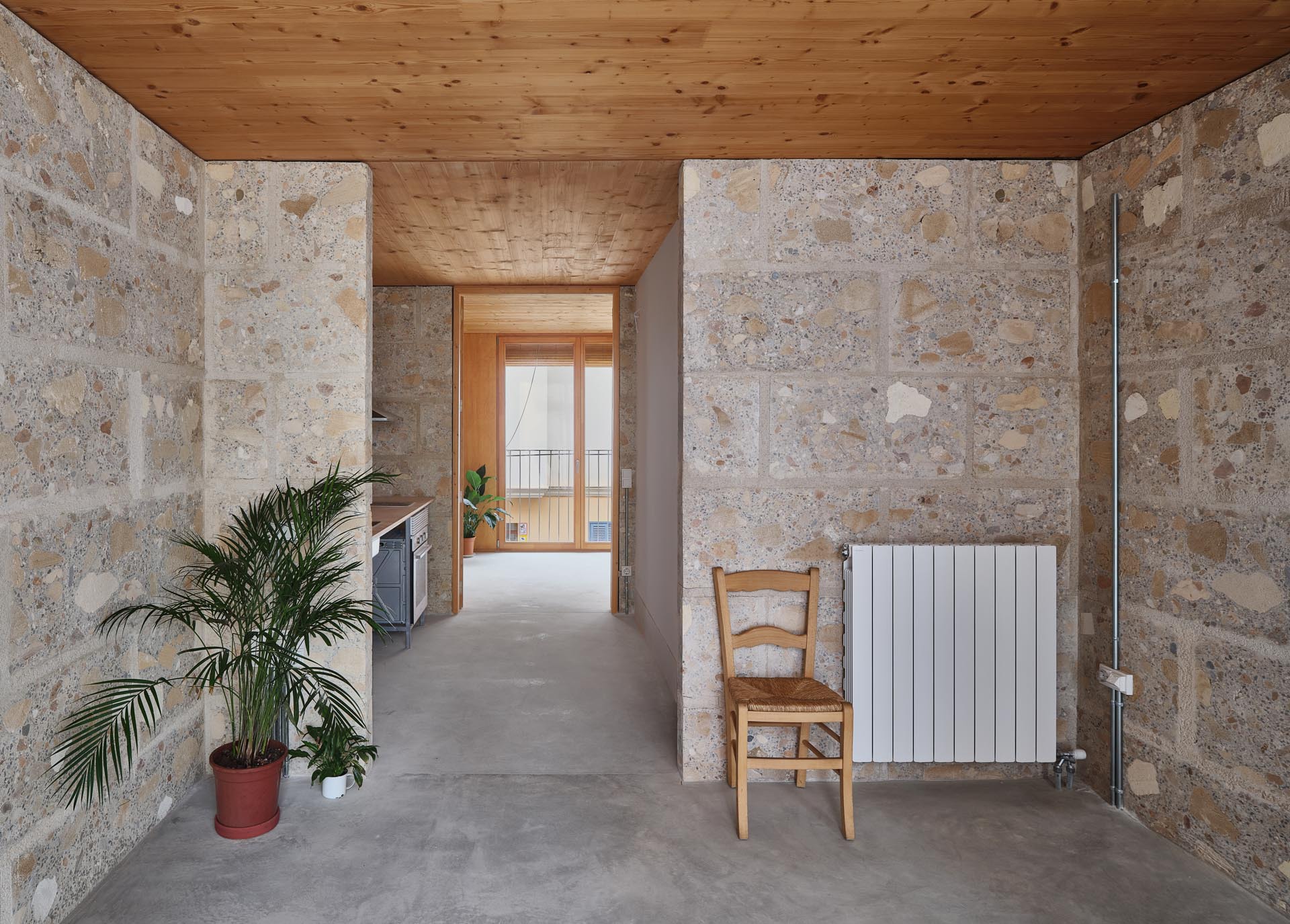
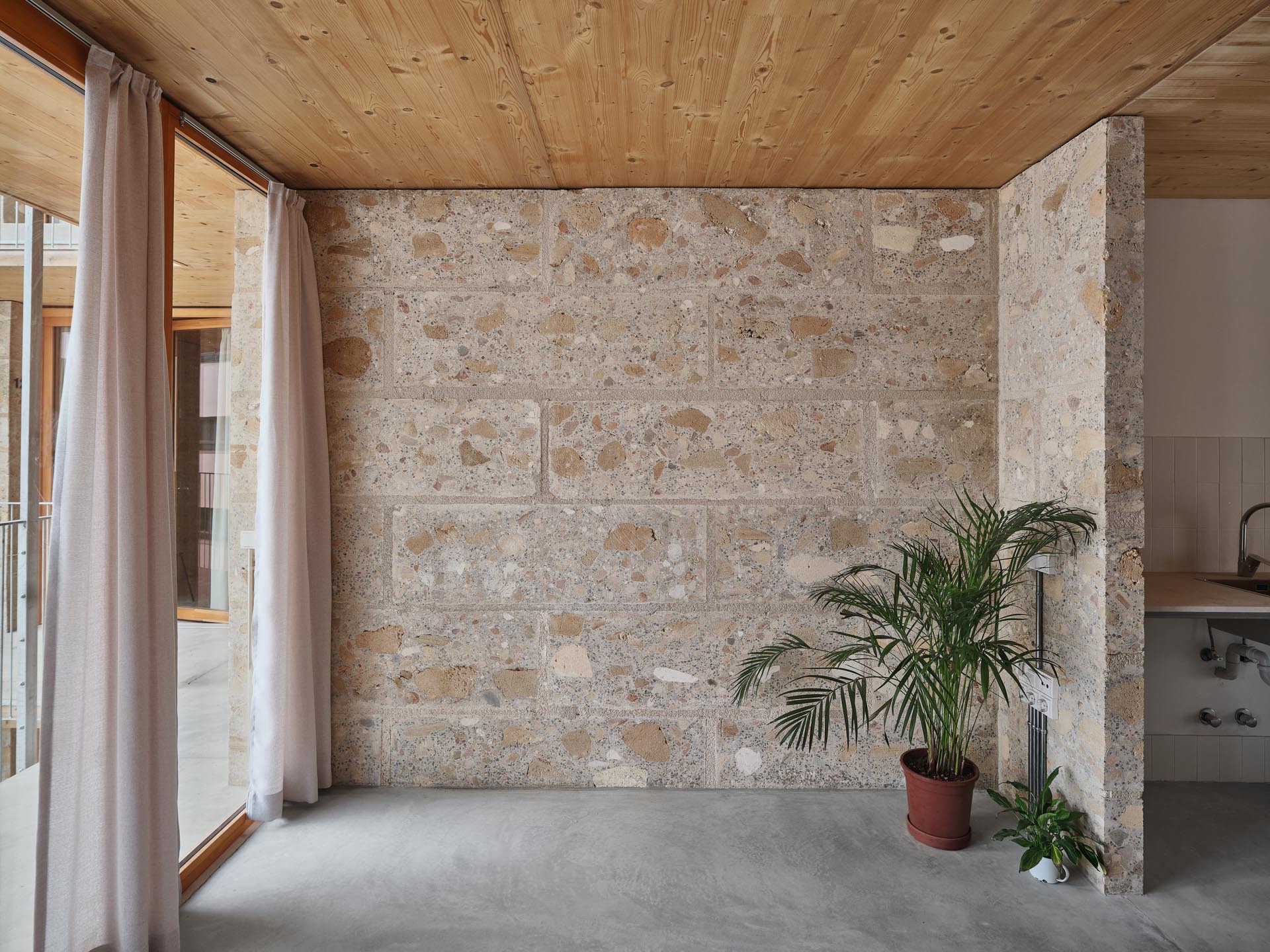
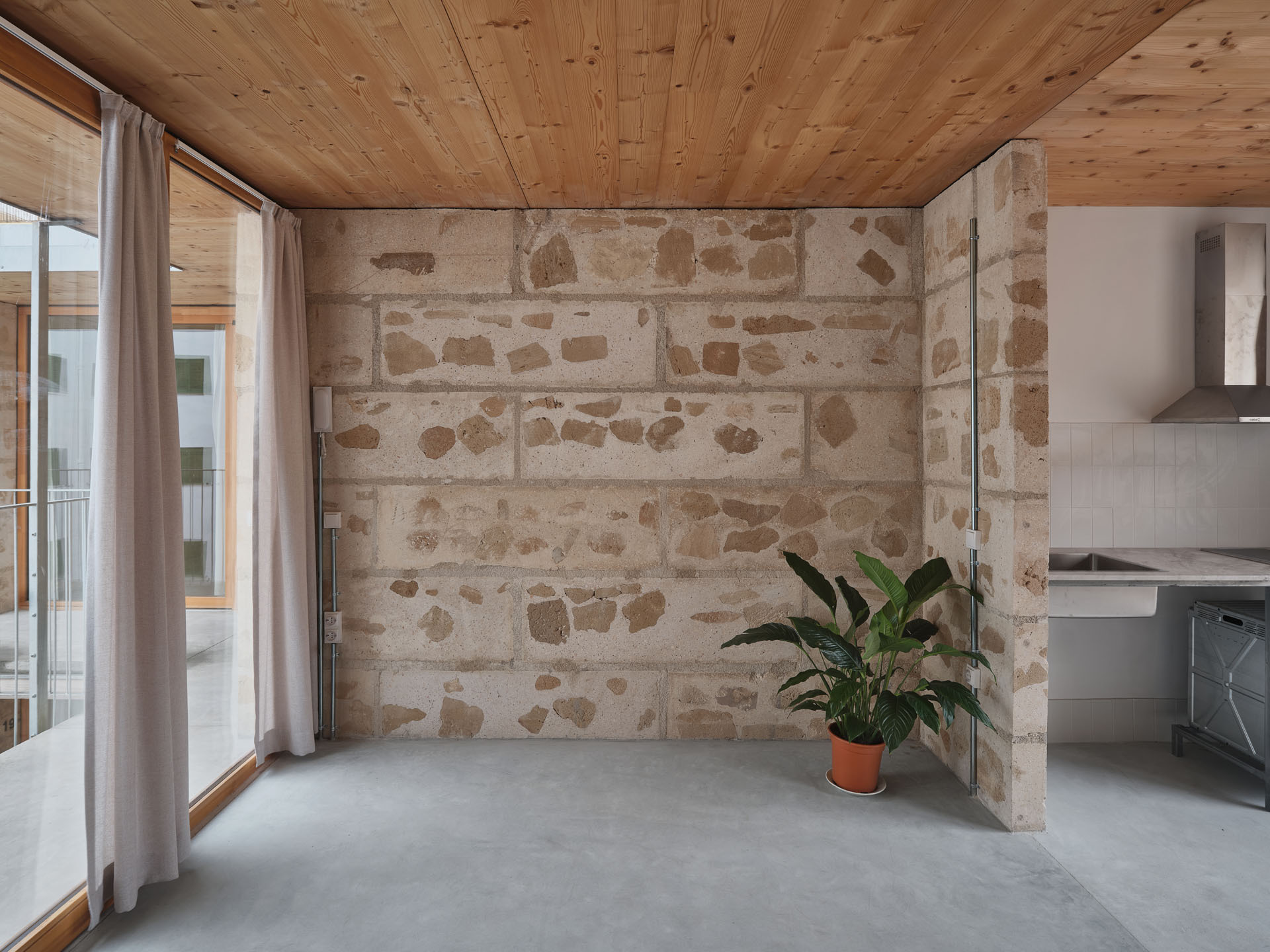
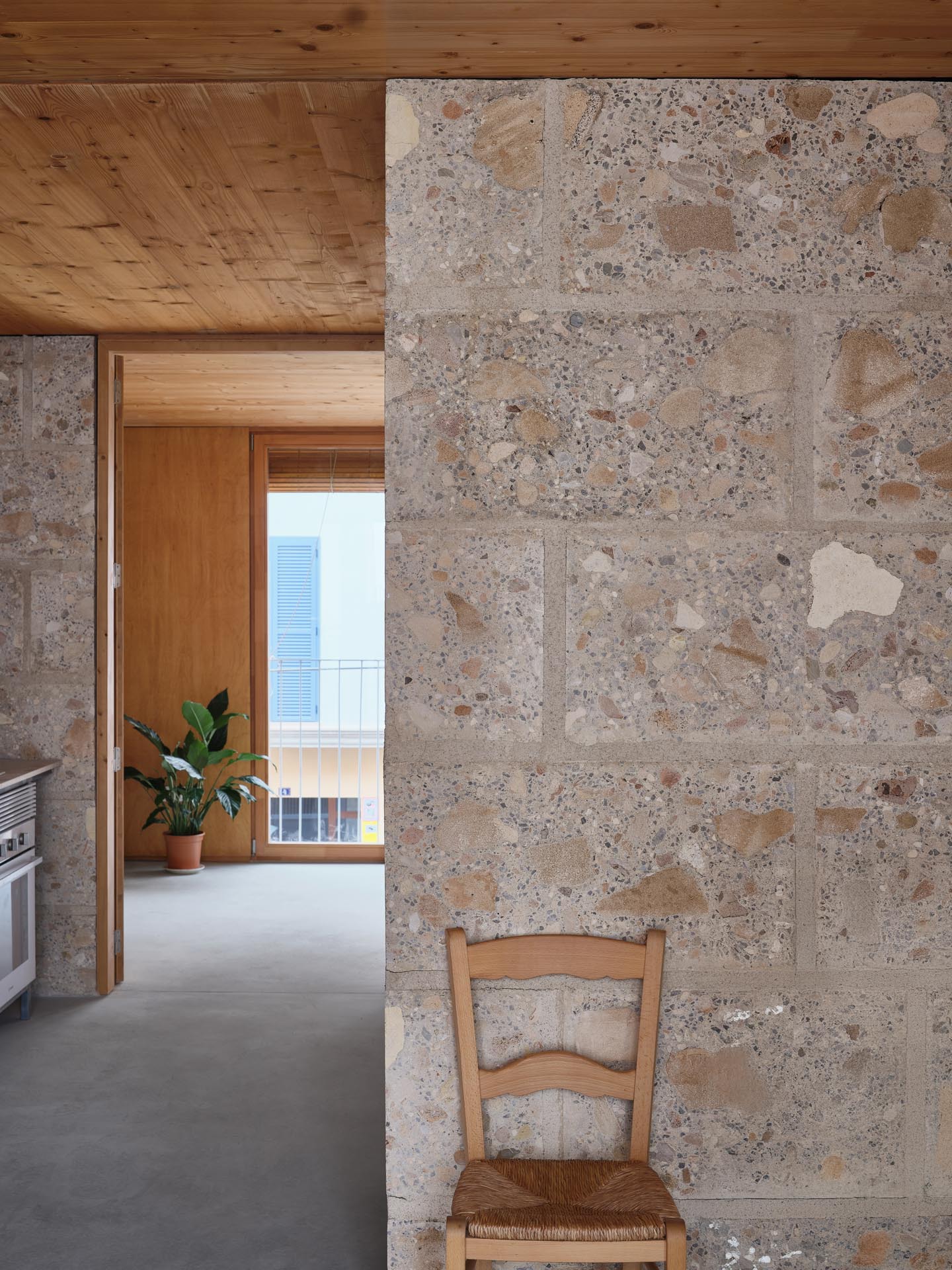
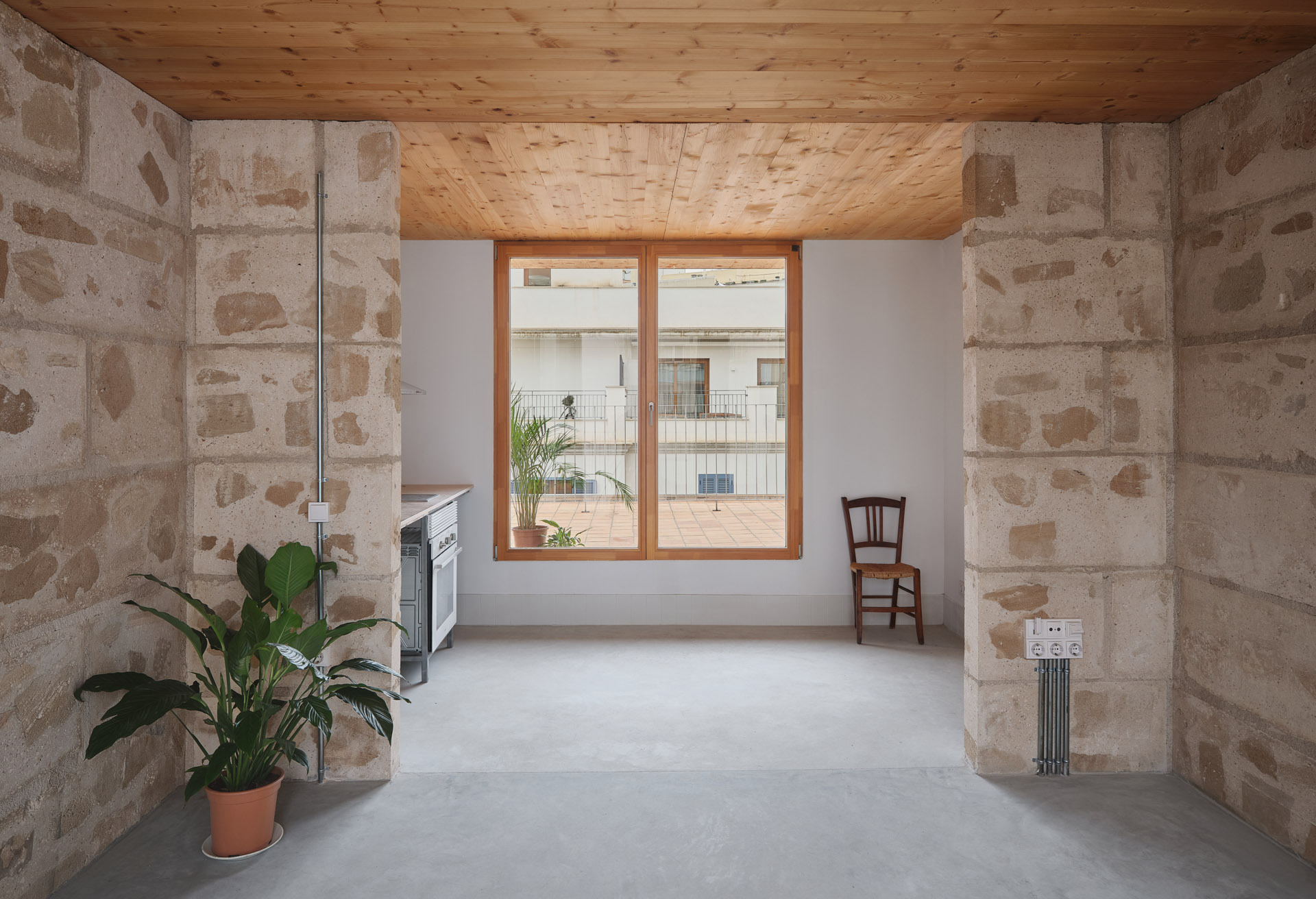
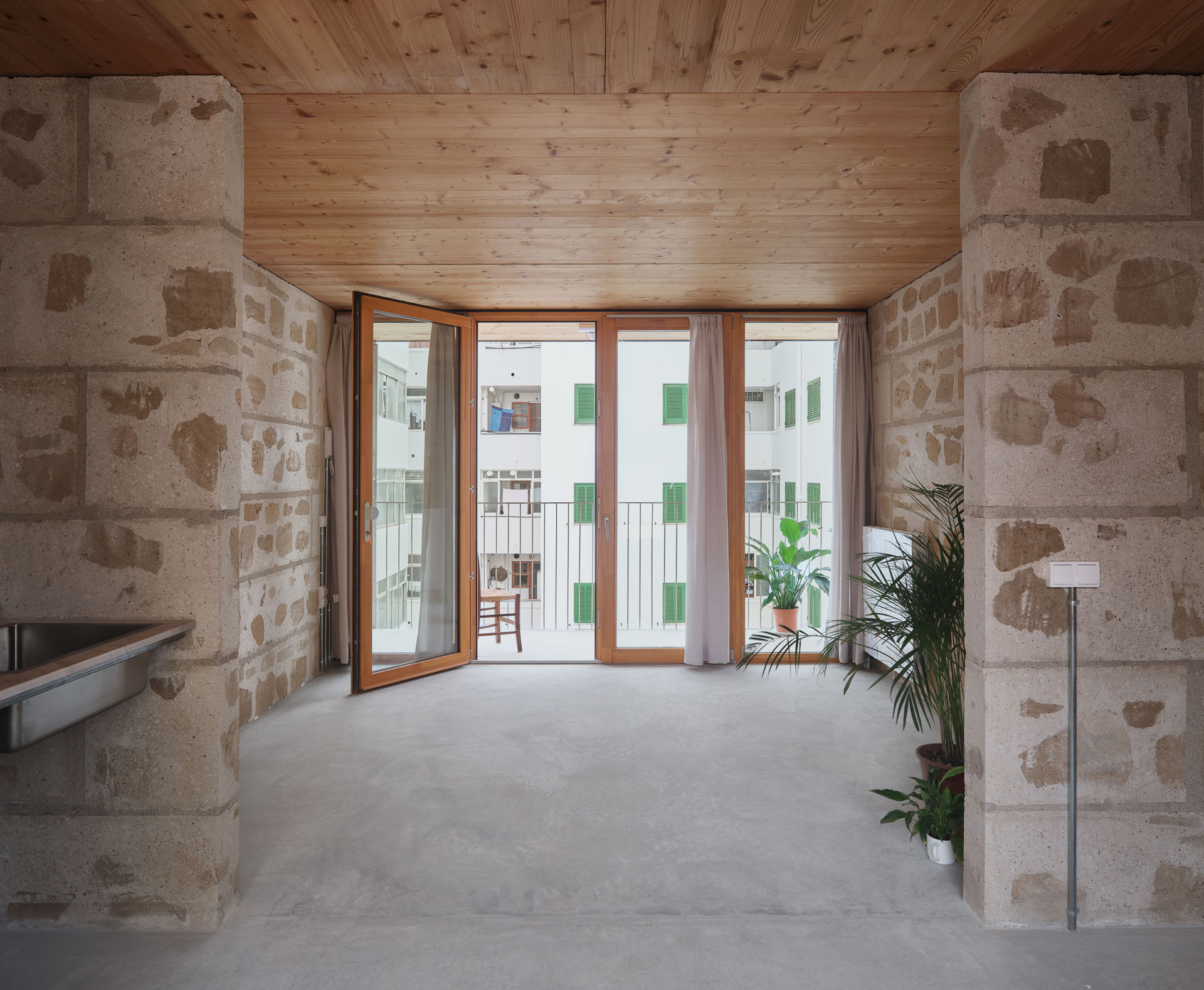
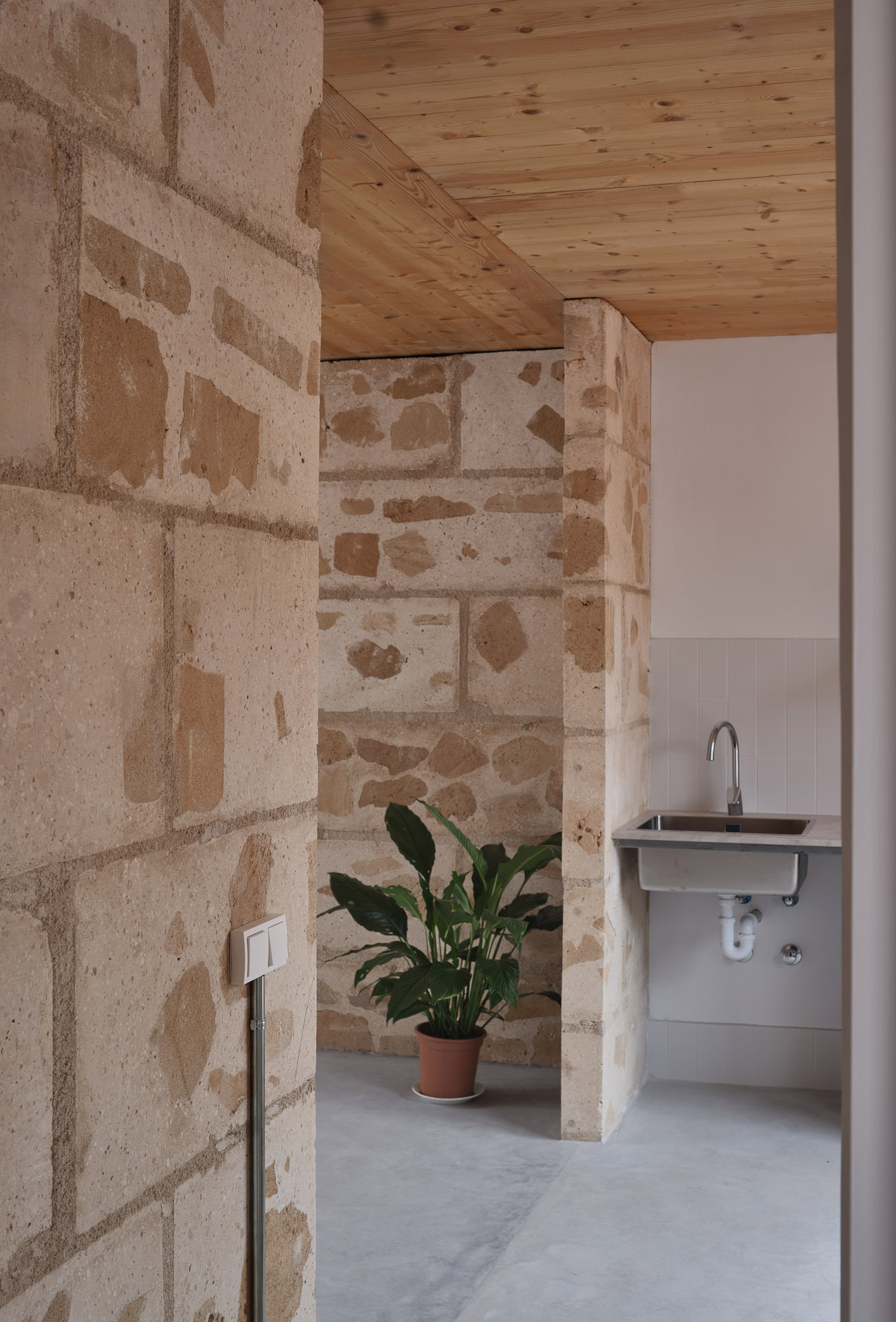
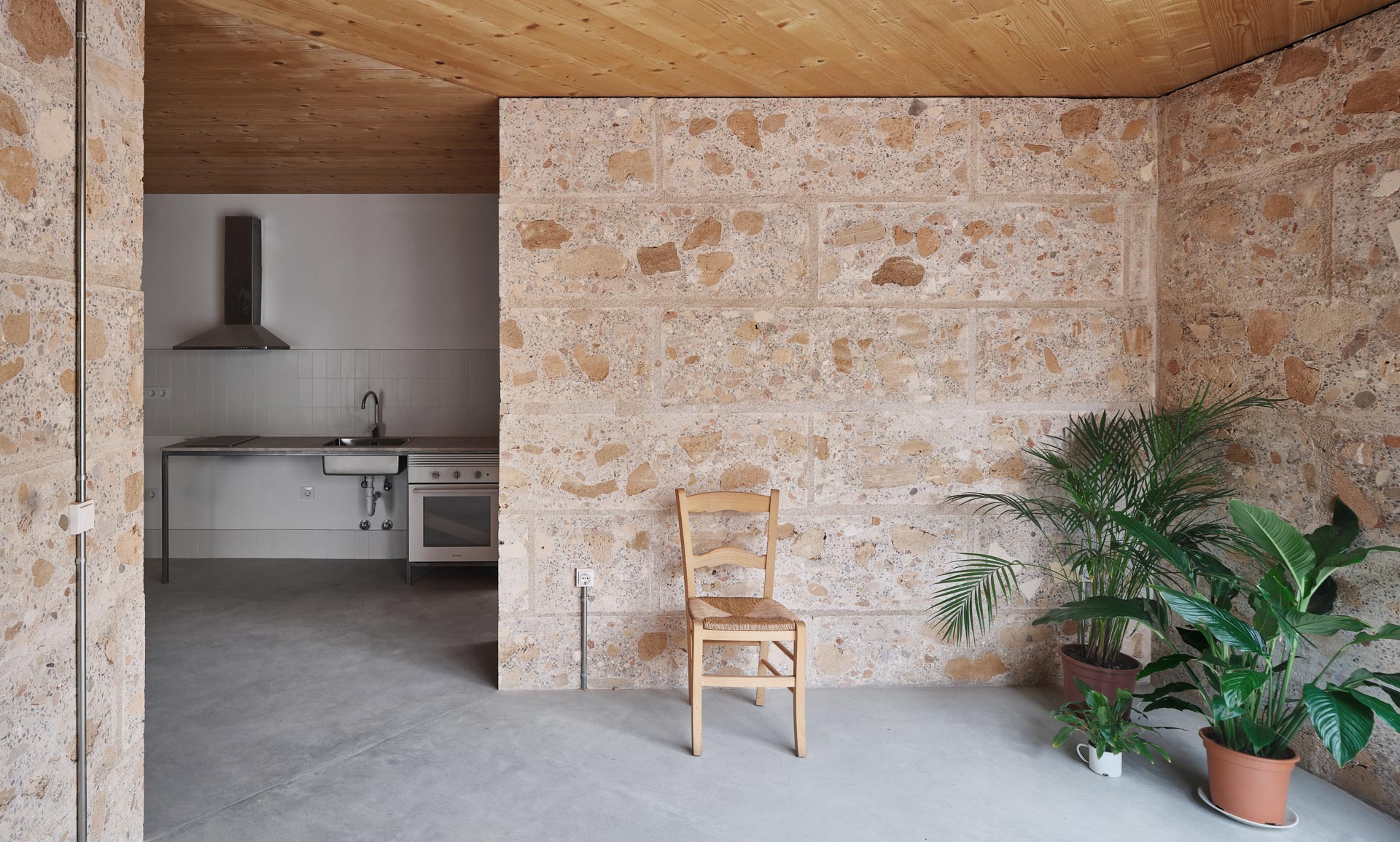
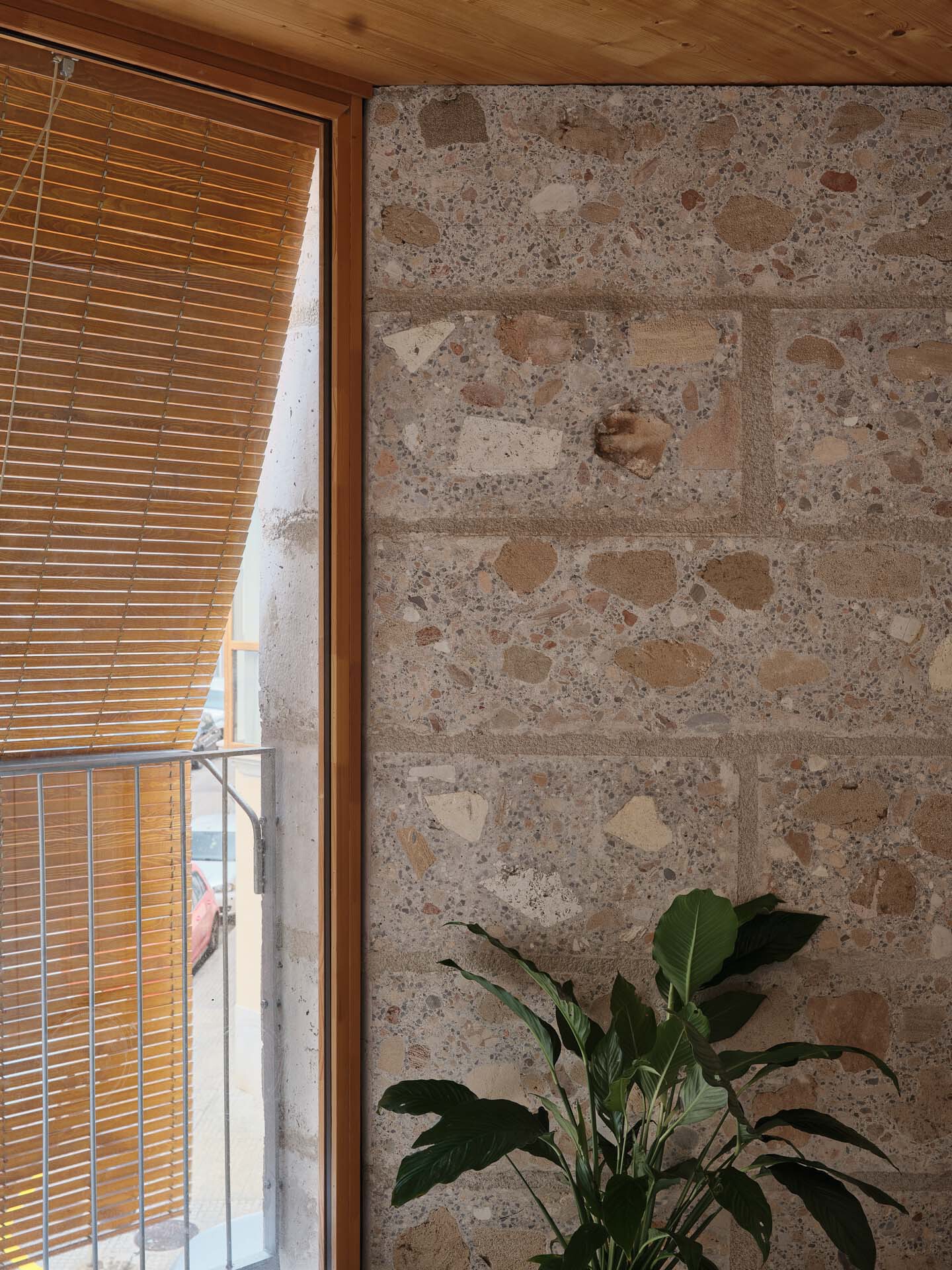
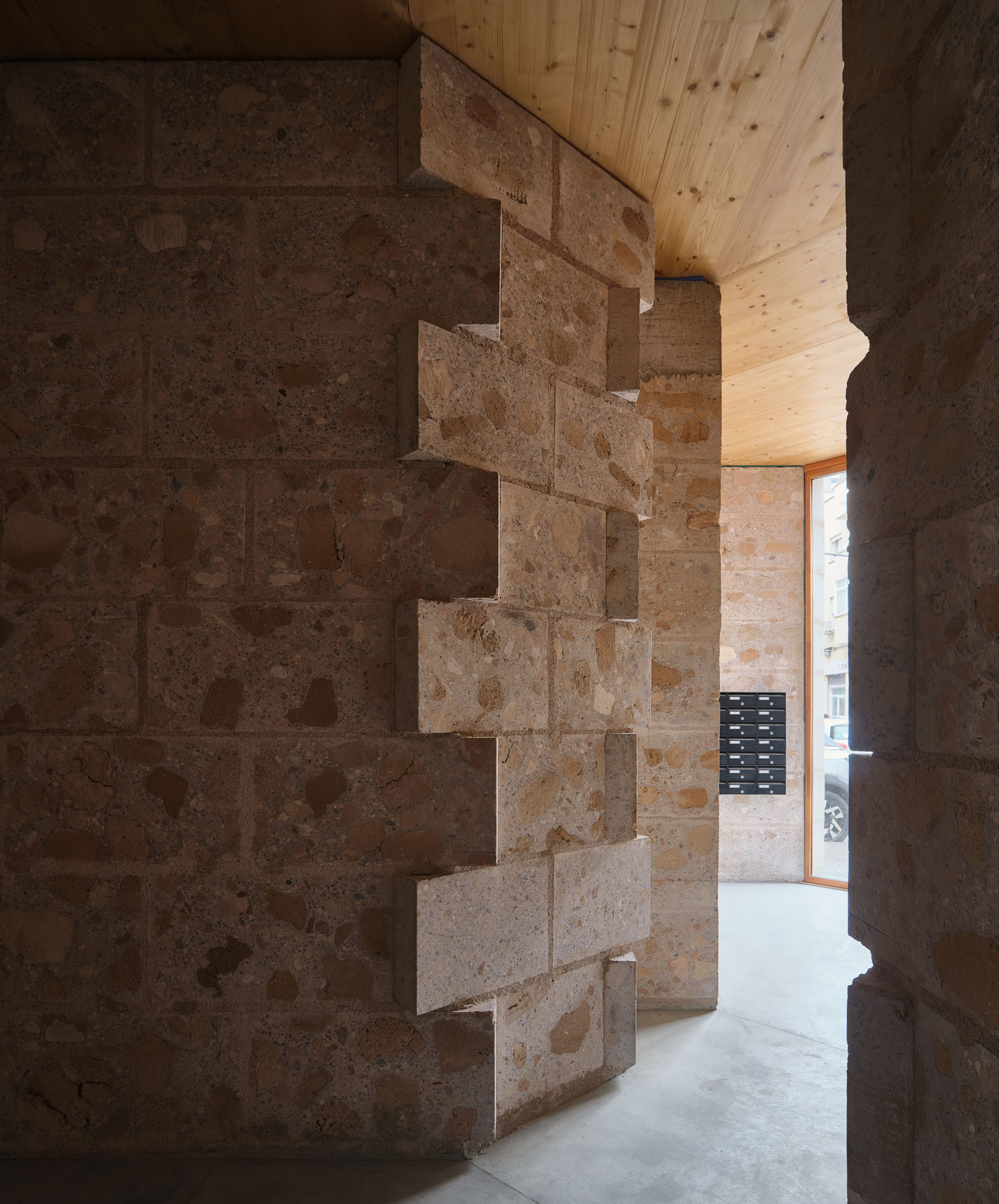
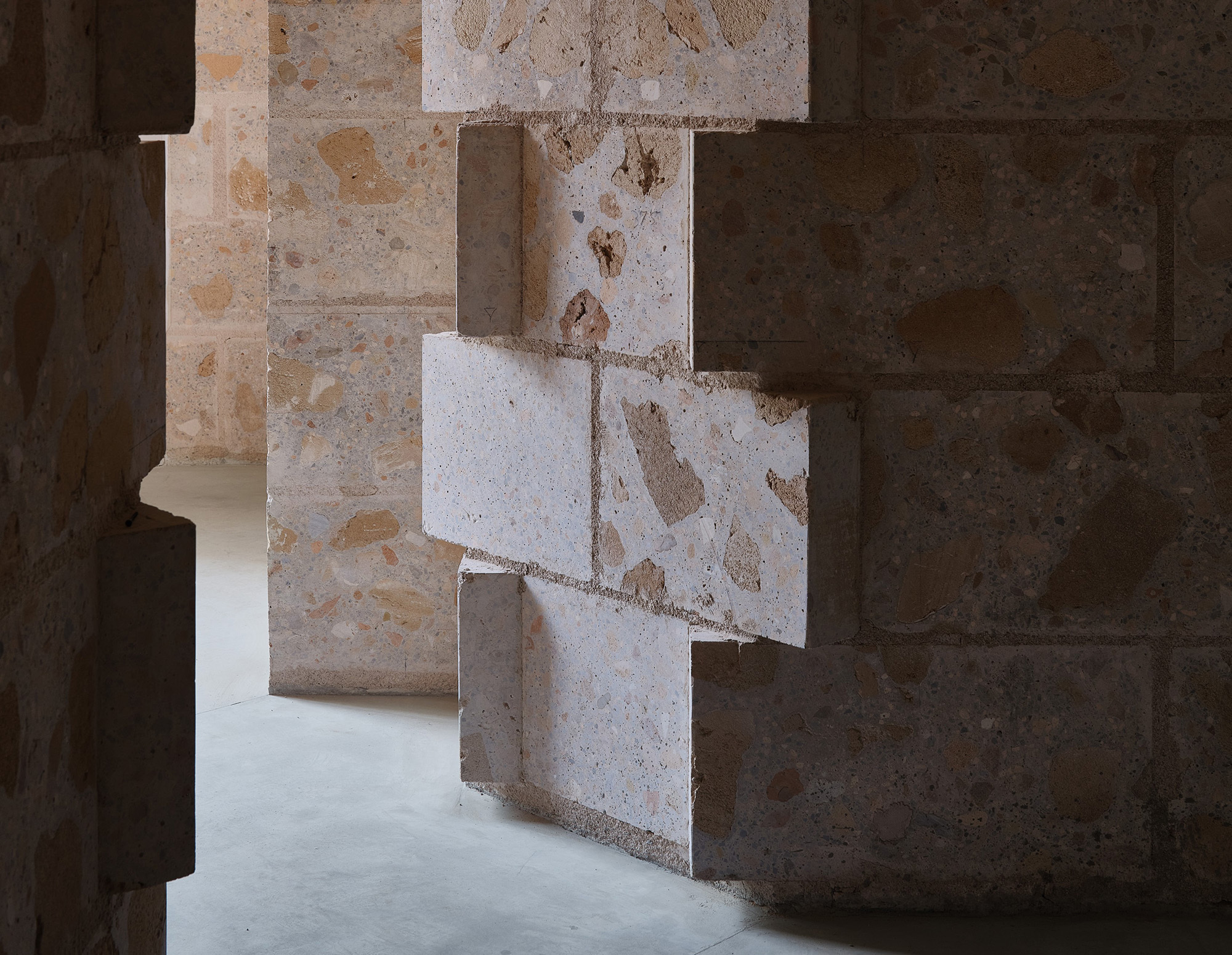
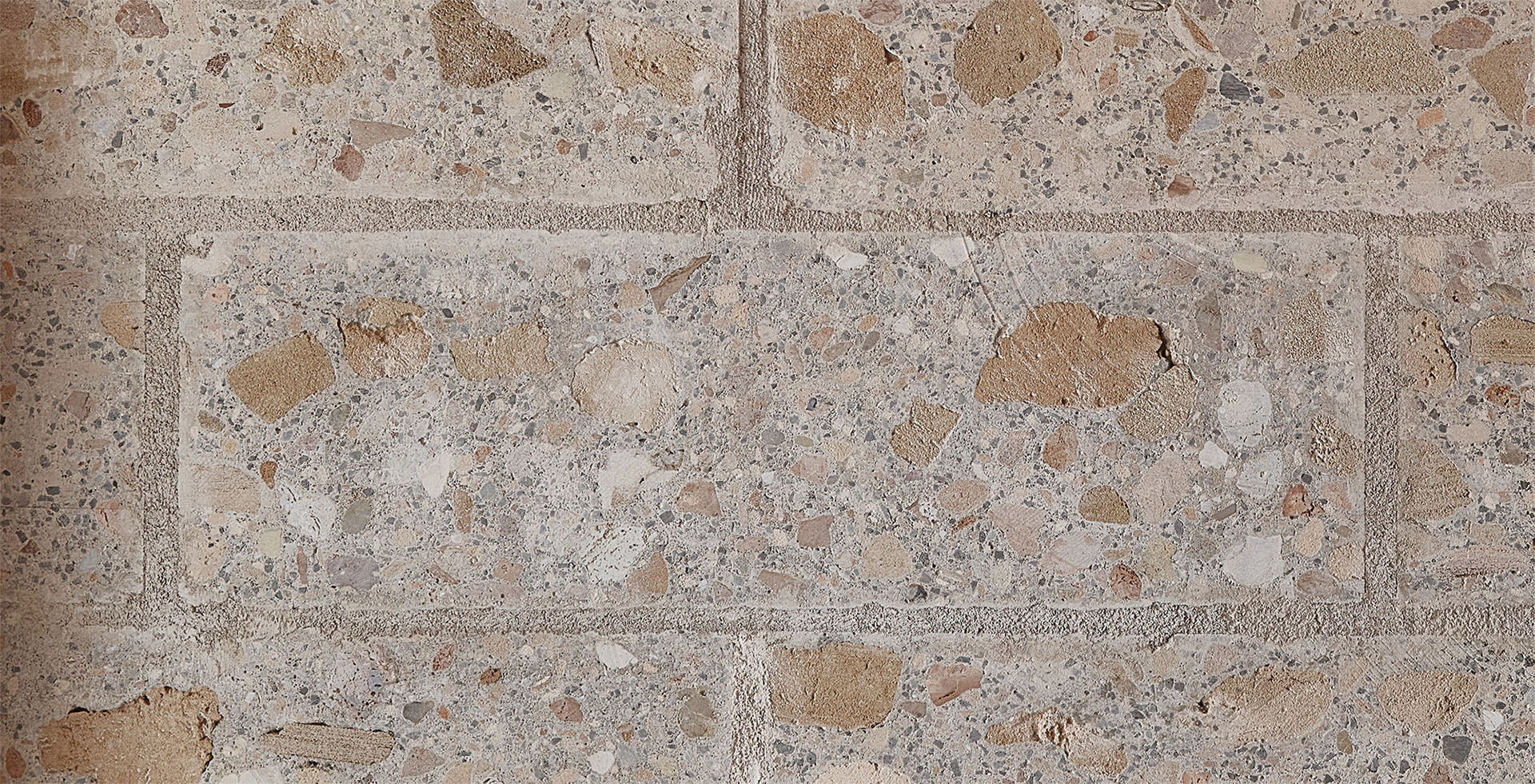
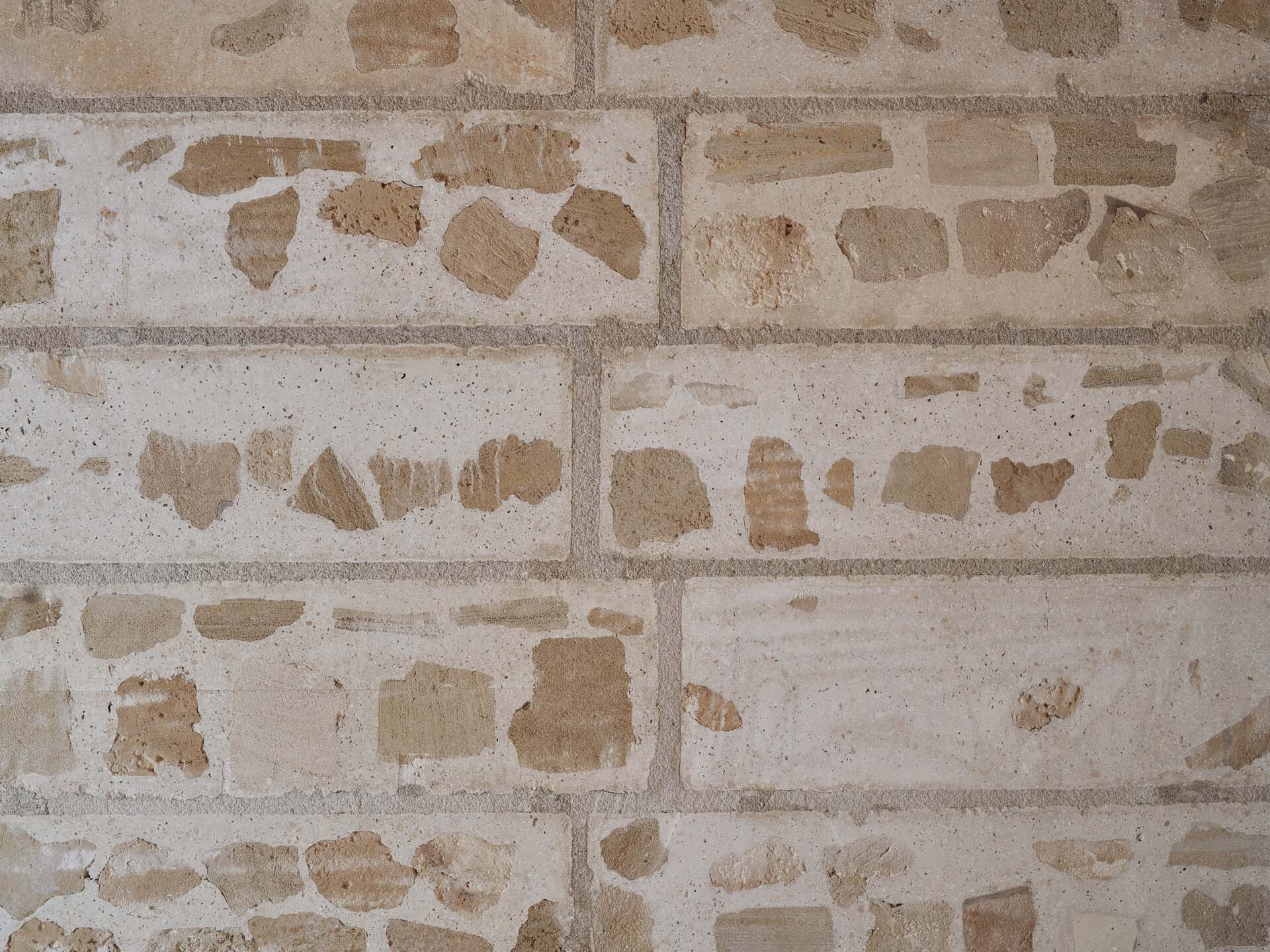
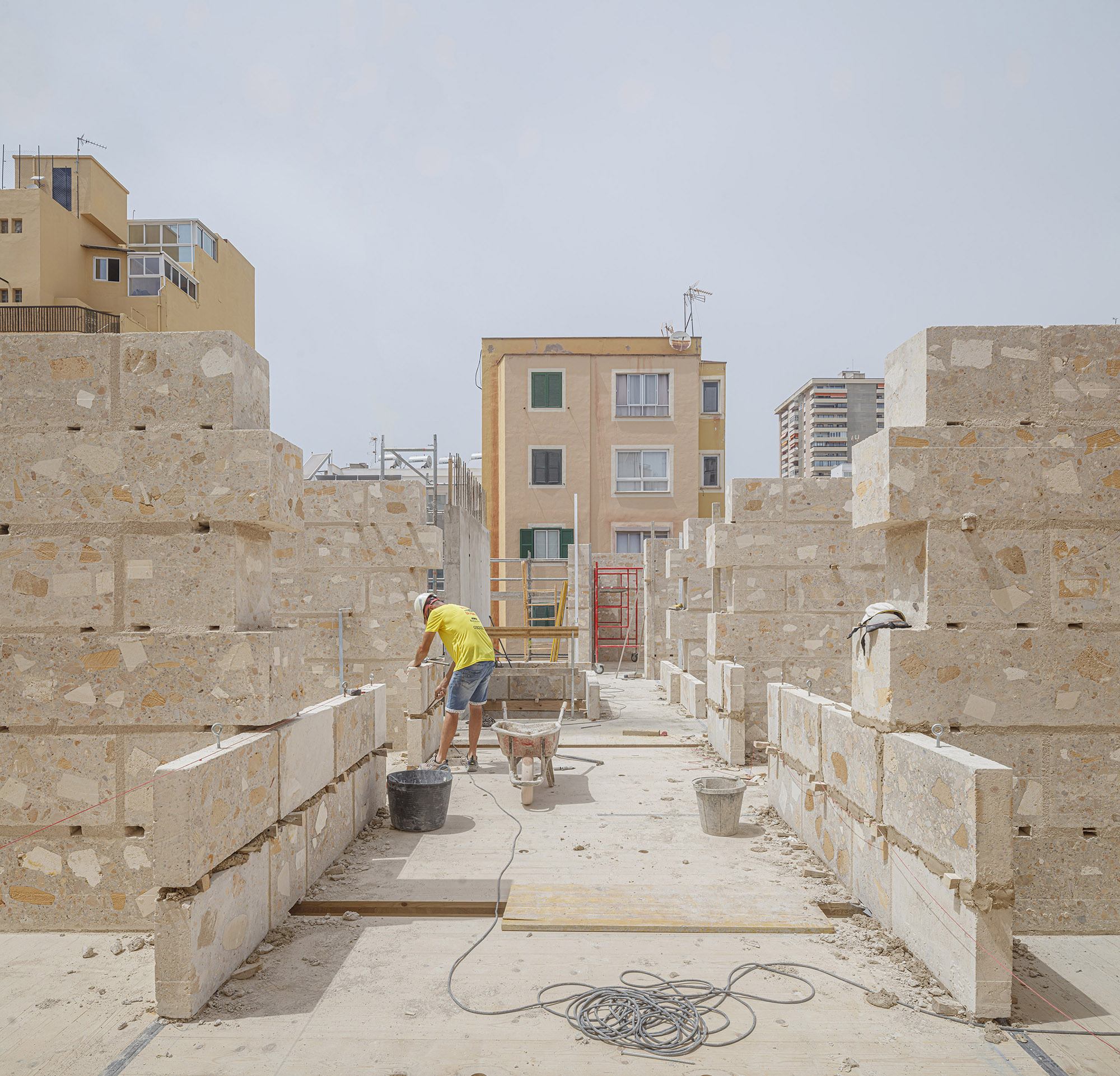
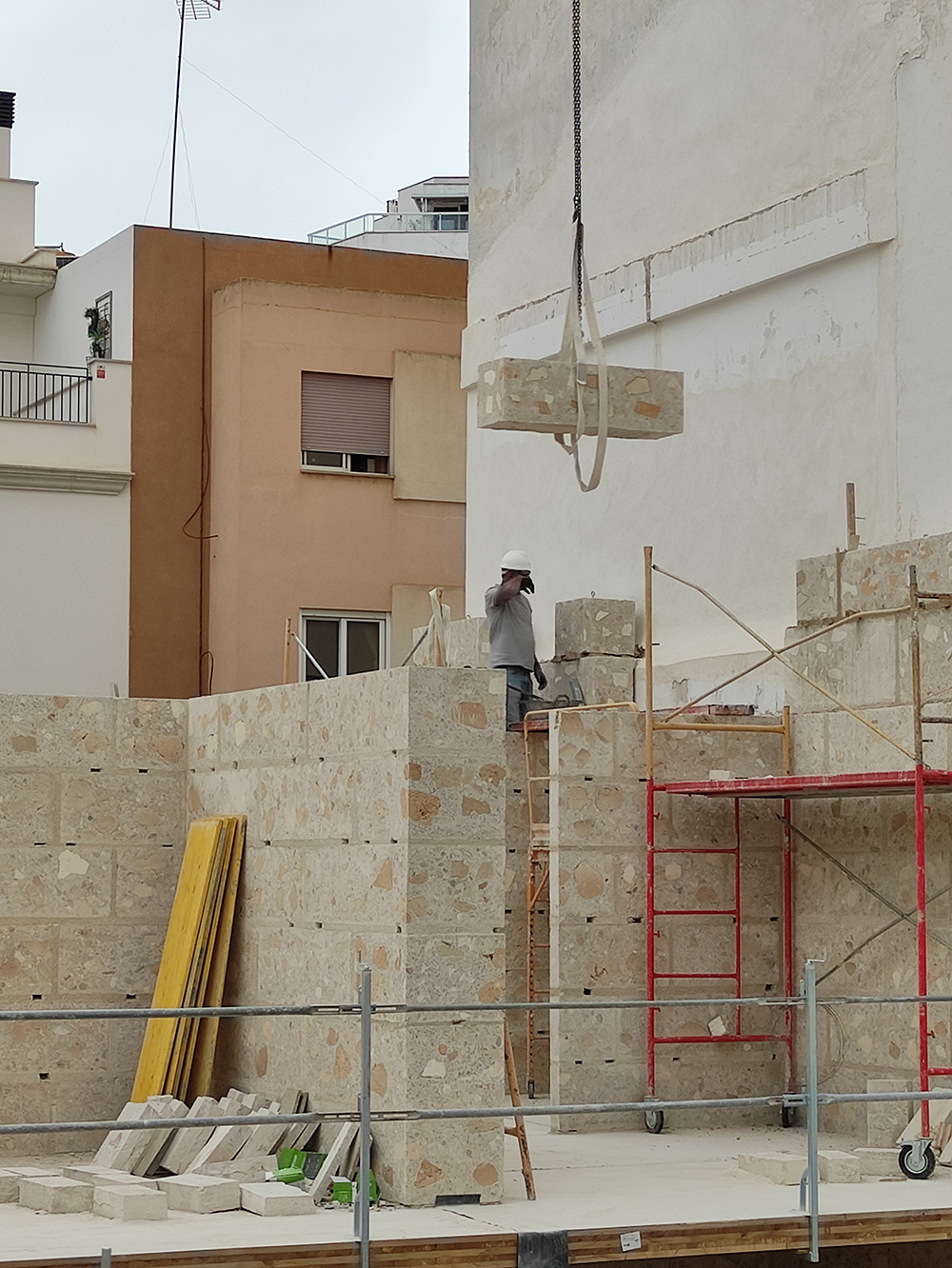
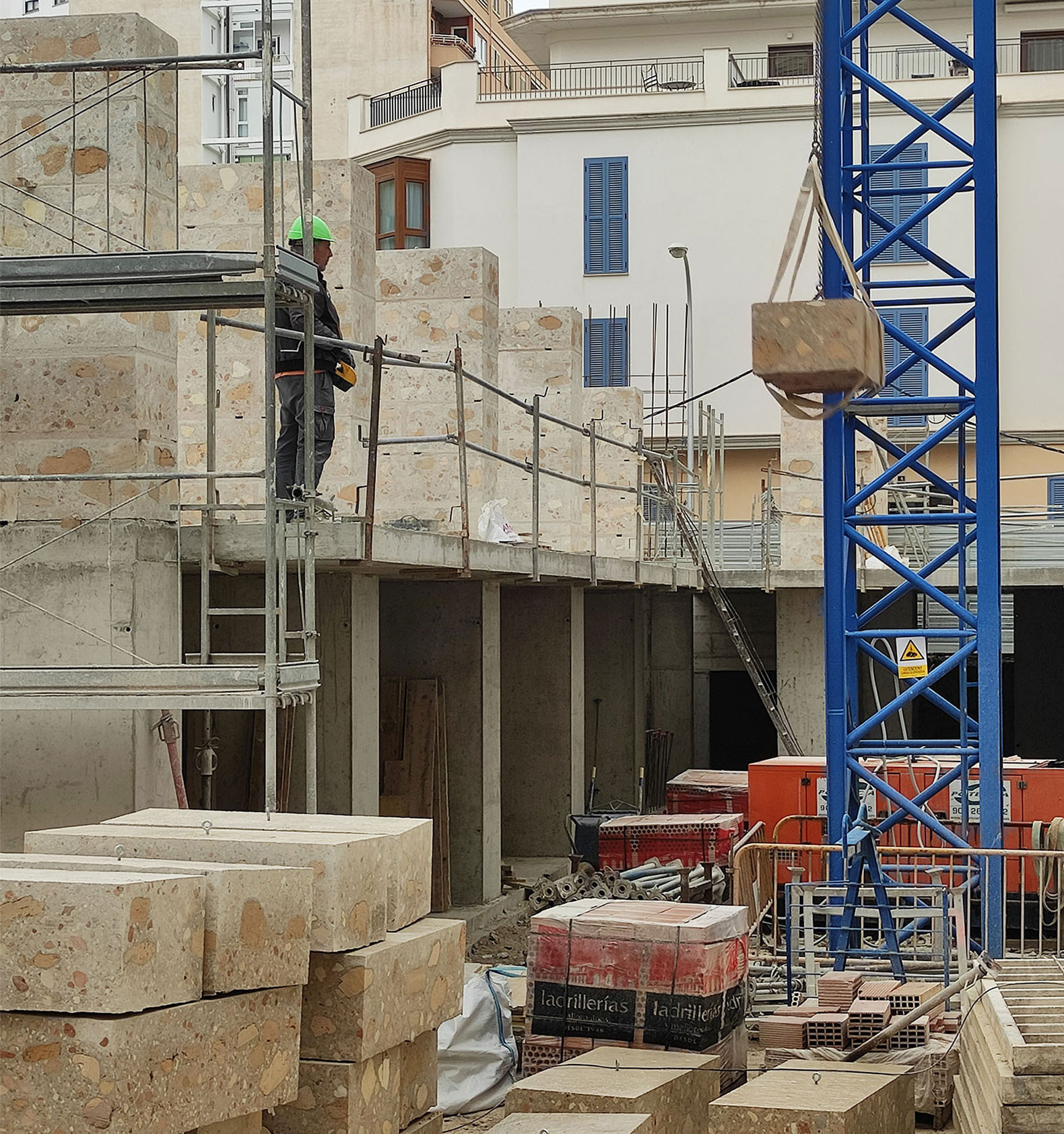
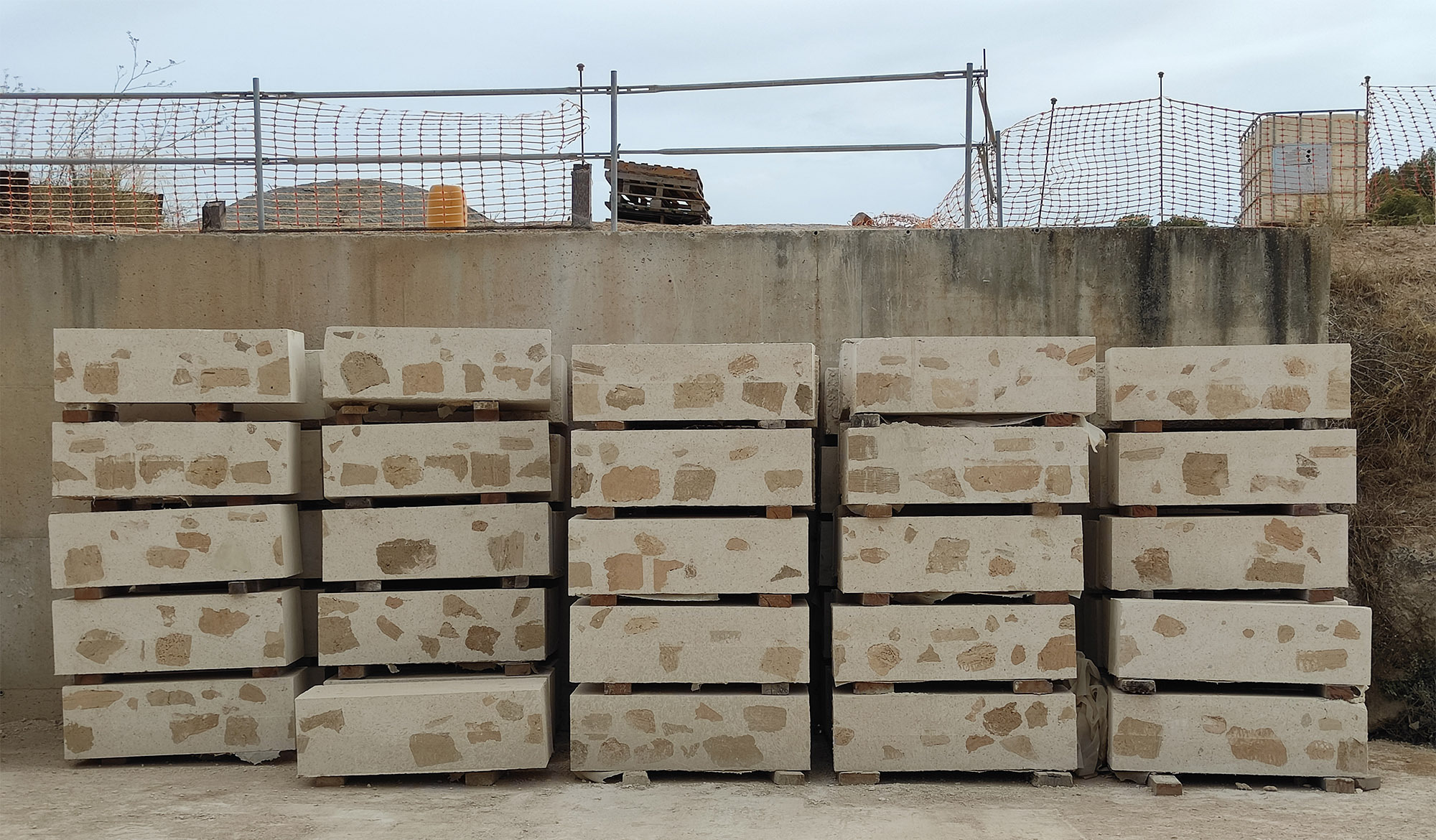
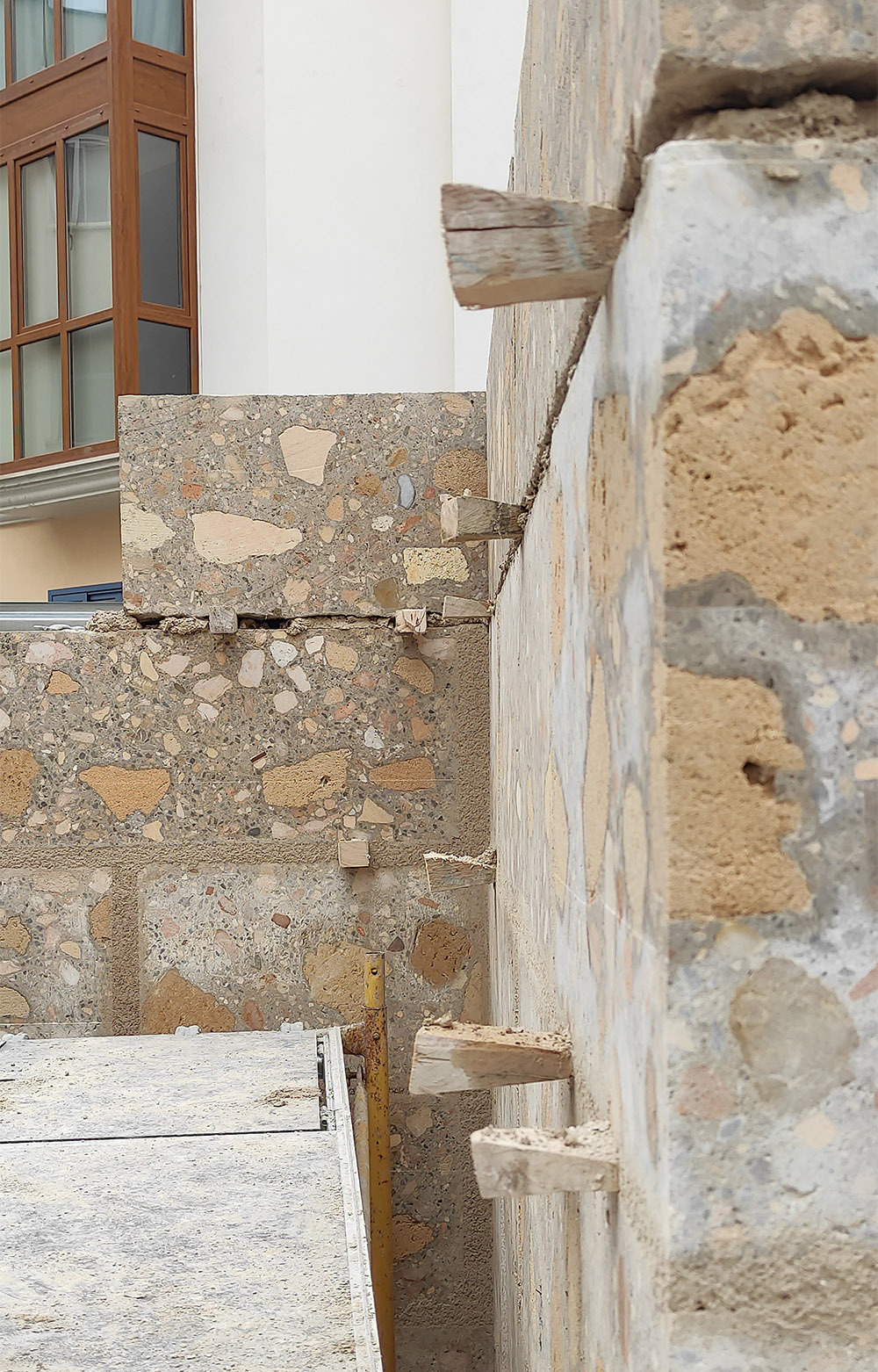
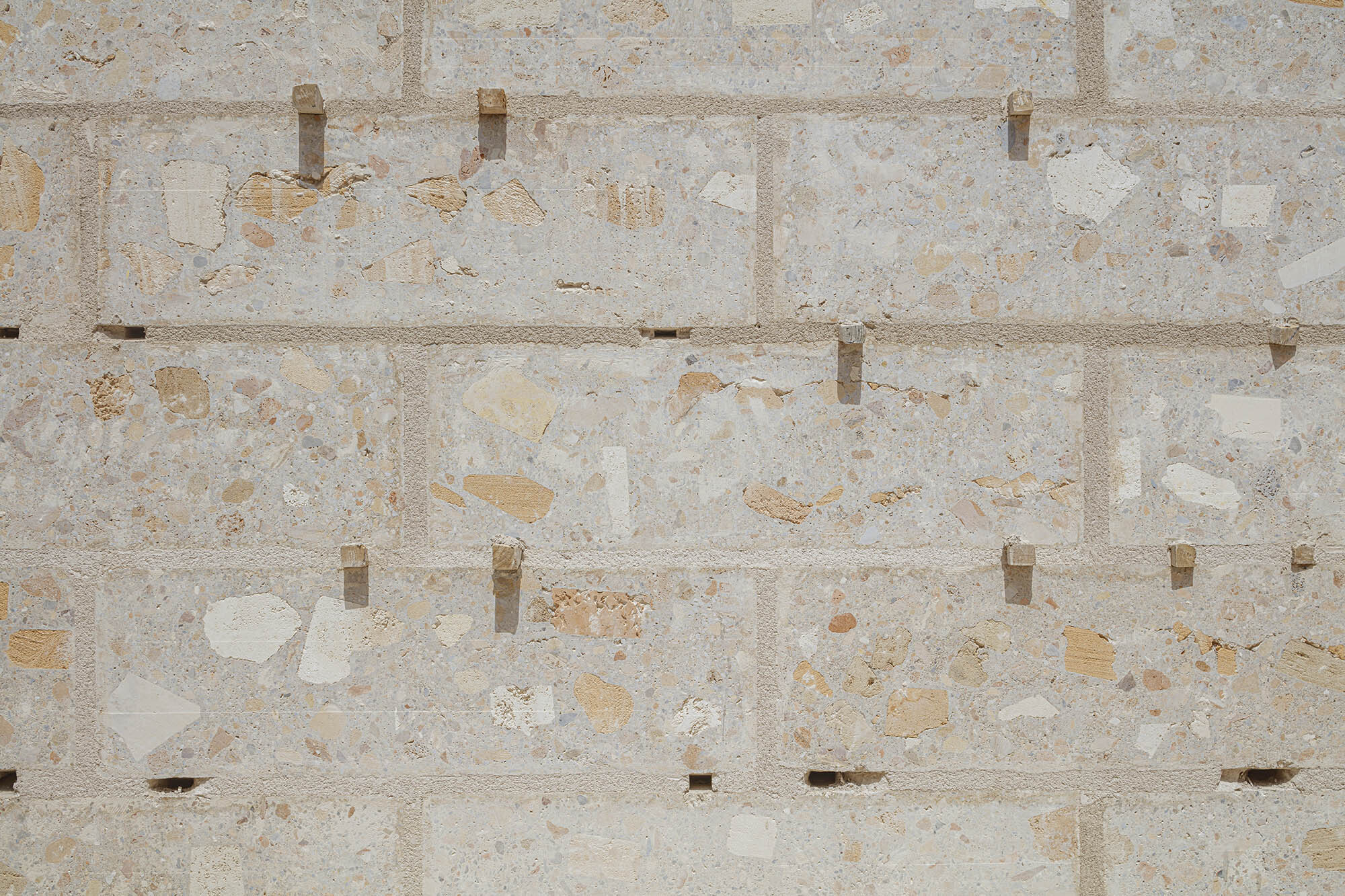
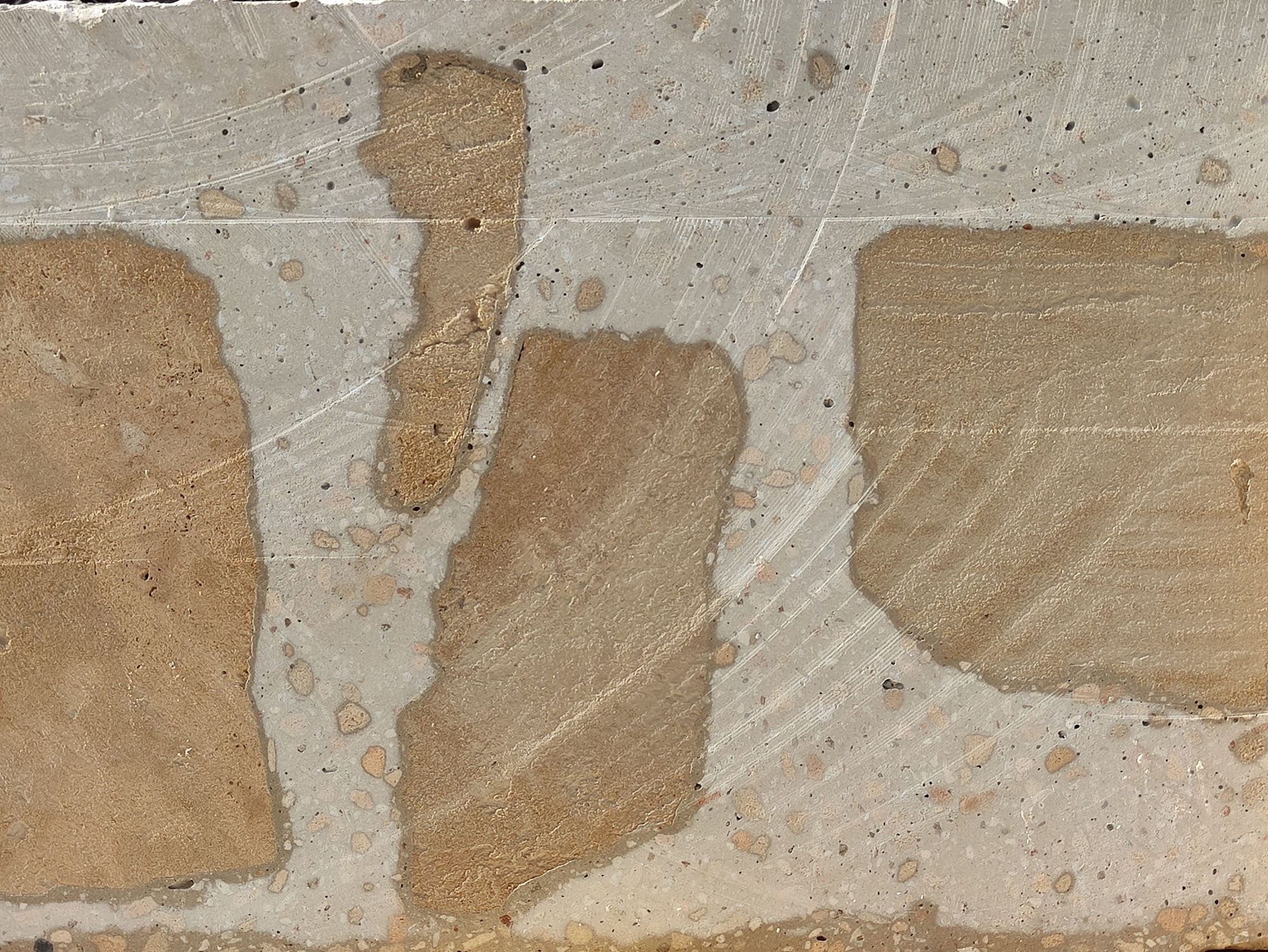
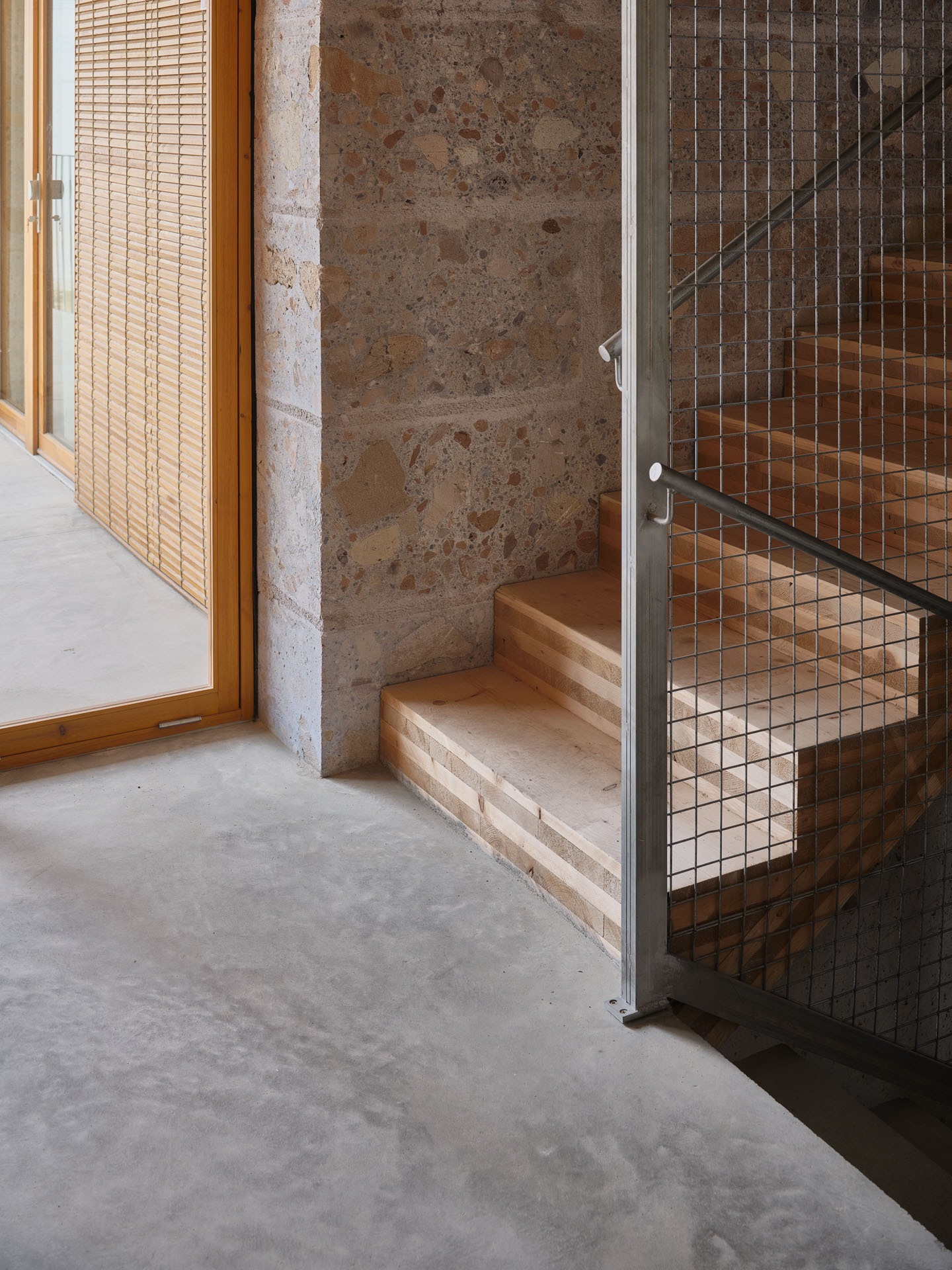
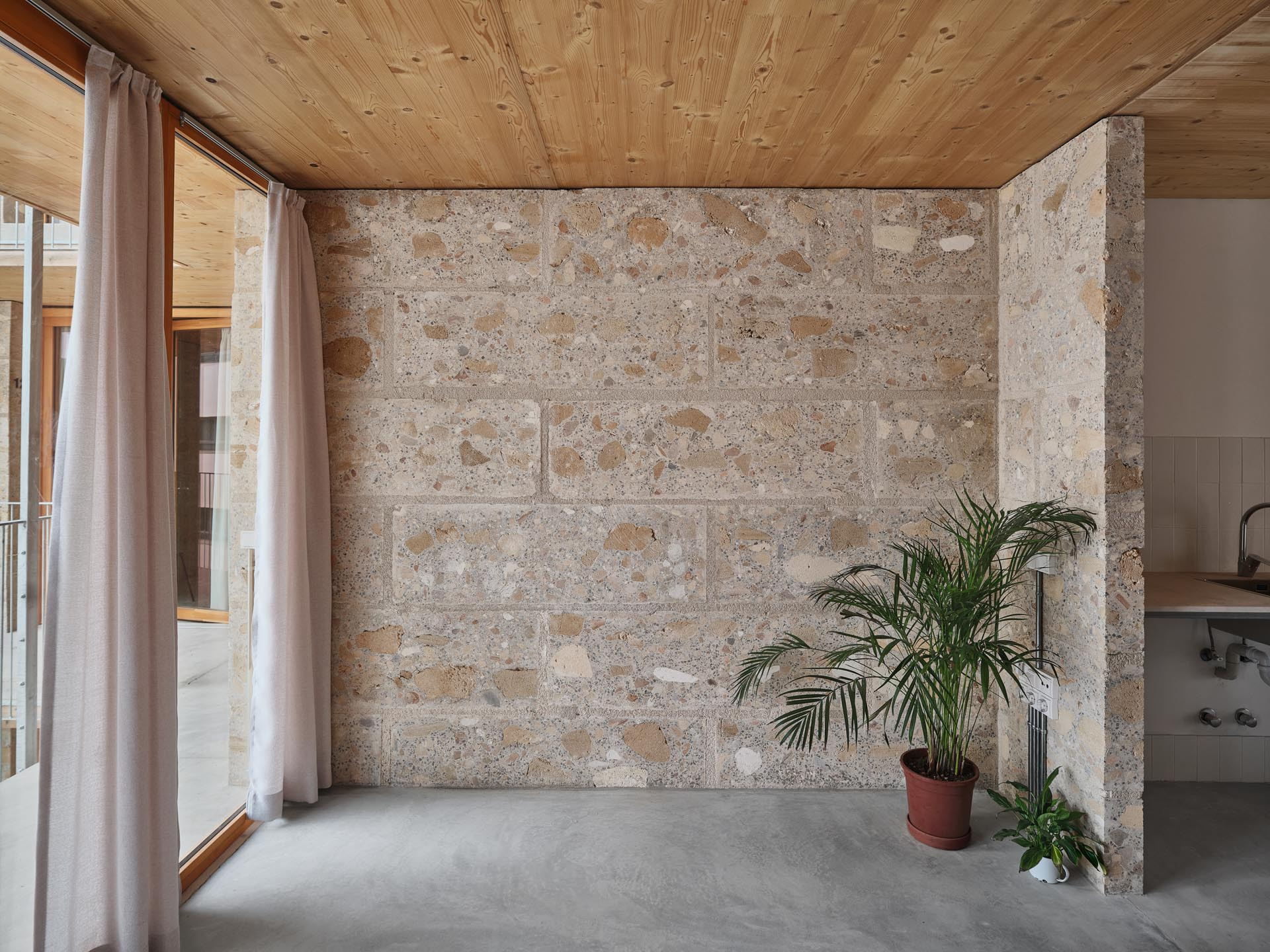
Once the demolition was completed and materials were selected, nearly all the rubble was repurposed according to material type. First, pieces of ceramic and concrete elements (140 m³) were poured into the foundation pits and walls of the semi-basement. Second, all the sandstone (about 160 m³) was used to construct large blocks (approximately 3,000 units) of cyclopean concrete with cement and lime mixed with recycled marès stone (40% of the block volume), composed of large cobbles up to 30 cm in diameter, sandstone gravel, and picadís (sand, also from marès). Each block was cut with a large disc saw from a 4 x 4 m2 slab, so that the stones reappeared on the faces of the blocks. 

25 viviendas sociales por Harquitectes. Fotografía por Adrià Goula
25 Social housing by Harquitectes. Photograph by Adrià Goula.

The blocks for the top floor, bearing less load, are made of 100% lime concrete, while the rest of the floors combine lime with cement. These blocks, approximately 135 cm long, 42 cm high, and with variable widths for each floor (64, 54, 44, and 34 cm), were prefabricated once the demolition was completed, before commencing the construction of the new building. This approach significantly reduced the construction duration. 

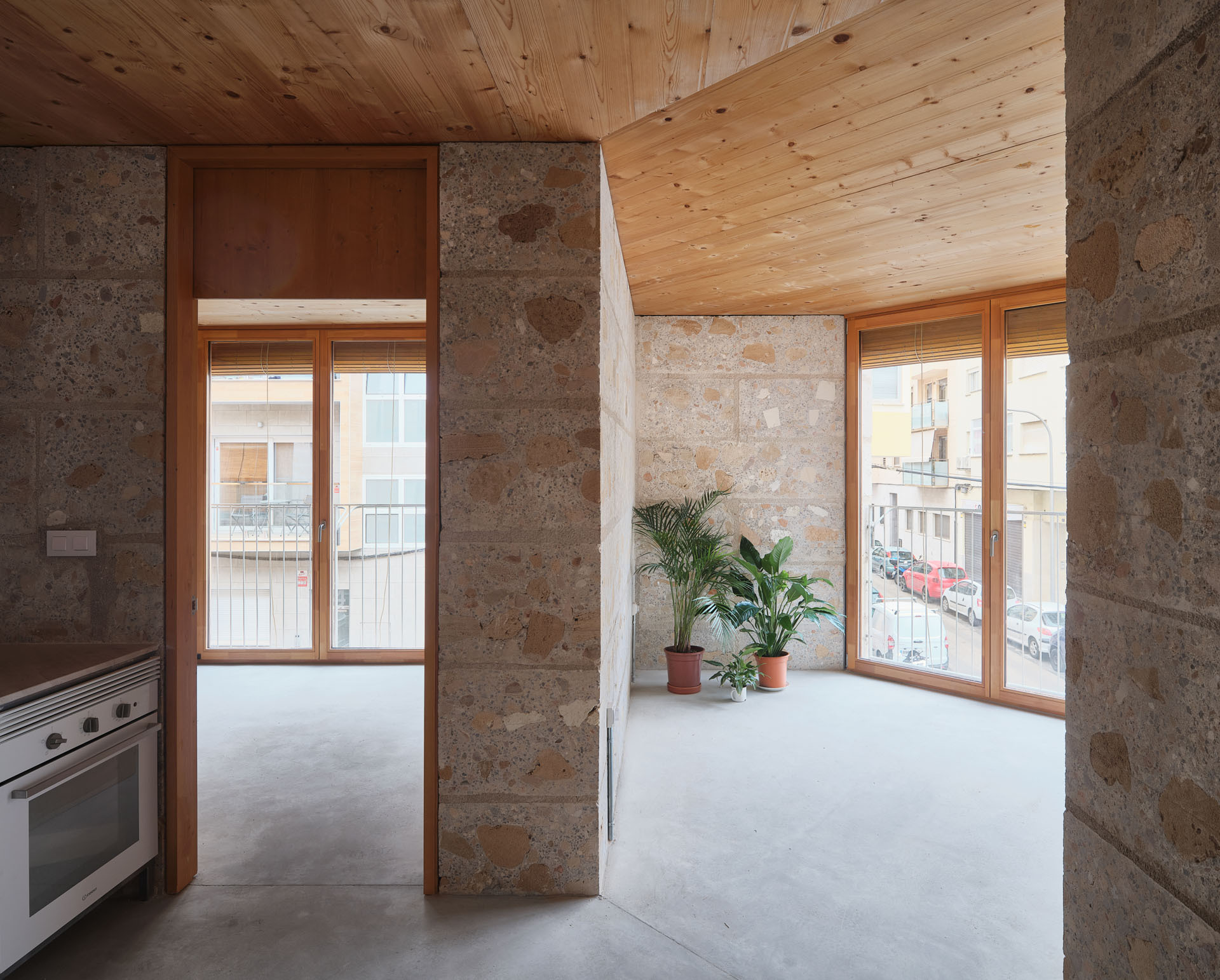
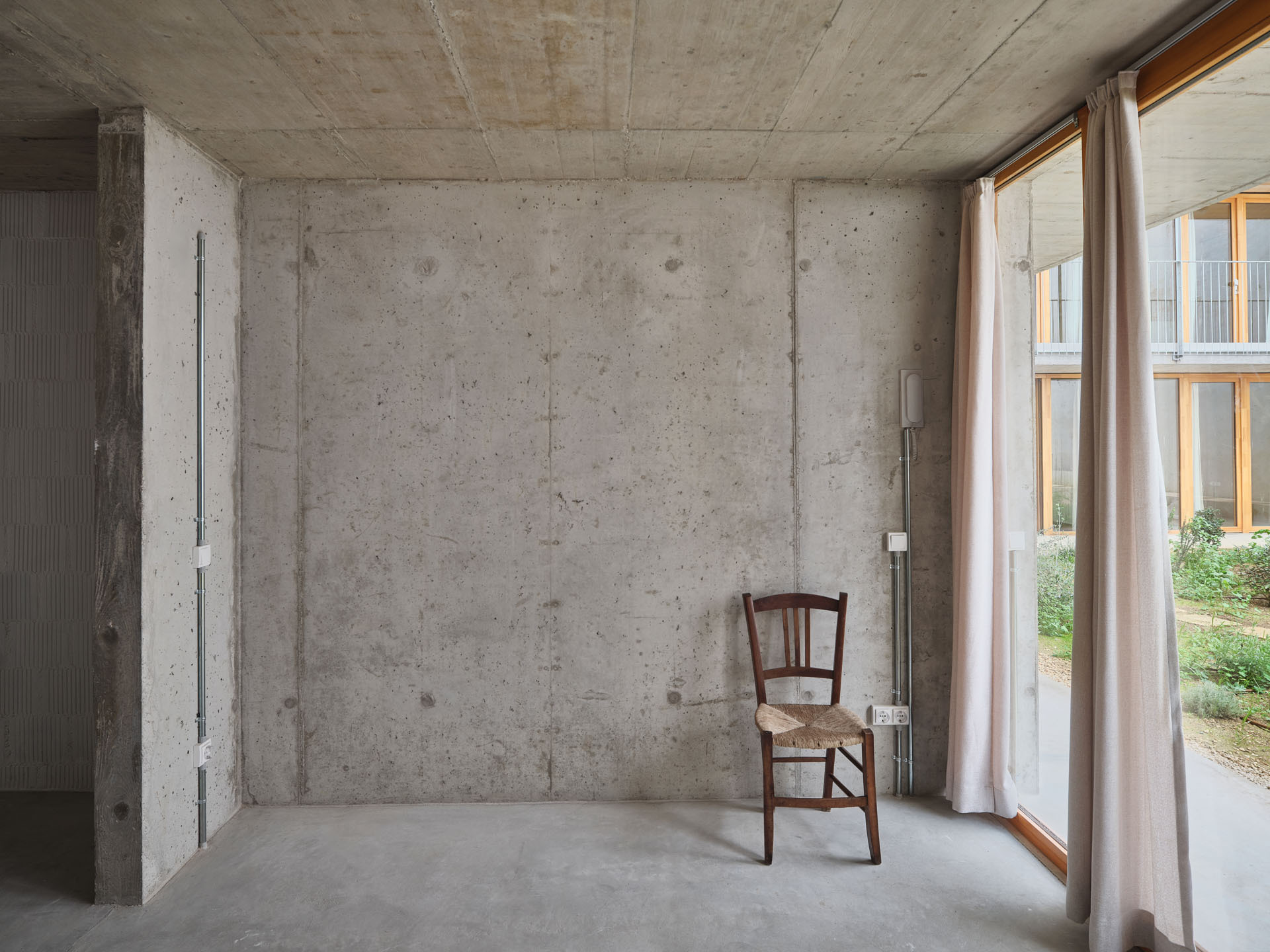
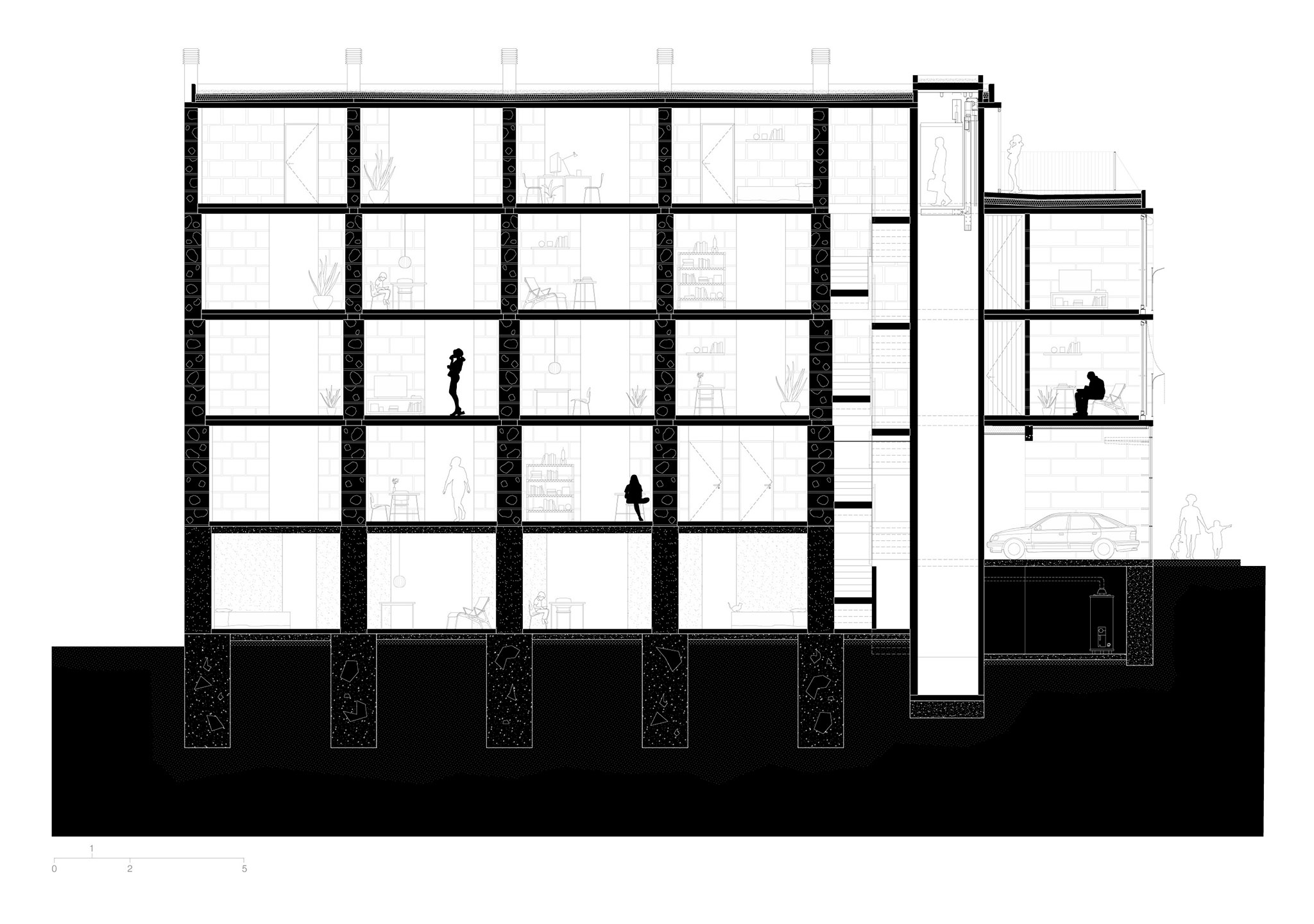
The blocks were stacked to build load-bearing walls perpendicular to the street, supporting cross-laminated timber ceilings. On each floor, the walls reduce in thickness by 10 cm, allowing direct support of the timber panels, facilitating the speed of execution of the entire structure. 

Perpendicular to the main walls, 13 cm thick partition walls, constructed with the same cyclopean concrete and resulting from cutting a 60 cm wide block into four 13 cm sections, tie the structure of the entire building, together with the stair and elevator core. 
25 Social housing by Harquitectes. Photograph by Adrià Goula.
25 viviendas sociales por Harquitectes. Fotografía por Adrià Goula.
25 Social housing by Harquitectes. Photograph by Adrià Goula.

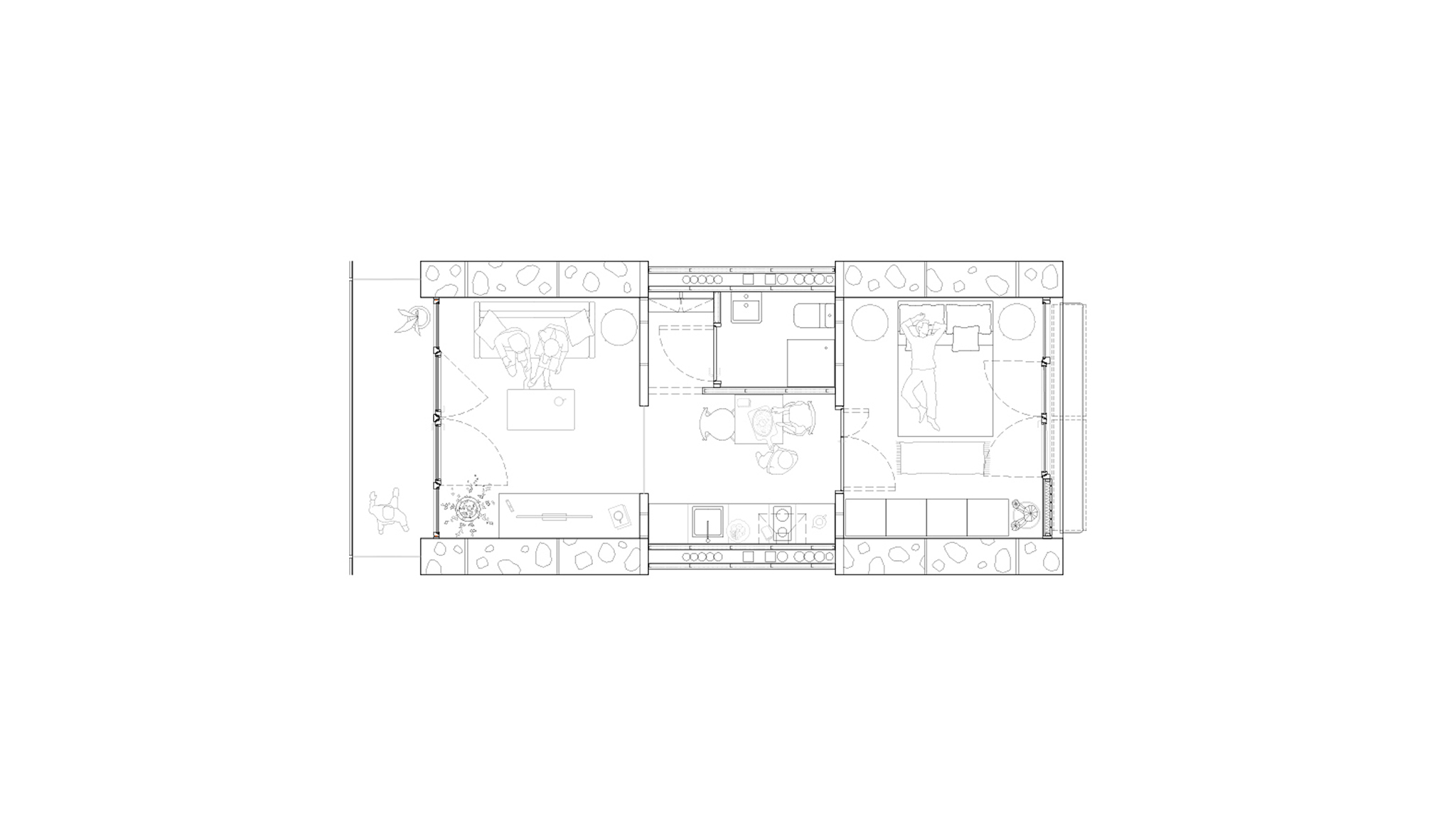
The entire spatial and programmatic organization of the building responds to the described structural system; the floor plan is organized with a stair core in the corner, providing access to a walkway in the interior garden, from where each apartment is accessed—all are through apartments except those on the semi-basement floor, which, like those on the attic floor, have half the depth of the typical floors and utilize two structural spans for each apartment. The top-floor apartments have large terraces. Each floor also has a communal area (laundry room, lounges, etc.). 

The façade starkly displays the structural system: the end walls (vertical) of the prefabricated block walls, which decrease in height on each floor and support the timber (horizontal) ceilings, and, as the façade of each apartment, floor-to-ceiling wooden balconies with a lateral opaque strip and Venetian blinds to protect from the eastern and western sun.
More information

Label
Architects
Text

Harquitectes. Lead architects.- David Lorente, Josep Ricart, Xavier Ros, Roger Tudó.

+ + copy Created with Sketch.
- + copy Created with Sketch.
Label
Project team
Text

Anna Burgaya, Ángeles Torres, Cynthia Rabanal, Victor Jorgensen.
+ + copy Created with Sketch.
- + copy Created with Sketch.
Label
Collaborators
Text

Quantity Surveyor.- Xavier Suárez.
Structures.- DSM-arquitectes.
Engineering.- M7 enginyers.
Environmental Consulting.- Societat Orgànica.
Acoustic Engineering.- MC acústica.
Lime Construction Expert.- Joan Ramon Rosell.

+ + copy Created with Sketch.
- + copy Created with Sketch.
Label
Client
Text

IBAVI - Institut Balear de l'Habitatge.

+ + copy Created with Sketch.
- + copy Created with Sketch.
Label
Area
Text

Plot area.- 516.29 m².
GFA.- 1,610 m².

+ + copy Created with Sketch.
- + copy Created with Sketch.
Label
Dates
Text

Design.- 2021 - 2022.
From July 2022 to January 2025.

+ + copy Created with Sketch.
- + copy Created with Sketch.
Label
Venue / Location
Text

C/ Lope de Vega, 3. 07013 - Palma de Mallorca, Illes Balears, Spain.
Latitude.- 39.576468088 Longitude.- 2.6400410253

+ + copy Created with Sketch.
- + copy Created with Sketch.
Label
Budget
Text

Total.- € 2,462,031.47 
Budget next generation EU Fund.- €820,916.00
Budget MITMA Plan 20,000 Fund Mallorca Island Council Agreement.-  €450,000.00

+ + copy Created with Sketch.
- + copy Created with Sketch.
Label
Awards
Text

Finalist Casa de la Arquitectura Awards 2025 (Innovation category), Finalist CSCAE Architecture Prize 2025, Mallorca Technical Architecture Prize 2025 (Innovation category).

+ + copy Created with Sketch.
- + copy Created with Sketch.
Label
Photography
+ + copy Created with Sketch.
- + copy Created with Sketch.

Harquitectes is an architecture studio founded in Sabadell in 2000 by David Lorente Ibáñez (n. Granollers, Barcelona, 7 de junio de 1972), architect from ETSAV-UPC, 2000, Xavier Ros Majó (n. Sabadell, Barcelona, 1972), architect from ETSAV-UPC, 1998, Josep Ricart Ulldemolins (n. Cerdanyola del Vallès, Barcelona, 1973), architect from ETSAV-UPC, 1999 and Roger Tudó Galí (n. Terrassa, Barcelona, 1973), architect from ETSAV-UPC, 1999. 

They combine professional practice and university teaching in national schools. Their work has been exhibited in many expositions and lectures both in Spain and abroad. Harquitectes functions as a horizontal collective, where the project is understood as a process of applied research, closely linked to teaching and critical thinking about contemporary architecture.

Awards.-

2025.- Re-FAD Award 2025.
2025.- Casa de la Arquitectura Award (Cohesion category.
2024.- Bonaplata Award, 2024.
2018.- Premio ‘Detail Prize 2018’
2018.- Premio ‘XII Premios NAN’
2018.- Premiado en la ‘XIV BEAU’ Bienal Española de Arquitectura y Urbanismo.
2018.- ‘Premio Ciudad de Barcelona 2017’
2018.- Premio ex aequo de ‘Arquitectura de Ladrillo Hispalyt XIV’
2017.- Premio ‘Mapei a la edificación sostenible’
2017.- Premio ‘BB Construmat 2017’
2017.- Premio AD 2017 Architects of the year
2016.- Premio ‘Mostra Arquitectura Vallès’
2016.- Premio ‘Wienerberger Brick Award 2016’.
2016.- Premiado en la ‘X BIAU’ Bienal Iberoamericana de Arquitectura y Urbanismo.
2016.- Premiado en la ‘XIII BEAU’ Biennal Espanyola d’Arquitectura i Urbanisme.
2016.- Premio de Arquitectura de Ladrillo Hispalyt XIII Edició.
2016.- Premio ‘Catalunya Construcció’ 2016.
2015.- 1r ‘Premio Ugo Rivolta’ 2015.
2015.- Premio FAD de la opinión 2015.
2015.- Premio ‘Catalunya Construcció’ 2015.
2014.- Premio ‘Archmarathon’ 2014.
2014.- Premio de Arquitectura de Cerámica ‘Fritz Höger Preis’ categoría de vivienda Winner Gold
2013.- 1er ‘Premio A+’ al Mejor Proyecto de Arquitectura Sostenible.
2013.- ‘Premio A+ Extraordinario al Estudio Joven más Prometedor’
2012.-  Sacyr Innovación Award for ICTA-ICP Building 1102.
2012.- AJAC 2012 Award for university dwellings in Sant Cugat dle Vallès.
2012.- Hise 2012 excelencia a la innovación Award, for 712 house.
2012.- FAD 2012 Award, 712 house.
2011.- ENOR Arquitectura Joven Award for 704 Gimnasium.

Read more
Published on: December 30, 2025
Cite:
metalocus, SARA GENT
"Urban mining model. 25 Social housing by Harquitectes" METALOCUS. Accessed
<https://www.metalocus.es/en/news/urban-mining-model-25-social-housing-harquitectes> ISSN 1139-6415
Loading content ...
Loading content ...
Loading content ...
Loading content ...
Loading content ...
Loading content ...
Loading content ...
Loading content ...
Loading content ...
Loading content ...
Loading content ...
Loading content ...
Loading content ...
Loading content ...
Loading content ...
Loading content ...
Loading content ...
Loading content ...
Loading content ...
Loading content ...
Loading content ...
Loading content ...
Loading content ...
Loading content ...
Loading content ...
Loading content ...
Loading content ...
Loading content ...
Loading content ...
Loading content ...
Loading content ...
Loading content ...
Loading content ...
Loading content ...
Loading content ...
Loading content ...
Loading content ...
Loading content ...
Loading content ...
Loading content ...
Loading content ...
Loading content ...
Loading content ...
Loading content ...
Loading content ...
Loading content ...
Loading content ...
Loading content ...
Loading content ...
Loading content ...
Loading content ...
Loading content ...
Loading content ...
Loading content ...