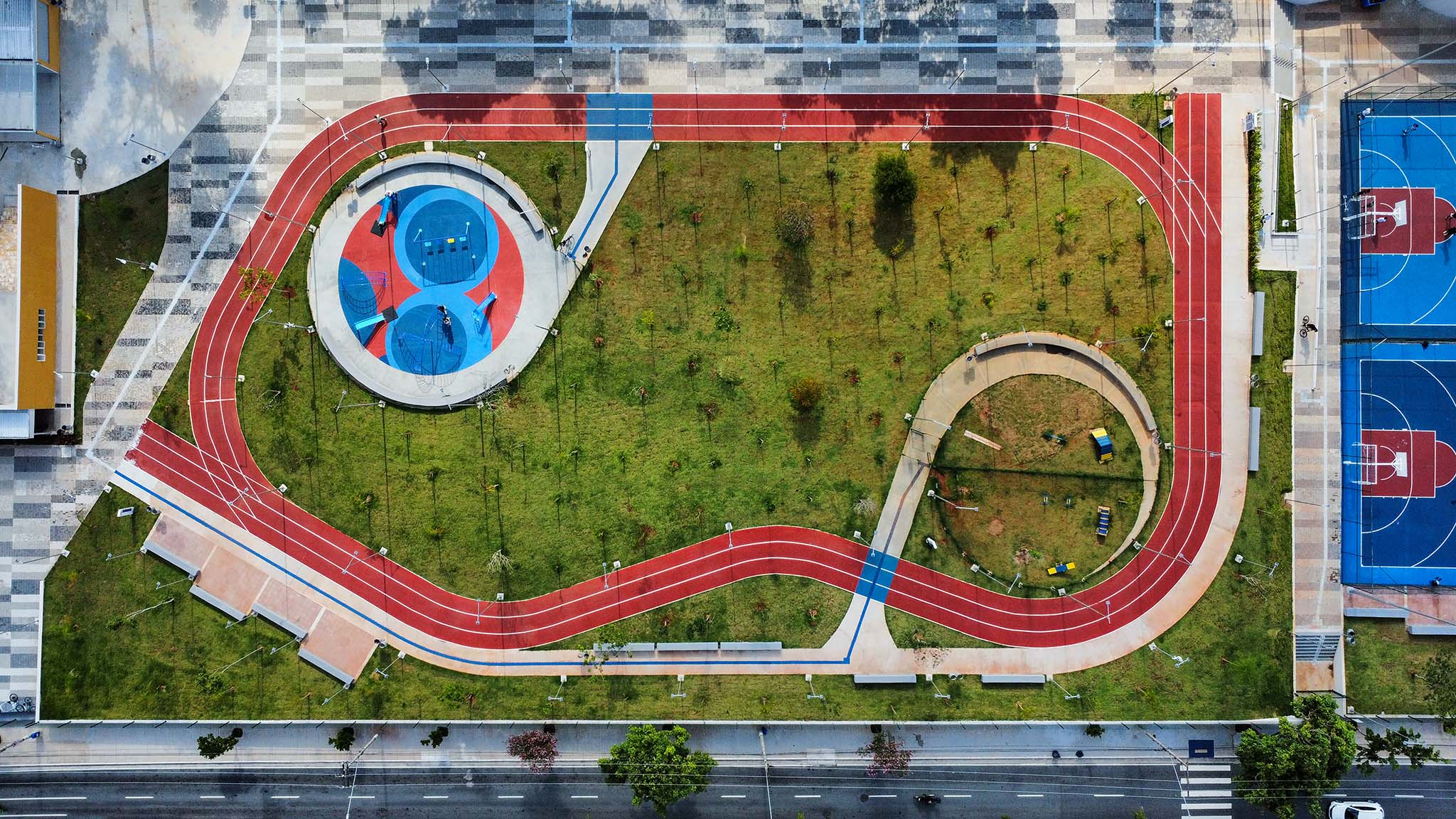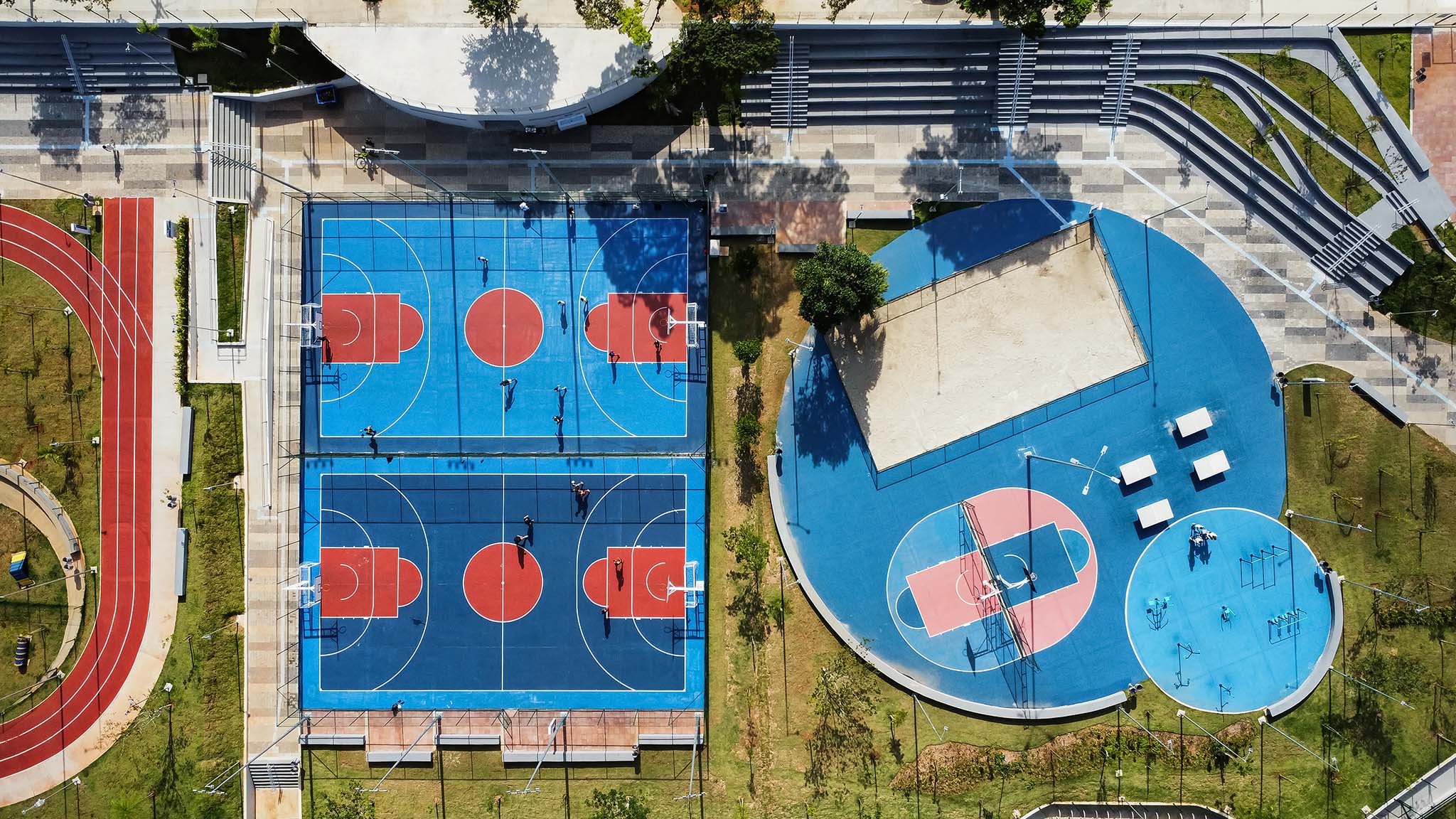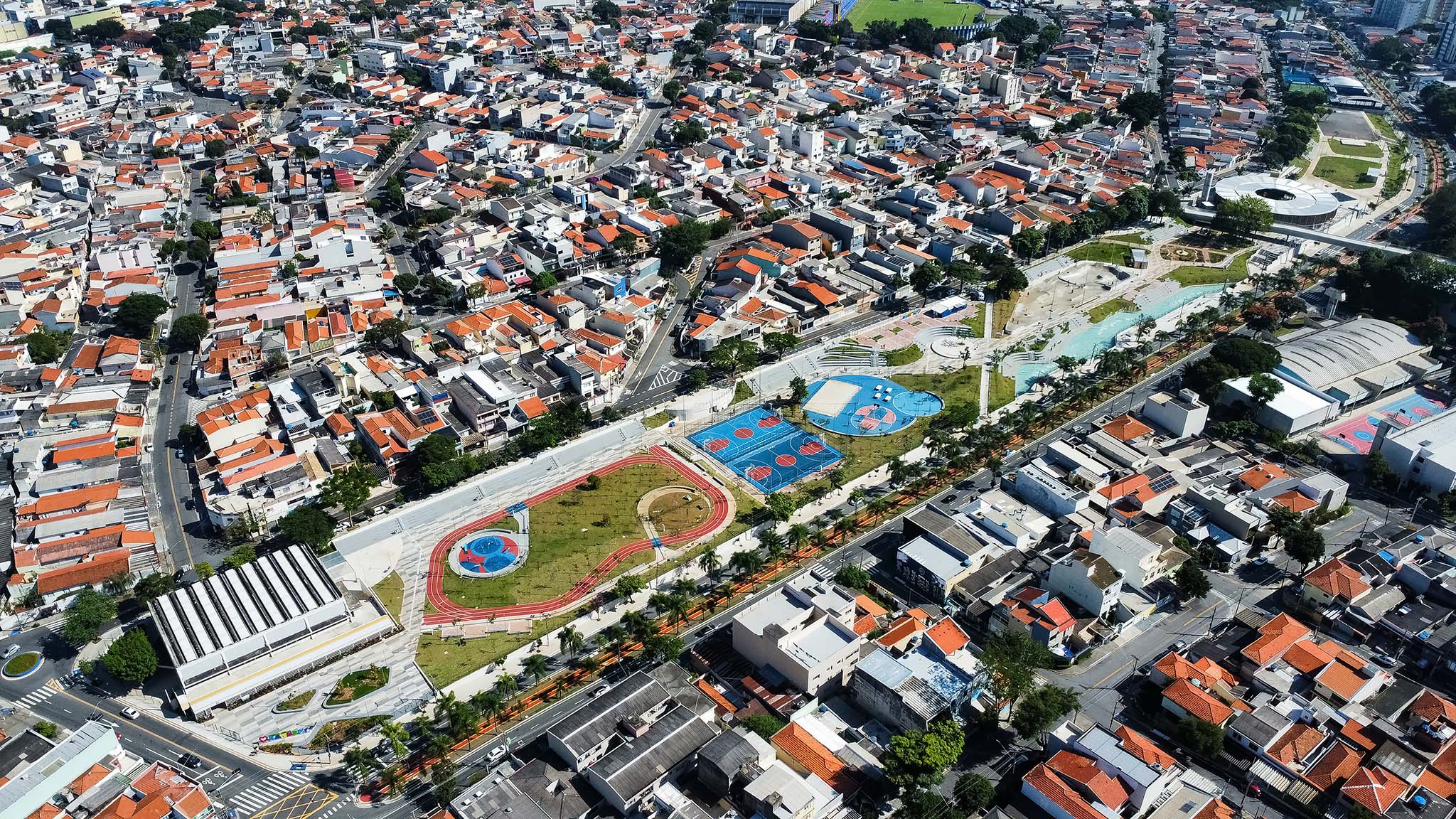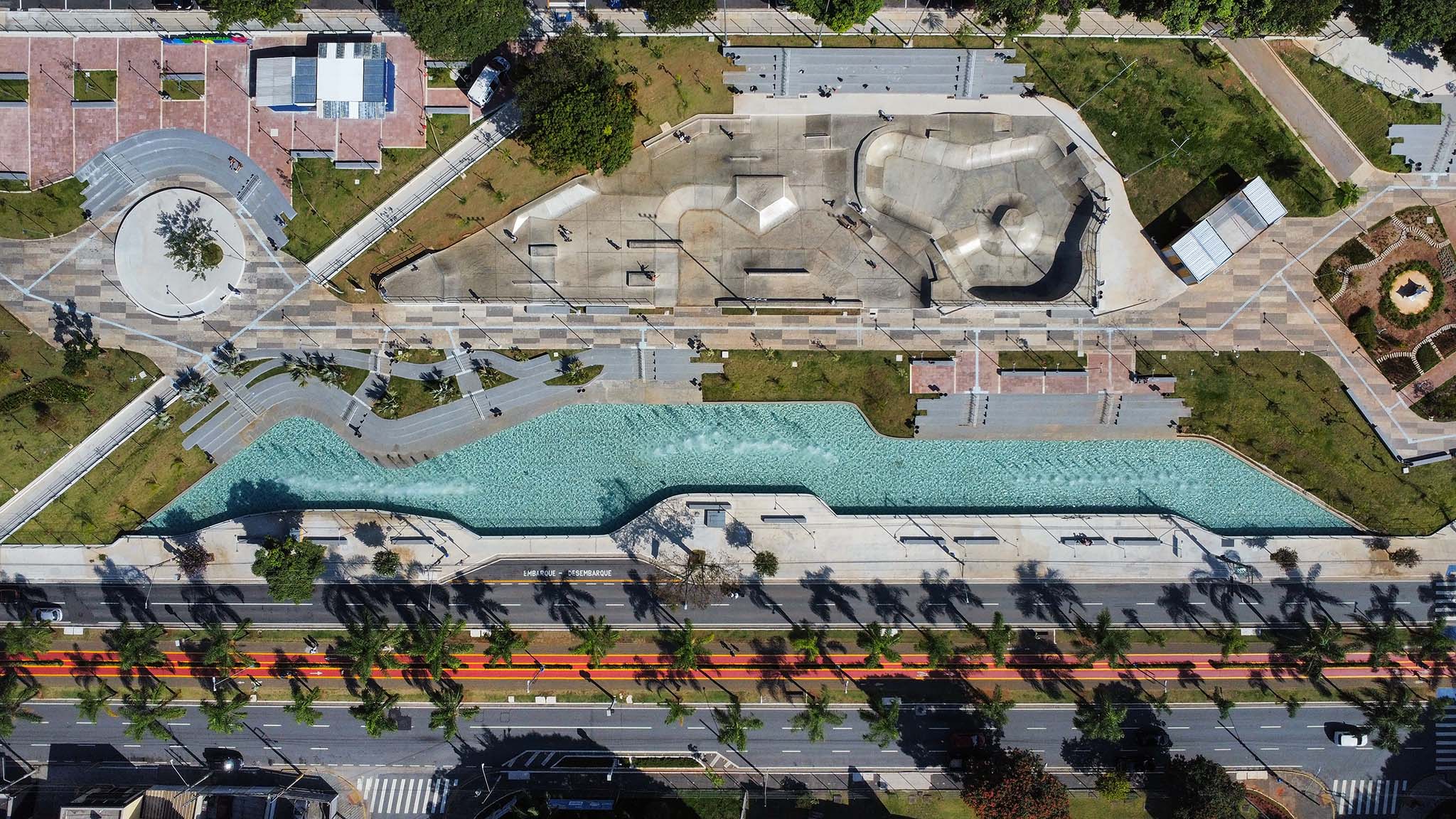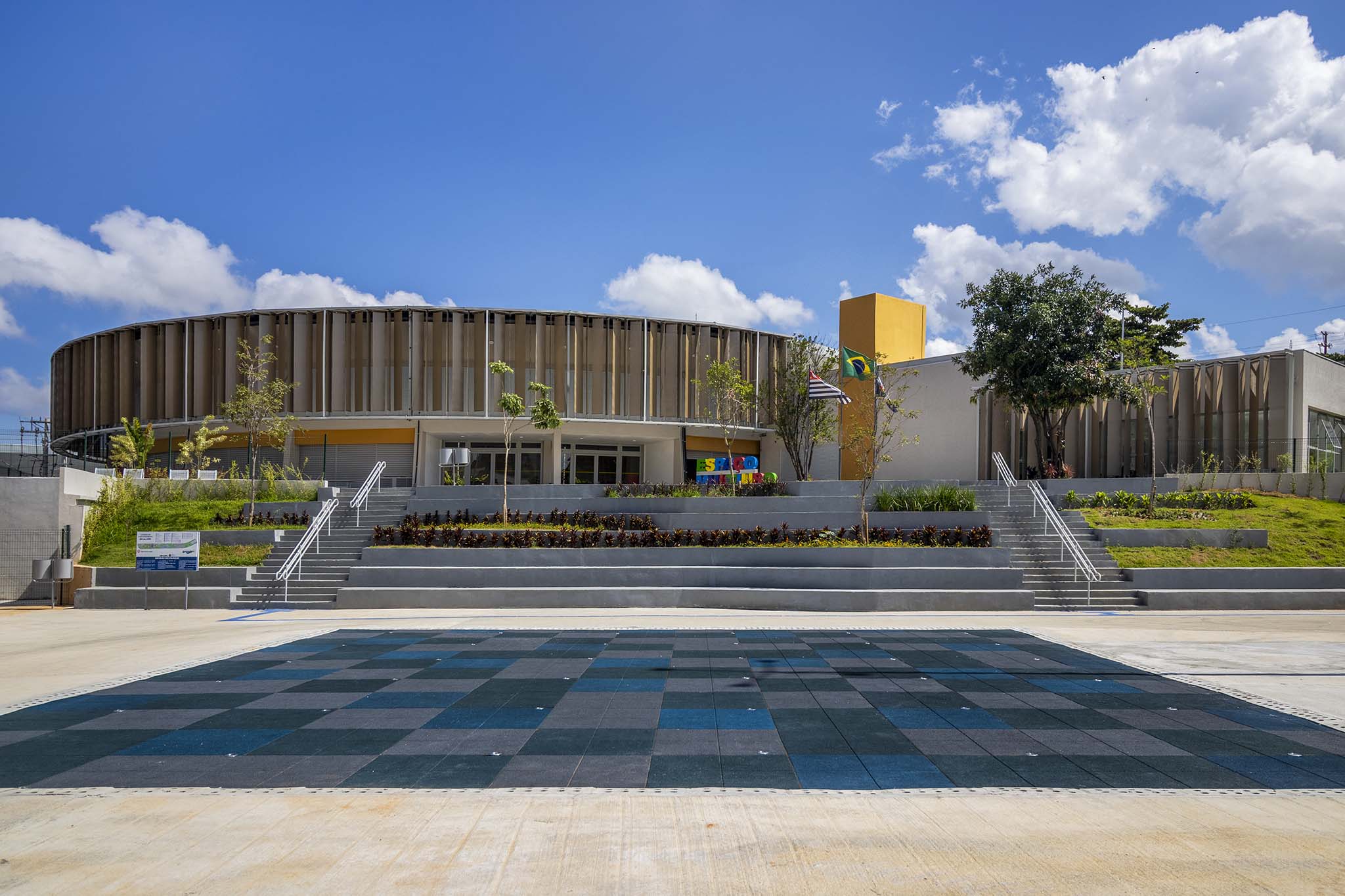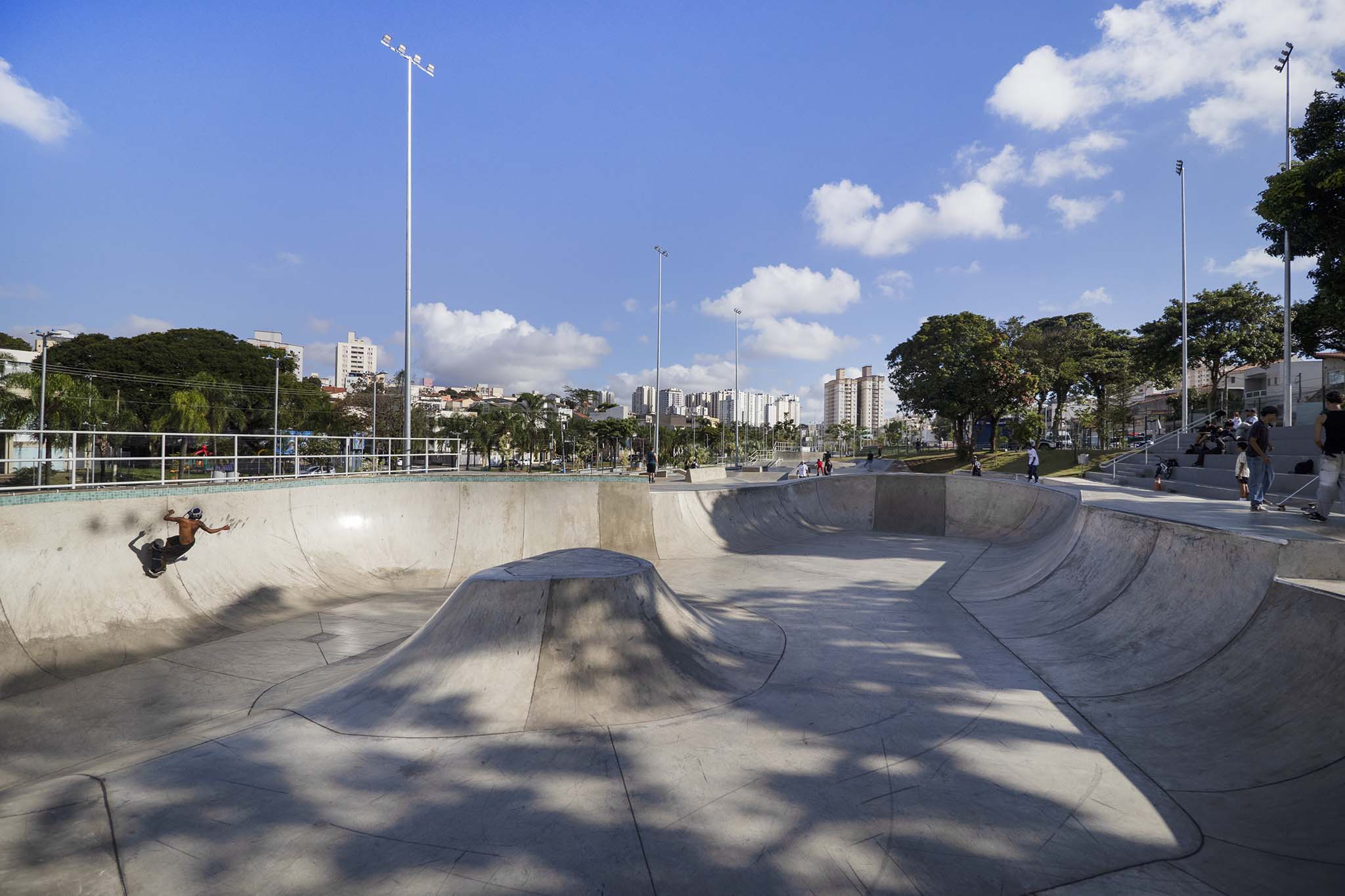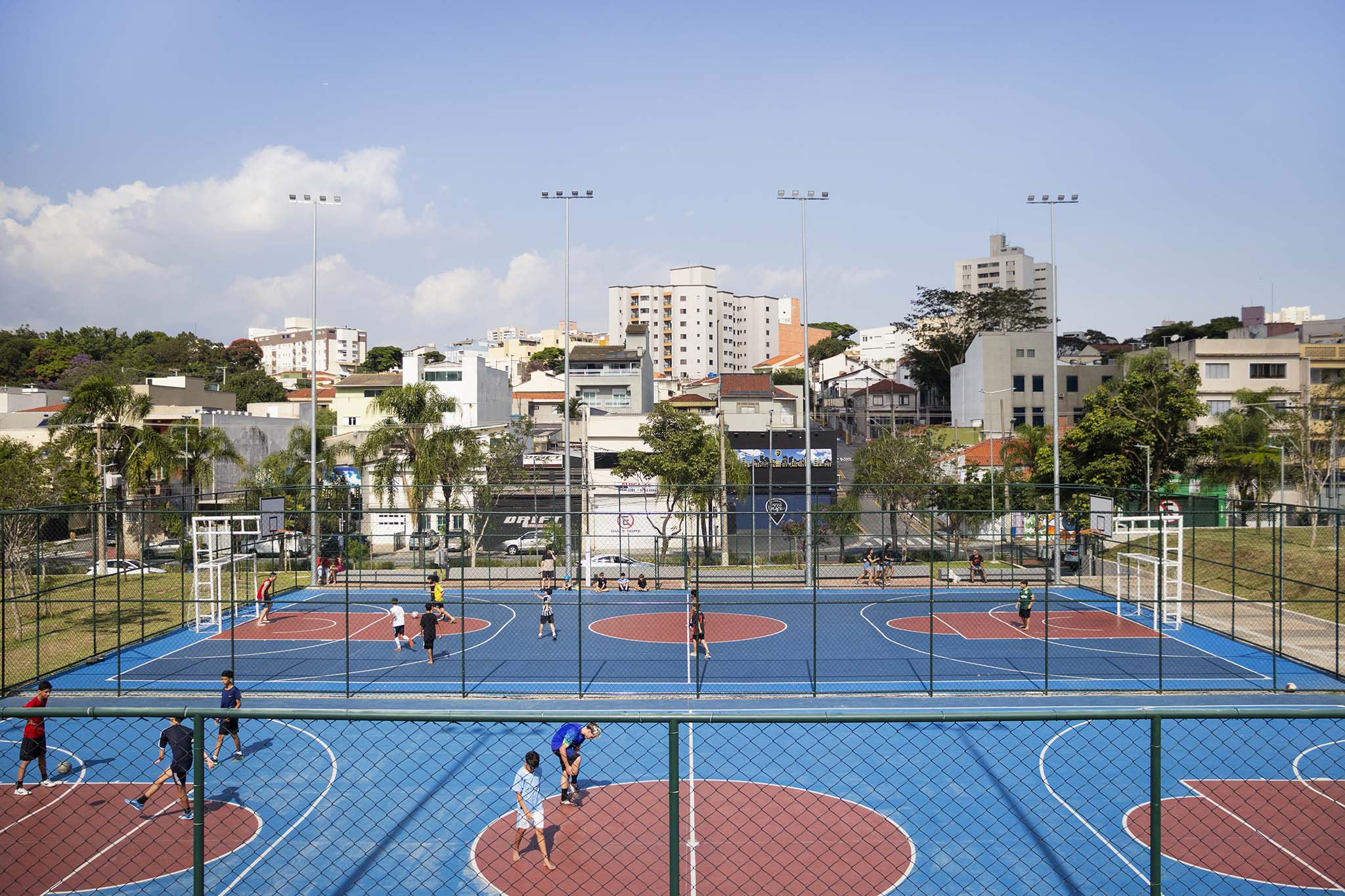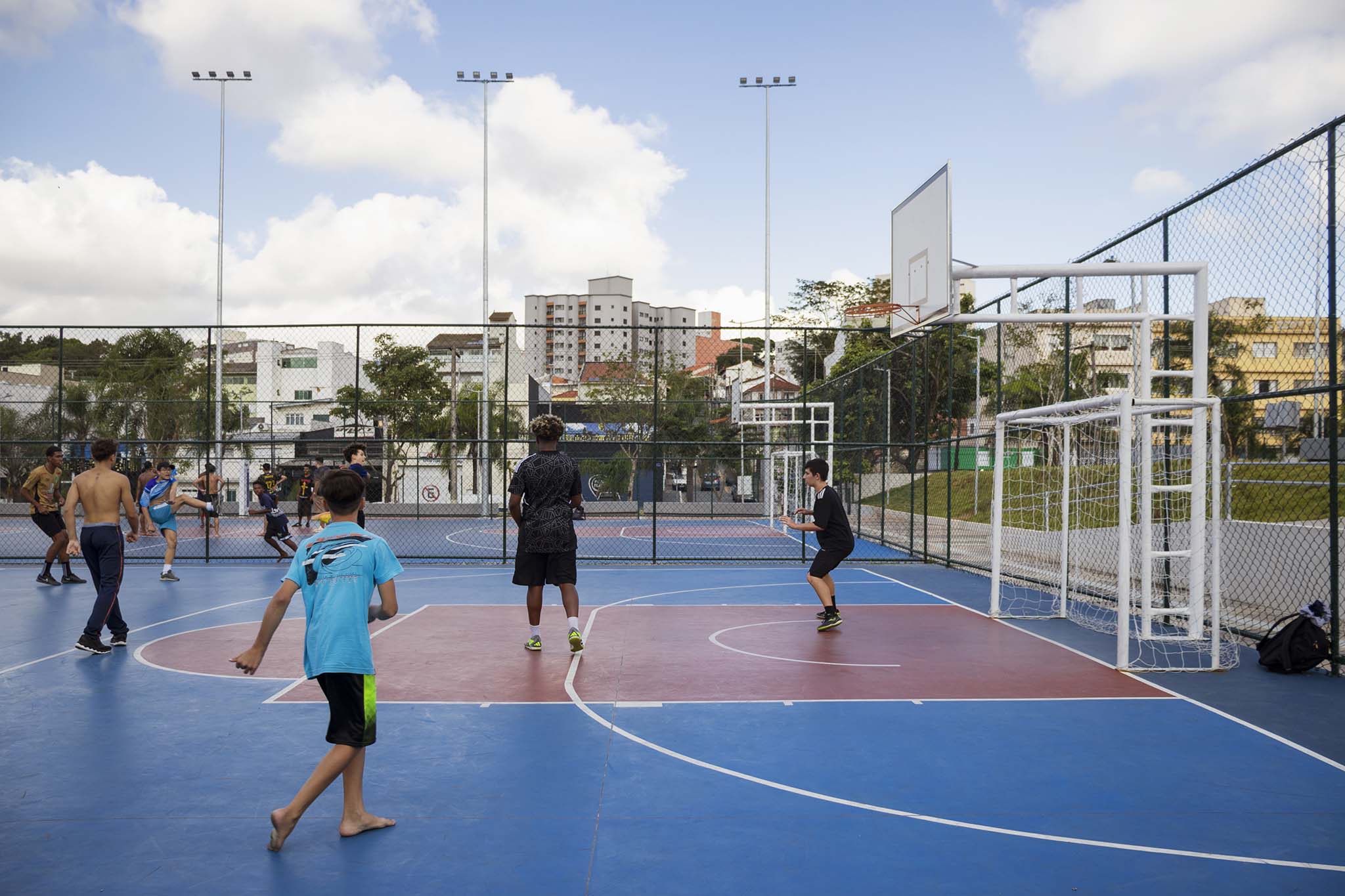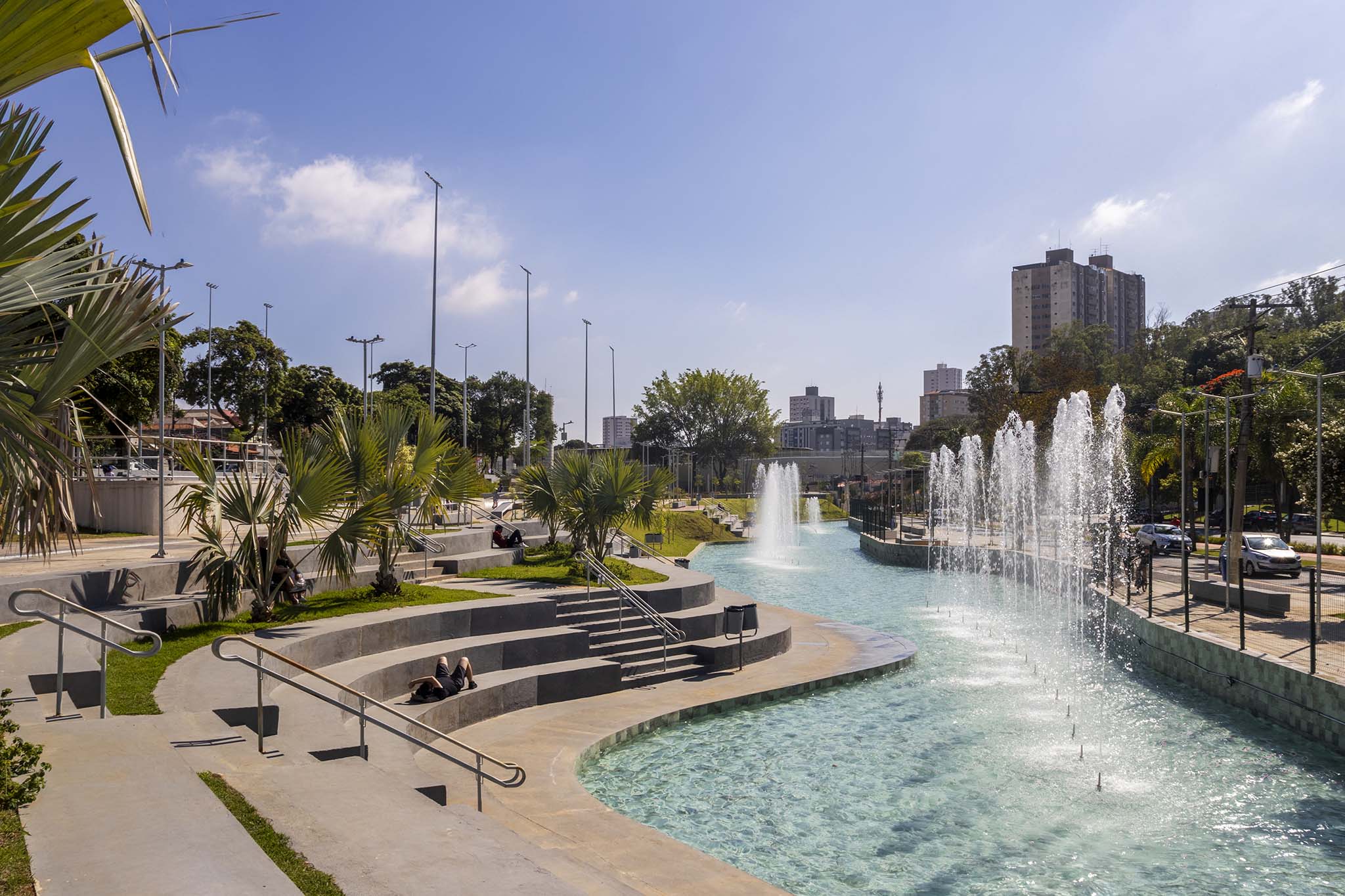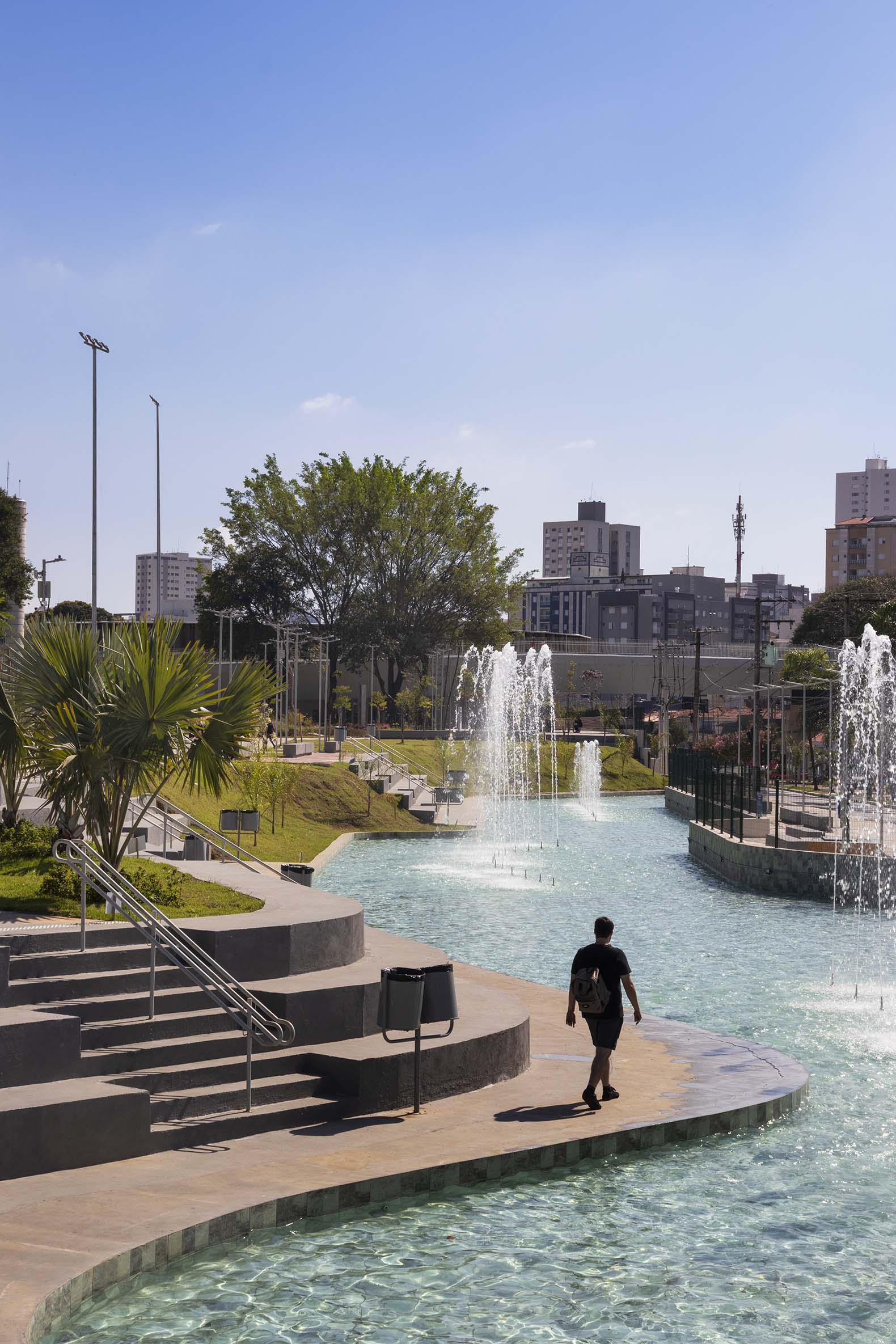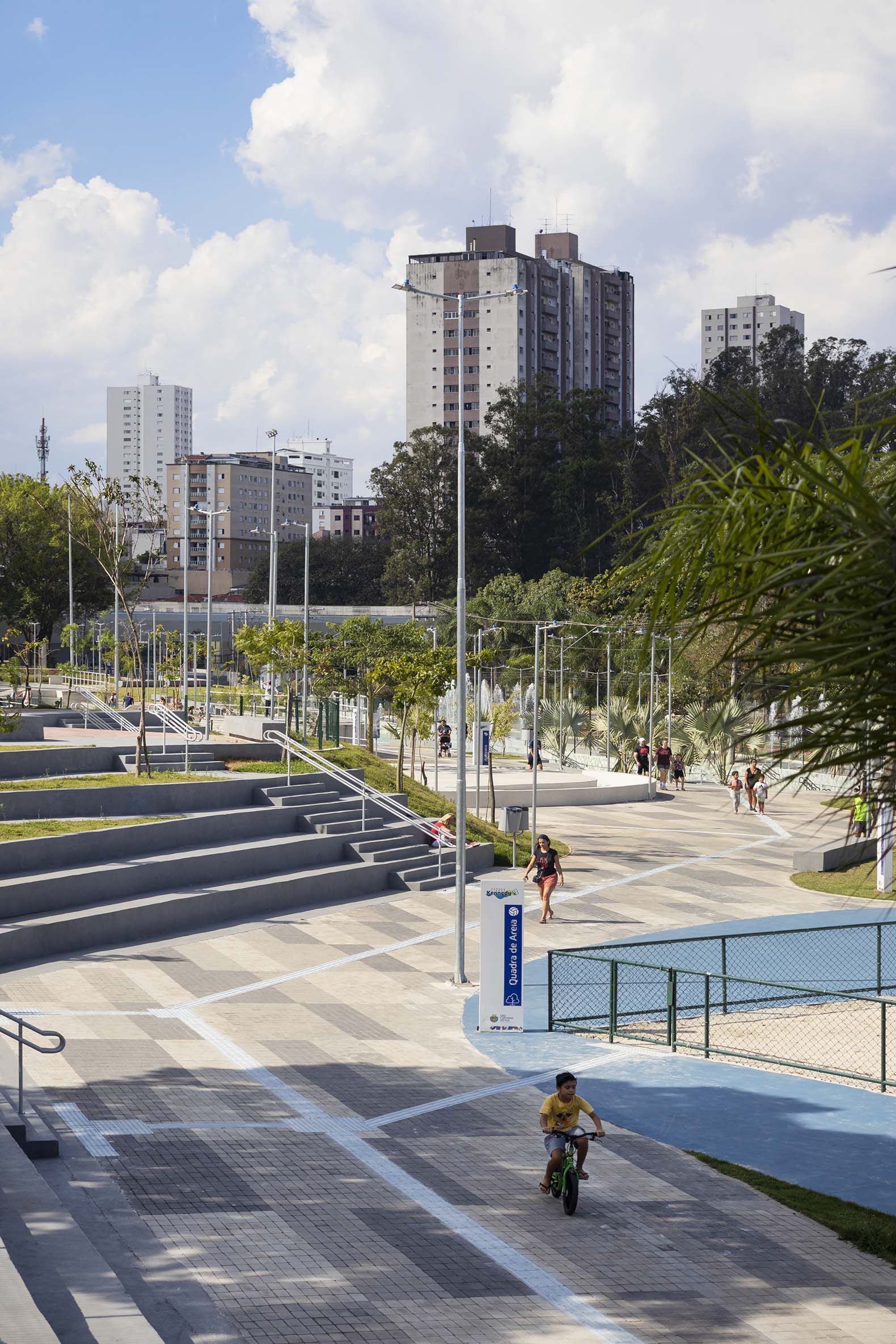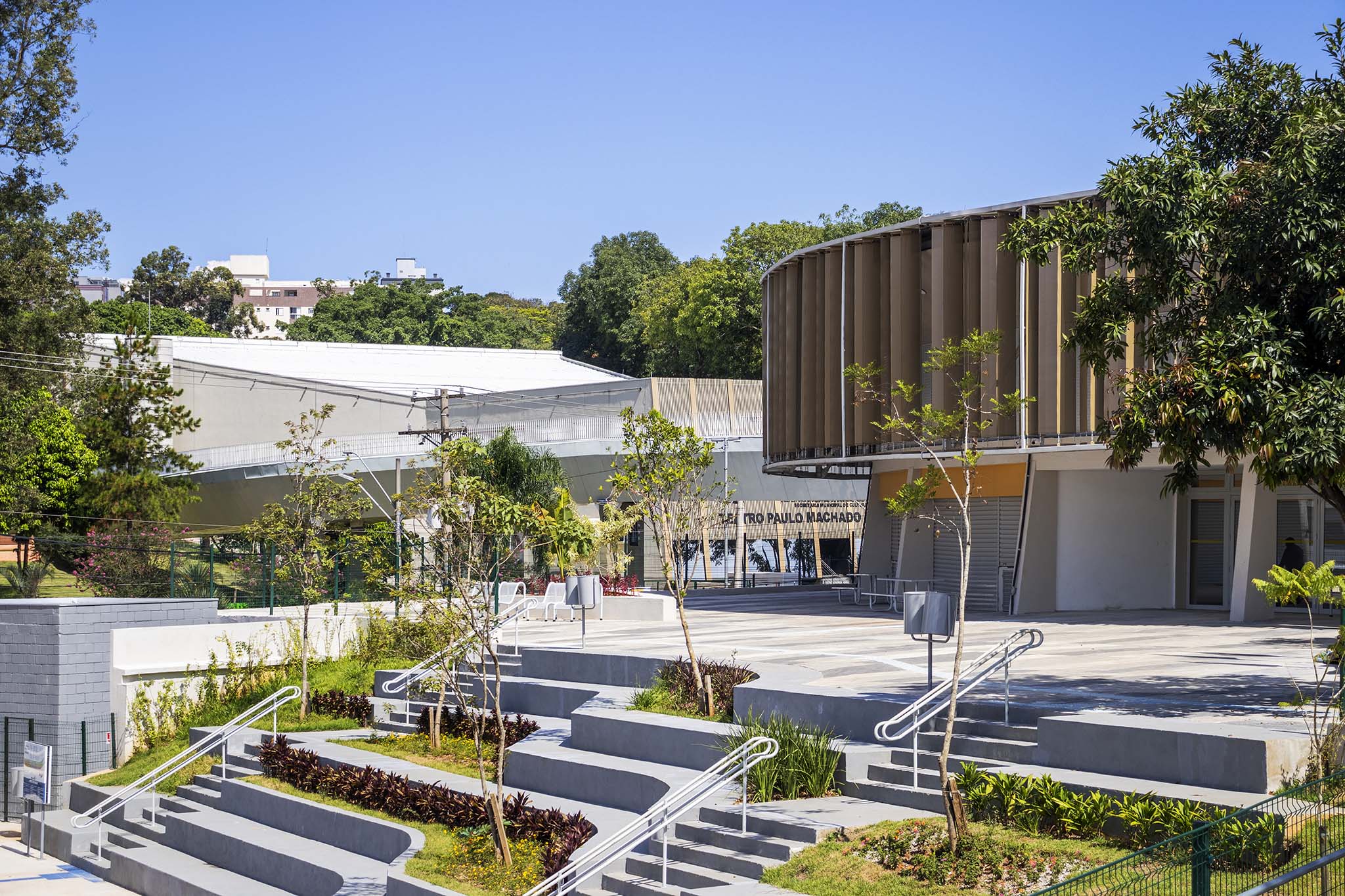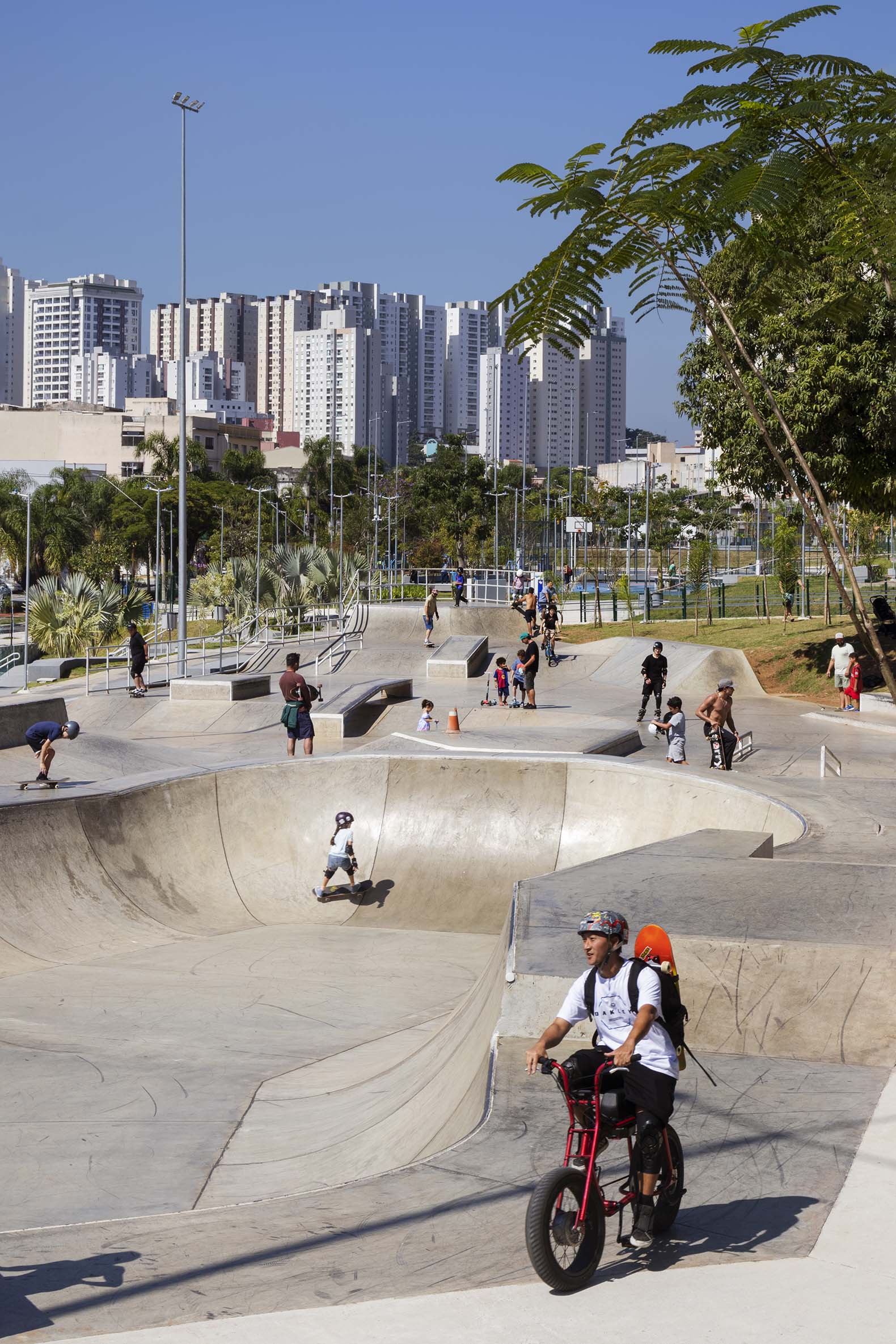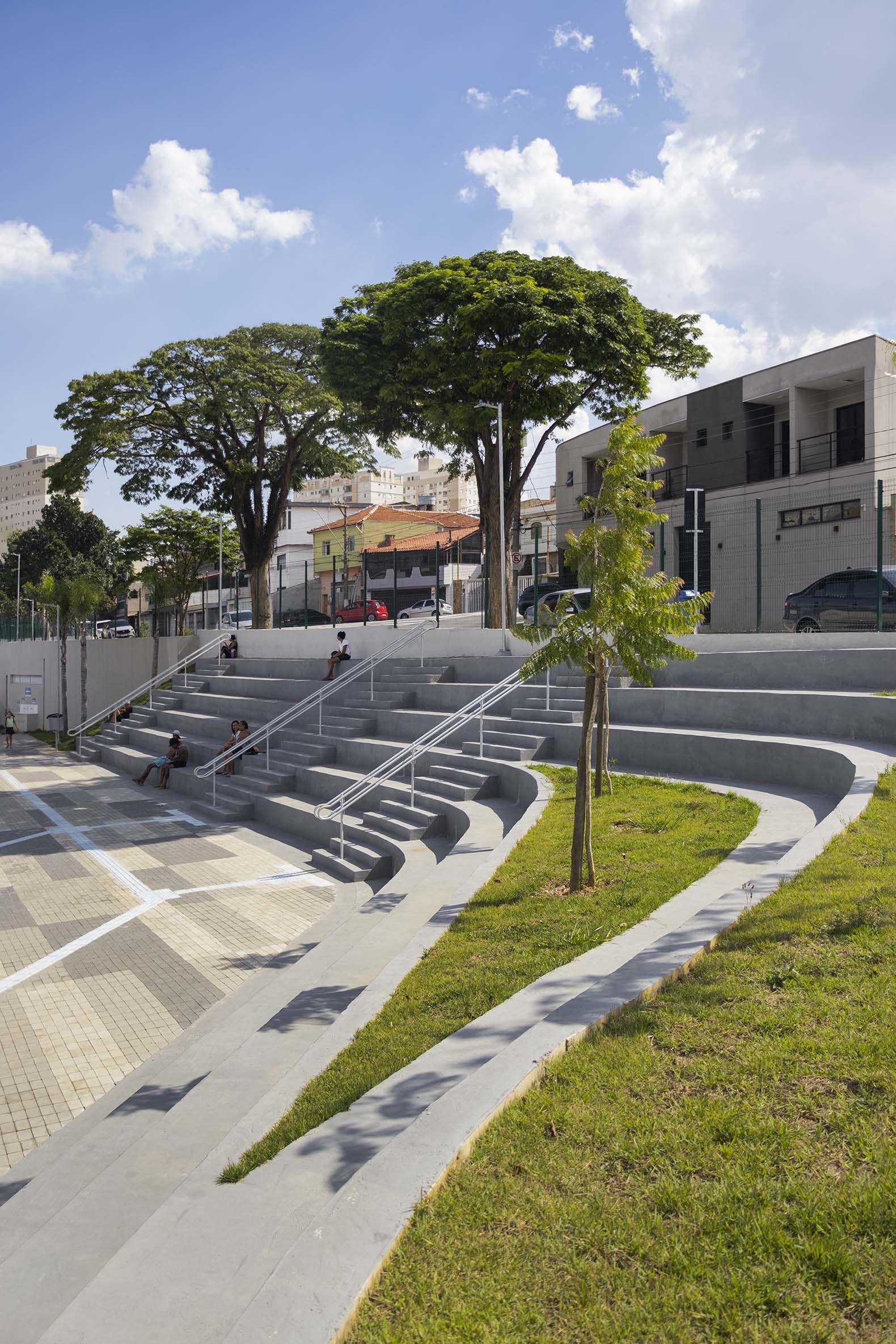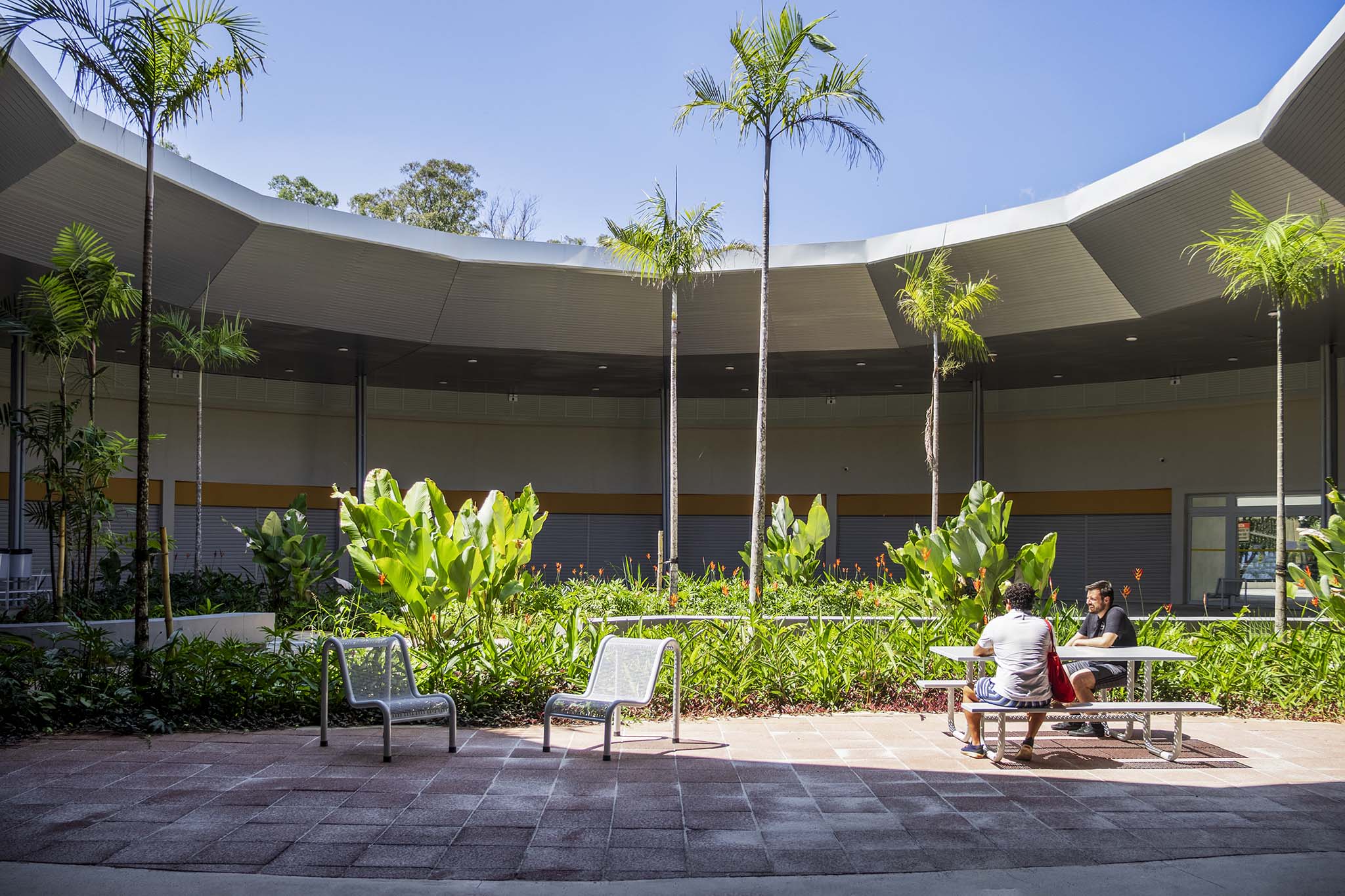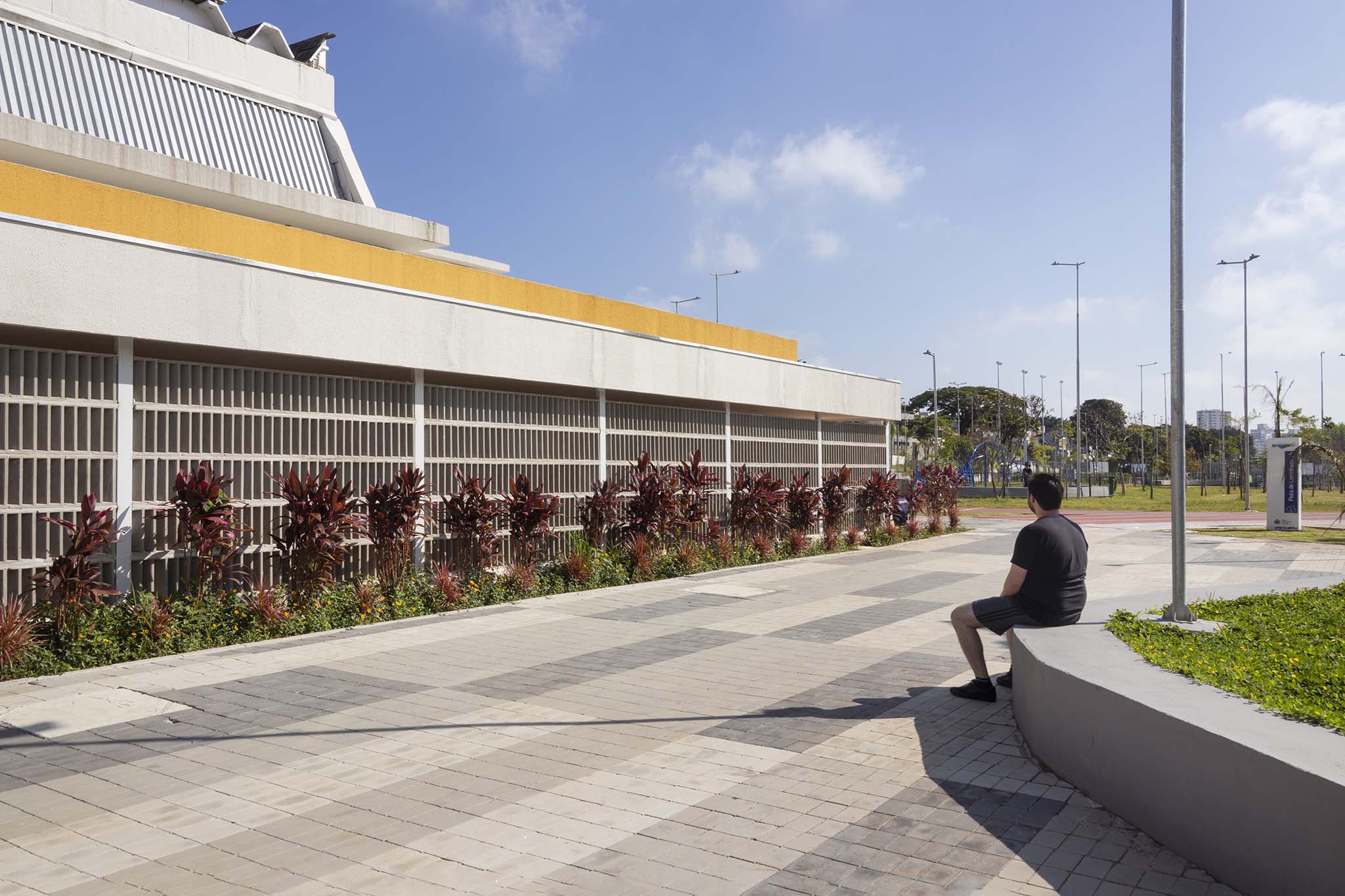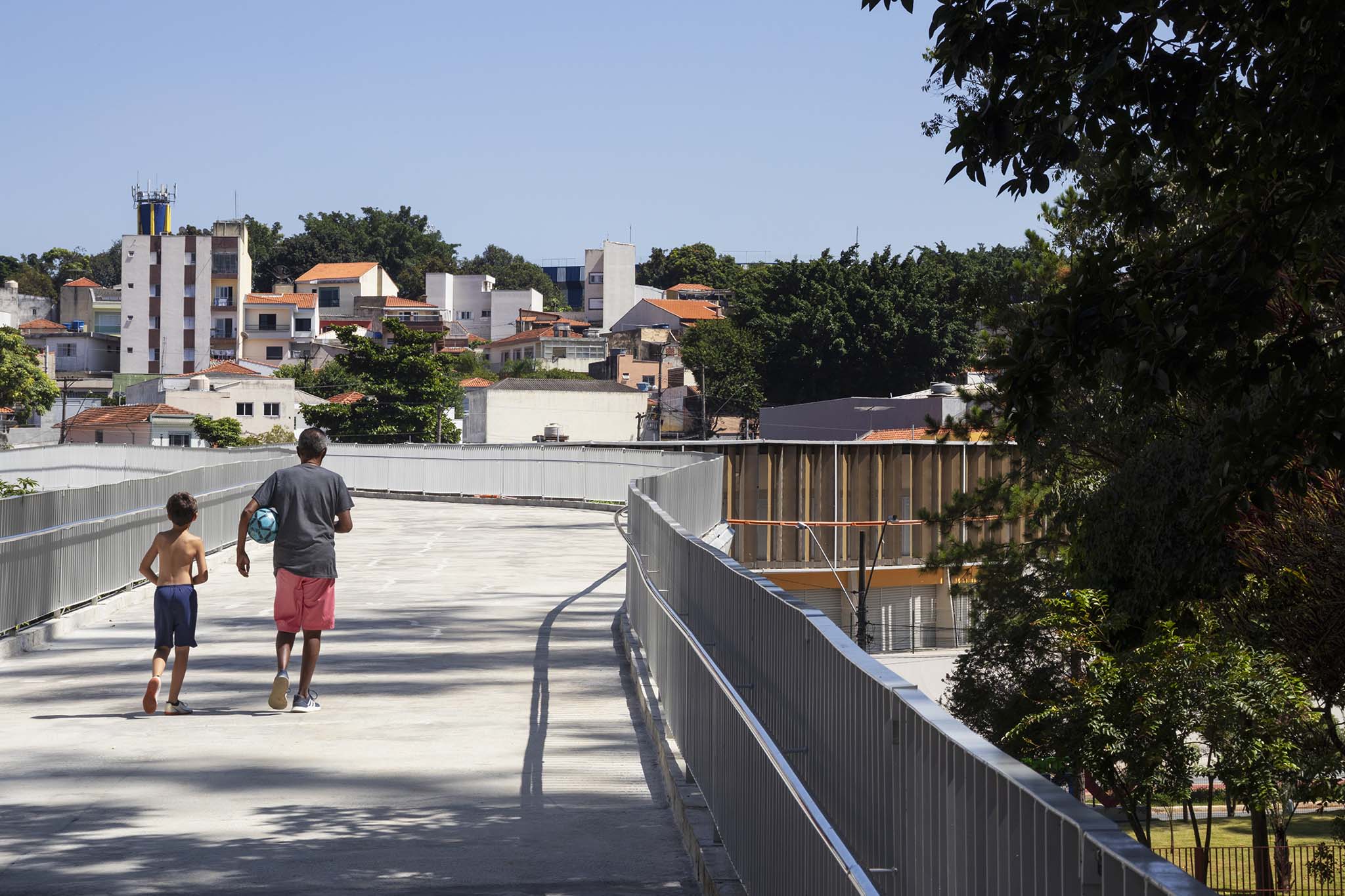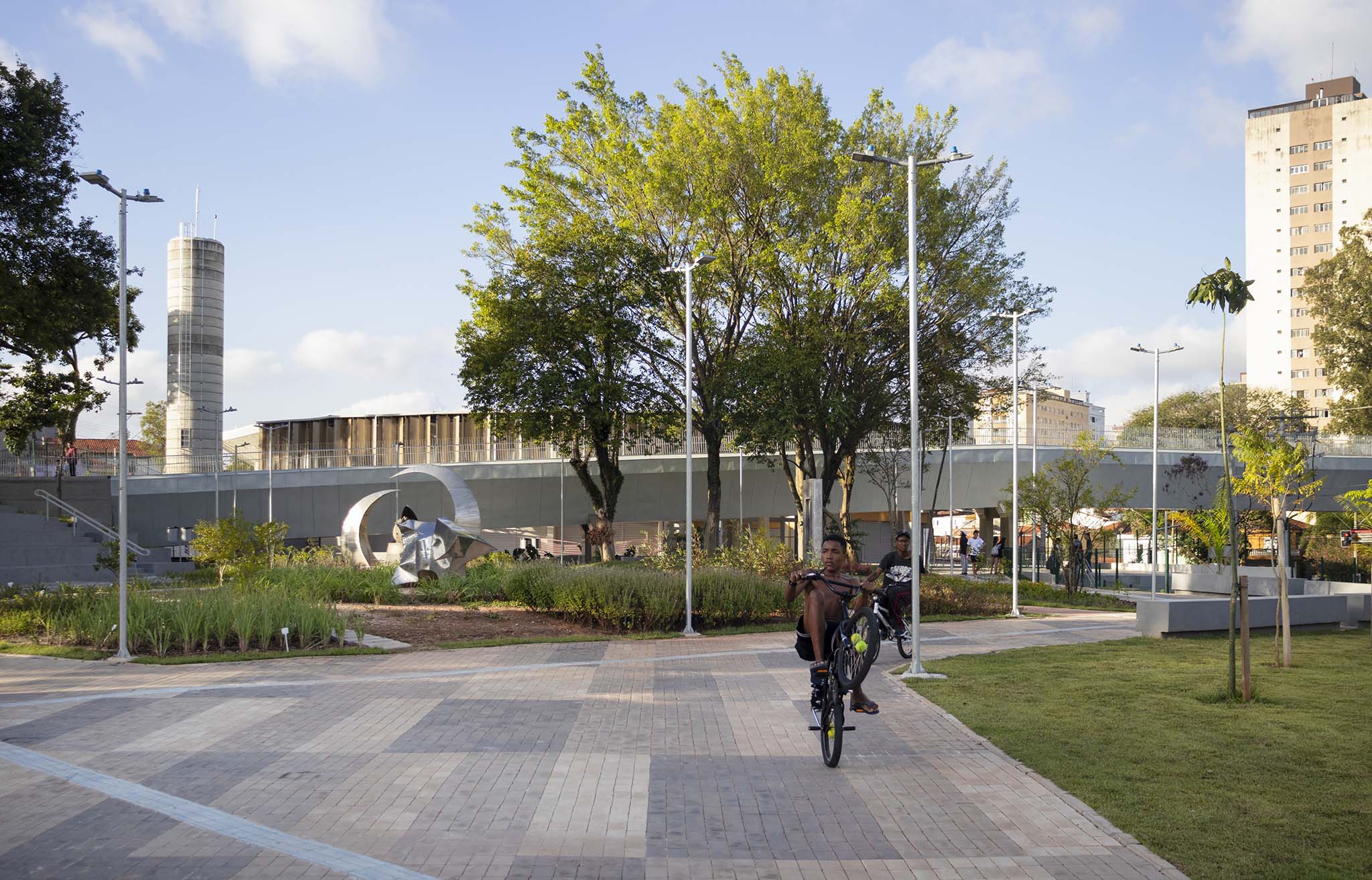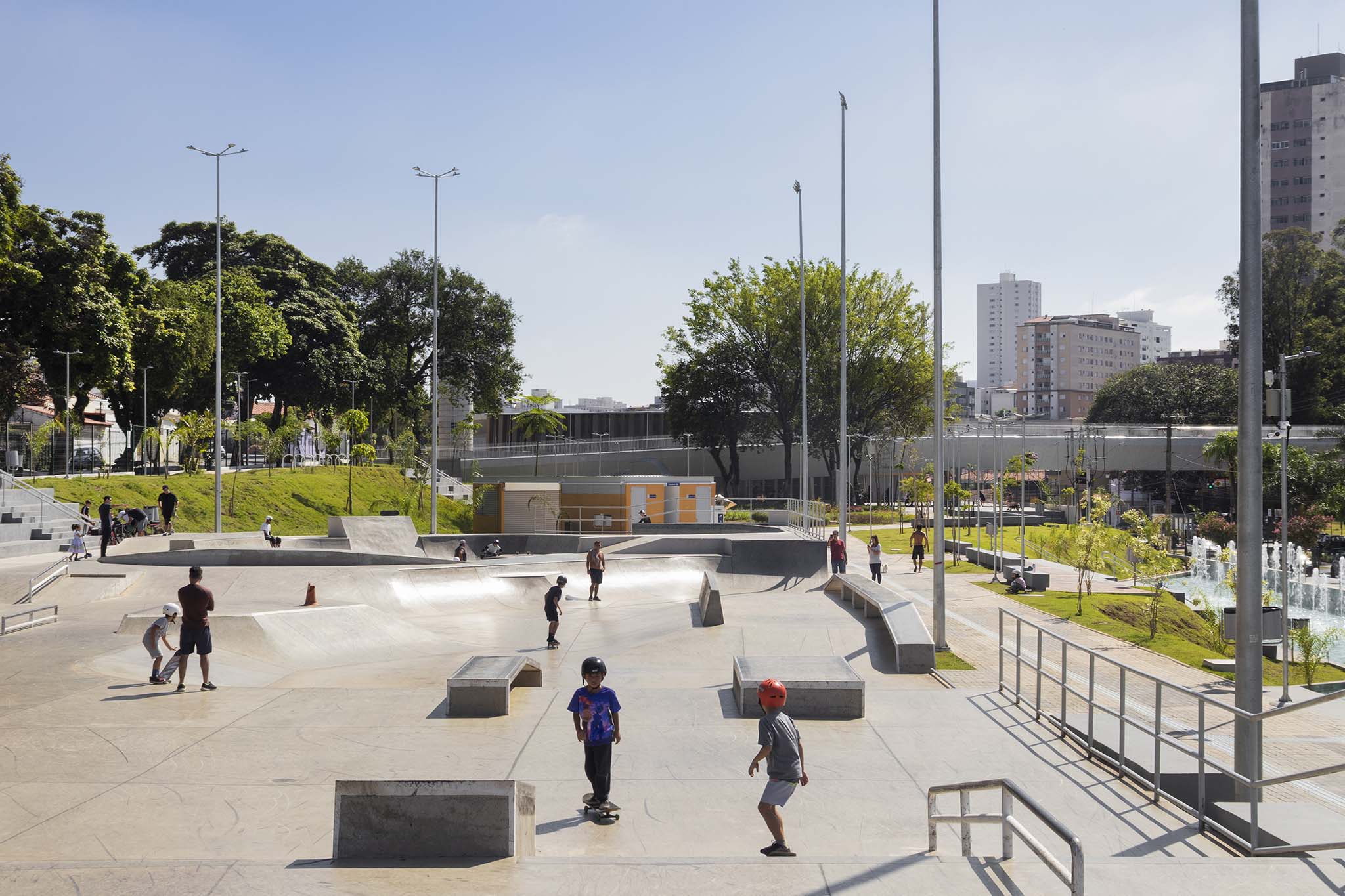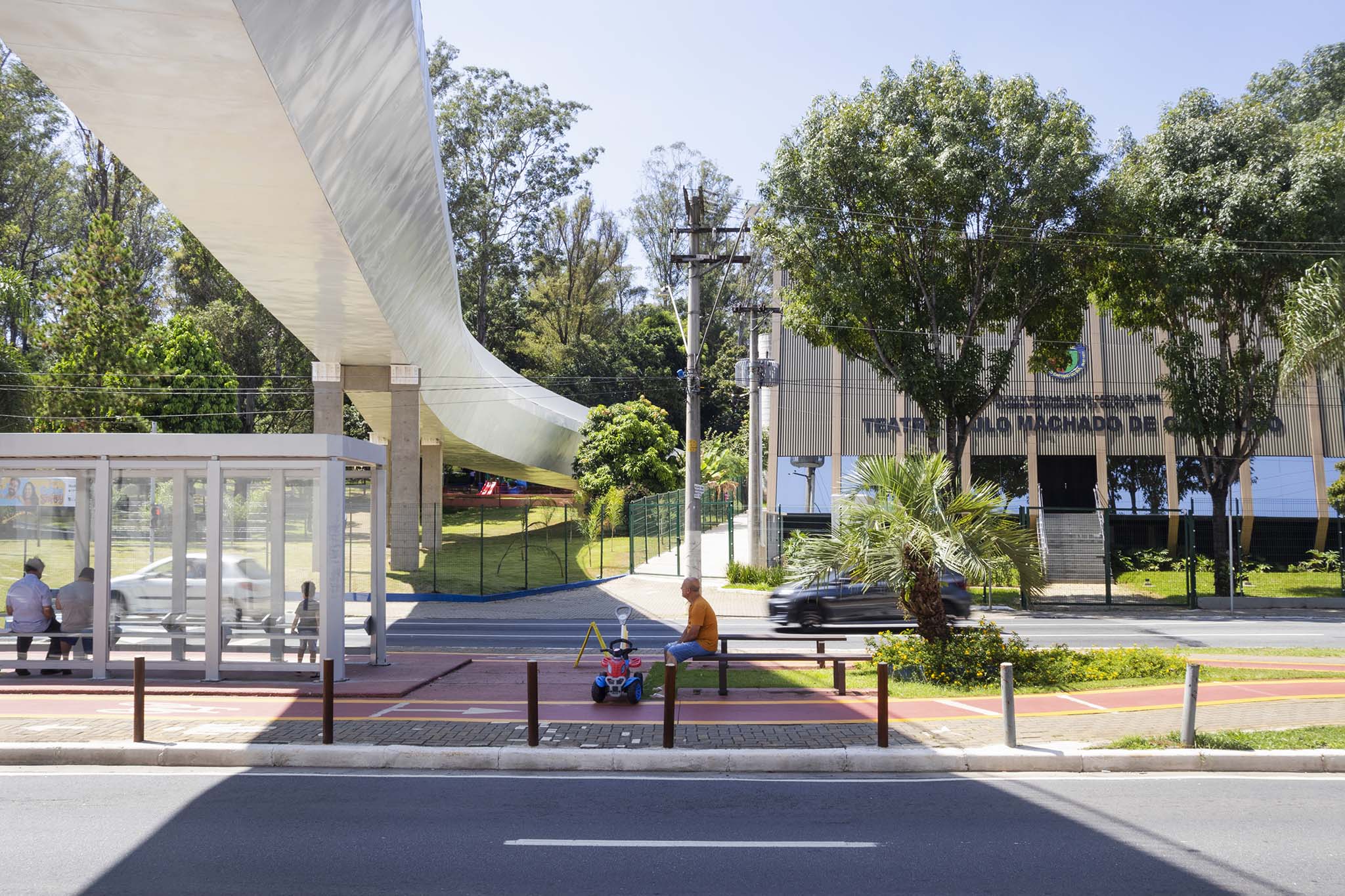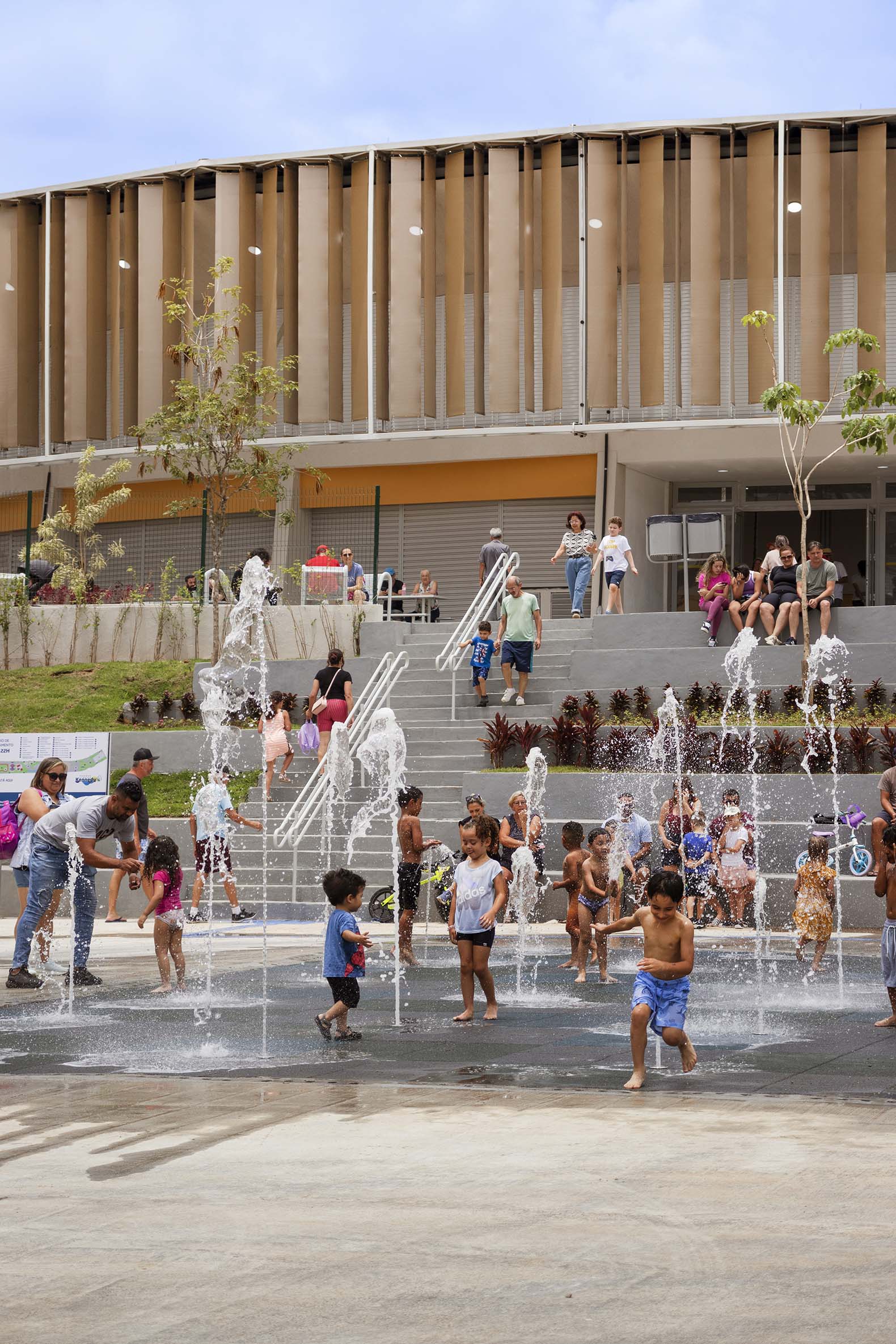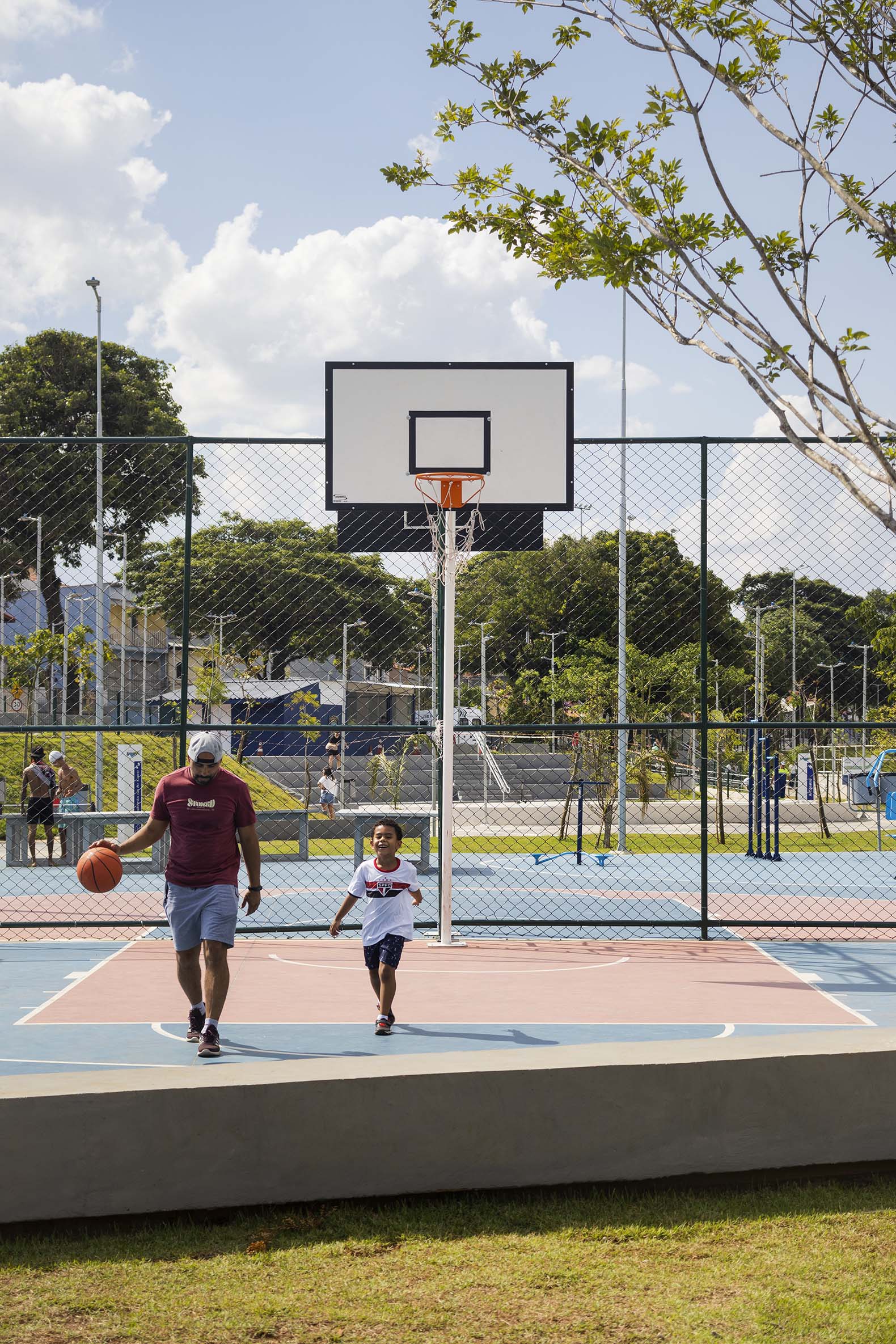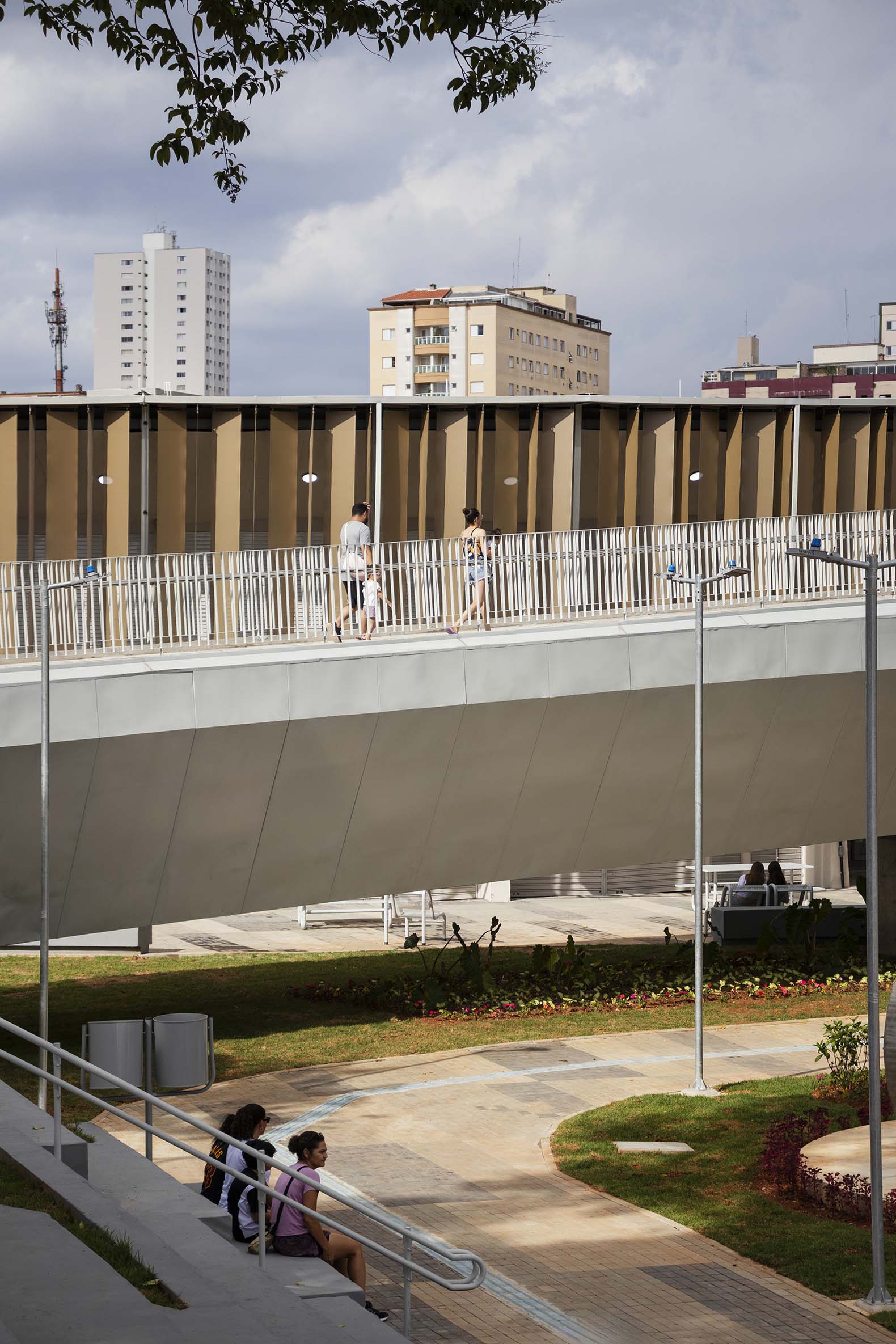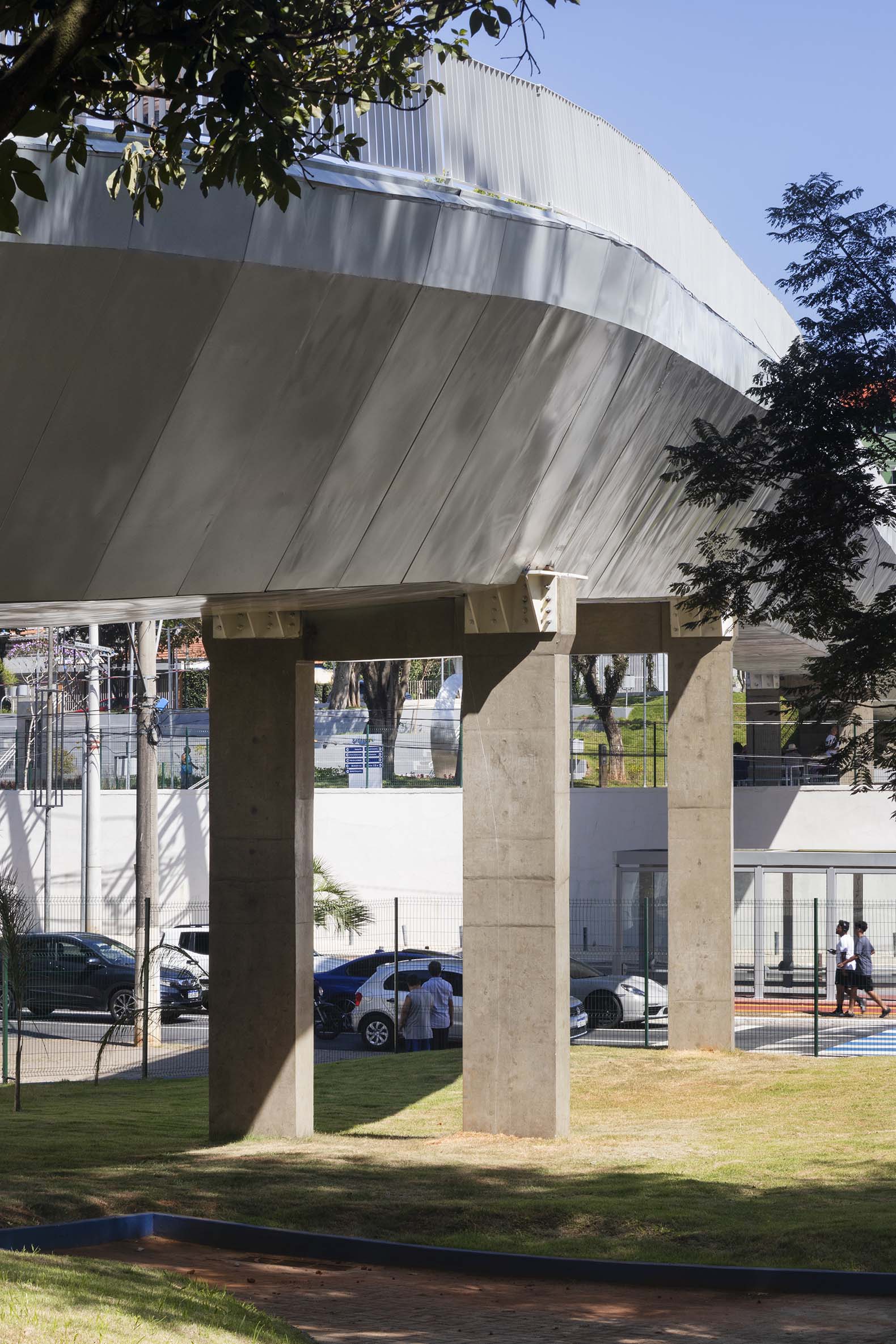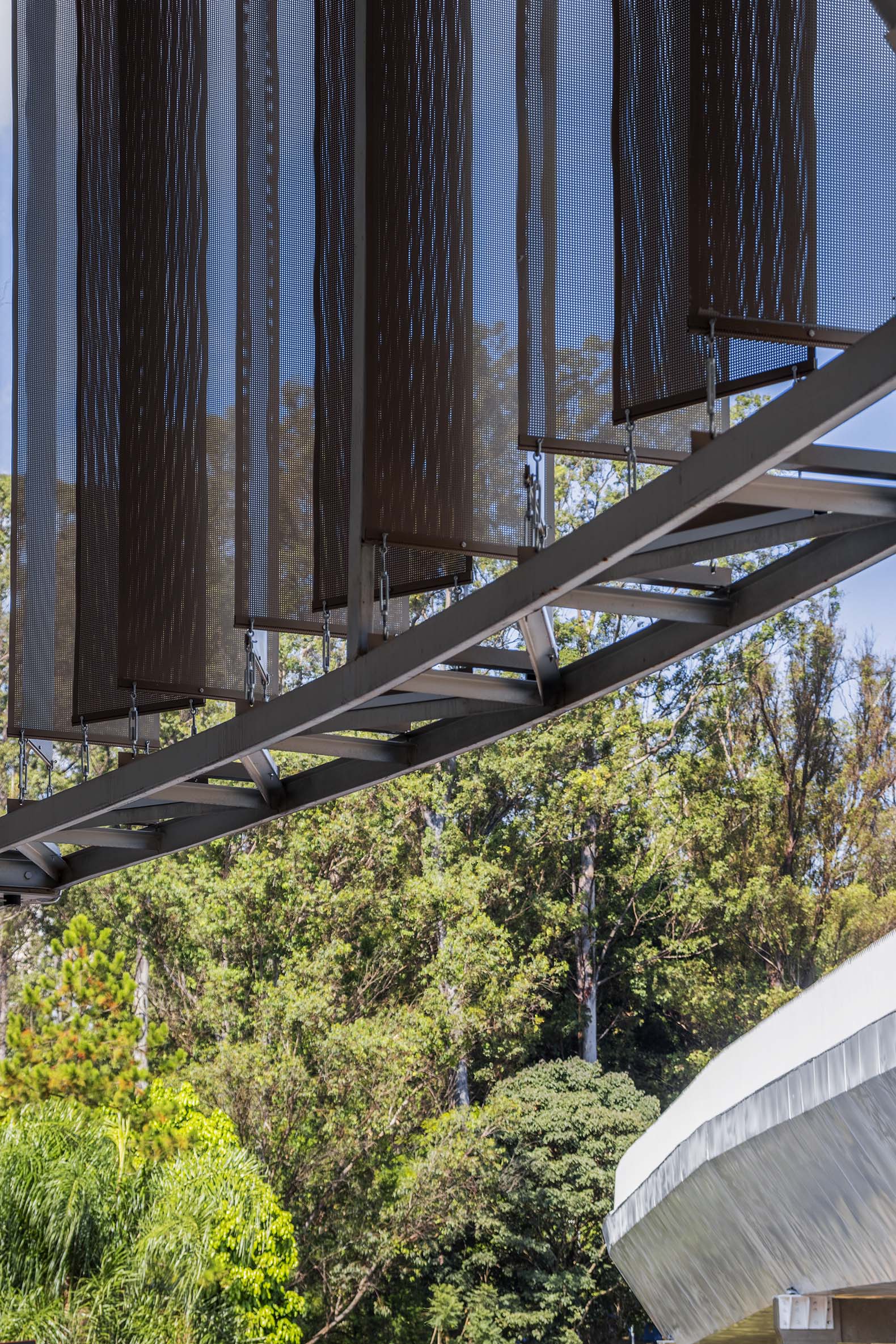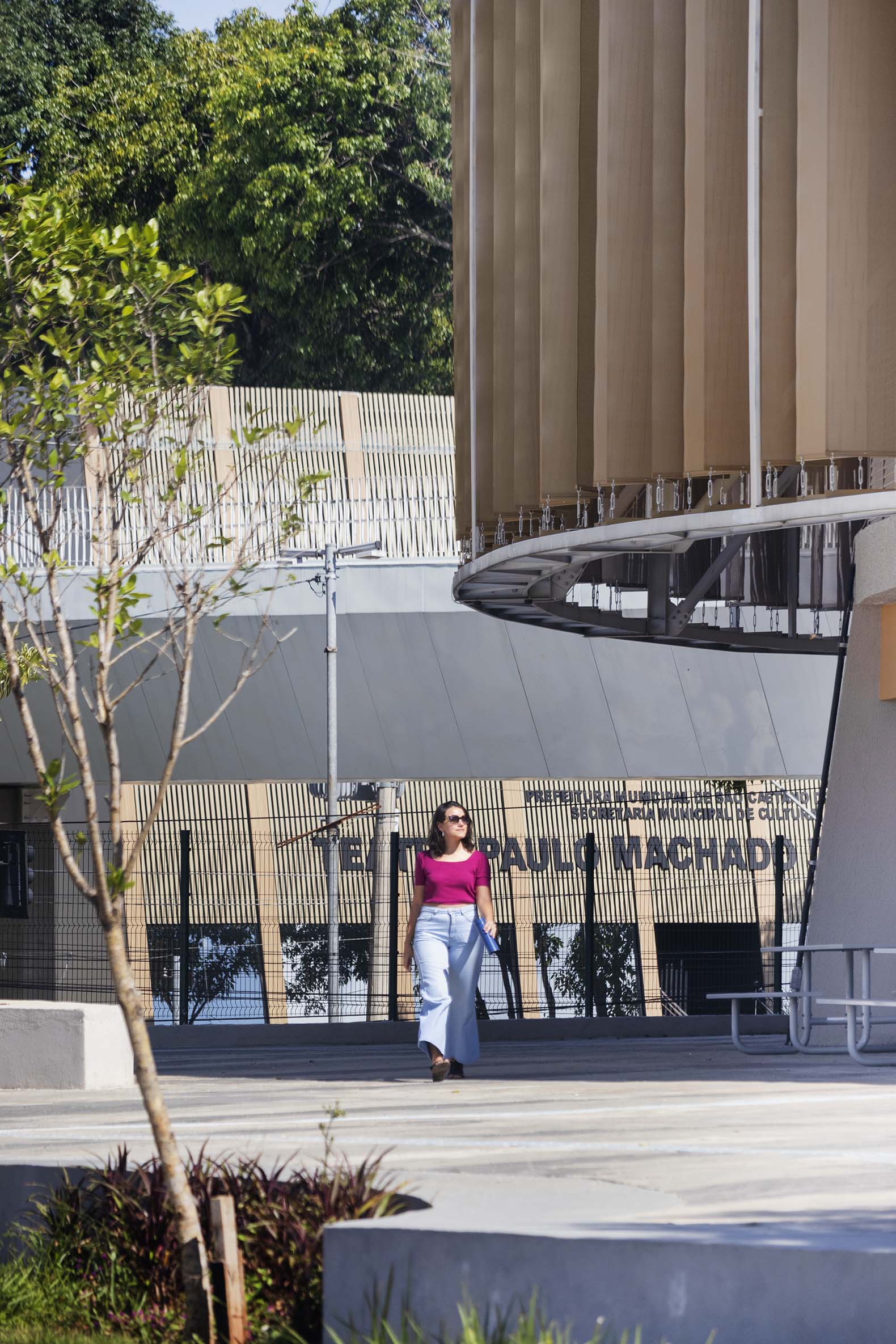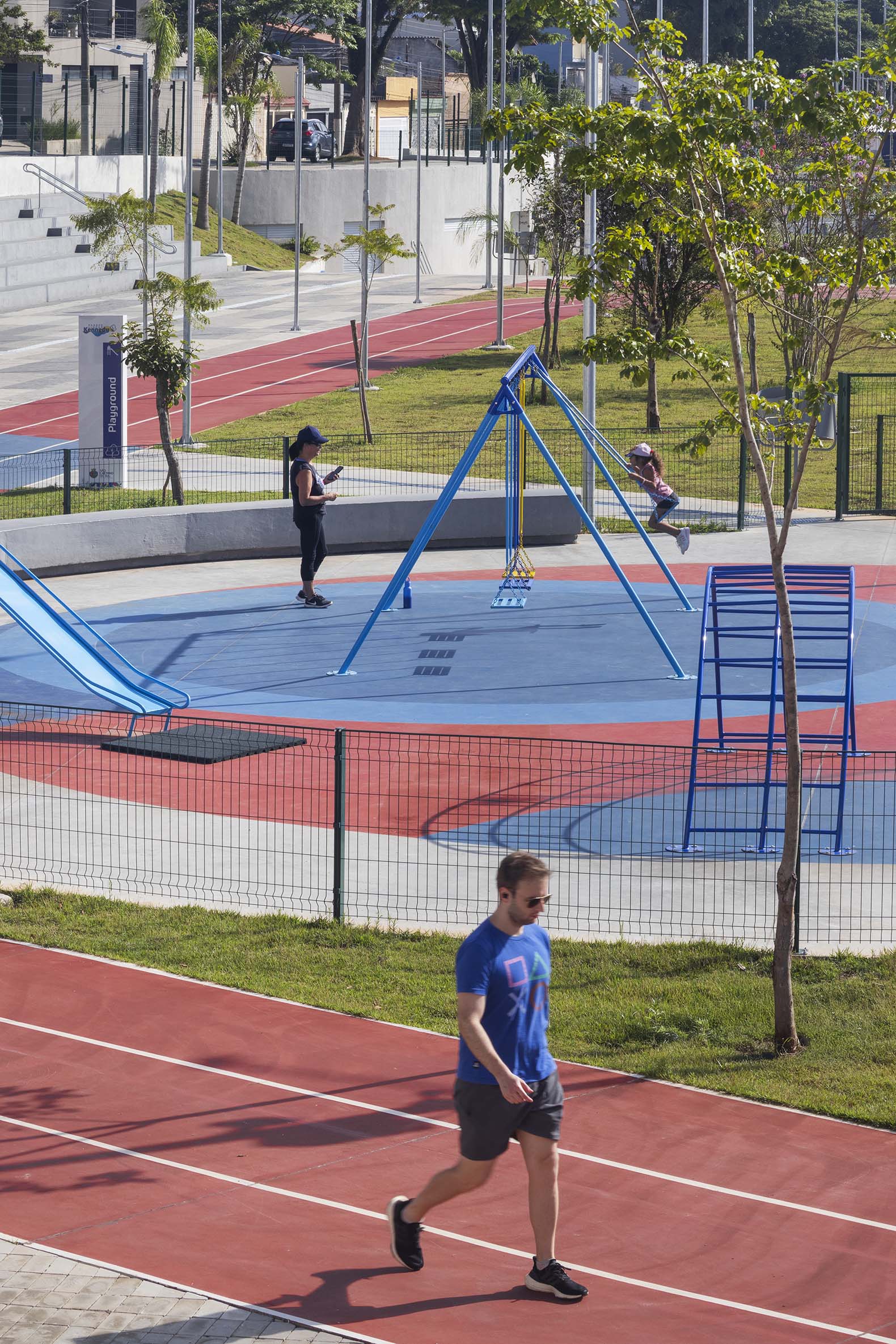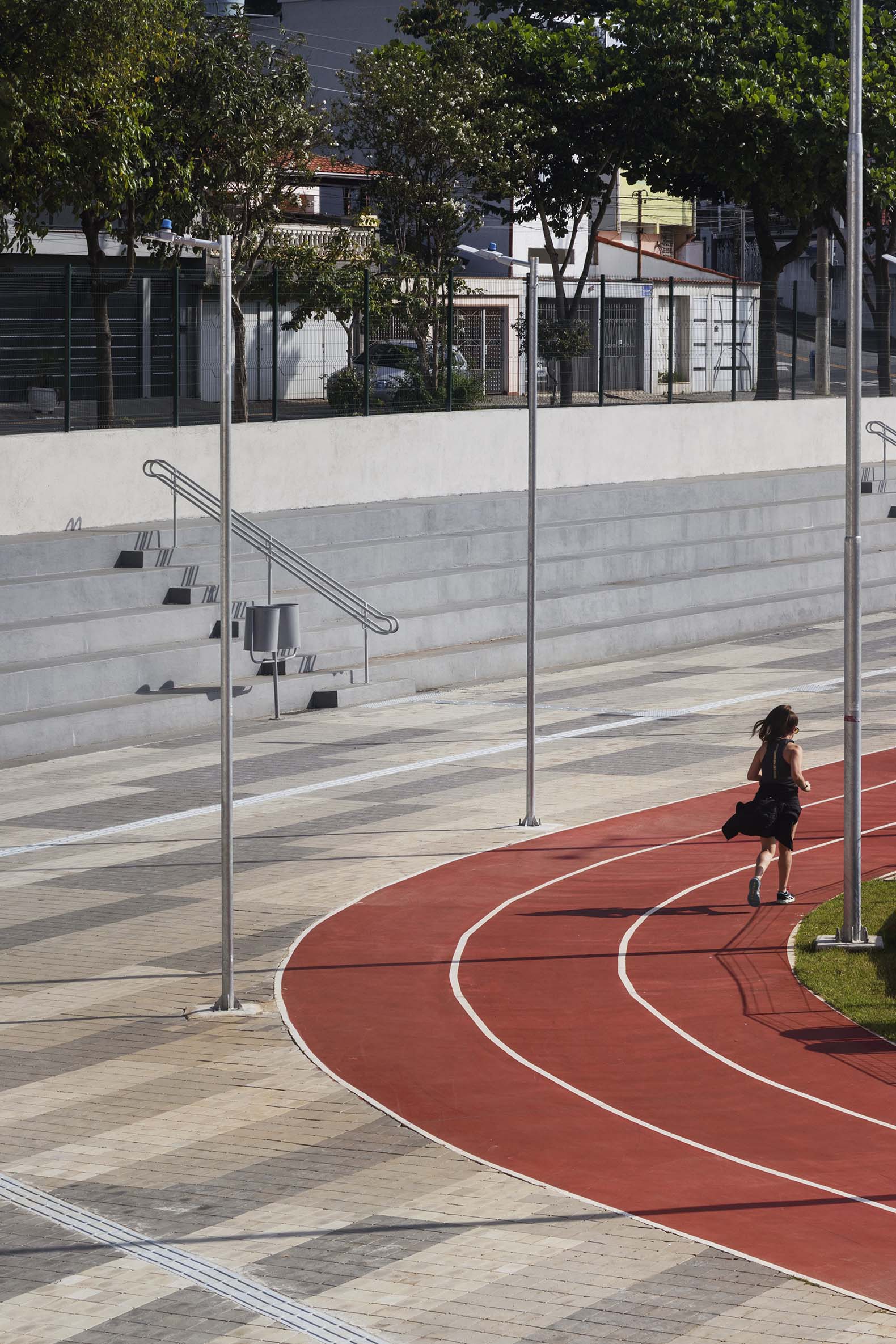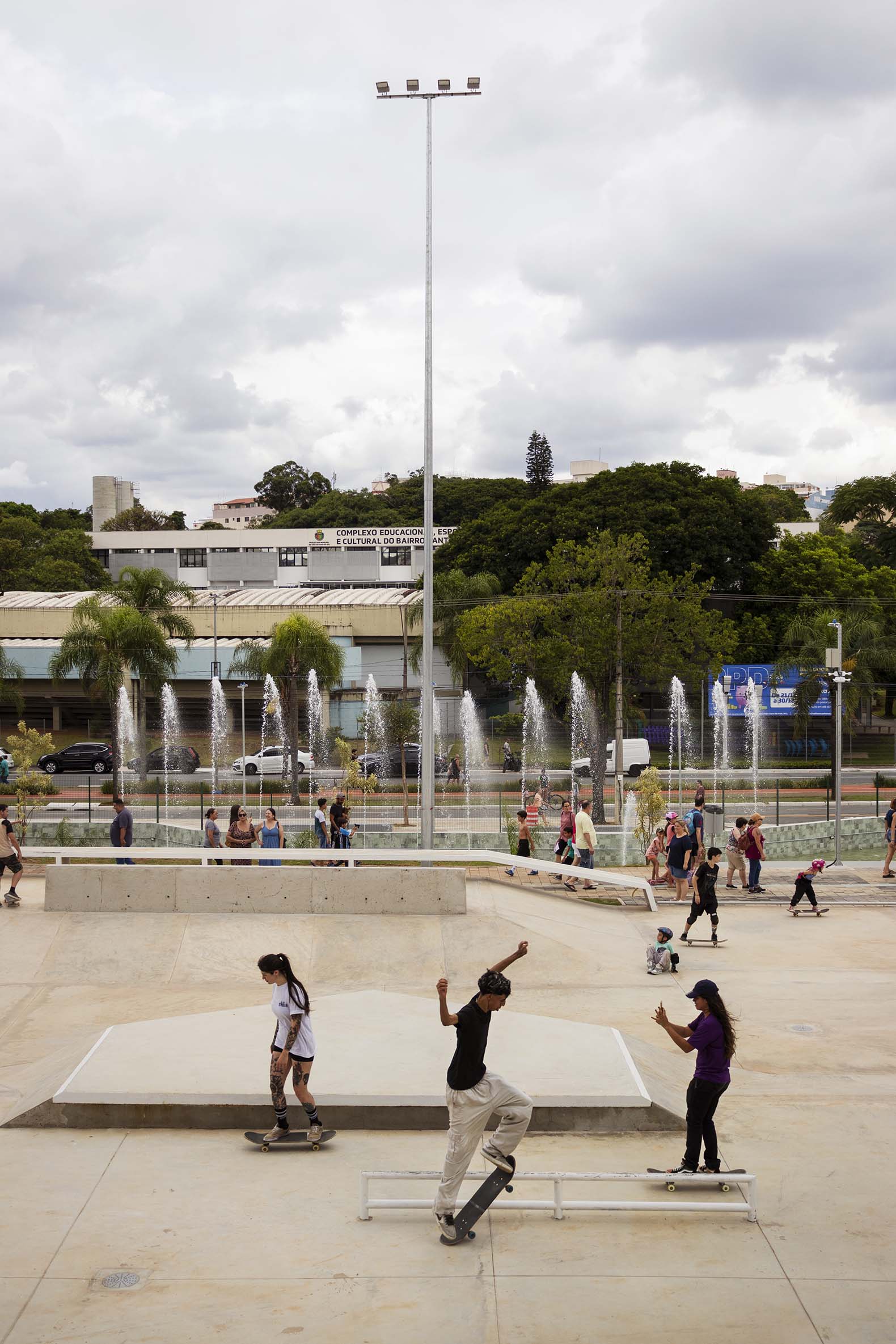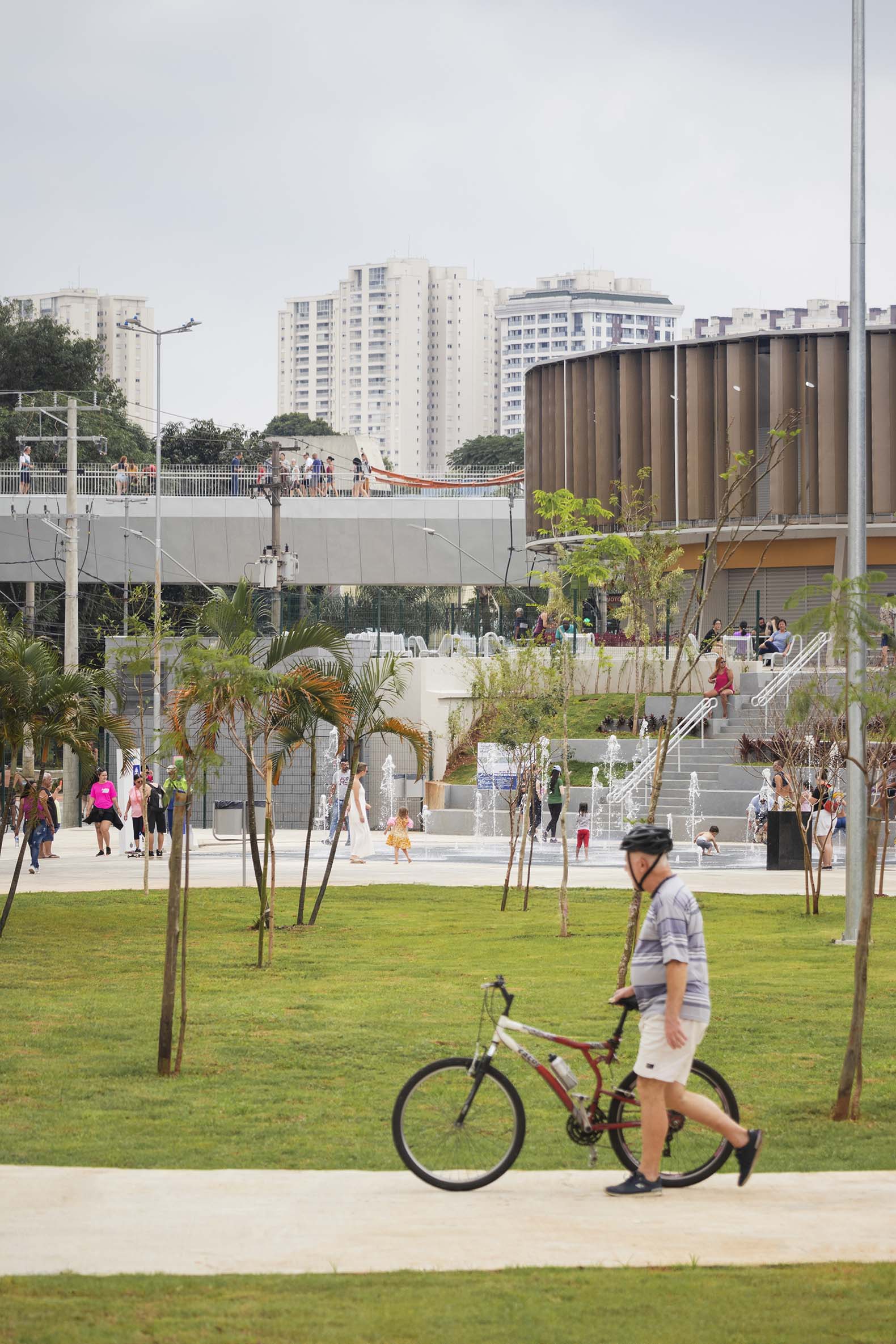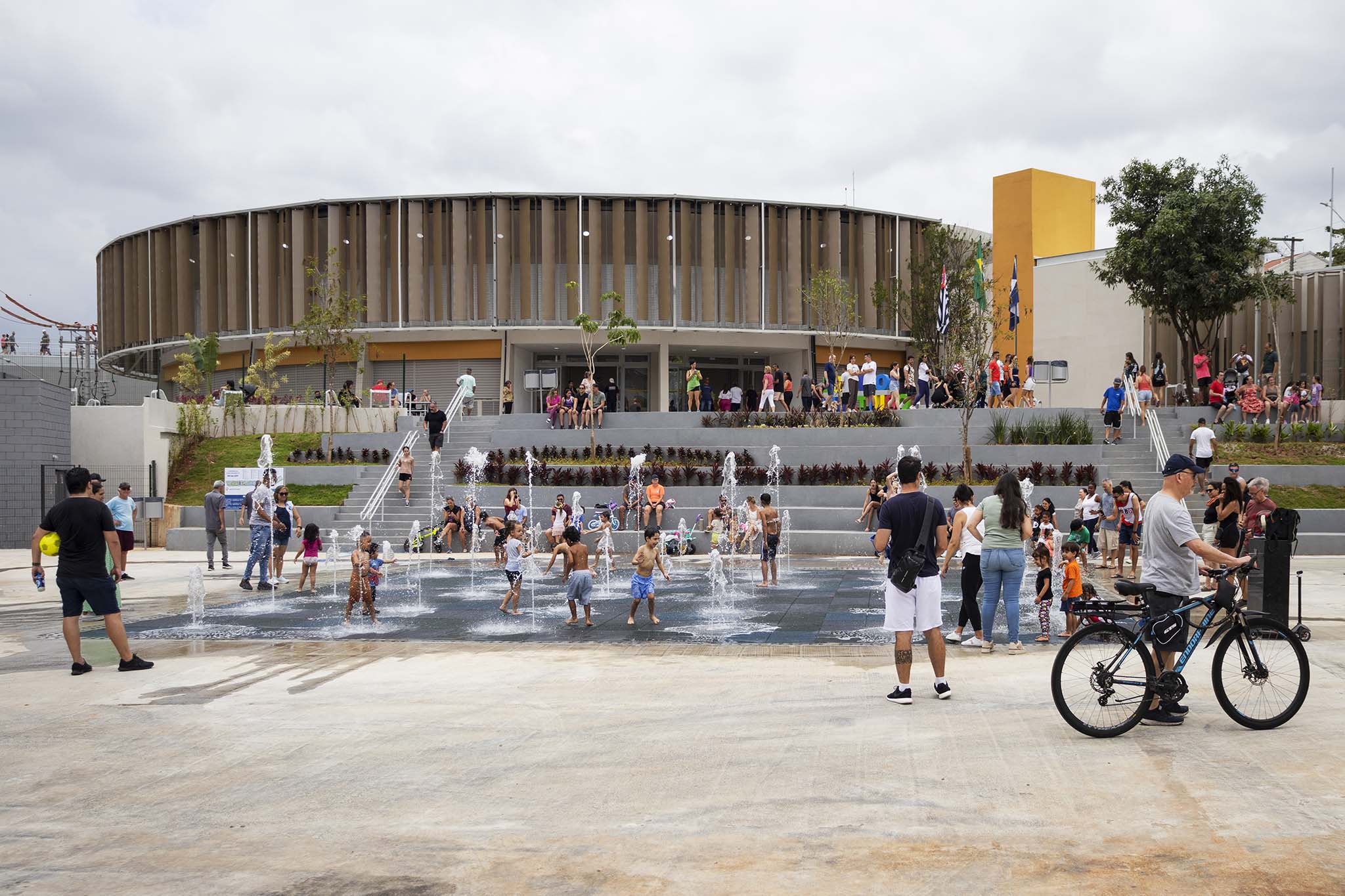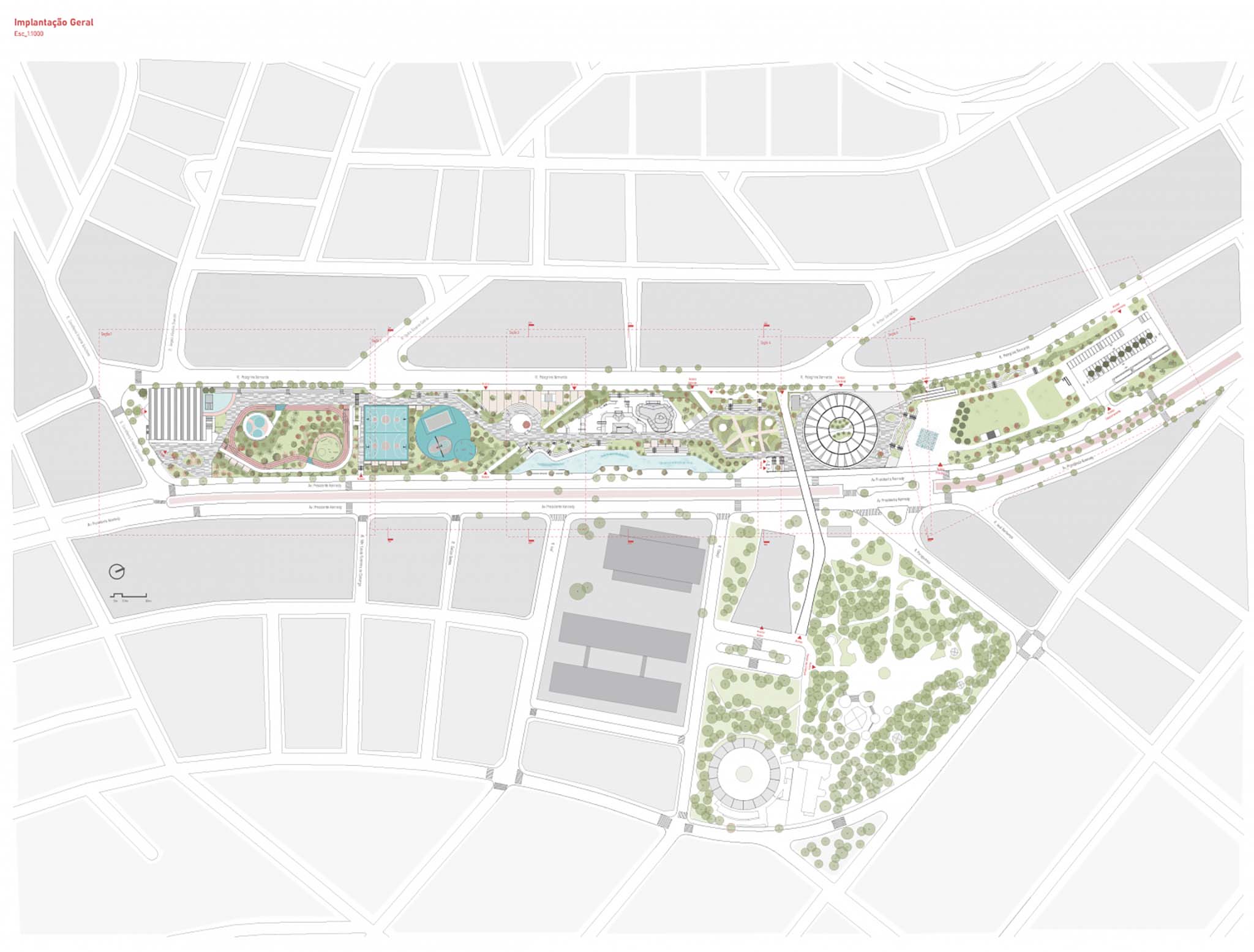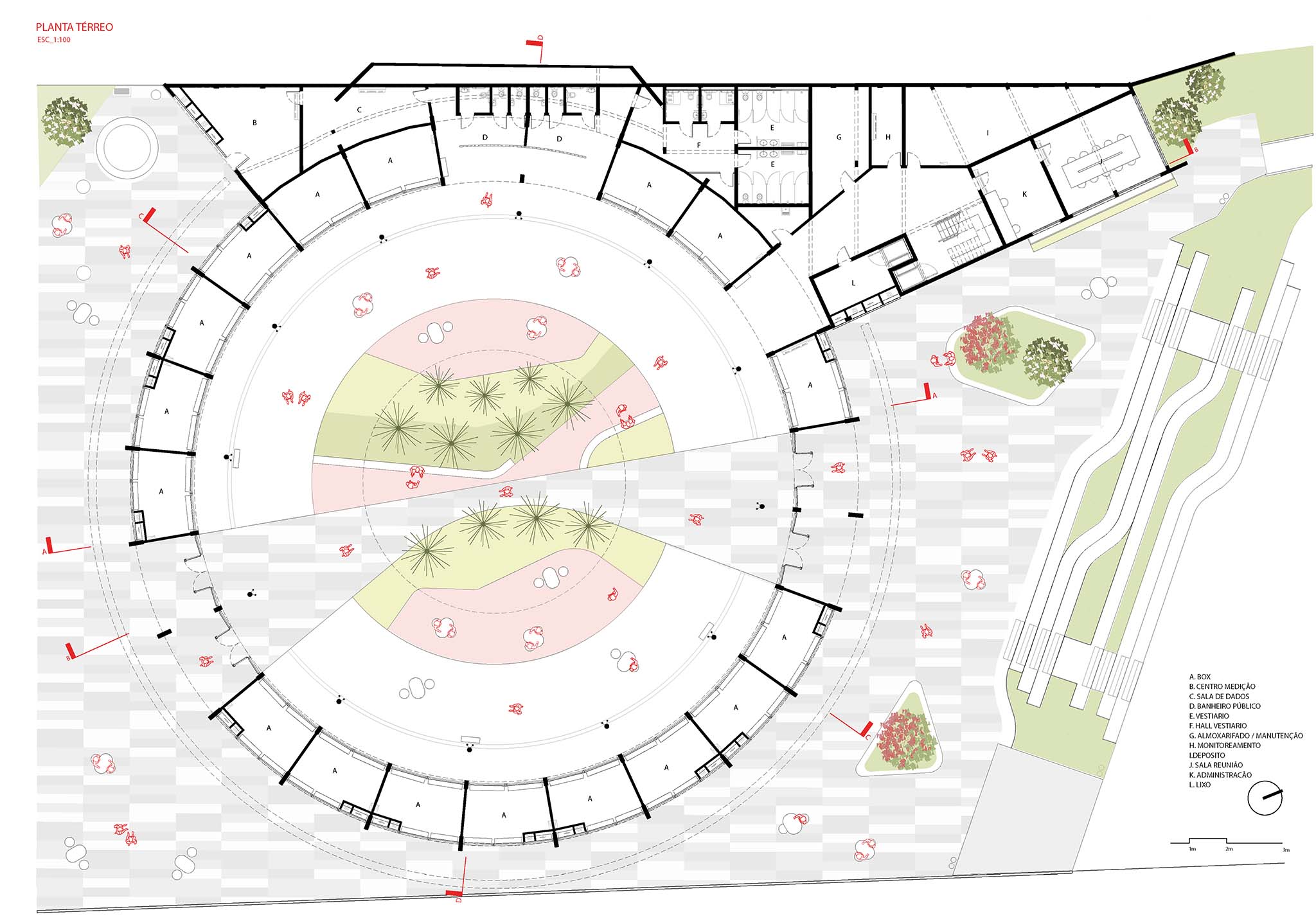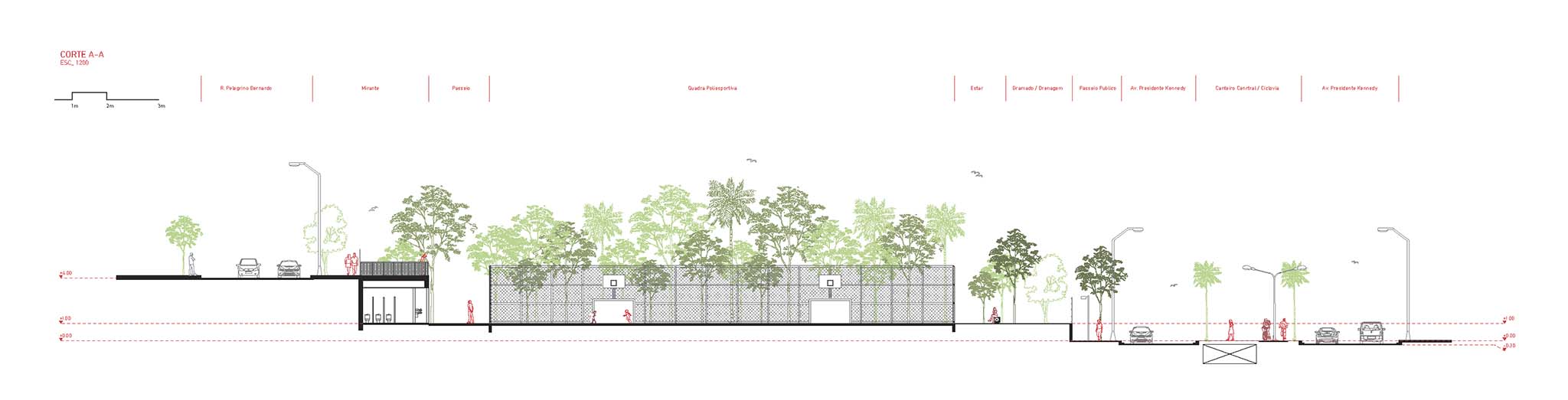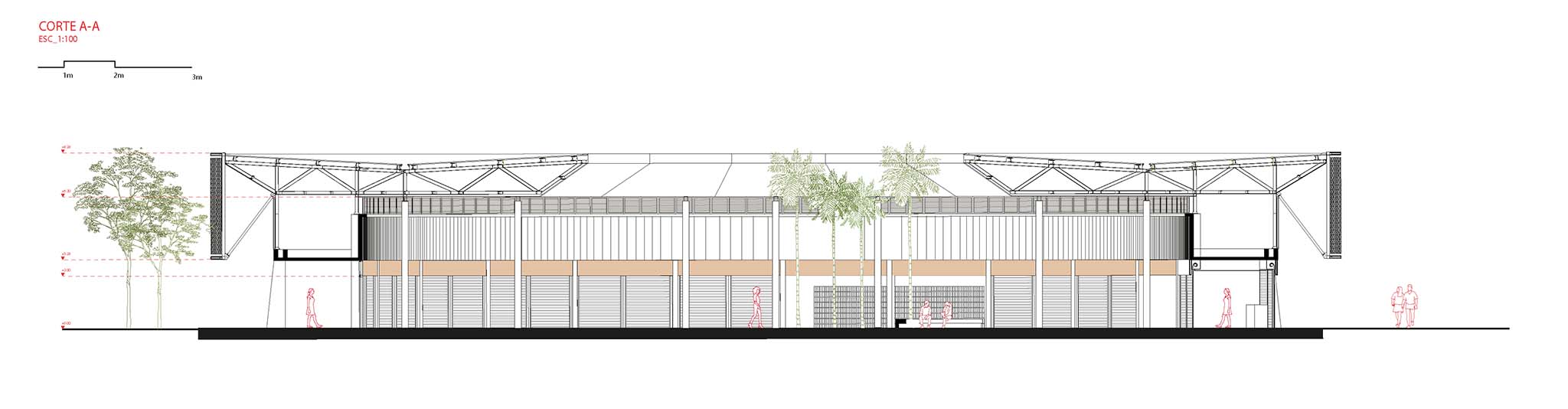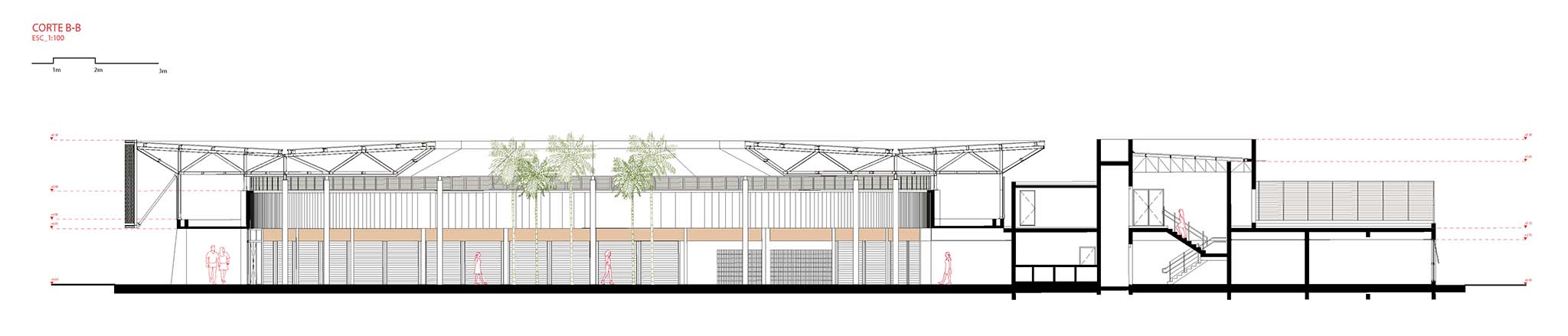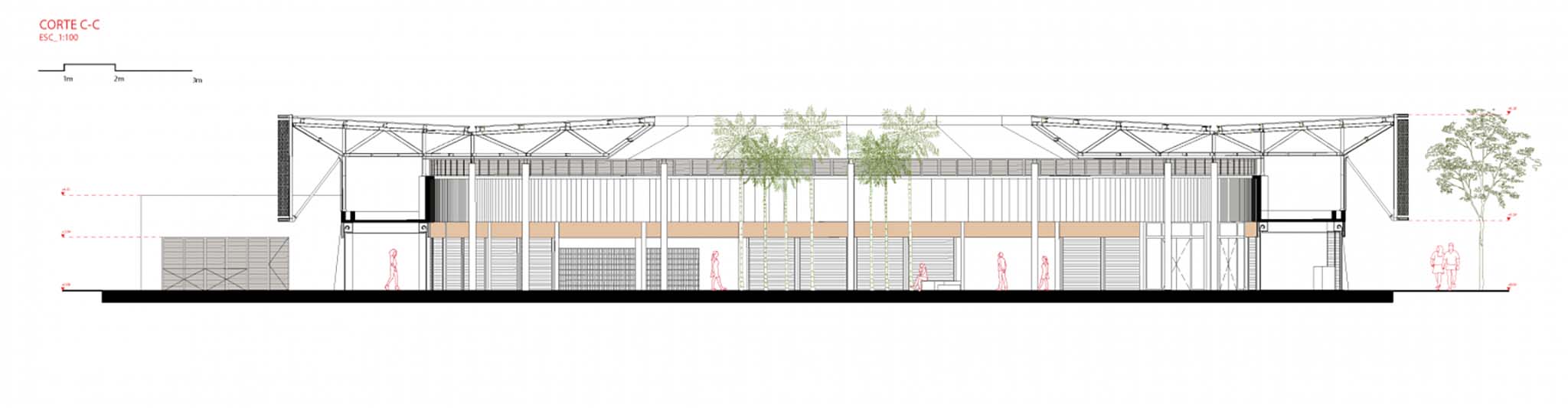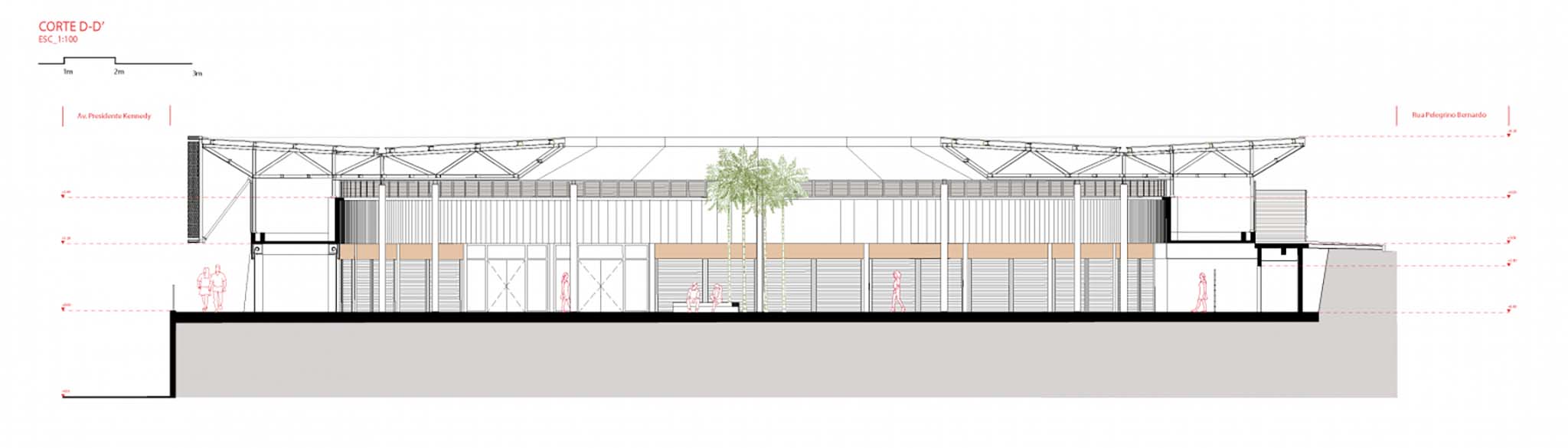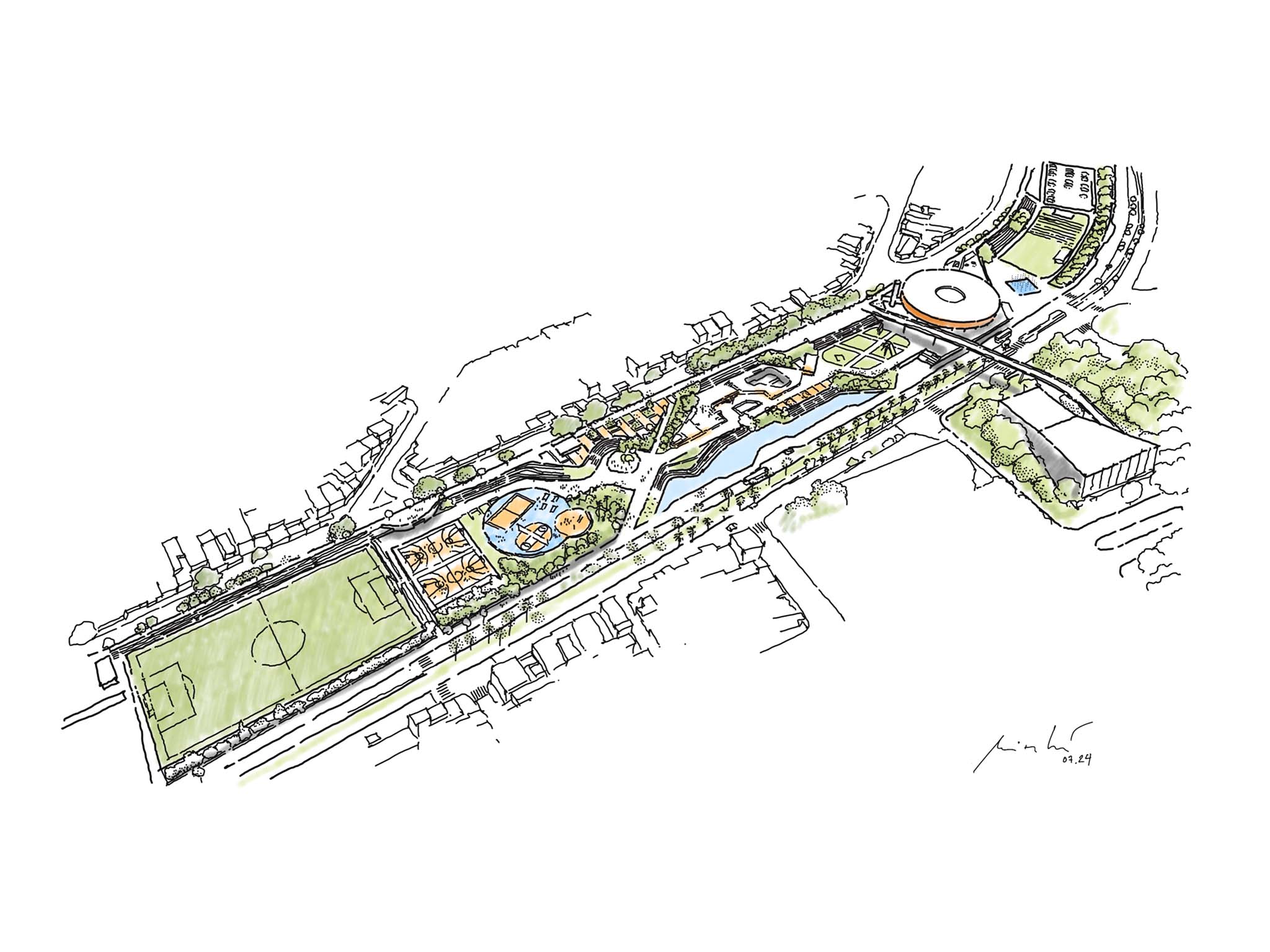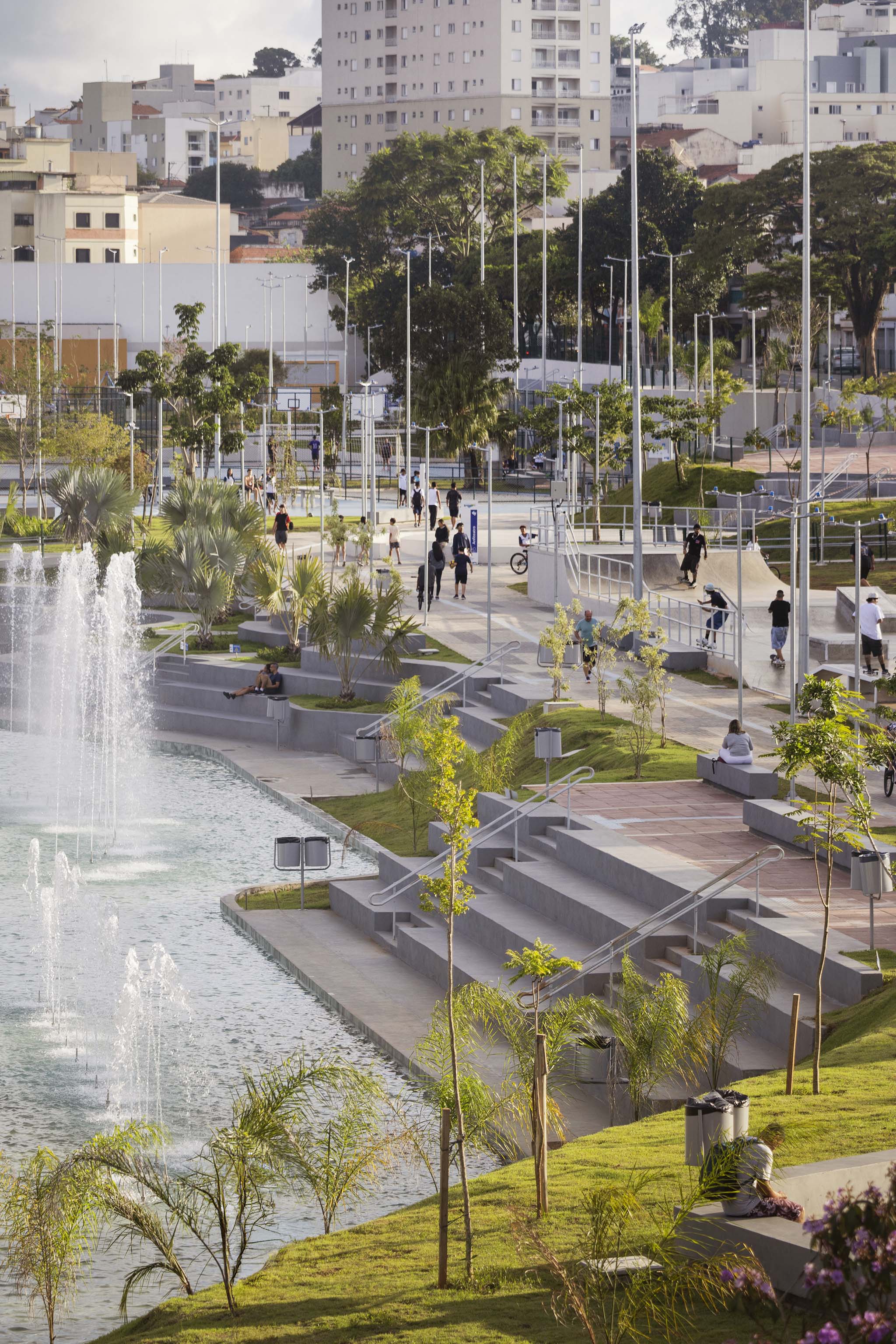
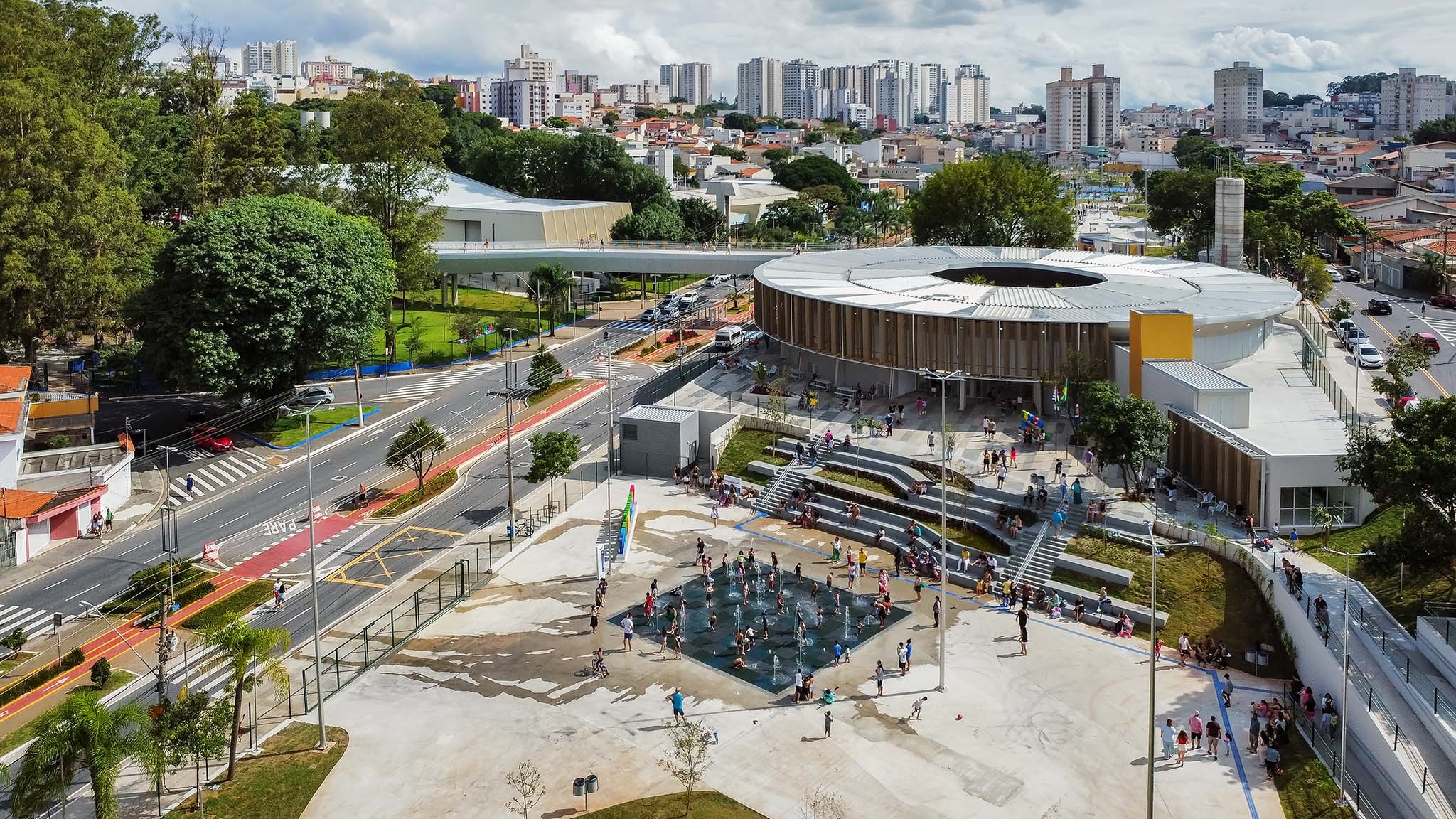
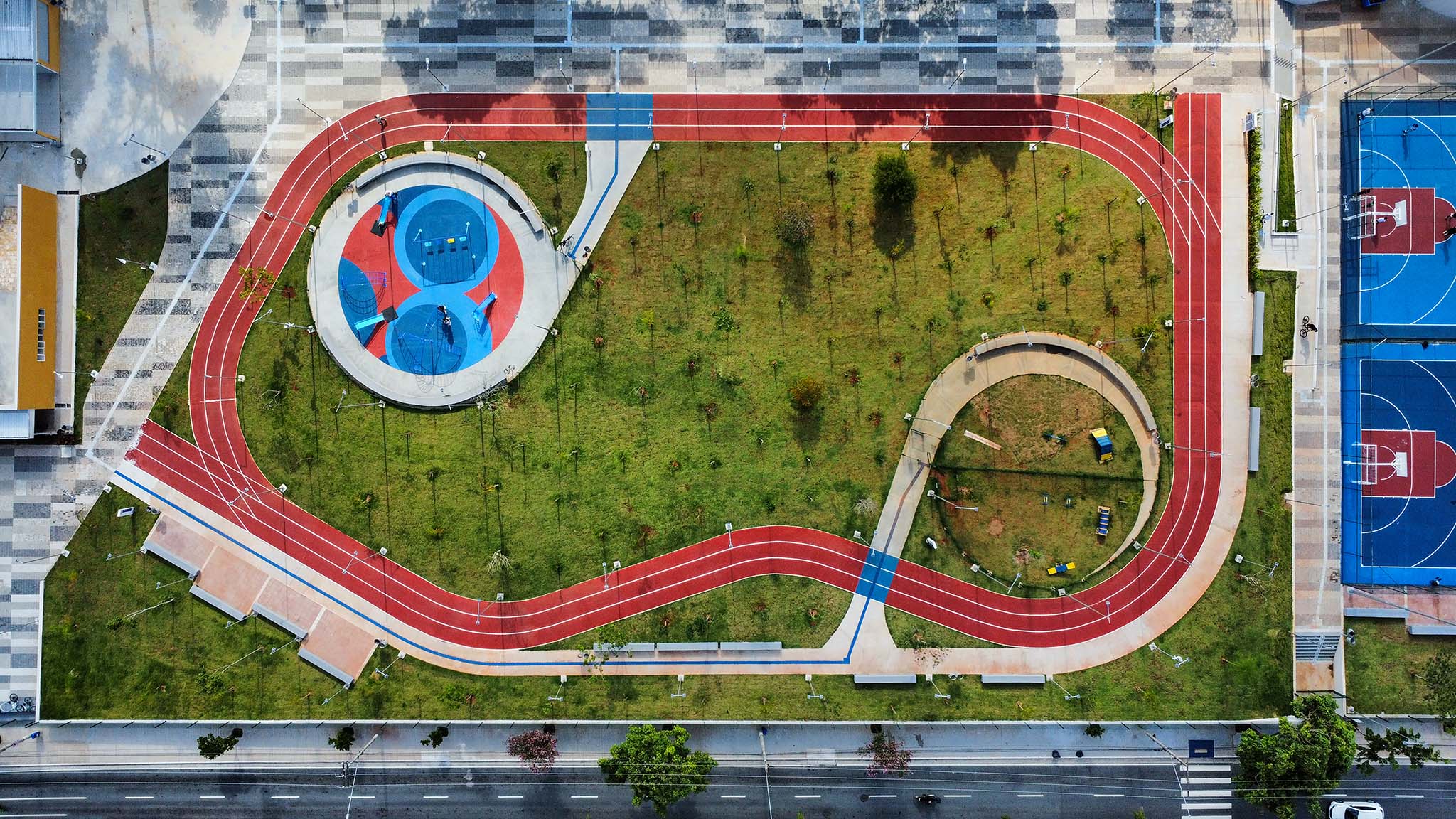
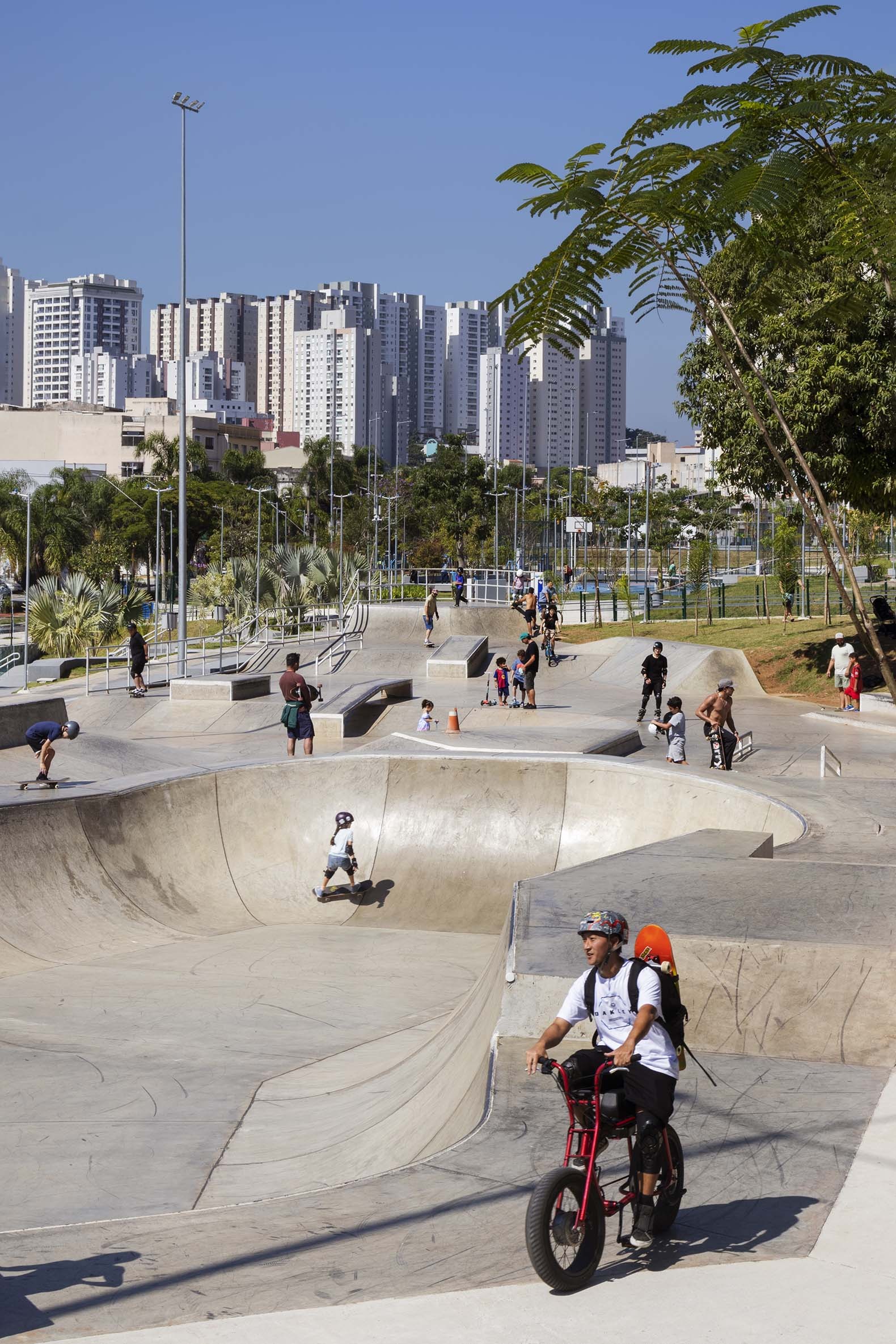
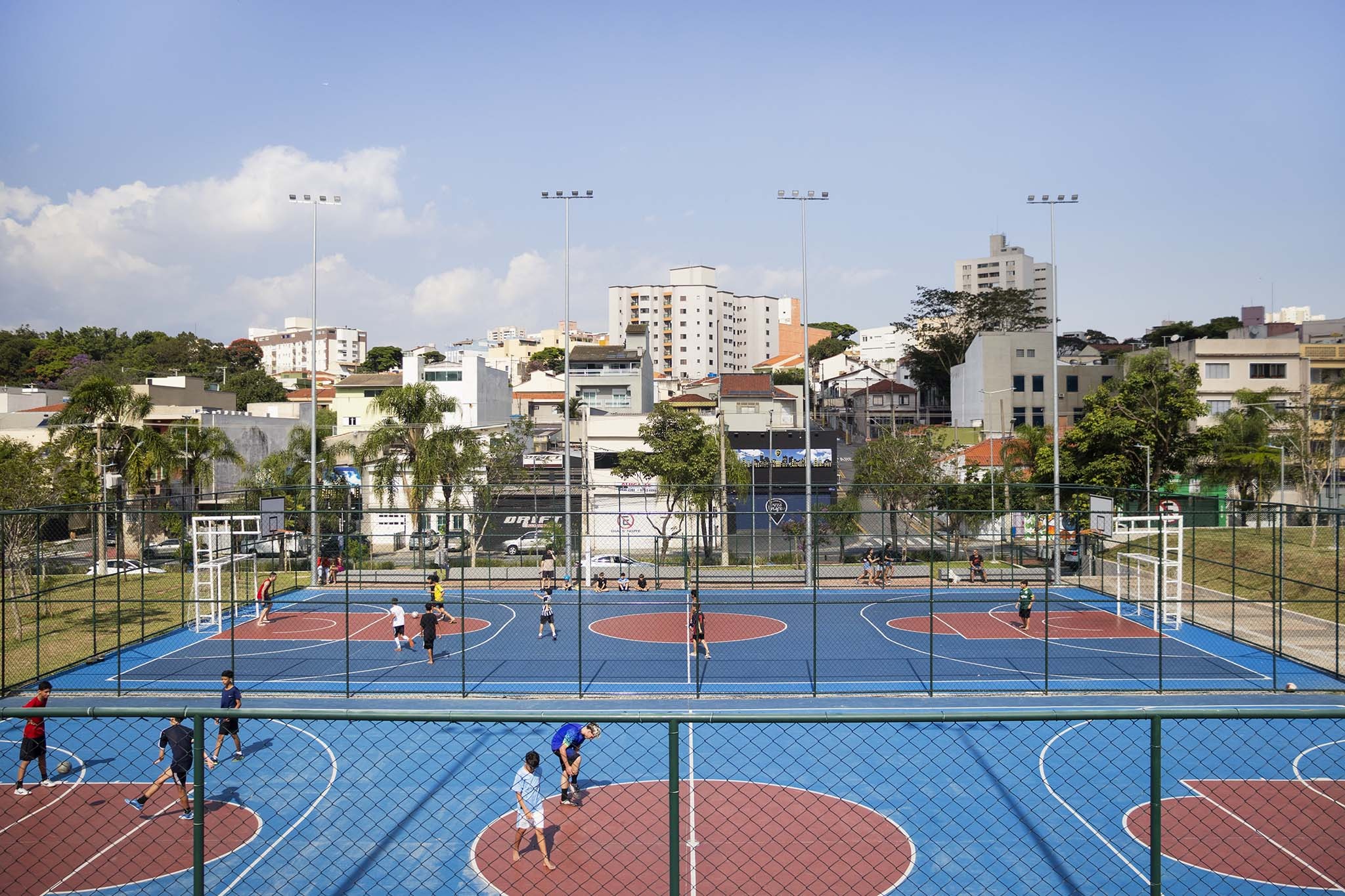
The park, designed by Biselli Katchborian and Consoante Arquitetura e Integração, takes advantage of the existing topography to organize the program into a sequence of platforms connected by ramps and accessible pathways. This layout links institutions such as the Paulo Machado de Carvalho Theater, the Children's Park, educational centers, and future public facilities. The program includes a professional skatepark, sports courts, children's play areas, a dog park, a running track, a sculpture plaza, and a renovated municipal market.
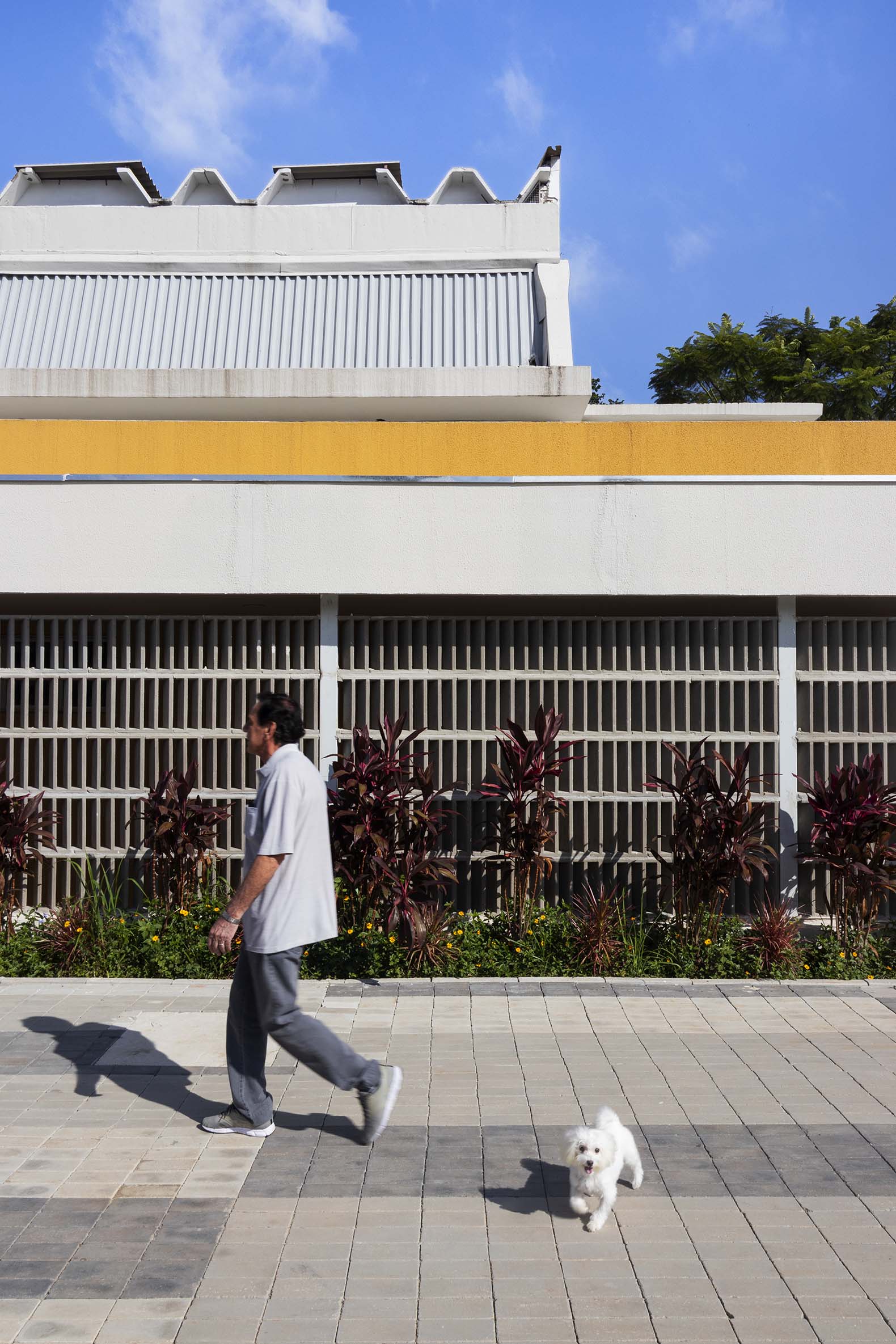
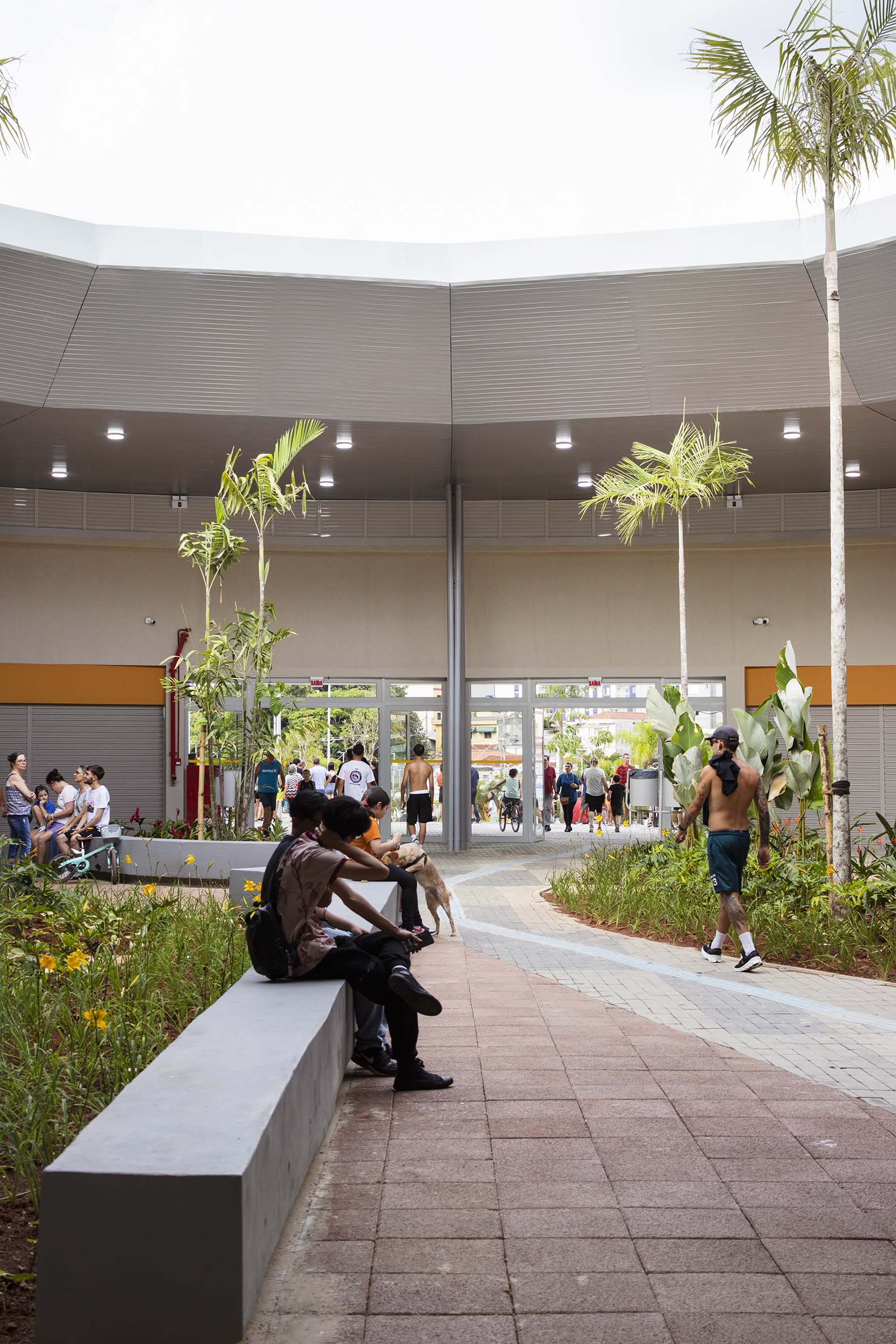
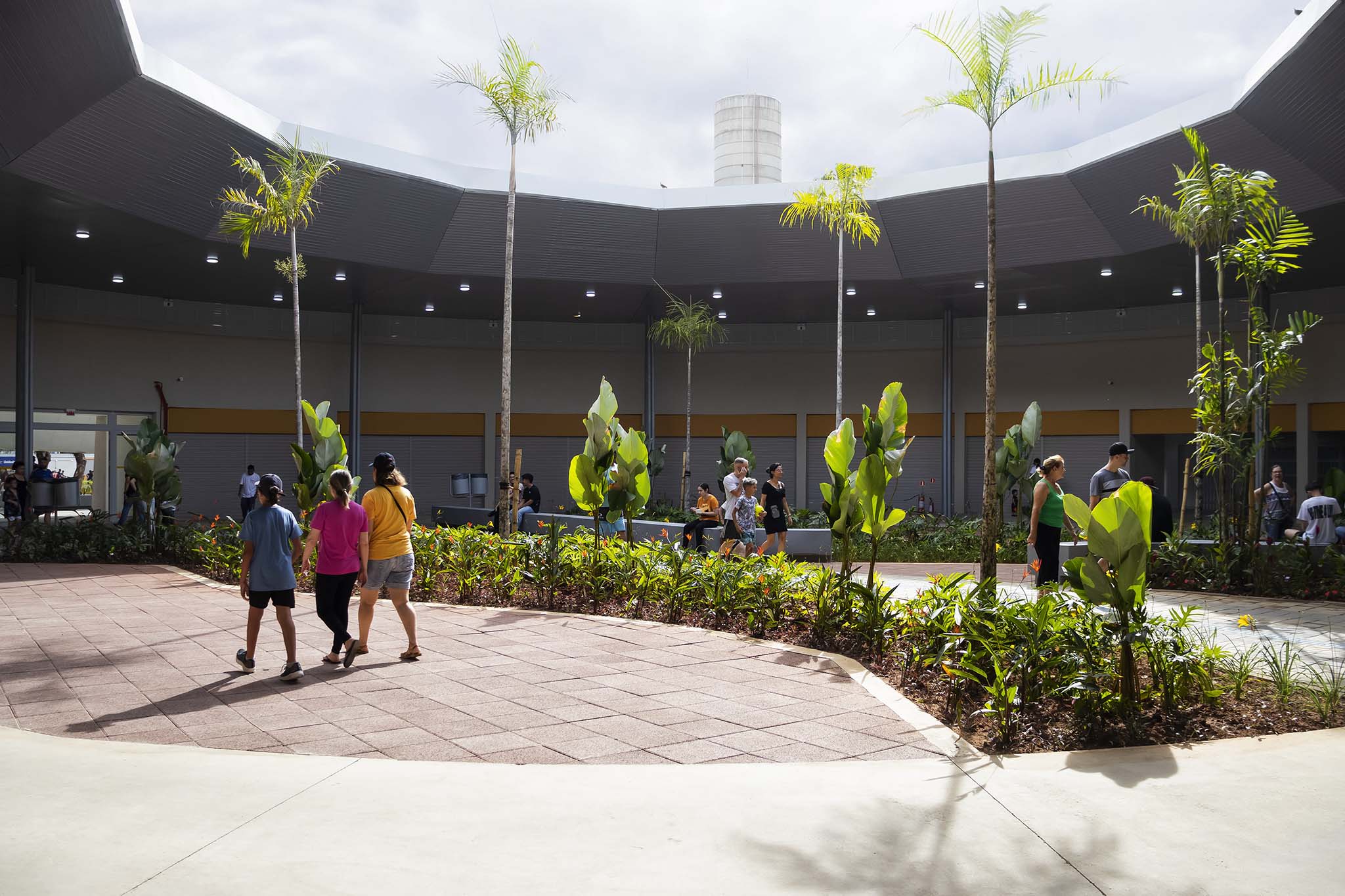
The project prioritizes durable construction solutions, using exposed concrete, paving stones, and paint as the predominant materials. The intervention reuses existing structures, such as the former circular gymnasium, which has been transformed into the new municipal market. Furthermore, the organization of the pathways and the treatment of the edges ensure accessibility, comfort, and a clear spatial understanding throughout the complex.
King Pelé Park by Biselli Katchborian + Consoante Arquitetura e Integração. Photograph by Studio Gui Uemura.
Project description by Biselli Katchborian y Consoante Arquitetura e Integração
São Paulo, 2026 – Along 600 meters of Avenida Presidente Kennedy, Parque Municipal Edson Arantes do Nascimento – Rei Pelé reshapes one of the main urban corridors of São Caetano do Sul. Designed by Mario Biselli, managing partner at Biselli Katchborian, in partnership with Consoante Arquitetura e Integração, the project transforms a previously fragmented area into a linear park of over 37,000 square meters, integrating public amenities, leisure areas, and social spaces.
Going beyond its functional role, Rei Pelé Park represents an urban reconnection strategy—linking previously isolated spaces, different urban scales, and, above all, people to the territory. Initiated in 2022 and completed in 2024, the park emerged from the need to repurpose former clubs and institutional areas, promoting integration between culture, sports, education, and leisure.
“The municipality’s understanding that this area should be dedicated to leisure was correct. There is already a tradition of opening the space to pedestrians on Sundays, for example, in addition to its proximity to several high-quality facilities on the other side of the avenue.”
Mario Biselli
Located in a valley floor, the park follows the course of the Córrego dos Moinhos, which runs beneath Avenida Presidente Kennedy. Based on the site’s topographic conditions, the design organizes the program into interconnected platforms linked by ramps and pathways, ensuring fluidity and accessibility throughout the entire route. This solution transforms the natural slope into a key urban design element, using the terrain itself as a tool to connect both sides of the avenue and the various public facilities.
One of the main challenges of the project was to stitch together the existing institutions within the so-called Santa Maria Complex, which includes Teatro Paulo Machado de Carvalho, EMEI Cleide Rosa Auricchio, Parque das Crianças, and the future Comprehensive Care Complex for People with Disabilities. To connect these points, the new park acts as a green spine, providing continuity to pedestrian flows and expanding the public use of previously underutilized areas.
“First, we considered how to reestablish the connection between the site—previously enclosed by long, high walls—and its surroundings. From this came the guiding lines for the paving design and the organization into platforms. We worked on the edges to mitigate the impact of the avenue on the landscape and to provide some privacy to nearby residences.”
Victor Piza, partner architect at Consoante Arquitetura e Integração
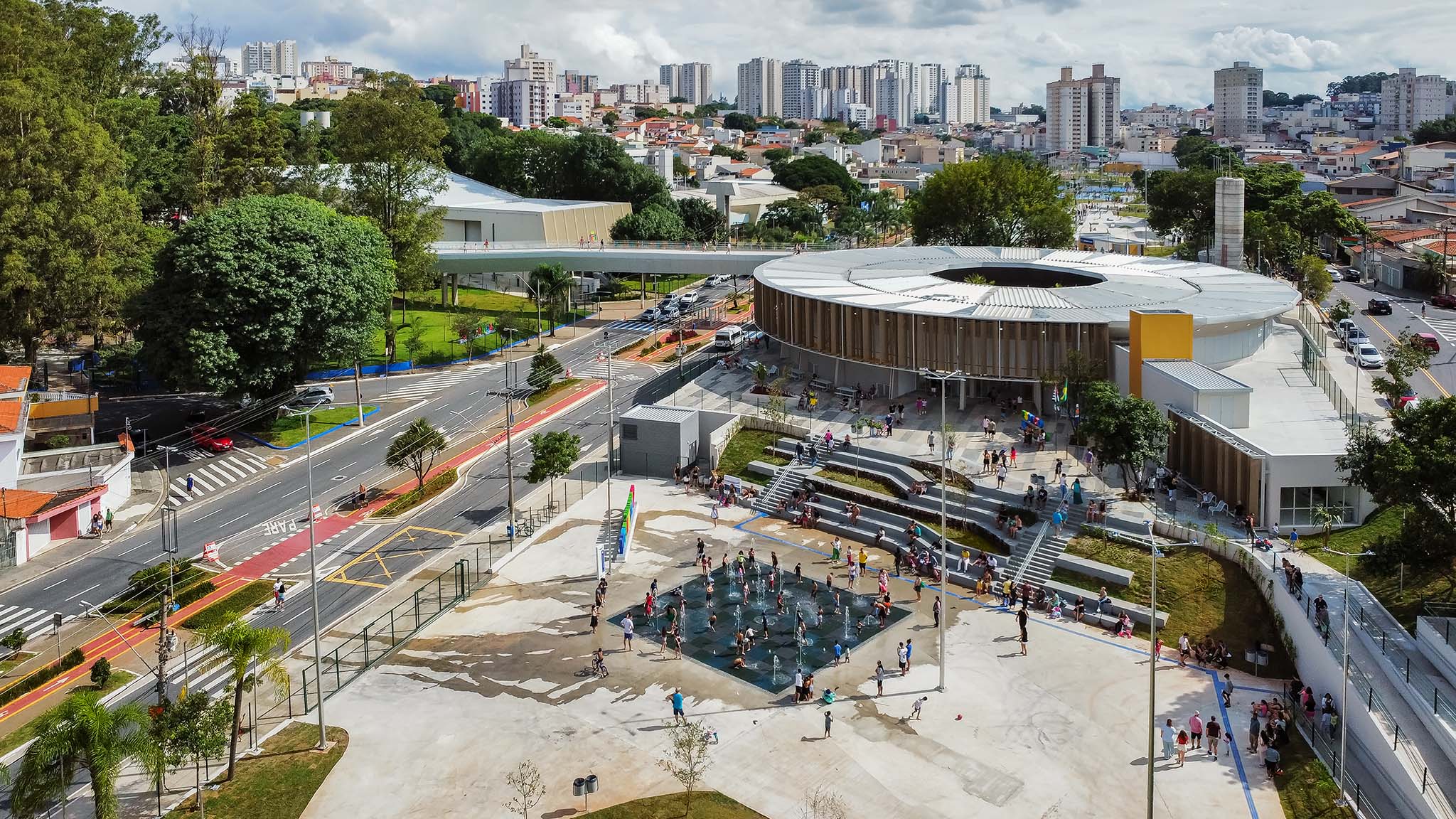
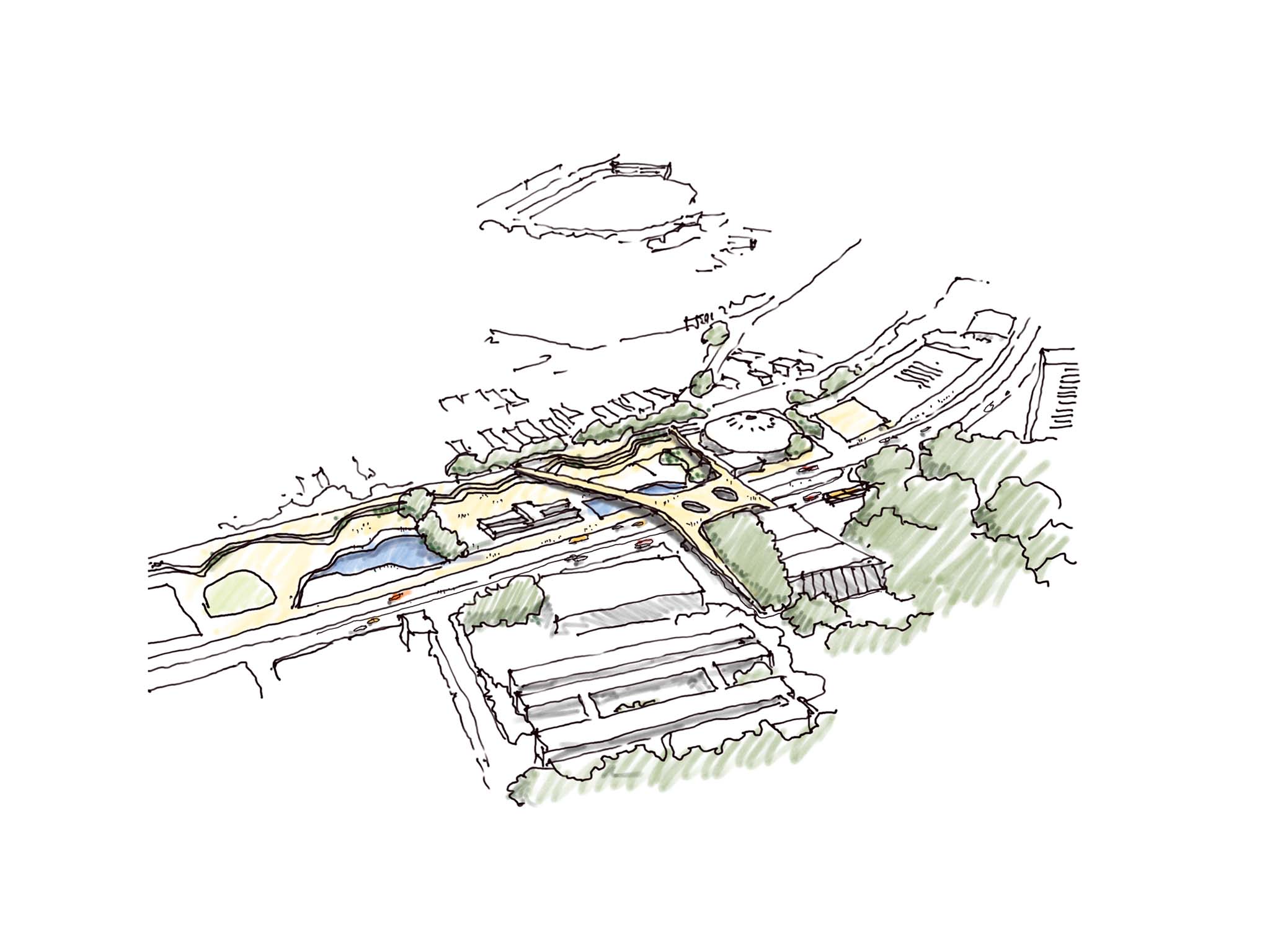
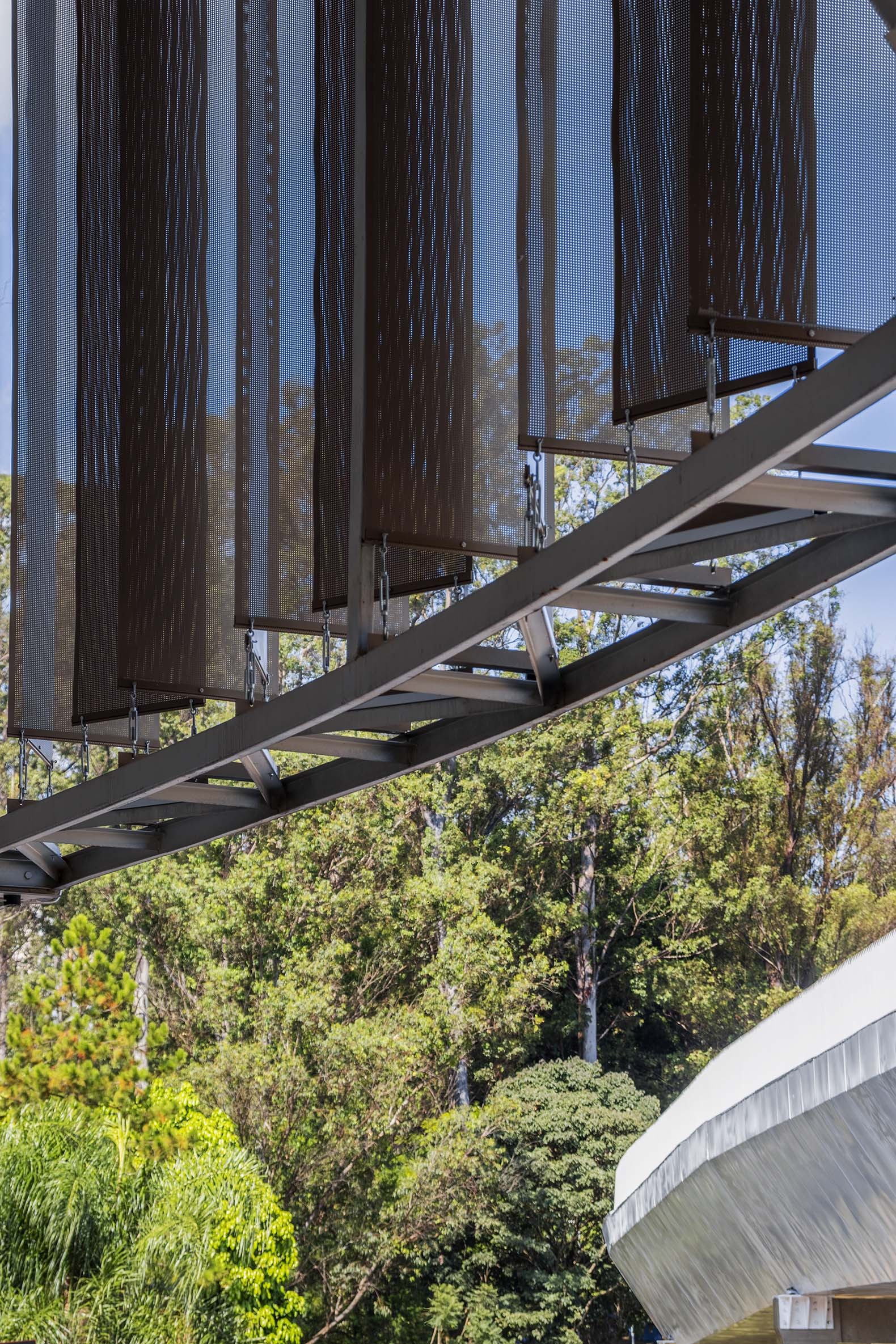
The solution for crossing Avenida Presidente Kennedy without interrupting urban flow resulted in one of the most striking elements of the project: an elevated pedestrian walkway that connects both sides of the park and doubles as an urban lookout, offering views of the landscape and the city’s vitality.
With a controlled public budget, the project adopts simple and durable materials such as exposed concrete, interlocking pavers, and paint, emphasizing everyday use. Careful detailing and precise spatial design ensure comfort, diversity, and clarity throughout the complex. Among the new facilities are a professional skatepark, sports courts, playground, dog park, jogging track, sculpture plaza, and a redeveloped municipal market.
The latter occupies the Multiuse Space Barcelona, where the former circular structure of a gymnasium was reinterpreted: the roof and bleachers were removed, and the space now accommodates shops and commercial activities, integrating leisure with the local economy. This solution reinforces the park’s role as a new urban centrality, bringing together commerce and social life.
With Rei Pelé Park, São Caetano do Sul gains a contemporary and structuring public space that engages with the city’s urban fabric. By creating continuity between public facilities, open spaces, and commercial frontages, the project introduces a new centrality capable of generating vitality in its surroundings and redefining the relationship between the city and its collective spaces.