HEMAA Architectes renovated the "Les Coteaux Fleuris School" in the village of Heudobouville, France, to better blend in with the surrounding buildings and the architecture of the village.

The architecture of the Norman village is characterised by the use of wood and slate roofs. With the use of these materials, the school "Les Coteaux Fleuris School" combines with the slate roof of the Heudobouville Town Hall. All these resources implemented and the companies involved in the construction of the school are native to the area.

HEMAA Architectes has designed this school with a view to future remodelling and expansion, with the possibility of adding classrooms, pavilions or other buildings with a variety of functions in the future. The creation of open spaces also allows for the possible extension of the courtyards, which are shaped like a valley to collect rainwater for irrigation of the vegetable gardens they contain.

The buildings have a timber frame and a slate-clad gable roof, completed with large glass windows on the sides and on the roof to illuminate the interior.
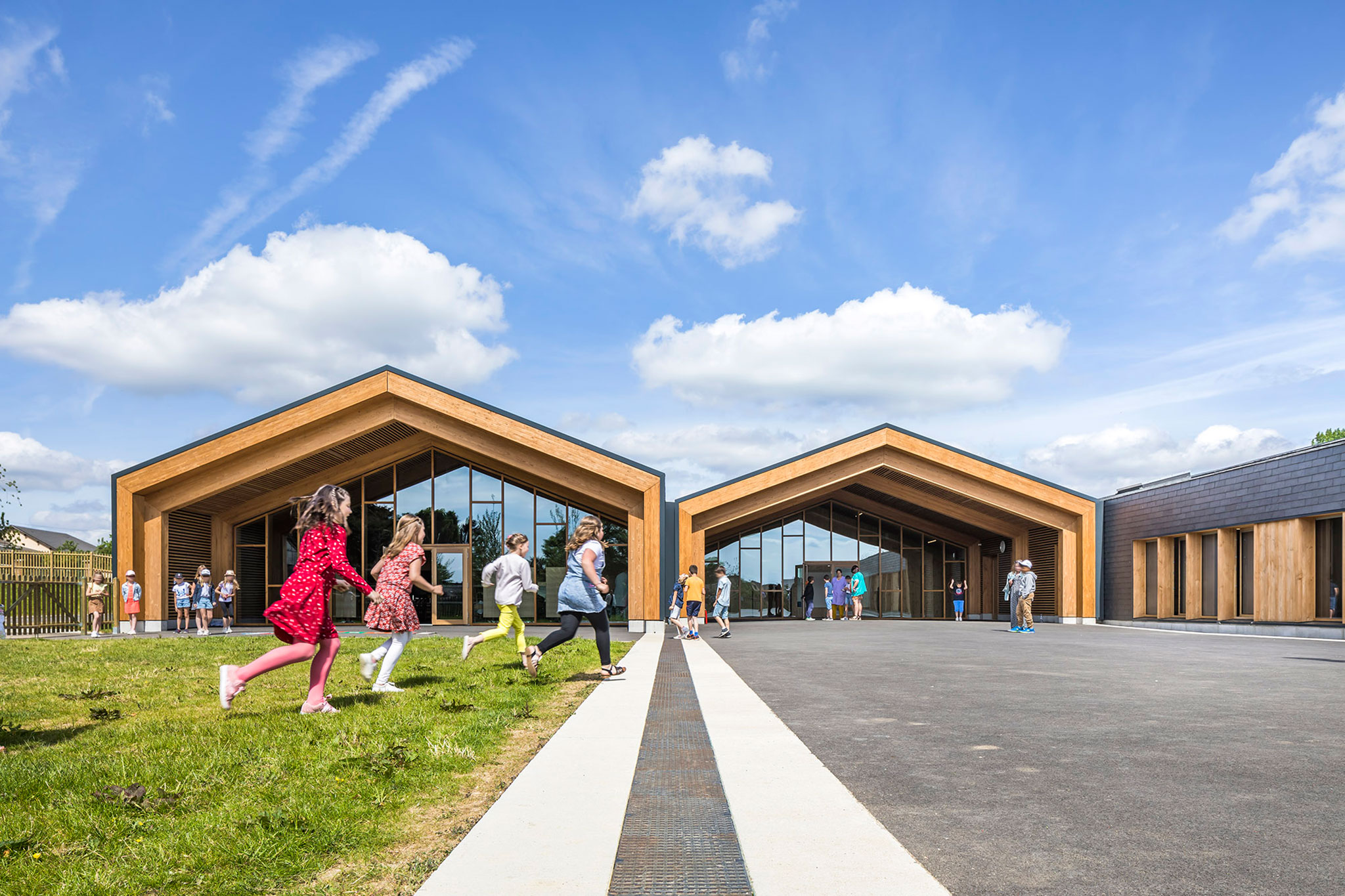
"Les Coteaux Fleuris School" by HEMAA Architectes. Photograph by Sergio Grazia.
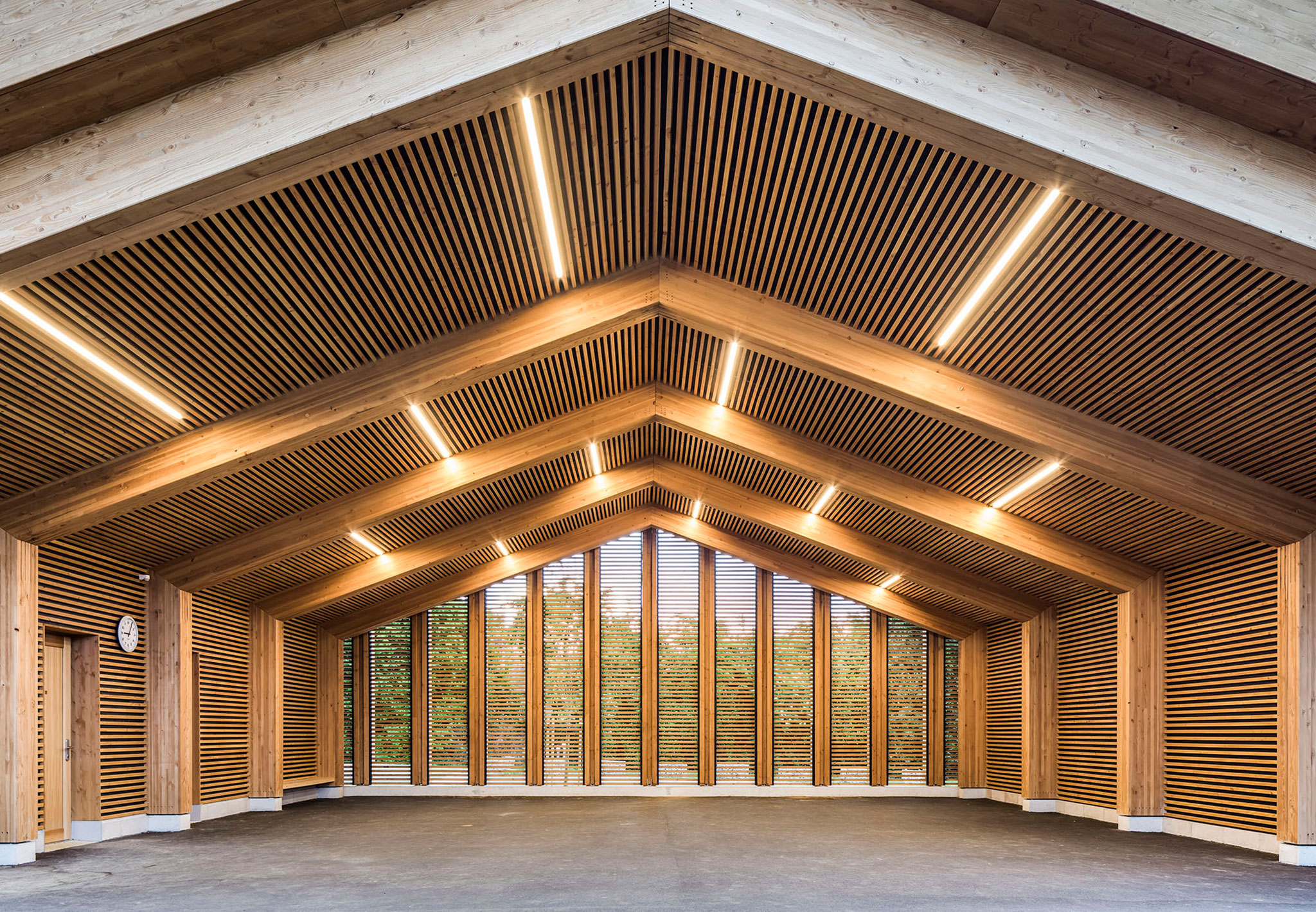

"Les Coteaux Fleuris School" by HEMAA Architectes. Photograph by Sergio Grazia.
 

Description of project by HEMAA Architectes

On a remarkable site whose backdrop is the hillsides of the Seine Valley, this new school is attached to the Norman village of Heudebouville (France).

A landscape of wooded countryside
From the history of the place, the school borrows materials and morphology: the wood of the half-timbered houses of the city center for the glazed frames and the framework; the slate of the bell tower and the town hall to clad and protect the facades and the roof. The morphology of the houses and farm buildings on the site is reinterpreted, giving rise to large contemporary "longères" ("longère" is the name for a long, narrow dwelling, developing along the axis of its peak, typically inhabited by farmers and artisans and typical of the regions of Brittany and Normandy in northwestern France).

The geography of the site orders the implantation of the work, the houses inserted according to the contours of the land and respect the natural soil. These guidelines delimit the playgrounds, draw orchards and become valleys collecting rainwater from the entire site to feed a landscaped basin below.

Anticipating the future
This layered organization anticipates the planned growth of the village and the future expansion of the school, with each household having the opportunity to expand. While respecting the original layout, classrooms can be added, the canteen, courtyards and yards can be extended and the equipment can accommodate more students and users. In this respect, the networks and fire safety systems already take this possible growth into account. The structural system in porticos, by the total absence of an intermediate bearing point, allows this future evolution and complete modularity of the premises. The facades and the roof are made up of modules pre-assembled off-site, combining air/water tightness, insulation and structure. The 5x2 m pieces, developed in 3D with the carpenter, have allowed managing the construction time.

Carbon footprint
The construction of the school is part of a process to reduce its carbon footprint. The use of wood, and slate, the integration of photovoltaic panels and the absence of fossil fuel consumption for the heating of the equipment makes it possible to reach the ambitious E3C2 and BEPOS levels.

Finally, the site was entirely built with local materials and companies established in the region.

More information

Label
Architects
Text

HEMAA Architectes (Charles Hesters and Pierre Martin-Saint-Etienne), associated to Hesters Oyon.

+ + copy Created with Sketch.
- + copy Created with Sketch.
Label
Client
Text

City of Heudebouville.

+ + copy Created with Sketch.
- + copy Created with Sketch.
Label
Area
Text

1,500 sqm.

+ + copy Created with Sketch.
- + copy Created with Sketch.
Label
Budget
Text

€ 4.5 Million.

+ + copy Created with Sketch.
- + copy Created with Sketch.
Label
Dates
Text

February 2022.

+ + copy Created with Sketch.
- + copy Created with Sketch.
Label
Location
Text

Heudebouville, France.

+ + copy Created with Sketch.
- + copy Created with Sketch.
Label
Photography
+ + copy Created with Sketch.
- + copy Created with Sketch.

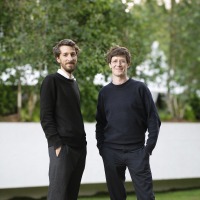
HEMAA Architectes is an architecture and urban planning studio founded in 2018 by Charles Hesters and Pierre Martin-Saint-Etienne. They undertake projects of all scales, encompassing public facilities, collective and individual housing, and cultural spaces, with an open and avant-garde approach.

Charles Hesters is an architect (HMONP) who graduated in 2012 from Paris Val de Seine and holds a Master's degree in Urban Planning from the University of Athens. He has worked at studios such as Brenac & Gonzalez & Associés, Gaëtan Le Penhuel, and Philippe Gazeau, and previously at Hesters-Oyon Architectes. After co-founding HEMAA in 2018 and participating in the Échelle Un incubator at EAV&T Paris-Est, he has been teaching at EAV&T Paris-Est and École des Ponts ParisTech since 2020, in the "matières à penser" department at the Master's level.

Pierre Martin-Saint-Etienne is an HMONP architect trained in Paris Val de Seine and holds a Master's degree in Urban Planning from UFRJ in Rio de Janeiro, in addition to specialized training in straw bale and earth construction. His professional experience includes stints at Brenac & Gonzalez & Associés, Philippe Gazeau, and Brunet Saunier, before co-founding HEMAA in 2018 and also participating in the Échelle Un incubator. Between 2018 and 2020, he was a teaching assistant at ENSA Paris-Malaquais within Studio PASS, teaching both Master 1 and the PFE program, and since 2020 he has been involved in the HMONP training program at ENSA Paris-La Villette.

Together, Hesters and Martin-Saint-Etienne develop a body of work that combines research, teaching, and built projects, guided by a shared conviction: to design architecture deeply conscious of its time and place, capable of engaging with nature and offering new, more respectful, understated, and sensitive ways of living.

Each project thus becomes an opportunity to question the scale and impact of buildings, adjust the dimensions of volumes, fragment masses, and dignify voids. The school complex they built in Normandy, for example, allowed them to work with local wood and slate, revisiting traditional forms. In Sartrouville, the school is built of solid load-bearing stone; in Evry, the Pôle Enfance is configured as a small village of pavilions constructed of rammed earth and wood in the heart of a park; and the house in Garches incorporates walls of reclaimed meulière stone from the demolition of the existing building. These investigations into site integration, the use of bio-sustained or reused materials, and the mobilization of local resources form the basis of their environmental approach. They eliminate all superfluous materials to return to an architecture composed of its essential elements and, through a passive design approach, strive for each project to achieve energy and carbon neutrality throughout its entire life cycle. They believe that nature and architecture are not opposites, but rather must find a suitable balance in each intervention so that, after their work, places and landscapes regain a new harmony.

HEMAA's trajectory has been accompanied by several exhibitions at leading institutions. In 2025, they participated in the Forum Bois International at the Grand Palais in Paris; in 2022, they presented their work at the Manifeste exhibition at La Plateforme Rennes of ENSA de Bretagne; and in 2019, they were finalists for the IP Factory project at the Pavillon de l’Arsenal as part of the Paris Rive Gauche exhibition. And in 2014 they exhibited at Futurs Immédiats, also at the Pavillon de l’Arsenal, with the Archipel de Seine project. Their work has also received outstanding recognition: in 2025 they won the Équerre d’Argent Première Œuvre for the Évry-Courcouronnes children's and sports center; in 2024 they were nominated for the European Union Prize for Contemporary Architecture —Mies van der Rohe Award— for the Heudebouville school complex; and in 2023 they were selected as Europe 40 Under 40 by The European Centre for Architecture Art Design and Urban Studies.

Read more
Published on: July 21, 2022
Cite:
metalocus, DIEGO DOMÍNGUEZ GONZÁLEZ
"A commitment to the local in a school overlooking the Seine. "Les Coteaux Fleuris School" por HEMAA Architectes" METALOCUS. Accessed
<https://www.metalocus.es/en/news/a-commitment-local-a-school-overlooking-seine-les-coteaux-fleuris-school-por-hemaa-architectes> ISSN 1139-6415
Loading content ...
Loading content ...
Loading content ...
Loading content ...
Loading content ...
Loading content ...
Loading content ...
Loading content ...
Loading content ...
Loading content ...
Loading content ...
Loading content ...
Loading content ...
Loading content ...
Loading content ...
Loading content ...
Loading content ...
Loading content ...
Loading content ...
Loading content ...
Loading content ...
Loading content ...
Loading content ...
Loading content ...
Loading content ...
Loading content ...
Loading content ...
Loading content ...
Loading content ...
Loading content ...
Loading content ...
Loading content ...
Loading content ...
Loading content ...
Loading content ...
Loading content ...
Loading content ...
Loading content ...
Loading content ...
Loading content ...
Loading content ...
Loading content ...
Loading content ...
Loading content ...
Loading content ...
Loading content ...
Loading content ...
Loading content ...
Loading content ...
Loading content ...
Loading content ...
Loading content ...
Loading content ...
Loading content ...