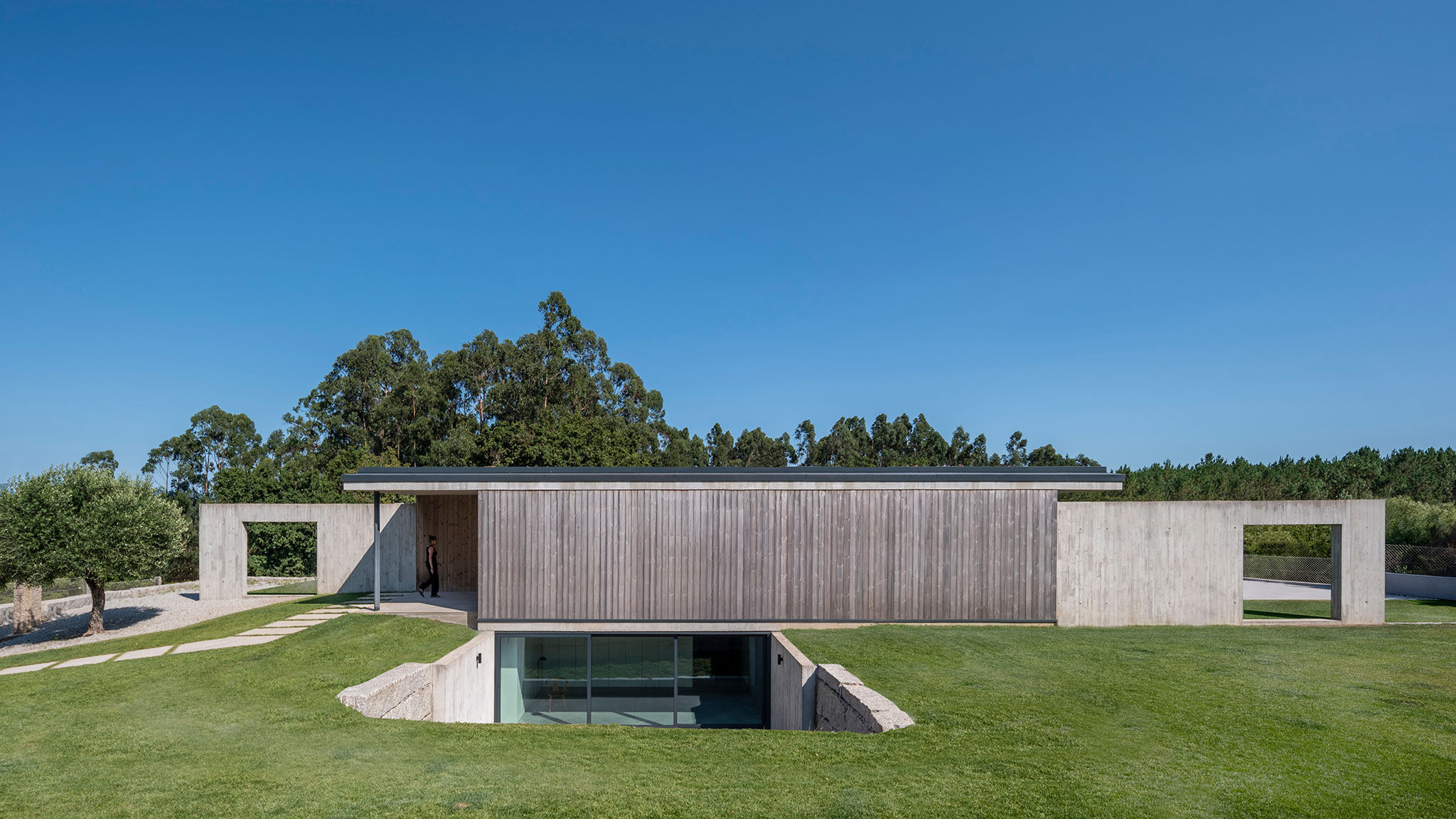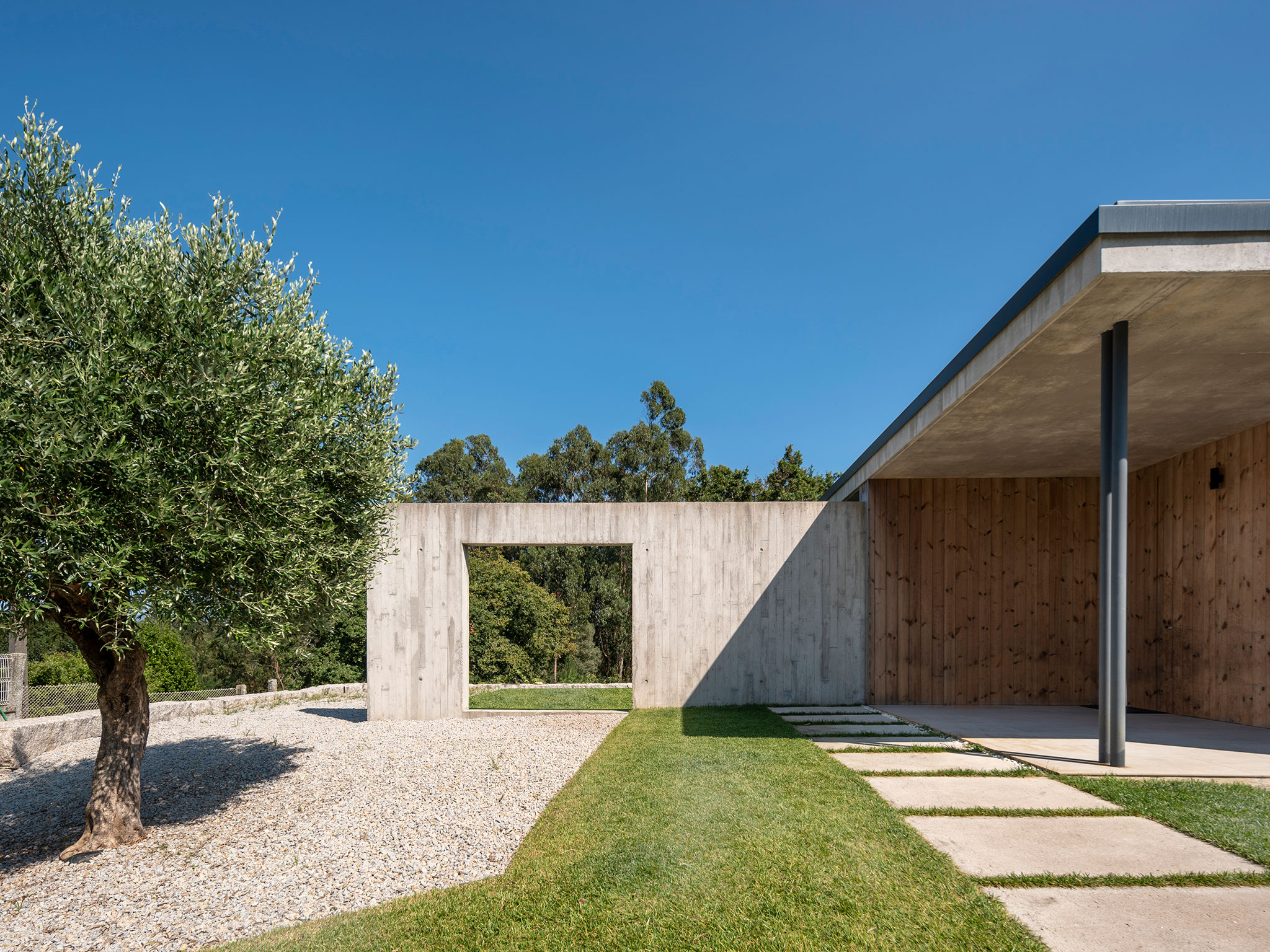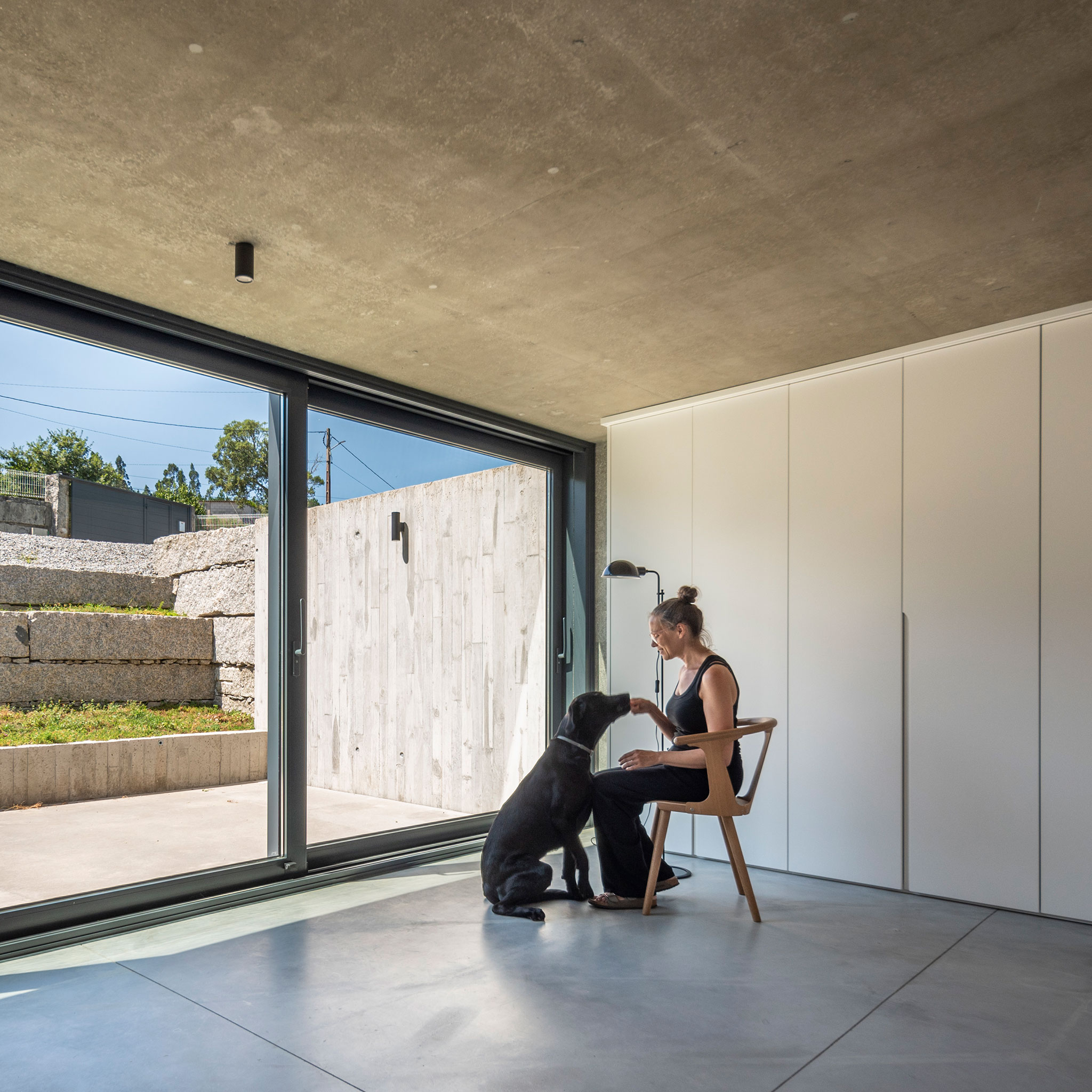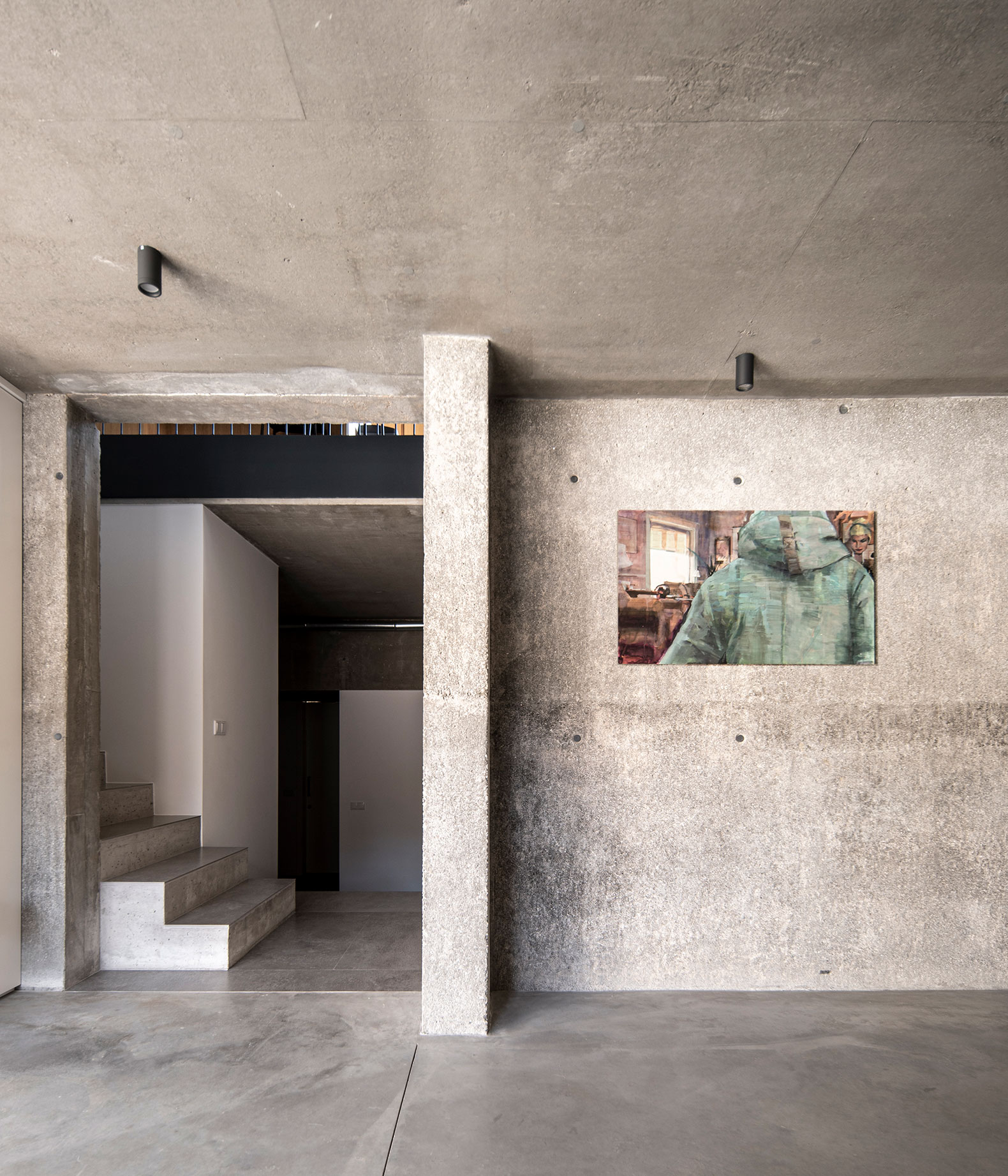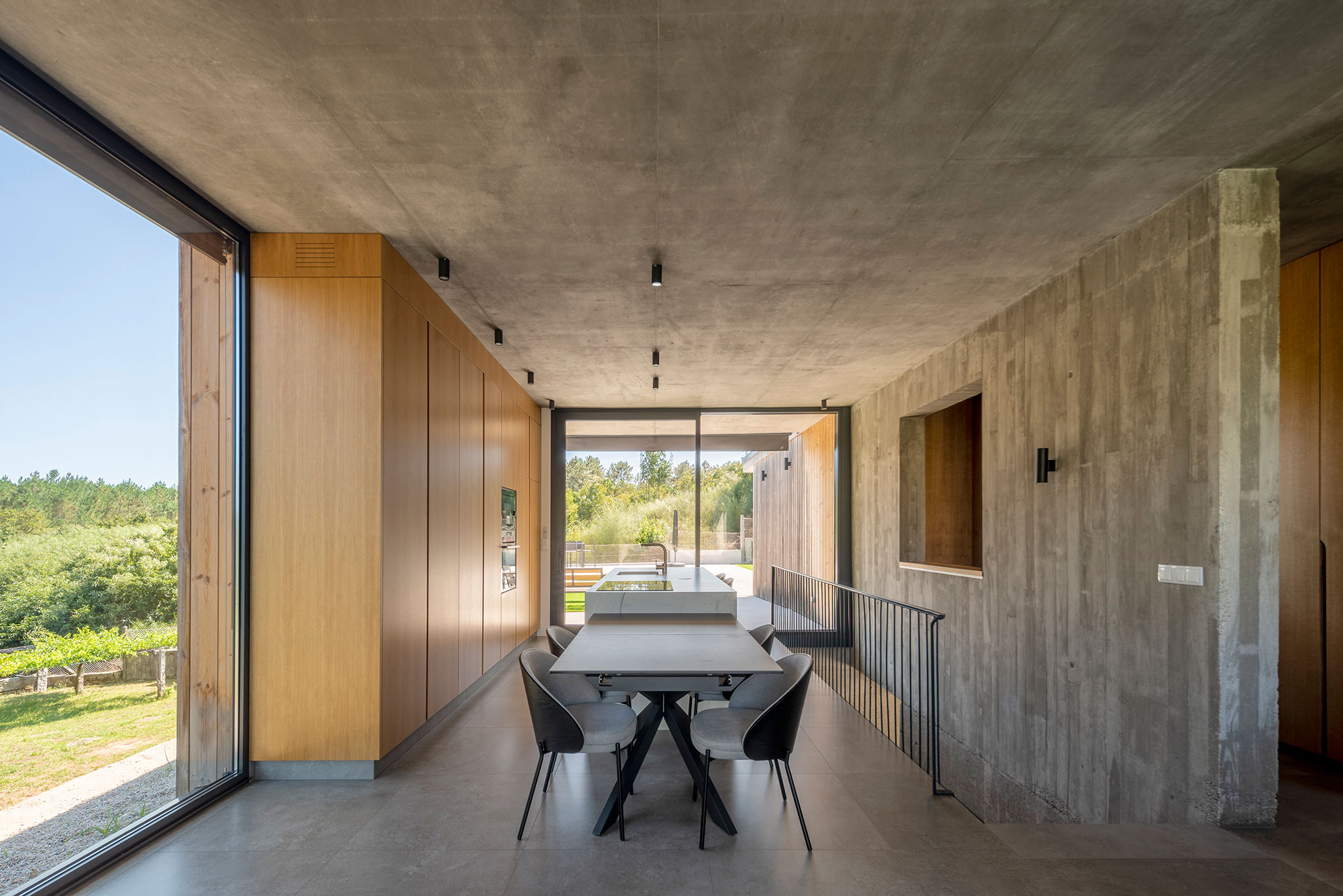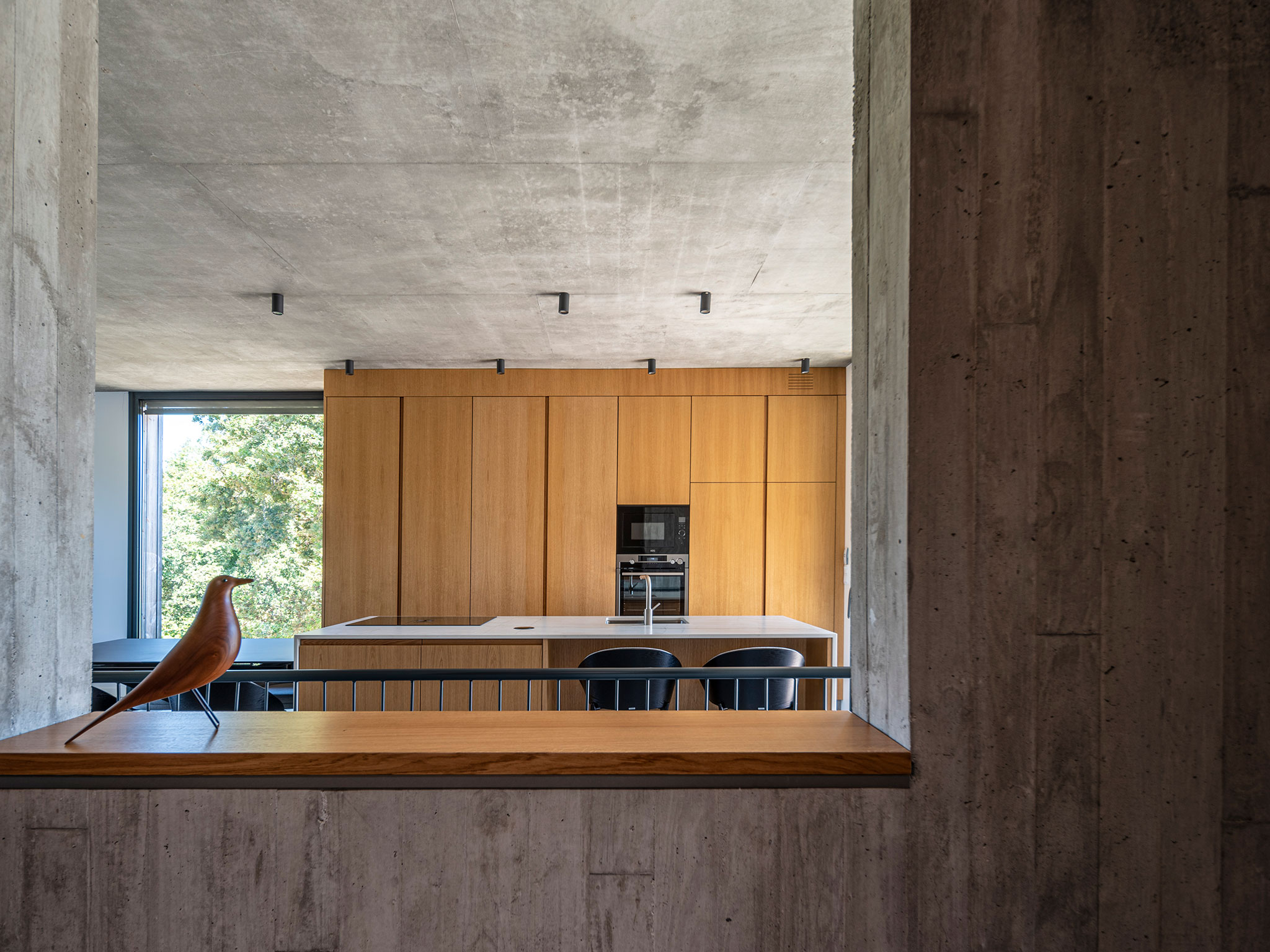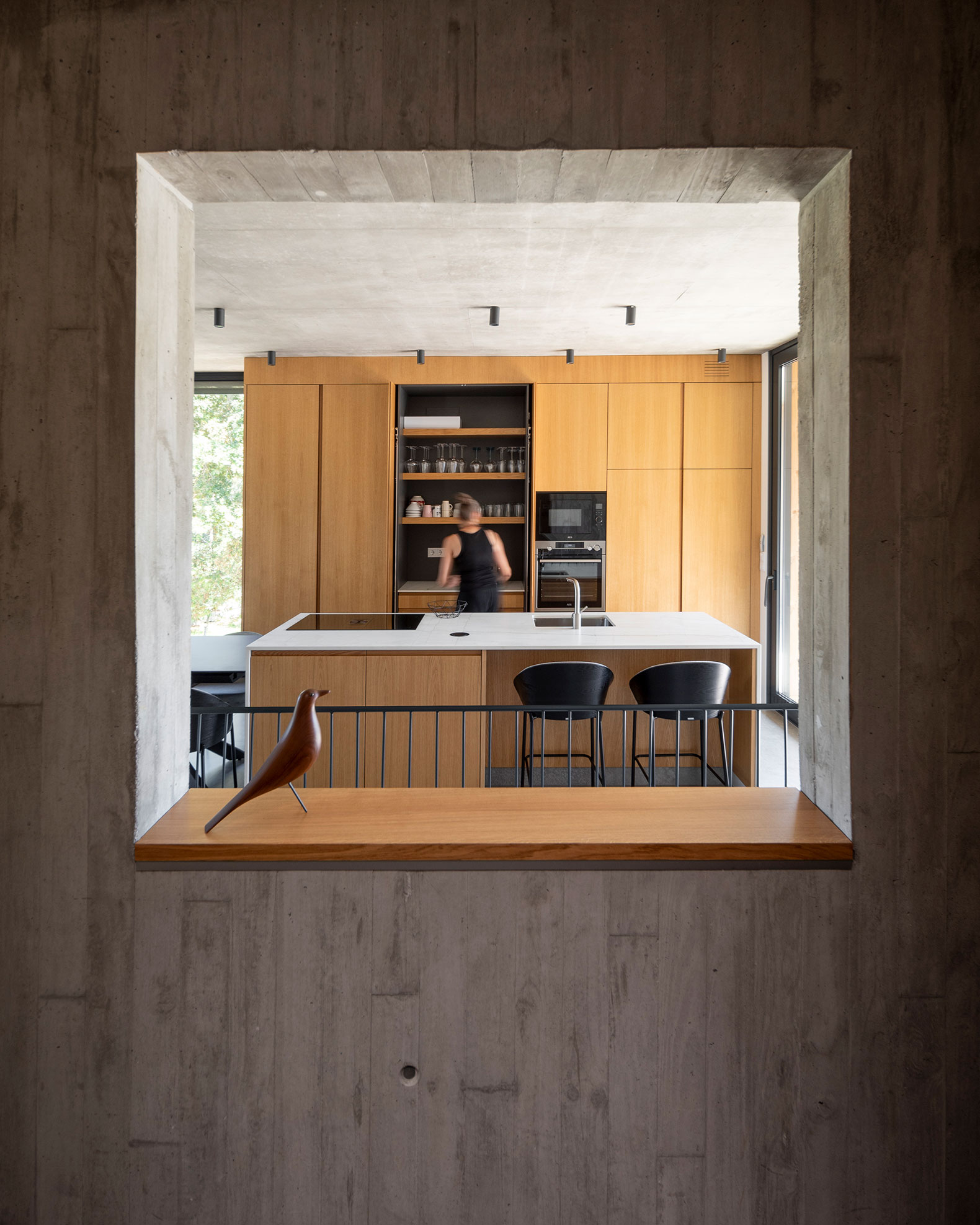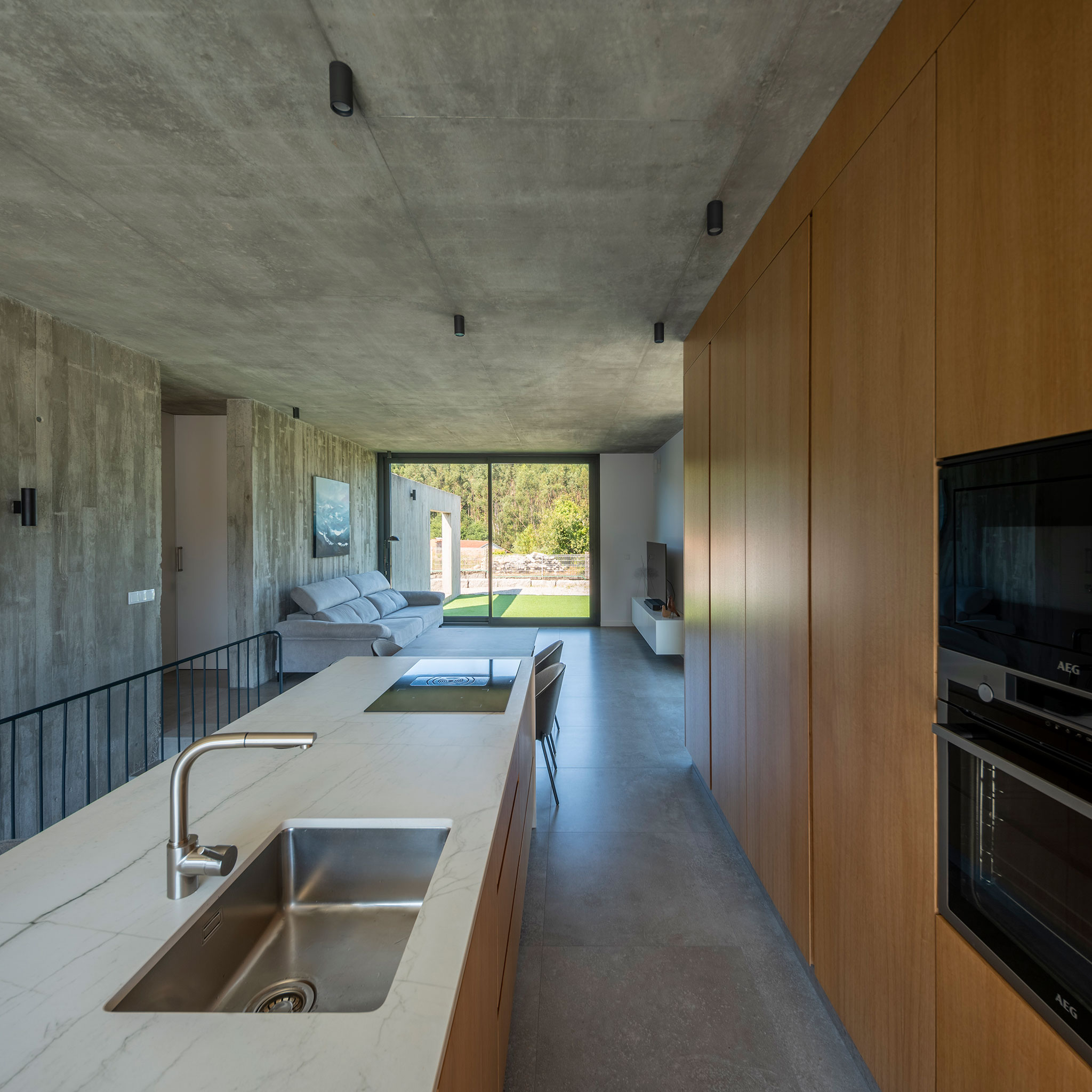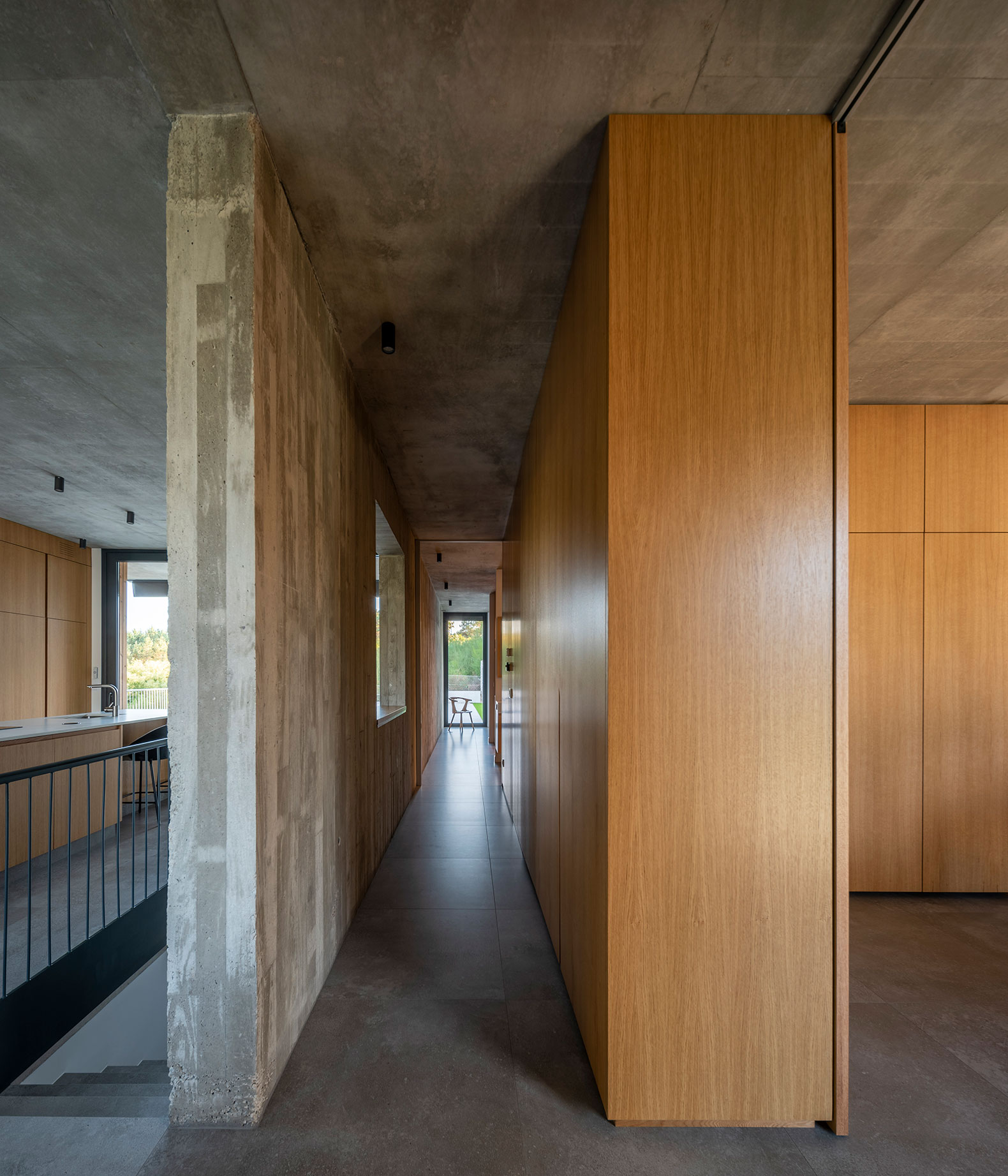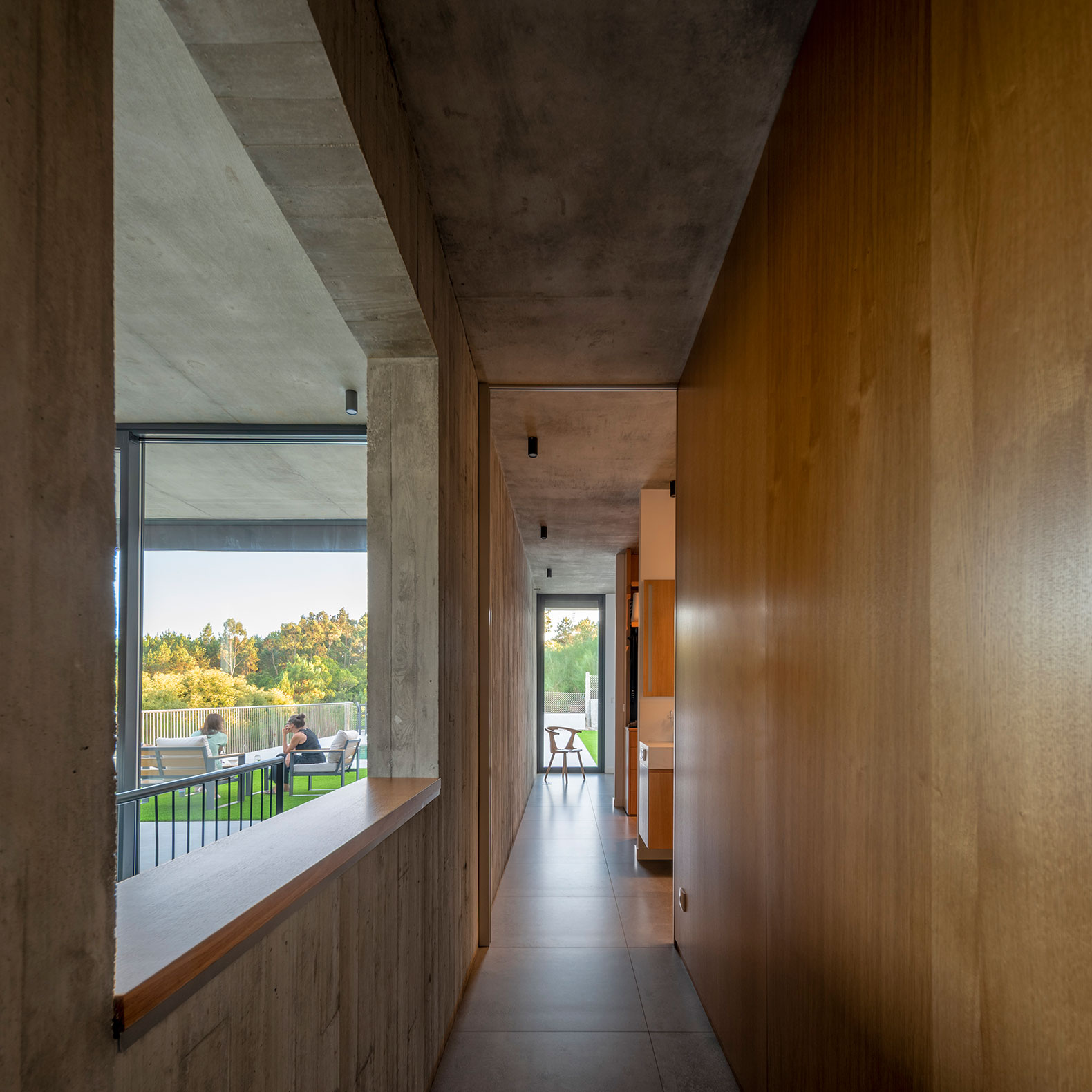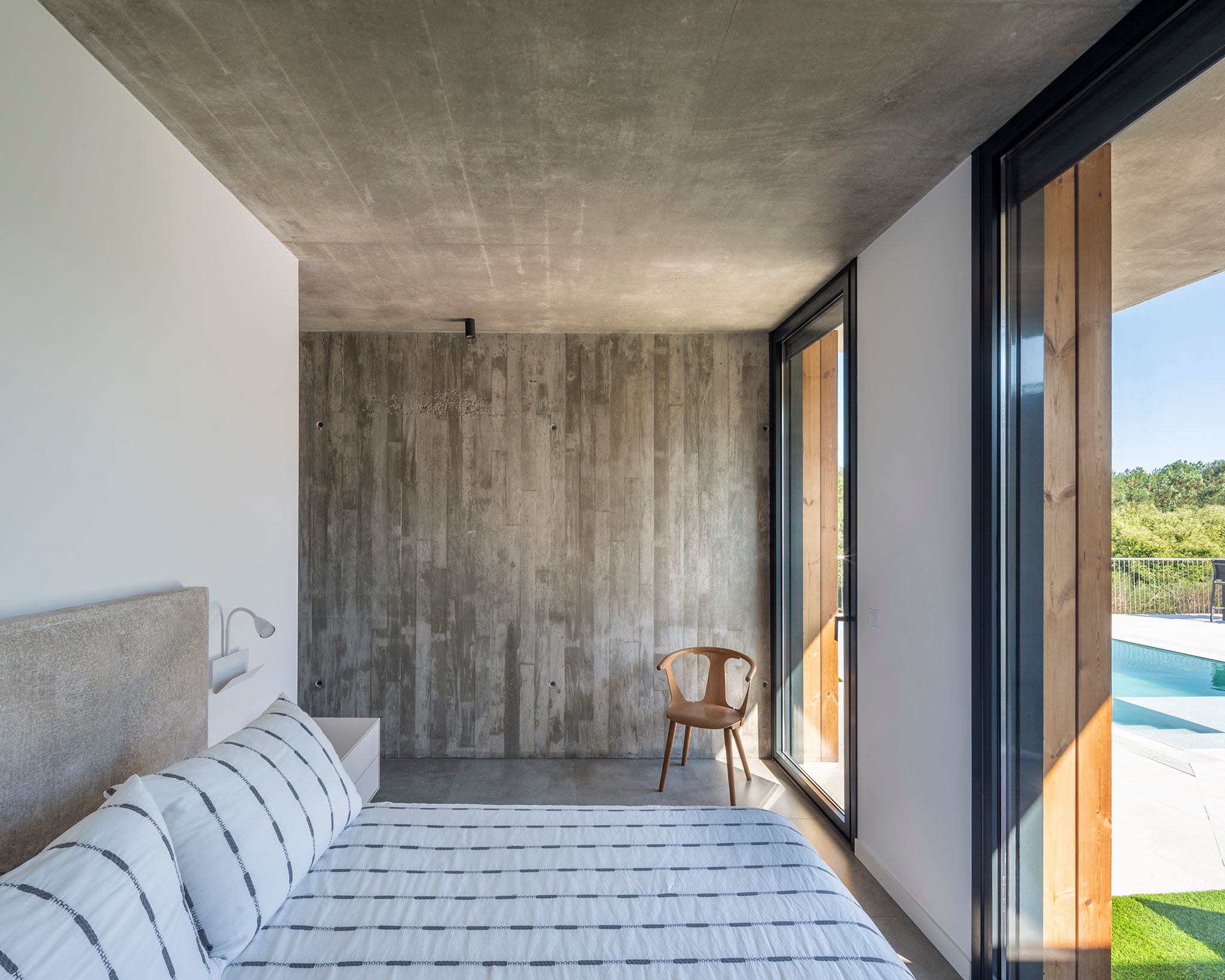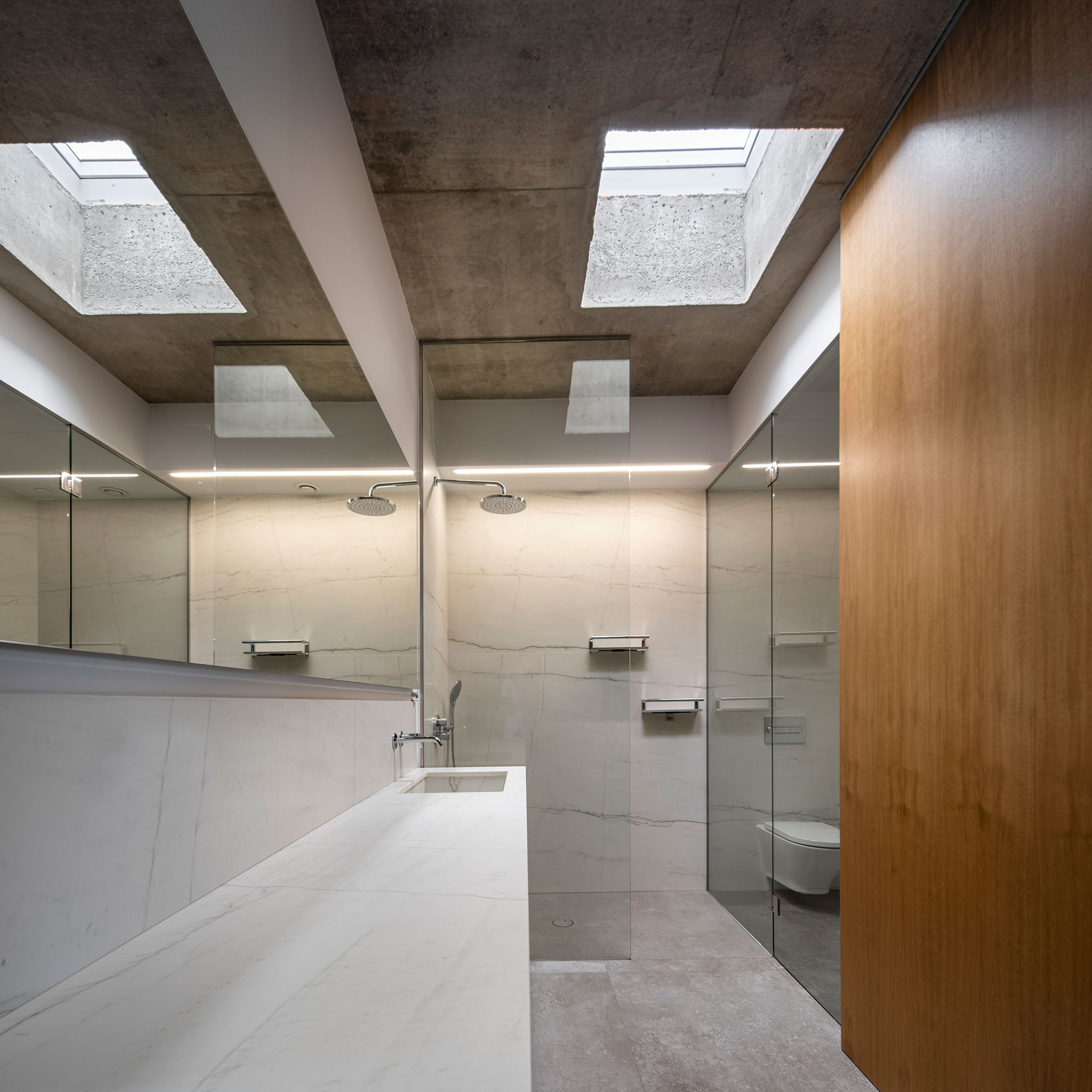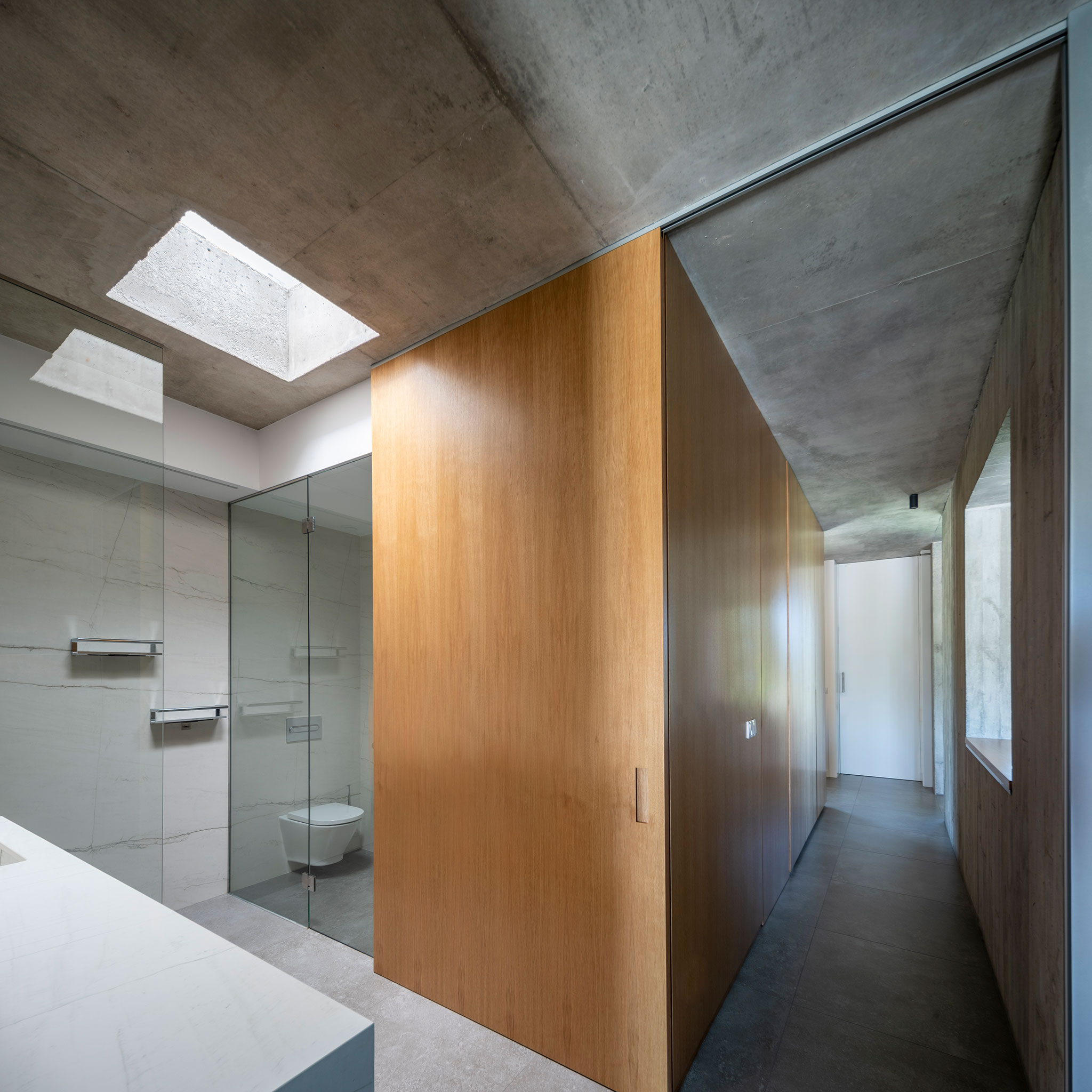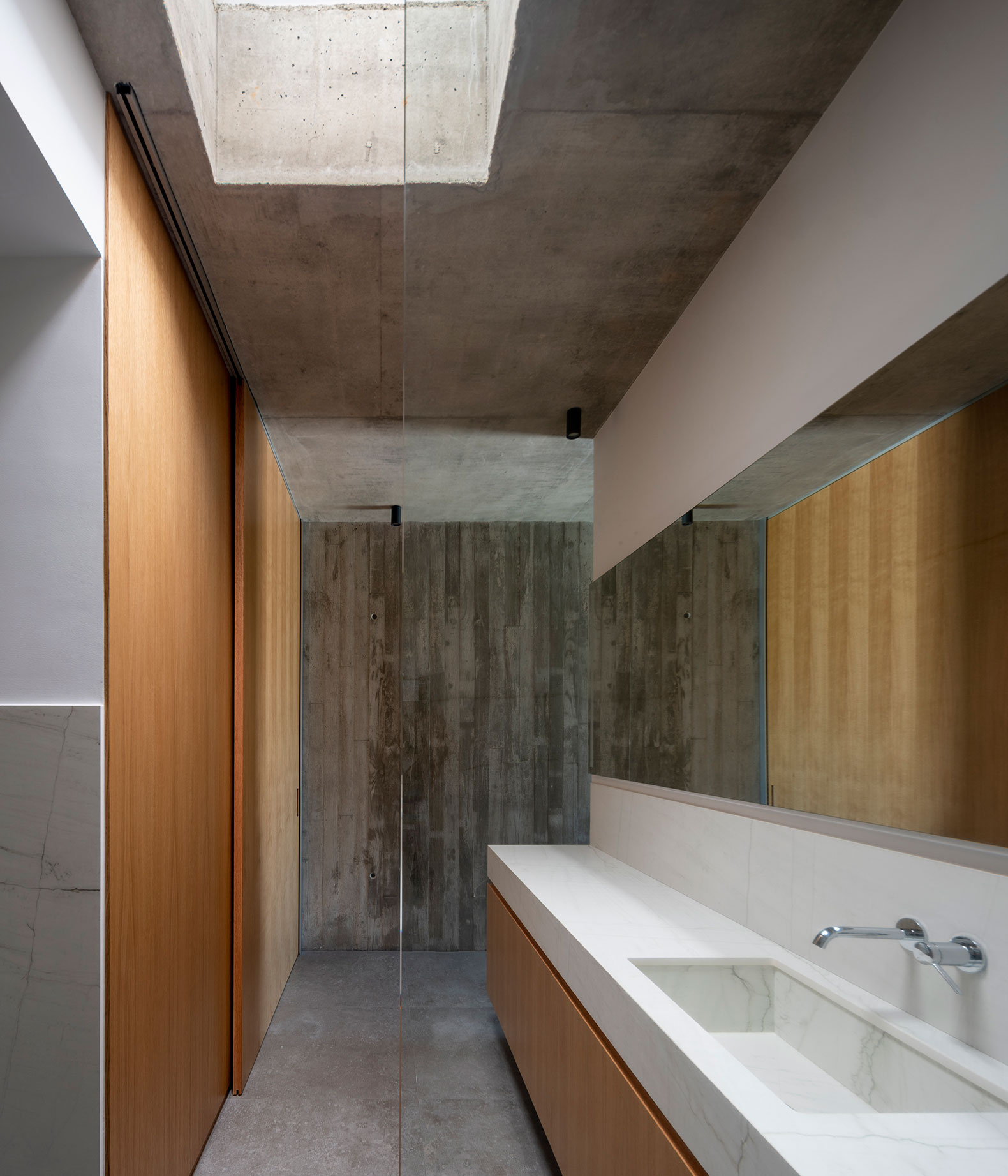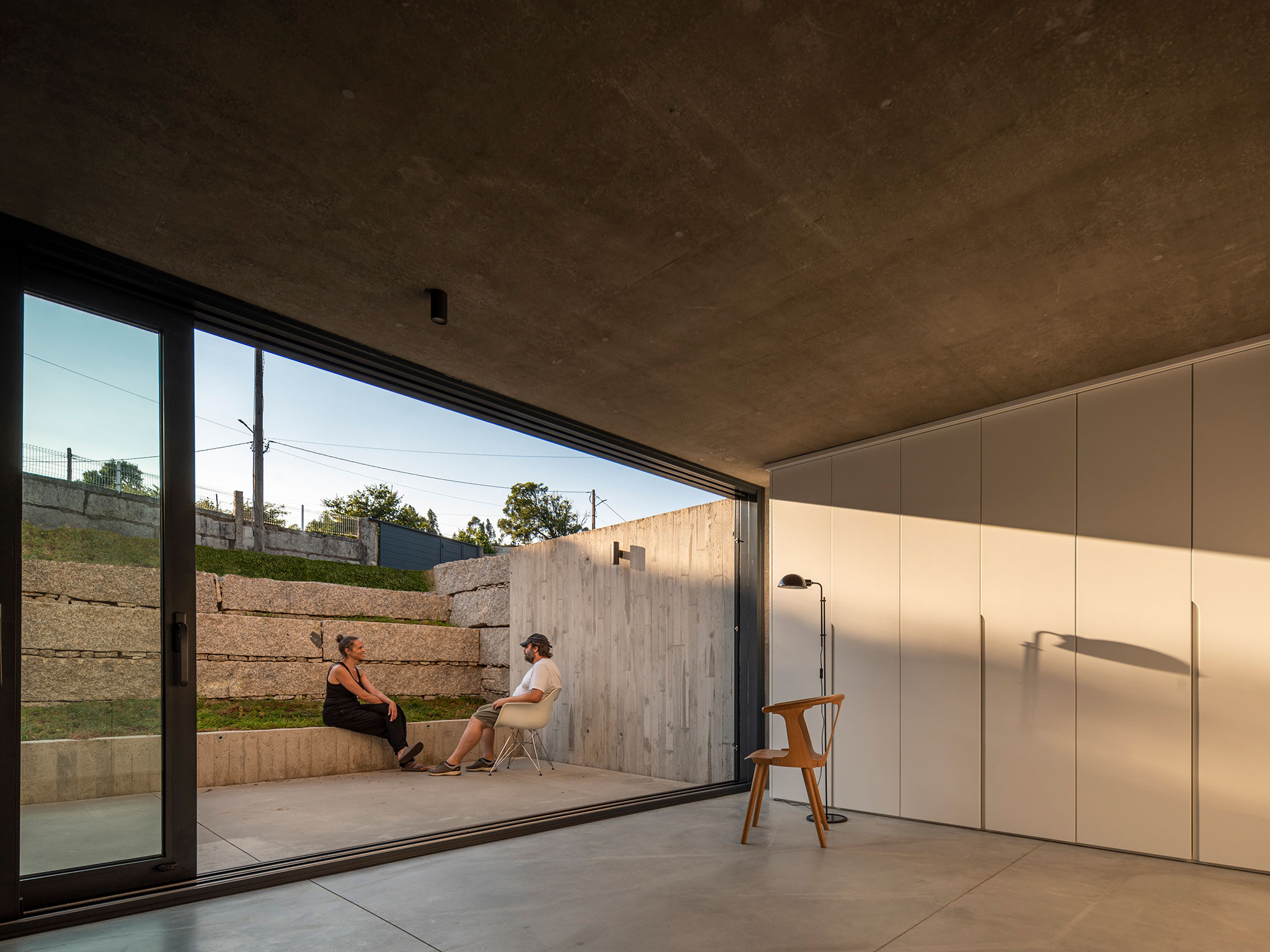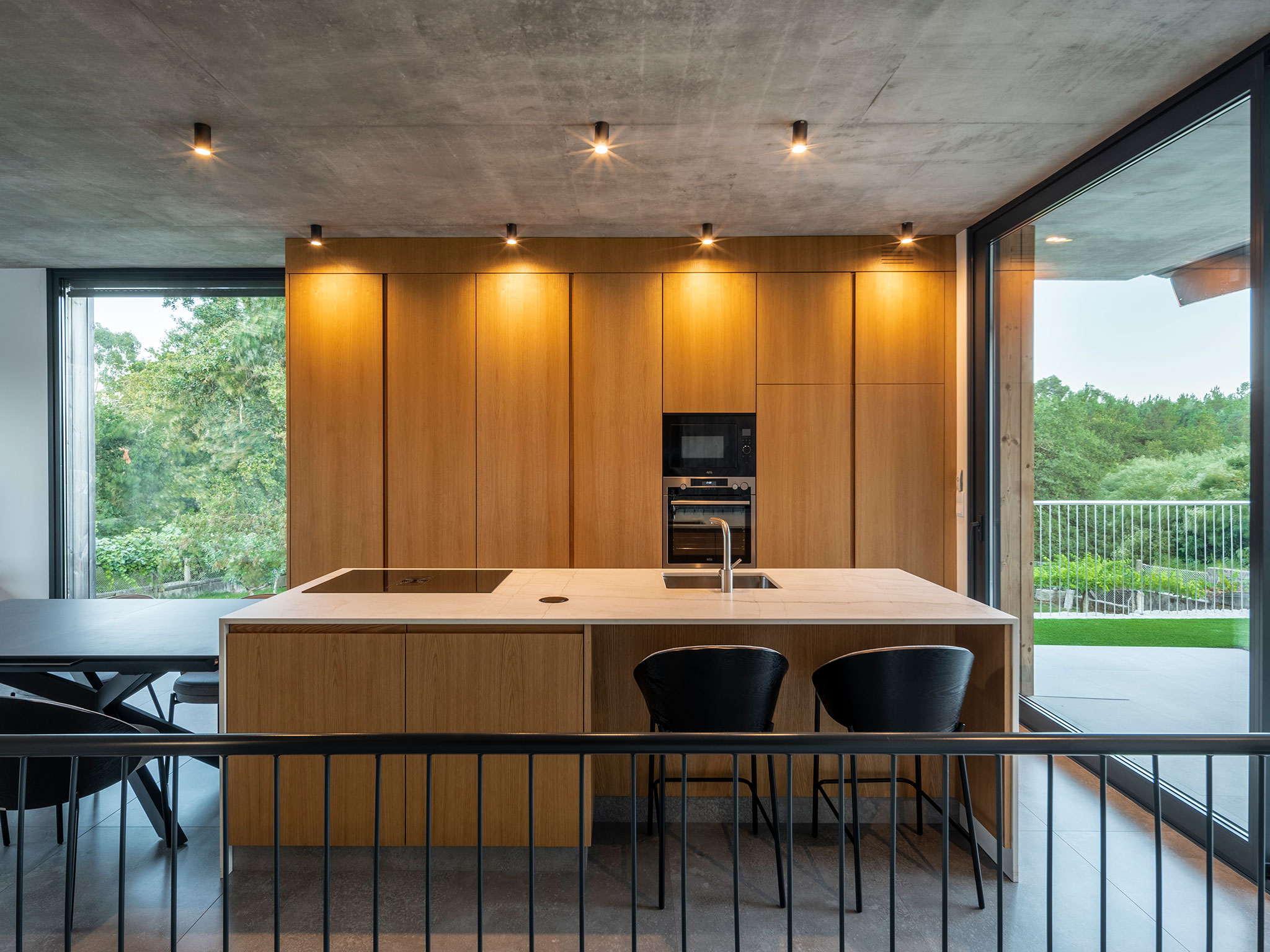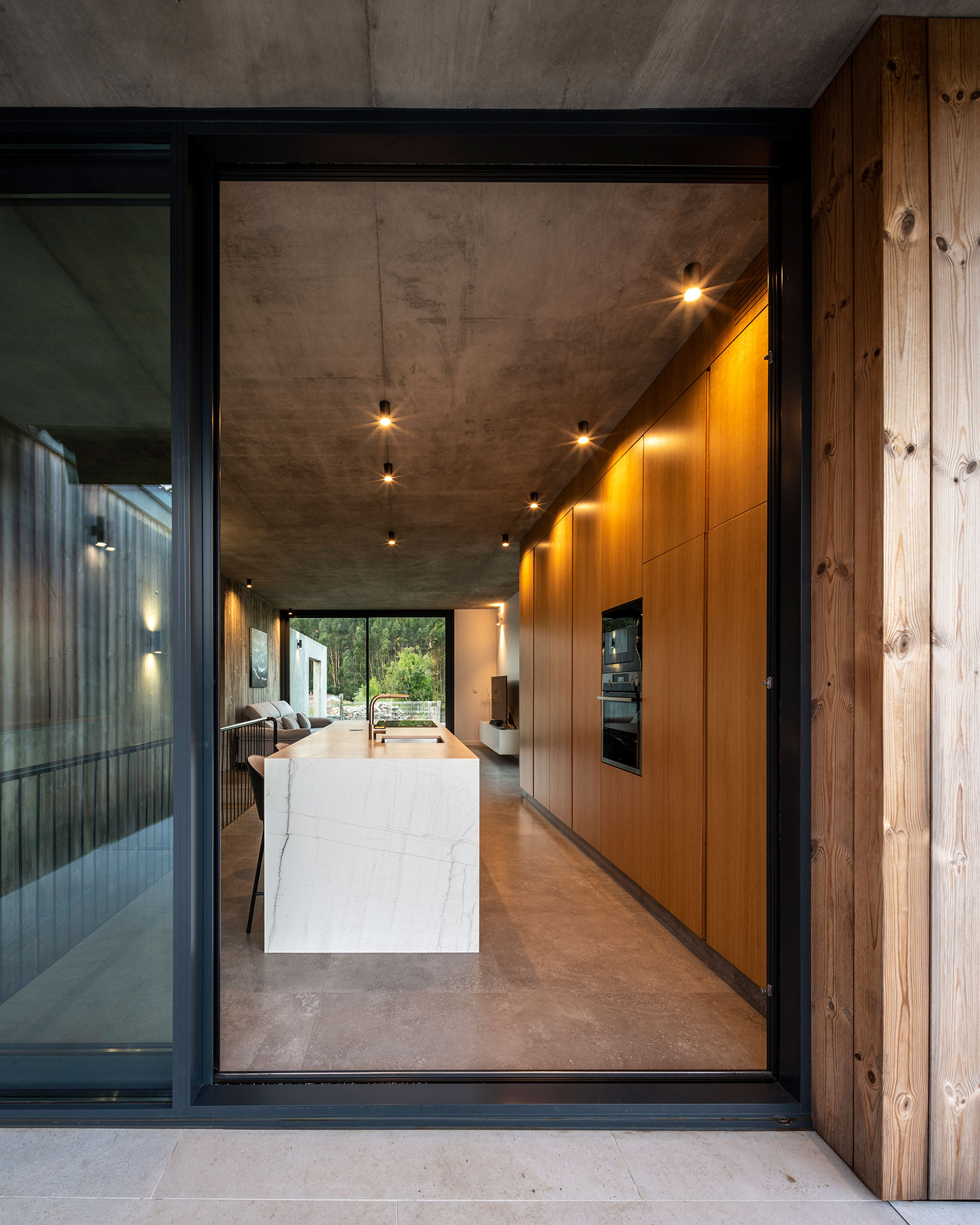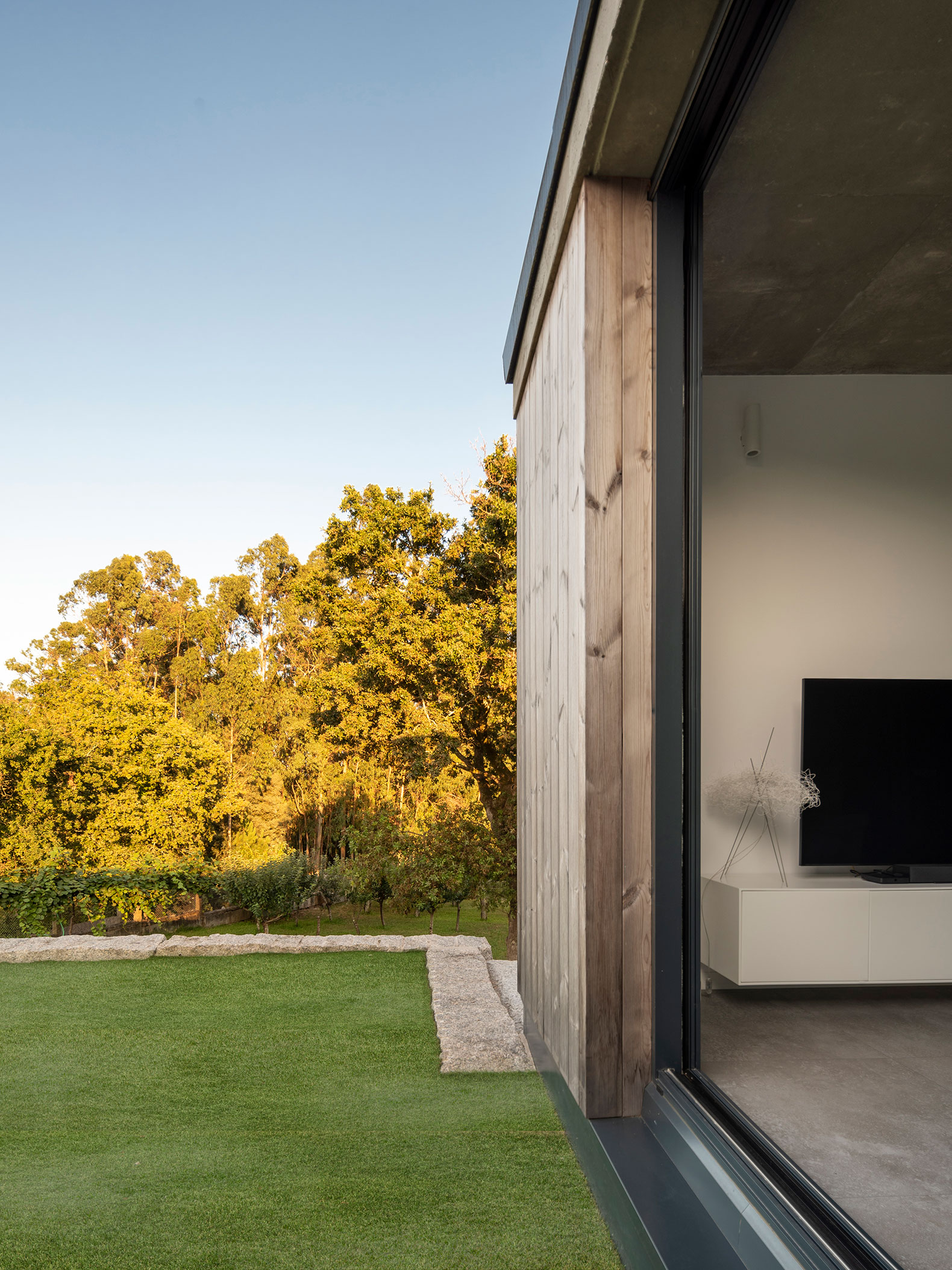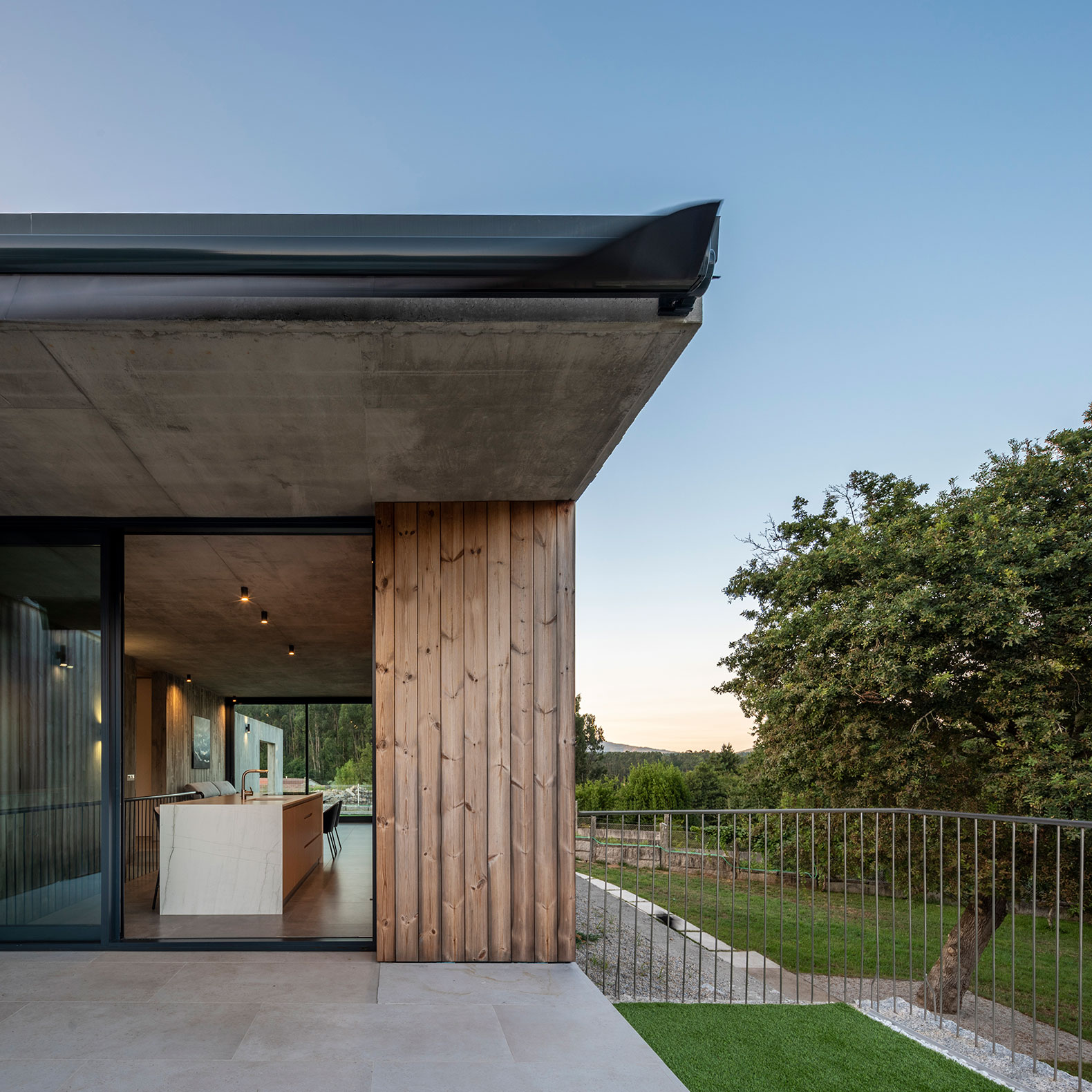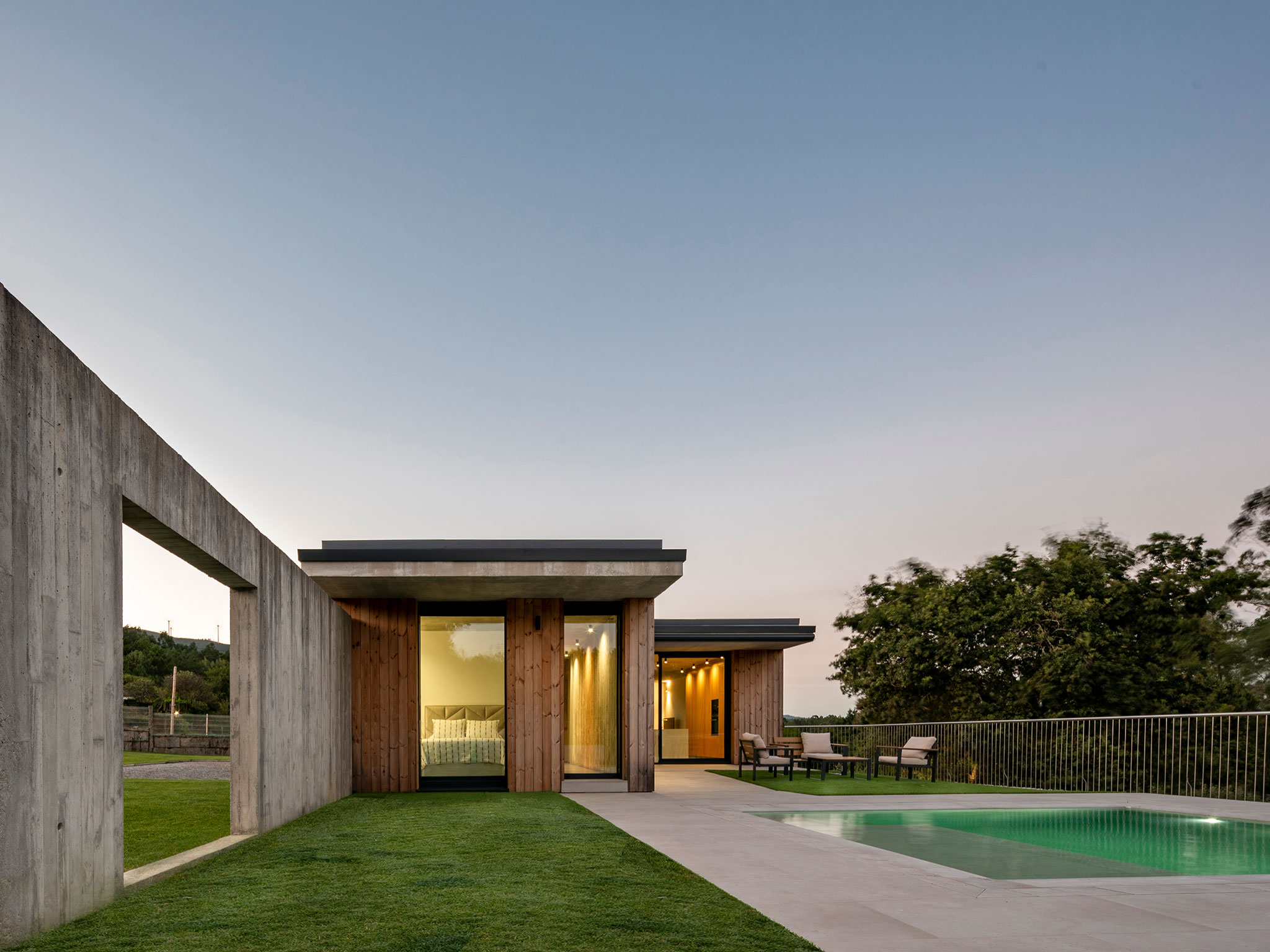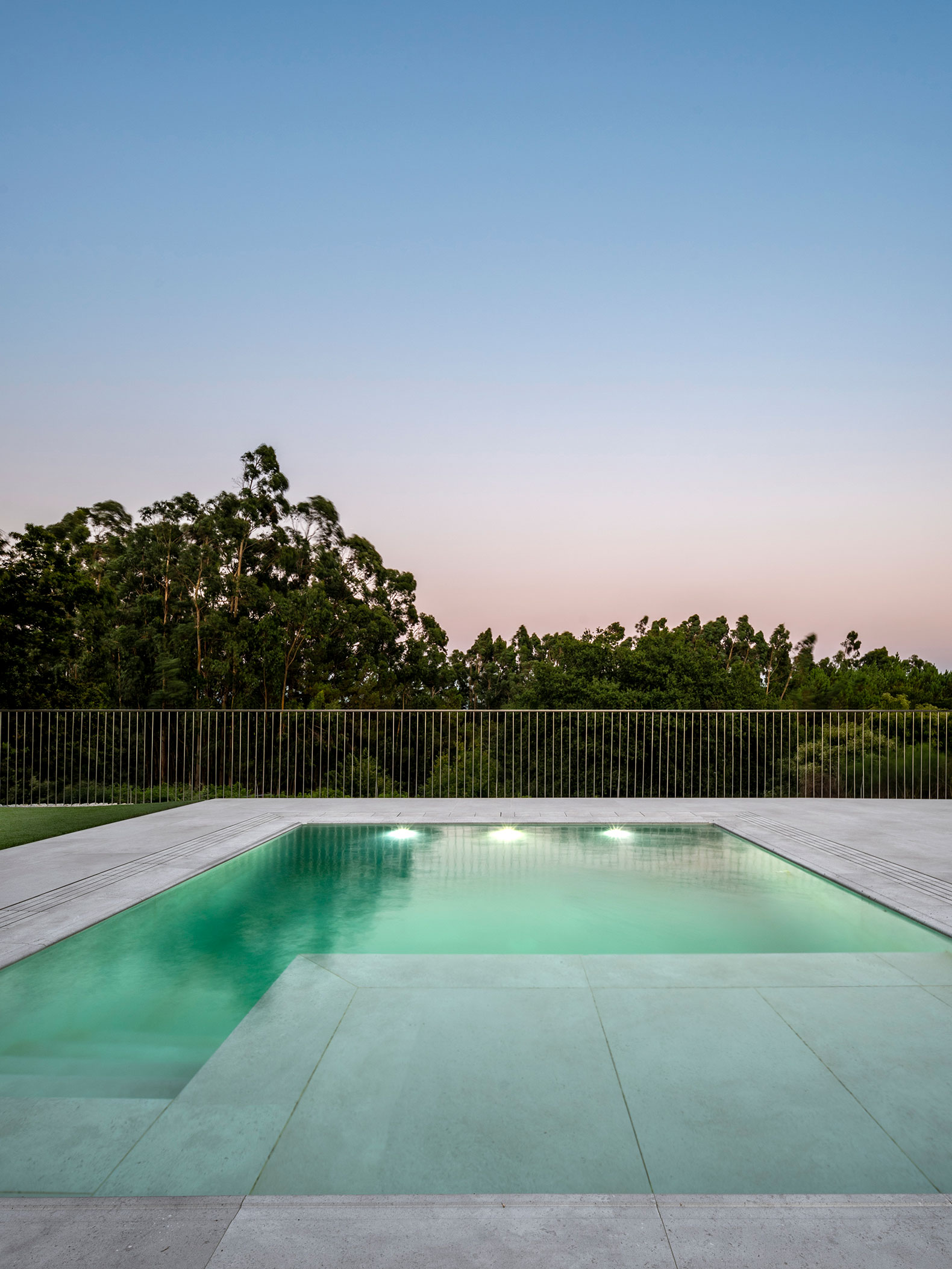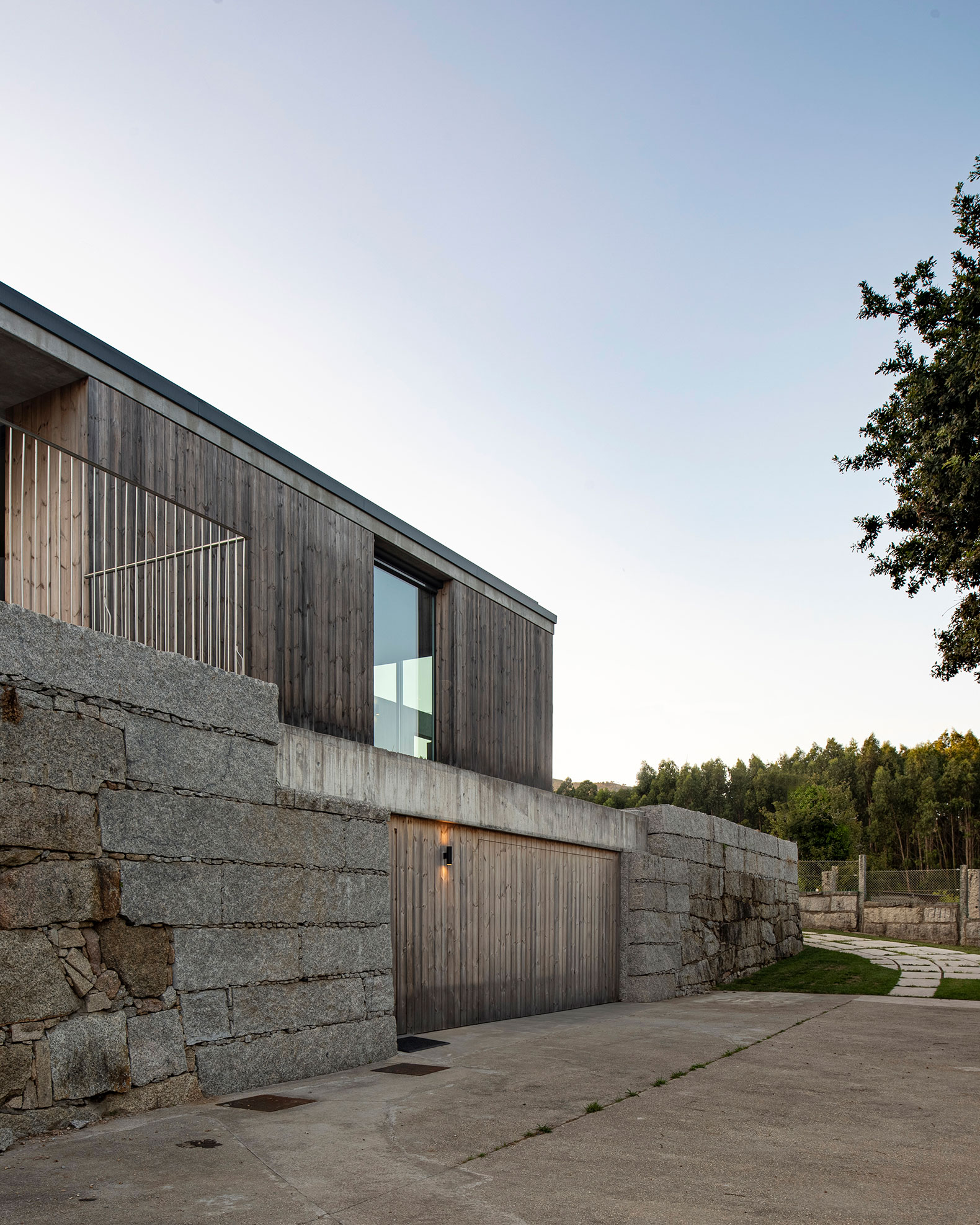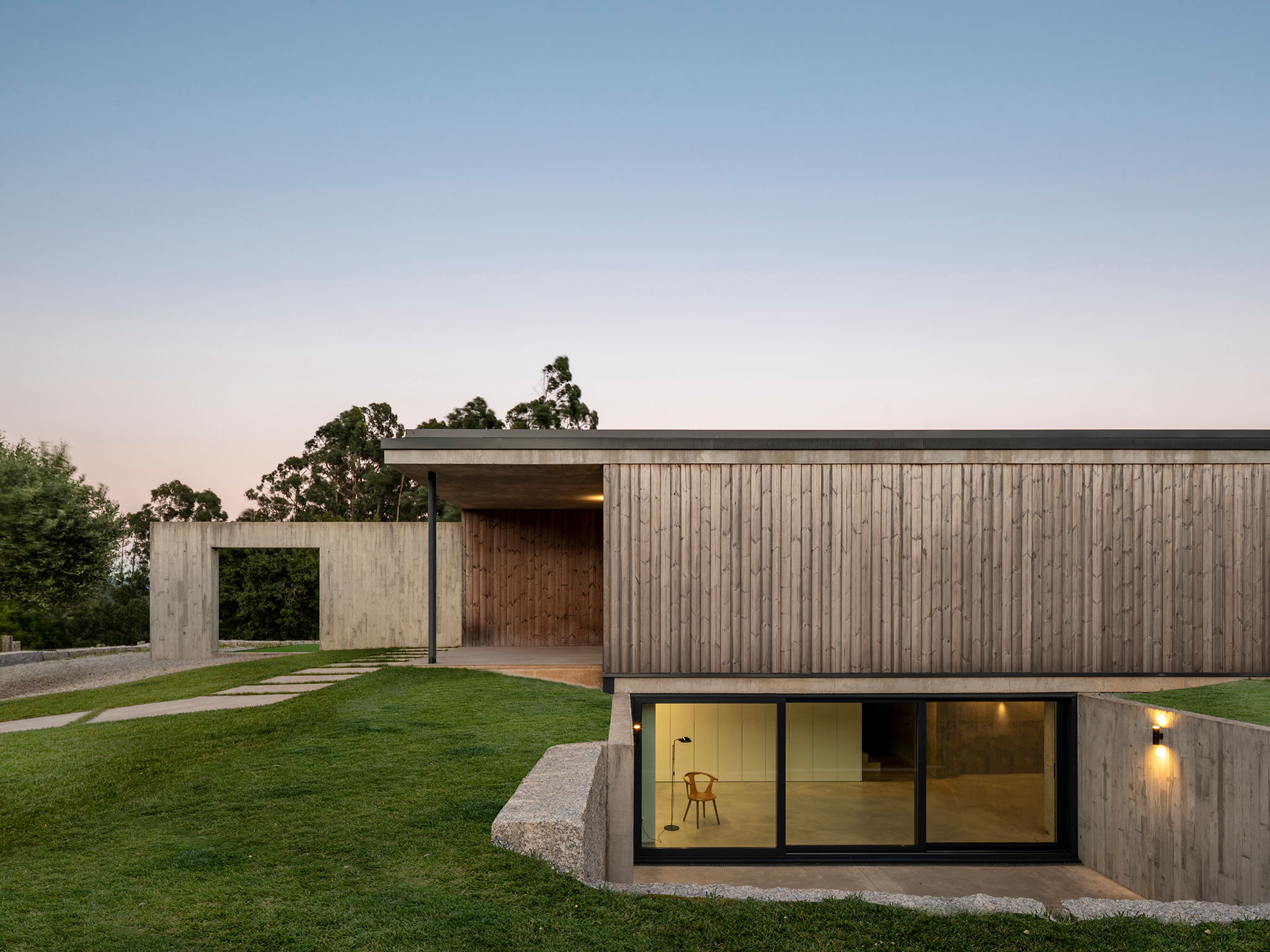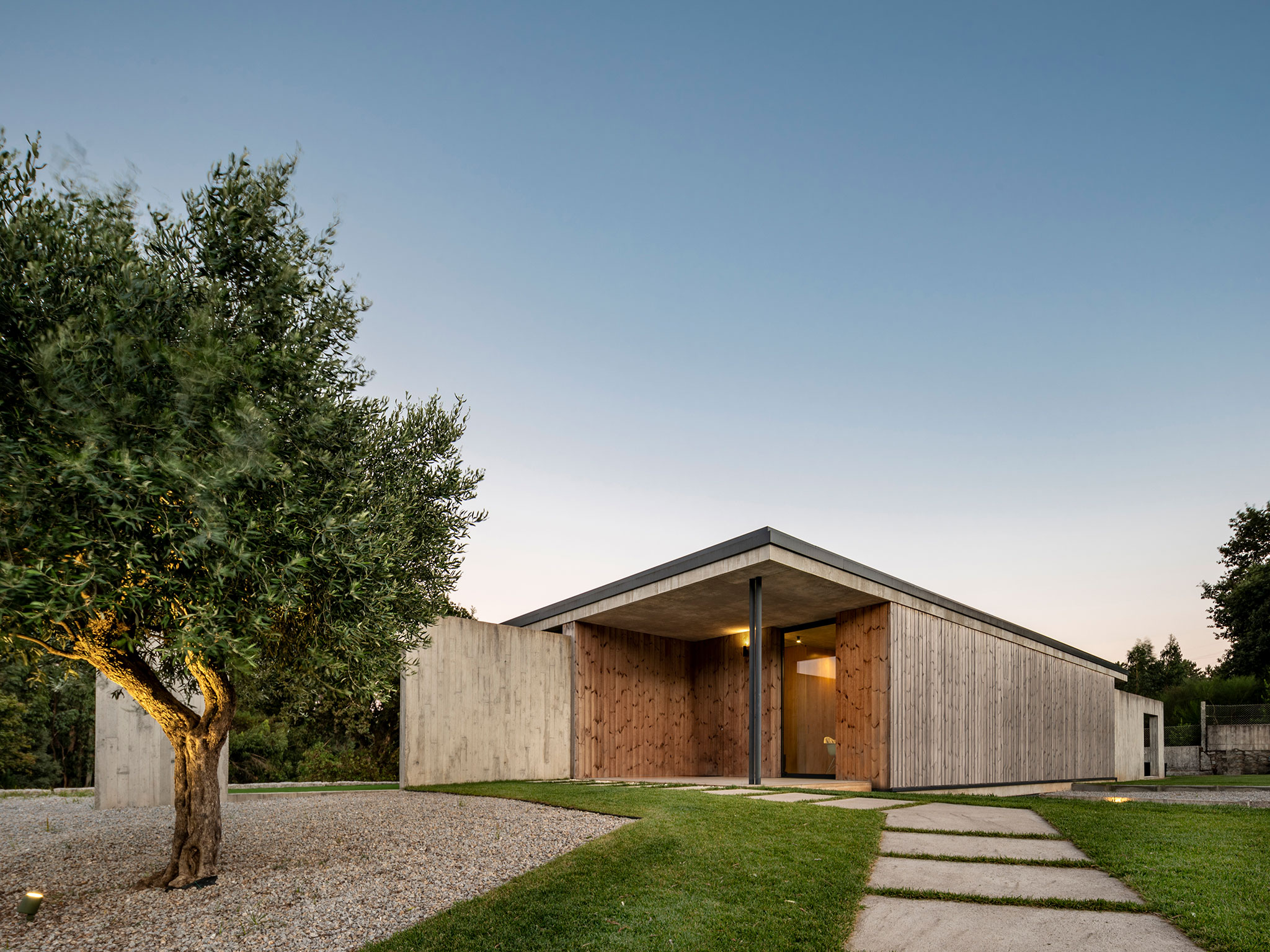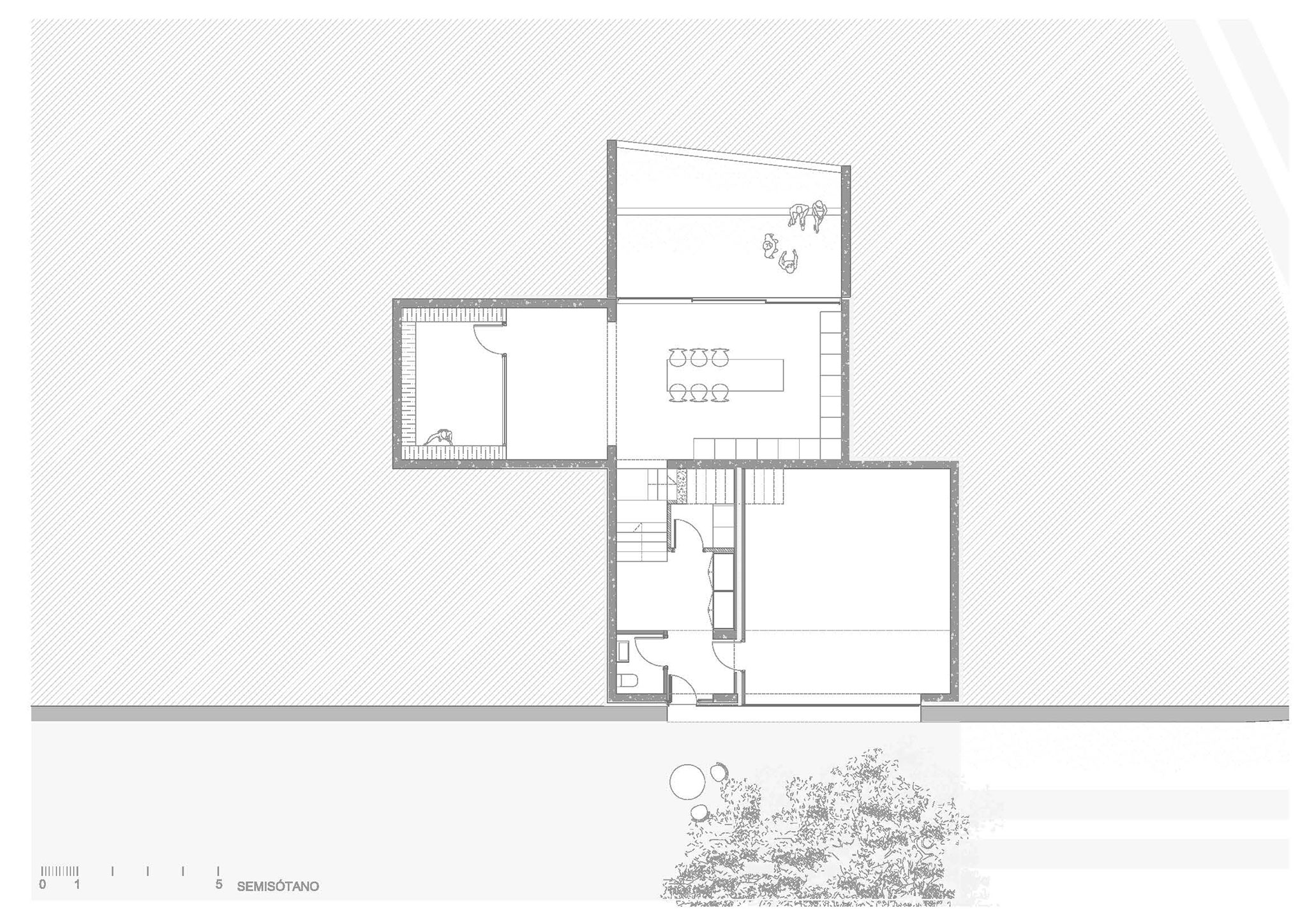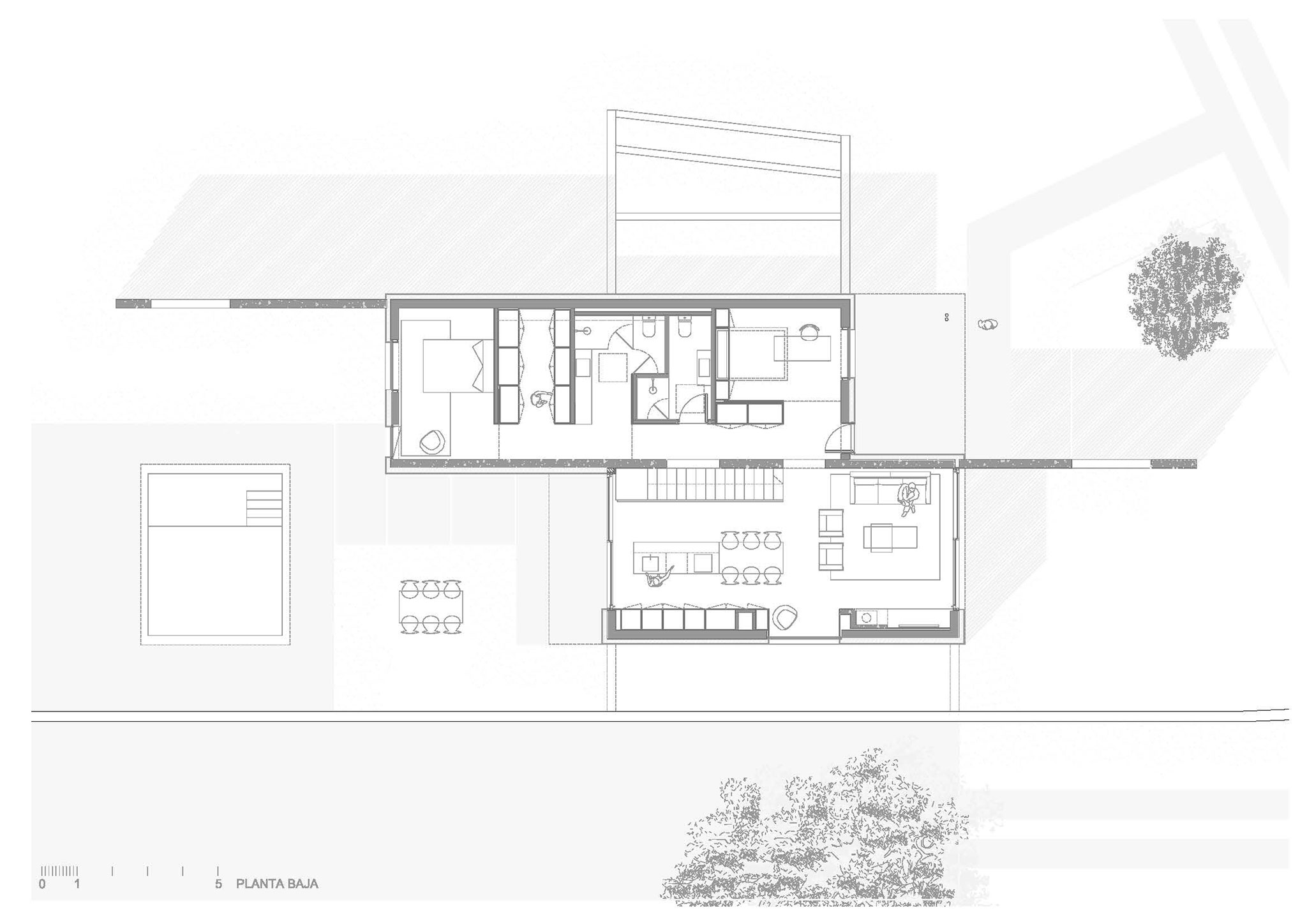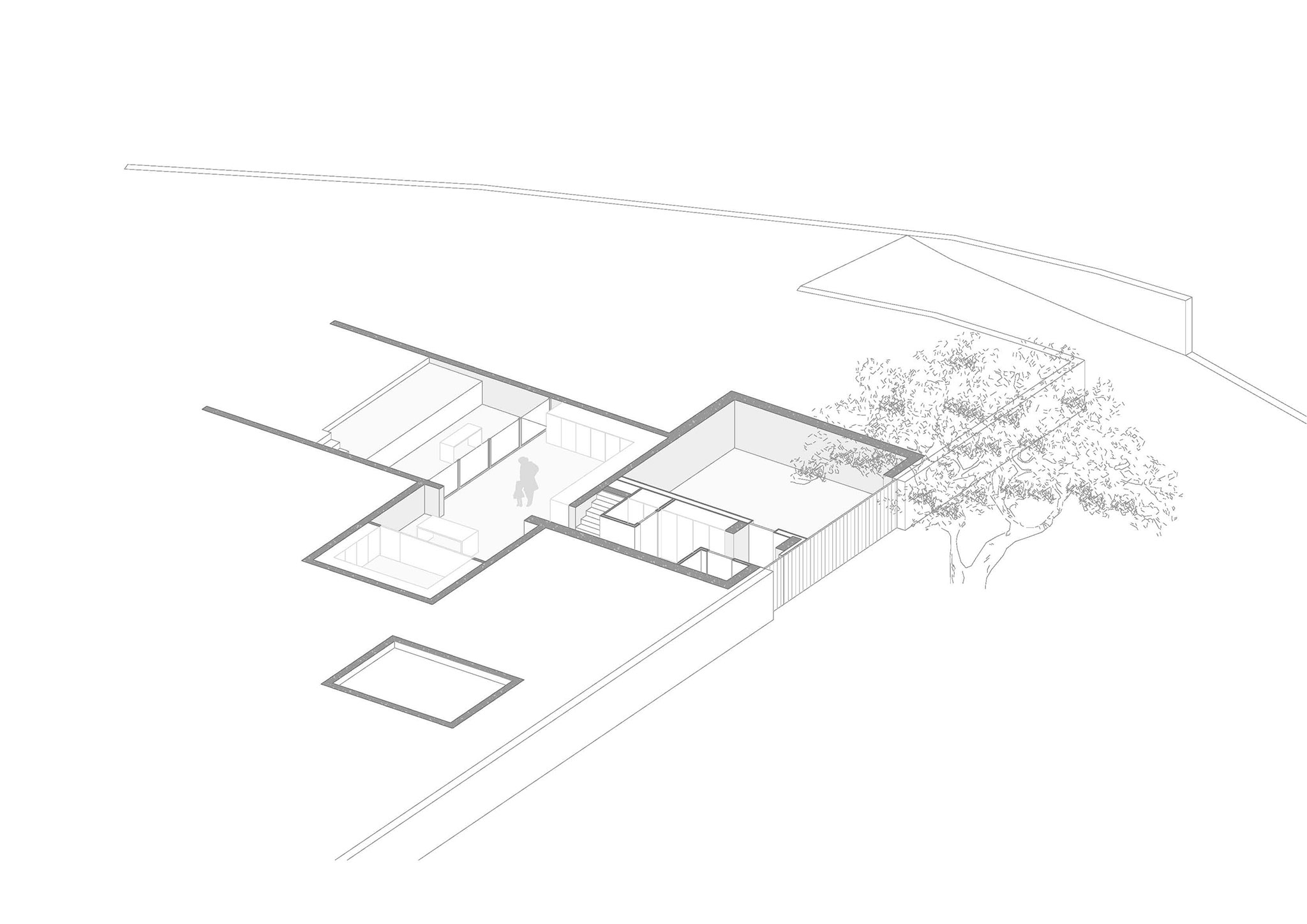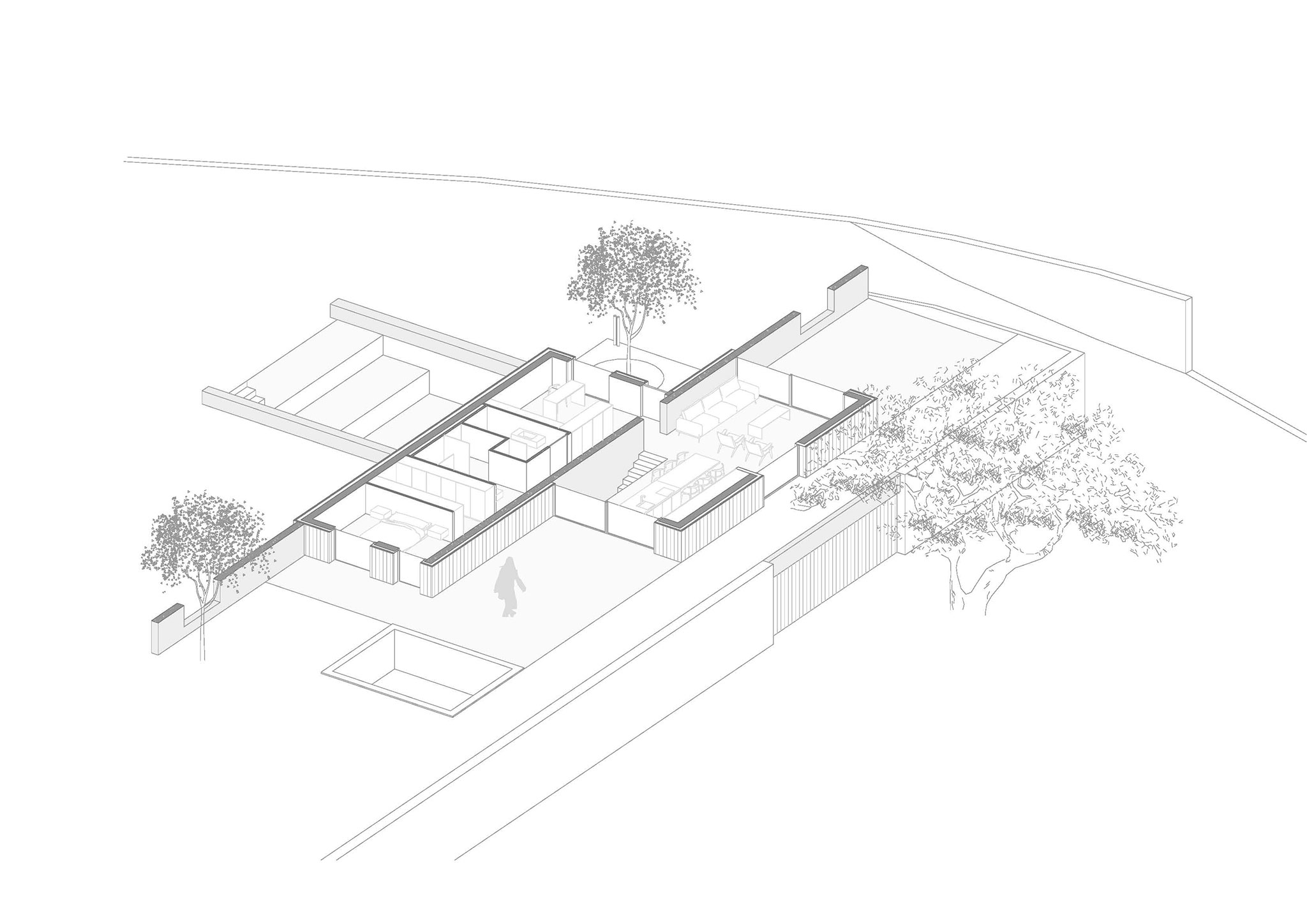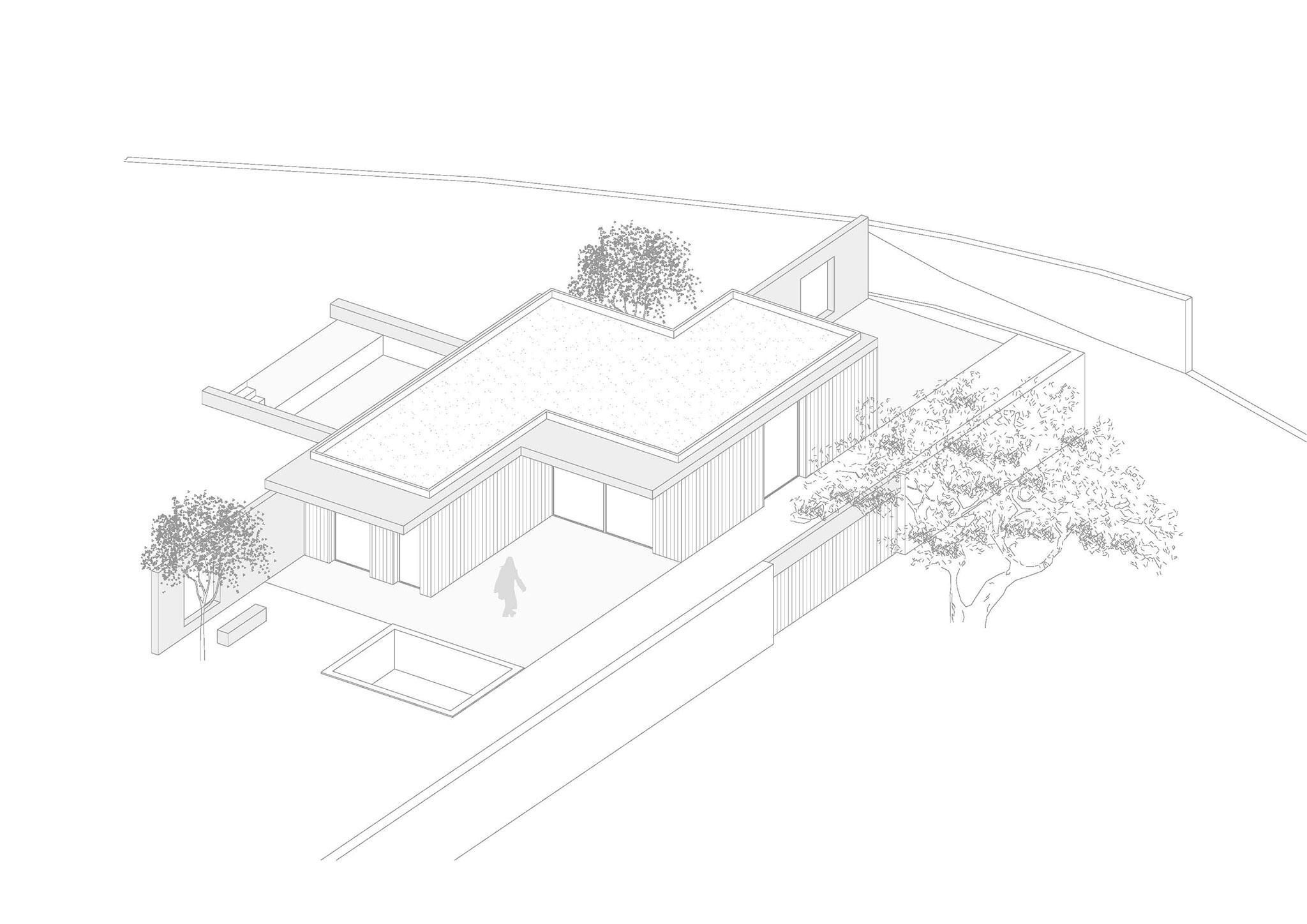
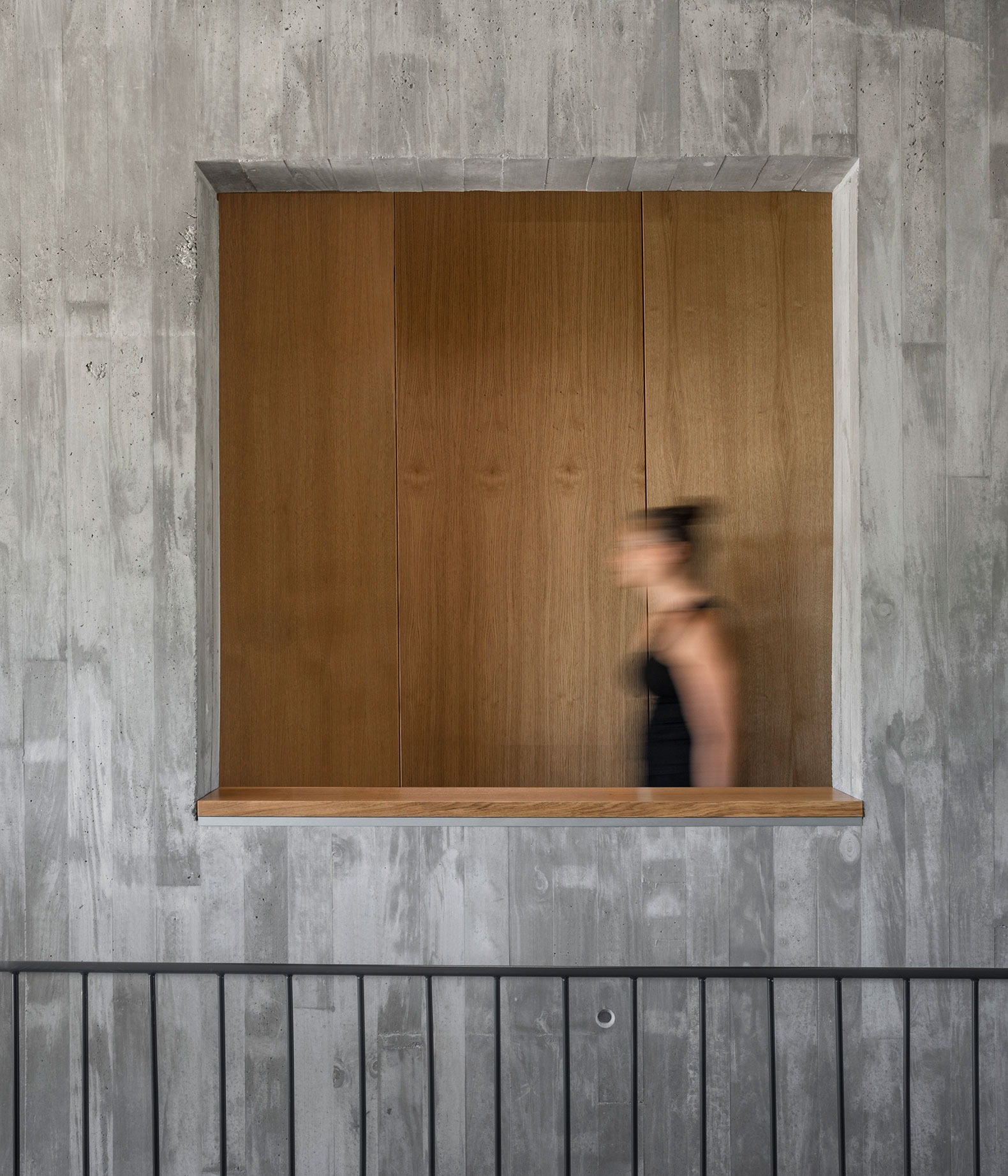
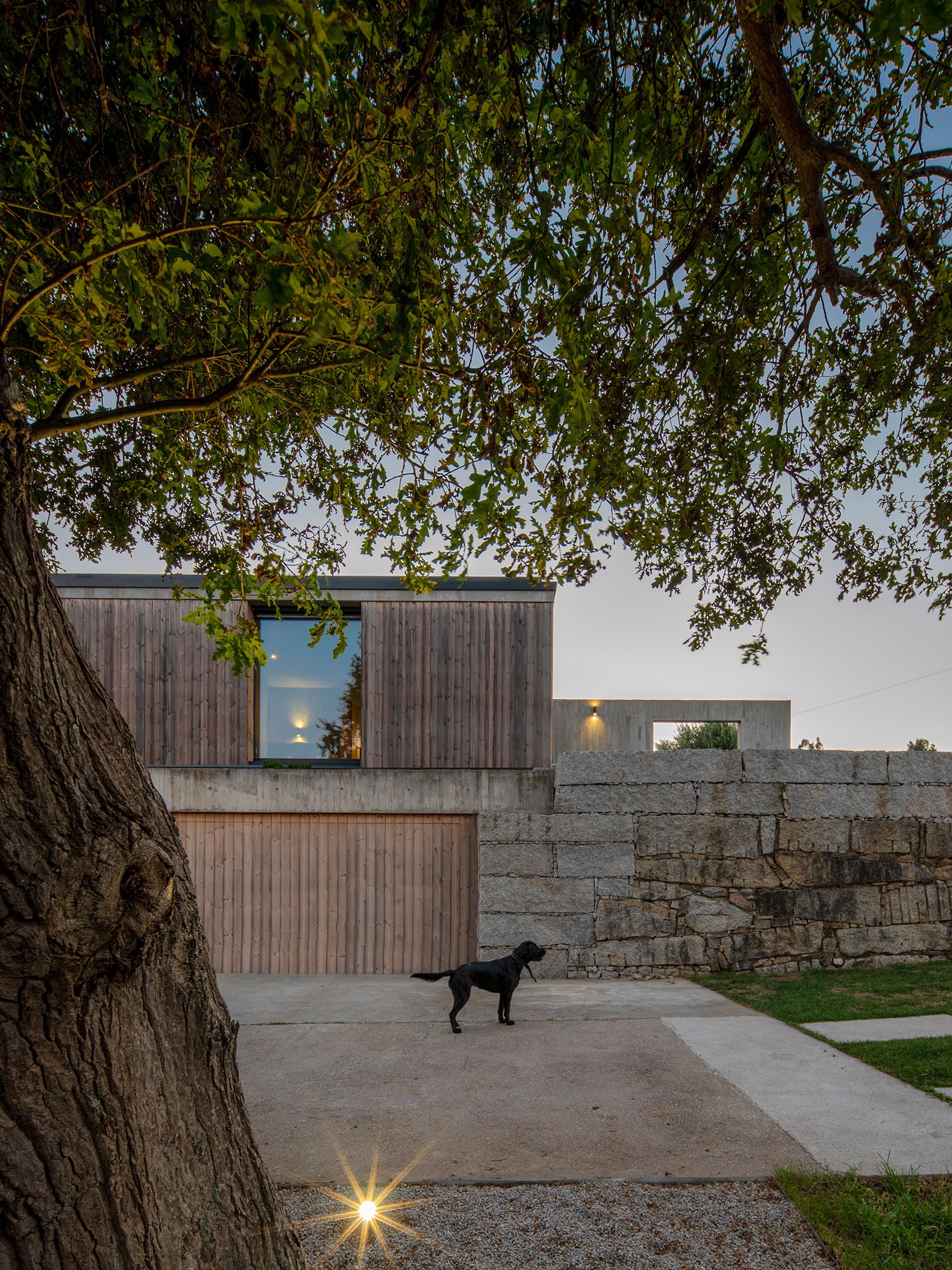
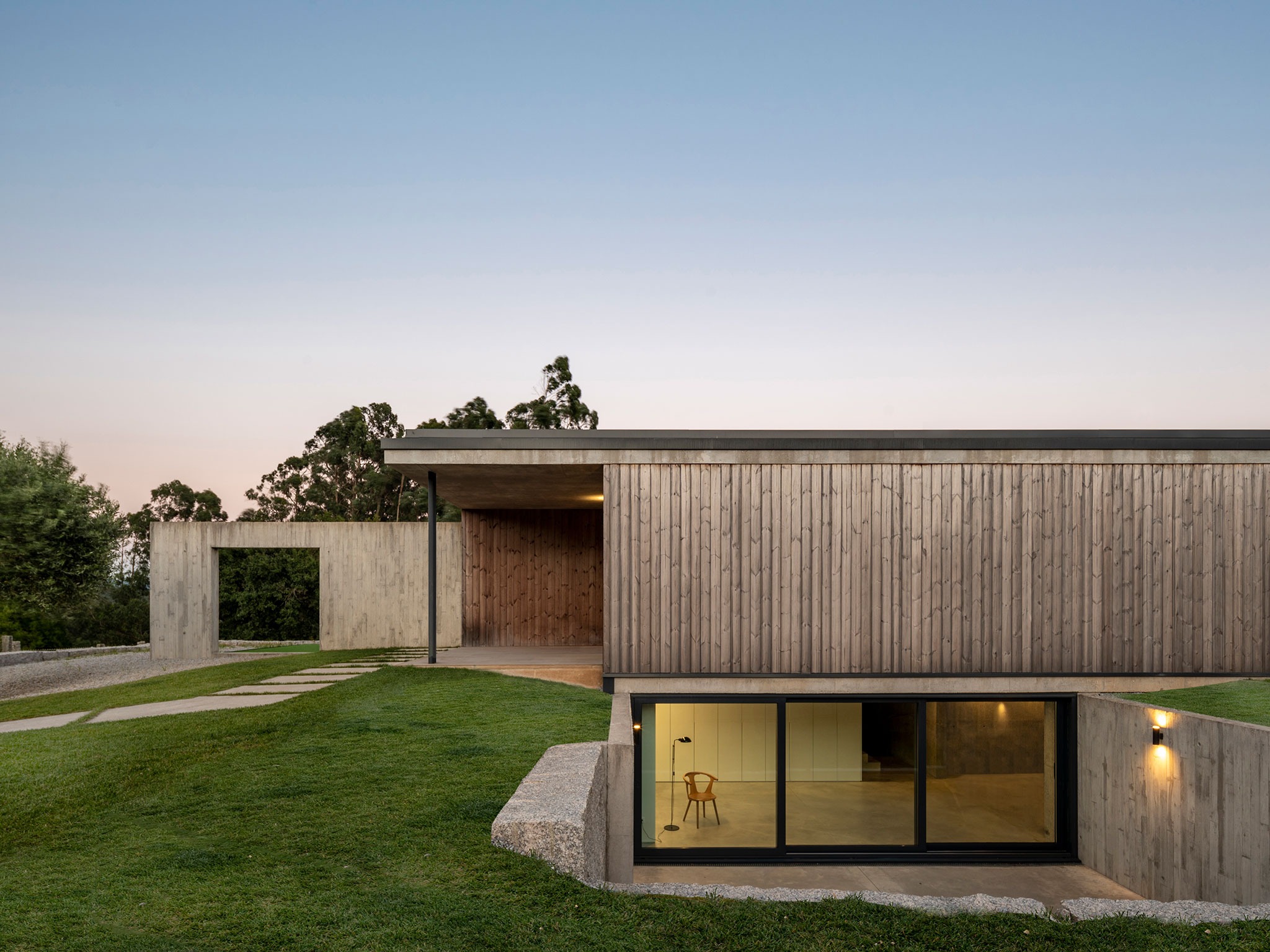
“Casa Saiar,” designed by Castroferro Arquitectura, articulates the two original levels of the slope using a connecting element. To allow vehicular and pedestrian access, a void is created with an exposed concrete lintel by removing a section of the granite wall. The basement floor houses the garage, a social area, and a wine cellar. The upper level is organized around two walls that create two spaces: one for the office and bedroom, and another for the living room and kitchen.
For the construction of the house, materials were selected based on their accessibility as close as possible, such as Galician heat-treated pine, granite and aggregates from the local quarry, achieving an architecture integrated into the Galician landscape and adapted to the climate.
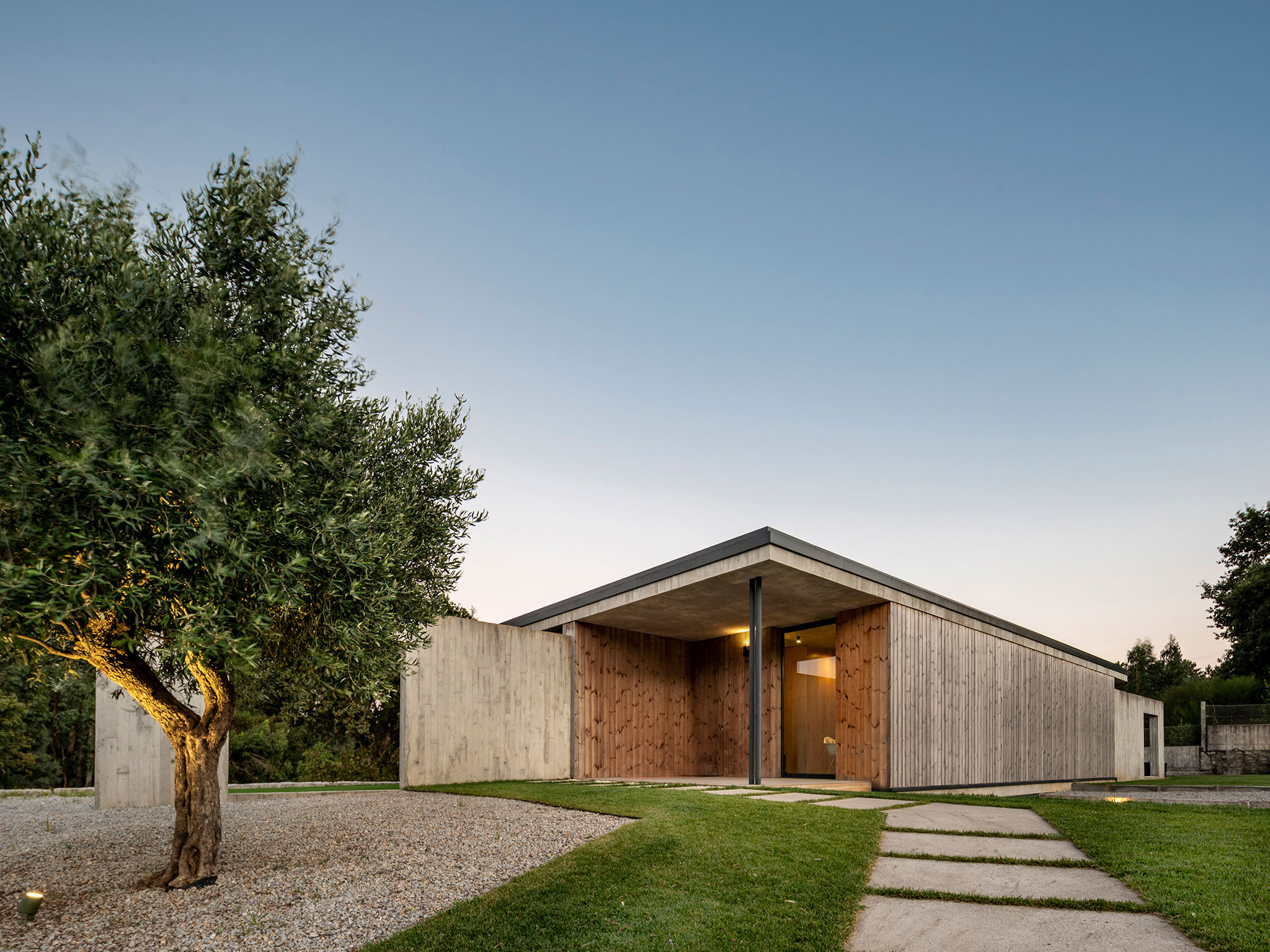
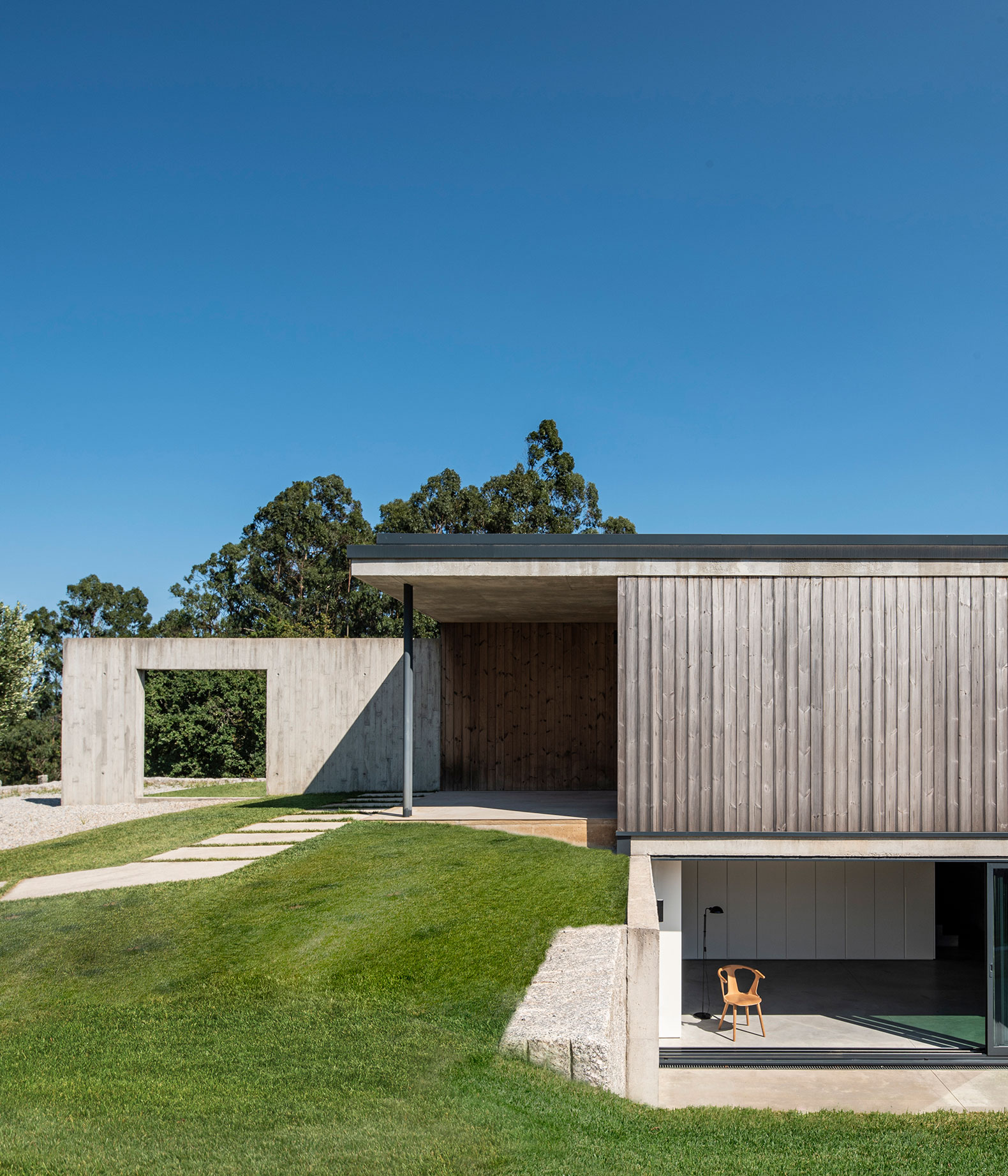
Saiar House by Castroferro Arquitectura. Photograph by Héctor Santos-Díez.
Project description by Castroferro Arquitectura
Casa Saiar, a single-family home located in the dispersed rural area of Caldas de Reis, addresses a central question in the current context: how to intervene in the rural environment from a contemporary perspective without disrupting its territorial logic.
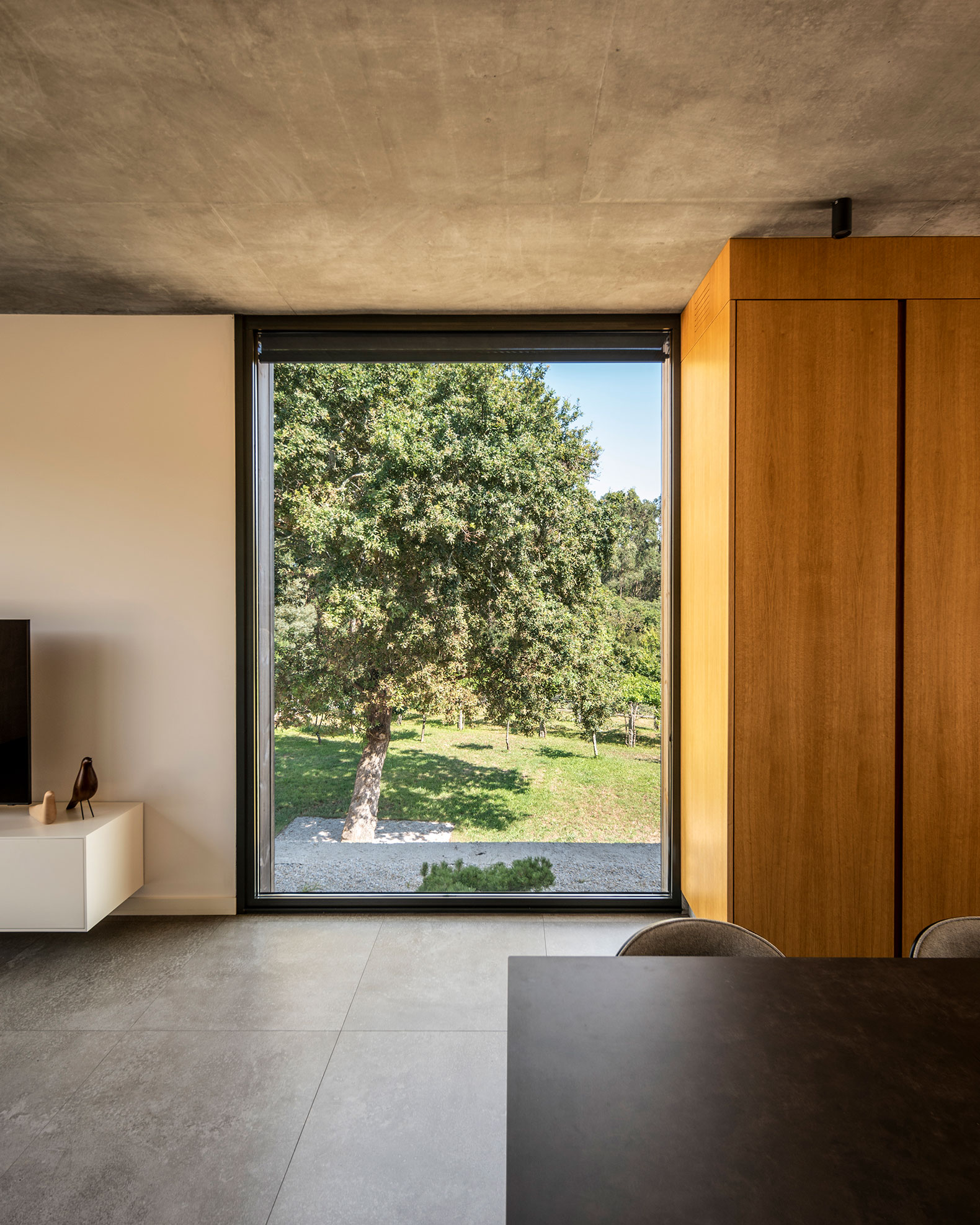
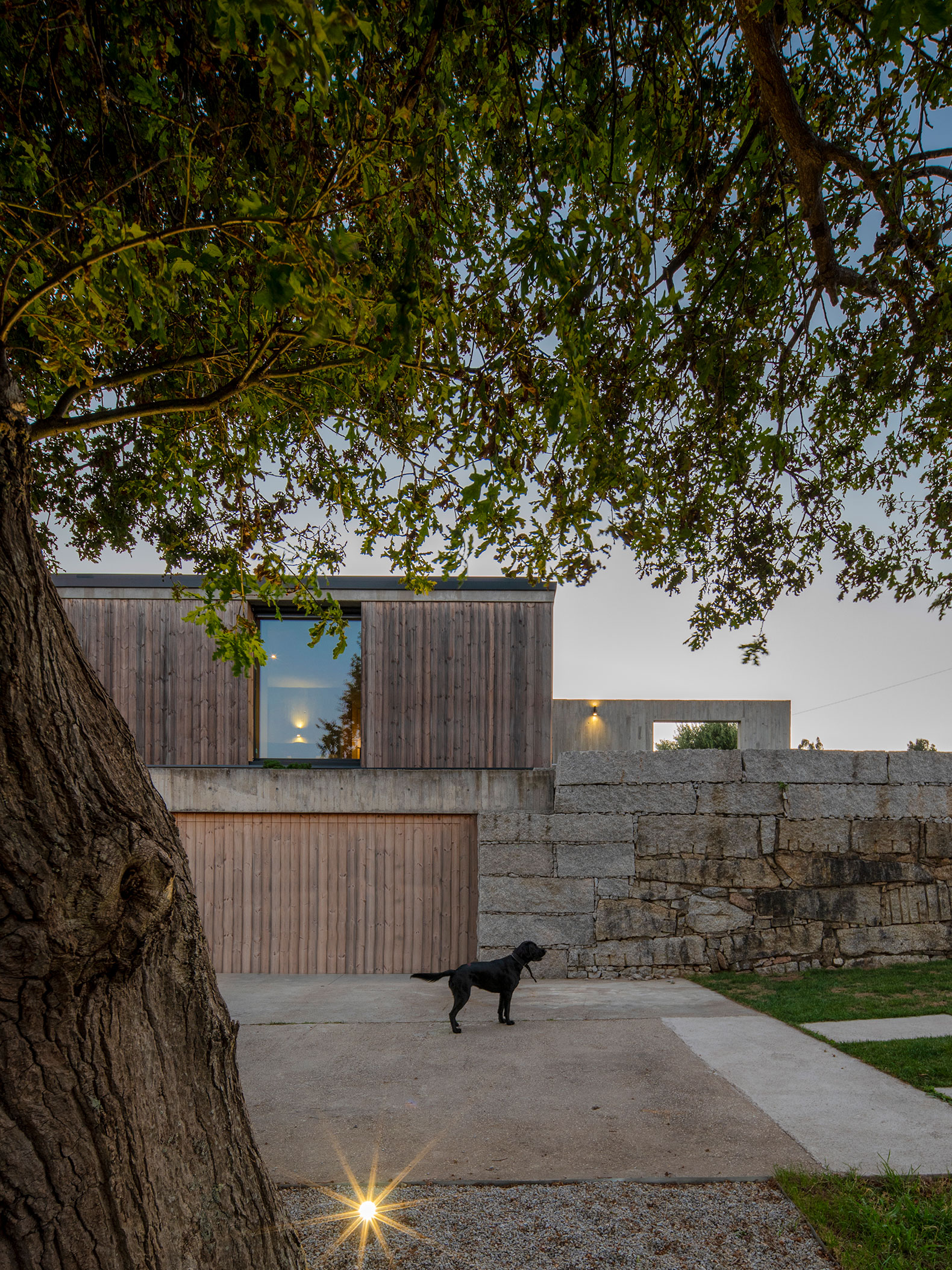
The plot, historically organized to make the slope productive, retains a granite terrace and an oak tree that serve as physical and spatial references. The project takes these elements as its starting point, incorporating them into the architectural and structural strategy of the house.
Architecture as a connector between levels
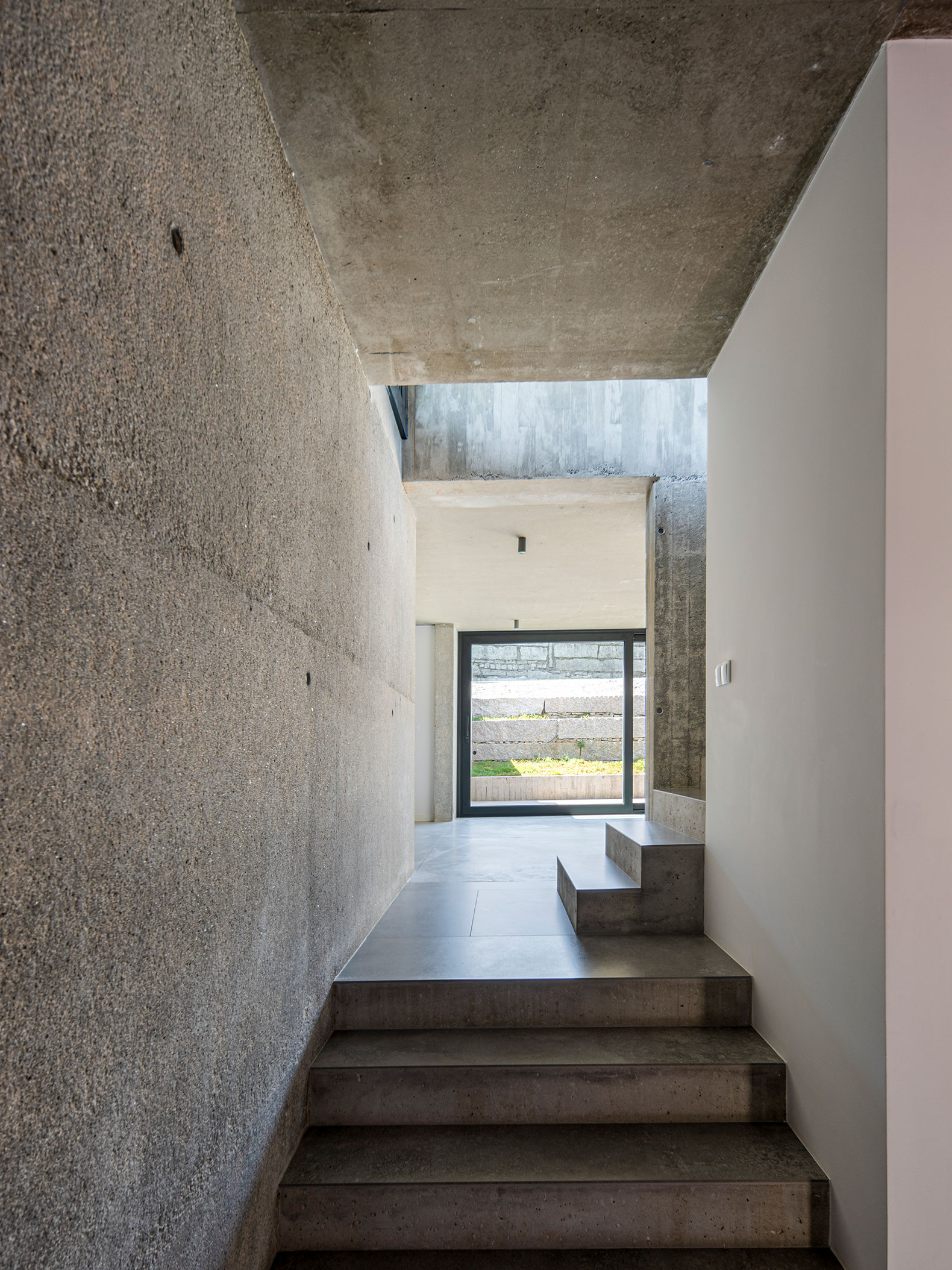
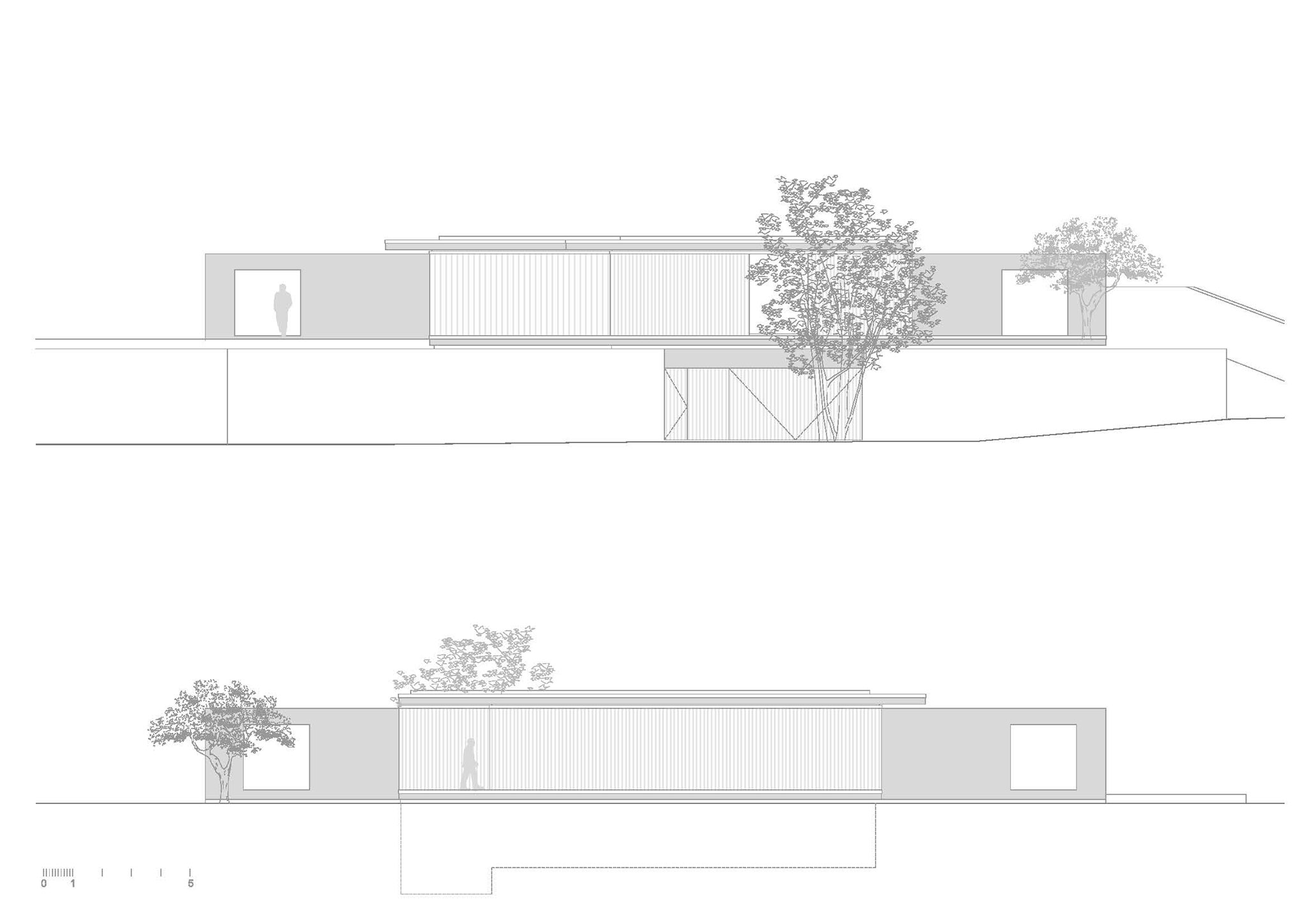
The intervention articulates the two original levels of the site through a connecting element. A section of the granite wall is removed to allow vehicular and pedestrian access, resolving the void with an exposed concrete lintel that restores the structural continuity of the whole.
The lower level houses the garage, the pedestrian entrance, and a social space linked to a wine cellar, in keeping with the area's winemaking tradition. This space opens onto a sheltered courtyard that introduces natural light and extends the use of the interior into a protected, domestic-scale outdoor area.
Two walls that structure domestic life
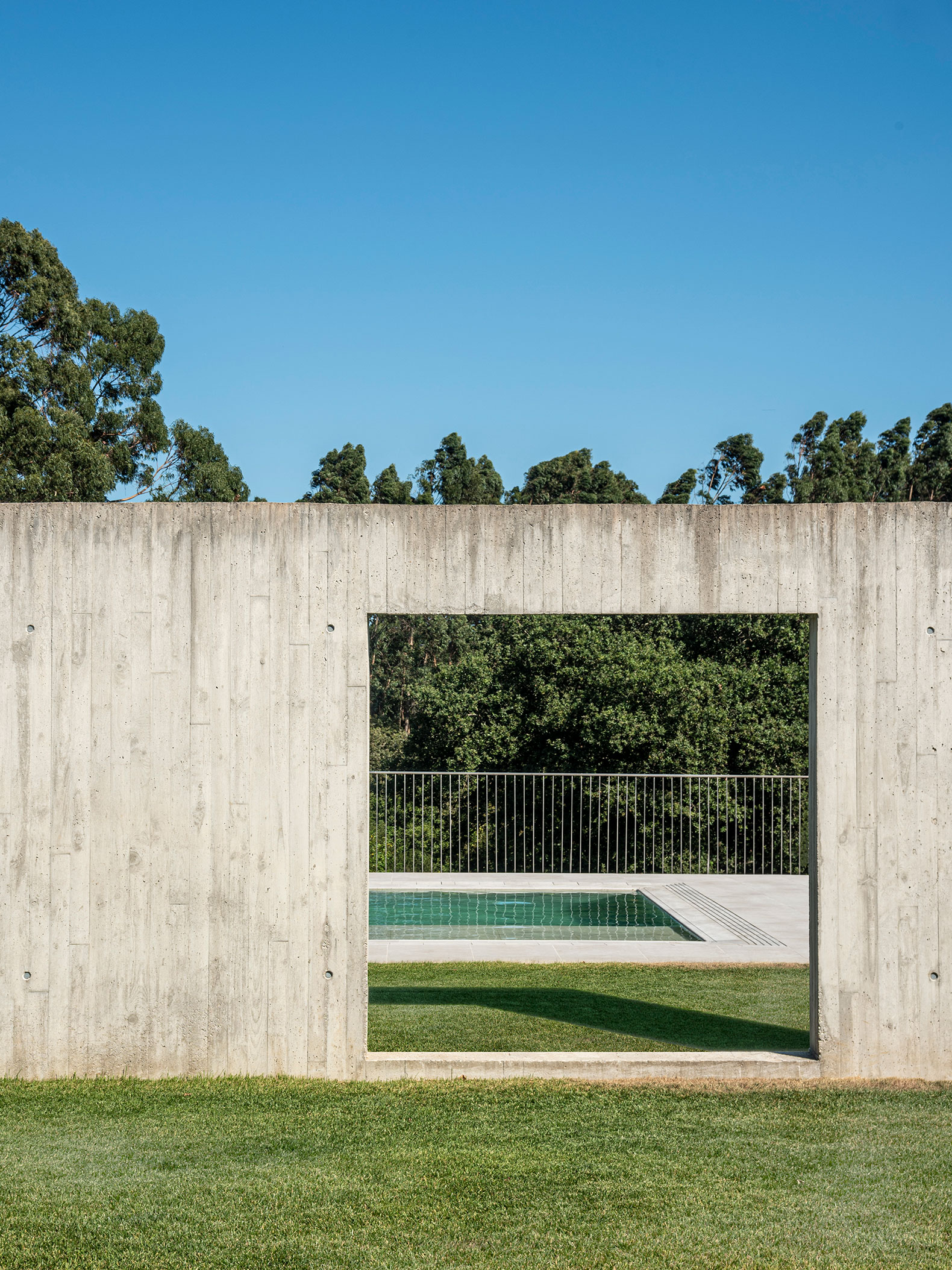
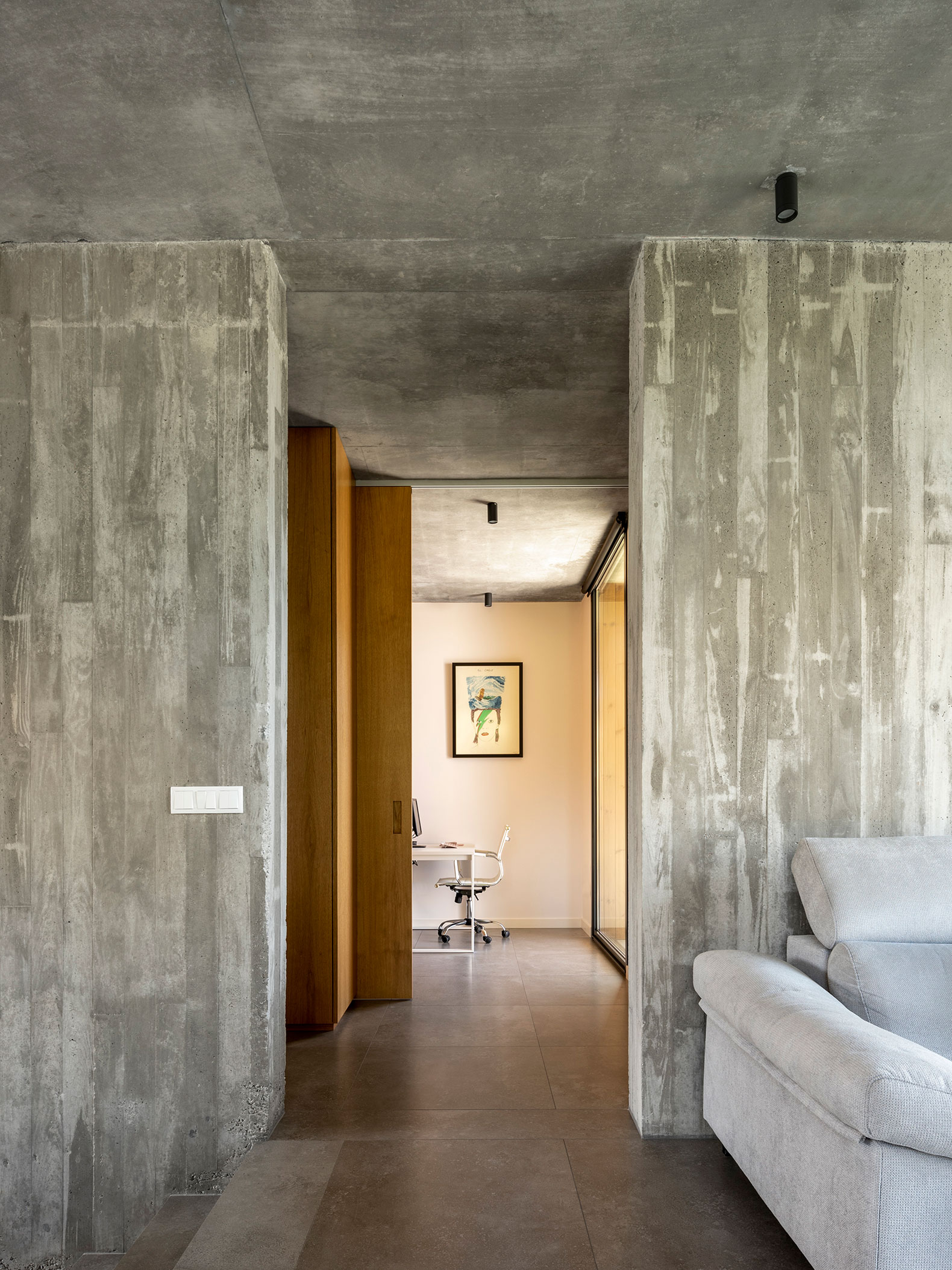
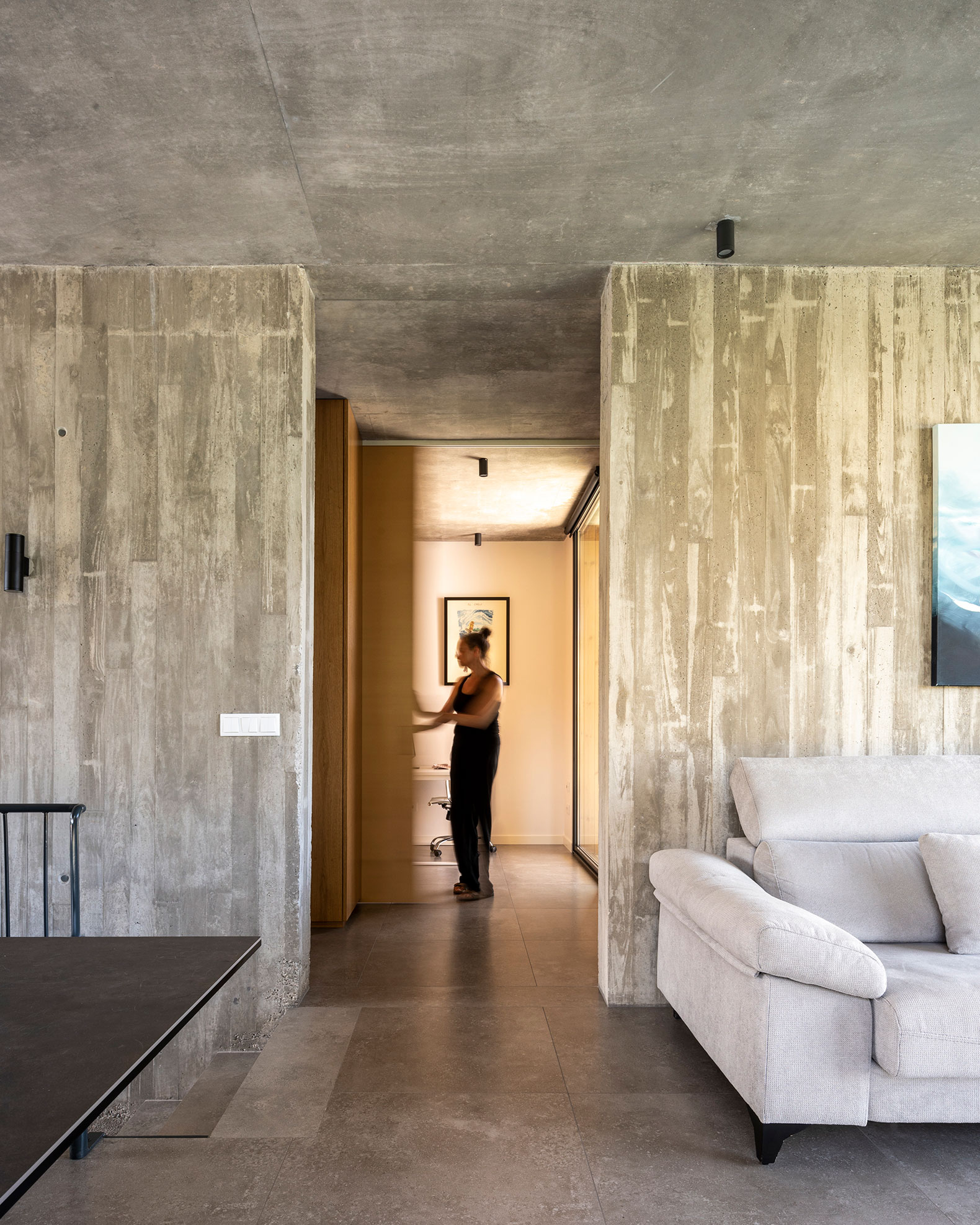
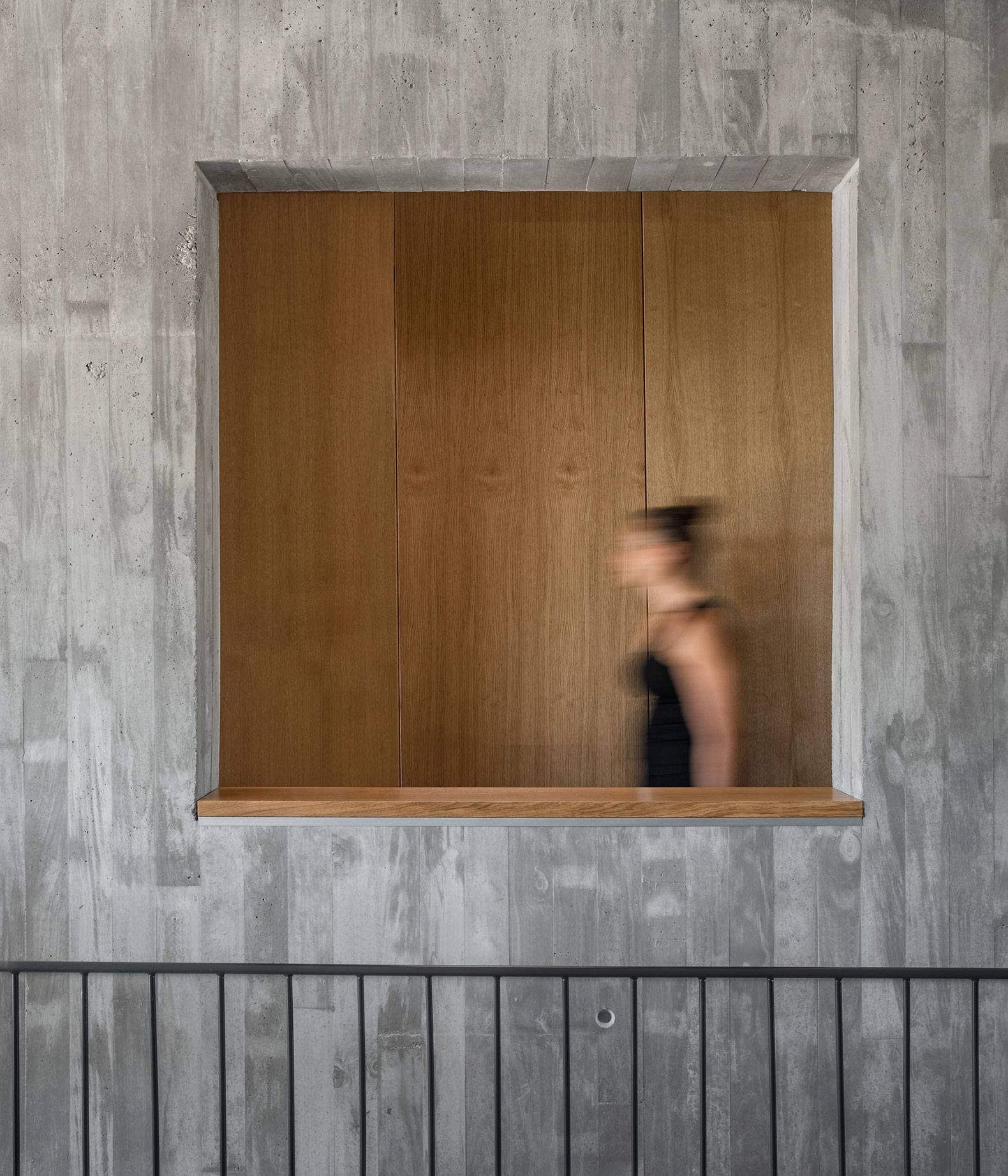
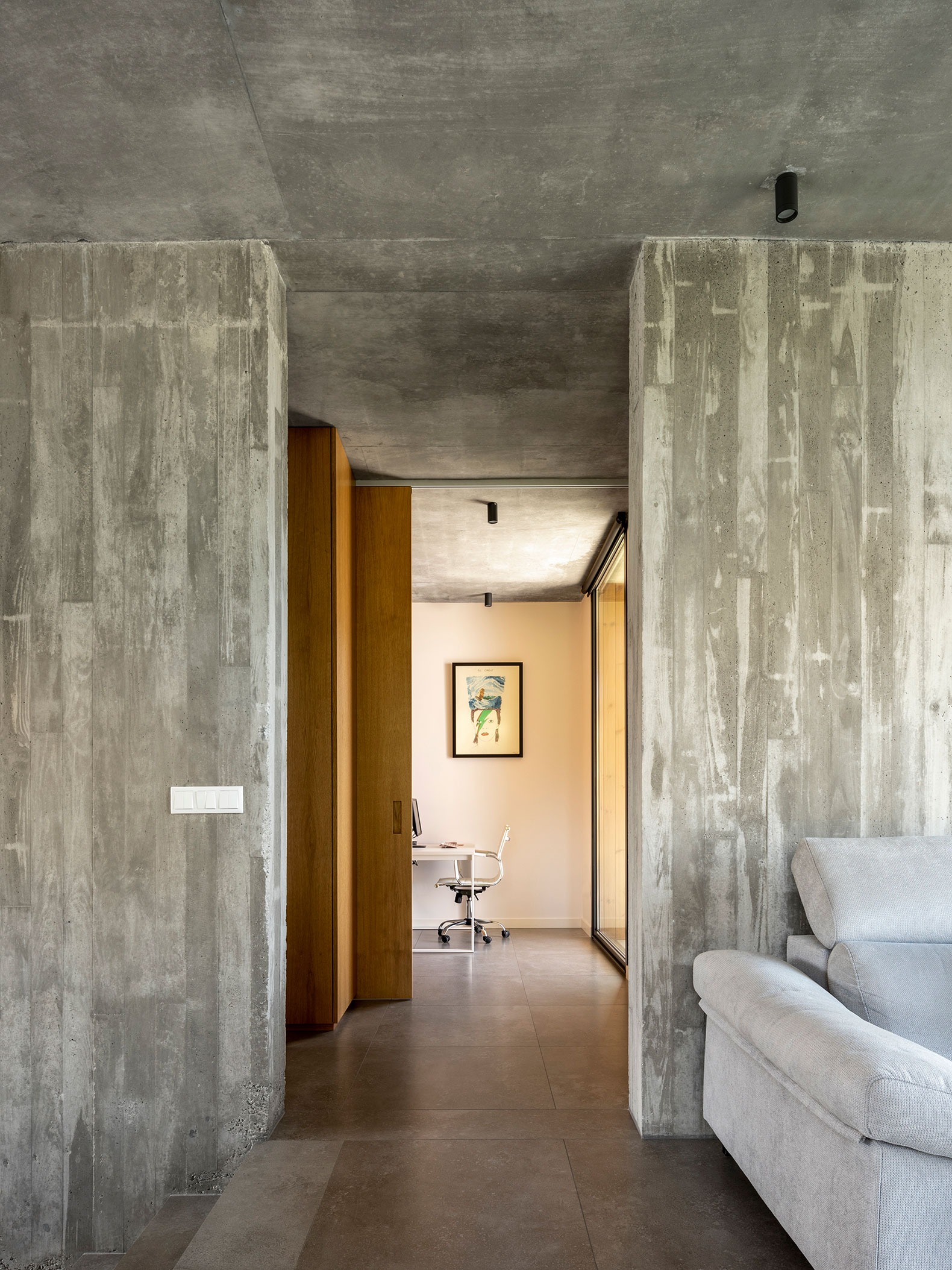
The upper floor is organized around two parallel exposed concrete walls that fragment the volume and adjust its scale to the dimensions of the traditional bays of the Galician rural landscape.
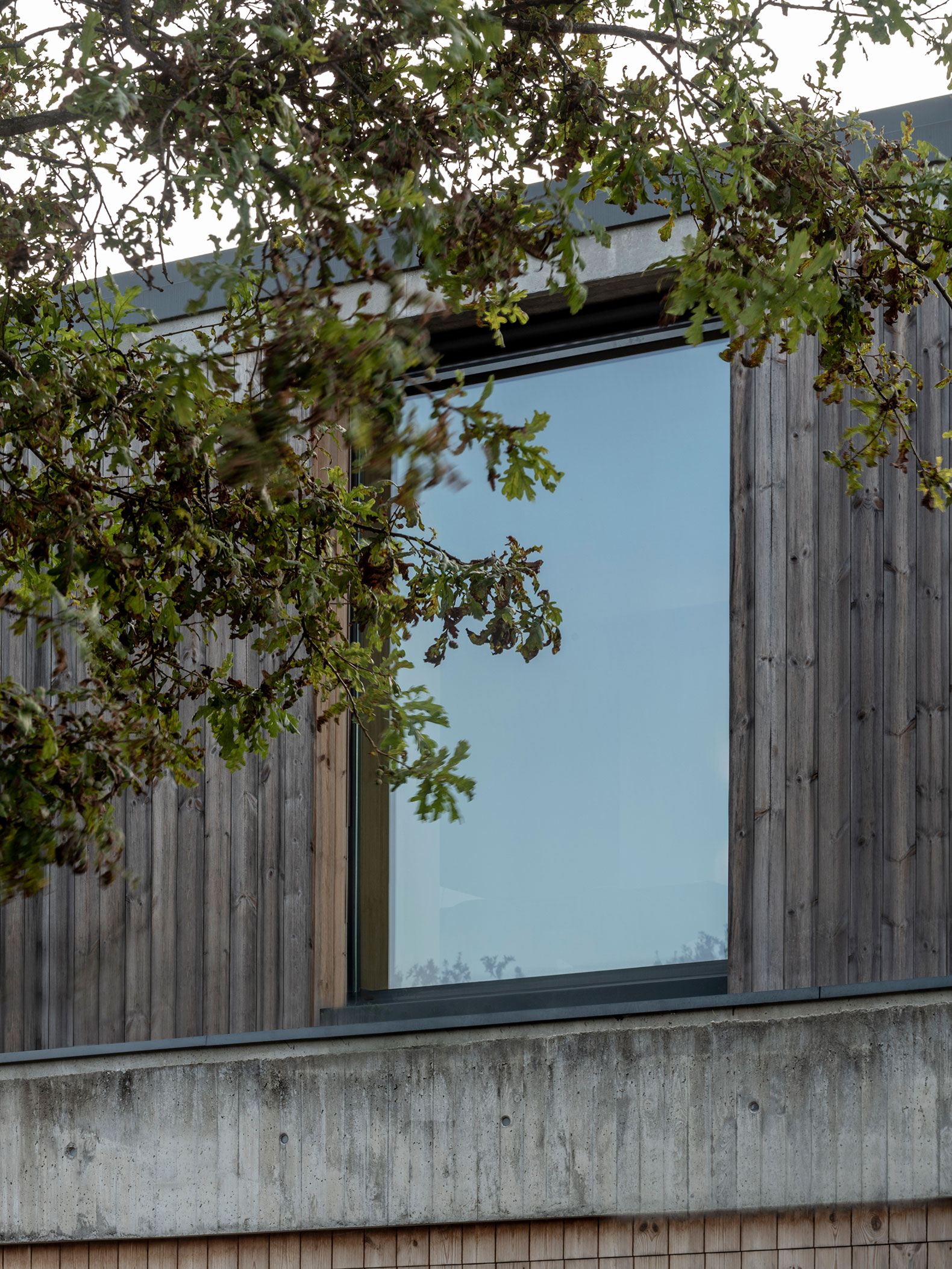
These walls create two offset volumes: one houses the entrance porch, the office, and the bedroom; the other is dedicated to an open-plan living area. The connection between the two is made through a passageway aligned with a large front window that positions the oak tree as a constant reference point for interior circulation.
The extension of the walls outwards defines small sheltered areas associated with the main rooms, reinforcing the continuity between interior and landscape.
Materiality and climate adaptation
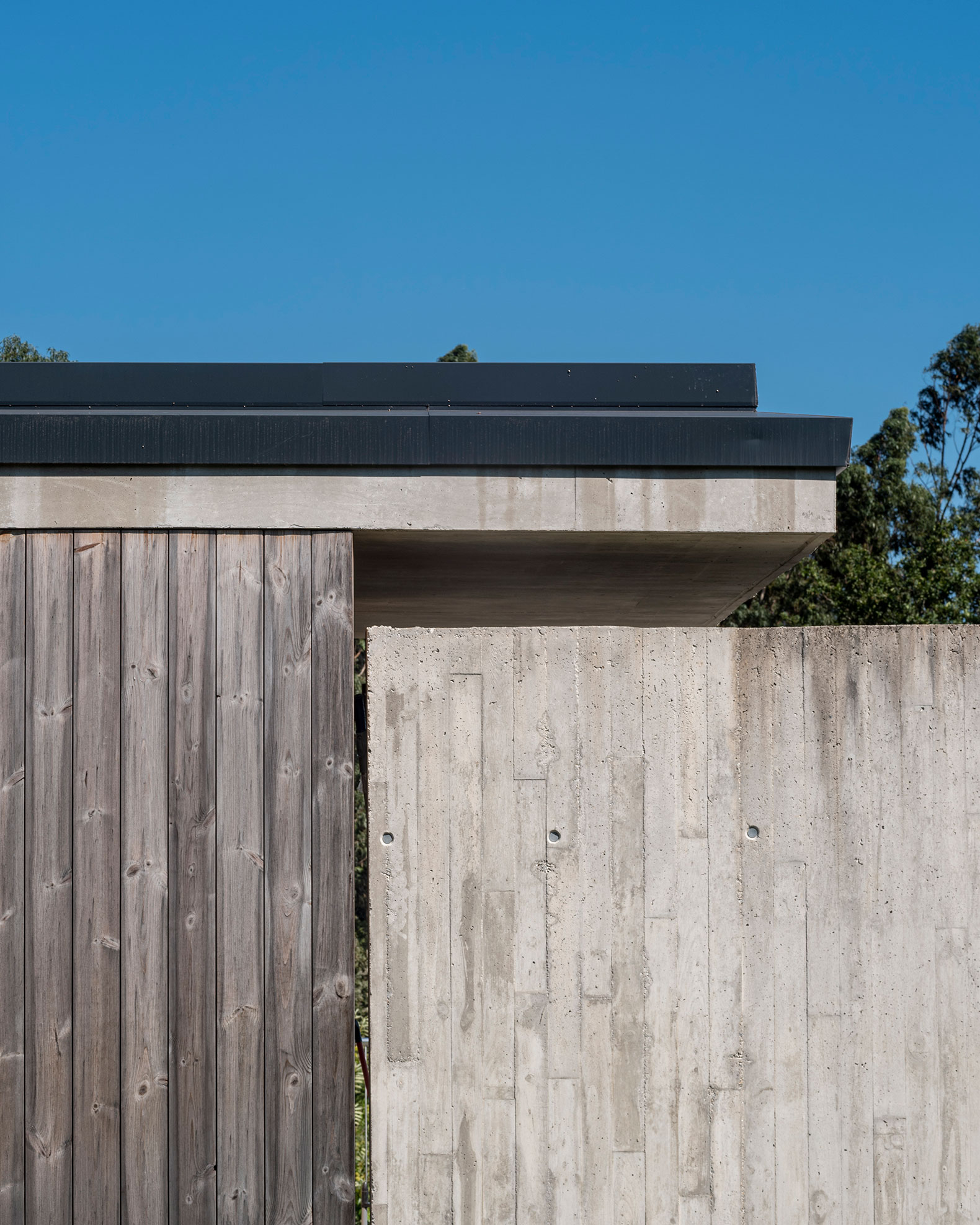
The material selection responds to criteria of proximity and constructive coherence. The exposed concrete establishes a direct dialogue with the existing granite; The ventilated façade of heat-treated pine protects the living areas and provides adequate protection against humidity and Atlantic rain.
Aggregates from the local gravel pit reinforce the material continuity with the surrounding landscape. The house embraces aging as part of the design, gradually integrating into the Galician landscape.
A house for the new rural context
Casa Saiar responds to the needs of contemporary residents who work remotely and seek to balance concentration, domestic life, and a direct connection with the natural environment.
The project proposes an architecture where structure, topography, and use align, offering a precise response to the current transformations of the Galician countryside.