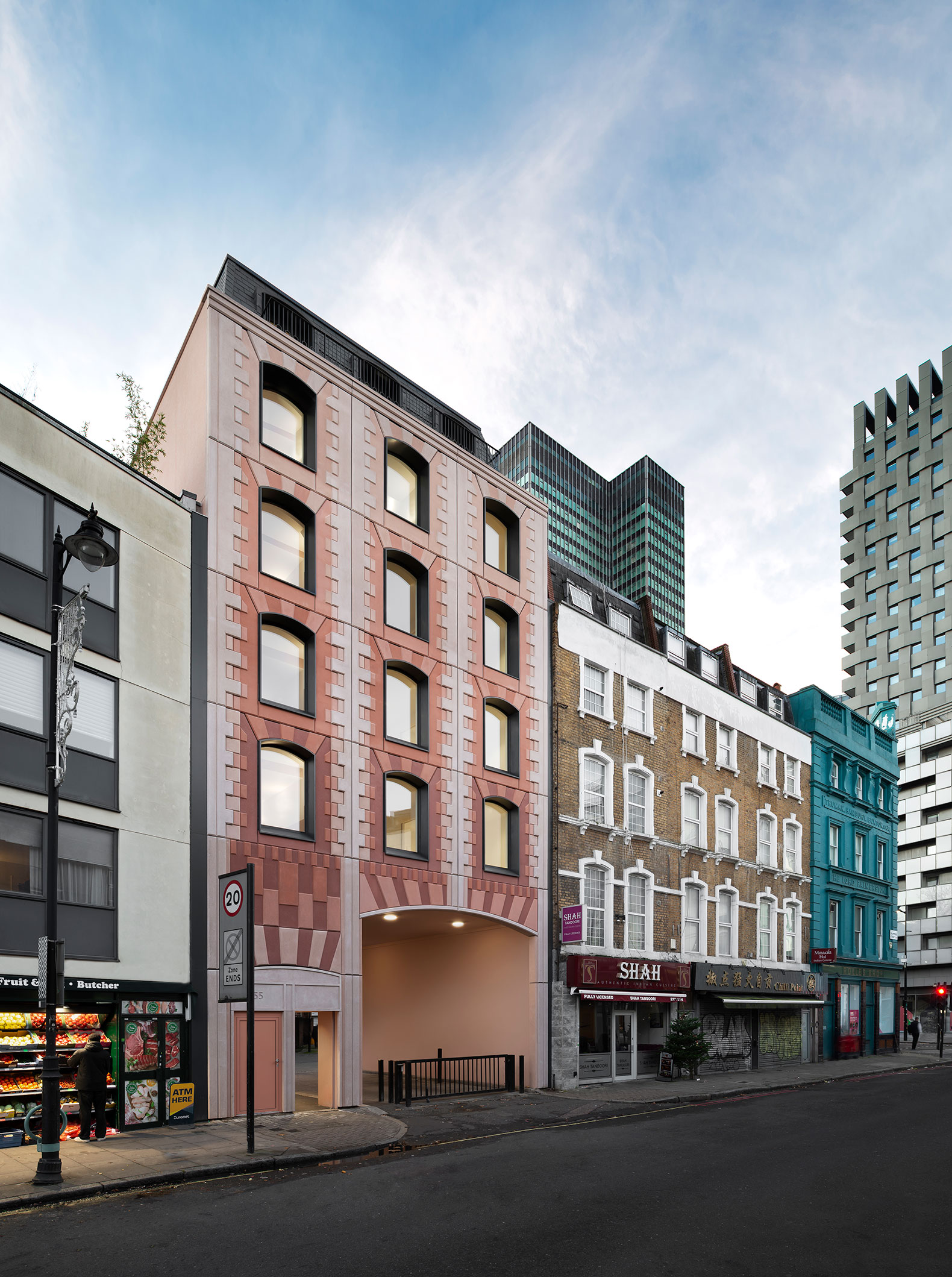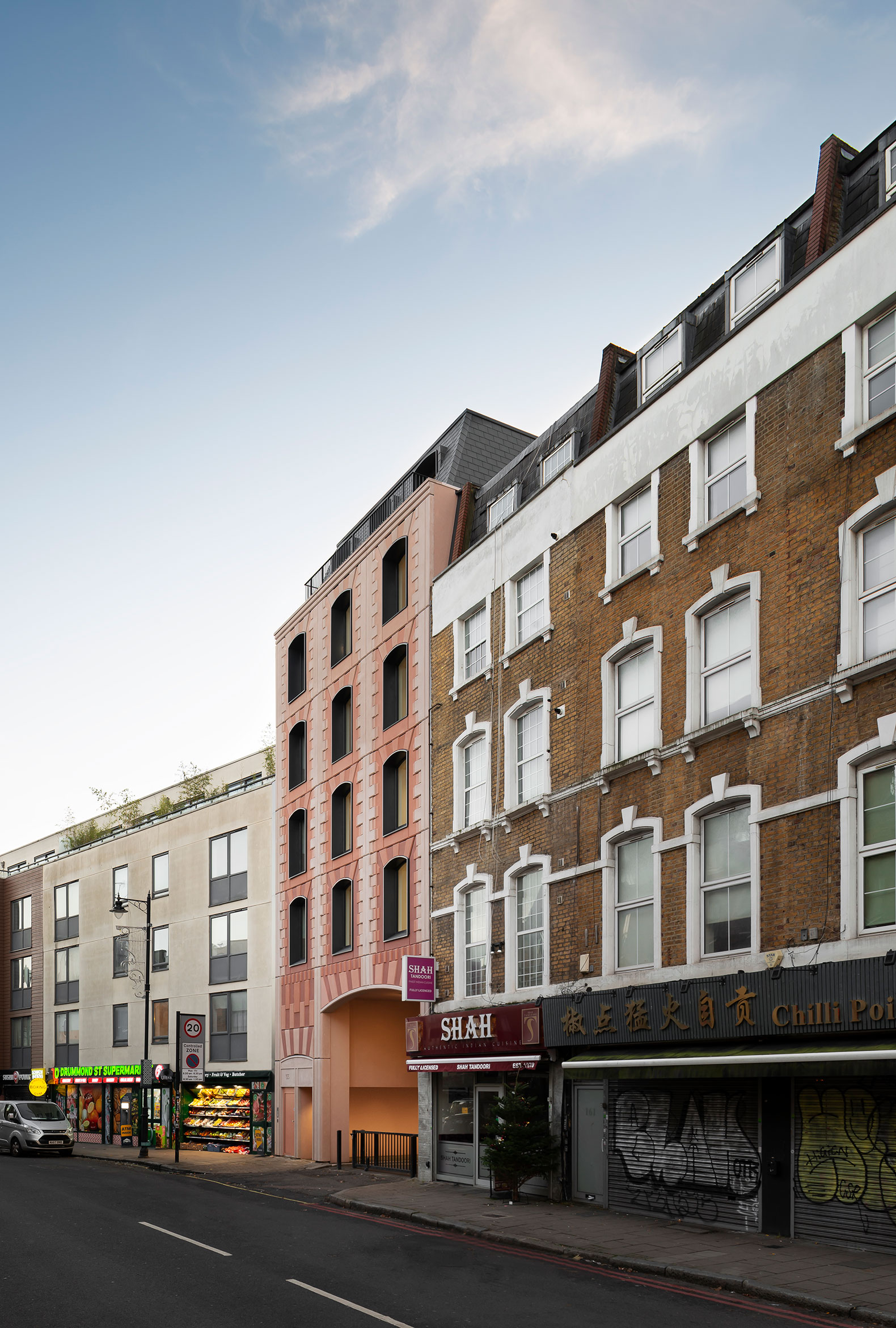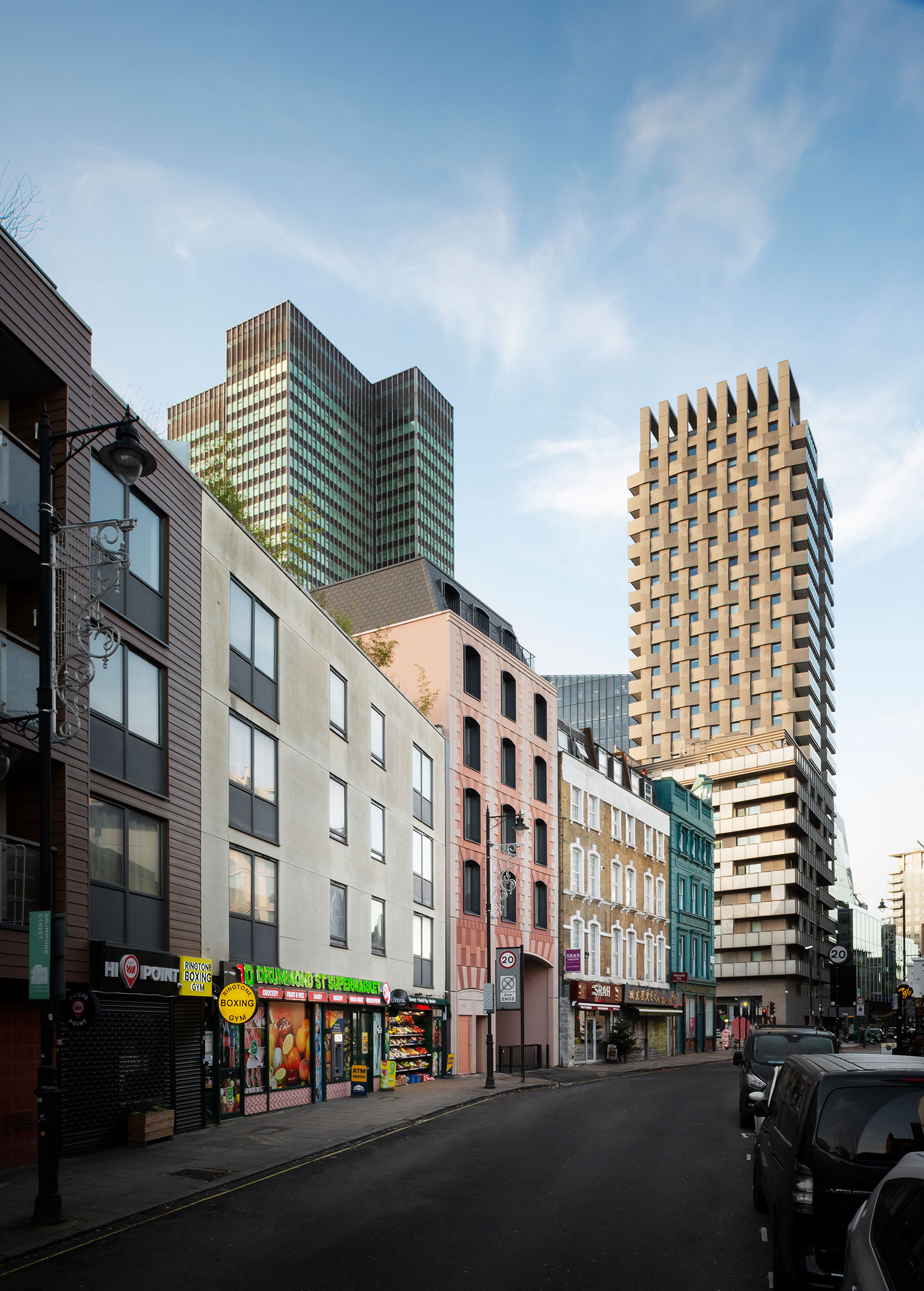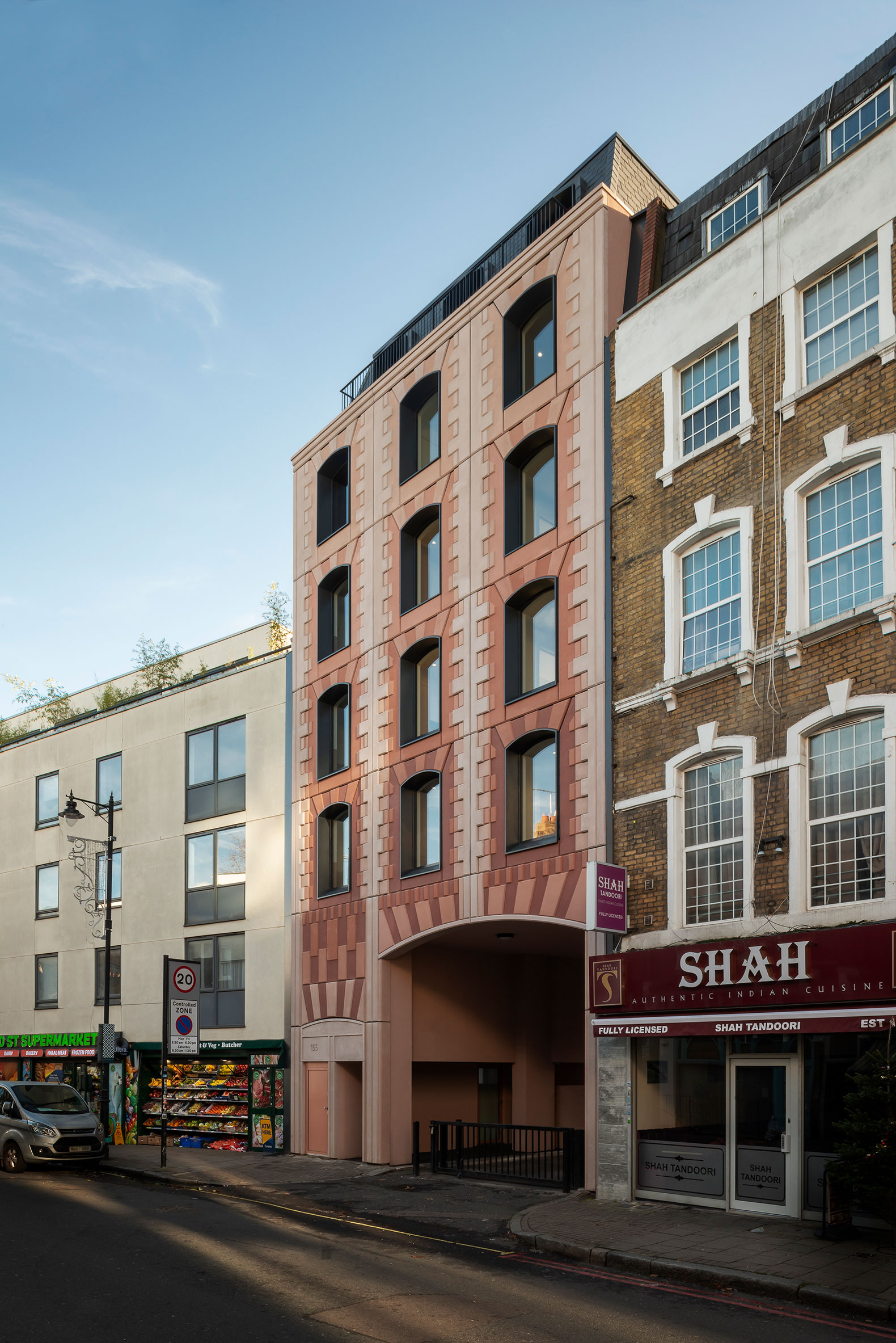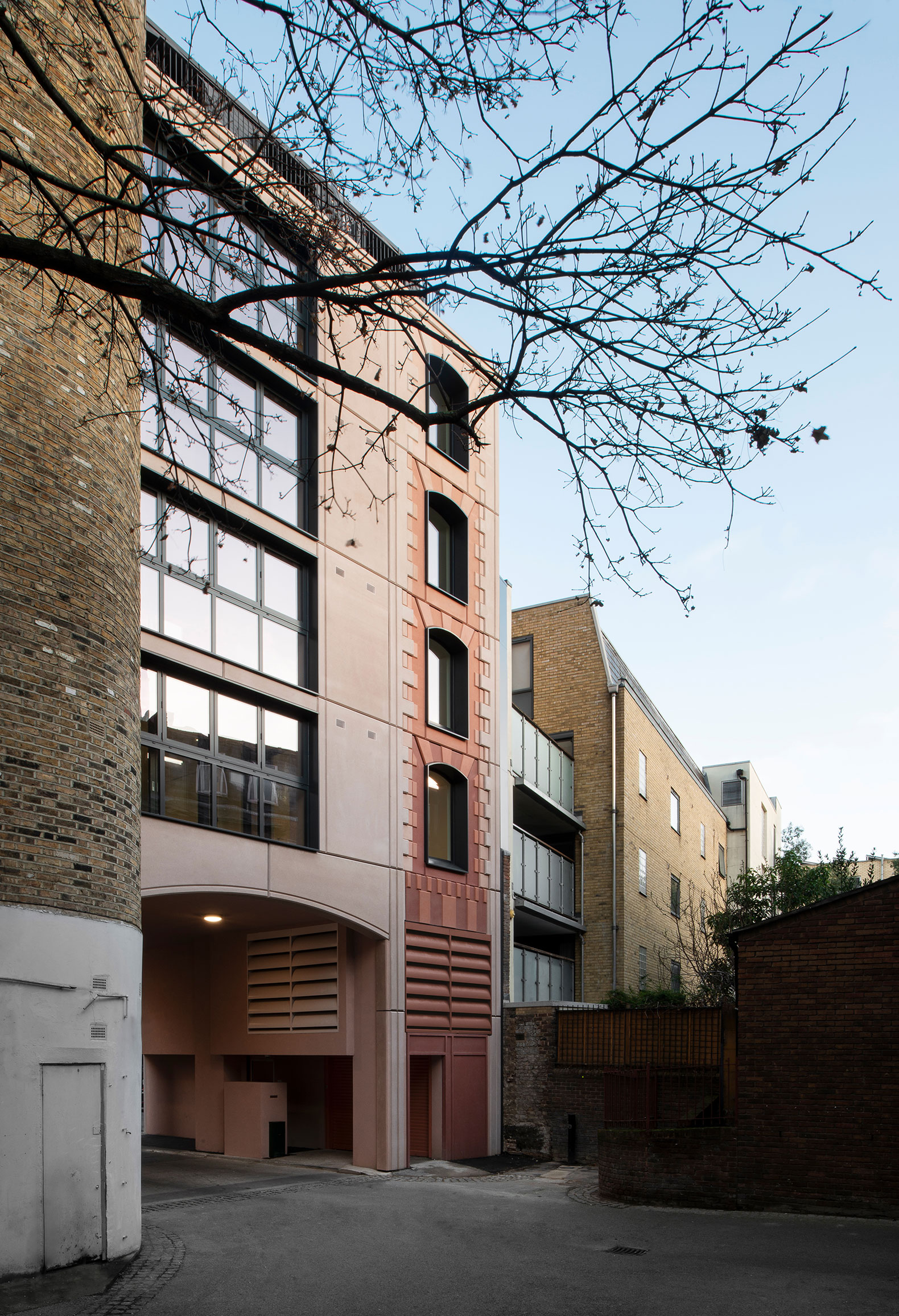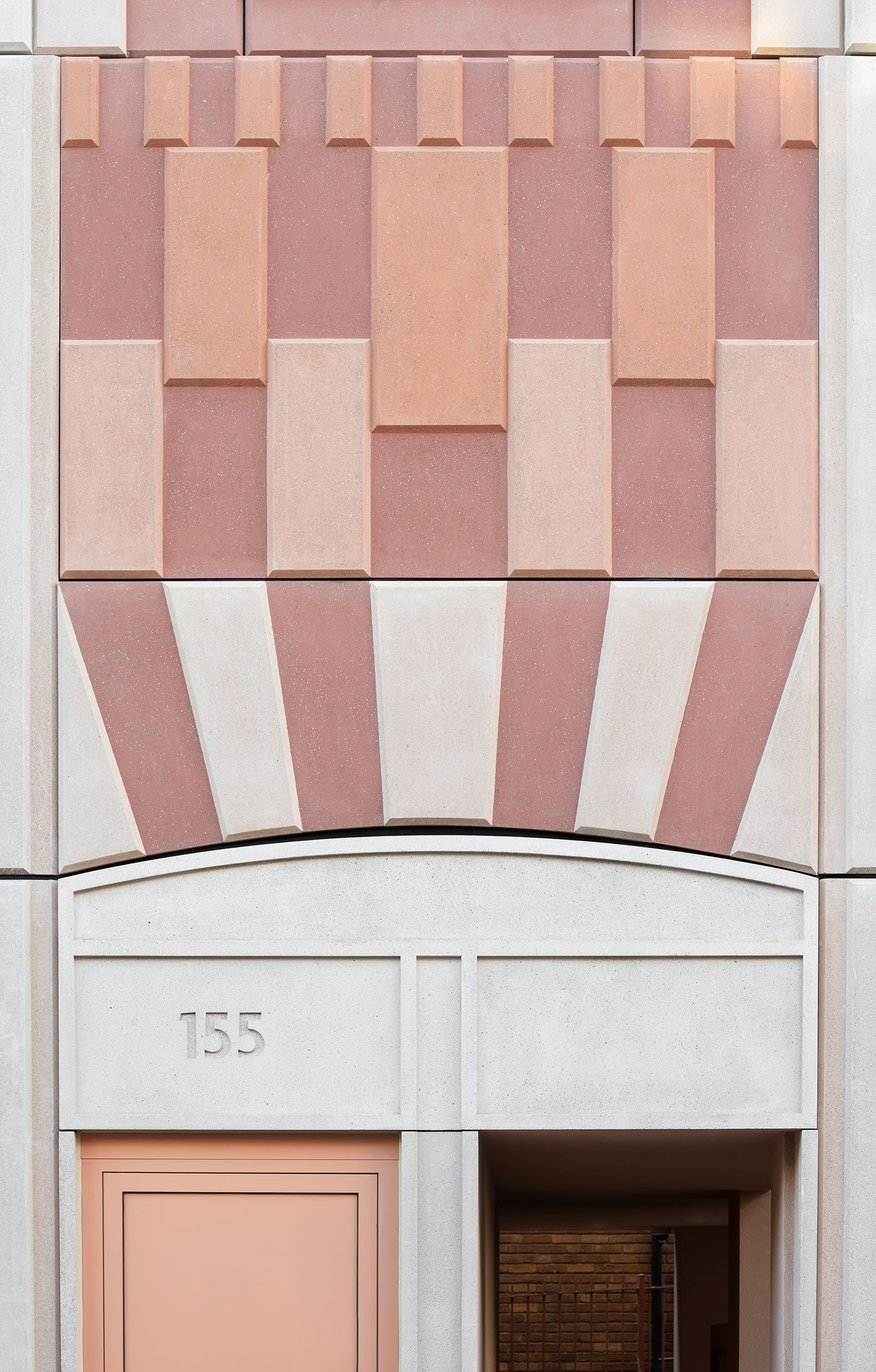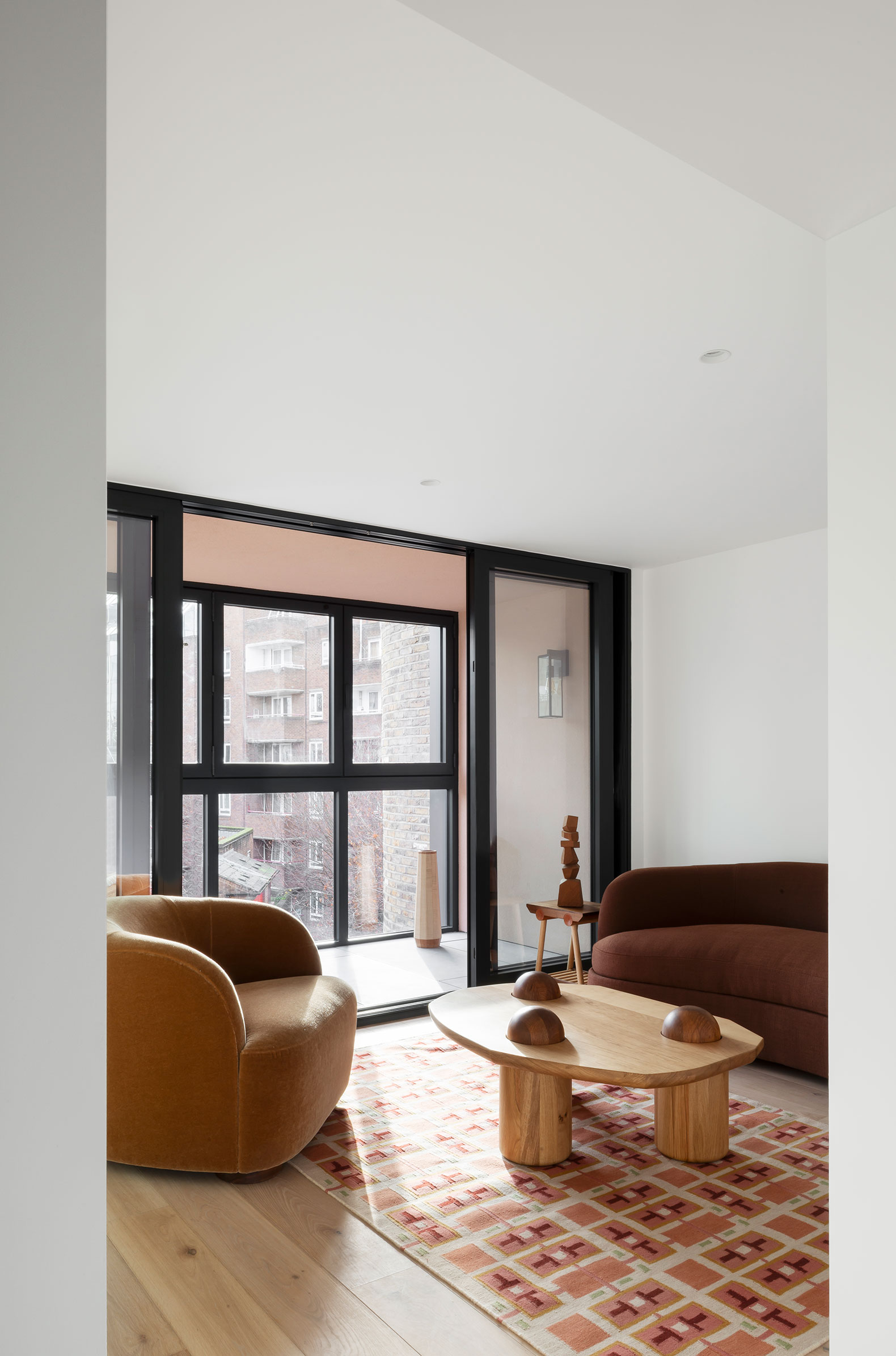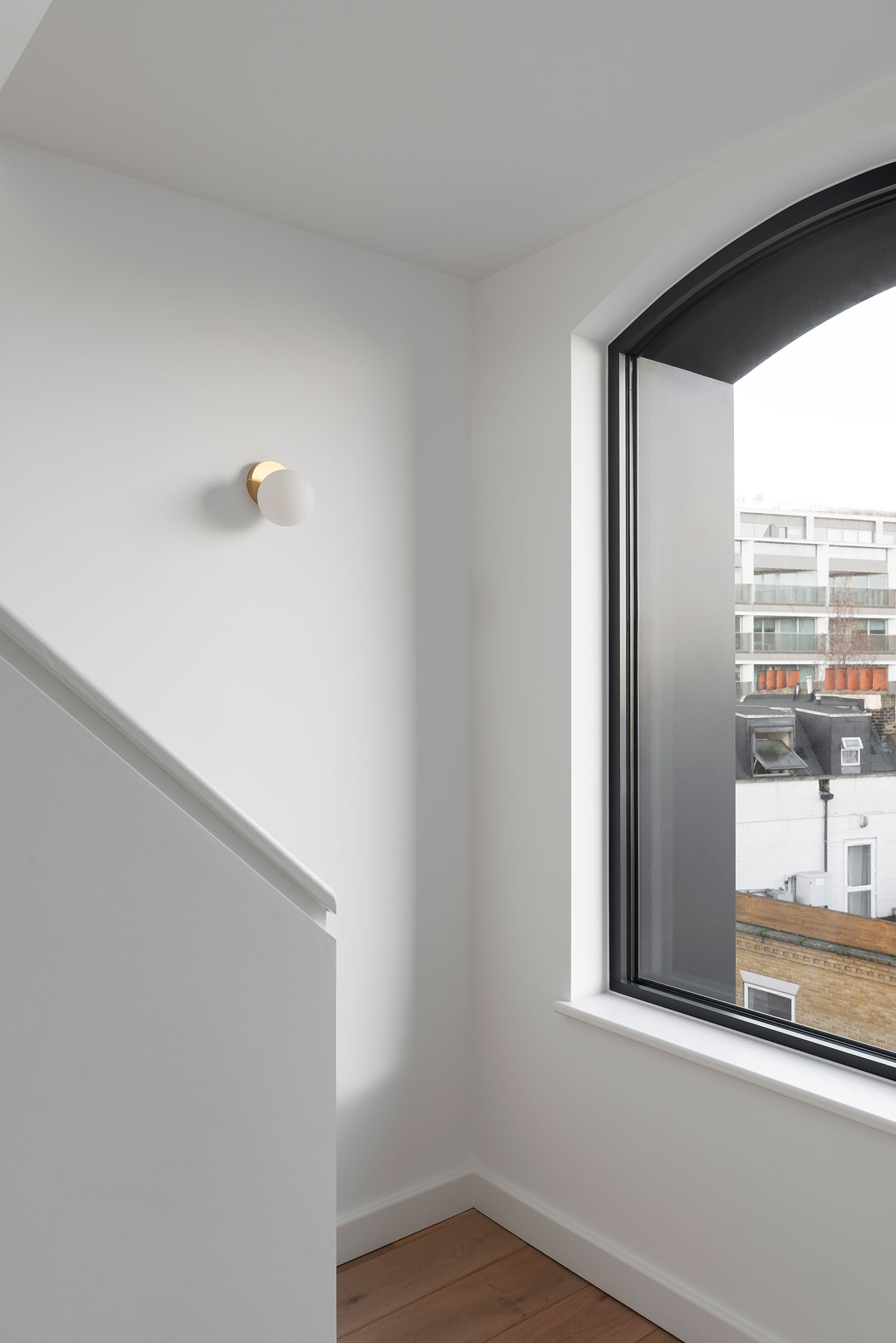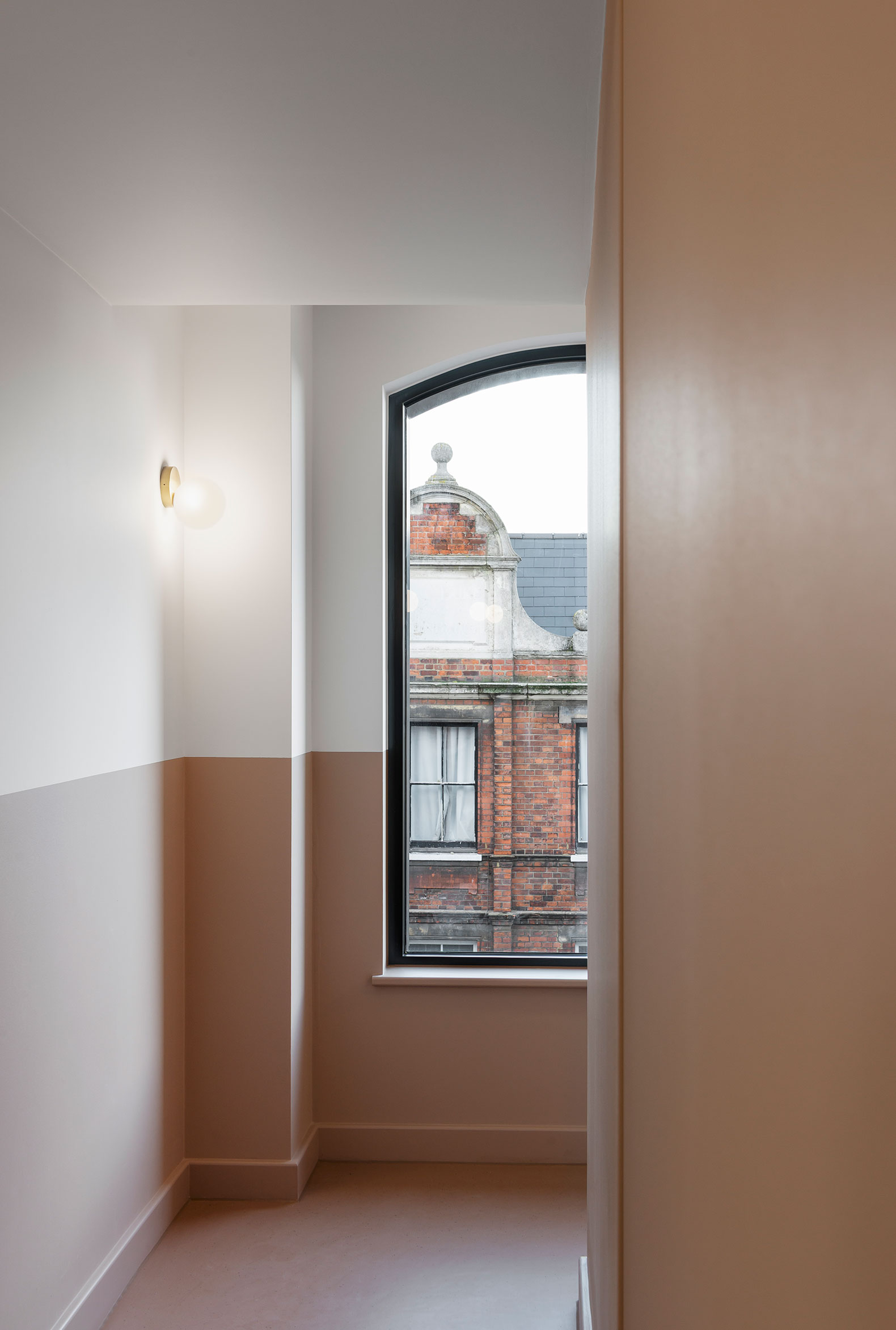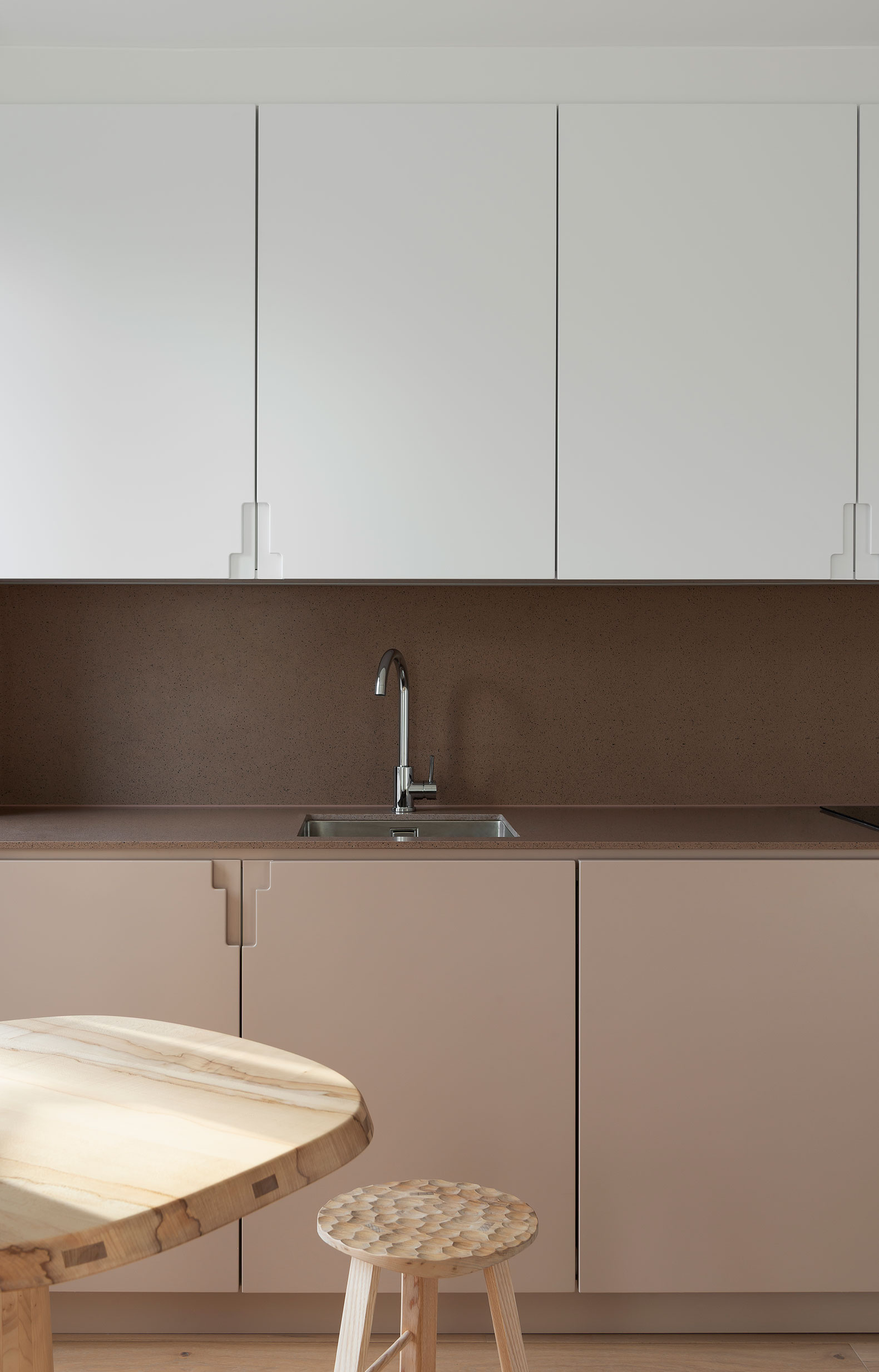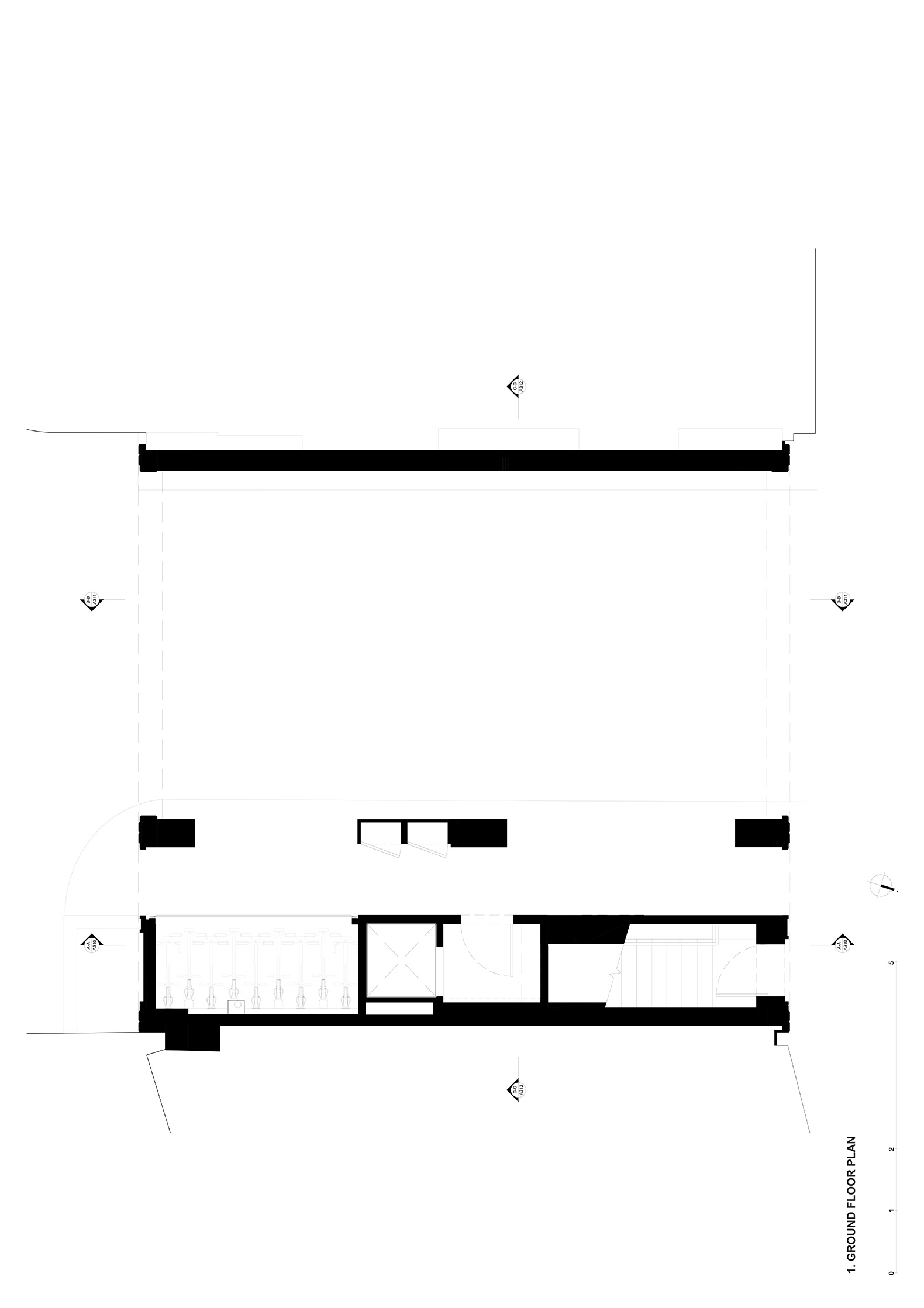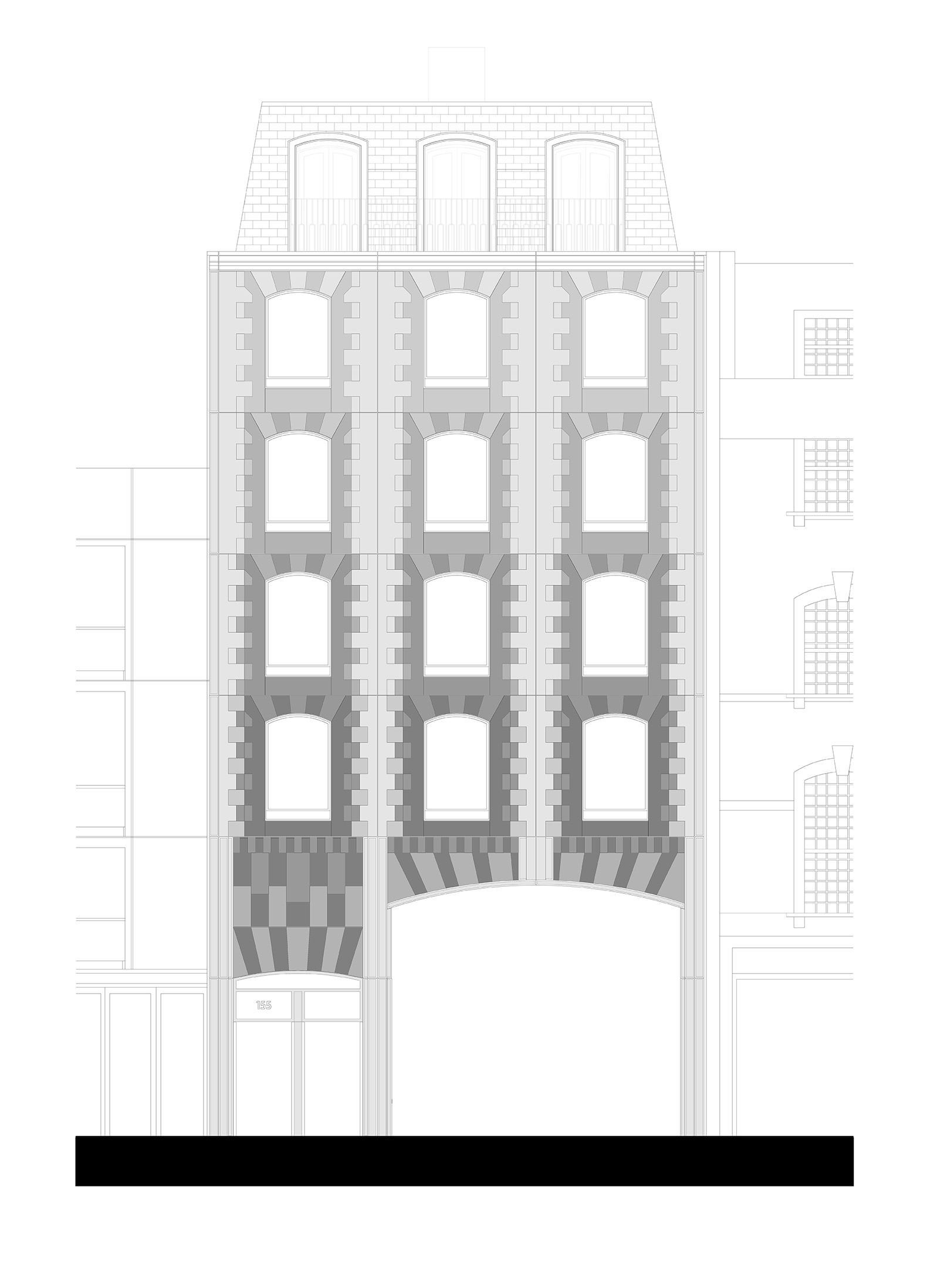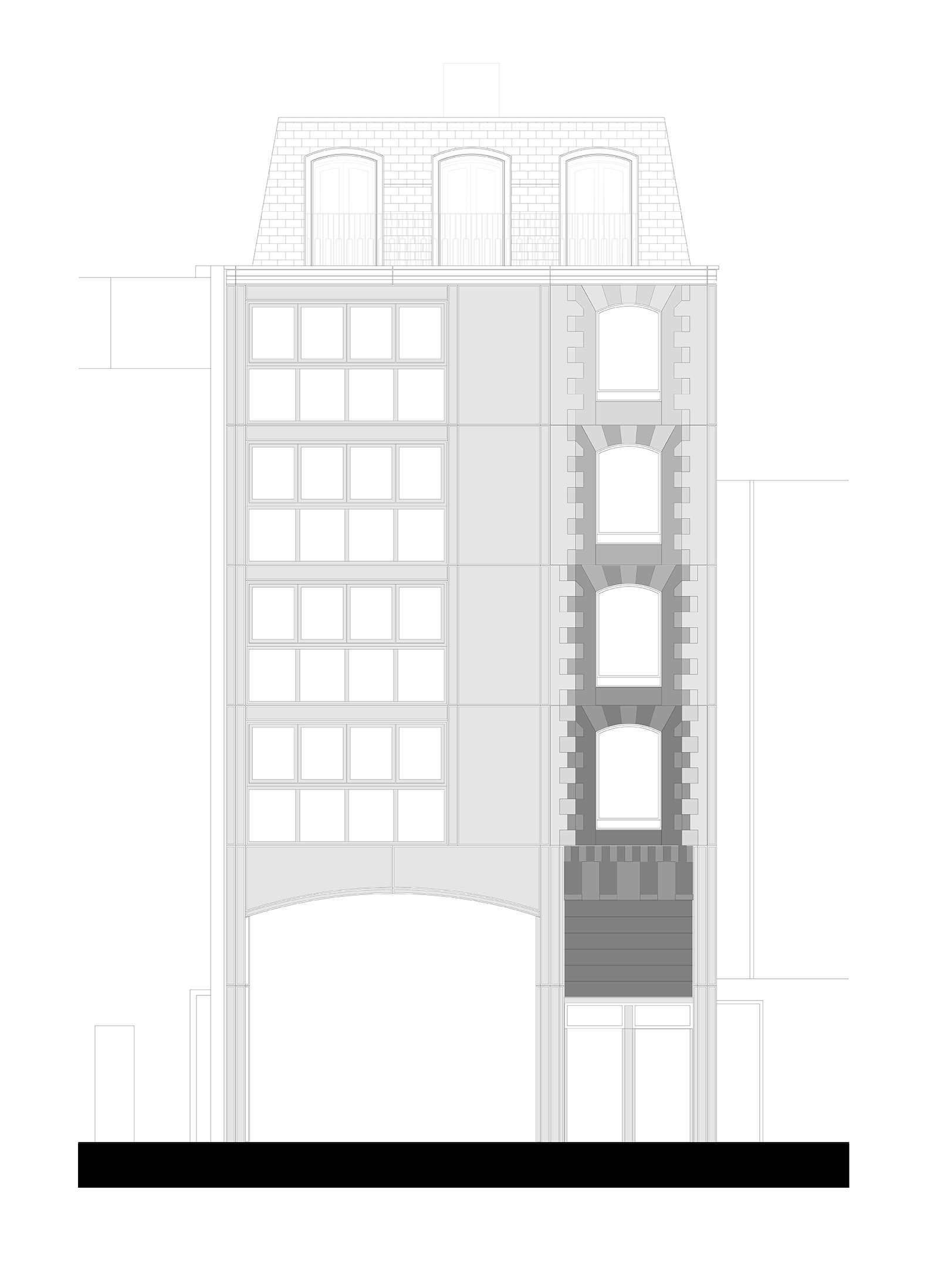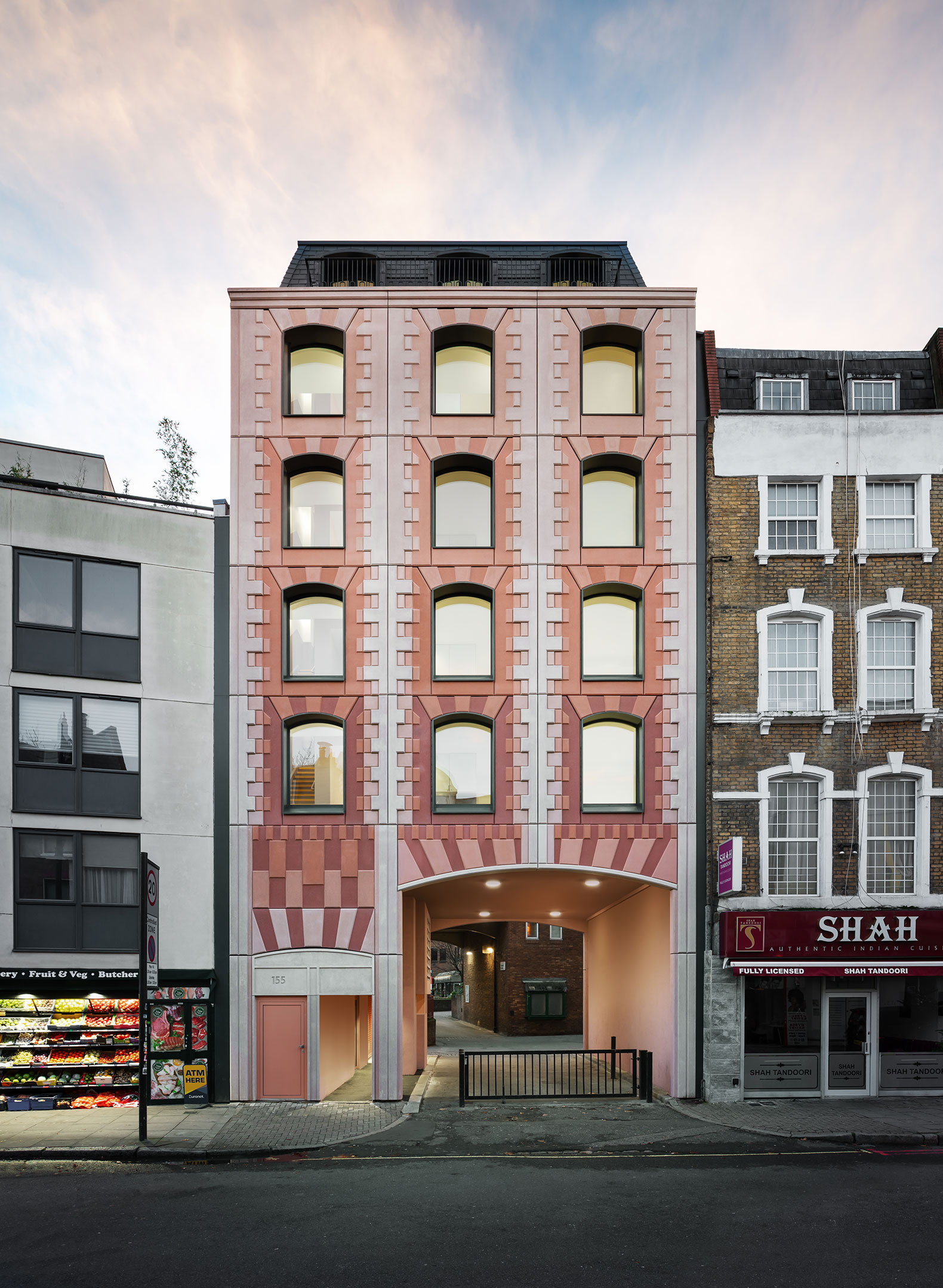
The essence of Trace, designed by Bureau de Change, is its commitment to the circular economy. Instead of demolishing and rebuilding, the project preserves the original foundations, the main structure, and the distinctive arch, aiming to harness the embodied carbon already present on site. This approach is part of a broader sustainability strategy that seeks to improve environmental performance, including enhanced insulation, balconies with winter gardens, and bicycle parking.
“Trace demonstrates the extent to which we can push the boundaries of reuse. We chose to work with what the site already had, minimizing waste. The transformation of the brick façade into the new envelope and the selection of other recycled or low-impact materials throughout create a unique, sustainable expression of the building’s continuity.”
Dicle Guntas, Managing Director of HGG London
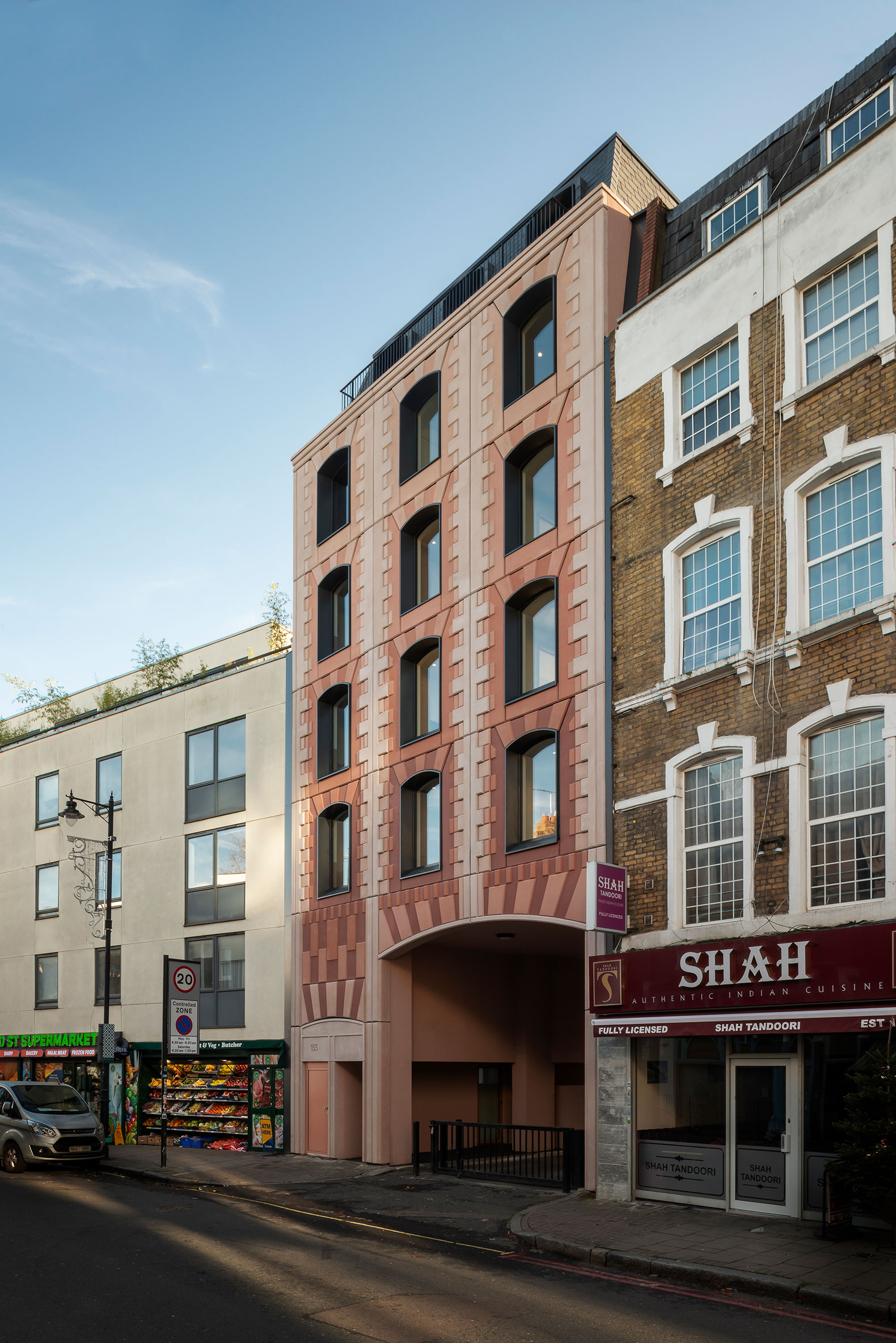
Trace by Bureau de Change. Photograph by Gilbert McCarragher.
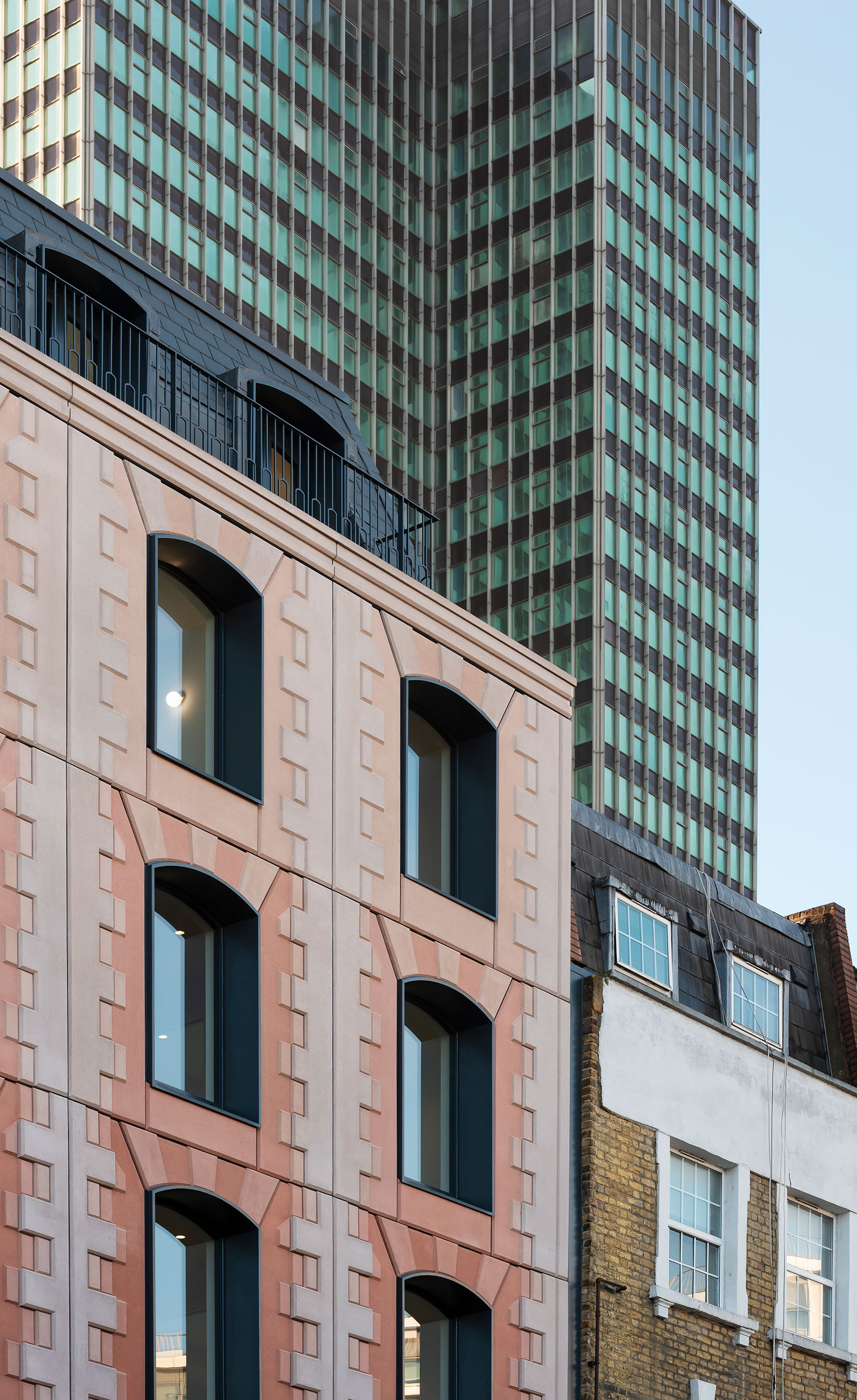
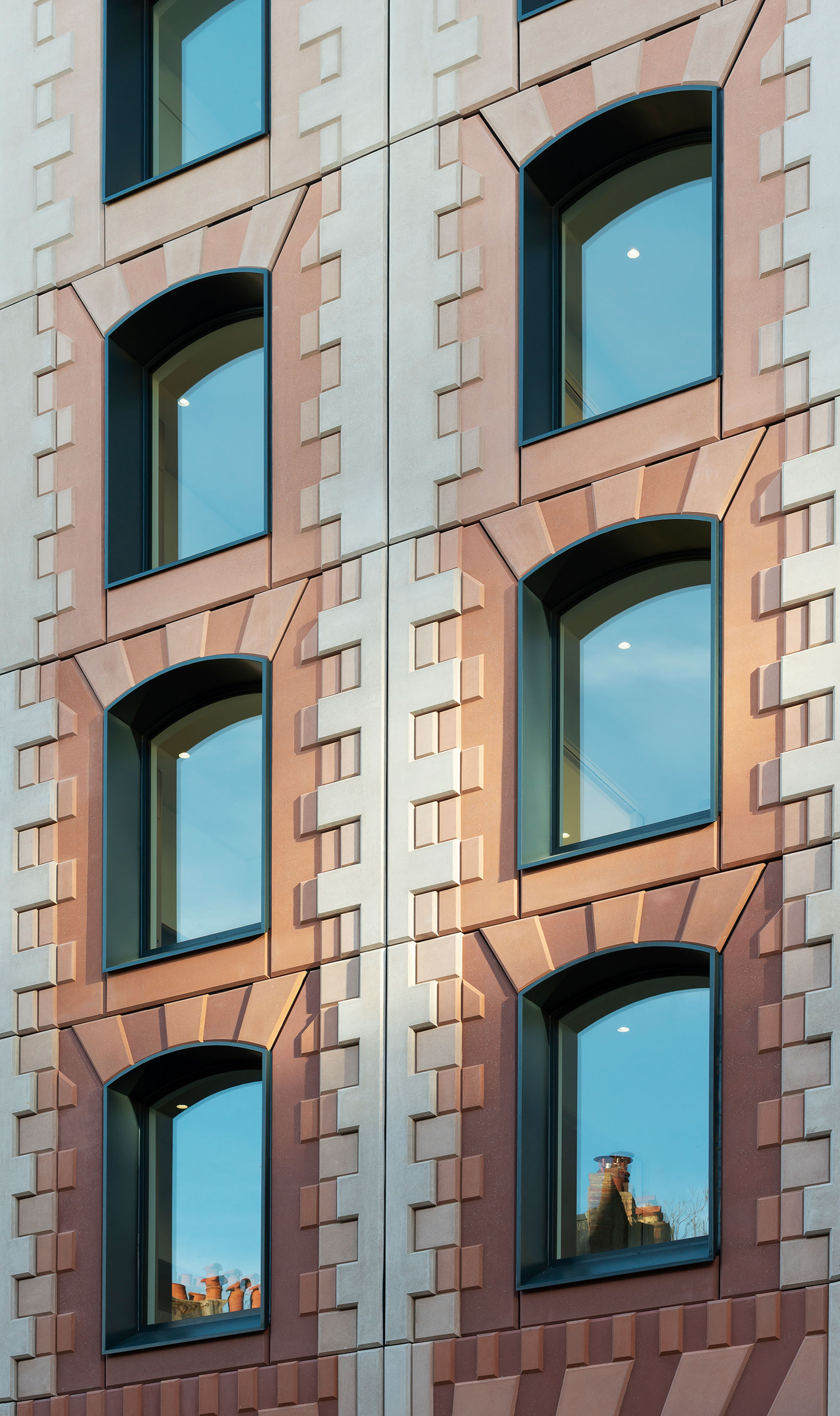
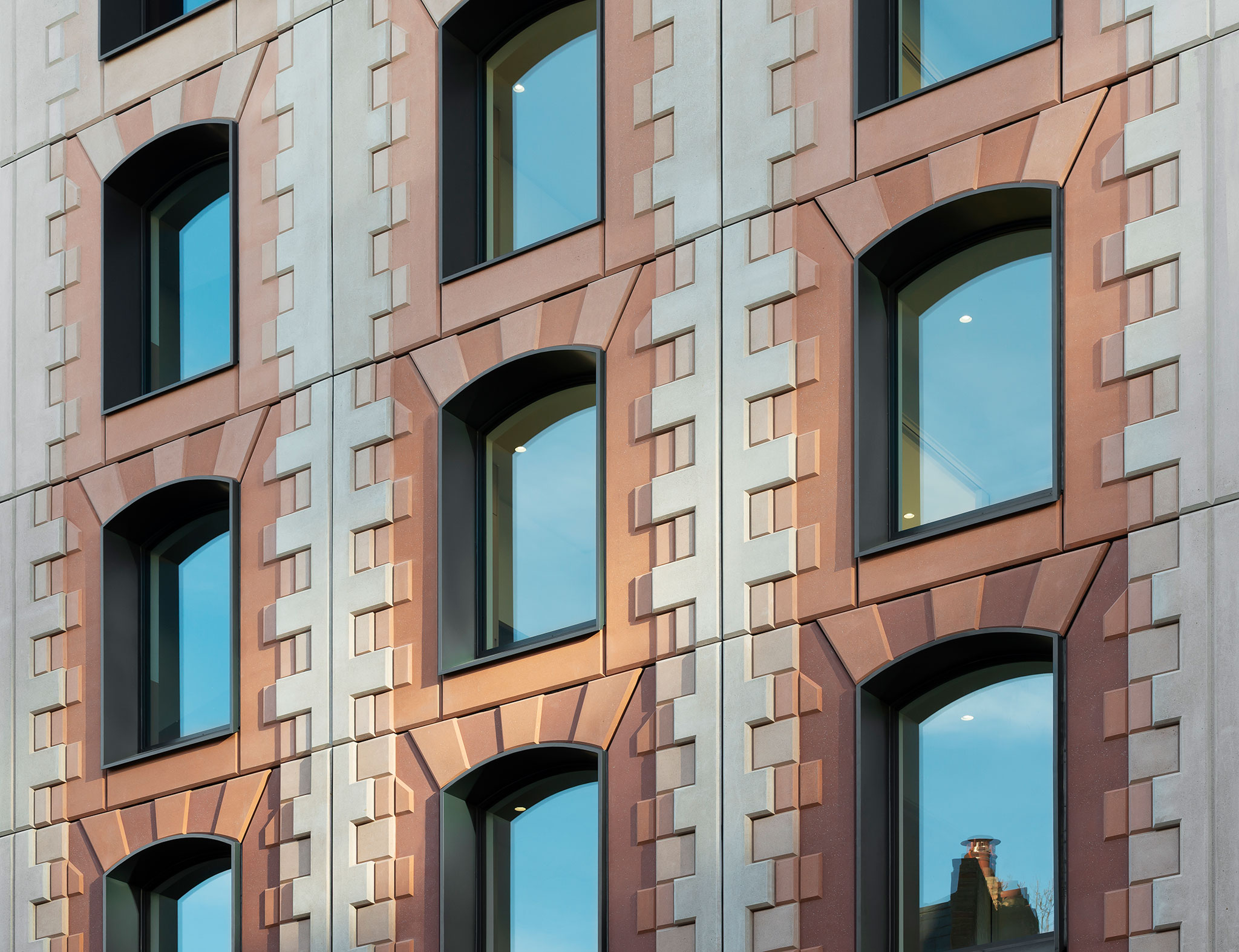
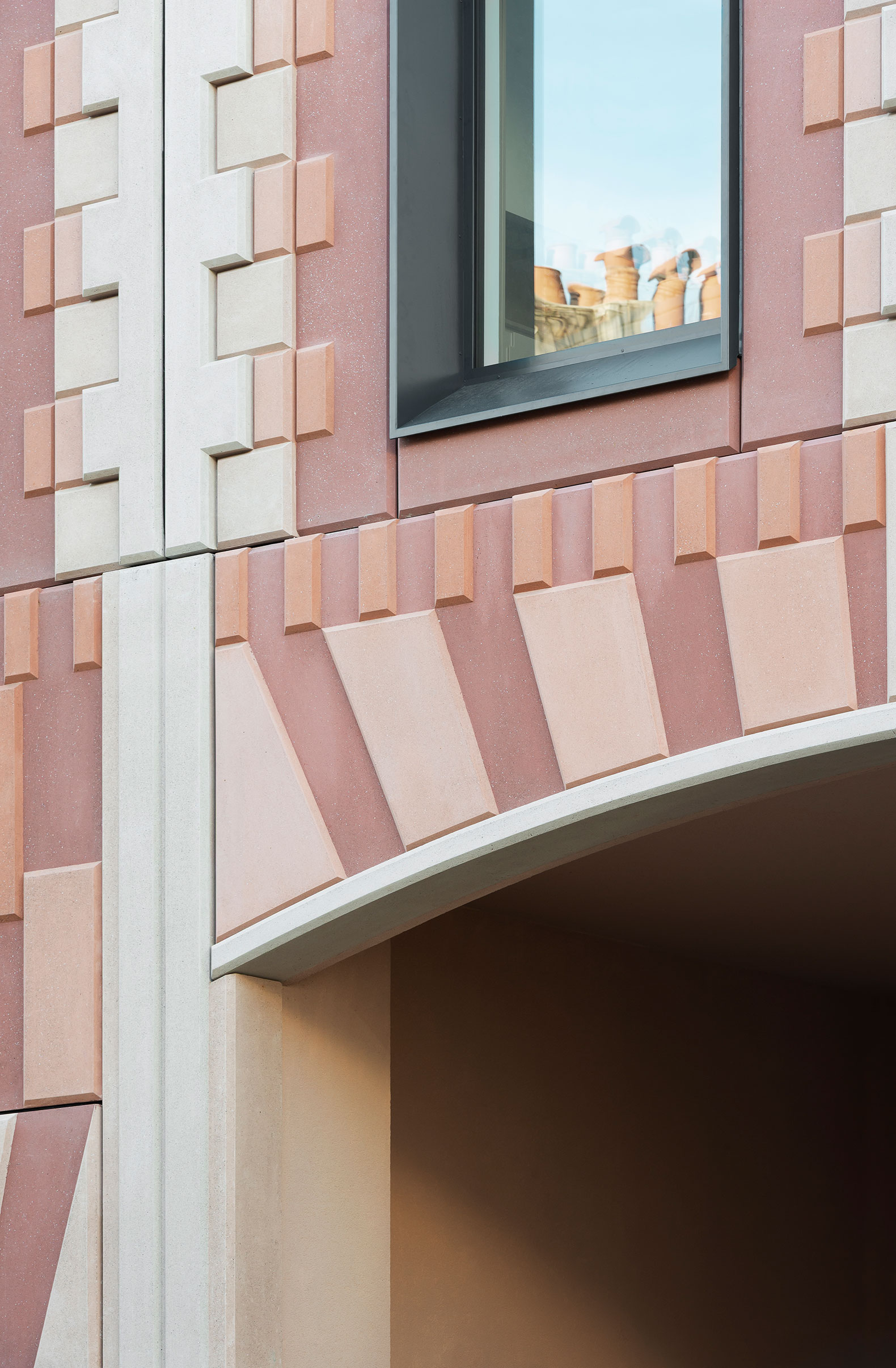
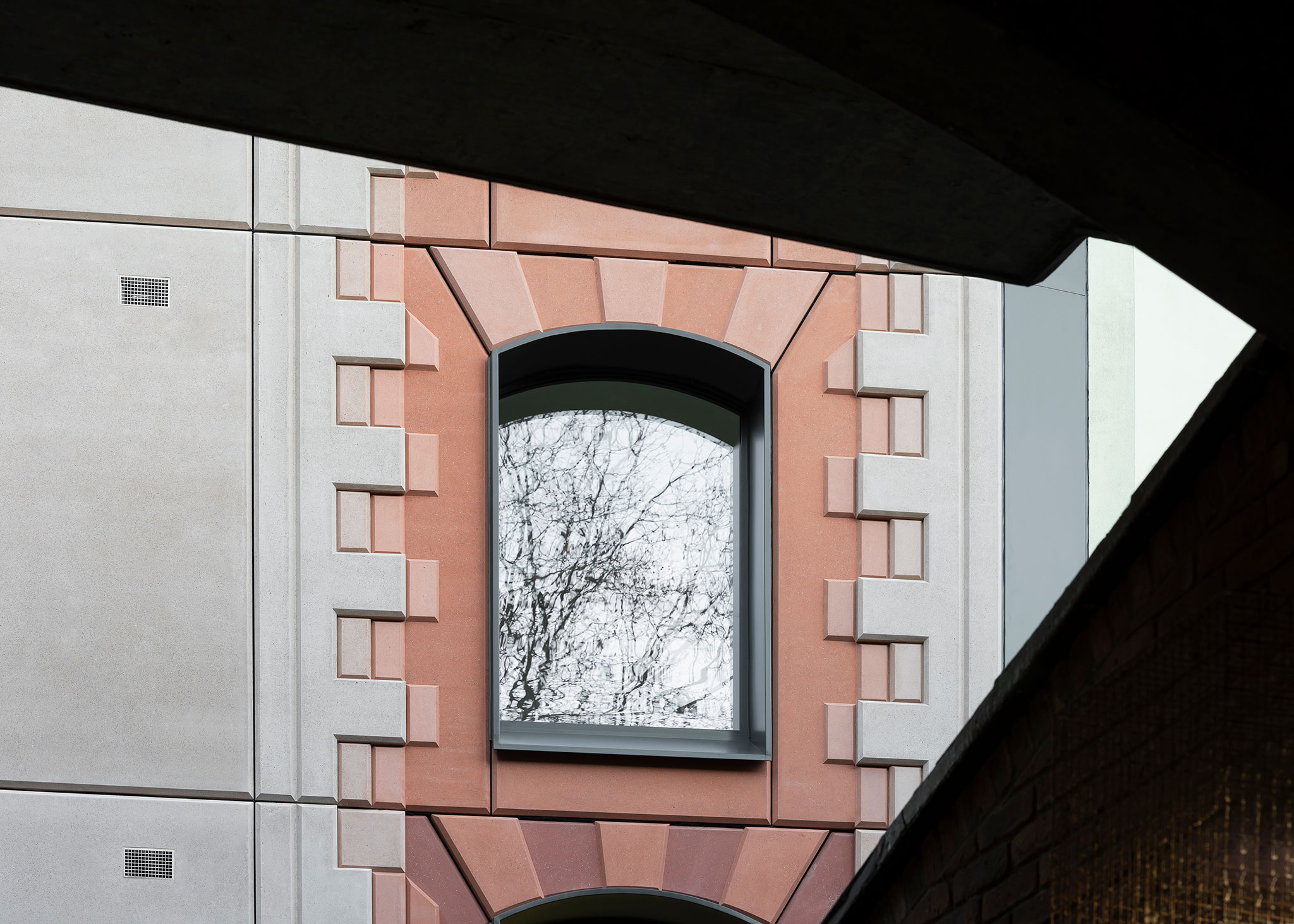
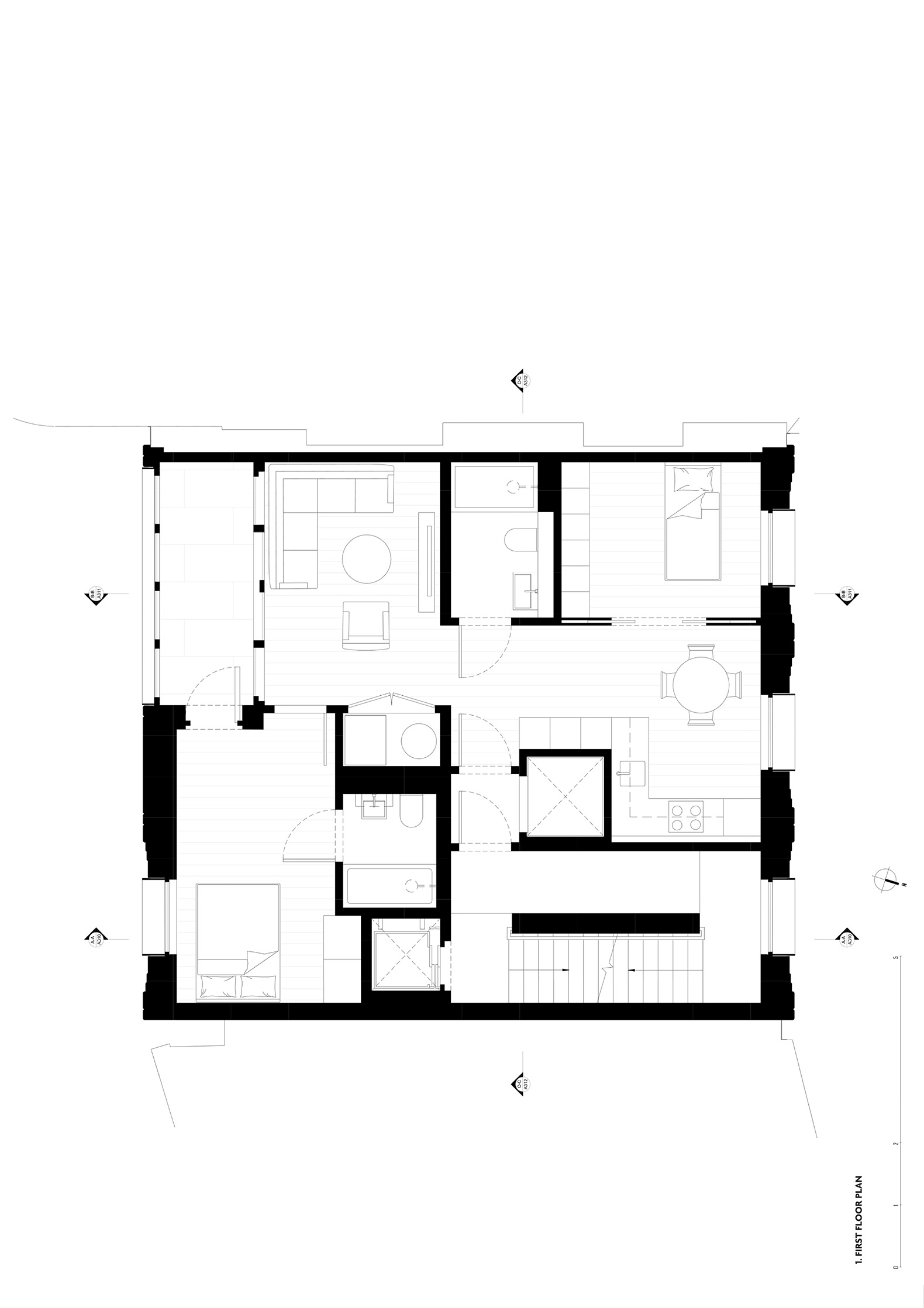
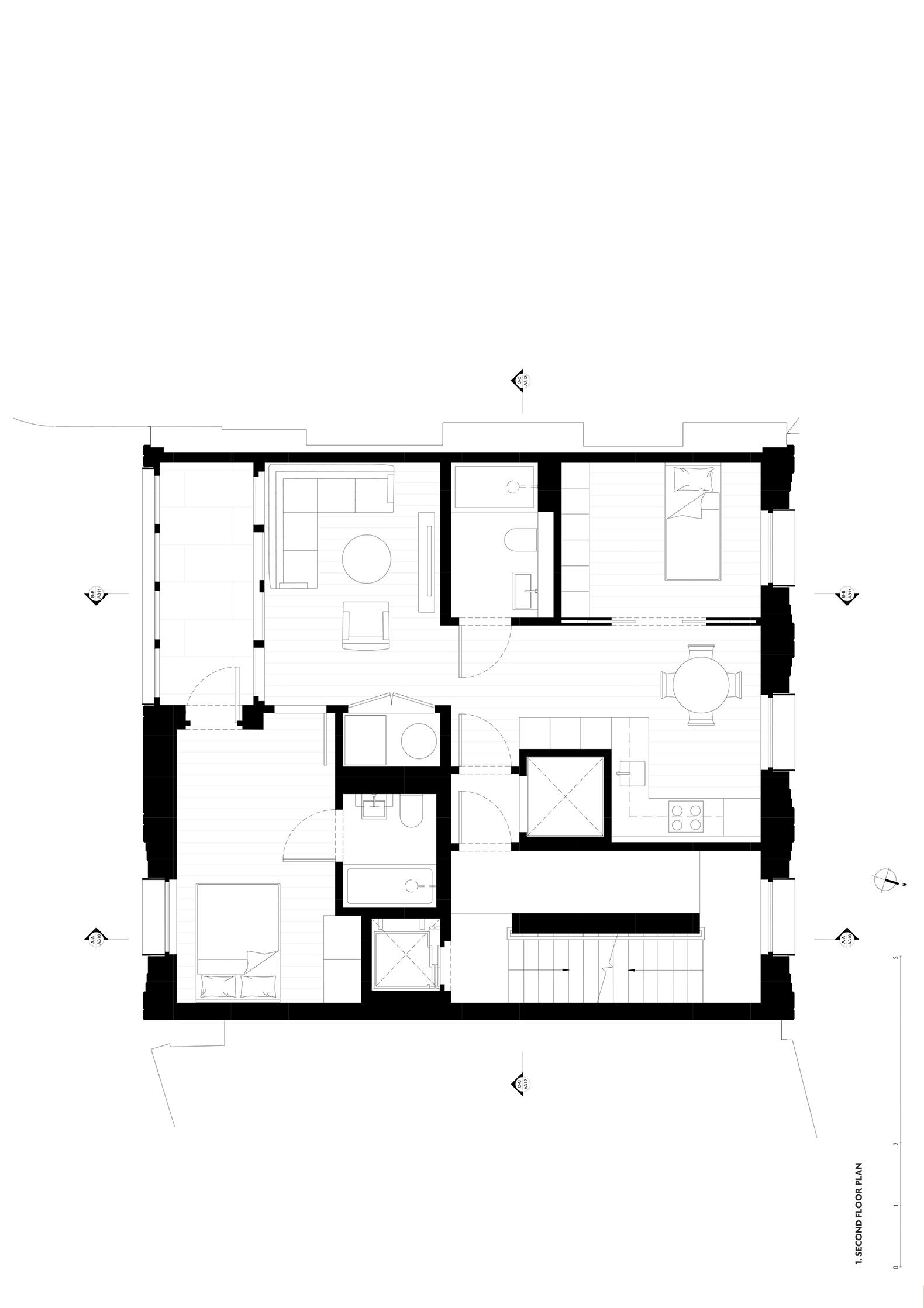
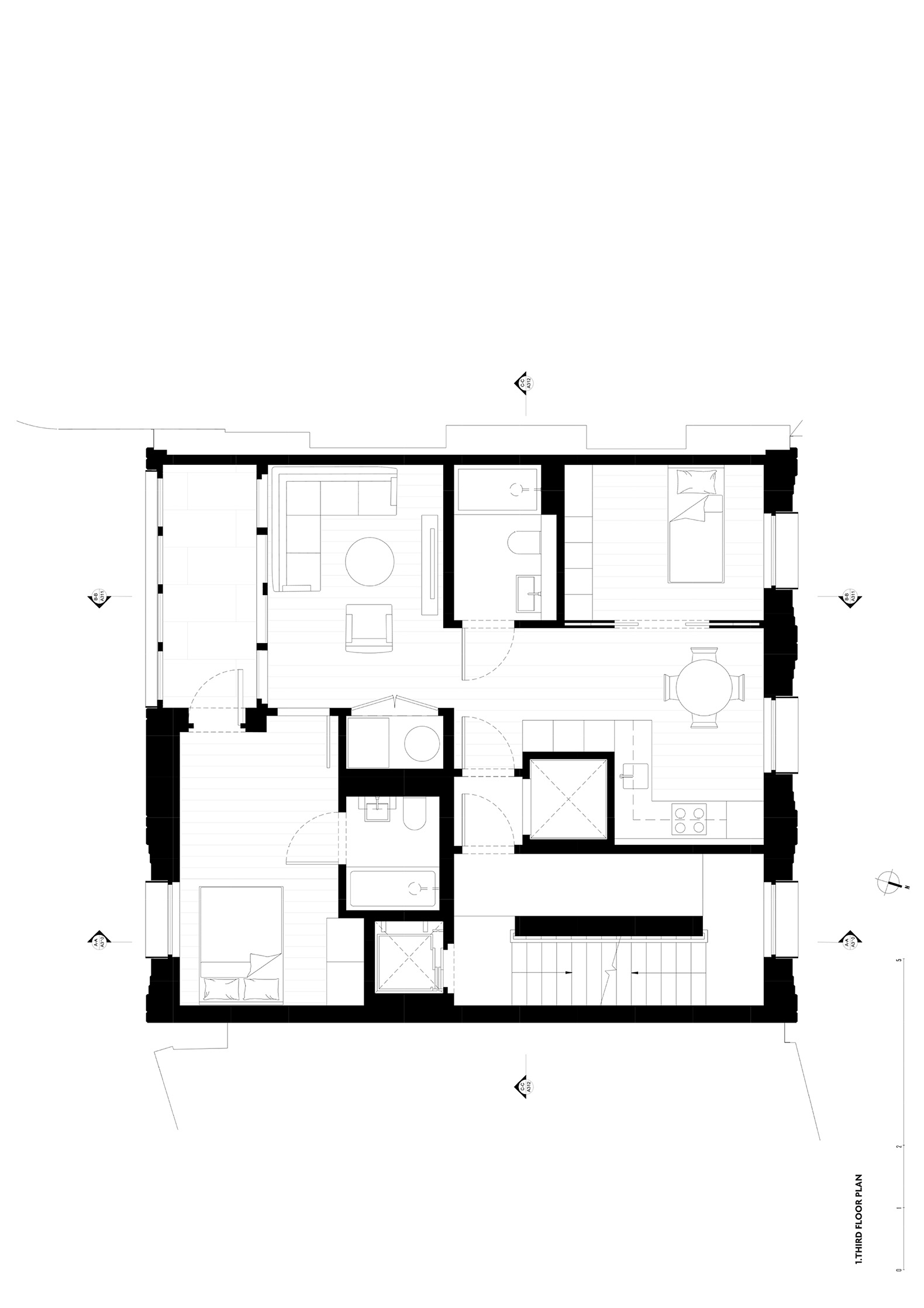
Drawing inspiration from the rich architectural history of Drummond Street and Tolmer’s Square, influenced by Georgian terraces, Philip Hardwick’s original Euston Station, and the layered narratives of 20th-century redevelopment, the aesthetic of Bureau de Change’s façade system is inspired by Georgian proportions, rustication, and articulated arches. Arranged within an underlying grid, the new openings reinterpret traditional segmental arches, allowing for larger windows, improved natural light and cross-ventilation, and spacious winter gardens adjacent to the living areas at the rear.
“Trace looks both backward and forward. By combining traditional architectural memory with contemporary fabrication, we have created a building rooted in its context but designed for future living. The circular principle of reusing the façade became a guiding idea, both environmentally and conceptually, for the entire project.”
Billy Mavropoulos, co-founder and director of Bureau de Change
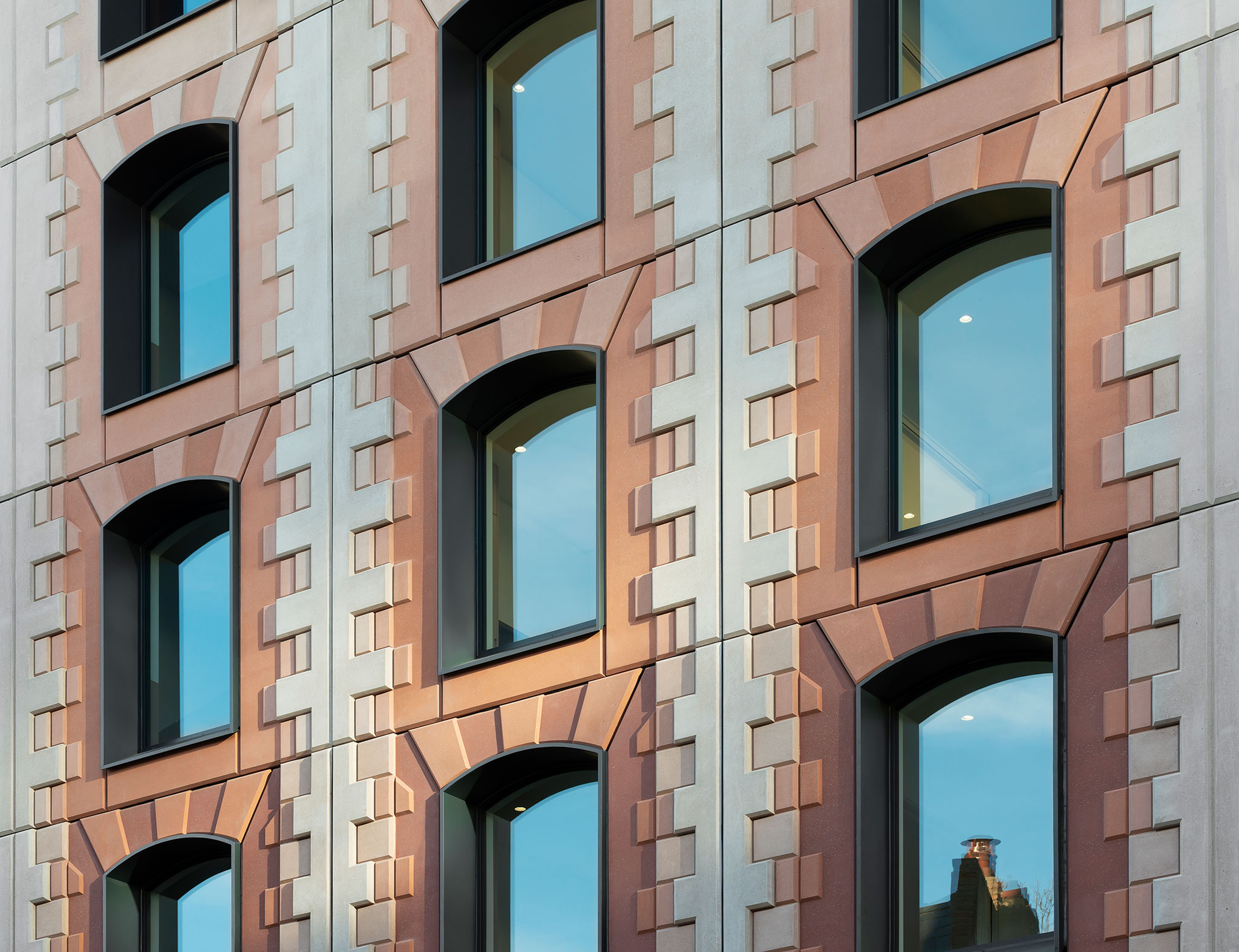
Trace by Bureau de Change. Photograph by Gilbert McCarragher.
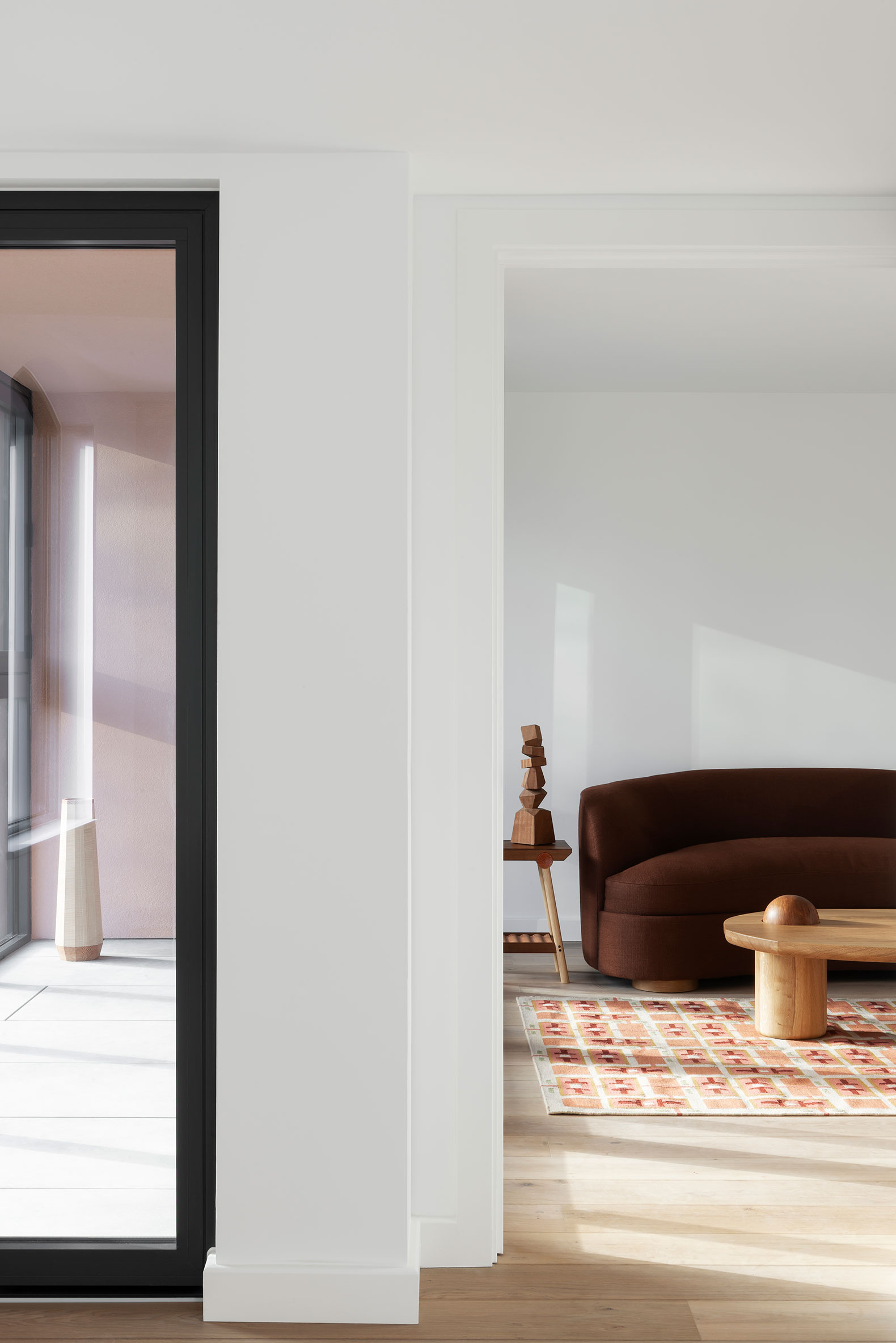
The completed project offers three two-bedroom apartments on the first, second, and third floors, and two one-bedroom apartments on the newly added fourth and fifth floors, each with skyline views and outdoor terraces. In total, the dual-aspect living areas are arranged on a staggered plan that subtly zones the kitchen, dining, and living spaces without physical barriers, and the layouts are designed for comfort and abundant natural light.
Demonstrating that existing structures can be enhanced through innovative reuse and recycling of materials, Trace is an example of low-carbon urban intensification in central London.