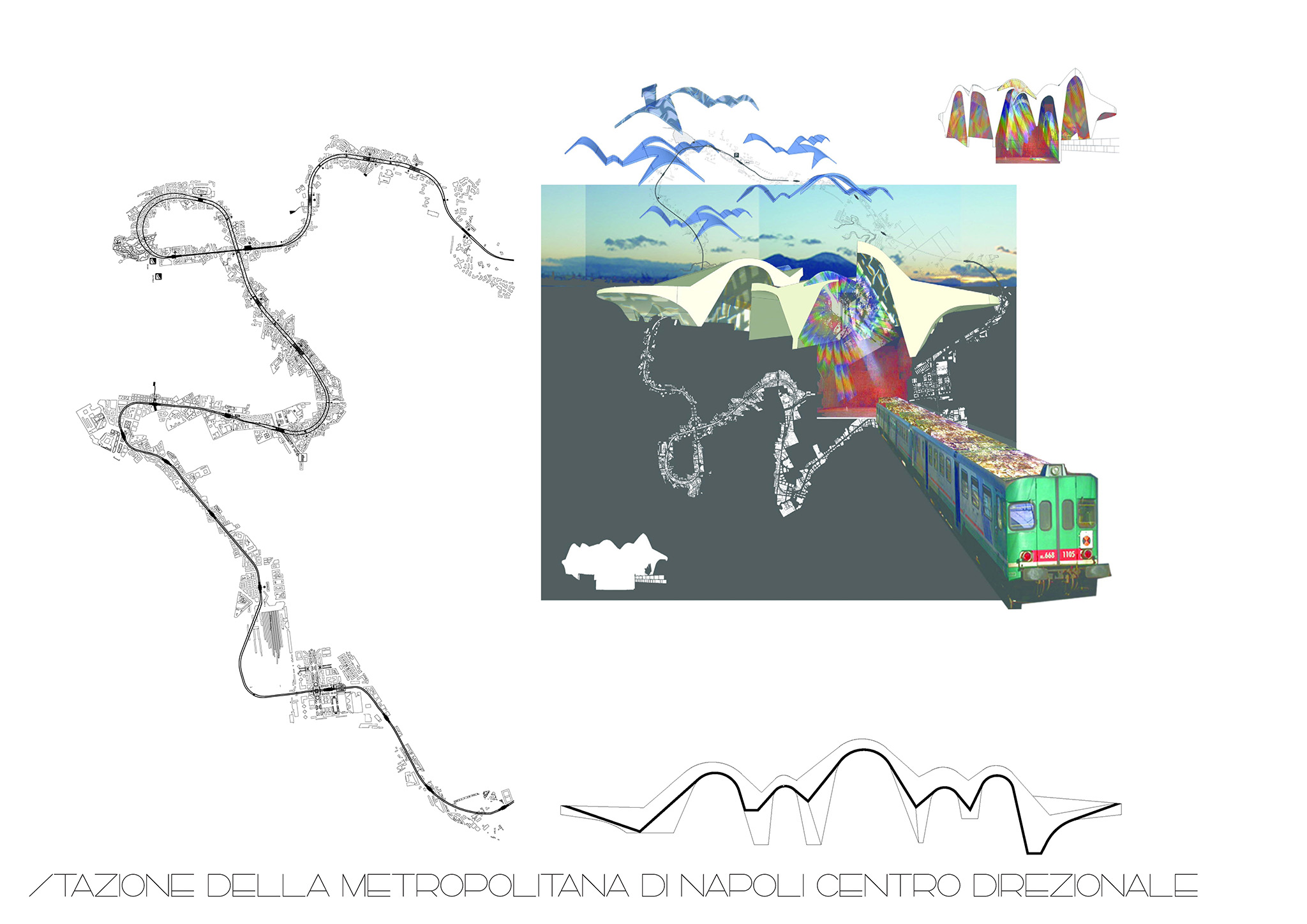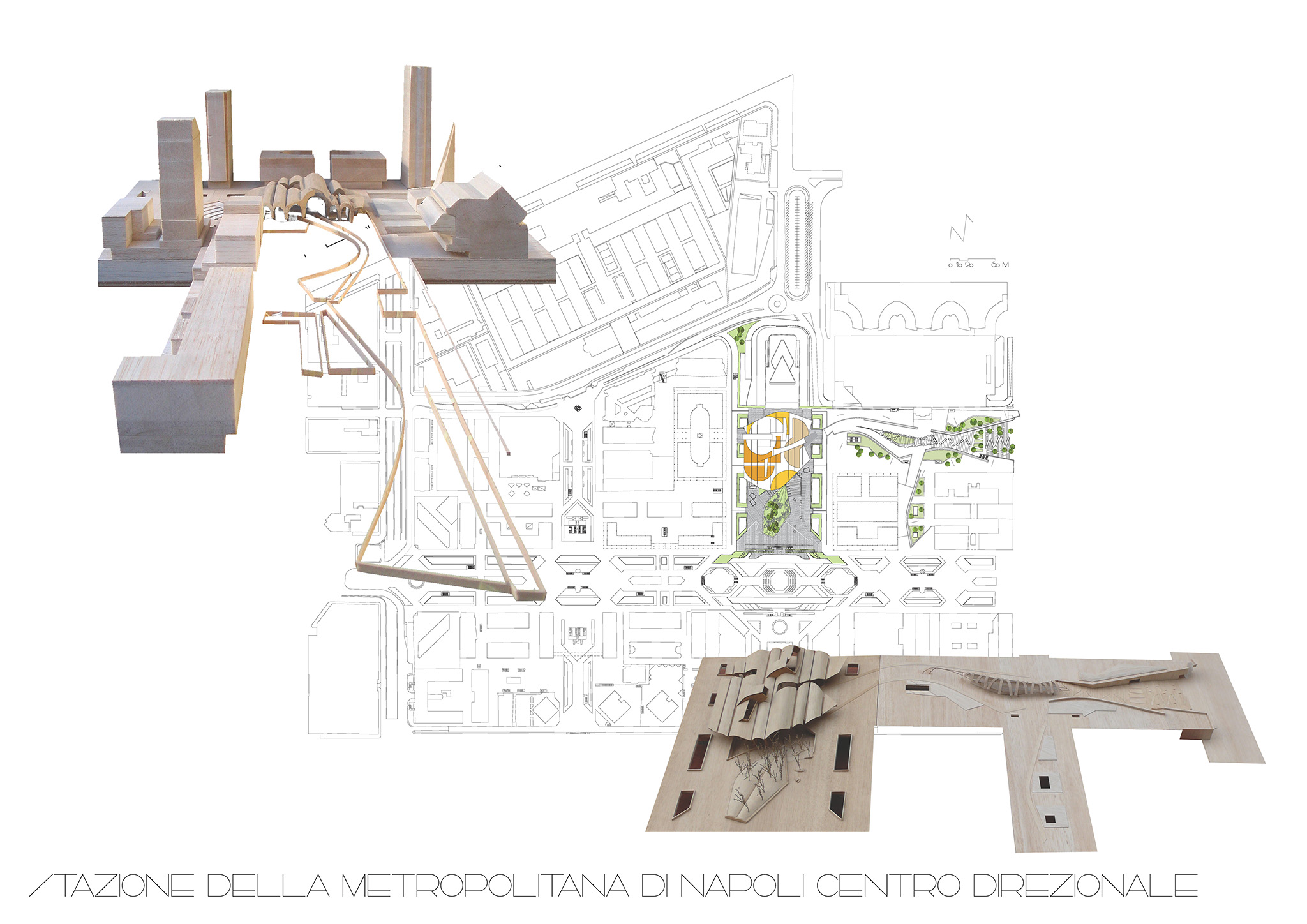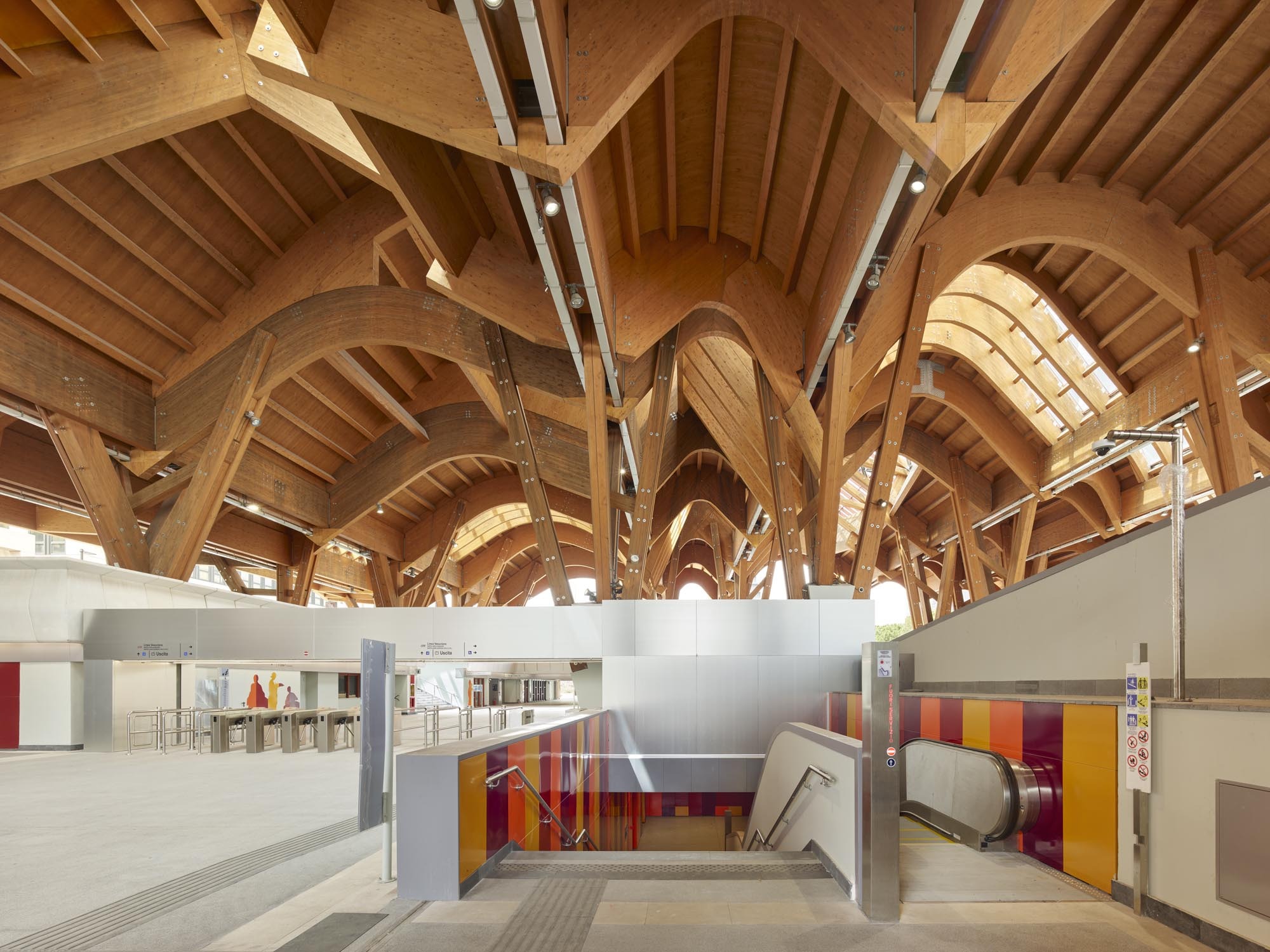
The "Centro Direzionale di Napoli" metro and train station project, designed by Benedetta TagliabueEMBT Architects, is part of a larger commission from 2004, in which Naples invited various international architects to design the stations for the city's new metro line, including Norman Foster, Massimiliano Fuksas, Álvaro Siza, Dominique Perrault, and Karim Rashid. Under the motto "triple A"—art, architecture, and archaeology—the proposal aims to give the building a highly recognizable presence in a previously homogeneous environment.

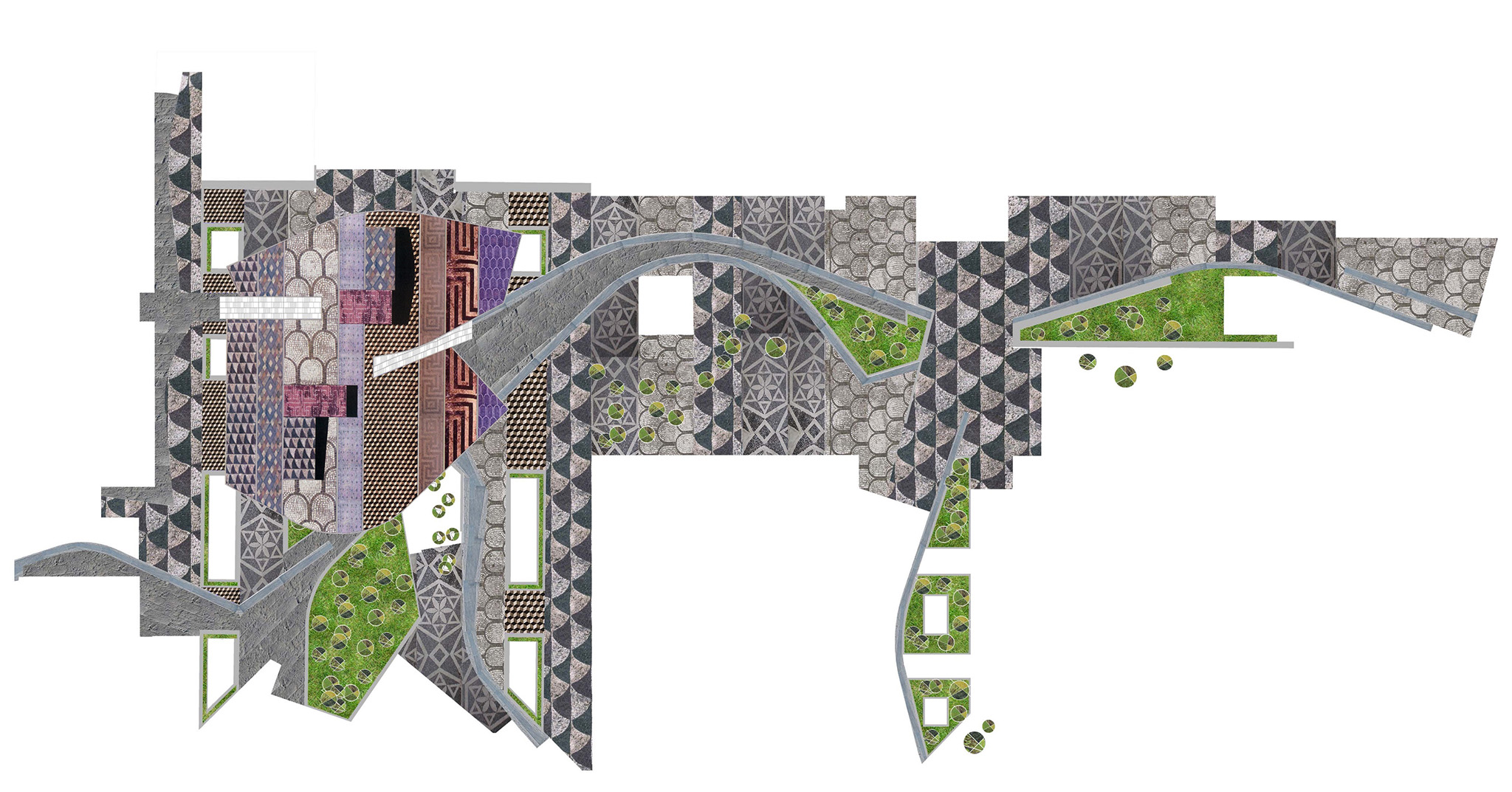
In an area originally occupied by offices and commercial spaces that becomes eerily deserted around five in the afternoon, the new station introduces, through its dynamic and topographical public space, a fragment of nature and a piece of original Naples into this artificial sector of the city. The complex topography created, with multiple pedestrian levels, allows for a physical experience of the present and the past, reflecting the shifting terrain and the dynamics of the local population.

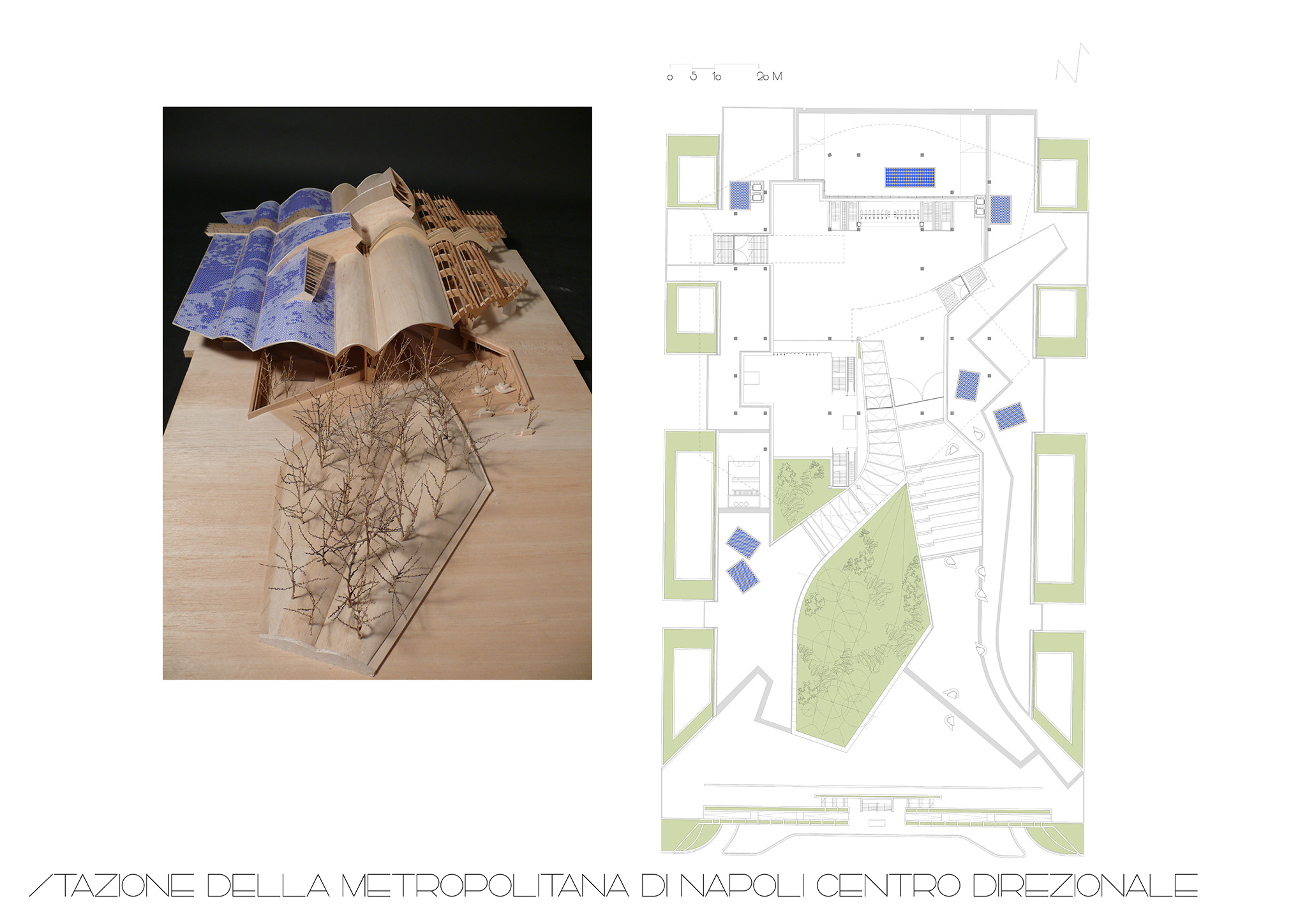
The station, designed by TagliabueEMBT Architects, is built over the existing metro lines, replacing a previous building, and uses wood as its primary construction material. Its organic form contrasts with the original 1970s design for the complex, by Kenzo Tange.

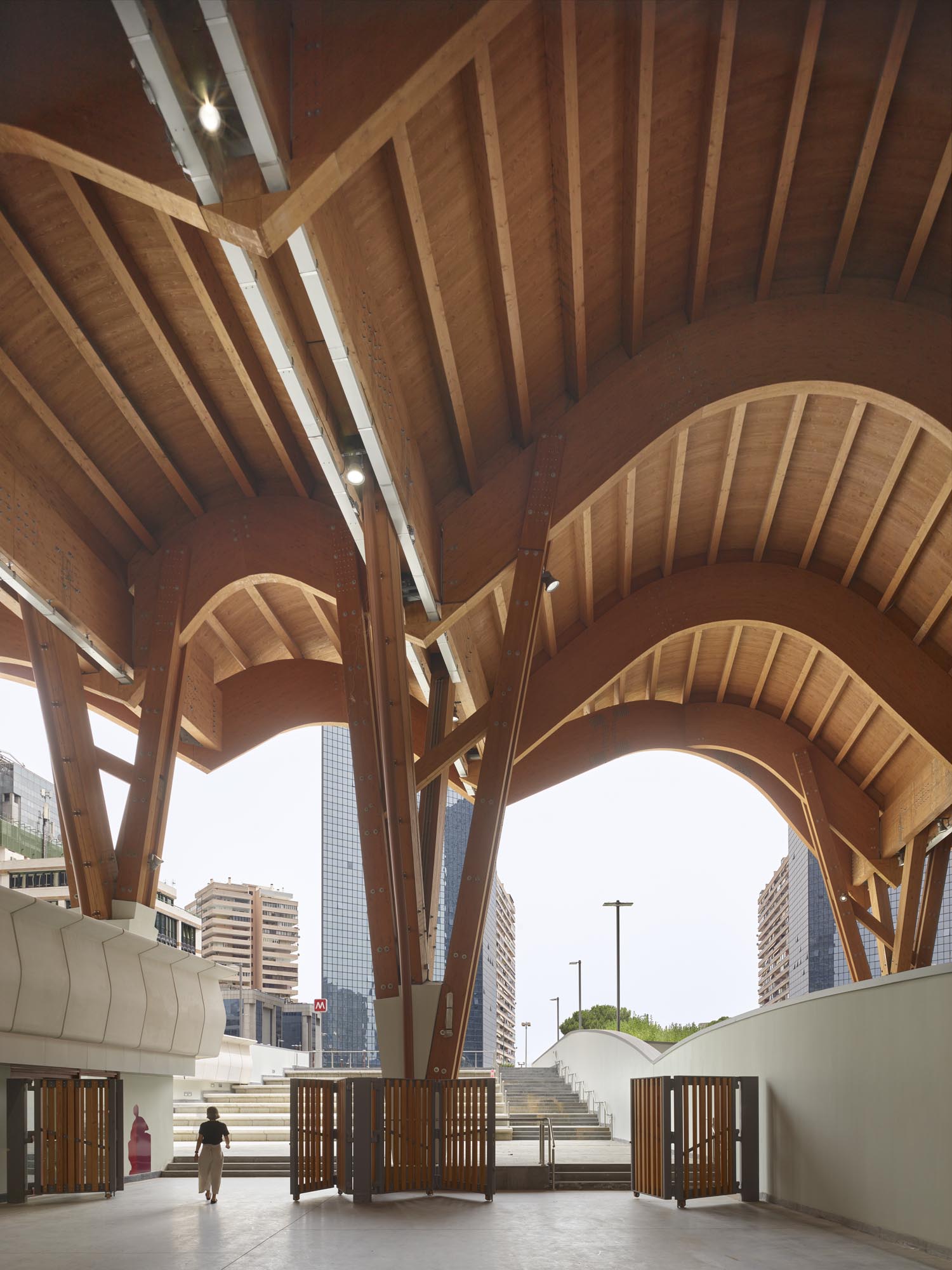
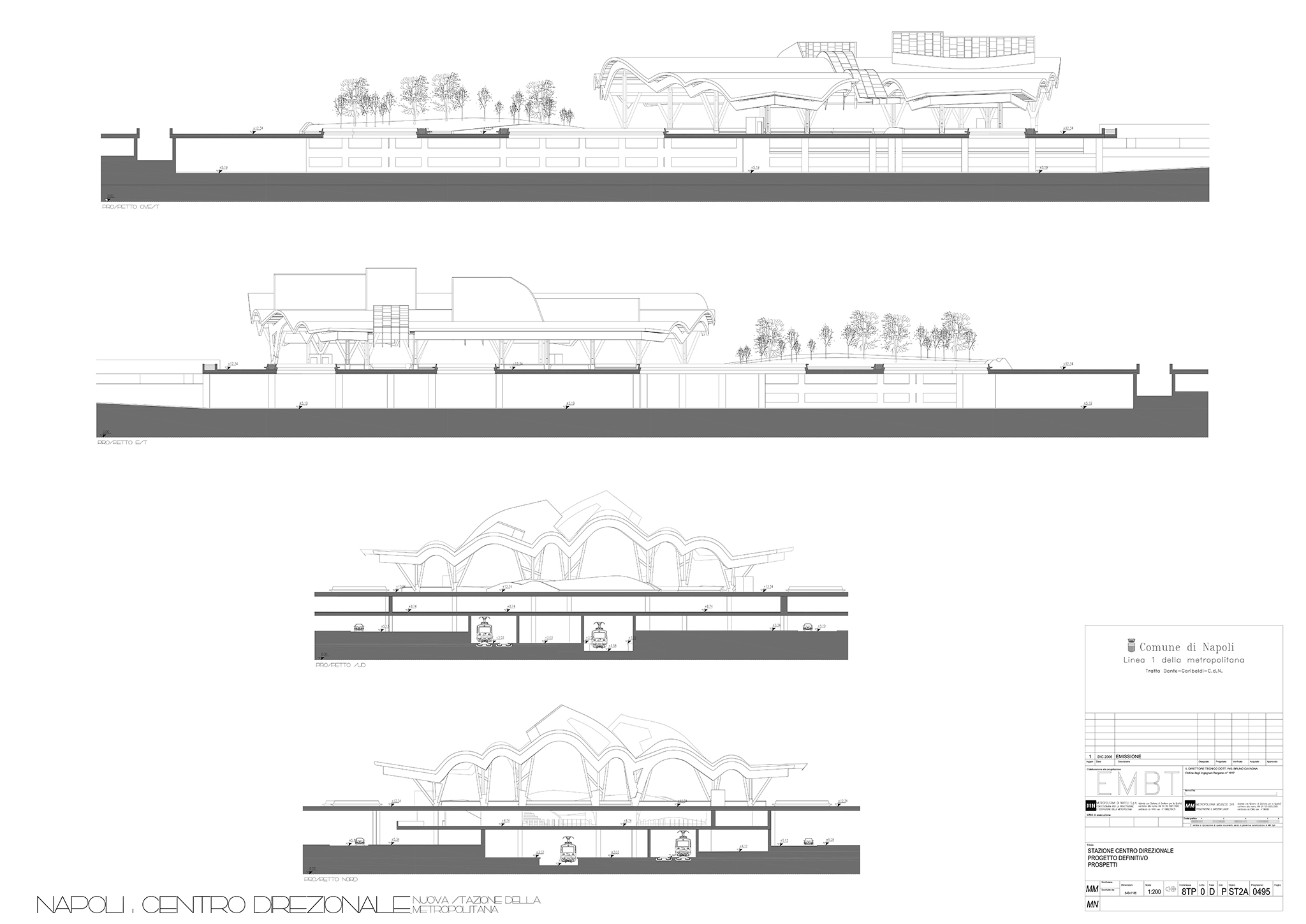
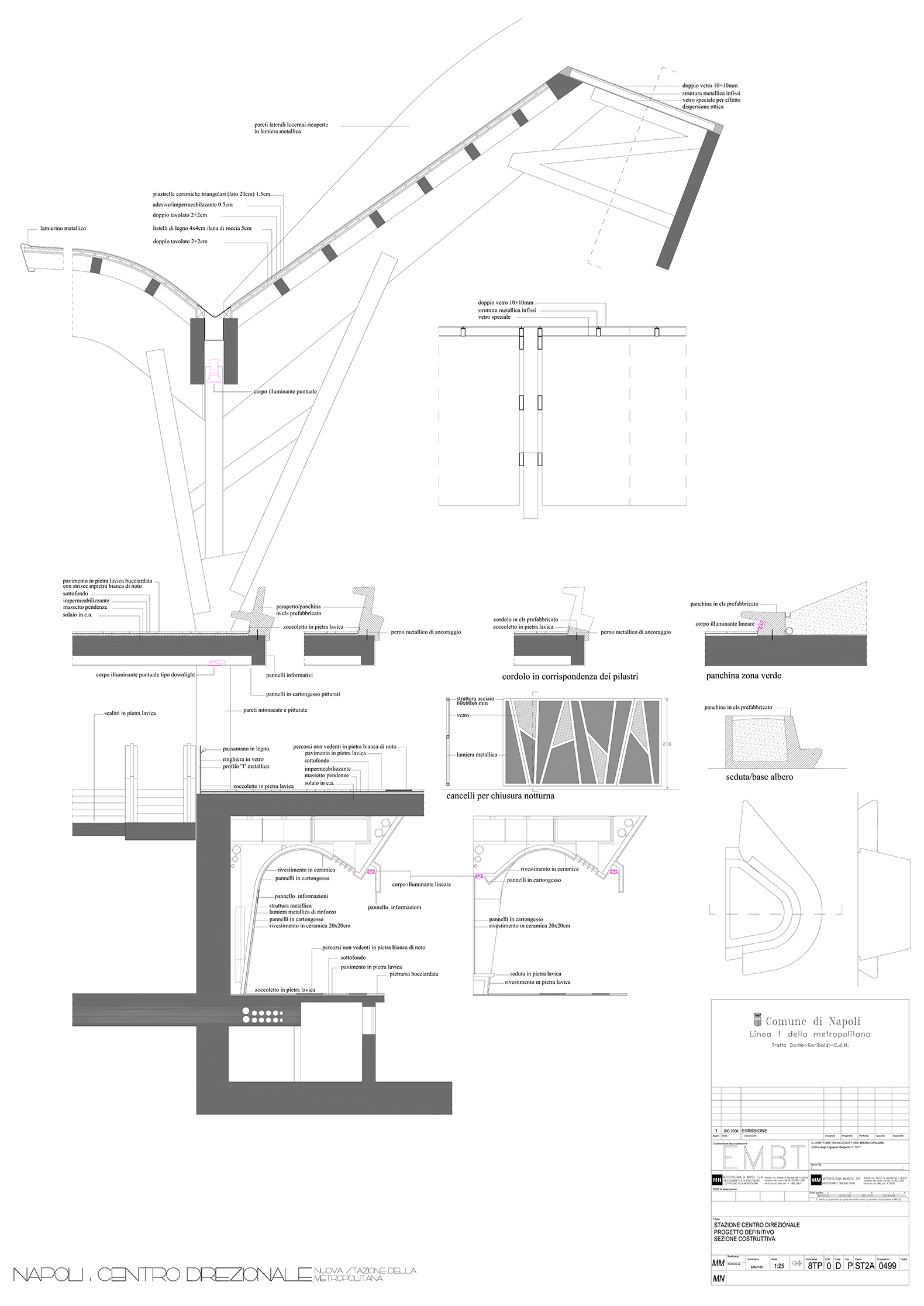
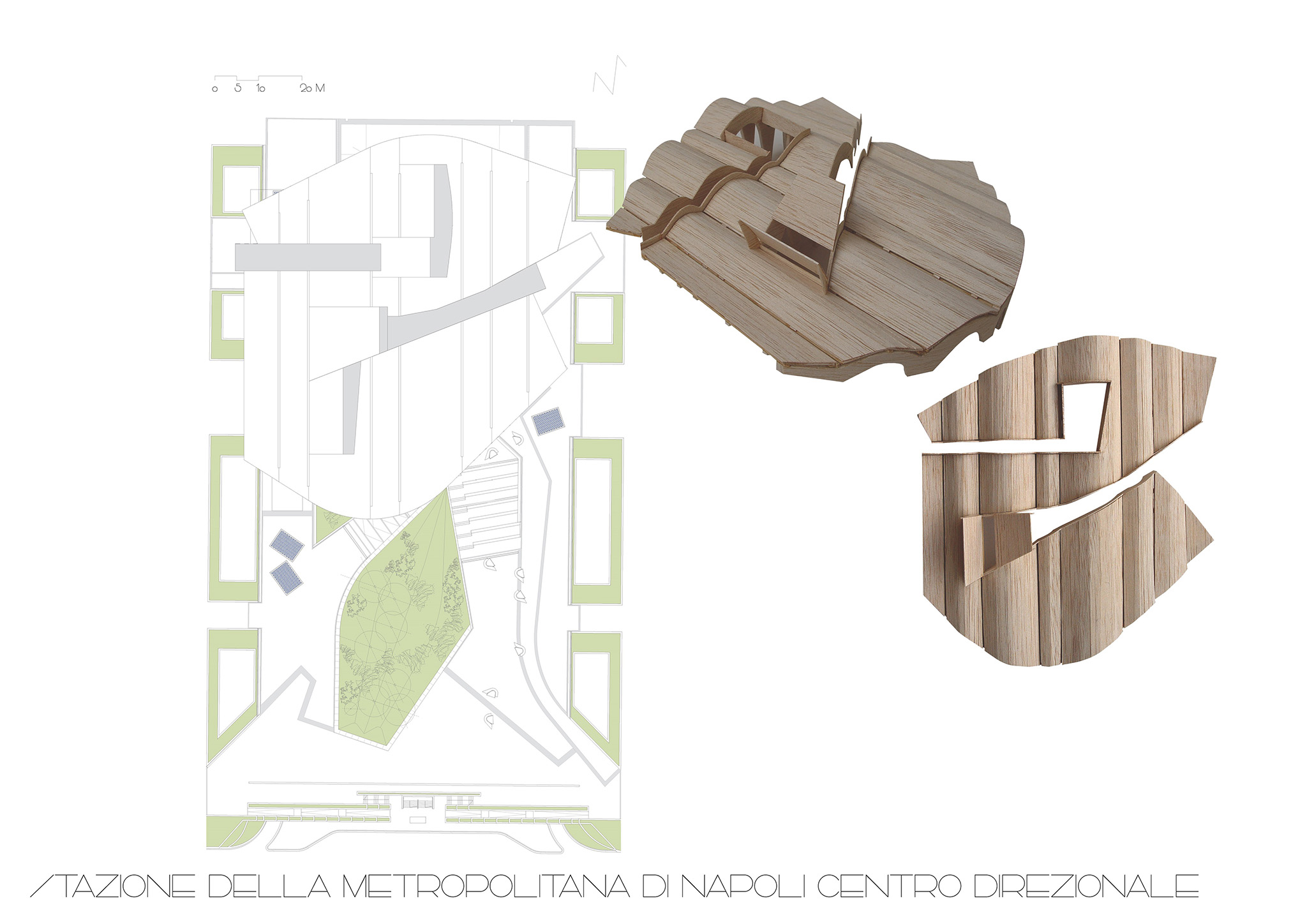
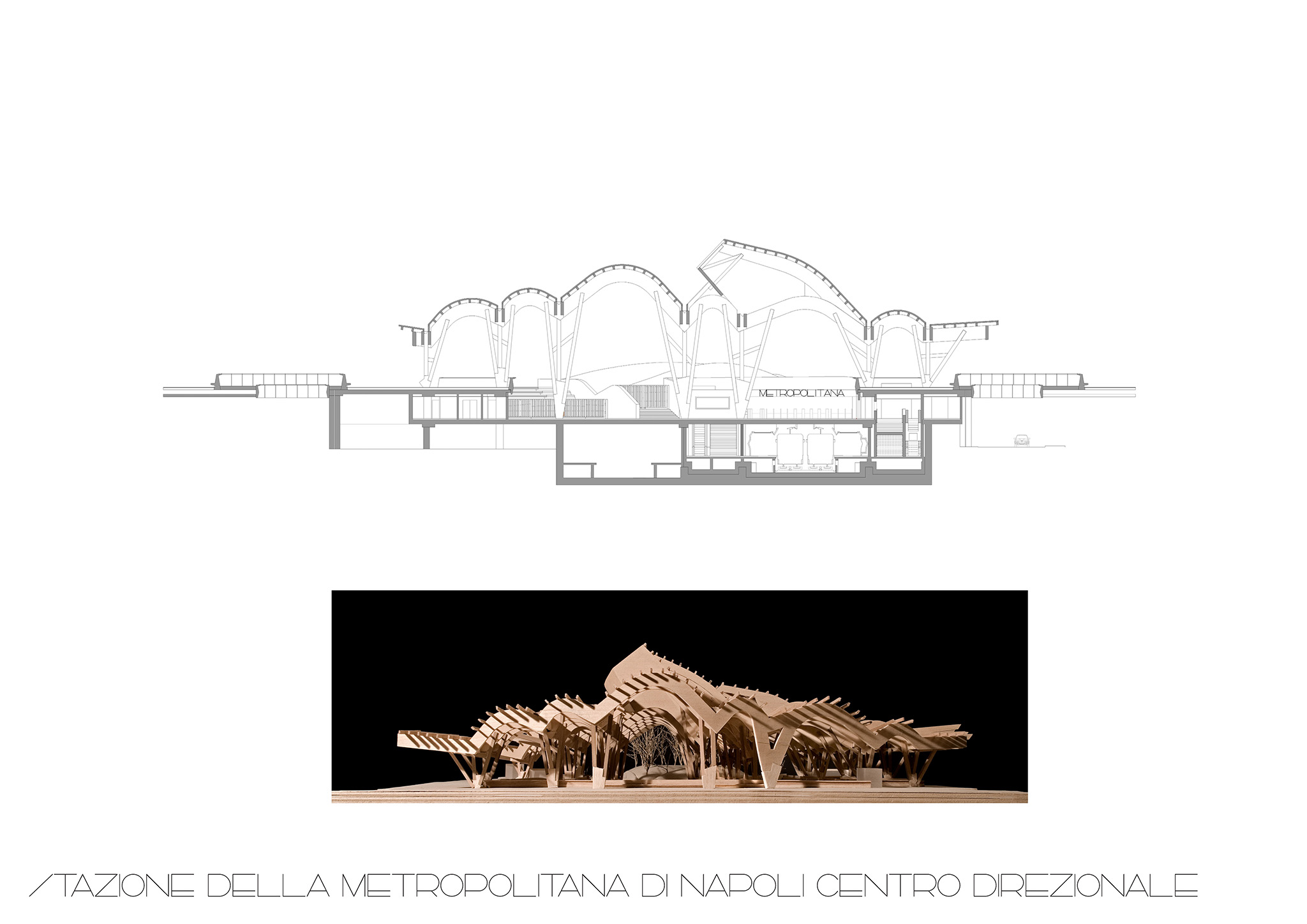
The complex tectonic structure of the roof is made of glued laminated timber. This lightweight and adaptable material integrates seamlessly with the existing structures. The vaults employed, a common feature of the studio reminiscent of the Santa Caterina market, are highly malleable and allow for greater freedom in the configuration of the beams. In turn, the vaulted ceilings recall classic train stations, commonly built using this technique, while the overall form of the structure evokes the feeling of a "walk through the woods."

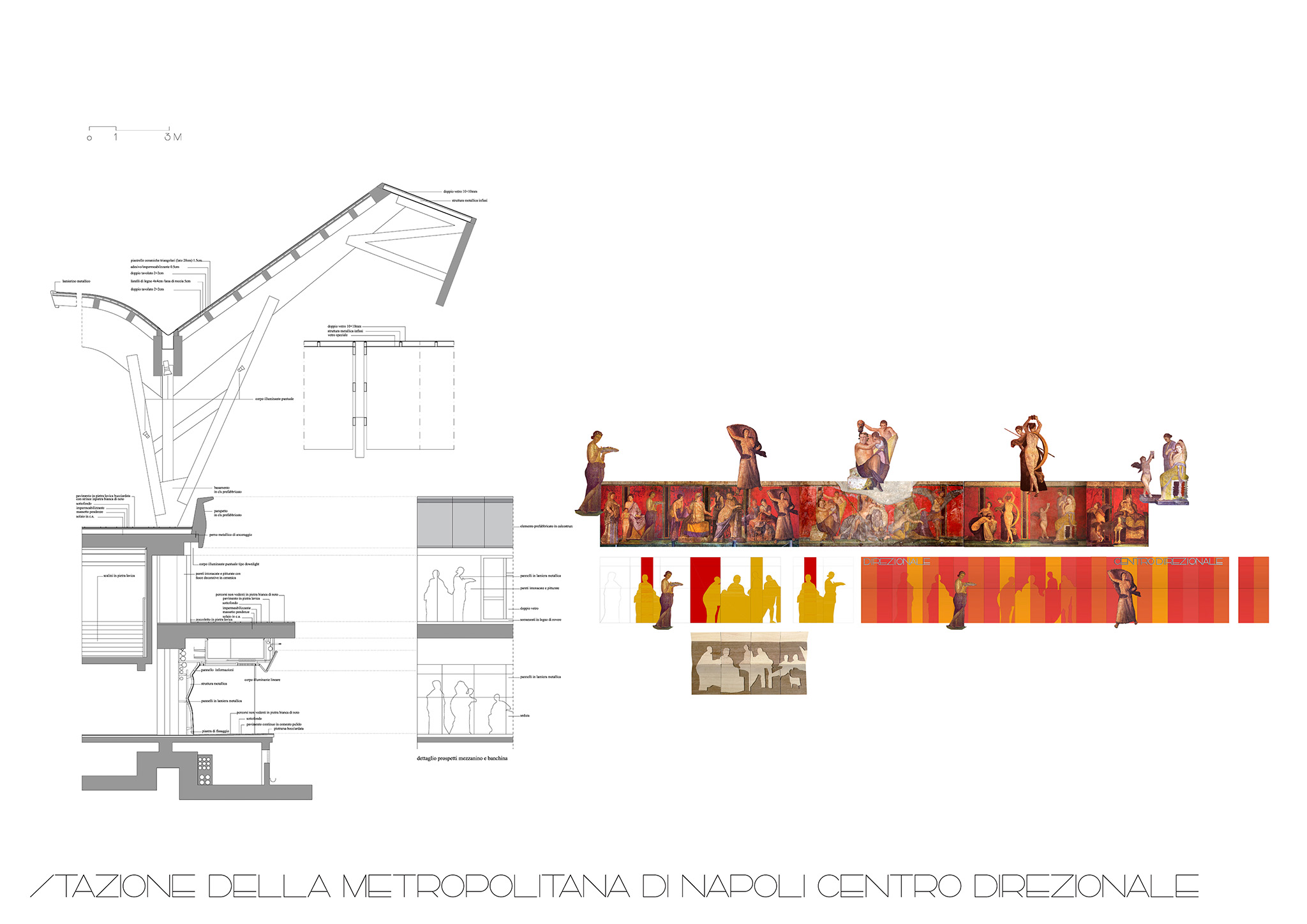
On its roof, the project, whose completion was delayed due to the COVID-19 pandemic, will feature a piece of art on the ceiling that will represent the face of an archaeological piece found in Pompeii, in a nod to both the art and architecture that structures the general outline of the project.
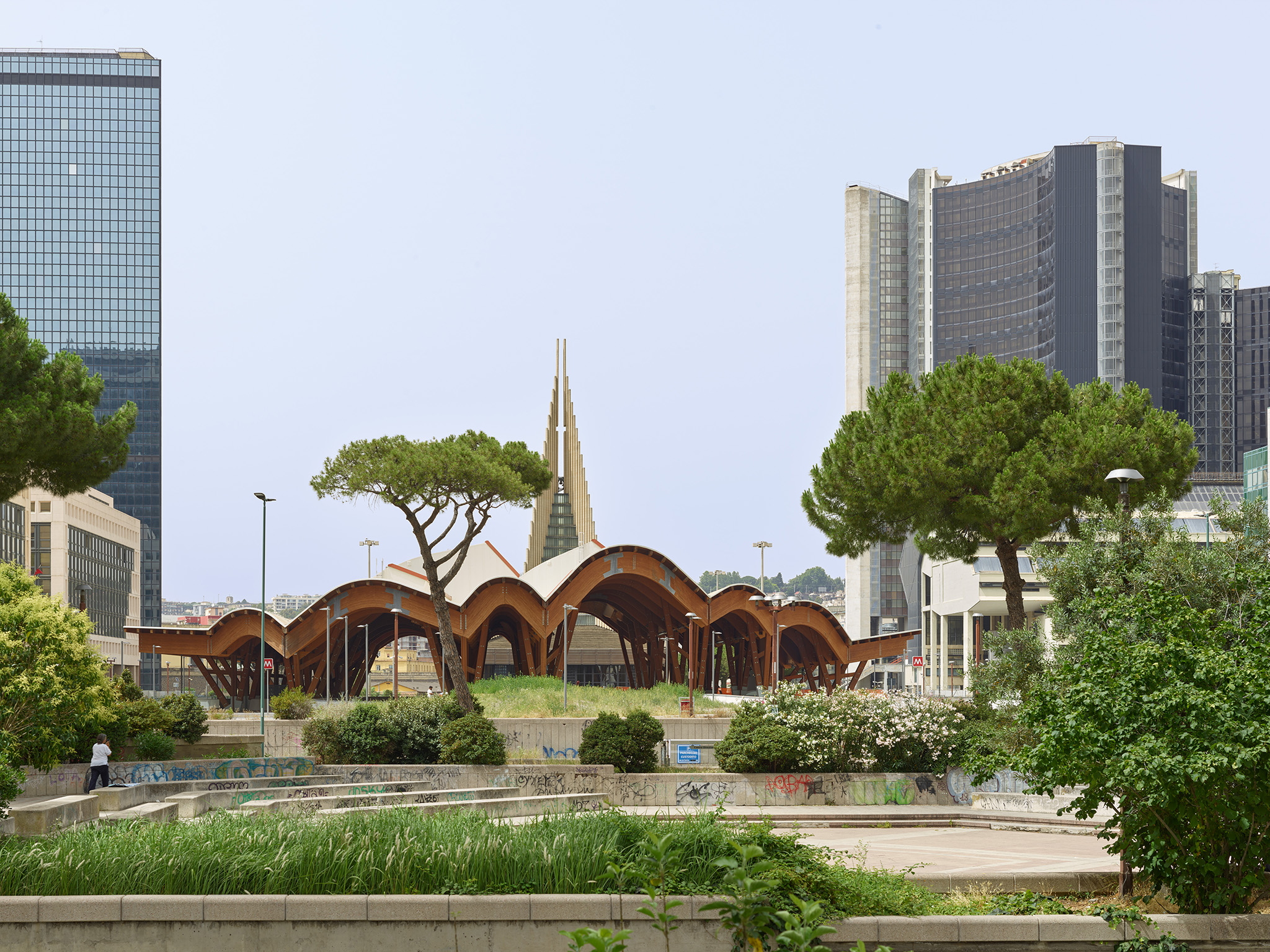
Centro Direzionale, Estación Central de Metro de Nápoles por Benedetta Tagliabue - EMBT Architects. Fotografía por Roland Halbe.

Centro Direzionale, Naples Underground Central Station by Benedetta Tagliabue - EMBT Architects. Photograph by Roland Halbe. 

Project description by Benedetta Tagliabue - EMBT Architects

In 2004 the City of Naples commissioned several internationally renowned architects, such as Sir Norman Foster, Massimiliano Fuksas, Alvaro Siza, Domenique Perault, Karim Rashid and Benedetta Tagliabue to build a train station for the city’s new metropolitan line.

Known as the triple A,” art, architecture and archaeology” is the leitmotiv of the project, the intervention aims to give a highly recognizable identity to the formerly homogeneous setting.

Centro Direzionale, Estación Central de Metro de Nápoles por Benedetta Tagliabue - EMBT Architects. Fotografía por Roland Halbe.
Centro Direzionale, Naples Underground Central Station by Benedetta Tagliabue - EMBT Architects. Photograph by Roland Halbe. 

With the design of this subway and train station ‘Centro Direzionale di Napoli’, Benedetta Tagliabue – EMBT generates new correlations between the city’s natural volcanic ground and the original 1970’s design of the artificial site by Kenzo Tange.

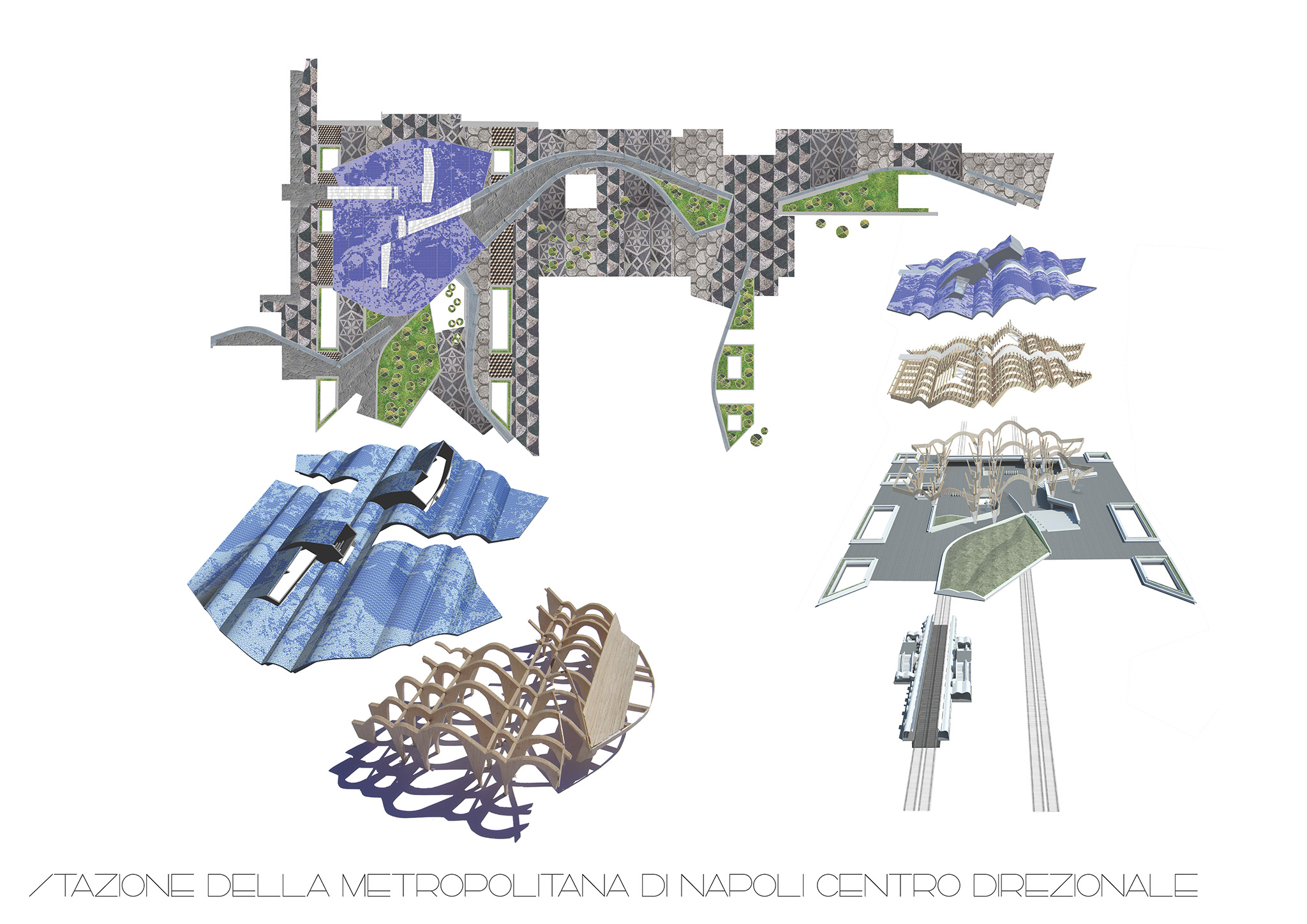
The new station, with its underground link to the city, will transform the area’s artificial surface into a complex topography with many different levels for pedestrians and an outstanding building with an intricate tectonic roof structure. Diverse public space will allow a physical reception of the city’s present and past and charts the topographical movements and dynamics of the local population.
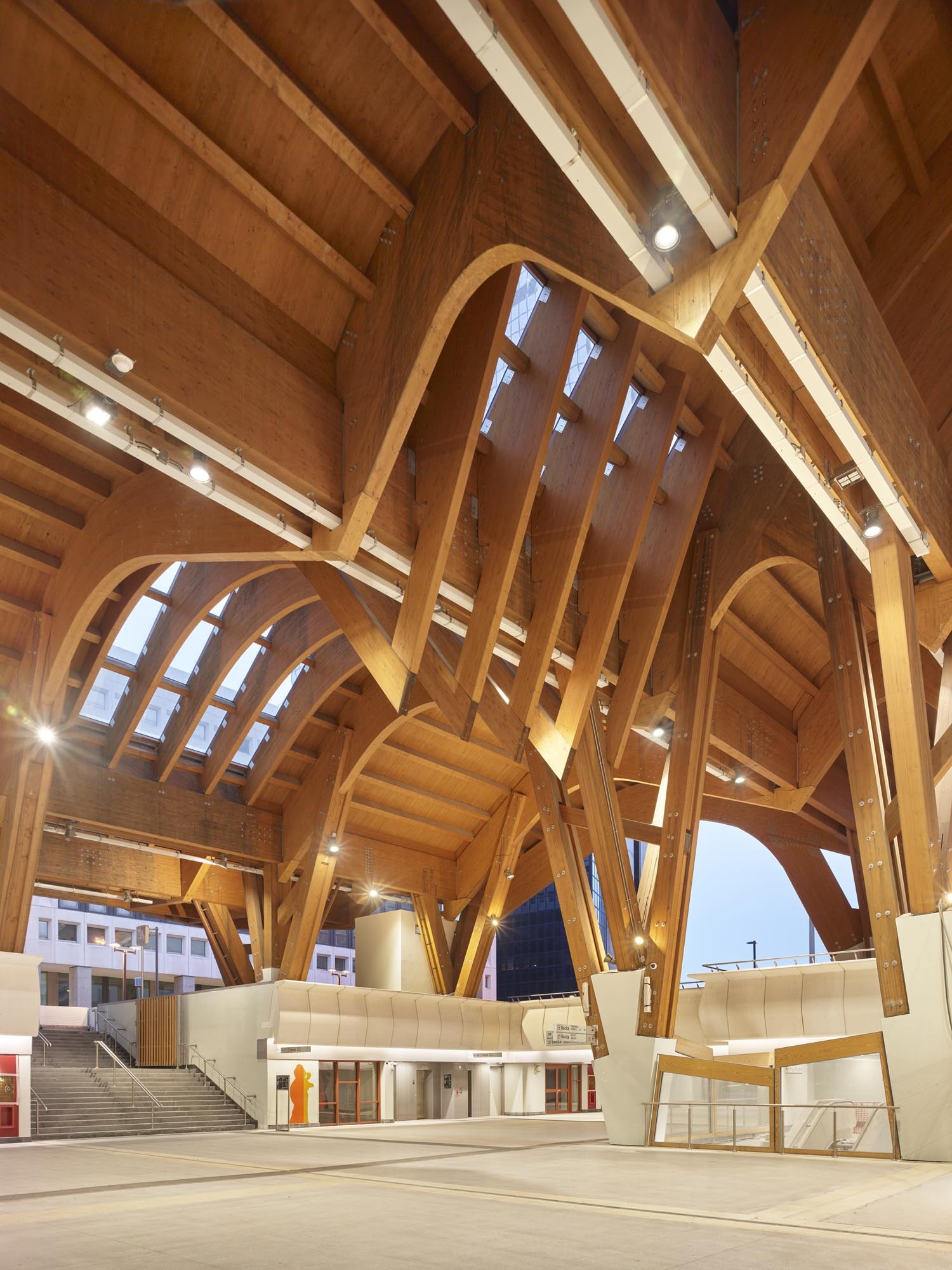
Centro Direzionale, Naples Underground Central Station by Benedetta Tagliabue - EMBT Architects. Photograph by Roland Halbe. 

Wood as main material
The Naples Underground Central Station had been built on an urban grid designed by Japanese architect Kenzo Tange as part of an upgrade of the city's infrastructure. Kenzo Tange designed the Centro Direzionale and built a city very much in his own style, with reflective skyscrapers, a 1970s piazza, which did not work because it is so different from the rest of Naples.

One of the decisions of the project was to build the station with wood to create an organic contrast with the 1970s neighbourhood. The design of the new station was inspired by older areas of Naples.
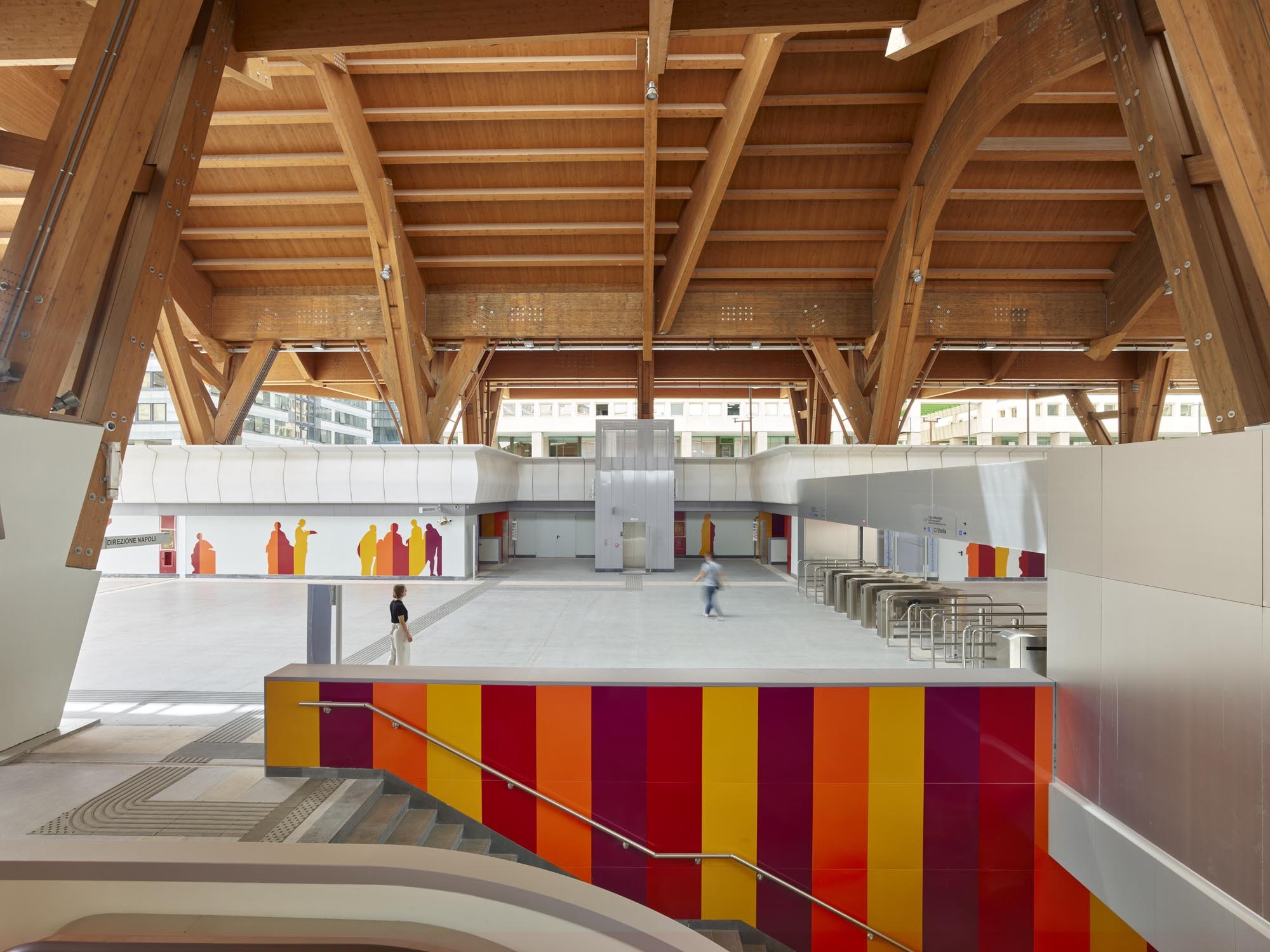
Centro Direzionale, Naples Underground Central Station by Benedetta Tagliabue - EMBT Architects. Photograph by Roland Halbe. 

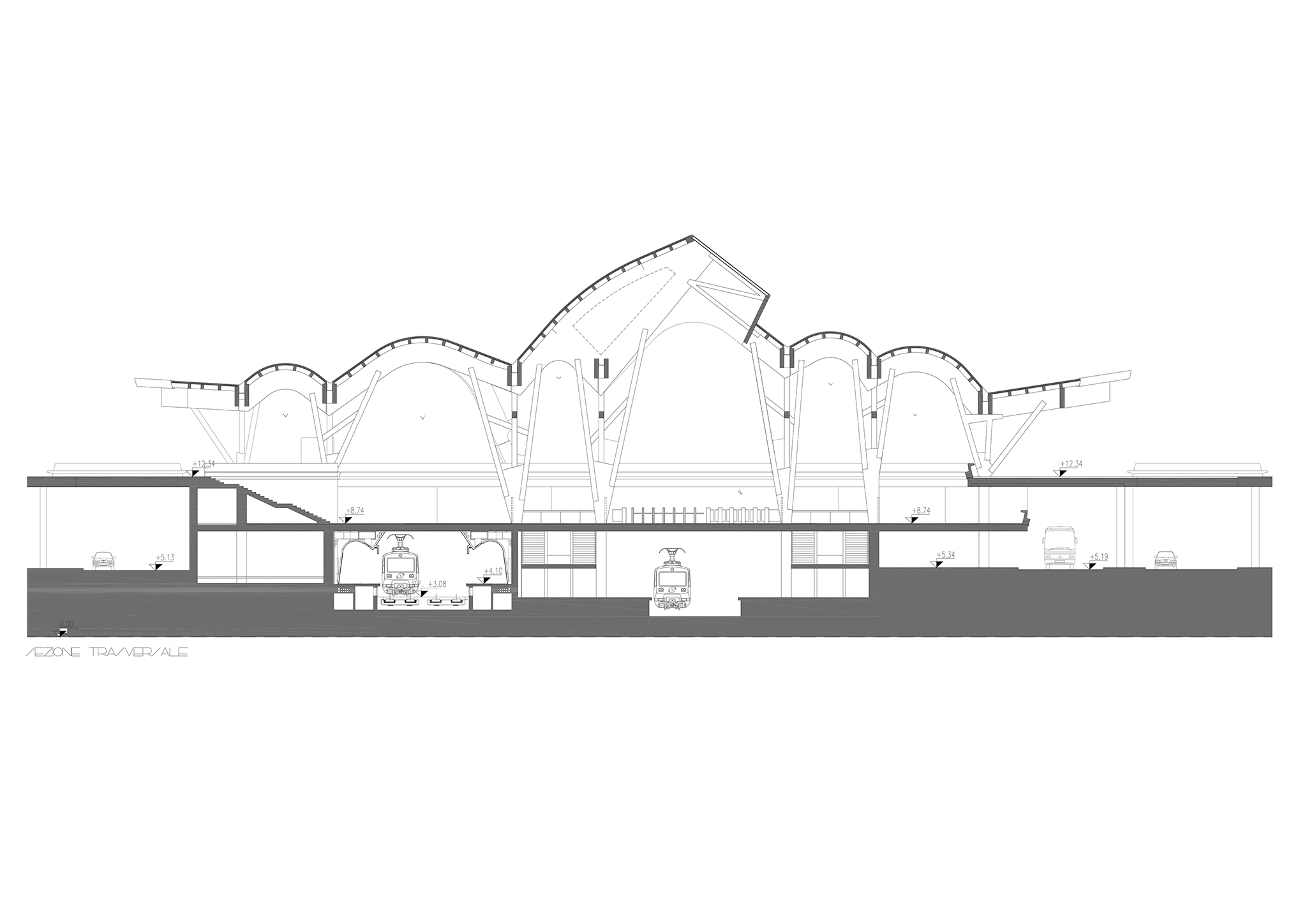
Today, it is a place where there are many offices and commercial spaces, but at five o'clock in the afternoon, it is deserted making it an unsafe place. So, the idea of making a new station there and connecting it to the new metro line was also to try to introduce a piece of nature and a piece of the original part of Naples into this artificial part of the city. The new station is being built over the existing metro lines, replacing an earlier building that was little more than a cover for the stairs leading down to the metro platforms.

Wood is a very light material that blends perfectly with the pre-existing structures: we used the concrete structures and columns and inserted new wooden columns into them. The steel part of the concrete matches to make the base of the new columns, and then the rest of the column is entirely made of wood.
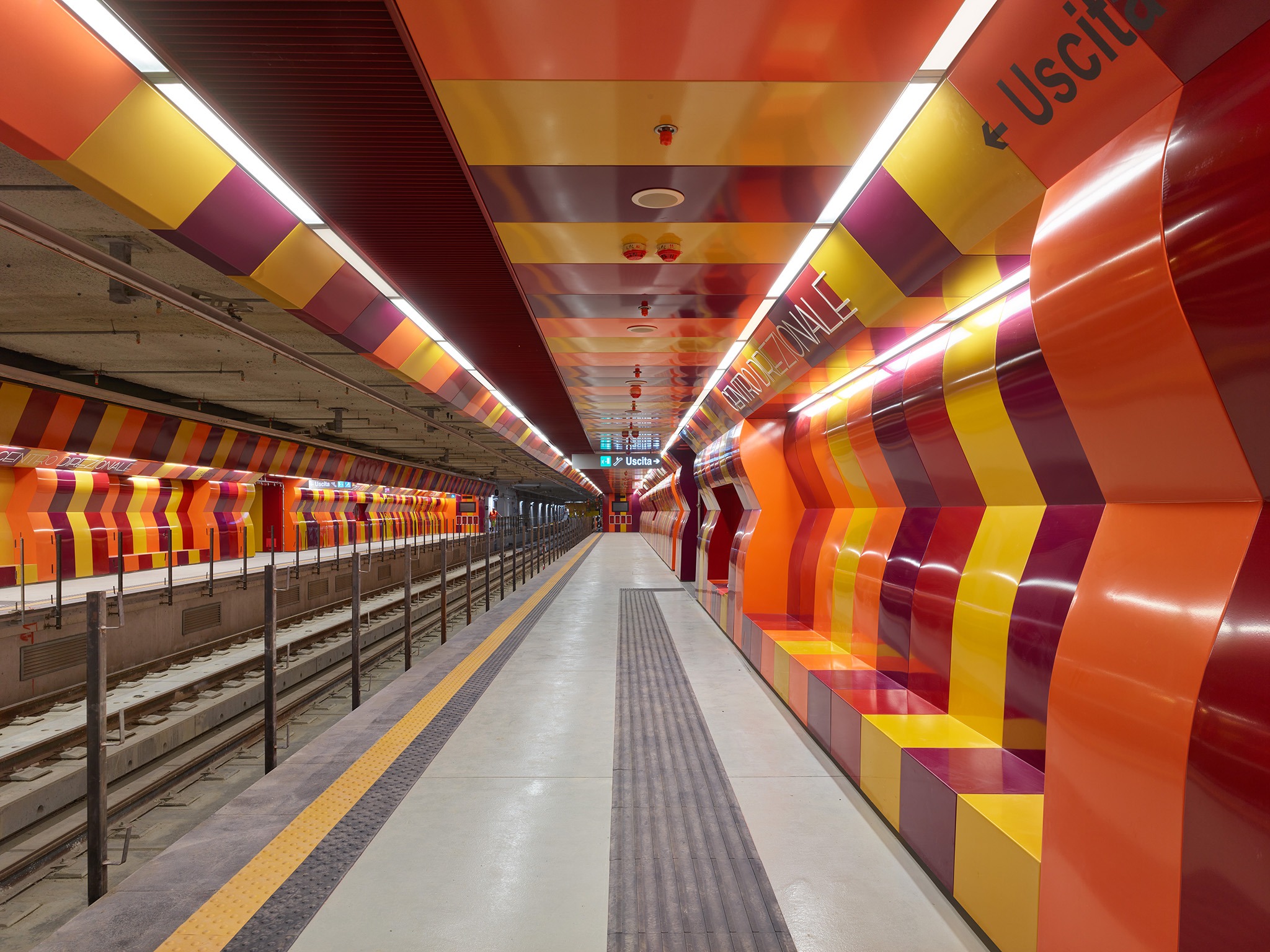
Centro Direzionale, Naples Underground Central Station by Benedetta Tagliabue - EMBT Architects. Photograph by Roland Halbe. 

The characteristic shape of the 10,000 sqm station is made of glued laminated timber. The width of the train tracks below is reflected in the width of the undulating vaults.

Vaults are a regular feature of the studio. It is an architectural device that works with most materials because historically, vaults were made first with stone and then with ceramic, and today it is effective with wood, especially glulam because it can be moulded into any shape you want beam to be. The vaulted ceilings are also a nod to classic train stations that are often vaulted, while the shape of the station was intended to create the feeling of a "walk in the woods".
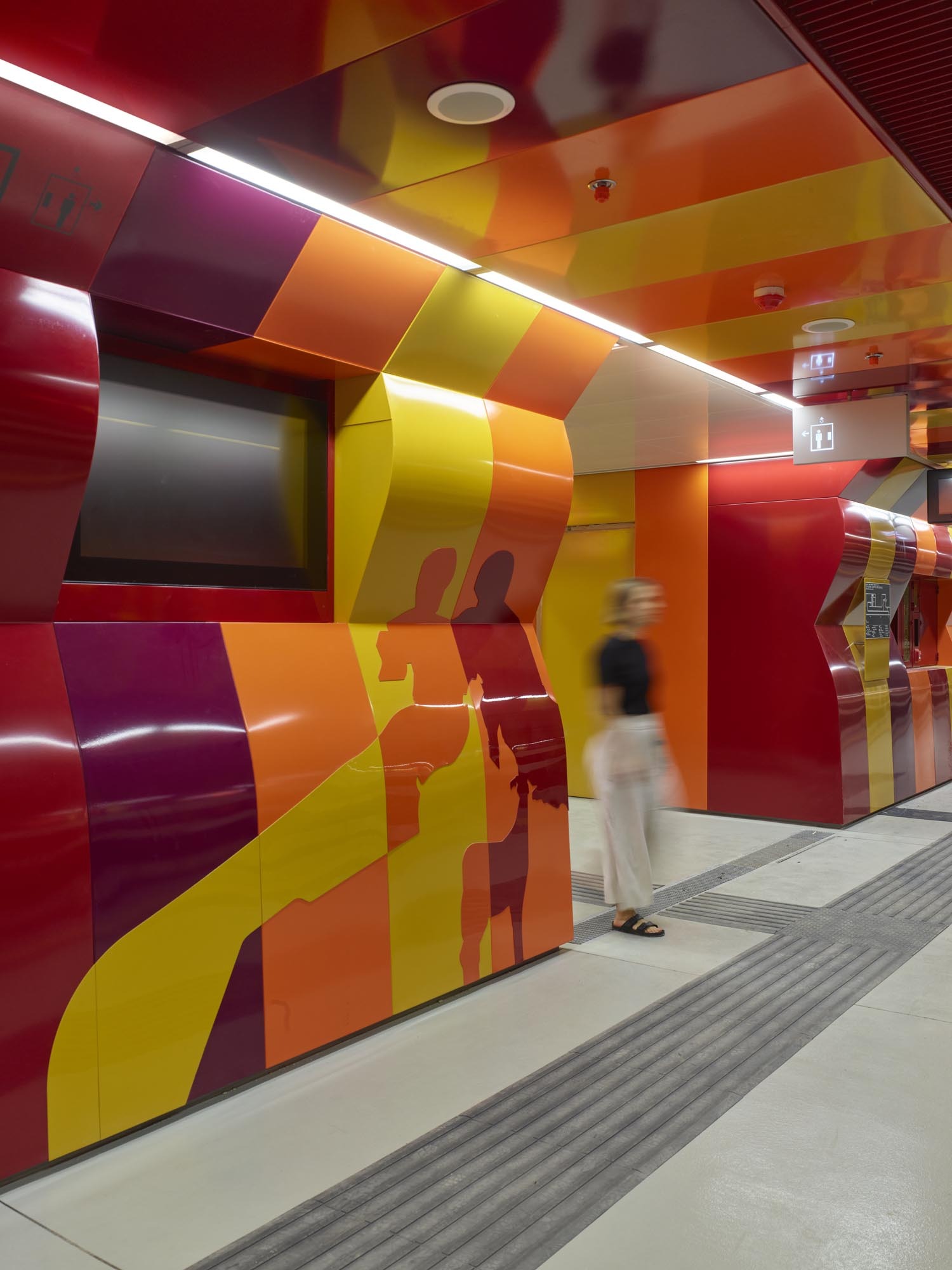
Centro Direzionale, Naples Underground Central Station by Benedetta Tagliabue - EMBT Architects. Photograph by Roland Halbe. 

In a way, what we tried to achieve is a kind of new organic, flowing piazza, as if we were walking through a forest when we are actually in such an artificial business centre.

The Centro Direzionale is one of the new metro stations within the new infrastructure projects in Naples designed by well-known architects and designers, such as Zaha Hadid or Karim Rashid, which are being designed for the city under the AAA (architecture, art and archaeology) motto.
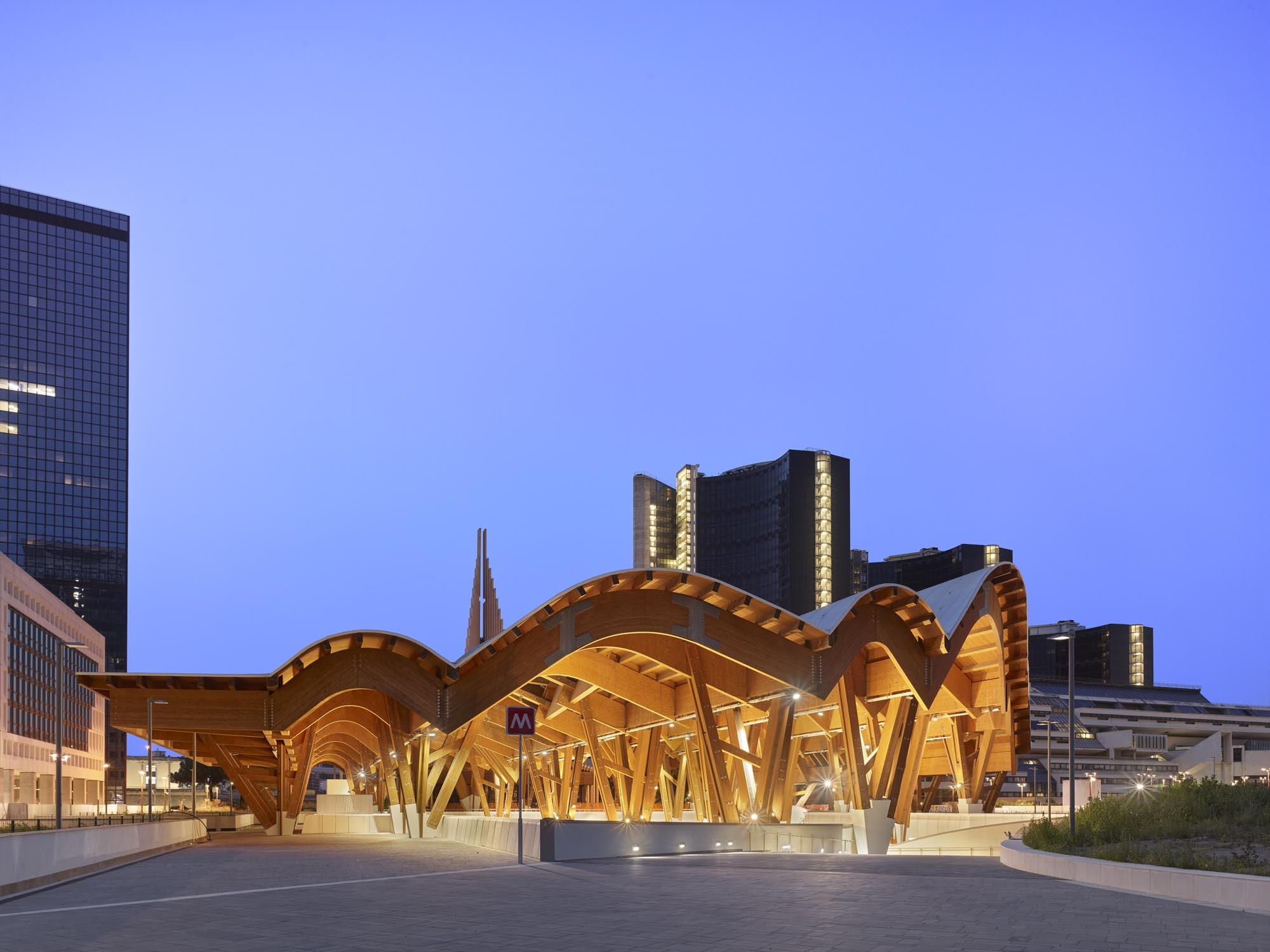
Centro Direzionale, Naples Underground Central Station by Benedetta Tagliabue - EMBT Architects. Photograph by Roland Halbe. 

However, the overall project has been delayed several times due to archaeological finds on the ground, including the design by Studio Fuksas which will now also serve as a museum after the discovery of an ancient Roman temple on the site.

The Centro Direzionale station did not have the same problem, as it is located in a newer part of the city, but construction was halted due to the COVID-19 pandemic.

The station will feature a piece of art on its ceiling depicting a face from an archaeological piece found in Pompeii, in a nod to both the art and architecture of the project's motto.

More information

+ + copy Created with Sketch.
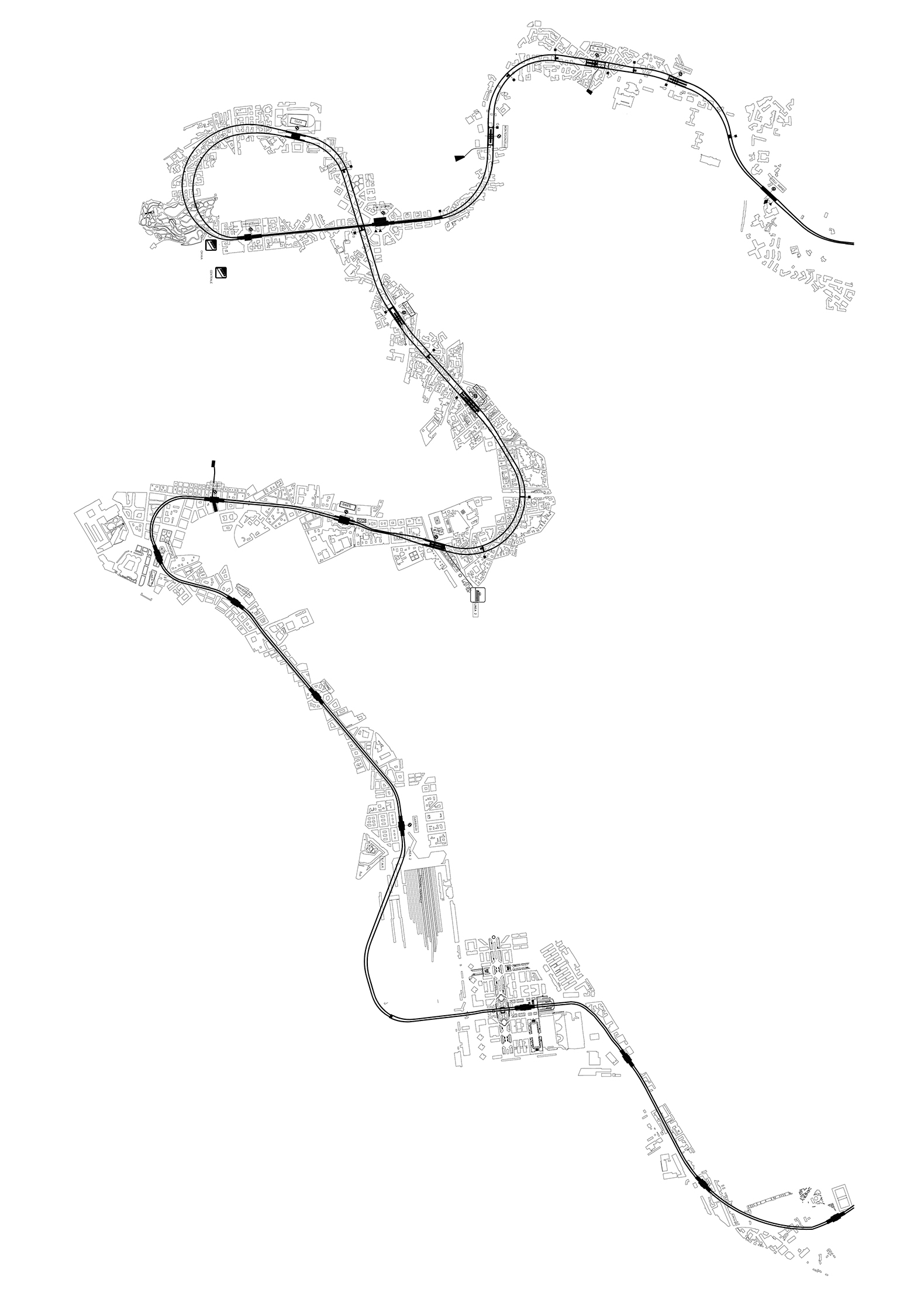
- + copy Created with Sketch.
Label
Project team
Text

Project Director.- Joan Callís.
Design Team Leader.- Valentina Nicol Noris.
EMBT Team.- Eugenio Cirulli, Marco Orecchia, Gabriela Degetau, Sofia Barberena, Andrea Morandi, Alessandra Deidda, Cecilia Bertozzi, Mirko Silvestri, Joanna Karatzas, Gabriele Rotelli, Guile Amadeu, Lucien Puech,Valeria Alfonsi, Michela Cicuto, Francesca Martinelli, Guido Bigolin, Maira Carillo, Jan Kokol, Andrè Temporelli, Ludwig Godefroy, Shavleg Chichishvili, Gordon Tannhausen, Marco Orecchia, Giulia Viola, Federico Volpi, Teymour Benet, Luis Angello Coarite Asencio, Antonio Rusconi, Davide Mergoni, Francesco Rota, Gregorius Budhijanto, Juan Manuel Peña Sanz, Marco dal Fabbro, Marina Pérez Primo, Raphael Teixeira Libonati, Stefano Spotti, Andrea Morandi, Silvia Sonnati, Carlo Consalvo, Philip Lemanski, Marianna Mincarelli.

+ + copy Created with Sketch.
- + copy Created with Sketch.
Label
Client
Text

Metropolitana di Napoli.

+ + copy Created with Sketch.
- + copy Created with Sketch.
Label
Area
Text

GFA.- 10,000 sqm.
Roof area.- 5,100 sqm.
Main spans.- 14.5 m.
Length of vaults.- 85 m.

+ + copy Created with Sketch.
- + copy Created with Sketch.
Label
Dates
Text

2025.

+ + copy Created with Sketch.
- + copy Created with Sketch.
Label
Location
Text

Naples, Italy.

+ + copy Created with Sketch.
- + copy Created with Sketch.
Label
Photography
Text

Roland Halbe.
Construction site photos.- Paolo Fassoli.

+ + copy Created with Sketch.
- + copy Created with Sketch.

Miralles Tagliabue EMBT is an international acknowledged architecture studio formed by Enric Miralles (1955-2000) and Benedetta Tagliabue in 1994.

The studio has experience in public spaces and buildings in both Europe and China working for State and Local Governments as well as Corporate and private clients.

EMBT’s mature approach to architecture, interior design, facility planning includes experience with educational, commercial, industrial and residential buildings, restoration of buildings as well as special purpose landscape architecture.

Each project evolves from the specific client requirements and innovation emerges through the design process. This approach is combined with strong technical and management skills to provide cost effective and personal service.

The studio maintains a highly personal level of service throughout the design process and offer strong technical and structural solutions through close collaboration with engineering offices.

The majority of the EMBT projects are commissioned by public clients with special emphasis on urban space and the coherence between the built environment and the public space. Each project brings with it a new client and special cost constraints. To achieve the desired solution, EMBT believe that the design process must be a collaborative effort between the client and the designer.

EMBT ensures that clients take an active role in defining their needs, bringing client and solution together, and is backed by a support team with a capability of responding rapidly to projects demands.

The studio put great emphasis on each individual projects context, history and culture and aims to enhance these aspects through their unique design process.

Read more

Benedetta Tagliabue was born in Milan (June 24, 1963) and graduated from the University of Venice in 1989. In 1991 she joined Enric Miralles’ studio eventually becoming a partner. Her work with Miralles, whom she married, includes several high-profile buildings and projects in Barcelona: Parque Diagonal Mar (1997-2002), Head Office Gas Natural (1999-2006) and the Market and Quarter Santa Caterina (1996-2005), as well as projects across Europe, including the School of Music in Hamburg (1997-2000) and the City Hall in Utrecht (1996-2000).

In 1998 the partnership won the competition to design the new Scottish Parliament building. Despite Miralles’ premature death in 2000, Tagliabue took leadership of the team as joint Project Director and the Parliament was completed in 2004, winning several awards.

She won the competition for the new design of Hafencity Harbor in Hamburg, Germany, a subway train station in Naples, and the Spanish Pavilion for Expo Shanghai 2010 among others.

Today under the direction of Benedetta Tagliabue the Miralles-Tagliabue-EMBT studio works with architectural projects, open spaces, urbanism, rehabilitation and exhibitions, trying to conserve the spirit of the Spanish and Italian artisan architectural studio tradition which espouses collaboration rather than specialization.

Their architectural philosophy is dedicating special attention to context.

Benedetta has written for several architectural magazines and has taught at, amongst other places, the University of Architecture ETSAB in Barcelona. She has lectured at many international architectural Forums as, for example, the RIBA, the Architectural Association and Bartlett School in, London, the Berlage Institut in Amsterdam, and in the USA, China and South America.

Read more
Published on: February 20, 2026
Cite:
metalocus, AGUSTINA BERTA
"Art, architecture and archaeology. Centro Direzionale by Benedetta Tagliabue - EMBT Architects" METALOCUS. Accessed
<https://www.metalocus.es/en/news/art-architecture-and-archaeology-centro-direzionale-benedetta-tagliabue-embt-architects> ISSN 1139-6415
Loading content ...
Loading content ...
Loading content ...
Loading content ...
Loading content ...
Loading content ...
Loading content ...
Loading content ...
Loading content ...
Loading content ...
Loading content ...
Loading content ...
Loading content ...
Loading content ...
Loading content ...
Loading content ...
Loading content ...
Loading content ...
Loading content ...
Loading content ...
Loading content ...
Loading content ...
Loading content ...
Loading content ...
Loading content ...
Loading content ...
Loading content ...
Loading content ...
Loading content ...
Loading content ...
Loading content ...
Loading content ...
Loading content ...
Loading content ...
Loading content ...
Loading content ...
Loading content ...
Loading content ...
Loading content ...
Loading content ...
Loading content ...
Loading content ...
Loading content ...
Loading content ...
Loading content ...
Loading content ...
Loading content ...
Loading content ...
Loading content ...
Loading content ...
Loading content ...
Loading content ...
Loading content ...
Loading content ...