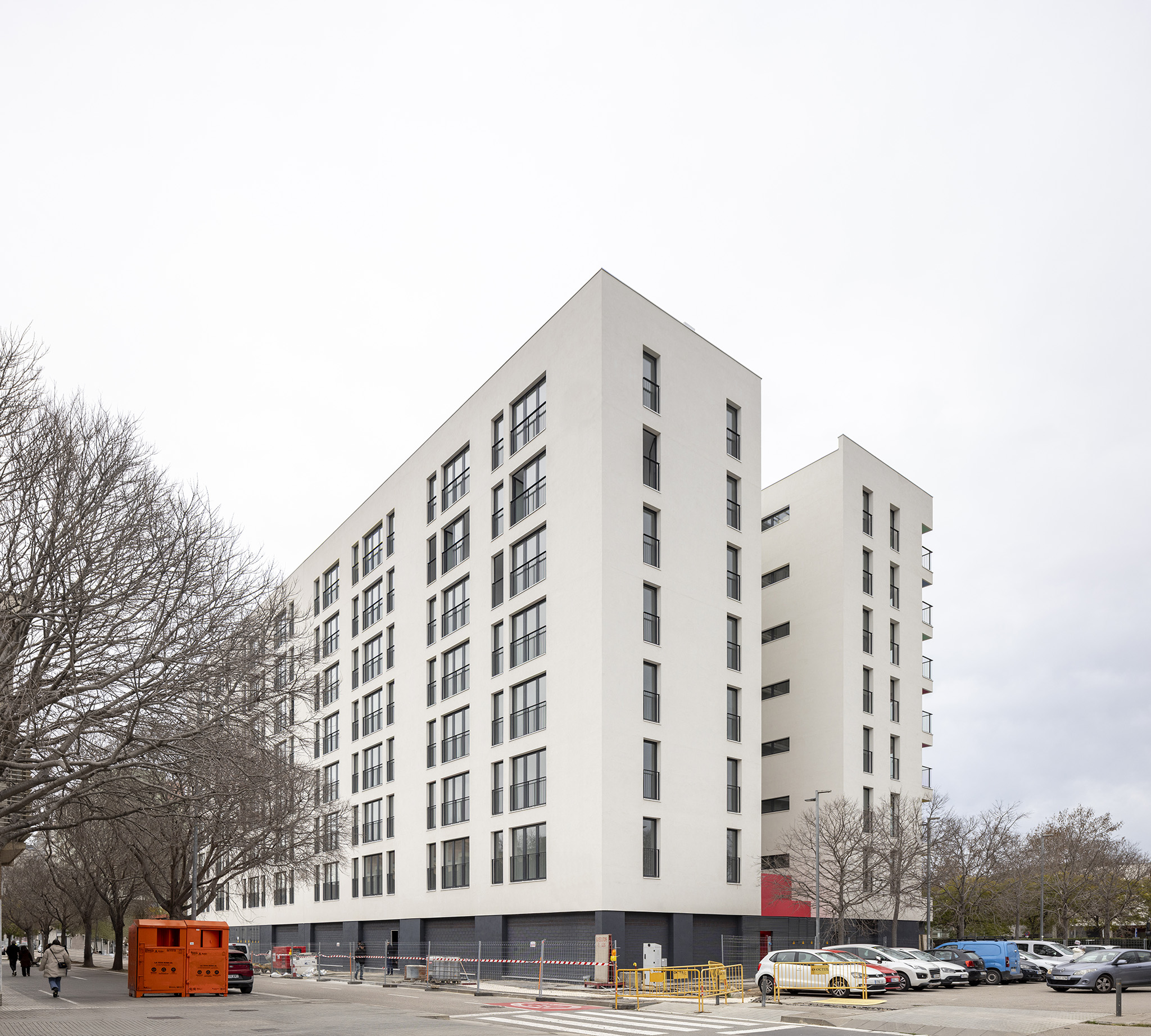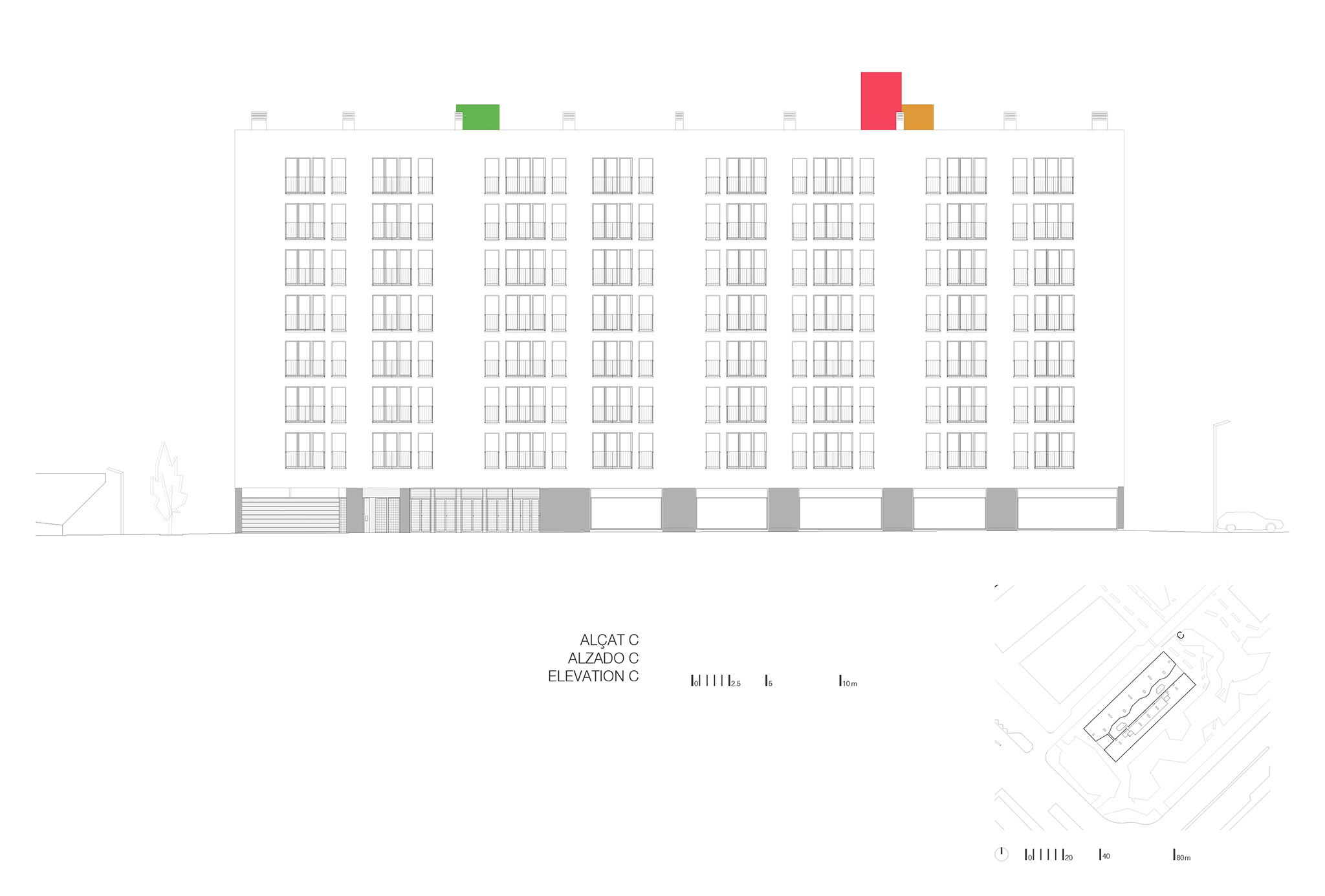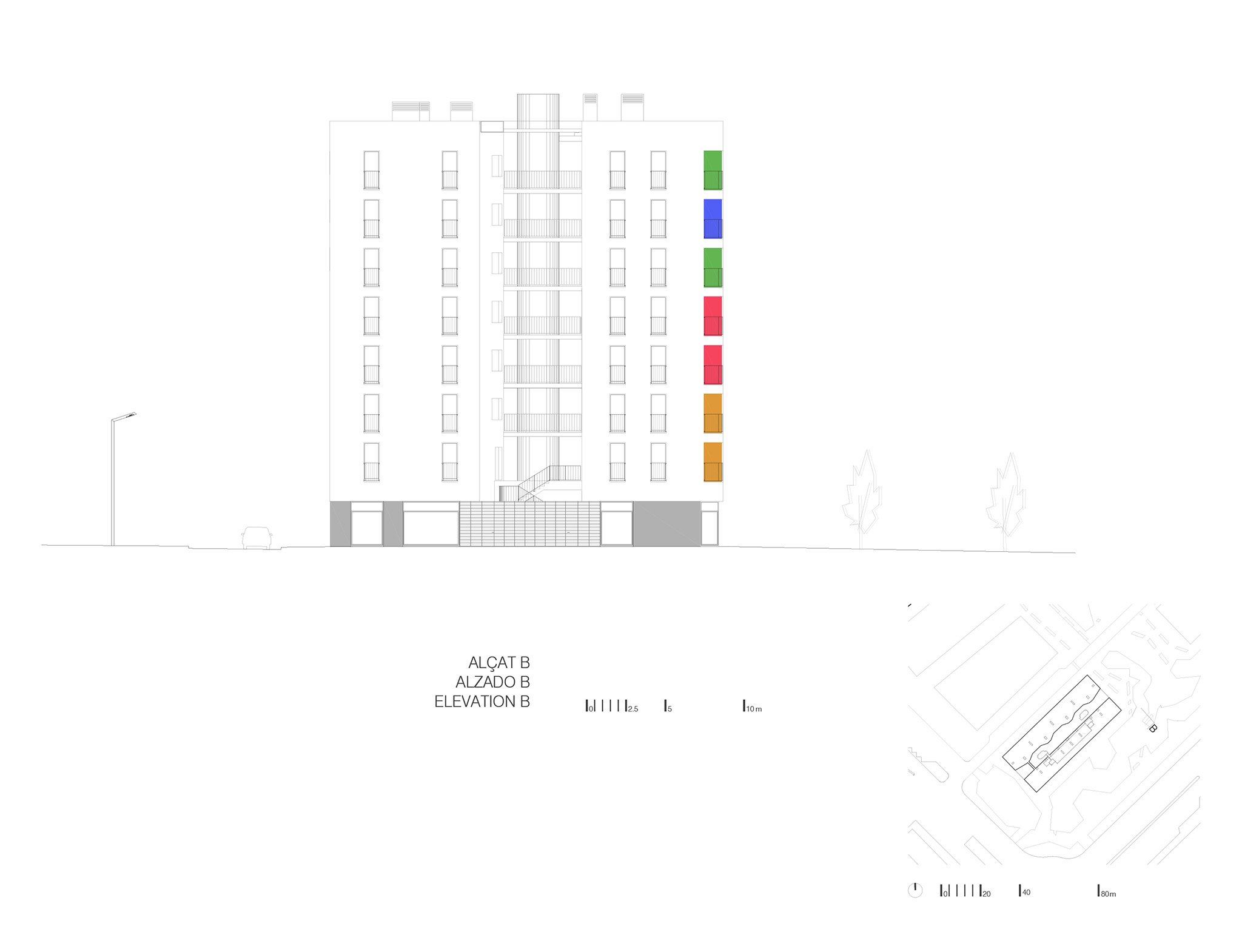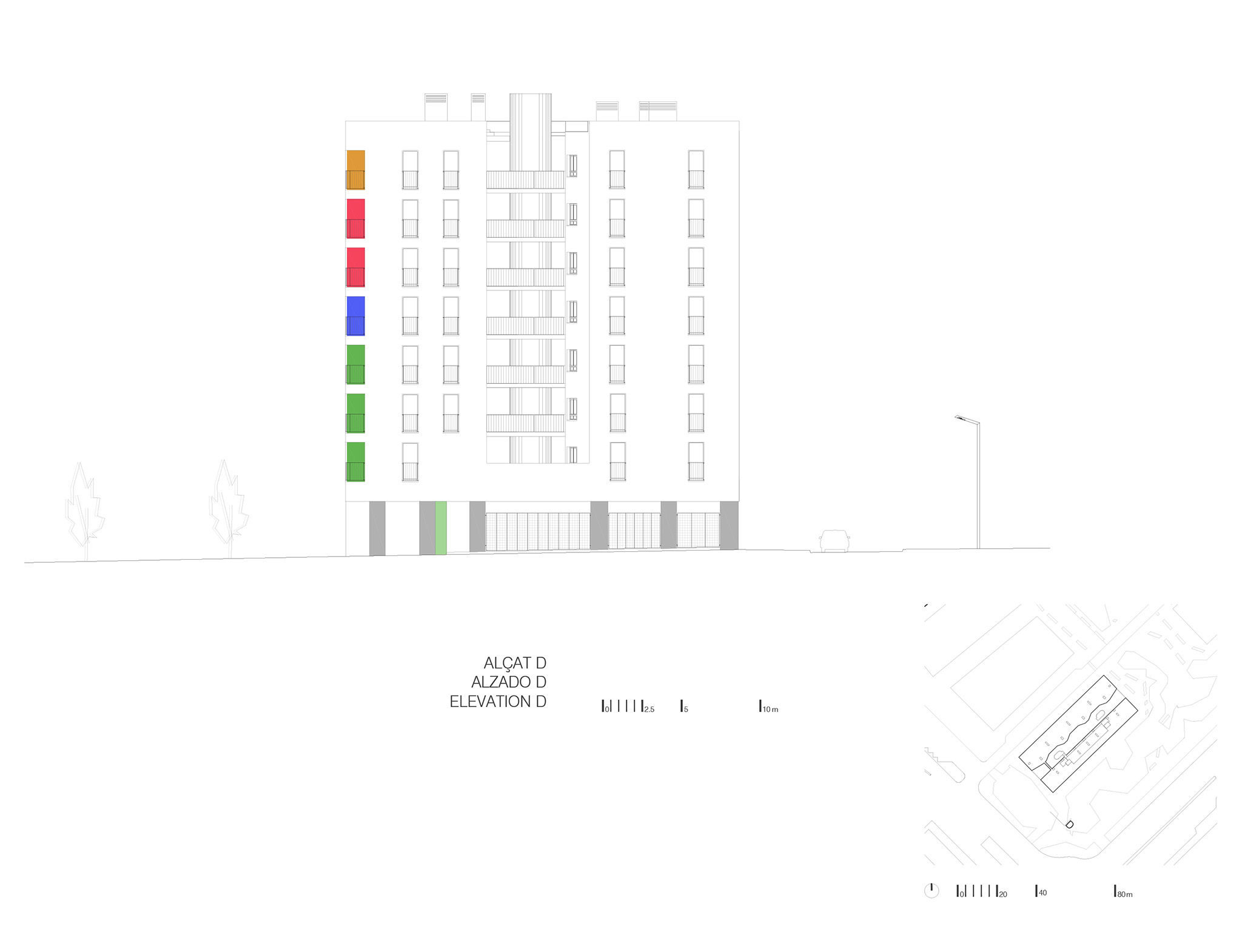
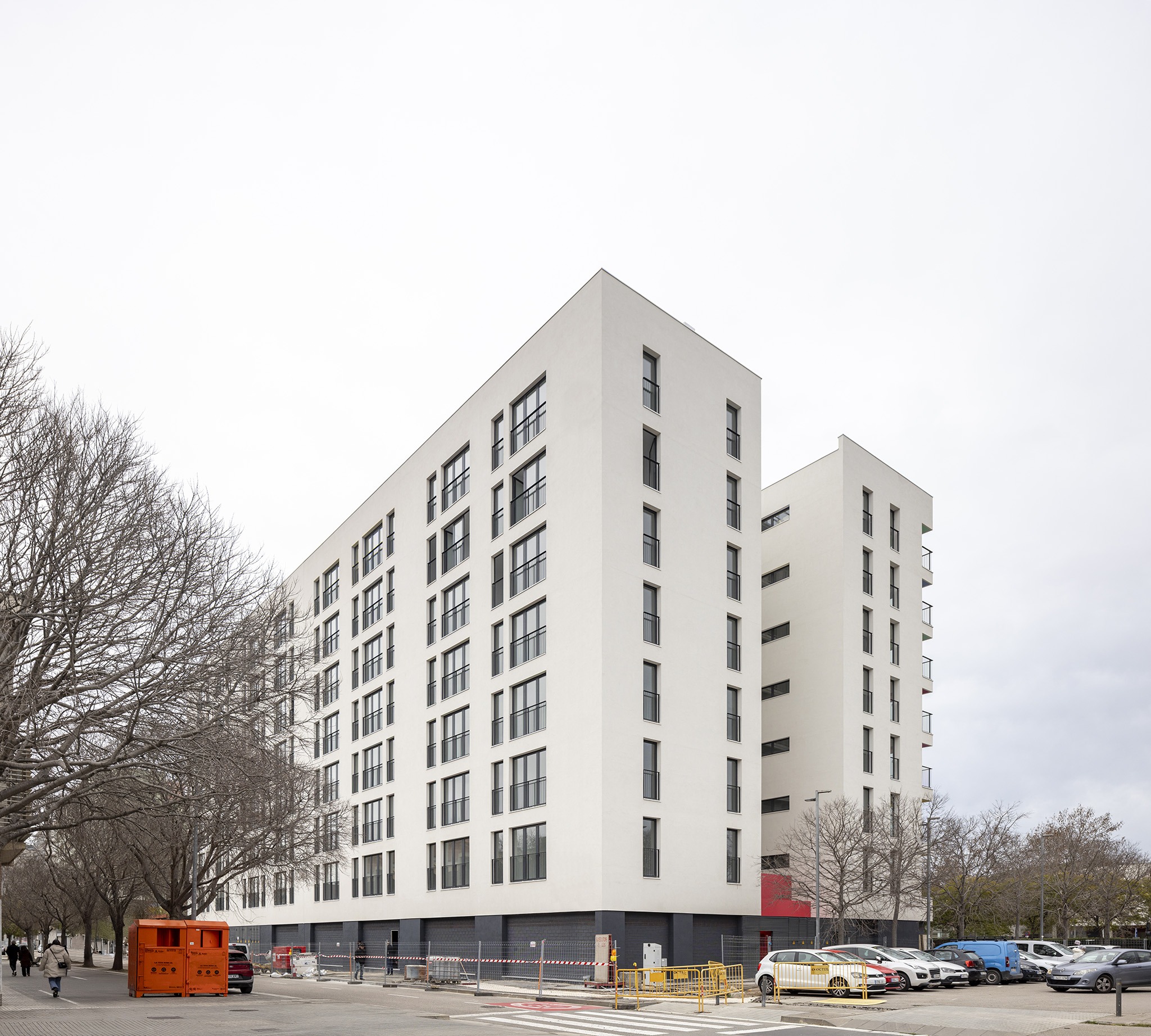
Due to its location, the proposal developed by EMBA assumes a dual urban role. On the one hand, it acts as a landmark at one of the main southern access points to Sant Boi, and on the other, it serves as a hinge with the new linear park that articulates the transition between the residential and industrial/commercial areas.
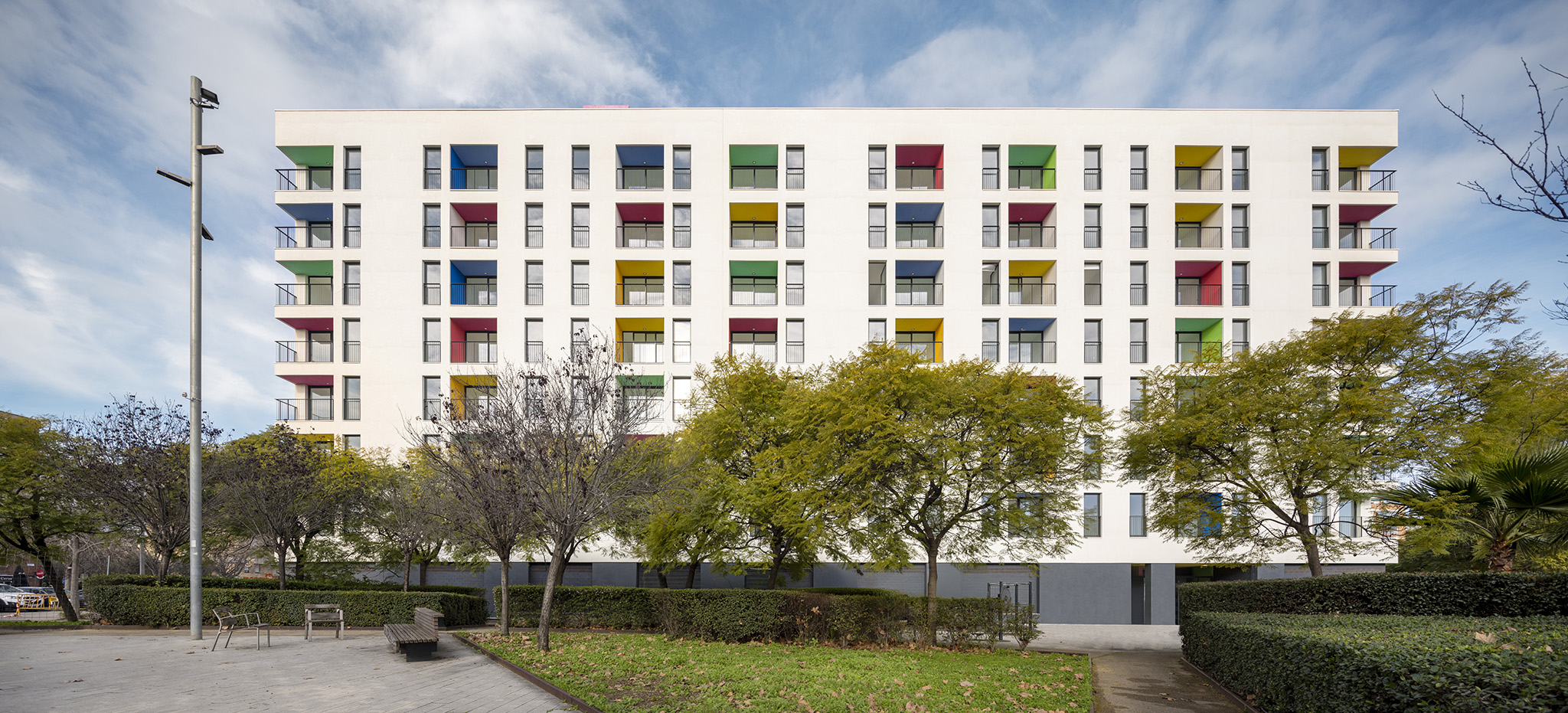
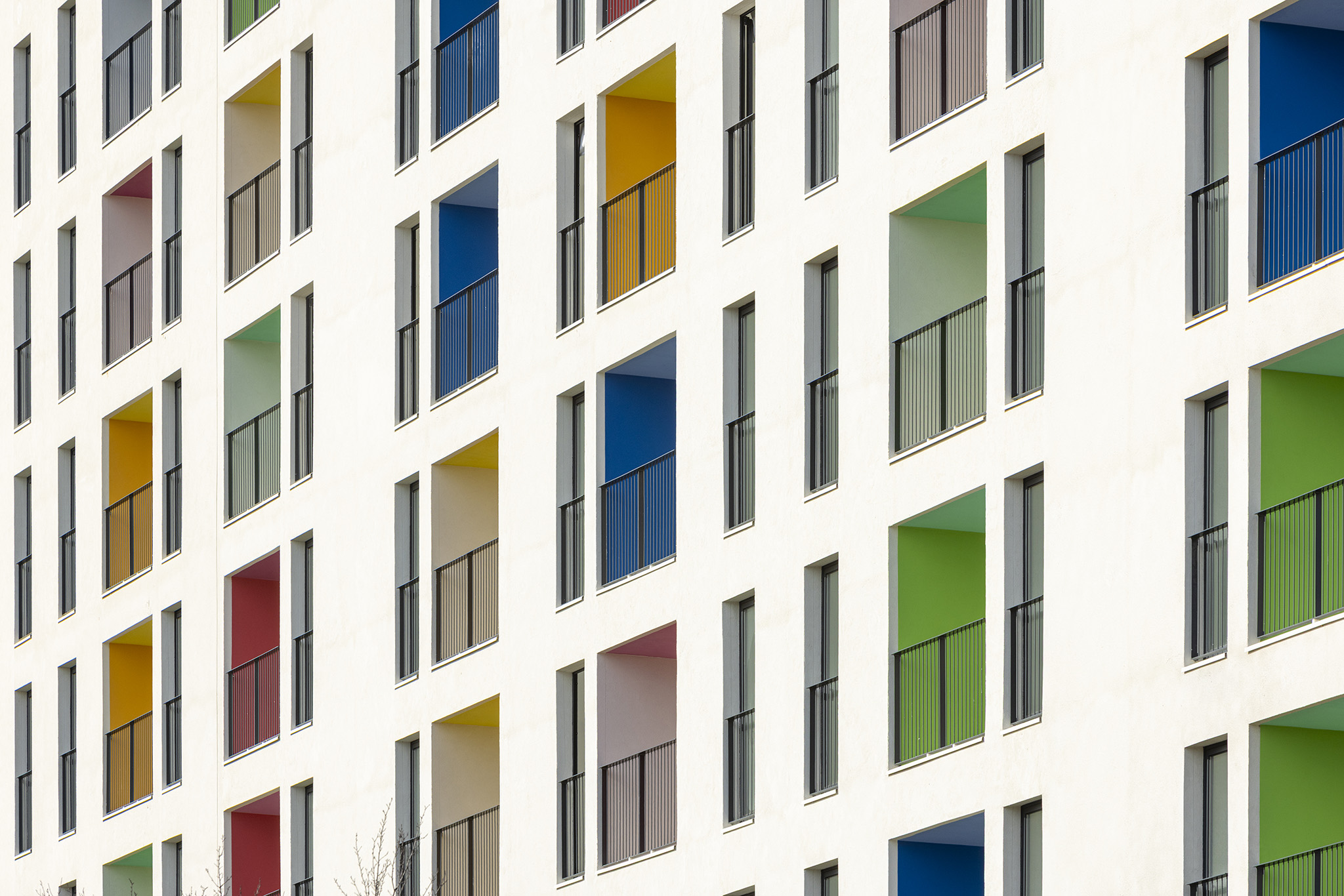
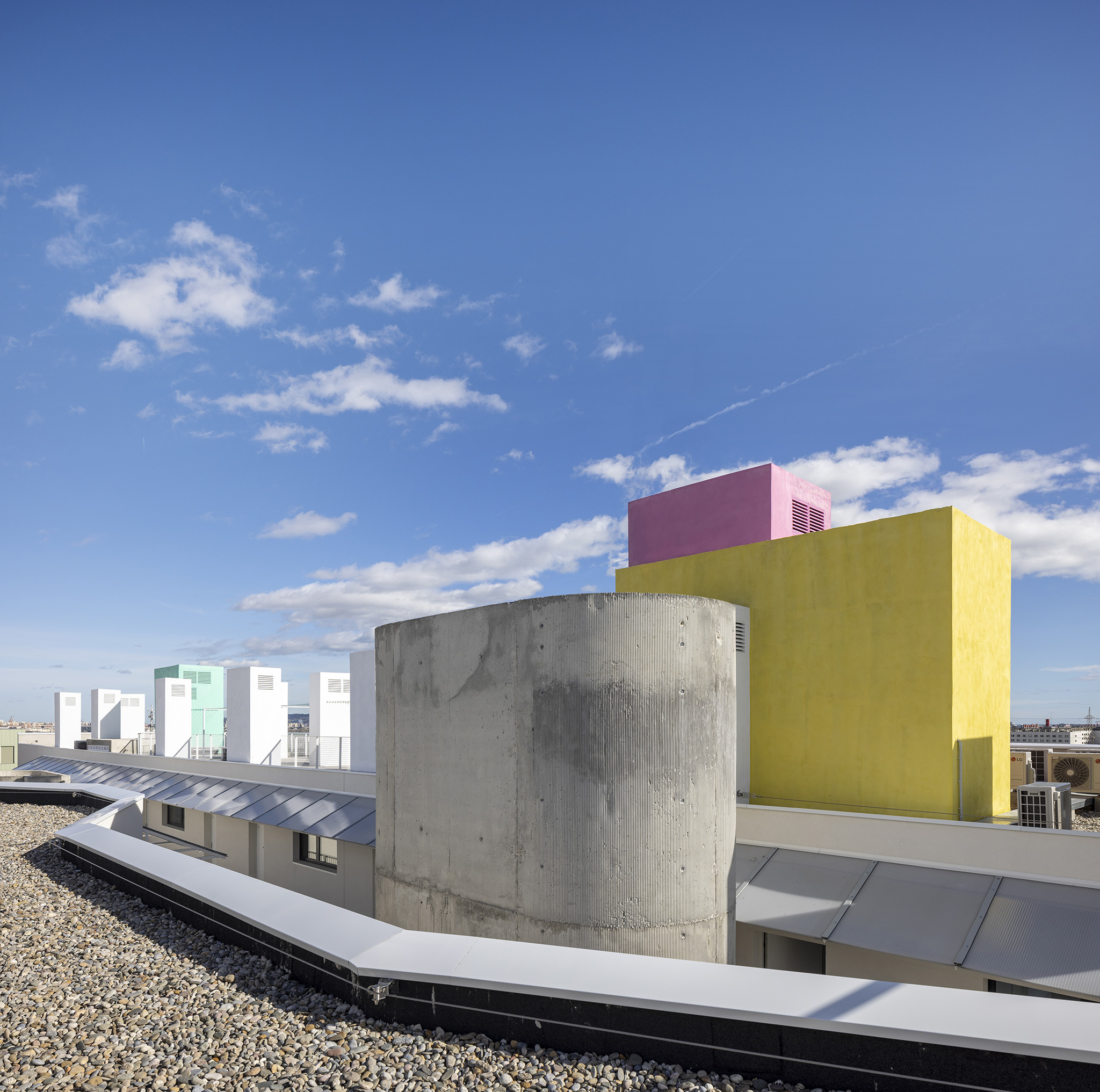
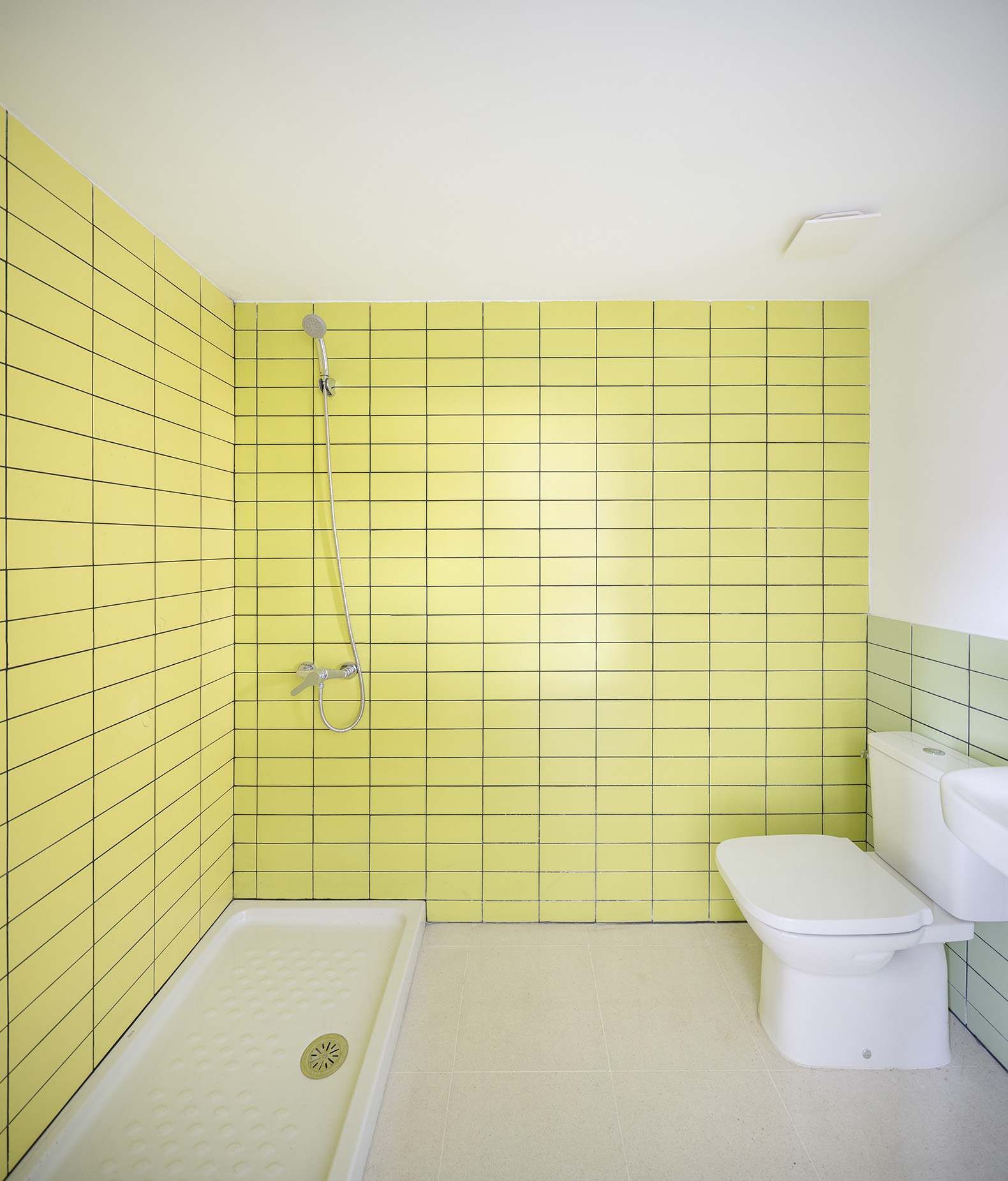
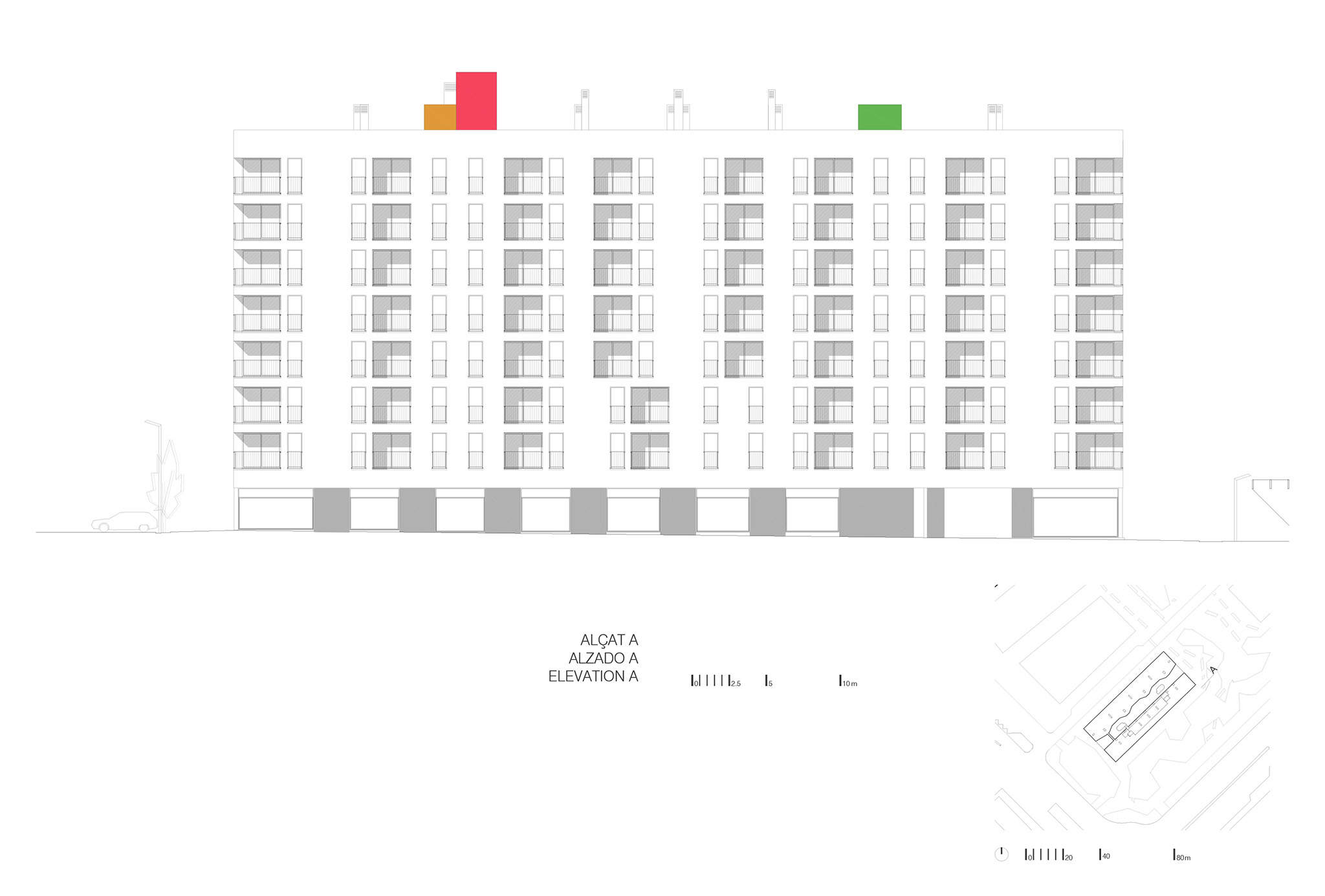
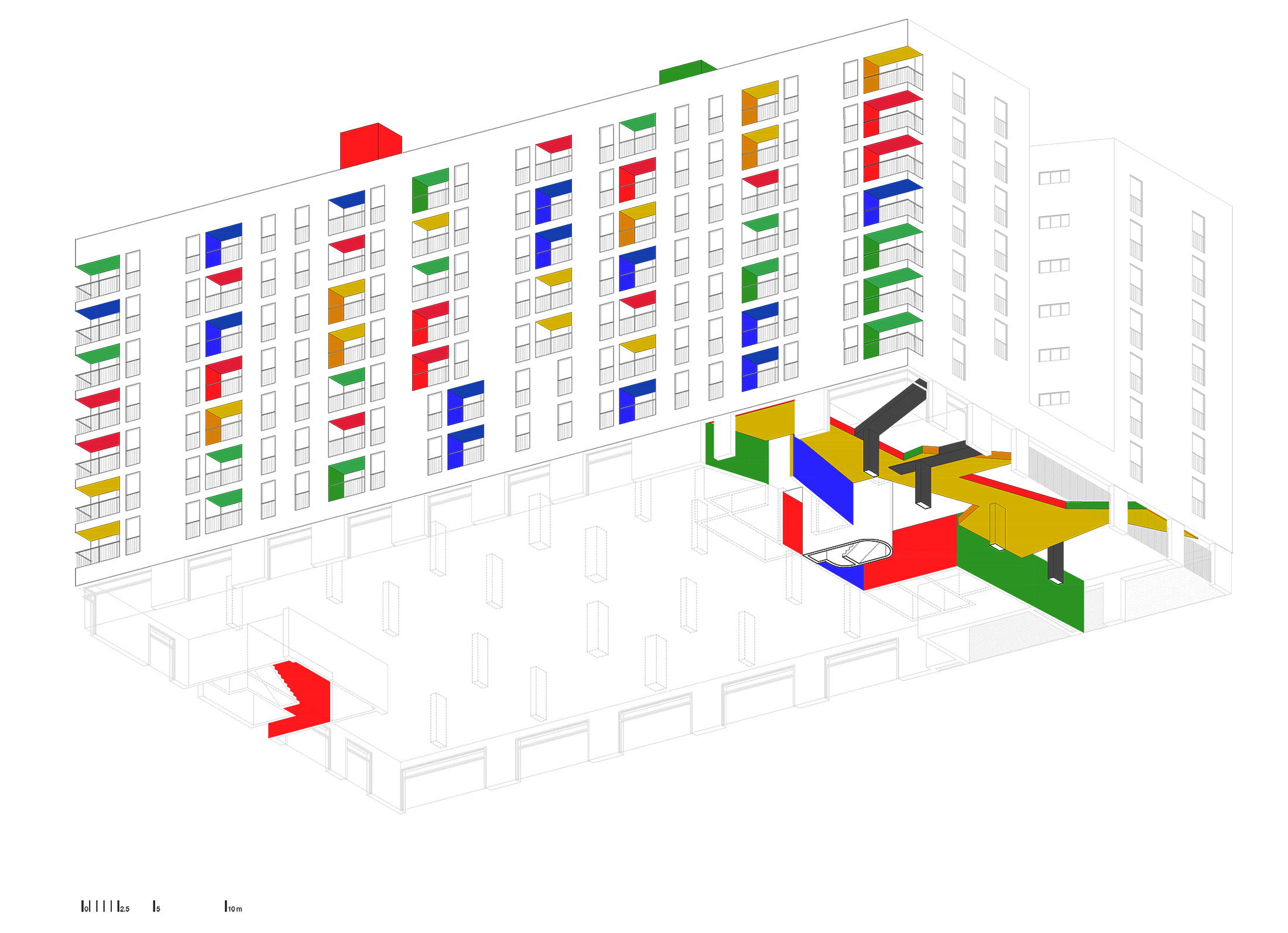
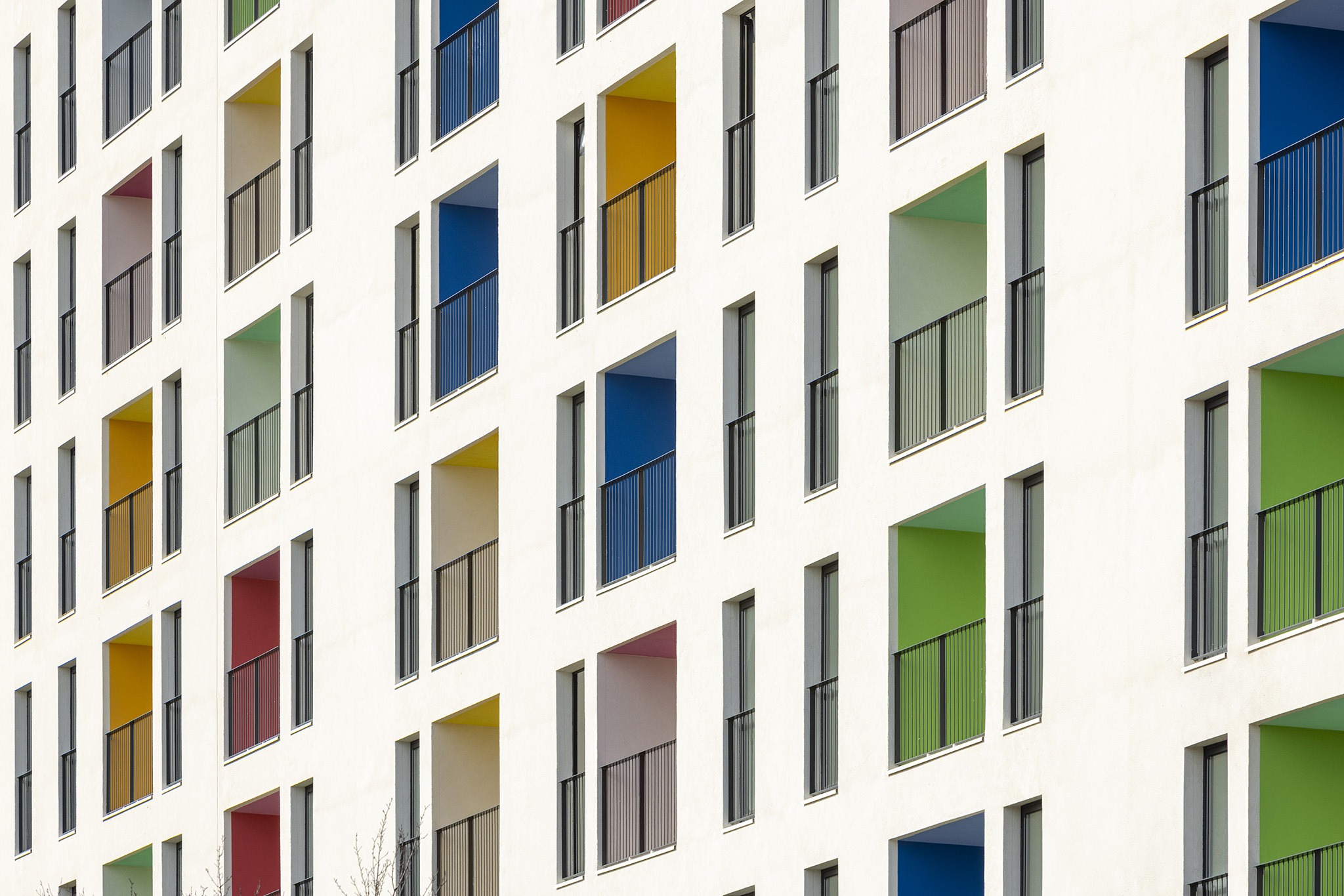
In response, the building’s composition is constructed from two complementary scales: an urban scale, presented as a compact white volume with clean edges; and a more intimate scale, defined by the sequence of terraces that pierce the façade and evoke the notes of a chromatic symphony.
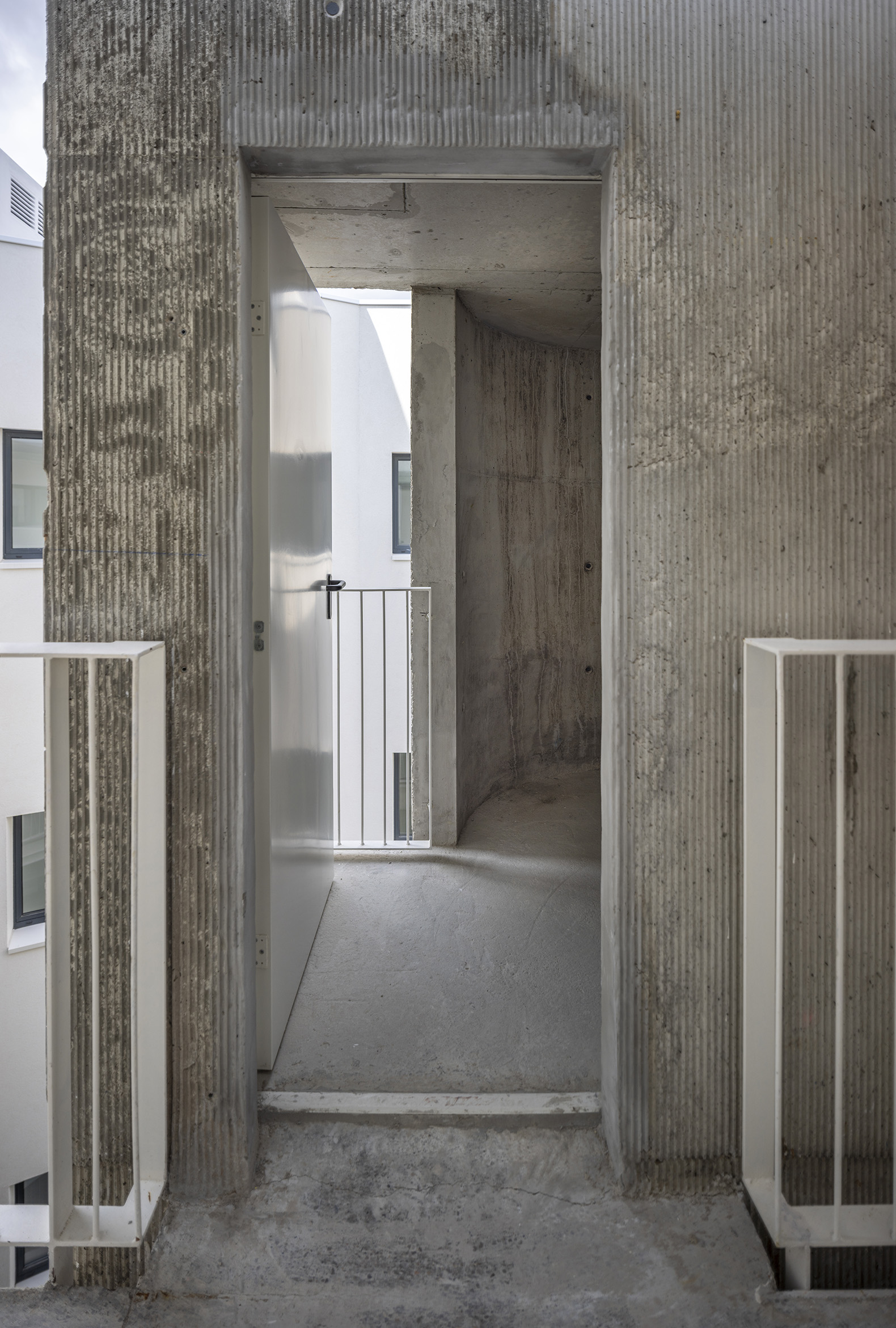
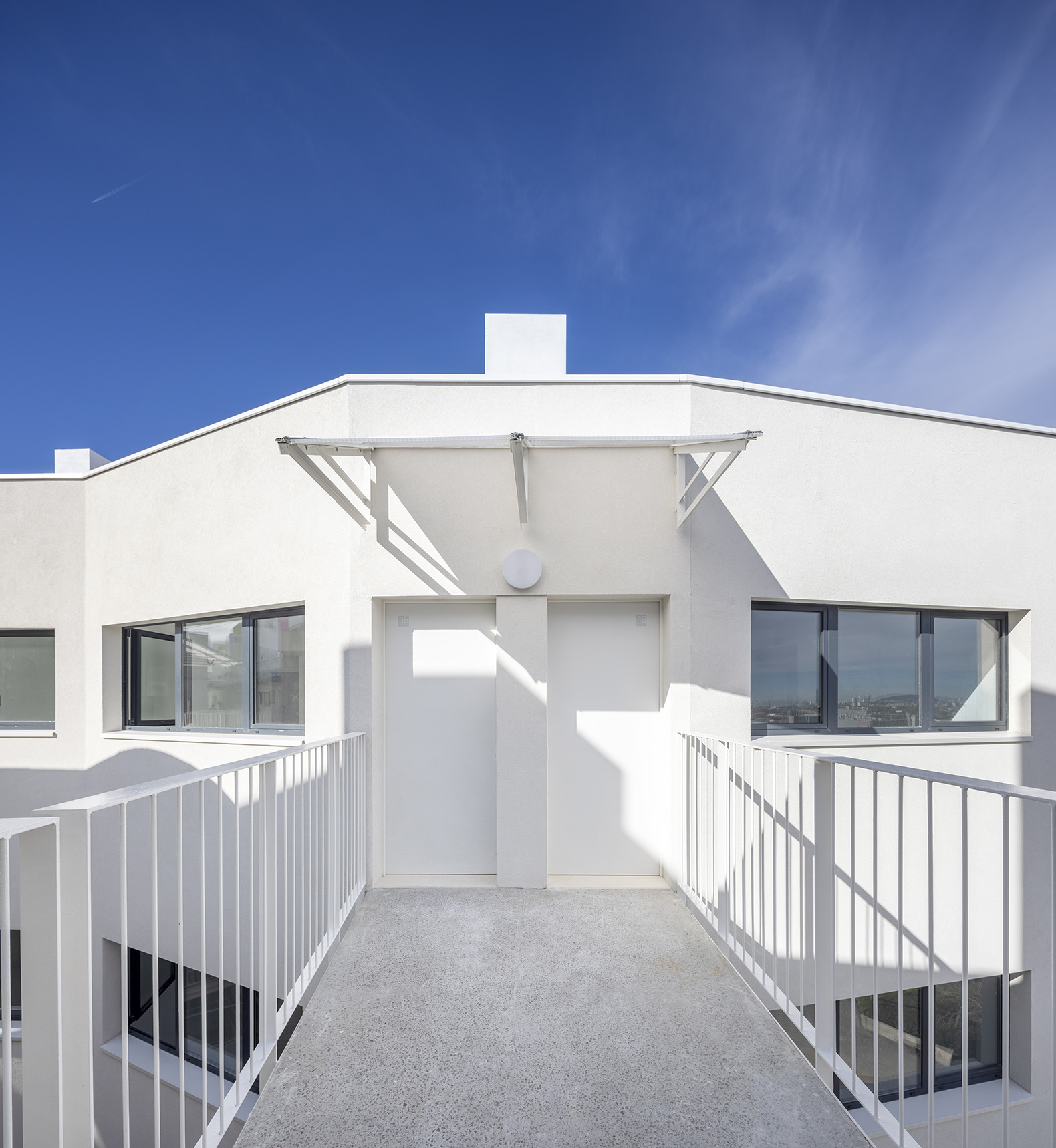
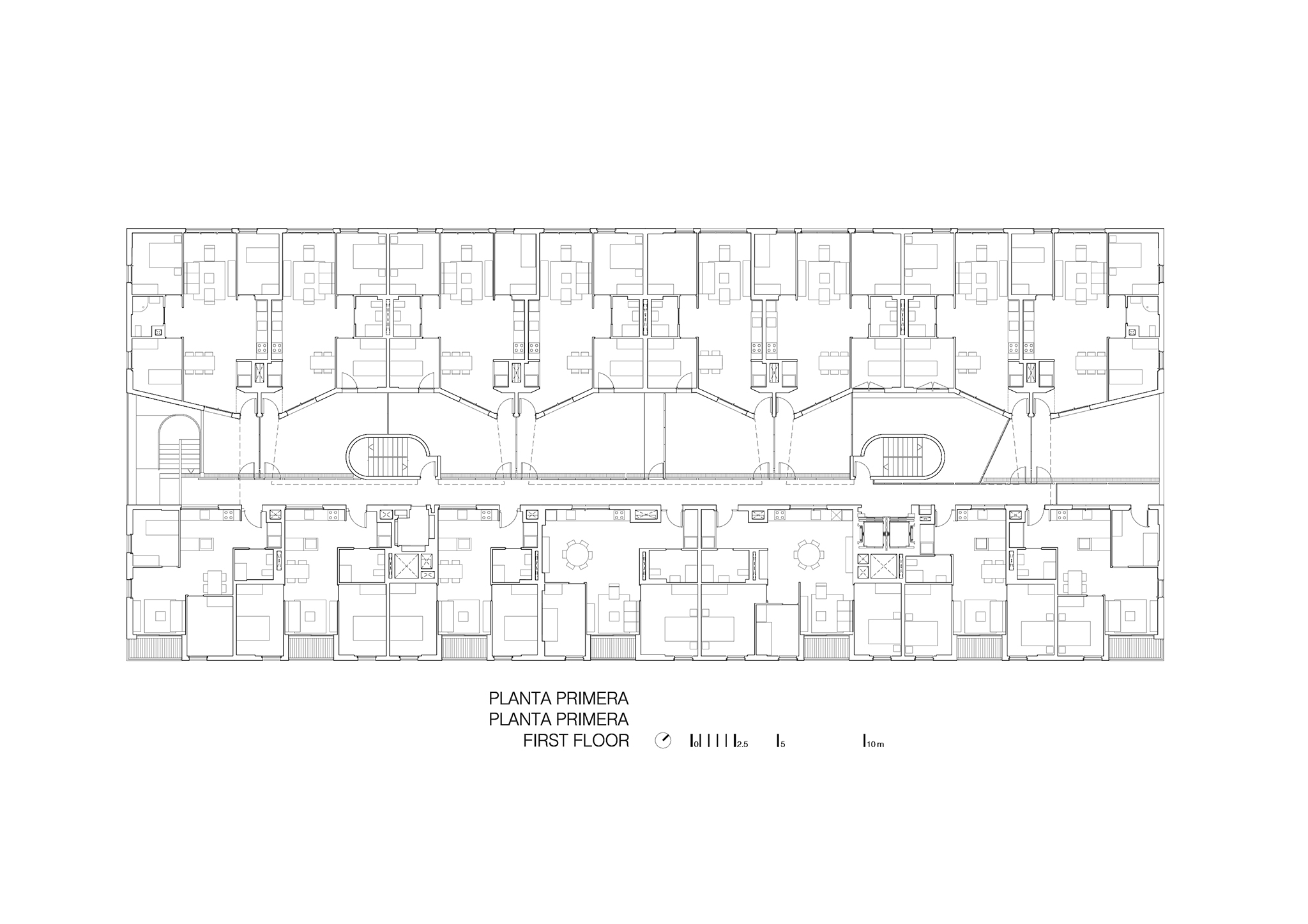
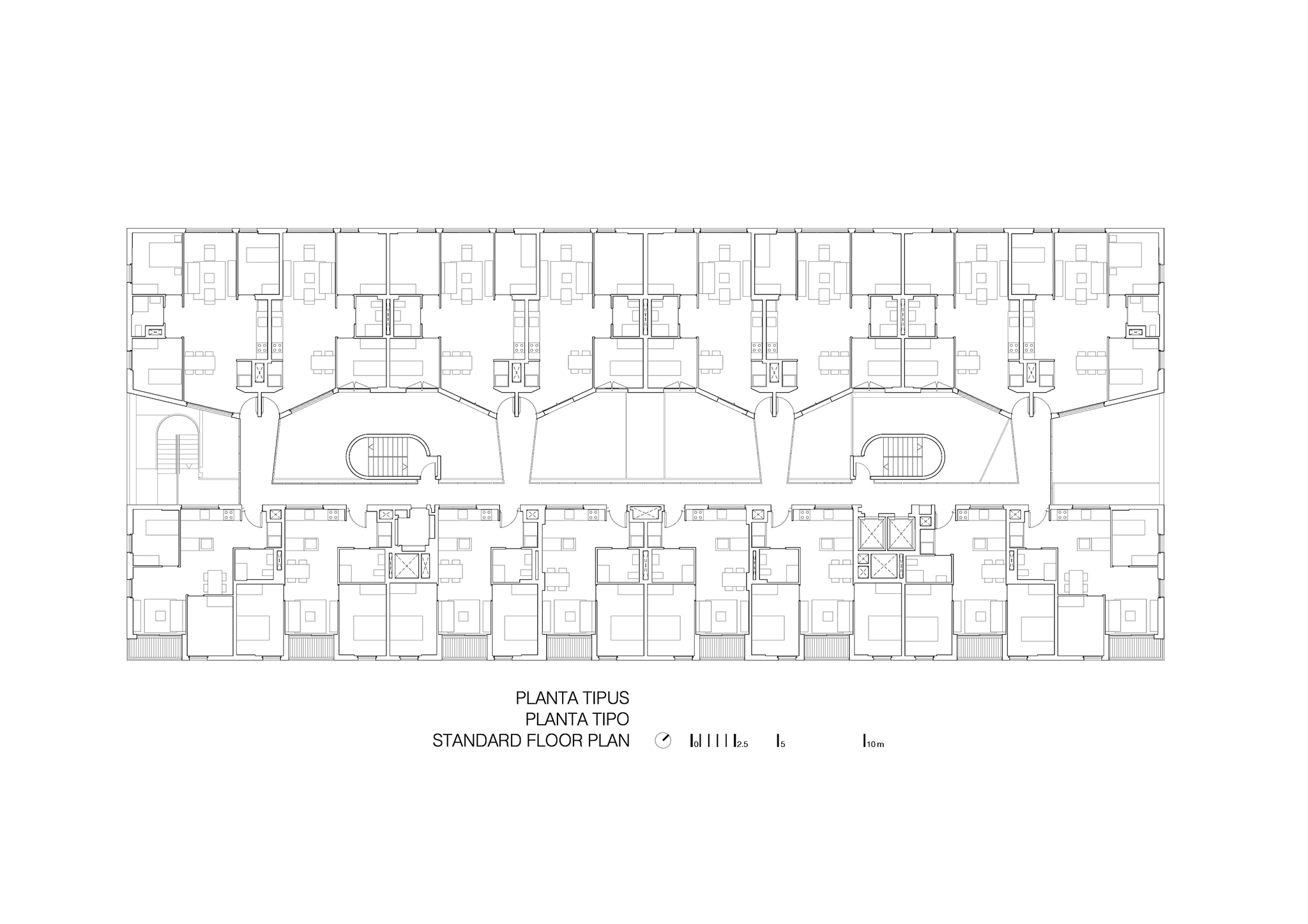
The program includes 110 apartments distributed across seven floors, with 16 units per level organized through repeated typologies. On the first floor, above the main commercial space, a communal terrace offers common areas for residents. This sense of community is reinforced by open walkways that provide access to the apartments and encourage interaction among residents.
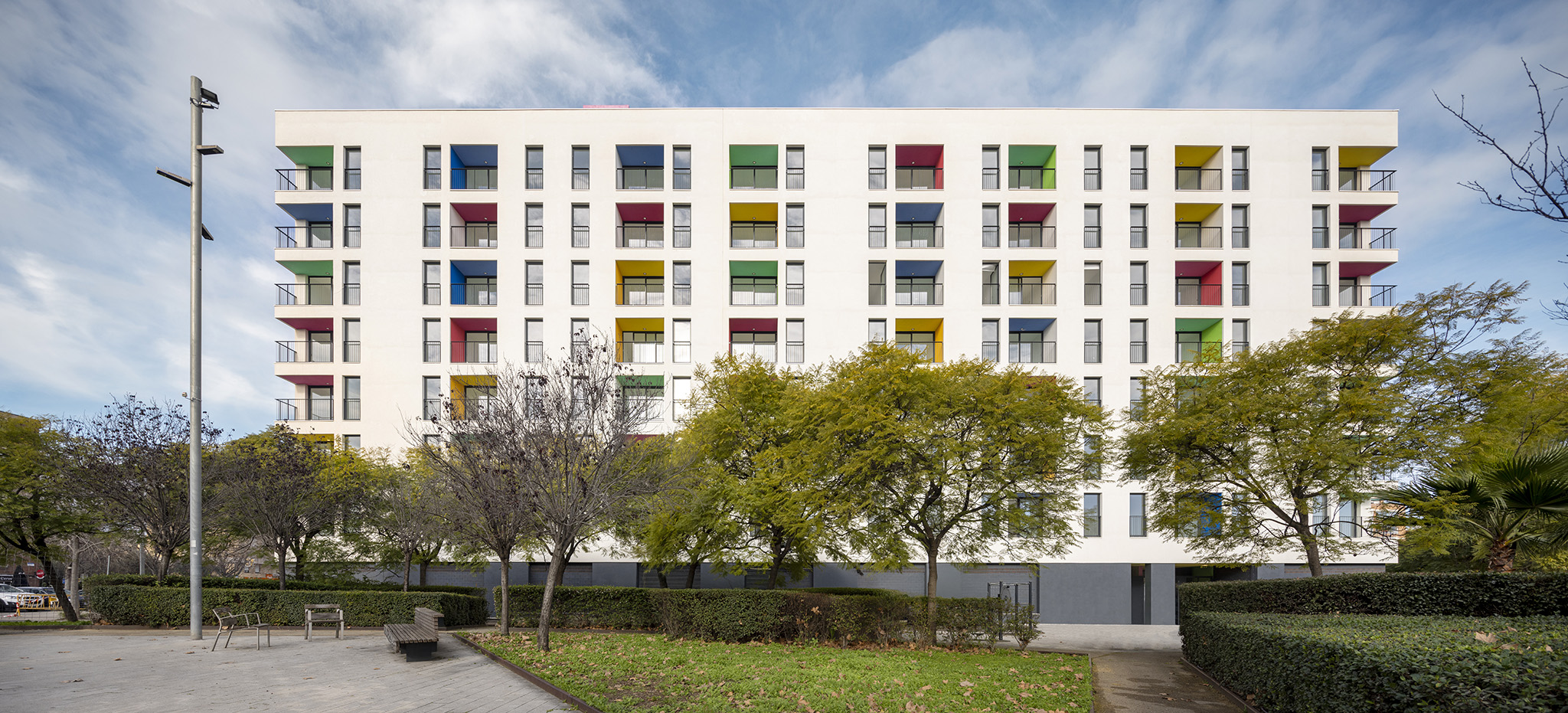
SB Building. 110 affordable rental apartments, complementary spaces, and commercial premises by EMBA. Photography by Oriol Gómez.
Project description by EMBA
This residential building is the result of a long process, which began with a competition organized by IMPSOL in 2008. After many twists and turns and changes in typology and density, its construction was finally awarded in 2023 to the public-private entity HMB-Habitatge Metròpolis Barcelona, comprised equally of the Barcelona Metropolitan Area, the Barcelona City Council, Neinor, and Cevasa. This is the first building constructed by HMB.
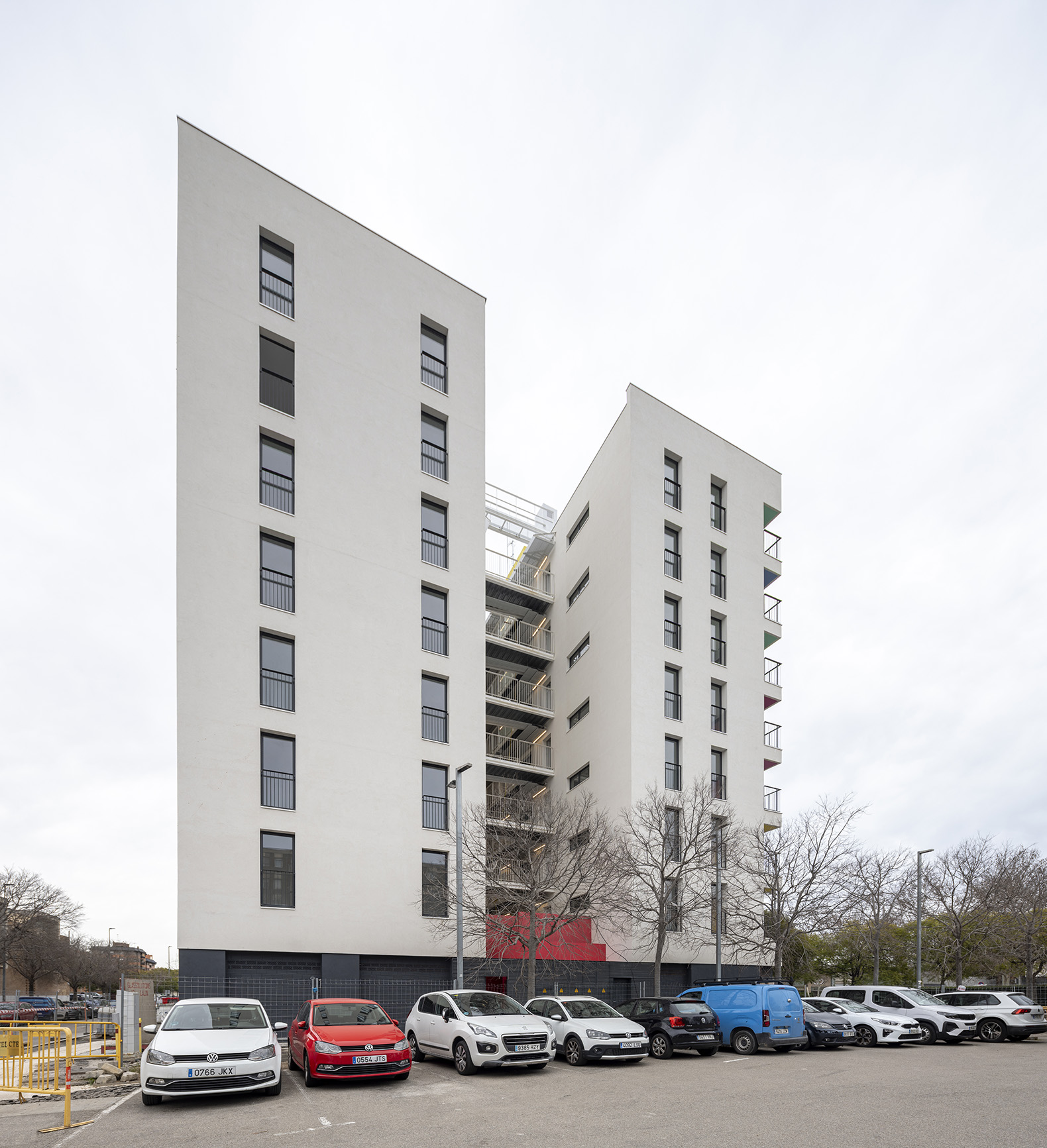
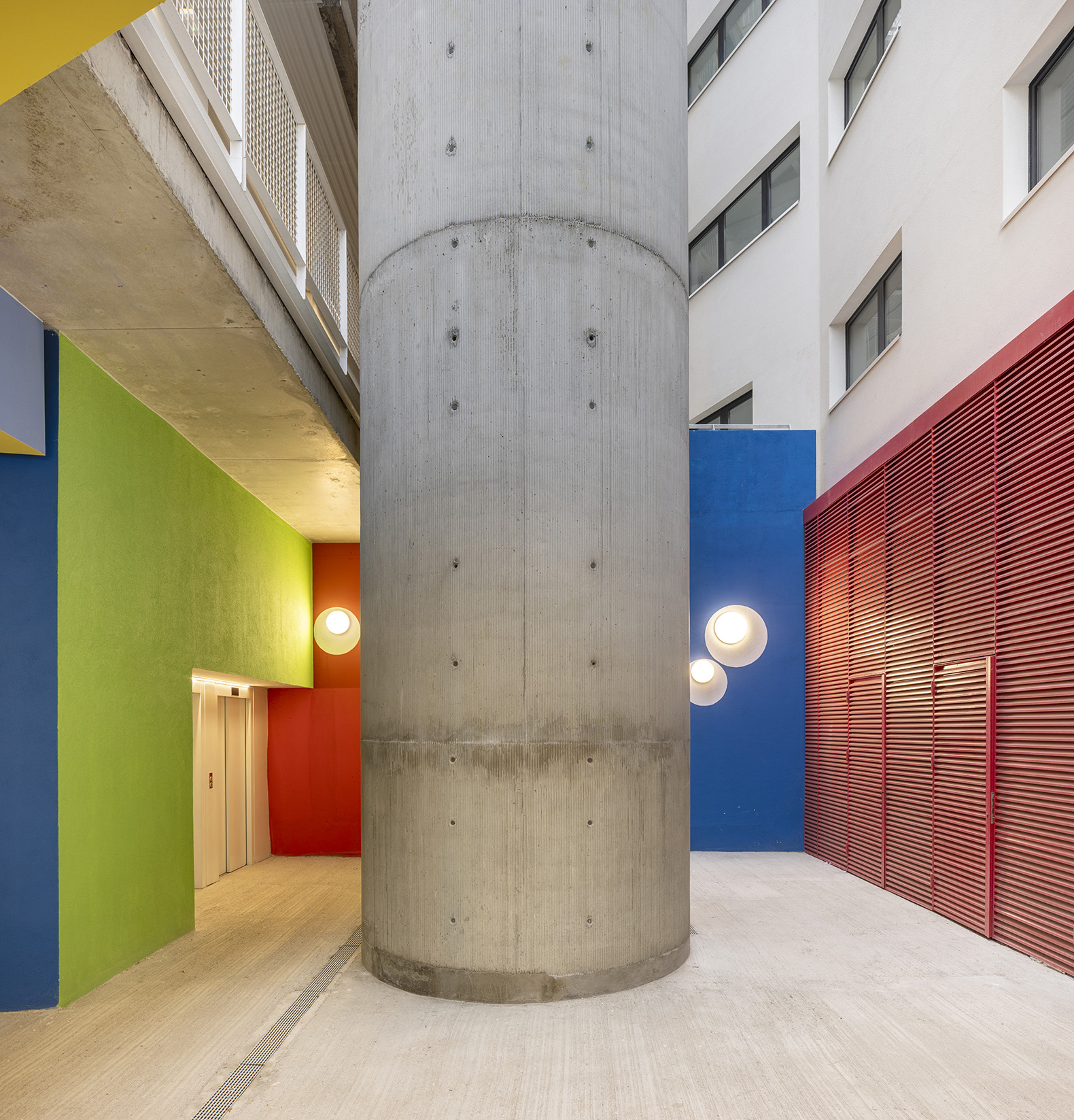
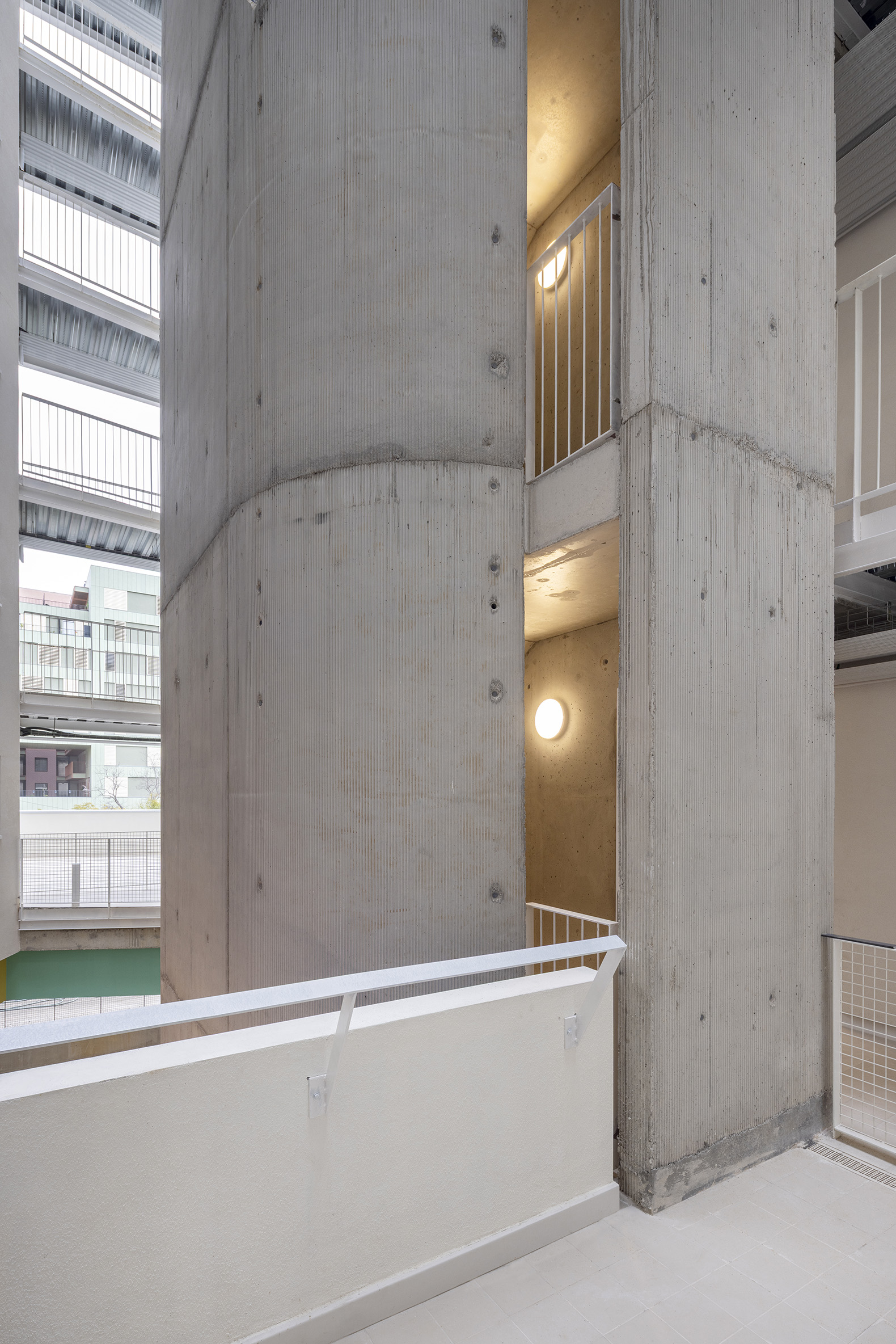
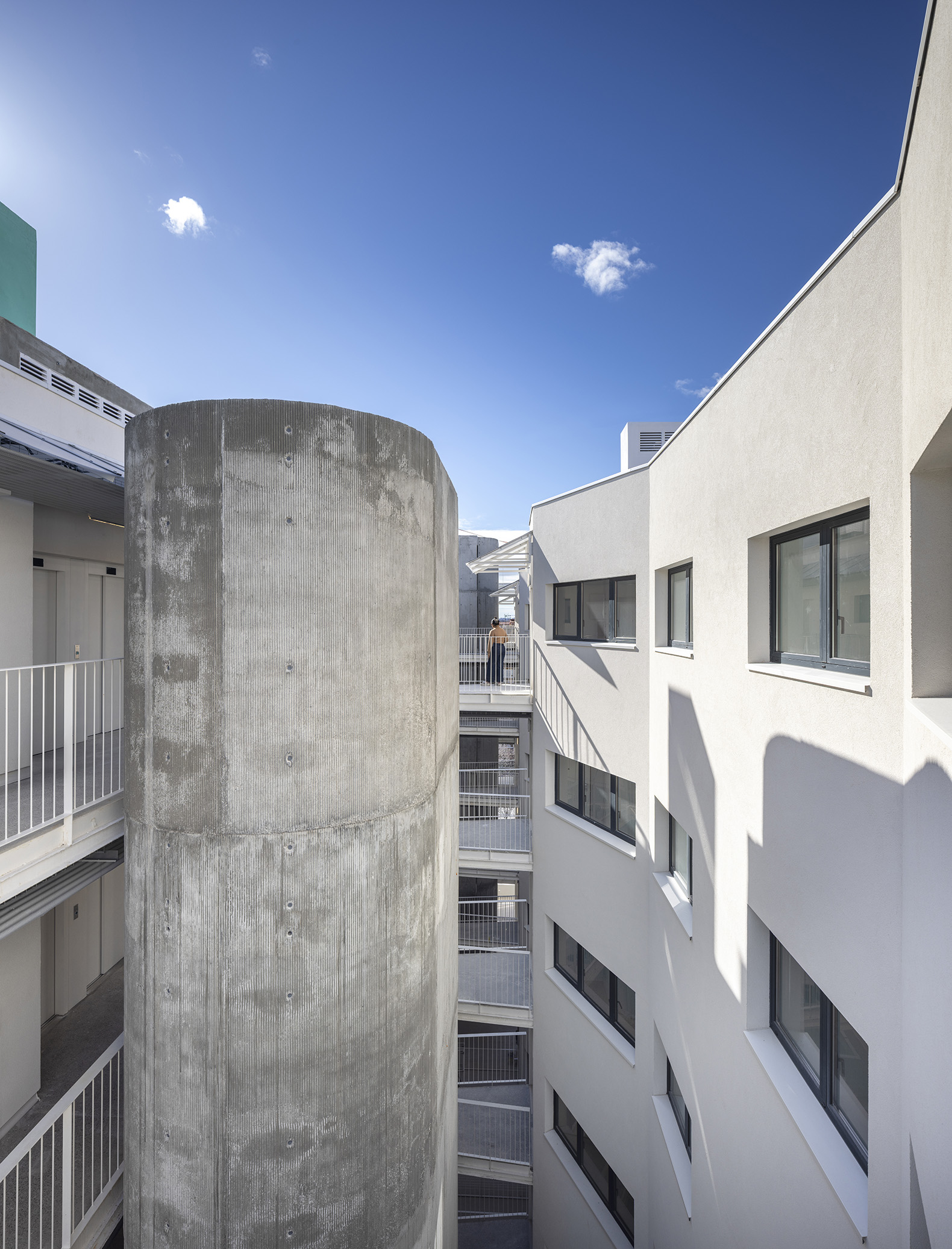
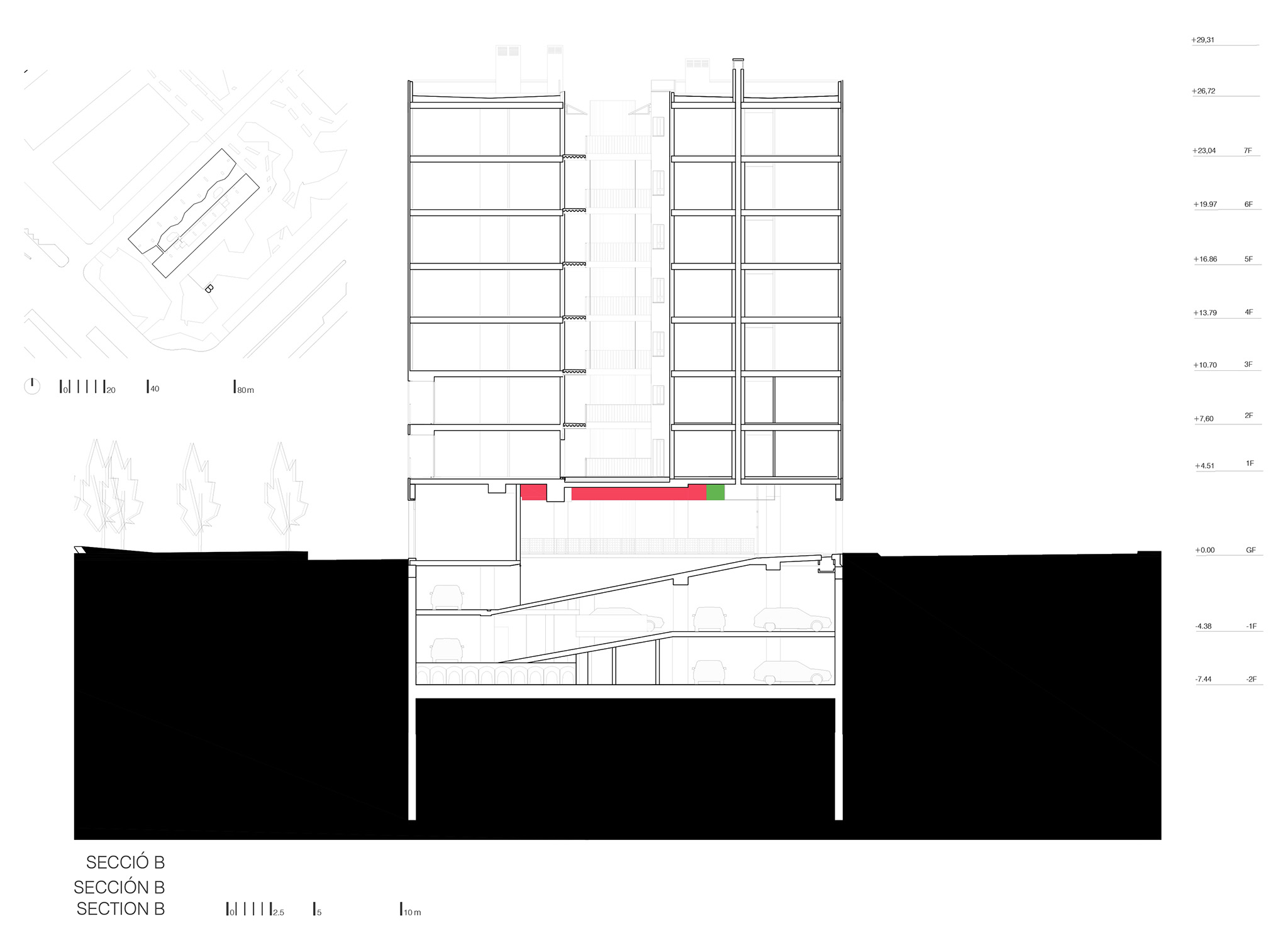
The planning regulations strictly define a compact volume with no possibility of cantilevers, forming part of a sector that has been defined in recent years. The project transforms these initially unfavorable conditions by opening up the building with a large central courtyard that runs longitudinally through it and defines two narrow-bay sections. This courtyard, open at its ends, allows for direct connections with the exterior and ensures that all apartments have at least two facades.
Despite this longitudinal section, the building has been treated with maximum visual unity, assuming the dual role seemingly assigned to it by the urban plan: that of being both a landmark marking the intersection of the Carretera de Santa Creu de Calafell and Carrer Josep Marieges, one of the main southern gateways to Sant Boi; and that of forming a hinge with the new linear park, between the residential area and the industrial and commercial area on either side of the avenue.
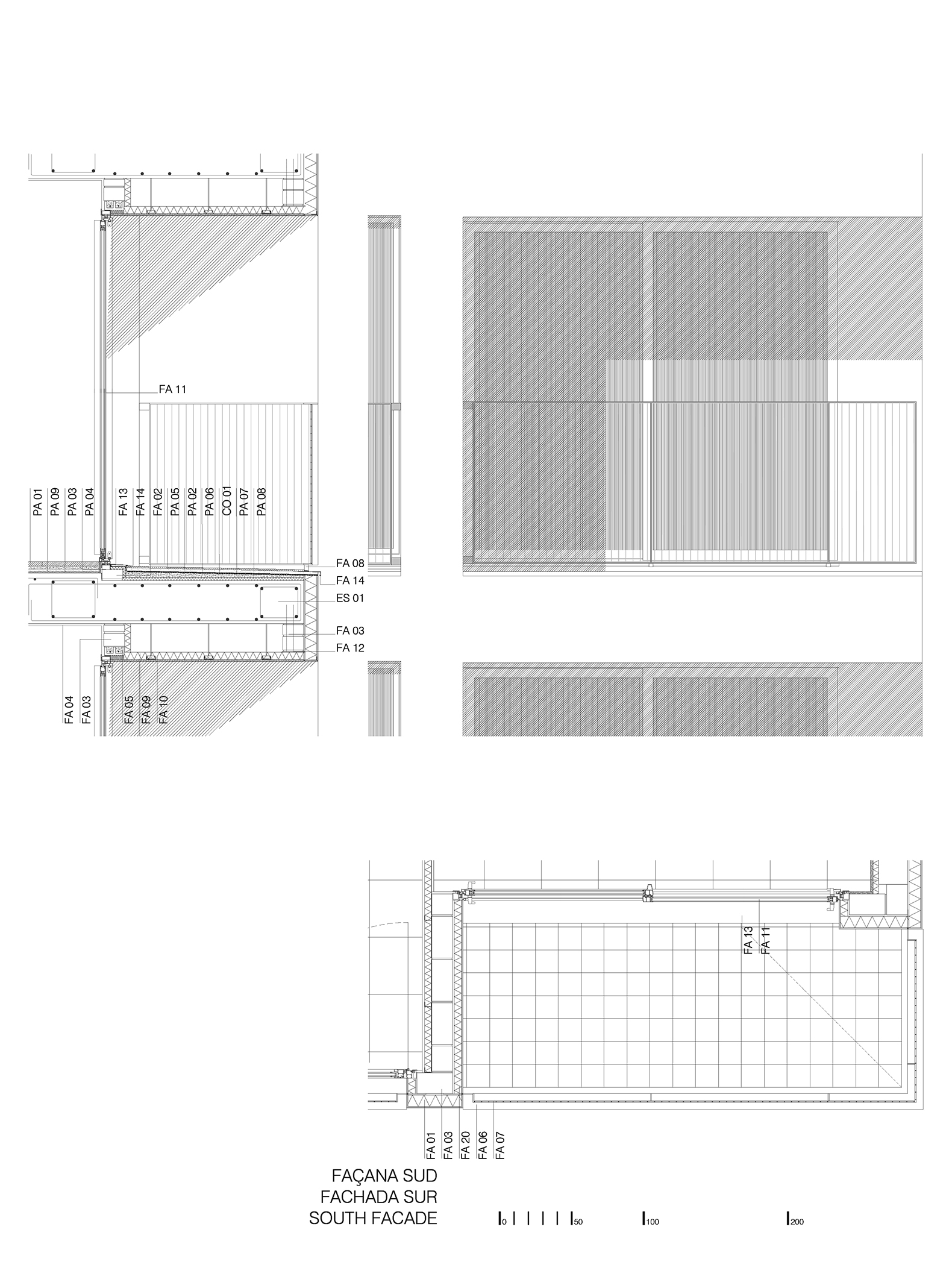
The building's urban presence is addressed at two scales: on the one hand, at the city scale, a striking white volume with clean edges is defined, sculpted by the terraces of the apartments, which are treated as notes in a chromatic symphony, in the style of Aleksandr Scriabin. This musical façade presents itself optimistically to the city, seeking to uplift its observers.
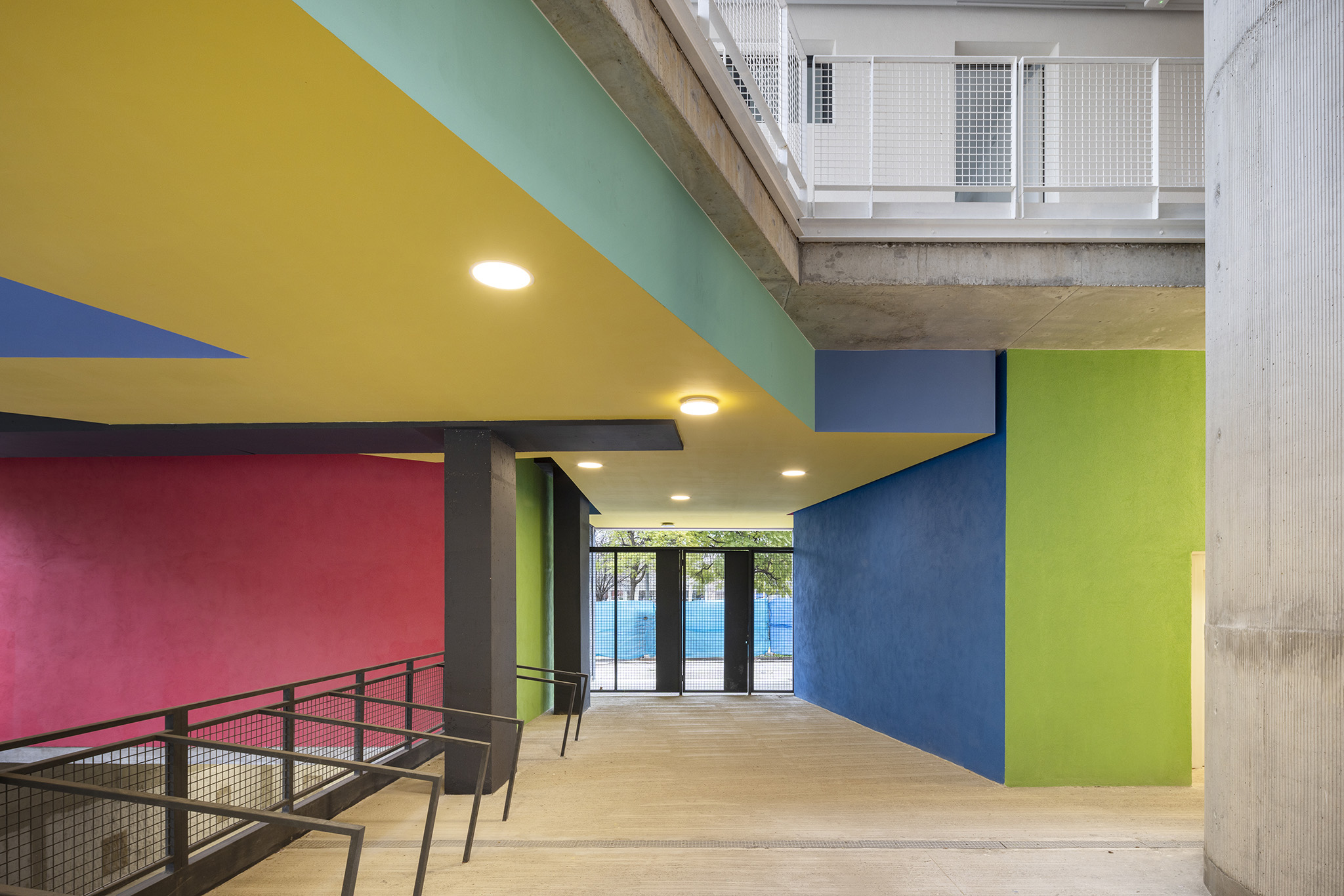
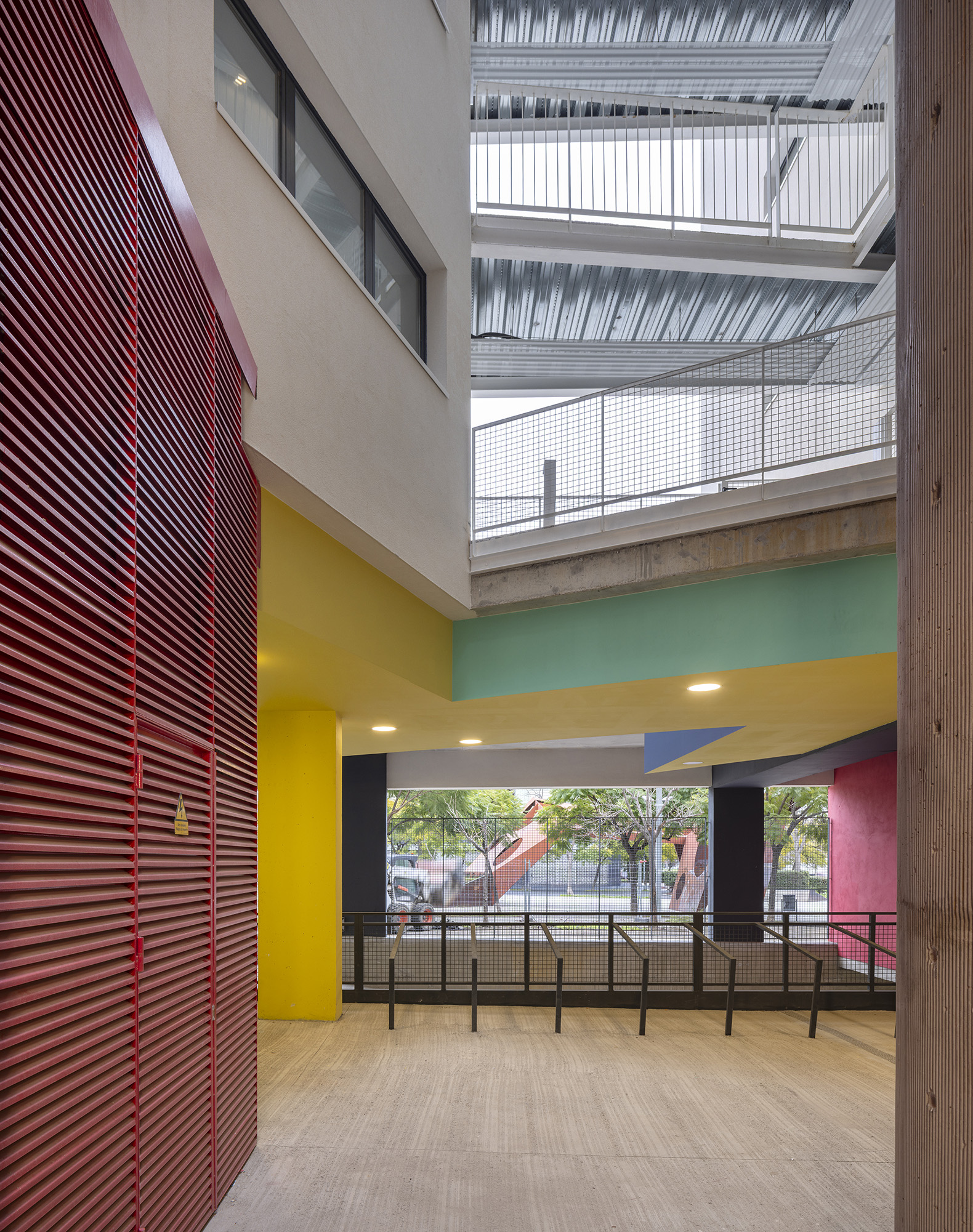
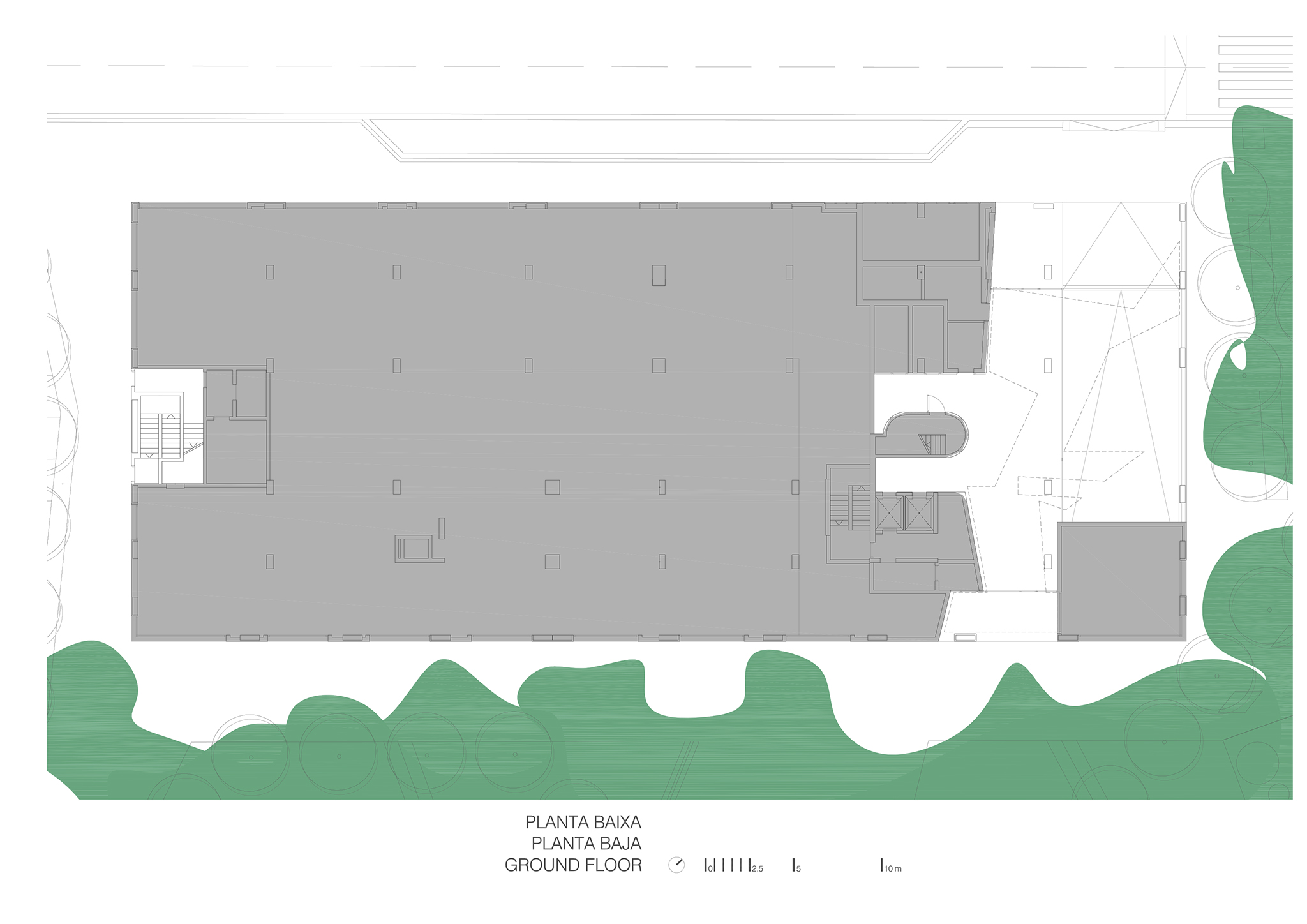
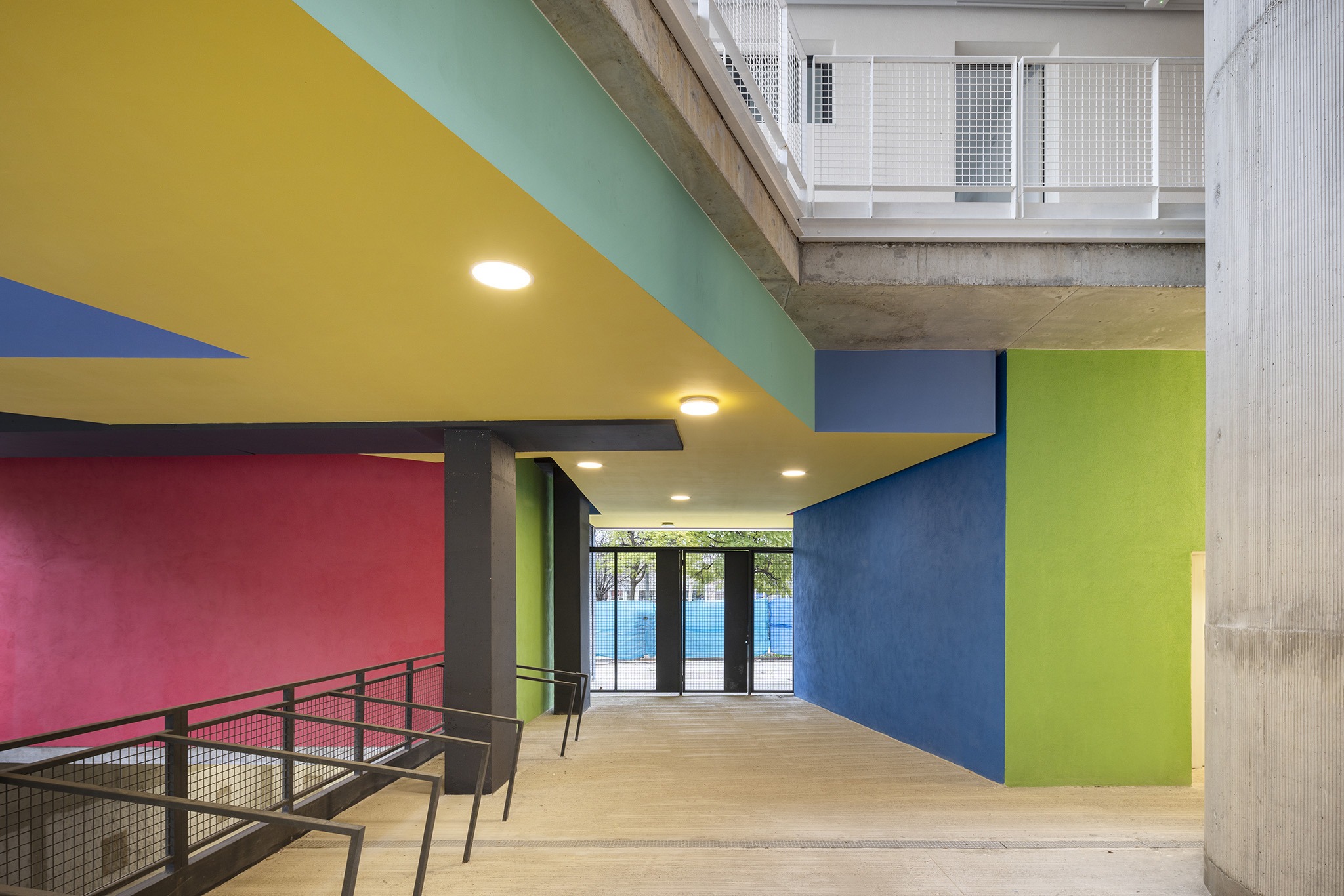
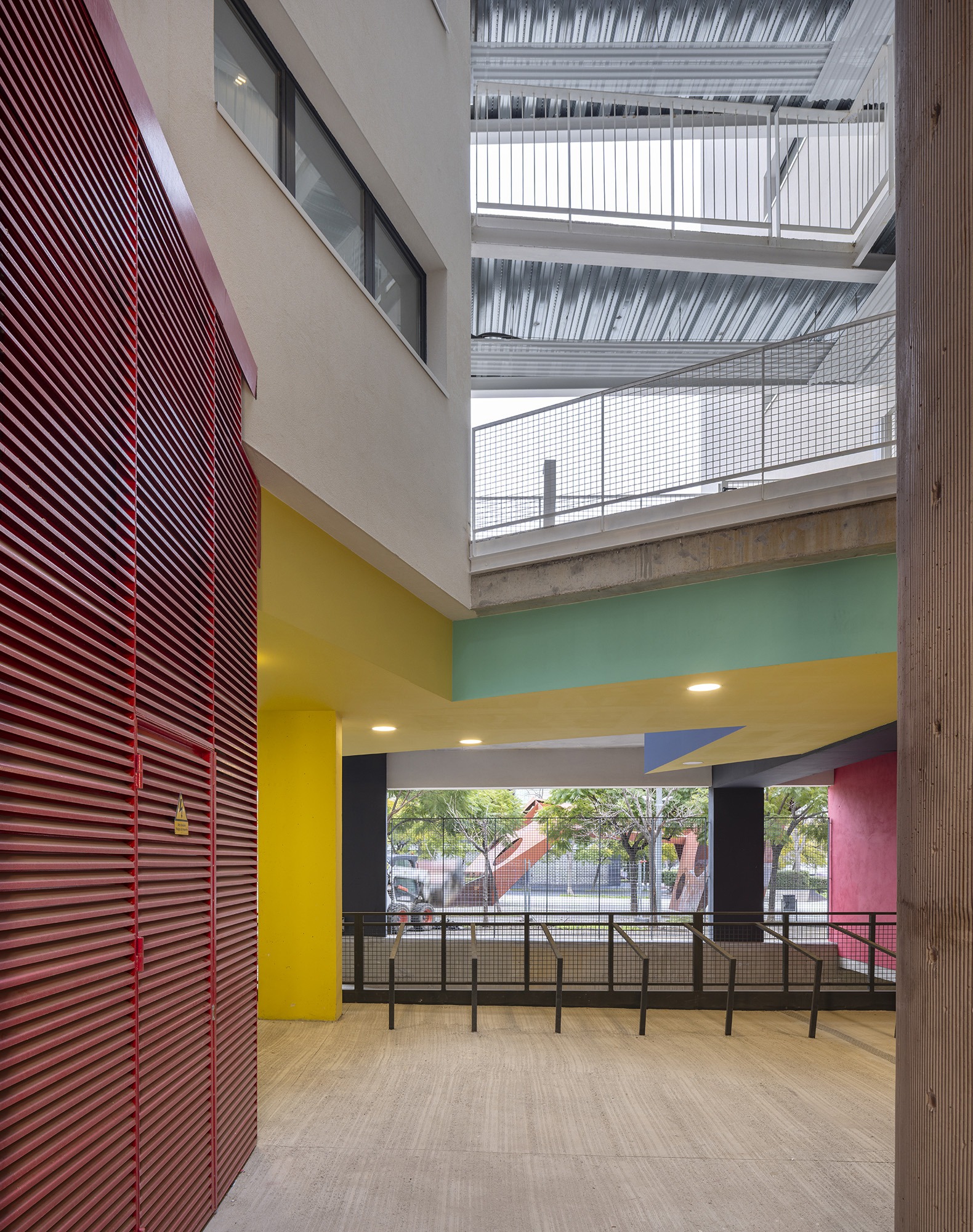
On the other hand, at street level, the ground floor access spaces open up as a continuation of the urban space. This creates a direct connection with the adjacent park, opening up views and establishing new urban continuities in the neighborhood, incorporating urban greenery as part of the building.
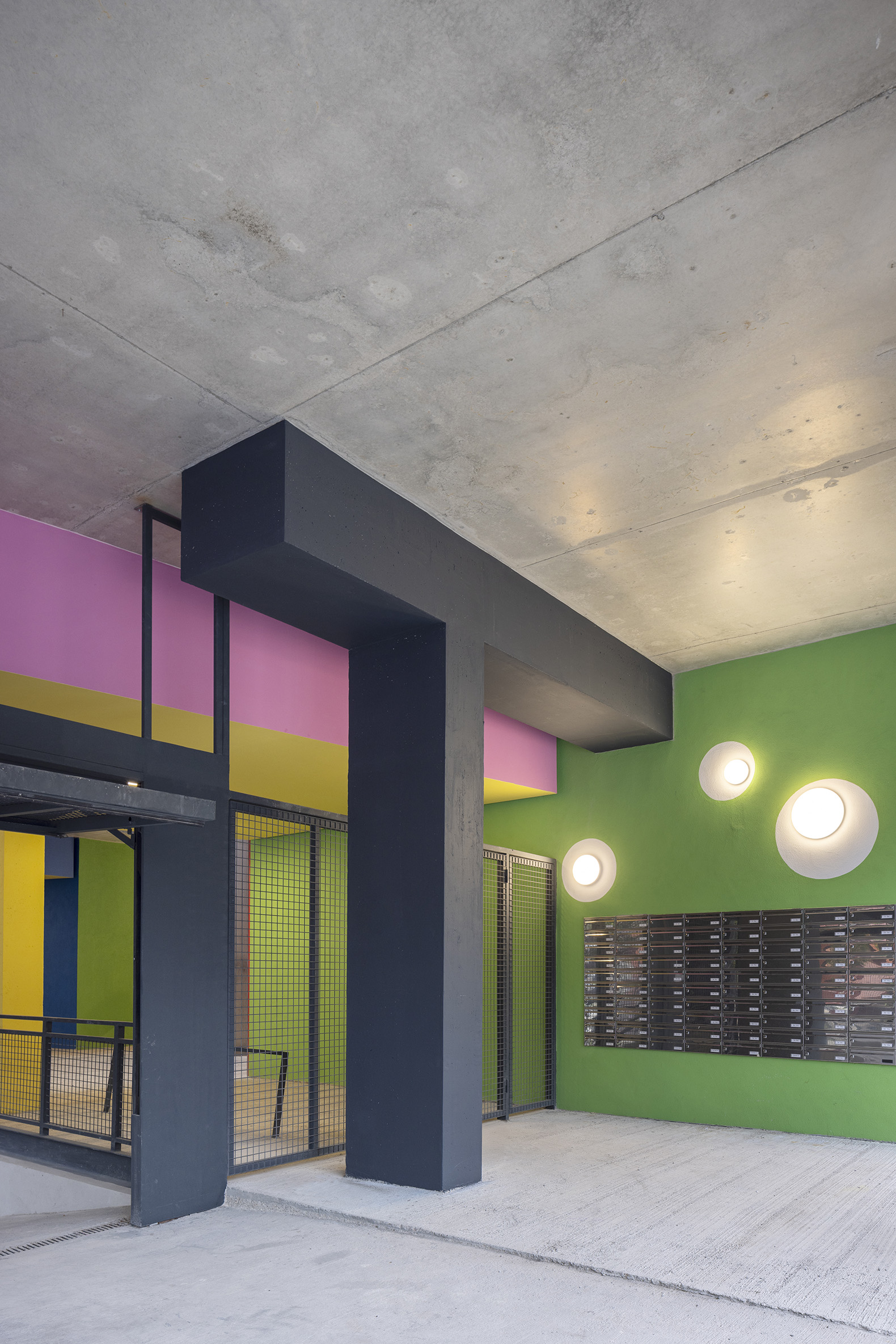
The building's main lobby, which includes the ramp leading down to the parking garage, is treated as a key element of the complex. The different colors found throughout the building converge here, serving as a grand opening to the chromatic symphony of the south façade.
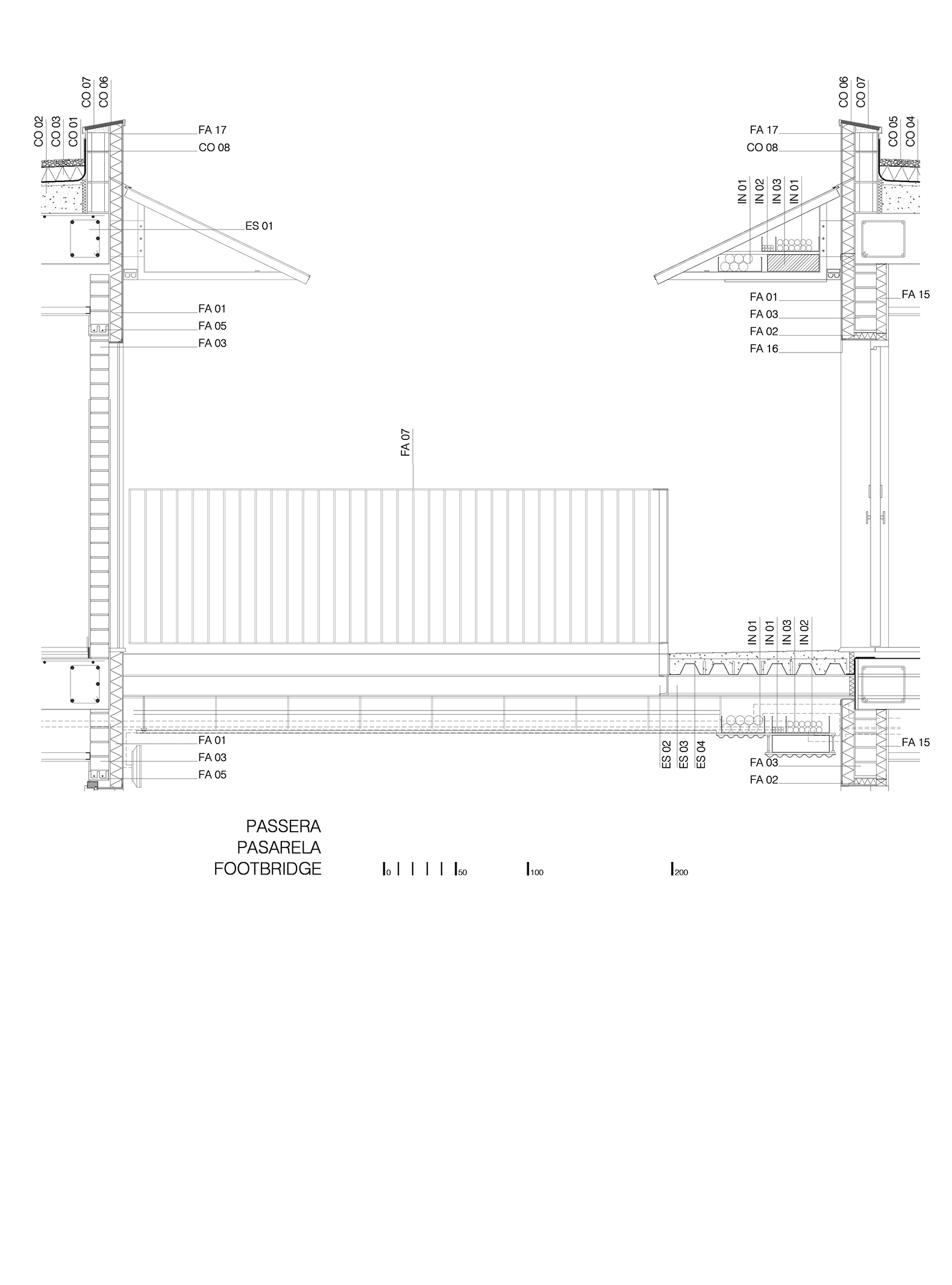
The 110 apartments are distributed across 7 floors, with 16 units per floor. Eight face the northwest façade and eight face the southeast, with recurring layouts. The first-floor terrace, above the main commercial space, offers communal areas for residents. The desired sense of community is reinforced by the distribution of circulation routes along open walkways.
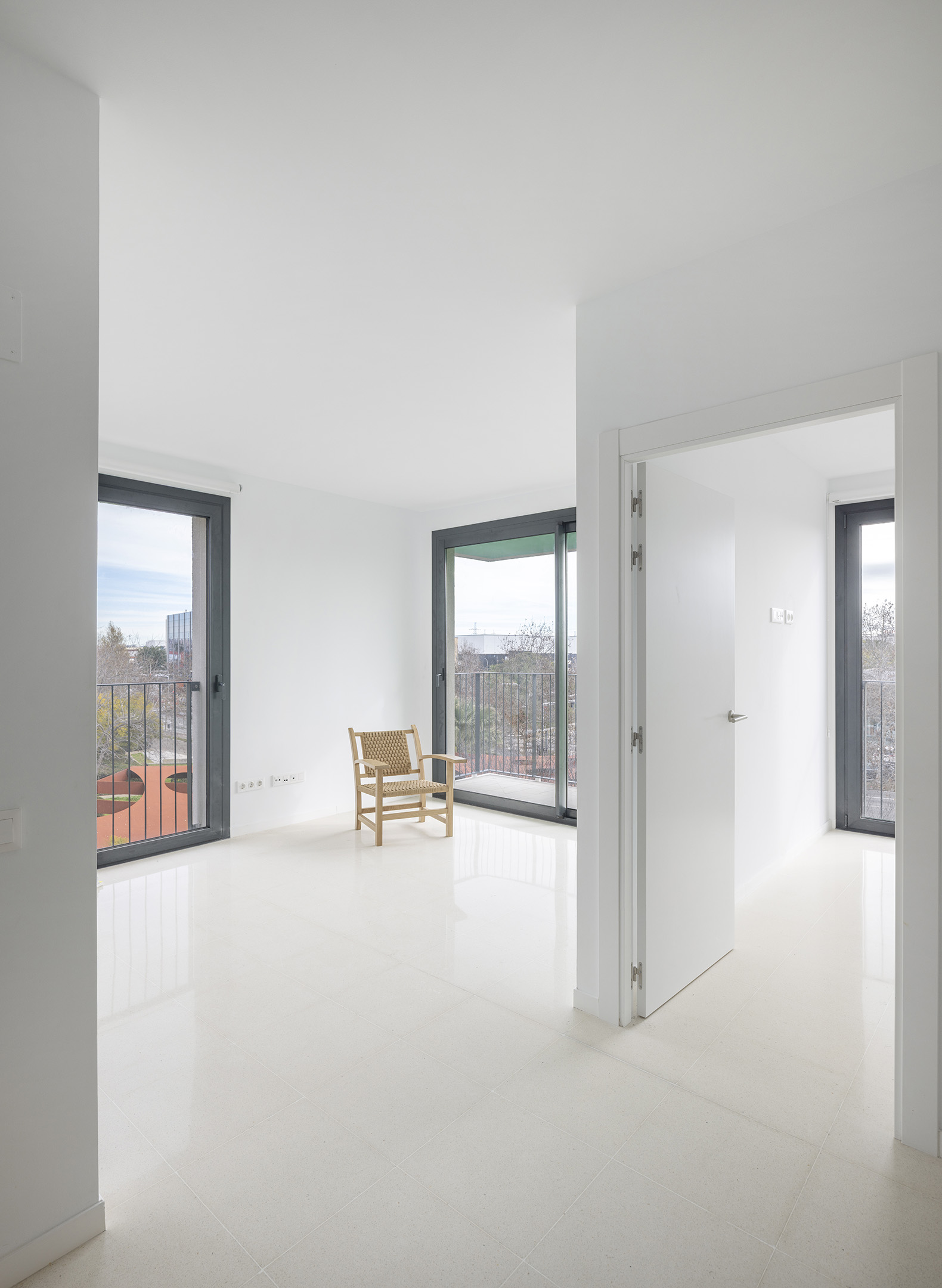
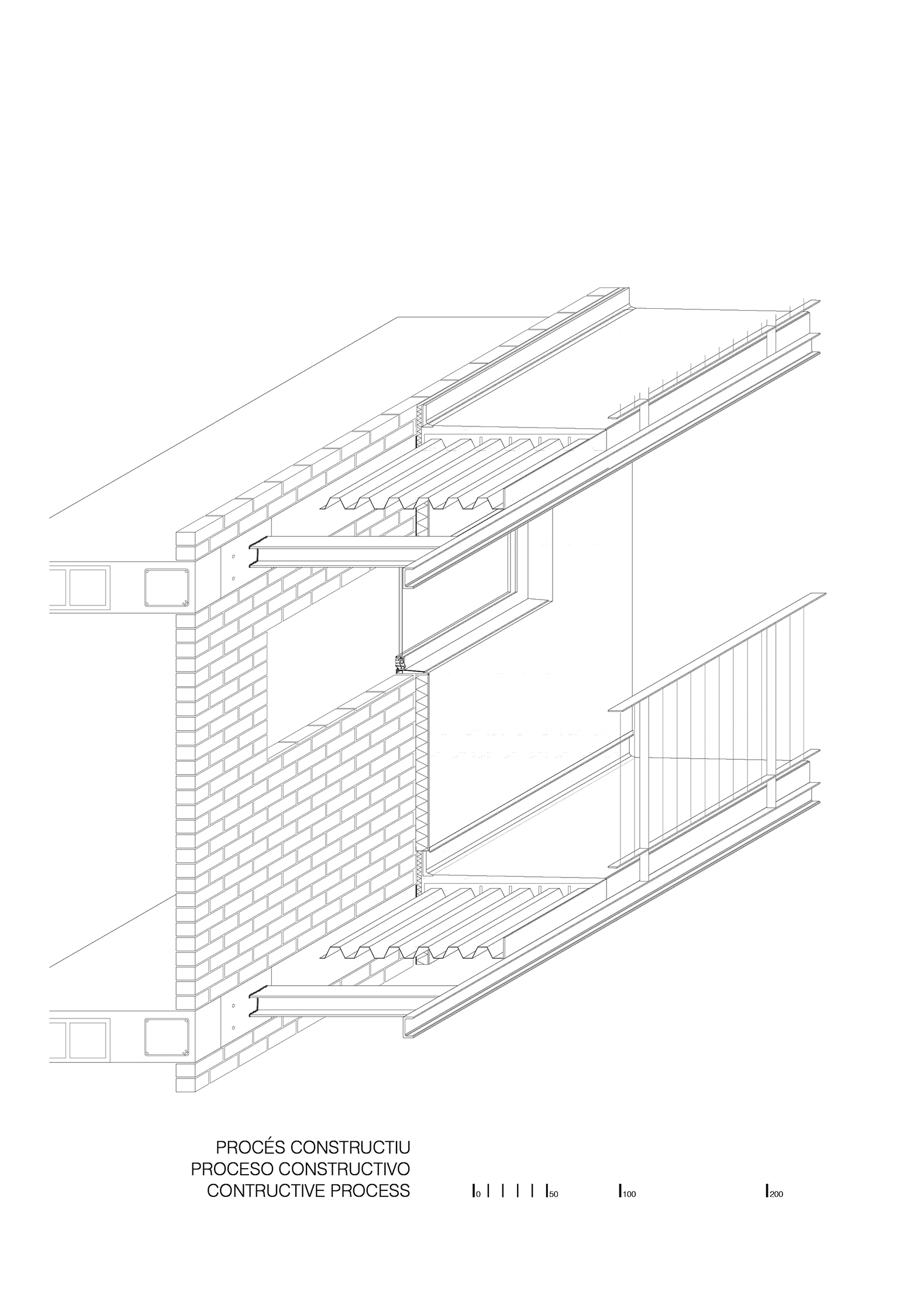
All apartments benefit from cross ventilation and double lighting thanks to the central courtyard, which is very bright due to the treatment of its façades, creating a high-quality living environment in every apartment. This is an architectural feature that saves energy, as important as the treatment of the walkways and terraces, which are detached from the main structure to avoid thermal bridges.
Despite the limited budget available for its construction, the energy produced on the roof and the implementation of passive measures make it a Nearly Zero Energy Building (NZEB), which is especially important for affordable rentals for low-income families due to the significant reduction in monthly expenses.
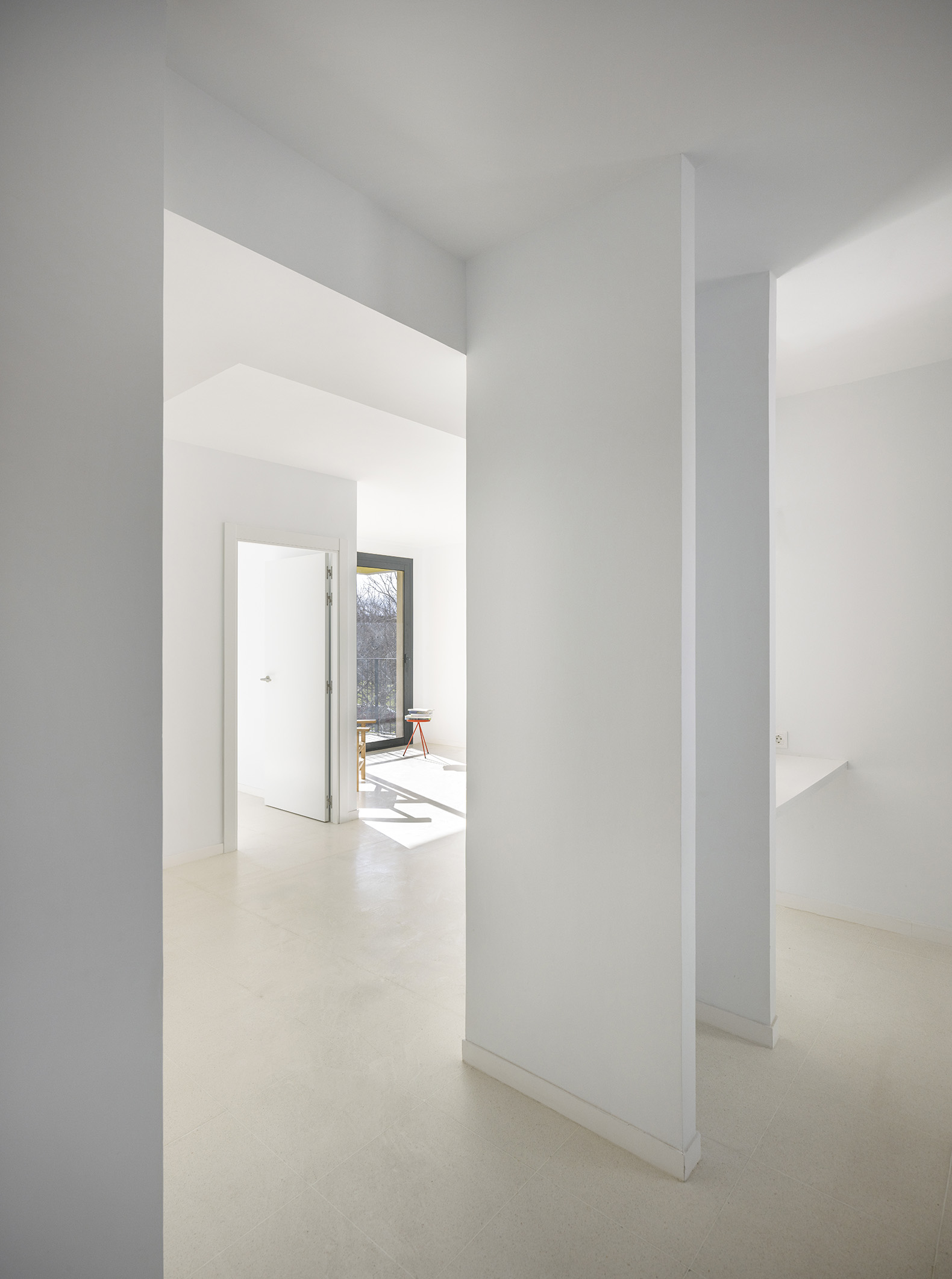
The unit layouts aim to optimize the available square footage by avoiding monotonous spaces and integrating kitchens and passageways into the main living areas, which in all cases open onto two facades. This creates a visual perception of great depth despite the small size of the residential units.