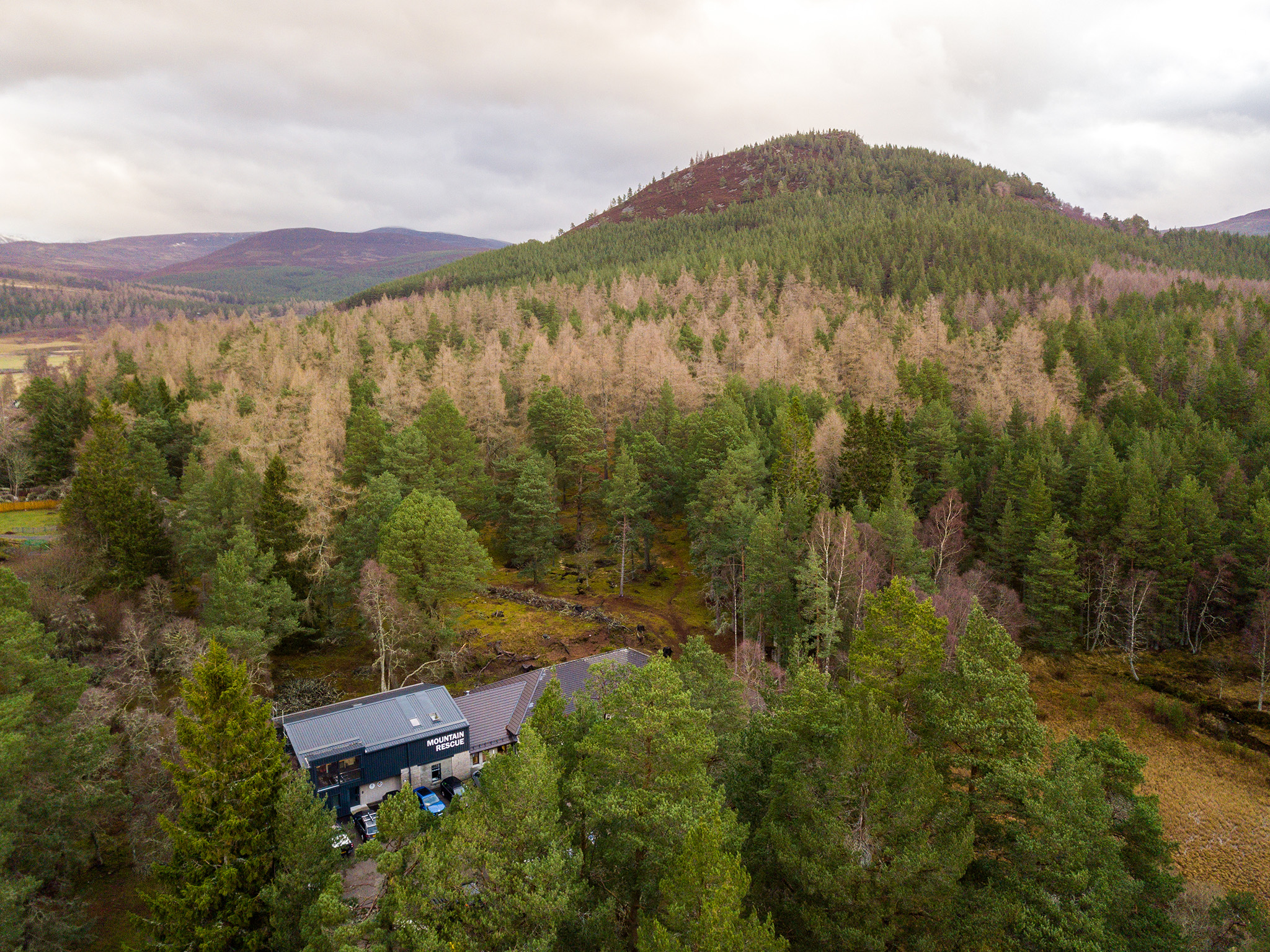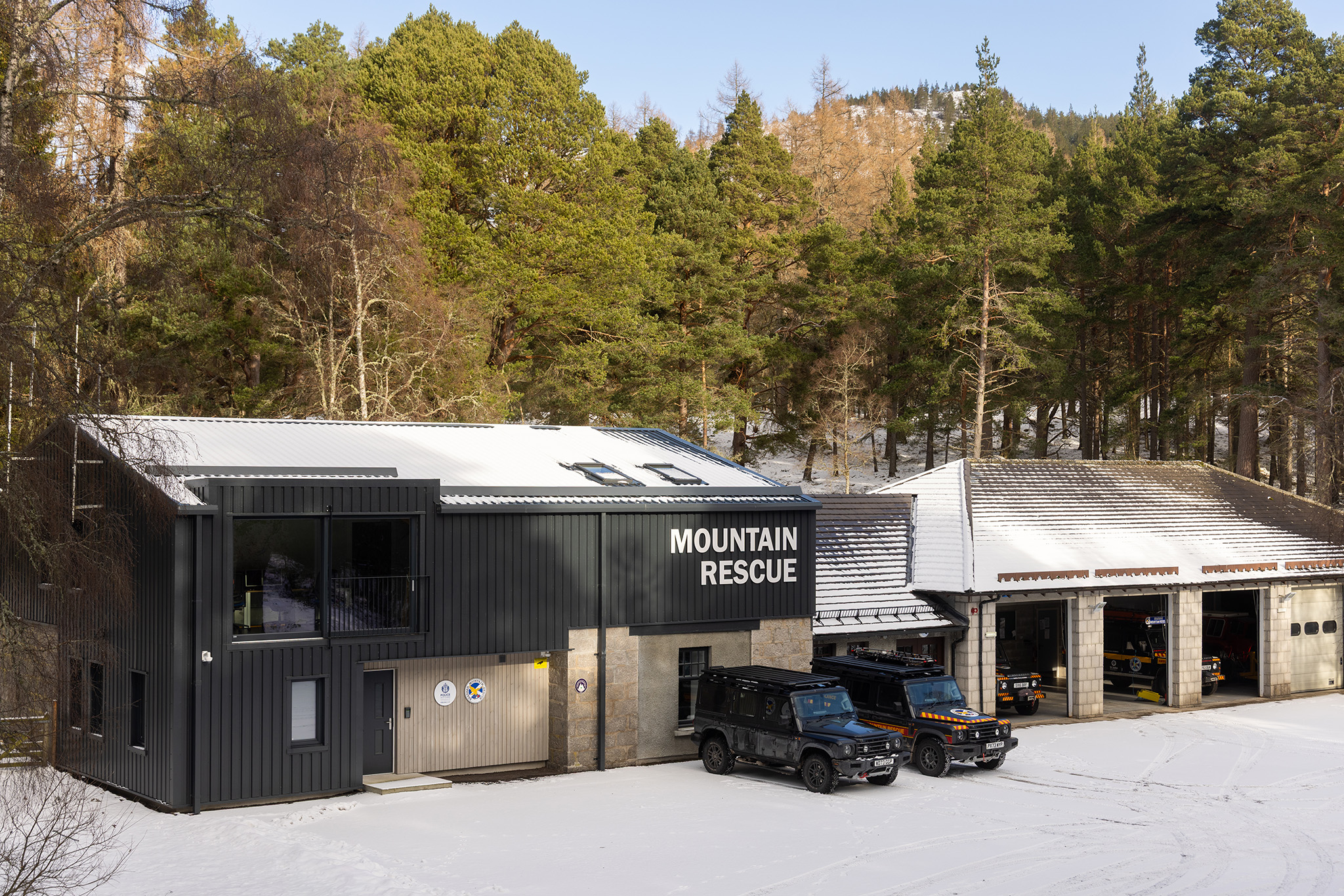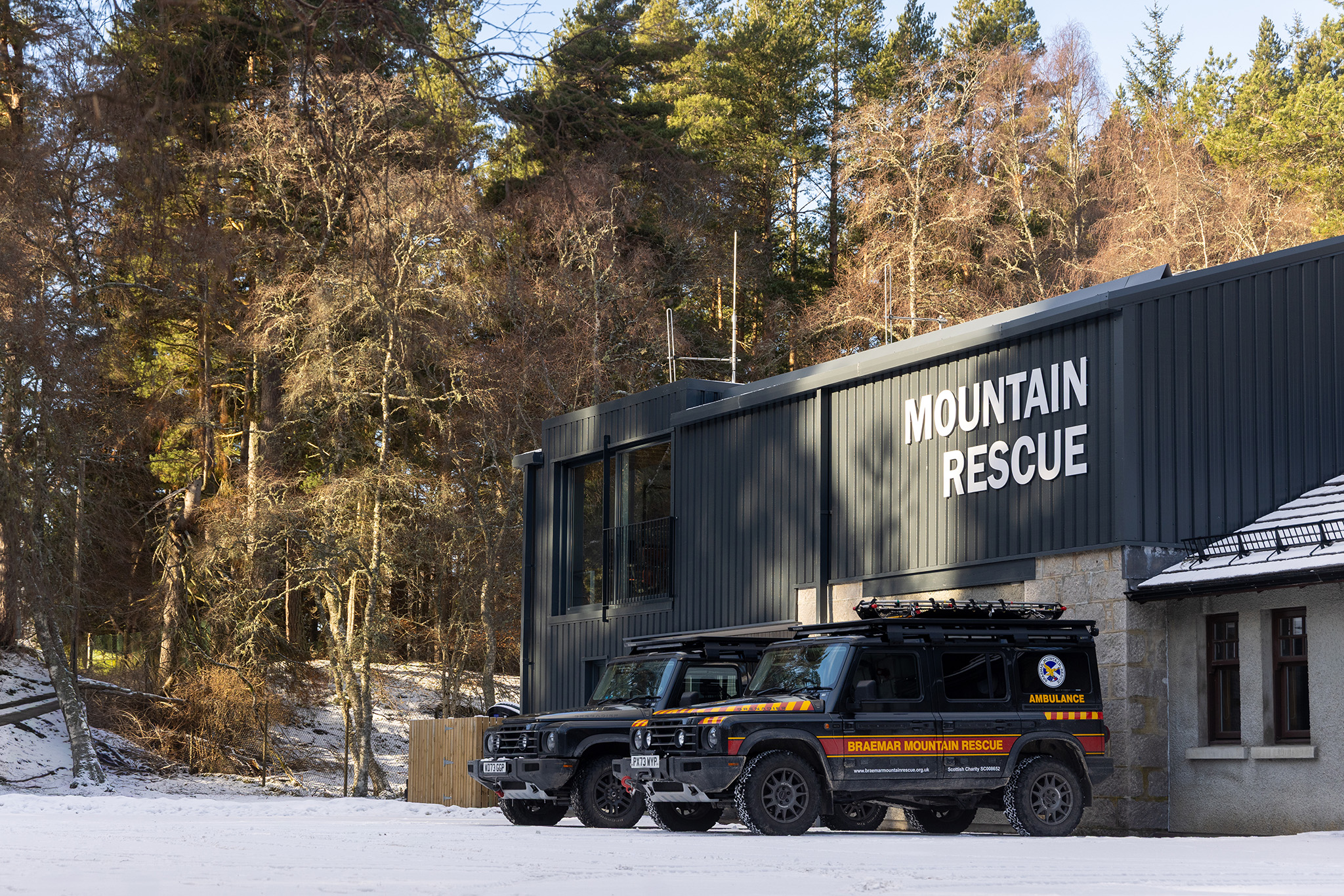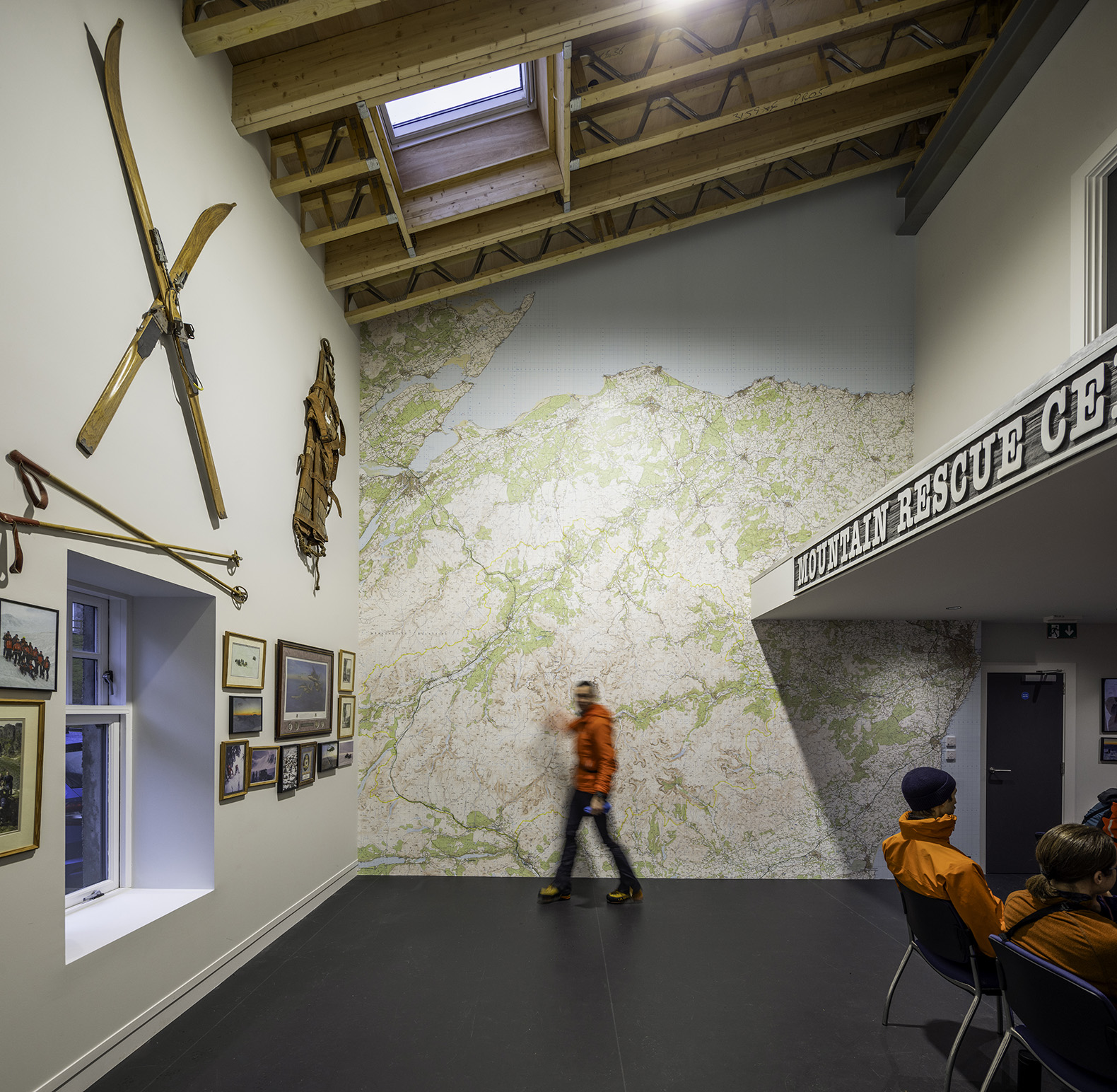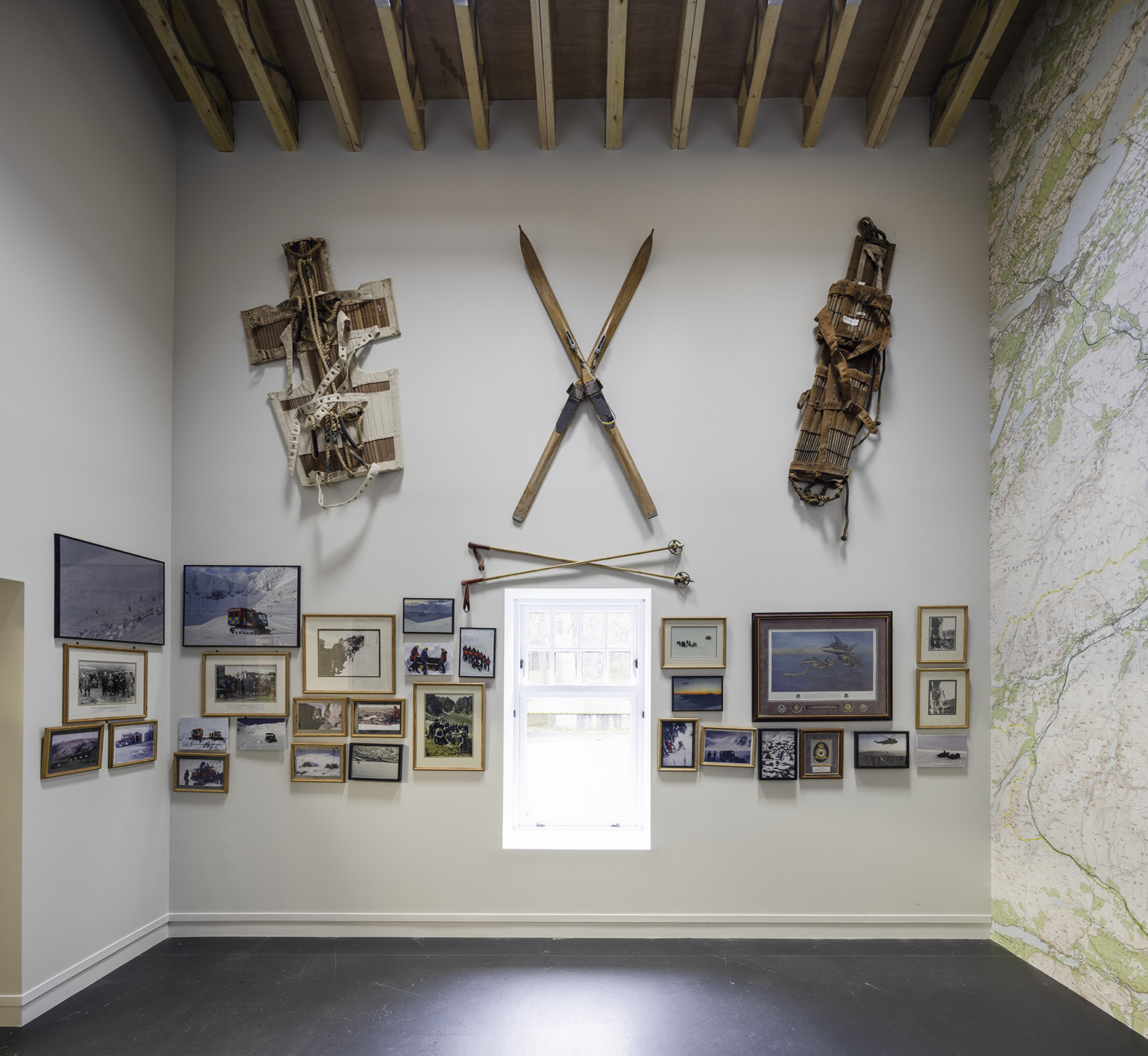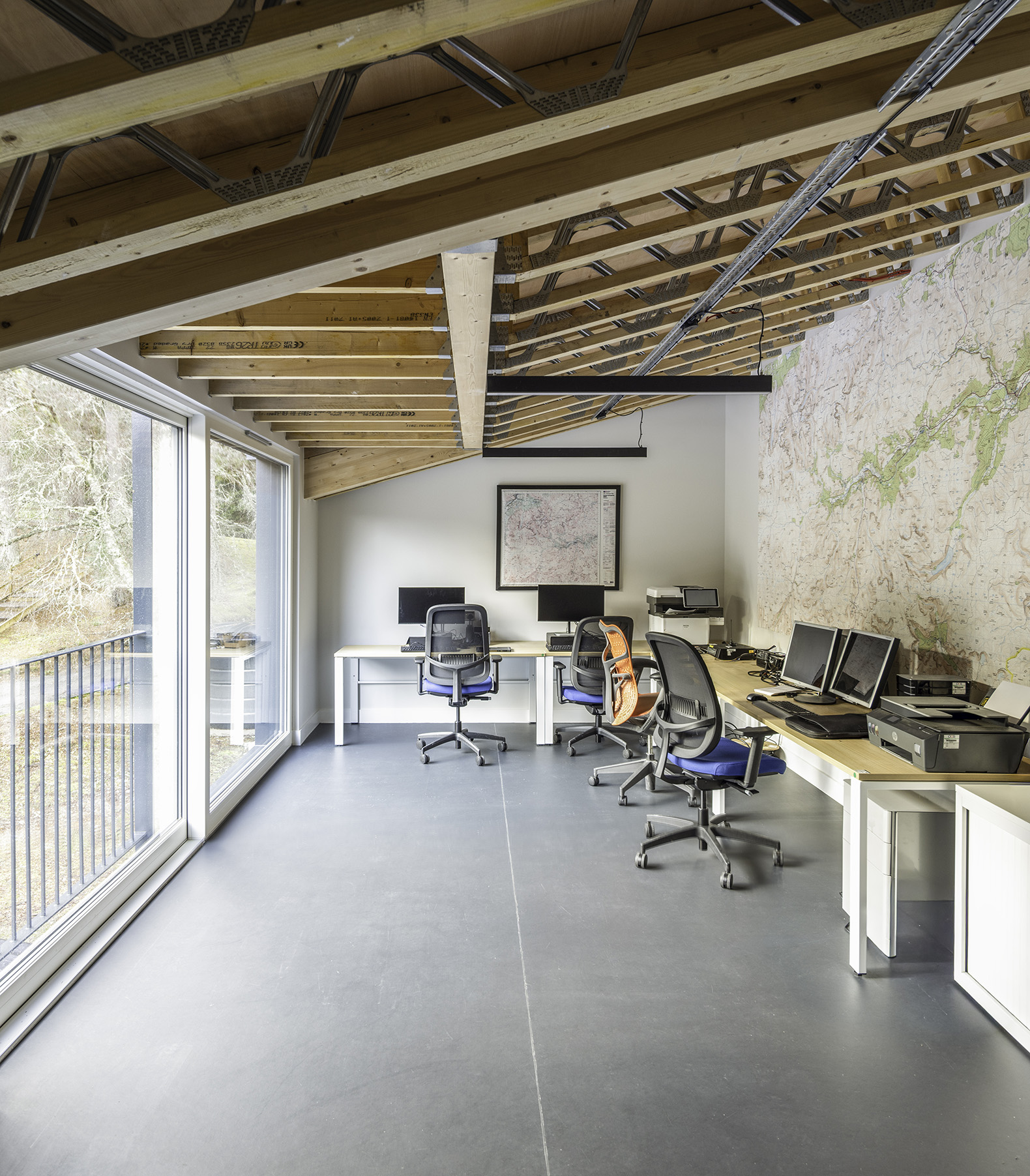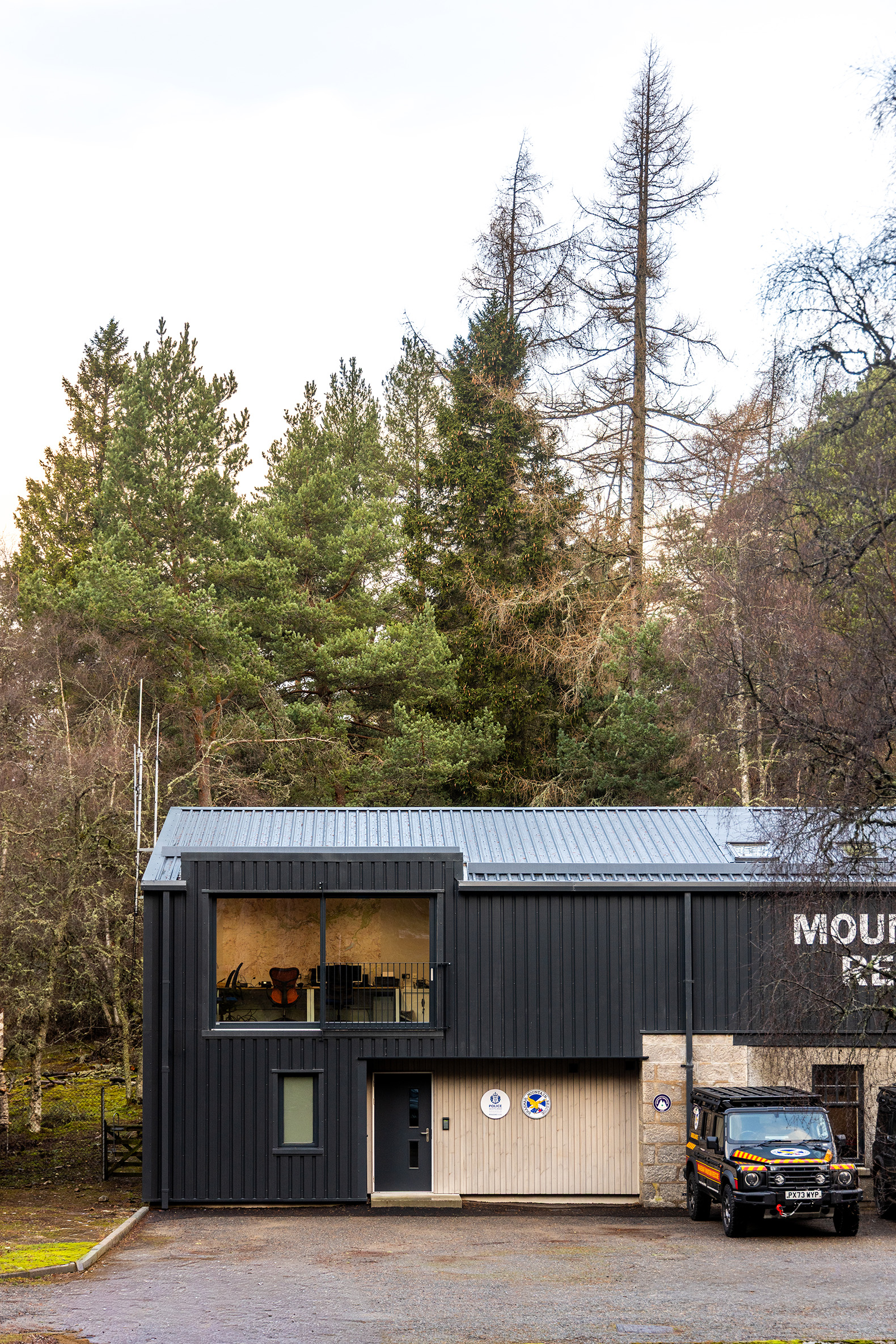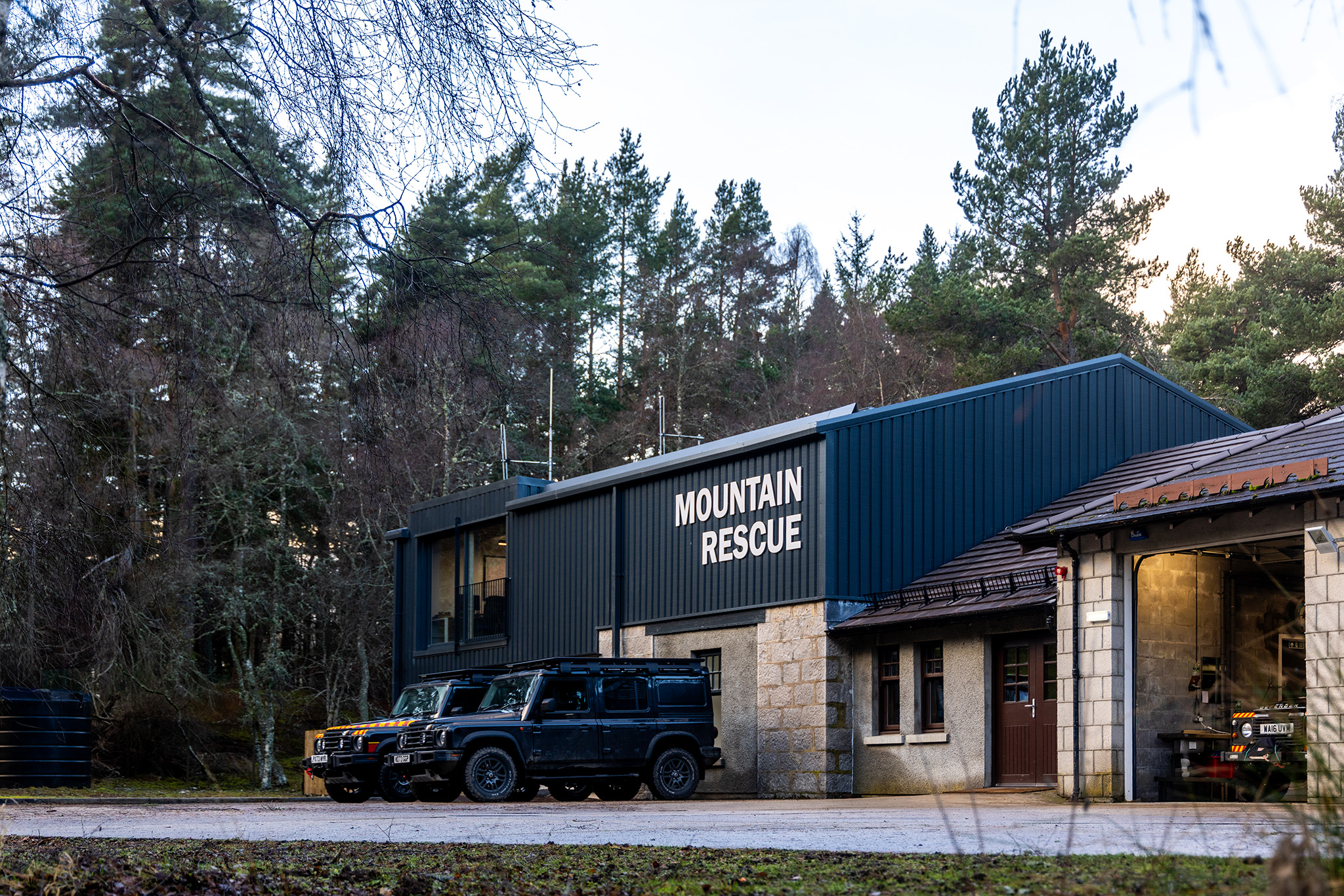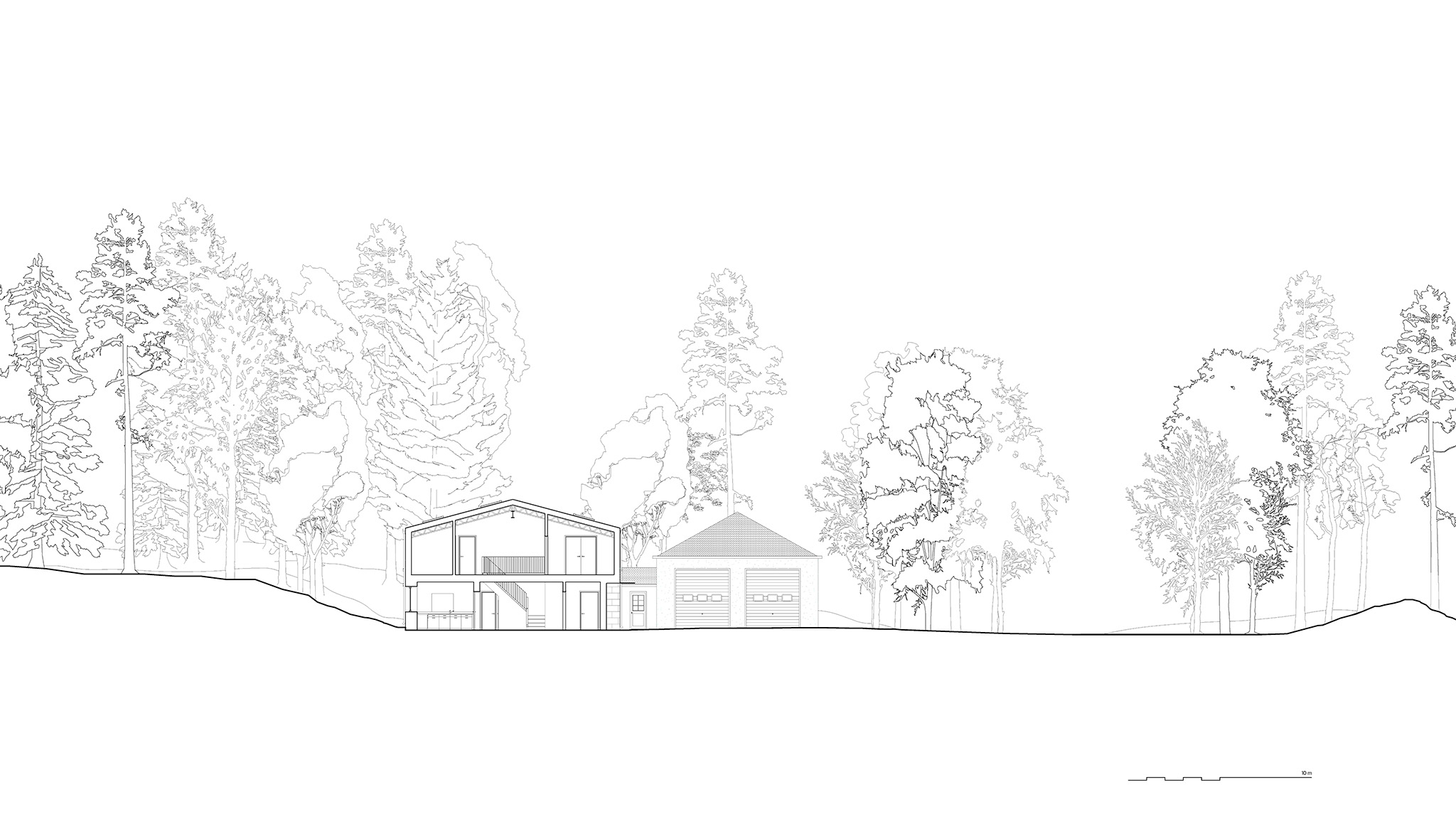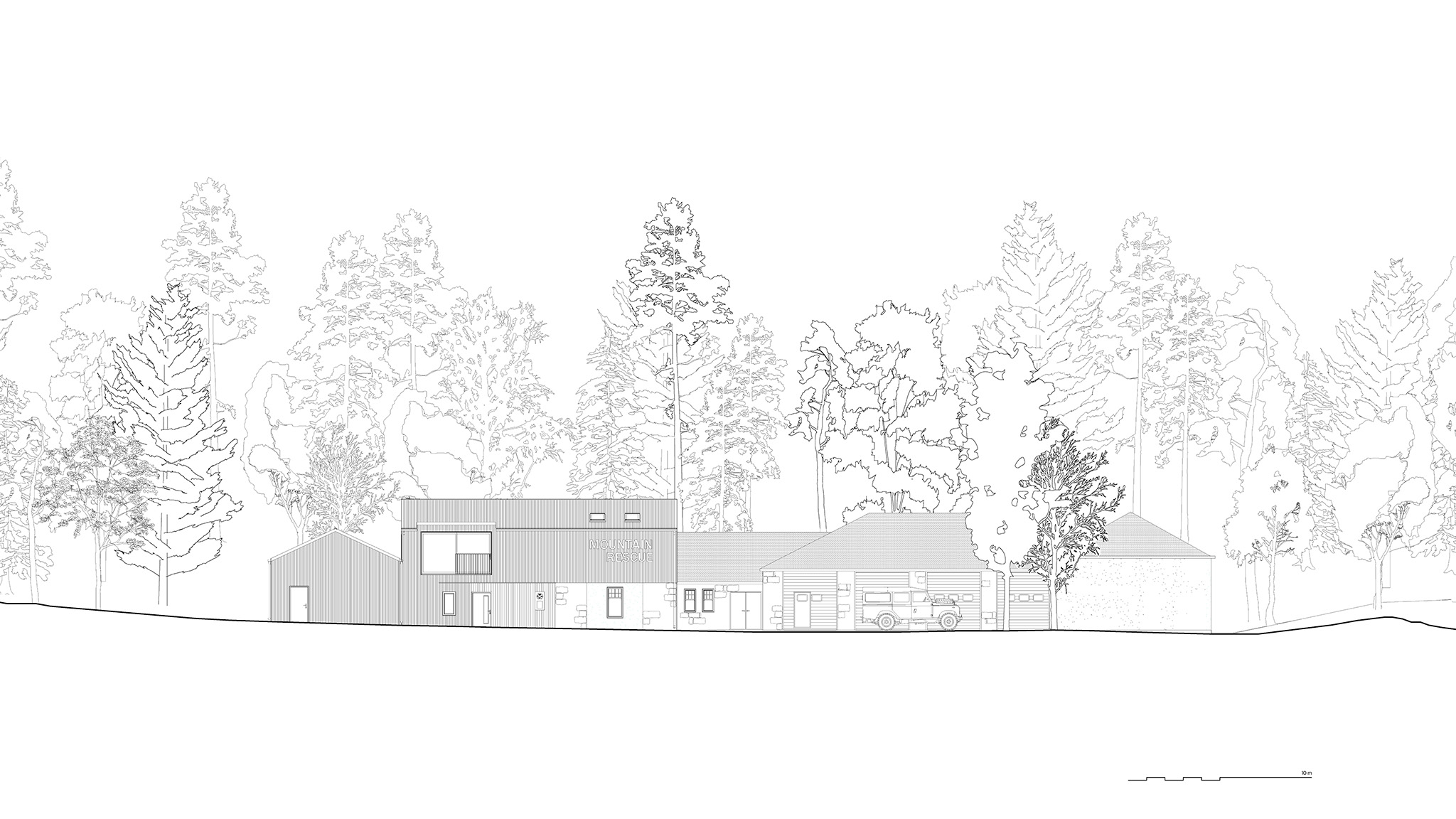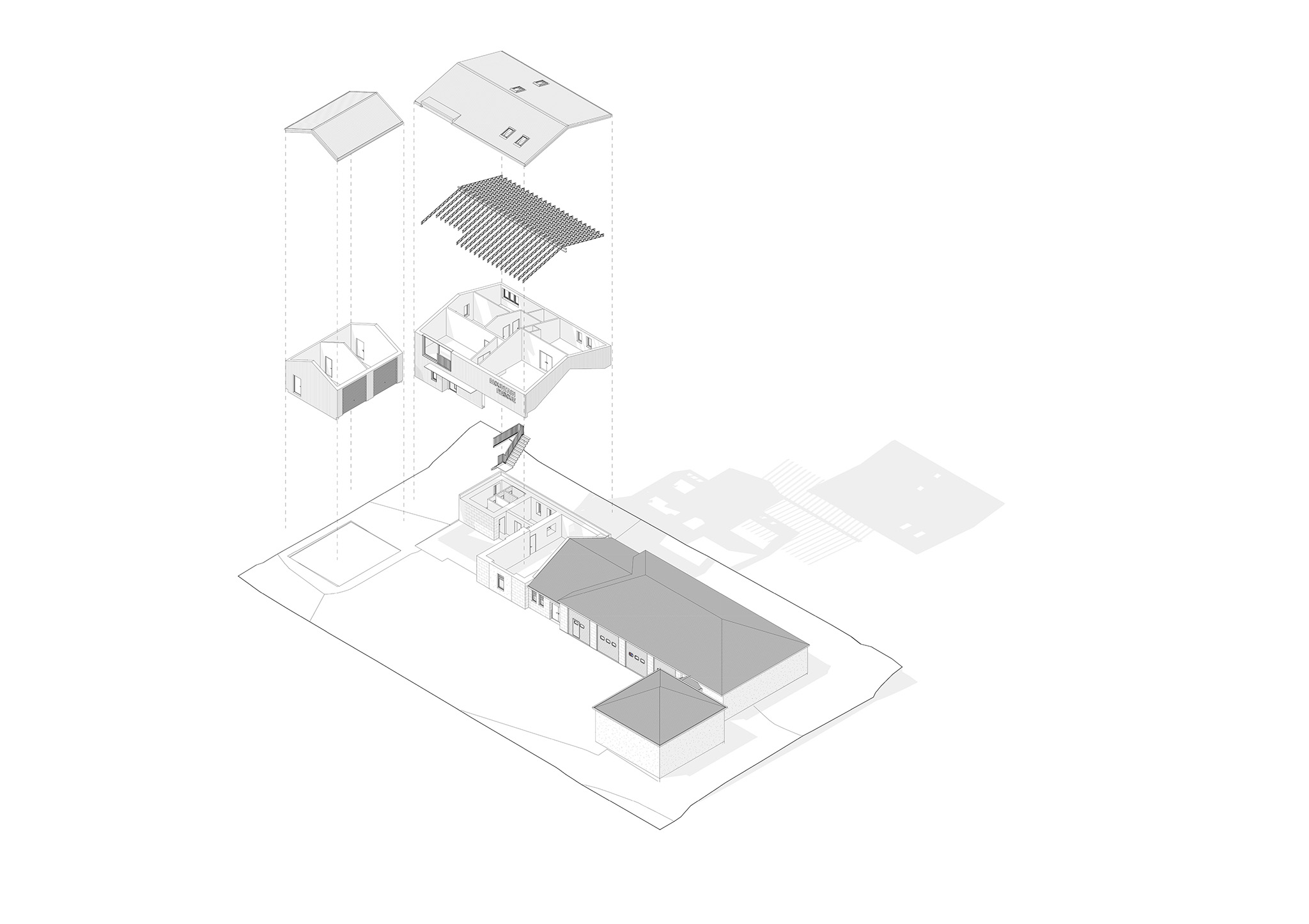
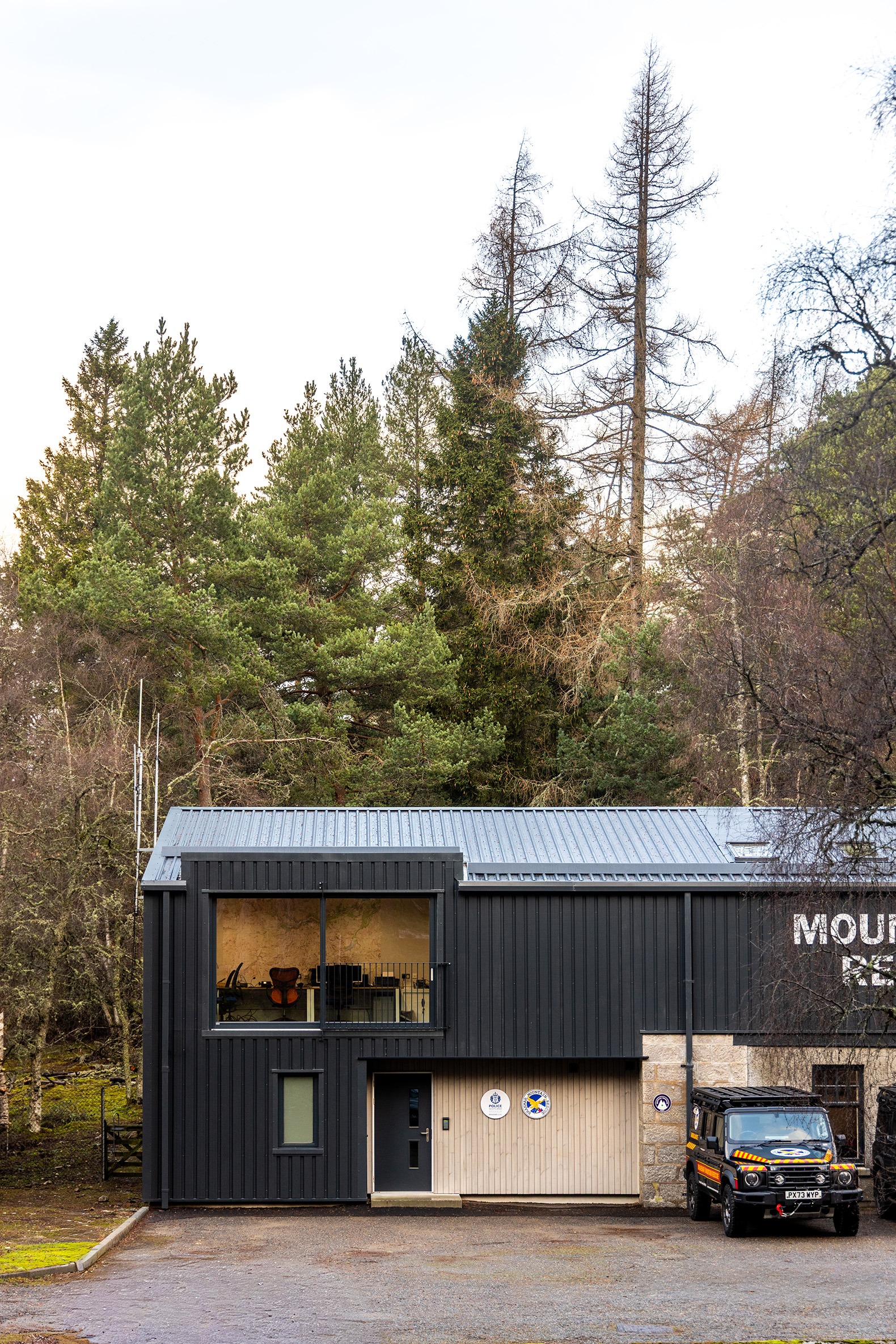
For the Braemar Mountain Rescue Centre, Moxon Architects proposes improvements to the ground floor: a new entrance, restrooms, showers, modern training facilities, additional storage areas, and multipurpose spaces. On the first floor, the interior layout is optimized, and the bedrooms are improved.
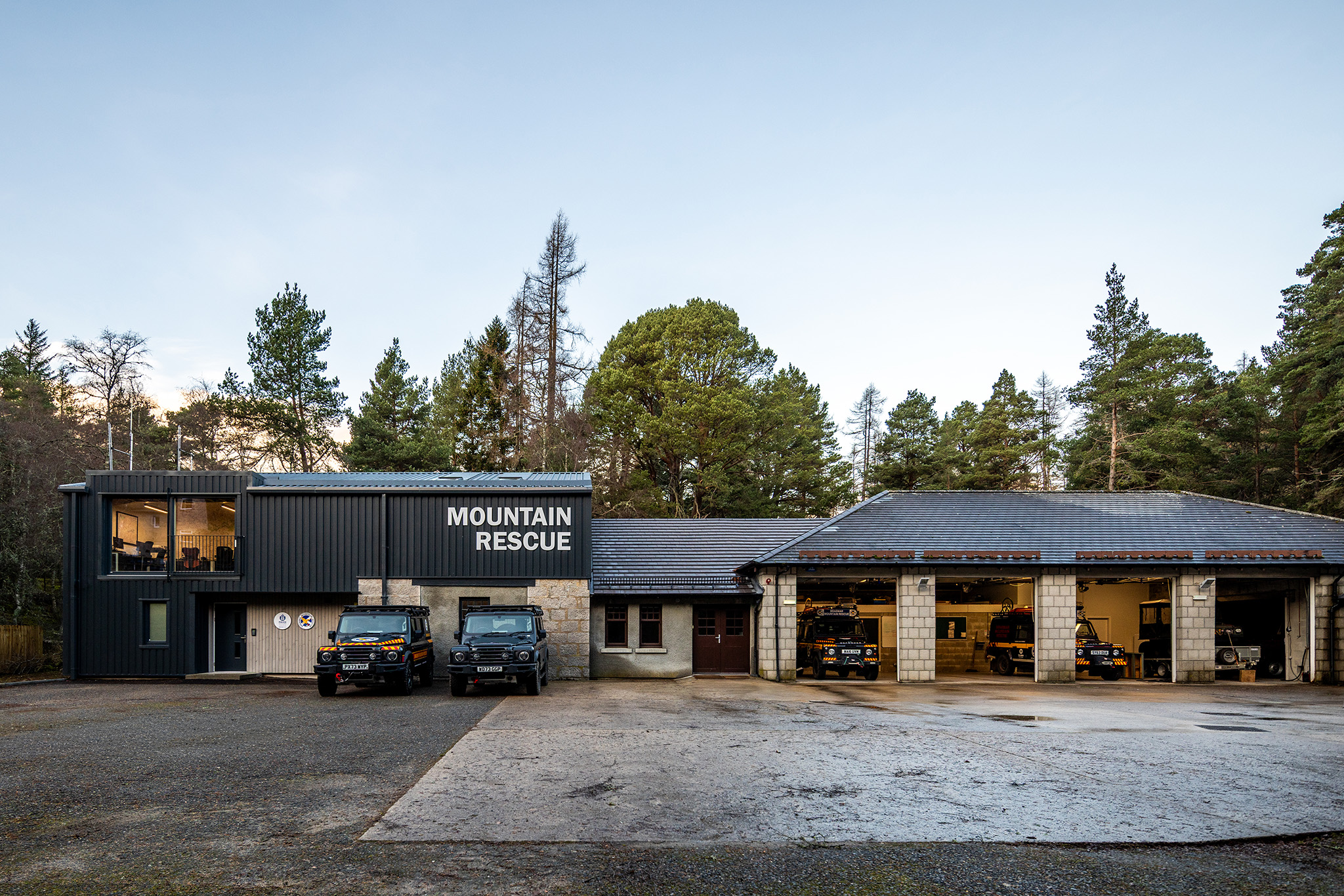
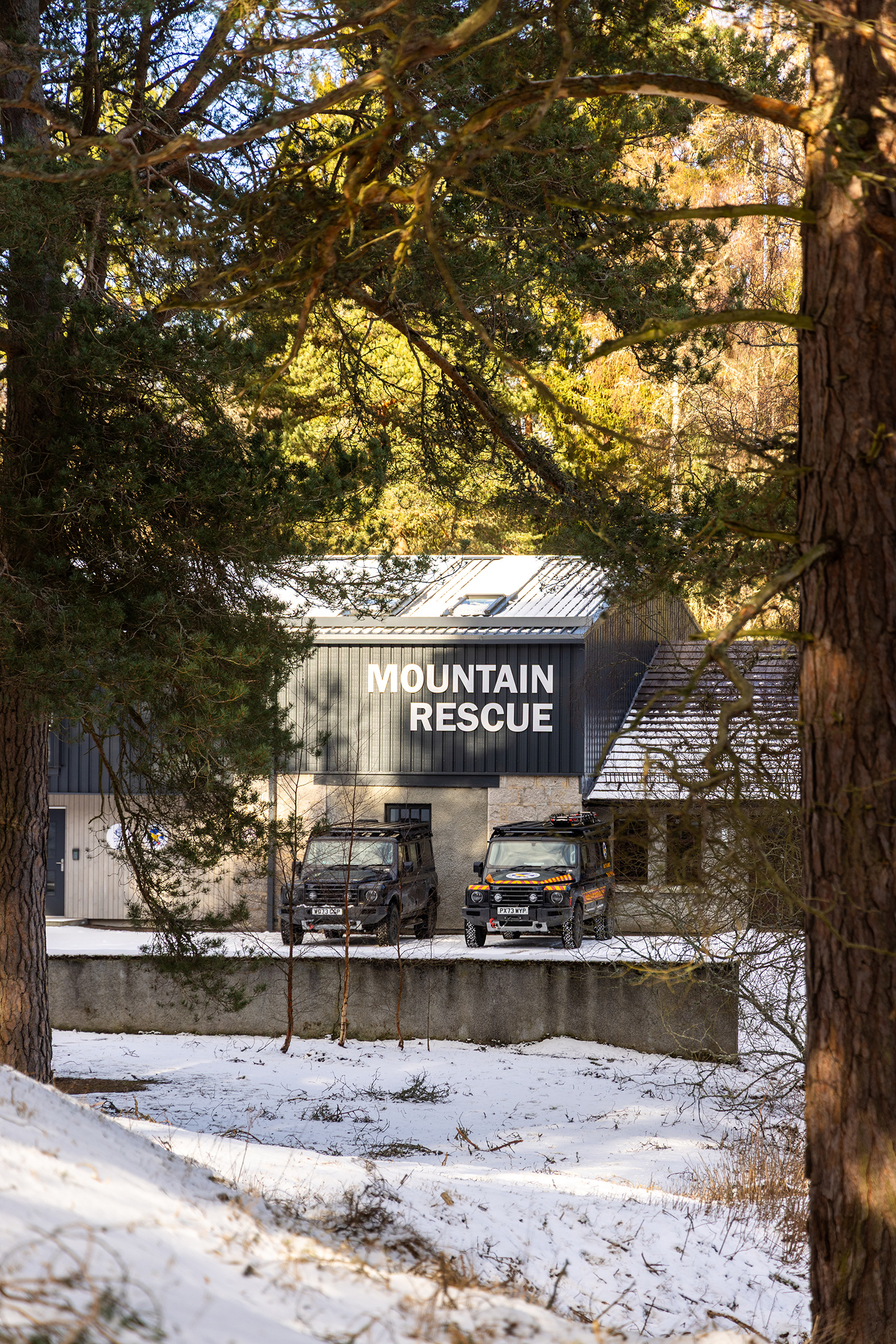
The complex's original roof has been replaced with a low-pitched roof reminiscent of local agricultural buildings, making it both durable and practical. The exterior cladding is galvanized steel with a black coating, which complements the exposed granite base and allows the building to blend discreetly and familiarly into the surrounding wooded landscape.
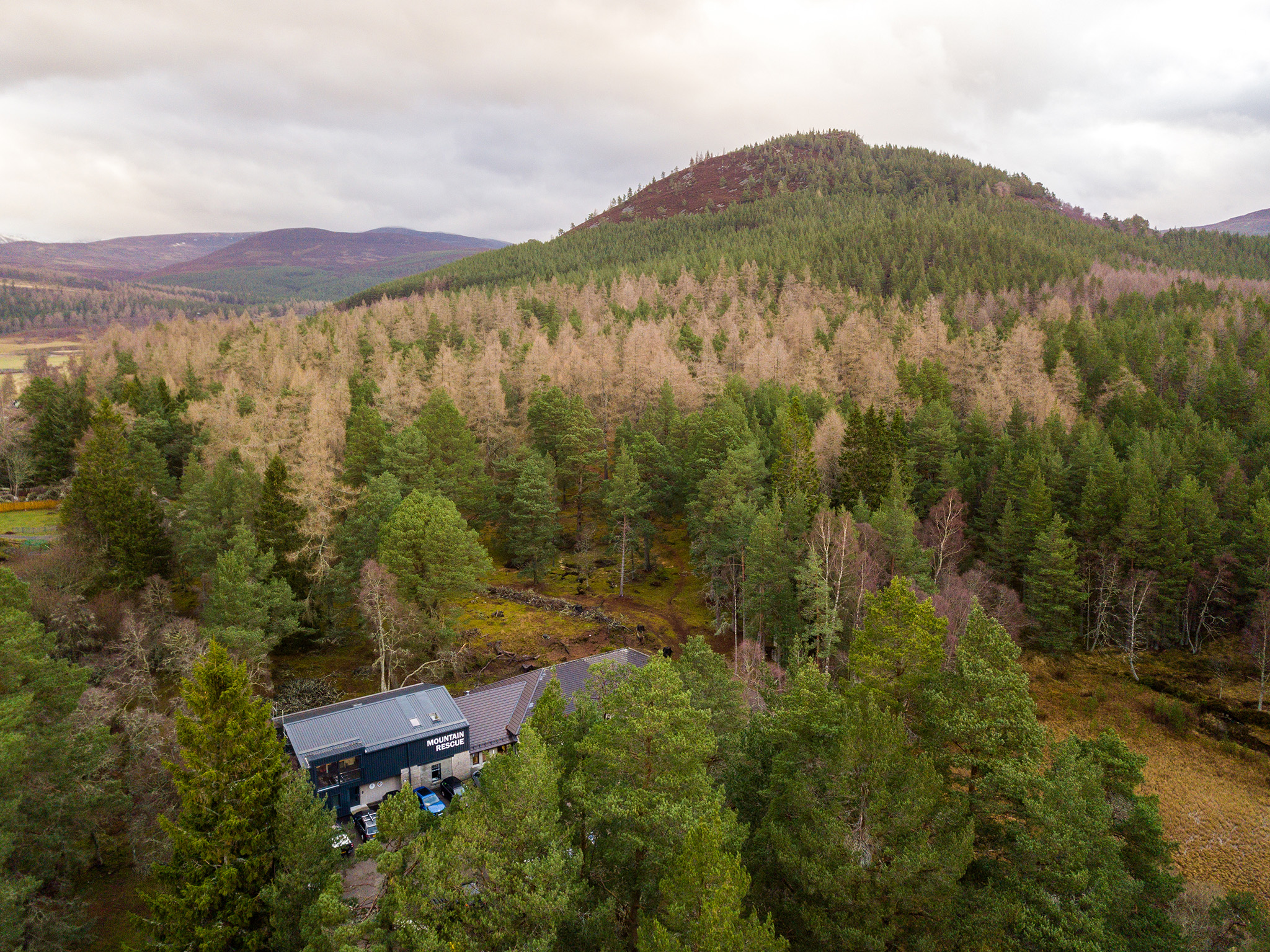
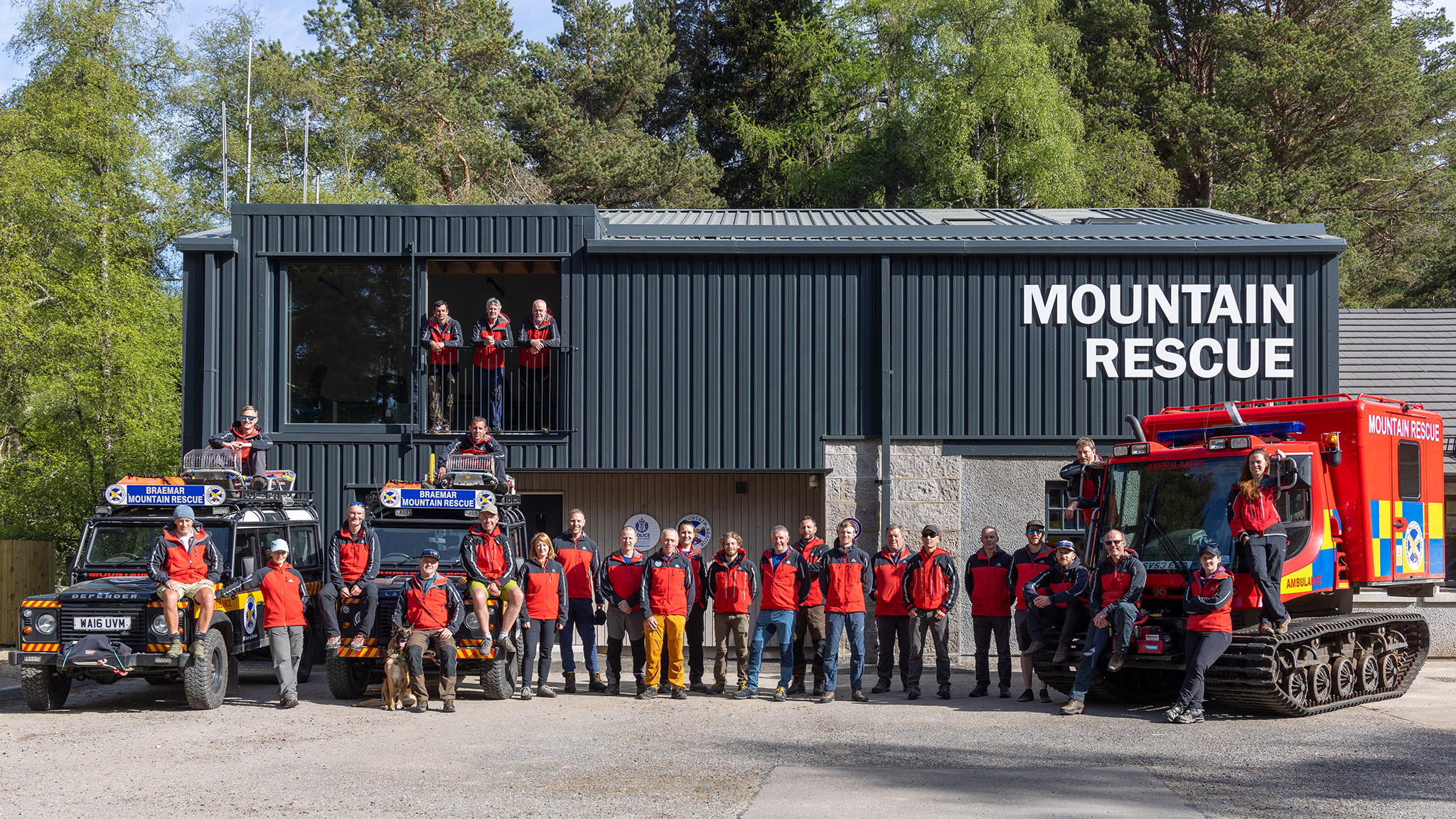
Braemar Mountain Rescue Centre by Moxon Architects. Photograph by Moxon Architects.
Project description by Moxon Architects
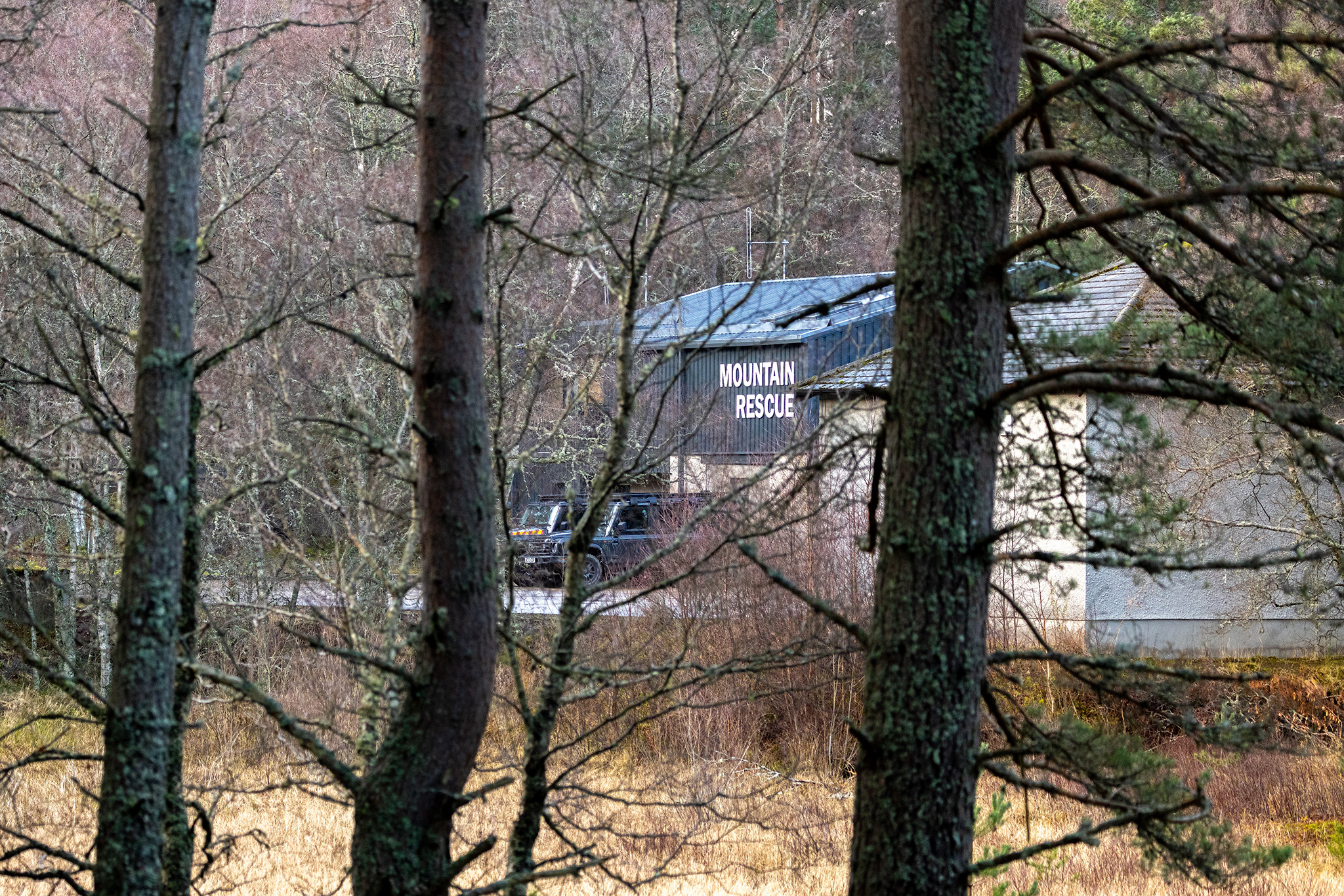
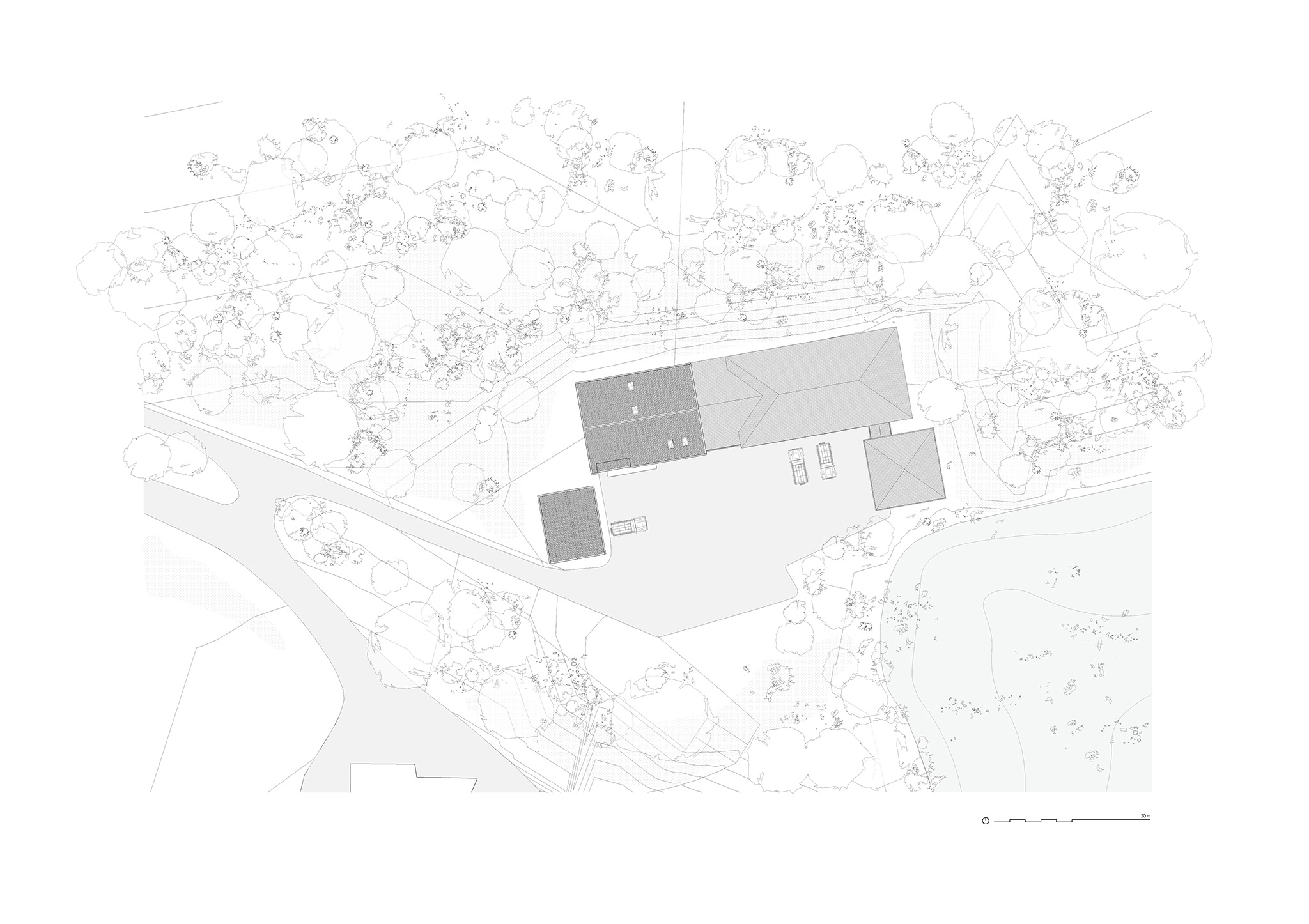
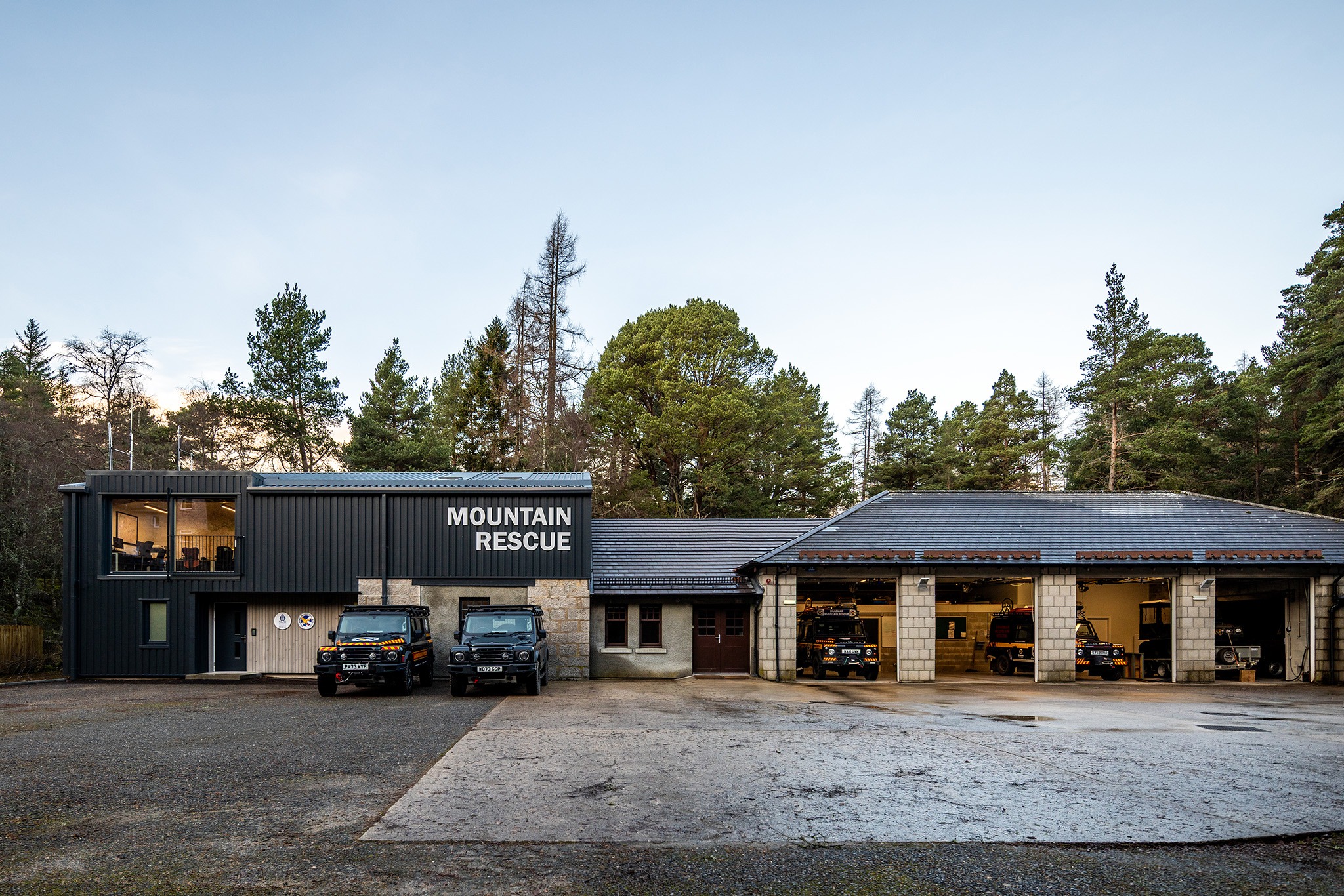
Set within secluded woodland on the edge of Braemar village, the project unifies the original traditional granite building and adjacent outhouses, as well as a new 1.5-storey extension above, wrapped in black corrugated steel. The design brings together old and new to create a robust, cohesive base that reflects the character of rural Aberdeenshire while enhancing operational performance.
Founded in 1965 by local residents concerned about accidents in the hills, the Braemar Mountain Rescue Team has served the Cairngorms, Lochnagar, Glenshee and Deeside areas for over 60 years. The team moved into its current base, a former fire station, in 1973, establishing Scotland’s first dedicated mountain rescue centre. What began as a modest facility with a garage, store, and basic overnight accommodation has since evolved alongside the team, which now comprises around 40 highly skilled volunteers working in close partnership with Police Scotland Mountain Rescue.
The newly completed upgrade marks a significant milestone in this evolution. Delivered jointly by the Braemar Mountain Rescue Association and Police Scotland, who now also use the building as the permanent Braemar Police office, the project strengthens a long-standing collaboration by bringing both services together under one roof.
The expanded centre provides a flexible, efficient and sustainable facility designed to meet the increasing demands placed on mountain rescue and policing services as visitor numbers in the Highlands continue to rise.
Improvements to the ground floor include a new entrance, enhanced changing facilities, an accessible WC, and dedicated female showers and changing areas, creating a more inclusive working environment for volunteers. Upgraded training facilities have also been integrated, including a double-height rope access area. Additional kit and vehicle storage areas support operational readiness, while new multi-use training and meeting spaces enhance the team’s ability to prepare for complex incidents.
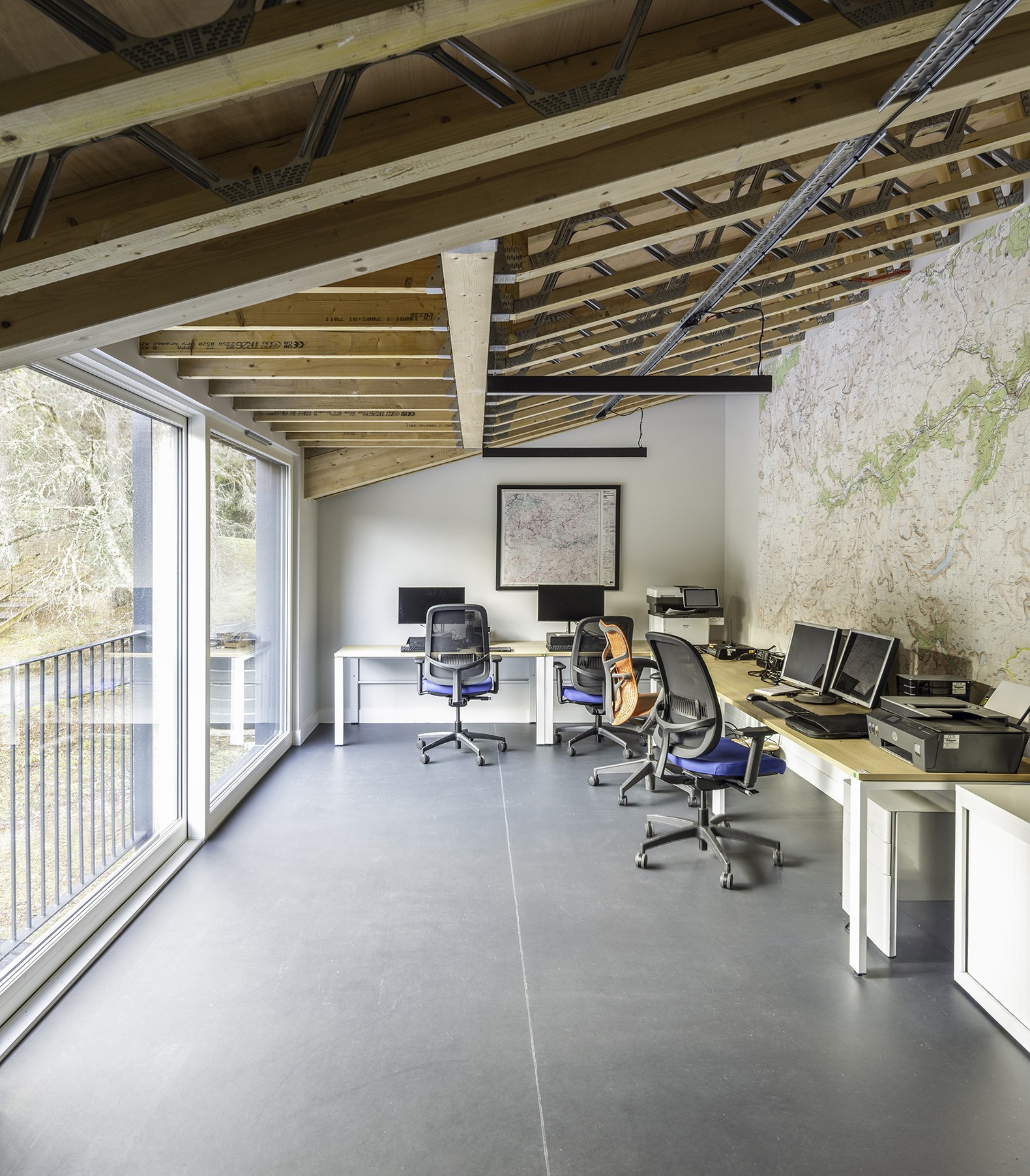
The remodelling of the first floor rationalises internal layouts to improve efficiency and welfare. A larger control room now overlooks the courtyard, complemented by an expanded avalancheincident management room at the rear. Improved bunk accommodation provides greater comfort for volunteers during extended callouts, reflecting the growing intensity and duration of rescue operations.
Architecturally, the building has been simplified and strengthened. The original complex roofscape has been replaced with a singular, shallow pitched form, referencing local agricultural buildings while providing a durable and practical solution suited to emergency service use. The black-coated galvanised steel cladding complements the exposed granite base and allows the building to sit discreetly in the surrounding woodland landscape.
Sustainability has been embedded throughout the project. A highly insulated building envelope improves energy efficiency, while low-water fittings reduce consumption. Biodiversity enhancements, including bat roosting boxes, have also been incorporated to support local wildlife.
Beyond emergency response, the centre continues to play a vital role in the wider community, with the team regularly supporting partner agencies such as the NHS and providing assistance during severe weather events, including helping members of the public during snowstorms and floods.
While the rescue centre has been significantly upgraded and expanded, it remains a discreet and familiar presence at the edge of the village, reflecting both its heritage and enduring role in protecting those who live in and explore the Scottish Highlands.
“Our ambition was to create a cost-effective, flexible and robust rescue centre that supports the team, improving welfare, inclusivity and the operational efficiency of rescue missions, in turn keeping people in the mountains safer. We worked closely with Police Scotland and the Braemar Mountain Rescue Team to deliver this, and being part of the team myself has allowed us to design in response to first-hand pressures that volunteers face when responding to callouts in challenging conditions.”
Ben Addy, Founding Director of Moxon Architects.
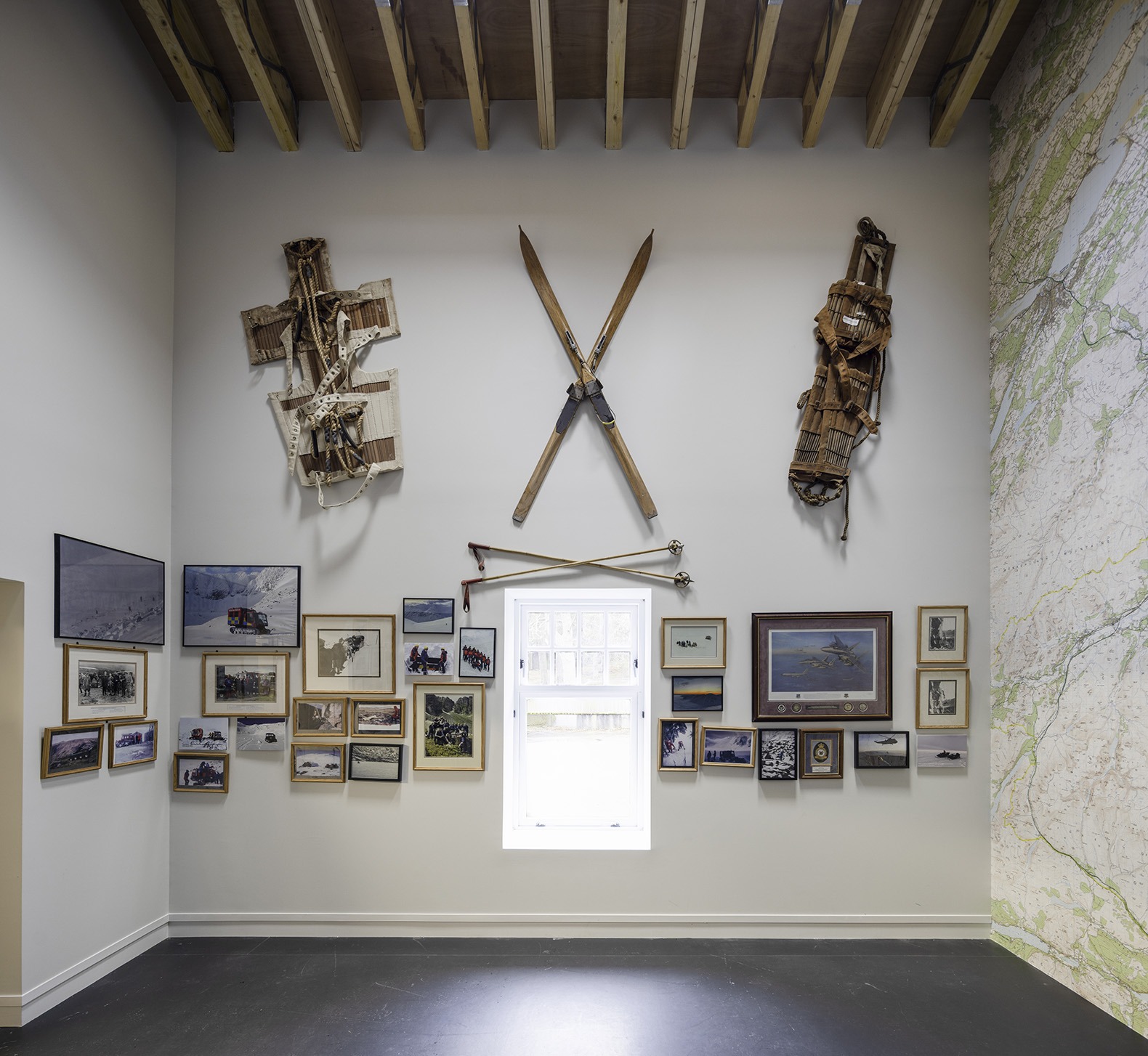
“Our primary aim in refurbishing the centre was to provide facilities that would support the team over the upcoming years as membership, training needs and the nature of call-outs changes. The Moxon team and their contractors have absolutely delivered on this and we now have premises that allow us to train for and respond to the wide range of incidents we are increasingly asked to respond to. The real strength of mountain rescue in Scotland is its volunteers who will unquestioningly turn out to help others in difficulty, and they do this against an increasingly complex and demanding world, balancing other aspects of their own lives and the need for up to date and professional training to keep themselves and others safe. The centre refurbishment allows them to continue the long and respected tradition of volunteer mountain rescue into whatever the future holds for them and those they rescue.”
Malcolm MacIntyre, Operations Manager of Braemar Mountain Rescue Association.
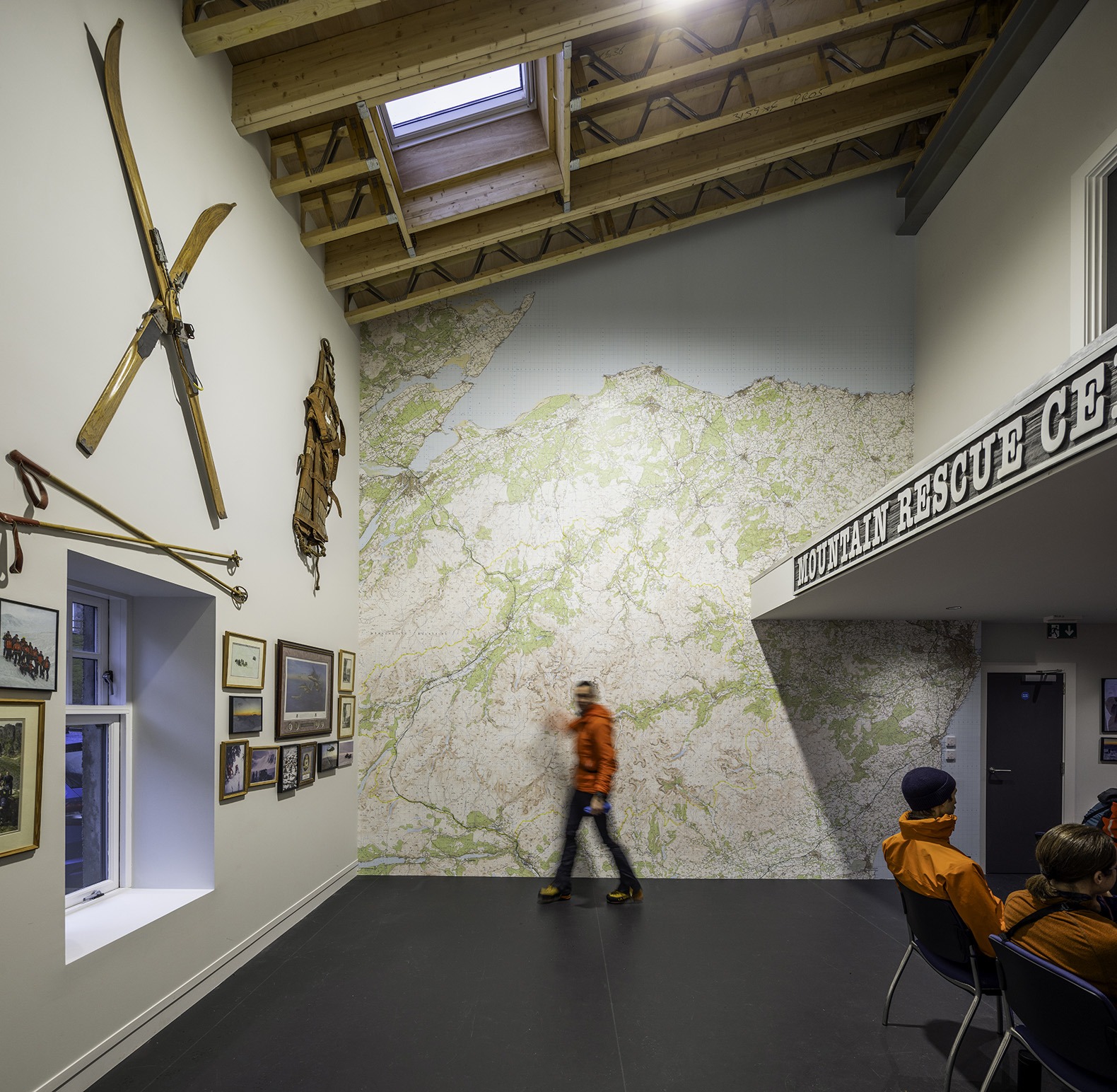
“Police Scotland is proud to have collaborated with Braemar Mountain Rescue and our partners to successfully deliver this extension and partial refurbishment project to our shared facility in Braemar. This vital enhancement strengthens our commitment to saving lives in some of Scotland’s most challenging terrain whilst also providing more modern, sustainable and diverse welfare and response facilities for our officers and volunteers. We work closely with Mountain Rescue Teams across Scotland, and this project strengthens our shared ability to keep people safe in challenging environments. We commend the dedication and teamwork that made this project a success, reinforcing our shared mission to protect and serve the community whilst providing welcome improvement to our vital emergency response infrastructure.”
Nada Kent, Estates Projects & Strategic Planning Lead of Police Scotland.