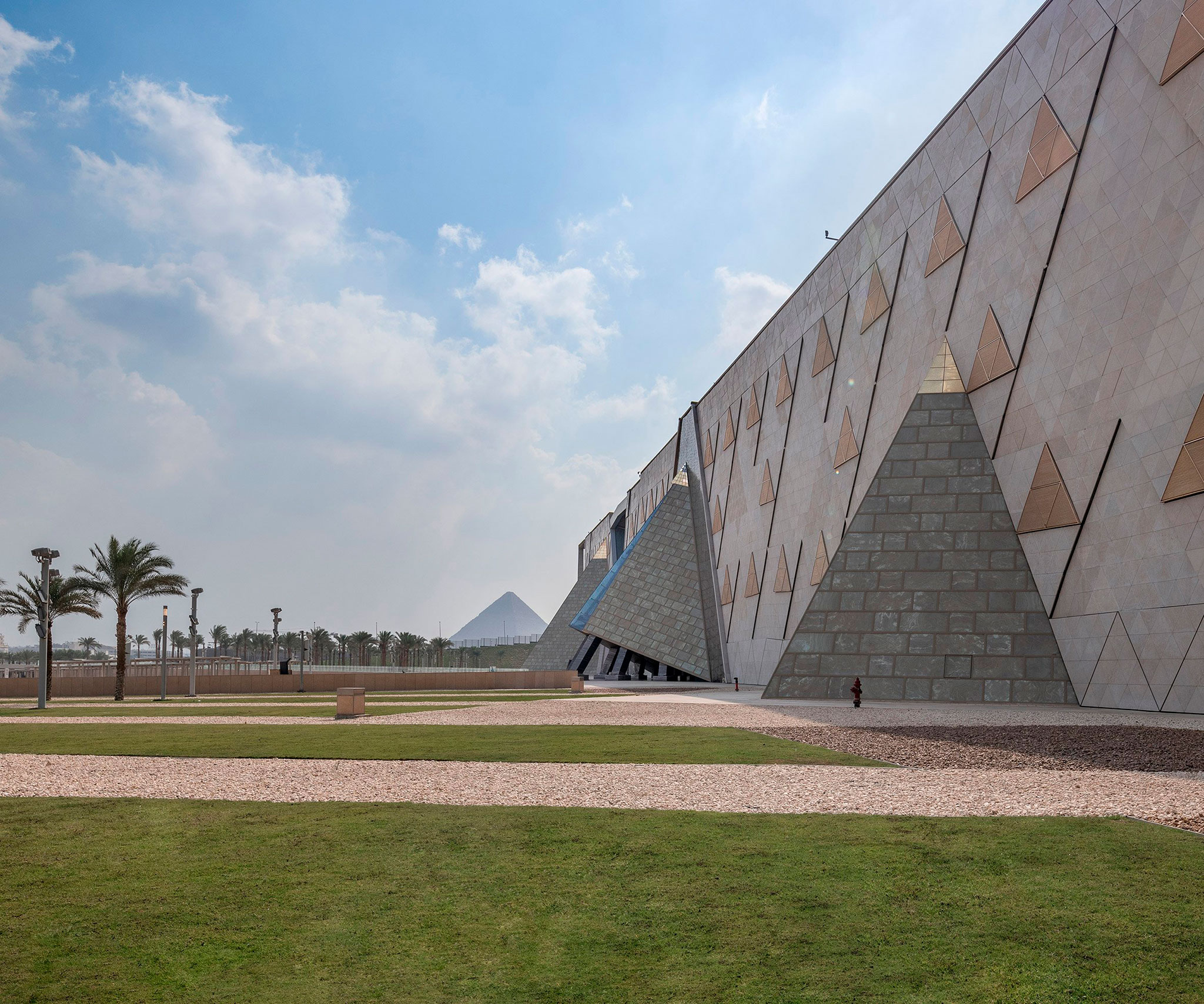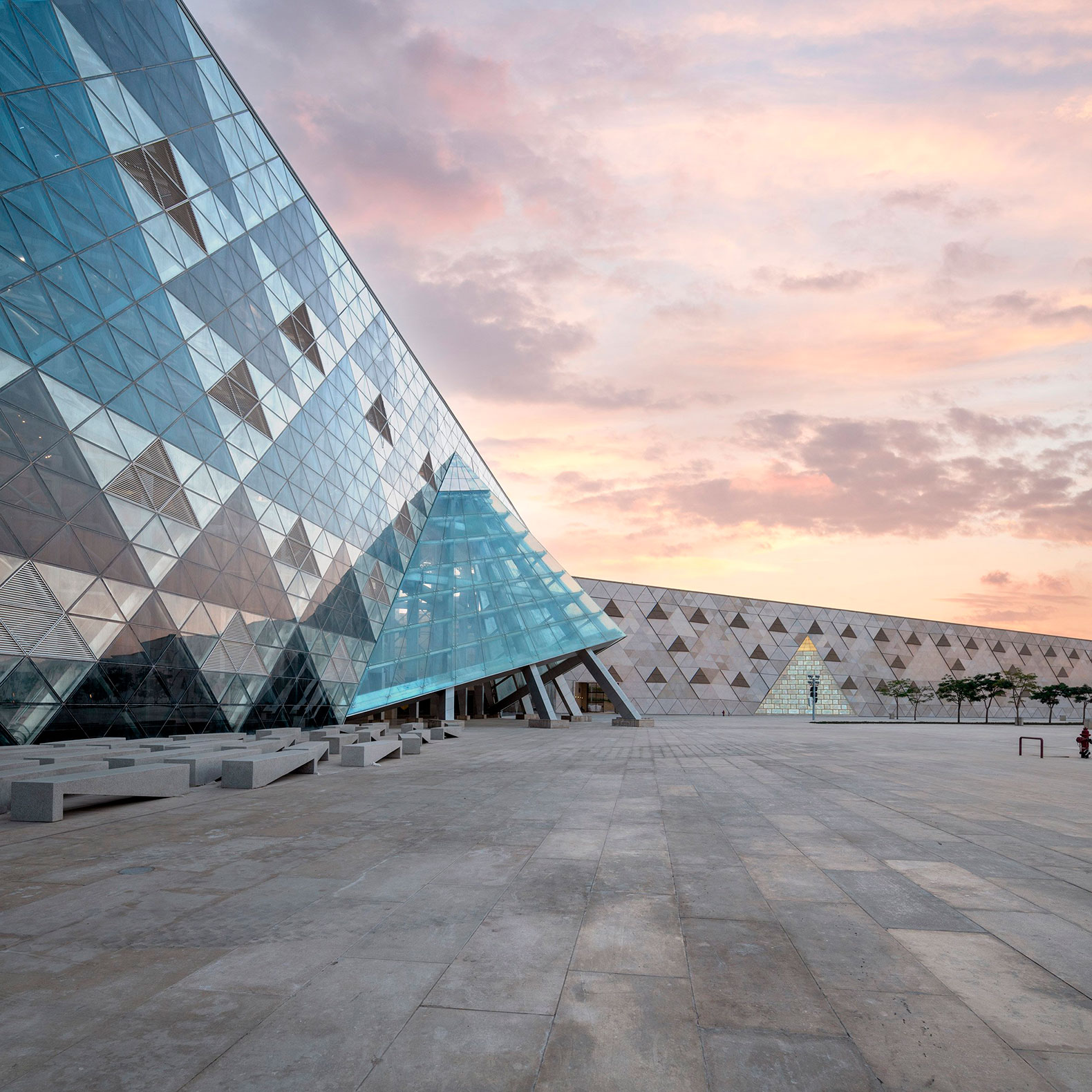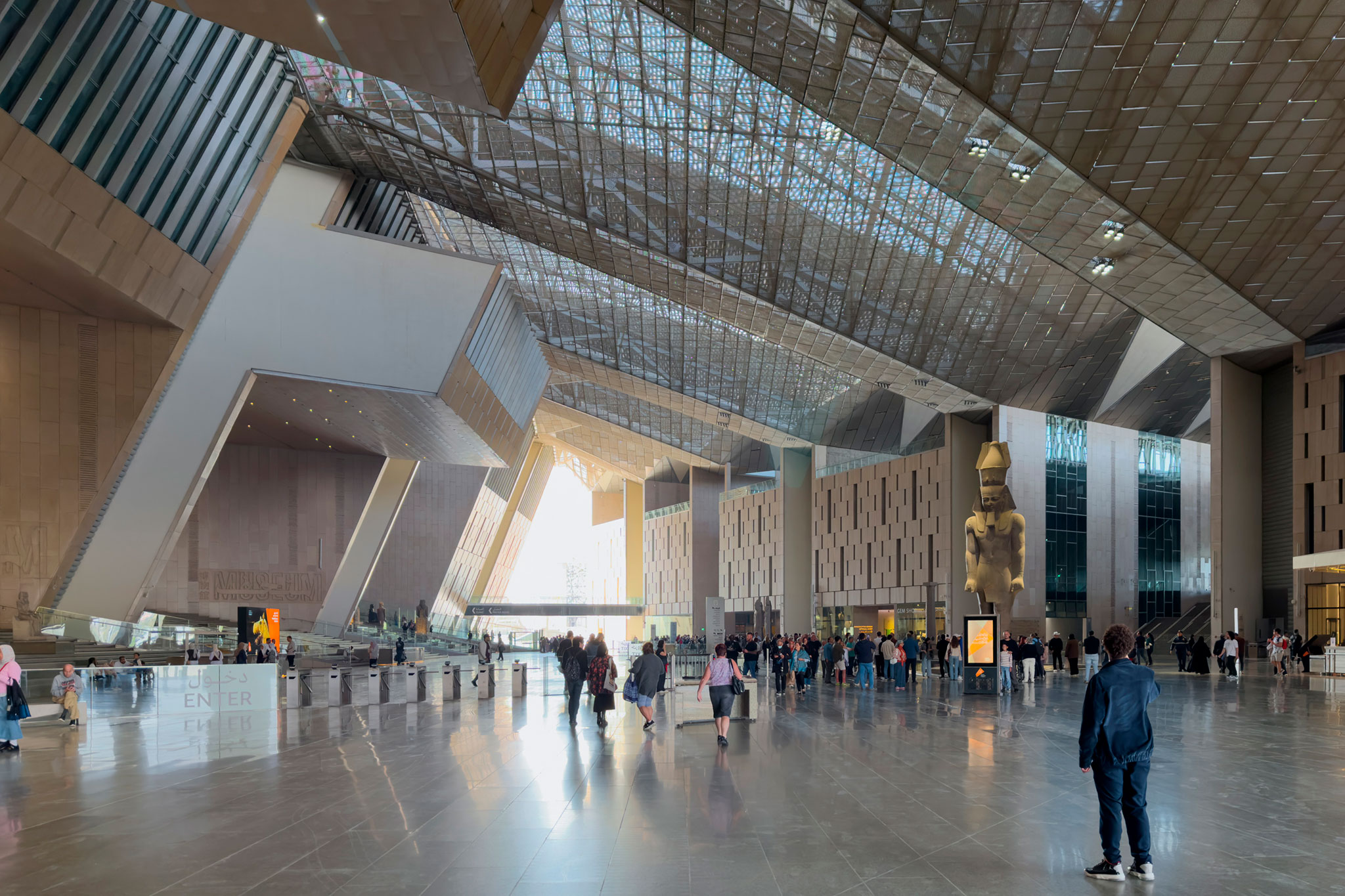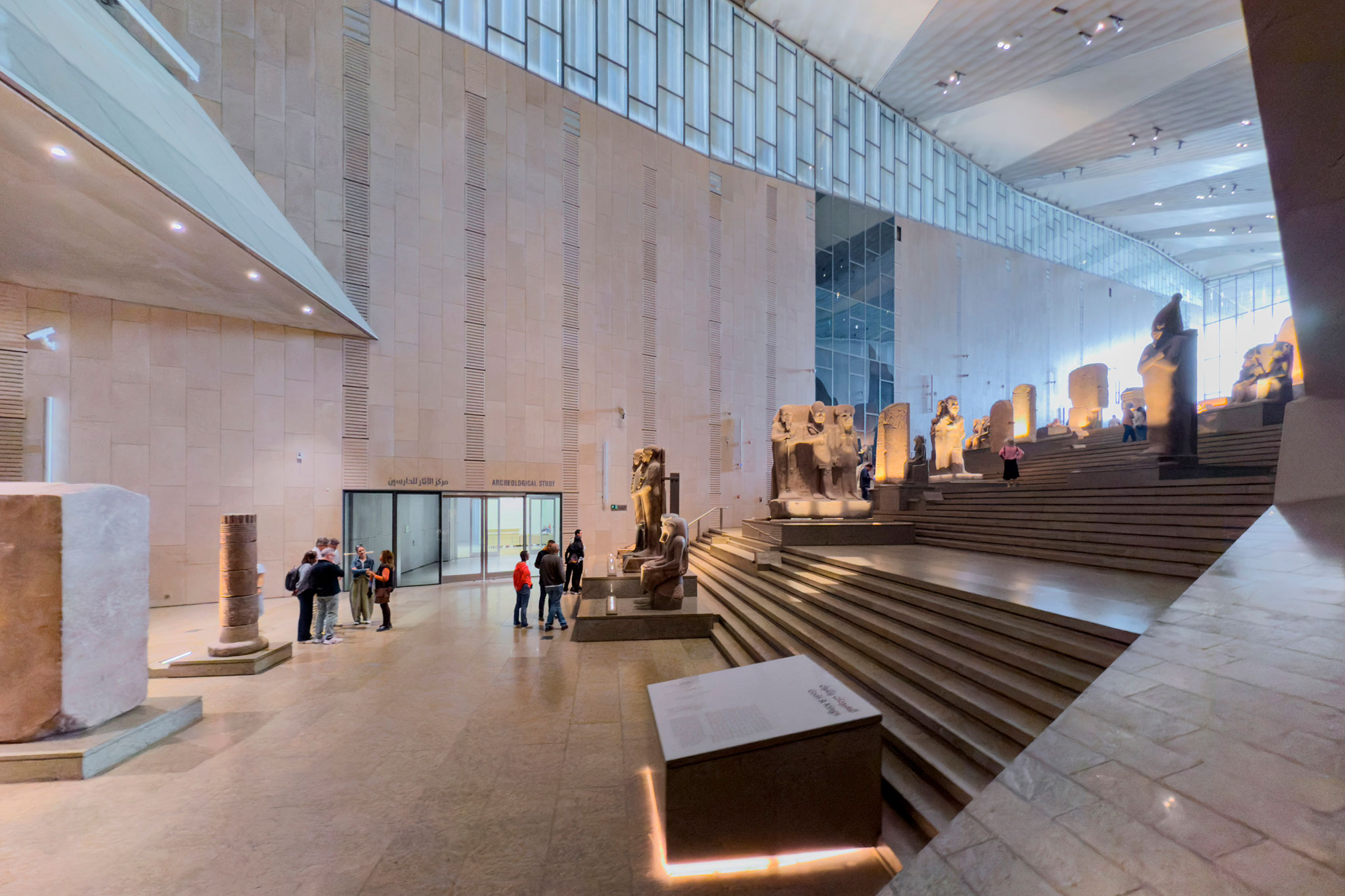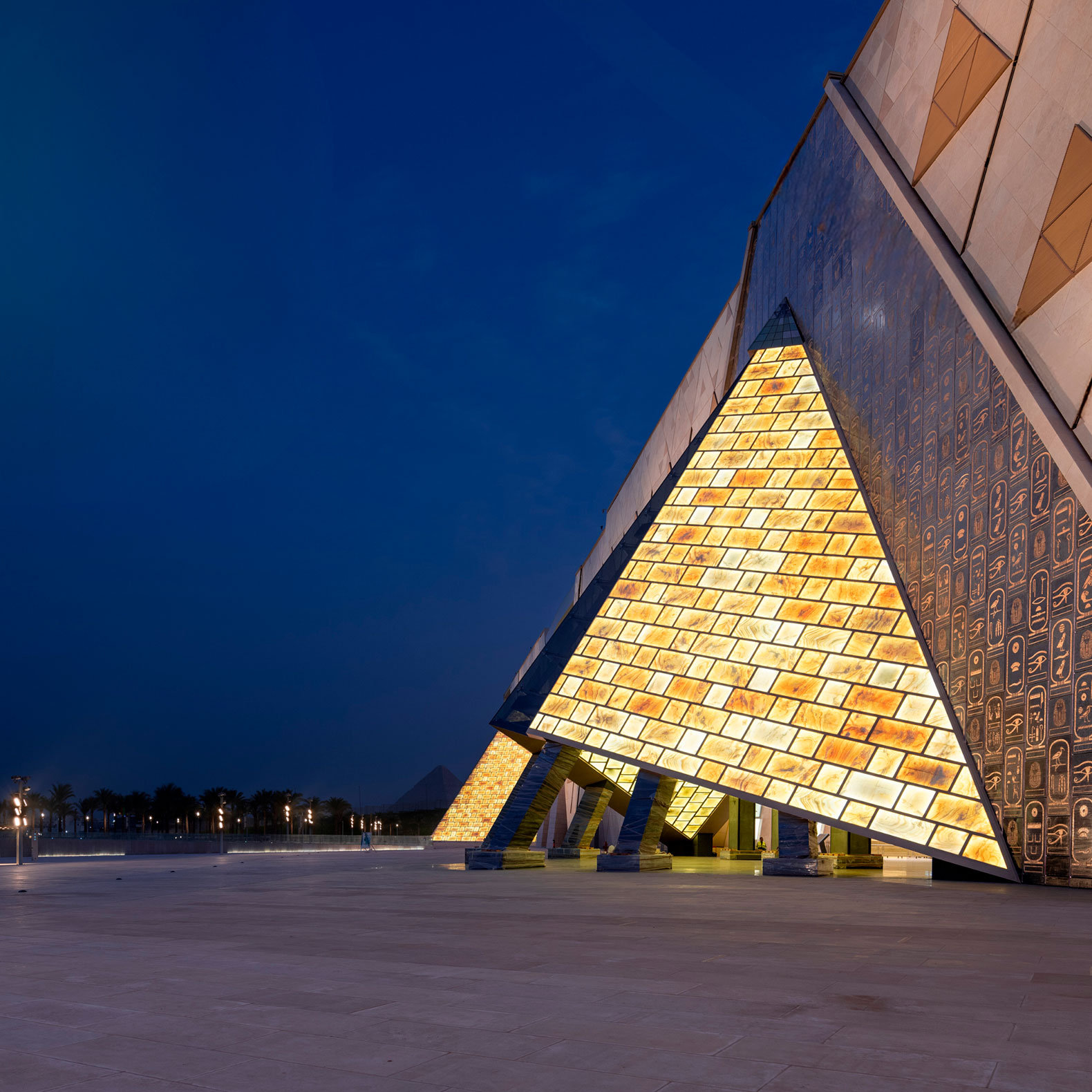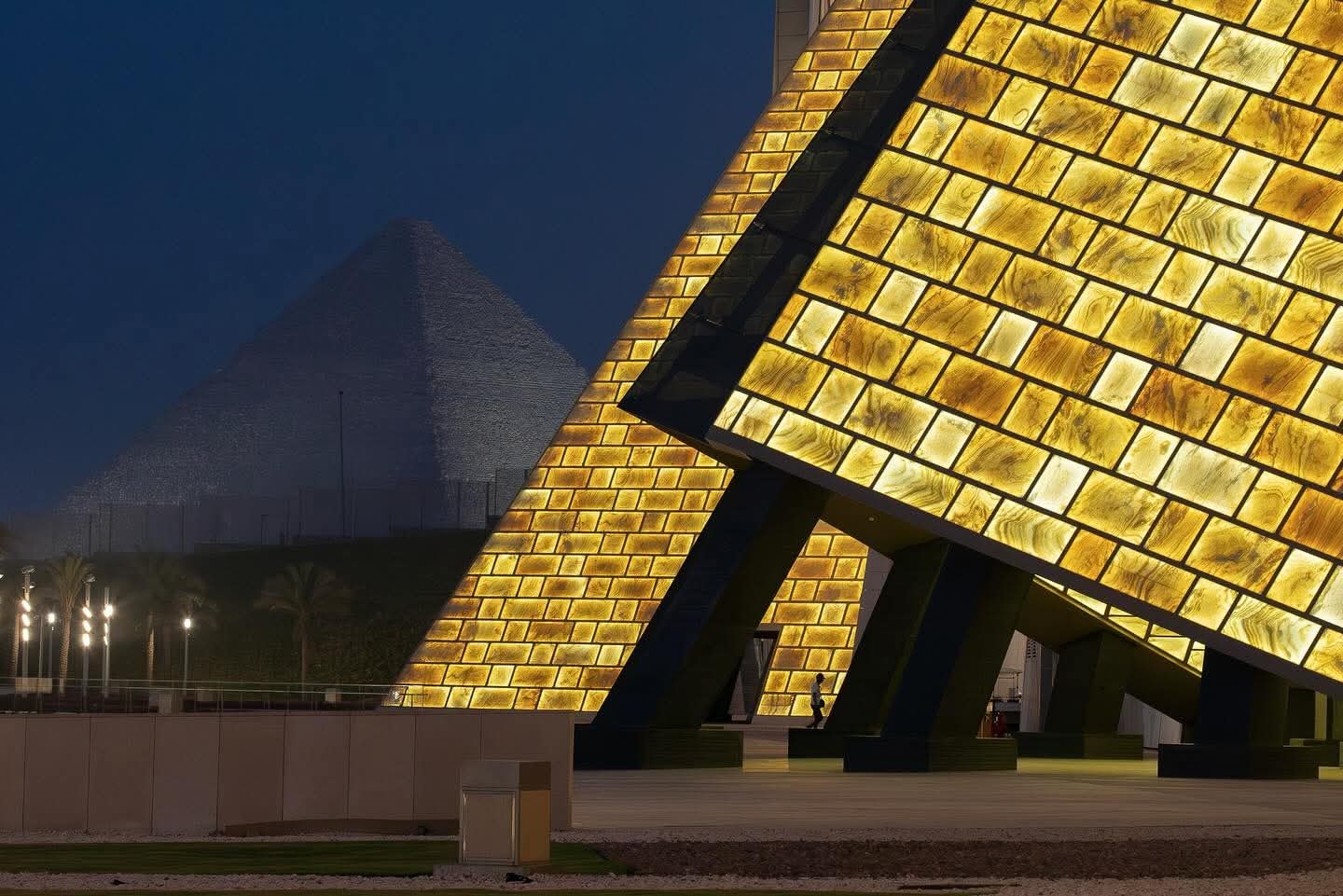
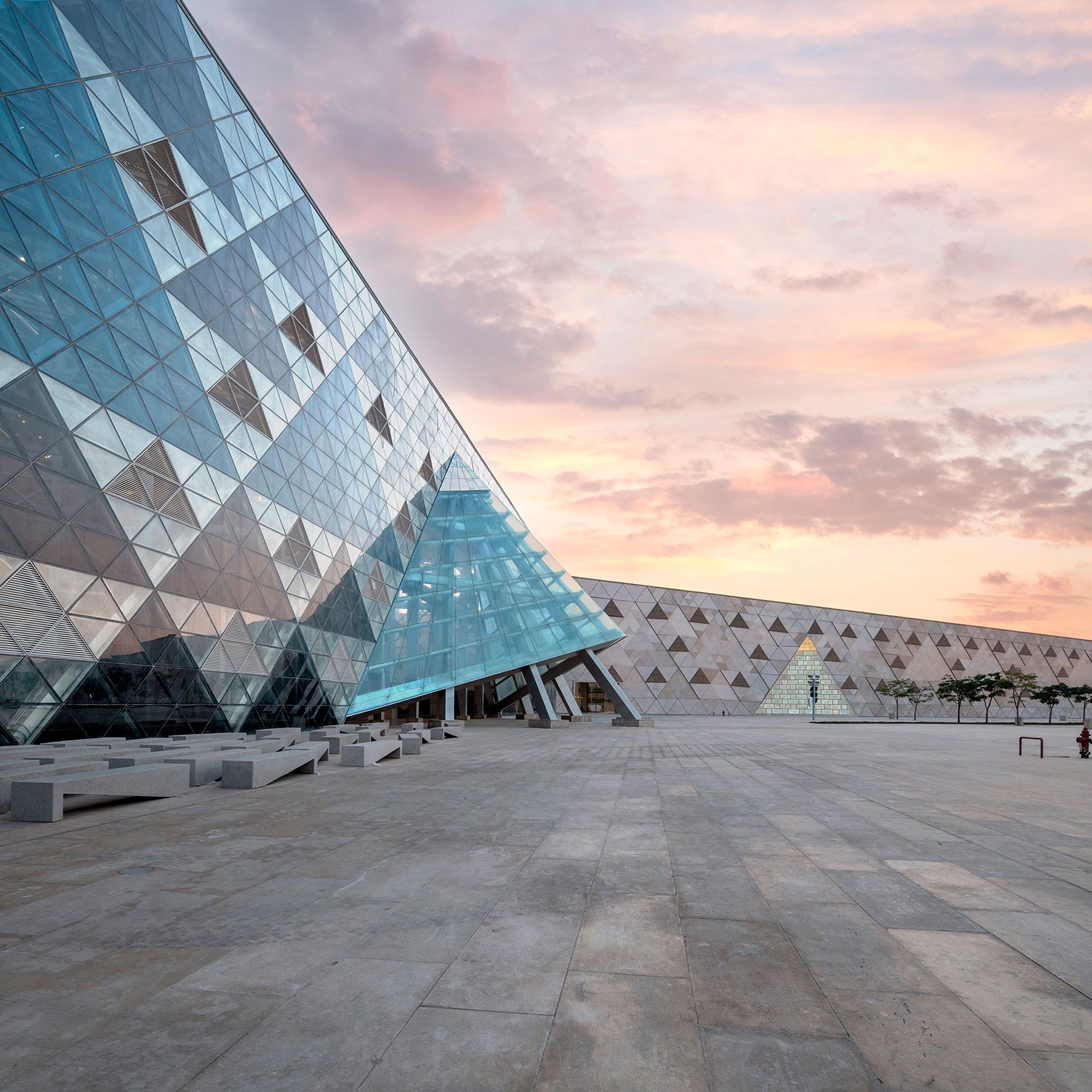
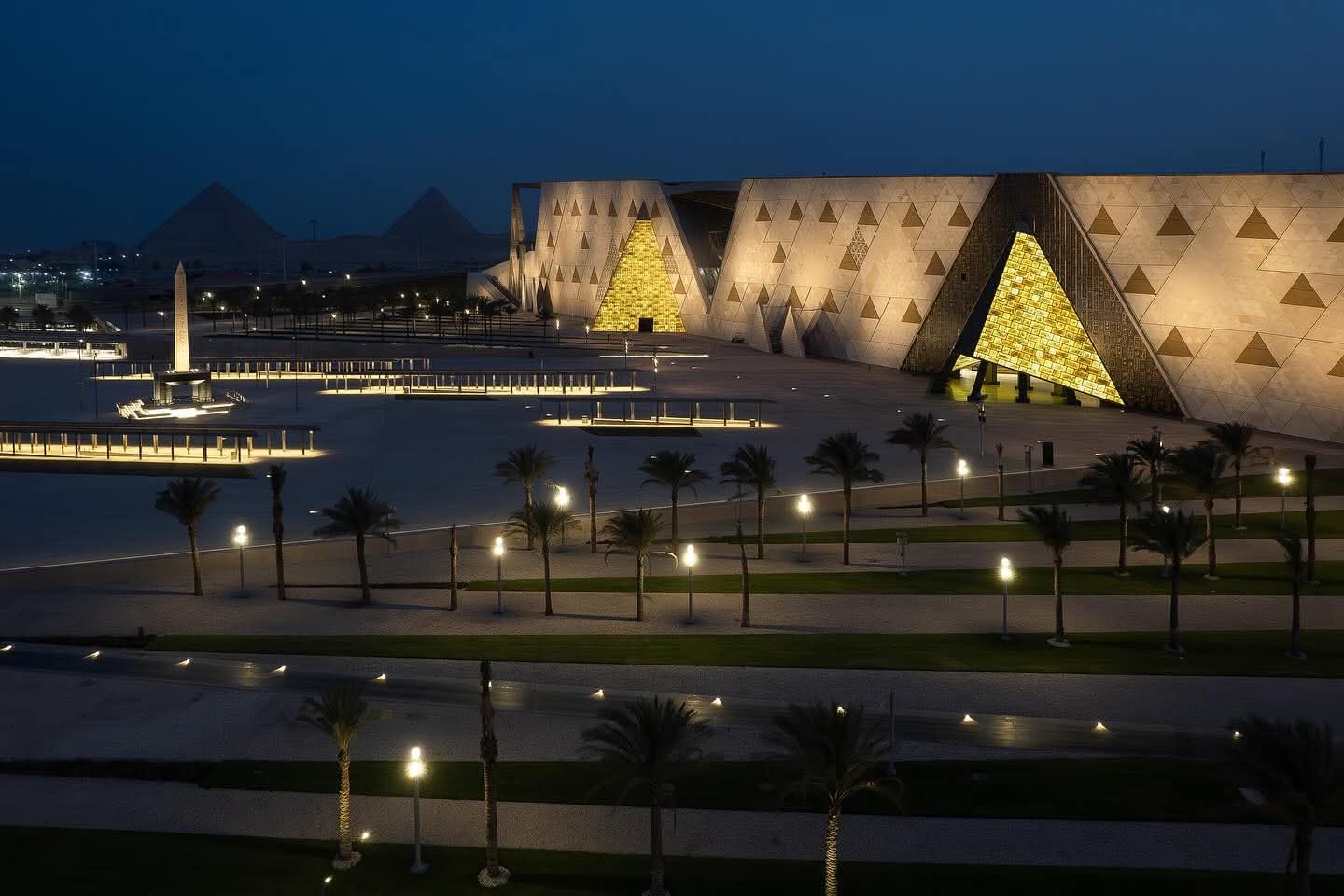
After a long period of almost a quarter of a century—a relative span of time in Egypt’s history—the long-awaited Grand Egyptian Museum has been inaugurated. The project, by the studio Heneghan Peng Architects, won the competition in 2003. This new large museum, located just over a kilometre and a half from the Pyramids of Giza, will become the largest museum in the world dedicated to a single civilization, thanks to its capacity to house 100,000 artefacts.

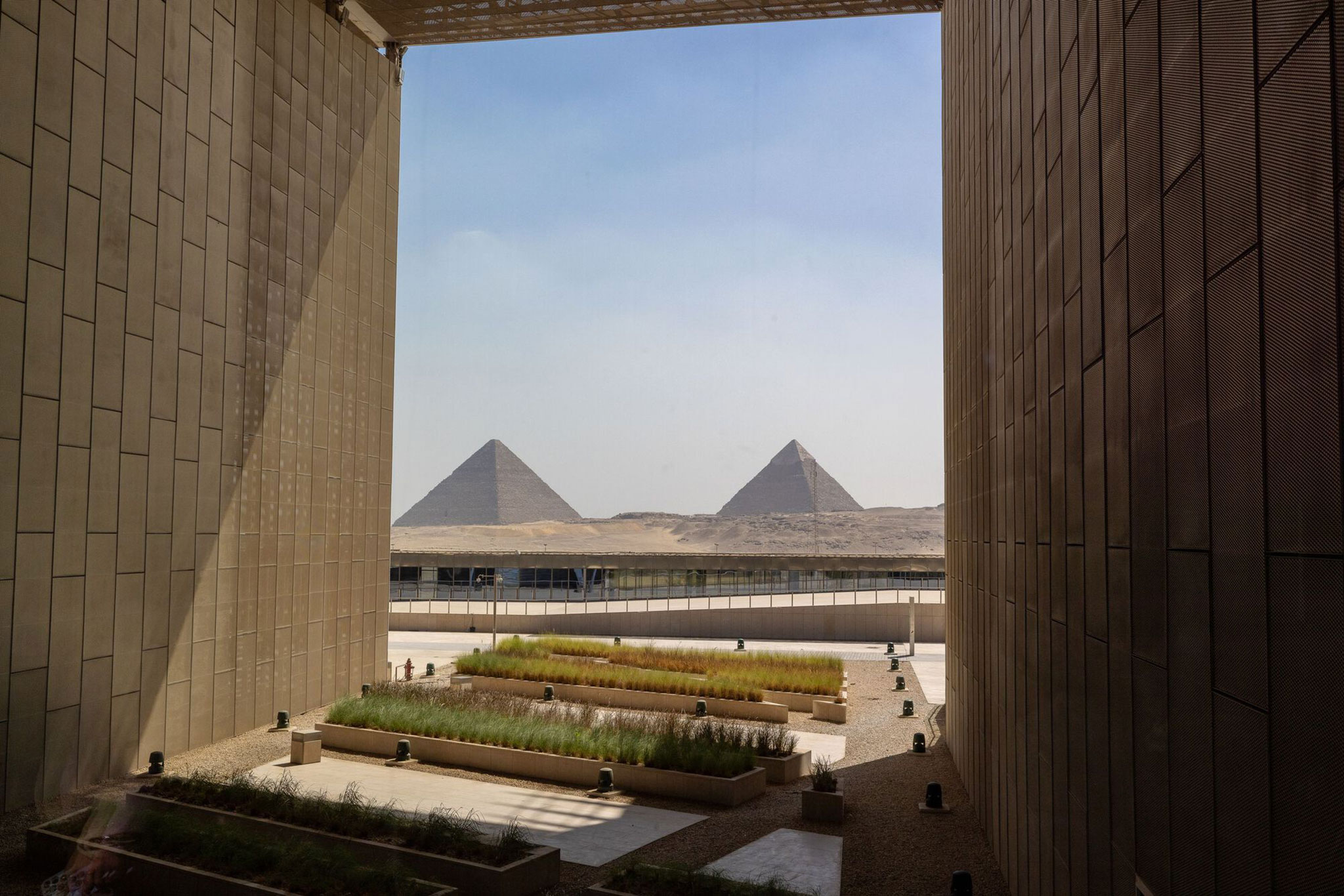
The inauguration of the project coincides with the completion, on 1 November 2025, of the Tutankhamun Gallery, which will exhibit for the first time the entire collection of more than 5,000 pieces. It is a museum that establishes a direct relationship with the location of the Giza Pyramids, proposing a careful dialogue between history and modernity.

Located on a desert plateau formed by the Nile thousands of years ago, the geological setting of the museum was an integral part of the project by Heneghan Peng, which prevailed over 1,556 proposals from 82 countries in 2003.

“Designing a museum of this caliber, in such close proximity to a landmark as monumental and symbolic as the pyramids, is a once-in-a-lifetime opportunity. Our design works to strengthen that connection to history and place, providing a home for some never-before-seen artefacts that rest upon the very land from which they were created. The result is an experience that evokes a sense of awe at the breadth and depth of ancient Egypt's fascinating history in a way that feels both modern and timeless.”

Róisín Heneghan, founding partner of Heneghan Peng Architects.

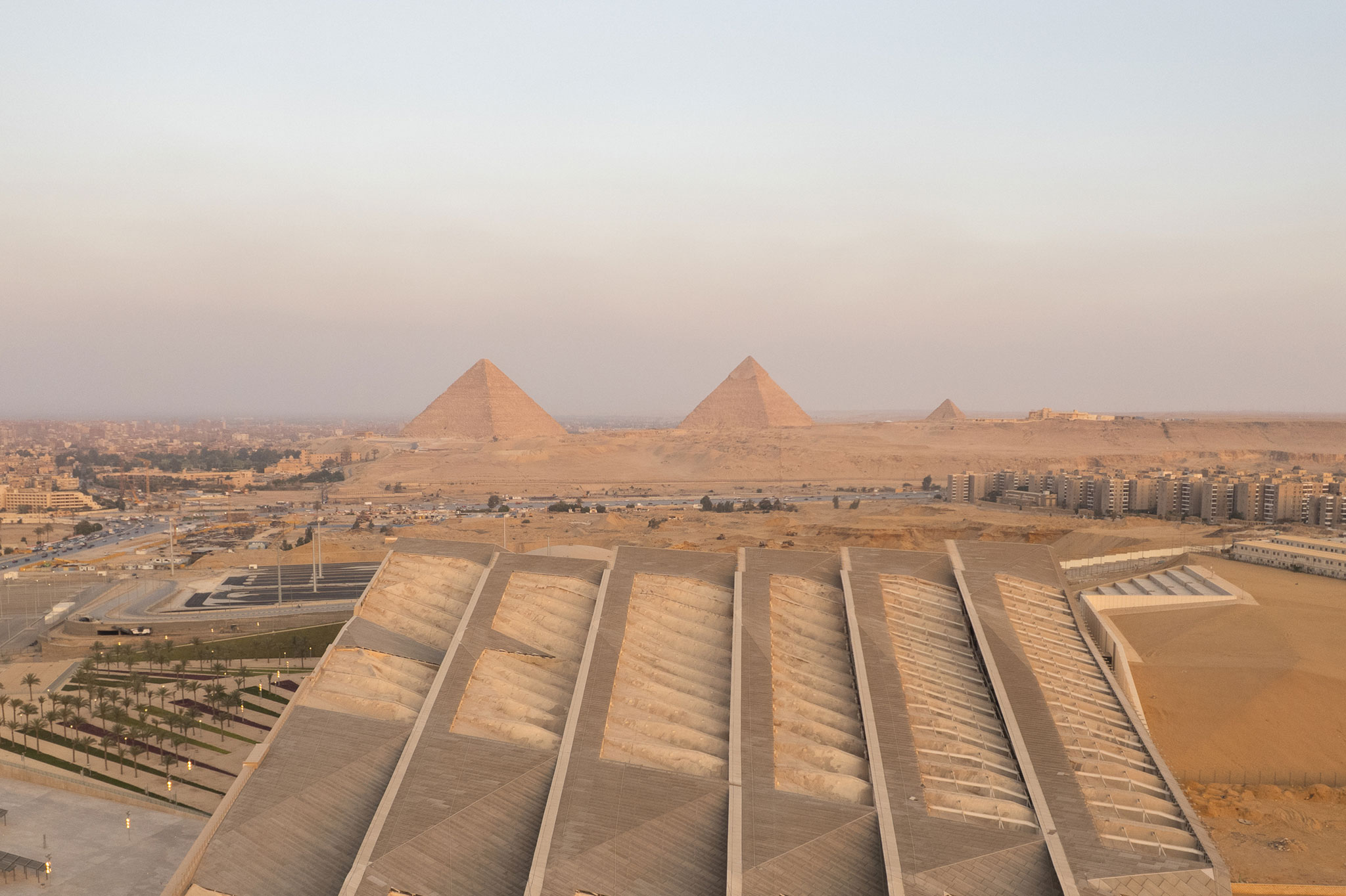
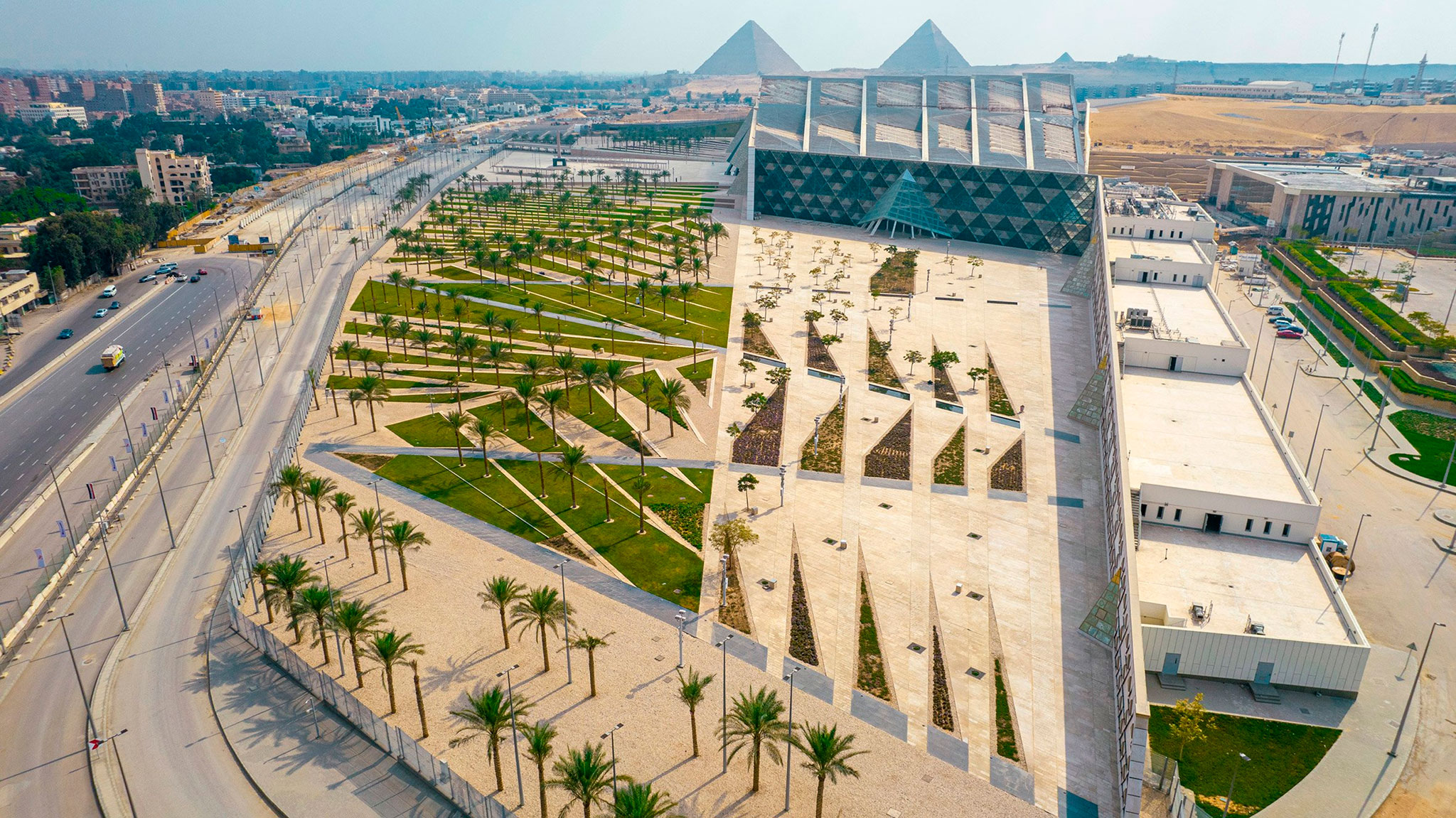
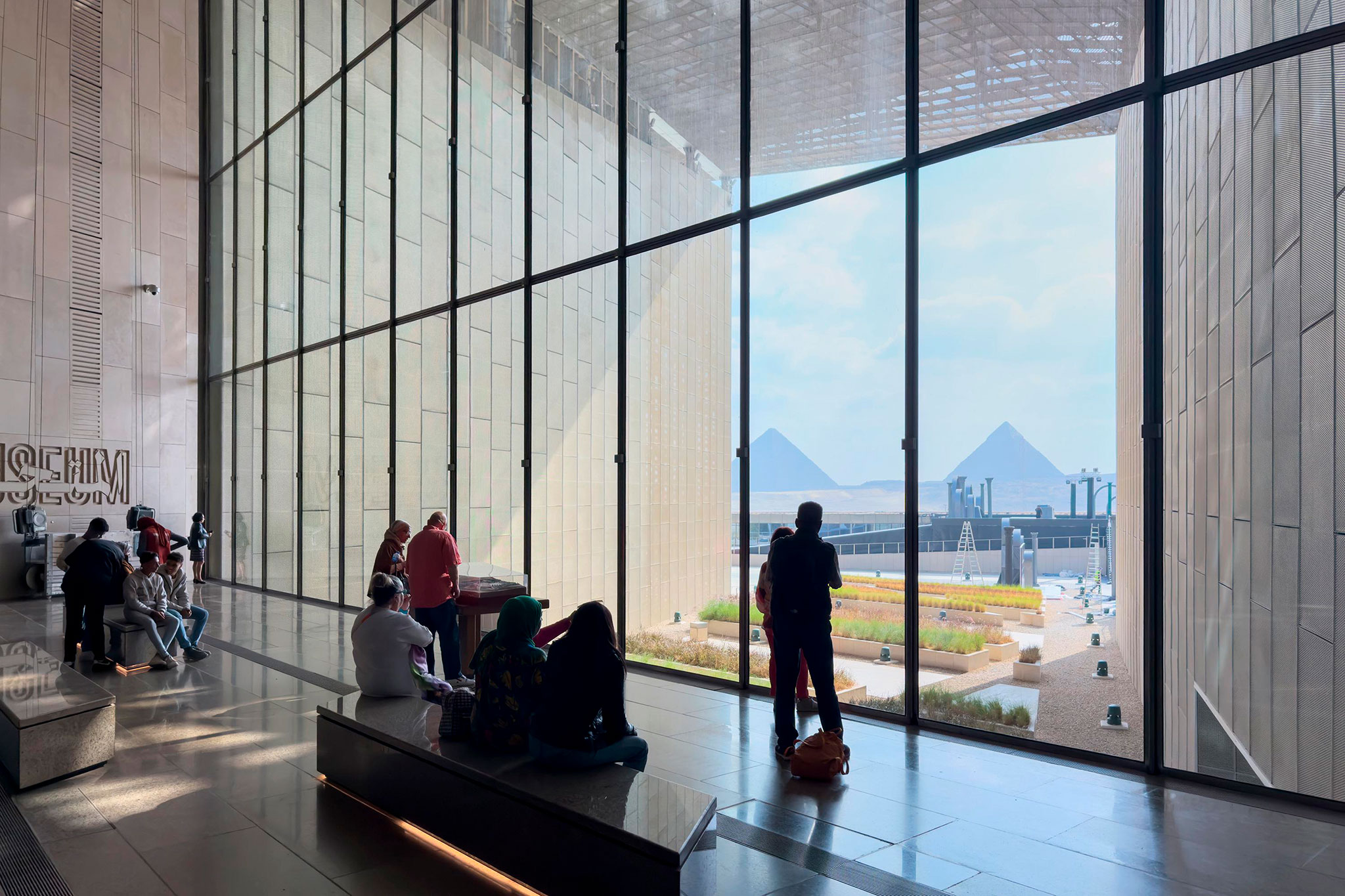
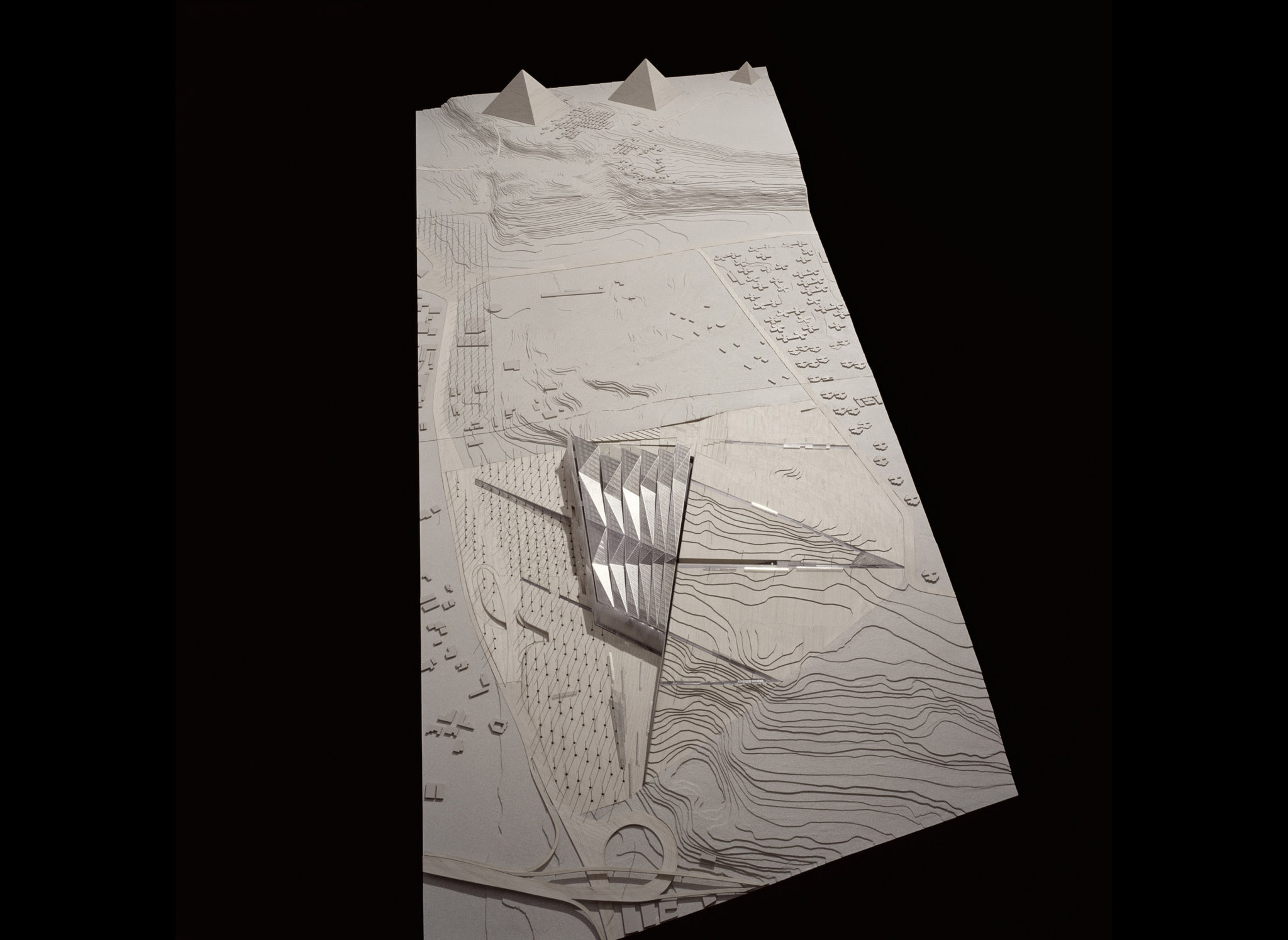
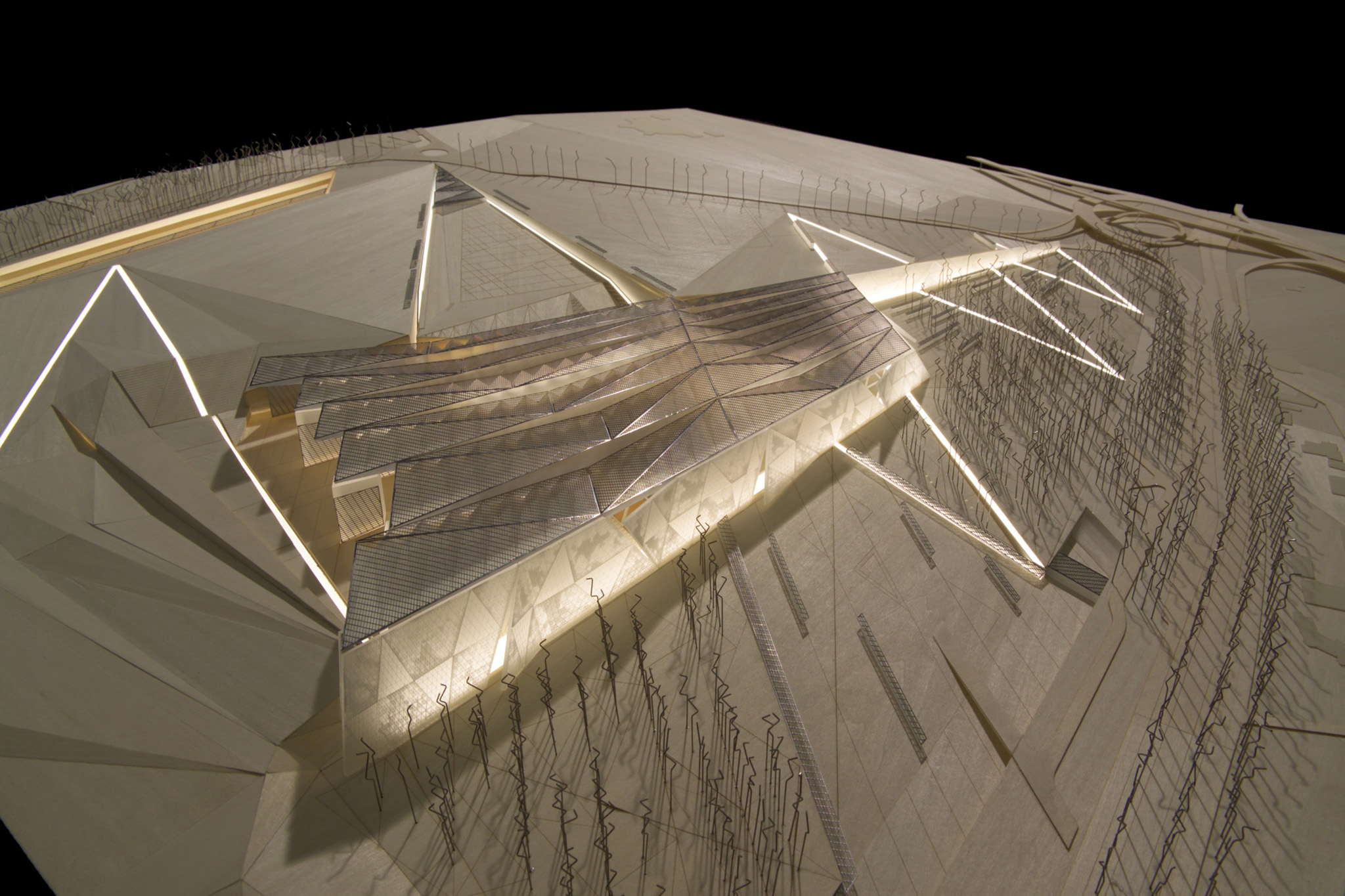
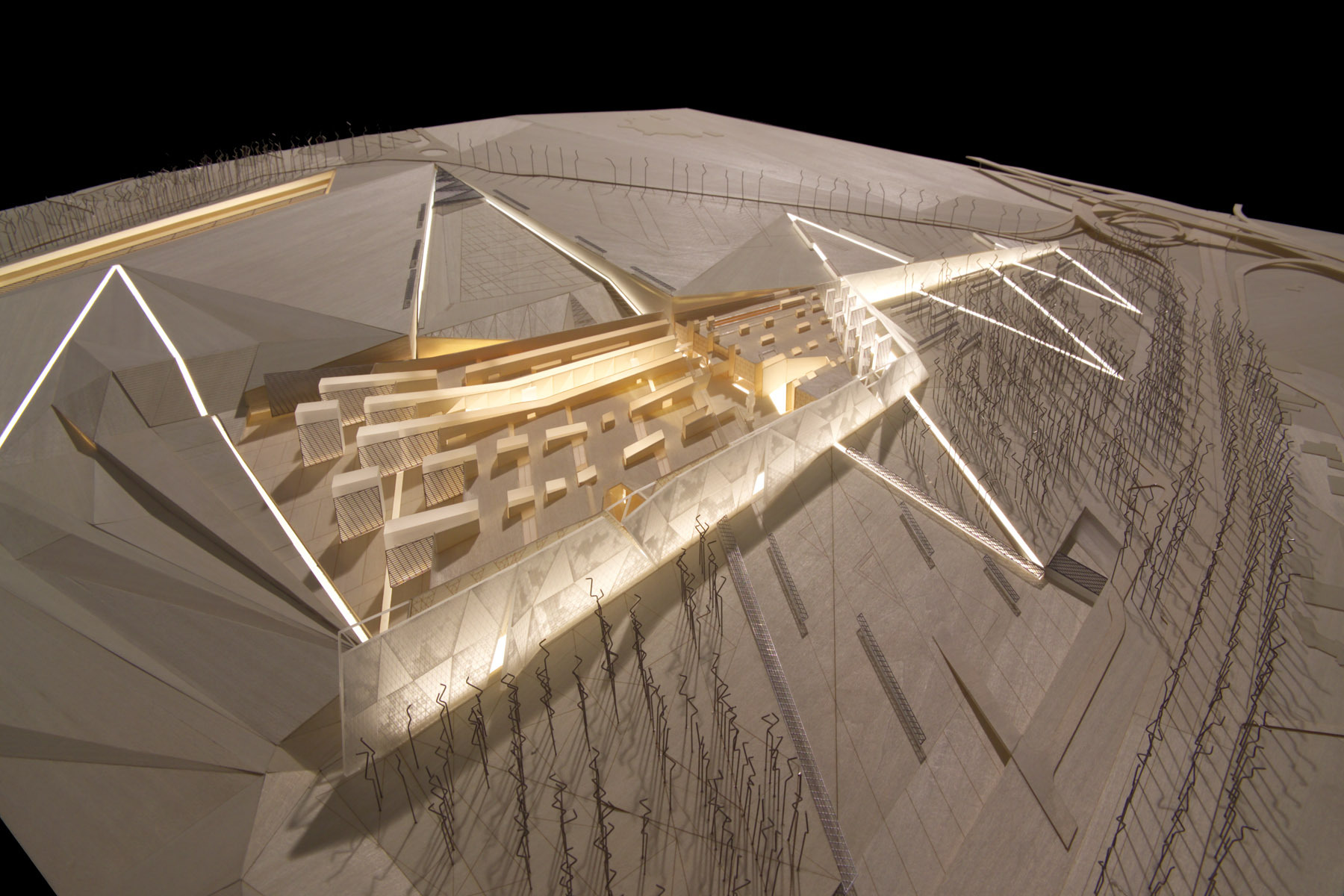
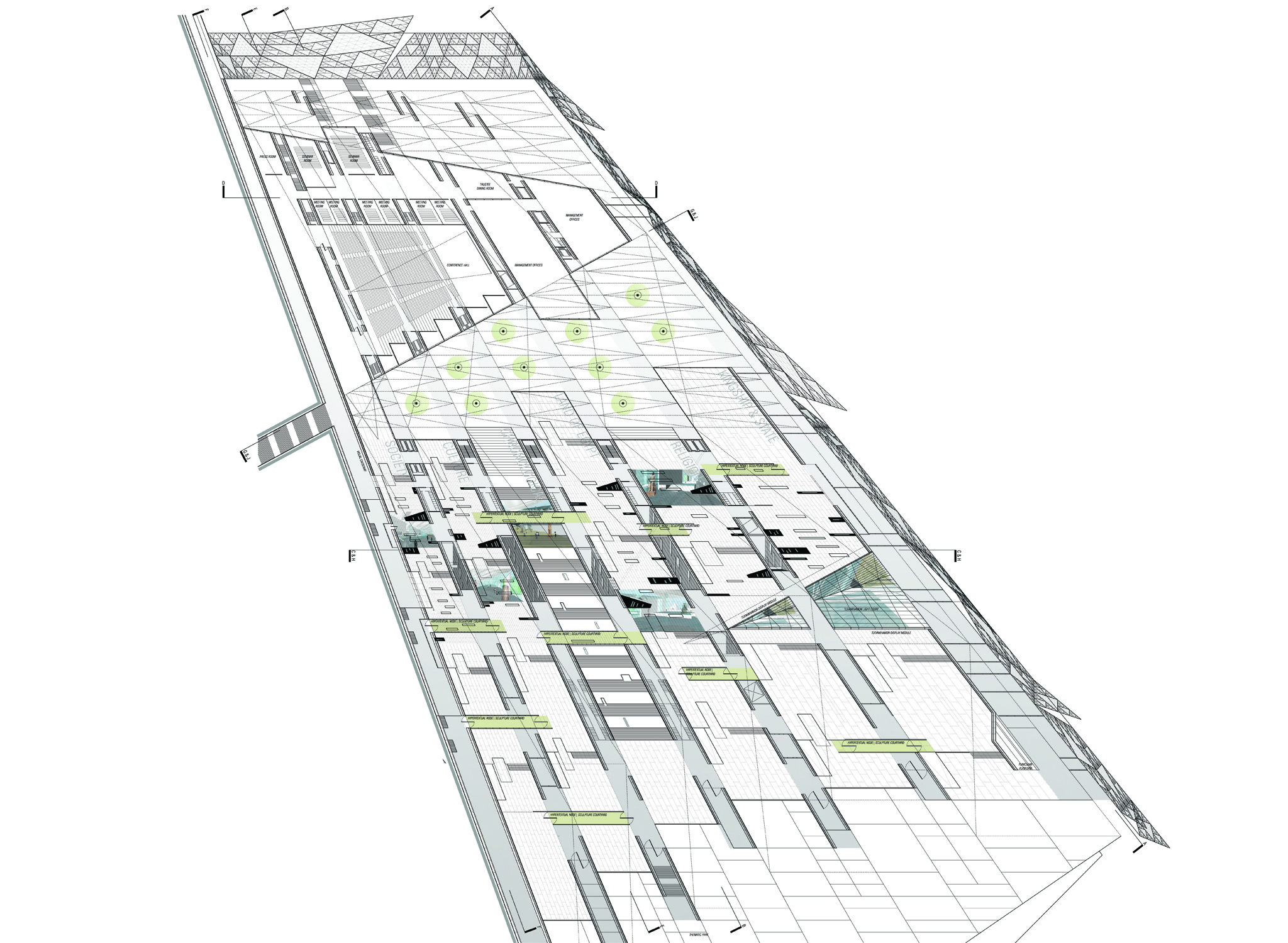
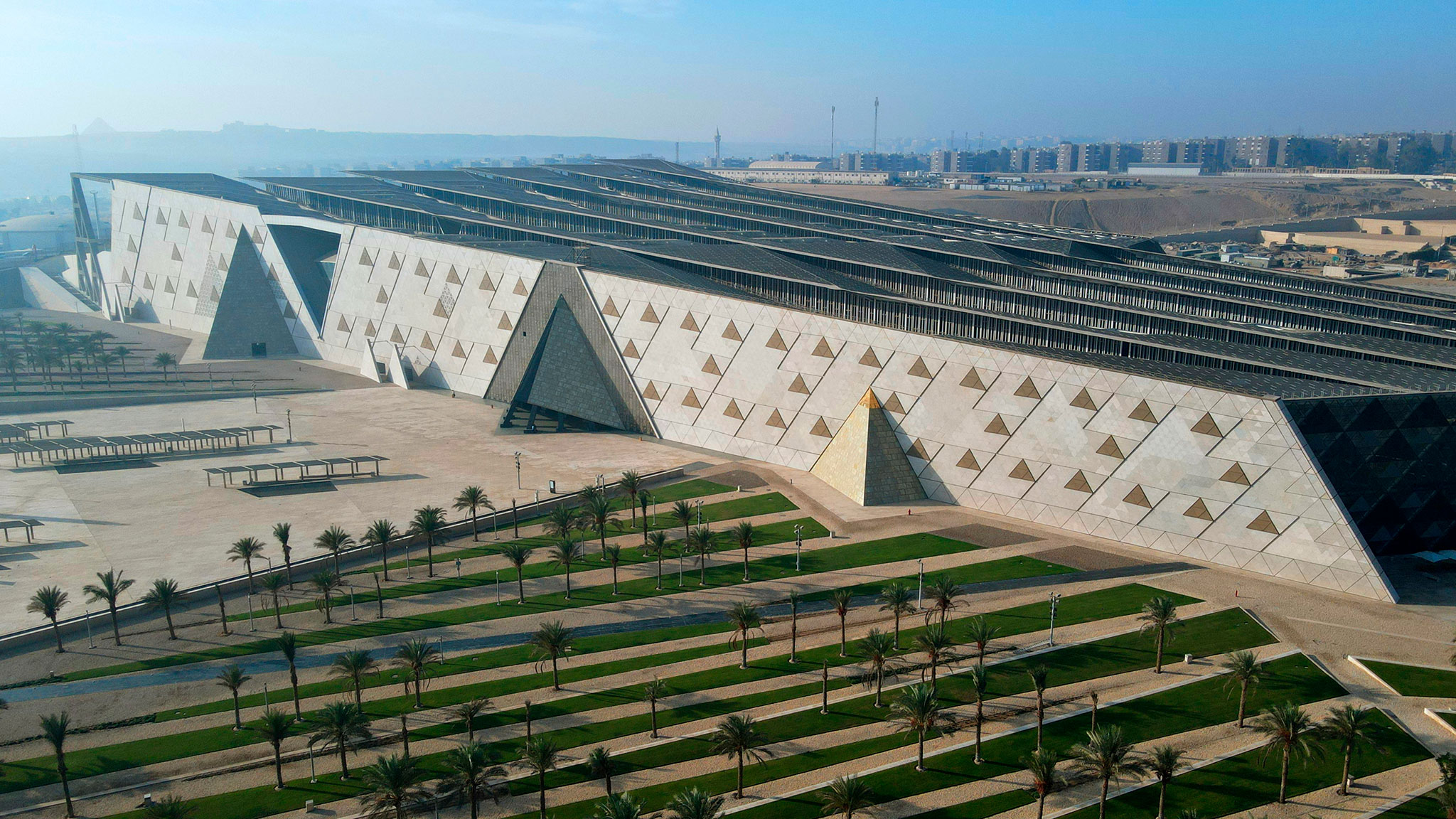
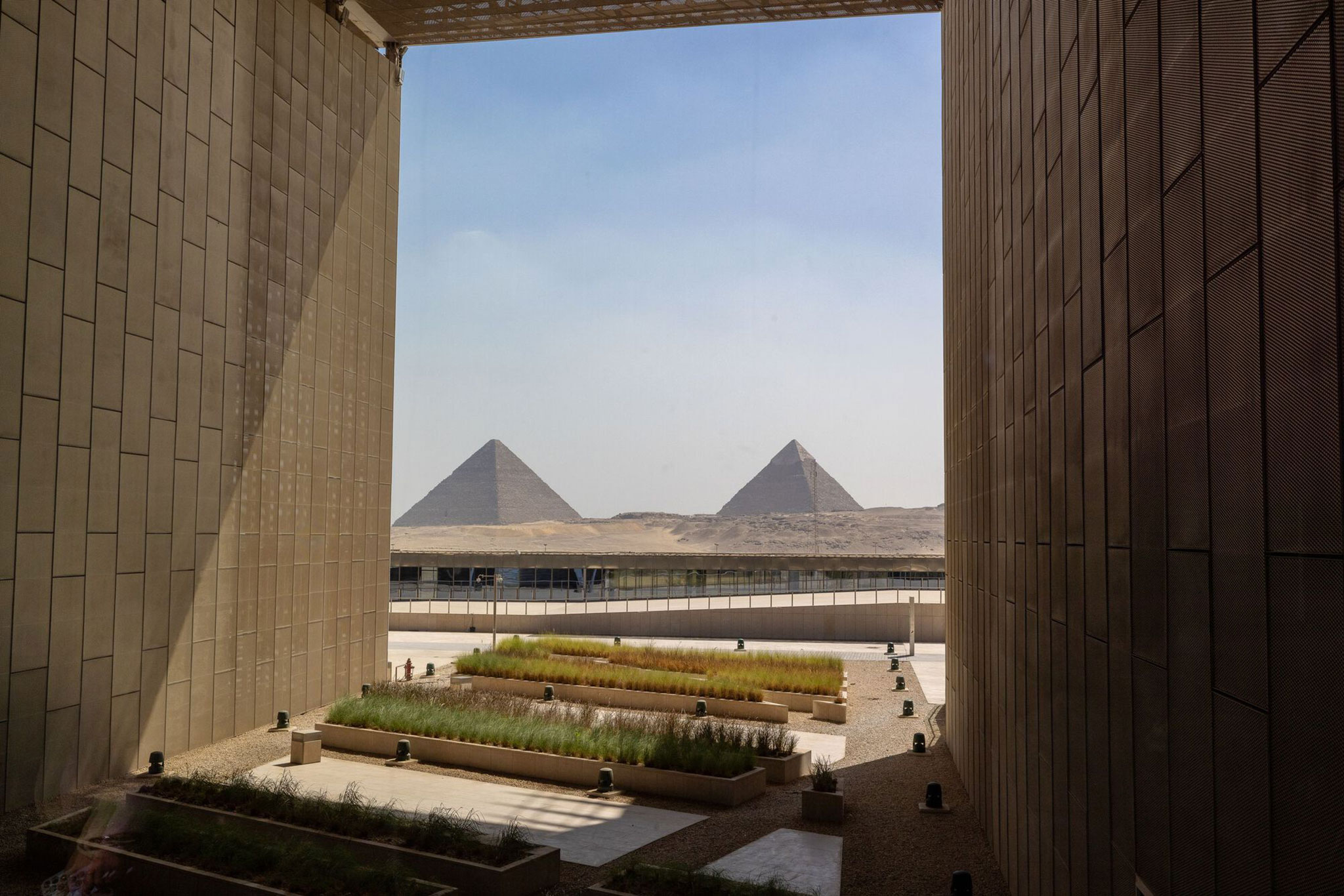
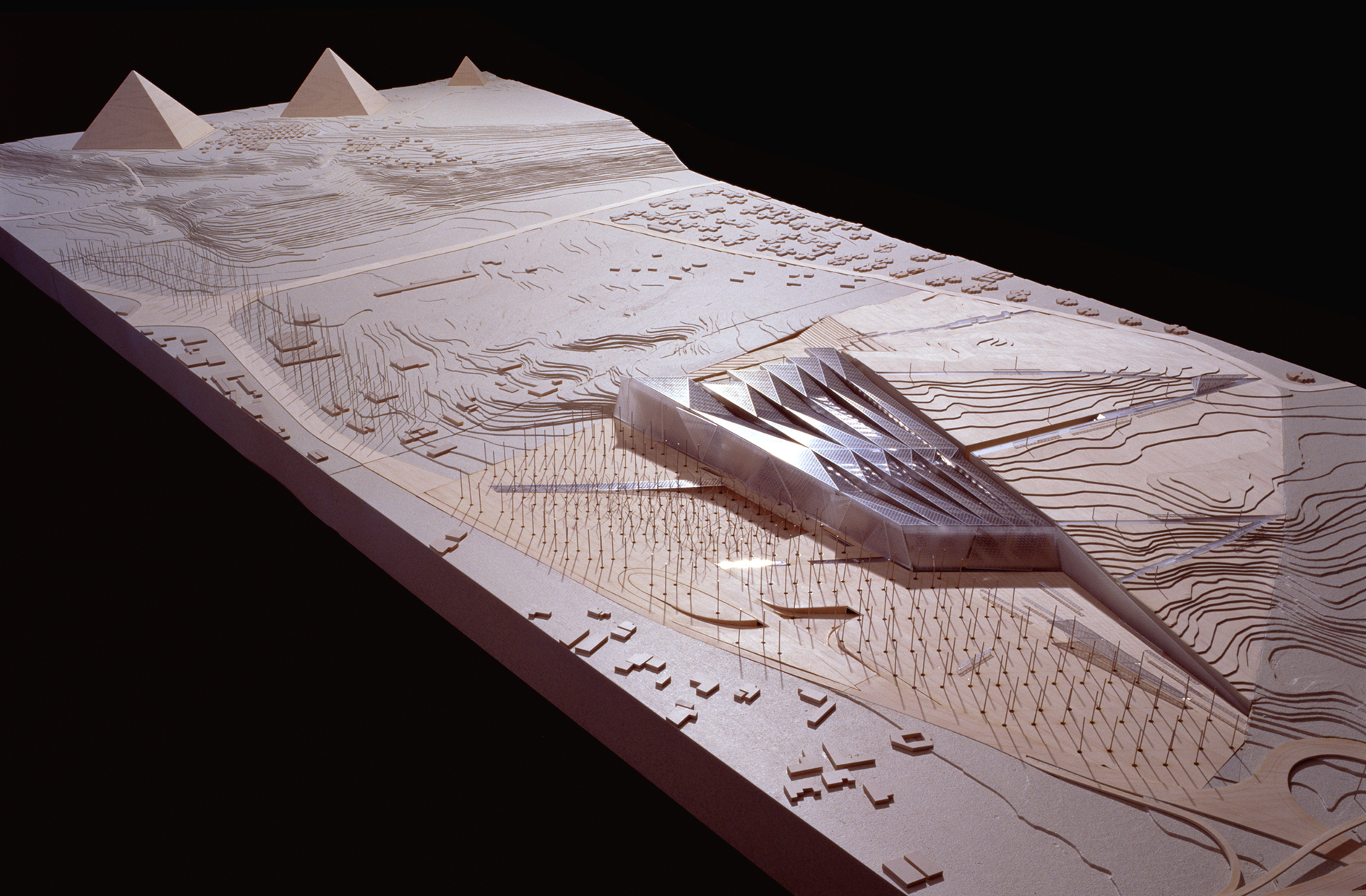
The monumental building design by Heneghan Peng Architects is composed of parallel programmatic bands set on slightly sloping terrain. The composition follows a fan-shaped scheme visually aligned with the position of the three pyramids. The interior follows this radial composition, leading visitors from the entrance to the final view of the pyramids.

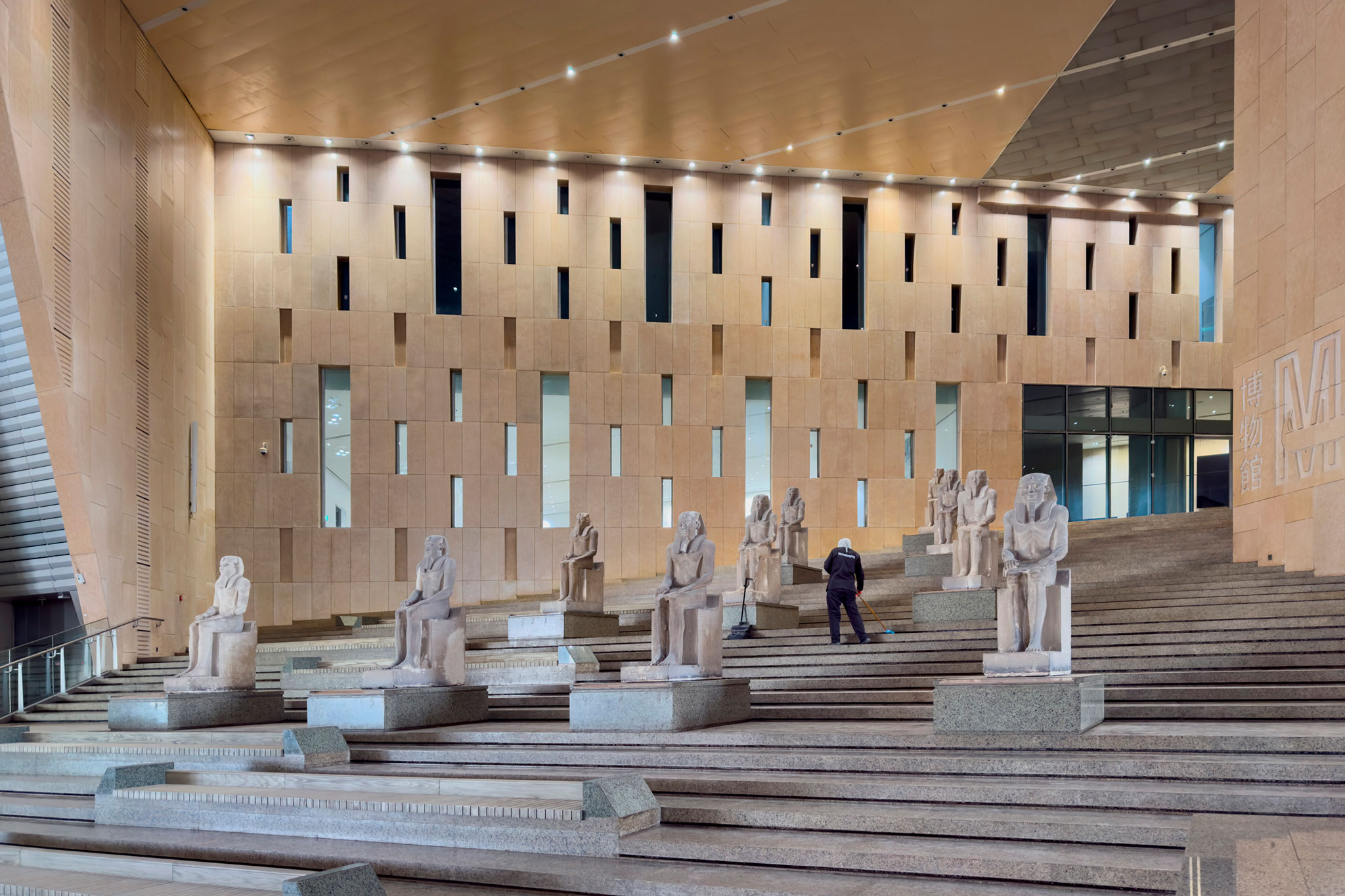
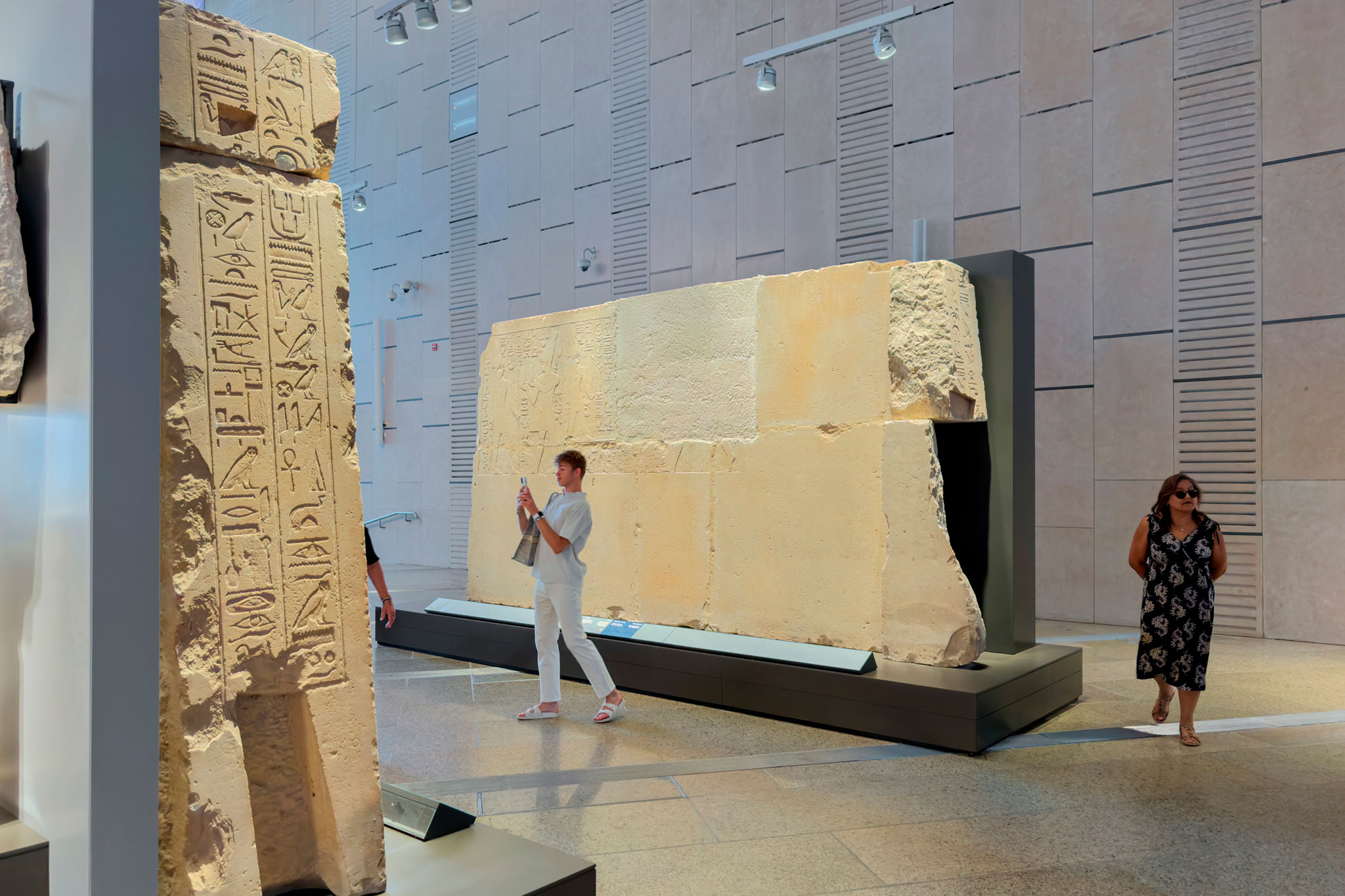
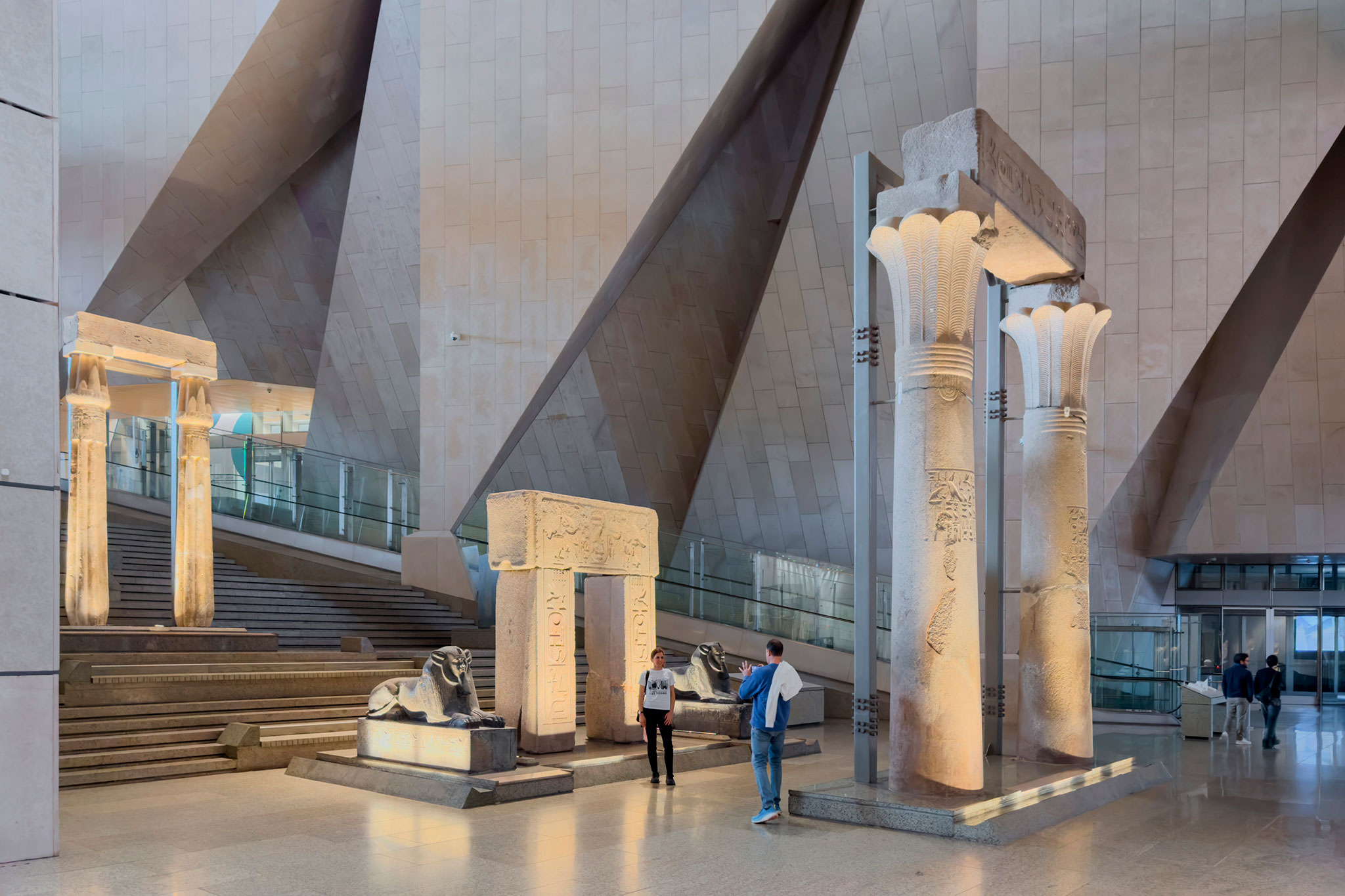
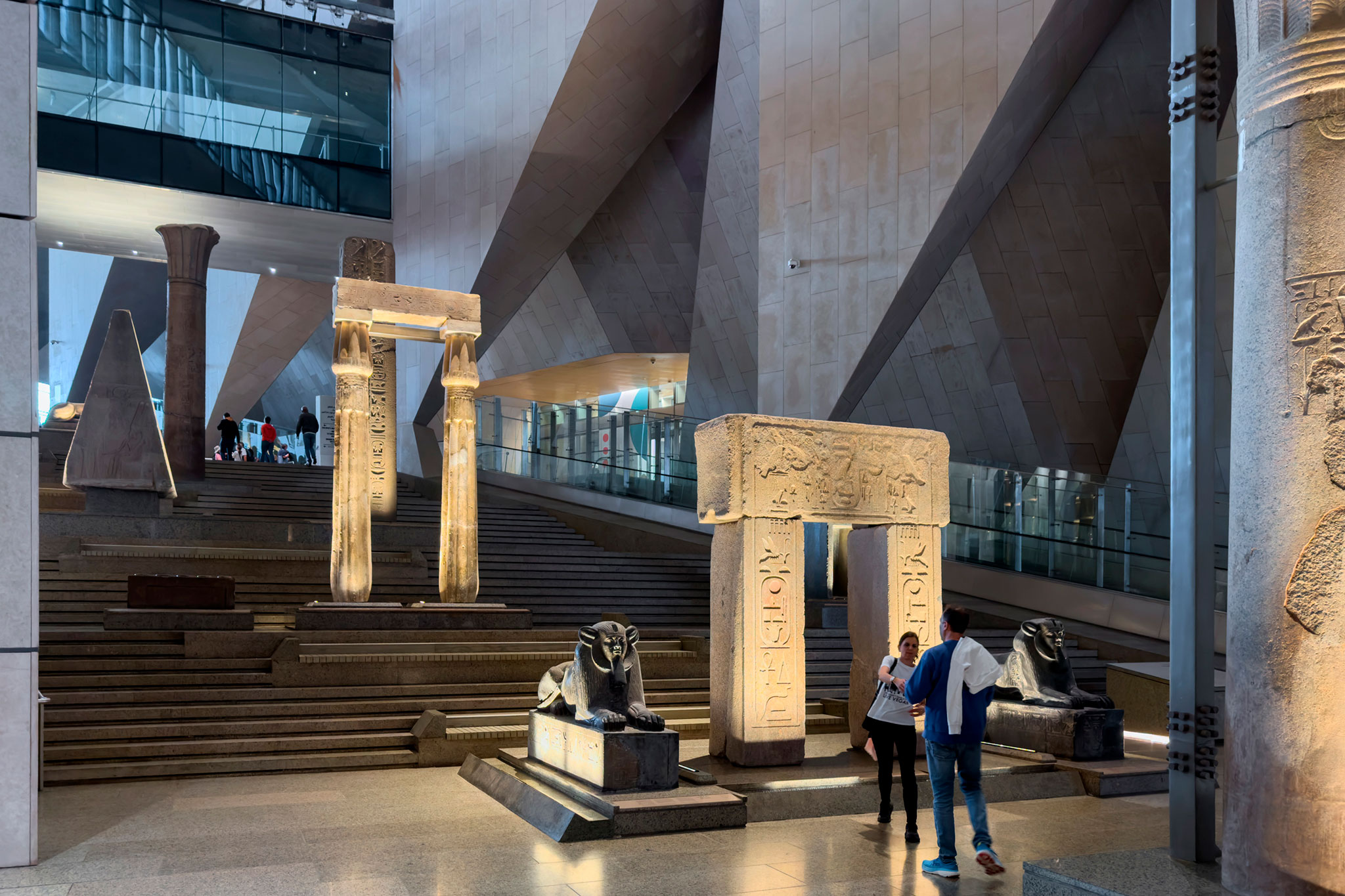
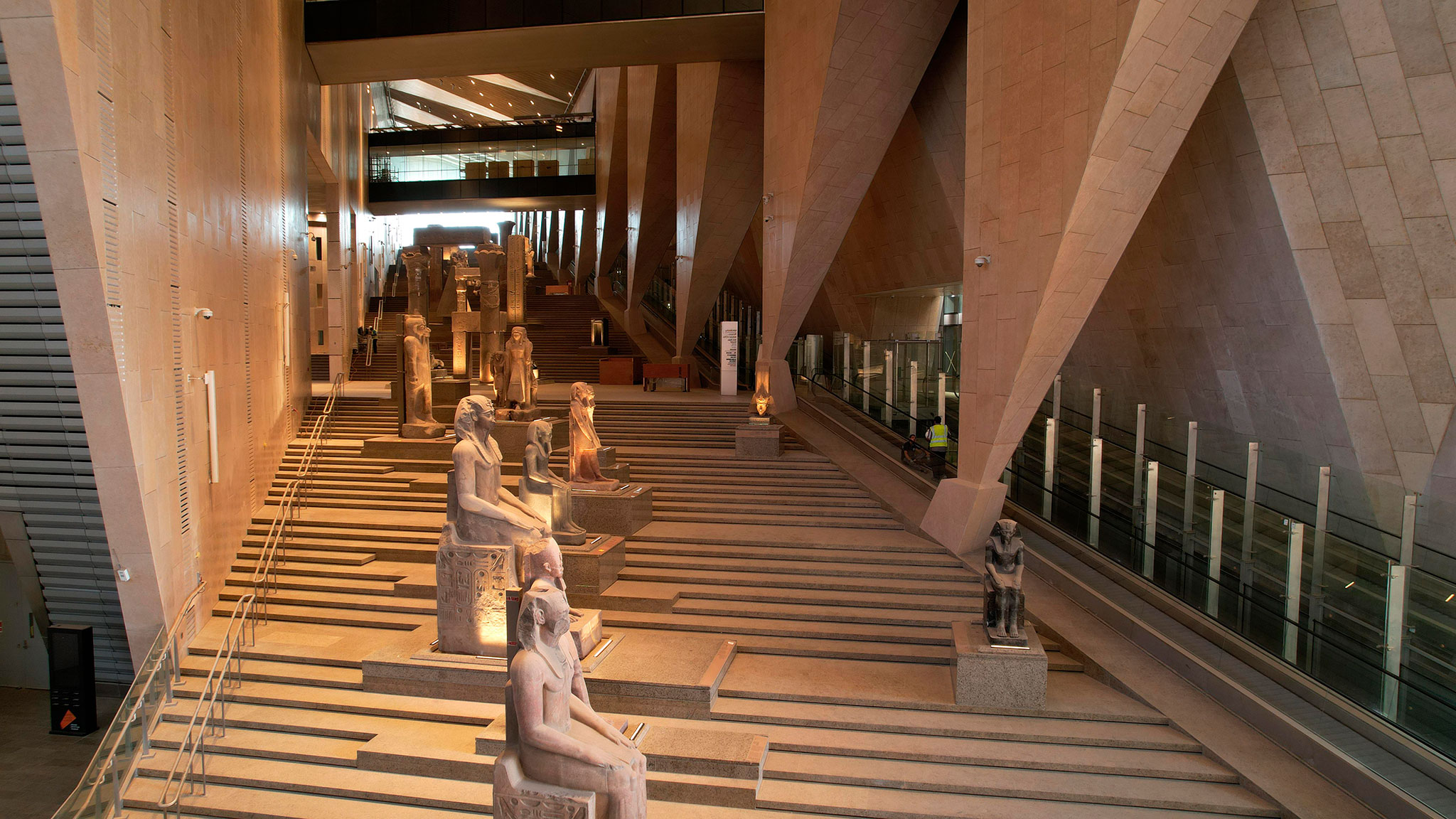
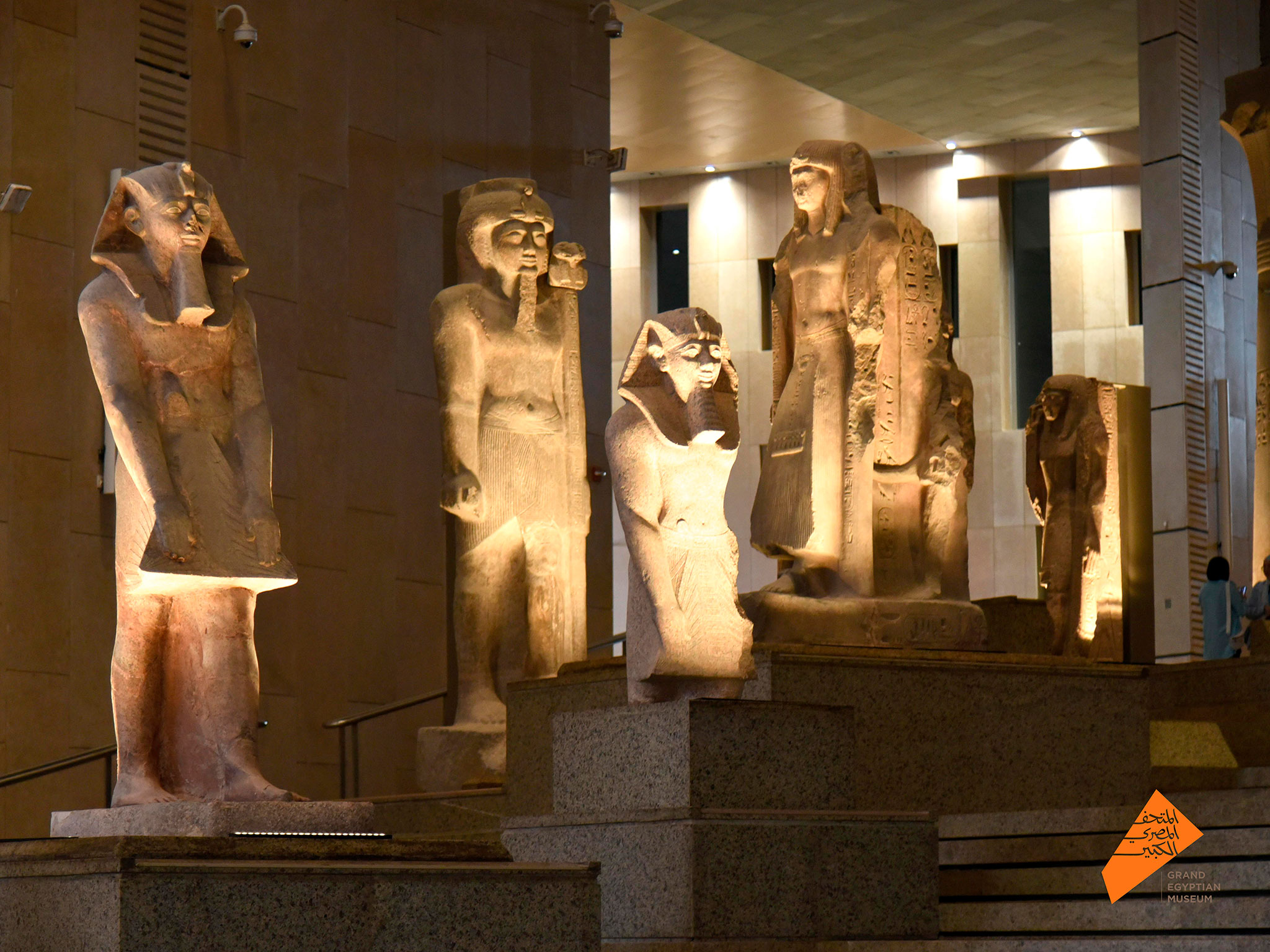
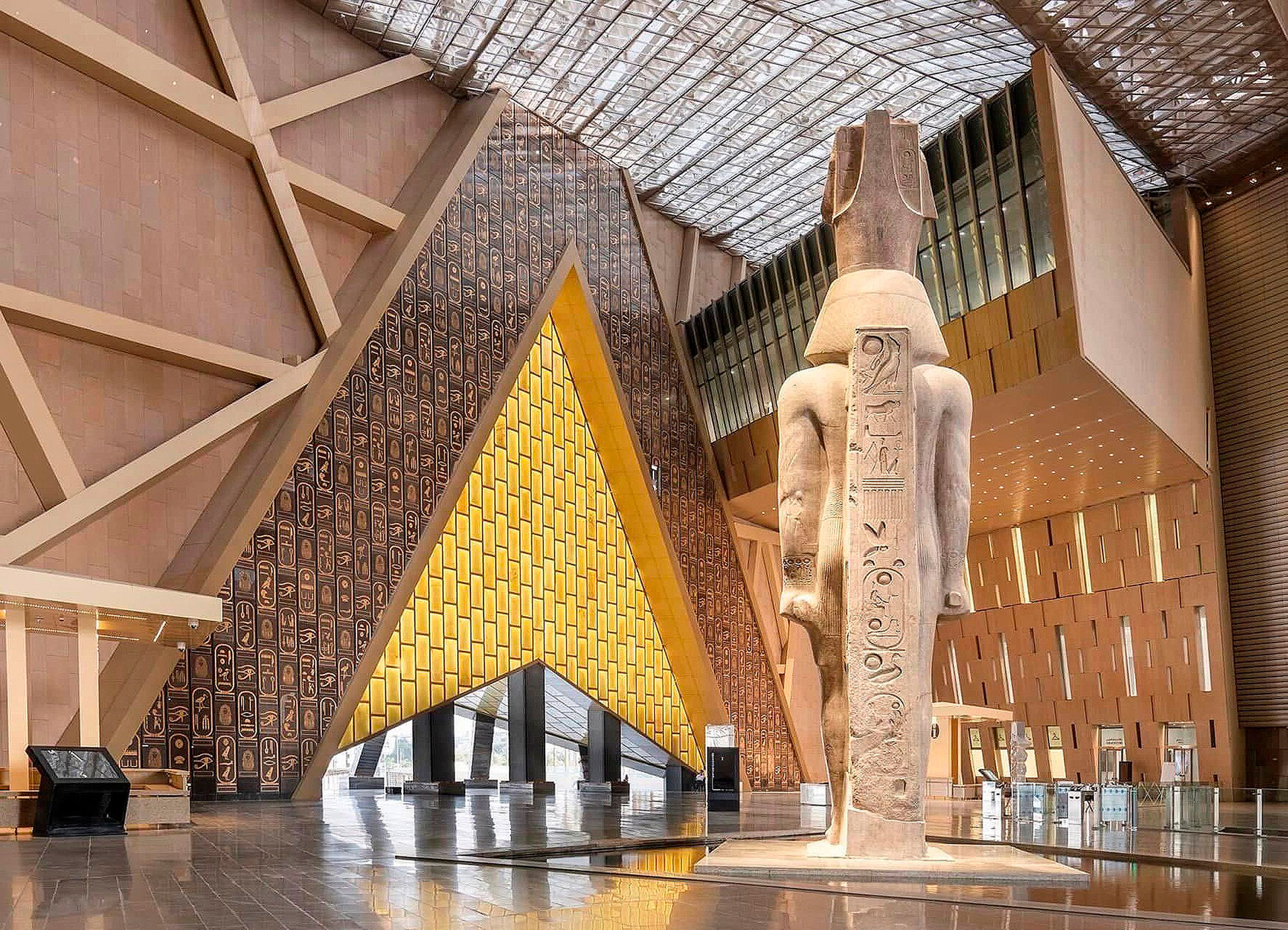
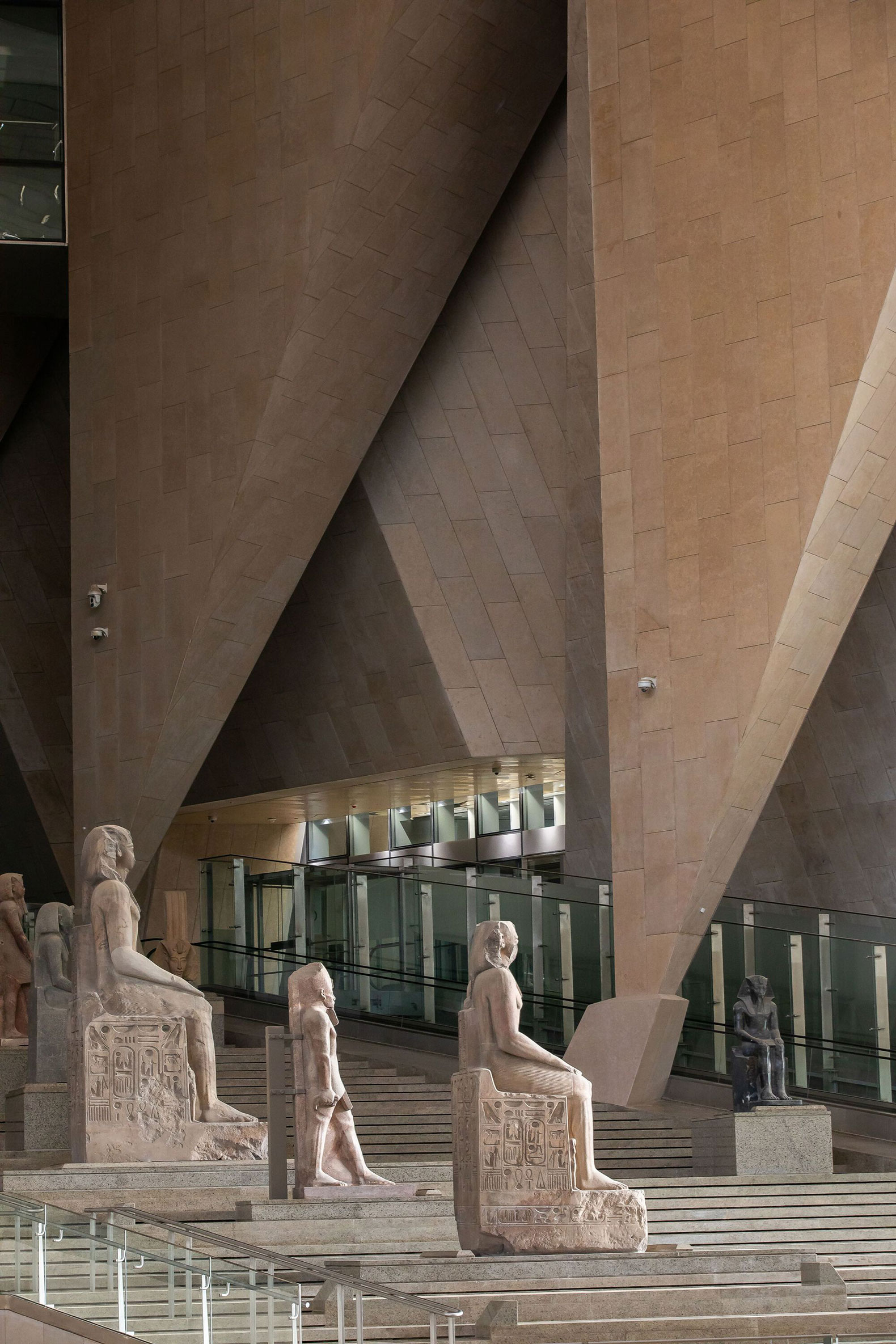
The impressive six-storey staircase serves as a chronological route guiding visitors through the different galleries, beginning with the Predynastic Period and extending to the Coptic era. The permanent exhibitions, including the new Tutankhamun Gallery, are located at the upper end of the staircase. Many of the largest and heaviest artefacts, including the 10 statues of King Senusret I, are also placed along the staircase at different levels.

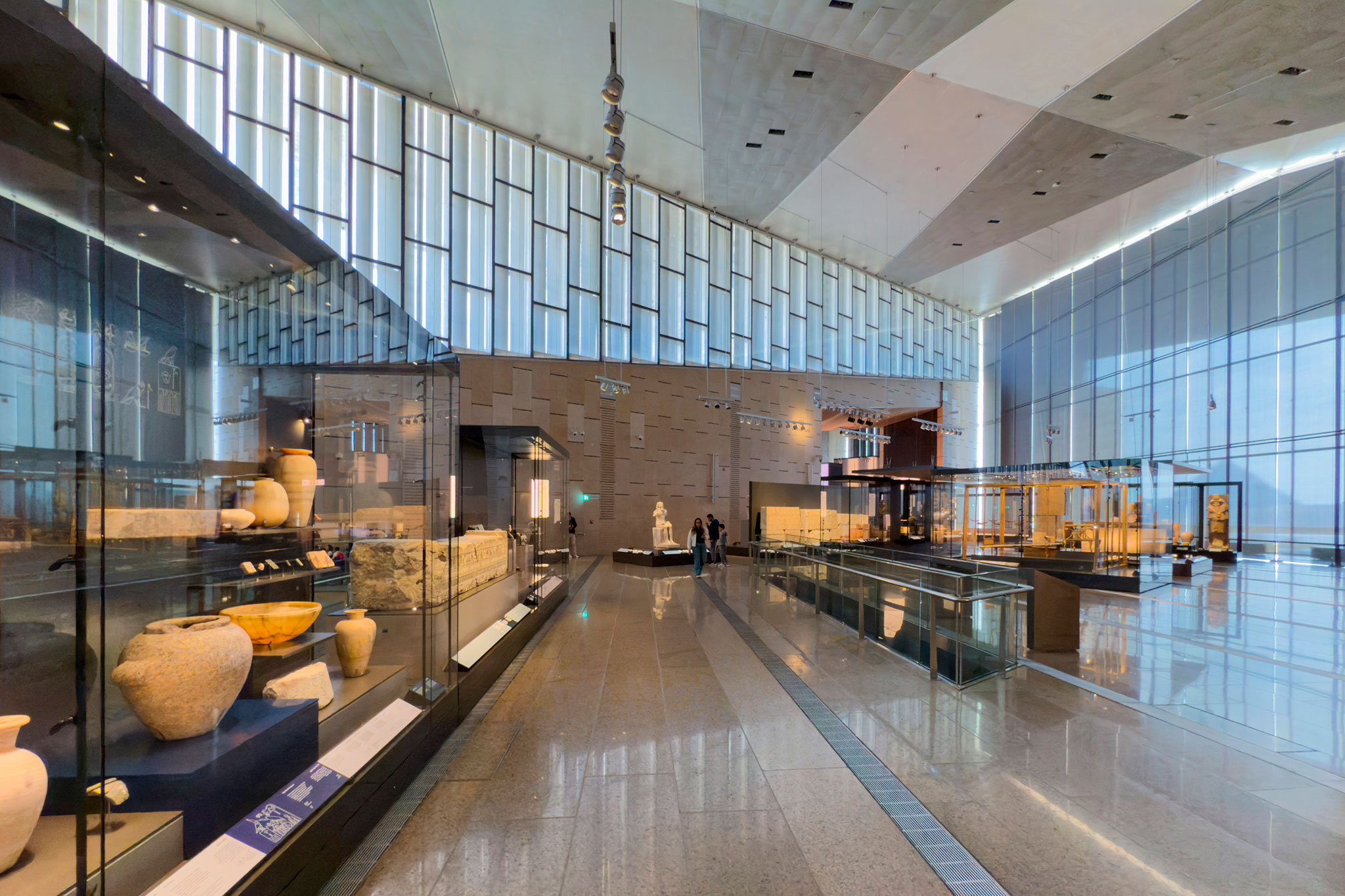
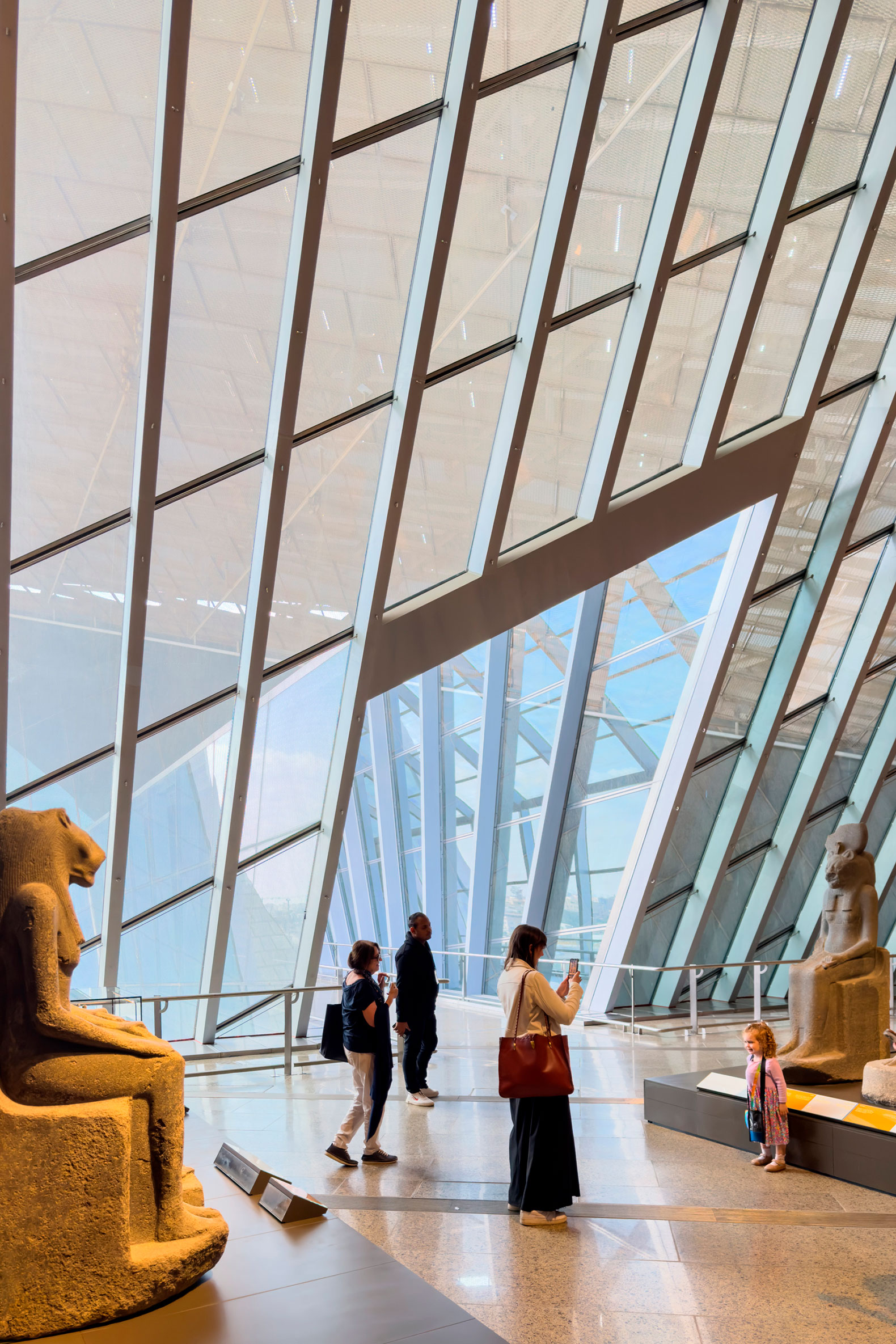
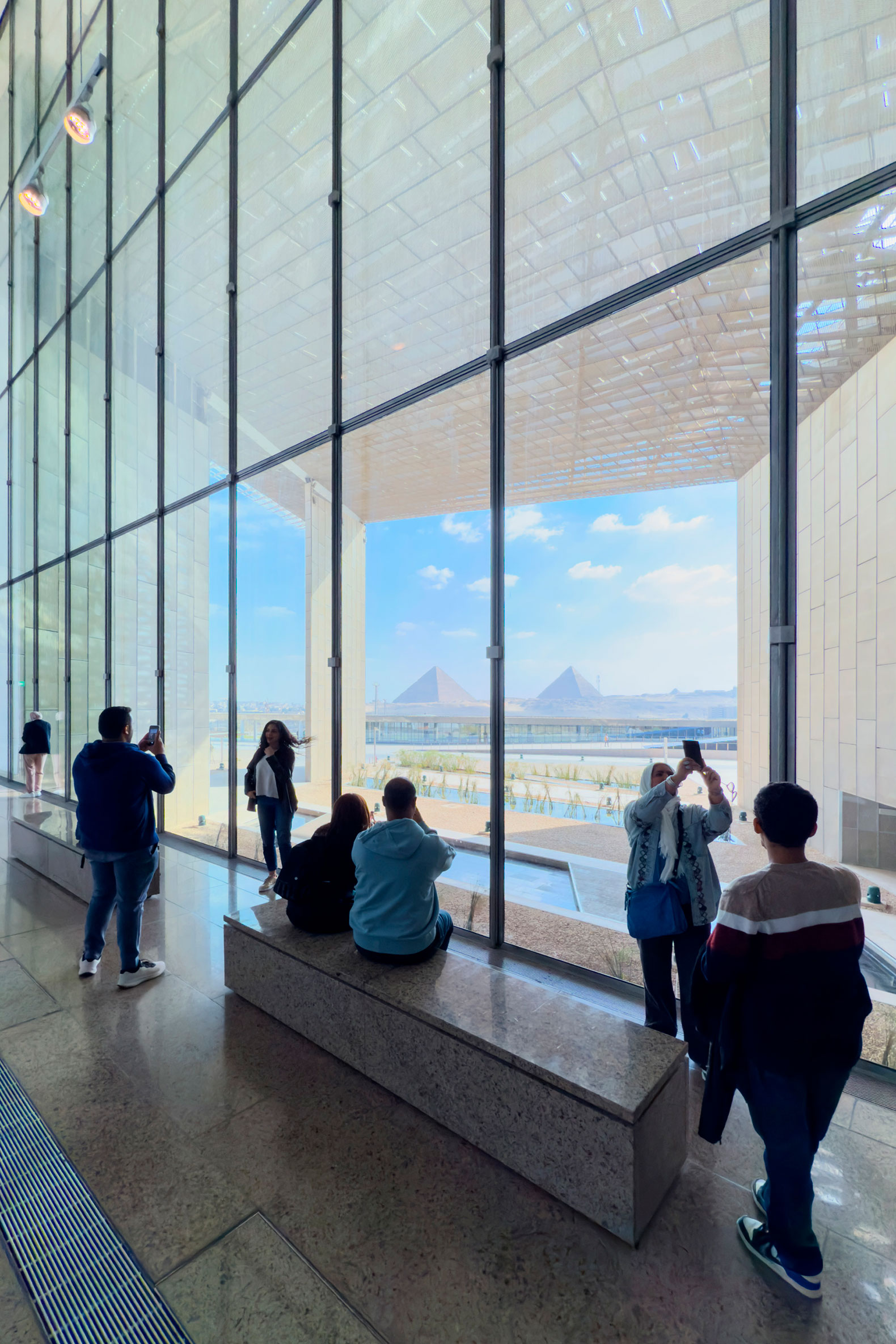
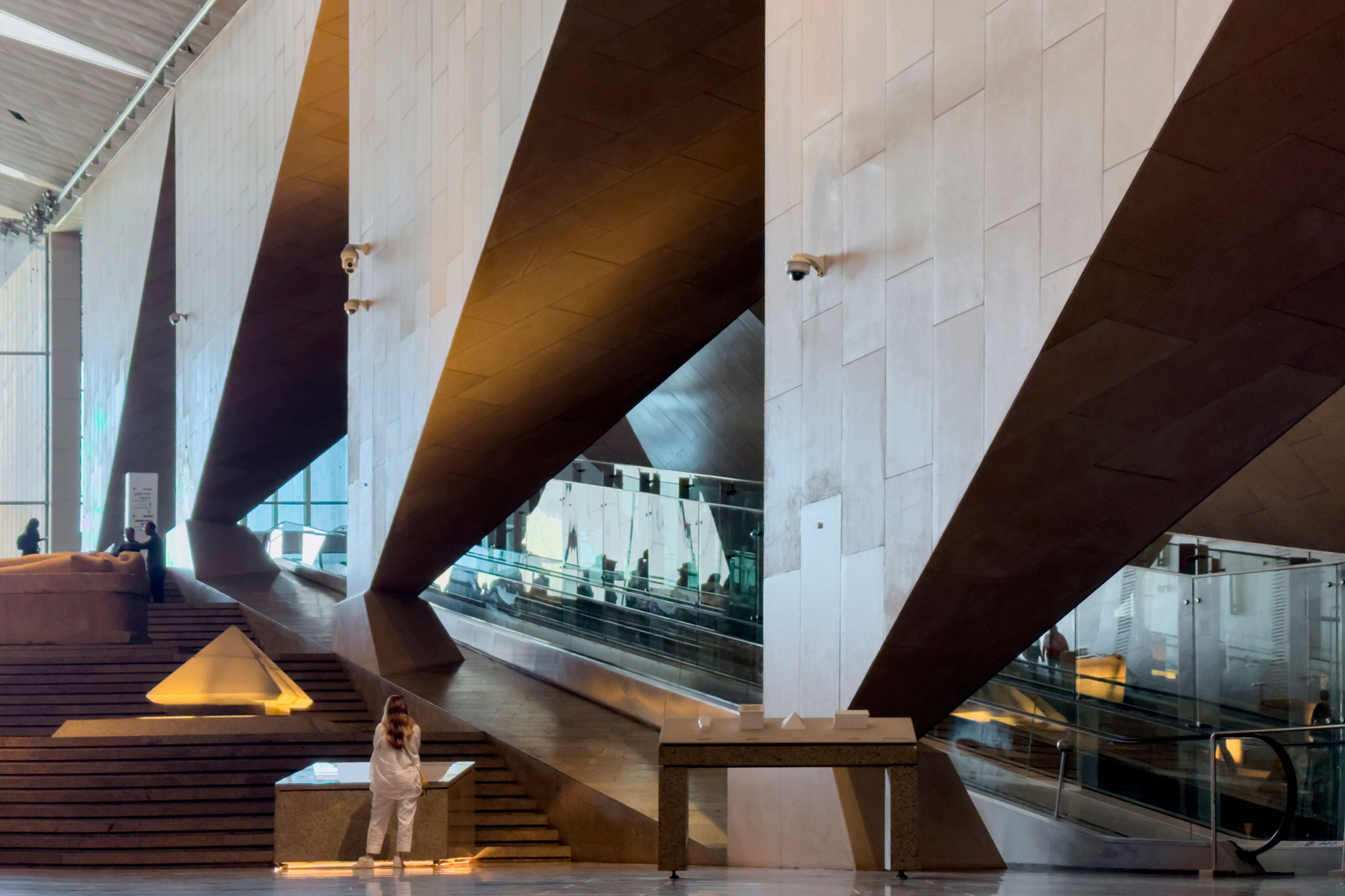
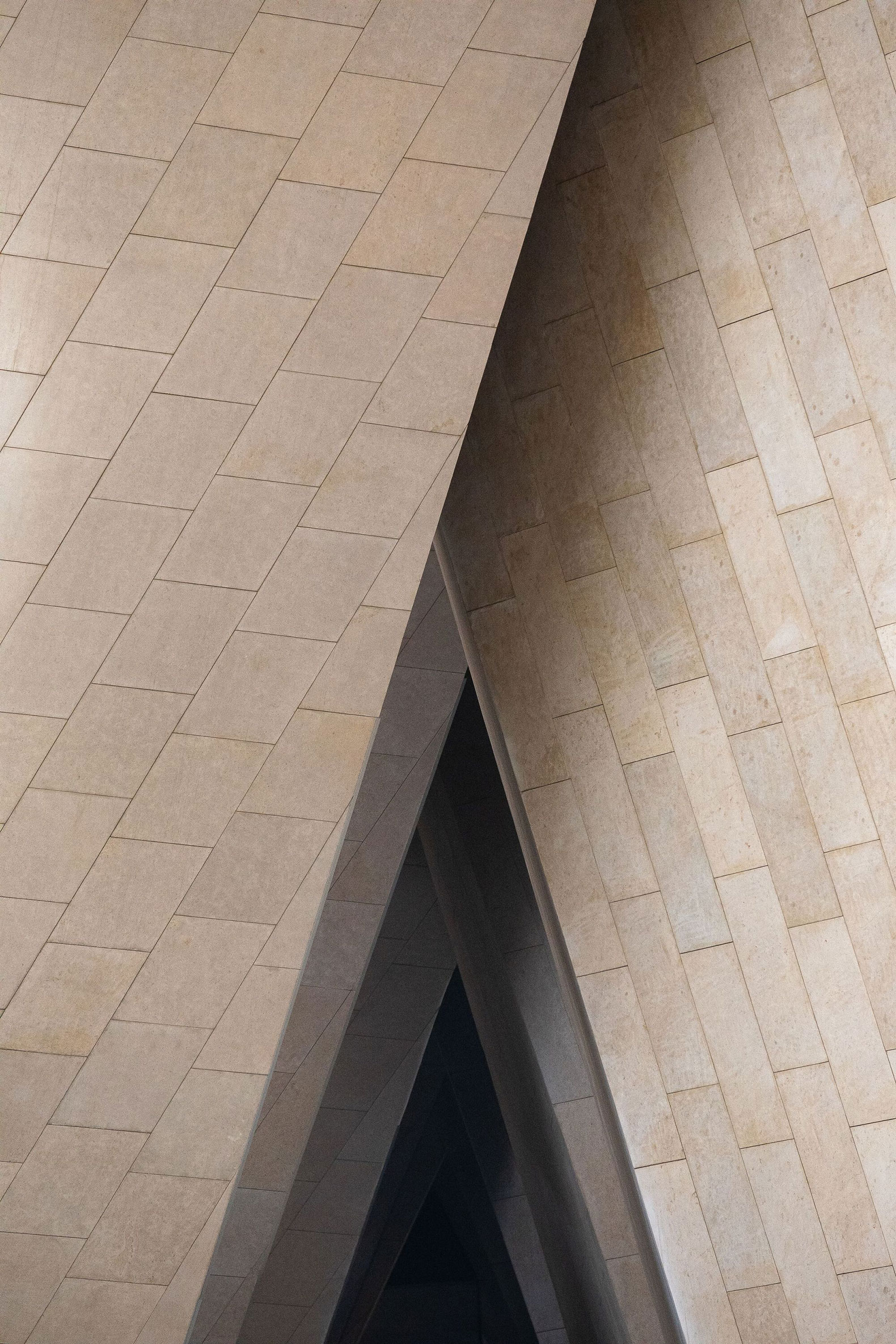
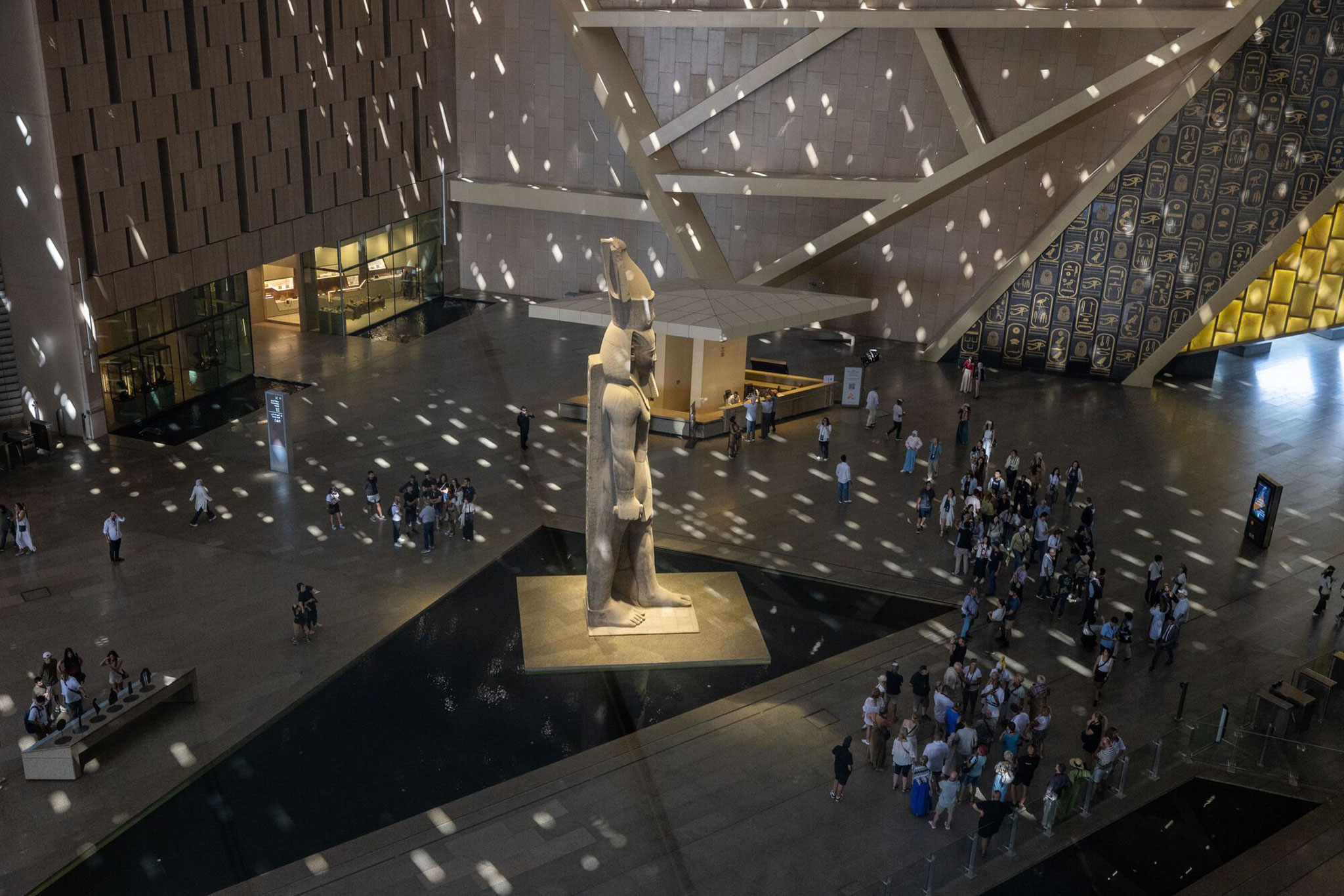
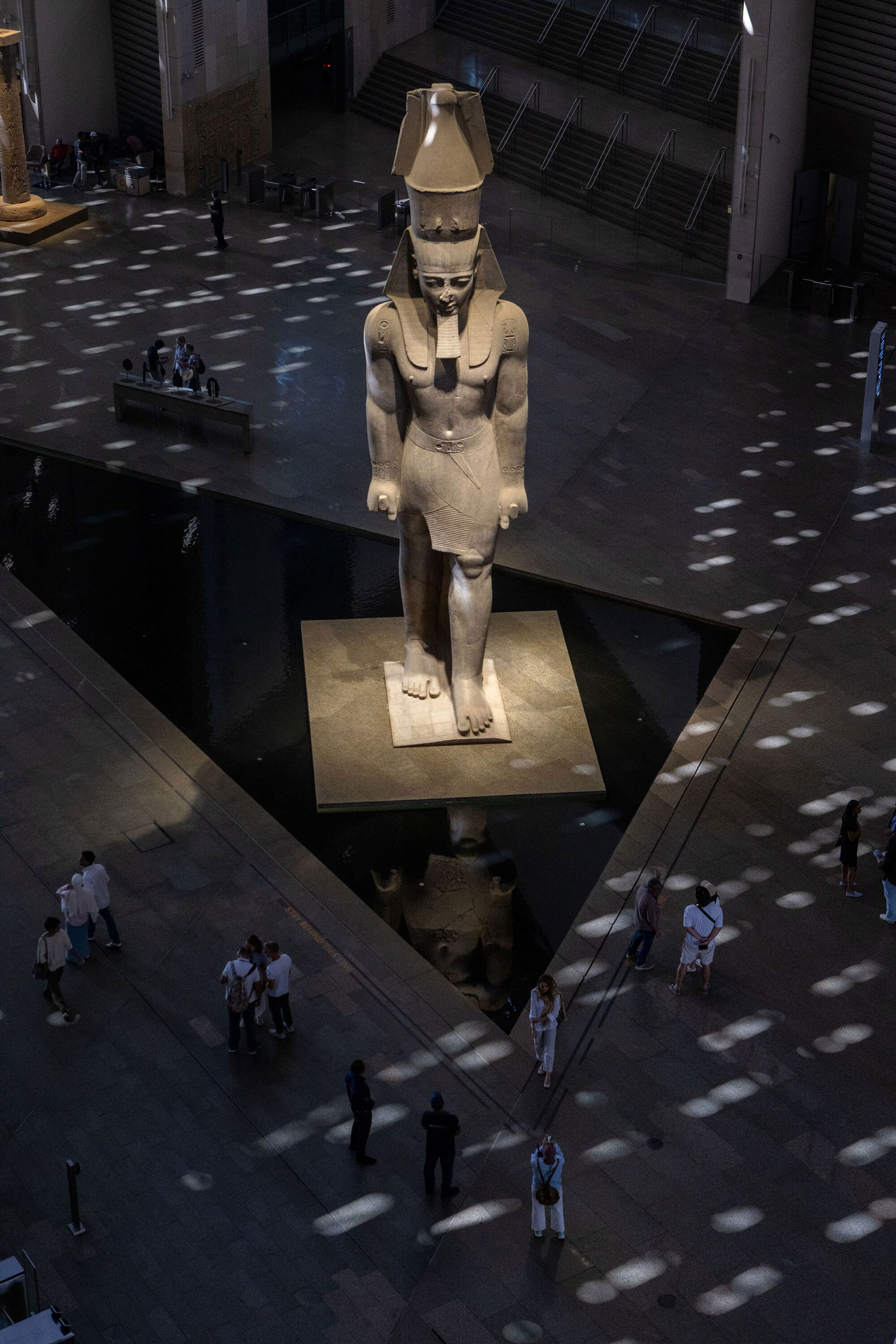
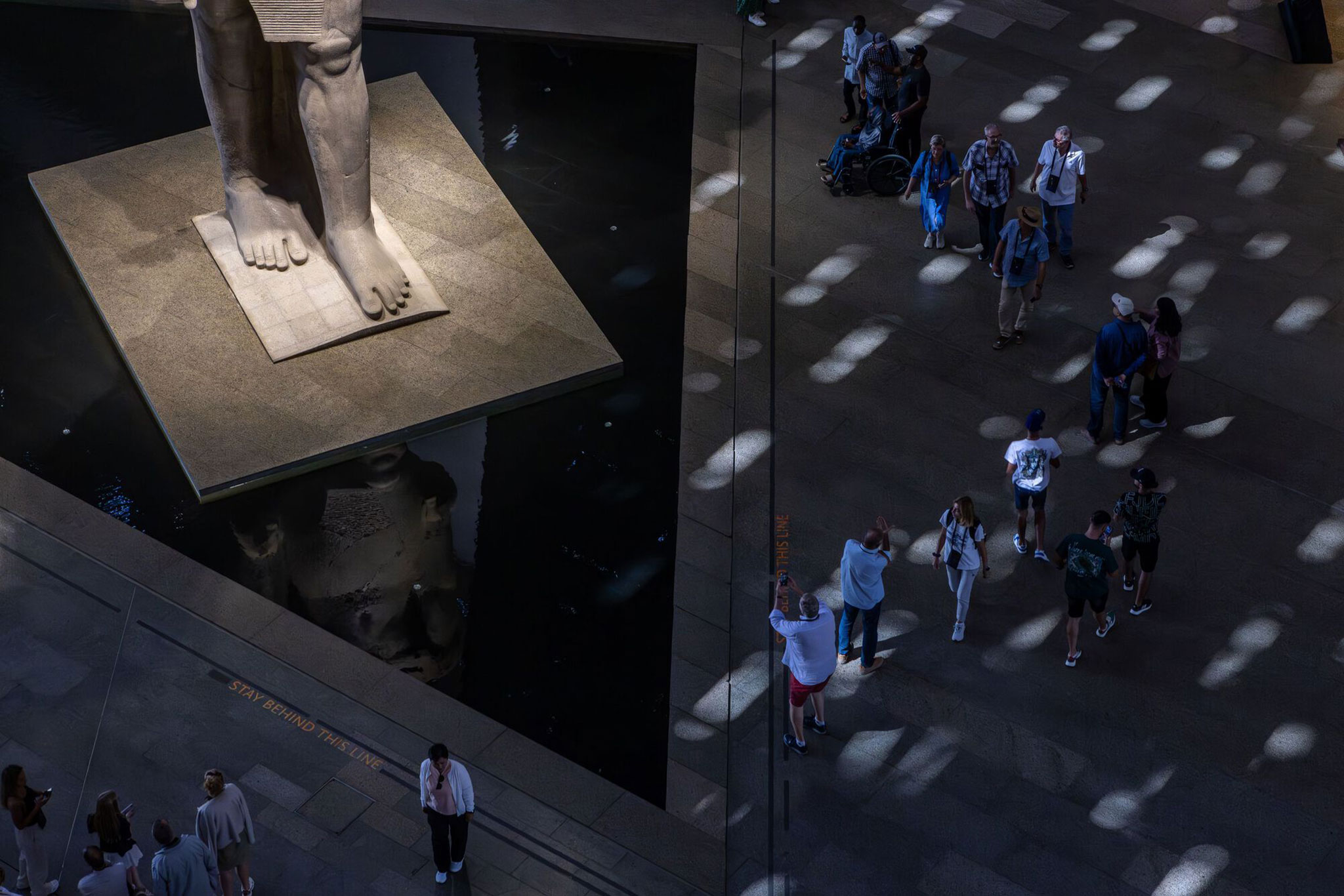
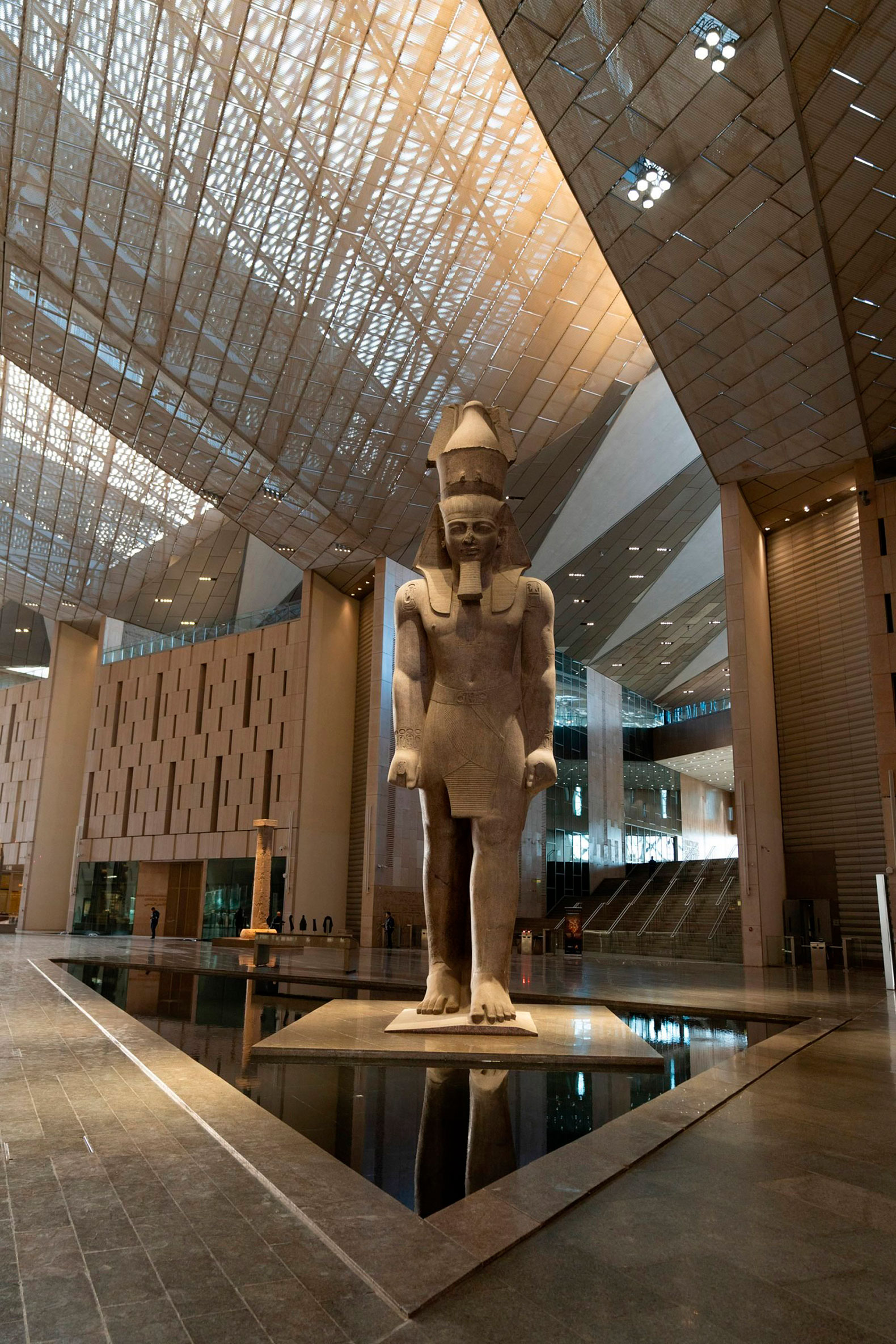
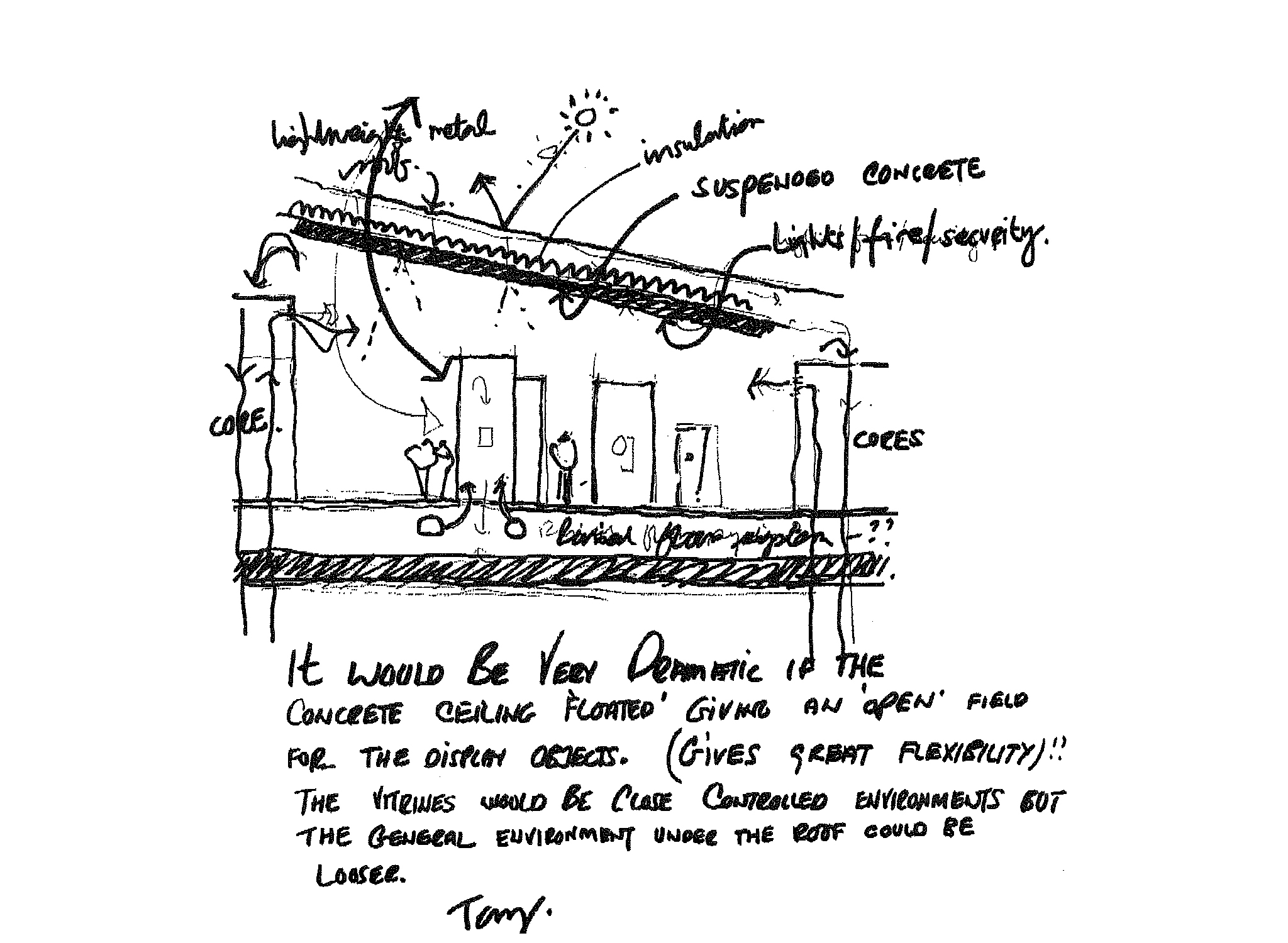
Although natural light is often minimised in museums for conservation reasons, because many of the pieces are made of stone, natural lighting has been incorporated as one of the key strategies proposed by Heneghan Peng for the museum. To ensure the building operates as passively as possible, the structure is built mainly in concrete to reduce temperature fluctuations and minimise the need for air conditioning in such a large space.

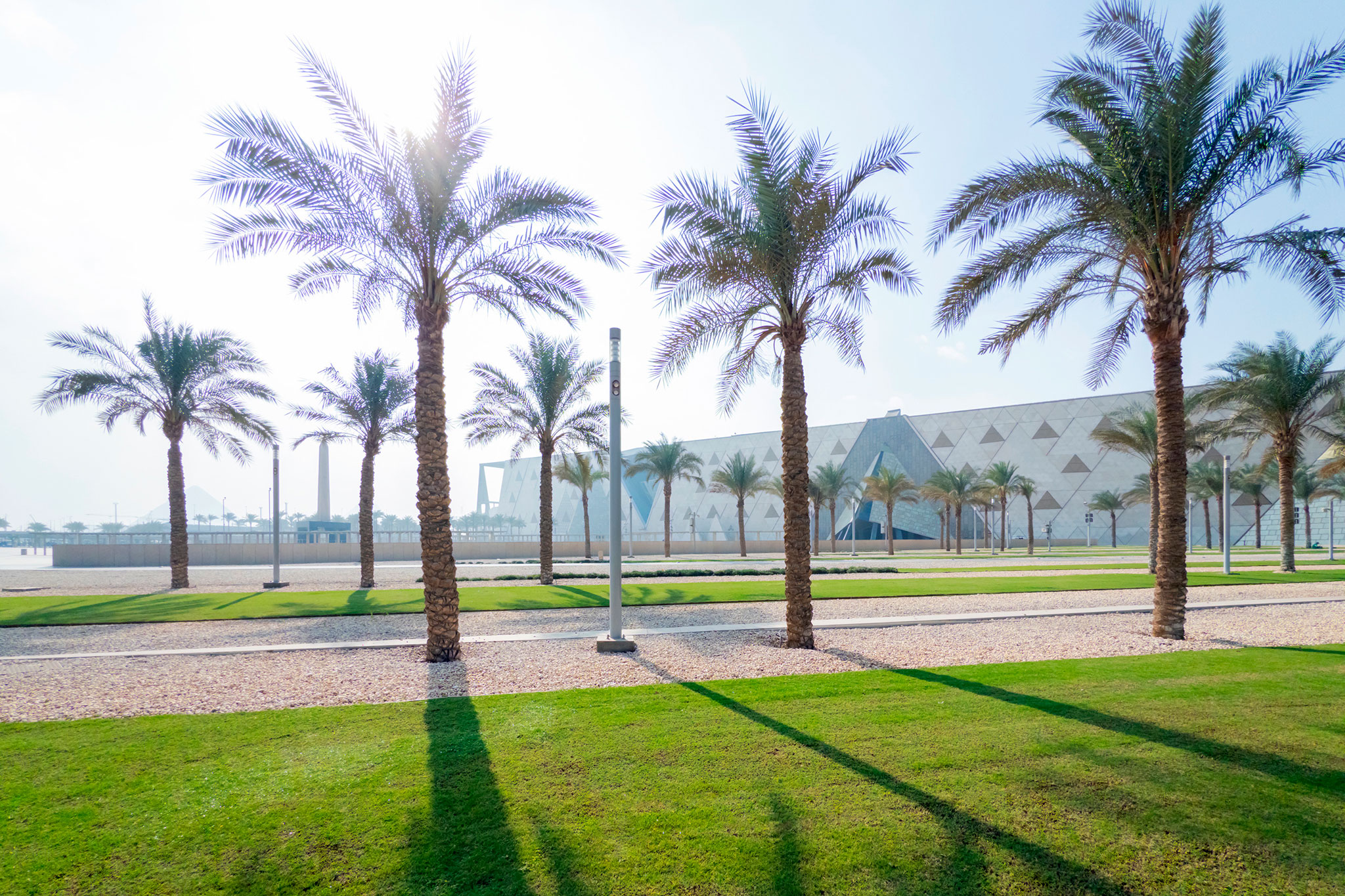
The site also includes spaces such as the Thematic Gardens, the Welcome Plaza and the Grand Hall, created by the Dutch firm West 8. The large front courtyard, with vegetation and date palms, was projected to tell the story of the Nile’s alluvial plain, which once enabled the maritime transport of the pyramid stones. This open area, with five hectares of outdoor exhibition space, reveals the 800-metre length of the museum. In addition, the museum includes a series of facilities dedicated to conservation, including a conservation centre, laboratories and a storage area, which are connected to the main building by a tunnel, making it one of the largest in the world, with 17 different laboratories dedicated to preserving the museum’s invaluable collection.
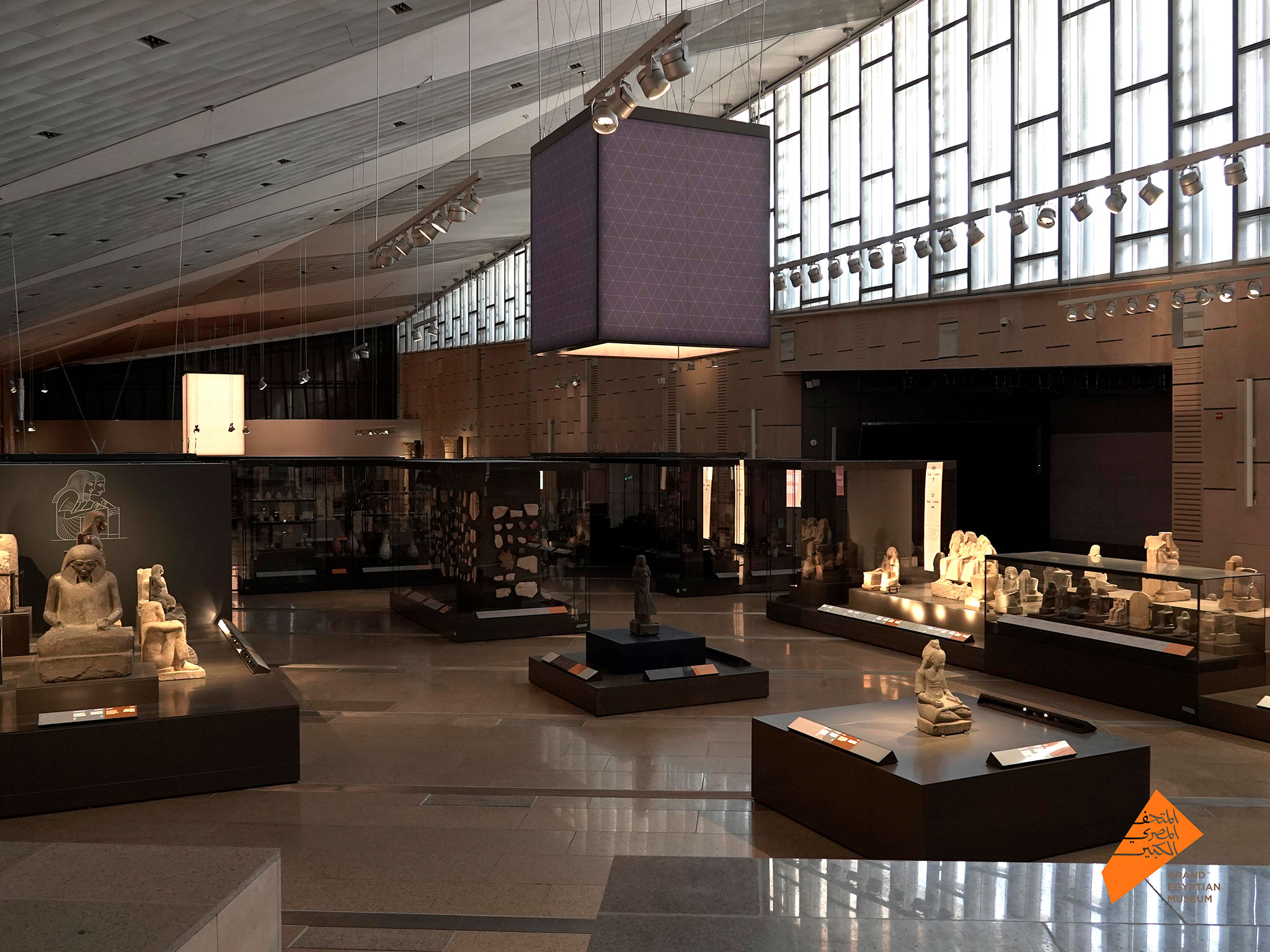
Grand Egyptian Museum by Heneghan Peng Architects. Photograph by Georges & Samuel Mohsen – The GS Studio.
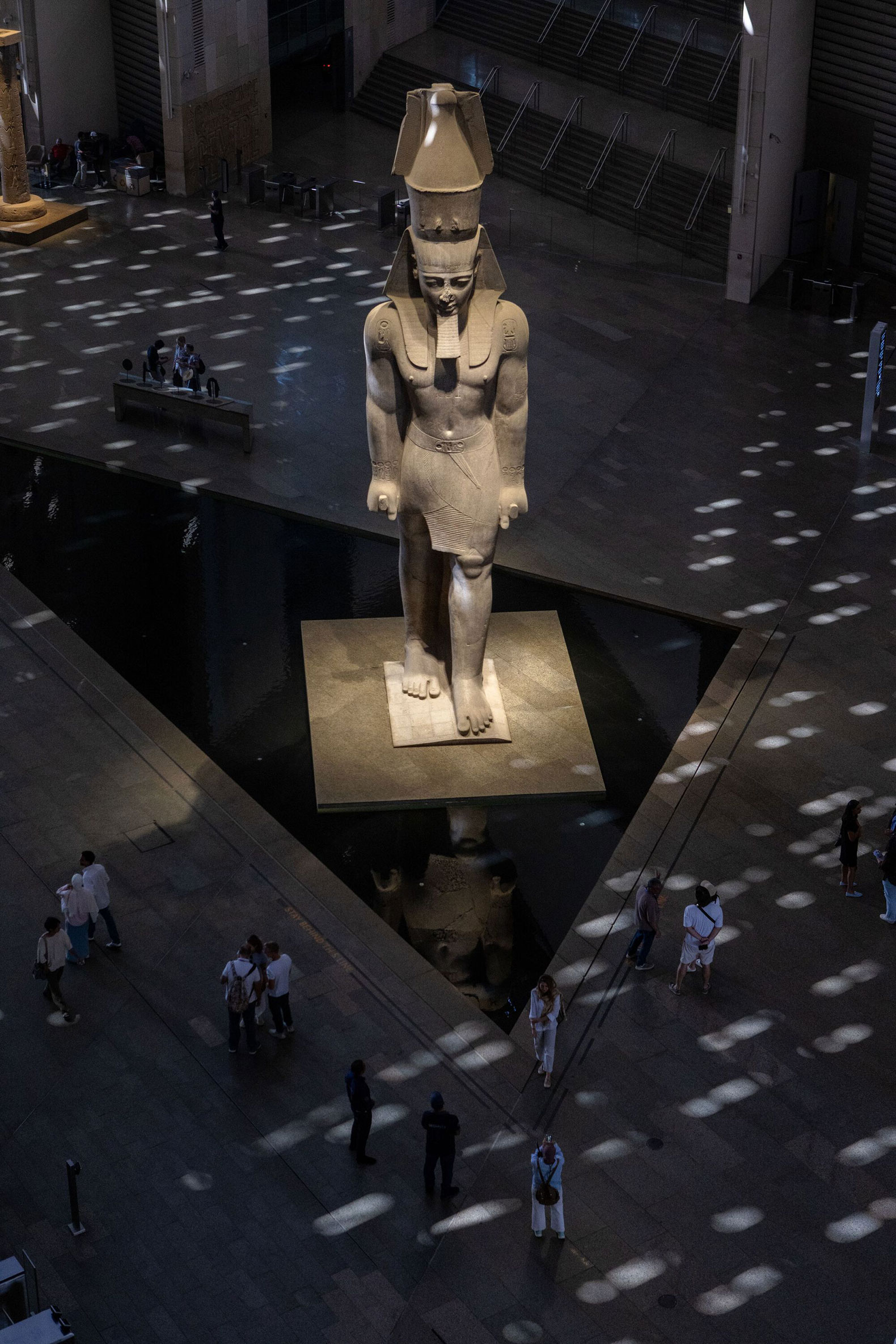
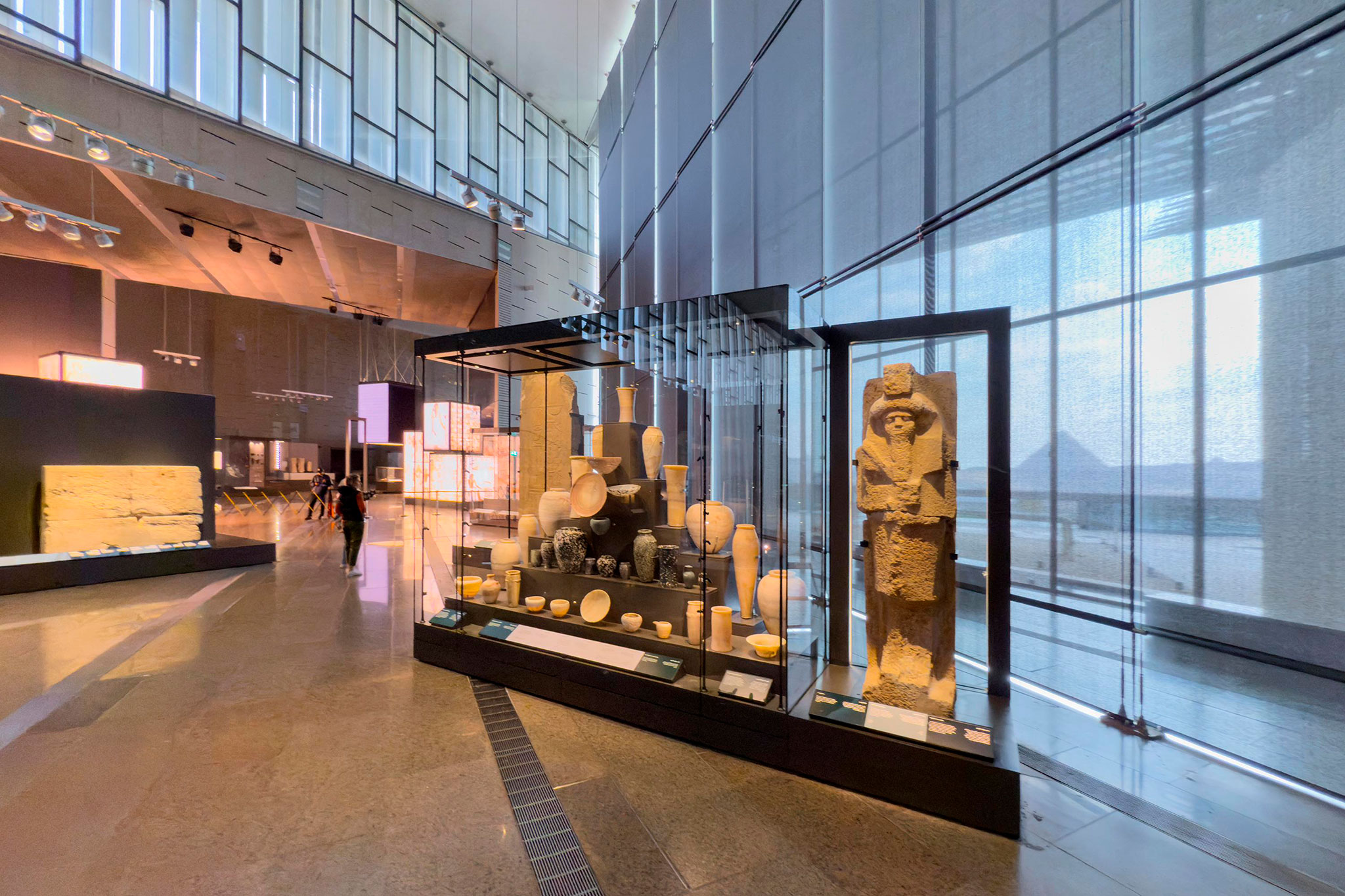
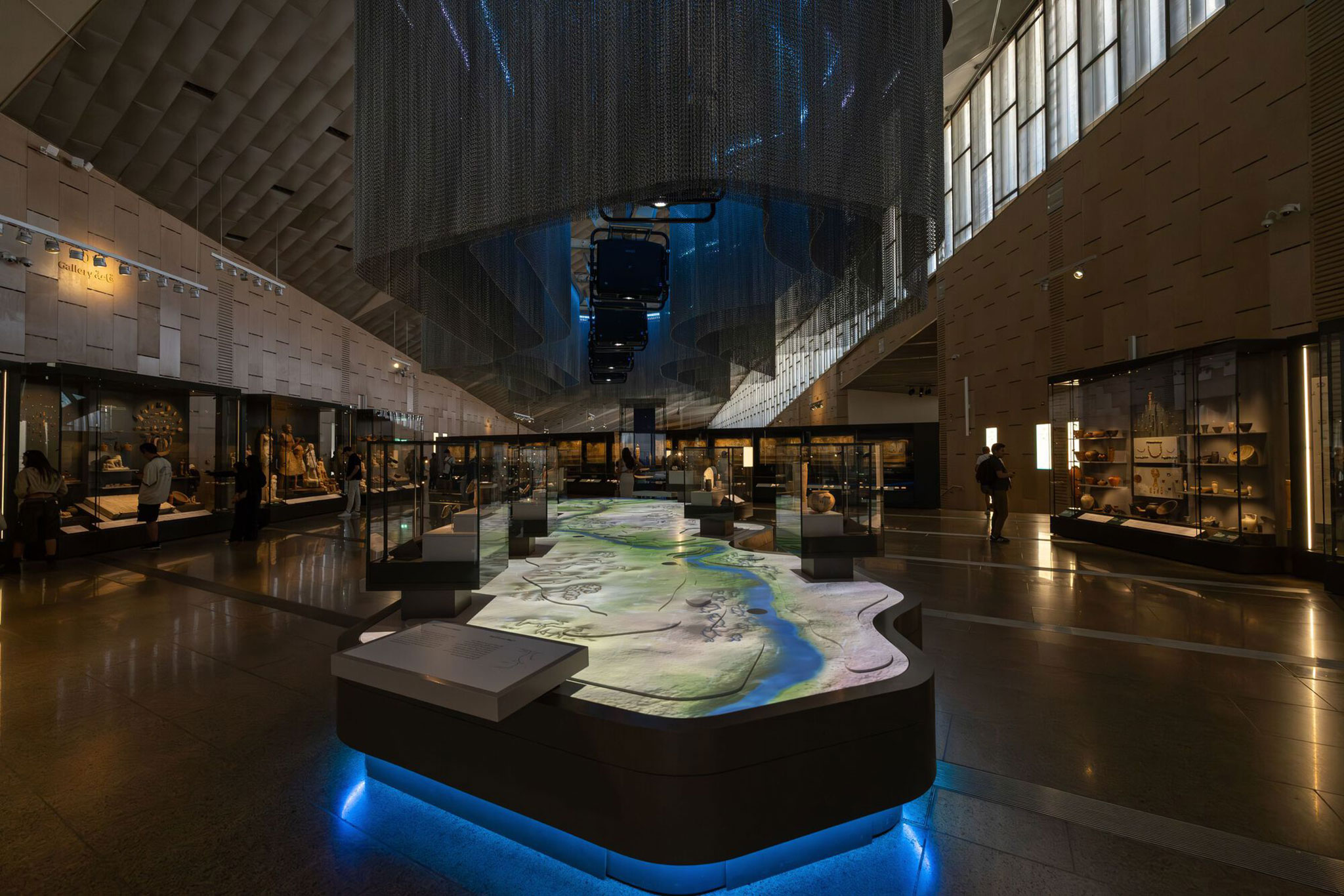
Grand Egyptian Museum by Heneghan Peng Architects. Photograph by Georges & Samuel Mohsen – The GS Studio.

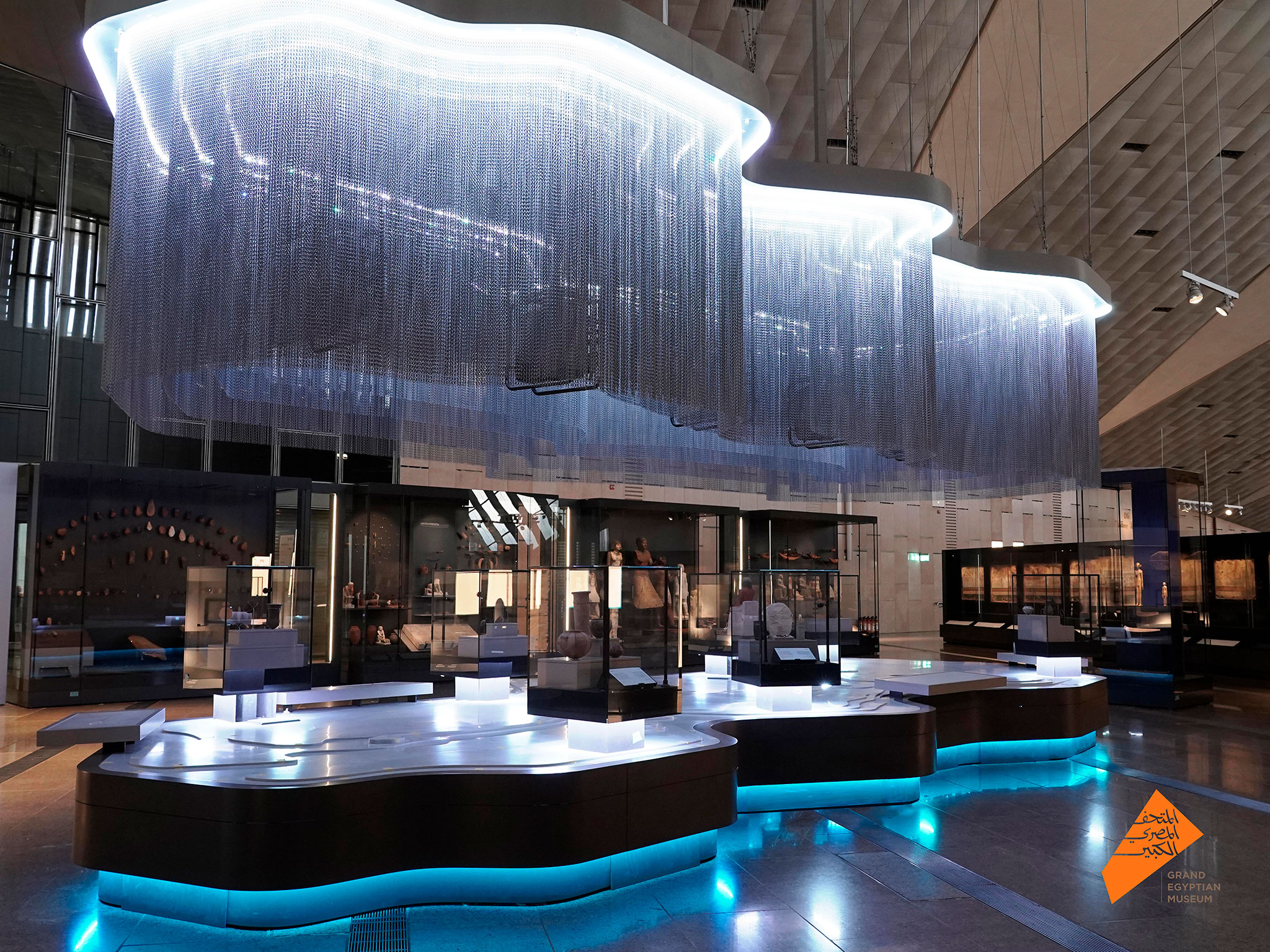
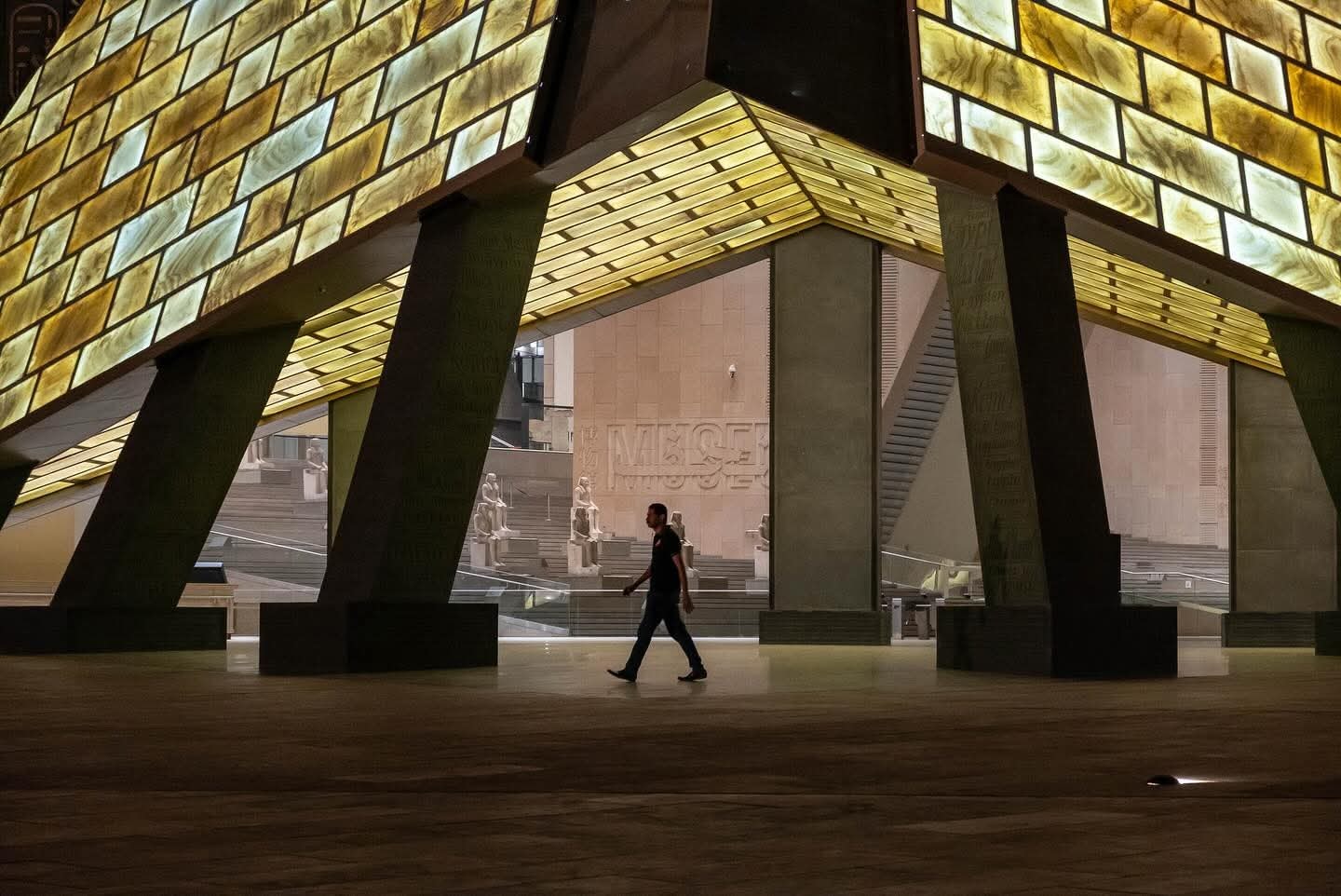
Grand Egyptian Museum by Heneghan Peng Architects. Photograph by Georges & Samuel Mohsen – The GS Studio.

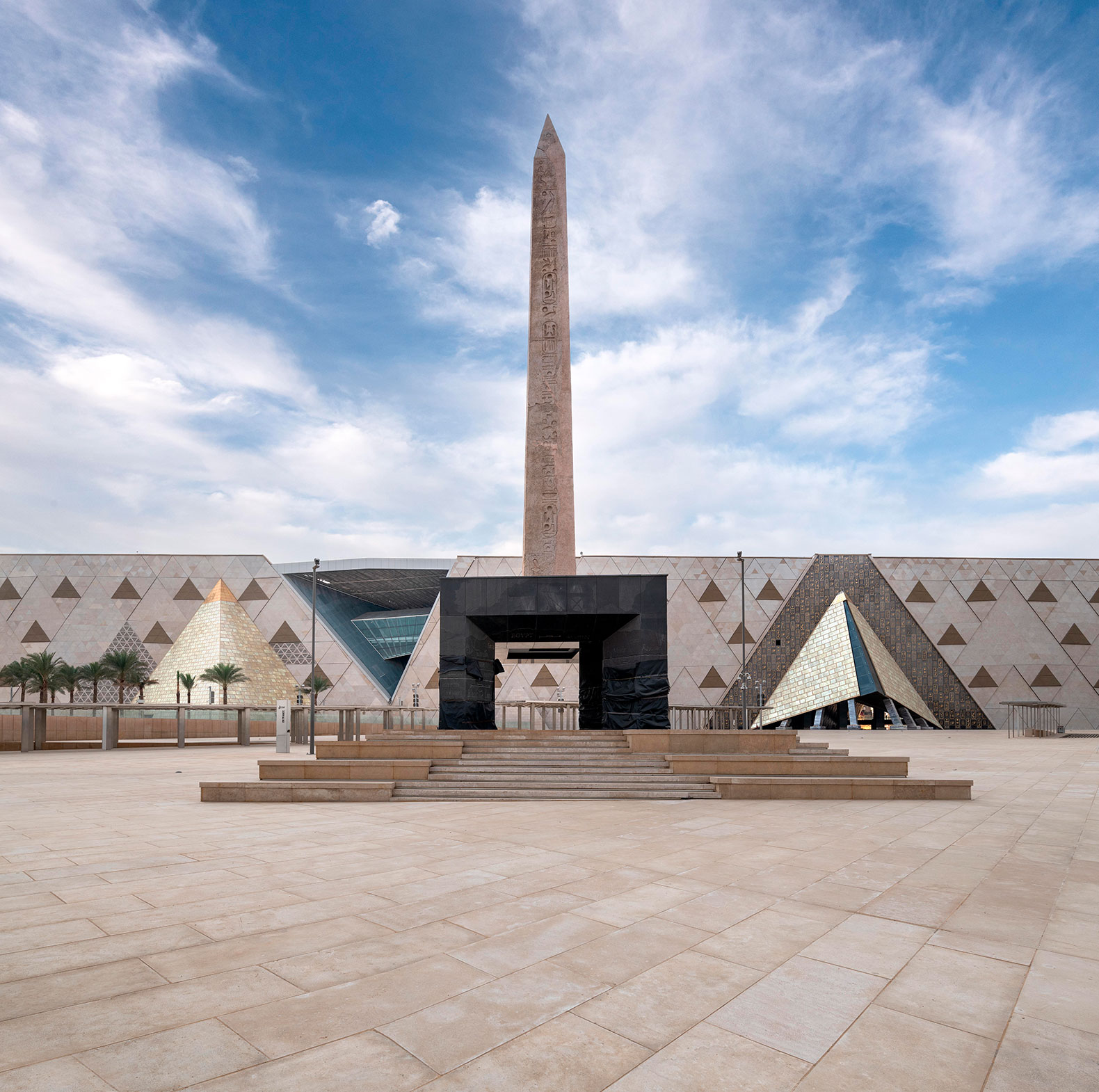
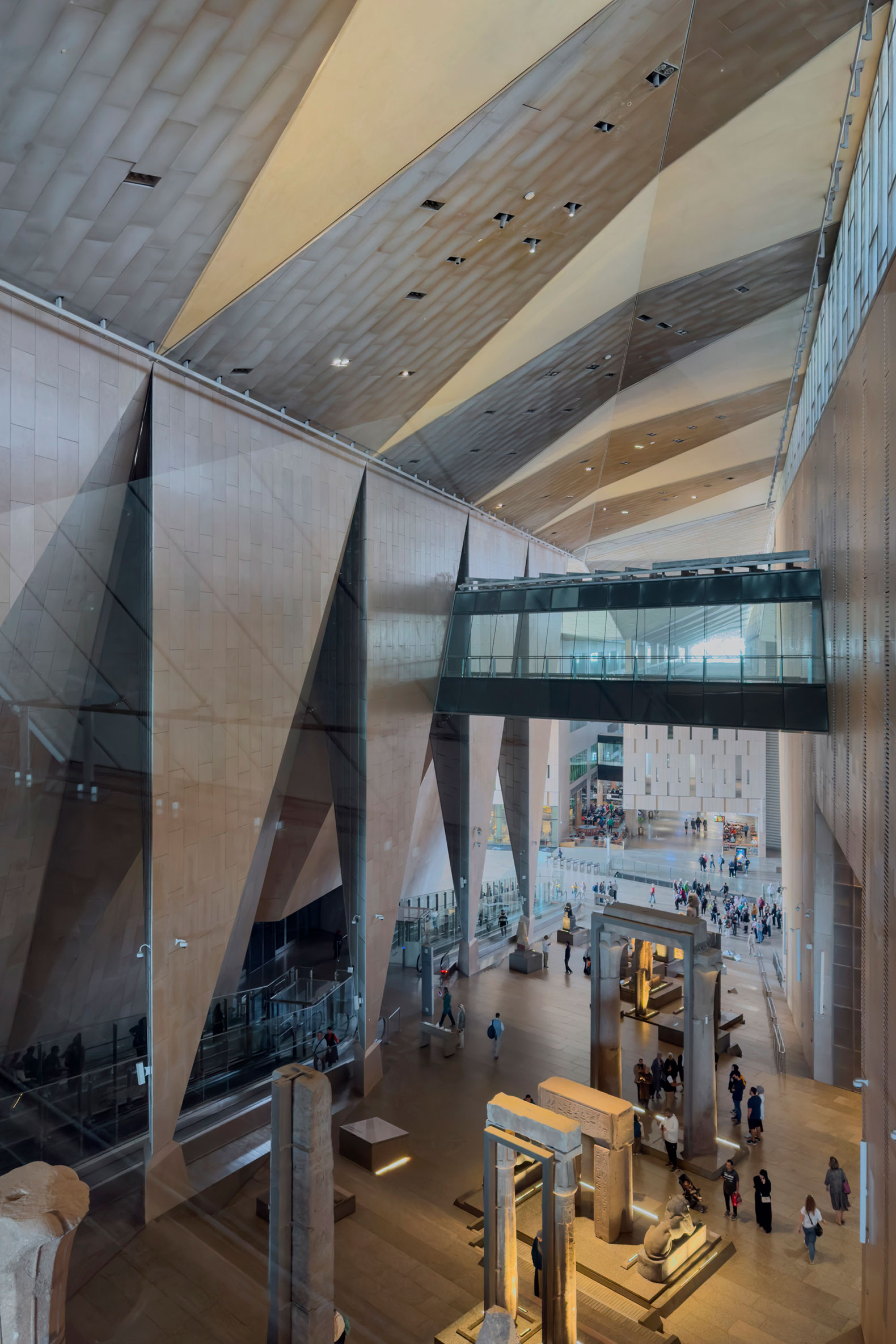
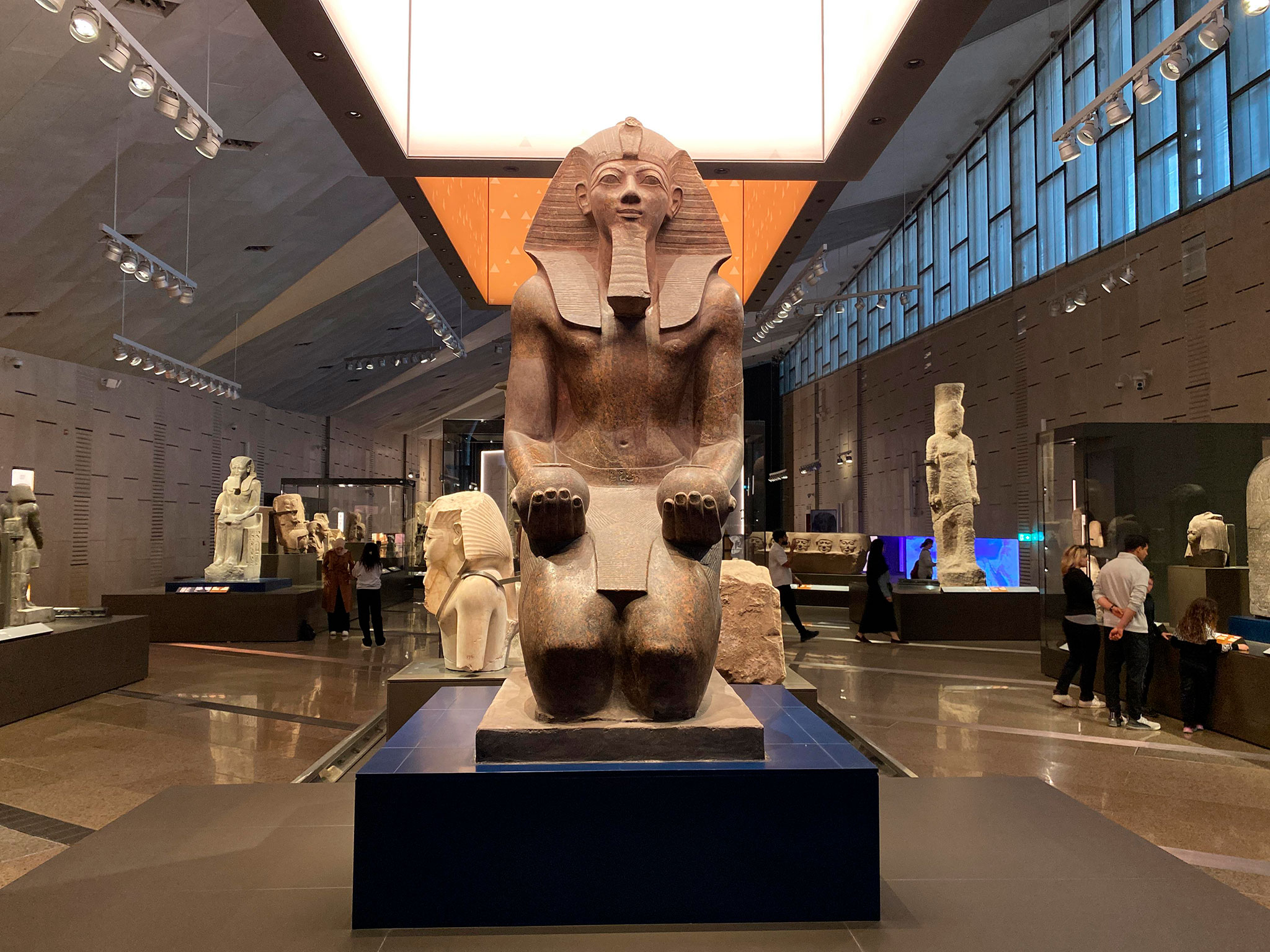
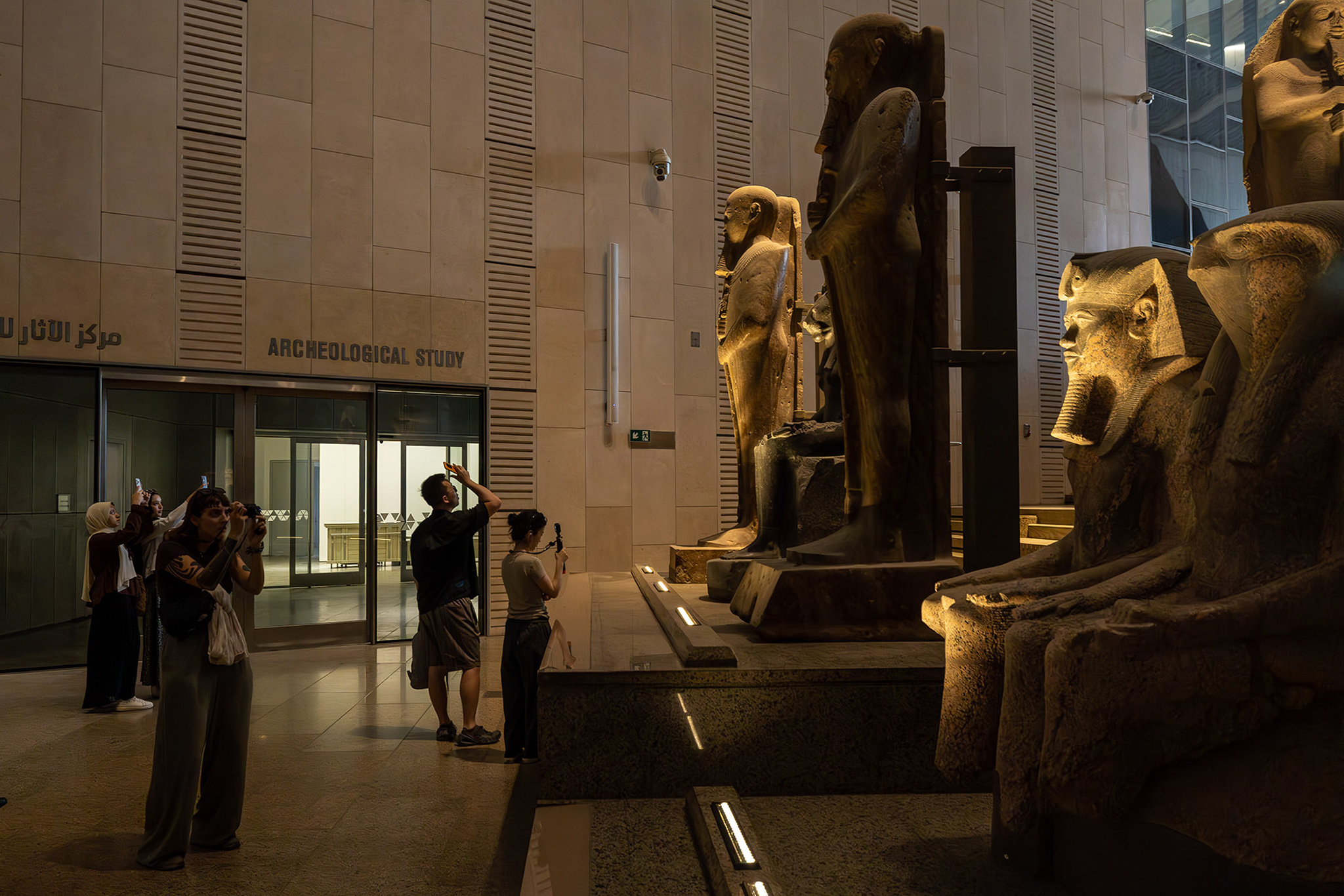
Grand Egyptian Museum by Heneghan Peng Architects. Photograph by Georges & Samuel Mohsen – The GS Studio.

Project description by Heneghan Peng Architects

The site for the Grand Egyptian Museum is located at the edge of the first desert plateau between the pyramids and Cairo. It is defined by a 50m level difference, created as the Nile carves its way through the desert to the Mediterranean, a geological condition that has shaped Egypt for over 3,000 years.

The Grand Staircase ascends from the Entrance Court to the permanent exhibition galleries on the top floor, stopping off at special exhibitions, temporary exhibitions, and Archaeological Main Storage. The staircase is the chronological route within the museum, culminating in the view of the pyramids at the top of the stairs. An identifiable reference point, the Grand Staircase allows visitors to easily navigate this vast Museum.

Gran Museo Egipcio por Heneghan Peng Architects. Fotografía cortesía de Gran Museo Egipcio.
Grand Egyptian Museum by Heneghan Peng Architects. Photograph courtesy of Grand Egyptian Museum.

The museum is designed so that visitors move through a sequence of spaces, gradually transitioning from the contemporary world back into the world of the Pharaohs. The monumental forecourt in front of the museum is the first point from which the visitor can grasp the scale and monumentality of the site. Gradually sloping upwards to the entrance, the visitor is led into the Entrance Court, a shaded outdoor space that continues the transition from the outdoor area to the museum and conference.

A 3-dimensional structure inscribed by a set of visual axes from the site to the three pyramids defines the framework within which the museum emerges, from the overall scale of the site to the smallest of details. The design of the museum uses the level difference between the Nile Valley and the desert plateau to construct a new 'edge' to the plateau. The museum exists between the level of the Nile Valley and the plateau, never extending above the plateau.
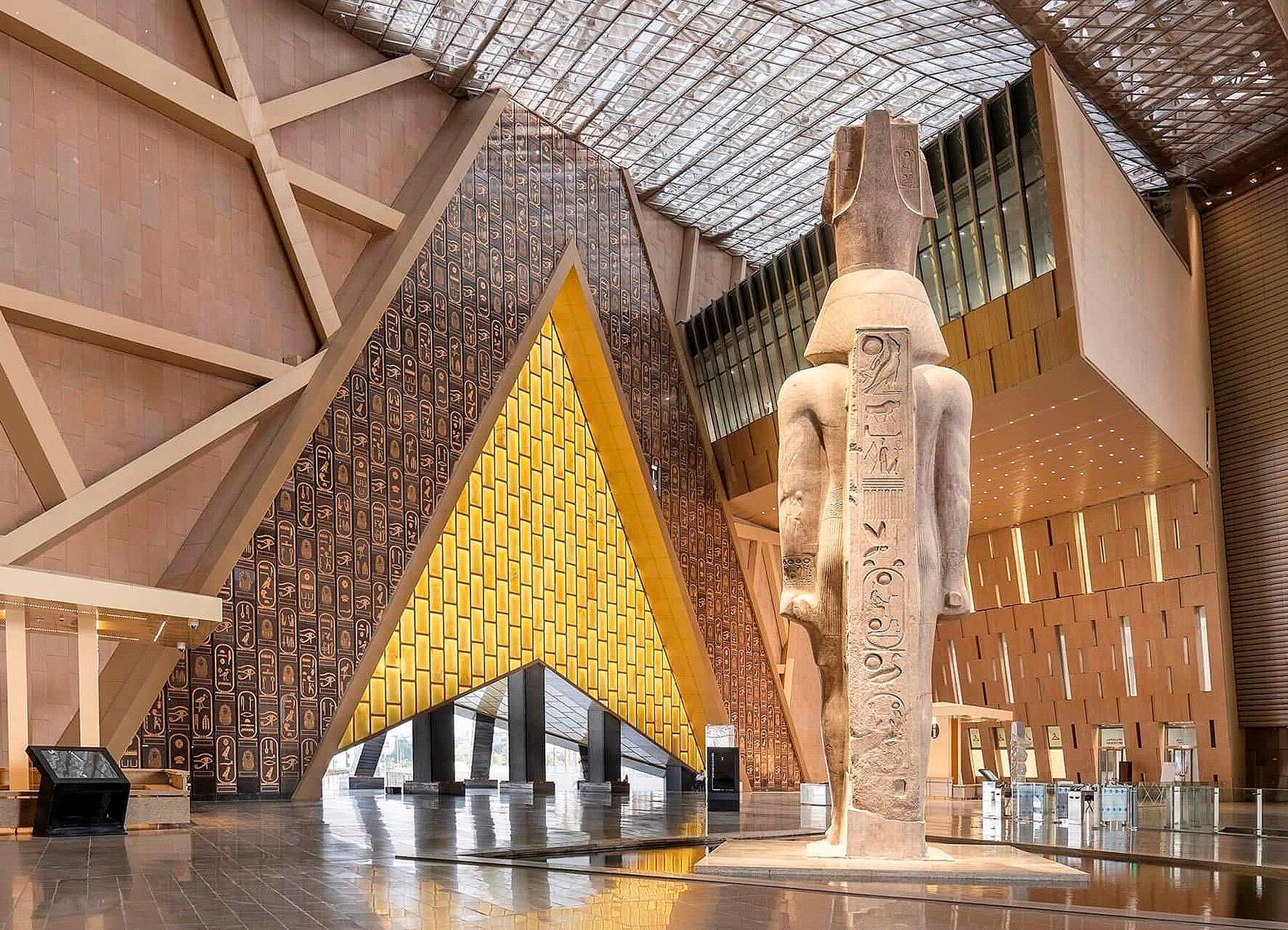
Gran Museo Egipcio por Heneghan Peng Architects. Fotografía cortesía de Gran Museo Egipcio.
Grand Egyptian Museum by Heneghan Peng Architects. Photograph courtesy of Grand Egyptian Museum.

The approach to the museum is a series of layers, whereby the visitor moves through a monumental forecourt, a shaded entrance area and a grand staircase that ascends to plateau level, the level at which the galleries are located, where for the first time the visitor sees the pyramids from within the museum.

The museum is structured in five bands by the visual axes to the pyramids, the sixth band being the chronological route of the grand stair. Having ascended through the Museum, the visitor enters the permanent exhibition areas from where the pyramids can be seen. The galleries are organized on one floor to allow the visitor to comprehend the scale and magnificence of the civilization, while the five bands are spatially structured by the structural roof folds and heavy service walls. A clear organization is provided to a large space, yet still allowing flexible modes of display. Natural light is modulated and controlled by the roof folds.
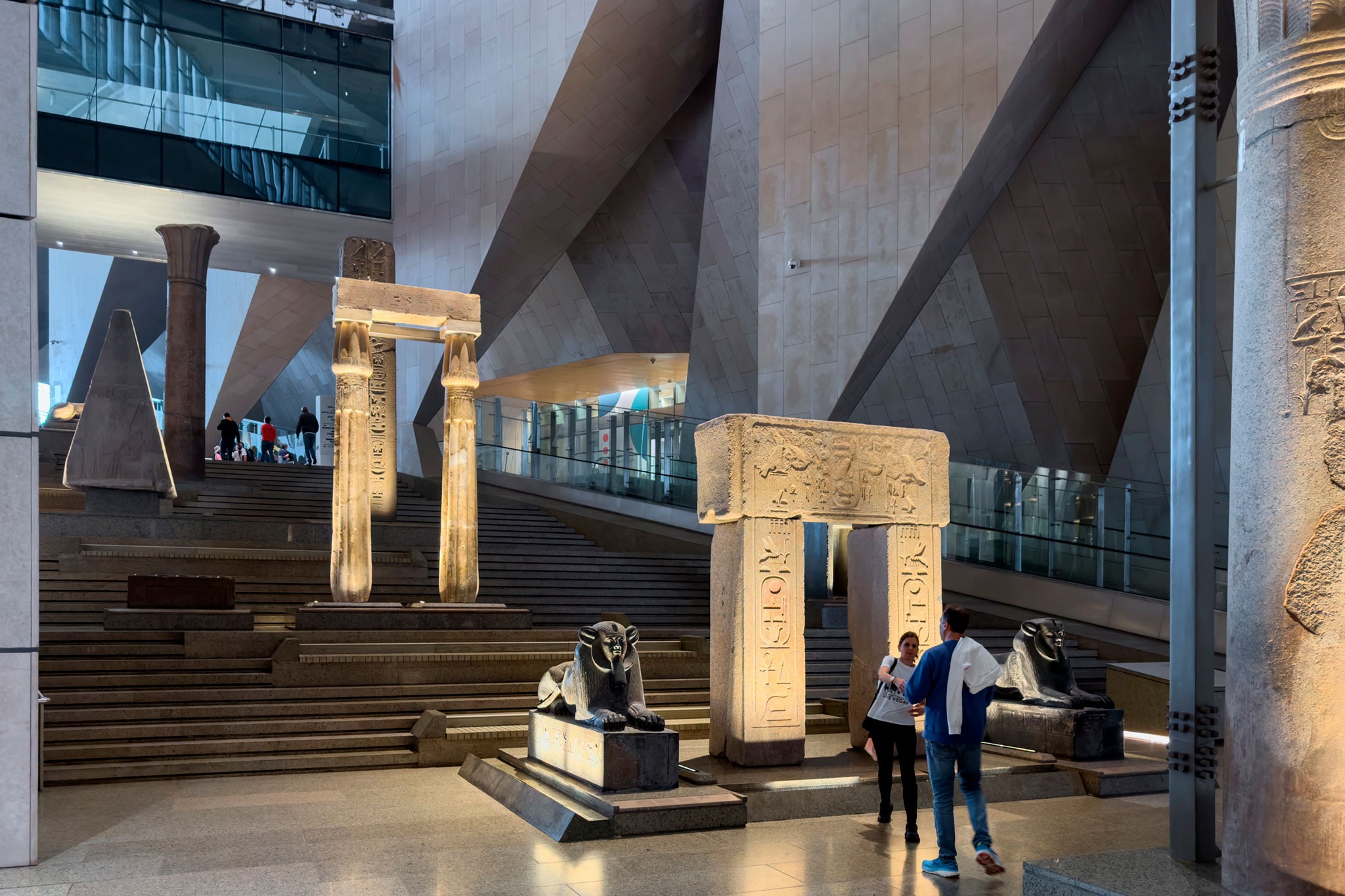
Gran Museo Egipcio por Heneghan Peng Architects. Fotografía por Iwan Baan.
Grand Egyptian Museum by Heneghan Peng Architects. Photograph by Iwan Baan.  

The museum is envisaged as a cultural complex of activities devoted to Egyptology and will contain 24,000m² of permanent exhibition space, almost 4 football fields in size, a children's museum, conference and education facilities, a large conservation center and extensive gardens on the 50thA site. The collections of the museum include the Tutankhamen collection, which is currently housed in the Egyptian Museum in Cairo, and the Solar Boat, which is now housed beside the pyramids.
More information

Label
Architects
Text

Heneghan Peng Architects.  
Architect of Record.- Raafat Miller Consulting (Cairo).
+ + copy Created with Sketch.
- + copy Created with Sketch.
Label
Collaborators
Text

Structural Engineer.- ACE.
Civil Engineer /  Traffic Engineer.- Arup, ACE.
Specialist Lighting.- Bartenbach Lichlabor.
Landscape Design.- West 8, Sites International Egypt.
Museum Building Services.- Shaker Engineering, Buro Happold.
Façade.- Arup, DVArea.
Quantity Surveyor, Design team Management.- Davis Langdon.  
IT, Security, Fire, Acoustics.- Buro Happold.  
Lighting.- Bartenbach Lichlabor. 
Signage & Wayfinding.- Bruce Mau Design.
Exhibition Masterplanning.- Metaphor.
Museology.- Cultural Innovations.

+ + copy Created with Sketch.
- + copy Created with Sketch.
Label
Client
Text

Ministry of Culture, Egypt.

+ + copy Created with Sketch.
- + copy Created with Sketch.
Label
Area
Text

Main Museum and Conference Centre.- 100,000 m².
Conservation Centre.- 18,000 m².
Energy Centre.- 11,000 m².

+ + copy Created with Sketch.
- + copy Created with Sketch.
Label
Dates
Text

Groundbreaking.- 2002.
Design Competition.- 2003.
Construction.- 2005–2023.
Opening.- 1 November 2025.

+ + copy Created with Sketch.
- + copy Created with Sketch.
Label
Location
Text

Grand Egyptian Museum. Cairo - Alexandria Desert Rd, Kafr Nassar, Al Haram. Giza Governorate 3513204, Egypt.
- Coordinates.- 29.9950°N 31.1193°E
- Cairo Metro Line 4, Pyramids Station (under construction).

+ + copy Created with Sketch.
- + copy Created with Sketch.
Label
Manufacturers
Text

Goppion.

+ + copy Created with Sketch.
- + copy Created with Sketch.
Label
Photography
Text

Iwan Baan, Georges & Samuel Mohsen – The GS Studio.

+ + copy Created with Sketch.
- + copy Created with Sketch.
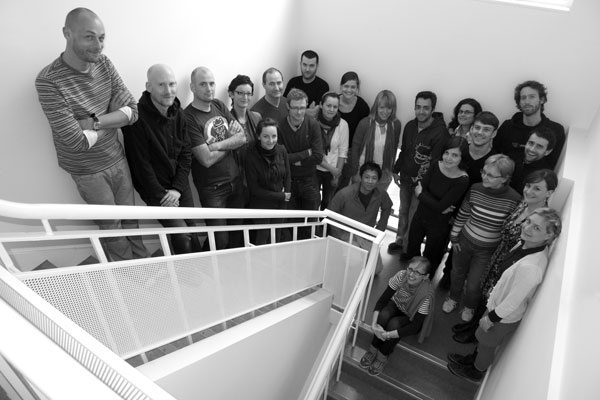
Heneghan Peng Architects is a studio specializing in architecture, landscape, and urban design, founded by Shih-Fu Peng (born in Taiwan in 1965) and Róisín Heneghan (born in Dublin, Ireland, in 1962). Róisín Heneghan graduated from University College Dublin, and Shih-Fu Peng from National Taiwan University, before both pursuing postgraduate studies at the Harvard Graduate School of Design. They met during these studies and founded their firm in New York in 1999. Two years later, in 2001, they opened an office in Dublin, which has become their main base of operations.

From its inception, Heneghan Peng has adopted an integrative approach that combines architecture, landscape, and urbanism, working closely with engineers and specialists to address each project holistically. Their work is distinguished by sensitivity to the environment, topography, and cultural context, avoiding iconic gestures and prioritizing conceptual clarity and integration with the landscape. This philosophy has allowed them to develop a versatile practice capable of tackling projects of varying scales and typologies, including master plans, bridges, landscape interventions, and institutional, educational, and cultural buildings.

The firm gained early recognition in international competitions, winning several first prizes that established its reputation. These include the commission for the Grand Egyptian Museum in 2003, the competition for the Giant’s Causeway Visitor Centre in 2005, and the selection for the pedestrian bridges at the London Olympic Park in 2007. These early achievements demonstrated their ability to undertake complex, large-scale projects with a relatively small team, consolidating their global recognition.

Among their major projects are the Grand Egyptian Museum in Giza, currently the largest museum in the world dedicated to a single civilization; the Giant’s Causeway Visitor Centre in Northern Ireland; the Central Park Bridges at the London Olympic Park in 2012; the Library and School of Architecture at the University of Greenwich in London; and the Mittelrheinbruecke in the Rhine Valley, Germany. Other notable commissions include the Palestinian Museum in Birzeit and various institutional headquarters and pedestrian bridges across Europe.

Heneghan Peng has successfully balanced large-scale projects with a detailed and contextual approach, combining technical rigour, environmental sensitivity, and architectural vision. Their trajectory demonstrates that global excellence can emerge from small practices, provided there is conceptual clarity, commitment to the context, and respect for local culture. The firm represents a model of contemporary architectural practice that integrates research, design, and multidisciplinary collaboration, establishing itself as an international reference in architecture that is attentive to landscape and context.

Read more
Published on: December 10, 2025
Cite:
metalocus, ANTONIO GRAS
"Grand Egyptian Museum by Heneghan Peng Architects" METALOCUS. Accessed
<https://www.metalocus.es/en/news/grand-egyptian-museum-heneghan-peng-architects> ISSN 1139-6415
Loading content ...
Loading content ...
Loading content ...
Loading content ...
Loading content ...
Loading content ...
Loading content ...
Loading content ...
Loading content ...
Loading content ...
Loading content ...
Loading content ...
Loading content ...
Loading content ...
Loading content ...
Loading content ...
Loading content ...
Loading content ...
Loading content ...
Loading content ...
Loading content ...
Loading content ...
Loading content ...
Loading content ...
Loading content ...
Loading content ...
Loading content ...
Loading content ...
Loading content ...
Loading content ...
Loading content ...
Loading content ...
Loading content ...
Loading content ...
Loading content ...
Loading content ...
Loading content ...
Loading content ...
Loading content ...
Loading content ...
Loading content ...
Loading content ...
Loading content ...
Loading content ...
Loading content ...
Loading content ...
Loading content ...
Loading content ...
Loading content ...
Loading content ...
Loading content ...
Loading content ...
Loading content ...
Loading content ...