The first 6 months of a year long project to film the construction of the Leadenhall Building in London, desing by by Rogers Stirk Harbour + Partners.

Film by Dan Lowe and Paul Raftery.
Commissioned by Rogers Stirk Harbour + Partners.
Music by George McLeod.
Titles by Alex Ashworth.

This 50 storey tower opposite Lloyd’s of London rises to a height of 224.5 metres (802 feet), its slender form creating its own distinctive profile within an emerging cluster of tall buildings in this part of the City of London. The building’s tapering profile is prompted by a requirement to respect views of St Paul’s Cathedral, in particular from Fleet Street.

The tower’s design ensures that from this key vantage point the cathedral’s dome is still framed by a clear expanse of sky. The office floors, containing the highest quality office space, take the form of rectangular floor plates which progressively diminish in depth towards the apex. Instead of a traditional central core providing structural stability, the building employs a full perimeter braced tube which defines the perimeter of the office floor plates and creates stability under wind loads. The circulation and servicing core is located in a detached north-facing tower, containing passenger and goods lifts, service risers and on-floor plant and WCs.

The building’s envelope expresses the diversity of what it encloses, reinforcing the composition and providing legibility to the primary elements. Although the tower occupies the entire site, the scheme delivers an unprecedented allocation of public space – the lower levels are recessed on a raking diagonal to create a spectacular, sun- lit seven-storey-high space complete with shops, exhibition space, soft landscaping and trees.

This public space offers a half-acre extension to the adjacent piazza of St Helen’s Square. Overlooking the space is a public bar and restaurant served by glazed lifts. This new public space will provide a rare oasis within the dense urban character of the City of London.

Read more
Read less

More information

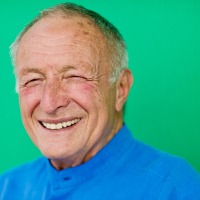
Richard Rogers. (Florence, July 23, 1933 – London, December 18, 2021) was a central figure in international architecture from the late twentieth to the early twenty-first century, widely recognized for his role in consolidating high-tech architecture and for his sustained engagement with urban debate. Born in Italy to a British family, he moved to the United Kingdom as a child during the Second World War. This early experience of displacement would later inform his sensitivity to the social and urban issues that permeated his work. He was educated at the Architectural Association in London, a key institution in the renewal of architectural thought, and later continued his studies at Yale University, where he encountered other architects who would go on to achieve international prominence.

In 1977, he founded his own practice, initially known as Richard Rogers Partnership, which later evolved into Rogers Stirk Harbour + Partners. From this professional platform, he developed an approach characterized by technical innovation, constructive clarity, and a strong commitment to making visible the systems that shape a building. His architecture is distinguished by the externalization of structural and service elements, understood not only as functional solutions but as an essential part of architectural expression.

Among his most influential works is the Centre Pompidou in Paris, designed in collaboration with Renzo Piano, which represented a radical break from conventional architectural languages and redefined the role of the cultural building within the city. Likewise, the Lloyd’s building in London stands as another paradigmatic example of his approach, where technology and programmatic flexibility are integrated into a proposal that challenges traditional typologies.

Throughout his career, he received numerous distinctions, including the Pritzker Prize in 2007, widely regarded as architecture’s highest honor, the RIBA Gold Medal in 1985, and the Golden Lion for Lifetime Achievement at the Venice Biennale in 2006. He was knighted in 1991 and was later appointed a Member of the Order of the Companions of Honour in 2008, in recognition of both his professional work and his contribution to urban thought.

Beyond his built work, Rogers played an active role in shaping urban policy, particularly in the United Kingdom. He chaired the Urban Task Force in the late 1990s, promoting strategies for the regeneration of British cities based on models of compact, diverse, and sustainable urban development. His vision emphasized the importance of public space as a structuring element of urban life, as well as the need to integrate environmental criteria into urban growth.

His legacy extends beyond a body of iconic buildings to encompass a broader understanding of architecture as a discipline deeply connected to society, politics, and the environment. Through his work, Rogers helped redefine both professional practice and the role of the architect in shaping the contemporary city.

Read more

RSHP. Architecture practice founded in London in 1977 as Richard Rogers Partnership by Richard Rogers, John Young, Marco Goldschmied and Mike Davies. It was established following the completion of the Centre Pompidou in Paris (1971-1977), by Richard Rogers and Renzo Piano together with Gianfranco Franchini, a seminal work in Rogers’ career and in the architecture of the second half of the twentieth century.

In 2007, the practice was renamed Rogers Stirk Harbour + Partners, recognising the work of Graham Stirk and Ivan Harbour within the studio.

Richard Rogers (1933-2021), one of the leading figures in British architecture of recent decades and recipient of the Pritzker Architecture Prize in 2007, retired from the practice in 2020 and died on 18 December 2021. Following his death, in June 2022 the practice was renamed RSHP, consolidating a collective working structure that ensures the continuity of the studio beyond its founder.

RSHP is currently led by Graham Stirk, Ivan Harbour, Lennart Grut, John McElgunn, Tracy Meller, Ian Birtles, Stephen Barrett, Richard Paul, Simon Smithson and Andrew Tyley, who continue to develop the practice’s international work.

Since 1990, ownership of the practice has been linked to a charitable trust and governed by a constitution establishing principles of social and professional responsibility. Since 1993, the foundation associated with the practice has distributed more than £20.2 million to over 2,000 charitable organisations.

Among the practice’s best-known works are Lloyd’s of London, Terminal 4 at Madrid-Barajas Airport, projected in collaboration winner of the Stirling Prize in 2006, Terminal 5 at Heathrow Airport, the Senedd in Wales, the Leadenhall Building and Aile Est at Geneva Airport. Its recent work includes Melbourne’s Metro Tunnel, completed in 2025, as well as projects currently under development such as Capodichino Aeroporto metro station in Naples and new international airport infrastructure.

Read more
Published on: June 17, 2013
Cite:
metalocus, INÉS LALUETA
"Making The Leadenhall Building" METALOCUS. Accessed
<https://www.metalocus.es/en/news/making-leadenhall-building> ISSN 1139-6415
Loading content ...
Loading content ...
Loading content ...
Loading content ...
Loading content ...
Loading content ...
Loading content ...
Loading content ...
Loading content ...
Loading content ...
Loading content ...
Loading content ...
Loading content ...
Loading content ...
Loading content ...
Loading content ...
Loading content ...
Loading content ...
Loading content ...
Loading content ...
Loading content ...
Loading content ...
Loading content ...
Loading content ...
Loading content ...
Loading content ...
Loading content ...
Loading content ...
Loading content ...
Loading content ...
Loading content ...
Loading content ...
Loading content ...
Loading content ...
Loading content ...
Loading content ...
Loading content ...
Loading content ...
Loading content ...
Loading content ...
Loading content ...
Loading content ...
Loading content ...
Loading content ...
Loading content ...
Loading content ...
Loading content ...
Loading content ...
Loading content ...
Loading content ...
Loading content ...
Loading content ...
Loading content ...
Loading content ...