On World Book Day and fourteen years after its opening, we remember one of the most interesting libraries of the last decades. This project redefines the concept of a library, conceiving it not as an institution dedicated to the book but as an institution dedicated to information.

It is a great "information store" dedicated to the transmission of knowledge where all types of files and media are available to the user. The library has 748,000 books in its central building and an additional 711,000 in its 26 branches.
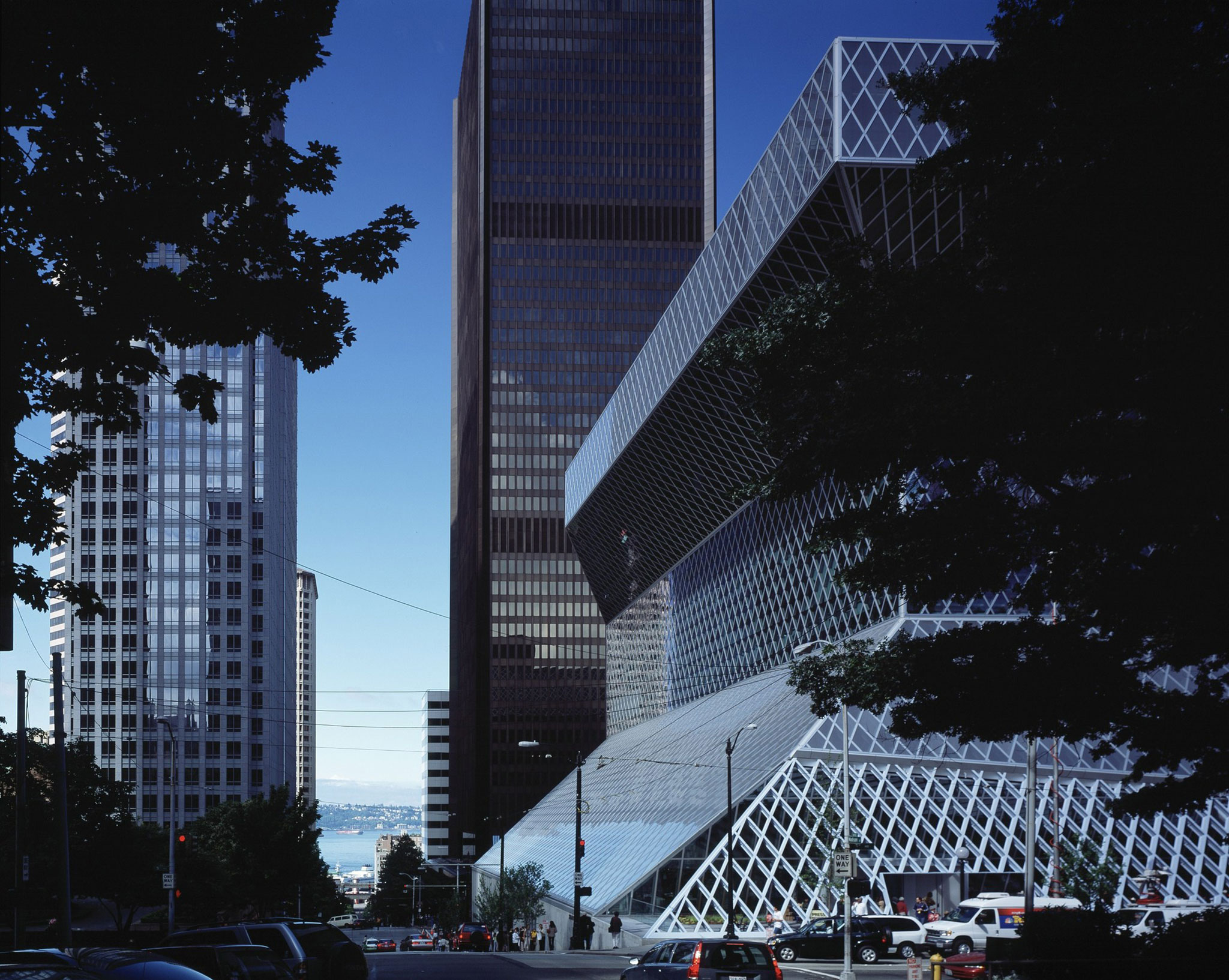
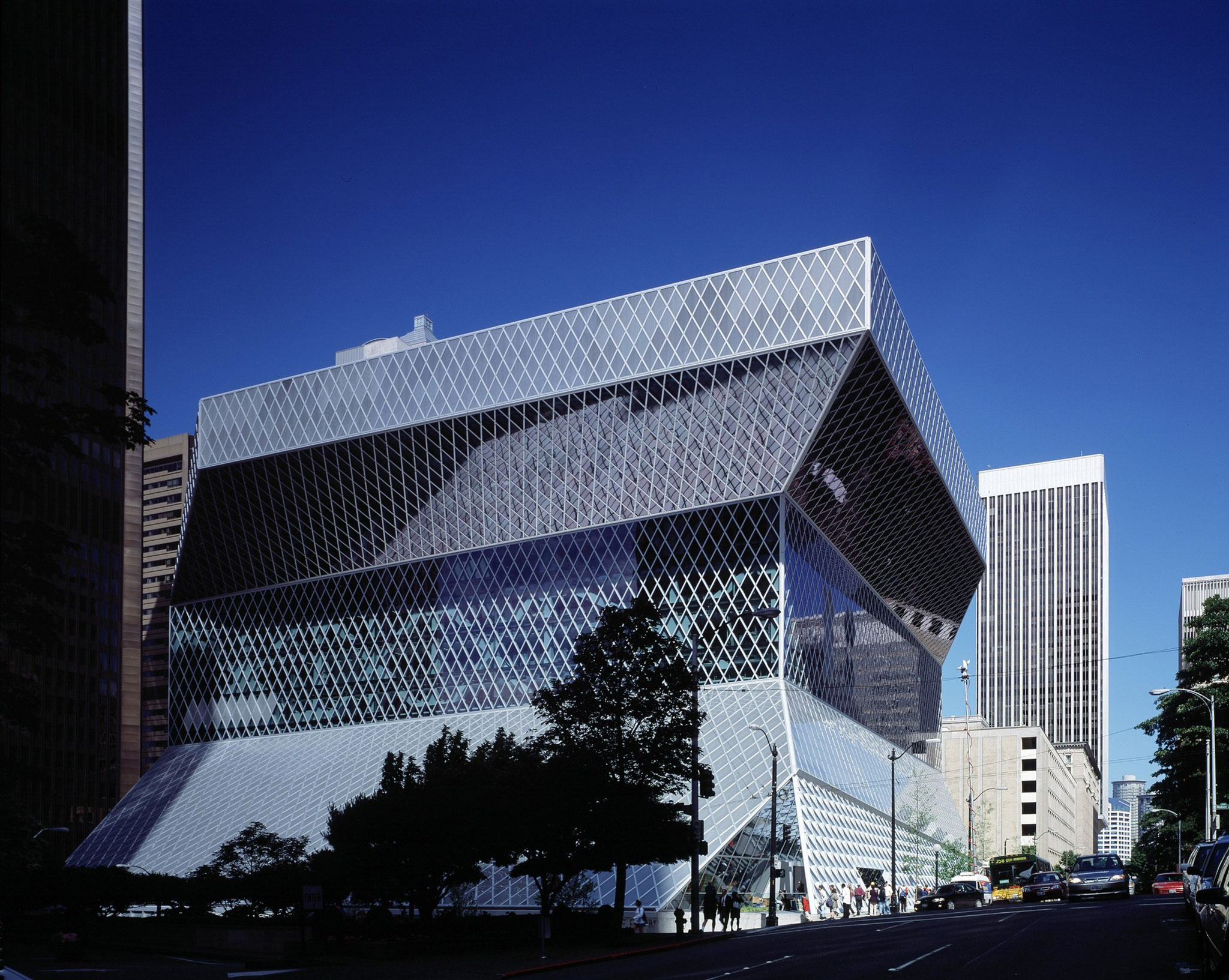
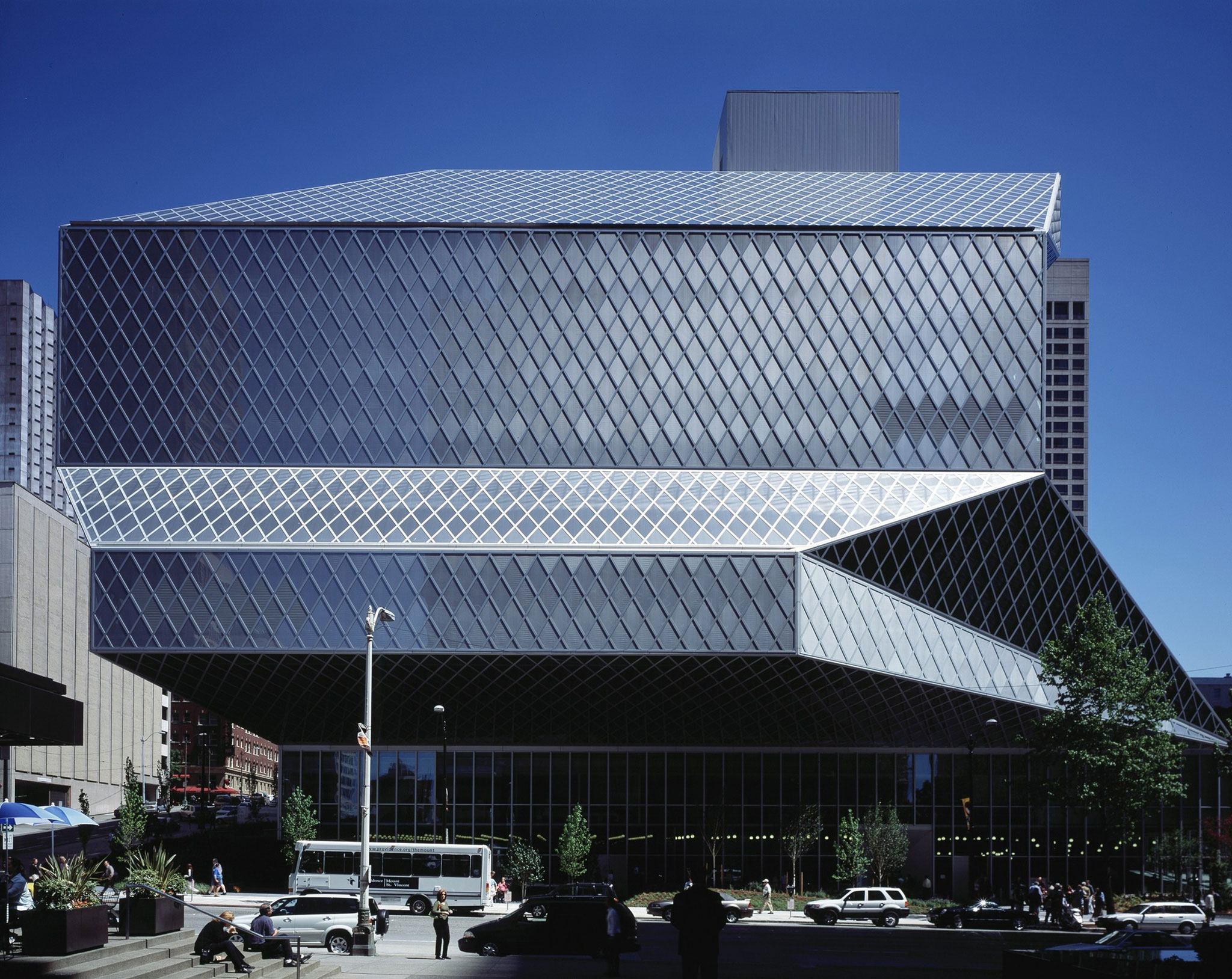
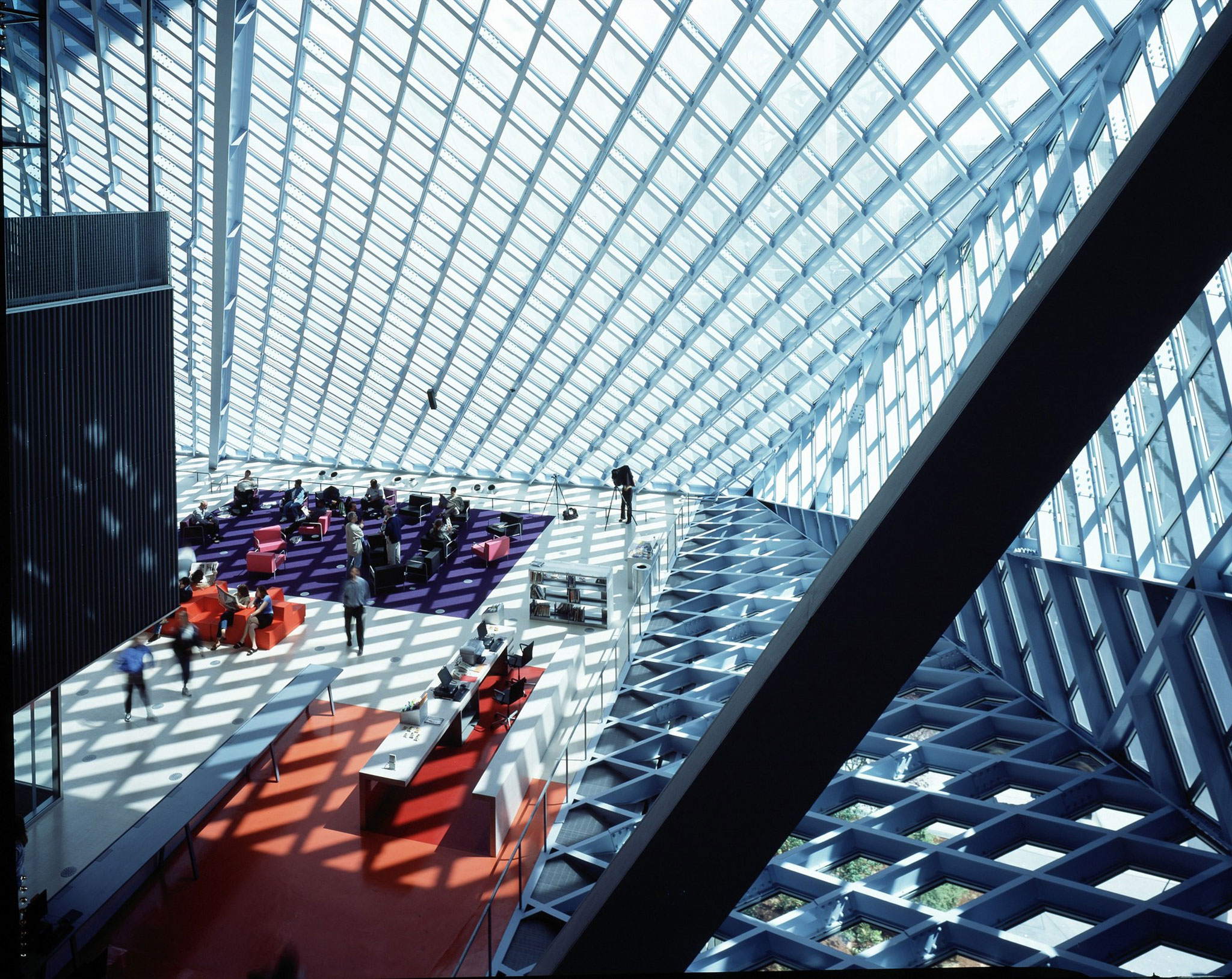
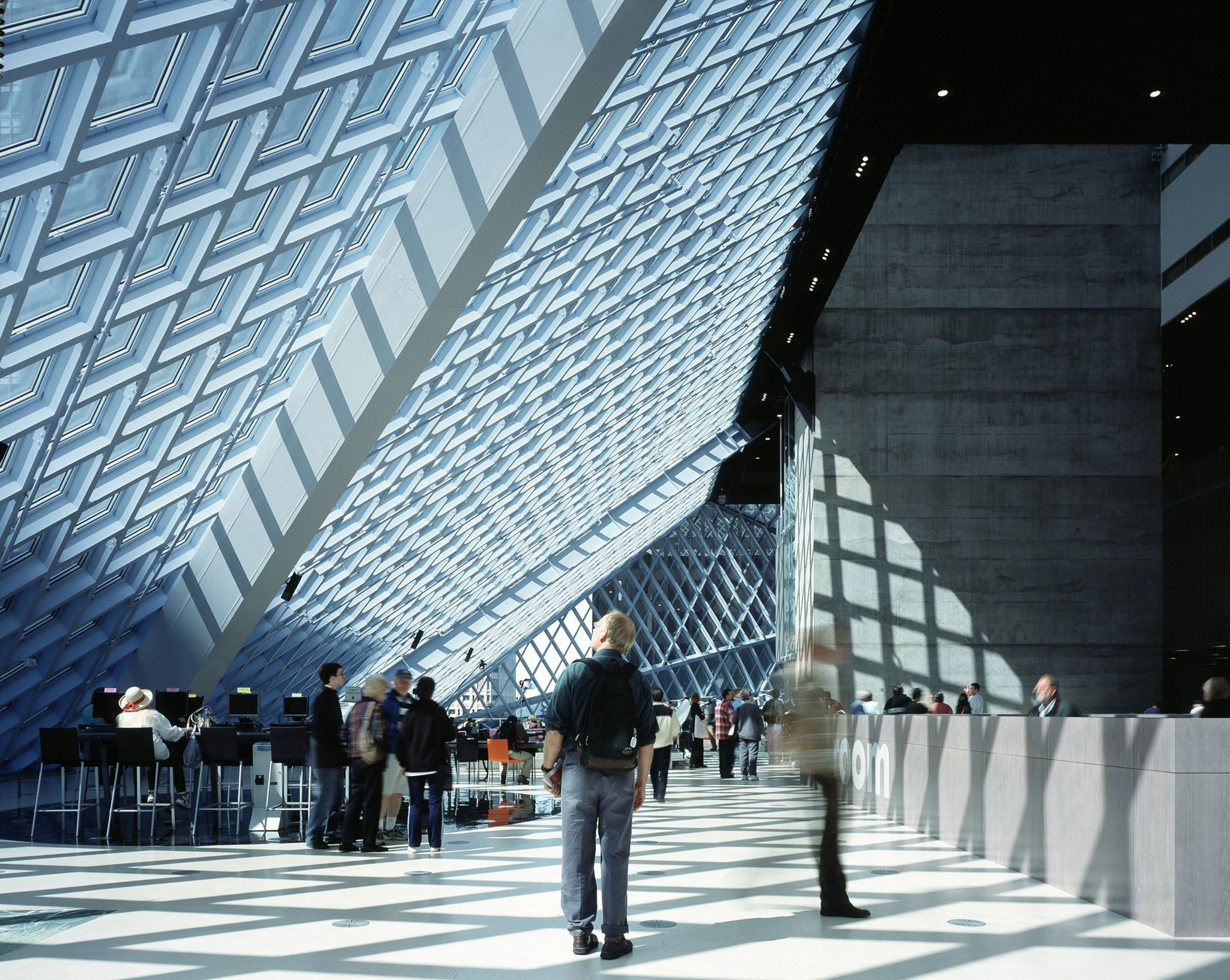
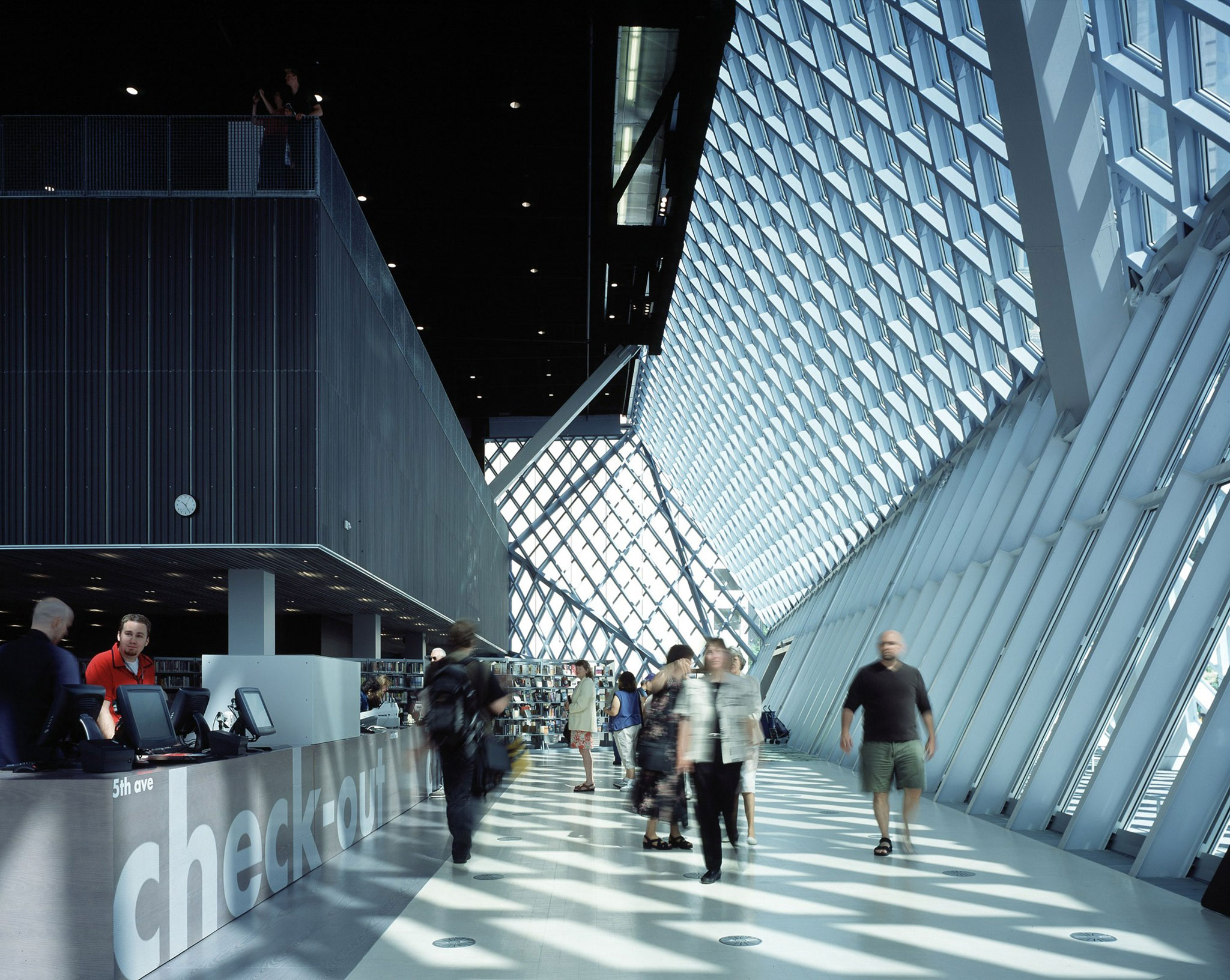
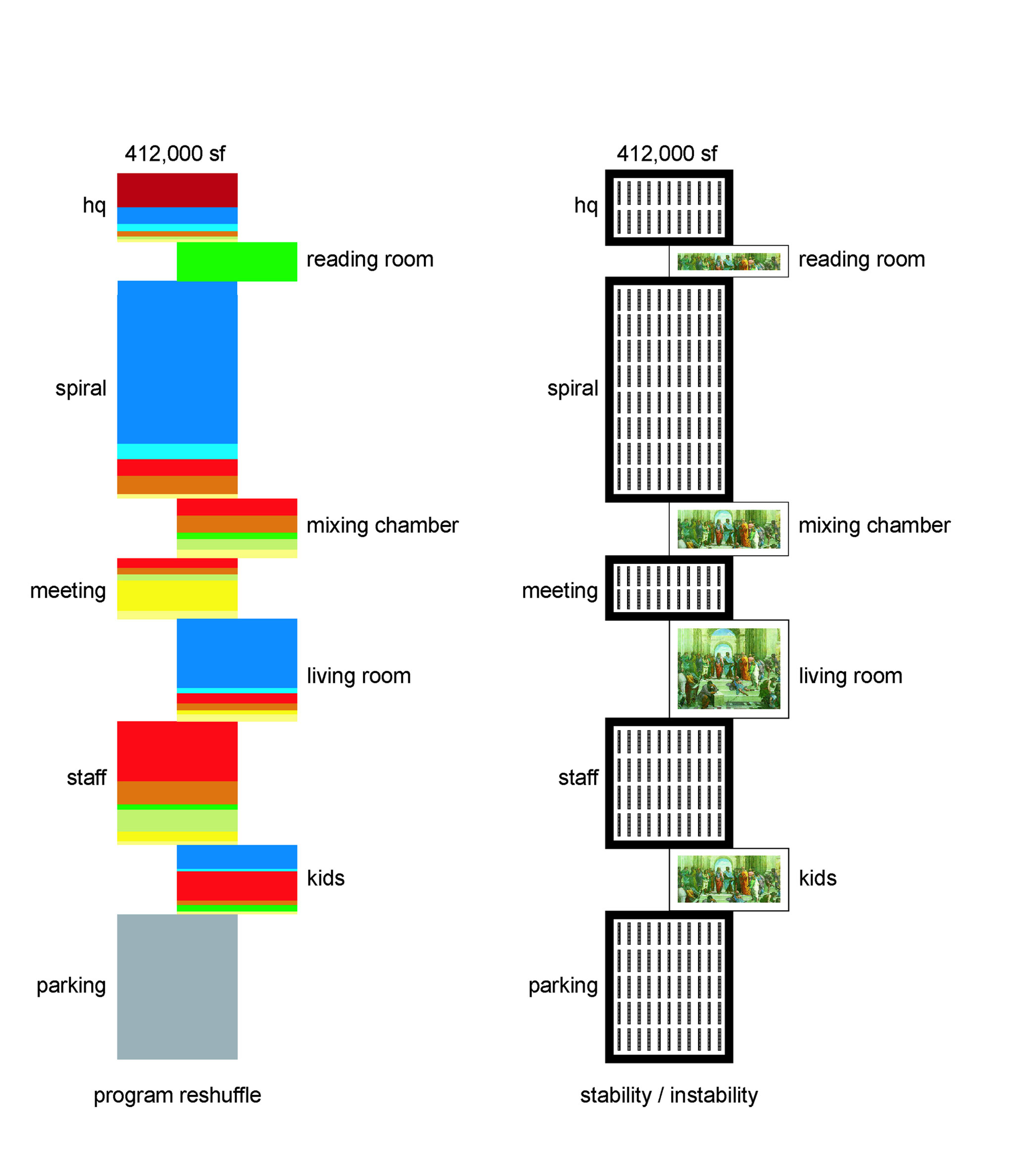
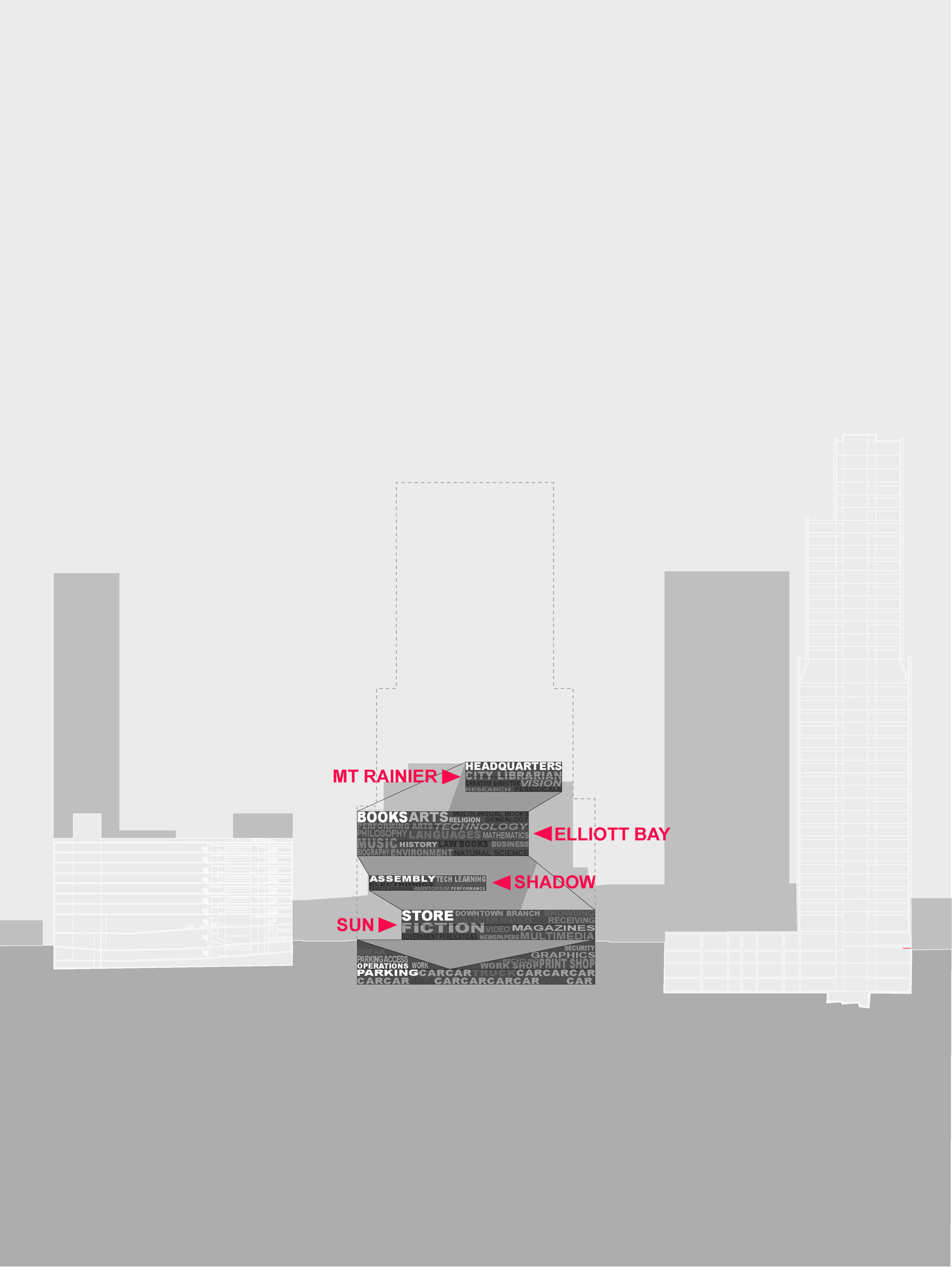
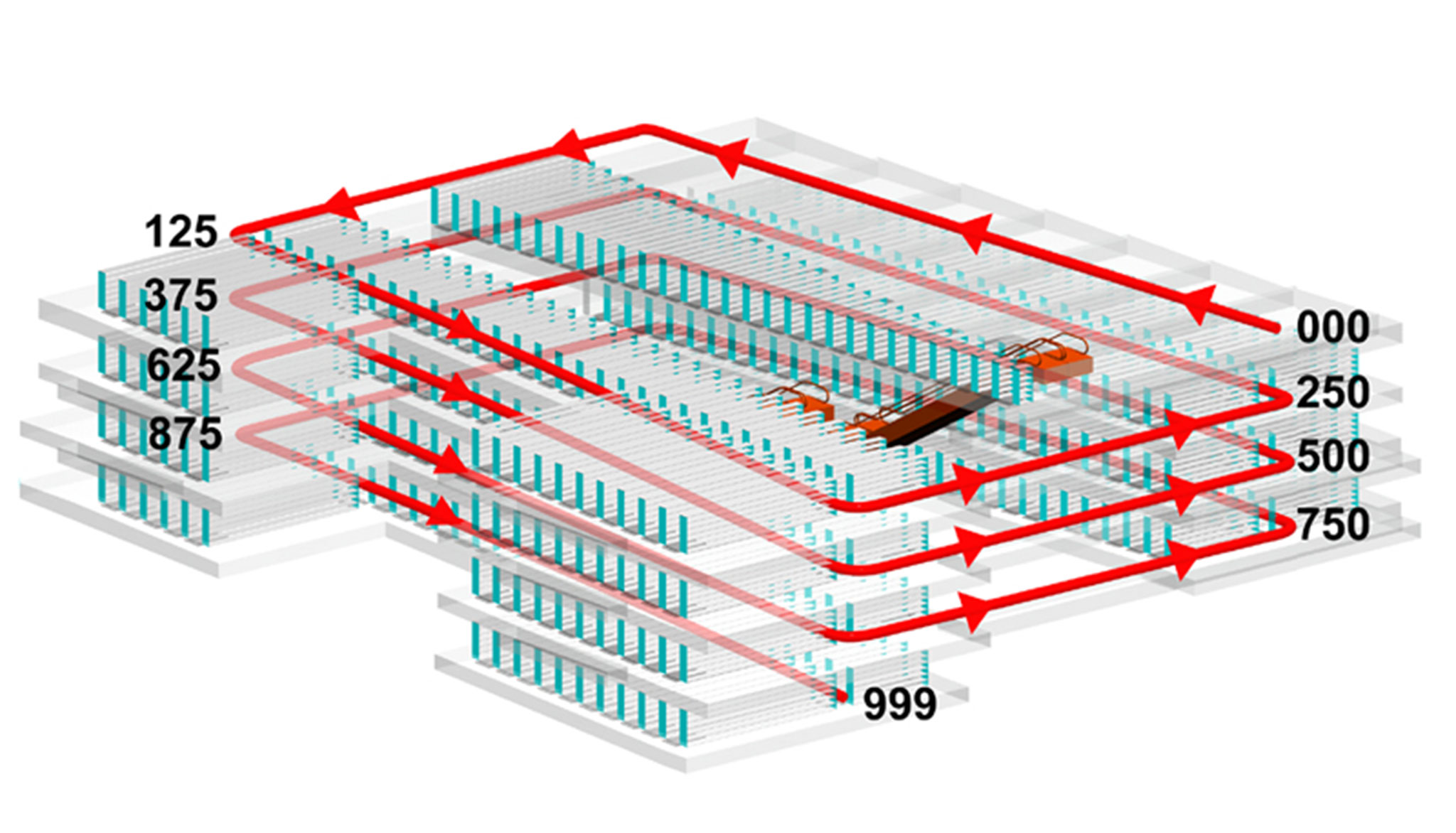
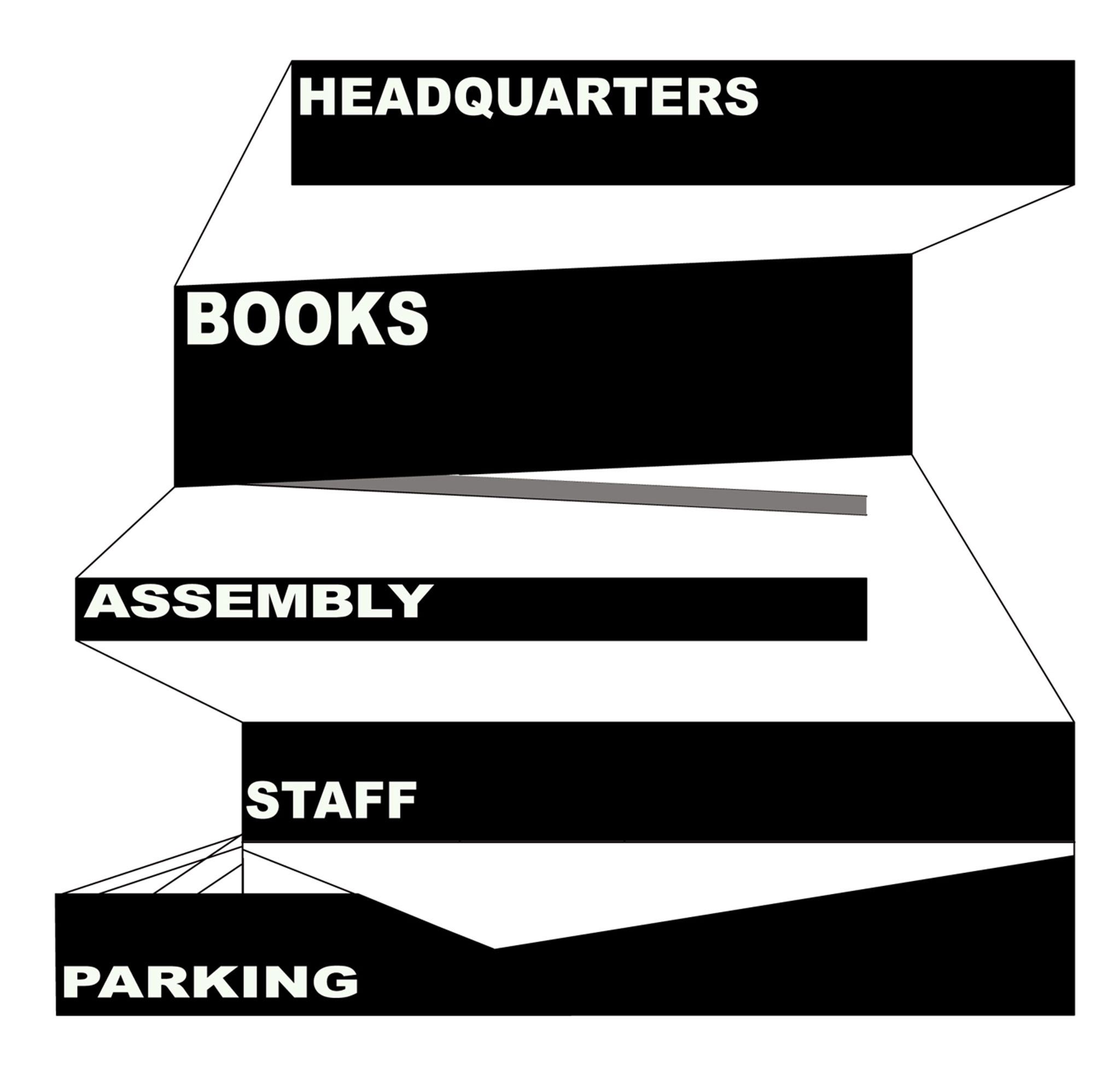
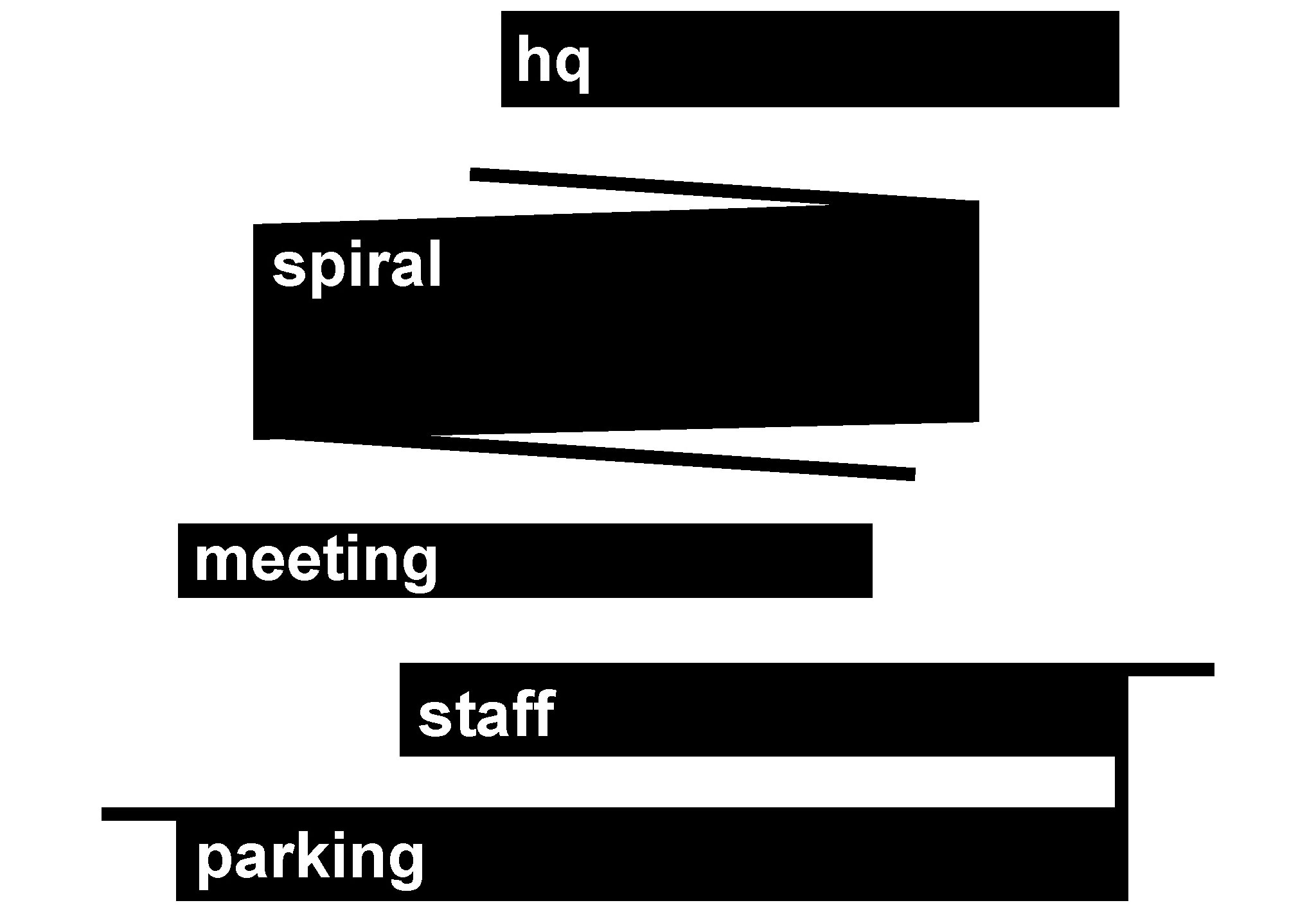
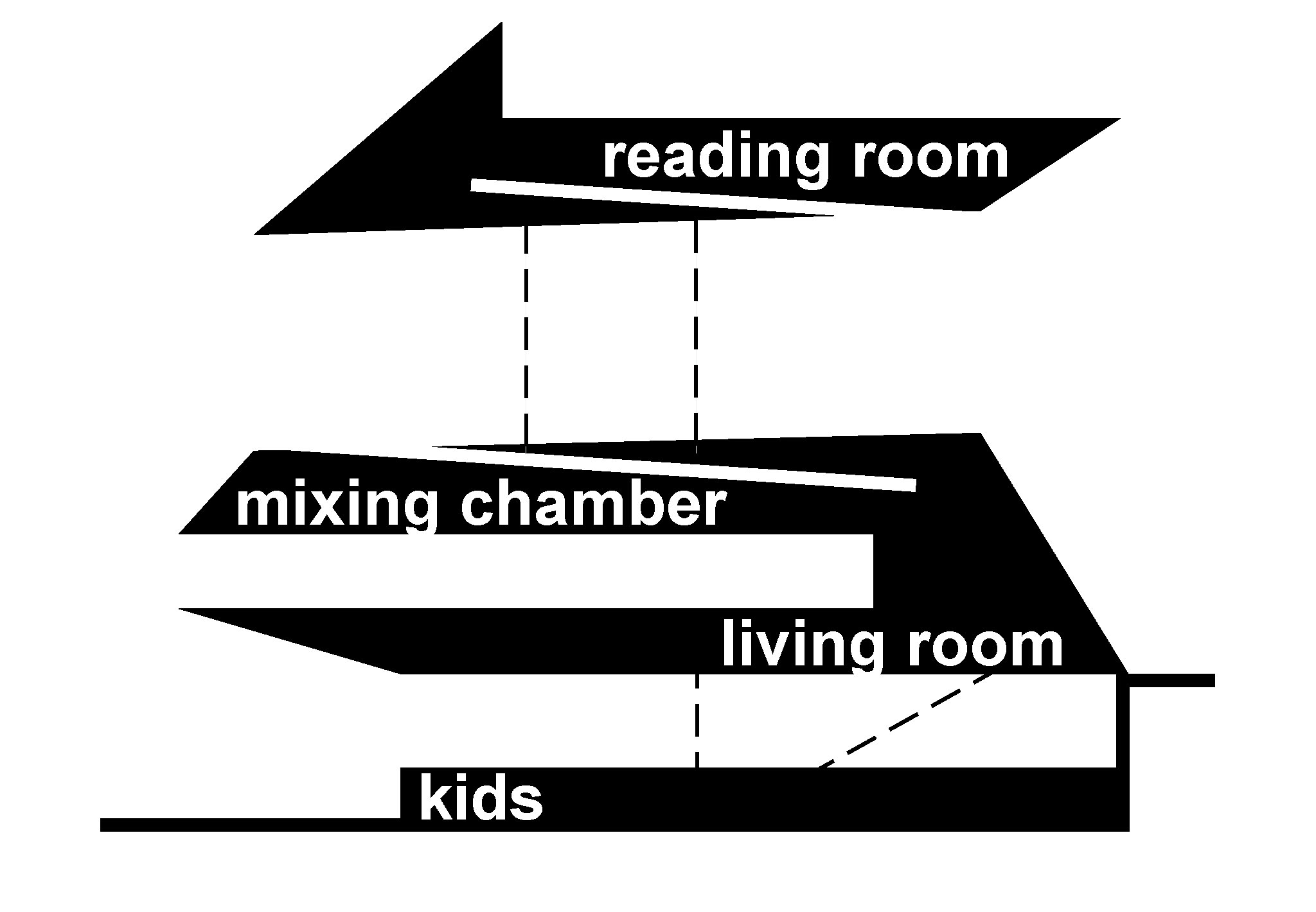
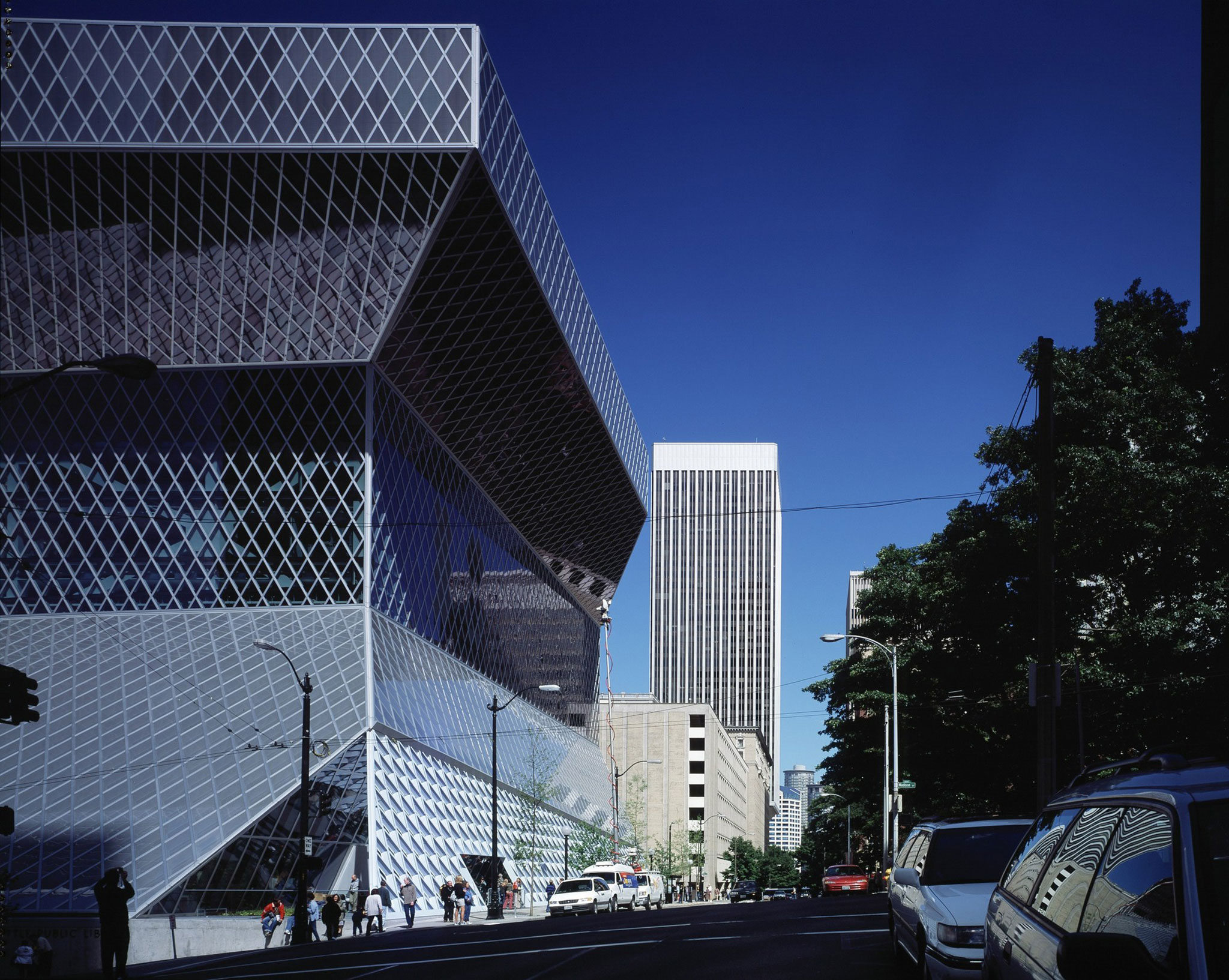
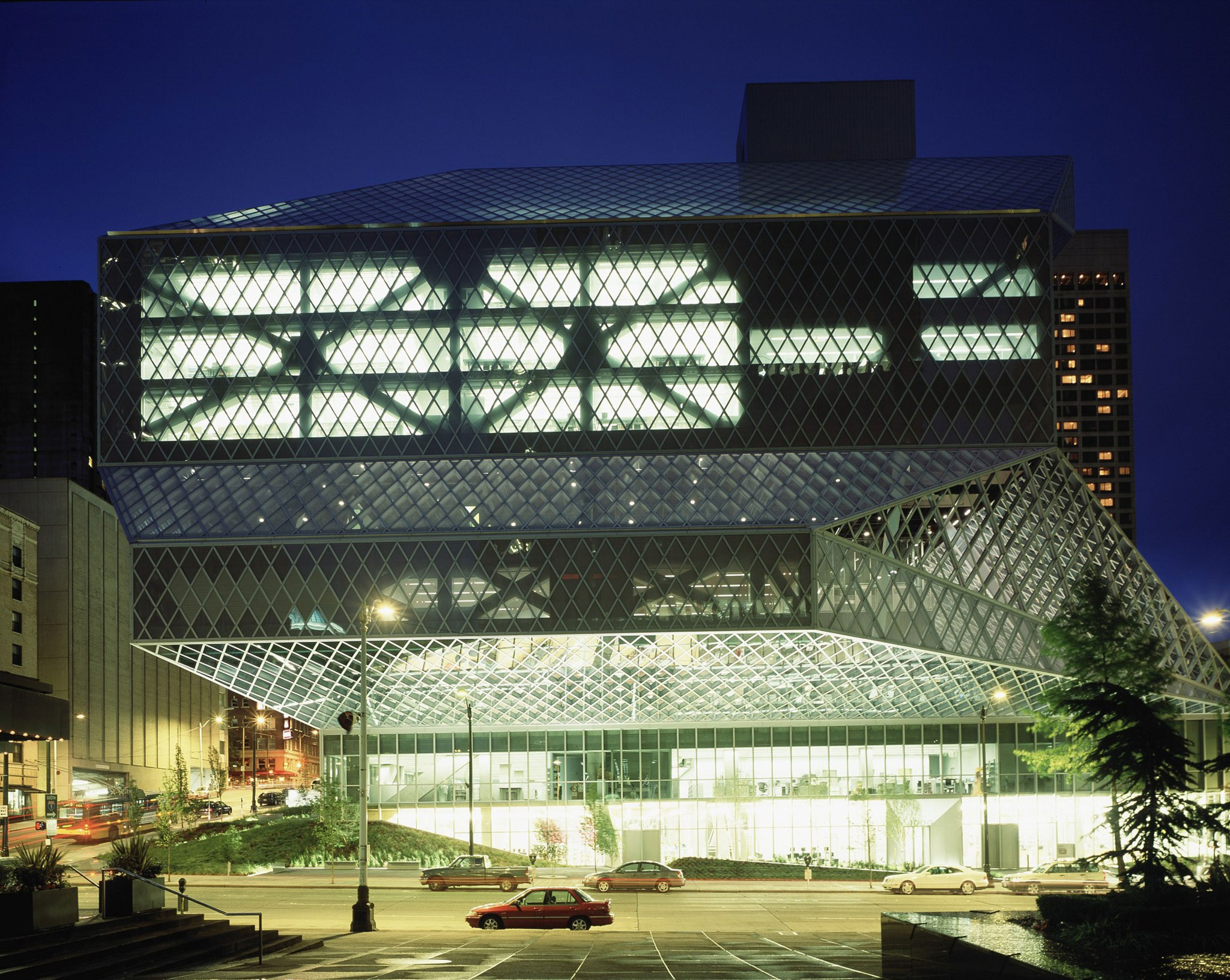
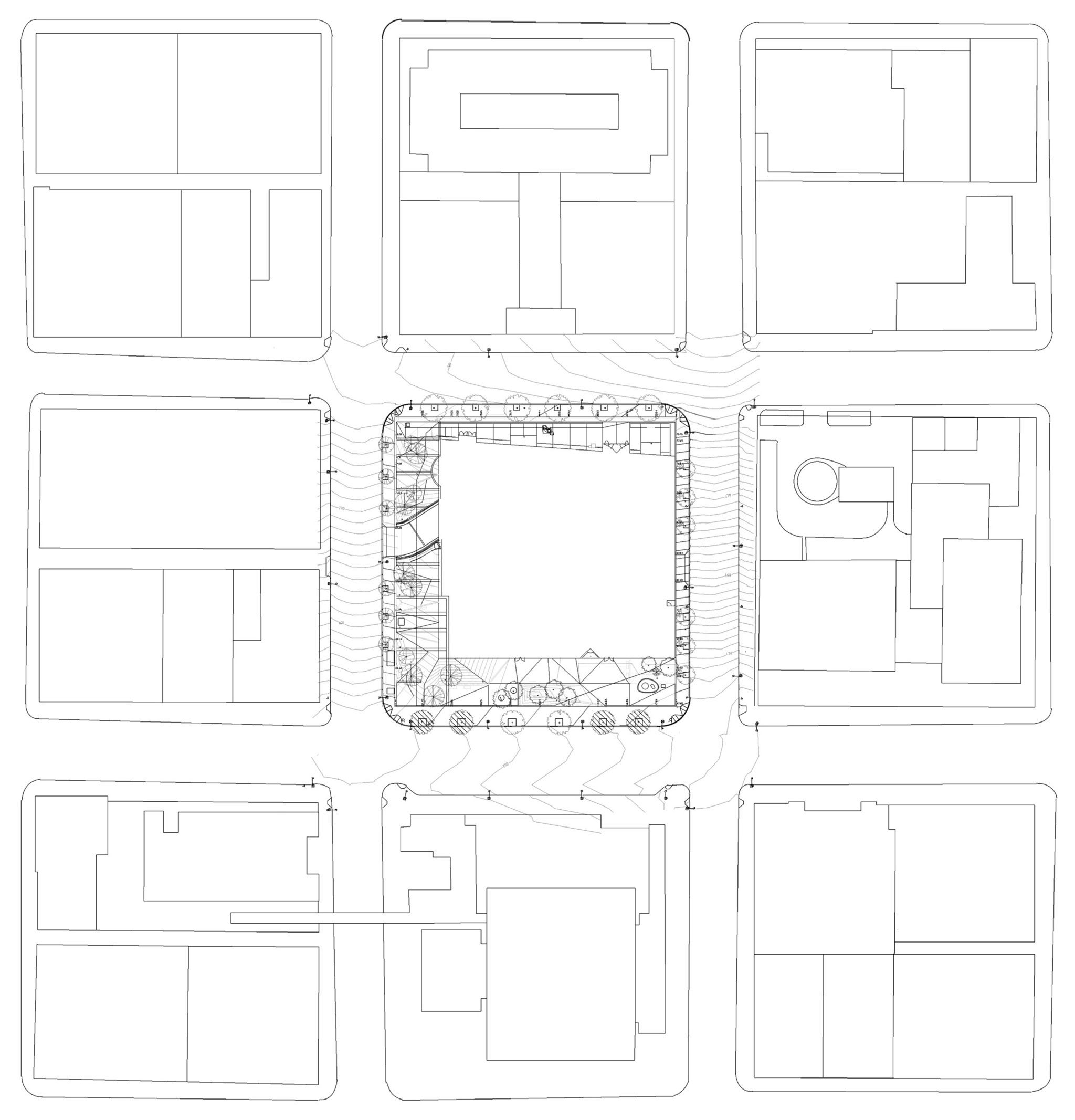
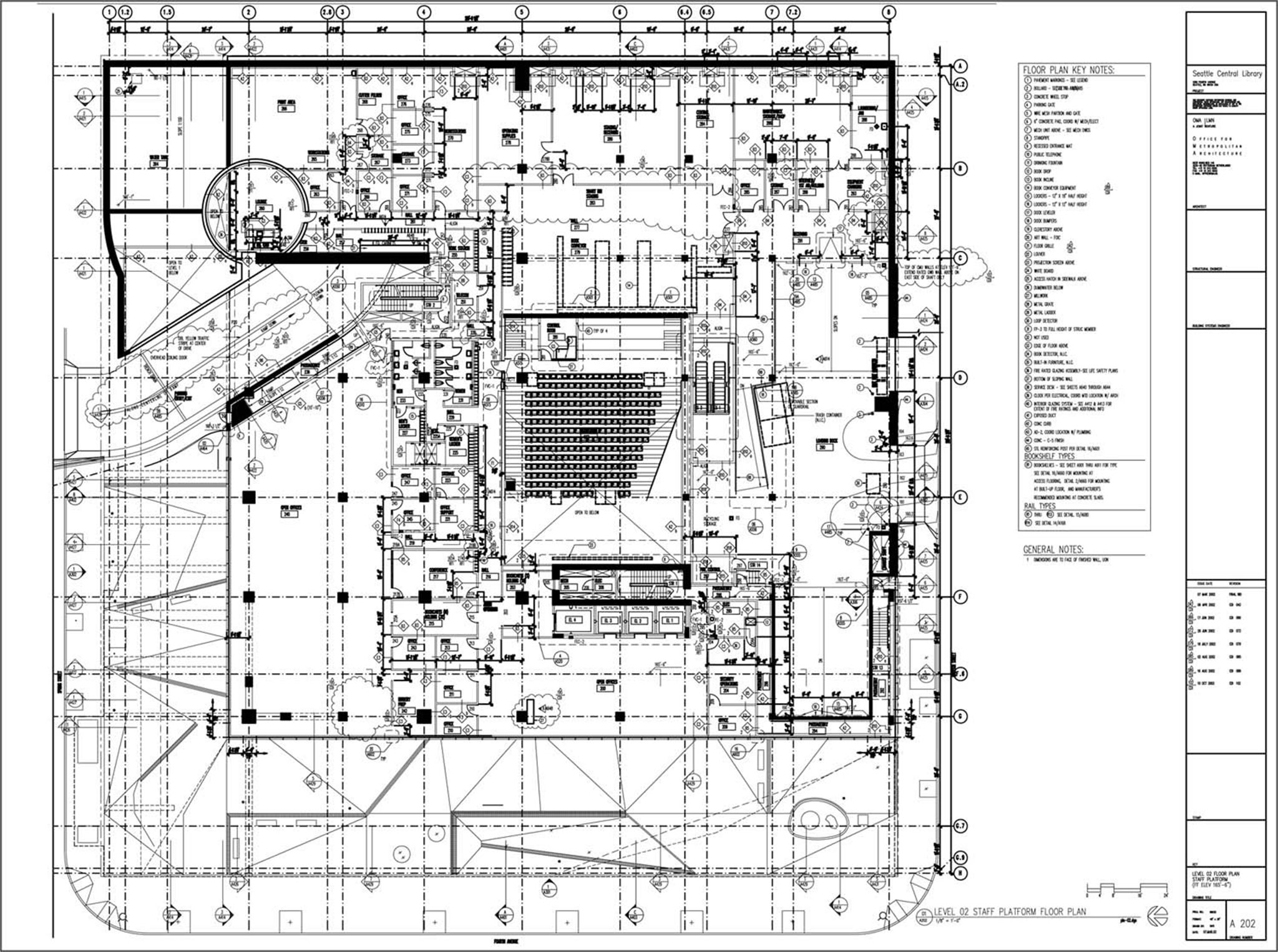
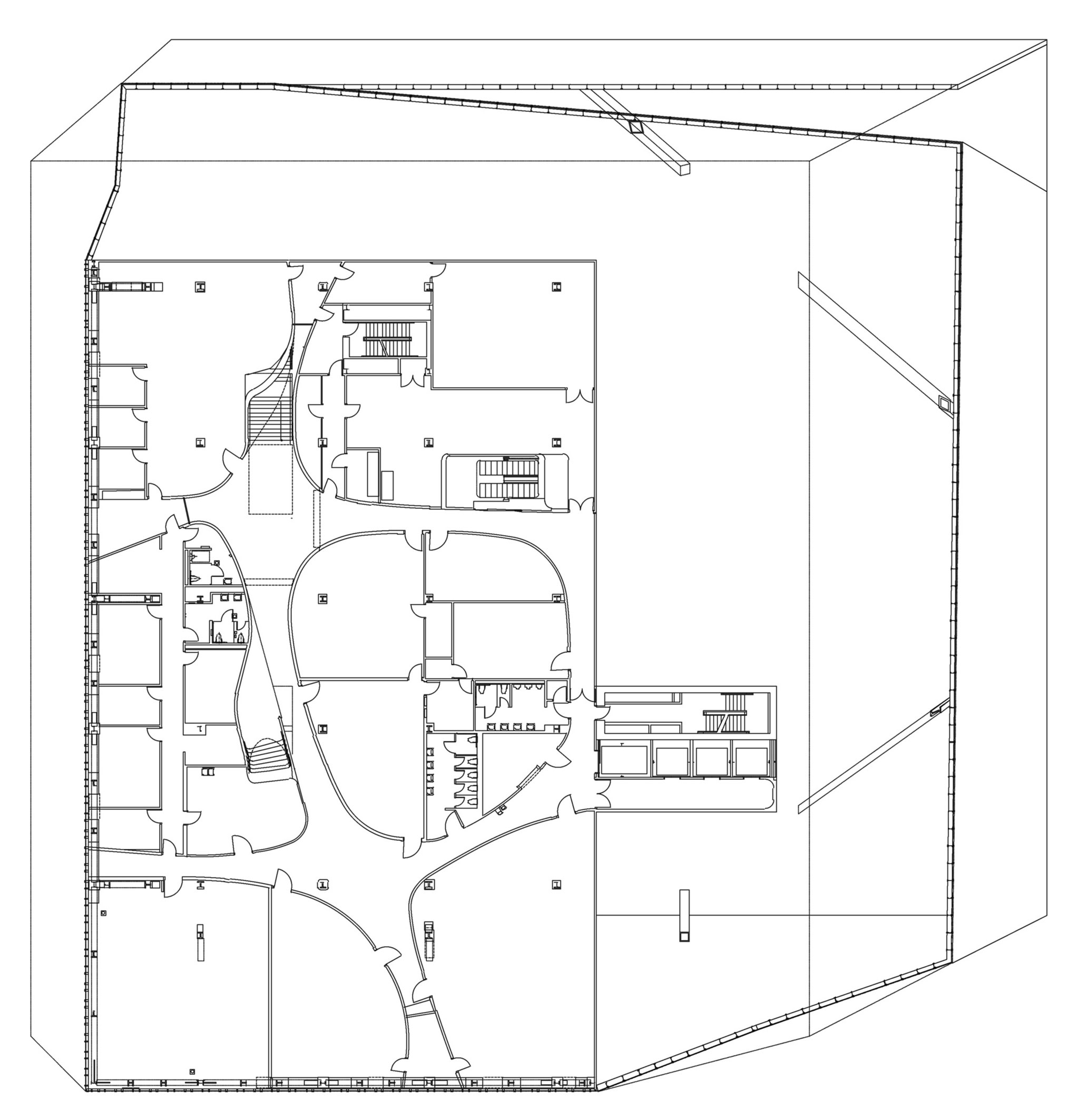
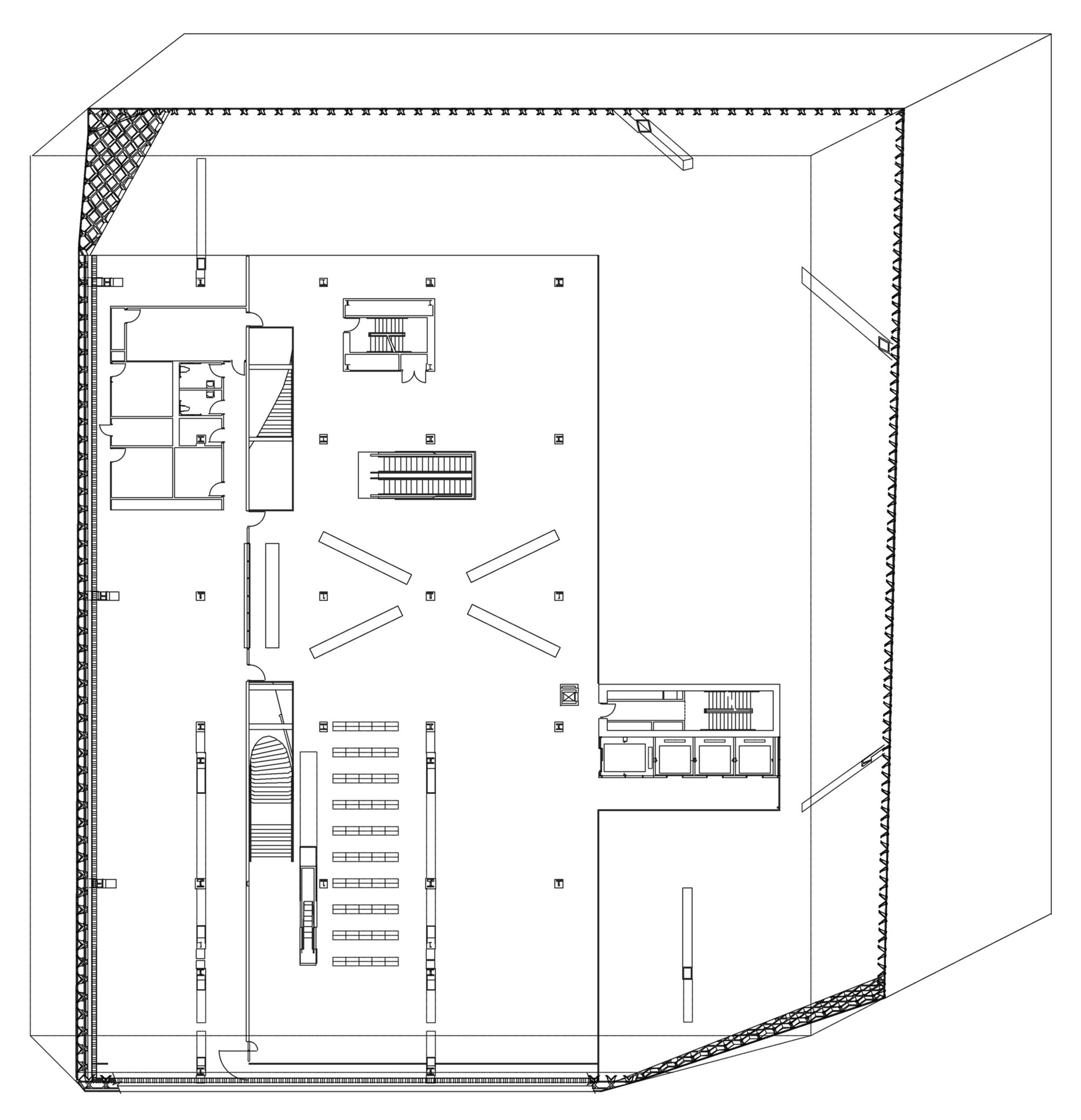
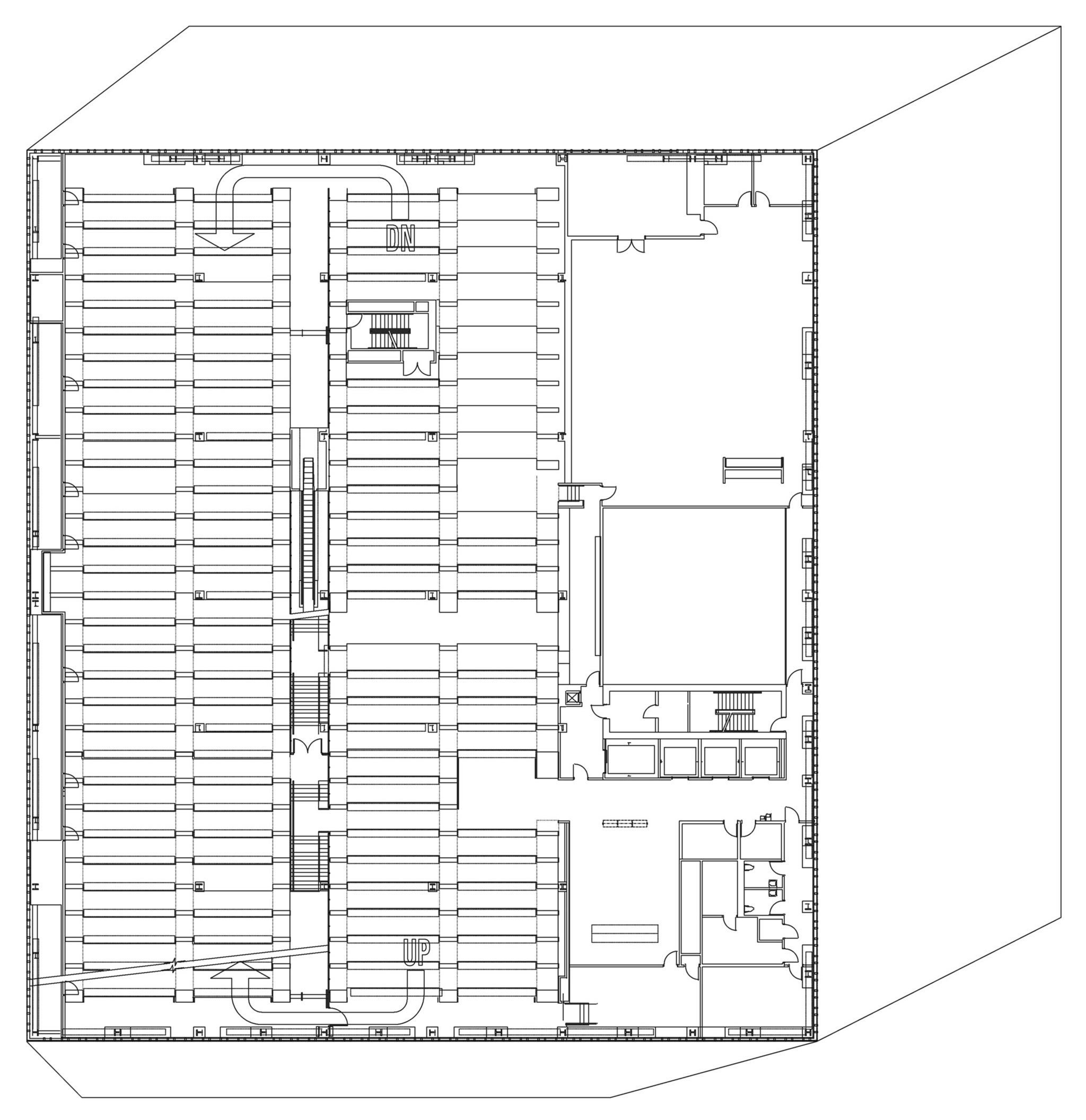
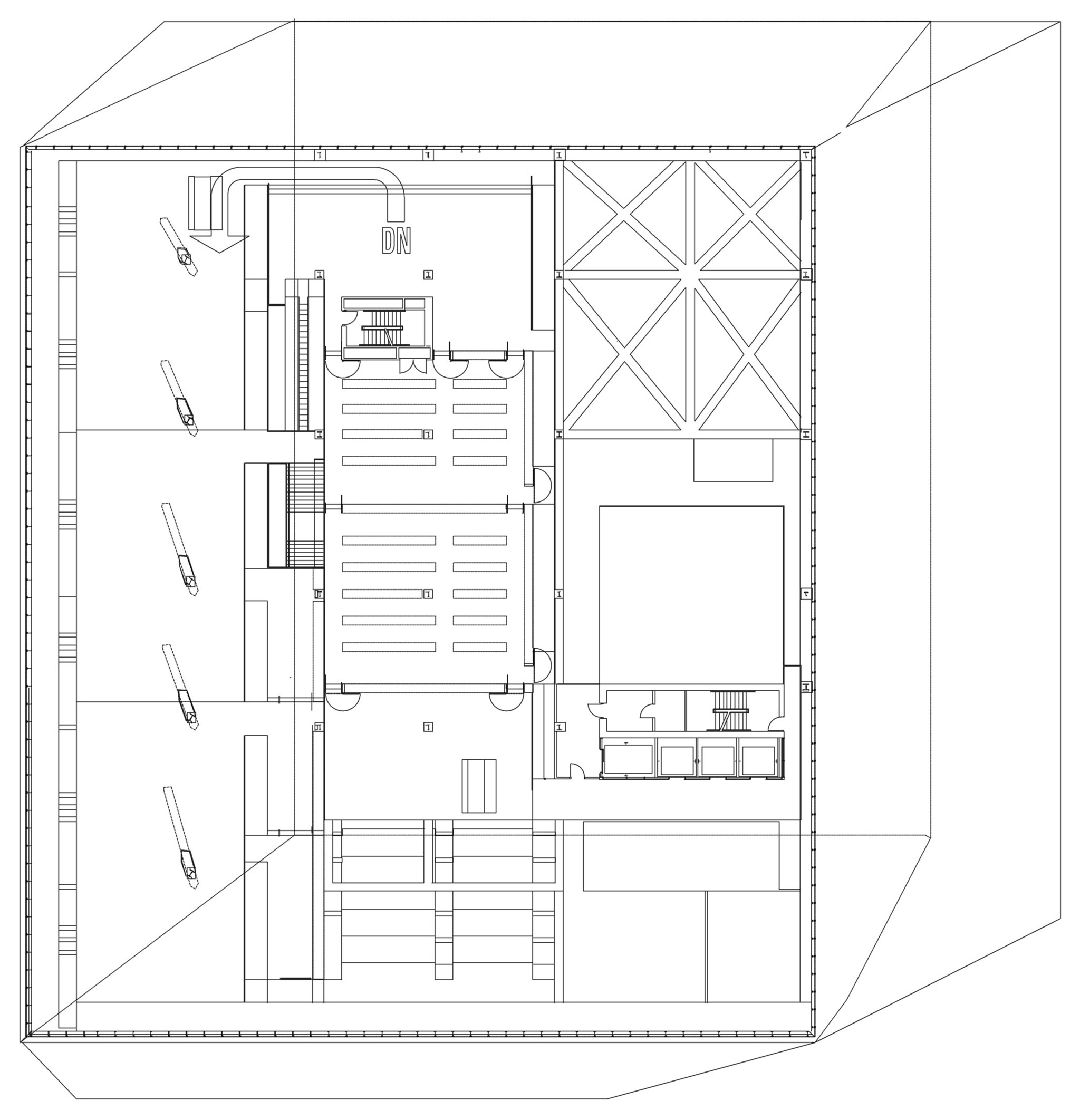
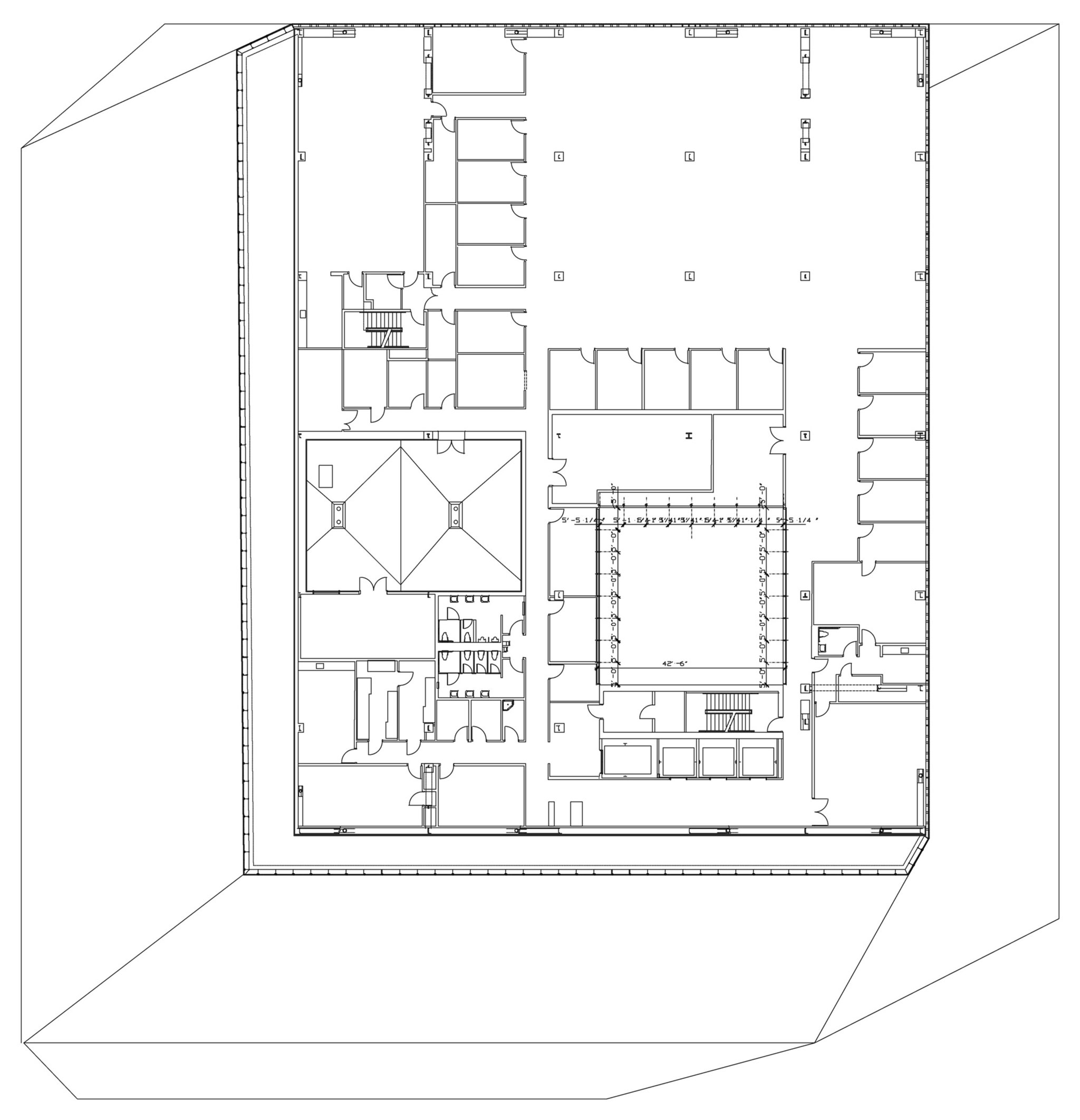
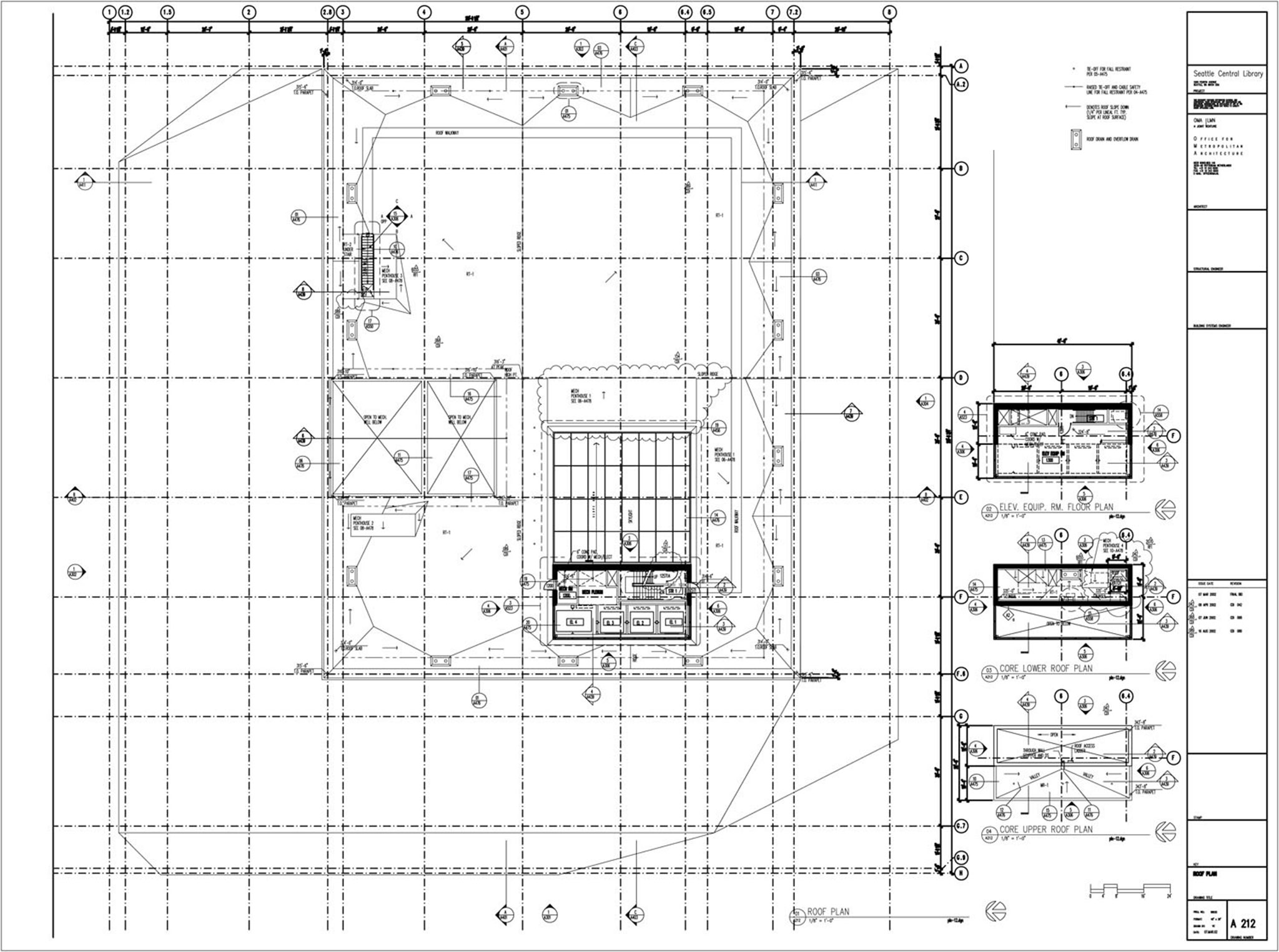
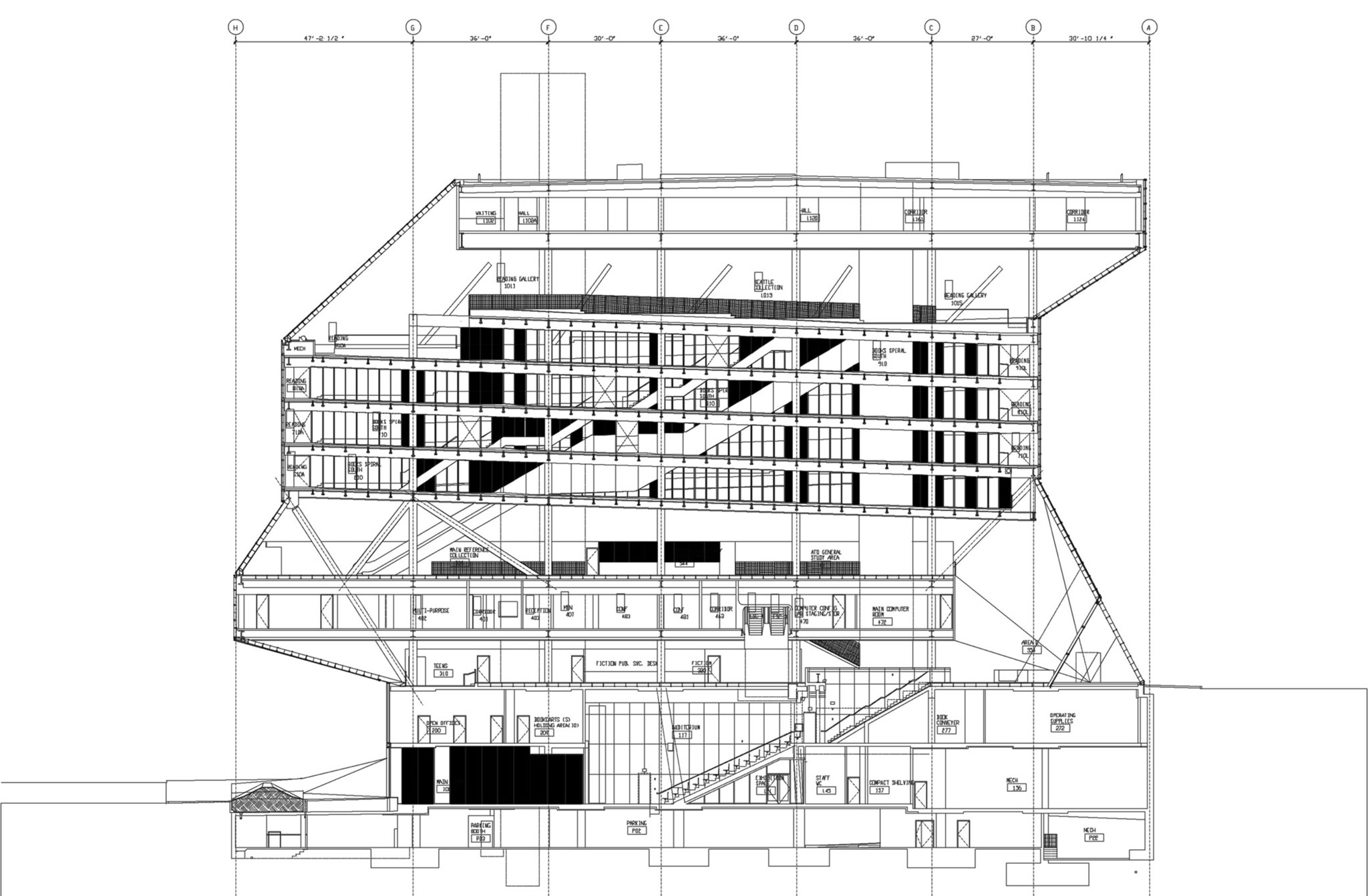
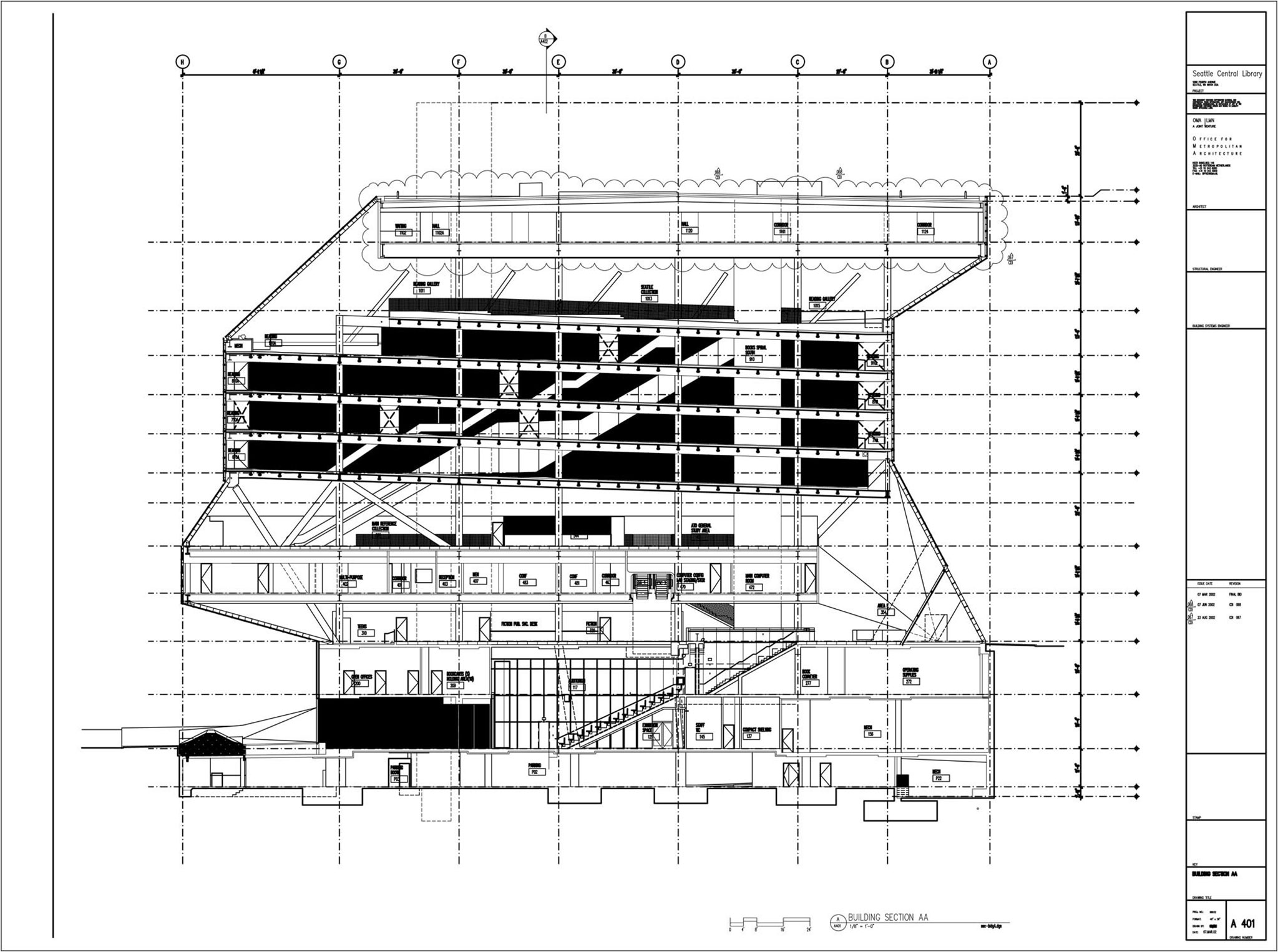
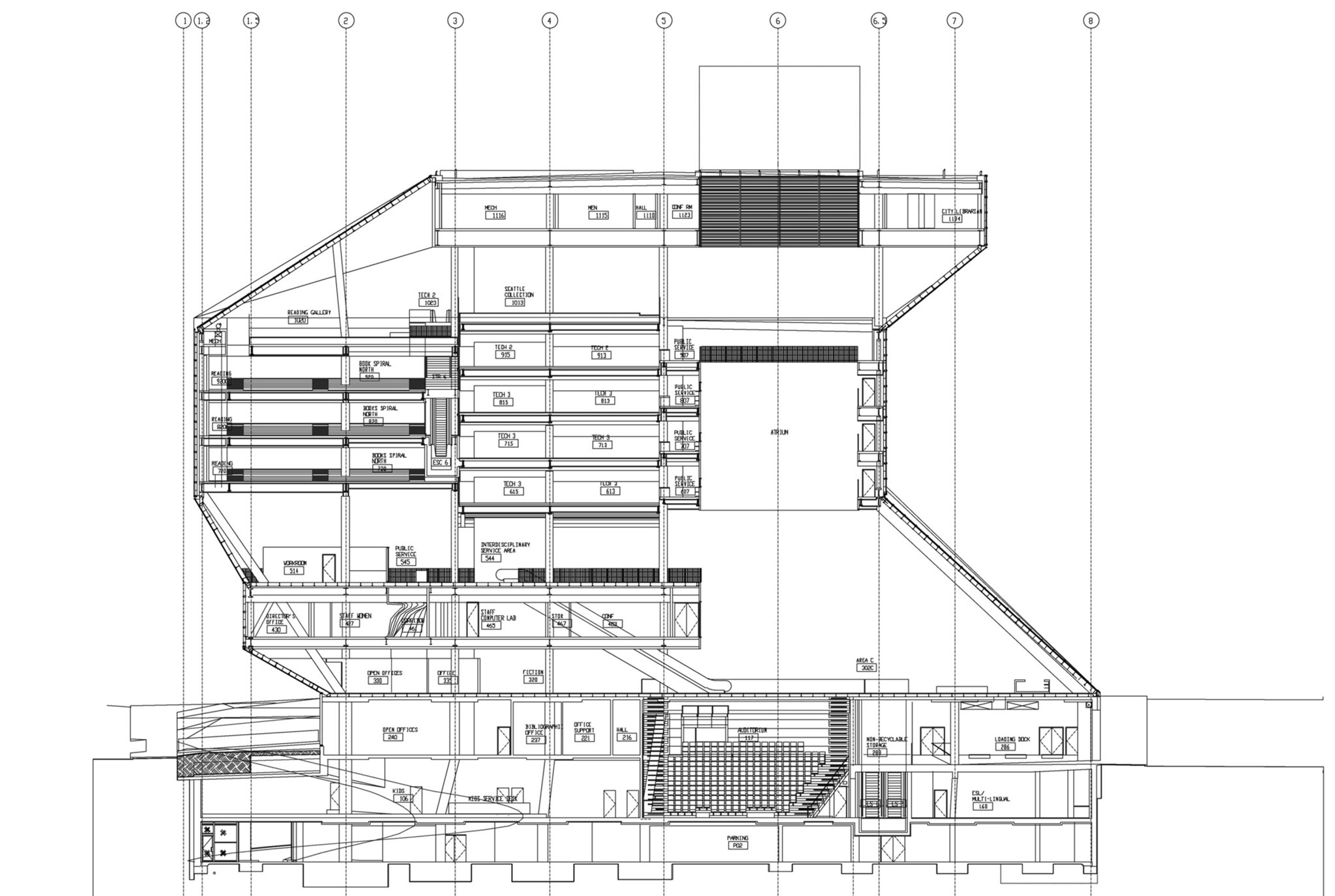
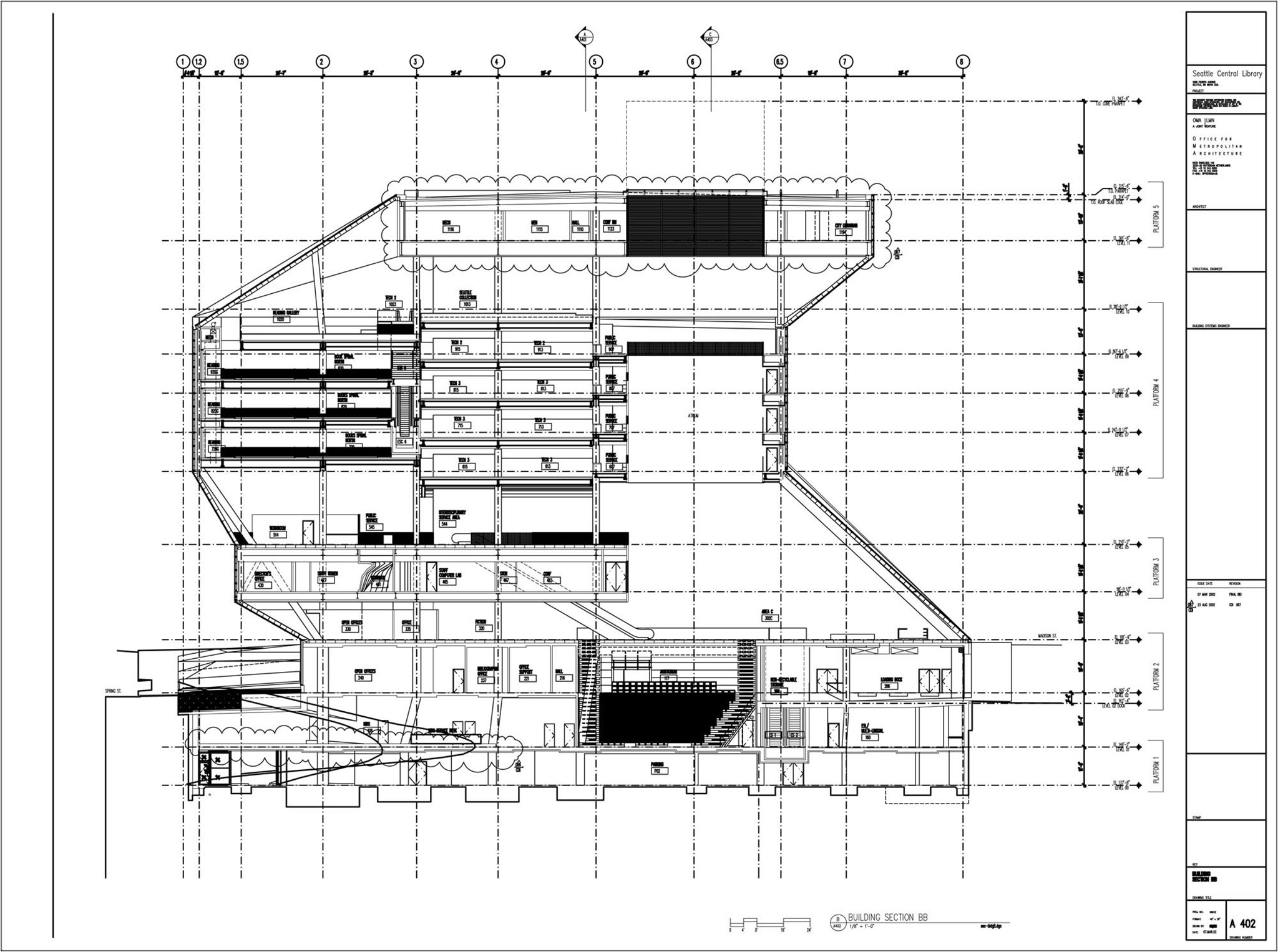
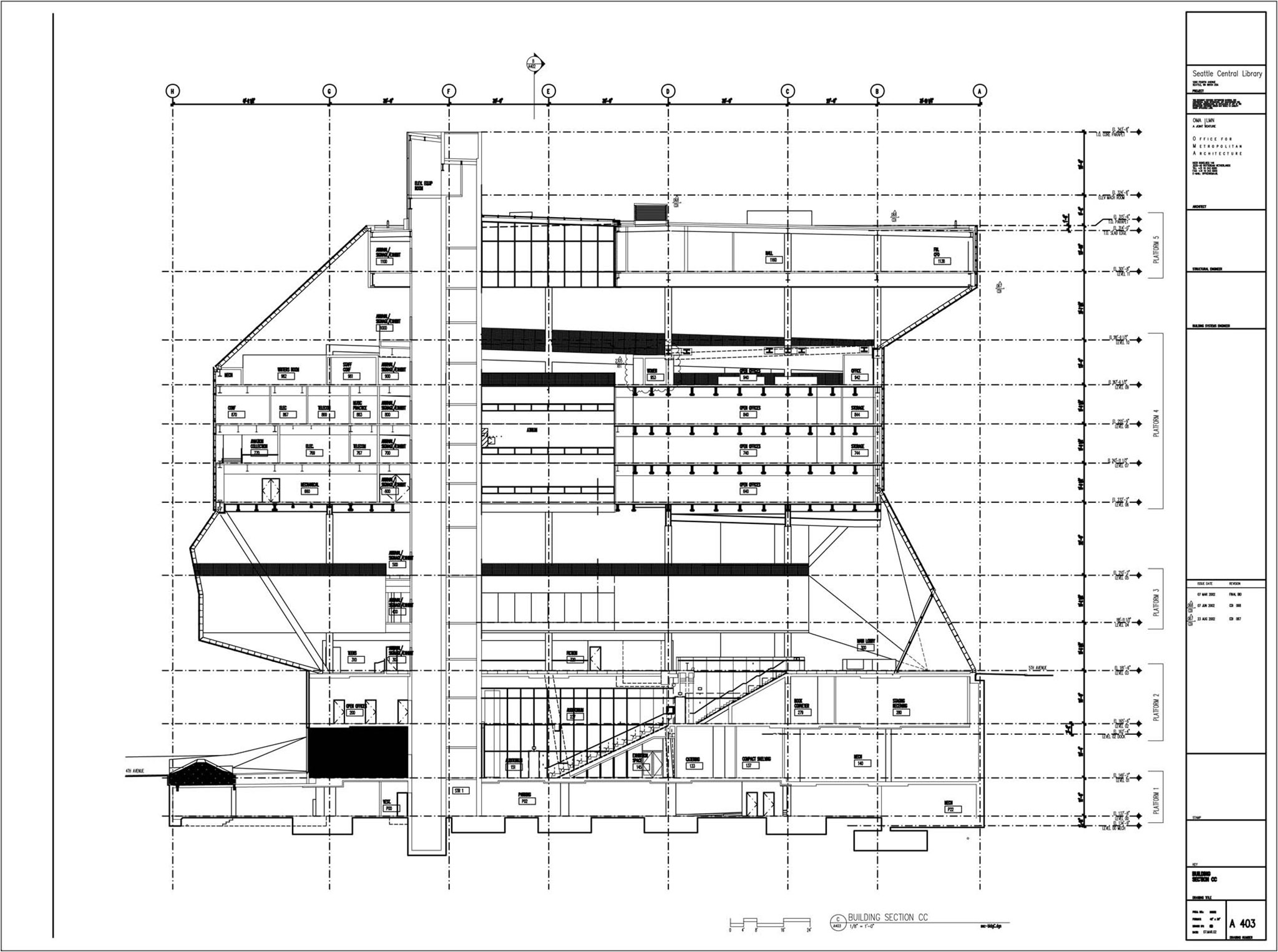
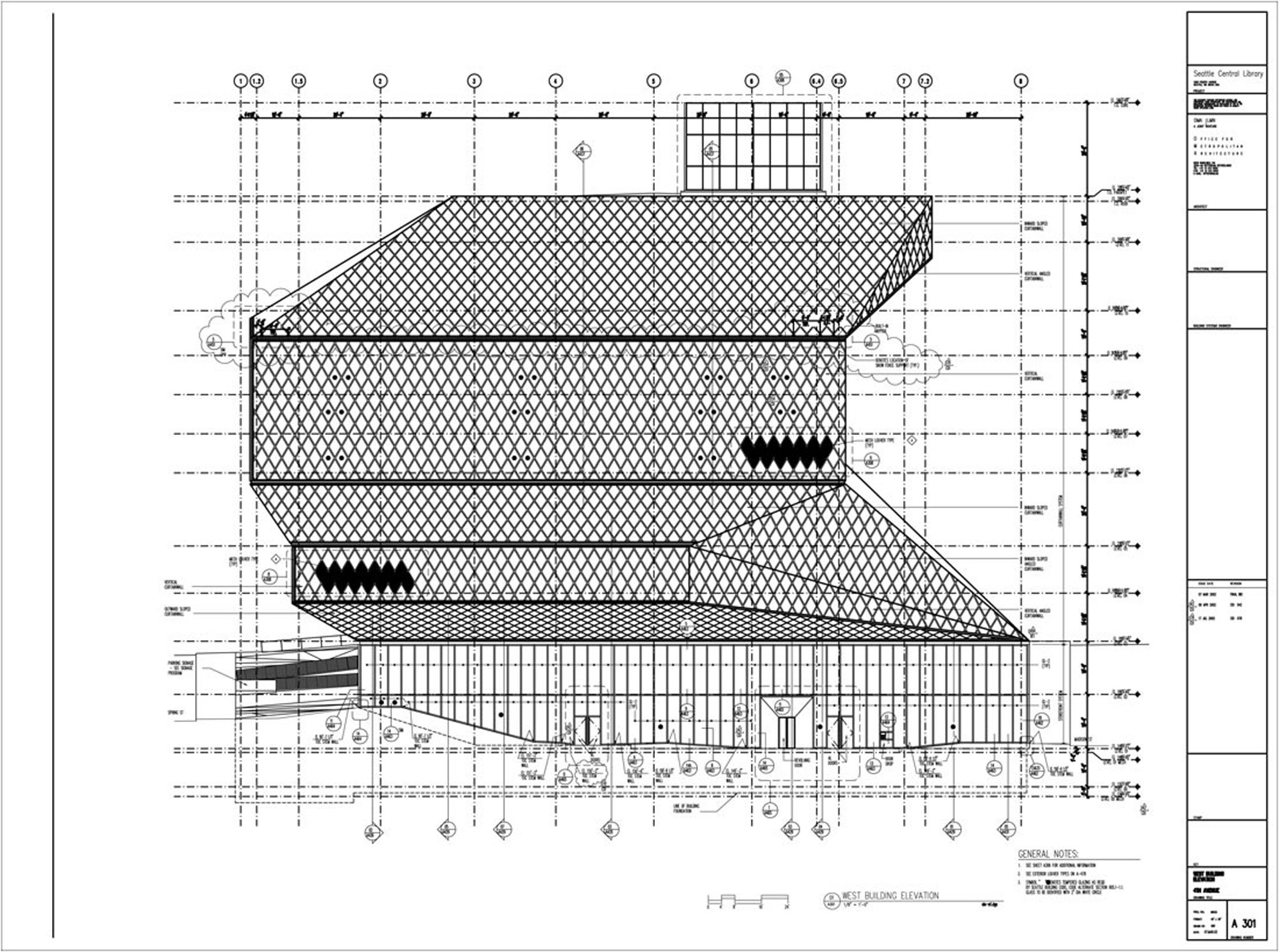
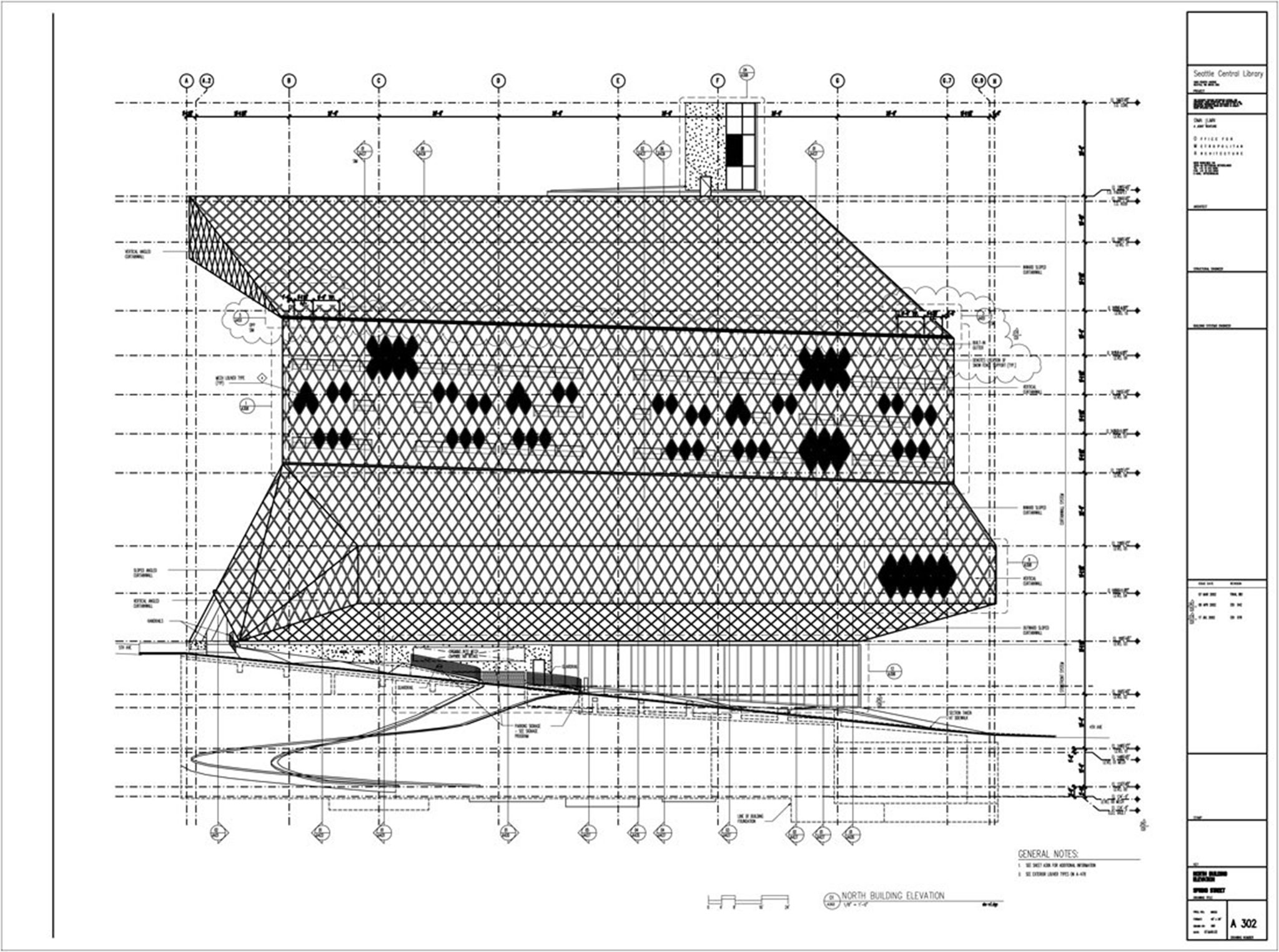
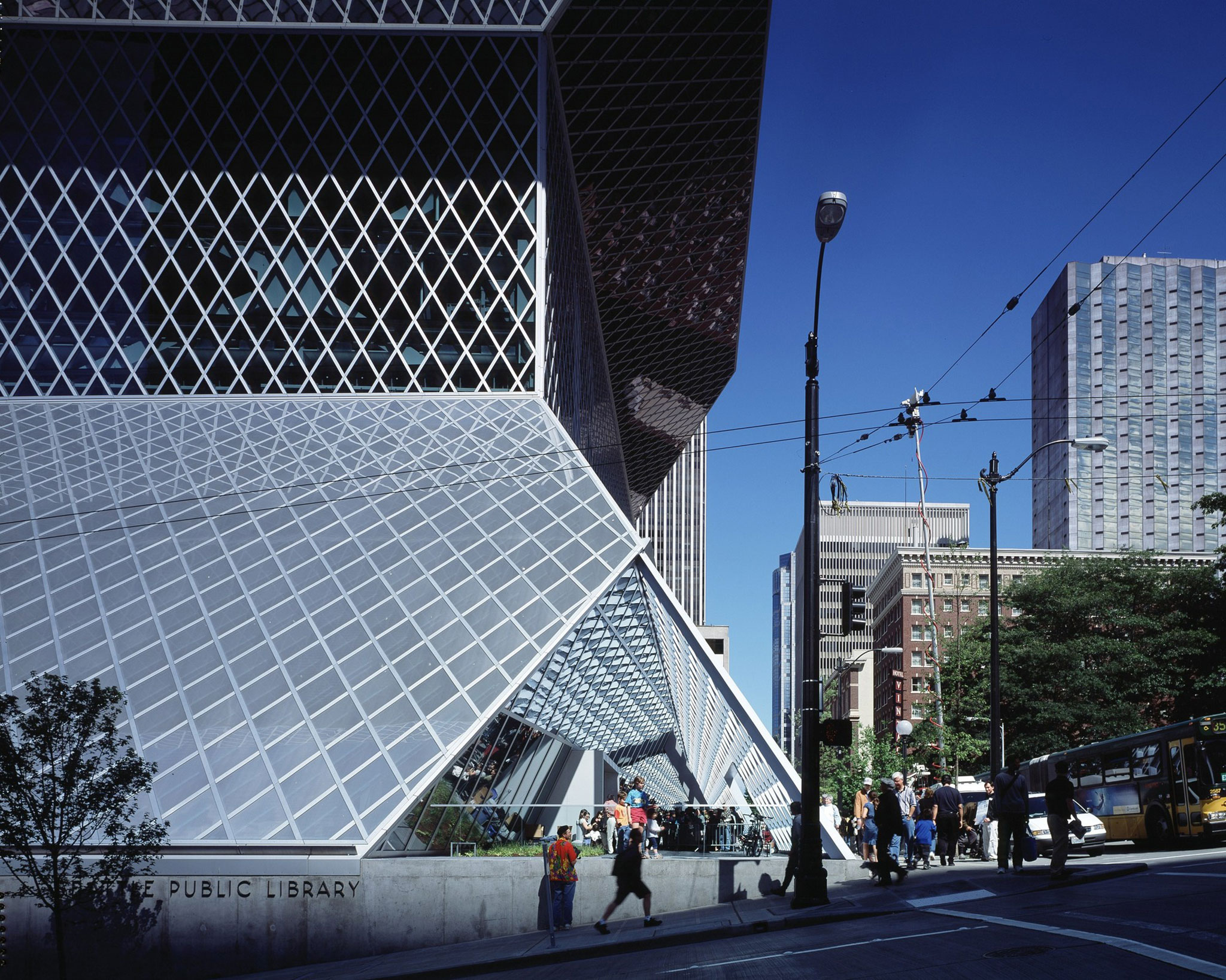
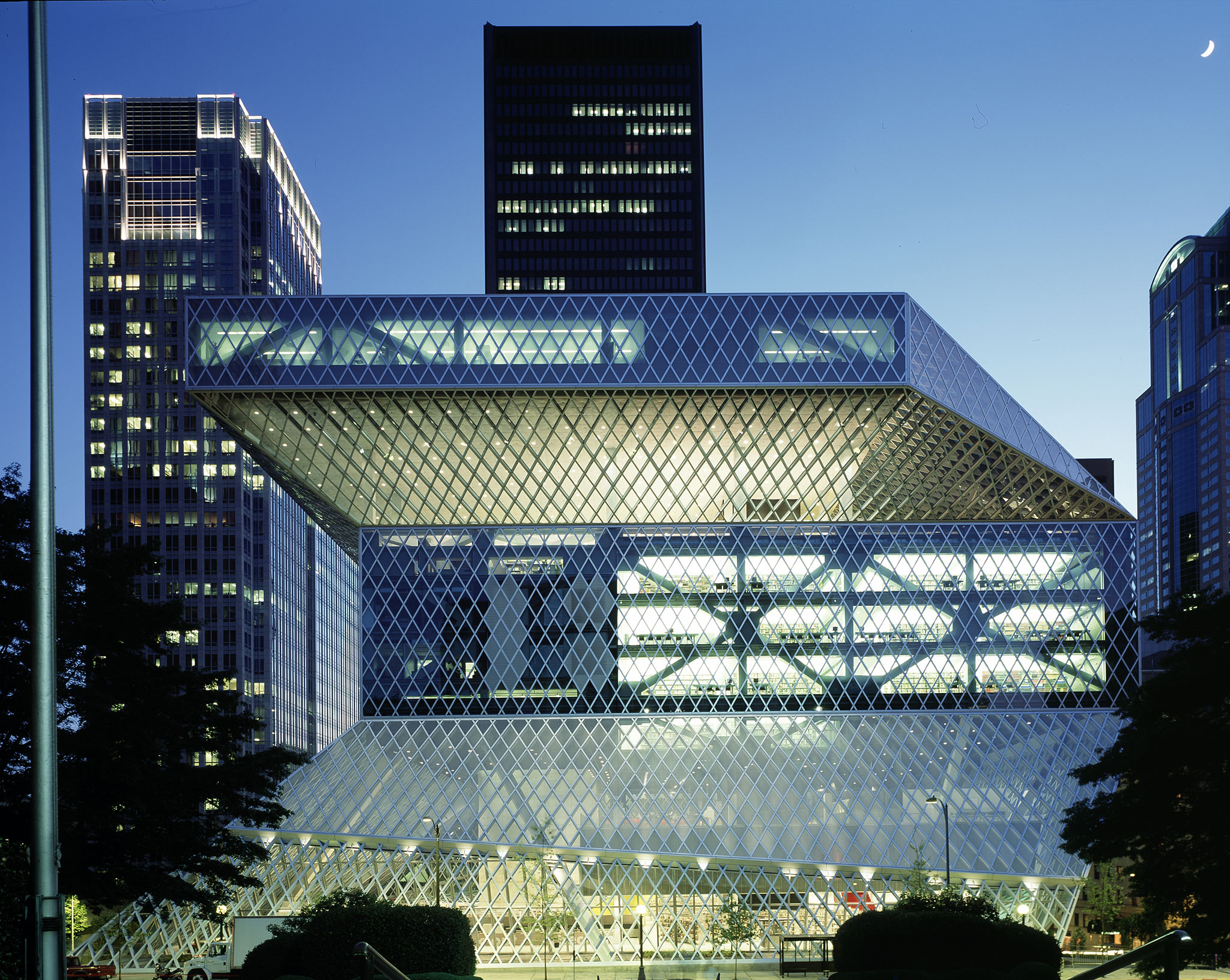
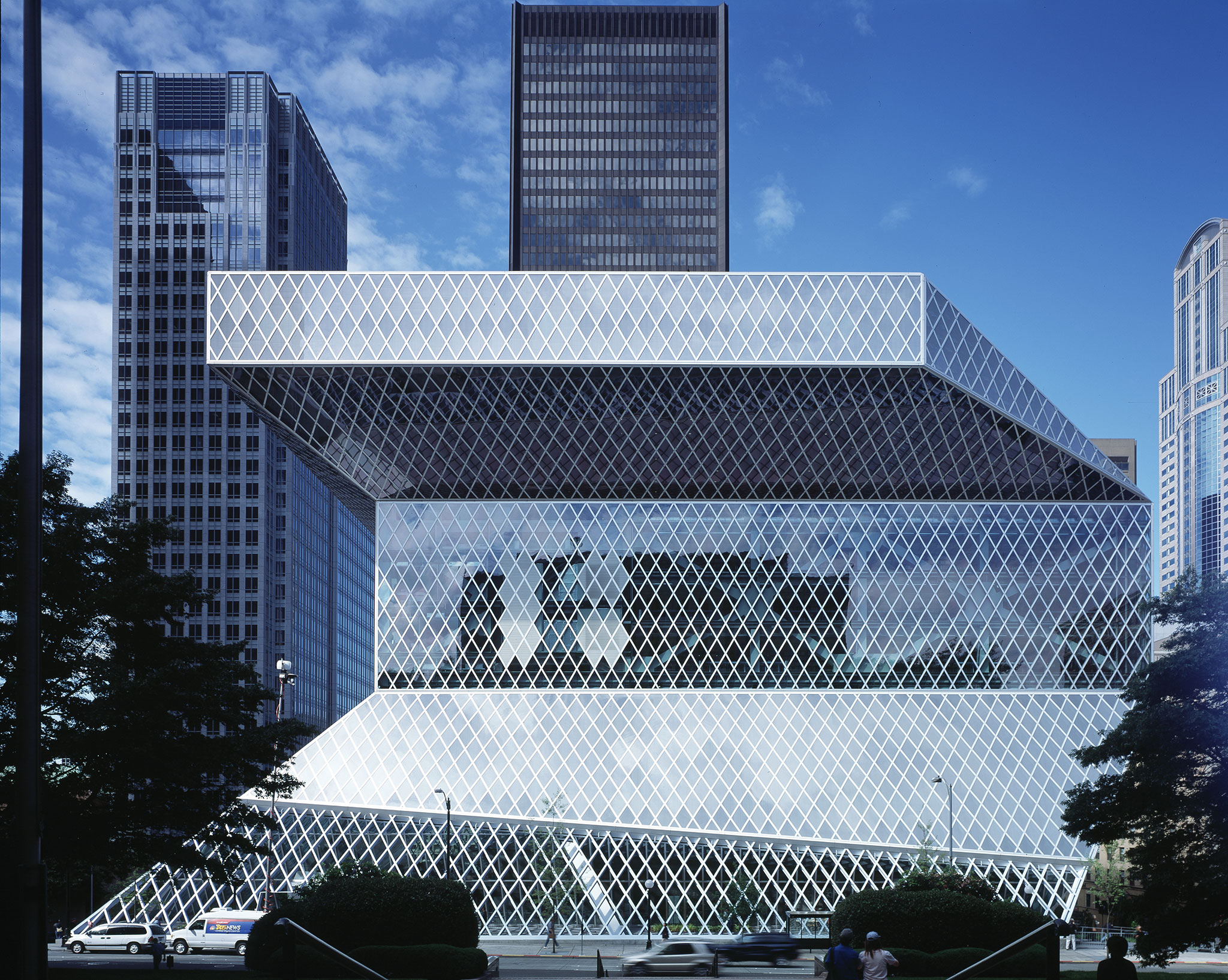
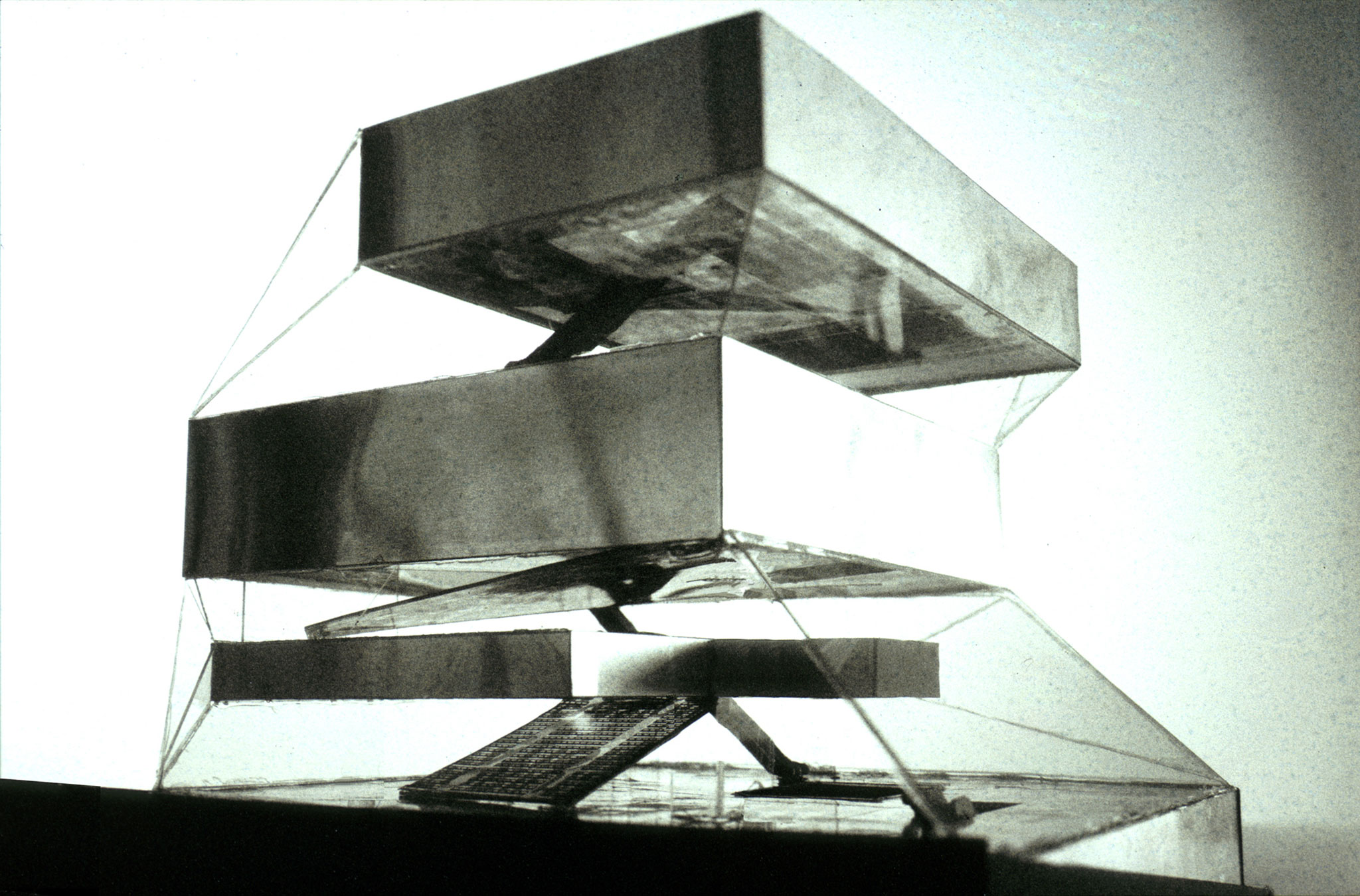
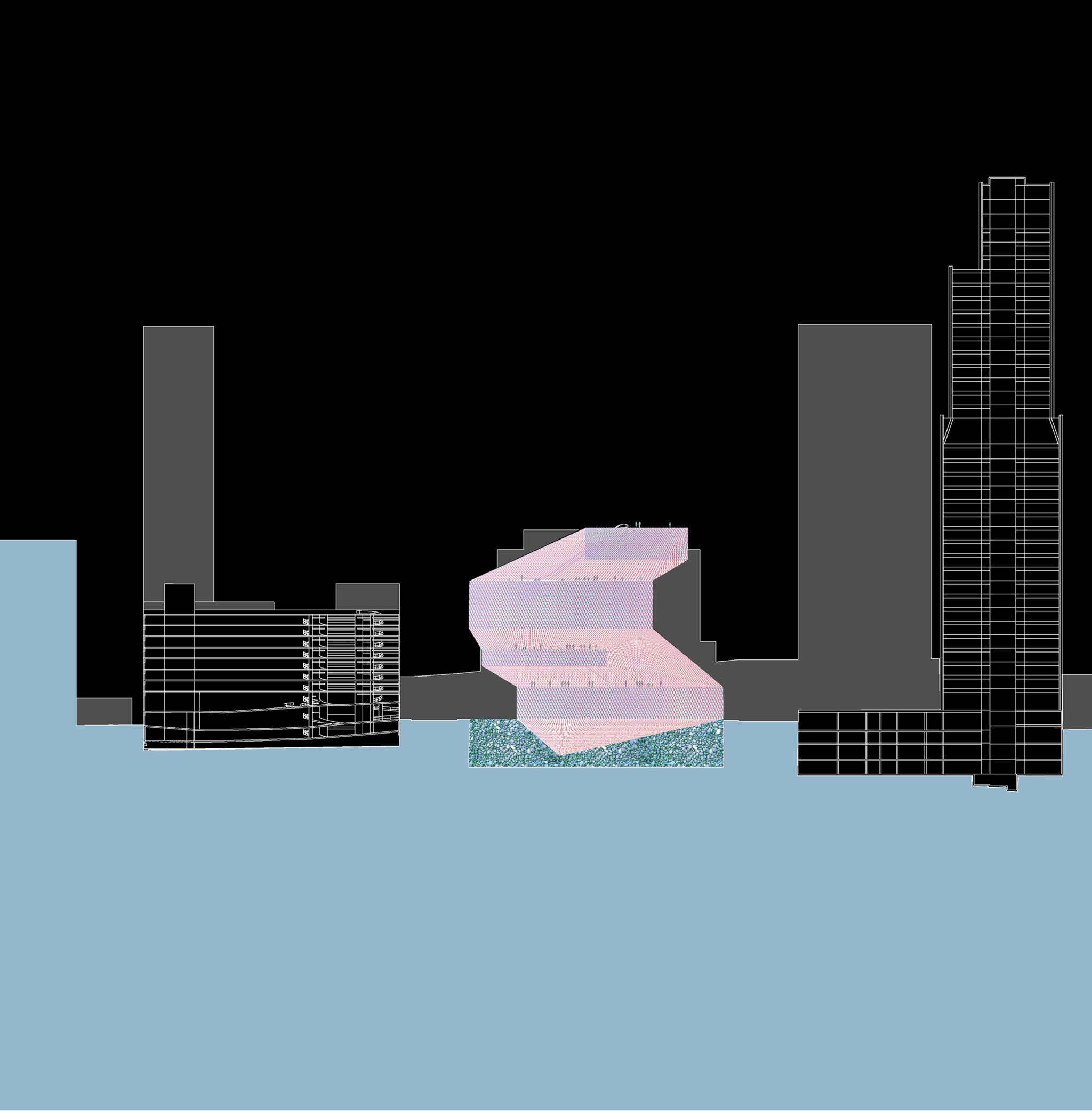
The Seattle Central Library, designed by OMA in collaboration with LMN Architects, is organized vertically against the traditional horizontal organization of traditional libraries. Its Books Spiral allows a progressive, almost organic, organization between the parts of the program allowing great versatility in the expansion or change of its parts. The characteristic shape of the facade of the building is the result of the distribution of the program in five platforms and four flowing "in between" planes.

In 2004, Herbert Muschamp, The New York Times architectural critic, wrote,
 
“If an American city can erect a civic project as brave as this one, the sun hasn’t set on the West. In more than 30 years of writing about architecture, this is the most exciting new building it has been my honor to review."
Herbert Muschamp. New York Times, May 16, 2004.
 
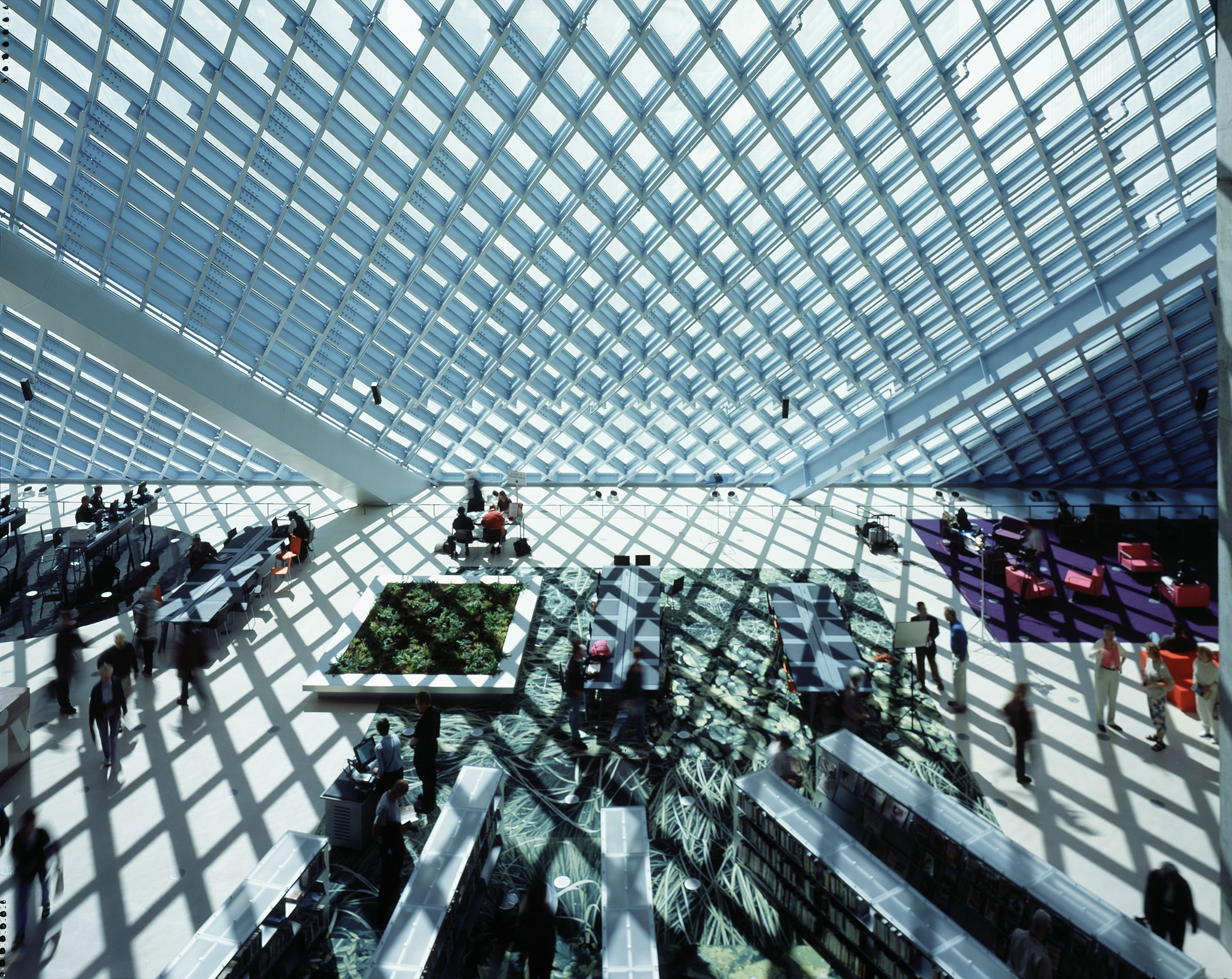
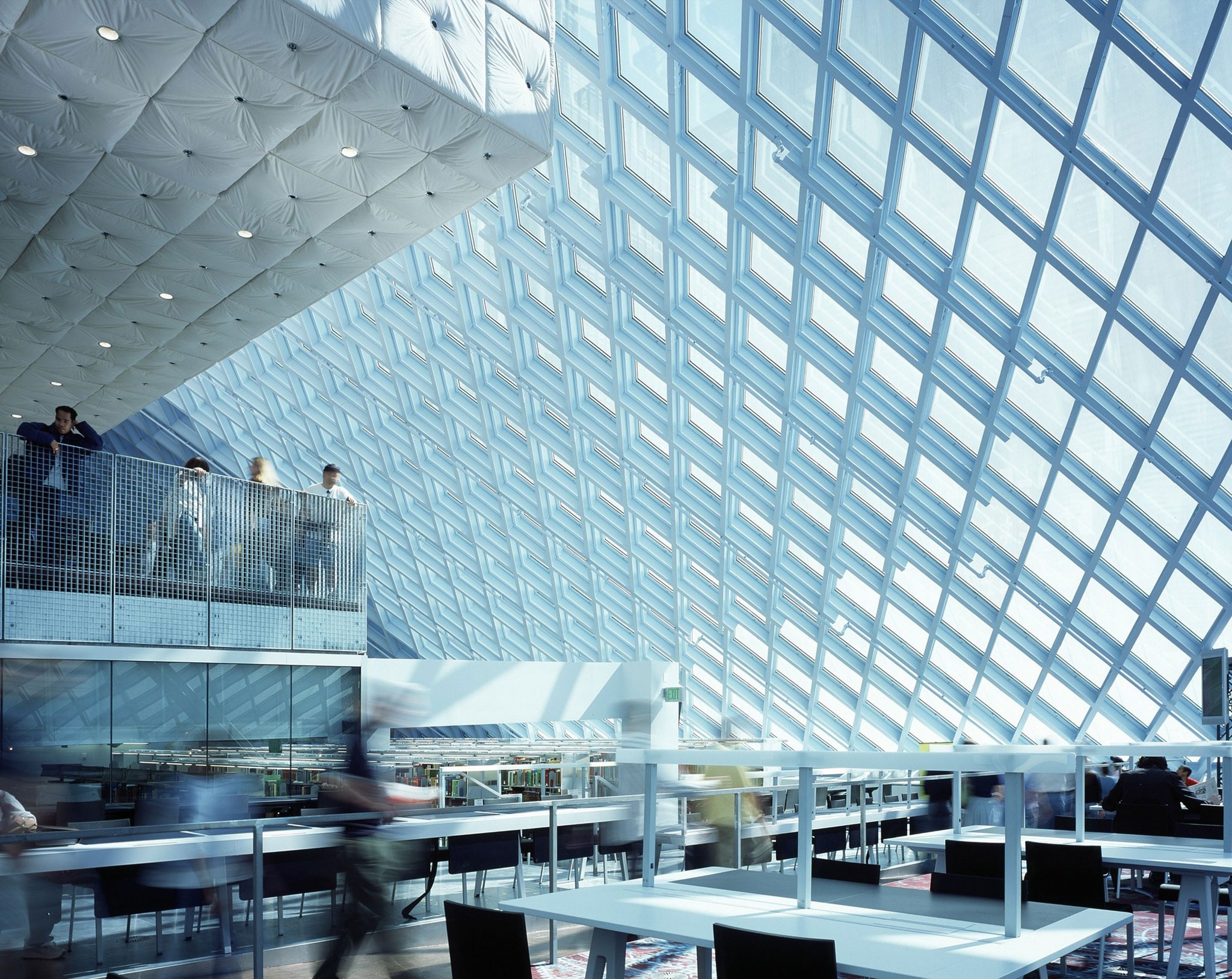
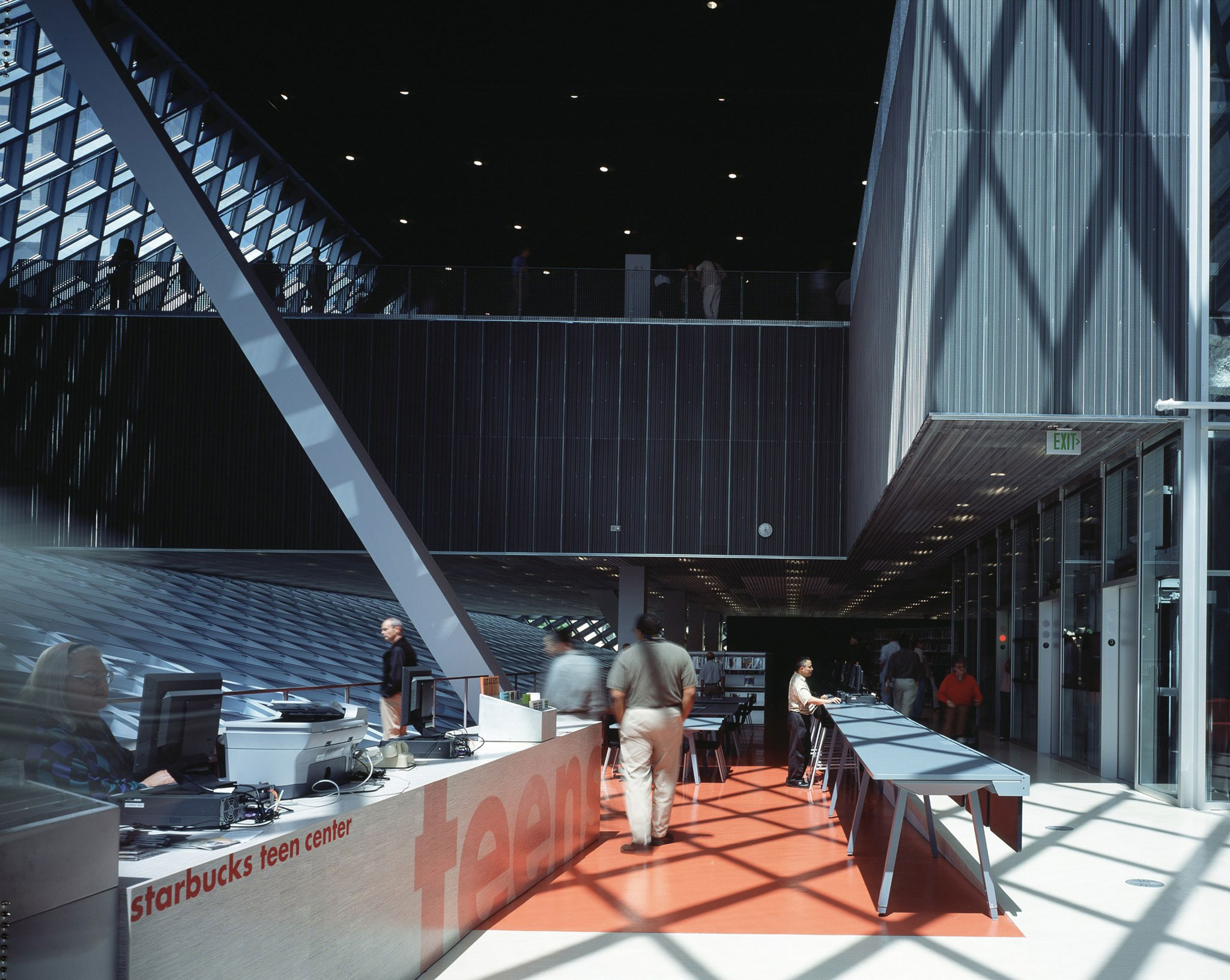
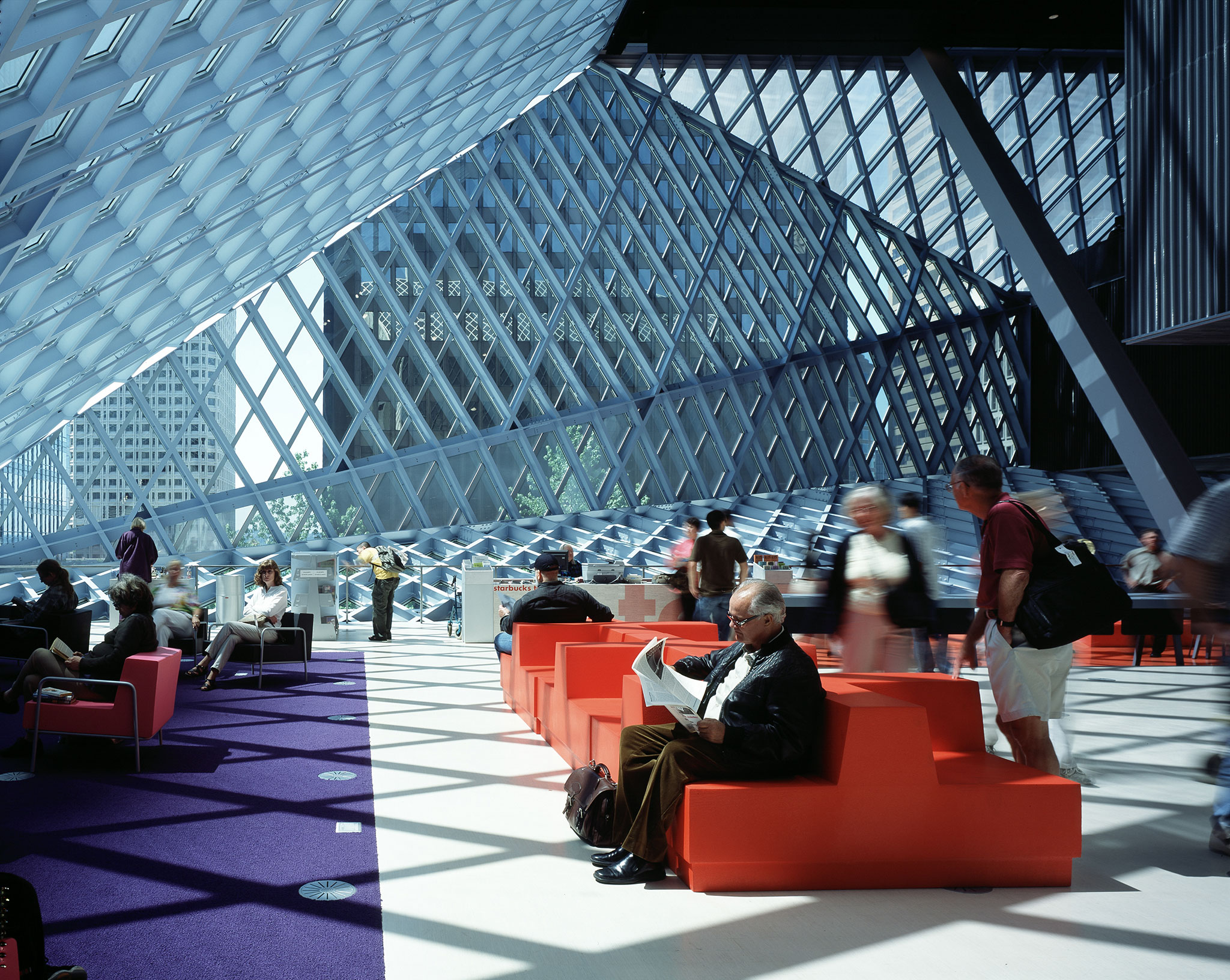
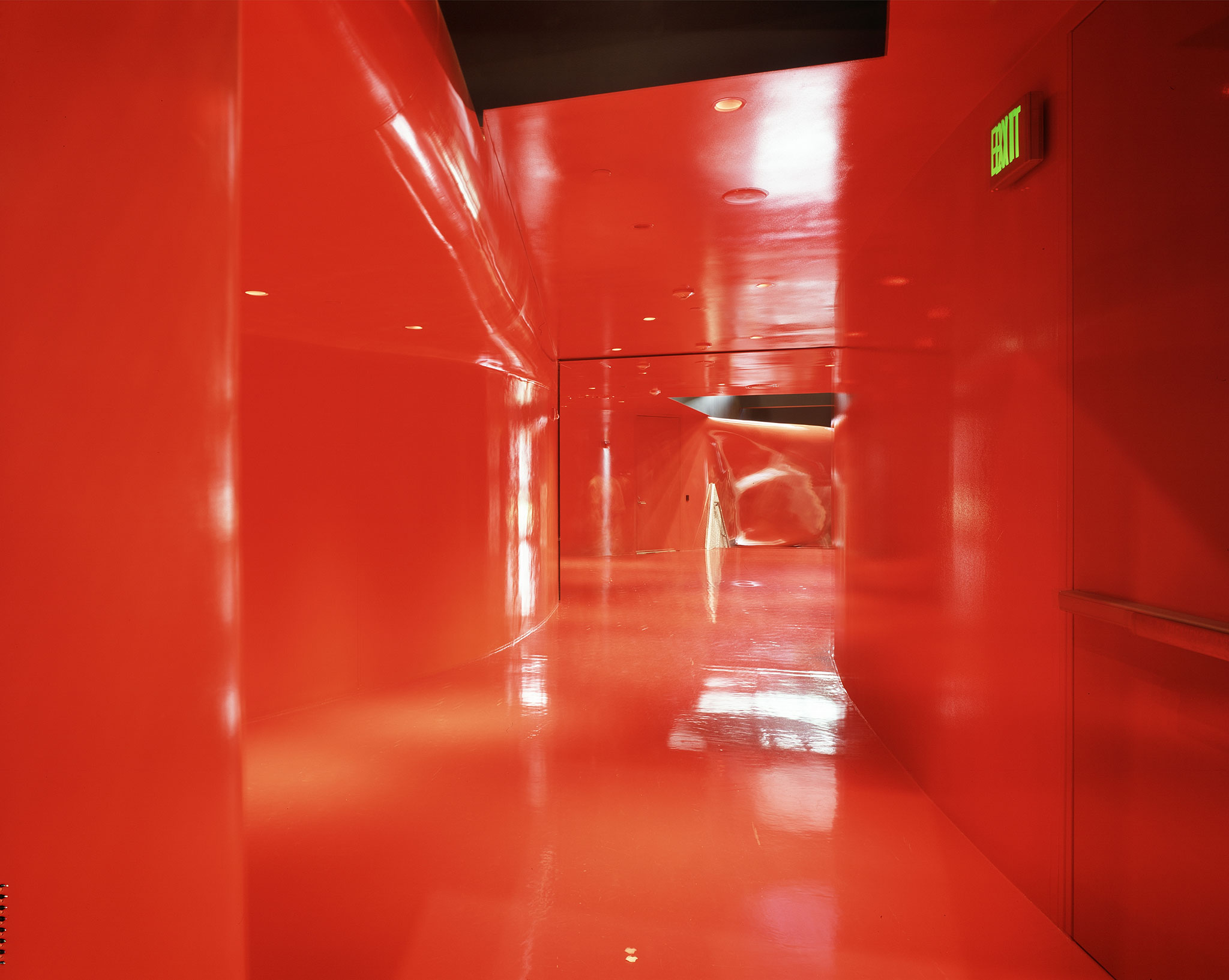
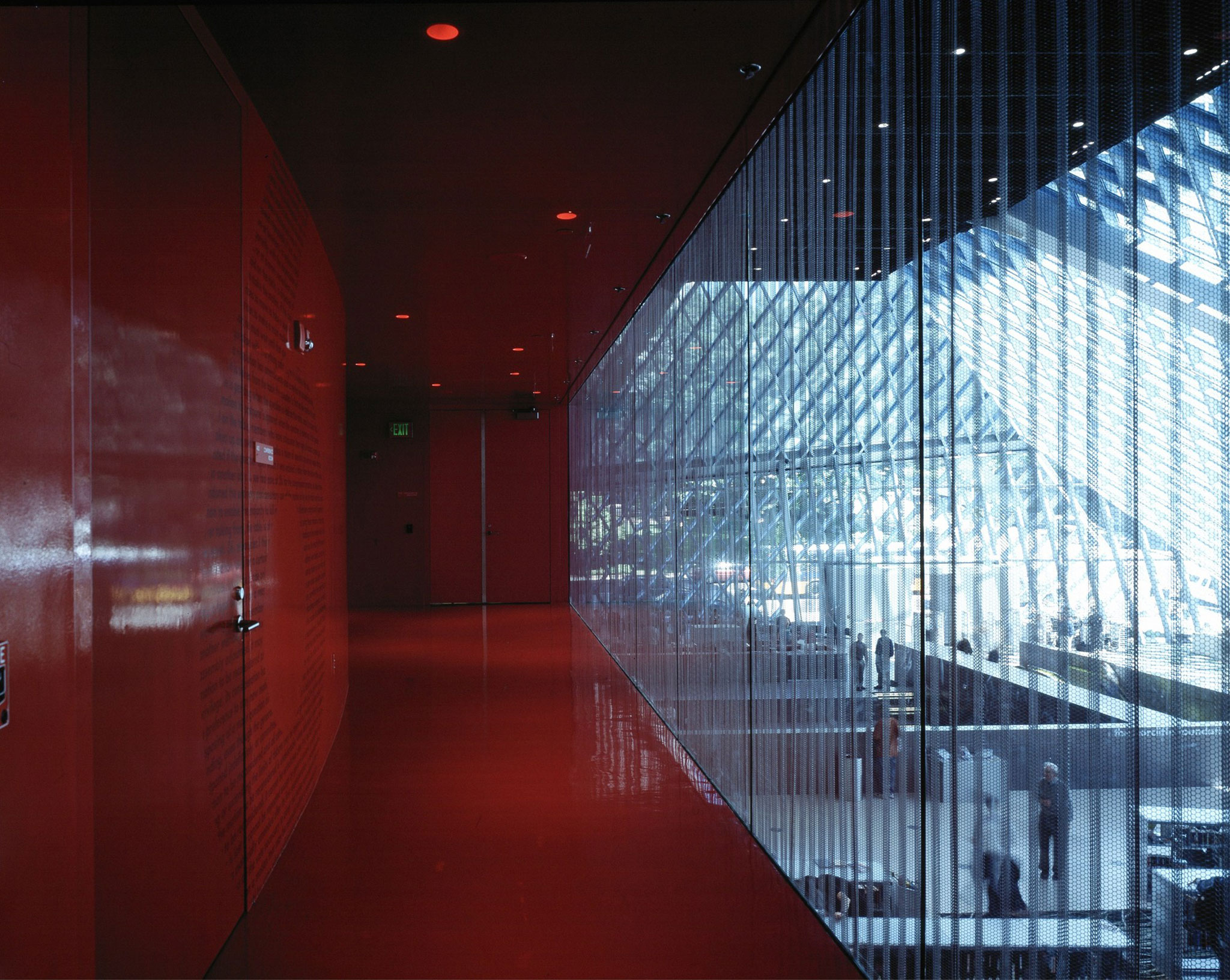
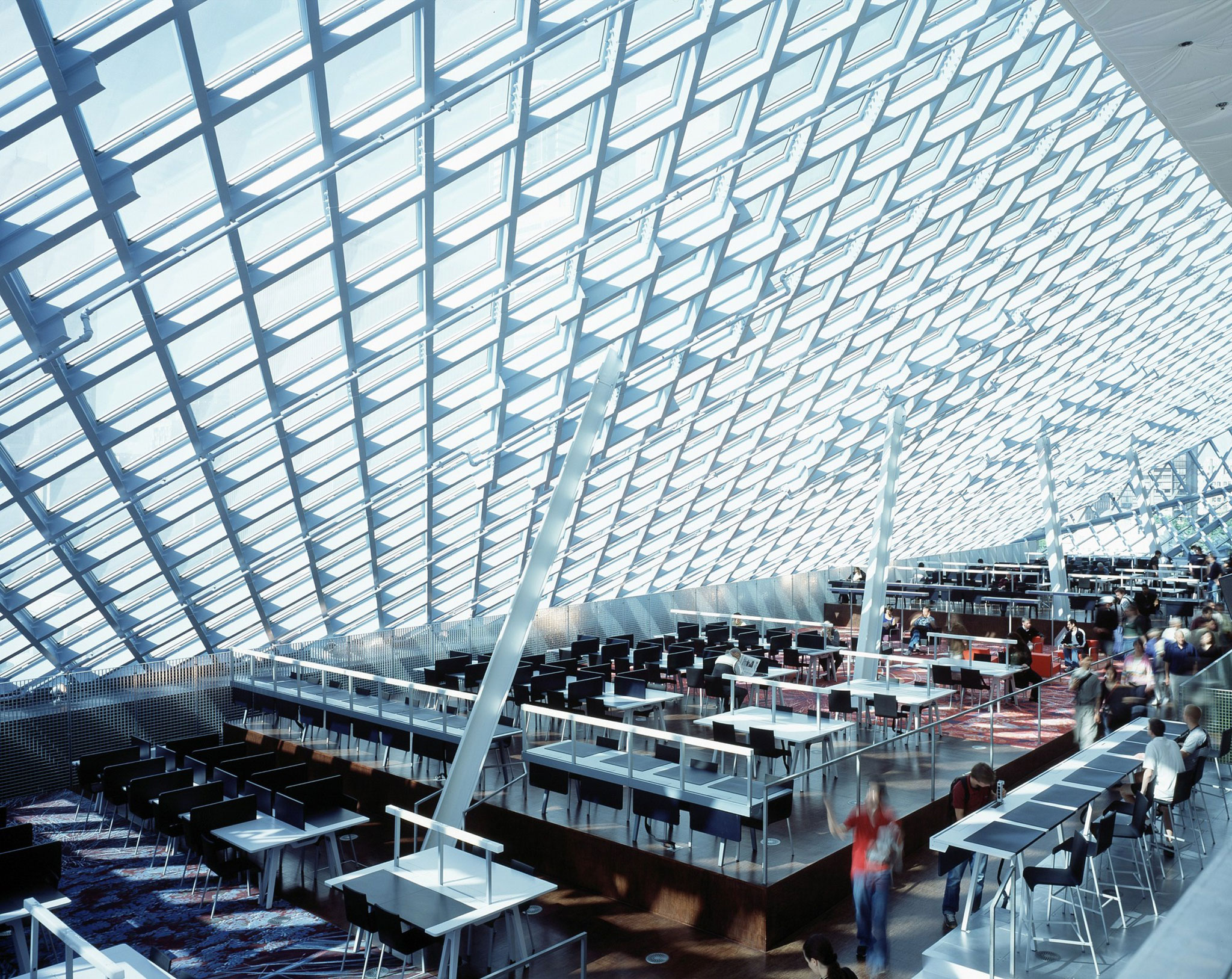
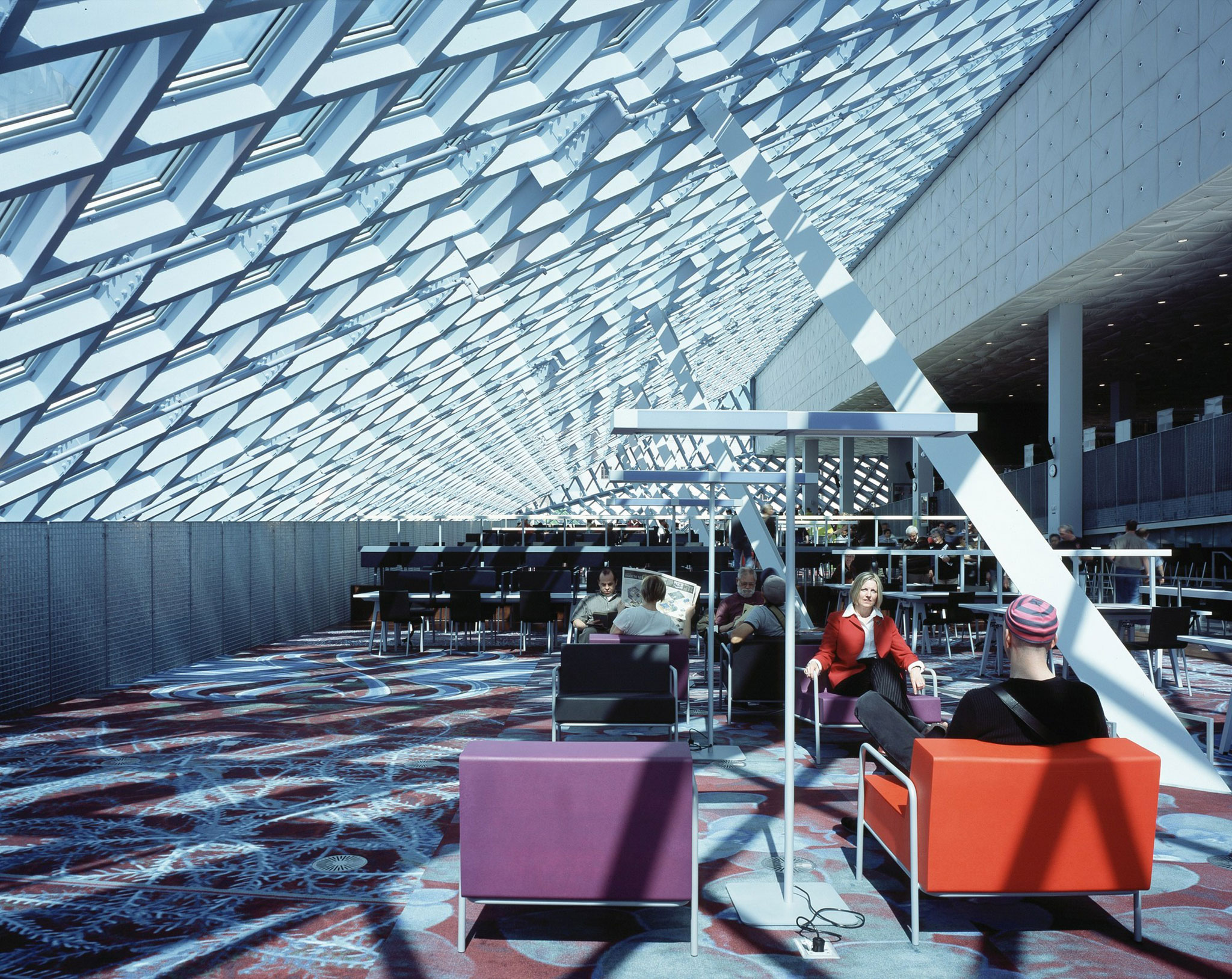
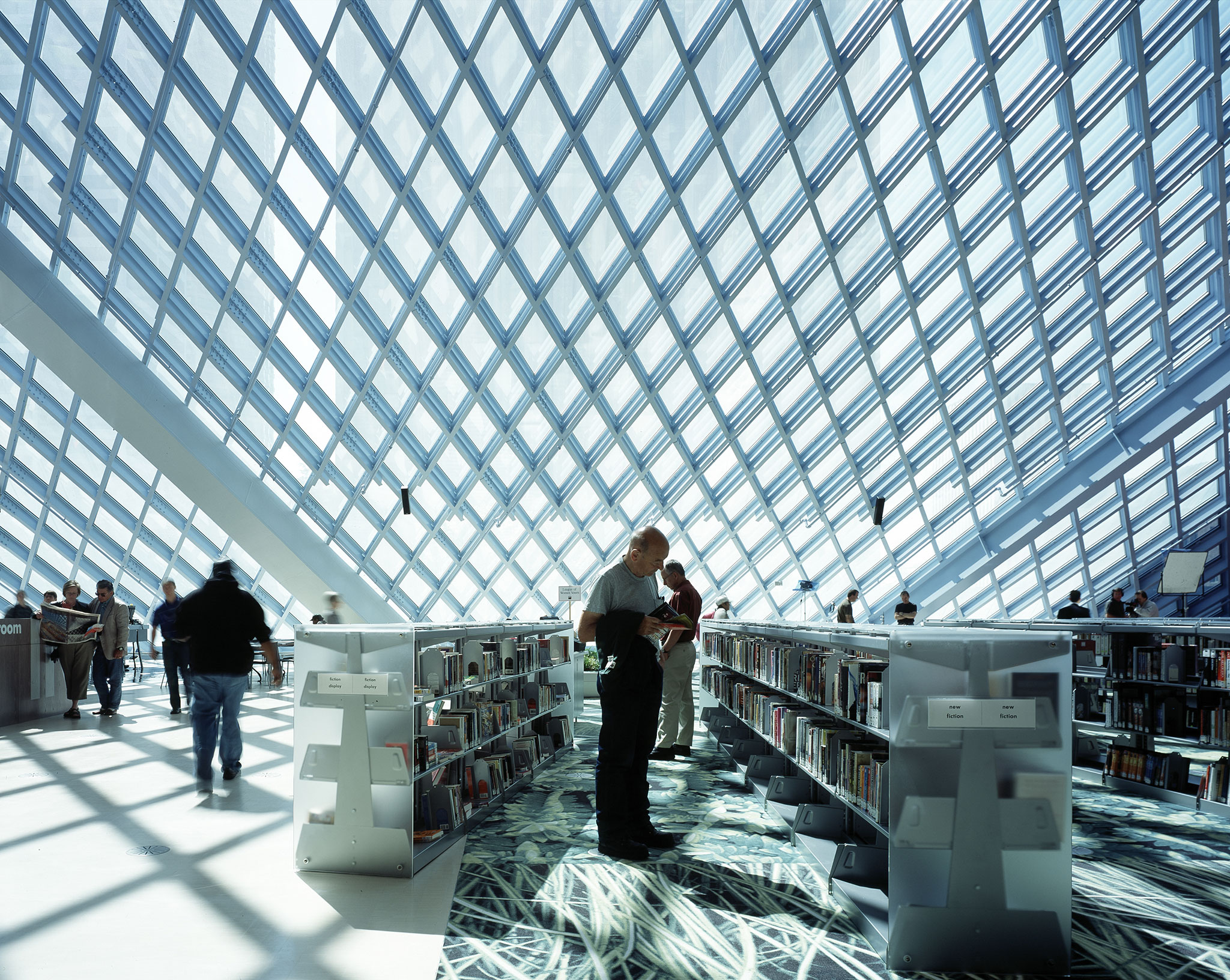
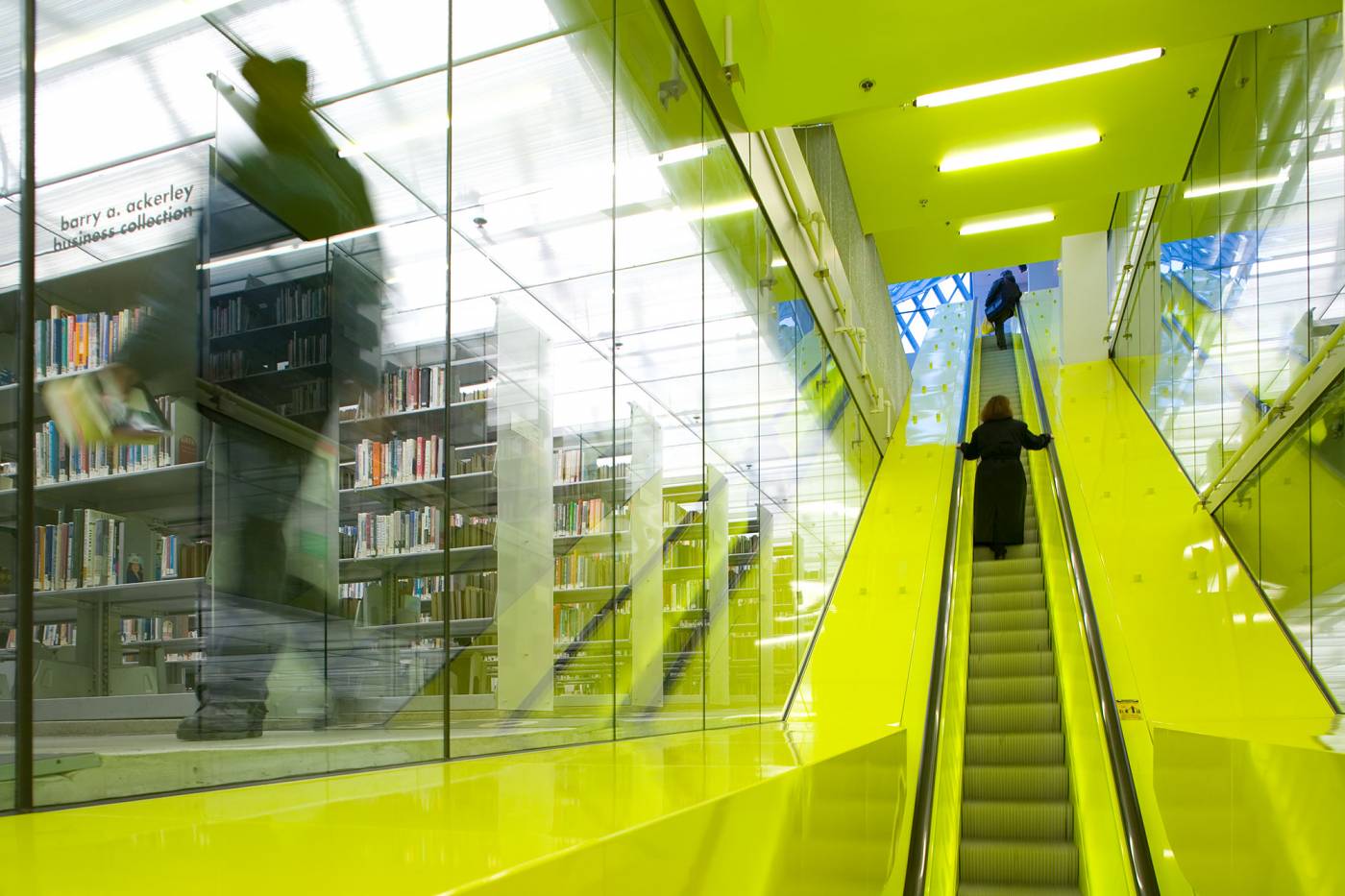
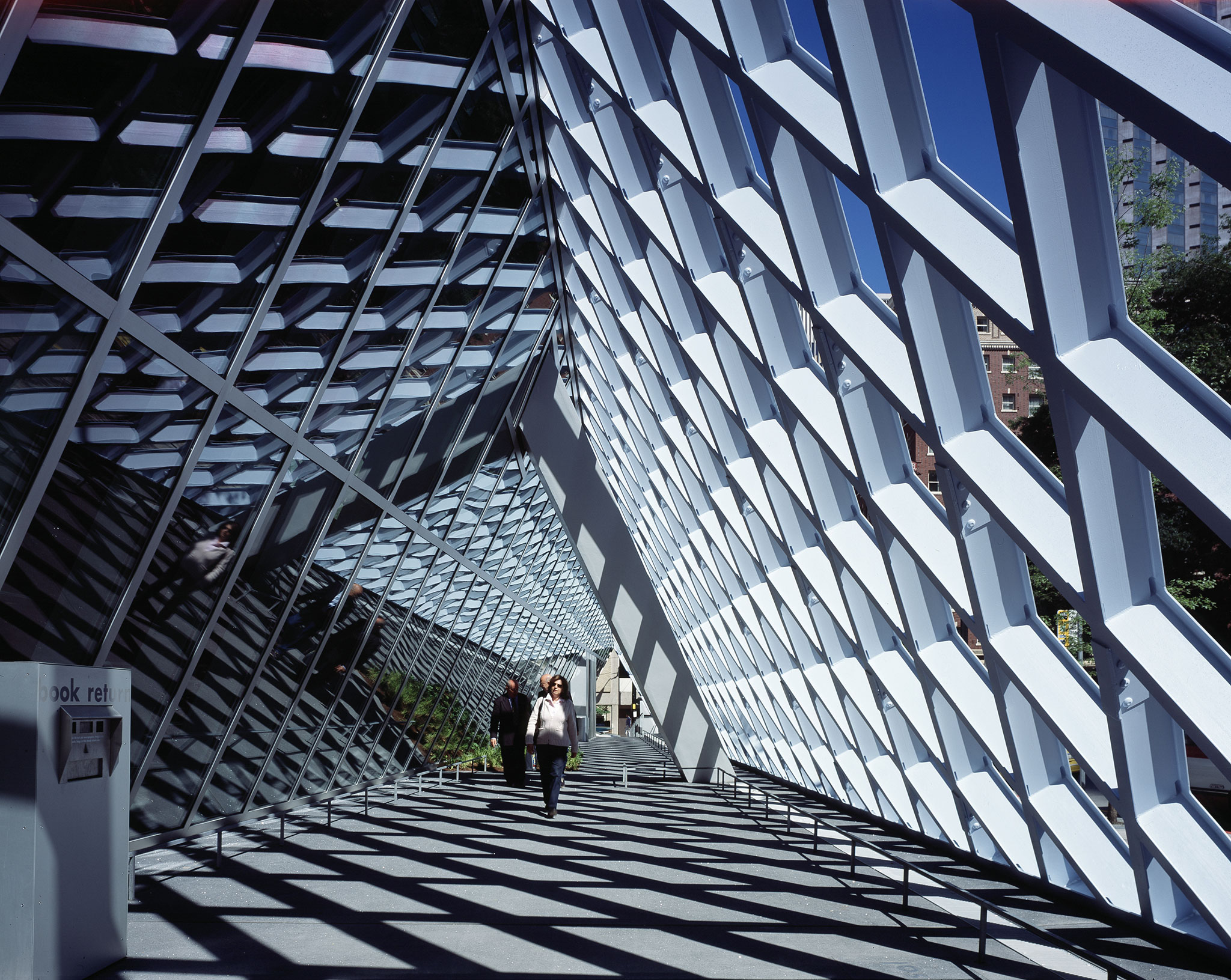
The library looks like a giant piece of urban infrastructure, an impression heightened at night, when the crisscrossing trusses of the bridgelike structure are apparent inside the faceted, glowing lantern. Inside, this is a building, where the reading room and the service basement are equally bare-bones,there aren’t  elegant details, however this very roughness works to the building’s advantage, however. The users look the building freindly, the tough, no-frills interior no intimidates.

On its tenth anniversary, - now four years ago - the library showed aging well and Erik Lacitis, a Seattle Times reporter, wrote on May 10, 2014, "For some, the library is used not just for research, but because it’s a great place to get some work done."
 

Description of project by OMA

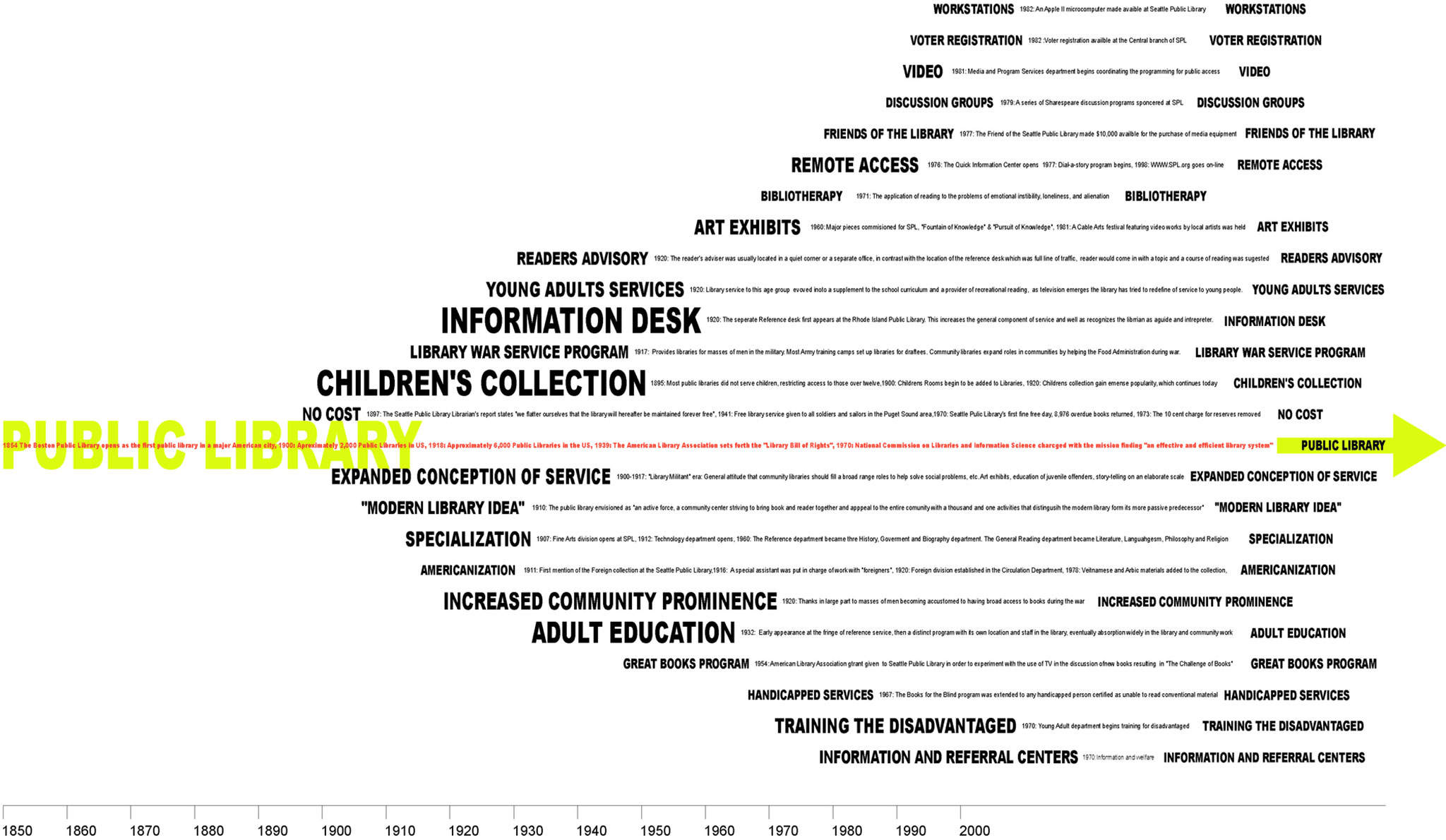
At a moment when libraries are perceived to be under threat from a shrinking public realm on one side and digitization on the other, the Seattle Central Library creates a civic space for the circulation of knowledge in all media, and an innovative organizing system for an ever-growing physical collection – the Books Spiral. The library's various programs are intuitively arranged across five platforms and four flowing "in between" planes, which together dictate the building's distinctive faceted shape, offering the city an inspiring building that is robust in both its elegance and its logic.

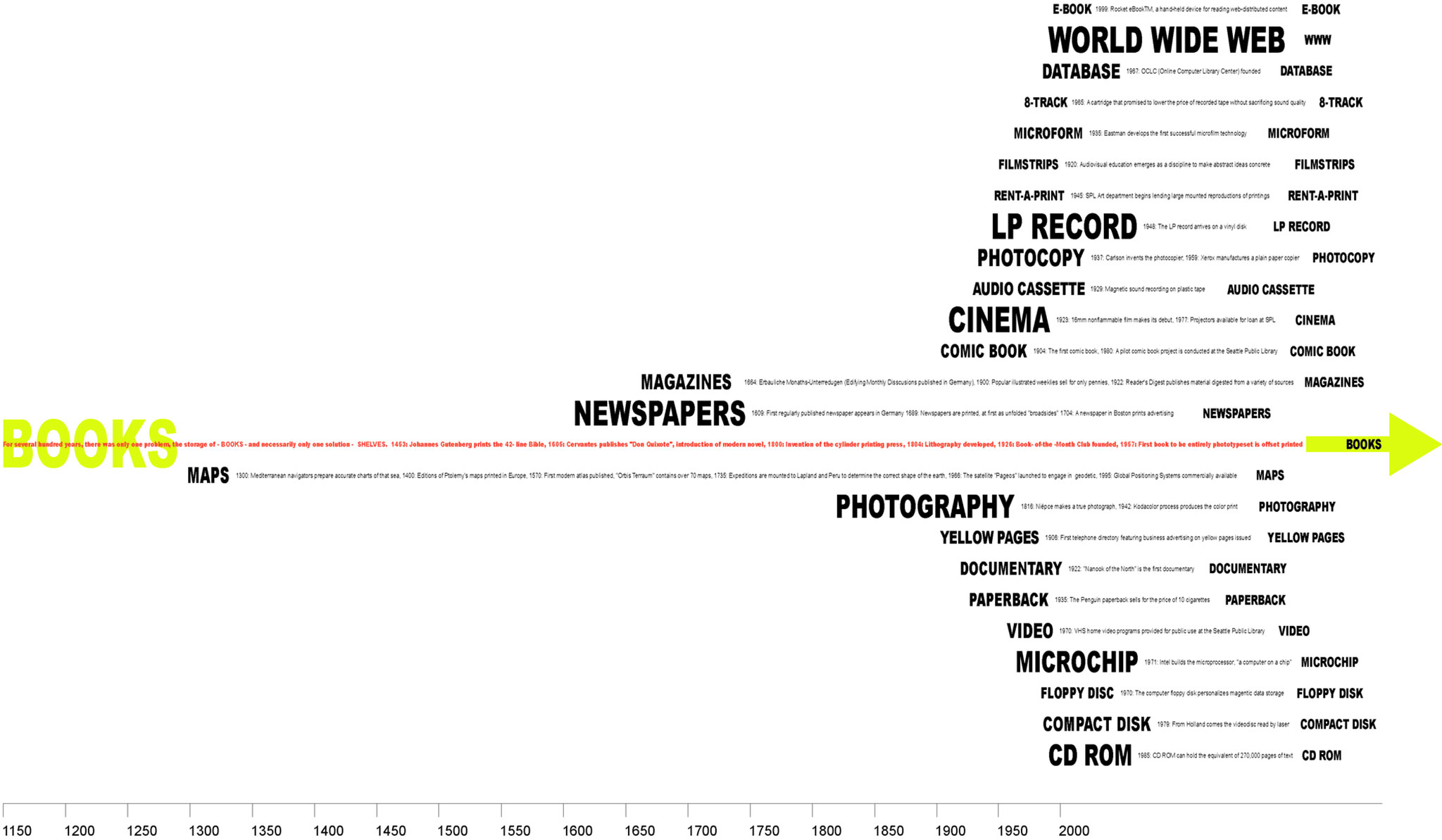
OMA's ambition is to redefine the library as an institution no longer exclusively dedicated to the book, but rather as an information store where all potent forms of media – new and old – are presented equally and legibly. In an age in which information can be accessed anywhere, it is the simultaneity of media and (more importantly) the curatorship of its contents that will make the library vital.

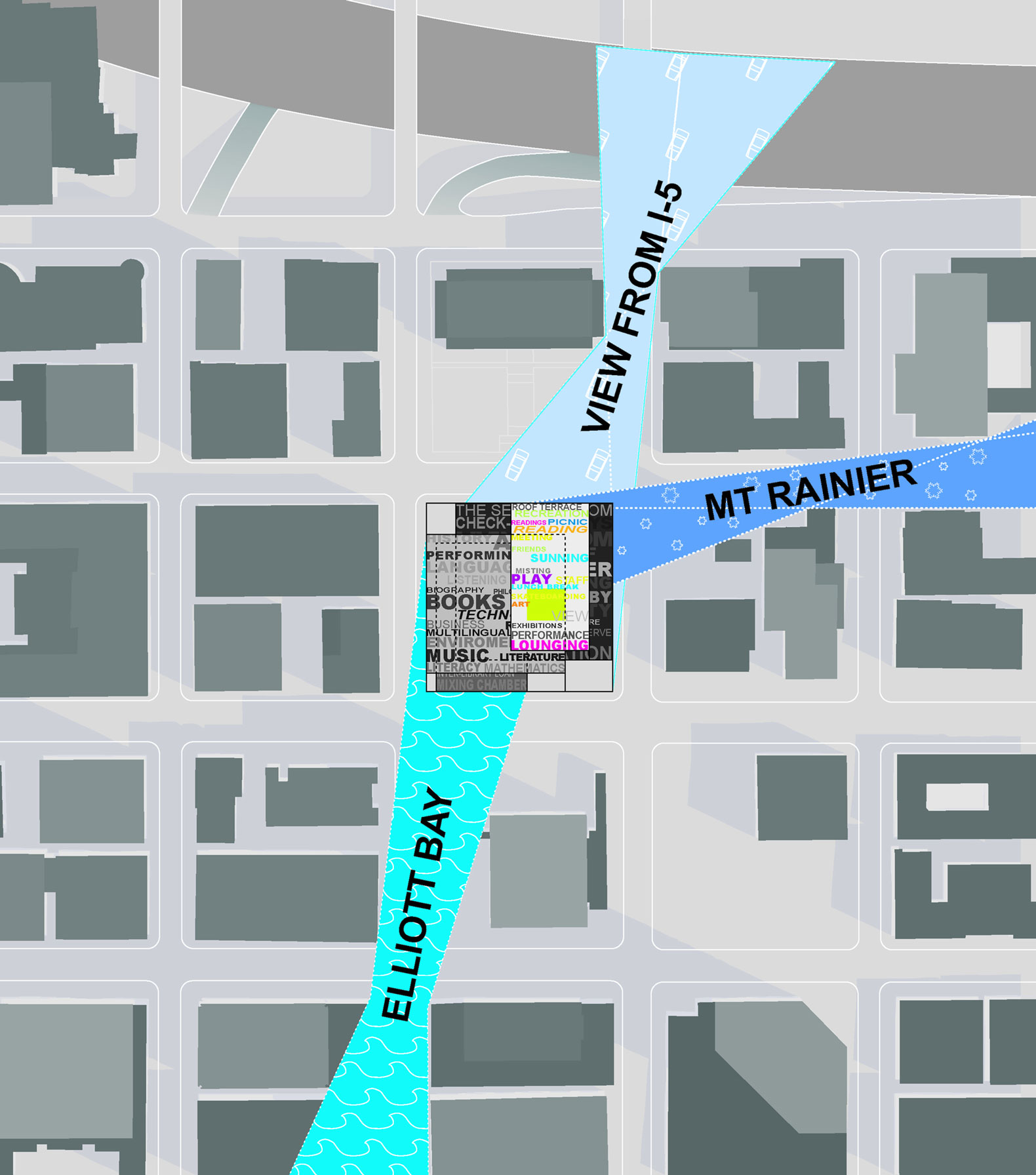
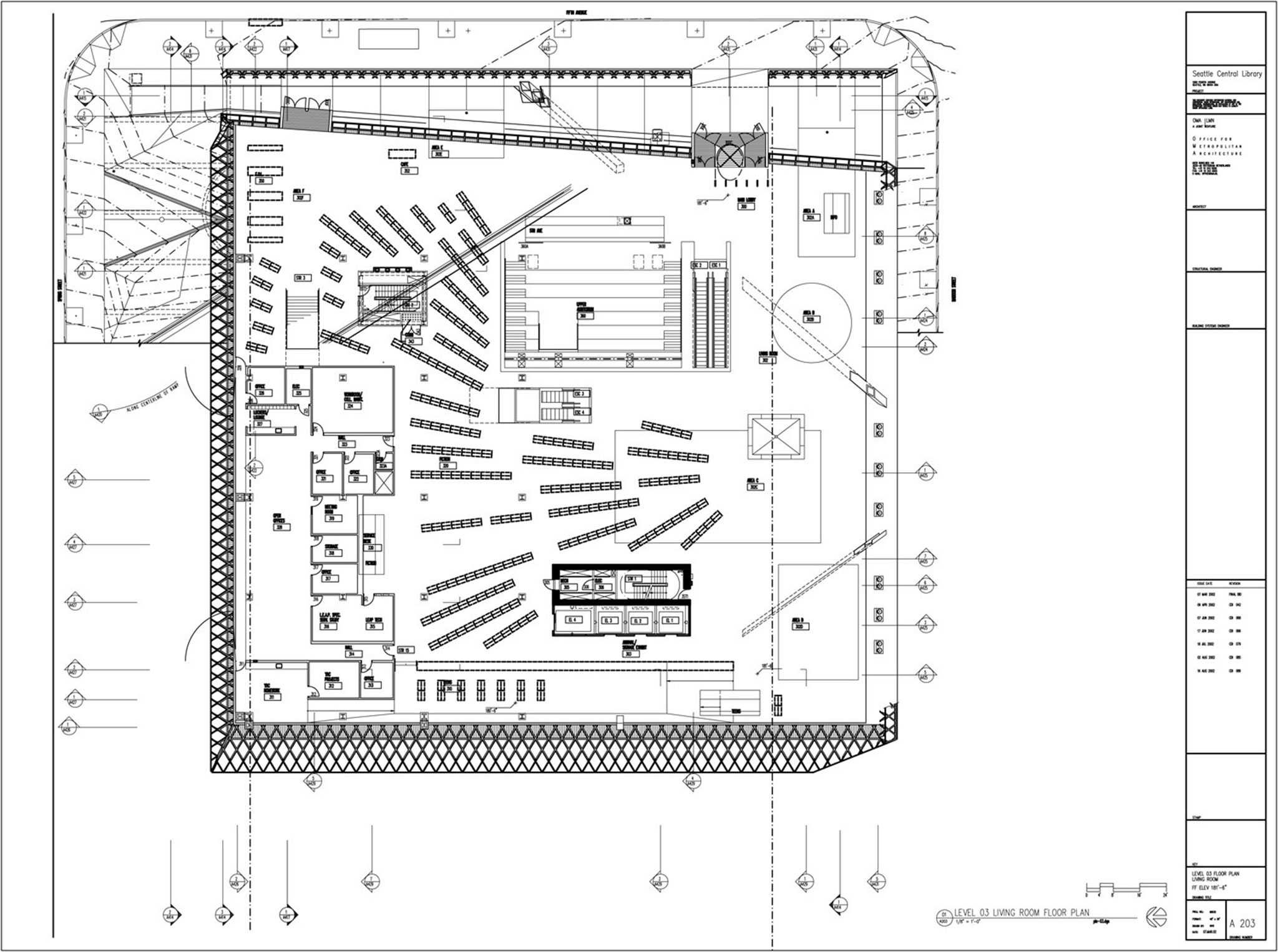
Our first operation was to "comb" and consolidate the library's apparently ungovernable proliferation of programs and media. We identified five "stable" programmatic clusters (parking, staff, meeting, Book Spiral, HQ) and arranged them on overlapping platforms, and four "unstable" clusters (kids, living room, Mixing Chamber, reading room) to occupy interstitial zones. Each area is architecturally defined and equipped for dedicated performance, with varying size, flexibility, circulation, palette, and structure.

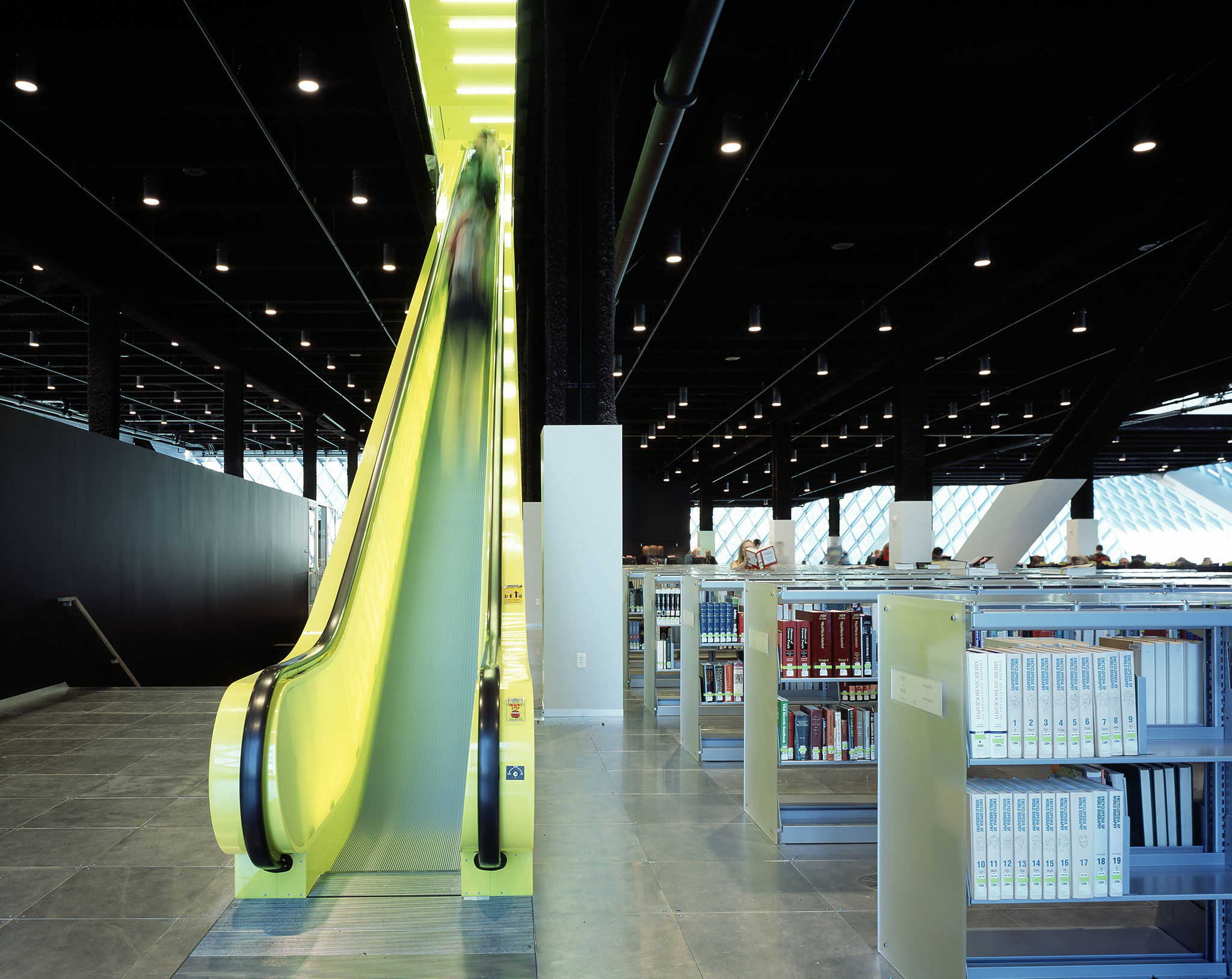
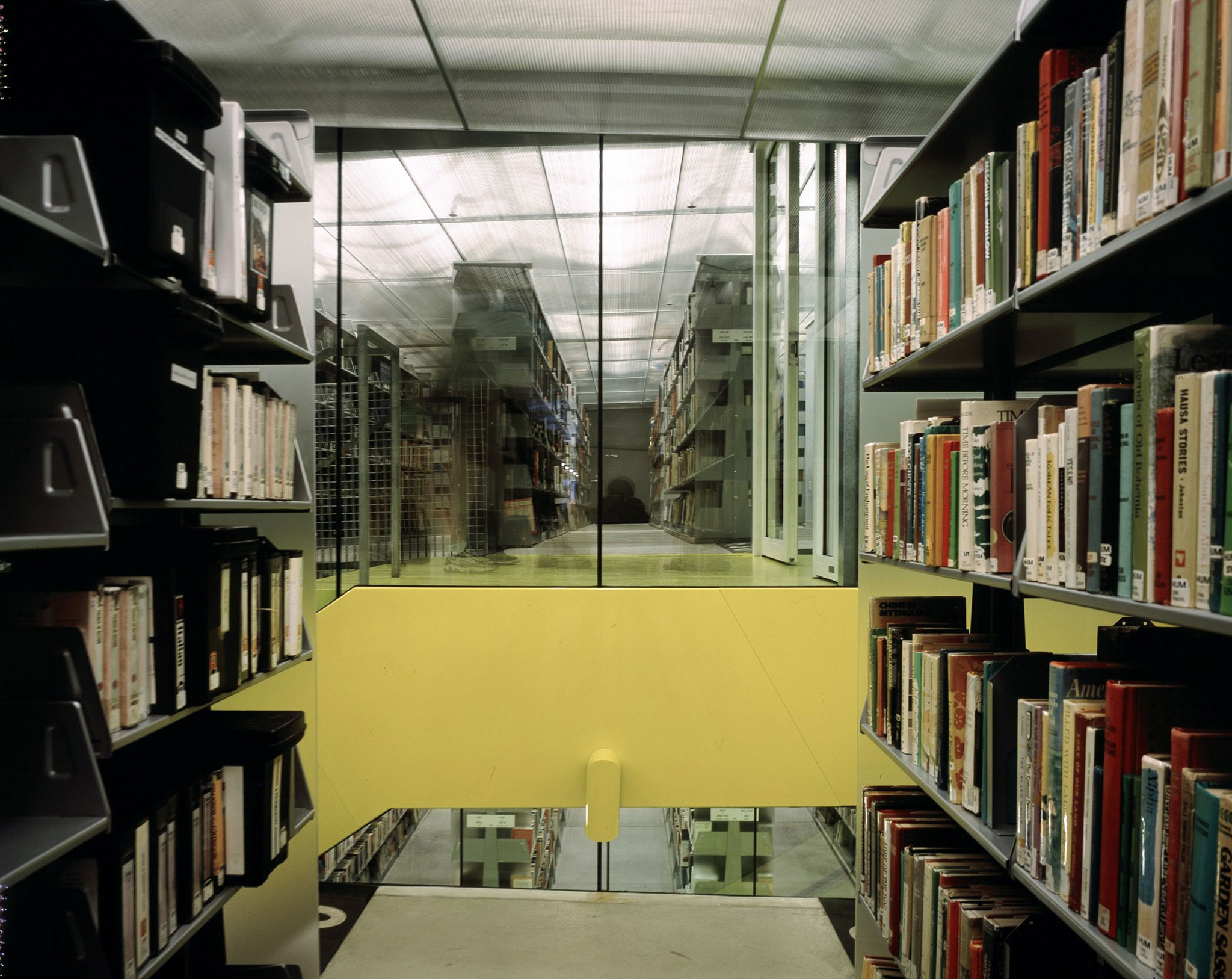
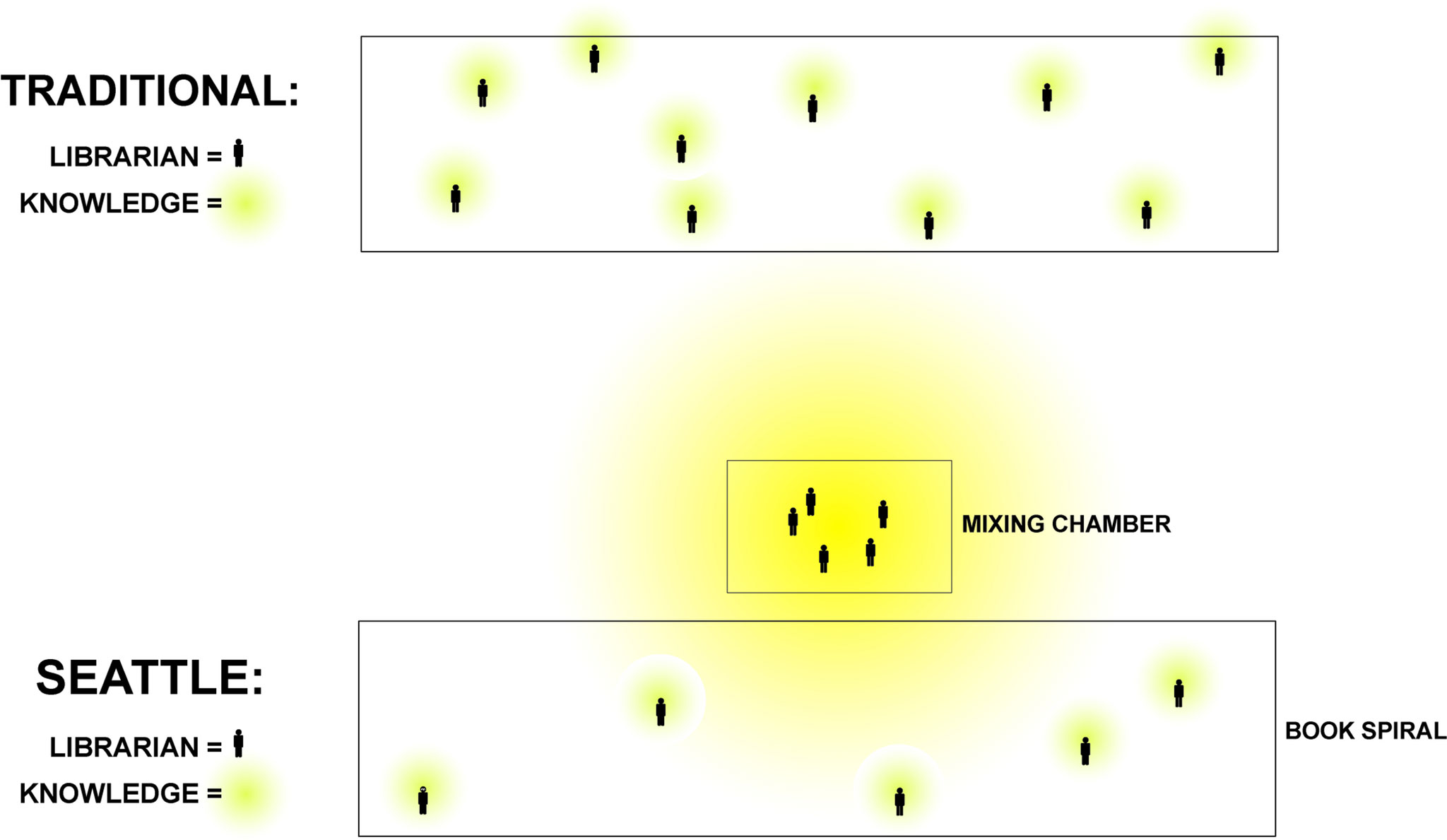
The Mixing Chamber, centrally located on the third floor, is an area of maximum librarian-patron interaction – a trading floor for information orchestrated to fulfill an essential (though often neglected) need for expert interdisciplinary help. Librarians guide readers up into the Books Spiral, a continuous ramp of shelving forming a co-existence between categories that approaches the organic: each evolves relative to the others, occupying more or less space on the Spiral, but never forcing the ruptures within sections that bedevil traditional library plans. Upon the opening of the Seattle Central Library, the Spiral's 6,233 bookcases housed 780,000 books, and can accommodate growth up to 1,450,000 books in the future without adding more bookcases.
More information

Label
Architects
Text
OMA + LMN. Rem Koolhaas - Joshua Prince-Ramus.
+ + copy Created with Sketch.
- + copy Created with Sketch.
Label
Project team
Text
Ali Arvanaghi.- Florence Clausel.- Keely Colcleugh.- Rachel Doherty.- Thomas Dubuisson.- Chris van Duijn.- Erez Ella.- Achim Gergen.- Sarah Gibson.- Laura Gilmore.- Eveline Jürgens.- Antti Lassila.- Anna Little.- John McMorrough.- Kate Orff.- Hannes Peer.- João Costa Ribeiro.- Beat Schenk.- Saskia Simon.- Kristina Skoogh.- Anna Sutor.- Sybille Wälty.- Leonard Weil.- Victoria Willocks.- Dan Wood.- Meghan Corwin.- Mark von Hof-Zogrotzki.- Bjarke Ingels.- Carol Patterson.- Natasha Sandmeier.
+ + copy Created with Sketch.
- + copy Created with Sketch.
Label
Collaborators
Text
Local architect.- LMN. Engineer.- Arup. Structural.- Magnusson Klemencic Associates. Civil.- Drew Gagnes; Darin Stephens. Acoustics.- Michael Yantis Associates. ADA.- McGuire Associates. Artists.- Ann Hamilton; Gary Hill; Tony Oursler. Cost.- Davis Langdon Adamson. Environmental graphics.- Bruce Mau Design. Façade.- Dewhurst Macfarlane & Partners. Façade pre-construction services.- Seele. Hardware.- Gordon Adams Consulting. Interiors.- LMN.- Inside Outside. Landscape.- Inside Outside.- Jones & Jones. Lighting.- Kugler Tillotson Associates. Pre-construction services.- Hoffman Construction Washington. Vertical transport.- HKA Elevator Consulting.
+ + copy Created with Sketch.
- + copy Created with Sketch.
Label
Client
Text
The Seattle Public Library.
+ + copy Created with Sketch.
- + copy Created with Sketch.
Label
Year
Text
1999-2004.
+ + copy Created with Sketch.
- + copy Created with Sketch.
Label
Program
Text
Library.- Parking.
+ + copy Created with Sketch.
- + copy Created with Sketch.
Label
Venue
Text
1000 Fourth Ave., Seattle, WA 98104. USA.
+ + copy Created with Sketch.
- + copy Created with Sketch.
Label
Cost
Text
US $ 169.2 m.
+ + copy Created with Sketch.
- + copy Created with Sketch.
Label
Area
Text
38,300.0 m².
+ + copy Created with Sketch.
- + copy Created with Sketch.

Rem Koolhaas wwas born in Rotterdam on 17 November 1944. He began his career as a journalist working for the Haagse Post and also as a set designer in the Netherlands and Hollywood. He studied architecture at the Architectural Association School in London, and after winning the Harkness scholarship he moved to the USA. There he spent some time at the IAUS (Institute for Architecture and Urban Studies) in New York, a centre directed by Peter Eisenman. He later moved to Cornell University where he studied with Oswald Mathias Ungers.

In these early years of collaboration between Rem Koolhaas, Elia Zenghelis, Madelon Vriesendorp and Zoe Zenghelis, the name of the group while they were developing their first ideas and conceptual projects was more experimental: Office for Metropolitan Architecture – The Laboratory of Dr. Caligari. A time that served to consolidate initial ideas that would later lead to the formal founding of OMA in 1975 with his three colleagues.

In 1978 he wrote Delirious New York: A Retroactive Manifesto for Manhattan, which has become a classic of contemporary architectural theory.

The most important works by Koolhaas and OMA, from its foundation until the mid-1990s, include the Netherlands Dance Theatre at The Hague, the Nexus Housing at Fukuoka in Japan, the Kunsthal in Rotterdam, the Grand Palais of Euralille and Lille, the Villa dall’Ava, the Très Grande Bibliothèque, the Jussieu library in Paris, the ZKM in Karlsruhe and the Seattle Public Library.

Together with Koolhaas’s reflections on contemporary society, these buildings appear in his second book, S,M,L,XL (1995), a volume of 1376 pages written as though it were a “novel about architecture”. Published in collaboration with the Canadian graphic designer, Bruce Mau, the book contains essays, manifestos, cartoons and travel diaries.

In 2005, with Mark Wigley and Ole Bouman, he was the founder of the prestigious Volume magazine, the result of a collaboration with Archis (Amsterdam), AMO and C-lab (Columbia University NY).

His built work includes the Qatar National Library and the Qatar Foundation Headquarters (2018), Fondation Galeries Lafayette in Paris (2018), Fondazione Prada in Milan (2015/2018), Garage Museum of Contemporary Art in Moscow (2015), the headquarters for China Central Television (CCTV) in Beijing (2012), Casa da Musica in Porto (2005), Seattle Central Library (2004), and the Netherlands Embassy in Berlin (2003). Current projects include the Taipei Performing Arts Centre, a new building for Axel Springer in Berlin, and the Factory in Manchester.

Koolhaas directed the 2014 Venice Architecture Biennale and is a professor at Harvard University, where he directs The Project on the City, a research programme on changes in urban conditions around the world. This program has conducted research on the delta of the Pearl River in China (entitled Great Leap Forward) and on consumer society (The Harvard Design School Guide to Shopping). Taschen Verlag has published the results. Now is preparing a major exhibition for the Guggenheim Museum to open in 2019 entitled Countryside: Future of the World.

Among the awards he has won in recent years, we mention here the prestigious Pritzker Architecture Prize (2000), the Praemium Imperiale (2003), the Royal Gold Medal (2004) and the Mies Van Der Rohe Prize (2005). In 2008, Time mentioned him among the 100 most influential people on the planet.

Read more

Office for Metropolitan Architecture (OMA) is an international practice operating within the traditional boundaries of architecture and urbanism. AMO, a research and design studio, applies architectural thinking to domains beyond. 

OMA is led by eight partners – Rem Koolhaas, Reinier de Graaf, Ellen van Loon, Shohei Shigematsu, Iyad Alsaka, Chris van Duijn, Jason Long, and Managing Partner-Architect David Gianotten – and maintains offices in Rotterdam, New York, Hong Kong, Doha, and Australia. OMA-designed buildings currently under construction are the renovation of Kaufhaus des Westens (KaDeWe) in Berlin, The Factory in Manchester, Hangzhou Prism, the CMG Times Center in Shenzhen and the Simone Veil Bridge in Bordeaux.

OMA’s completed projects include Simone Veil Bridge in Bordeaux (2024), LANTERN in Detroit (2024), Mangalem 21 in Tirana (2023), Aviva Studios – Factory International in Manchester (2023), Apollolaan 171 in Amsterdam (2023), Buffalo AKG Art Museum in Buffalo (2023), Toranomon Hills Station Tower in Tokyo (2023), Taipei Performing Arts Centre (2022), Audrey Irmas Pavilion in Los Angeles (2020), Norra Tornen in Stockholm (2020), Axel Springer Campus in Berlin (2020), MEETT Toulouse Exhibition and Convention Centre (2020), Galleria in Gwanggyo (2020), WA Museum Boola Bardip (2020), nhow RAI Hotel in Amsterdam (2020), a new building for Brighton College (2020), and Potato Head Studios in Bali (2020). Earlier buildings include Fondazione Prada in Milan (2018), Garage Museum of Contemporary Art in Moscow (2015), De Rotterdam (2013), CCTV Headquarters in Beijing (2012), Casa da Música in Porto (2005), and the Seattle Central Library (2004).

AMO often works in parallel with OMA's clients to fertilize architecture with intelligence from this array of disciplines. This is the case with Prada: AMO's research into identity, in-store technology, and new possibilities of content-production in fashion helped generate OMA's architectural designs for new Prada epicenter stores in New York and Los Angeles. In 2004, AMO was commissioned by the European Union to study its visual communication, and designed a colored "barcode" flag, combining the flags of all member states, which was used during the Austrian presidency of the EU. 

AMO has worked with Universal Studios, Amsterdam's Schiphol airport, Heineken, Ikea, Condé Nast, Harvard University and the Hermitage. It has produced Countryside: The Future, a research exhibited at Solomon R. Guggenheim Museum in New York; exhibitions at the Venice Architecture Biennale, including Public Works (2012), Cronocaos (2010), and The Gulf (2006); and for Fondazione Prada, including When Attitudes Become Form (2012) and Serial and Portable Classics (2015). AMO, with Harvard University, was responsible for the research and curation of the 14th Venice Architecture Biennale and its publication Elements. Other notable projects are Roadmap 2050, a plan for a Europe-wide renewable energy grid; Project Japan, a 720-page book on the Metabolism architecture movement (Taschen, 2010); and the educational program of Strelka Institute in Moscow.

Read more

José Juan Barba (1964). Architect from the Madrid School of Architecture (ETSAM) in 1991. He received his PhD in Architecture from ETSAM in 2004, graduating summa Cum laude with the doctoral thesis "Inventions: New York vs. Rem Koolhaas, Bernard Tschumi, Piranesi." In 1991, he received a Special Mention in the Spanish National Graduation Awards. Until 1997, he worked as an advisor to several NGOs. In 1992, he founded his architectural practice in Madrid (www.josejuanbarba.com). 

He is an architectural critic and, since 1998, Editor-in-Chief of the internationally acclaimed bilingual architecture journal METALOCUS (Spanish/English), recipient of several national and international awards.

Barba is an Associate Professor at the University of Alcalá and a member of several research groups. He has been invited to participate in numerous international forums on architecture and urbanism, including the II Forum of Mexican World Heritage Cities, Urban Development, History and Modernity, organized by the Pan-American Committee for Urban Development and Historical Heritage; the World Urban Development Forum (FMDU), held in Culiacán, Sinaloa, Mexico; and the International Conference on Architecture and Urbanism from the Perspective of Women Architects. He has also been invited as lecturer and guest critic at numerous national and international institutions, including the National Building Museum, Roma Tre University, Politecnico di Milano, University of Genoa, Université Pierre Mendès France Grenoble, the Madrid and Barcelona Schools of Architecture, National Autonomous University of Mexico, the Faculty of Architecture in Montevideo, the Schools of Architecture of Medellín and Ecuador, Universidad Iberoamericana, IE University, as well as the Schools of Architecture of Zaragoza, Valladolid, Málaga, Granada, Seville, and A Coruña, among others.

He has extensive professional experience in architecture, urbanism, landscape intervention, and territorial regeneration. His work has received numerous awards, including First Prize in the “Gran Vía Posible” competition for Delirious Gran Vía, Madrid; recognition for the Rivers Interpretation Centre in Zamora, awarded and exhibited at the World Architecture Festival 2008; and recognition for the Santa Bárbara Park project in Toledo. He was also awarded the Erich Degner Prize for Architecture (1995), promoted by the BBVA Foundation. His project for a Day Centre for the Elderly was included in Volume 3 of the Madrid Architecture Guide published by the Official College of Architects of Madrid (COAM) in 2007. His work has been widely published in national and international books and journals.

He served as Maître de Conférences at the Institut d’Urbanisme de Grenoble, Université Pierre Mendès France Grenoble, during the 2013–14 academic year, following his appointment through a European open competition. His work has been published internationally. He regularly serves on academic and professional juries, including the editorial competition jury for the journal Quaderns (2011), the selection committee for the European Union Prize for Contemporary Architecture – Mies van der Rohe Awards (2007–present), and the jury panels for EUROPAN 13 (2015–16) and TRANSFER, Zurich (2019). He was also invited to participate in the Biennale di Venezia 2016 as part of the exhibition Spaces of Exception / Spazi d’Eccezione.

He has authored several books, including "The Dark Line. michele&miquel, dA Vision Design" (2024), "CONGRESO ANYWAY. La ciudad de las ciudades" (2020), "#Positions" (2016), and "Inventions: New York vs. Rem Koolhaas, Bernard Tschumi, Piranesi" (2015). He has also contributed to publications such as "Espacio público Gran Vía. La Ciudad del Turismo" (2020), "Spaces of Exception / Spazi d’Eccezione" (2016), "La manzana de la discordia" (2015), and "Contemporary Japanese Architecture: New Territories" (2015), as well as chapters in numerous books, including "Women Architects: A Professional Challenge" (2009), "21st Century Architectures" (2007), "Ruta de la Plata, New Conquerors of Space" (2019), and "The City of Tourism" (2020).

Selected awards include:

•    “SANTIAGO AMÓN” AWARD, award for the promotion of architecture, COAM Madrid, 2000.
•    “PANAYIOTI MIXELI AWARD,” SADAS-PEA, award for the promotion of architecture, Athens, 2005.
•    “PIERRE VAGO” ICAC. International Committee of Art Critics Award, London, 2005.
•    FAD Award 07, Ephemeral Interventions, First Prize, M.C. Escher Exhibition, Arquin-FAD, Barcelona, 2007.
•    World Architecture Festival, Center for Research and Interpretation of the Rivers, Tera, Esla, and Órbigo, Finalist, Barcelona, 2008.
•    Gran Vía Posible, First Prize, Delirious Gran Vía, Madrid, 2010.
•    Reform of the Río Segura Surroundings, Award, Murcia, 2010.

Read more
Published on: April 23, 2018
Cite:
metalocus, JOSÉ JUAN BARBA
"Seattle Central Library by OMA. "The most exciting new building"" METALOCUS. Accessed
<https://www.metalocus.es/en/news/seattle-central-library-oma-most-exciting-new-building> ISSN 1139-6415
Loading content ...
Loading content ...
Loading content ...
Loading content ...
Loading content ...
Loading content ...
Loading content ...
Loading content ...
Loading content ...
Loading content ...
Loading content ...
Loading content ...
Loading content ...
Loading content ...
Loading content ...
Loading content ...
Loading content ...
Loading content ...
Loading content ...
Loading content ...
Loading content ...
Loading content ...
Loading content ...
Loading content ...
Loading content ...
Loading content ...
Loading content ...
Loading content ...
Loading content ...
Loading content ...
Loading content ...
Loading content ...
Loading content ...
Loading content ...
Loading content ...
Loading content ...
Loading content ...
Loading content ...
Loading content ...
Loading content ...
Loading content ...
Loading content ...
Loading content ...
Loading content ...
Loading content ...
Loading content ...
Loading content ...
Loading content ...
Loading content ...
Loading content ...
Loading content ...
Loading content ...
Loading content ...
Loading content ...