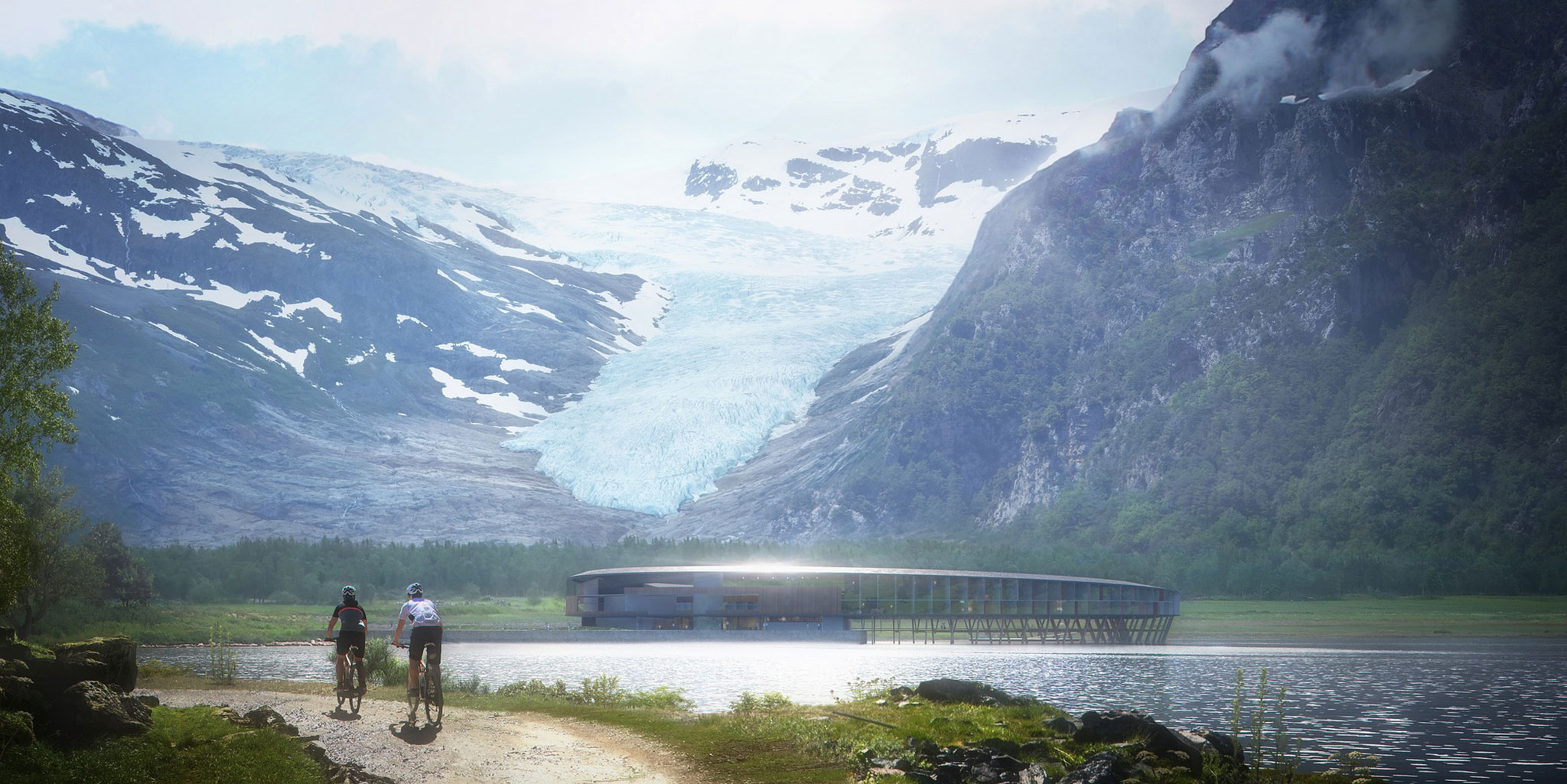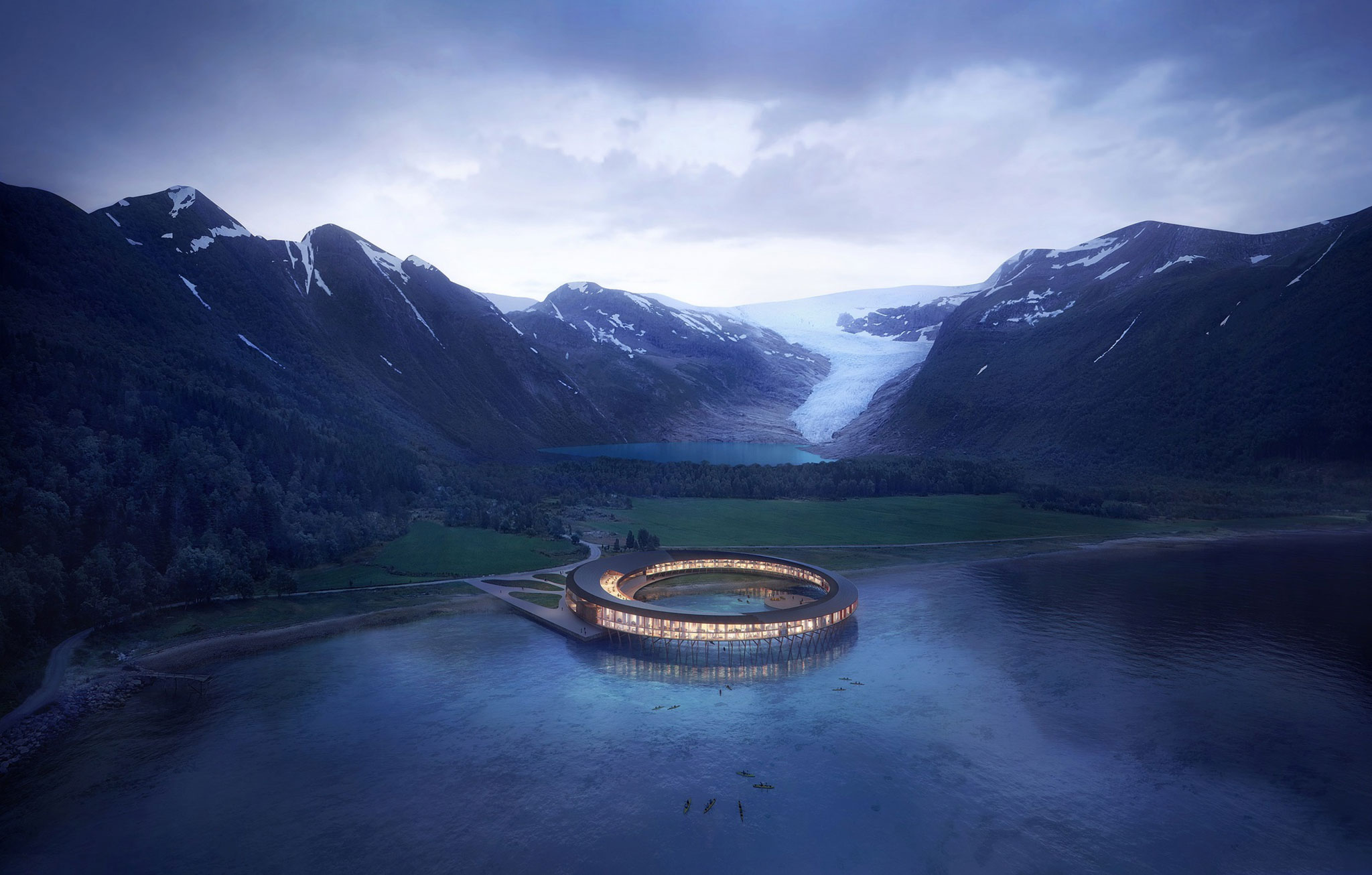
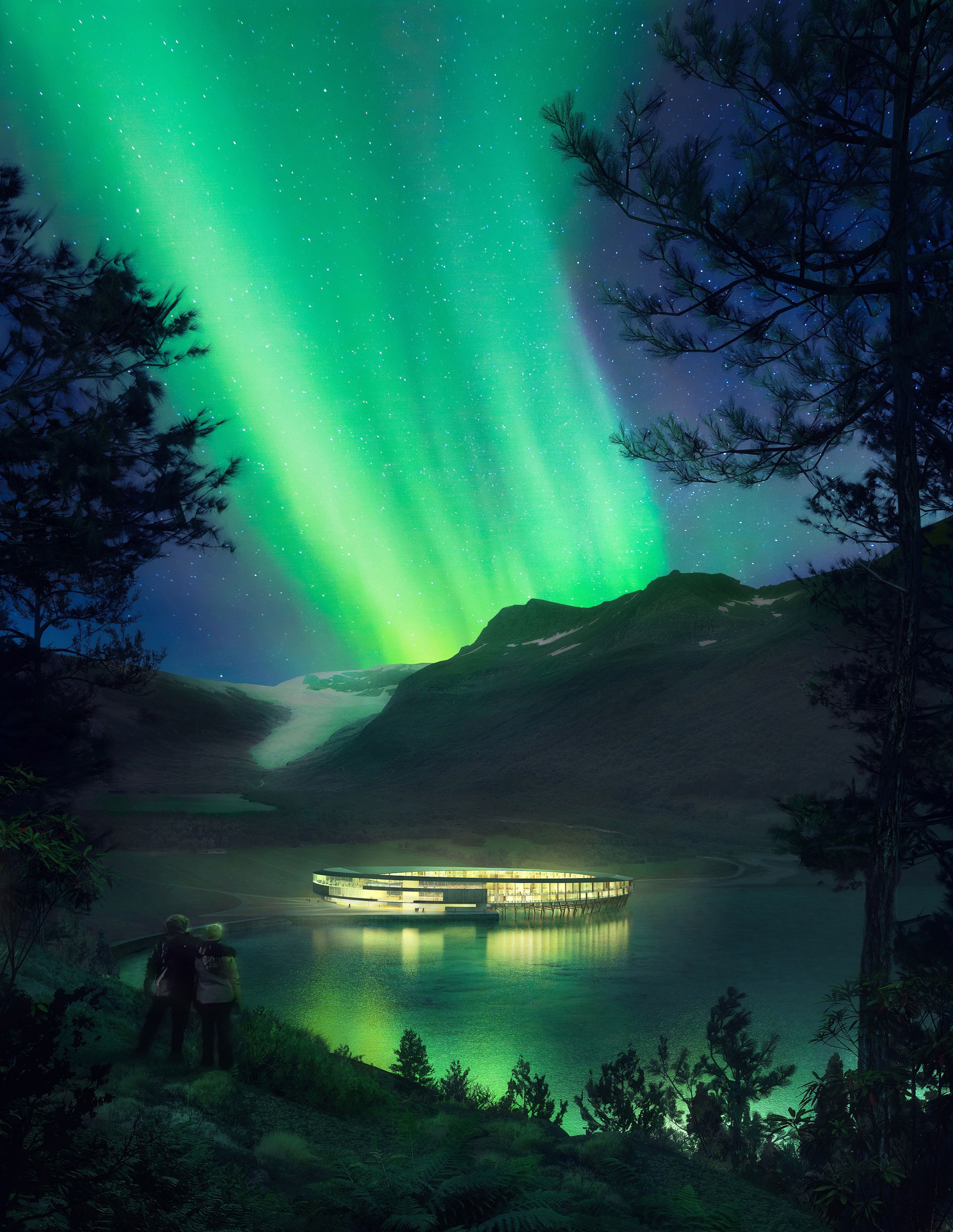
Snøhetta has unveiled its design for "Svart," a hotel for sustainable tourism company Arctic Adventure of Norway. The building will be located within the Arctic Circle, on the edge of Norway's Holandsfjorden fjord at the base of the Svartisen glacier.
Snøhetta claims that Svart Hotel is designed to the "Powerhouse" building standard, a system developed by Snøhetta and a group of collaborators for creating energy-positive sustainable buildings – meaning it will produce more energy than it consumes.

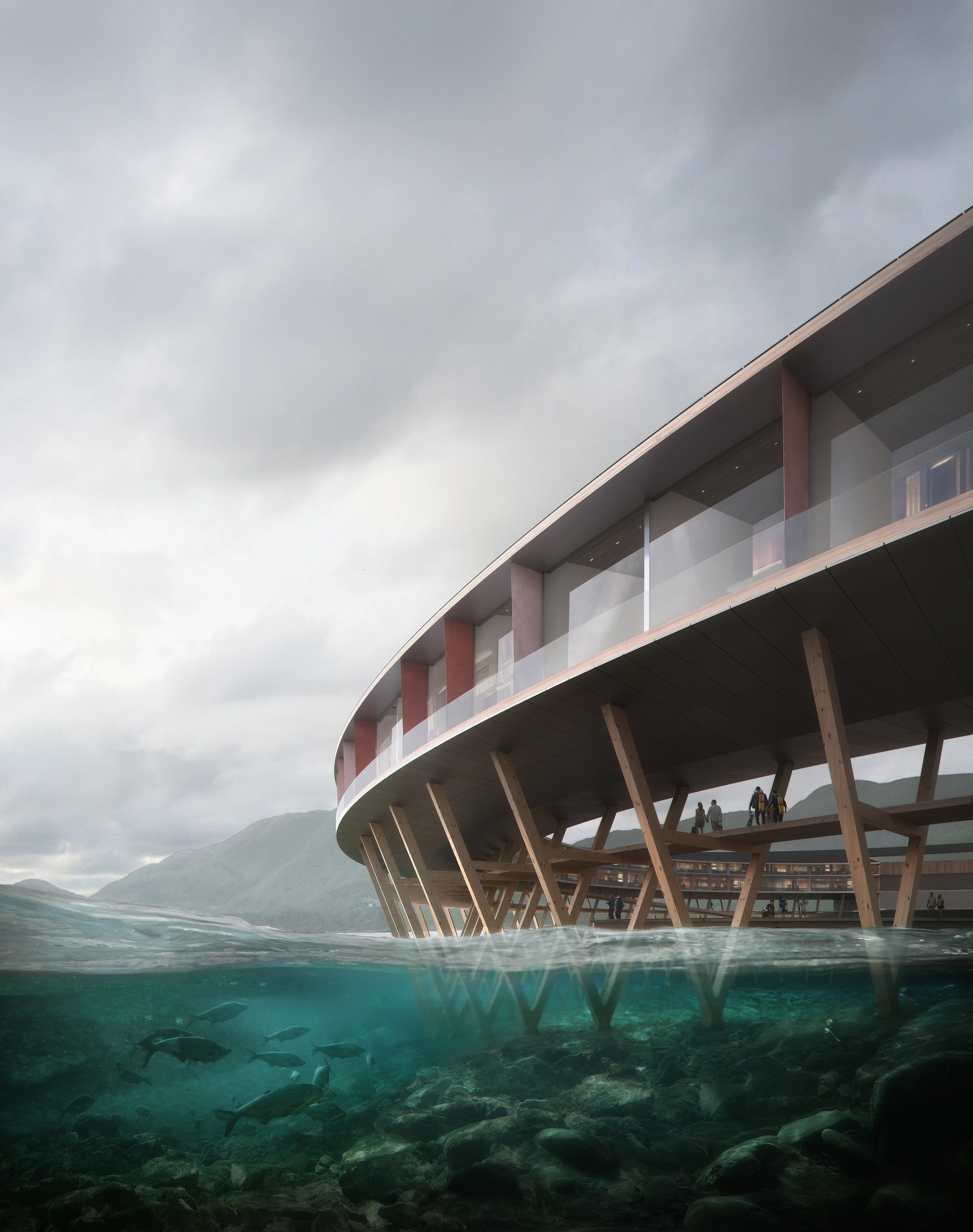
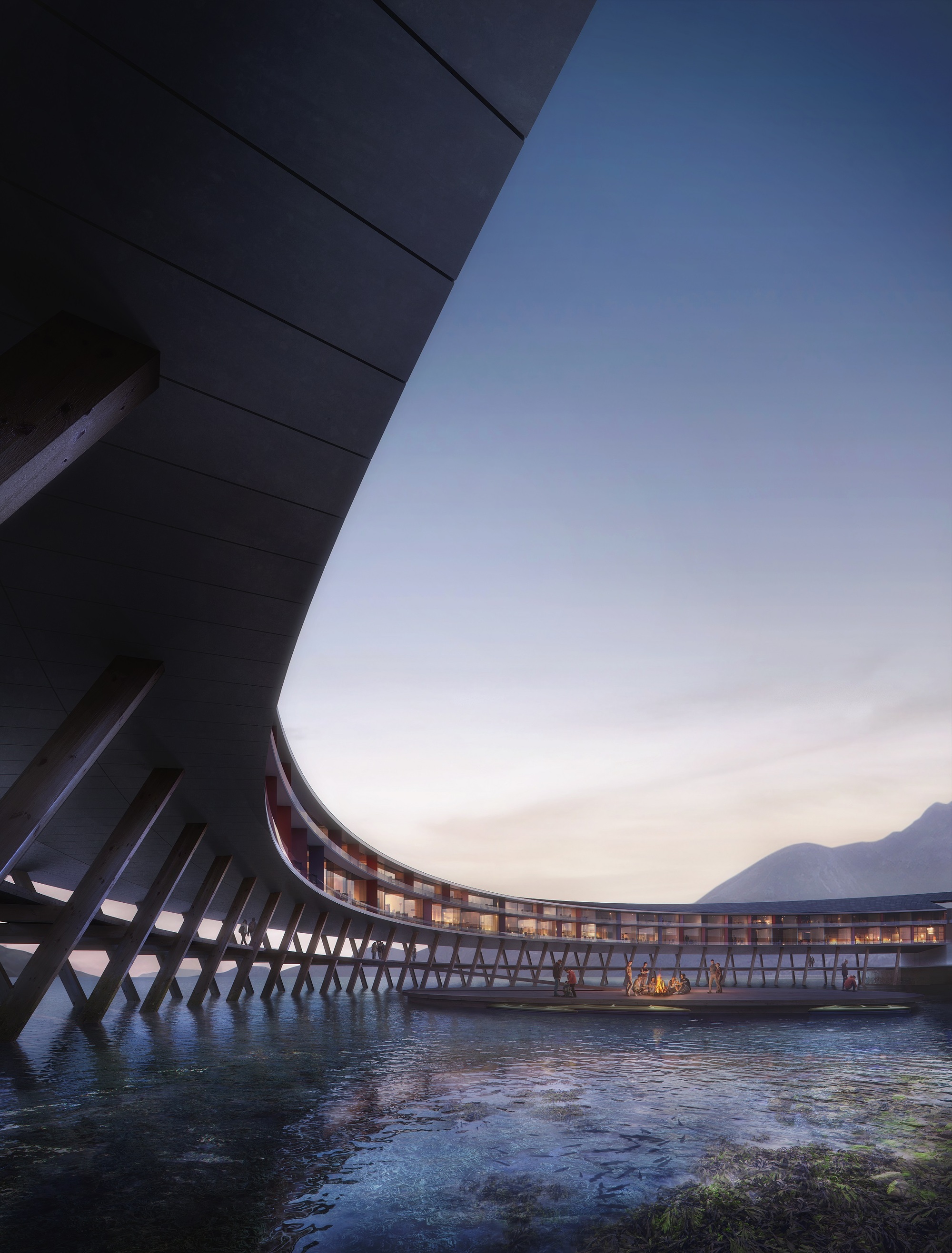
The circular shape provides panoramic views and offers a direct connection with the natural setting. The structure of the building was inspired by references the region’s vernacular architecture, by traditional Norwegian fishing structures: the “fiskehjell,” (an A-shaped wooden structure used for drying fish), and the “rorbue,” a type of seasonal house used by fishermen. These two references contributed to the building's supporting structure of poles, ensure that the building places a minimal footprint and gives the building an almost transparent appearance.

"Building in such a precious environment comes with some clear obligations in terms of preserving the natural beauty and the fauna and flora of the site," said Kjetil Trædal Thorsen, founding partner of Snøhetta. "It was important for us to design a sustainable building that will leave a minimal environmental footprint on this beautiful Northern nature. Building an energy positive and low-impact hotel is an essential factor to create a sustainable tourist destination respecting the unique features of the plot."

The Powerhouse standard used for the design was developed by Snøhetta alongside Entra, Skanska, the ZERO Emission Resource Organization and Asplan Viak. The standard outlines a requirement for the building to not only be energy-positive, but to generate more renewable energy over a 60-year period than the total amount of energy that would be required to both sustain daily operations and to build, produce materials, and demolish the building.

In order to achieve this level of sustainability on the design of Svart, Snøhetta conducted an extensive survey of the solar conditions at the site throughout the year, eventually settling on the ring shape in order to place rooms, restaurants, and terraces in locations that make the most of the available solar energy. Meanwhile solar panels on the roof while harvest energy, producing more energy than buildings slightly further south due to the 24-hour daylight conditions over the summer, and geothermal wells will harness the energy from the ground below for heating purposes.
More information

Snøhetta is an architecture, landscape, and interior design studio with offices in Oslo, Norway, and New York City, USA. Founded in 1989, it is led by Craig Dykers and Kjetil Thorsen. The studio, named in honour of Mount Snøhetta, the highest peak in the Dovrefjell mountains of Norway, has approximately 100 collaborators working on large-scale international projects across a wide range of typologies. Their approach is deeply collaborative and transdisciplinary, bringing together architects, designers, engineers, and landscape professionals to explore multiple perspectives depending on the nature of each project.

Snøhetta has completed a series of world-renowned cultural and landmark projects, including the Bibliotheca Alexandrina in Egypt, the Oslo Opera House and Ballet, and the Lillehammer Art Museum in Norway. Current projects include the National Pavilion of the September 11 Memorial Museum at the World Trade Center site in New York, as well as urban and landscape developments that aim to merge local identity, sustainability, and public experience.

In 2004, Snøhetta was awarded the Aga Khan Award for Architecture, and in 2009, the Mies van der Rohe Award. The studio is the only practice to have won the World Architecture Award for Best Cultural Building twice in consecutive years: in 2002 for the Bibliotheca Alexandrina and in 2008 for the Oslo Opera House and Ballet, consolidating its international prestige.

Kjetil Trædal Thorsen (born 1958 on the coastal island of Karmøy, Norway) is a co-founder of the studio and a multiple award-winning architect. He is a visionary and humanist designer who has redefined the boundaries of contemporary practice. Under his leadership, Snøhetta has produced iconic, sustainable structures that are highly sensitive to their cultural context, combining technological innovation with a profound environmental awareness. Thorsen’s work is recognized for its focus on social interaction, sustainability, and the creation of spaces that foster human connection and sensory experience, establishing a benchmark in contemporary global architecture.

Craig Dykers (born 1961 in Frankfurt, Germany) is also a co-founder of the studio and director of its New York office. Snøhetta has earned a reputation for maintaining a deep integration of landscape, architecture, and urban experience across all its projects. Key works include the Bibliotheca Alexandrina in Egypt, the Oslo Opera House and Ballet, the National Pavilion of the September 11 Memorial Museum in New York, and the redesign of Times Square. Professionally and academically active, Dykers has been a member of the Norwegian Association of Architects (NAL), the American Institute of Architects (AIA), and the Royal Society of Arts in England. He has served as a diploma juror at the Architectural College in Oslo and as a distinguished professor at City College, New York. He has delivered numerous lectures across Europe, Asia, and the Americas, and has undertaken public art installation projects, many of which explore the interplay between context, landscape, and human experience.

Read more
Published on: February 13, 2018
Cite:
metalocus, INÉS LALUETA
"Snøhetta designs a "Energy-Positive" Arctic Circle hotel" METALOCUS. Accessed
<https://www.metalocus.es/en/news/snohetta-designs-a-energy-positive-arctic-circle-hotel> ISSN 1139-6415
Loading content ...
Loading content ...
Loading content ...
Loading content ...
Loading content ...
Loading content ...
Loading content ...
Loading content ...
Loading content ...
Loading content ...
Loading content ...
Loading content ...
Loading content ...
Loading content ...
Loading content ...
Loading content ...
Loading content ...
Loading content ...
Loading content ...
Loading content ...
Loading content ...
Loading content ...
Loading content ...
Loading content ...
Loading content ...
Loading content ...
Loading content ...
Loading content ...
Loading content ...
Loading content ...
Loading content ...
Loading content ...
Loading content ...
Loading content ...
Loading content ...
Loading content ...
Loading content ...
Loading content ...
Loading content ...
Loading content ...
Loading content ...
Loading content ...
Loading content ...
Loading content ...
Loading content ...
Loading content ...
Loading content ...
Loading content ...
Loading content ...
Loading content ...
Loading content ...
Loading content ...
Loading content ...
Loading content ...