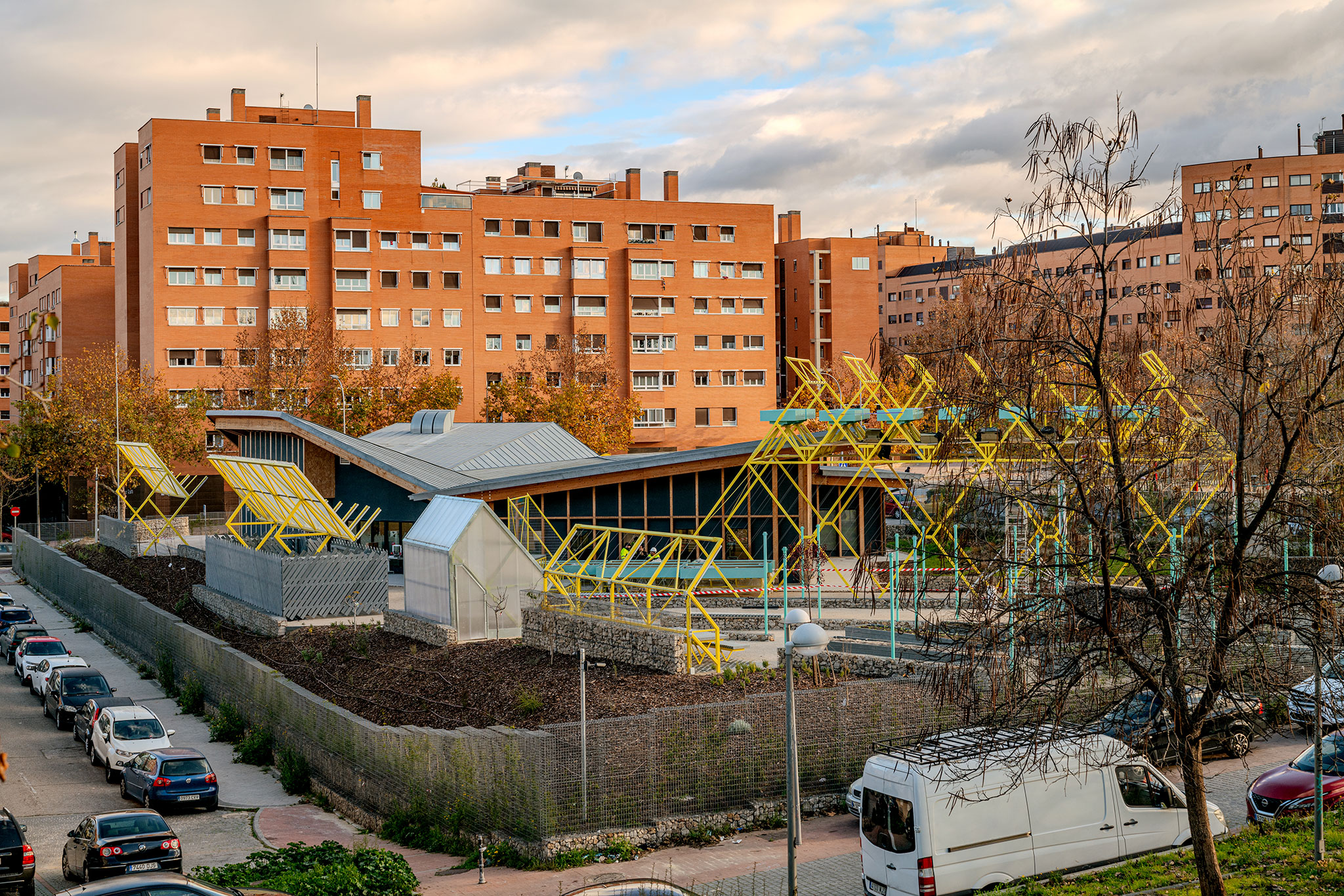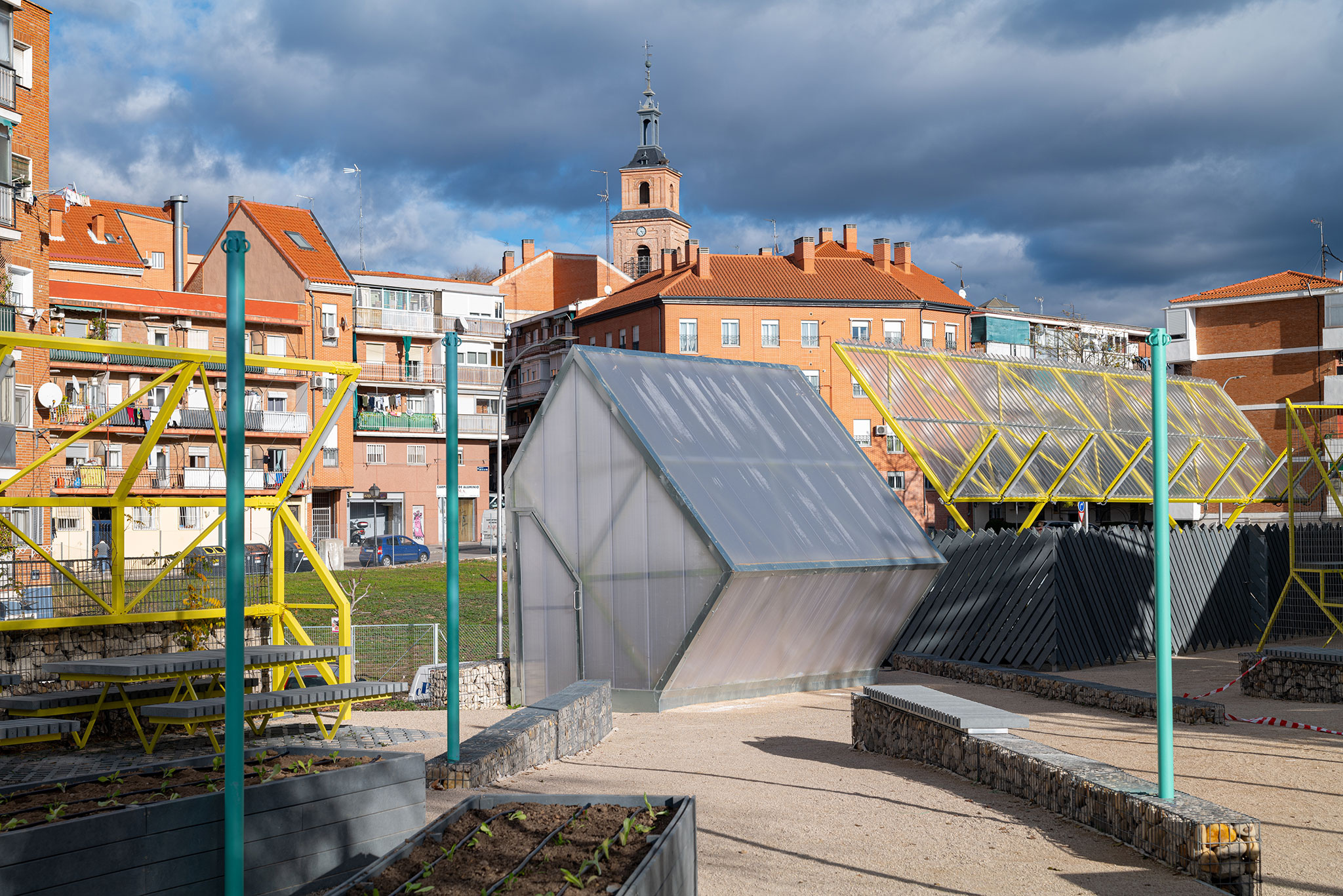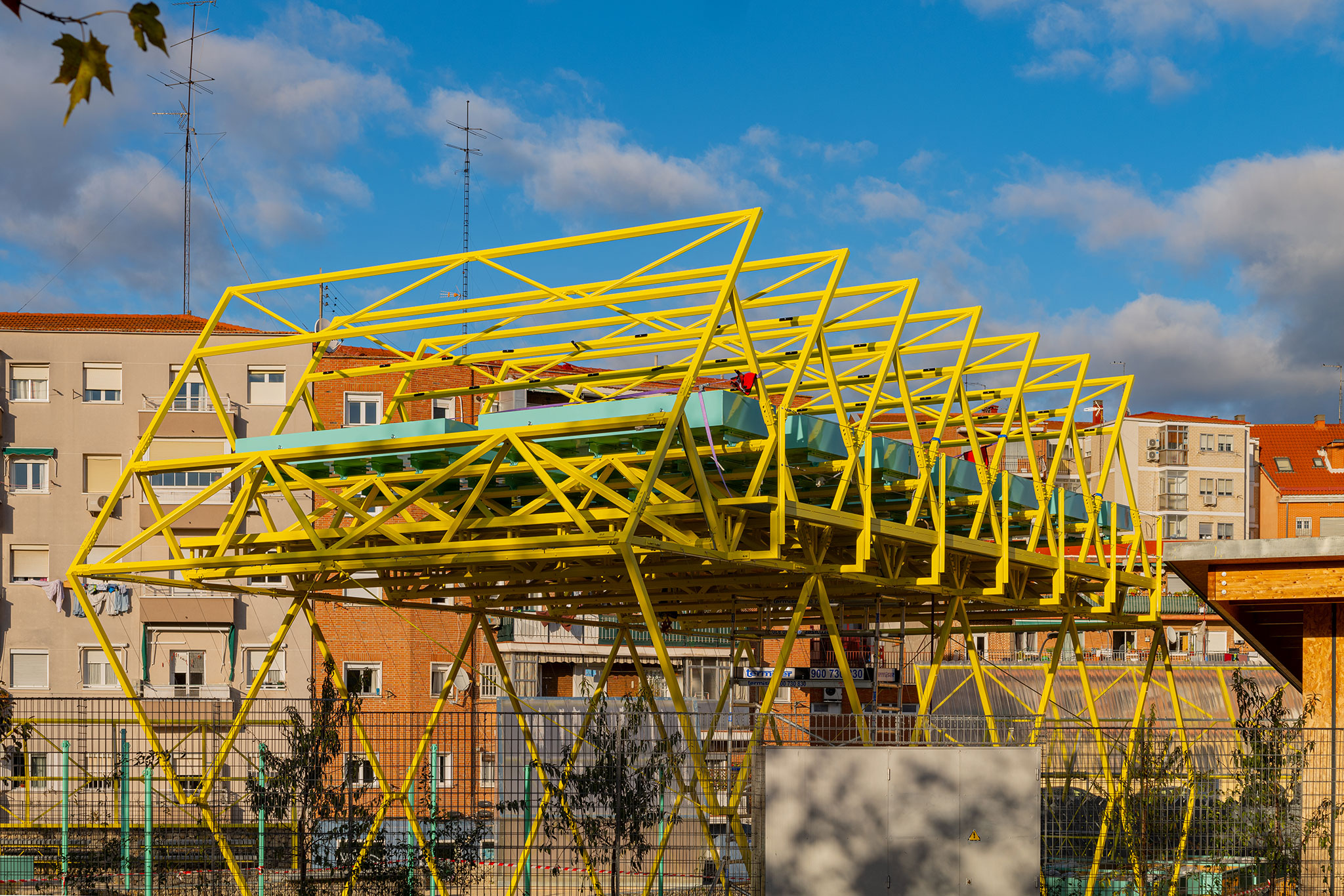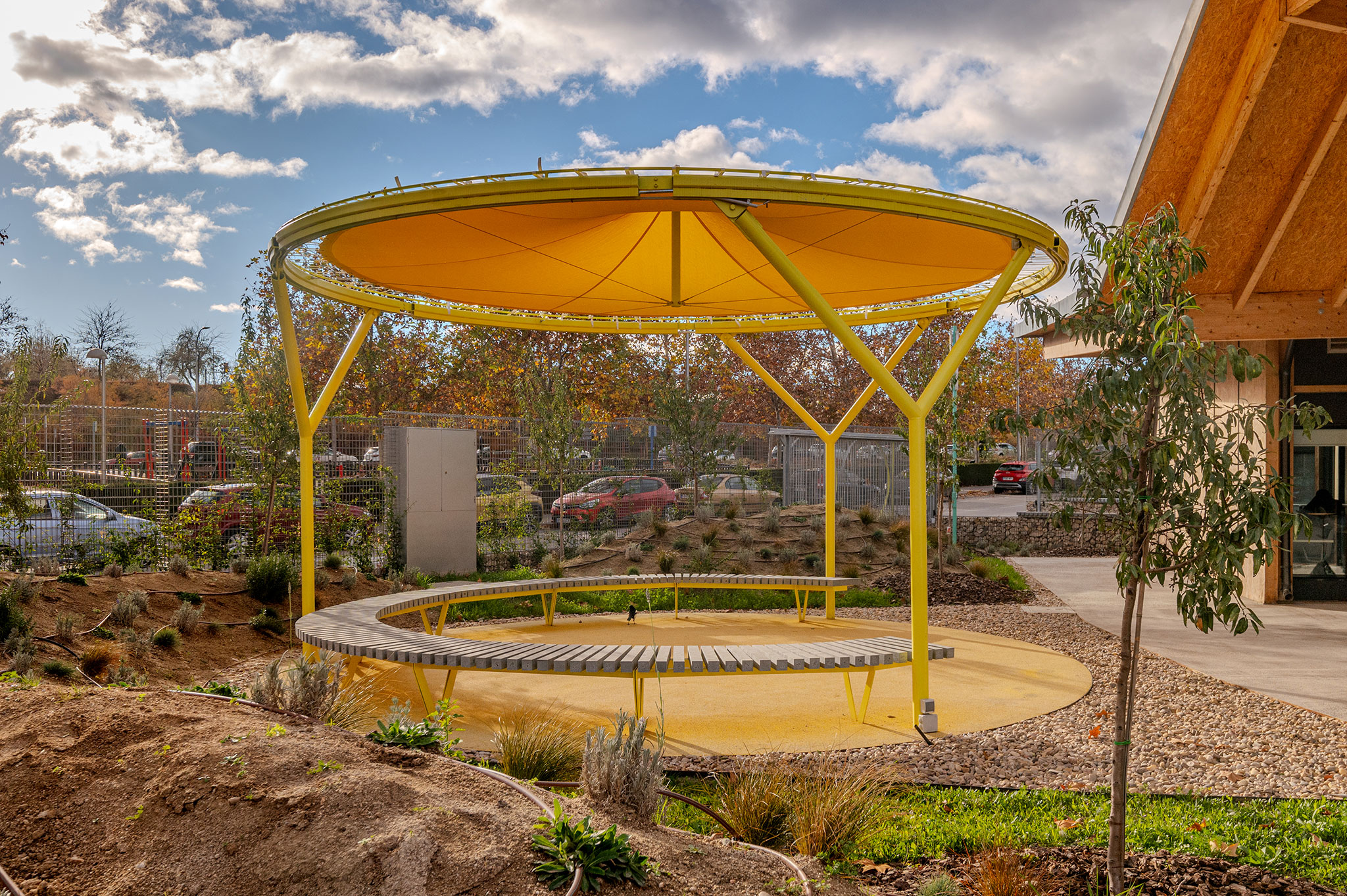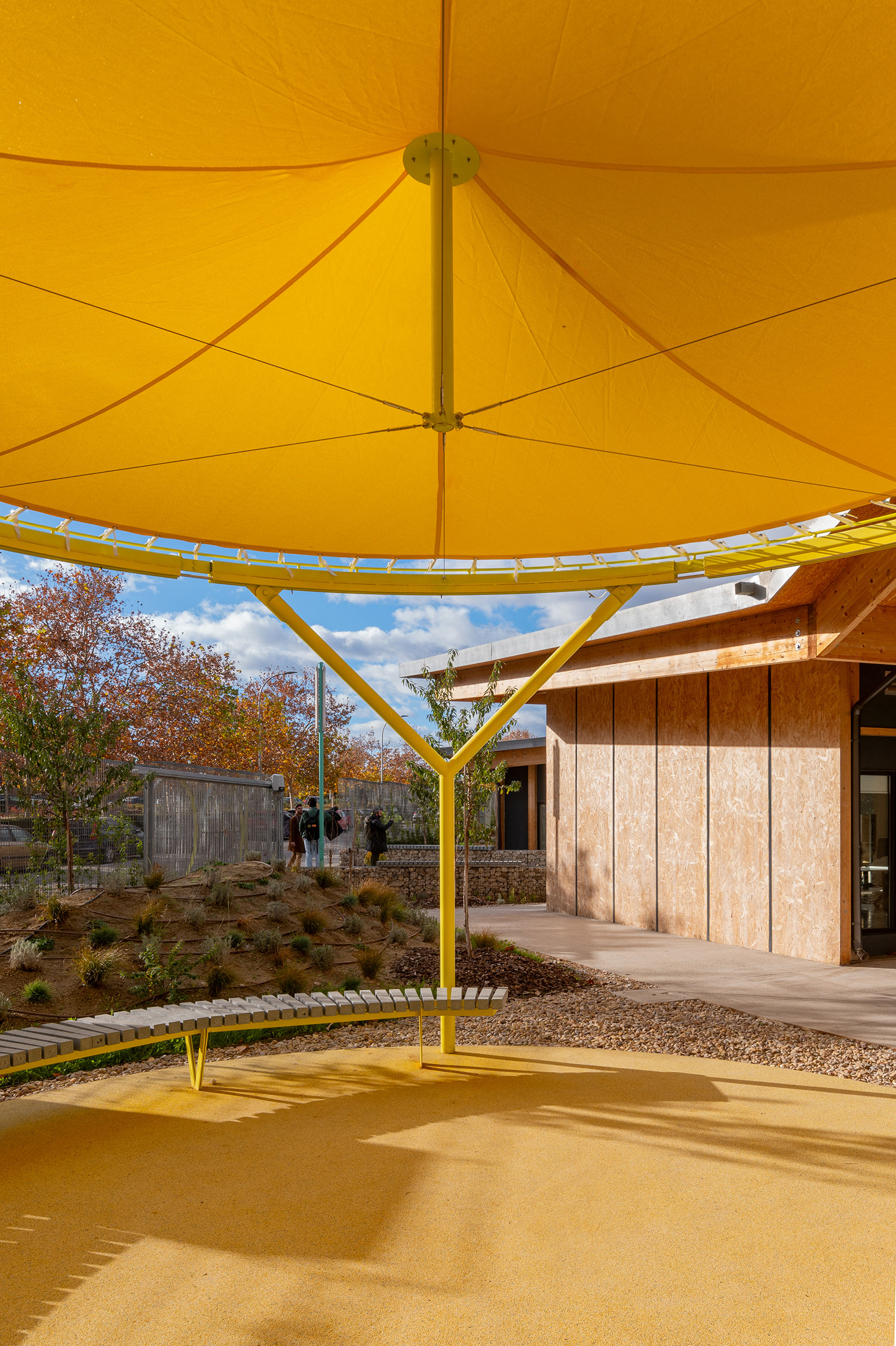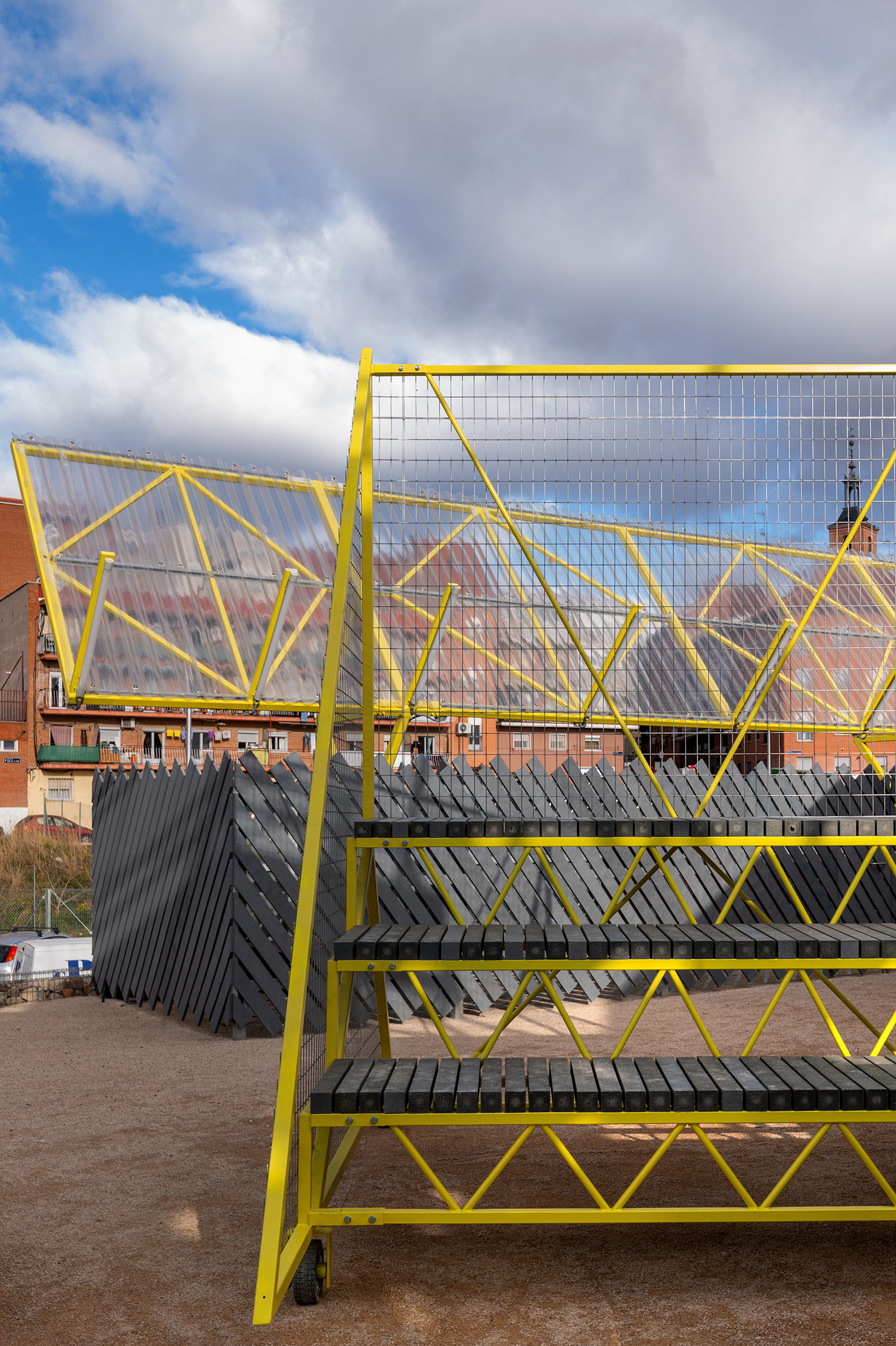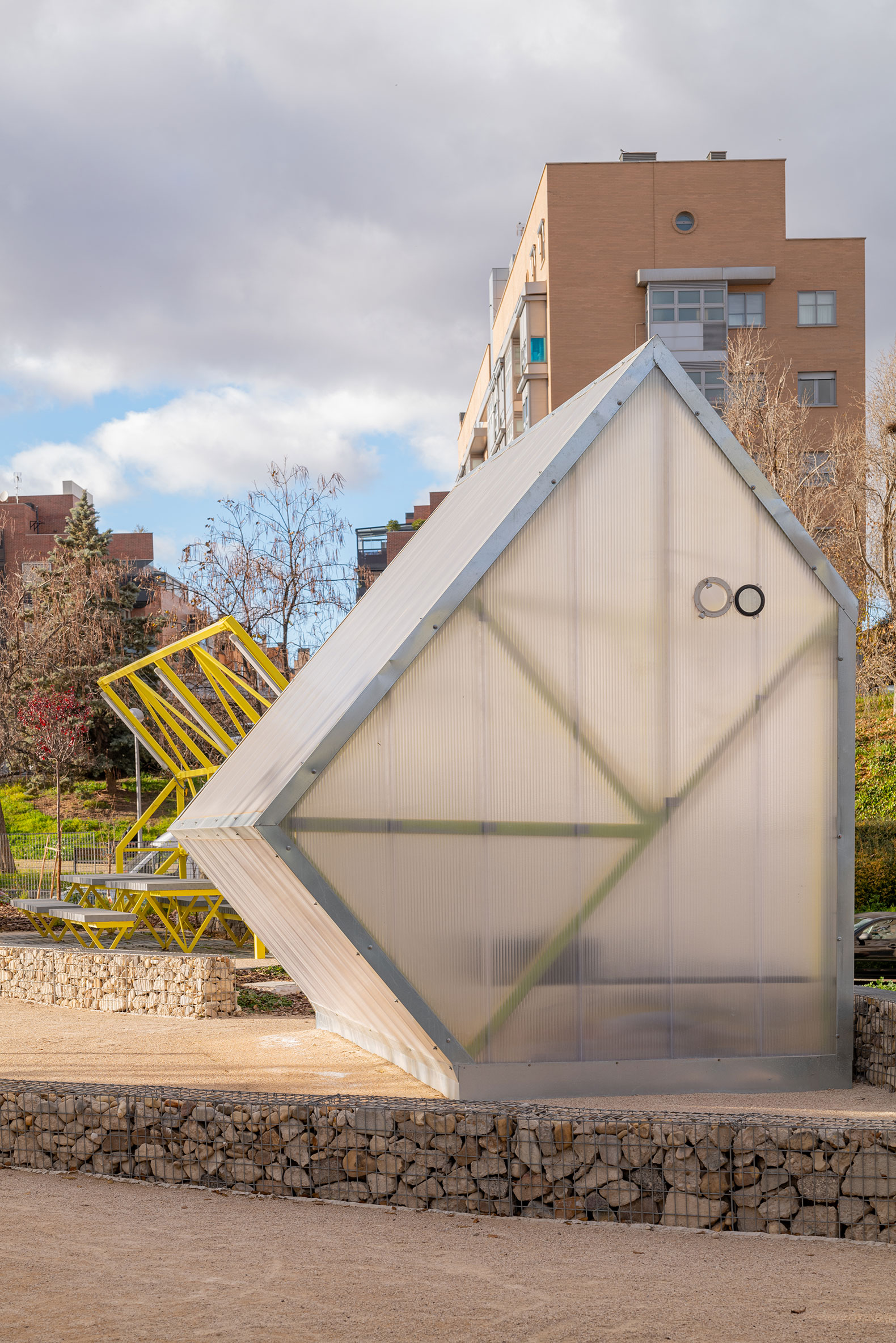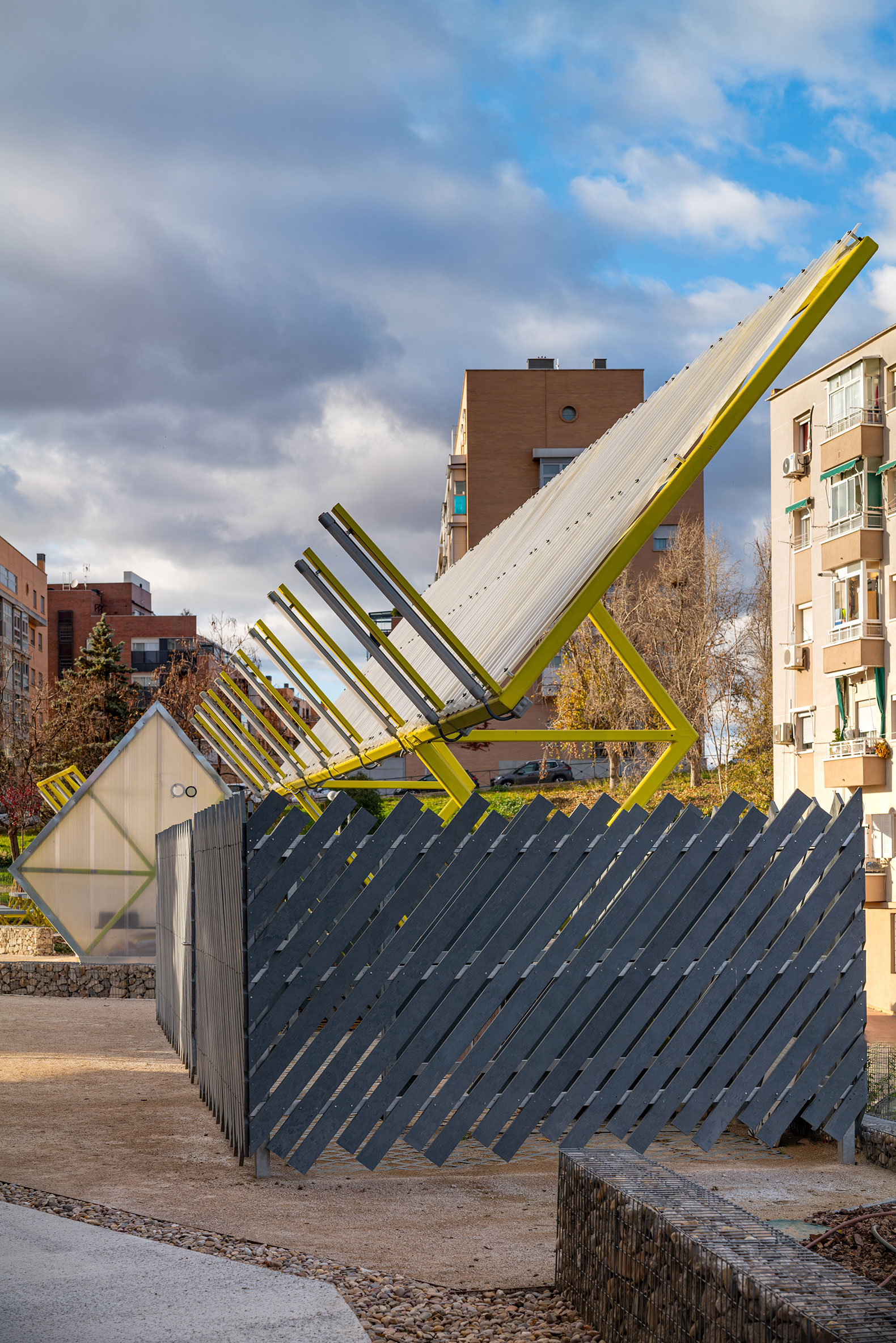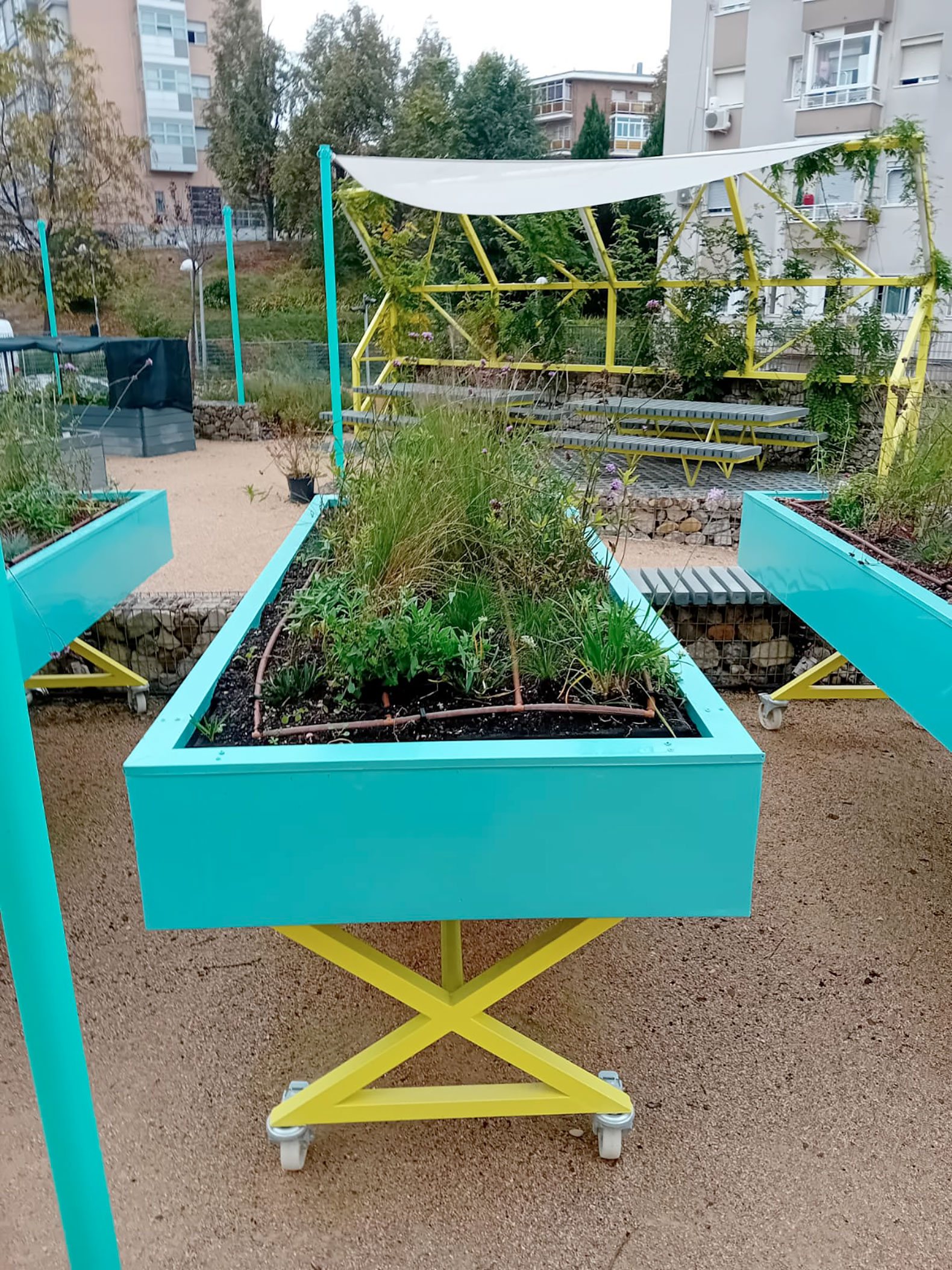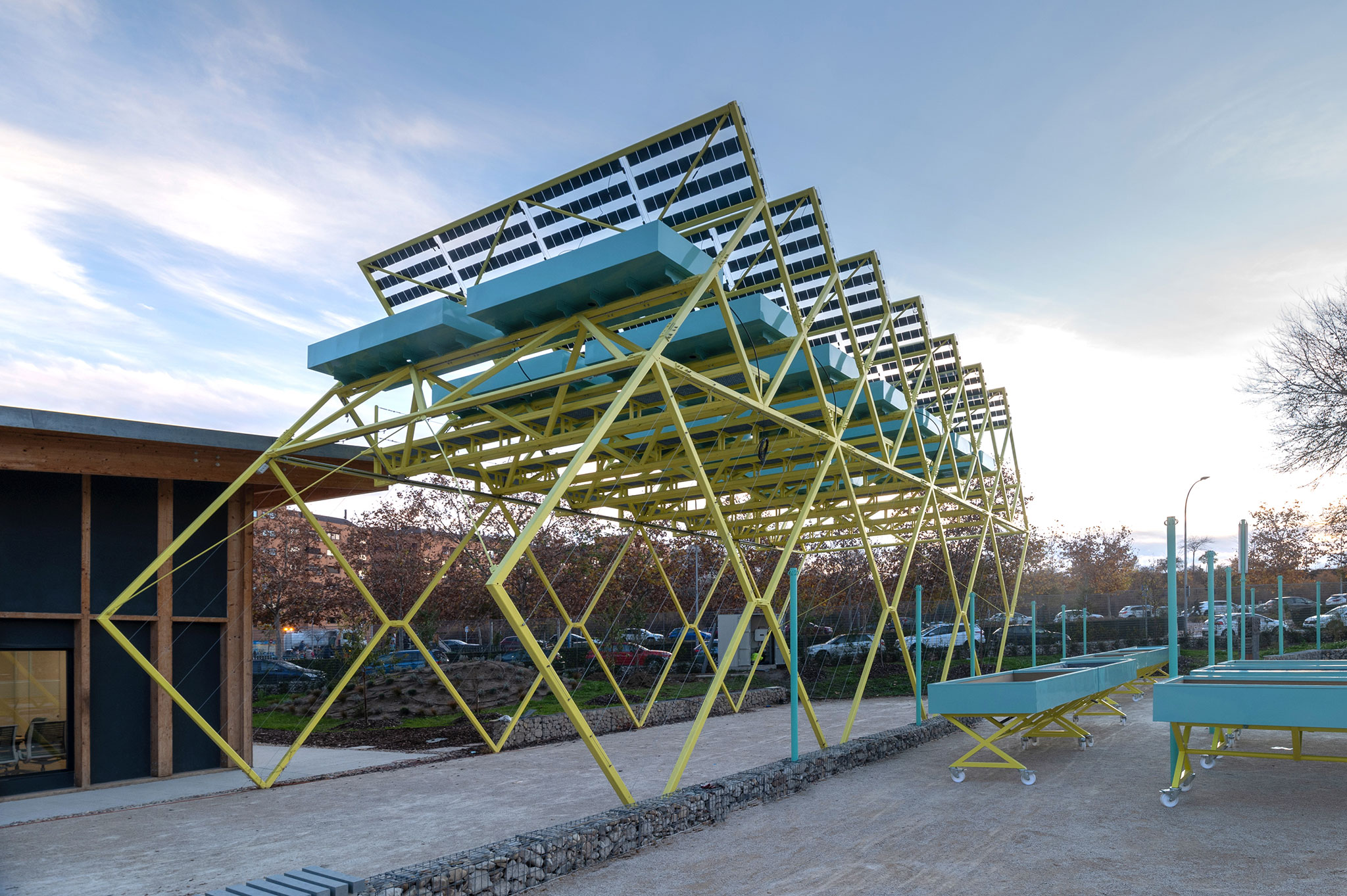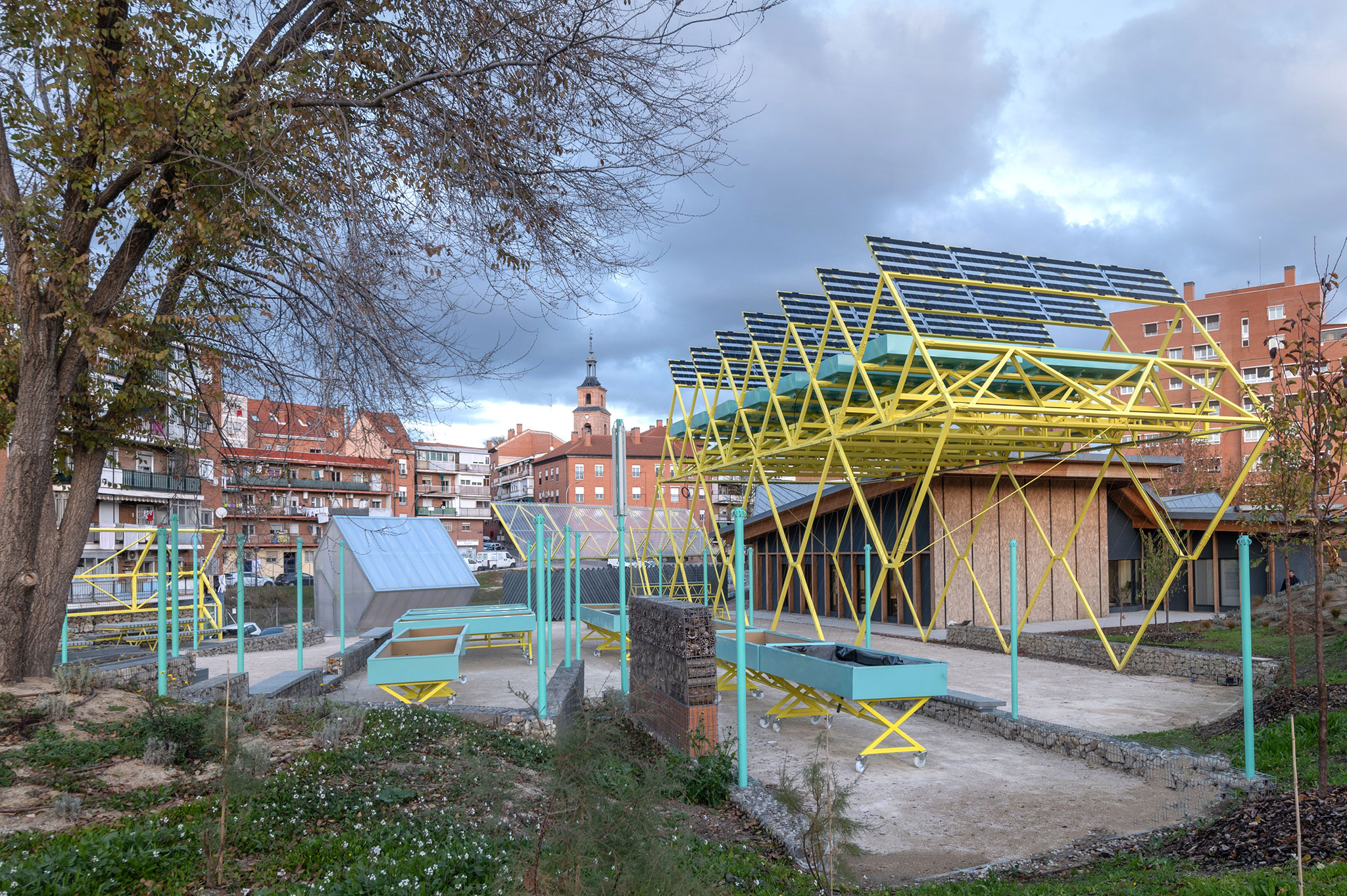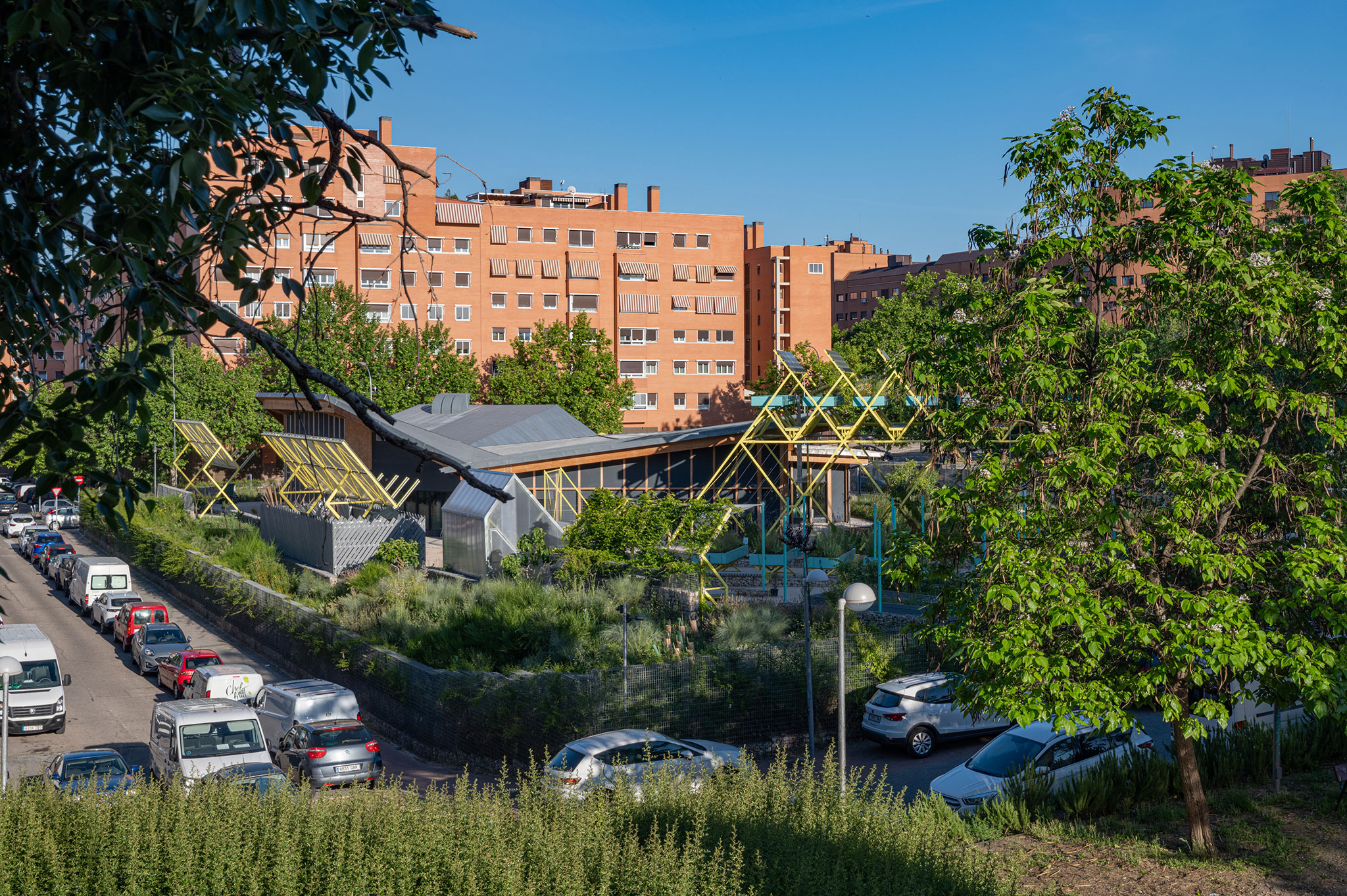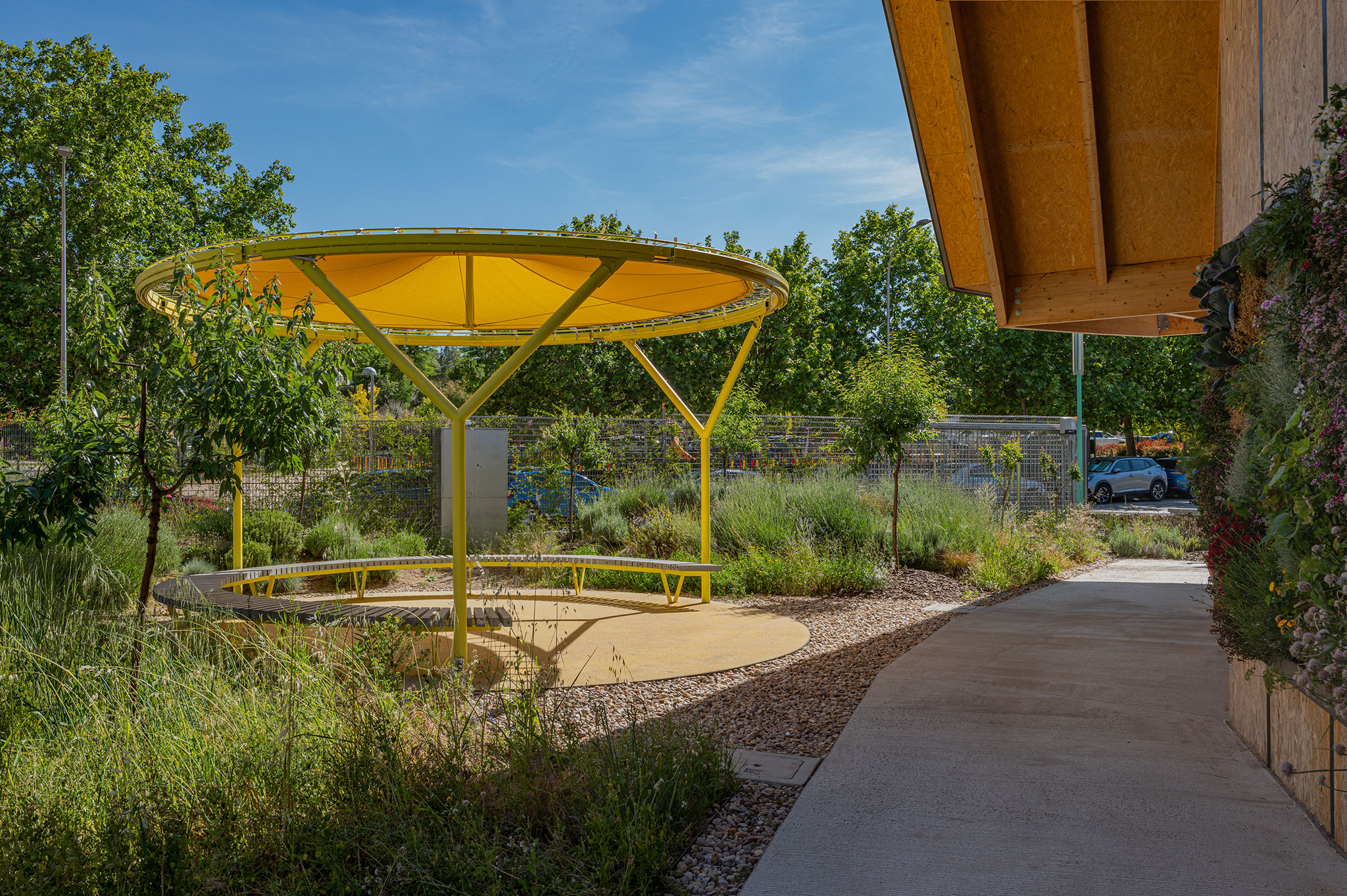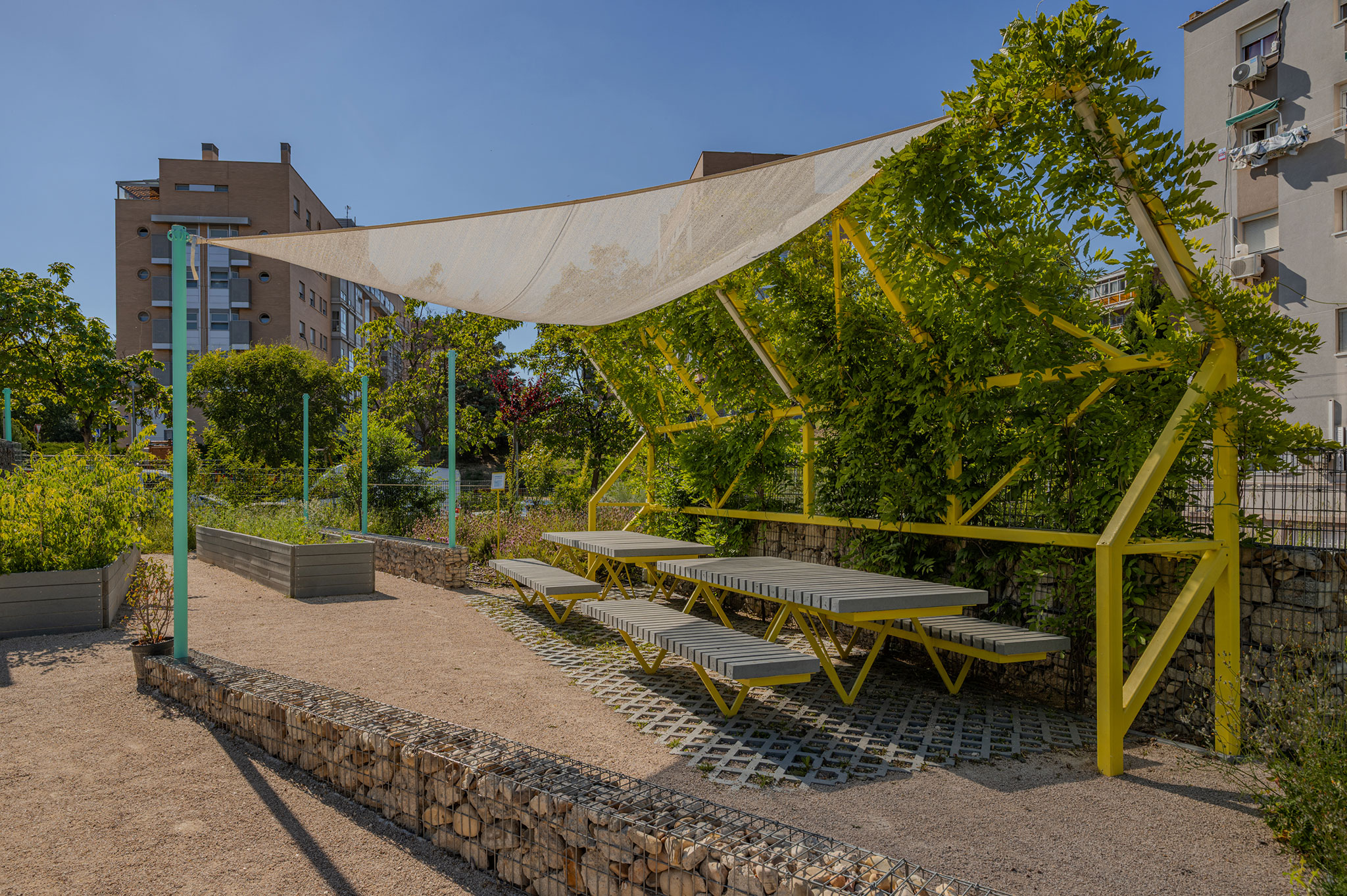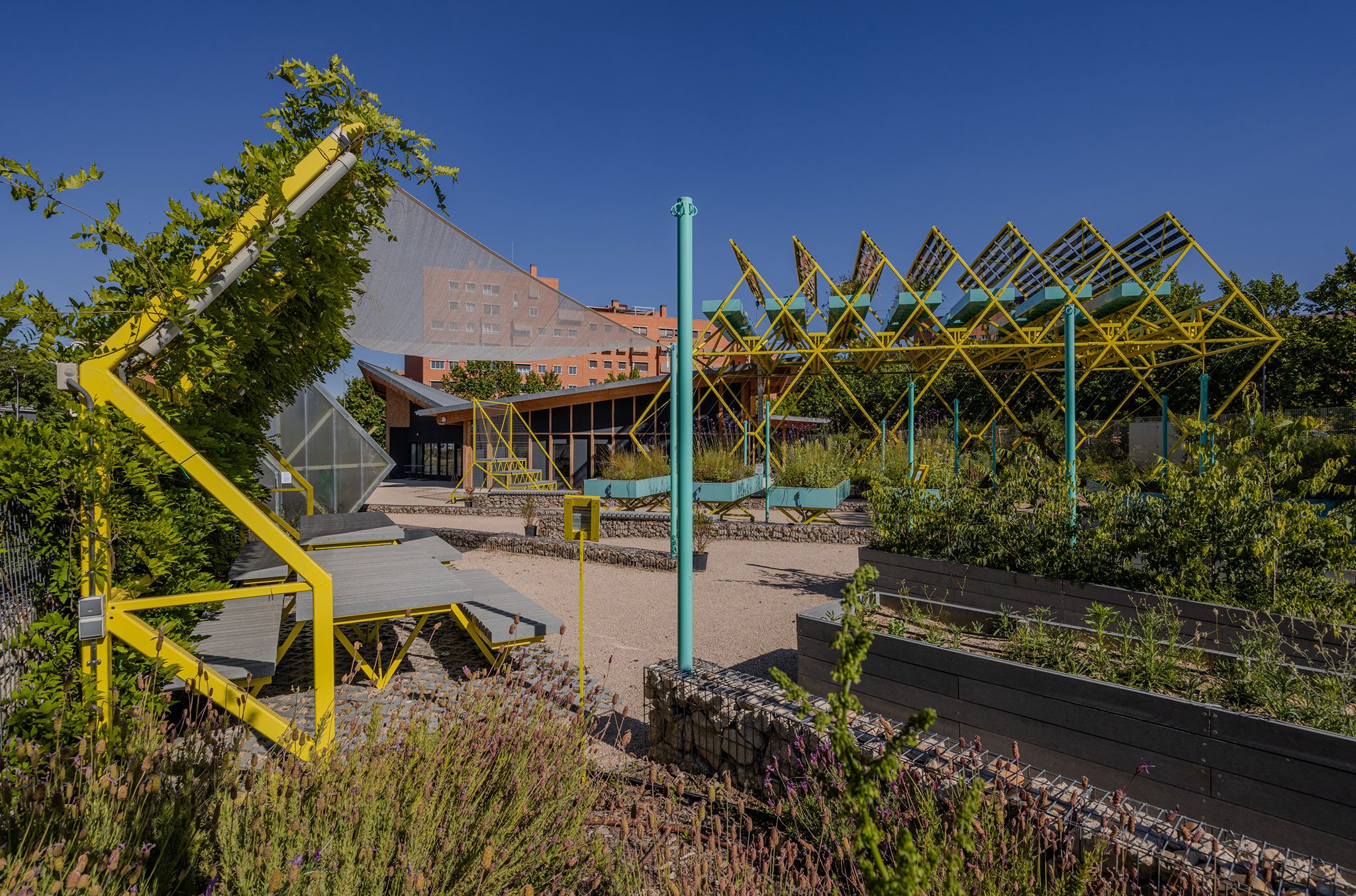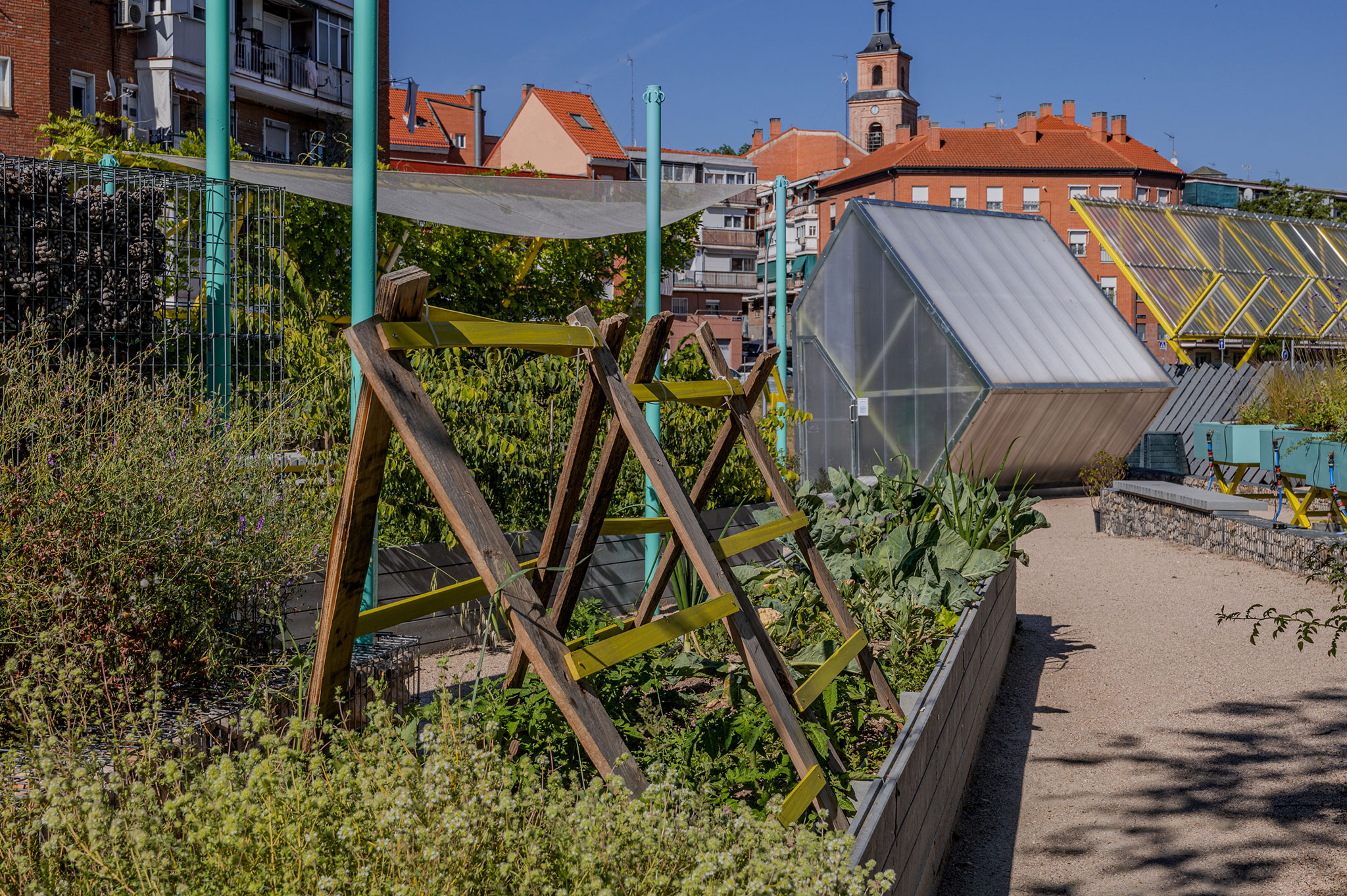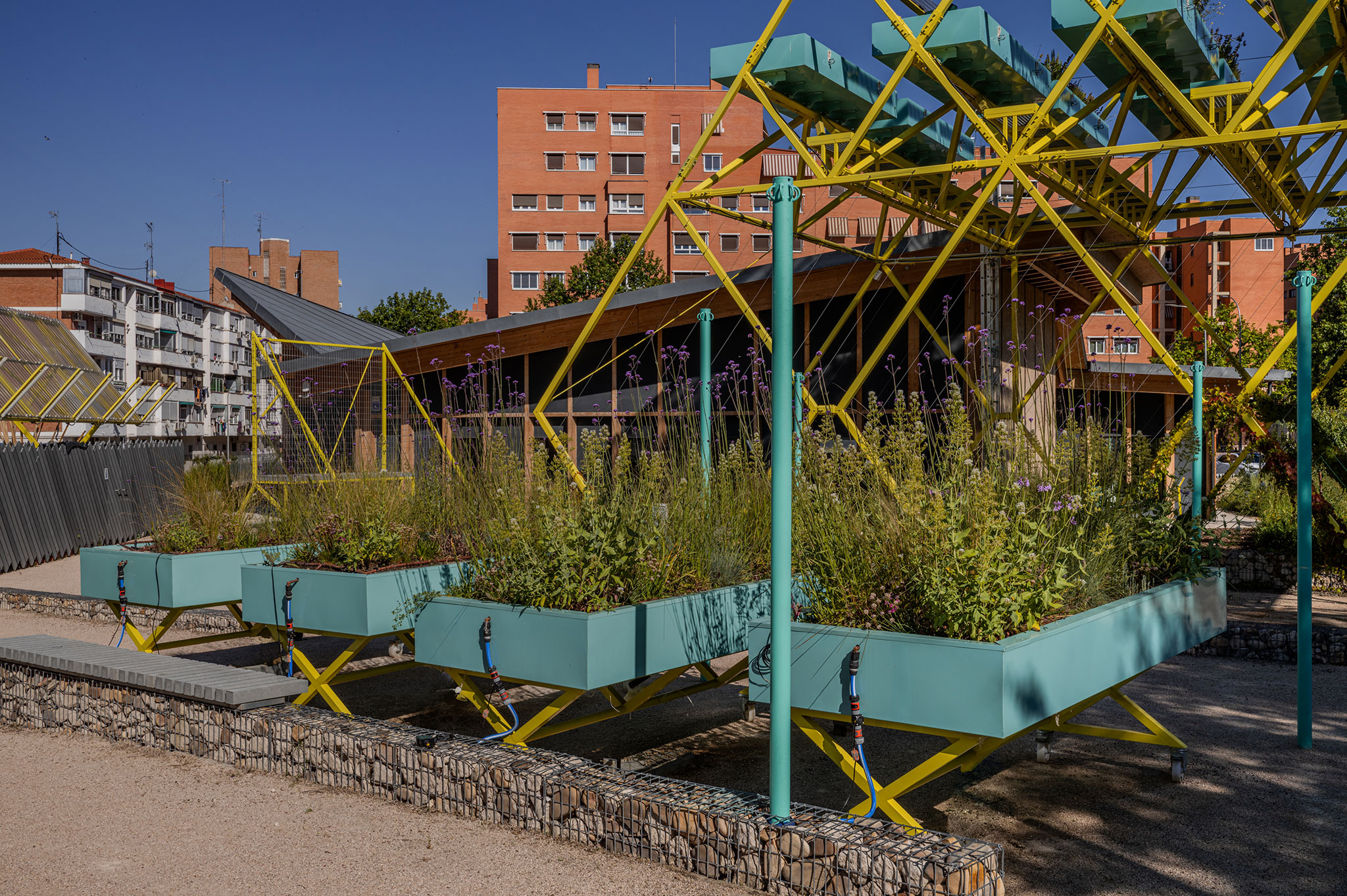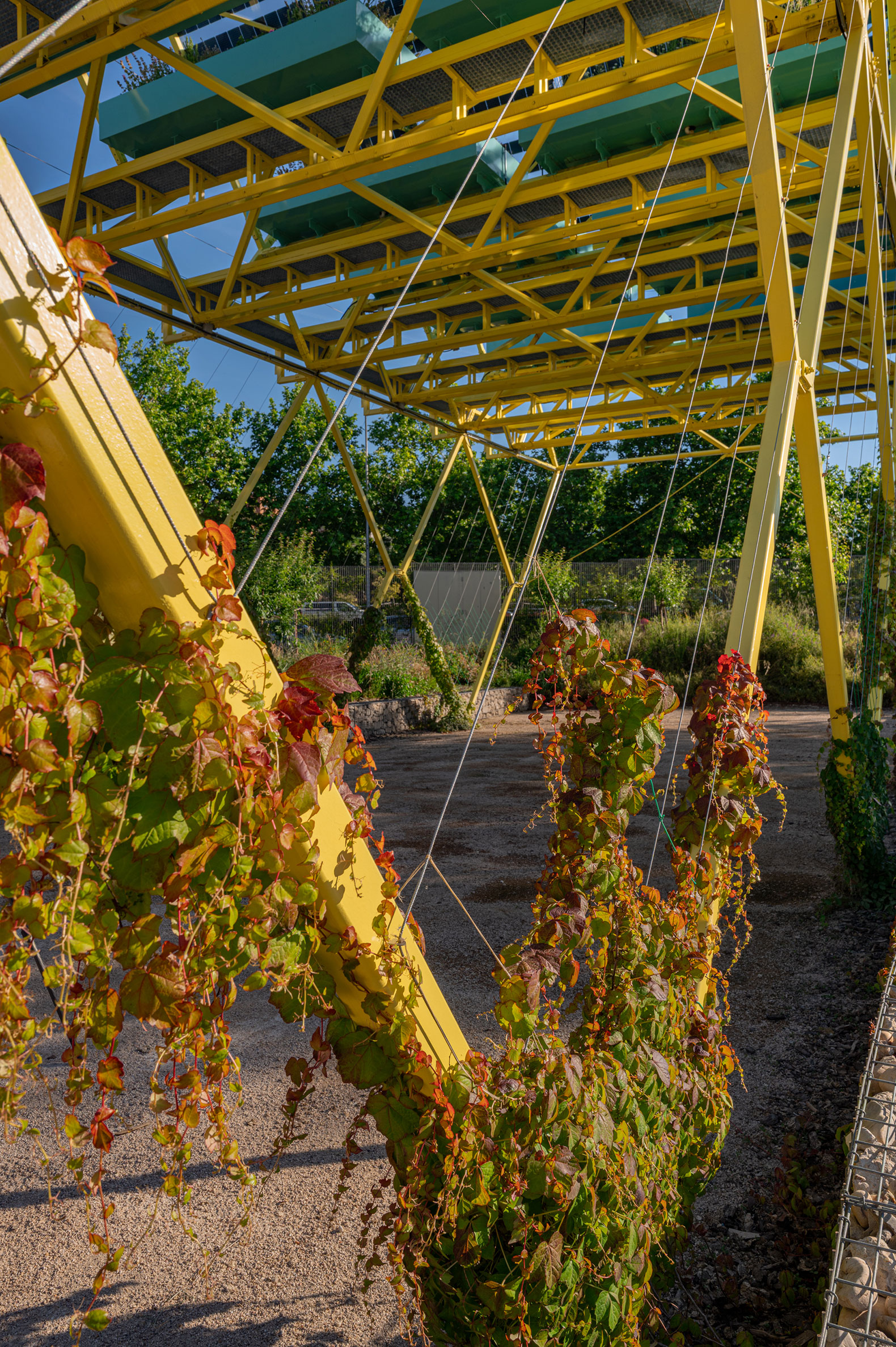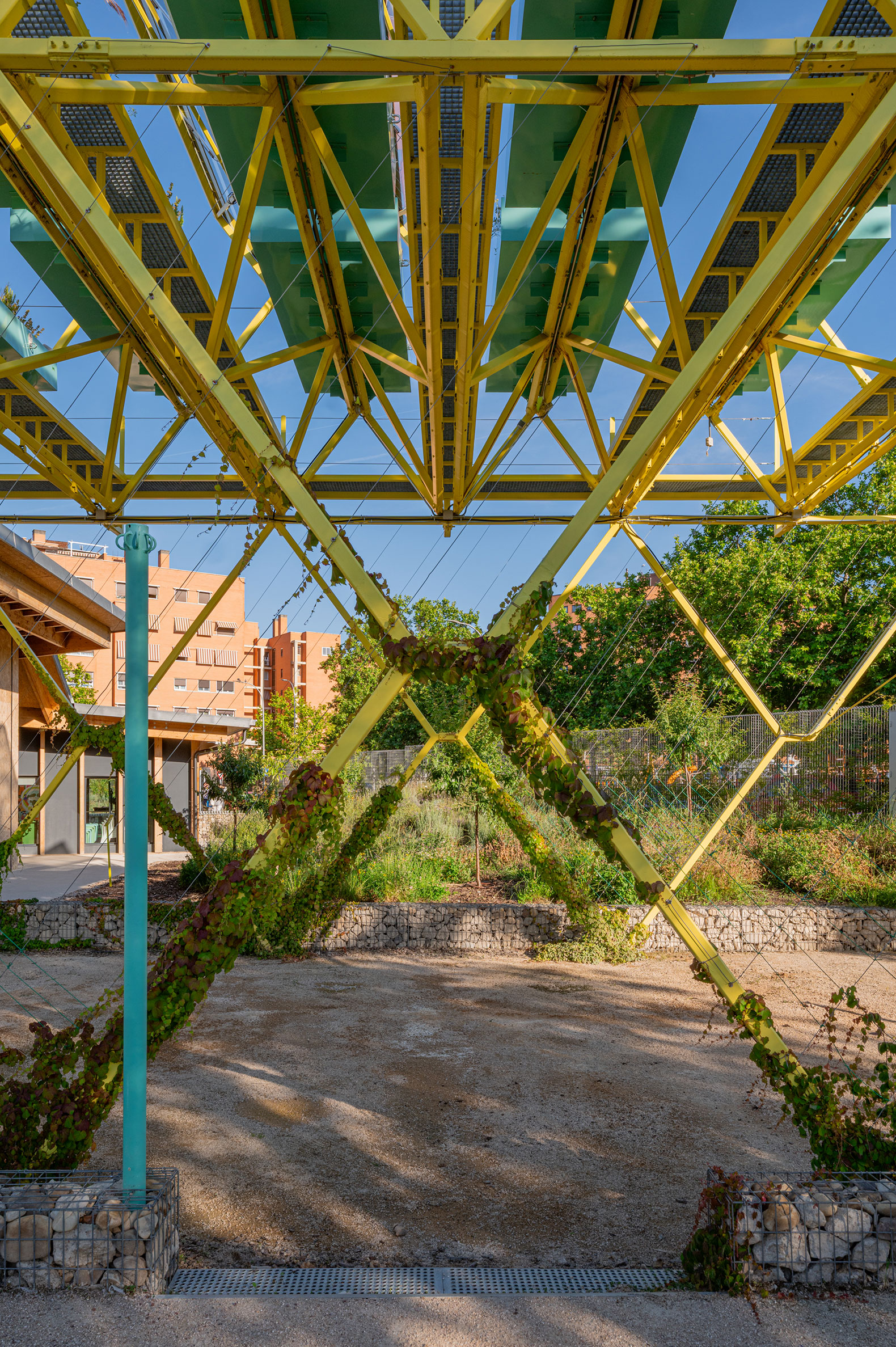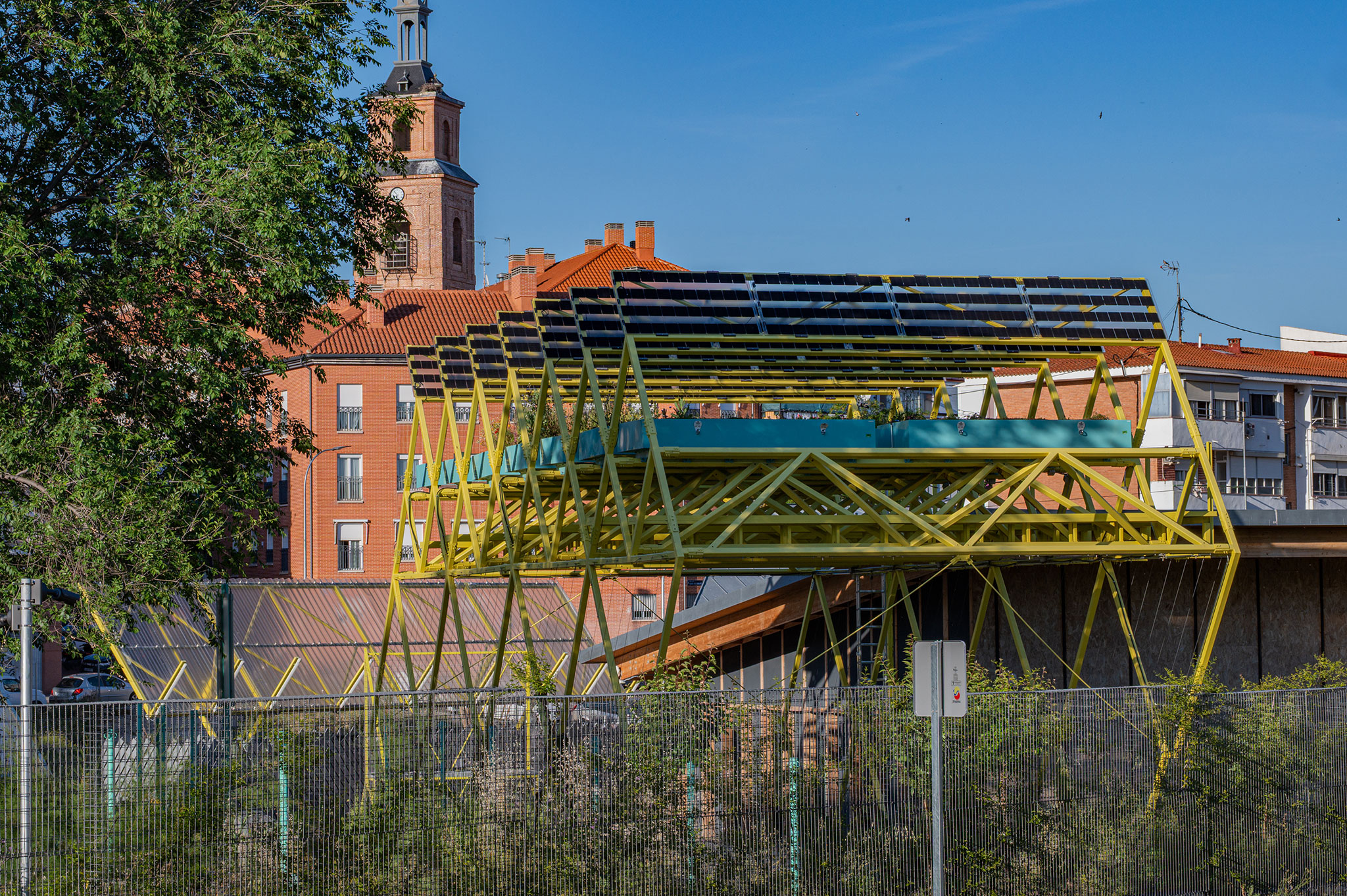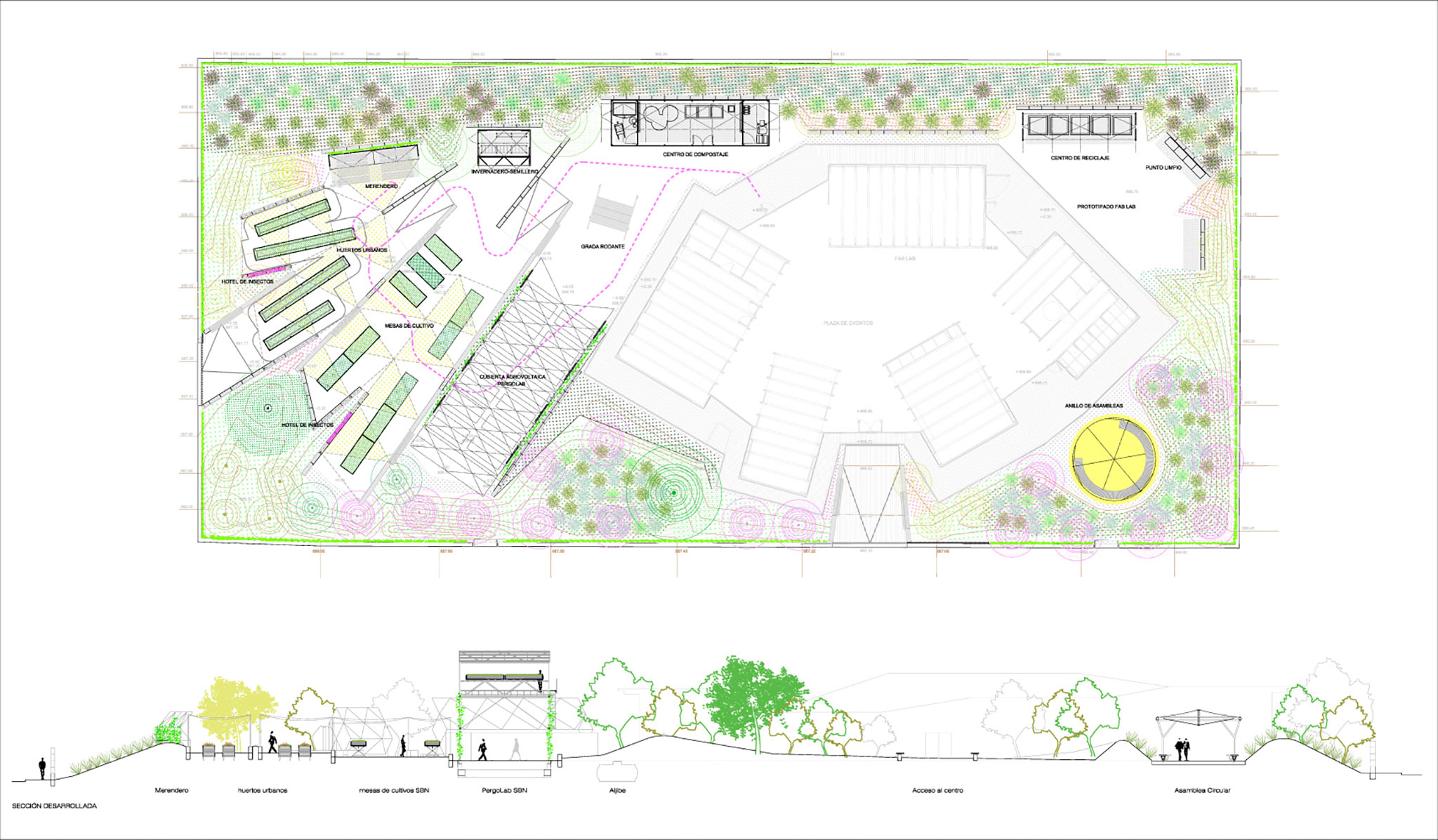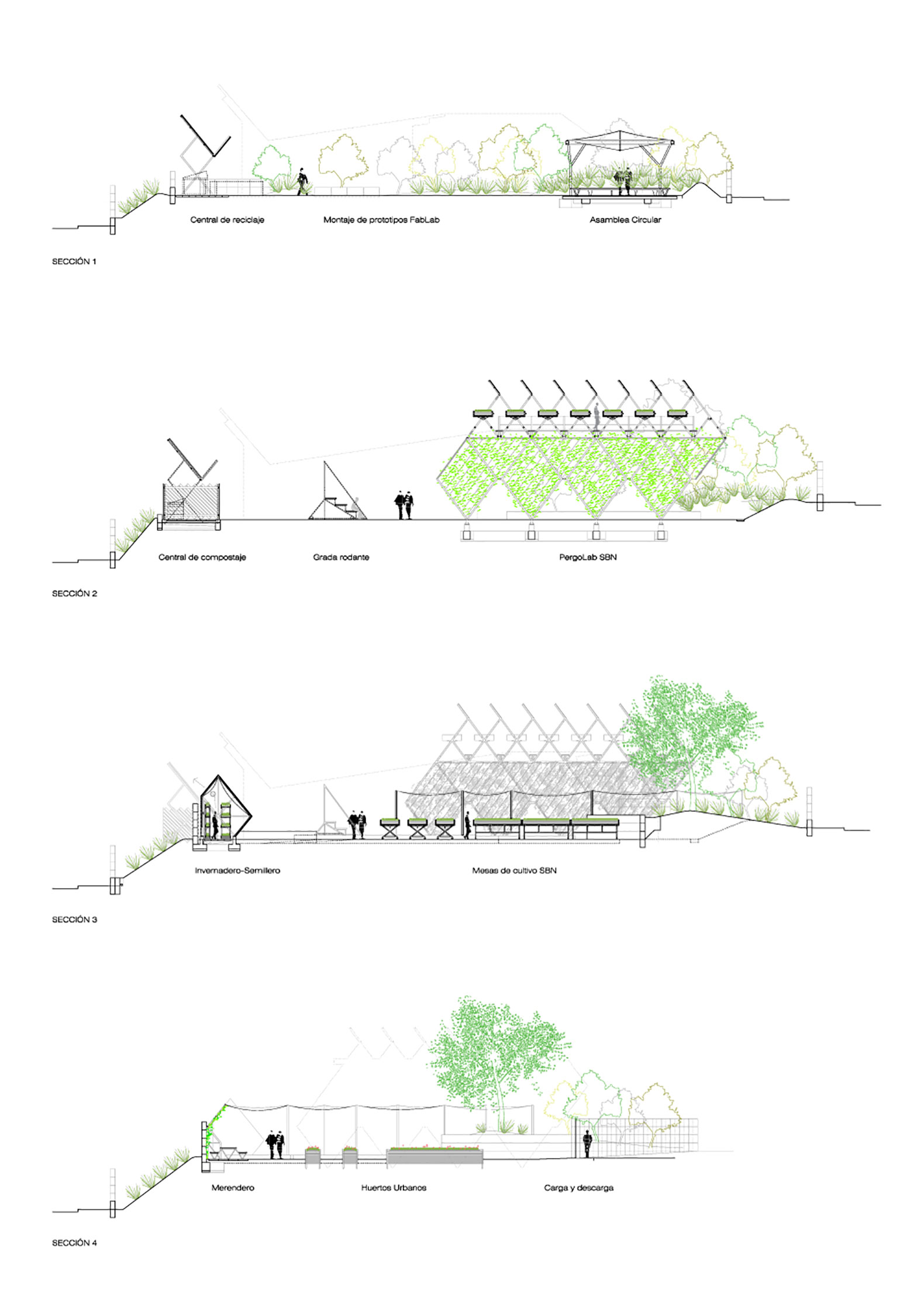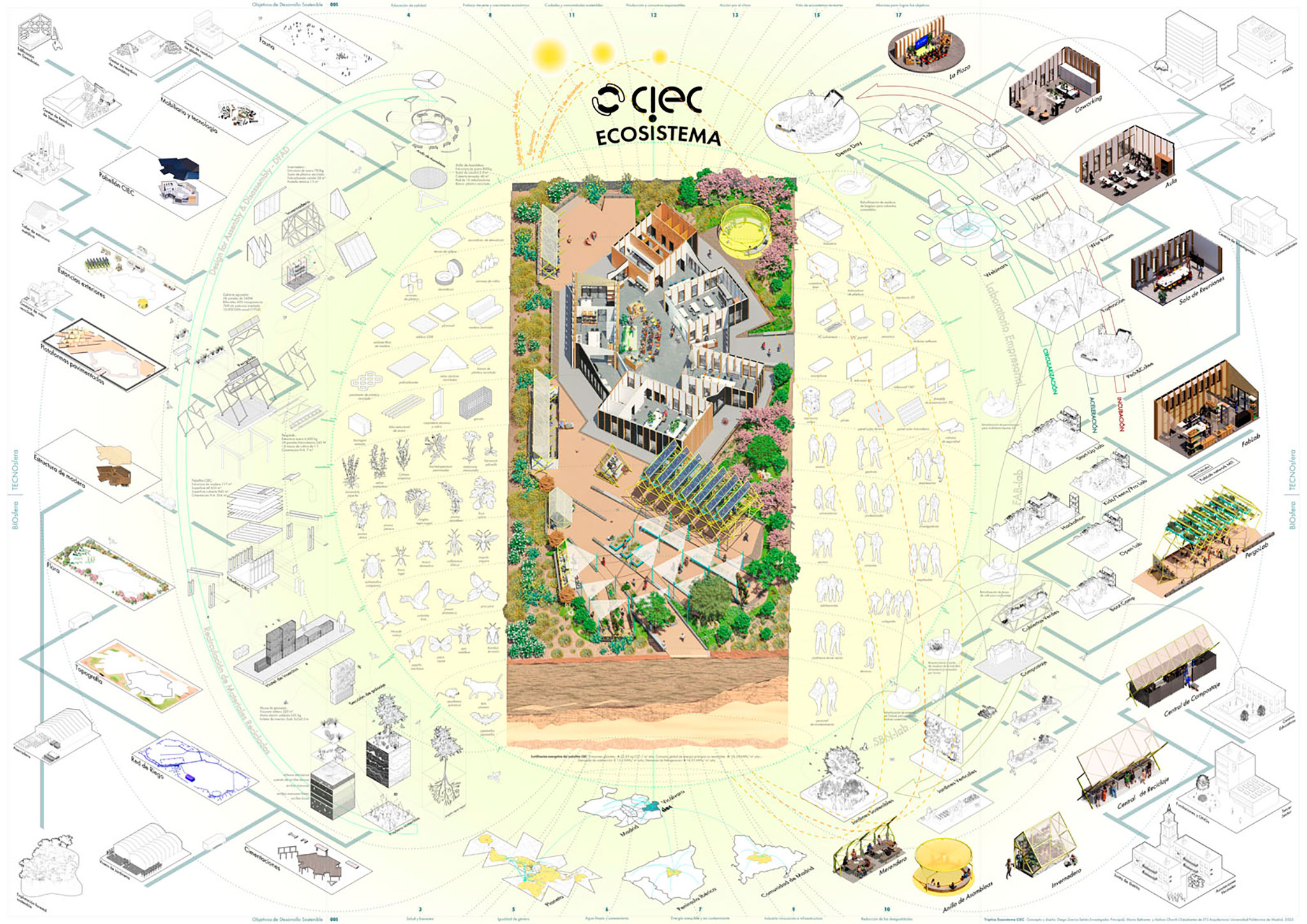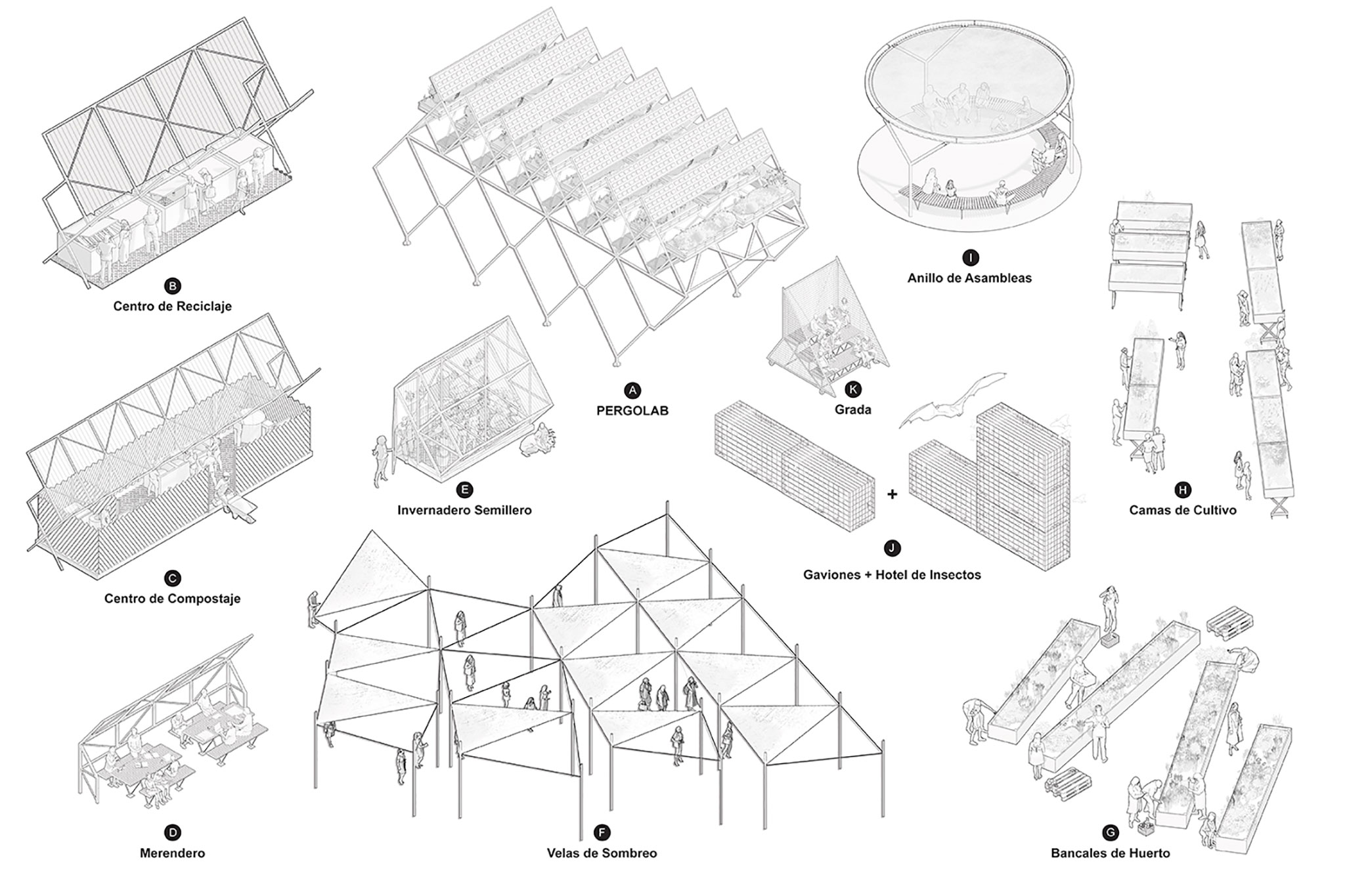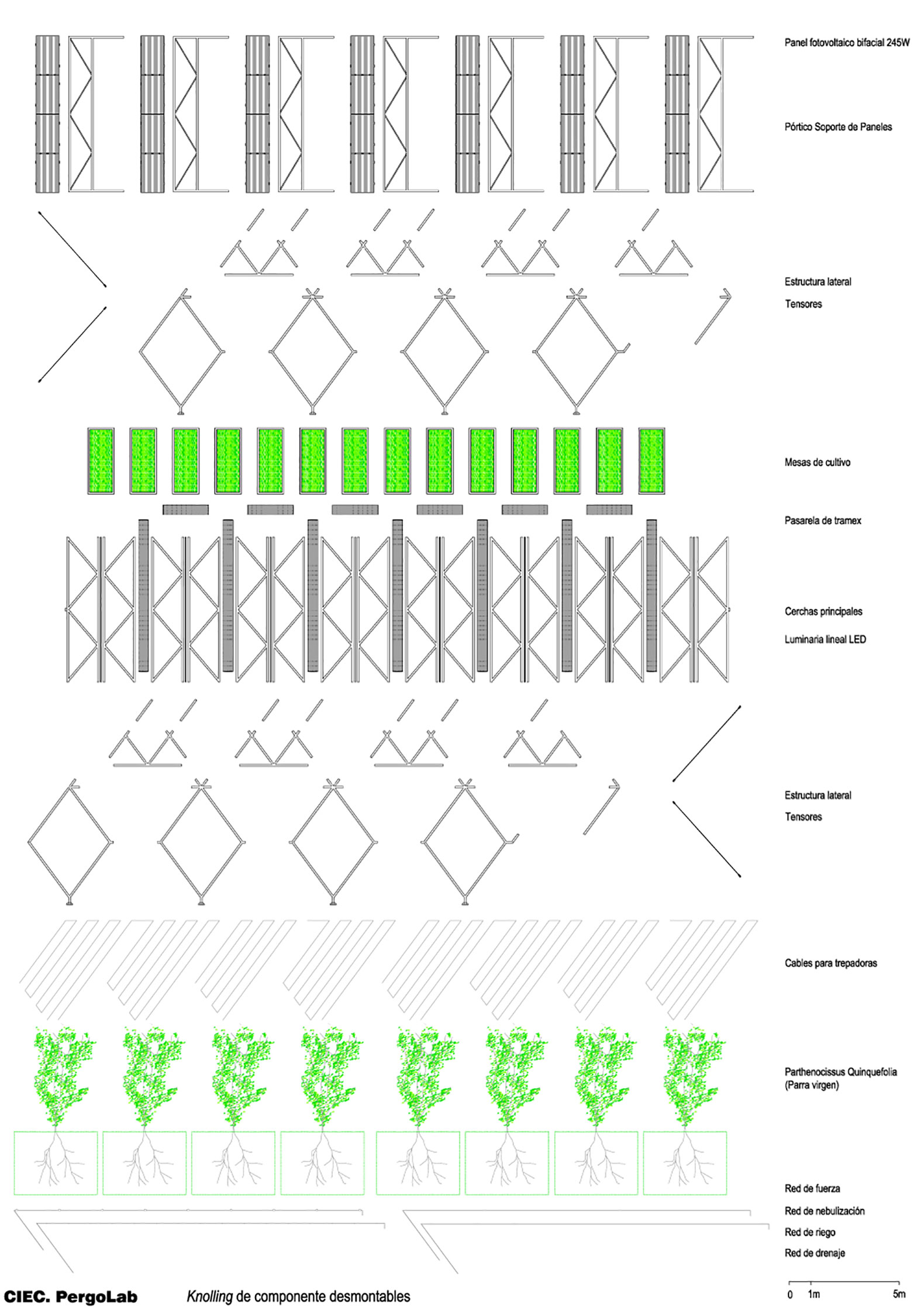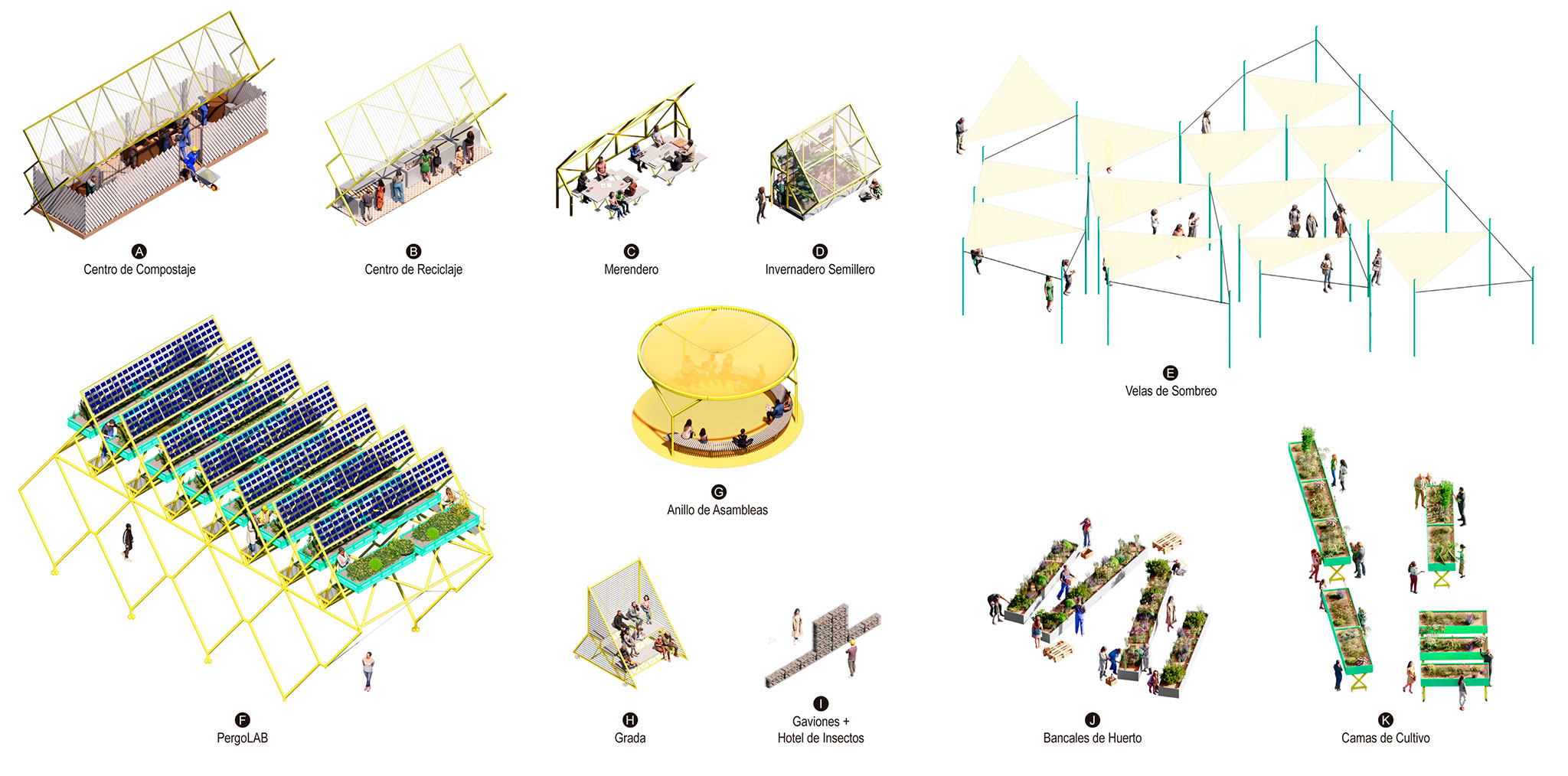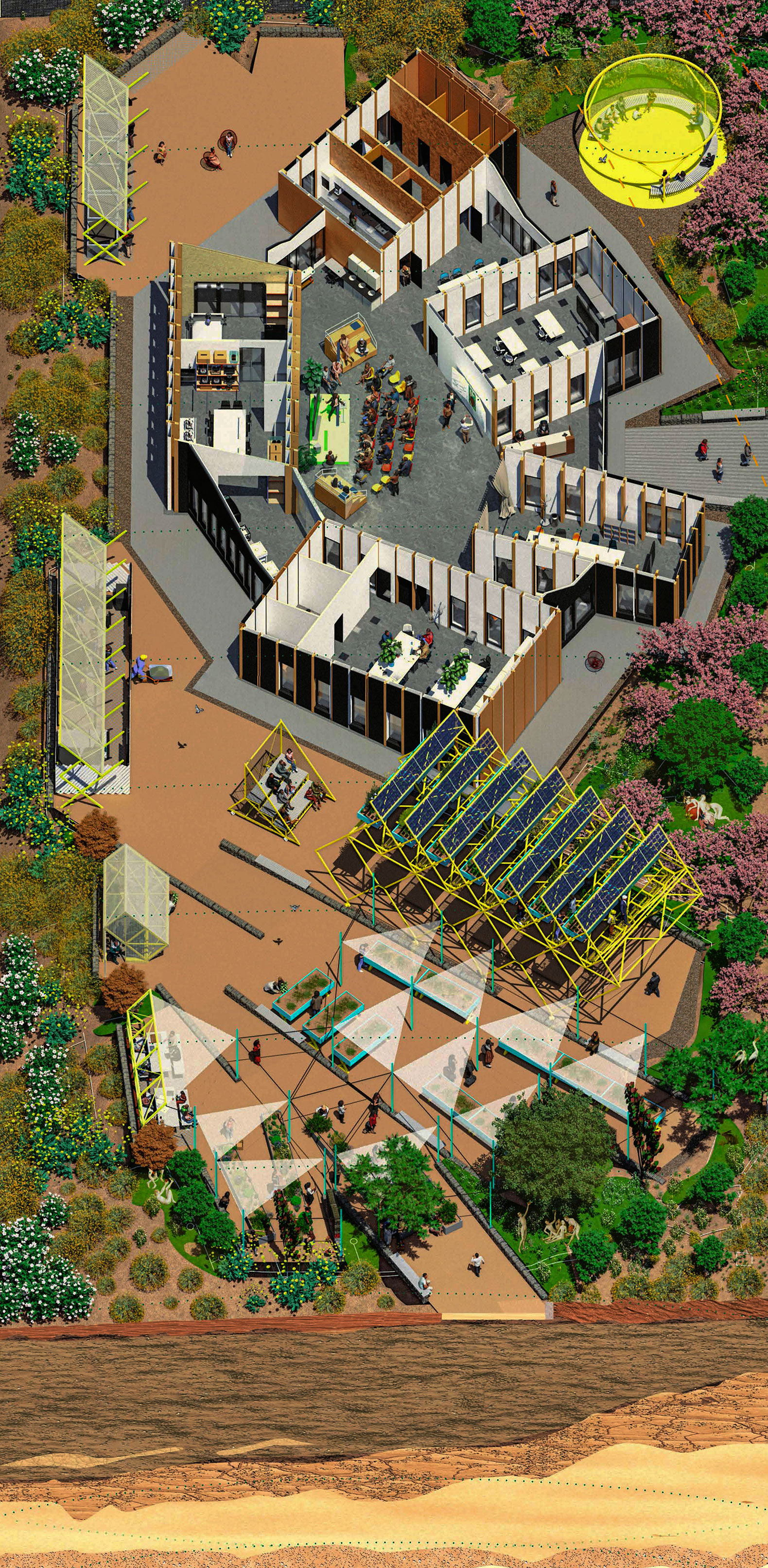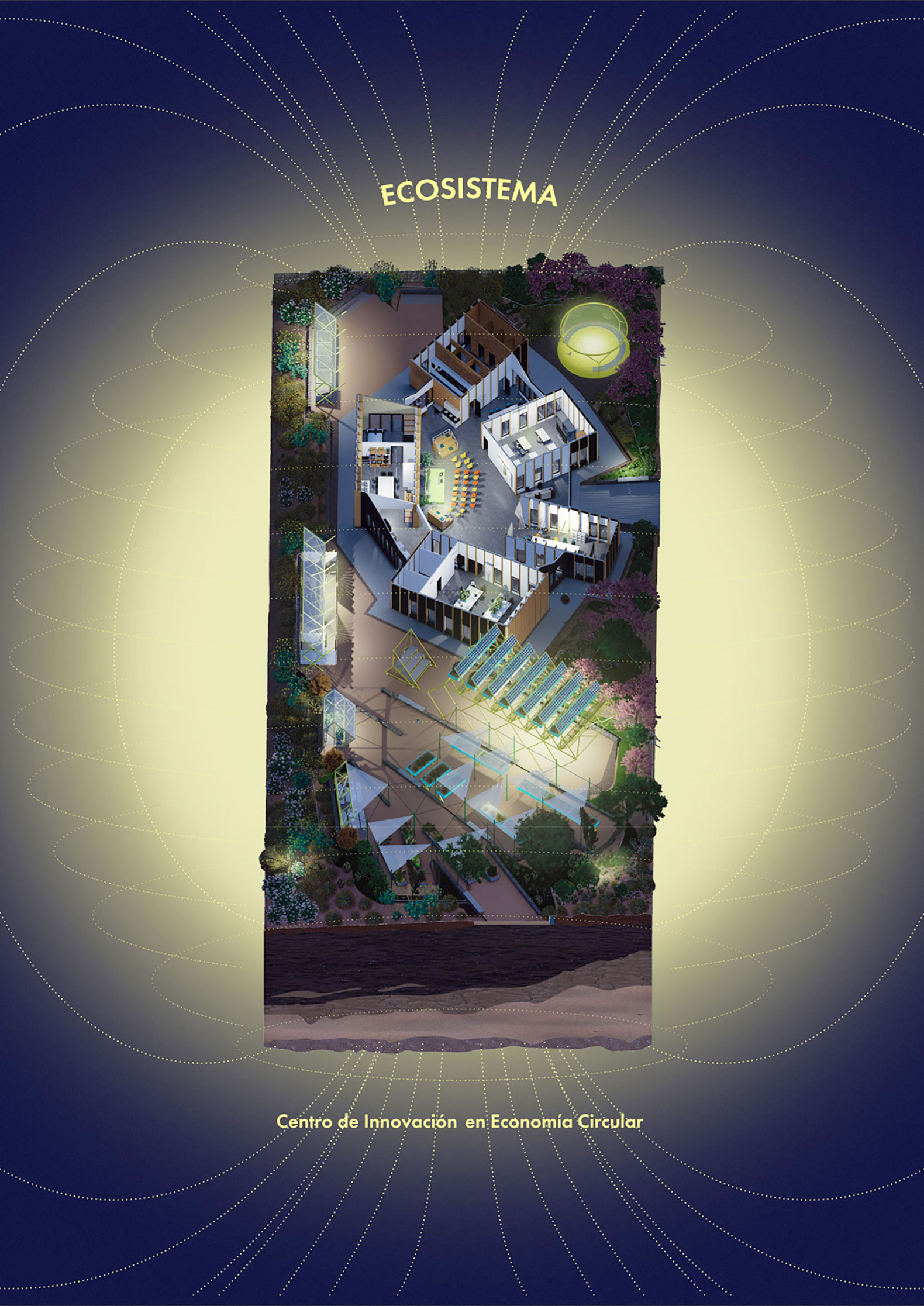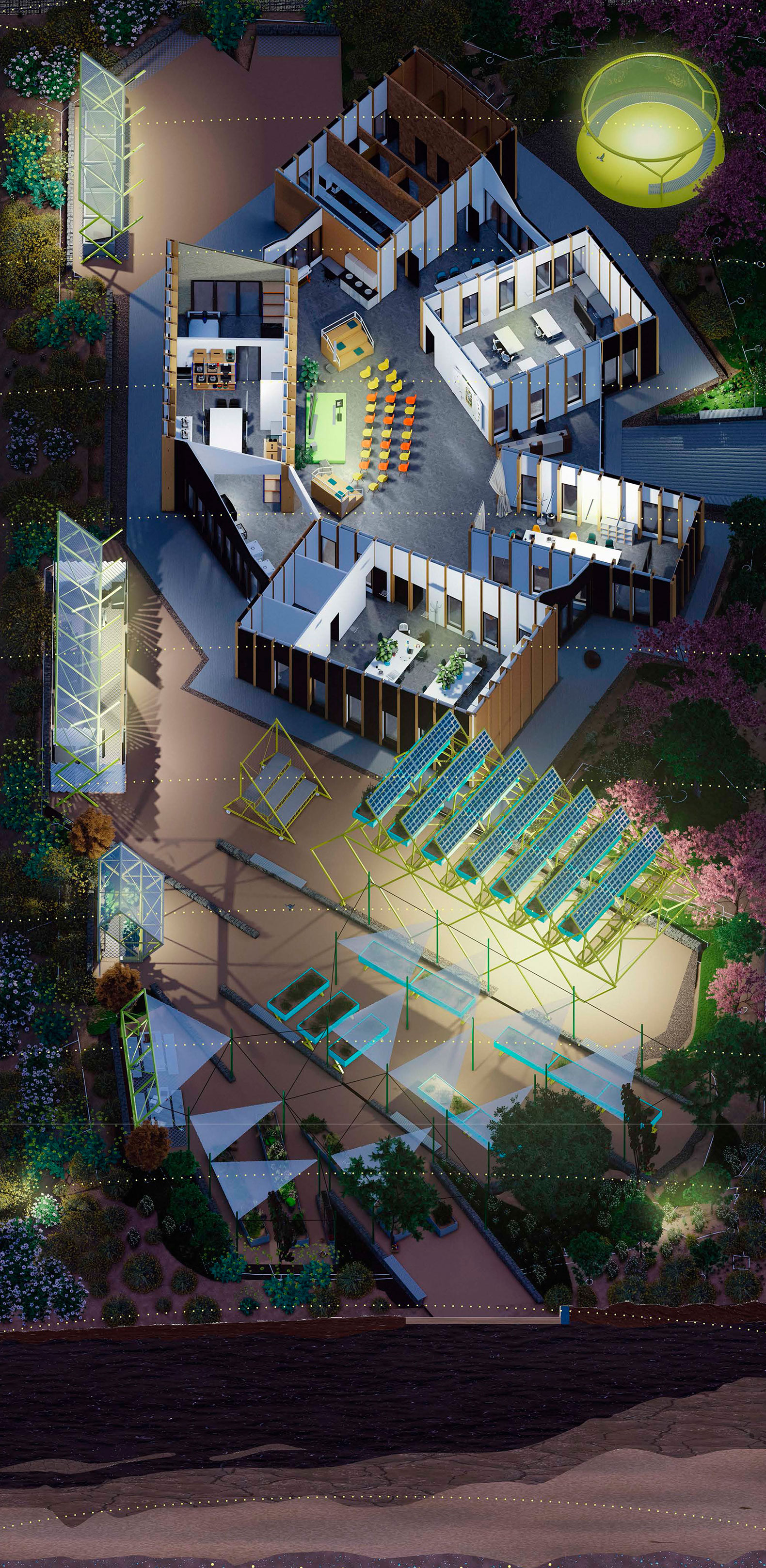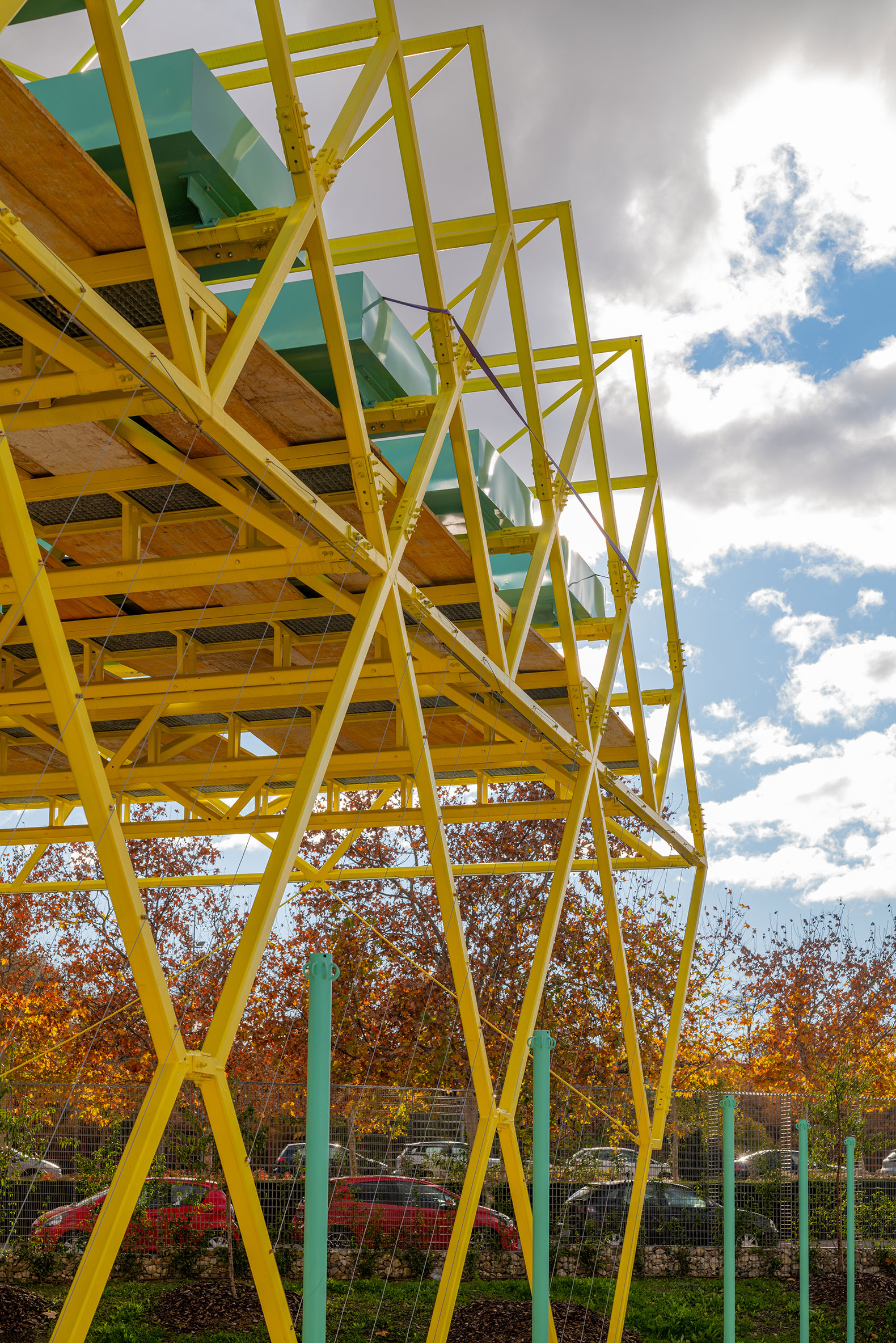
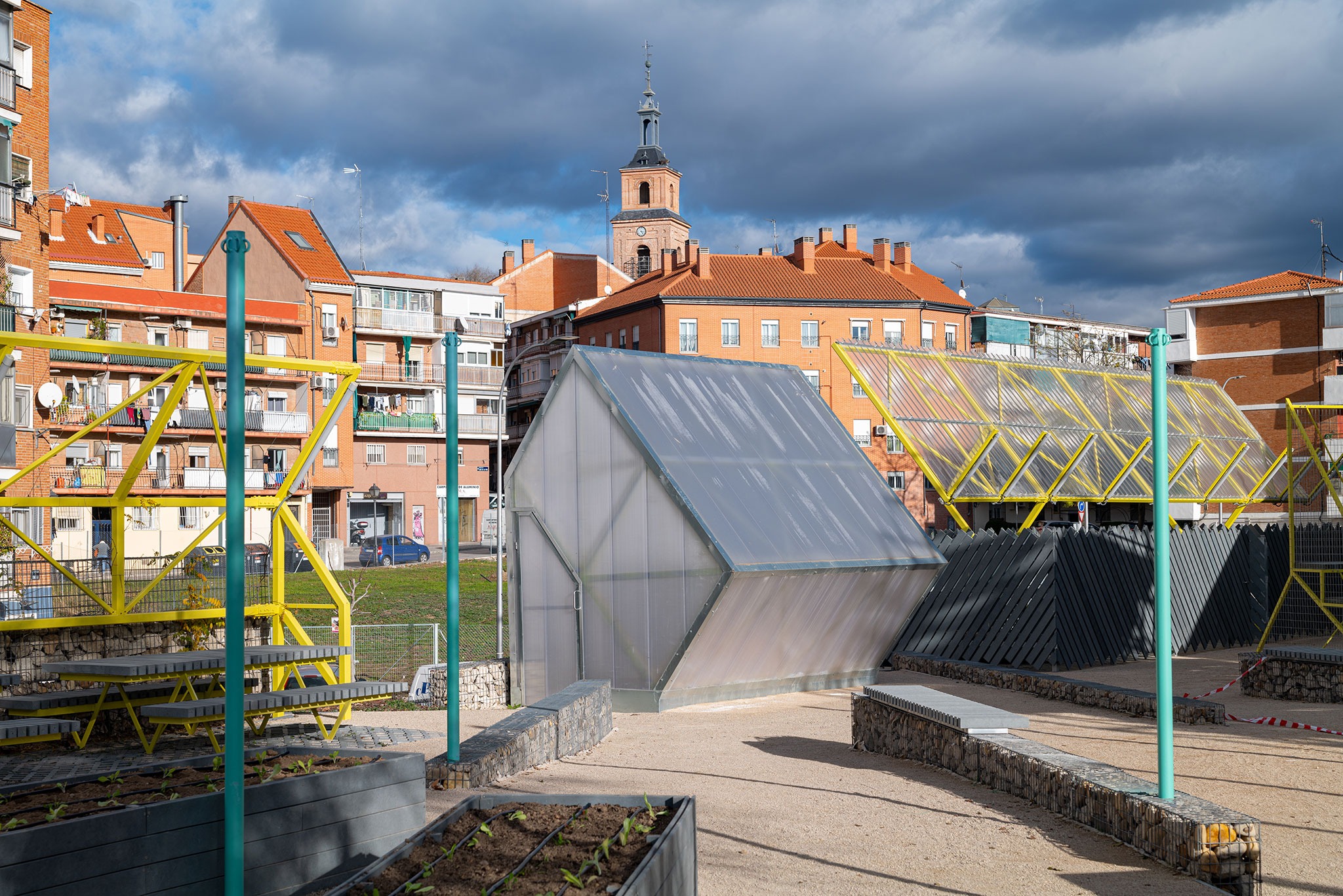
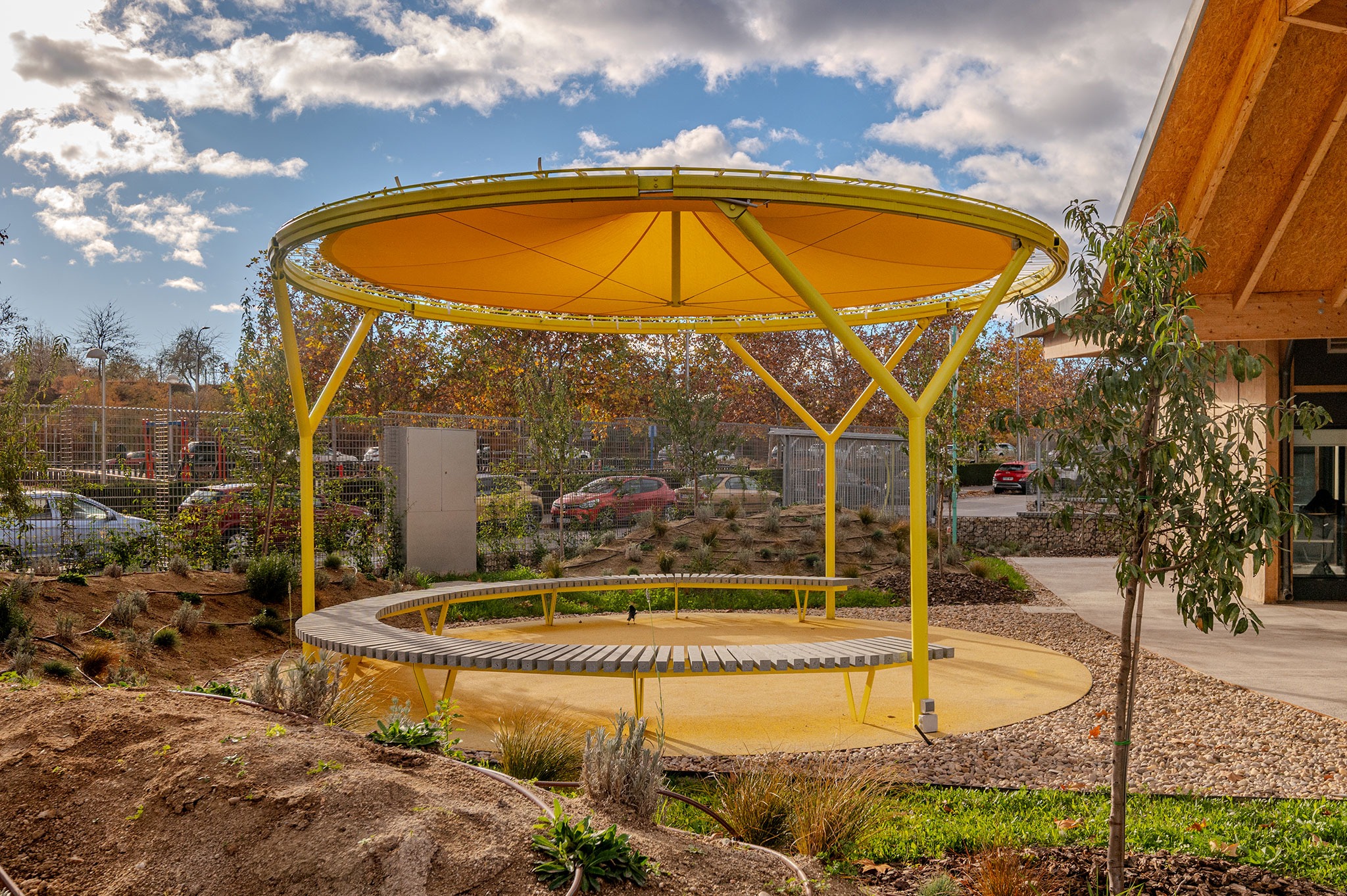
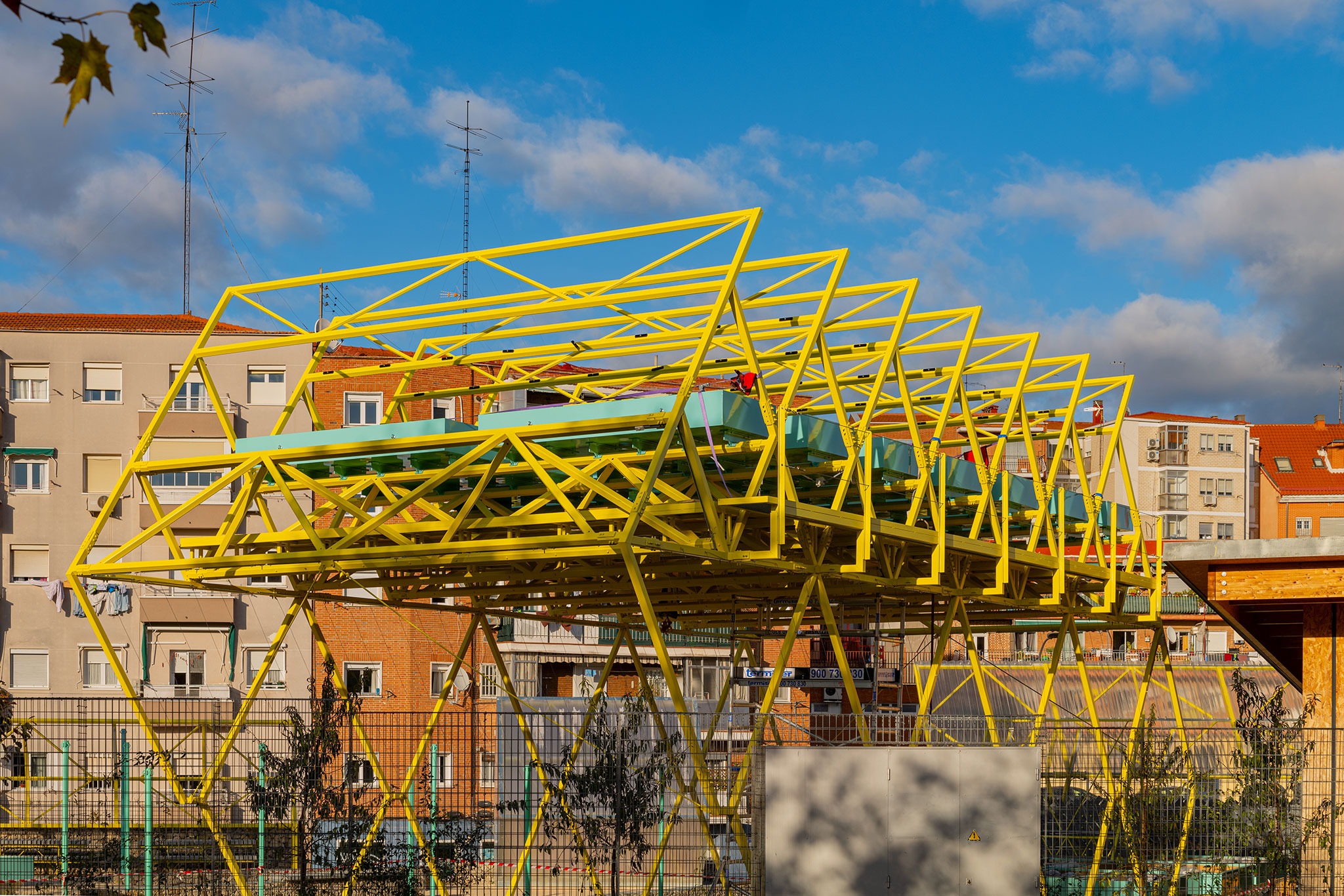
The garden designed by gaSSz architects is conceived as an open and inclusive space organized on several platforms adapted to the topography, and featuring a wide variety of plant species. The garden is intended for outdoor activities and, at the same time, serves as a complement to the interior spaces for research, education, and outreach. The garden is structured around several pavilions: the composting and recycling stations, the greenhouse, the shade house above the urban garden beds, the "Assembly Ring" picnic area, and the "PergoLab," a larger structure that houses a covered activity space, consisting of a movable platform and two walls of climbing plants.
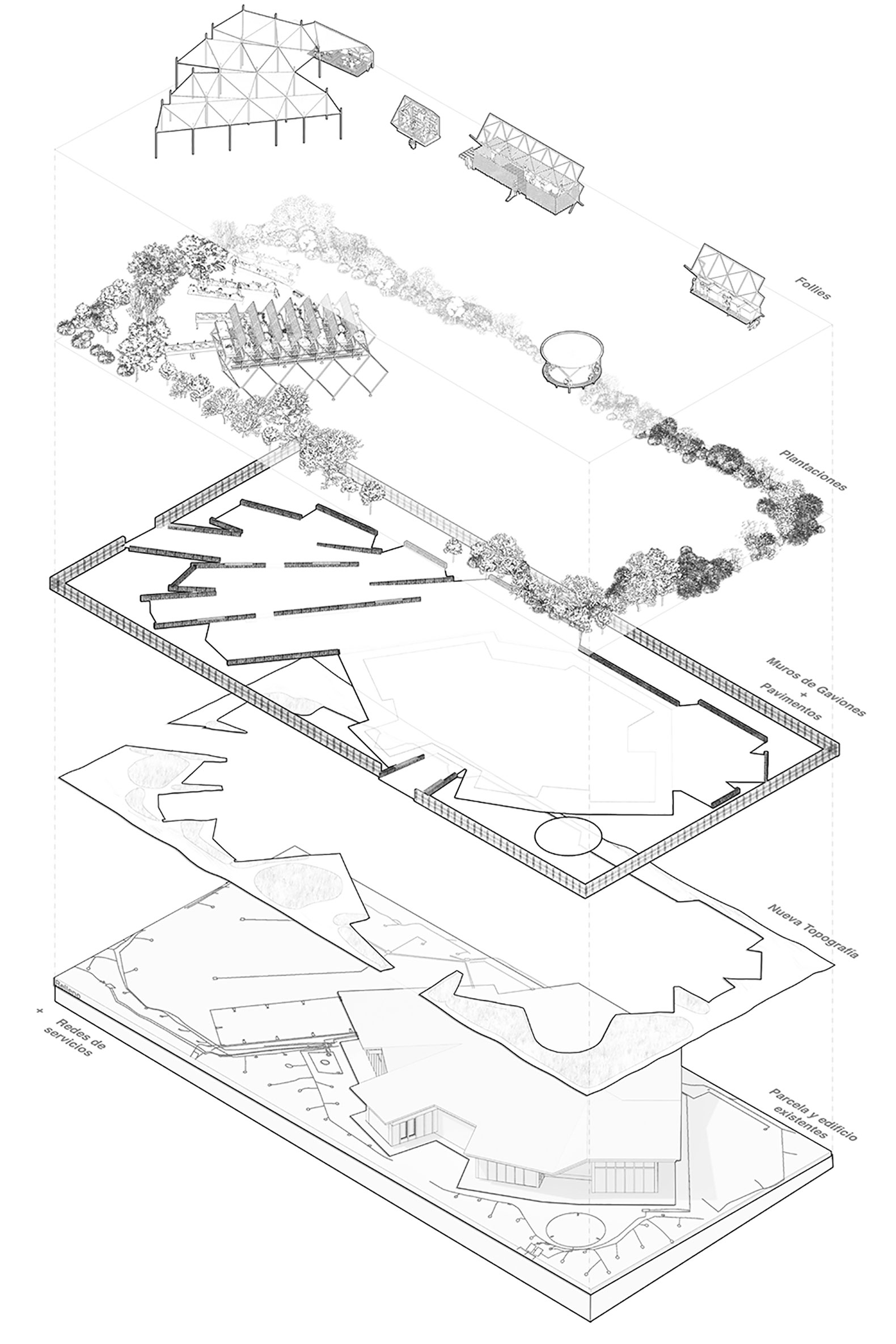
For the construction of the pavilions, a demountable and bolted steel structure was chosen, materialized with circular solutions that turn waste into resources, such as the demolition rubble used to fill the gabions of the fence and the platforms, the existing earth fills to form the slopes and platforms adapted to the topography, and the crushed tire rubber for the continuous and flexible pavement.
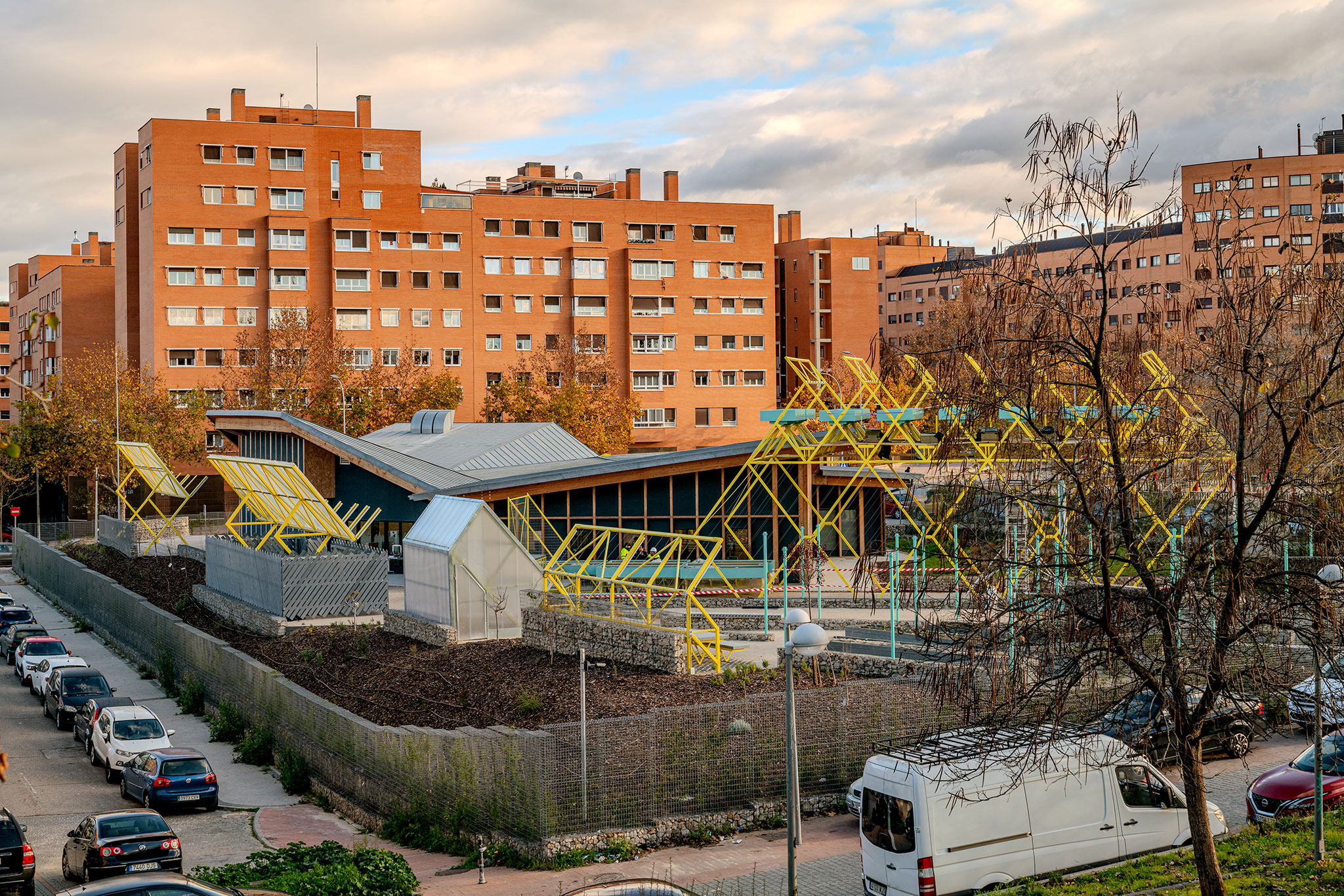
Circulating Garden for the CIEC by gaSSz arquitectos. Photograph by Emilio Parra Doiztúa.
Project description by gaSSz arquitectos
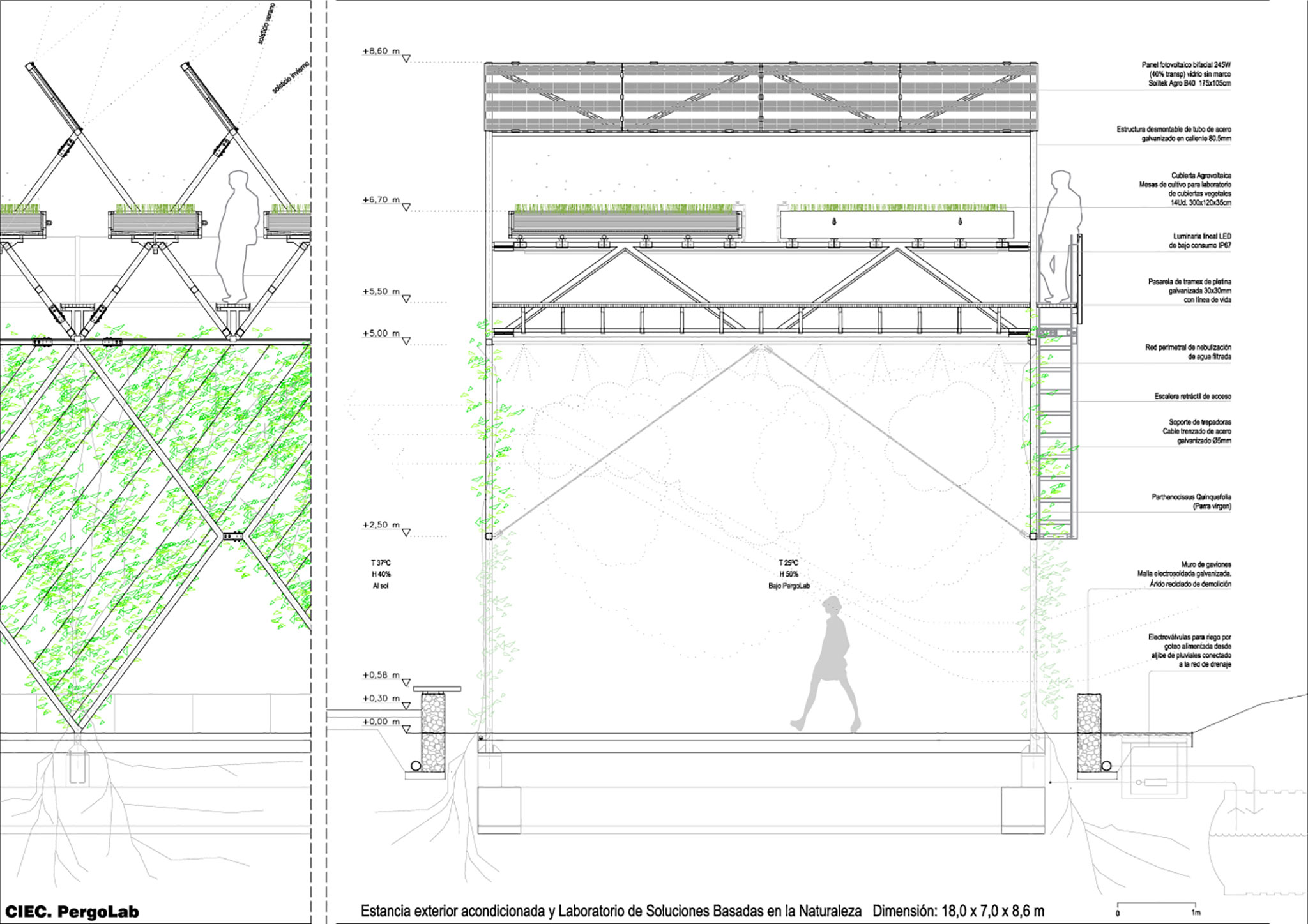
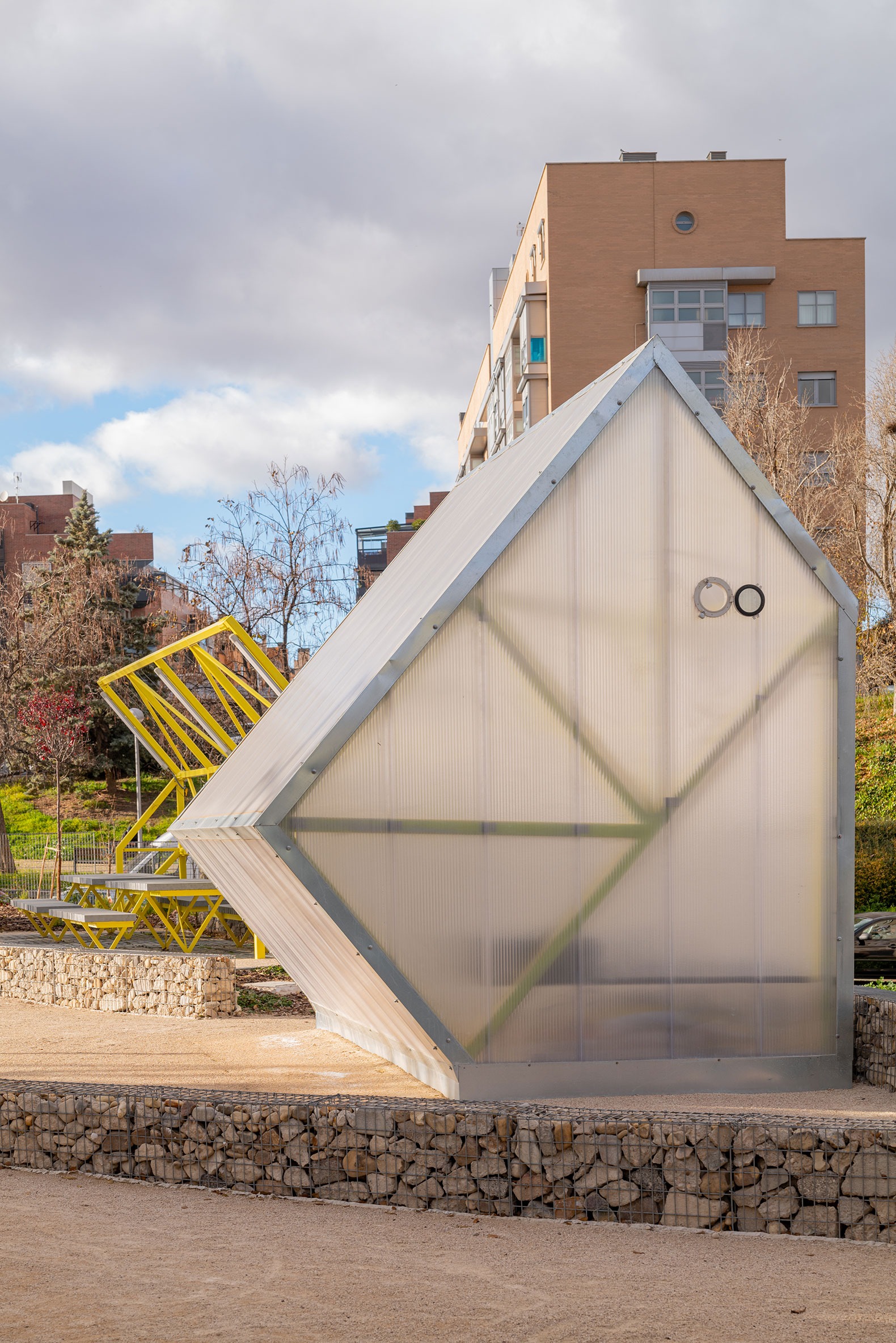
The CIEC's Circulating Garden is the prototype of an open, inclusive, and interspecies space for enjoying outdoor activities that complement those taking place in its interior spaces—research, meetings, education, outreach, etc. It is organized on several platforms or terraces adapted to the topography and contained by gabion walls filled with demolition rubble. The empty gabion cages serve to enclose the garden, supporting climbing plants. The garden is structured around several pavilions, built with a demountable and bolted steel frame: the Composting and Recycling Stations, the Greenhouse/Seedbed, the Shade House above the urban garden beds, the Picnic Area, the Assembly Ring, and the PergoLab, a larger structure that houses a covered activity space equipped with a movable tiered seating area and flanked by two walls of climbing plants. Its agrovoltaic roof forms part of the Nature-Based Solutions (NBS) Laboratory, along with the mobile raised beds or testbeds for cultivation. These structures function as conditioned outdoor rooms (B. Rudofsky) thanks to their shade elements, vegetation, and furnishings, serving as outdoor living spaces throughout the year, and even as climate refuges during the summer.
The garden is conceived as a productive ecosystem, with its ground cover of fruit trees, ground cover plants, and shrubs—endemic and native species—along with the raised beds of the urban vegetable gardens. Surrounded by aromatic and fruit-bearing plants, these gardens attract diverse pollinators—insects, birds, bats—and address the challenges of food sovereignty in urban environments. The insect hotels, integrated into the gabion walls, are also made with various waste materials. The composting facility produces compost from the waste of the Center and the garden, which is then recirculated as fertilizer. The recycling station recirculates leftover material used in FabLab activities. Finally, the SBN laboratory, comprised of ground-level growing tables and those located atop PergoLab, will test and monitor various green roof solutions—both intensive and extensive—for implementation on Madrid's rooftops. This represents a local and effective action against the climate emergency, while also promoting urban biodiversity. The garden itself will be used to test sustainable crops adapted to the local climate, and the urban gardens will be used to test different species and organic fertilization solutions.
The photovoltaic panels installed on PergoLab cover the garden's energy demand and reduce that of the CIEC (Center for Environmental and Cultural Studies). This system could be self-sufficient if extended to the other adapted structures within the garden (composting and recycling). Furthermore, they form part of the agro-voltaic roof, creating a synergy between panels and crops: the panels protect the crops from excessive heat and cold, and the crops help reduce overheating of the panels. The Juan XXIII Foundation, focused on socio-labor inclusion, is responsible for the maintenance of the space and the programming of the Nature-Based Solutions Laboratory, with groups of people in situations of psychosocial vulnerability.
Circularity
The CIEC - Center for Innovation in the Circular Economy - 'recirculates' the headquarters formerly used by the previous city council's 'MAR de Reciclaje' (Recycling Center). Similar to its predecessor and focused on entrepreneurship and fostering the business ecosystem, it promotes the transition to a sustainable production and consumption model and demonstrates the viability of a built environment aligned with the SDGs and emissions reduction.
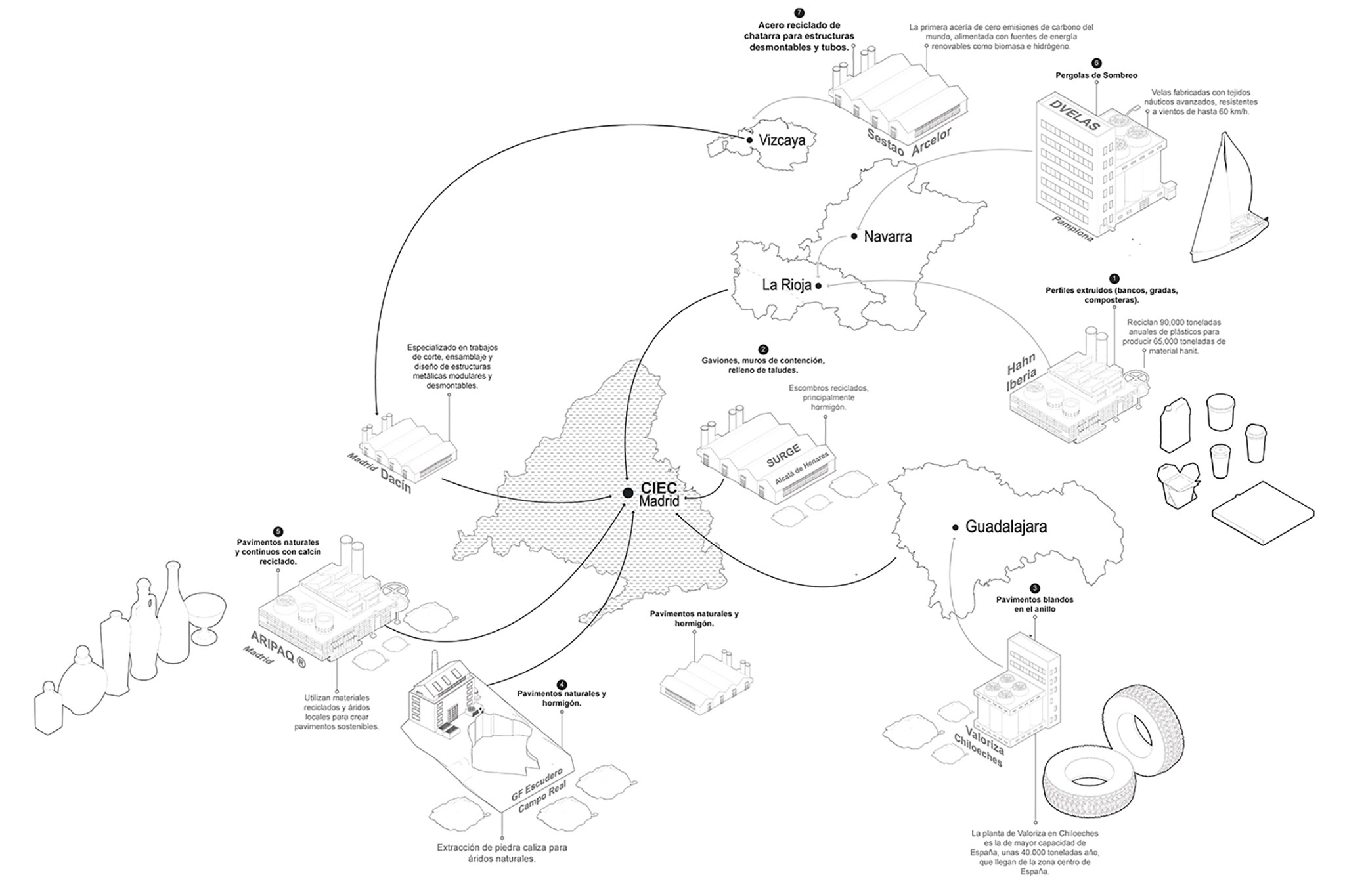
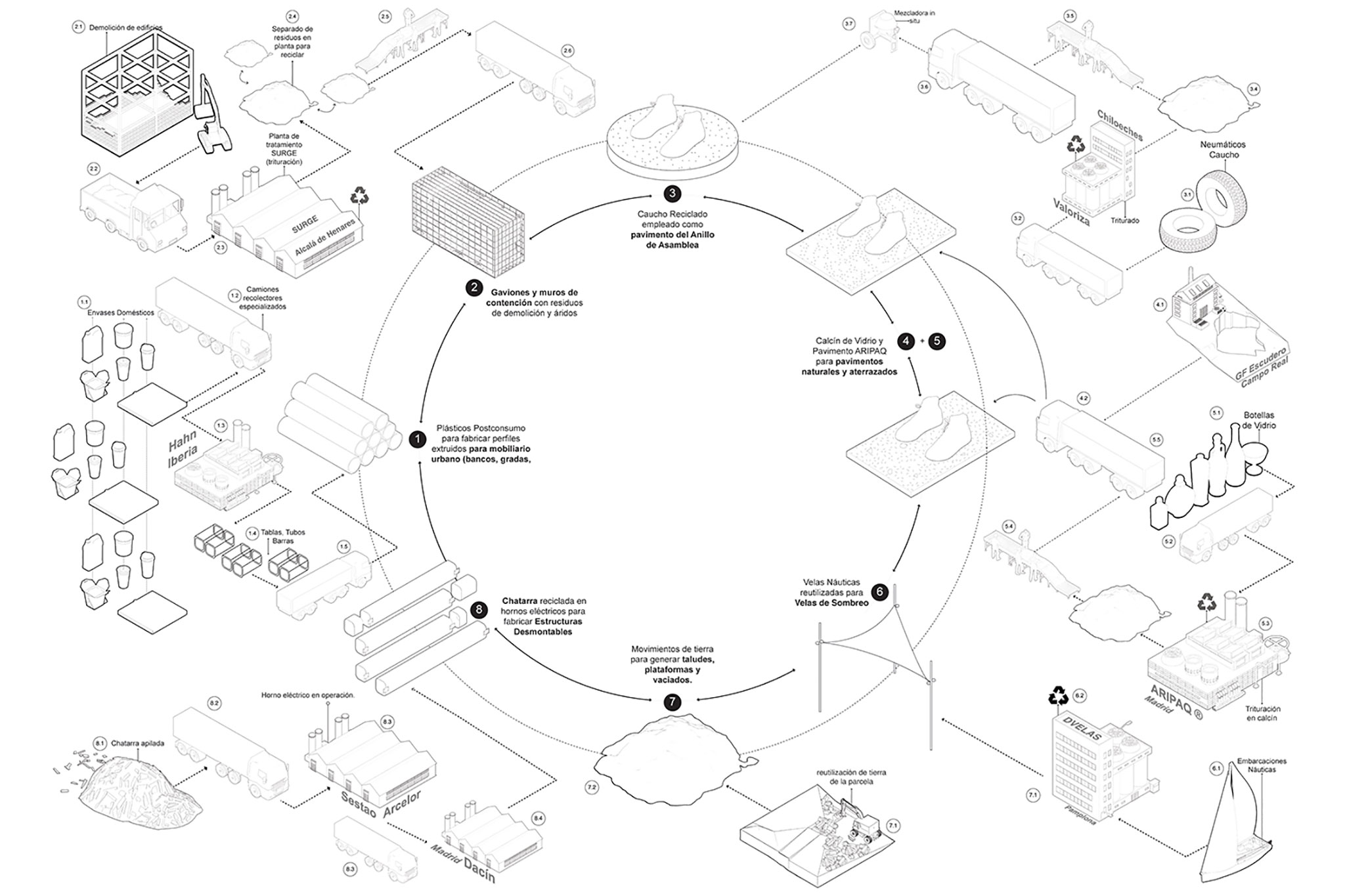
The collection of discarded and recirculated materials used in the construction of this public space has a direct impact on decarbonization and emissions reduction by harnessing their embodied energy. The CIEC Garden combines reversible strategies and demountable structures with circular material solutions that transform waste into resources:
. Packaging is used to produce recycled plastic profiles for furniture and enclosures.
. Demolition debris fills the gabions of the fencing and platforms.
. Shredded tire rubber is used in continuous, flexible paving.
. Recycled glass produces the cullet binder for the limestone aggregate.
. Obsolete nautical sails are reused as shade structures in the gardens.
. Existing earth fills are used to form slopes and platforms.
. Scrap metal is used to produce the steel for the structures, which are fabricated in the workshop, bolted on-site, and demountable in the future.
According to the World Economic Forum report, material circularity will substantially reduce CO2 levels and generate new economic activity until 2050. It also highlights the importance of pioneering projects like this one, which demonstrate the viability and scalability of the circular economy.