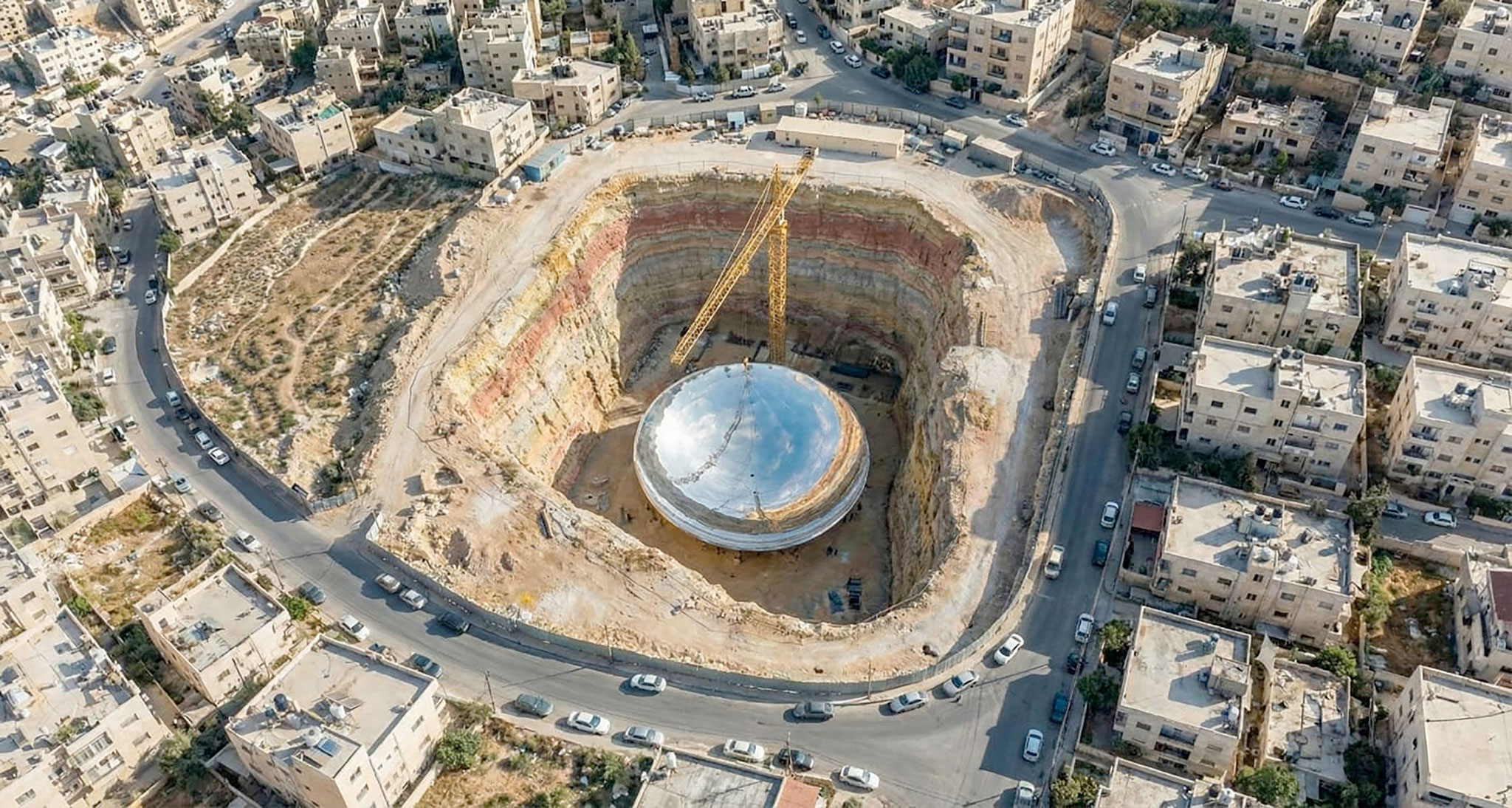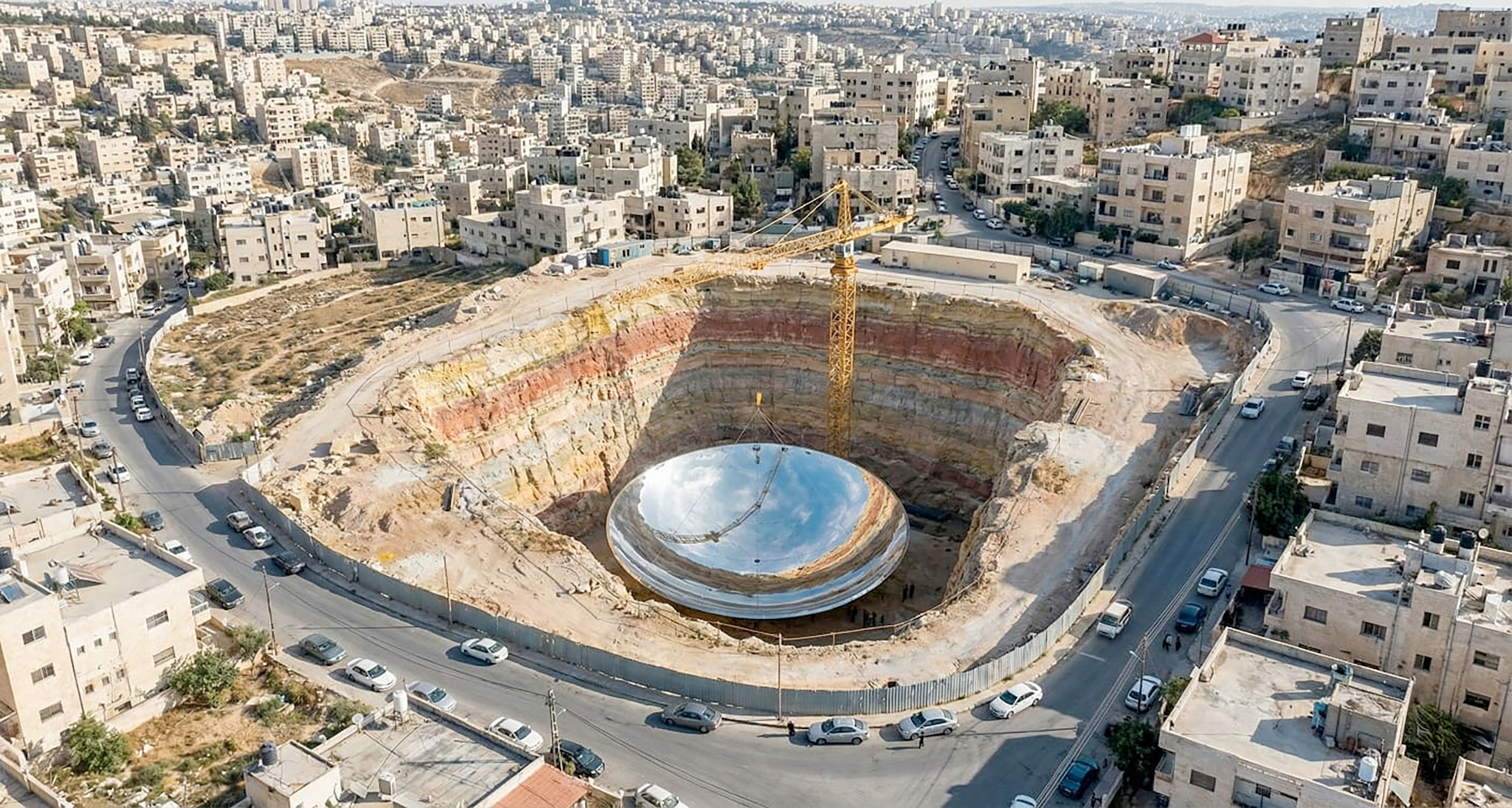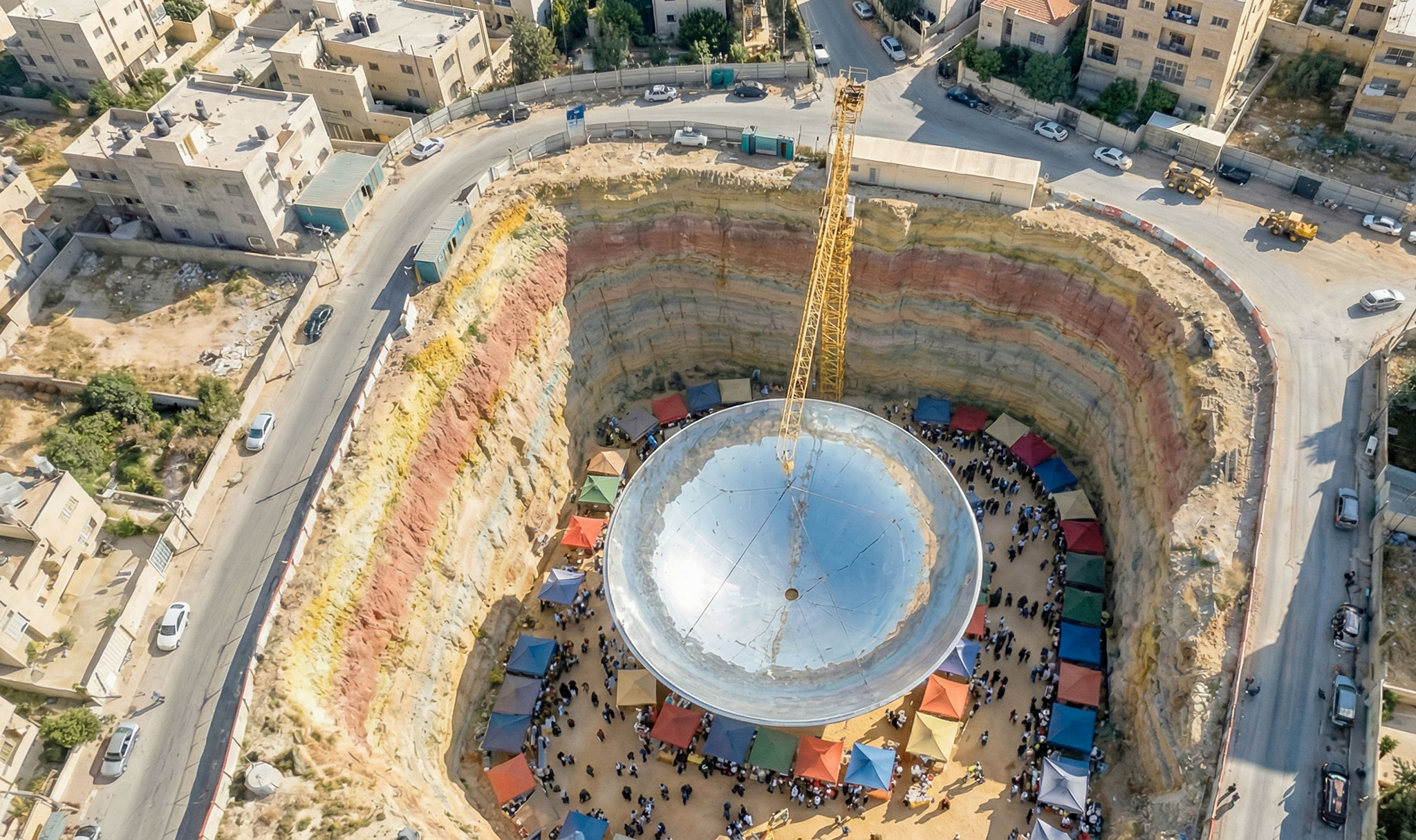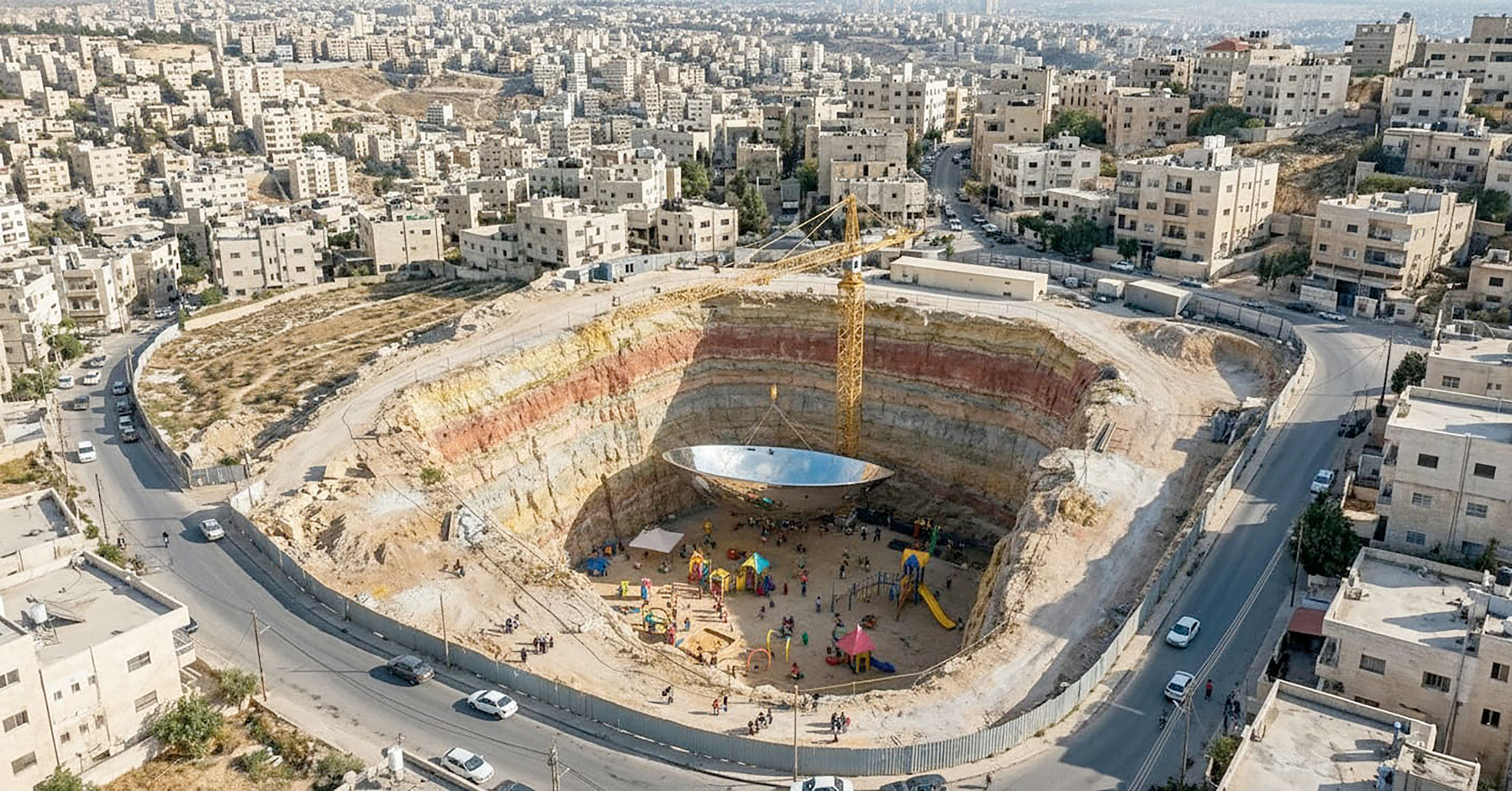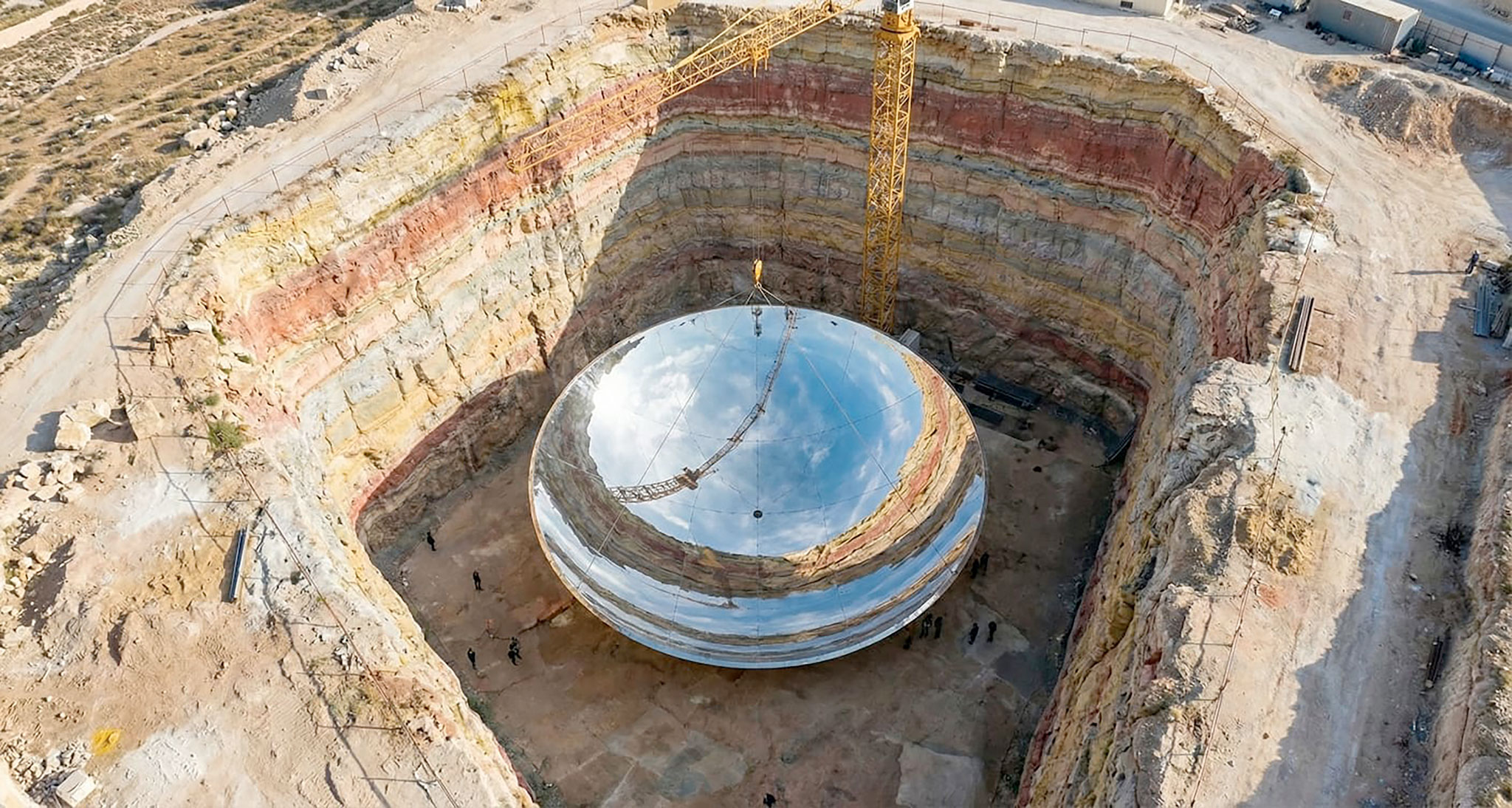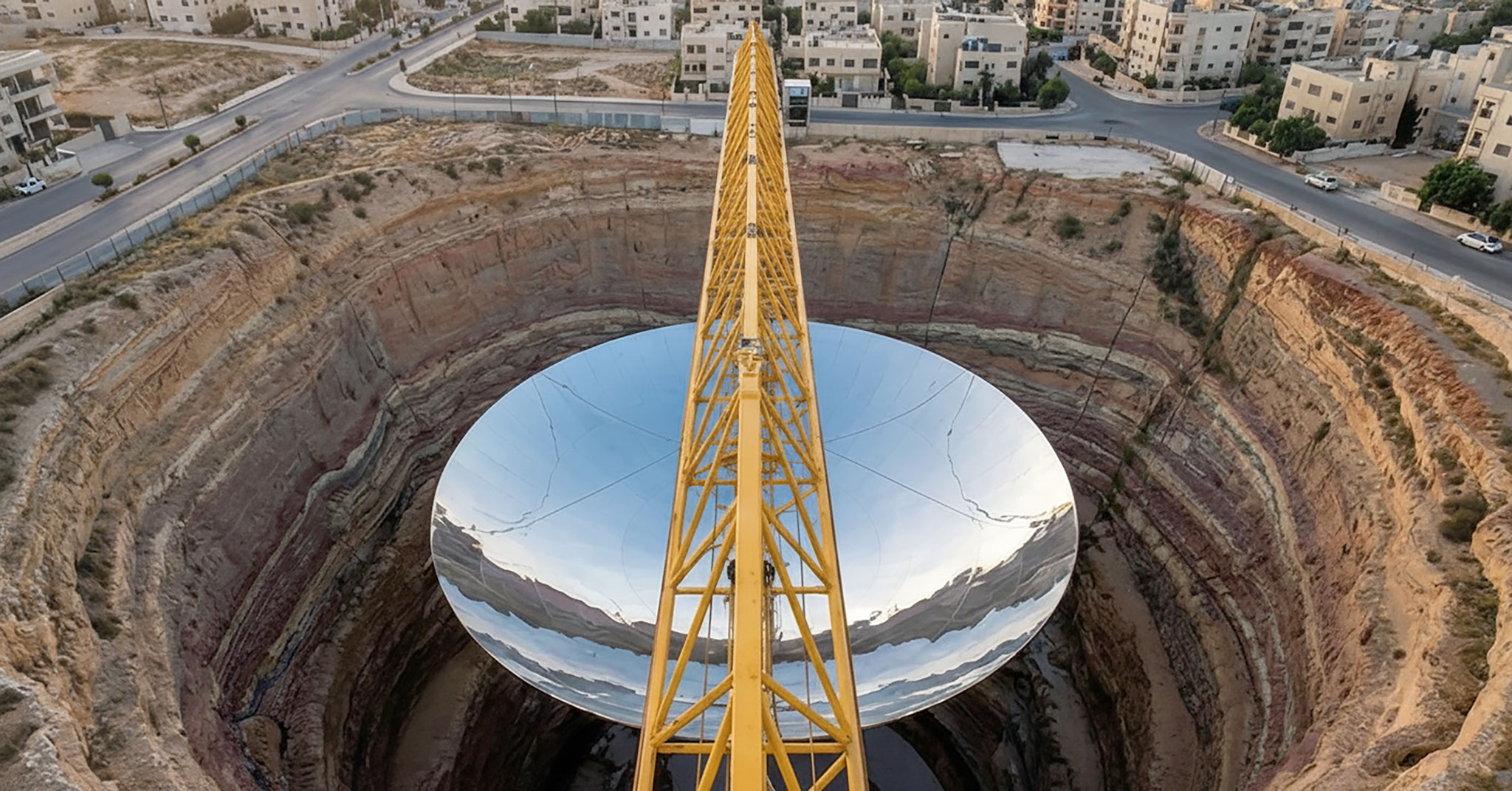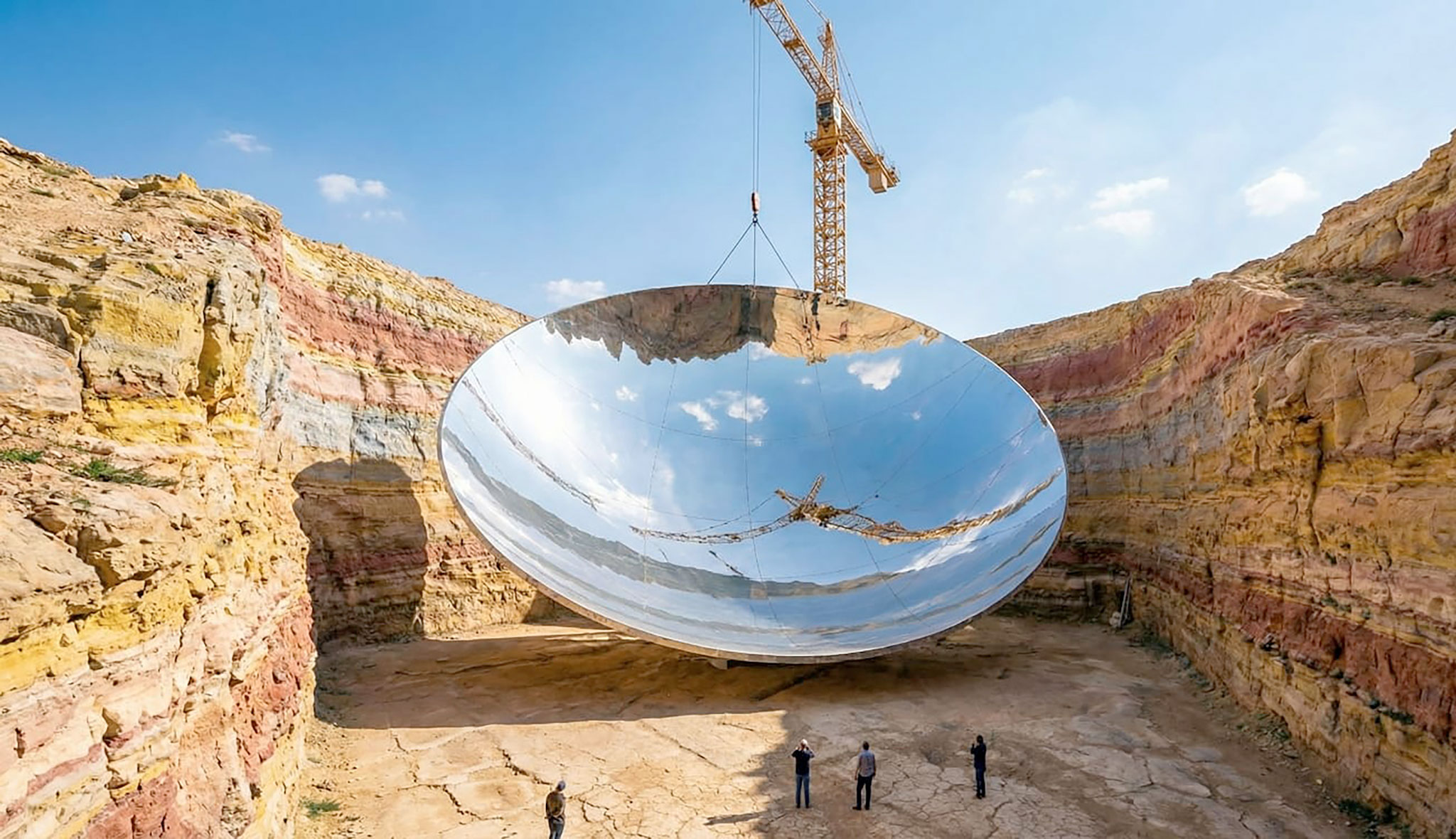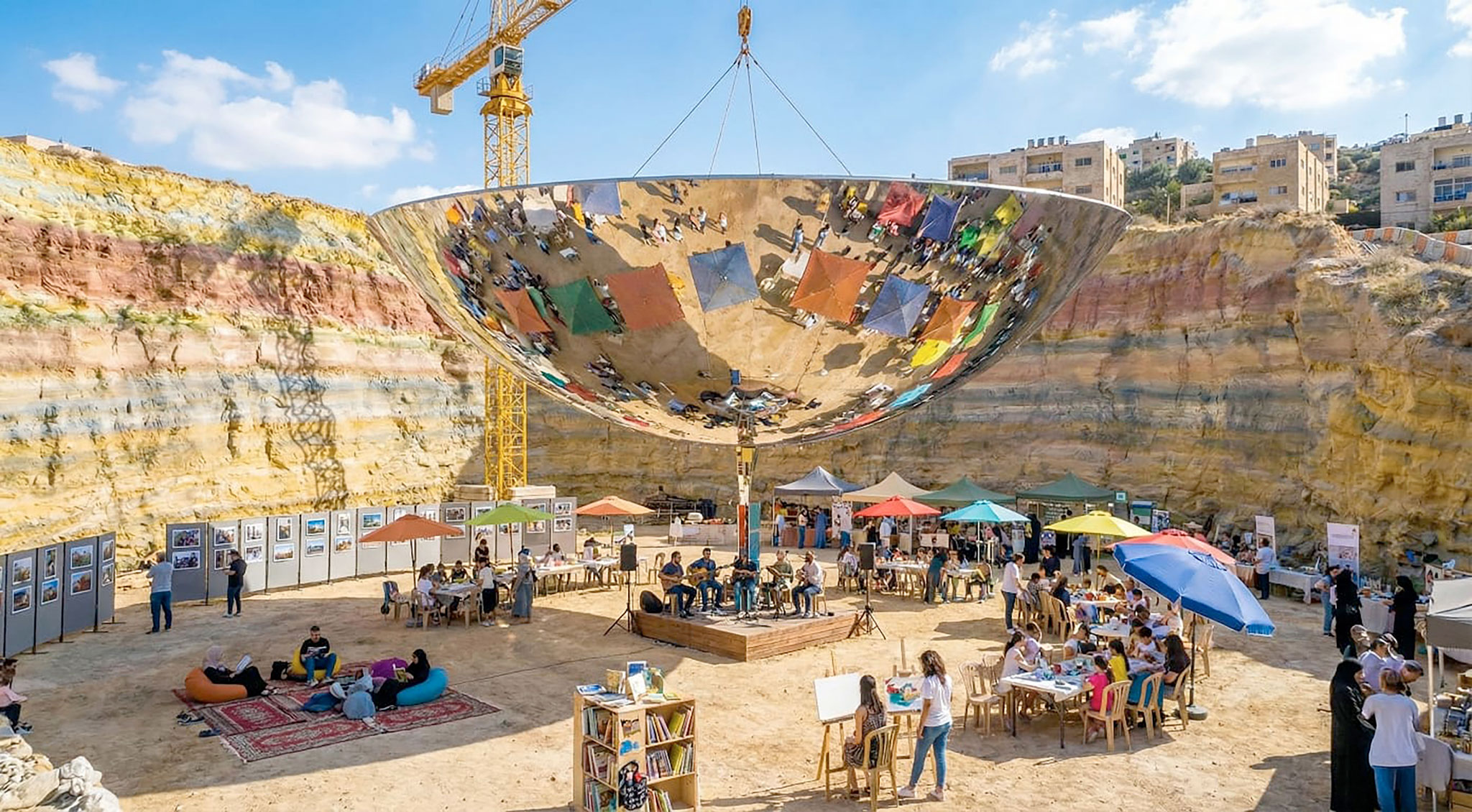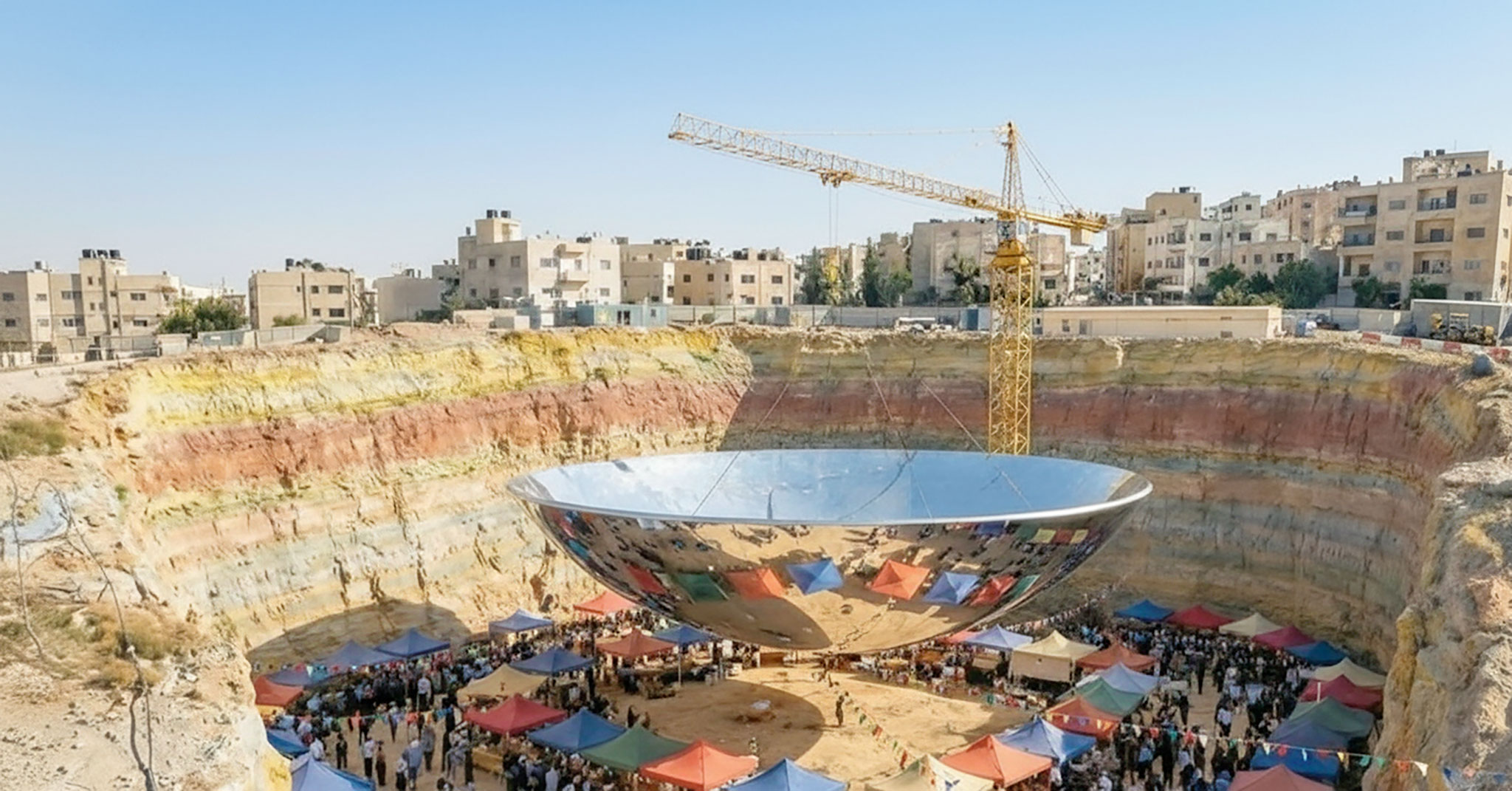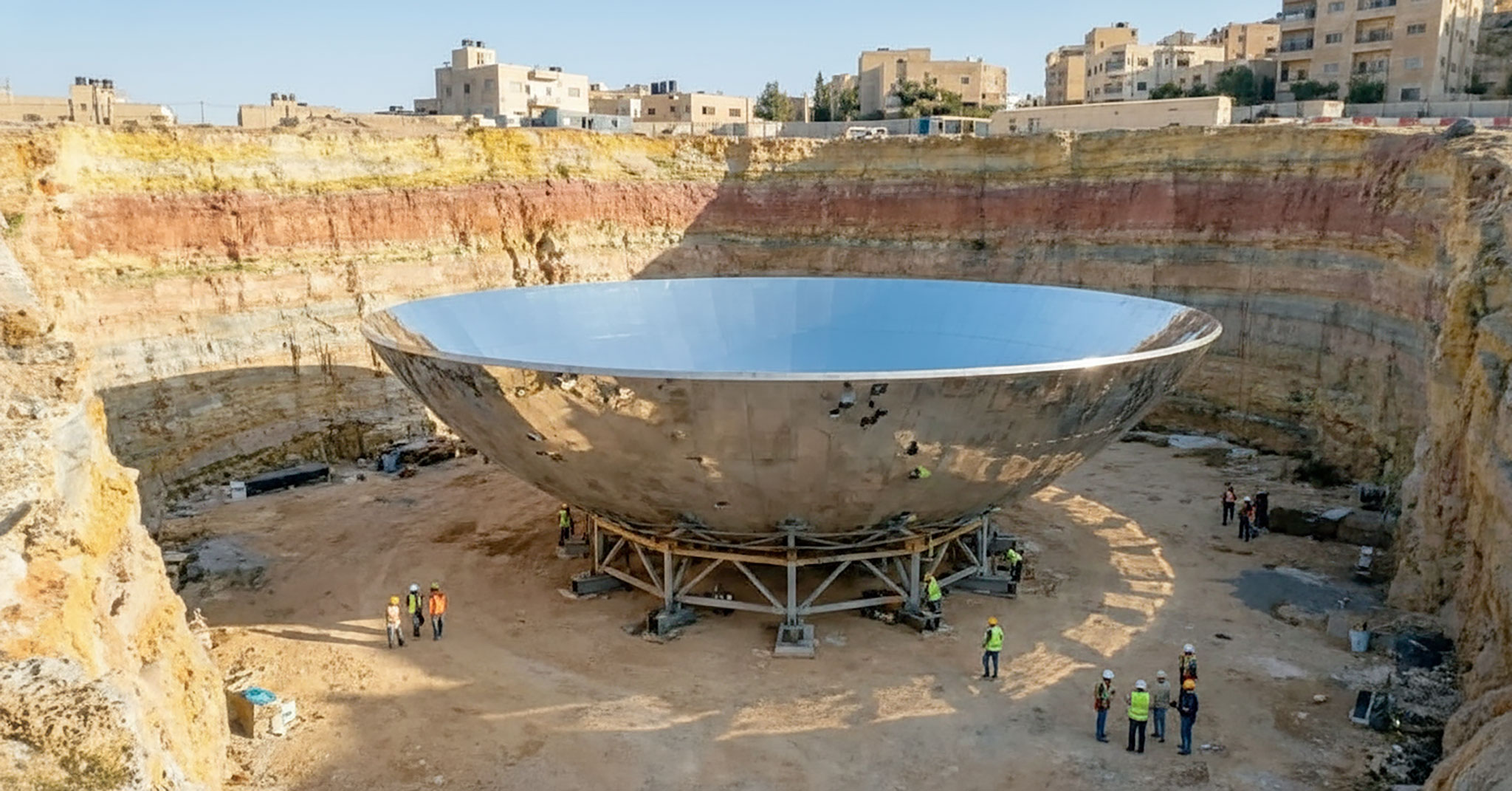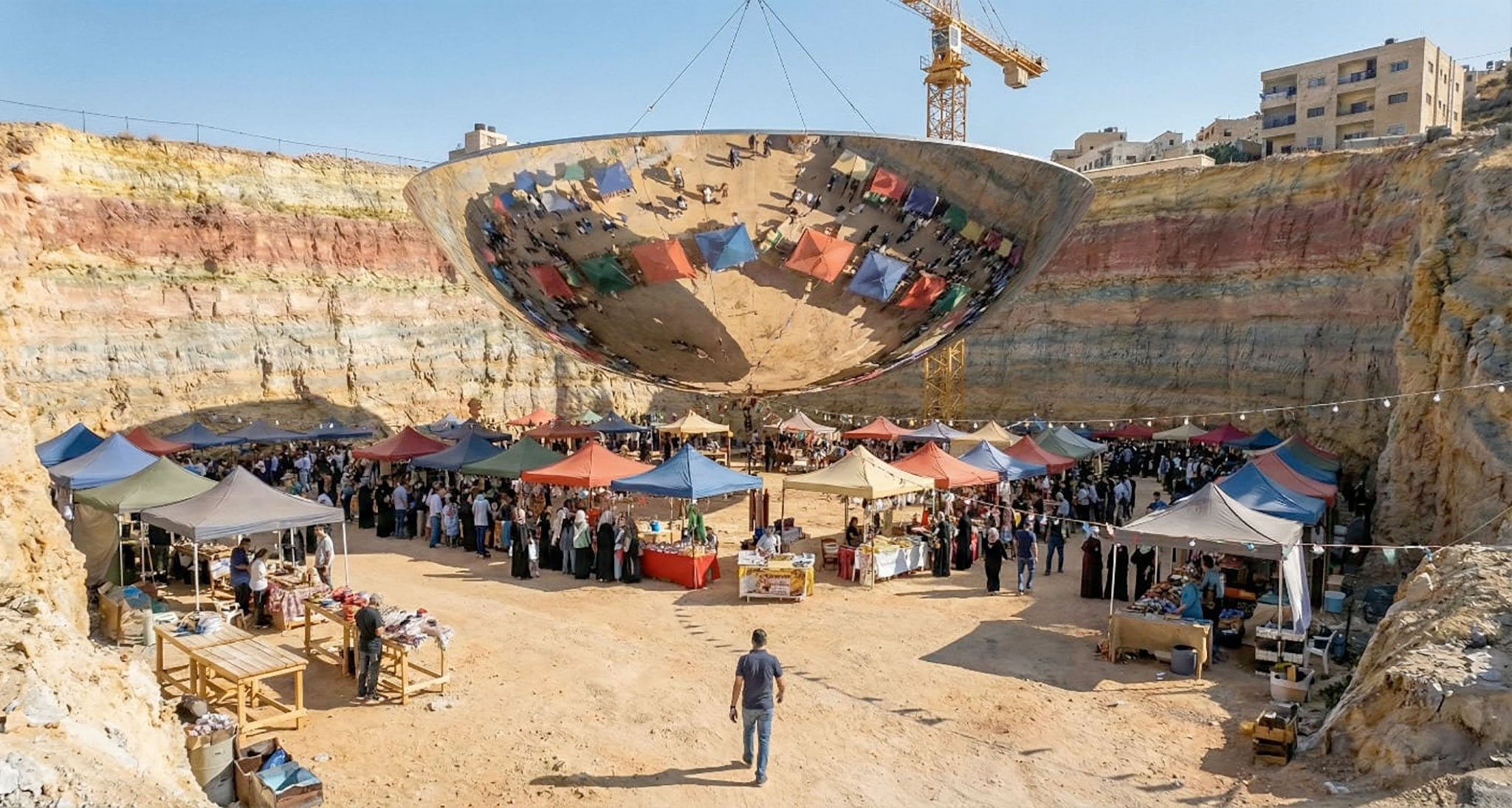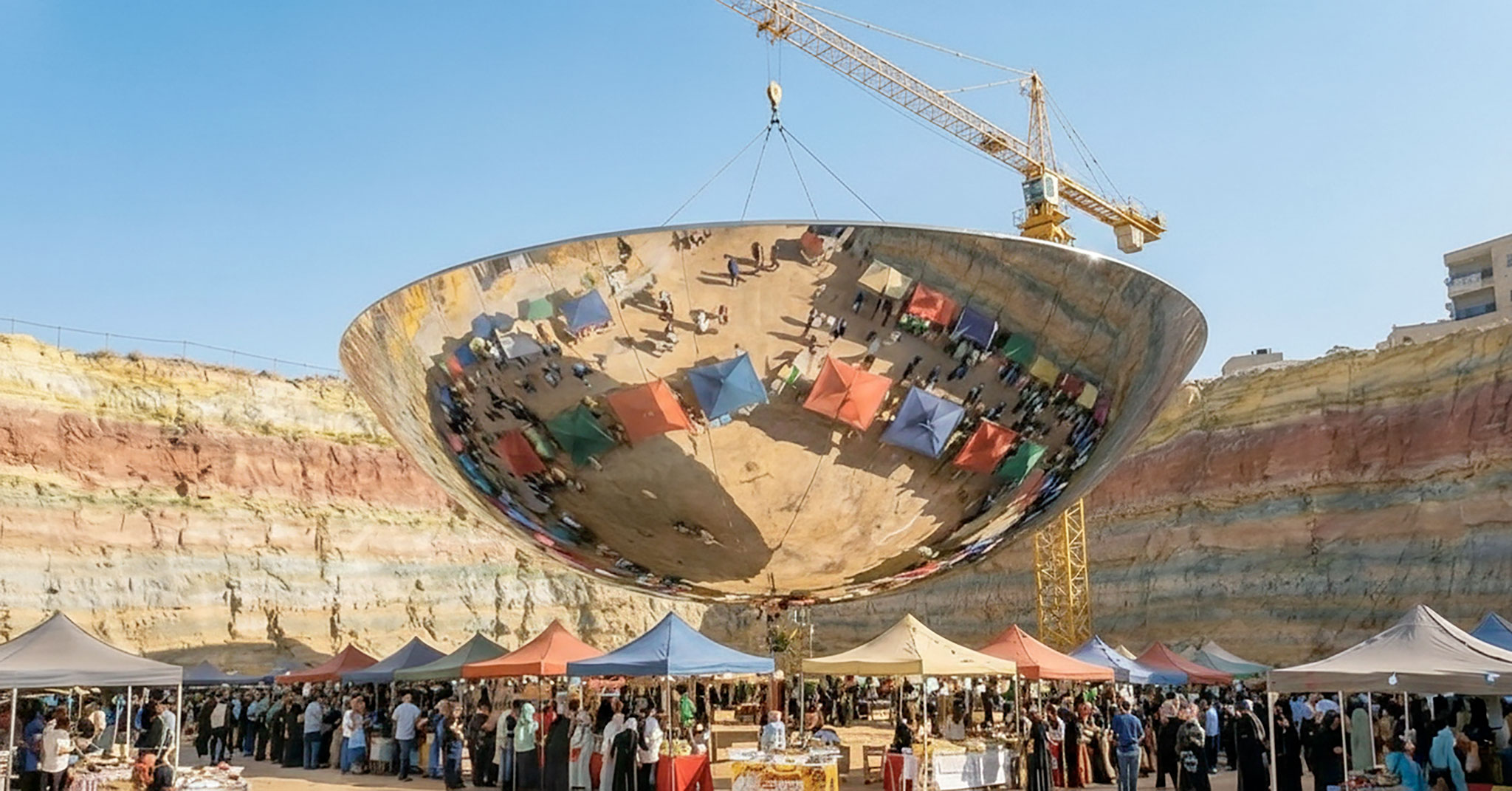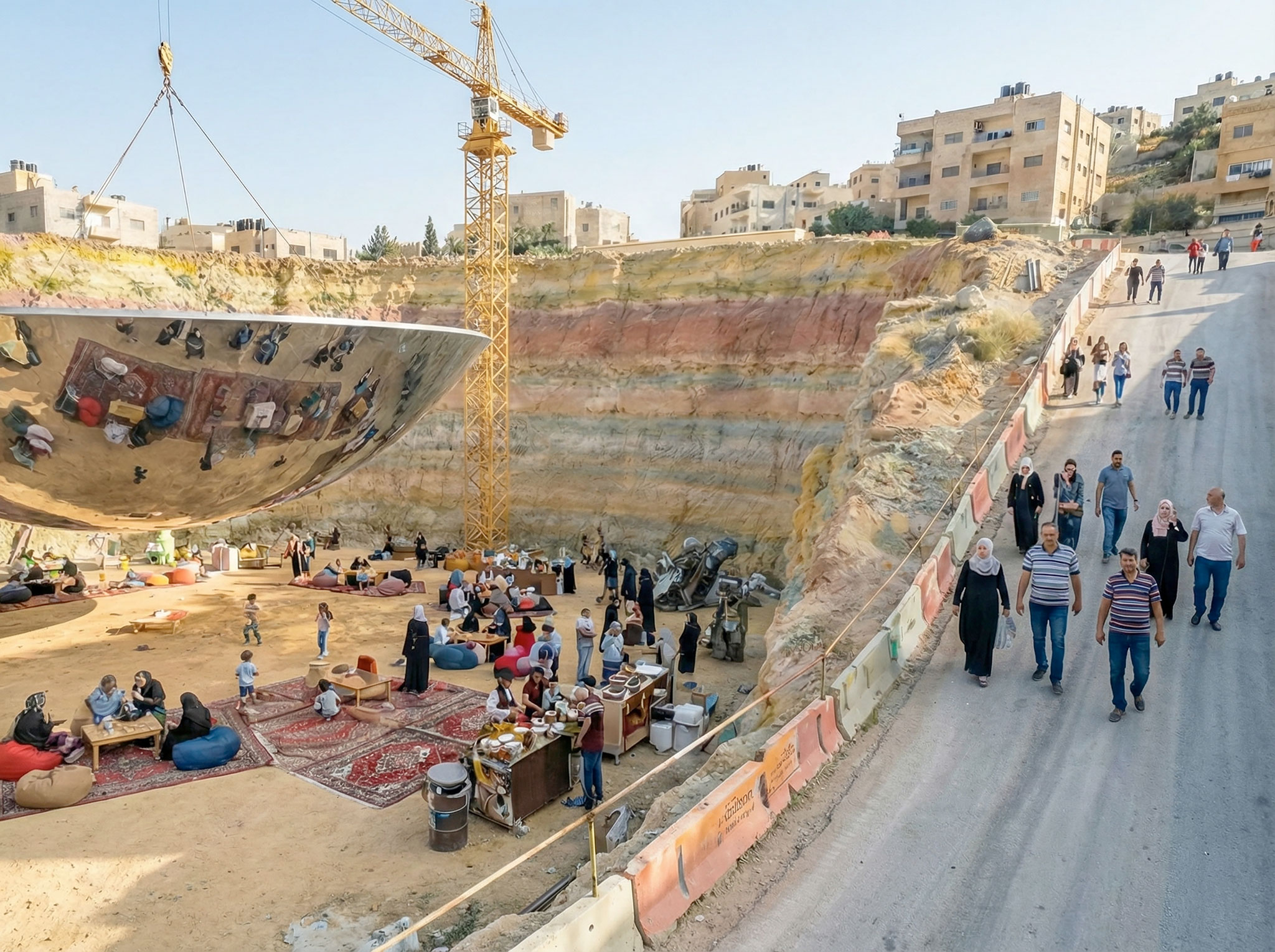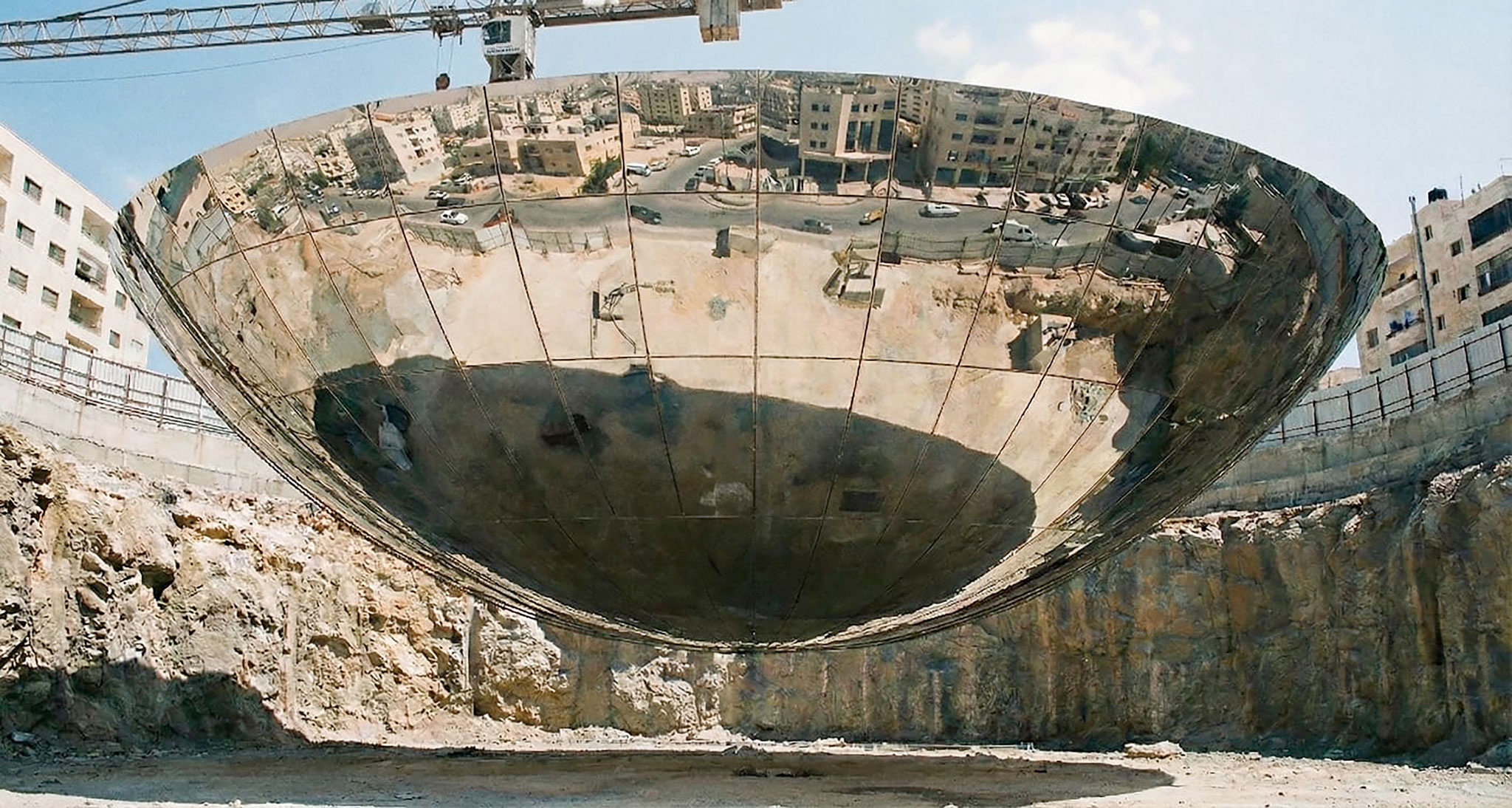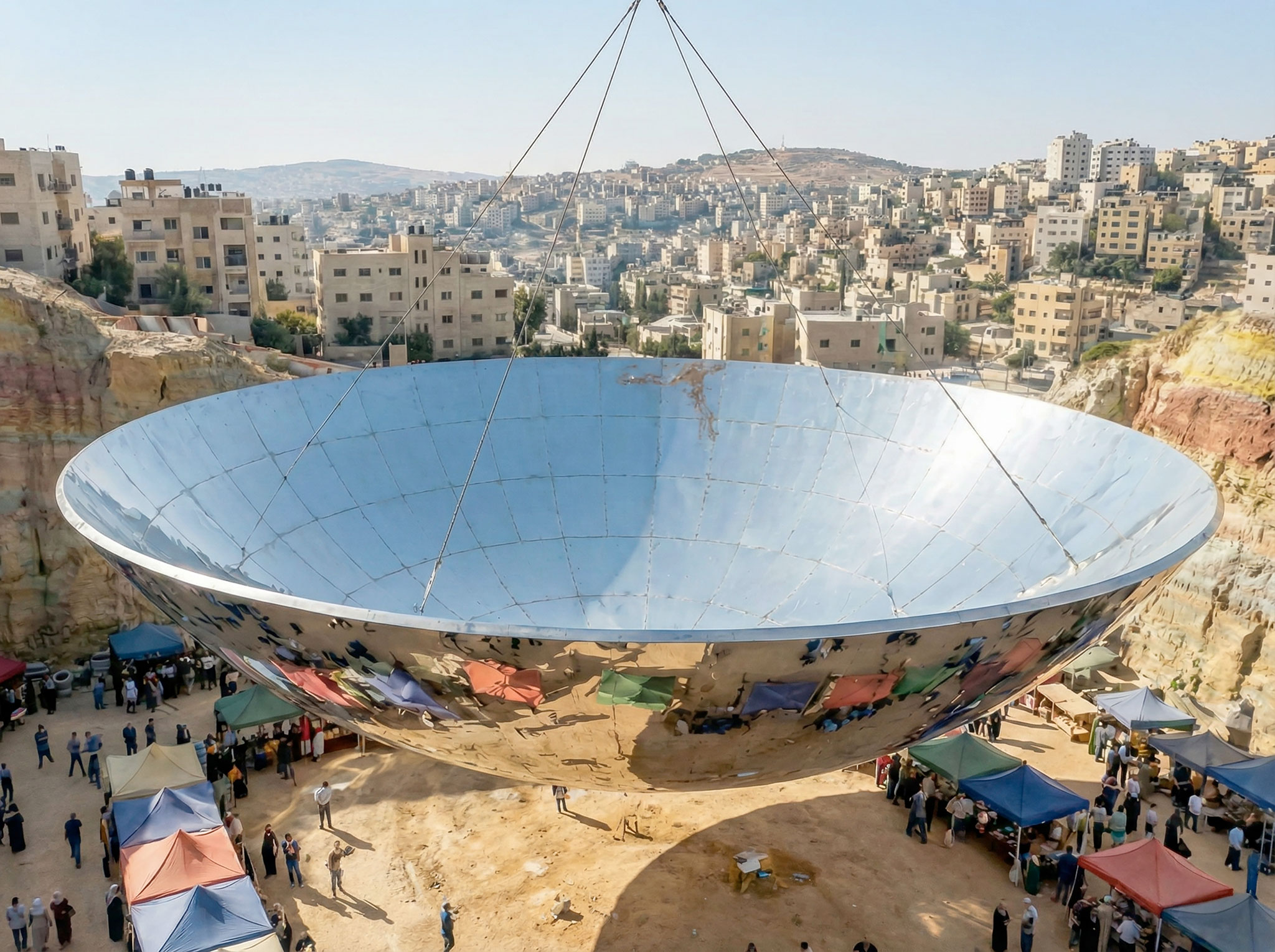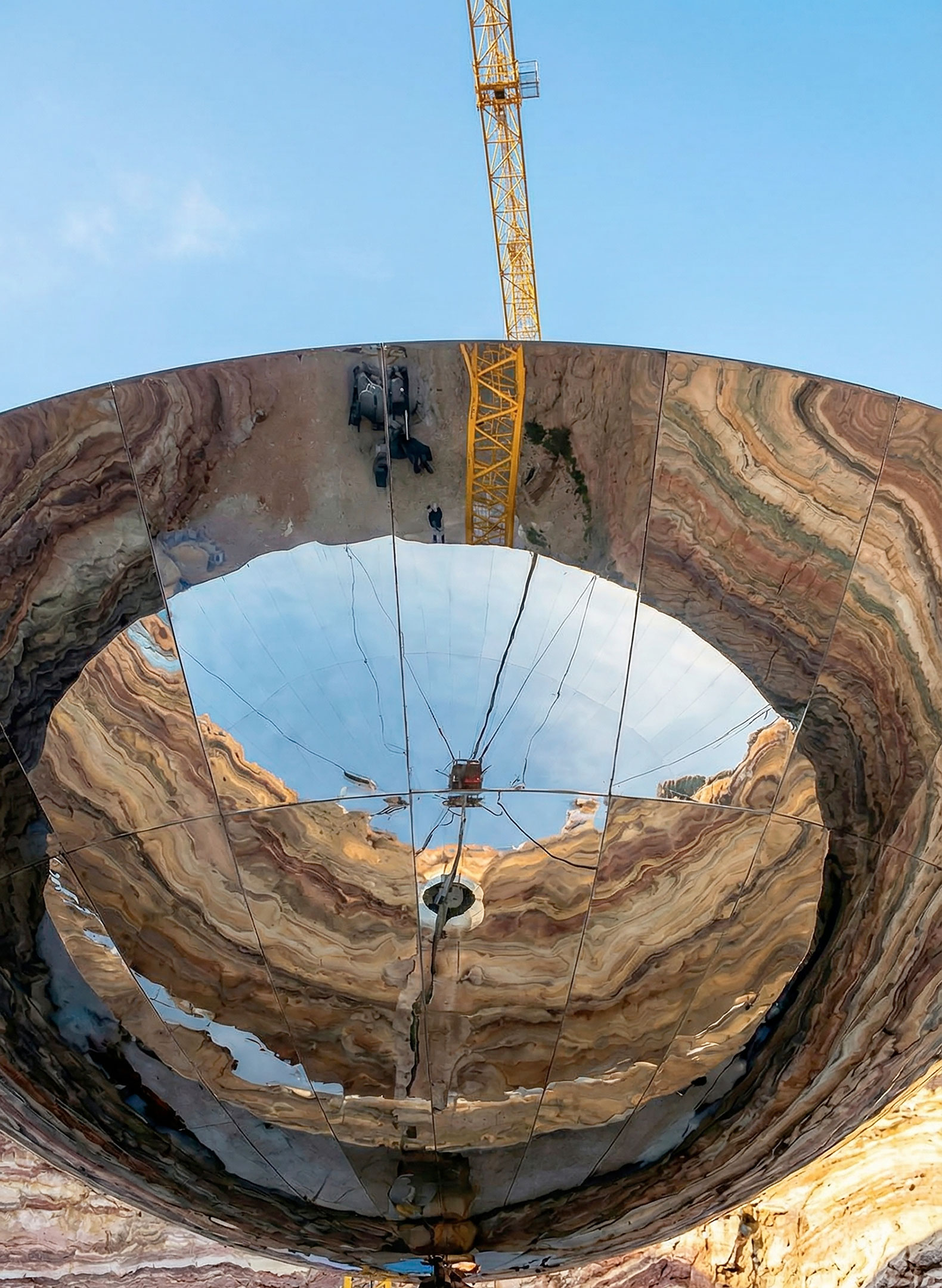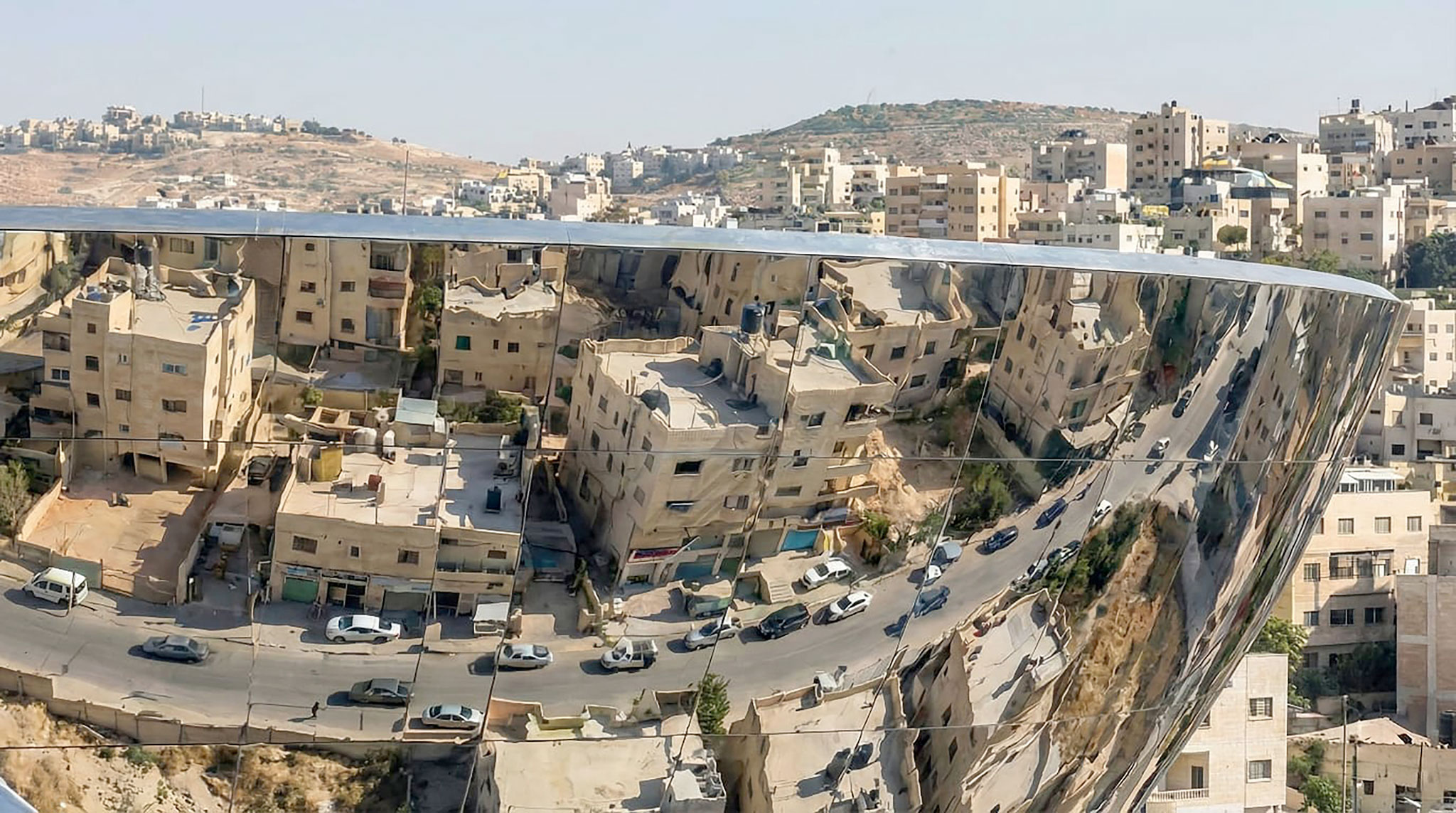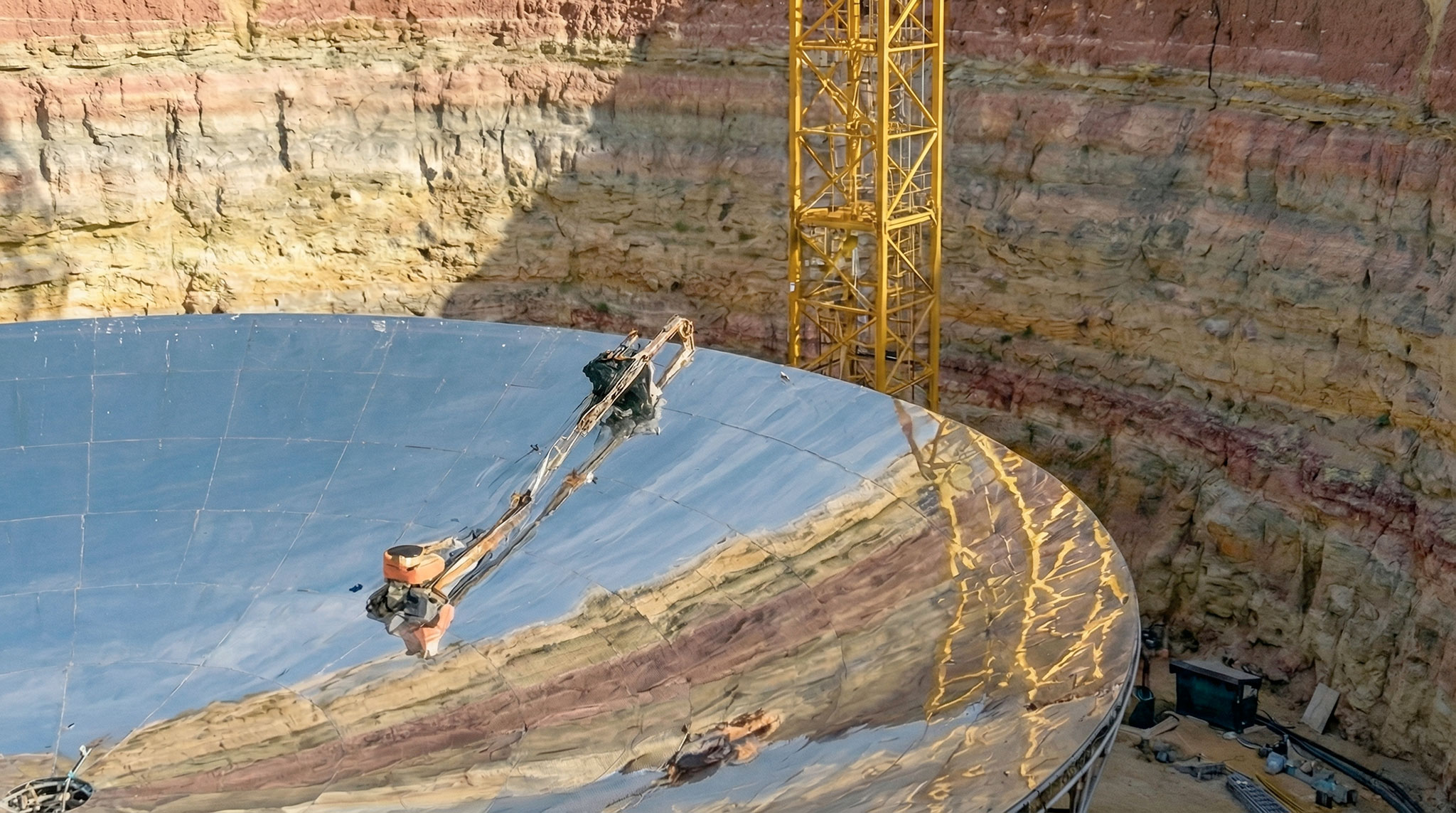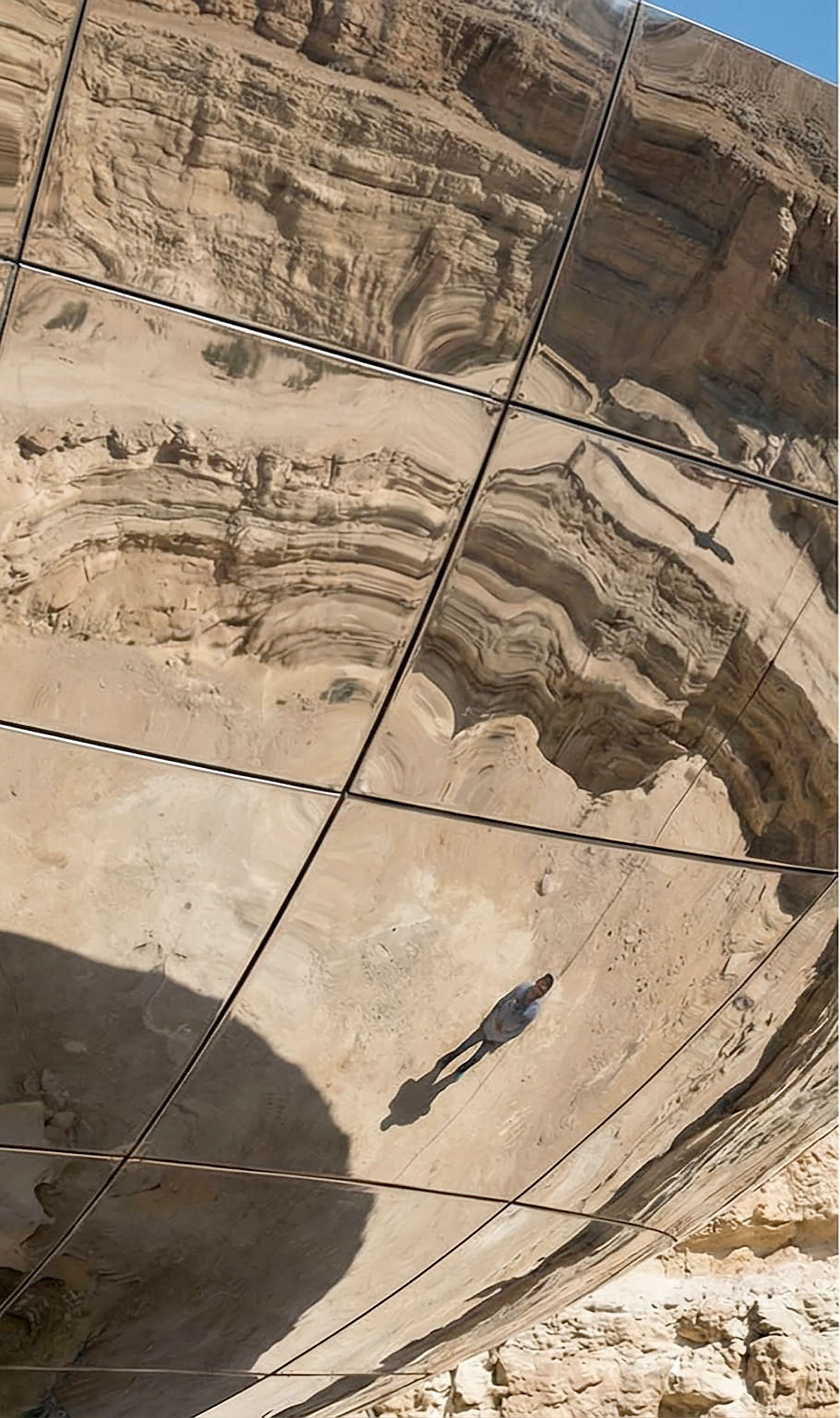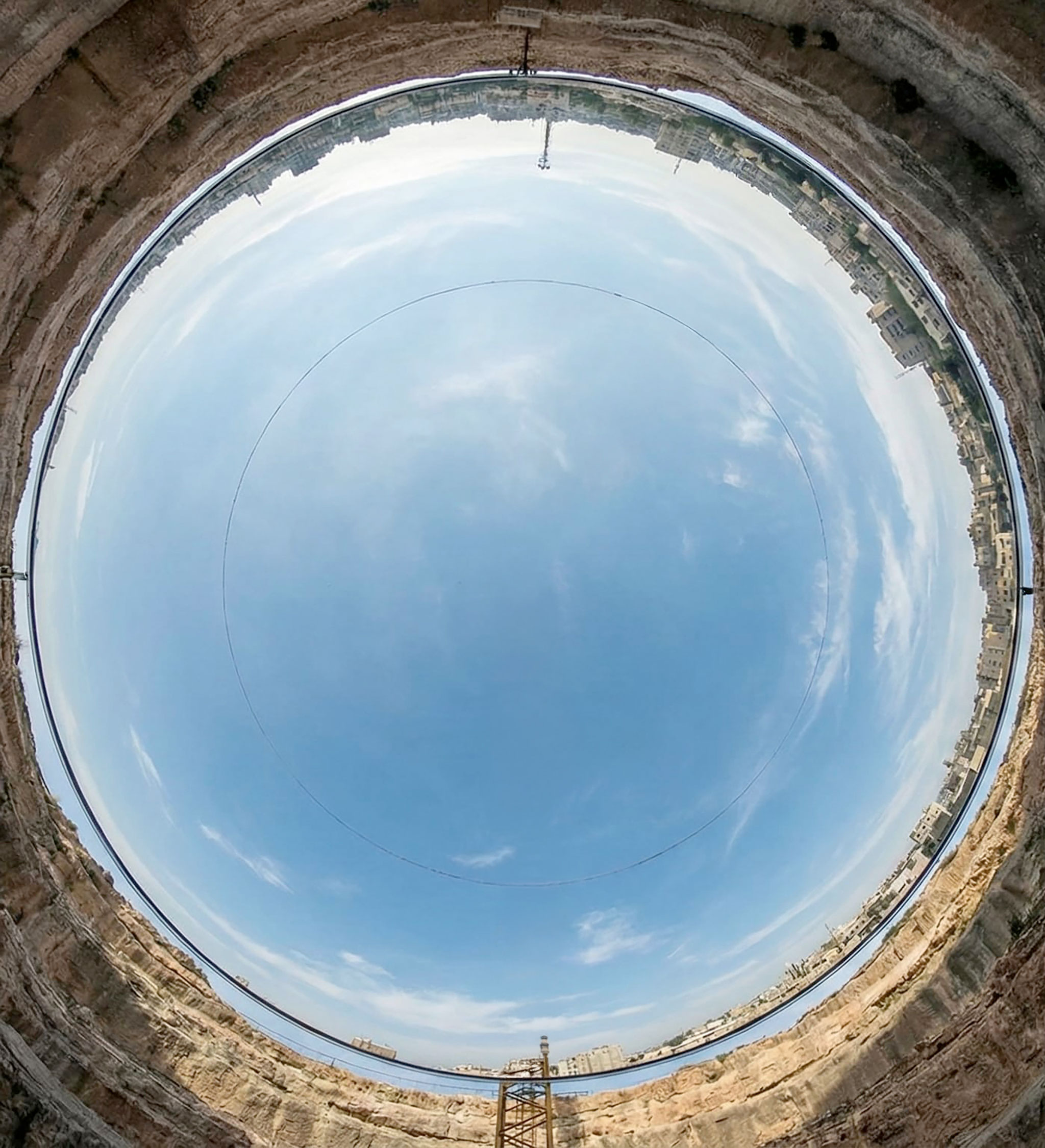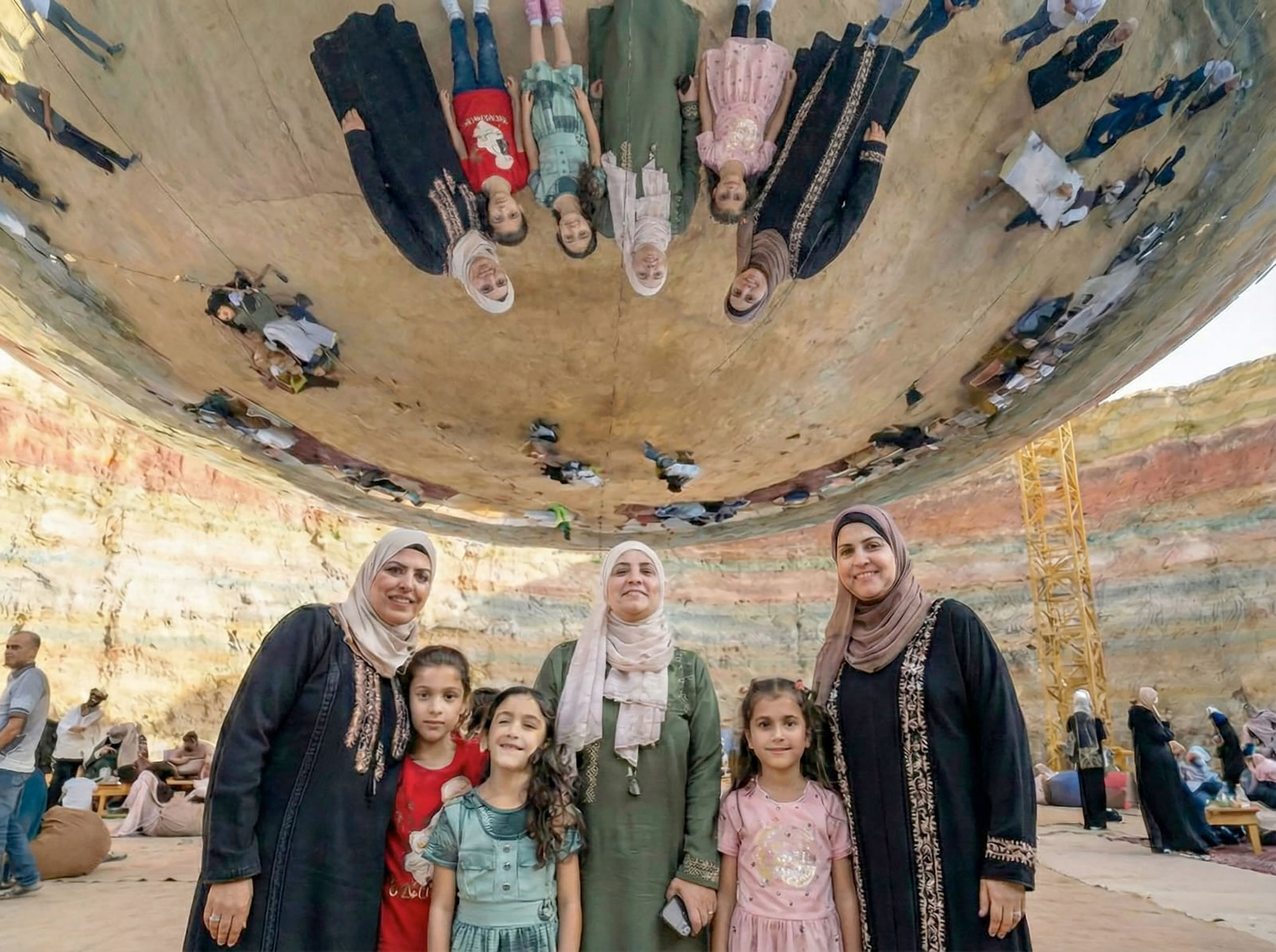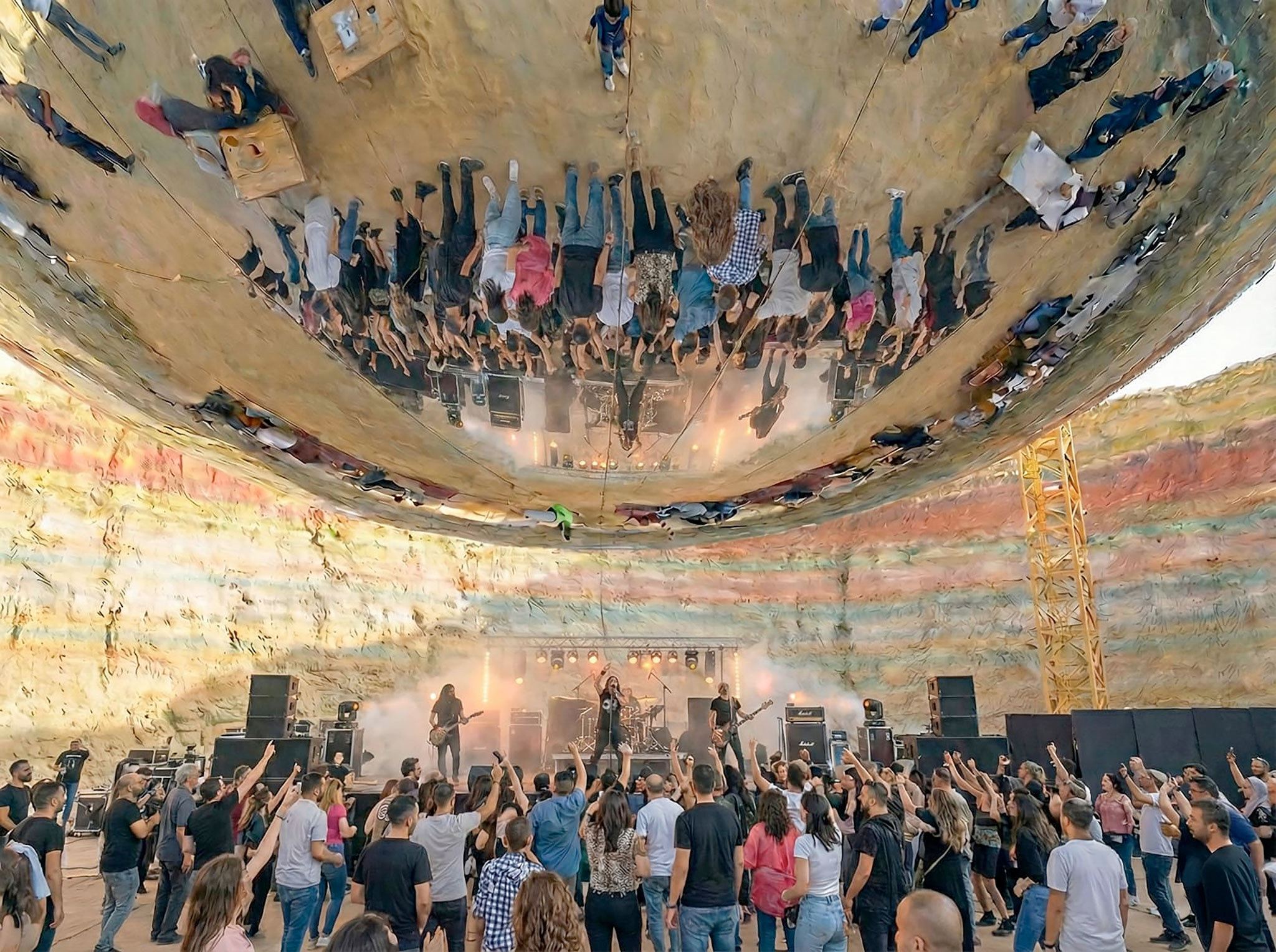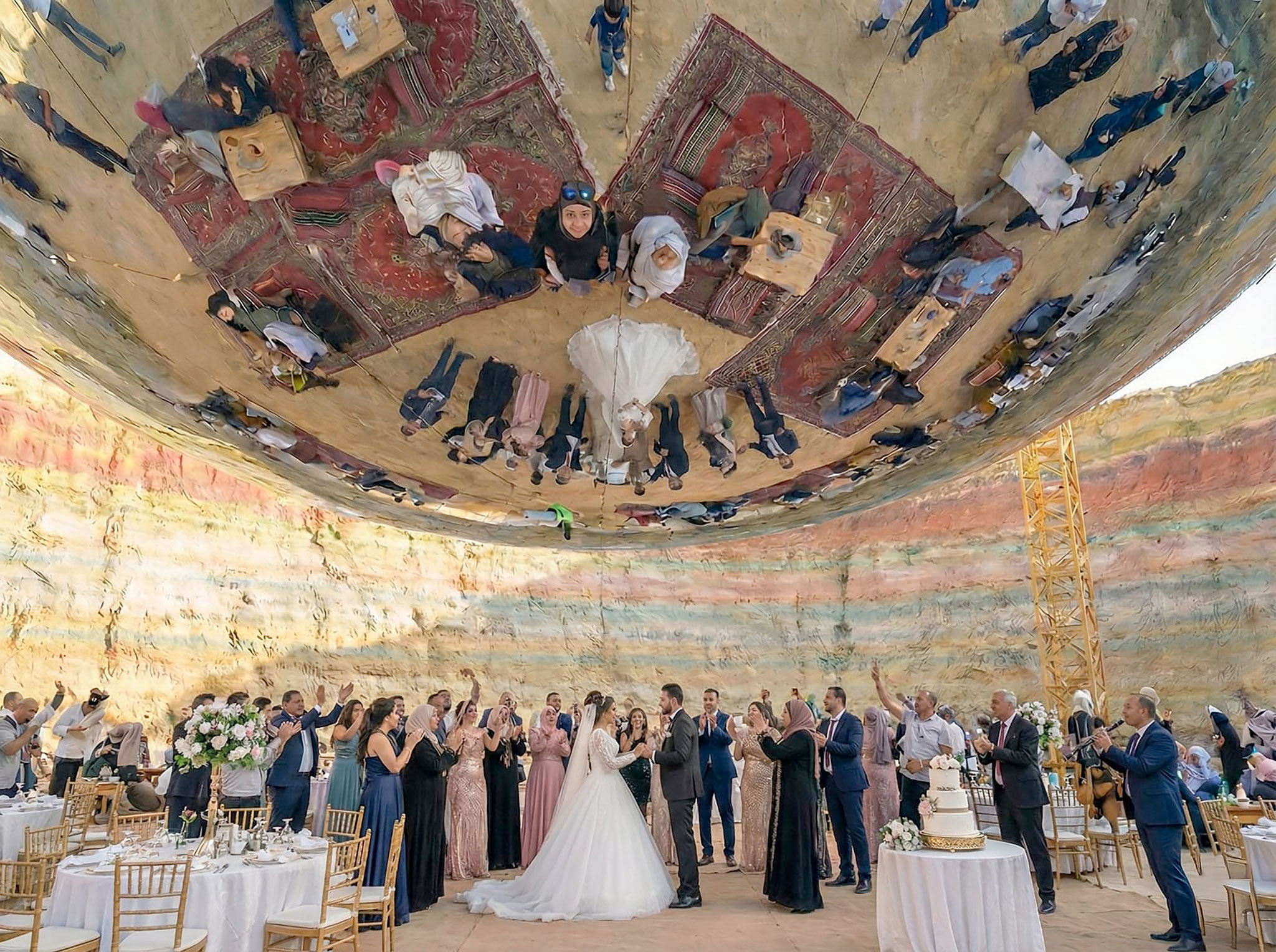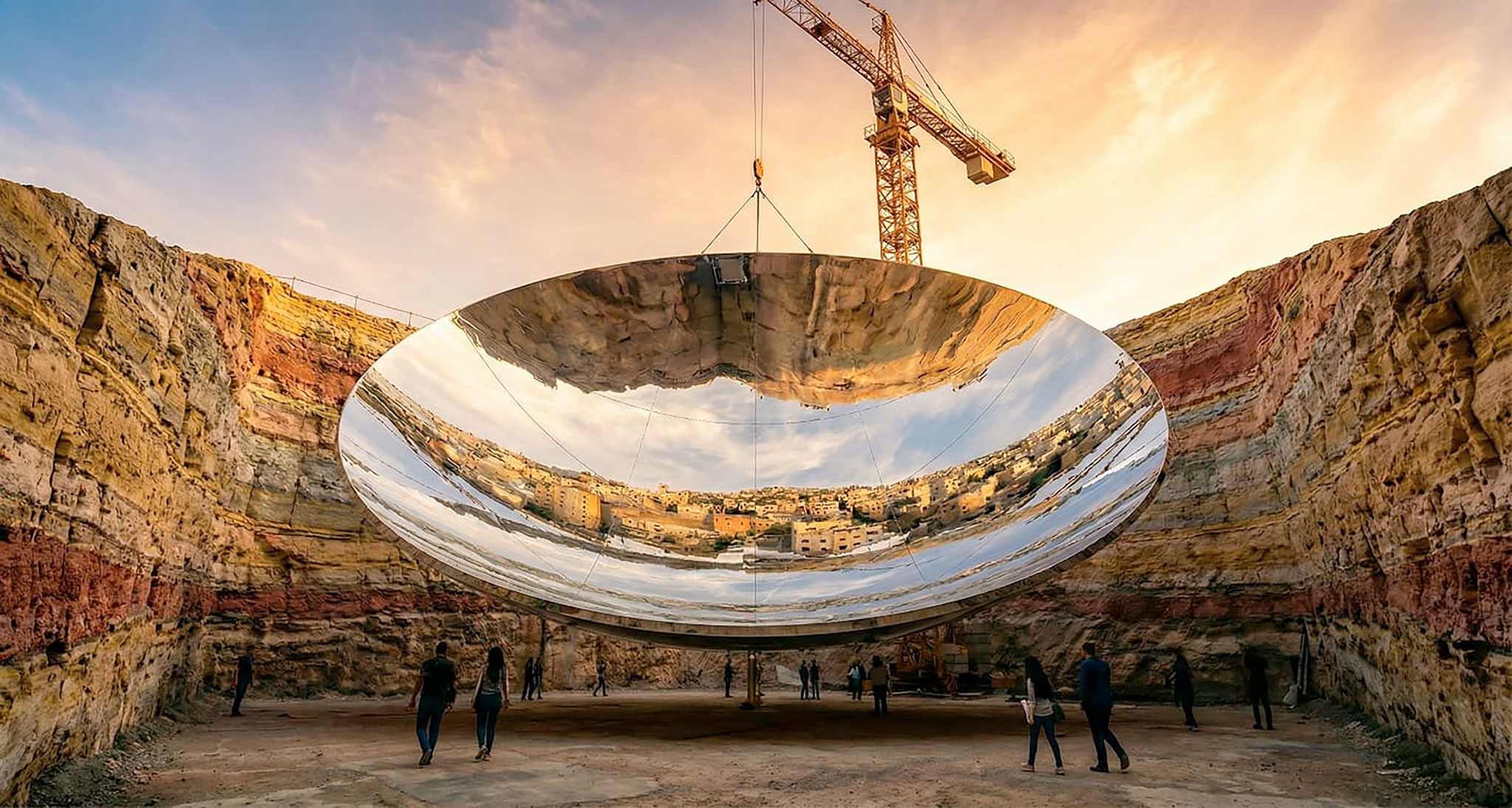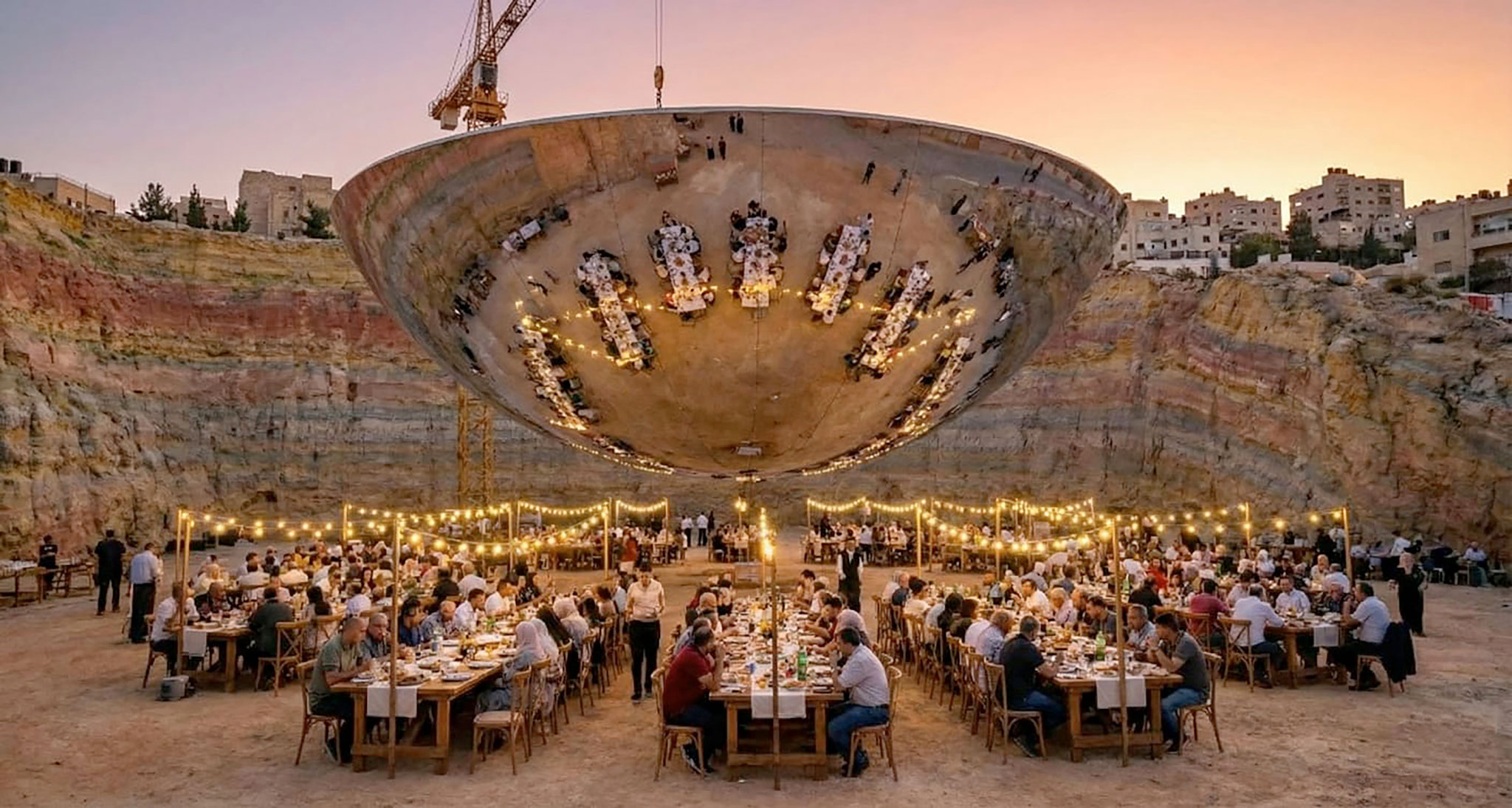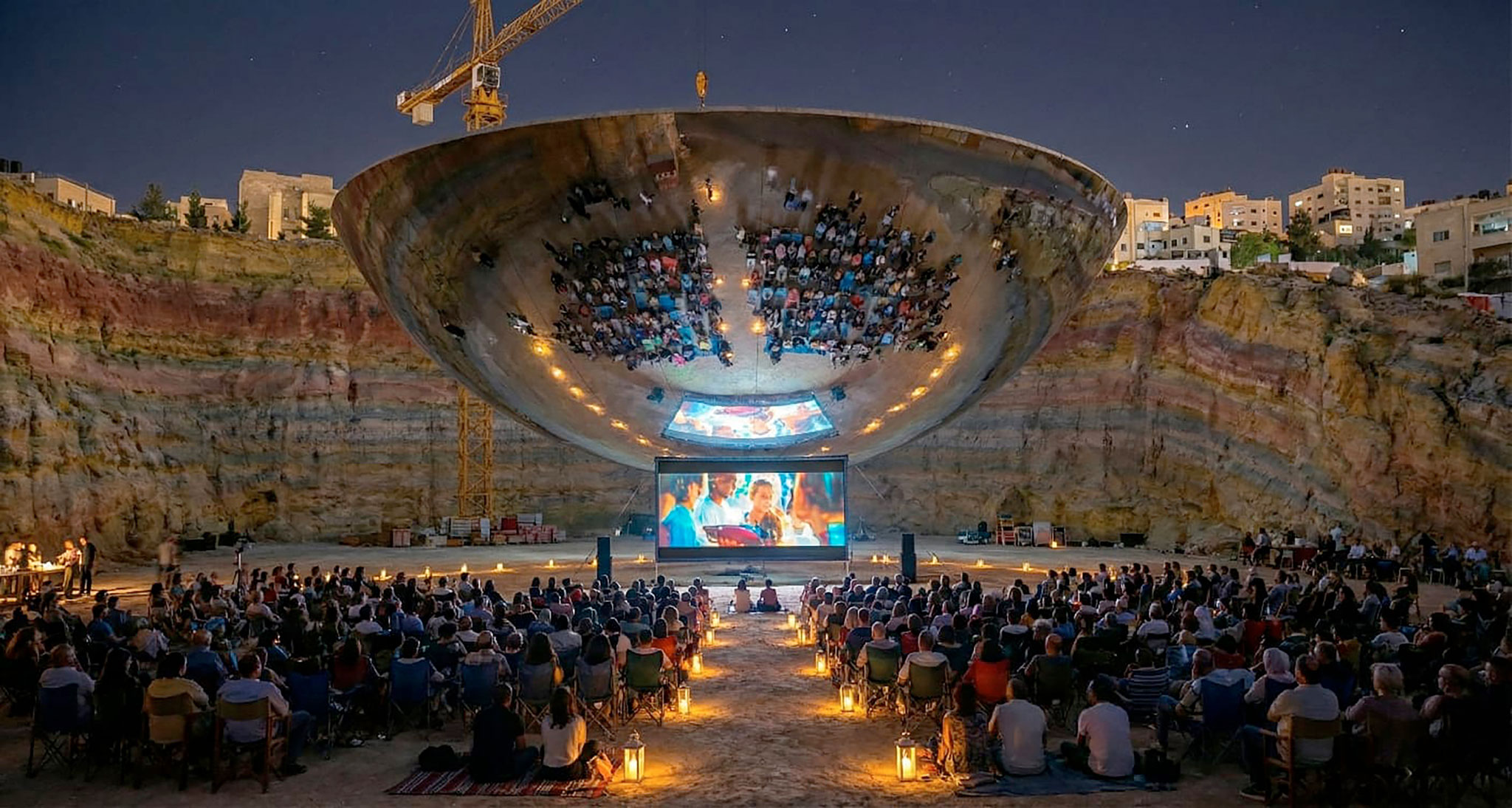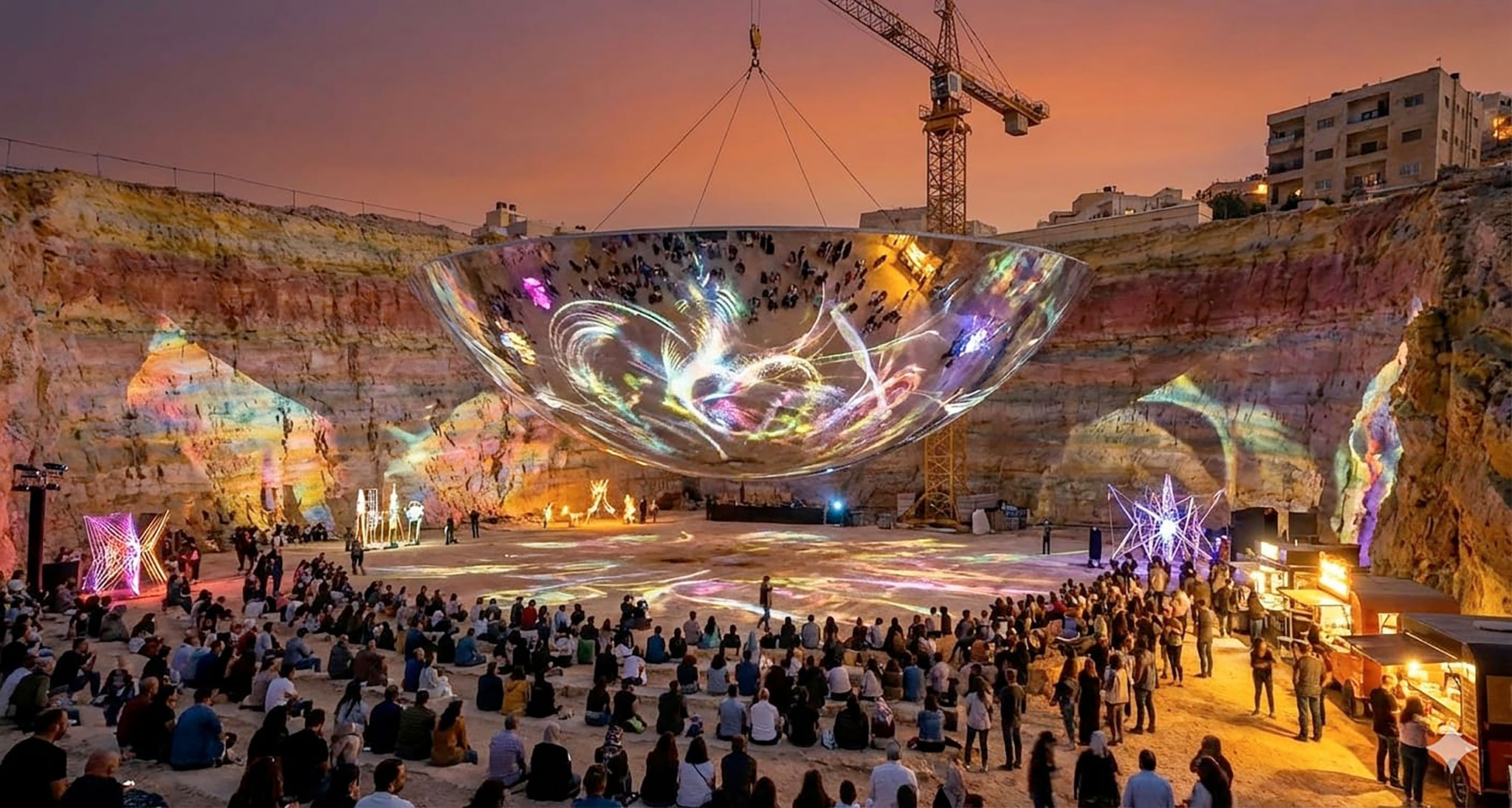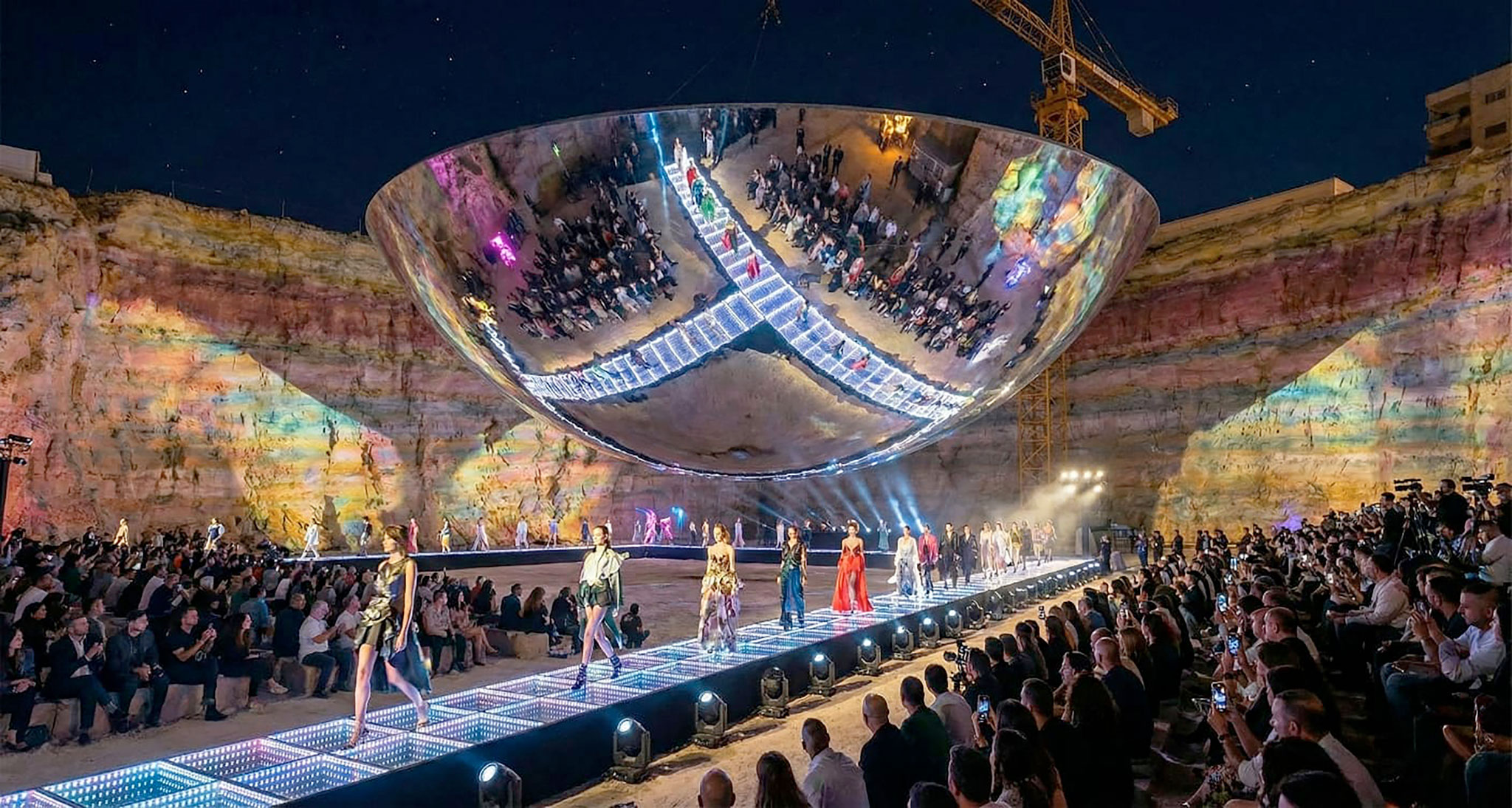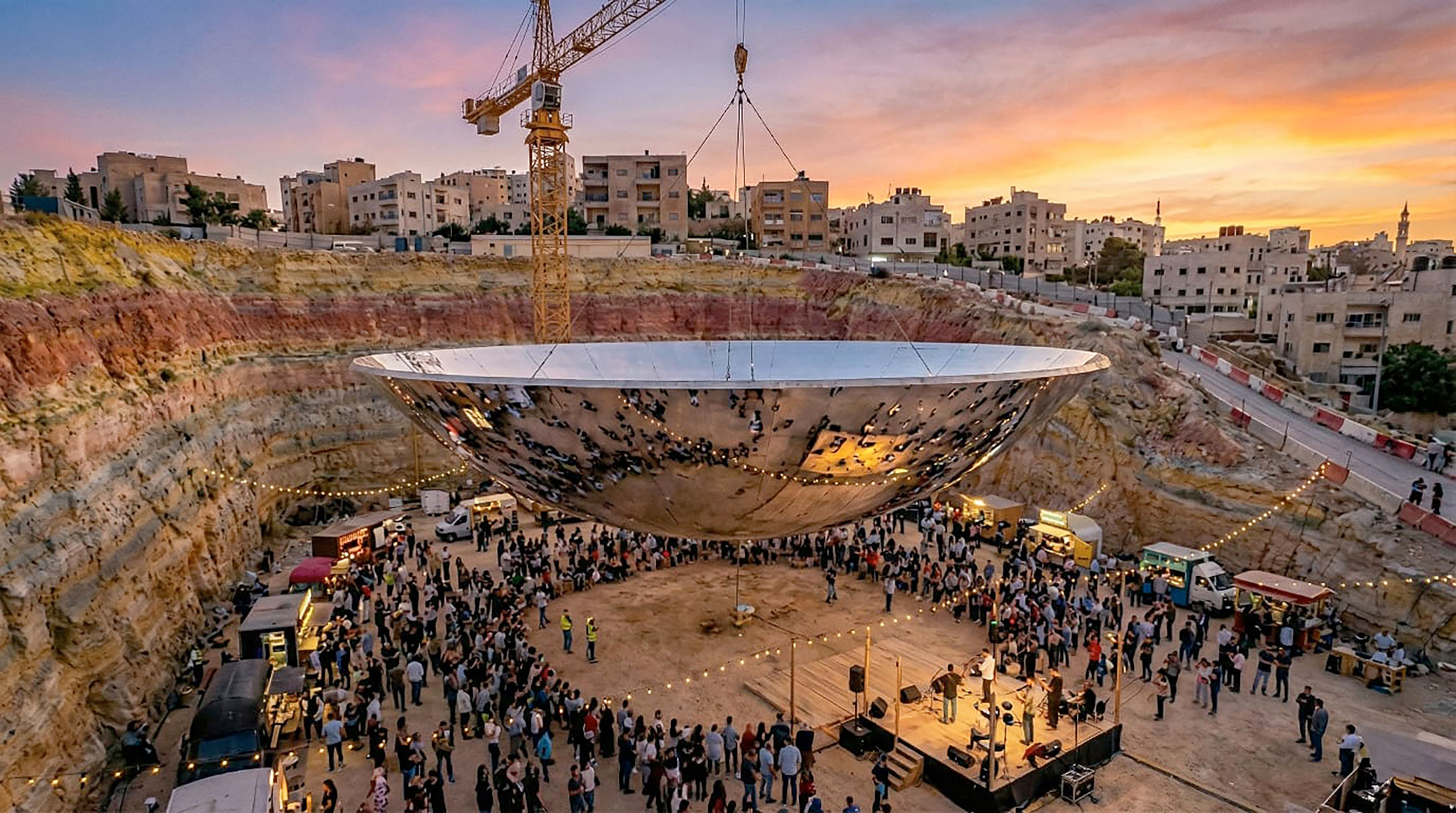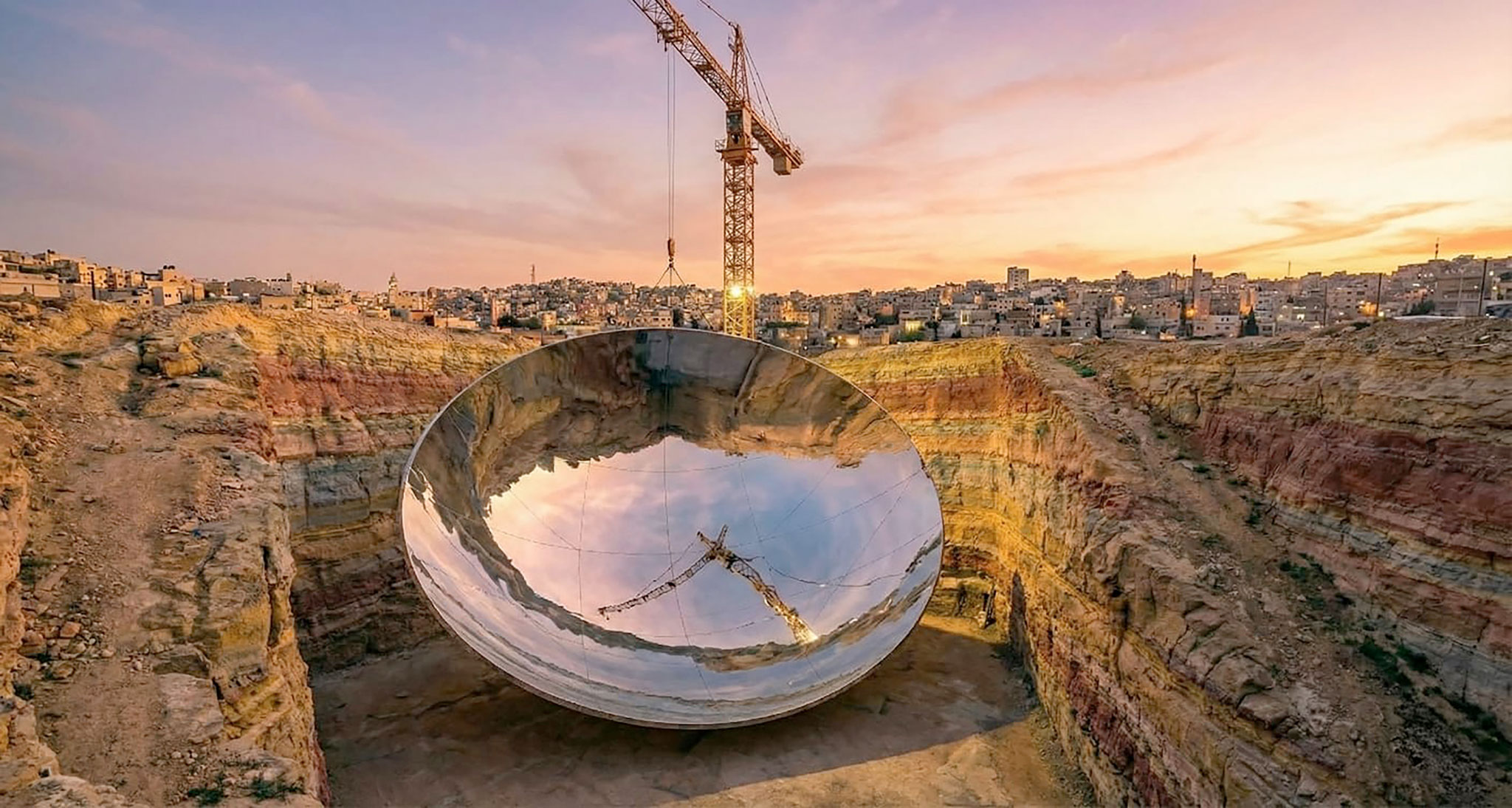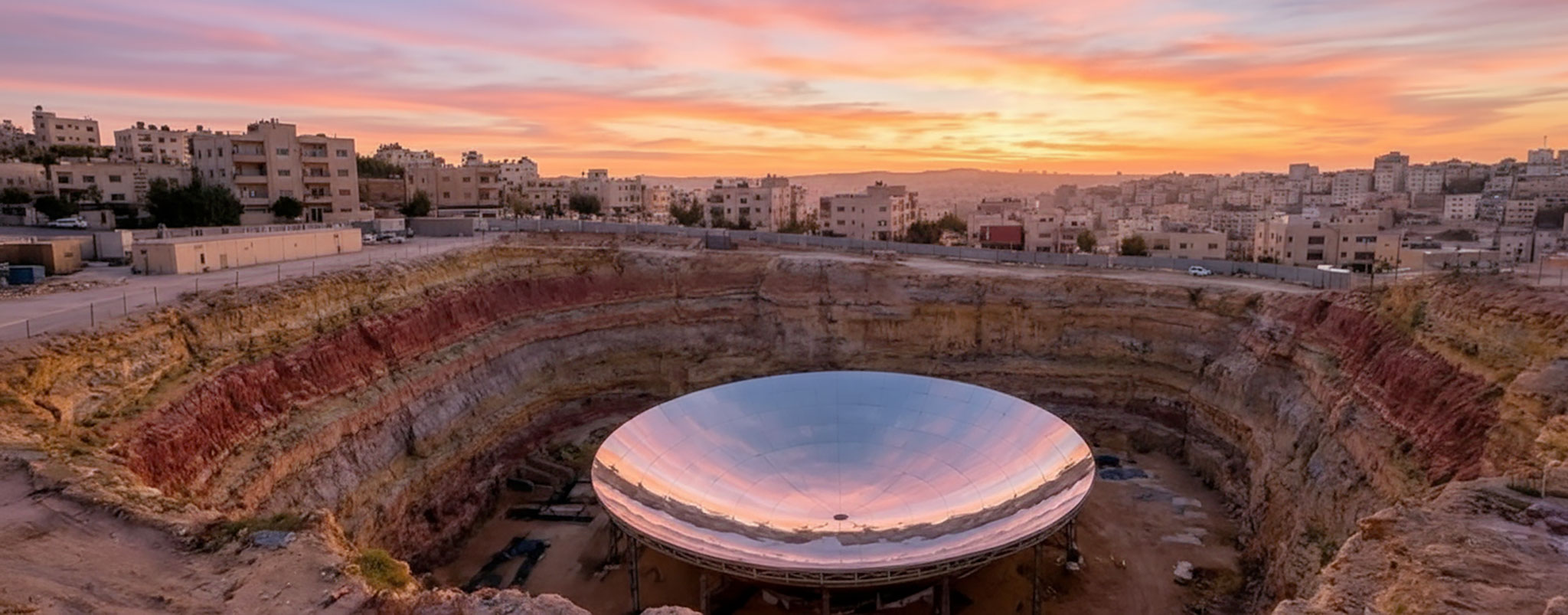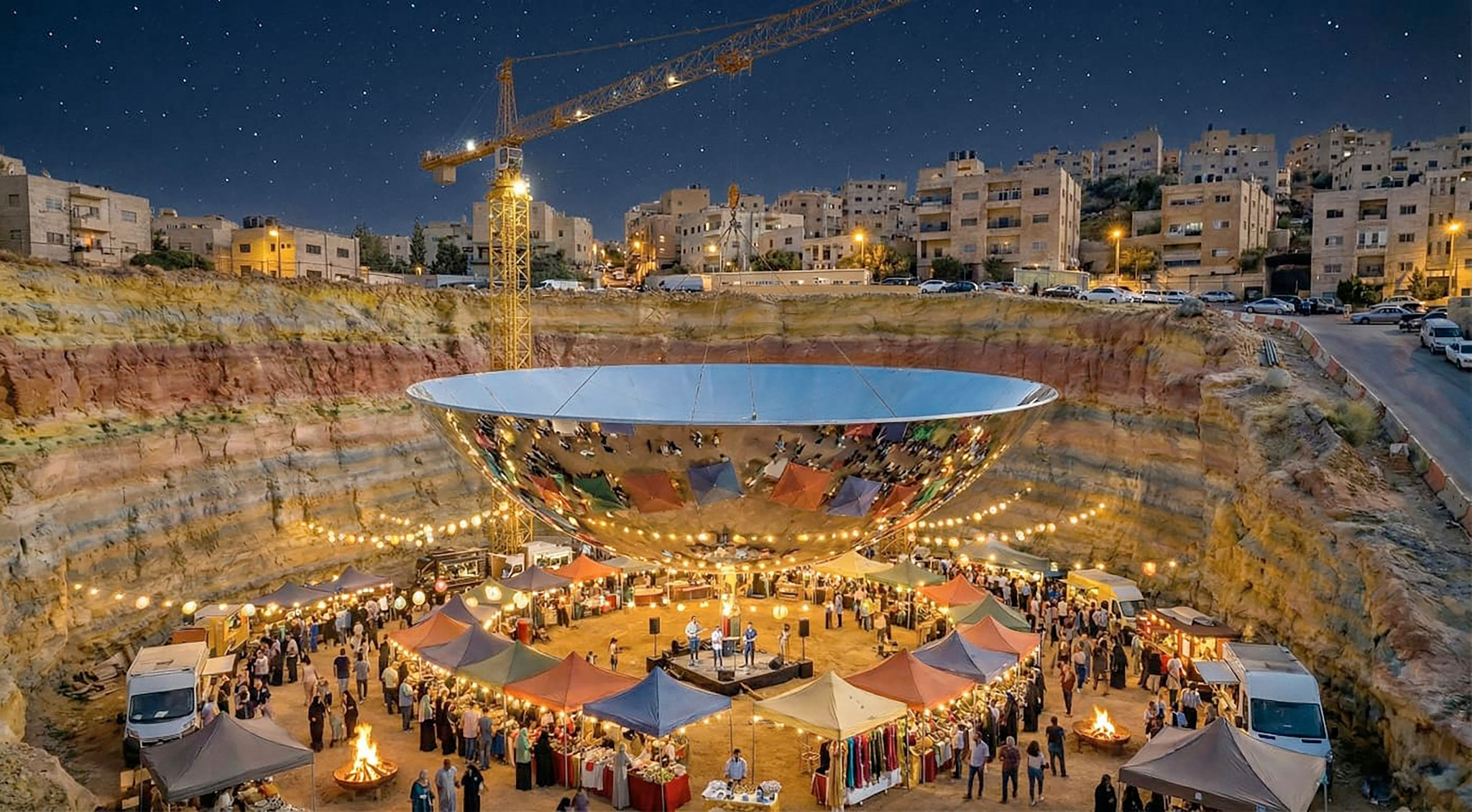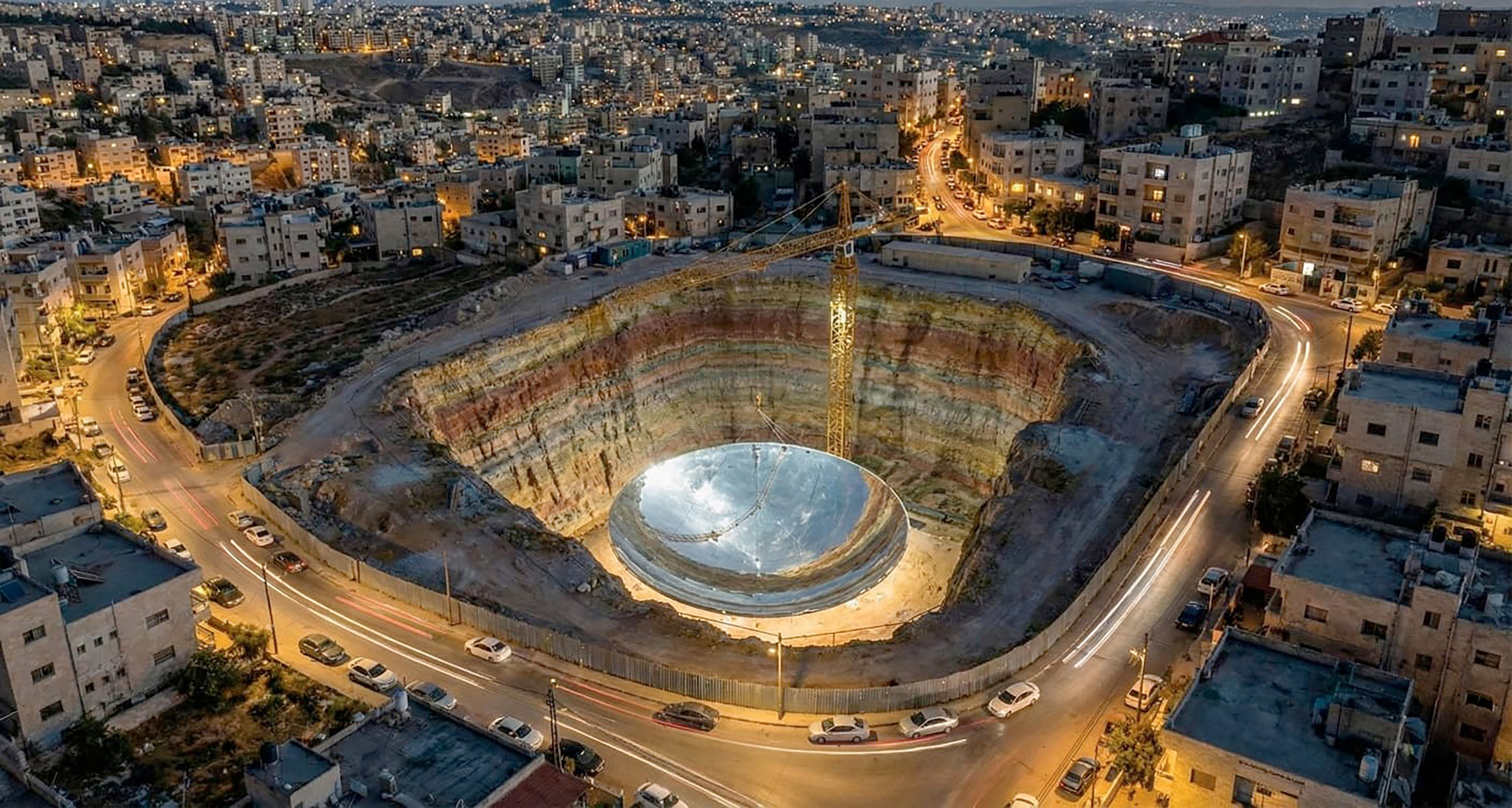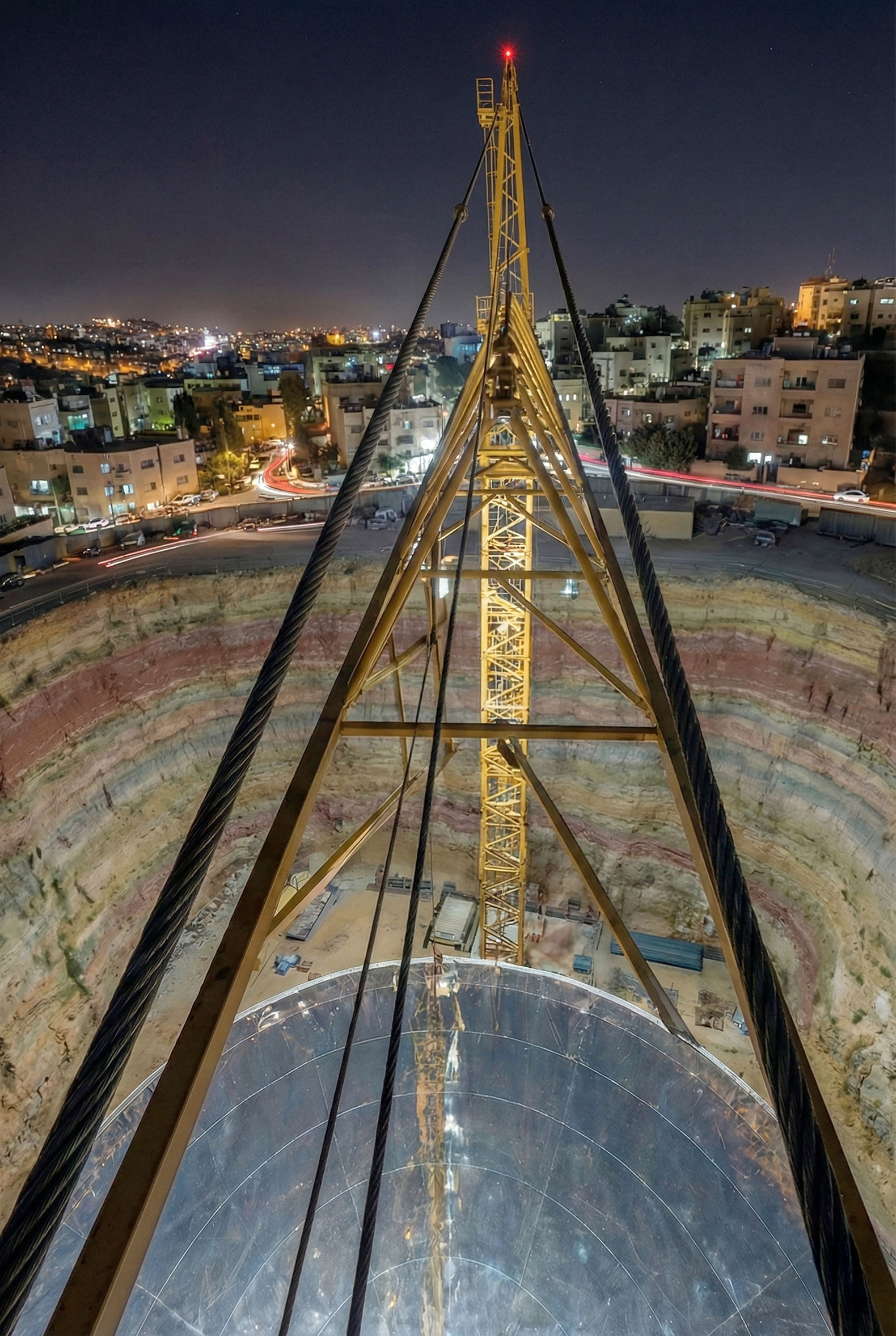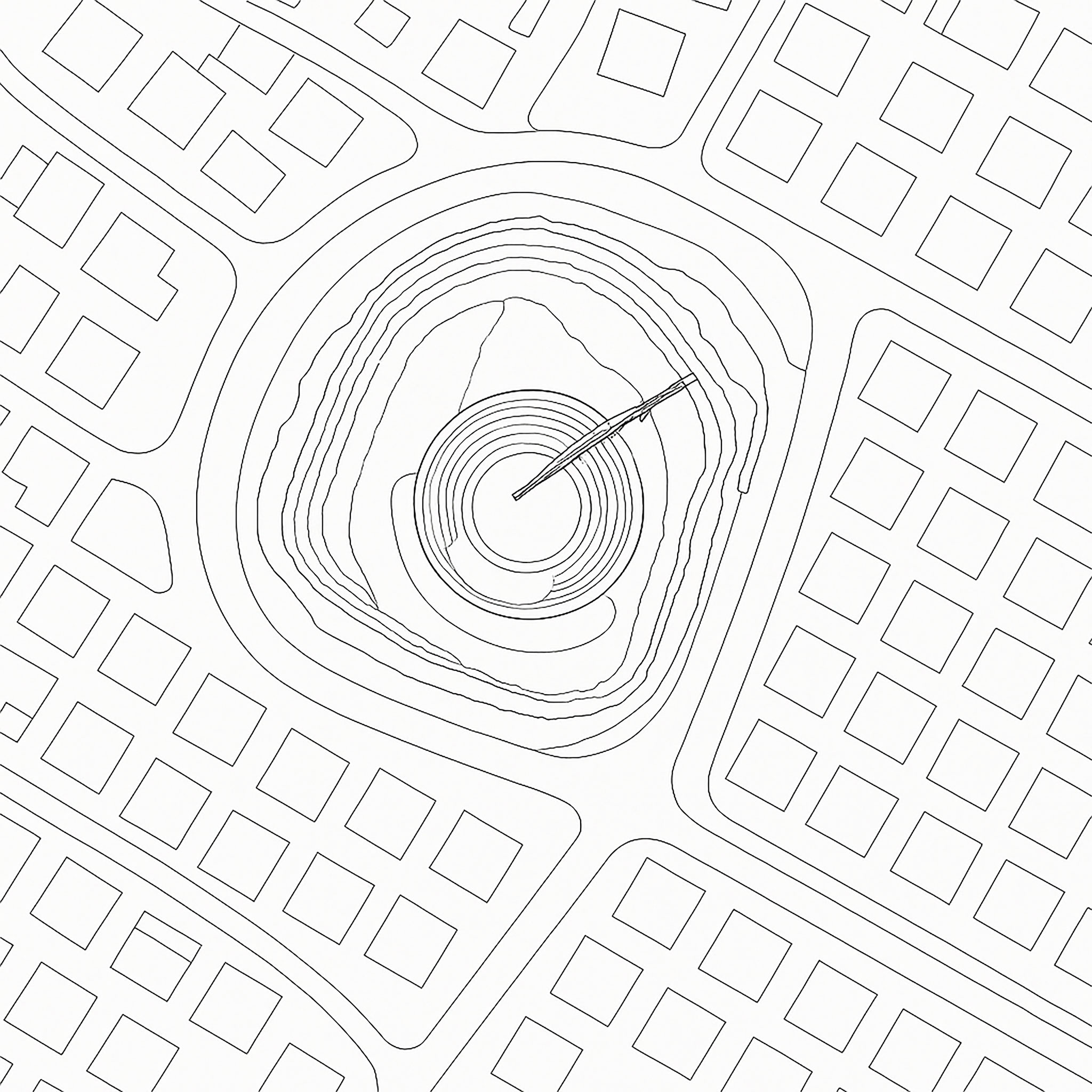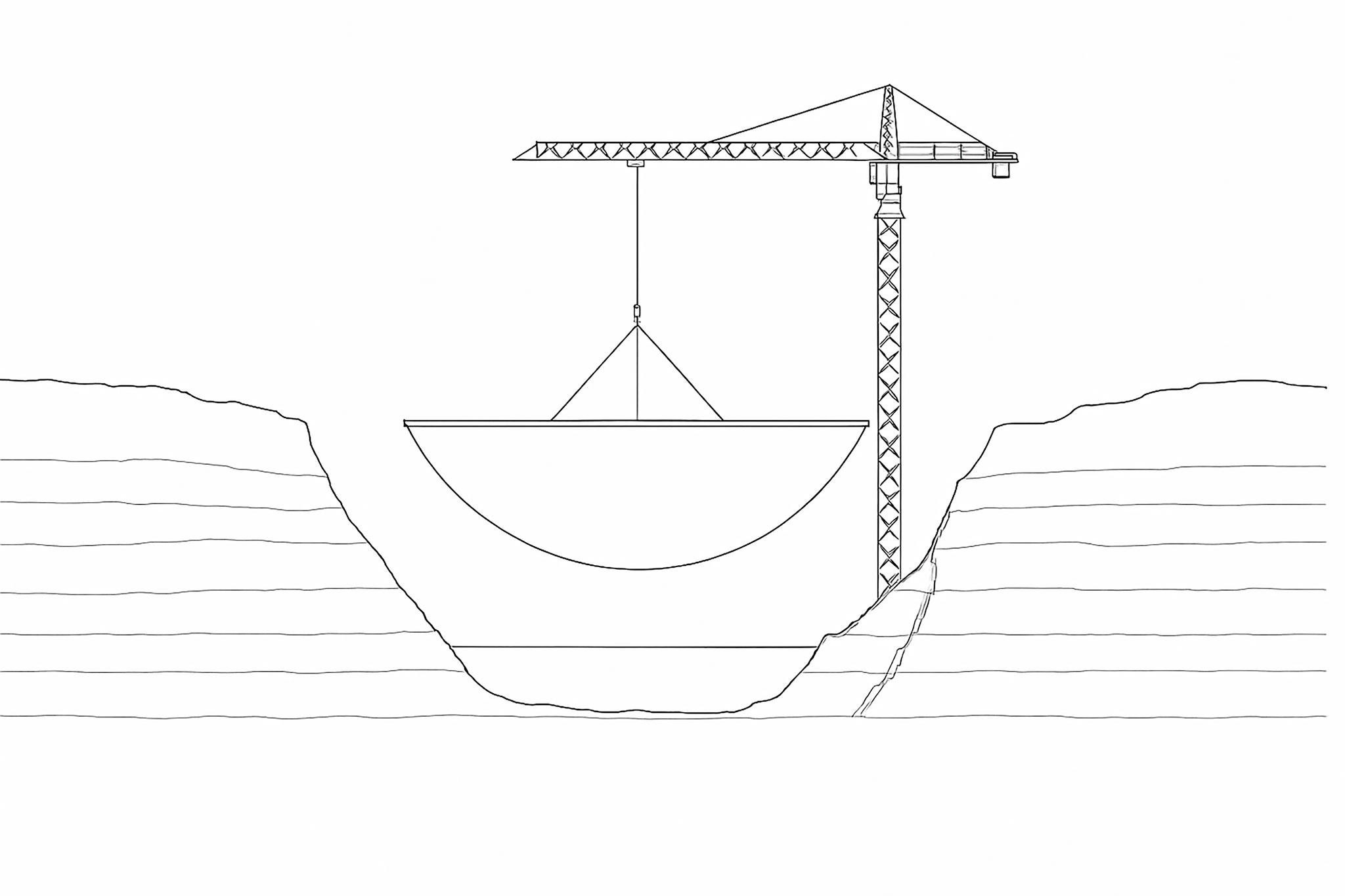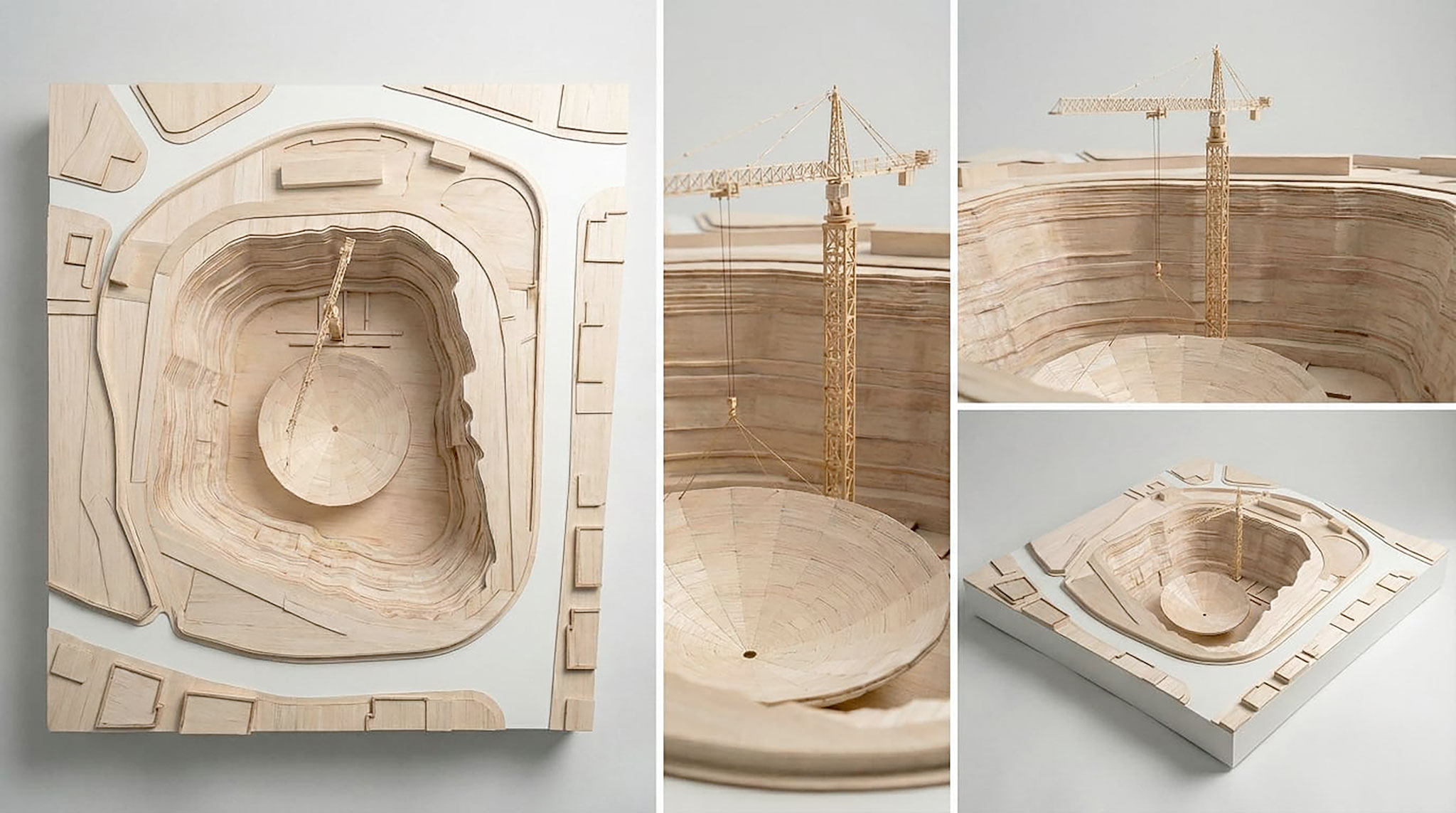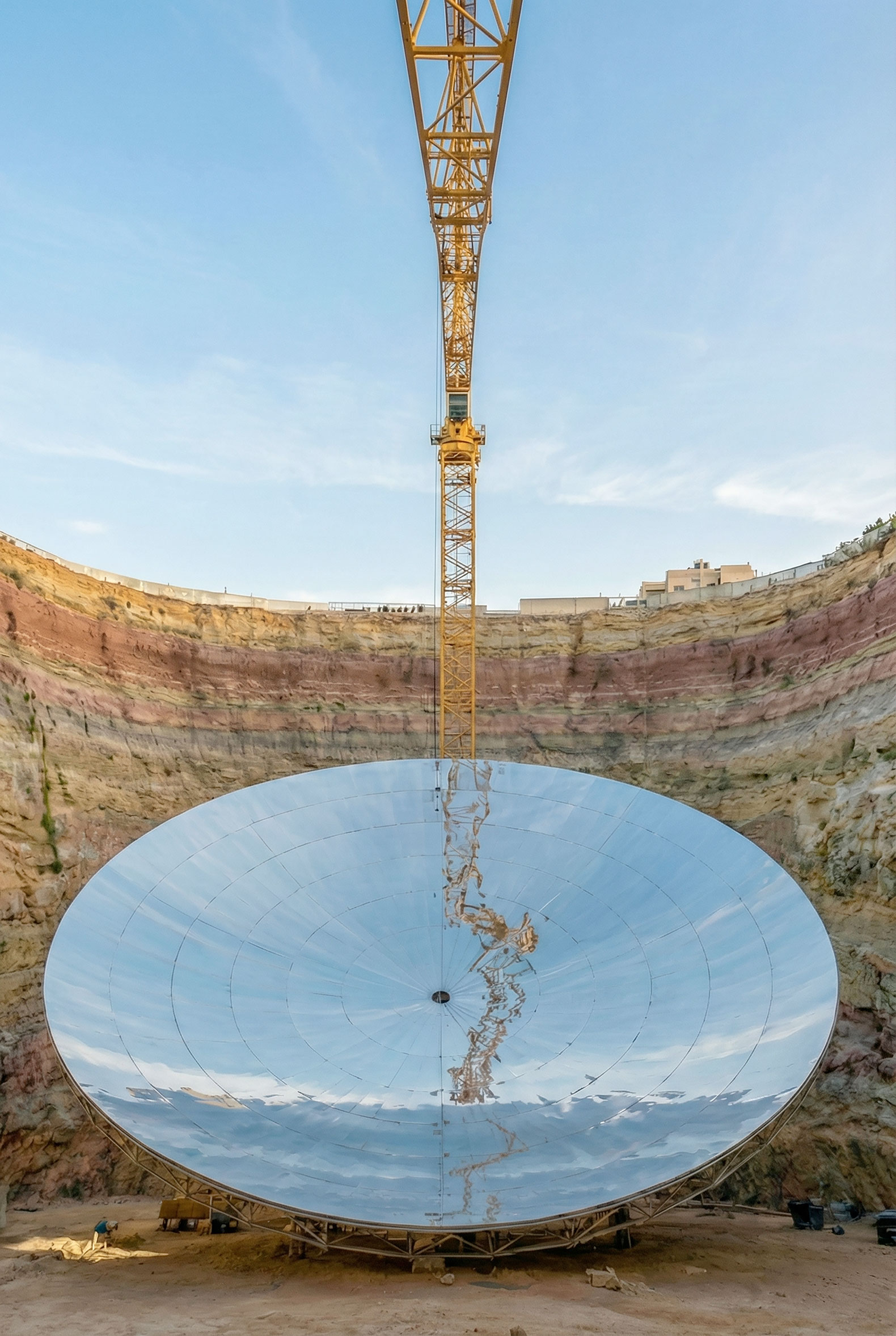
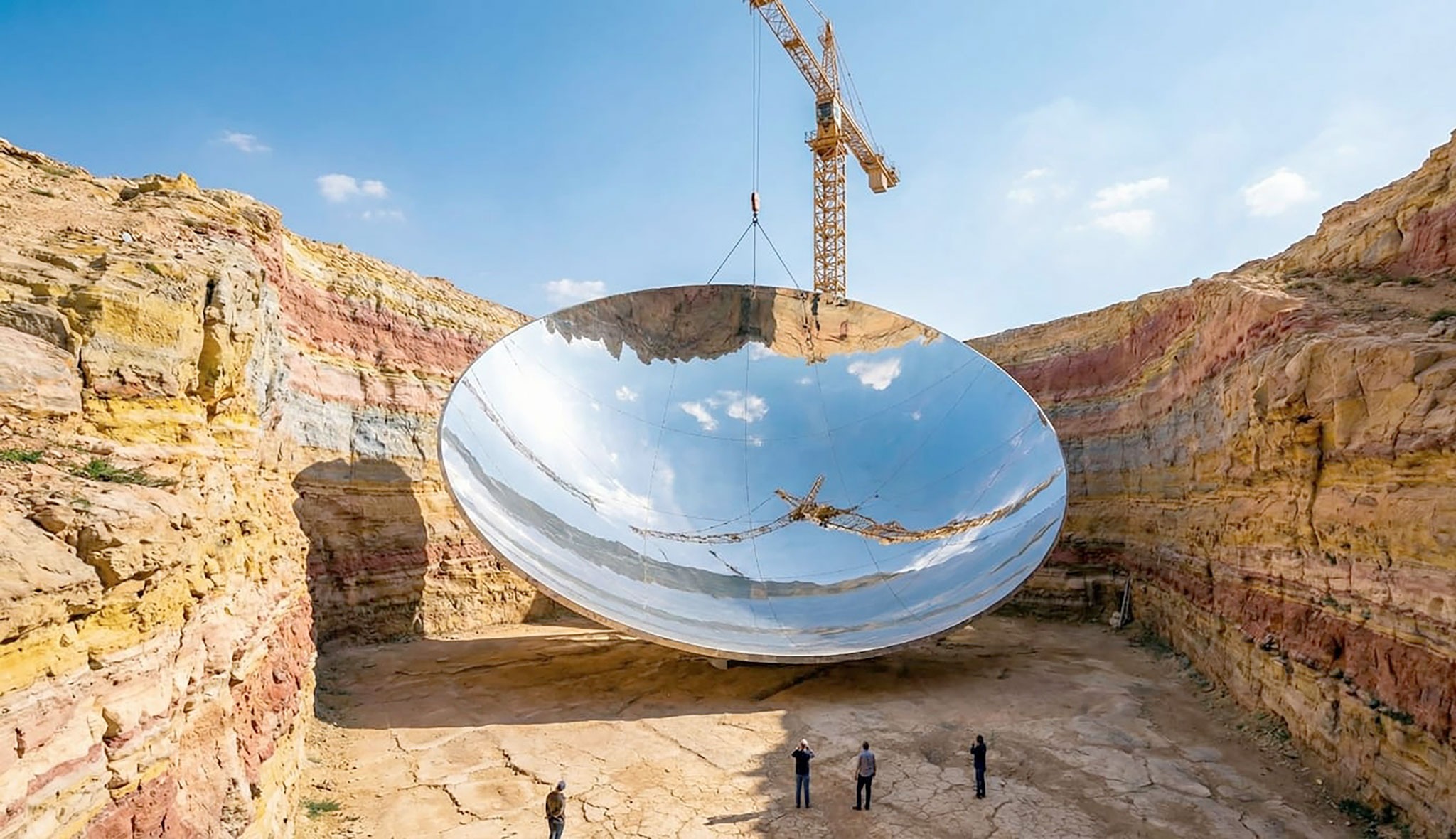
Wassim Abu Hazim's intervention in the Jordanian landscape unfolds with a large convex mirror suspended over the void, capturing the sky and the city's constant movement and projecting them underground. Through this intriguing strategy, visitors descend and experience both immediate and geological temporality in a unique panoramic scene.
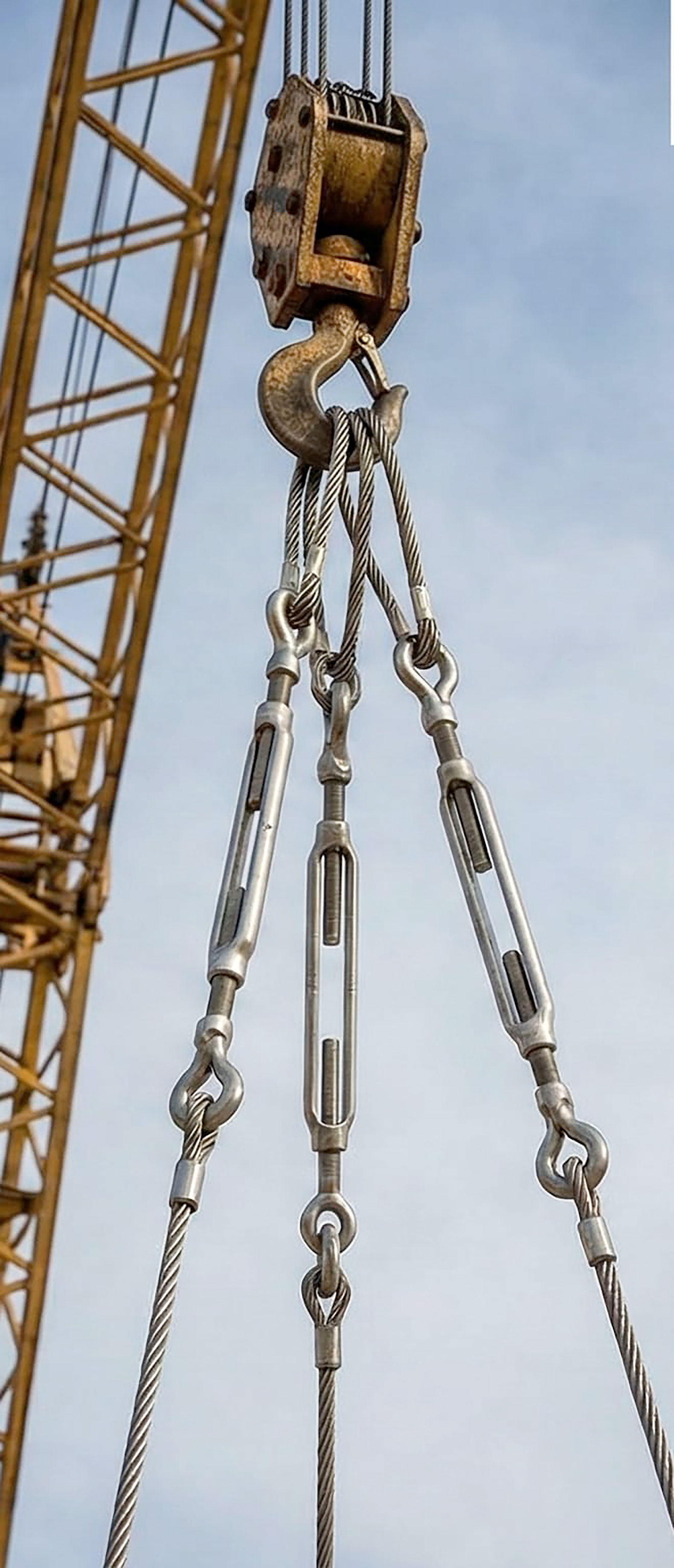
As part of the project, an abandoned construction crane is integrated to give new meaning to this symbol of construction, carrying the mirror and reconnecting with and revealing what still resides in the site as memory.
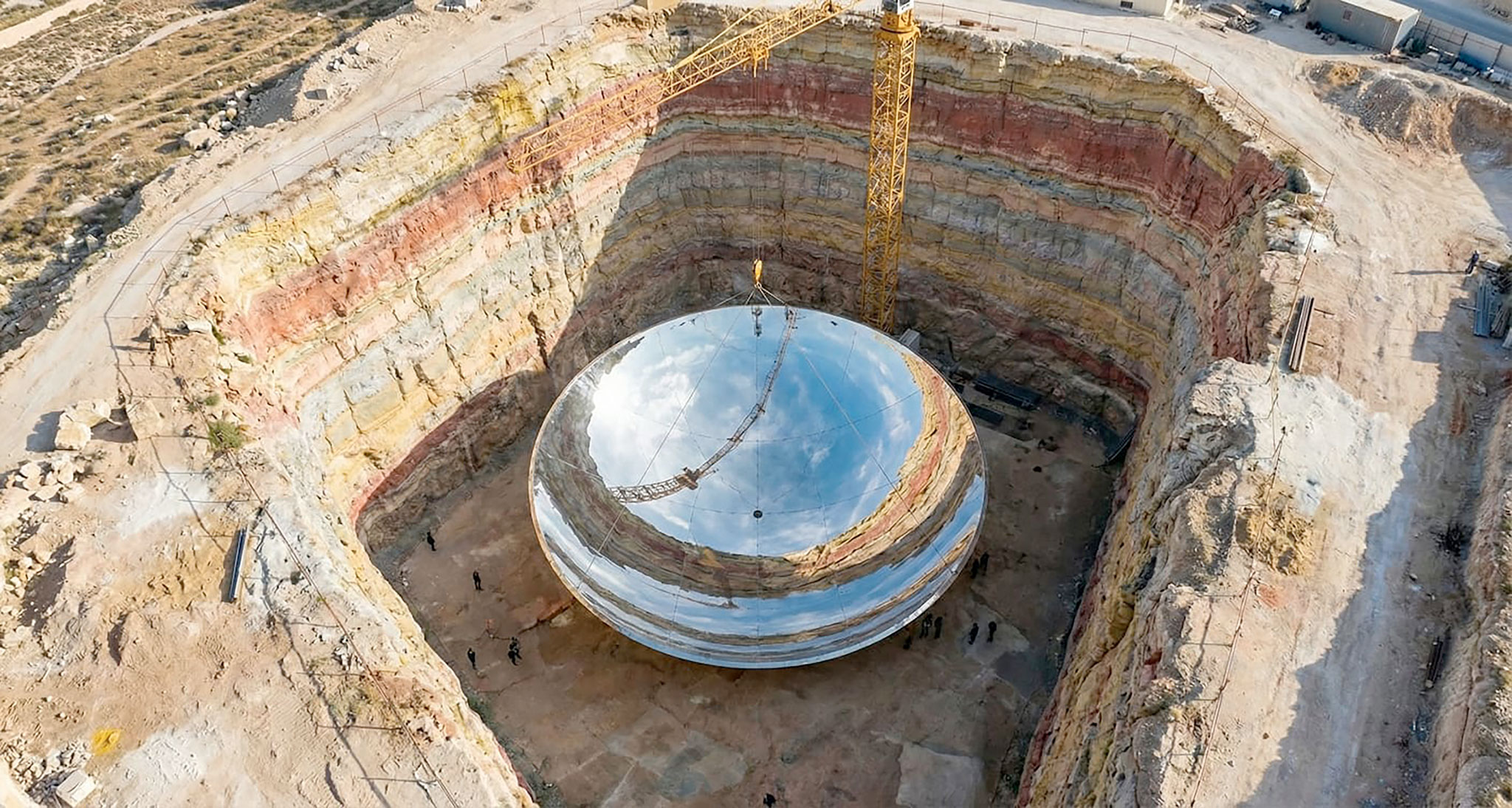
Reclaiming the Sky in Earth by Wassim Abu Hazim. Photograph by Wassim Abu Hazim.
Project description by Wassim Abu Hazim
Amman lives with open urban scars: abandoned construction pits where time has stalled at the moment of rupture. These voids are wounds in the body of the city, exposing what architecture usually seeks to conceal—geological strata, their silent history, and terrains that predate concrete and asphalt. This project does not approach these spaces as “problems” to be filled, but as wounds endowed with memory: rare conditions that offer the city an opportunity to reflect on its deep past.
The project does not heal the wound; it reclaims it—transforming it from a hidden trace into a moment of confrontation, and from a neglected pit into a living refuge that reconnects the city with the ground from which it once emerged. At its core lies a visual stitching between two opposing realms: a rocky depth, eternal and unmoving, and an urban surface, fast and restless like everyday life.
Suspended above the void is a giant convex mirror—an eye hanging in the air—that captures the city's sky, its clouds, and its constant motion, and pours them inward, projecting them underground as an alternative sky. Here, the human experience is inverted: the visitor does not descend to confront the soil, but to see the city suspended above them—as if the sky had fallen downward, and the depth had become a mirror of the surface. Two temporalities—the immediate and the geological—merge into a single panoramic scene, where fragility and solidity coexist.
Even the abandoned construction crane is rewritten within the project's narrative. Rather than remaining a symbol of halted projects and urban failure, it becomes an arm of art—an apparatus that ceases to build walls and begins to construct meaning. It carries the mirror, reconnects what was severed, and stands as a witness to the possibility that negative space can become a lung for the city.
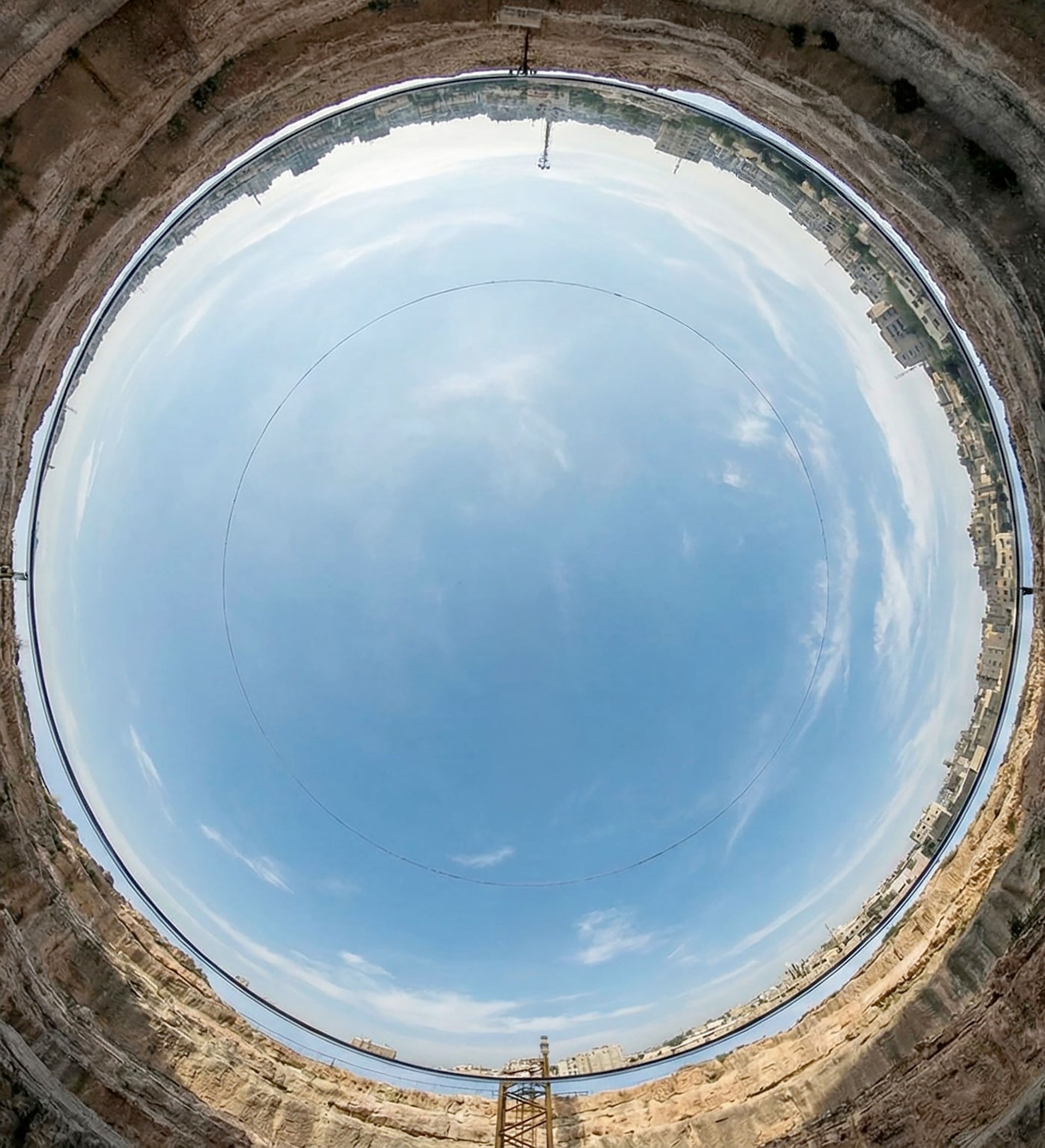
Thus, the architectural wound is transformed into a space that reveals not what was erased, but what still inhabits the earth as memory—granting Amman a new sky, one that appears only when we descend.