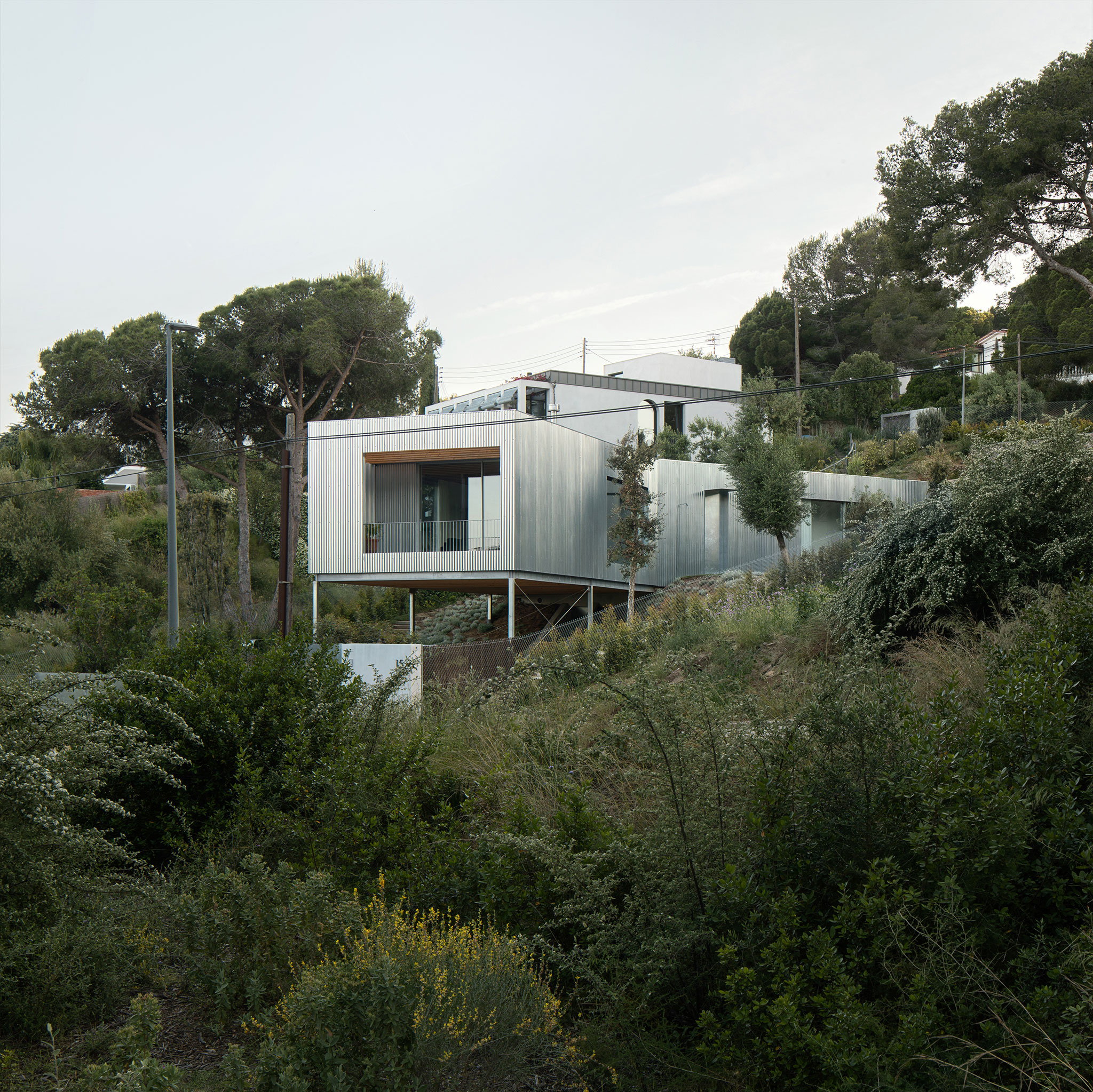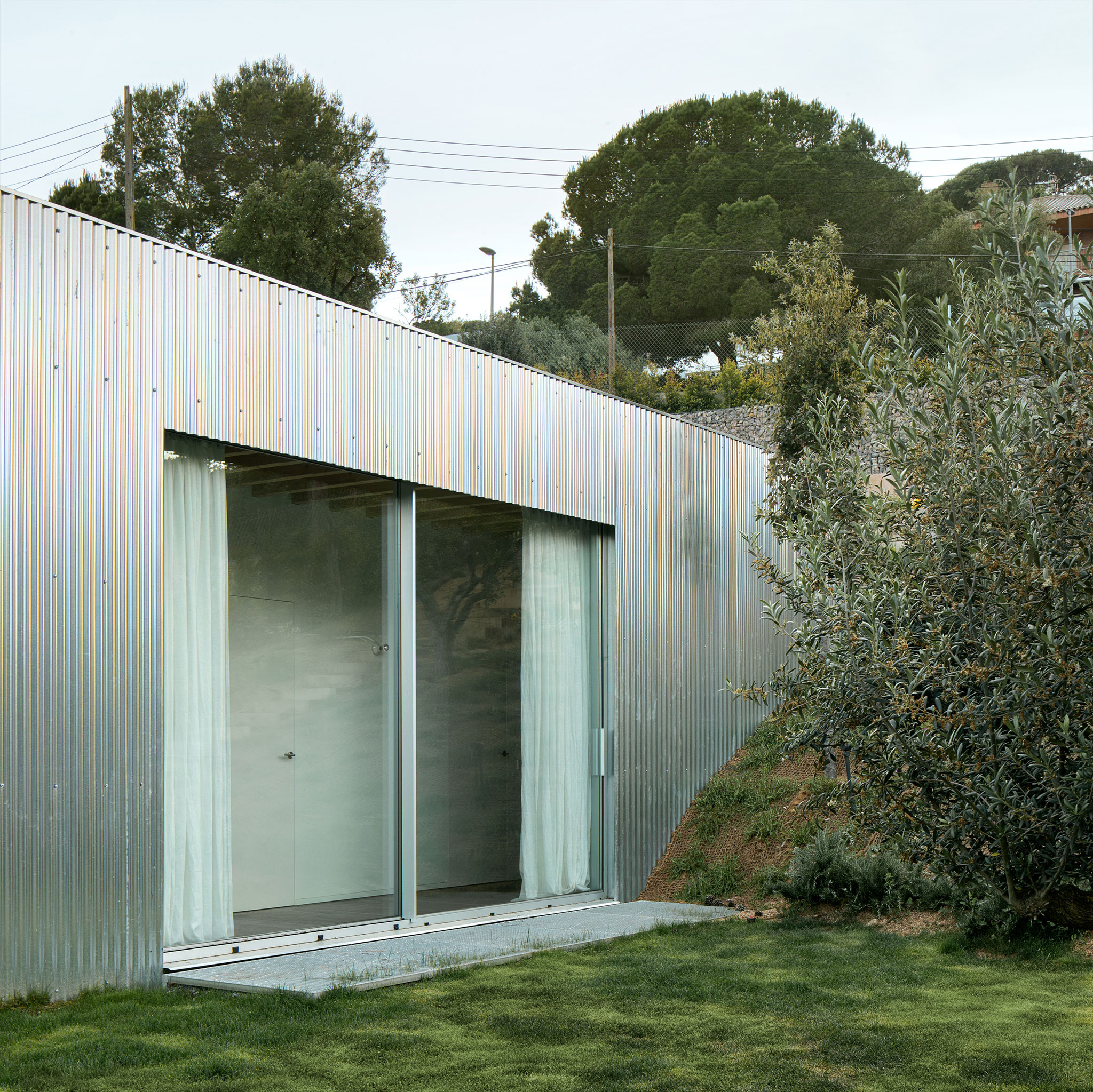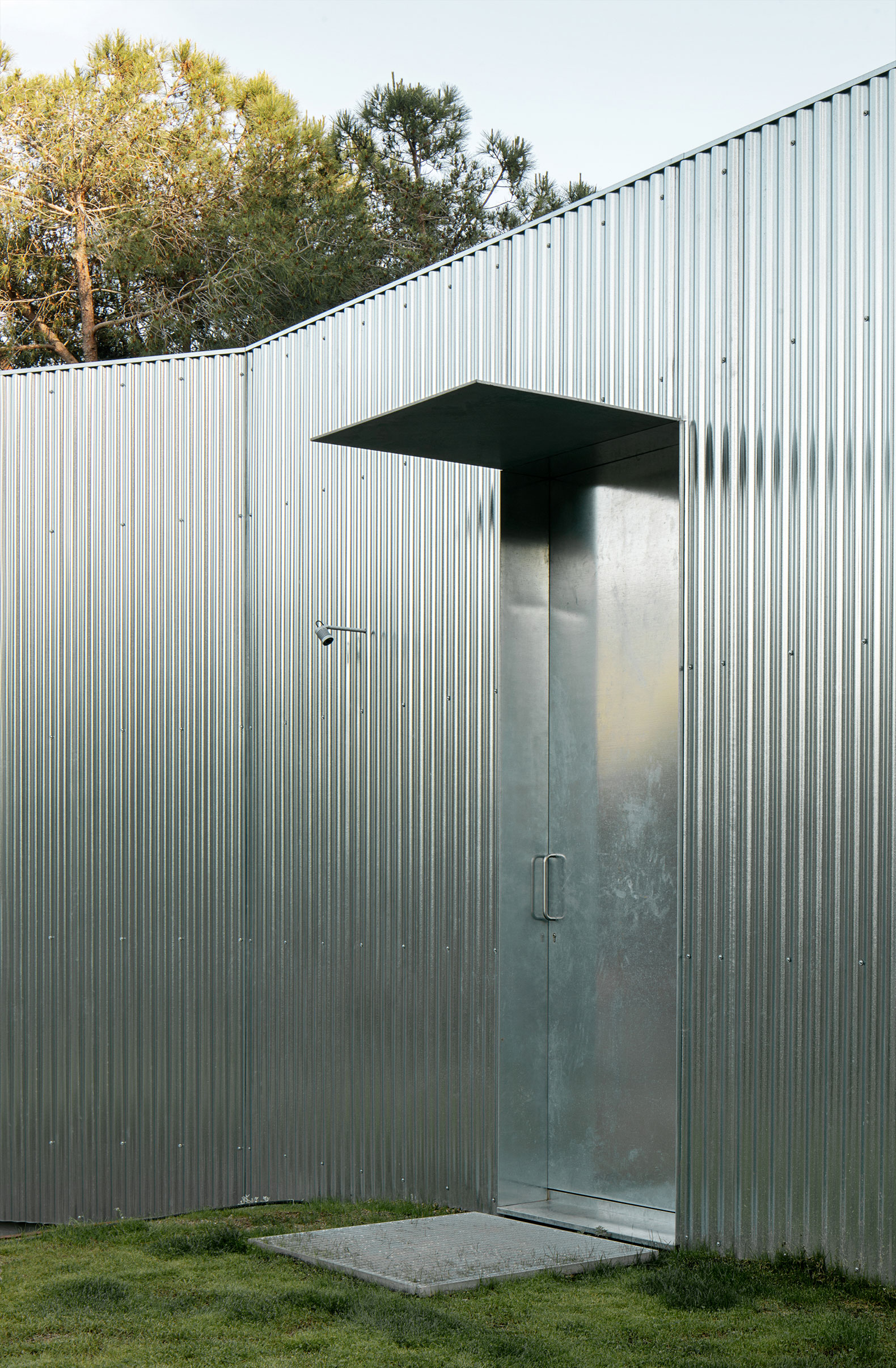
Casa 144º by Jaime Prous Architects and Pineda Monedero is a dry construction project that follows a straightforward and environmentally conscious approach, combining unusual materials like steel sheeting with efficient ones such as wood.
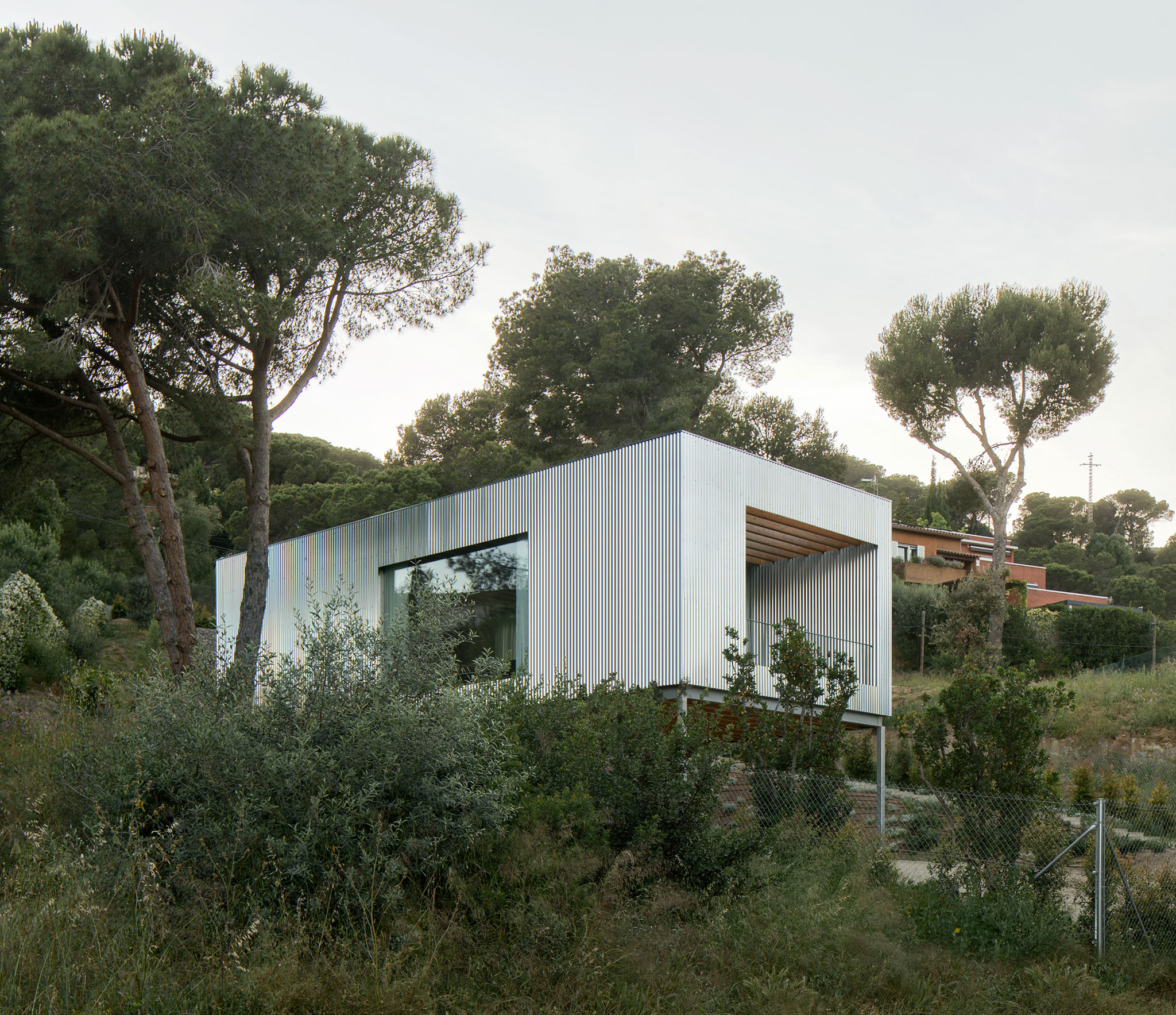
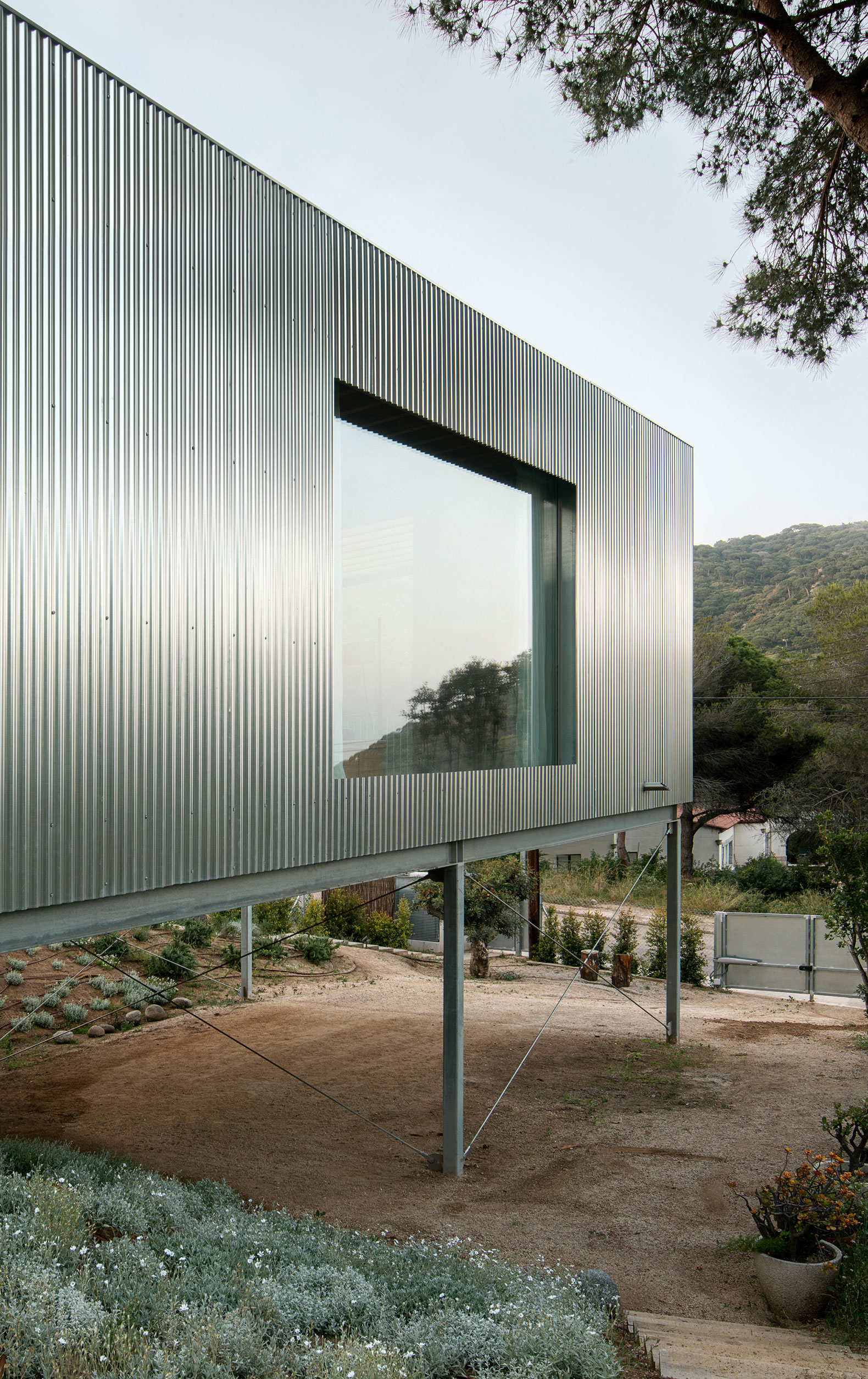
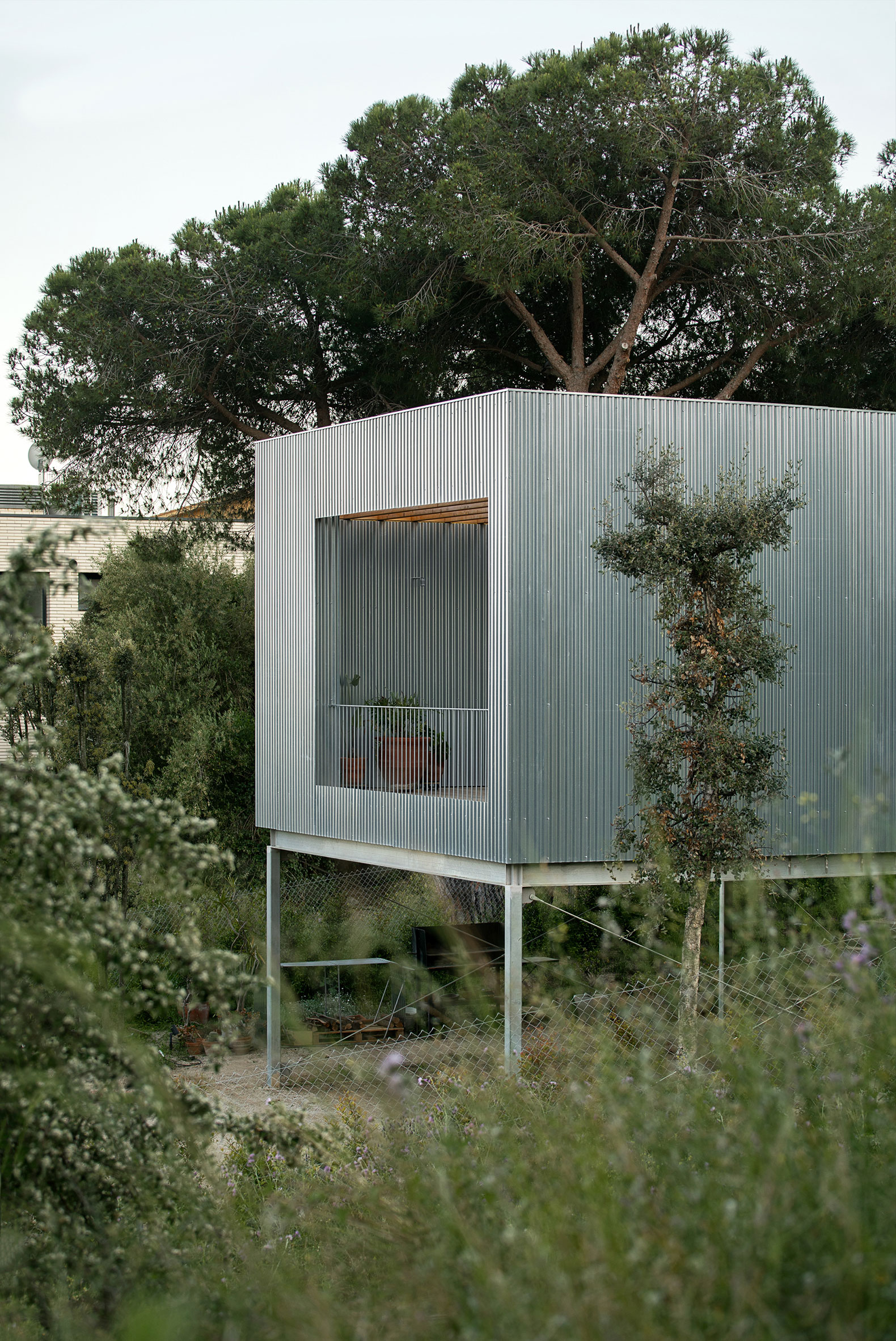
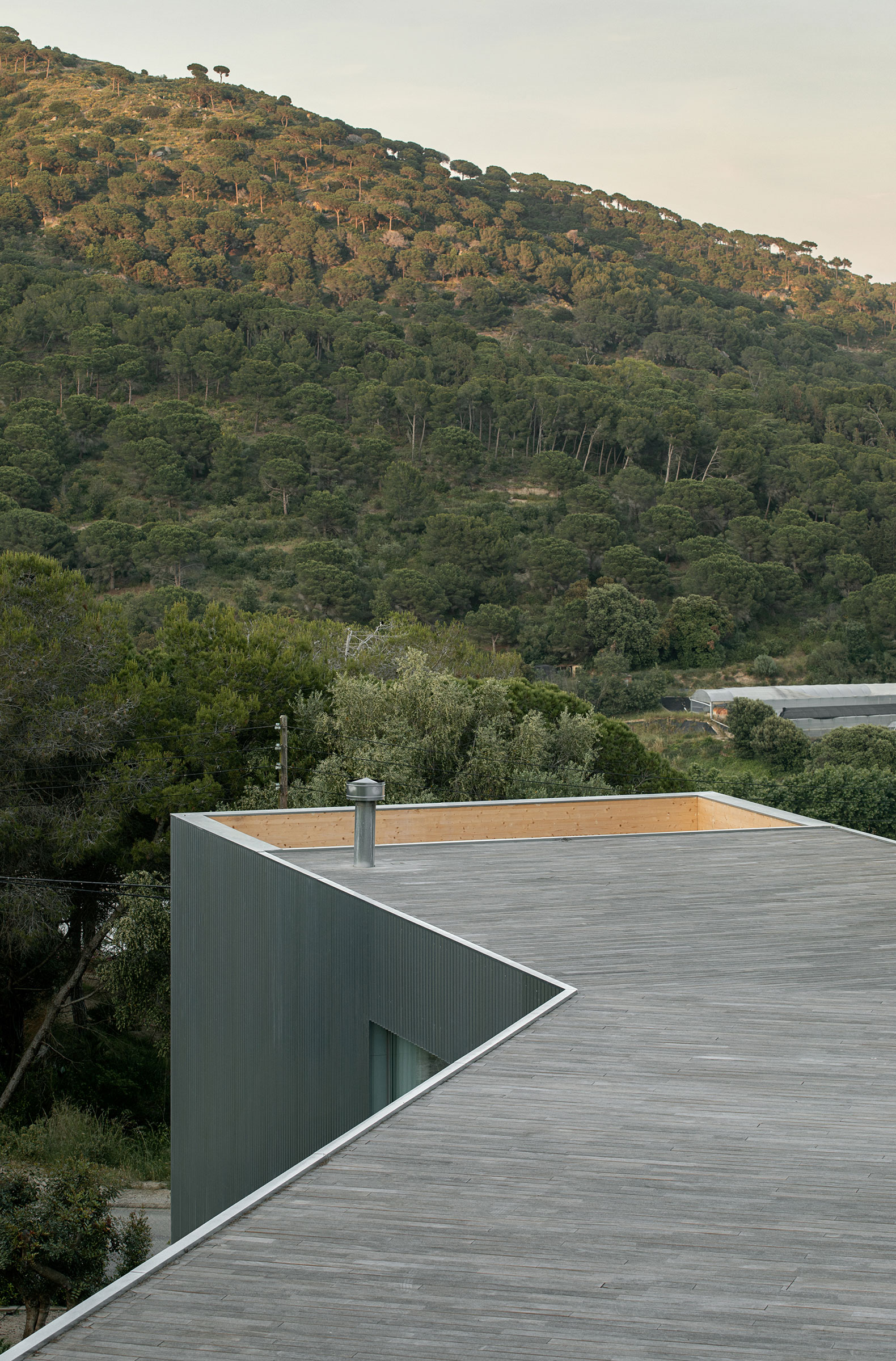
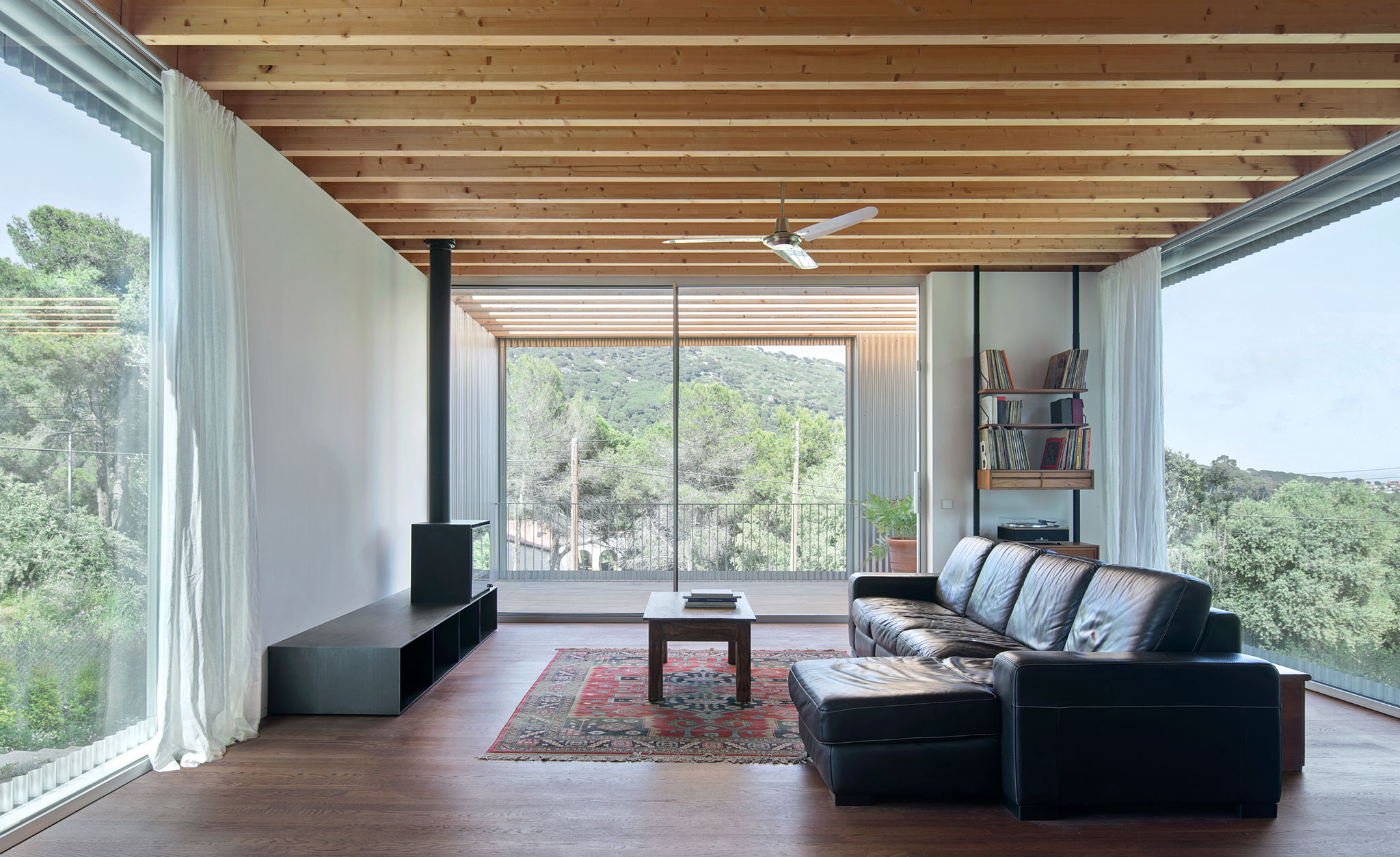
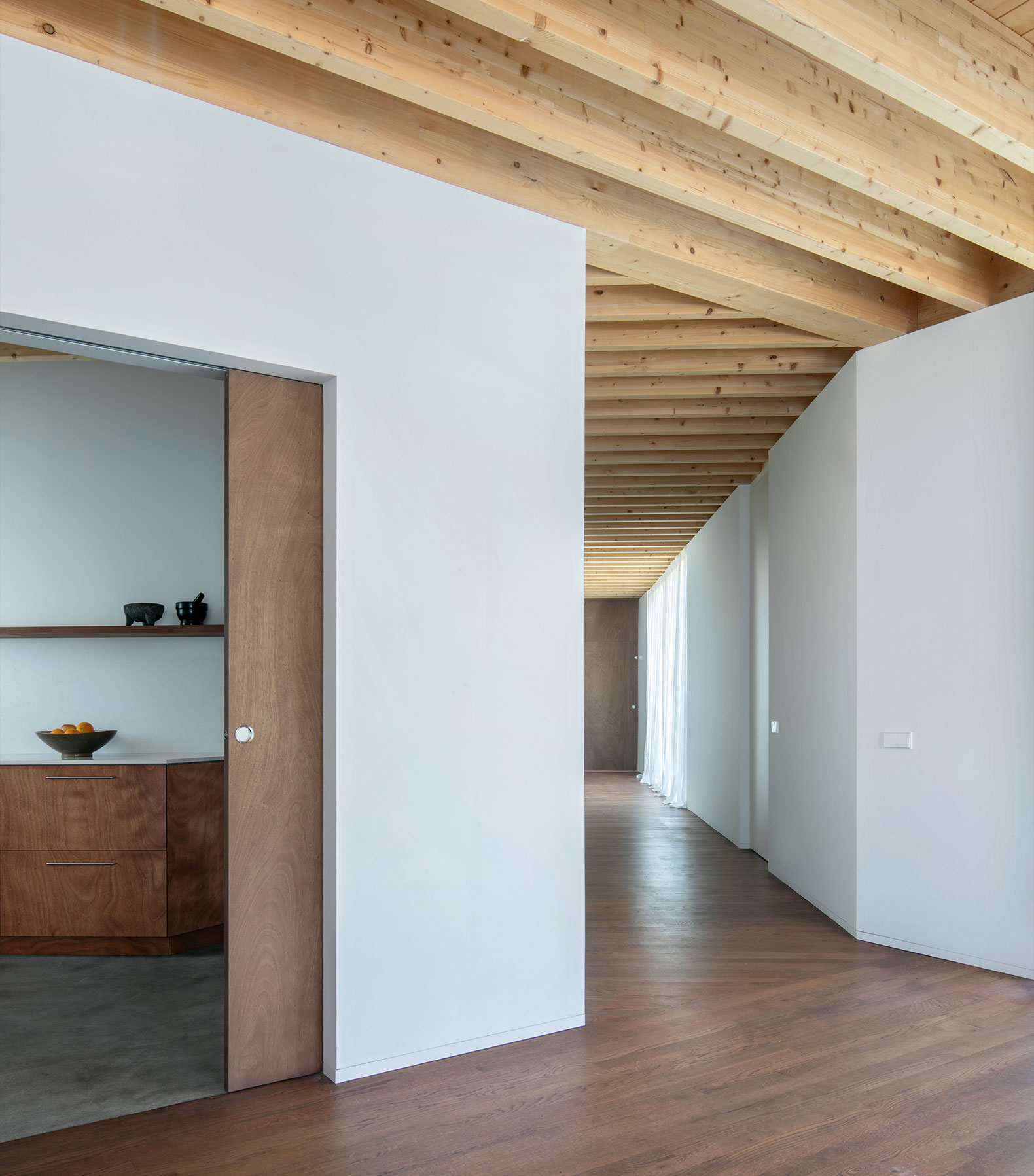
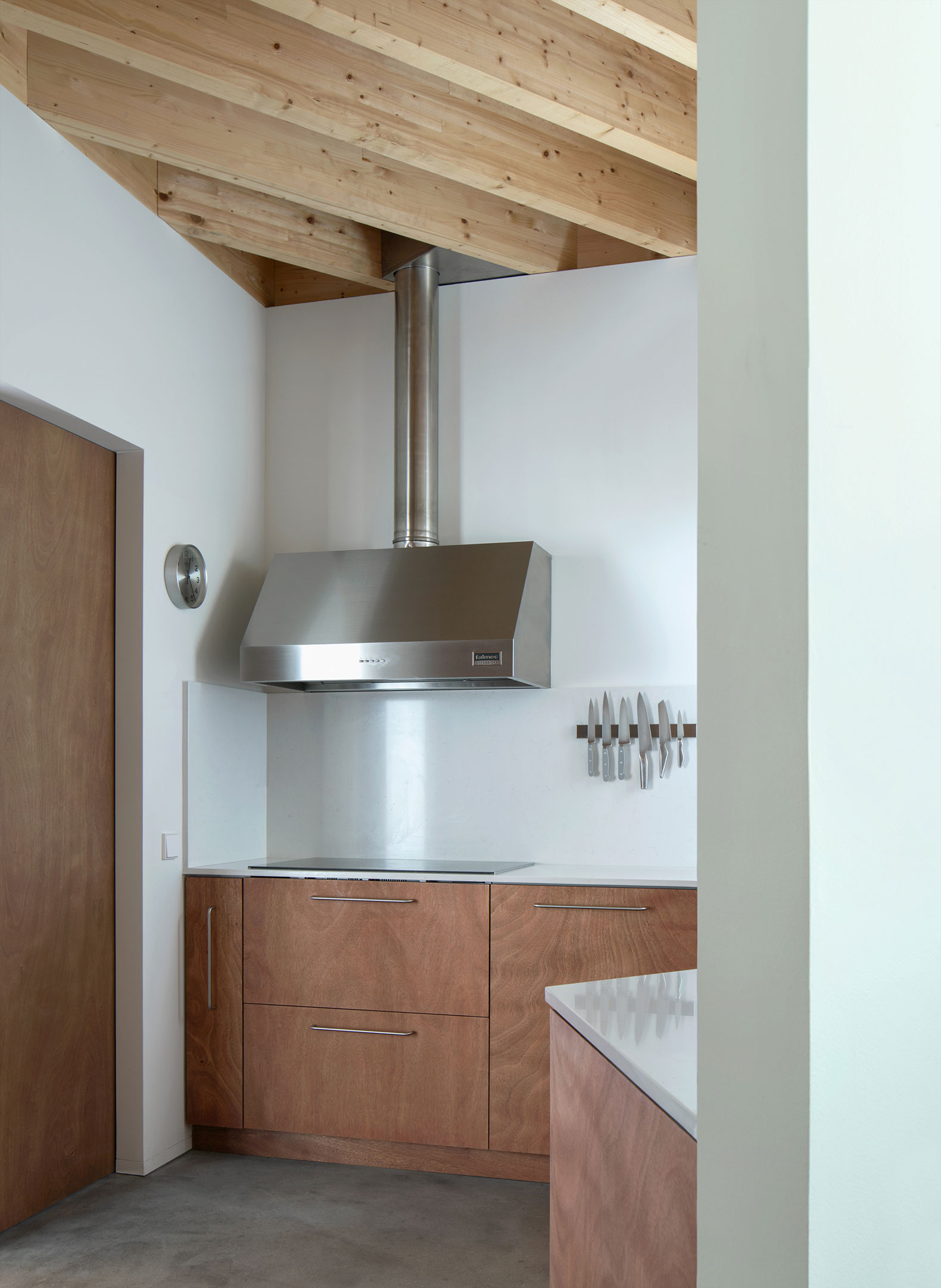
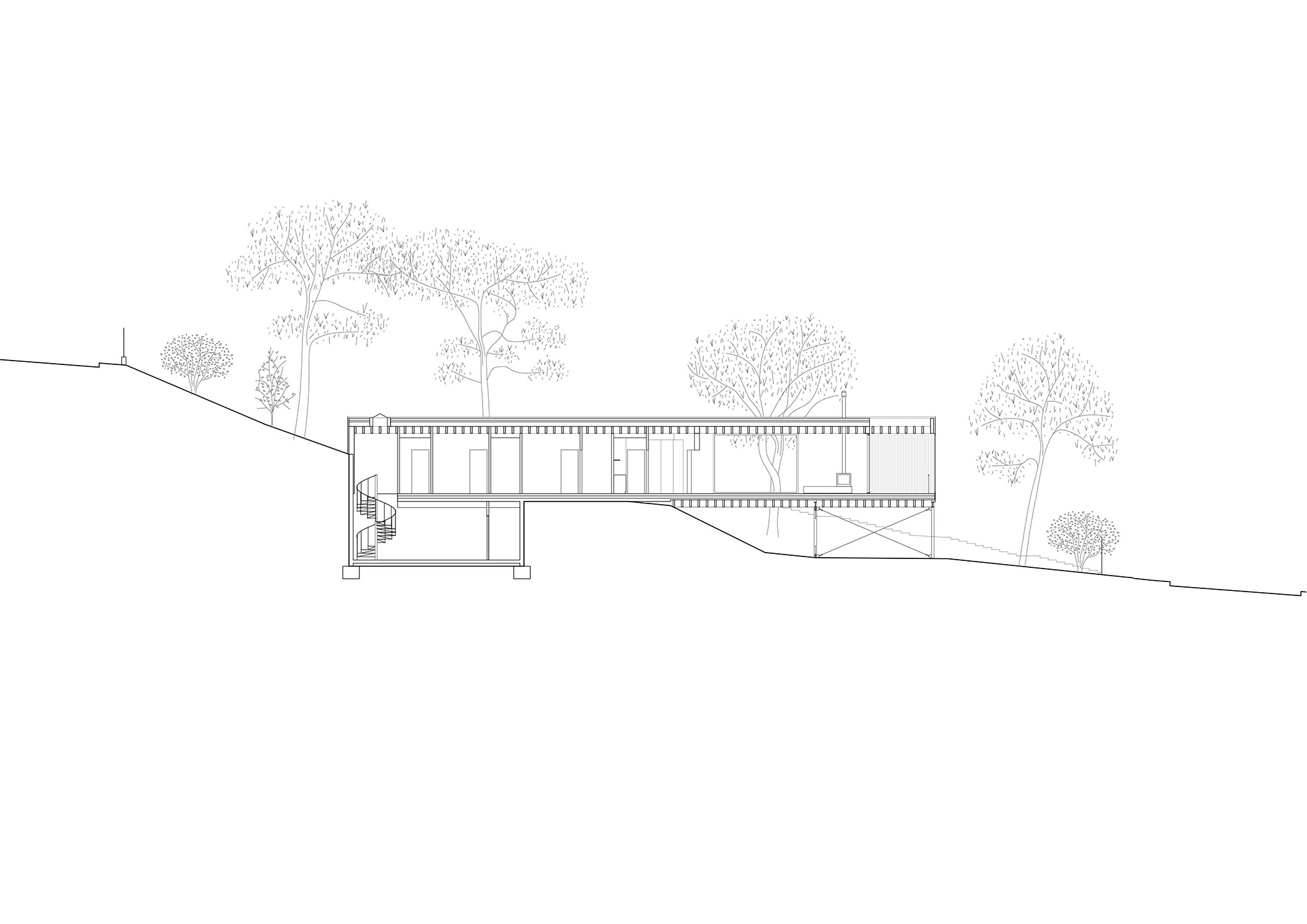
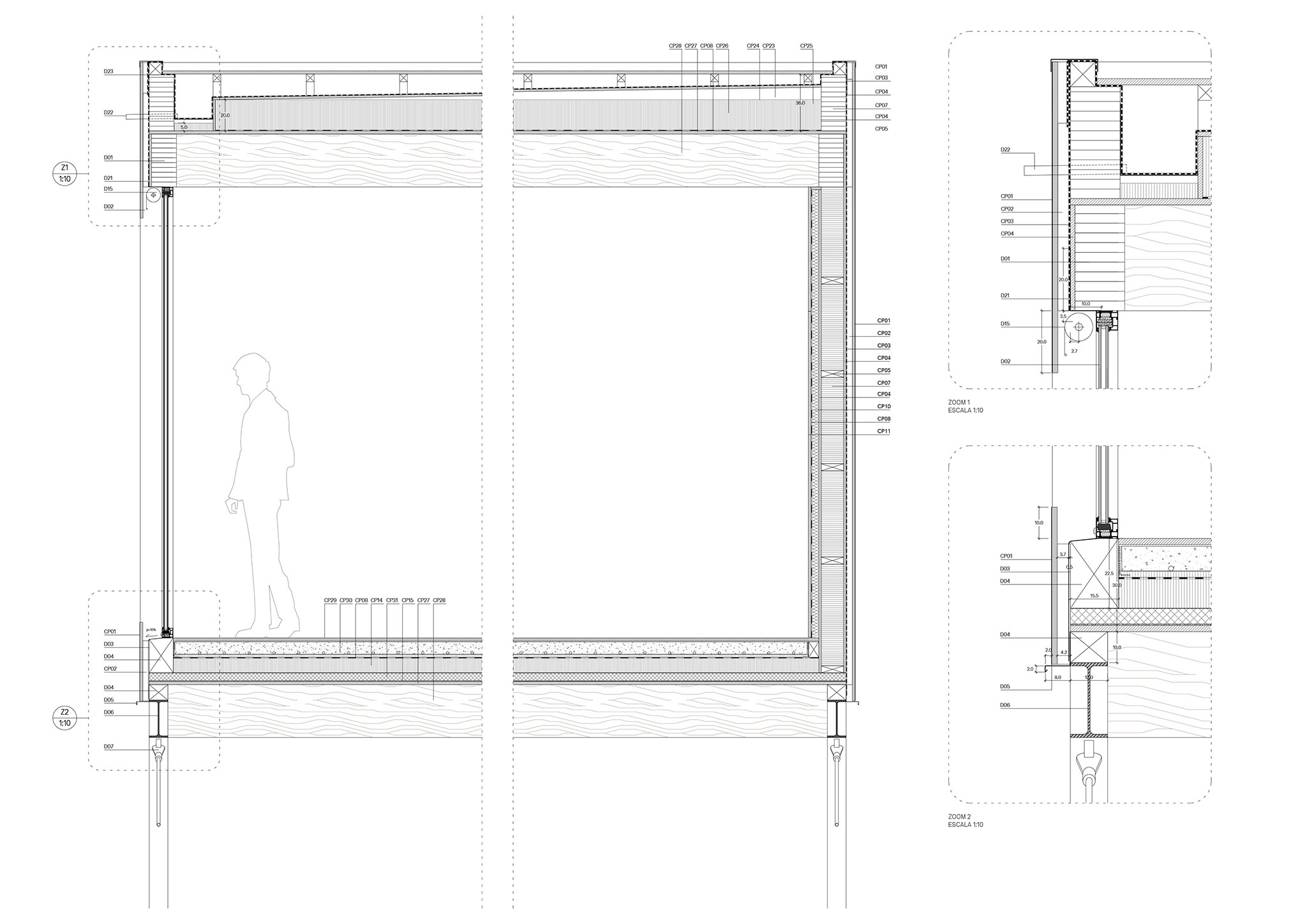
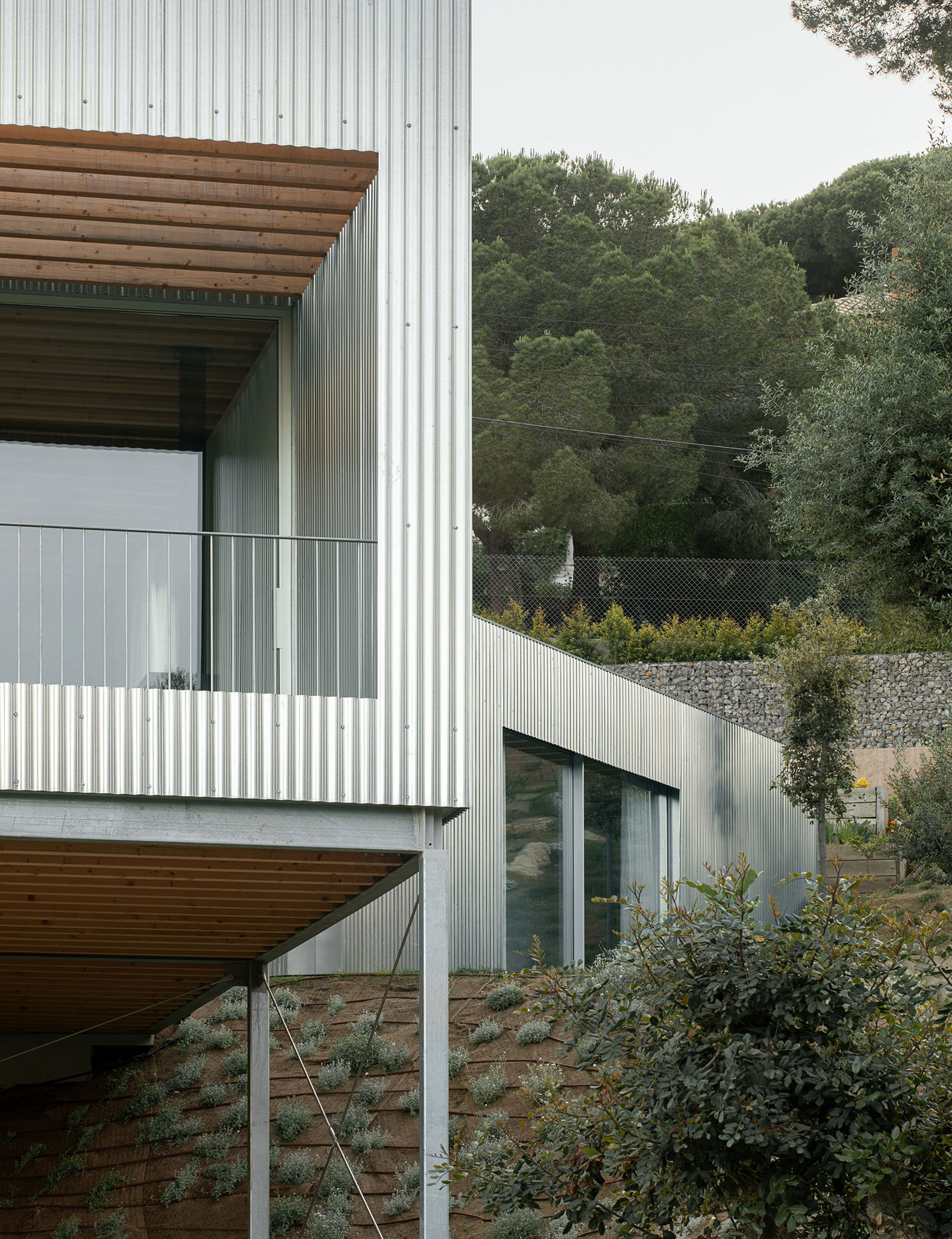
The house is embedded in the terrain at one end and cantilevers at the other, supported by four steel pillars stiffened with cross bracing. The main structure consists of prefabricated wooden walls, assembled on-site, with a lightweight wooden beam floor. A galvanized steel sheet cladding protects the wood, which remains exposed on the interior, lending a warm and inviting feel.
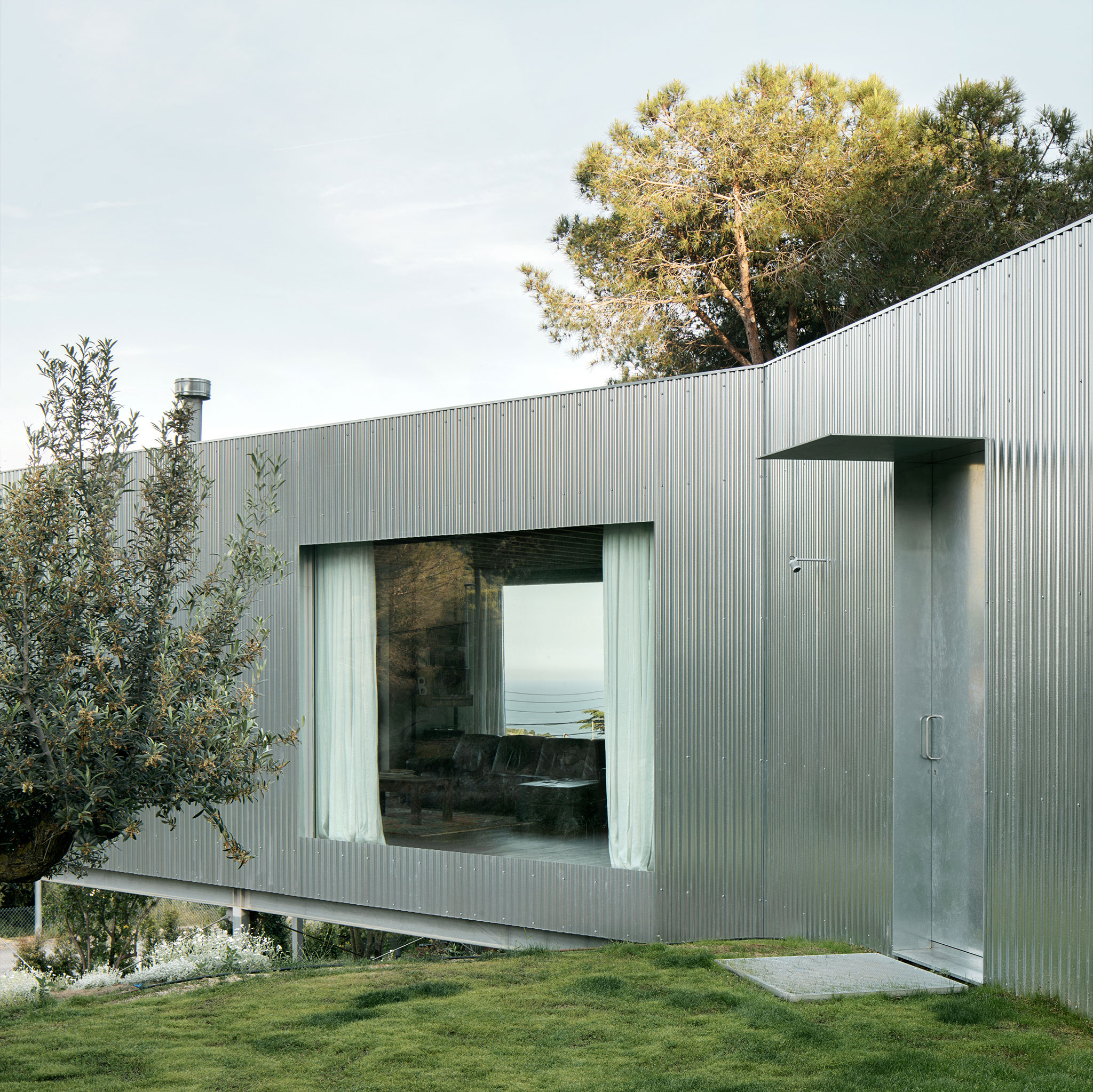
Casa 144º by Jaime Prous Architects and Pineda Monedero. Photograph by Del Río Bani.
Project description by Jaime Prous Architects and Pineda Monedero
Building on a complex and fragile site — a forested hillside — brings questions we keep asking ourselves: How do we settle into a sloping terrain without disrupting the landscape? Most neighbouring houses seek to occupy the largest possible footprint, altering the surroundings to the maximum. We reject the hypocrisy of a continuist aesthetic of white walls that conceals concrete structures, major earthworks, and forced air conditioning.
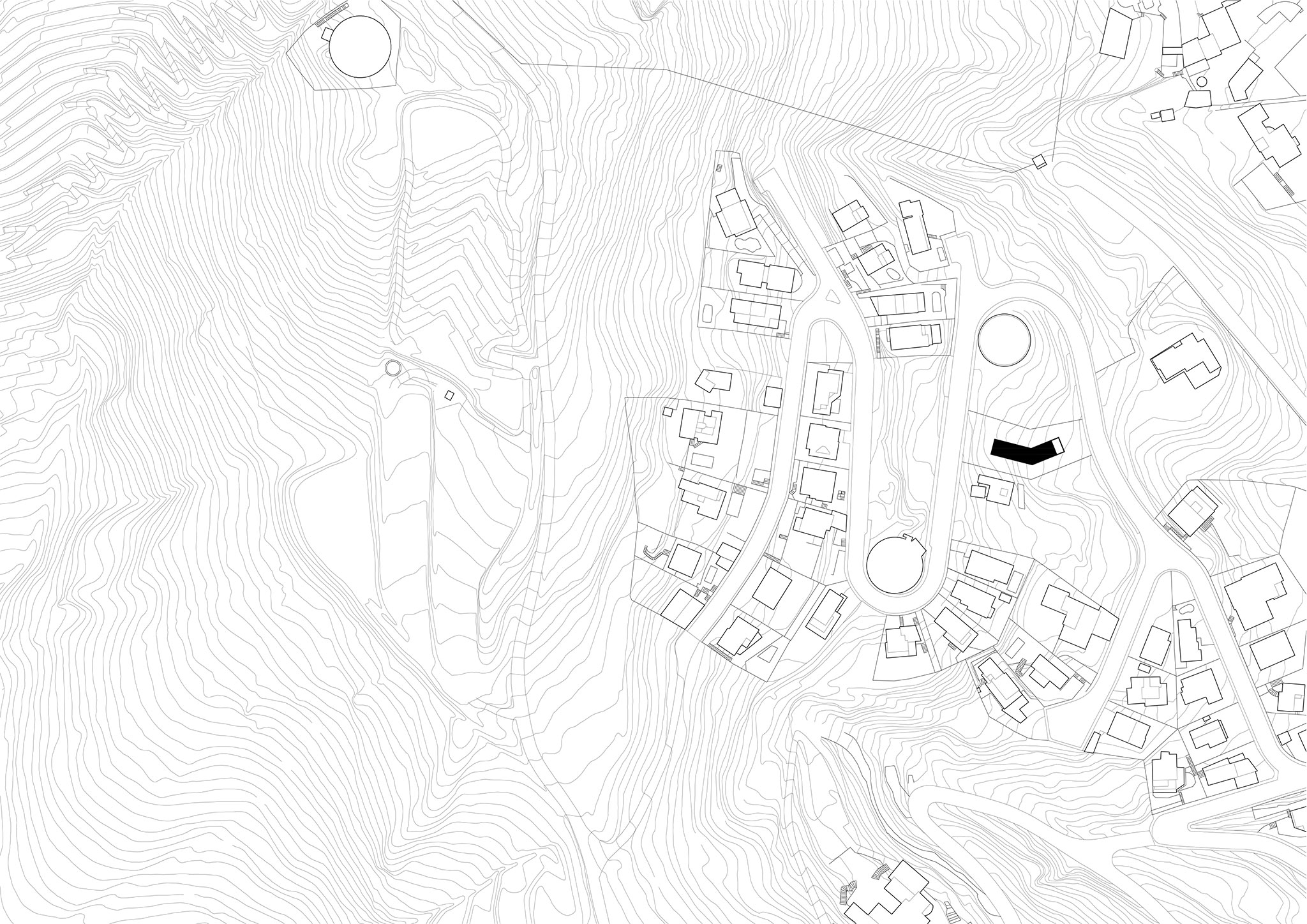
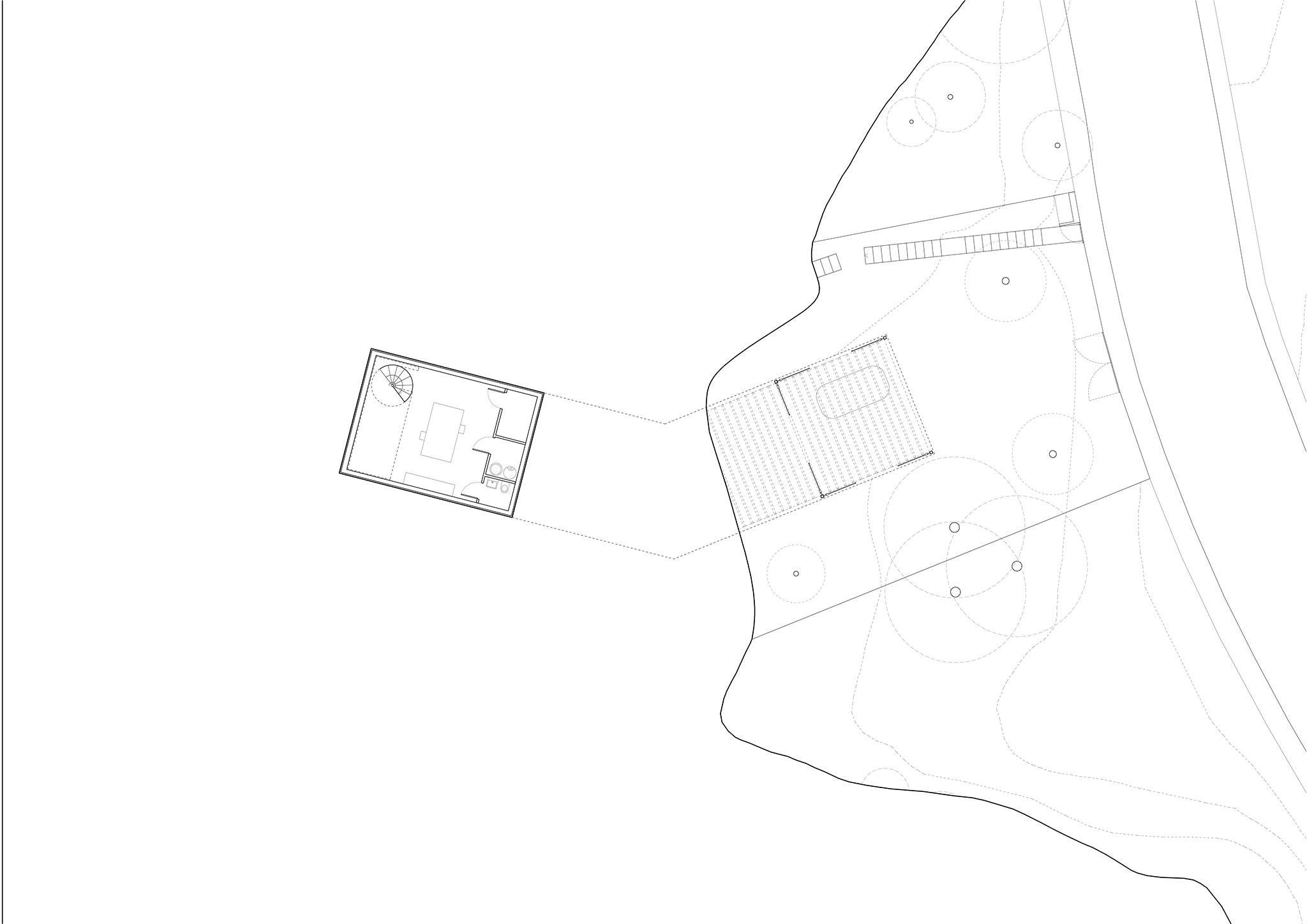
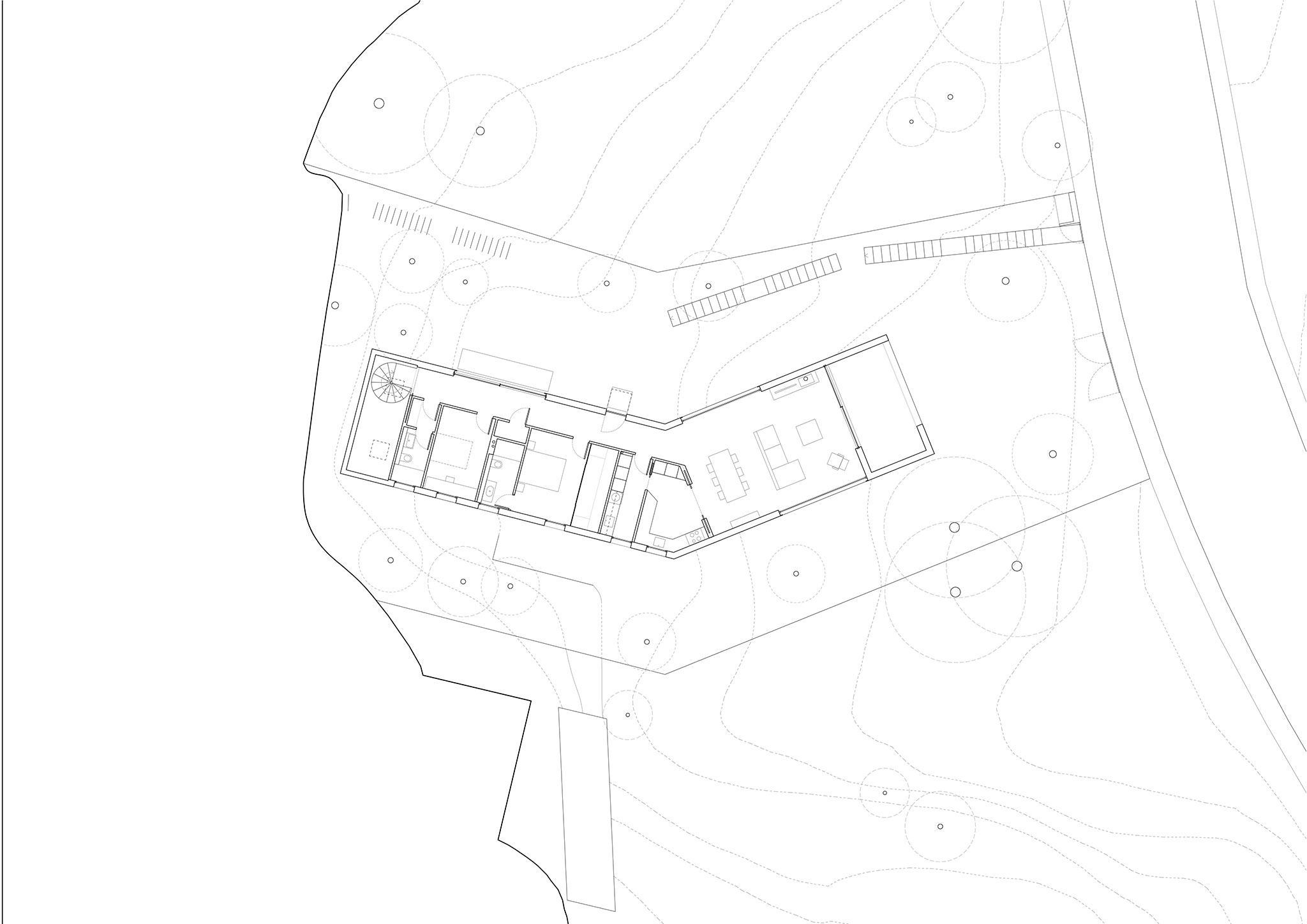
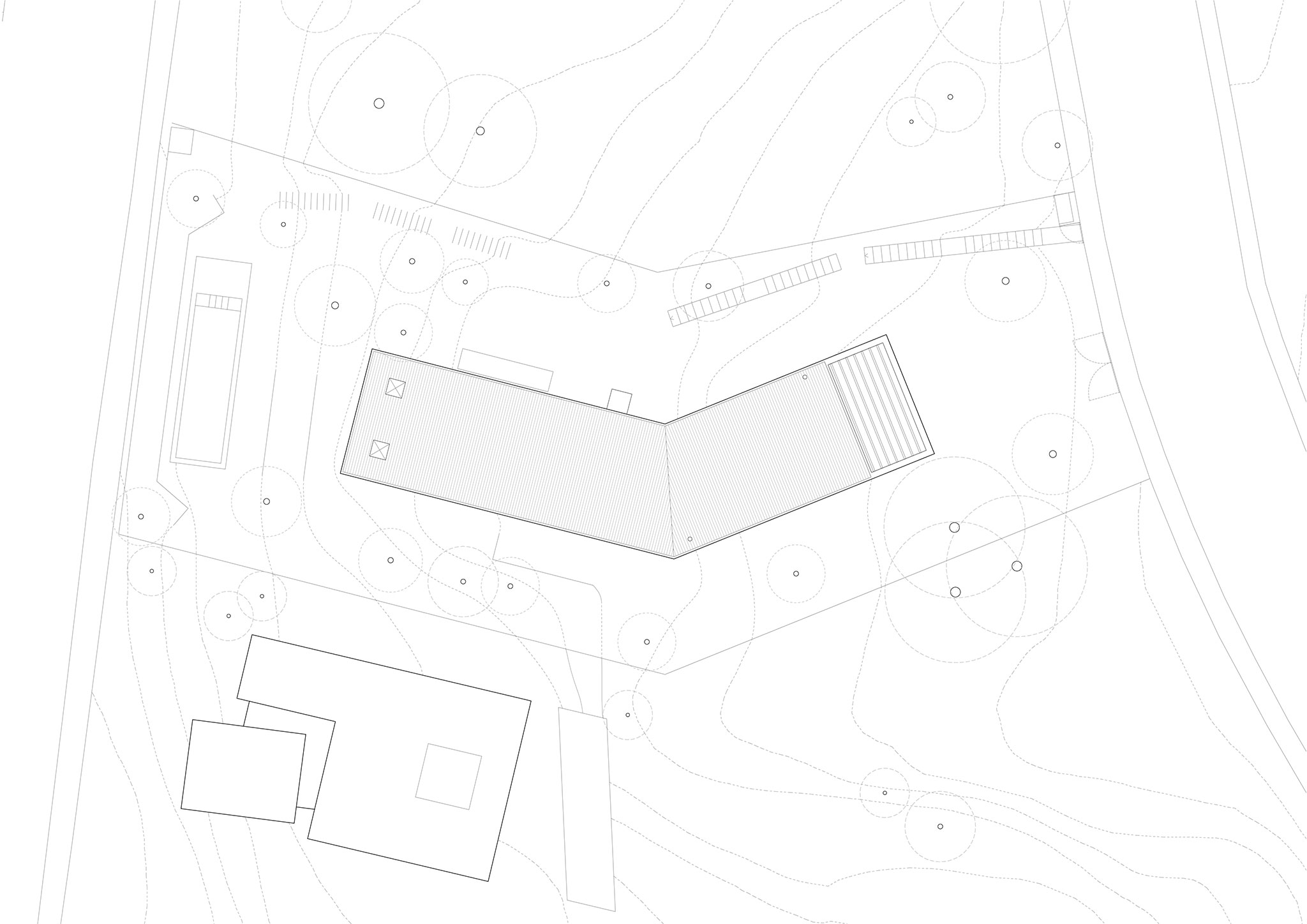
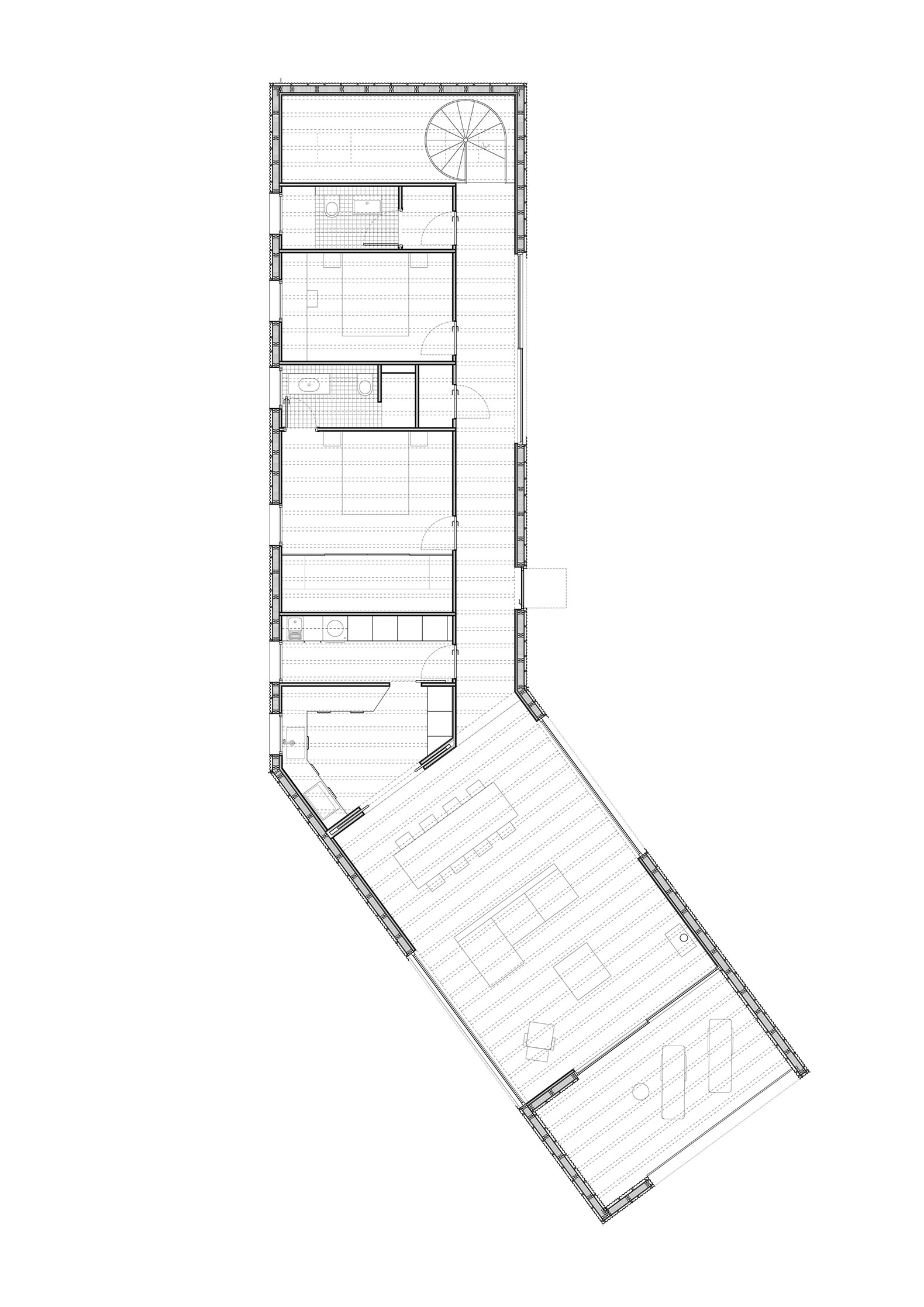
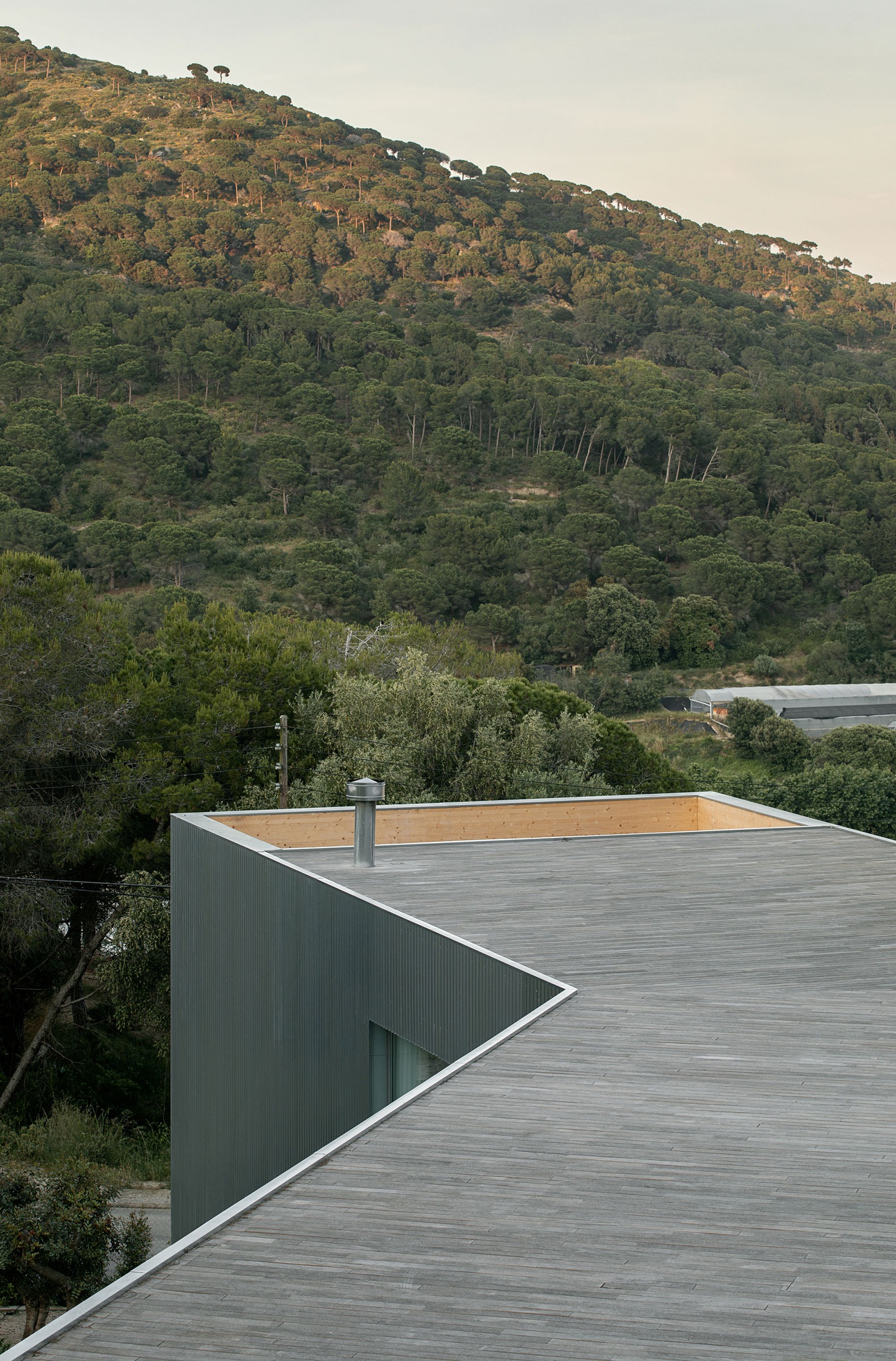
The house is developed on a single storey, set at the midpoint of the plot and supported by a lightweight steel structure. In plan, the house traces a broken line forming a 144º angle, orienting the cantilevered end towards the mountain views.
This is a dry construction built on a sincere and environmentally responsible logic. It is a near-zero energy consumption house that combines unusual materials — such as steel sheet — with highly efficient ones, such as timber.
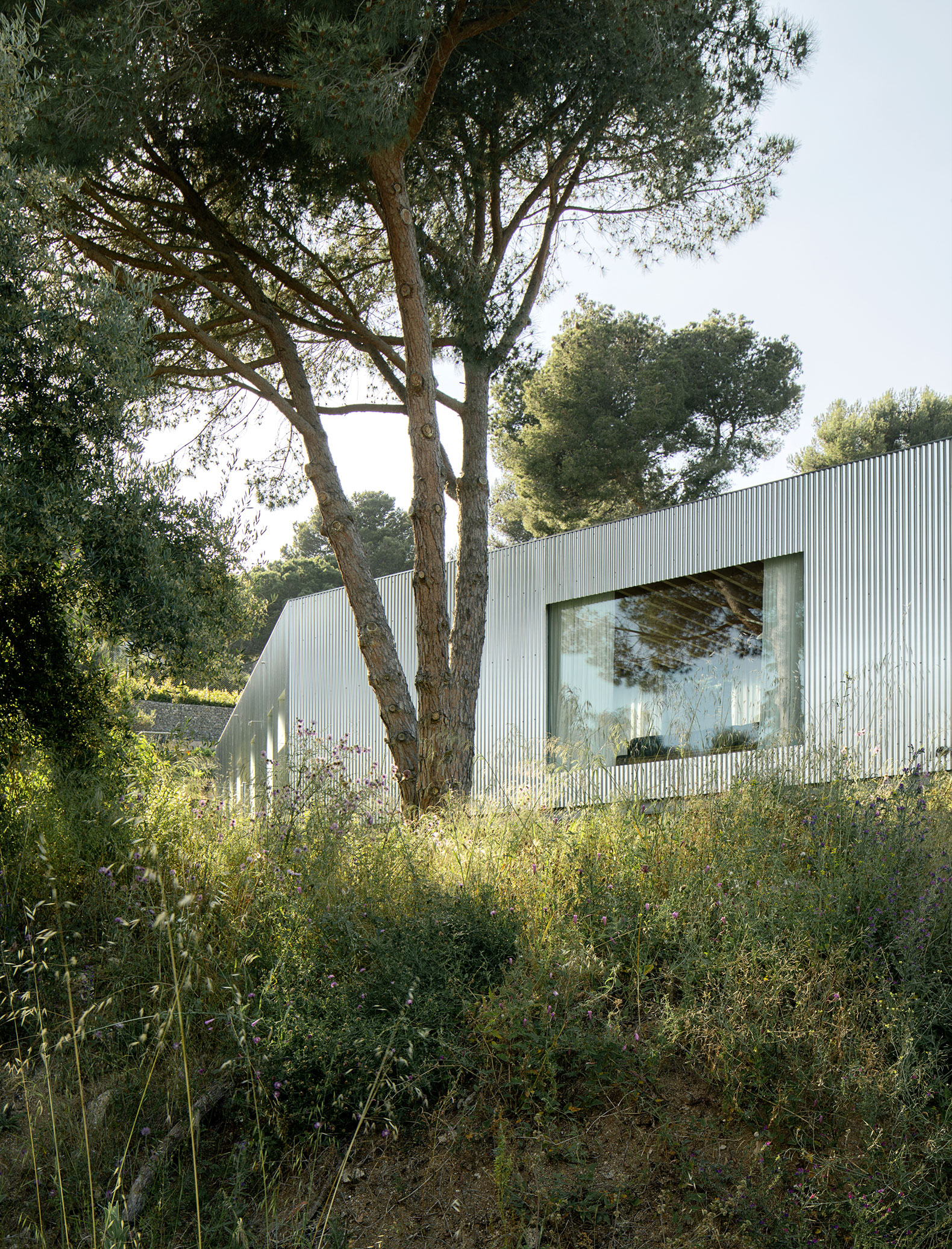
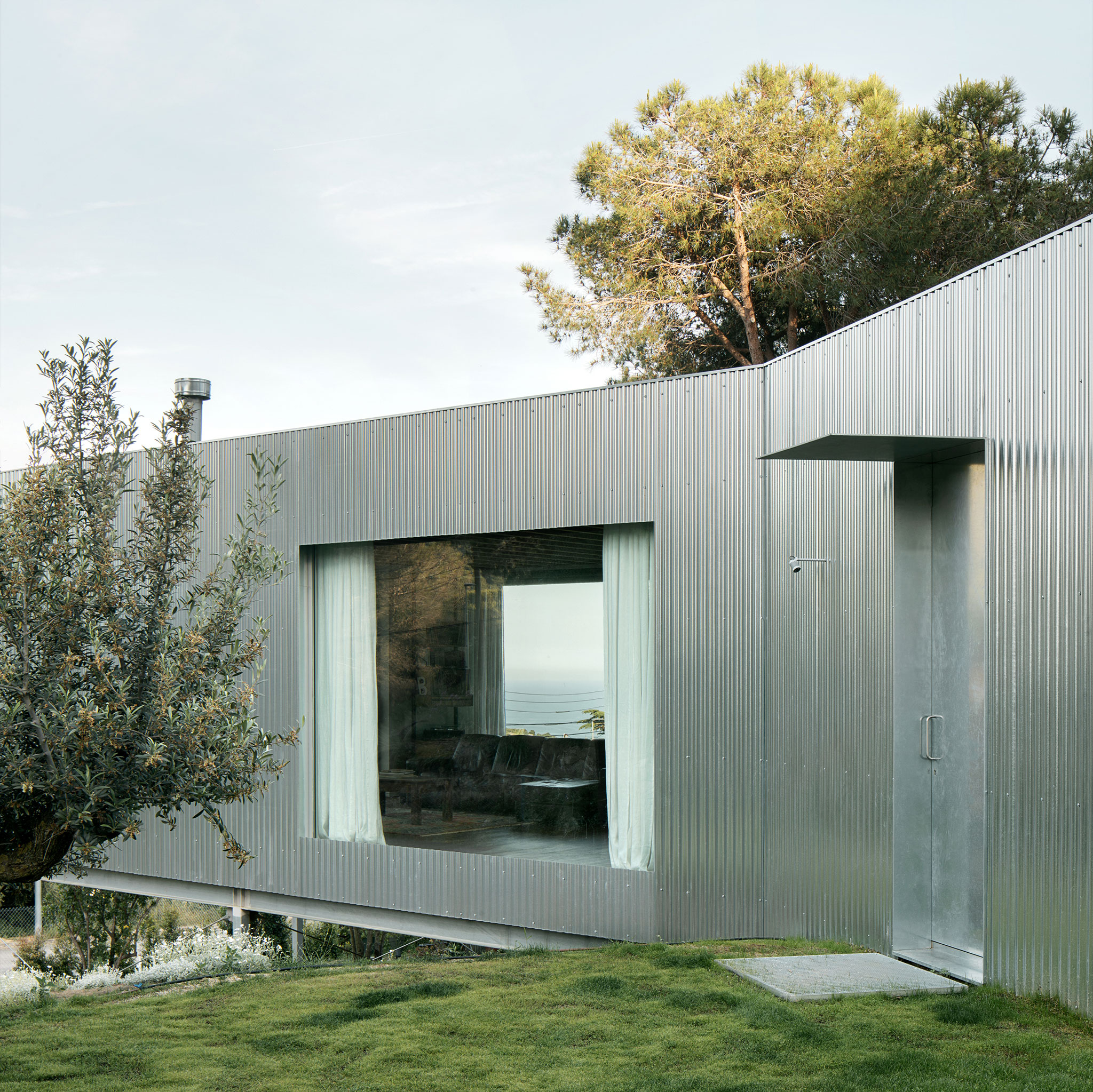
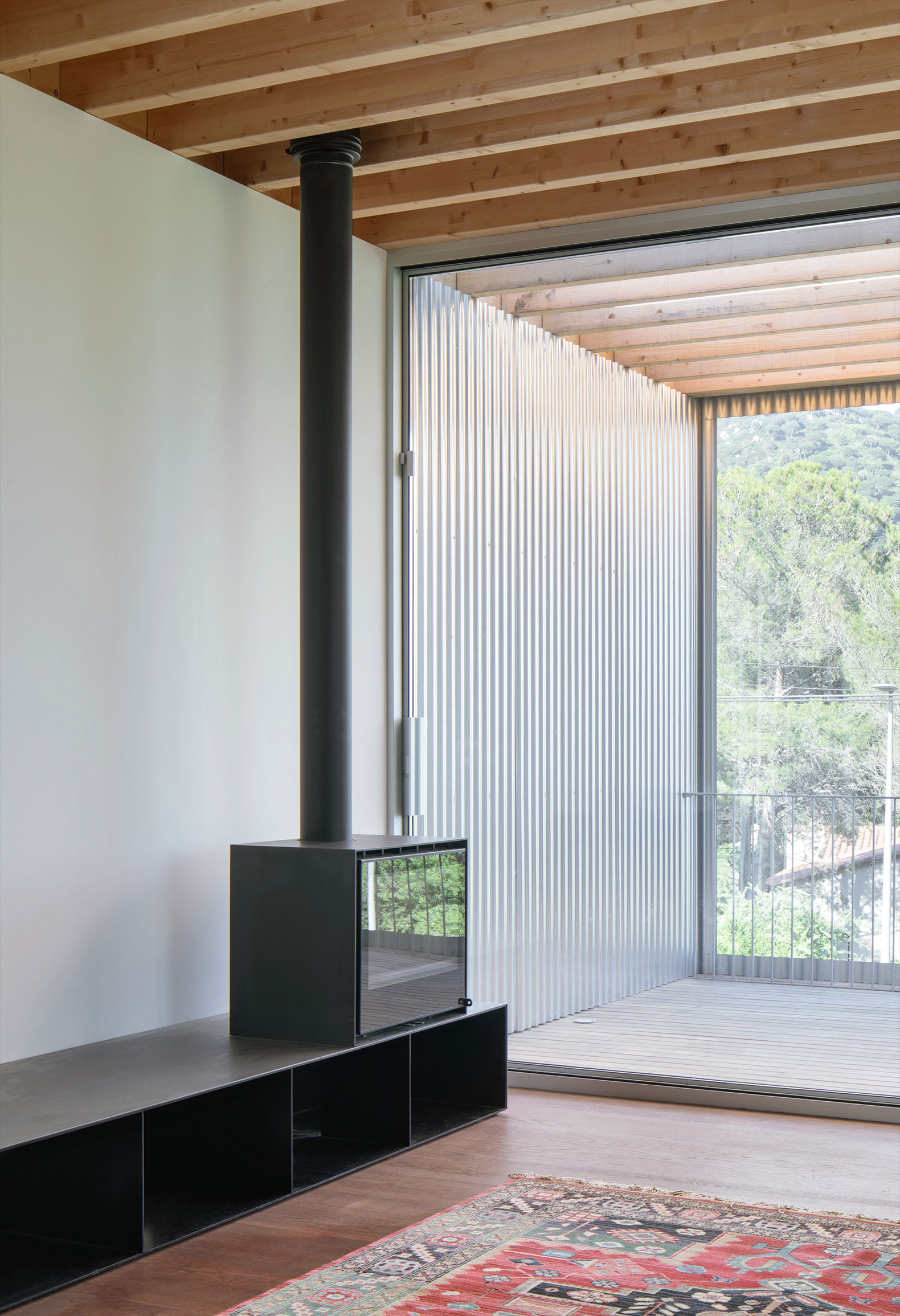
The main structure consists of prefabricated timber-frame walls assembled on site with a lightweight timber beam floor system. One end of the house is embedded into the hillside, while the other cantilevers over it, supported by four galvanised steel columns braced with X-cross ties to minimise their section. A galvanised steel sheet envelope protects the timber beneath. The windows cut into the façade as large, frameless openings that, from the outside, dematerialise the house.
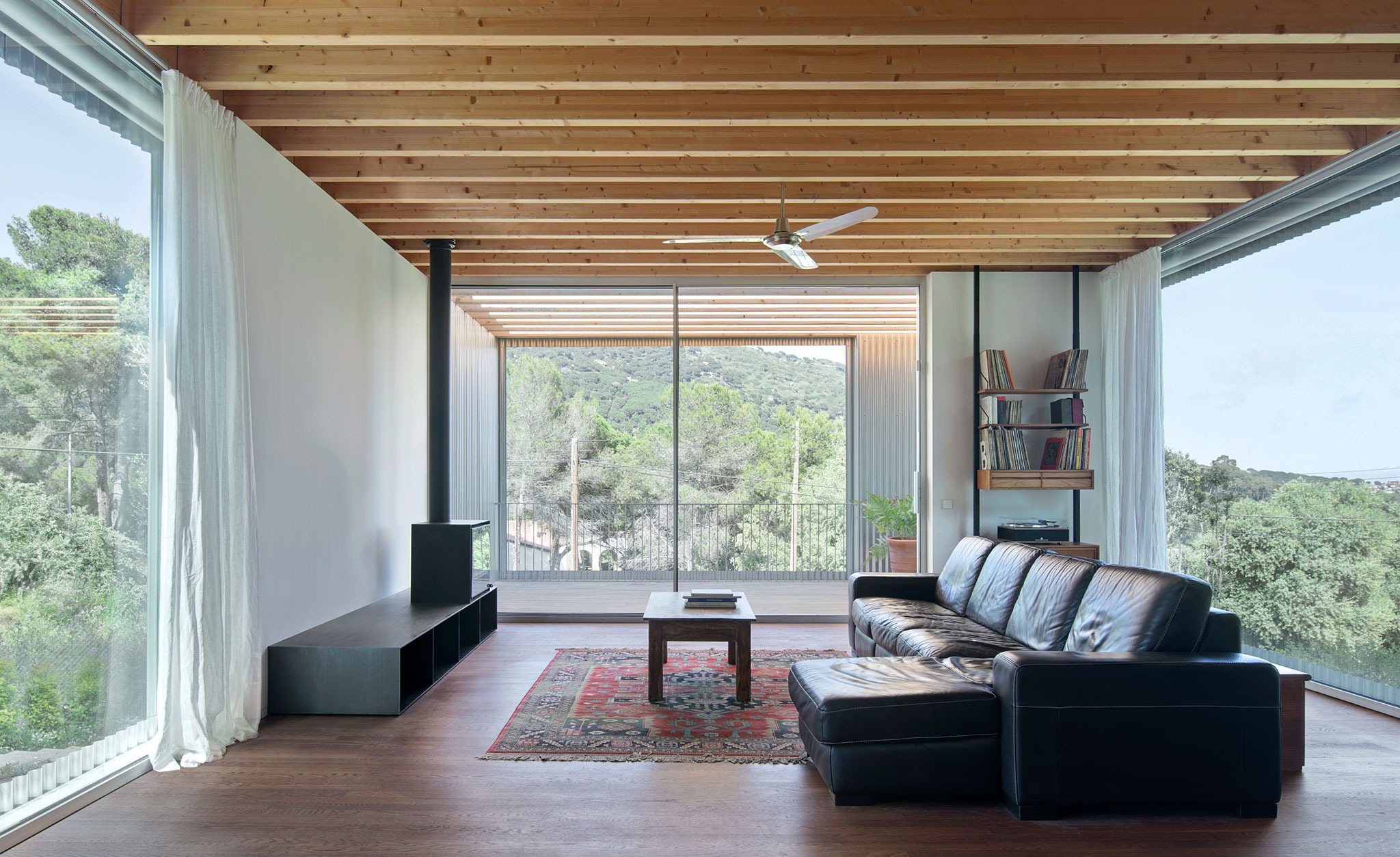
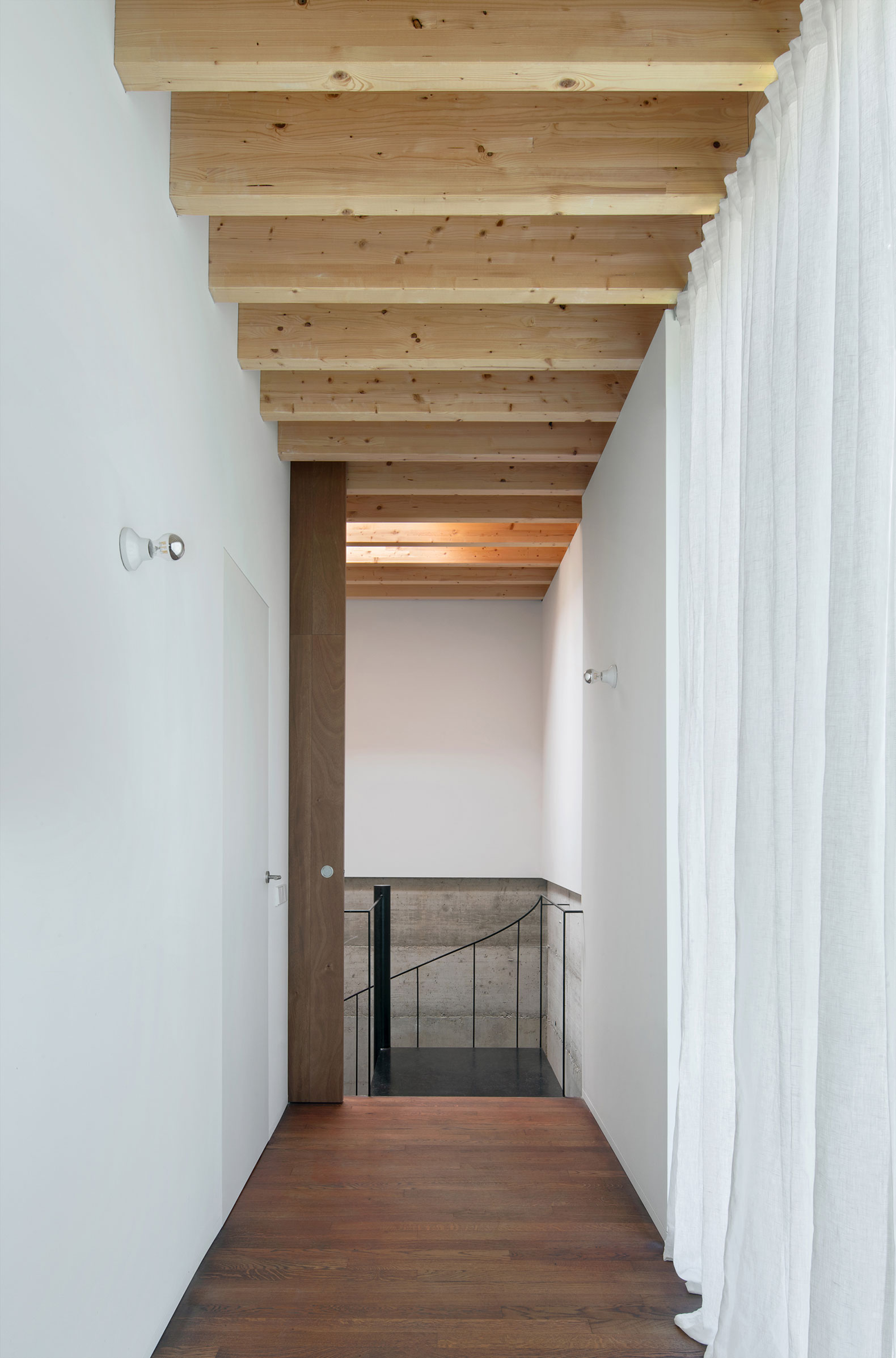
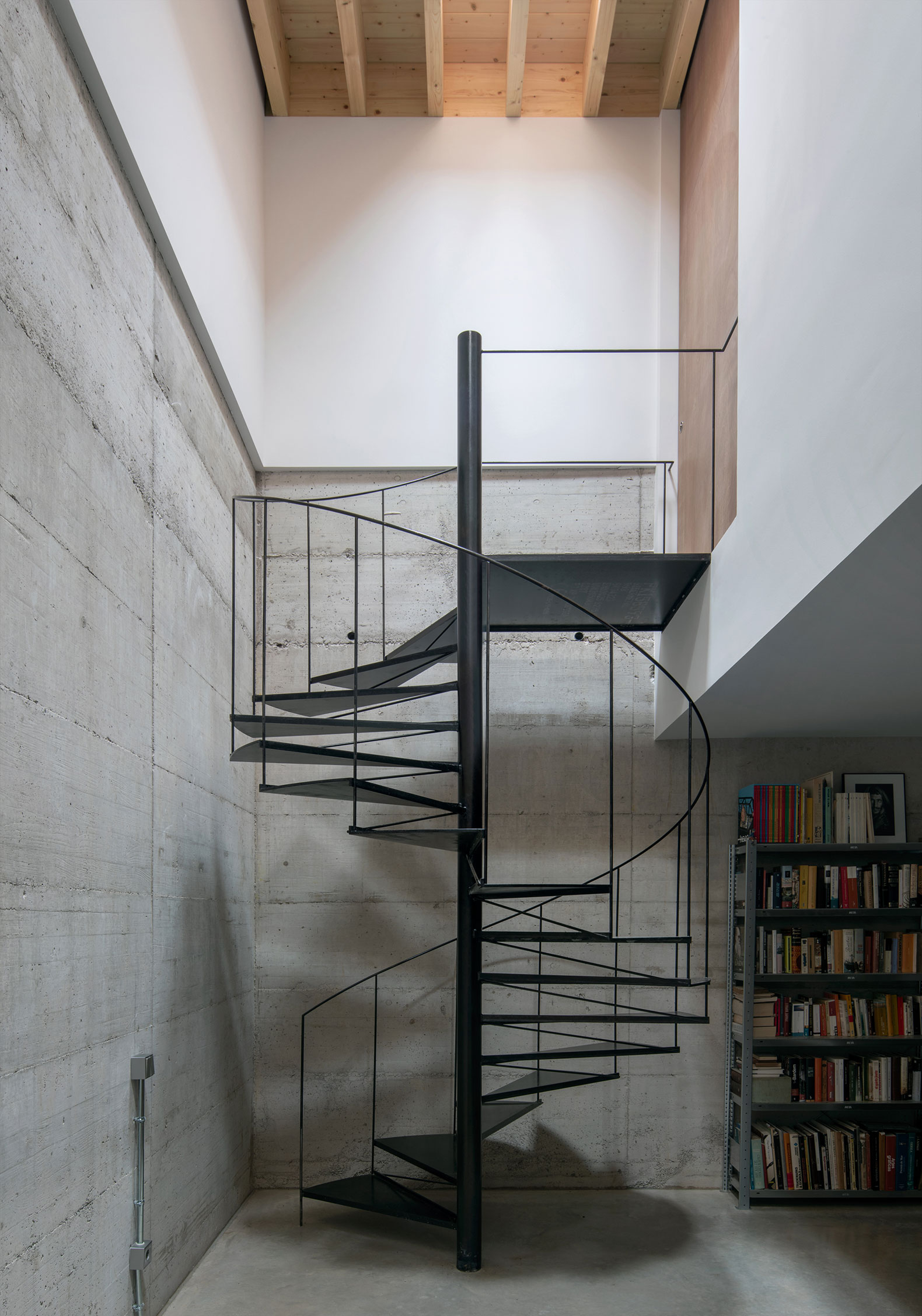
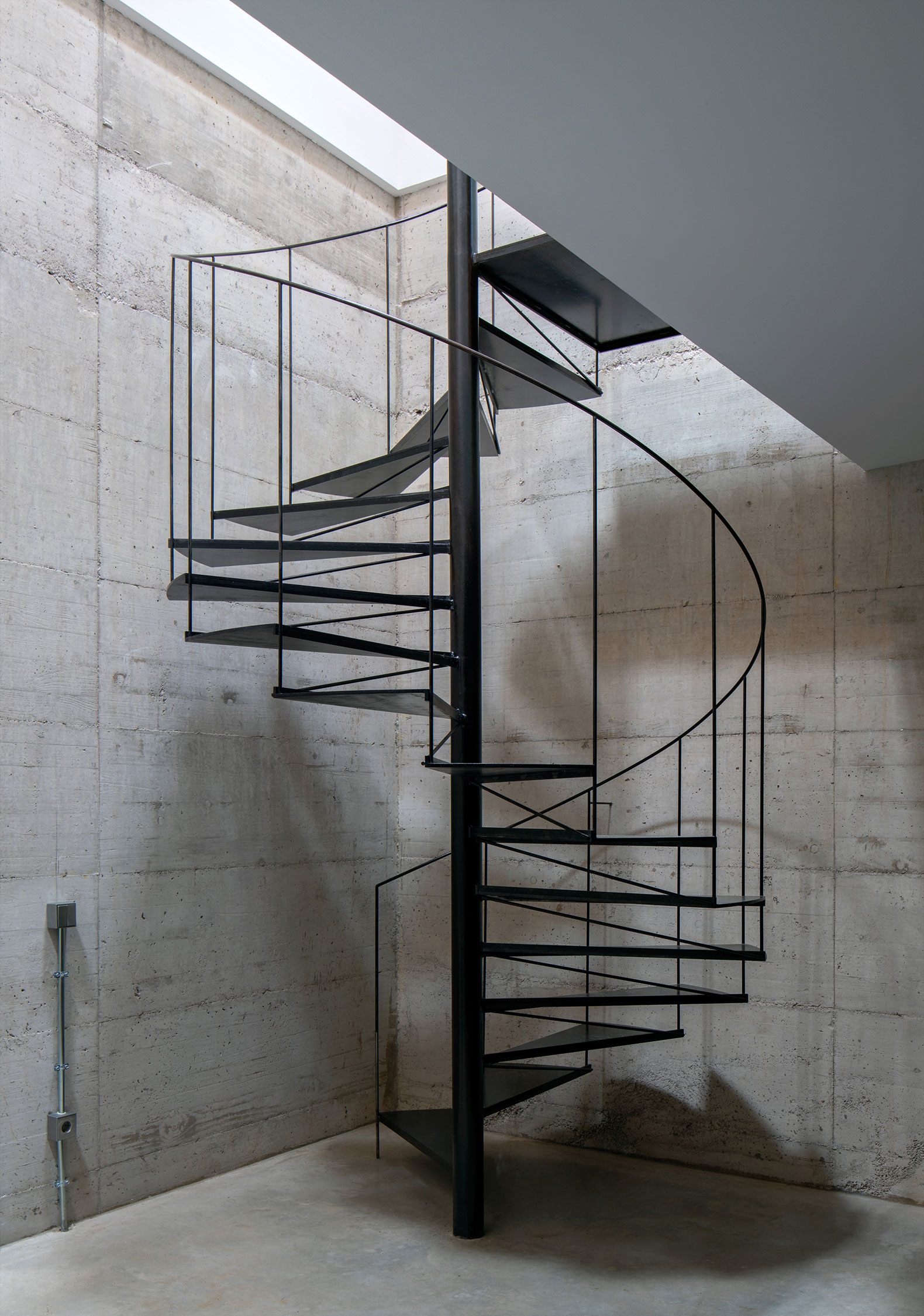
In contrast to the exterior, the interior is warm: the exposed wooden structure defines simple, bright spaces. The living room cantilevers out towards the landscape, while at the opposite end is the workshop, located in the basement and illuminated by a skylight.