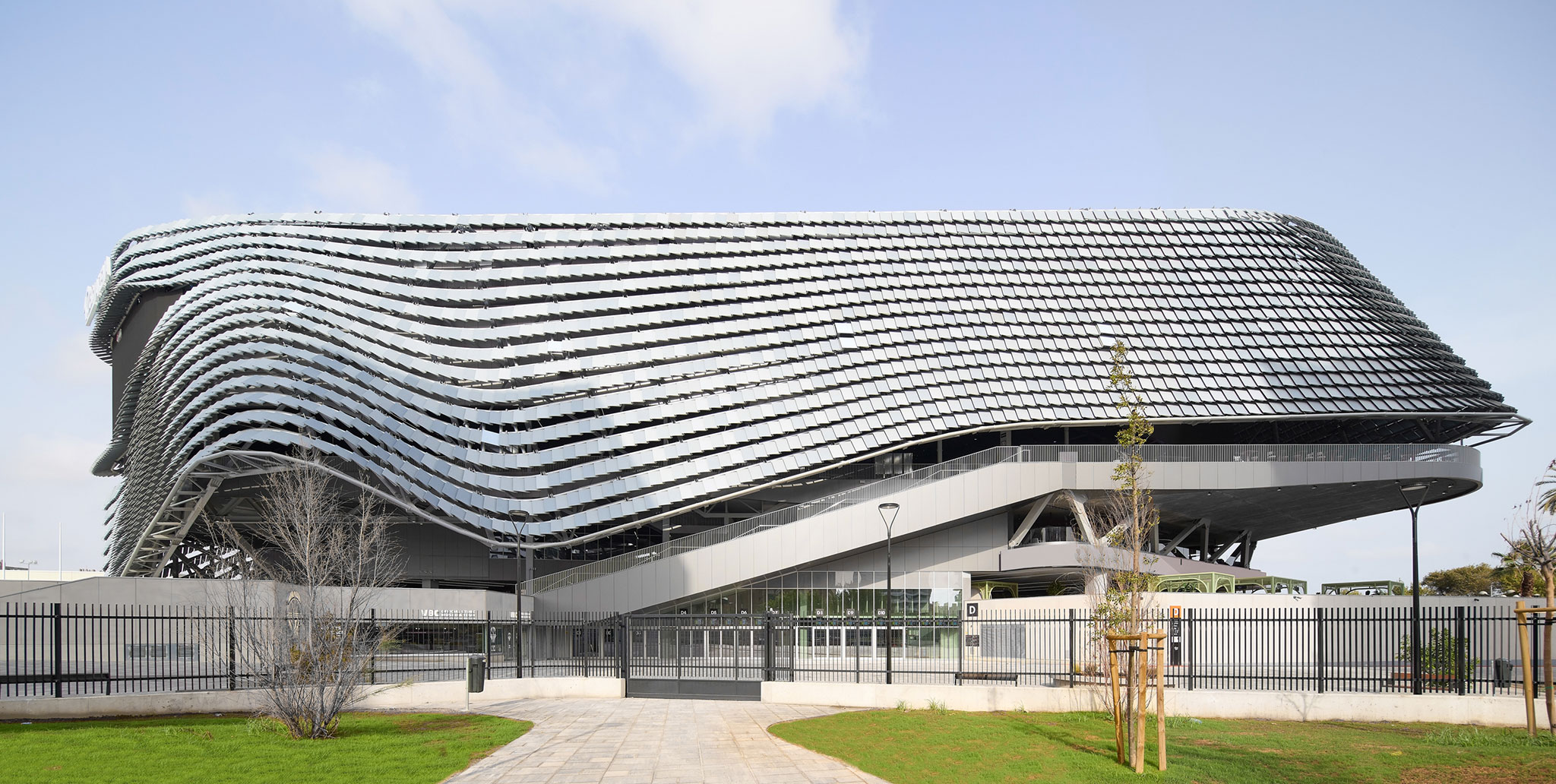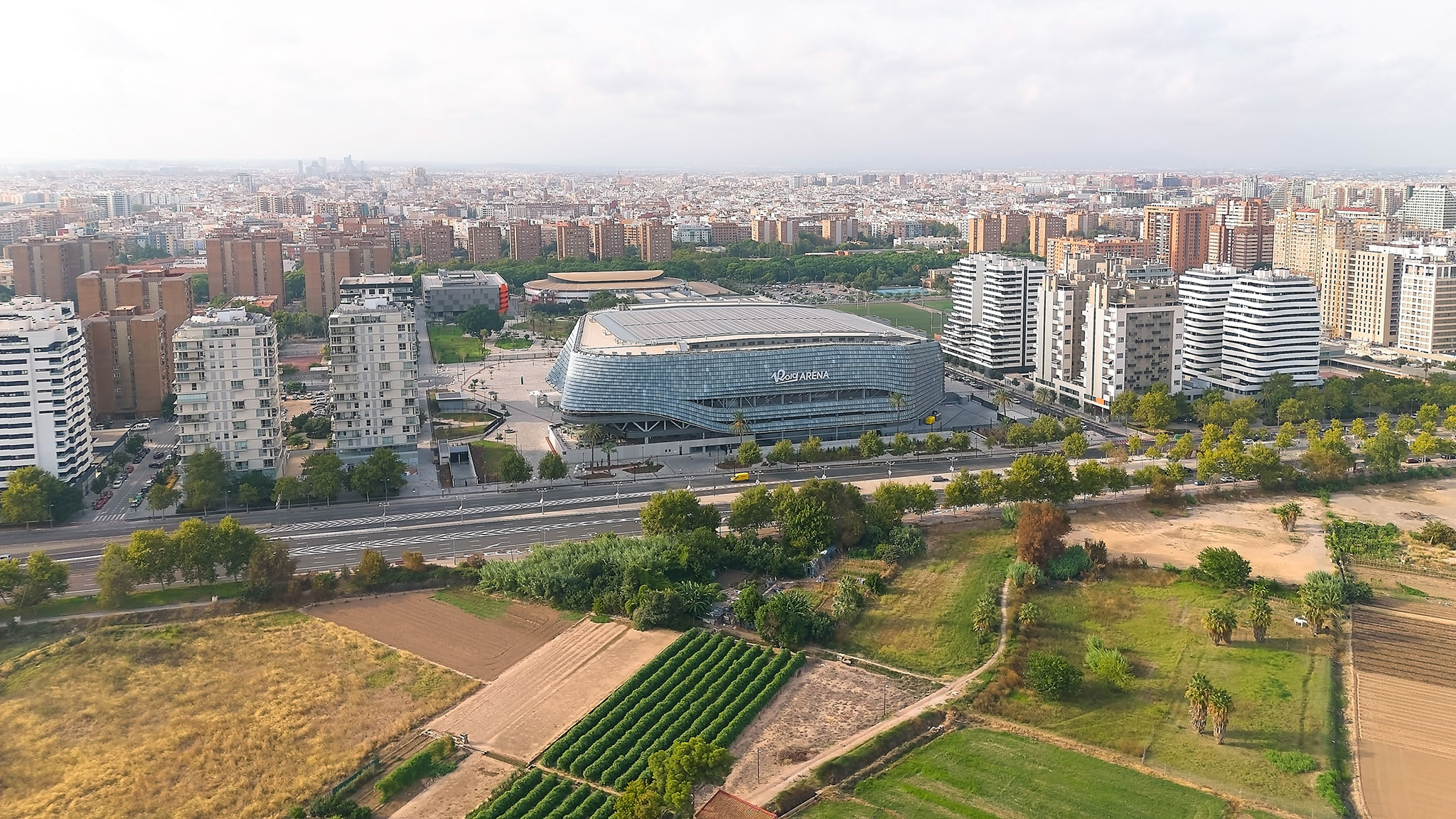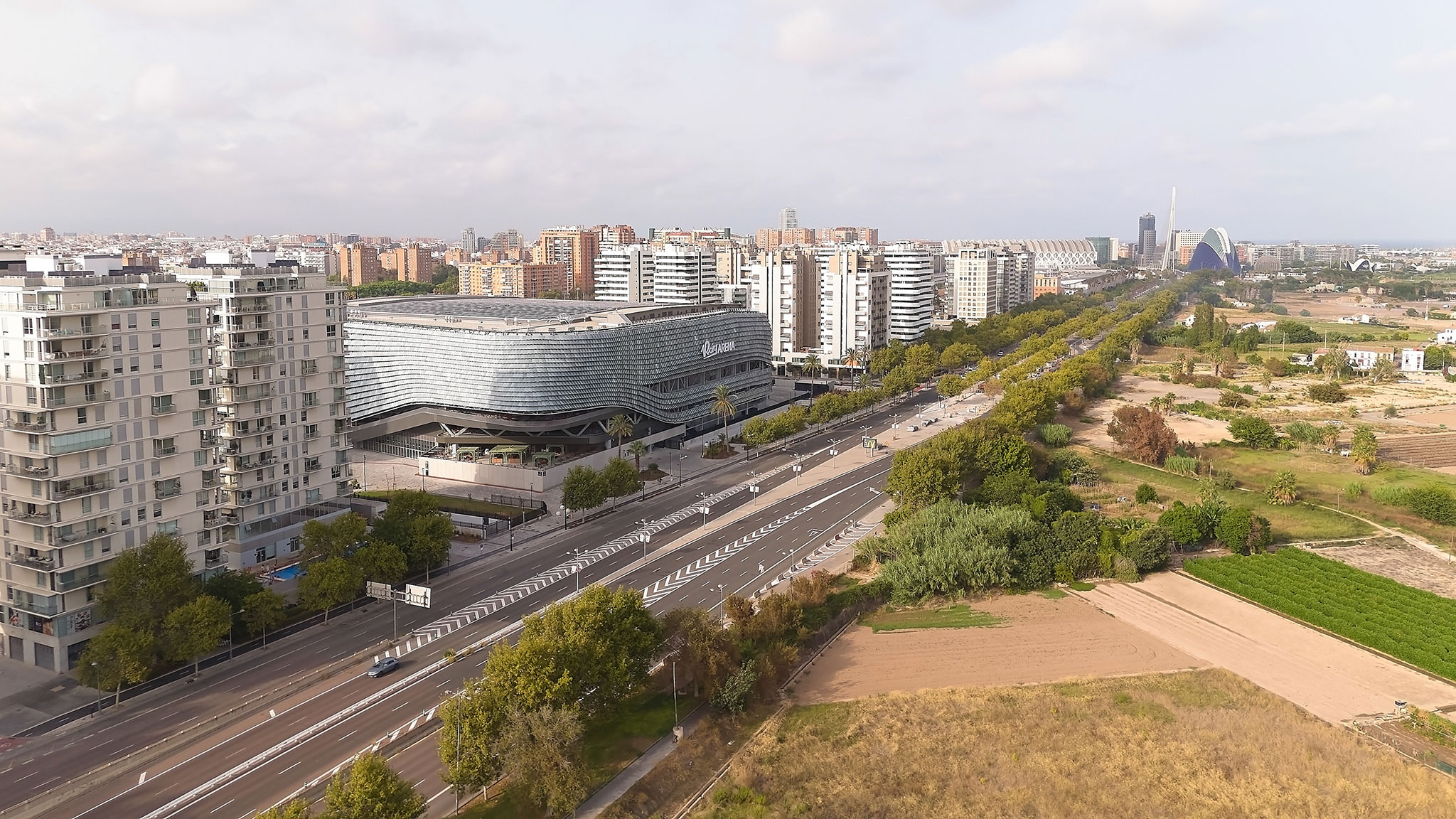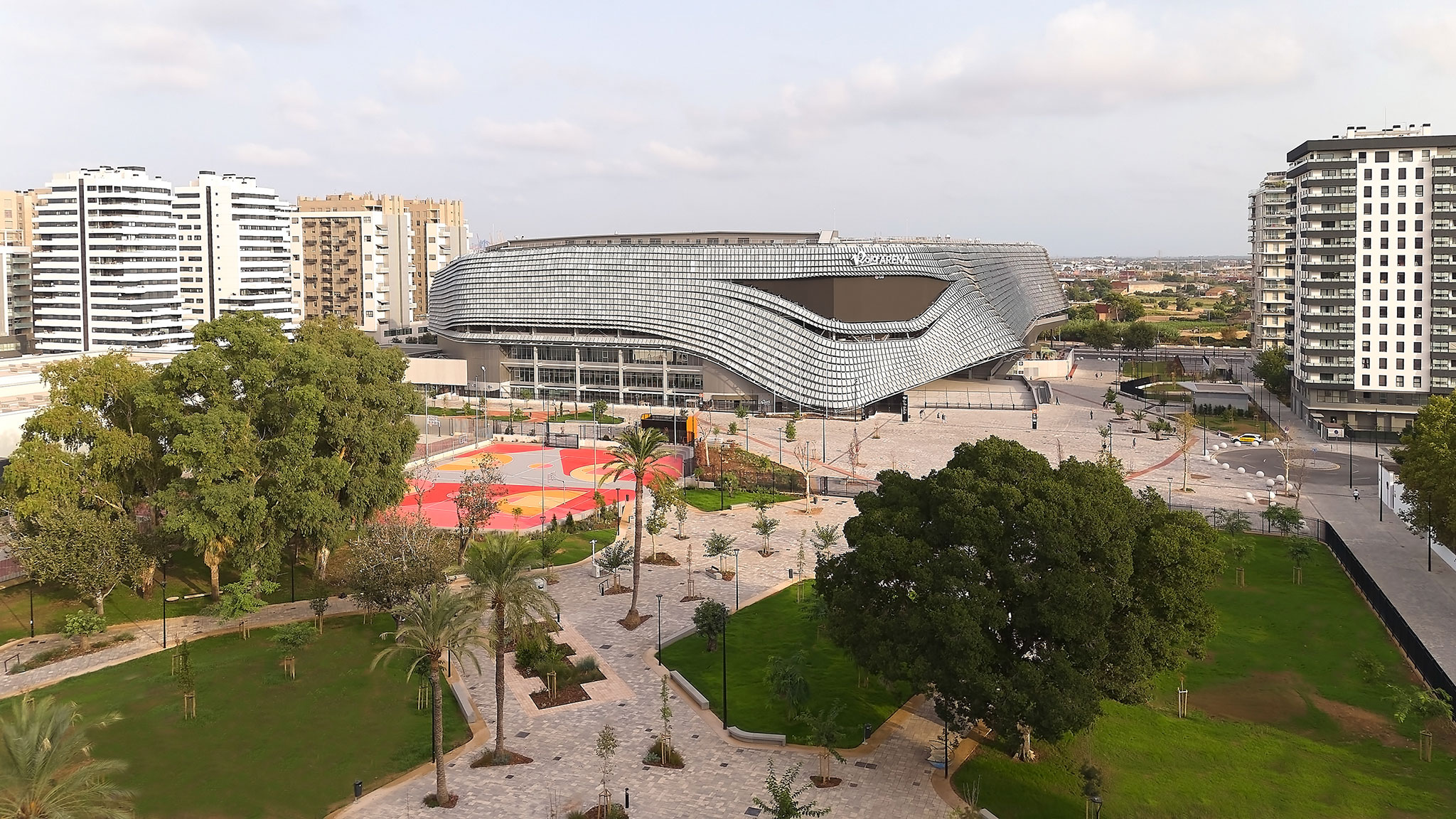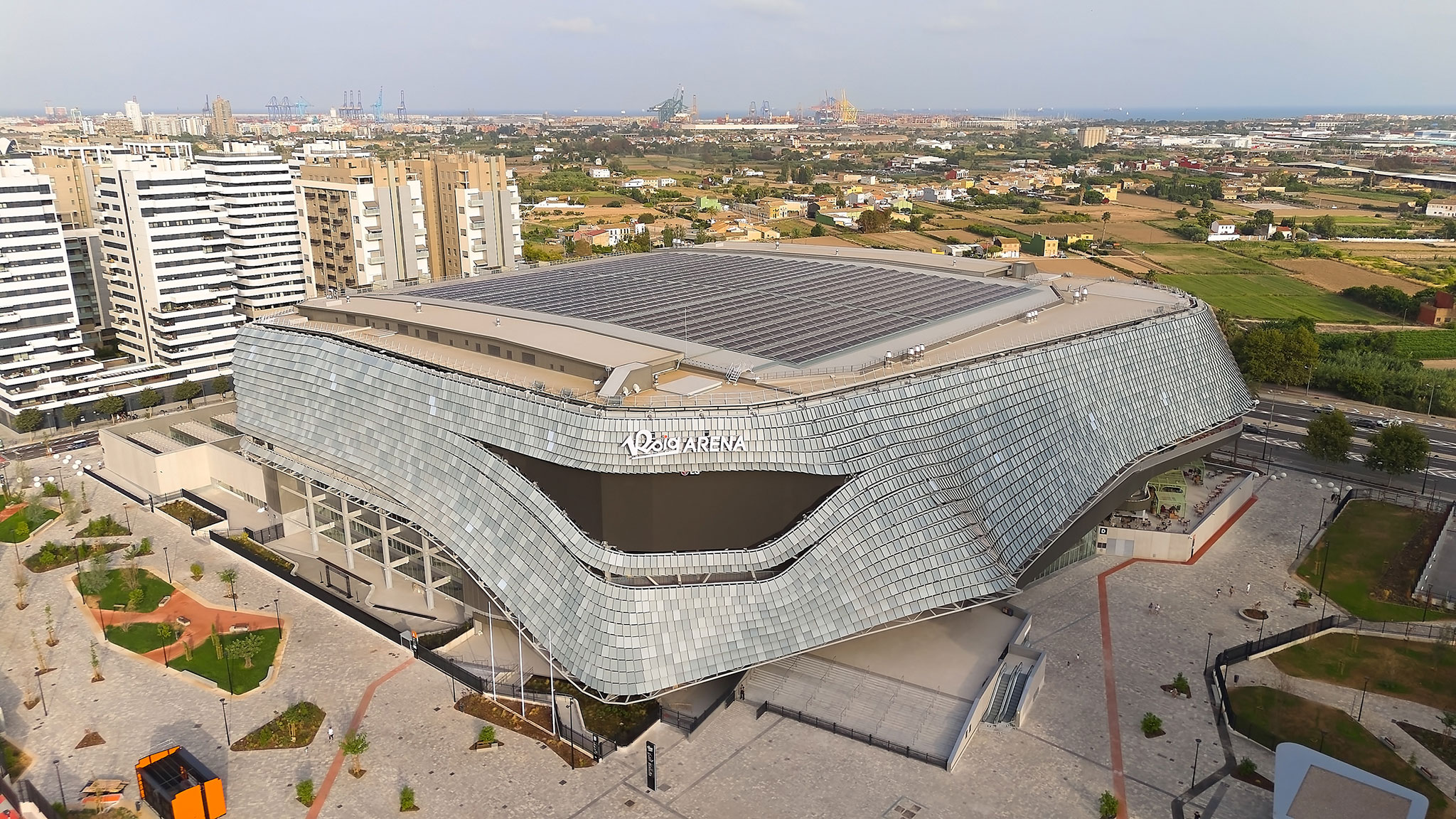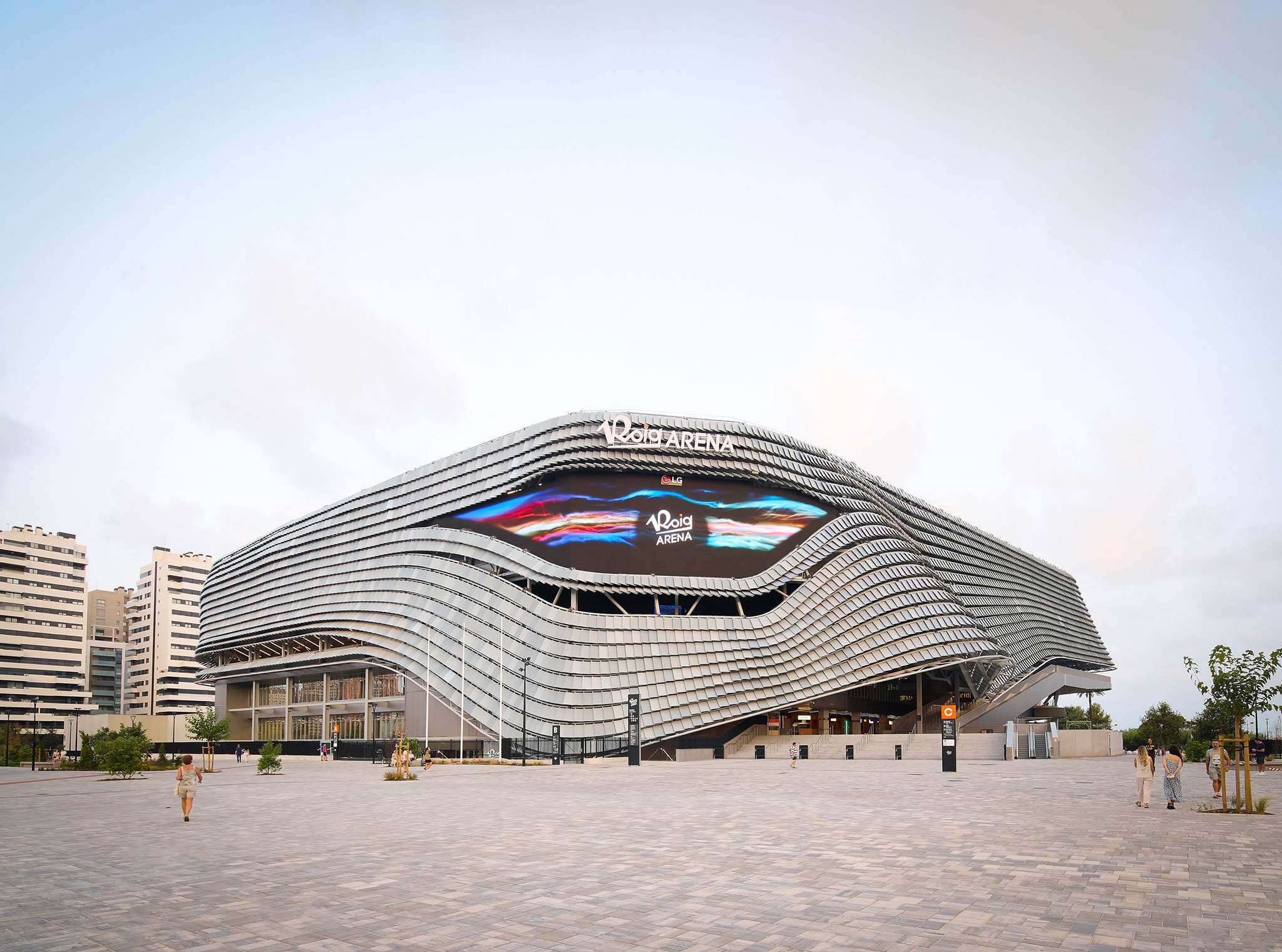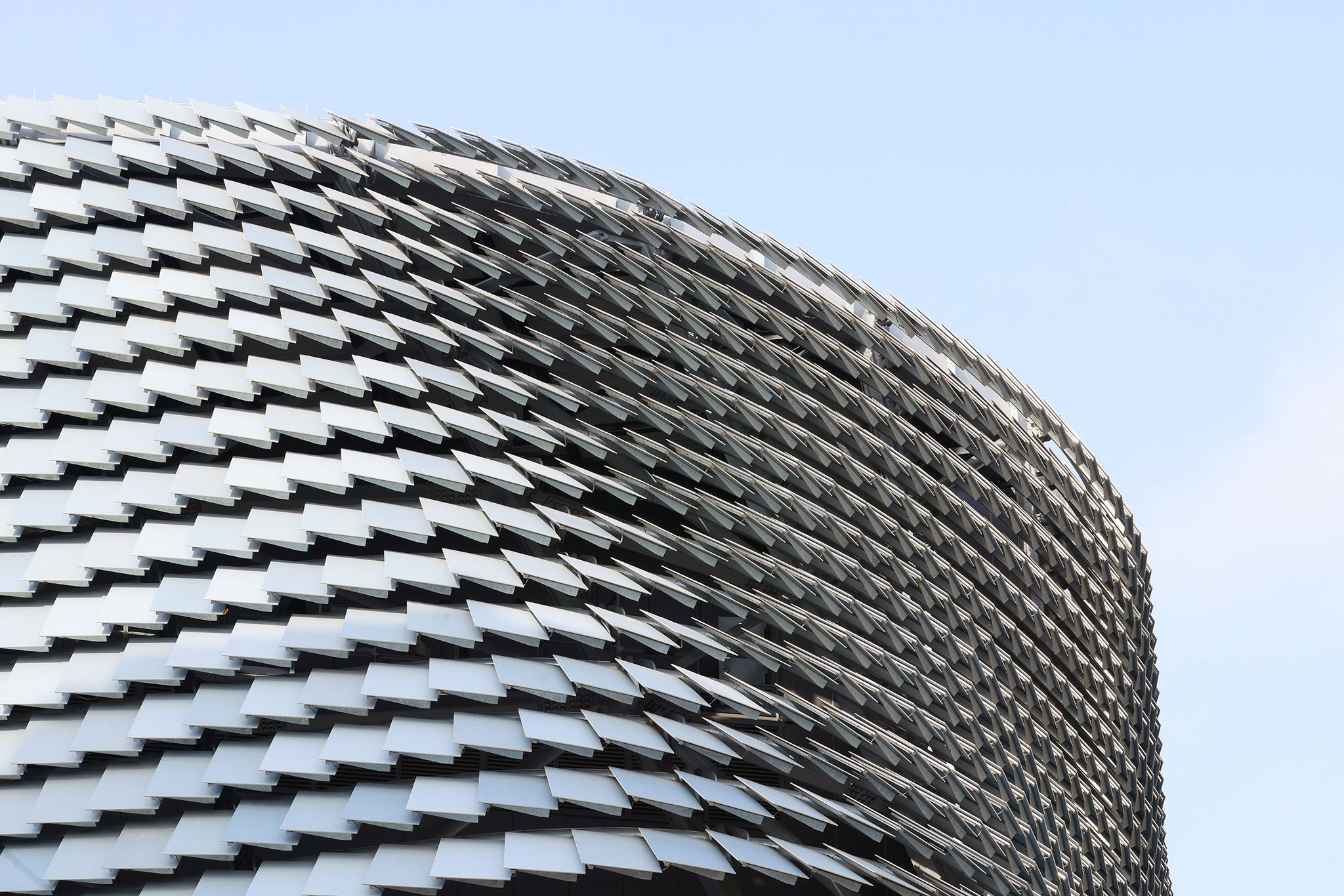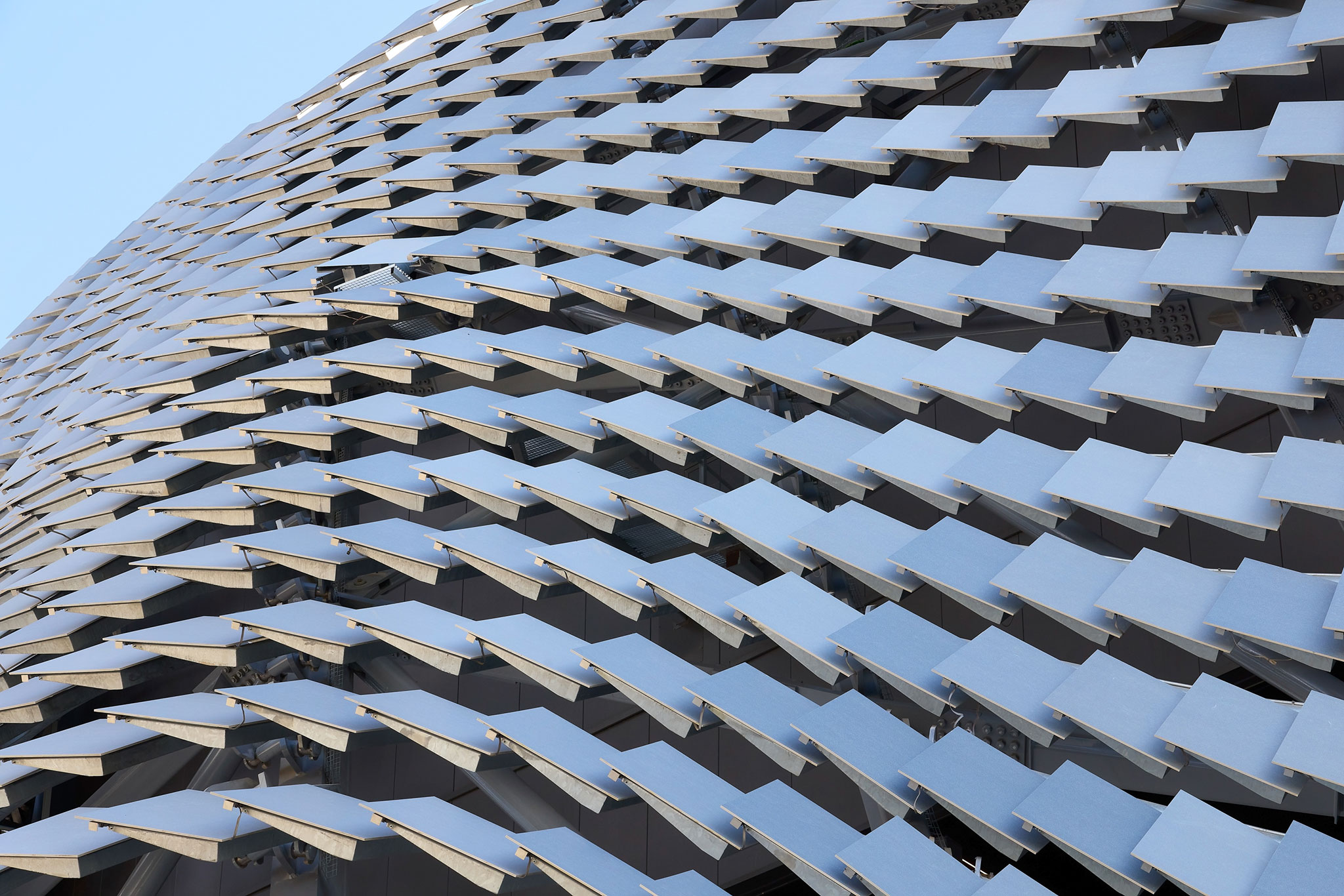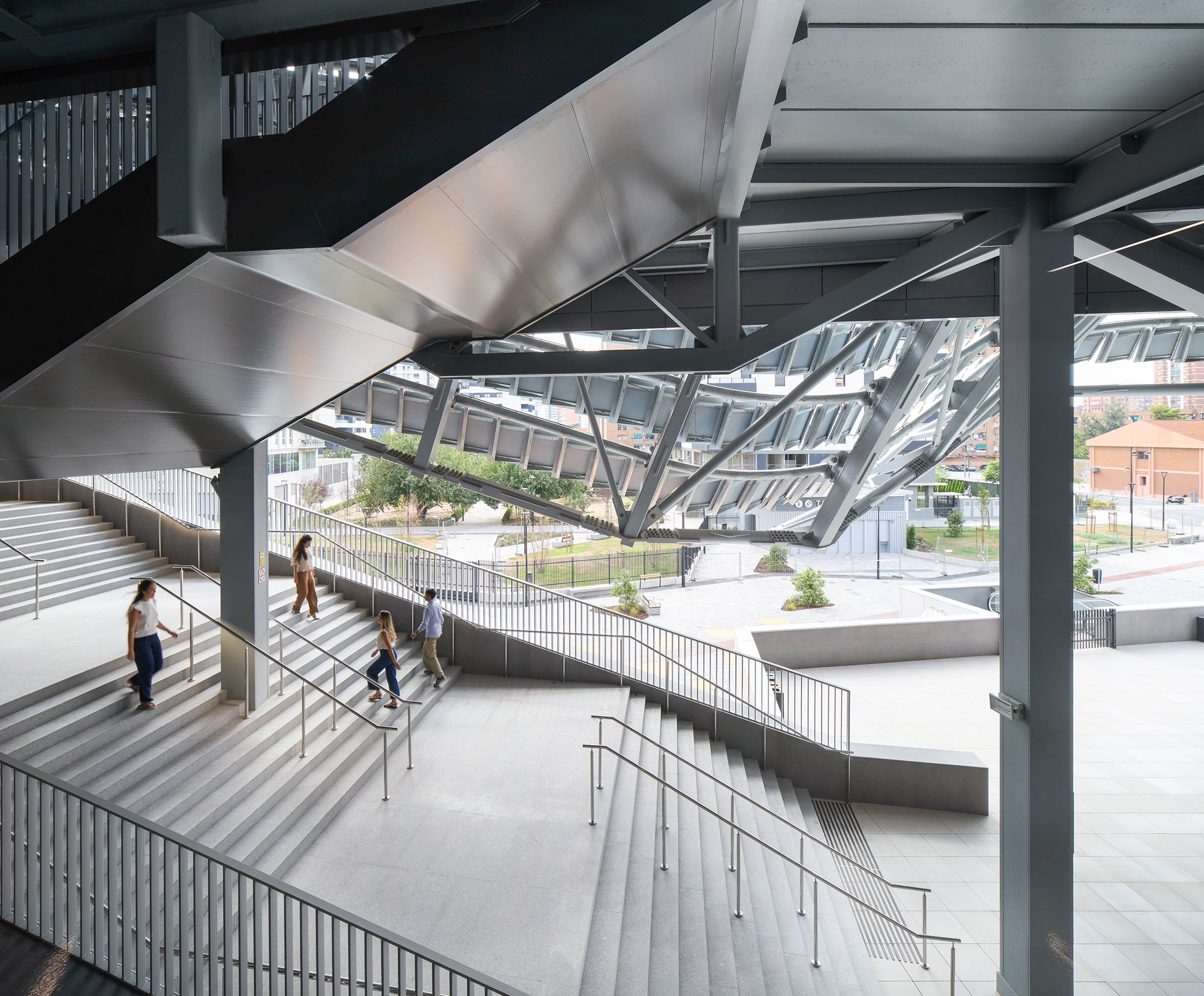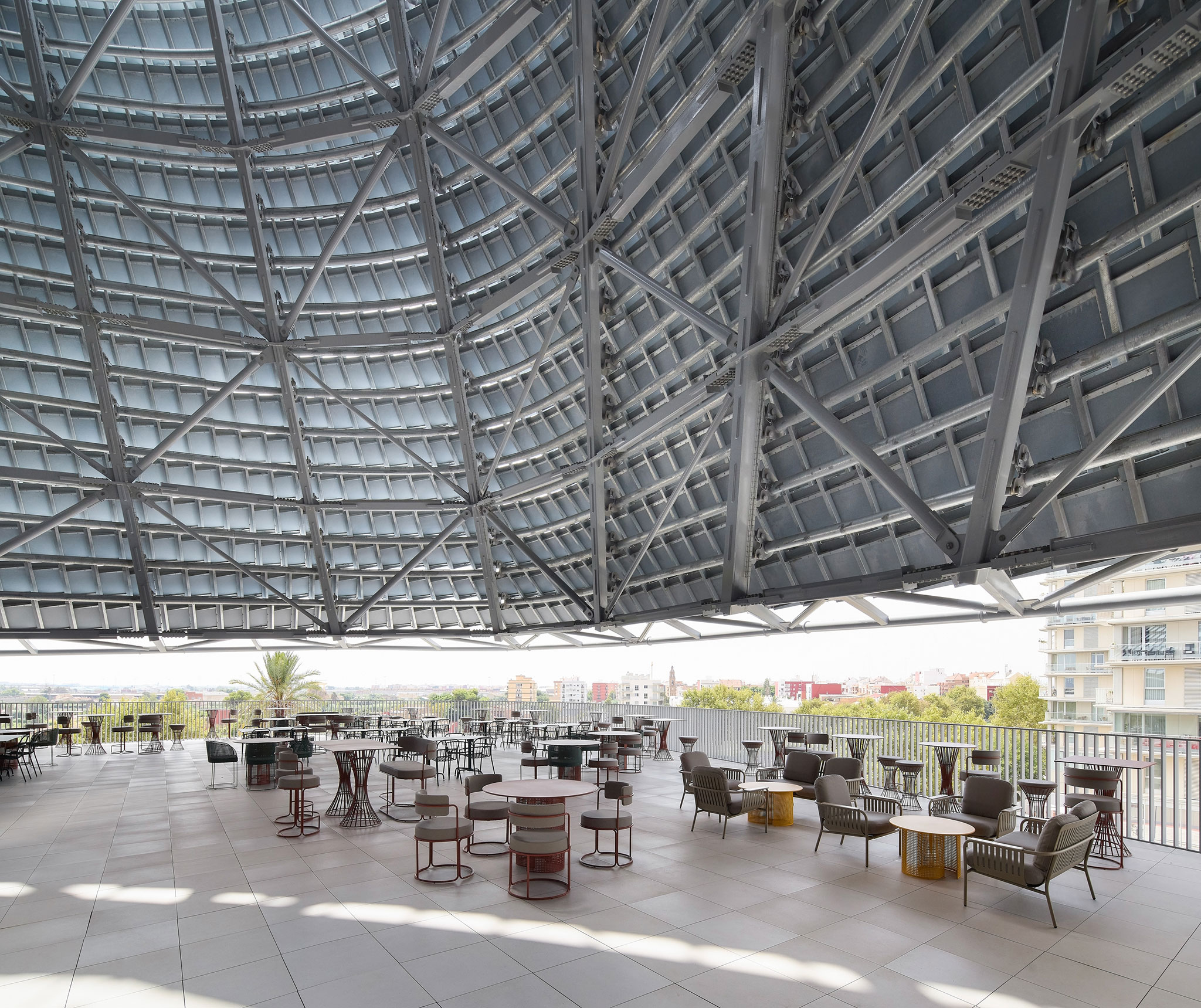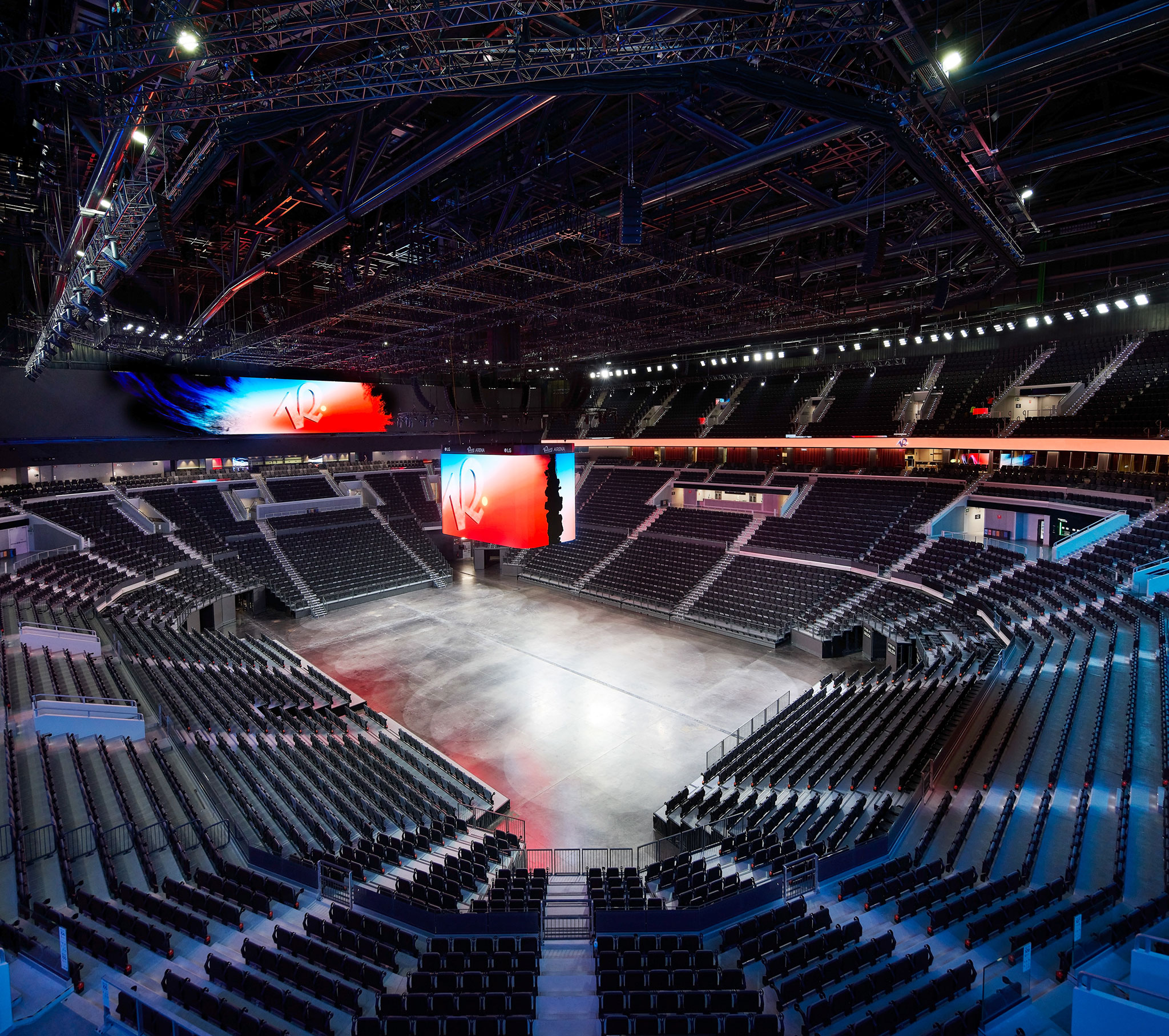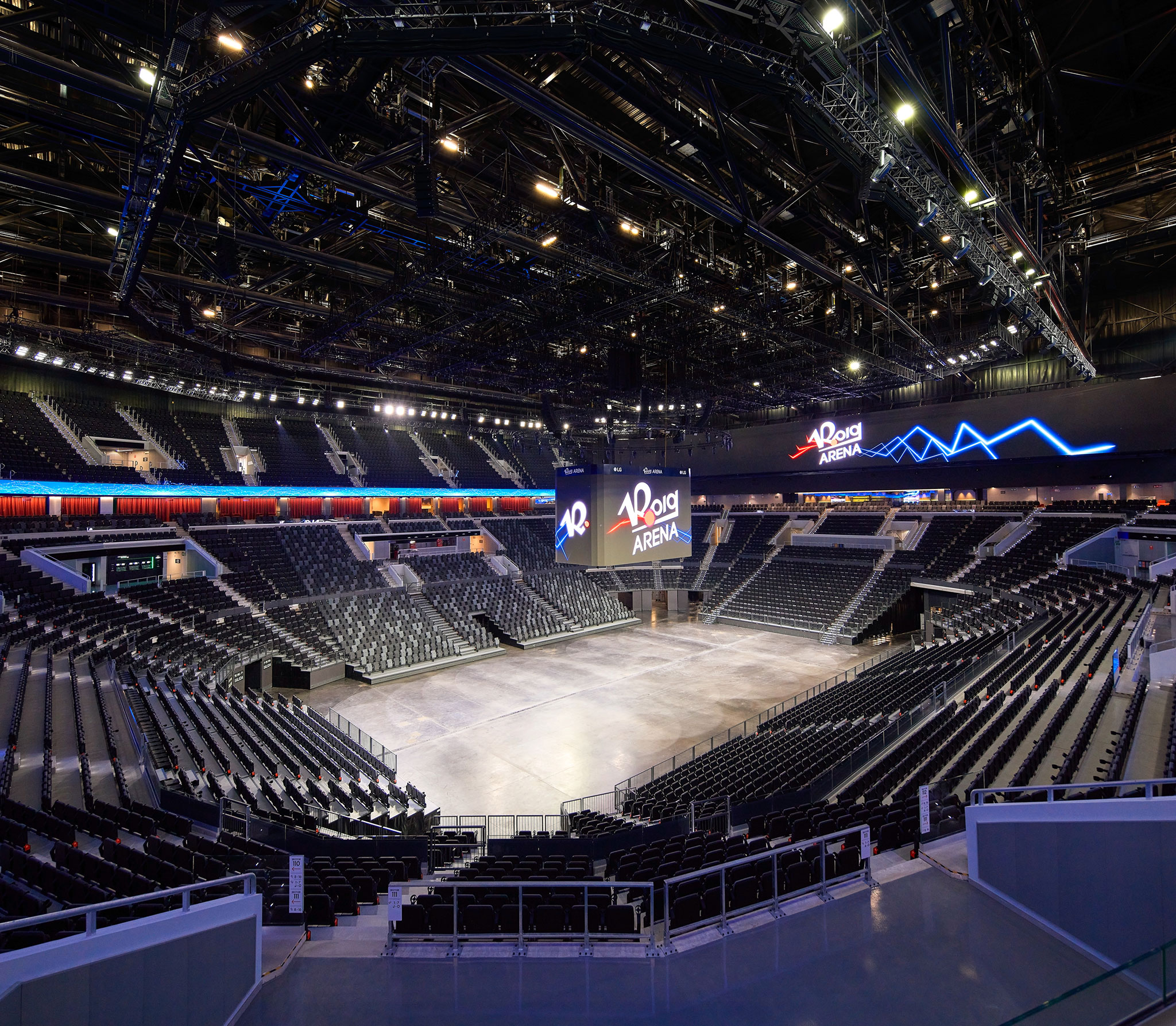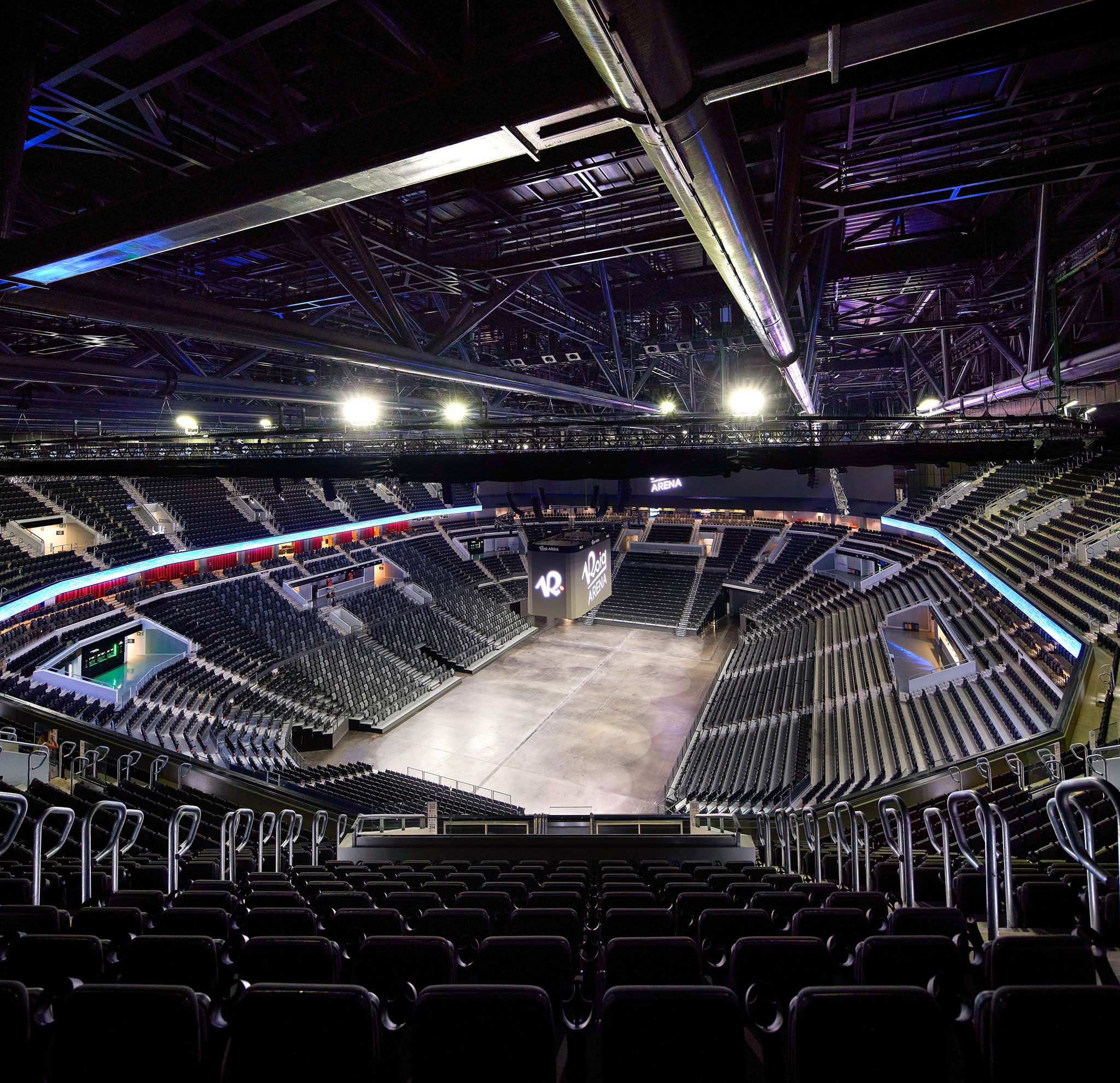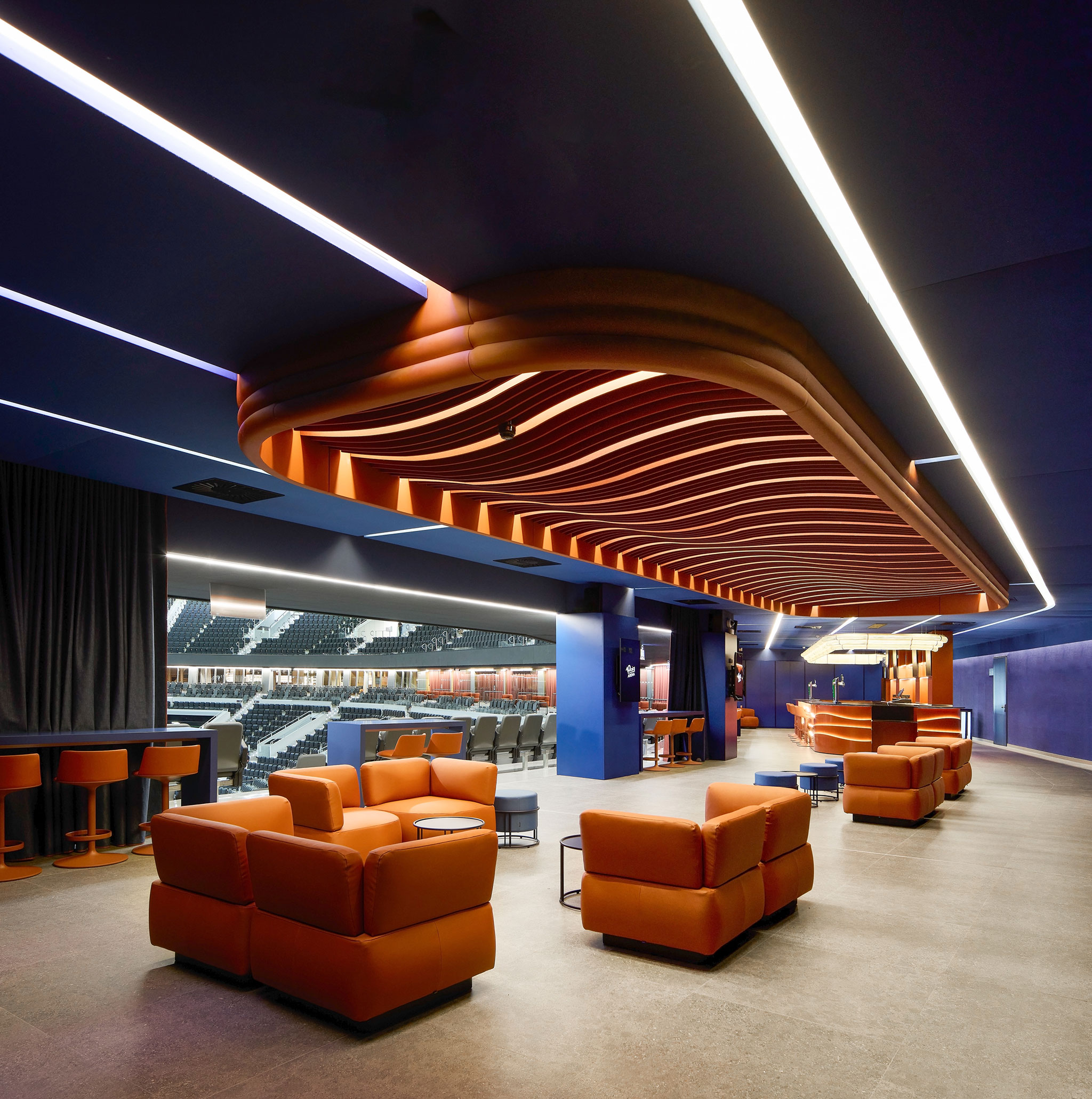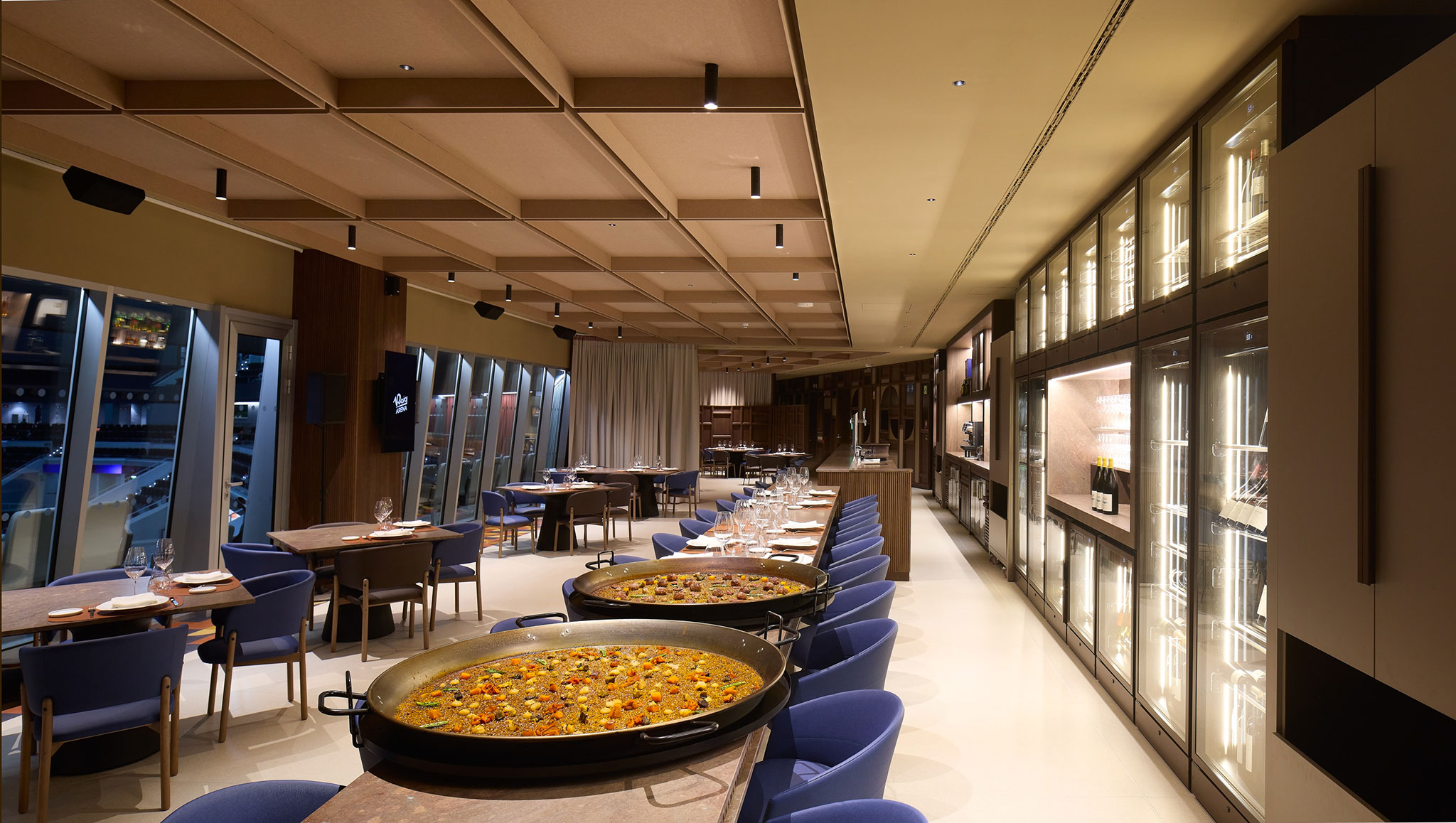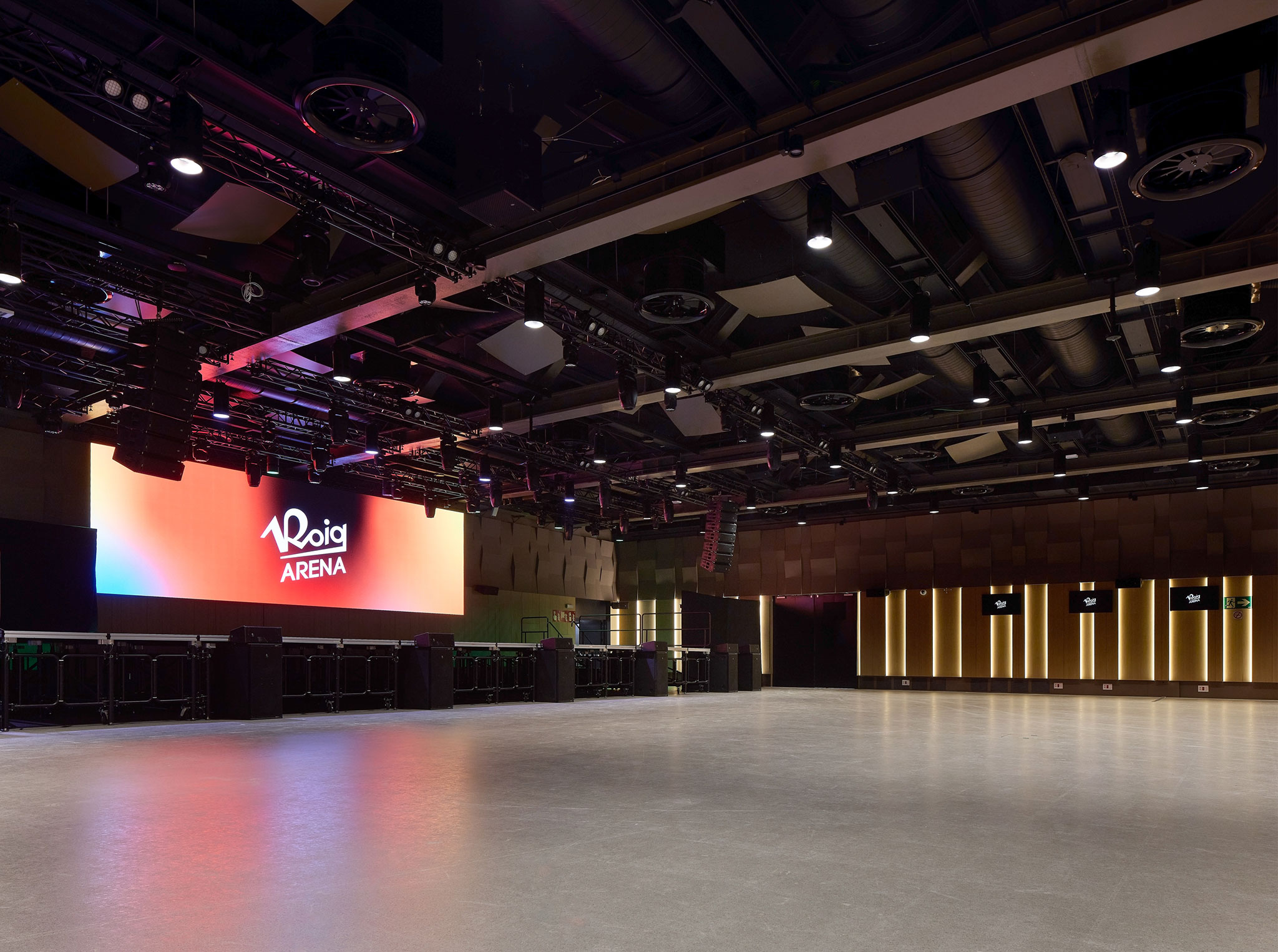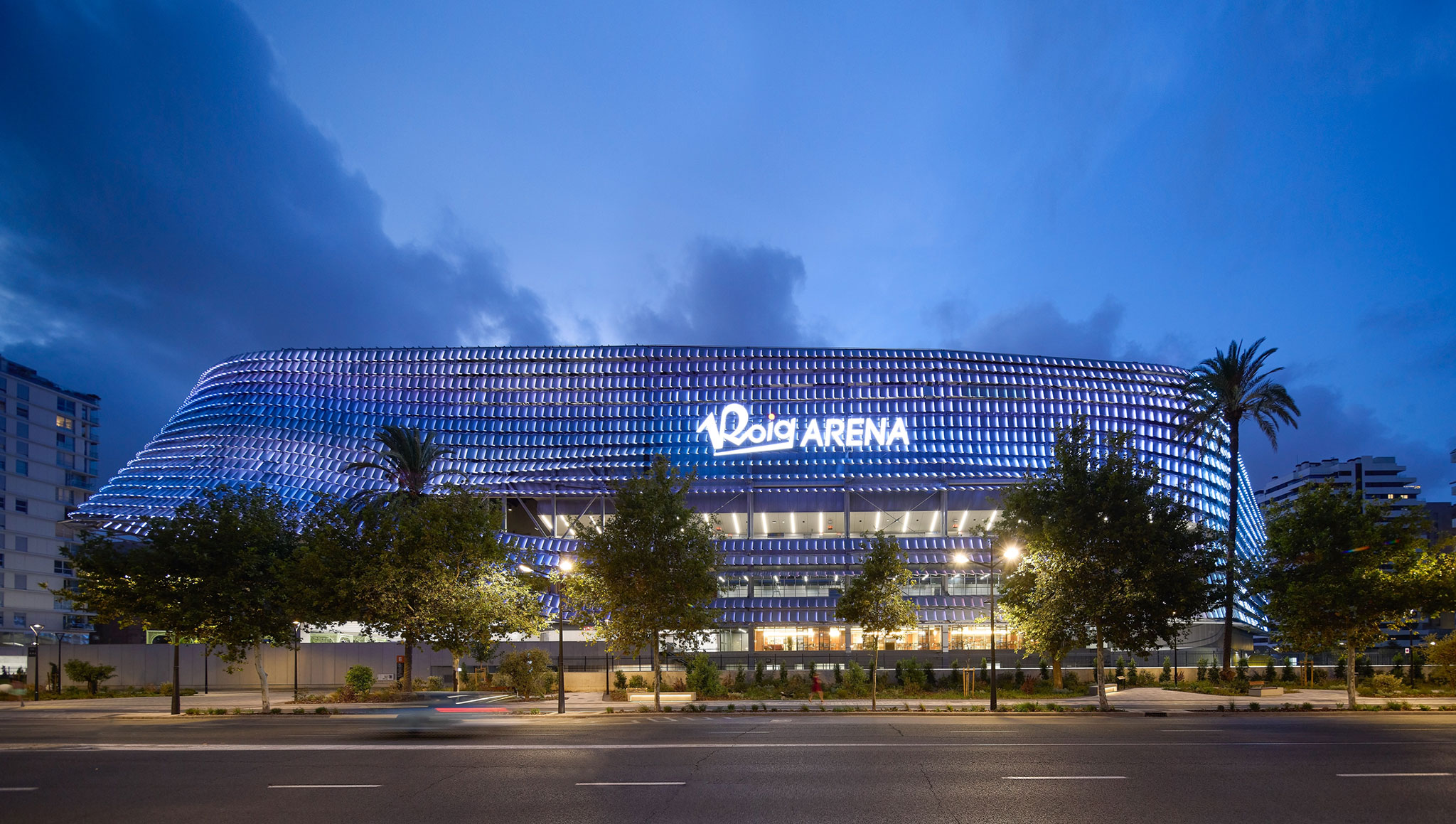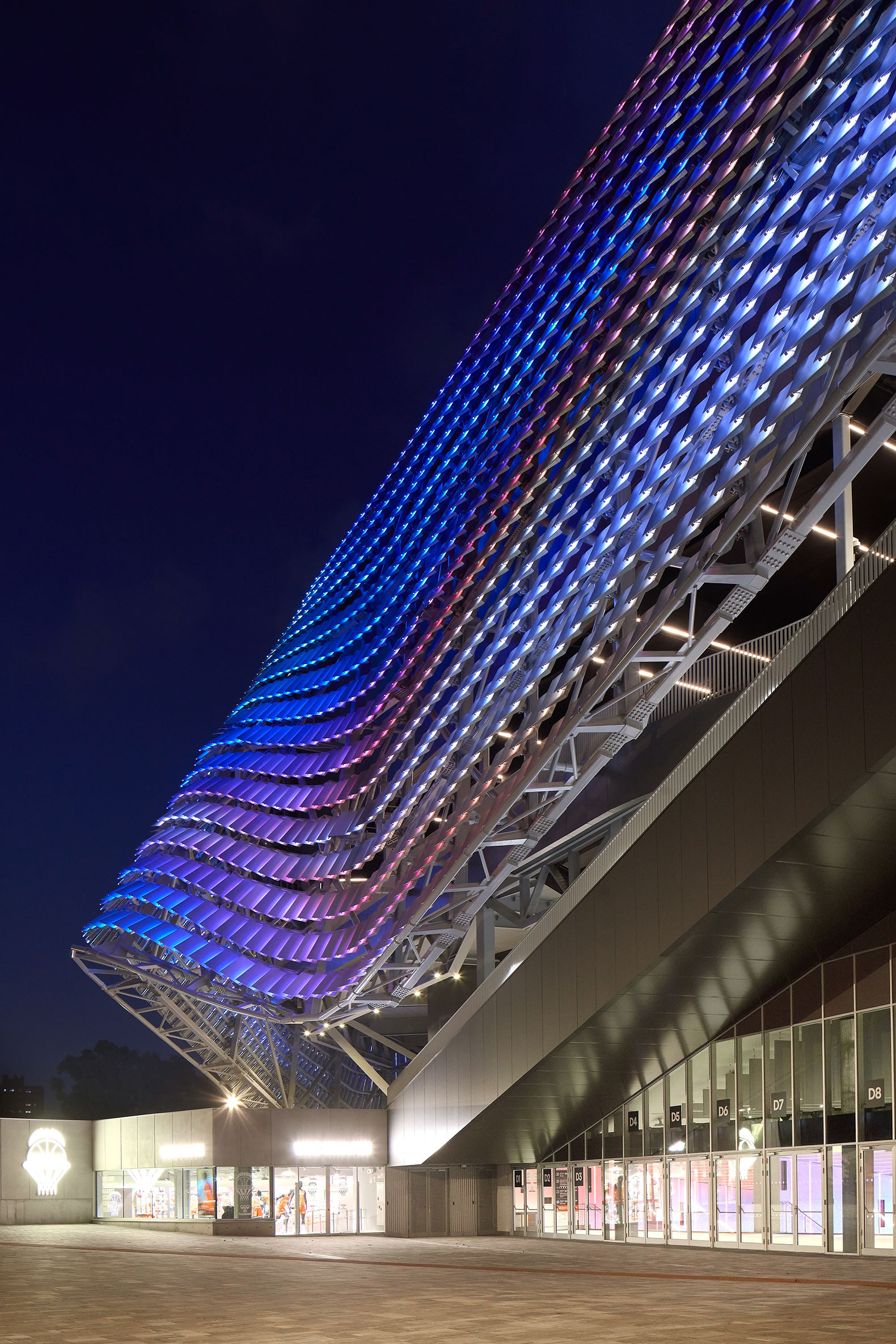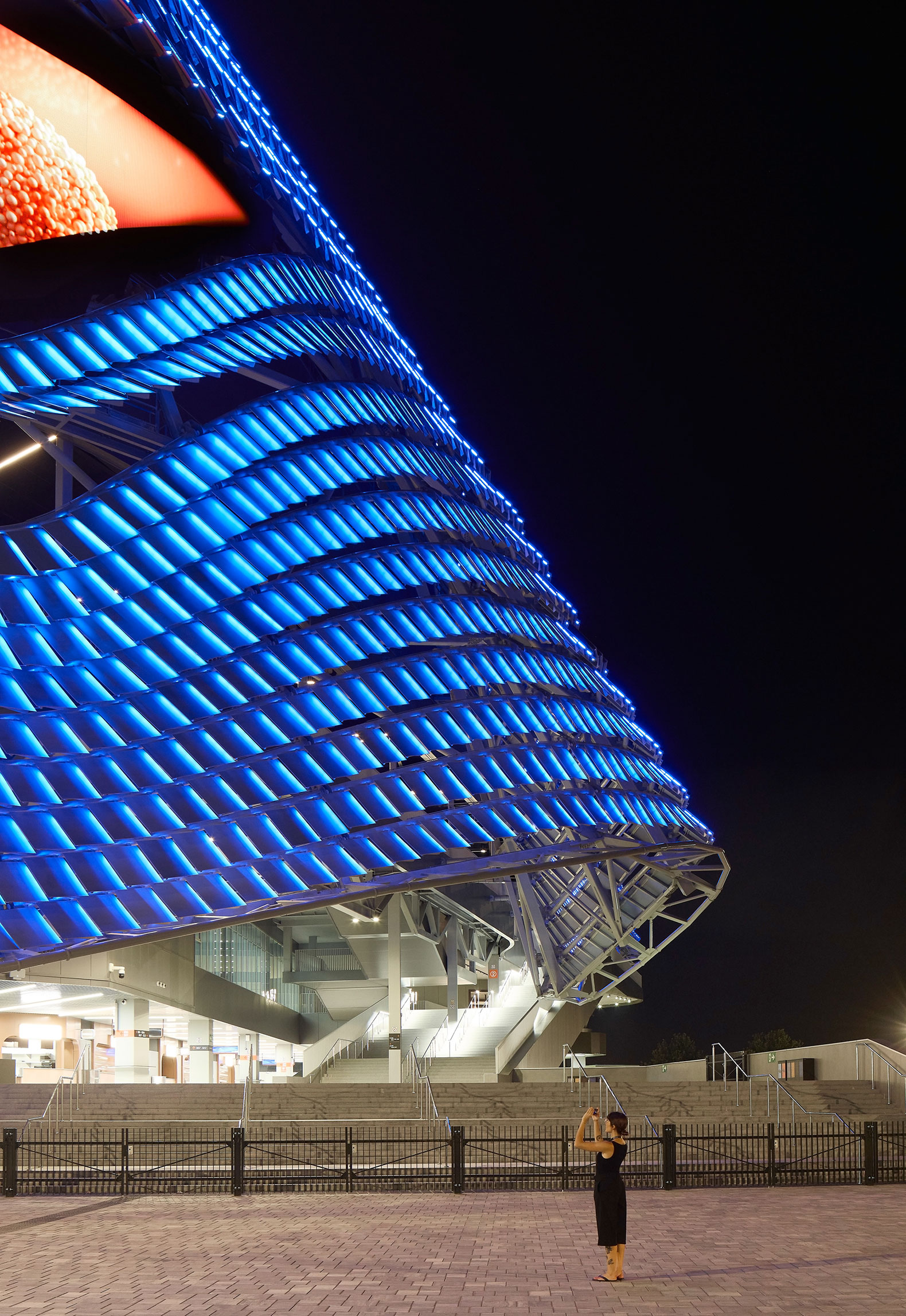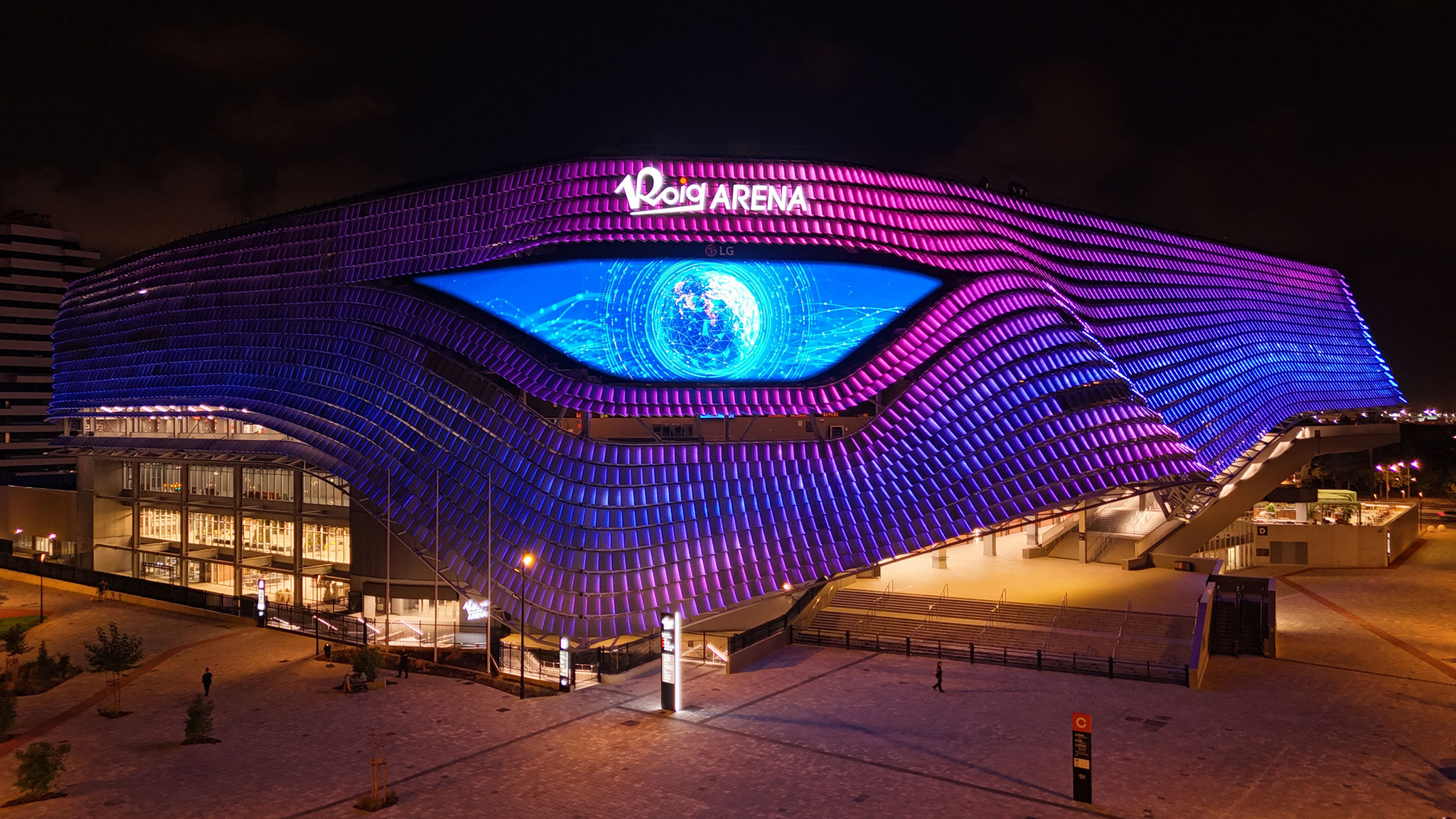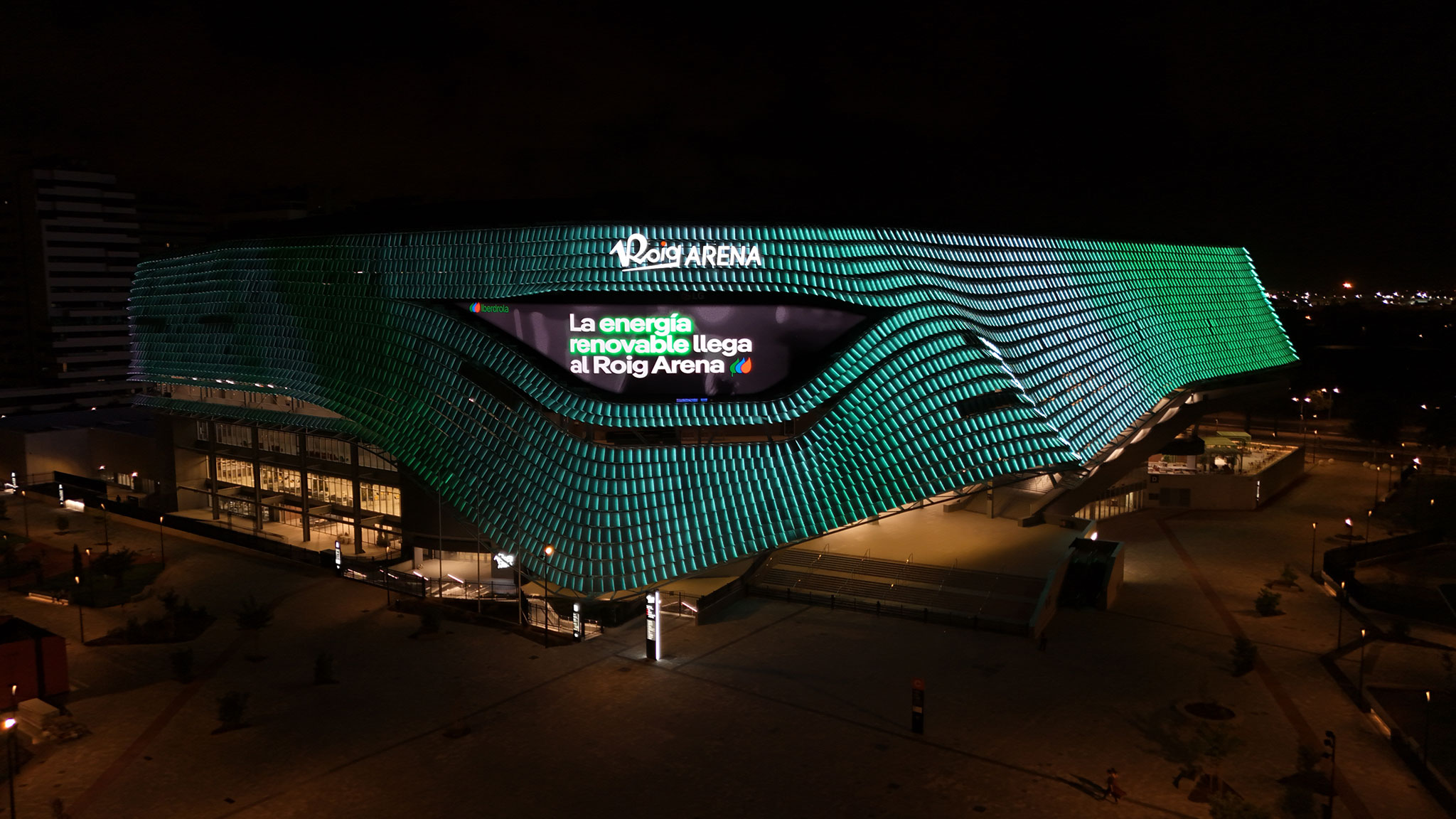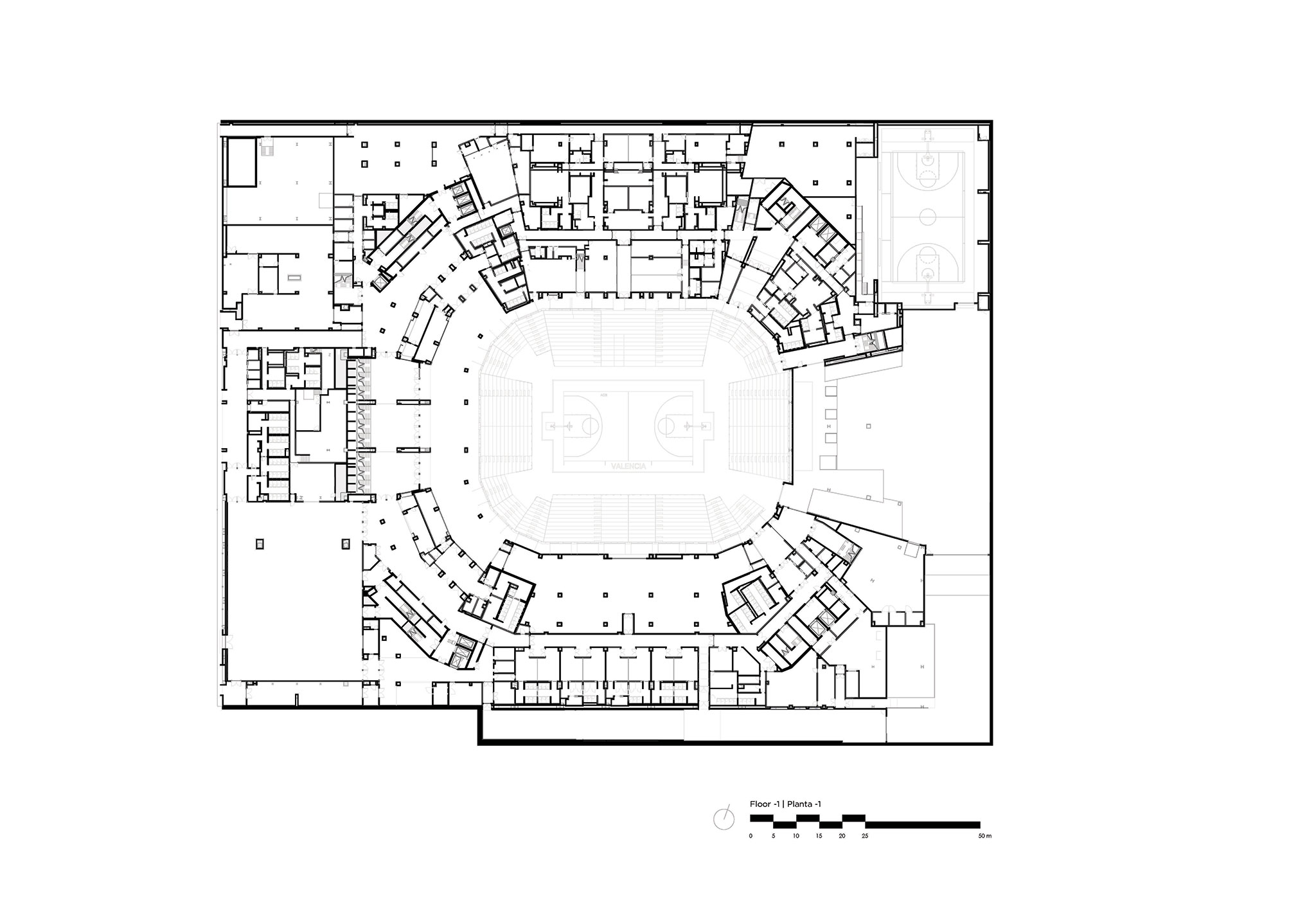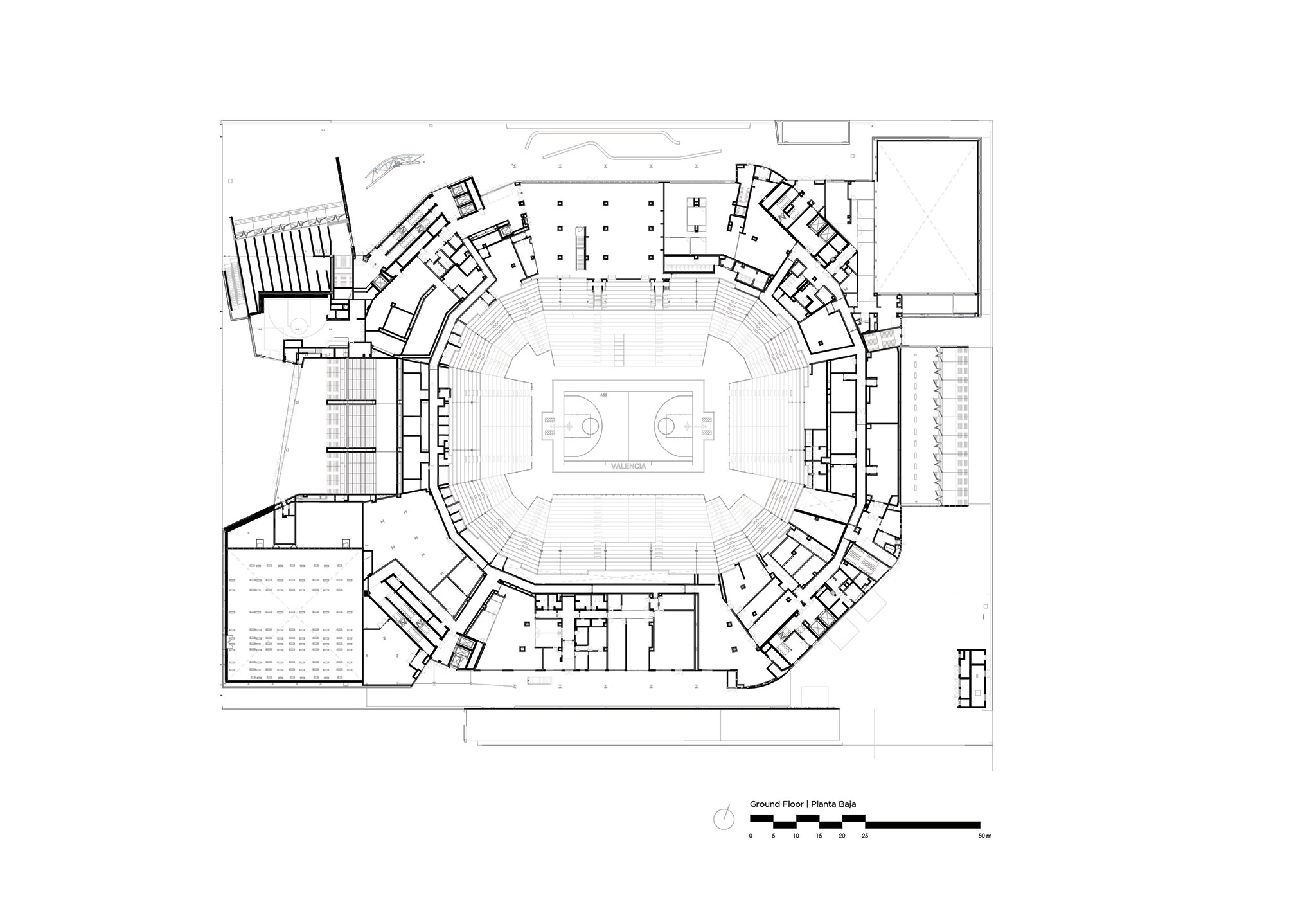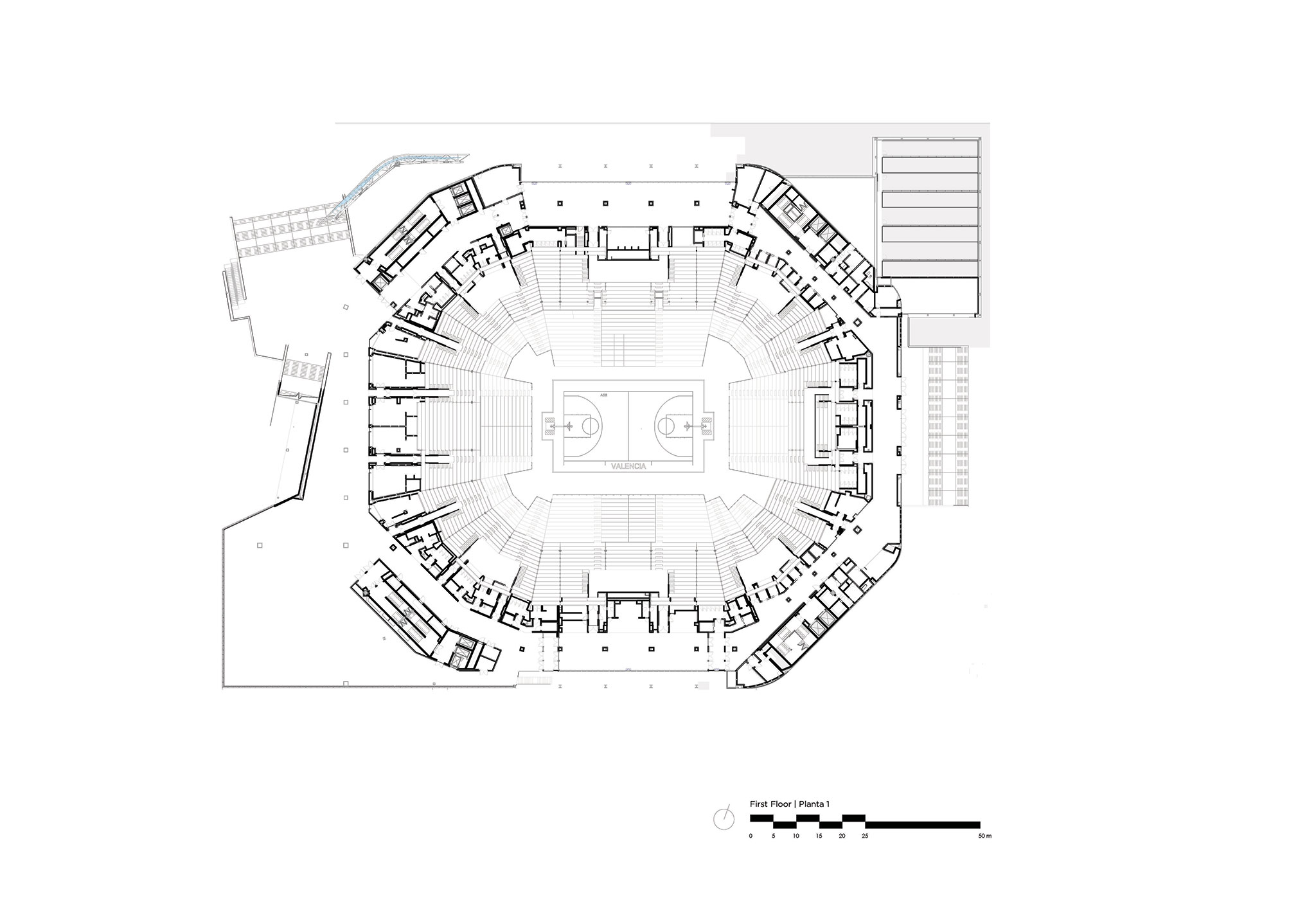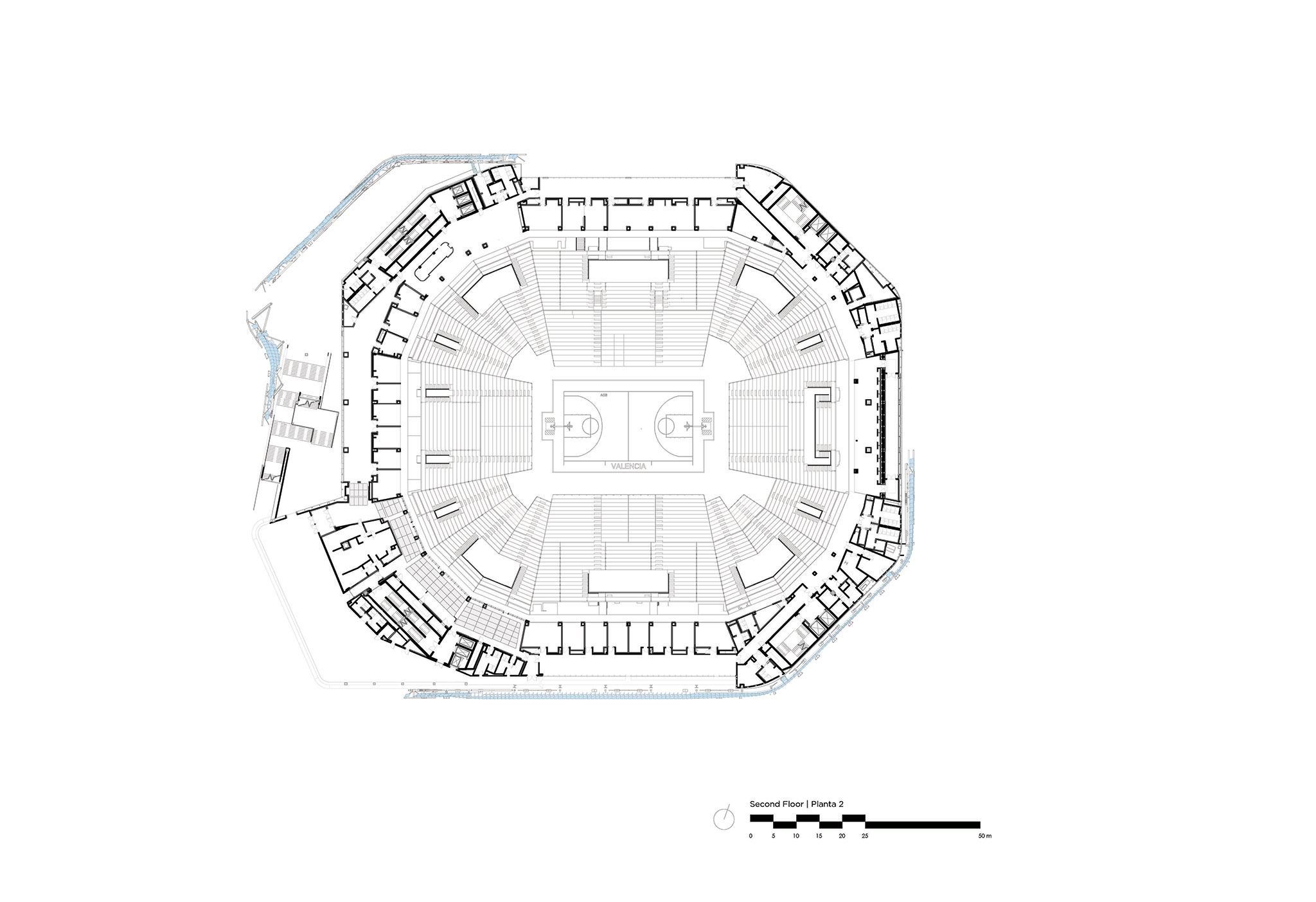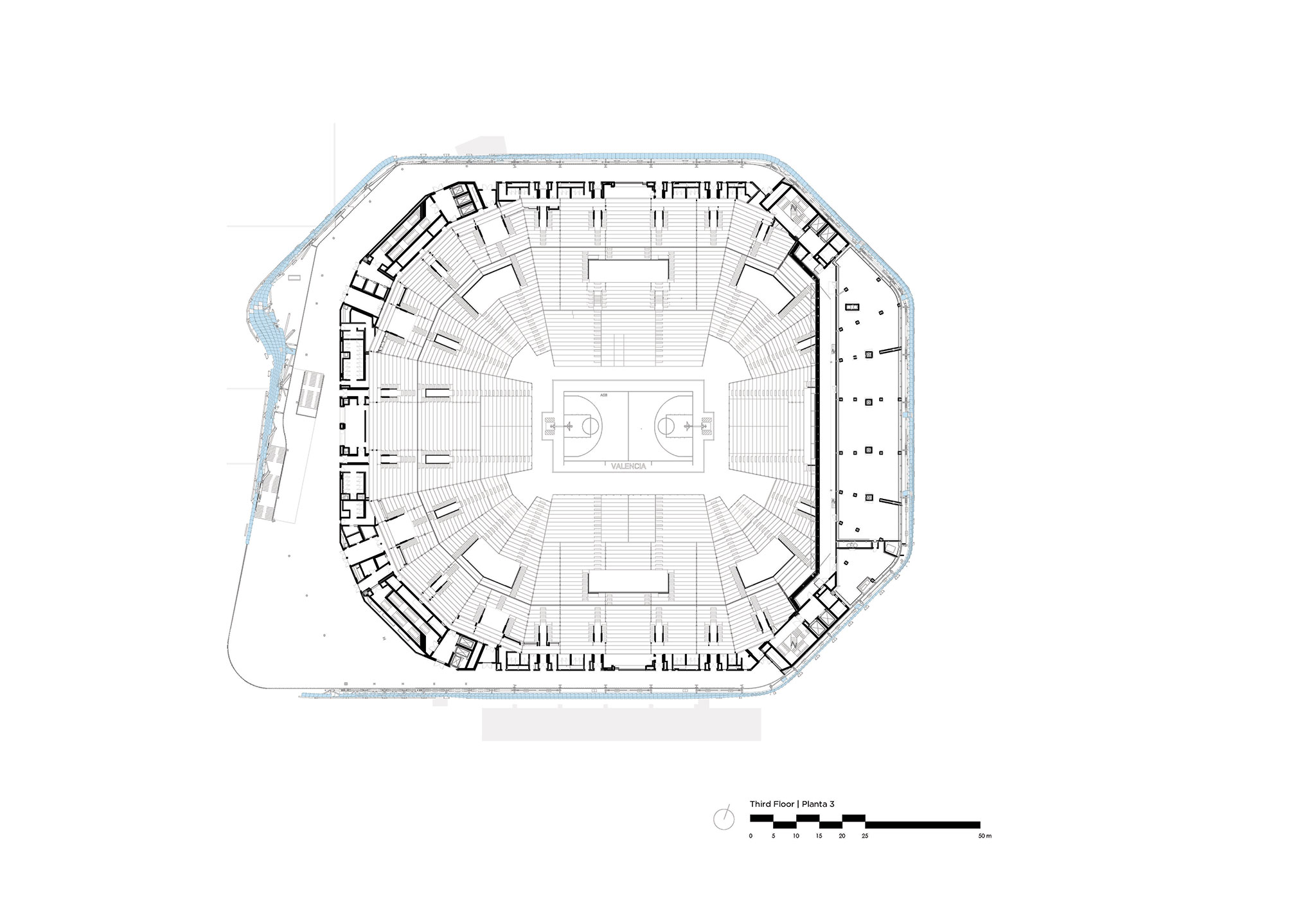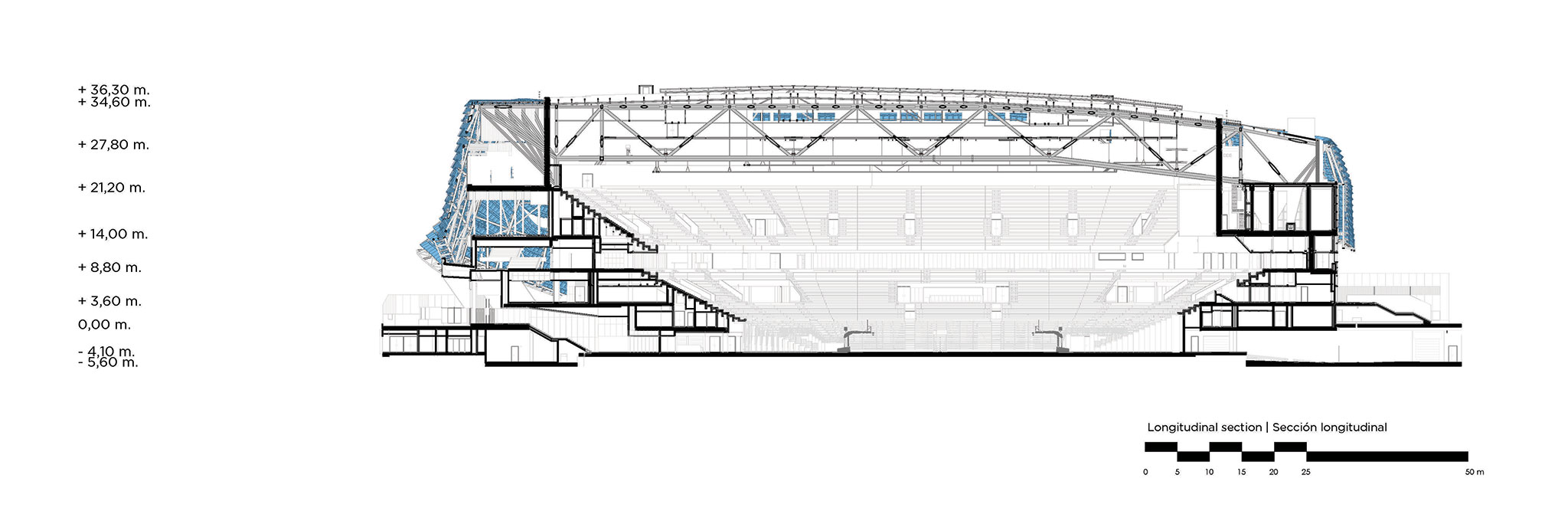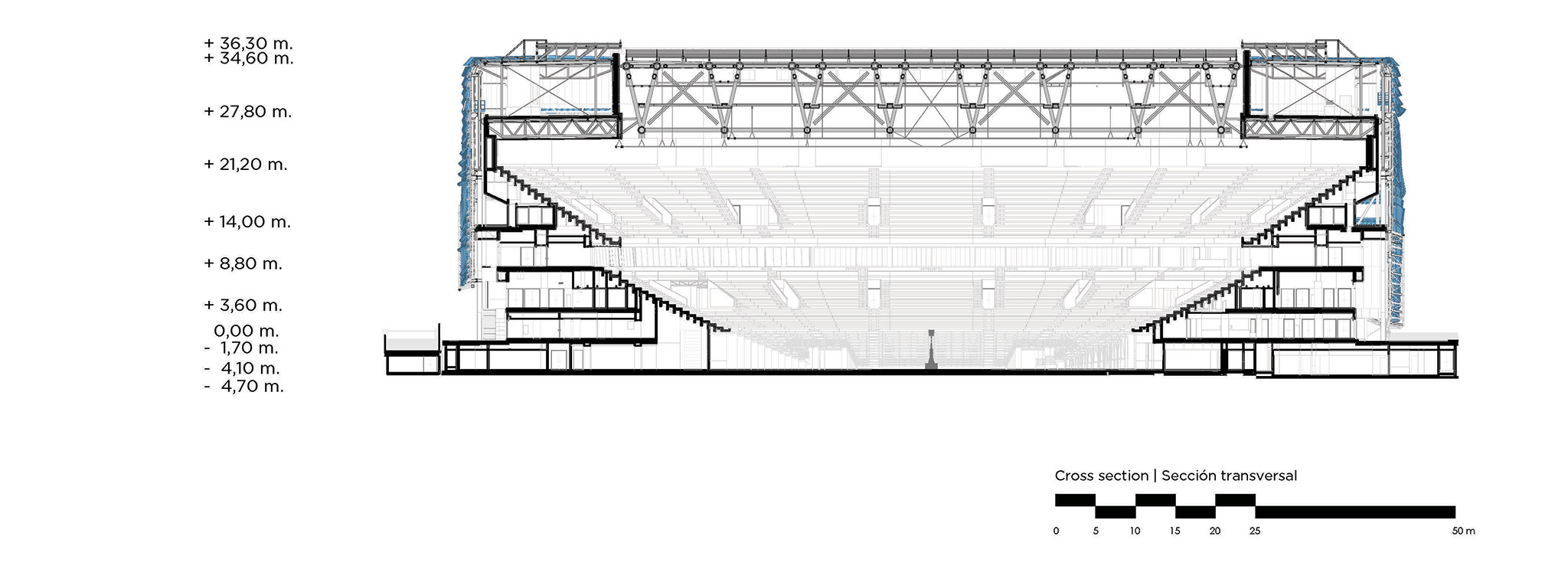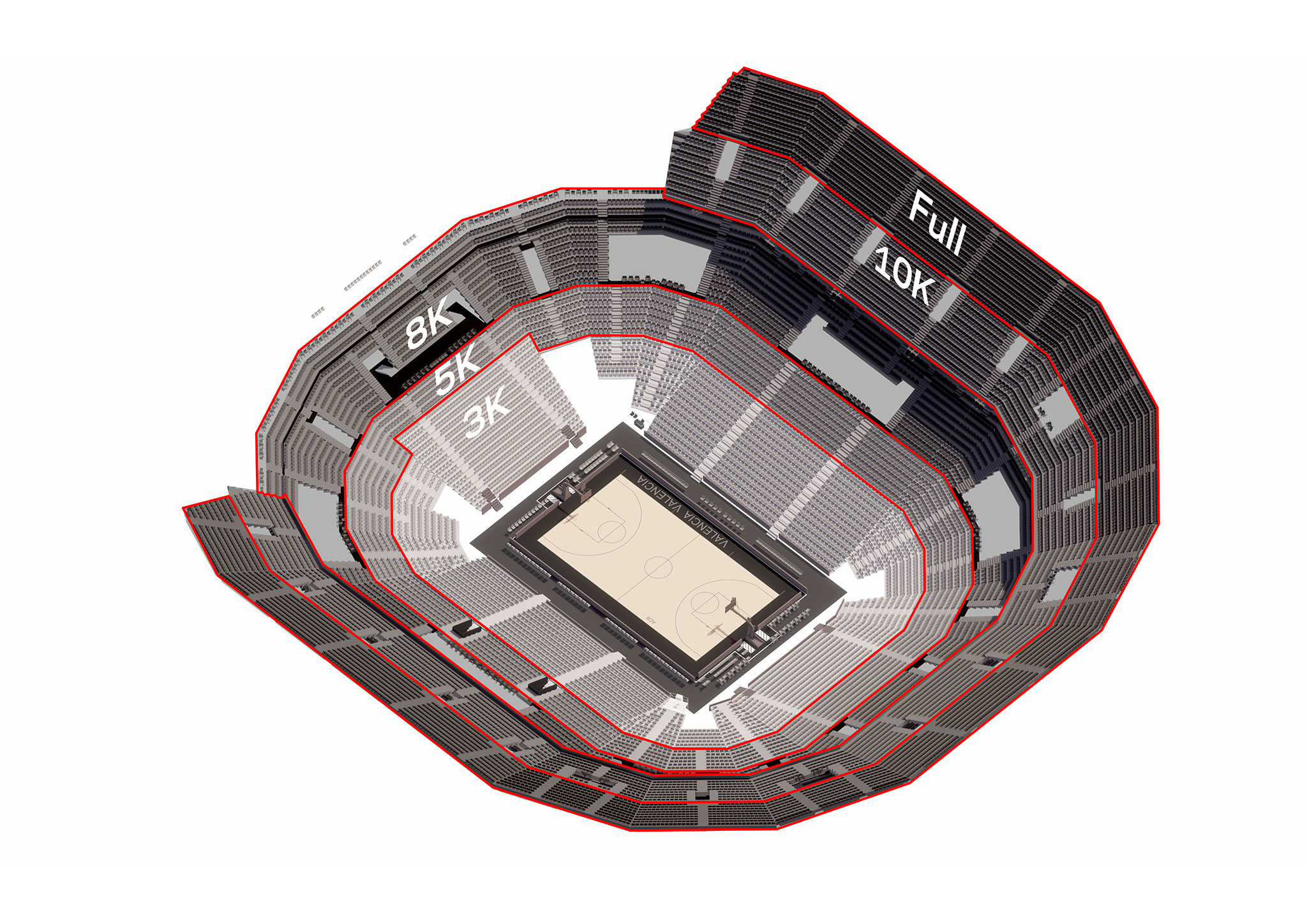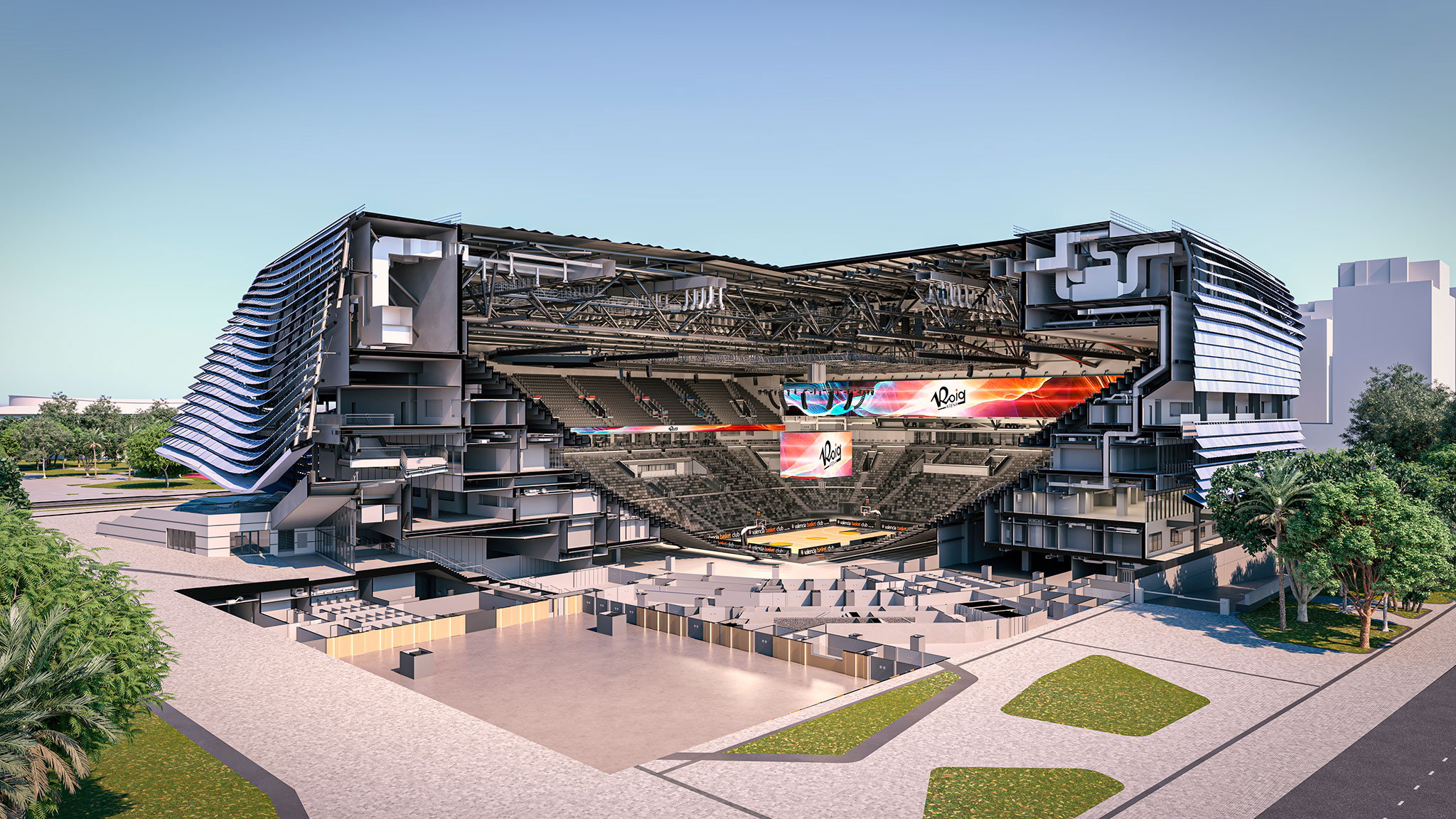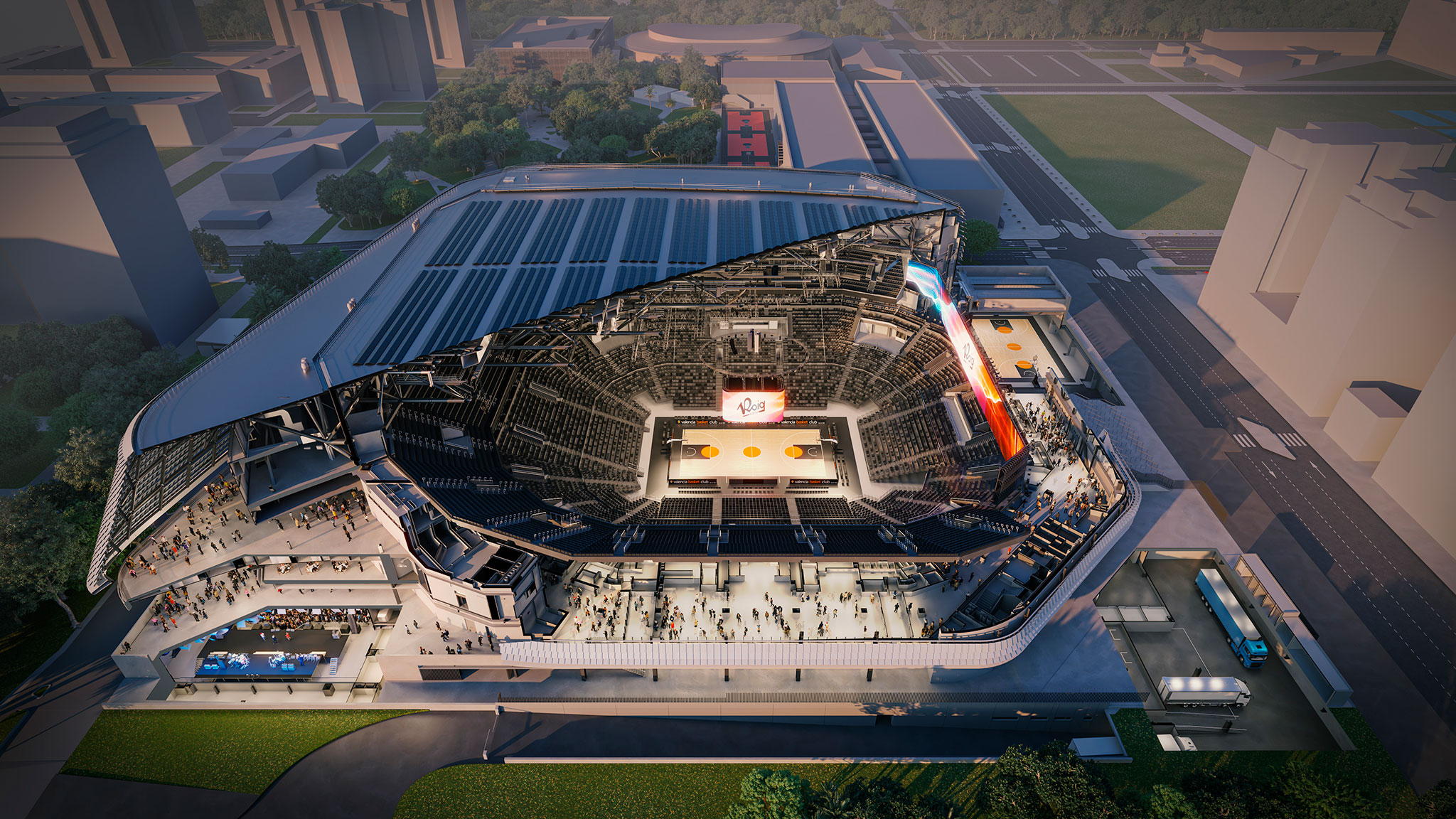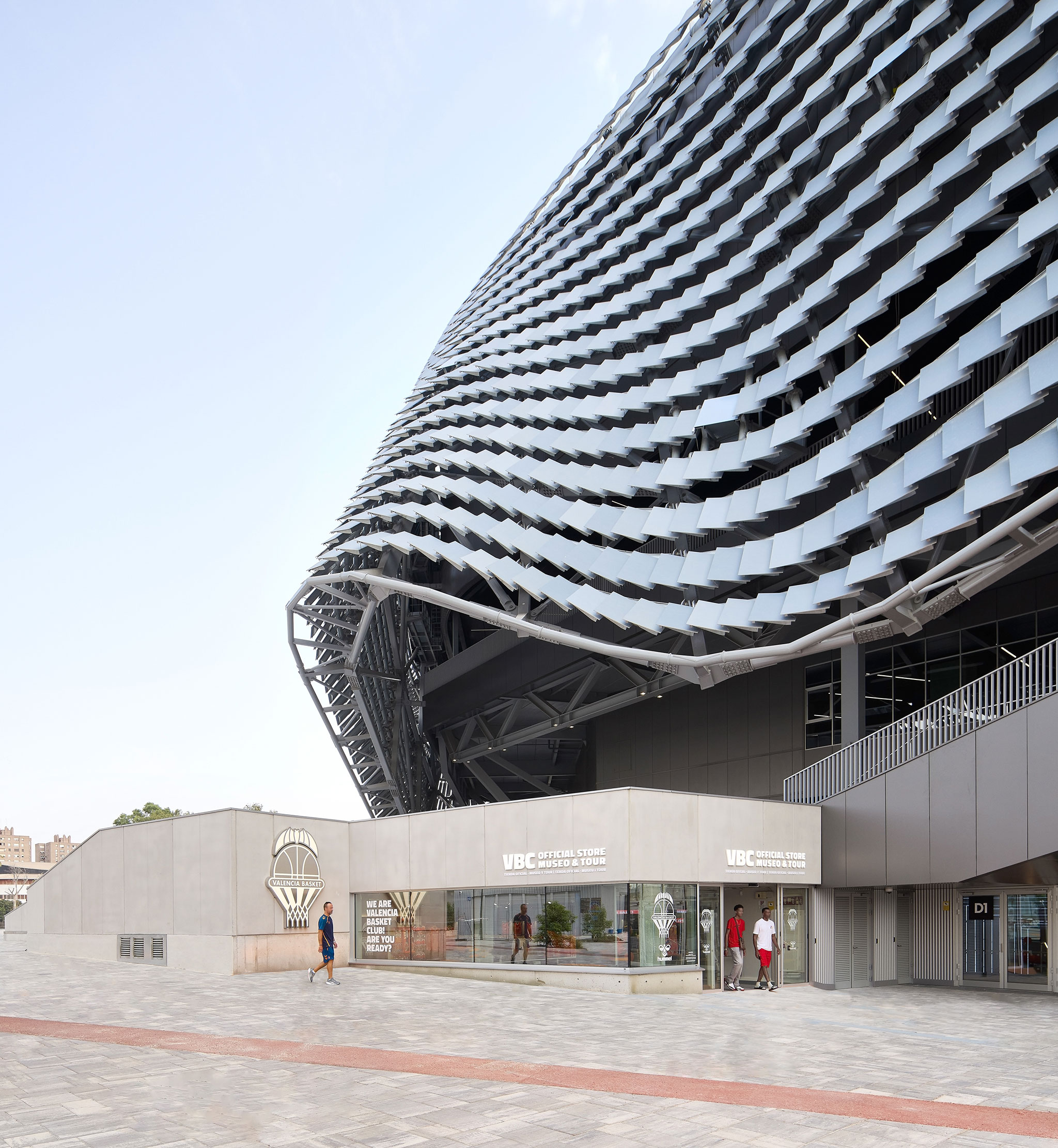
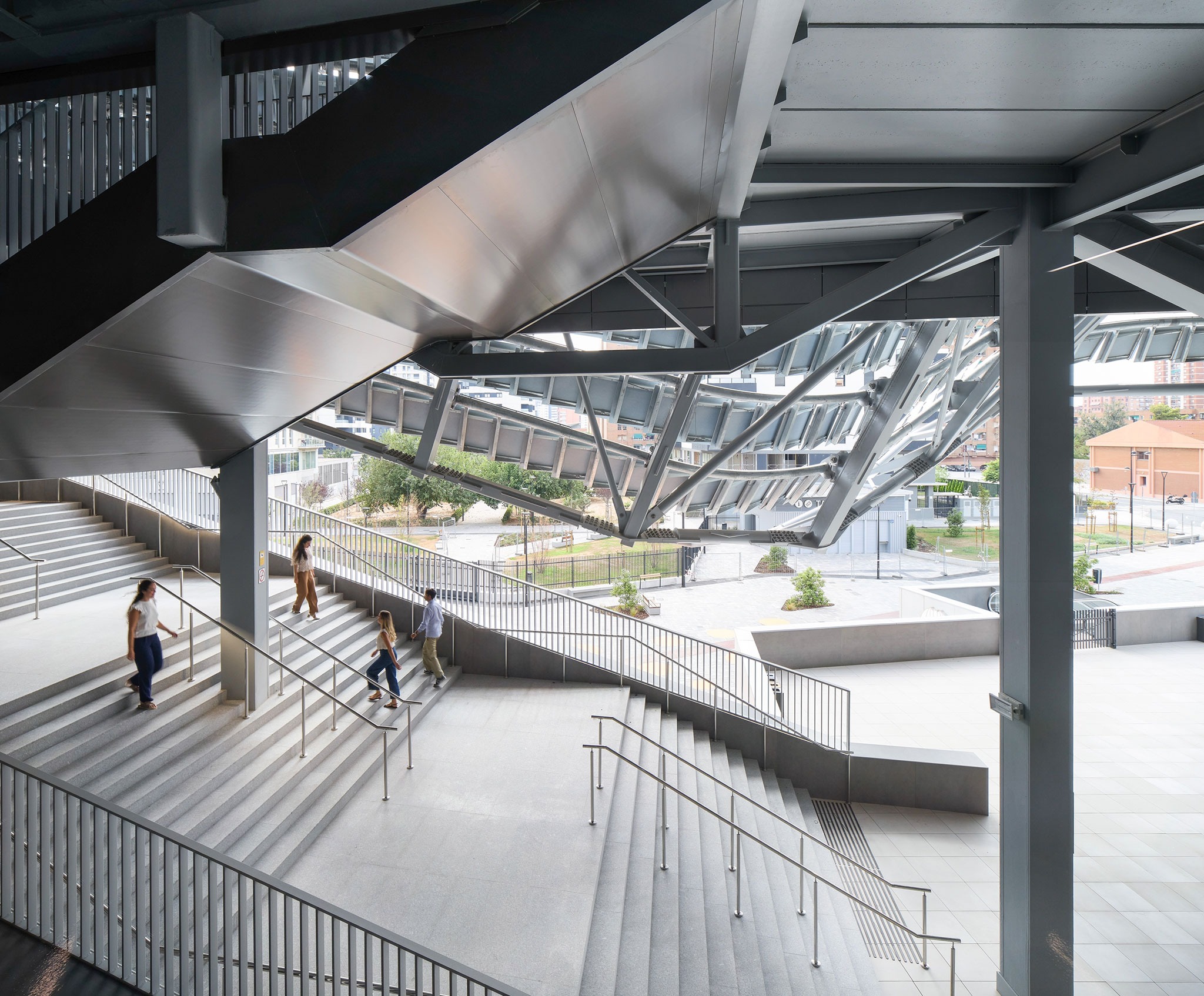
The Roig Arena, designed by HOK and ERRE studios, stands out for its ceramic façade of 8,600 louvers, which regulates Mediterranean light and incorporates local craftsmanship. Inside, the central court is surrounded by tiered seating, while auditoriums, premium boxes, and hospitality areas are arranged on upper levels. The layout allows natural light to gradually illuminate the spaces, visually and functionally connecting the different programs and creating an immersive spatial experience.
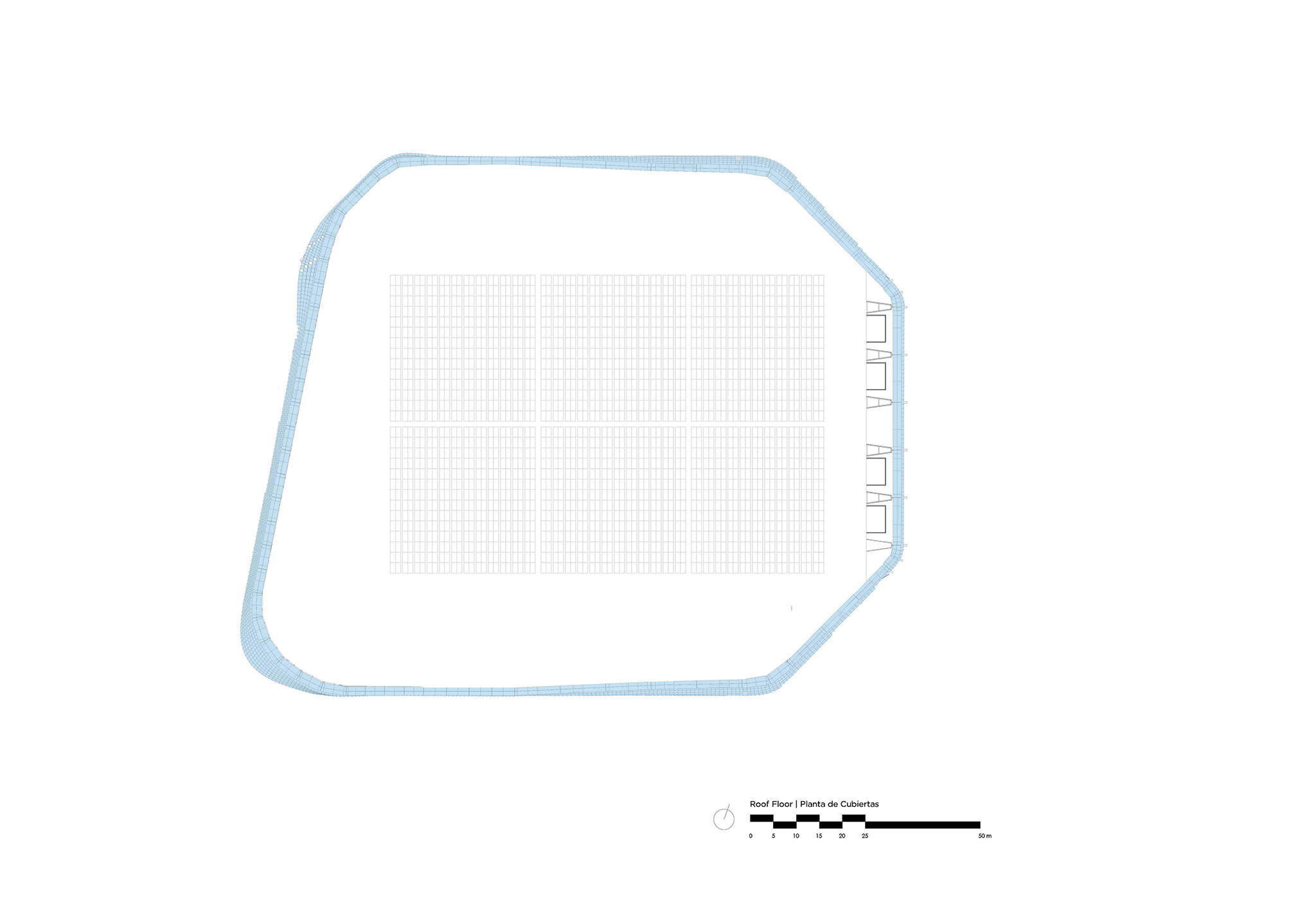
Structurally, the Roig Arena rests on eight prefabricated trusses, each 123 meters long and capable of supporting up to 180 tons, assembled on the ground and lifted with cranes. Parametric modeling optimizes the arrangement of the ceramic façade and the geometry of the seating. Stormwater management is handled through underground tanks and green basins, while the roof integrates 1,742 photovoltaic panels, ensuring energy efficiency and constructive sustainability throughout the project.
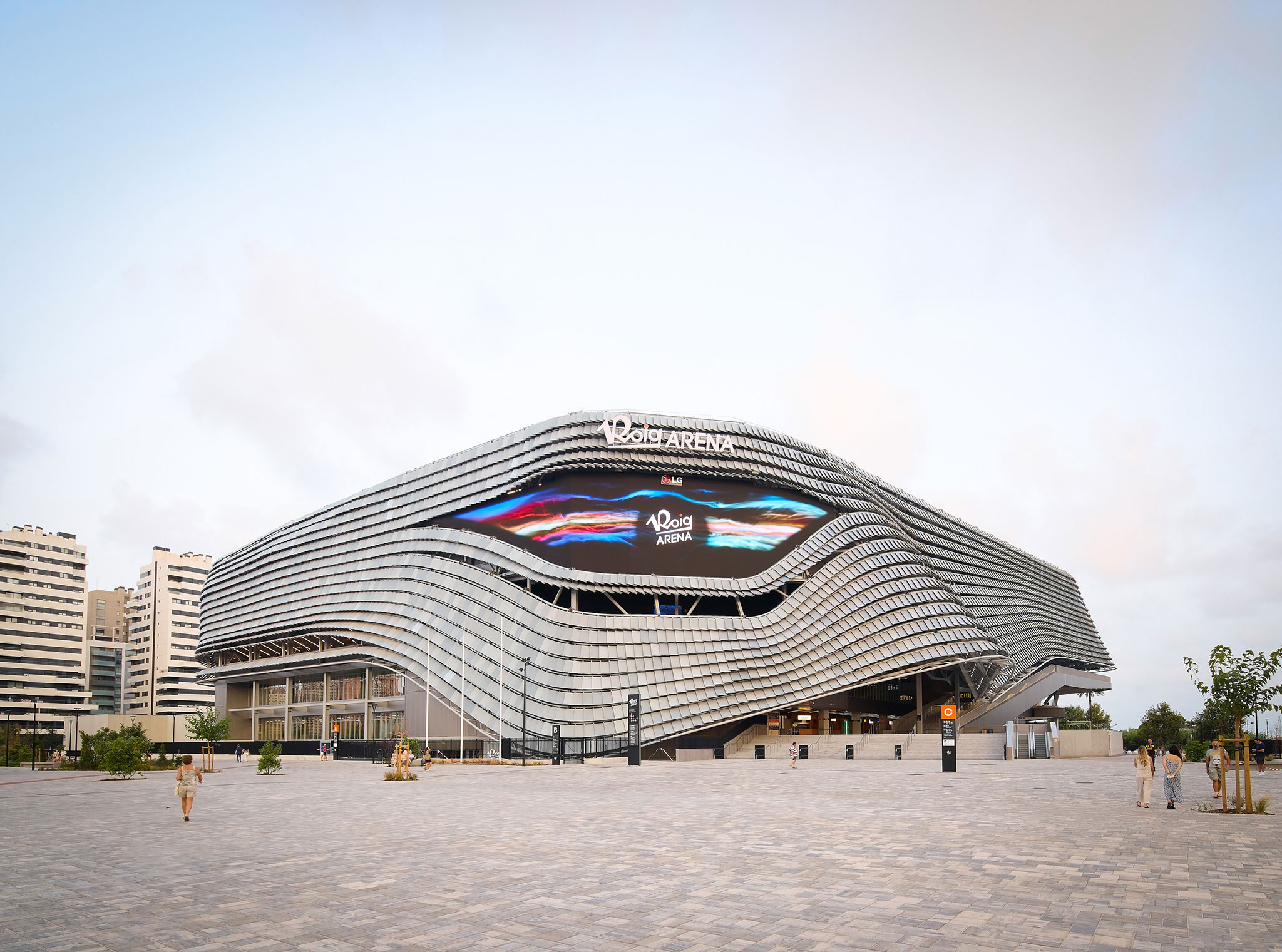
Roig Arena by HOK and ERRE. Photograph by Hufton + Crow.
Project description by HOK and ERRE
With a final investment of €400 million, the Roig Arena is promoting the creation of a new internationally renowned cultural destination in Valencia, a historic Mediterranean port city, that aims to attract visitors from around the world 365 days a year. The international firm HOK and the Valencia-based architectural studio ERRE have collaborated to design a 58,500 m² arena that will contribute to the transformation of the Quatre Carreres district, located near major urban landmarks such as the City of Arts and Sciences and the Turia Gardens.
The goal of Licampa 1617, a company founded by Spanish businessman Juan Roig, was to design much more than a sports venue. Roig, who built Mercadona into the largest supermarket chain in Spain and owns the Valencia Basket football team, envisioned a civic and entertainment center capable of catalyzing the development of the Quatre Carreres district. The brief emphasized the project's seamless integration into the city's daily life, while also ensuring it was positioned among Europe's leading arenas.
Facade Innovation: The First Venue with a Completely Ceramic Skin
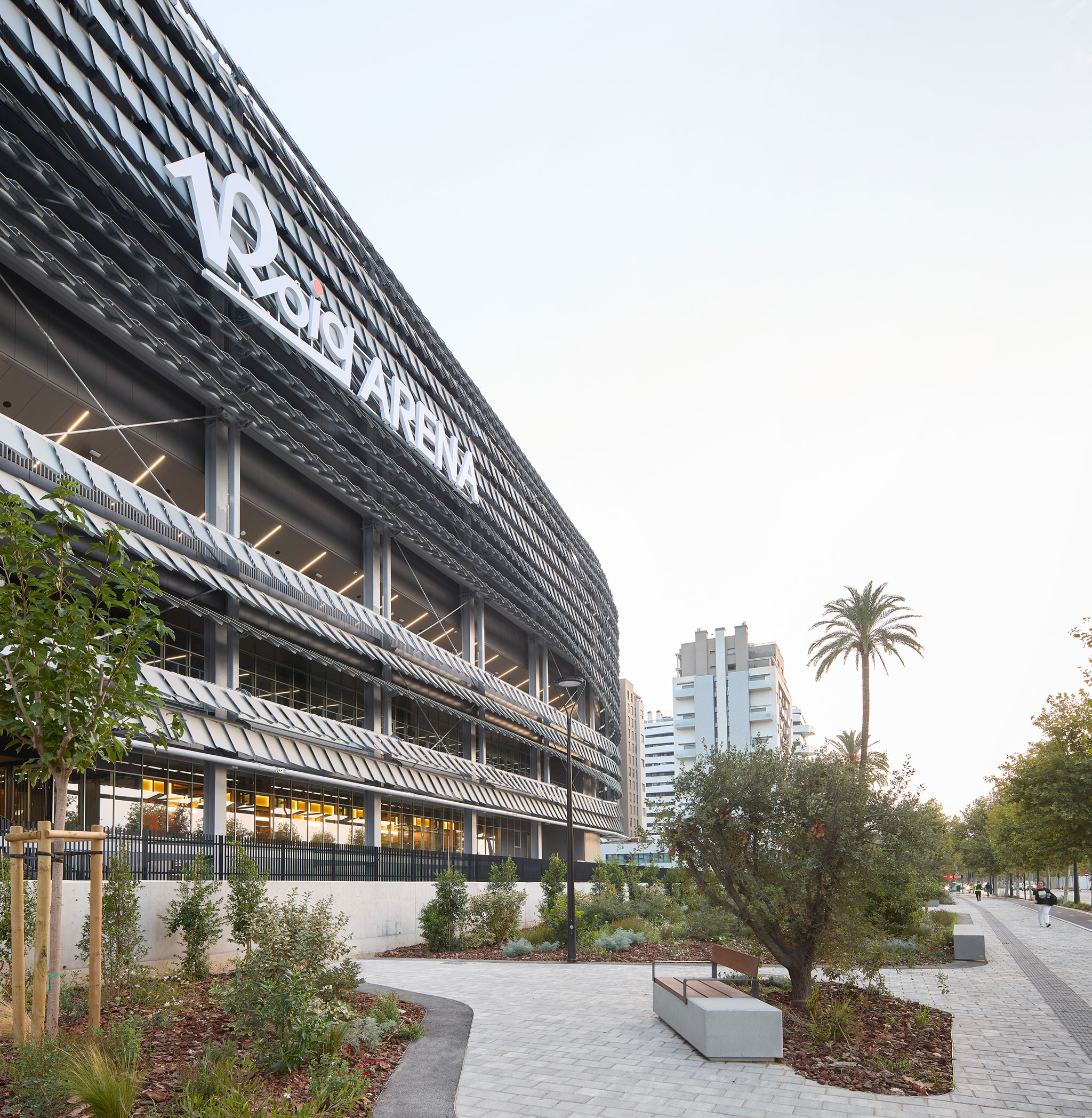
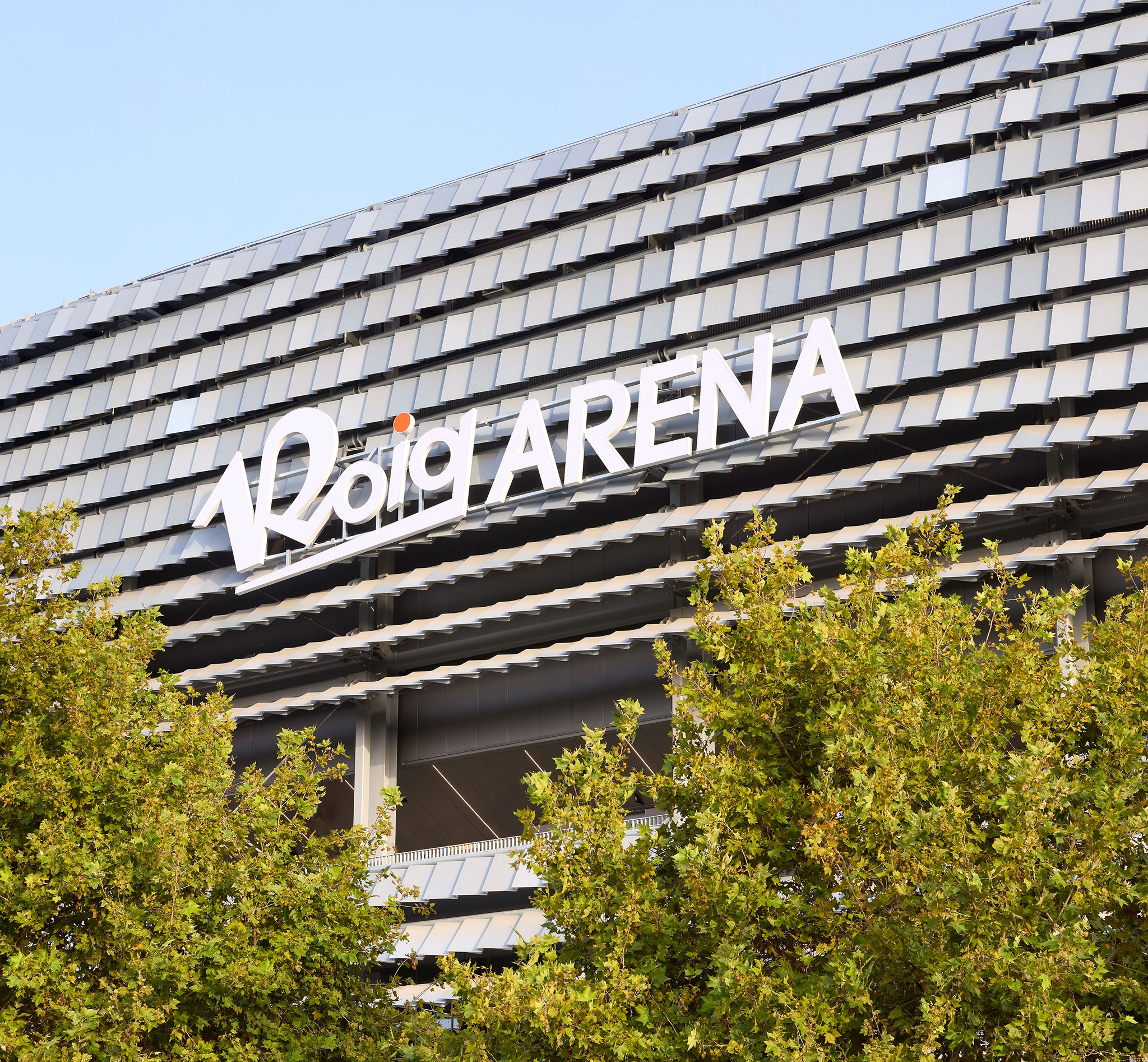
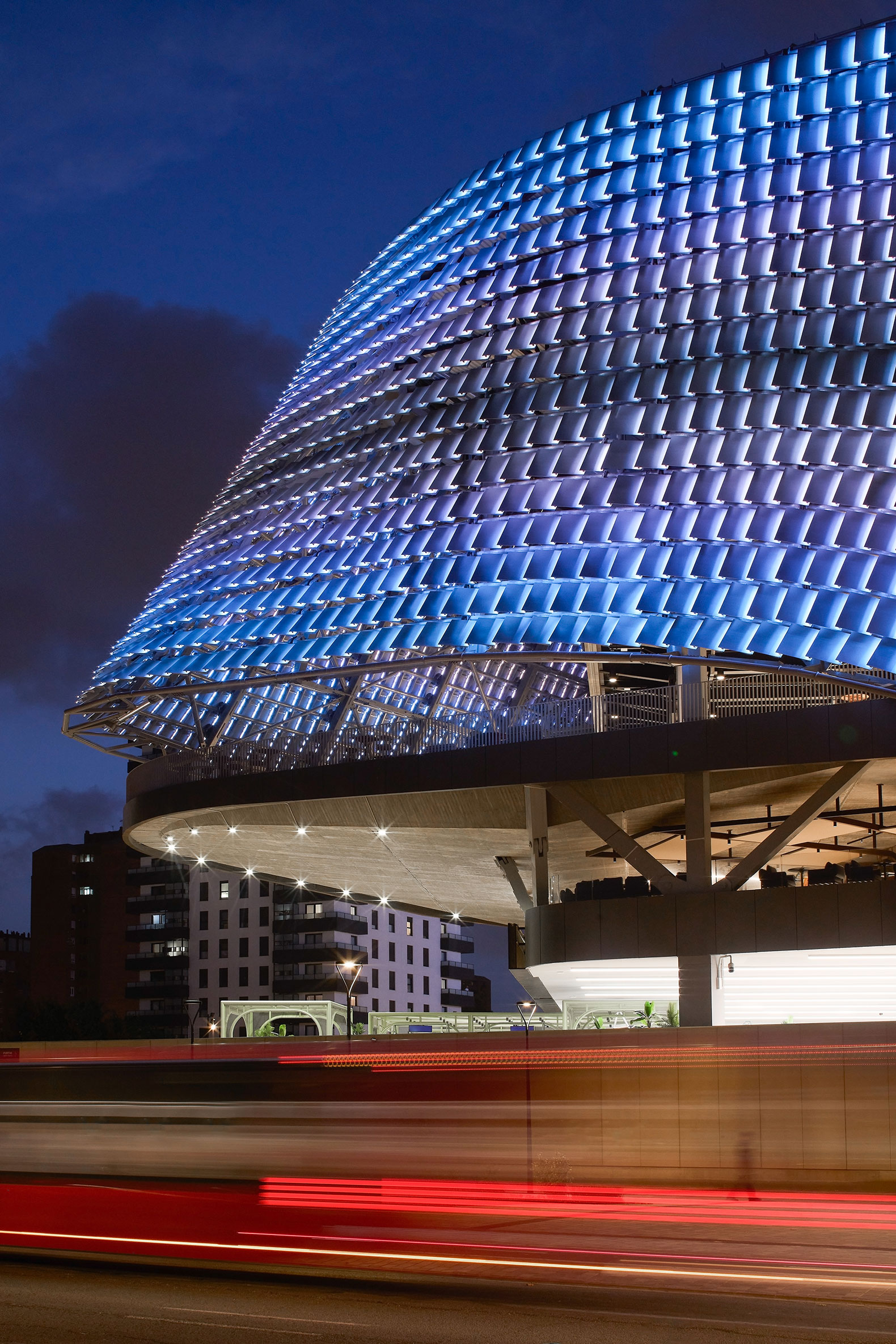
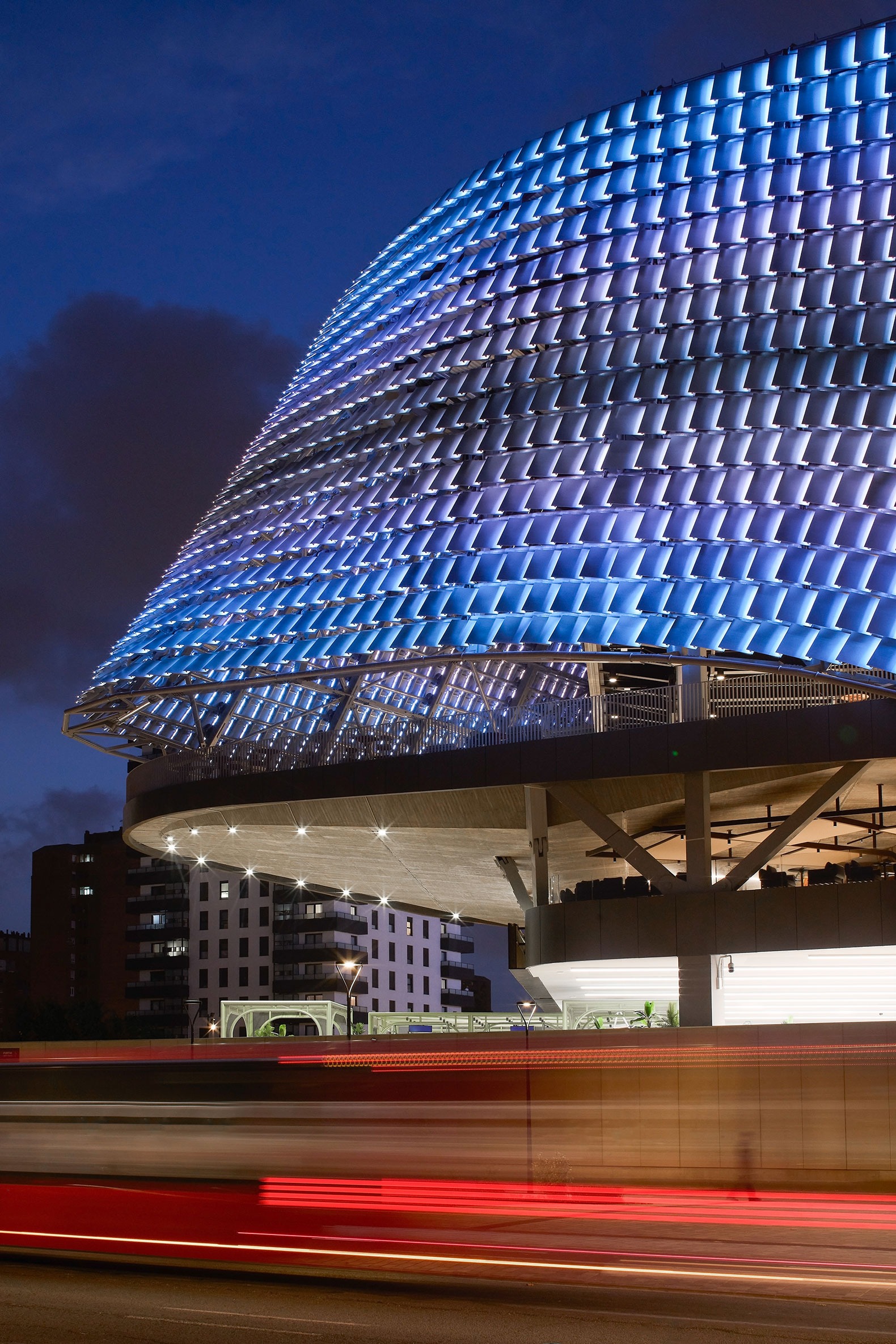
The Roig Arena's façade design celebrates Mediterranean light and local craftsmanship with an exterior skin of 8,600 ceramic slats, arranged like scales on a double-curved steel structure. The ceramic material chosen for the pieces (manufactured locally by Grupo Pamesa Empresarial and designed by ERRE) was adapted from its traditional use on flat walls to the complex undulating envelope of the arena.
The prototyping process for this façade system demonstrated its construction feasibility. The team opted to use a single modular piece measuring 1.00 x 1.20 meters. The fact that all the slats are the same size simplified installation, reduced waste, and lowered the carbon footprint. In addition, parametric modeling was used to determine the layout of each piece, with angles ranging from 10 to 63 degrees.
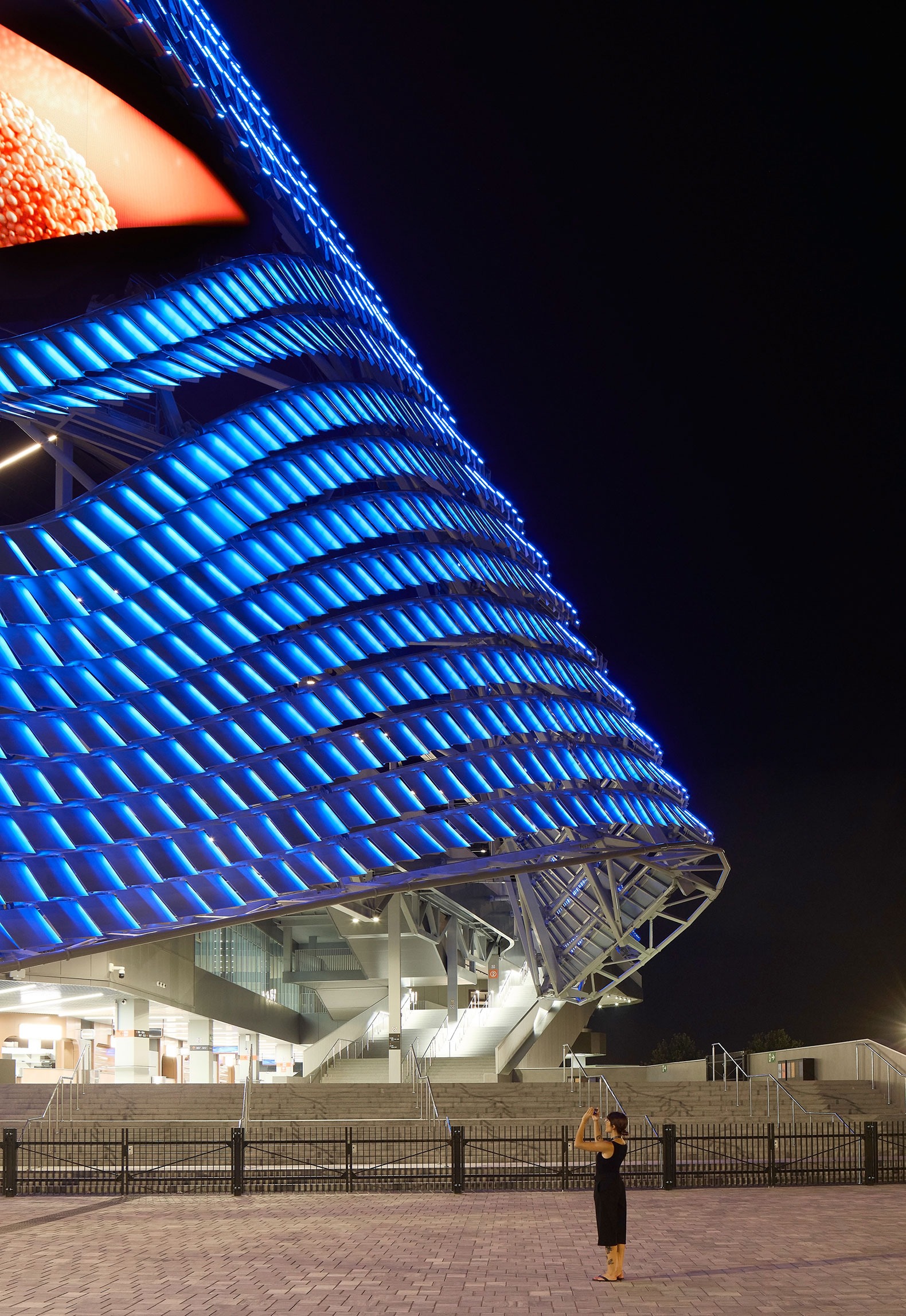
The texture of the slats evokes the surface of a basketball, paying homage to the sport that inspired the project, which is also home to the Valencia Basket Club men's and women's teams. Three shades of blue enamel generate subtle chromatic variations. By day, the pieces provide shade to the terraces surrounding the arena, reducing heat and allowing natural ventilation. At night, the full potential of the RGB-White LED video lighting façade is revealed, capable of interacting with data in real time and creating a striking light show.
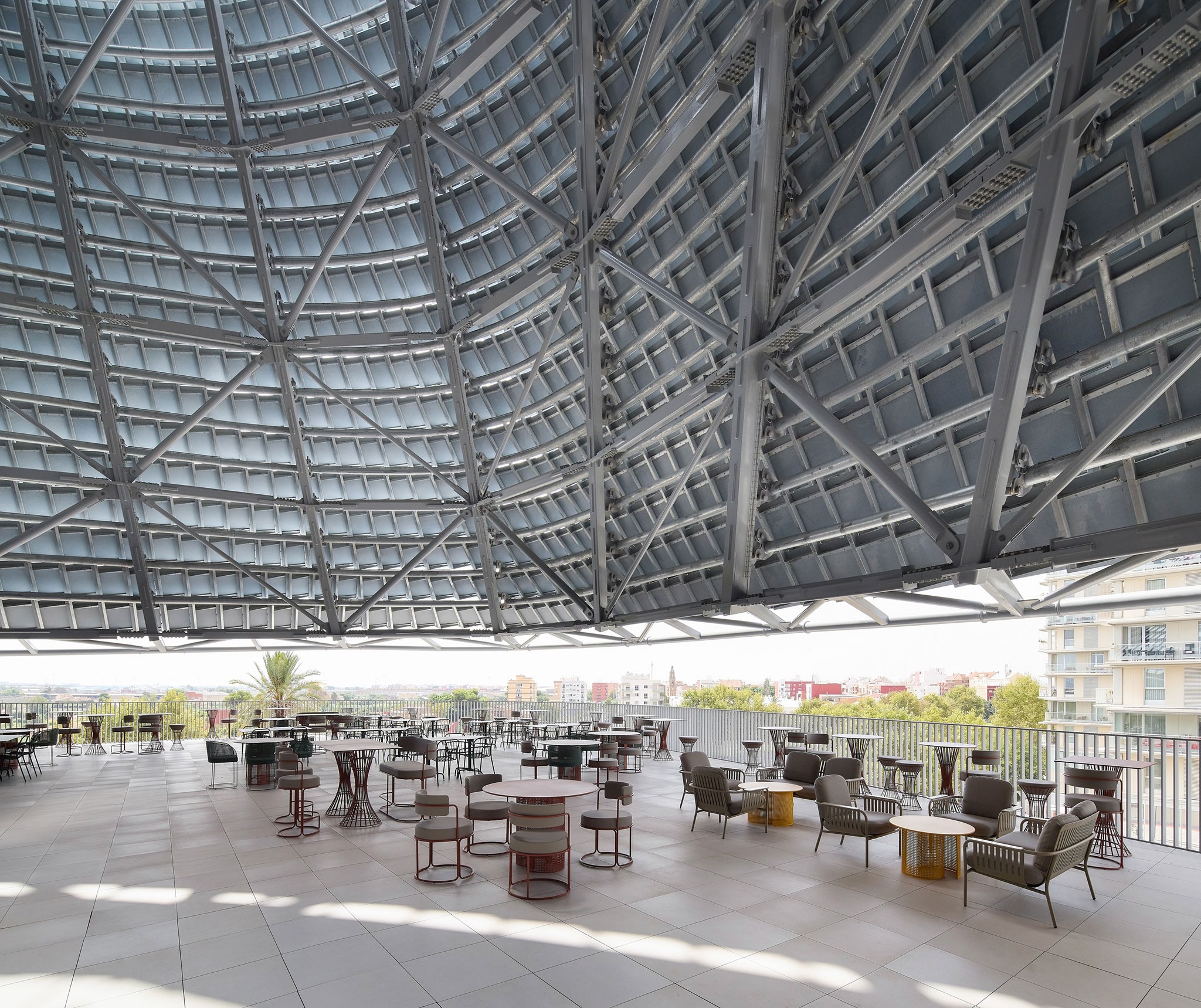
Exterior circulation ring: community integration and public space
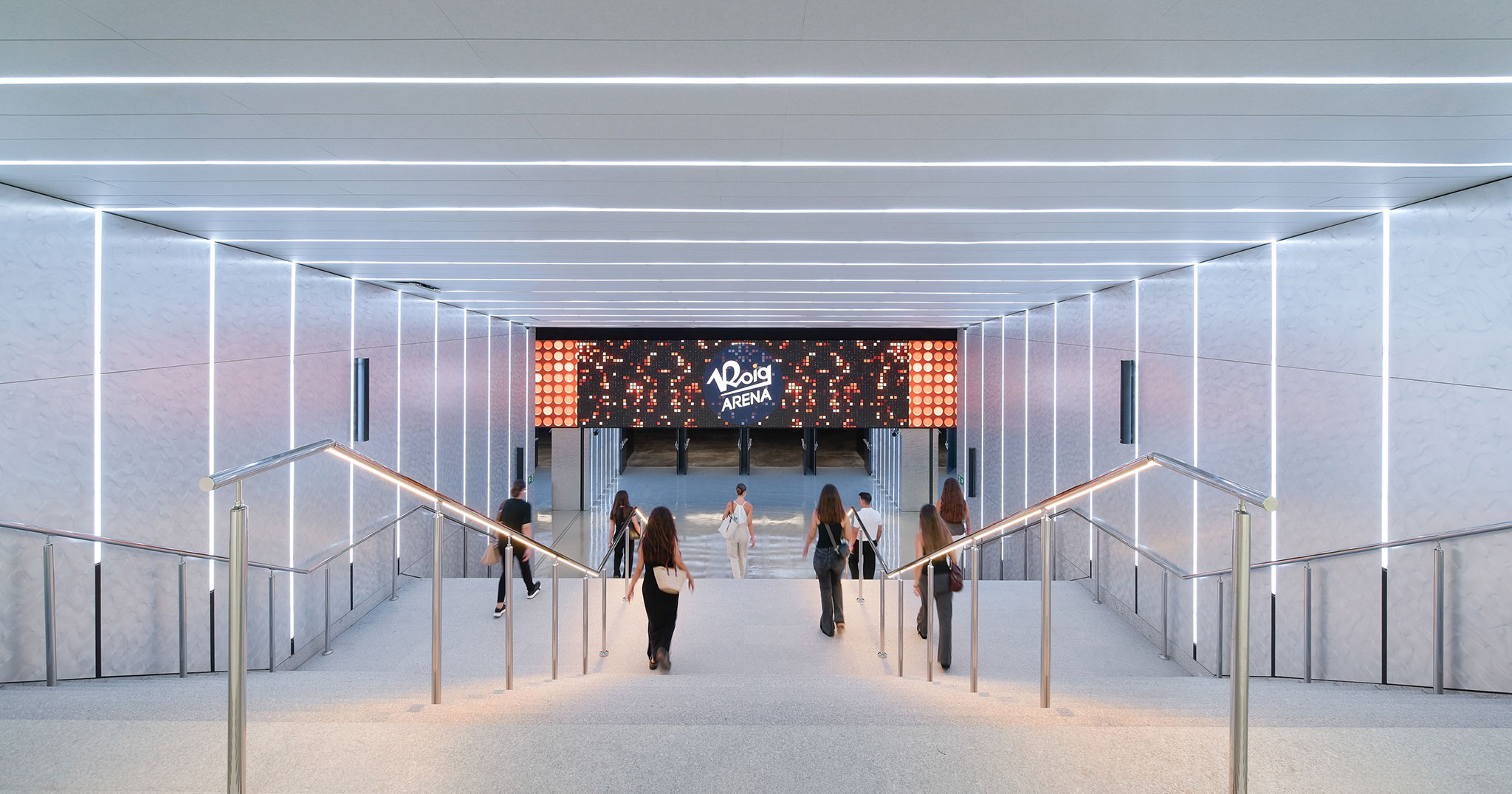
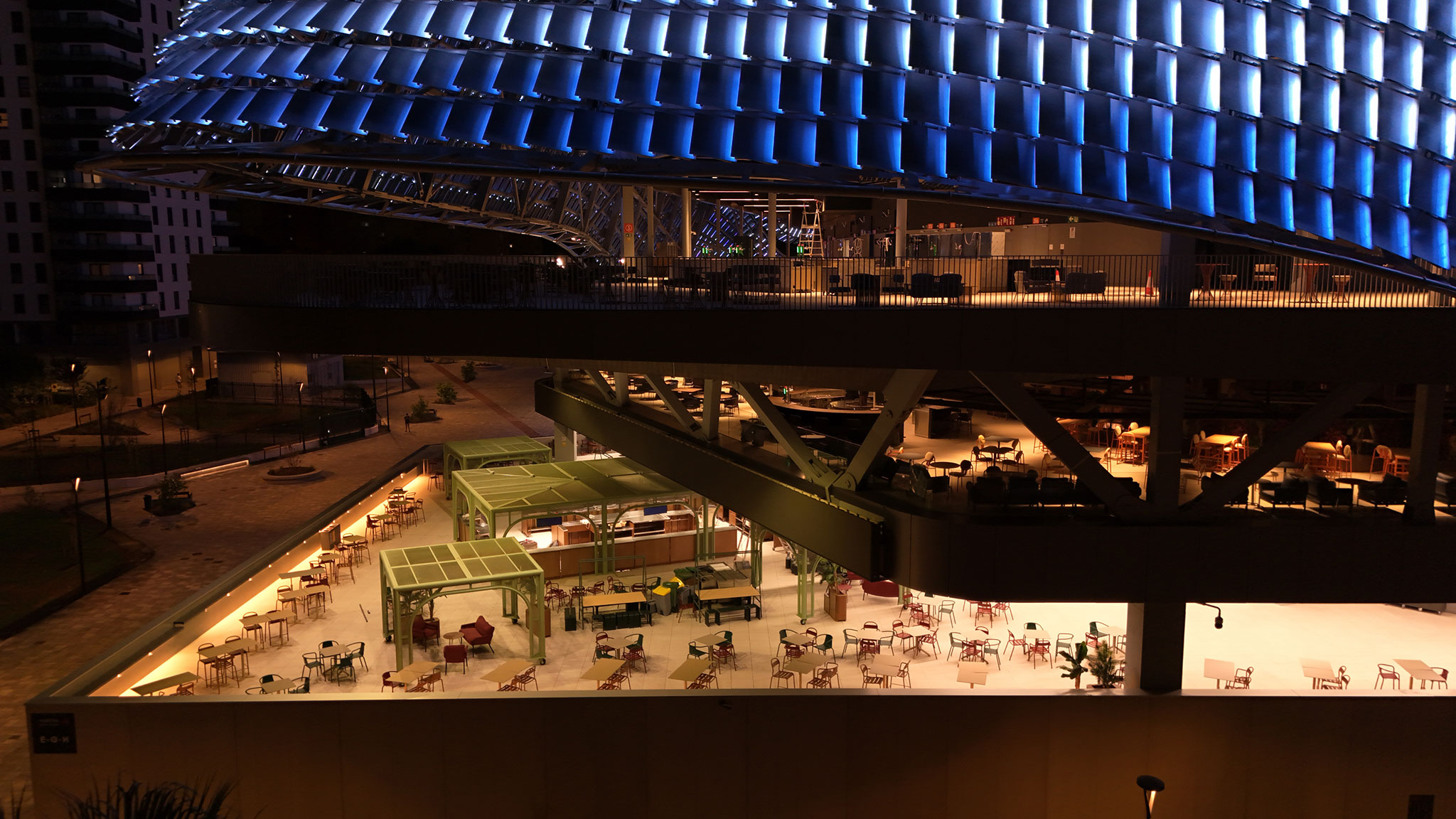
The terraced corridors that surround the arena along its different levels extend the interior experience beyond its walls, generating outdoor meeting areas that open the building to the exterior. From the outset, the team has strived to design a project that embraces its surroundings. The main entrance is via a boulevard, a redeveloped 20,000 m2 space that leads to a grand staircase framed by "The Eye," the large multimedia screen located on the northwest façade.
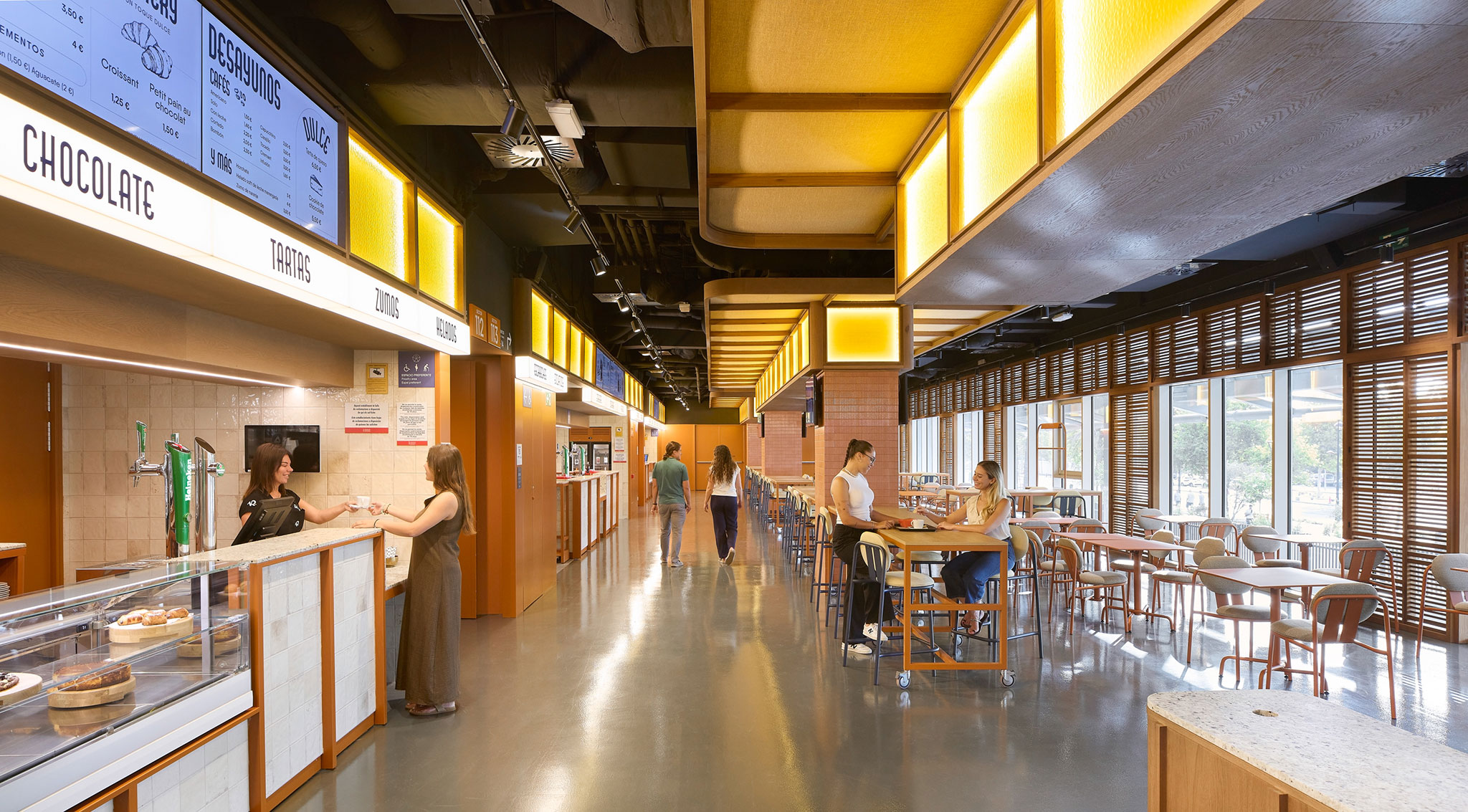
The main entrance connects not only to the indoor court but also to an outdoor “timeout market”—a year-round food market with cultural programming inspired by historic European markets. Located in the outdoor terraced area, this space celebrates Valencia's Mediterranean climate. Many venues will remain open throughout the week, even when there are no events.
Innovation in the stands
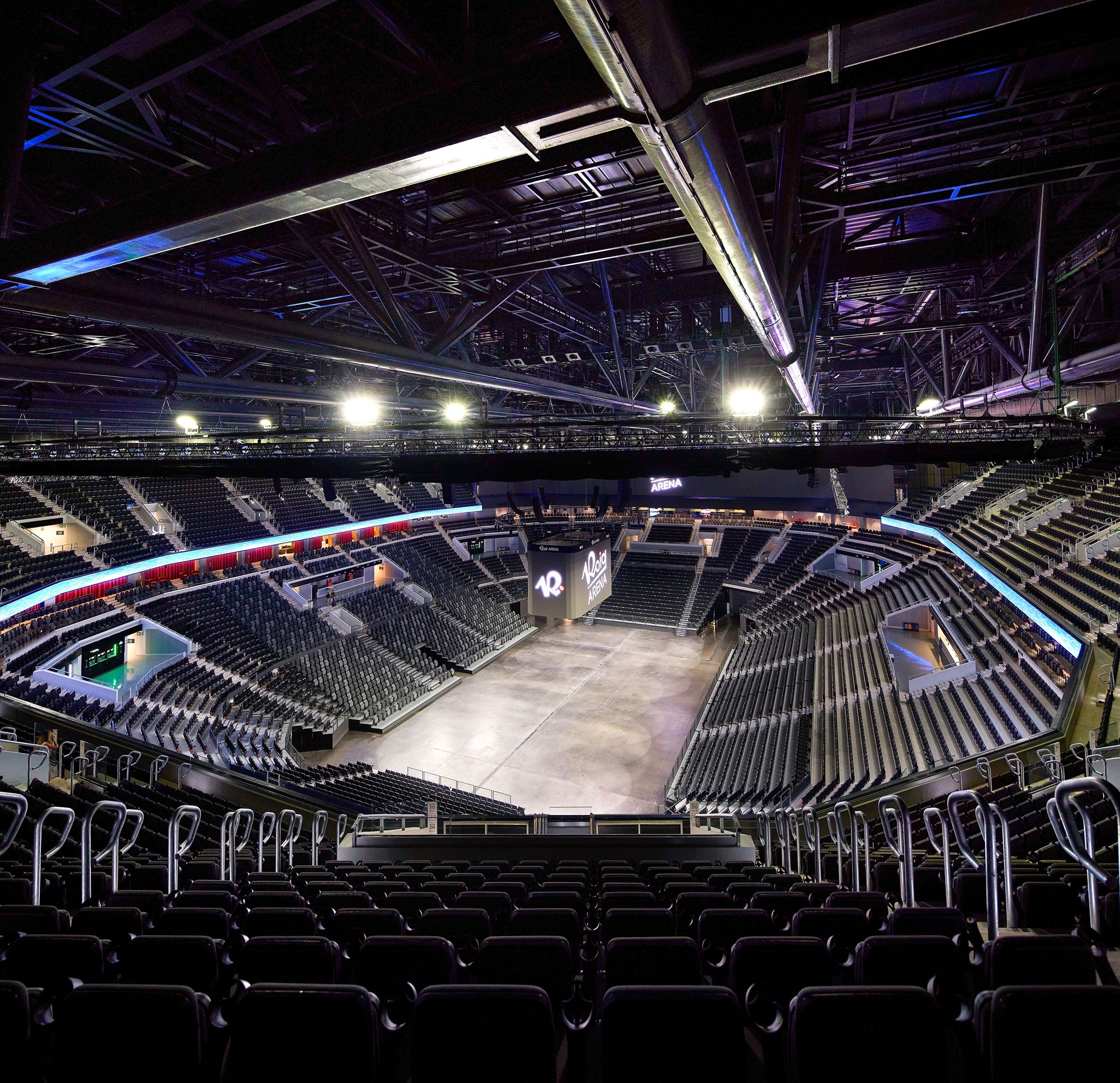
The team optimized the stands using Scrum, HOK's proprietary parametric design platform in Grasshopper for Rhino 3D. The tool allowed them to quickly configure seating geometry, proximity to the court and hospitality spaces, and sightlines so every spectator can enjoy unobstructed views.
As the new home of the Valencia Basket Club men's and women's teams, the venue has 15,600 seats in basketball mode and a total capacity of up to 20,000 people in concert mode. Various seating levels, premium boxes, and VIP spaces offer an immersive experience for attendees.
Beyond the grandstands, flexible support spaces—such as meeting rooms, a press room, kitchens, and an auditorium—allow for additional conferences and corporate events. For example, the 1,200 m² auditorium can accommodate 2,000 people and is equipped with its own technical equipment to facilitate the organization of smaller-scale events.
Structural and Acoustic Innovation
The roof of the venue is designed with eight monumental prefabricated trusses, each 123 meters long. The construction teams assembled them on the ground before hoisting them up with large cranes. These trusses can support up to 180 tons, allowing them to host any large-scale international production.
Acoustic control was a priority for this project. The one-meter space of insulating layers strategically placed between the interior seating and the exterior walls helps reduce sound propagation to the outside. Sound-absorbing materials are integrated into this flexible design to keep sound inside the building, ensuring proper acoustic insulation. Furthermore, the team worked with prestigious international consultants to design the arena's interior acoustics, optimizing the sound system based on the spatial geometry of the main arena, minimizing areas of acoustic reflection, and achieving optimal reverberation times.
Sustainable Design for Valencia's Climate
The arena's design responds to the warm Mediterranean climate, where summer temperatures exceed 30°C. Passive strategies reduce the need for mechanical air conditioning: large overhangs and shaded terraces minimize solar gain, and the building's orientation favors natural ventilation. These solutions ensure year-round thermal comfort, reducing energy consumption.
On the roof, 1,742 photovoltaic panels generate renewable energy. Furthermore, for episodes of heavy rainfall that exceed the infiltration capacity, an underground reservoir has been designed at the base of the building to manage excess runoff. Likewise, the lower areas of the green spaces function as natural stormwater sinks. These areas act as basins, sloping from the perimeter to the center.
The team prioritized local materials—such as ceramic pieces, a distinctive element of Valencian culture—strengthening local supply chains and reducing the environmental impact of transportation.
Advanced Technology
The Roig Arena boasts Europe's highest-resolution video scoreboard. Its four flat LED screens with faceted edges, designed by LG, allow for a continuous, uninterrupted image. Additionally, two additional screens inside the arena display additional information during events and matches.
To create an even more immersive atmosphere, Europe's largest indoor video wall, with a surface area of 500 m², has been installed above the stands. A 220 m² ribbon of LED panels also extends around the entire perimeter of the main court.
Outside, "El Ojo," the large 48 x 10 meter LED screen presides over the main entrance on the northwest façade, featuring highly durable technology specifically adapted to the Mediterranean climate.
Operational Efficiency
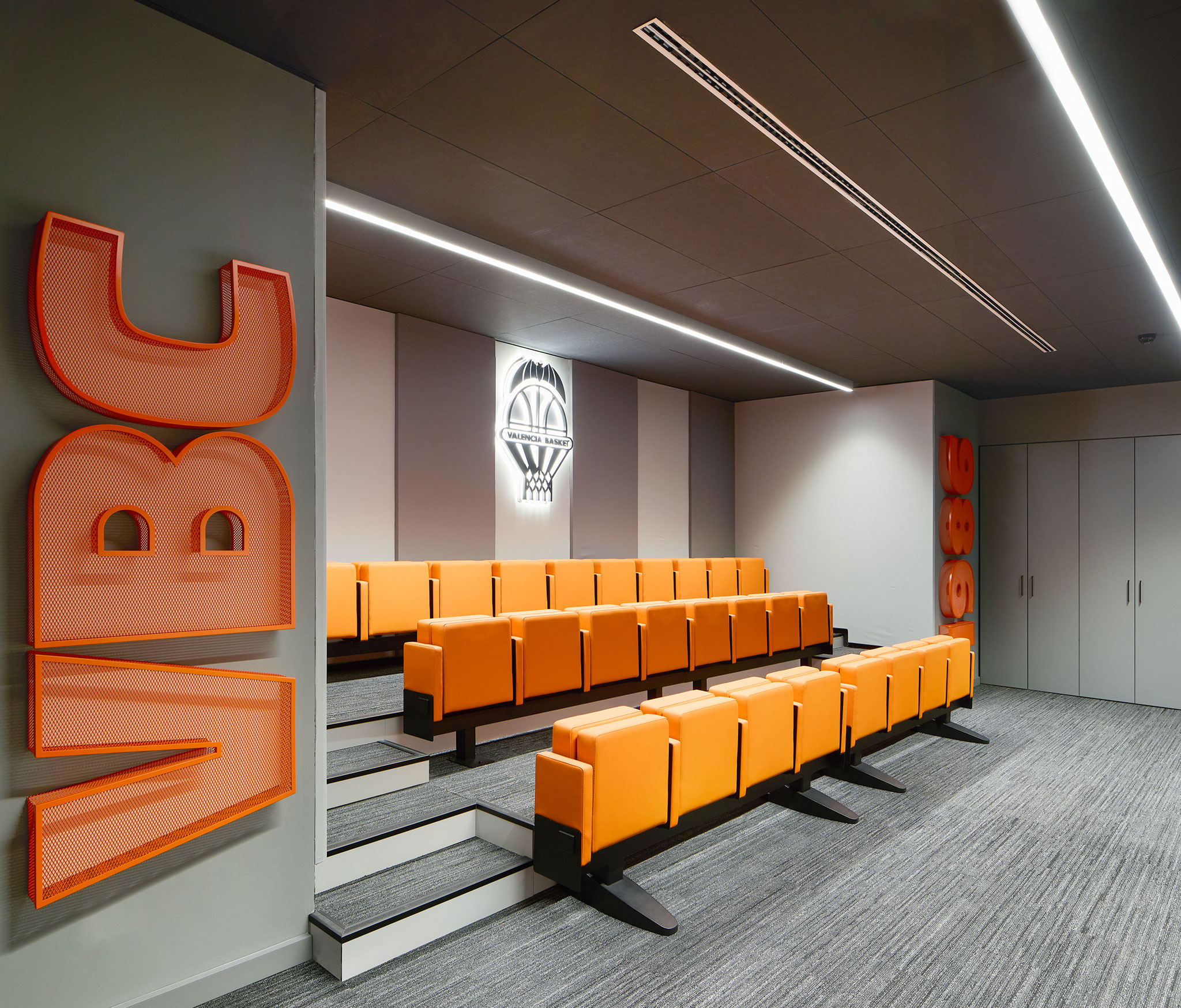
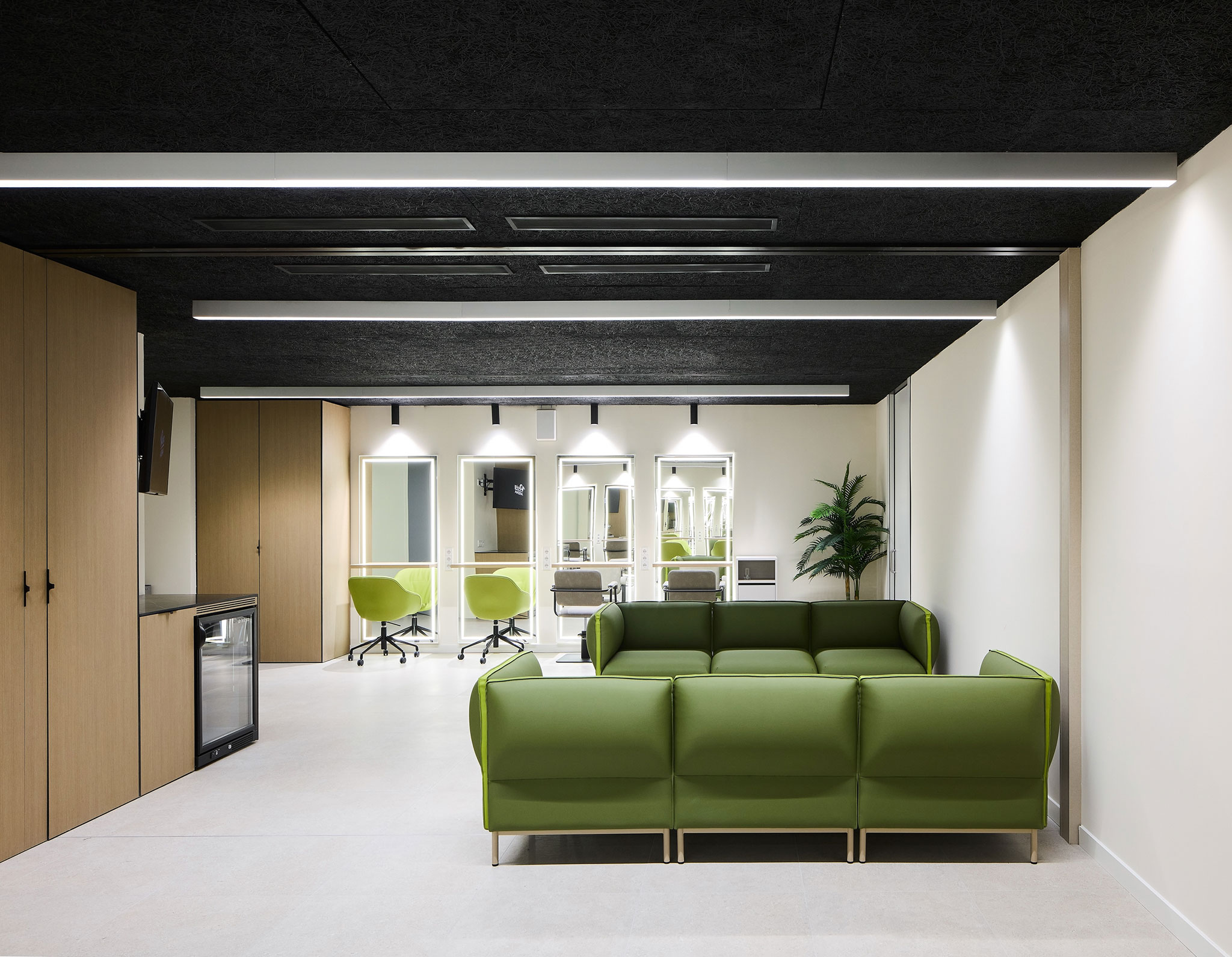
The arena will be the permanent home of the Valencia Basket Club men's and women's teams, integrating training, competition, and operations under one roof. Equally sized facilities for both genders—locker rooms, training courts, and recovery areas—reflect the city's commitment to equality.
The building has four column-free loading docks and also allows direct access to the track for trucks, optimizing logistics.
A catalyst for the neighborhood: a "City Project"
The Roig Arena aims to establish itself as a true sports and cultural landmark and economic driver for the city, forming part of a larger urban intervention, designed by ERRE, which encompasses three other projects located in the immediate surroundings: the new Valencia Basket Fan Park (a two-hectare public garden), the CEIP Les Arts public school, and the Roig Arena elevated parking garage. The first concert will be held on September 6, 2025, with a tribute to the famous Spanish singer Nino Bravo.