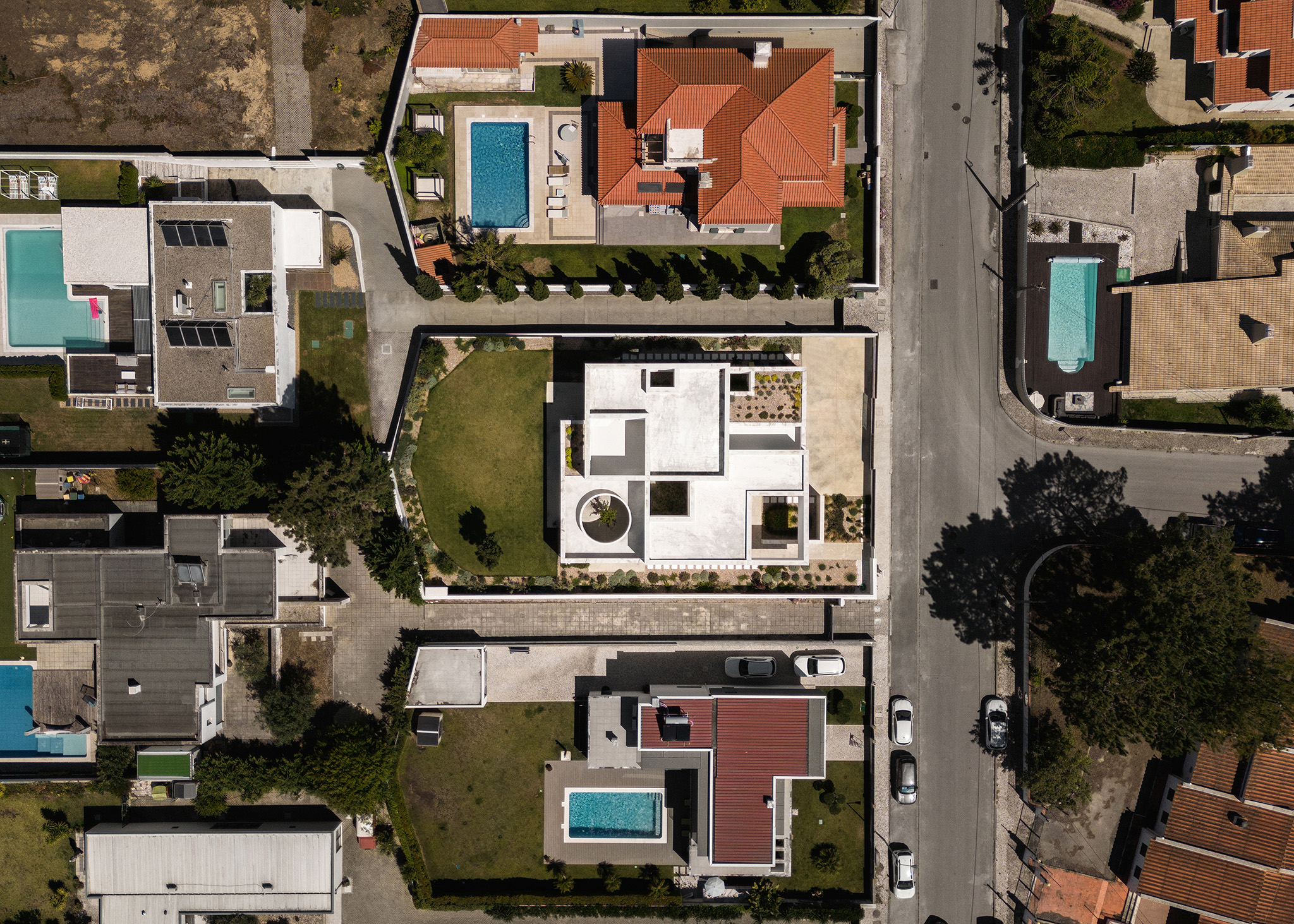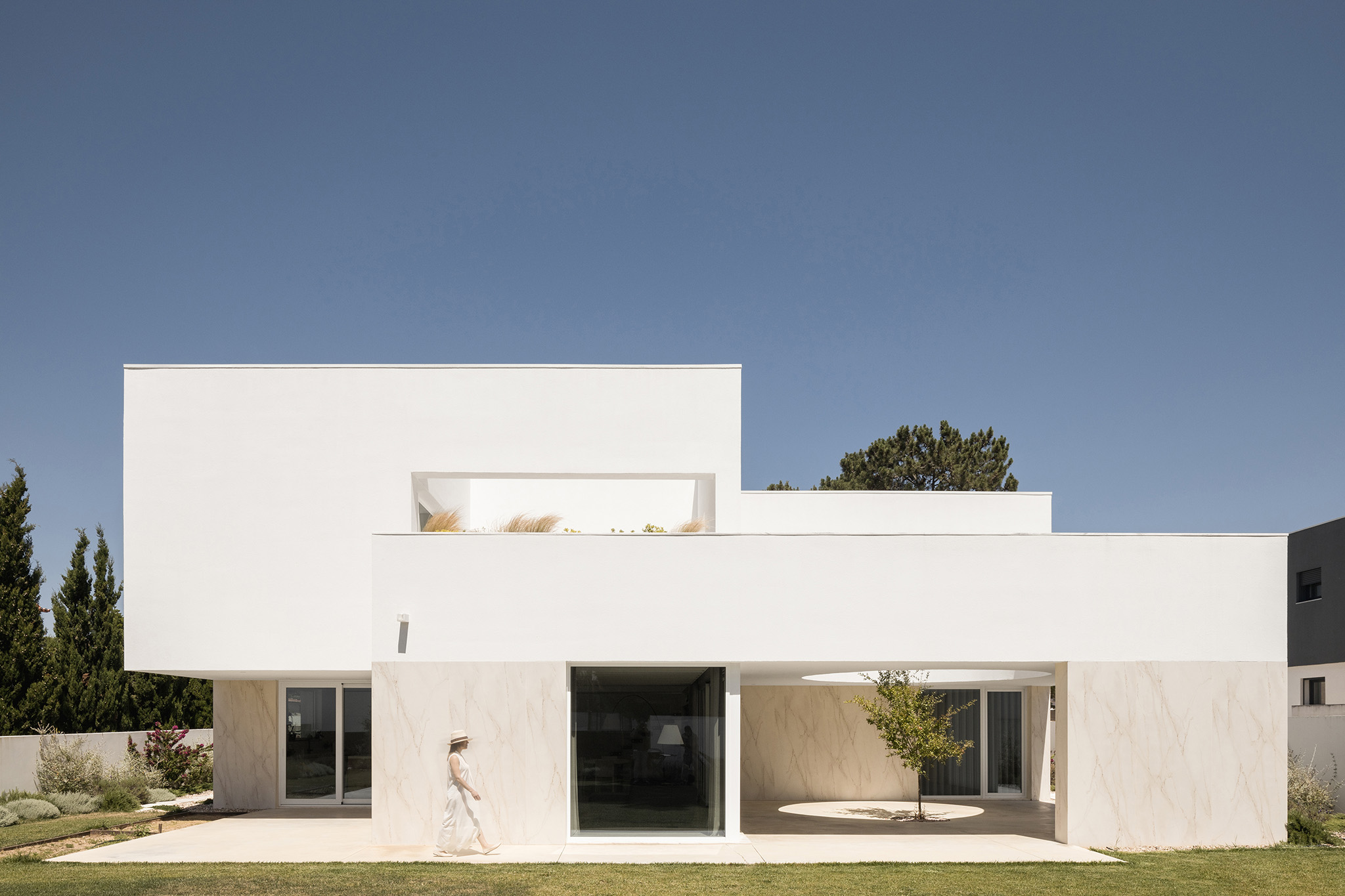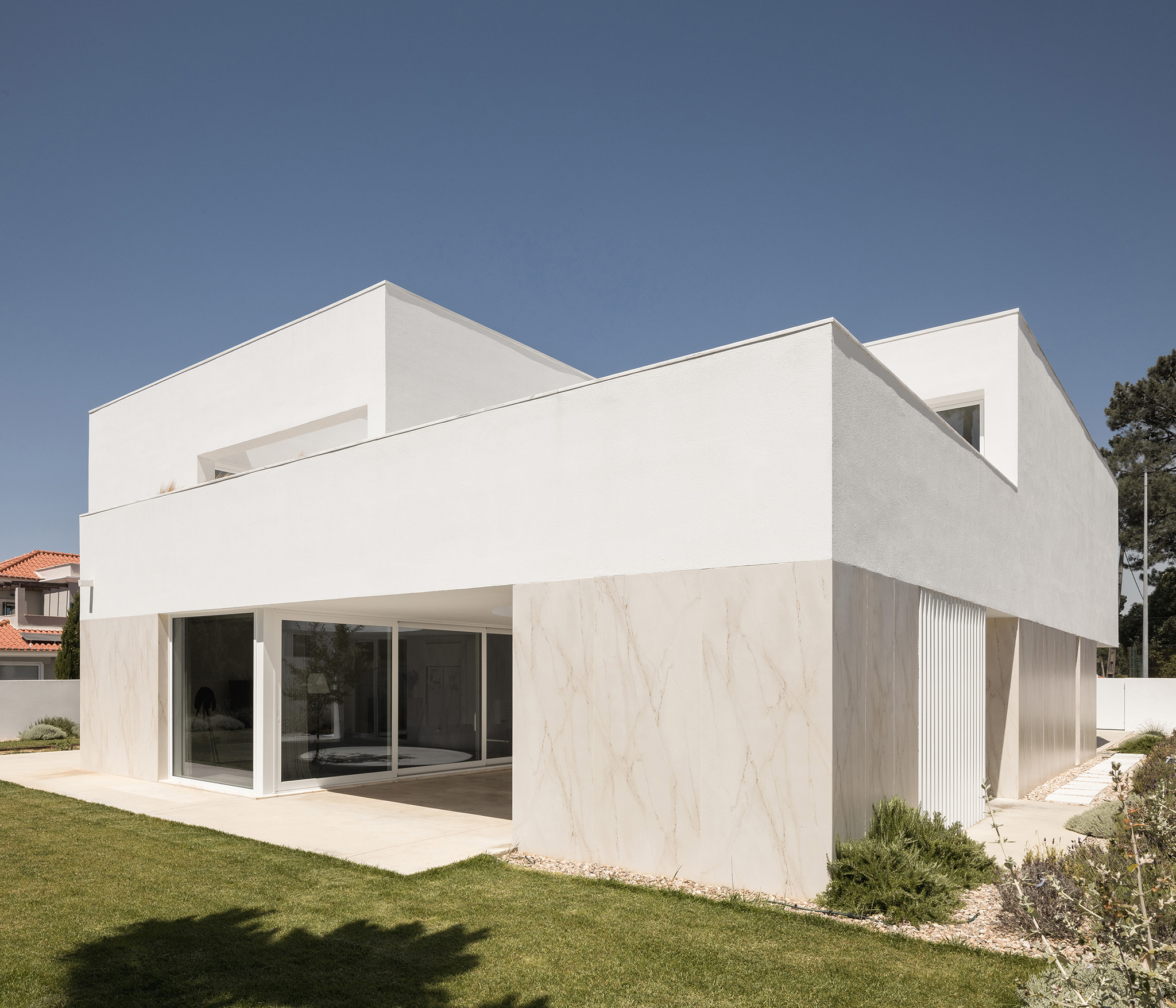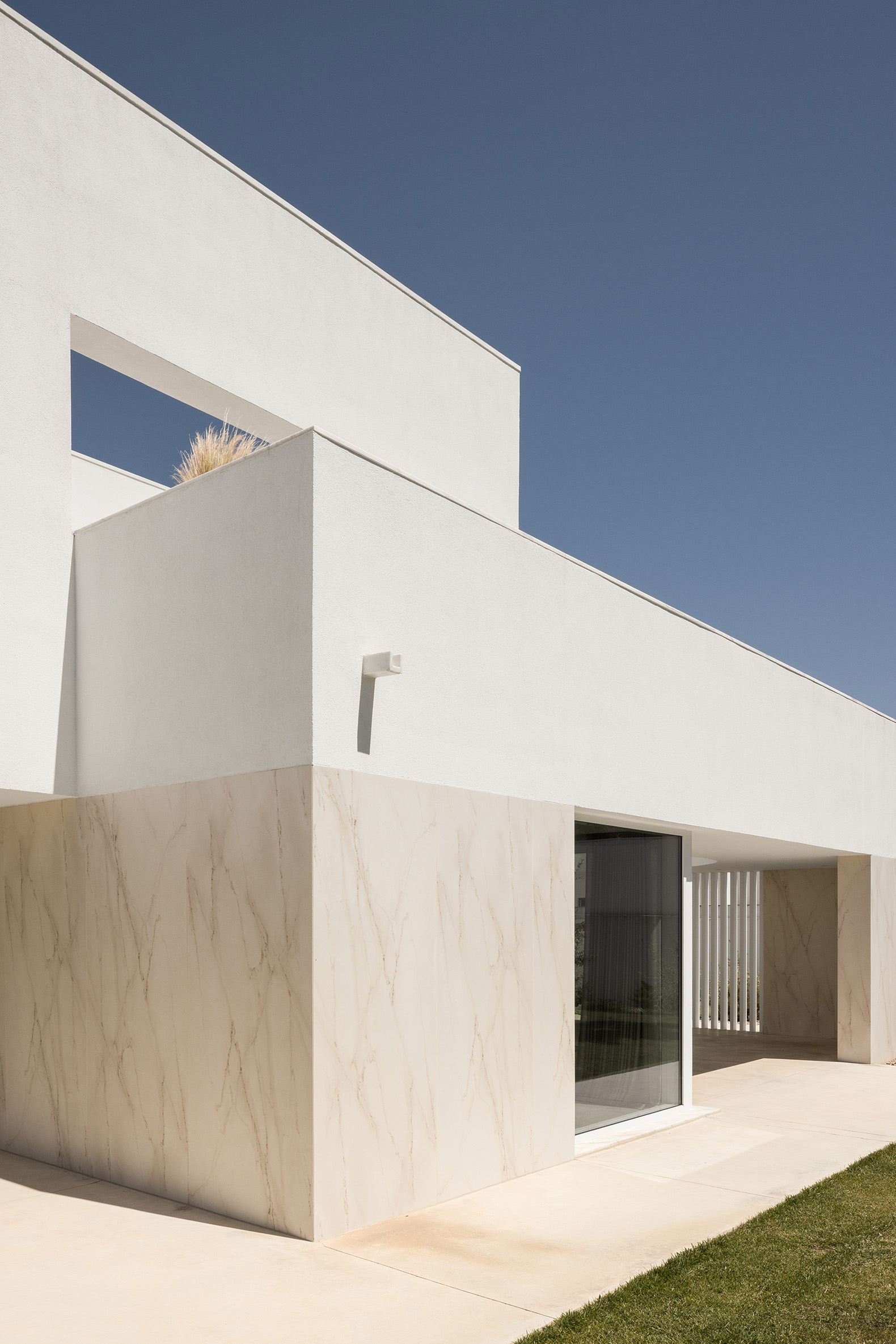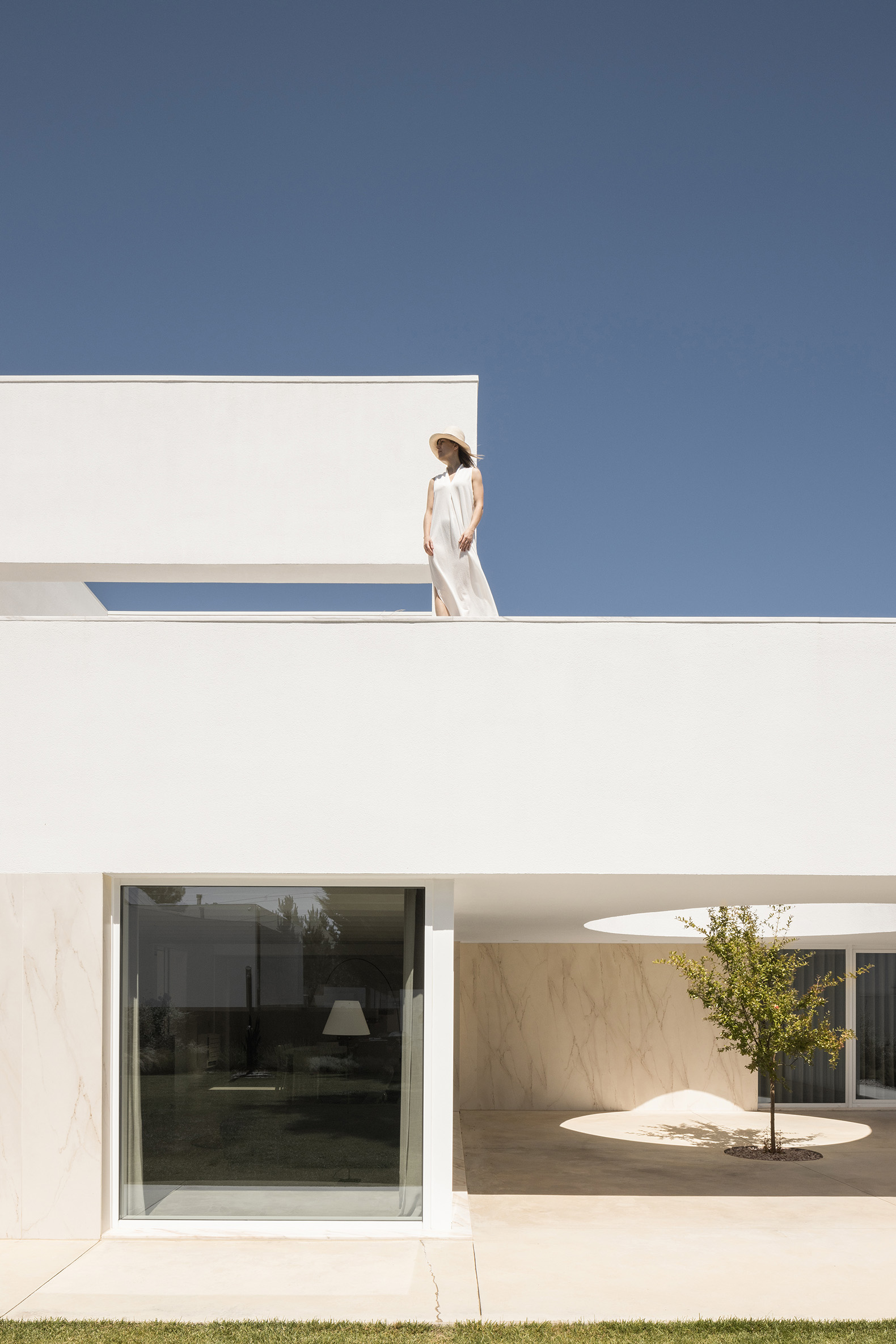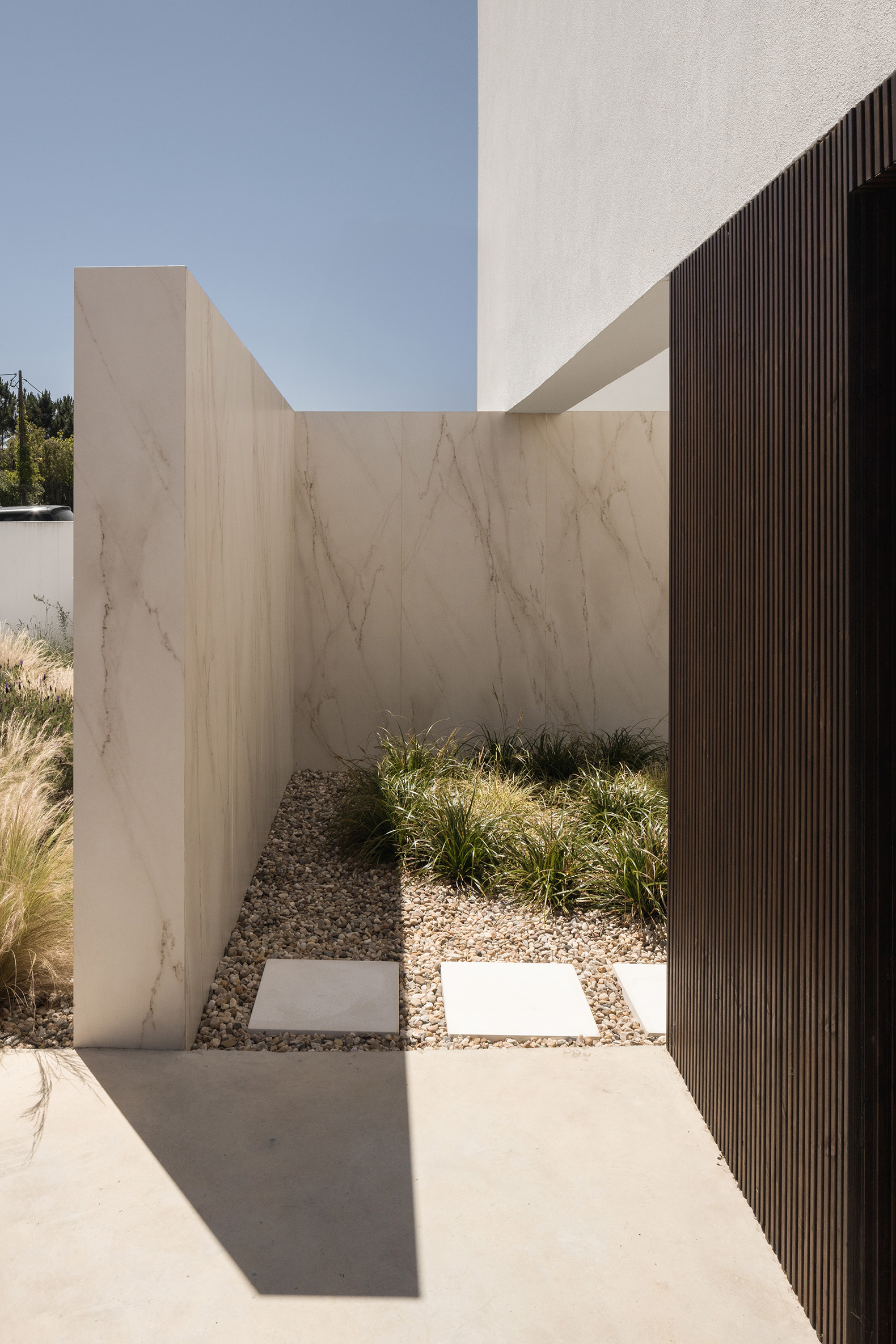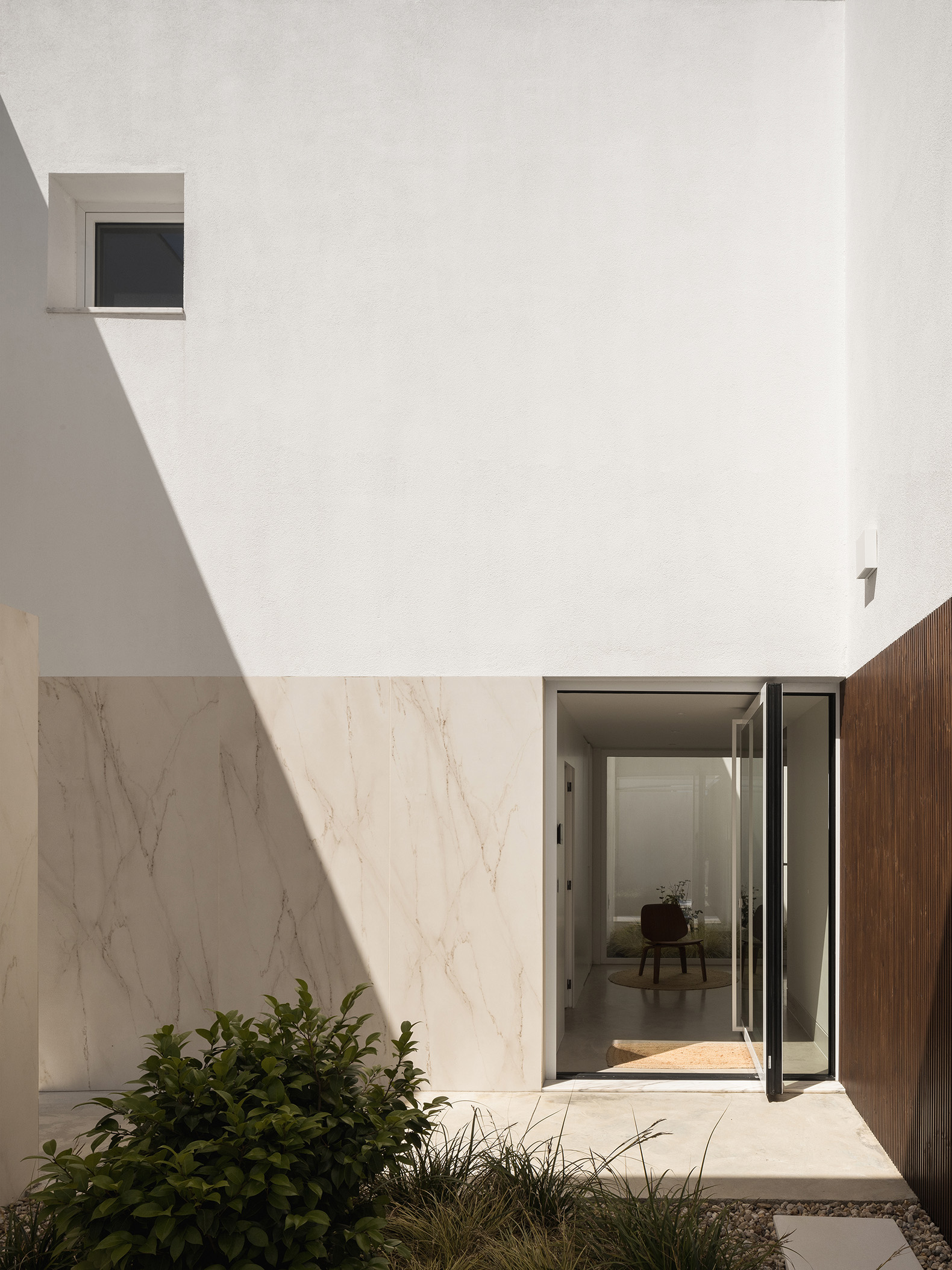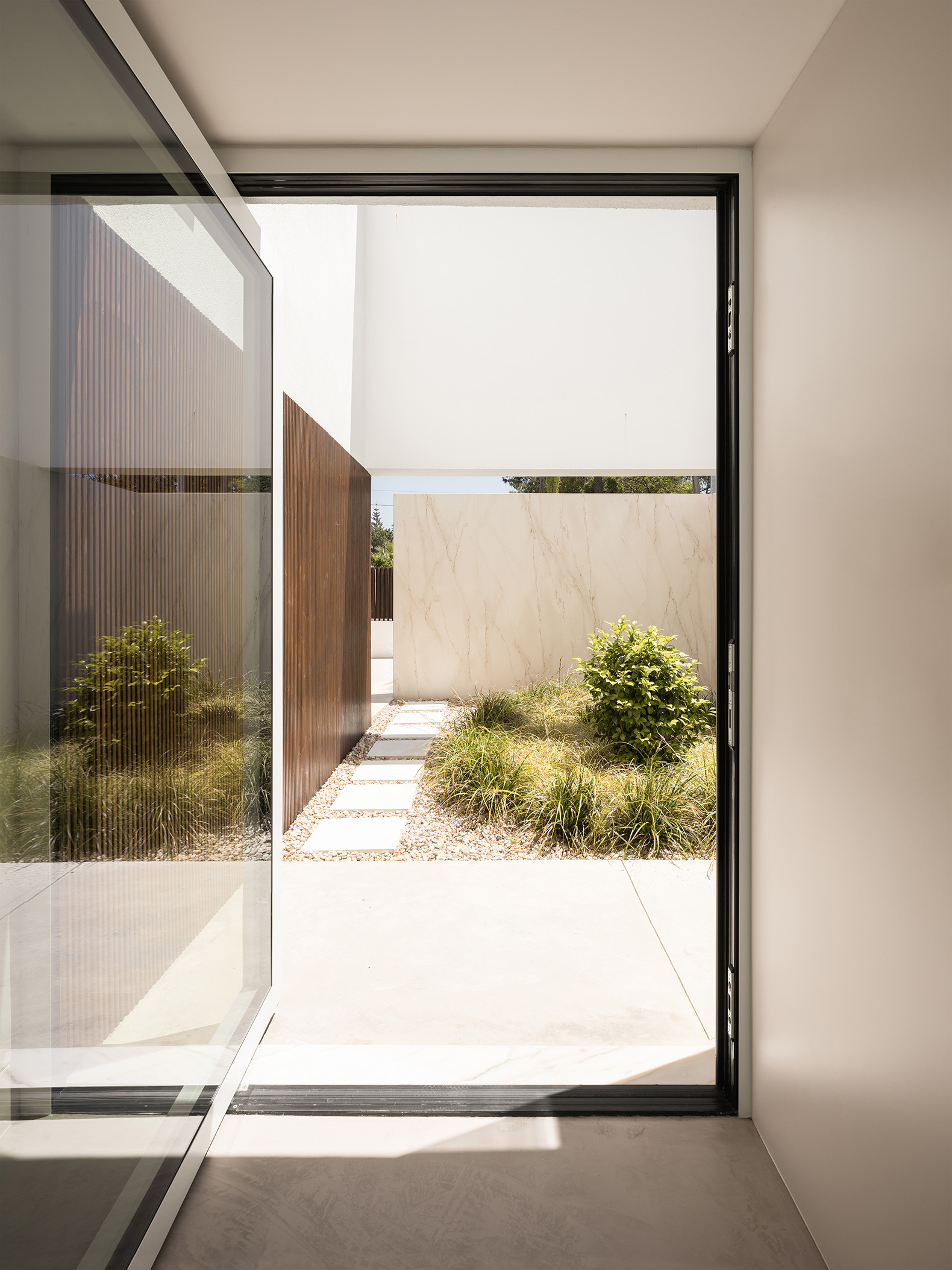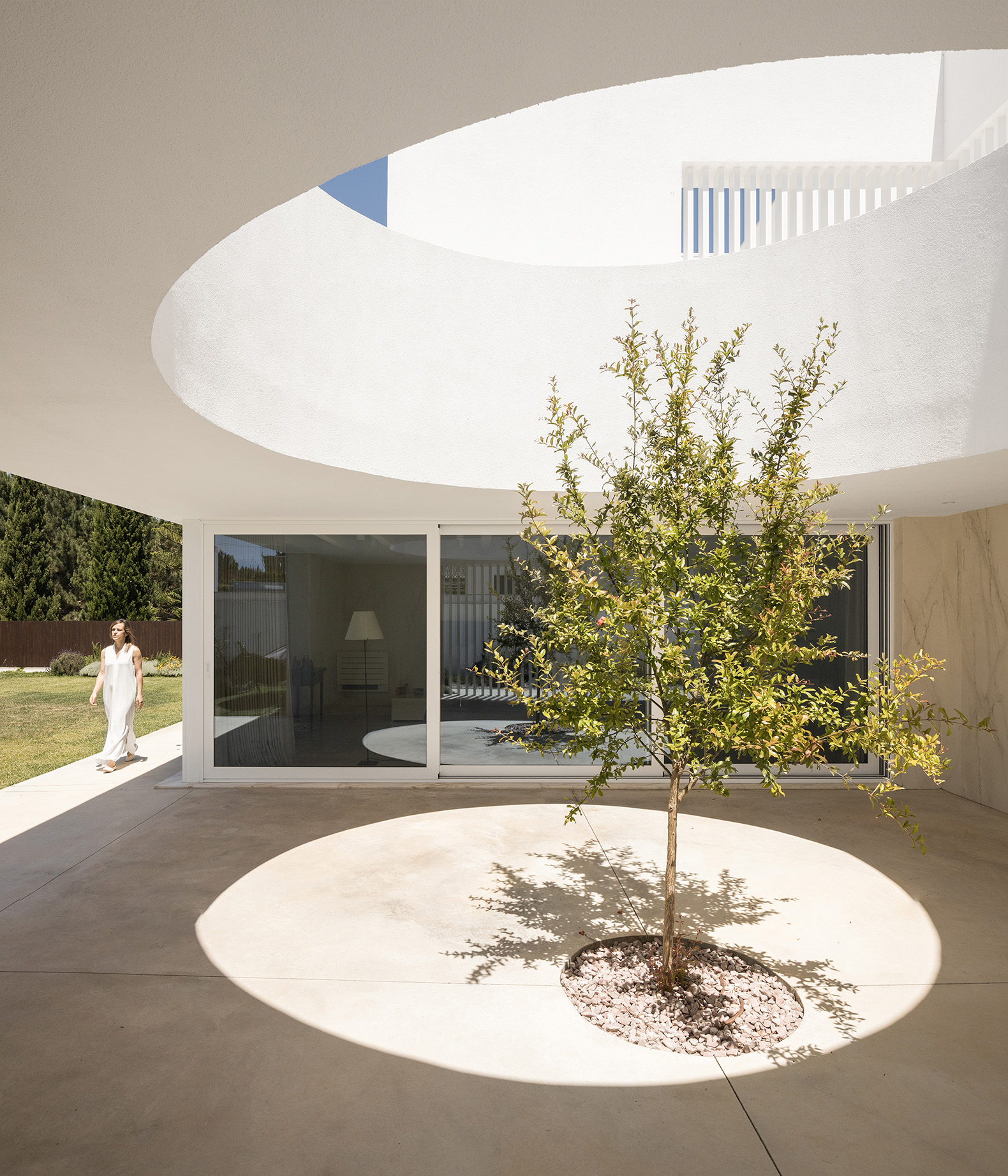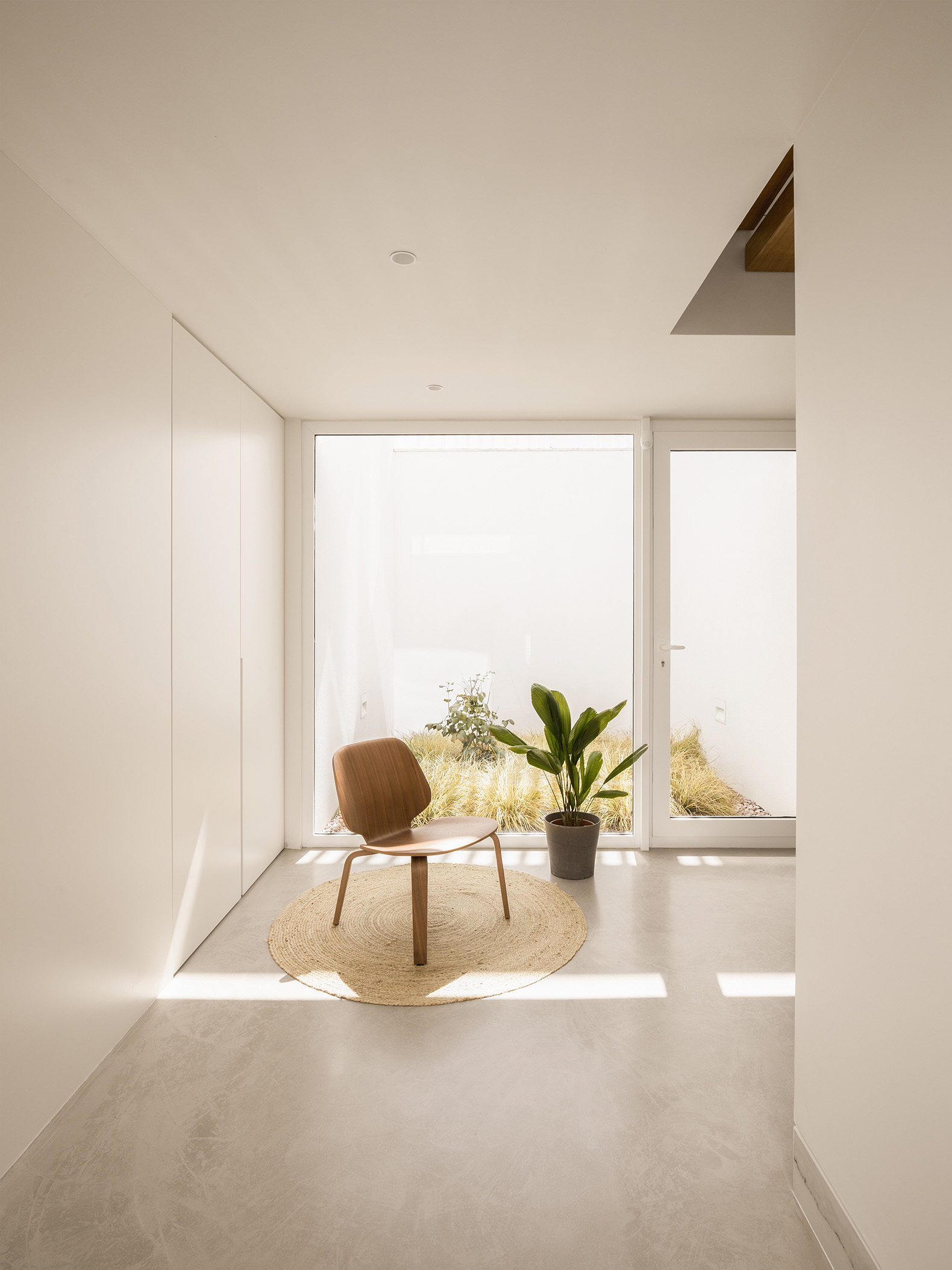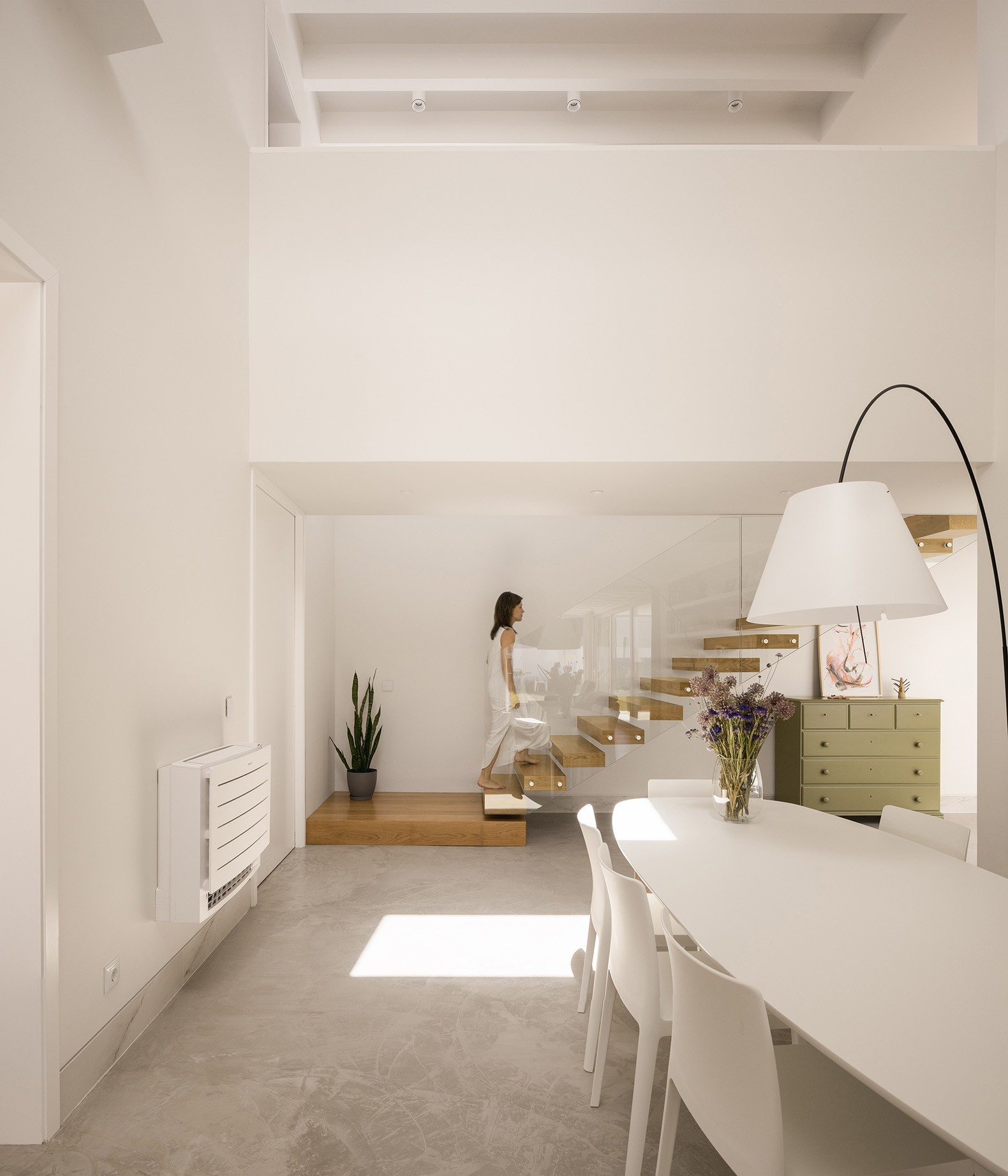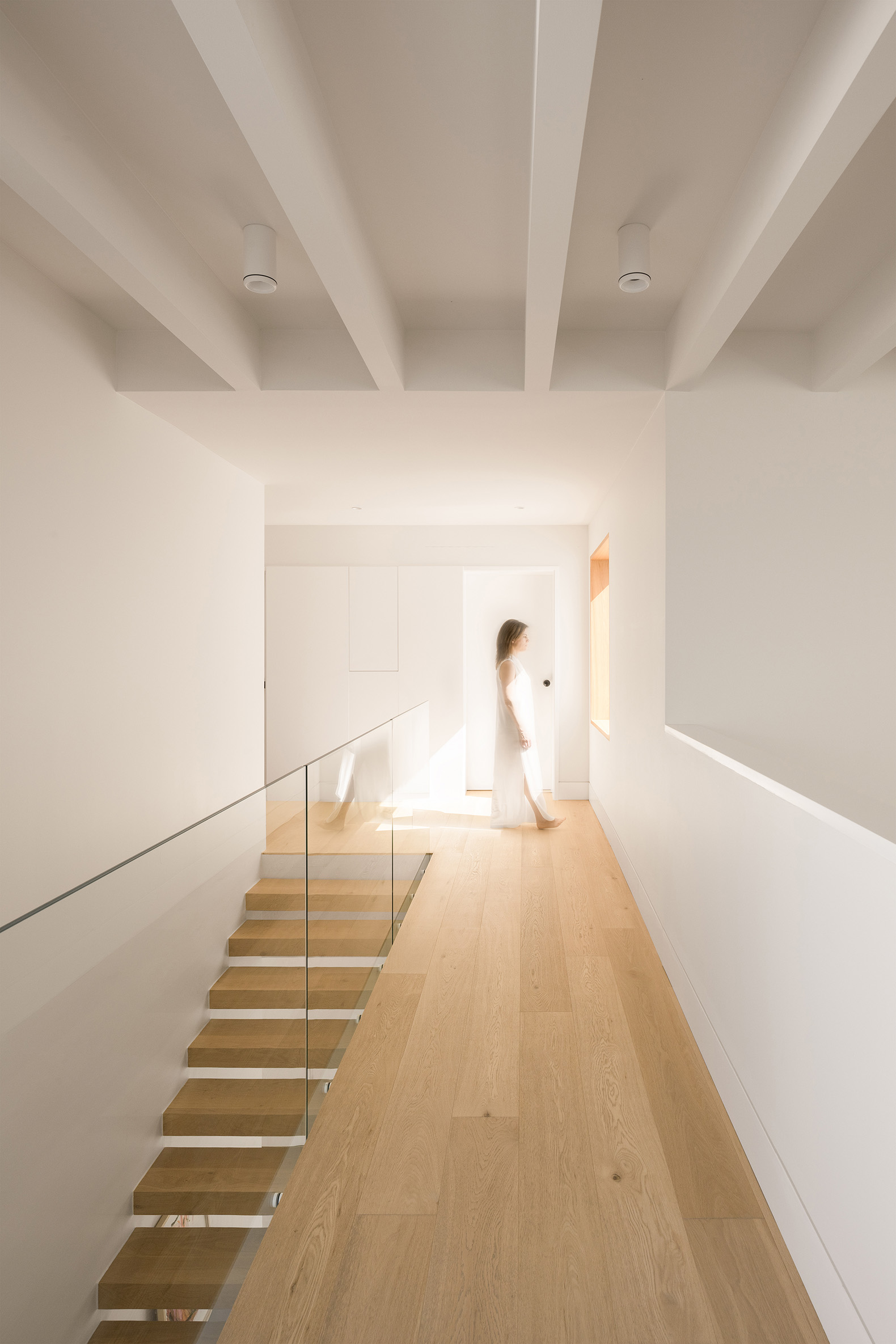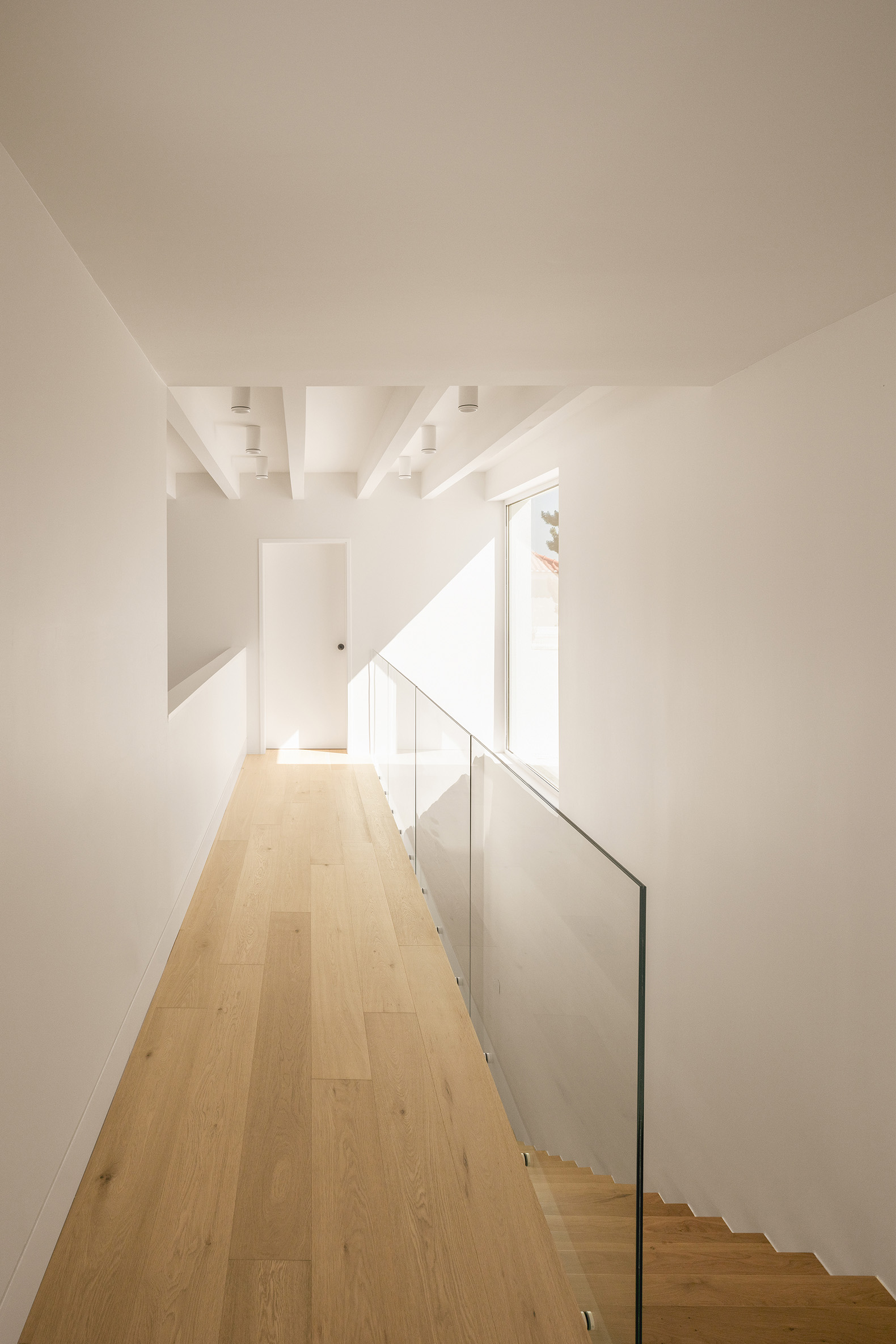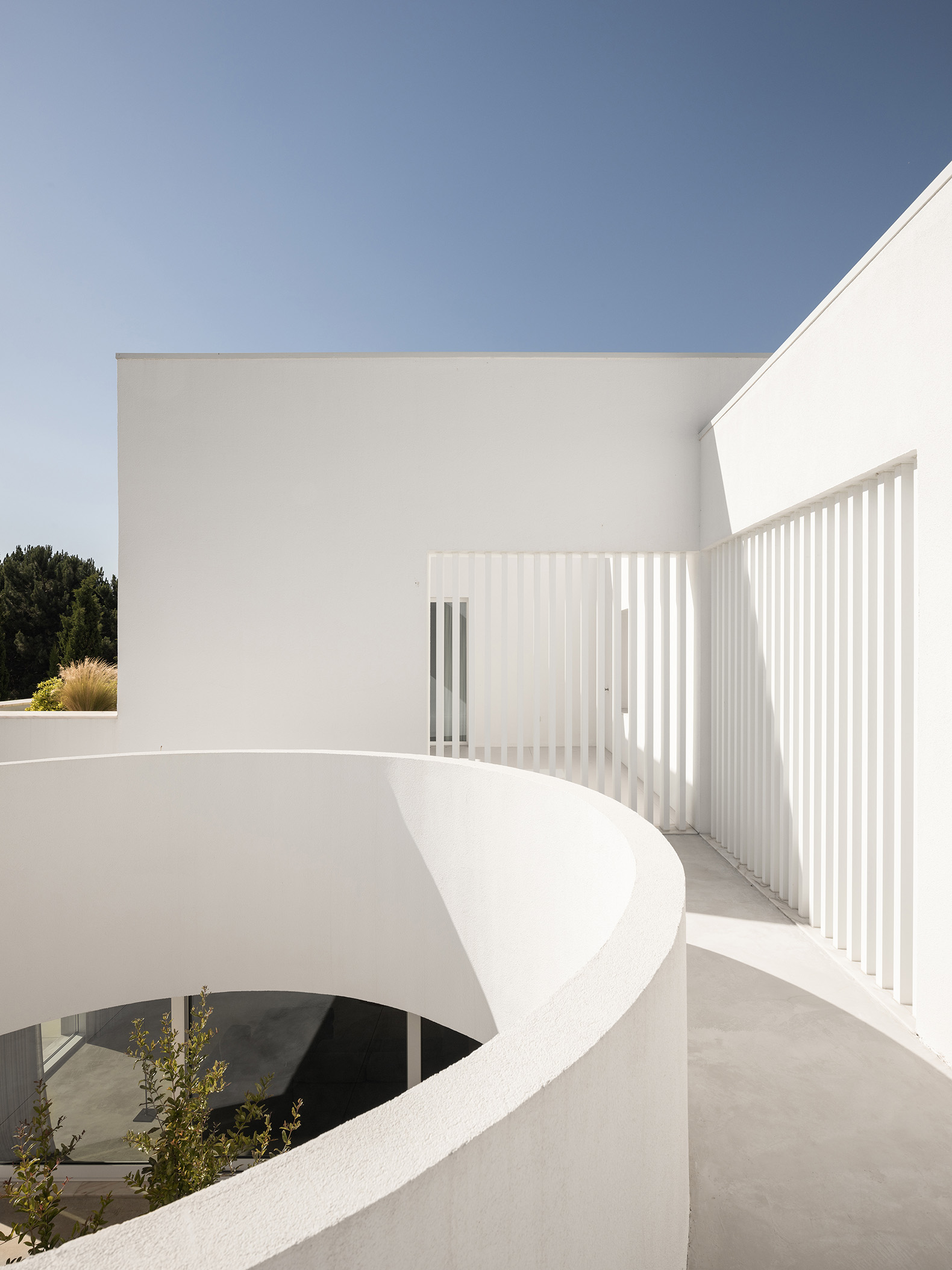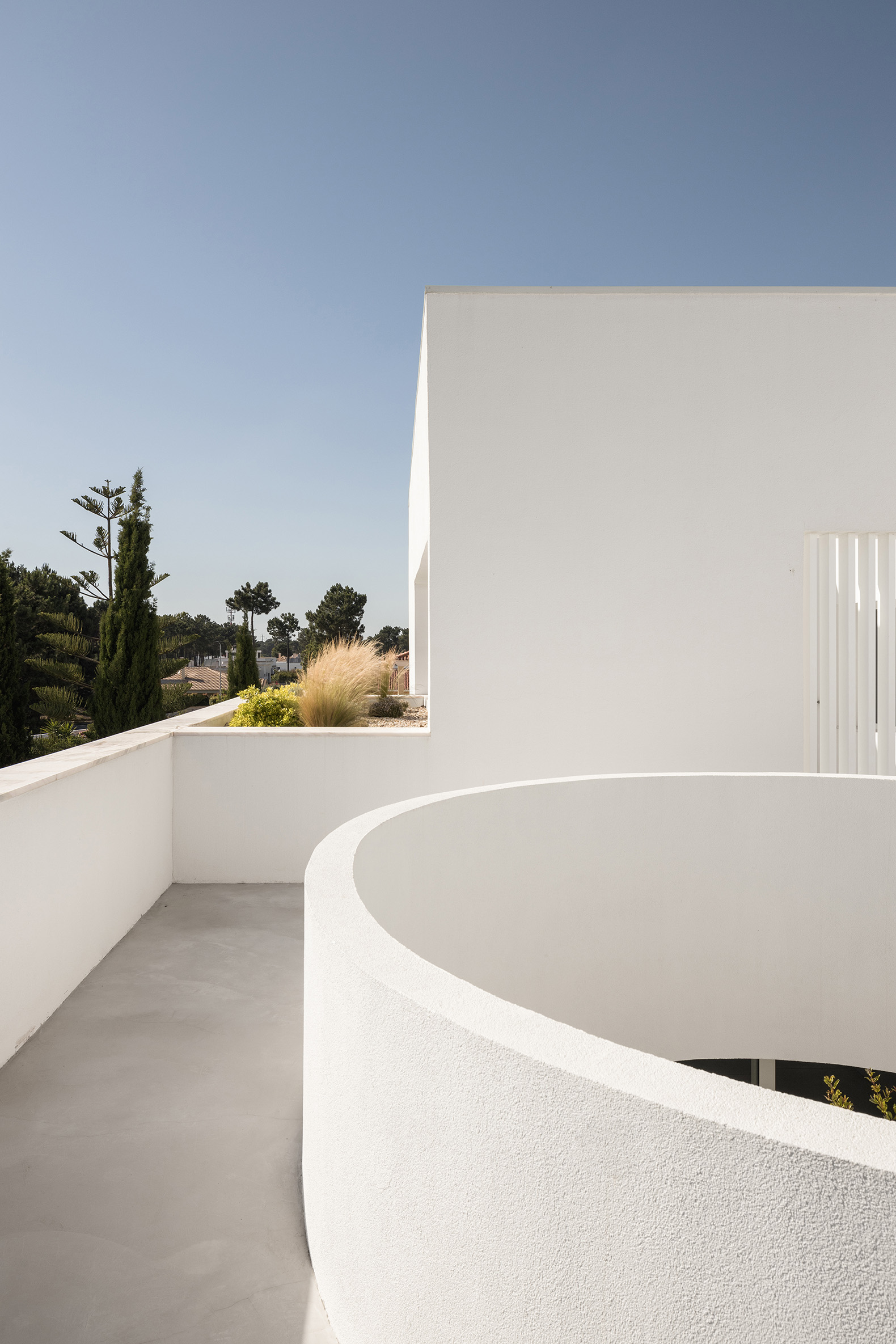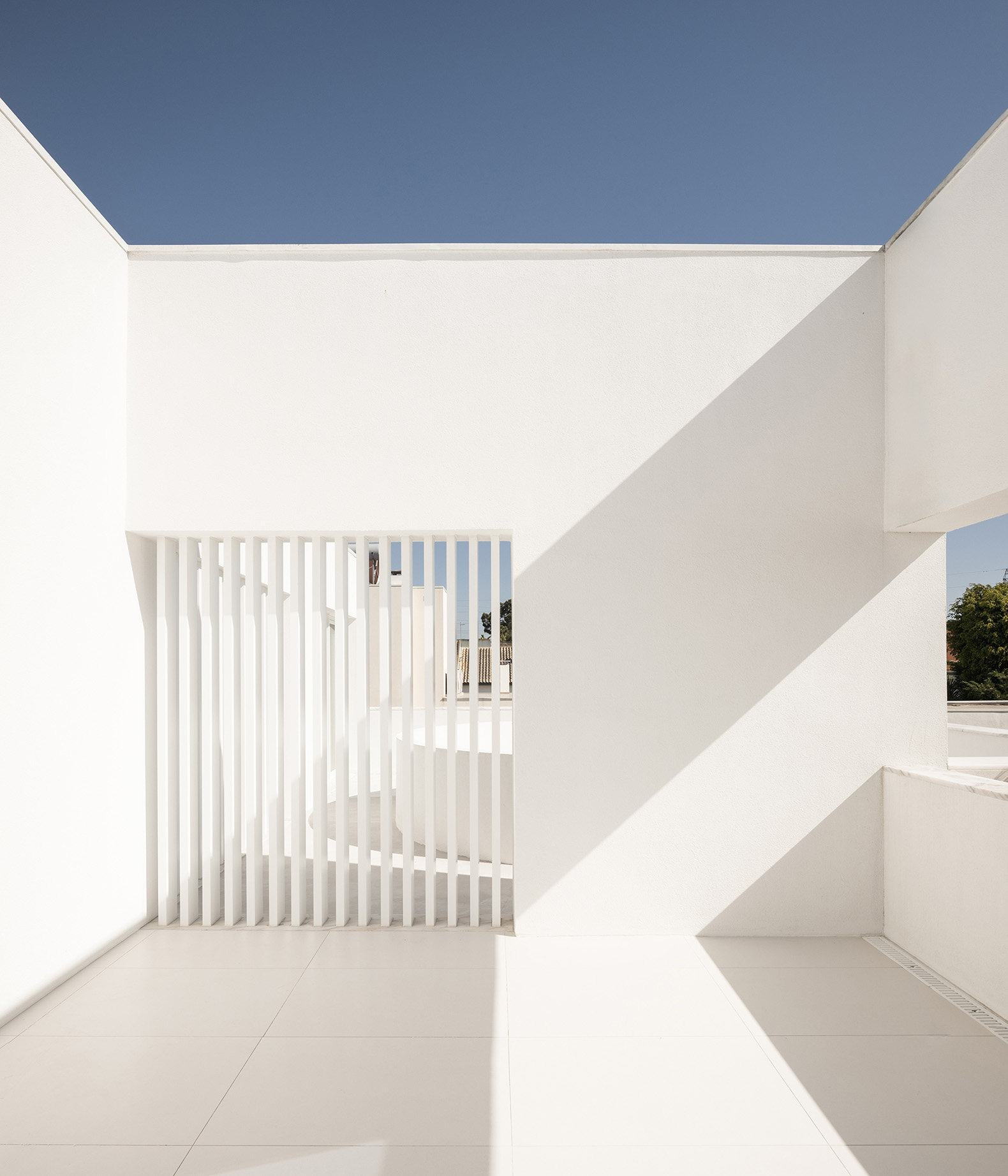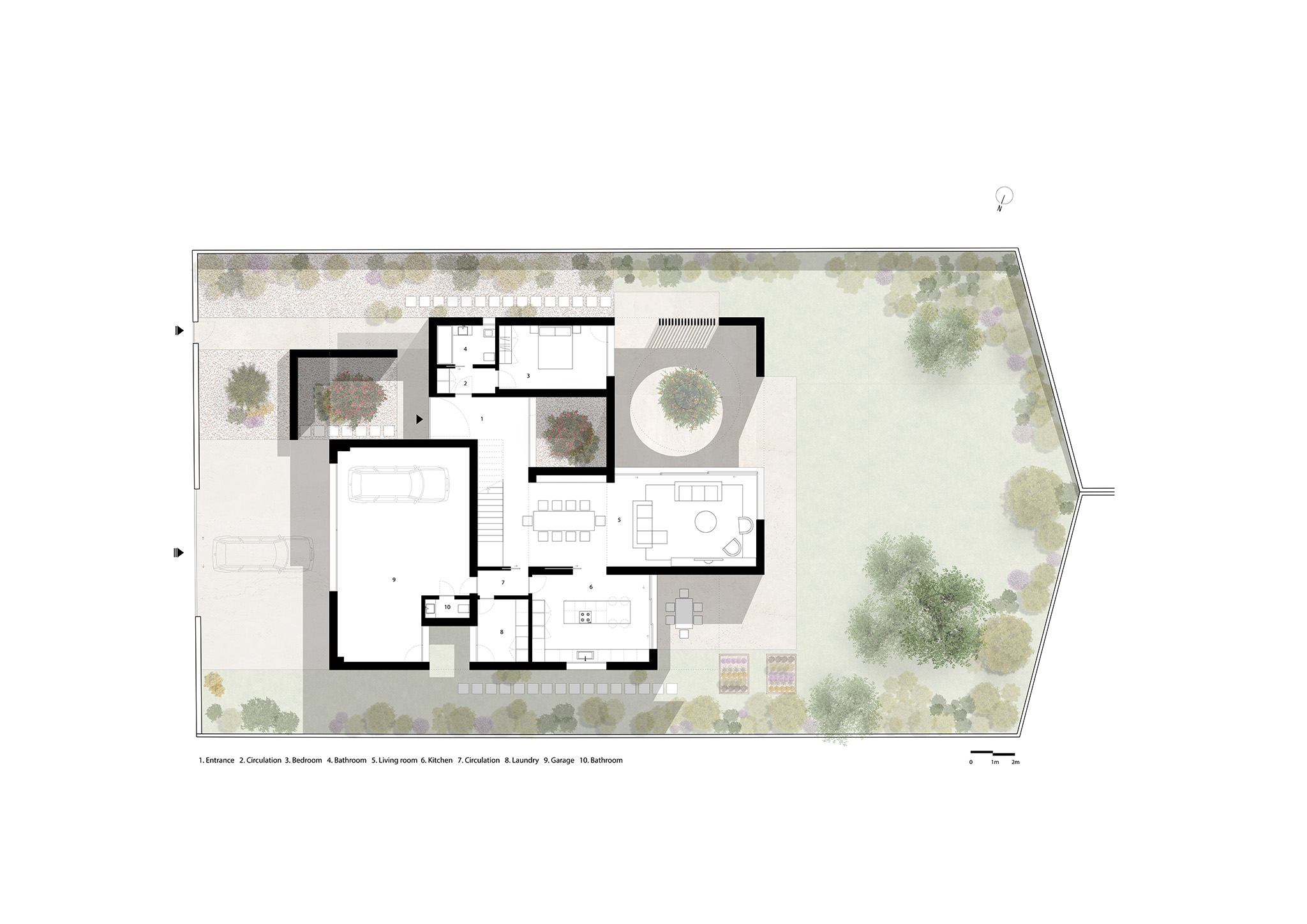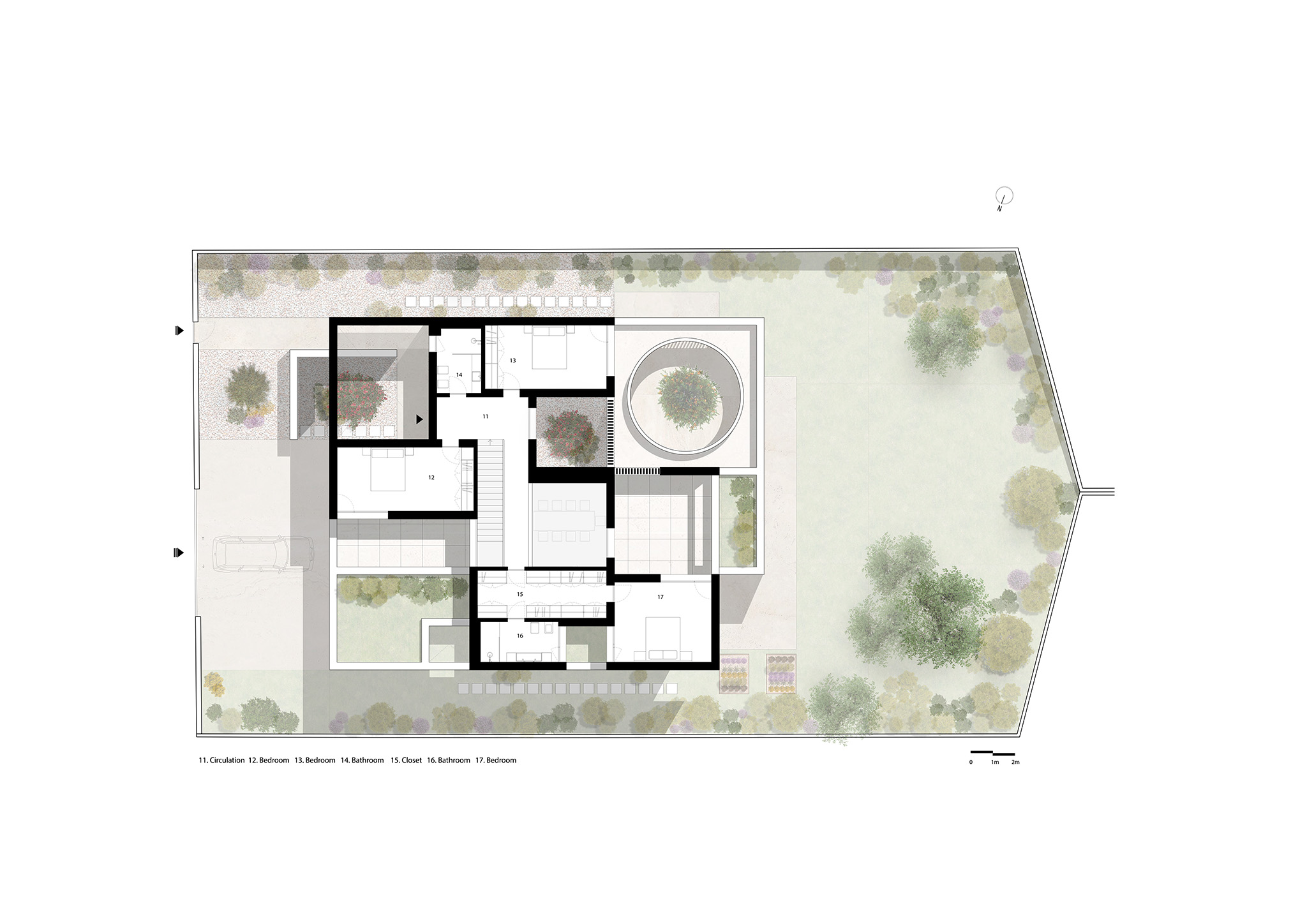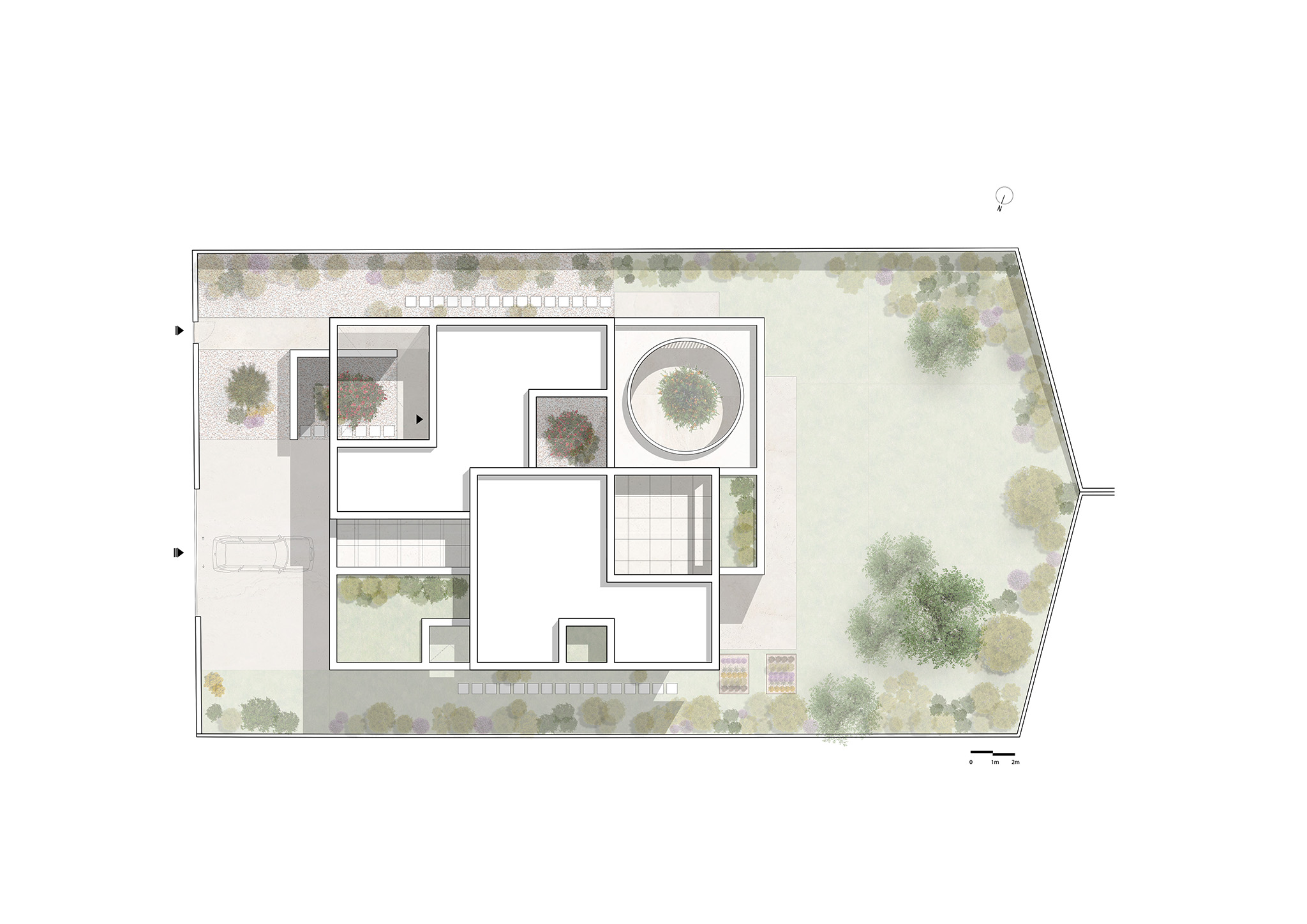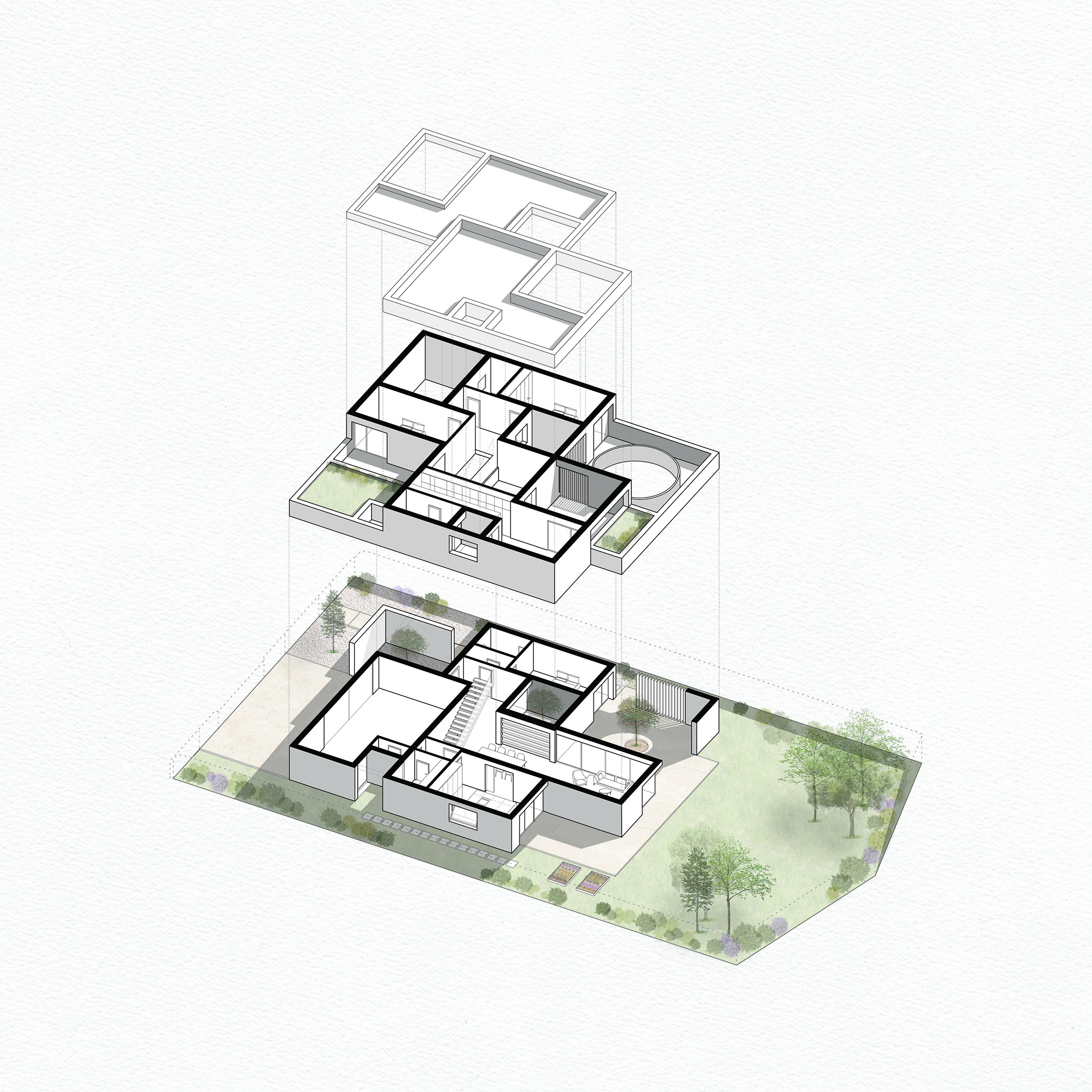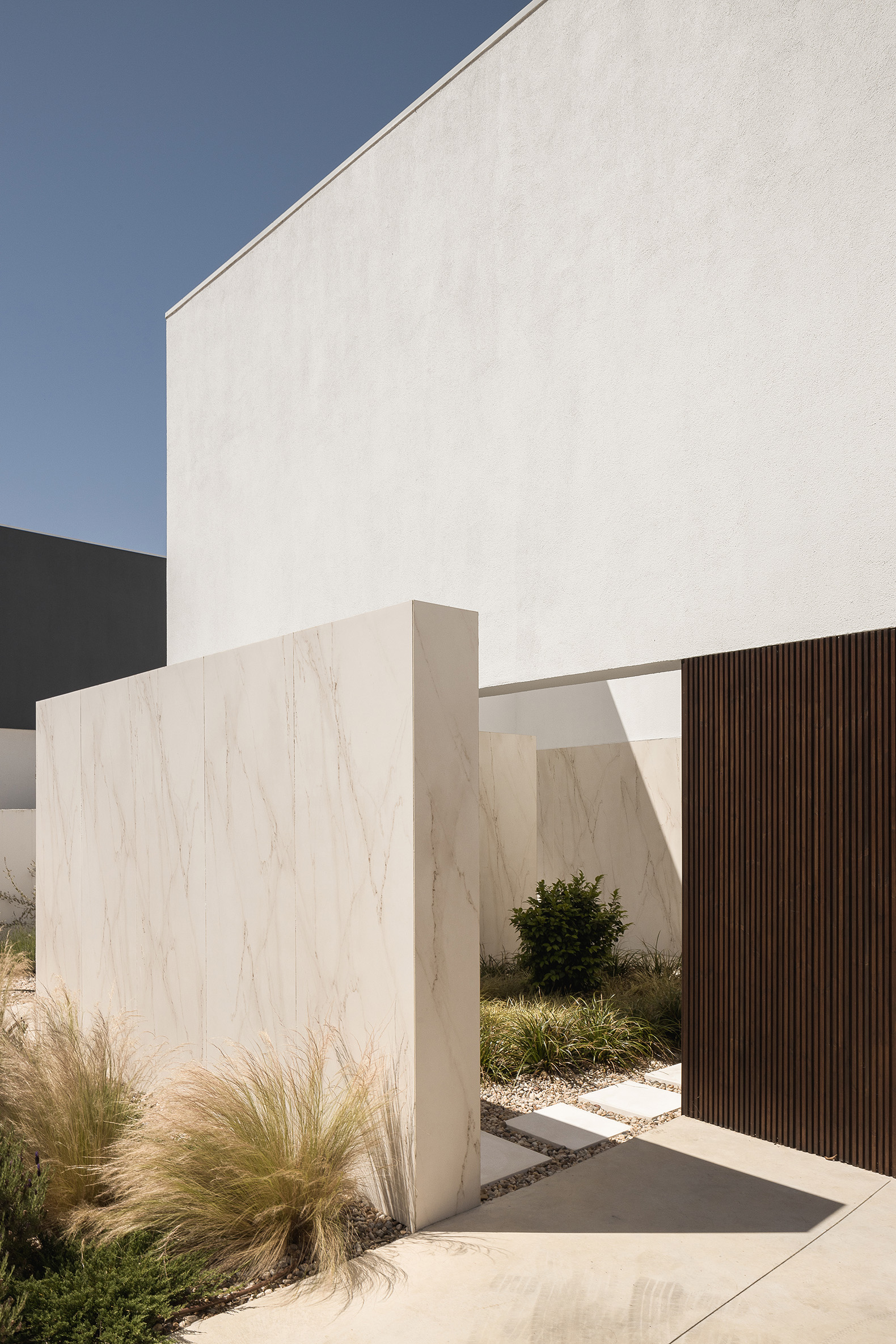
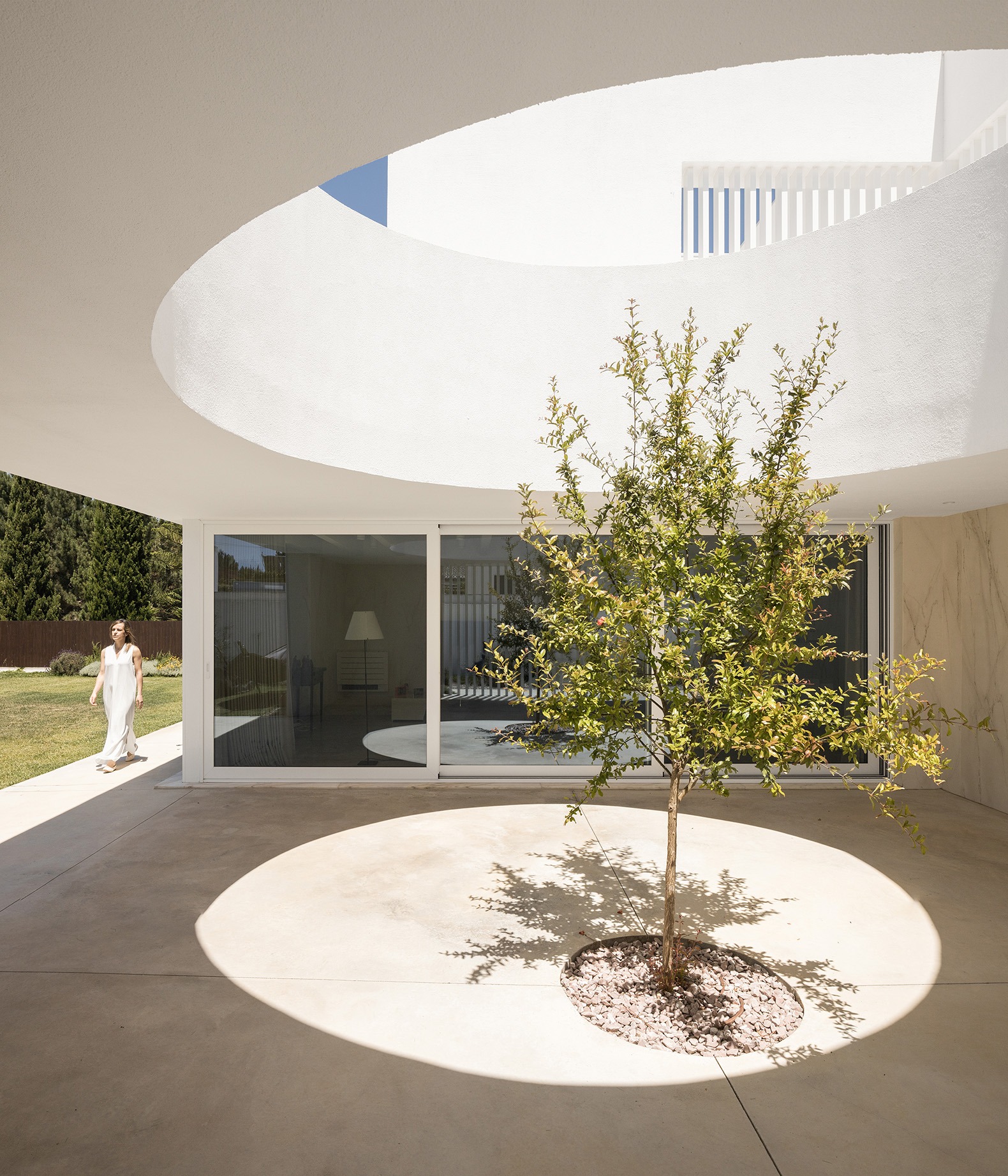
Functionally, the house designed by Estúdio AMATAM is organized on two levels: the ground floor houses open and flexible spaces for daily life, while the first floor contains the more intimate areas. In close dialogue with the exterior, each courtyard assumes a specific role within the complex: a dramatic entrance courtyard, a central courtyard that acts as a seasonal regulator, a light well for cross-ventilation, and other smaller courtyards that provide tranquil atmospheres.
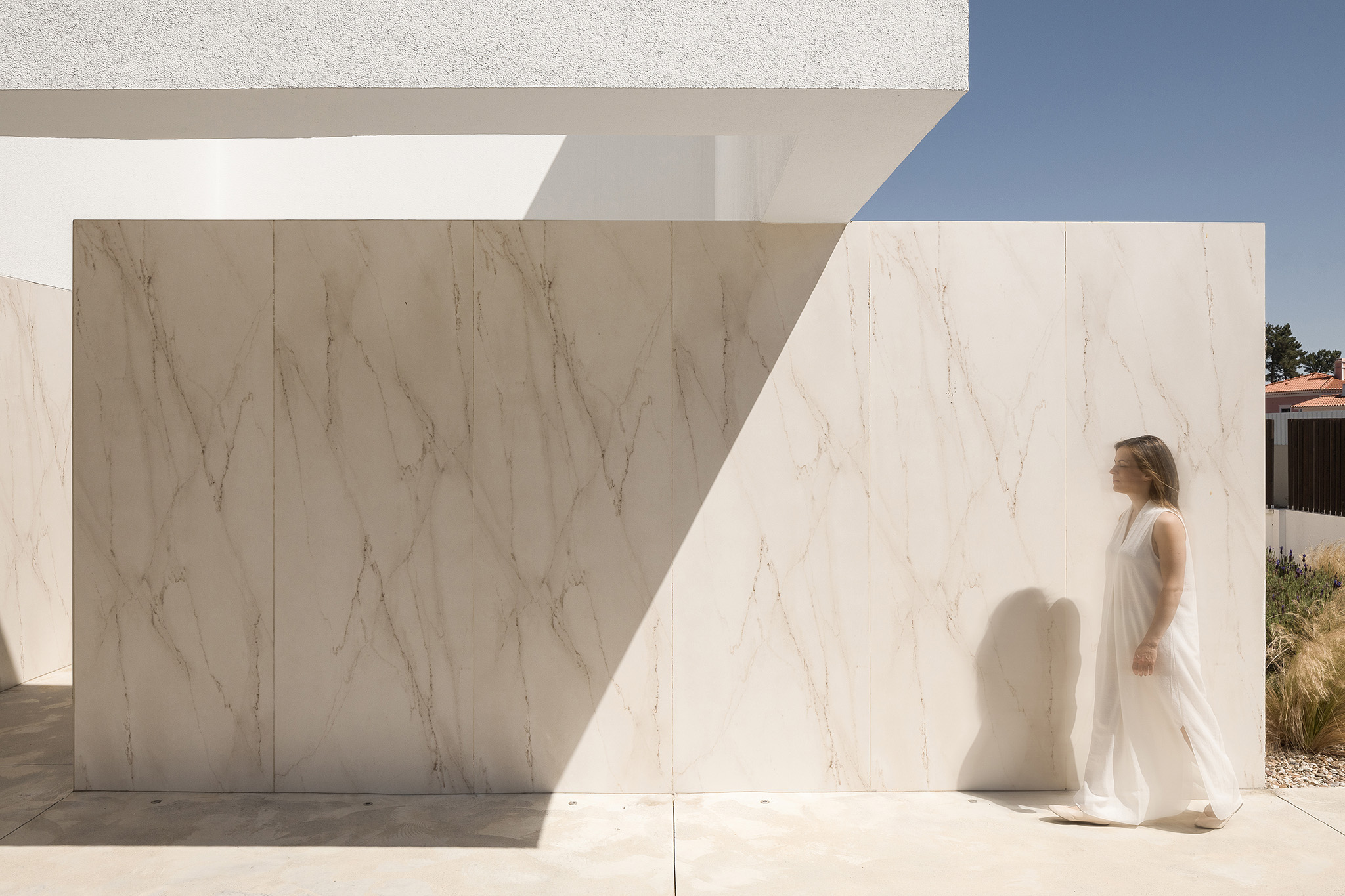
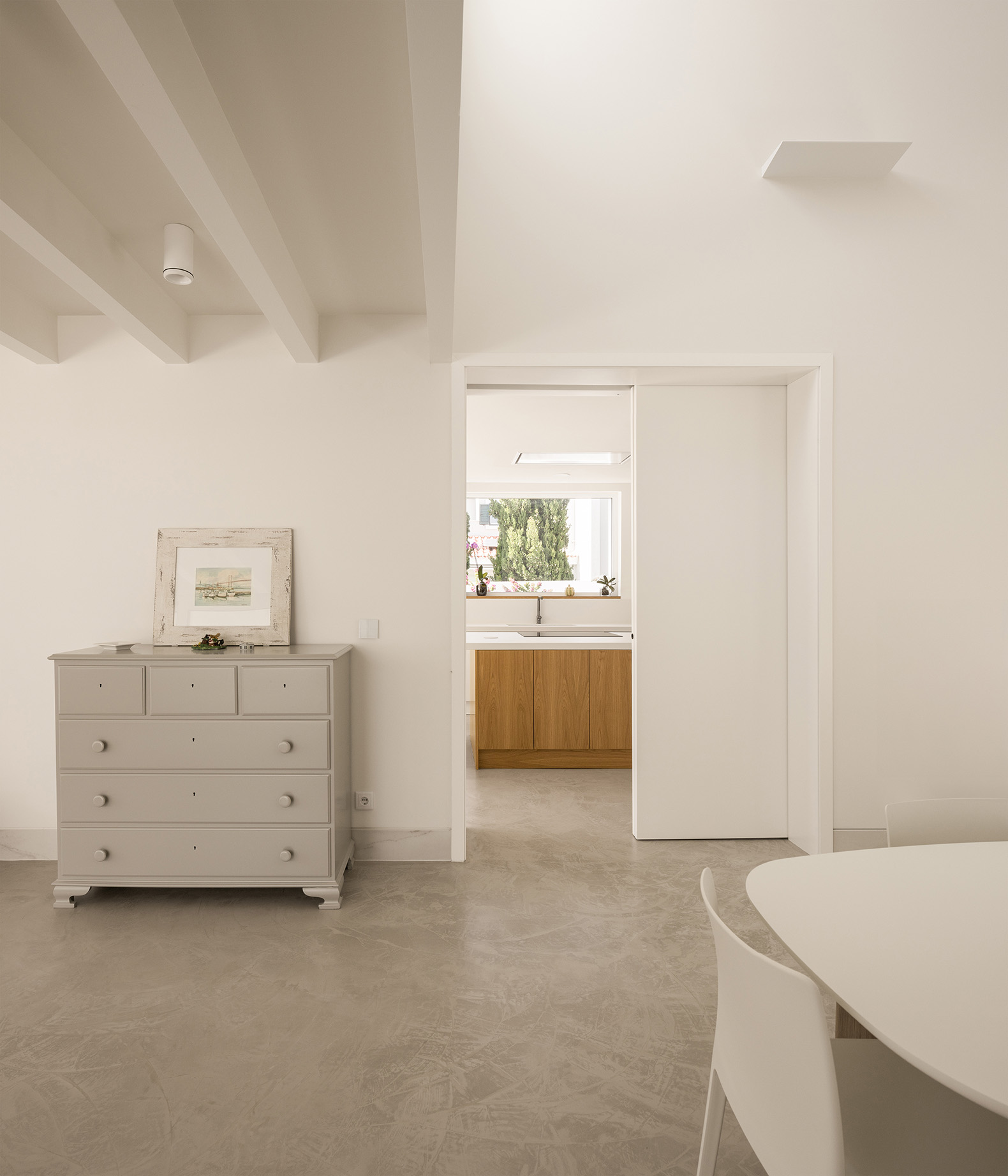
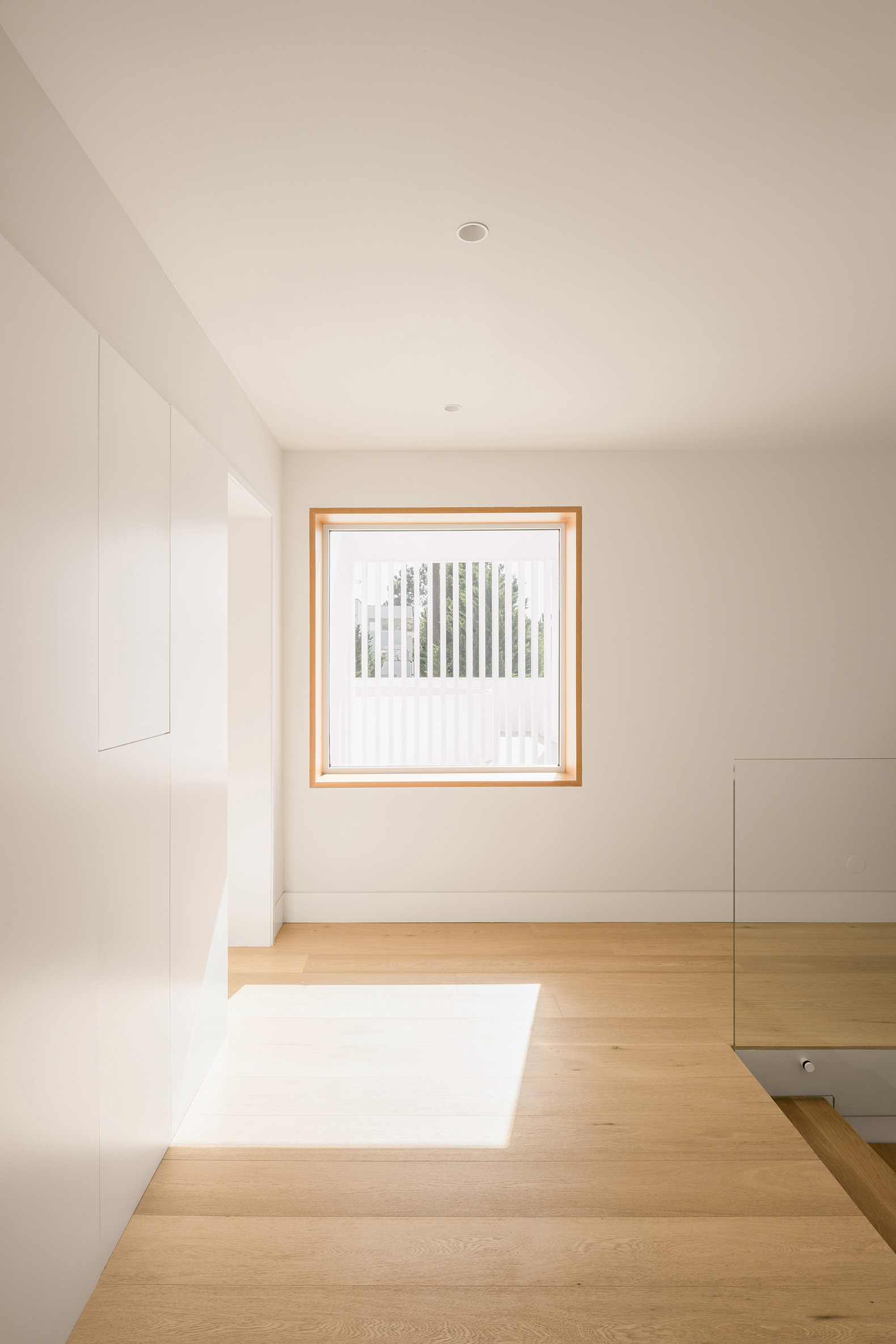
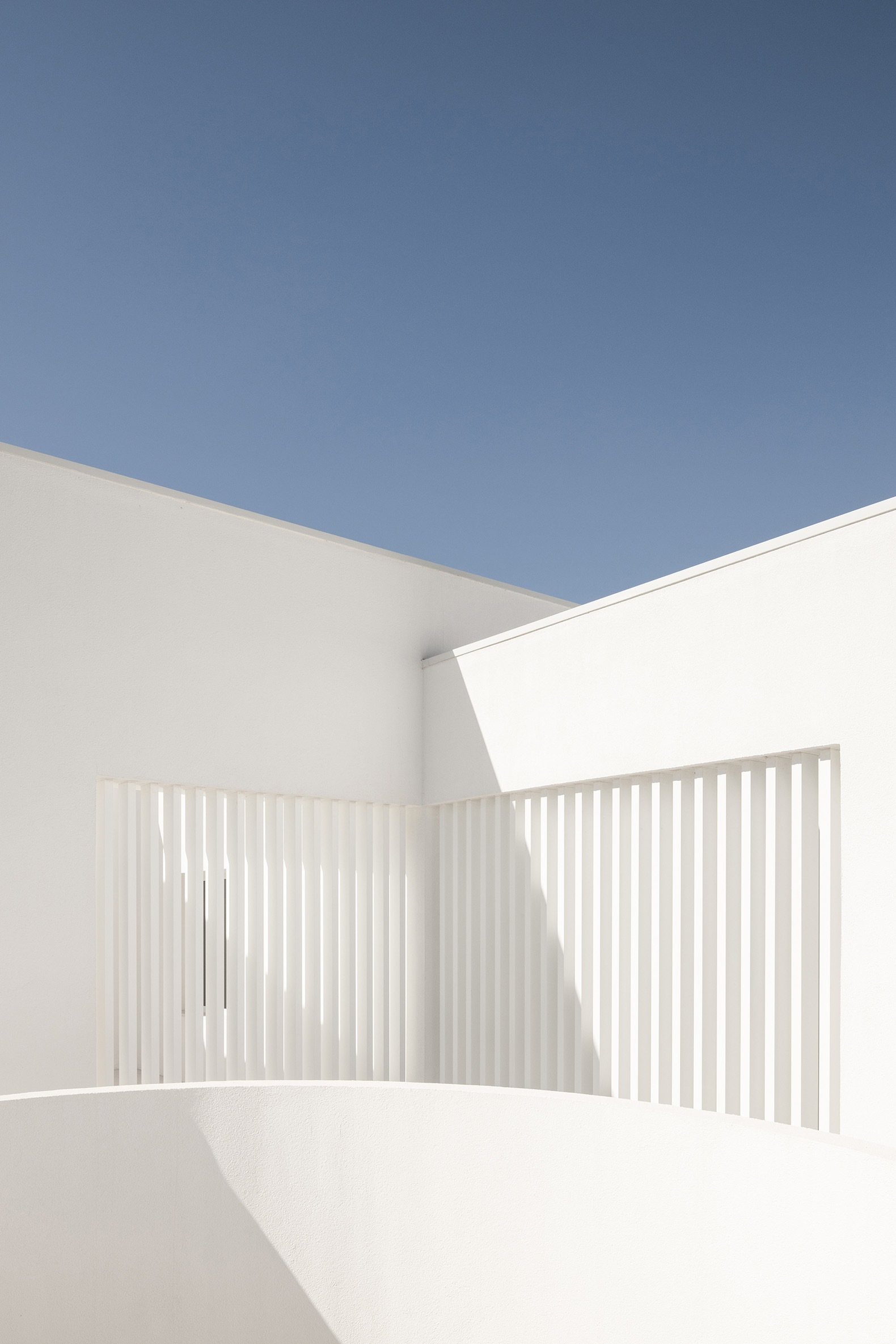
The carefully chosen palette of materials for Casa Verdizela reflects two fundamental concepts: sobriety and serenity. White walls and clean surfaces serve as canvases where daily life unfolds to the changing rhythm of light and shadow. Far from being imposing, the house suggests a slow and mindful way of living, in harmony with its immediate surroundings.
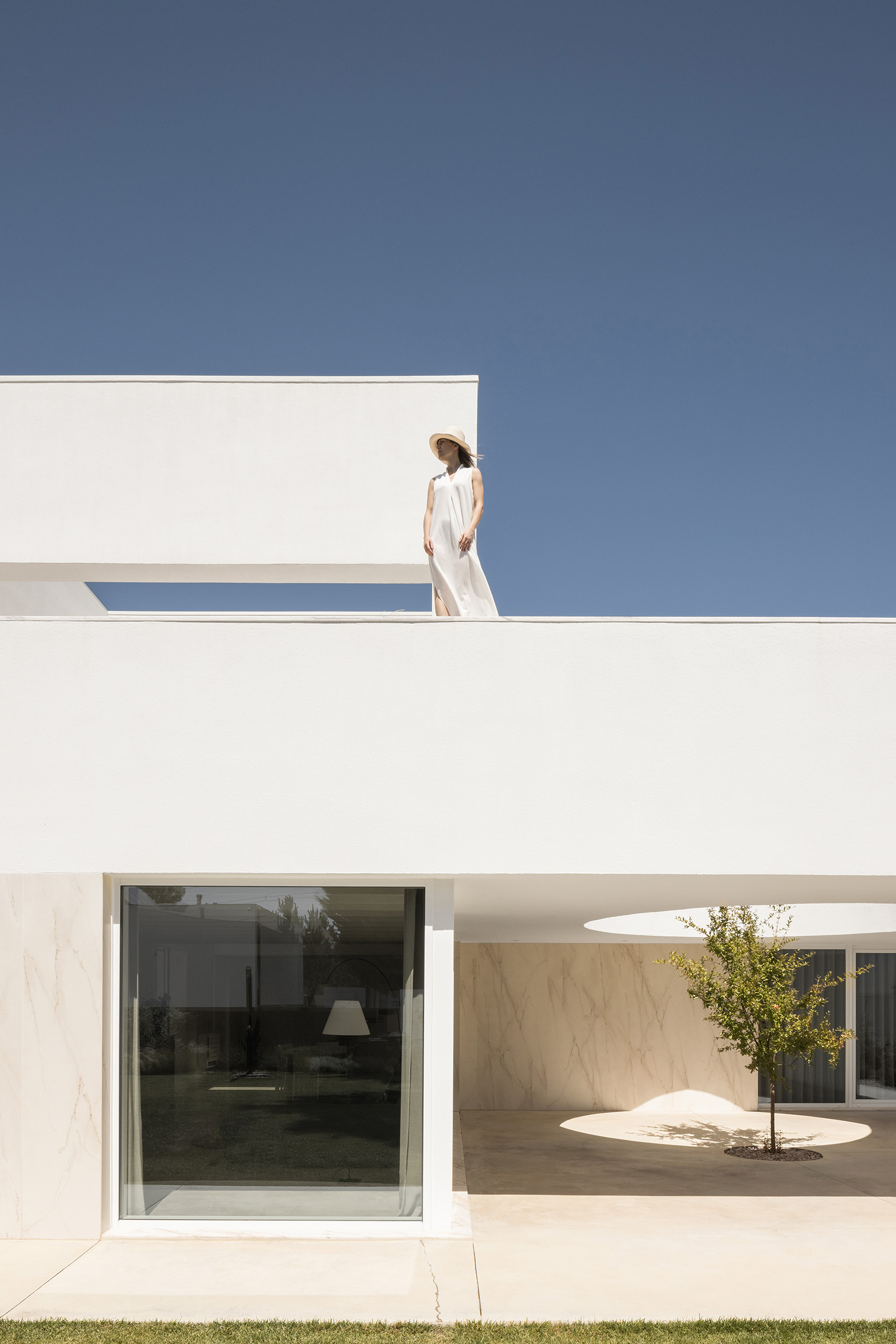
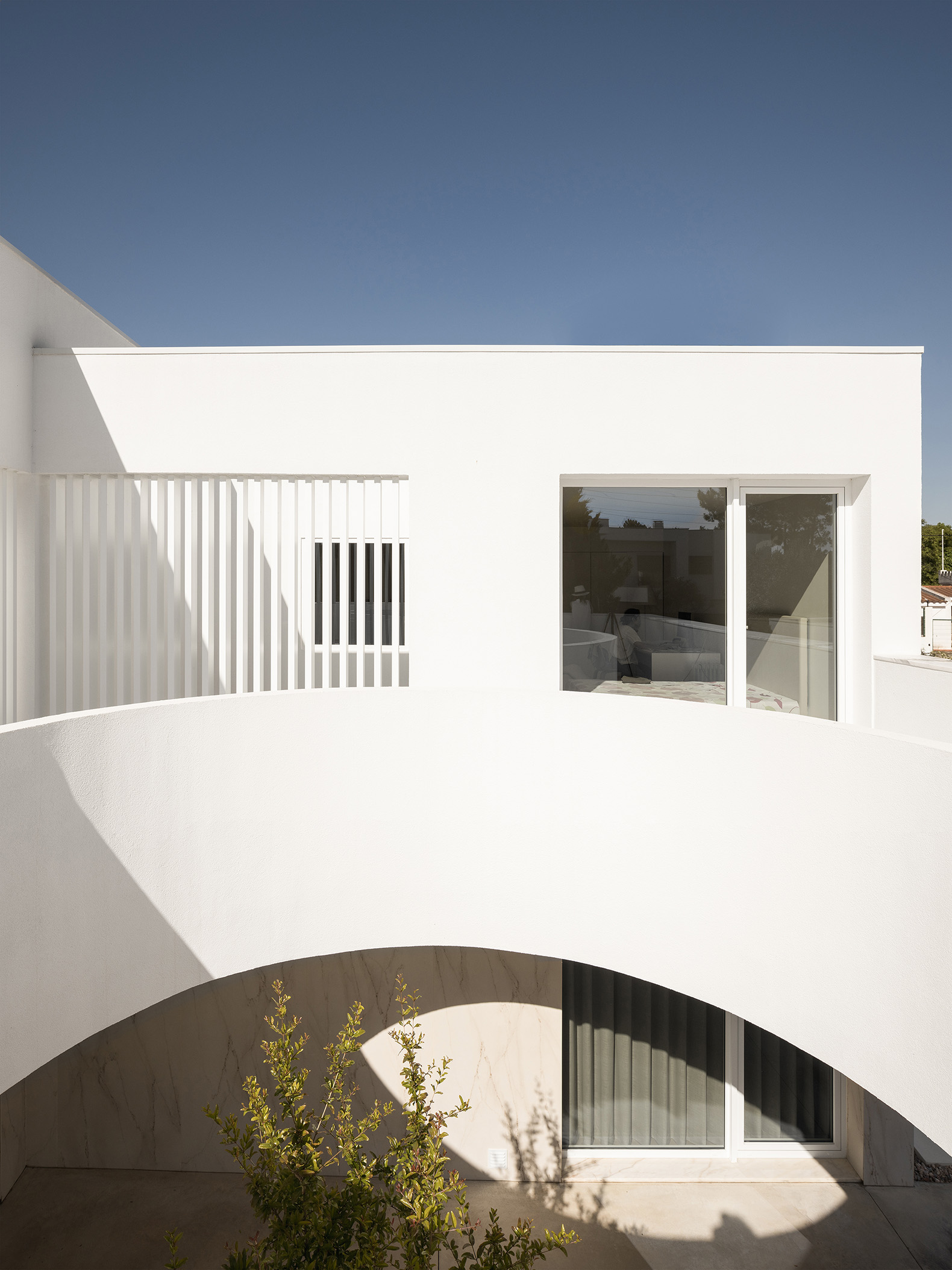
Verdizela House by Estúdio AMATAM. Photograph by Garcês.
Project description by Estúdio AMATAM
Between Courtyards and Silence, where architecture becomes the silent stage of life
Nestled near Aroeira, where the Atlantic breeze meets the pine forest, this house emerges as a discreet retreat — a private, simple, and refined dwelling shaped by the clients’ desire for serenity and introspection. It reinterprets the Mediterranean and Islamic courtyard typology, forming an introverted spatial composition where patios regulate light, air, and temperature, dissolving boundaries between interior and exterior through subtle thresholds.
The project’s essence lies in its quiet strength: a protected refuge of white walls and purified surfaces, where life unfolds in rhythm with light and shadow. Courtyards become the heart of the home — bioclimatic instruments that cool in summer, shelter in winter, and choreograph the passage of time through light.
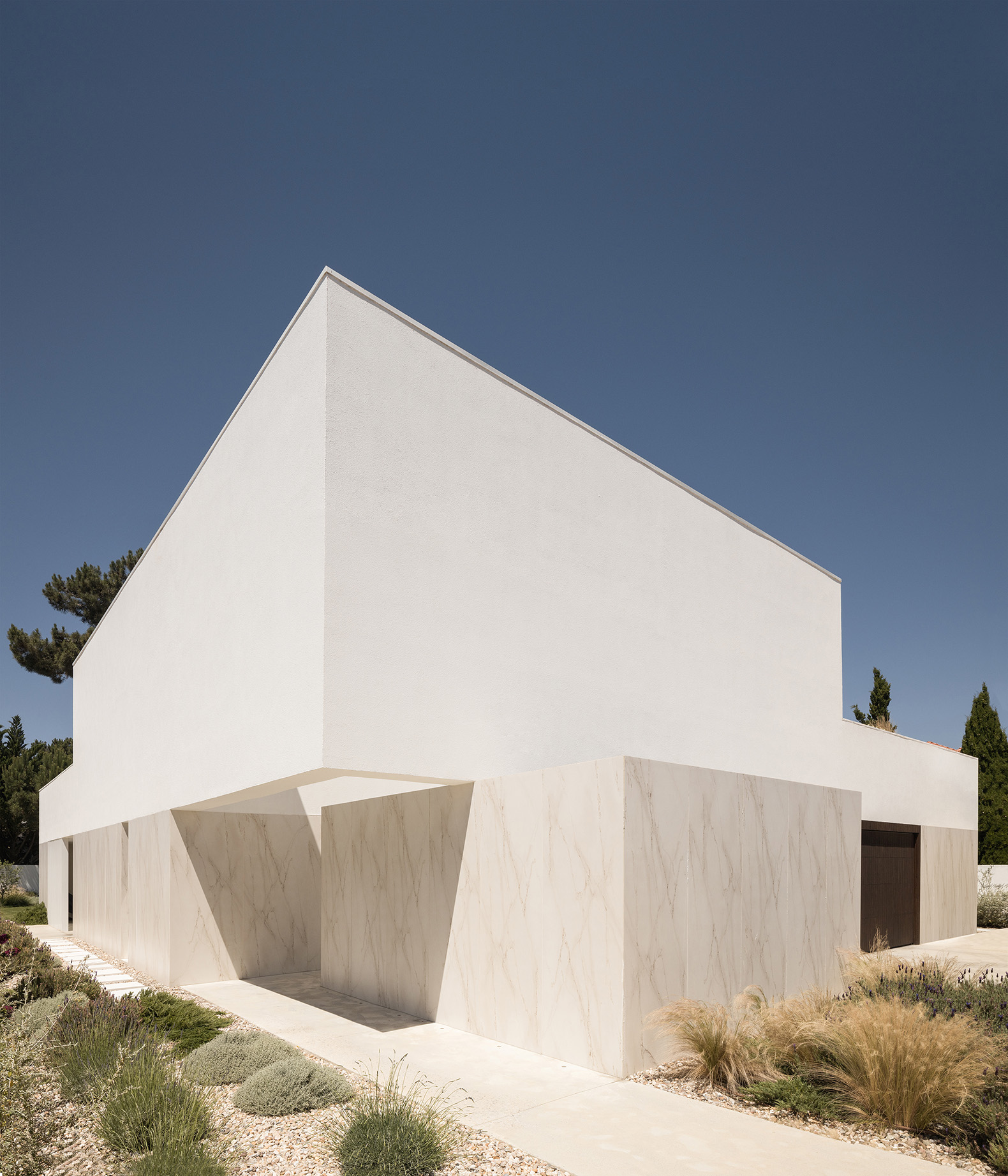
Architecturally, the language is restrained and sculpted by subtraction. Volumes are defined by voids, not excess, and the house maintains a discreet presence — tactile, luminous, and emotionally resonant. Materiality follows principles of honesty and permanence: ultra-compact sintered stone and thermo-modified timber create a dialogue between industrial precision and organic texture, while white slatted screens refine privacy and solar control.
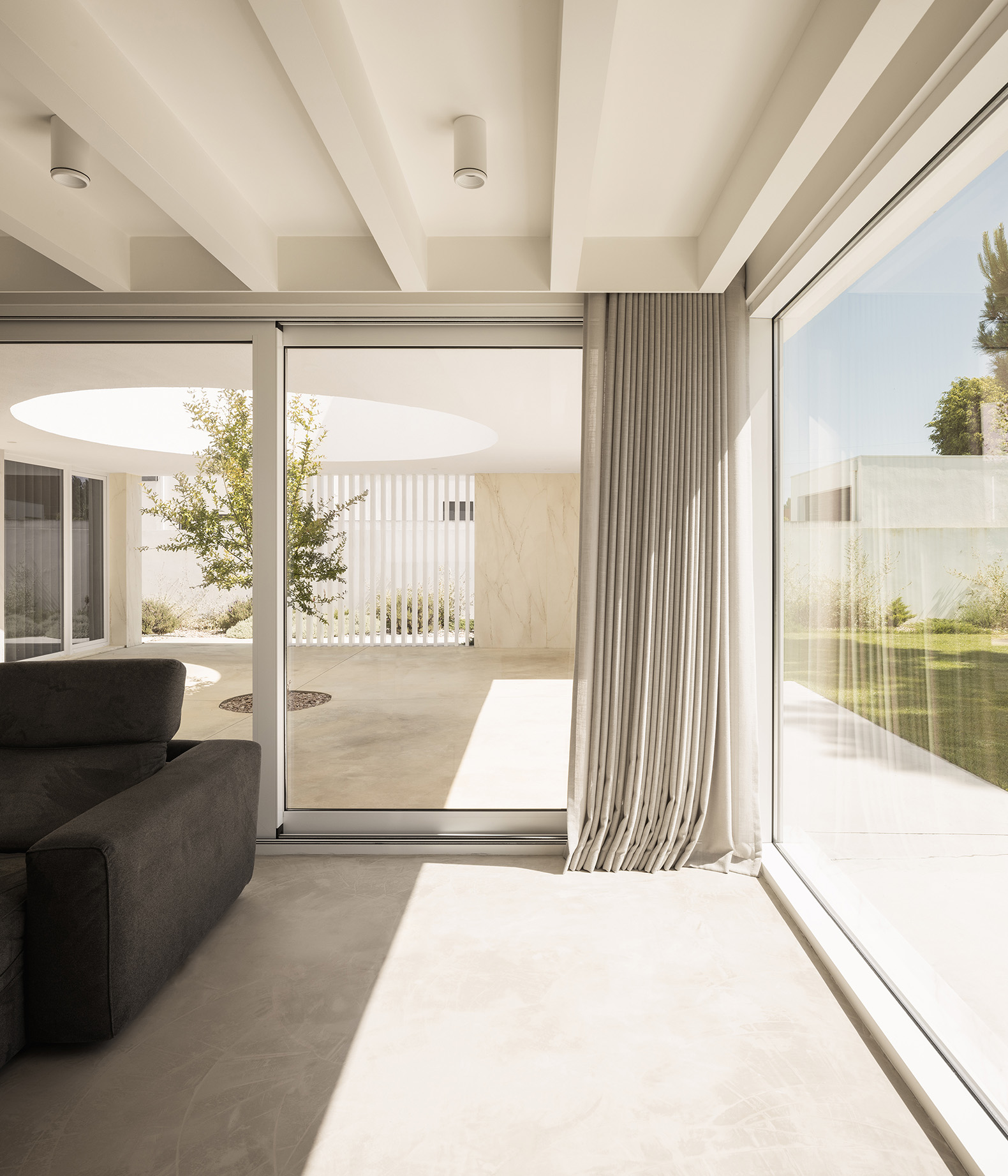
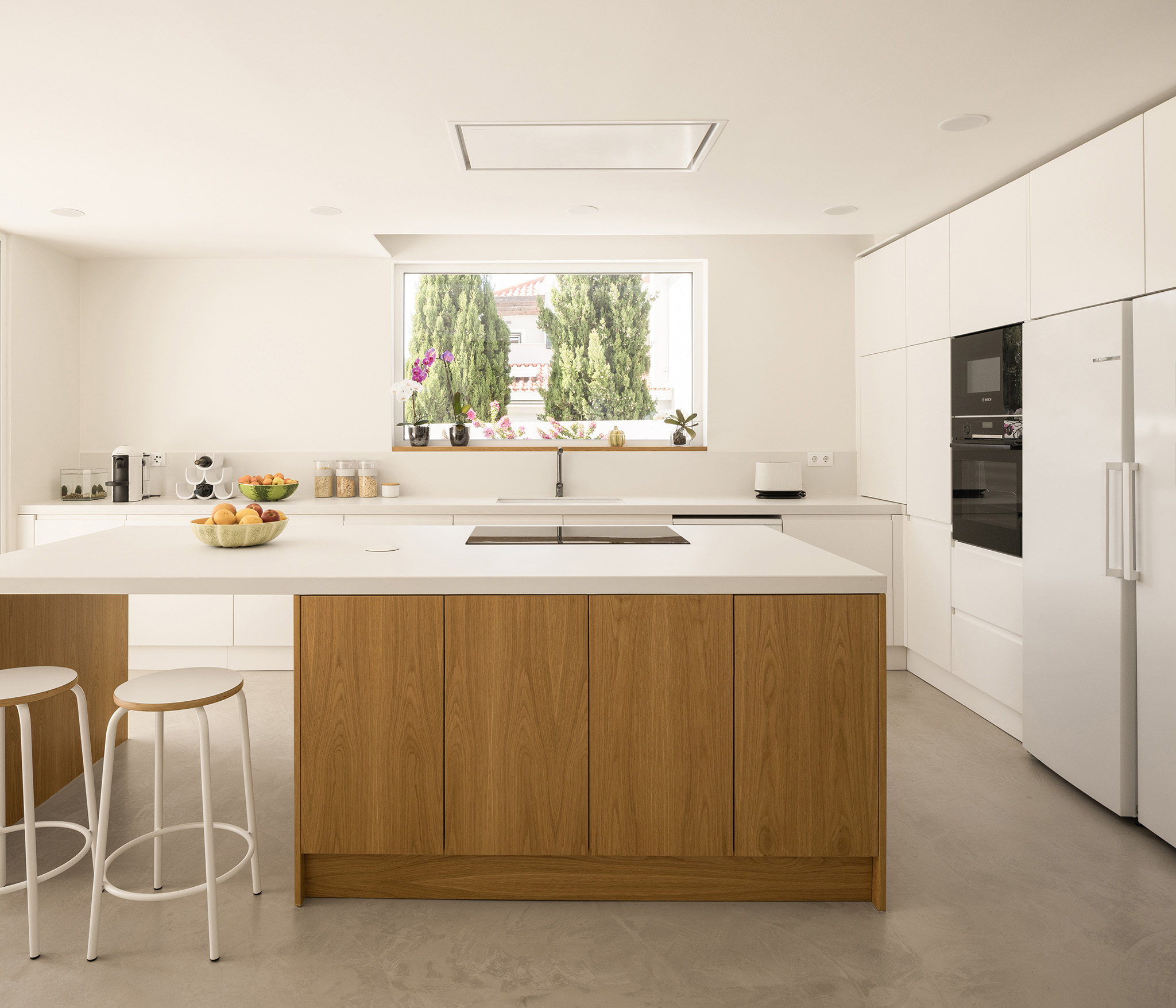
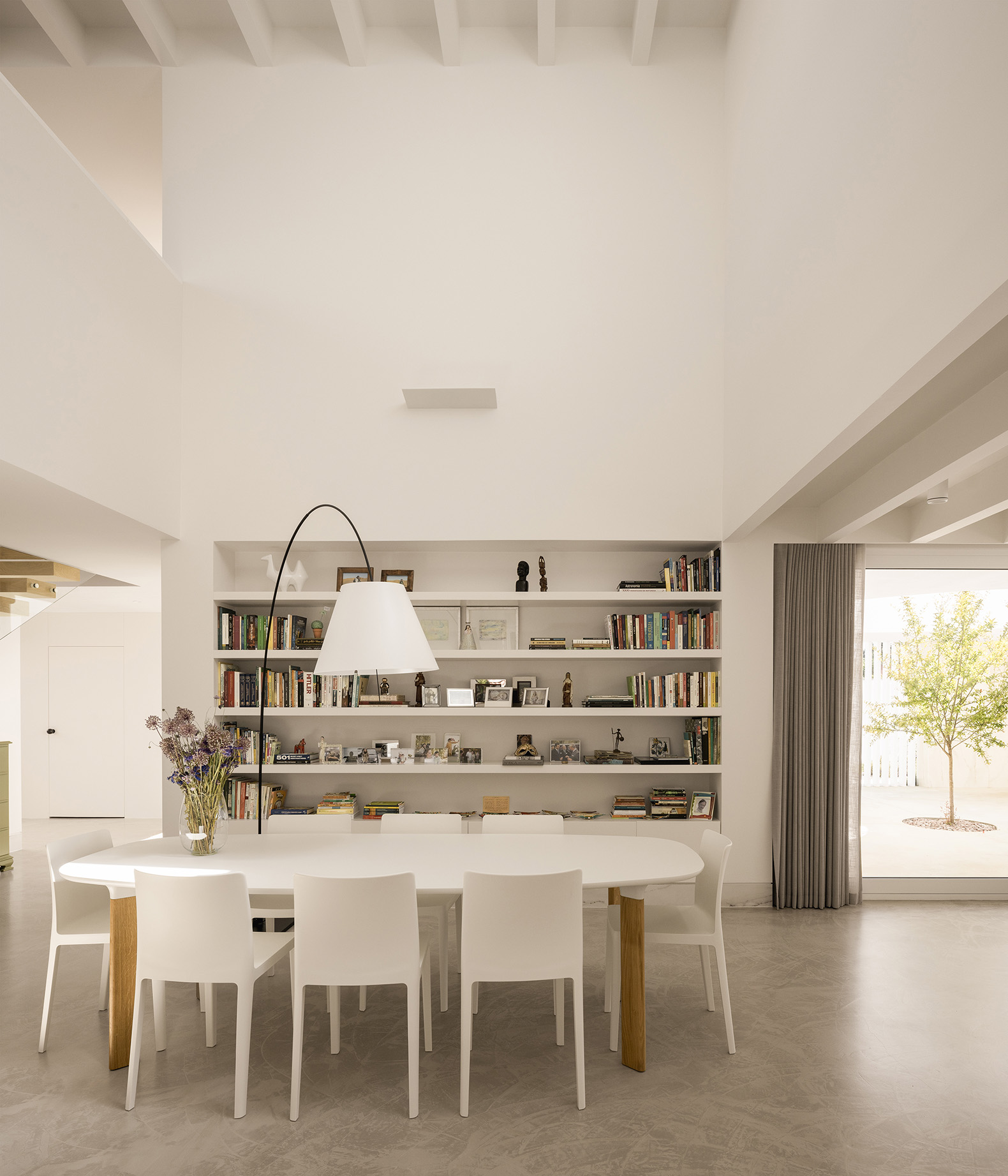
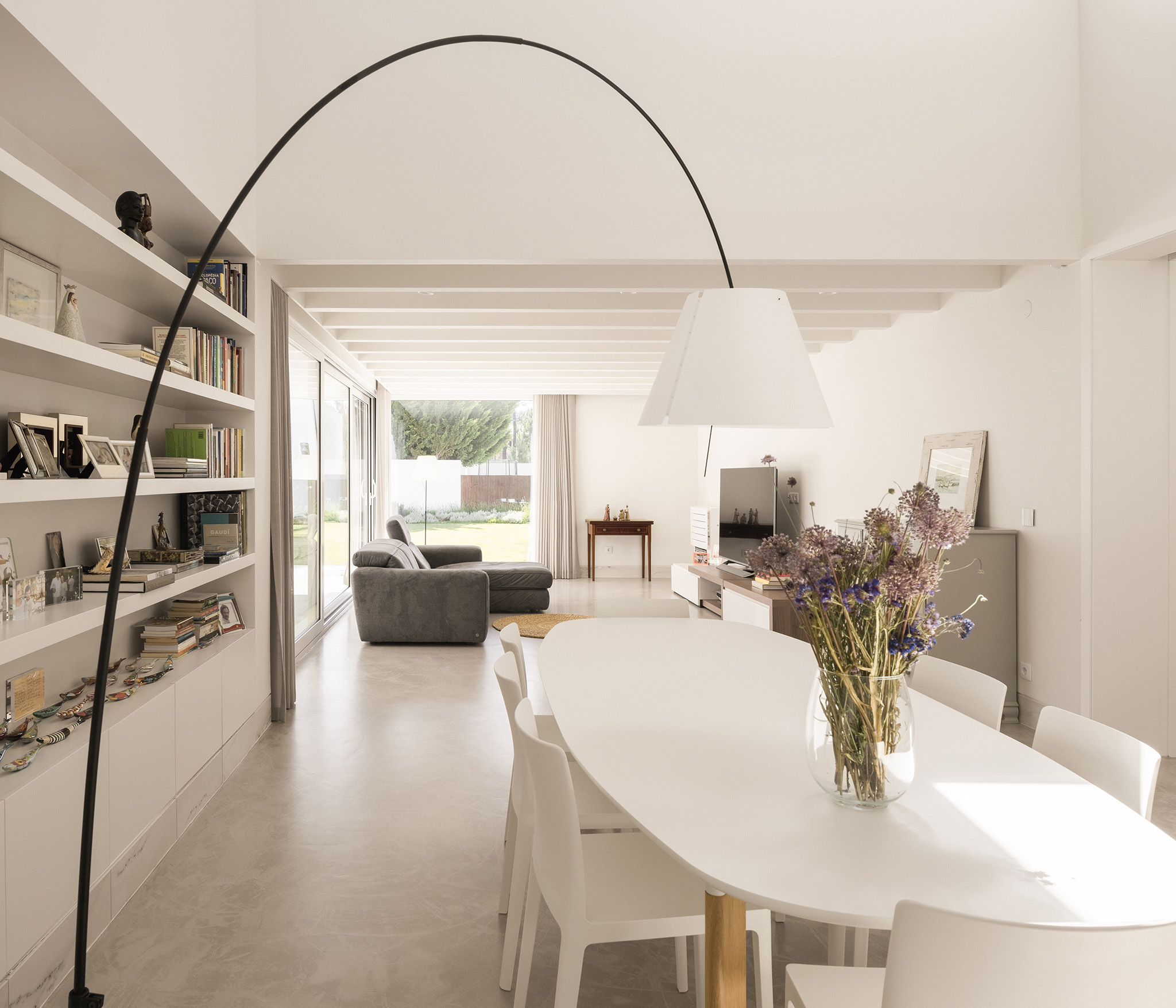
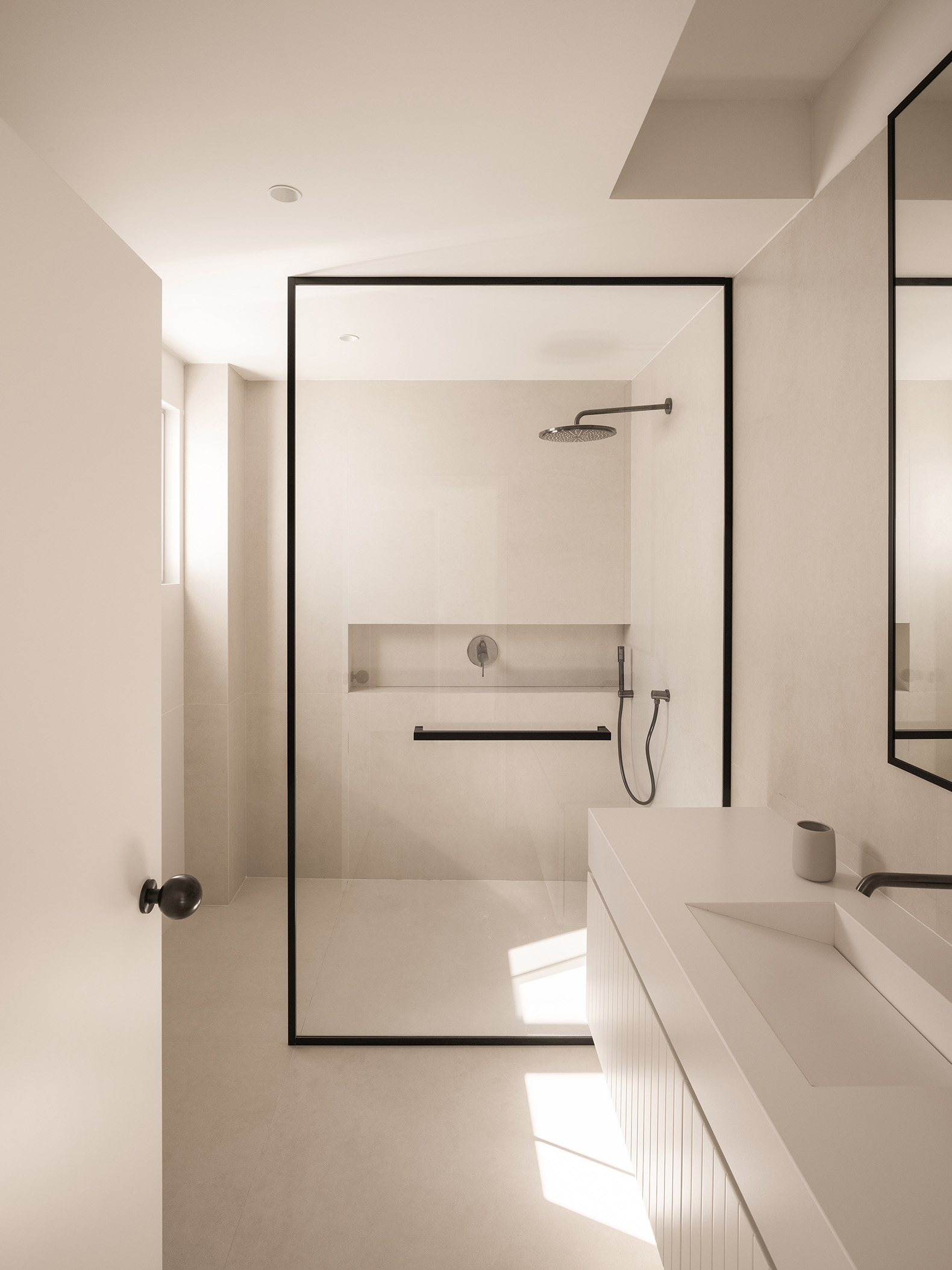
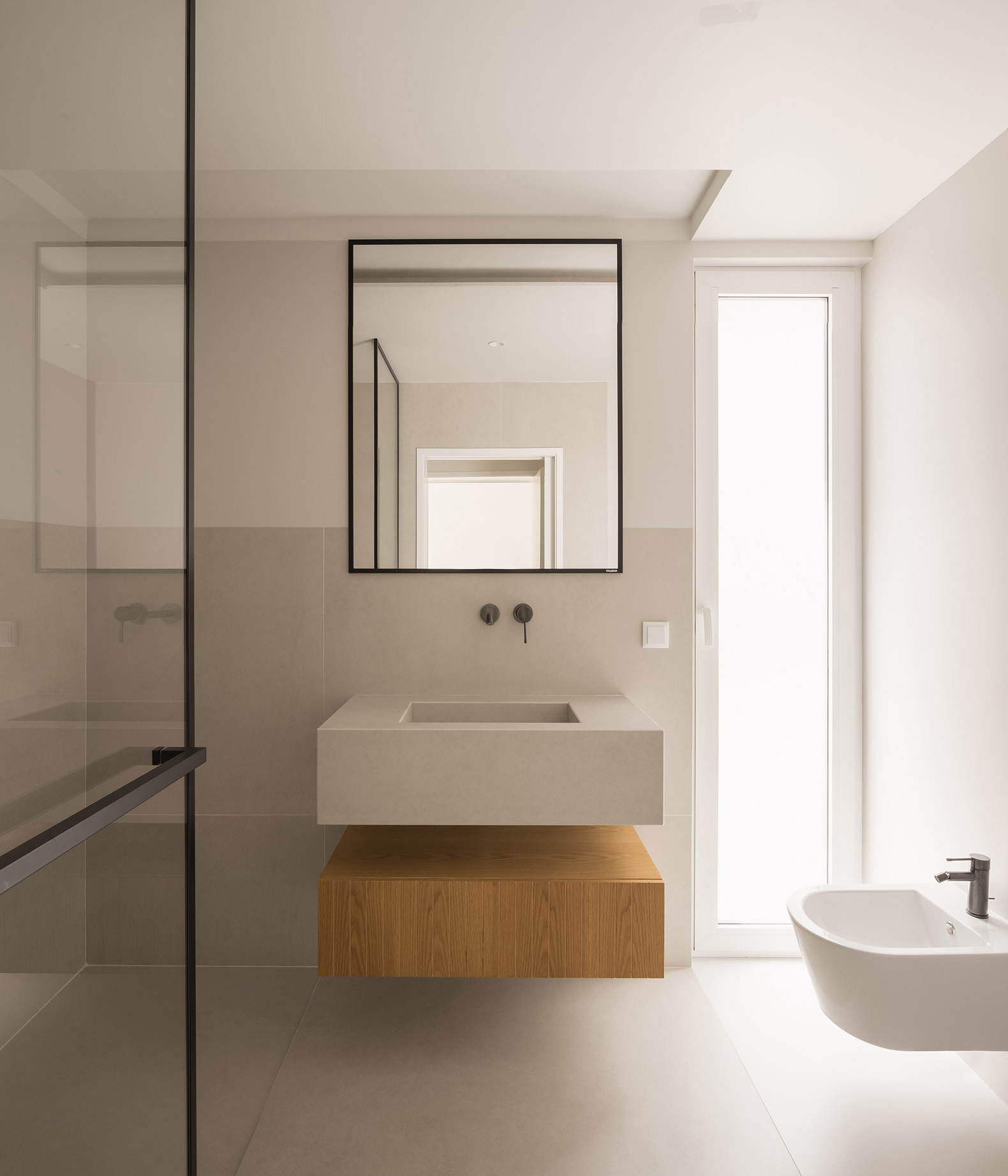
Inside, the palette extends the serenity of the exterior. Warm microcement unifies the social areas; natural oak flooring adds domestic warmth; sintered stone in wet areas affirms durability with elegance. Black accents punctuate the calm, infusing sophistication.
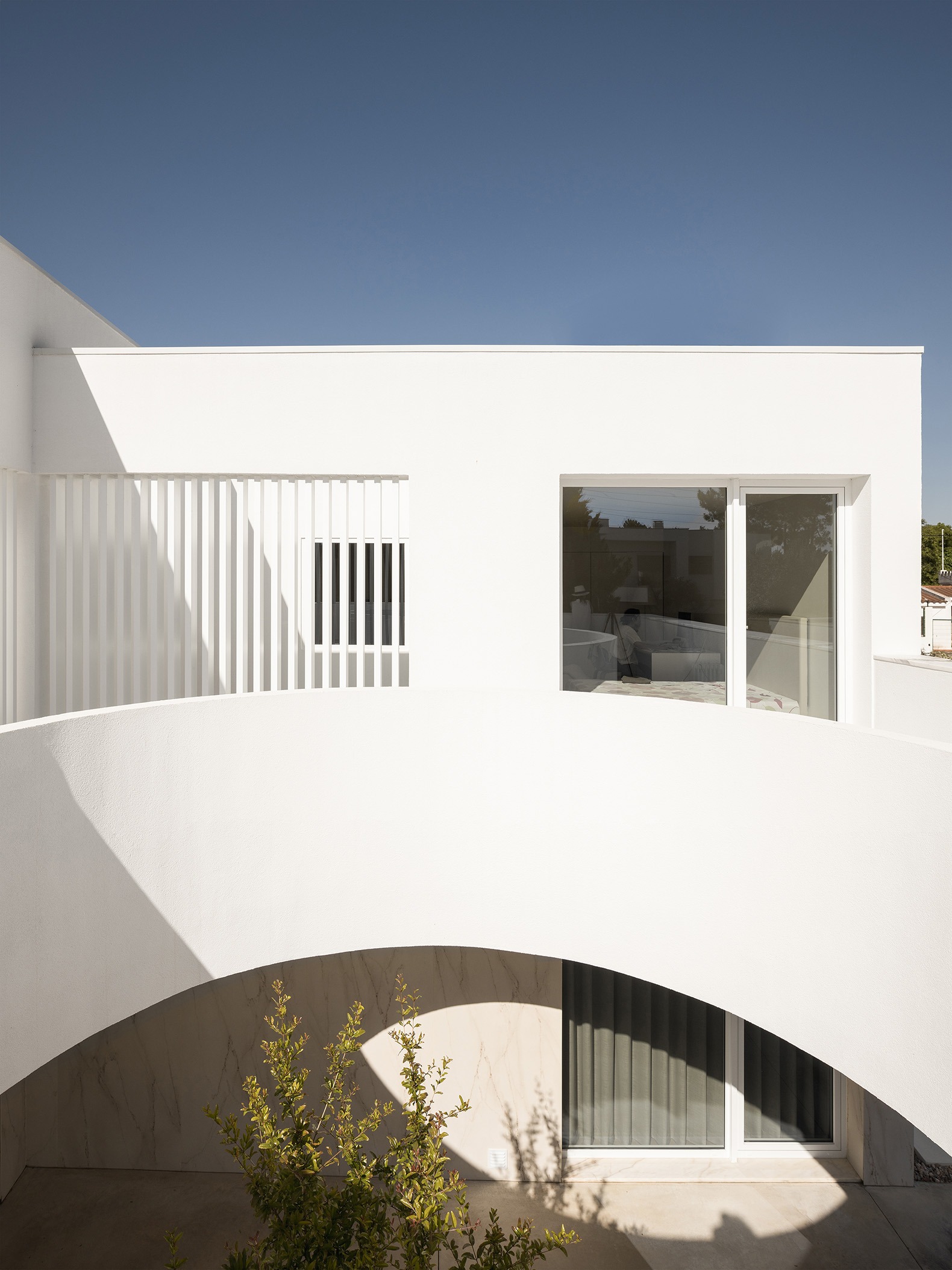
Programmatic flexibility allows the house to adapt to varied rituals and seasons. The living room opens to a courtyard centred on a pomegranate tree — a nod to Mediterranean identity. The kitchen flows seamlessly into an outdoor terrace, and a double-height void connects the two levels. Each courtyard plays a distinct role: the scenographic entrance patio, the central courtyard as seasonal protagonist, the lightwell for ventilation, and smaller patios offering visual and atmospheric respite.
Ultimately, this is an architecture of silence and restraint — a home that celebrates light, material, and time with bioclimatic awareness and poetic clarity. In Verdizela, between shadows and gleams, a dwelling was built not to impose, but to inspire a serene, fluid way of living — attuned to its place.