Como ya os anunciamos, ayer se presentó en Barcelona la propuesta para la Bienal de Arquitectura de Venecia- Eventi Colateralli, el Pabellón catalán y de las Islas Baleares bajo el título “Vogadors”. La propuesta en su planteamiento teórico era interesante y no se puede negar que los nueve seleccionados son un ramillete de brillantes y buenos arquitectos que tratan hacer las cosas de manera singular en Cataluña y las Baleares, en un intento por hacer una Arquitectura, que según sus comisarios, Félix Arranz y Jordi Badía, es austera en el respeto al entorno y a los usuarios.

Incluso la metáfora de los remeros avanzando y mirando hacia atrás parecía apropiada en relación al lema propuesto por David Chipperfield, “Common Ground”. Sin embargo, esa mirada parece haberse congelado tan solo en arquitectos de la generación de la década de 1970, lo que produce un cierto grado de incertidumbre, incluso podría parecer que los comisarios no ven con buenos ojos mirar a arquitectos de su propia generación o anteriores y necesitan distanciarse con una década de las propuestas presentadas.

Sin embargo la ausencia más notoria no es que haya una generación u otra, o un ejemplo de conjunto aunando esfuerzos, la ausencia más evidente es la de arquitectos con intervenciones en el territorio, en el paisaje, en el entorno, en el soporte de los objetos, ejemplos de brillantes trayectorias de todas las generaciones interviniendo en el entorno, son clamorosas ausencias. Si la arquitectura de vanguardia actual se caracteriza por una participación de todos los ciudadanos y un reconocimiento del paisaje natural o antropizado, como parte de nuestra cultura, ¿qué ocurre con el tratamiento del entorno desde la arquitectura, del paisaje construido, de esa escuela catalana sobre el paisaje y ese buen hacer desde algunos organismos de las Administraciones catalanas que necesitan ser siempre reforzados o reconocidos?

Pikionis desde el monte Filapopus, en el otro extremo del Mediterráneo, desde el paisaje ático mira a "Vogadors" alejarse de "Common Ground", aunque es indudable que hay que felicitar a los seleccionados, para todos ellos ¡¡Sombrero de pico!!

_Casa Collage | Bosch.Capdeferro Arquitectures.
_Casa en Bunyola | Francisco Cifuentes.
_Guardería Pratdip | Núria Salvadó y David Tapias.
_Casa para tres hermanas | Blancafort Reus Arquitectura.
_La Seca | Meritxell Inaraja.
_Can Ribas | Jaime J. Ferrer Forés.
_Piscina, vestuarios y sala deportiva en Jesús | Arquitecturia.
_Ampliación del Instituto Josep Sureda y Blanes | SMS arquitectos.
_Escuela de arte y diseño en Amposta | David Sebastian y Gerard Puig.

Bienal de Arquitectura de Venecia – Eventi Colateralli. Pabellón catalán y de las Islas Baleares “Vogadors”.
Del 29 de agosto al 25 de noviembre
Pabellón: Castello 40. 30122 Venezia.

Read more
Read less

More information

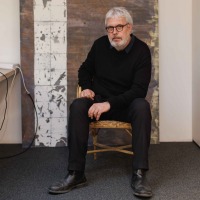
BAAS Arquitectura is an architecture practice founded in 1994 in Barcelona by architect Jordi Badia (Barcelona, 1961). He graduated from the Barcelona School of Architecture (ETSAB) in 1989. Between 1989 and 1993, he worked alongside architect Tonet Sunyer before establishing his own practice.

Since its foundation, BAAS Arquitectura has worked on projects of different scales and programmes, including residential buildings, offices, educational facilities, healthcare buildings, cultural spaces and interventions in architectural heritage. Its work is characterised by a careful consideration of the urban context, the use of materials and the relationship between architecture and public space. The restoration and adaptation of existing buildings to new uses also play an important role in the studio's practice.

Among its best-known works are the Can Framis Museum in Barcelona, which received the 2009 City of Barcelona Award and the FAD Opinion Award; the conversion of the former Oliva Artés factory into a branch of the Barcelona History Museum (MUHBA); the renovation of the Alta Diagonal office building; and the FAD headquarters in Barcelona.

Internationally, one of its most notable projects is the Faculty of Radio and Television at the University of Silesia in Katowice, Poland (2017), designed in collaboration with GRUPA 5 Architekci and Małeccy Biuro Projektowe. The building received the Brick Award 2020 and was shortlisted for the 2019 European Union Prize for Contemporary Architecture – Mies van der Rohe Award. More recent projects include the Llull 122 building and the Vall d'Hebron Research Centre (VHIR), the latter developed in collaboration with ESPINET/UBACH.

Alongside his architectural practice, Jordi Badia teaches in the Department of Architectural Design at ETSAB, where he has been a professor since 2001. He has also collaborated with universities in Hong Kong, Ljubljana, Toulouse and Zurich. He has written for the newspaper ARA and served as editor of the architecture blog HIC Arquitectura.

In 2012, together with Félix Arranz, he curated VOGADORS, the exhibition representing Catalonia and the Balearic Islands at the 13th Venice Architecture Biennale. His career brings together architectural practice, teaching and the dissemination of architecture, with a particular interest in the relationship between buildings, the city and its inhabitants.

Read more
Published on: June 5, 2012
Cite:
metalocus, JOSÉ JUAN BARBA [Only in Spanish]
"VOGADORS + 9 arquitectos catalanes" METALOCUS. Accessed
<https://www.metalocus.es/en/news/vogadors-9-arquitectos-catalanes> ISSN 1139-6415
Loading content ...
Loading content ...
Loading content ...
Loading content ...
Loading content ...
Loading content ...
Loading content ...
Loading content ...
Loading content ...
Loading content ...
Loading content ...
Loading content ...
Loading content ...
Loading content ...
Loading content ...
Loading content ...
Loading content ...
Loading content ...
Loading content ...
Loading content ...
Loading content ...
Loading content ...
Loading content ...
Loading content ...
Loading content ...
Loading content ...
Loading content ...
Loading content ...
Loading content ...
Loading content ...
Loading content ...
Loading content ...
Loading content ...
Loading content ...
Loading content ...
Loading content ...
Loading content ...
Loading content ...
Loading content ...
Loading content ...
Loading content ...
Loading content ...
Loading content ...
Loading content ...
Loading content ...
Loading content ...
Loading content ...
Loading content ...
Loading content ...
Loading content ...
Loading content ...
Loading content ...
Loading content ...
Loading content ...