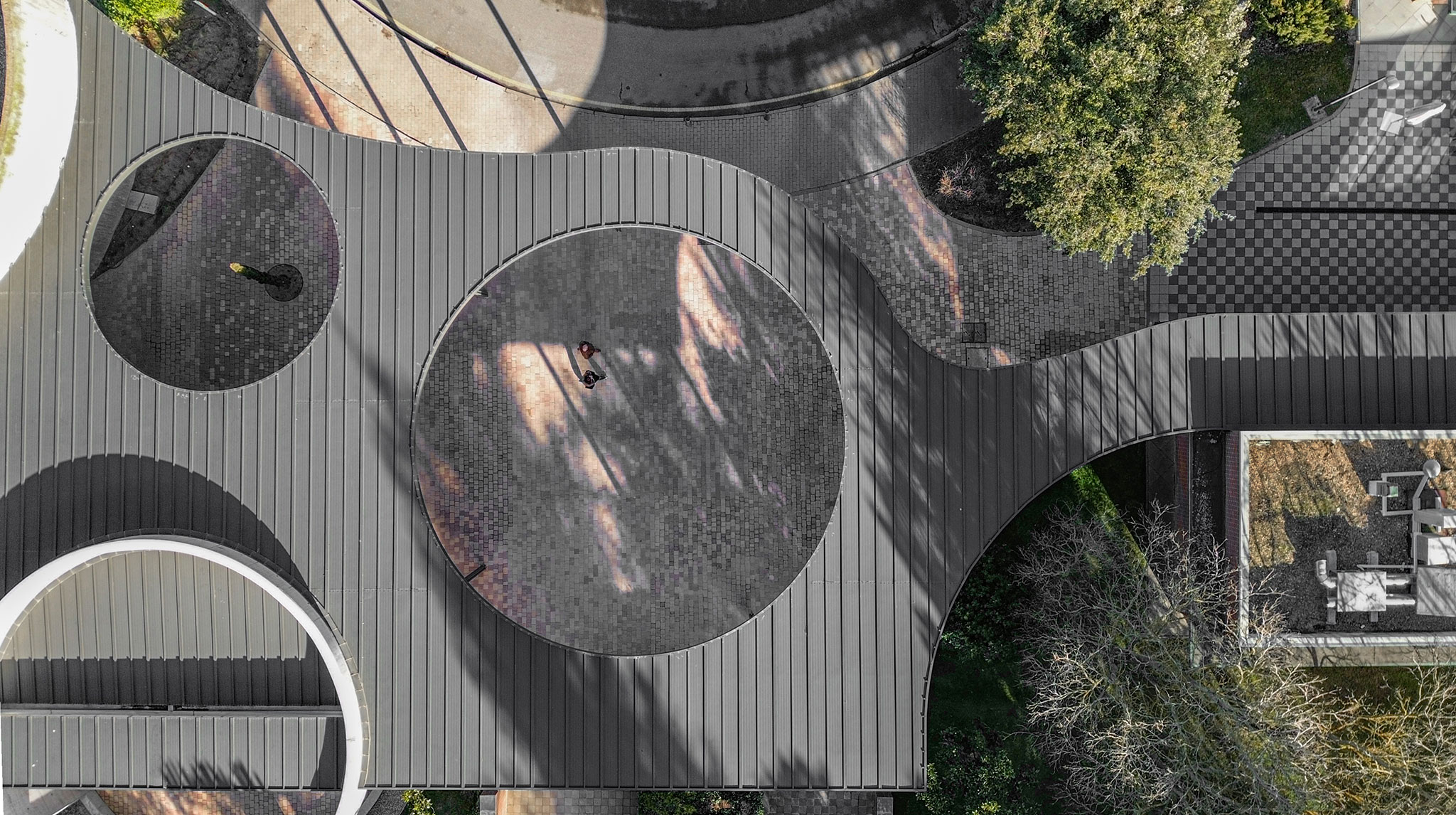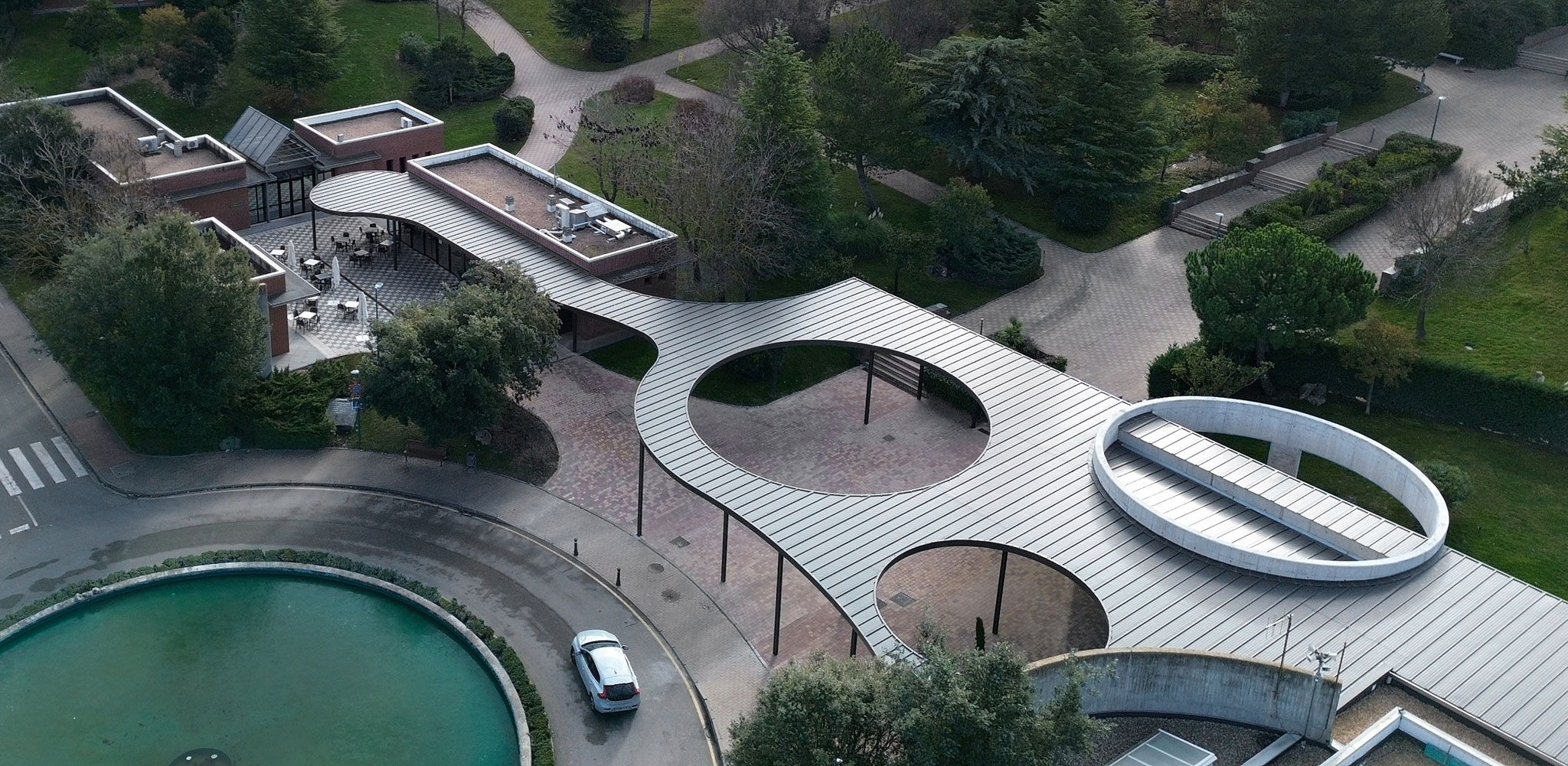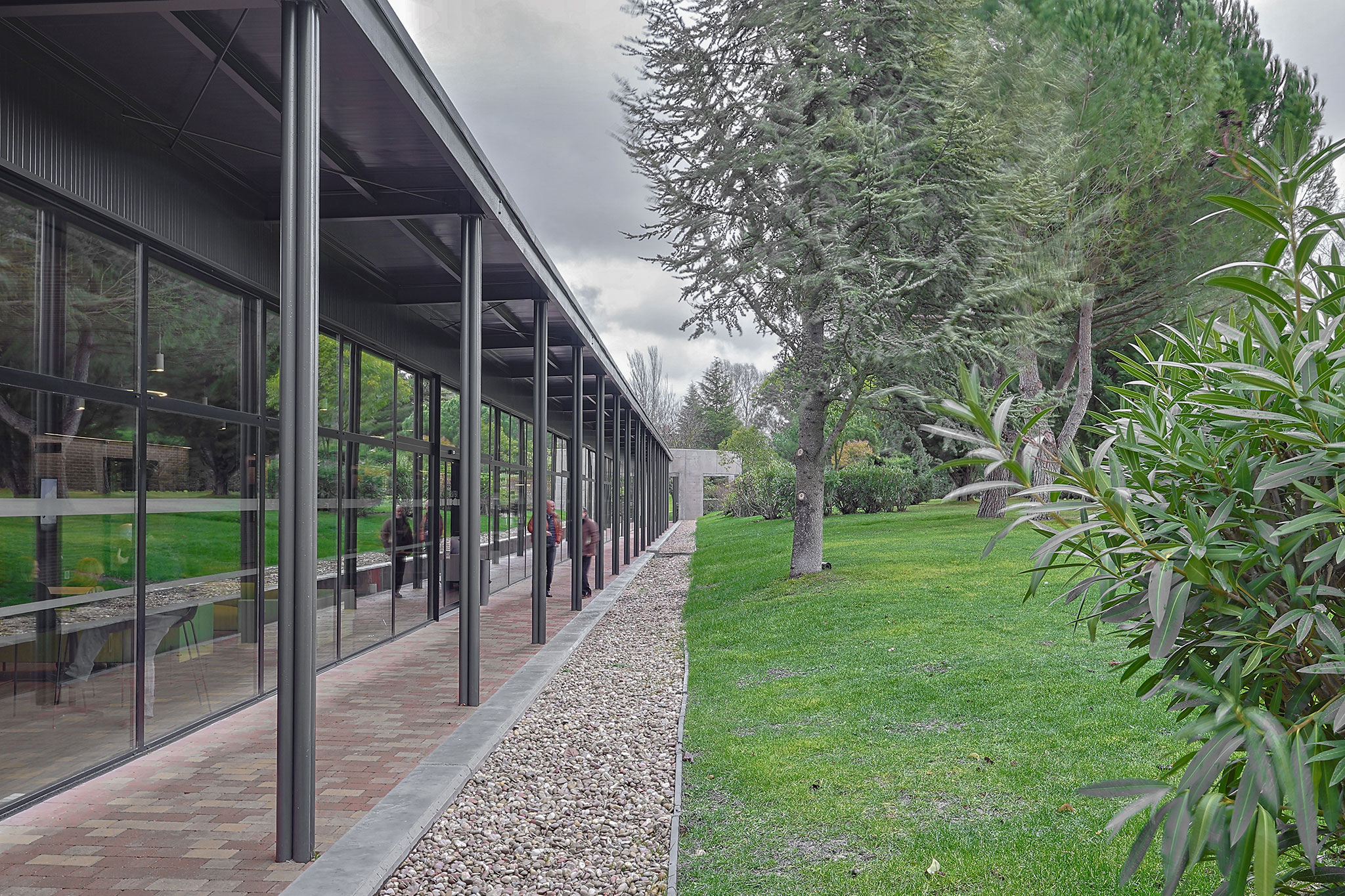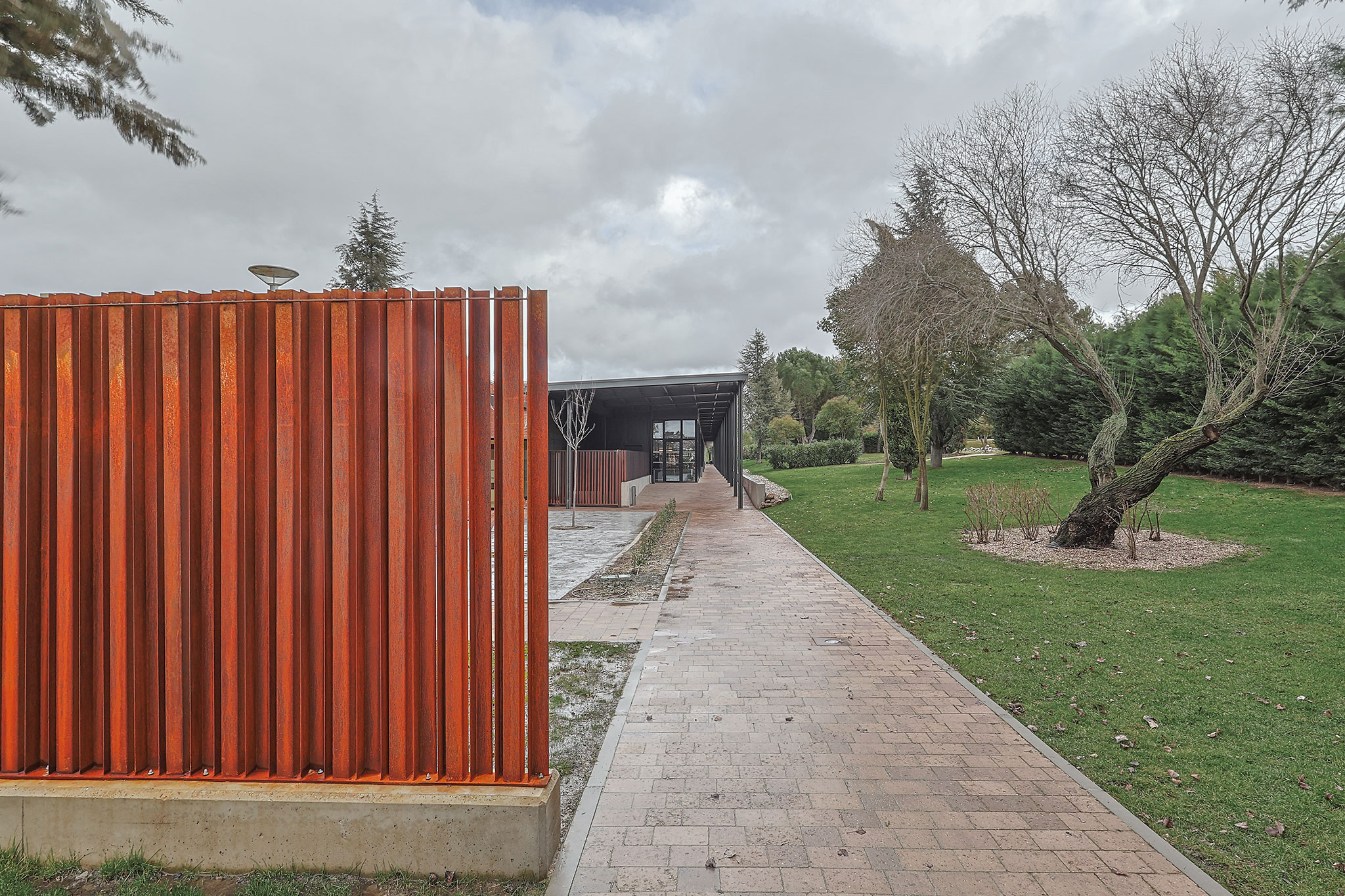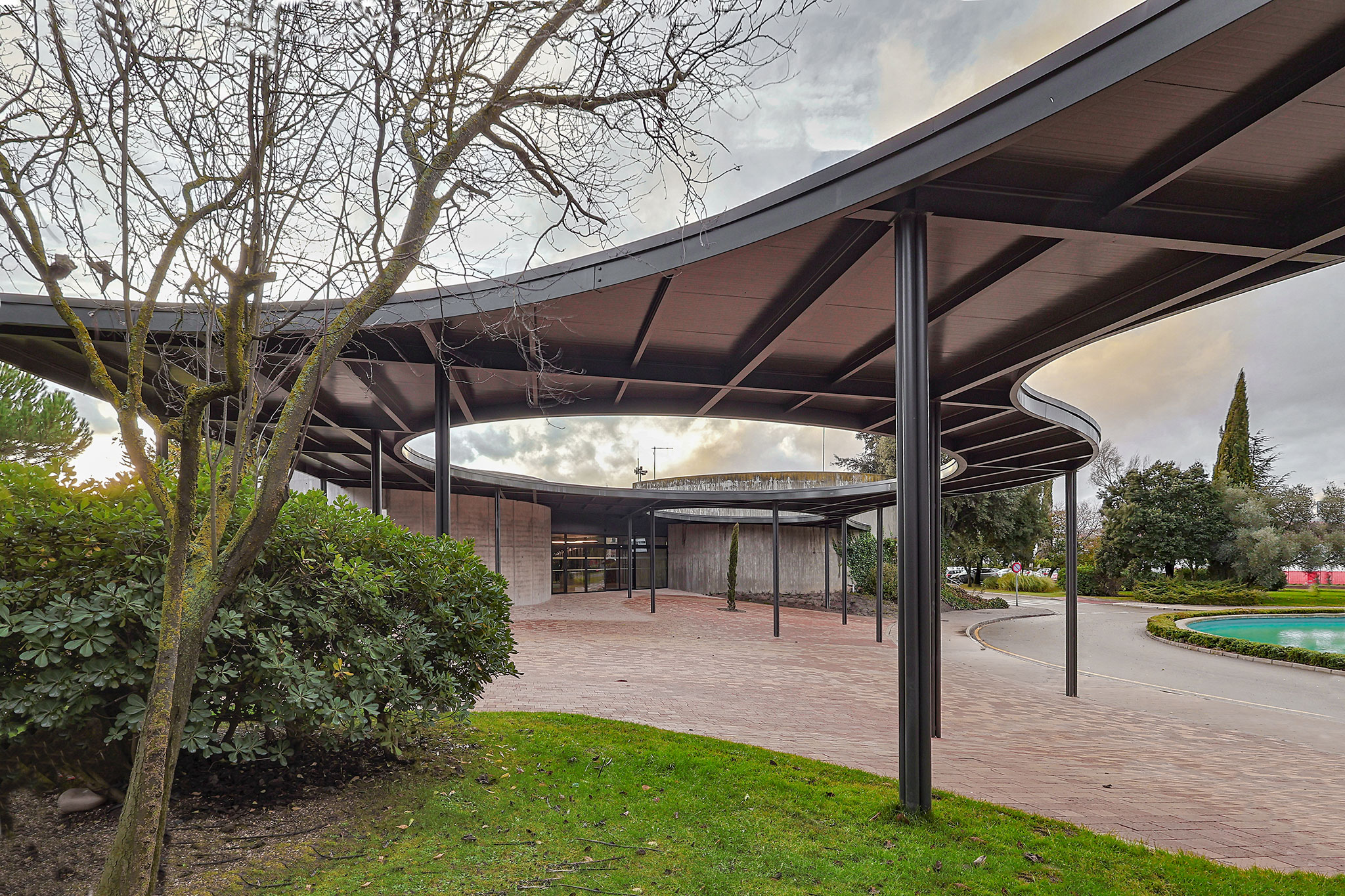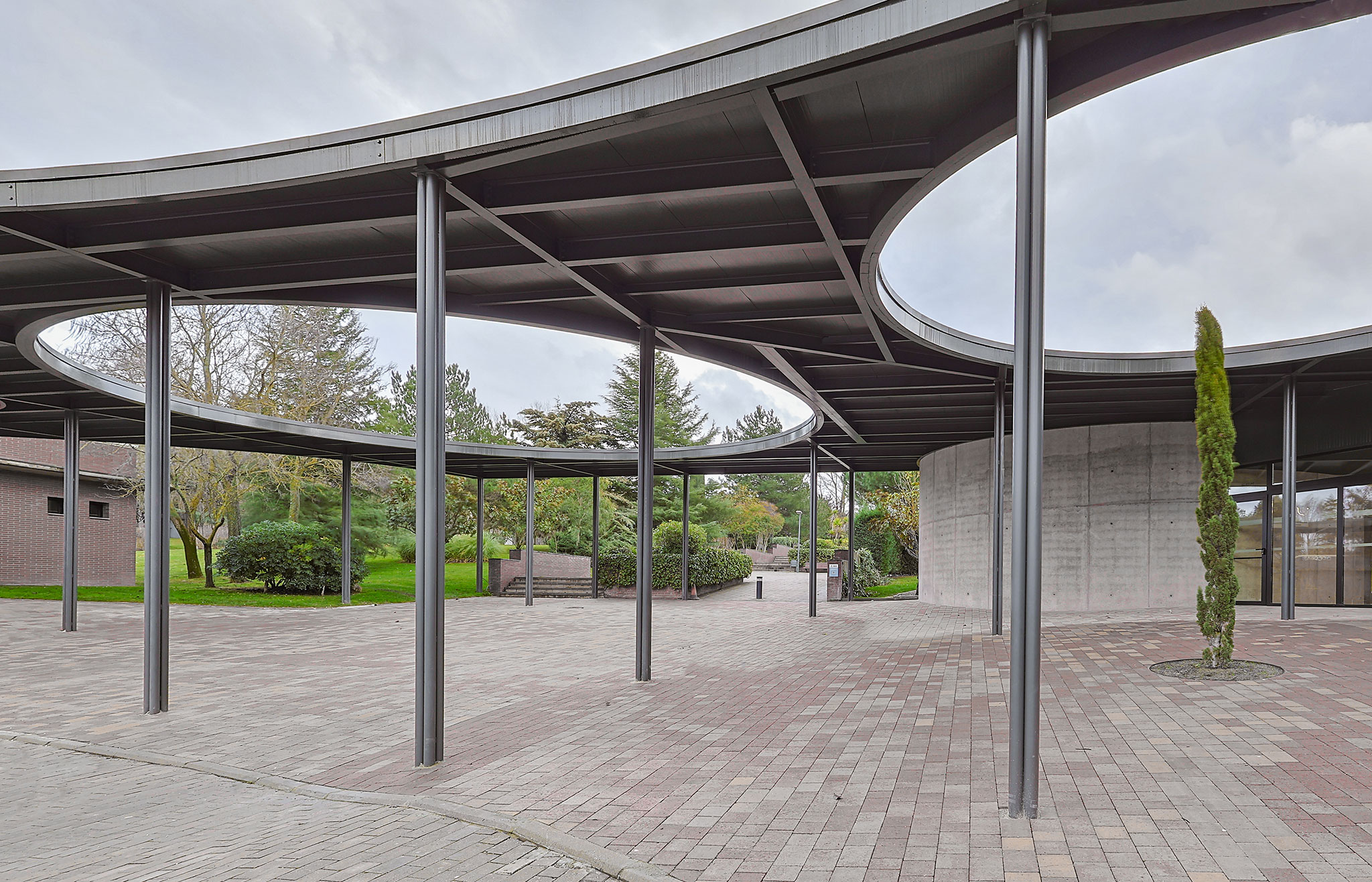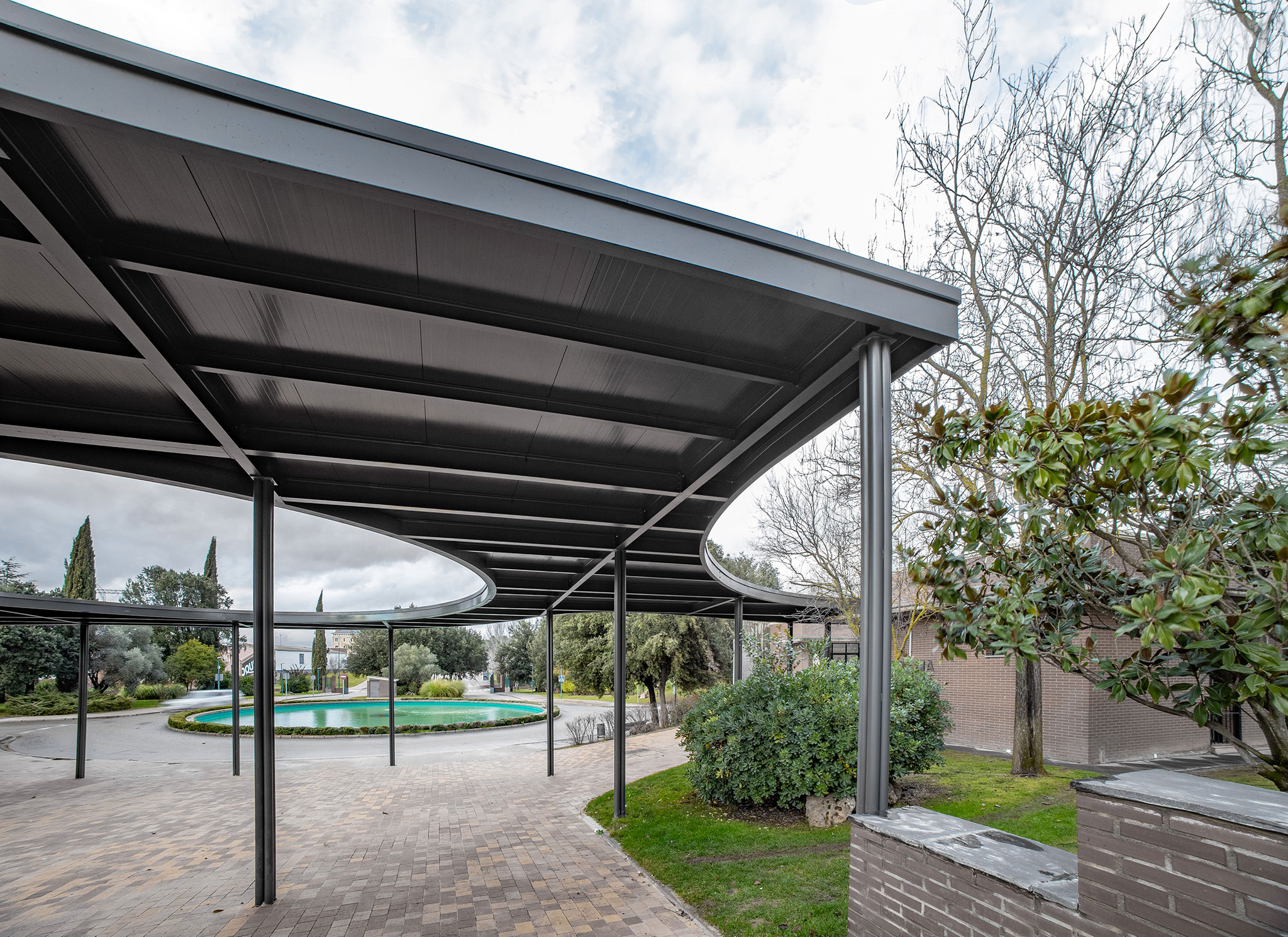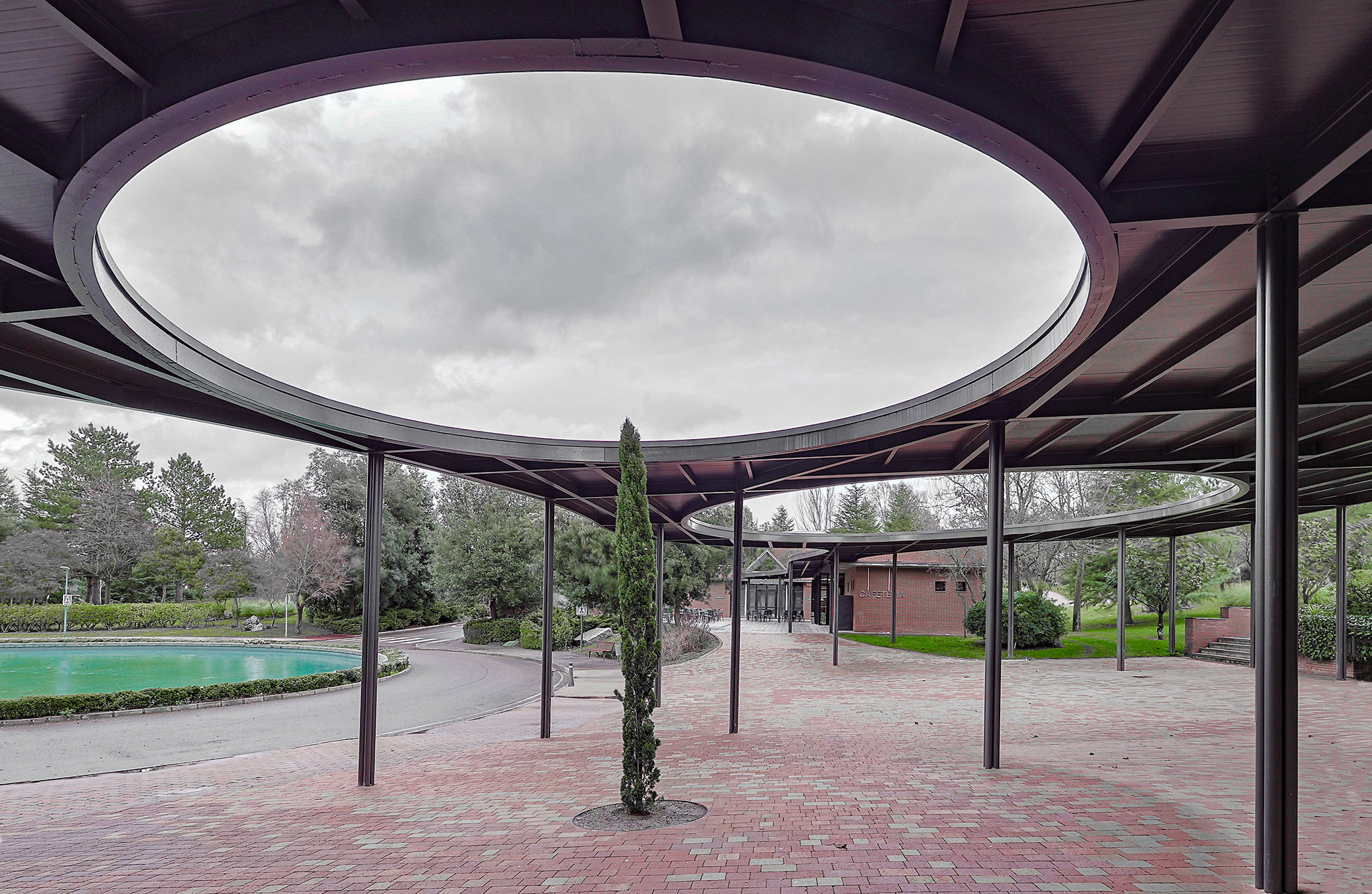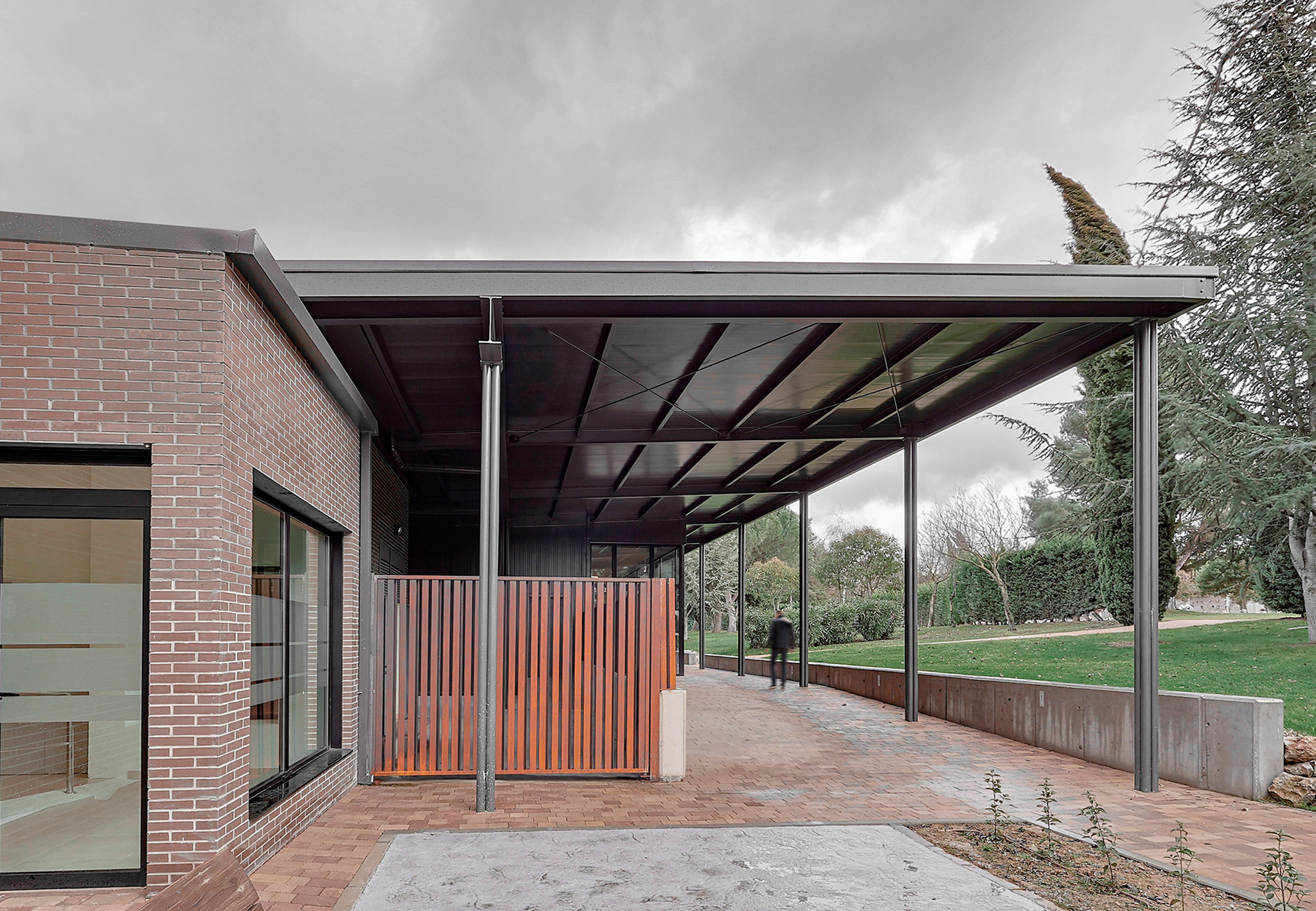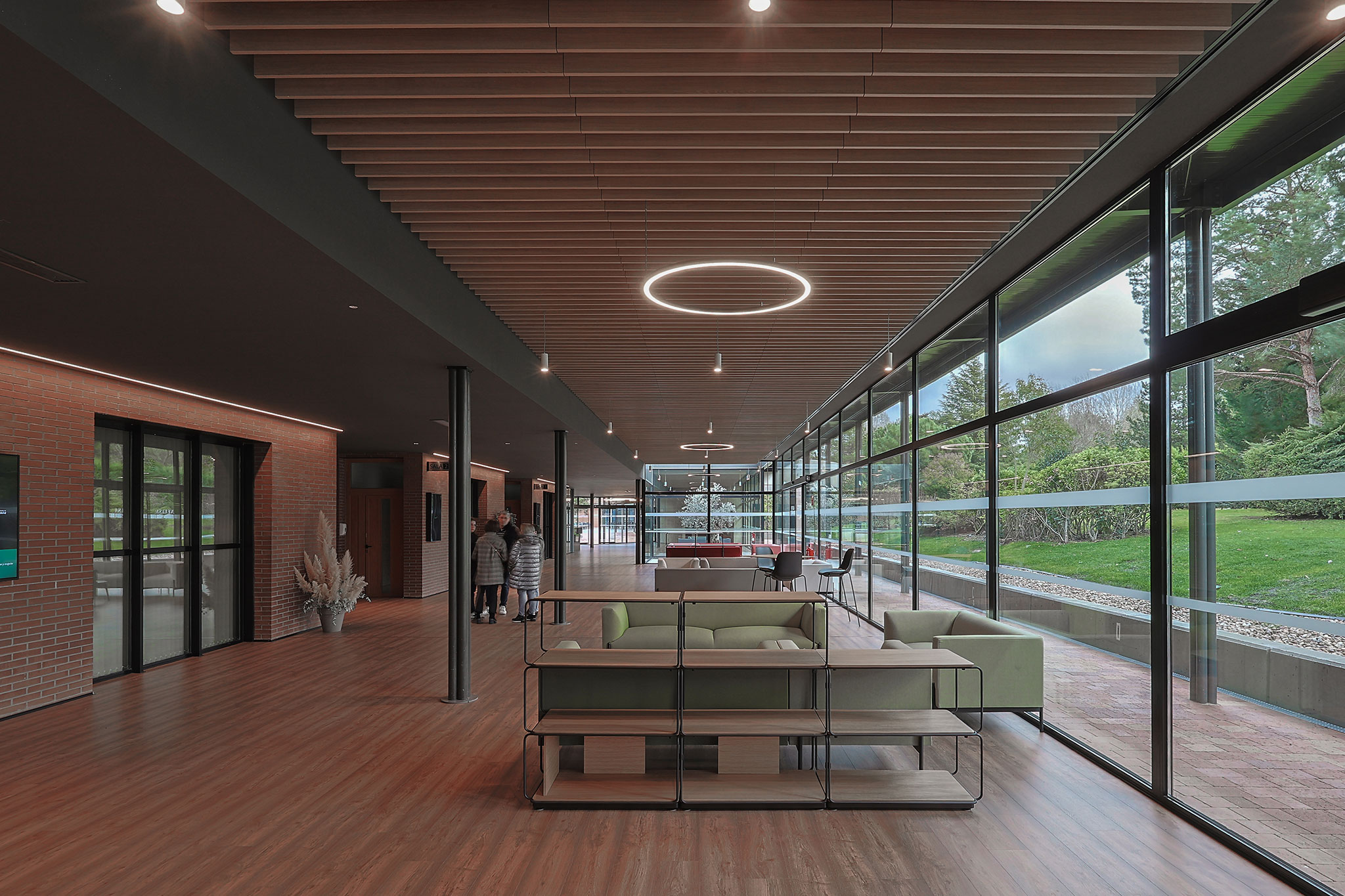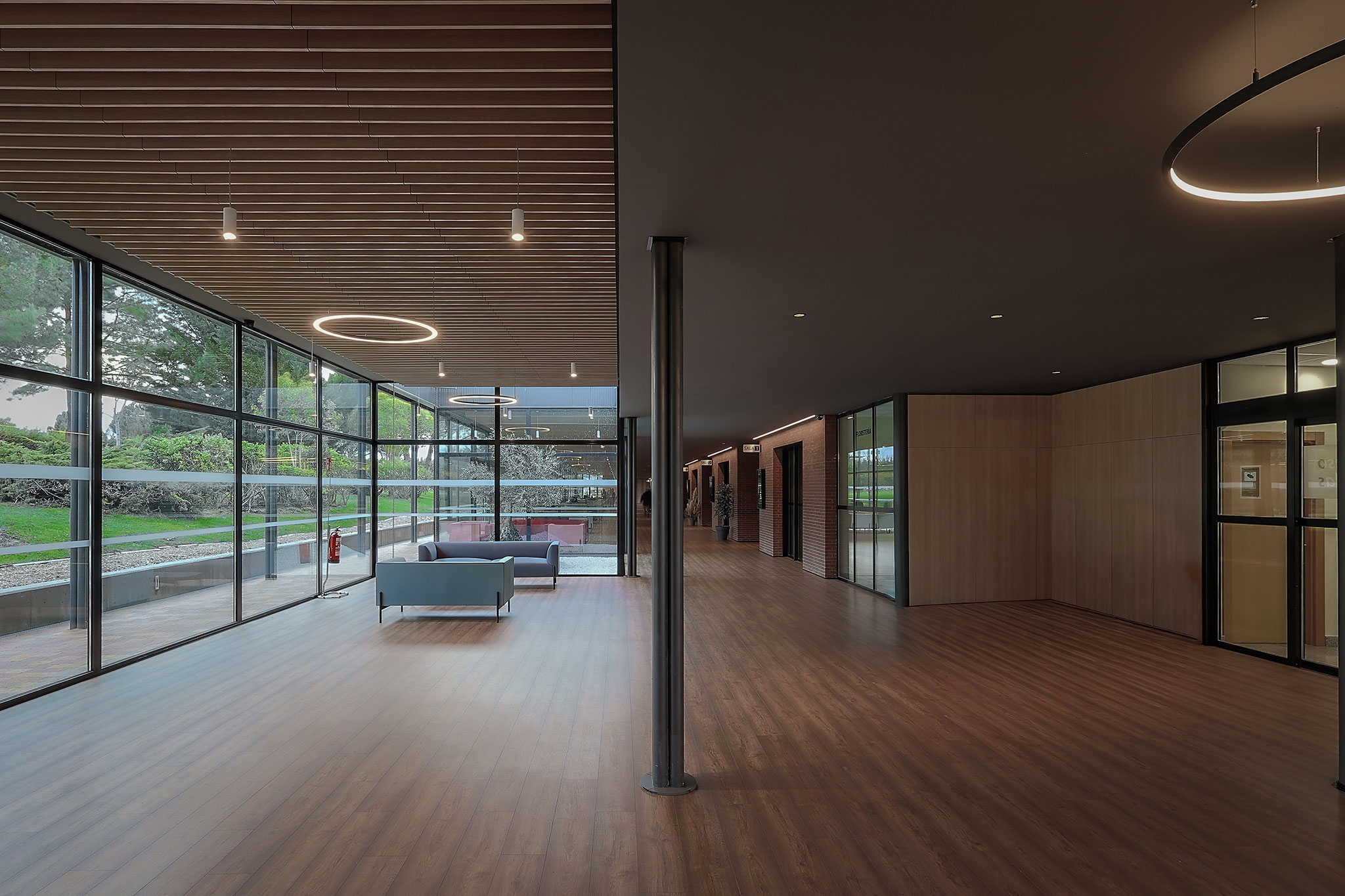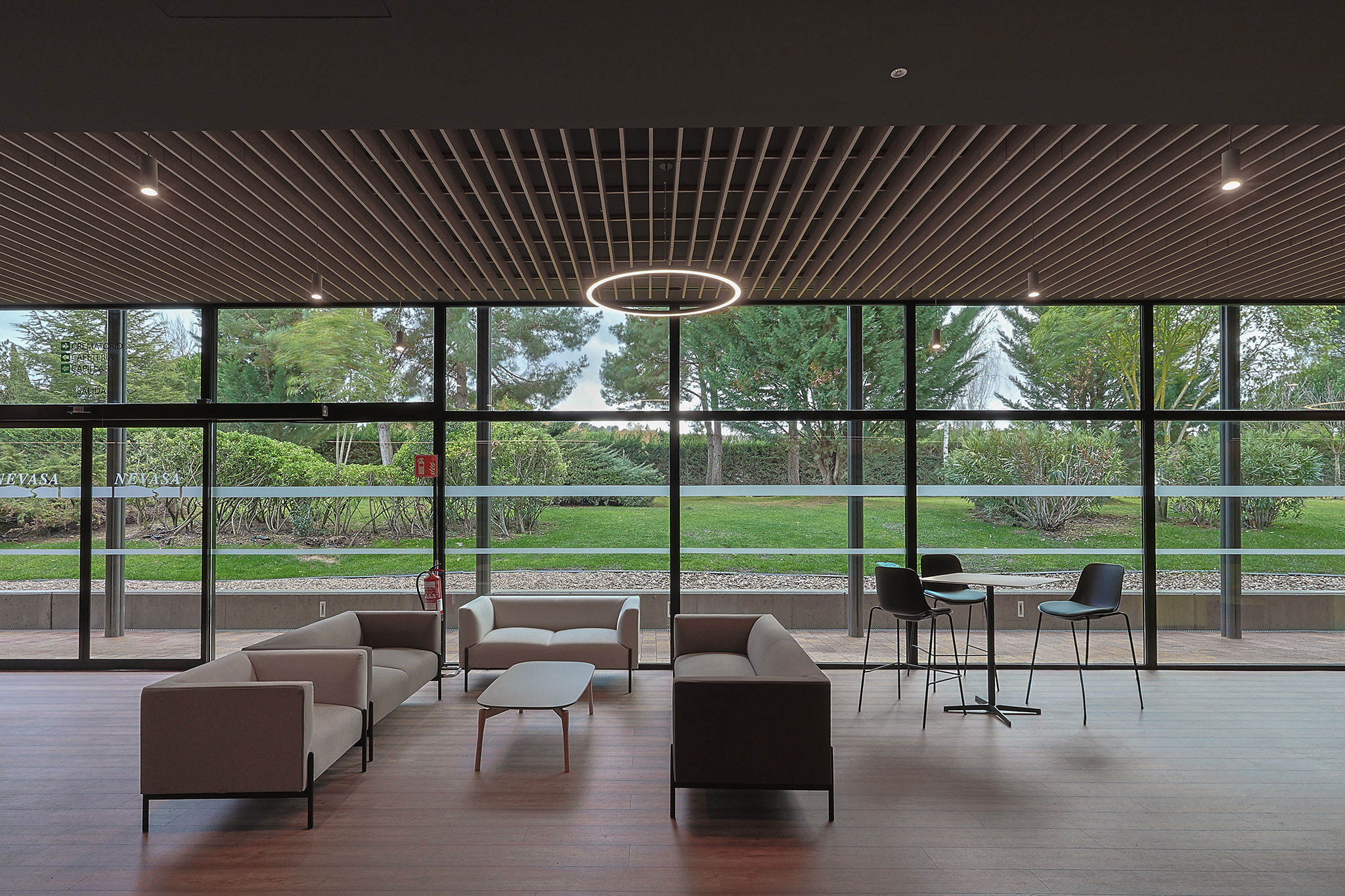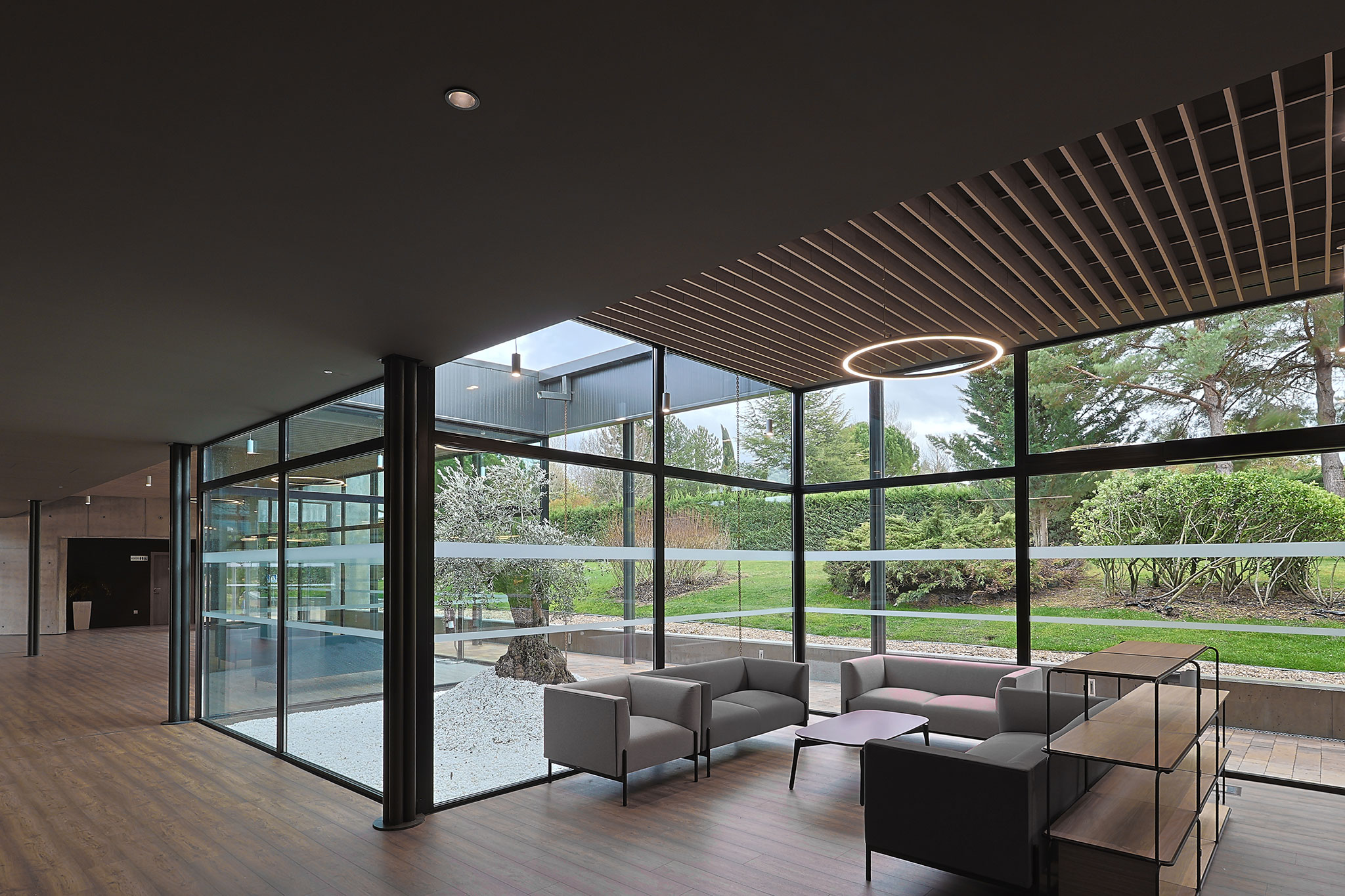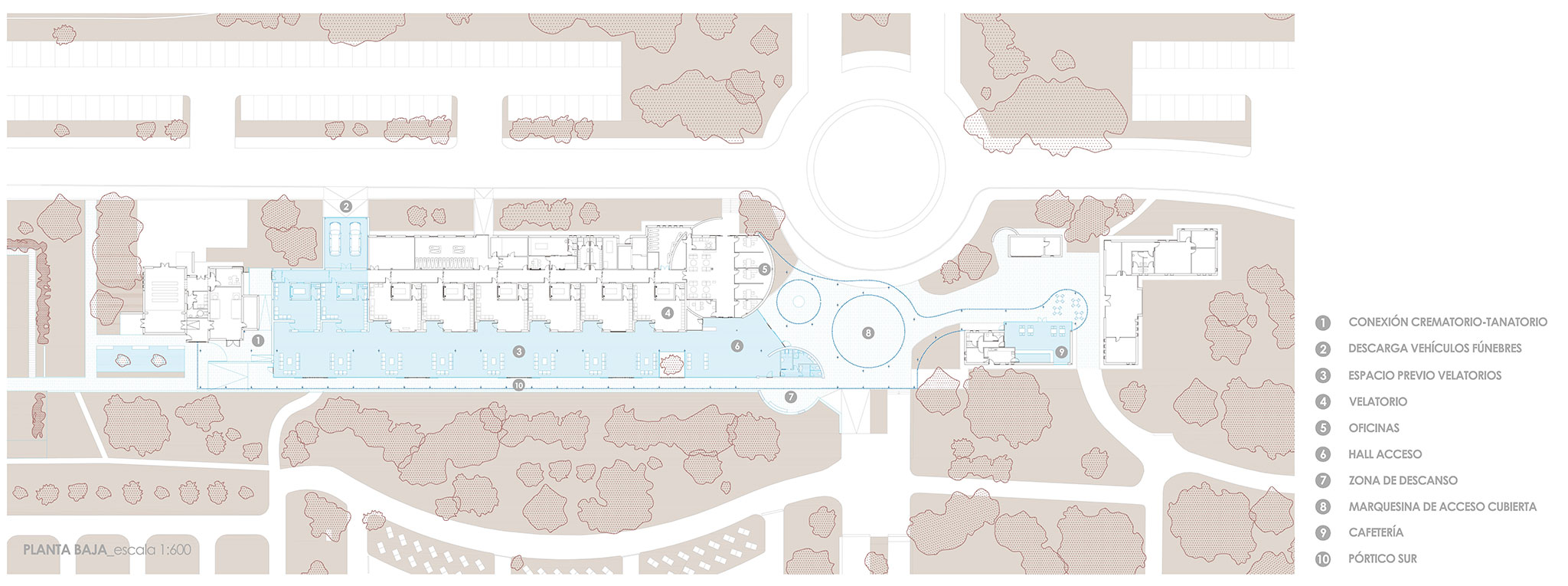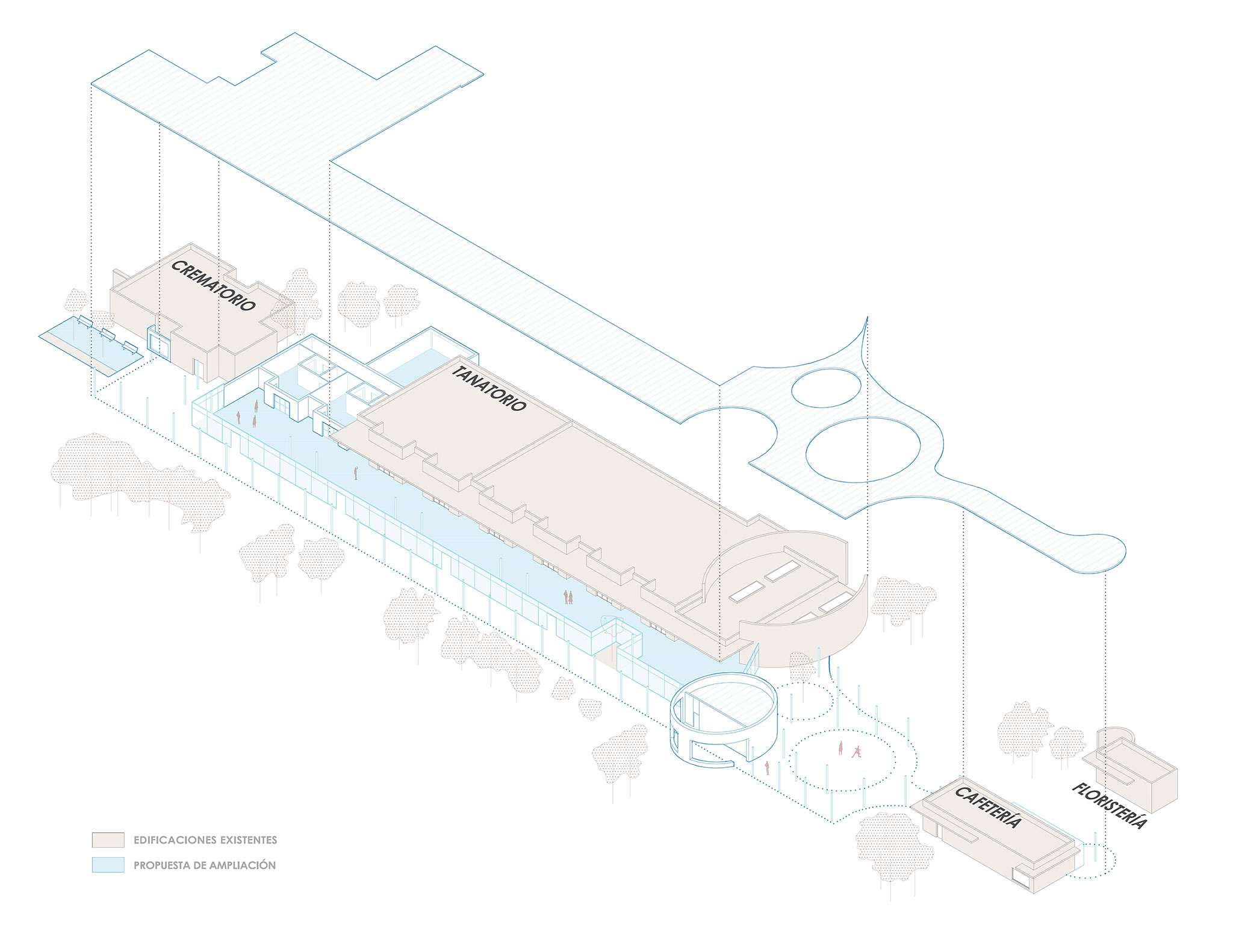
The expansion and renovation project by Arias Garrido Arquitectos and GMM Ingeniería y Arquitectura begins the journey to the cemetery with a covered plaza, designed as an anteroom and gathering place. To the west, the project's striking roof extends over the funeral home and crematorium, creating a large space before the viewing rooms and incorporating two new viewing rooms in addition to the existing ones. Along the south façade, the project consolidates a new transitional space between the building and the garden, and to the east, the roof extends to the also renovated cafeteria. Inside, an enclosed area for unloading coffins is integrated.
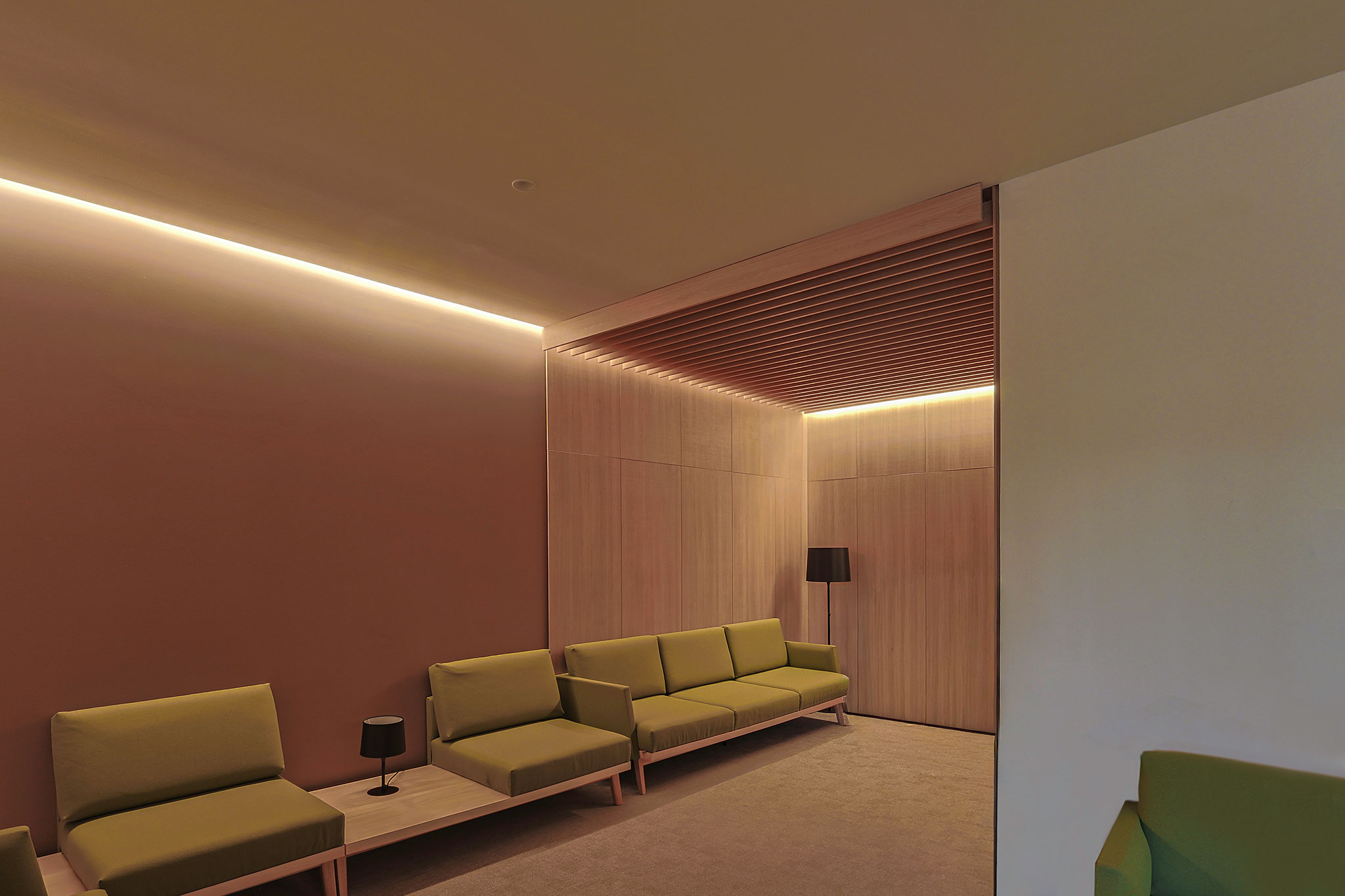
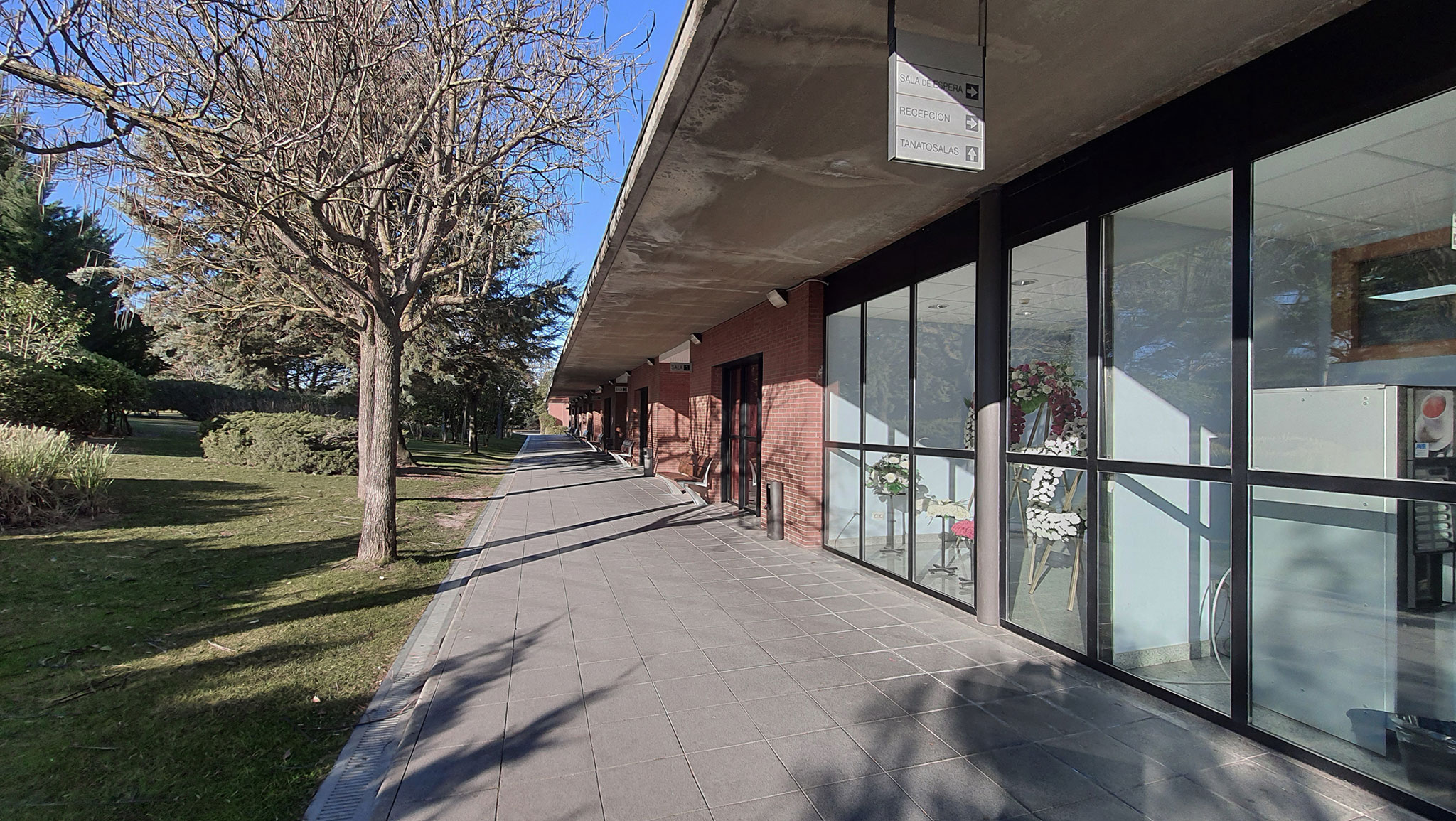
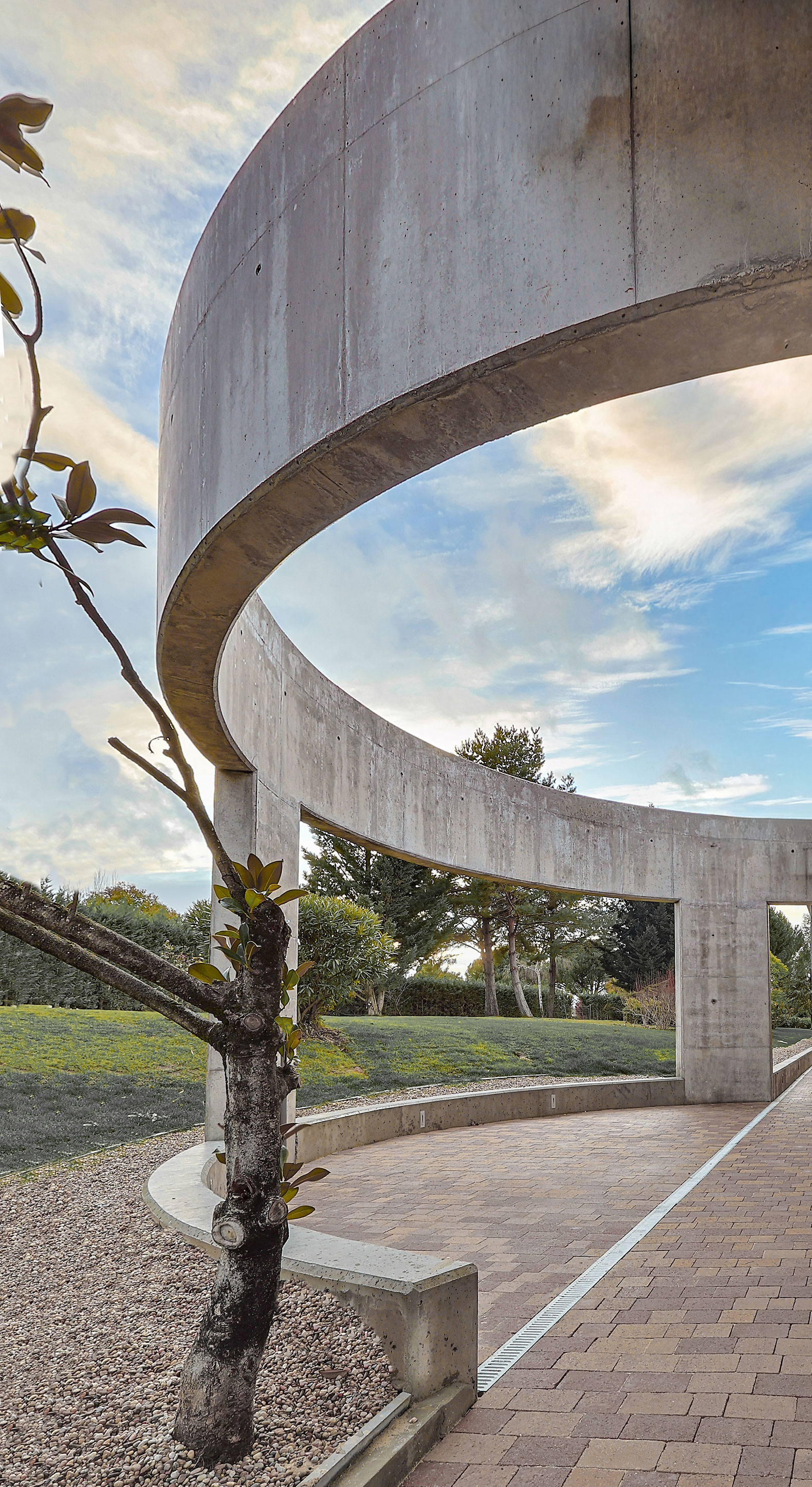
The design combines a mixed structure of concrete and steel (metal frames and trusses in the new roofs, with reinforced concrete walls in specific areas) and an envelope that alternates the existing brick of the viewing rooms with exposed concrete. The main and side entrances feature aluminum frames. Inside, wood paneling predominates, complemented by slatted ceilings in the most prominent areas.
Renovation and expansion of the Tanatorio de las Contiendas by Arias Garrido Arquitectos + GMM Ingeniería y Arquitectura. Photograph by Javier Arias Madero.
Project description by Arias Garrido Arquitectos and GMM Ingeniería y Arquitectura
The intervention proposes a comprehensive expansion and renovation of the Las Contiendas Municipal Funeral Home in Valladolid with a clear objective: to transform the current complex, fragmented into independent pieces, into a single architectural unit, reorganizing and enhancing the existing structure to give it a unified feel and a clearer, more efficient function for users and staff. A system of relationships is thus reconstructed, defining a continuous and sheltered route that reinforces the program's complementary nature.
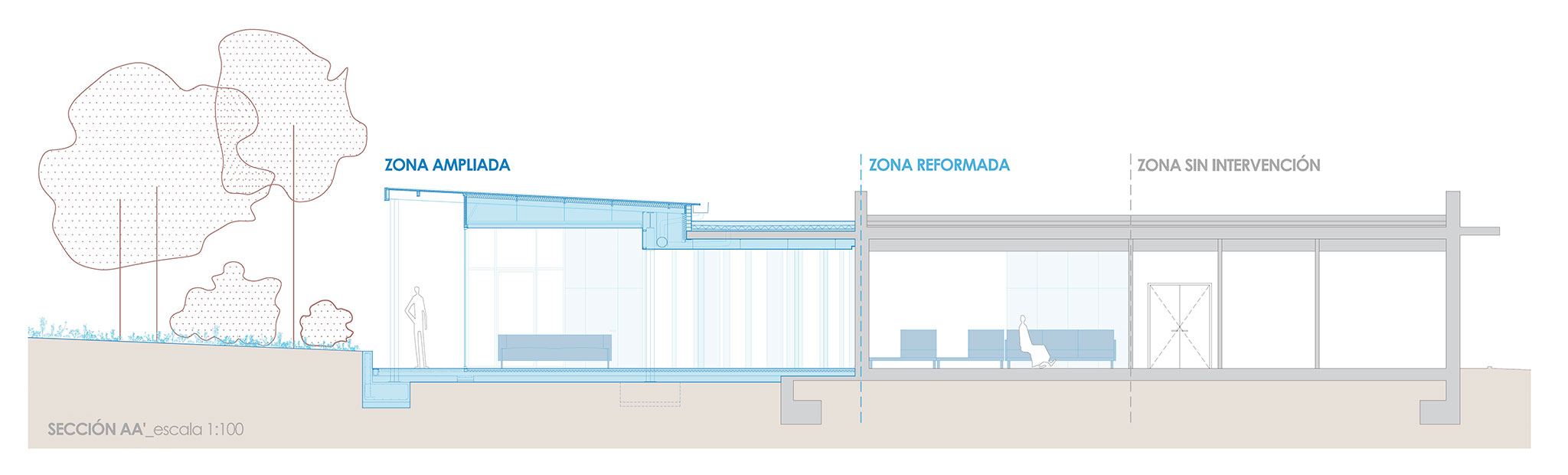
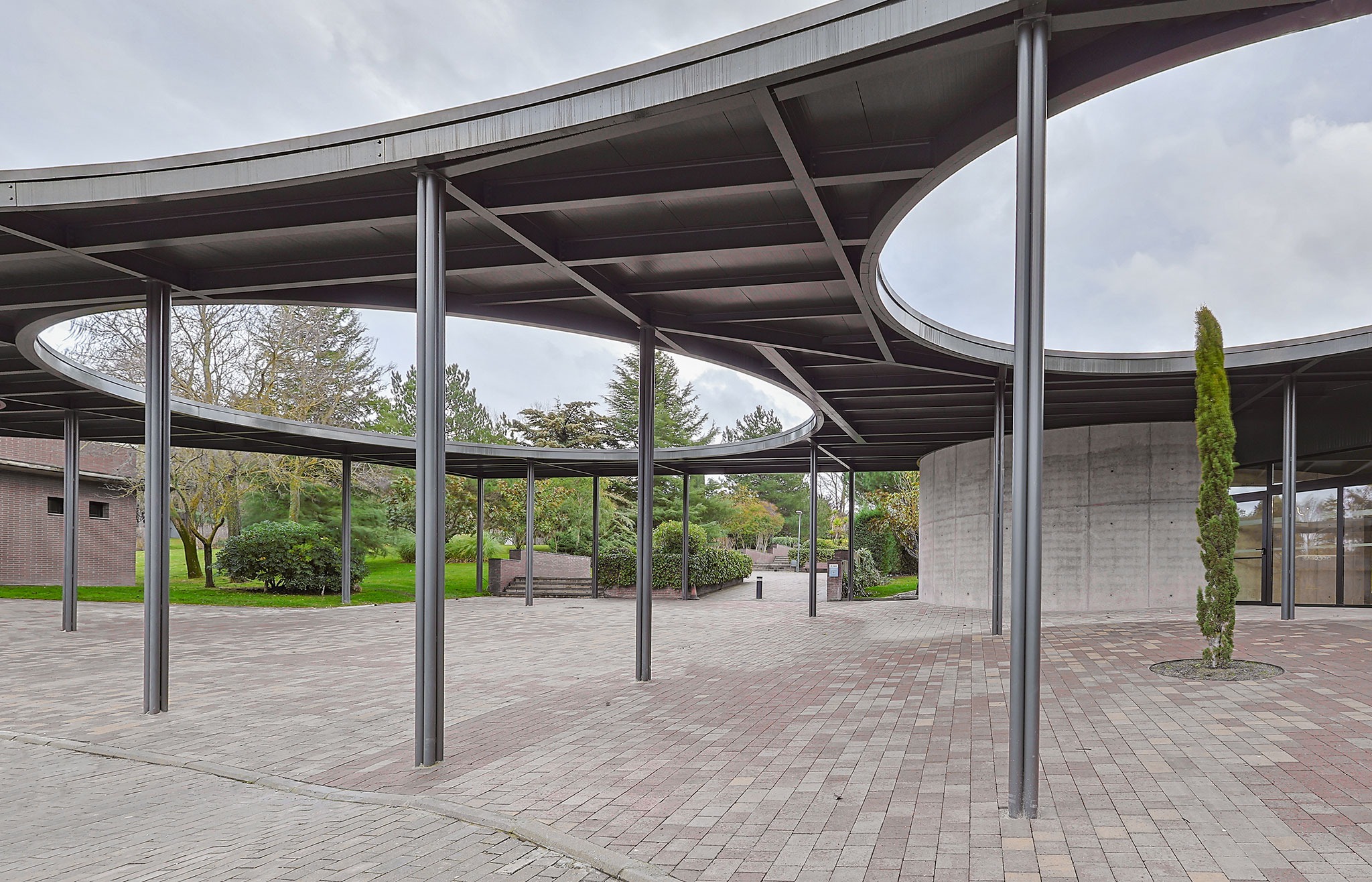
To achieve this, the project incorporates a large metal roof that connects the existing buildings and, at the same time, creates new covered interior and exterior spaces. The currently empty area that begins the path toward the cemetery becomes the new epicenter of the complex: a covered plaza, like a canopy, designed as a welcoming entrance and a place to linger. From this point, covered access between the main areas is guaranteed.
To the west, the roof extends, embracing the funeral home and crematorium, creating a large space in front of the viewing rooms and completing the program with the addition of two new viewing rooms to the existing ones. The renovation also reorganizes the internal circulation between the funeral home and crematorium and integrates an enclosed area for unloading coffins, improving the efficiency and discretion of the services.
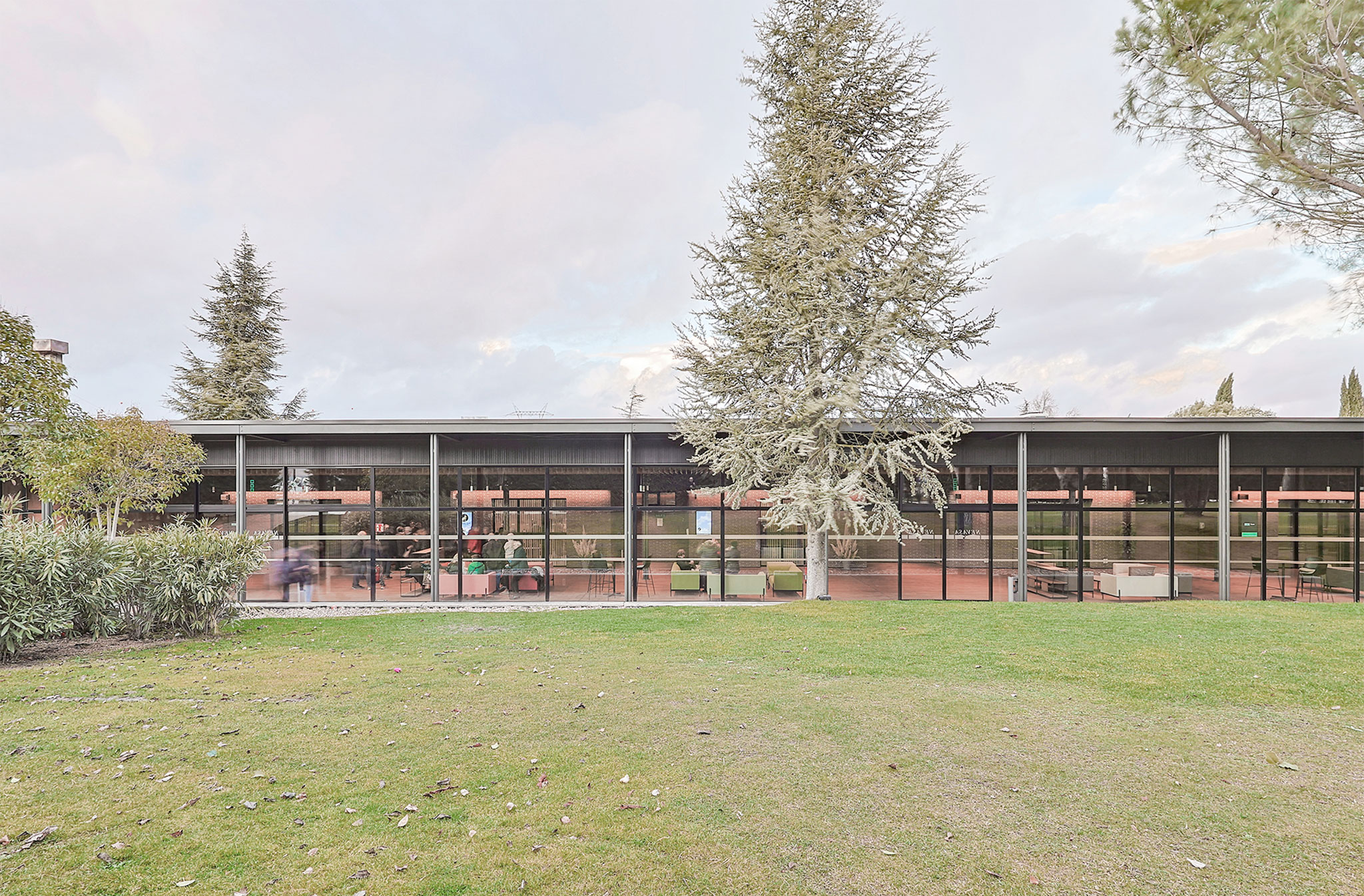
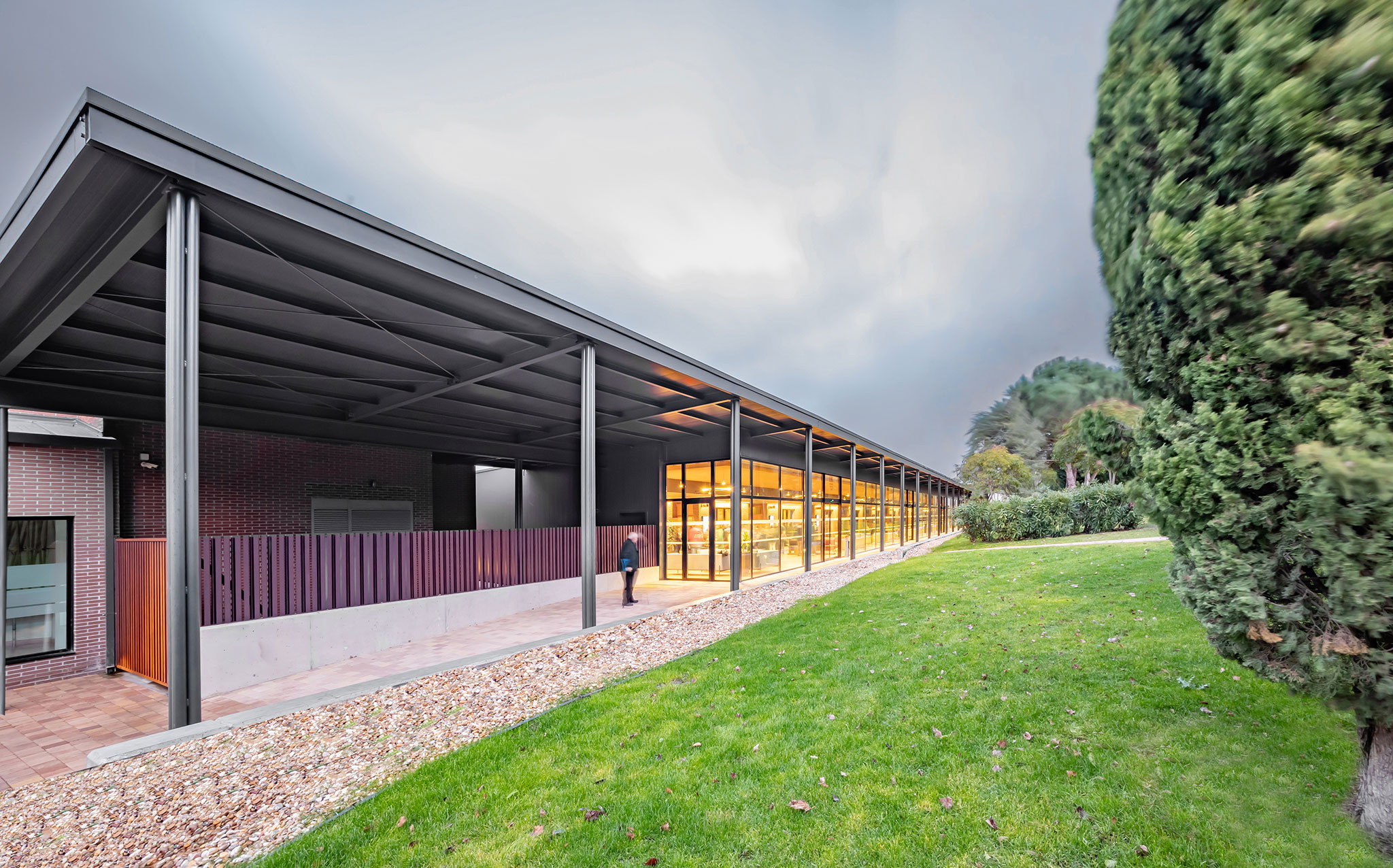
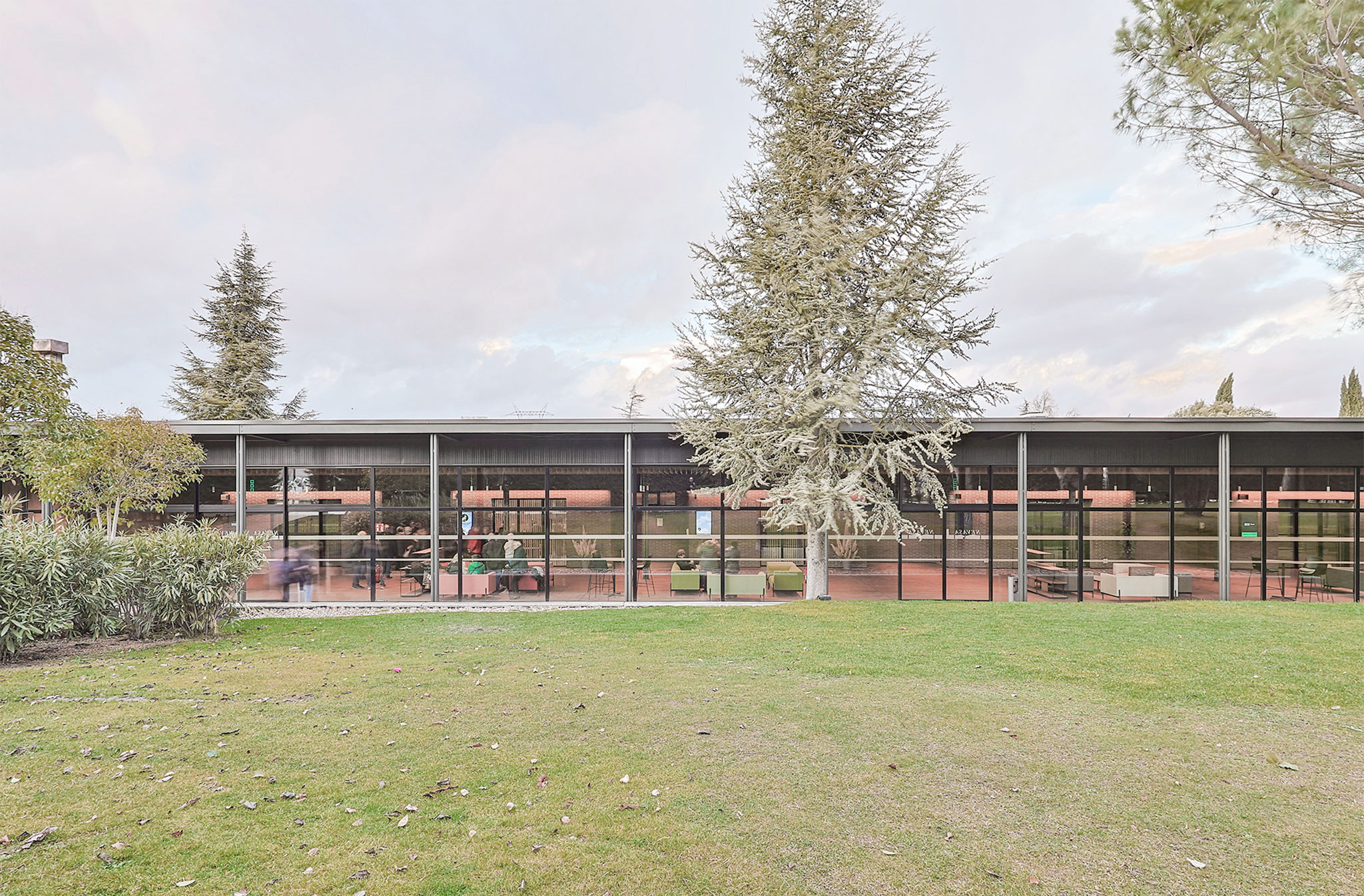
Along the south façade, the project consolidates a transition zone between the building and the garden by means of a longitudinal porch that extends the protected circulation area. This element not only improves climate comfort but also acts as a continuous structure, linking the different sections and reinforcing the relationship of the funeral home with its surrounding landscape. Simultaneously, the staff area undergoes a partial renovation, restructuring spaces and updating facilities. To the east, the roof extends to the cafeteria, which is renovated and expanded, enhancing its role as a complementary service to the complex.
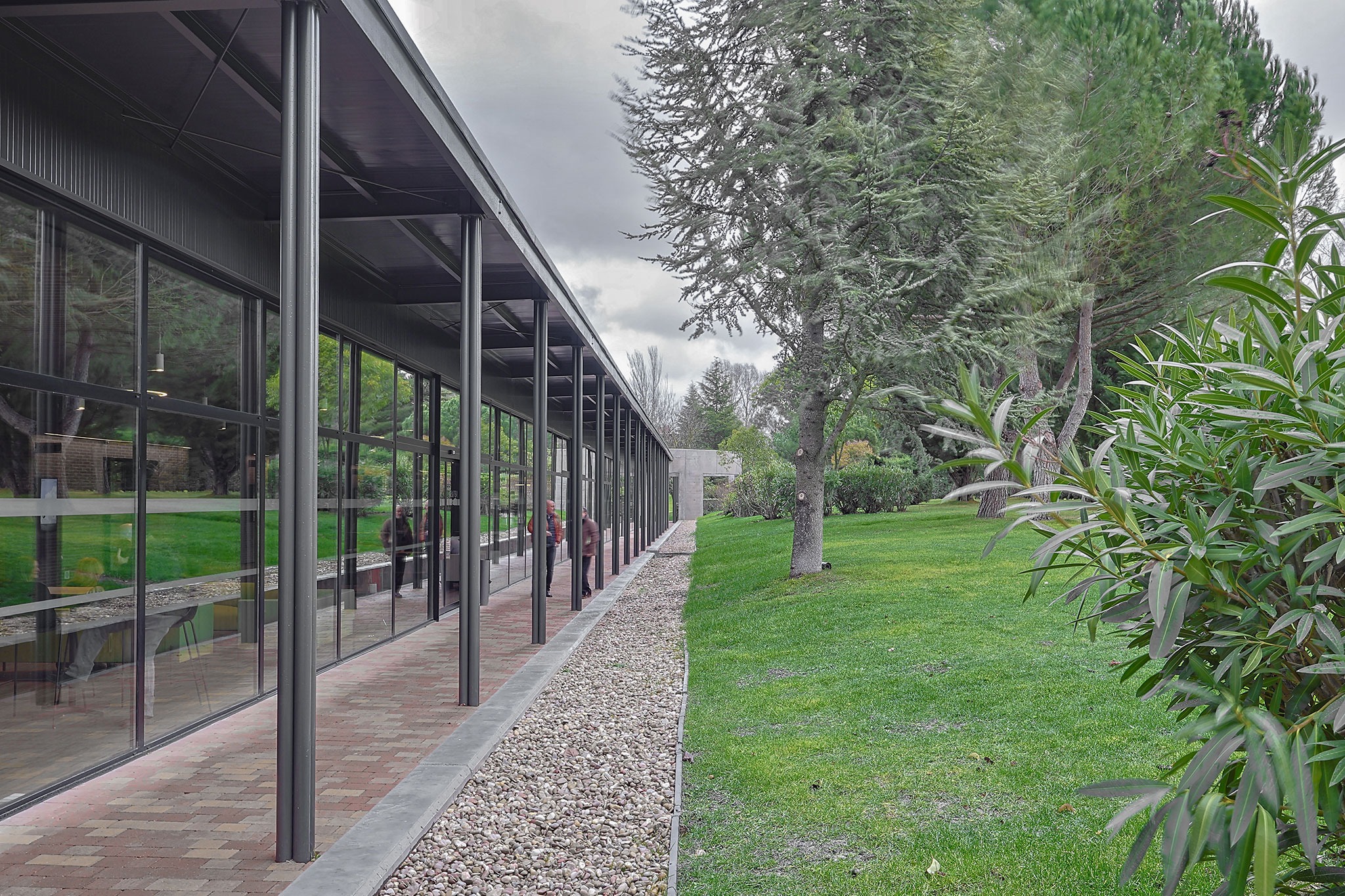
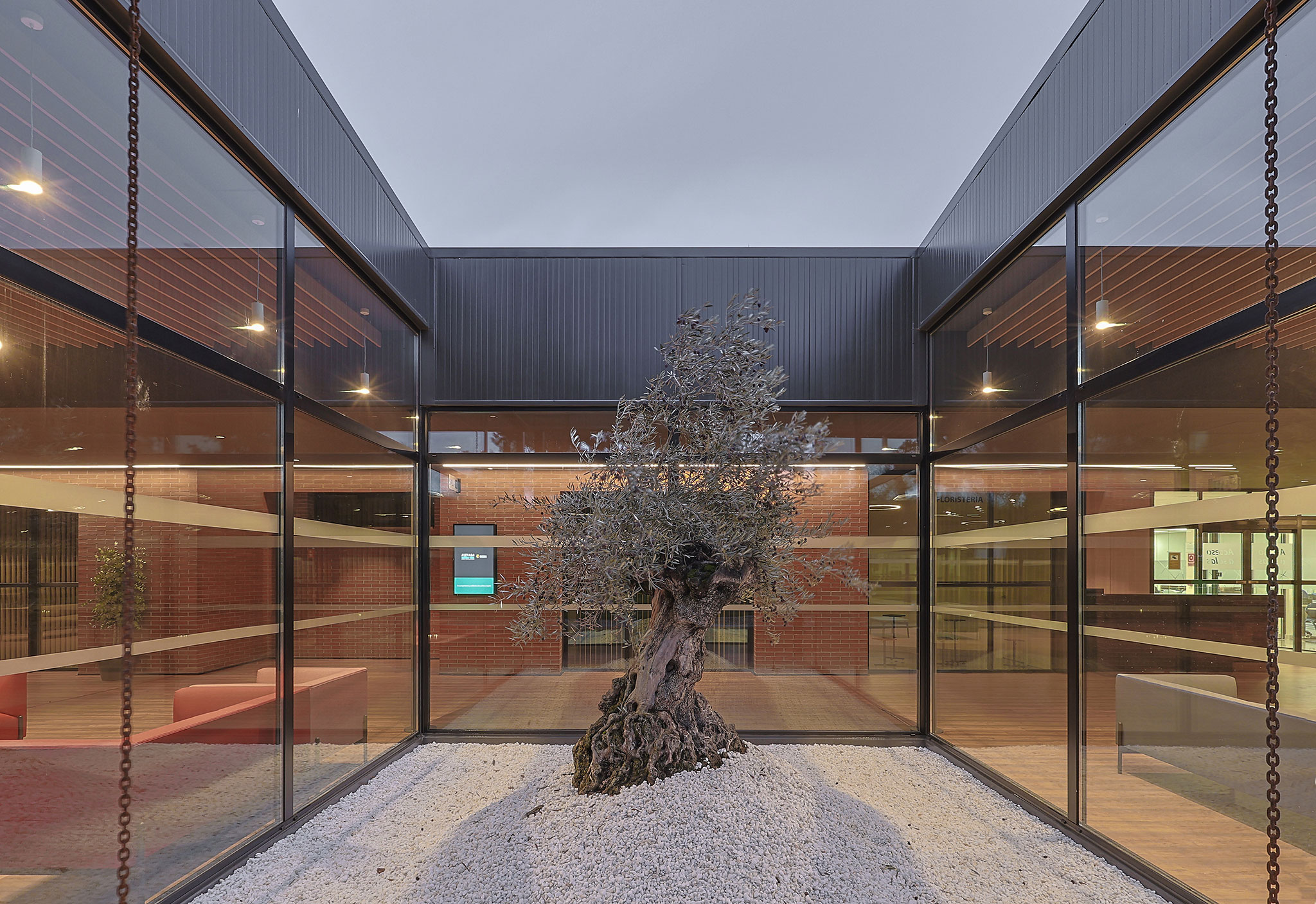
The materials used reinforce this unified and contemporary character, maintaining continuity with the existing structure. The proposal combines a mixed concrete and steel structure (metal frames and trusses in the new roofs, with reinforced concrete walls in specific areas) and an envelope that alternates the existing exposed brick of the viewing rooms with exposed concrete in key areas and metal sandwich panels in technical and service zones. The large entrances and the side enclosure of the space preceding the viewing rooms are framed with aluminum windows. Inside, warm finishes predominate, such as wood paneling complemented by slatted ceilings in more prominent areas.
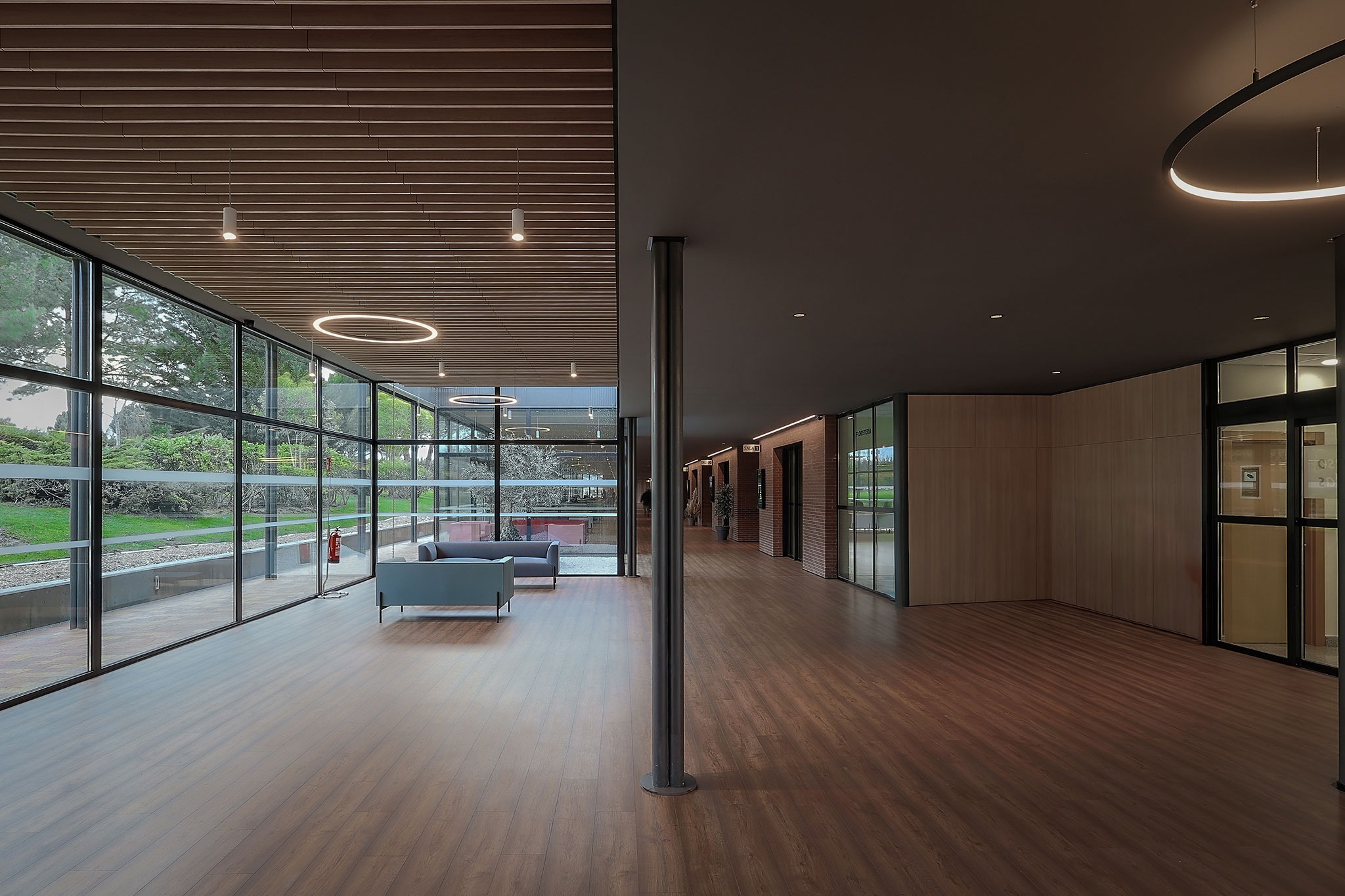
Overall, the proposal views the renovation as an opportunity to improve the spatial quality, the clarity of use, and the dignity of the circulation, reinforcing the coherence of the complex without compromising its integration with the garden. The extension is integrated as a natural continuation of the existing structure, resulting in a more accessible, comfortable, and better-adapted funeral home.