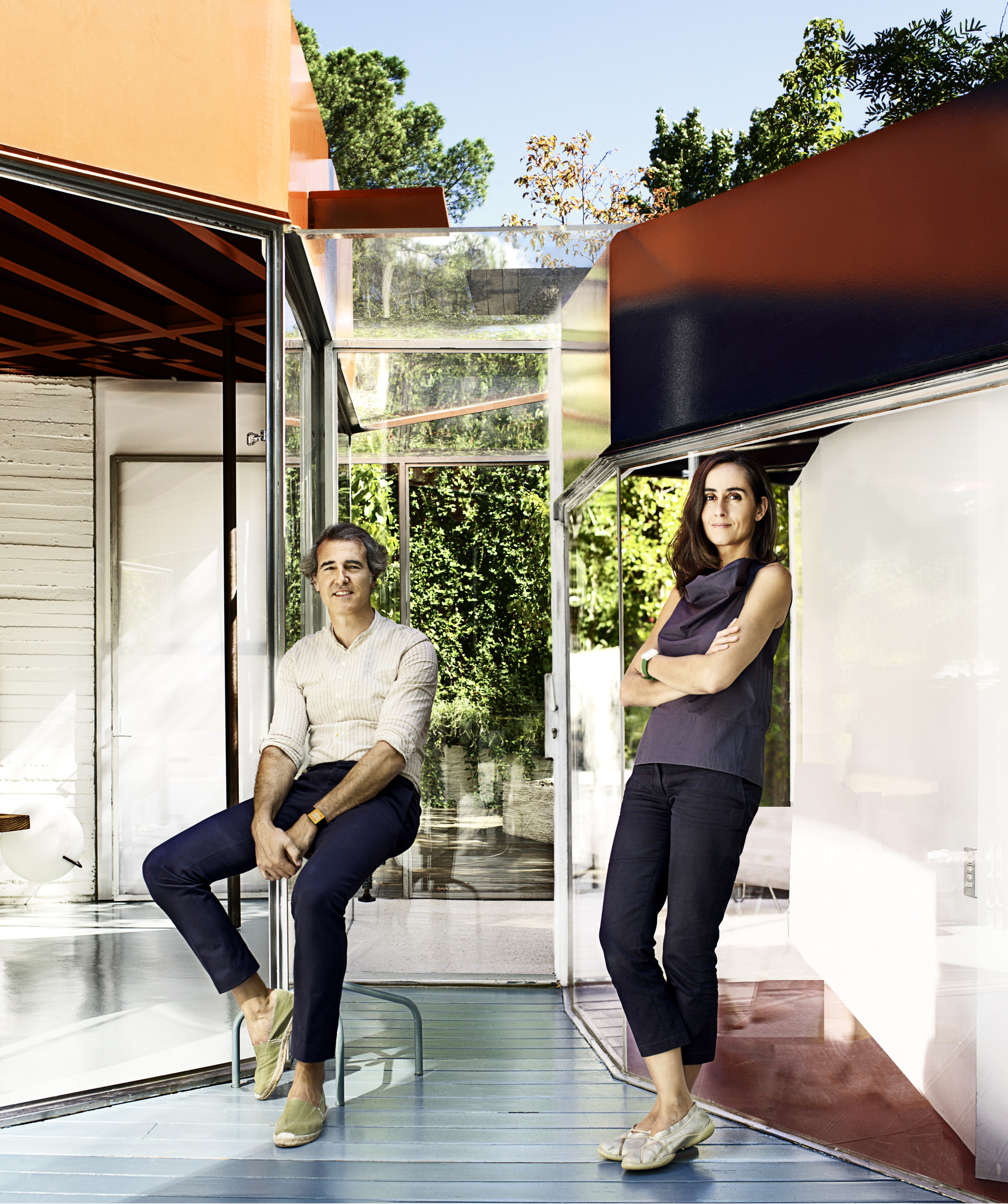
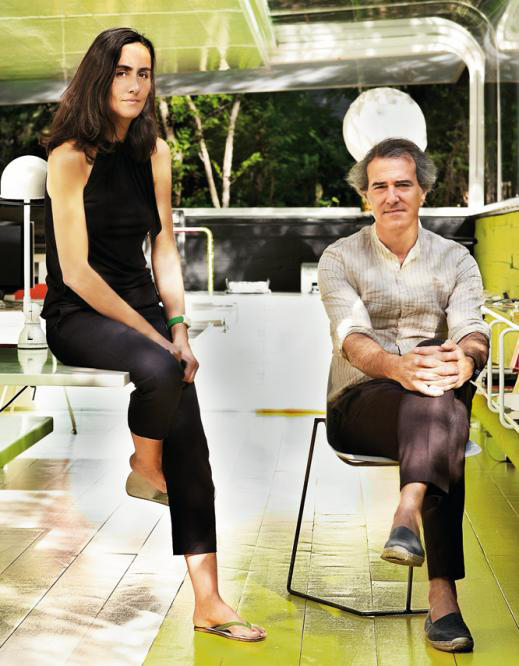
As part of the triennial’s programme, the floating pavilion designed by the Spanish architectural practice Selgascano is made from a transparent pink-orange plastic skin over a steel skeleton, an eye-catching organic structure, with a pool at the centre where visitors will be able to take a dip in the canal.
The tunnel-like structure is reminiscent of Selgascano’s 2015 Serpentine Pavilion and the distinctive plastic bathes the interior in a rich light, playing optical illusions as visitors emerge back outside. It also heats up, like a greenhouse, and because this is not the south of Spain people will be able to “feel the sun inside pavilion if it’s a grey day”, says one half of the architectural duo, José Selgas.
The project embodies one of the main objectives of the bruges triennial 2018: generating encounters, and challenging the public to not only view artwork, but also to experience it and become part of the creative proces.
The tunnel-like structure is reminiscent of Selgascano’s 2015 Serpentine Pavilion and the distinctive plastic bathes the interior in a rich light, playing optical illusions as visitors emerge back outside. It also heats up, like a greenhouse, and because this is not the south of Spain people will be able to “feel the sun inside pavilion if it’s a grey day”, says one half of the architectural duo, José Selgas.
The project embodies one of the main objectives of the bruges triennial 2018: generating encounters, and challenging the public to not only view artwork, but also to experience it and become part of the creative proces.


![Bois de Cergy Leisure Centre by PLURIEL[LES] ARCHITECTES. Photograph by Charly Broyez](/sites/default/files/styles/mopis_home_featured_block_desktop/public/2026-10/metalocus_PLURIEL-LES_Bois-de-Cergy-Leisure-Centre_14_2p.webp?h=3b4e7bc7&itok=lWSYYH2X "Bois de Cergy Leisure Centre by PLURIEL[LES] ARCHITECTES. Photograph by Charly Broyez")