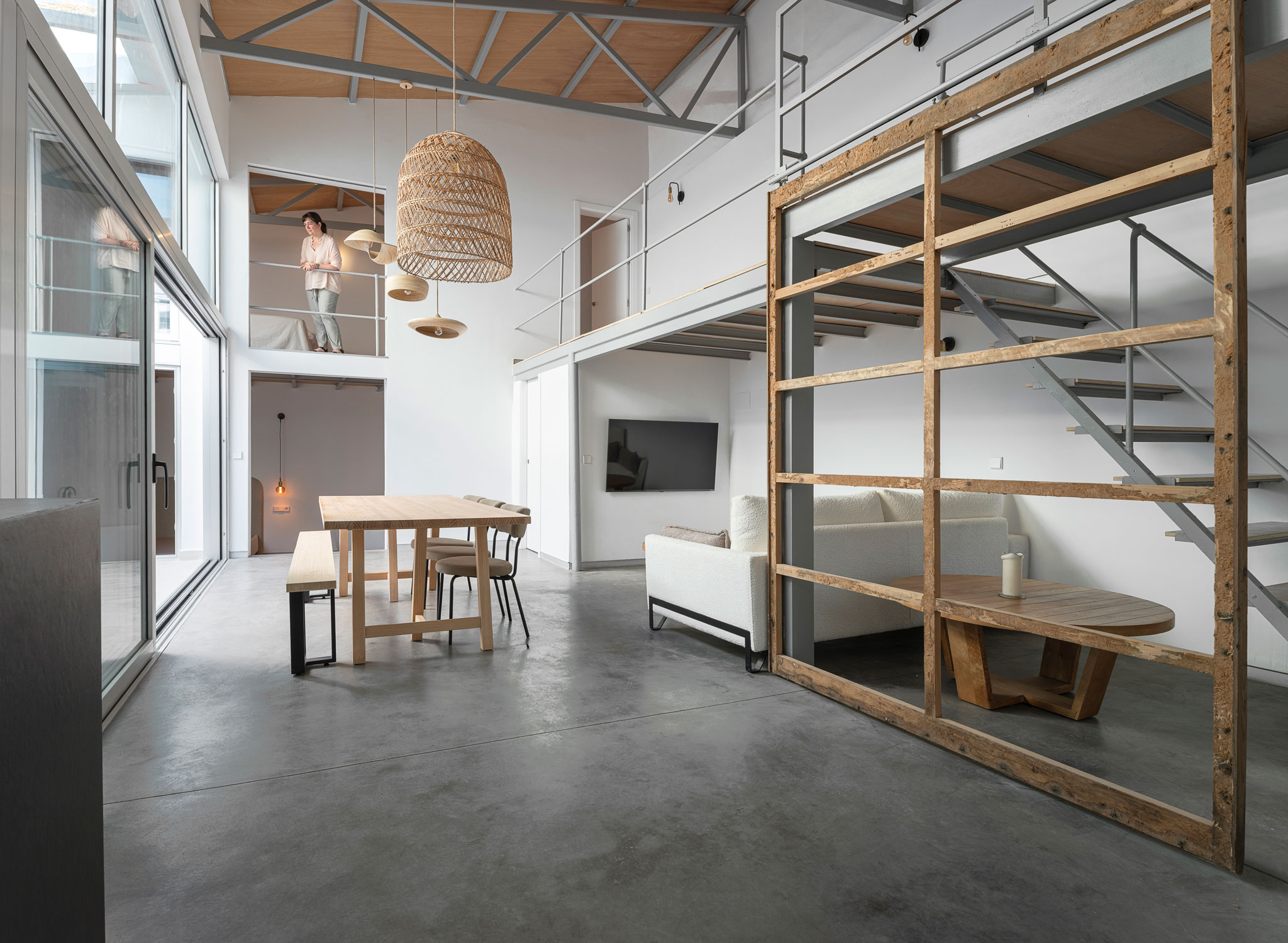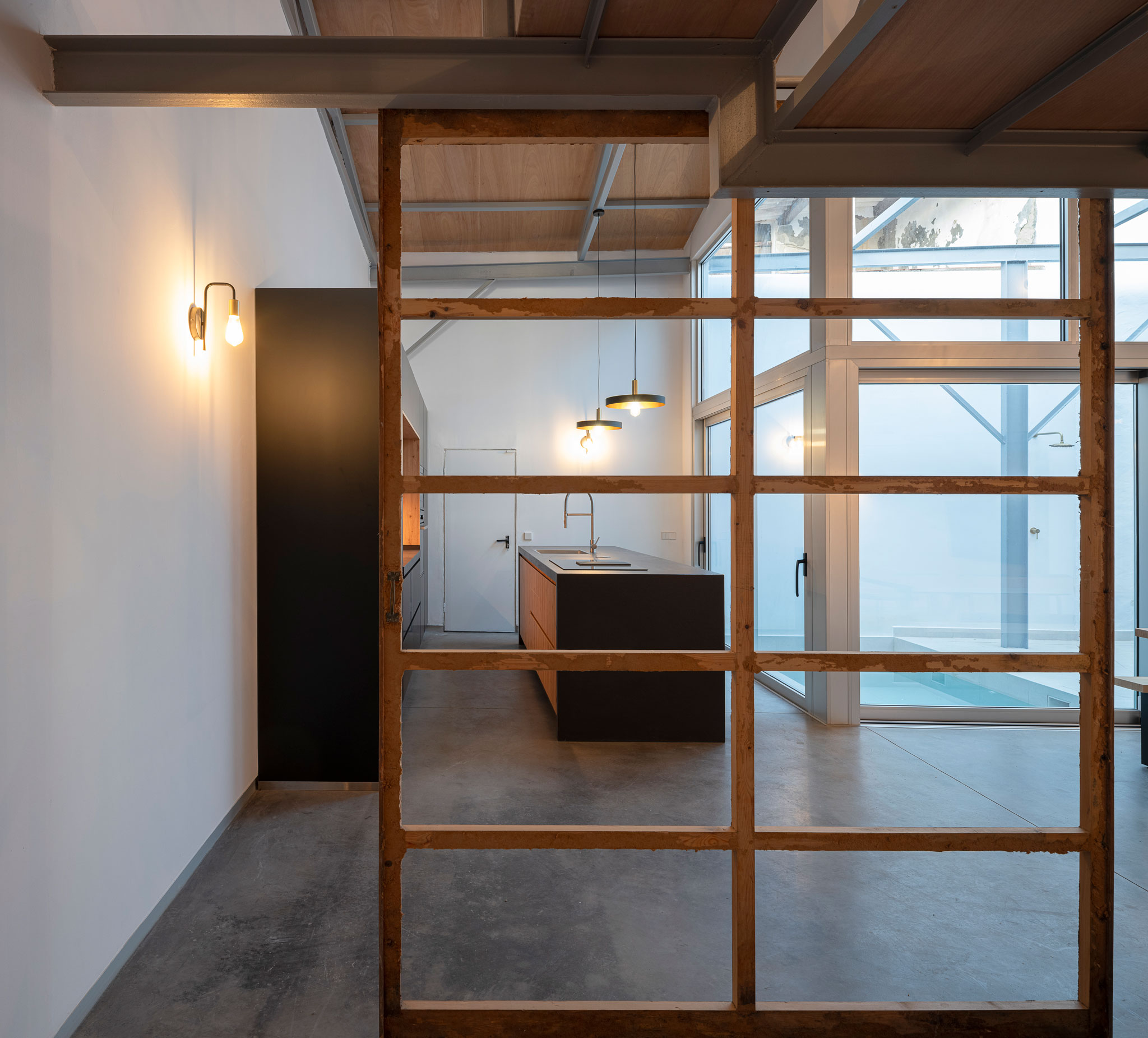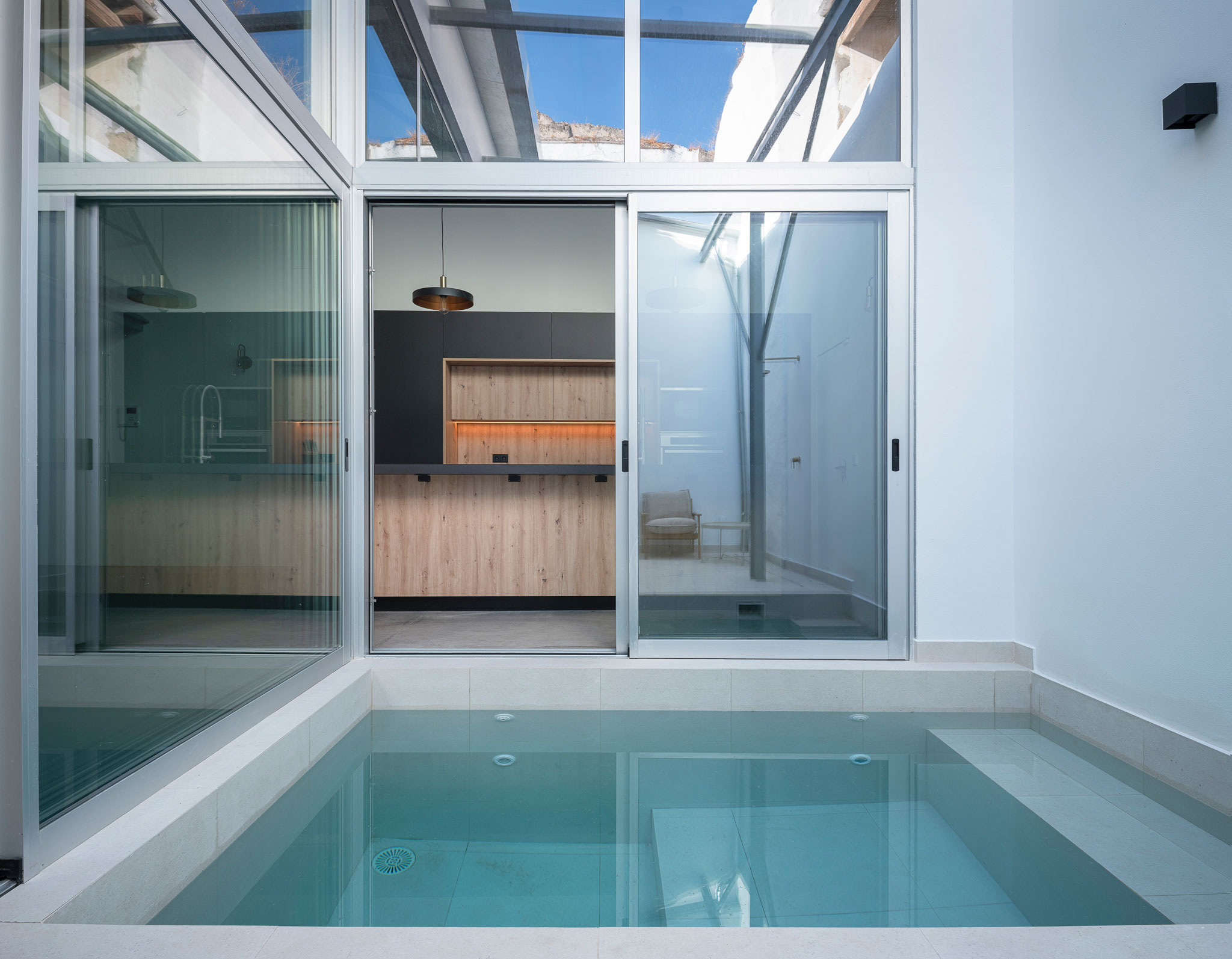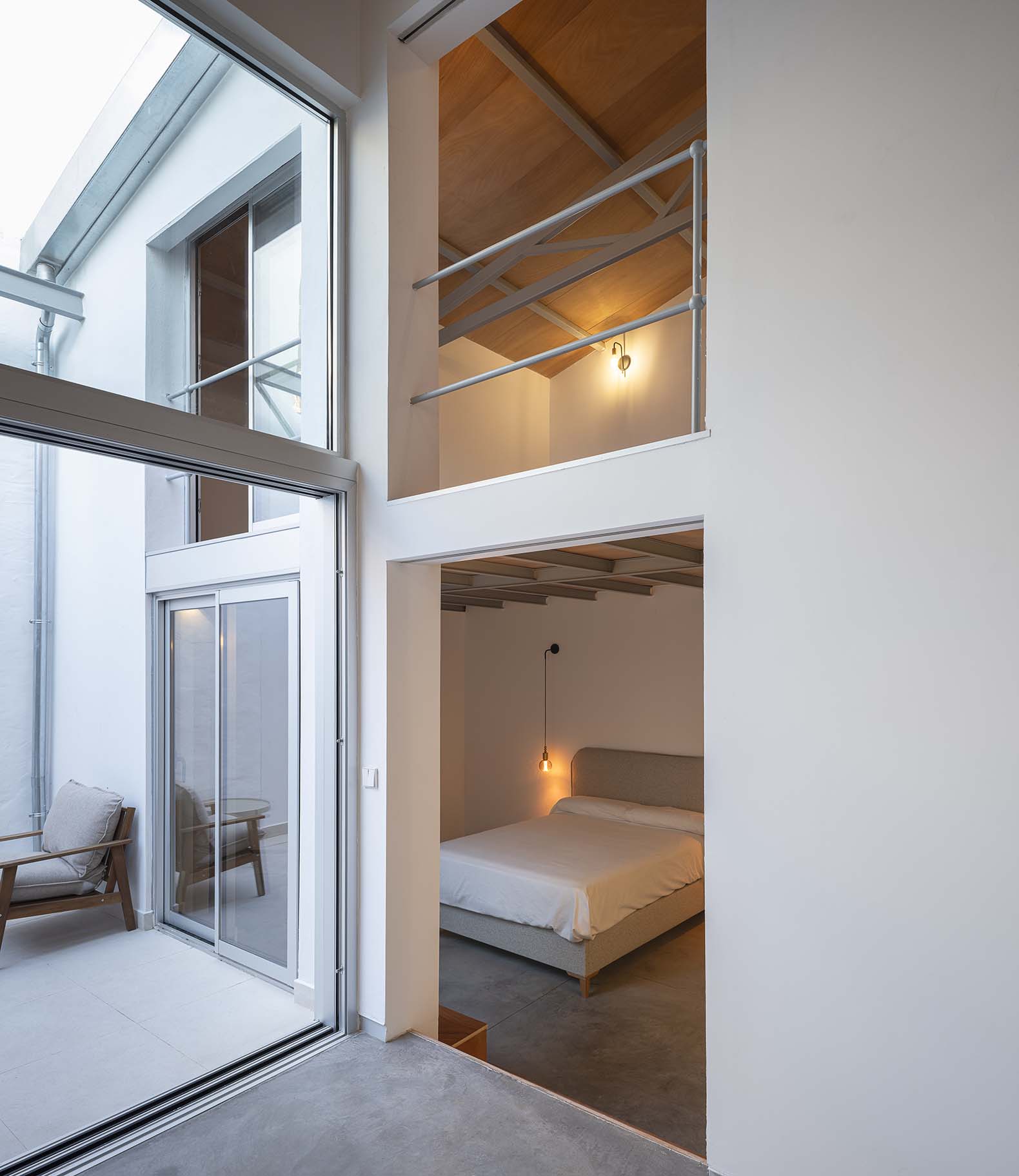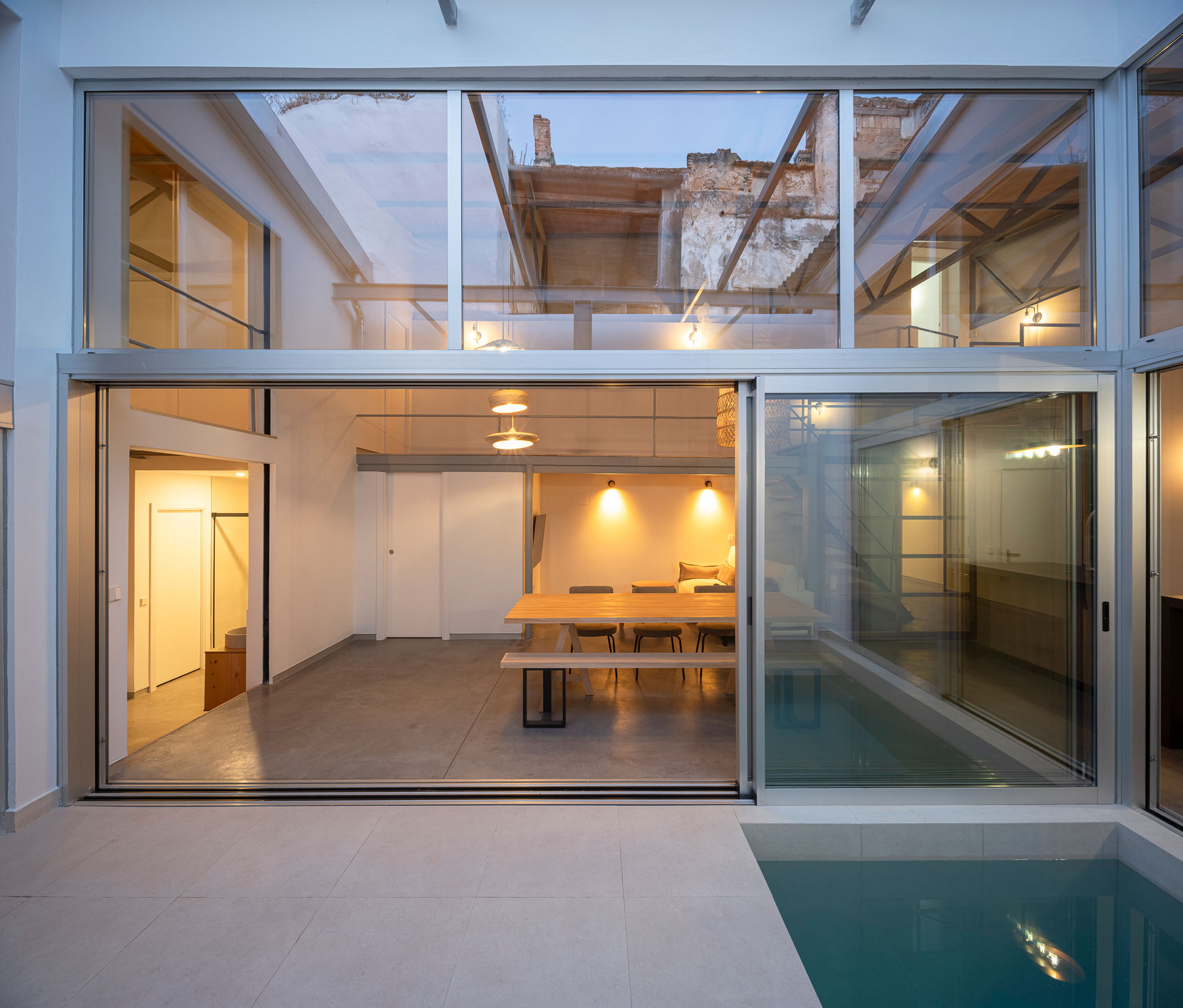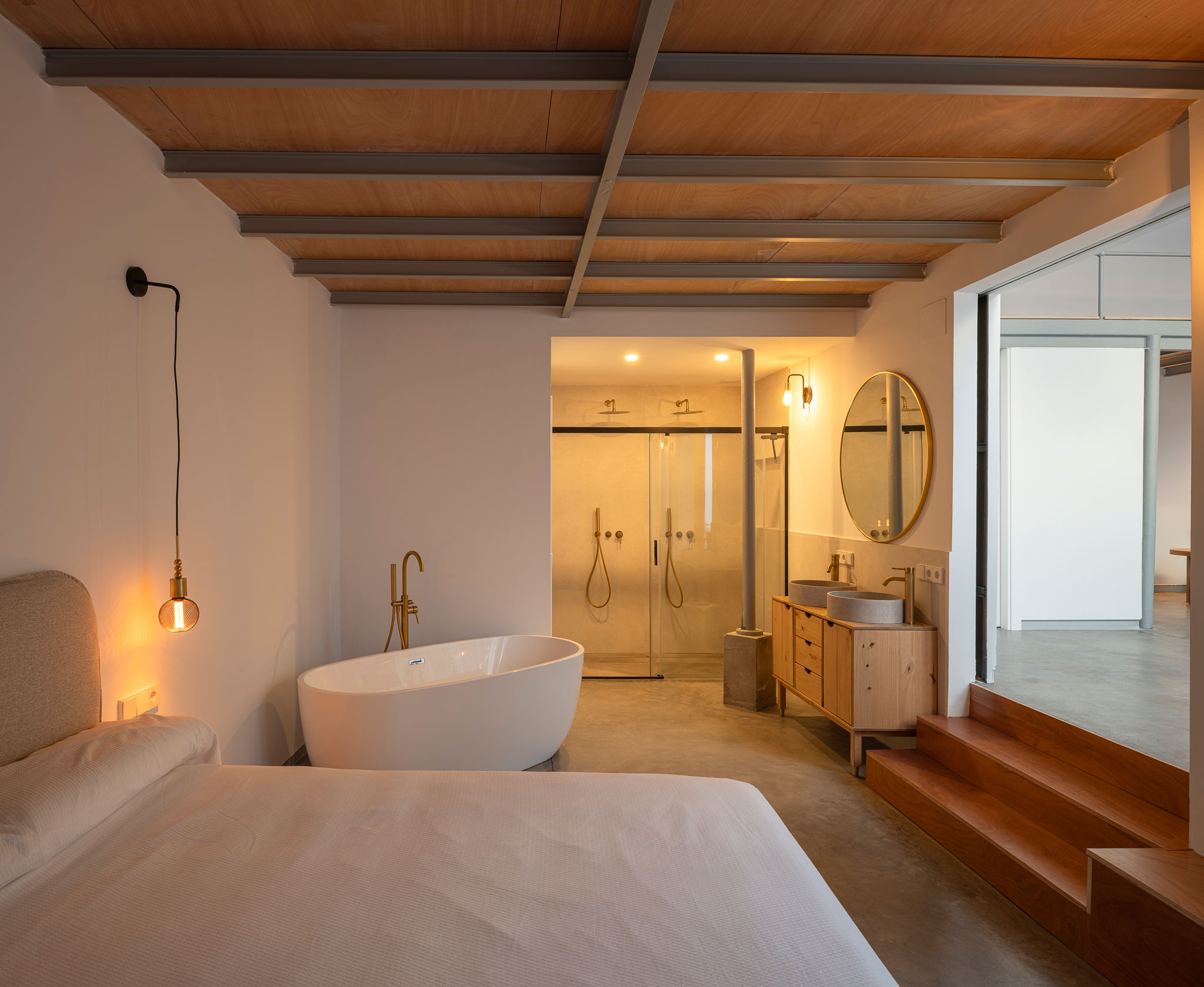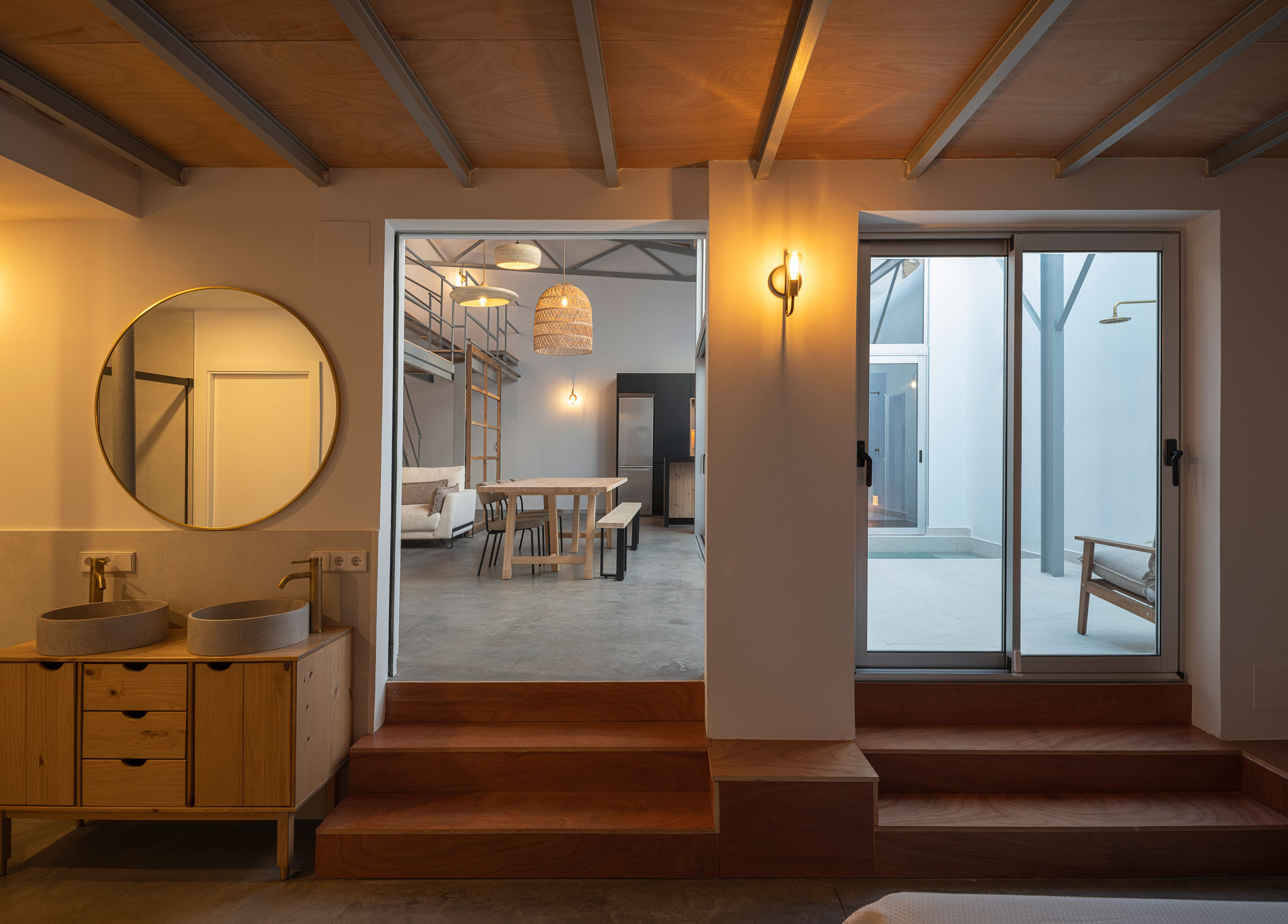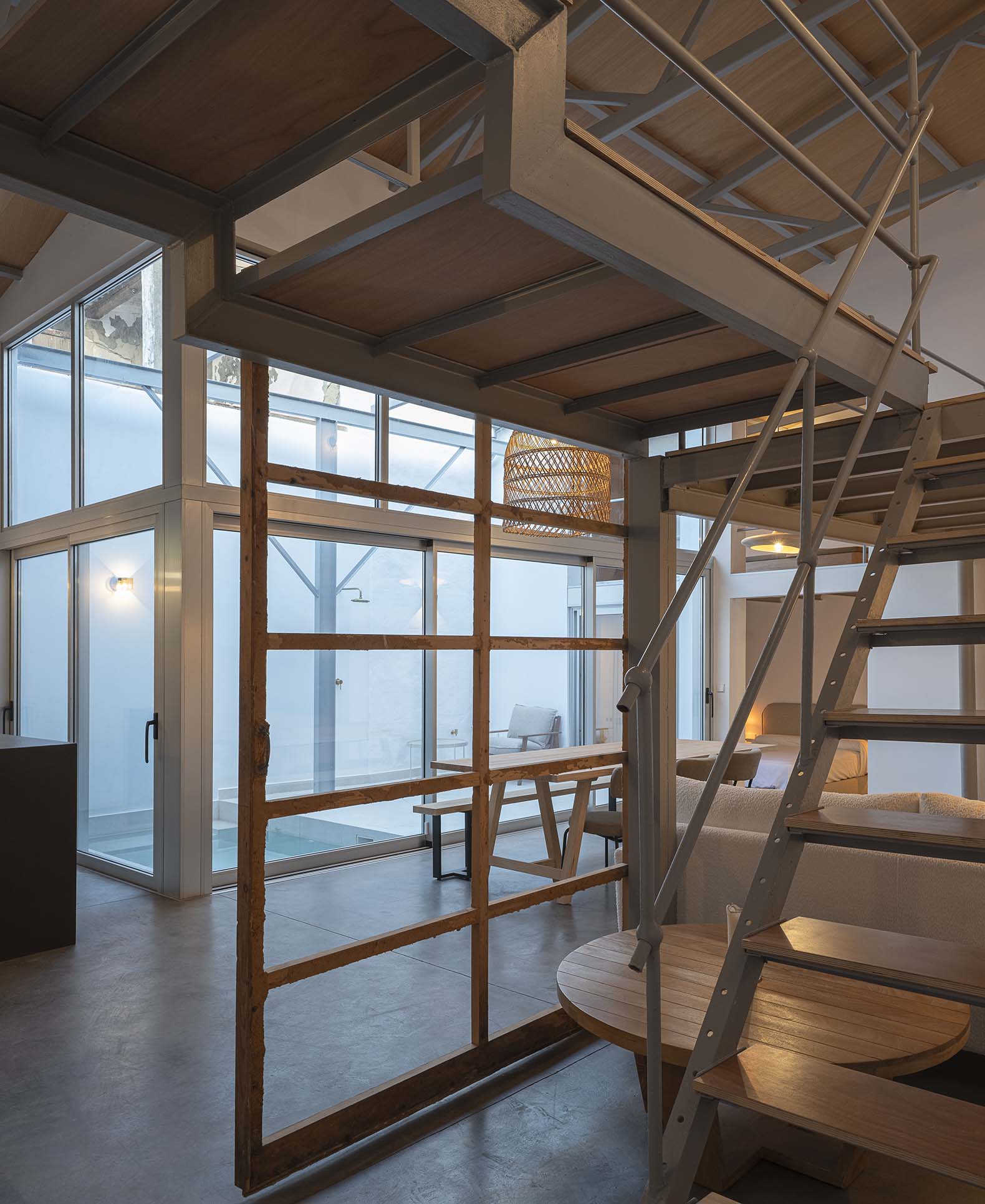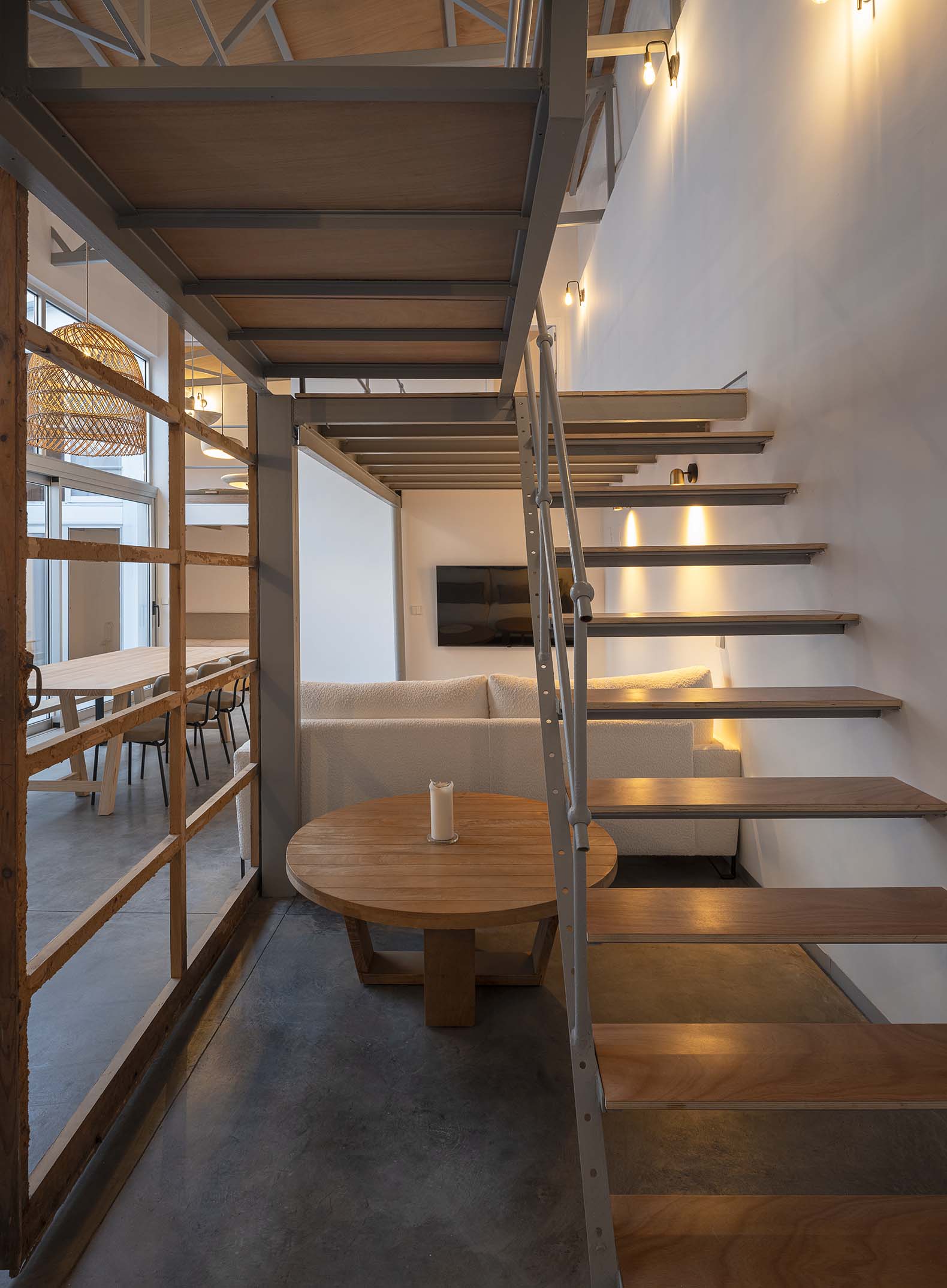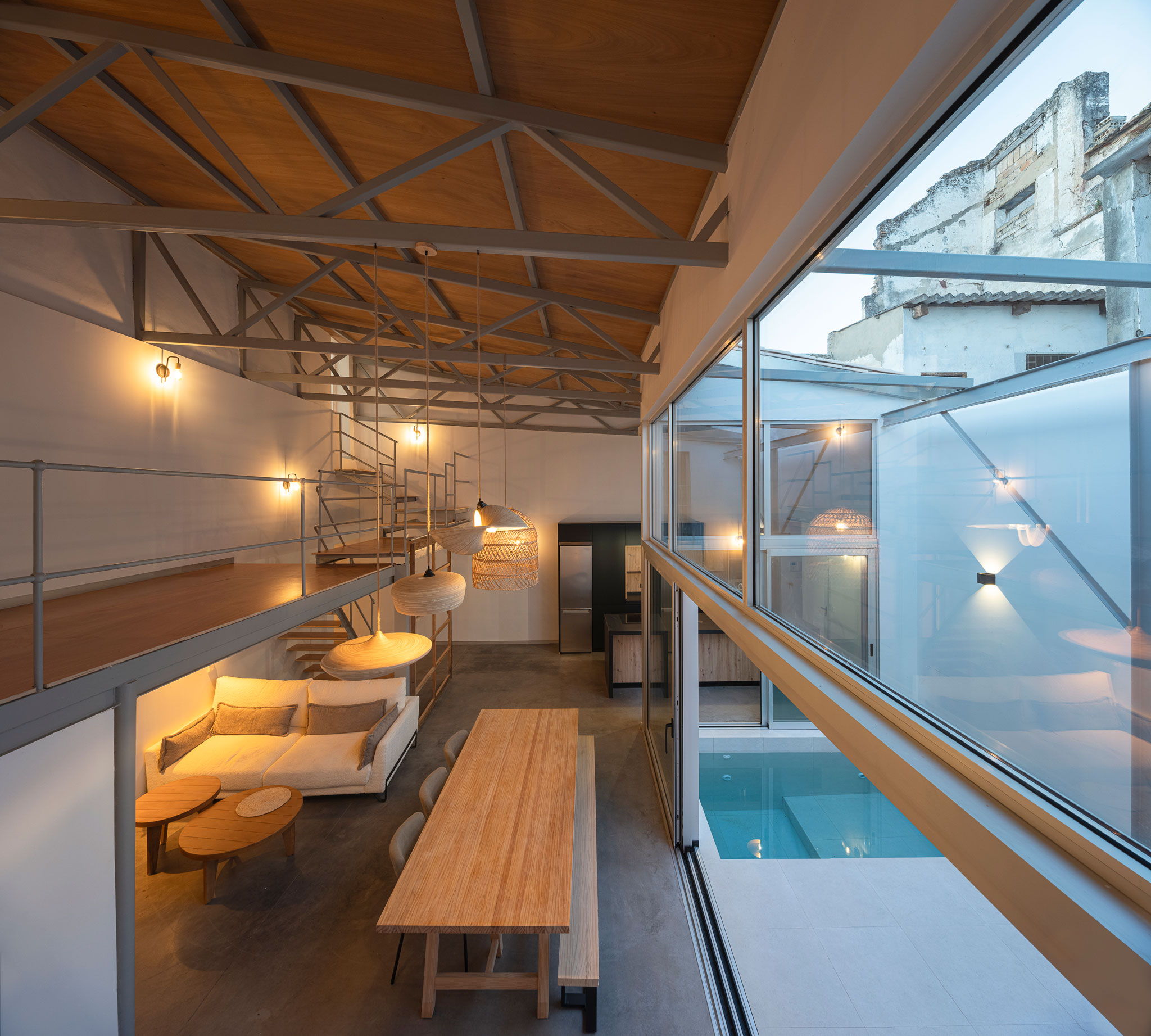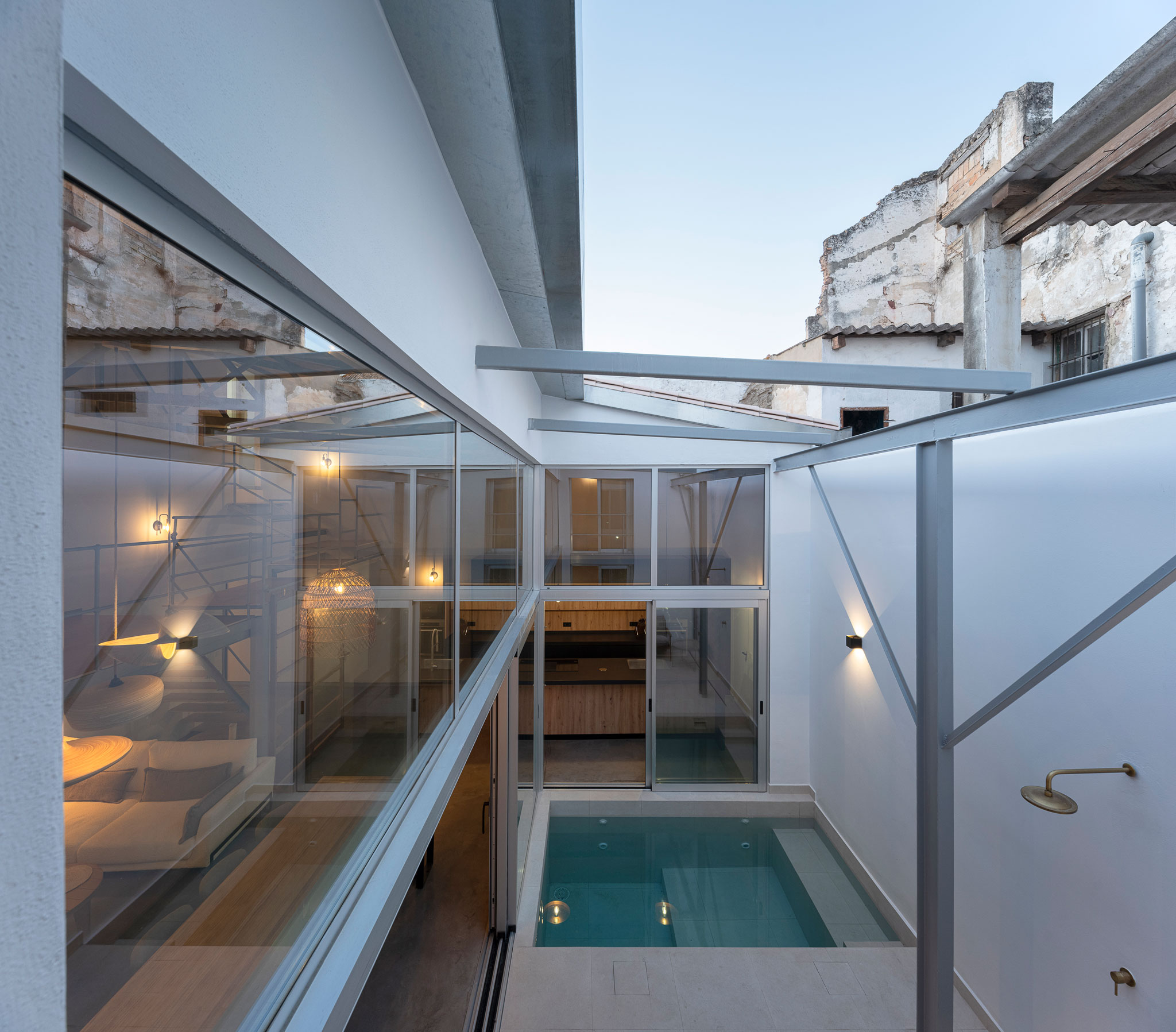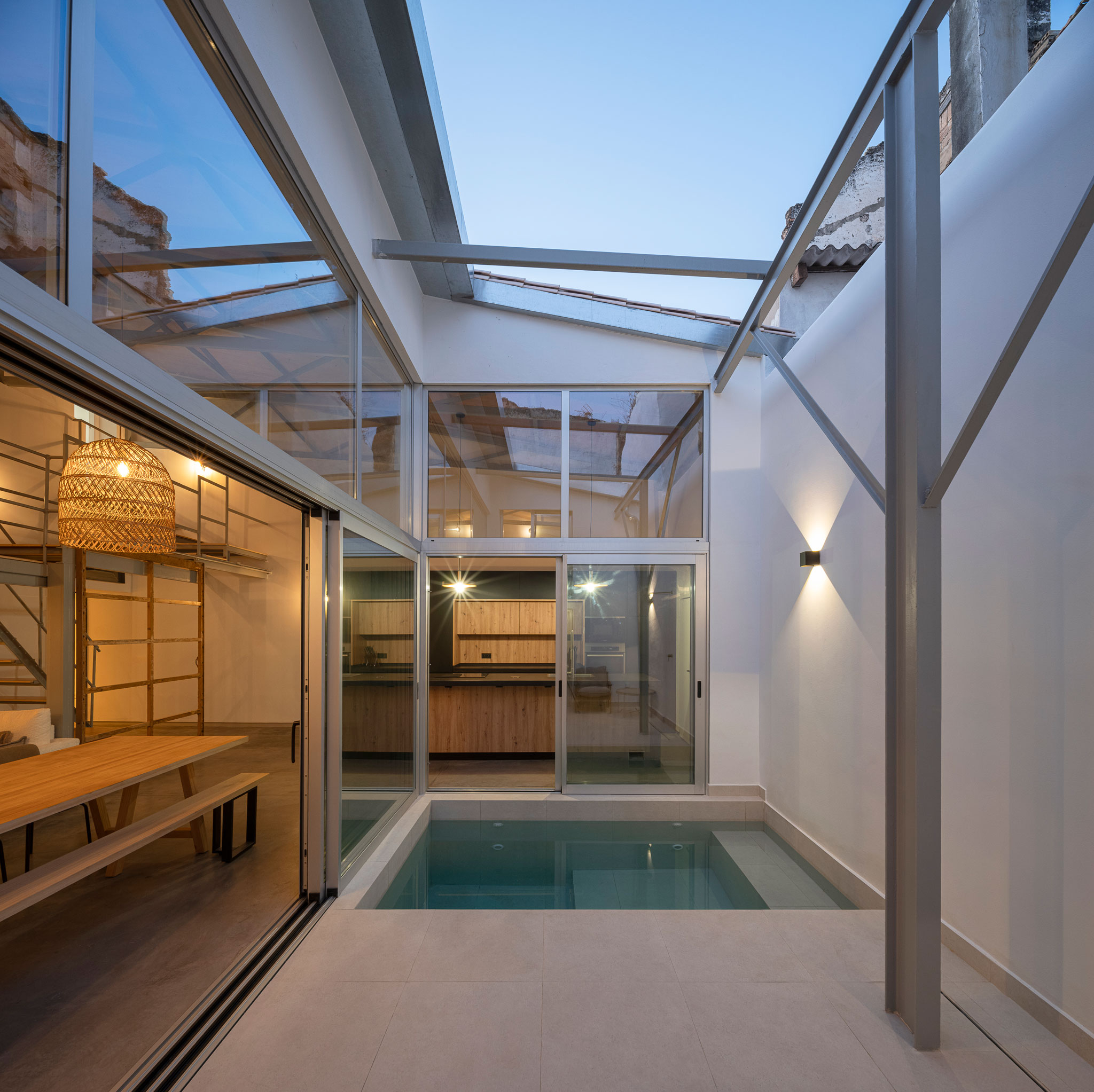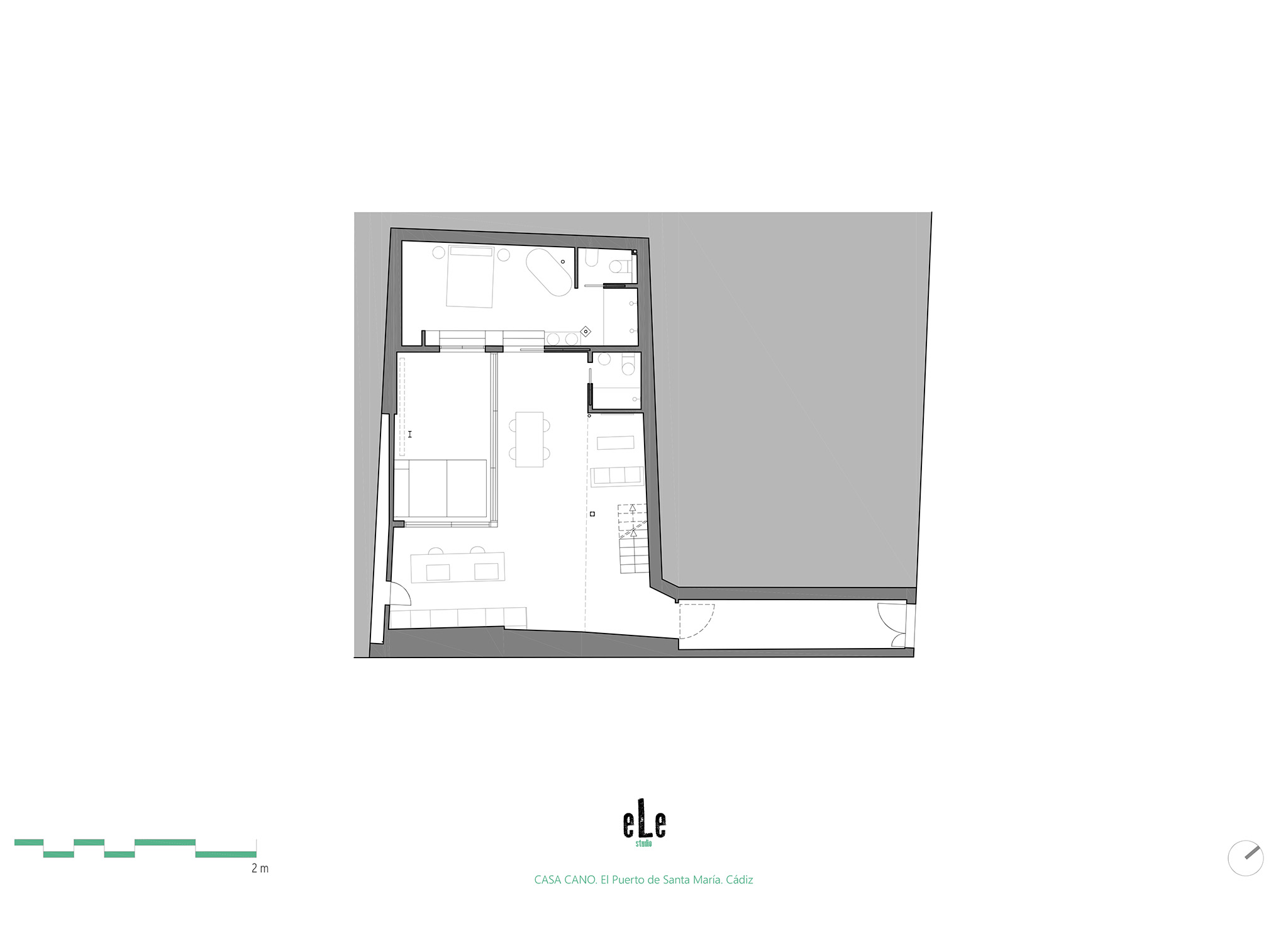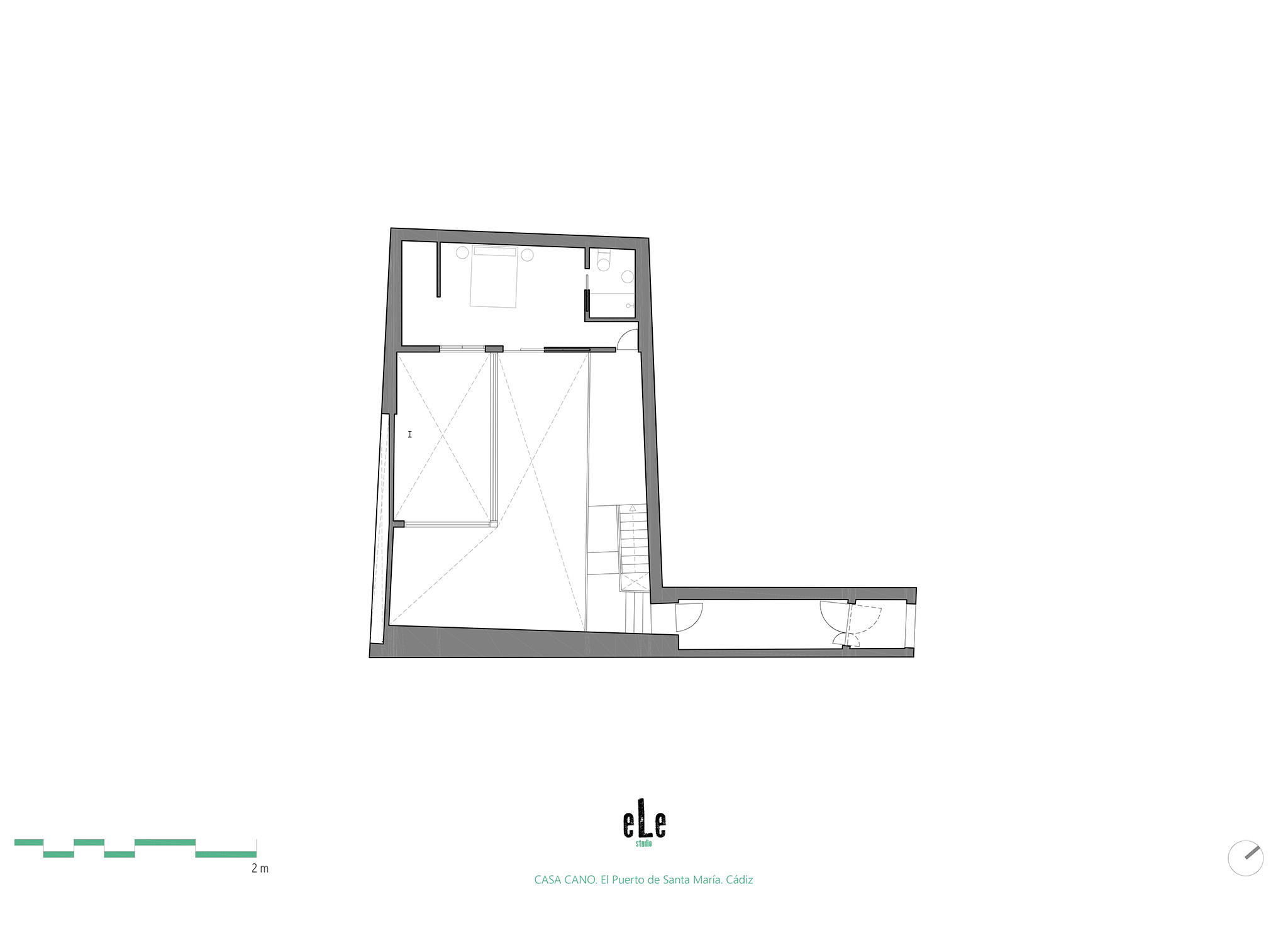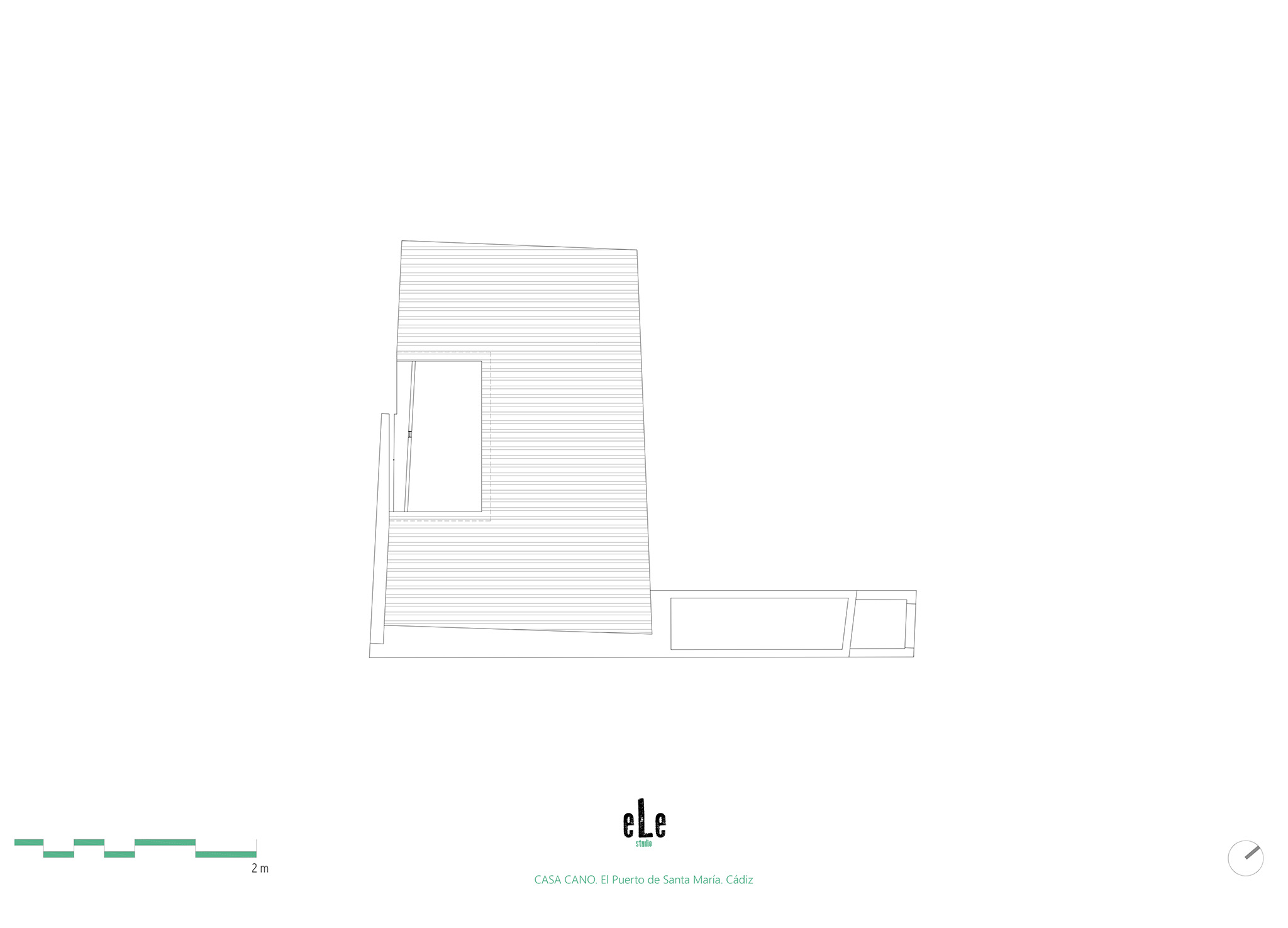
Elvira Rivero Yanes turned the house toward the courtyard. It was decided to convert the entrance hallway into a foyer by installing a gate recovered from the project. The mezzanine area marks the location of the bedrooms: the master bedroom on the ground floor with an enclosed open bathroom, and another on the mezzanine for guests. The program is completed with a bathroom under the mezzanine and a third bedroom/office with a terrace facing the facade.
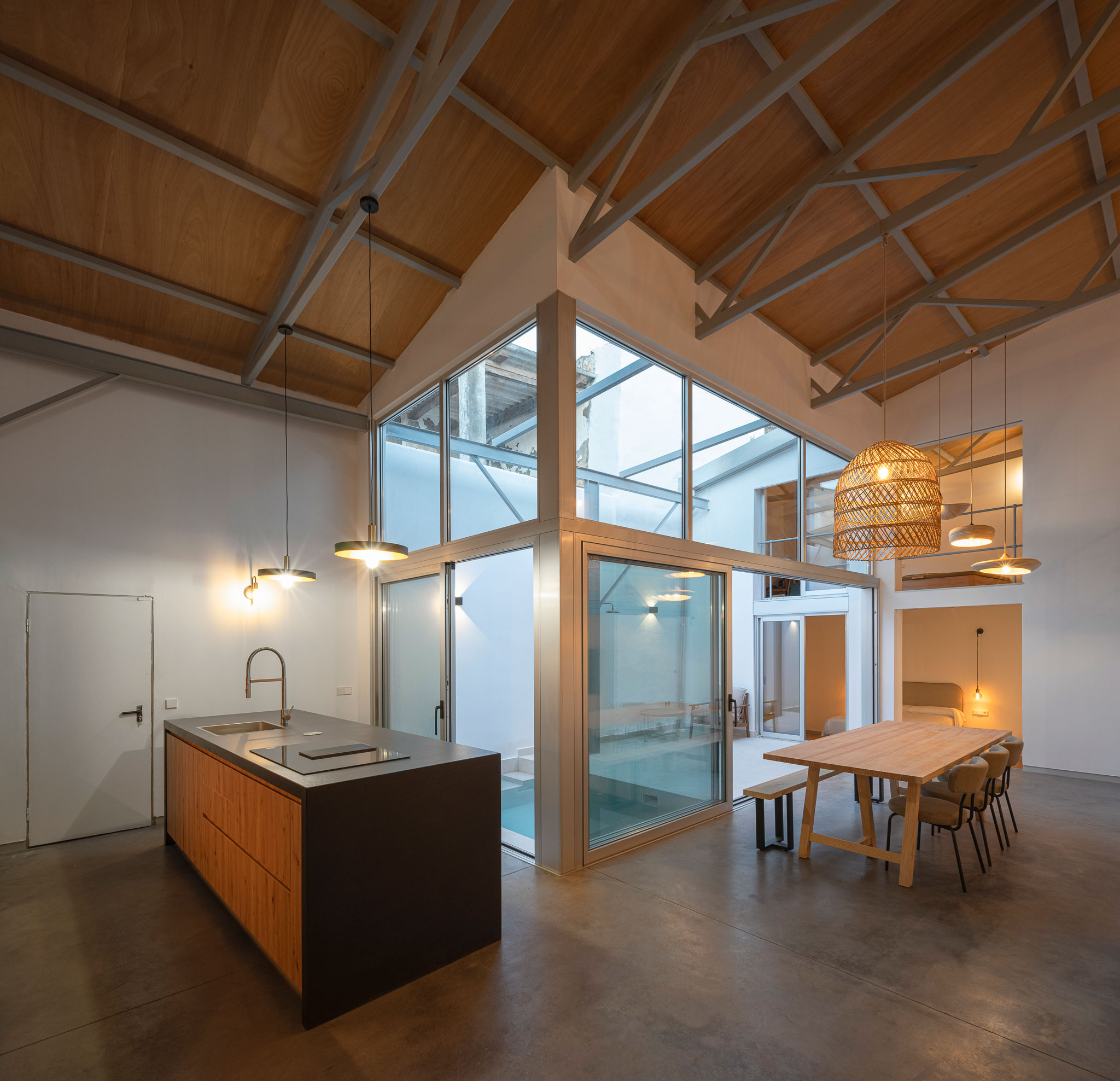
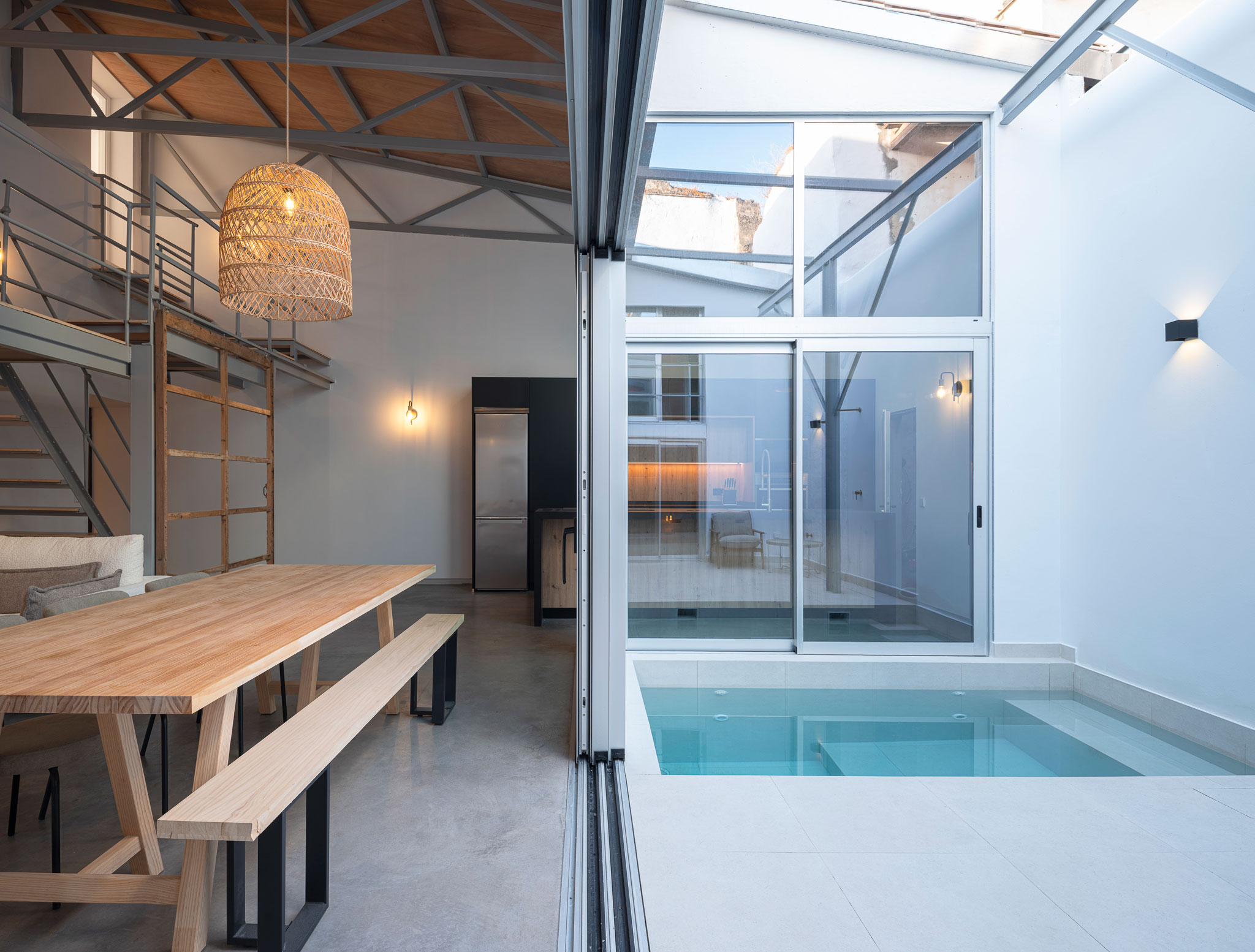
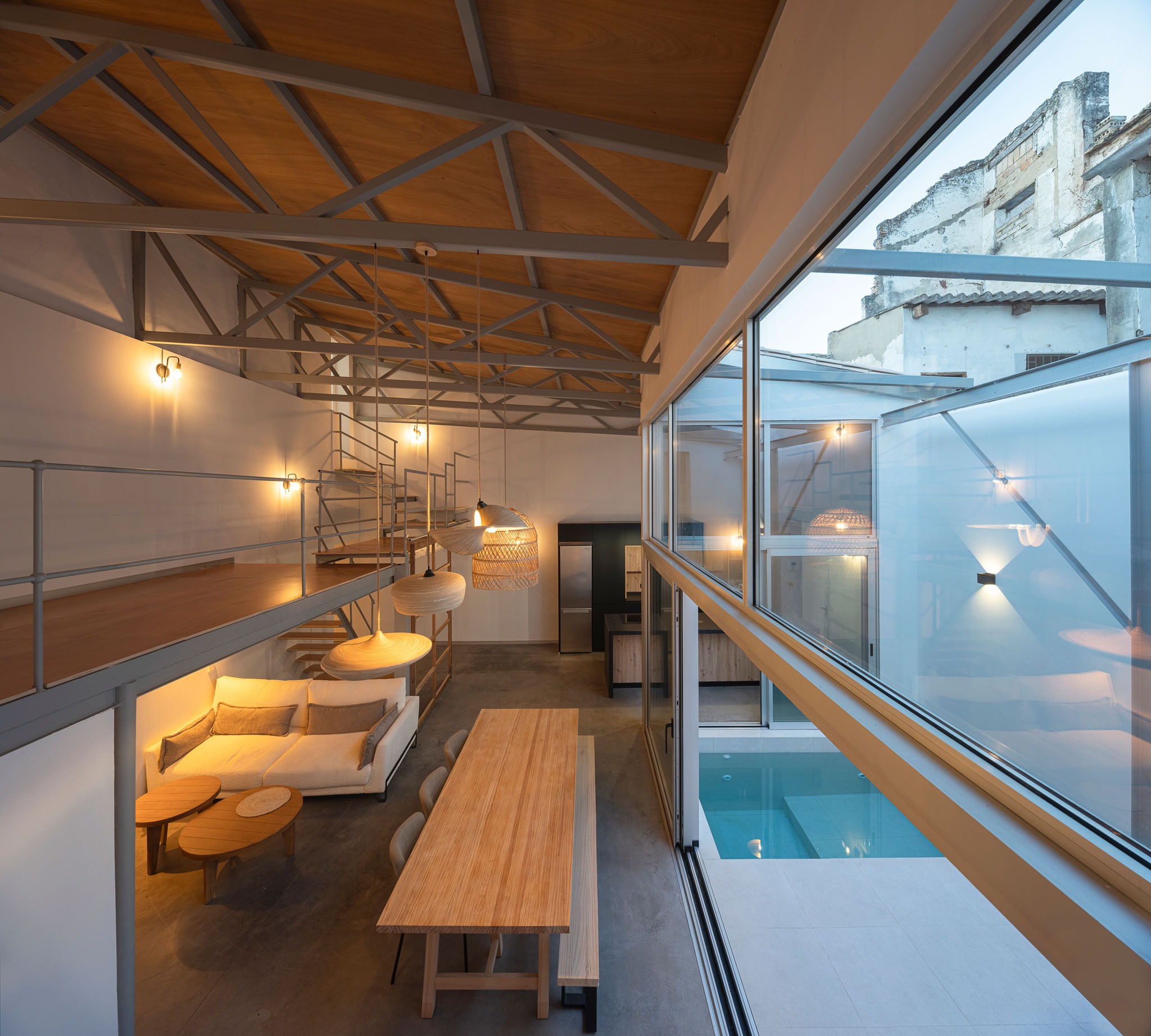
Materially, the house's memory is emphasized with the use of large wooden panels for the mezzanine floor, as well as sandwich panels and a troweled concrete floor. From the preexisting elements, the metal truss structure supported by a single pillar and the party walls are recovered.
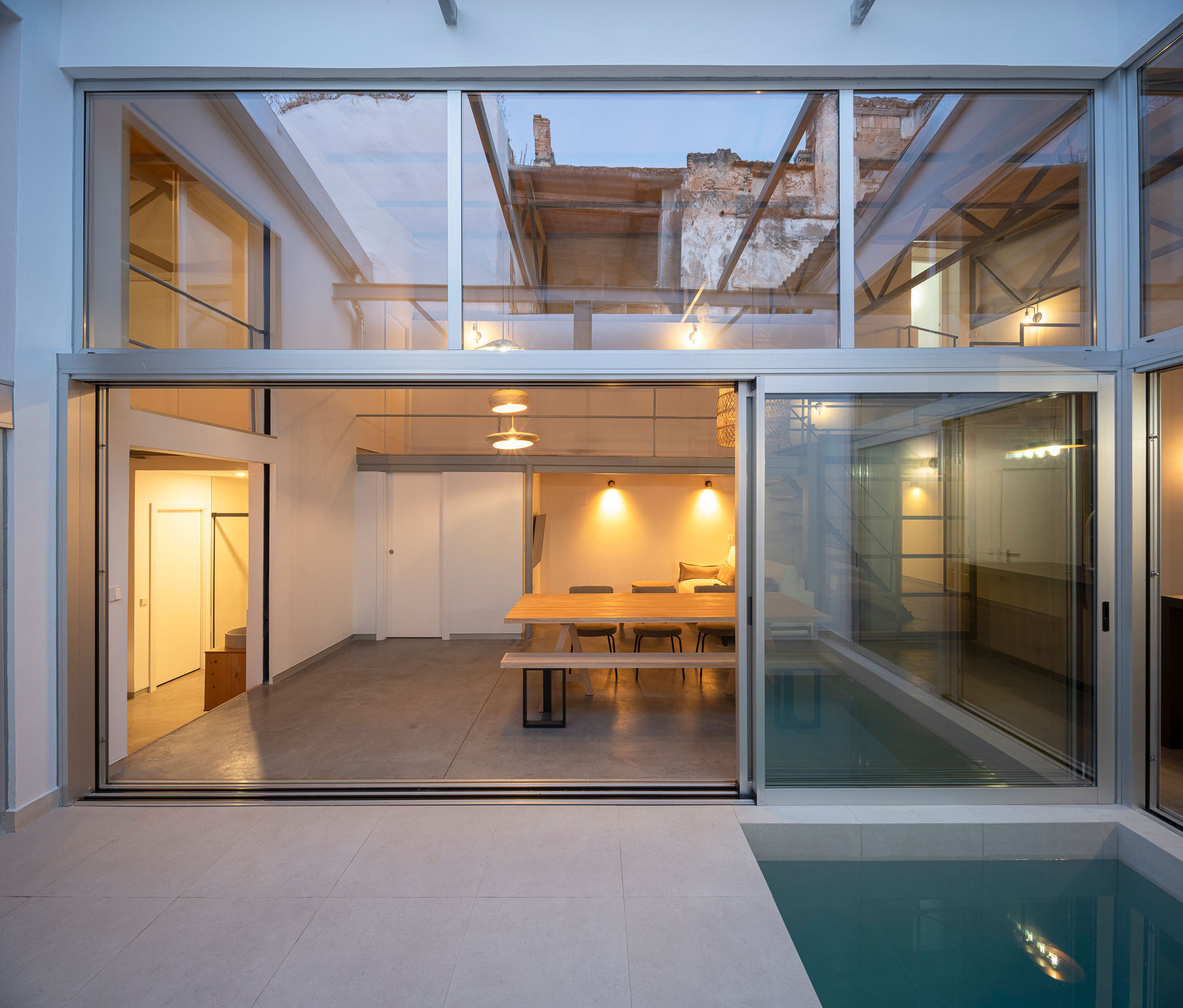
Casa Cano by Elvira Rivero Yanes. Photograph by Fernando Alda.
Project description by Elvira Rivero Yanes
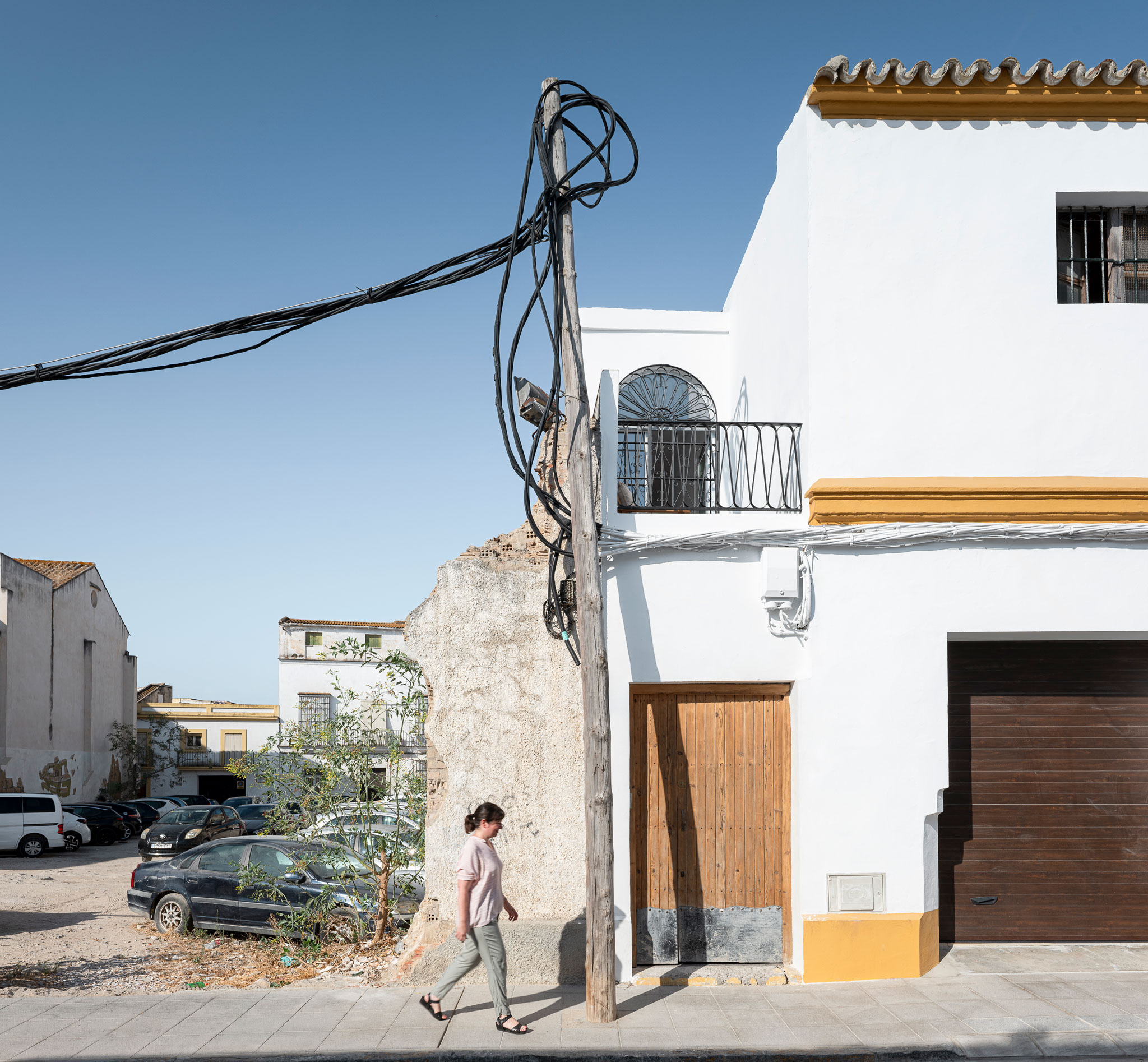
Located on Postigo Street, named after the small gate that connected the rear of the Priory Church with the upper neighborhood of El Puerto de Santa María, where workshops for various trades (sculptors, nativity scene makers, flour mills, carpentry, etc.) were located, a former sawmill was converted into a home. This background led us to a project that, following a variable program throughout the development of the project and construction (tourist accommodation, long-term rental, and finally permanent residence), focused on maintaining the spatial presence of the former factory, updating its materials, and creating a courtyard between party walls to meet the ventilation and lighting requirements associated with the change of use.
The pre-existing utility program consisted of a service corridor, connecting the only street facade of approximately 2 meters, connecting the street to the main warehouse (the rear of a woodworking shop), which included a mezzanine floor where the mechanical workshop for sawing wood was located.
With a street facade of just two meters, the house opens onto the newly created courtyard attached to the open dividing wall of the warehouse. The courtyard as the center of the home and the preservation of pre-existing elements such as the structure and the mezzanine become the project guidelines. It was decided to convert the entrance hallway into a sort of entrance hall by installing a gate recovered from the project itself. The larger mezzanine area marks the location of the bedrooms: the master bedroom on the ground floor with an ensuite bathroom, and another on the mezzanine for guests. Both overlook both the courtyard and the living space. The program is completed with a guest bathroom under the mezzanine and a third bedroom/office with a terrace overlooking the facade.
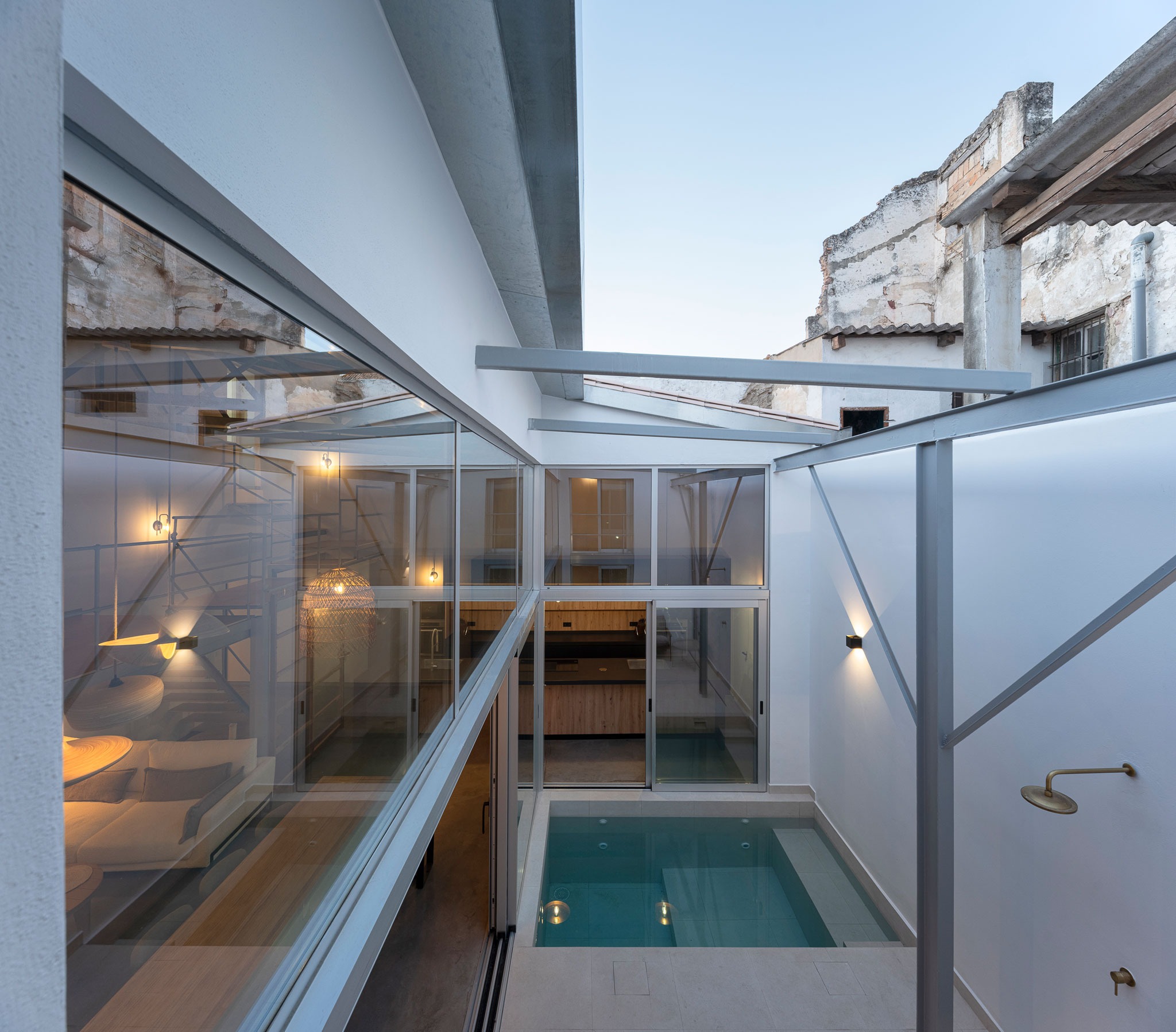
Materially, in a clear nod to its previous use, the mezzanine floor is made of large wooden boards, as well as the roof with sandwich panels clad with the same boards, combined with a troweled concrete floor. From the pre-existing elements, the metal truss structure was restored, supported by a single pillar that articulates the new patio, as well as the party walls. The mezzanine railing remains, hidden in the partition walls and appearing in the openings of the upper bedroom. Finally, regarding the party walls, the existing walls are backed up to the height of the metal trusses, leaving the remaining wall simply covered with lime mortar. This, without resorting to the oft-repeated reworking of pre-existing elements, does reveal the previous imperfections.