The architecture firm FORarquitectura, led by architect Francisco Ortega, has created the innovative "Pregnant House" project, a single-family home located in the Spanish city of Málaga. This project reflects on the rapid and invasive growth of cities since the 1960s and the current state of the real estate sector.

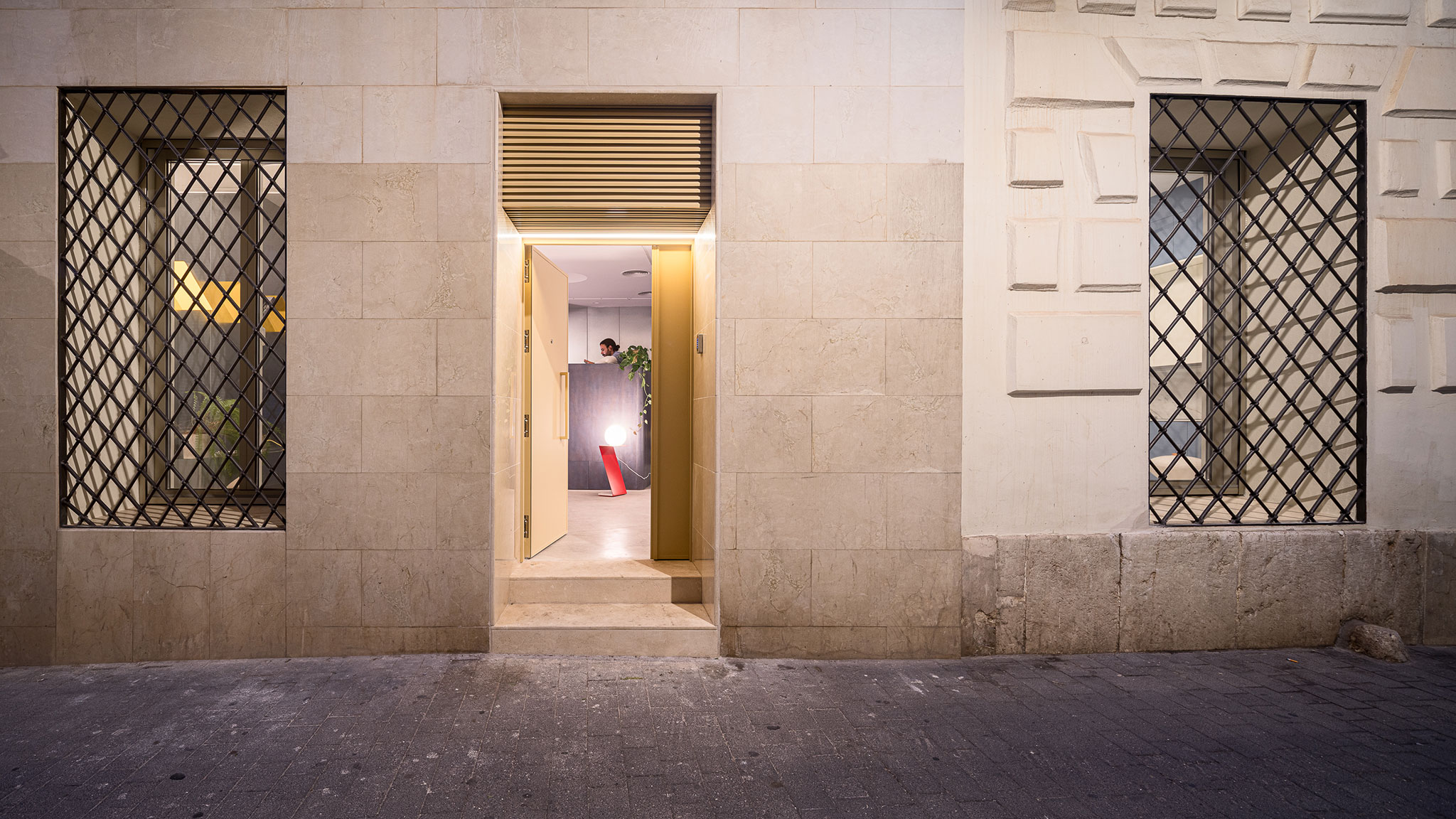
The 70 m² (760 sq ft) house, housed in an 18th-century building, draws inspiration from the curved forms of its historic wrought-iron balconies and the neoclassical paintings on the façade. It also incorporates key elements such as natural light and the ability to adapt the spaces to the needs of its inhabitants, creating a living environment free from programmatic constraints. 

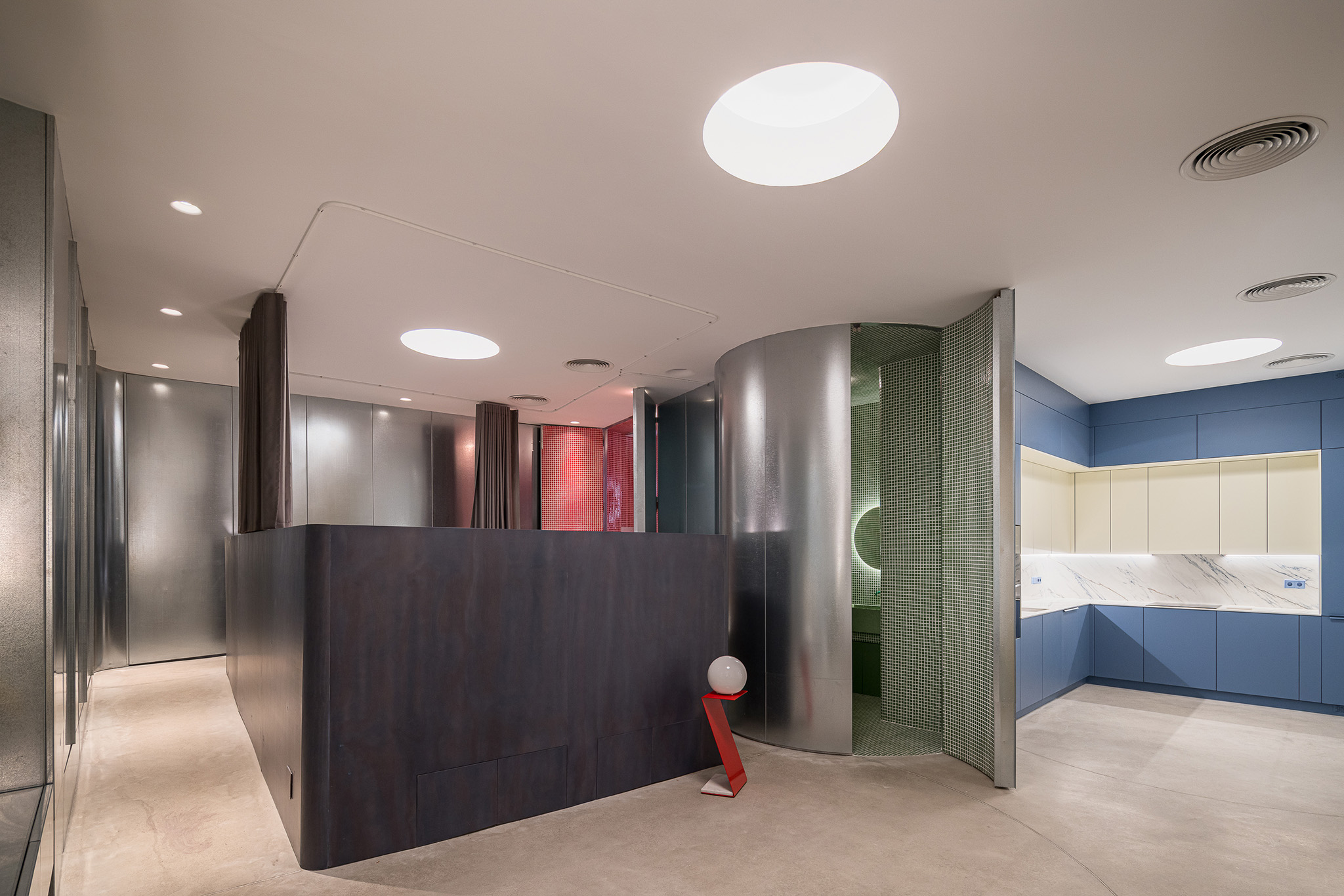
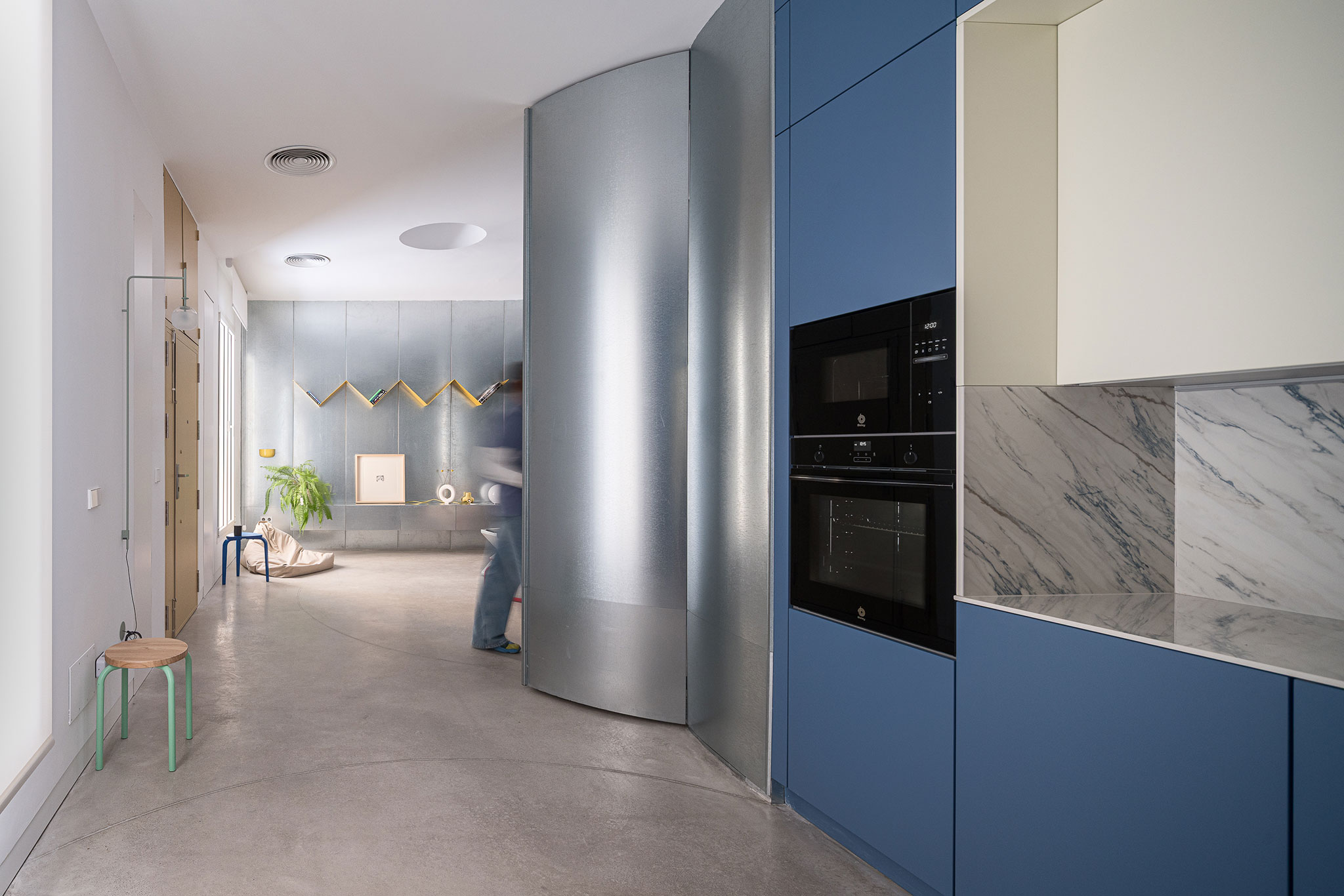
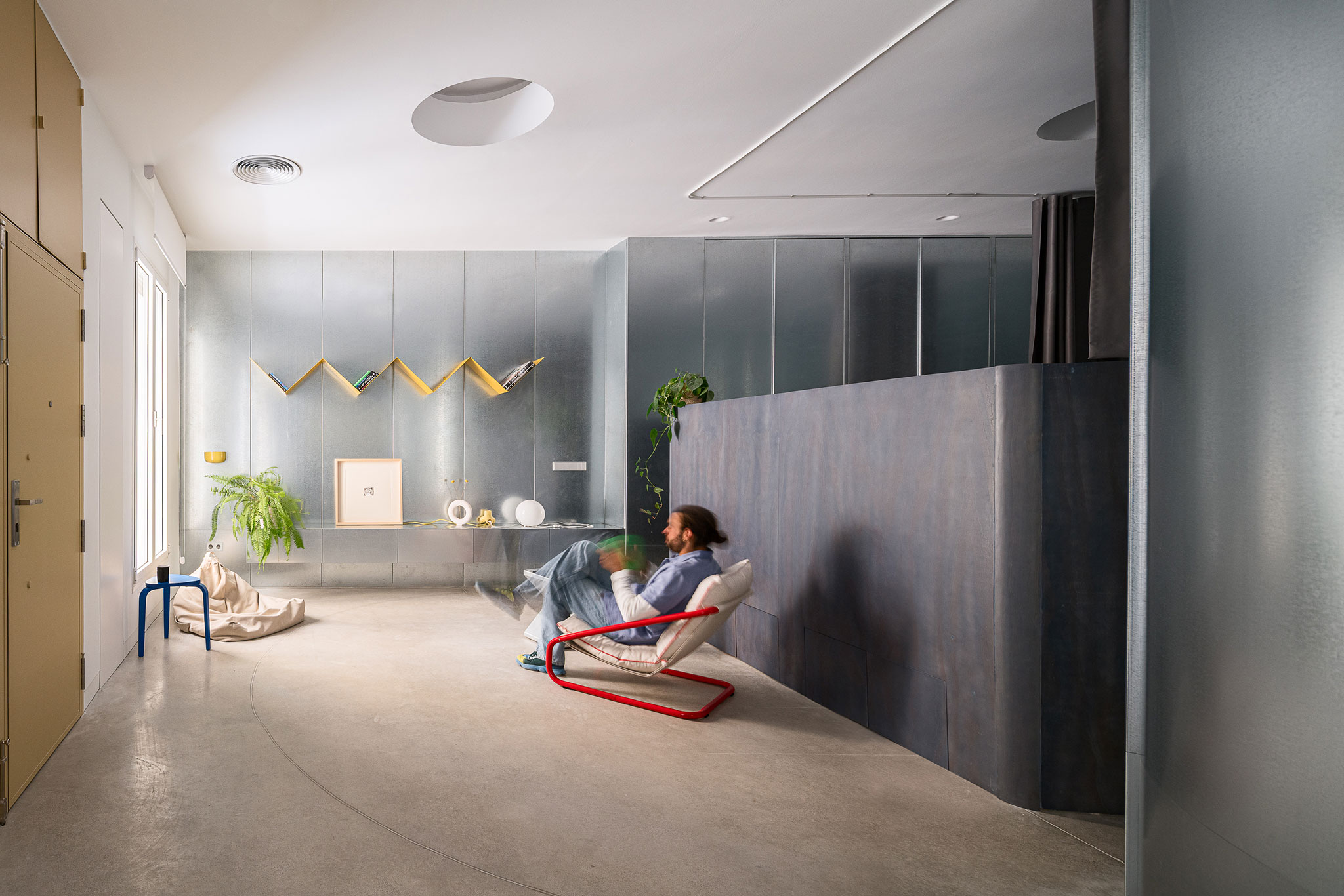
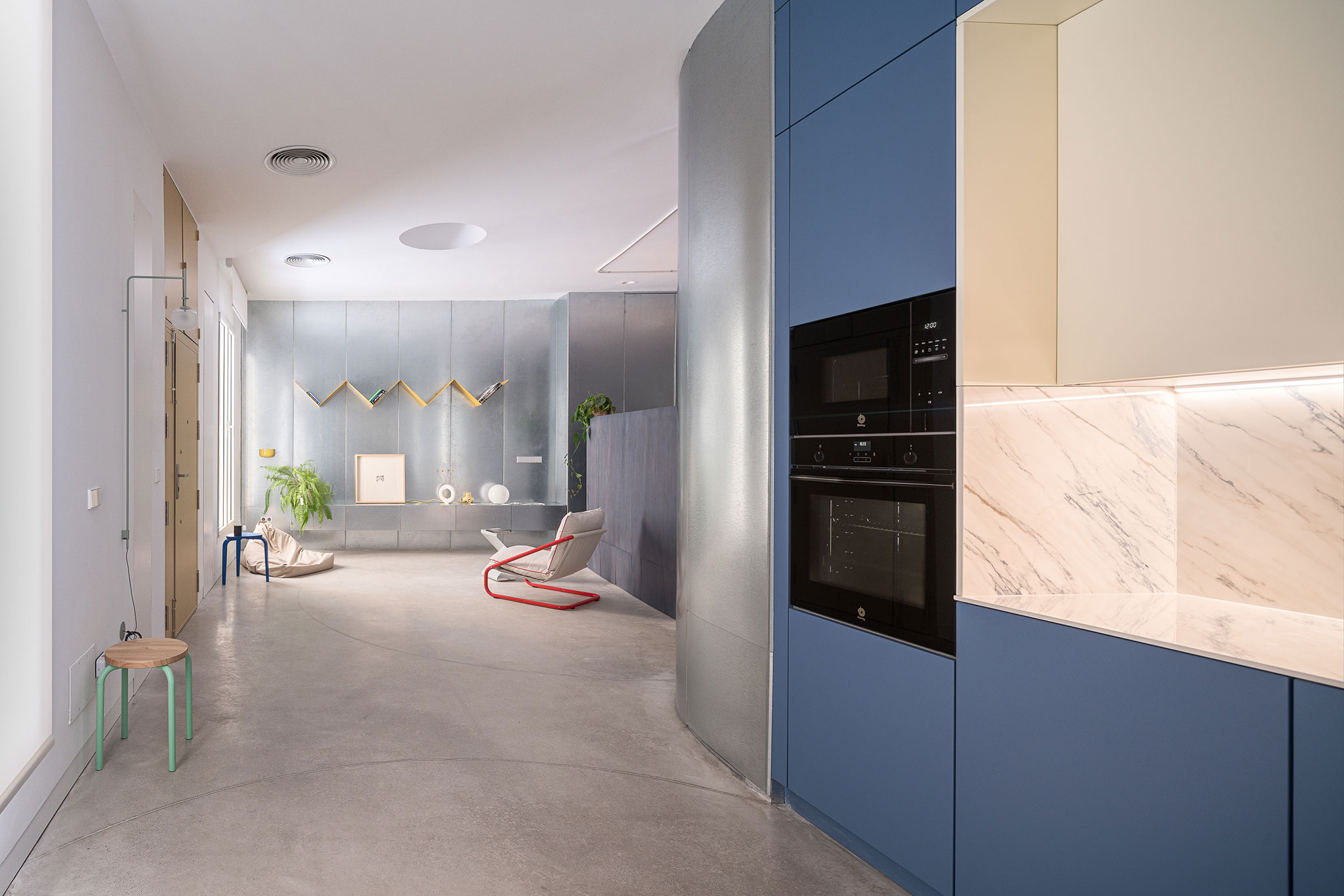
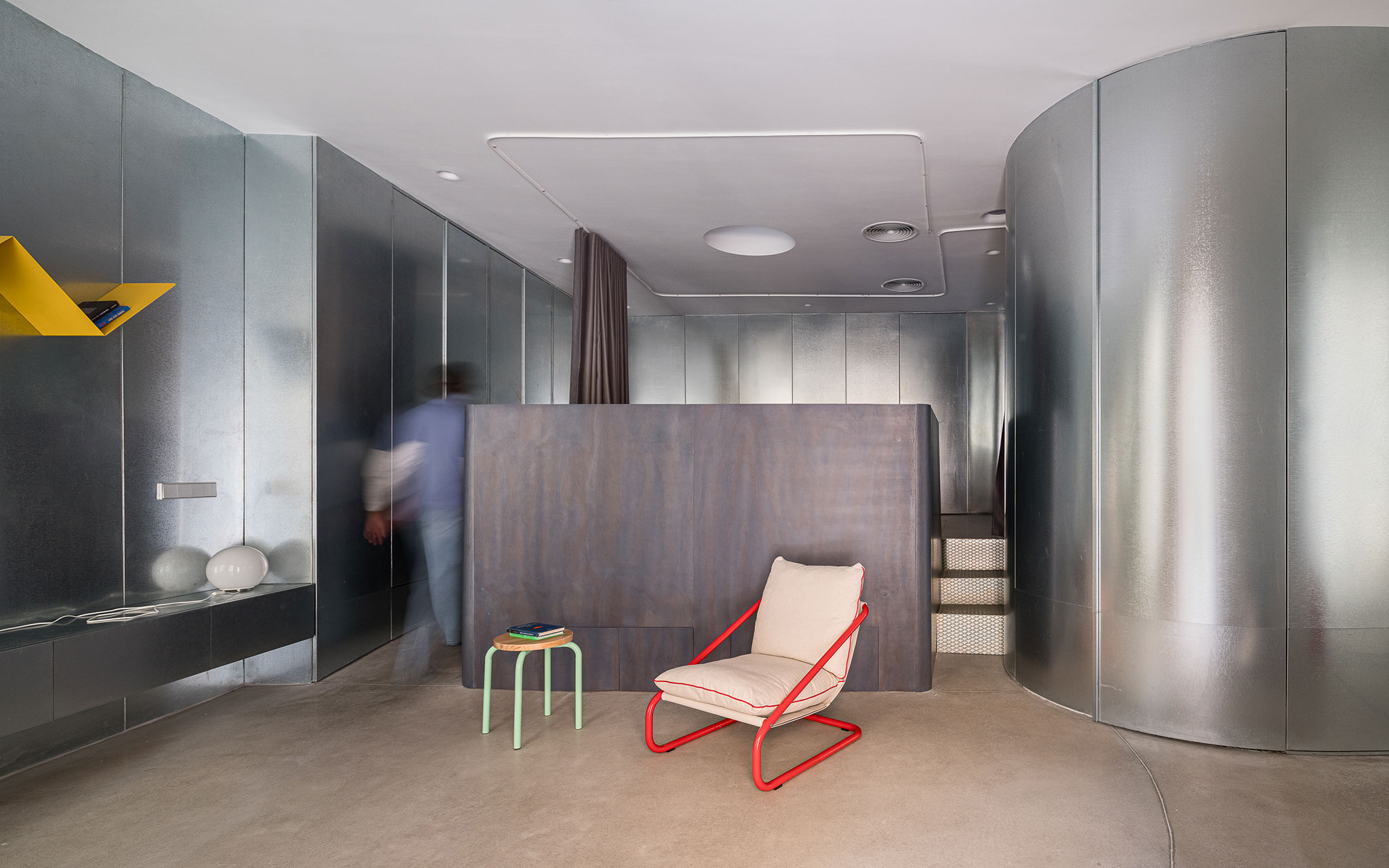
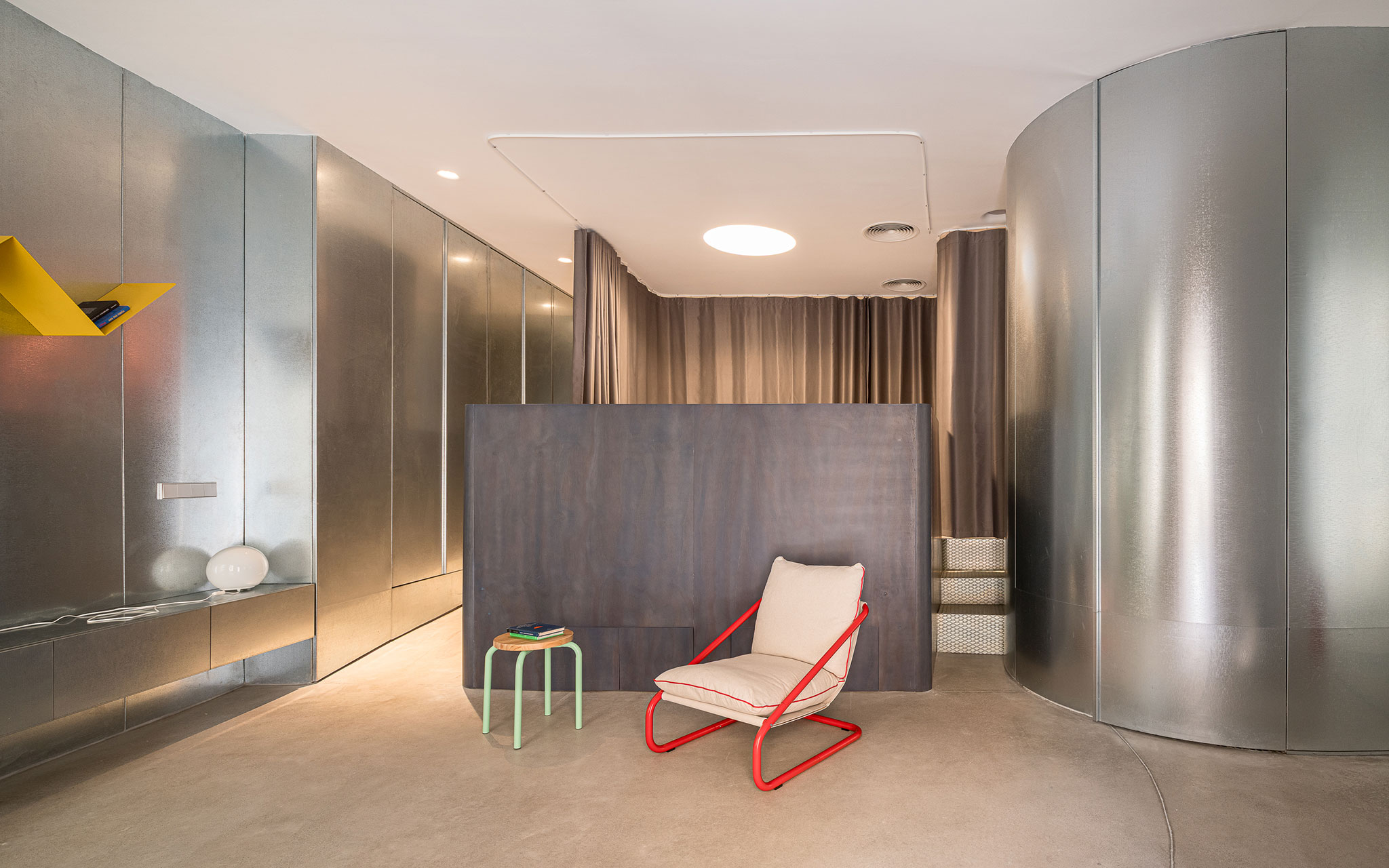
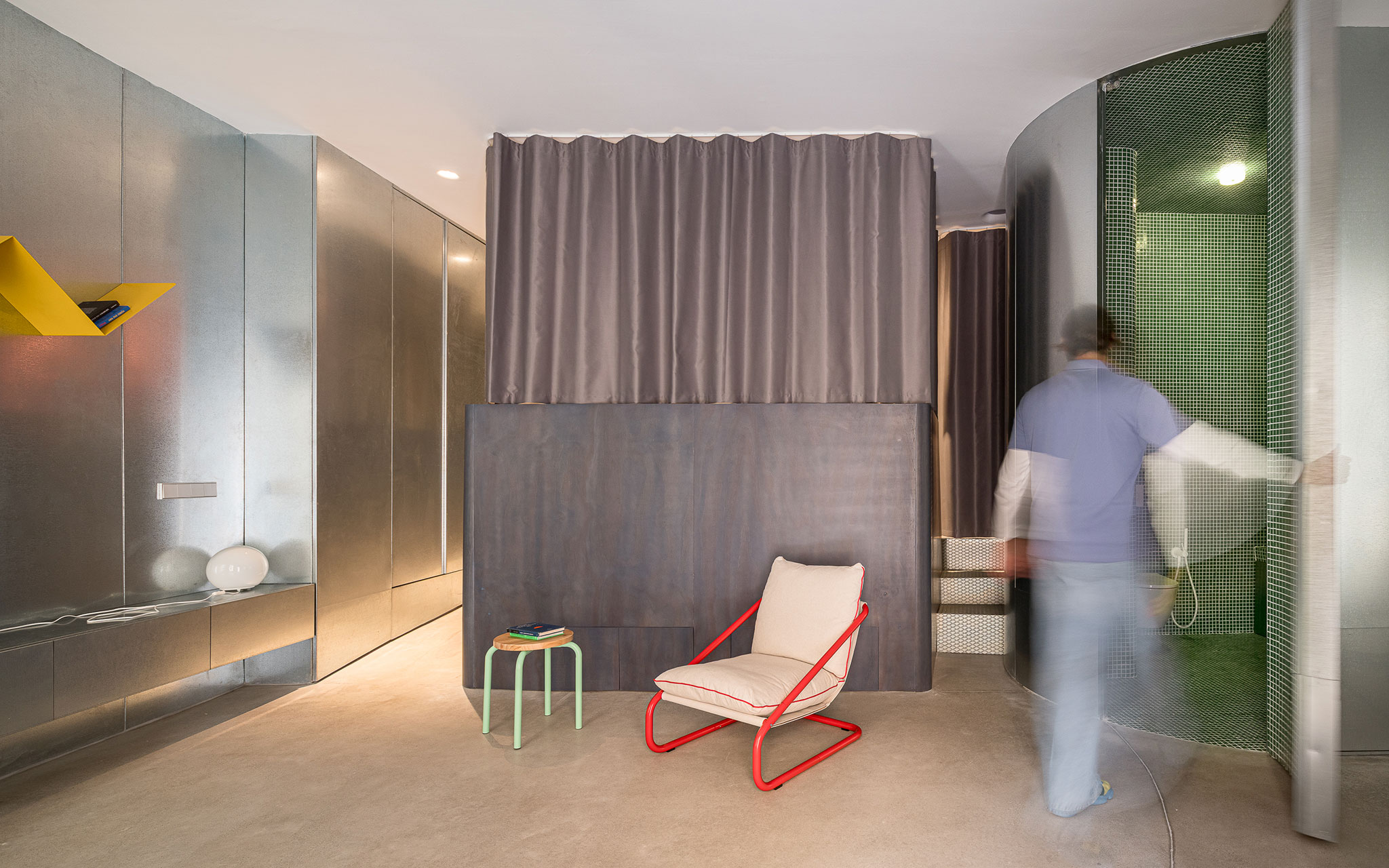
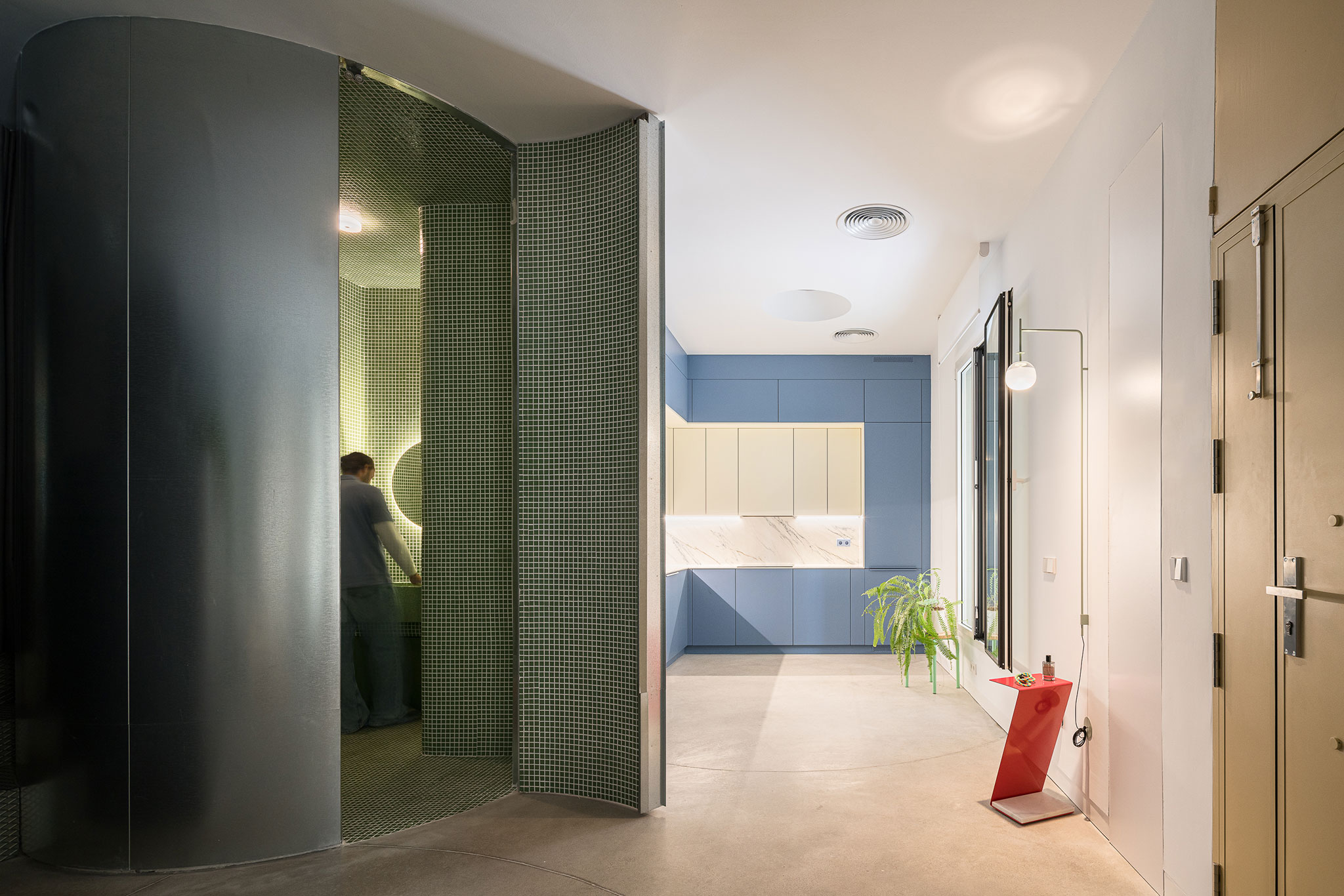
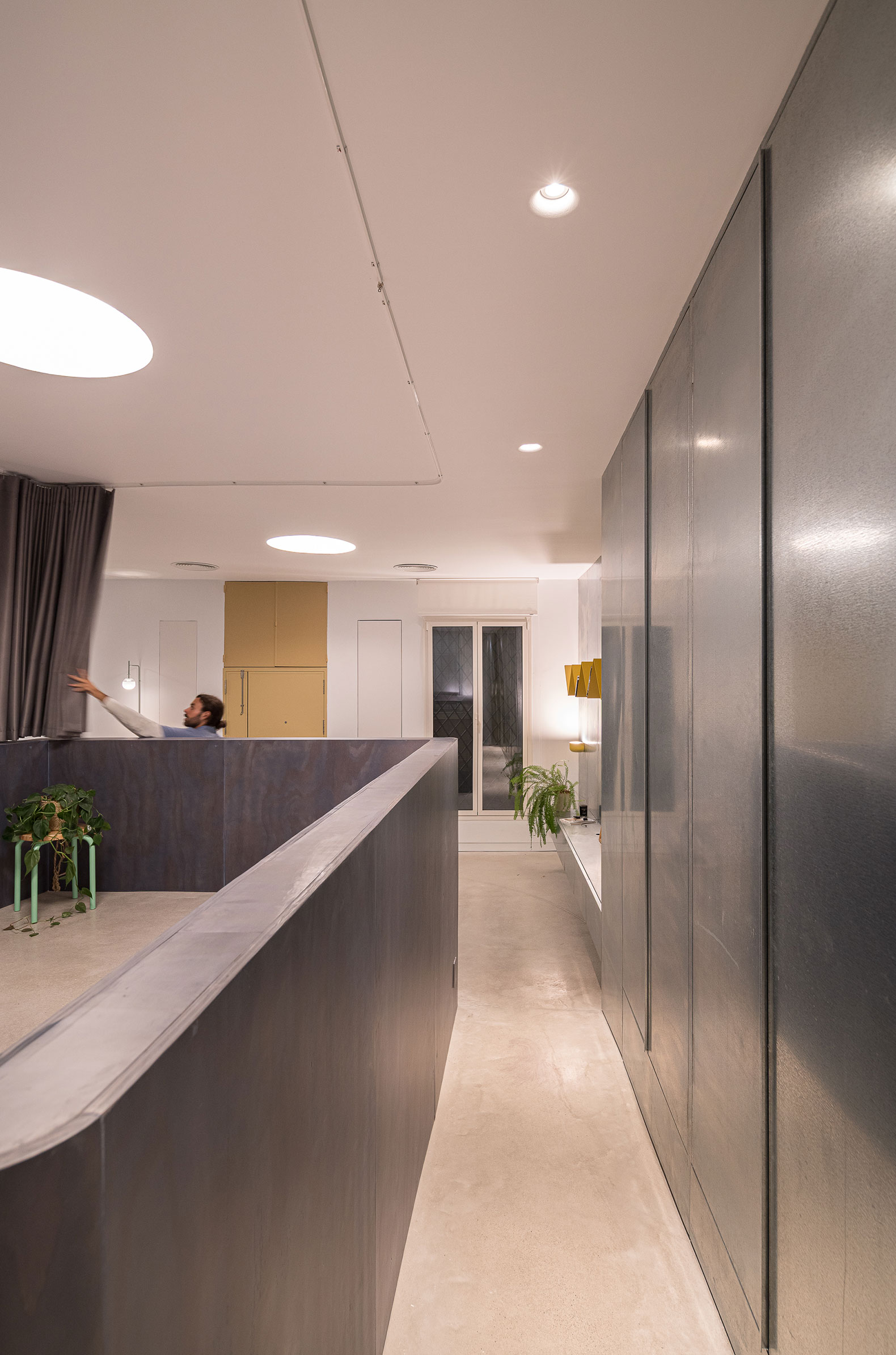
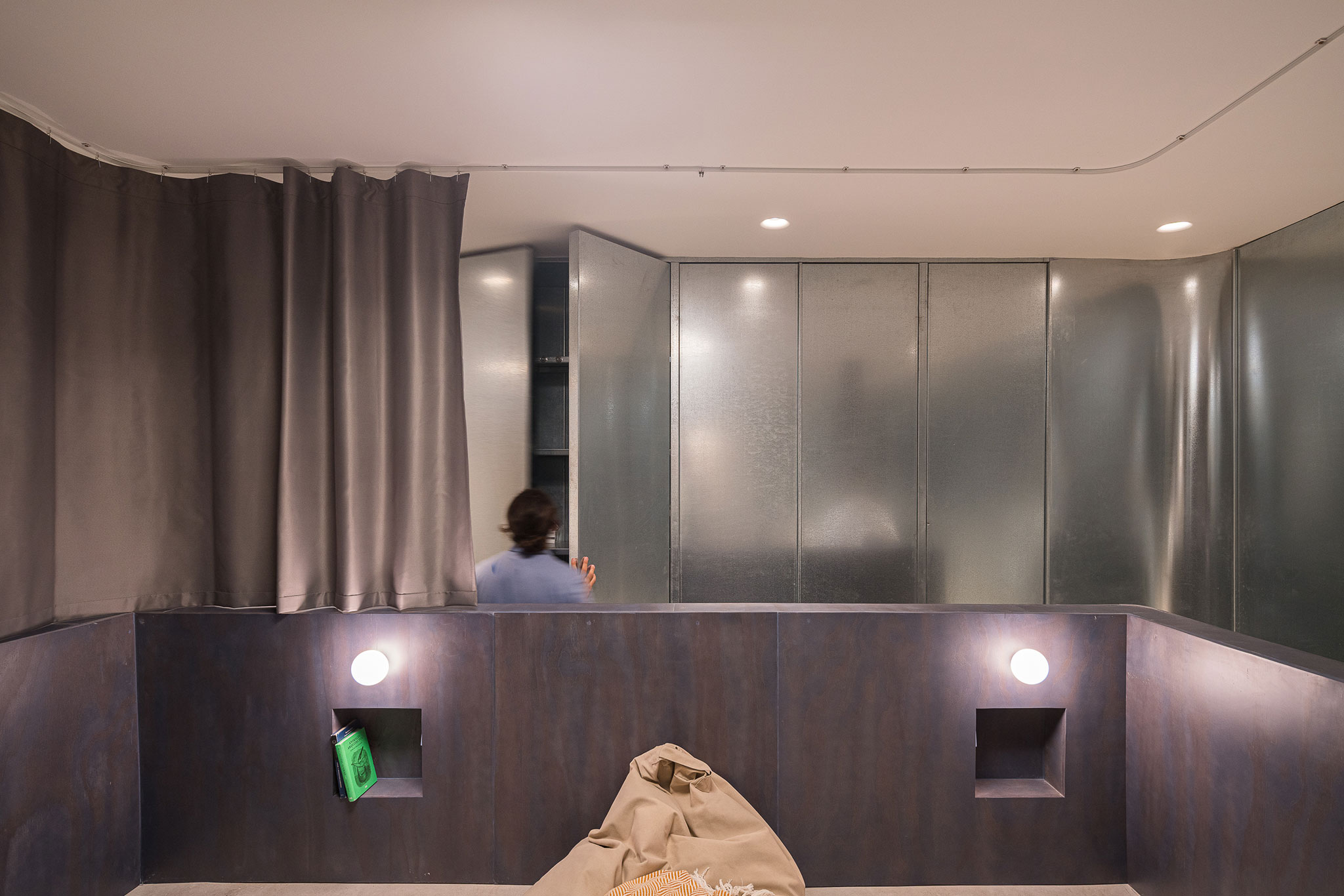
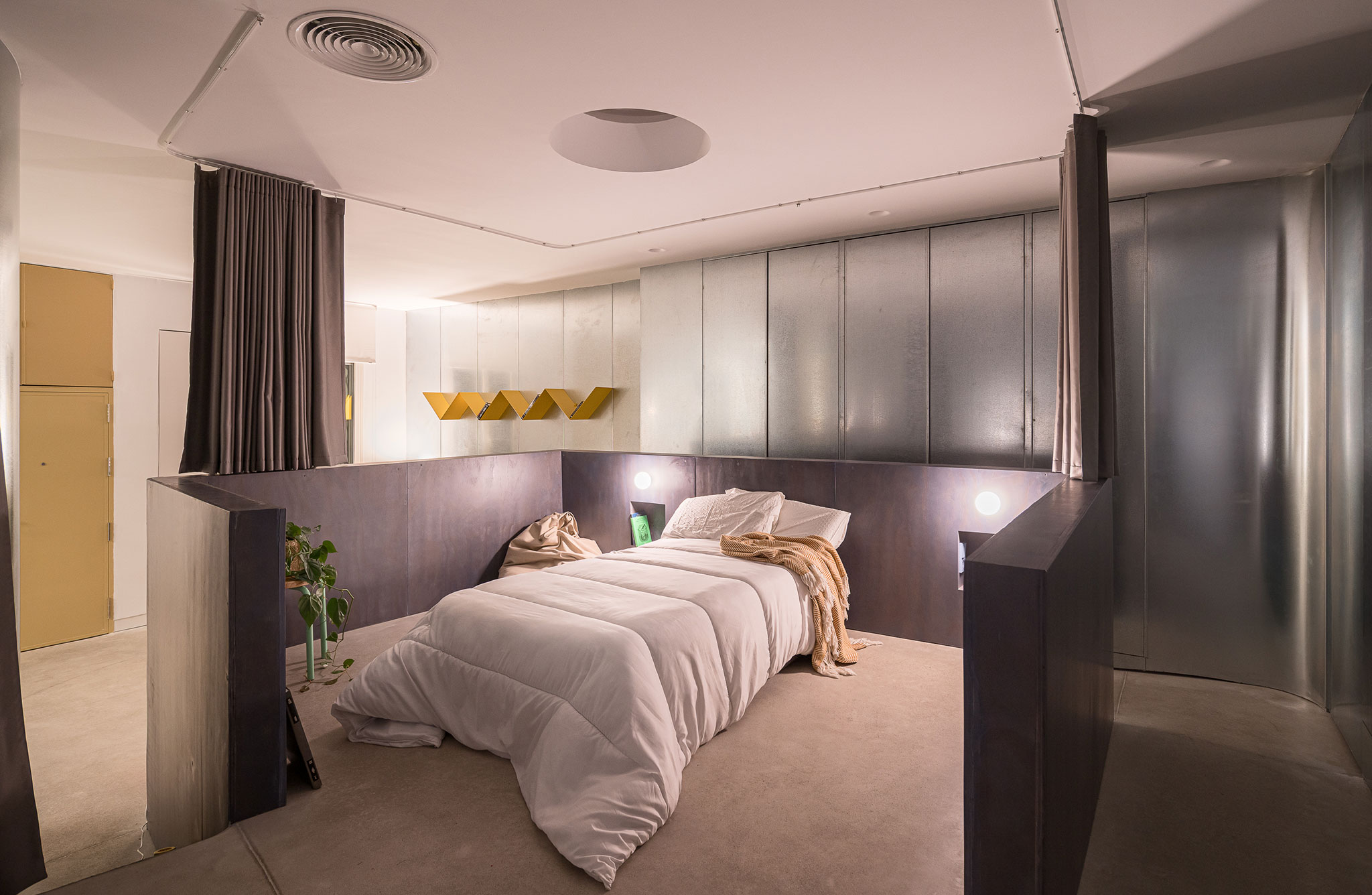
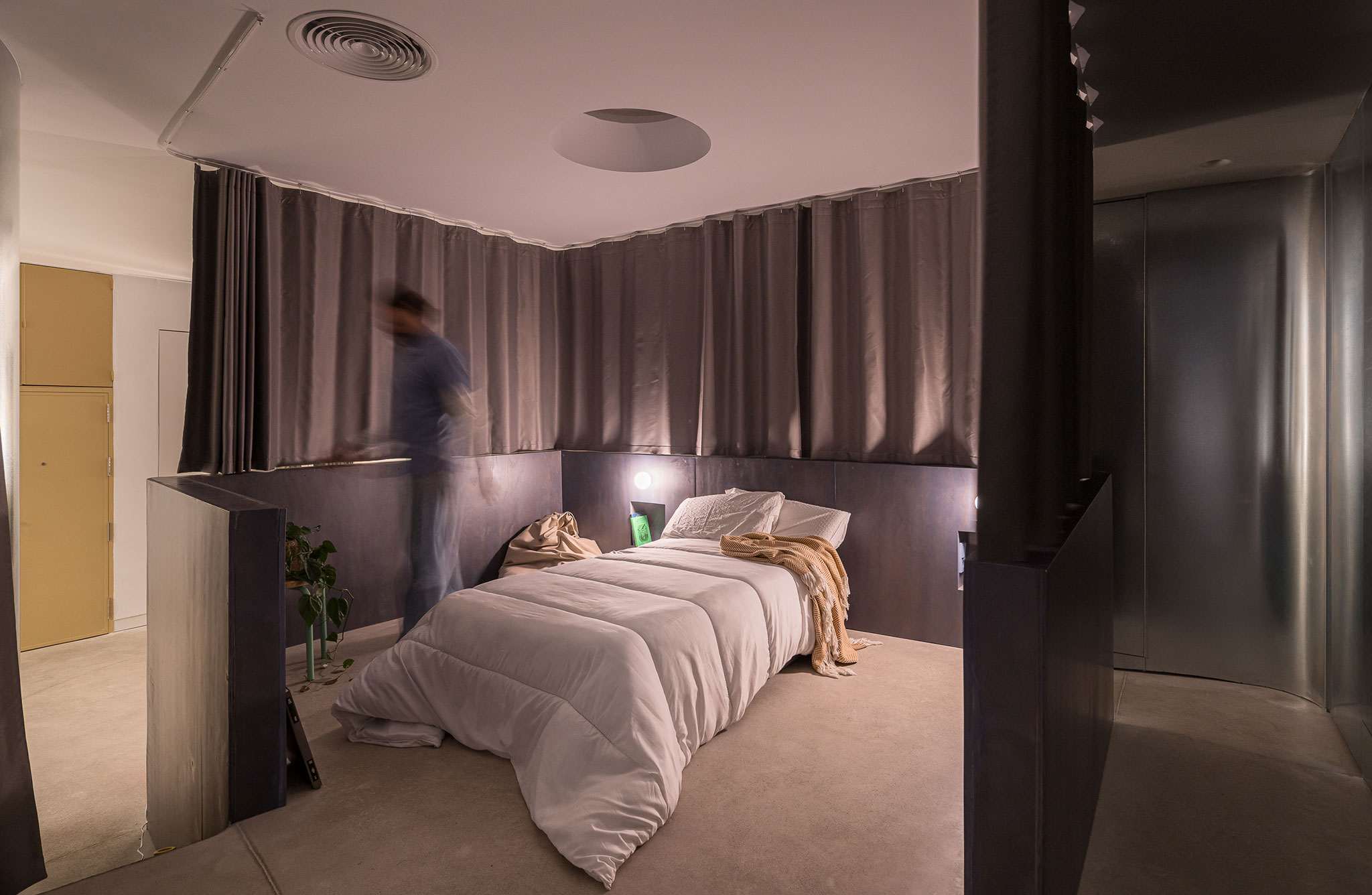
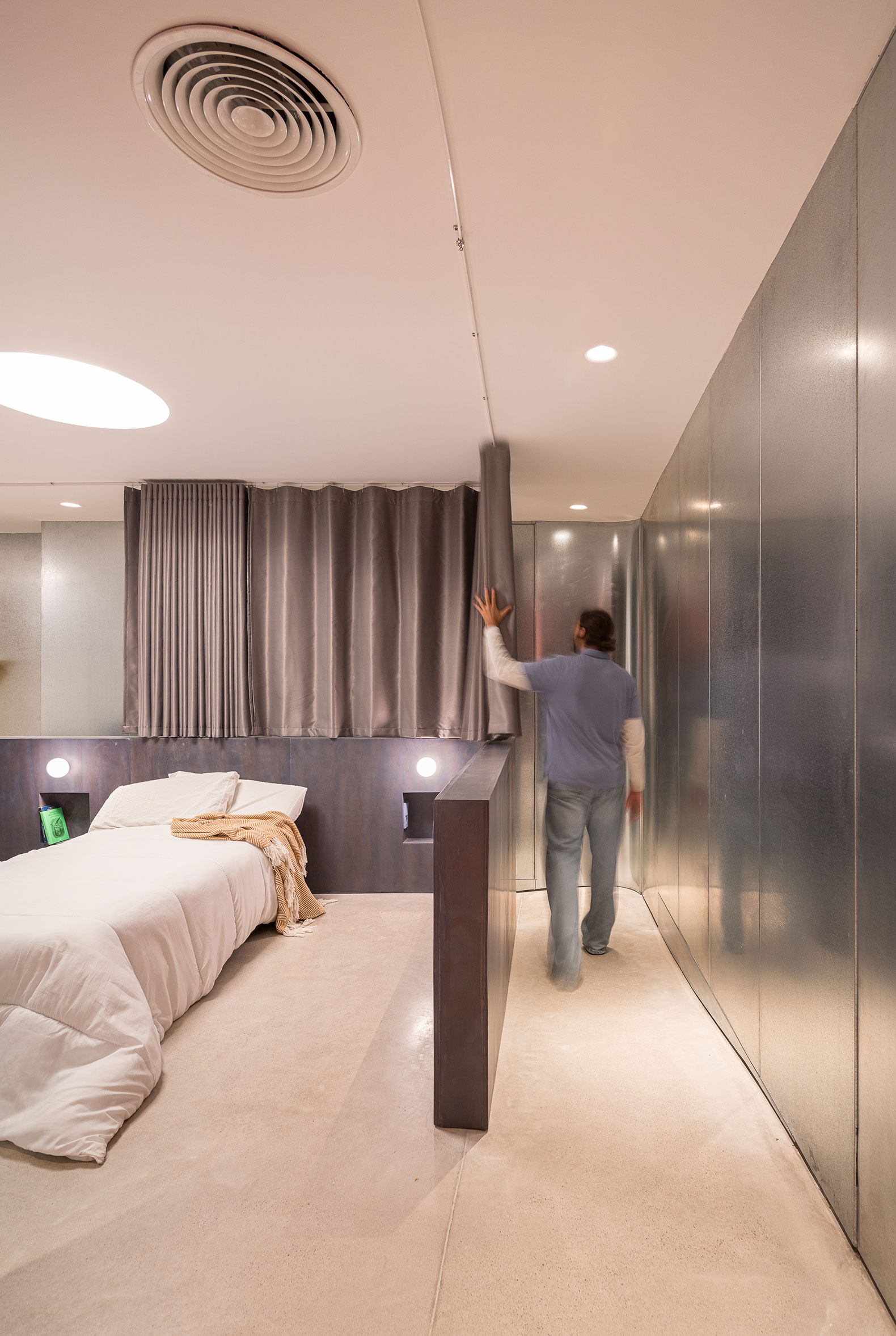
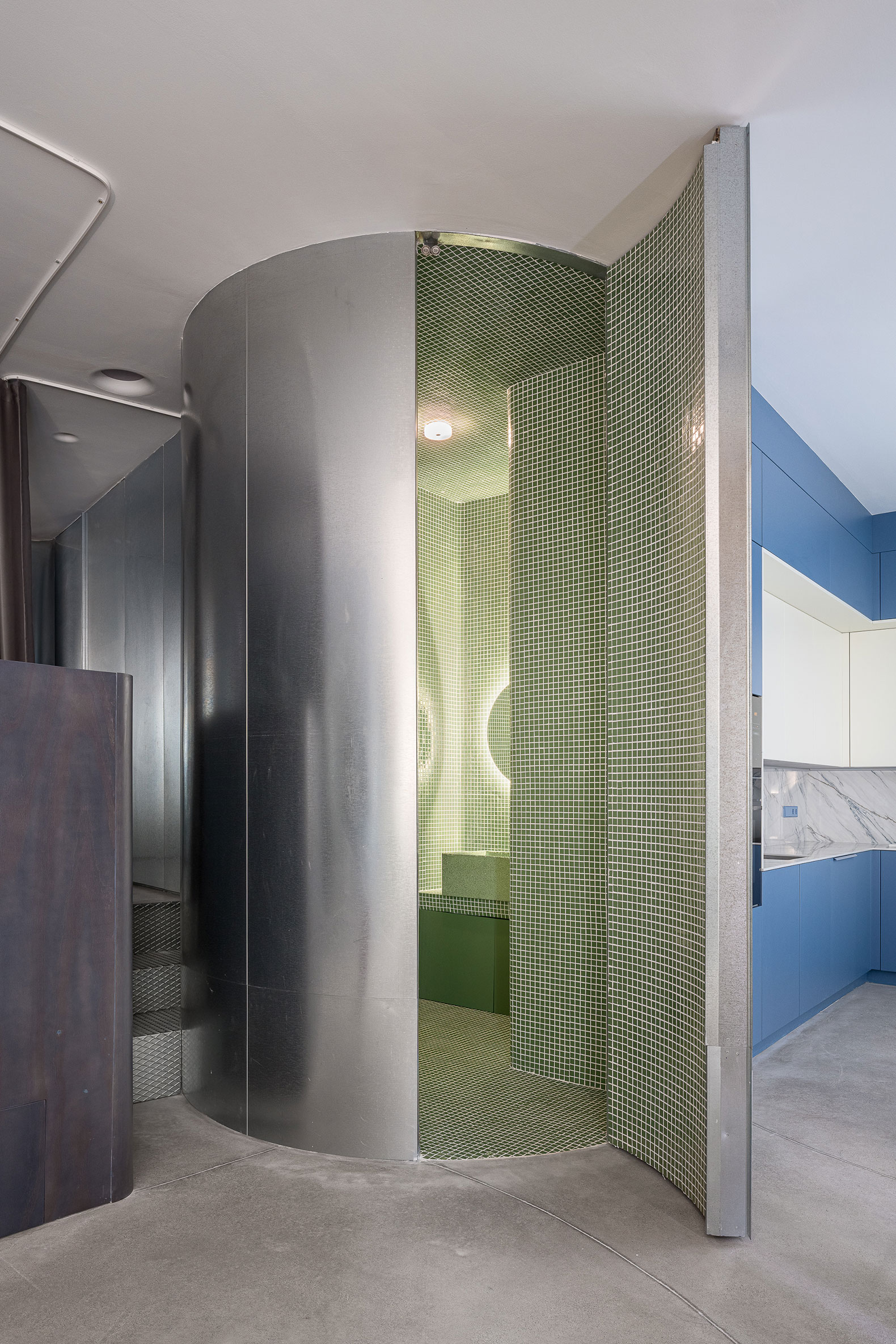
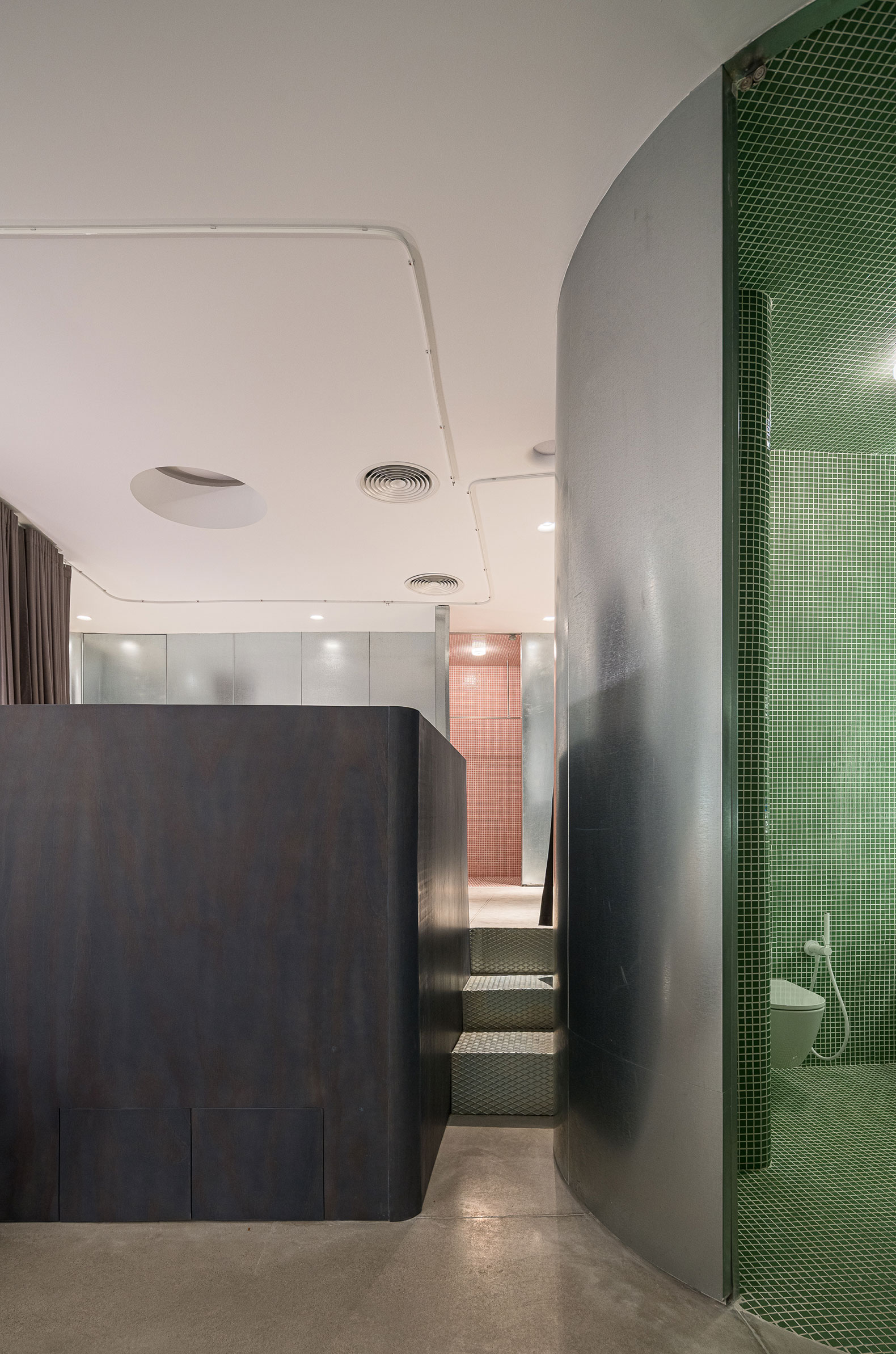
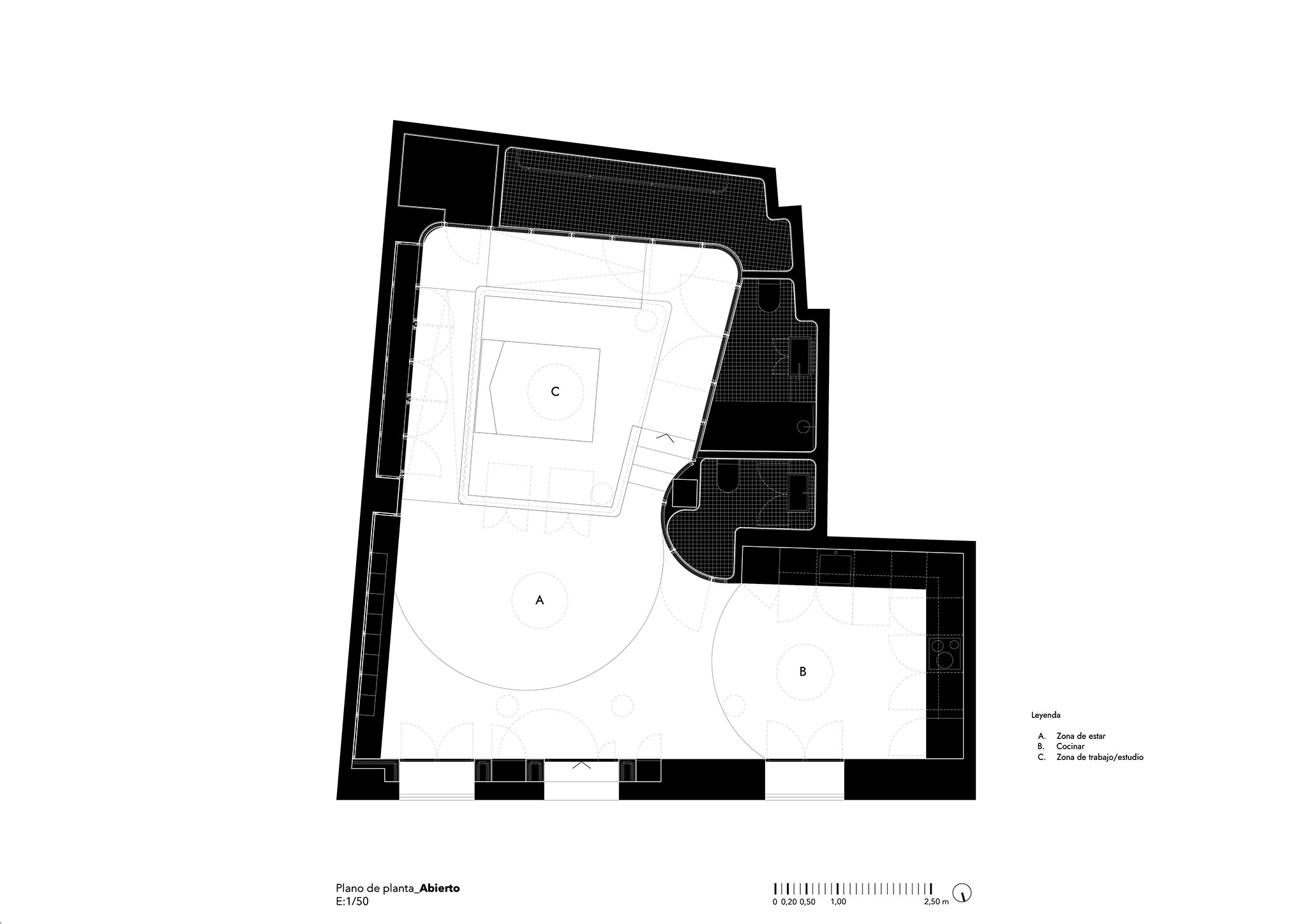
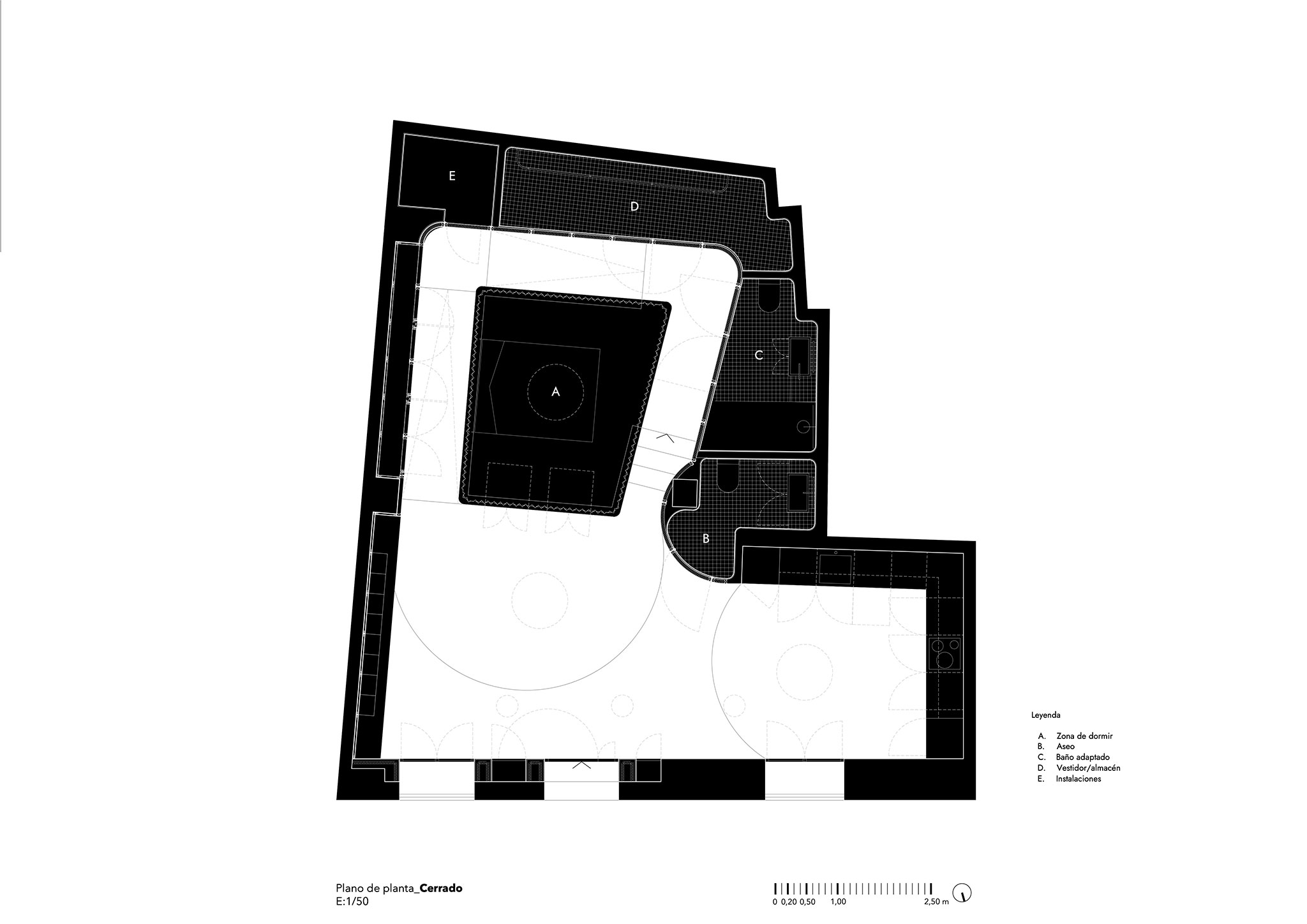
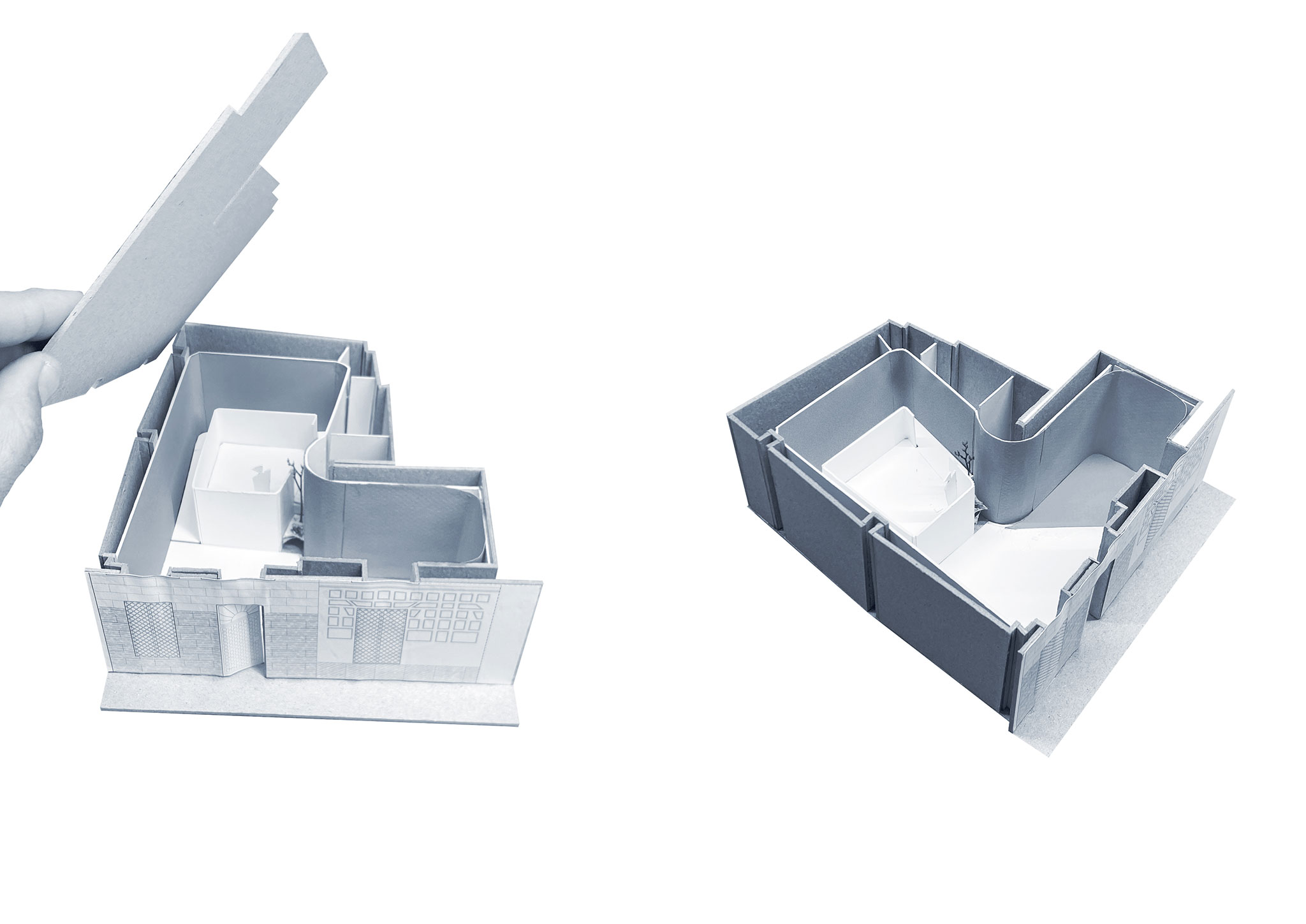
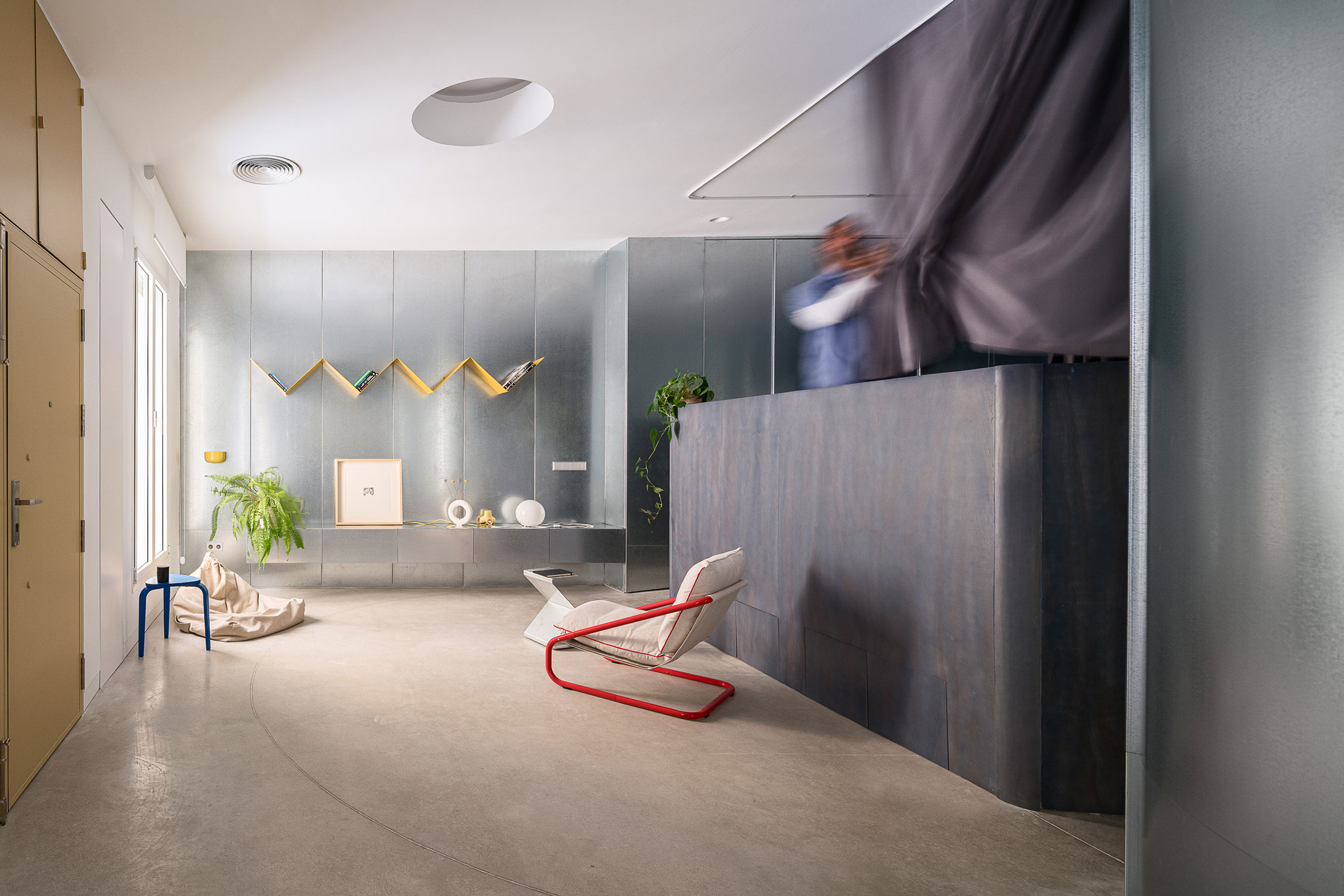
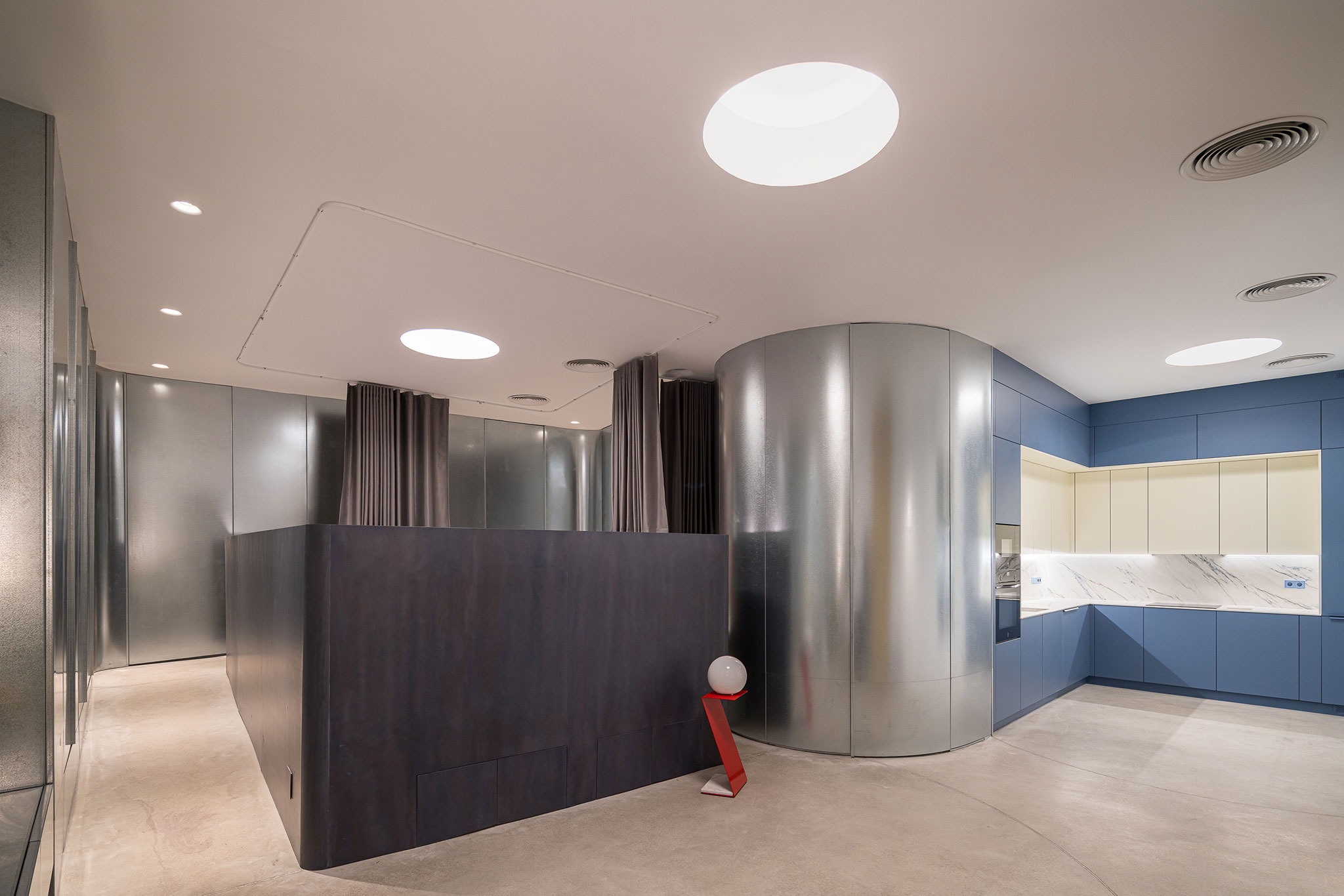
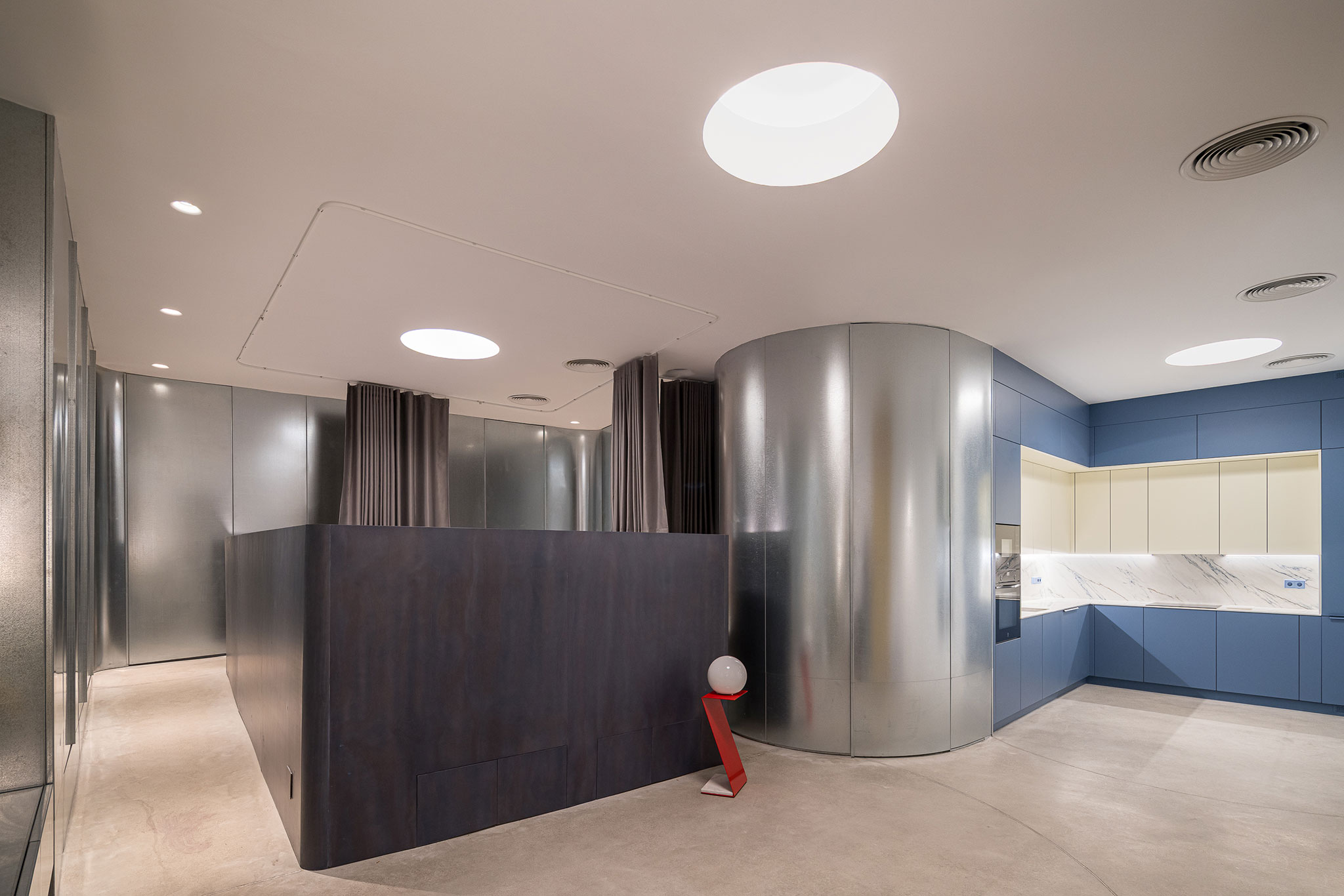
"Pregnant House," designed by FORarquitectura, occupies the ground floor of a building in the city's historic center, free from vehicular and pedestrian traffic. Inside, it comprises open and flexible spaces with an ambiguous and experimental feel, featuring minimal service areas around the perimeter and the bedroom in a central core.

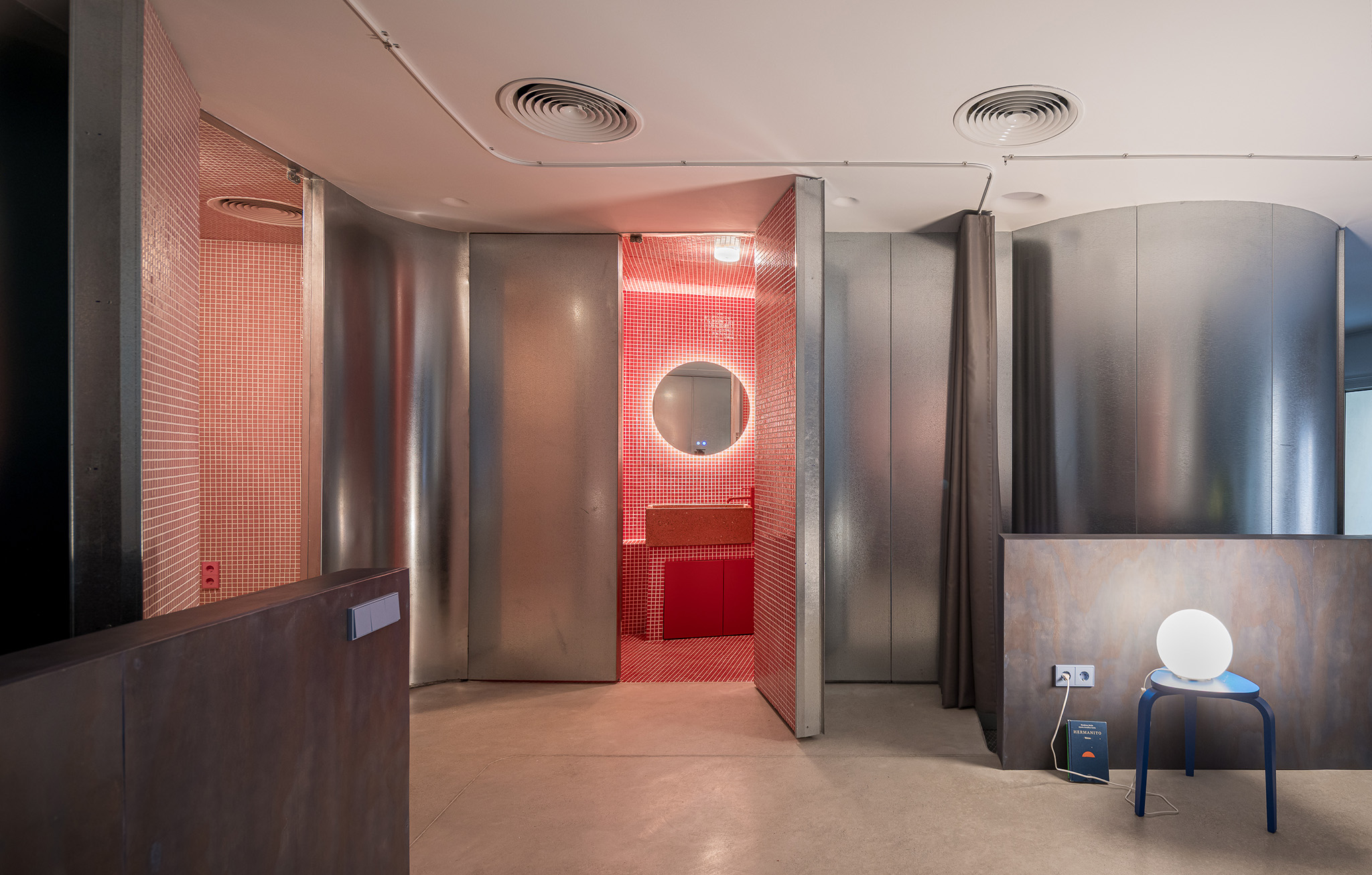
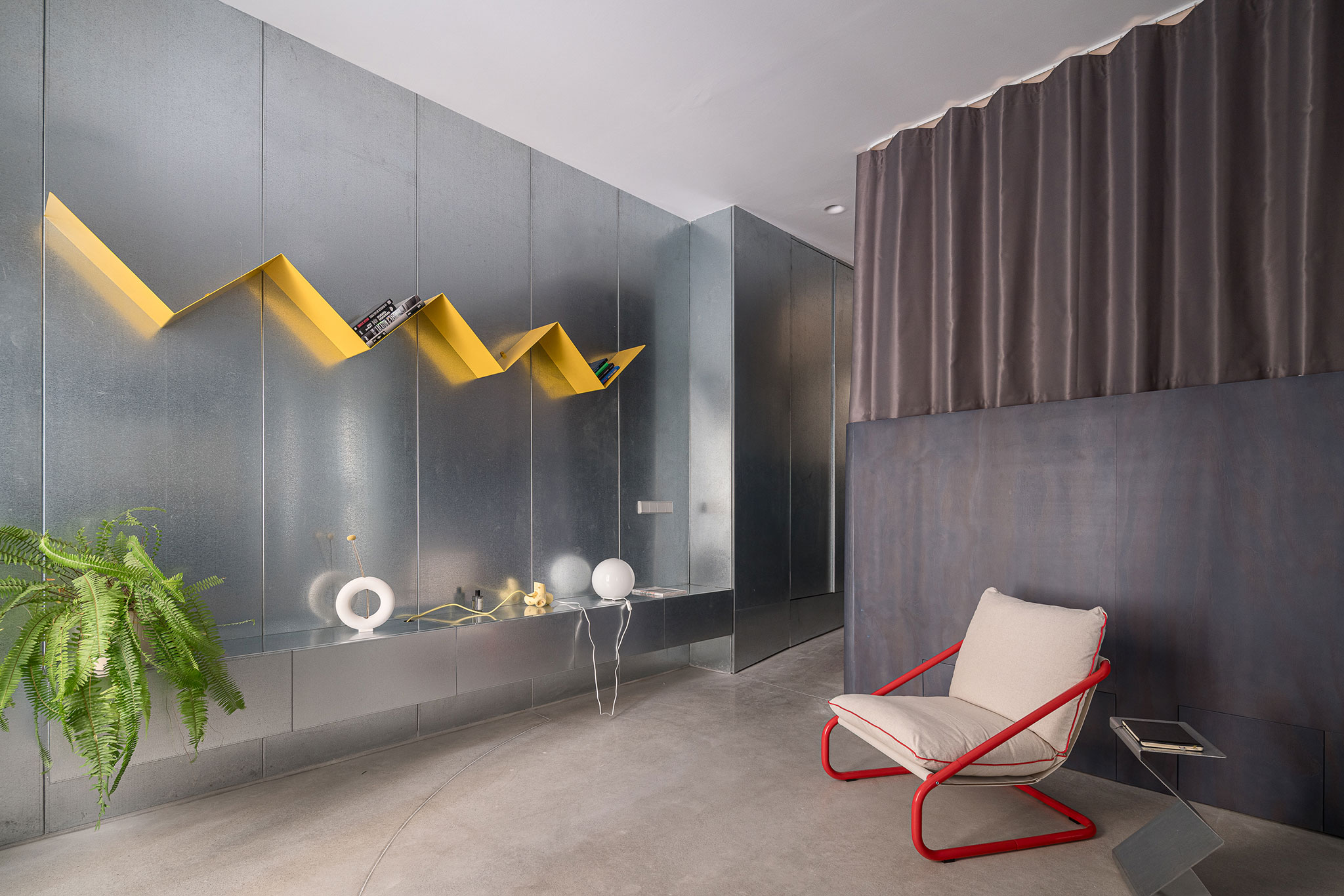
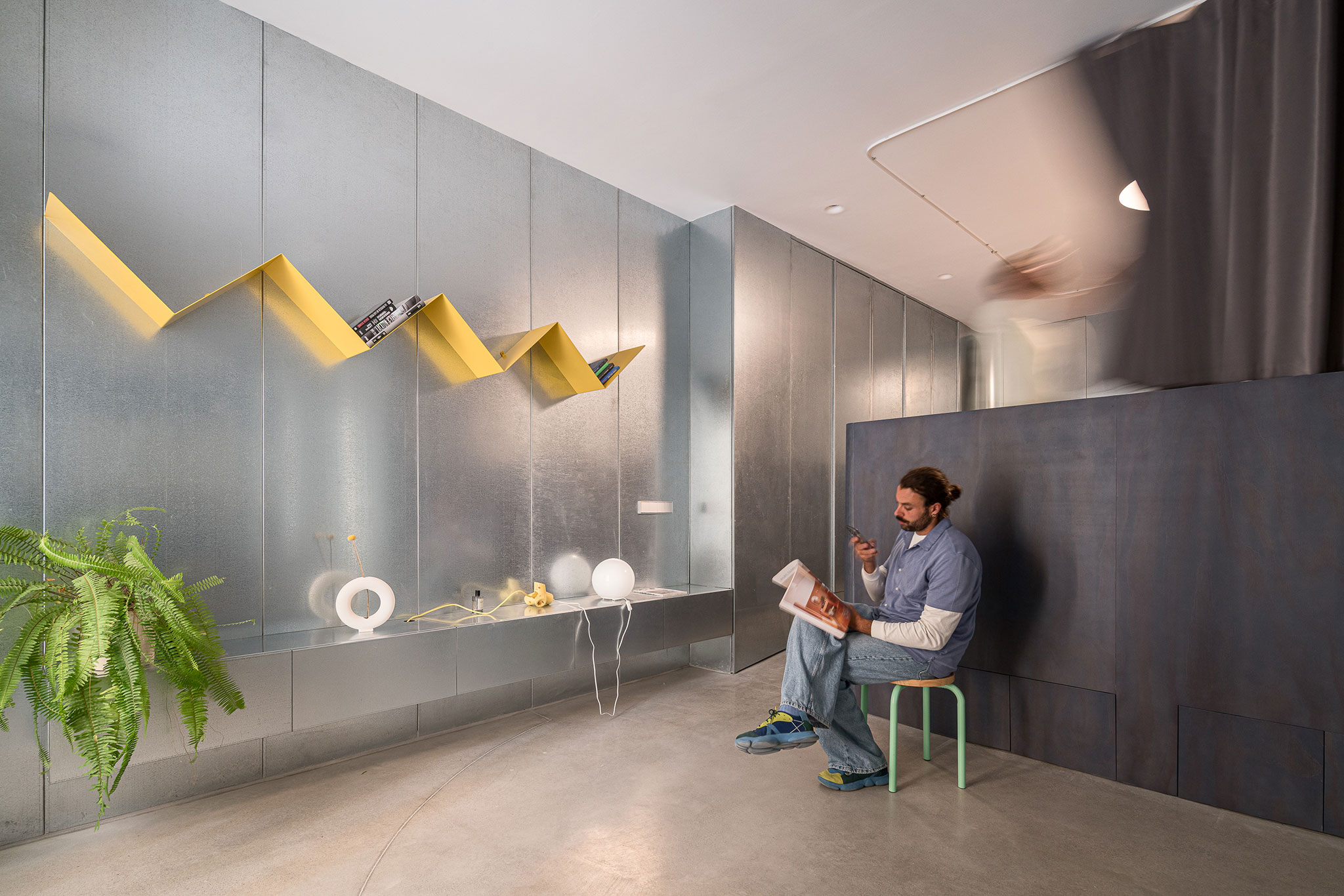
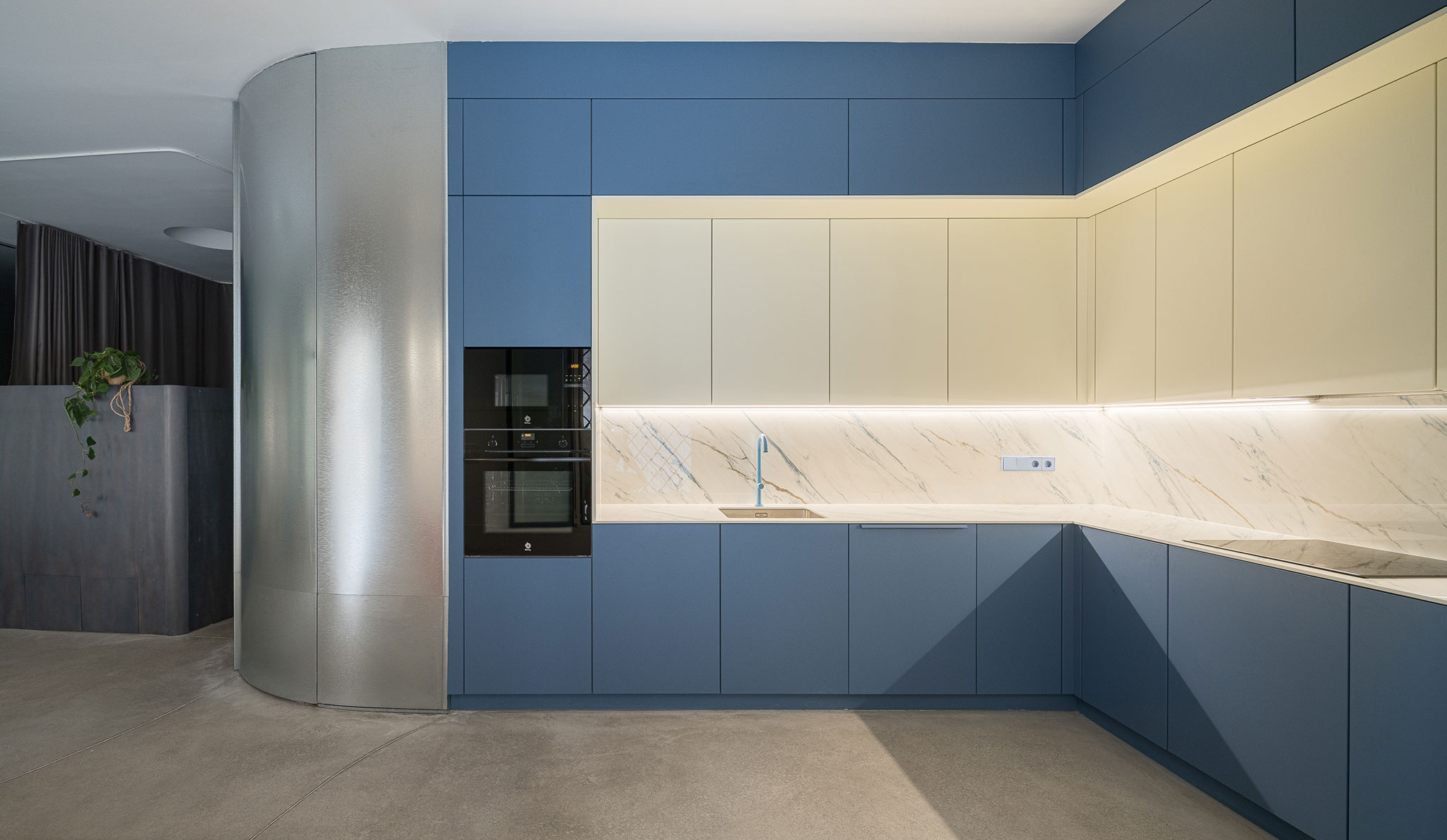
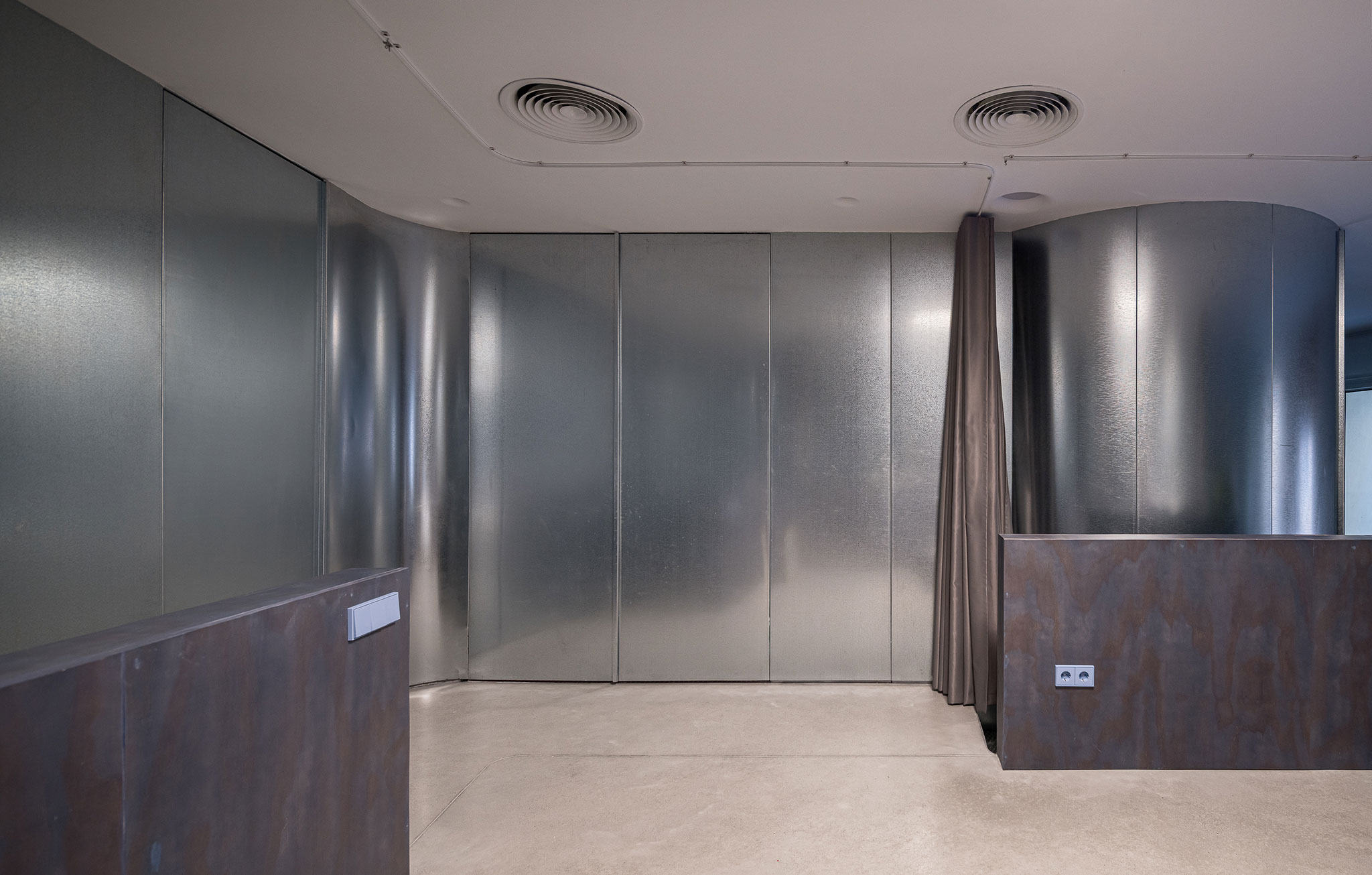
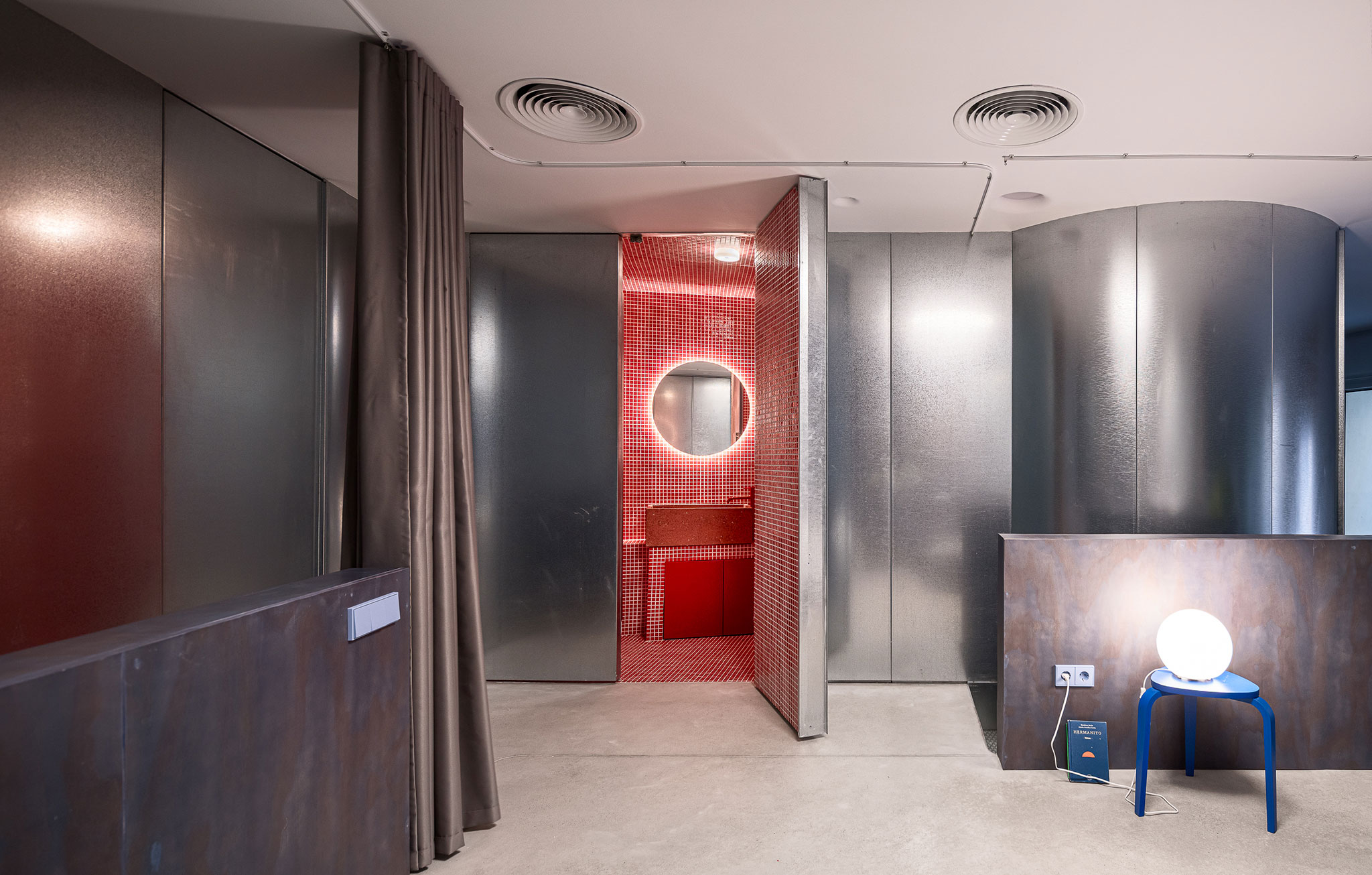
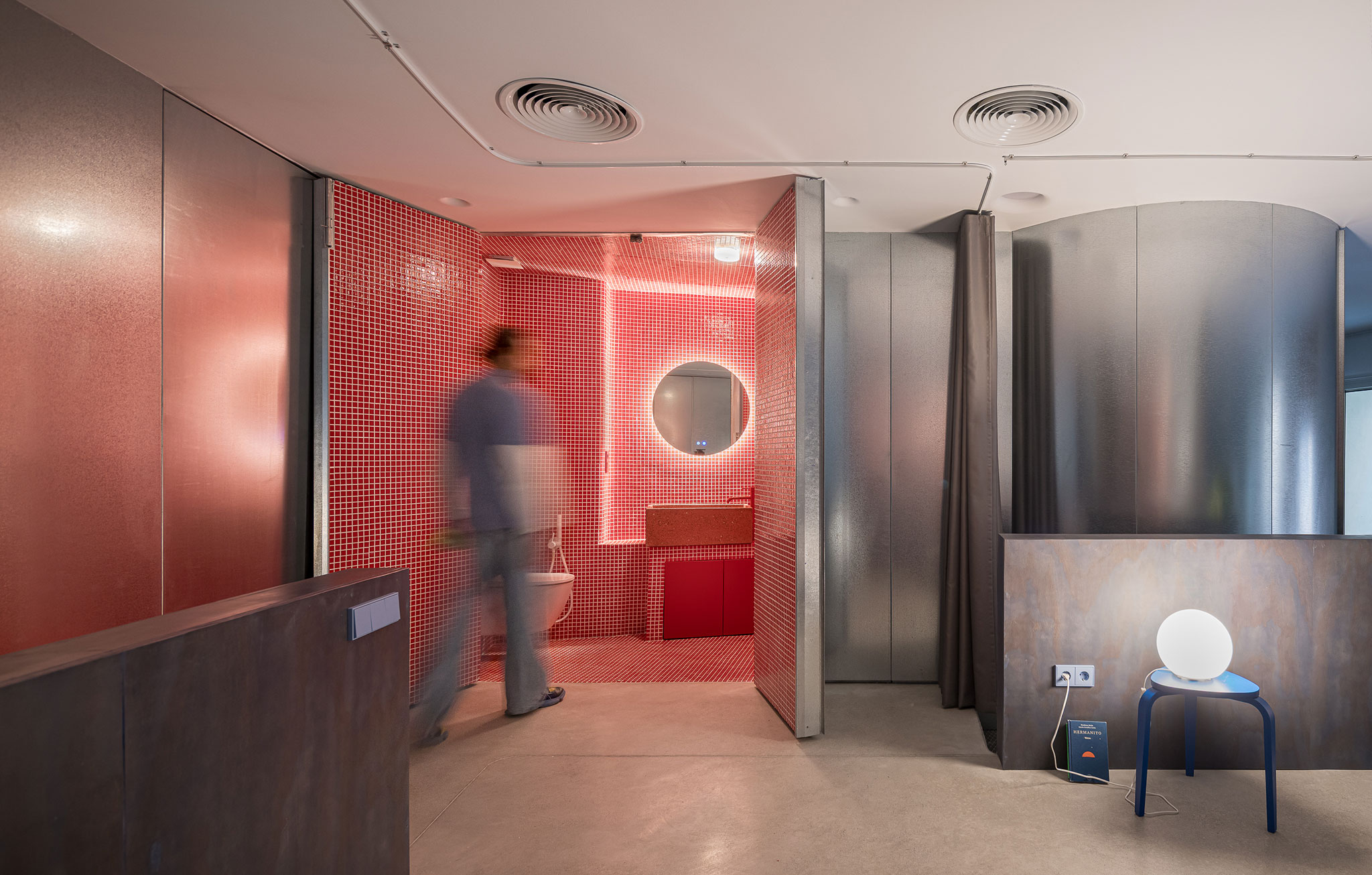
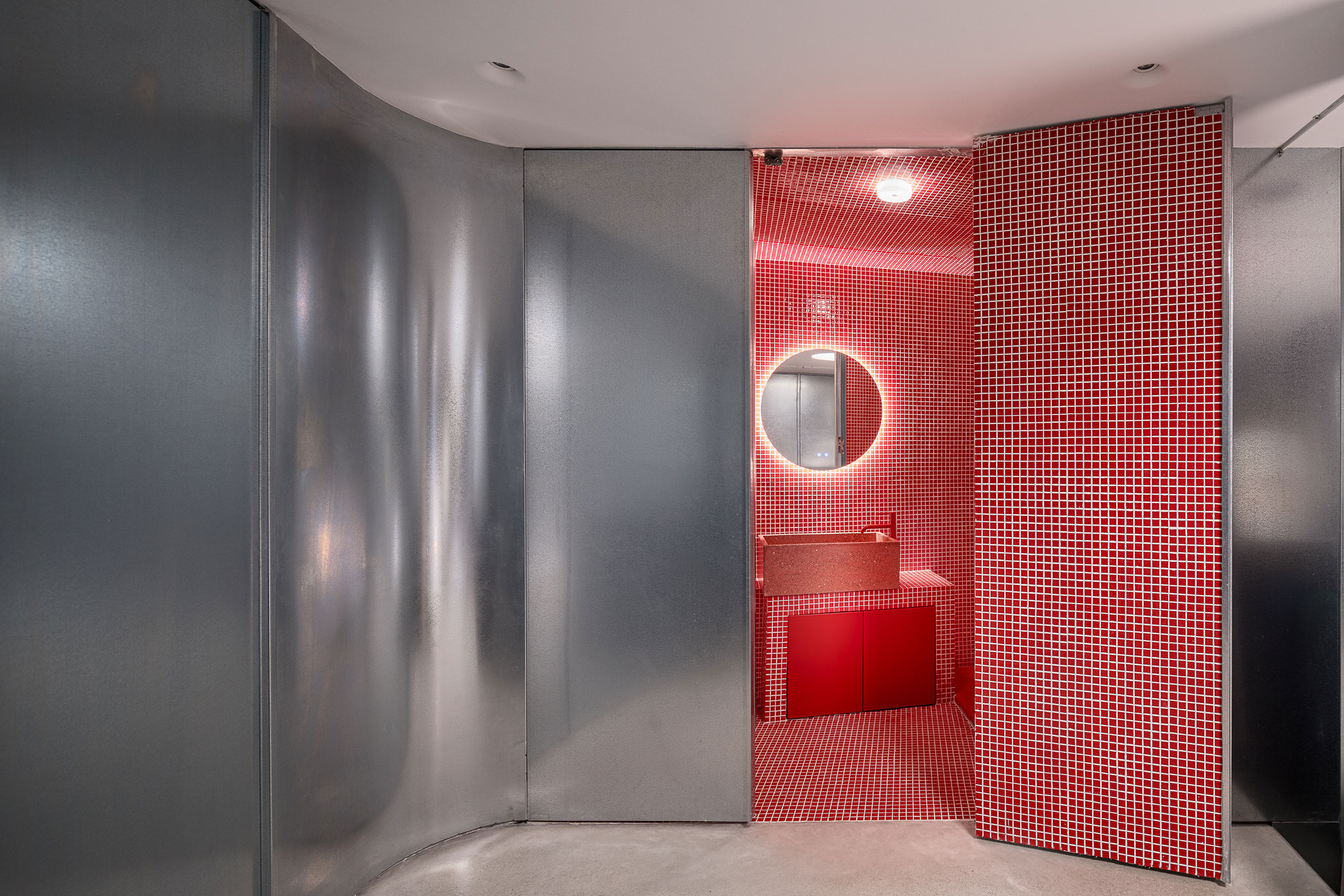
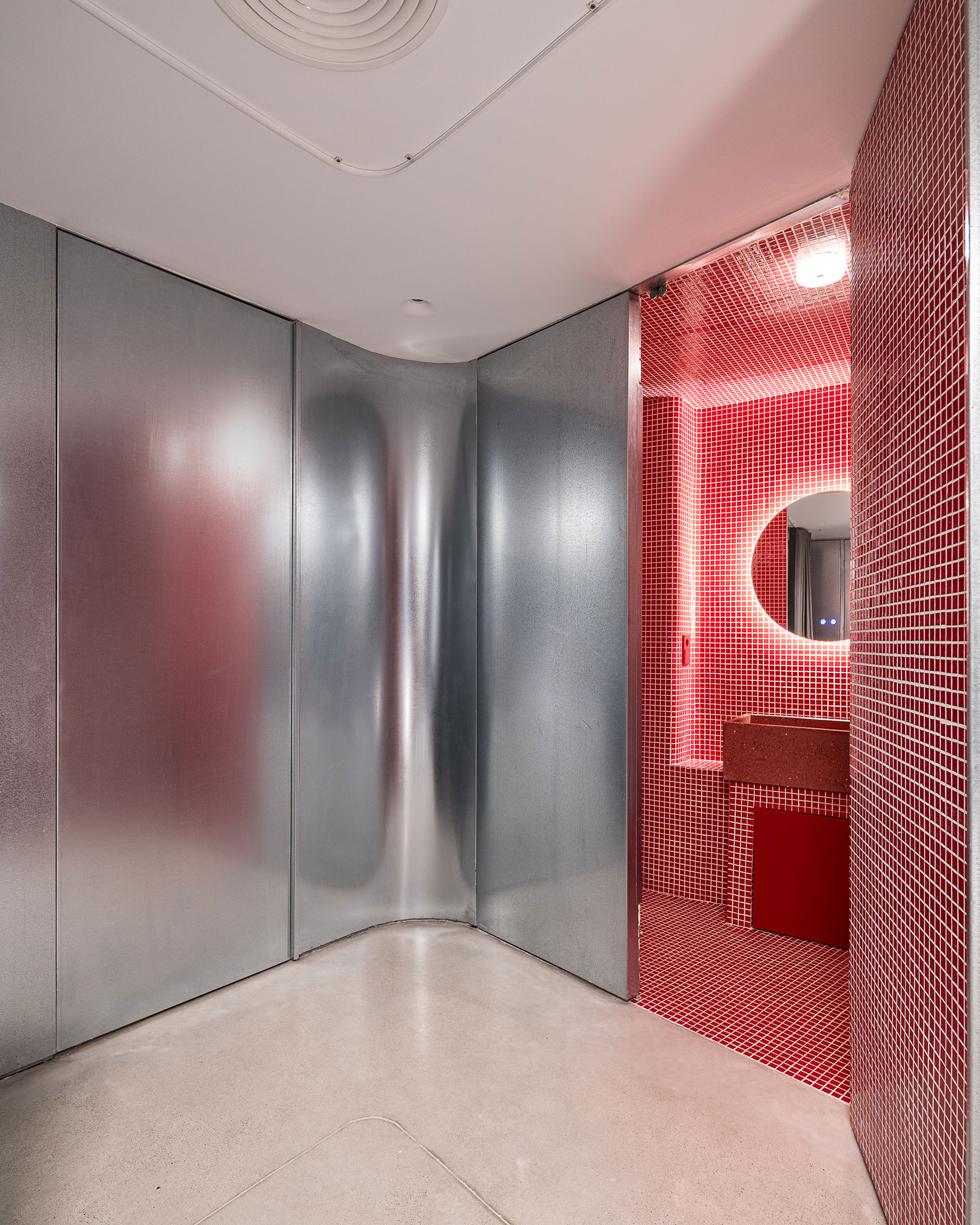
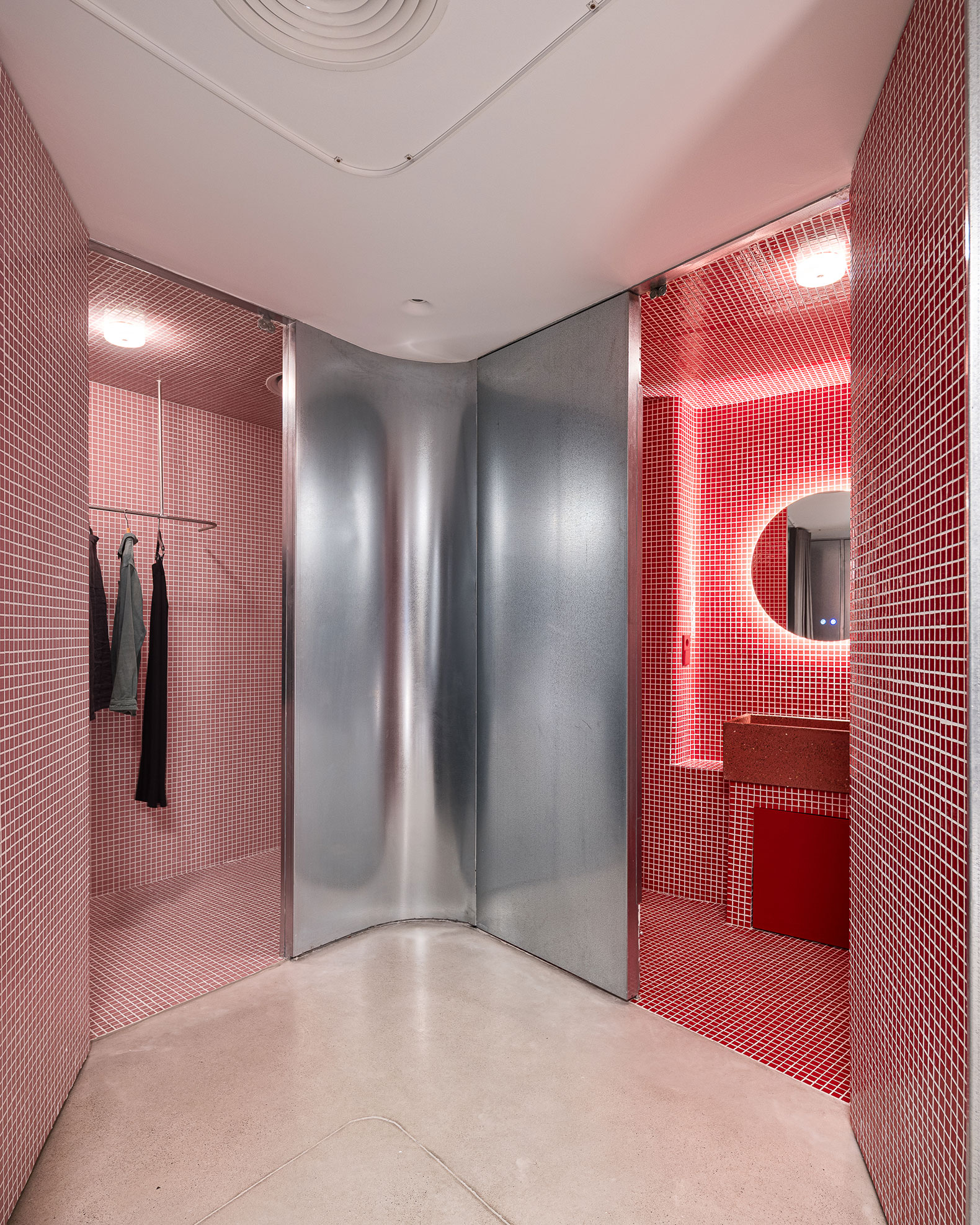
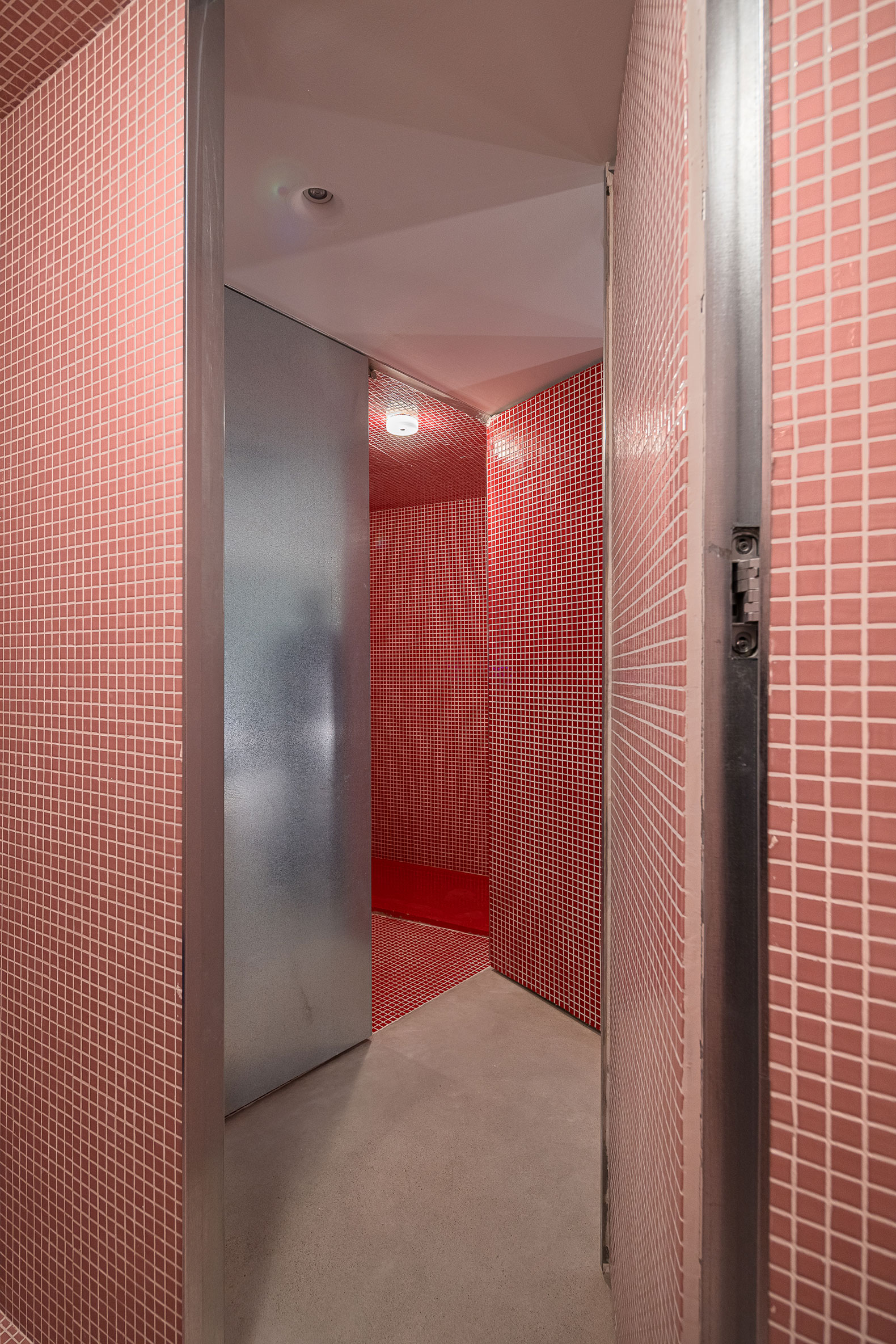
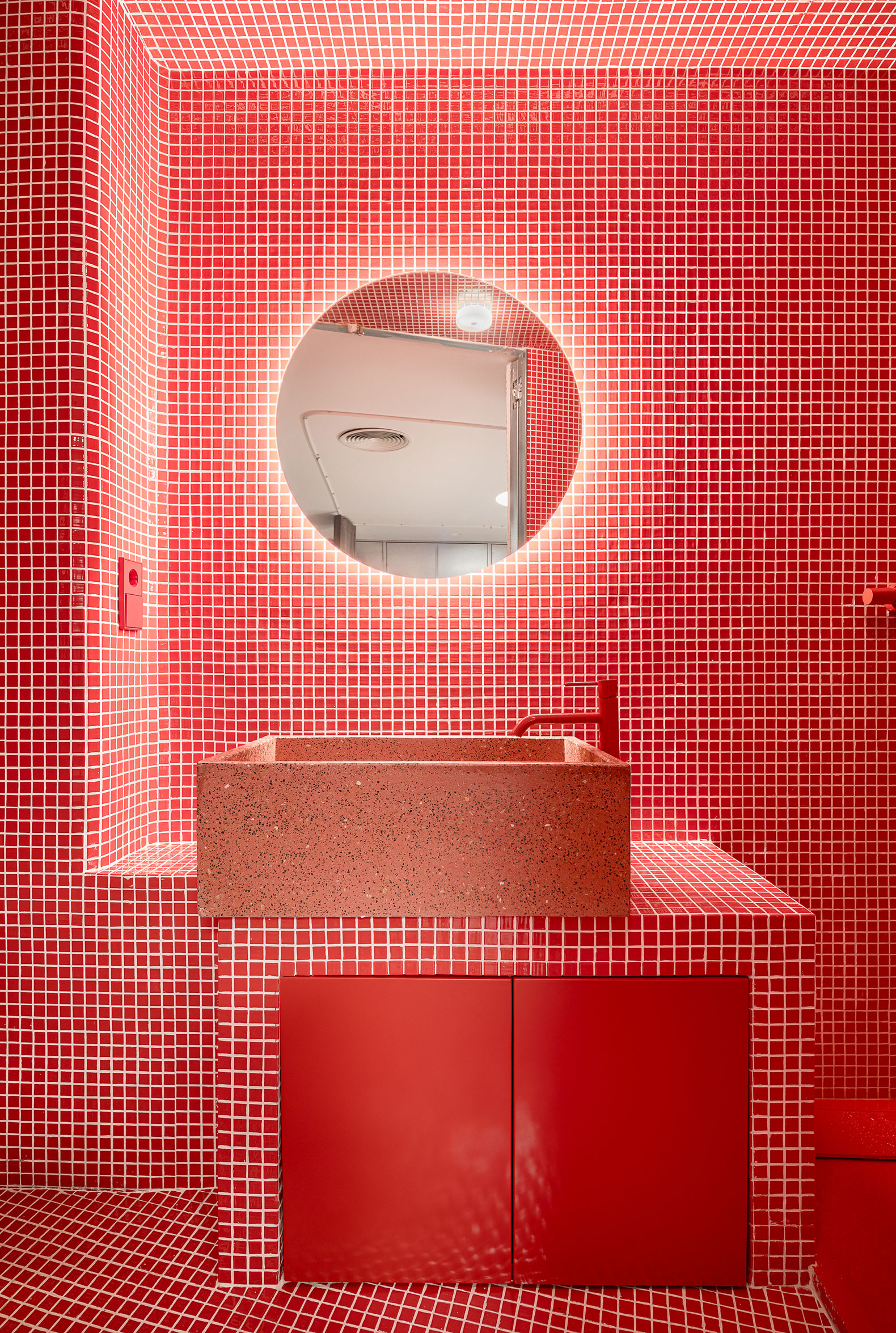
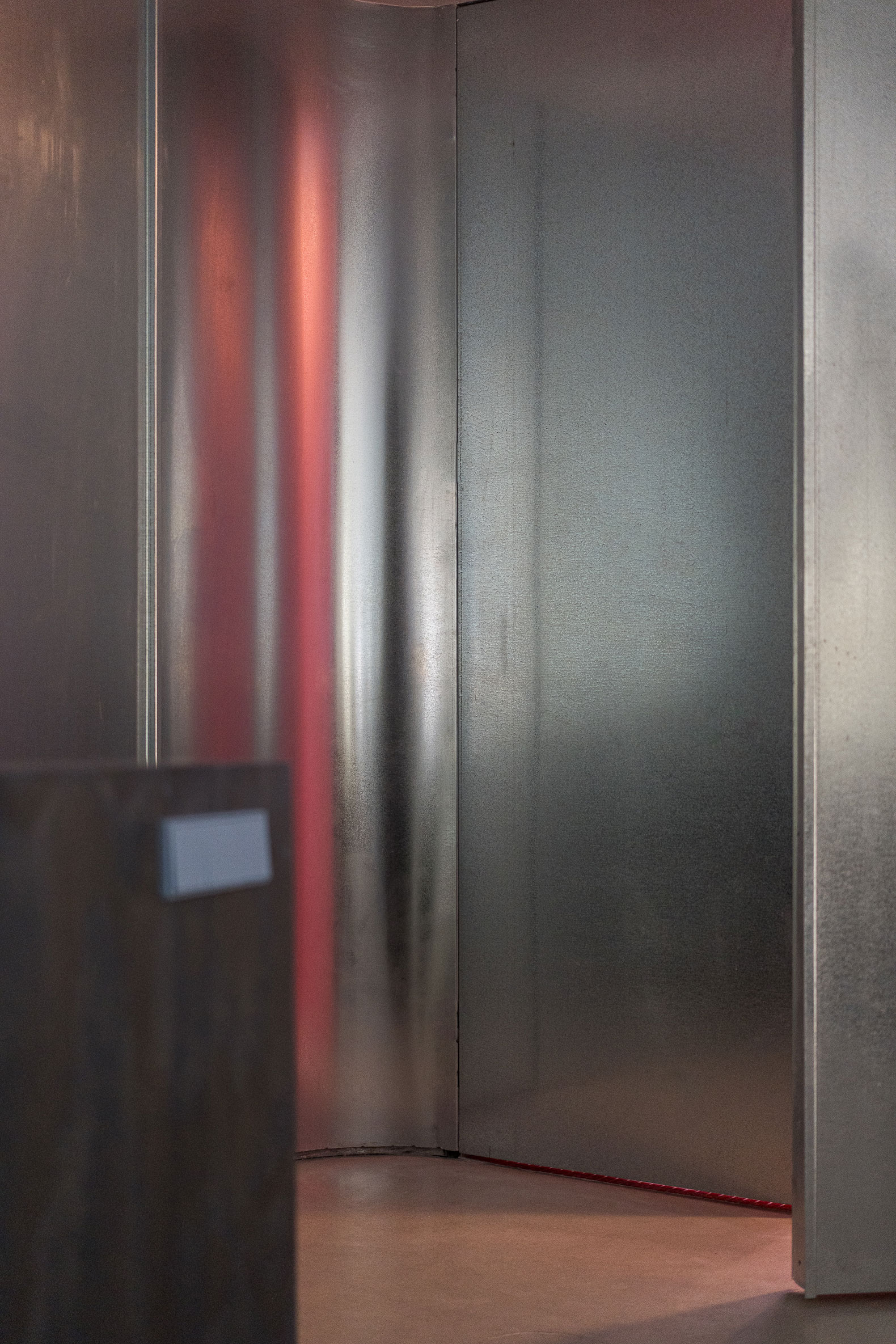
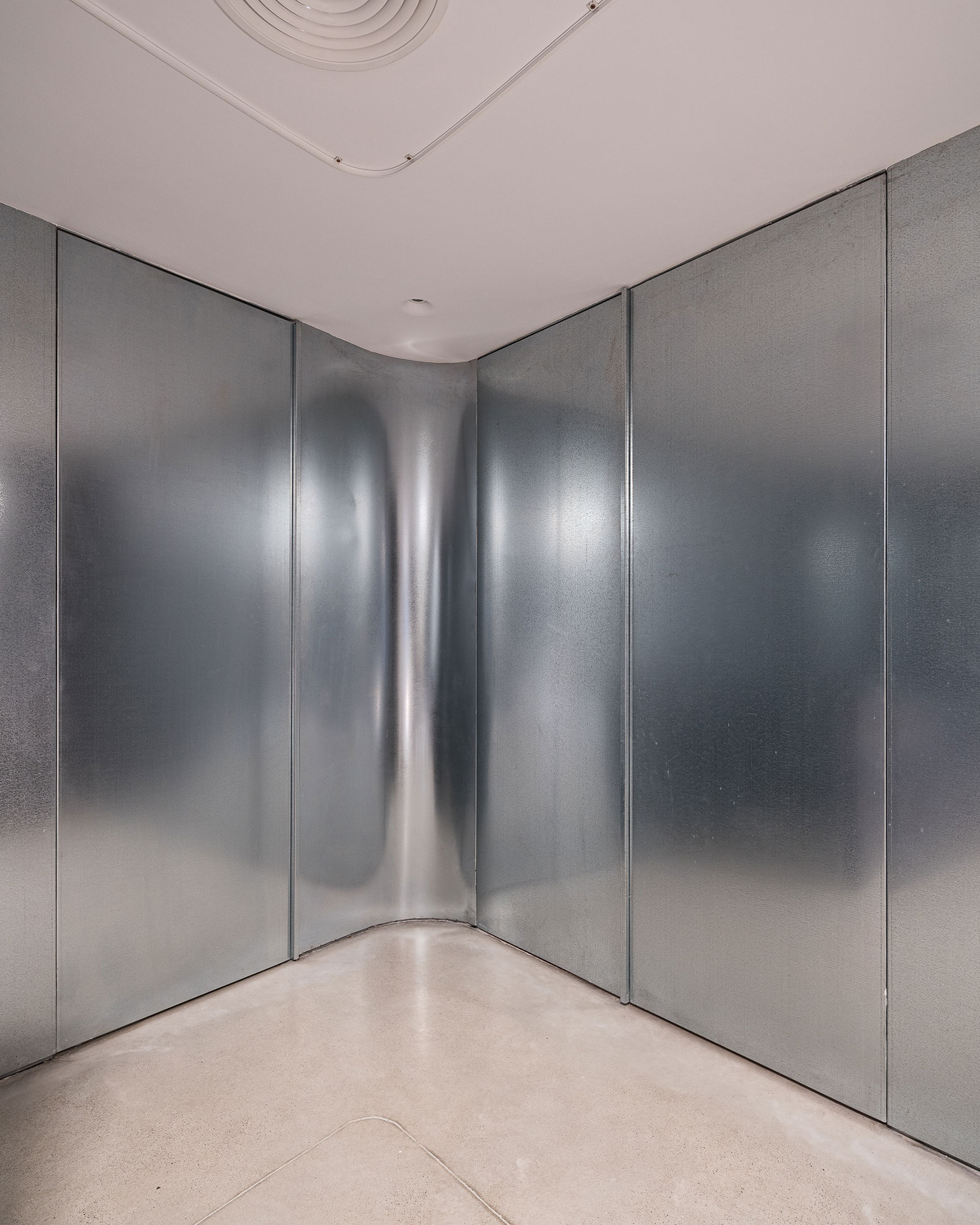
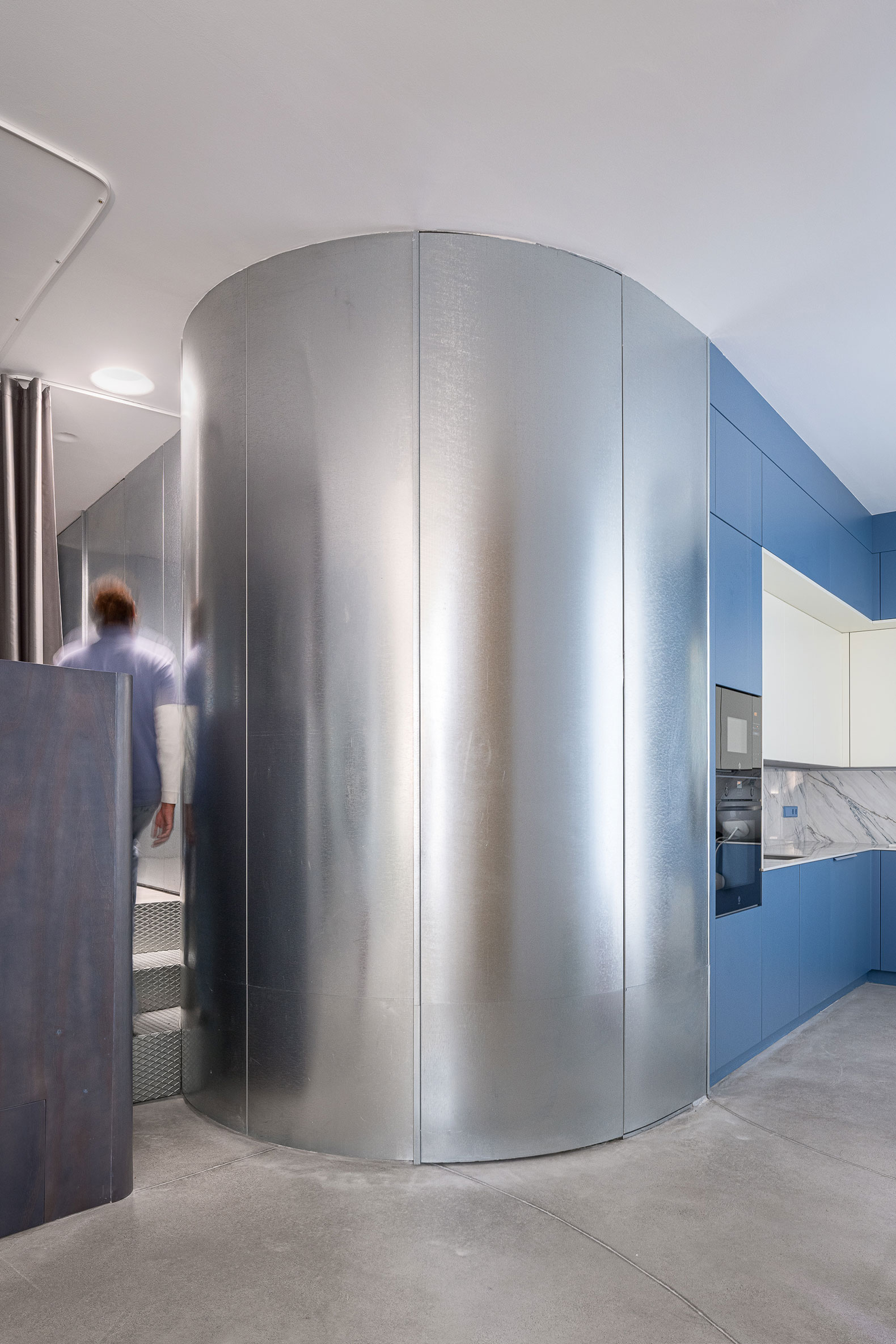
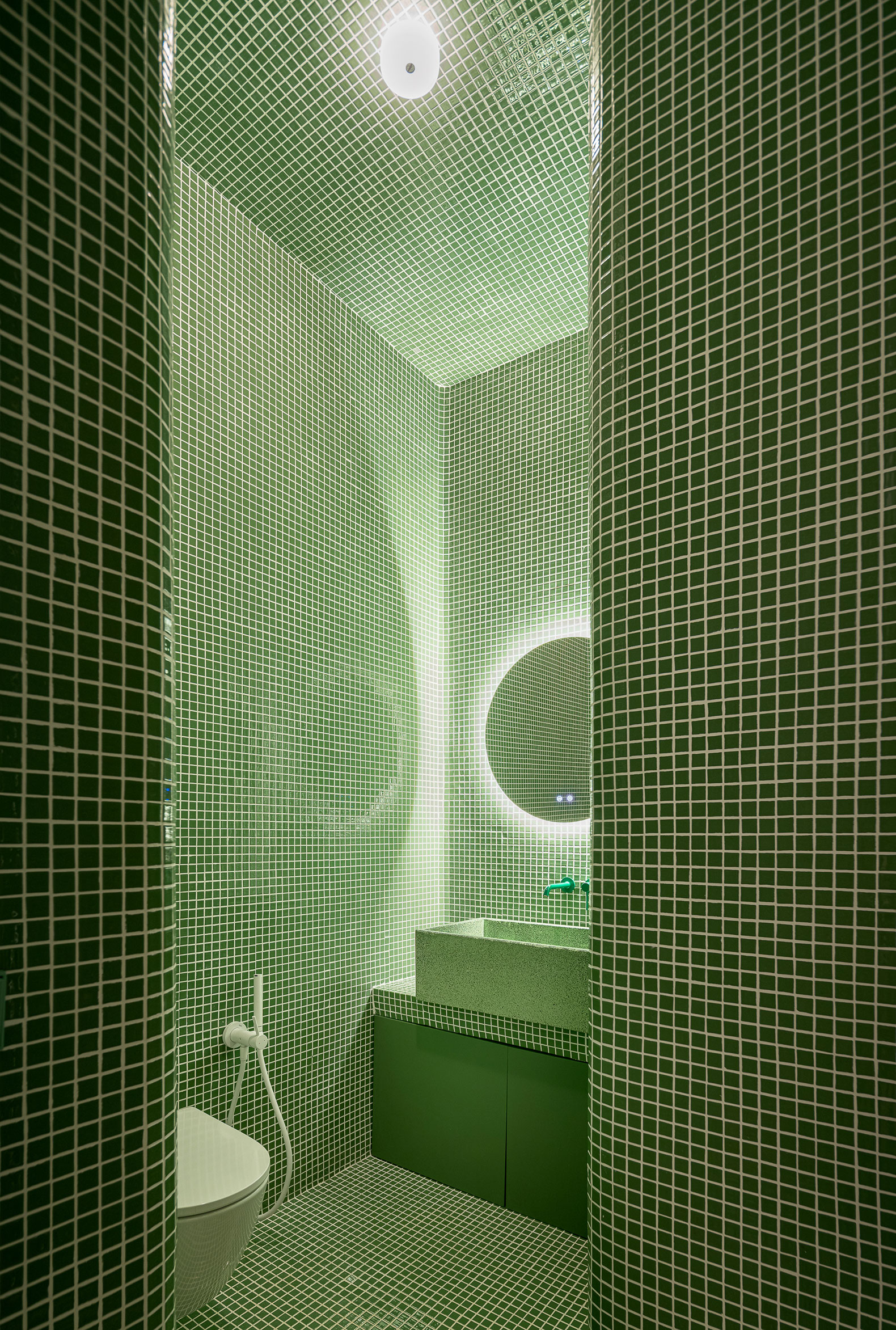
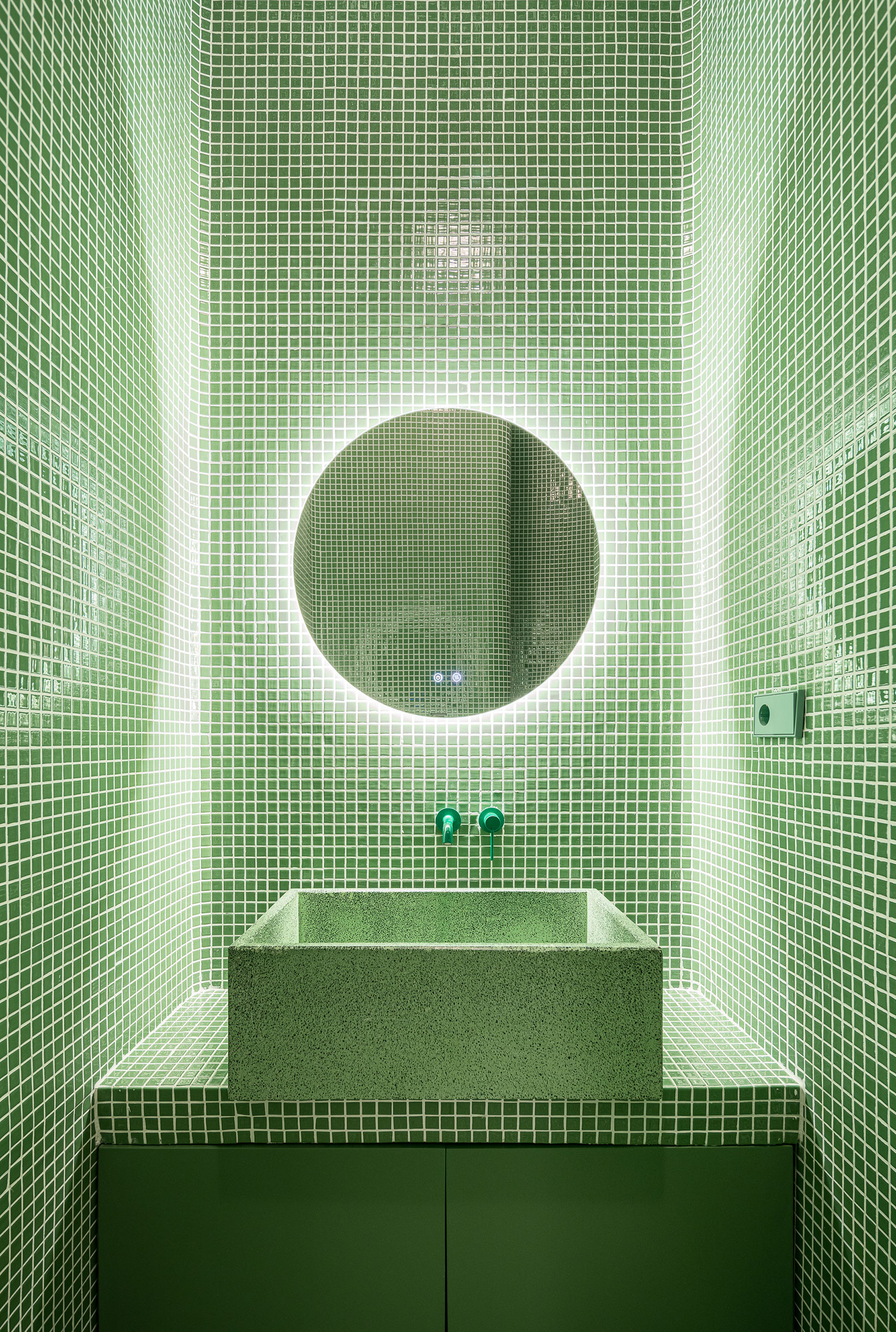
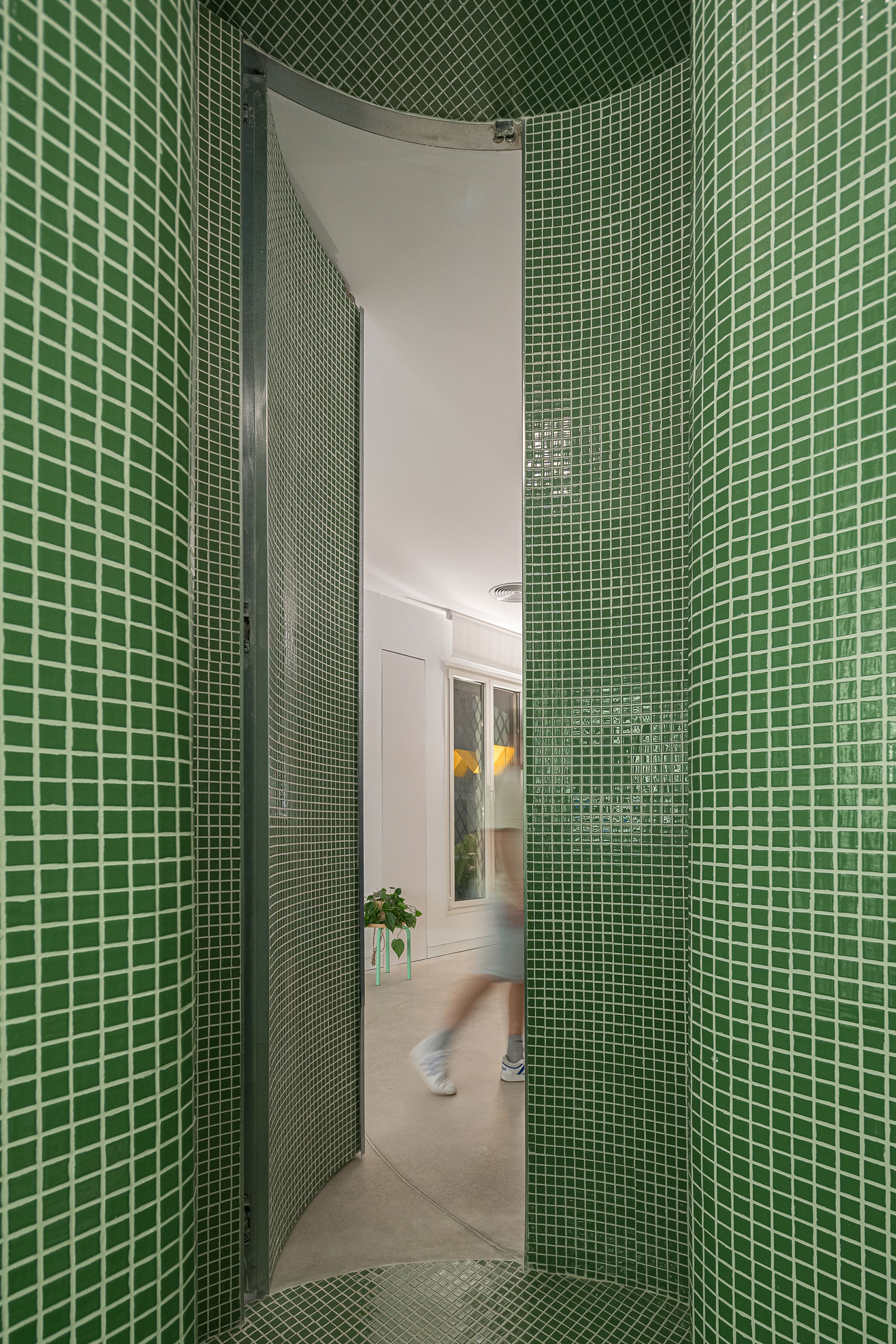
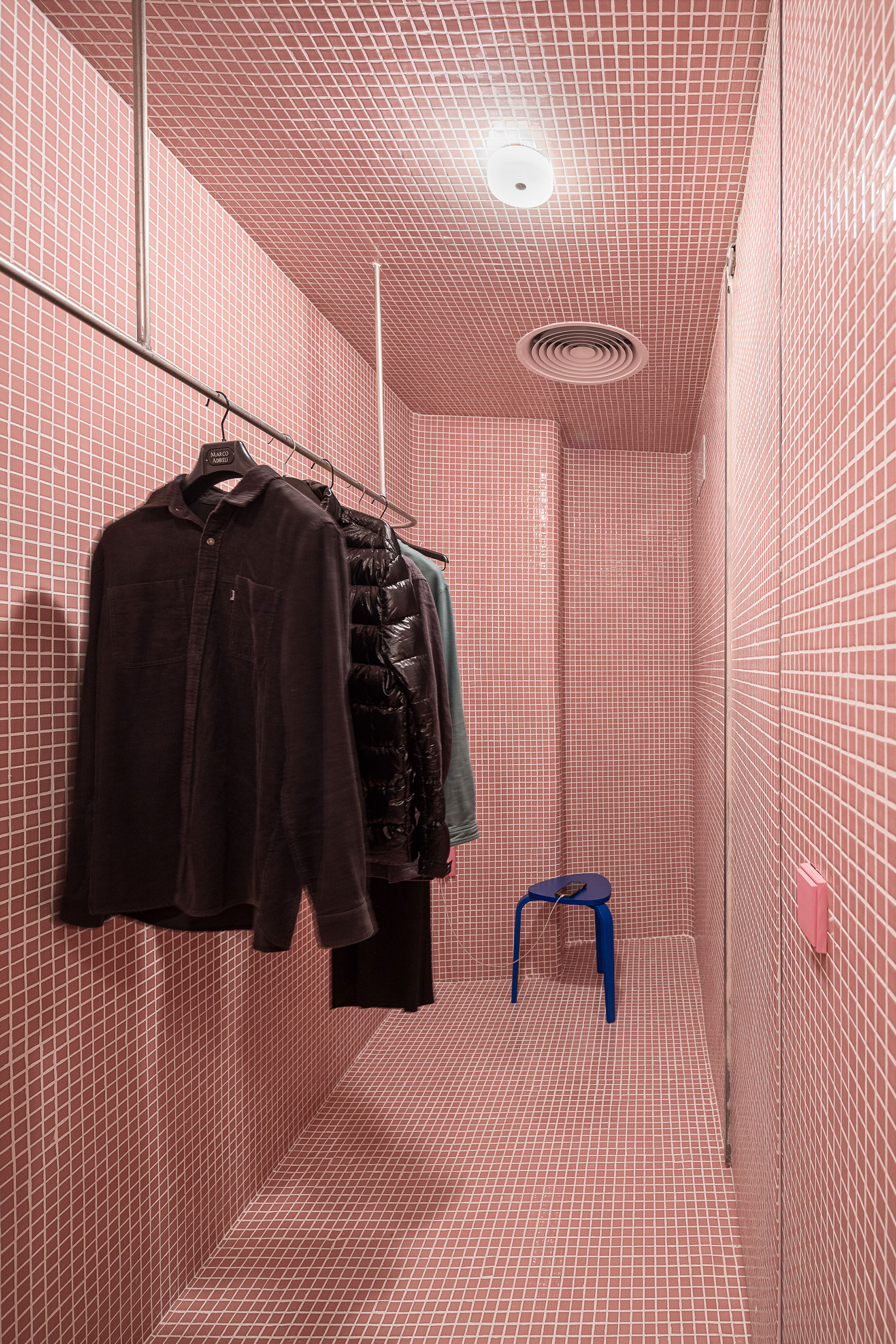
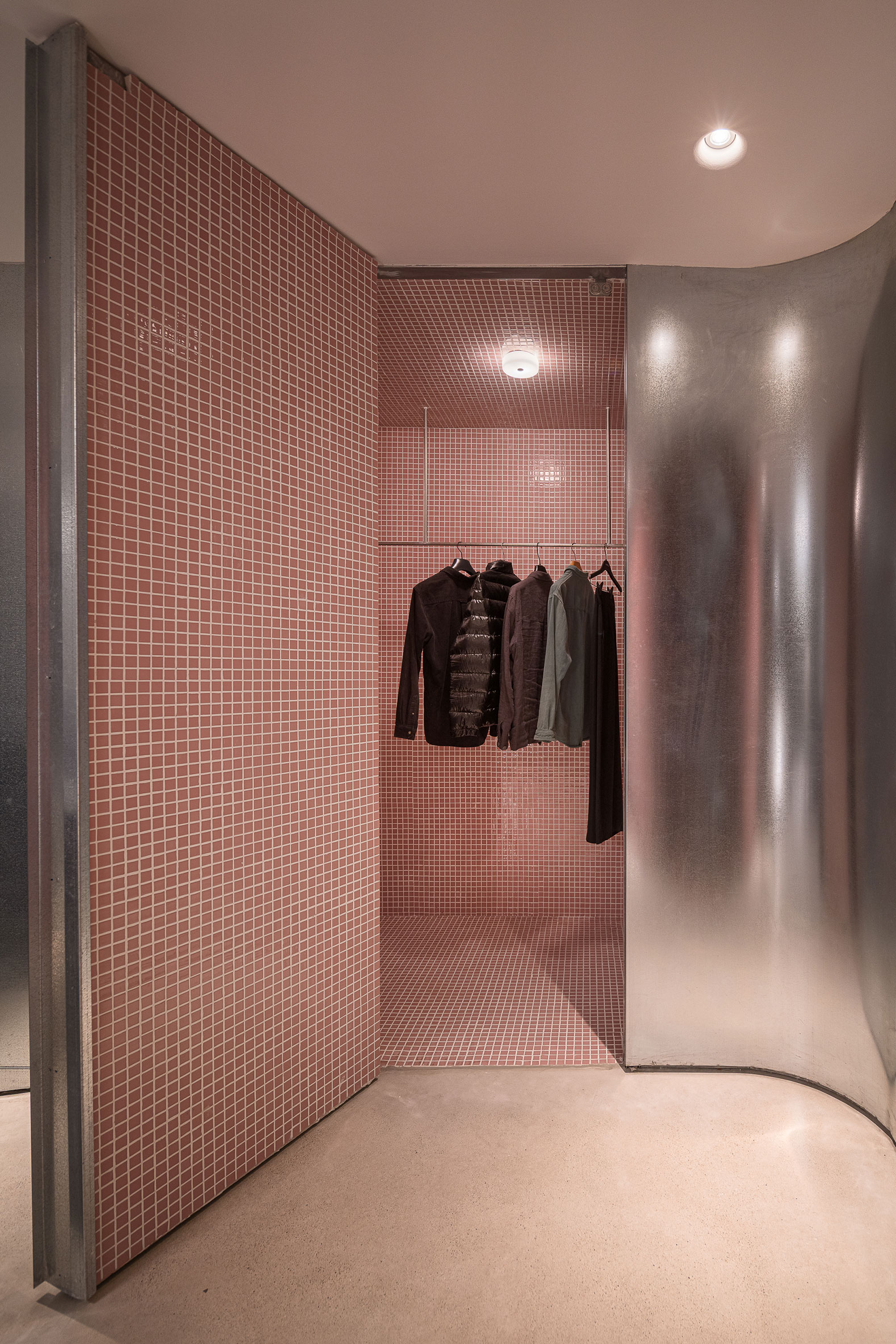
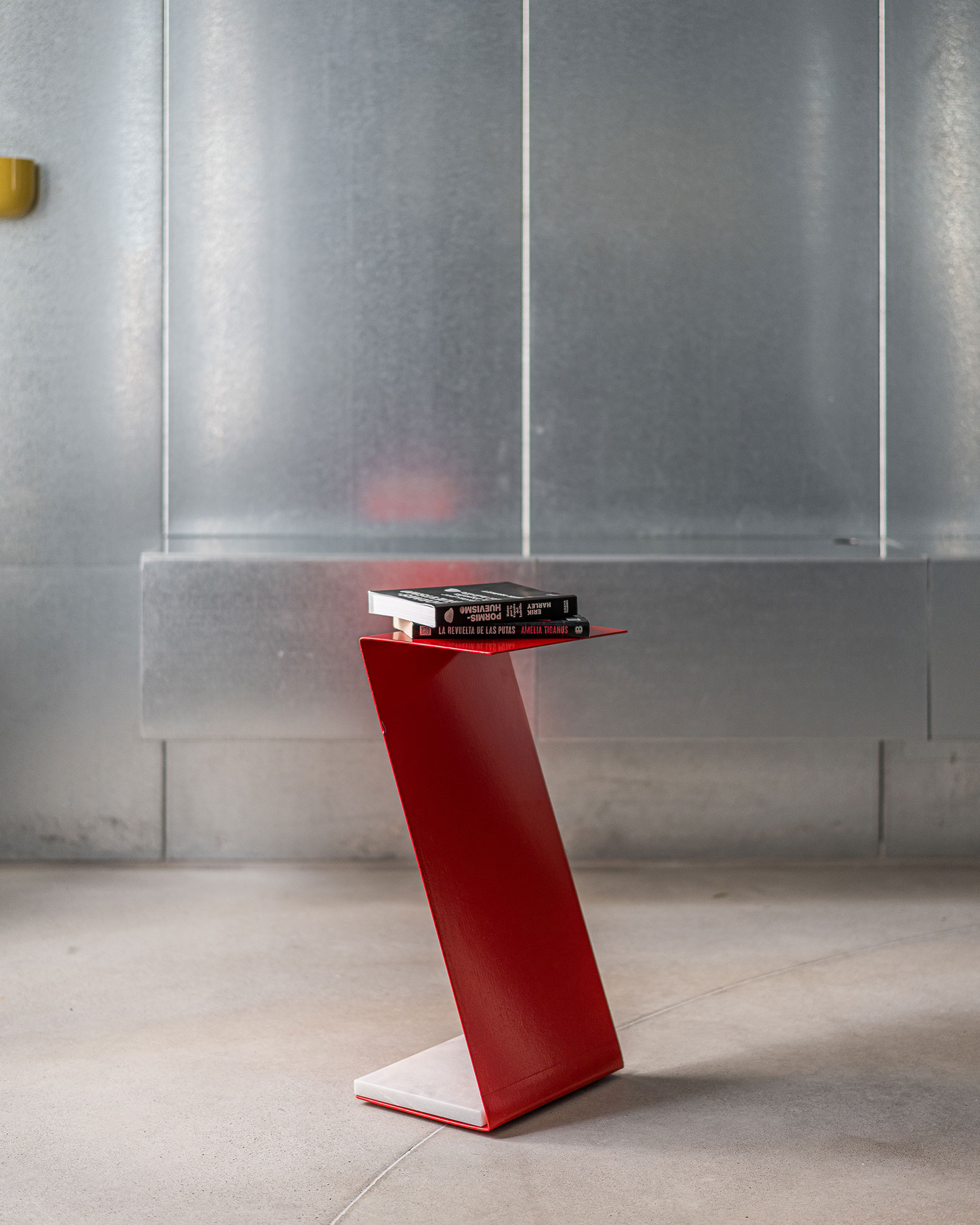
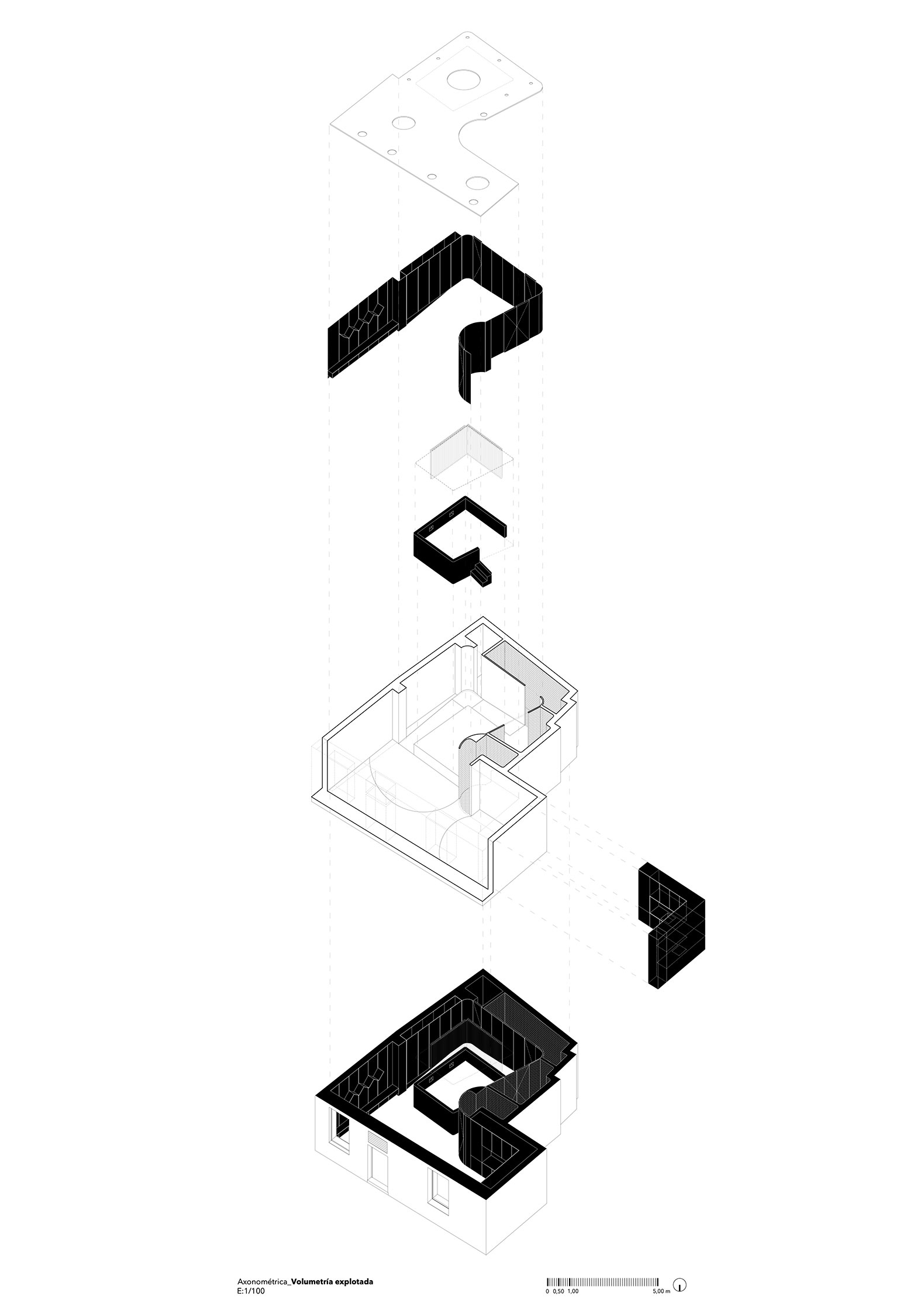
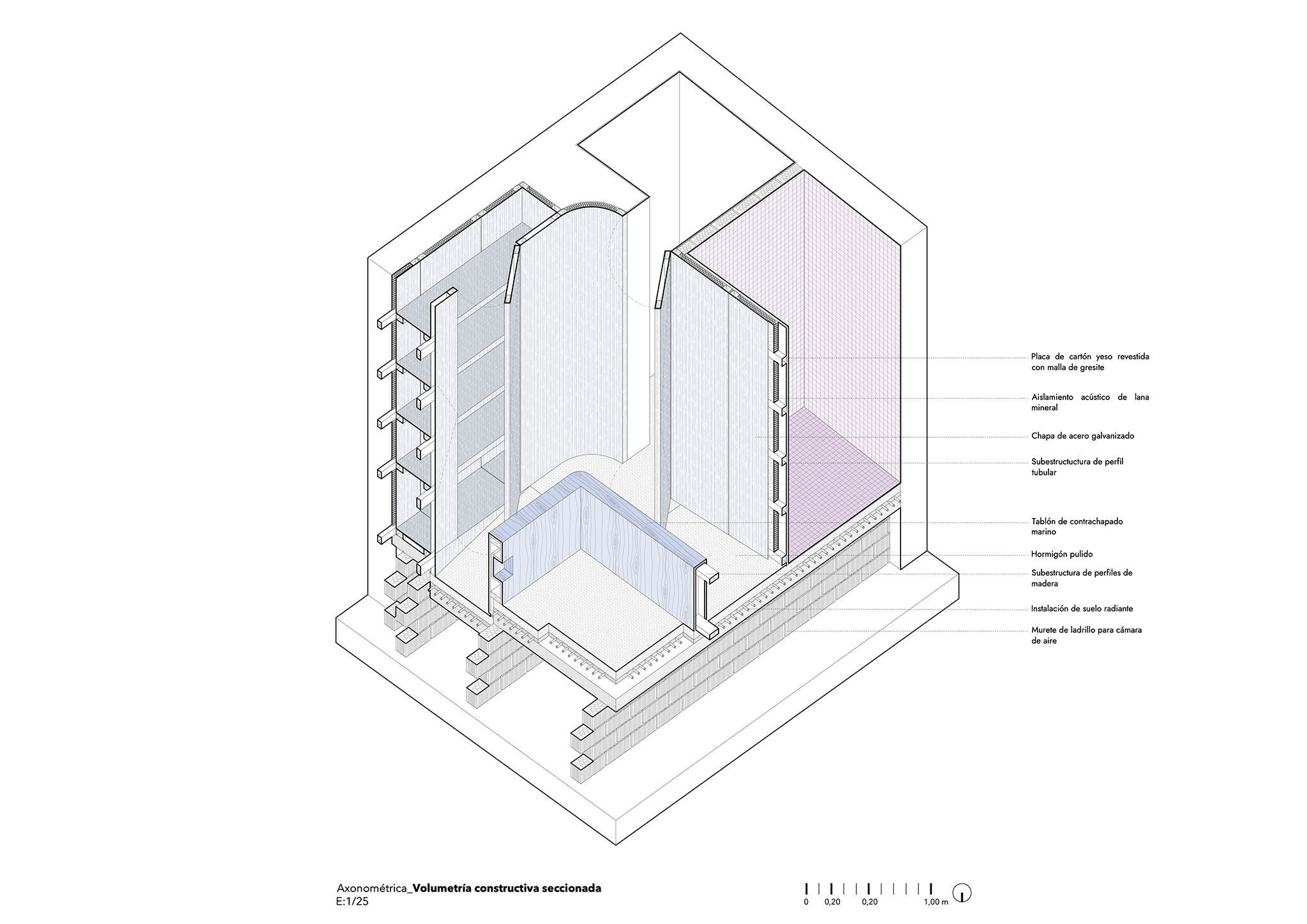
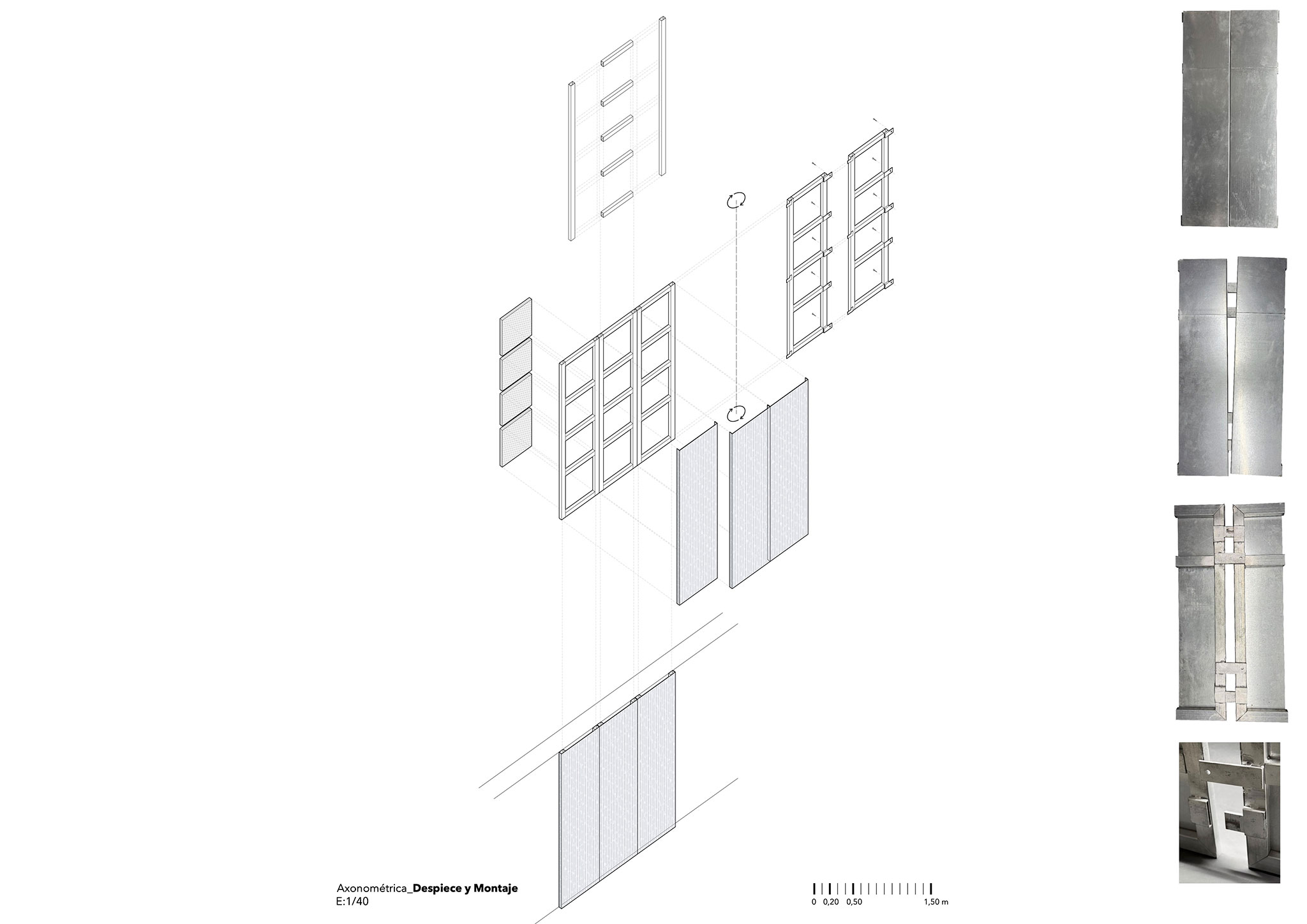
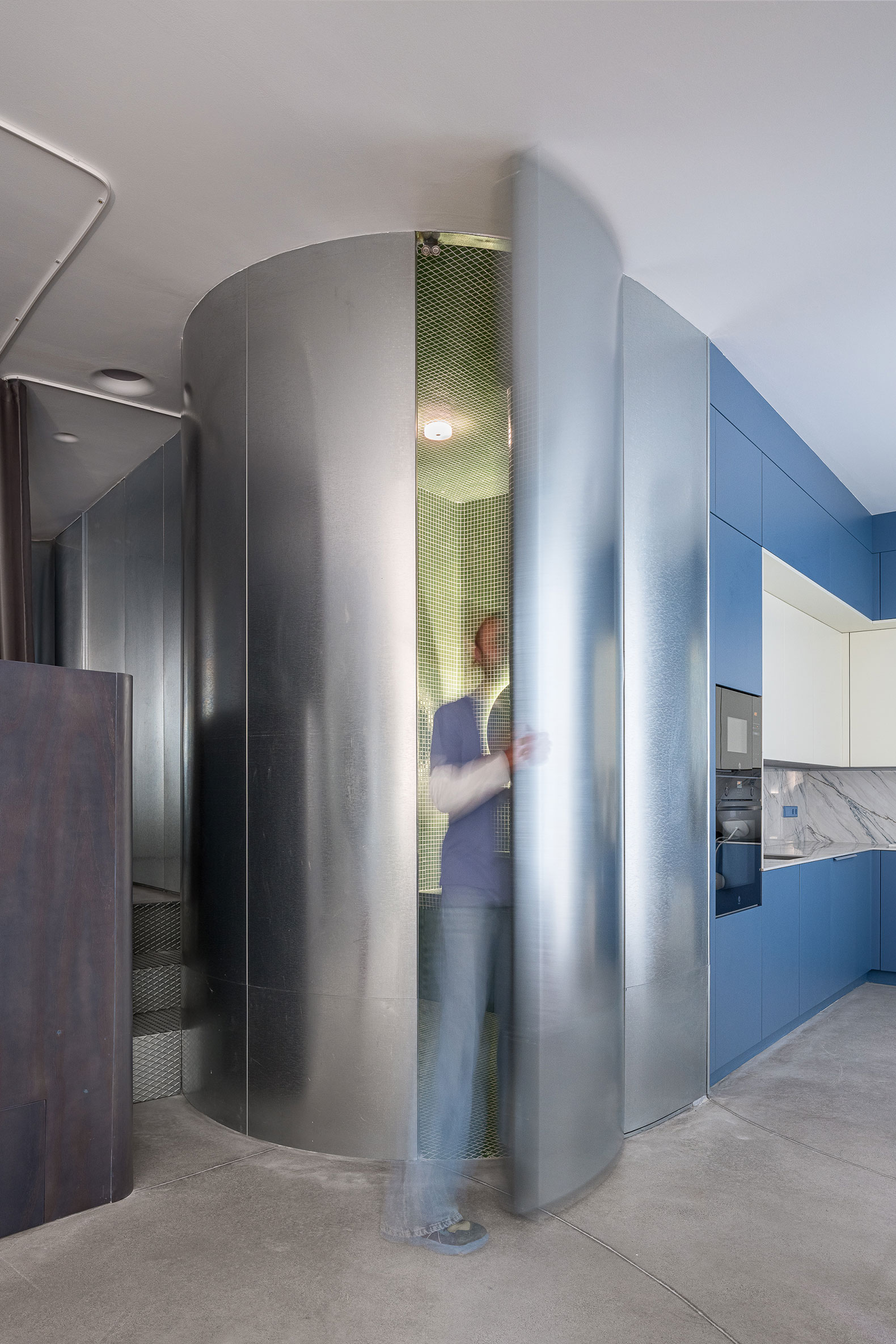
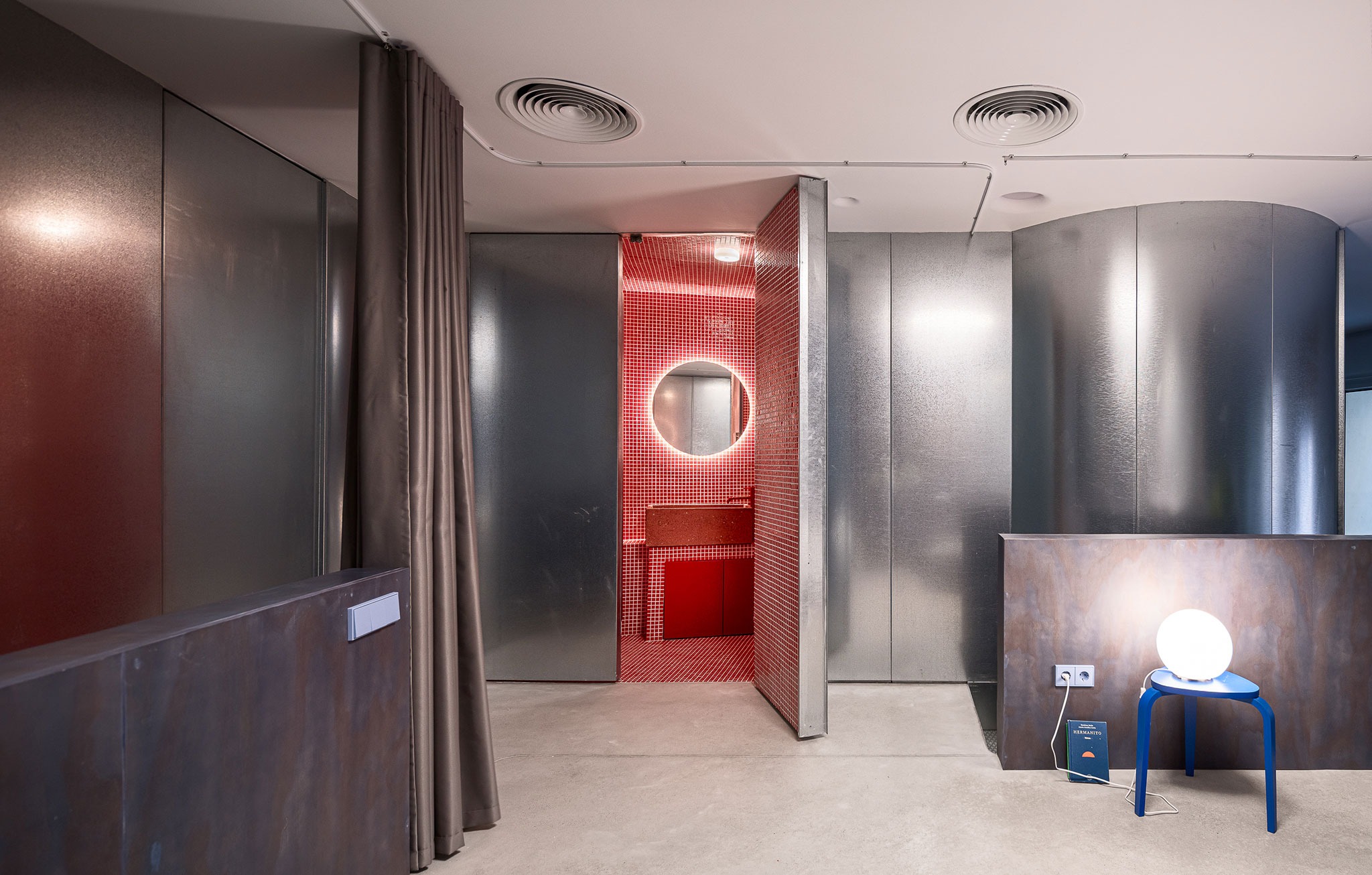
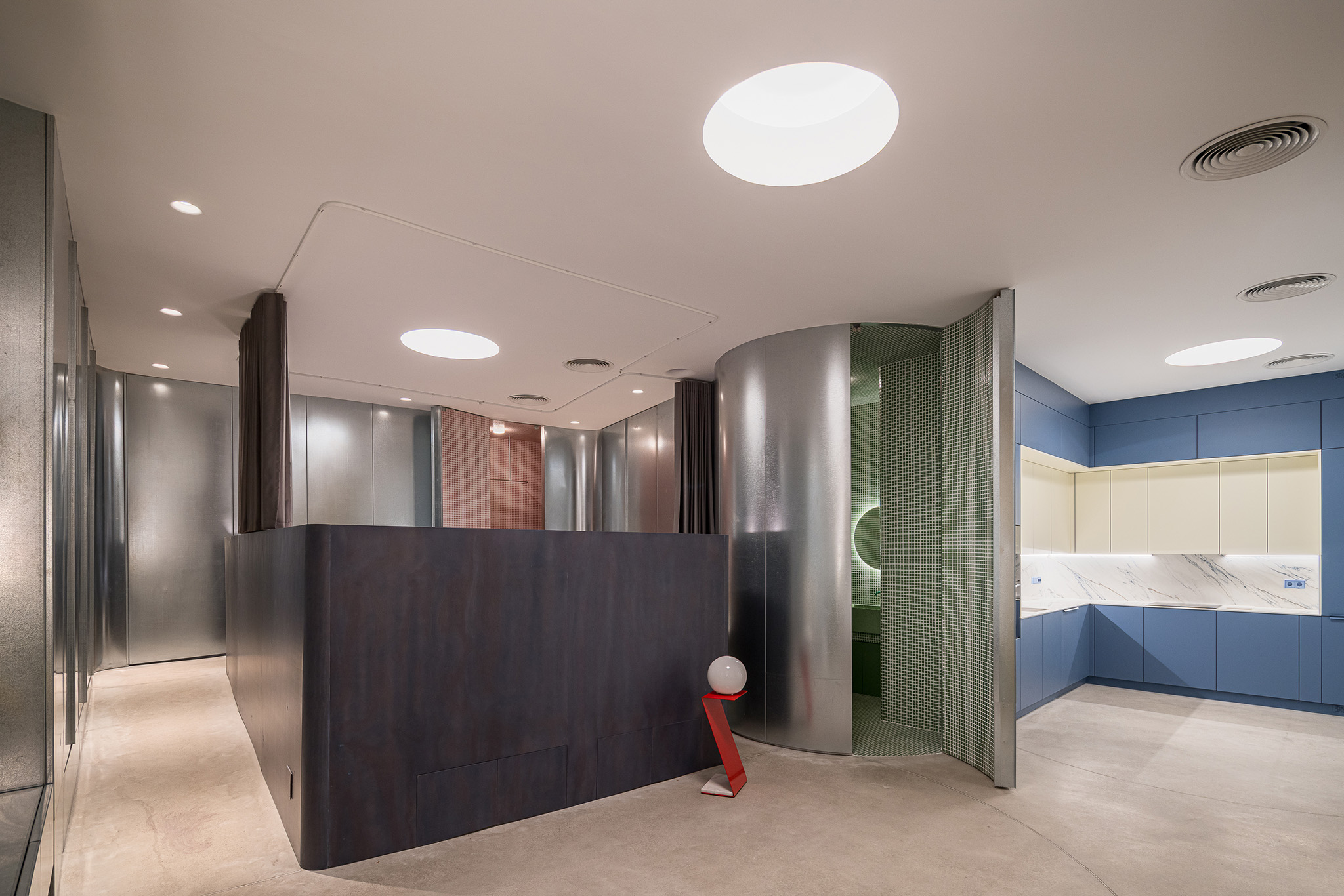
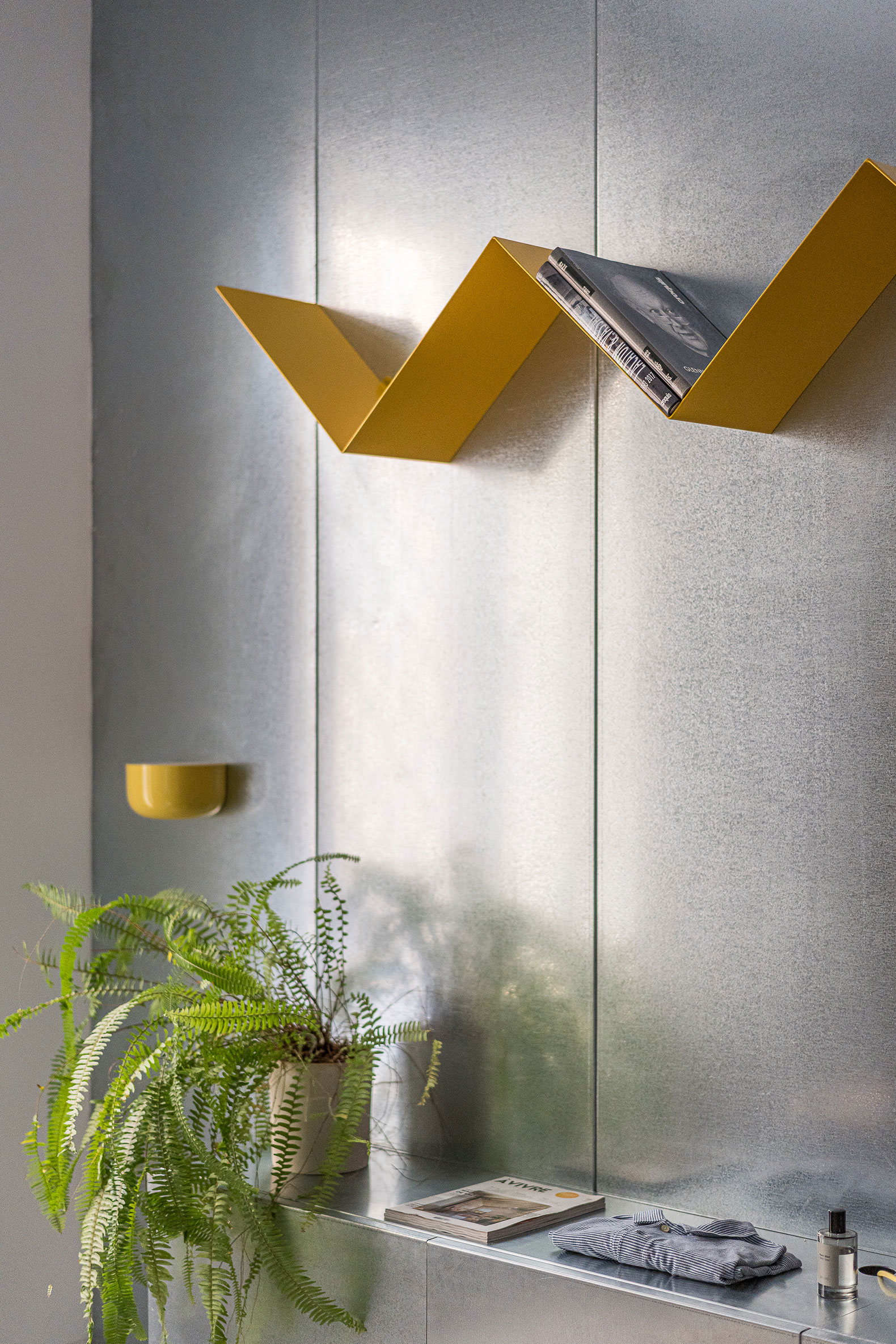
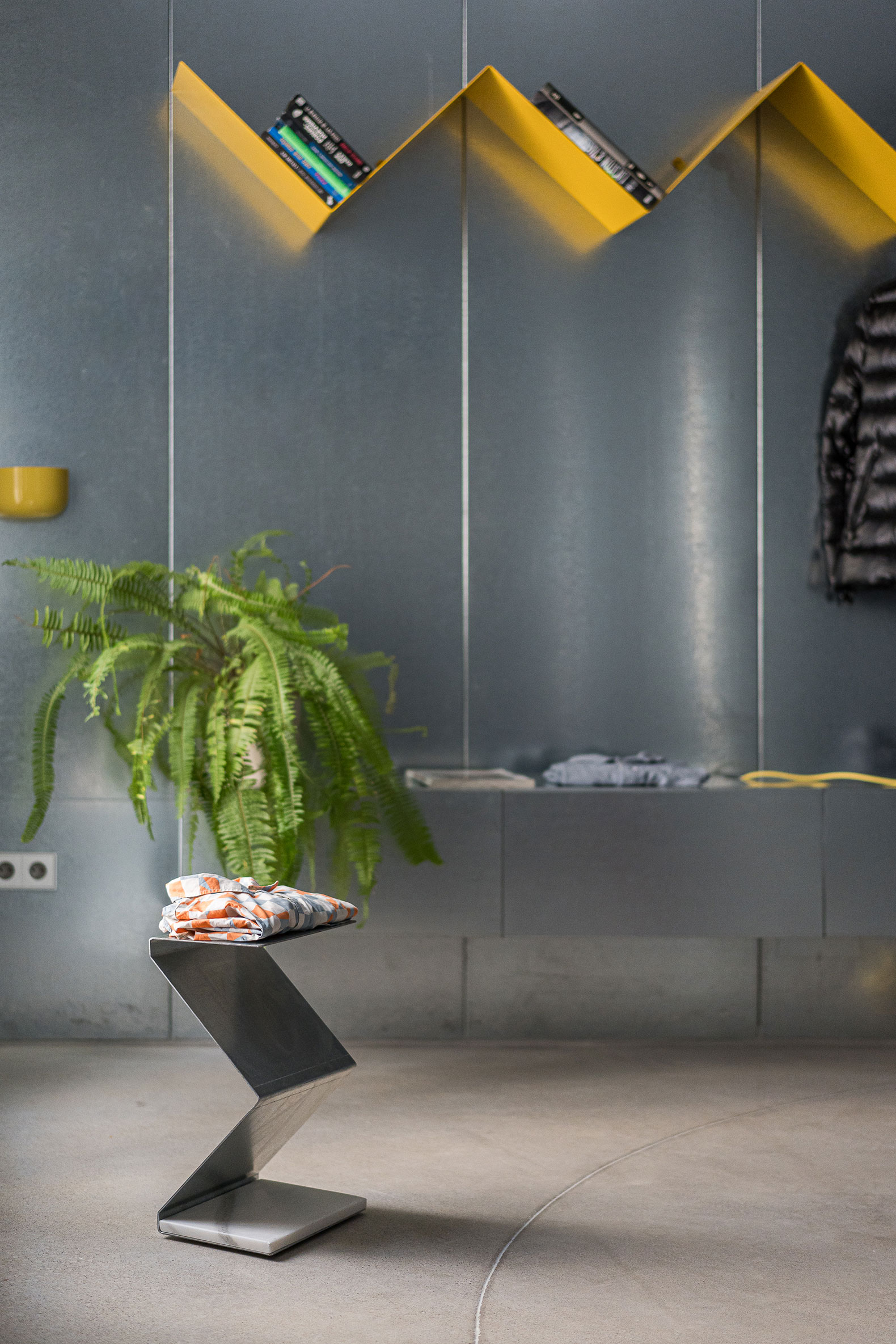
Behind neutral-toned, reflective panels made with a modular construction system of assembled galvanized sheet metal panels, brightly colored spaces inspired by the work of painter Edward Hopper are concealed, enveloping the storage, utility, and private areas. The result is a versatile living space with the potential for future modification through a demountable and reusable structure.
Casa Preñada por FORarquitectura. Fotografía por Juanca Lagares.
Preñada house by FORarquitectura. Photograph by Juanca Lagares.

Project description by FORarquitectura

From the 1960s onwards, faced with the need for rapid housing construction in cities where families and individuals from rural areas were beginning to arrive, a number of professionals (architects, artists, etc.) emerged, eager to study and investigate new ways of living. They wanted to create habitable spaces with programs and layouts that did not conform to the standards of the rapid and speculative construction that was beginning to expand in response to the rural exodus. Cities were growing rapidly and invasively, and buildings rose up as repetitive blocks, creating a monotonous facade rhythm. Faced with these pragmatic architectures that were merely the result of layouts designed for mass production, a large group of architects became interested in exploring new ways of living, as was the case with Anna Bofill.

Drawing a parallel between that era and the current situation, today the migration of people from rural areas to cities has slowed, but new movements and situations have emerged that saturate and strain the existing real estate market. Mass tourism and the need to rent due to the limited opportunities for first-time homeownership have generated a whole catalog of buildings located in truly "ingenious" spaces, with architecture lacking intellect, reflection, or spatial quality. Thus, under the motto "anything goes," a series of buildings called "houses" begin to proliferate in poorly equipped locations, lacking the resources to support a decent life and often without the supervision of a professional.

Casa Preñada por FORarquitectura. Fotografía por Juanca Lagares.
Preñada house by FORarquitectura. Photograph by Juanca Lagares.

With all this in mind, and without opposing the emergence of these new places, Casa Preñada is an exercise in reflection on the path that is beginning to take hold in today's world. A project adapting a commercial space into a dwelling. Belonging to an 18th-century building and inspired by the curved forms of its historic wrought-iron balconies and the Neoclassical paintings on the façade, the transformation process involved considering how to inhabit these spaces, which lack some of the most prominent architectural features, such as natural light, but with the hope of offering a dignified living space. A dwelling free from programmatic constraints where one can adapt one's lifestyle to one's liking. Obviously, due to its size, this place is not suitable for large families, but compared to the 30.50 m² stipulated in the General Urban Development Plan of Malaga for studio or one-bedroom apartments, this space offers more than 70.00 m² of usable space for its typology. Avoiding speculative development where everything is squeezed to the maximum to extract the greatest economic return was the first decision and the starting point for accepting the commission.

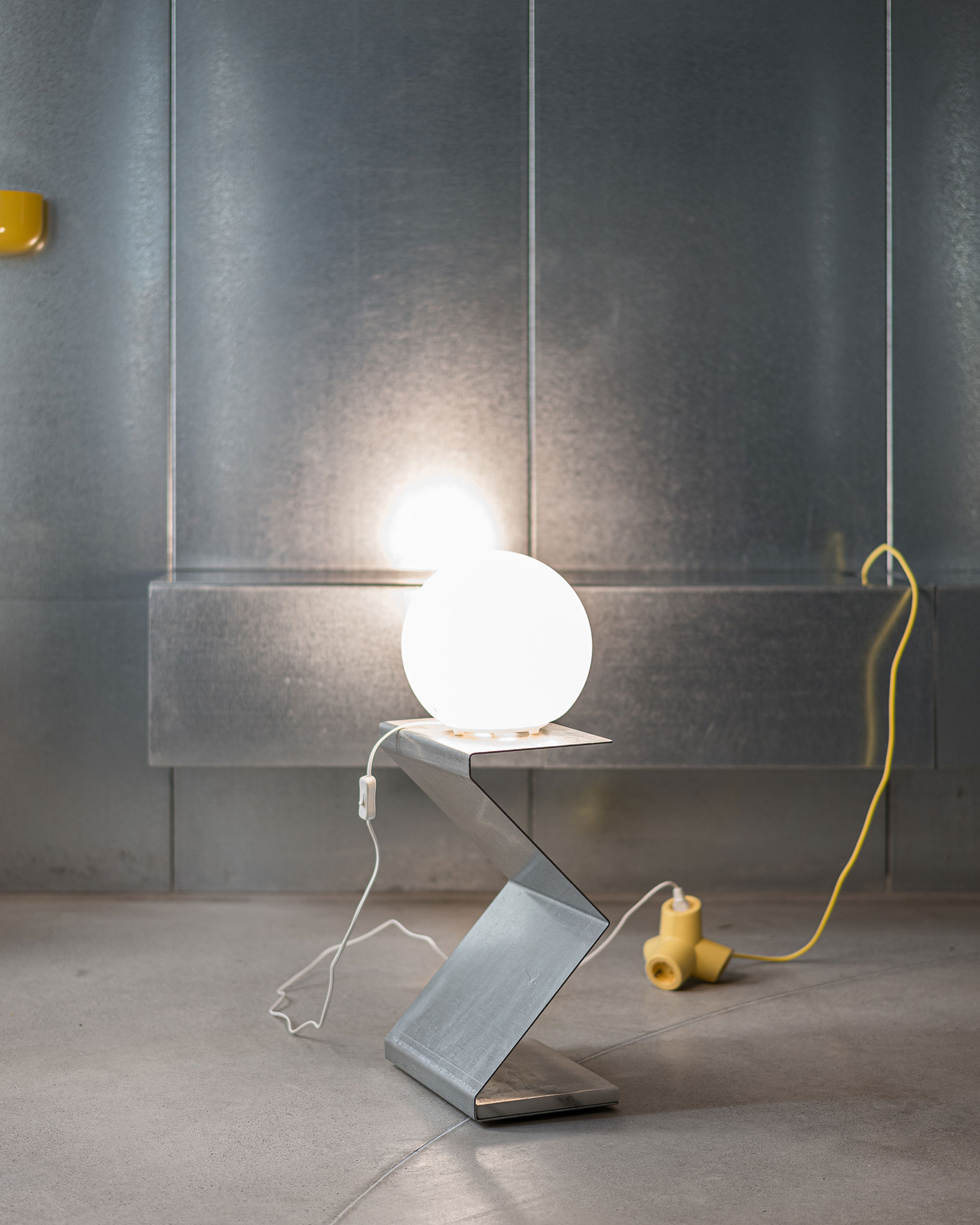
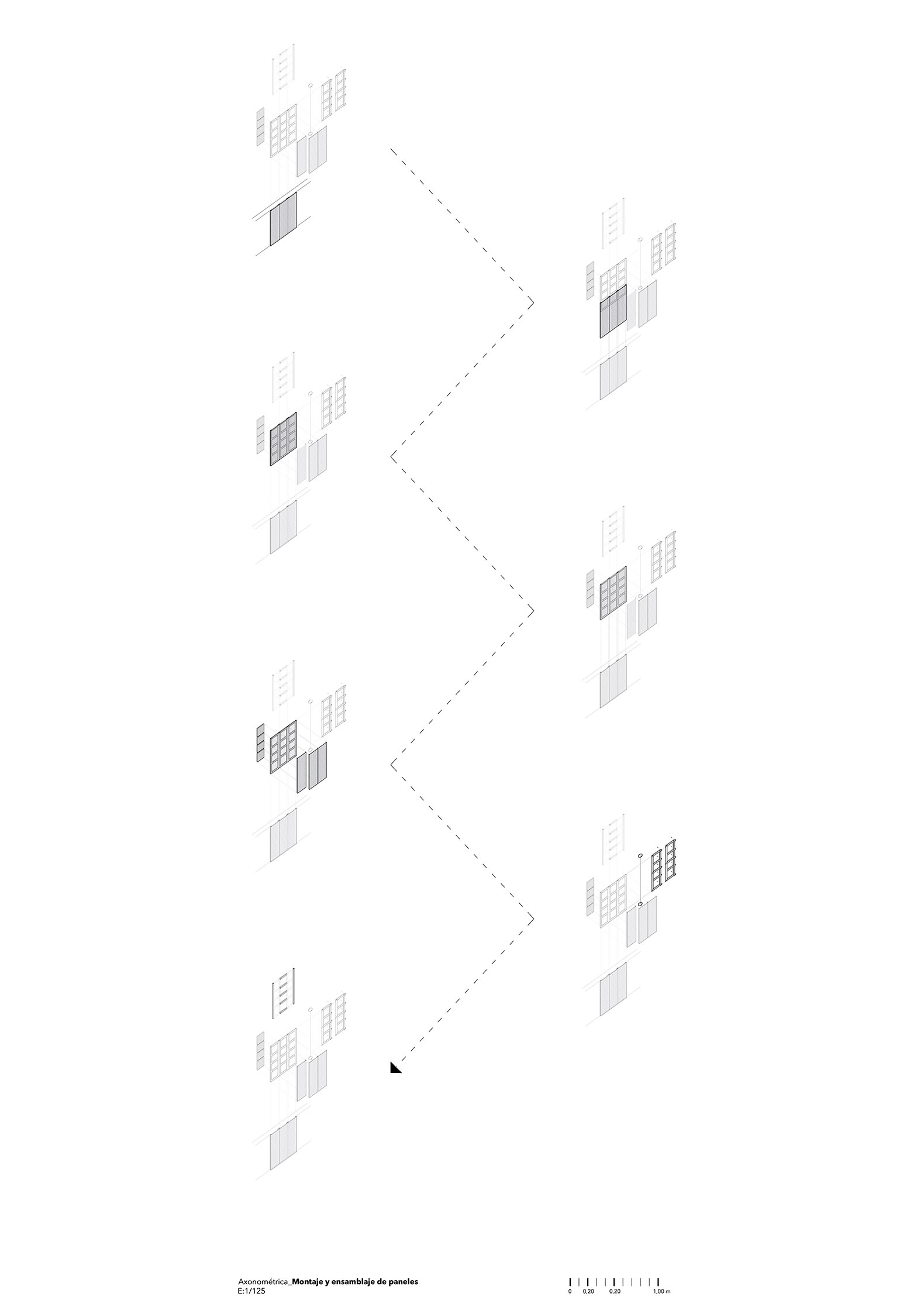
Regarding natural light, this architectural element has been the driving force behind the design, even influencing the materiality of the space. To intensify the light, a modular construction system of galvanized sheet metal panels, assembled and shaped in a local workshop, was designed. This is an experimental, dry construction approach that is demountable and reusable.
Casa Preñada por FORarquitectura. Fotografía por Juanca Lagares.
Preñada house by FORarquitectura. Photograph by Juanca Lagares.

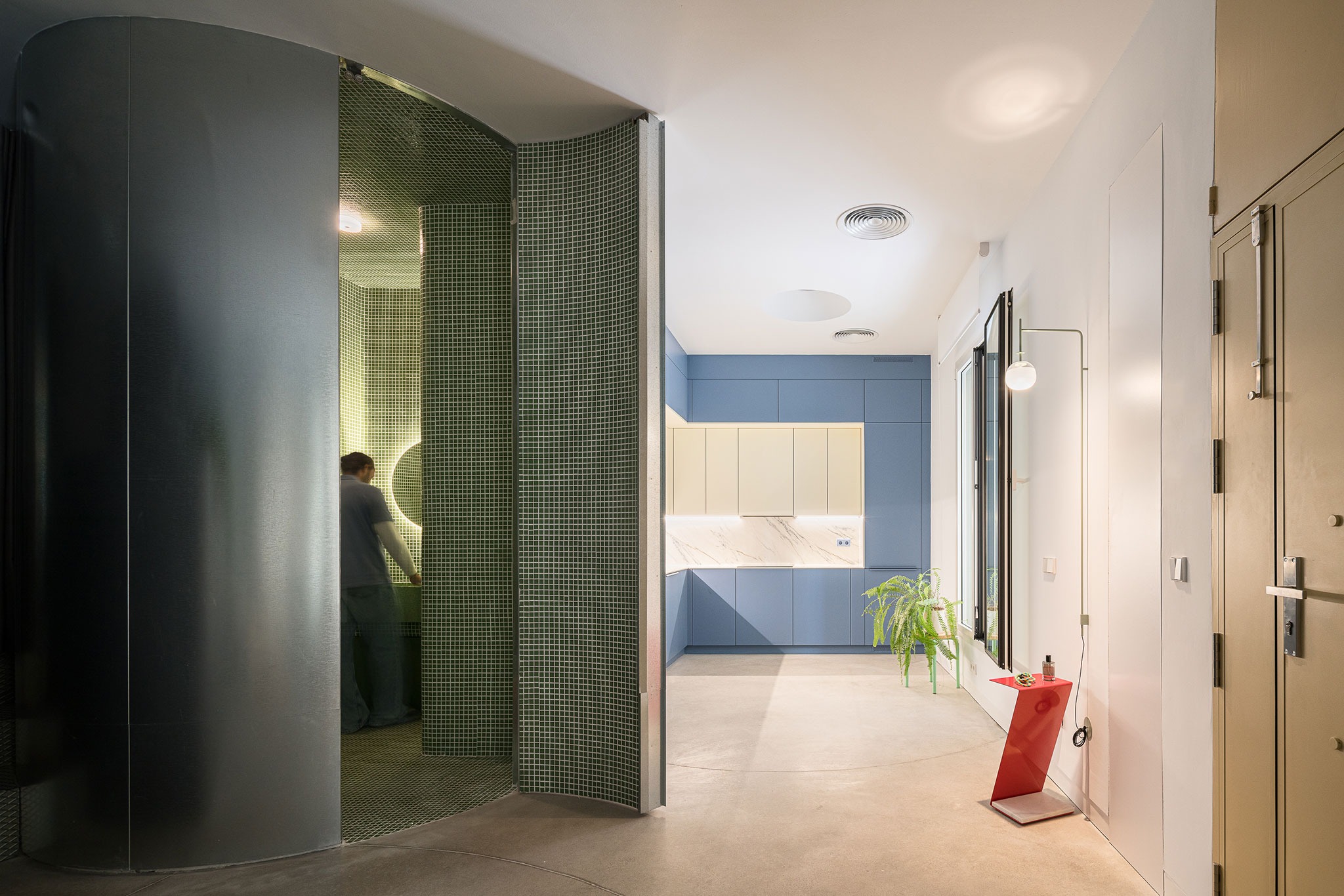
Continuing the exploration of ways of inhabiting, this project of open and flexible spaces, with its ambiguous and experimental appearance, expresses a desire not to limit use to the form and geometry of the dwelling. A space is created with the capacity to locate the minimum required service areas around the perimeter, while sheltering the living area at its center. Behind this skin of neutral and reflective tone lies a world of color that envelops the more intimate spaces or houses uses such as storage and utilities. The color scheme of these spaces and certain details of the living area is inspired by the work of Edward Hopper, the painter of solitude. This work depicts domestic and intimate scenes of human life in public spaces, as if people were inhabiting areas not typically considered residential.

The result is a place suitable for living, yet versatile and capable of being repurposed in the future to serve the traditional, or perhaps still familiar, uses we find in these street-level spaces.
Casa Preñada por FORarquitectura. Fotografía por Juanca Lagares.
Preñada house by FORarquitectura. Photograph by Juanca Lagares.

With this in mind, the project offers a new way of life directly connected to the street level, without turning its back on it. Living on the ground floor in a historic center, free from vehicular traffic and bustling with pedestrians, can also be a new way of connecting with these environments and even remind us of what life is like in a small town.
More information

Label
Arquitectos Architects
Text

FORarquitectura. Lead architects.- Francisco Ortega Ruiz. 

+ + copy Created with Sketch.
- + copy Created with Sketch.
Label
Collaborators
Text

Engineering.- Efistar S.L.

+ + copy Created with Sketch.
- + copy Created with Sketch.
Label
Client
Text

Promociones Vitorita del Villar.

+ + copy Created with Sketch.
- + copy Created with Sketch.
Label
Manufacturers
Text

Furniture.- Cegumar.
Cladding.- Cegumar, Vidrepur, Cosentino, Benaldoor.
Lighting.- Flos, Vibia, Faro.
Metalwork.- Cortizo.
Veneer cladding.- Cegumar.
Lighting switches and fittings.- Jung (Le Corbusier).
Faucets.- Tres faucets.
Kitchen.- Dibe kitchens.

+ + copy Created with Sketch.
- + copy Created with Sketch.
Label
Area
Text

Built area.- 84 sqm. 

+ + copy Created with Sketch.
- + copy Created with Sketch.
Label
Dates
Text

Construction completion.- 2025.    

+ + copy Created with Sketch.
- + copy Created with Sketch.
Label
Location
Text

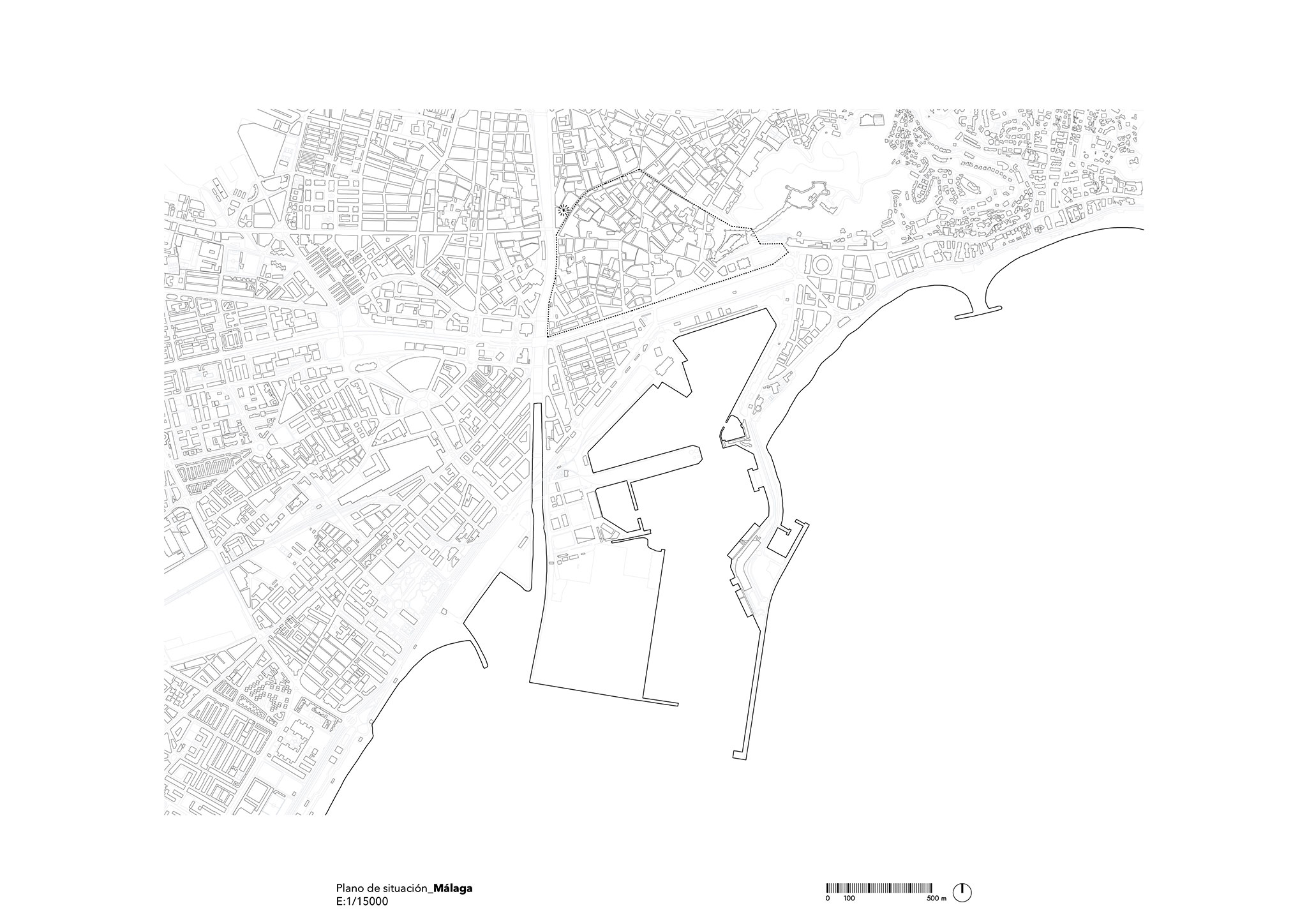
Calle Postigo de Arance 1, Málaga, Spain.
+ + copy Created with Sketch.
- + copy Created with Sketch.
Label
Photography
+ + copy Created with Sketch.
- + copy Created with Sketch.

FORarquitectura is a studio based in Málaga founded in 2022 by Francisco Ortega Ruiz (Vélez-Málaga, 1991), an independent architect who graduated from the University of Granada in 2016. He began his professional career with Carmen Barros and Francisco del Corral (Walter Scales).

Training has been a constant in his career. It is worth noting that winning the first prize in the competition for the regeneration of the Paseo Marítimo de Melilla in the city of Malaga meant enrolling in the Master of Architectural Projects, Environmental Design and New Technologies at the Higher Technical School of Architecture of Malaga, obtaining an outstanding grade in the final research work of said master's degree.

This academic and practical experience marks the vision of FORarquitectura; studio that will specialize in traditional architecture, seeking the humanization of constructions, investigating artisanal construction methods and traditional materials, as well as their application in new buildings. Learning from what exists to look to the future.

In 2022, he won the Málaga Architecture Award in the Sustainability category with La Centinela. This milestone would mean subsequent publication on various specialized platforms at national and international level.

2024 is also an important year. He is once again awarded a runner-up prize at the Málaga Architecture Awards in the equipment category with the Raspa y Amagado project, with the subsequent appearance in publications in the sector. Both projects were selected for the CSCAE Architecture Awards in 2022 and 2023 and finalists in architecture awards convened by other platforms and magazines specialized in architecture.

Handmade architecture, with a young and dynamic look, which seeks to create works in constant relation to their context. Local works that are enriched by their surroundings and offer sensitive and creative solutions for those who live there. Handcrafted tools to convey ideas: models, drawings and sketches as arguments to inspire emotion with each project concept.

Read more
Published on: February 27, 2026
Cite:
metalocus, SARA GENT, CAMILA DOYLET
"Ambiguous and experimental space. Preñada house by FORarquitectura " METALOCUS. Accessed
<https://www.metalocus.es/en/news/ambiguous-and-experimental-space-prenada-house-forarquitectura> ISSN 1139-6415
Loading content ...
Loading content ...
Loading content ...
Loading content ...
Loading content ...
Loading content ...
Loading content ...
Loading content ...
Loading content ...
Loading content ...
Loading content ...
Loading content ...
Loading content ...
Loading content ...
Loading content ...
Loading content ...
Loading content ...
Loading content ...
Loading content ...
Loading content ...
Loading content ...
Loading content ...
Loading content ...
Loading content ...
Loading content ...
Loading content ...
Loading content ...
Loading content ...
Loading content ...
Loading content ...
Loading content ...
Loading content ...
Loading content ...
Loading content ...
Loading content ...
Loading content ...
Loading content ...
Loading content ...
Loading content ...
Loading content ...
Loading content ...
Loading content ...
Loading content ...
Loading content ...
Loading content ...
Loading content ...
Loading content ...
Loading content ...
Loading content ...
Loading content ...
Loading content ...
Loading content ...
Loading content ...
Loading content ...