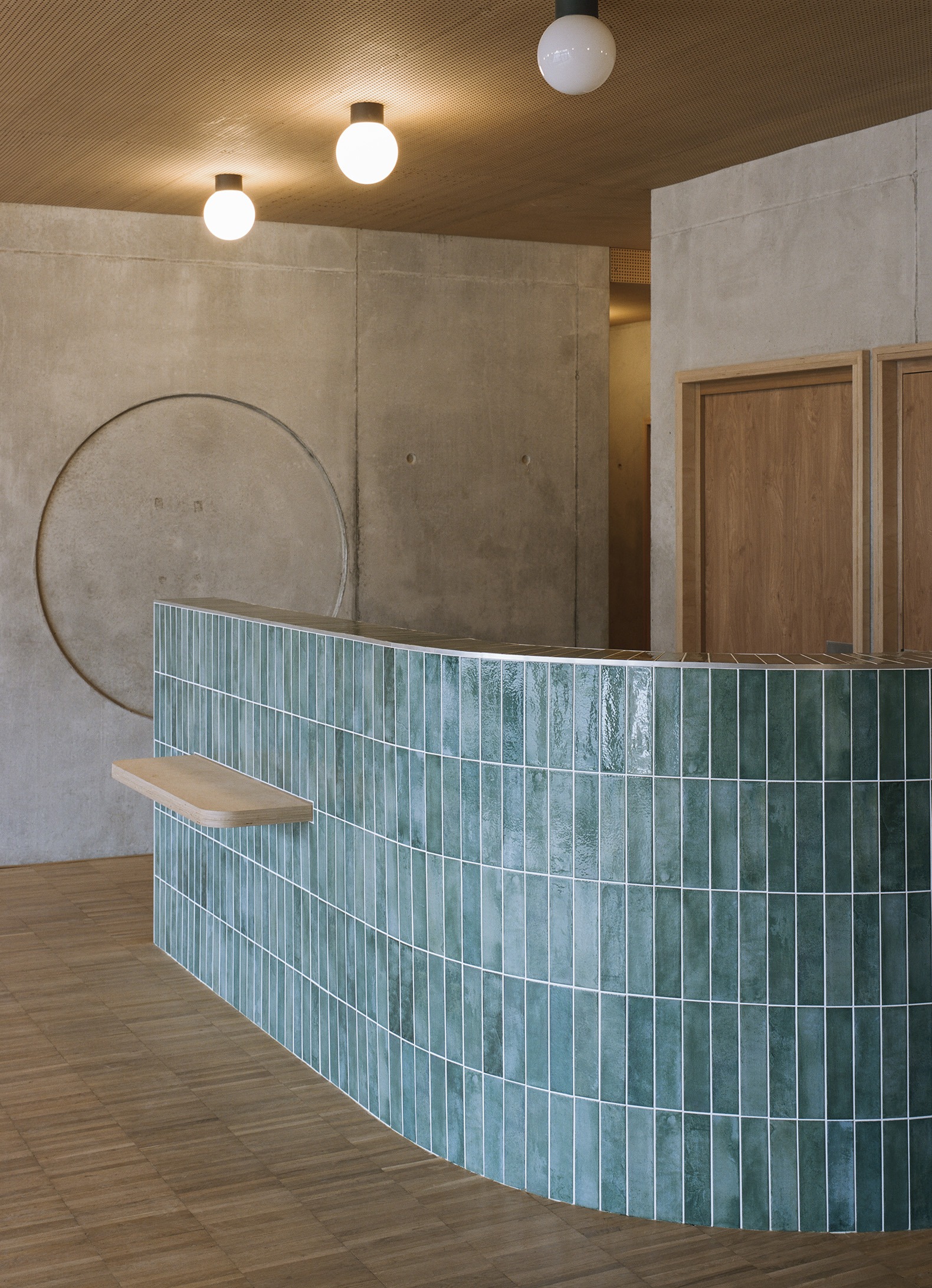
For the Jean-Claude Casadesus Conservatory and Auditorium, Ateliers O-S Architects organized the program into three main uses, clearly differentiating the public and educational areas: a concert and rehearsal hall, a music school spread over two floors, and a multimedia library. The more open and visible southern area connects to the main entrance and public spaces, while the more enclosed northern area optimizes the acoustic performance of the rehearsal hall.
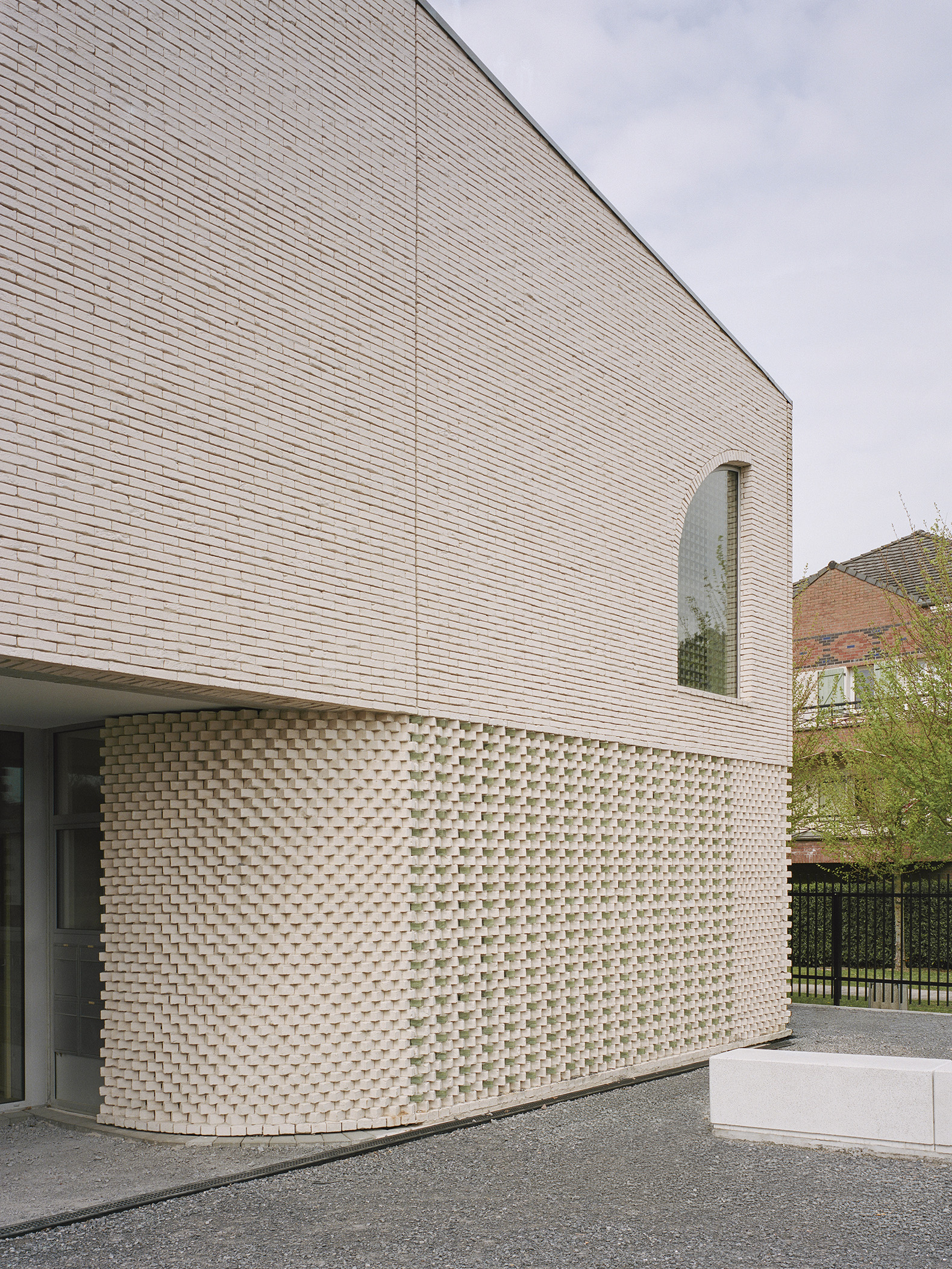
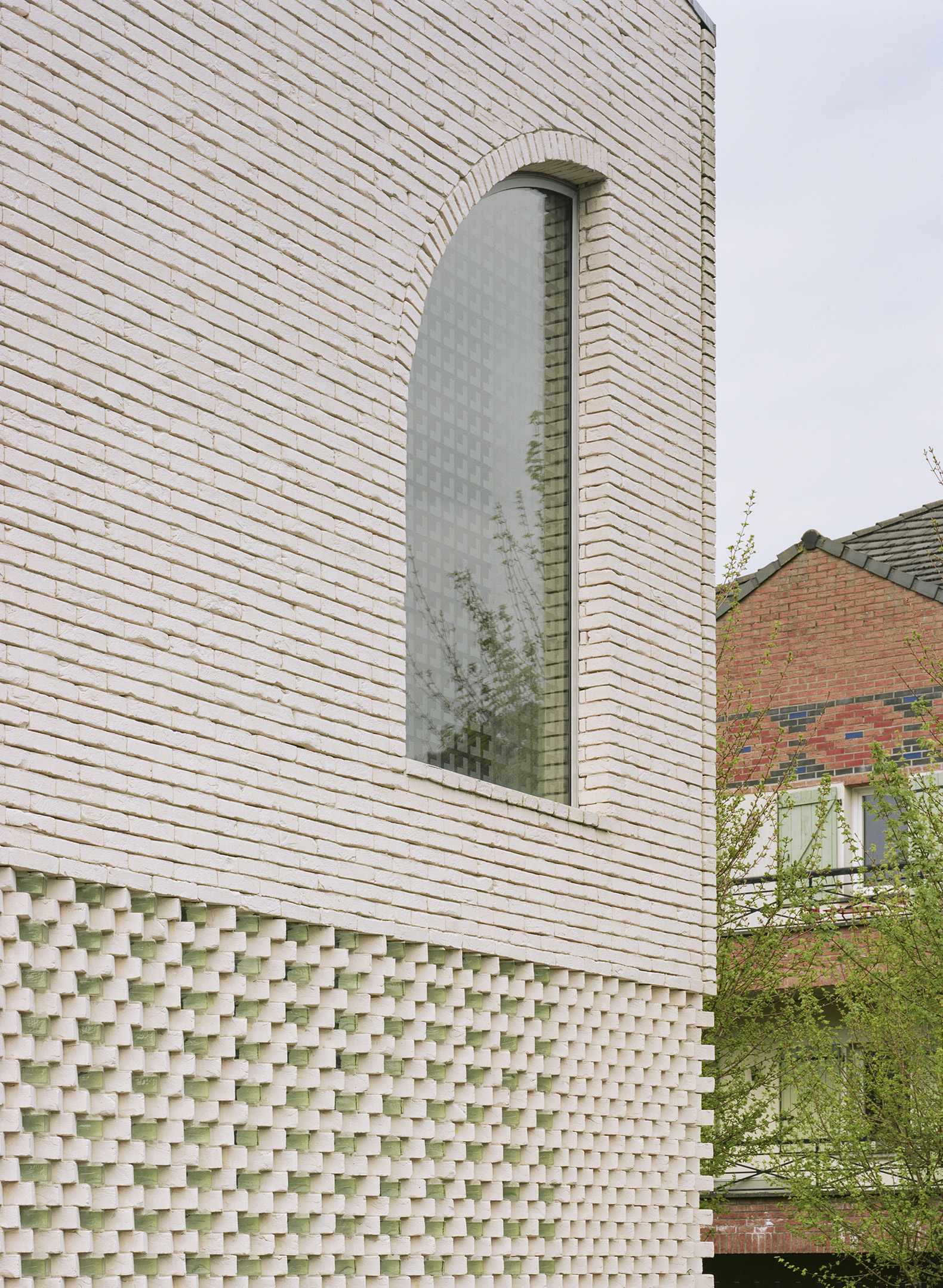
The project follows a rational system that combines concrete walls with a metal structure in the areas with the longest spans. The exterior walls, made of white ceramic brick, incorporate bio-based insulation. The pitched zinc roofs enhance the building's integration into the urban landscape and contribute to its discreet and enduring architectural presence. Acoustic comfort is achieved by paying particular attention to sound insulation between different areas and to reverberation control.
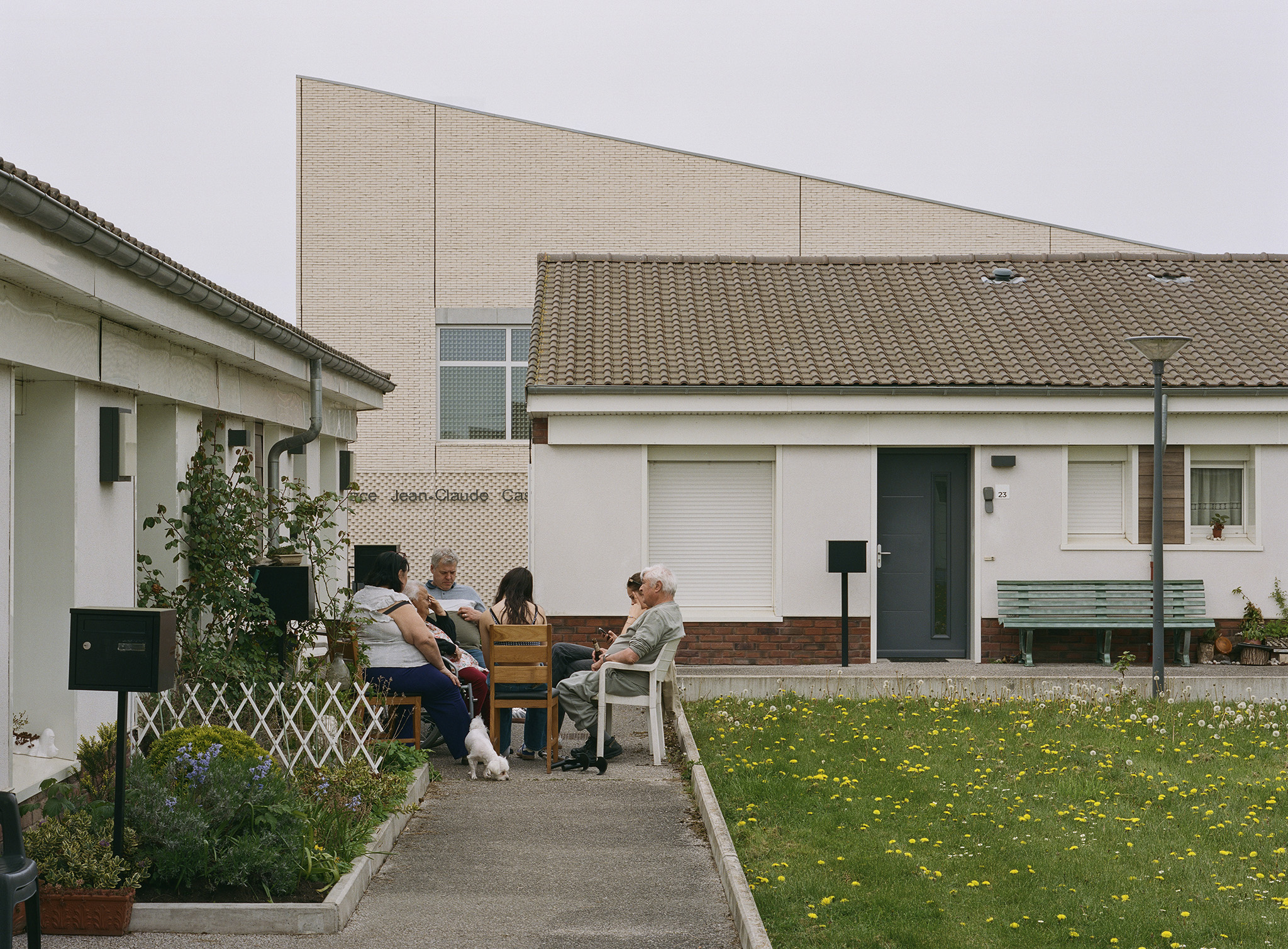
Jean-Claude Casadesus Conservatory and Auditórium by Ateliers O-S architectes. Photograph by Cyrille Weiner.
Project description by Ateliers O-S Architects
This project embodies the ambition to provide the city of Leers with a defining architectural and landscape facility capable of establishing a new cultural hub within the urban fabric on a lasting basis. Conceived as a true hub of convergence and representation, the facility offers a solution that is at once contextual, functional, and sustainable, attentive to both contemporary uses and the city’s future evolution.
The project is part of a clear and controlled compositional approach, where architecture engages with the landscape to reveal the site’s qualities and reinforce existing urban continuities. The understated architectural style reflects a desire for timelessness: legible volumes, controlled materiality, and careful attention to proportions create an identity that is both assertive and measured.
The pathways have been designed as fluid and intuitive sequences, promoting the clarity of the spaces and the quality of the user experience. The transitions between interior and exterior, between built spaces and landscaped areas, thus contribute to a serene and coherent perception of the whole. Finally, the project creates an open, unifying, and sustainable framework, intended to support the cultural and community dynamics of the town.
Urban Approach
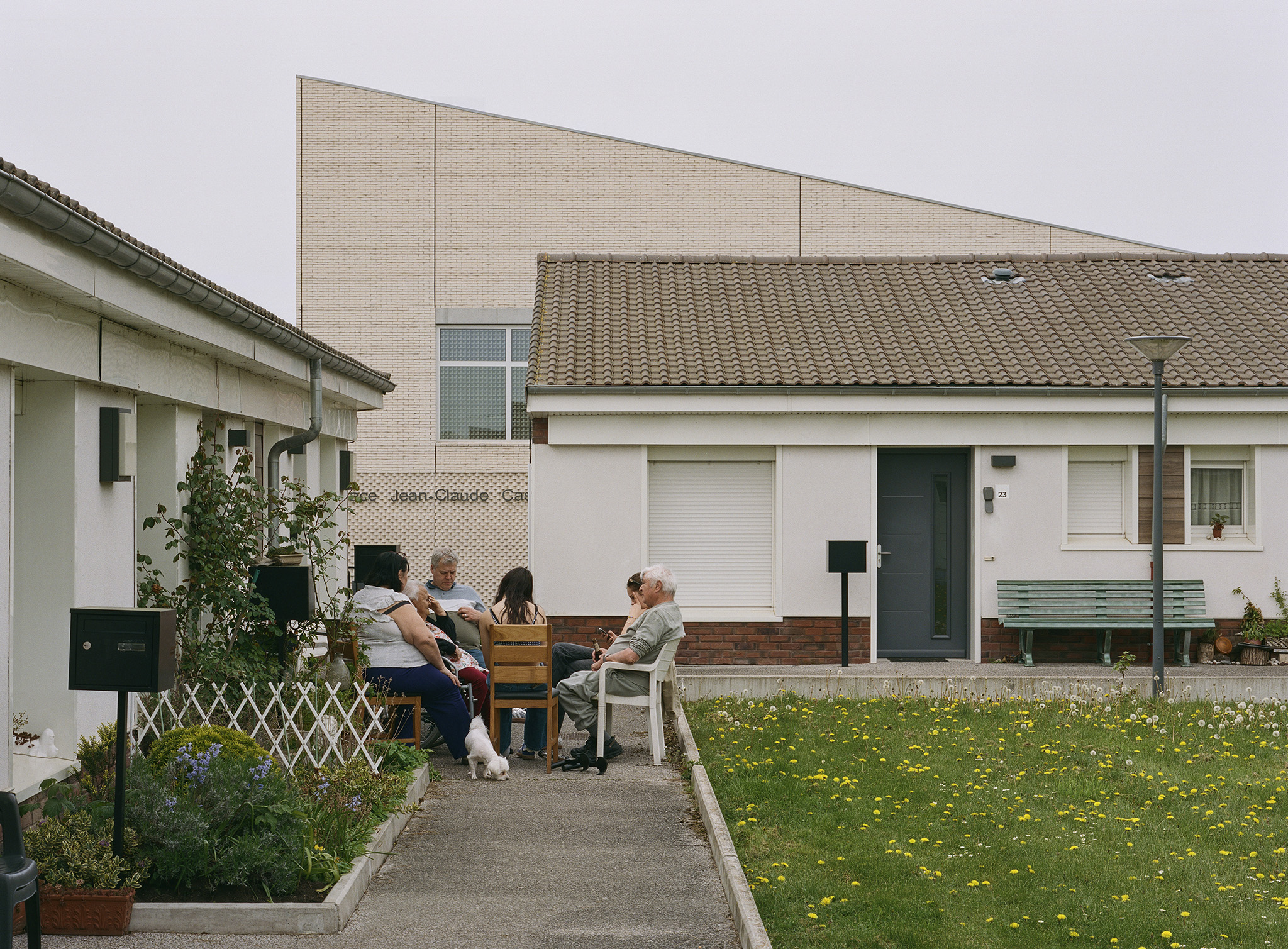
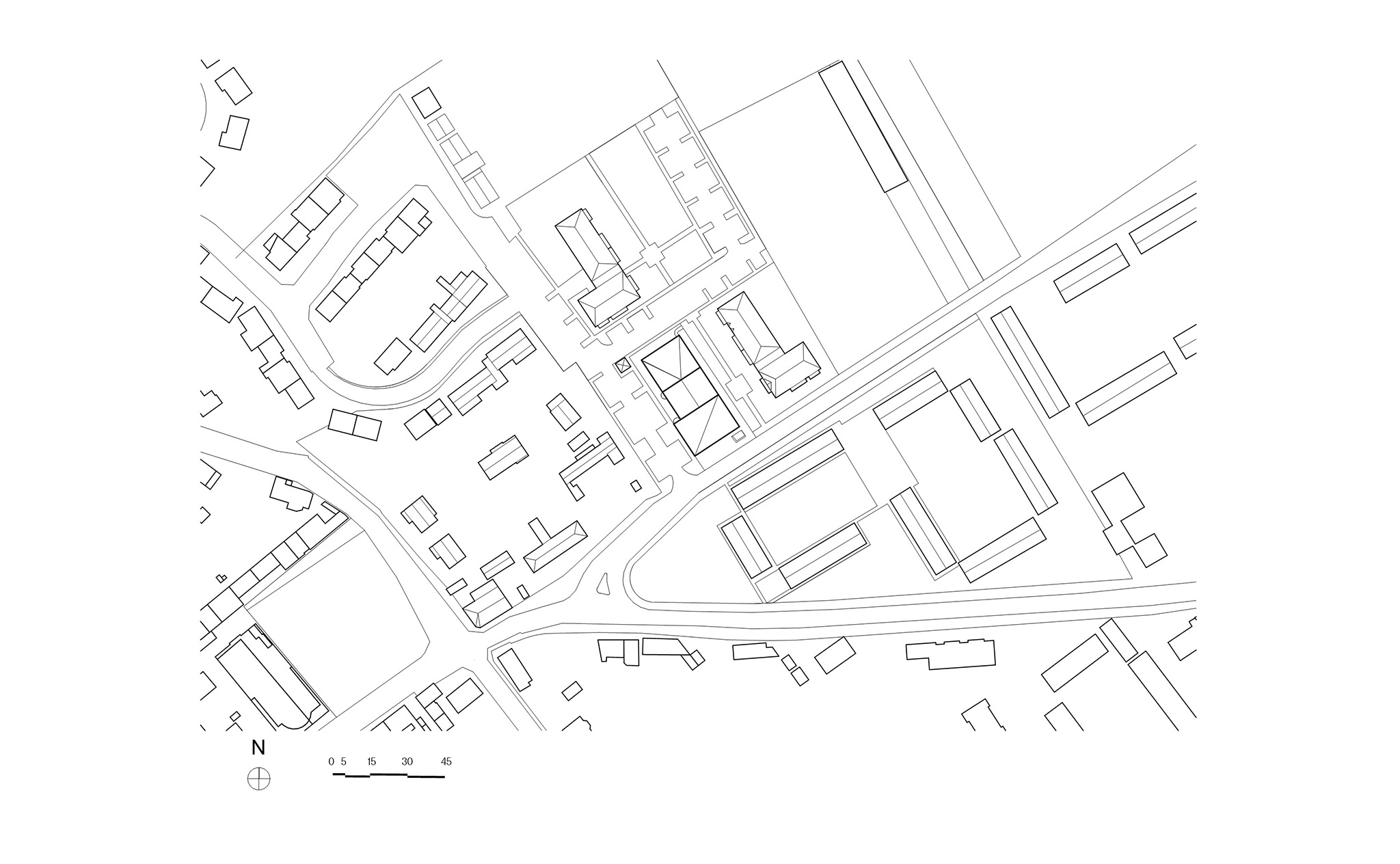
The neighborhood consists of small clusters of single-family and multi-family housing units. It features spacious urban areas structured around gardens and parking areas. The presence of greenery reinforces this impression of an open and welcoming garden city.
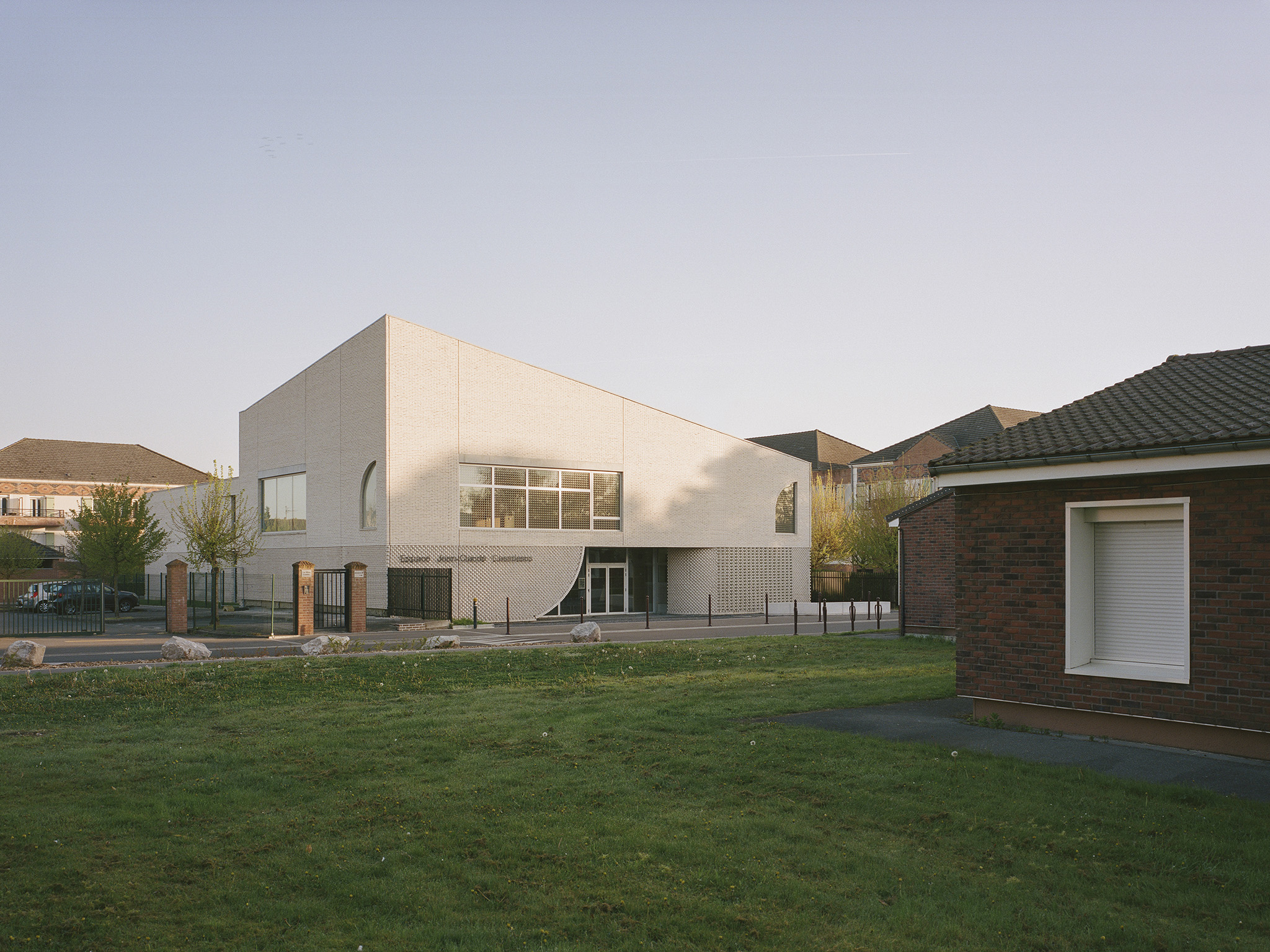
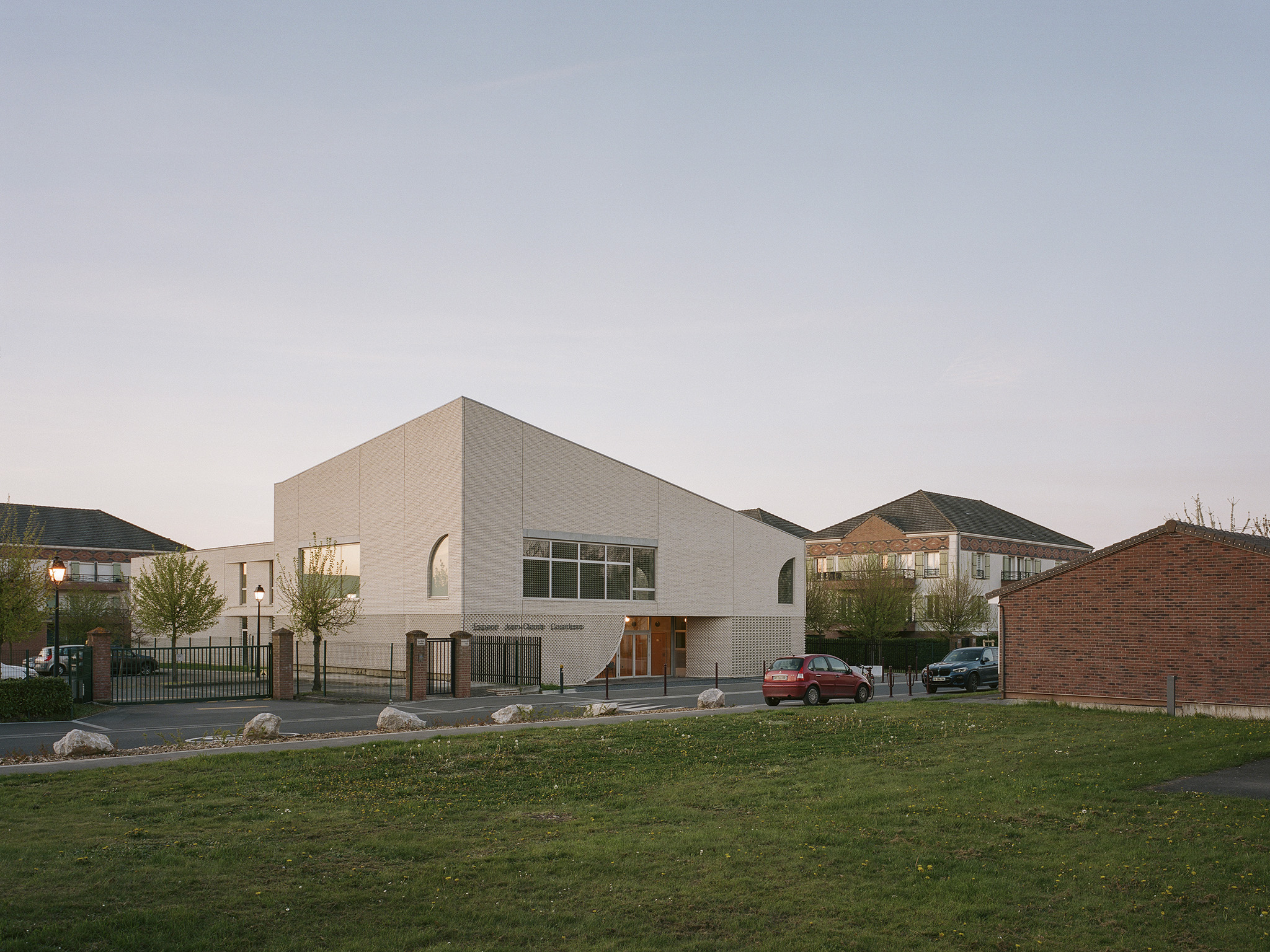
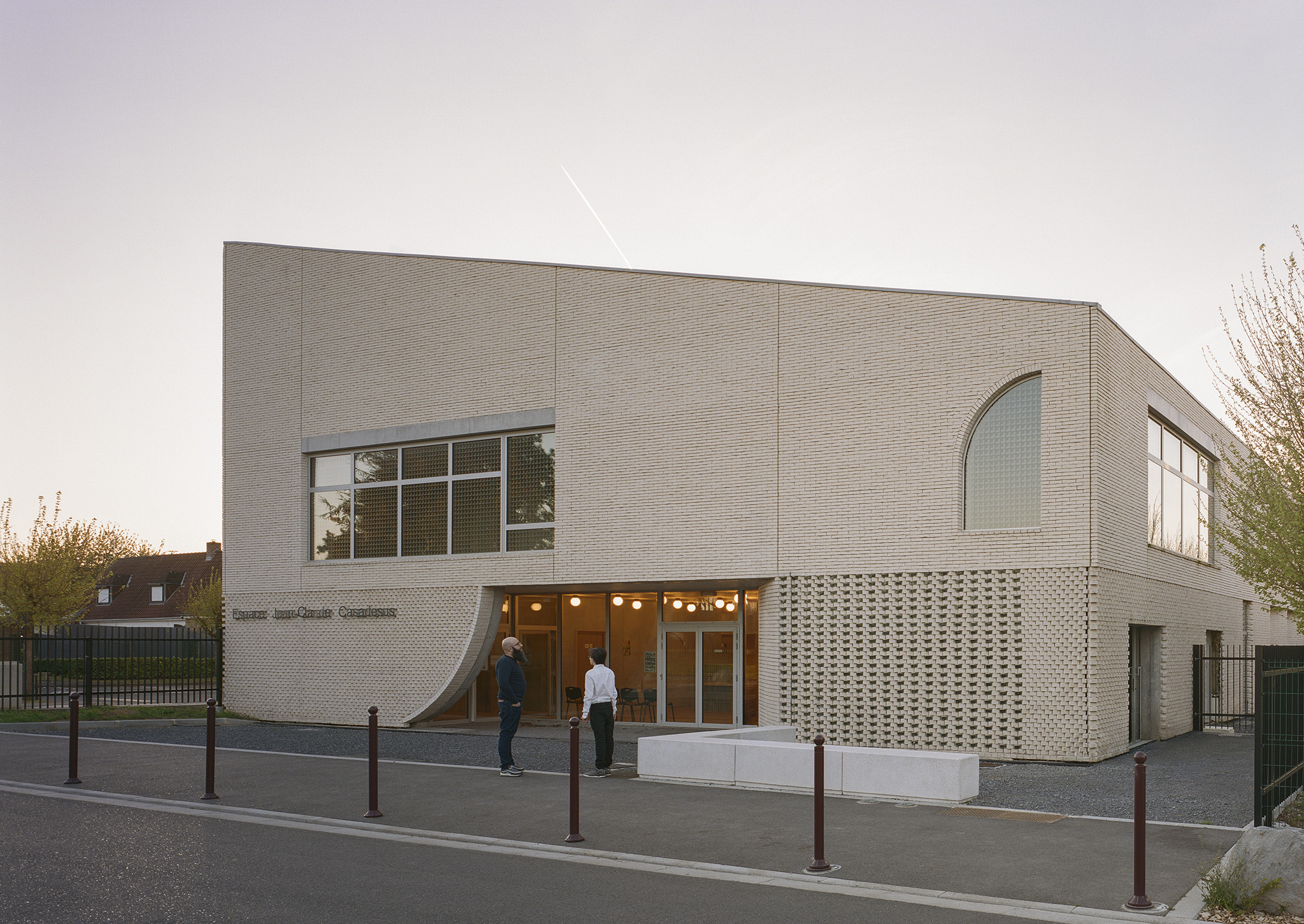
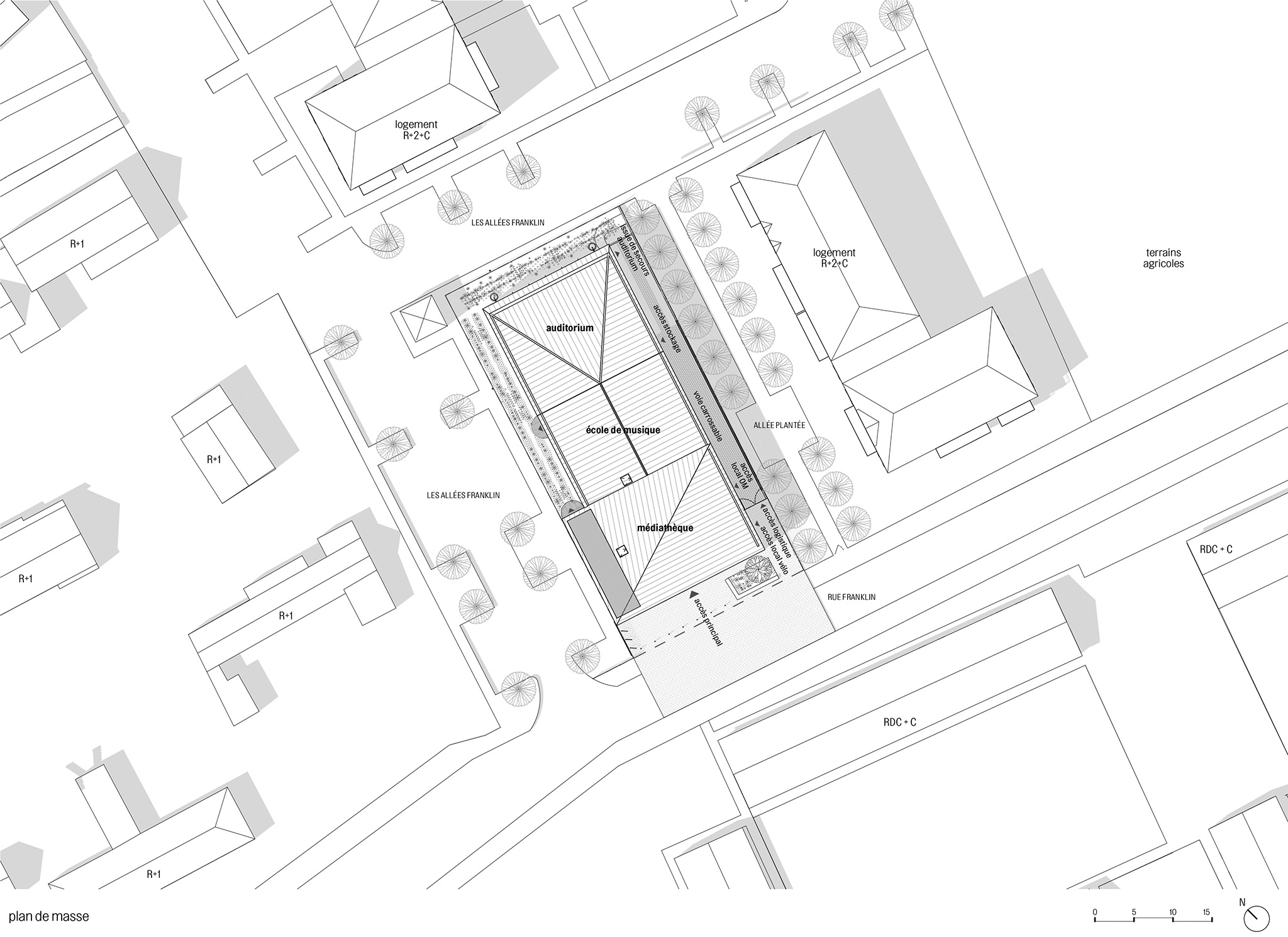
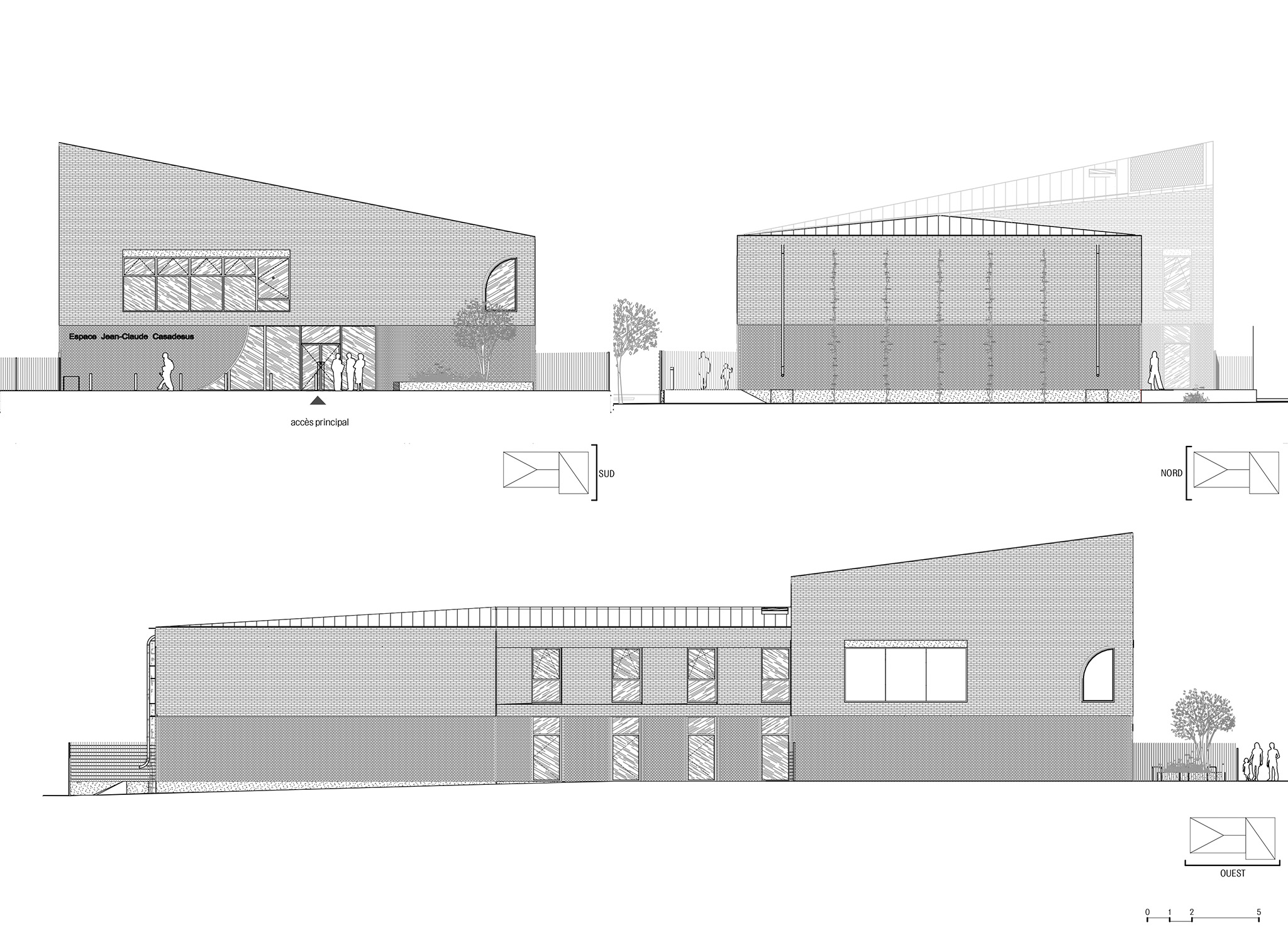
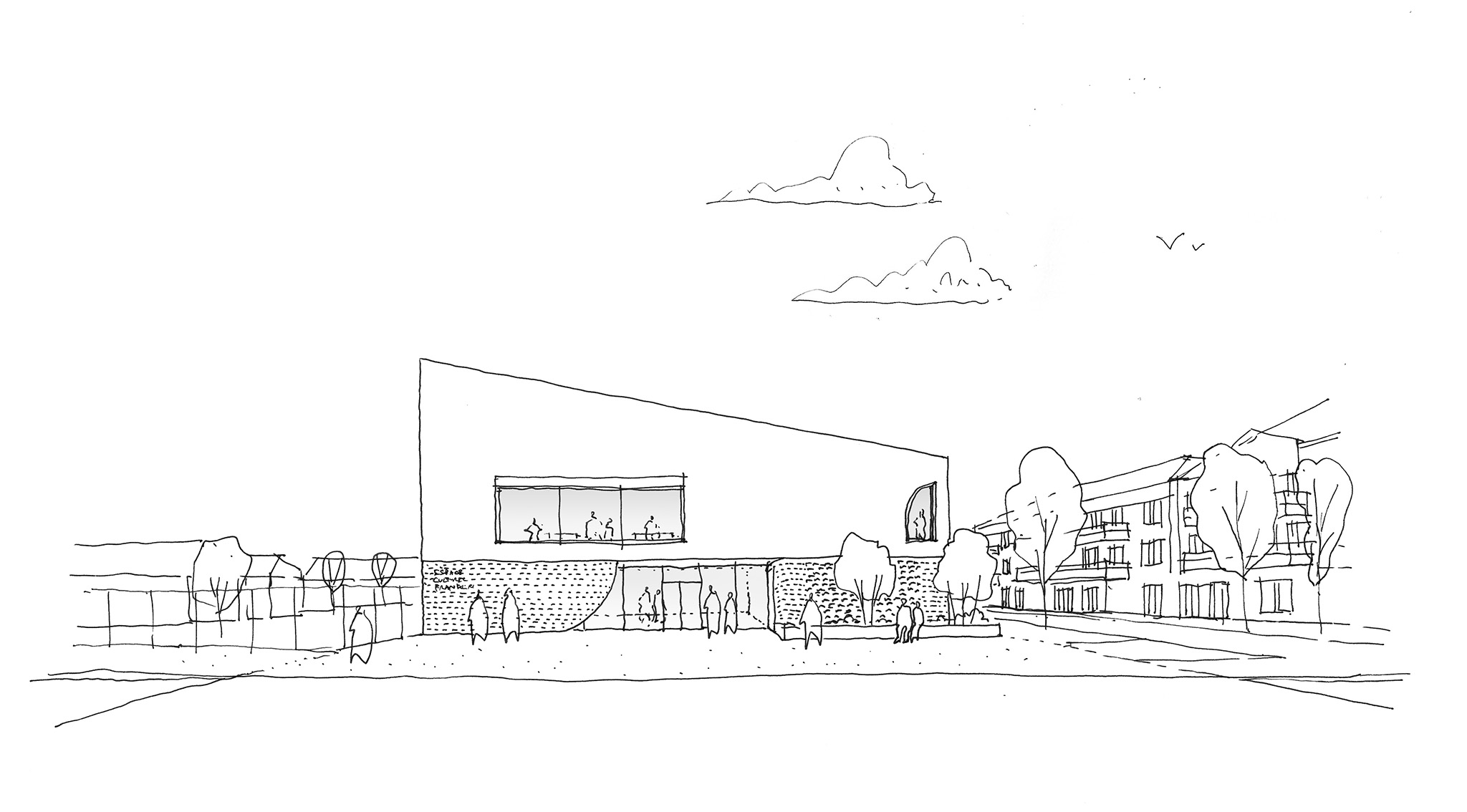
The new music venue fits into this composition as a vernacular urban structure on a domestic and familiar scale. Facing the street, it features the architectural style of stately homes. A large forecourt flanks the main entrance and serves as a true space for gathering and socializing.
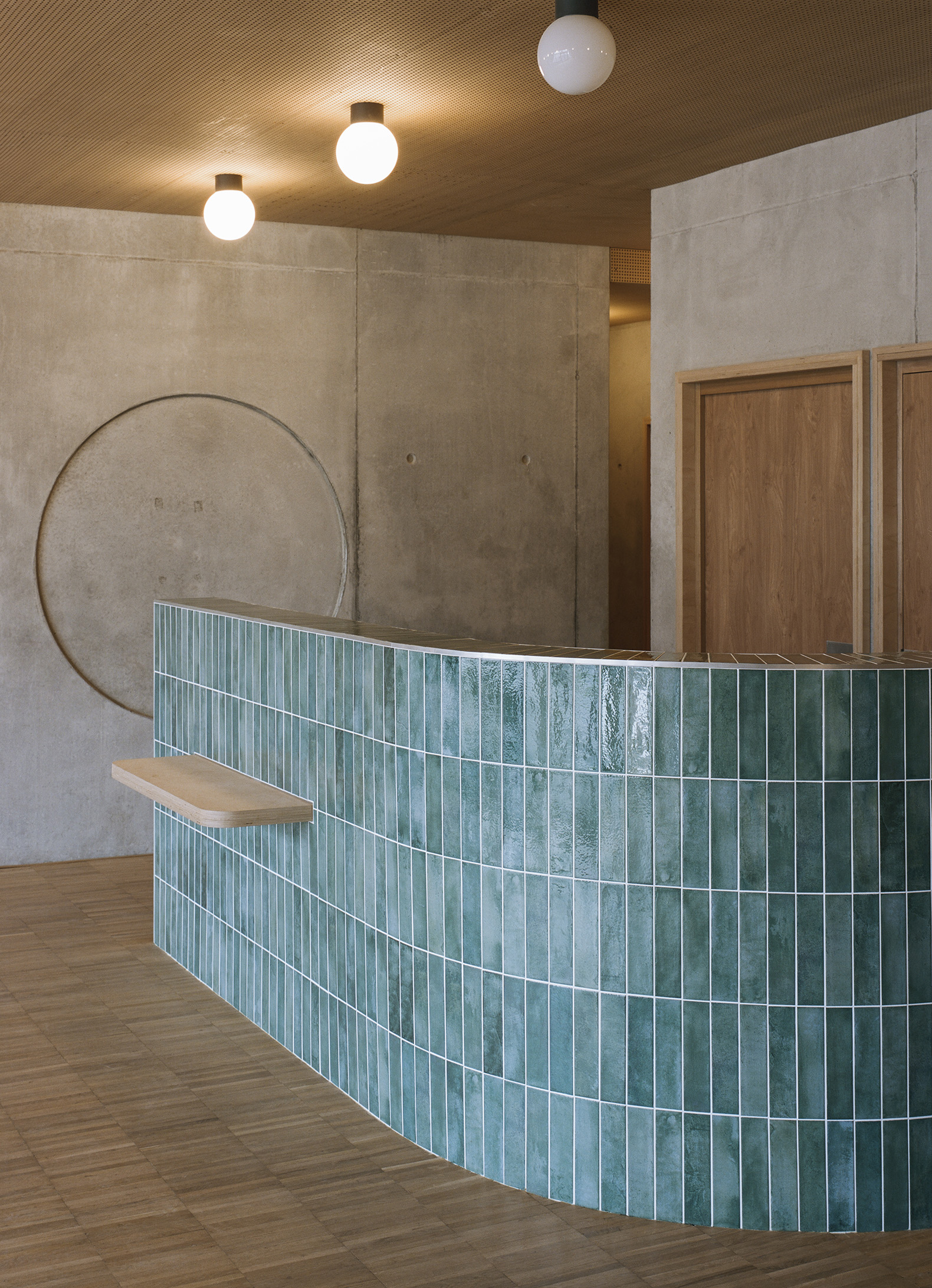
The recess in the façade naturally extends the public space into the interior of the building, while the curve of the lobby conveys an open and welcoming attitude toward the neighborhood’s residents.
On the residential side, the building adopts a more restrained appearance. The facades, intentionally more introverted, meet the project’s acoustic requirements while preserving the neighborhood’s privacy. High-performance acoustic window frames ensure excellent sound insulation. A linear garden runs alongside these facades, creating a dense and lush landscaped buffer that helps the building blend seamlessly into its residential setting.
Internal Layout
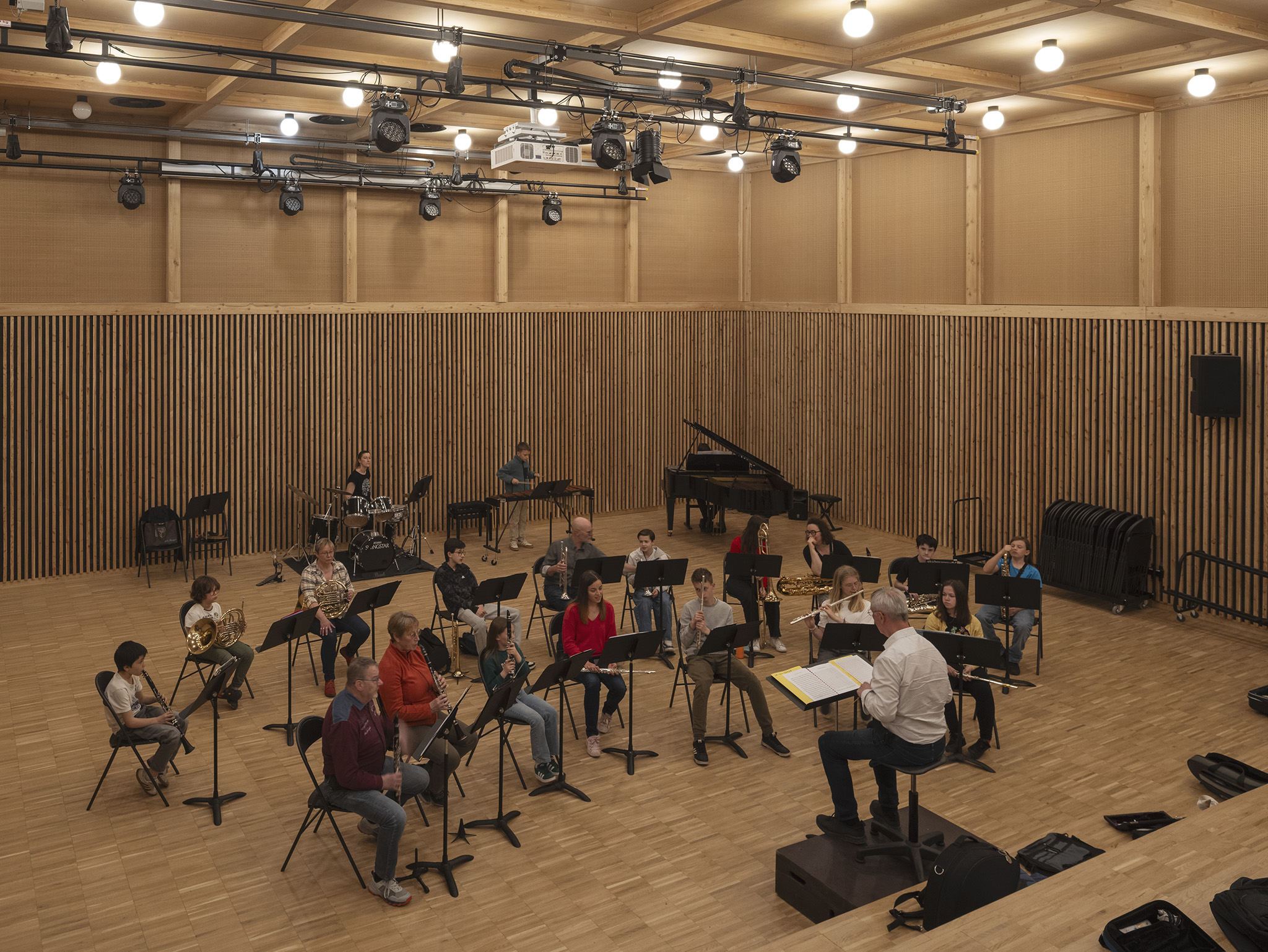
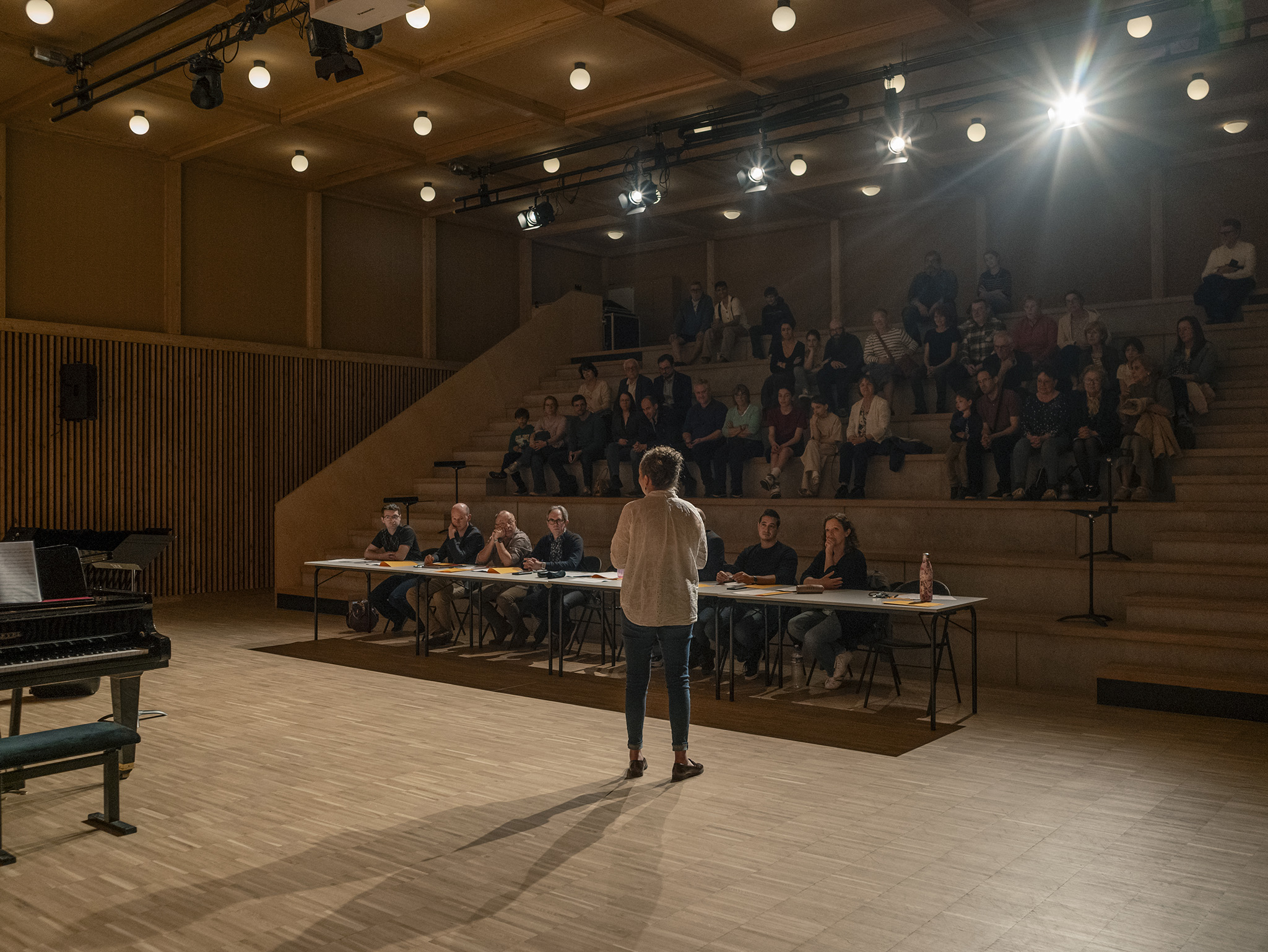
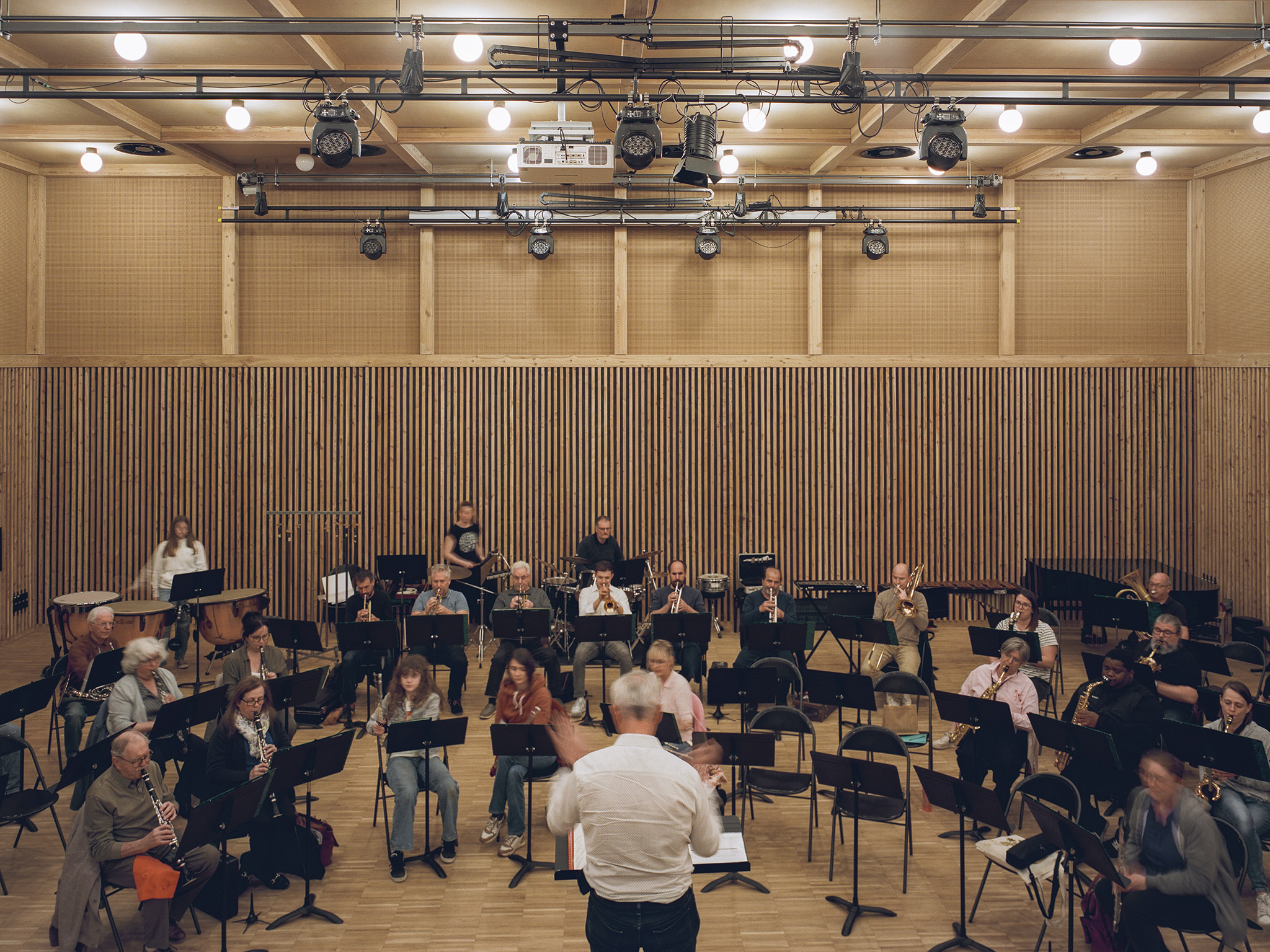
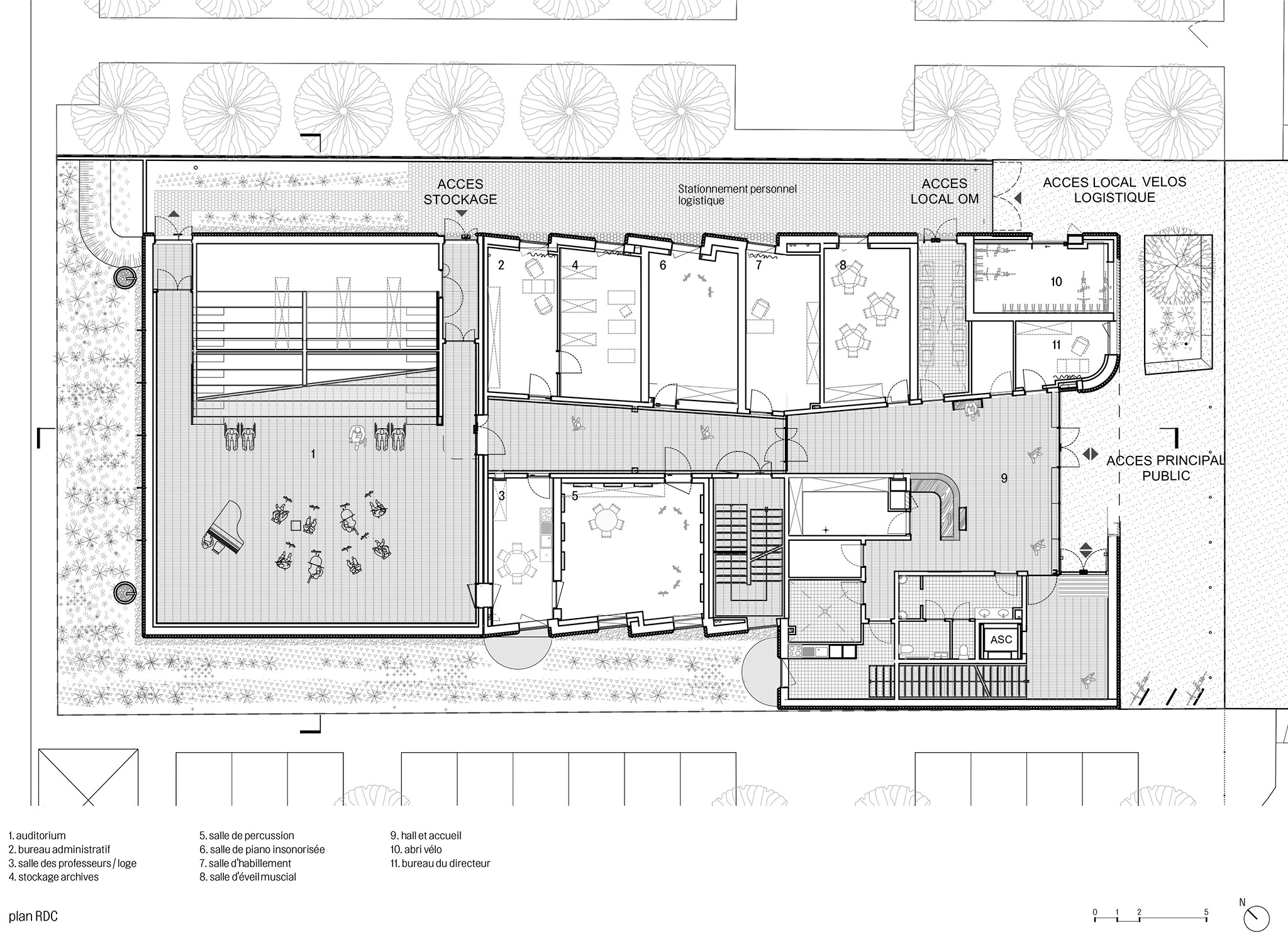
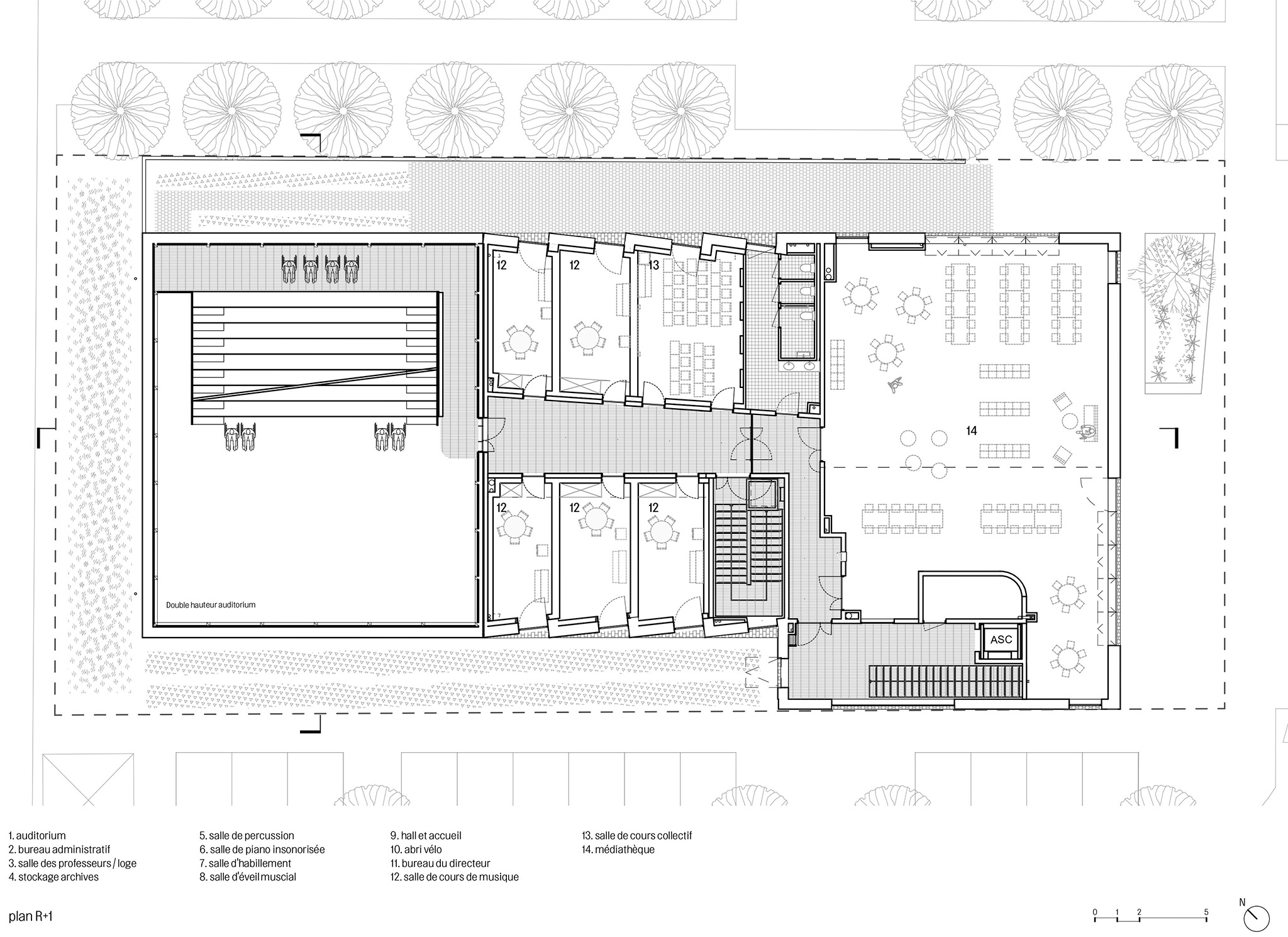
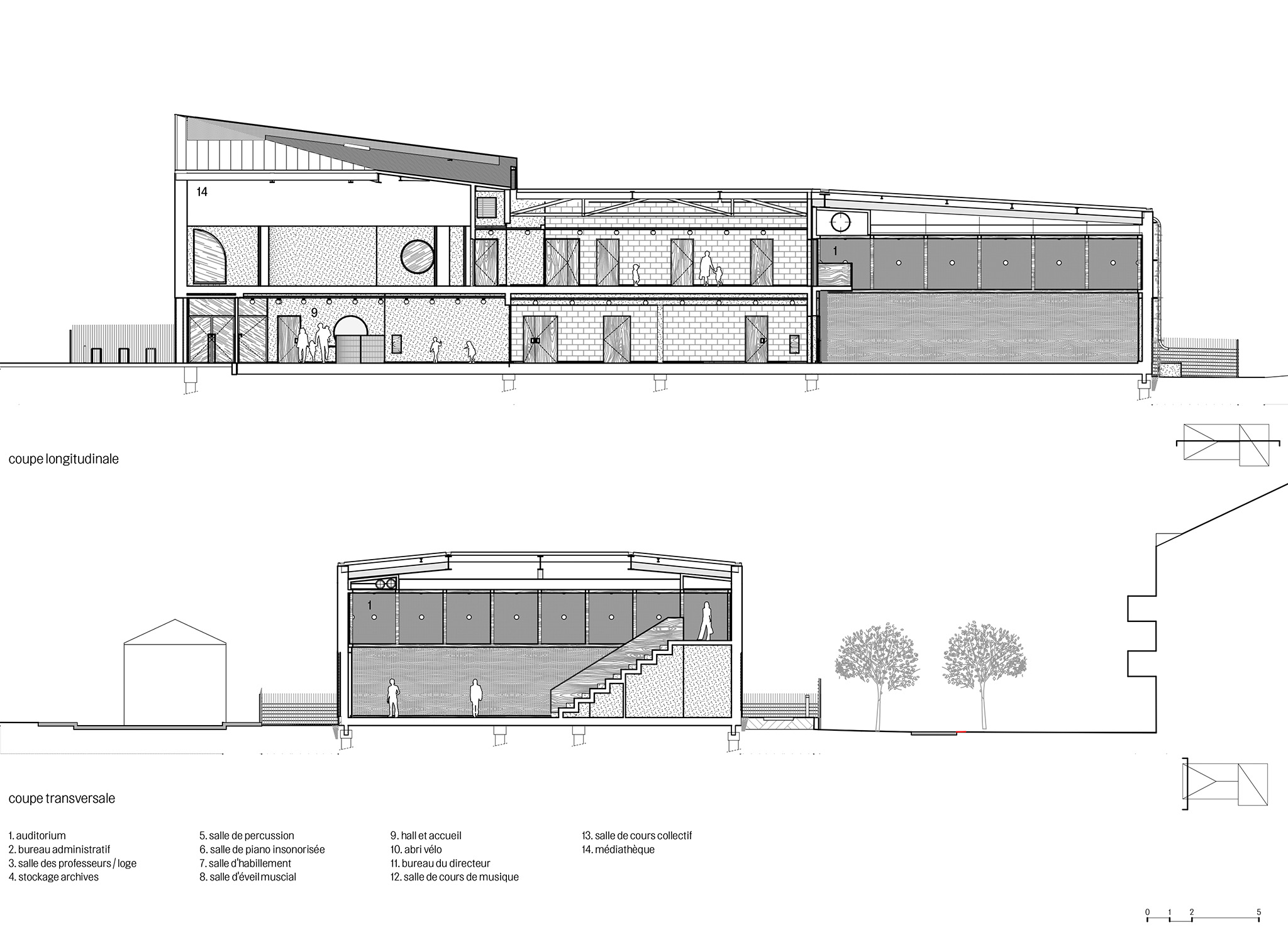
The project is organized around three complementary components: the auditorium/rehearsal hall for the wind ensemble, the music school, and the future cultural media library.
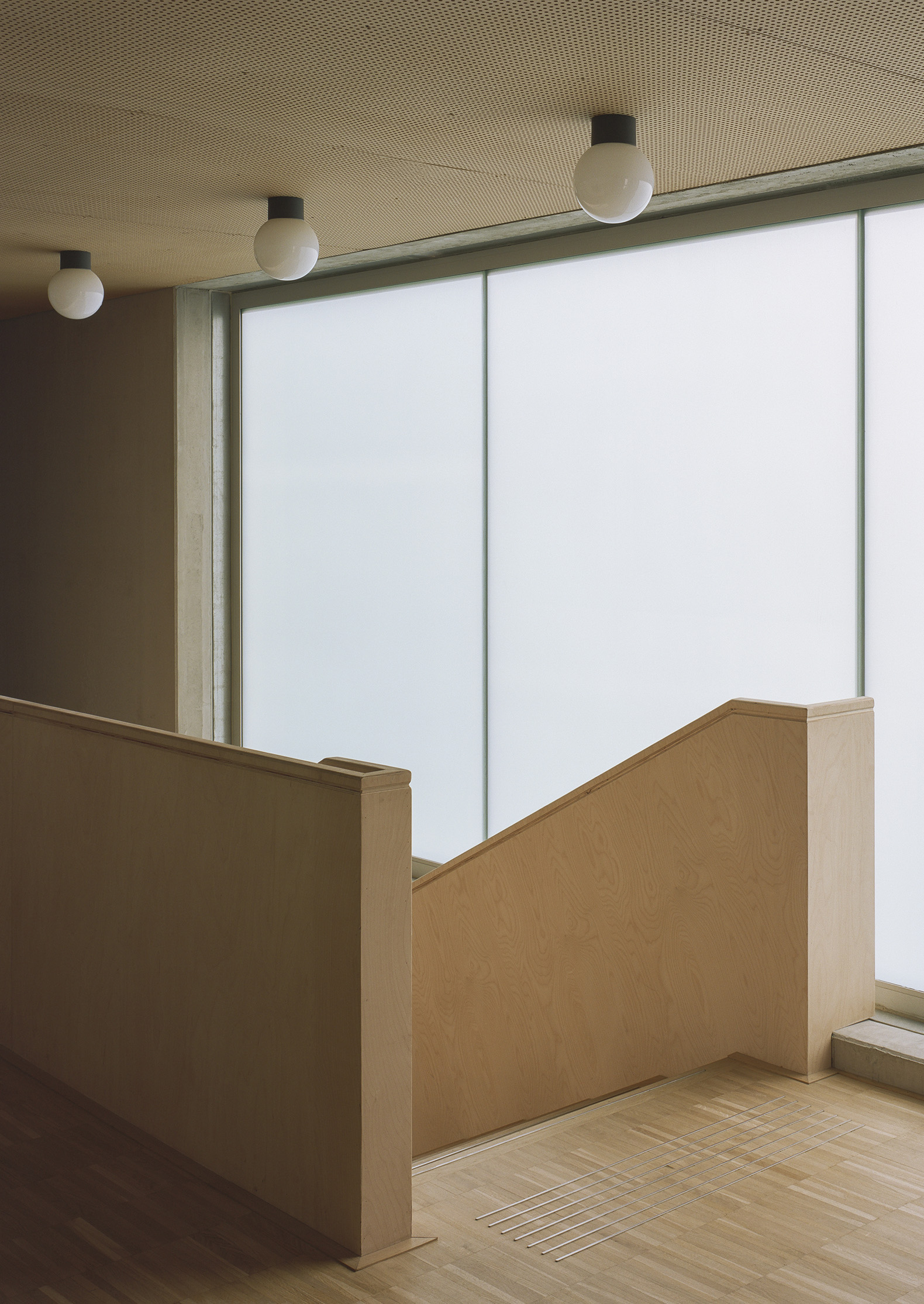
The entrance to the facility is located on the south side and opens onto Franklin Street. The space that will house the media library is located on the upper floor. A staircase and an elevator are situated along the west facade to provide independent access to this future space.
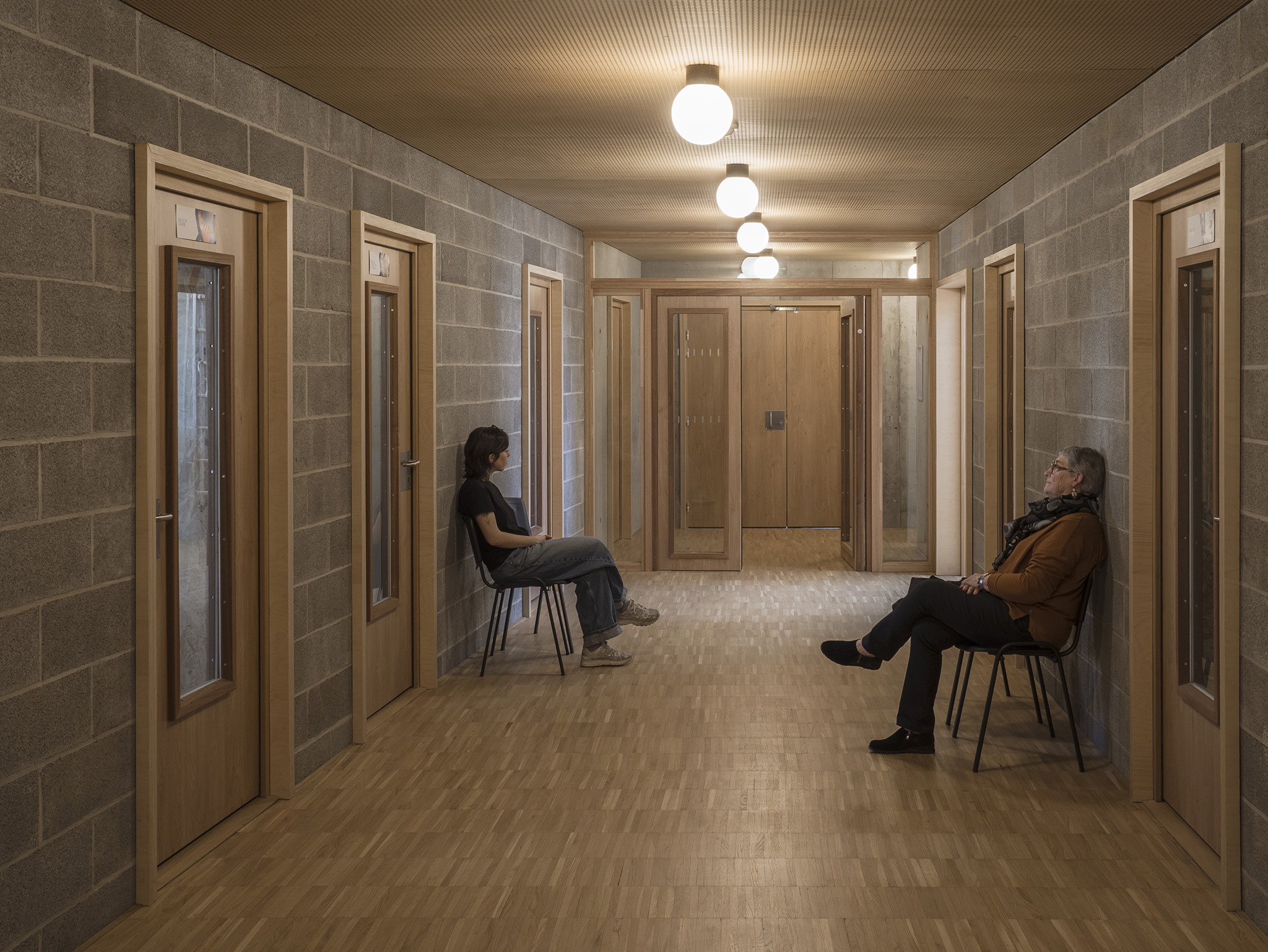
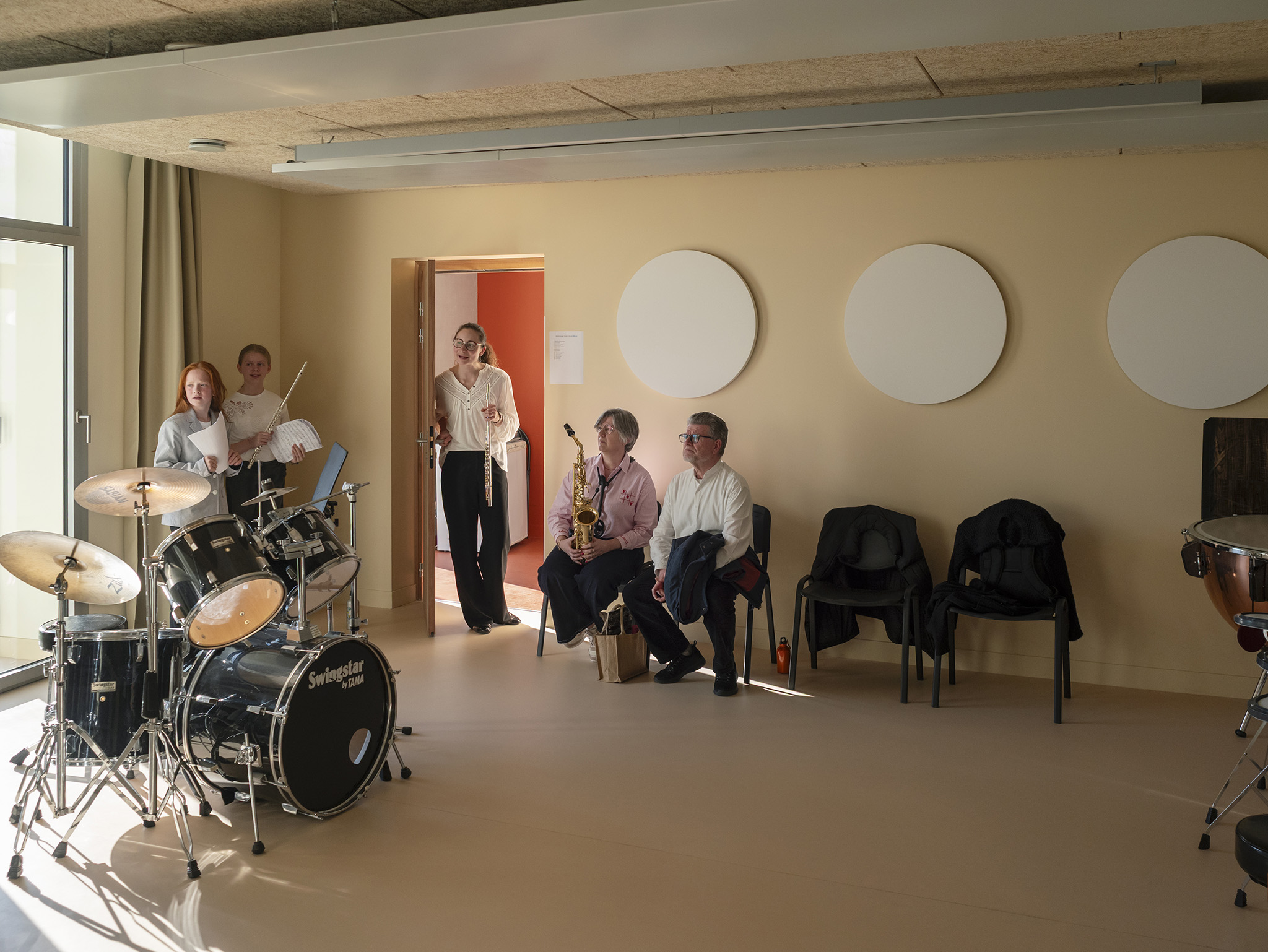
Extending from the entrance, the music school spans two levels.
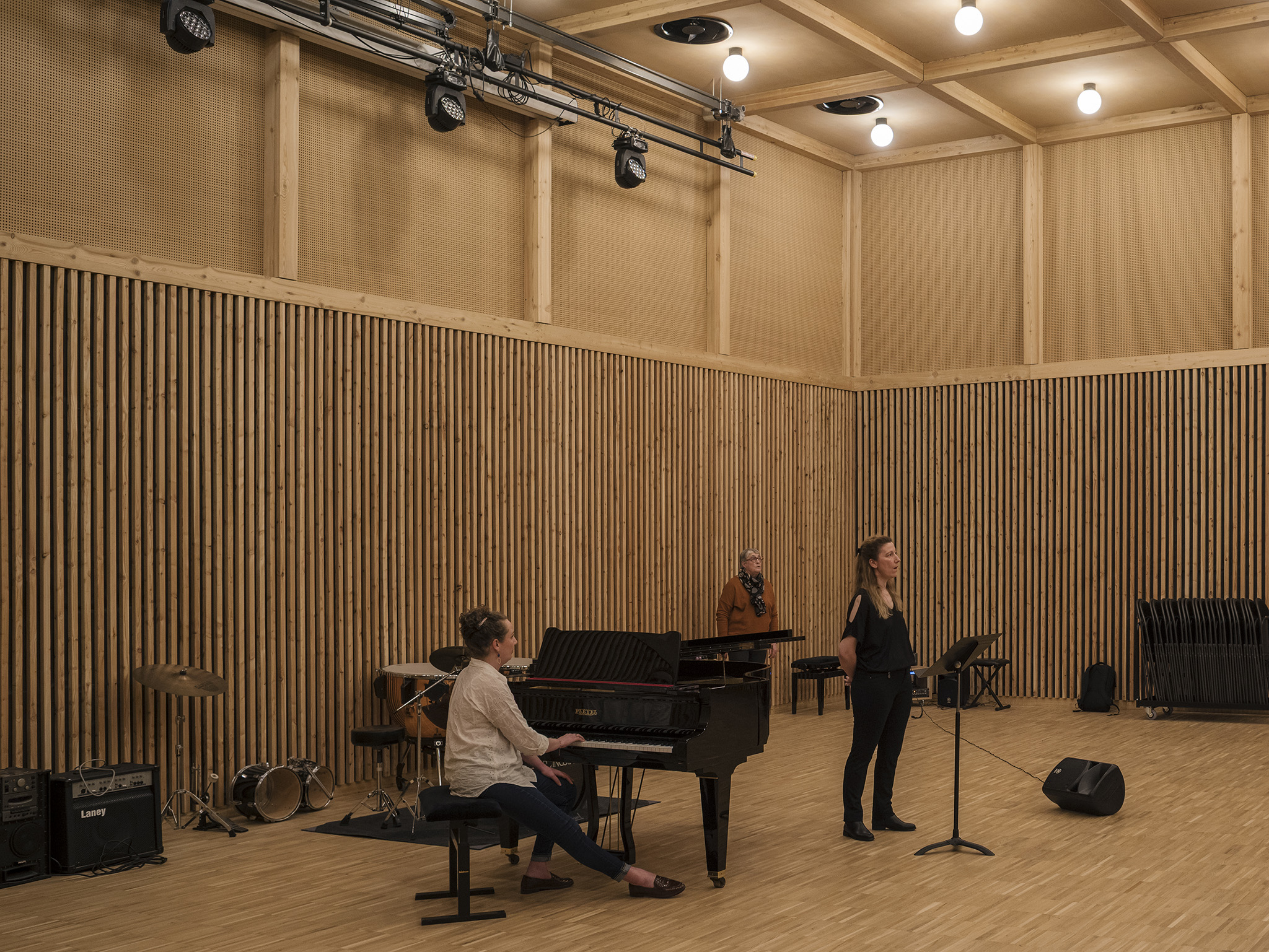
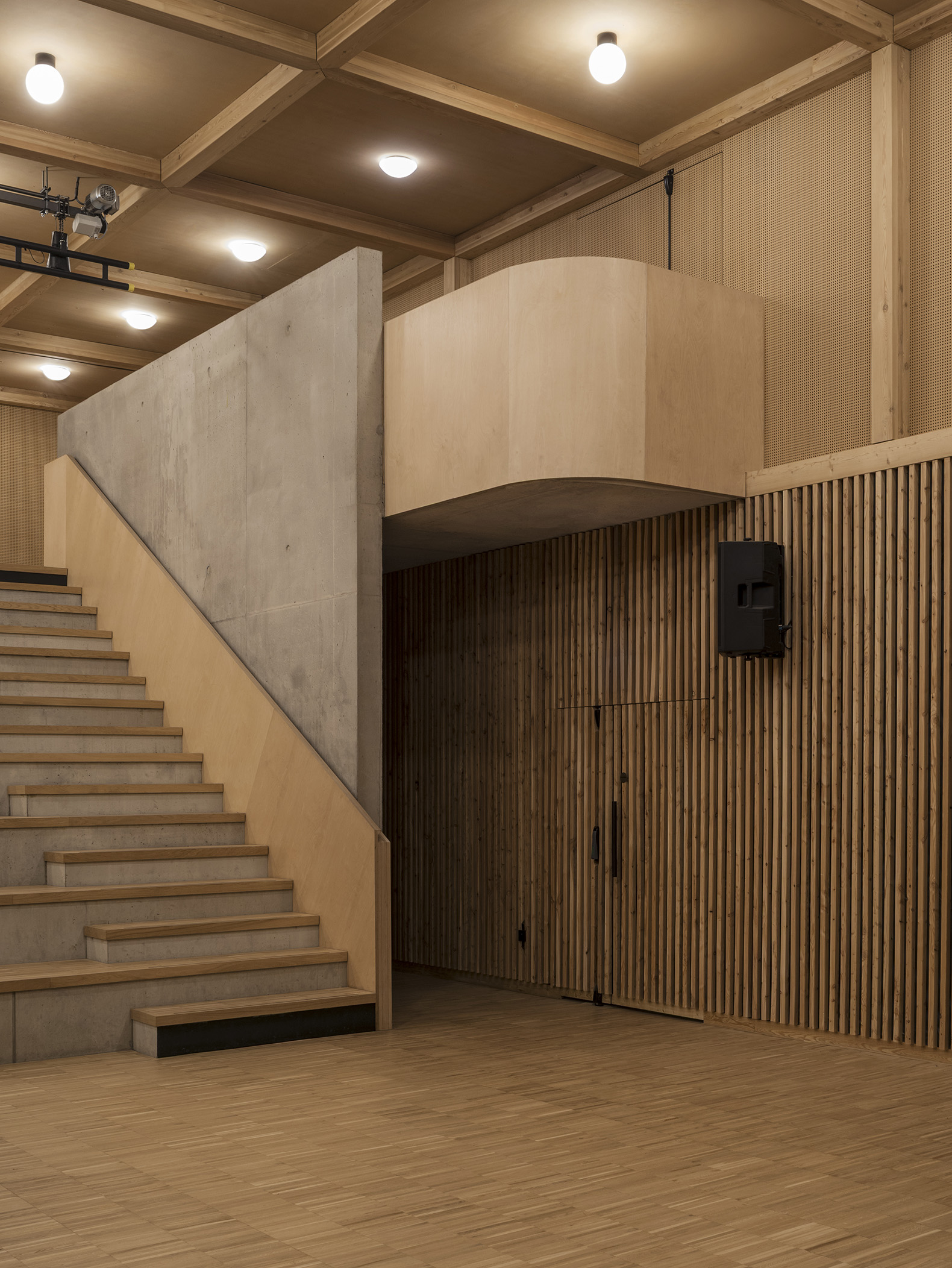
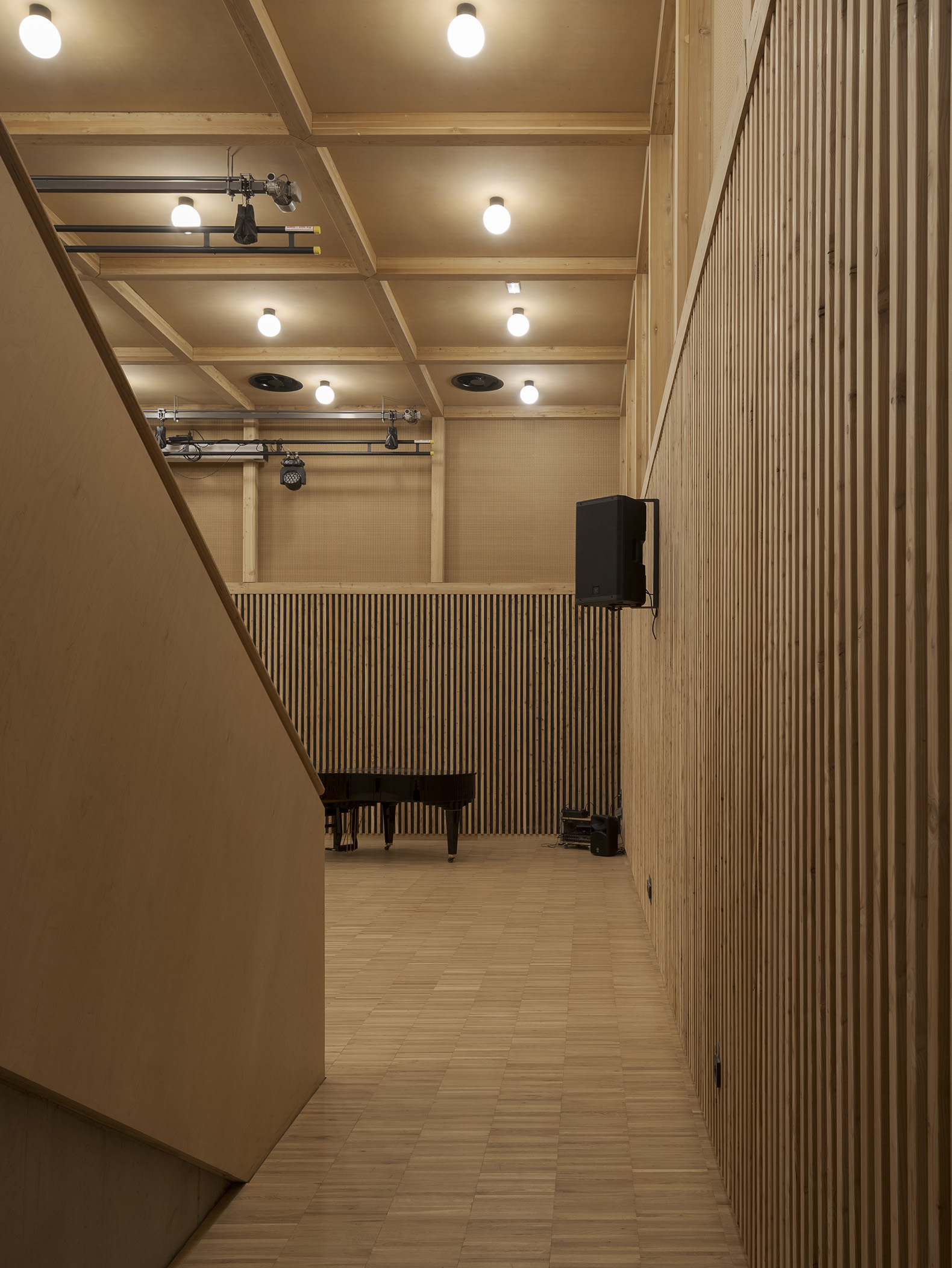
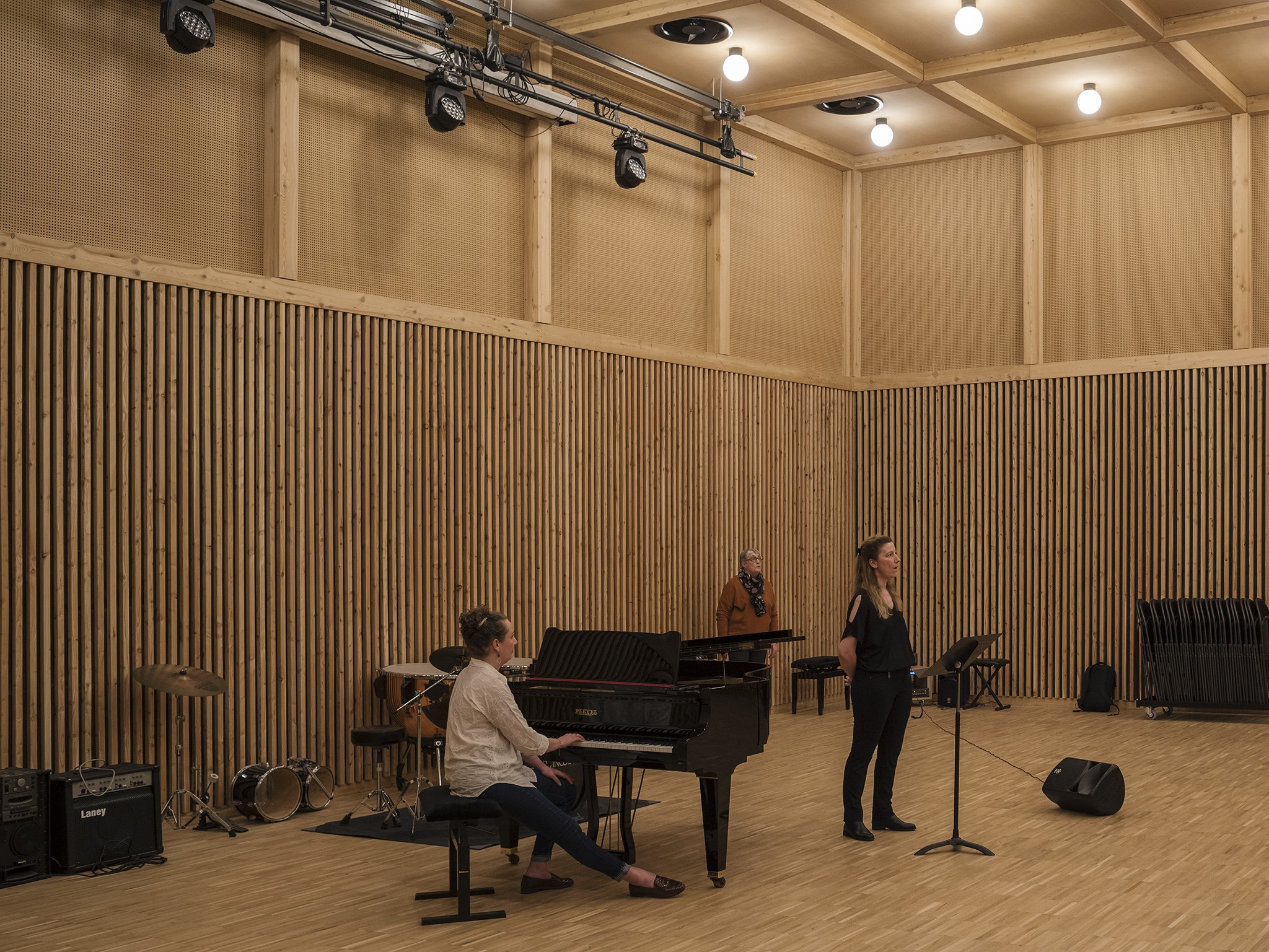
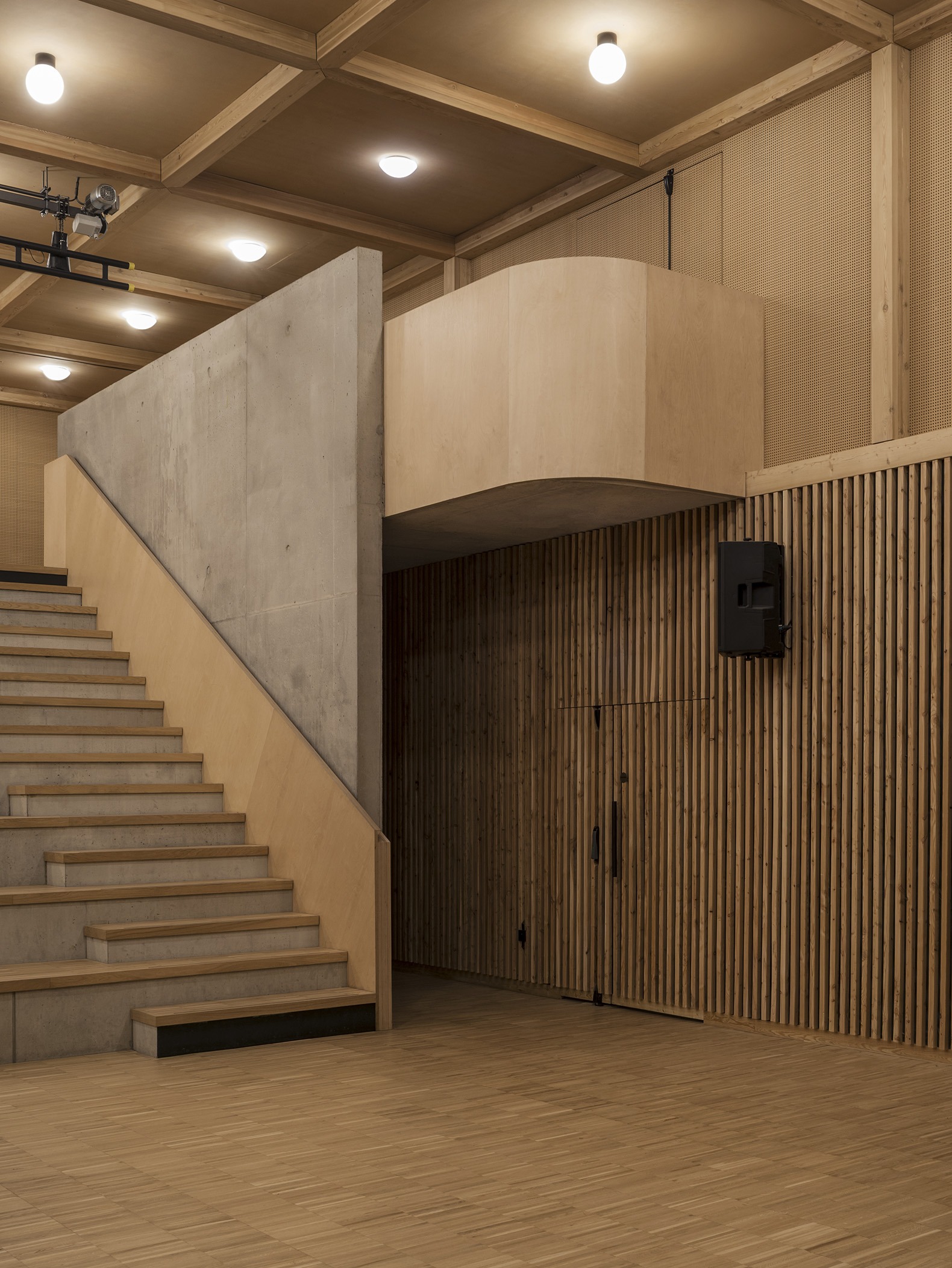
The rehearsal hall is located on the north side of the building. It is accessible from the ground-floor circulation area. The height of the hall corresponds to the two levels of the music school. The resulting layout creates two building sections. The southern section faces the street; it is more urban in character and largely open. The architecture is welcoming, simple, and uncluttered. The northern section is more enclosed for acoustic reasons and to optimize the floor plan. The openings are functional and sparingly used.
Construction Choices
The building is based on a rational and sustainable construction method that combines traditional masonry with a steel frame for large spans. This approach effectively addresses the project’s economic constraints while ensuring excellent acoustic performance.
The concrete walls are clad on the exterior with white terracotta brick masonry combined with a bio-based insulation system. This construction principle ensures thermal mass, occupant comfort, and long-term durability.
The pitched roofs, clad in standing-seam zinc, help integrate the project into the urban landscape while embodying a sober and sustainable architectural style. The long-span structures for the auditorium and media library are constructed using steel framing to provide flexibility and generous interior spaces.
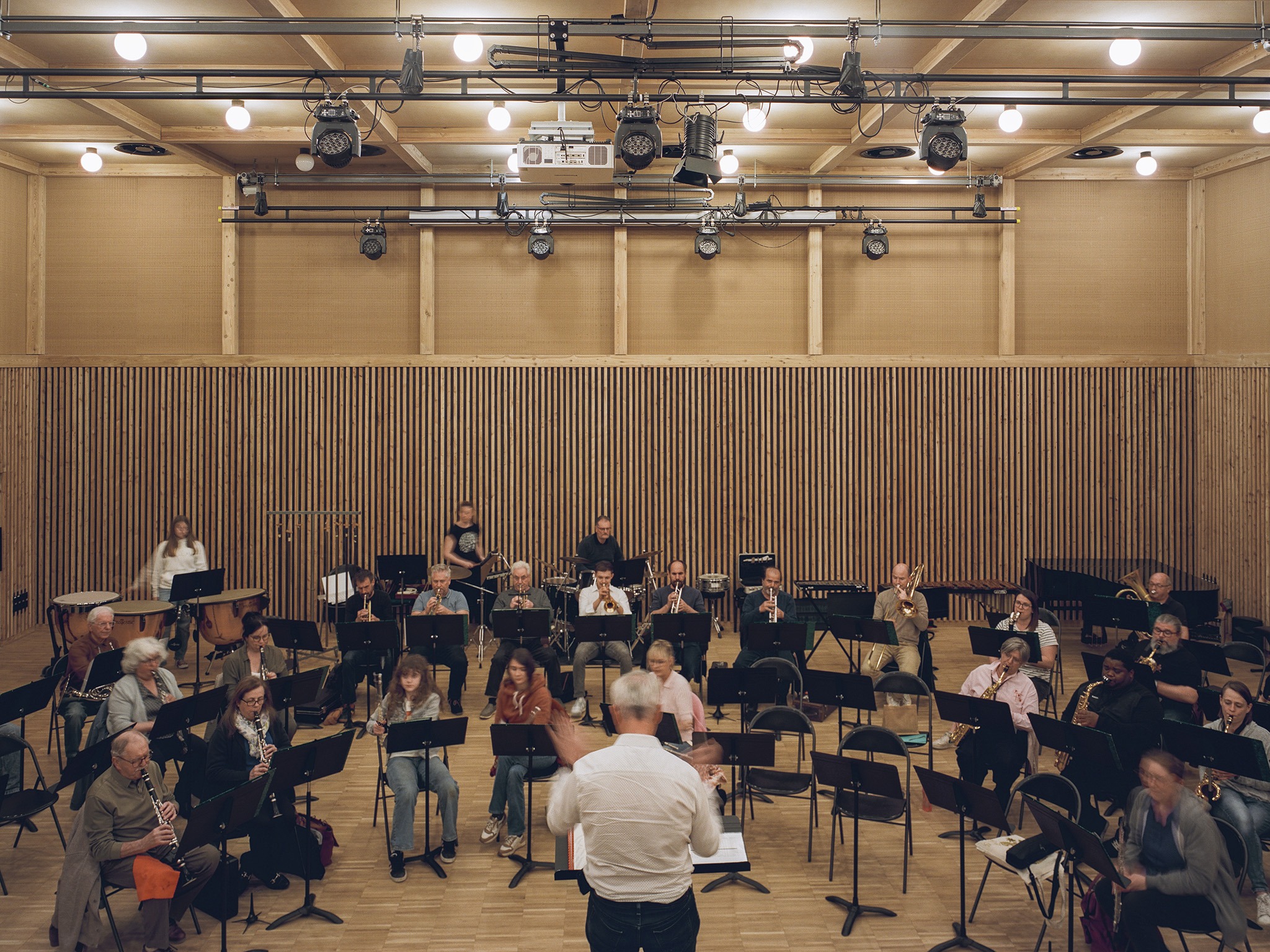
Acoustic Comfort
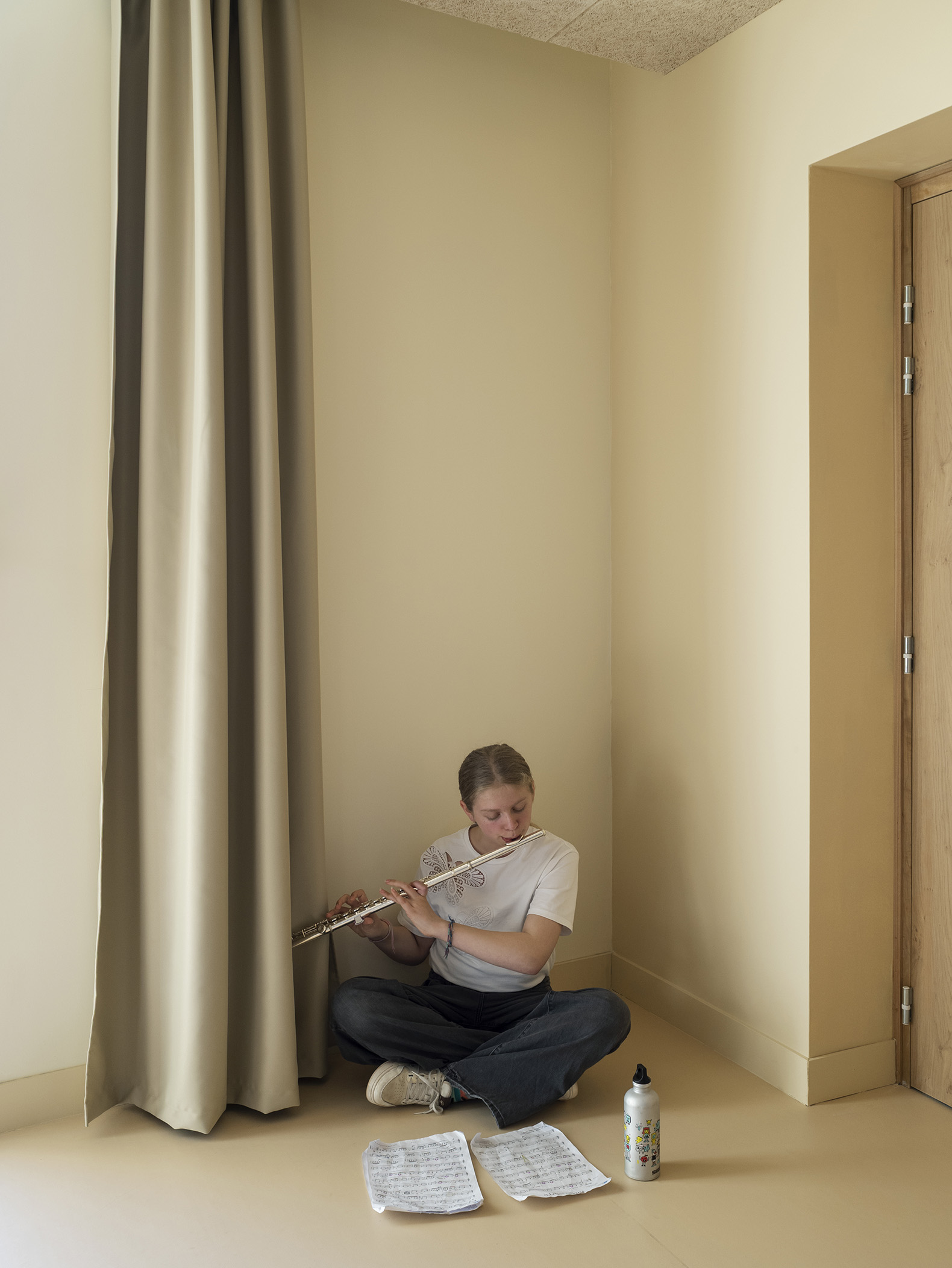
Acoustics is a fundamental aspect of the project. The musical facilities are designed to optimize both the sound quality within the interior spaces and the impact of activities on the surrounding environment.
The project thus addresses two major objectives:
– To ensure optimal sound control and acoustic insulation between the various spaces.
– To protect the neighborhood from noise emissions associated with musical activities and technical ventilation systems.
Special attention is given to managing reverberation and controlling the propagation of noise to the outside in order to ensure exemplary listening comfort and user experience.
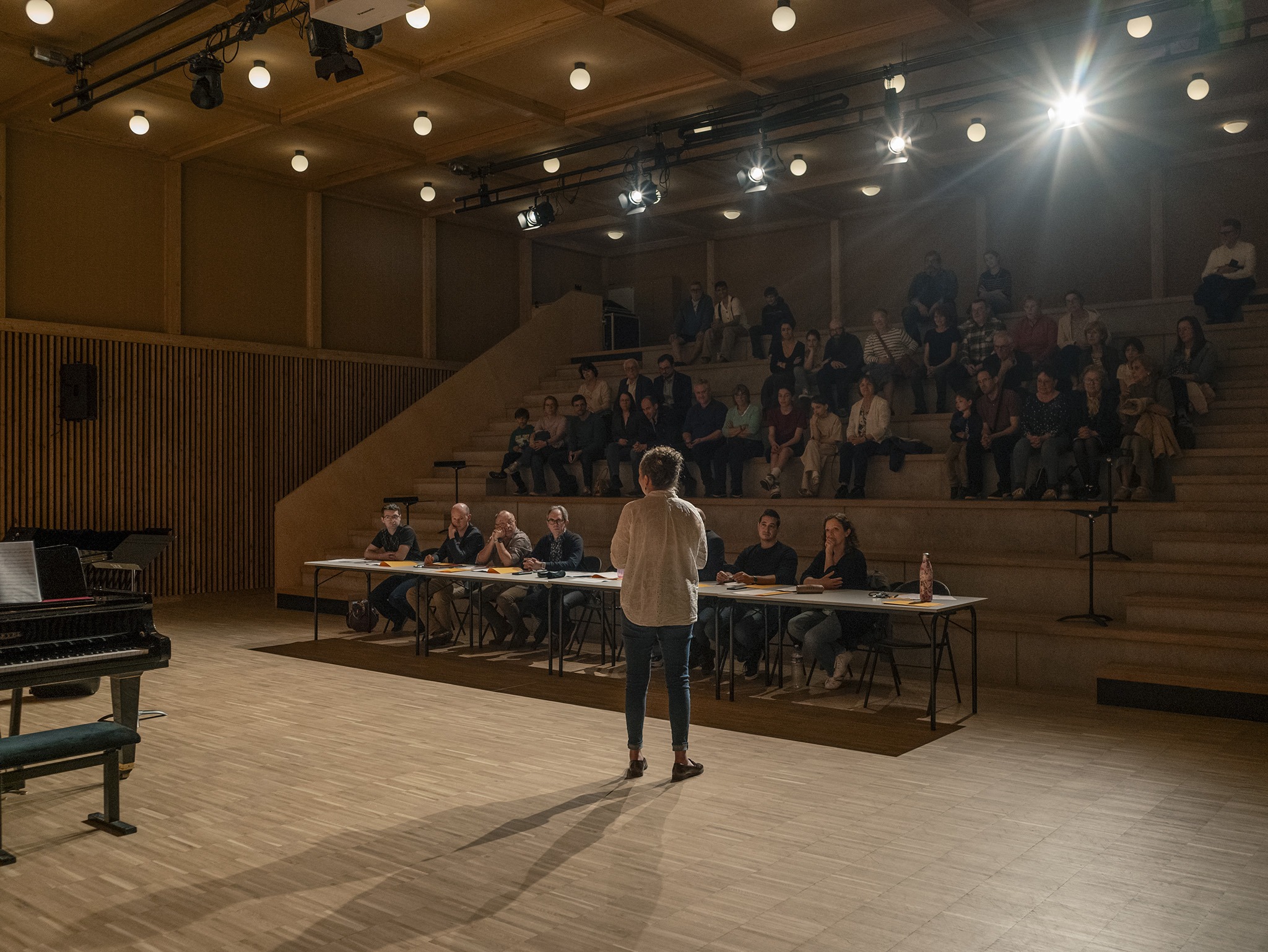
Architectural Intentions
The overall vision for the project is that of a cultural facility that is understated, clear, and functional, guided by a commitment to architectural, landscape, and aesthetic quality. The design choices prioritize a simple, flexible, and cost-effective approach capable of evolving over time.
The project is conceived as a true community resource: a platform for exchange and interaction between the city, users, organizations, and all stakeholders involved in bringing this facility and its outdoor spaces to life.